









 Ha Giang
 Hanoi
Hanoi Ho Chi Minh City
 Ha Long
 Sapa
Sapa Mekong Delta
 Da Nang
 Hue
Hue Hoi An
 Ninh Binh
 Da Lat
 Nha Trang
 Phan Thiet
 Phu Quoc
 Quang Binh
 Quy Nhon
 Vung Tau
 Thai Nguyen








Two different cities, 800km apart, at opposite ends of the country. That’s the first thing to clear up, because it’s what most people are actually asking.
If you already knew that and you’re choosing between them: Hanoi, if you only get one. It gives you more of the country in less time, and Hoi An works better later in a trip than as your introduction to Vietnam.
The month you’re travelling can flip that answer, and I’ll get to it, because it decides this for a lot of people.
I’ve lived in both. Hanoi is home and Hoi An was a few months. Beyond being in the same country they have almost nothing in common.
- Quick Answer: Hanoi and Hoi An are not the same place and not near each other. Hanoi is the capital, in the far north. Hoi An is a small town in central Vietnam, 800km south, next to Da Nang. For a first trip with one choice, Hanoi is the better single pick: better street food, no entrance fee, and it’s the base for Ninh Binh, Ha Long Bay and Sapa. Hoi An is smaller, prettier and easier, but you’ll have seen it in two days.
- Where Each One Is:
- Hanoi: north Vietnam, Noi Bai airport (HAN), about 8 million people.
- Hoi An: central Vietnam, 30km from Da Nang airport (DAD), around 120,000 people.
- Between them: 800km, a 1h25 flight, or 15 to 17 hours on the overnight train.
- The Comparison in Short:
- Food is cheaper in Hanoi. Accommodation is cheaper in Hoi An.
- Hoi An charges 120,000 VND to enter the Ancient Town. Hanoi’s Old Quarter is free.
- Hoi An is better for tailoring, Hanoi also, but it isn’t close.
- Hanoi has four real seasons. Hoi An is hot all year with a serious wet season.
- Who Each One Suits:
- First-timers with ten days or less: Hanoi, plus a trip out to Ninh Binh or Ha Long.
- Travelling with small children: Hoi An, for the beach and the flat streets.
- Anyone who wants clothes made: Hoi An.
- Anyone nervous about traffic: Hoi An.
- Repeat visitors to Vietnam: Hoi An, and stay longer than two nights.
Are Hanoi and Hoi An the Same Place?
No, and this is the single most common thing I get asked about the two of them. The names look alike in English, both have a famous old quarter, and both turn up on the same itineraries, so the confusion is understandable.
They are a two-hour flight apart.
| Hanoi | Hoi An | |
|---|---|---|
| Region | Far north | Central coast |
| Nearest airport | Noi Bai (HAN), 45 min away | Da Nang (DAD), 30 km away |
| Population | ~8 million | ~120,000 |
| What it is | The national capital | A preserved trading port |
| Distance apart | About 800 km | |
The other name people mix in is Ha Long, as in Ha Long Bay. That one is near Hanoi, about three hours east on the coast, and it has nothing to do with Hoi An beyond a vaguely similar first syllable.
In Vietnamese they don’t sound similar at all. Hà Nội and Hội An share a letter or two on paper and that’s it.
Hanoi vs Hoi An: The Short Comparison
| Hanoi | Hoi An | |
|---|---|---|
| Size | 8 million people | Around 120,000 |
| What it is | Working capital, 1,000 years old | Preserved trading port, UNESCO |
| Entry fee | None | 120,000 VND for the Ancient Town |
| Weather | Four seasons, cold winters | Hot year round, floods Oct to Nov |
| Beach | No | Yes, 4km away |
| Street food | Deeper and cheaper | Narrower, some of it unique |
| Tailoring | Decent | The reason people come |
| Day trips | Ninh Binh, Ha Long, Sapa, Mai Chau | My Son, Da Nang, Ba Na Hills |
| Holds you for | 3 to 4 days, plus trips out | 2 to 3 days |
| Nightlife | Late and messy | Ends around 11 |
Getting Between Them
Hanoi is in the north. Hoi An is in central Vietnam, next to Da Nang, and there’s a whole country between them.
Flying is an hour and a half to Da Nang, then 45 minutes by road. The overnight train is 15 to 17 hours. A sleeper bus is longer and I wouldn’t.
So Hanoi or Hoi An is only a real either/or if you have under a week. On two weeks you do both, usually Hanoi first because most long-haul flights land there, then south. That’s the standard shape of a Vietnam itinerary and there’s a reason everyone follows it.


The train is pleasant in winter and hard work in August, when the air conditioning in a soft sleeper is losing to 38 degrees outside. Flights are often cheaper anyway if you book more than a fortnight ahead.
Getting onward from the airport is covered in Da Nang to Hoi An.
Which One Feels More Like Vietnam?
Hanoi, and it isn’t close.
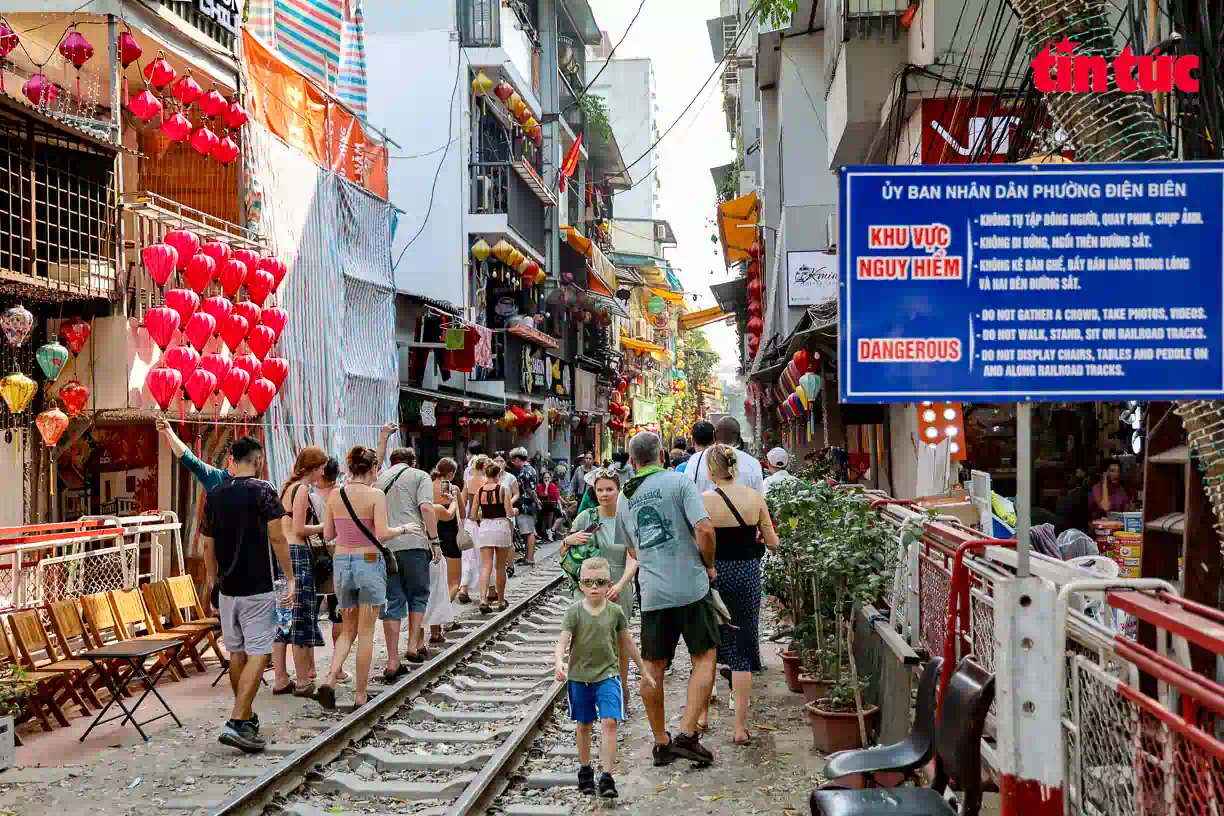
It’s a functioning capital where people are going to work, arguing in traffic, eating breakfast on the pavement at seven in the morning. Nothing is arranged for you. You get pushed around a bit, you learn to cross the road, and by day three you can do it without thinking.
Hoi An is a preserved town. It’s beautiful, and it’s beautiful partly because a lot of effort goes into keeping it that way. The Ancient Town has an entrance ticket, the buildings are protected, the lanterns go on at the same time every night.
What you’re looking at is real history, four-hundred-year-old merchant houses and a Japanese covered bridge, but the experience around it is managed.
Neither of those is a complaint. They’re different things and it’s worth knowing which one you’re booking.




Which Is Cheaper, Hanoi or Hoi An?
Split answer, and the split catches people out.
Food is cheaper in Hanoi. Pho is 35,000 to 50,000 VND, bun cha about the same, bia hoi around 10,000 a glass. In Hoi An, anything inside the Ancient Town carries a markup, and 60,000 to 90,000 for a bowl is normal on the riverside.



Accommodation is cheaper in Hoi An for the same standard. Thirty-five dollars gets you a homestay with a pool, a garden and a bicycle to borrow. The same money in Hanoi gets a decent room in the Old Quarter with no pool and noise until midnight.



Hoi An charges you to walk around. The Ancient Town ticket is 120,000 VND with five tear-off tabs for heritage sites. Enforcement varies and plenty of people never buy one, but that’s the official position and there are booths.
Tours and activities are similar, though Hoi An has more of them because the town runs on them.
Over a week the two roughly even out. Cost shouldn’t decide this either way.
Weather Is the Thing That Actually Decides It
This is where I’d start if you’re picking one, and hardly anyone does.
| Months | Hanoi | Hoi An |
|---|---|---|
| Mar to Apr | Warm, pleasant | Dry and warm, the best window |
| May to Aug | 33 to 38°C, humid, sudden storms | Hot and dry, but there’s a beach |
| Sep to Nov | Cooling, the best time here | Wet season, floods in Oct and Nov |
| Dec to Feb | 13 to 17°C, grey, damp | Warm but often grey and wet |
October and November in Hoi An mean flooding. Not drizzle. Water in the Ancient Town, boats going down streets, restaurants shut, tours cancelled. Some years are mild and some are not, and you can’t book around it. If your trip lands in those months, Hanoi is the safer choice.



December to February in Hanoi is cold. Thirteen to seventeen degrees, no central heating anywhere, damp air, and a grey sky that can sit there for two weeks. People arriving from northern Europe are usually fine with it. People expecting Southeast Asia are not.
May to August in Hanoi is hard work. Thirty-eight degrees with humidity and no sea. Hoi An is also hot, but it ends at a beach.


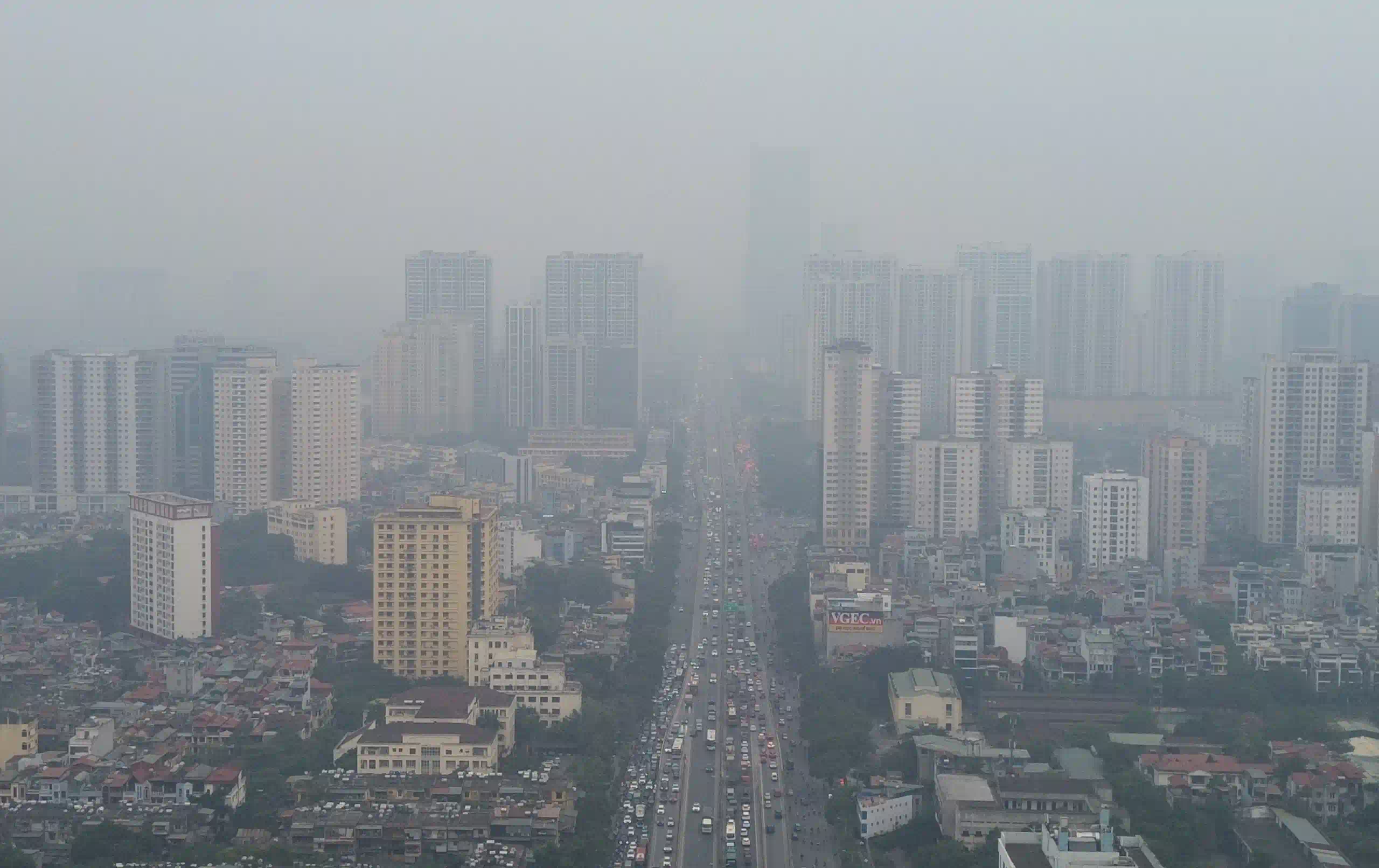
So autumn suits Hanoi, spring suits both, summer suits Hoi An, and late autumn suits Hanoi again. Pick by month first and personality second.
Tailoring: Hoi An, and It Isn’t Close
This is the biggest single thing people search around this comparison, and the answer is clear.
Hoi An has hundreds of tailors and a whole ecosystem around them. Fabric shops, pattern storage, multiple fittings within a few days, and the established workshops will keep your measurements and take reorders over WhatsApp after you fly home, shipping worldwide. That last part separates it from everywhere else in Asia.
Half or full-canvas construction runs roughly $150 to $400 in Hoi An. Hanoi runs higher for the same standard, around $200 to $600, and remote reordering isn’t systematic there.



Where Hanoi wins: Hang Gai and the streets around it are good for silk, and a Hanoi tailor is a reasonable thing to do alongside a northern itinerary if you’re not making a special trip. Less sales pressure, too, because tailoring isn’t what the city is selling.



A caution about Hoi An. The number of shops means the range in quality is enormous. The street packages, three suits for $200, are fused and not canvassed, and they won’t last a year. Allow three days minimum for anything you want to keep, and two fittings is the floor.
If clothes are a main reason you’re coming to Vietnam, that answers the Hanoi or Hoi An question on its own.
Food: Hoi An vs Hanoi
Hanoi, by a good margin, though Hoi An gets closer than people expect.
Hanoi has more dishes, more specialists and lower prices. Pho, bun cha, cha ca, banh cuon, bun rieu, and a culture of one-dish shops that have done the same thing for forty years. Breakfast on a plastic stool is one of the real pleasures of the city and it costs about two dollars.





Hoi An’s advantage is that it has dishes that exist nowhere else. Cao lau can’t be made properly outside the town because the noodles need water from the Bá Lễ well and ash from Cham Island wood. White rose dumplings come from a small number of families. Mi quang and banh mi are both very good here.
So Hanoi has depth and Hoi An has exclusivity. If you’re only going to one you’ll eat better in Hanoi. If you’re going to both, don’t skip cao lau, and there’s more on what’s worth eating in the best foods in Hoi An.





Getting Around Each One
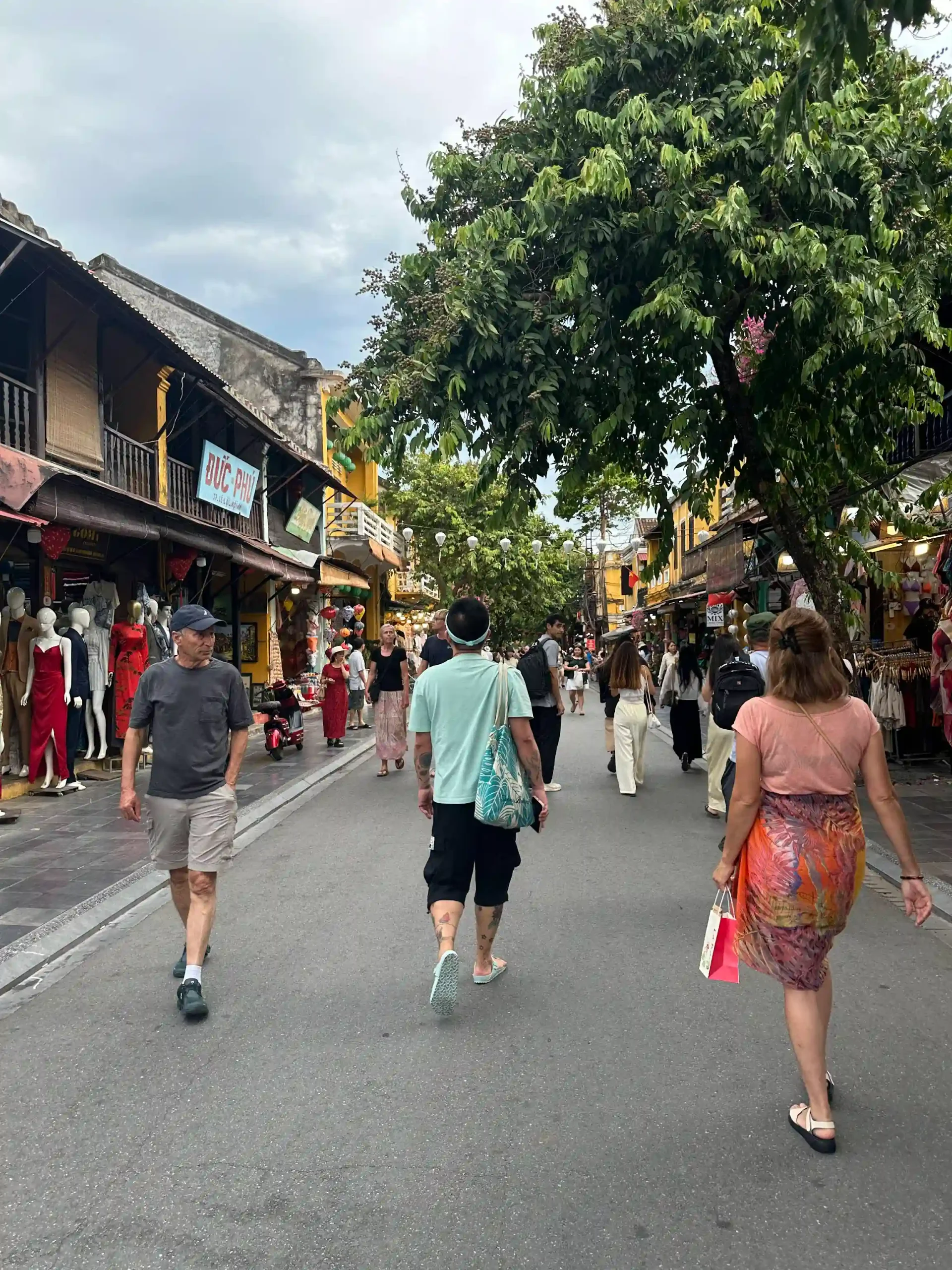
Hoi An you walk. The Ancient Town is closed to cars and motorbikes for much of the day and all evening, and everything else is a flat bicycle ride, which most hotels lend you for free. The beach is fifteen minutes on a bike.


Hanoi you don’t walk, or rather you walk short distances and take Grab for the rest. Pavements are occupied by parked motorbikes and food stalls, so you’re often in the road. Grab bikes are 20,000 to 40,000 VND across the centre, cars about double.


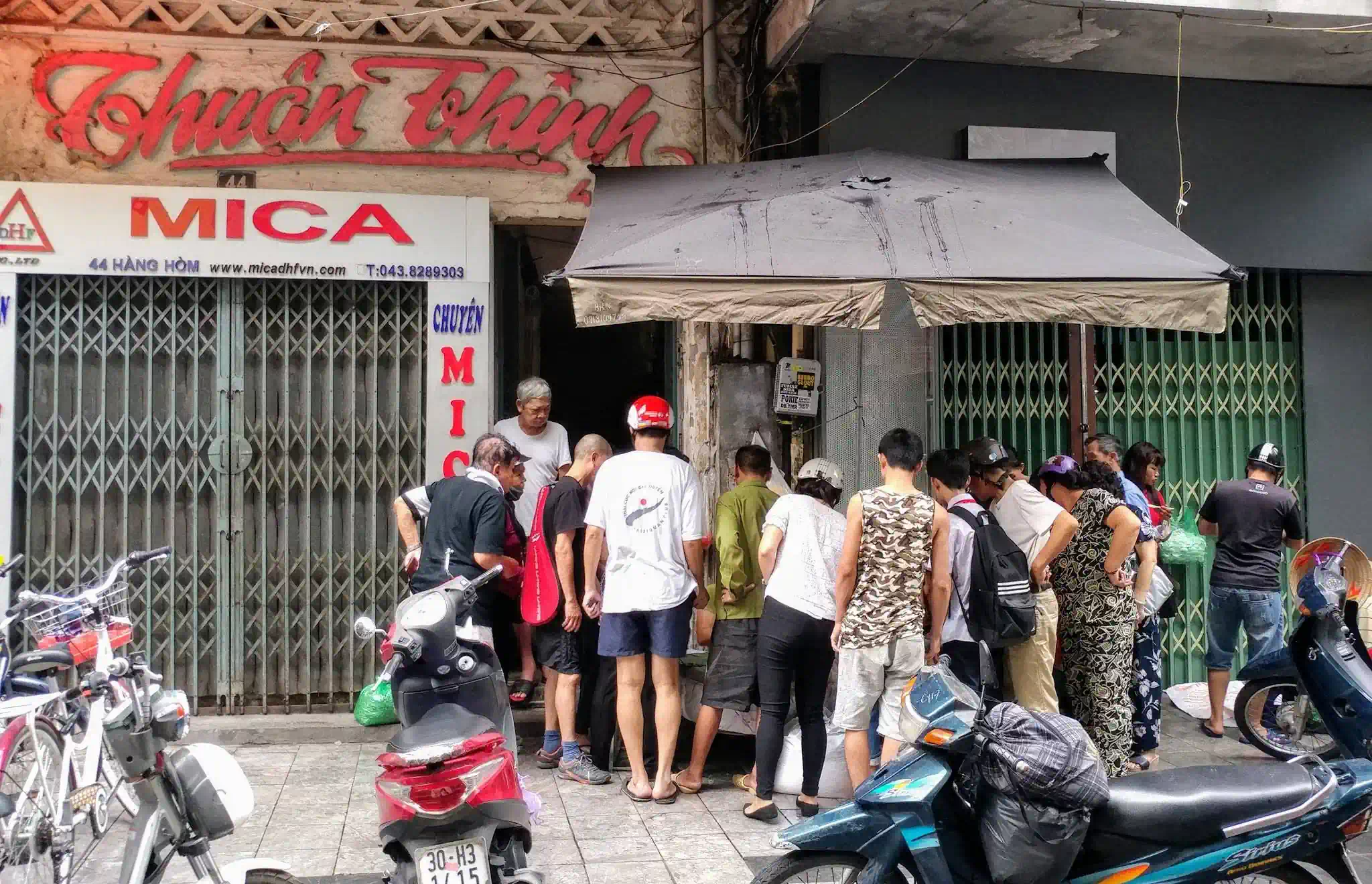
If Vietnamese traffic is the thing worrying you, that difference matters. Hoi An is the gentler introduction.
With Kids
Hoi An, and it’s the one category that’s a clean win.
The Ancient Town is flat and mostly pedestrianised in the evenings. An Bang beach is fifteen minutes away. There are cooking classes, basket boats and bike rides through rice fields, and everything is close enough that a tired child isn’t a crisis.



Hanoi with young children is possible but it’s constant management. Traffic, pavements full of parked motorbikes, and distances that need a taxi.
Older children and teenagers do fine in both, and probably prefer Hanoi.
Solo Travellers
Depends what kind of trip you’re having.
Hanoi is where you meet people. Hostels, bia hoi corners, walking tours, nightlife that goes late. If you’ve been alone a while and want company, it’s easier here.
Hoi An is where you go to be left alone. Cycle to the beach, sit in a café, eat early, be in bed by eleven. Nobody bothers you and it goes quiet once the day-trippers have gone.
Both are safe. The fuller version of that is in solo female travel in Vietnam.




Where I’d Stay in Each
In Hanoi, the Old Quarter if it’s your first visit, because everything is walkable from there and the noise is part of it. If you’d rather sleep, the French Quarter is ten minutes away and calmer.
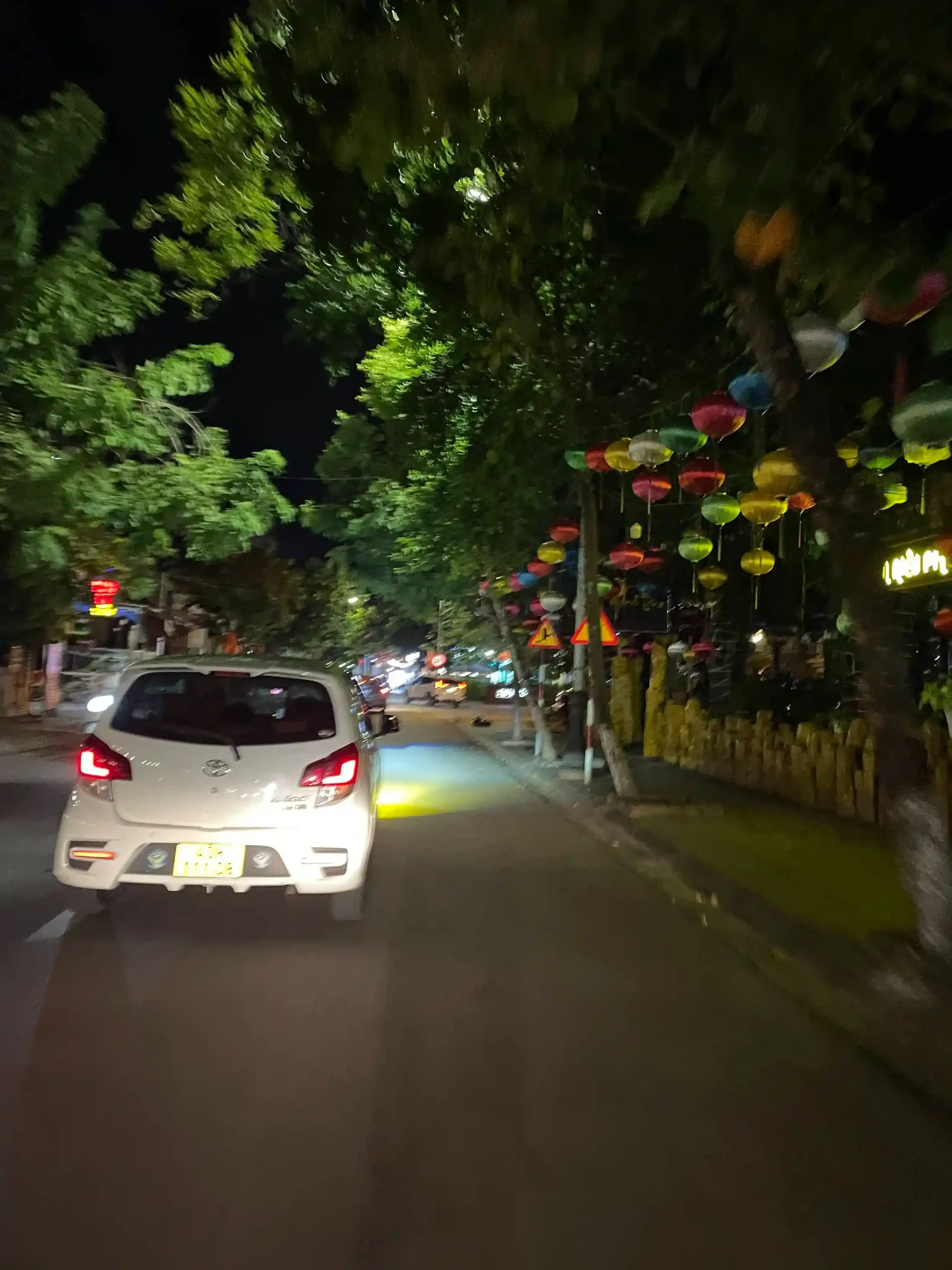
In Hoi An, staying inside the Ancient Town sounds right and mostly isn’t. It’s loud in the evening and you pay a premium to be in the middle of the crowd. Cam Chau and Cam Thanh are five to ten minutes by bike, quieter and greener, and that’s where the homestays with pools are. An Bang if you want the beach.
That’s broken down properly in places to stay in Hoi An.
Day Trips From Each
Hanoi has more, and better.
Ninh Binh is two hours away and it’s the one I’d send anyone to, limestone karsts and rivers with far fewer people than Ha Long. Ha Long Bay is three hours and usually an overnight cruise. Sapa is six hours by night bus or train for the mountains and rice terraces. Mai Chau and Pu Luong both fill a weekend.
Hoi An has My Son, a Cham temple complex an hour inland that’s worth a morning. Da Nang for the Marble Mountains and the beach. Ba Na Hills with the Golden Bridge, which is a theme park on a mountain and priced like one.
A week based in Hanoi fills itself. A week based in Hoi An needs you to actually like Hoi An.
Hoi An vs Hanoi on Crowds
Both are busy, in different ways.
Hanoi’s crowds are people who live there, and the crowded parts stay crowded all day and all year. It reads as a city, not as tourism.
Hoi An’s crowds are tourists and they arrive in waves. Coaches from Da Nang land mid-morning, the Ancient Town is difficult between about nine and noon, then it empties, then it fills again from six for the lanterns.
Before eight in the morning and after nine at night it’s a different town entirely. That pattern is the most useful thing to know about visiting Hoi An.



How Long Each One Holds You
Hanoi is three to four days in the city, and it’s also the base for Ninh Binh, Ha Long, Sapa and Mai Chau, so a week built around Hanoi makes total sense.
Hoi An is two to three days for the town itself, plus My Son, Da Nang and Ba Na Hills if you want them.
There’s a longer argument about that second number in Hoi An itinerary, including why I think most people underbook it.
What About Ho Chi Minh City?
It comes up constantly as the third option, so briefly.
Saigon is bigger, hotter, newer and more commercial than either. It’s a good city and it’s the wrong first stop for most people, because it doesn’t give the historic-Vietnam impression first-timers are usually after, and the heat is relentless year round.
The standard two-week route is Hanoi, then the centre including Hoi An, then Saigon and the Mekong. If your trip is under ten days, drop Saigon before you drop either of the other two.



Which I’d Pick If You Only Have One
Hanoi, for a first trip. More country in less time, better food, and it opens up the whole north.
I’d switch to Hoi An if any of these apply: children under about eight, you want clothes made, traffic worries you, you’ve been to Vietnam before, or your trip lands in December or January when Hanoi is at its worst.
For a second trip I’d say Hoi An almost every time. It rewards a longer stay in a way a two-day visit hides. Whether it’s worth visiting at all is a question I’ve answered separately, and the answer is yes, just not first.
Common Questions
Are Hanoi and Hoi An the same place? No. Two separate cities, 800km apart, in different regions with different climates. Hanoi is the capital in the north; Hoi An is a small town on the central coast.
Is Hoi An the same as Hanoi? No, and the names are the only thing they share. Hanoi has 8 million people, Hoi An about 120,000.
Is Hoi An near Hanoi? No. Fly to Da Nang, an hour and a half, then 45 minutes on the road. You cannot day-trip between them.
Is Hoi An the same as Ha Long Bay? Also no, and this is the other mix-up. Ha Long is three hours east of Hanoi in the north. Hoi An is 800km south of it.
Hanoi or Hoi An, which is better? Hanoi for a first trip and a short one. Hoi An if you have kids, want clothes made, or are coming back to Vietnam.
Is Hanoi colder than Hoi An? Much, in winter. Hanoi sits at 13 to 17°C from December to February. Hoi An stays warm year round.
Cooking class in Hanoi or Hoi An? Hoi An. More options, better setups, and most include a market walk and a basket boat.
Which has better shopping? Hoi An for tailoring and made-to-measure. Hanoi for silk, ceramics and coffee.
Is Hoi An too touristy? Between nine and noon, yes. Early and late, no. Same town, different hours.
The Answer Depends on Your Month
Everything above comes down to two inputs: when you’re going and how many days you have.
November or late January, Hanoi, without hesitating. June with young children, Hoi An. March, you can’t really get it wrong either way. Under a week and it’s your first time in Vietnam, Hanoi, because the day trips out of it are the best part of the north.
And if you have twelve days or more, stop choosing. Fly into Hanoi, take the week in the north, fly to Da Nang, and give Hoi An the back half of the trip, which is where it works best anyway.

Keep Exploring Hoi An
-
See & do UltimateMy 7 favorite things to do in Hoi An as an expat ›
-
Guide Must readIs Hoi An worth visiting or overrated now in 2026 ›
-
GuideHai Van Pass Easy Rider from Hoi An to Hue: Prices & advice ›
-
GuideVisit My Son Sanctuary from Hoi An: Motorbike or tour? ›
-
GuideComparing all 4 ways to get from Da Nang to Hoi An ›











 Tiếng Việt
 한국어
한국어 中文 (中国)
 日本語
日本語 ไทย
ไทย Deutsch
 Español
 Destinations
 Instagram
 Facebook
 X (Twitter)
 Threads
 Tiktok