









 Ha Giang
 Hanoi
Hanoi Ho Chi Minh City
 Ha Long
 Sapa
Sapa Mekong Delta
 Da Nang
 Hue
Hue Hoi An
 Ninh Binh
 Da Lat
 Nha Trang
 Phan Thiet
 Phu Quoc
 Quang Binh
 Quy Nhon
 Vung Tau
 Thai Nguyen







Let’s get one thing straight. The glossy travel blogs and picture-perfect Instagram feeds are selling a fantasy of Vietnam. They’re not entirely wrong—the country is stunning. But they leave out the grit, the frustration, and the hard-won lessons that come with navigating this place on your own as a woman.
This isn’t a guide to sell you on a dream. This is a practical breakdown of what solo female travel in Vietnam is actually like. It’s for the traveler who prefers reality over romance. It’s the advice I wish someone had given me.
The Quick and Dirty: What You Need to Know Now
- Based on years of on-the-ground experience, this isn’t your average guide to solo female travel in Vietnam. Learn 10 crucial lessons on everything from the Ha Giang Loop and sleeper buses to avoiding tourist taxes and finding the best street food. This is the unfiltered advice you won’t find elsewhere.
- 1. Safety Isn’t What You Think: Violent crime is rare. The real threat is the silent, efficient theft of your phone or wallet in broad daylight. It’s about awareness, not fear.
- 2. Traffic is a System, Not Chaos (And Your Phone is Your Lifeline): Learning to cross the street is your first test. Rideshare apps like Grab are not a suggestion; they are essential for your budget and sanity.
- 3. ‘No’ is a Complete Sentence: You will be a target for sales pitches from the second you step outside. A polite smile is often seen as an invitation to persist. Learn to be firm and walk away.
- 4. Cash Runs Everything (And the Zeros Will Mess With Your Head): Don’t expect to use your card for daily expenses. Get used to carrying wads of cash and double-checking every bill before you hand it over.
- 5. How to Dress: Think Climate and Context, Not Just Modesty: The key is lightweight fabric for the oppressive humidity. Cover up for temples; otherwise, dress for the heat like the locals do. It’s that simple.
- 6. The Ha Giang Loop is a Serious Undertaking, Not an Instagram Backdrop: It’s a spectacular but dangerous mountain road. If you’re not an experienced motorcyclist, hiring an easy rider isn’t just an option—it’s the only sane choice.
- 7. Your Phone’s Translator is a Crutch, Not a Conversation: It helps, but non-verbal cues and a patient attitude will solve more problems than a clunky translation app ever will.
- 8. You’re Going to Get Scammed. Accept It: It will likely be for a small amount. It will be infuriating. Don’t let a $3 taxi overcharge derail your day. See it as a mandatory, if annoying, “tourist tax.”
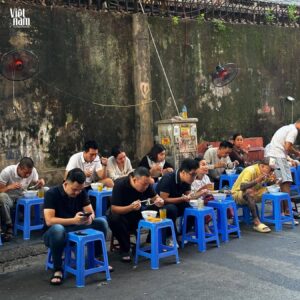
- 9. The Best Food Has No English Menu: If a place has air conditioning, laminated menus, and a host, you’re probably in the wrong spot for an authentic meal. The real deal is served on tiny plastic stools on the pavement.
- 10. Your Meticulously Crafted Itinerary Will Fail: A bus will be late, a tour will be cancelled, the weather will turn. Flexibility isn’t a travel buzzword here; it’s a survival mechanism.
The Full Debrief: Lessons from the Ground
1. Rewiring Your Safety Brain

The first question is always “is Vietnam safe for women?” Yes, but you have to redefine “safe.” The fear of physical harm, the kind you might feel walking alone at night in a Western city, is largely absent here. The real threat is economic and opportunistic.
My introduction to this happened on day two in Ho Chi Minh City. Walking down a busy street, phone in hand to check Google Maps—a rookie mistake.
A motorbike coasted up beside me, moving no faster than the flow of traffic. The passenger on the back plucked the phone from my hand with zero fuss.
It was gone before my brain registered the touch. There was no violence, no struggle. It was just an efficient transaction I hadn’t agreed to.
This is the reality of solo female travel in Vietnam. The danger isn’t an attacker in the shadows; it’s a quiet professional on a motorbike.
Practical defense mechanisms:
- Bag Strategy: A crossbody bag, worn on the front of your body, with your hand resting on it in crowds. Never hang it on the back of a chair. That’s an open invitation.
- Phone Discipline: Your phone lives in your bag. If you need to check it, step into a storefront or put your back against a wall. Walking and scrolling makes you a target. This is the single biggest cause of lost tourist property.
- Night Logic: When exploring Ho Chi Minh City nightlife, the risk profile doesn’t change much. It’s still about theft. The streets are busy late into the night. Use Grab or GSM to get back to your hotel, even for short distances. Don’t wander down unlit, empty alleys. This isn’t unique to Vietnam; it’s just basic sense.
The mental shift for solo female travel in Vietnam is moving from guarding your body to guarding your belongings with obsessive attention.
2. Navigating the Organized Insanity of Vietnamese Traffic
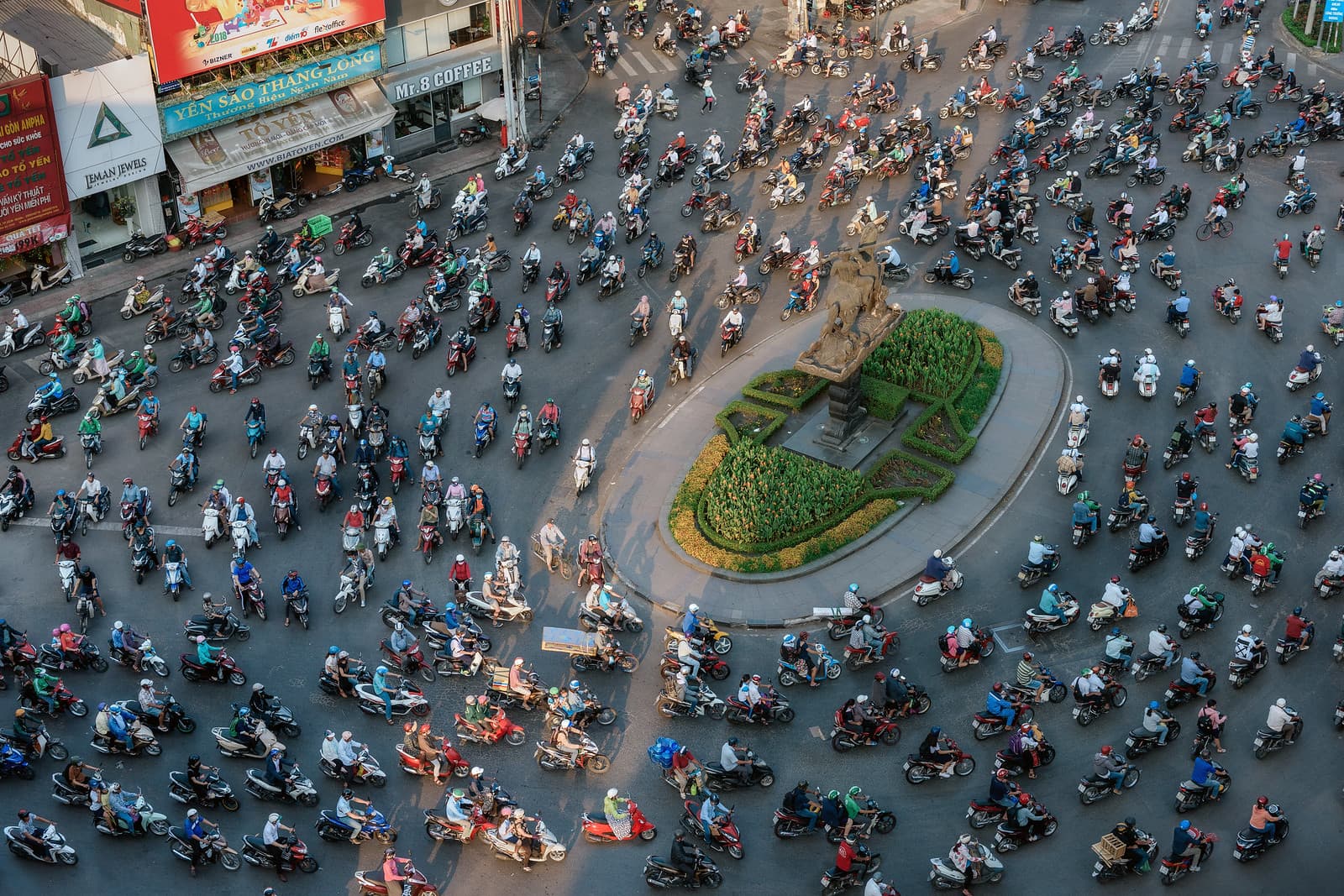
The traffic in a city like Hanoi is a sensory assault. It’s a flowing river of metal and noise that seems to follow no discernible rules. Your first task is simply getting to the other side of the street.
The technique is counter-intuitive: walk slowly and predictably. Don’t stop, don’t dodge, and never run. The thousands of motorbike drivers are masters of fluid dynamics; they will flow around you. It’s your sudden, unpredictable movements that cause problems.
For actual transport, street taxis are a gamble. Many have meters that tick over with suspicious speed. Your non-negotiable tool is a rideshare app. Get a local SIM card at the airport and download Grab and GSM.
- The Motorbike Taxi (Xe Ôm): The default way to get around. A ten-minute trip will cost you less than a dollar. It’s efficient, slightly terrifying at first, and utterly Vietnamese. They give you a helmet. Wear it.
- The Car Option: Better for airport runs, when you have luggage, or during a sudden downpour. Still cheap.
Long-distance travel introduces the sleeper bus. It’s a cultural experience disguised as transportation. These are double-decker buses with tiny, reclining pods instead of seats. They’re a cheap way to get from one city to the next overnight (e.g., Nha Trang to Mui Ne for ~150,000 VND / $6).
But be warned: the ride can be jarring, the cheap air freshener potent, and the onboard toilet an experience you’ll never forget.
For a more civilized journey, the train system is a better bet, especially the scenic coastal route from Da Nang to Hoi An, a must-do on any Vietnam itinerary. You can find a deeper dive in our Ultimate Guide to Vietnam Transportation.
3. The Power of a Cold ‘No’

As a solo Western woman, you are a walking billboard that says “tourist with money.” In any area with heavy foot traffic, you will face a constant barrage of offers. “Lady, buy postcard.” “Moto taxi?” “Hello, where you from? You want see my shop?”
Initially, the instinct is to be polite—to smile, shake your head, say “no, thank you” softly. This is a mistake. In this context, politeness is interpreted as hesitation, a negotiation waiting to happen.
The only effective strategy is a firm, clear “No, thank you” (“Không, cảm ơn”) while looking straight ahead and continuing to walk. You are not being rude; you are setting a necessary boundary.
This extends to social interactions. You will receive genuine offers of hospitality, and they can lead to amazing experiences. But you will also get invitations that feel… off. Trust that feeling in your gut.
The ability to shut down an uncomfortable conversation or decline an offer without feeling guilty is a critical skill for solo female travel in Vietnam. Your comfort is more important than a stranger’s feelings.
4. The Cash Economy and Its Many Zeros

Vietnam runs on cash. Outside of international hotels and the most tourist-focused restaurants, your credit card is a useless piece of plastic. Street food, market goods, a bottle of water—it’s all paid for with Vietnamese Dong (VND).
Forget the “instant millionaire” cliché. The reality is you’ll be dealing with thick, unwieldy stacks of polymer notes that all feel the same. This isn’t fun; it’s a logistical challenge.
The real trap is the zeros. In the dark of a bar or in the rush of a street transaction, your brain will betray you.
The blue 500,000 VND note and the blue 20,000 VND note will look identical. You will, at least once, almost pay $20 for an item that costs less than $1. This isn’t a possibility; it’s a near certainty for the unprepared.
This requires a system, not just caution:
- The Wallet Split: Keep your large bills (500k, 200k) tucked away separately from your daily spending money. For a coffee or a bánh mì, you should only ever be pulling from a small stash of 10k, 20k, and 50k notes. Flashing a giant roll of 500k notes to pay for a 15k sugarcane juice is a rookie move.
- The Deliberate Count: When you pay for something, stop. Don’t be rushed. Count the notes out loud or onto the counter. When you receive change, do not move. Count it in your hand, right in front of the seller. This is not rude. It’s standard practice and it signals that you are paying attention.
- ATM Strategy: Only use ATMs attached to a proper bank. The withdrawal limits are often low (2-3 million VND) and the fees are fixed, so it’s better to take out the maximum amount each time. Check your surroundings before you use one.
- Haggling is a Rule, Not an Insult: In markets, the first price quoted is an opening offer, not a final price. The general rule is to counter with about half, and meet somewhere in the middle. Do it with a smile. It’s a transaction, not a conflict. If the price is printed, you don’t haggle.
Feeling in control of your money is fundamental to feeling confident during your solo female travel in Vietnam.
5. What to Wear: A Guide to Not Overthinking It

The internet is full of bad advice on this. You do not need to dress like you’re on a conservative cultural exchange program. The primary concern is the oppressive heat and humidity.
Fabric is more important than form. Lightweight linen, cotton, and technical fabrics that wick sweat are essential.
The rules of modesty are simple and situational:
- Big Cities (Hanoi, HCMC, Da Nang): Look at what young local women are wearing. It’s shorts, dresses, jeans, and t-shirts. Dress for the climate. You’ll look more out of place in baggy “elephant pants” than in a simple pair of shorts.
- Temples and Official Sites: This is the only place with a strict dress code. Cover your shoulders and knees. A lightweight scarf or sarong stuffed in your daypack is the easiest solution. Wrap it around your waist or shoulders before entering.
- Rural Villages: A slightly more conservative approach is respectful. This means maybe opting for knee-length shorts or a t-shirt instead of a tank top. It’s about showing respect, not adhering to a strict rule.
- Beaches & Boats: Standard swimwear is fine.
The goal for packing for solo female travel in Vietnam is not to have a huge wardrobe but to have versatile pieces. Check our Ultimate Vietnam Packing List for Women for a no-nonsense list.
6. The Ha Giang Loop: This Is Not a Joyride

The Ha Giang Loop is one of the most raw and visually spectacular journeys in Southeast Asia. The photos don’t do it justice. But the popular image of a carefree tourist on a scooter is a dangerous misrepresentation.
This is a treacherous mountain road. It features blind hairpin turns, massive elevation changes, sections of unpaved road, and sheer drops with no guardrails.
Local drivers and massive trucks use these same roads. I saw multiple bloody accidents involving tourists who had rented a bike with zero prior experience.
Let me be blunt: If you are not a confident, licensed, and experienced motorcycle rider, do not rent a bike to drive yourself. Your inexperience is a danger to yourself and others.
The correct way to experience the loop is by hiring an “easy rider.” A local guide who knows every pothole and corner will drive the bike. You sit on the back, free to absorb the staggering landscape without the stress of staying alive. It’s safer and you’ll see more.
- The Cost: Expect to pay around $200−250 USD for a 3-day tour. This price typically covers everything: the driver, bike, fuel, basic homestay accommodation, all meals, and the required local permit.
- Where to Book: Getyourguide/Klook, any legitimate hostel or tour operator in Ha Giang town can arrange this.
A Ha Giang Loop solo trip with an easy rider is a profound experience. It’s a highlight of any serious Vietnam itinerary, but it demands respect.
7. Language: Technology is a Tool, Not a Solution

Away from the main tourist trail, the English language disappears. The language barrier is a real, solid wall. Your phone is your primary tool for chipping away at it.
- Google Translate: Have it on your phone with the Vietnamese language downloaded for offline use. The camera function, which live-translates text on menus and signs, is a game-changer. The conversation mode is clunky, but it can get a basic point across in a pinch.
But the most effective communication tools are analog: patience and a pen and paper (or a calculator app). When trying to buy a bus ticket in a remote station, pointing, miming, and showing the numbers on a calculator works better than a poorly translated sentence.
A smile and a patient demeanor communicate that you’re not another frustrated tourist. Most Vietnamese people are incredibly resourceful and will find a way to help you if you give them a chance. This approach is a cornerstone of a successful solo female travel in Vietnam experience.
8. The Inevitability of the Scam

At some point, you will get ripped off. It might be a taxi driver taking the “scenic route,” a vendor who “forgets” to give you the correct change, or a cyclo driver who insists the agreed-upon price was per person.
It will happen. It happens to everyone. The first time, it feels personal and infuriating. The trick is to re-frame it. It’s a small, unofficial tax for the privilege of being a tourist.
Some classics to watch for:
- The Price “Misunderstanding”: Always confirm the total price for something (like a cyclo ride) on a phone calculator before you get in. No ambiguity.
- The “Free” Photo Prop: A woman with a fruit basket on a pole might offer it to you for a photo. The moment you take it, she’ll demand a ridiculous payment. Just say no and walk away.
- The Unsolicited Shoe Repair: Someone will point at your sandal and start applying glue to a non-existent problem, then demand payment. Again, a firm “no” is the only response.
Don’t let a 50,000 VND (~$2) scam poison your perception of an entire country. Acknowledge the annoyance, learn the pattern, and move on. Developing this thick skin is part of the experience of solo female travel in Vietnam.
9. The Gospel of the Plastic Stool

If you’re judging restaurants on TripAdvisor or seeking out places with comfortable seating, you’re missing the entire point of Vietnamese cuisine. The country’s best food is found in unassuming, family-run shophouses or right on the pavement.
The uniform is universal: tiny plastic stools that seem built for toddlers and low metal tables. This is where you find the good stuff.
How to find the culinary gold:
- Follow the Locals: If a spot is crammed with Vietnamese people on their lunch break, it’s good. High turnover means fresh ingredients.
- The One-Trick Pony: The best places often make only one or two dishes. They’ve spent decades perfecting their phở or bún chả. They don’t need a big menu.
- Point and Pray: No English menu? No problem. Just point at the delicious-looking bowl on the next table.
One of the best meals I ever had was a bowl of Cao lầu in a Hoi An alleyway. The “restaurant” was a woman with a single pot and a few stools.
It cost next to nothing and tasted better than anything from a fancy kitchen. Learning to eat like this is essential for any Hanoi solo travel or Vietnam adventure. Get started with our Hanoi Street Food Guide for Beginners.
10. The Beauty of a Broken Plan

You can have the most perfectly planned Vietnam itinerary. Every bus ticket booked, every hotel confirmed, every day mapped out.
Then a tropical storm will roll in and cancel your Ha Long Bay trip. A bus will break down in the middle of nowhere. A museum will be inexplicably closed.
This is not a disaster. This is where the real travel begins. Solo female travel in Vietnam forces you to become a problem-solver.
My bus to Ninh Binh was cancelled. Stranded and annoyed, I ended up splitting a taxi with a stranger to the nearest train station.
On the train, we ended up sharing snacks and stories with a local family. The broken plan led directly to a far more memorable and human experience.
Don’t pack your schedule so tightly that there’s no room for chaos. It’s in those unplanned moments—the detours, the delays, the need to ask for help—that you find the best stories. A rigid plan is a fragile thing. A flexible attitude is indestructible.
The Final Verdict
So, should you do it?
Yes. If you’re looking for an easy, relaxing vacation, go to a resort in Thailand. If you want a trip that will challenge, teach, and fundamentally change you, go to Vietnam.
Solo female travel in Vietnam is an education in self-reliance, patience, and situational awareness. You’ll learn to trust your instincts, navigate true chaos, and find kindness in unexpected places.
Go with your eyes open and a healthy dose of skepticism. The reward is an experience that feels earned and entirely your own.












 Tiếng Việt
 한국어
한국어 中文 (中国)
 日本語
日本語 ไทย
ไทย Deutsch
 Español
 Destinations
 Instagram
 Facebook
 X (Twitter)
 Threads
 Tiktok