









 Ha Giang
 Hanoi
Hanoi Ho Chi Minh City
 Ha Long
 Sapa
Sapa Mekong Delta
 Da Nang
 Hue
Hue Hoi An
 Ninh Binh
 Da Lat
 Nha Trang
 Phan Thiet
 Phu Quoc
 Quang Binh
 Quy Nhon
 Vung Tau
 Thai Nguyen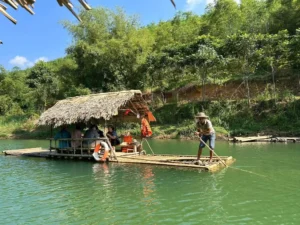


After a week in Ninh Binh, Pu Luong felt like a different country entirely, and figuring out the actual things to do in Pu Luong took a bit of trial and error on that first trip. Same general region of northern Vietnam, same rough climate, but the karst valleys and boat tours give way to terraced hillsides and villages you reach on foot rather than by water.
This is what my first few days here actually looked like, what’s genuinely worth doing, and what it cost.
- Quick Answer: This Pu Luong travel guide covers a nature reserve in Thanh Hoa province built around terraced rice fields, Thai and Muong ethnic villages, and trekking trails through the largest karst forest in northern Vietnam. The main things to do are trekking to Kho Muong village, bamboo rafting on Cham Stream, visiting the water wheels near Chieng Lau, and the walk to Hieu Waterfall. Costs run low for food and local transport, moderate for guided treks, and the whole area works best with at least two full days, three if you want to do it without rushing.
- What There Is to Actually Do:
- Trek to Kho Muong village, a genuinely isolated valley reached on foot, stilt houses and rice terraces below limestone cliffs.
- Bamboo rafting on Cham Stream, a calm, short float rather than anything adventurous.
- Water wheels near Chieng Lau village, still used to move water up to the terraces.
- Hieu Waterfall, a jungle walk ending at a multi-tier waterfall with swimming pools.
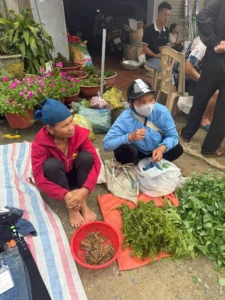
- Pho Doan Market, worth an early visit for actual local trading.
- Silk weaving demonstrations in villages along the main trekking routes.
- What It Actually Costs:
- Bamboo rafting: around 150,000 VND for the standard short route.
- A private guided day tour: roughly $55 per person, including lunch, water, and the rafting fee.
- Local food at a village stall or lodge: 30,000-60,000 VND for a simple meal.
- Guided trekking without a full package: negotiable, but budget $20-40 per person for a half-day.
- How Long to Stay: two full days covers the core trekking, rafting, and one village visit properly. Three days gives you room for a second, quieter village or the longer trek up toward Pu Luong itself without feeling rushed.
What a Pu Luong Travel Guide Should Actually Tell You First
Pu Luong Nature Reserve sits in Thanh Hoa province, a stretch of karst forest large enough that only about a third of it is actually inhabited, the rest protected wilderness of jungle, bamboo, and mountain woodland.
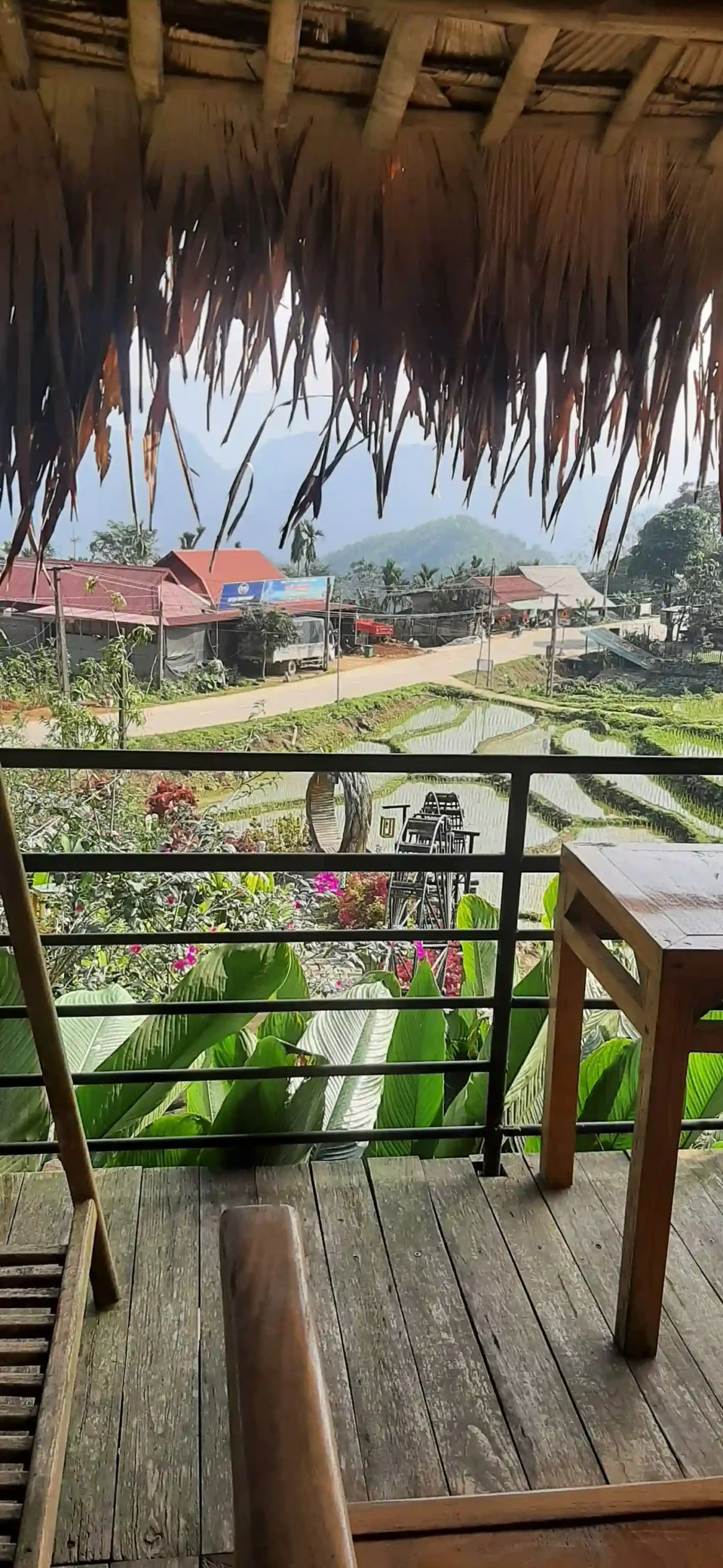
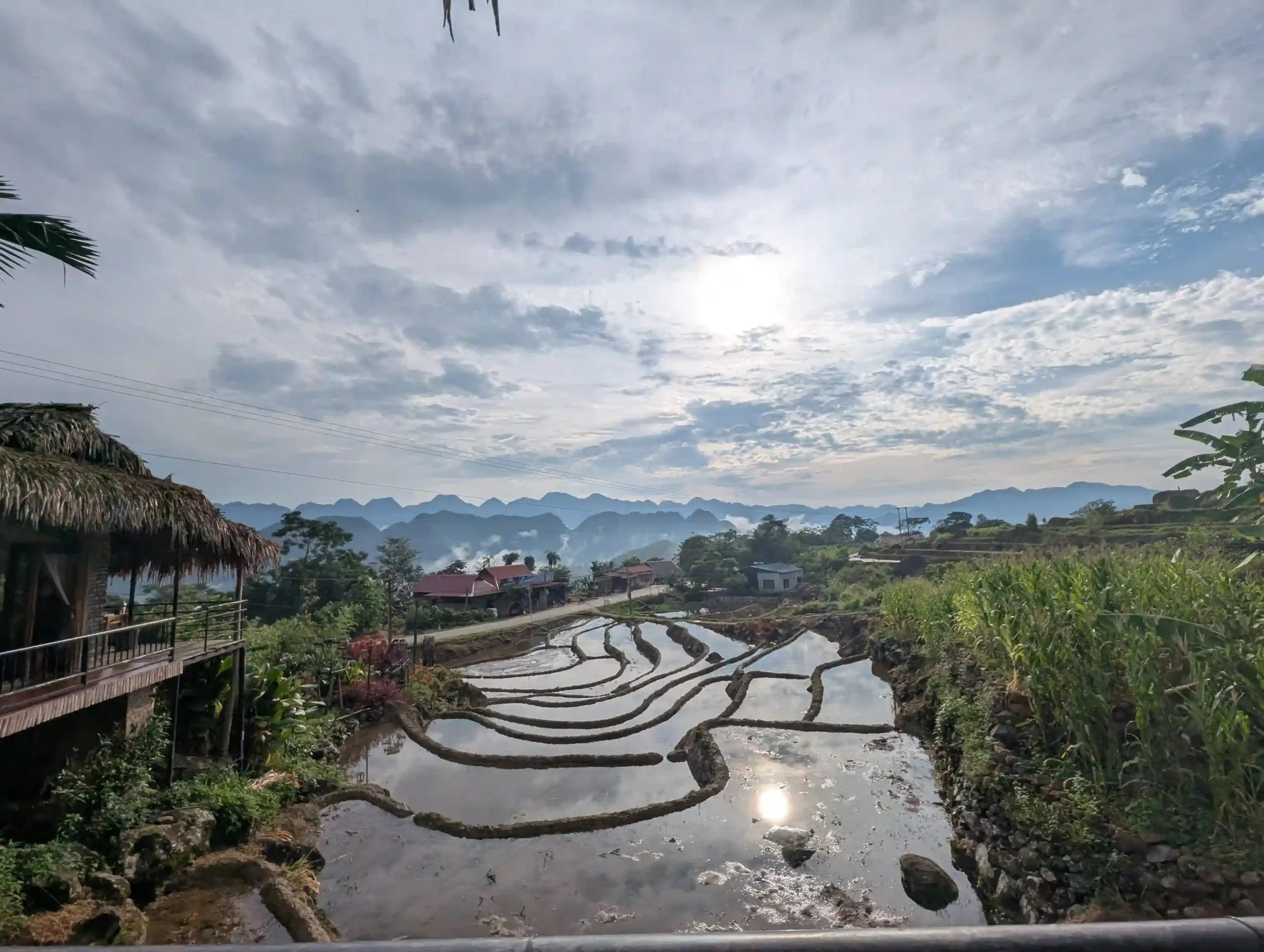
The terraced rice fields that show up in every photo of the place cut across the valleys between the forest and the villages, worked by the Thai and Muong communities who’ve farmed this land for generations.
The reserve itself spans thousands of hectares, and most visitors only ever see a small fraction, the accessible valley floor and the villages closest to the main road in. That’s genuinely fine, the deeper forest is protected for a reason and isn’t set up for casual visits, but it’s worth knowing the scale of the place before assuming a day trip covers “Pu Luong” in any complete sense. What you’re actually experiencing is one valley system within a much larger protected area.
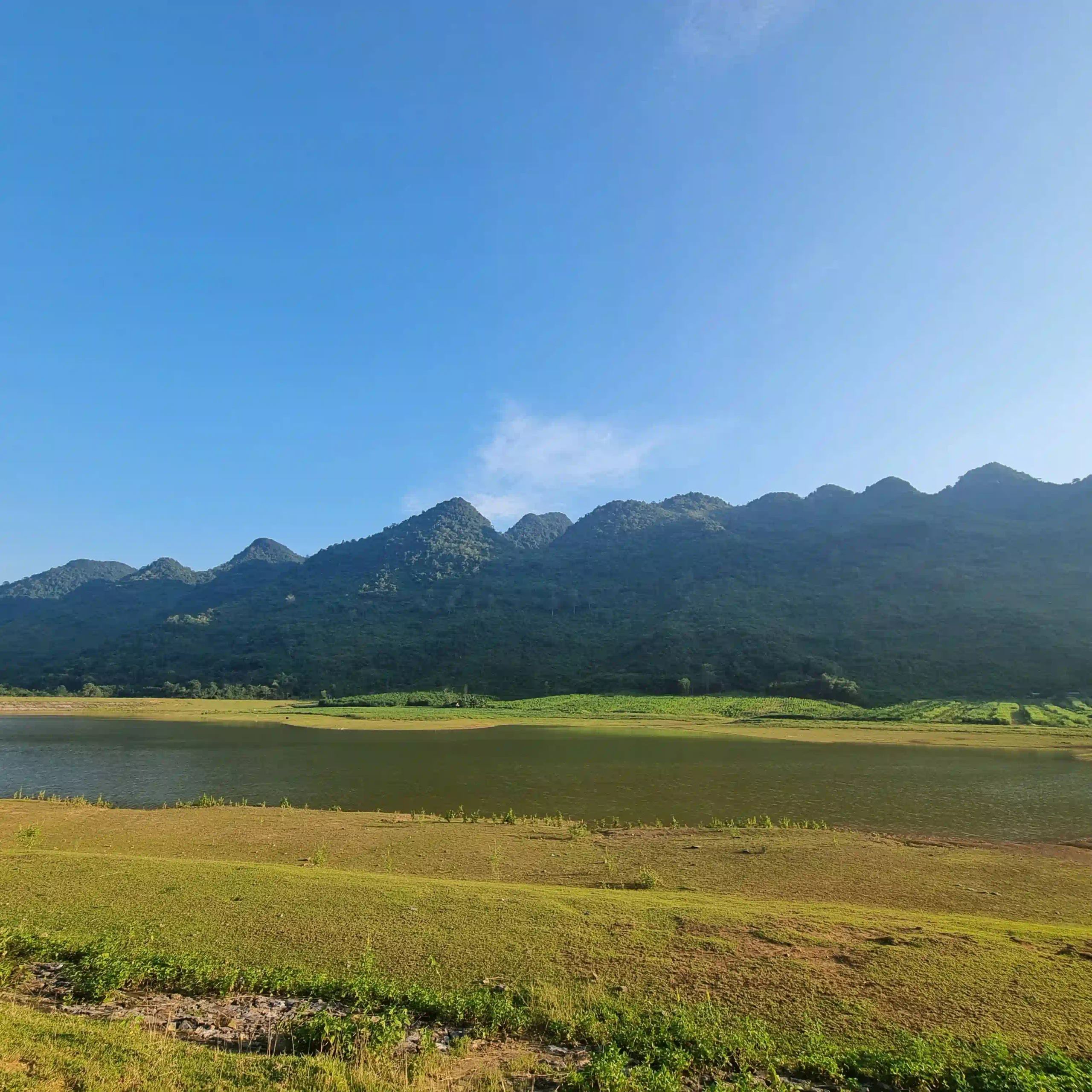
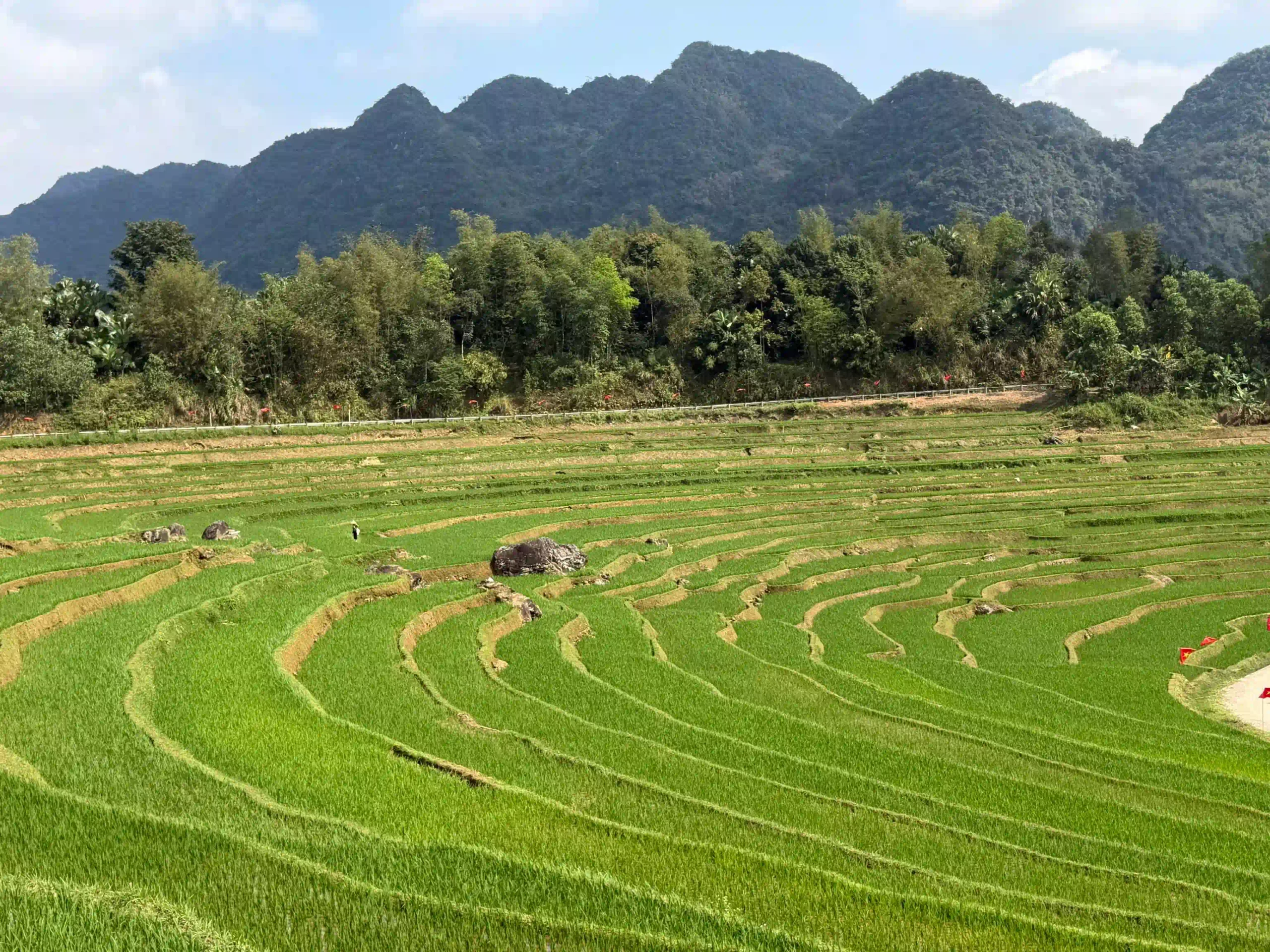
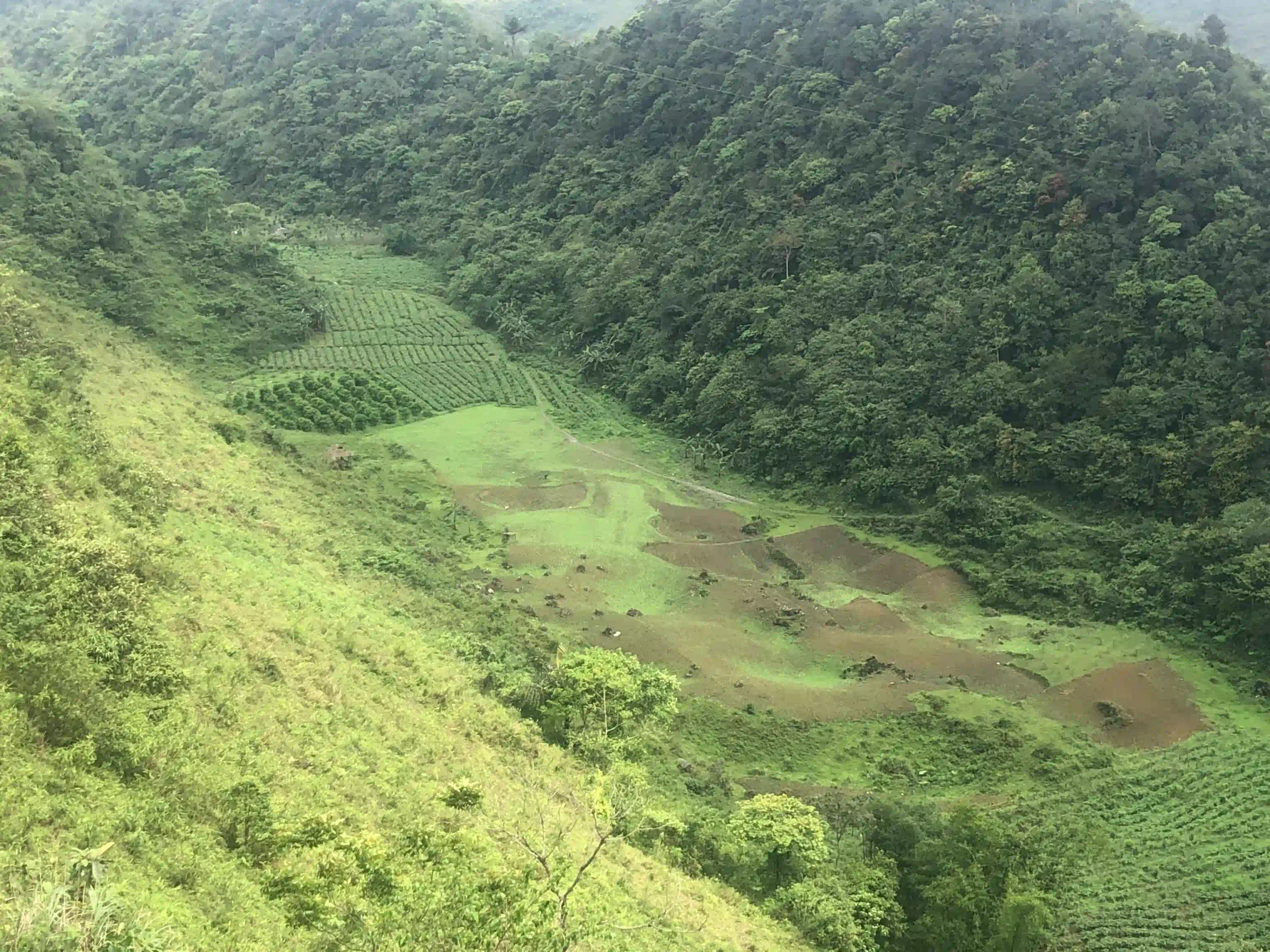
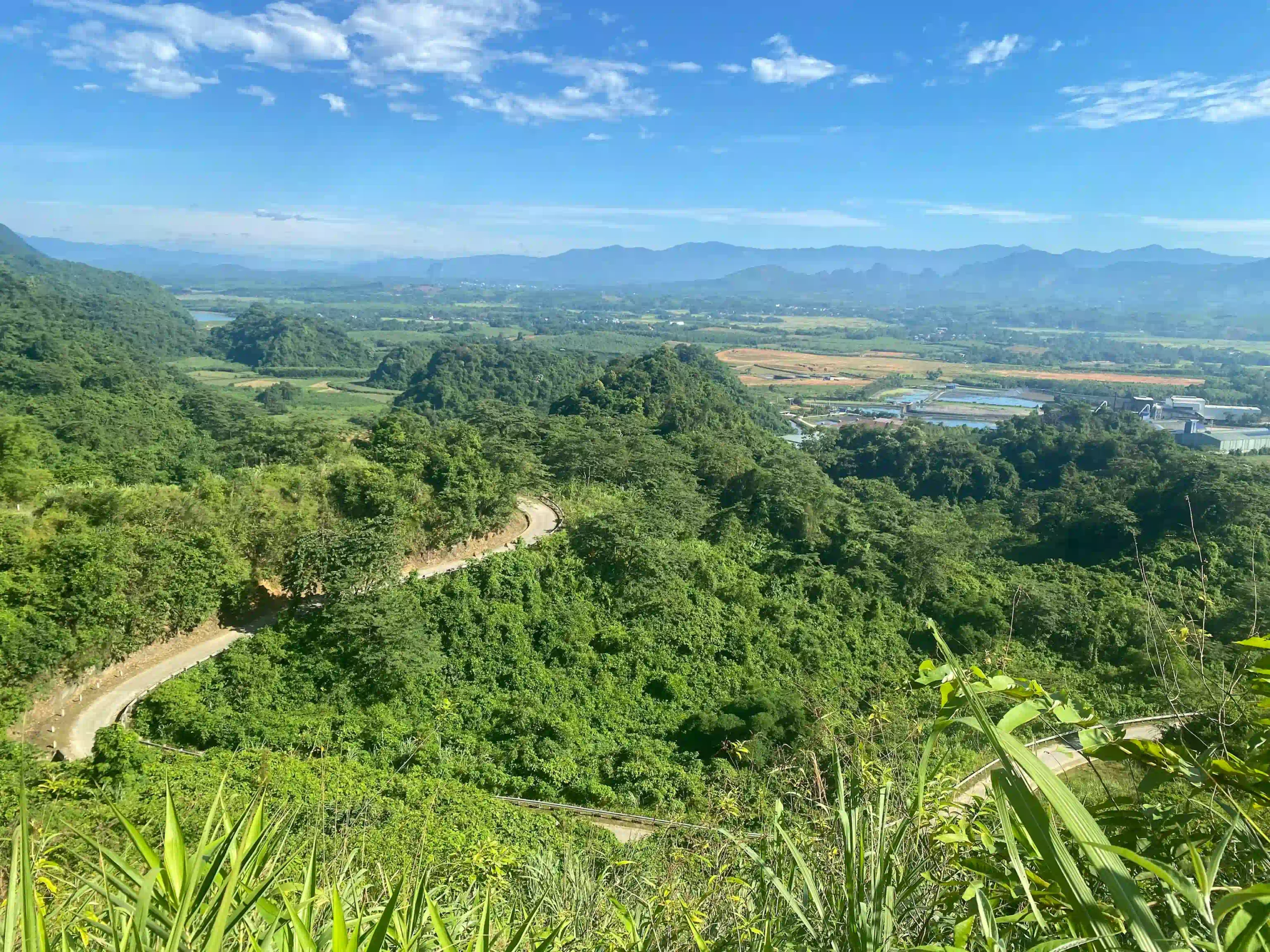
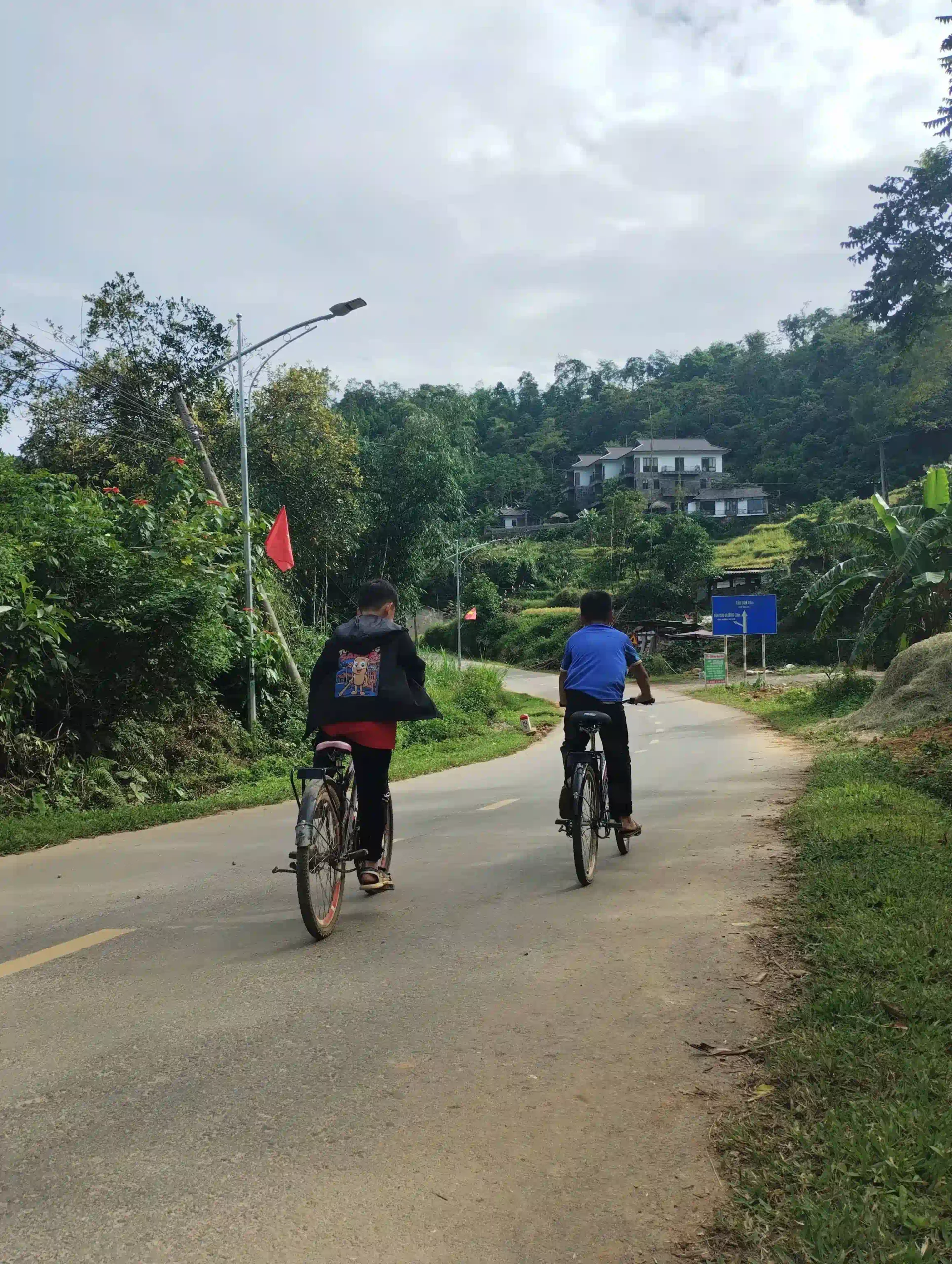
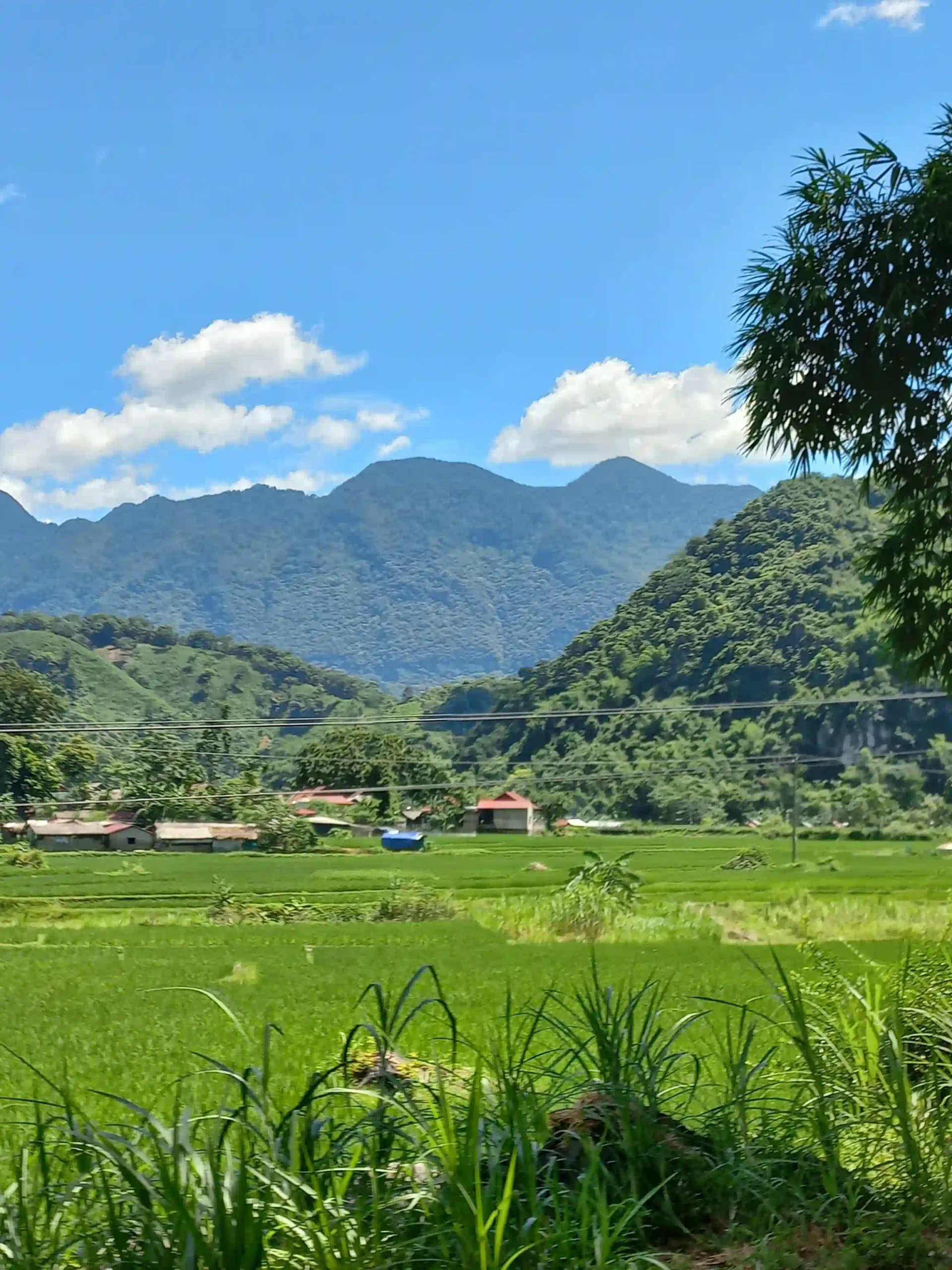
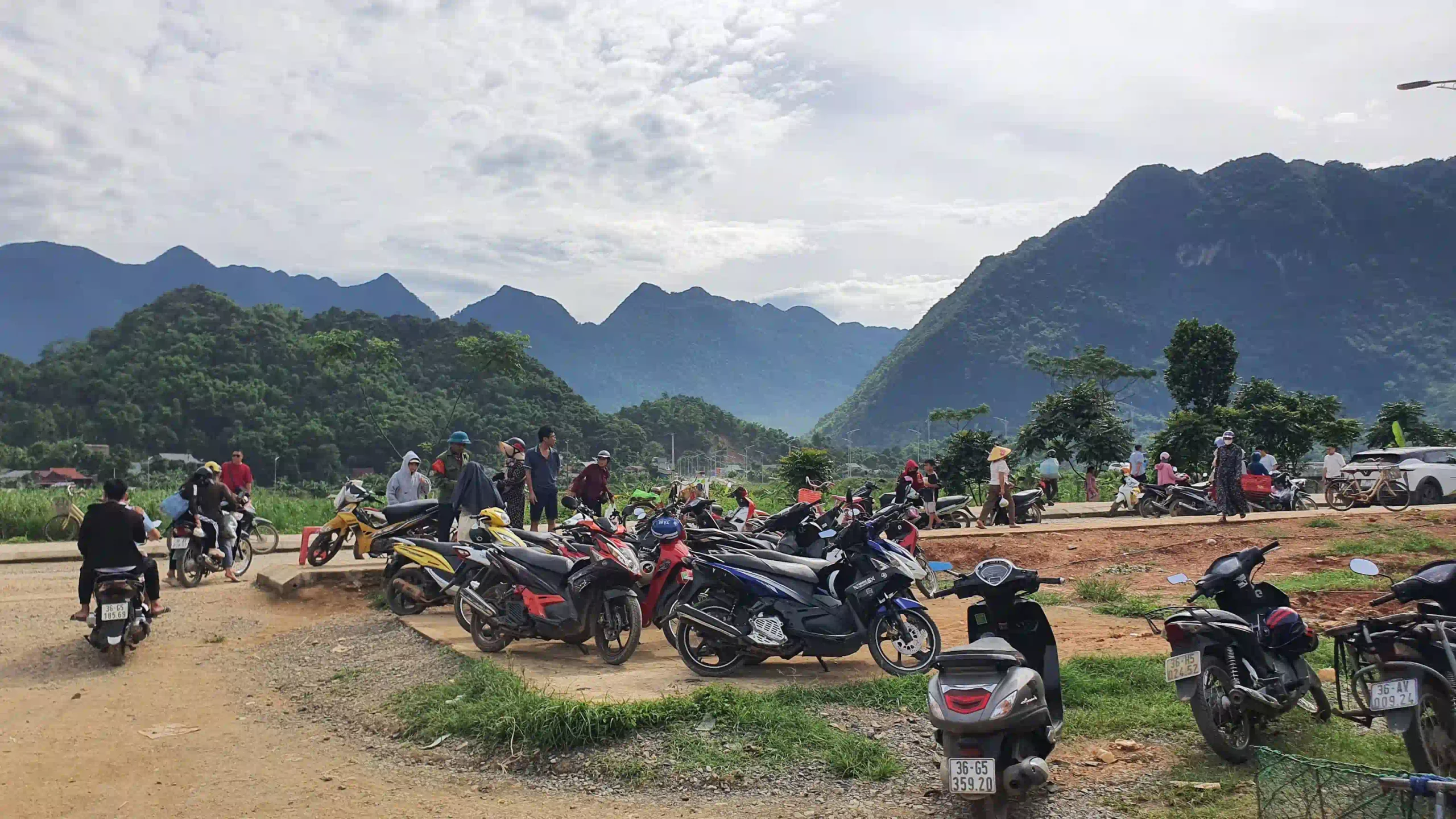
Arriving from Ninh Binh, the shift is immediate. Ninh Binh’s karst rises out of flat rice paddies and rivers you explore by boat. Pu Luong’s version is vertical in a different way, terraces climbing the hillsides themselves, and you experience it on foot or by bike.
The pace here is slower too, fewer boat-tour crowds, more the sound of a village going about its day than the rhythm of a tourist circuit.
Motorbikes are rarer here too, replaced by the occasional bicycle or someone walking with a basket on their back, which changes the whole soundscape of a morning walk.
The best rice-field photos, the ones that show up on every Pu Luong Instagram post, come from May-June and again September-October, the two planting and harvest windows when the terraces run either vivid green or deep gold. Outside those windows the fields still look good, just less dramatically photogenic, worth knowing if the timing of your trip isn’t flexible and you’re specifically chasing that golden-terrace shot.
Things to Do in Pu Luong
Trekking to Kho Muong Village
This is first thing to do in Pu Luong and the trek most people come specifically for, a descent into an isolated valley that feels genuinely removed from anything resembling modern infrastructure. Stilt houses cluster along the valley floor, rice terraces framing the whole scene below limestone cliffs on both sides.
The walk down is steep enough to notice in your legs, and the return climb more so, but neither is technical, just a proper hike.
The descent itself takes somewhere around an hour depending on pace, following a mix of stone steps and dirt path that switches back down the hillside. About halfway down, the trail opens onto a viewpoint where the whole valley comes into view at once, terraces stacked in tiers down to the stilt houses, limestone walls closing in on both sides like the valley was carved.
I stopped there longer than I’d planned to, mostly because the guide didn’t rush the group along, letting people take photos or just stand and look for as long as they wanted.
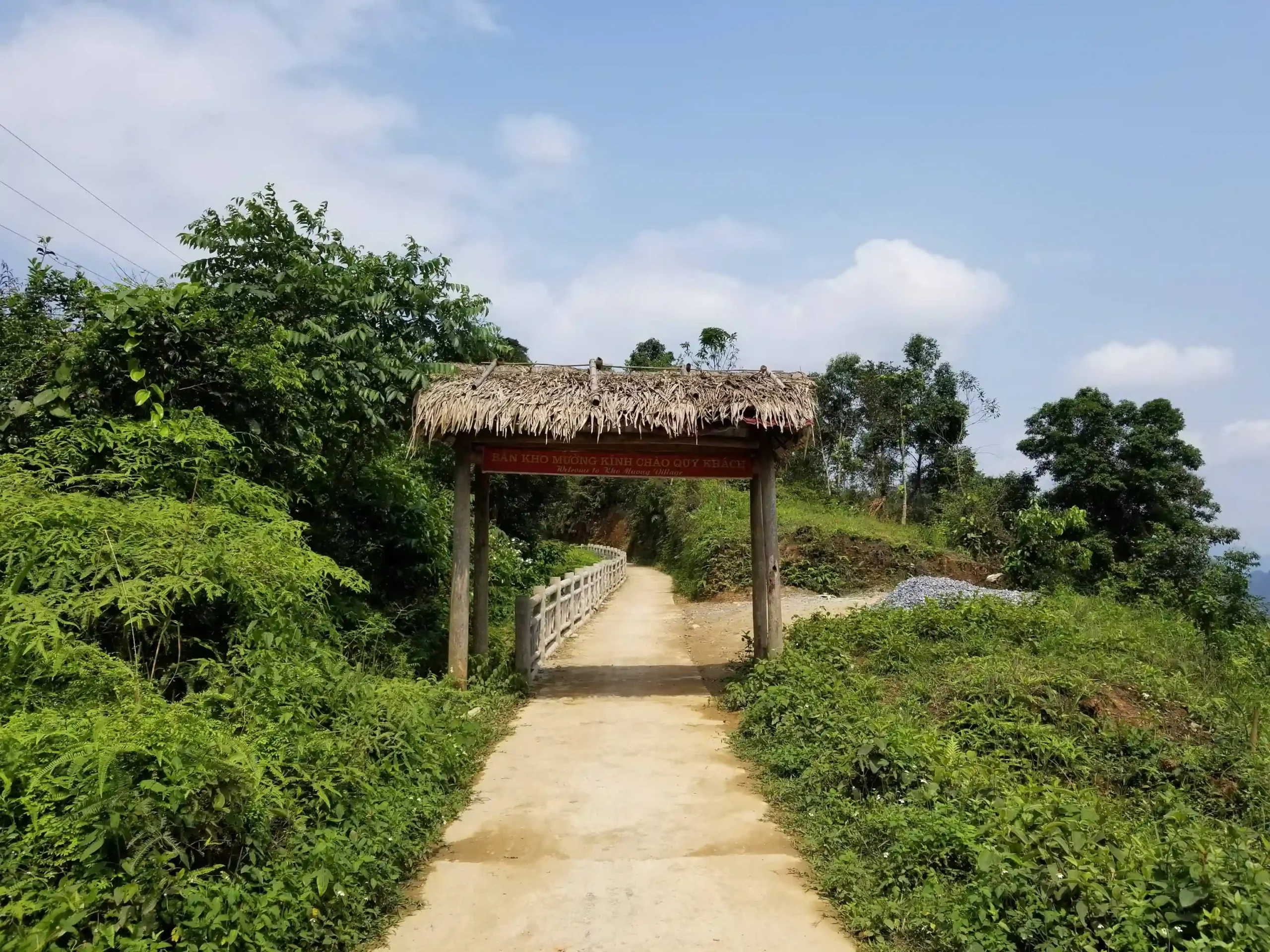
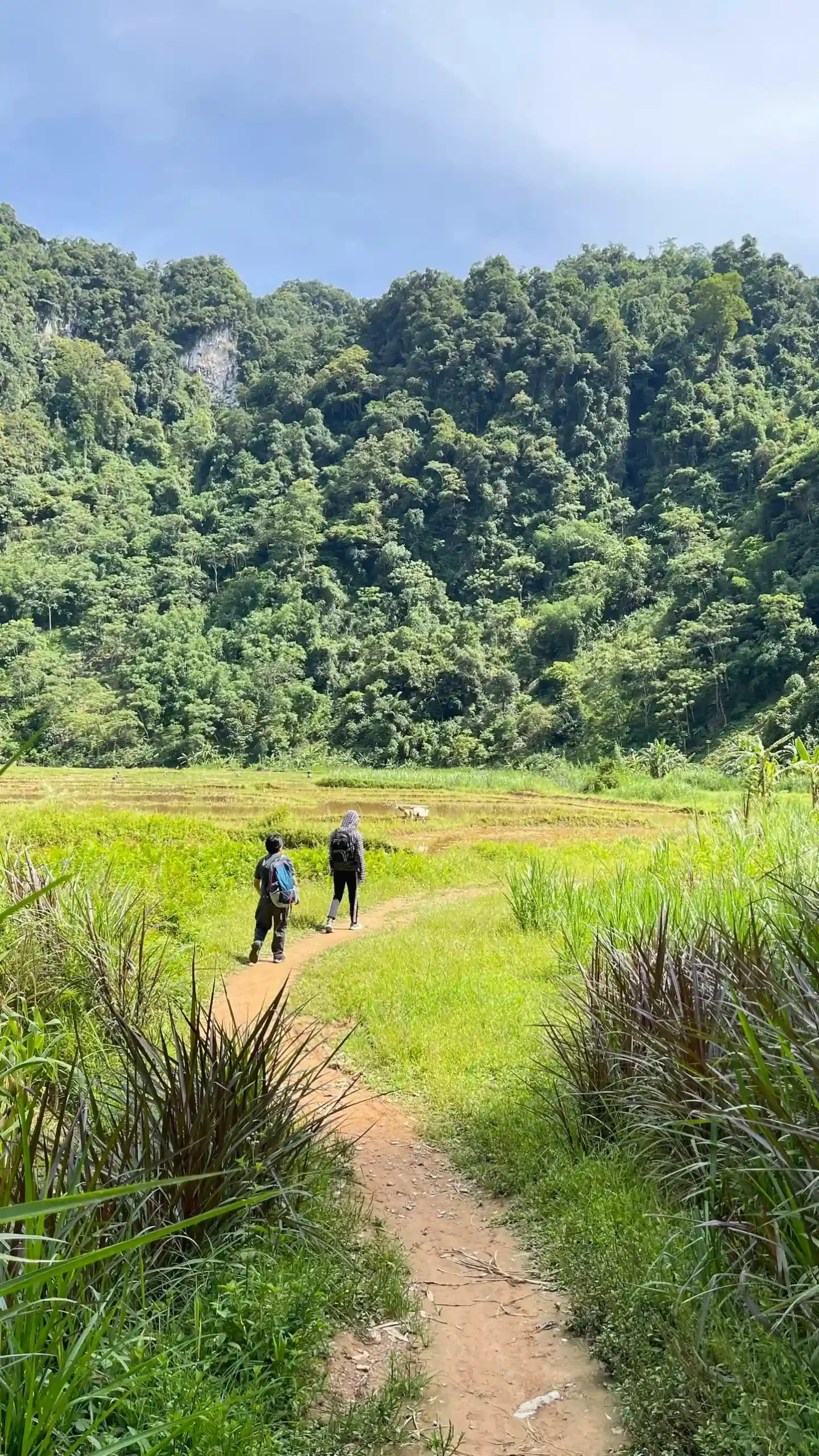
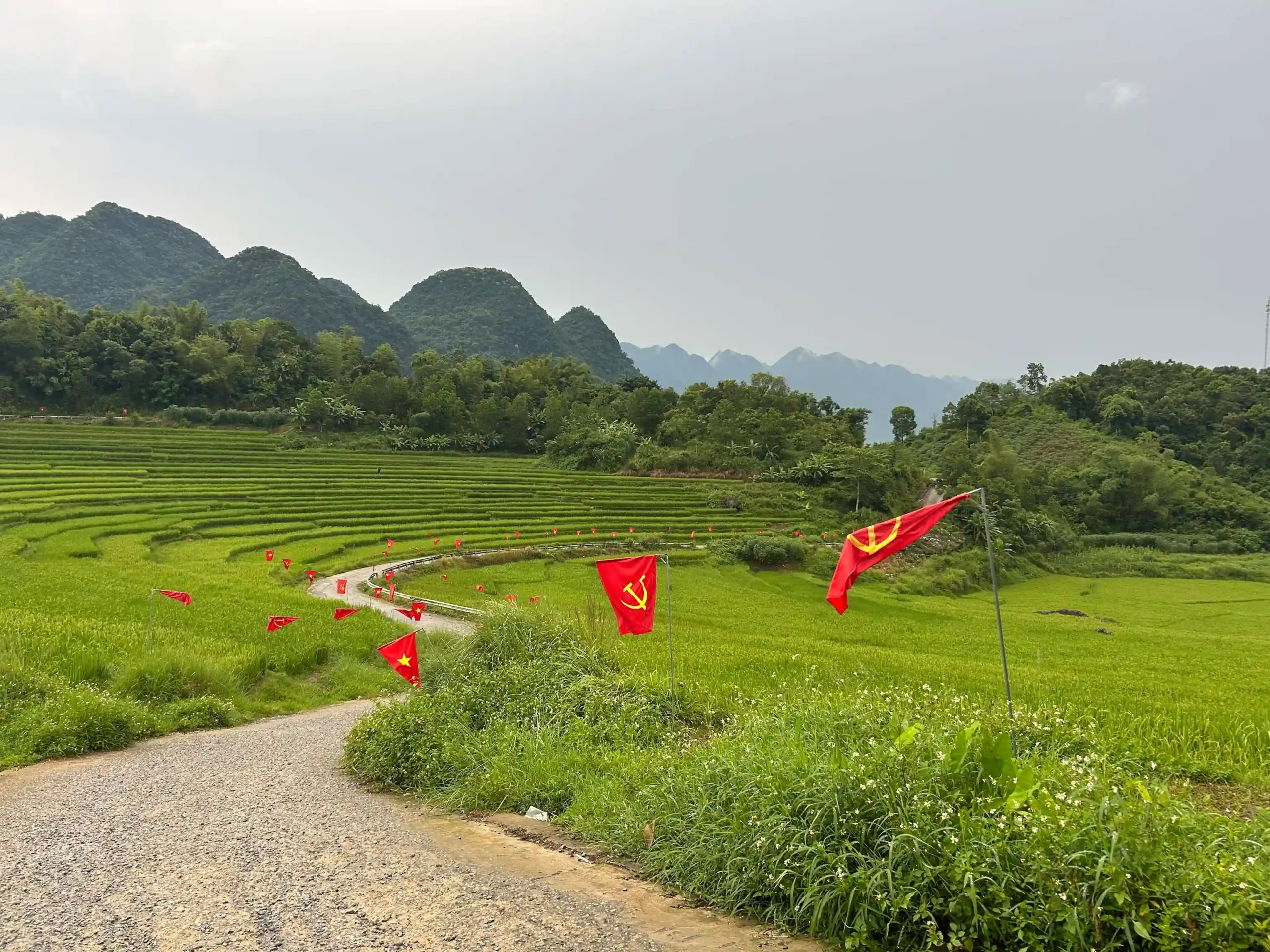
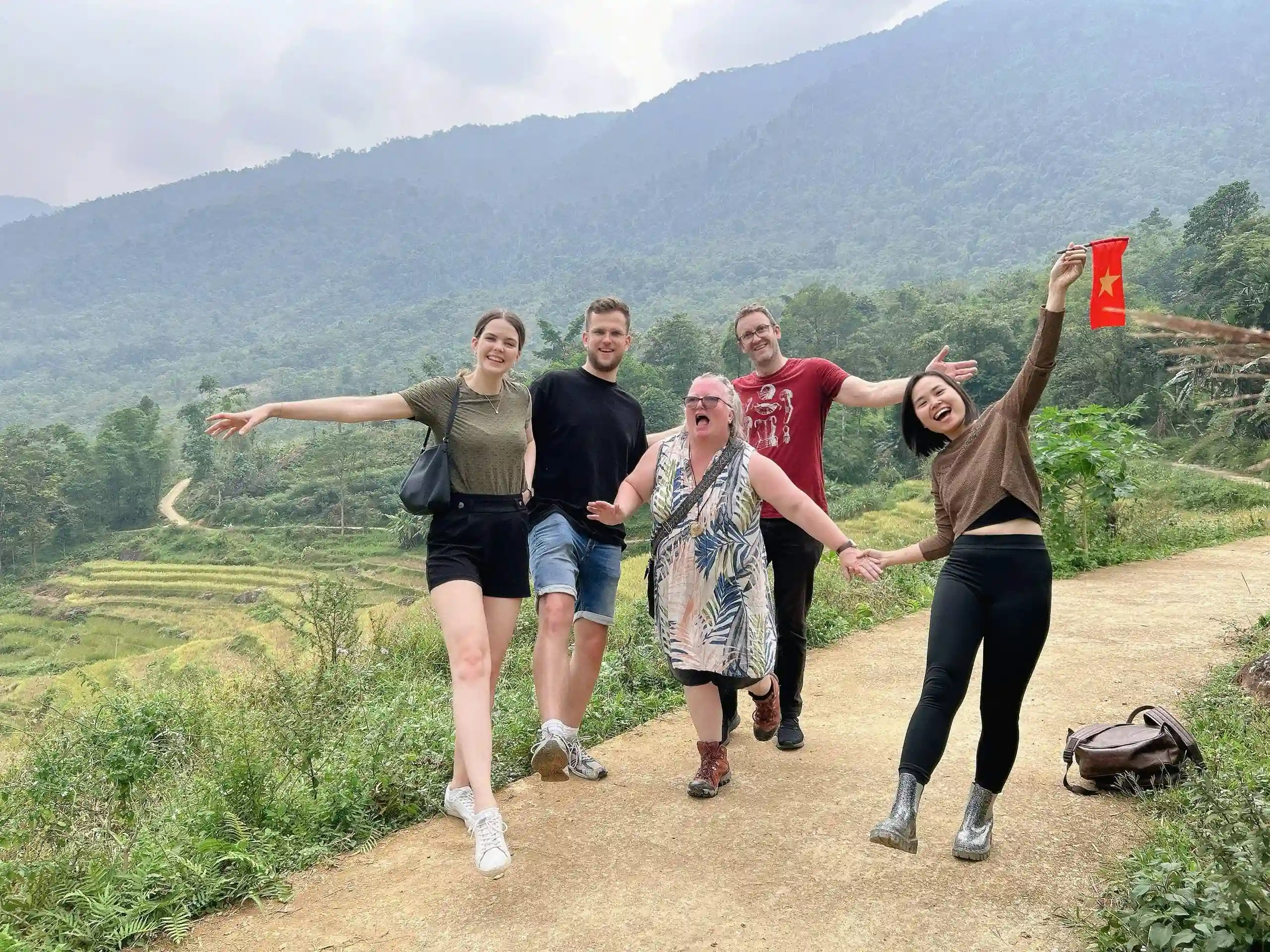
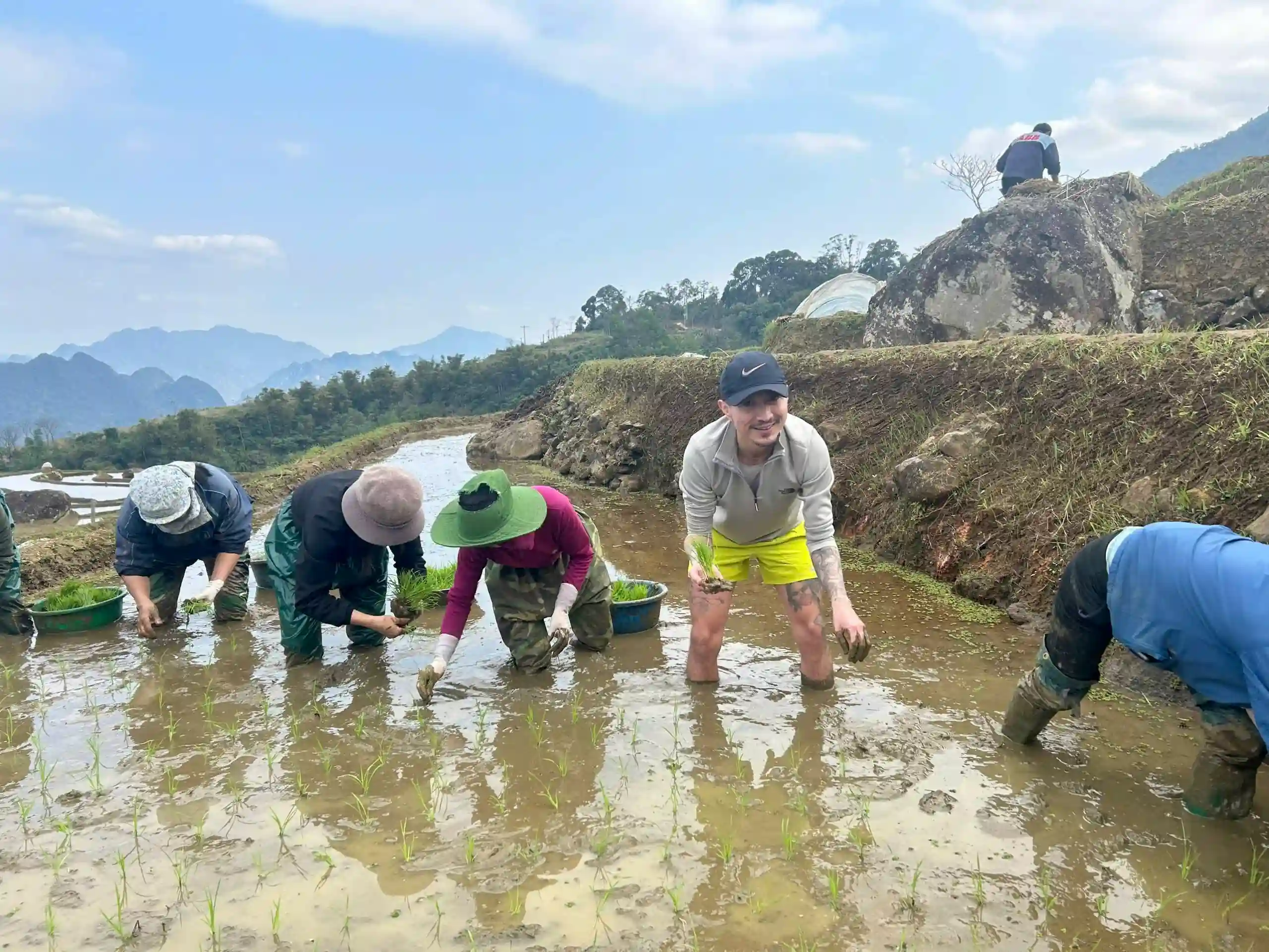
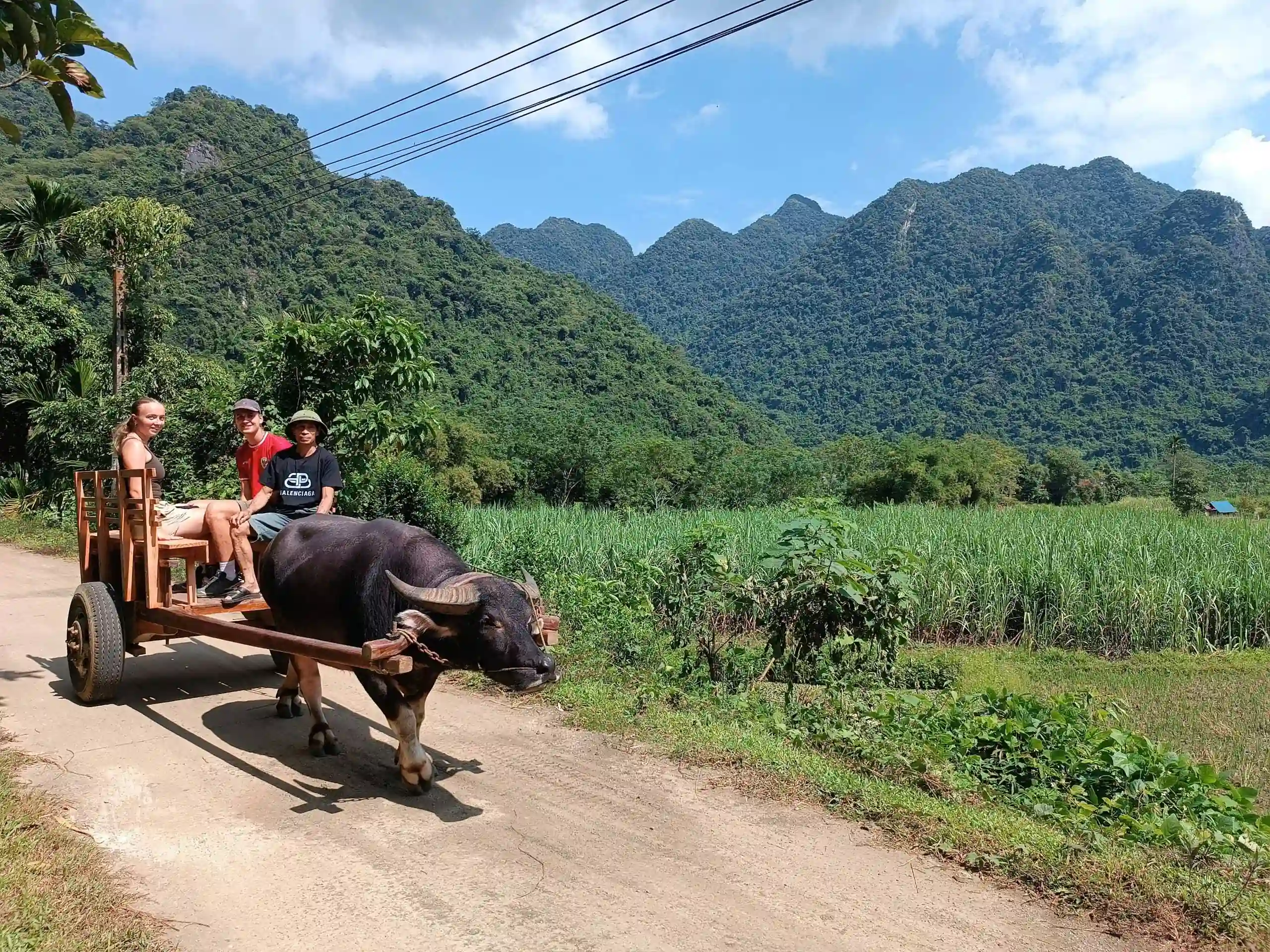
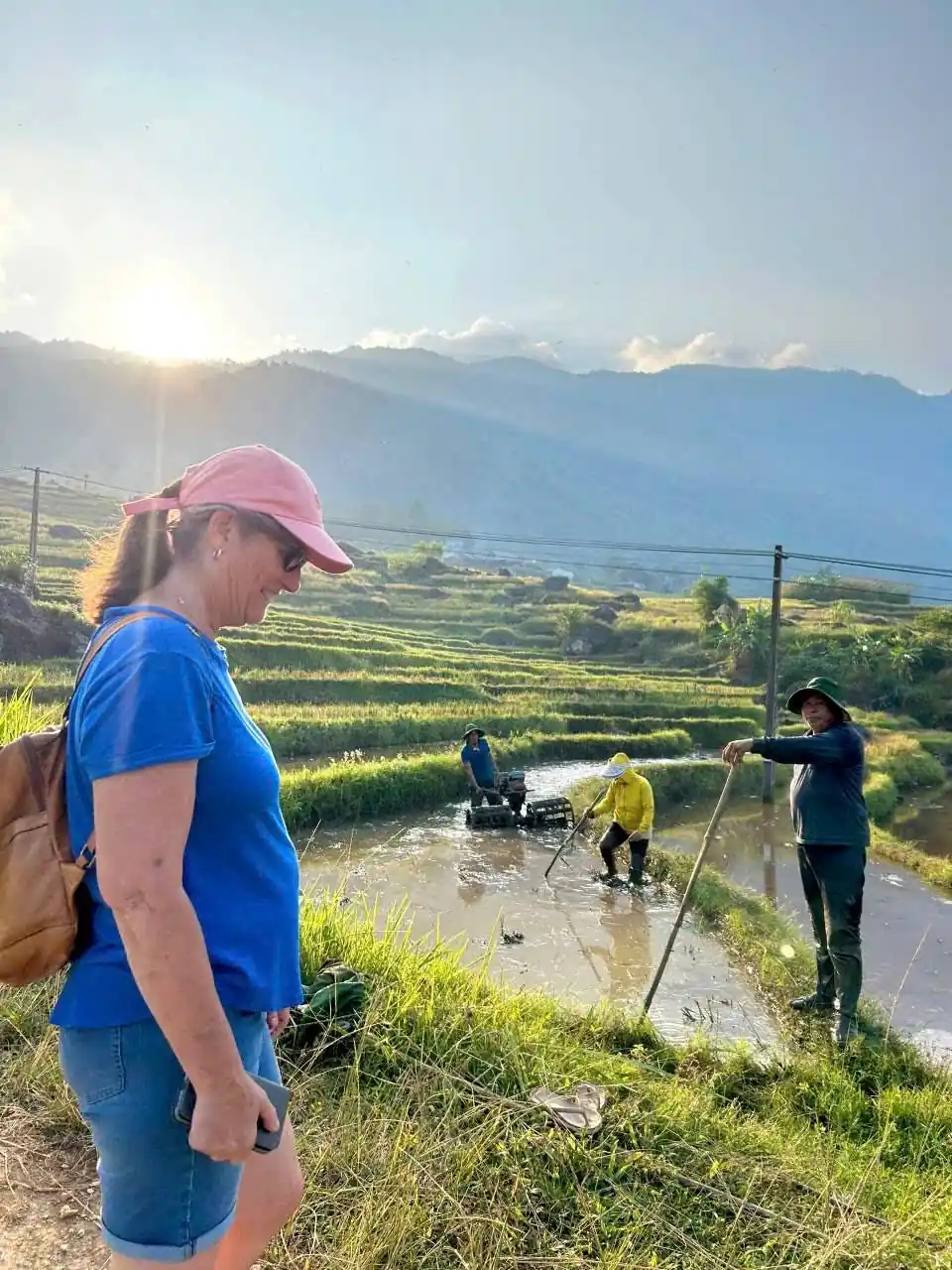
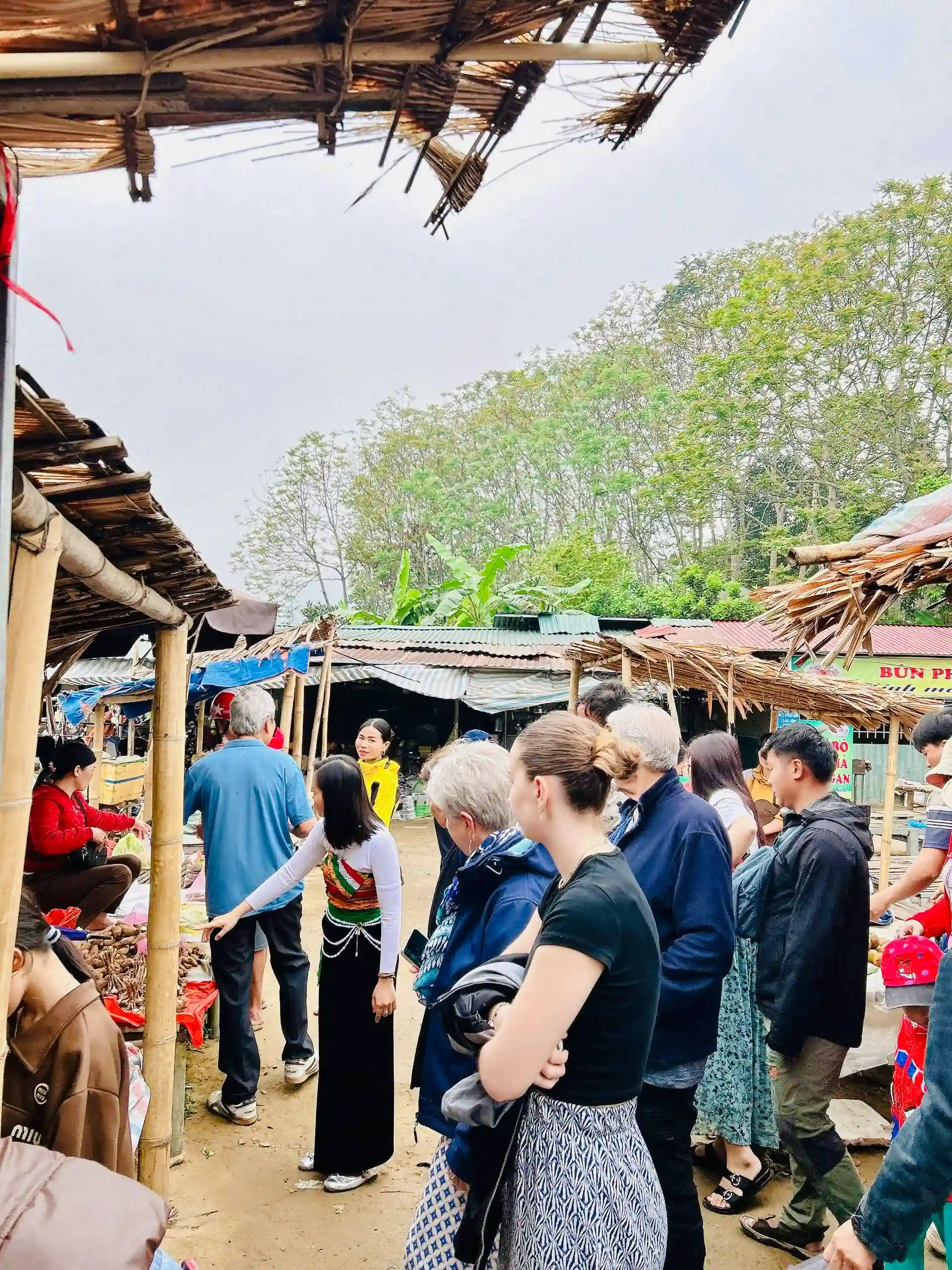
Down in the valley itself, the pace slows further. Some routes combine this with a stop at a nearby cave, worth asking your guide about if you’re arranging the trek yourself instead of through a set tour, since not every itinerary automatically includes it.
The village itself doesn’t perform for visitors, families go about ordinary daily tasks, laundry, farming, kids on their way somewhere, and walking through feels more like passing through than being shown around.
A woman working a loom outside her house looked up, nodded, and went back to what she was doing, which felt like exactly the right level of interaction, acknowledged but not treated as a photo opportunity.
The climb back out is the part nobody warns you about clearly enough. It’s not technical, but it is genuinely a workout, especially in the afternoon heat if you’ve timed the trek for later in the day.
Bring more water than feels necessary, and if you have the choice, do this trek in the morning rather than after lunch, both for the light and for your legs.
Bamboo Rafting on Cham Stream
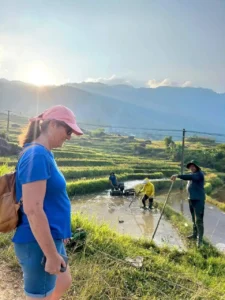
The standard route runs a short, calm float, nothing that resembles whitewater, past rice fields and small rapids gentle enough that the boat operator does all the actual work while you sit back.
Pricing runs around 150,000 VND for this shorter version, and it’s less an adrenaline activity than a slow, scenic way to see the valley from water level after a morning of walking.
The raft itself is a genuinely simple construction, bamboo poles lashed together, no motor, just a local operator poling and steering from the back.
It rides low enough in the water that you feel every small ripple, which sounds unstable written down but felt completely secure once we were actually moving, the operator clearly knowing the stream’s exact depth and current at every point along the route.
The view from water level is different from the trek’s perspective too, rice fields at eye level instead of looking down from a hillside, the terraces rising on either bank close enough to see individual plants, not just the overall pattern.
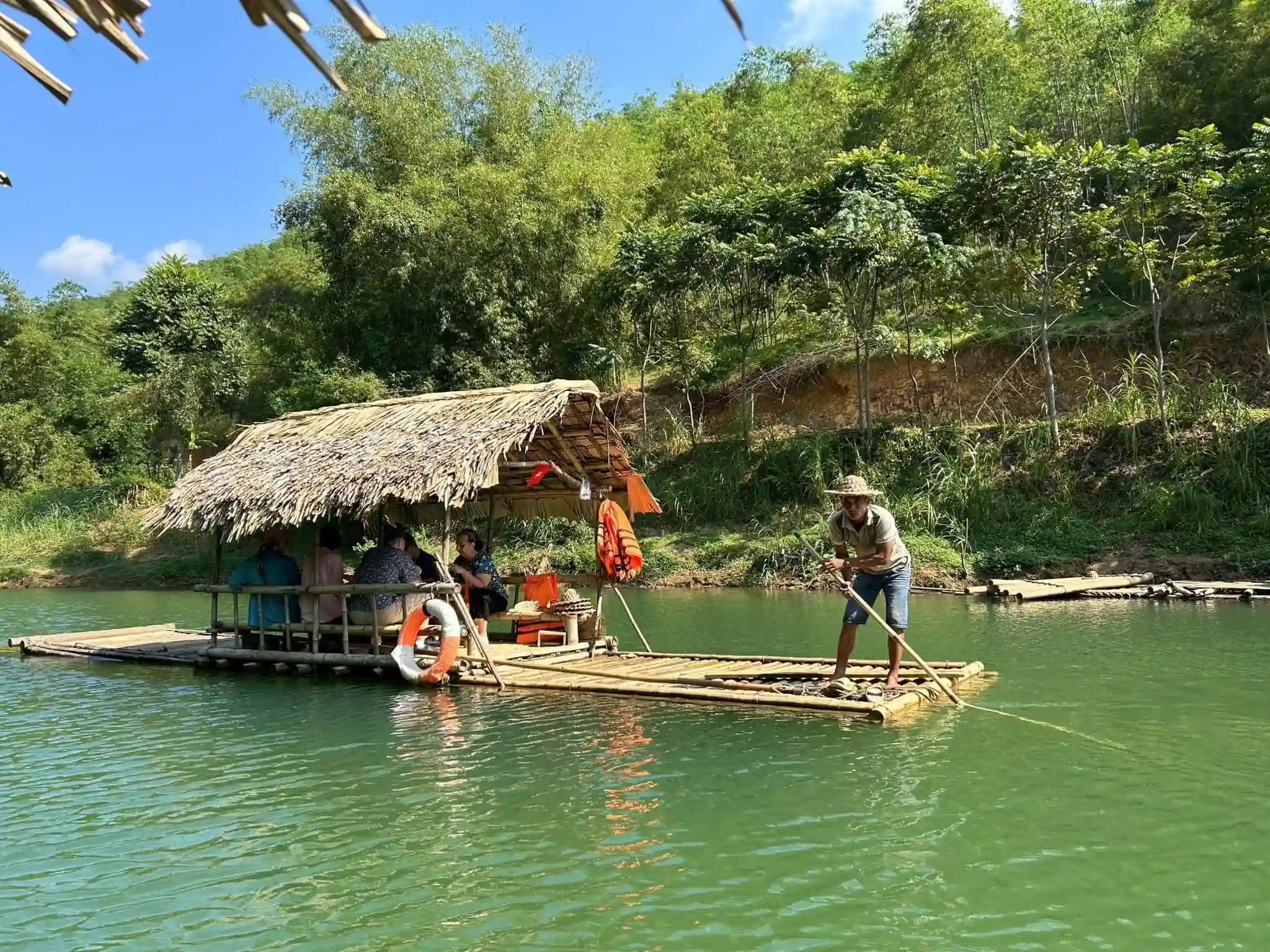
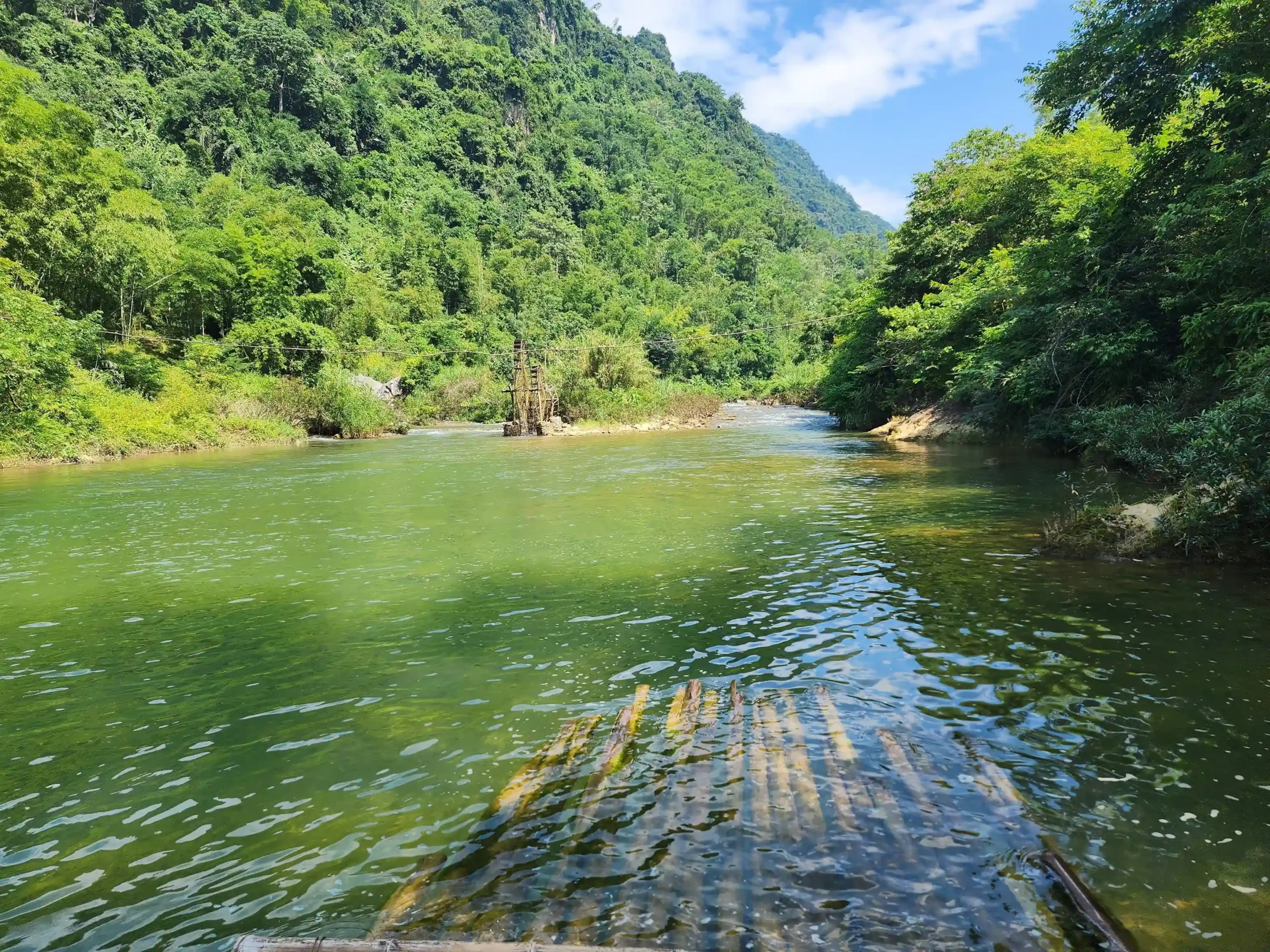
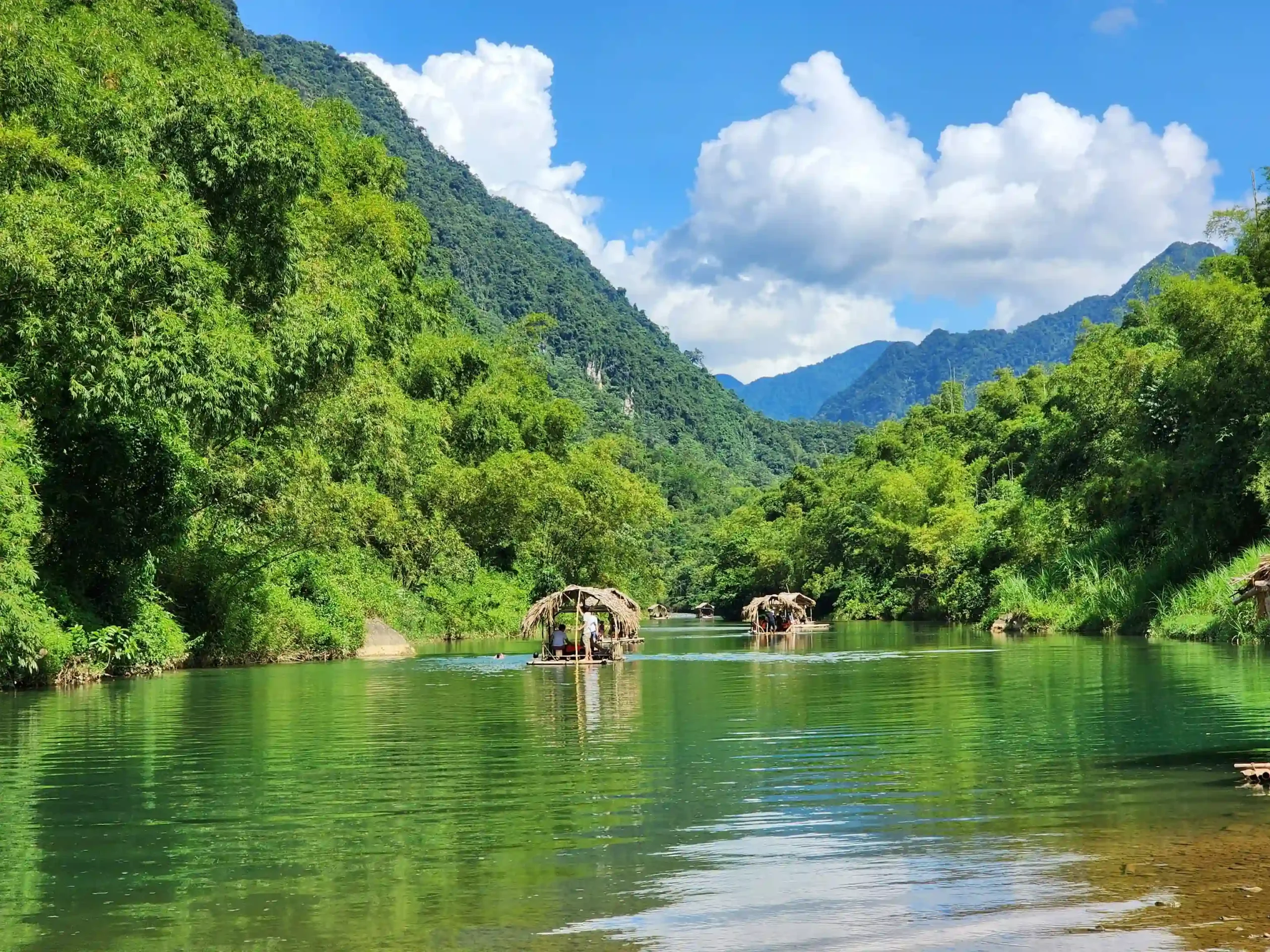
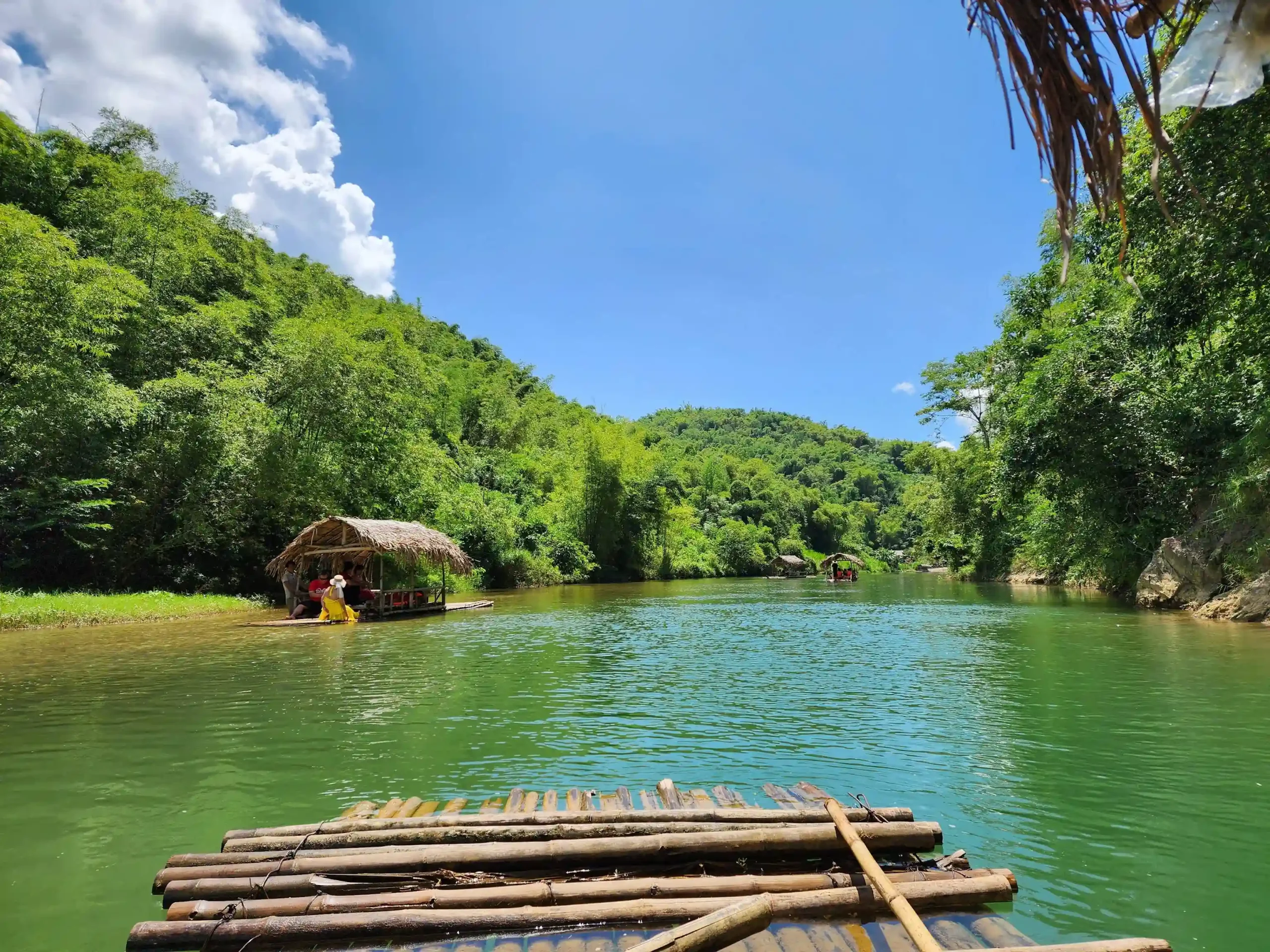
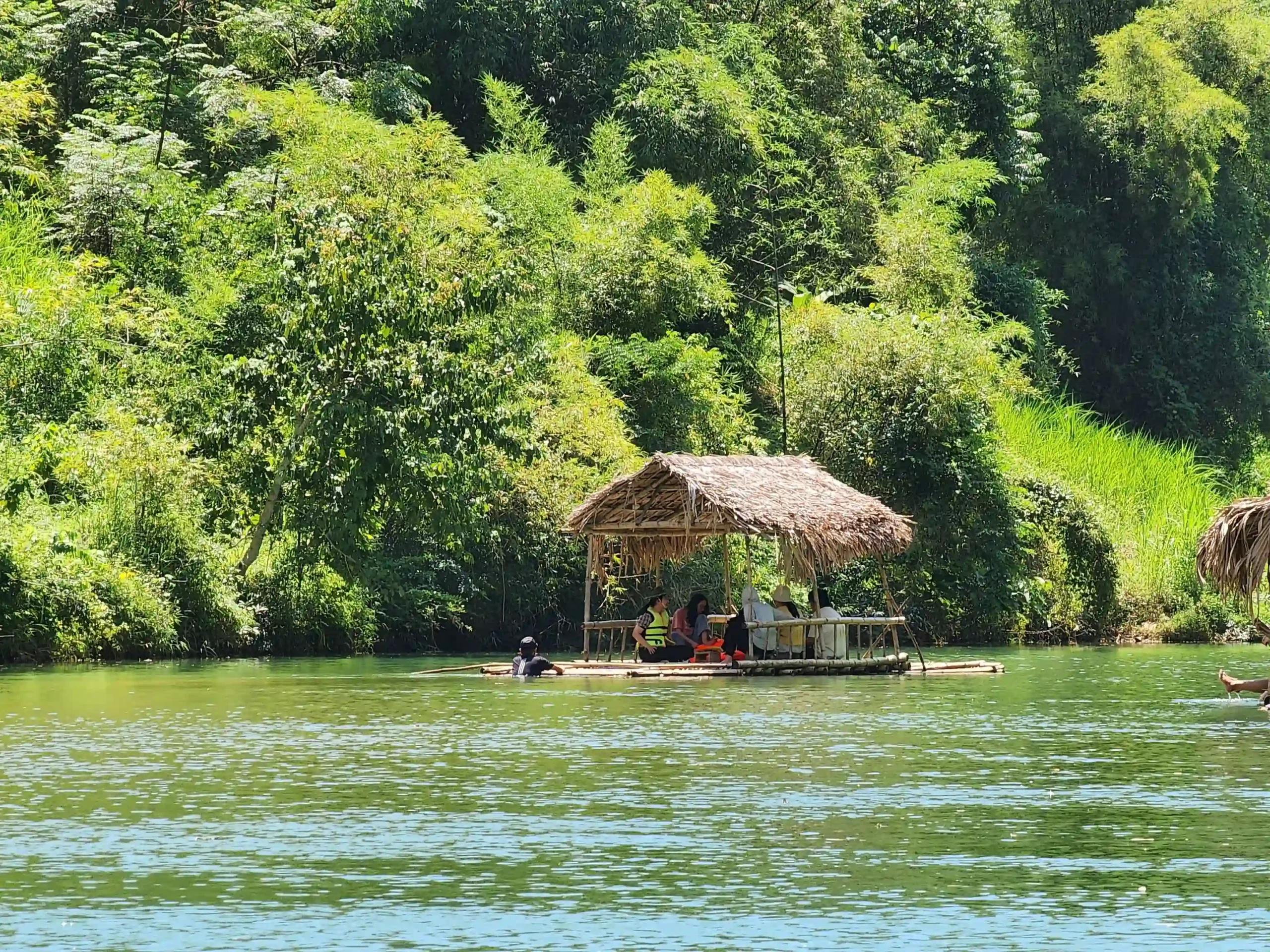
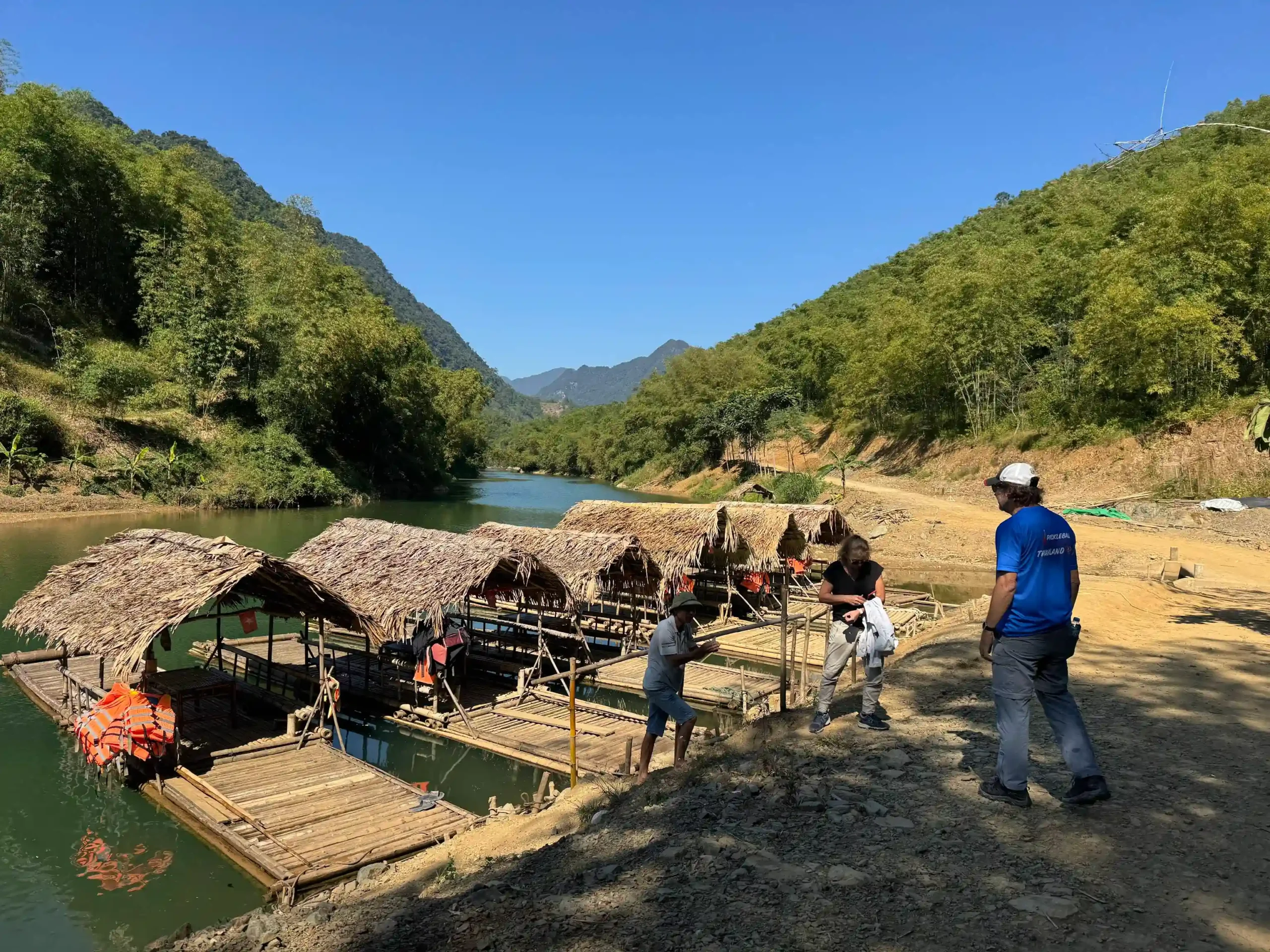
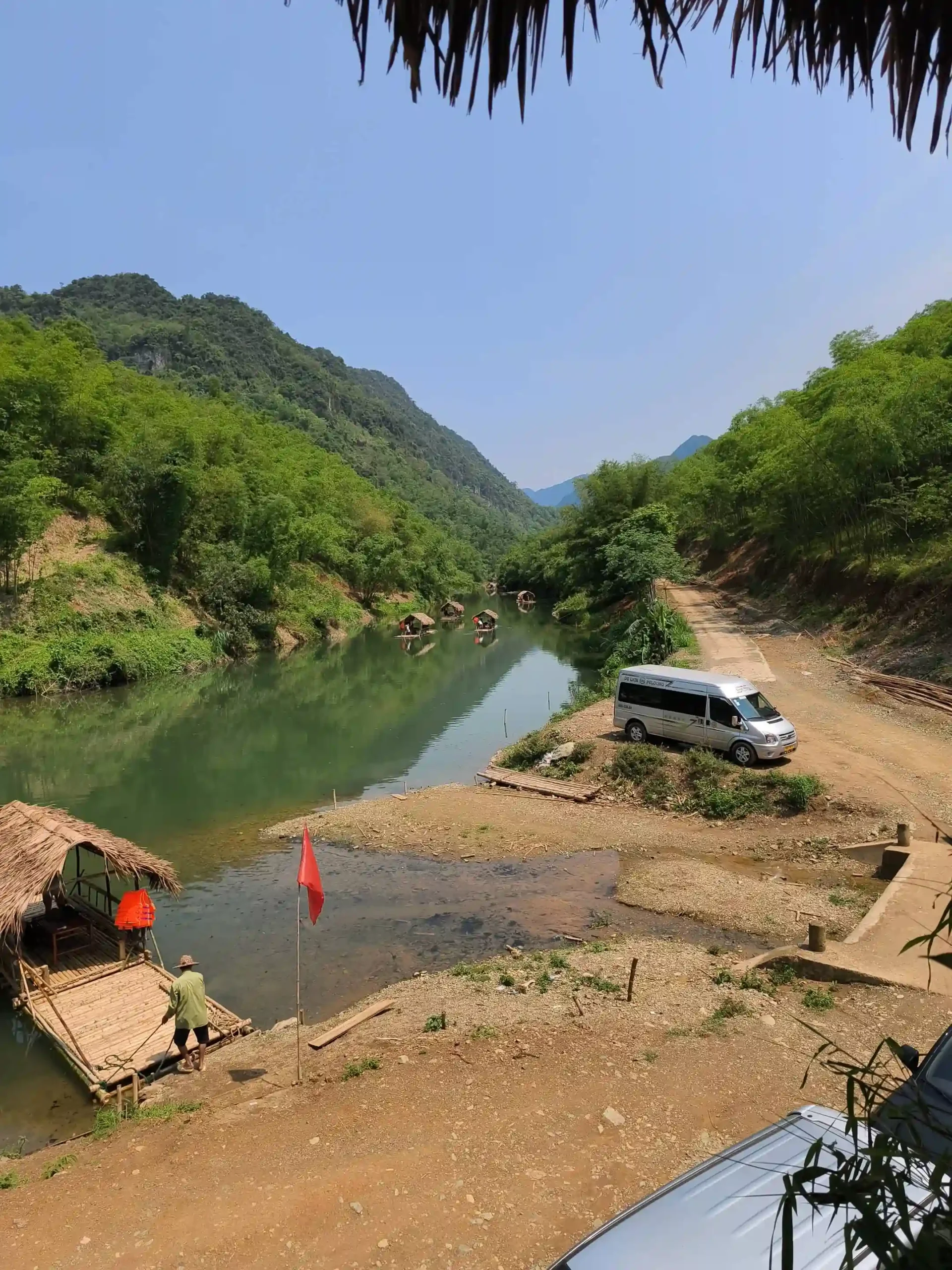
A longer version of the route exists too, adding a stop at a traditional bamboo raft workshop and running closer to two hours, worth asking about if the short version leaves you wanting more time on the water.
Most guided day tours fold the shorter rafting in as the afternoon activity following a morning trek, and it works well in that slot specifically, restful rather than another physical demand on legs that have already done a few hours of walking.
The Water Wheels Near Chieng Lau
These aren’t a staged attraction, they’re functional pieces of local engineering, still used to move water from the lower streams up to the terraced fields that sit too high for gravity irrigation alone.
Seeing several turning at once, wooden and bamboo construction, water catching and releasing in a steady rhythm, is one of those details that photographs well but matters more for what it actually does than how it looks.
The mechanics are genuinely clever once someone actually explains them. Each wheel turns purely on the current of the stream, no motor, no external power, bamboo tubes fixed around the rim scooping water up as the wheel rotates and tipping it into a raised channel at the top of the turn.
It’s the kind of low-tech solution that’s been refined over generations, and standing close enough to hear the water actually moving through the tubes gives you a better sense of how it works than any photo could.
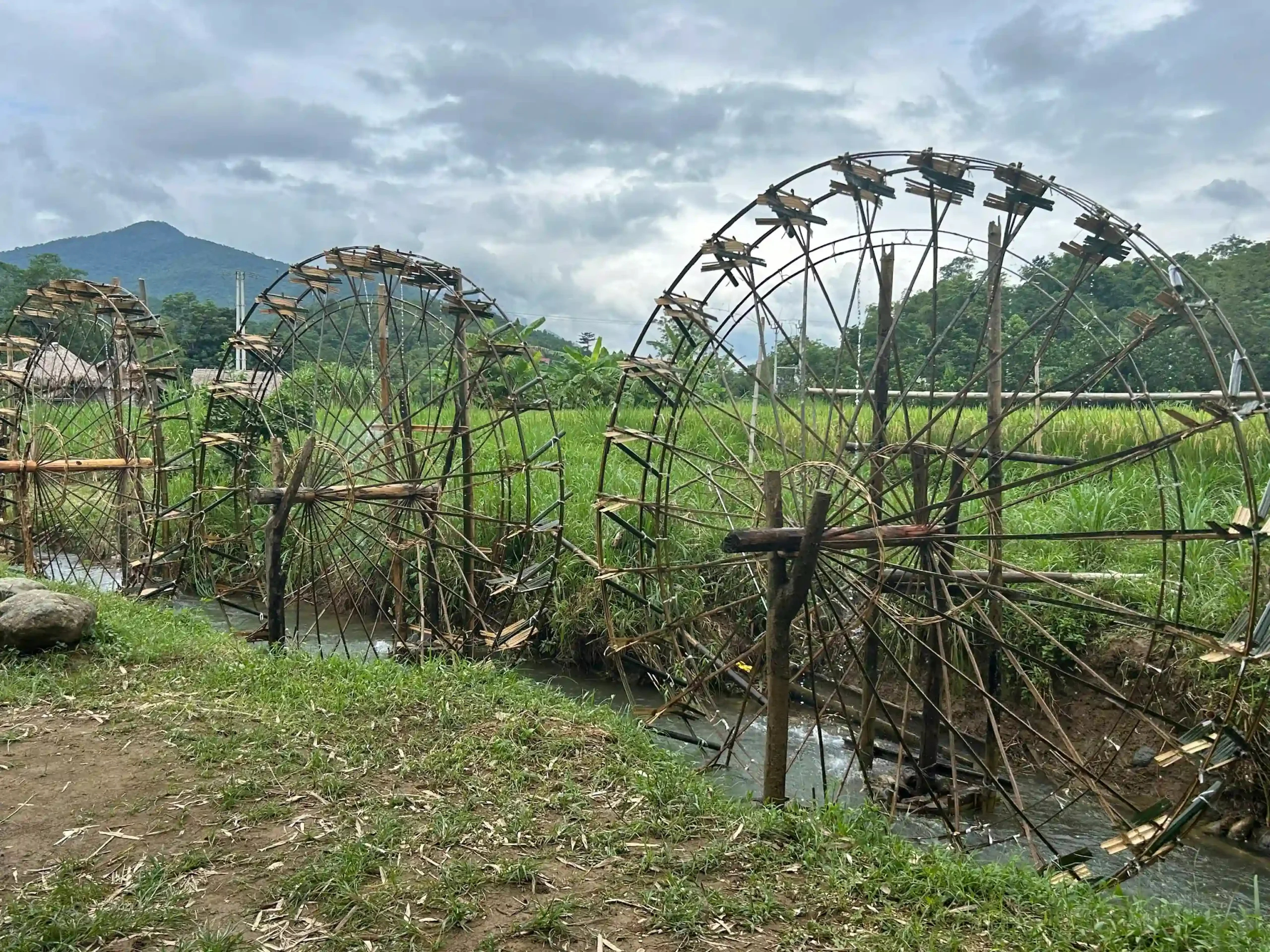
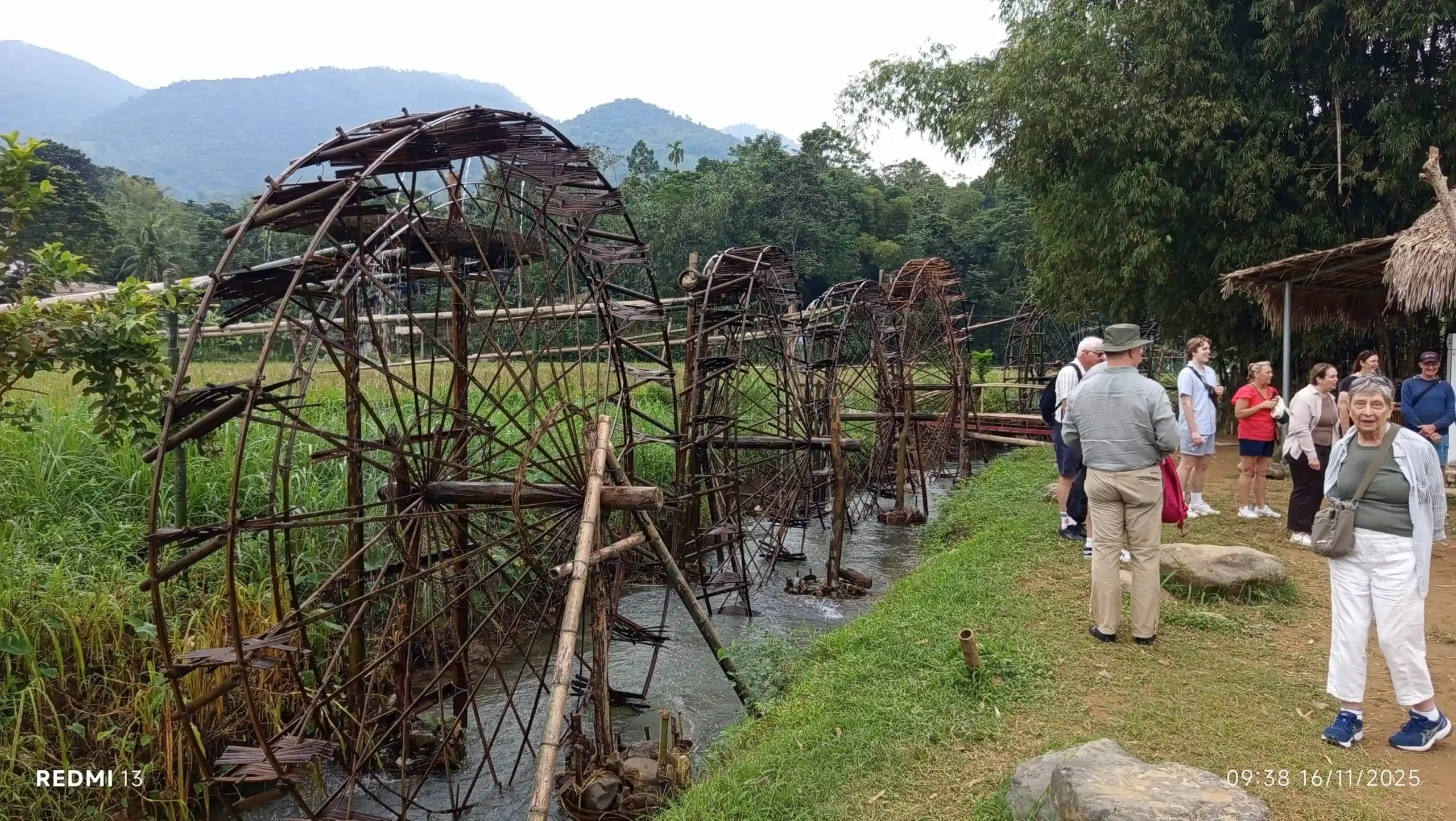
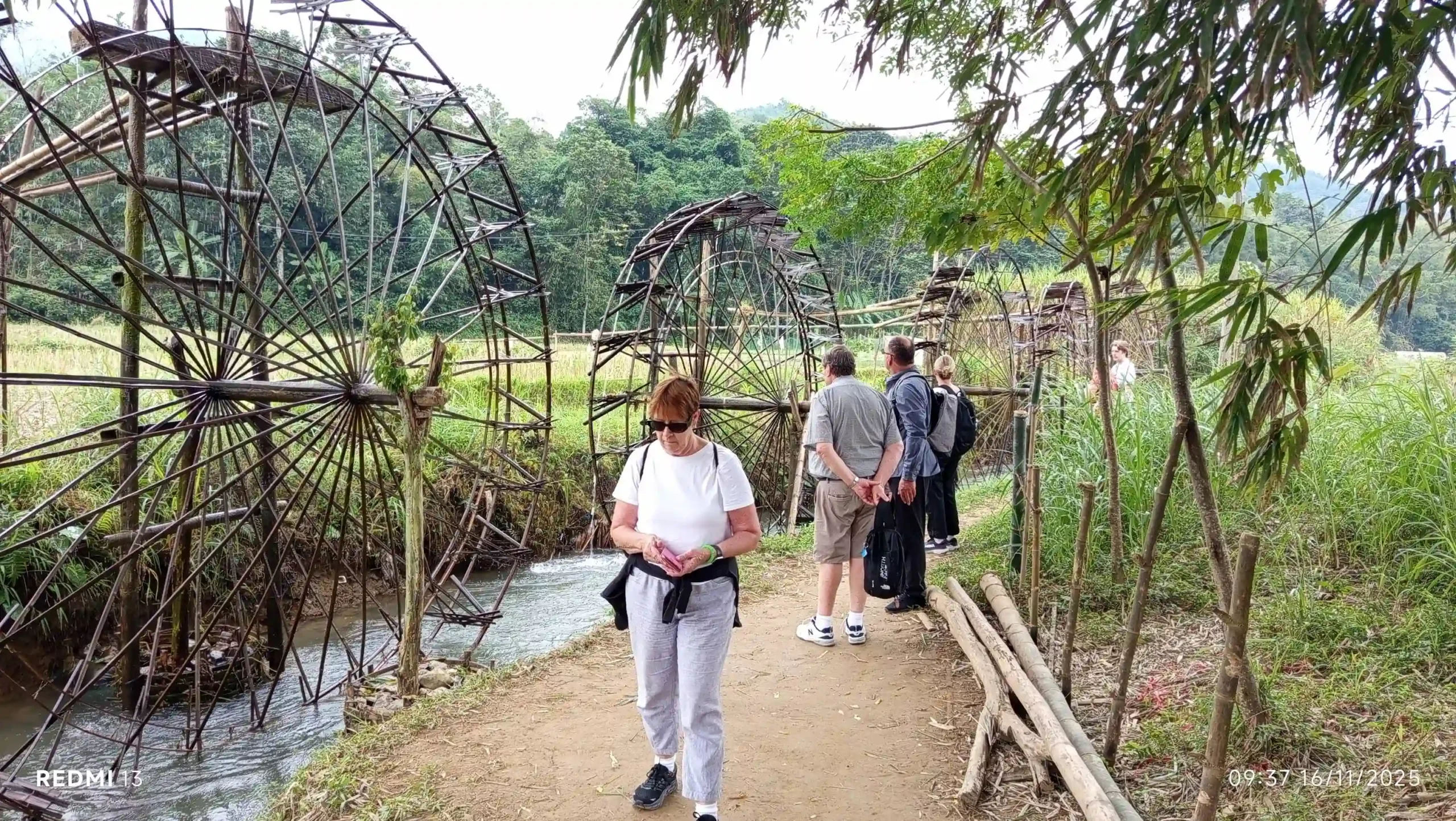
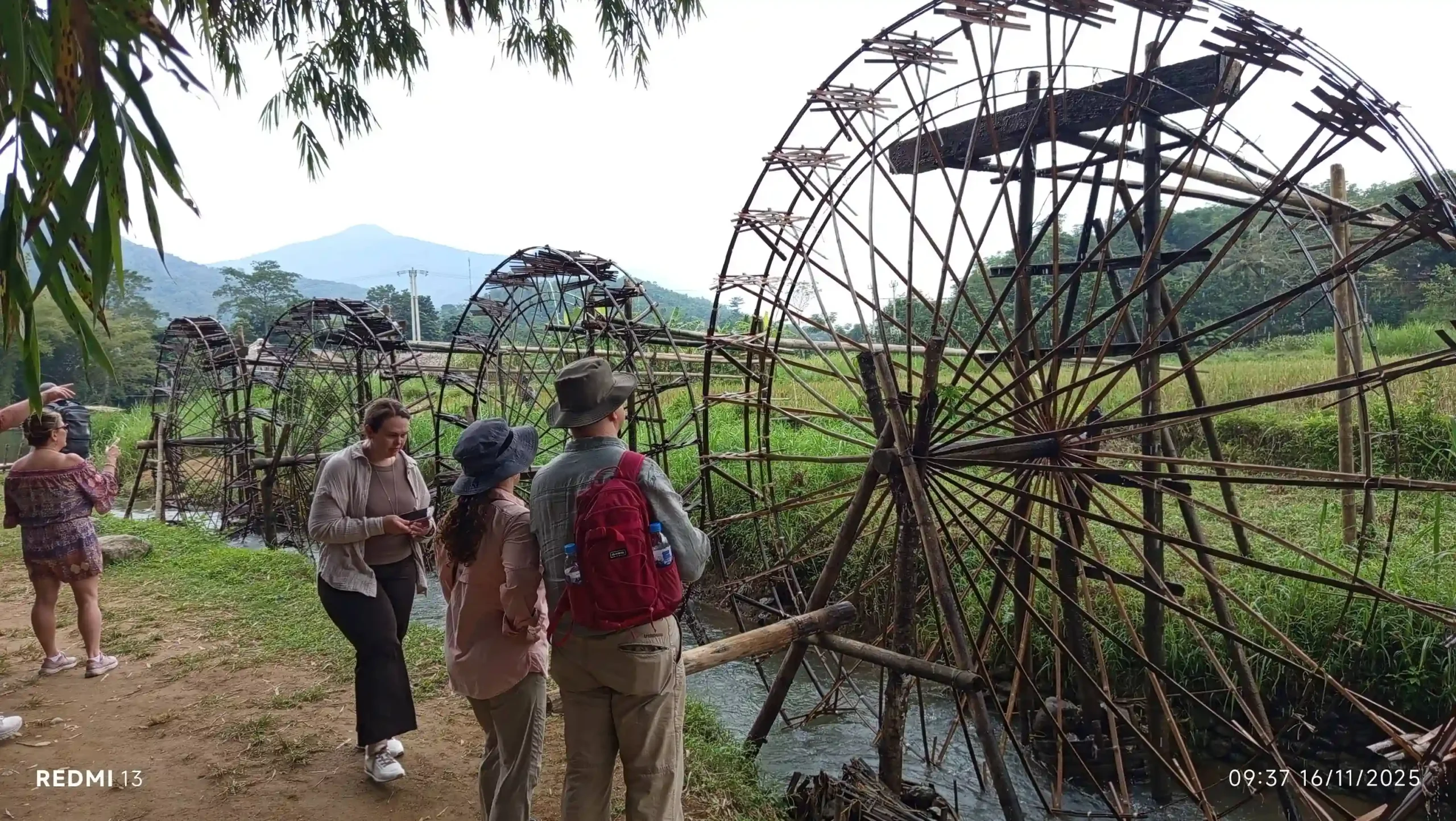
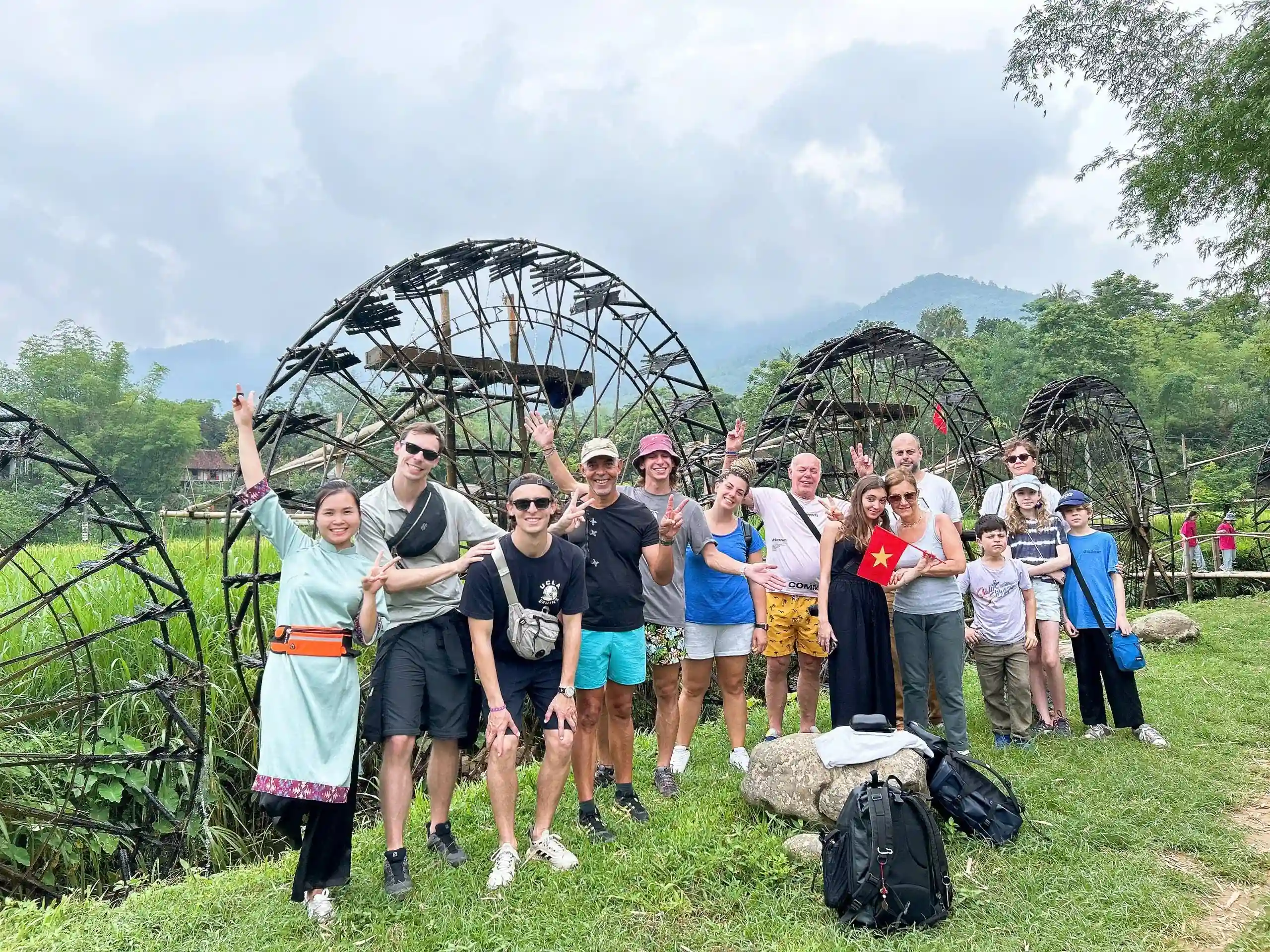
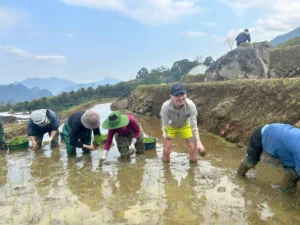
Traditional farming demonstrations often run alongside a visit here, and it’s worth the ten minutes to actually watch instead of just photographing the wheels and moving on, since the mechanics of how they lift water without any powered pump are genuinely clever once explained.
Some of the wheels here have clearly been repaired and rebuilt many times over, patched bamboo next to newer sections, which says something about how central they still are to daily farming life here rather than being maintained purely for visitors passing through.
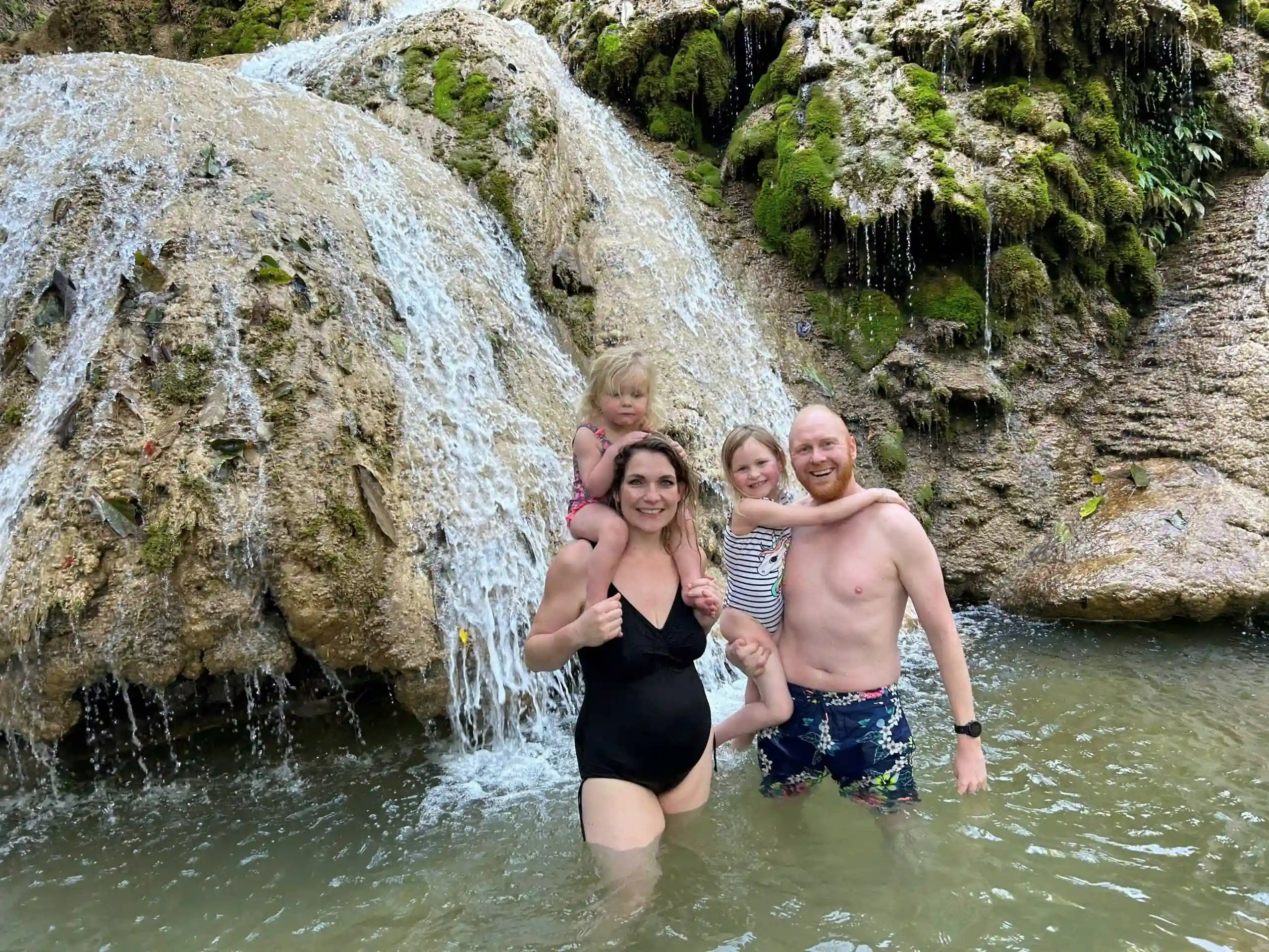
Hieu Waterfall
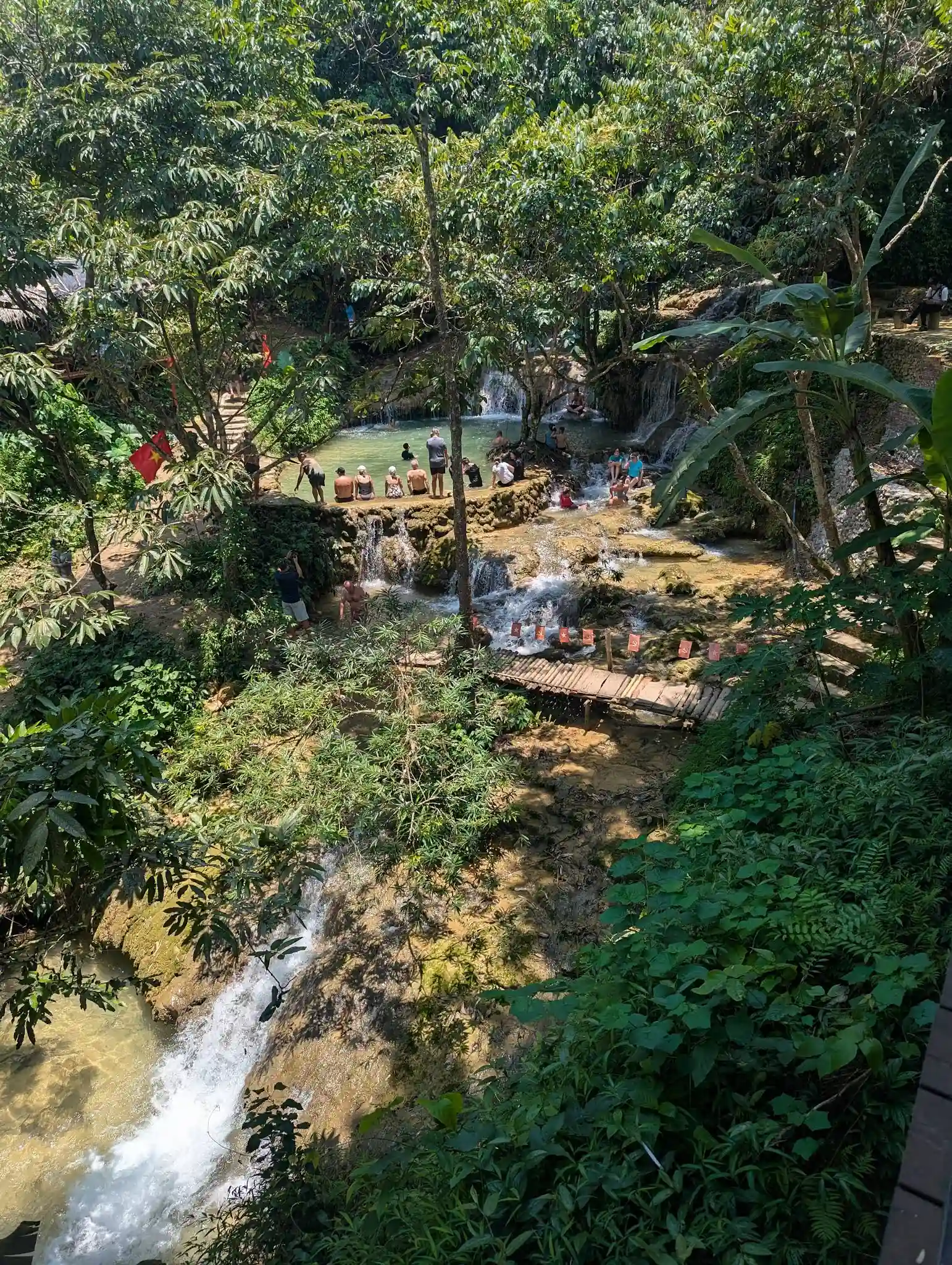
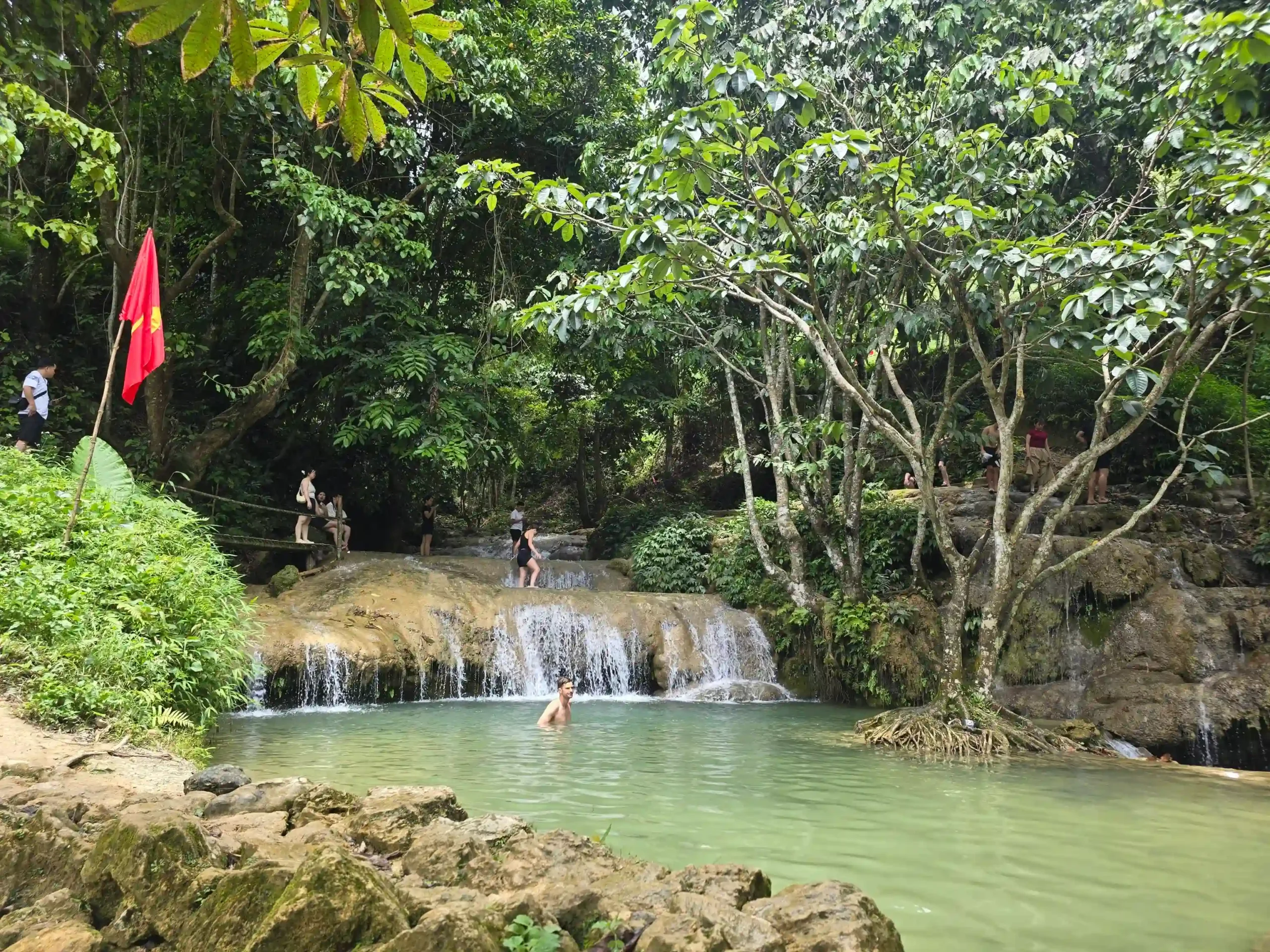
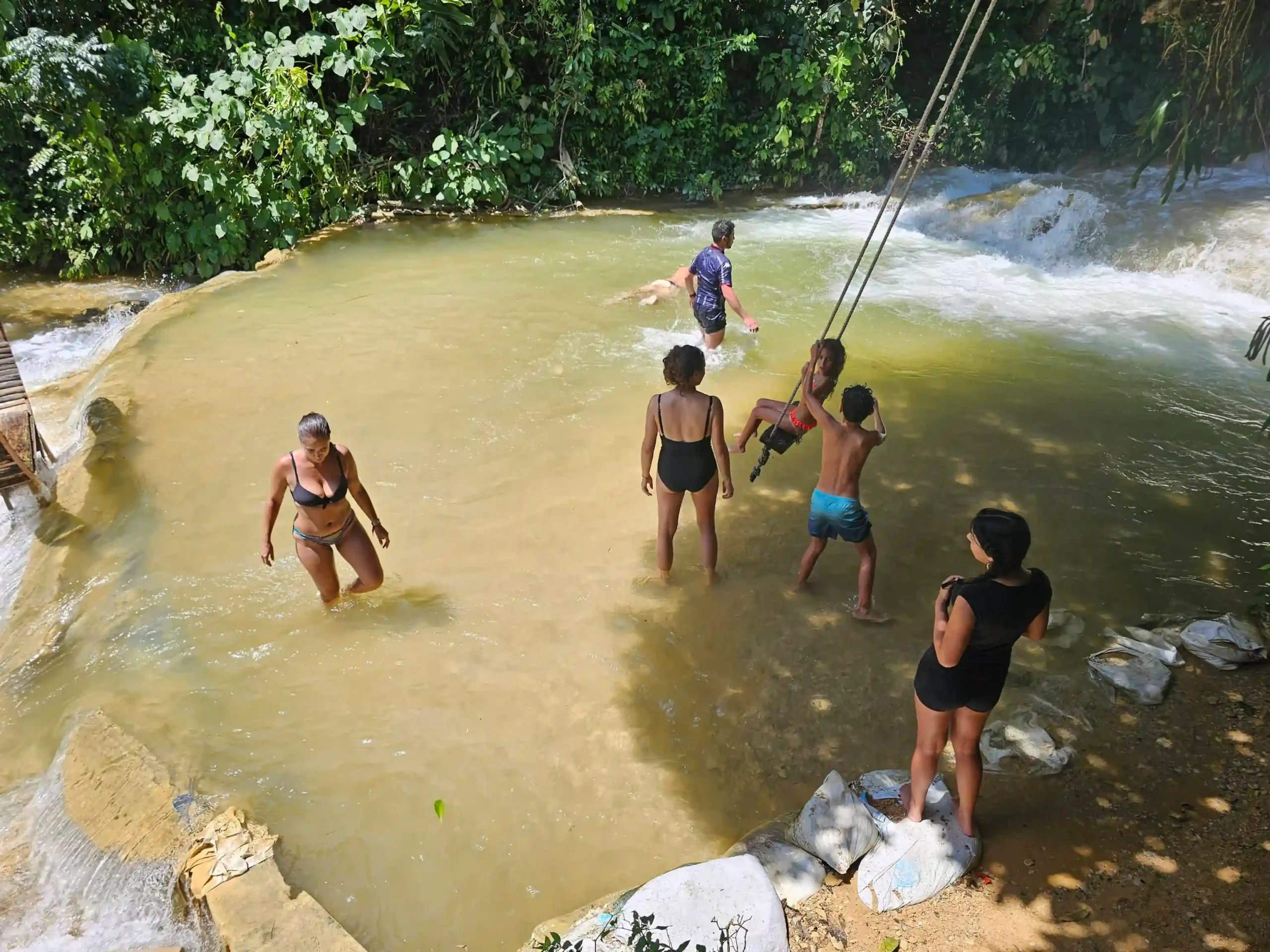
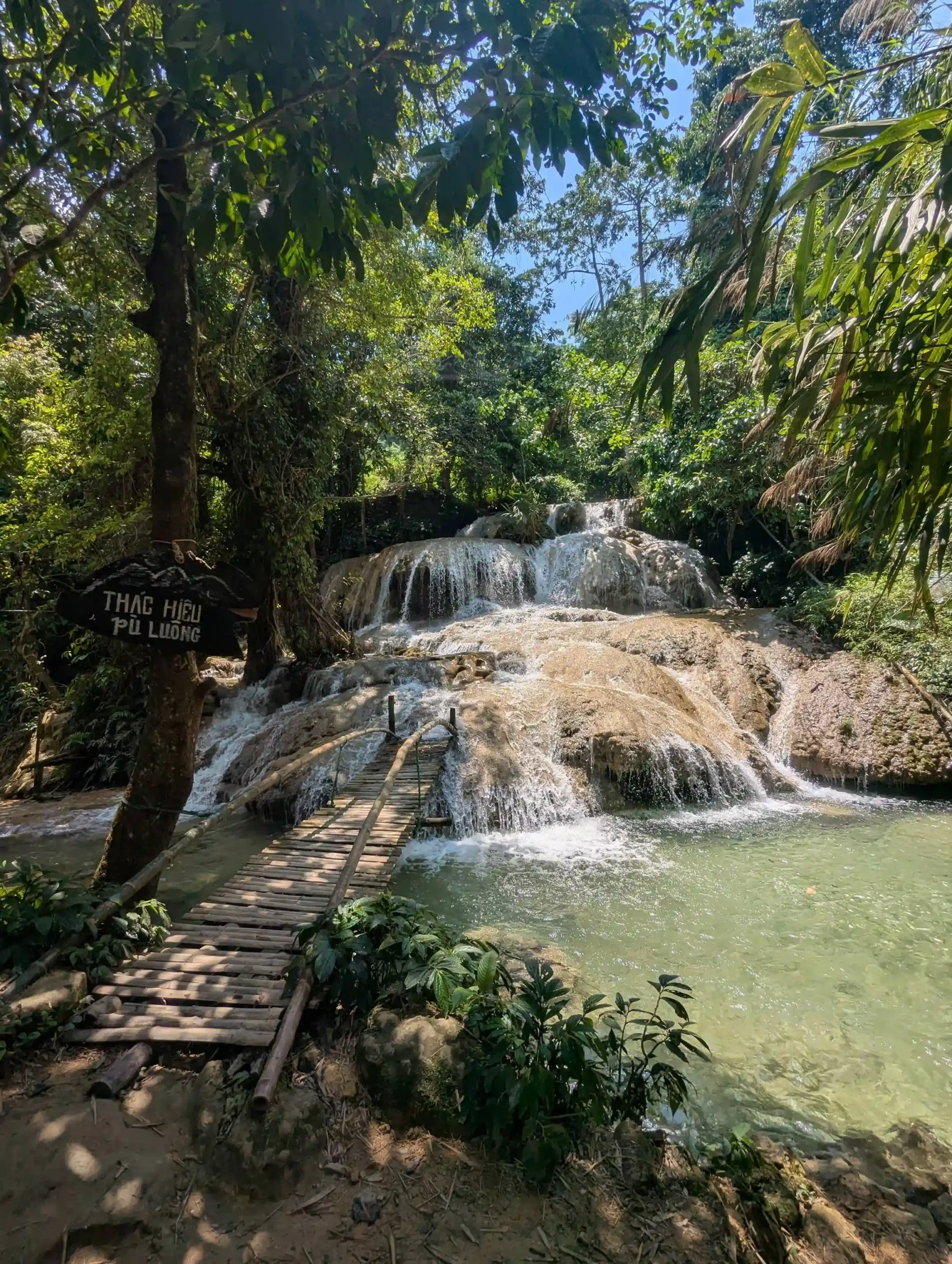
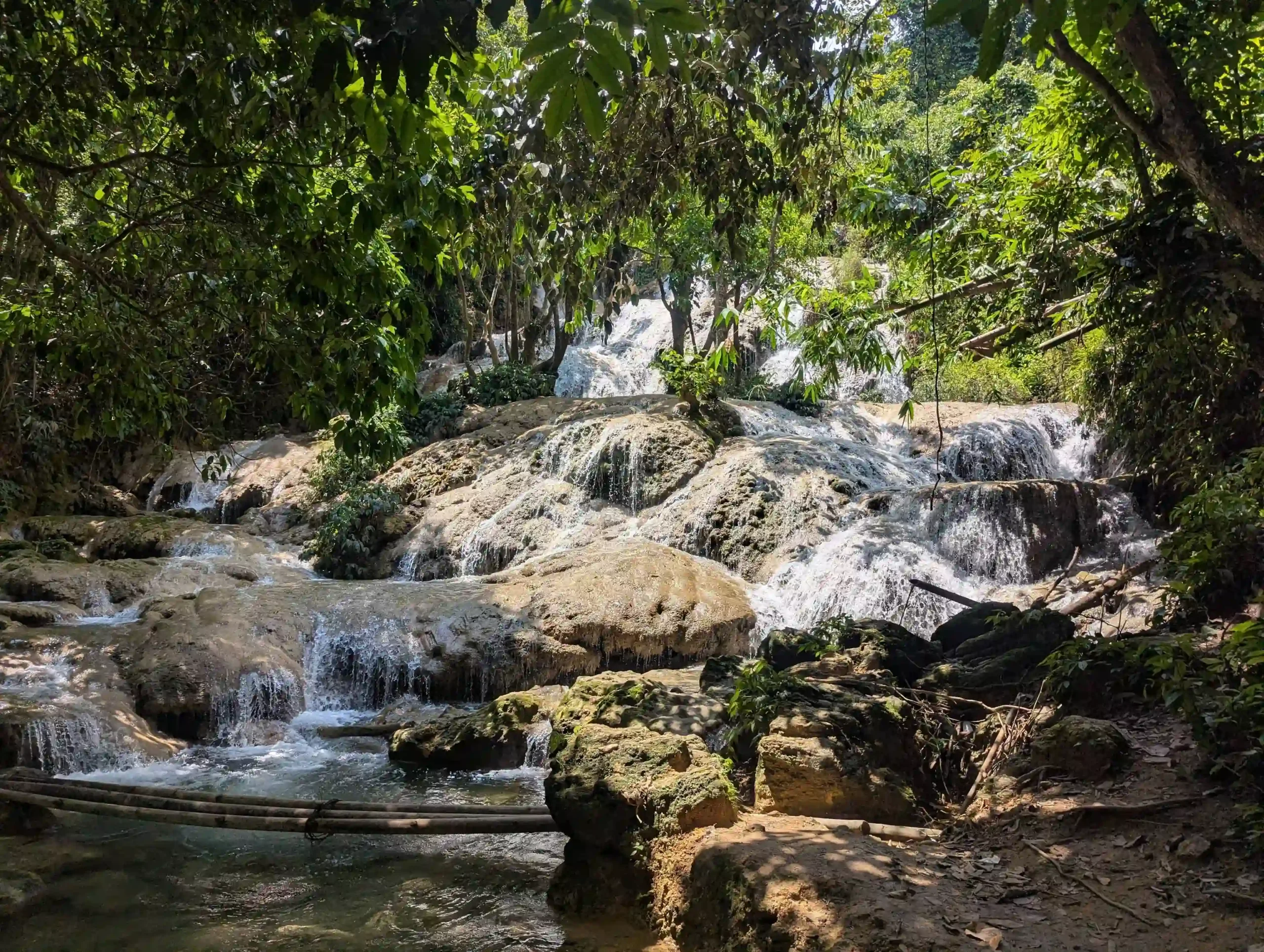
A jungle trek leads to this multi-tiered waterfall, cool turquoise pools at the base inviting an actual swim.
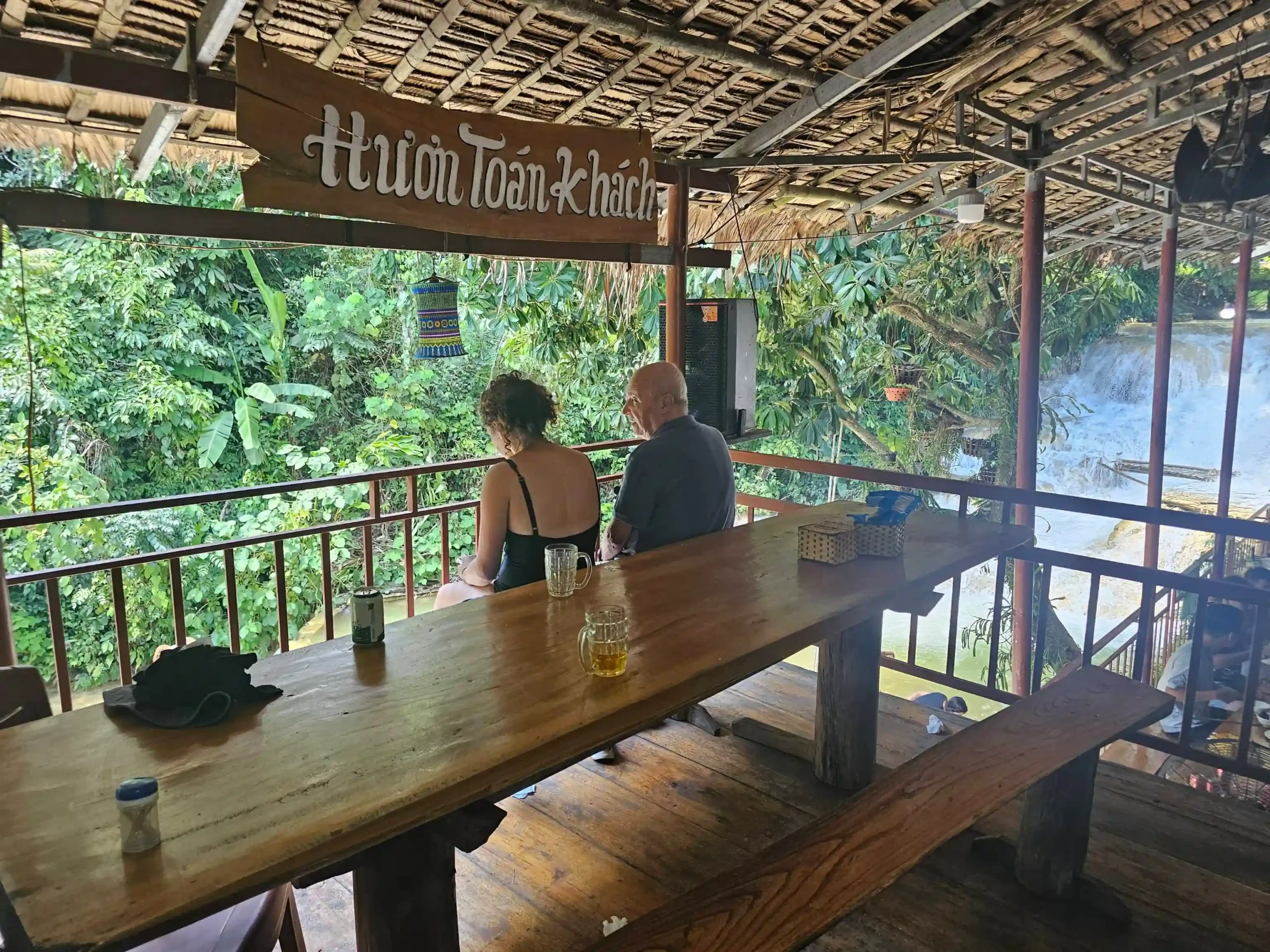
Several lodges arrange picnic lunches here specifically, and if yours offers it, it’s worth taking them up on it, eating trailside with the waterfall running behind you beats carrying the same meal back to a dining room.
The walk in isn’t long, but it is genuinely a jungle trail, roots and uneven ground, worth real shoes even though the destination itself is a swimming spot.
Bring a change of clothes if swimming is part of the plan, since there’s nowhere formal to change once you’re there, and most people just find a private-enough spot among the trees.
The water itself runs cold enough to notice immediately, genuinely refreshing after a warm walk in, and the multiple tiers mean you can pick a pool based on how deep or exposed you want to be, a shallower upper pool for wading, a deeper one further down for actual swimming.
Fewer people make it out this far compared to the more heavily trafficked parts of Pu Luong, so even on a moderately busy day, finding a quiet stretch of the pools isn’t difficult.
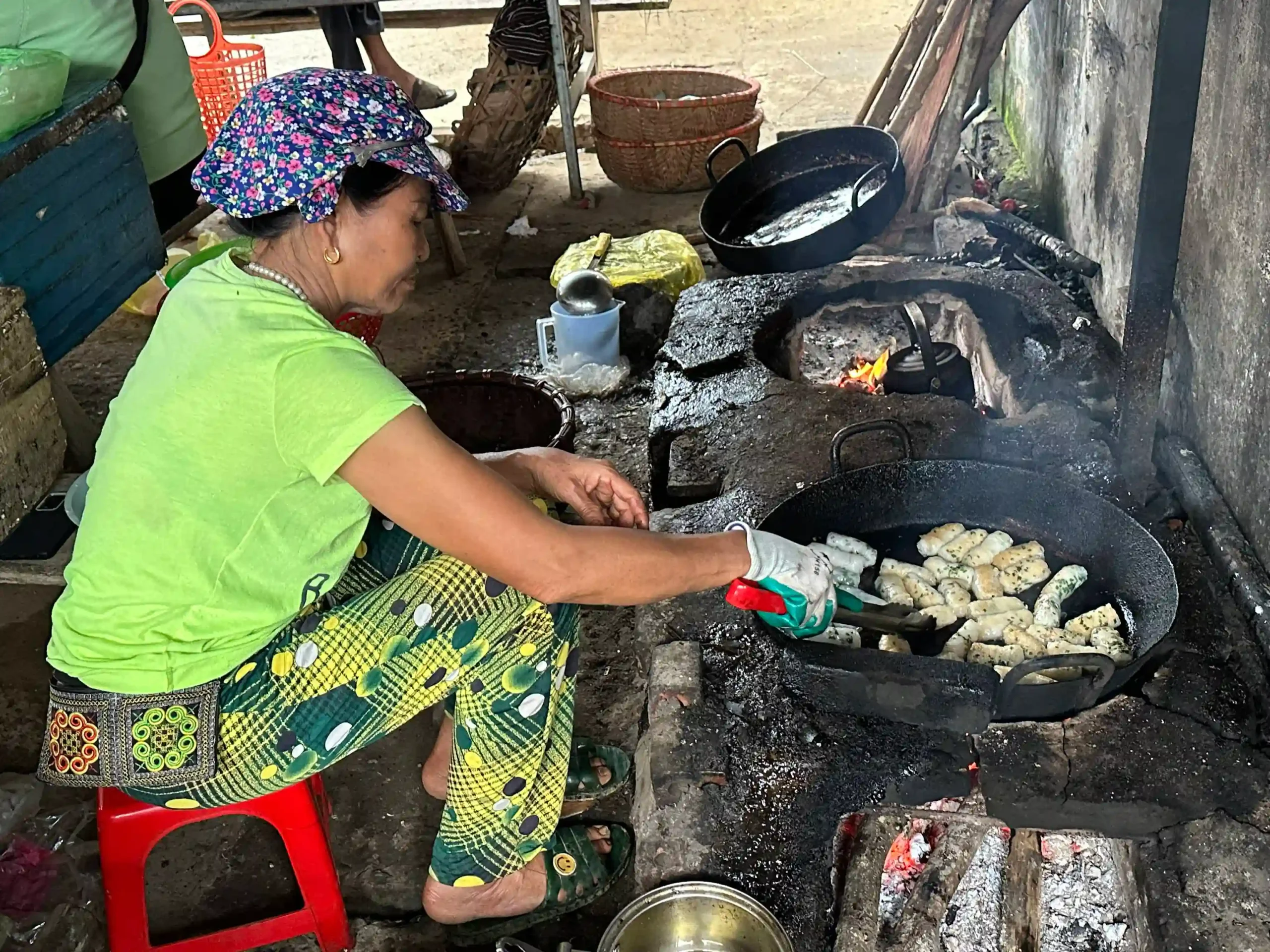
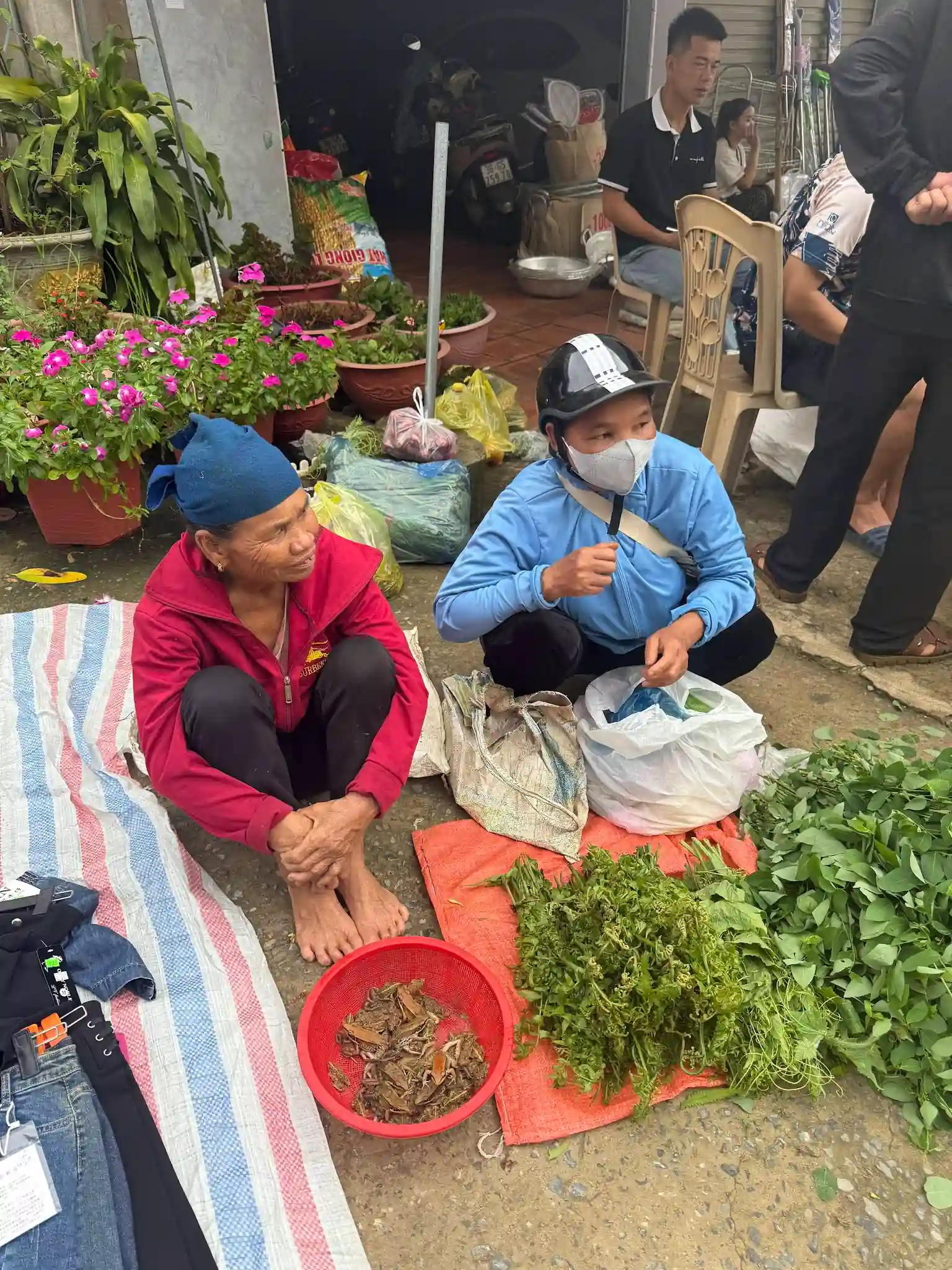
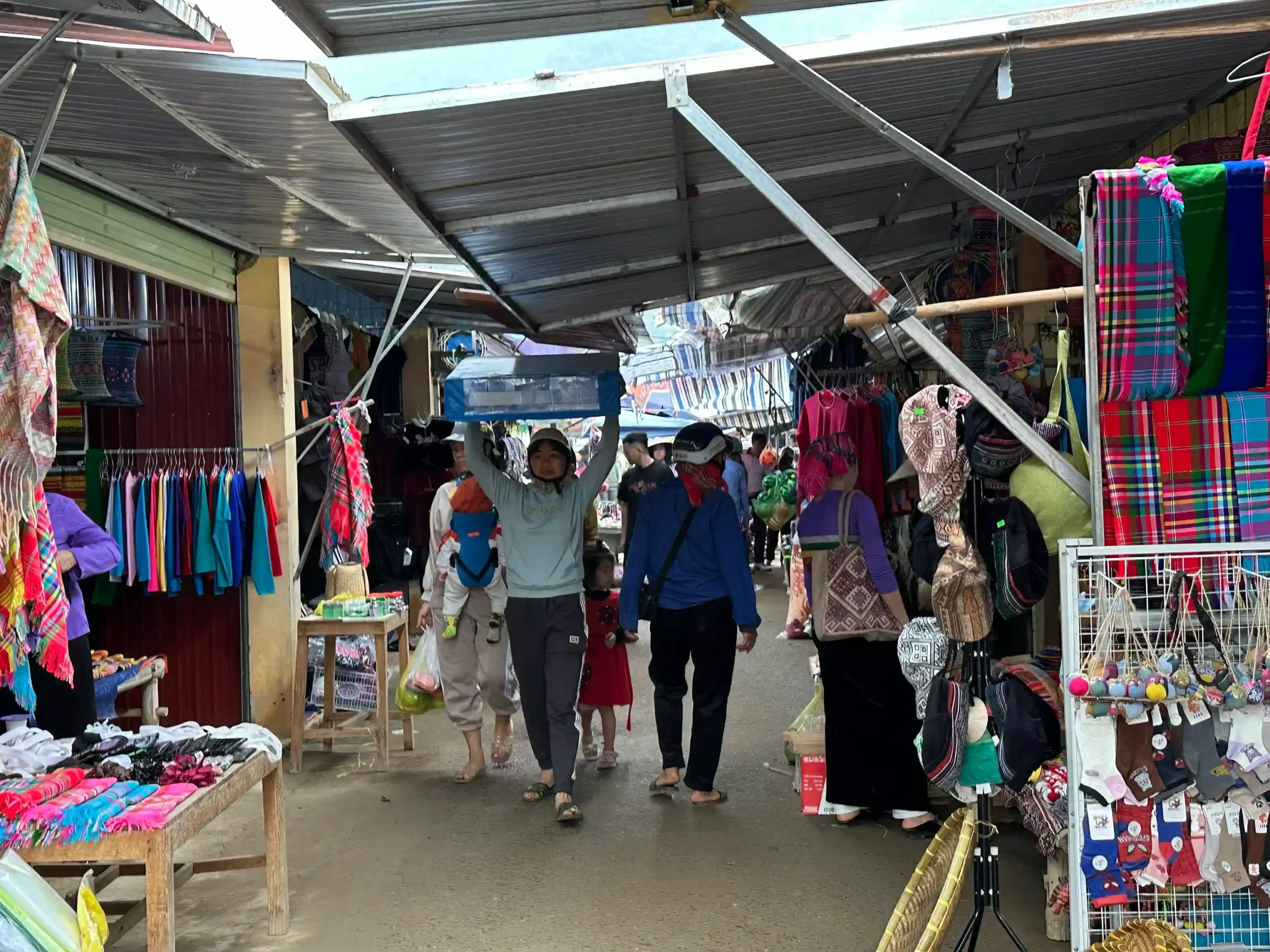
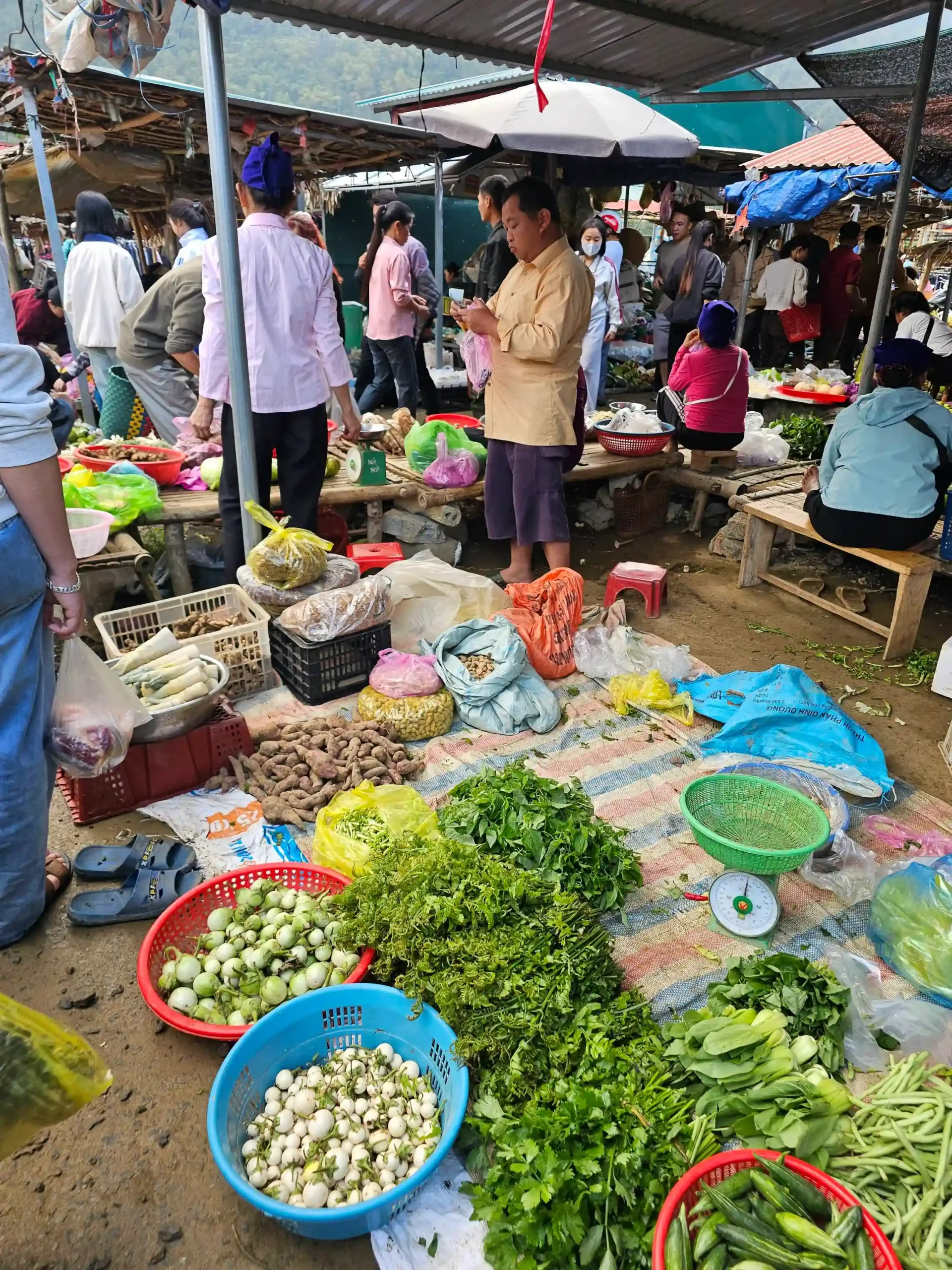
Pho Doan Market
If your schedule allows an early start, this is worth prioritizing over sleeping in.
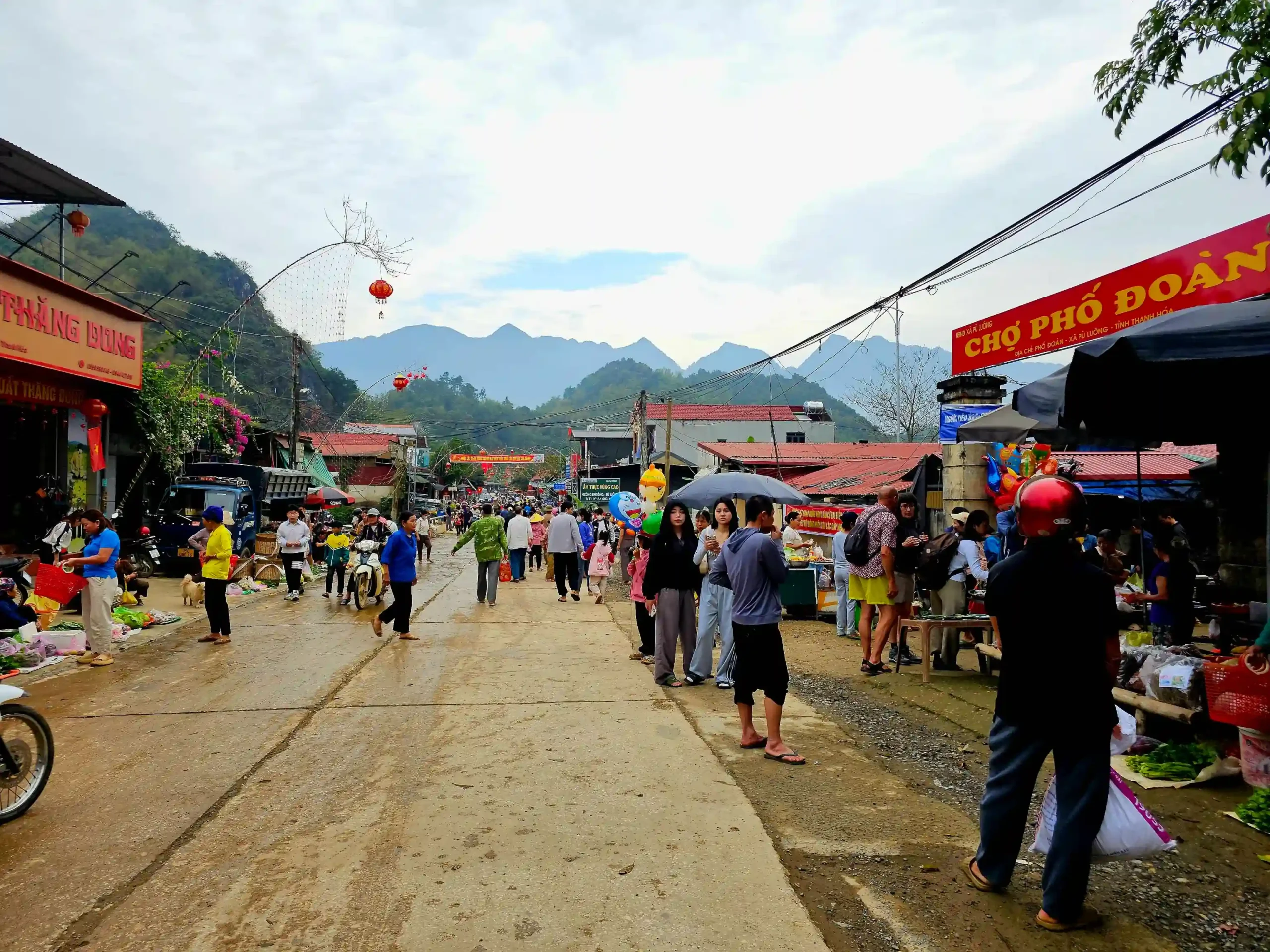
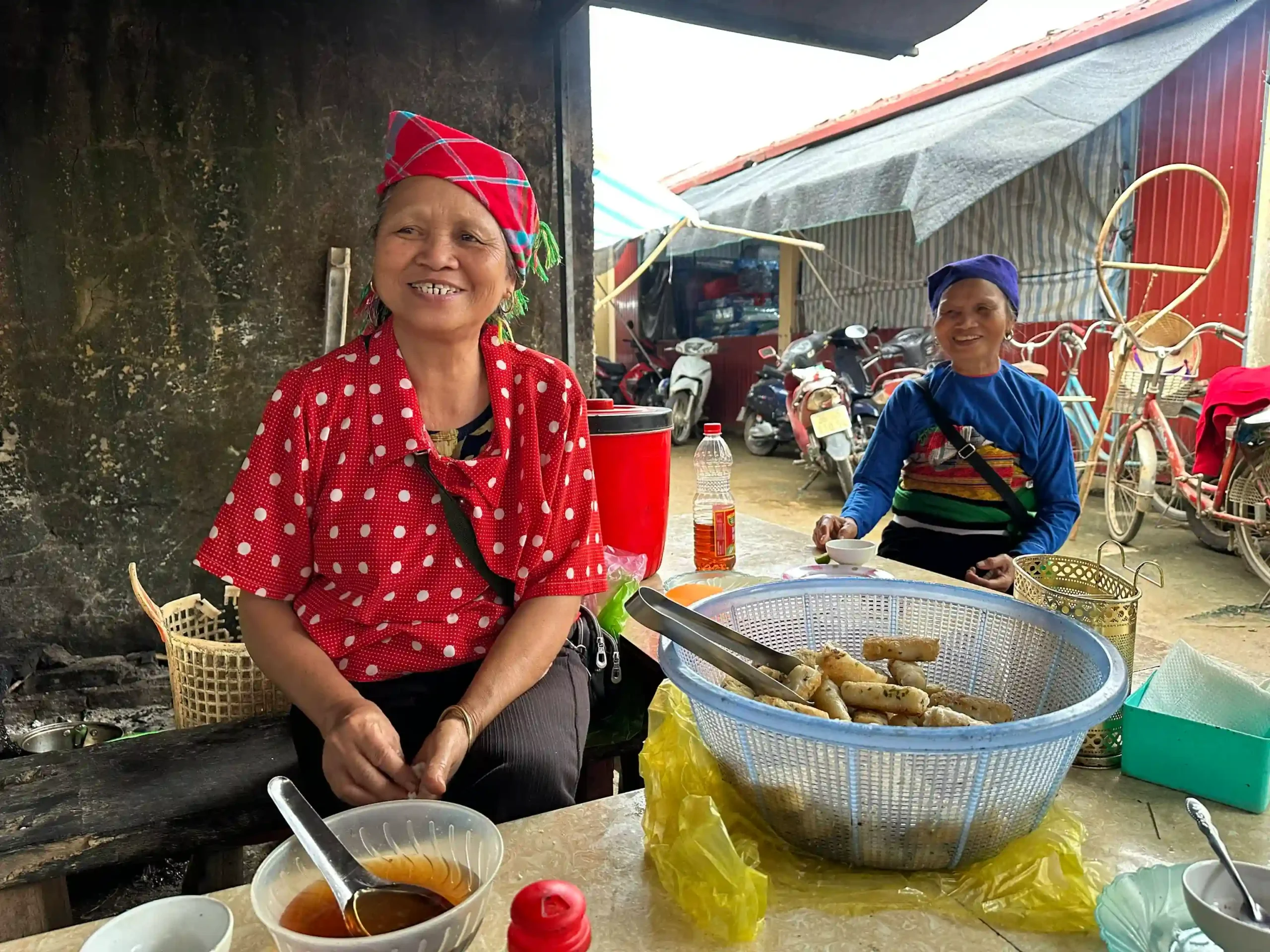
Markets here run their real business before 7am, locals trading produce, textiles, and household goods before the day heats up, and arriving early gets you the actual rhythm of the place.
Hand-woven textiles and bamboo goods show up alongside the food stalls, worth a look even if you’re not planning to buy.
The market itself isn’t set up for tourists specifically, which is exactly why it’s worth the early wake-up call. Vendors arrive on foot or by bicycle carrying produce grown or made within walking distance, and the transactions happening around you are genuinely local commerce, not a performance staged for visitors passing through.
By mid-morning, a lot of the earliest activity has already wound down, stalls packing up or thinning out as the day’s actual business concludes, which is a different rhythm from a lot of Vietnam’s more tourist-facing markets that stay active well into the afternoon.
What a Guided Day Actually Costs
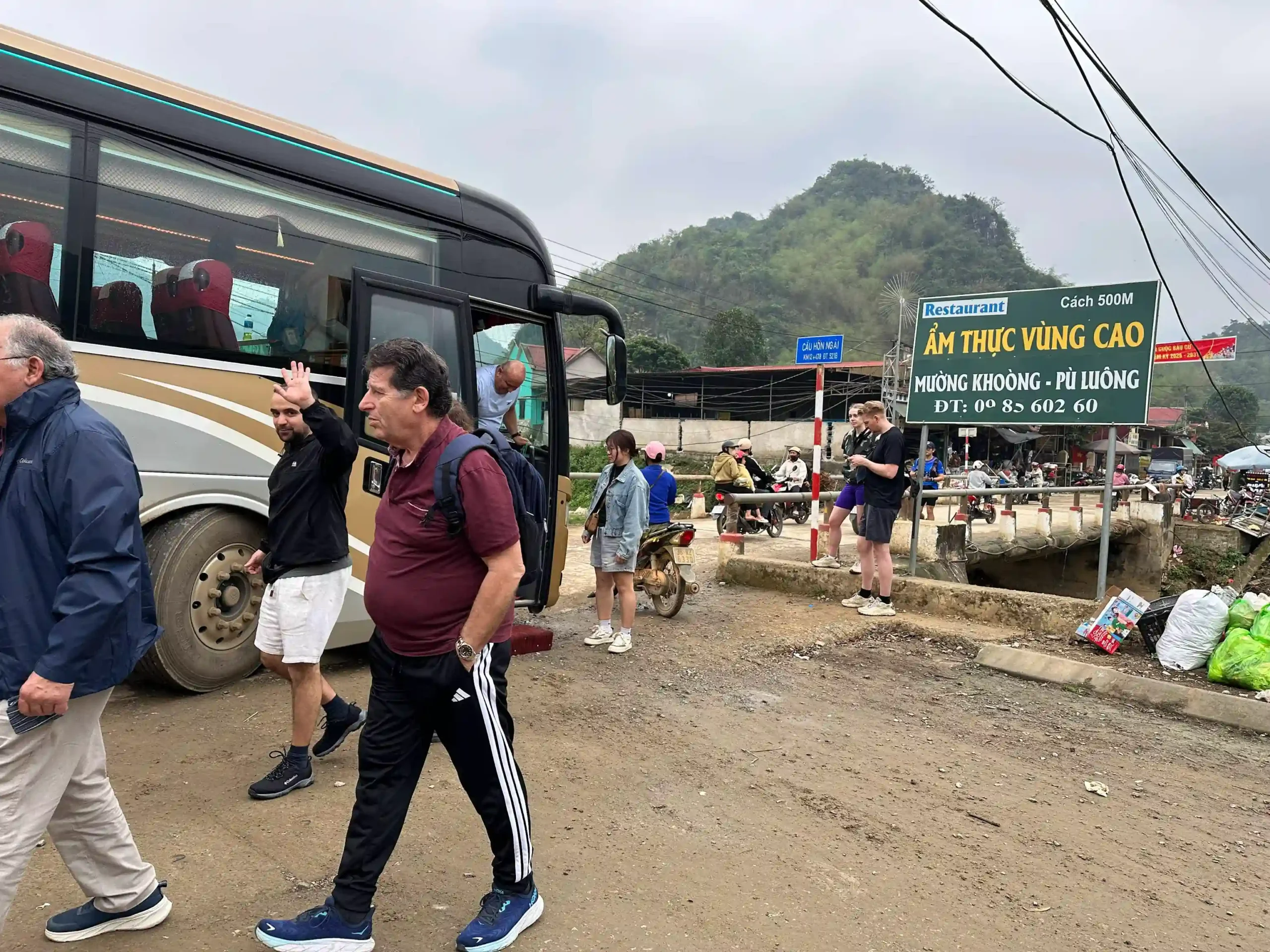
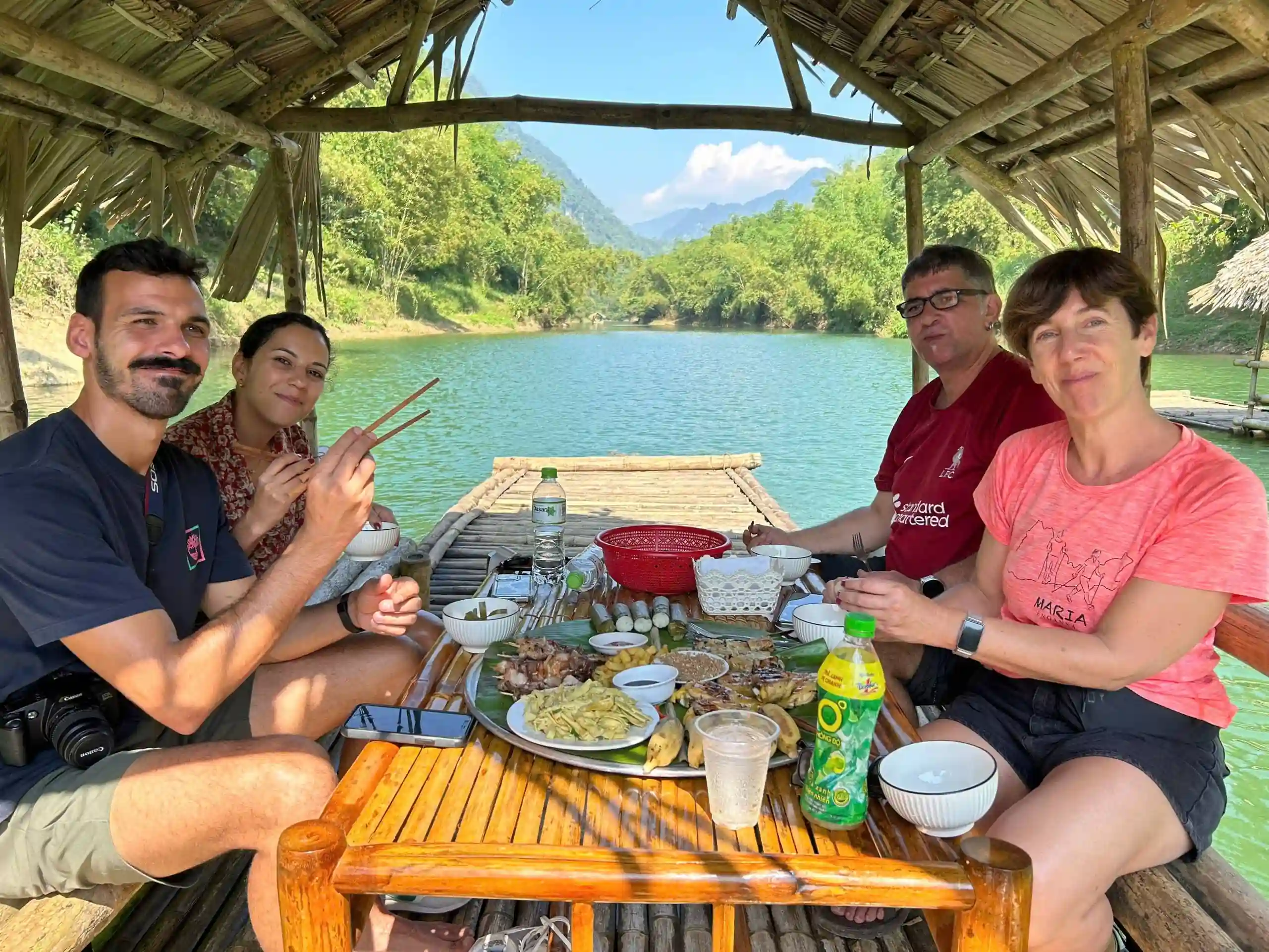
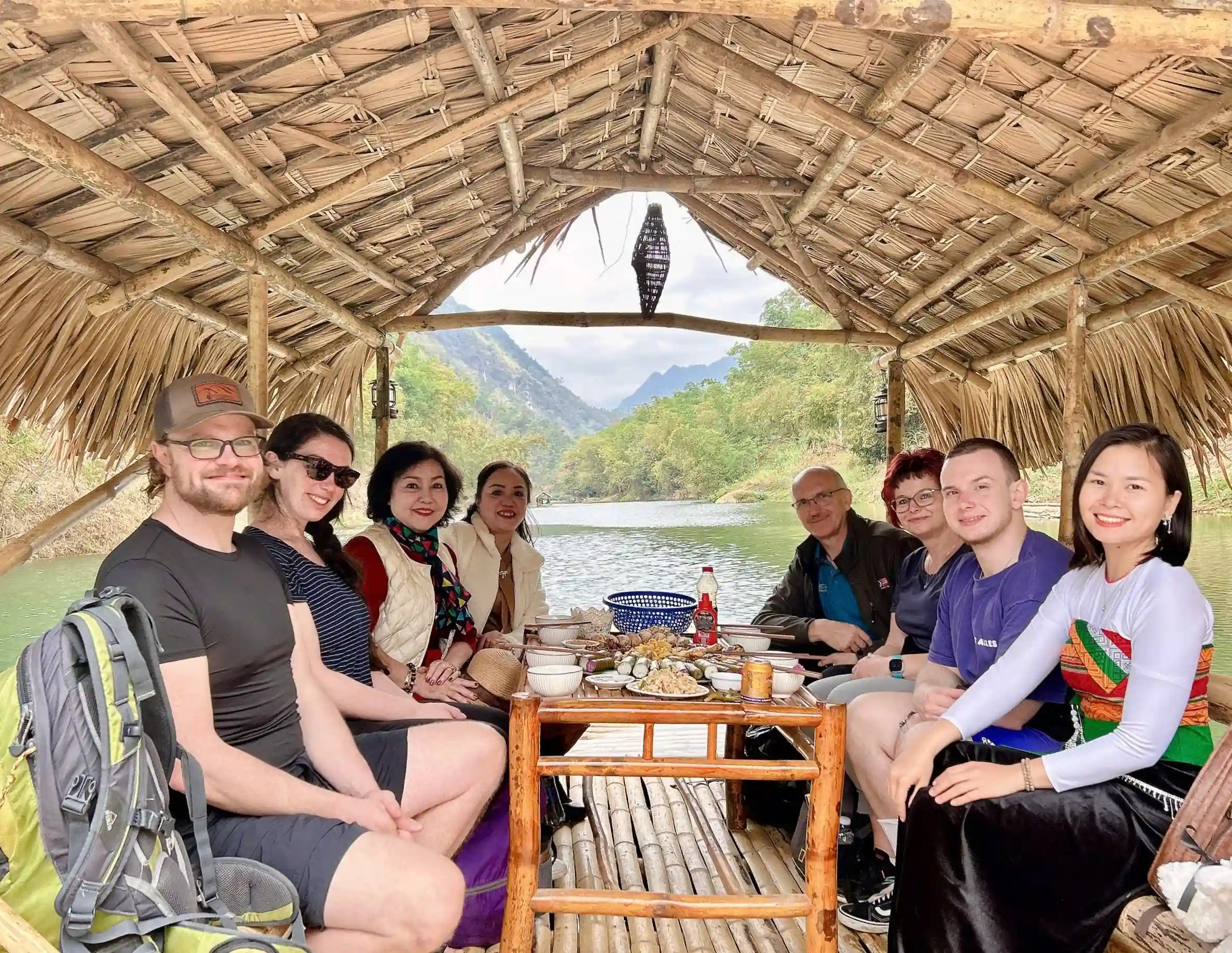
I did one guided day through a small local operator, arranged through Divi Travel, a private tour with a guide named Eddie and a driver who navigated the back roads without needing to check a map once.
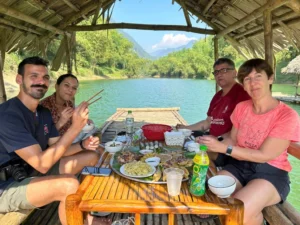
The day covered a village visit for a silk weaving demonstration, a trek to Cham Stream, and the bamboo rafting itself, with lunch and water included.
The full price came to $50 per person, which for a private day with a dedicated guide and driver is reasonable, not a splurge, especially split across more than one traveler.
Eddie’s English was strong enough for genuine conversation, and he answered questions about the villages, the farming methods, and the ethnic groups without it feeling like a rehearsed script. That’s worth something specific in a place like this, since a lot of what makes the trek interesting is context a map or a guidebook wouldn’t give you, why a particular terrace is shaped the way it is, what a specific plant along the trail is actually used for.
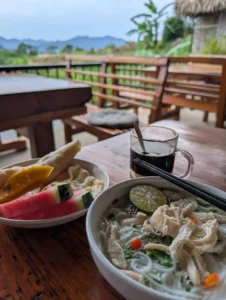
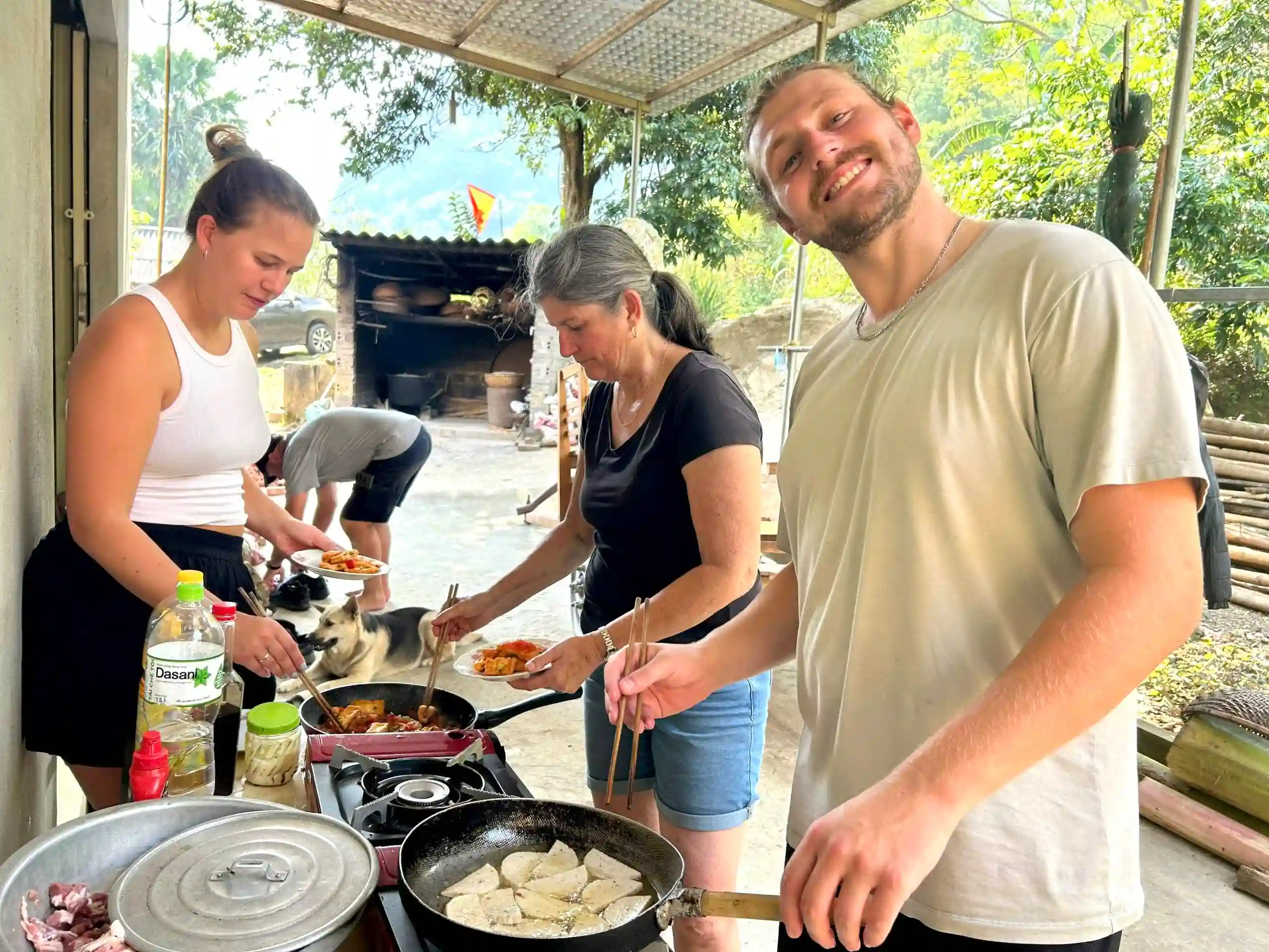
Lunch was included as part of the package, a simple spread eaten trailside instead of at a restaurant, which suited the whole slower rhythm of the day better than sitting down somewhere formal would have. Water and fruit were topped up throughout without needing to ask, a small detail but one that made the day feel genuinely looked after
If you’d rather arrange things piece by piece instead of booking a full package, guided half-day treks without the full add-ons run more like $20-40 per person, negotiated directly with a local guide through your lodge.
This costs less but means arranging rafting, lunch, and any village visits separately rather than having it bundled into one booking. For a first visit specifically, I’d lean toward the bundled version, since not having to coordinate three separate arrangements on your first day here is worth the modest premium.
Food, Stays, and Transport
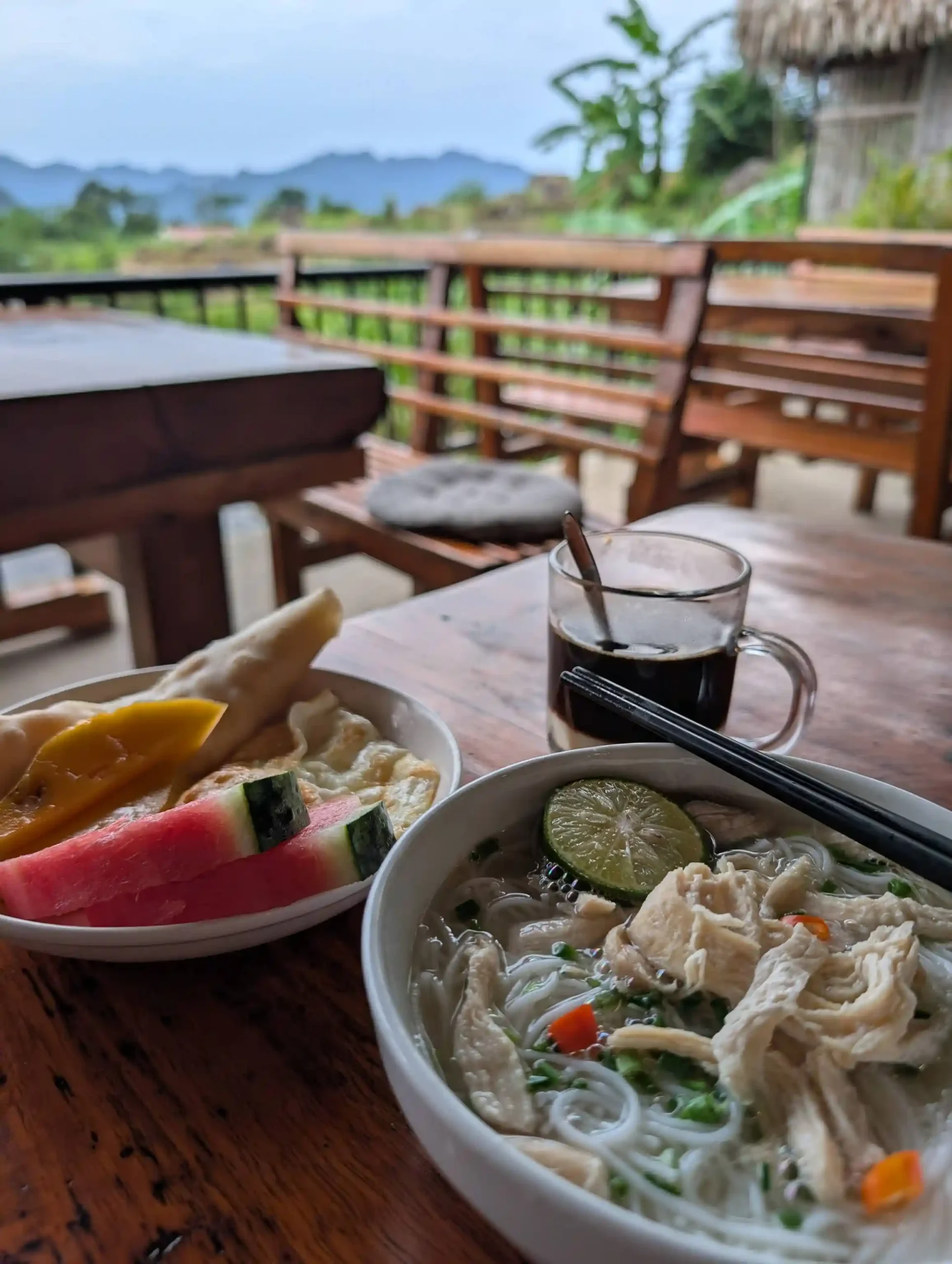
Food outside of a set tour runs very cheap, a simple meal at a village stall or lodge restaurant typically lands between 30,000 and 60,000 VND, rice, a protein, vegetables, sometimes a soup on the side.
Lodges with a proper kitchen and a view tend to charge more for dinner specifically, closer to 100,000-150,000 VND for a fuller spread, which is still modest against what the same quality would cost somewhere more touristed.
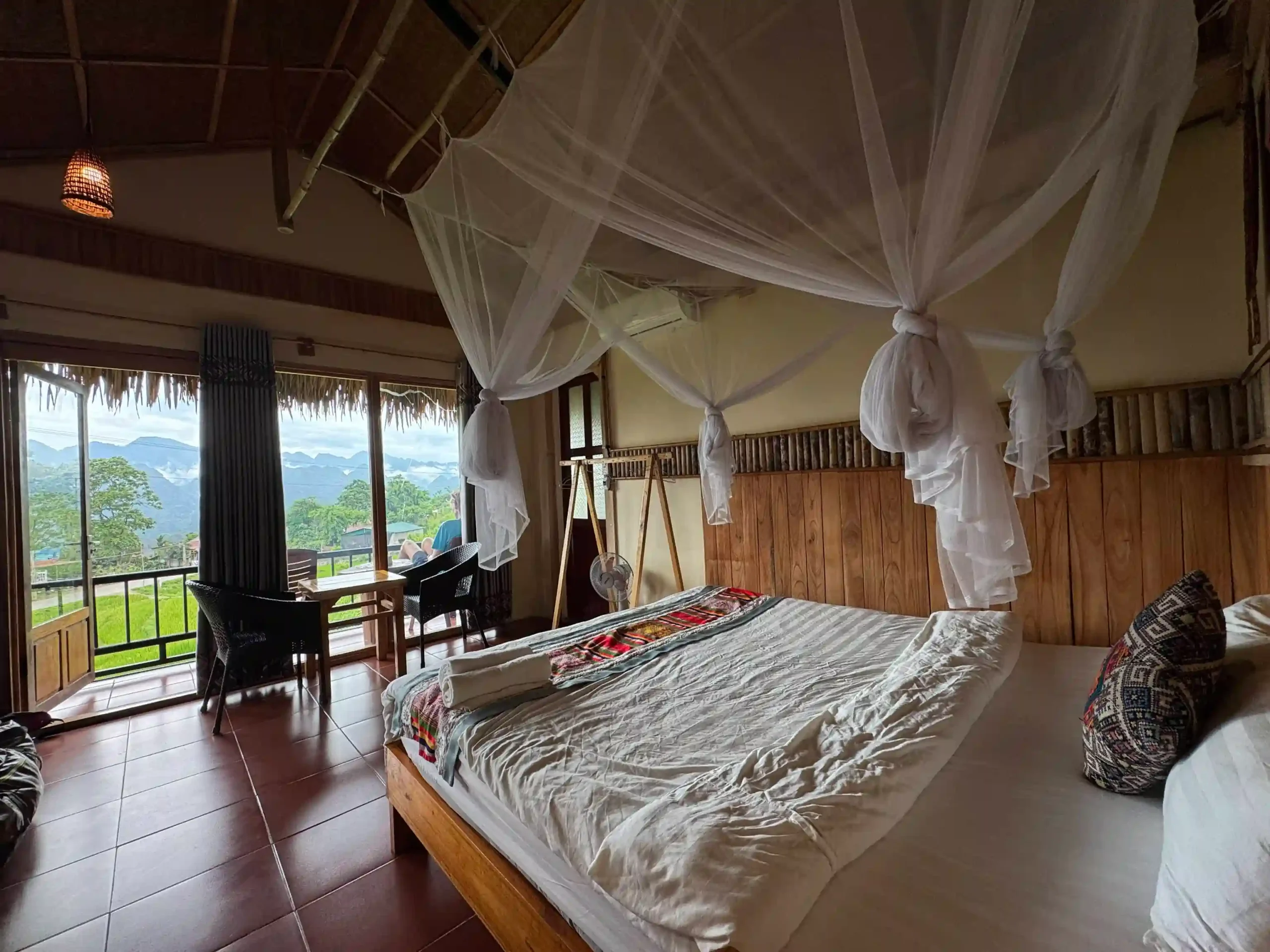
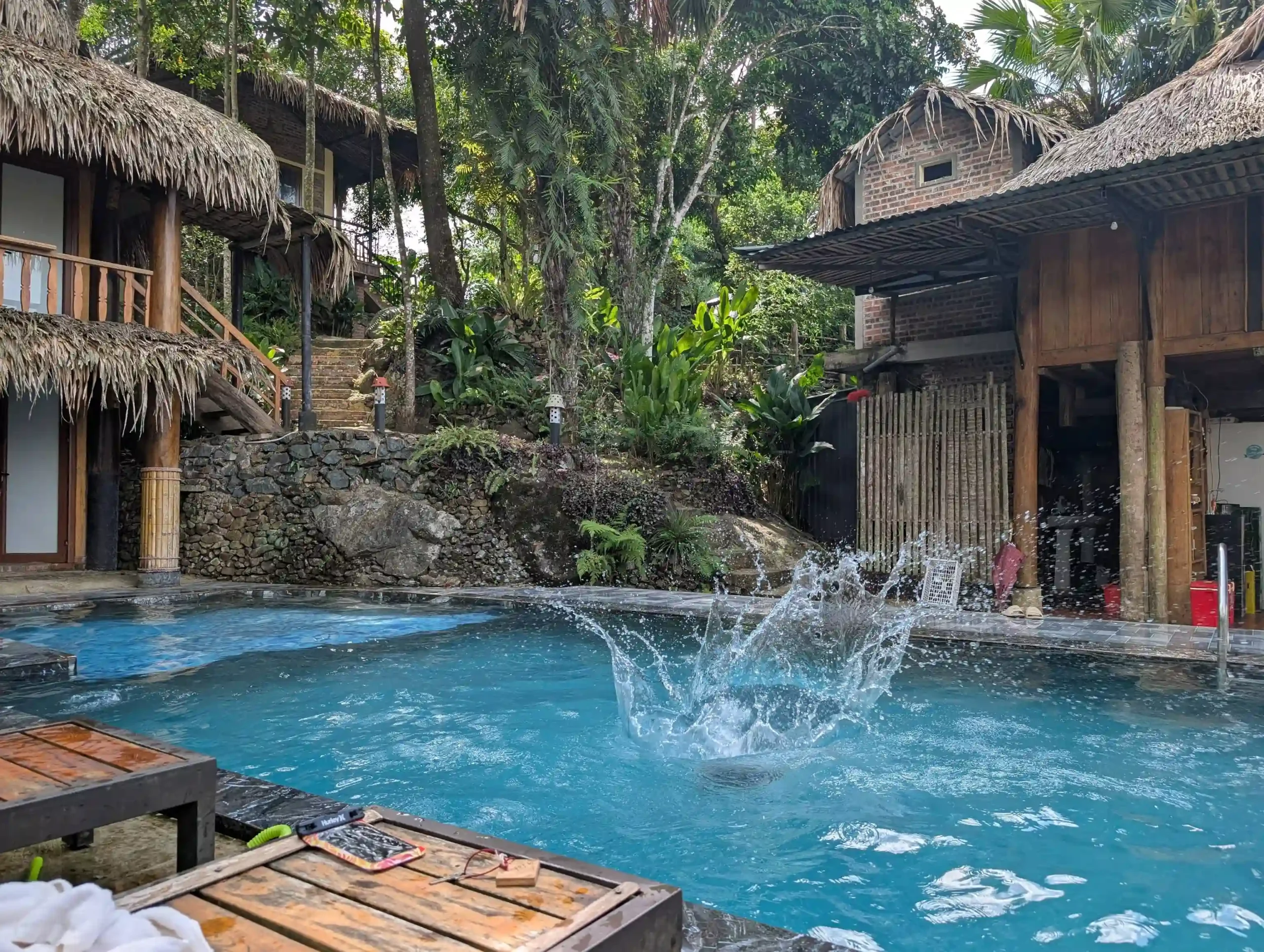
Accommodation itself varies widely depending on what you’re after. A basic homestay room with shared facilities runs considerably less than one of the newer eco-lodges built specifically around the terrace views, and the gap between the two is significant, worth deciding early which experience you actually want.
Coffee and snacks at a village stall cost next to nothing, usually under 20,000 VND, and bottled water is cheap and widely available even in the smaller villages.
Local transport, a motorbike taxi between villages or a short ride to a trailhead, runs a fraction of what the same distance would cost in Hanoi, though fewer options exist here after dark, worth arranging return transport in advance.
Most lodges can arrange a motorbike taxi with enough notice, and it’s worth asking at check-in what the going local rate actually is, since prices aren’t posted anywhere and a bit of asking around avoids paying a tourist markup for a five-minute ride.
Pu Luong Travel Guide: How Many Days Actually Makes Sense
Two full days covers the core experience properly: one day for the Kho Muong trek and rafting combination, a second for Hieu Waterfall, the water wheels, and a market visit if the timing lines up.
Three days gives you room to add a second, quieter village, or attempt the longer climb up Pu Luong itself, which runs a genuine multi-hour ascent.
Arriving after a week in Ninh Binh, I found two days here felt slightly rushed, more because I kept wanting to slow down and actually sit somewhere, than because there wasn’t enough to fill the time. If your schedule allows it, three days lets the place set its own pace instead of yours.
For the transport side of getting here, I’ve covered the Ninh Binh to Pu Luong route separately. If you’re still deciding whether this Pu Luong travel guide’s picks are worth the detour at all, my Ninh Binh itinerary guide covers how the addition fits into a longer northern Vietnam route.












 Tiếng Việt
 한국어
한국어 中文 (中国)
 日本語
日本語 ไทย
ไทย Deutsch
 Español
 Destinations
 Instagram
 Facebook
 X (Twitter)
 Threads
 Tiktok