









 Ha Giang
 Hanoi
Hanoi Ho Chi Minh City
 Ha Long
 Sapa
Sapa Mekong Delta
 Da Nang
 Hue
Hue Hoi An
 Ninh Binh
 Da Lat
 Nha Trang
 Phan Thiet
 Phu Quoc
 Quang Binh
 Quy Nhon
 Vung Tau
 Thai Nguyen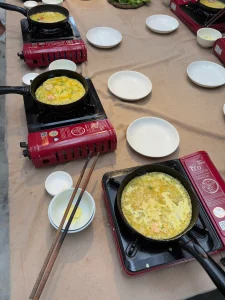
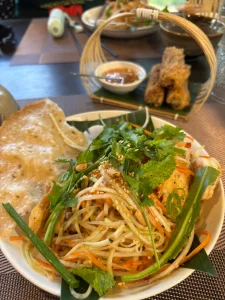
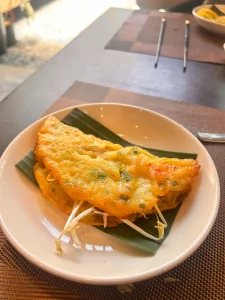
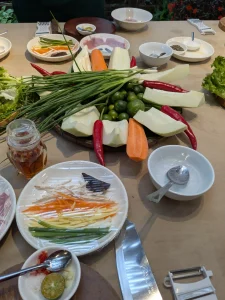

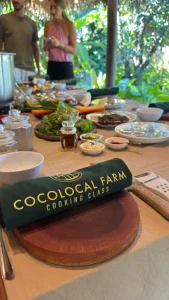


Nearly every Hoi An cooking class sold online now comes with a basket boat ride attached to it, which is a bit odd when you think about it, because the two things have nothing to do with each other. One is a cooking lesson. The other is a boat.
The reason they’re bundled is that Cam Thanh has both, and the coconut boats photograph well.
So the question isn’t really whether the basket boat is worth $6, because it obviously is, it’s whether the cooking class is worth the other $30.
That’s what I want to get into, because I think people book these classes for the wrong reasons and then come away pleased for reasons they weren’t expecting.
- Quick Answer: A Hoi An cooking class with the market tour and basket boat ride costs $30 to $36 and takes about four hours including hotel pickup. You’ll cook four dishes. The class is what you’re paying for and it’s good value at that price, especially if you actually cook and don’t just watch. The basket boat is a 45-minute add-on worth about $6 on its own, and it’s fine, just don’t book the day around it.
- The Numbers:
- Cocolocal Farm Vietnamese cooking class in Hoi An, market and boat included: $36, four hours.
- Cooking class with basket boat, coffee and lantern making: from $30, 4.5 hours.
- Cheap market and home cooking classes: from $8, and quality varies enormously.
- Red Bridge Cooking School: around $45 half day, $59 deluxe, river boat instead of a basket boat.
- Basket boat alone at Bay Mau: $5 to $7, or 30,000 VND entry plus 150,000 per boat if you turn up yourself.
- Before You Book:
- Ask whether you cook or whether you chop while staff cook. This is the whole difference.
- Departures at 8:30am and 1:30pm. Morning is better for both halves.
- Standard dishes: banh xeo, Hoi An spring rolls, green papaya salad, pho.
- Dietary requirements go in the booking notes, not on the morning.
- October and November the river floods and the boat half gets pulled, so book cancellable.
The Hoi An Cooking Schools Worth Knowing by Name
There are something like forty cooking classes operating in Hoi An and most of the listings online don’t tell you which school you’re actually booking, which is the whole problem. Five names come up again and again, and they’re doing noticeably different things.
| School | Rating | Group | Price | Best for |
|---|---|---|---|---|
| Cocolocal Farm | 5.0 / 568 | Small | ~$36 | The standard combo, done well |
| Mimi Cooking Class | 5.0 / 1,022 | Small | ~$30 | Family home, best recipe follow-up |
| Green Bamboo | 5.0 / 316 | Tiny | ~$50 | Choosing your own dishes |
| Red Bridge | 4.8 / 579 | Large | $45 to $59 | Polish, and mi quang |
| Tra Que farm classes | Varies | Medium | $25 to $45 | The growing side |
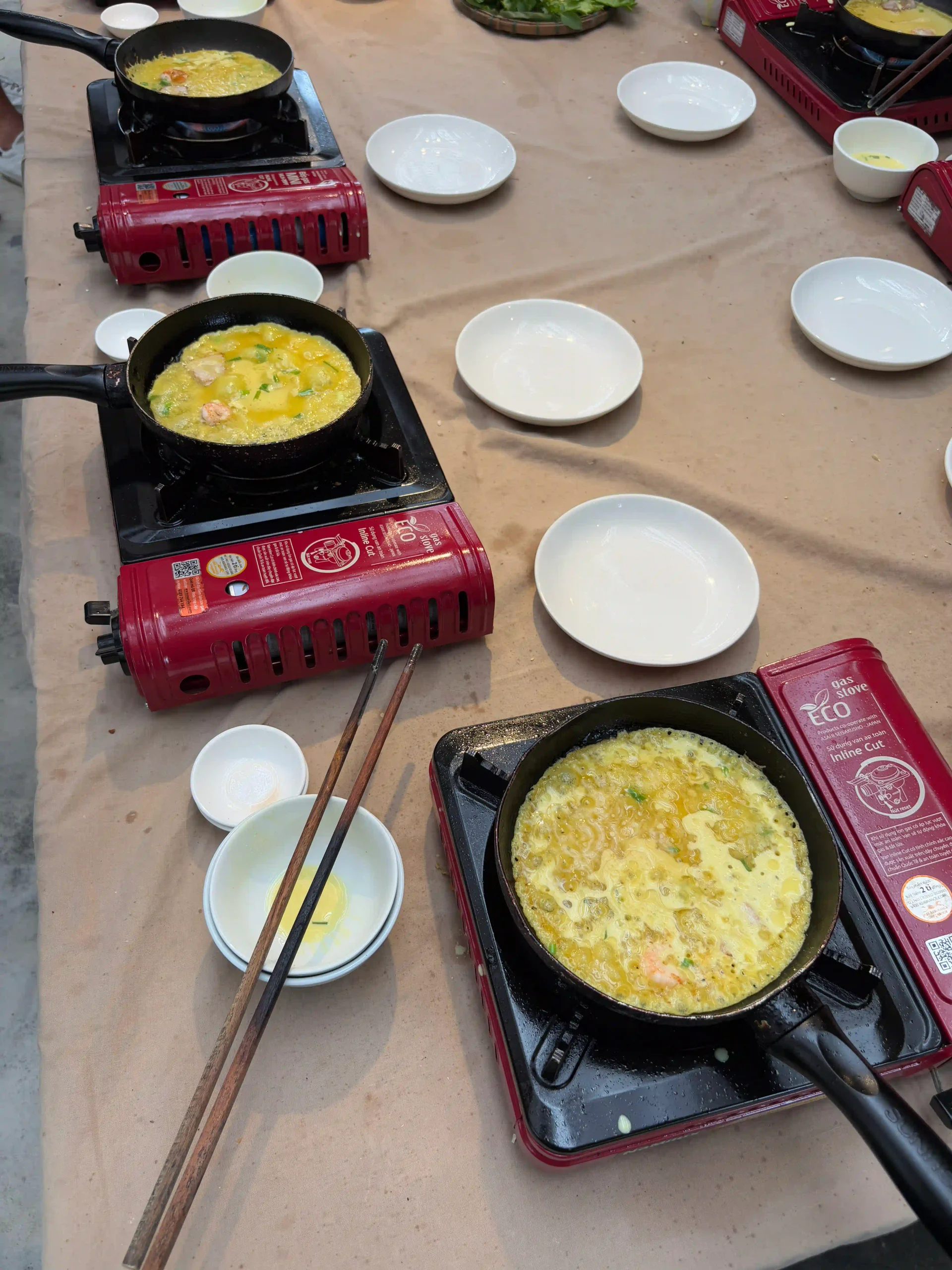
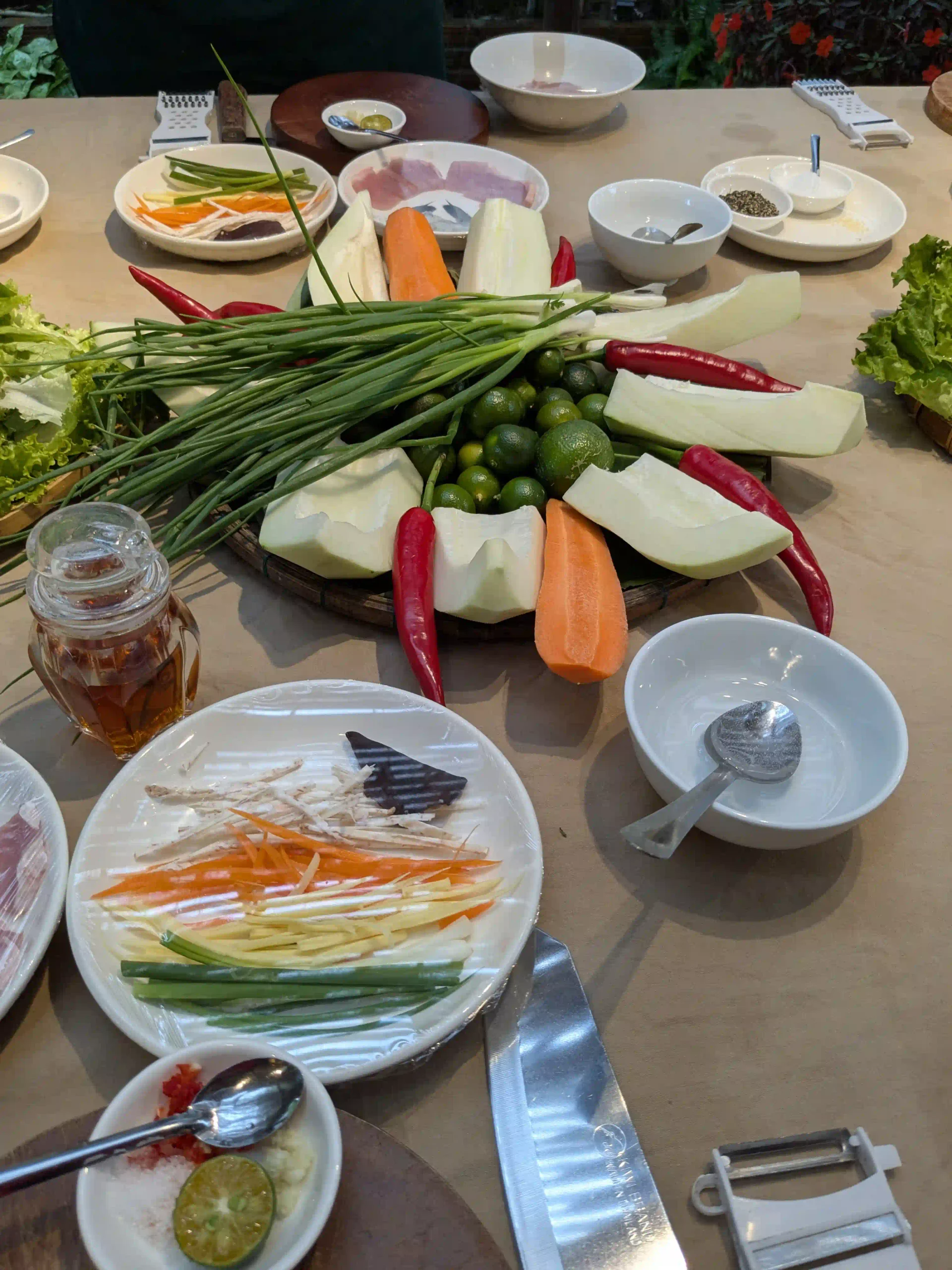
Cocolocal Farm is the one most of the combo listings resolve to. Garden setup out in Cam Thanh next to shrimp ponds, prep stations under a roof, and a burner arrangement that means everyone cooks at once with no queuing. Four dishes, all of them yours.
Mimi is the one with the most reviews of any class in town, over a thousand, and the thing people mention most isn’t the food. It’s that the recipes arrive by email the same afternoon, while you still remember what you did. There’s an optional paid upgrade for the boat spinning and a crab-fishing stop that turns up on some mornings.
Green Bamboo is the outlier and the one I’d point a real cook at. Van runs it herself, groups are tiny, often two or three people, and you pick your dishes from a list of about sixty before you arrive, not whatever’s on the standard menu. Market trip, coffee stop, pickup included. It costs more and it’s a different product.
Red Bridge is the big polished one, a campus by the river with a demonstration kitchen and a boat ride out to it. It’s the only name here where you’re on a schedule with twenty-odd other people, and it’s also the one that teaches mi quang, which matters more than it sounds. More on that below.
What separates all of them is group size and whether you touch the pan. A garden kitchen doing seven people is a different afternoon from a purpose-built school doing thirty in two sittings, and both of those exist here at prices $10 apart.
The $8 listings are the ones to read carefully. Some are lovely small home kitchens. Some are a photo stop at the market followed by watching a woman cook while you drink tea, and the reviews won’t always tell you which because people enjoy the tea.
Hoi An Cooking Class Prices in 2026
| Class | Length | Price | What’s in it |
|---|---|---|---|
| Cocolocal Farm, market tour, basket boat | 4 hrs | ~$36 | Pickup, market, boat, 4 dishes, lunch |
| Cooking class, basket boat, coffee, lantern making | 4.5 hrs | From $30 | Pickup, boat, class, 2 workshops |
| Market and home cooking class with basket boat | 1 to 4 hrs | From $8 | Depends entirely on the option |
| Red Bridge half day | 4.5 hrs | ~$45 | Market, river boat, herb garden, class |
| Red Bridge deluxe | Full day | ~$59 | Above plus Tra Que and an extra hour cooking |
| Tra Que farm cooking class | 3 to 5 hrs | $25 to $45 | Herb village, planting, class |
The price range is wide enough that people assume the expensive ones must be better. They’re not, particularly. They’re bigger, or they’re smaller, and those are two different kinds of better.
What You Actually Cook
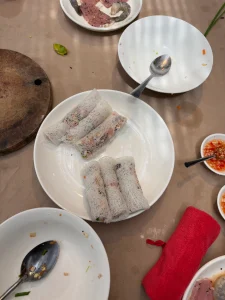
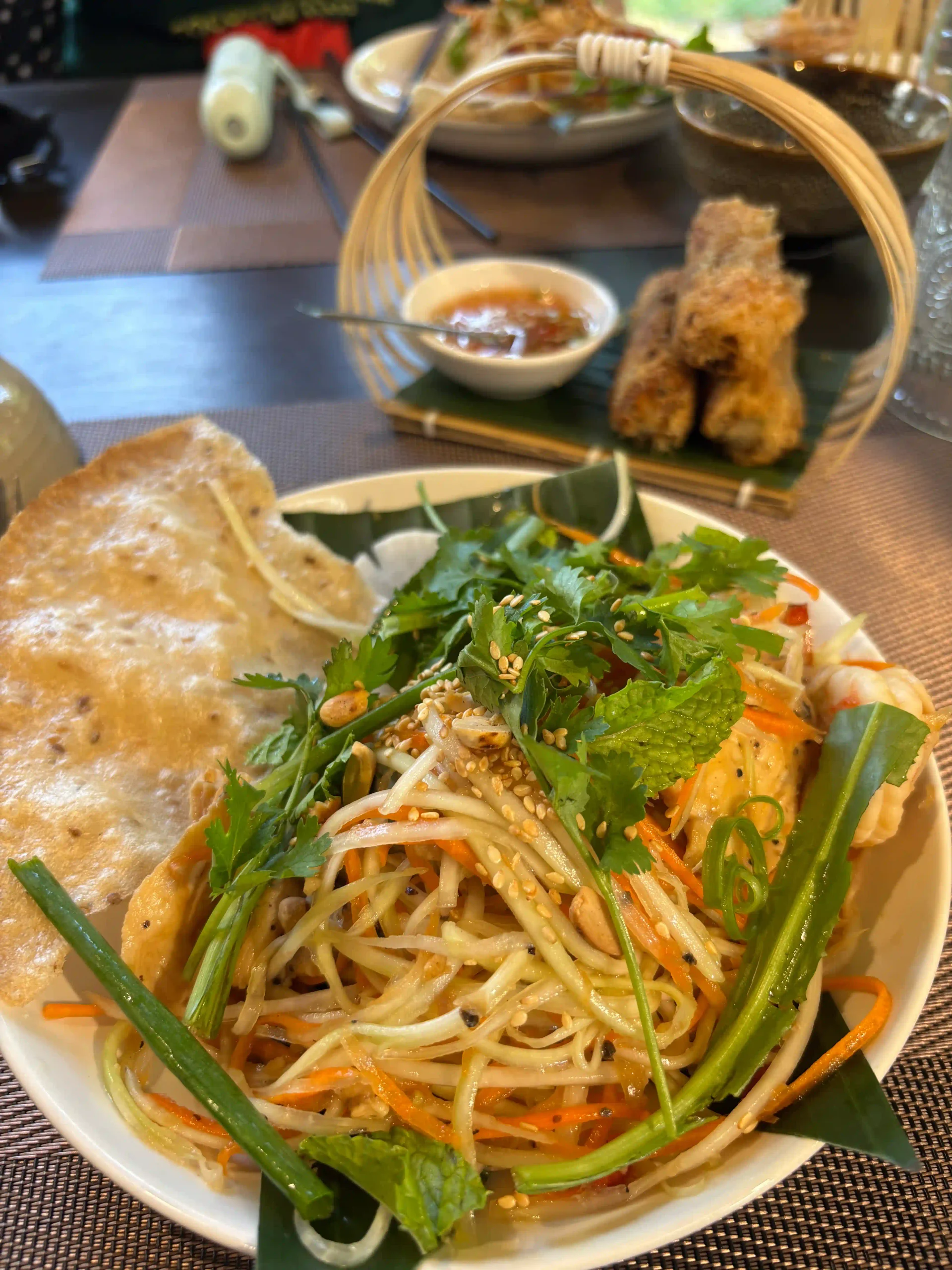
Four dishes is standard on the combo classes. The usual set is banh xeo, Hoi An fresh spring rolls, a green papaya salad with prawn and pork, and pho.
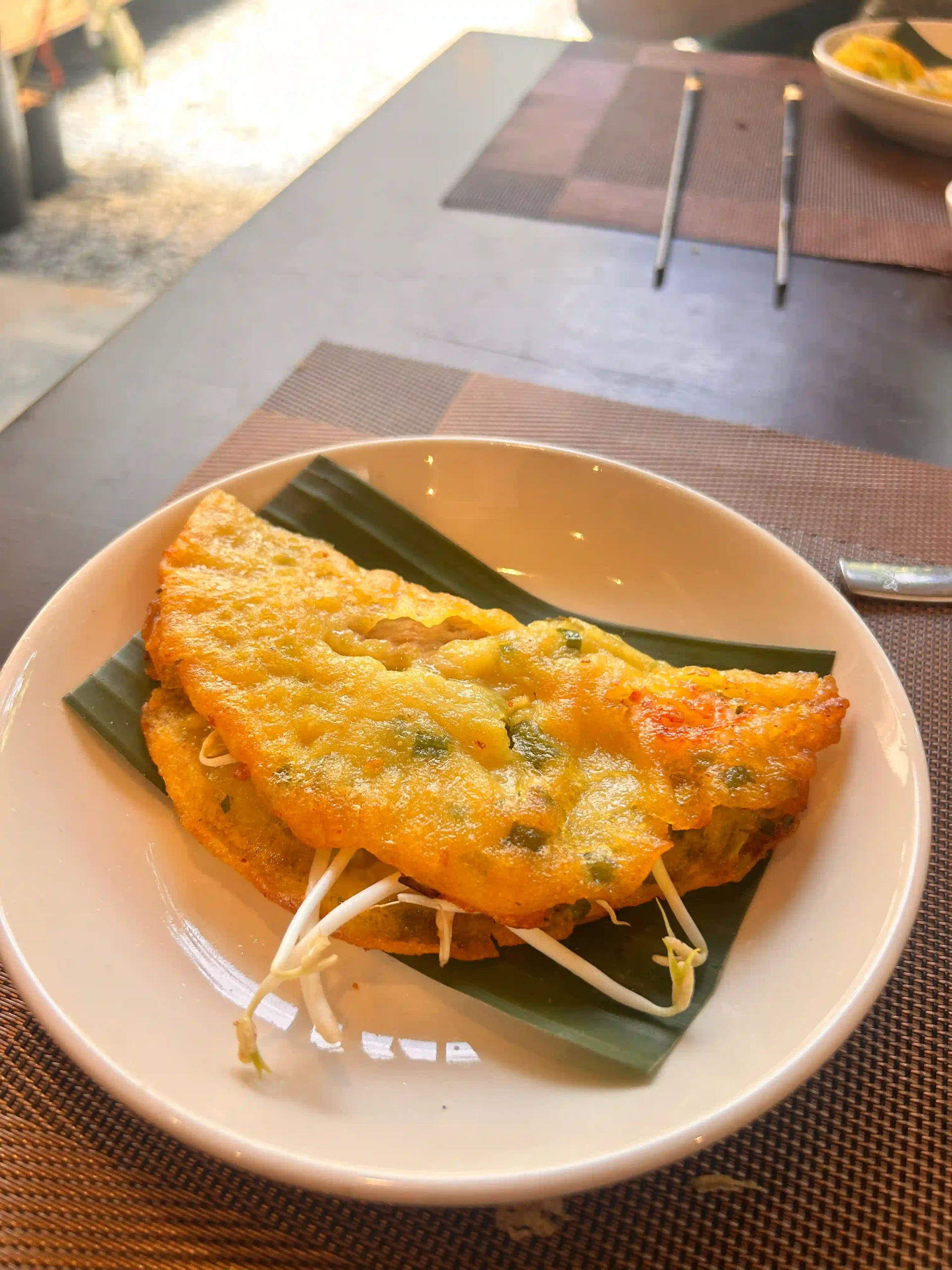
Banh xeo is the one to care about. The central Vietnamese version is small, saucer-sized, and crisp all the way through, nothing like the enormous floppy southern one, and the whole thing lives or dies on how hot the pan is and how thin you get the batter.
It’s the only dish on that list I’d say most people really take home. Turmeric in the batter, coconut milk, and you swirl it and leave it alone. That’s it. The reason yours doesn’t work at home later is almost always the pan.
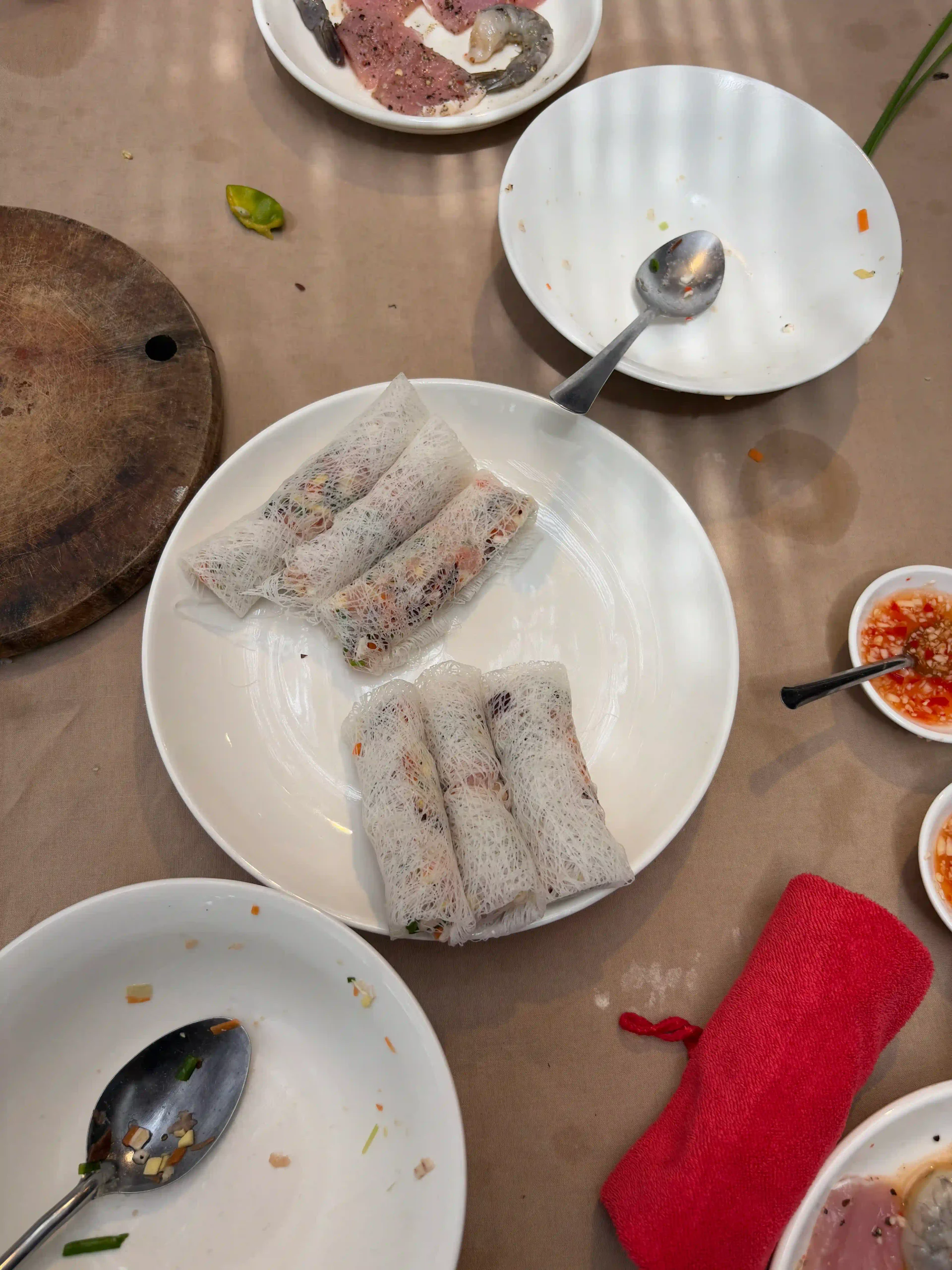
Spring rolls are a technique lesson more than a recipe. Everyone is bad at rolling for about three goes and then it clicks and you have it permanently.
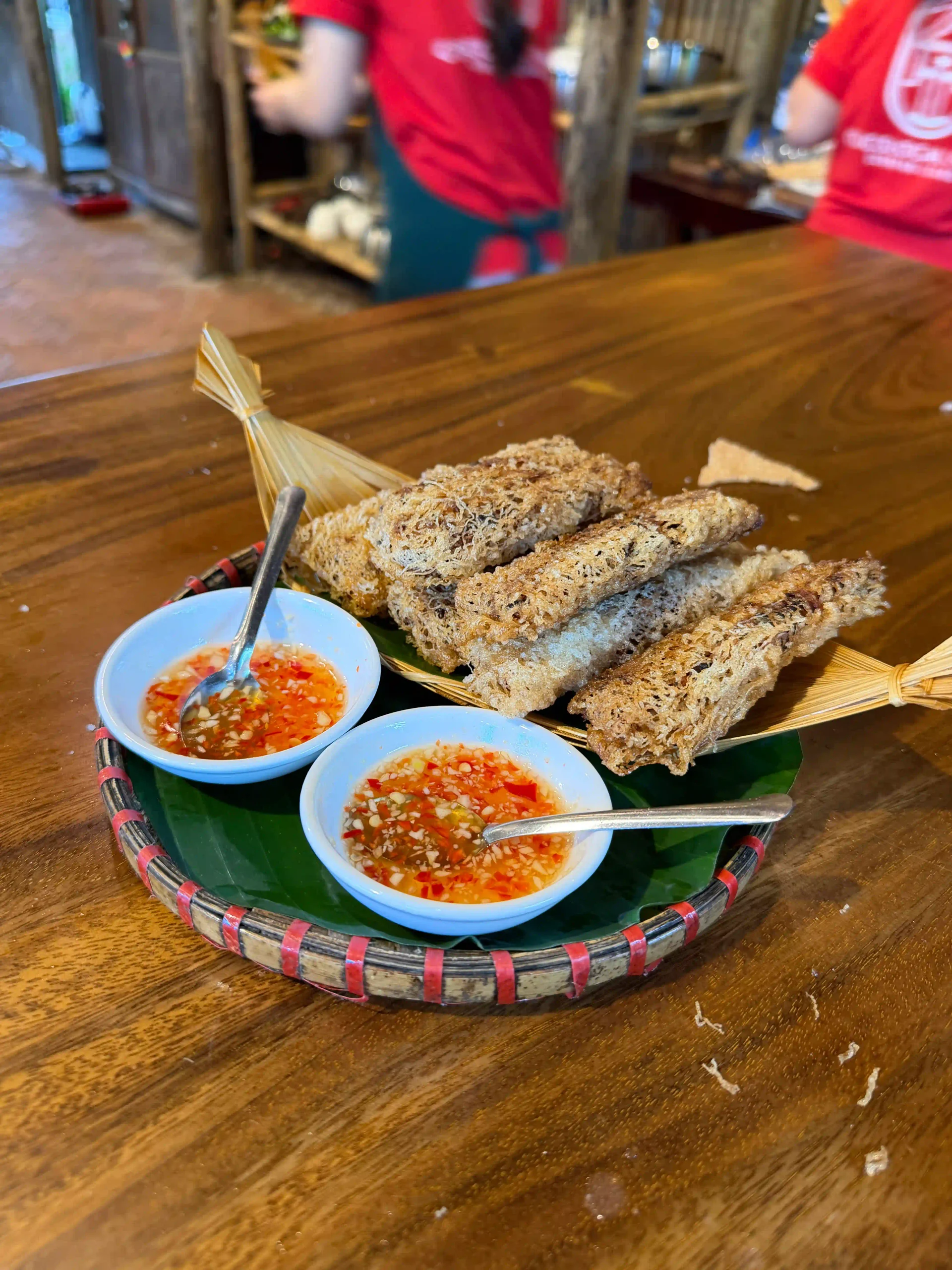
The papaya salad is really a dressing lesson. Fish sauce, lime, sugar, chilli, garlic, and the ratio is the whole dish. Write it down.
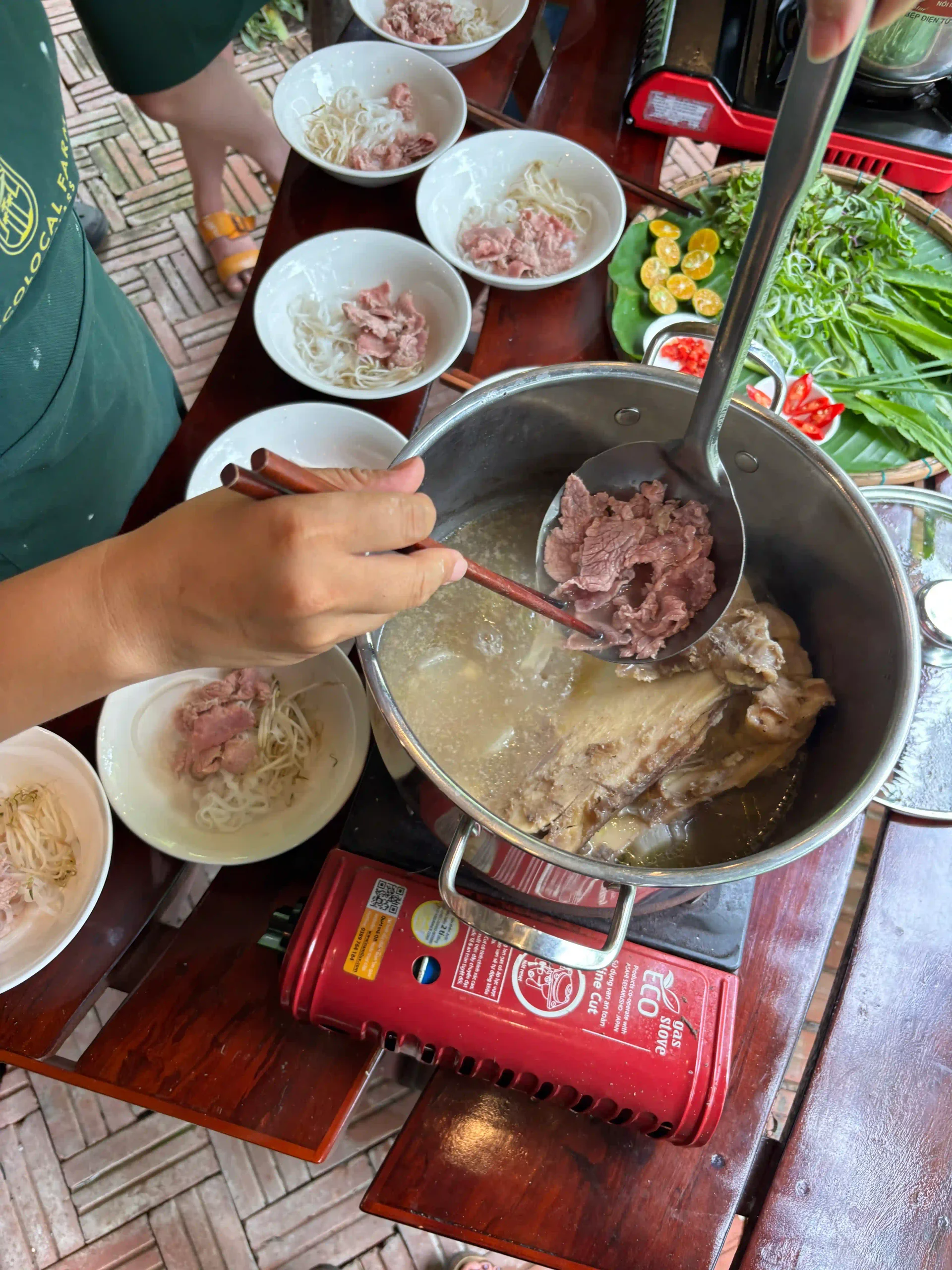
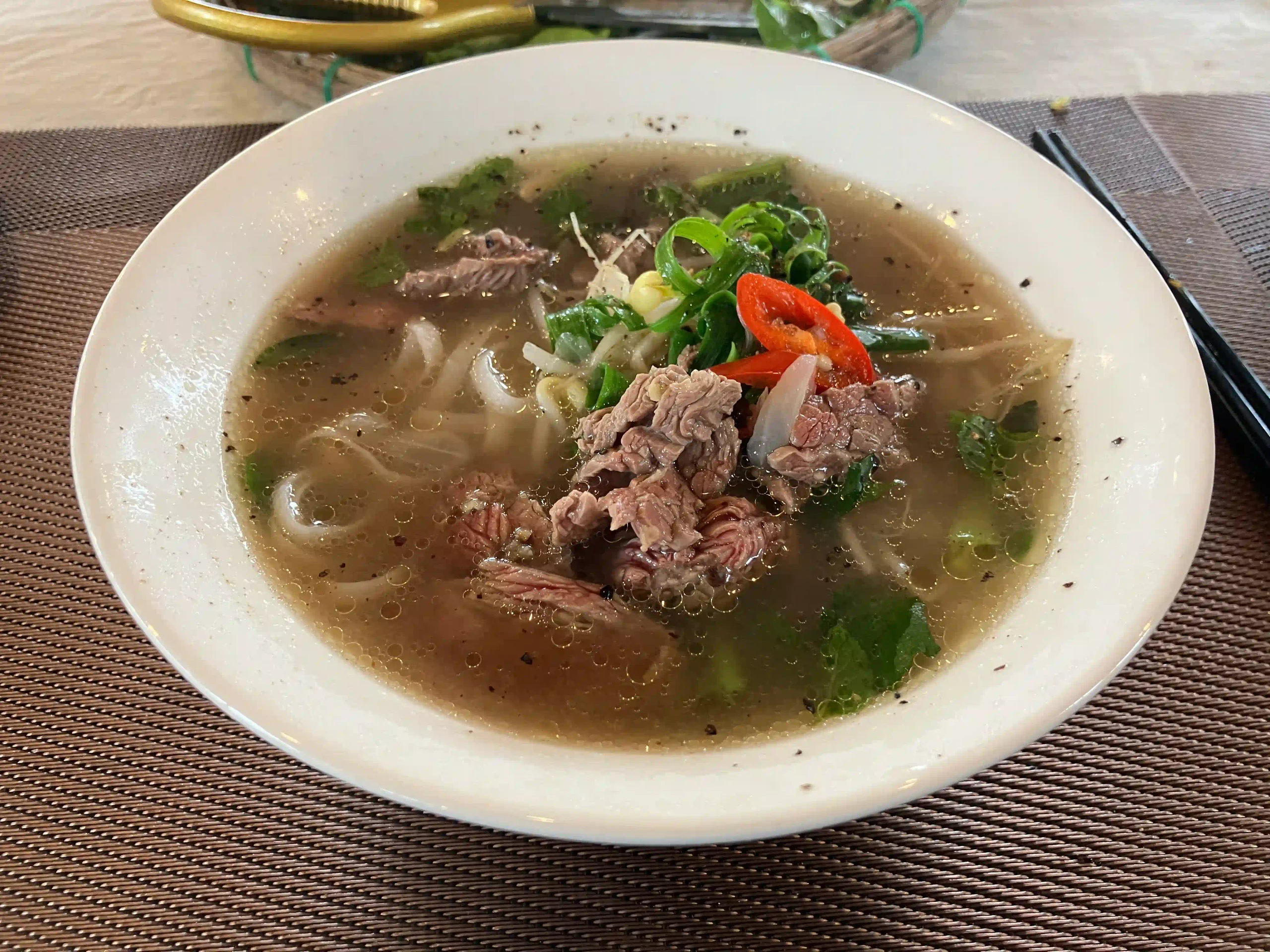
And then pho, which I have opinions about.
Pho broth is six to twelve hours of bones and charred ginger and onion. What you are being shown in twenty minutes is a shortcut using stock somebody else made that morning. It makes a perfectly nice bowl of soup.
It’s not a lesson in pho, and I’ve never understood why classes here put it on the menu at all when you’re standing in Quang Nam, which has mi quang, which is delicious, quick, and actually from this province.
If you’re comparing two classes and one of them teaches mi quang, that’s the one. In practice that’s Red Bridge, where mi quang ga turns up on the menu alongside banh xeo and cha gio, and Green Bamboo, where you choose your own dishes and can simply ask for it.
Cao lau isn’t taught anywhere, before you go looking for it. The noodles need water from the Bá Lễ well and lye ash from Cham Island wood, which is exactly why cao lau doesn’t exist properly outside this town. I went into all that in the ten best foods in Hoi An.
The Market Walk
Most of the combo classes start with a market, usually a local one and not the central tourist market, where the guide buys what you’ll cook.
Forty minutes, roughly. Herbs, meat, fish, the fermented shelf.
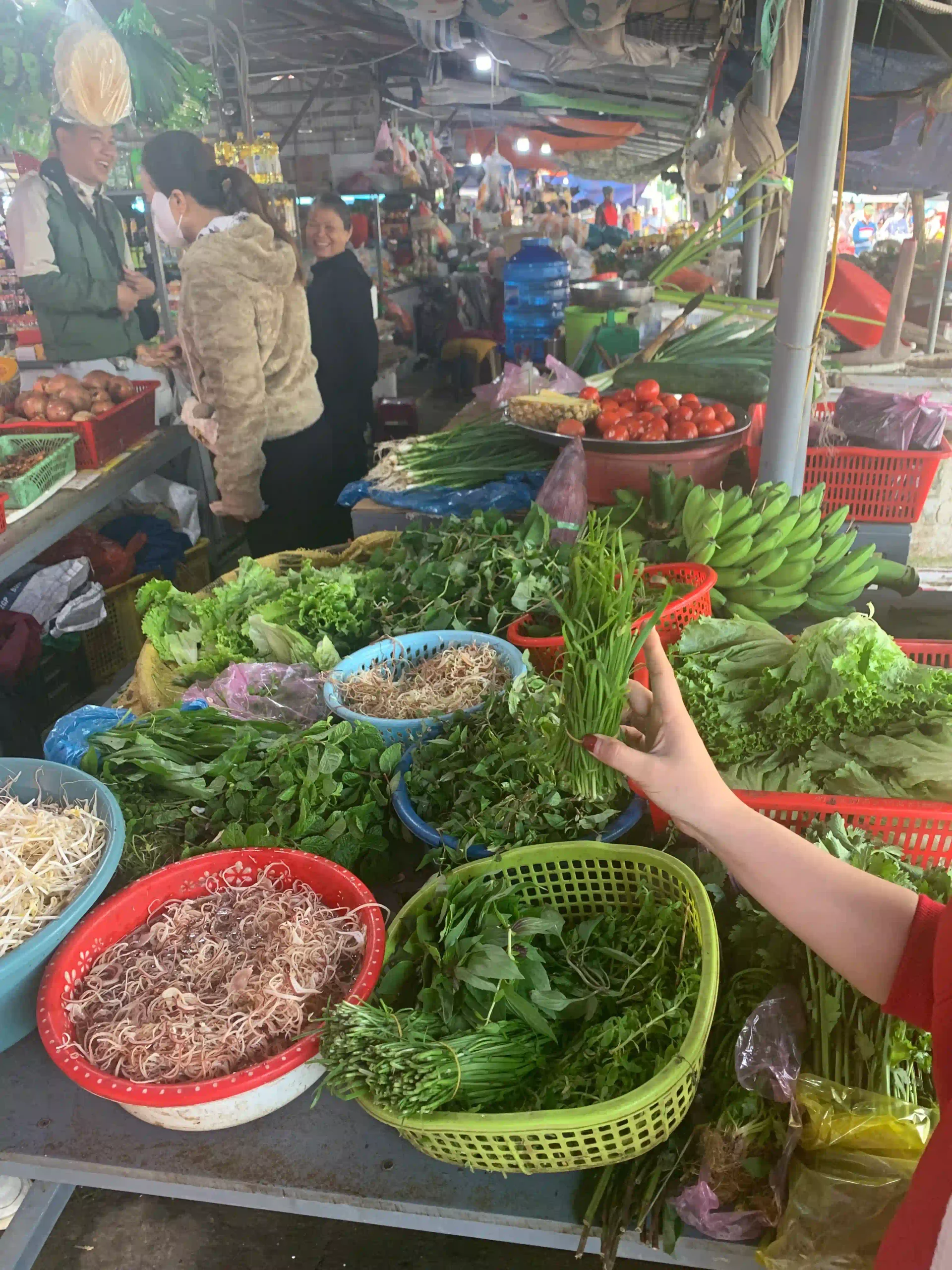
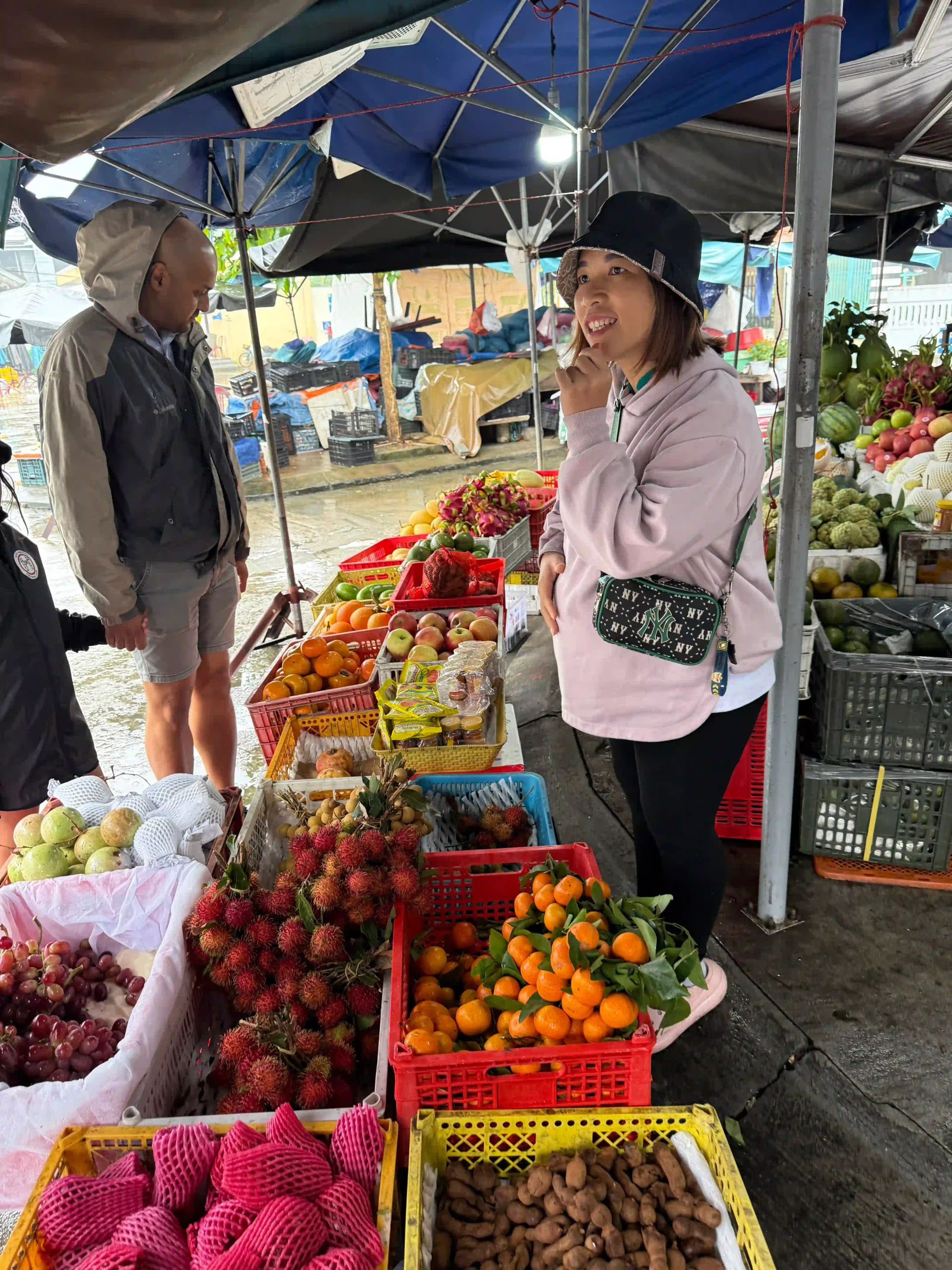
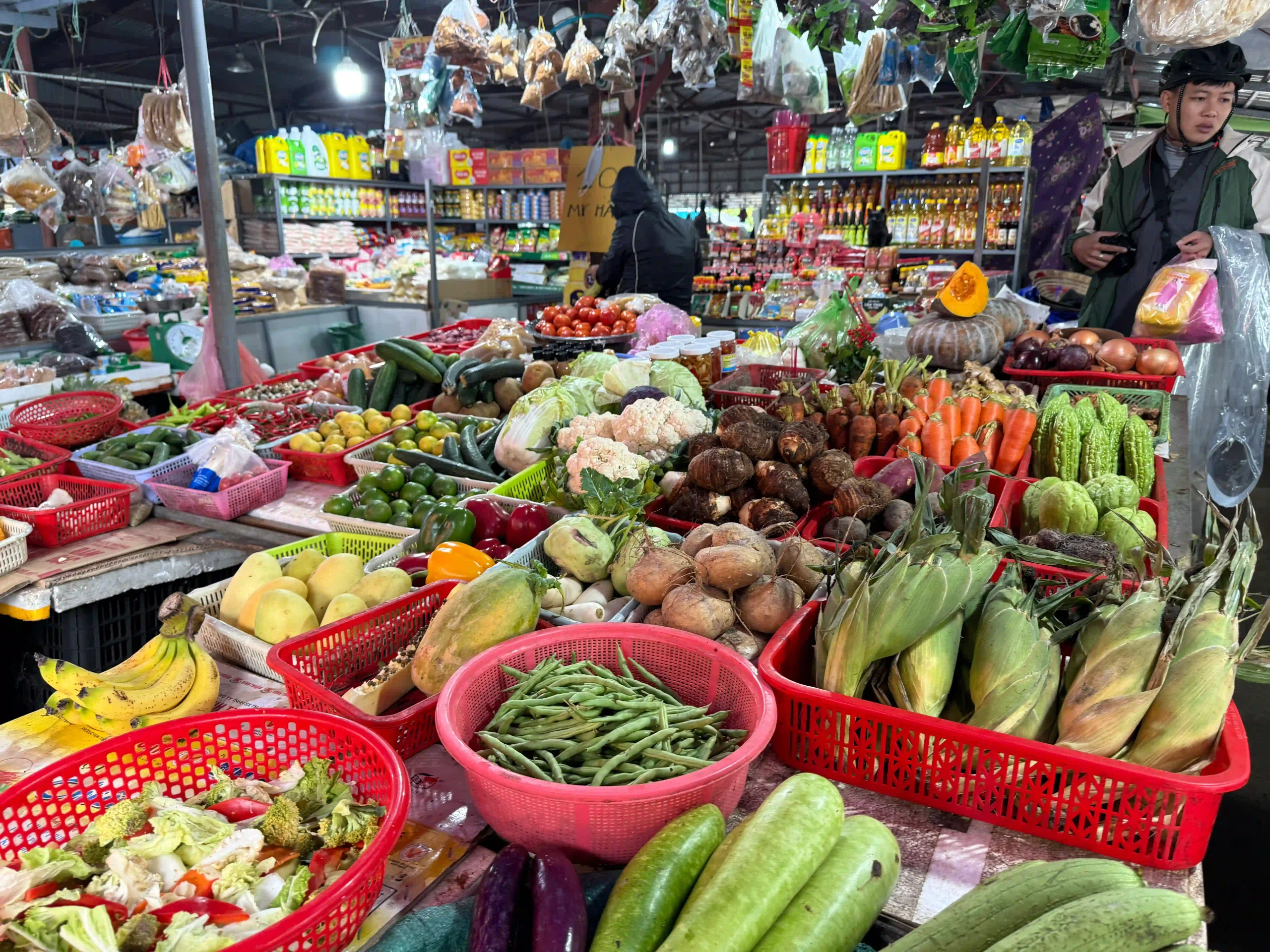
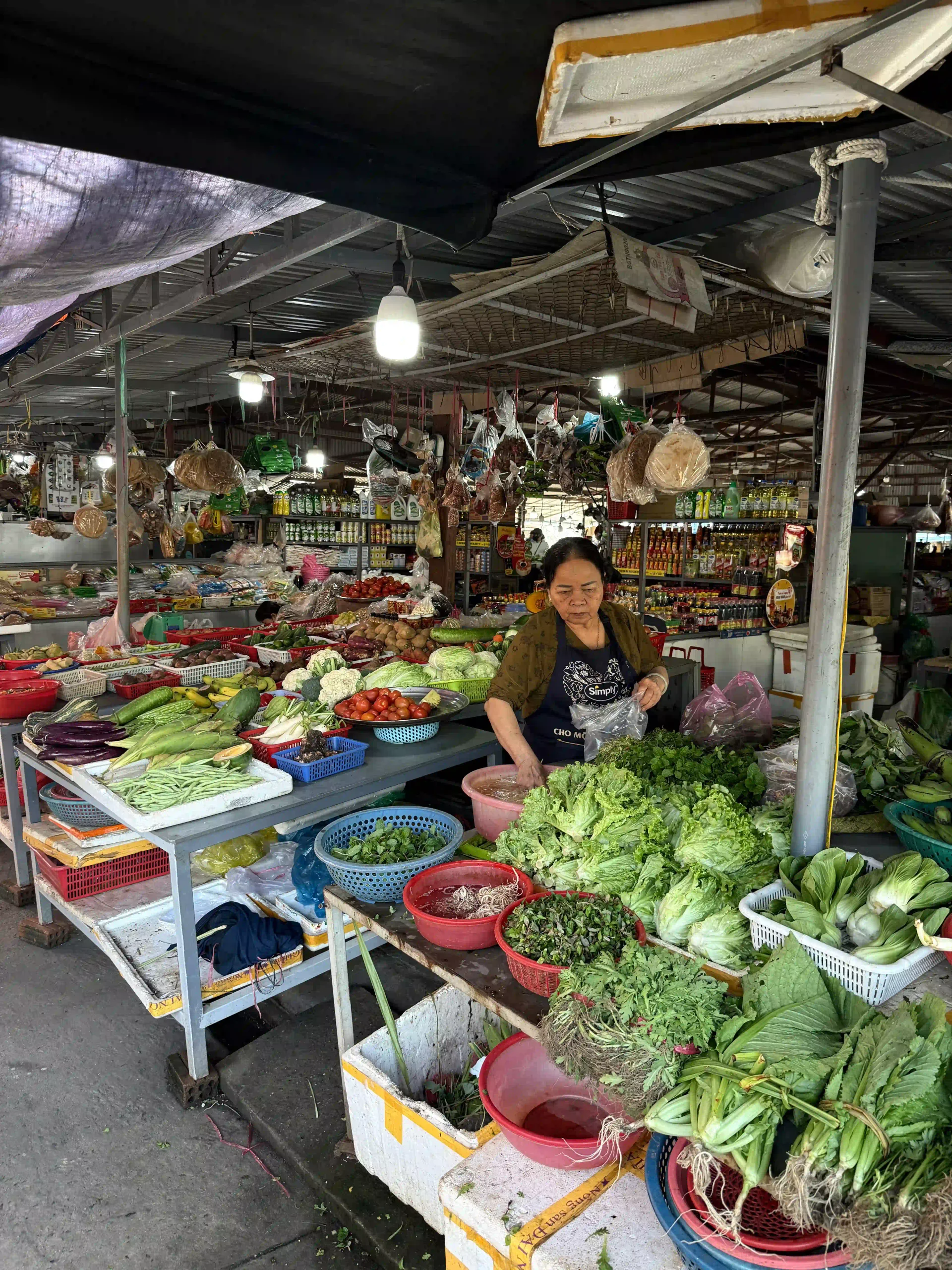
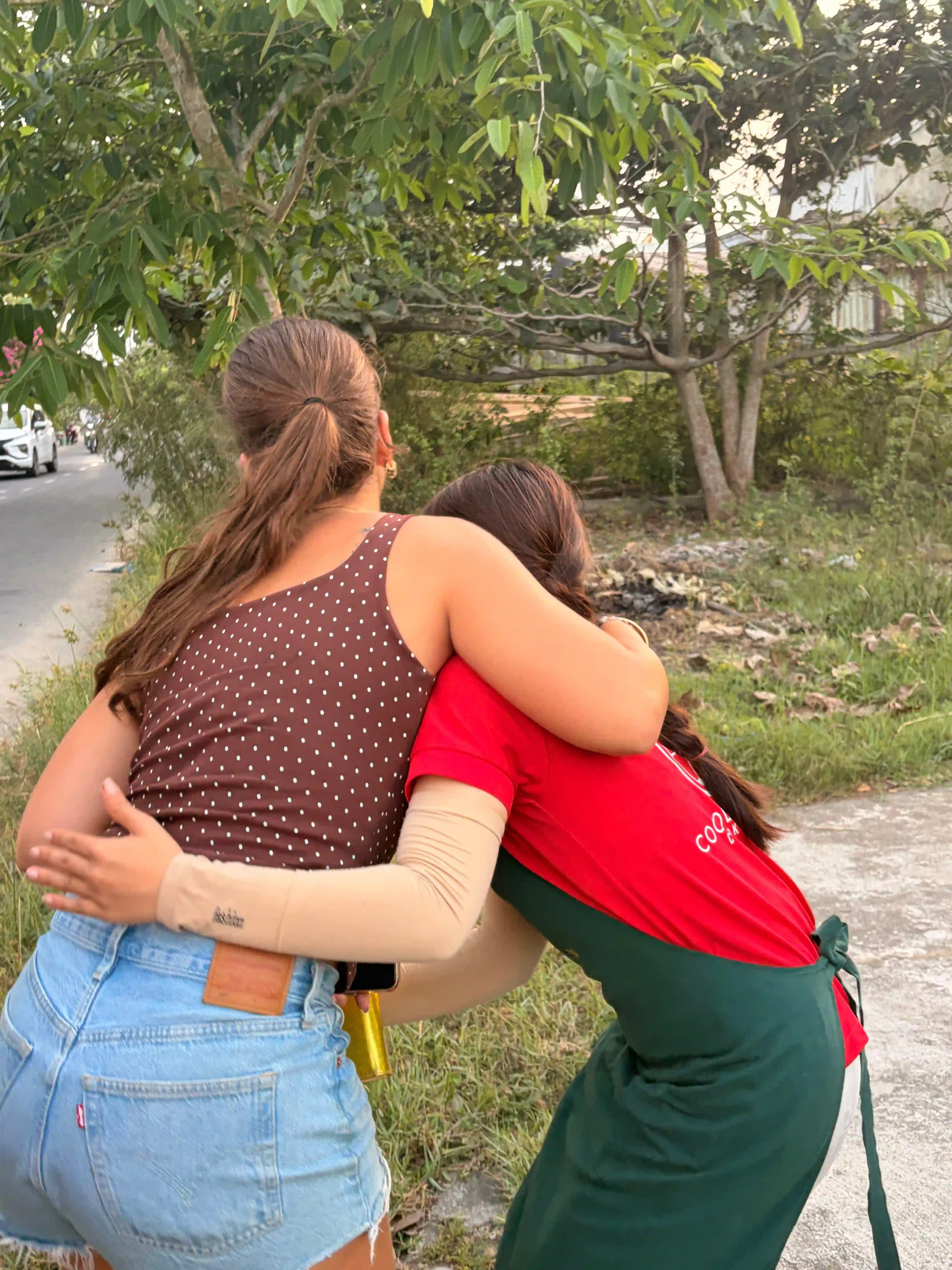
The herb stall is the part that earns its place. Vietnamese cooking runs on maybe eight or nine herbs and the English names are useless, so having them put into your hand one at a time is the only way anyone learns them.
Rau răm, which is hot and slightly soapy. Tía tô, which is the purple one. Ngò gai, the sawtooth one that goes in pho.
You will not remember what they’re called. You’ll recognise the leaves in restaurants for the rest of the trip though, and that’s the actual value of it.
The rest of the market walk is a bit of theatre. The fish sauce and shrimp paste bit exists so everyone can make a face. It’s fine. It moves quickly.
The Class Itself
Format is the same everywhere. Demonstration, then you do it, then you eat it. The kitchens vary and this is where I’d spend your attention when choosing.
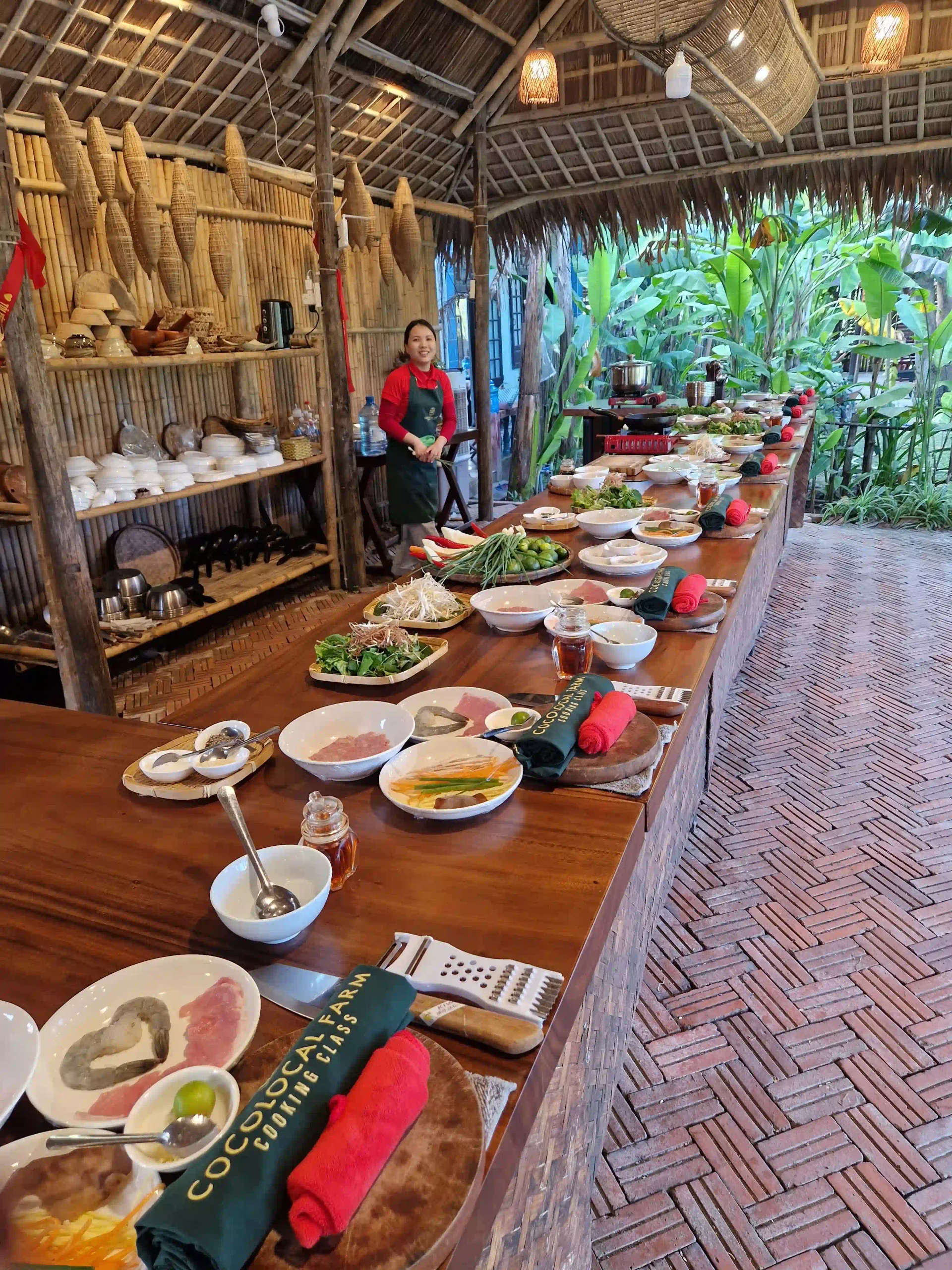
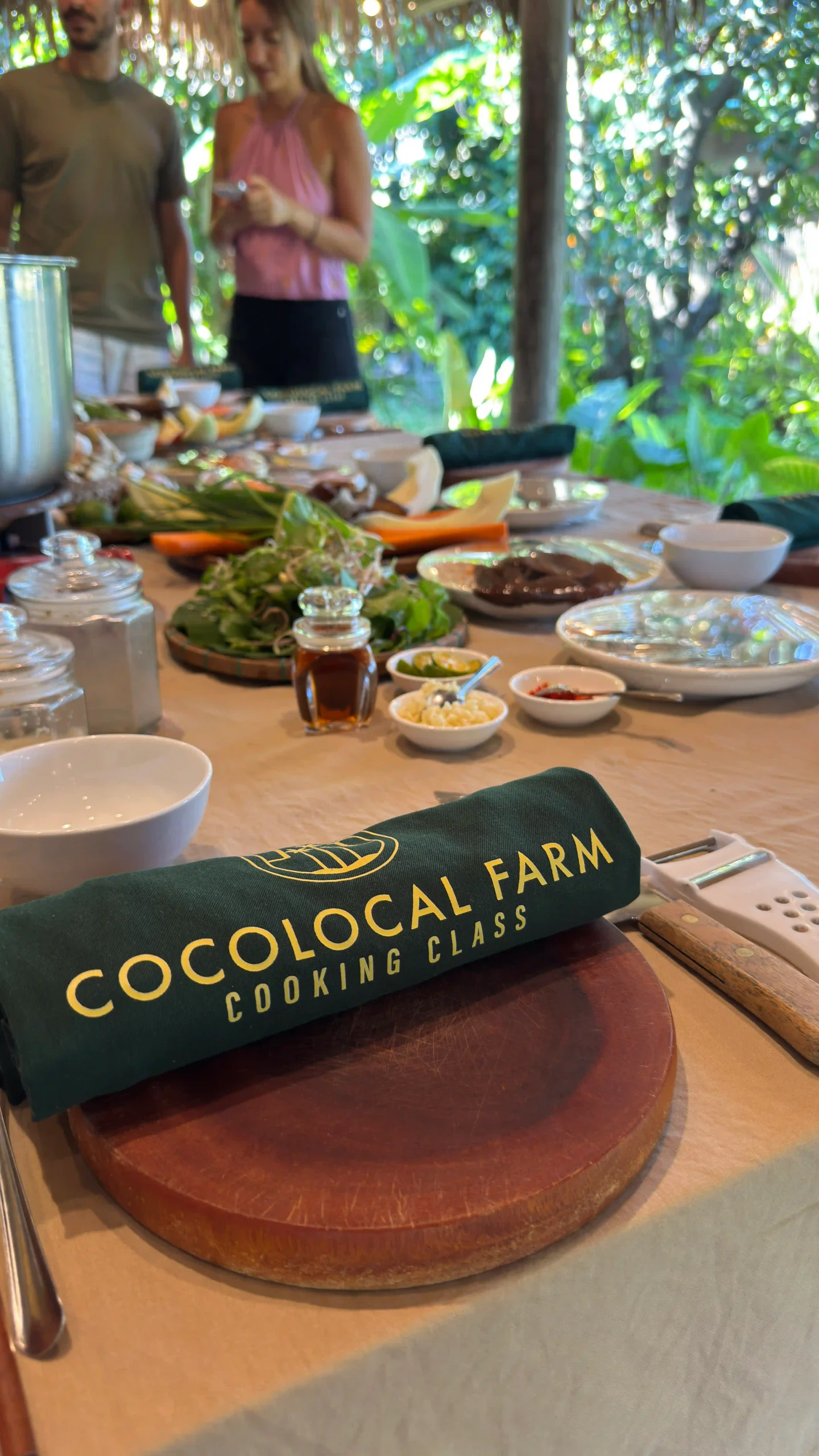
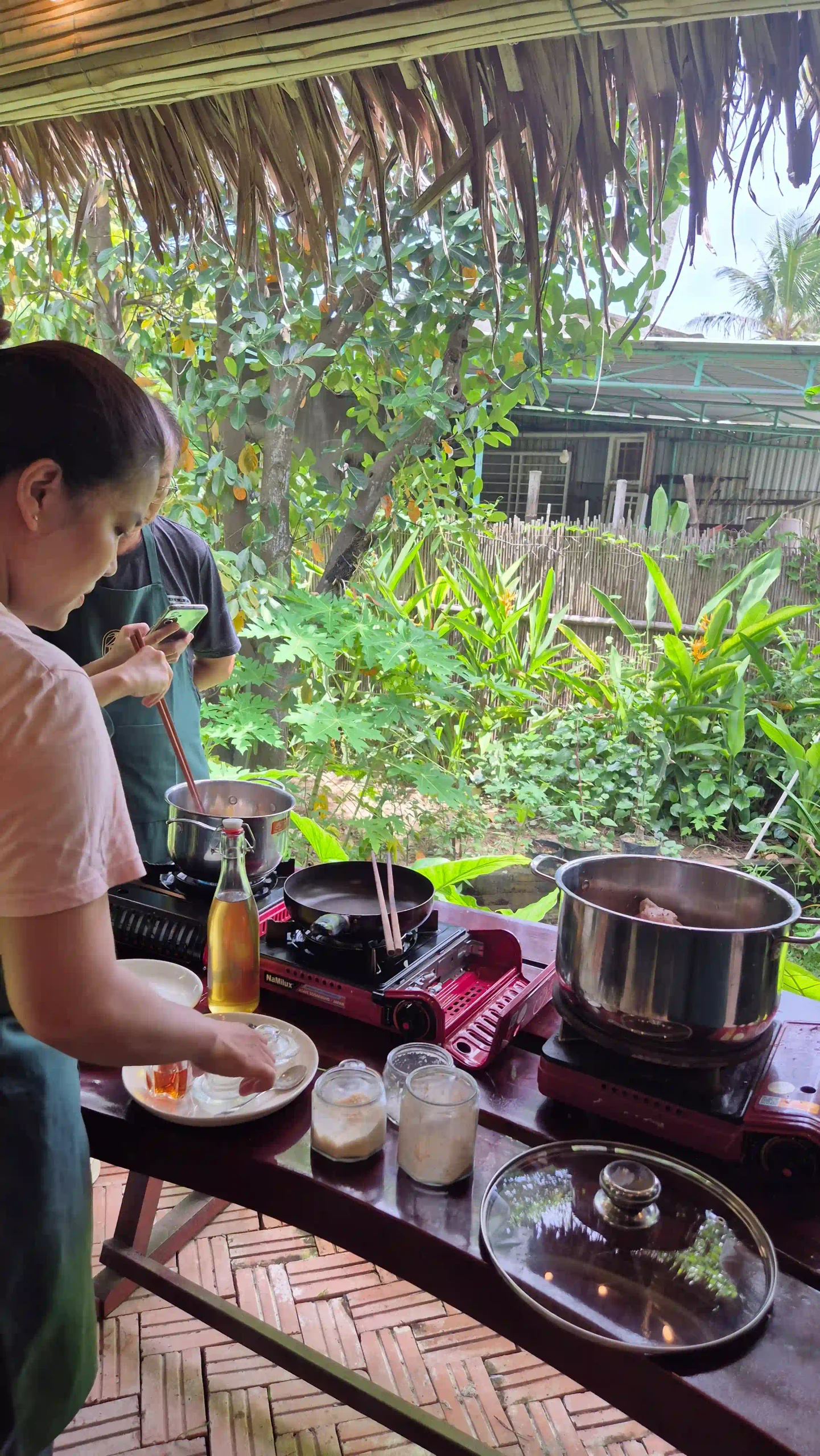
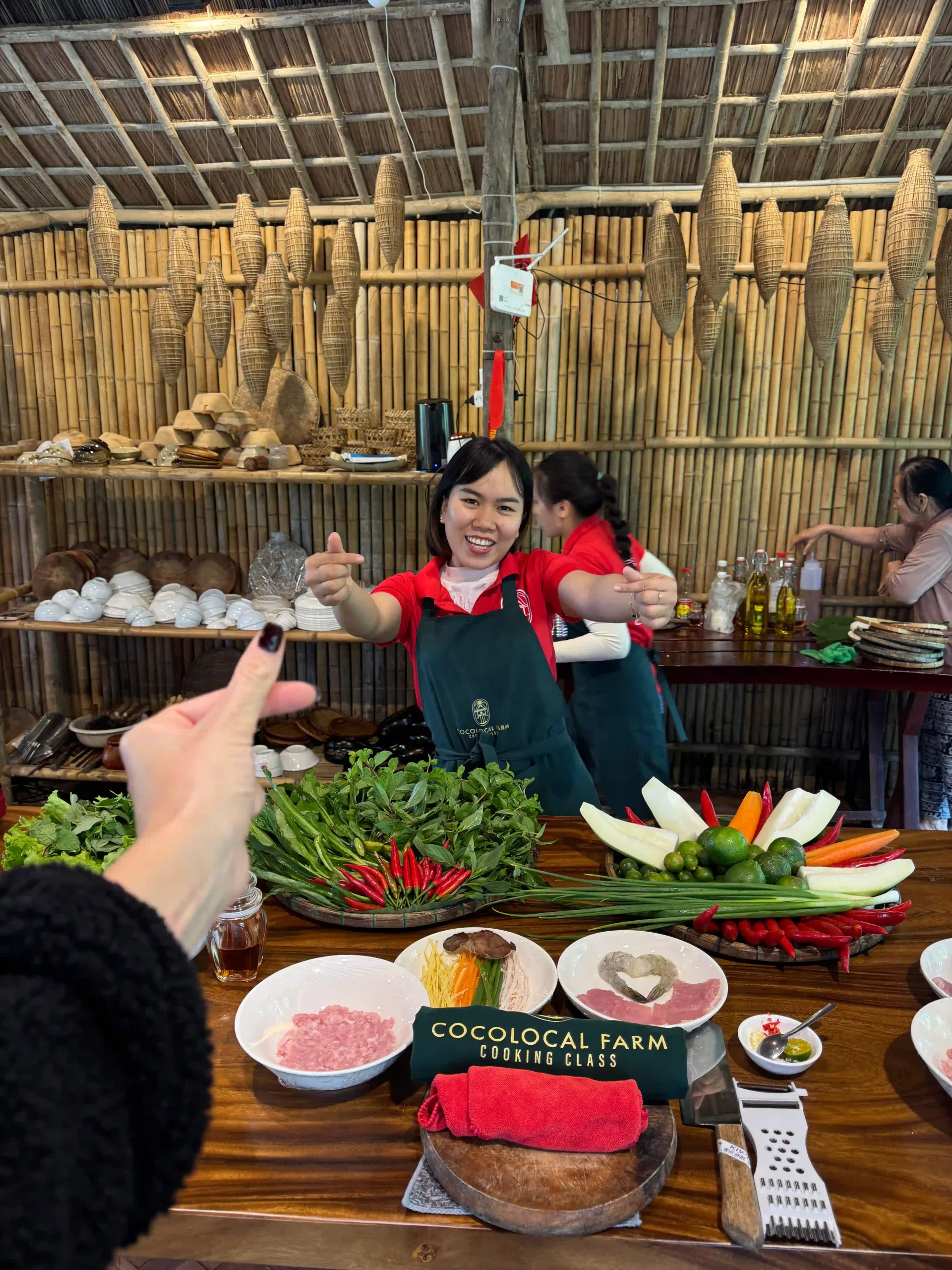
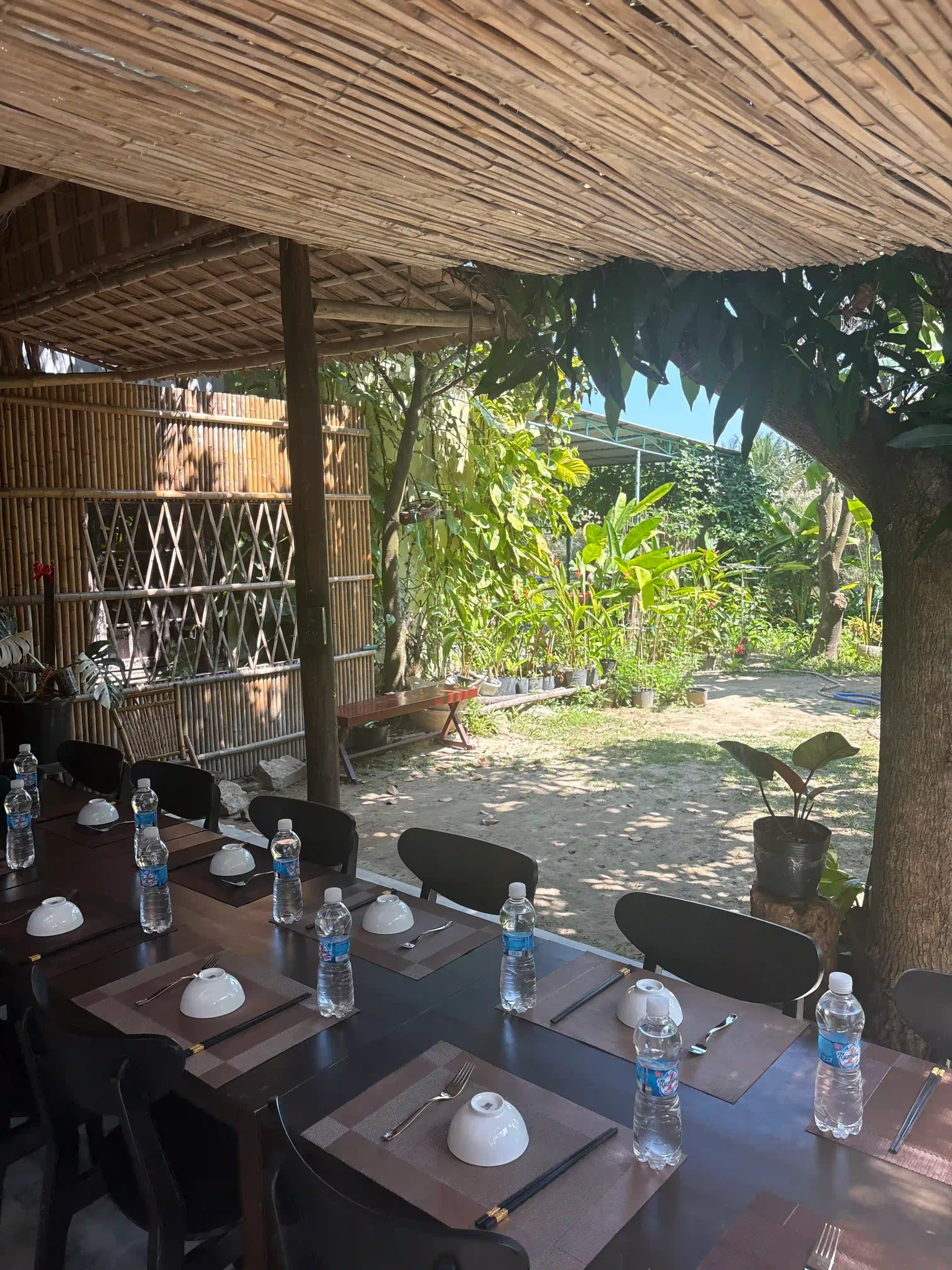
The thing worth asking before you book, and almost nobody does, is whether you cook the dish or assist with it. There are reviews across a lot of these listings from people who chopped vegetables, watched staff fry everything, and then had lunch. That’s a nice morning. It isn’t a cooking class, and it’s the difference between coming home able to make banh xeo and coming home with photos.
Ninety minutes is about right for four dishes. Less than that and something’s being done for you.
The other question nobody asks is whether you get the recipes afterwards, and in what form. Mimi emails them the same day. Several hand you a printed card. Some give you nothing and you’re reconstructing a fish sauce ratio from memory three weeks later in your own kitchen, which does not work.
The Basket Boat Half
It’s 45 minutes at Bay Mau coconut forest in Cam Thanh, about 7km east of the Ancient Town, in a thuyền thúng, the round woven basket boat that’s a genuine local fishing craft. Two of you per boat, one rower, conical hats handed out.
The first stretch, where the rower takes you into the narrow channels between the water coconut palms, is quiet and shaded and pretty. Then you come back into the open water and there are dozens of boats, music, and men spinning baskets in circles for tips while somebody sings.
One of the standalone booking listings for it says out loud in its own bullet points that it can get noisy because of the karaoke, which I’ve always thought was fair of them.
Reviews split down the middle over this and both sides are describing the same 45 minutes. It’s a village entertainment, not a nature experience. Go in knowing that and it’s fun, because the spinning is impressive and the men doing it are enjoying themselves more than anyone.
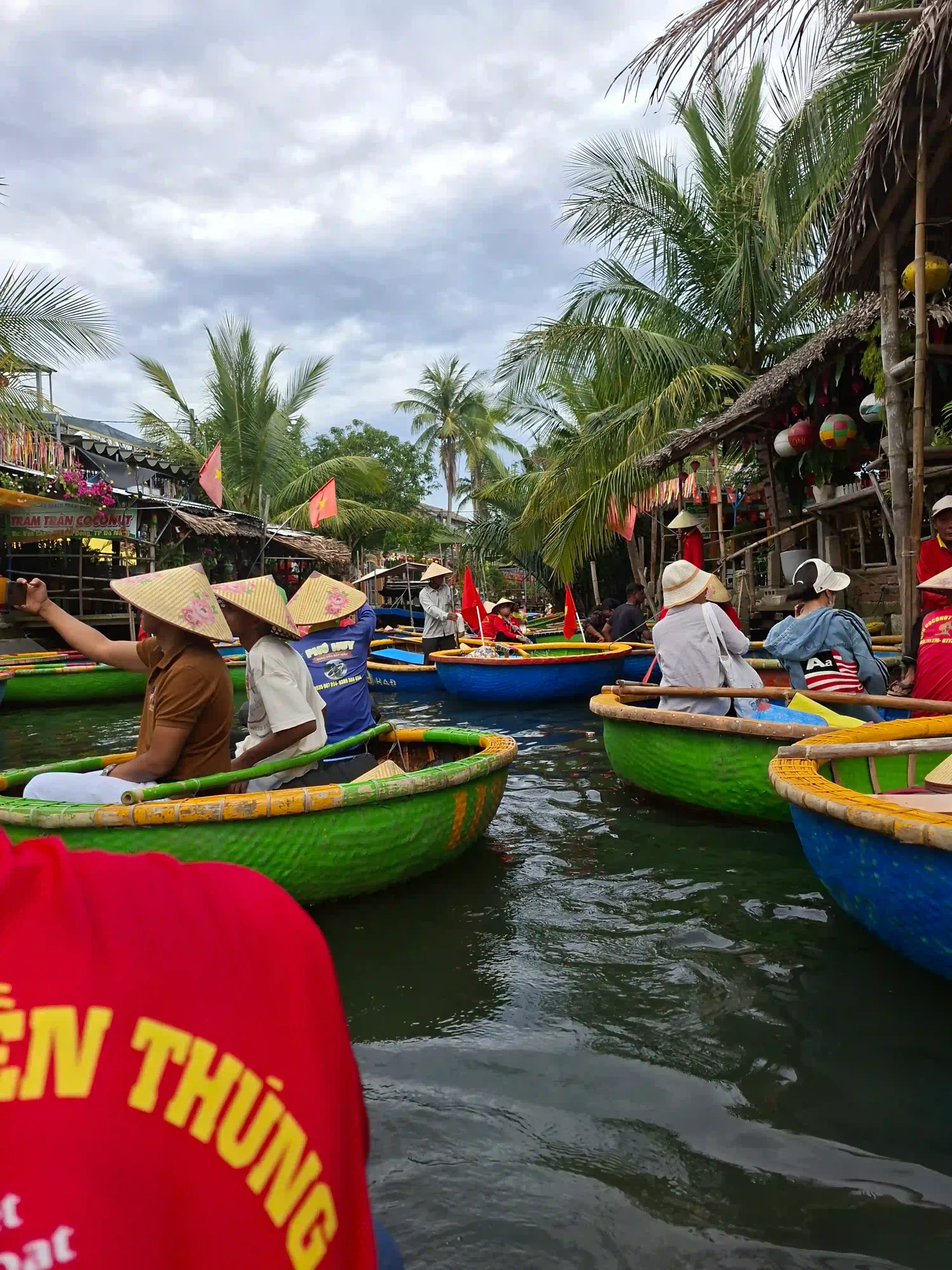
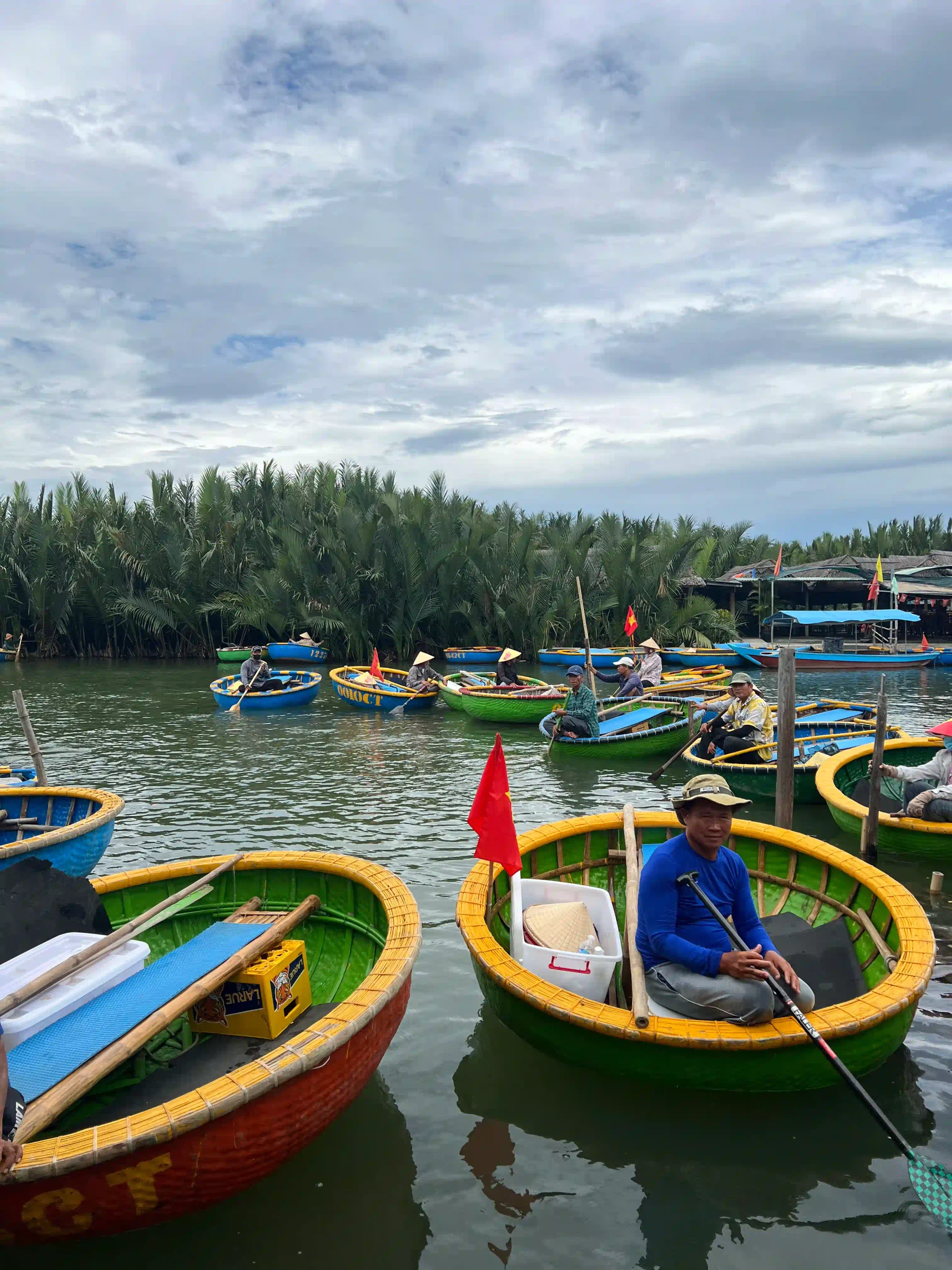
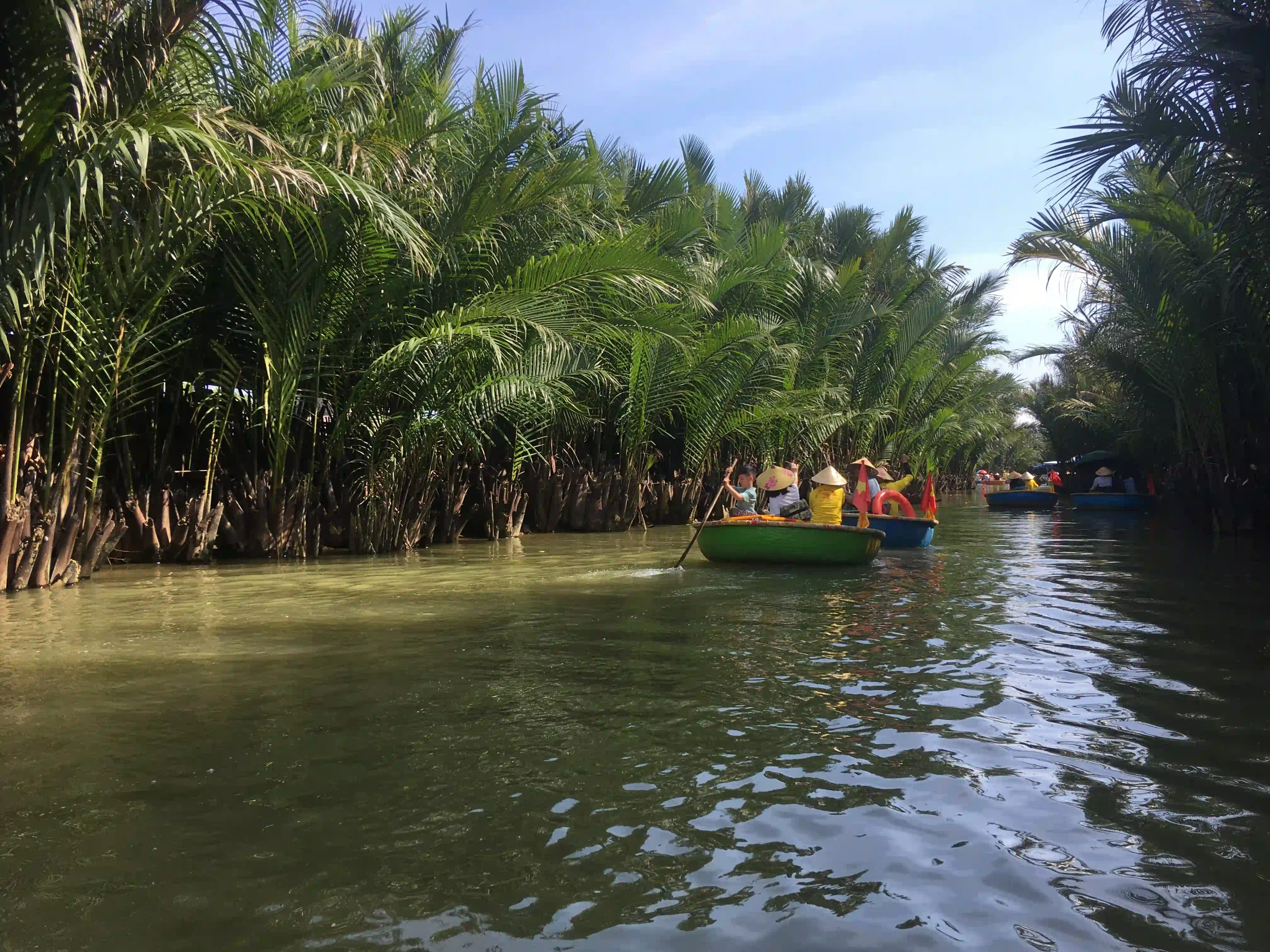
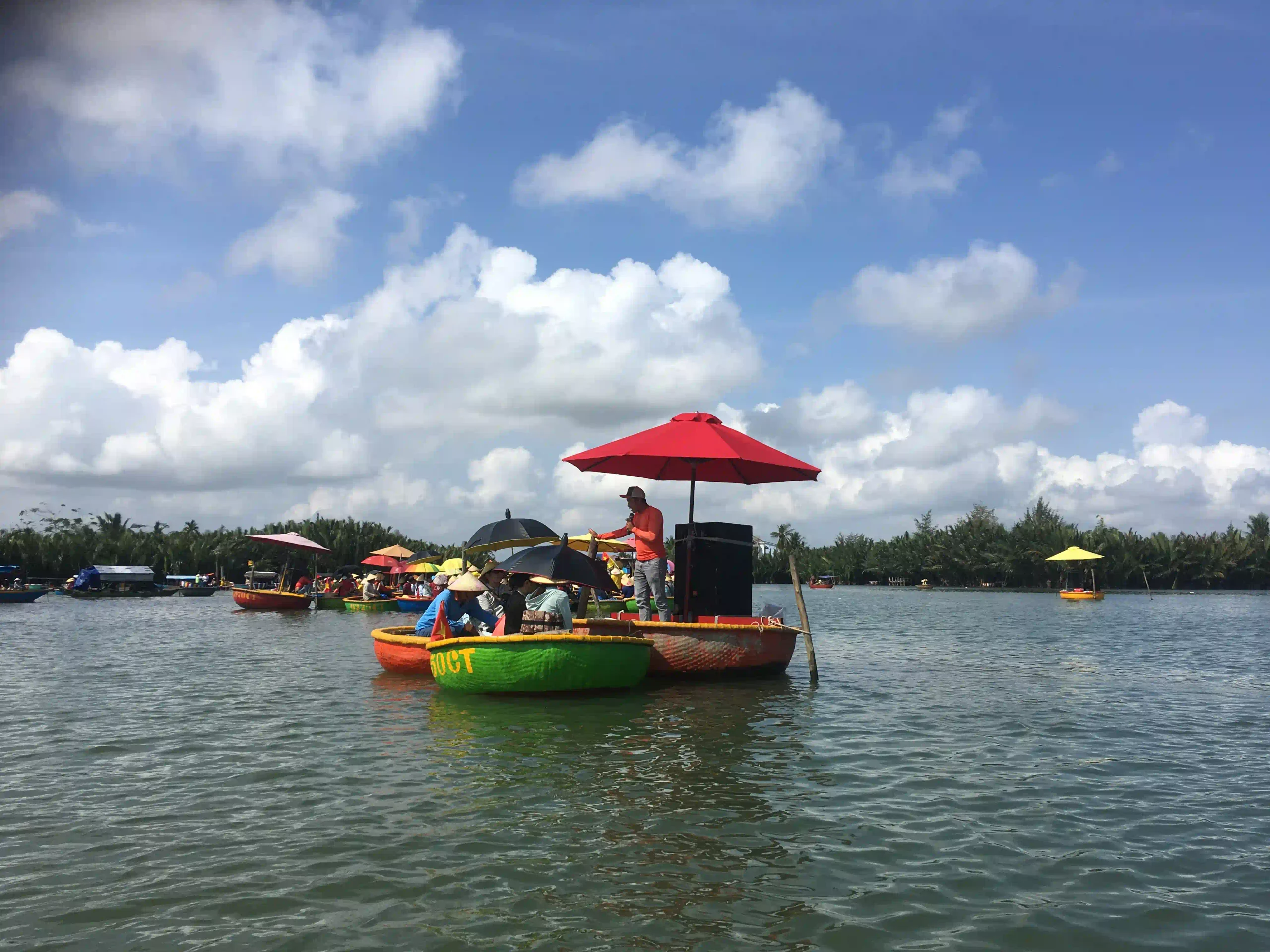
Practical bits. Tips are expected for the spinning and the singing, 50,000 to 100,000 VND, and you’ll want small notes because nobody has change. On some classes the spinning is a paid upgrade and not part of the ride, so check what you’ve bought.
You’ll get splashed, so nothing precious and phone somewhere sealed. Getting into the boat is wobblier than being in it. There is no quiet time of day during tour hours.
As an add-on to a class you’ve already booked, it’s a good forty-five minutes. As a thing you organise a whole afternoon around, it’s thin, and I’d say the same about the evening walking food tour market stop if you were already doing this class, because those two overlap and you’d be having the same morning twice.
So Is the Combo Worth It?
Booked separately, a decent class with a market walk is $25 to $30 and the basket boat is $5 to $7 plus Grabs, so you’re at roughly $30 to $35 a head across two half days.
The combo is $30 to $36 including a hotel pickup, in one four-hour block.
Which makes it obviously worth it, though that’s a slightly boring answer. The more useful version is that the class is the thing carrying it, and if the boat were removed tomorrow I’d still book the class, whereas if the class were removed I wouldn’t go anywhere near Cam Thanh for a boat ride.
Book it for the cooking. The boat is the bit where you get to stop concentrating, which after ninety minutes at a wok is not nothing.
Which One to Book
| If you are | Book |
|---|---|
| First time in Hoi An, want one good activity | Cocolocal Farm combo, morning |
| Travelling with kids | Cocolocal or Mimi, and the boat does the entertaining |
| You want the recipes to survive the flight home | Mimi, for the same-day email |
| A serious home cook | Green Bamboo, and pick your own dishes |
| You want to learn mi quang | Red Bridge, and take the deluxe |
| Short on time | Class only, no market, no boat |
| Interested in the growing side | Tra Que farm class |
Kids, Diets and the Practical Stuff
Families do well on this. The boat spins, which occupies small children entirely, and the cooking gives them a job. Most operators take kids from around five and several take younger with a bit of notice.
Vegetarian is easy in Hoi An because of the temples, so nobody’s improvising when you ask. Vegan takes more work since fish sauce is in almost everything including things that look plant-based, and a decent operator will confirm the swaps in writing before you turn up. Gluten-free is mostly fine because banh xeo, spring rolls and papaya salad are all rice-based, with the soy sauce in the dipping bowls being the thing to flag.
Put all of that in the booking notes. Raising it on the morning is too late, the shopping has been done.
Ask for the recipes if they’re not offered. You will not remember the fish sauce ratio once you’re home, nobody does.
Four hours door to door for the full version, two to two and a half for class-only.
Where to Book
Online with free cancellation, not through the hotel desk, which charges more and sends you to whoever they have an arrangement with.
The one I’d point people at is the four-hour Cocolocal Farm version, mostly for the group size and the fact that you cook all four dishes yourself. It’s out in Cam Thanh, so the pickup matters, and they’ll want your hotel address when you book.
Sort where you’re staying before you book this, since half the value is not having to arrange a car to Cam Thanh and back.
Questions I Get Asked
How much is a cooking class in Hoi An? $30 to $36 for the standard class, market and basket boat combo. Class-only runs from about $8, Green Bamboo around $50, Red Bridge $45 to $59.
Which Hoi An cooking class is best? Cocolocal Farm for the standard combo, Mimi if you want the recipes sent to you, Green Bamboo if you want to choose your own dishes in a group of three.
What’s the difference between Cocolocal and Mimi? Very little on paper. Both do market, boat and four dishes in a small group at a similar price. Mimi has more reviews and emails the recipes; Cocolocal has the garden setup where everyone cooks at their own burner.
Do I actually cook or just watch? It varies by school and nobody advertises the answer. Ask before booking. Ninety minutes for four dishes means you’re cooking; forty means you’re watching.
How long does it take? Four hours door to door with the market and boat, or two to two and a half for class-only. Departures are usually 8:30am and 1:30pm.
Is the basket boat included? On the combo listings yes, 45 minutes at Bay Mau. The spinning show is sometimes a paid add-on and not part of it.
Can they do vegetarian or vegan? Vegetarian easily, vegan with written confirmation in advance. Put it in the booking notes, not on the morning.
Can I learn cao lau? No school teaches it. The noodles need Bá Lễ well water and Cham Island ash, so it can’t be reproduced at home anyway.
Where People Disagree With Me on This
There’s a fair argument that all these classes are much the same and the choosing is a waste of energy. Four dishes, a market, a boat, lunch. Book the cheapest, turn up, have a nice time.
I don’t think that’s right, but I hold it loosely. The difference between cooking four dishes and watching four dishes is real to me because I wanted to take the banh xeo home.
If you’re booking a class for the morning out and not for the recipes, the cheap ones probably are fine and the $8 listings suddenly look sensible.
That’s a different trip with a different test for success. Work out which one you’re booking before you compare prices, because the two questions have almost nothing to do with each other.

Keep Exploring Hoi An
-
See & do UltimateMy 7 favorite things to do in Hoi An as an expat ›
-
Food Must read10 best foods in Hoi An Vietnam (authentic dishes only) ›
-
FoodBest banh mi in Hoi An: Banh Mi Phuong vs. Madam Khanh? ›
-
FoodThe only 5 restaurants in Hoi An I recommend (expat guide) ›
-
FoodHoi An food tour: What it costs, what you get, is it worth it ›











 Tiếng Việt
 한국어
한국어 中文 (中国)
 日本語
日本語 ไทย
ไทย Deutsch
 Español
 Destinations
 Instagram
 Facebook
 X (Twitter)
 Threads
 Tiktok