









 Ha Giang
 Hanoi
Hanoi Ho Chi Minh City
 Ha Long
 Sapa
Sapa Mekong Delta
 Da Nang
 Hue
Hue Hoi An
 Ninh Binh
 Da Lat
 Nha Trang
 Phan Thiet
 Phu Quoc
 Quang Binh
 Quy Nhon
 Vung Tau
 Thai Nguyen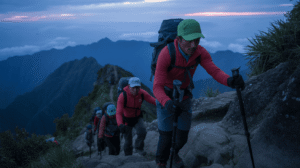
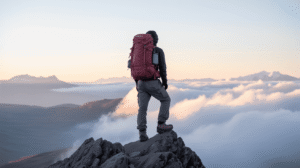


Look, if you’re reading this, you’re probably thinking about climbing Fansipan. The “Roof of Indochina,” they call it. I went for it, did a guided tour from Sapa. So, here’s my take, no sugar-coating.
Quick Summary for the Busy Traveler
Don’t have time to read everything? Fair enough. Here’s the short version:
- My Verdict: Yeah, it’s worth it. But it’s hard. Really hard in parts. You’ll earn it. The sense of accomplishment is big.
- Difficulty: It’s tough. Requires decent fitness – not a marathon runner, but no couch potato either. Expect to walk up steep hills, through mud, over tangled roots, and big rocks. You’ll be climbing, sometimes using your hands or fixed ropes and ladders. This isn’t a walk in the park; it’s rated as a hard trek.
- Cost: A 2-day, 1-night guided Fansipan Trekking tour starting from Sapa usually costs between 3,000,000 VND to 4,000,000 VND (roughly $120-$160 USD). This price typically covers your guide, usually a porter for group gear, basic food, basic sleeping arrangements on the mountain, and all necessary permits. Prices can vary depending on what’s included (e.g., specific equipment, personal porter, travel insurance).
- Best Time: March to May or September to October. Less rain, usually clearer views of the mountains. Avoid rainy season (June-August); trails get very slippery and views are often obscured. Winter (November-February) is cold, with a chance of ice or snow, which makes much harder.
- What You Get: Expect incredible mountain views (if clear), dense forests, and a lot of quiet. The food is basic mountain fare, and beds are simple dorm-style in huts. The biggest takeaways are the physical challenge, the camaraderie with your group, and the invaluable insights from your local guide. Some tours even offer a certificate or medal.
- Packing: Layers are non-negotiable: quick-dry base, warm mid-layer, waterproof outer. Sturdy, waterproof hiking boots are your most important item. A walking stick or trekking poles are highly recommended. Headlamp, small first-aid kit (especially blister plasters), and high-energy snacks too.
- Cable Car vs. Trekking: The cable car is fast, easy, and offers views (around 800,000 – 850,000 VND for a round trip). Trekking is for the actual adventure, the struggle, and the deep satisfaction of earning the summit step by step. They are two completely different ways to experience the mountain.
Why I Even Bothered with Fansipan Trekking
Okay, so I was in Vietnam, and everyone talks about Ha Long Bay, Hoi An. Good places, been there. But then I kept seeing photos of this huge mountain, Fansipan. “Highest peak in Indochina,” people said. It just had this pull. It sounded like something you actually do, not just see. I figured, if I’m here, why not try to get to the top? Fansipan Trekking just sounded like a proper challenge, something to really push myself. It felt like a proper adventure, not just another tourist spot.

Sapa was the obvious spot to start. It’s right there, surrounded by all these mountains and rice terraces. It’s full of trekking companies and guides. I decided pretty quickly I wasn’t doing this alone. I’ve trekked before, but unfamiliar mountains, changing weather, getting lost – no thanks. A guided Fansipan Trekking tour just made sense. I wanted someone who knew the trails, someone local. Someone who could actually tell me about the place, not just point. Plus, safety is a big deal in these mountains.
My main question going in was simple: after all the effort, the money, the sore muscles, would it actually be worth it? Was this thing going to be just a checkbox, or something I’d actually remember and be genuinely glad I did? I was ready to find out.
What I Did Before Fansipan
You don’t just show up to Sapa and decide, “Hey, I’m going to climb Fansipan tomorrow!” You need to prep a bit. This isn’t a casual stroll.
First thing was finding a tour. I spent some time online, looking at reviews. TripAdvisor, some travel blogs, Reddit threads. I wanted a company that was reliable, had good reviews about their guides, and clearly laid out what was included. I looked at names like Vietnam Typical Tours, Sapa Tours From Hanoi, Viettrekking, Hanoi Explore Travel. They all seemed to offer similar packages. Places like GetYourGuide are good spots to start your search; you’ll find various options there, including 2-day treks like the “Sa Pa: Fansipan 2-Day Trek with Overnight Stay” which gives you an idea of what’s typically included.
Prices for a 2-day, 1-night trip starting from Sapa are typically around 3,000,000 VND to 4,000,000 VND (roughly $120-$160 USD). This range usually covers your guide, sometimes a porter to carry group stuff (your personal backpack usually isn’t included unless you pay extra, so pack light!), all your meals on the mountain (basic but hot), basic dormitory-style shelter at the base camp, and the necessary climbing permits.
The agencies handle all that paperwork, which is a huge load off your mind. You don’t want to mess with permits on your own. I picked one that seemed solid, based on overall good feedback about their guides and clear communication. Some tours might include a “certificate” or “medal” for conquering Fansipan, which is a nice little bonus. Travel insurance is often not included, so make sure you have your own comprehensive plan.
Fitness. Yeah, you need some. I’m active, but I’m no mountain climber. I just made sure to do some extra walking, stairs, anything to get my legs and lungs ready. Don’t underestimate Fansipan Trekking. It’s a real climb. You’ll be gaining serious elevation, sometimes very quickly. And mentally, just knowing it’s going to be tough helped. Be ready for uncomfortable moments, exhaustion, and maybe even some doubt. That’s part of the Fansipan Trekking experience.

Packing list. This is important. Sapa weather changes. Fast. You can start in sun and end up in fog and rain.
- Clothes: Layers are your friend. Think quick-dry stuff first – a base layer to wick sweat. Then a warm mid-layer, like a fleece or lightweight down jacket. Over that, a proper waterproof and windproof outer shell (jacket and pants). Even if it looks sunny, bring rain gear. You’ll sweat, then get cold quickly at higher altitudes. Spare socks are essential, too – wool or synthetic, never cotton, as cotton stays wet and cold. A warm hat and gloves are crucial, especially for the summit push.
- Shoes: This is number one. Sturdy, waterproof hiking boots. And make sure they’re broken in. No new boots, seriously. They need to have good ankle support and grip. My feet were happy because my boots were good and kept the mud out. Bring flip-flops or light sandals for the base camp; your feet will thank you after a long day in heavy boots.
- Gear: A comfortable 30-40 liter backpack was enough for my personal items, as the porters carried most of the group’s shared supplies like cooking gear and food. A headlamp with extra batteries is absolutely essential for early morning starts or if you’re trekking in low light. And trust me on this one: a walking stick or trekking poles will save your knees, especially on the descent. They provide crucial stability on slippery or uneven terrain and take some of the impact off your joints during Fansipan Trekking.
- Personal Stuff: A small first aid kit is a must. Blister plasters are non-negotiable – bring plenty. Also, pain relievers, antiseptic wipes, any personal medications. Travel-sized toiletries, sunscreen (even on cloudy days, the UV is strong), insect repellent, and a portable power bank for your phone are highly recommended. You won’t find charging points on the mountain.
- Food/Water: Your tour usually provides water, but I always carry an extra reusable bottle (1-1.5 liters) and some water purification tablets, just in case. High-energy snacks like nuts, dried fruit, and energy bars were crucial for quick boosts throughout the day. You burn a lot of calories doing Fansipan Trekking.
Day 1: Up the Mountain – The Start of Fansipan Trekking
The morning started early in Sapa. There’s a particular buzz when you’re about to embark on something big. After a quick, simple breakfast, I met my guide, a young H’mong woman named May, and the rest of our small group – a handful of other international travelers. We were all a bit quiet, a mix of excited and nervous. Our personal backpacks were checked, and the porters strapped the group gear onto their backs with incredible efficiency. Then, it was a short minivan ride to Tram Ton Pass, the official starting point for our adventure.
Tram Ton is often referred to as the “easy route” for Fansipan Trekking, but let’s be clear: “easy” is a relative term here. It’s the most common and generally considered the most accessible path, meaning fewer incredibly technical sections, but it’s still a serious climb. We started at about 1,800 meters above sea level, plunging straight into dense, almost primeval forest. The air was crisp, and the morning light filtered through the canopy, painting dappled patterns on the dirt trail.

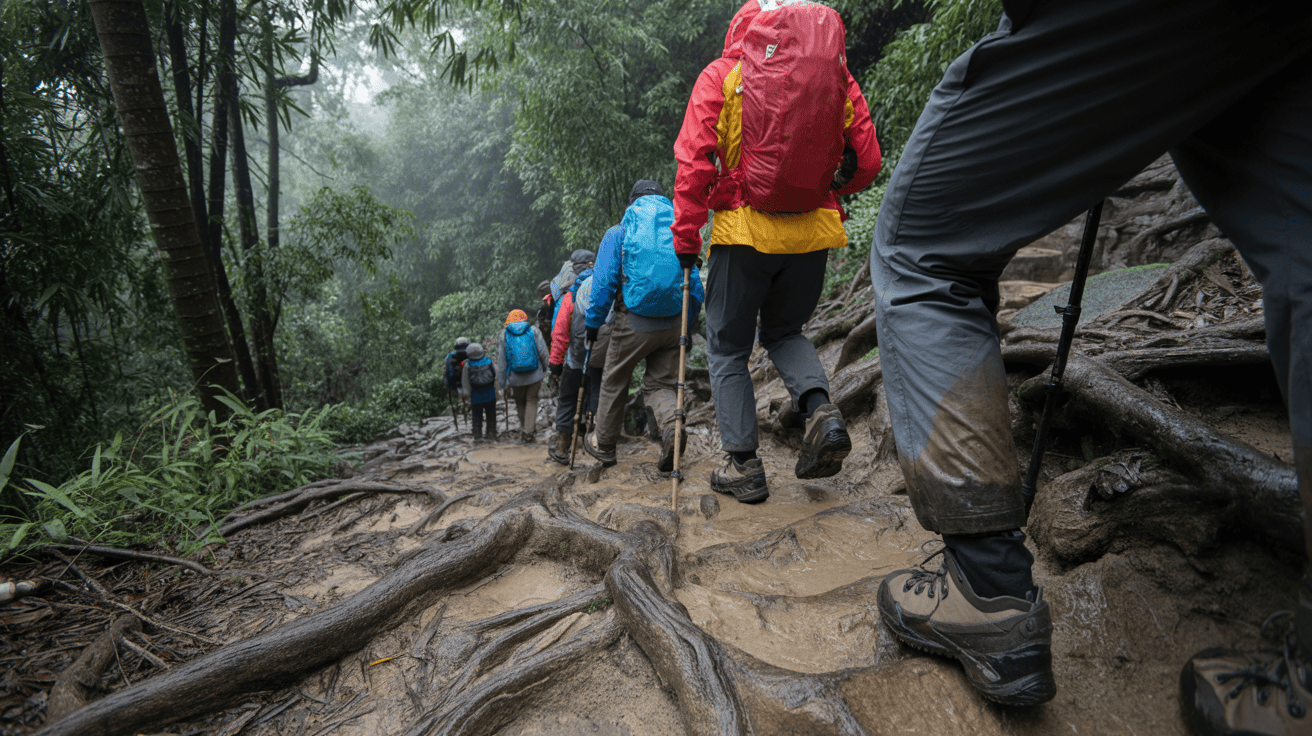
The initial stages were deceptively pleasant. We walked through thick bamboo groves, the air thick with the scent of damp earth and unfamiliar foliage. May pointed out different plants, talked about their traditional uses, and shared snippets of H’mong life. This was exactly what I wanted from a guided tour – not just reaching the summit, but understanding the environment and the people who call this magnificent region home. The conversations flowed easily, and the group quickly bonded over shared jokes and mutual awe of the surroundings.
As we ascended, the terrain gradually shifted. The gentle dirt paths gave way to more challenging sections – slippery rocks, tangled roots that felt like natural staircases, and stretches of thick, reddish mud that threatened to swallow your boots. This was the reality of Fansipan Trekking. You had to pay attention to every single step. My walking stick, which I almost left behind, became an extension of my arm, crucial for balance and pushing off on those steep inclines. The sounds of the forest were incredible: chirping insects, unseen birds, and the rhythmic crunch of our boots on the trail. It was often a continuous uphill climb, no real flat sections for long.

May was a fantastic guide. She kept a steady pace, always checking if everyone was doing okay, and patiently waited for us to catch our breath when the trail got particularly steep. She shared stories about the mountain, about previous trekkers, and even sang a few traditional H’mong songs when spirits needed a lift. She carried a small backpack with essentials, and her knowledge of the Trekking route was invaluable. She knew where the tricky spots were, where to find the best handholds, and how to navigate around the most treacherous sections of the path. She knew shortcuts and safer ways around particularly muddy parts.
Lunch on the trail was a highlight. We stopped at a small, rustic shelter, a simple wooden structure with a corrugated iron roof. Our porters, who had somehow sped ahead with all the supplies, had already set up a makeshift kitchen. They whipped up a surprisingly delicious meal of rice, stir-fried vegetables, and savory pork or chicken. It was simple, hearty, and exactly what we needed to refuel after hours of intense Fansipan Trekking. Sitting there, surrounded by the silence of the mountains, eating a hot meal, felt like a luxury.

The afternoon push felt tougher than the morning. We were gaining significant elevation, and the air started to feel noticeably thinner. The trees became a bit more sparse, and glimpses of the surrounding peaks started to appear through the mist. The goal for the day was to reach one of the base camps, typically at 2,800 meters, which is where most 2-day Trekking groups spend the night. We pushed on, fueled by the thought of resting our weary legs. The final section to camp involved some tricky, rocky scrambles.
Reaching the base camp, a cluster of very basic huts at 2,800 meters, was a huge relief. The huts were simple, unheated wooden dormitories with thin mattresses and blankets. No showers, just very basic squat toilets if you were lucky. It wasn’t fancy, but it was shelter from the elements. We shed our backpacks, changed into dry clothes, and stretched out, reveling in the silence and the crisp mountain air. The clouds often swirled around us, giving the camp an ethereal, isolated feel.
The evening was spent in the communal dining hut. Again, the porters worked wonders, preparing a delicious dinner of more rice, local vegetables, and either chicken or pork. There was hot tea, which was incredibly welcome in the cool mountain air. The camaraderie among the group was palpable. We shared stories from our travels, talked about the challenges of the day, and joked about what tomorrow’s summit push on Fansipan Trekking might bring.
Everyone was tired but buzzing with anticipation. We were reminded to get what little sleep we could, as the final push to the summit of Fansipan would start before dawn. The stars, when the clouds briefly parted, were absolutely incredible, a blanket of diamonds against the dark, vast sky of the Hoang Lien Son mountains. Sleep wasn’t easy though, with the cold and the excitement.
Day 2: Summit Push and the Way Down – Conquering Fansipan Trekking
We started before dawn. Pitch black, just our headlamps cutting through the mist and the pre-dawn gloom. This was the toughest part of the Fansipan Trekking for sure. It’s steep, rocky, often slippery, and you’re doing it in the dark. From the 2,700-meter mark, some sections can even involve fixed ropes to ascend. Between 2,800m and 2,900m, you’re deep in a bamboo forest with very steep slopes, and some parts require climbing short iron ladders. This is where your fitness and mental grit are truly tested.

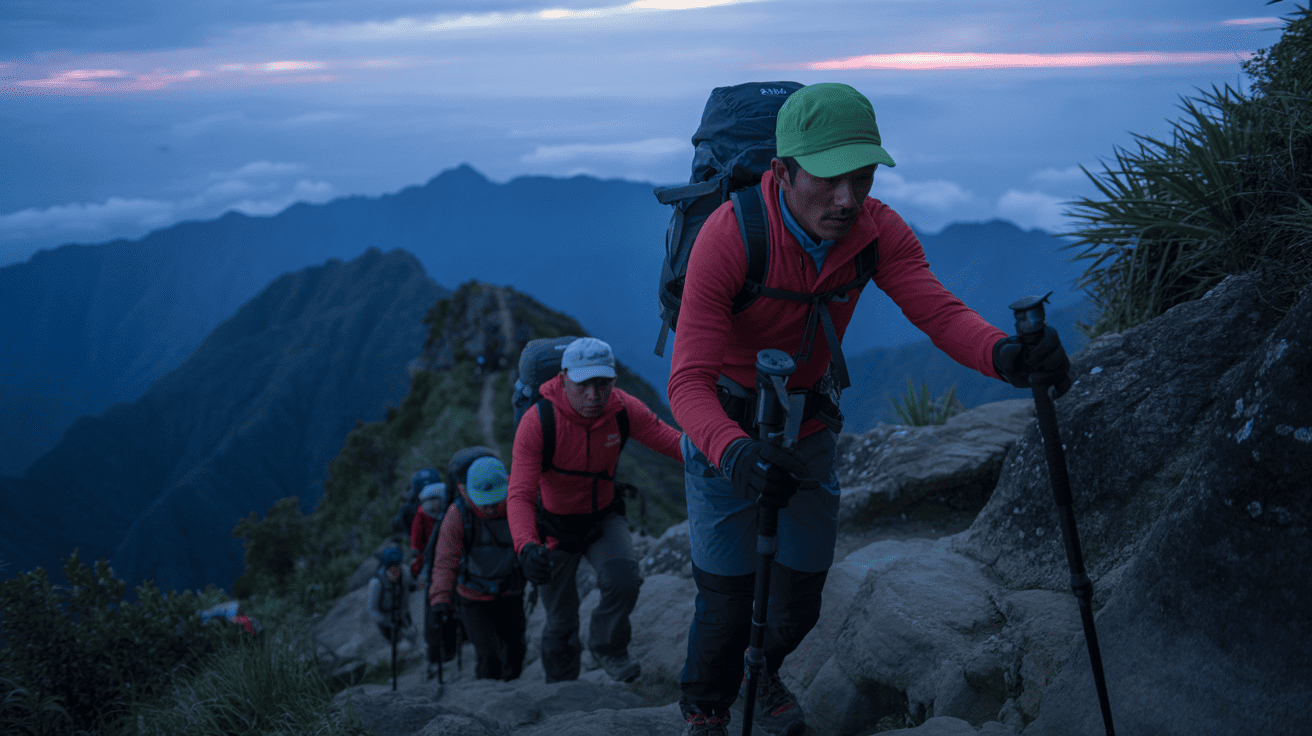
You’re literally climbing, sometimes using your hands to pull yourself up over rocks and roots. The air is noticeably thinner up here, so every breath feels like more effort. It’s a continuous grind upwards, no real flat sections. You just focus on the light of the person in front of you. The final 100 meters to the top, especially from the 3,000-meter mark, can be through marshy, muddy ground, which is exhausting after all the climbing.
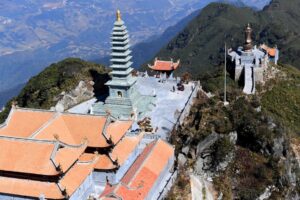
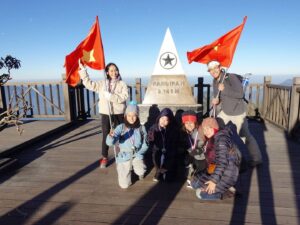
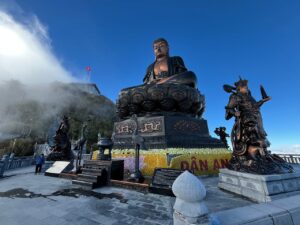
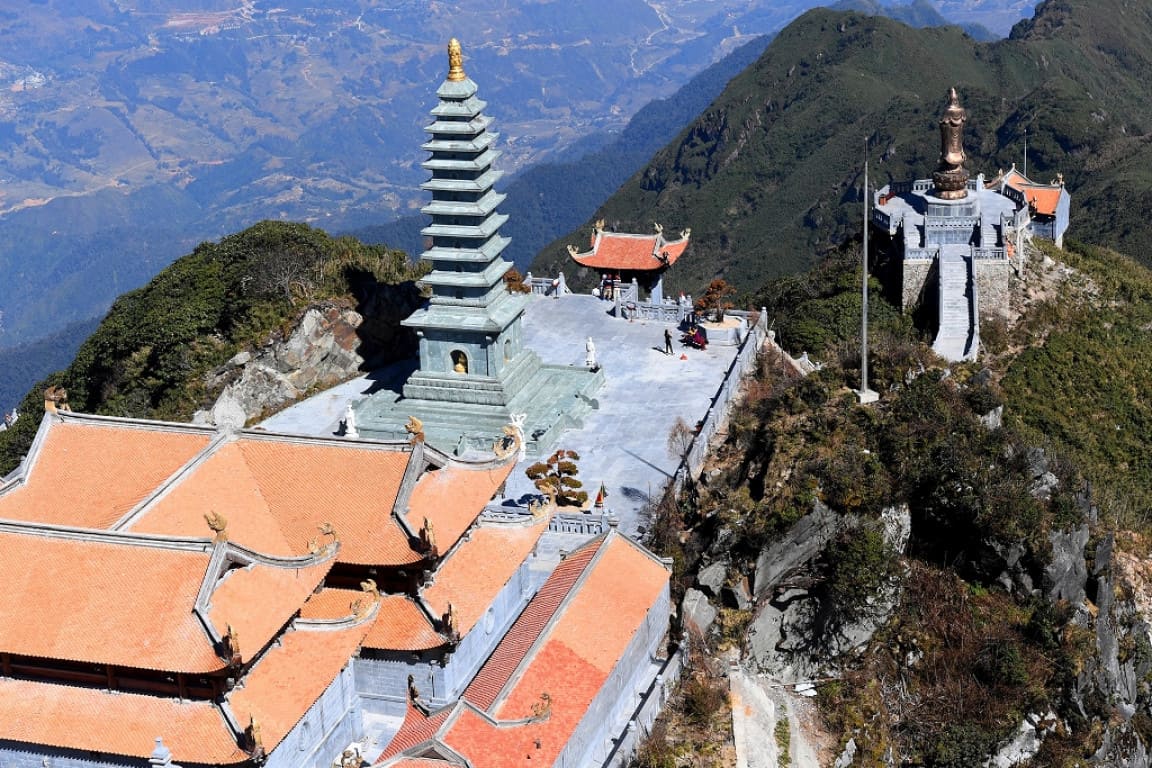
Then, finally, you hit the summit. It’s 3,143 meters (or 3,147m, some say, depends how they measure it now). It’s not a natural peak anymore. There’s a whole complex up there: a big Buddha statue, a monastery, a pagoda, even a giant flag pole. It’s kind of wild, all this spiritual and man-made stuff built on top of a remote mountain. It was misty when we got there, so no sweeping panoramic views of Vietnam below. Just clouds everywhere, swirling around the statues. But the feeling of getting there, after all that climbing, after the early start and the push, was huge. That’s the real reward of Fansipan Trekking. The accomplishment.

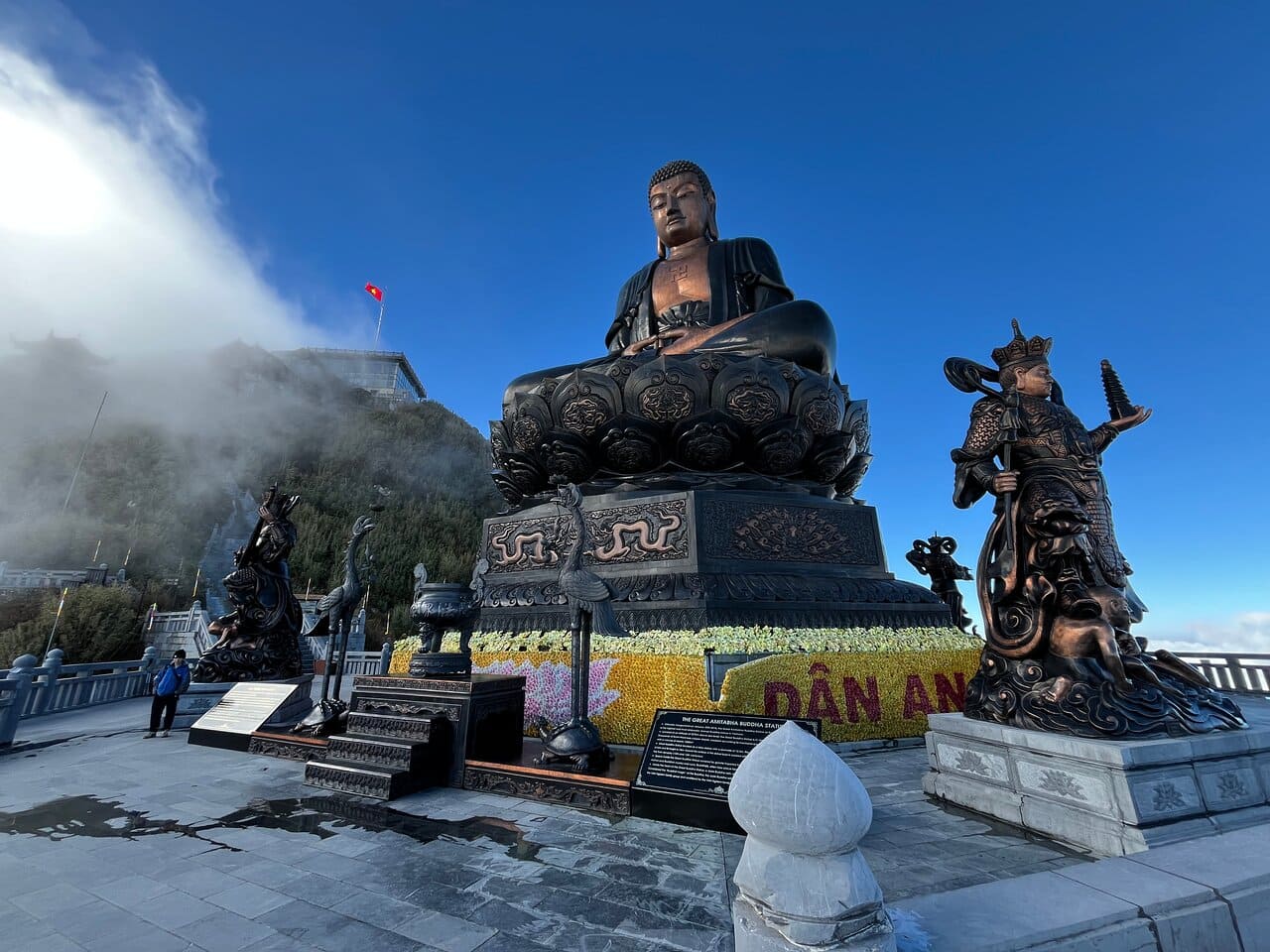
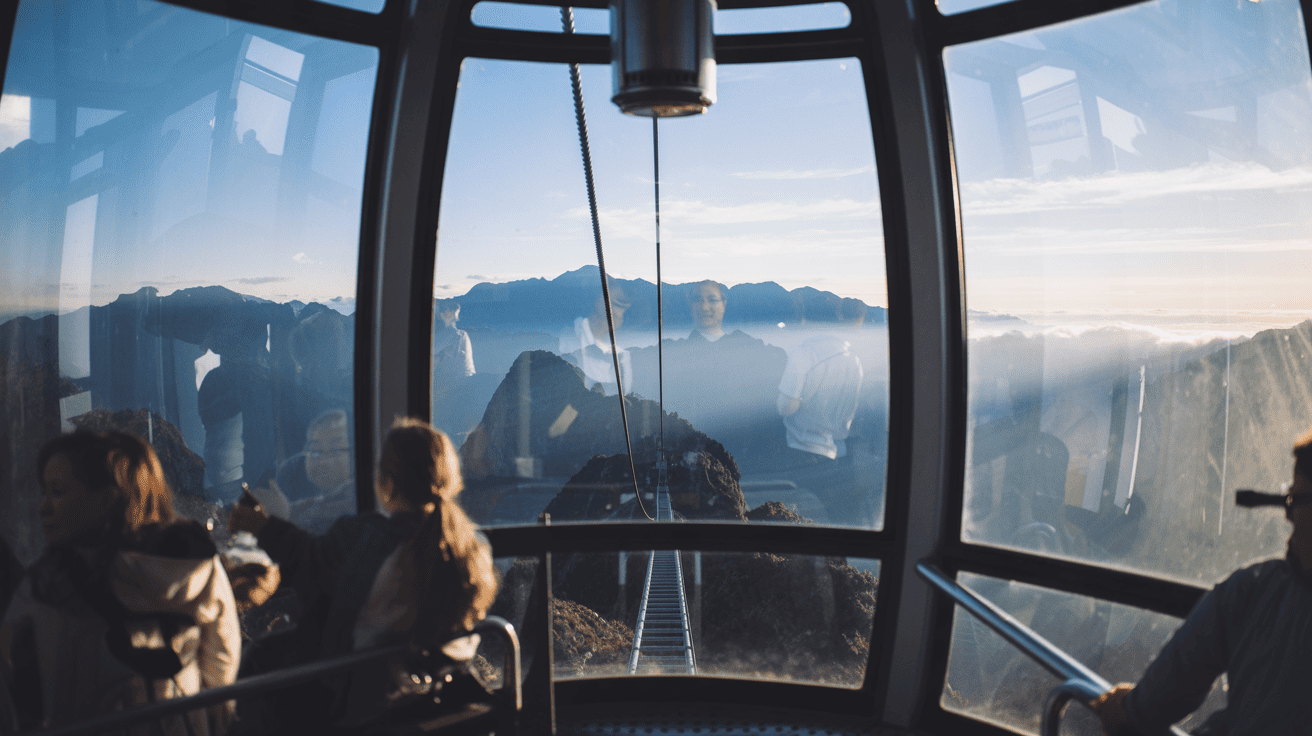
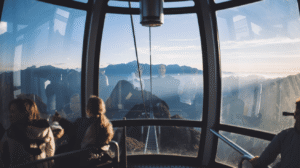
Now, about the cable car. It’s right there at the top. You can take it all the way down, or even all the way up if you want to skip the trek entirely. The main cable car ticket for a round trip usually costs around 800,000 VND to 850,000 VND (about $35-$37 USD) for adults. Honestly, the cable car is fast, convenient, and you get amazing views through the glass (on a clear day). If you’re not fit, or just want to see the summit without the pain, it’s a great option.
You get the views, the spiritual complex, all that. But it’s not Fansipan Trekking. It’s a completely different experience. Standing on the summit after walking up felt different than just riding a cable car. It was about the journey, the struggle, not just the destination. For our group, we trekked down a portion of the way, then took the cable car for the last, long stretch back towards Sapa, which saved our knees. It was a good compromise.
The descent was tough too. Different muscles, but still a lot of impact on the knees and ankles. Slippery bits were even scarier going down. You have to be careful with every step. We took our time, no rushing, to avoid falls. Finally, we got back to the minivan, and then back to Sapa. Relief washed over everyone. We were exhausted, but it was a good kind of tired. The kind where you know you’ve done something. Fansipan Trekking done.
Best time to go
Timing trip matters a lot. Weather in the mountains can be tricky, and it seriously affects the experience and safety.

- Spring (March – May): This is usually pretty good. The weather is generally stable, often clearer skies, and you might see azaleas blooming on the lower slopes. Temperatures are moderate, making for comfortable trekking. It’s a popular time for Trekking for good reason.
- Summer (June – August): This is the rainy season in Sapa. Expect frequent, heavy rain, fog, and very slippery trails. Views will be limited, and the mud can be relentless. If you go then, be prepared for mud, leeches, and a much tougher, slower climb. I’d strongly advise against it for Fansipan Trekking if you can avoid it.
- Autumn (September – October): Another fantastic window. Temperatures are pleasant, often clear days, and you often get those famous “cloud-hunting” opportunities where the clouds sit below you, making for incredible views. Plus, Sapa’s terraced rice fields are golden in September and early October, which is beautiful to see before or after your trip. This is generally considered one of the best times.
- Winter (November – February): It gets cold. Really cold. Temperatures can drop below freezing, and you can even get snow sometimes, especially at higher altitudes. The trails will be icy and extremely slippery. This is a different kind of challenge, very tough, requiring proper winter gear and a lot of caution. It’s not for everyone, and inexperienced trekkers should probably avoid it.

My advice? Aim for March-May or September-October. That gives you the best chance for good weather, clearer views, and a more enjoyable, safer adventure. Check the forecast right before you go, as mountain weather can be unpredictable.
Is Fansipan Trekking Worth It? My Honest Thoughts

So, after all that effort, the mud, the sore muscles, was Fansipan Trekking worth it? Yes. Yes, it was. No doubt.
The challenge was very real. My legs burned, I was out of breath a lot, I slipped a few times. But reaching the summit, even in the clouds, felt like a proper accomplishment. You feel like you earned it. That’s a feeling you don’t get from a bus tour or even just riding a cable car. It’s a deep satisfaction that comes from pushing yourself.
The scenery, even with the mist, was incredible. You could still see the sheer scale of the Hoang Lien Son mountains, the deep valleys. The forests were dense, alive, and felt ancient. It felt wild, remote. There were moments of quiet, just walking through nature, that were truly special. It’s a completely different side of Vietnam than the bustling cities or the popular coastal towns. This is raw nature.
And the cultural part. Having May, our H’mong guide, was invaluable. She wasn’t just leading the way; she shared bits about her life, her village, the traditions of her people. We saw how people live in these remote areas, often farming and living off the land in incredible conditions. That connection with the local people really adds a profound layer to the experience of Fansipan Trekking. It’s not just about the peak; it’s about the journey and the people you meet along the way.
Was it expensive? For a couple of days of guided trekking, with permits, food, and basic shelter, it felt like a fair price. Around 3,000,000 VND to 4,000,000 VND isn’t pocket change, but considering the support, safety, and the unique experience, it was well worth the investment. It wasn’t a budget backpacker’s cheapest option, but it was far from luxury prices. You get what you pay for in terms of support and safety on a demanding trek like Fansipan Trekking.
Compared to other treks I’ve done globally, Fansipan Trekking is definitely up there in terms of effort versus reward. It’s not Everest, but it’s not a walk in the park either. It’s a solid mountain adventure, and it will test you.
Who is it for? If you like pushing yourself physically and mentally, if you genuinely appreciate raw nature, and you don’t mind getting dirty, sweaty, and a bit uncomfortable for a big payoff, then Fansipan Trekking is probably for you. If you prefer comfort, a quick sightseeing trip, and just want to see the view from the top without the effort, then take the cable car. Both are fine, but they’re different experiences. For true adventure seekers and nature lovers, the experience will deliver.
Essential Tips
Okay, if you’re actually planning to do this, here are some things I learned, some practical advice for your own Fansipan Trekking trip.
Choose Your Route Wisely: Most people do the Tram Ton route for Fansipan Trekking. It’s the most common and generally considered the most accessible starting point for a 2-day, 1-night trek. It’s also the route with the most established base camps. This route is typically about 11.2 kilometers (7 miles) one way. There are other routes from Sin Chai or Cat Cat, but they are longer, often more remote, and significantly harder, sometimes involving very technical sections. Stick to Tram Ton if you’re not an experienced multi-day high-altitude trekker.
Fitness Level is Key: Be honest with yourself. If you rarely walk, if you struggle with stairs, start training now. Do some long walks, hill repeats, stair climbing. You need good cardio and leg stamina for Fansipan Trekking. It’s not just about getting to the top; it’s about enduring hours of uphill and downhill on uneven terrain, often with significant elevation gain in short bursts.
Get a Local Guide, Seriously: Don’t even think about going alone. It’s not allowed anyway, as permits are required and usually handled by agencies. A local guide is essential for safety, navigation (trails can be tricky, especially in fog or rain), and emergency situations. Plus, they provide invaluable cultural insights. Your Fansipan Trekking experience will be richer and safer with a local guide.
Weather Preparedness is Paramount: I can’t stress this enough. Sapa weather changes incredibly fast. One minute it’s sunny, the next it’s dense fog, pouring rain, or even hail. Always over-prepare. Dress in layers that you can easily add or remove. Always have proper waterproofs (jacket and pants). You’ll be happy you did when the skies open up.
Altitude Sickness: While Fansipan isn’t extremely high like some Himalayan peaks, you still gain significant altitude quickly. Some people might feel mild symptoms like headaches, nausea, or dizziness. Stay hydrated. Take it slow. Tell your guide if you feel unwell. Don’t push yourself if symptoms worsen.
Stay Hydrated and Energized: Drink water constantly, even if you don’t feel thirsty. Dehydration can worsen altitude symptoms and fatigue. Your tour will provide water, but an extra bottle and maybe some electrolyte tablets are a good idea. And bring those high-energy snacks. You’ll burn a lot of energy doing Trekking, so keep fueling your body.
Leave No Trace: This mountain is beautiful, keep it that way. Pack out everything you pack in. Don’t leave any trash. Respect the environment and the local communities. This is crucial for preserving the beauty of Fansipan for future trekkers.
Safety First: In Sapa town, common sense applies: keep your valuables secure, don’t walk alone in dark alleys at night. On the trail, listen to your guide at all times. Stick with your group. Don’t wander off. Know your emergency contacts. While the agencies handle permits, it’s good to understand the basic safety protocols.
Beyond Fansipan
After your adventure, you’ll probably have some time left and some very sore legs. Sapa itself is pretty cool, and there’s a lot more to see in Northern Vietnam.
Sapa Town: Wander around. Check out the love market, and the night market, especially the main one. Try some local food – maybe a hot pot, you’ll have earned it. It’s busy, often touristy, but it’s got its own unique charm and mountain atmosphere.
- You might want to read: Independent Travel Tips in Sapa for First-timers
Sapa Villages: Beyond the town, the real beauty is in the surrounding villages like Cat Cat, Lao Chai, Ta Van. You can do easier day treks to these places, walking through rice fields and seeing how ethnic minorities live in their traditional homes. It’s a nice, gentle contrast to the hardcore Fansipan Trekking.
Bac Ha Market: If it’s a Sunday, try to get to Bac Ha market. It’s a few hours from Sapa, but it’s a really vibrant, colourful market where different ethnic groups (Flower Hmong, Phu La, Dao, Tay, Nung) come to trade. It’s much less touristy than Sapa’s main market. A real cultural experience.
- Consider reading: Top 10 Must-Try Dishes in Sapa & Best Places to Savor Them
Ha Long Bay: If you haven’t been, it’s a classic. Those limestone karsts emerging from the emerald waters are something else. It’s a long journey from Sapa, but often a must-do in Vietnam.
- Next up: 15 Best Things to Do in HaLong Bay
Ninh Binh: Often called “Ha Long Bay on land.” Beautiful landscapes, rice paddies, impressive limestone karsts, and caves you can boat through (like Tam Coc or Trang An). A great place to relax and enjoy nature after the physical demands of Fansipan Trekking.
- More details here: Ninh Binh’s Serene Landscapes: Beyond the Rice Fields
Hanoi: The capital city. Busy, noisy, chaotic, but tons of history, amazing street food, and a totally different vibe from the mountains. It’s usually your gateway city to Sapa.
- Plan your trip: Hanoi Old Quarter: A Deep Dive into Vietnam’s Capital
Conclusion
So, was my Fansipan Trekking guided tour in Sapa worth it? Absolutely. It wasn’t always easy, and I definitely pushed myself harder than I thought I would. But the feeling of getting to the top, even when the clouds covered the view, was pretty awesome. It’s an adventure that stands out. You see a different side of Vietnam, the raw, natural beauty of the Hoang Lien Son mountains, and you get to connect with local culture in a very direct way.
If you’re looking for a real challenge and a memorable experience in Vietnam, something more than just sightseeing, then Fansipan Trekking is definitely something to consider. It’s tough, it’s rewarding, and it’s an experience I won’t forget. You can find many good tours for this, and other Vietnam adventures, on platforms like GetYourGuide – that’s how I often start my research. Go for it.












 Tiếng Việt
 한국어
한국어 中文 (中国)
 日本語
日本語 ไทย
ไทย Deutsch
 Español
 Destinations
 Instagram
 Facebook
 X (Twitter)
 Threads
 Tiktok