









 Ha Giang
 Hanoi
Hanoi Ho Chi Minh City
 Ha Long
 Sapa
Sapa Mekong Delta
 Da Nang
 Hue
Hue Hoi An
 Ninh Binh
 Da Lat
 Nha Trang
 Phan Thiet
 Phu Quoc
 Quang Binh
 Quy Nhon
 Vung Tau
 Thai Nguyen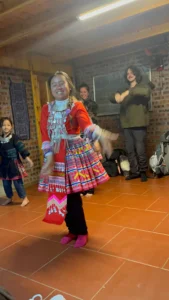

Let’s skip the heavily romanticized introduction. If you just dragged yourself 15 kilometers down a steep, muddy mountain trail in Northern Vietnam, the last thing you want is a completely sterile, completely boring dinner inside a hotel room.
When you get off the concrete road and stay down in the actual valleys, eating is not a transaction. It is an event.
The main reason travelers even book real Sapa homestays instead of hotels is the promise of the “Family Dinner.” It is arguably the absolute best cultural export this region has.
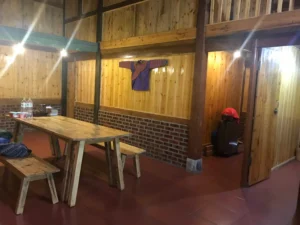
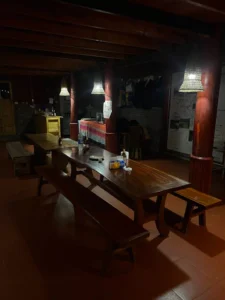
You sit on heavily worn plastic chairs around a giant low table. A massive array of deeply garlic-heavy mountain food is placed down. You drink heavily potent rice wine with complete strangers from Denmark or Colombia alongside the ethnic minority family that owns the house. It’s incredibly raw, extremely chaotic, and highly satisfying.
But there is a totally different tier to this experience.
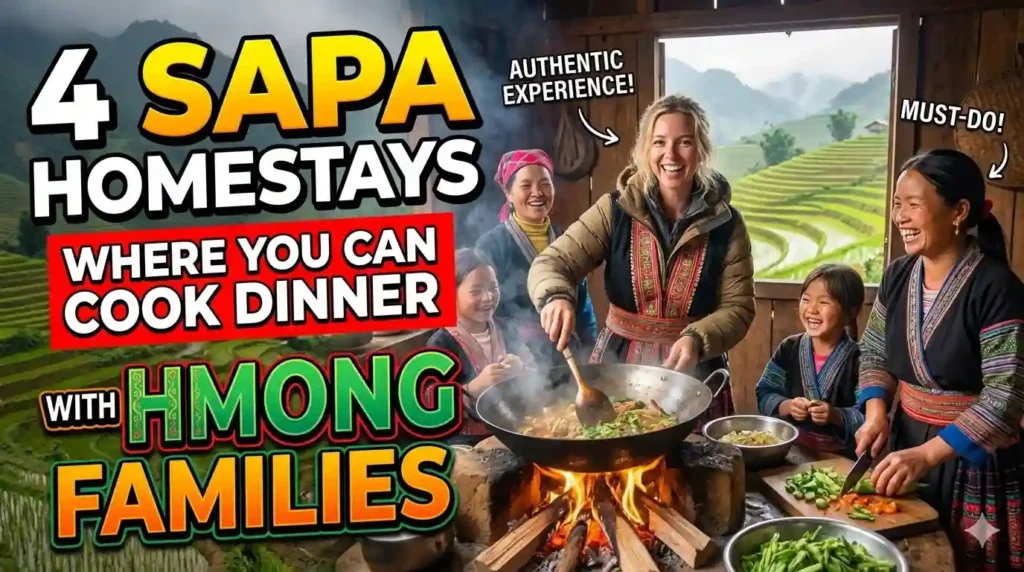
A standard homestay just serves you the food. A truly incredible local homestay completely drags you into the kitchen. You sit next to a local Black Hmong or Red Dao matriarch in front of an open wood fire and actively physically learn how to make the meal.
If you are actually serious about avoiding tourist traps and want a culturally raw Sapa homestay experience where you literally have to roll up your sleeves to earn your food, these are four legitimate spots currently operating deep in the valley dirt.
- Quick Answer: Most “Sapa homestays” are just fake concrete hotels on noisy streets. If you actually want to cook dinner over an open wood fire and drink happy water with a local Hmong or Dao family, you must stay deep in the rural valleys. The best spots are Dinh Sapa Trekking & Homestay, Indigo Snail, Joy House, and My’s Homestay Sapa.
- The Fake Homestay Trap:
- If it’s sitting right on a main paved road, has a formal glass front desk, or serves generic buffet food to you sitting entirely alone, cancel the booking. You are staying at a standard hotel.
- The Real Deal (What a family dinner actually means):
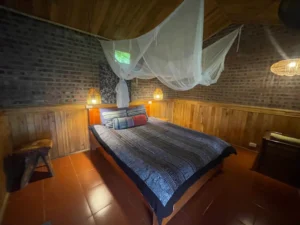
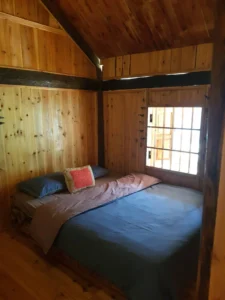
- You are sleeping in uninsulated wooden or bamboo houses deep down the muddy trails of Ta Van, Lao Chai, or Giang Ta Chai valleys.
- Dinner means you actively walk into a smoke-filled, open-fire kitchen. You sit on a low plastic stool on a dirt floor, physically help the ethnic owner roll spring rolls, fry local mountain tofu, and drink incredibly strong homemade corn wine directly from unlabelled plastic bottles.
- My 4 heavily-vetted spots in the dirt:
- Dinh Sapa Trekking & Homestay: Pure Black Hmong immersion where the host actually teaches you how to cook traditional local dishes (Seo My Ty, Ta Van).
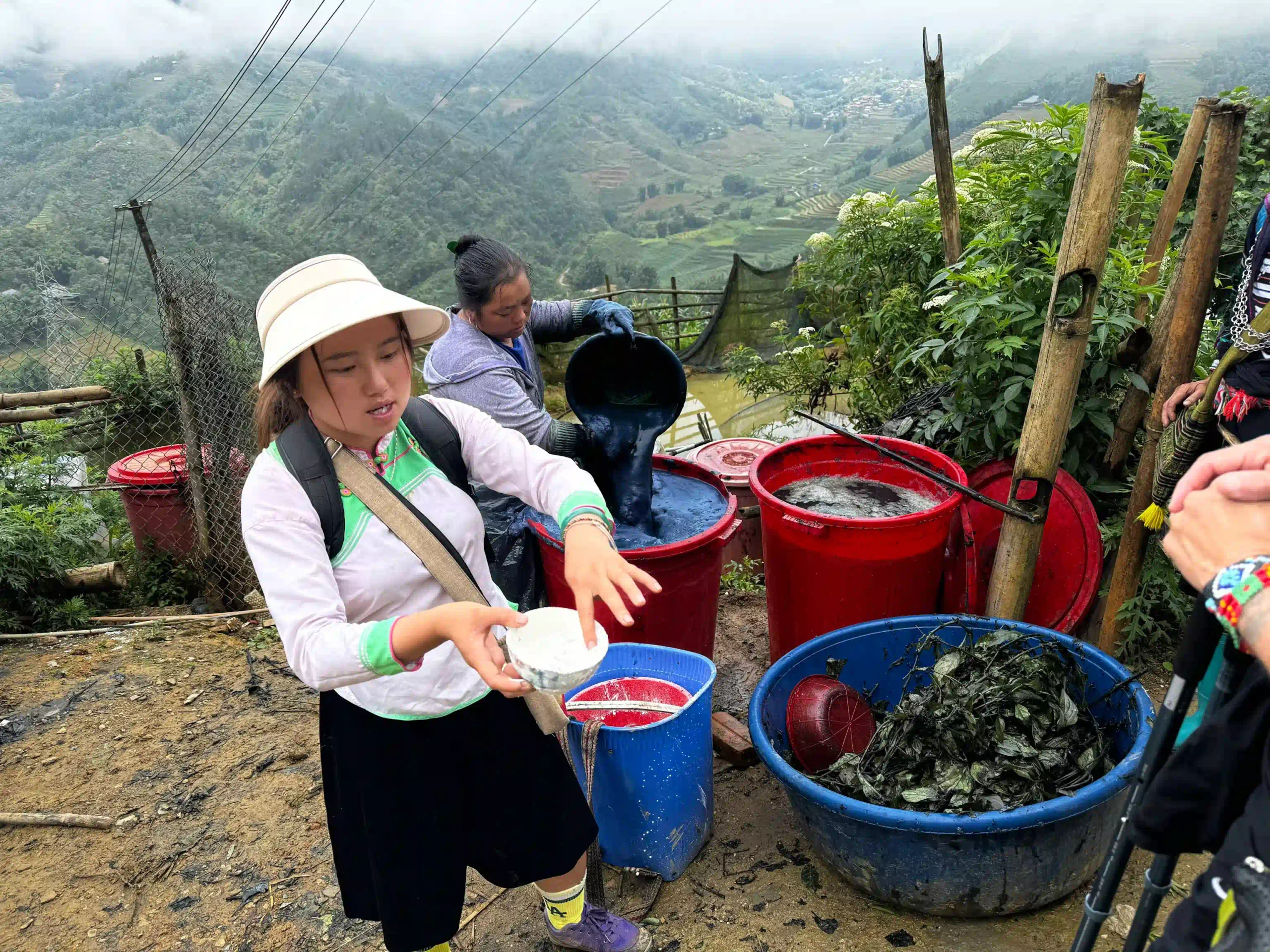
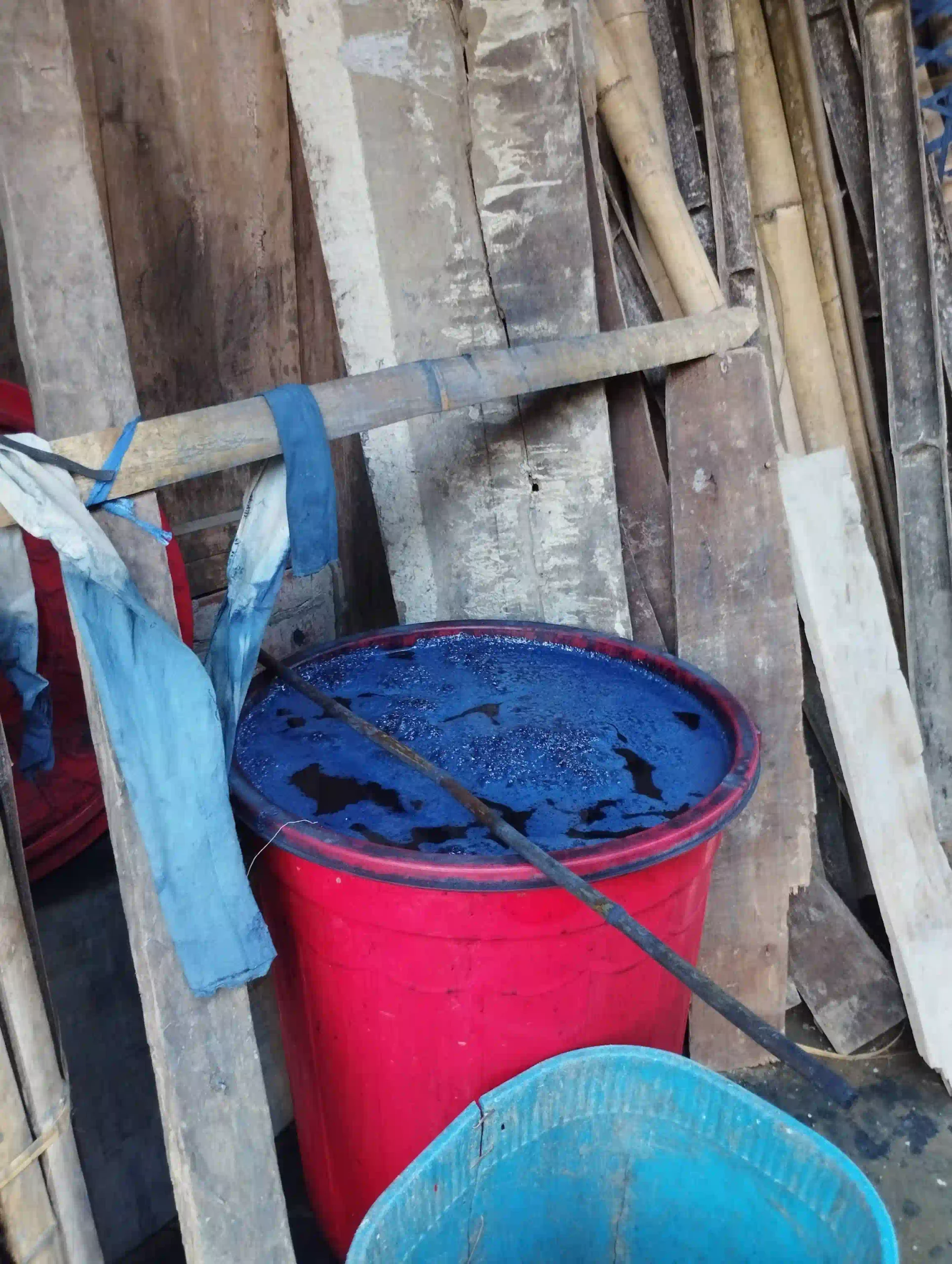
- Indigo Snail Boutique Hmong Homestay: Super rugged and intimate, they literally dye raw hemp out back (Ta Van Village).
- Joy House Sapa: Wildly isolated near a loud waterfall with massive social dinner energy (Ta Van Village).
- My’s Homestay Sapa: Entirely pushed off the main valley trail grid, deeply rural, and completely rooted in slow-paced local cooking (Van Den Village).
The Core Problem with Booking “Sapa Homestays” in 2026
I need to issue a massive warning right now before I give you the specific locations.
The hotel booking ecosystem in Lao Cai province has been completely manipulated over the last decade. Corporate investors from Hanoi realized that western backpackers search explicitly for the keyword Sapa homestays to save cash and find “authenticity.”
So, they bought huge blocks of land on the noisy highway right outside town, built totally standard boutique hotels with concrete staircases, digital room keys, and glass windows, and simply named the property “Mountain View Homestay Sapa.”
If you book one of those, you will be deeply annoyed. The “host” is just a bored receptionist on a smartphone. The food is cooked in a commercial stainless steel kitchen. You are eating totally alone at a corner table.
Read more: Is Sapa worth visiting to see local culture or is it entirely fake?
The “Family Dinner” Filter
To fix this, I strictly apply the “Open Kitchen / Family Dinner” rule when screening anywhere down in the valley.
If the photos online do not physically show guests sitting with a local family eating off a wooden floor, or actively squatting around an open wood stove prep area, I instantly close the tab. I want a house owned legally by the minority ethnic women who manage the land.
If you want the real deal, use the options below. These women run functional properties, heavily value interactive food preparation, and absolutely dominate hospitality without using any generic luxury fluff.
1. Dinh Sapa Trekking & Homestay
- Location: Seo My Ty (Surrounded entirely by steep green nature)
- Vibe: Highly personal, completely disconnected from town noise, pure Black Hmong immersion fueled by independent local women.
I have zero hesitation throwing Dinh’s place at the absolute top of the list. Dinh represents an entire generation of smart, fiercely independent Hmong women who realized they didn’t need to work for giant budget tour companies in the central town.
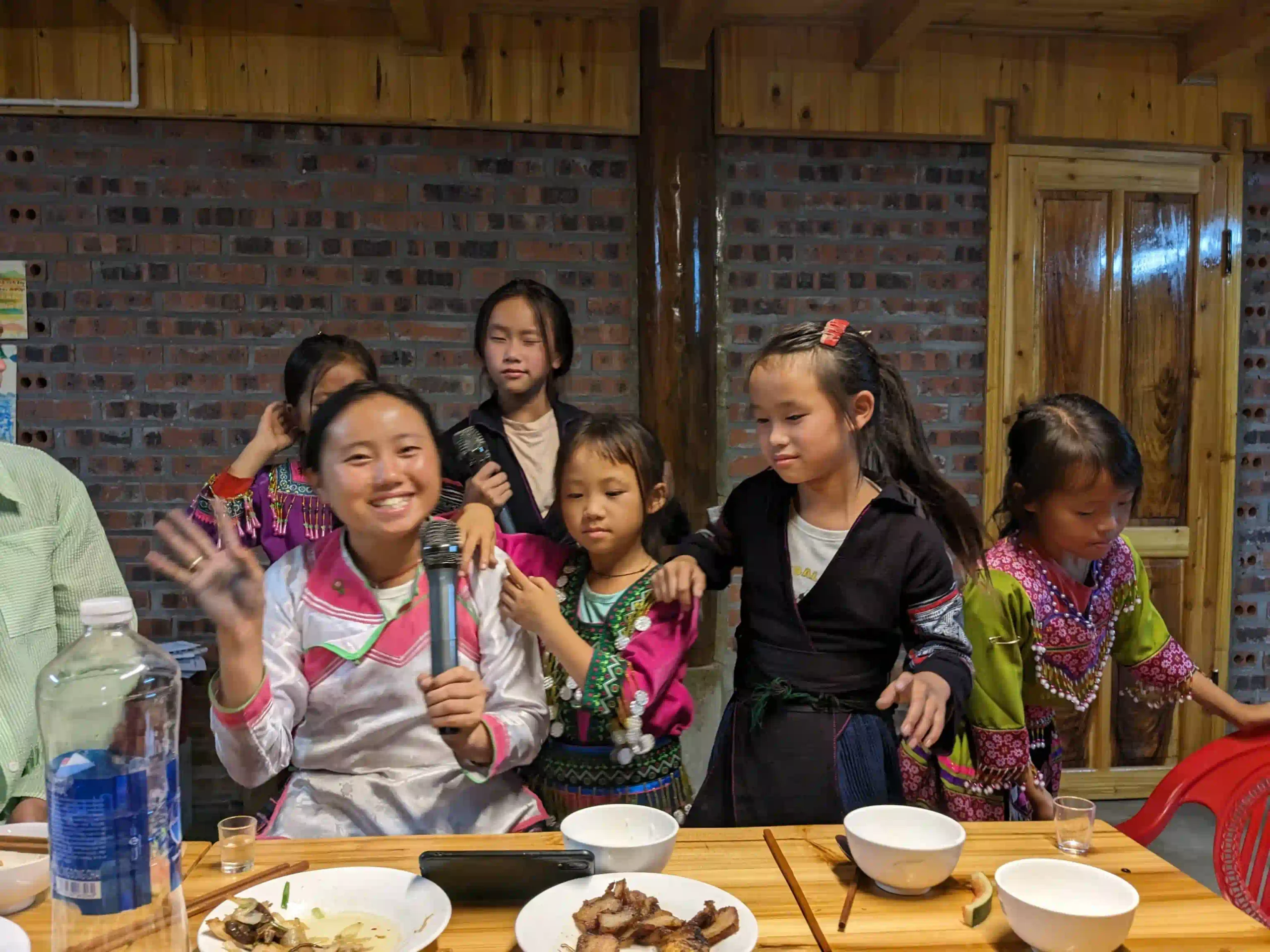
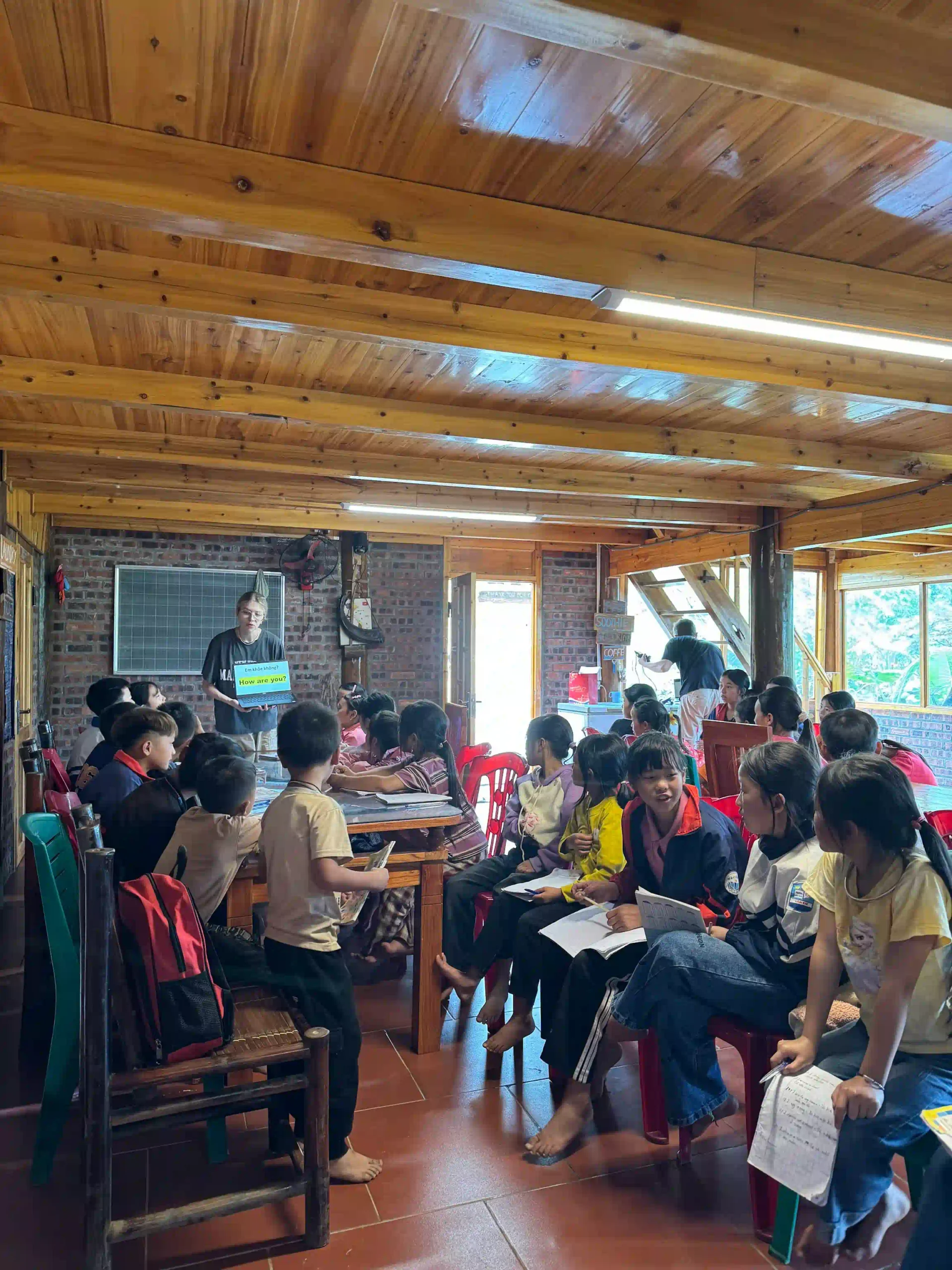
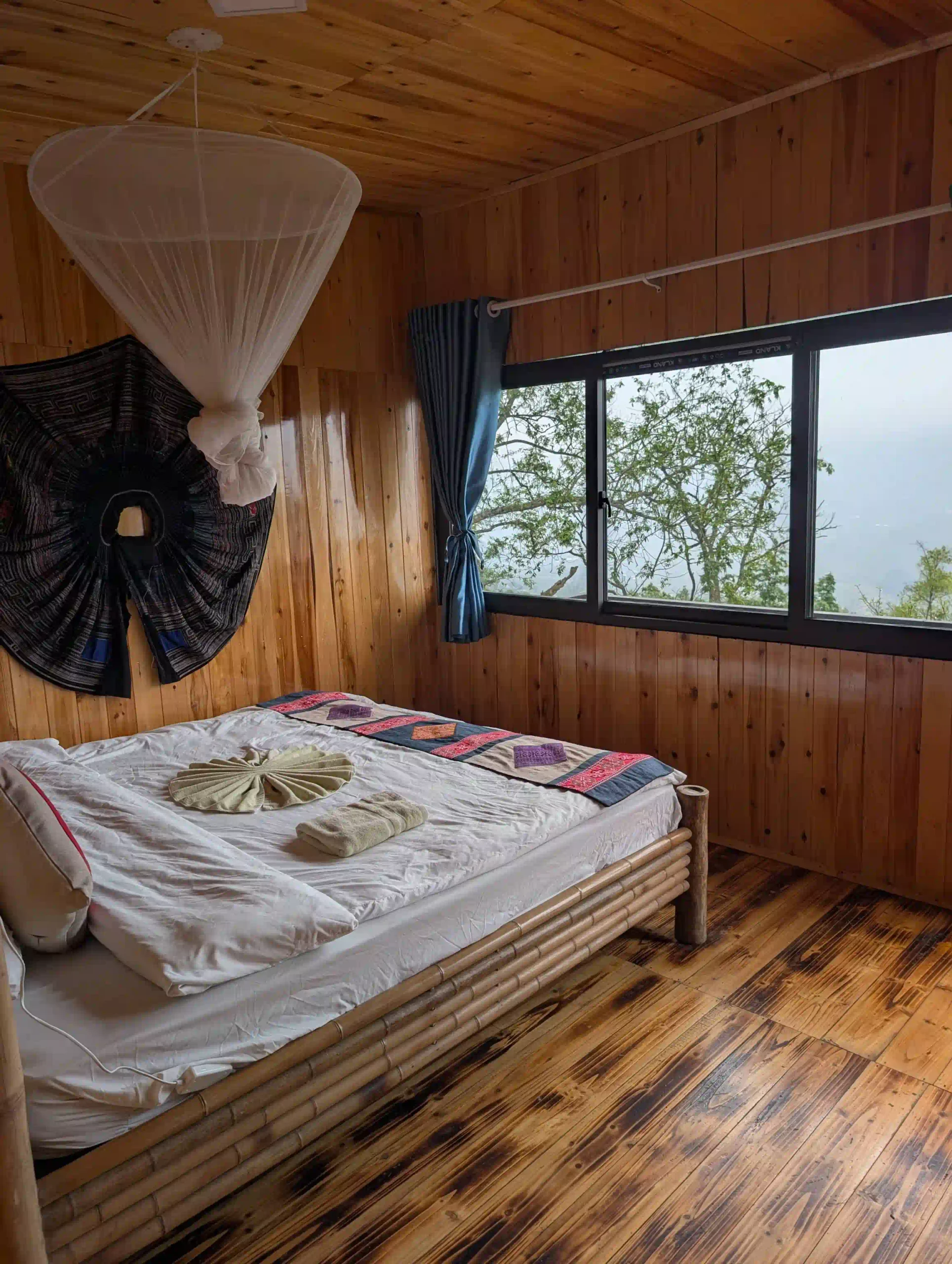
She set up her own incredibly atmospheric bamboo and wood bungalows entirely off the grid in the valley. The best part? She actively uses her homestay business to support the children from her local village.
The Experience
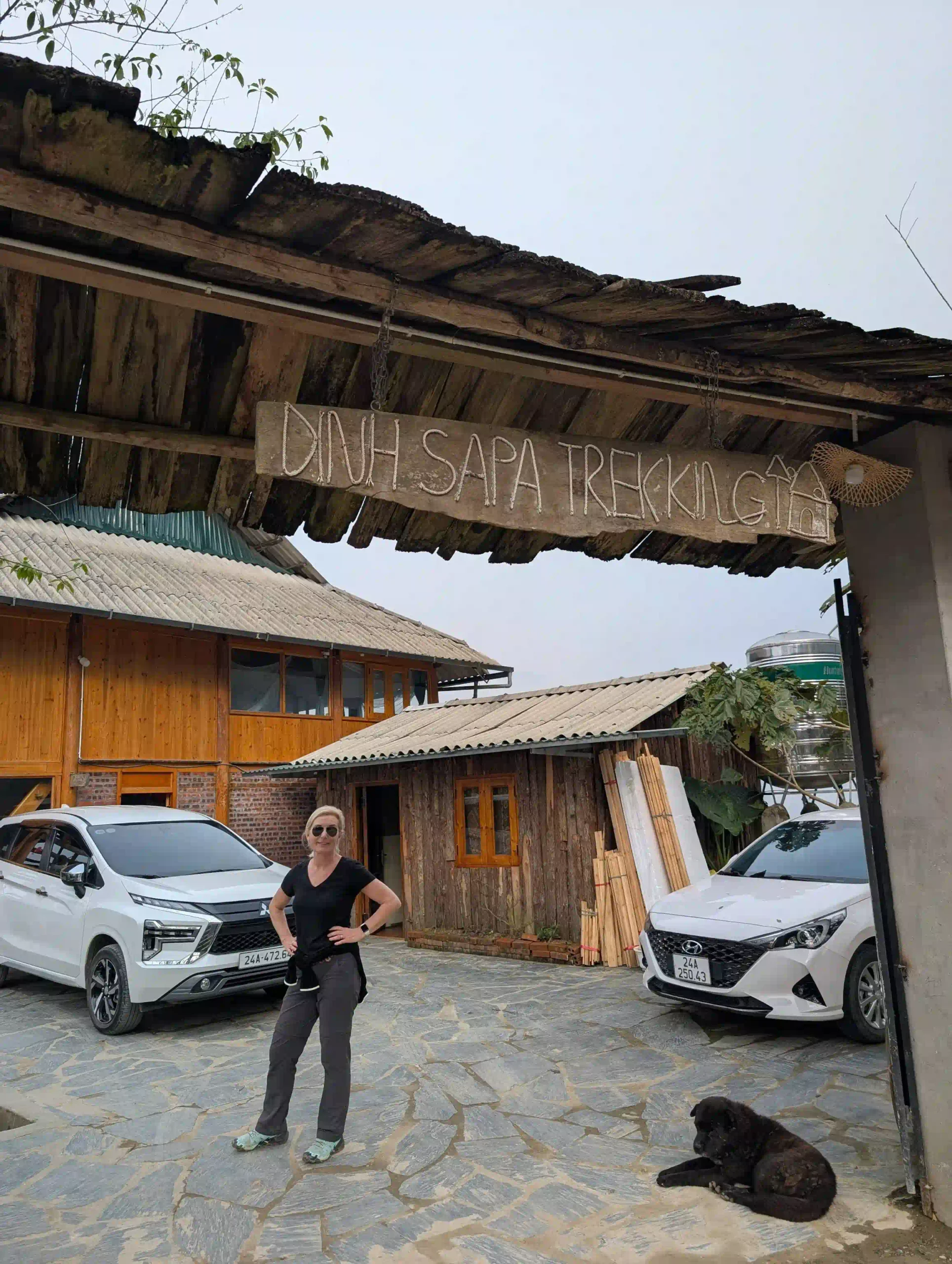
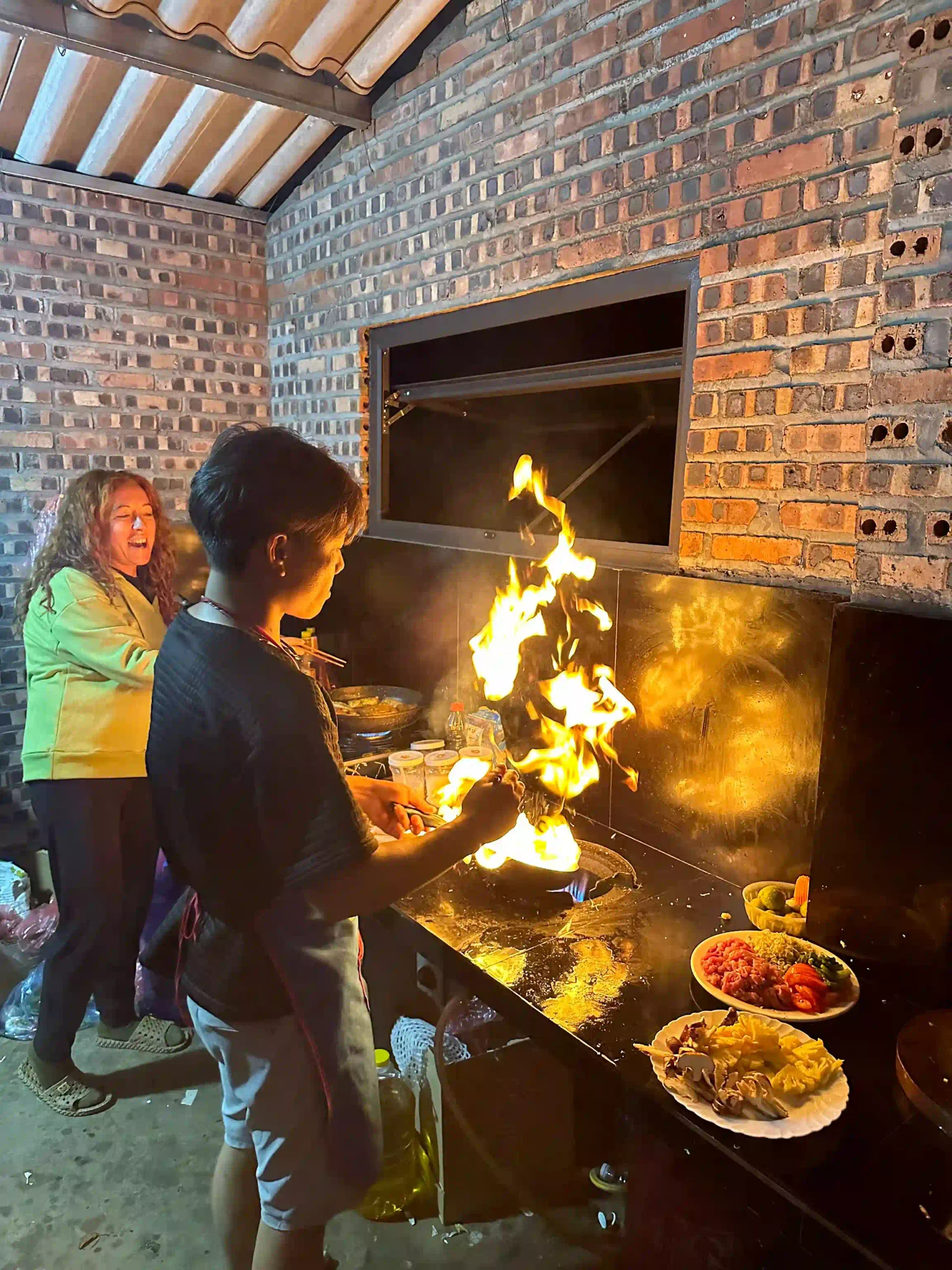
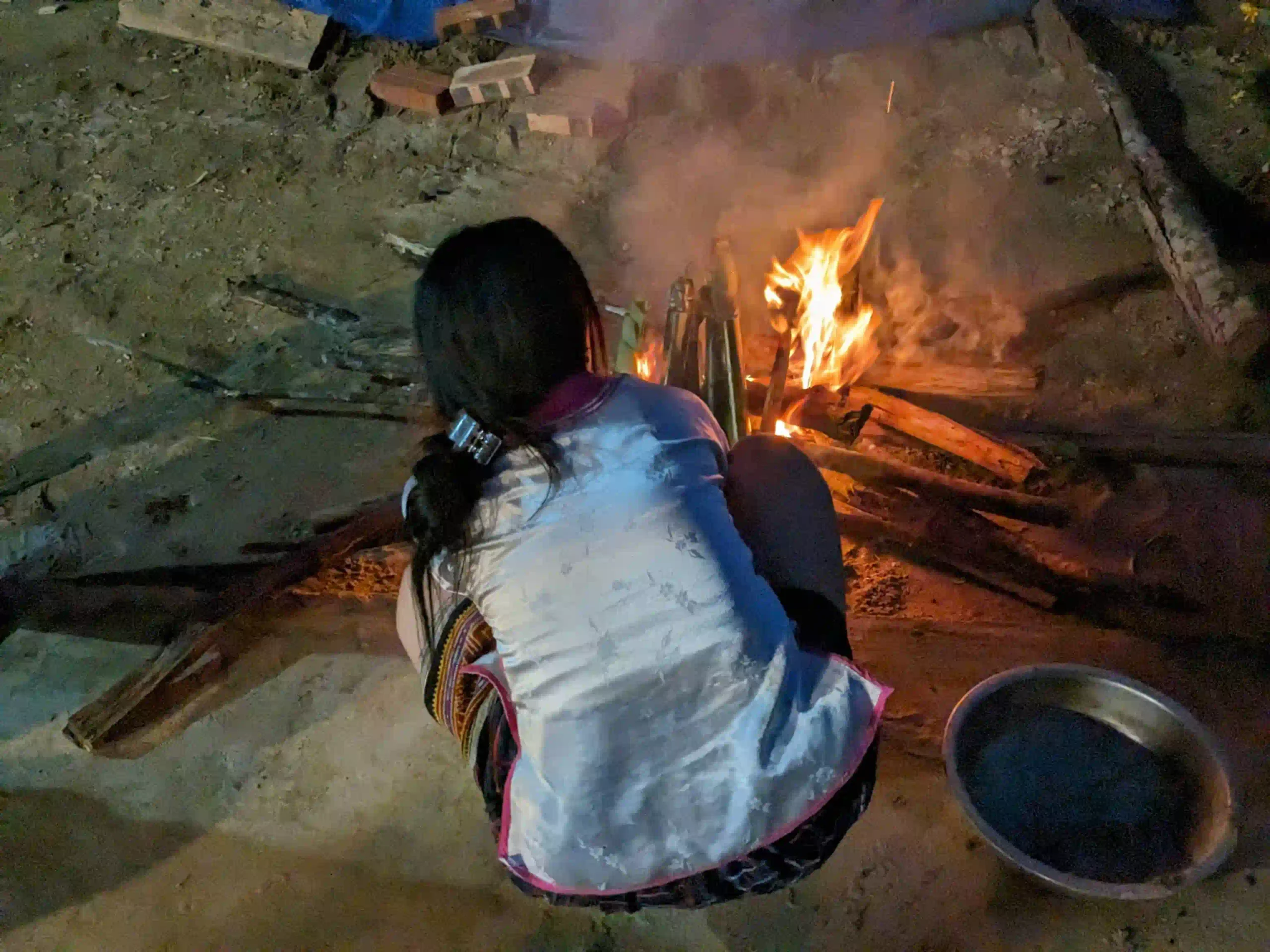
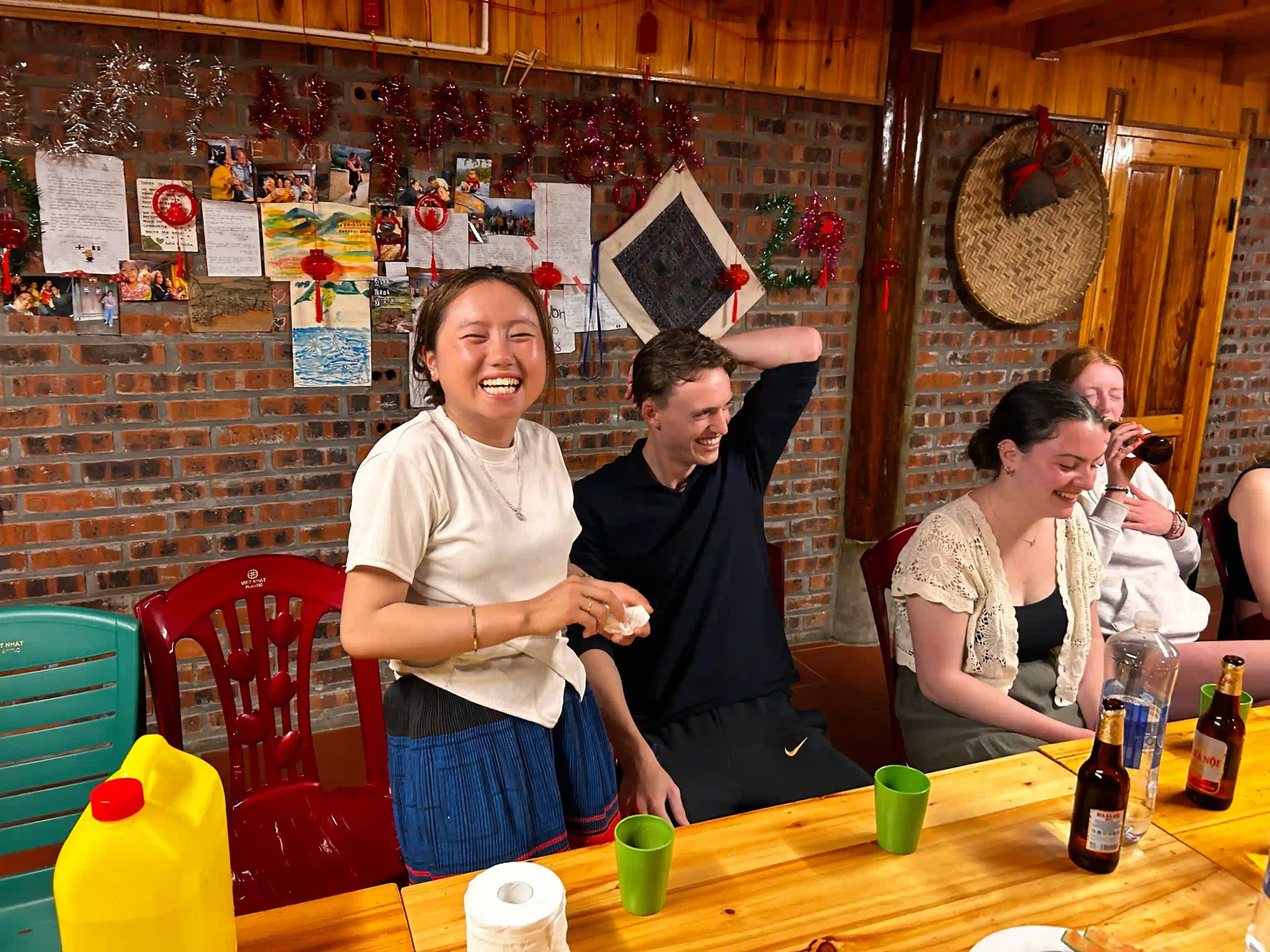
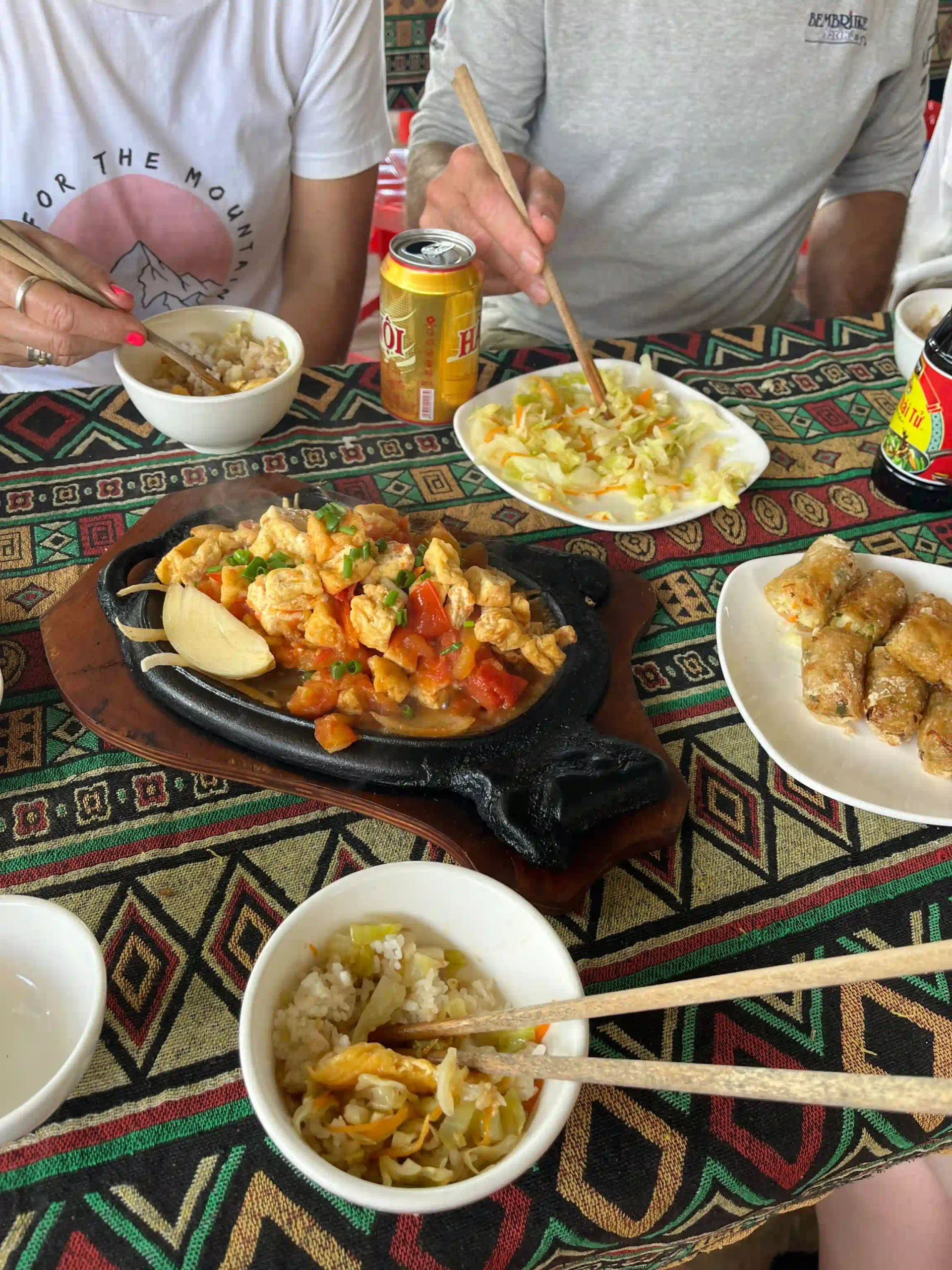
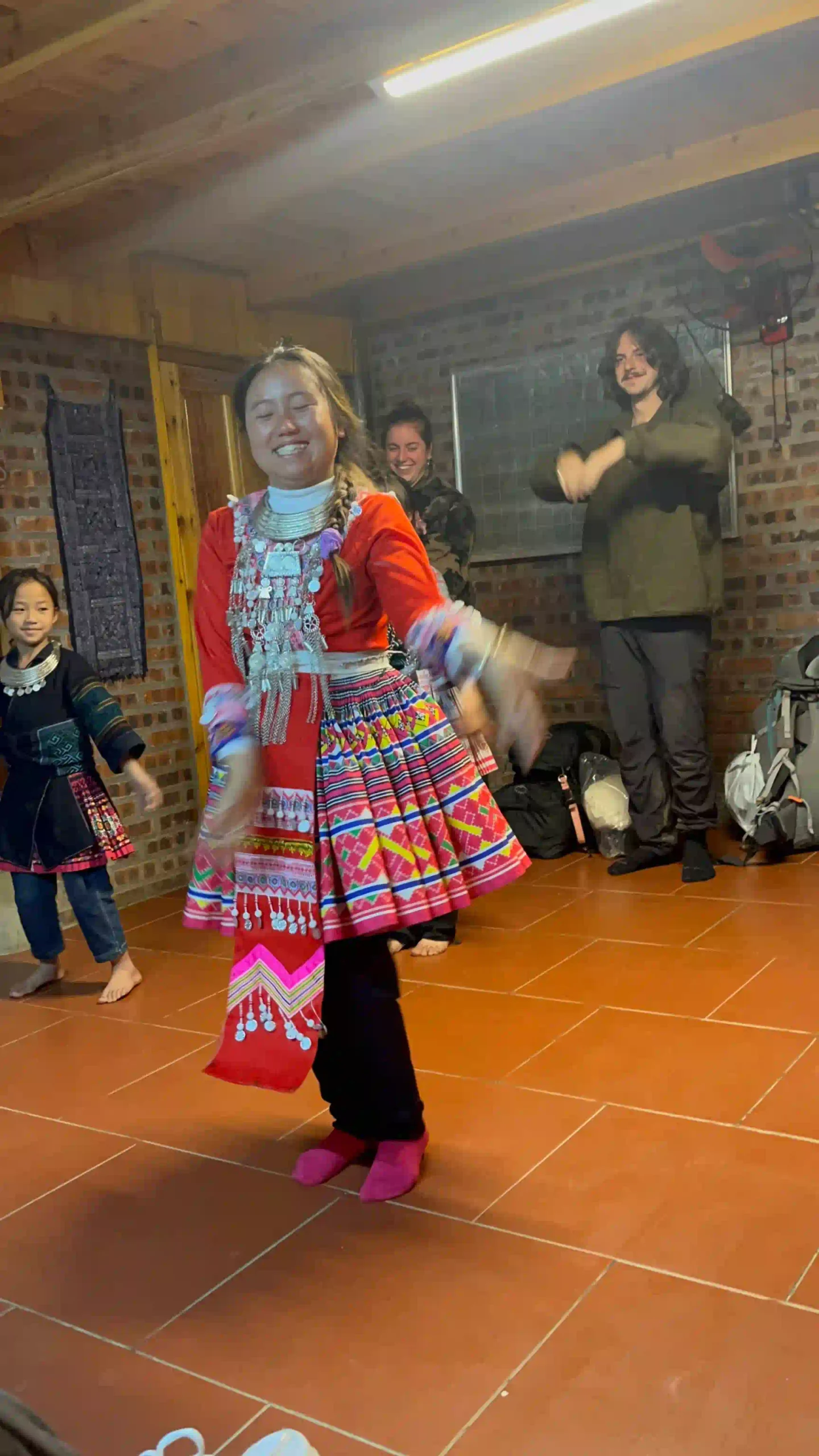
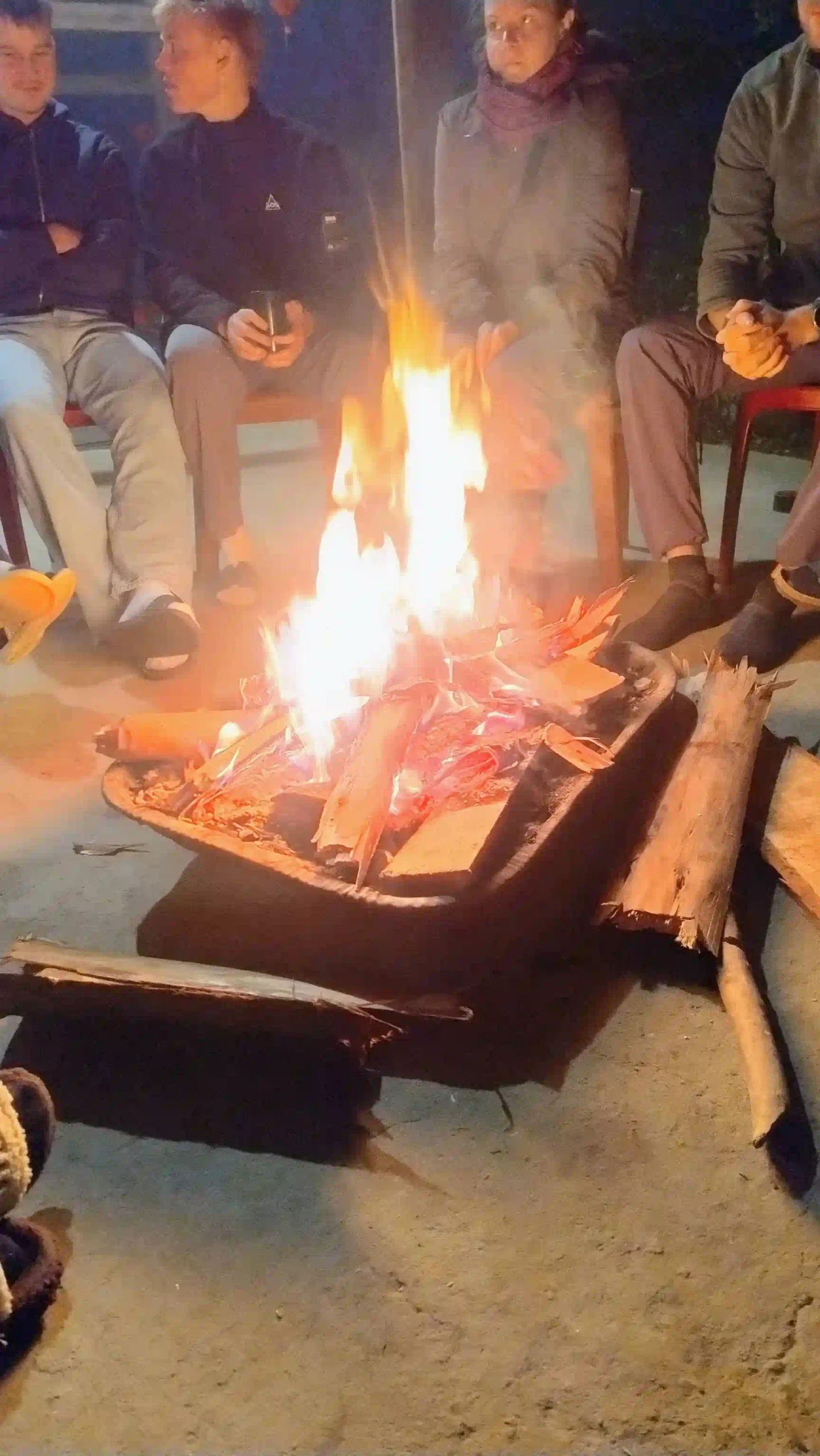
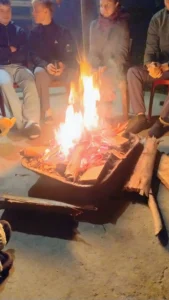
When it gets to around 5:30 PM, the mountain fog rolls over the ridges, the temperature completely drops, and the bonfire gets lit outside. This isn’t a fake cooking demo class designed to overcharge tourists. You walk directly into her cooking prep area and grab a low plastic stool.
Dinh actively pulls you into the kitchen chaos. Instead of just waiting for your plate, she will specifically pull you aside and teach you how to prep real local Hmong dishes.
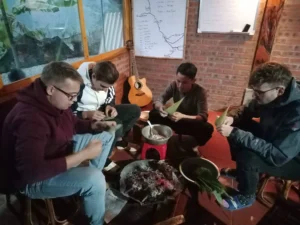
You are going to aggressively peel loads of raw mountain garlic, shred local squash, and fold up totally brittle rice paper to make huge piles of spring rolls (Nem ráng).
Once everything hits the cooking oil, the entire room fills with wood smoke and heavy spices. When you transition to the low communal table, it turns into a wildly loud family event. You eat the blistered pork and charred vegetables you actually physically worked on.
Dinh inevitably pulls out the potent homemade rice wine to do table shots with you and whatever completely random strangers are sharing the house.
It ends with everyone drinking tea outside by the bonfire. It is the absolute undisputed blueprint of what a genuine Sapa mountain experience should look like.
2. Indigo Snail Boutique Hmong Homestay
- Location: Deep in Ta Van village, practically on the border of Hoang Lien National Park.
- Vibe: Extremely rugged, deeply cultural (they physically dye their own fabrics here), and totally intimate.
A massive amount of travel agencies pretend to sell you “cultural integration”, but Indigo Snail actually executes it effortlessly. If you want the unapologetic, genuine Black Hmong mountain reality, this specific house checks every single box.
It sits deep in the Ta Van village. The woman running it isn’t a random investor from Hanoi; she actually makes her living growing hemp and physically dying the massive vats of blue-black indigo fabric out back.
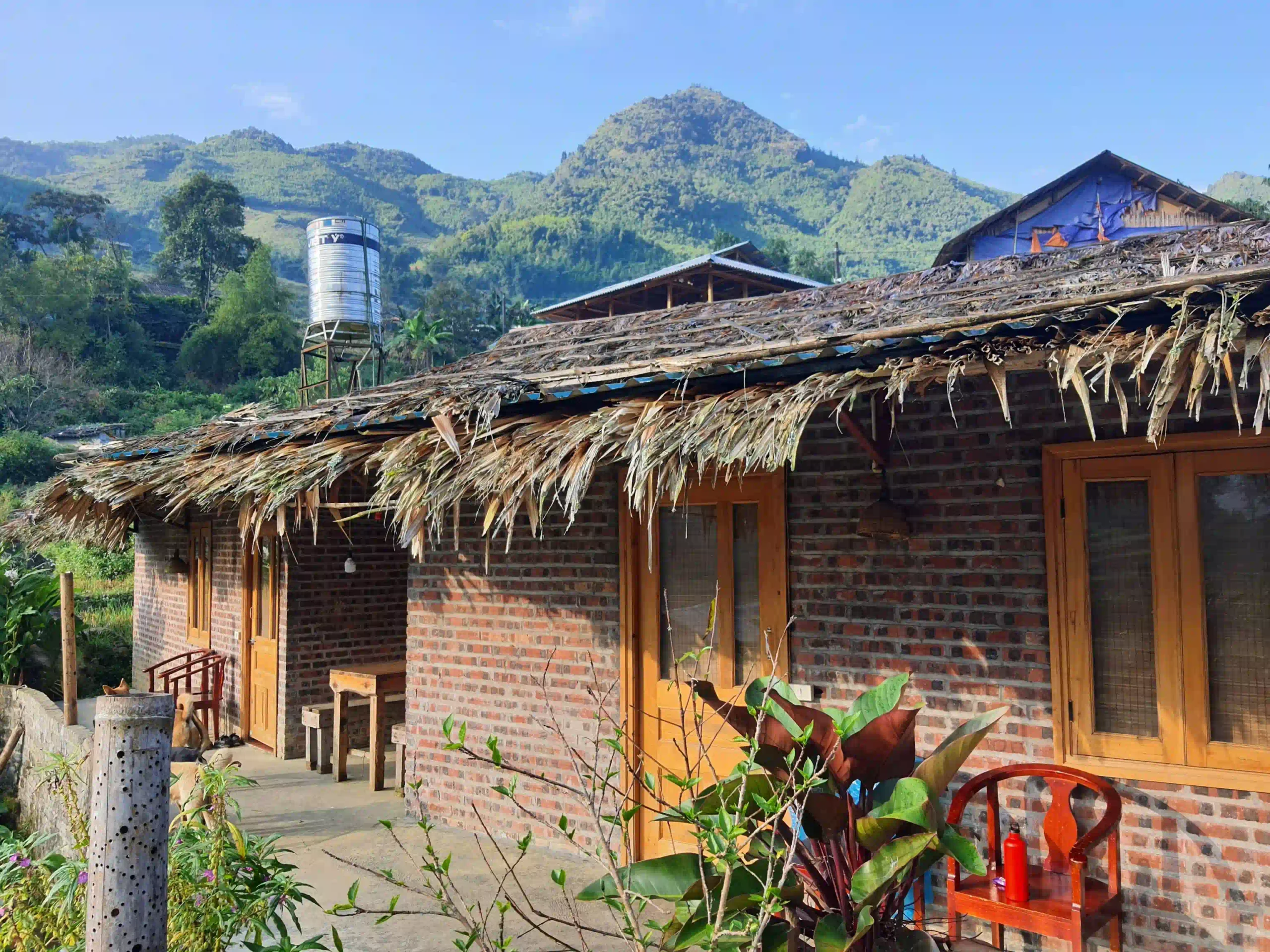
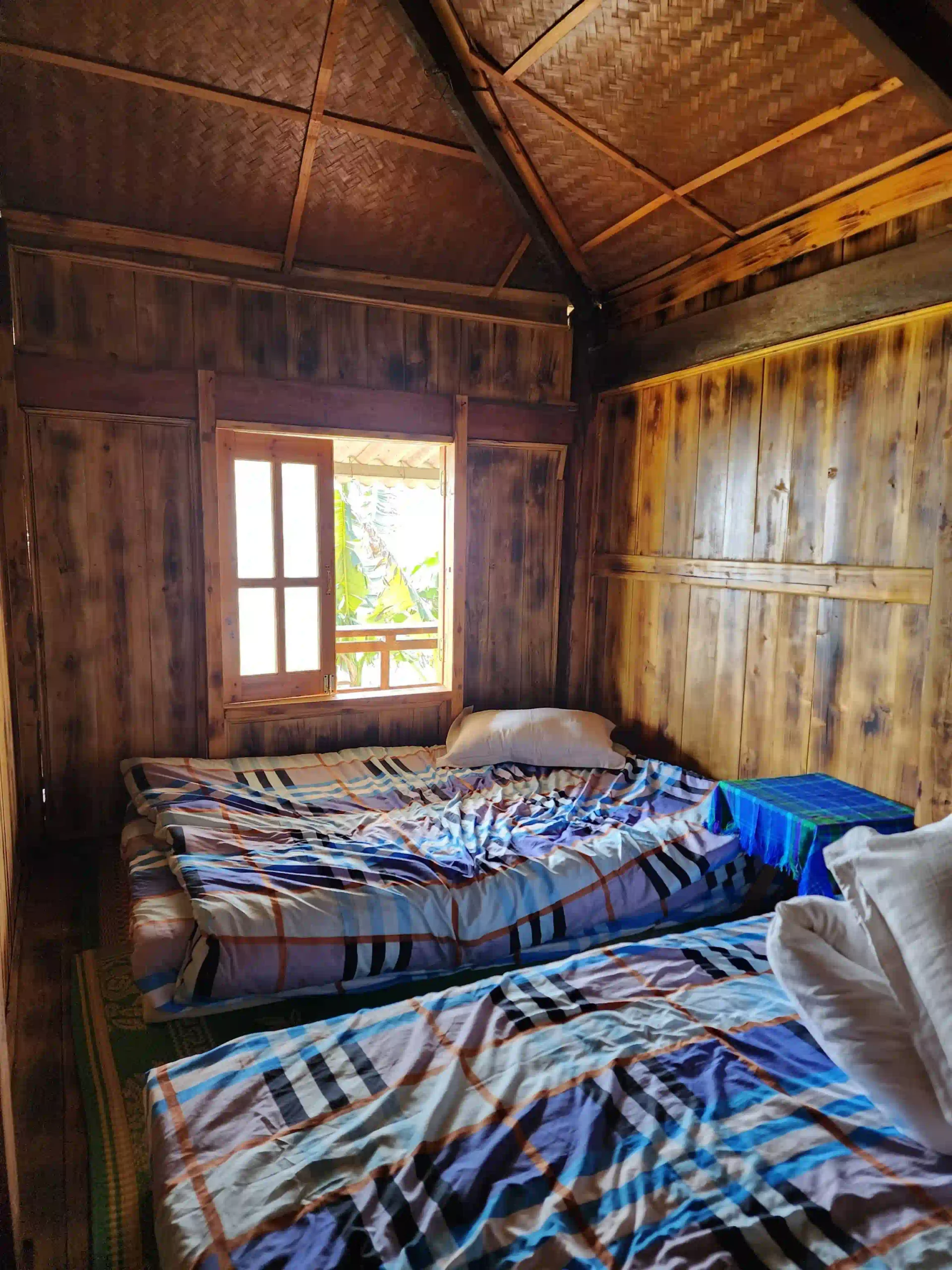
This is an extremely popular hidden gem on booking apps because it doesn’t try to look fancy. You sleep under heavy mosquito nets, use shared unheated areas, and the floors creak aggressively.
The Experience
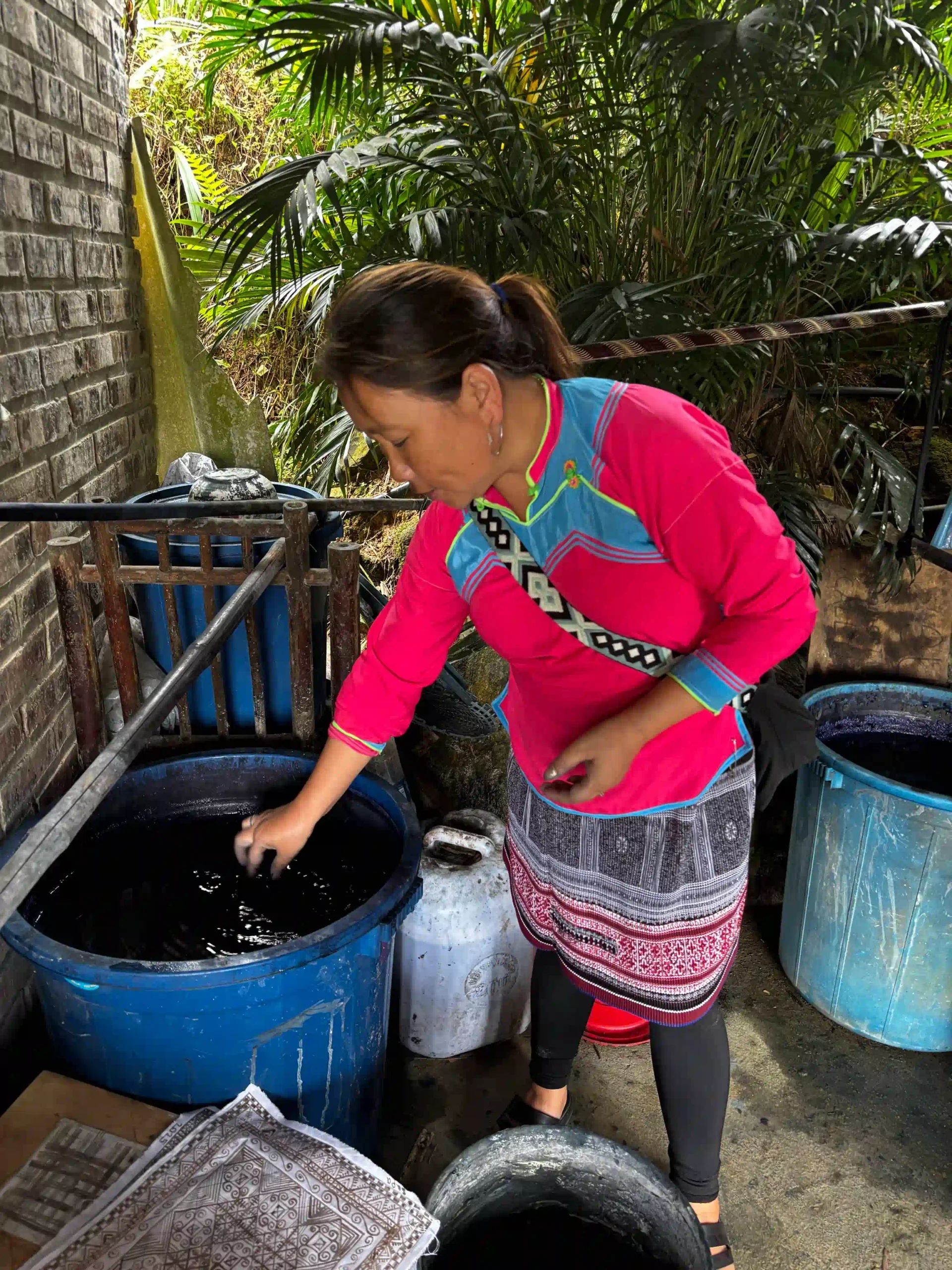
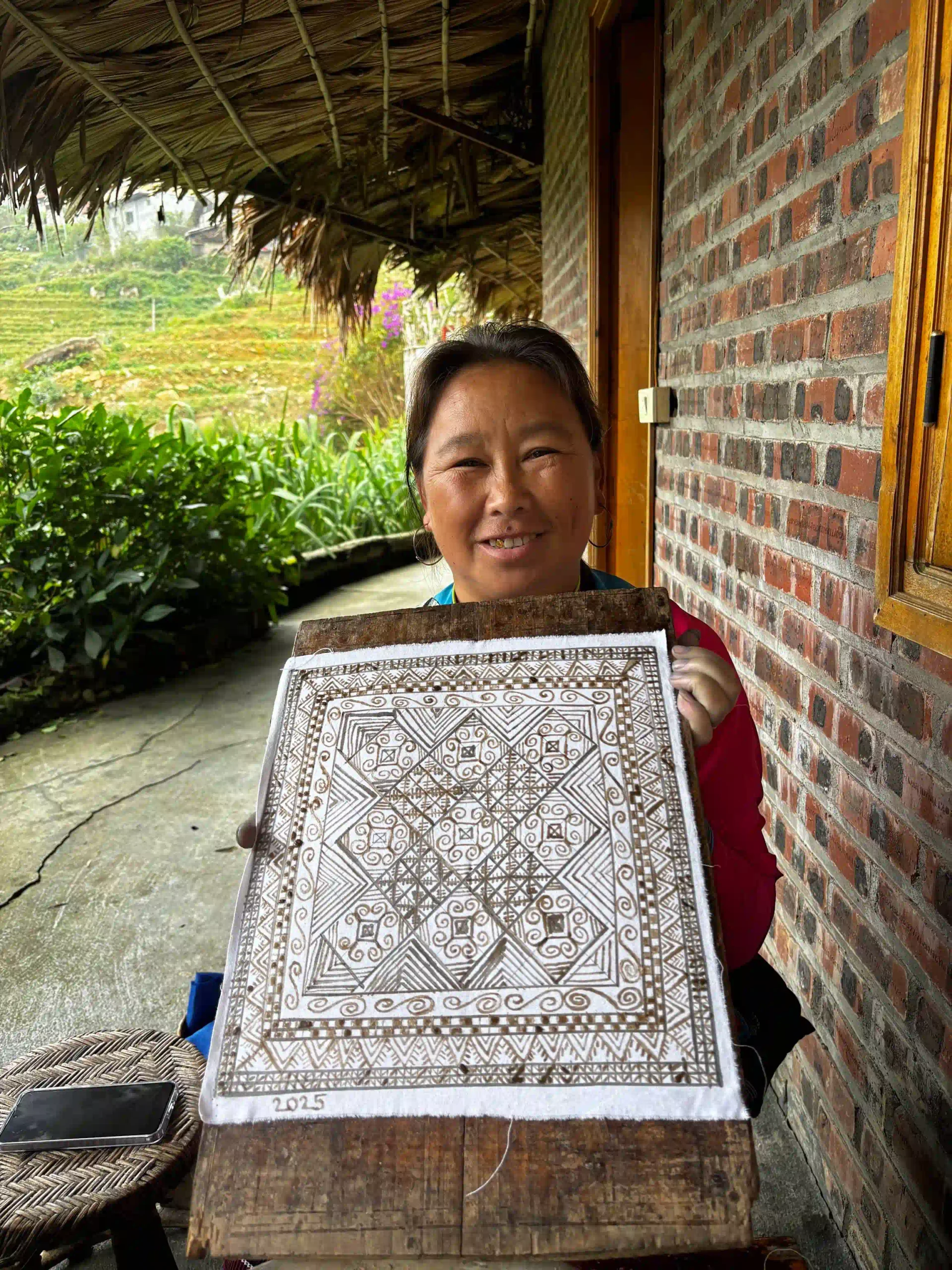
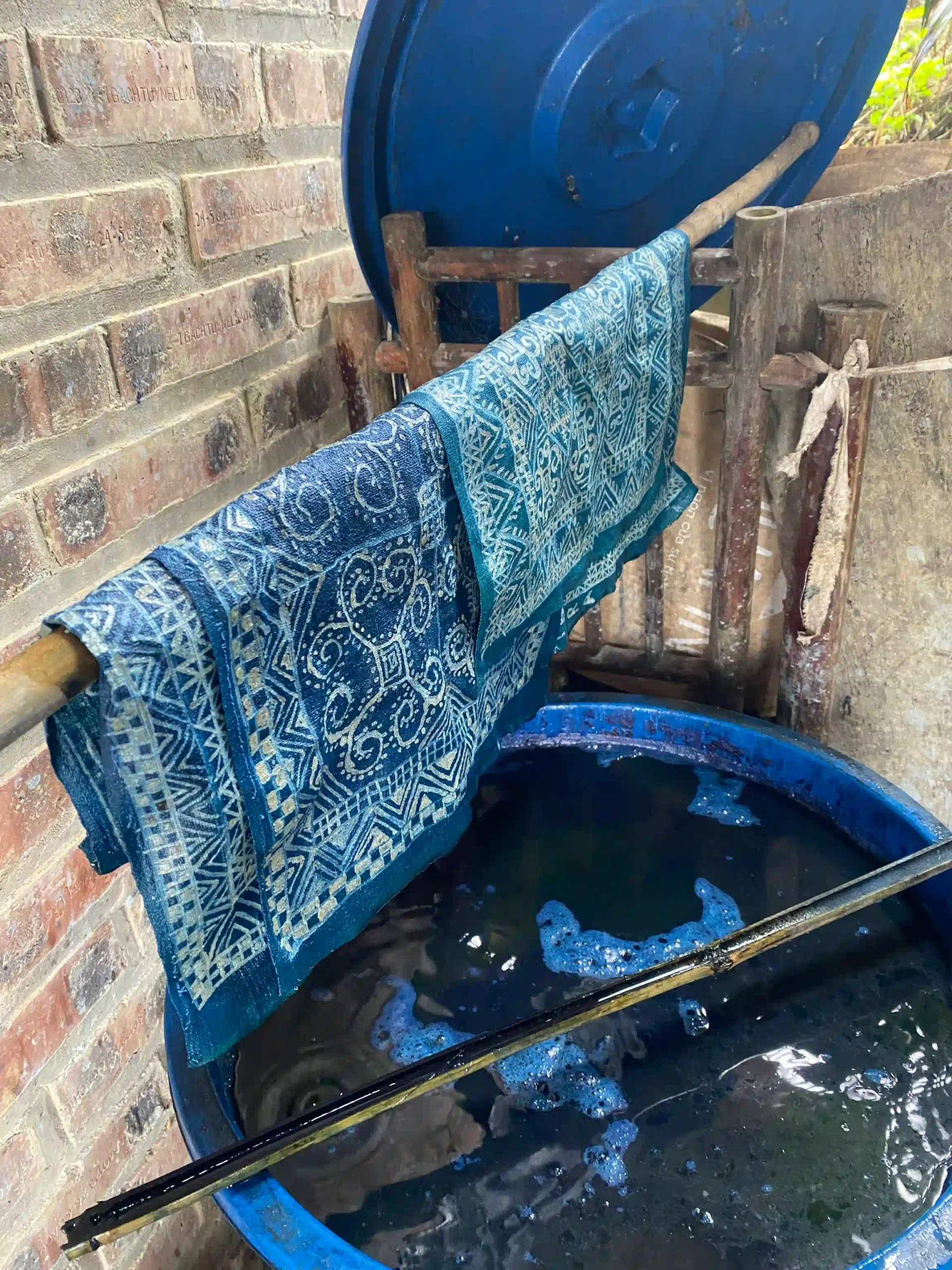
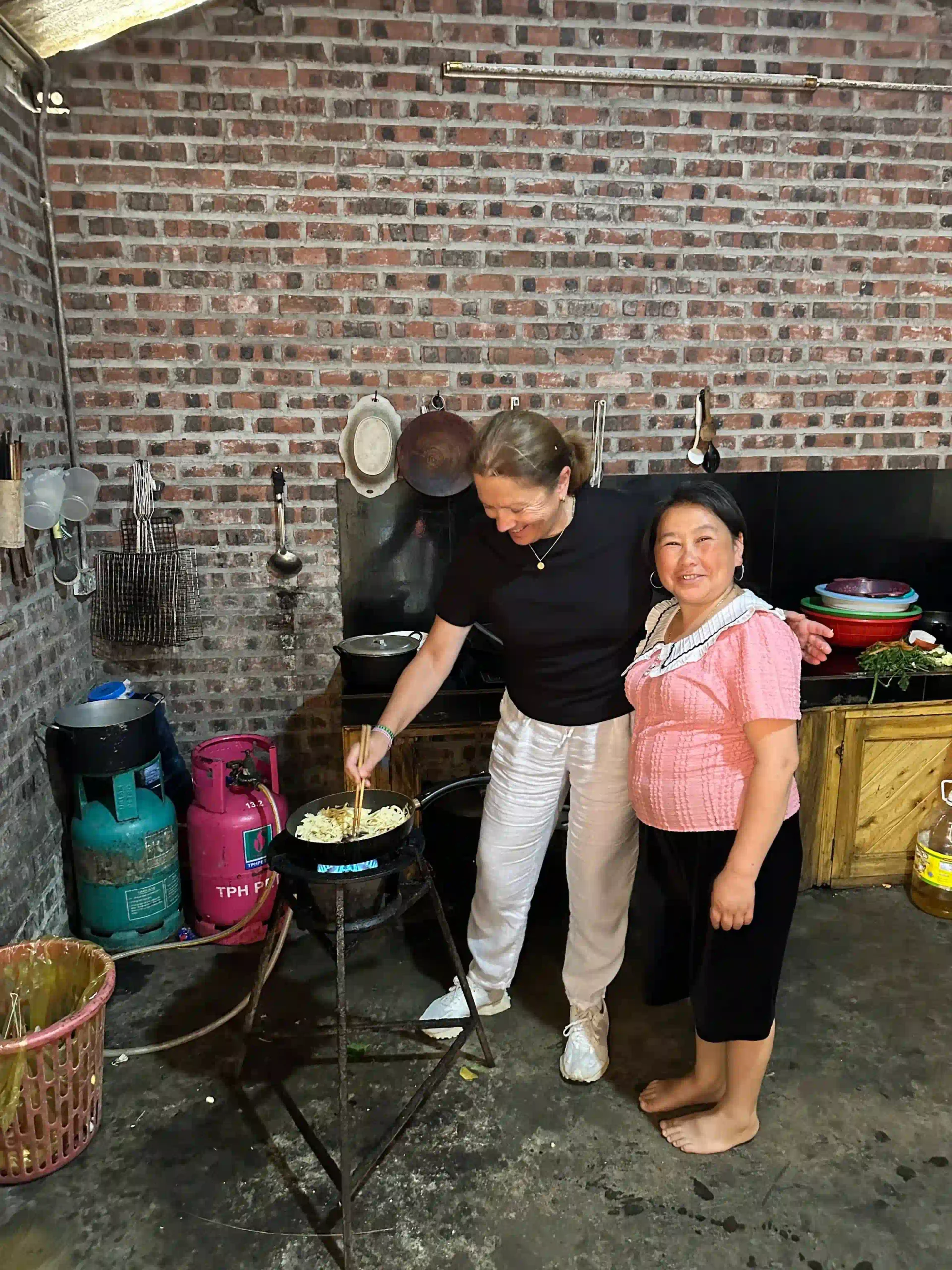
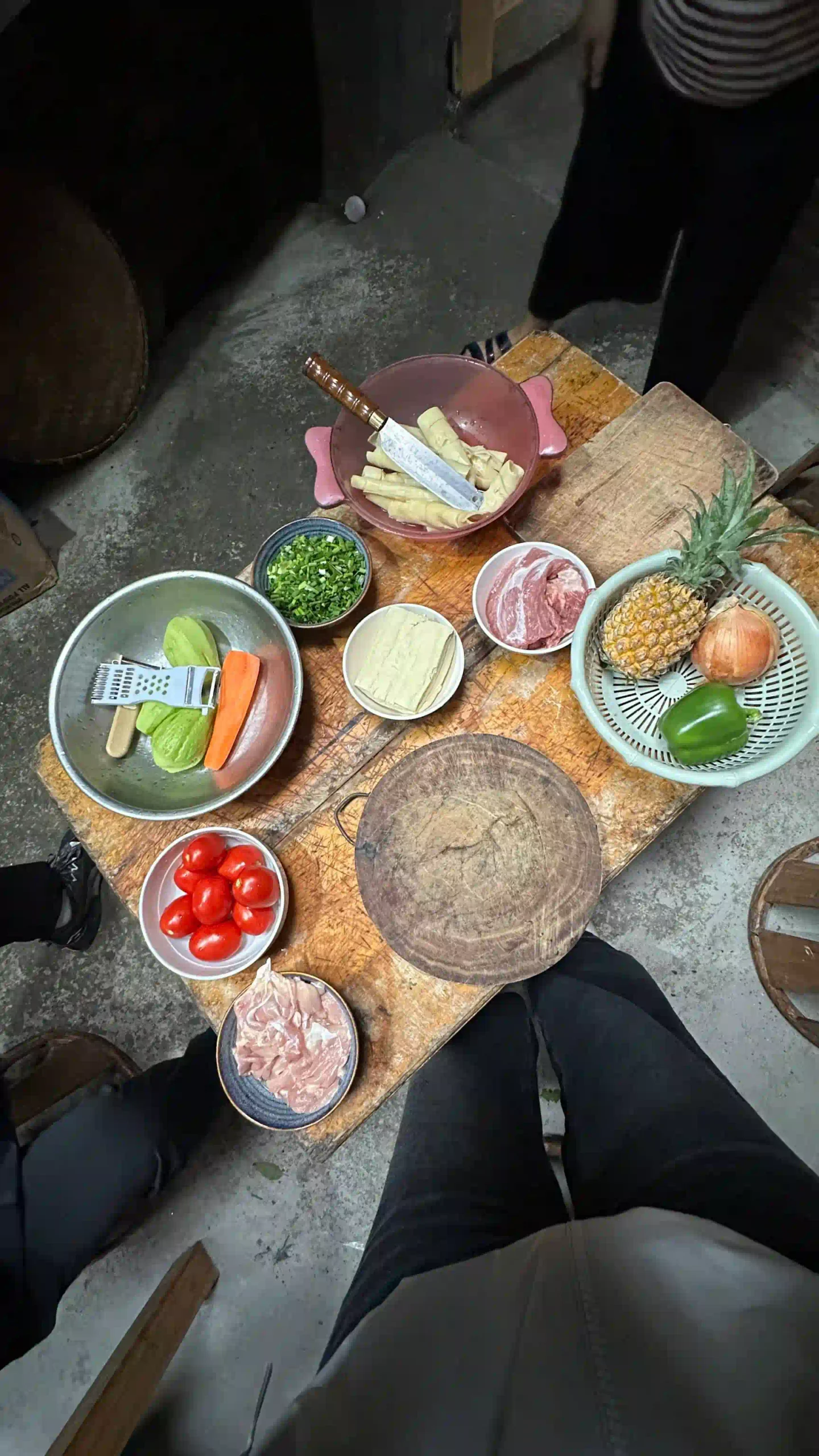
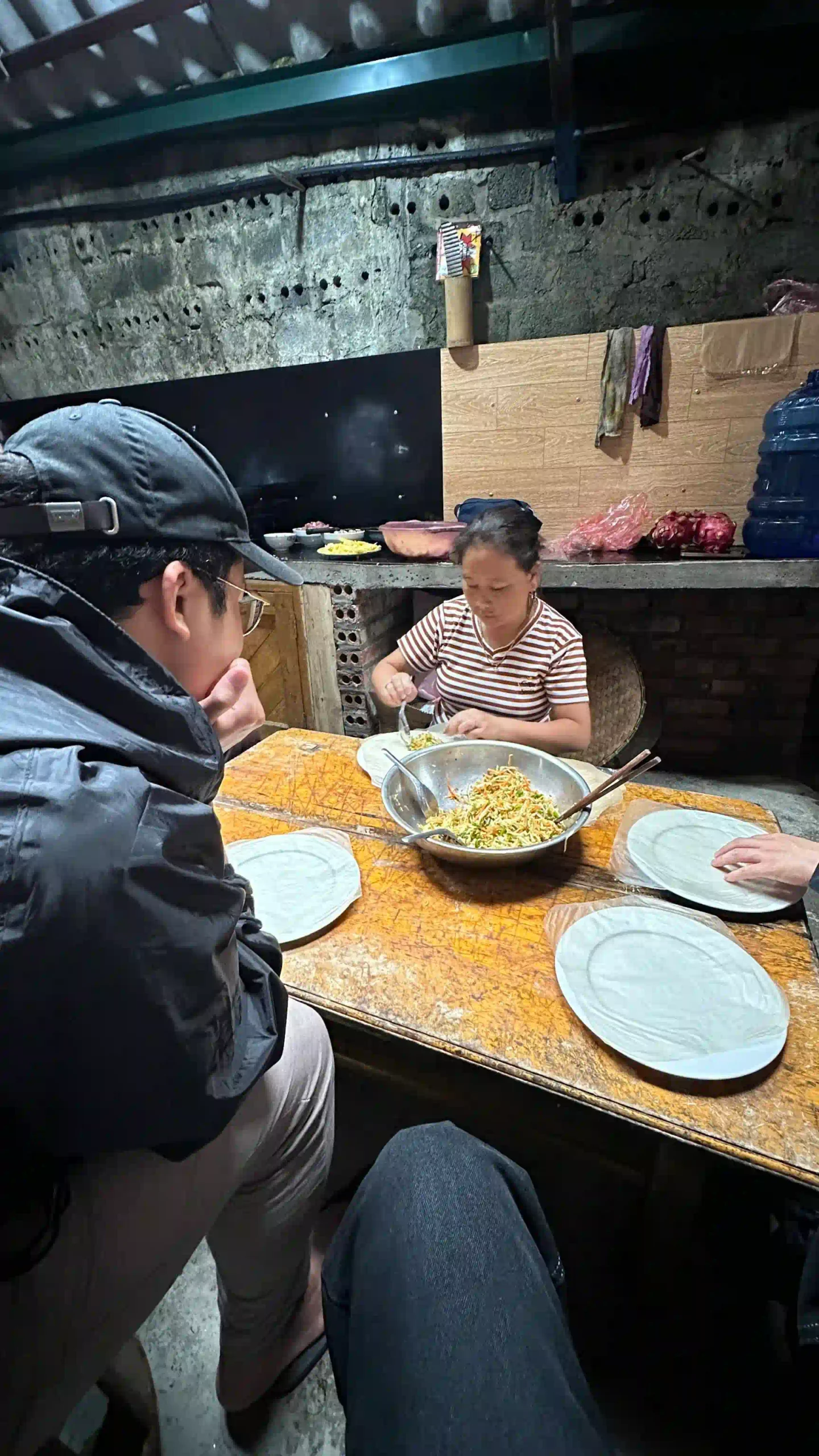
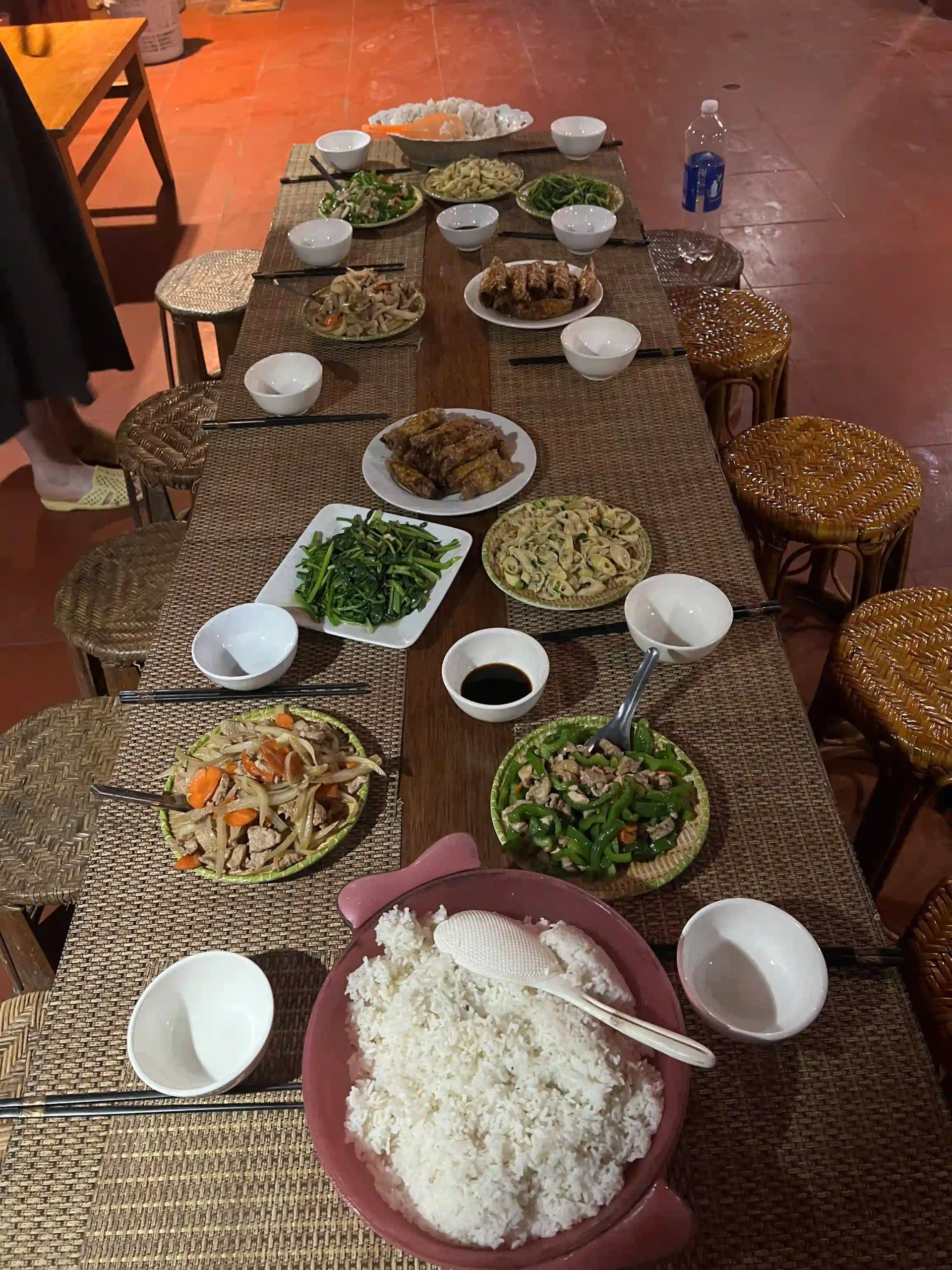
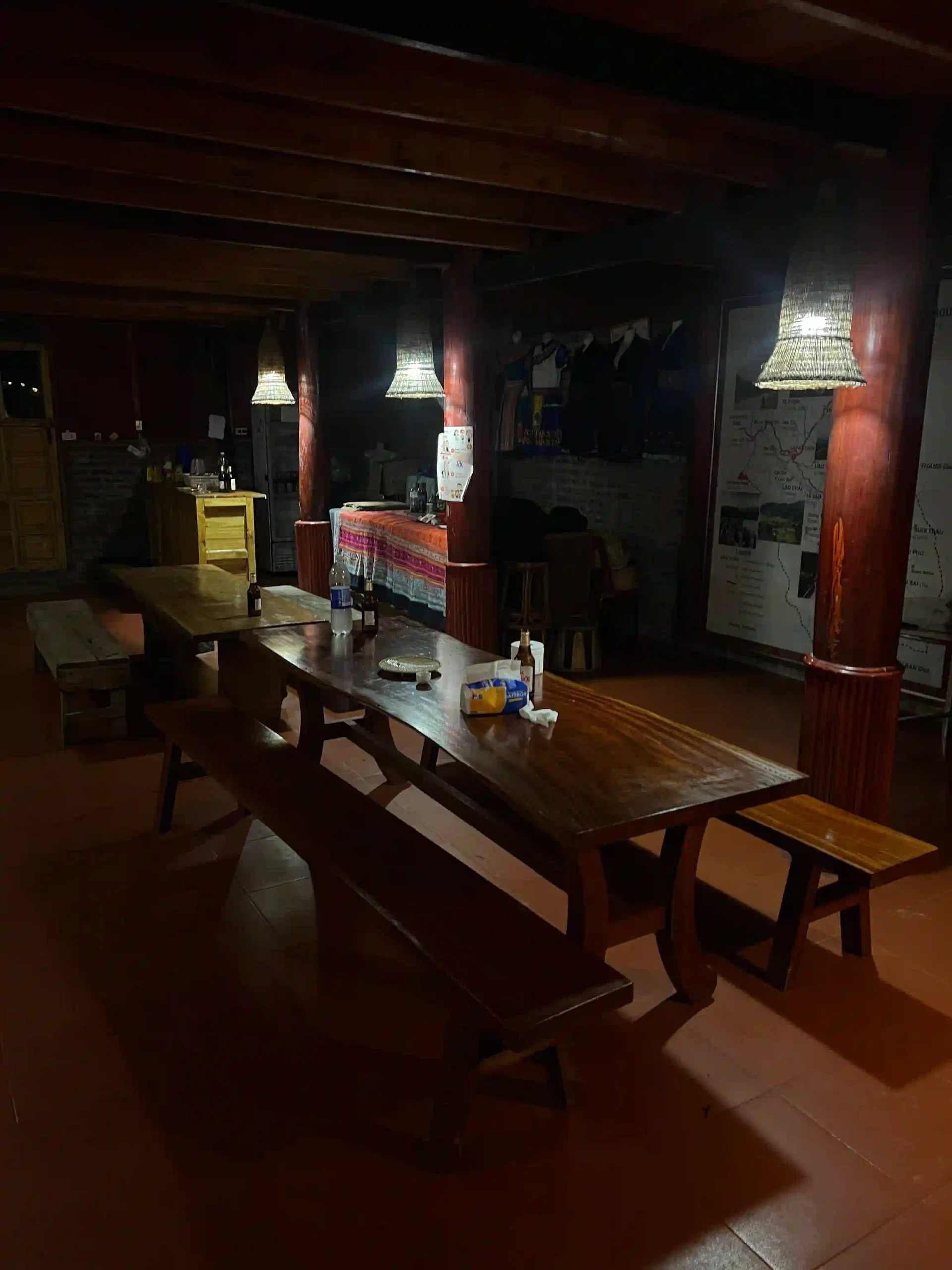
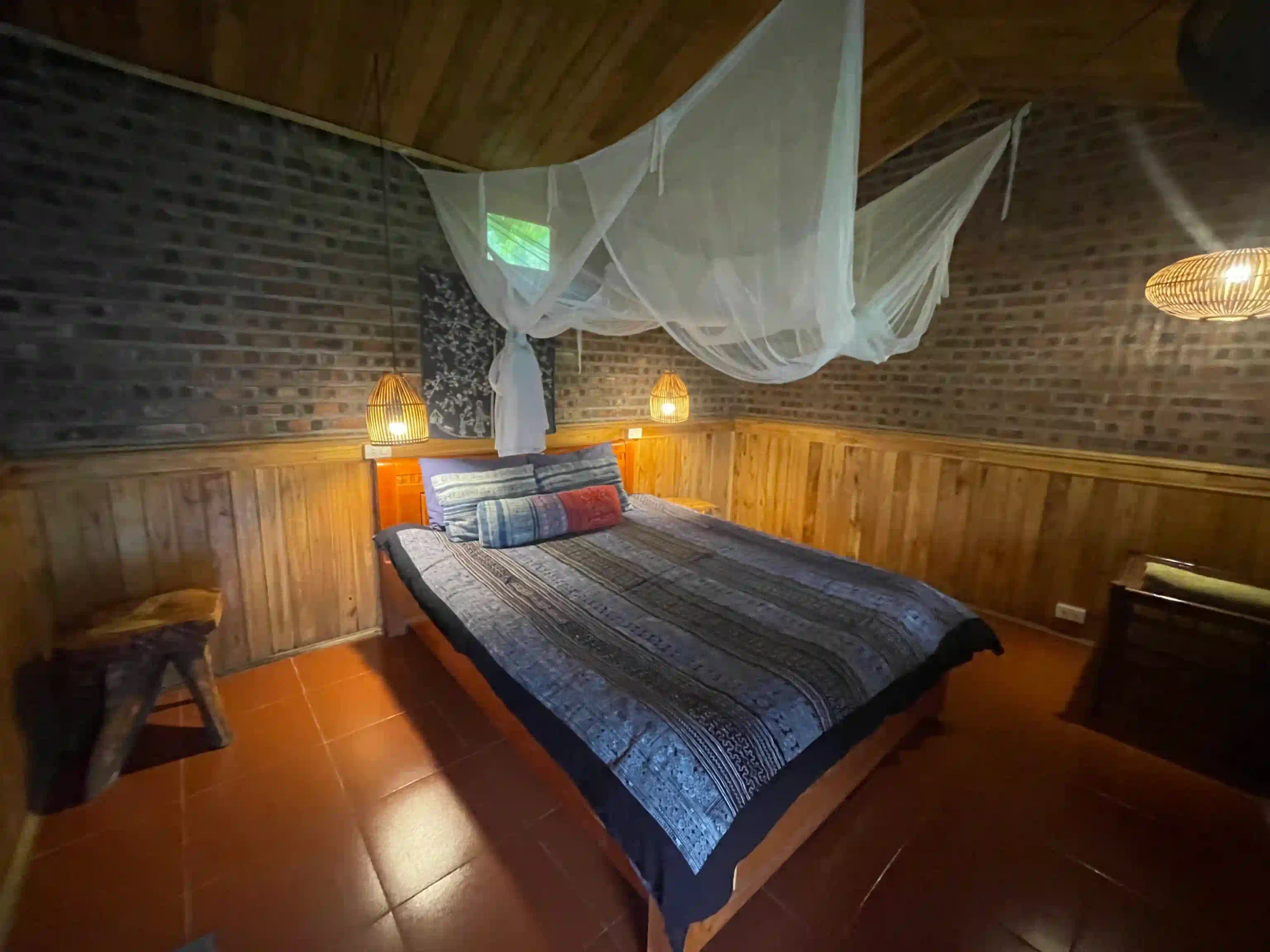
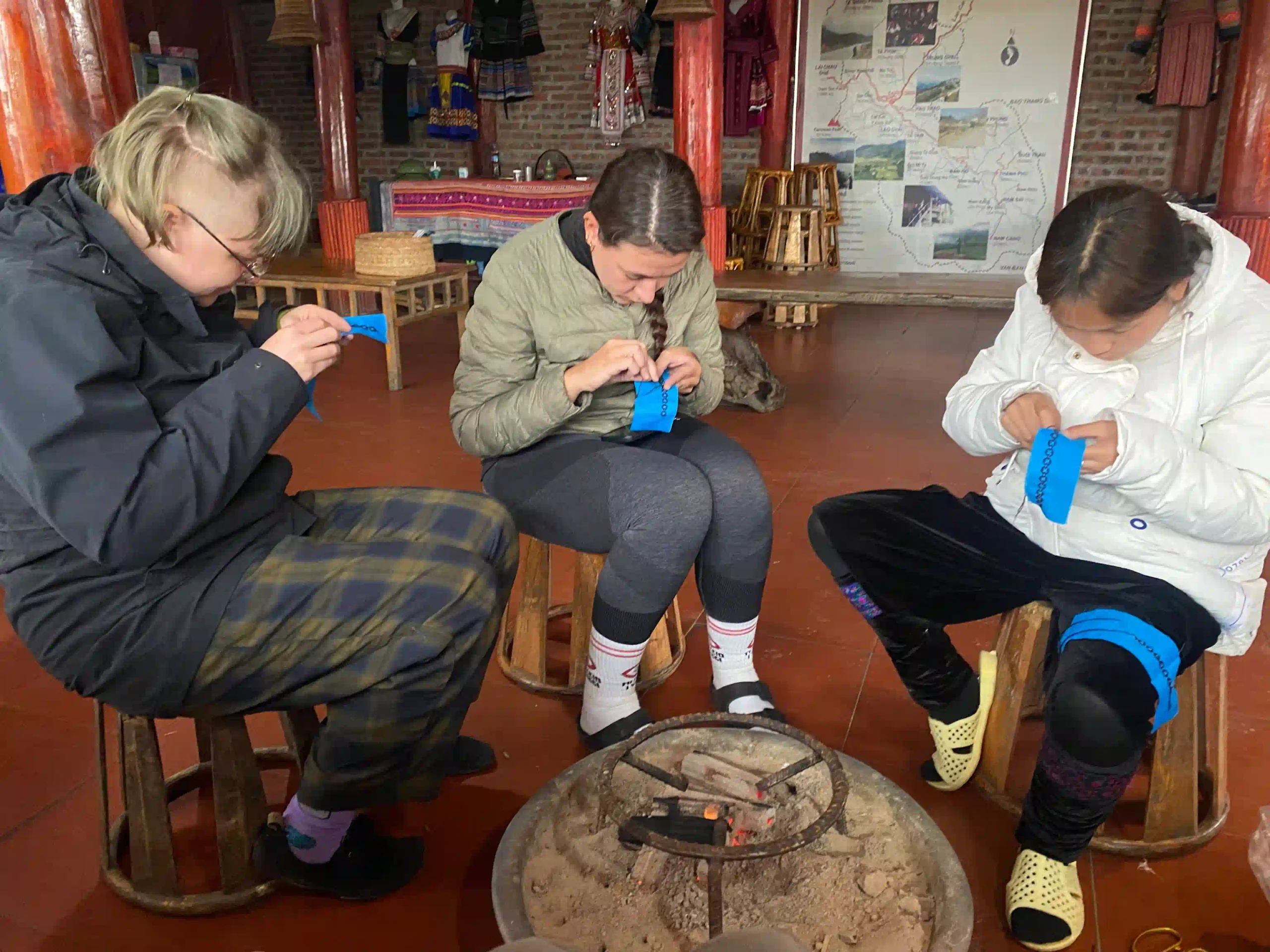
This isn’t a polished culinary school demo where someone pre-chops your garlic. At Indigo Snail, the kitchen is essentially an open fire built directly onto a hardened floor. Because it’s a much more intimate, boutique scale, you don’t get lost in a crowd of thirty drunk backpackers.
The owner specifically encourages whoever is staying the night to physically come into the cooking space and prep dinner. She usually sits entirely in the dark, heavy wood-smoke, charring chunks of local mountain pork (often heavily fat-streaked) directly over live embers.
She hands you the local wild squash, puts a knife in your hand, and lets you do the prep. You eat aggressively garlicky local tofu and totally burn your tongue on fresh vegetables ripped out of the garden literally twenty feet away.
Eating while completely smelling like wood-smoke right alongside the people who actually built the house is an absolutely unbeatable mountain feeling.
3. Joy House Sapa
- Location: Giang Ta Chai (further past Ta Van, directly near the valley waterfalls).
- Vibe: Huge social energy, massive portions, a beautiful, utterly isolated wooden sanctuary.
When you really, deeply want to cut off all contact with the noisy tourist center, you drop off the grid at Joy House. The location completely filters out the weak backpackers.
You have to travel all the way past the main Ta Van strips down into Giang Ta Chai. It physically sits extremely close to an aggressively loud native waterfall, completely cutting out whatever tiny engine noise trickles down the mountain.
What makes Joy House pull an almost universal 5-star ranking online isn’t massive luxury (because there isn’t any). It is simply because the young Hmong family operating it delivers an insanely welcoming, wildly social atmosphere in the absolute middle of nowhere.
Also, know that this location operates on cash only, forcing you to prep properly before you climb down the hills.
The Experience
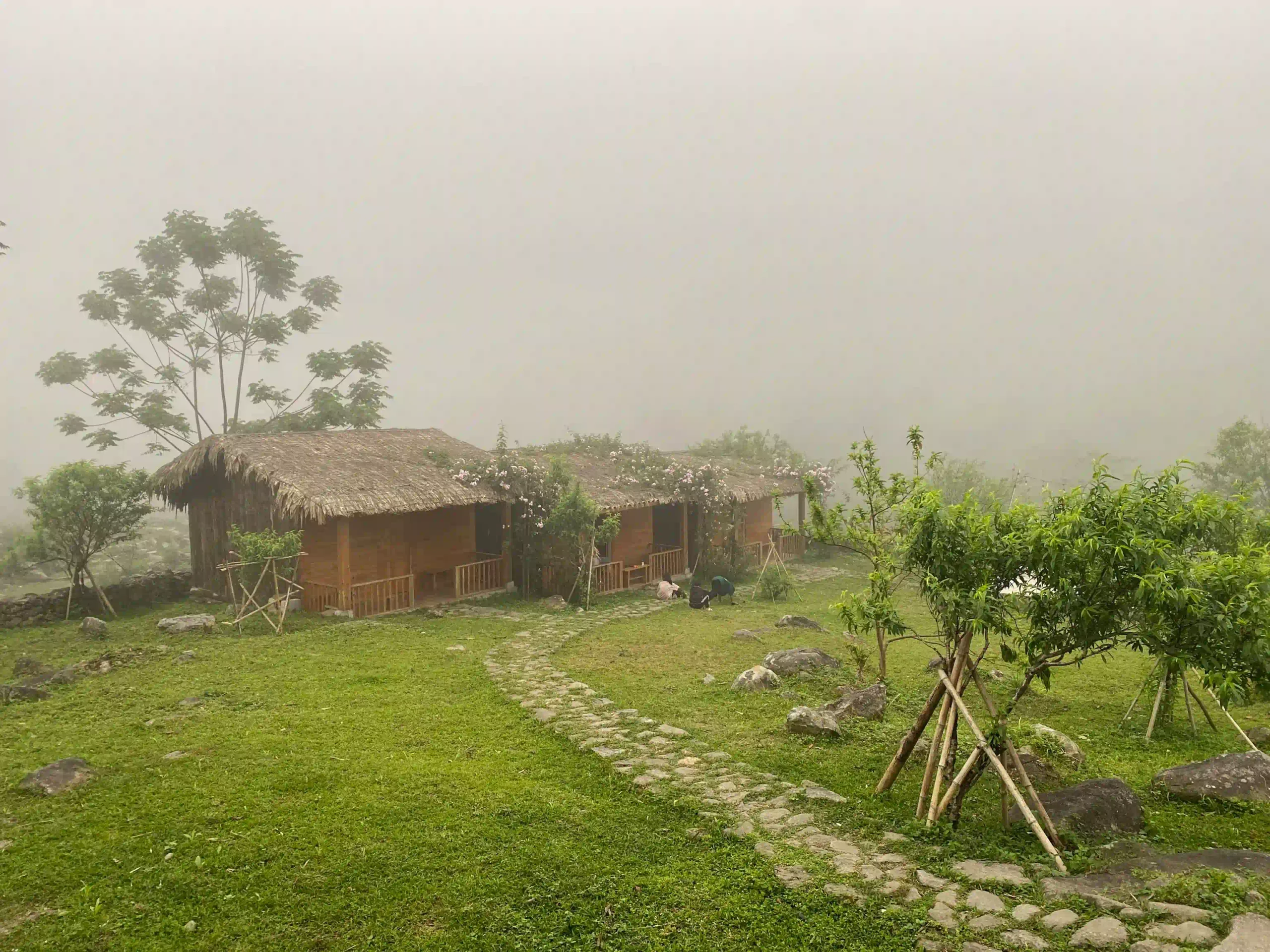
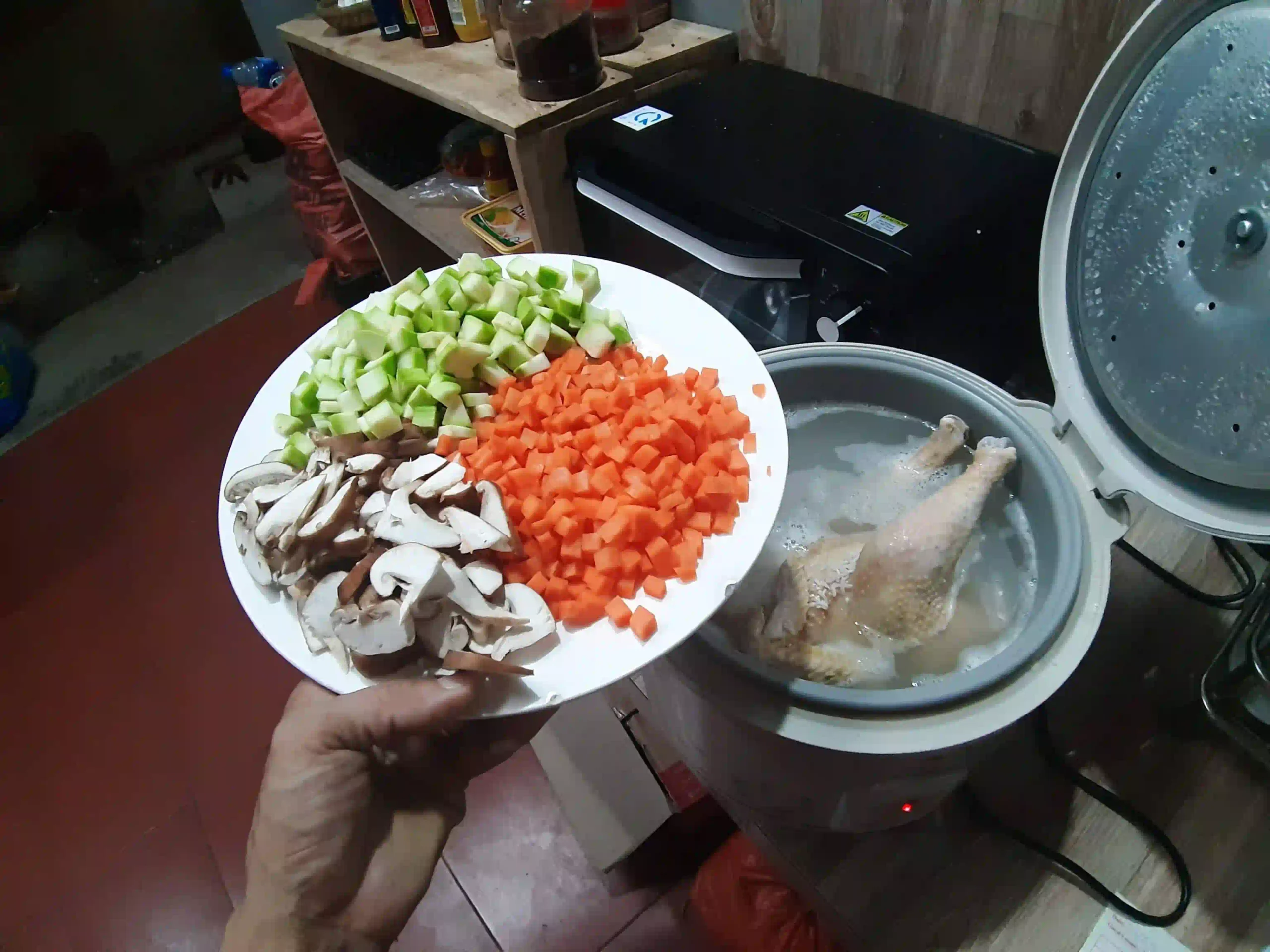
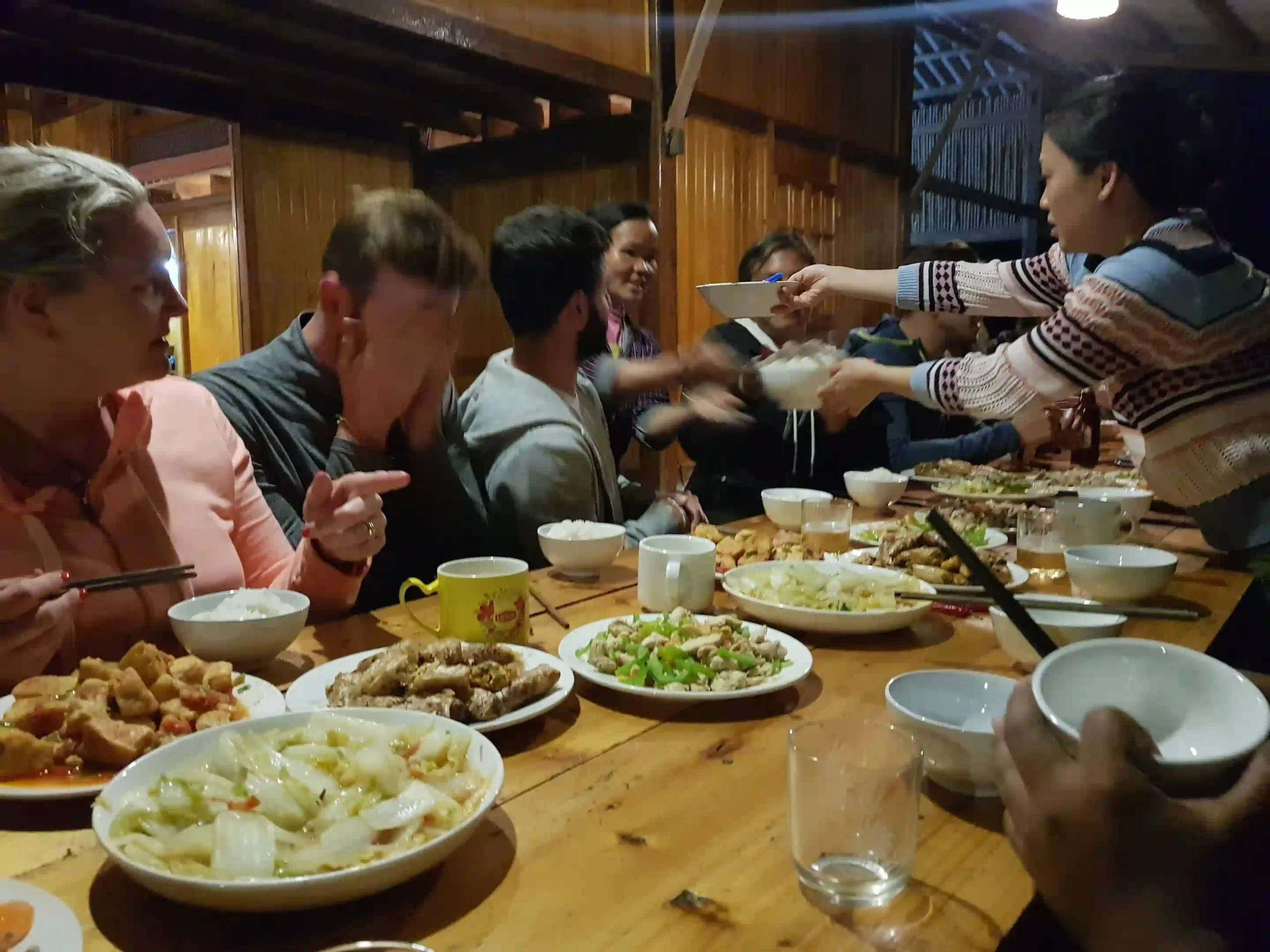
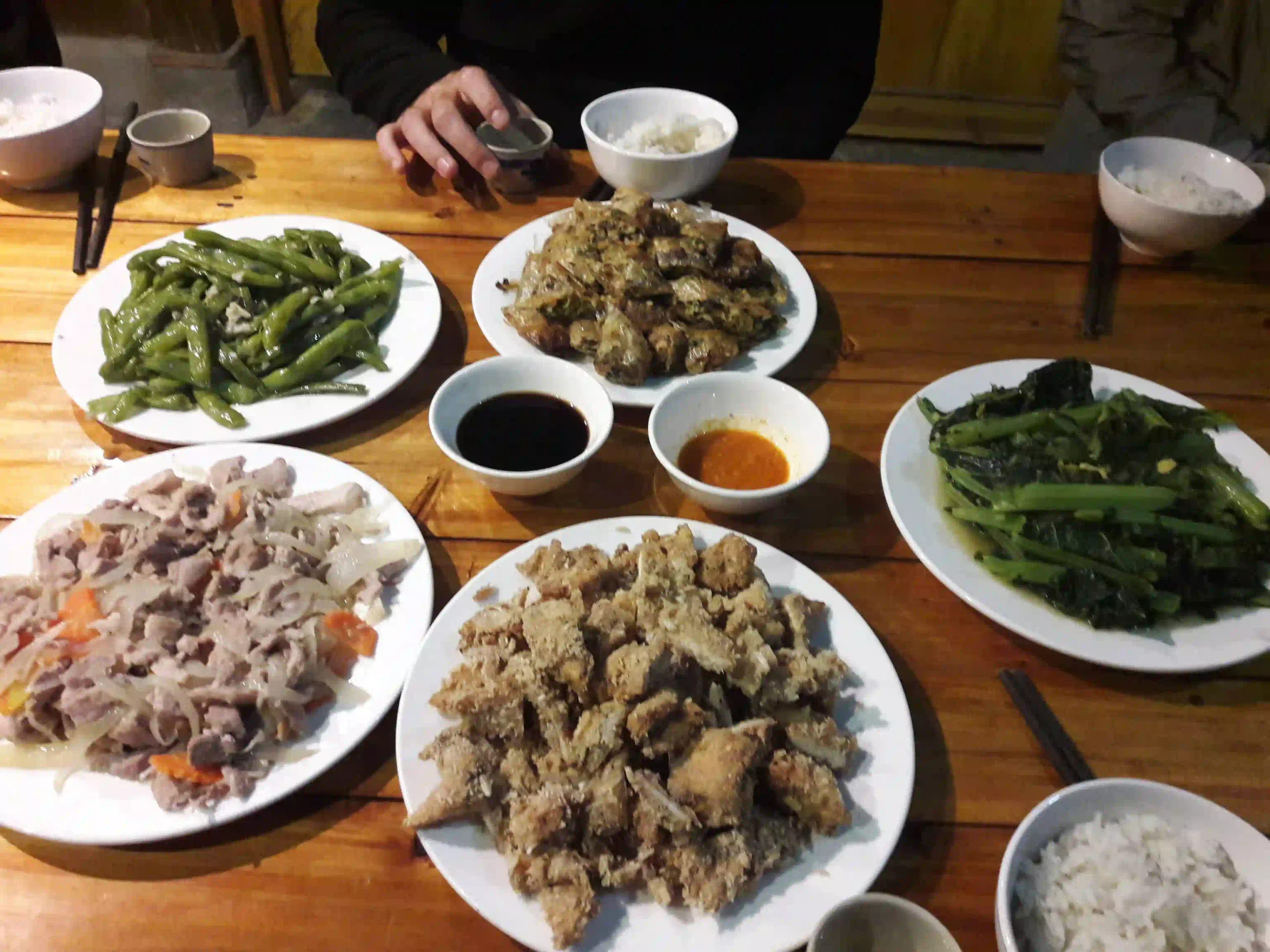
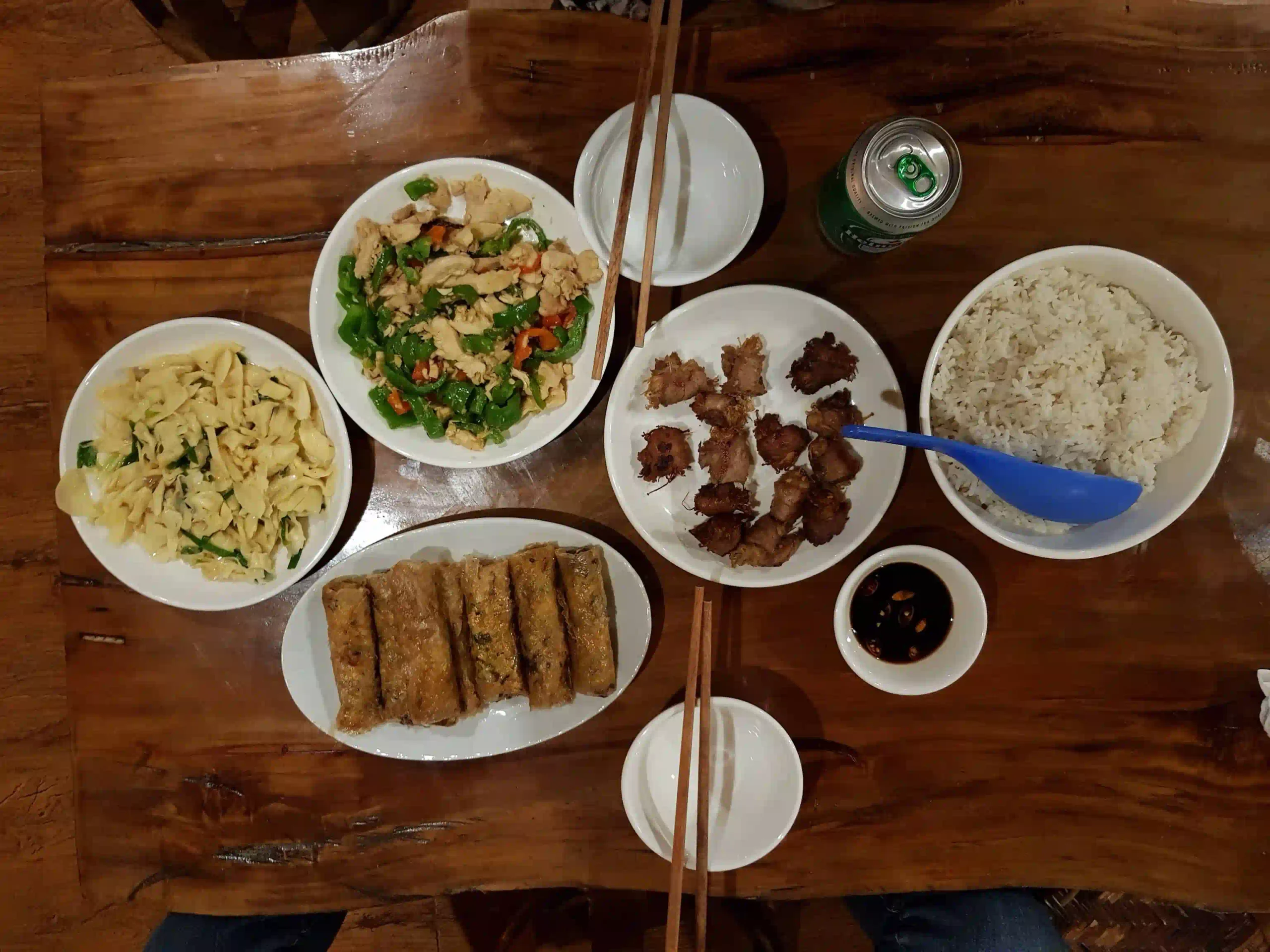
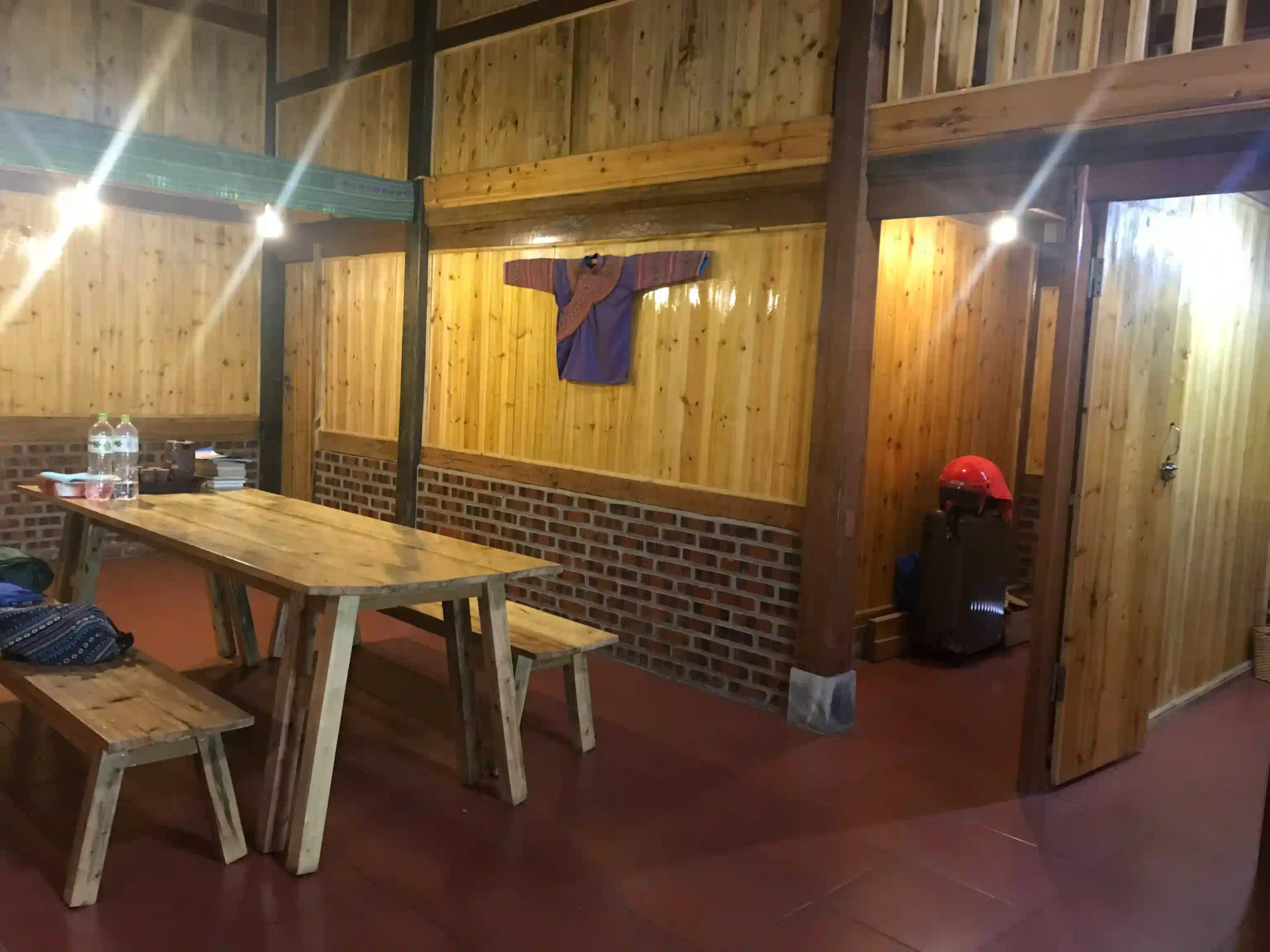
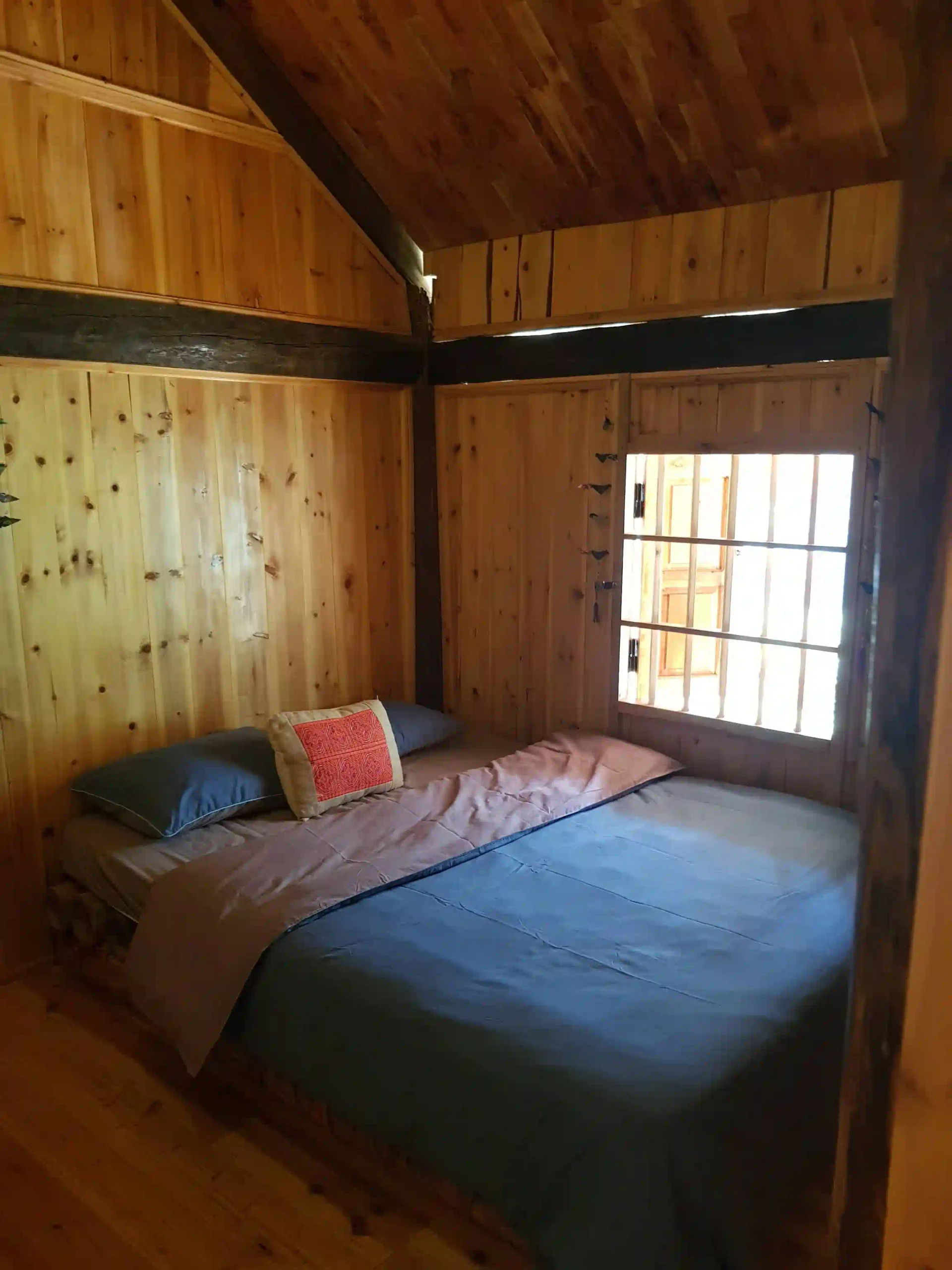
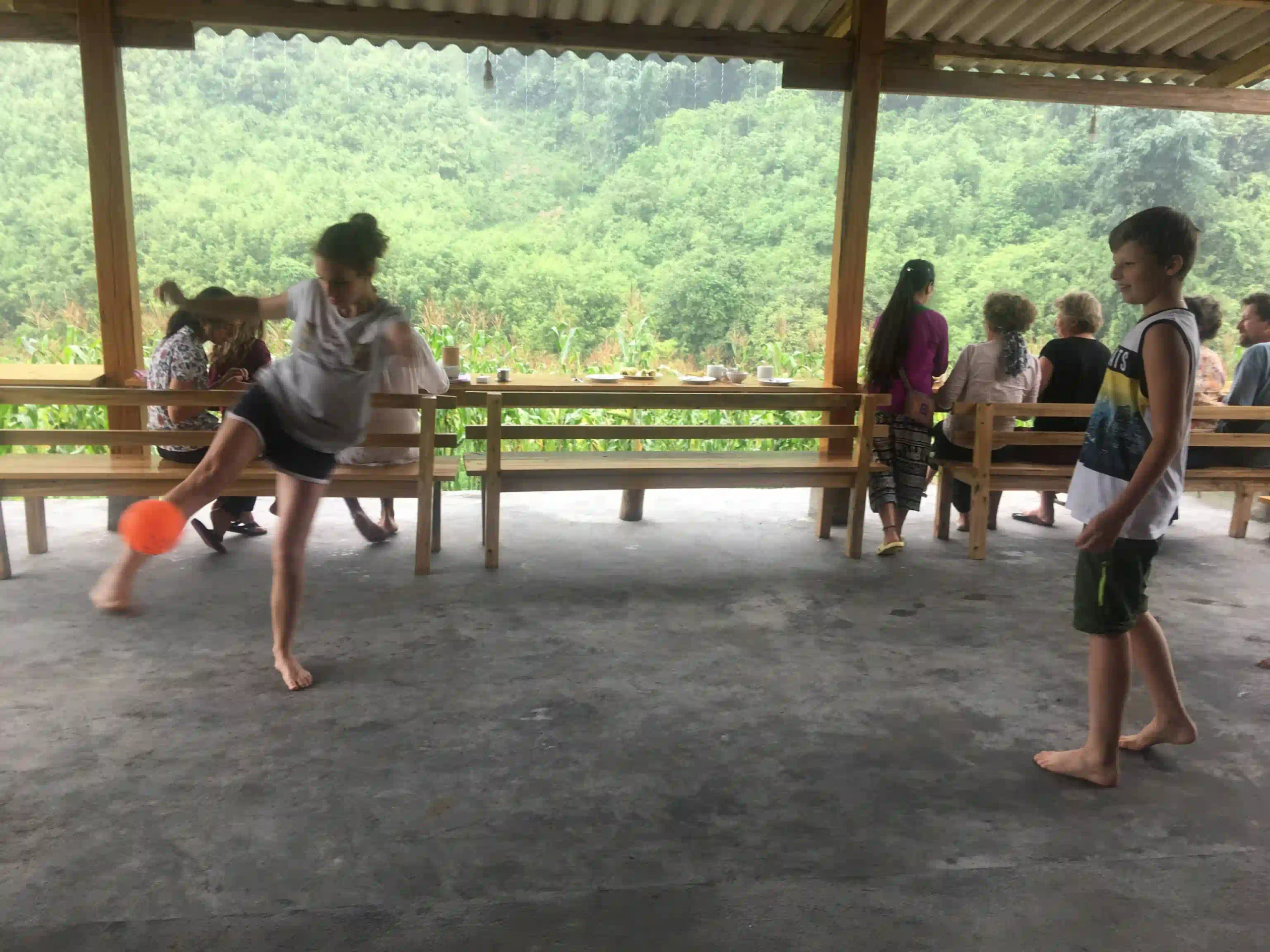
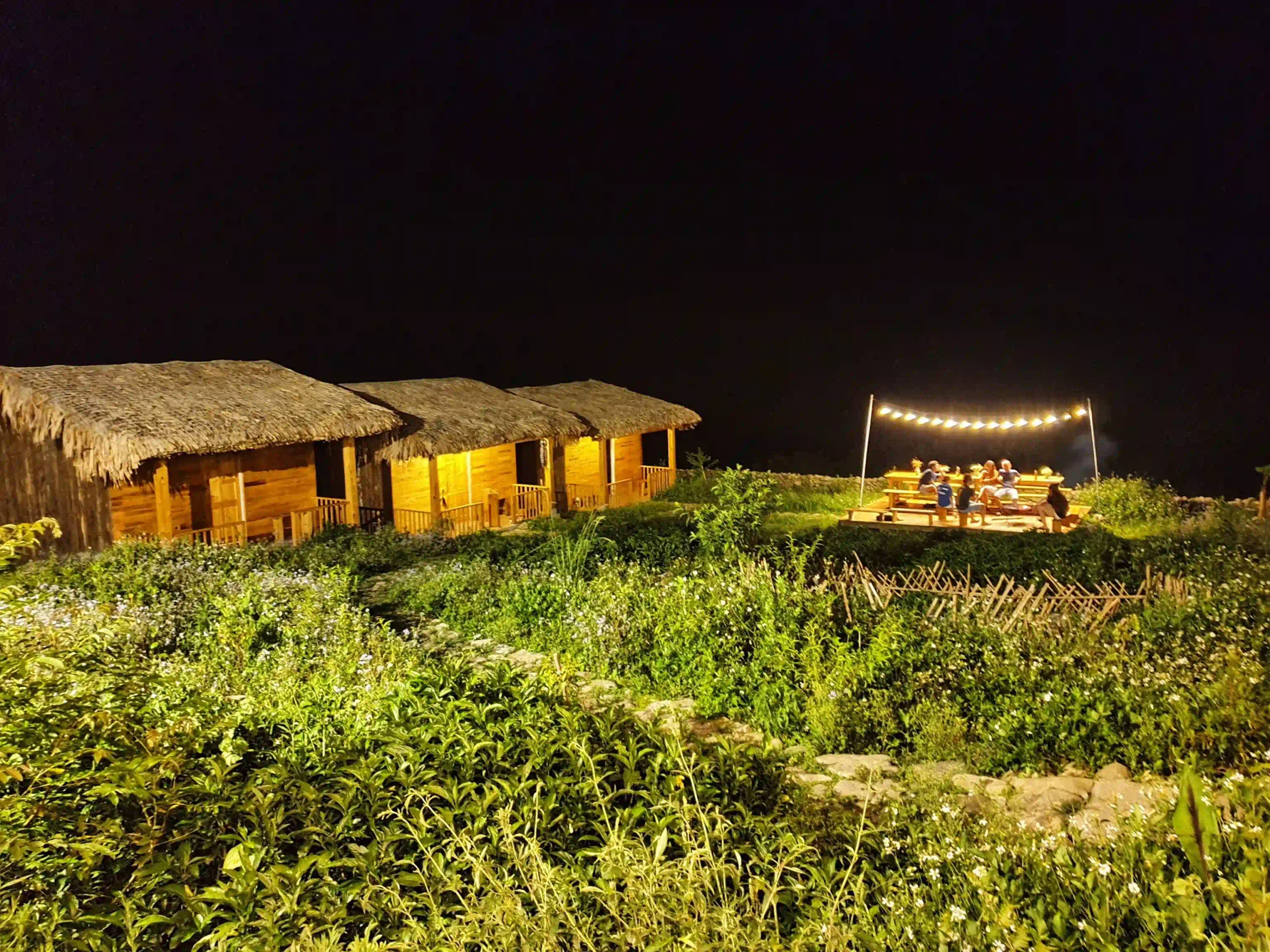
Dinner here is chaotic in the most beautiful way physically possible. Because of the open, wide wood construction, everyone staying under the roof is forced together.
If they are packed with 12 tired hikers who just marched in from Lao Chai, the prep line gets intensely communal.
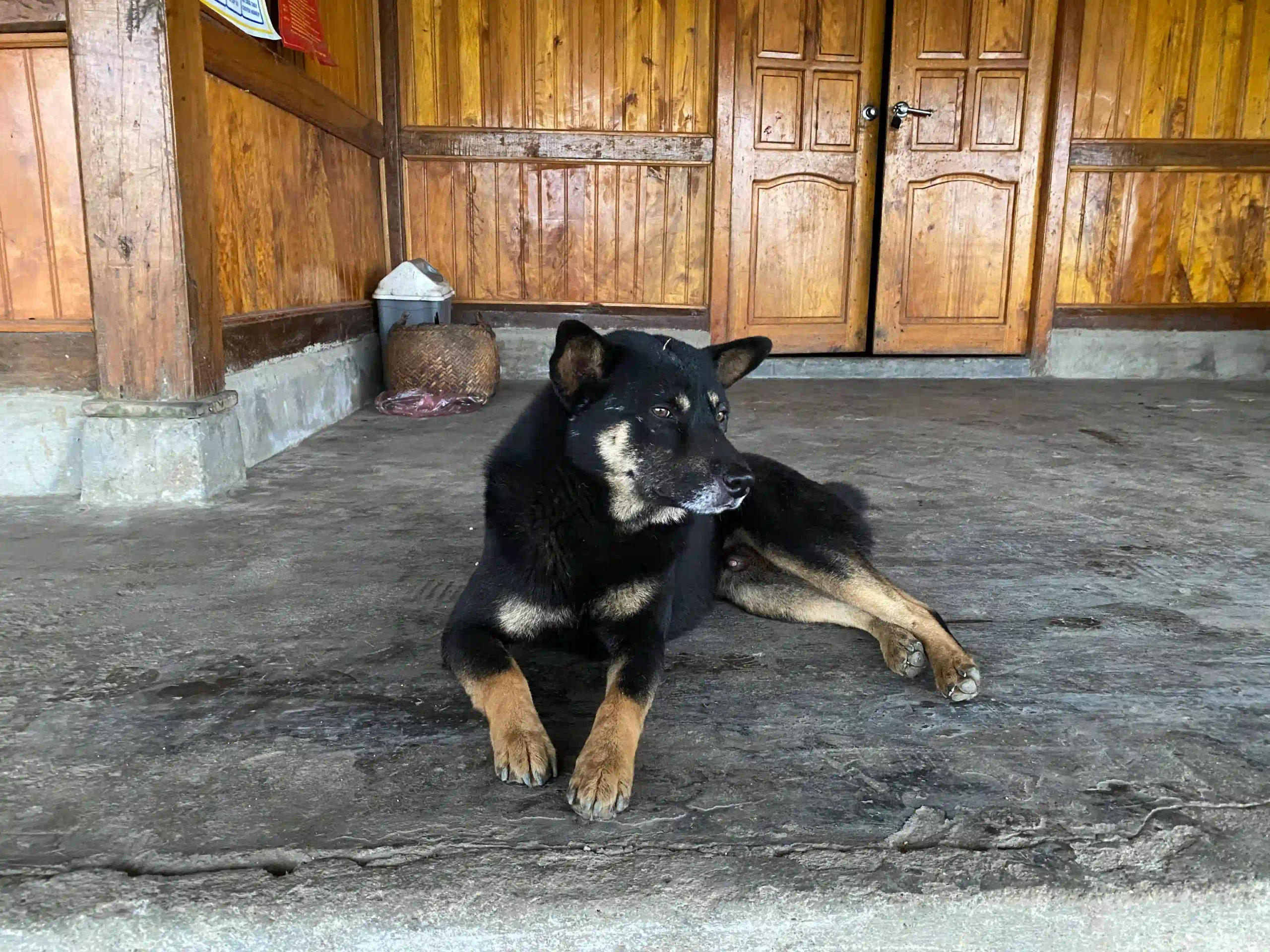
They lay massive aluminum prep trays right on the floors. Guests actively take turns sitting down to fold massive amounts of homemade pork and vegetable spring rolls while dogs aggressively beg for dropped pieces near the door.
When everything transitions from the smoking hot frying vats to the giant low communal table, it’s just massive heaps of white rice and bowls overflowing with deep-fried mountain greens.
Then they uncap the yellow rice-and-corn wine. Because it’s highly social and the house owners sit down right beside you to eat their dinner, the toasts completely get out of hand.
If you genuinely want that 1990s Southeast Asian backpacker vibe, sweaty, totally cut off from the internet, making totally random international friends while helping a mountain family fry dinner in their kitchen, Joy House Sapa absolutely delivers on every metric.
4. My’s Homestay Sapa
- Location: Van Den Vilage, Tucked extremely far off the main tourist path in Ta Van
- Vibe: Highly peaceful, aggressively anti-commercial, heavily focused on authentic rural pacing.
A massive warning about staying in the valleys: the very center of Ta Van village is actually getting loud now. Dozens of budget hostels play loud reggae music all night on the main dirt street.
If you truly want a dead-silent cultural escape, you have to hike way off that central valley strip. That is exactly why I heavily direct people to My’s Homestay.
The Hmong couple who runs this (My and her husband Thung) physically built this entirely simple wooden house themselves right onto the hillside. It represents exactly what western backpackers think of when they visualize “running away to the Asian mountains.”
The Experience
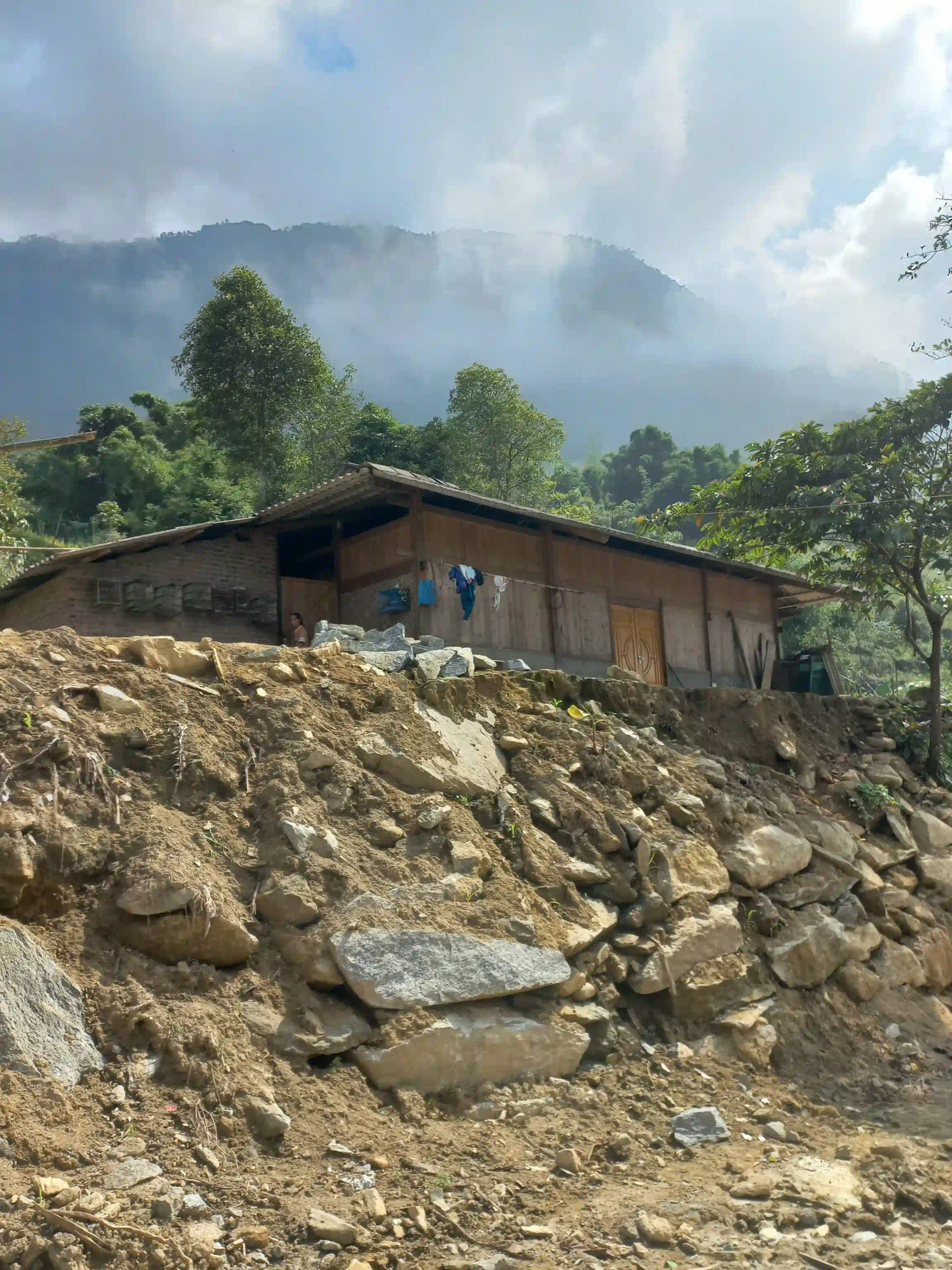
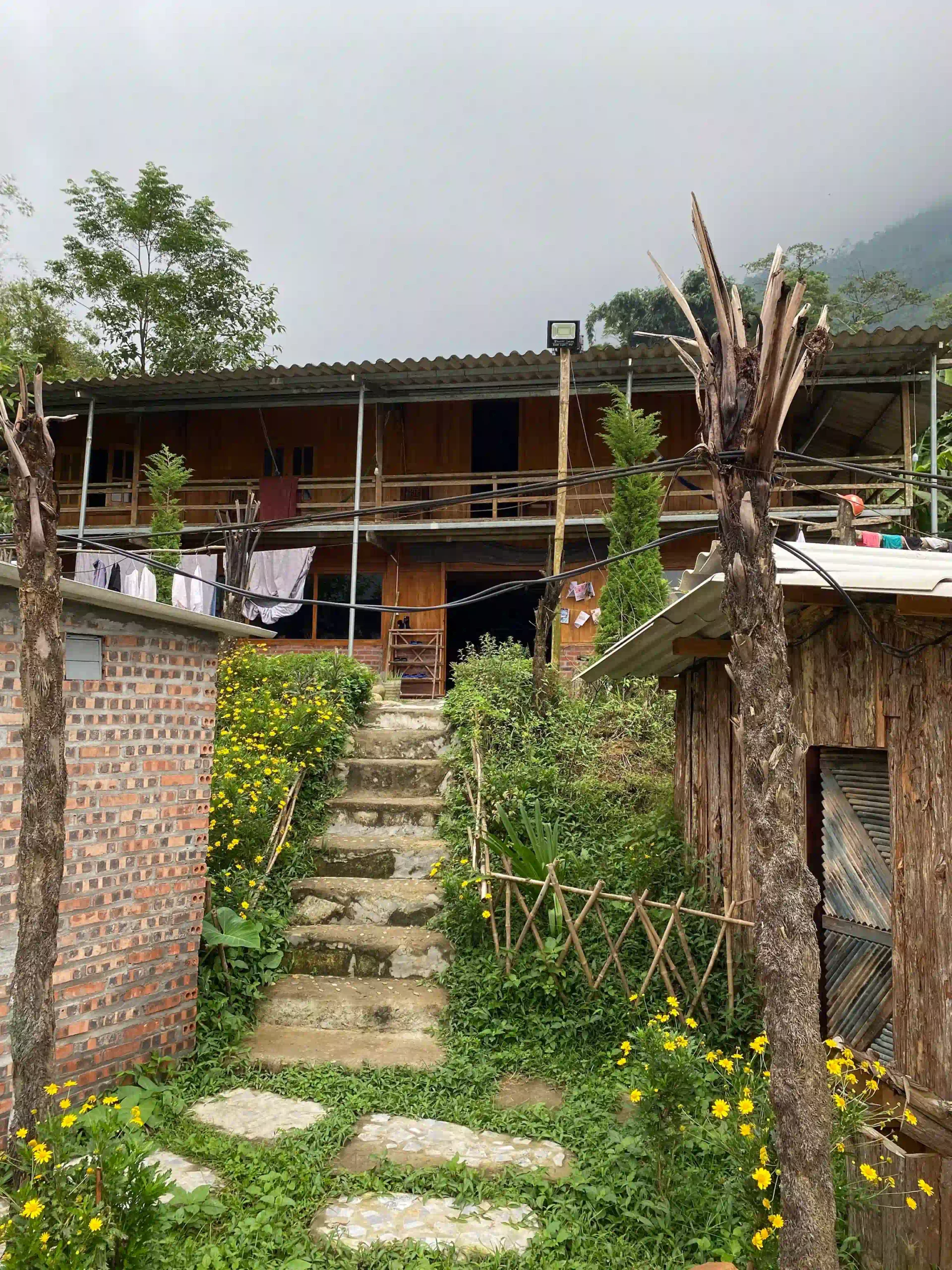
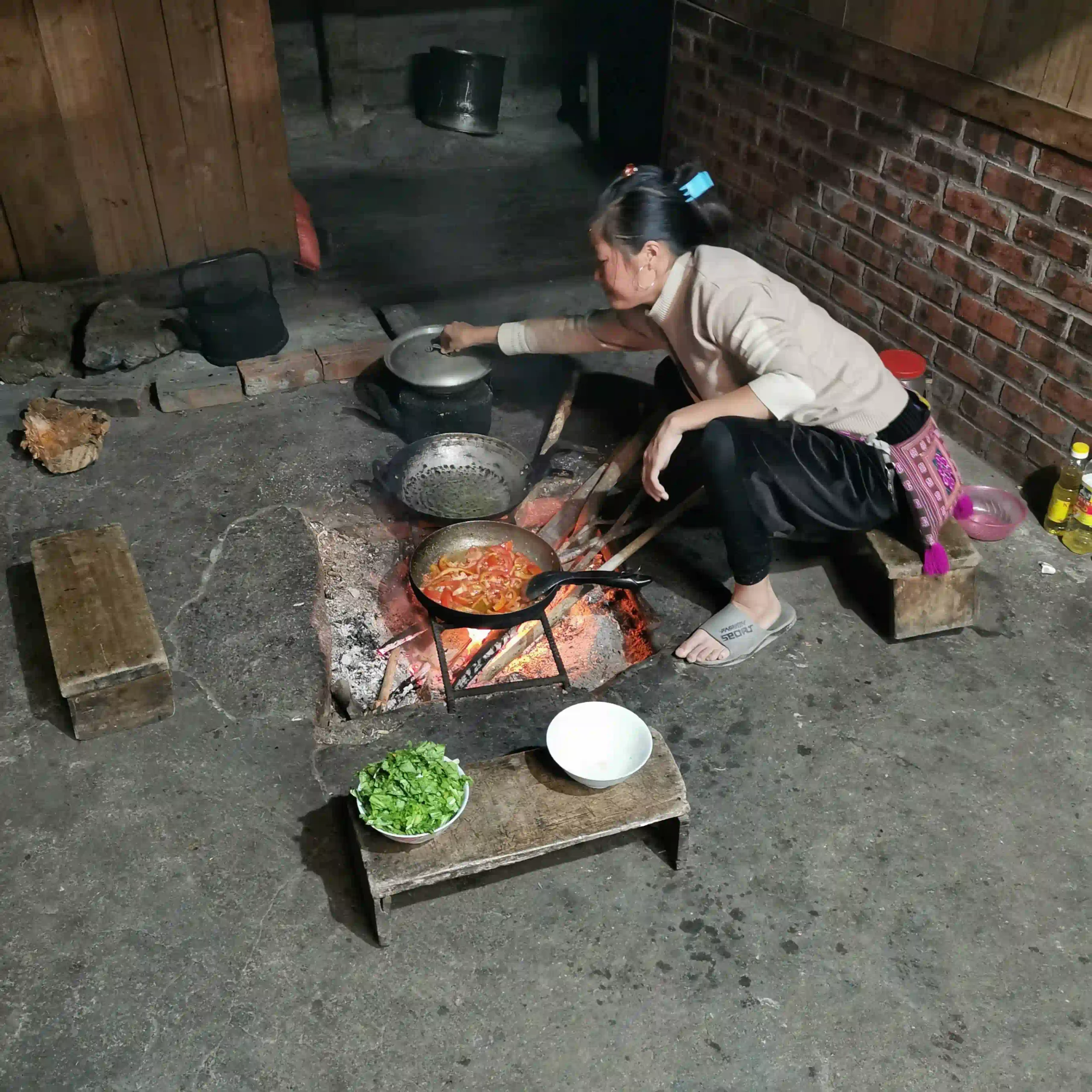
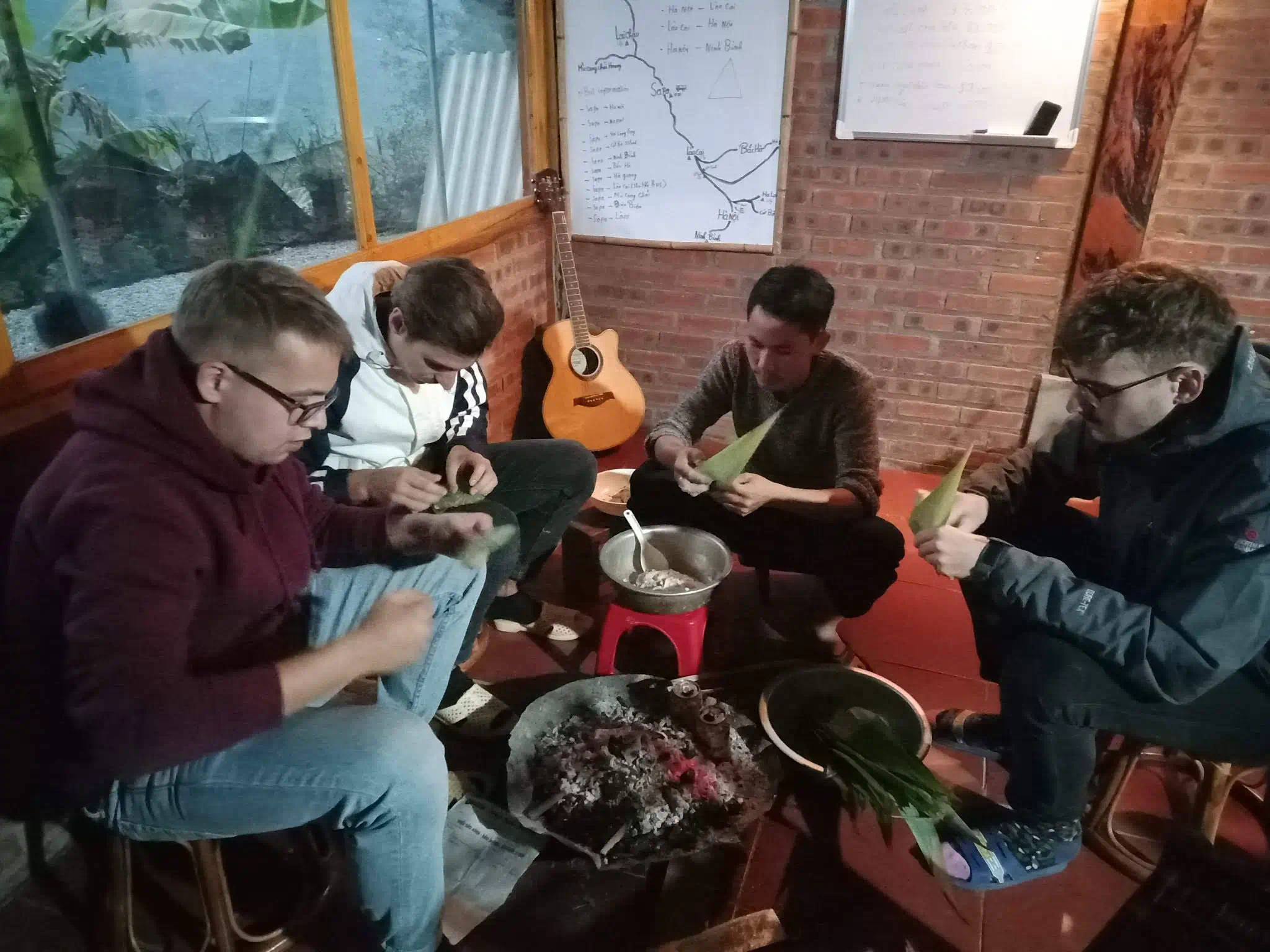
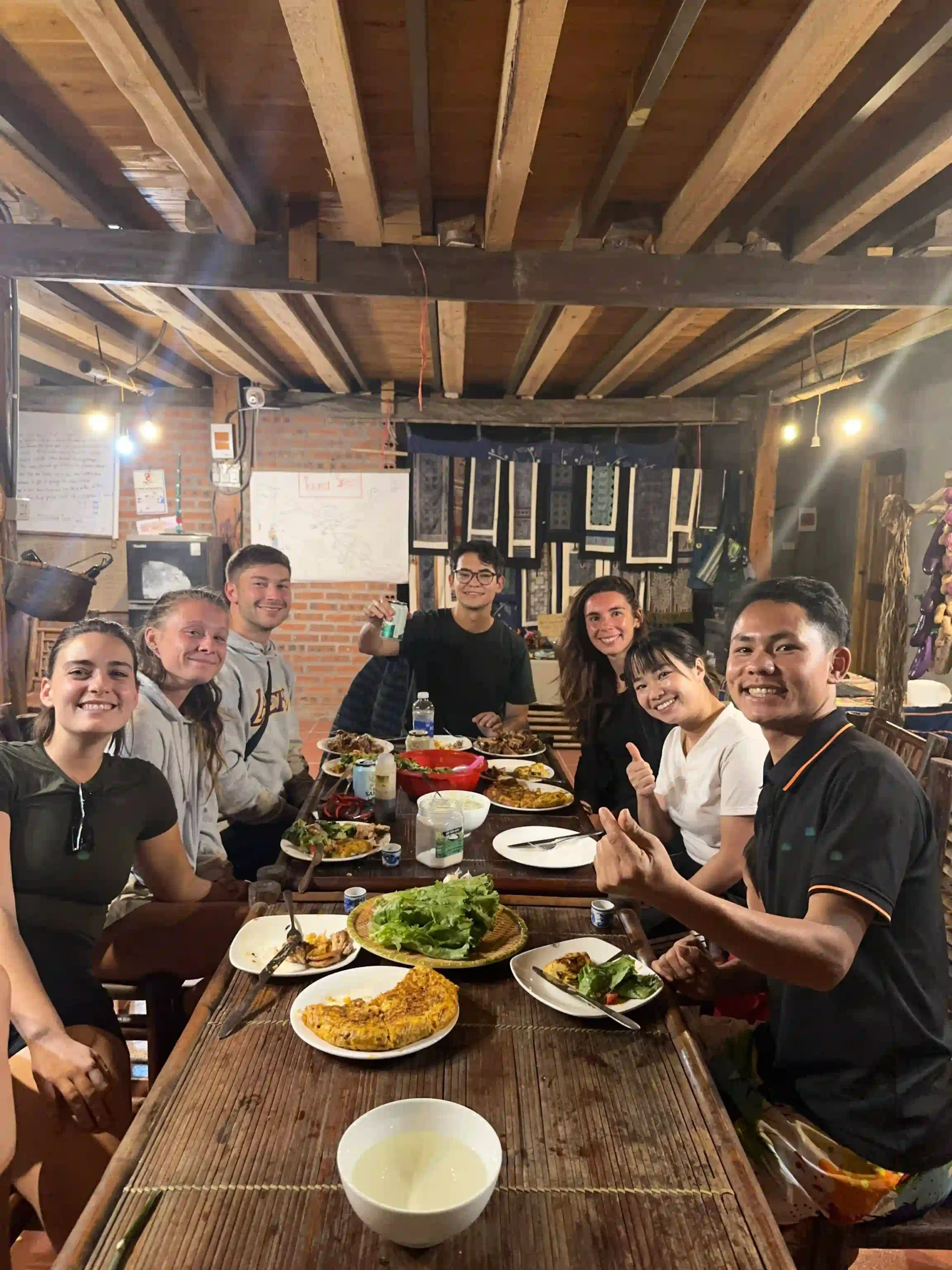
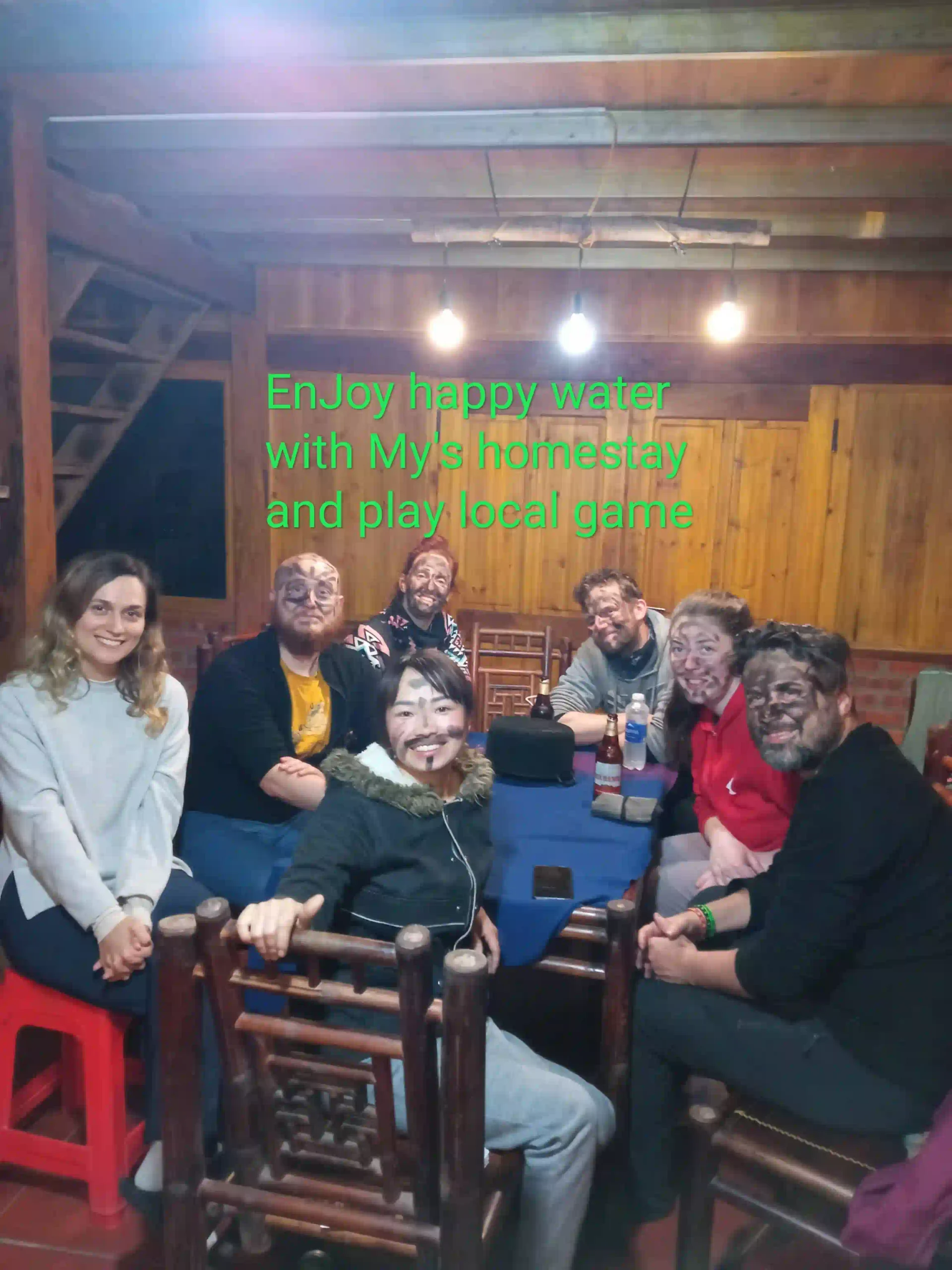
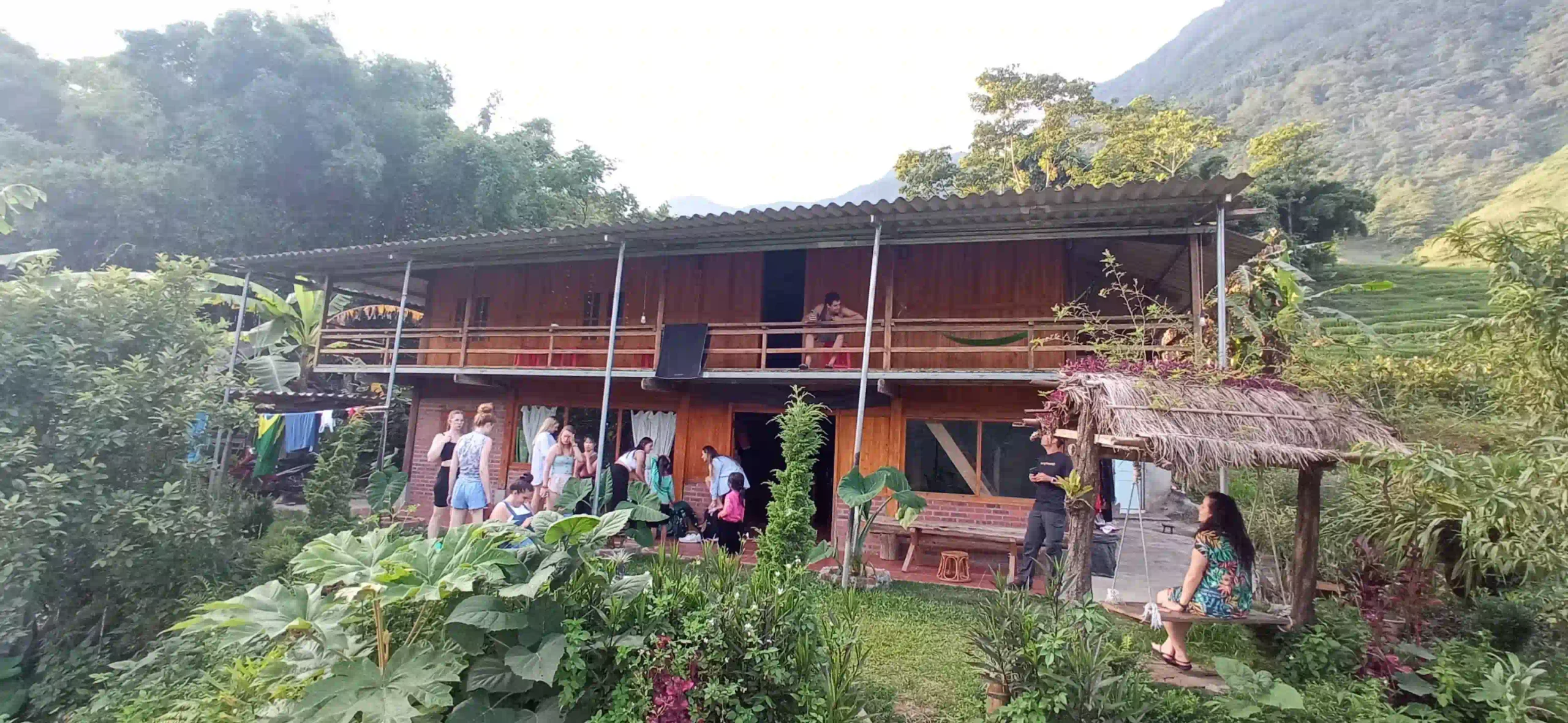
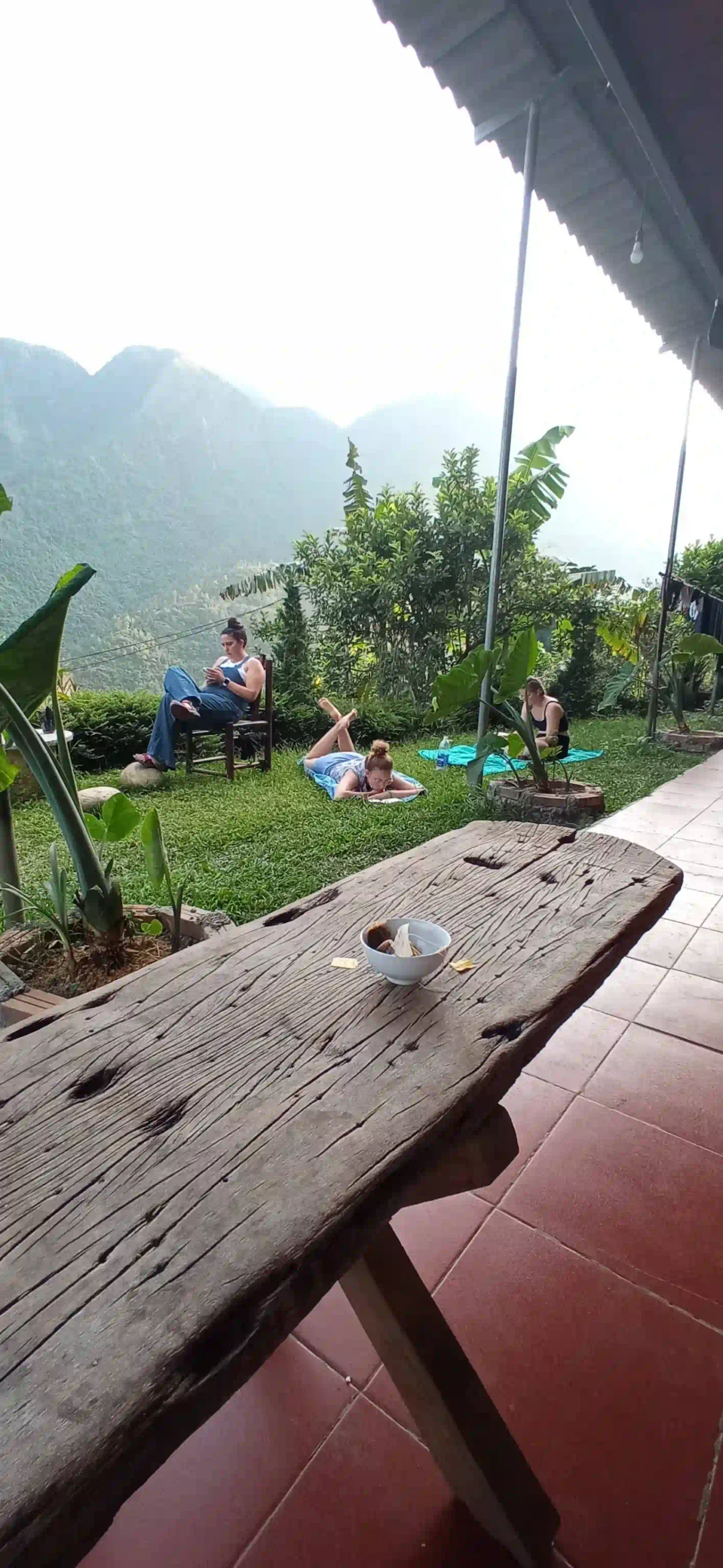
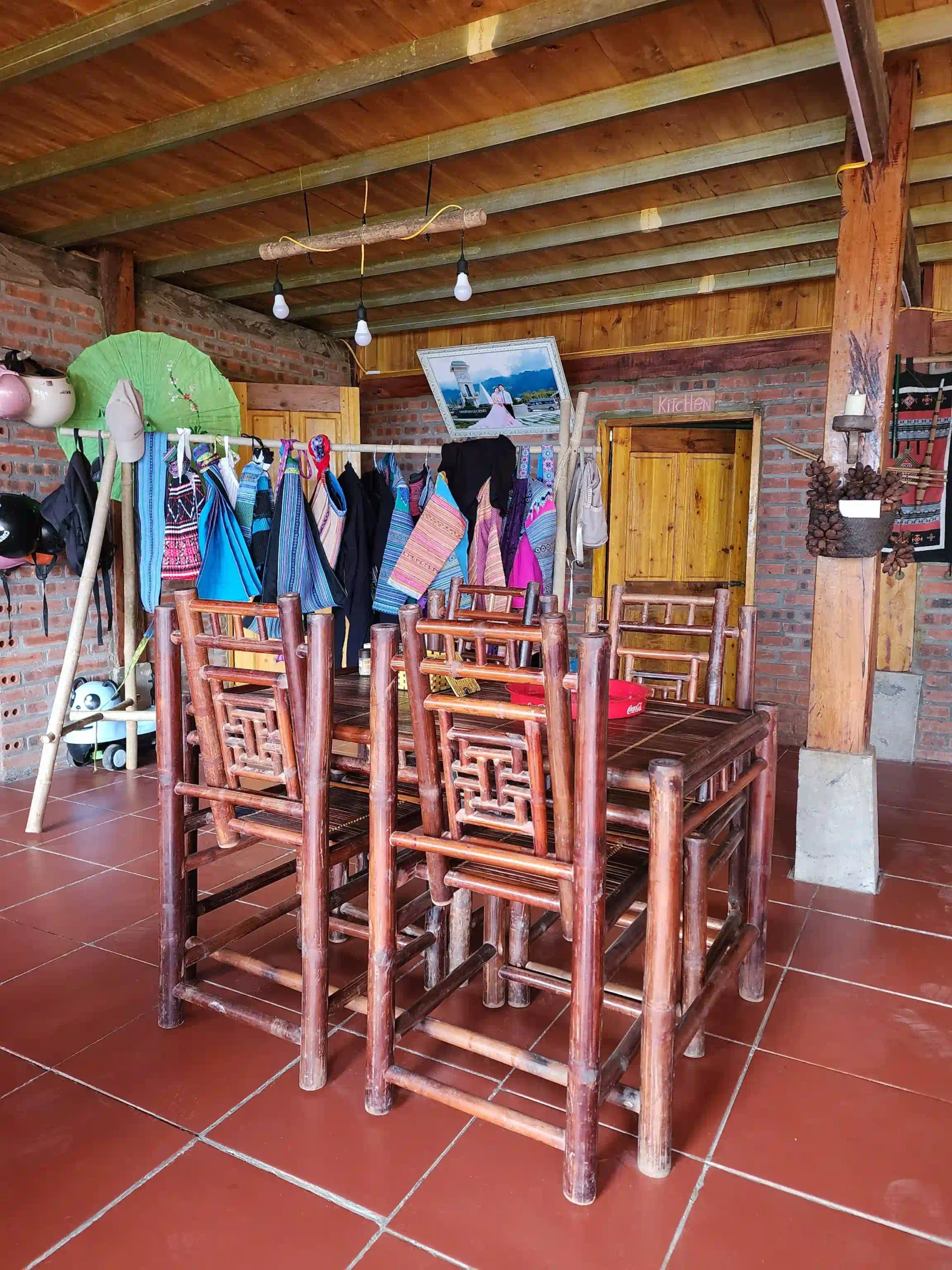
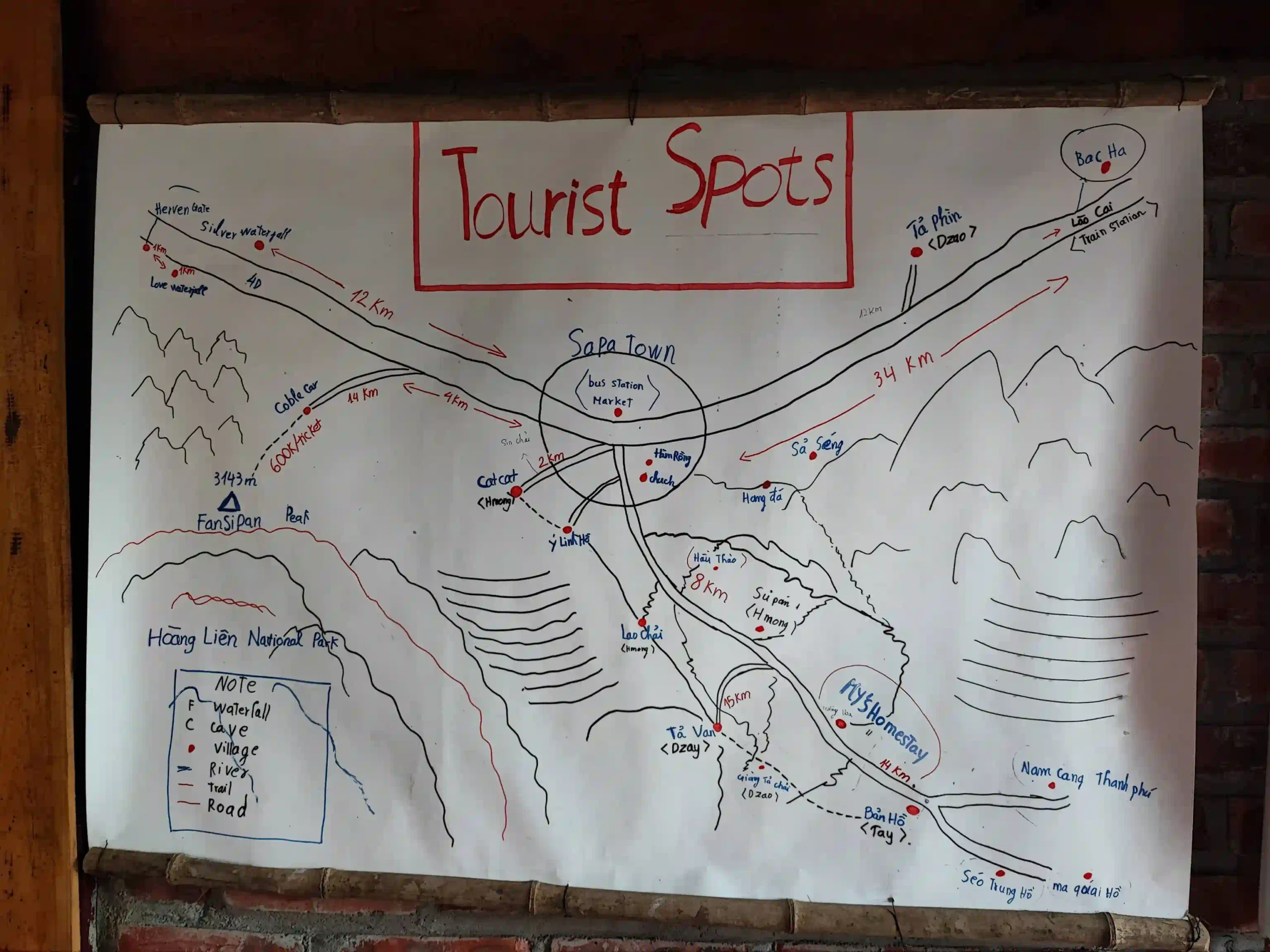
Because My’s Homestay sits largely away from the massive mega-groups of 30 tourists stomping through Ta Van, the evening dinner operation is far more relaxed and incredibly welcoming. You aren’t treated like a customer table; you are functionally treated like a visiting cousin.
They absolutely love it when guests wander out to the cooking area instead of hiding in their rooms.
The kitchen dynamic here is very heavily focused on whatever they legally pulled out of the earth that afternoon.
My is notoriously famous in the review sections for having guests help assemble completely insane volumes of traditional Hmong pork spring rolls. You grab a knife, you peel garlic on the floor, and you drop everything into massive blackened aluminum pots.
Because it’s highly isolated, when you finally sit down at the low wooden family table to actually eat the wild mushrooms and totally fried greens you just prepared, the absolute only sound you hear outside is the Muong Hoa river totally rushing at the bottom of the canyon.
They crack open the strong, cheap homemade corn wine, share completely unscripted laughs, and leave you totally satisfied. This spot consistently pulls 9.5+ ratings entirely through raw, warm, completely unvarnished human hospitality.
Read more: Best time of year to visit Sapa for Photographers
Exactly what you cook (and drink) at these Sapa Homestays
Do not expect generic Western cuisine. No authentic minority guide is teaching you how to flip a beef burger. The food completely reflects the harsh altitude of Lao Cai province. Here is exactly what is likely hitting your plate during these heavily involved evening prep sessions.
The Food Staples
- Mountain Tofu: Northern Vietnamese tofu completely puts Western supermarket soy blocks to shame. The hosts heavily deep-fry giant raw chunks over the wood fire. The exterior gets deeply blistered and completely soaks up local soy/chili dipping sauces, while the interior is incredibly hot and soft.
- Ngọn Su Su (Sautéed Chayote Shoots): You cannot visit Sapa and avoid this plant. It is totally aggressive. Chayote shoots grow endlessly out here. You usually sit down on a plastic chair before dinner and rip the tough fibers off literal mountains of green shoots. Then the locals violently flash-fry them with about fifty completely raw cloves of crushed garlic. It is absolute perfection.
- Pork Spring Rolls: Preparing nem (spring rolls) requires highly localized repetitive manual labor. Families deliberately force foreigners into the kitchen line to try folding them. If you completely butcher the shape and break the wrapper, the whole family generally laughs directly at you. You just eat your own mangled failure later.
- The Black Bone Chicken: It physically has black bones. Usually cooked aggressively inside a massive steaming metal hotpot filled heavily with intense forest mushrooms, raw ginseng roots, and mountain greens.
Read more: 10 Best dished in Sapa
The Ultimate Hazard: Happy Water (Homemade Rice/Corn Wine)
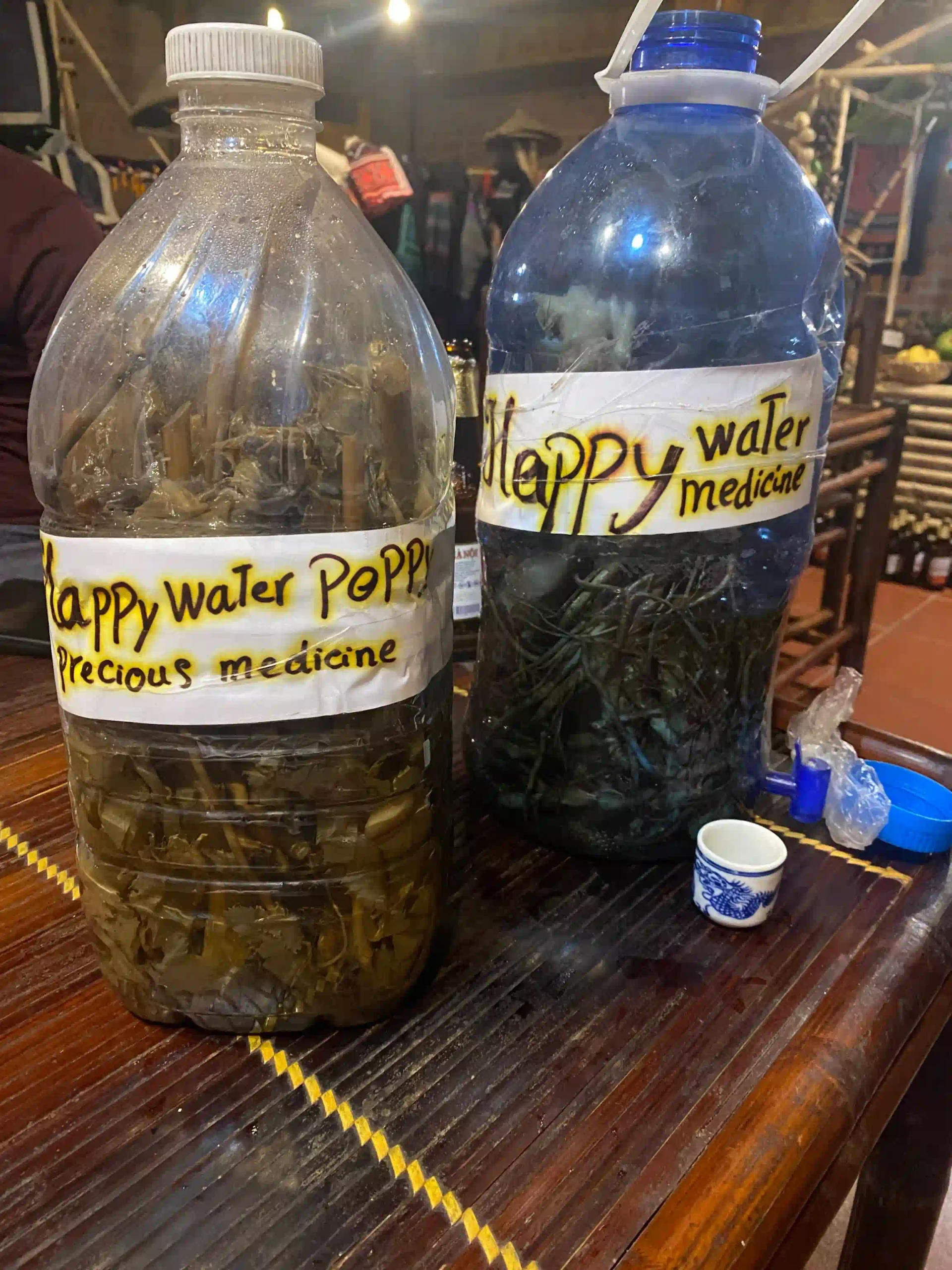
Let’s be highly serious for a second about what is going to happen right around 7:45 PM during one of these meals.
Someone from the local family, usually a matriarch under five feet tall who trekked effortlessly in rubber boots past you all day, is going to casually pull a giant unlabelled, highly re-used plastic bottle of yellow-ish liquid from under the house counter.
Backpackers totally incorrectly refer to this solely as rice wine, but heavily around Sapa, many Hmong communities brew an aggressive batch utilizing heavily fermented corn instead of just rice.
The host completely dictates the pace. They hold up incredibly tiny clear shot glasses, point directly at everyone sitting at the low table, aggressively smile, and say “Chúc Mức Sức Khoẻ!” or standardly “Một, Hai, Ba, Dô!” (1,2,3, drink!).
The Reality Check:
- It is potent. You are basically drinking warm moonshine deeply infused with weird roots and apples.
- It completely deletes your legs.
- If you do not tap out gracefully by directly pointing at your chest and firmly holding your hand flat over your glass to politely decline, they will legitimately refill your cup endlessly until you fall entirely off your tiny plastic stool. It produces absolutely wildly legendary hangovers.
You totally earned the shot after walking mud ridges all afternoon. But understand exactly what you are bargaining for before doing 6 shots with an elder local farmer.
Read more: The only 5 massage in Sapa locations worth your money (to cure your hangover and legs)
E-E-A-T Survival Truths: What generic travel blogs hide
I always totally kill the romanticism when buddies send me links about moving in with a tribe. Before you rapidly lock down one of these 4 Sapa homestays, you absolutely need to acknowledge these deeply un-aesthetic logistical factors that travel agencies entirely crop out of their brochures.
1. The Animal Alarm Clock Problem
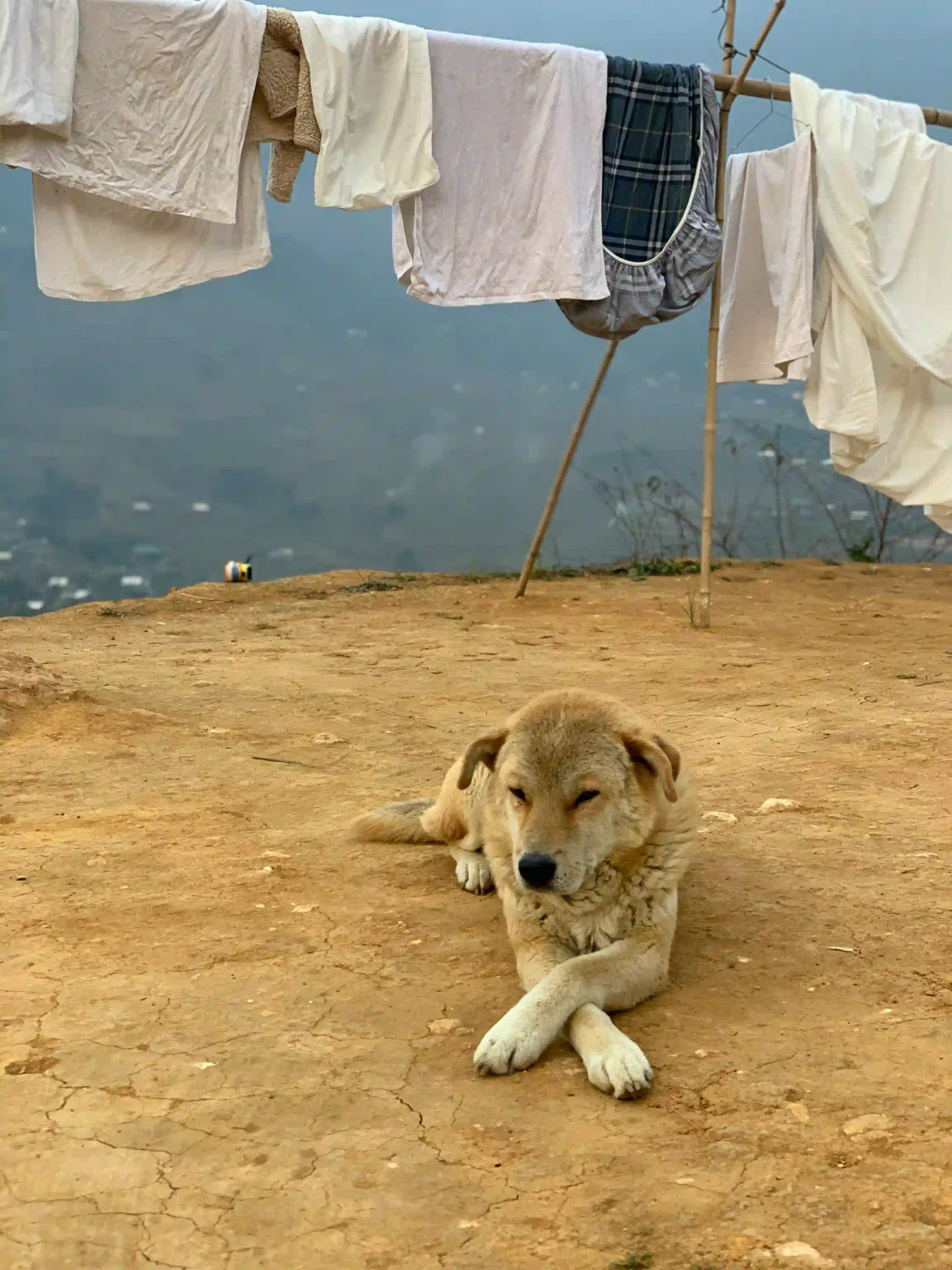
Wooden houses are structurally incredibly beautiful. They have exactly zero sound insulation. A common feature of absolutely genuine minority homes is that they physically own pigs, hunting dogs, huge quantities of ducks, and aggressive roosters.
When dawn breaks at roughly 5:15 AM down in the valley, the rooster begins yelling immediately next to a very thin wall. Then the hunting dogs hear someone walking on the dirt trail outside and go violently insane.
You will absolutely not casually “sleep in” till 10 AM under a fluffy duvet down here. Buy cheap heavy-duty foam earplugs at a Hanoi pharmacy before boarding the overnight sleeper bus.
2. Bathroom Reality
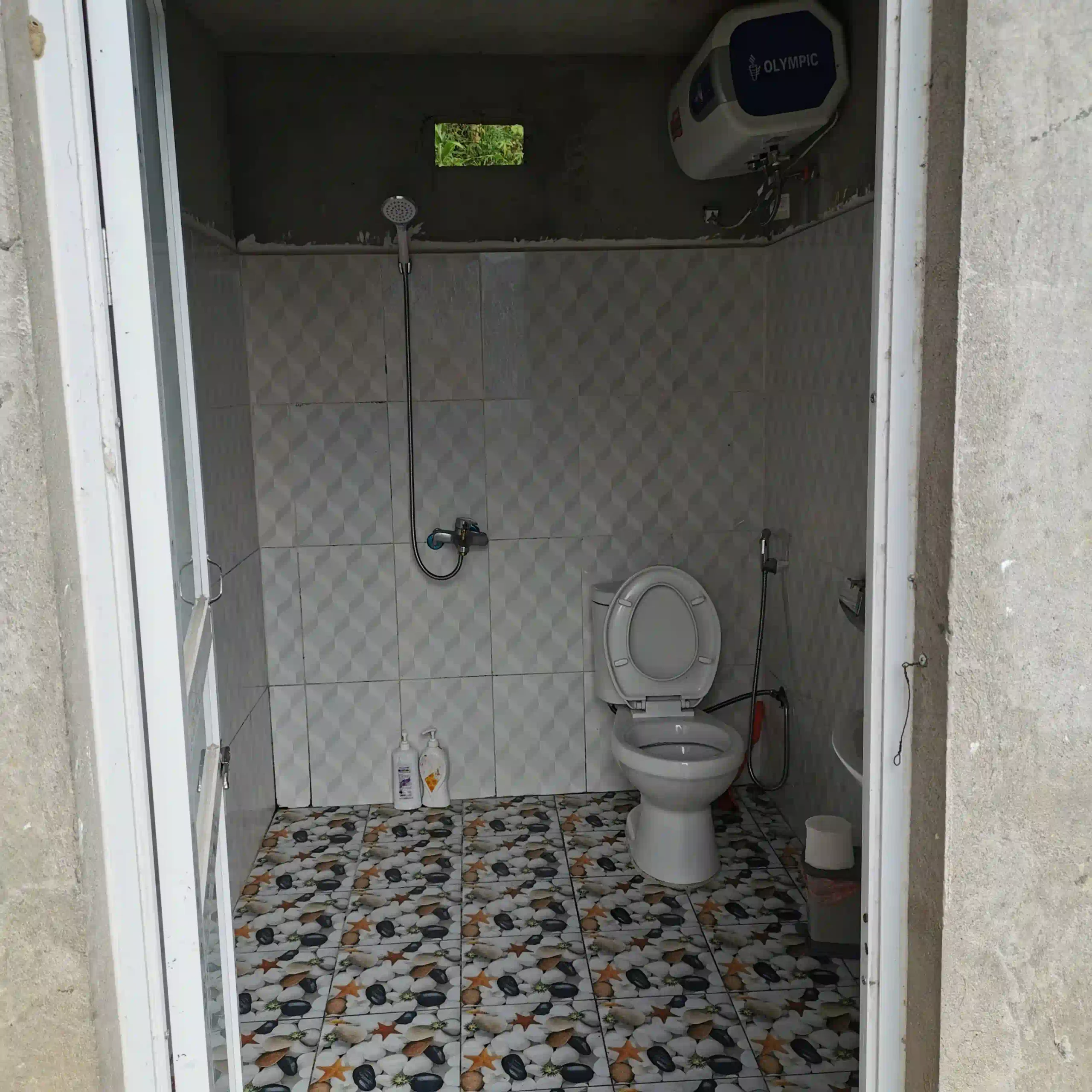
The extreme romantic idea of cooking with locals completely ends at the toilet bowl. At extremely genuine spots deeper down past Ta Van village, you may genuinely face traditional squat-toilets physically disconnected from the main sleep house structure.
More developed ethnic spots like Dinh Sapa or Indigo have largely updated their housing structures heavily to Western sitting bowls, but realize hot water depends entirely on aggressive electric water heaters with extremely small storage tanks. Take short showers unless you want to endure aggressively freezing mountain stream water hitting your spine.
3. Bugs absolutely run the valley
When you use a fully exposed outdoor kitchen illuminated totally by a bare incandescent bulb hung off a wire in the jungle during a sticky, warm late-summer evening, the entire mountain insect ecosystem physically joins you for dinner.
Moths aggressively bomb the light bulb. Massive golden orb weaver spiders heavily occupy the ceiling corners holding mosquitoes back. Geckos drop aggressively out of bamboo rafters.
Get totally comfortable sharing the wooden shack with the native occupants, because spraying mass chemicals absolutely ruins the valley agriculture.
Read more: I rank popular things to do from worst to best
Final Strategy
It isn’t highly difficult to secure one of these deeply legit cultural exchanges, but do it completely on purpose. Don’t leave it totally to chance.
Here is exactly how I structure the booking:
- I use a large hotel app to verify recent hiker photos of the kitchen setups for those specific locations like Dinh’s or Joy’s, locking down specific beds.
- If the app features an active “Message Host” function, I send an immediate direct line reading exactly: “Hi. Is there a family communal dinner operating the specific night I booked?”
- Do not randomly drop into Ta Van without reserving anything if it’s the high peak of a sunny Saturday in August. Everything deeply authentic with high ratings is completely consumed by huge organized Hanoi trekking clusters entirely booked weeks prior.
- Ditch your massive massive rolling airport luggage totally inside the main Sapa town hotel limits. Take a purely 20-liter dry bag loaded specifically with trail gear completely strapped to your body so a motorbike taxi doesn’t dump you and your giant hardshell plastic suitcase entirely off a steep cliff side road going down the pass.
A genuinely unvarnished night heavily sweating next to a massive roaring fire peeling tiny tough bulbs of raw garlic with a Sapa elder teaches you ten times more completely tangible local Vietnamese culture than three boring nights trapped securely in the massive luxury concrete monolith hotels operating heavily uptown. Do the heavy work.
Did you manage to absolutely fry and completely ruin your batch of homemade spring rolls during one of these dinners? Leave your story aggressively directly in the comments below, or entirely shift gears and open my other trekking survival cluster linked heavily above so you aren’t aggressively freezing on a mud slide tomorrow.












 Tiếng Việt
 한국어
한국어 中文 (中国)
 日本語
日本語 ไทย
ไทย Deutsch
 Español
 Destinations
 Instagram
 Facebook
 X (Twitter)
 Threads
 Tiktok