









 Ha Giang
 Hanoi
Hanoi Ho Chi Minh City
 Ha Long
 Sapa
Sapa Mekong Delta
 Da Nang
 Hue
Hue Hoi An
 Ninh Binh
 Da Lat
 Nha Trang
 Phan Thiet
 Phu Quoc
 Quang Binh
 Quy Nhon
 Vung Tau
 Thai Nguyen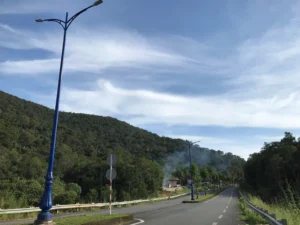


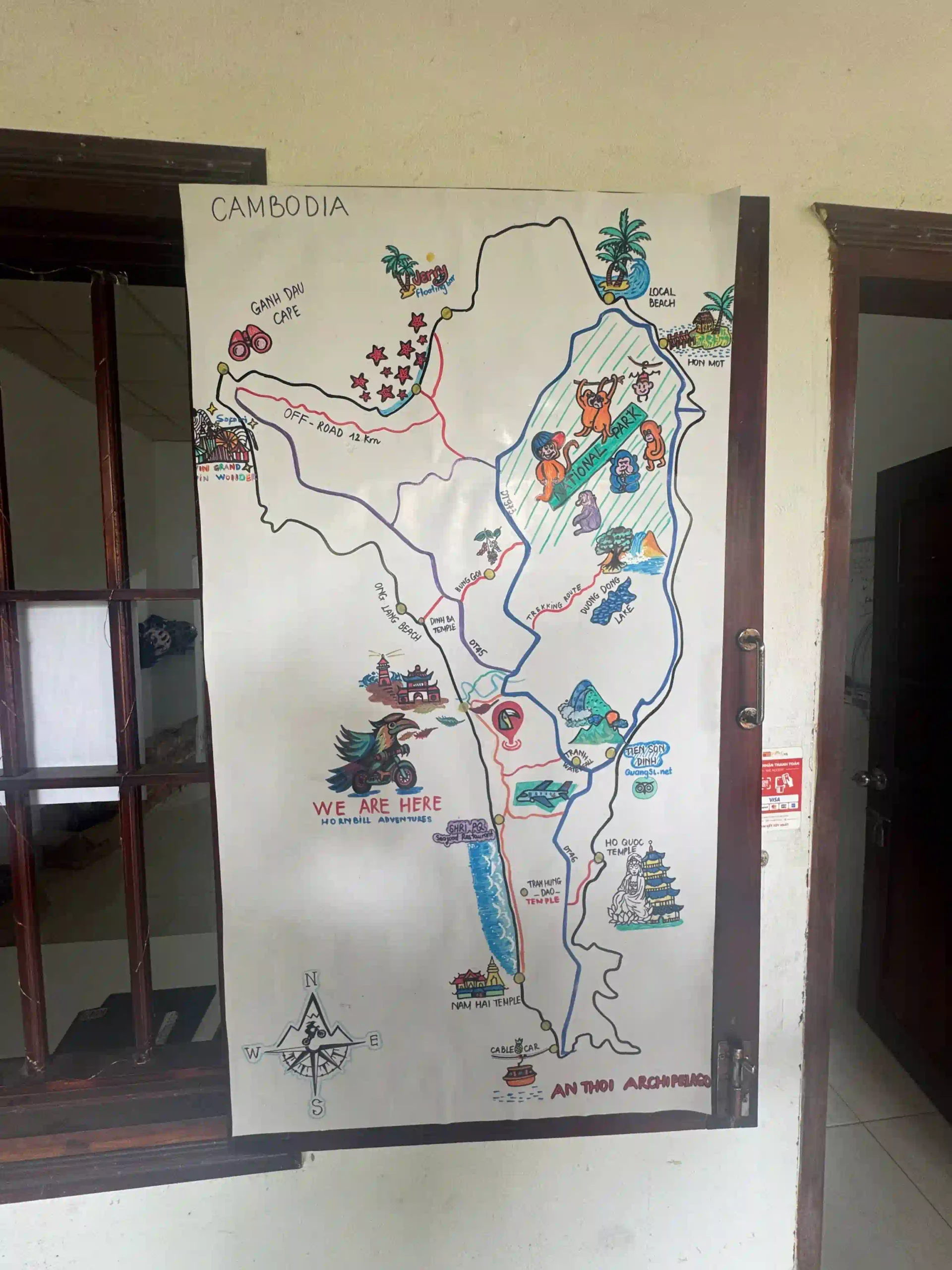
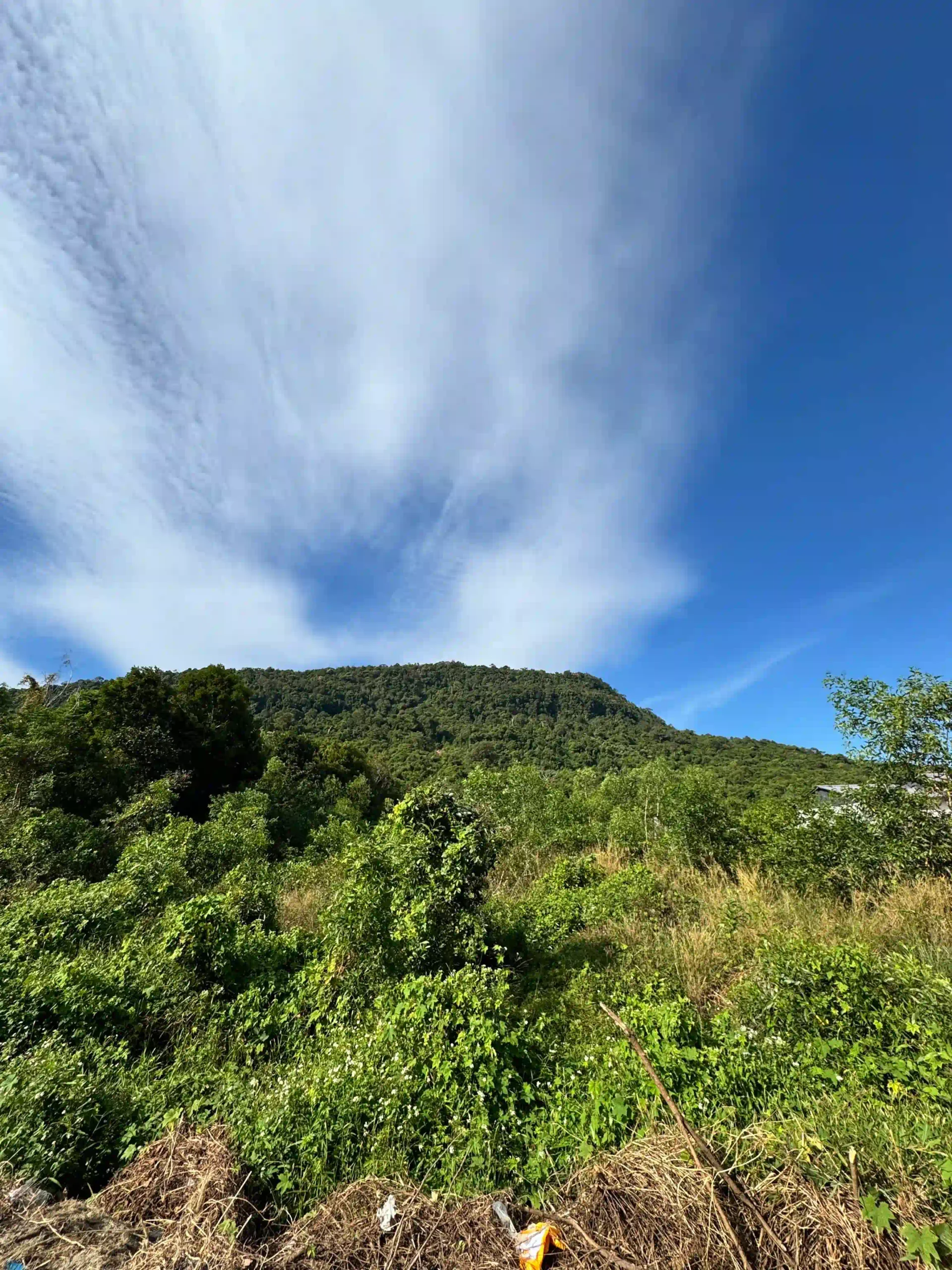
Phu Quoc National Park covers a little over 31,000 hectares, more than half the island, and it’s free to enter. That sounds like an invitation, and it isn’t one. There’s no visitor centre, no gate, no map board and no marked trail, and the reason nobody crowds the park the way they crowd the beaches is that almost nothing in it is built to be found.
Nobody comes to Phu Quoc for the hiking. You come for the water, and then somewhere around day three you look at the map properly and notice that the whole top half of the island is green with no roads through it.
There is a real day’s walking in that green, and it’s sold as one route: Tiên Sơn Đỉnh, about 6 kilometres, roughly 280 metres of climbing, six hours from pickup to drop-off with lunch in the middle. Whether it’s worth doing comes down to how many days you’ve got, so I’ll be blunt about that before you read any further.
On a 4-day trip I’d skip it. This island earns its money on the water, and giving up six hours plus transfers on a short stay for a hill is a bad trade. On 5 days or more, or on any trip where the sea has turned and your boat day has been cancelled, it’s the strongest land option available.
- Quick Answer: Entry to Phu Quoc National Park is free, and the trekking inside it is guided only. The standard route is Tiên Sơn Đỉnh: around 6km, about 280m of ascent, 6 hours including transfers and a bánh xèo lunch, roughly $66 with a guide. It’s a climb with ladder sections, not a nature walk. You can’t do it unguided, because the trail is unmarked and the operators deliberately keep the route off public apps. It’s worth booking on trips of 5 days or more, and it’s the best replacement when weather kills your boat day.
- The Park Itself:
- 31,422 hectares across the north and the eastern Hàm Ninh range, part of a UNESCO biosphere reserve since 2006.
- No entrance fee and no entrance. There’s no gate, no ticket office and no trailhead sign on the road.
- The one exception is Suối Tranh, a managed stream site inside the park boundary with a 20,000 to 30,000 VND ticket.
- Highest point is Núi Chúa at 603m, and almost nobody sells it.
- The Day:
- Pickup from Dương Đông, a 10 minute safety briefing at a café, then out to the trailhead.
- 2 hours climbing through rainforest, with the guide stopping constantly to explain what you’re walking past.
- Half an hour at the summit, hammocks provided.
- 2 hours back down, then Tiên Sơn cave or a swim at Suối Tranh, depending on the month.
- Bánh xèo lunch at Hàm Ninh, then home by early afternoon.
- Check Before You Book:
- No under-10s, no pregnant travellers, nobody with heart problems or low fitness. These are enforced.
- GPS tracking is banned, including a smartwatch quietly recording to Strava or AllTrails.
- Pickup is free only in central Dương Đông. Ông Lang and Long Beach add 300,000 VND per group, Gành Dầu, Cửa Cạn and An Thới 600,000, and there’s no pickup from Hàm Ninh or Bãi Sao.
- Booking as one person adds 200,000 VND and you travel by motorbike.
- Season: November to April. From May the leeches come out and the trail turns slick, which lasts through October.
Where Phu Quoc National Park Is, and What’s in It
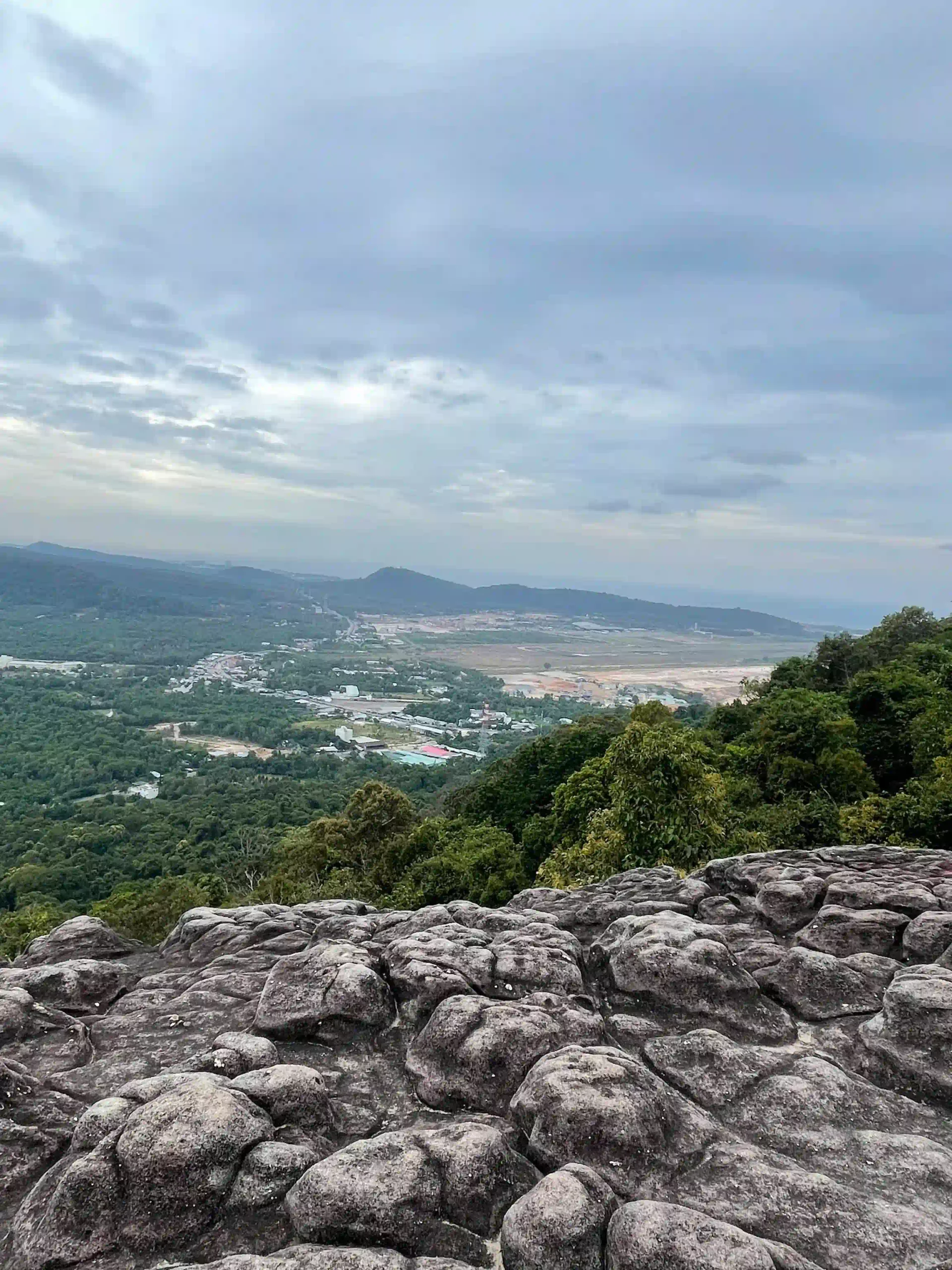
Phu Quoc National Park takes up most of the north of the island and runs down the eastern side in the Hàm Ninh range, which is why the building sites stop once you’re past Dương Đông. It’s 31,422 hectares, more than half of Phu Quoc, and it’s been part of a UNESCO biosphere reserve since 2006, with genuine old-growth forest inside it.
The high point is Núi Chúa at 603 metres, in that eastern range. That’s the serious climb, and almost no tour sells it, which trips people up when they go looking for the island’s highest peak and get offered something else.
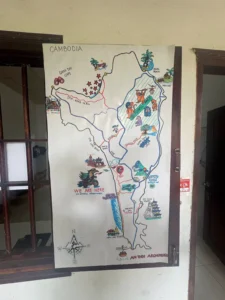
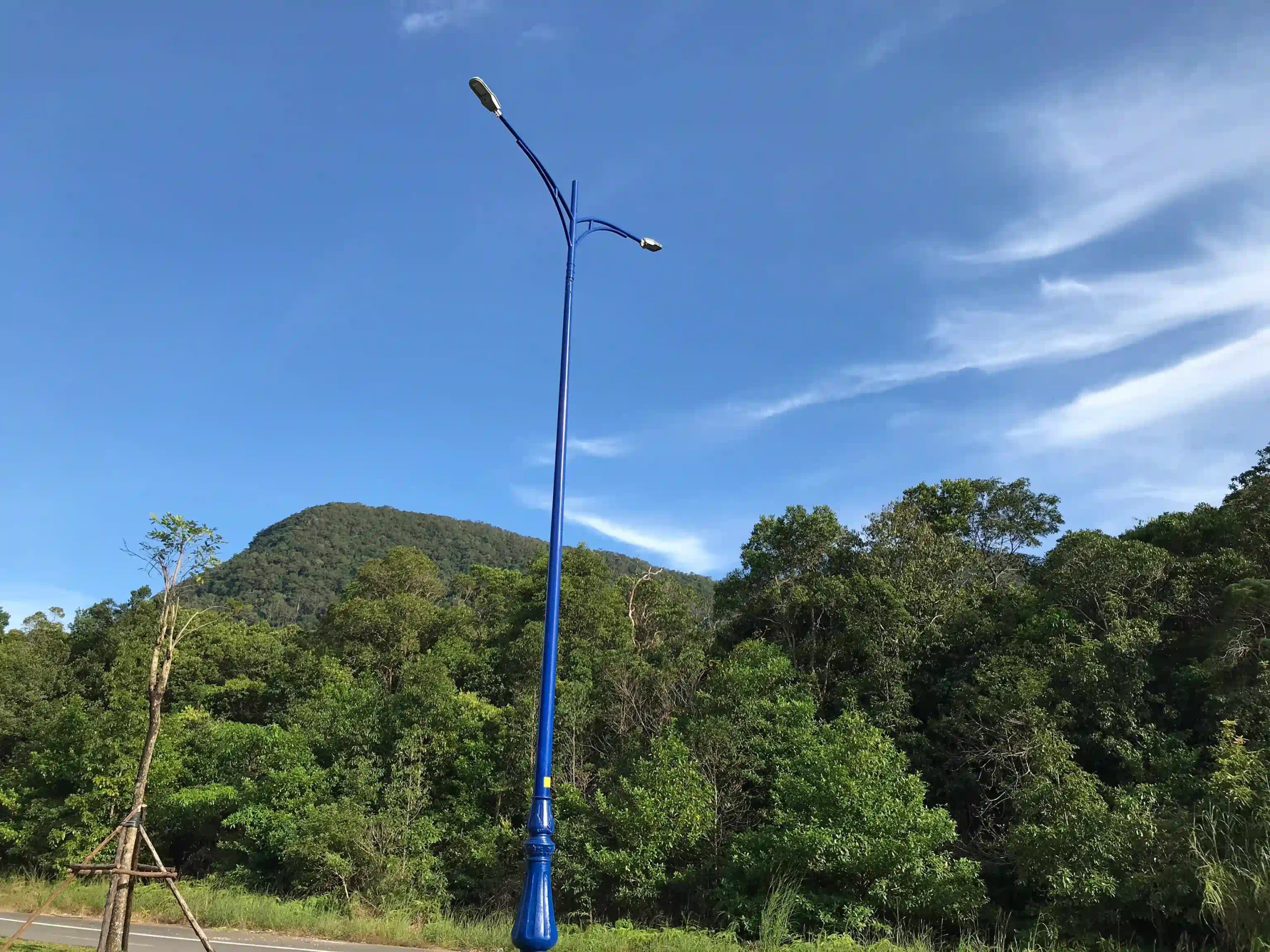
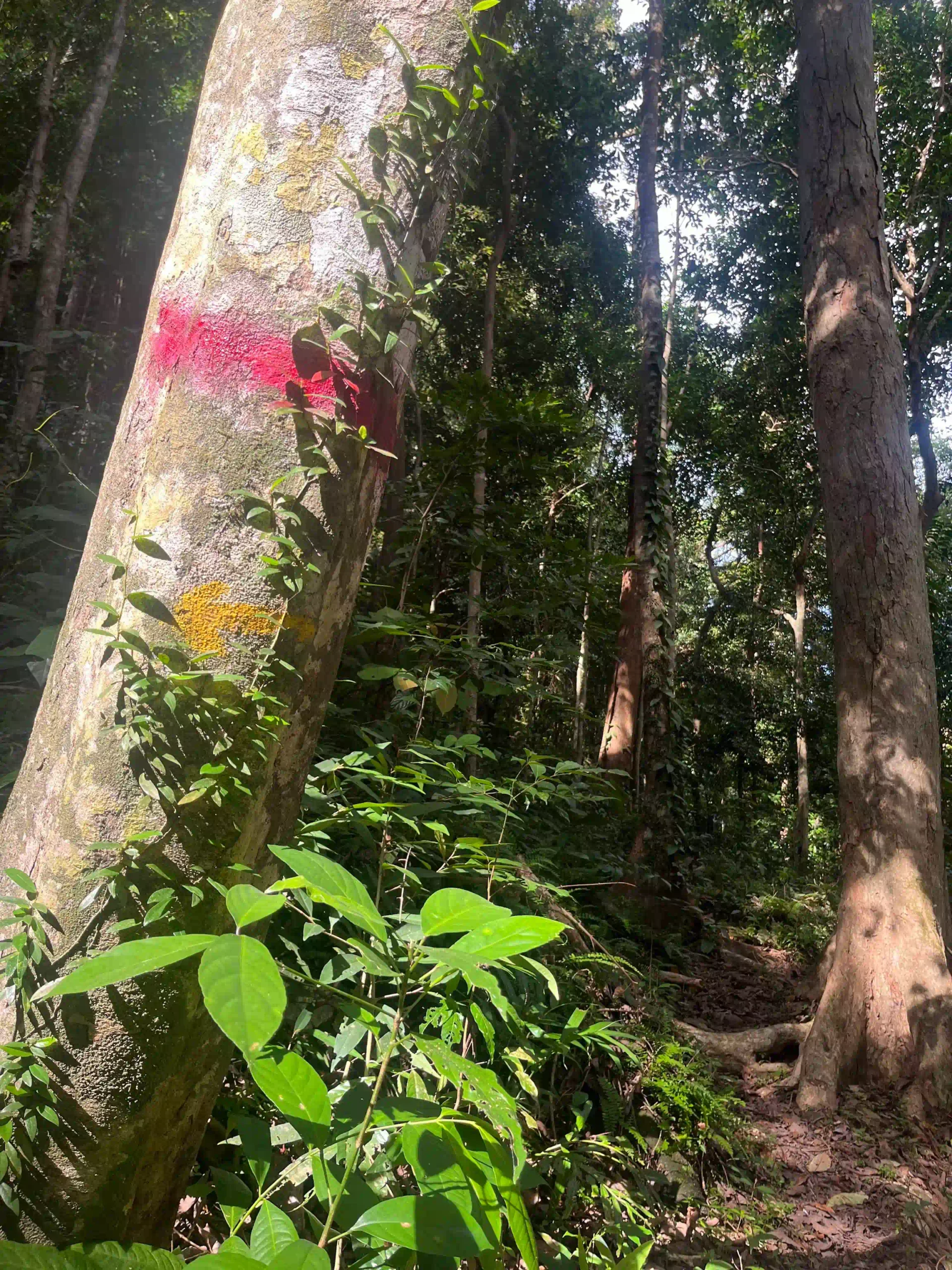
What they sell is Tiên Sơn Đỉnh, a lower summit at around 280 metres in the same range, closer to the airport than to the beaches. The trail is about 6 kilometres and there’s nothing marking it. No visitor centre, no map, no ticket booth, and no sign at the roadside telling you where anything begins.
I spent a month on this island and rode the north road plenty of times without ever spotting where the path leaves it. That’s also why the park doesn’t have a crowding problem while the beaches do.
Phu Quoc National Park Entrance Fee, Opening Hours and How to Visit
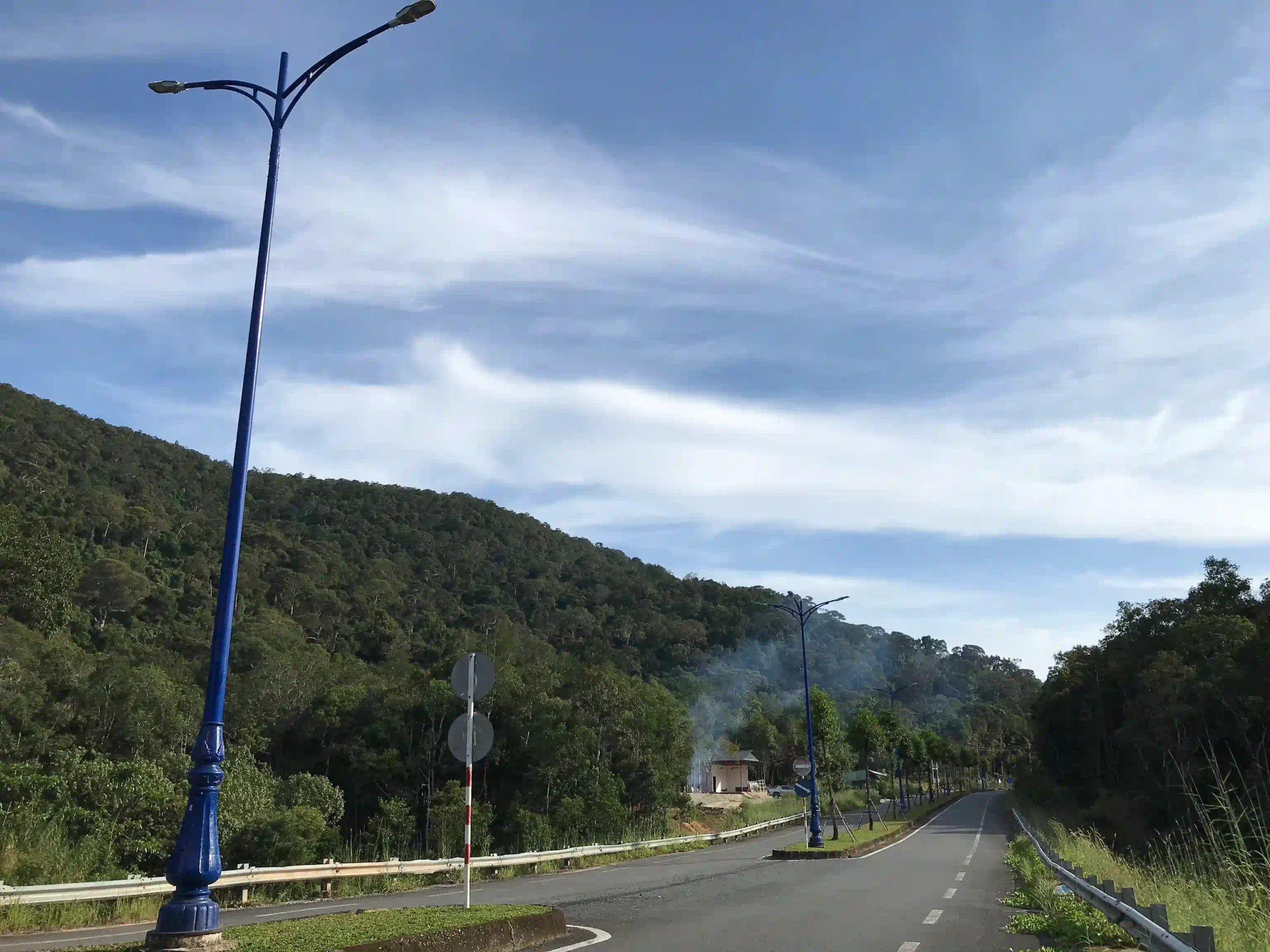
There’s no entrance fee and no entrance. The park has no gate, no ticket office and no opening hours, because there’s nothing to open. Any page quoting you a Phu Quoc National Park entrance fee is describing a gate that isn’t there.
The exception is Suối Tranh, a managed stream site inside the park boundary about 20 minutes from Dương Đông, where a ticket is 20,000 to 30,000 VND and the gate is open from 7am. That’s the one part of the park you can drive to, park at and walk into on your own, and in the dry season there’s very little water in it.
So the ways in come down to three. Drive the north road through it, which is scenery from a scooter and not a visit. Pay the small ticket at Suối Tranh. Or book a guided trek, which is the only way onto the trails and the rest of this page.
The park isn’t closed, which comes up often enough to be worth saying. What’s closed to casual visitors is the interior, and it’s closed by having no infrastructure, not by any rule.
Phu Quoc National Park Trekking: the Tiên Sơn Đỉnh Route, Stop by Stop
- Distance: about 6km
- Ascent: roughly 280m
- Duration: 6 hours including transfers and lunch
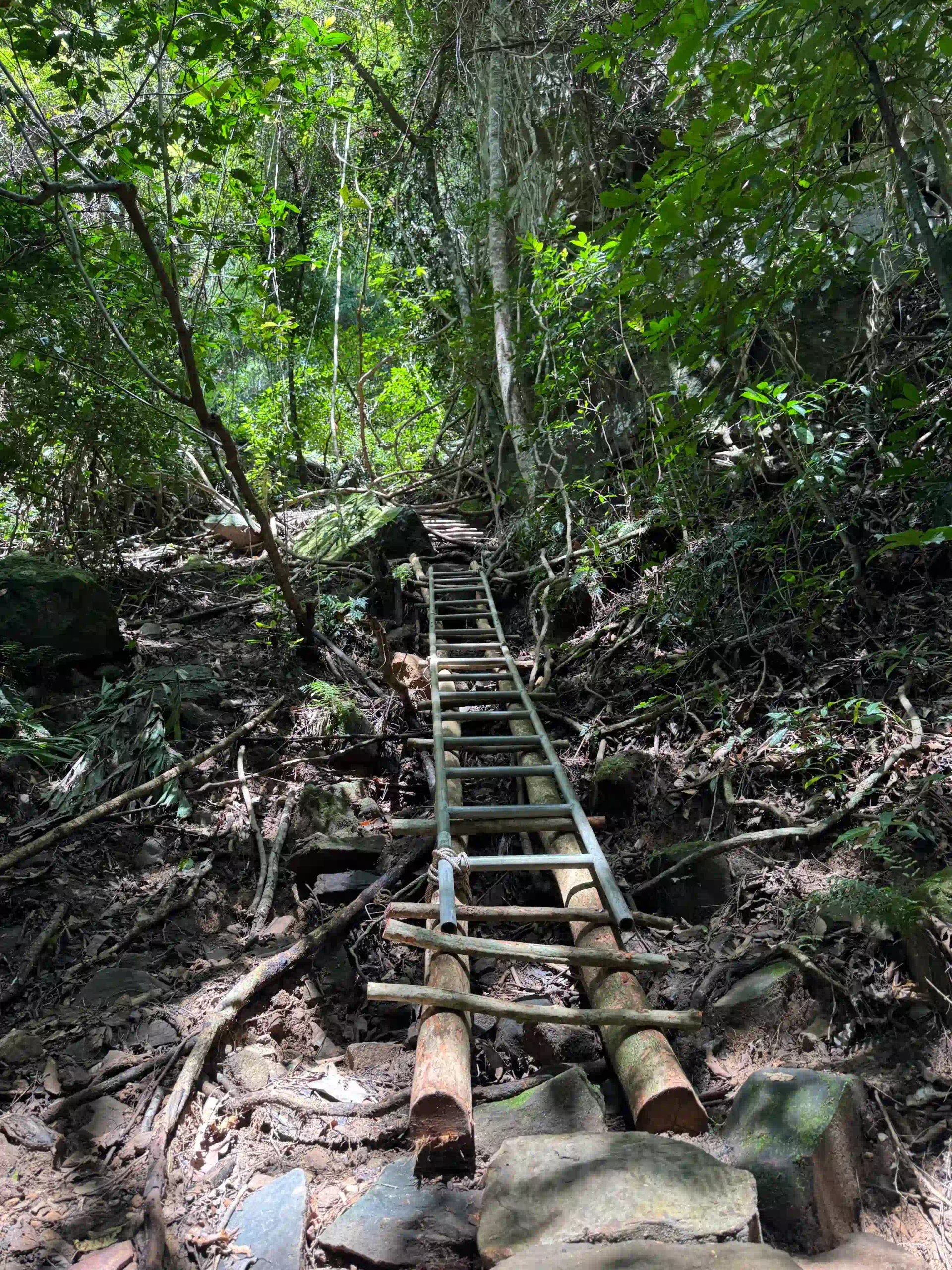
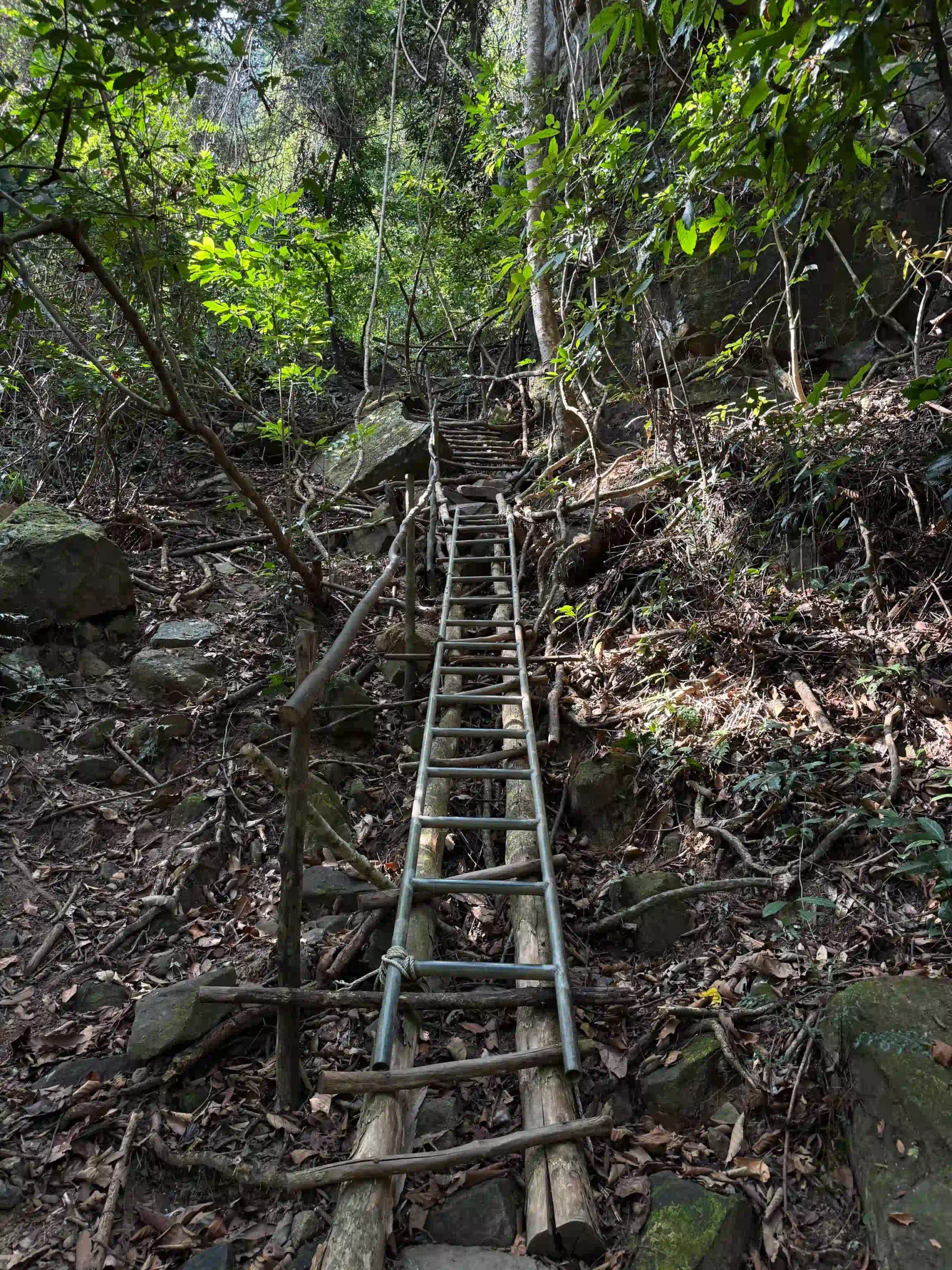
- Difficulty: moderate, with steep sections and ladders
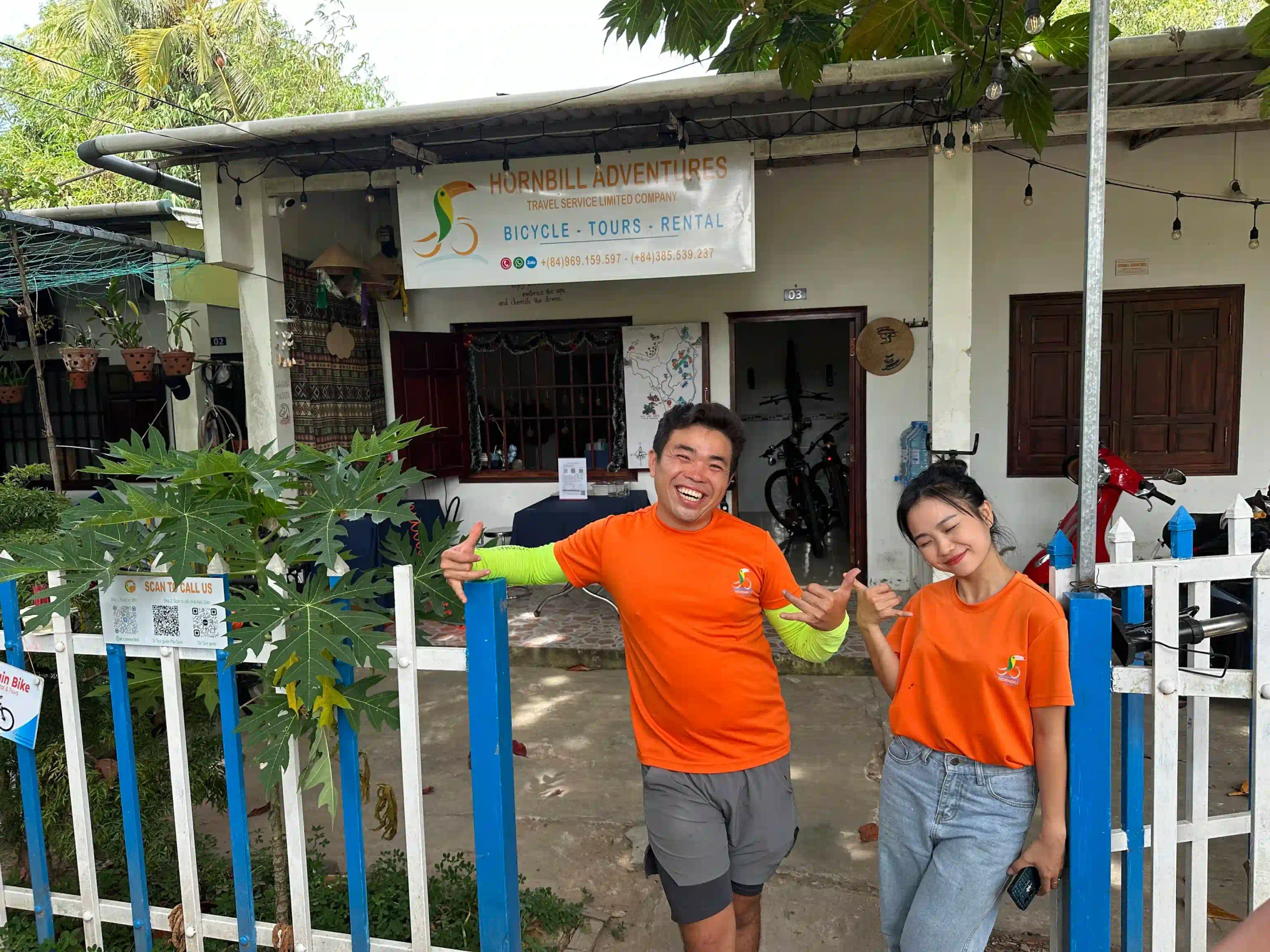
Pickup and the briefing
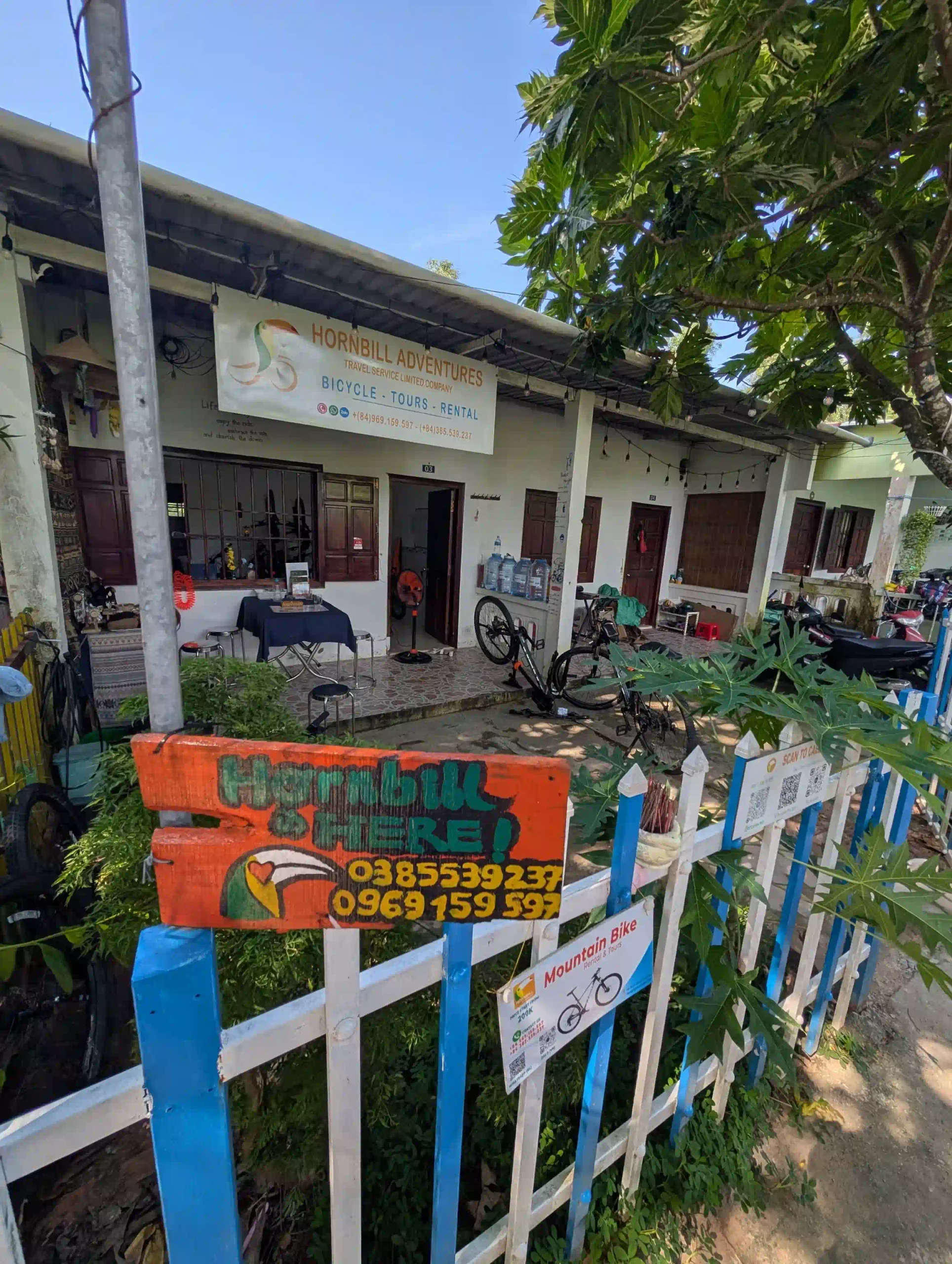
Your pickup time comes through the evening before, between 6 and 9. Early start, then a stop at a café for a 10 minute briefing, which is mostly about staying with the group and keeping your hands off the plants.
Backpack, trekking poles, headlamp and water get handed out there and it’s all in the price. Worth knowing, because guided walks in Vietnam run from properly equipped to nothing at all, and the listing pages never tell you which you’ve booked.
The climb
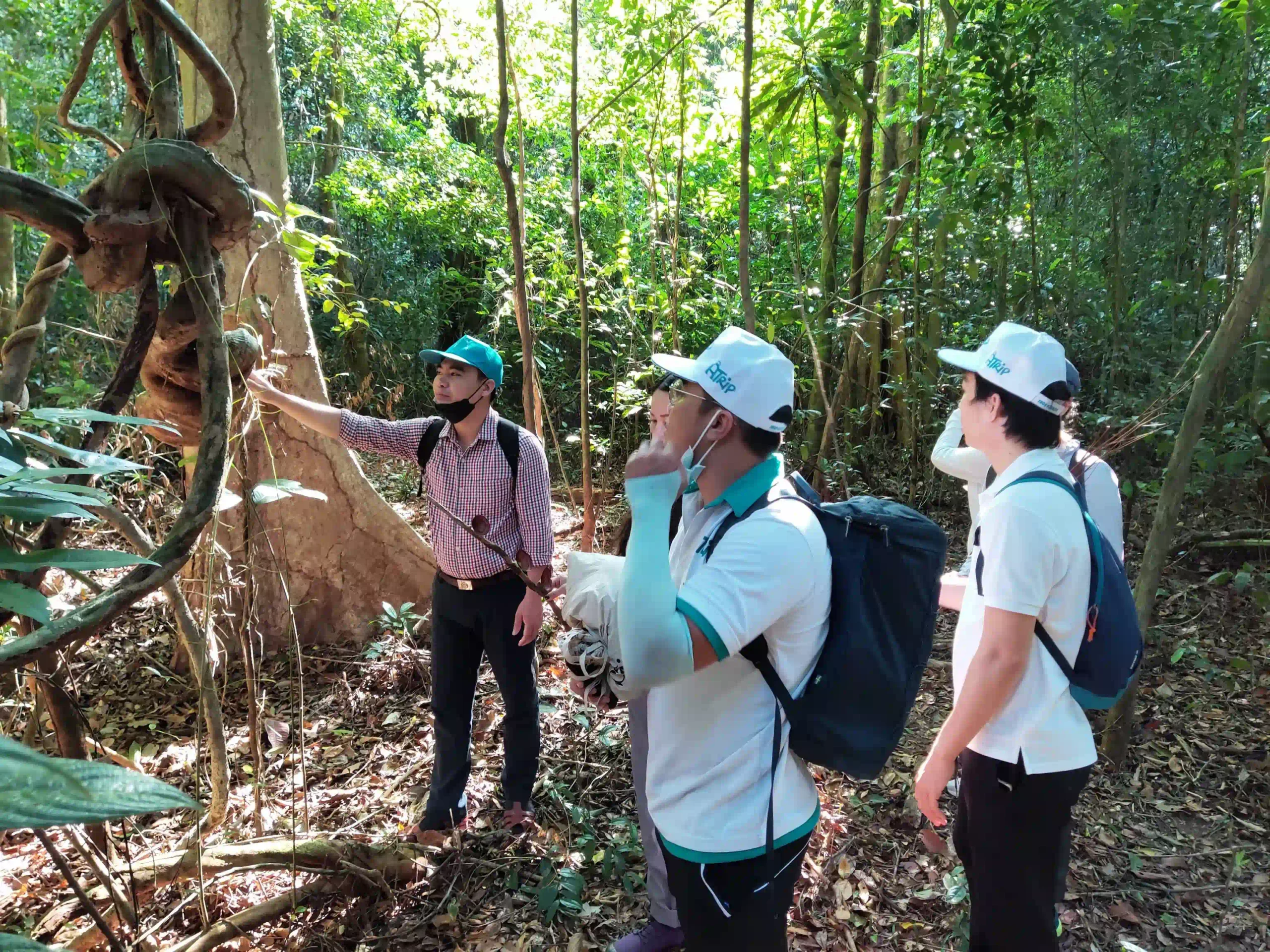
2 hours up. The first section is easy walking through rainforest and the guide stops every few minutes, which is what you’re paying for. If you turned up wanting to cover ground, the first hour will annoy you.
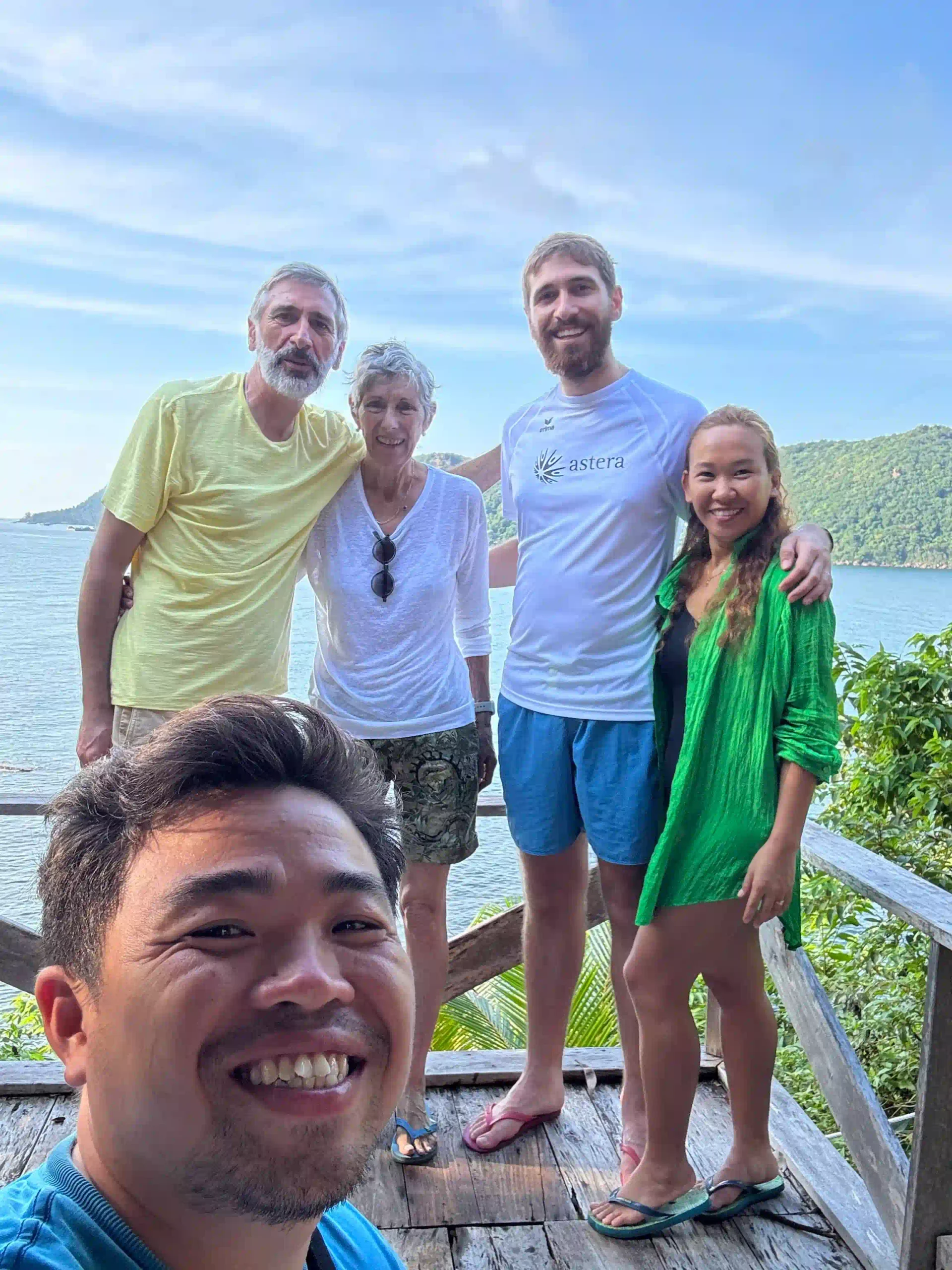
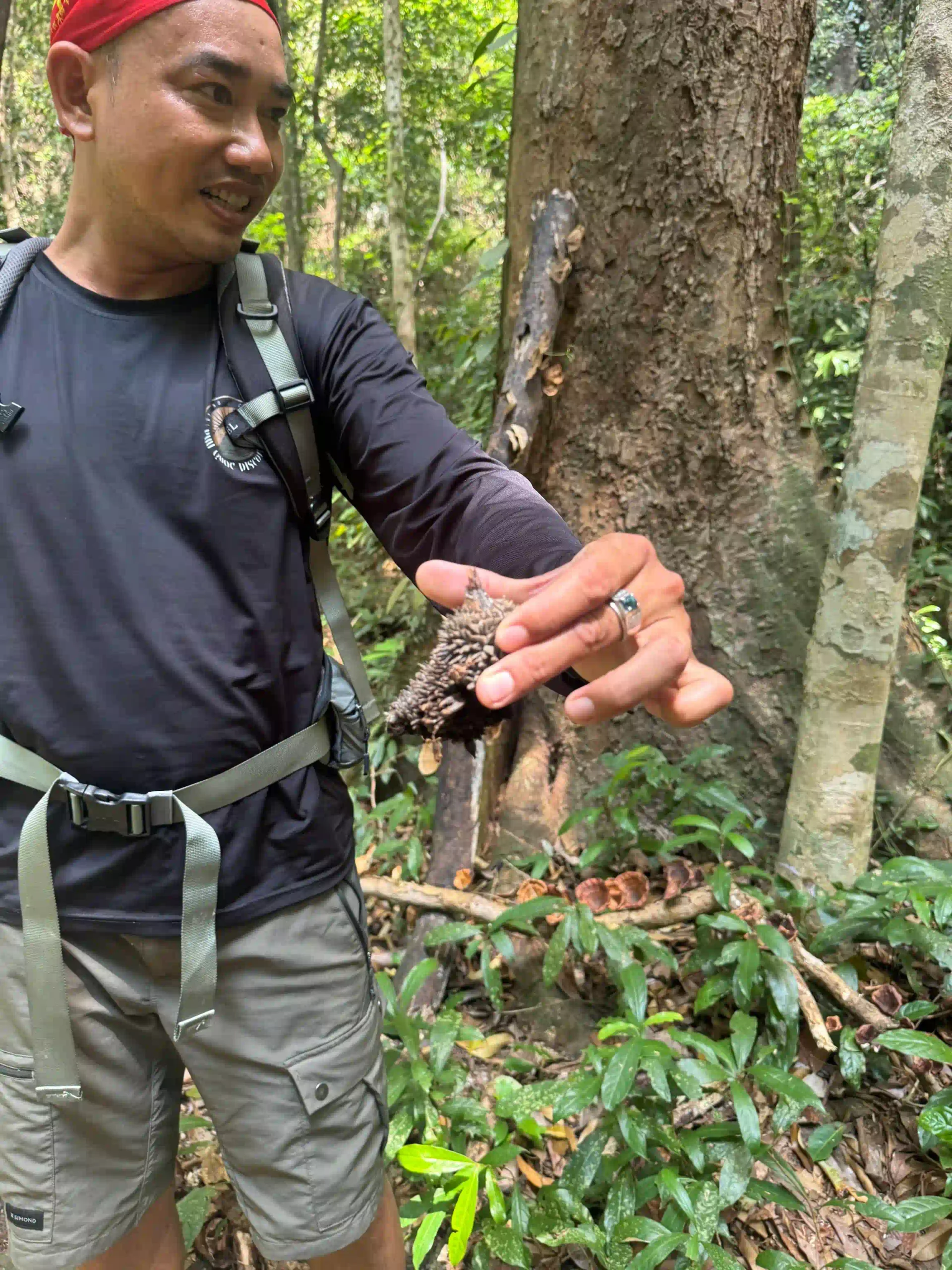
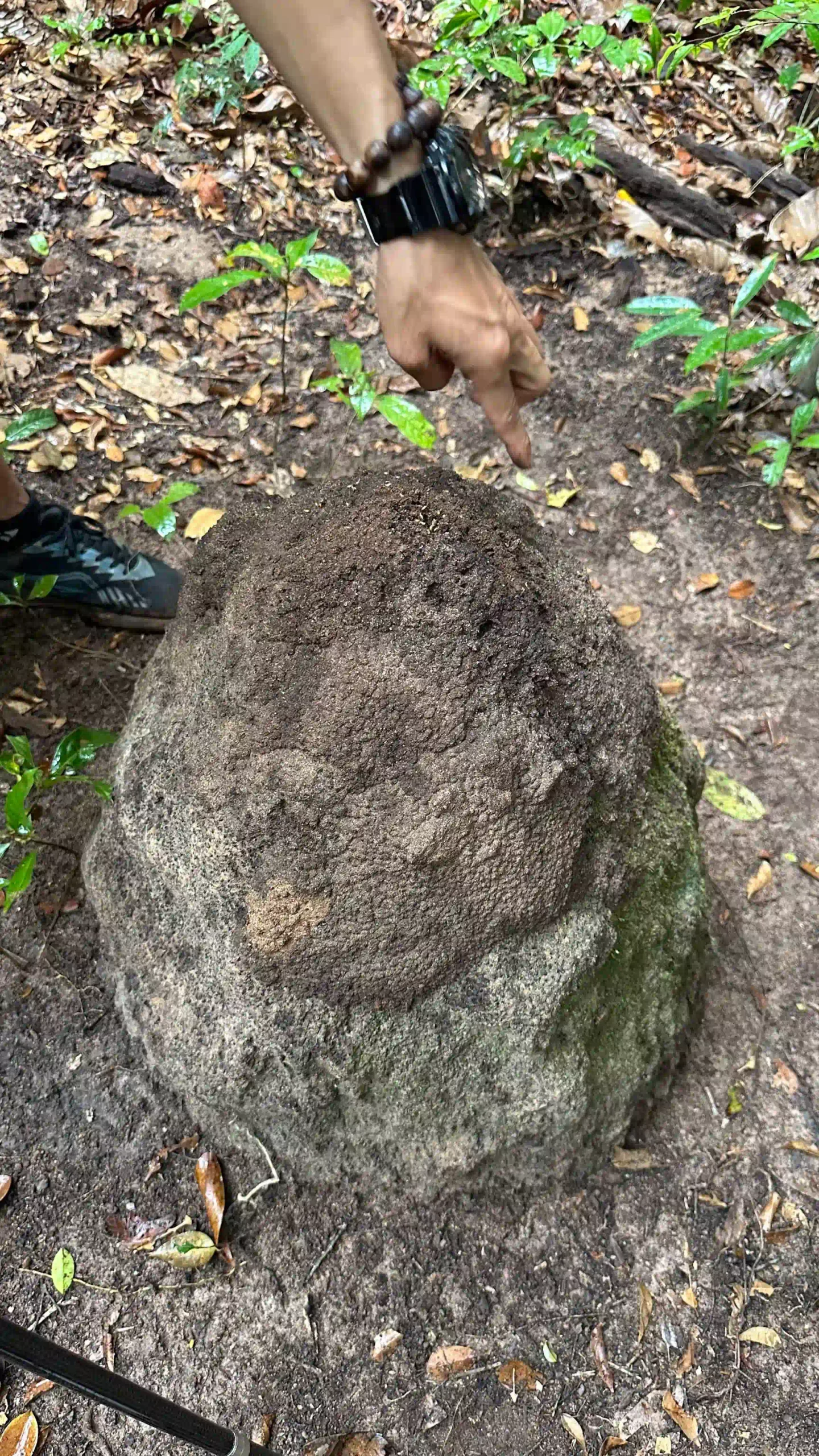
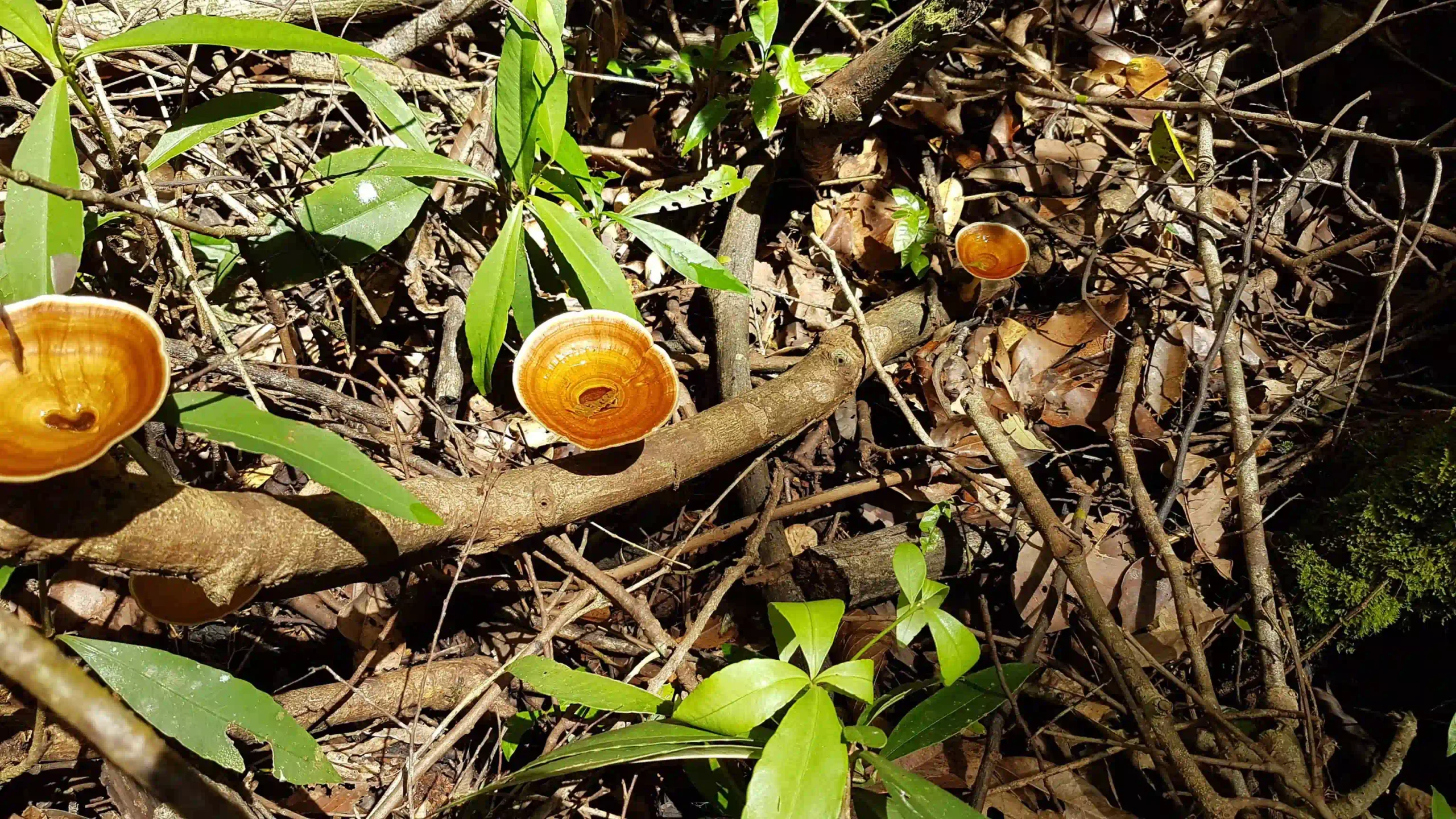
A lot of the stopping is about plants and what they’re used for locally, and a fair amount of that is medicinal. One of the guides working this route is a trained biologist.
Which brings up the one thing I’d flag about this tour. The guide is the whole day, and the difference between a good one and a competent one is the difference between a walk you remember and four hours in humid forest. You don’t get to choose, and I wouldn’t pretend otherwise.
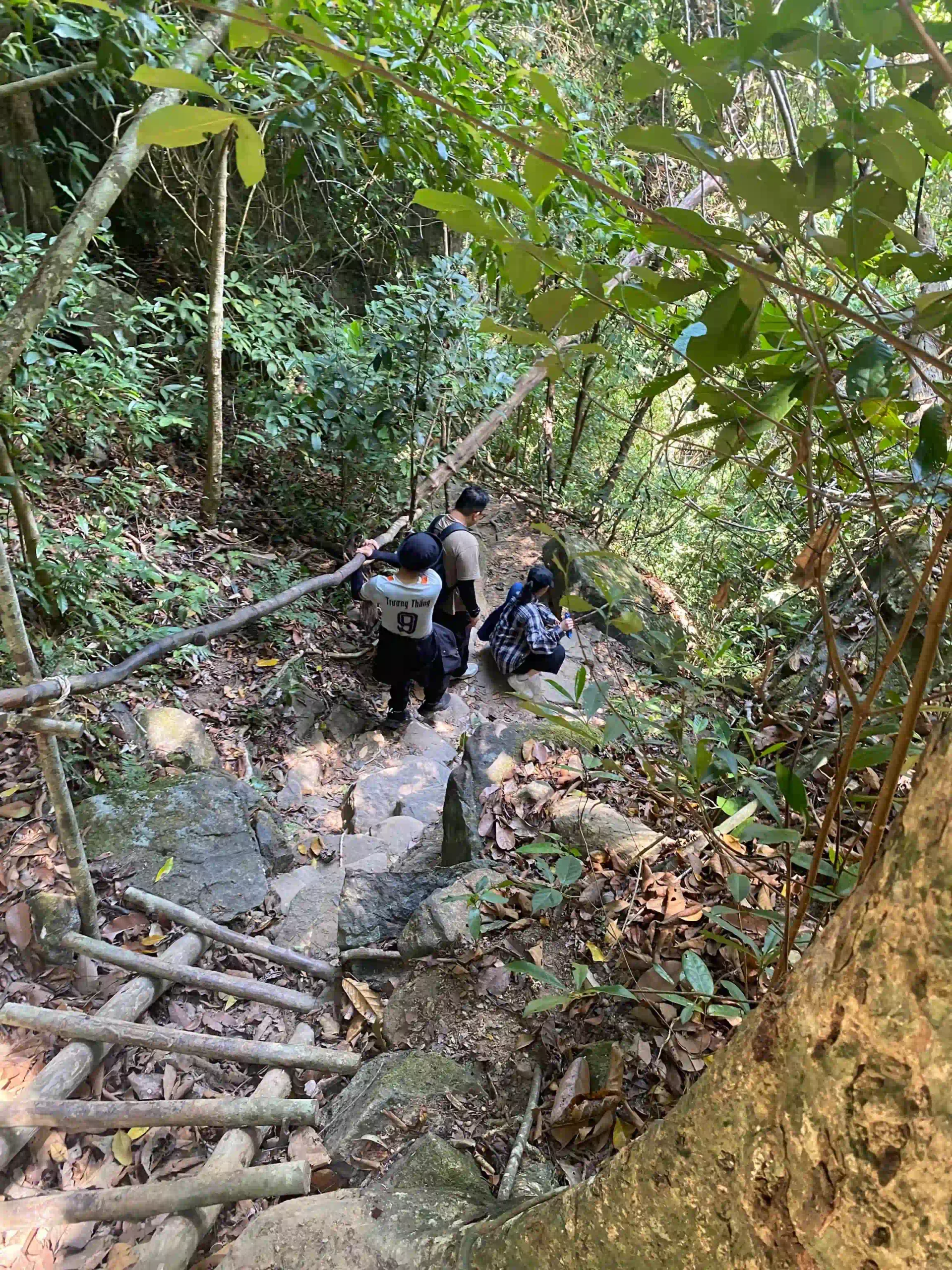
Then it steepens. There are ladder sections bolted into the rock and a couple of places where you’re using your hands. Nothing technical, and it is a climb, which the gradient in anyone’s photos from halfway up makes plain.
The summit
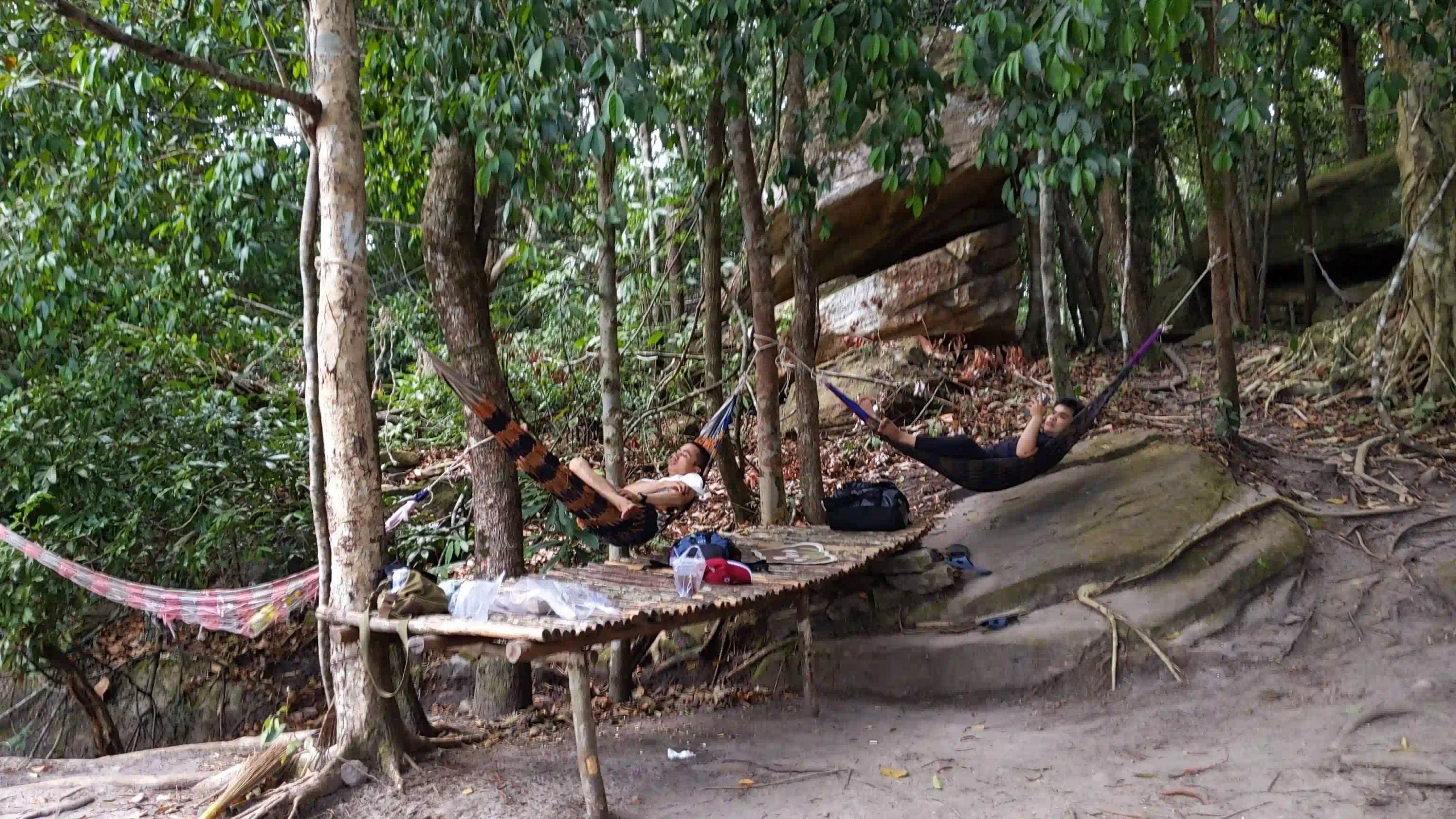
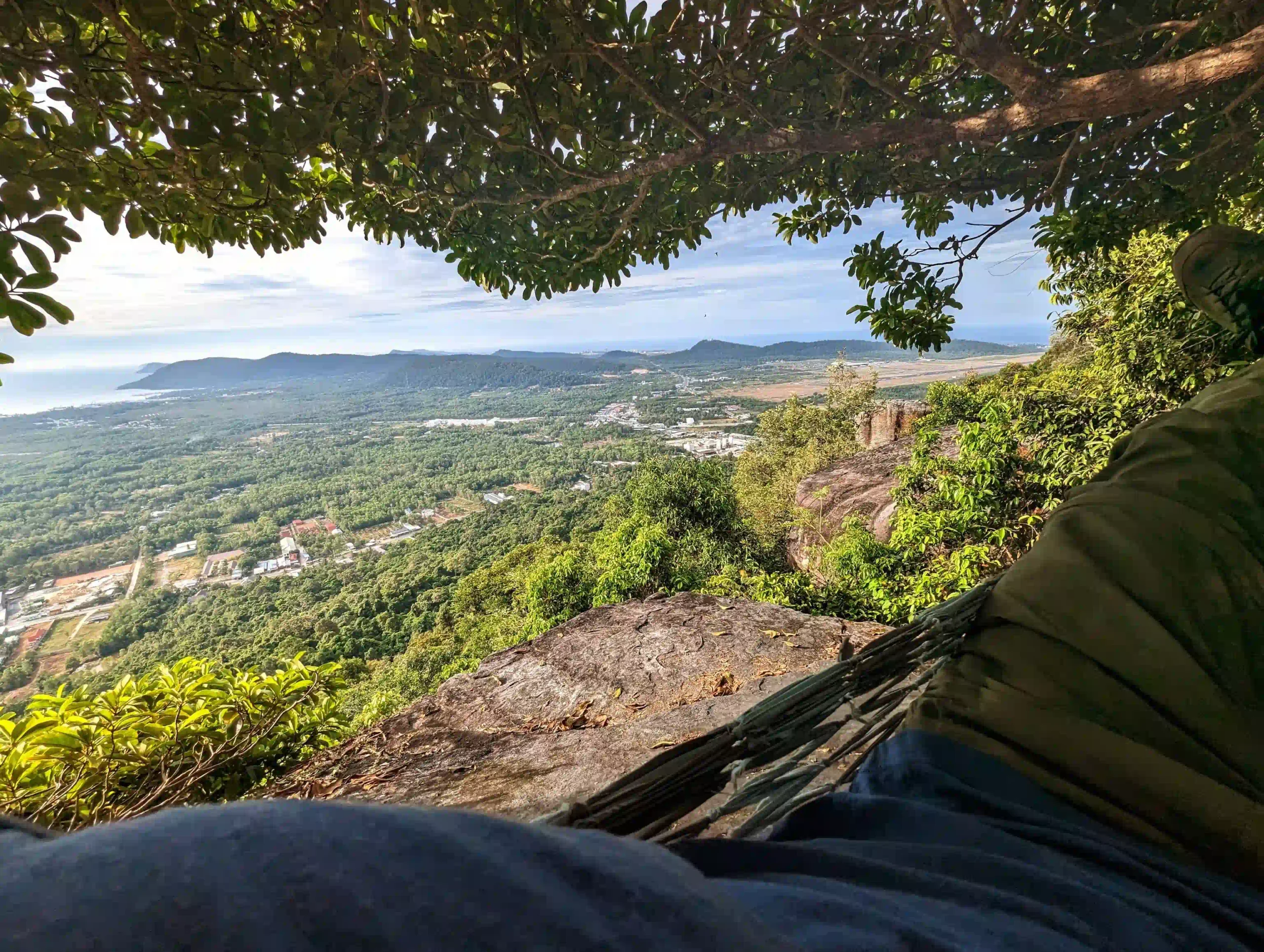
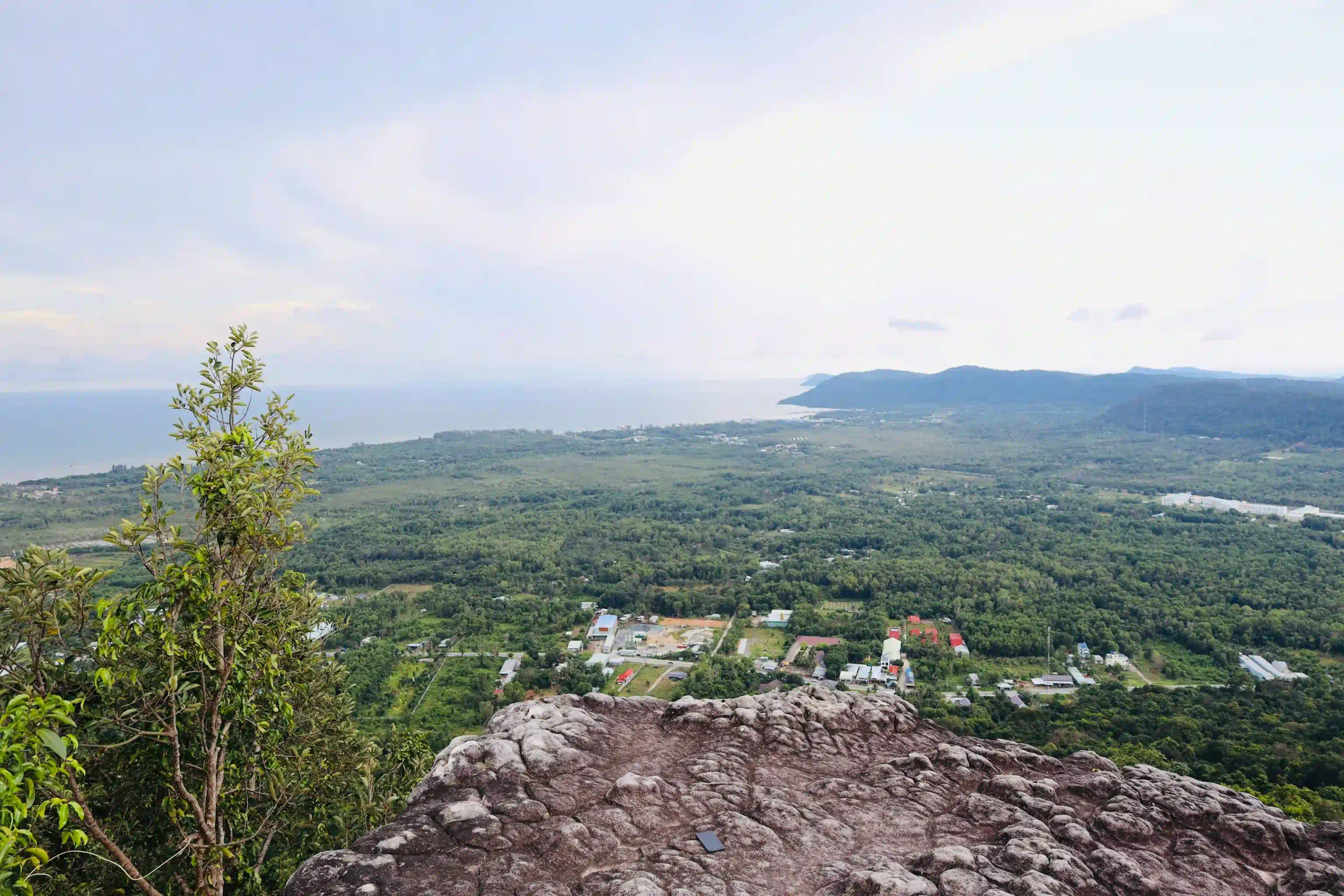
Half an hour at the top, with hammocks strung up while everyone recovers.
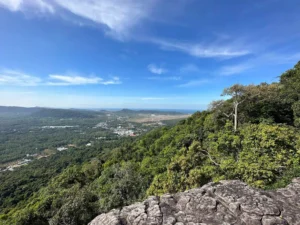
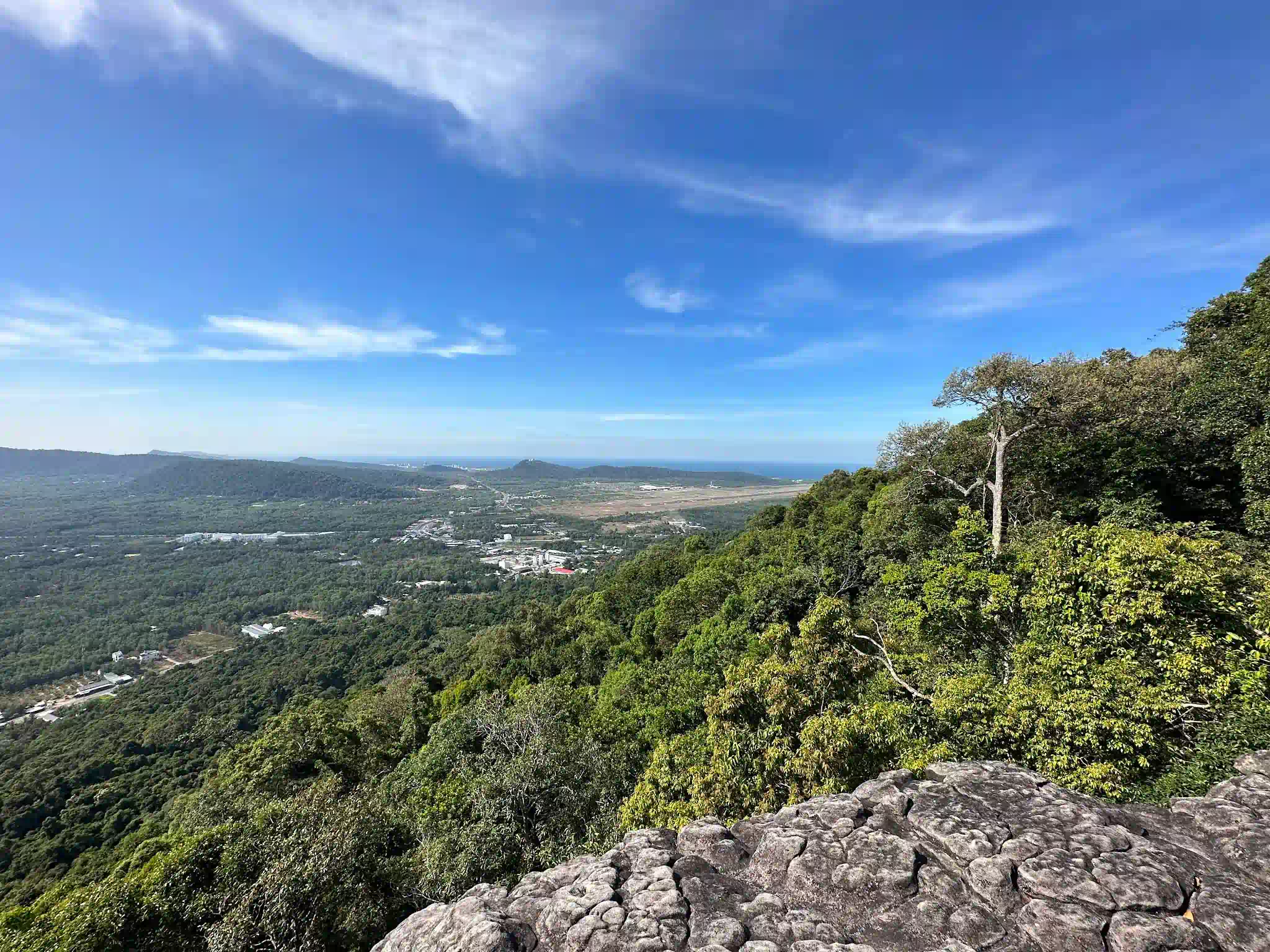
You get forest in most directions, the Hàm Ninh coast on one side, and a view over Phu Quoc International Airport that’s more interesting than it sounds. From anywhere else on this island you see hotels. From up there you see how much of it is still trees.
The cave, or the stream that isn’t running
2 hours back down, and then the day forks by season.
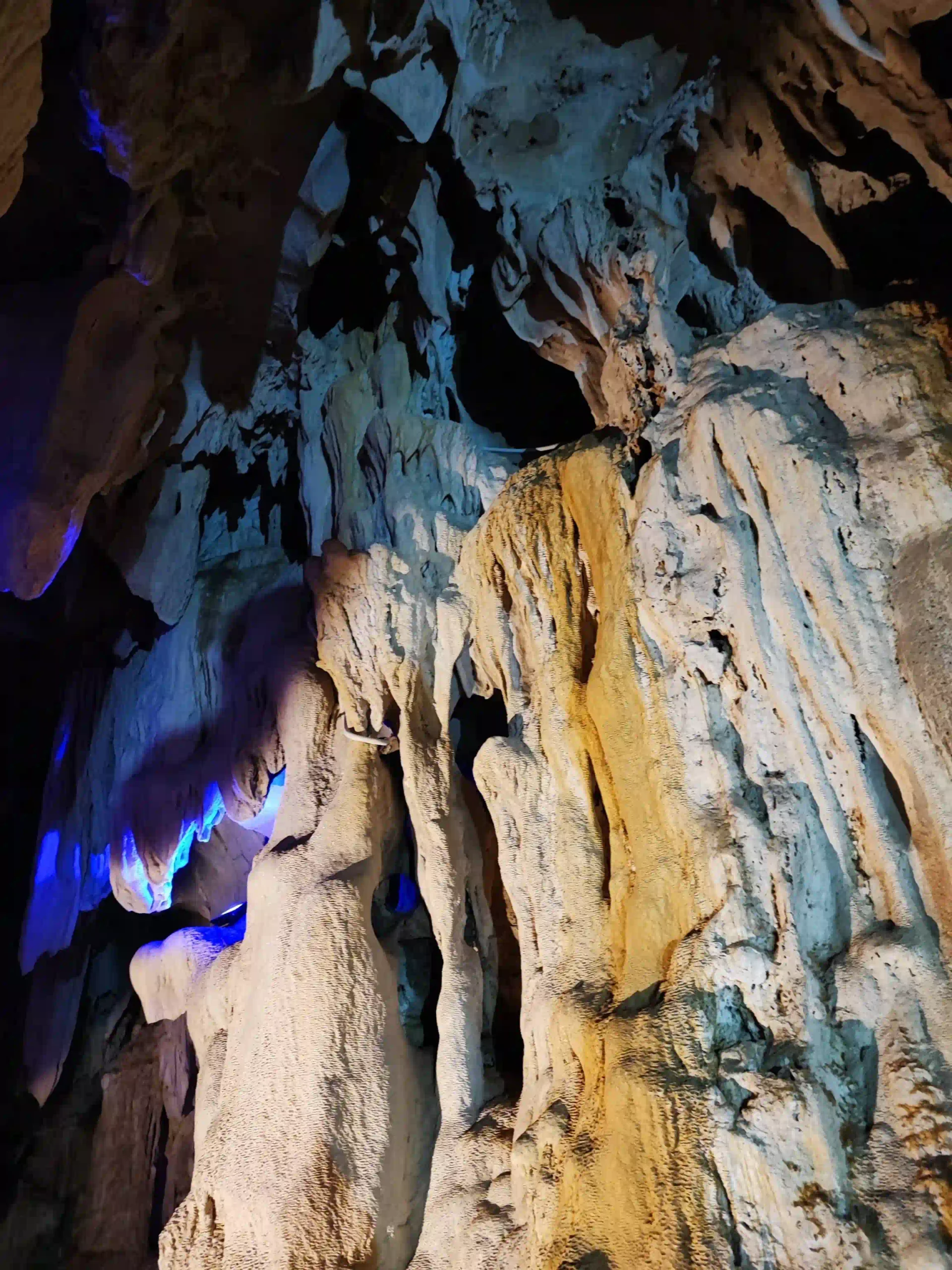
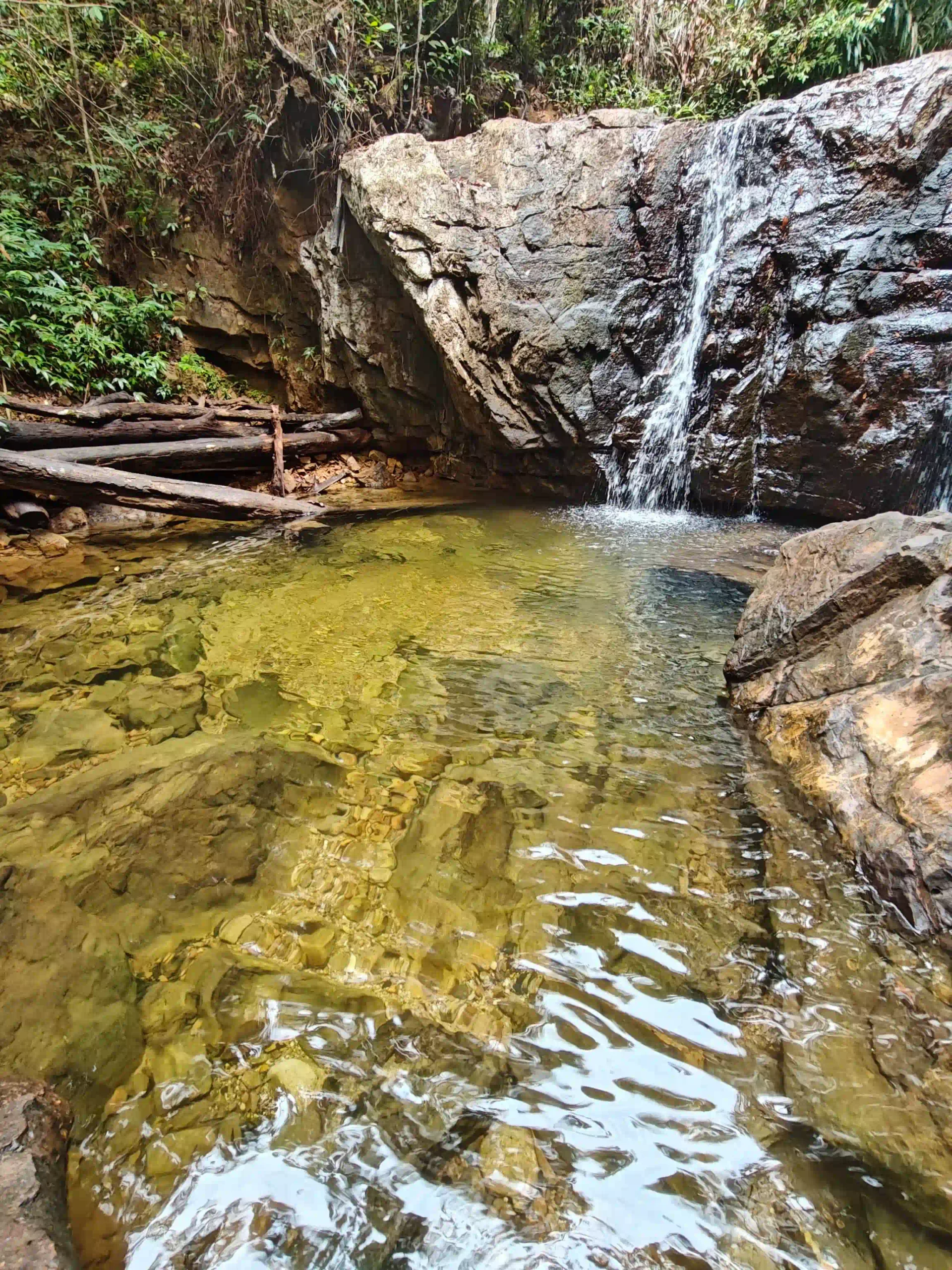
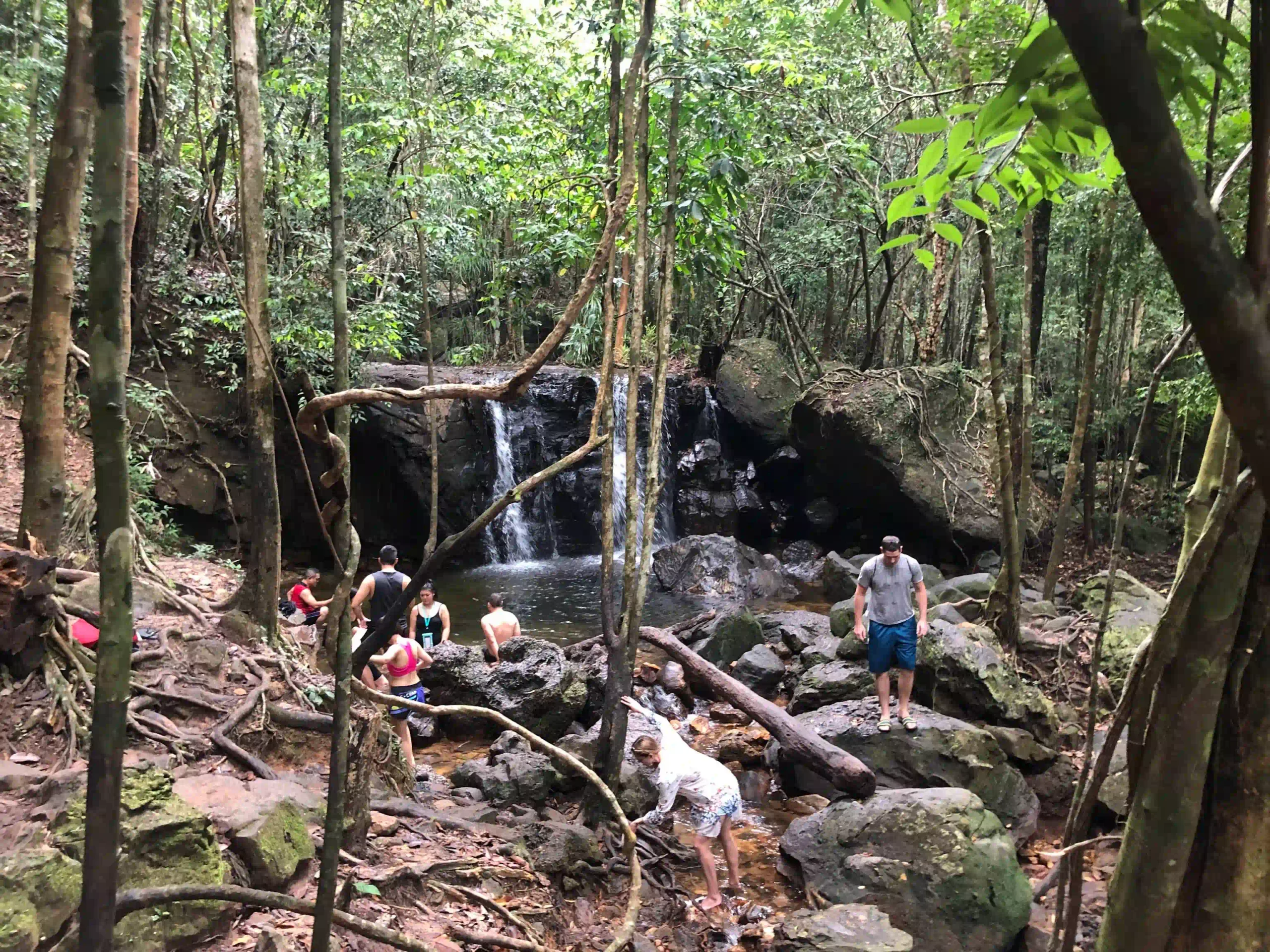
In the wet months you finish with a swim at Suối Tranh, the stream and waterfall on the eastern side. In the dry months there’s very little in it, which I’ve said about Suối Tranh before in the attraction in Phu Quoc piece, so from roughly January the tour swaps in Tiên Sơn cave.
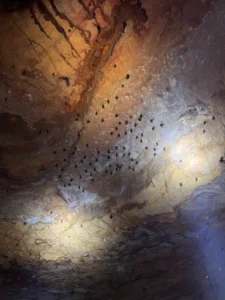
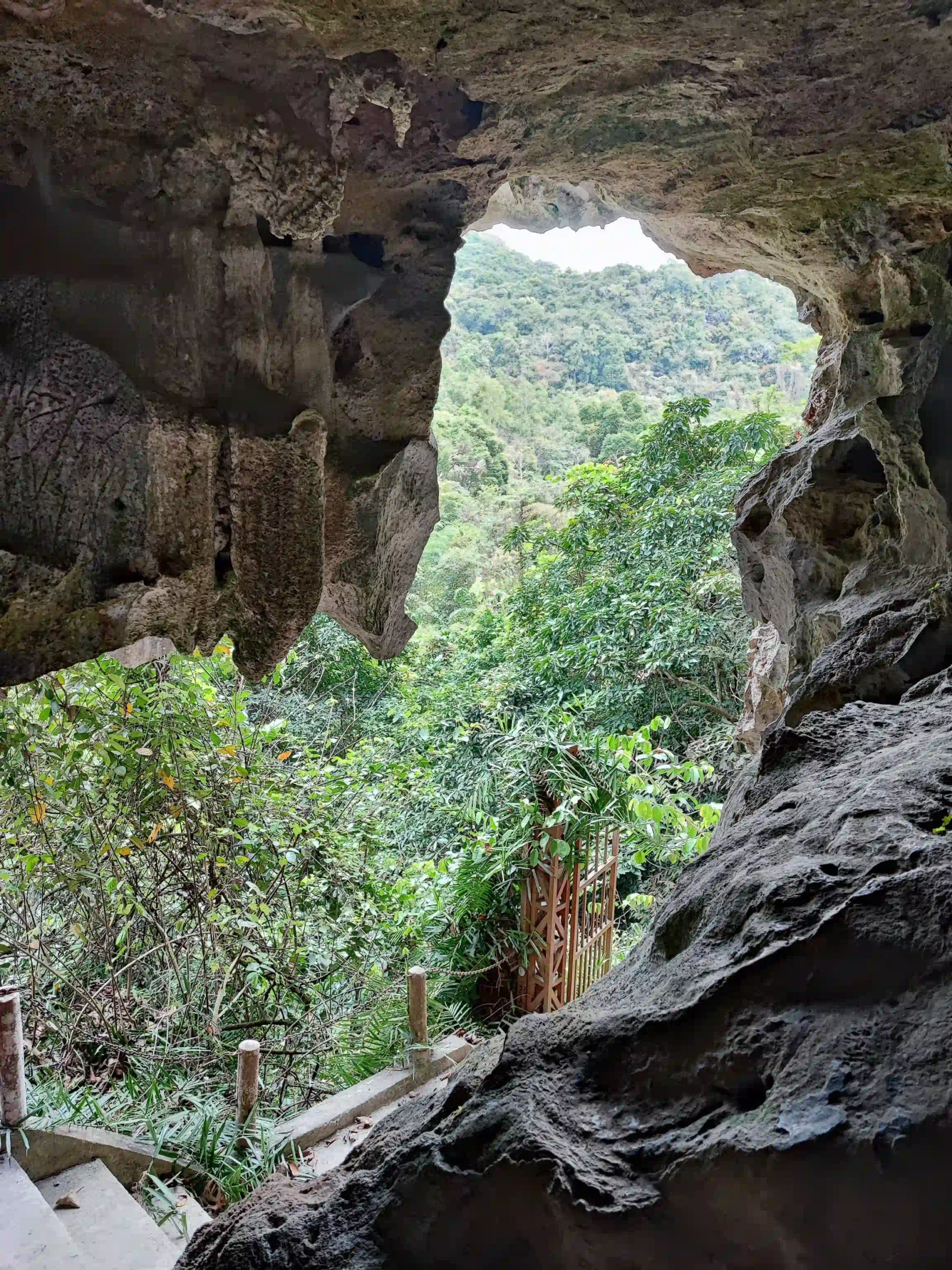
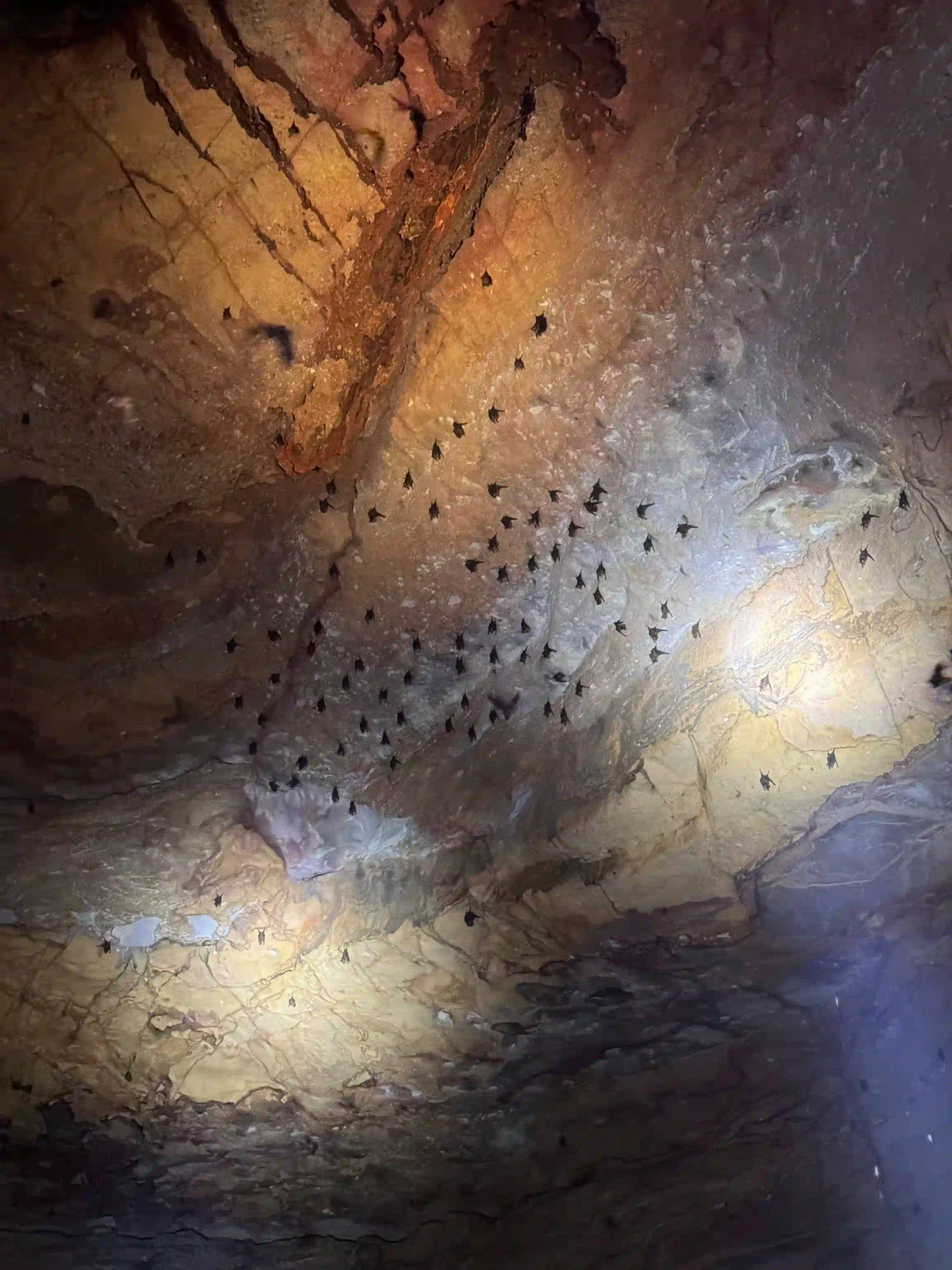
Take the cave if you get the choice. It’s the biggest cave system on the island, there are sections you have to turn sideways for, and there are bats. Anyone who’d rather not can wait at the entrance and it isn’t treated as a problem.
Lunch at Hàm Ninh
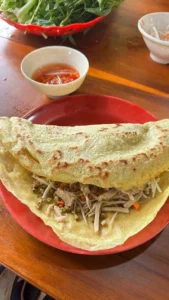
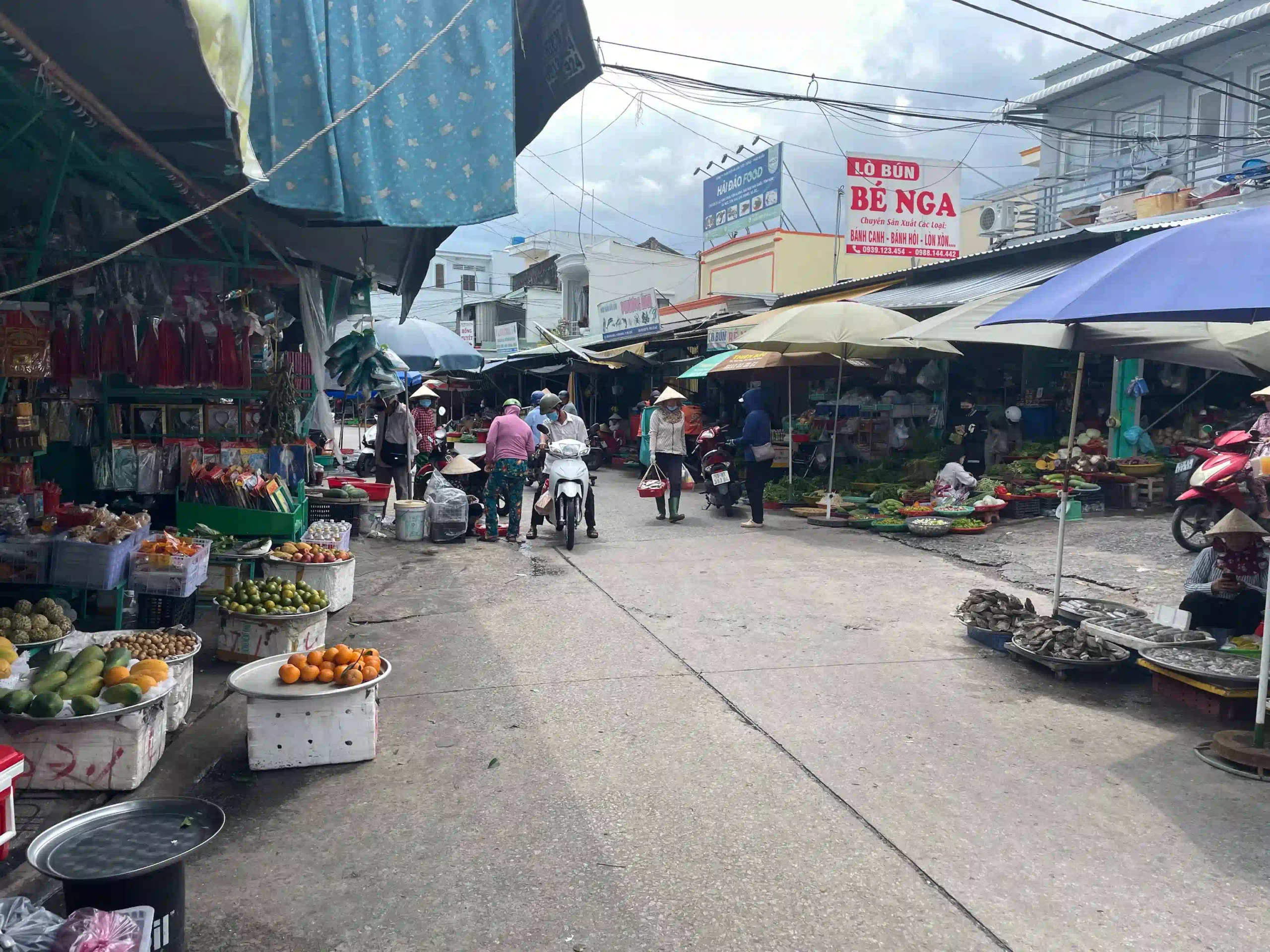
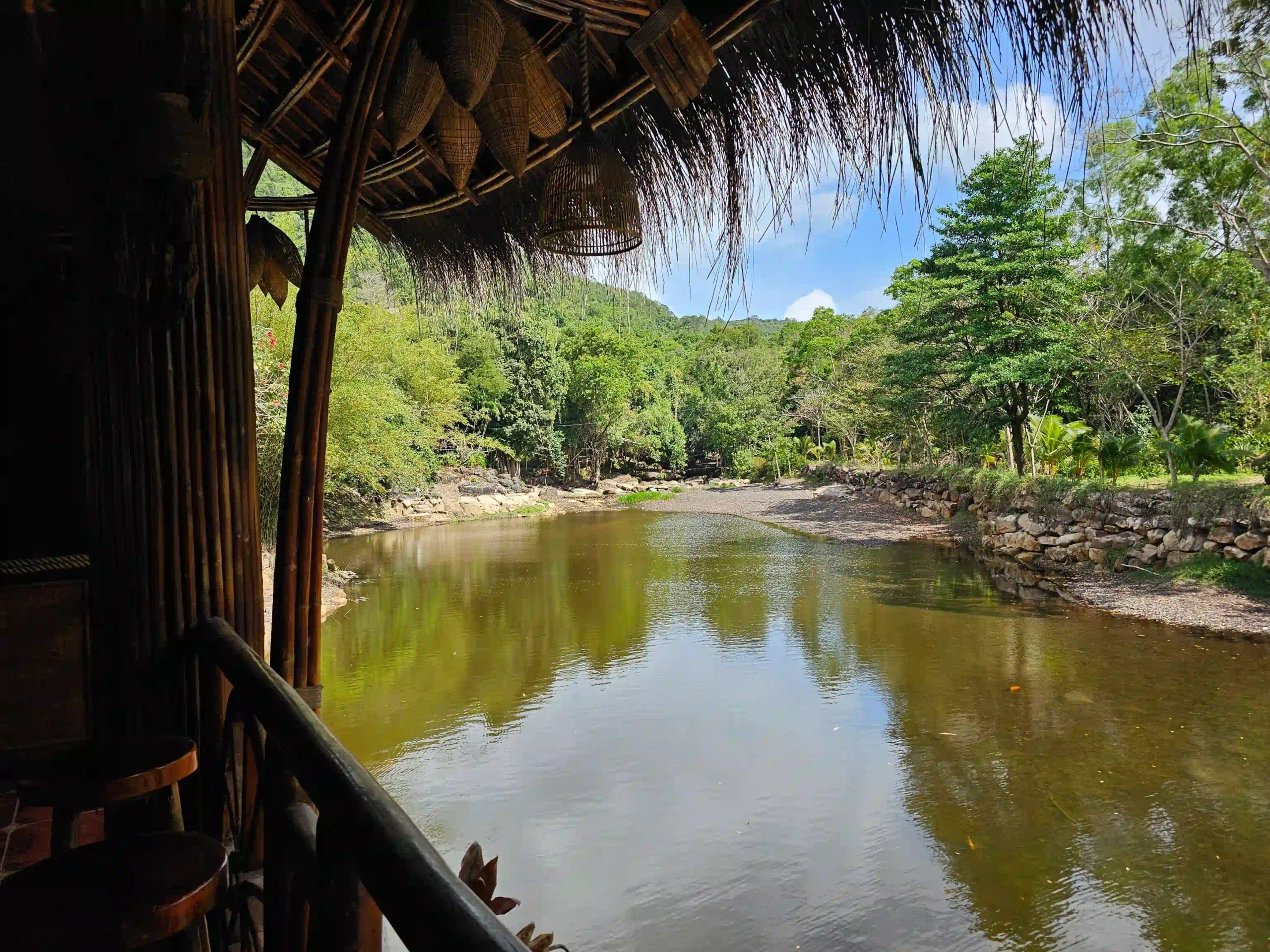
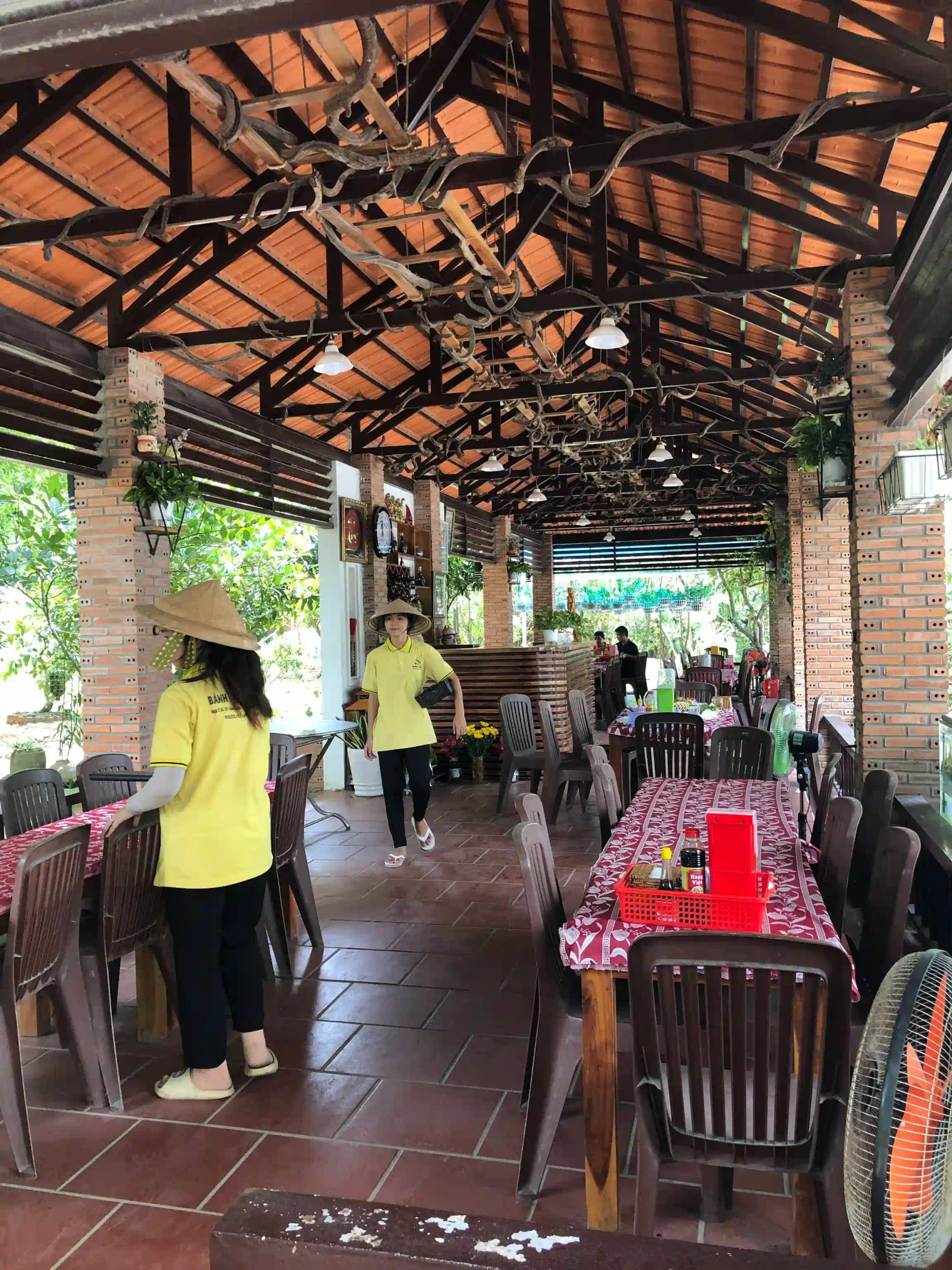
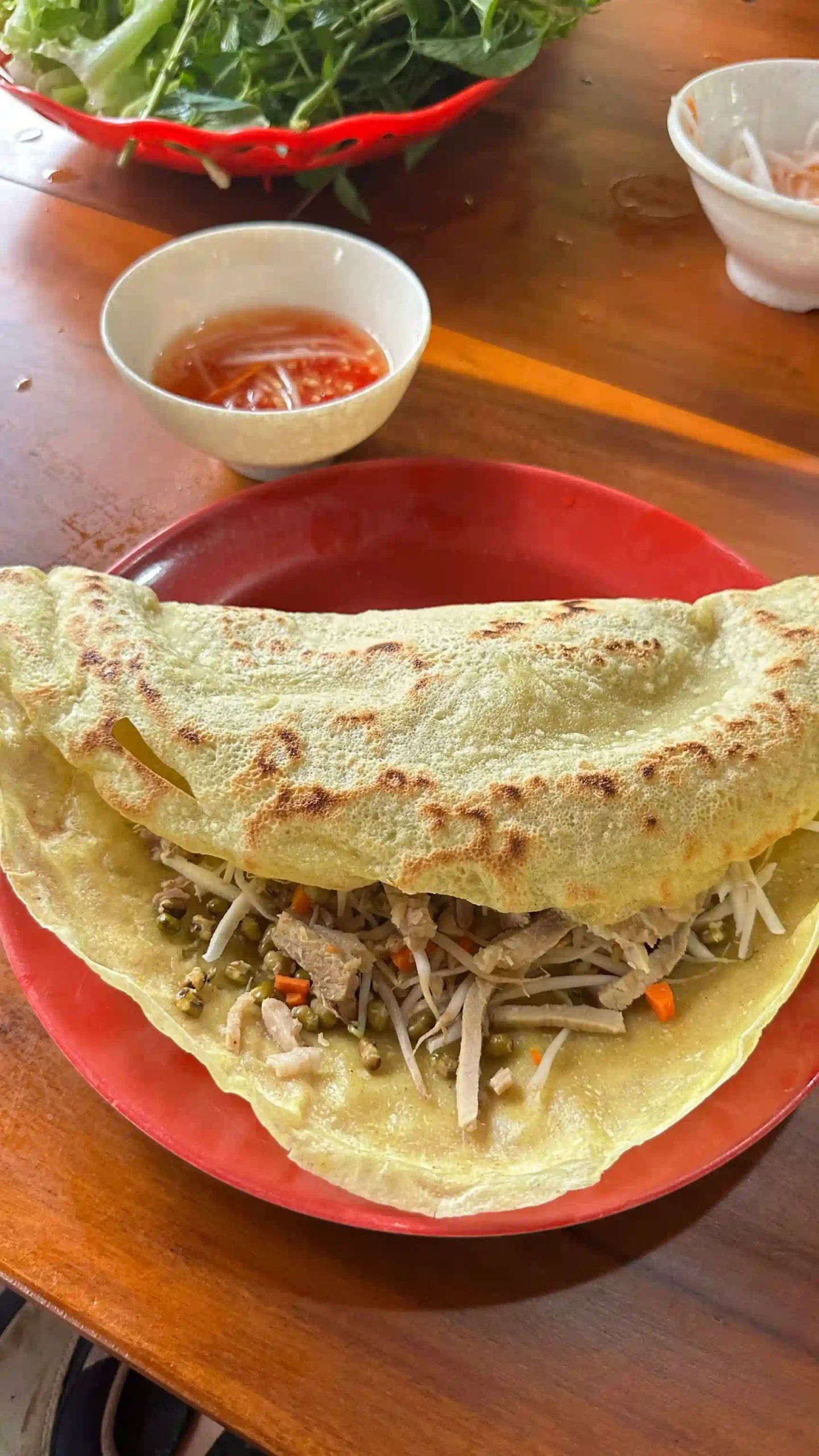
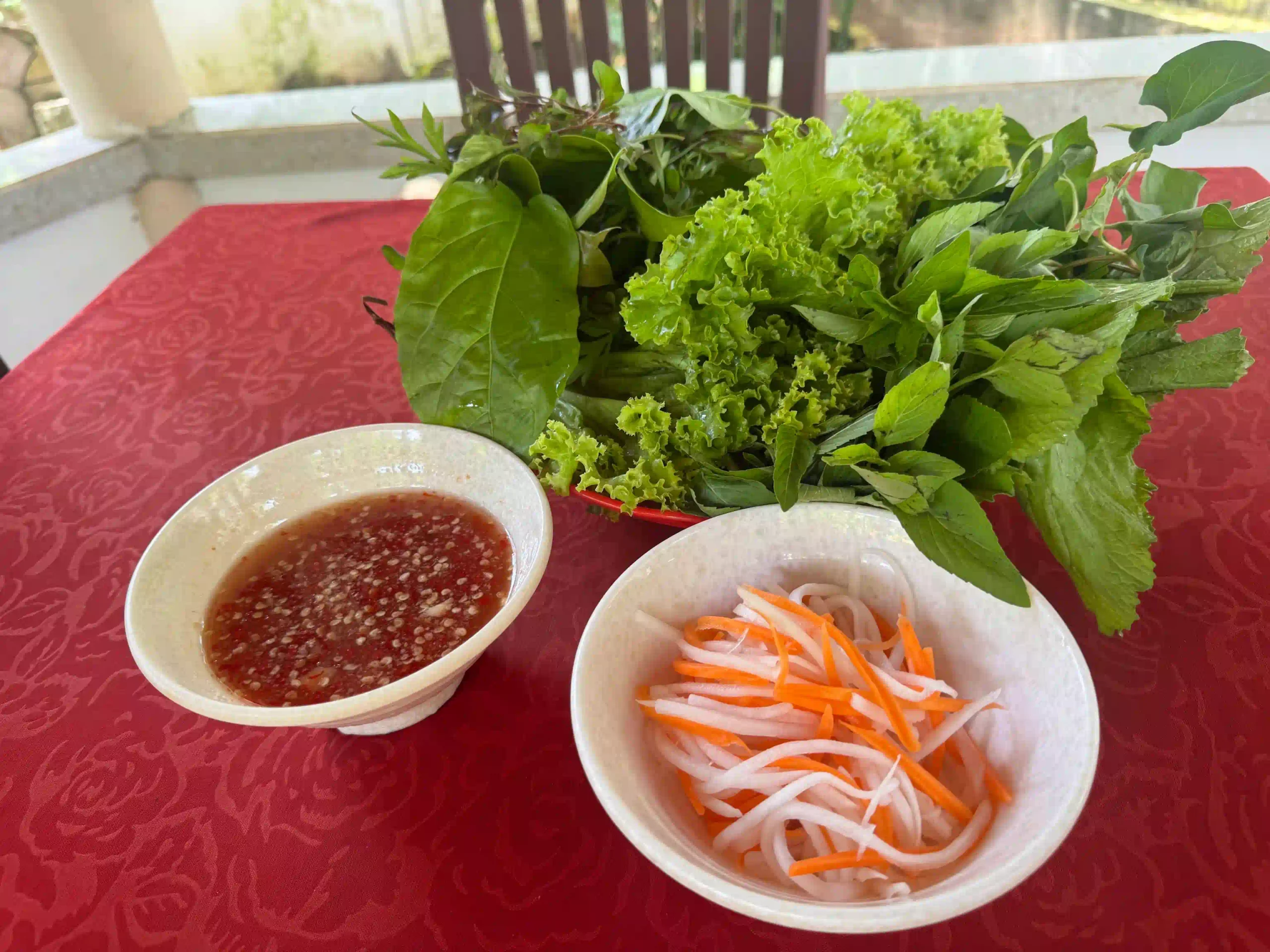
The day ends with bánh xèo at a restaurant by the Hàm Ninh roundabout, about forty minutes, and then they drive you back.
You’re at your hotel with the afternoon still in front of you, which is worth factoring in when you’re deciding whether six hours is too much of your day.
How Hard Is the Trek, Really?
Moderate. Harder than the marketing photos suggest, easier than the word “conquer” on the booking page does.
The operator rules out under-10s, pregnant travellers, anyone with mobility issues, anyone with heart problems, and anyone with low fitness. Take the last one seriously. It’s humid the whole way, there are ladders, and once you’re on the mountain there’s no shortcut down.
Two things make it more manageable than the numbers look. The poles are provided, and most people find the descent harder than the ascent, so use them. And the six hours includes both transfers and lunch, so you’re walking for something closer to four.
The thing that catches people is the humidity. Two hundred and eighty metres in Vietnam in April is not two hundred and eighty metres in Europe, and the litre of water they hand you at the start is not enough for most people.
Can You Hike Phu Quoc National Park Without a Guide?
No, and I looked into it because I’d have preferred to walk it alone. The path is a single narrow trail through dense forest with nothing marking it, the canopy takes your phone signal, and there’s no landmark above the trees to steer by. Every operator on the island says the same thing about going alone.
The rule that makes this tour unusual is the ban on GPS devices. No Strava, no AllTrails, no Wikiloc, no watch recording in your pocket. Their stated reason is that published routes bring unguided hikers onto a mountain with no rescue behind it.
There’s a commercial reason too, which they don’t put in writing. A small operator’s only asset is knowing where the path goes. Once that route is on a public app, anyone can walk it without them, and the trail starts taking traffic it was never built for.
Neither reason bothers me, and it does mean turning tracking off before you start, because they ask. The upshot is that a Phu Quoc National Park trail map doesn’t exist in any usable form, and the tours are the map.
The Other Phu Quoc Hiking Trails
Tiên Sơn Đỉnh is what nearly every tour sells, and it’s a narrow slice of what’s actually up there.
Núi Chúa, 603m
The island’s highest point and a considerably harder day, steep throughout with sections where you’re pulling up on vines. It rarely appears on a public booking page, so it means hiring a private guide, which runs 800,000 to 1,500,000 VND for a group on a half-day.
Đá Bạc peak
Comparable to Tiên Sơn Đỉnh, with the view facing north instead. It shows up regularly in Vietnamese listings and almost never in English ones.
Suối Tiên and the longer stream routes
8 or 9 kilometres with wading and rougher ground, and much less traffic than anything else in the park.
The northern forest walks out of Gành Dầu, Bãi Thơm or Cửa Cạn
4 to 7 hours, flat, gentle pace. This is the version that works for families with children too young for the summit routes, and it’s what most people picture when they imagine a jungle walk here.
If any of those interest you, contact an operator directly and don’t book off a listing. The guides run routes they don’t advertise, and what’s realistic depends on the month as much as on your fitness.
Leeches, Snakes and What You’ll Actually See
Leeches are the first question everyone asks. From May to October there are plenty, concentrated in the wet leaf litter near the streams. From November to April they’re barely an issue.
If you’re going in the wet season, do what the guides do: long trousers with the cuffs tucked into high socks, DEET on your shoes and ankles before you start, and don’t sit on rotting leaf litter or hollow stumps when you stop.
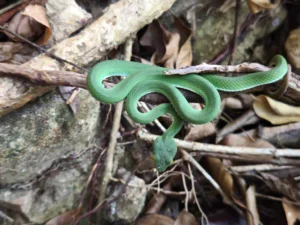
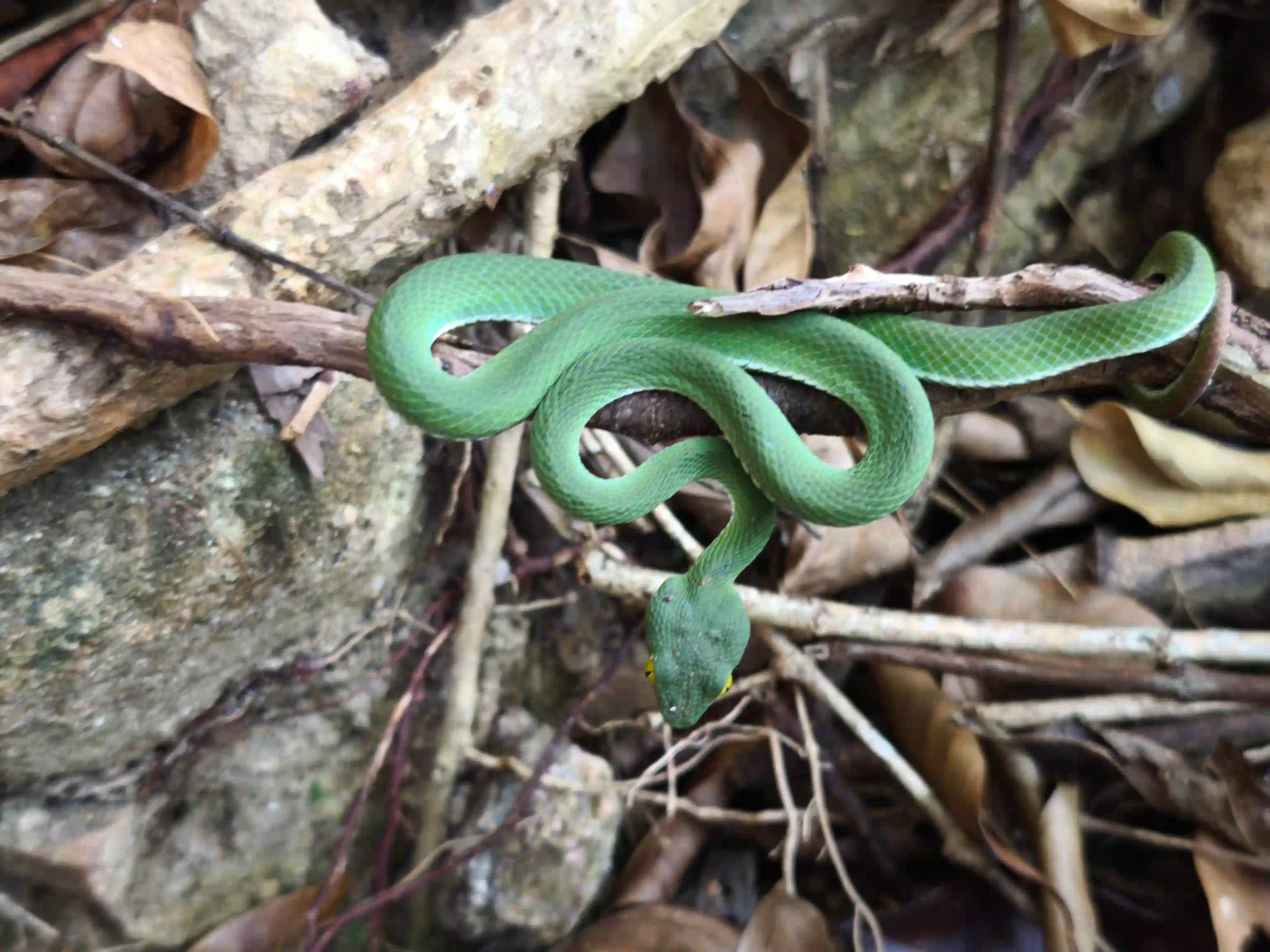
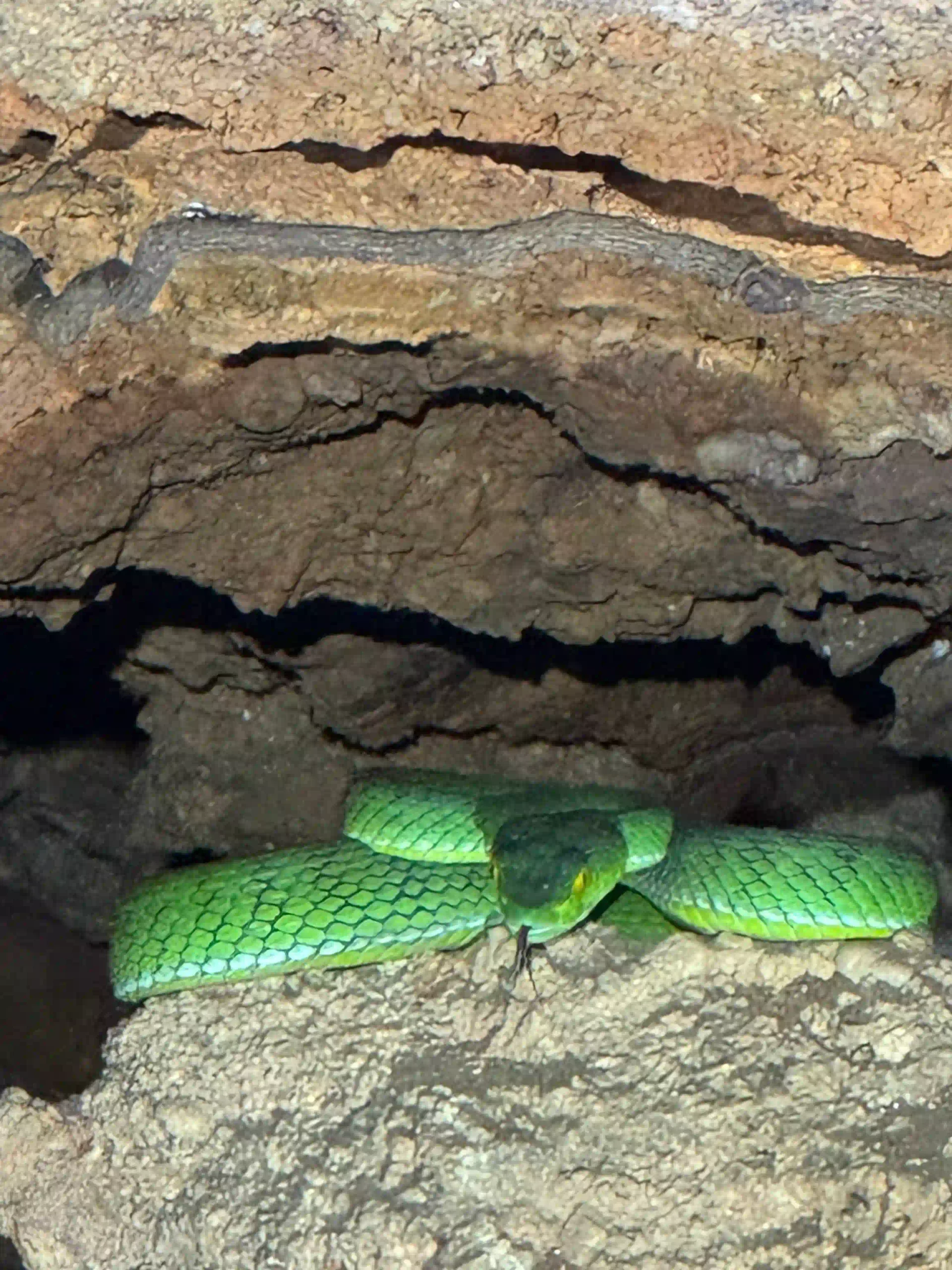
Snakes come up often on this trek, and the pattern is always the same: the guide finds the snake, not the other way round, and it gets shown to the group and then put back where it was. That’s a normal part of the day here and not an incident. If reading that makes you uncomfortable, book something else.
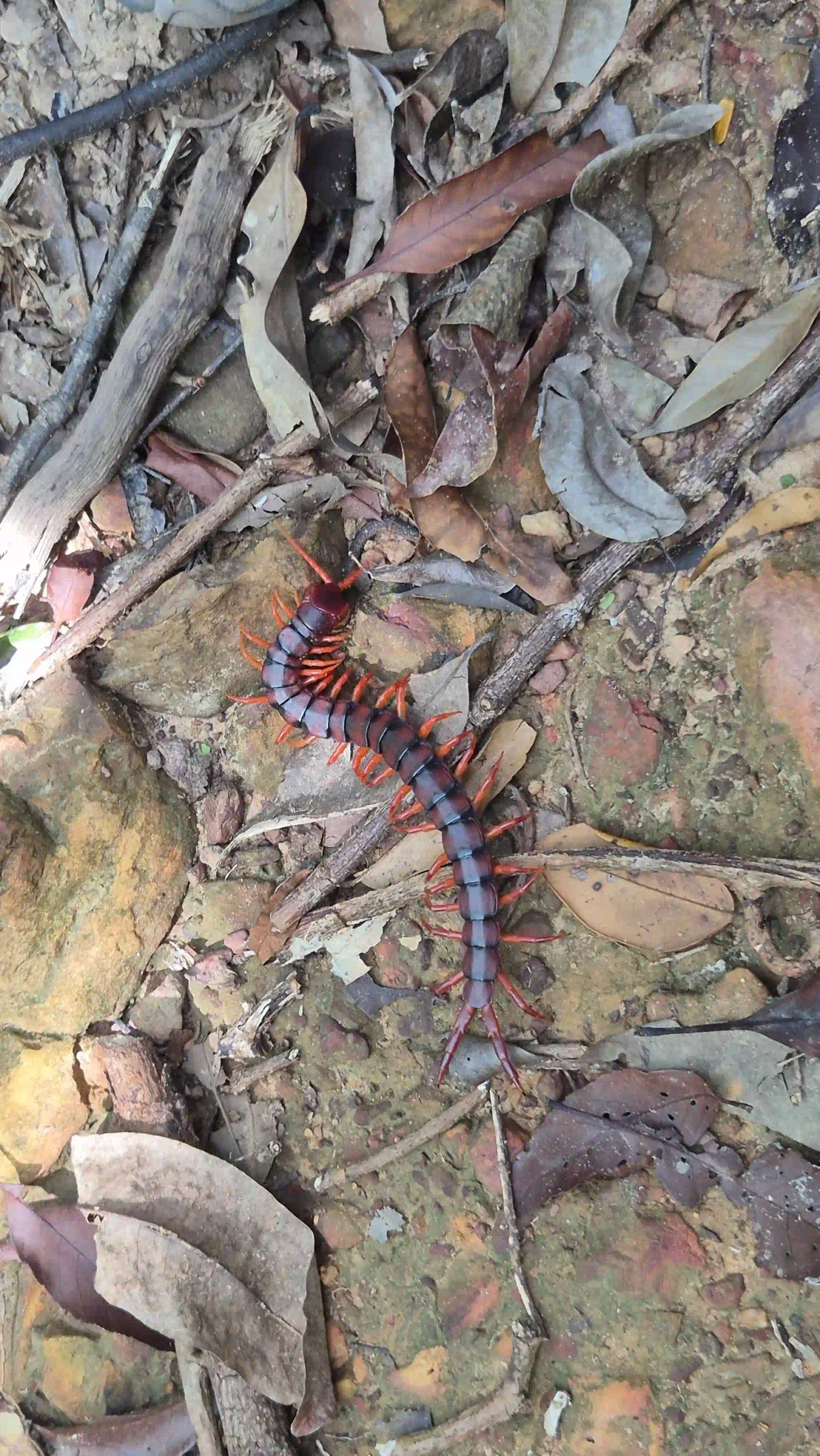
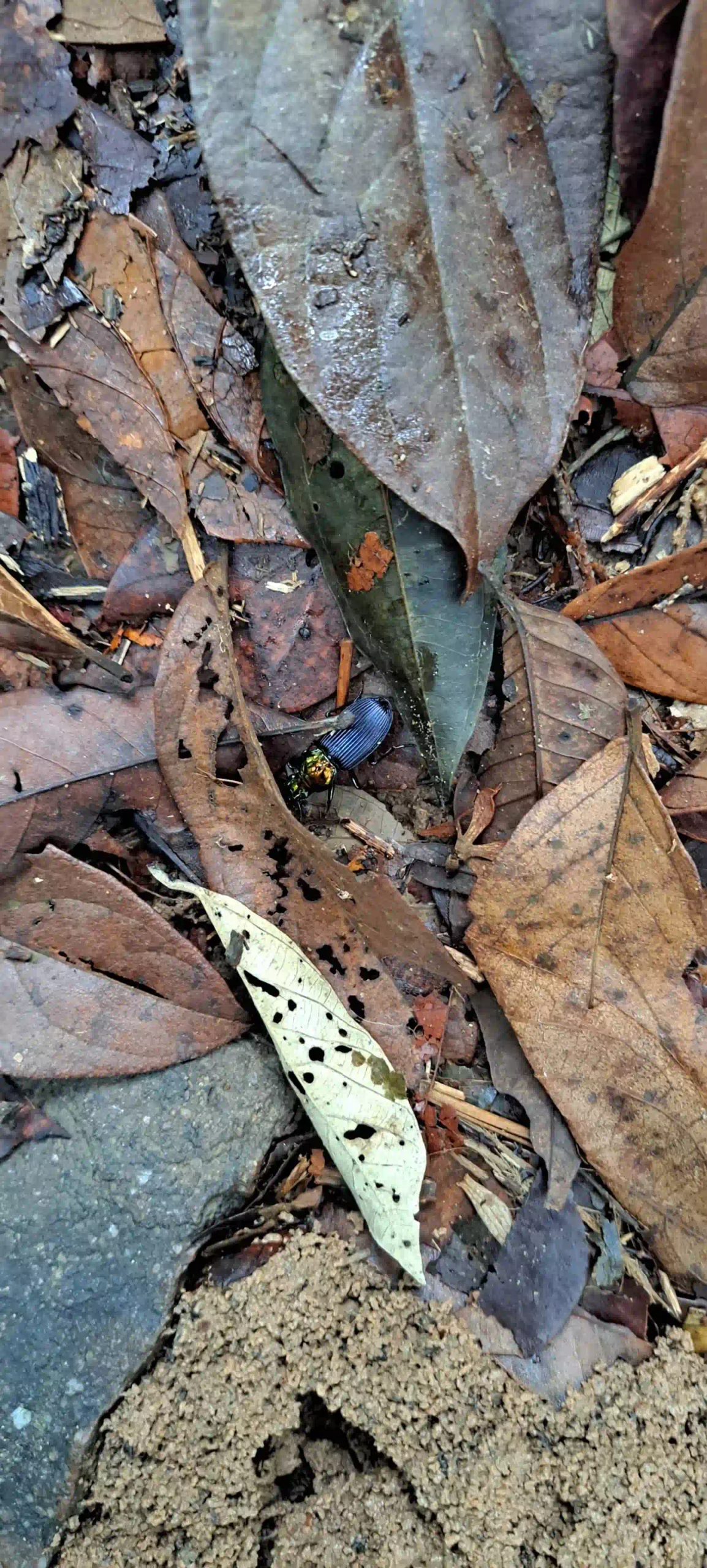
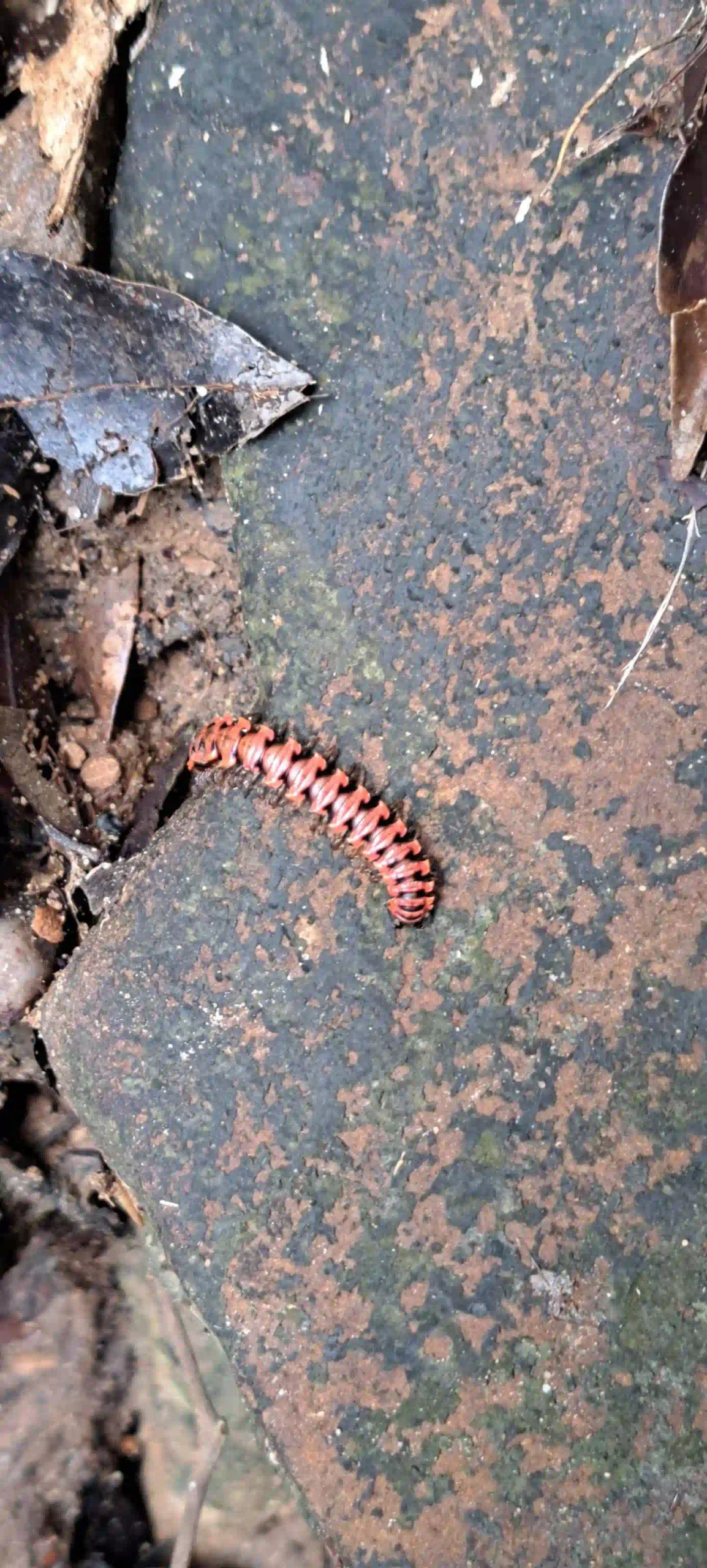
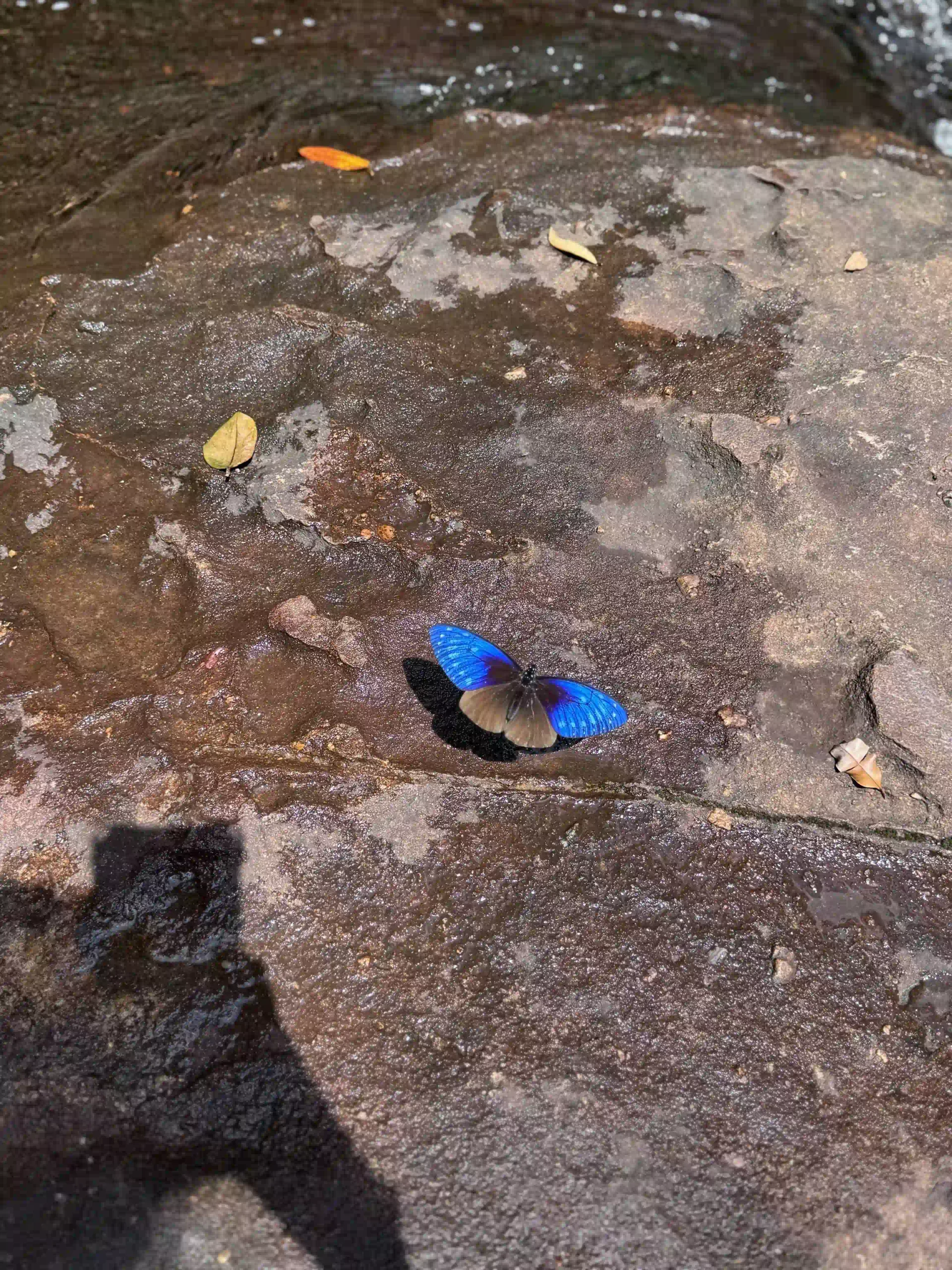
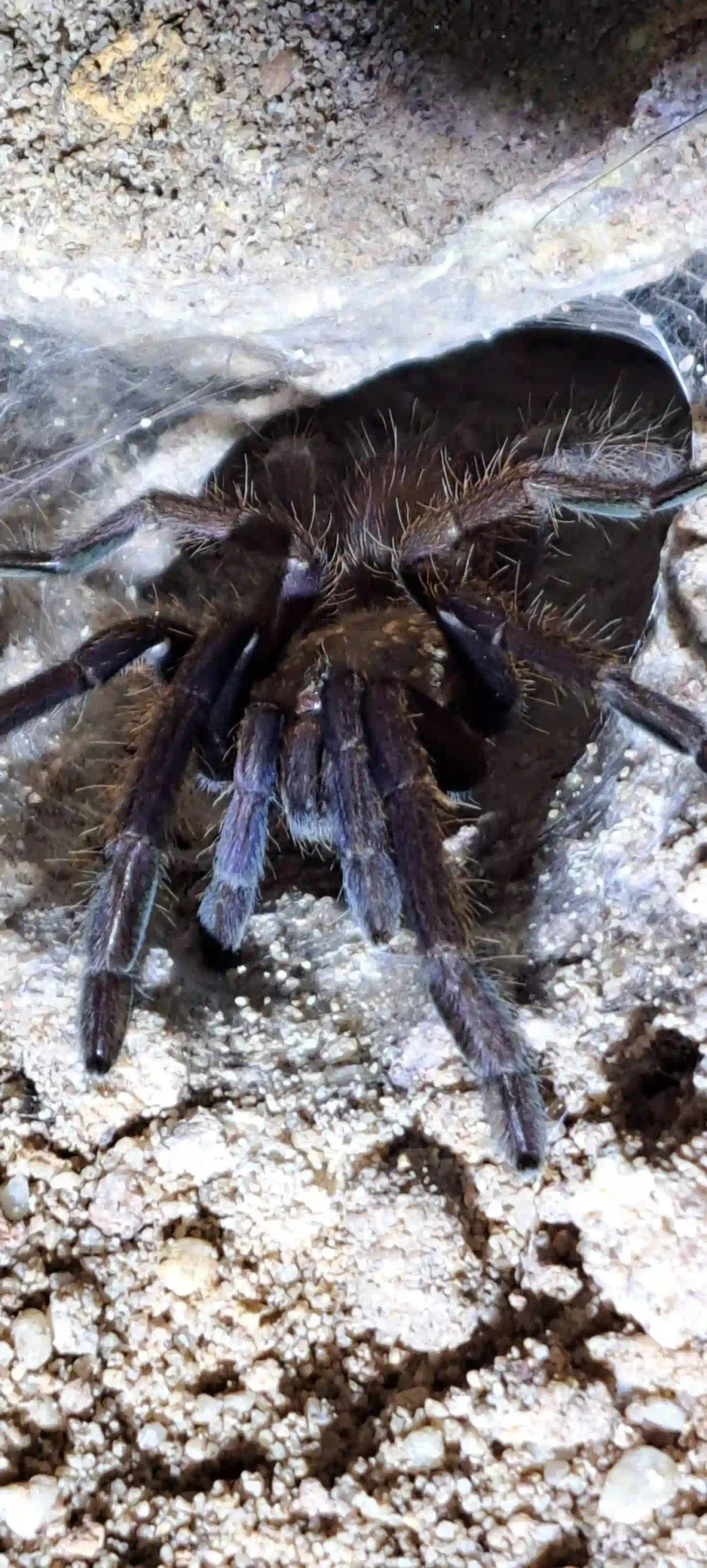
Beyond that, keep your expectations sensible. Hornbills if you’re lucky, birds you’ll hear and not see, a lot of insects, and the plants, which are most of what you’ll come away knowing.
This is not a wildlife day. Vinpearl Safari is where the animals are, and that’s a completely different trip.
The Best Time of Year for Trekking in Phu Quoc
November to April, the same window as everything else here, though for different reasons.
The dry season gives you firm ground, no leeches, and humidity you can work with. In the wet months the path is slick, the leeches are out, and the walk is a good deal less pleasant, even though the forest looks better then.
The trade-off is the swim. Suối Tranh stops running and the cave replaces it. I’d call that the better outcome, and it’s worth knowing before you spend the drive out imagining a waterfall.
What the Phu Quoc National Park Tour Costs
The Phu Quoc National Park tour costs around $66 per person for the six hours, which is the same money as a speedboat island hopping day and about double a wooden-boat one.
| Included | Not included |
|---|---|
| Guide, usually two | Pickup outside central Dương Đông |
| Poles, headlamp, backpack, raincoat | Travel insurance |
| Water, drinks, seasonal fruit | Tips |
| Hammocks and first aid kit | |
| Bánh xèo lunch at Hàm Ninh |
The pickup surcharges are the part to check, because they’re buried in the small print and they change the price. Central Dương Đông is free. Cửa Dương, Dương Tơ, Ông Lang and Long Beach add 300,000 VND per group. Gành Dầu, Cửa Cạn, Vũng Bầu and An Thới add 600,000.
There’s no transfer at all from Hàm Ninh or Bãi Sao, where you instead meet the group at the bánh xèo restaurant by the roundabout, which is where the tour finishes anyway.
Booking as a single person adds 200,000 VND and you go out on the back of a motorbike.
I was based around Ông Lang for a stretch of my month here, and that’s the band where this bites. Run the numbers with the surcharge included before you compare this against anything else, because it quietly turns a $66 day into something closer to $75 and you won’t see it until the confirmation email.
What to Bring, and the Rules Nobody Reads
Their list is hat, swimwear, hiking shoes, sunscreen, insect repellent and long trousers. Trousers matter more than people expect, even in the dry season, because there’s a lot on that trail that will take skin off a bare leg.
Add more water than the litre they give you, and a spare shirt for the drive back.
The rules are stricter than most tours here. No smoking, no fires, no littering, and no touching the plants, which sounds precious until someone explains what a few of them do to skin. The one that catches people out is no plastic bottles, so bring something refillable.
So, Is It Worth It?
On 5 days or more, yes, and I’d put it above every built attraction on the island. It’s the only day here that isn’t sand or water, it’s run properly, and it doesn’t have the assembled-for-tourists feel that a lot of Phu Quoc has picked up in the last few years.
With a cancelled boat day, yes and more so. It goes ahead in weather that stops everything else, and there is very little else on this island to move a lost day onto.
What you’re buying is the guiding more than the mountain. Four hours of someone naming what you’re walking through is the product, and the summit is a decent bonus attached to it. That’s also the risk, since the day depends heavily on which guide you get.
On 3 or 4 days I’d skip it, and I don’t think that’s a close call. The island hopping day and the beaches are what this island does better than almost anywhere in the region, and the trekking itself is stronger at Cúc Phương or Cát Tiên on the mainland if that’s what you’re after.
Skip it too if what you had in mind was an easy walk to a waterfall. That’s the flat northern forest route out of Gành Dầu or Cửa Cạn and it’s a different booking entirely. And they won’t take children under ten, which isn’t a rule anyone negotiates.
My own position, for what it’s worth: I’d have booked this on my first trip here and regretted it, and I’d book it on my second and be glad. The island takes a few days to stop feeling like a beach you’re behind on.
The thing I’d decide first isn’t the tour, it’s the month. Book this between November and April and you get dry ground, no leeches and the cave. Book it in the wet season and you get a slick trail, leeches and a stream you can swim in, and the same $66 buys a noticeably harder day.
For the rest of what’s worth doing on the island, activities in Phu Quoc is the fuller list, and how many days you need is the piece that decides whether this day fits your trip at all.












 Tiếng Việt
 한국어
한국어 中文 (中国)
 日本語
日本語 ไทย
ไทย Deutsch
 Español
 Destinations
 Instagram
 Facebook
 X (Twitter)
 Threads
 Tiktok