









 Ha Giang
 Hanoi
Hanoi Ho Chi Minh City
 Ha Long
 Sapa
Sapa Mekong Delta
 Da Nang
 Hue
Hue Hoi An
 Ninh Binh
 Da Lat
 Nha Trang
 Phan Thiet
 Phu Quoc
 Quang Binh
 Quy Nhon
 Vung Tau
 Thai Nguyen

If you’re heading to the coast and trying to figure out what to eat in Ha Long, you need to understand one thing: this is a working fisherman’s province. People here pull things out of the mud and the ocean that most foreign tourists have never seen before, let alone put in their mouths.
If you get away from the big tourist streets, the ha long food scene is intense, hyper-local, and occasionally intimidating. There are creatures in the water here that look like they belong in a sci-fi movie. Some of them are the best things you will ever eat. Some of them require you to close your eyes to chew them.
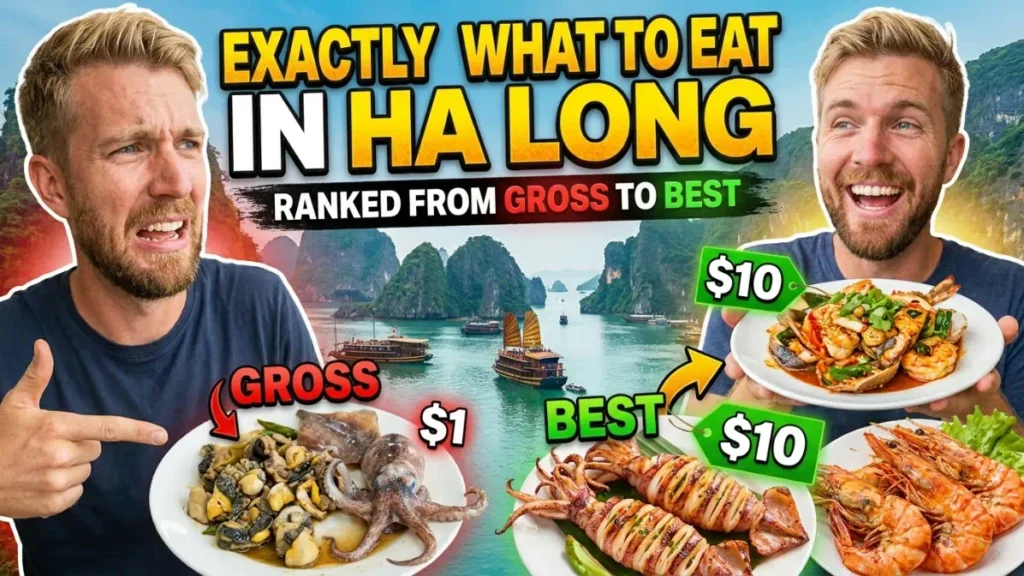
Since a lot of people just ask me for a straightforward guide without the food blogger fluff, I decided to just rank everything I’ve tried over the years. I’m going from the absolute weirdest, most intimidating stuff at the bottom, all the way up to the unquestionable local favorite at the top.
If you’re building out your trip itinerary and trying to figure out all the best things to do in HaLong Bay, make sure you save a massive chunk of time just for eating. Seriously, the food here is a whole mission on its own.
- Quick Answer: The absolute best thing you should eat in Ha Long is Bánh Cuốn Chả Mực (steamed rice rolls with hand-pounded squid cake) in the Hon Gai area. For breakfast, track down a local bowl of Bún Bề Bề (mantis shrimp noodle soup), and definitely skip the generic tourist buffets on cheap cruise ships.
- The absolute must-eats (Ranked Top 5):
- #1: Bánh Cuốn Chả Mực: The undisputed king of Ha Long food. Hot, crispy, super chewy squid cakes served with delicate steamed rice rolls.
- #2: Street Seafood Hotpot: Chaotic, sweaty, loud street dining with intensely spicy-sour broth and whatever was pulled from the ocean that afternoon.
- #3: Sữa Chua Trân Châu (Pearl Yogurt): The perfect late-night fix. Sour cold yogurt mixed with incredibly hot, sweet coconut boba pearls.
- #4: Bún Bề Bề (Mantis Shrimp Noodle Soup): A super sour, tomato-based breakfast noodle bowl filled with sweet mantis shrimp and thunder crab claws.
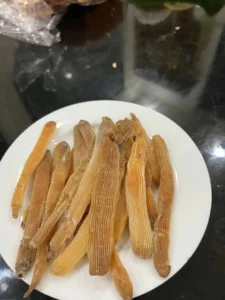
- #5: Sá Sùng (Peanut Worms): Very expensive dried marine worms that look terrible but are a salty, crispy, umami bomb to eat with local beer.
- The good, but weird ones:
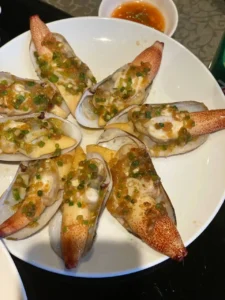
- #6: Tu Hài (Geoduck): Giant, wildly shaped clams that taste amazing grilled in their shells with scallion oil and crushed peanuts.
- What to completely avoid:
- #7: The Budget Cruise Buffet: Usually pale, rubbery fish, cold spring rolls, and uninspired vegetables catered to people afraid of spice.
- The extreme local stuff (Only if you’re brave):
- #8: Sam Biển (Horseshoe Crab): A massive prehistoric creature offering tiny amounts of weirdly dense meat and grainy eggs.
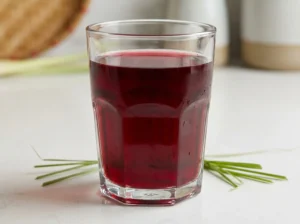
- #9: Rượu Ngán (Mud Clam Blood Wine): Dark pink shots made of pure clam blood mixed with hard white rice wine.
- #10: Ruốc Lỗ (Boiled Baby Octopus): Served whole, curled up, staring at you, to be eaten straight into strong shrimp paste.
10. Ruốc Lỗ (Baby Octopus, boiled alive)
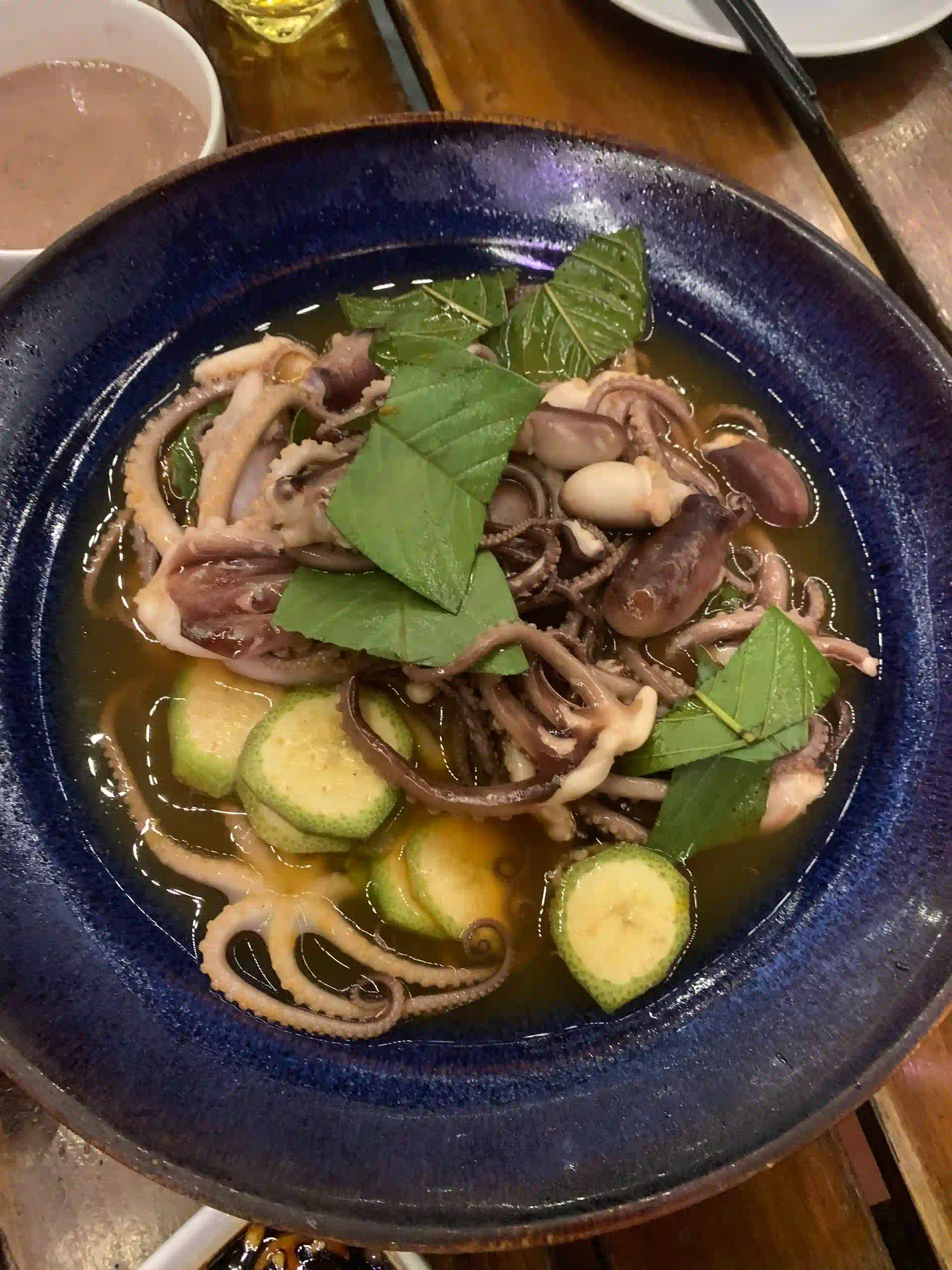
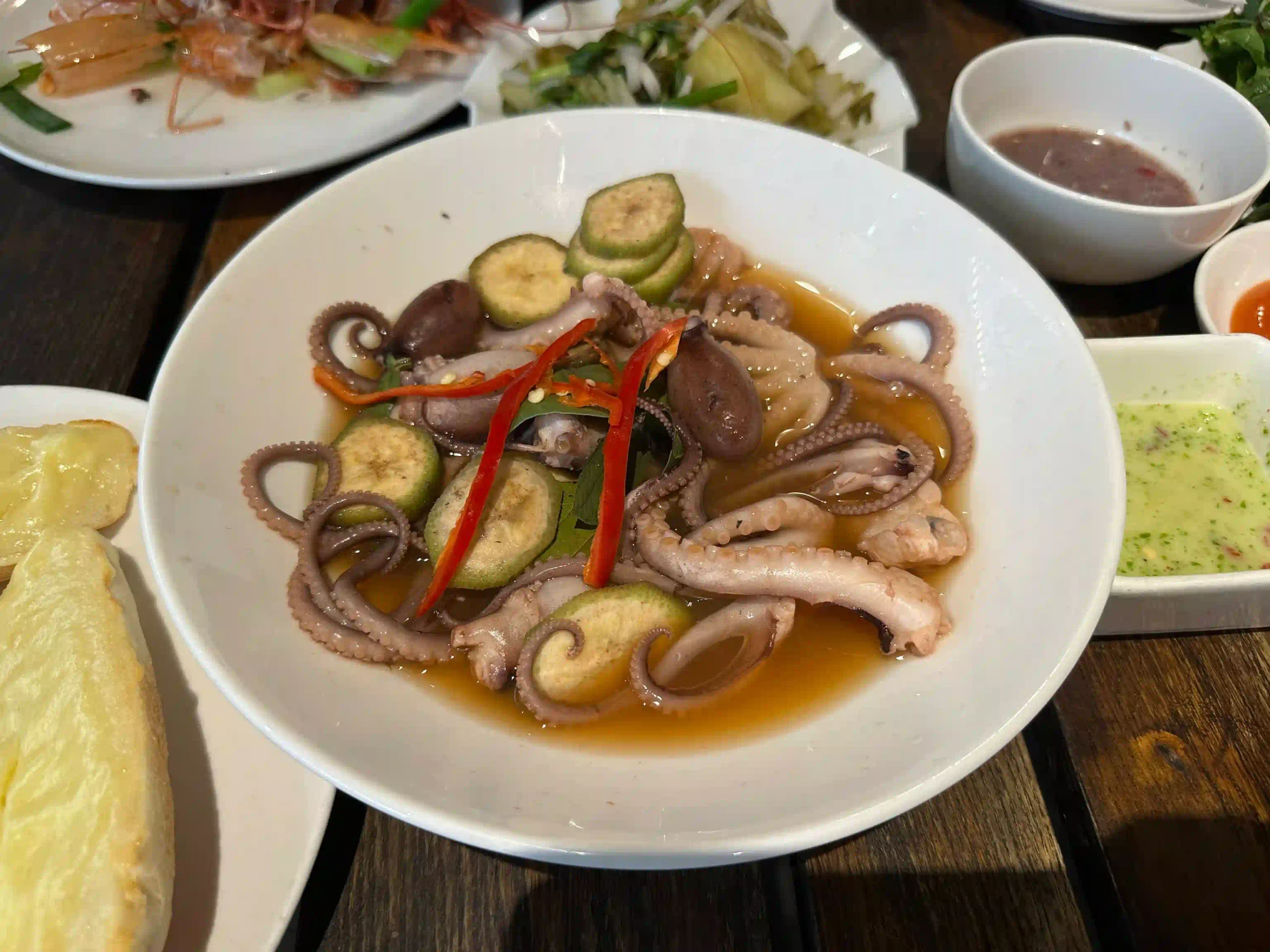
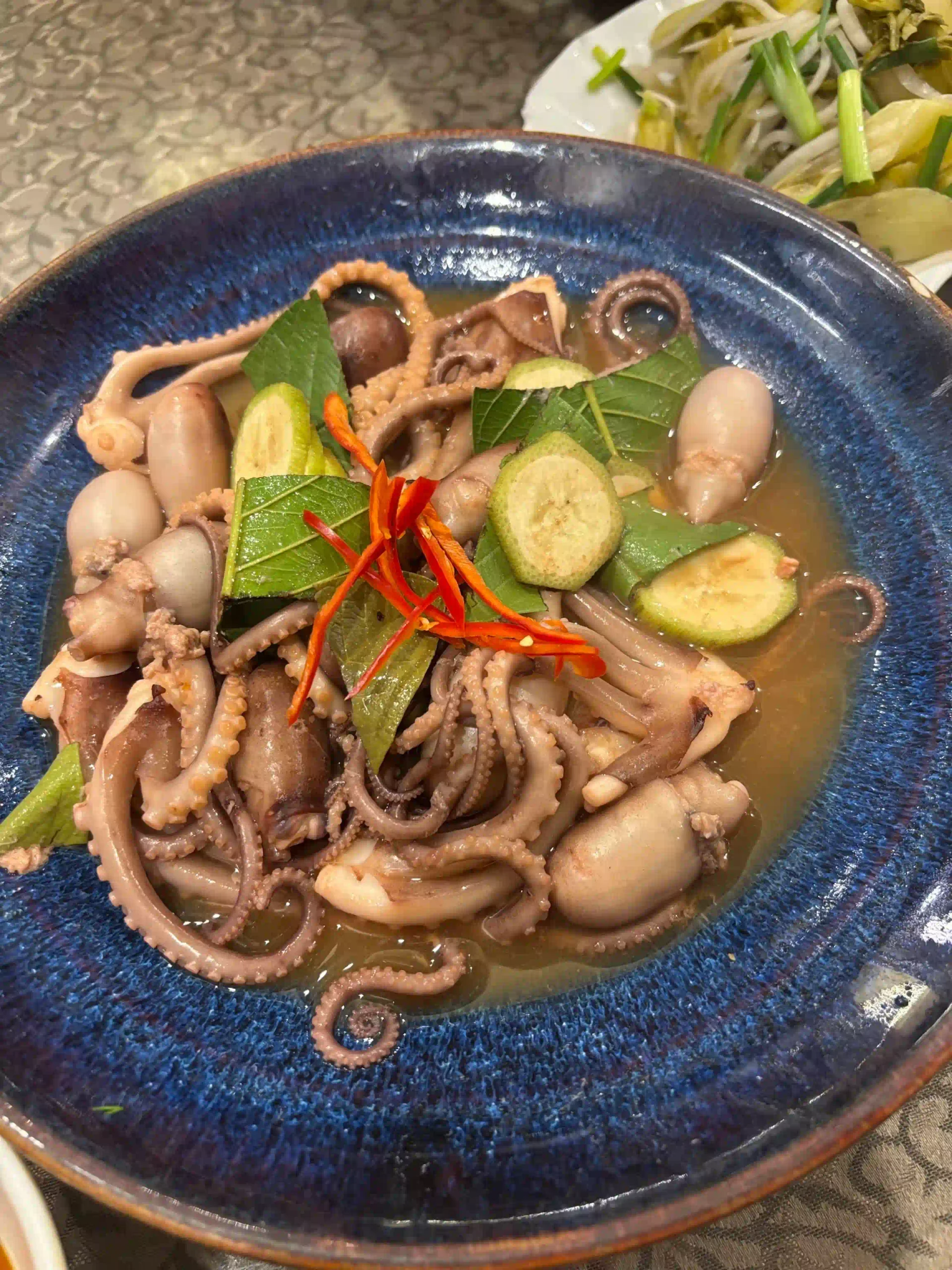
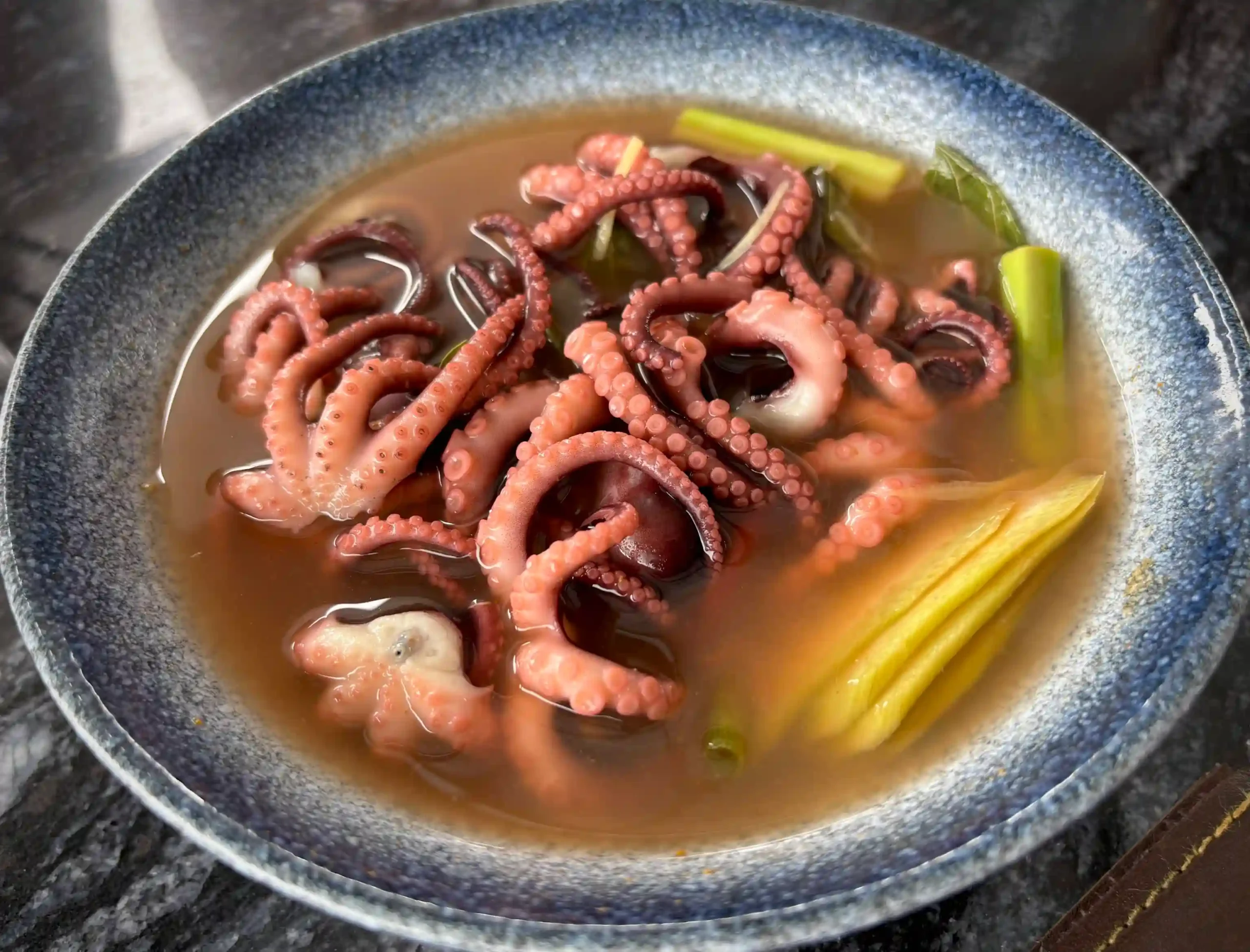
We are starting at the bottom not because this tastes bad, but because it’s hard for a lot of foreigners to look at.
Ruốc Lỗ is a specific type of very small octopus found in the coastal mudflats here. You order it at a local quán bia (beer joint) or seafood spot. The “gross” factor for a lot of people comes from how it’s prepared and served. They often just throw them whole into boiling water with guava leaves and tamarind.
When they bring the plate out, the little purple bodies shrink up, and their tentacles curl tightly so the suction cups are visible. It basically looks like a plate of dark aliens staring back at you.
Then comes the eating part. You grab an entire baby octopus, dip it directly into fermented shrimp paste (mắm tôm, which smells awful if you aren’t used to it), and bite its head off. It’s incredibly chewy. You really have to work your jaw to get through it.
Honestly, it mostly just tastes like salt water and whatever dipping sauce you used. Locals love the texture, but most tourists order one plate, eat one octopus, take a photo, and never touch it again.
- Where to find it: Almost any local street-side seafood joint in the Hon Gai area.
- The cost: Roughly 150,000 VND ($6 USD) for a small plate depending on the season.
9. Rượu Ngán (Blood Wine from a Mud Clam)
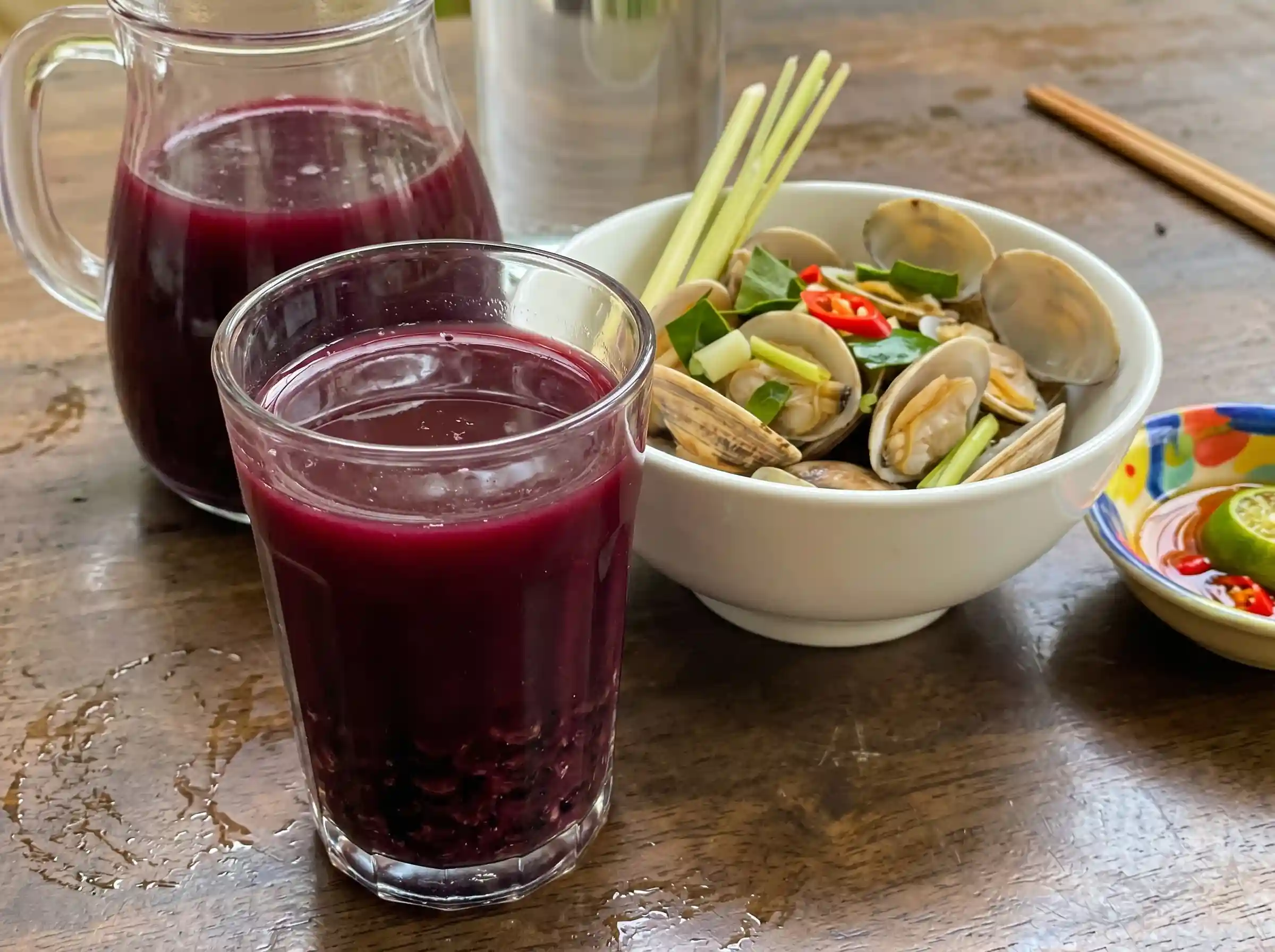
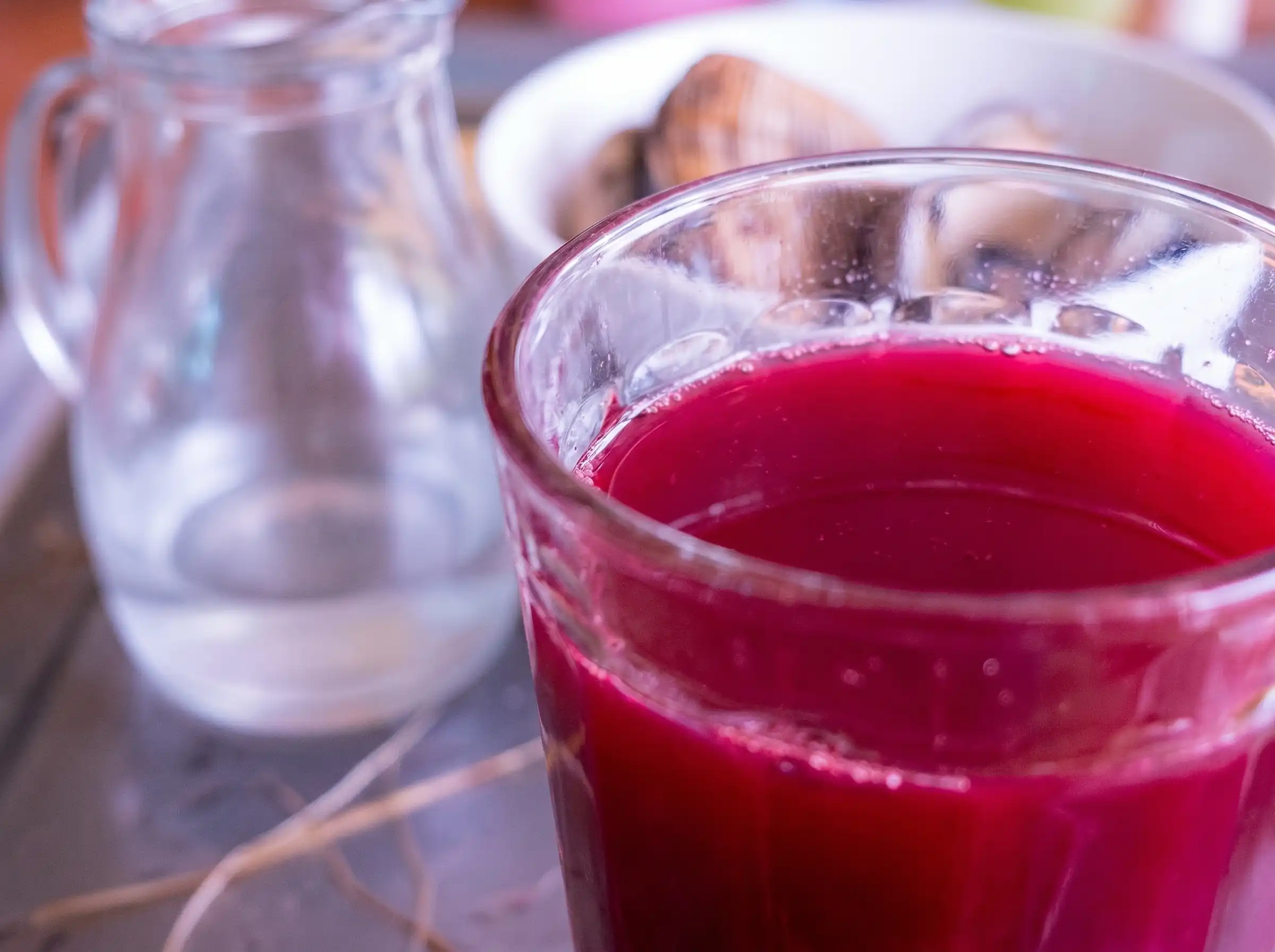
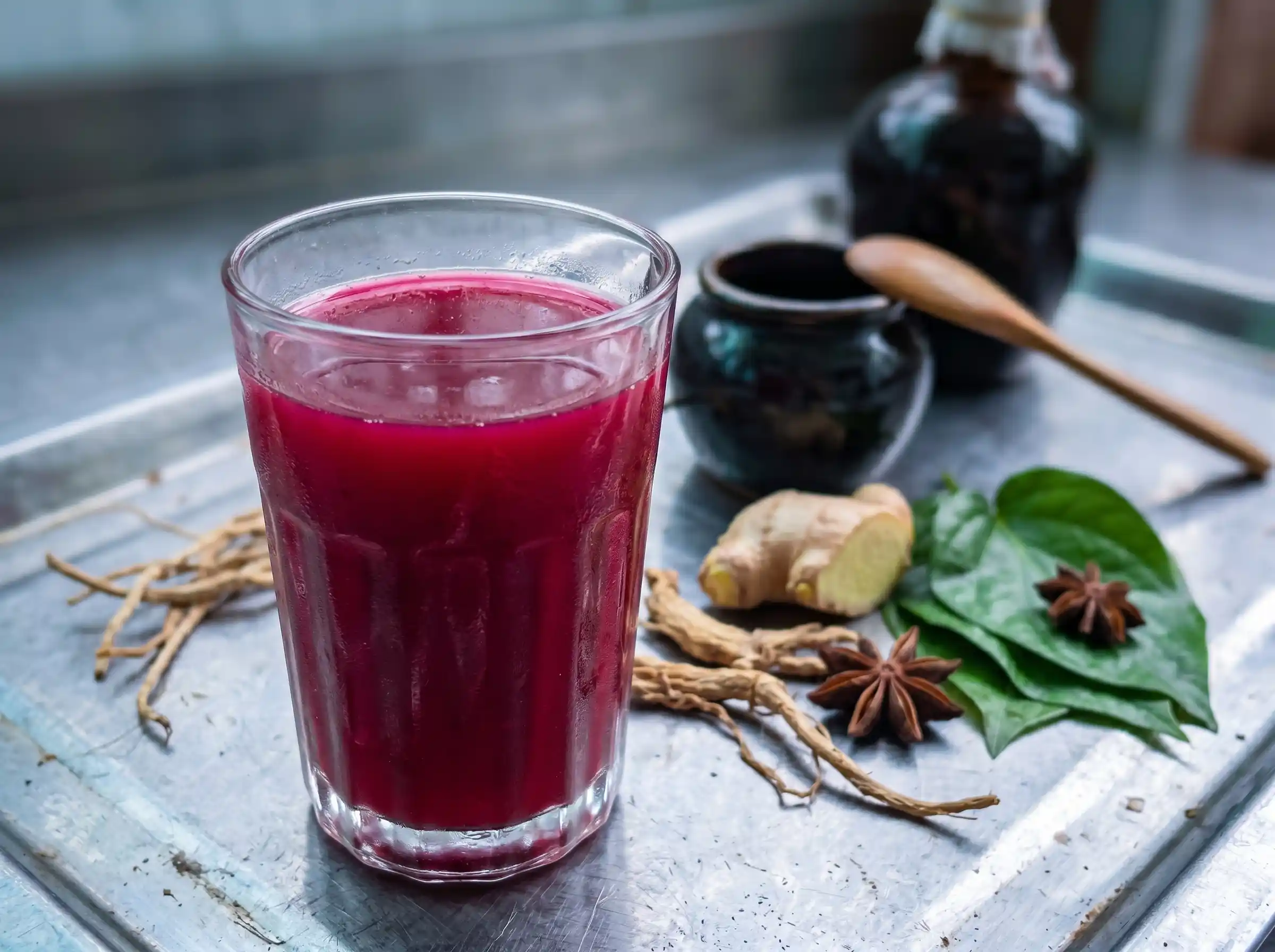
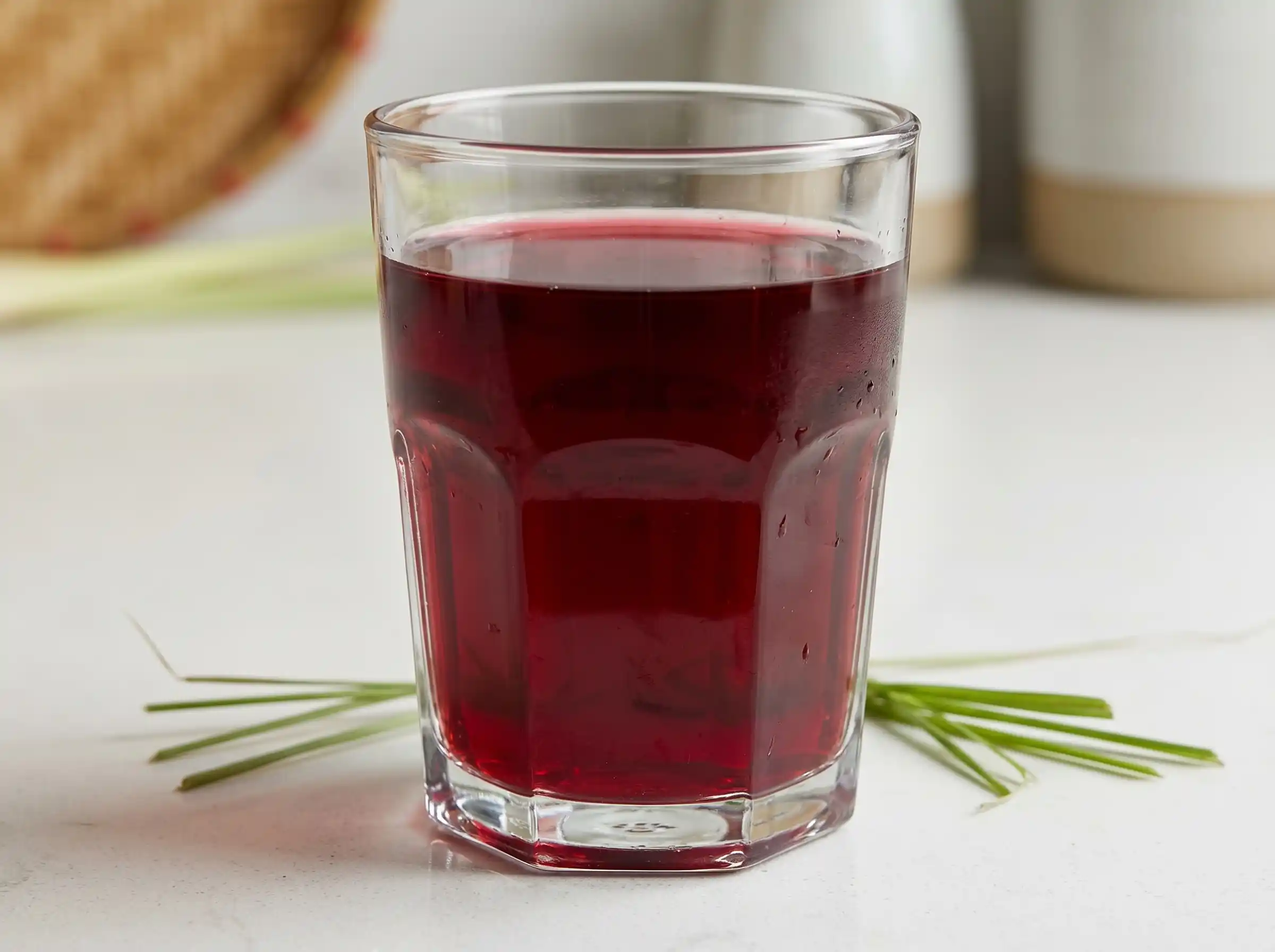
If you come to Quang Ninh province and make local friends, someone is going to try to make you drink this.
First, let’s talk about the Ngán. The name literally translates to “bored” or “tired,” which is a terrible name for food. It looks like a chunky, grey, unremarkable clam that lives deep in the mud. By itself, it’s highly prized and very expensive. People grill it, steam it, or throw it in soup.
But then there’s the wine. This is the part that creeps out visitors.
They take the live clam, crack it open, and squeeze the raw, dark red fluids,yes, basically the blood of the clam, directly into a glass of white rice wine (rượu trắng). They stir it up with a chopstick, and the whole glass turns an unsettling, cloudy dark pink color.
You knock it back like a shot.
What does it taste like? It tastes exactly how you think raw seafood blood mixed with cheap gasoline alcohol would taste. It is incredibly pungent, slightly salty, very metallic, and it burns on the way down. The older men drinking at the tables will insist it’s fantastic for male stamina. That’s always the excuse for the weirdest drinks here.
If you can keep it down without wincing, you earn instant respect from every local guy in a 50-meter radius.
- Where to find it: It’s often offered off-menu at fresh seafood restaurants where you pick the clams alive from tanks.
8. Sam Biển (Horseshoe Crab)
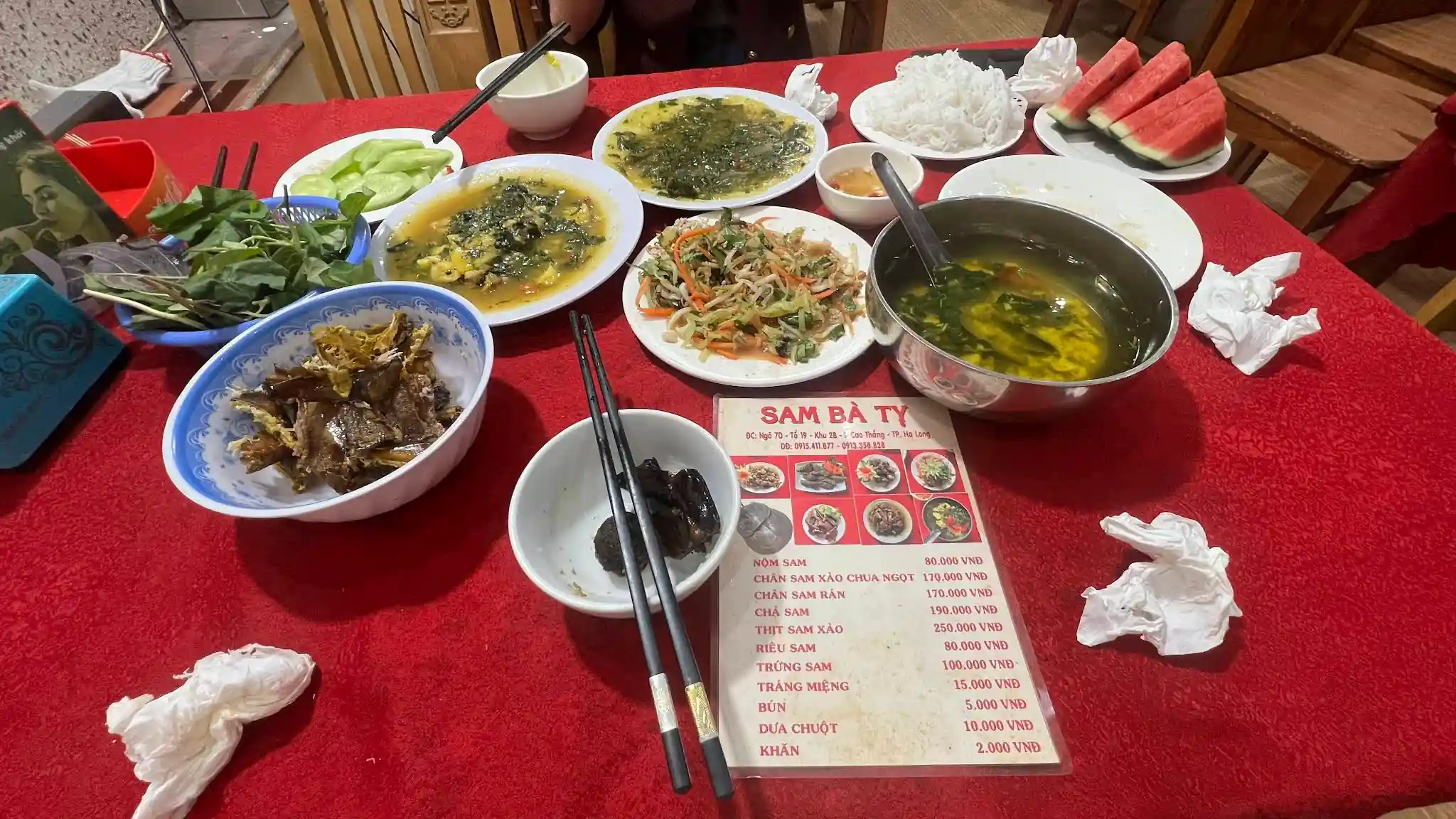
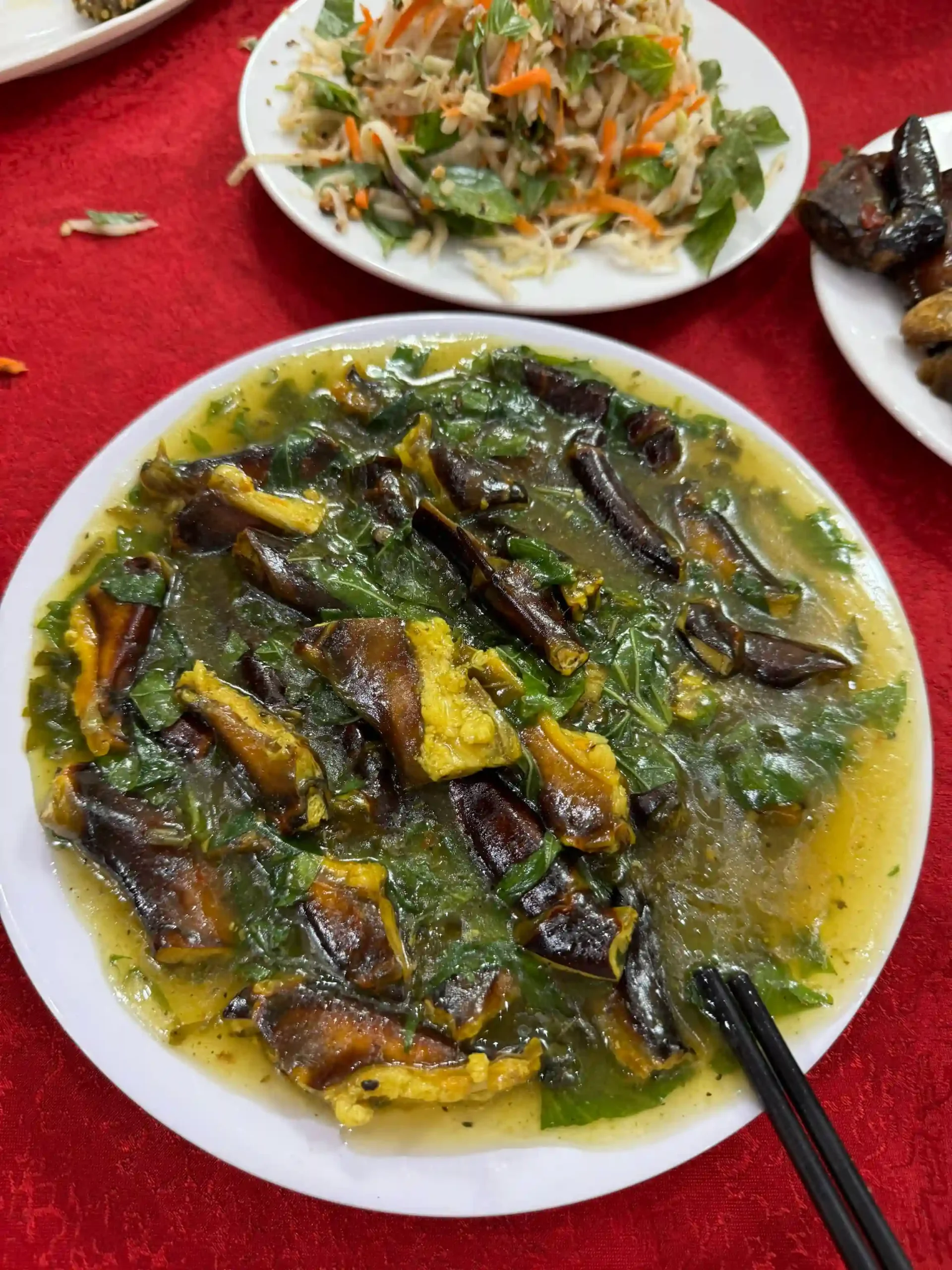
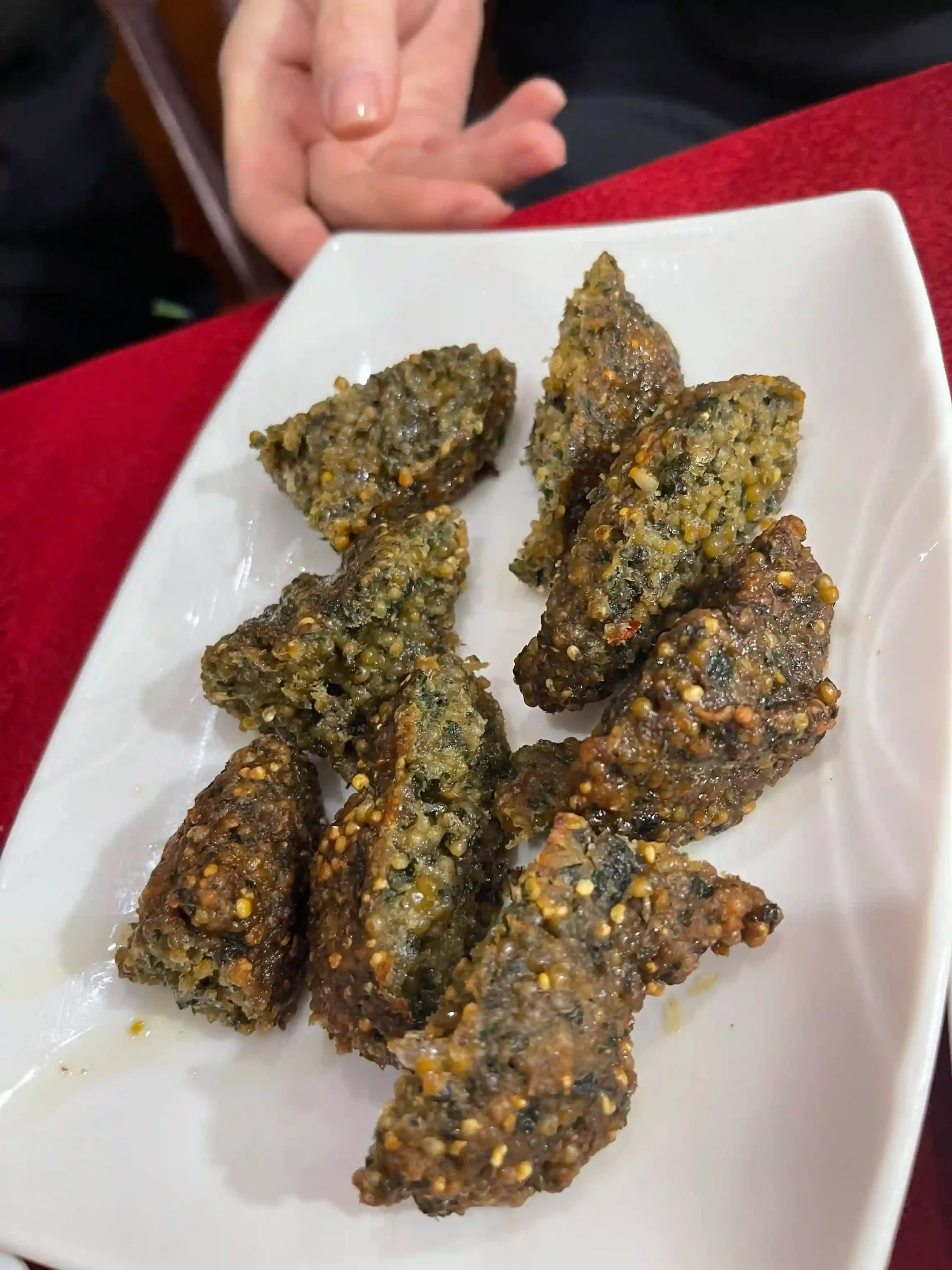
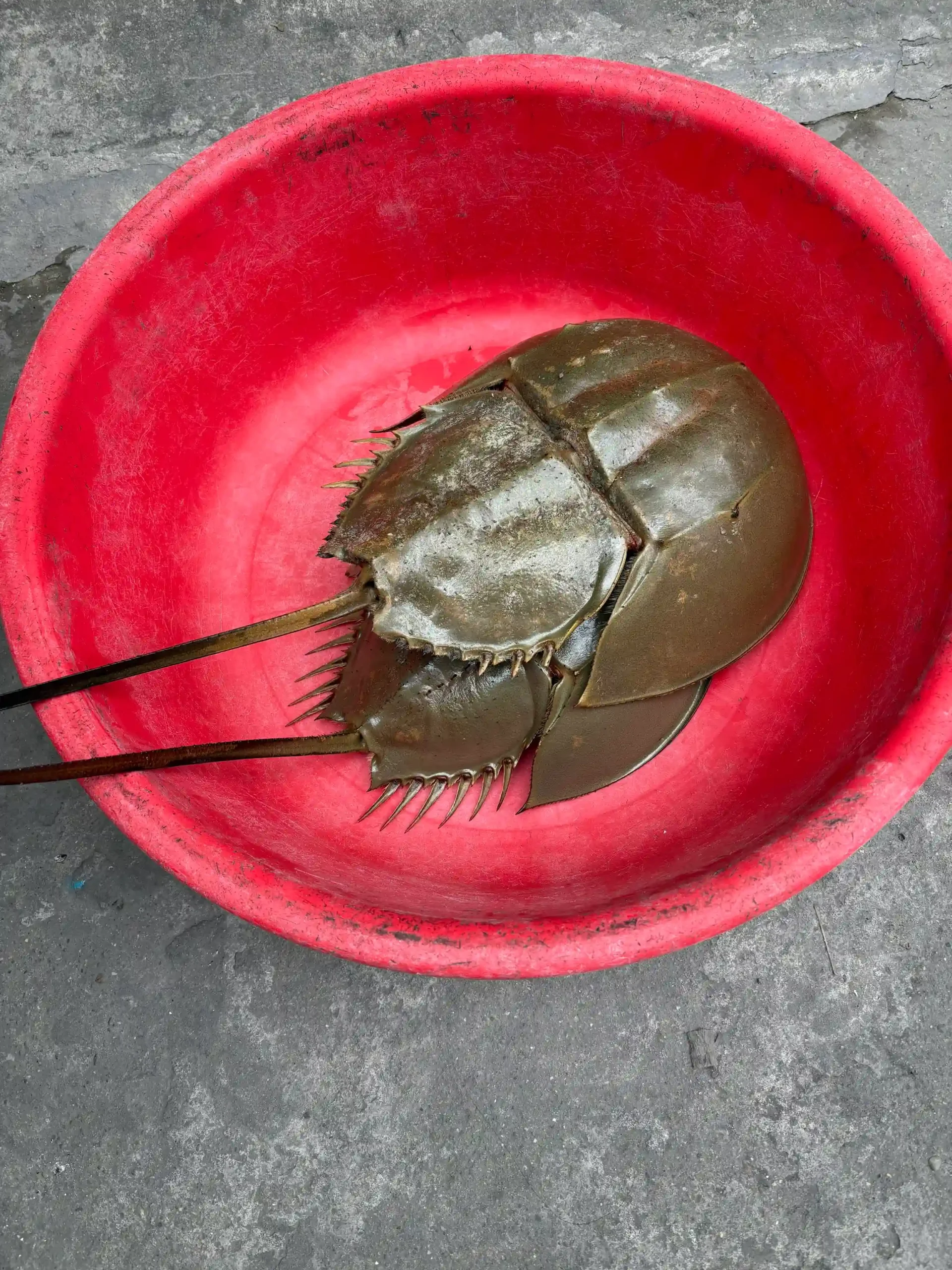
I feel like eating Sam Biển is something you only do once for the novelty. Have you ever seen a horseshoe crab? They look like armored prehistoric roombas dragging a spiked tail. They bleed blue blood in the wild.
In Ha Long, eating Sam is a whole culture. They even have dedicated restaurants just for this one animal. Because they are apparently tricky to prepare, the meat can make you violently ill if the chef accidentally punctures a certain internal organ while chopping it up, you don’t see it everywhere.
They use almost every part of it, so it’s usually served as a massive set meal. They chop up the shell to grill the little bits of meat attached to the underside, they make a salad out of it, they stir fry it with lemongrass, and they take the eggs and grill them inside the armored shell.
The thing is, horseshoe crabs barely have any meat. The meat they do have is really dense and sort of tastes like standard crab mixed with very tough squid. Most of what you eat is actually the crab eggs, which have a grainy texture that sticks to your teeth.
It is entirely weird. It’s worth the experience to say you did it, but it’s an acquired taste for sure.
- Where to eat it: There is a legendary local place called Quán Sam Bà Tỵ on Ngo 7D, Cao Thang street. Be ready to just point at whatever everyone else is eating because ordering is confusing.
- The cost: Not cheap. A full meal set often runs 400,000 – 500,000 VND ($16 – $20 USD).
7. The Mid-Range Cruise Ship Buffet
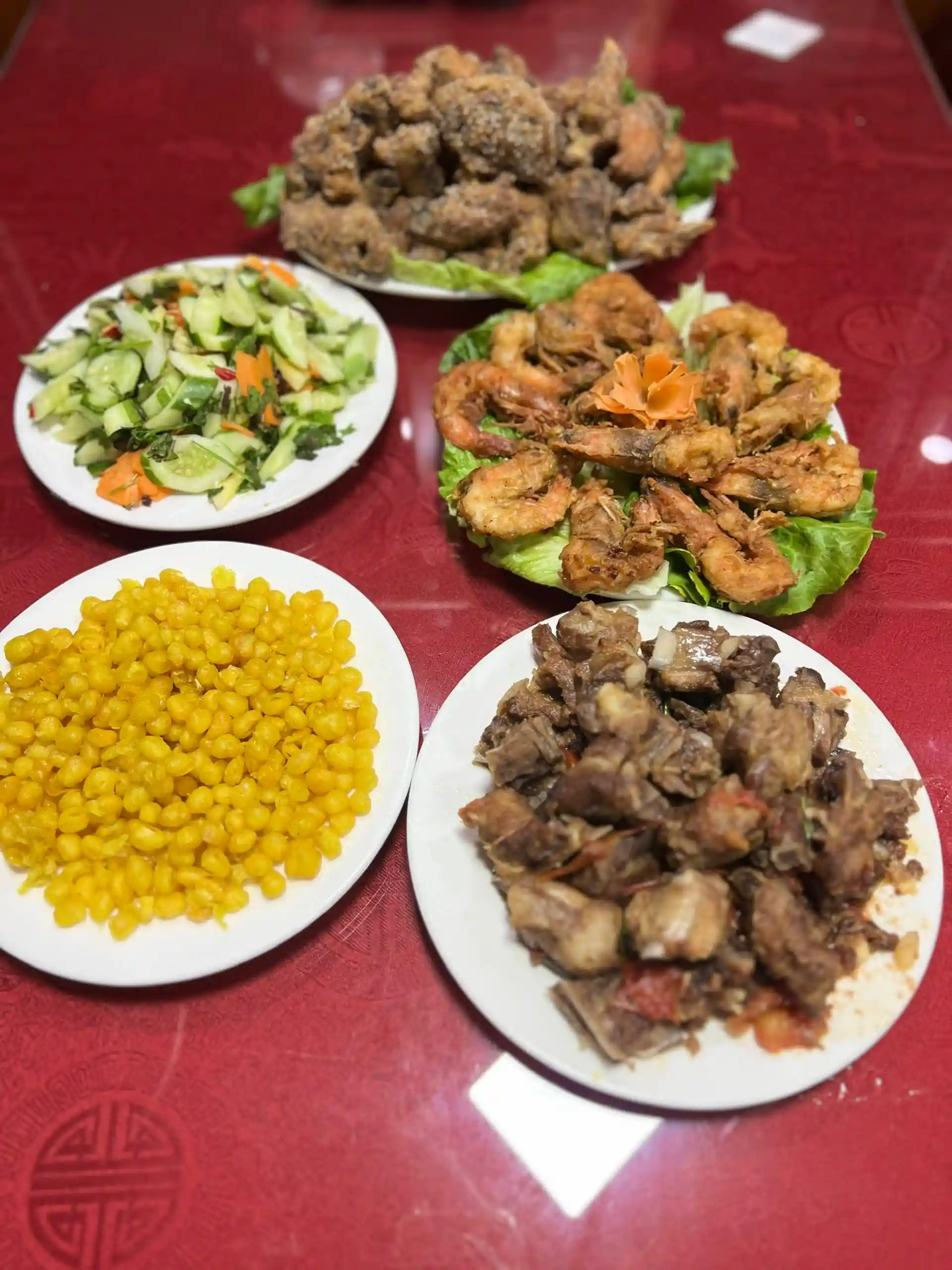
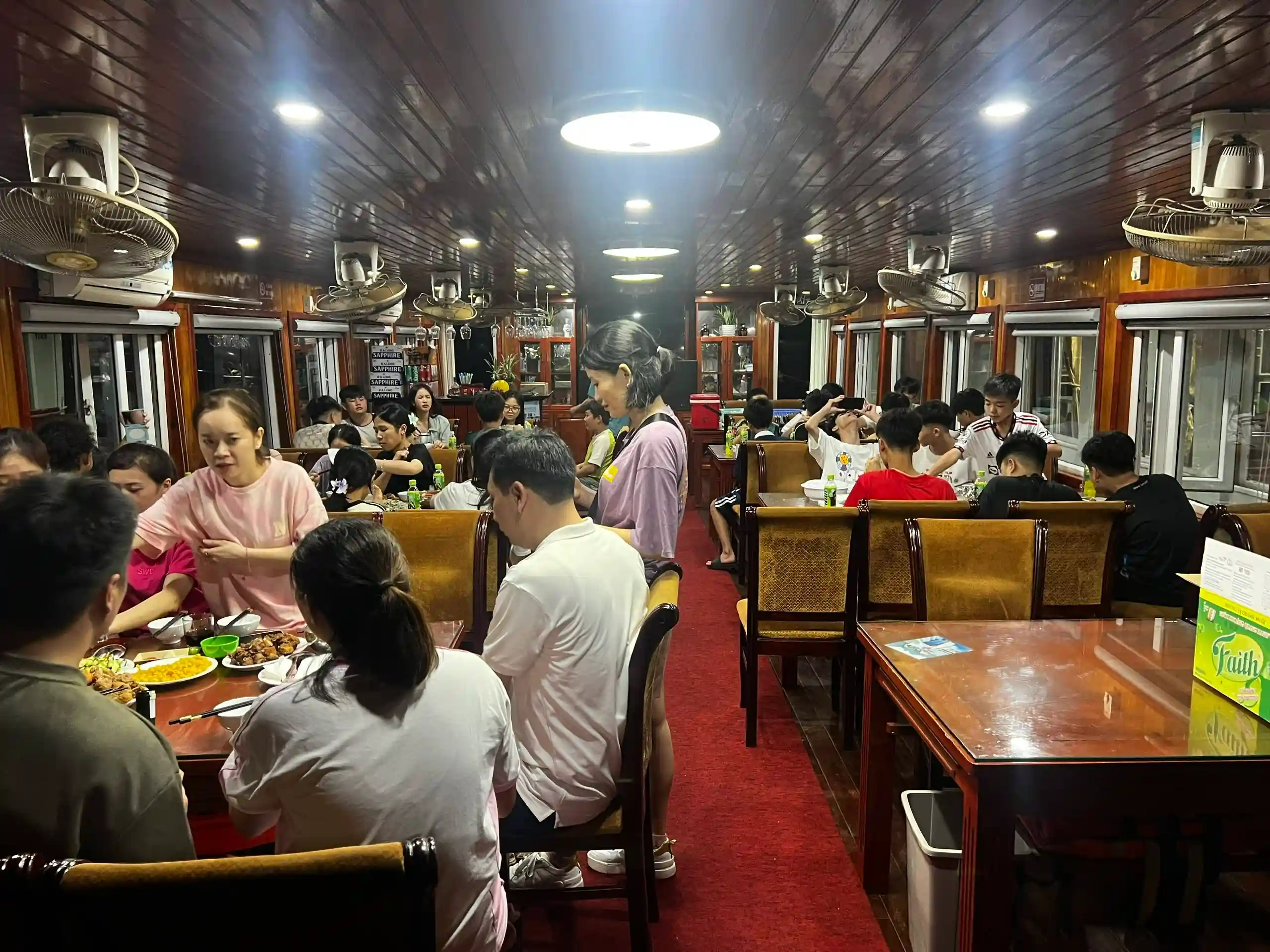
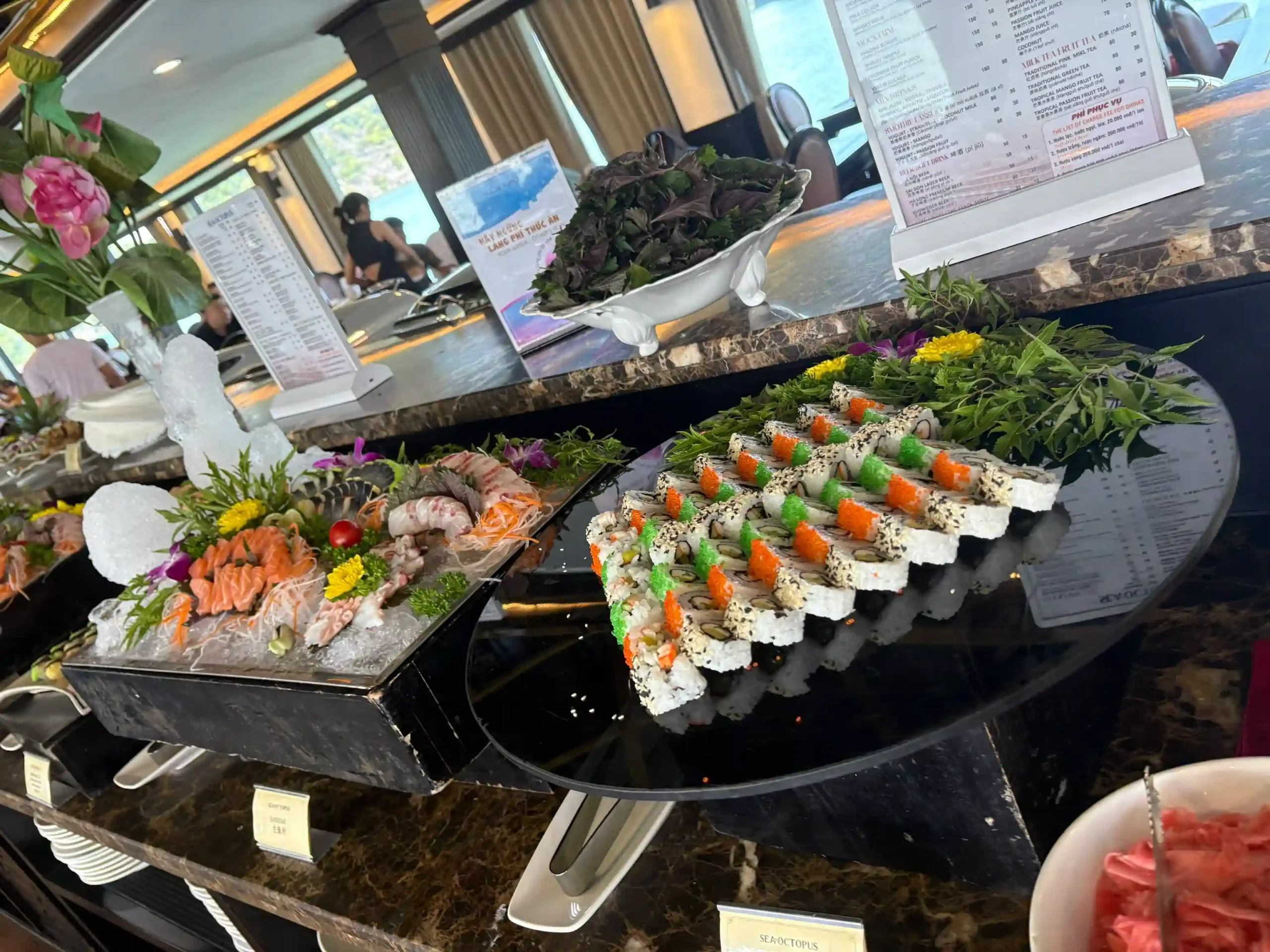
I am slotting this in at number 7. This is the food 90% of tourists eat when they ask themselves what to eat in Ha Long, and honestly, it’s one of my biggest pet peeves.
If you book a standard overnight cruise, especially one in the cheaper tier ($90 – $100), you aren’t eating Ha Long food. You are eating banquet hall food cooked in bulk for Westerners who are afraid of spices.
When that buffet opens at 7:00 PM in the dining room, people stampede for it. But when you get to the metal trays, what do you get? A mountain of plain white rice. Slices of a pale, unidentifiable fish that was cooked hours ago and sits swimming in a diluted sweet-and-sour tomato sauce. Some steamed morning glory (rau muống) that has gone slightly yellow because the kitchen prepped it at noon.
The most depressing item is usually the spring rolls. They fry them in big batches long before the meal, so when you finally grab one, the wrapper isn’t crispy anymore, it’s sort of bendy and saturated in cold oil.
Are there exceptions? Yes. If you drop $200 on a high-end luxury ship, you get a beautiful five-course meal with grilled lobster and local specialties. But the mass-market buffet food is completely disconnected from the actual local seafood culture sitting just miles away in the city.
Skip filling up on the boat. Eat a light meal there, and go out into town the minute you dock.
6. Tu Hài (The Geoduck Clam)
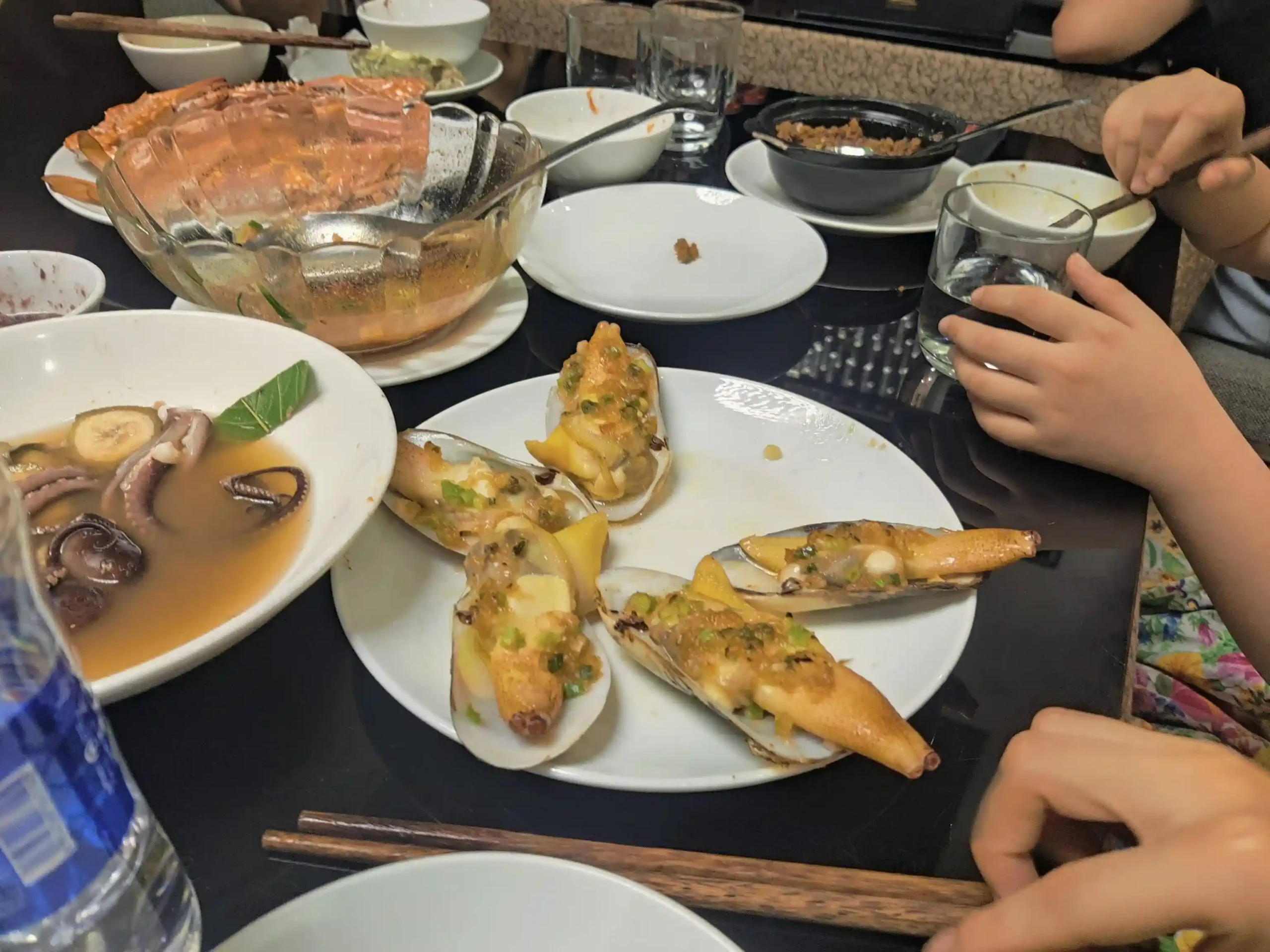
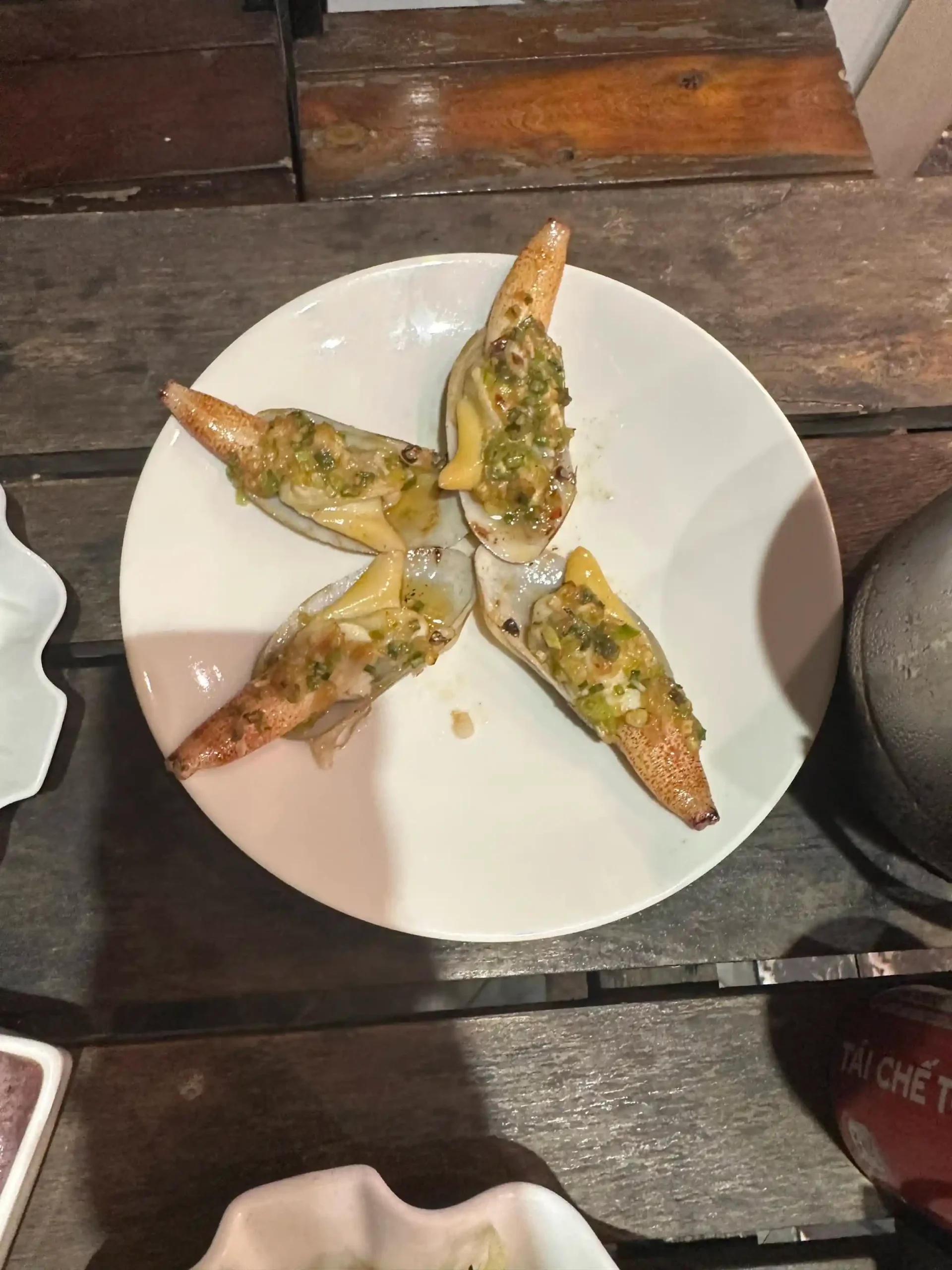
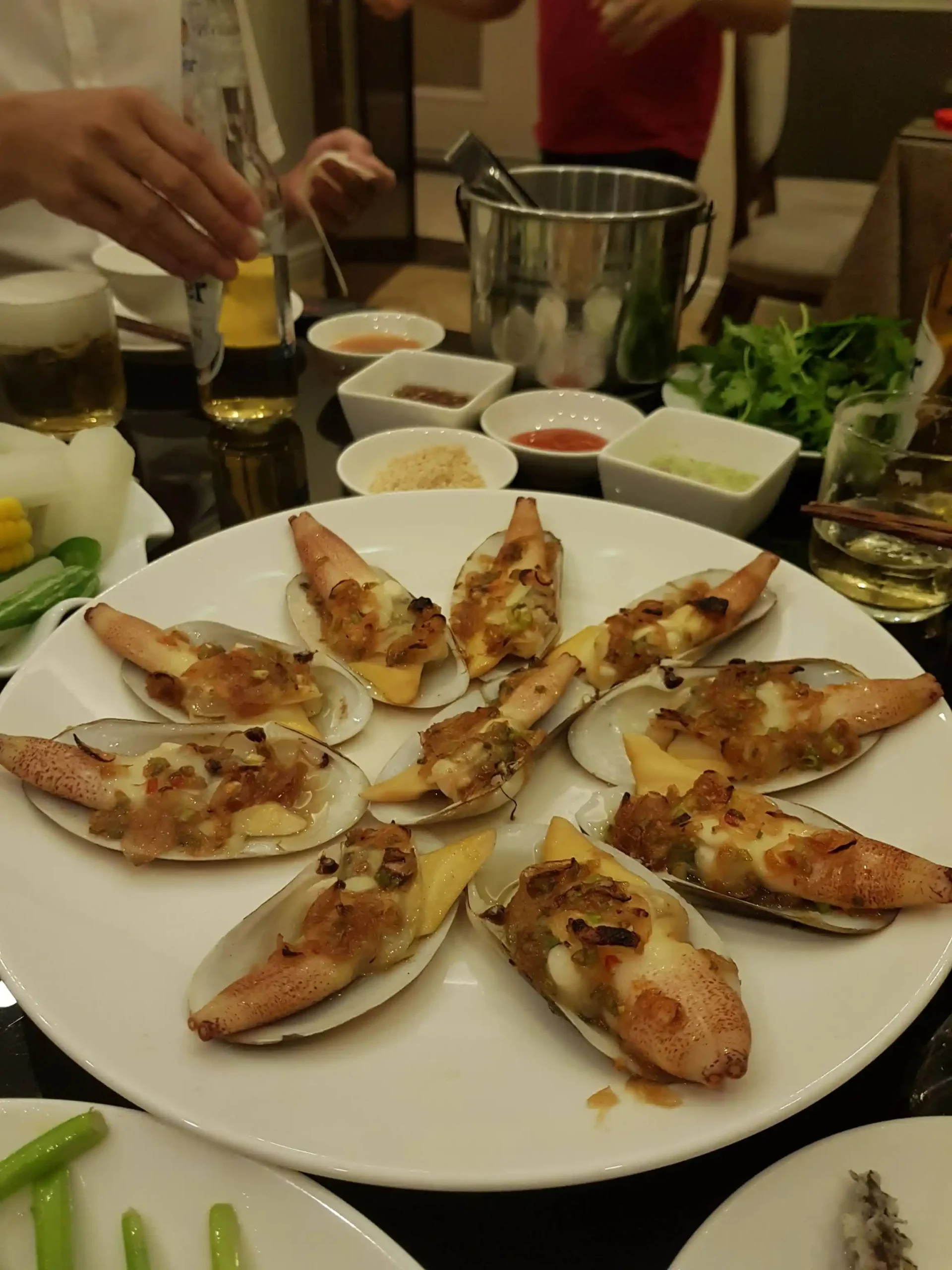
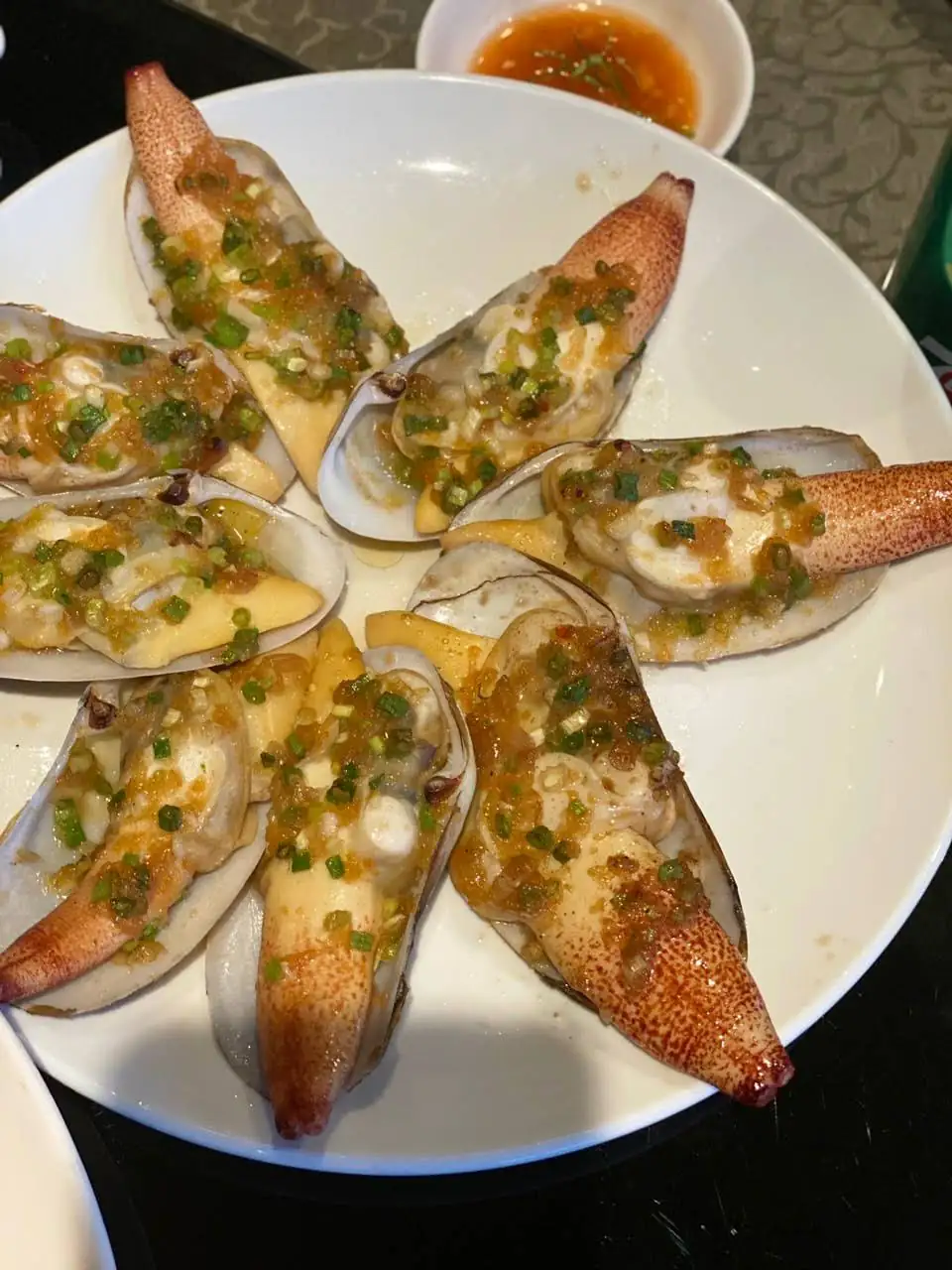
Tu Hài sits in the middle of this list because while the animal looks incredibly unappealing, the resulting dish is actually one of the tastiest things you can eat in this region.
You’ve probably seen videos of Geoducks. They are massive saltwater clams, but instead of fitting nicely inside a shell, they have this massive, thick, pale neck that protrudes wildly out of the opening.
It is undeniably phallic. It looks deeply uncomfortable sitting there in the plastic water tanks at the front of a seafood joint.
But here’s the trick. You don’t eat it raw. You ask the restaurant to make Tu Hài nướng mỡ hành (grilled with scallions and fat).
They chop up the meat inside the massive shell, throw the shell on a charcoal grill, and drown the meat in crushed peanuts, rendered pork fat, chopped scallions, and fried onions. The meat itself gets slightly snappy, it fights back a little when you bite into it, kind of like an ear mushroom, but then it becomes buttery soft.
The mix of the salty clam juice bubbling in the pork fat and the crunch of the peanuts completely makes you forget what the animal looked like in the tank ten minutes earlier.
- Where to find it: Go to the large tanks outside restaurants along the coast. Ask for it by weight.
- The cost: Varies, but expect around 250,000 VND for a decent-sized one prepared on a plate.
5. Sá Sùng (Peanut Worms)
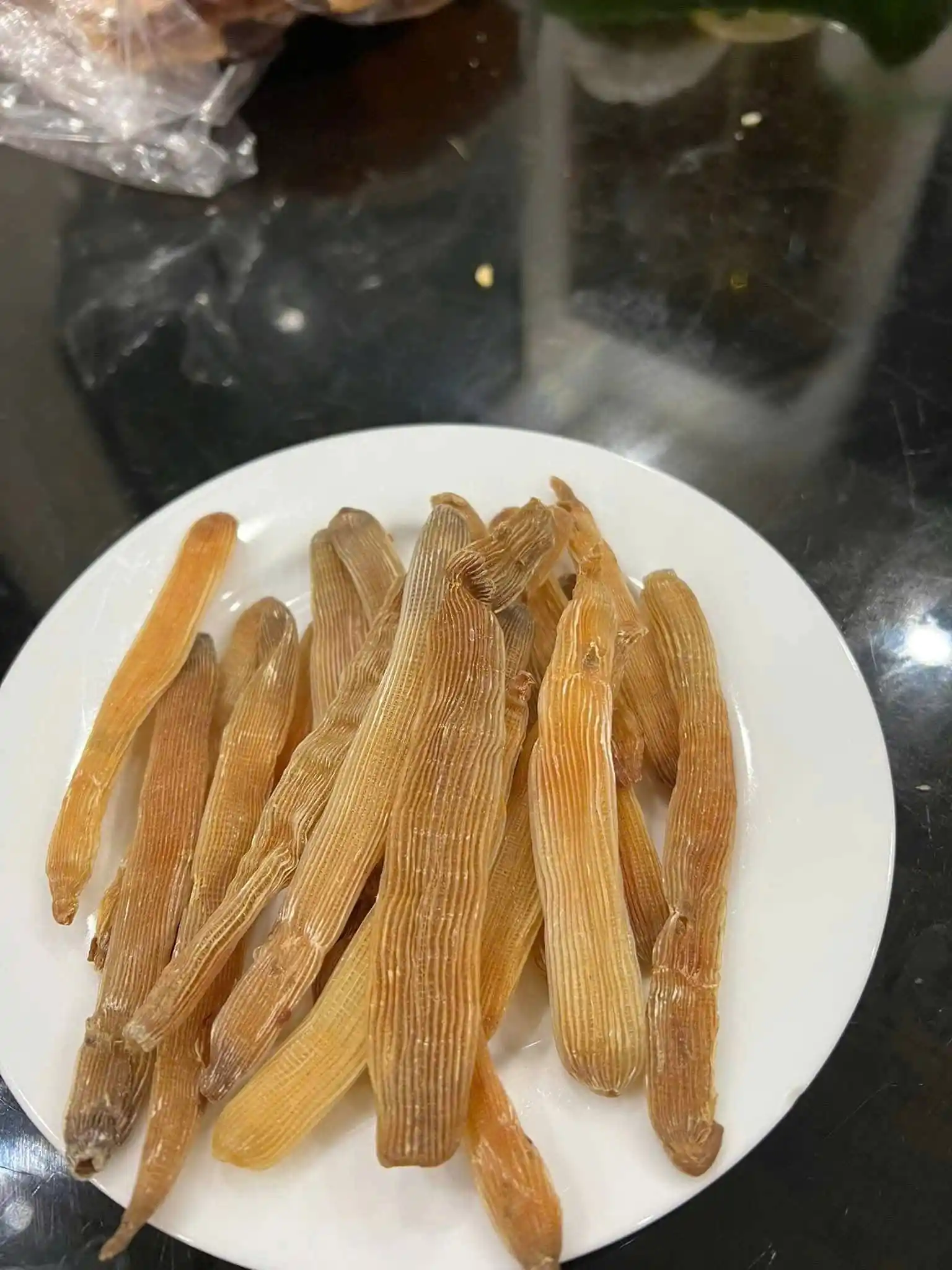
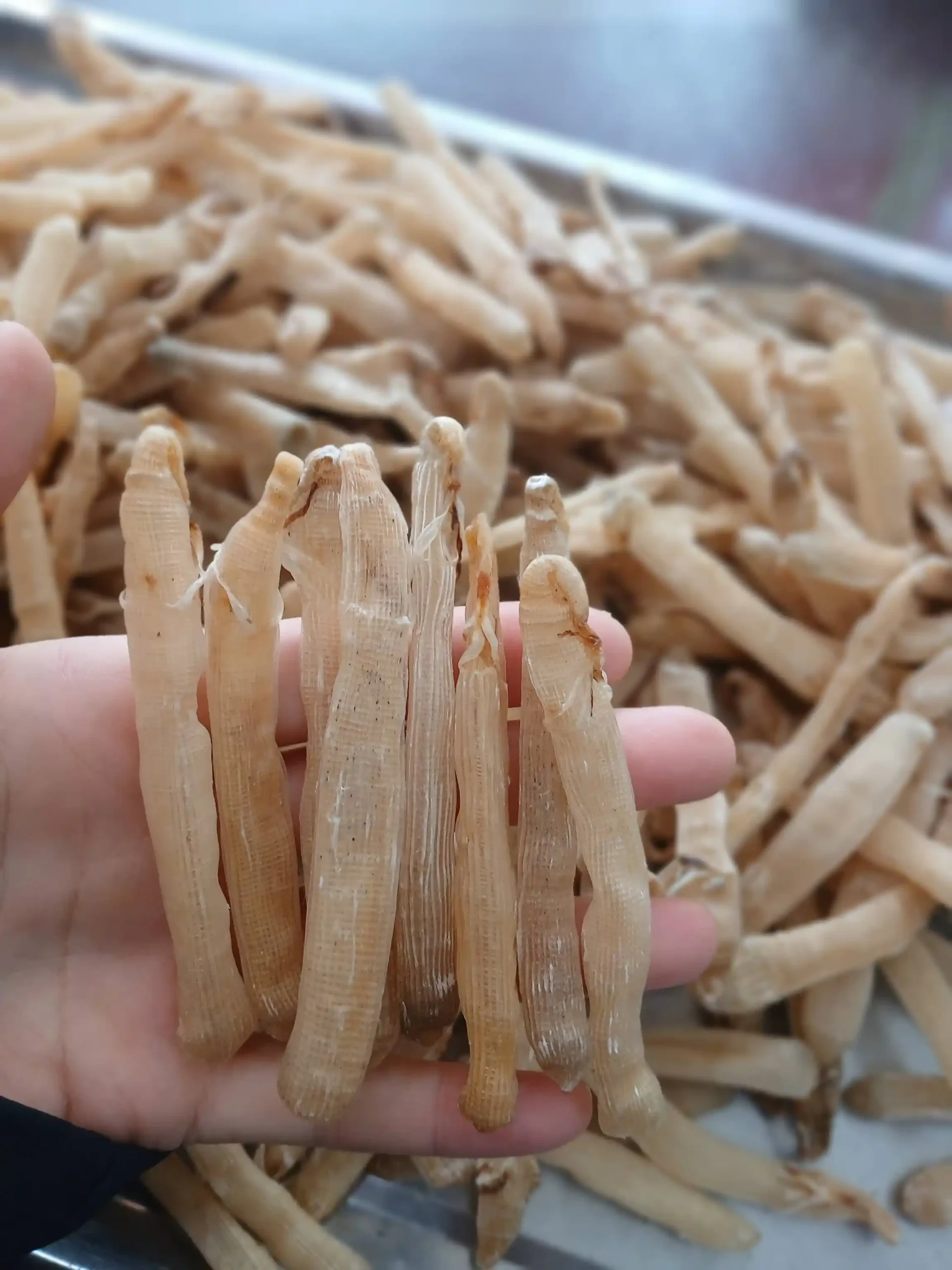
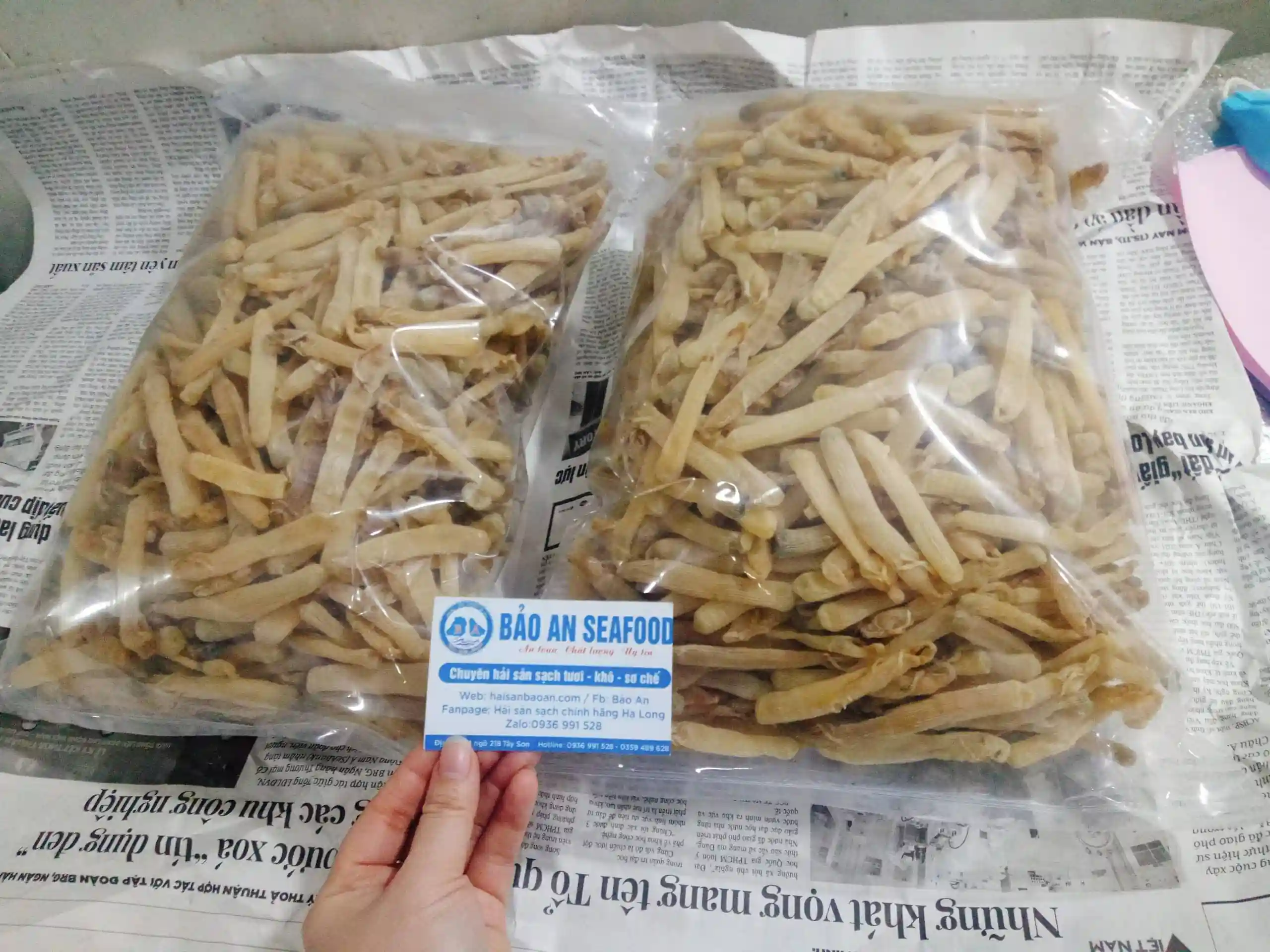
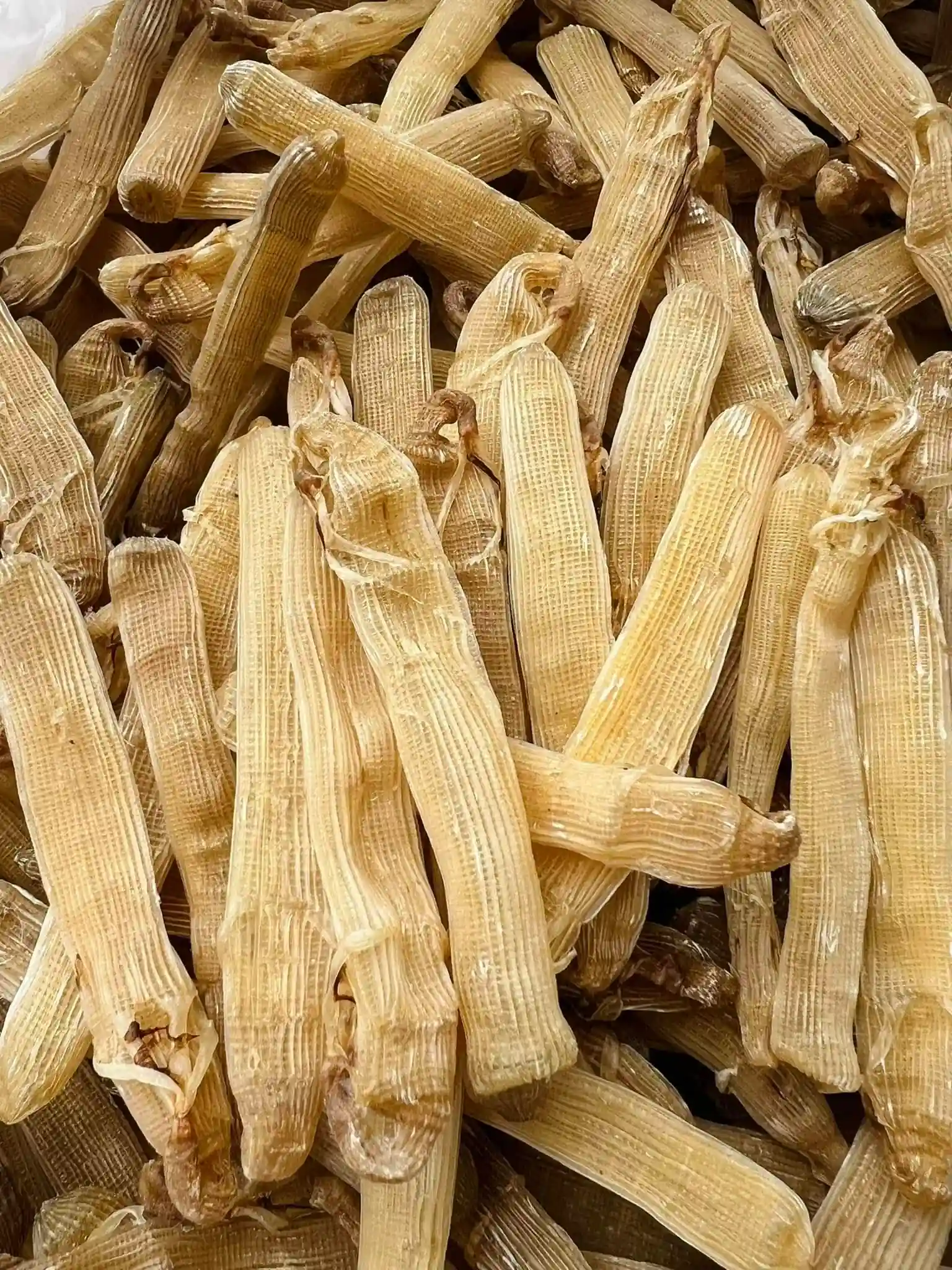
I hesitated on where to rank this because mentally it crosses the “gross” line for many people, but gastronomically it’s considered an absolute luxury.
Sá Sùng are basically marine worms that dig around in the coastal sandbars near Quan Lan island and the further edges of Ha Long Bay. When pulled out of the ground, they look like swollen, red-brown earthworms. Just fleshy little tubes.
The interesting part is how absurdly expensive they are. One kilogram of high-quality dried Sá Sùng can cost over 3,000,000 to 5,000,000 VND ($120 – $200 USD). This is not backpacker food.
They dry the worms and usually roast them in a pan with zero oil. You dip them in chili sauce and drink beer with them. It has a slightly sandy, intensely savory flavor. Actually, if you’ve had real, traditional Vietnamese Pho soup up in Hanoi, the broth probably got its massive umami punch from dried Sá Sùng boiled in the pot. It’s nature’s MSG.
It takes courage for an expat to look at a plate of dried sea worms and pop one like a potato chip, but if you stop looking at them and just eat them, they have this really nice salty crunch that you end up kind of loving.
4. Bún Cù Kỳ / Bún Bề Bề (Mantis Shrimp & Thunder Crab Noodle Soup)
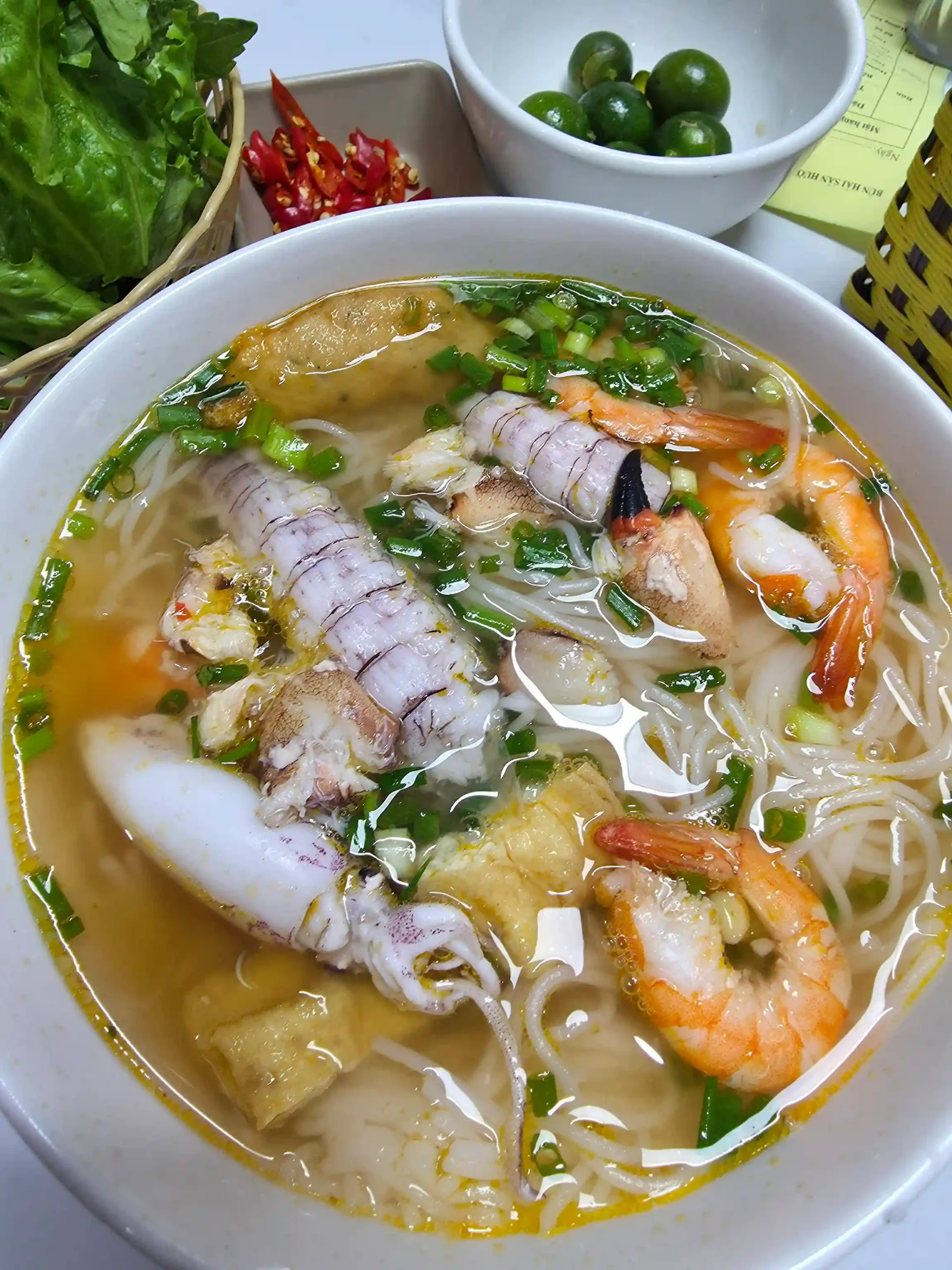
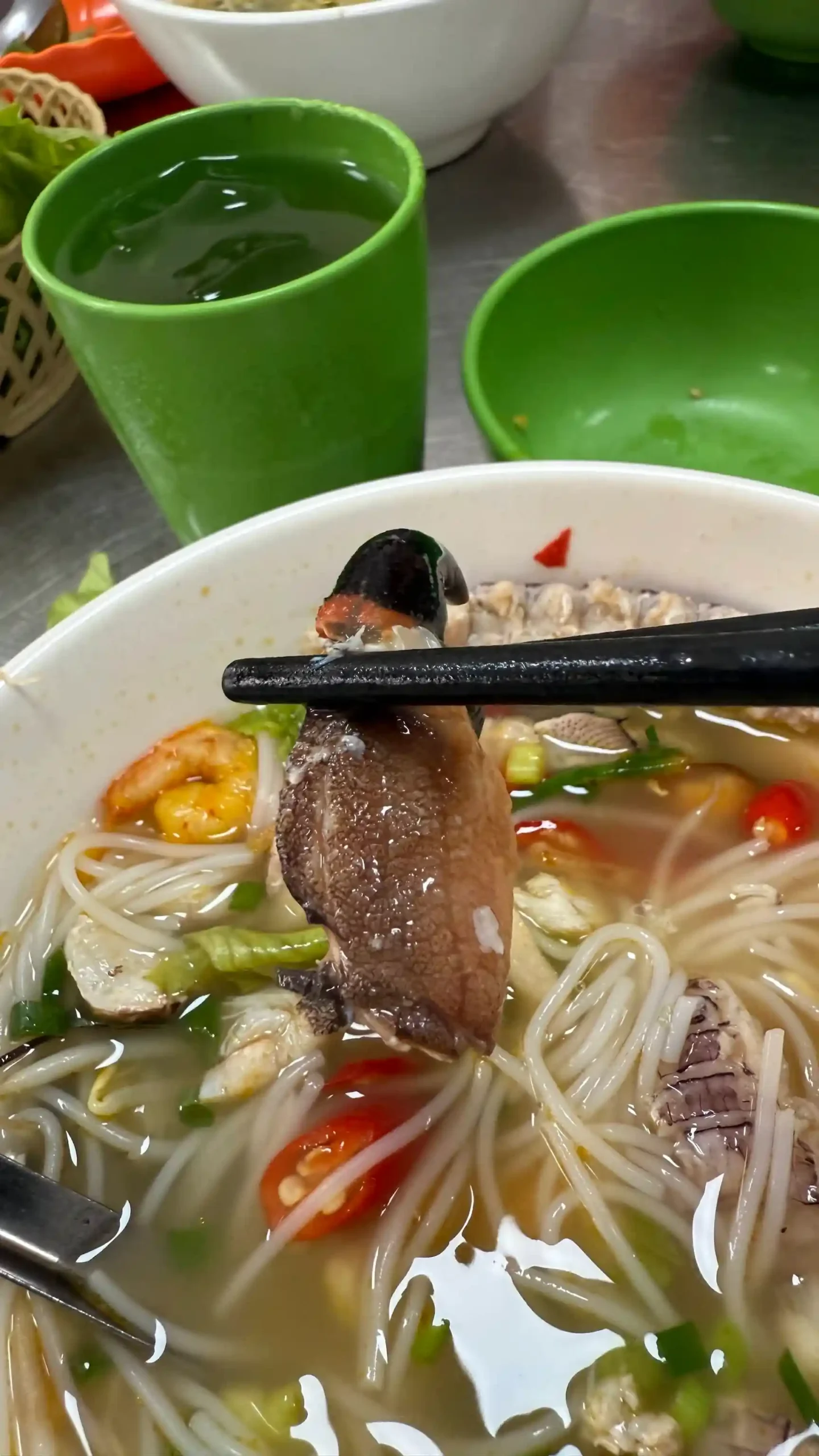
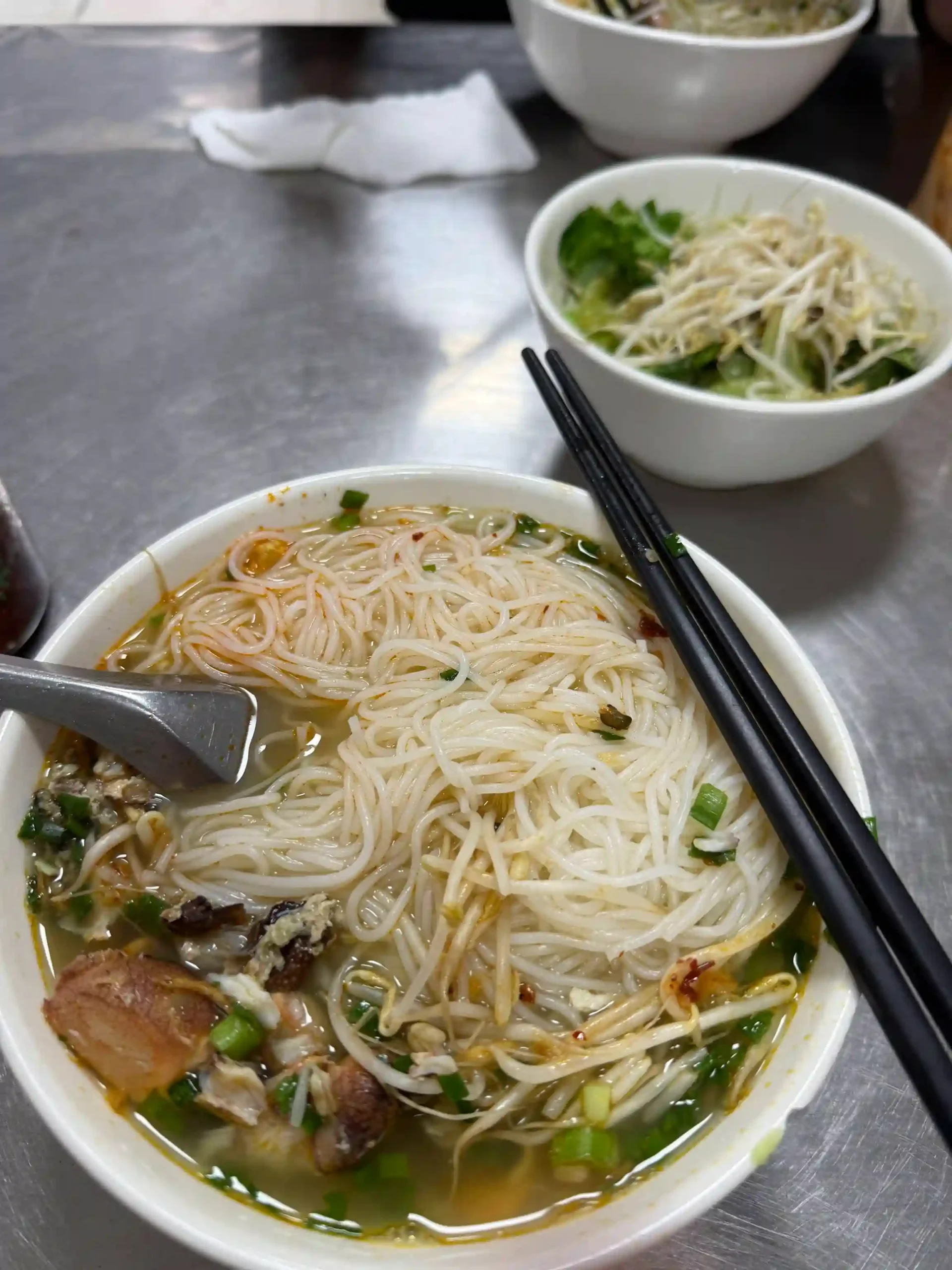
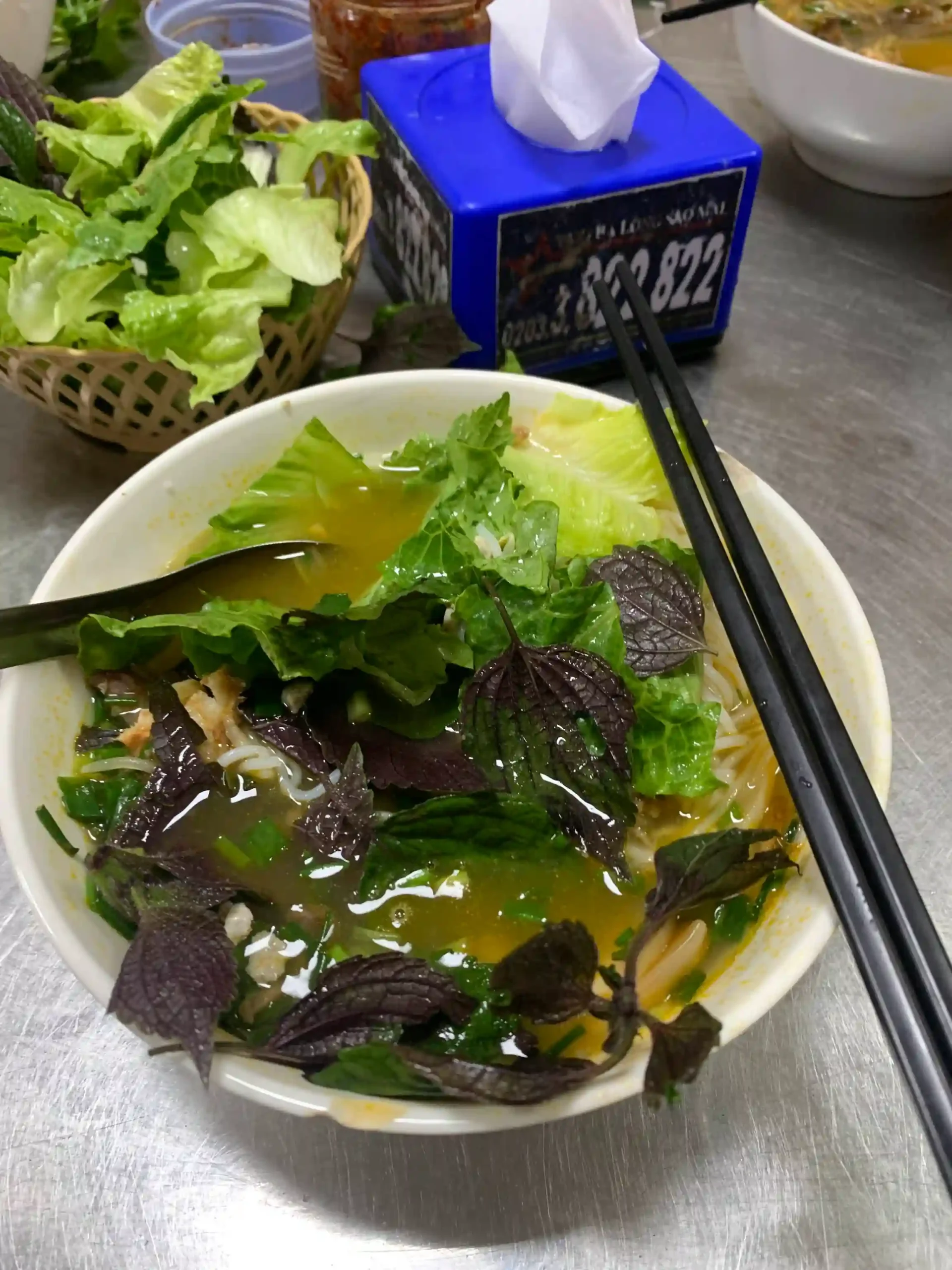
We are past the weird stuff. We are officially in the “universally awesome local food” territory now. If you want a quick, authentic breakfast before jumping on a day boat, this is exactly what you should track down.
When asking locals what to eat in Ha Long for breakfast, almost nobody will say Pho. The city revolves around noodles with bề bề (mantis shrimp) and cù kỳ (thunder crab).
The thunder crab isn’t as meaty in the body as standard sea crabs, but its front claws are massive and filled with super sweet meat. Mantis shrimp, if you haven’t dealt with them before, look like aggressive giant grey centipedes of the sea. Their shells have these vicious little spikes on the side that shred your thumb when you try to peel them by hand.
The absolute genius of bún bề bề is that the ladies at the street stalls peel the mantis shrimp for you.
You get a big, steaming bowl of vermicelli rice noodles sitting in a light, clear broth that usually leans a bit sour from tamarind and tomatoes. Layered on top are massive chunks of peeled mantis shrimp, deep-fried pieces of tofu, some celery or water dropwort, and half of a cracked thunder crab claw.
You squeeze an excessive amount of lime in it, drop in a spoon of garlic chili vinegar, and just destroy the bowl. The mantis shrimp meat is way sweeter than normal shrimp, and the hot, sour broth cuts through everything perfectly.
- Where to get it: Bún Cù Kỳ Hường Béo (at 20 Tan Mai, Bai Chay) is legendary and packed every single morning. Bún Bề Bề Huy Chiên (Thuc Thoai street, on the Hon Gai side) is another absolute monster in this category.
- The cost: 40,000 to 60,000 VND ($1.60 to $2.50 USD) a bowl. Ridiculously cheap for that much seafood.
- Read more: Finding all these local joints takes a scooter. I usually do a huge food crawl when I map out my Top seafood restaurants in Bai Chay post.
3. Sữa Chua Trân Châu Hạ Long (Pearl Yogurt)
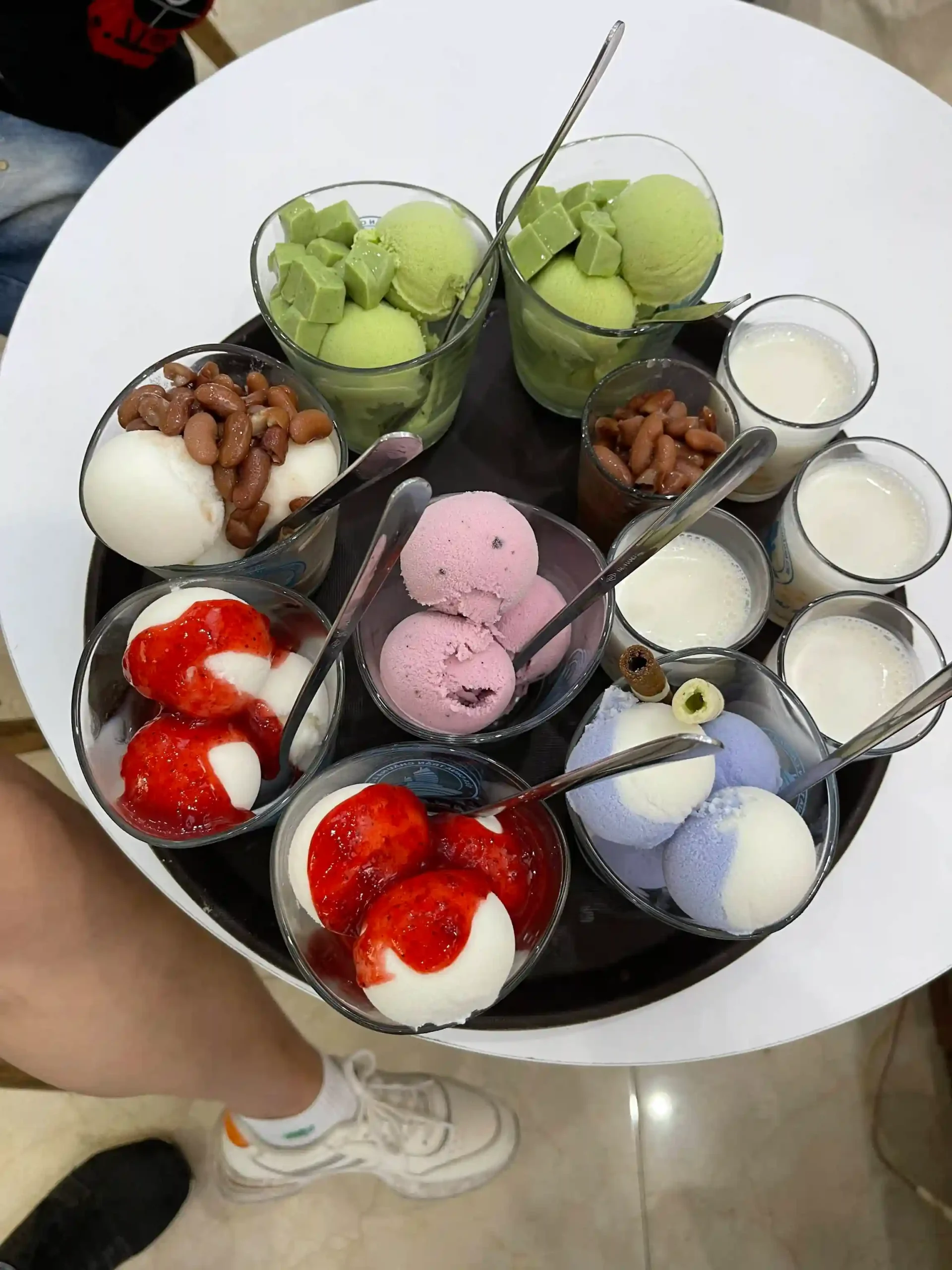
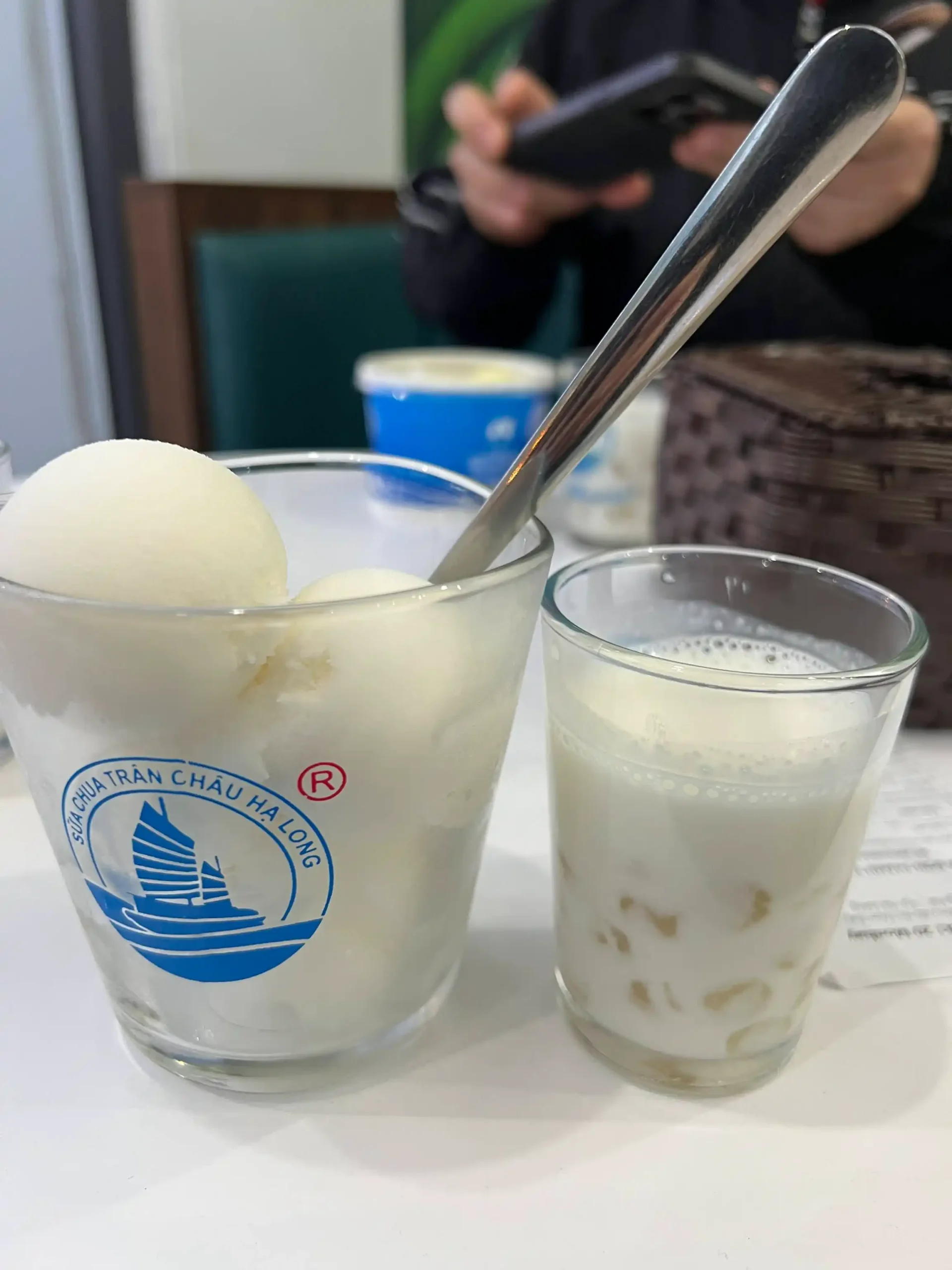
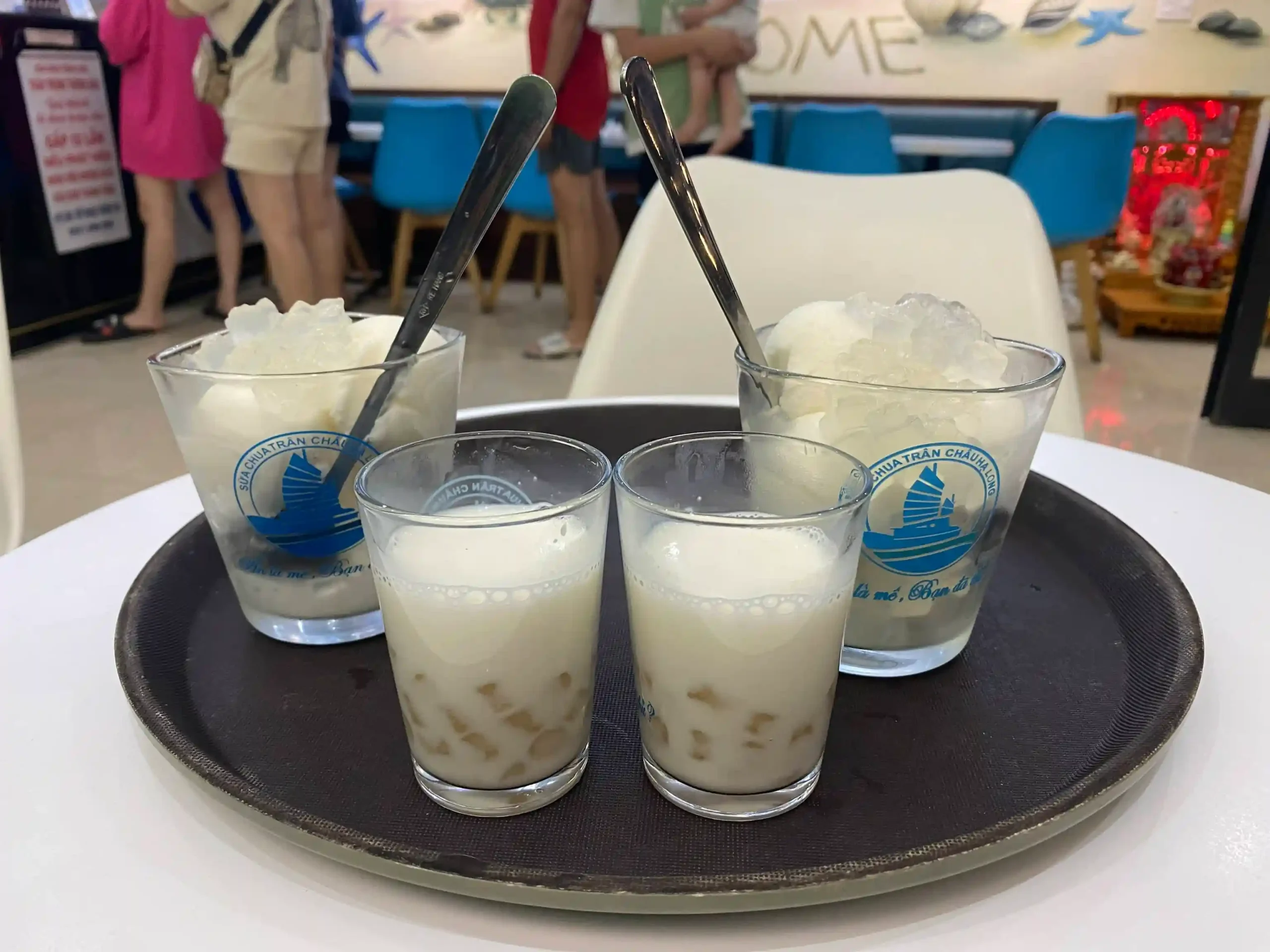
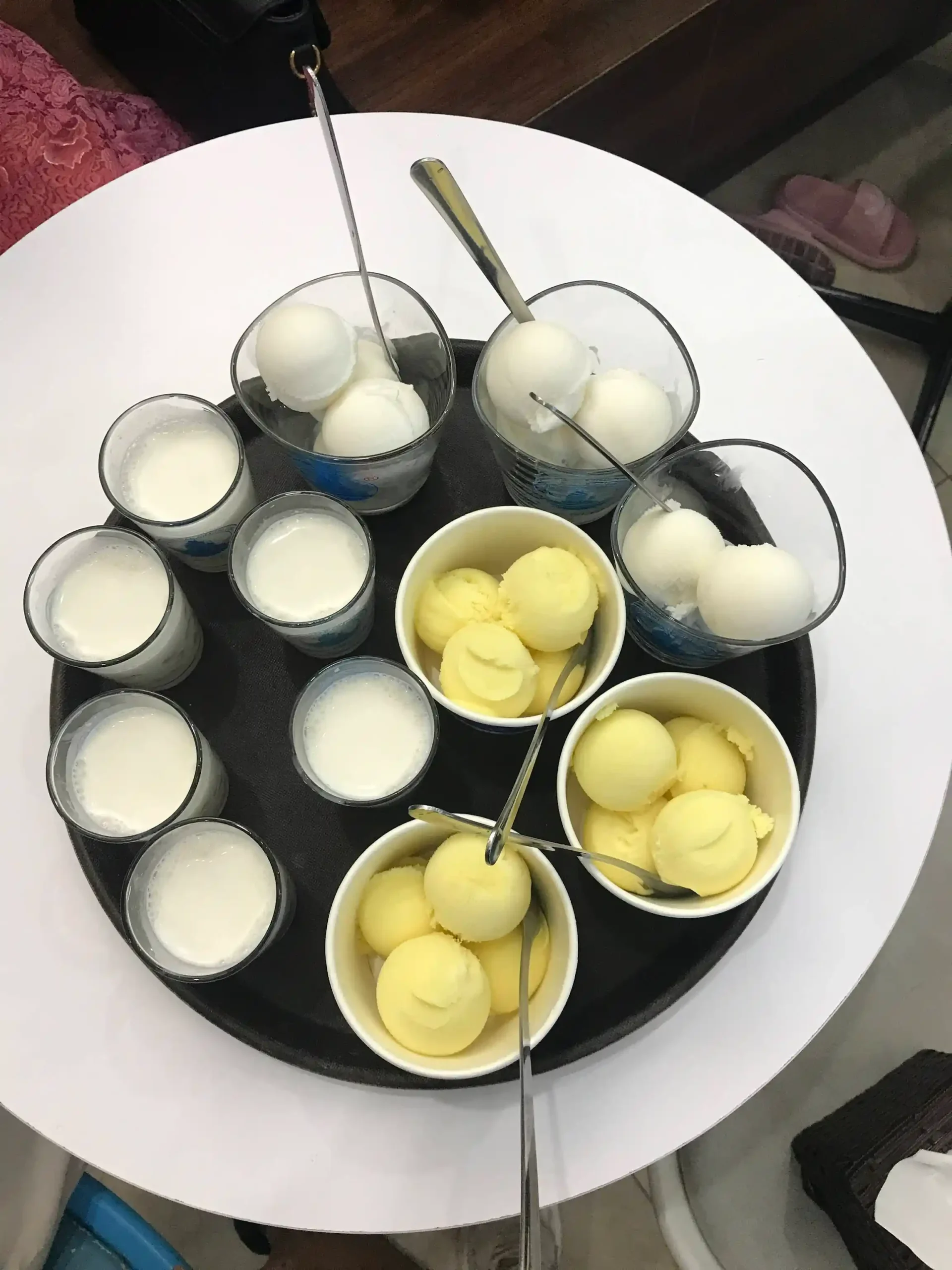
You didn’t think Ha Long food was purely salty seafood, right? This specific dessert basically put the city on the map for younger generations in Vietnam. It got so big that there are now franchised chain stores with this name on every corner in Hanoi and Saigon, but eating it here where it actually started just hits different.
After spending four hours stuffing your face with salty, garlic-heavy seafood at a loud outdoor restaurant, your body just violently craves sugar and cold temperatures.
Here is the setup: You go to a dedicated dessert shop with low plastic chairs spilling out onto the sidewalk. You order a sữa chua trân châu.
They bring you two separate things. The first is a little glass jar filled with house-made, cold, slightly sour, super creamy yogurt. The second is a tiny warm bowl containing boba pearls floating in an intensely sweet, hot, coconut cream syrup.
You scoop the hot, sweet coconut pearls directly into the cold sour yogurt. The temperature contrast between the hot coconut cream and the frozen yogurt, mixed with the extreme chewiness of the pearls, is basically the best thing in the world after 9:00 PM. I have personally seen tourists who normally skip dessert end up eating two of these back-to-back.
- Where to go: There are famous ones just driving along the Tran Quoc Nghien coastal road. Locals often swear by specific alleys, but really, any place packed with local teenagers sitting on the sidewalk at night is the correct choice.
- The cost: Only about 15,000 to 25,000 VND (less than $1 USD). It feels illegal paying that little for something that good.
2. A proper chaotic Seafood Hotpot (Lẩu hải sản)
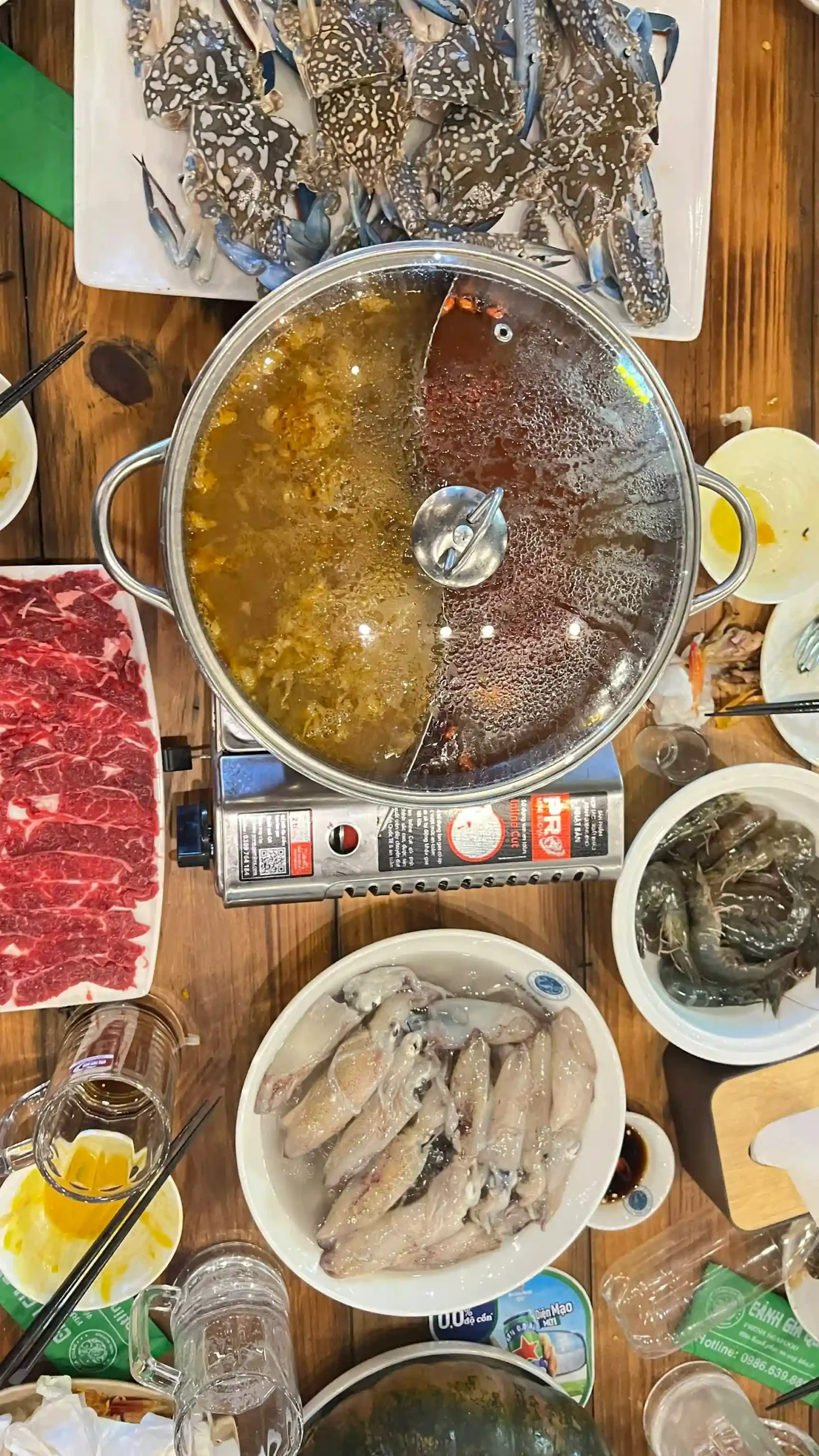
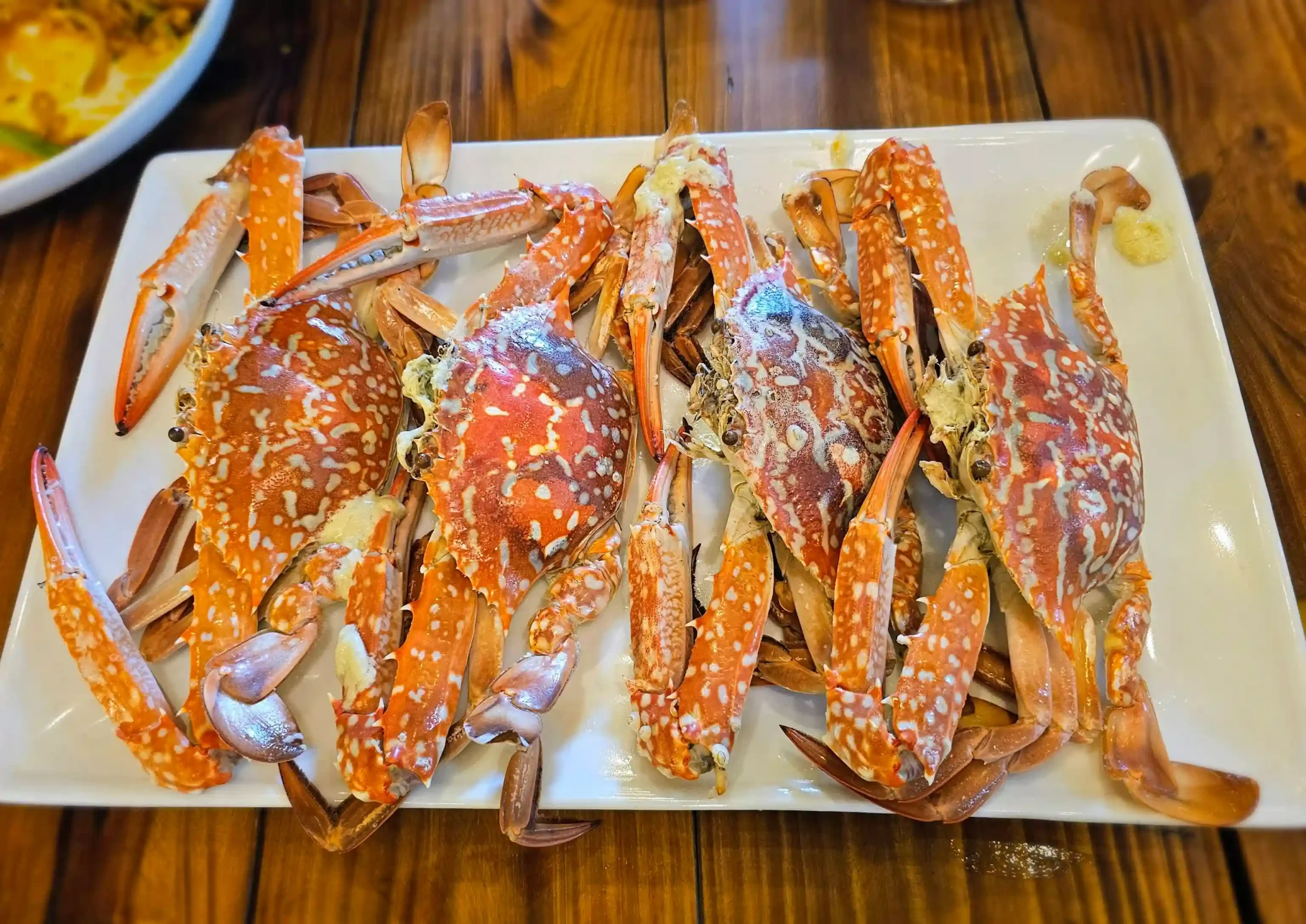
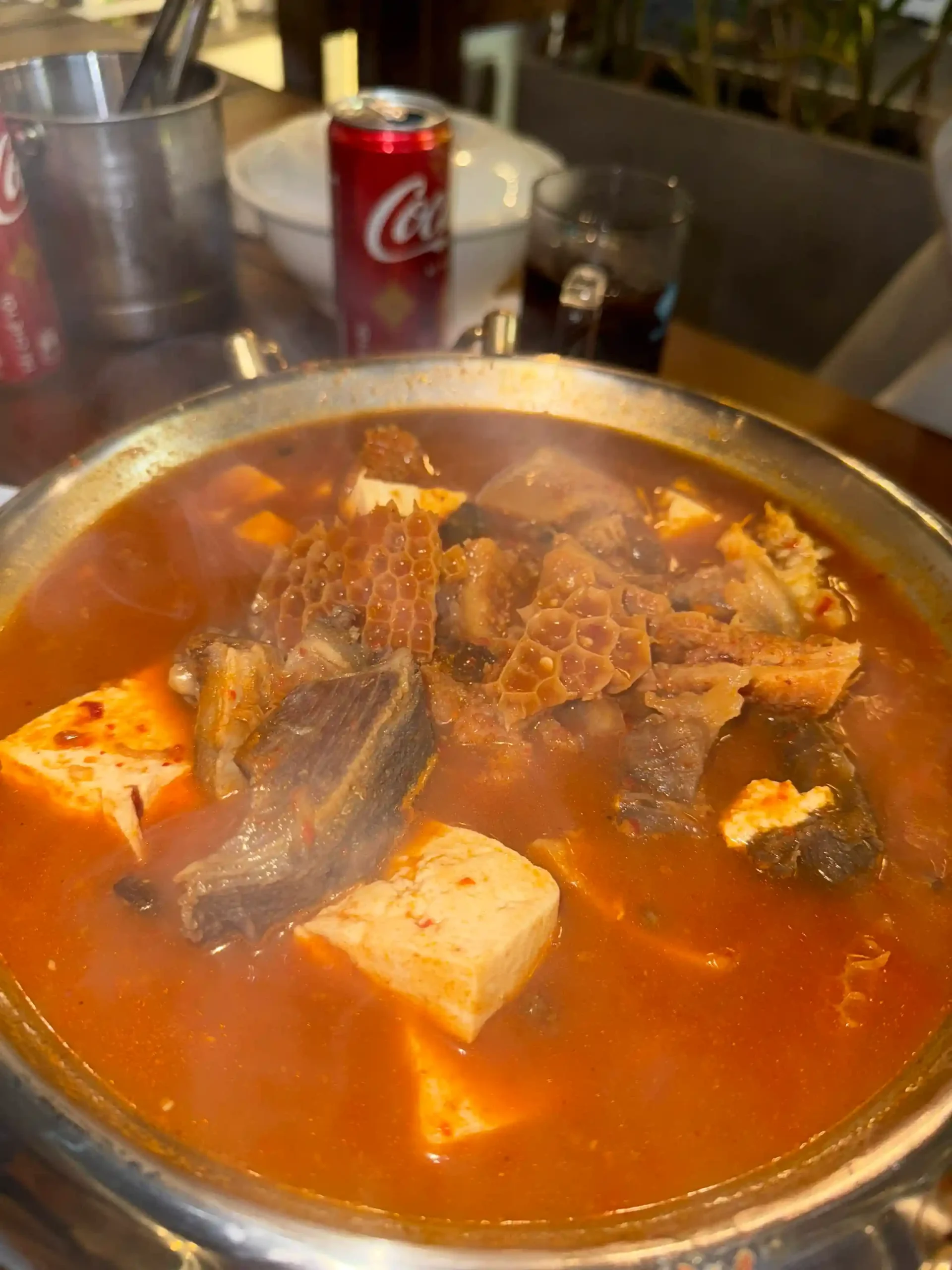
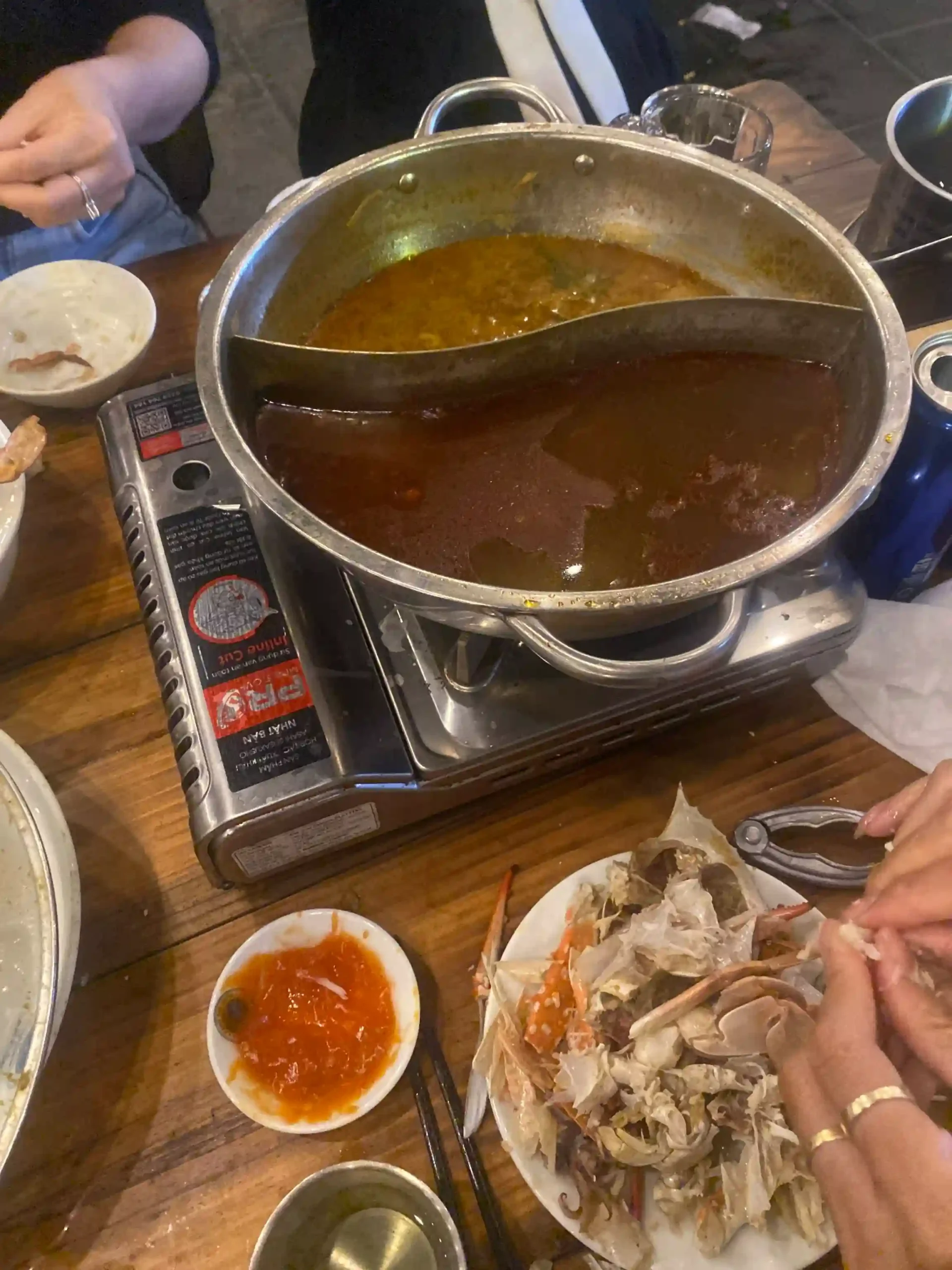
This isn’t just about what you’re eating, but how you eat it.
You haven’t really done a weekend trip to Quang Ninh until you sit outside a large local joint around 8 PM, practically shouting over the noise of the table next to you, while sweating into a bubbling cauldron of soup.
Hotpot here is different. You aren’t getting thinly sliced strips of beef like in a city hotpot place. The waiter just drops a gas stove on the table, places a wide pot of intensely red, spicy, and sour tom-yum-style broth in front of you, and then proceeds to crowd the table with raw plates of whatever the boats brought in that afternoon.
I’m talking entire raw fish, baskets of live geoducks squirting water everywhere, trays of giant raw prawns that still try to flip around, heaps of morning glory, and mushrooms.
You drop everything into the boiling soup. Half the fun is trying to figure out if the prawn you put in ten minutes ago is fully cooked or completely rubberized, and fishing out clams with metal strainers before the broth gets too muddy.
The best part is the very end, an hour into eating, when you throw a package of cheap Mama instant noodles directly into the leftover liquid. By then, the broth has basically absorbed the essence of a hundred different marine animals. Those salty, intensely flavored instant noodles you scrape out of the bottom are better than anything on the menu.
- The vibe: Loud. Sweaty. Tissues piled on the floor under the table (which is normal in street places, they sweep later). Massive amounts of cold draft beer (bia hơi) or local Hanoi beer in bottles clinking.
- The cost: It varies heavily on what seafood you pick, but a giant hotpot meant for four people is usually around 500,000 to 800,000 VND total.
- Where to go: Try at CẢNH GIA QUÁN, a local restaurant at Hong gai, Hon Gai.
1. Bánh Cuốn Chả Mực (Steamed Rice Rolls with Squid Cake)
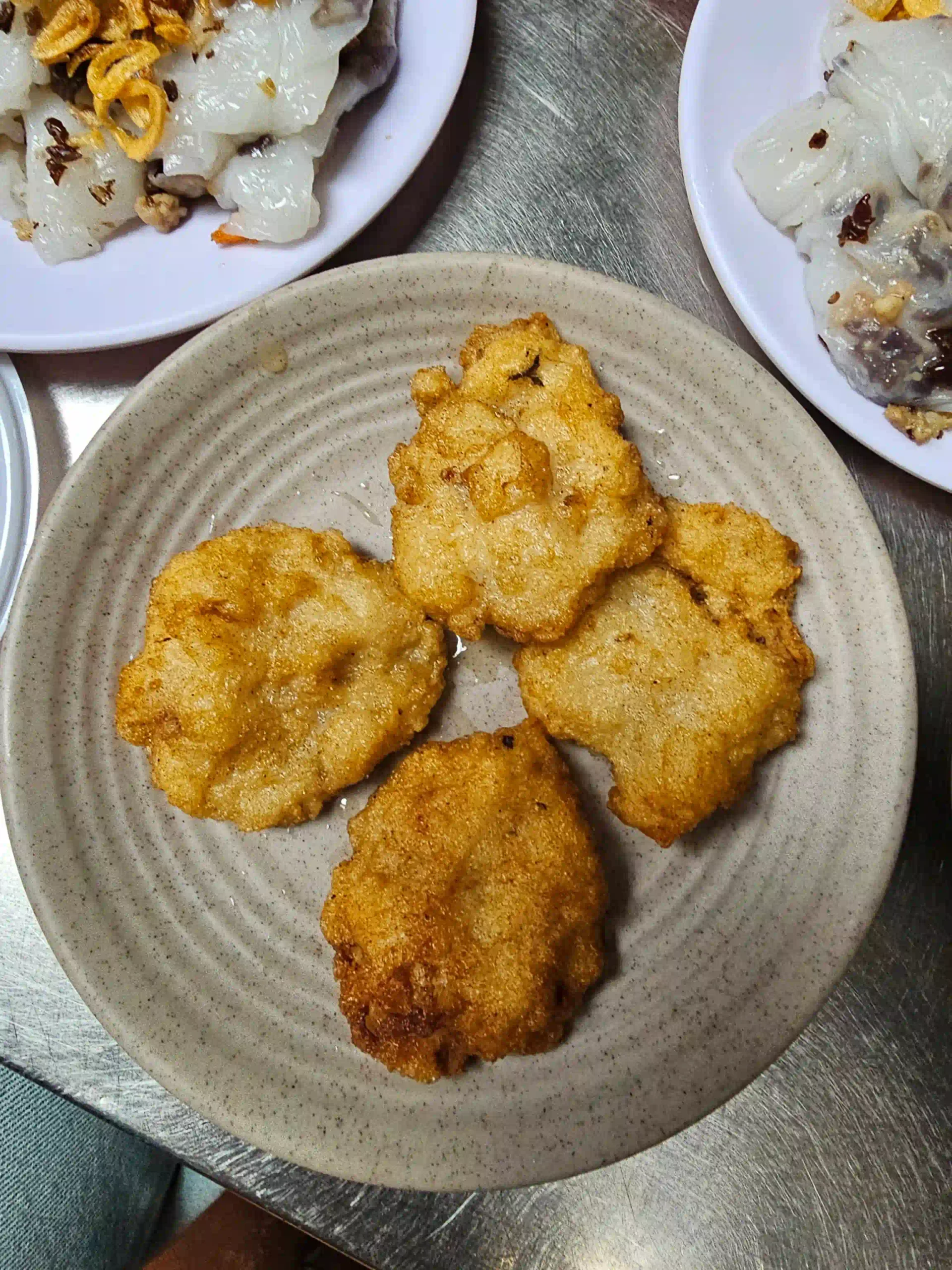
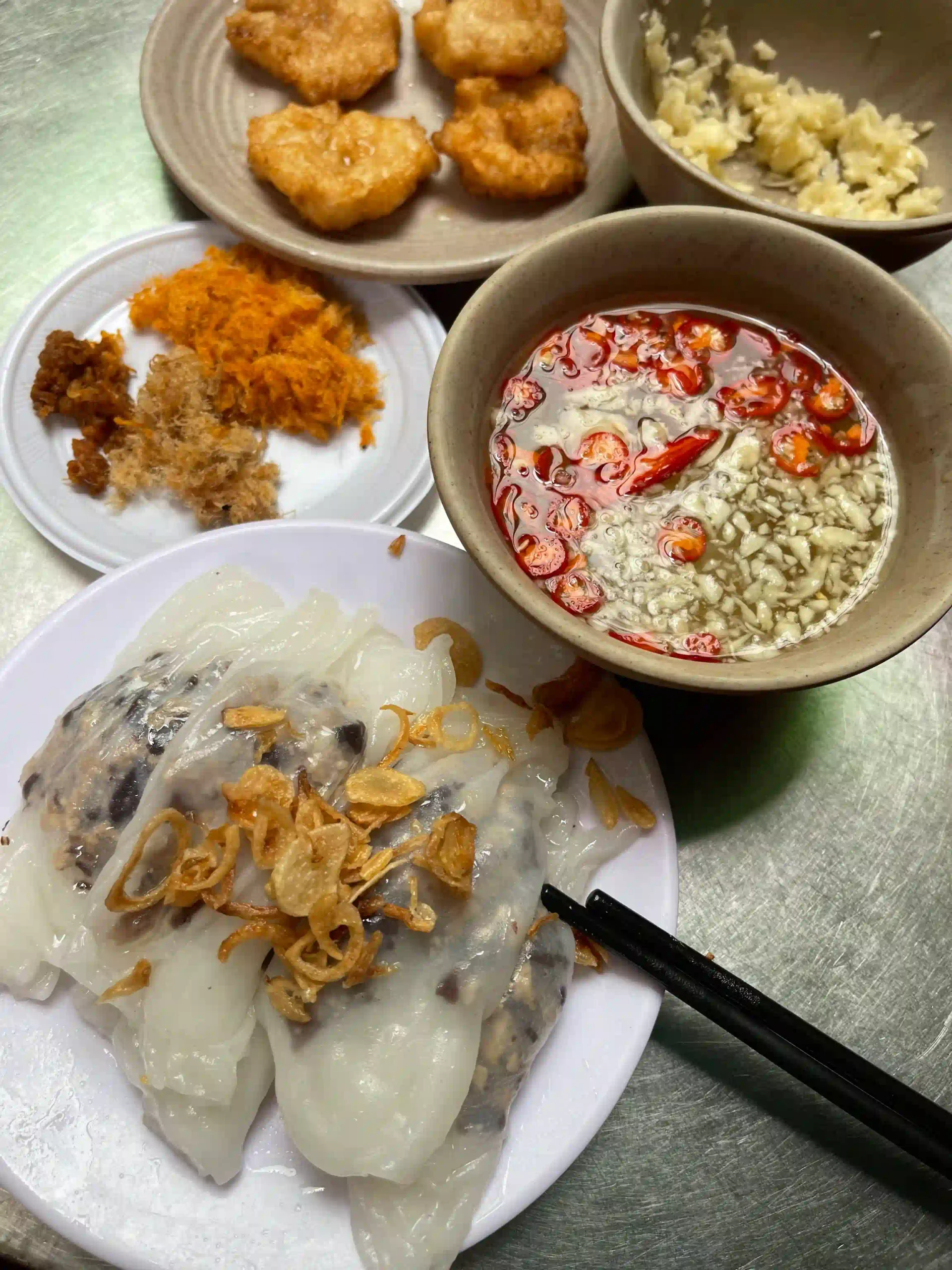
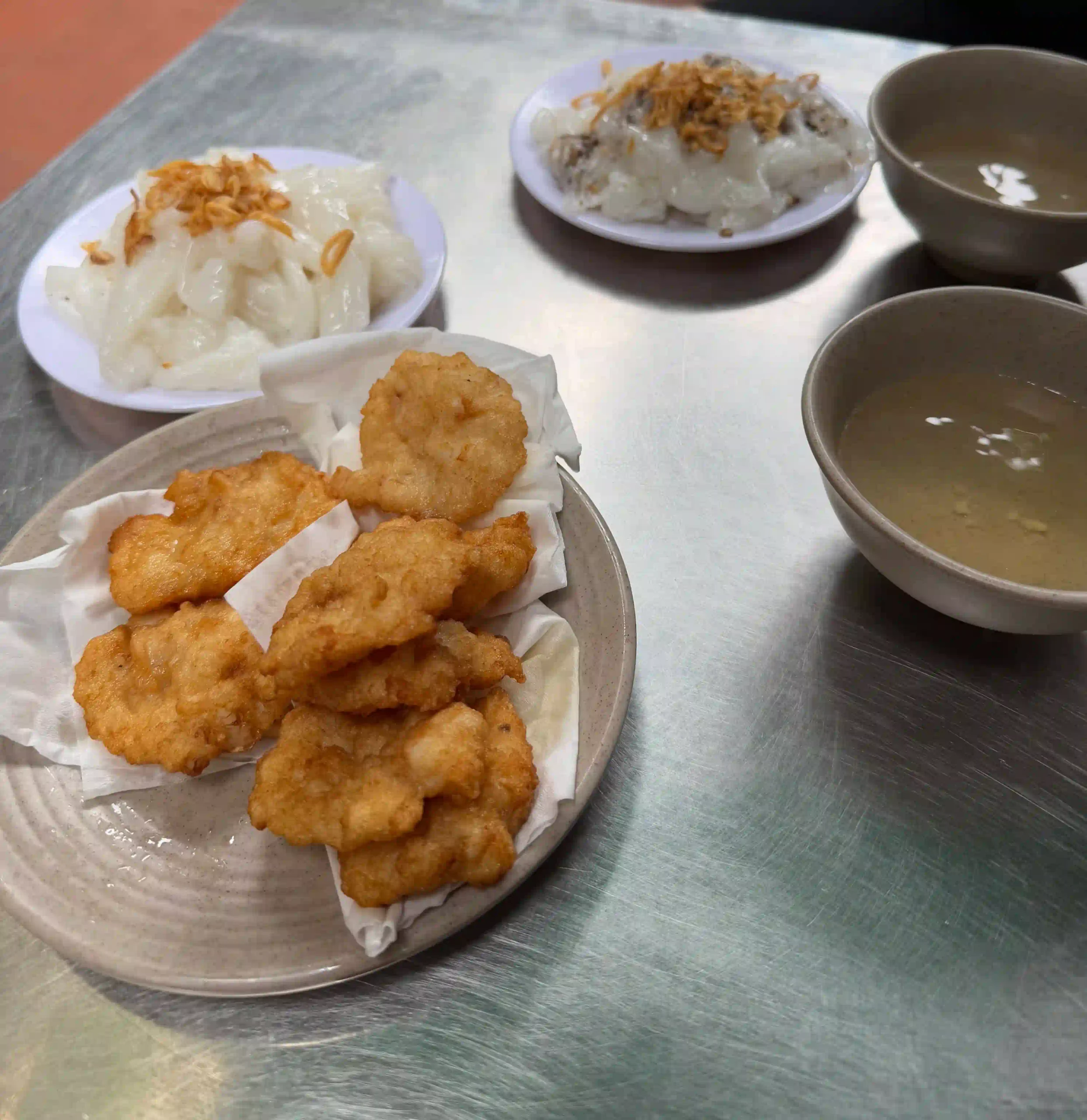
If you somehow only have a couple of hours off a boat, or if you can literally only choose to eat one single local dish during your whole trip, it is this.
The absolute, unquestionable king of Ha Long food.
It almost looks completely unassuming on the plate. If you aren’t familiar with bánh cuốn, it is a very thin, translucent crepe made from fermented rice batter, steamed over a stretched cloth sitting above boiling water.
The women who make this have incredibly fast hands. They steam a layer of rice, scoop it off with a bamboo stick, flip it onto an oiled metal tray, toss in some minced pork and wood ear mushrooms, and roll it up.
That alone is great, and you find it all over northern Vietnam. But what elevates the Ha Long version is the chả mực.
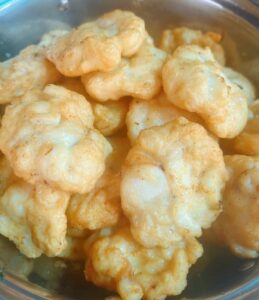
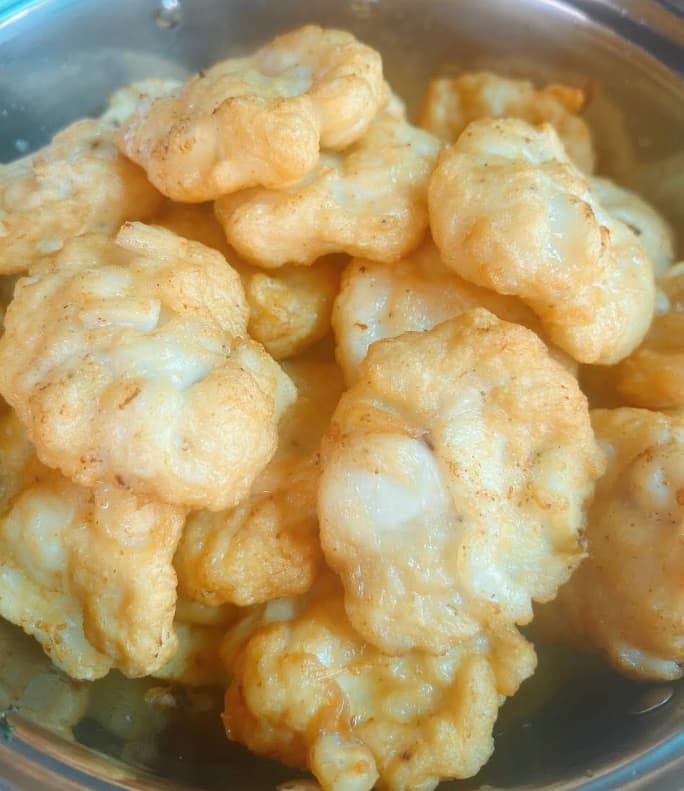
This is a deep-fried patty of pure hand-pounded squid. Not blended. Not ground up in a machine. Hand-pounding in heavy mortars makes the proteins stretch out so the squid becomes ridiculously springy and sticky. The street joints have a woman frying these directly on the sidewalk in woks holding about ten liters of boiling oil.
So you sit down, and they throw a plate of soft, delicate, piping-hot rice rolls covered in crispy fried shallots on your table, along with these golden-brown squid cakes cut into wedges with scissors right in front of you.
The contrast is a joke. You have the soft slippery rice noodle against the hot, extremely chewy, salty ocean flavor of the squid, and then you drench all of it in a sweet, light fish sauce with garlic. I eat this literally every single time I cross the bridge to Hon Gai. Usually more than once.
- Where to find it: Cross the Bai Chay bridge and go deep into the local area of Hon Gai. My absolute favorite spot in the whole city is Bánh cuốn chả mực Gốc Bàng at 189 Ngõ 1 Nhà Hát, right in Bạch Đằng ward. Another famous and very reliable one is Chả Mực Quang Phong near the Cái Dăm market in Bai Chay if you can’t be bothered crossing the massive bridge.
- The cost: Extremely cheap for the value. Usually about 40,000 to 60,000 VND depending on how much squid you order on the side.
Let’s end this simply
The bottom line when trying to plan out what to eat in Ha Long is just recognizing that comfort usually equals bad food here. If the menu has photos of pizza next to photos of a crab, get up and leave.
Embrace the weird. Ask a xe om (motorbike driver) where he goes for noodles in the morning, be prepared to point at some weirdly shaped animals in glass tanks without knowing exactly what they are, and don’t be afraid to take a plastic chair next to a street wok holding a million liters of hot oil. That is exactly where you will find the real stuff.












 Tiếng Việt
 한국어
한국어 中文 (中国)
 日本語
日本語 ไทย
ไทย Deutsch
 Español
 Destinations
 Instagram
 Facebook
 X (Twitter)
 Threads
 Tiktok