









 Ha Giang
 Hanoi
Hanoi Ho Chi Minh City
 Ha Long
 Sapa
Sapa Mekong Delta
 Da Nang
 Hue
Hue Hoi An
 Ninh Binh
 Da Lat
 Nha Trang
 Phan Thiet
 Phu Quoc
 Quang Binh
 Quy Nhon
 Vung Tau
 Thai Nguyen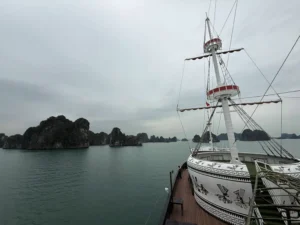



Search “places to visit in ha long bay” and you basically just get a wall of identical photos showing a white boat next to a green rock.
It tells you absolutely nothing about how the map actually works.
Here is the problem on the ground: “Ha Long” isn’t just a bay. It’s a massive, confusing piece of geography spanning open ocean, an actual city split by a giant bridge, national parks in different provinces, and a giant concrete harbor.
People show up on the coast thinking they can just walk down a street and find a cave. You can’t. Half these places require a specific overnight boat ticket. The other half require a Grab car or a scooter.
So let’s strip it down. This isn’t a list of activities. I already wrote my massive best things to do in HaLong Bay for what you should be doing. And if you are hungry, go look at my food guide post.
This post right here is strictly geography. The physical Halong Bay attractions. The coordinates. What these places actually look like when you stand in front of them, how annoying the crowds are, and if they are worth the money.
Let’s break the map in half. The Water, and The Land.
- Quick Answer: The actual best Halong Bay attractions aren’t all out on the water. If you want natural spots, map out Lan Ha Bay, the Luon Cave lagoon, and the massive Sung Sot Cave. On the mainland, the must-see places to visit in ha long bay are the black glass Quang Ninh Museum, Tran Quoc Nghien coastal road, and the giant Sun World cable car station on Ba Deo hill.
- The Offshore Zone (What you see from a boat):
- Lan Ha Bay: South of the main area. Managed by Hai Phong. Cleaner water, far fewer tourist boats. Location.
- Bai Tu Long Bay: Up northeast. Heavily restricted by the government. Almost zero boats, very primitive islands. Location.
- Sung Sot Cave: The biggest one. Located on Bo Hon island. Full of neon lights and giant chambers. Location.
- Ti Top Island: A solitary rock spire with an artificial sand beach and a 400-step viewing platform at the peak. Location.
- Luon Cave: A water-level limestone tunnel that leads into a completely sealed-off lagoon crater. Location.
- Cat Ba Island (National Park): The massive landmass bordering the bay. Has concrete war bunkers and jungle trails. Location.
- The Mainland Zone (Ha Long City limits):
- Quang Ninh Museum: Massive black glass building on the Hon Gai side. Great AC. Good history on the local coal industry. Location.
- Queen Cable Car & Ba Deo Hill: Sun World’s massive transport taking you over the ocean to a Japanese garden up high. Location.
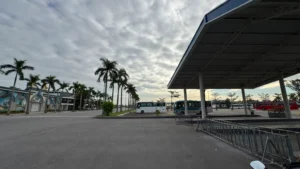
- Tuan Chau Marina: The concrete terminal island. It’s loud, chaotic, and where almost every single boat departs. Location.
- Bai Tho Mountain (Poem Mountain): Officially locked gate. The highest viewpoint directly in the city center. Location.
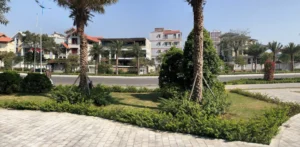
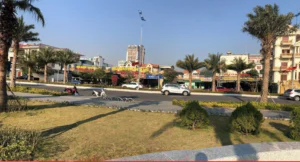
- Tran Quoc Nghien Coastal Road: A wide, newly built strip along the sea in Hon Gai. Mansions on one side, water on the other. Location.
- Cai Dam Market: A hardcore local wet market in Bai Chay. Loud, wet floors, and pure local seafood trading. Location.
1. Lan Ha Bay (The geography you actually want)

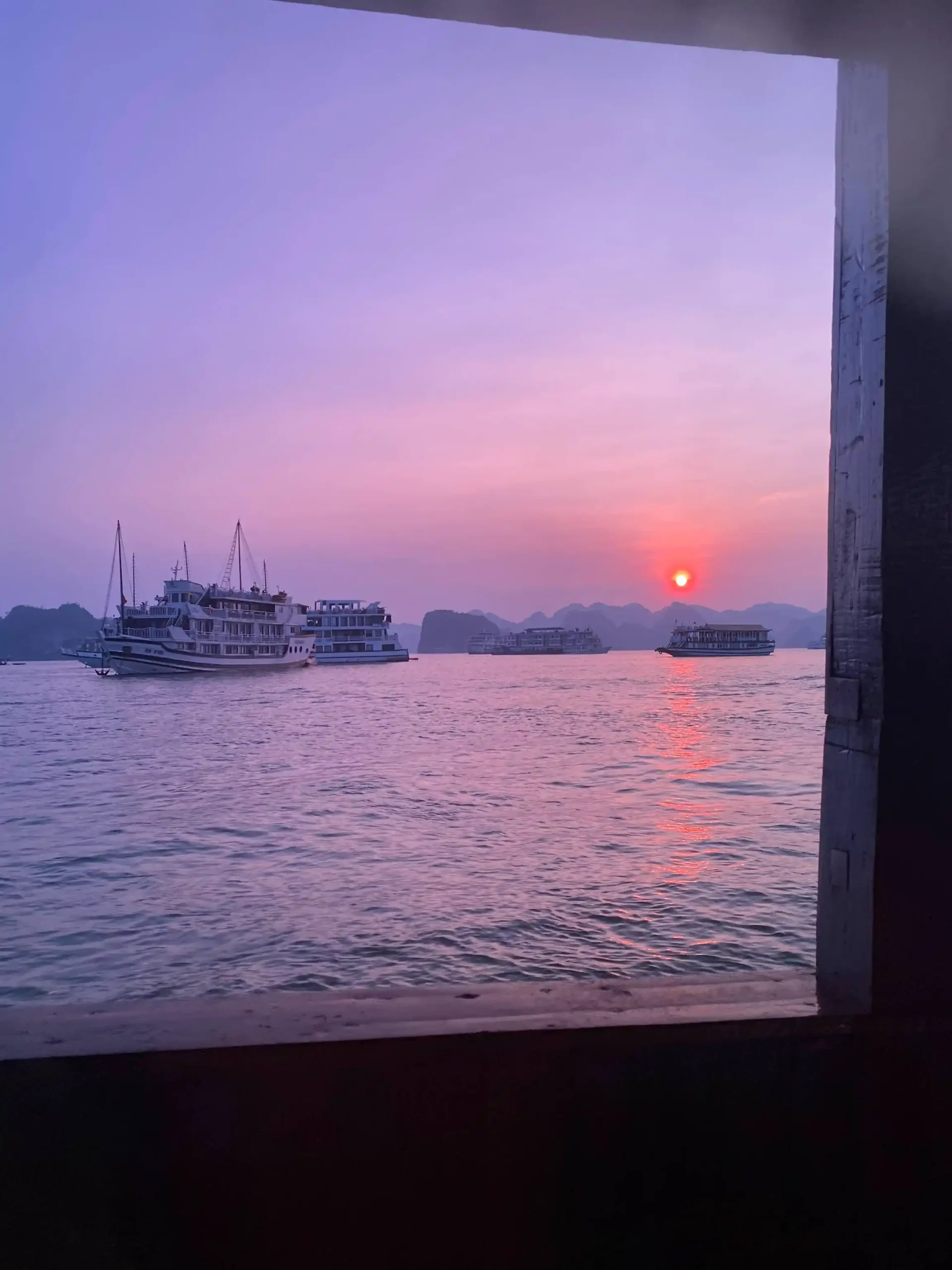
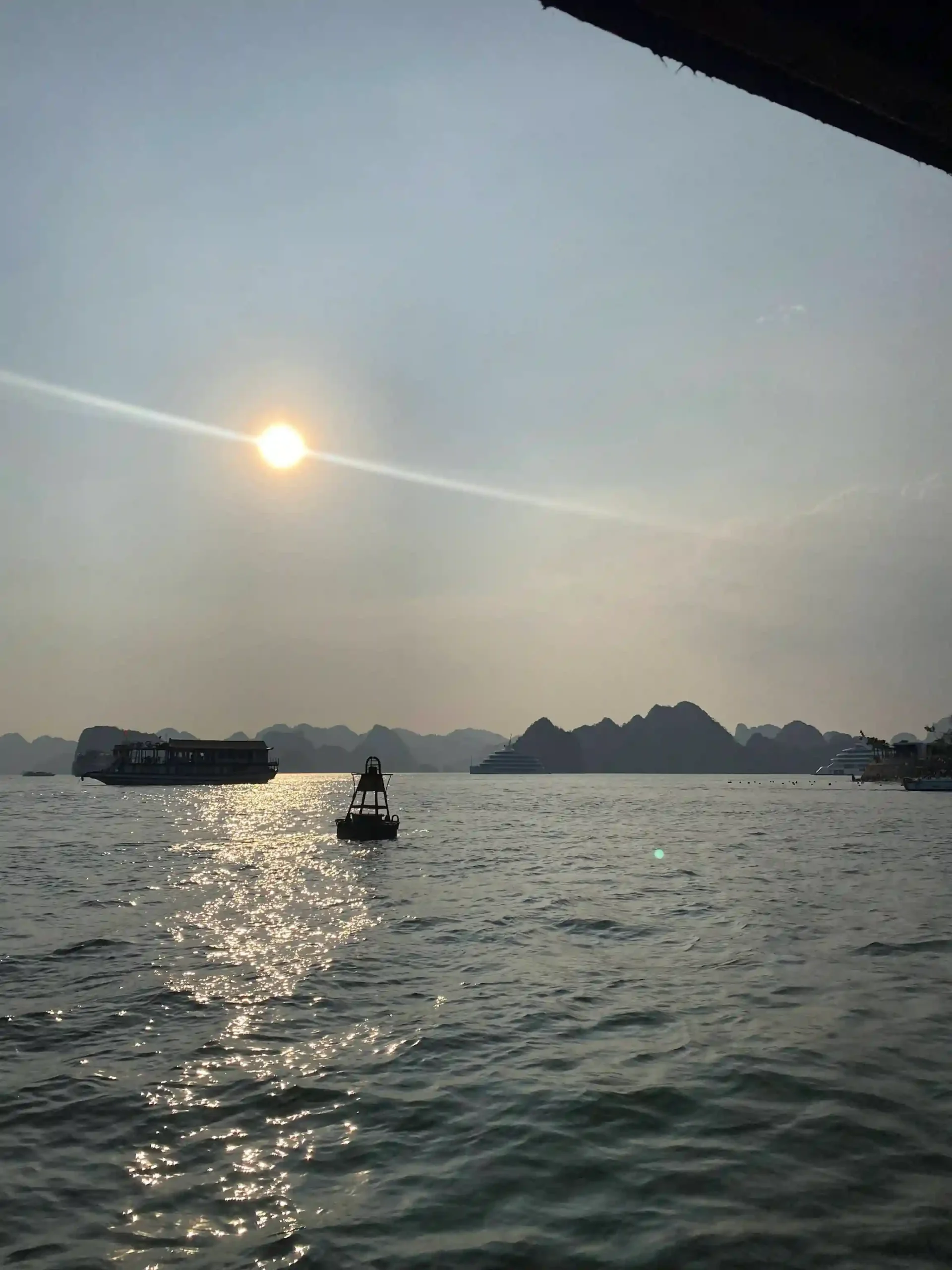
When foreigners ask me about the best Halong Bay attractions, the first thing I do is tell them to leave the Ha Long zone entirely.
Look at a satellite view. Directly south of the main tourist center, wrapping around Cat Ba Island, is Lan Ha Bay. The provincial border cuts right through the water. The main zone is run by Quang Ninh province. Lan Ha is run by Hai Phong city.
Why does this bureaucratic detail matter to you? Because Hai Phong restricts the number of boats.
If you go to the main center, you are looking at hundreds of giant white cruise ships anchoring in the exact same spot. It looks like a floating parking lot. In Lan Ha Bay, the limestone islands are packed much closer together. It forms these incredibly tight, narrow sea corridors.
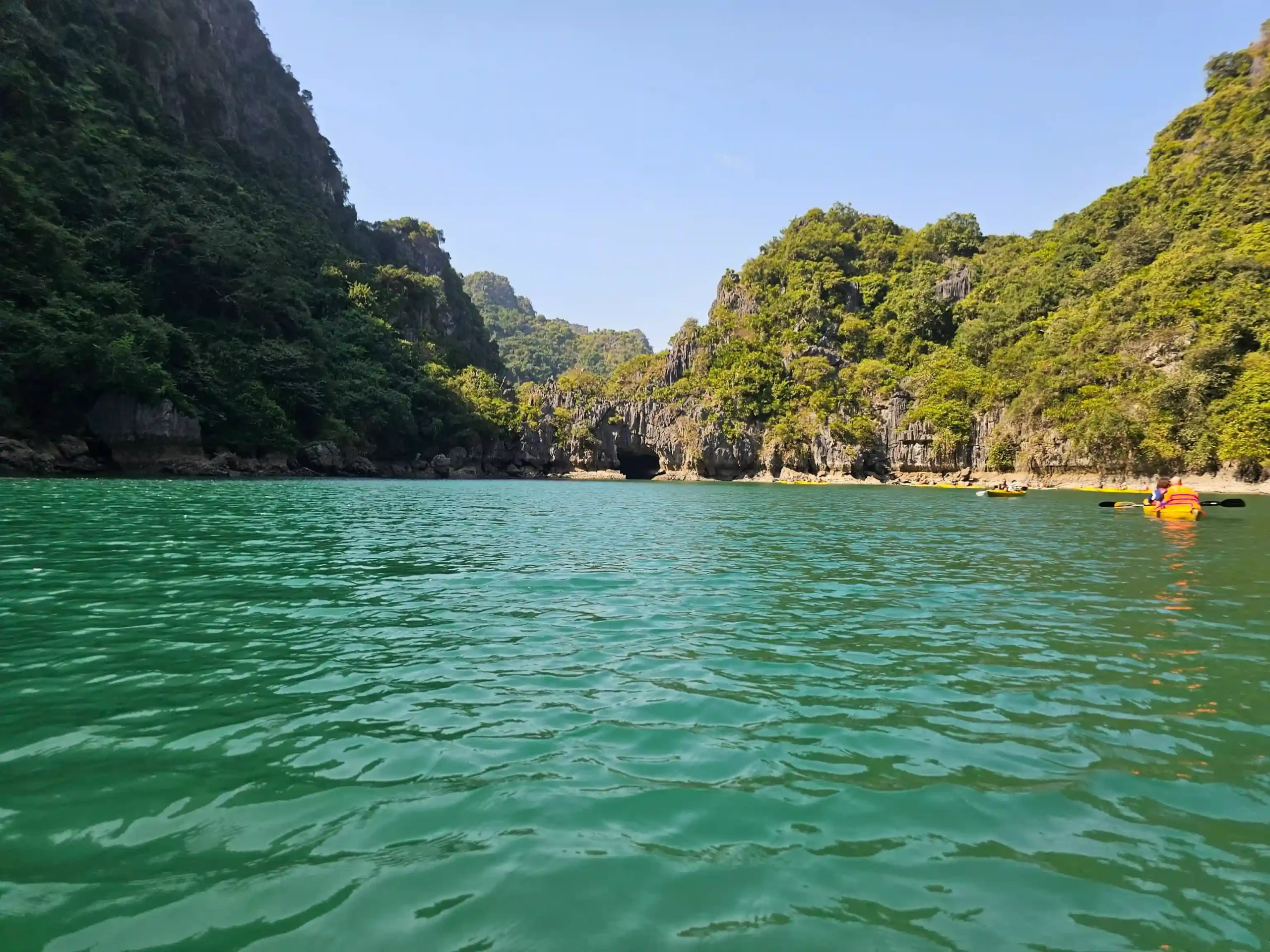
The water just objectively looks better down here. It’s a deep emerald color. Because the islands are so dense, there are over a hundred tiny, isolated patches of white sand forming micro-beaches at the base of the cliffs. When a boat drives through here, it feels like it’s squeezing through a canyon rather than floating on an open sea.
You can’t drive here. You have to book a specific cruise route. Tell whatever agent you are using: “I want a boat anchored in Lan Ha.” If you want to know which boats are good, that’s another article. Just check my Guide to The only Ha Long Bay overnight cruise I actually recommend to understand the ticketing.
2. Sung Sot Cave (Surprise Cave) on Bo Hon Island
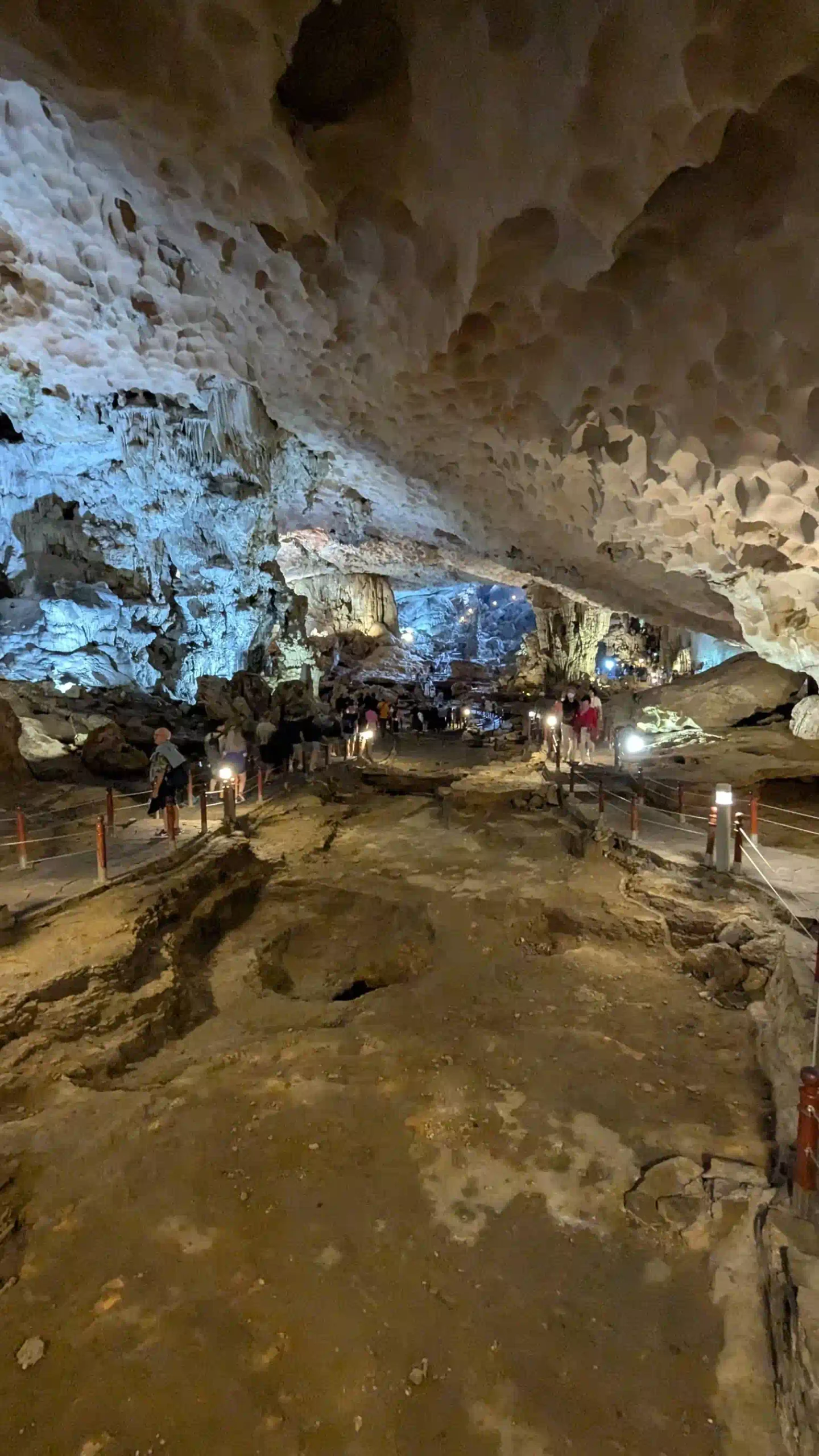
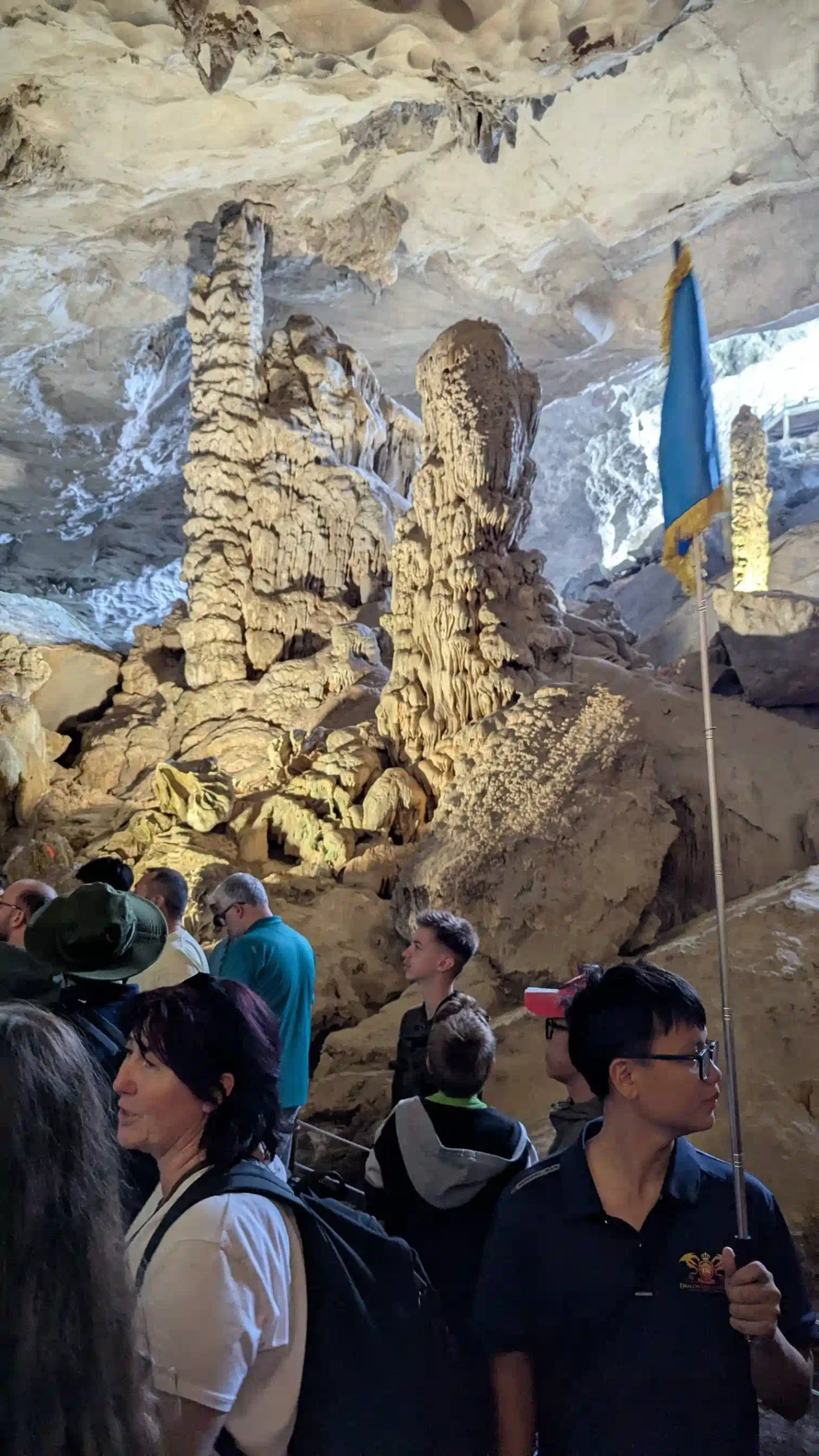
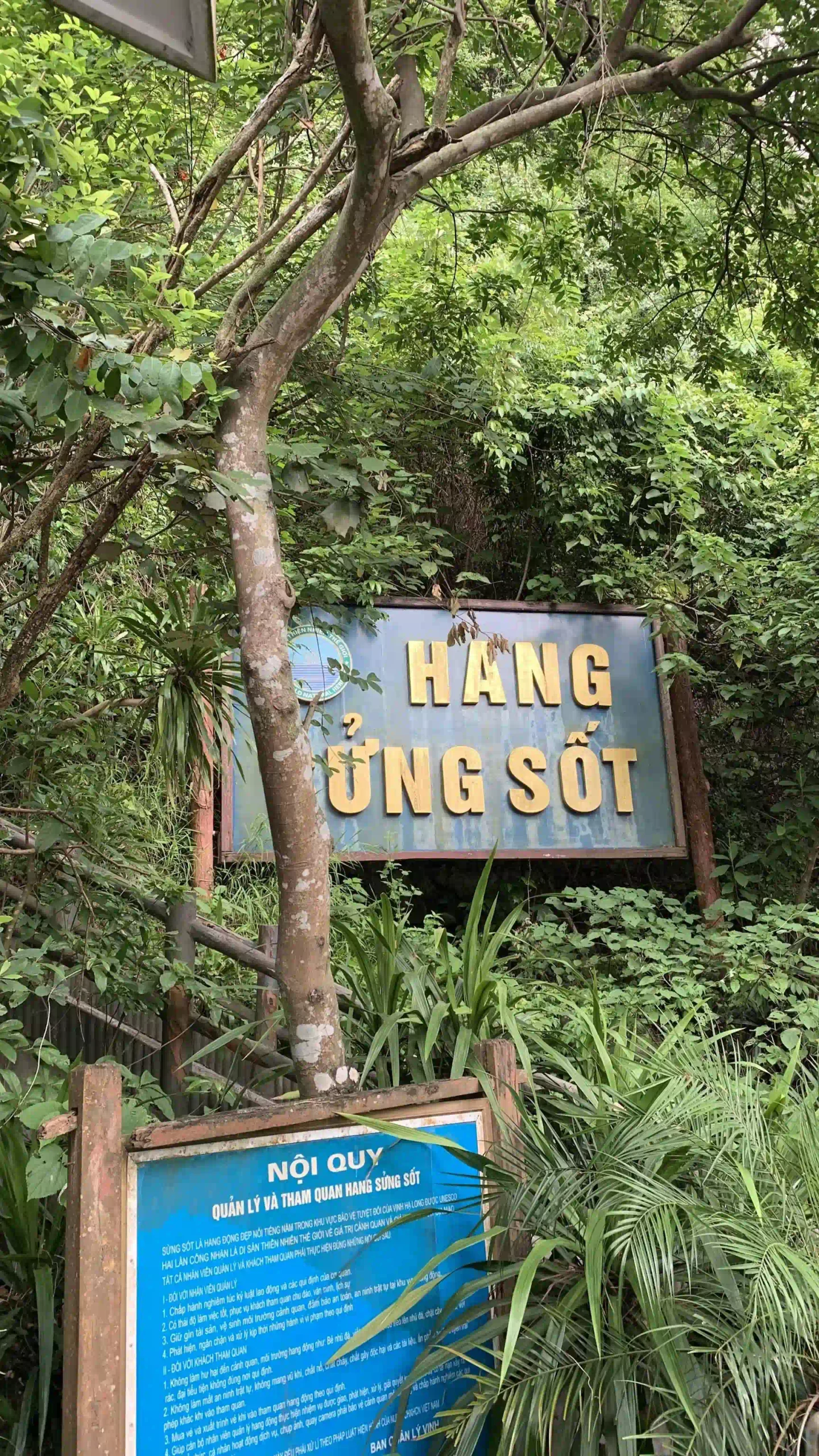
If your boat goes on Route 2 in the main center, the captain is going to drop anchor at Bo Hon island and make you get out.
Bo Hon is a massive piece of rock. On the side of the cliff, there is a small concrete dock and a very steep, sweaty set of stone stairs going up into the trees.
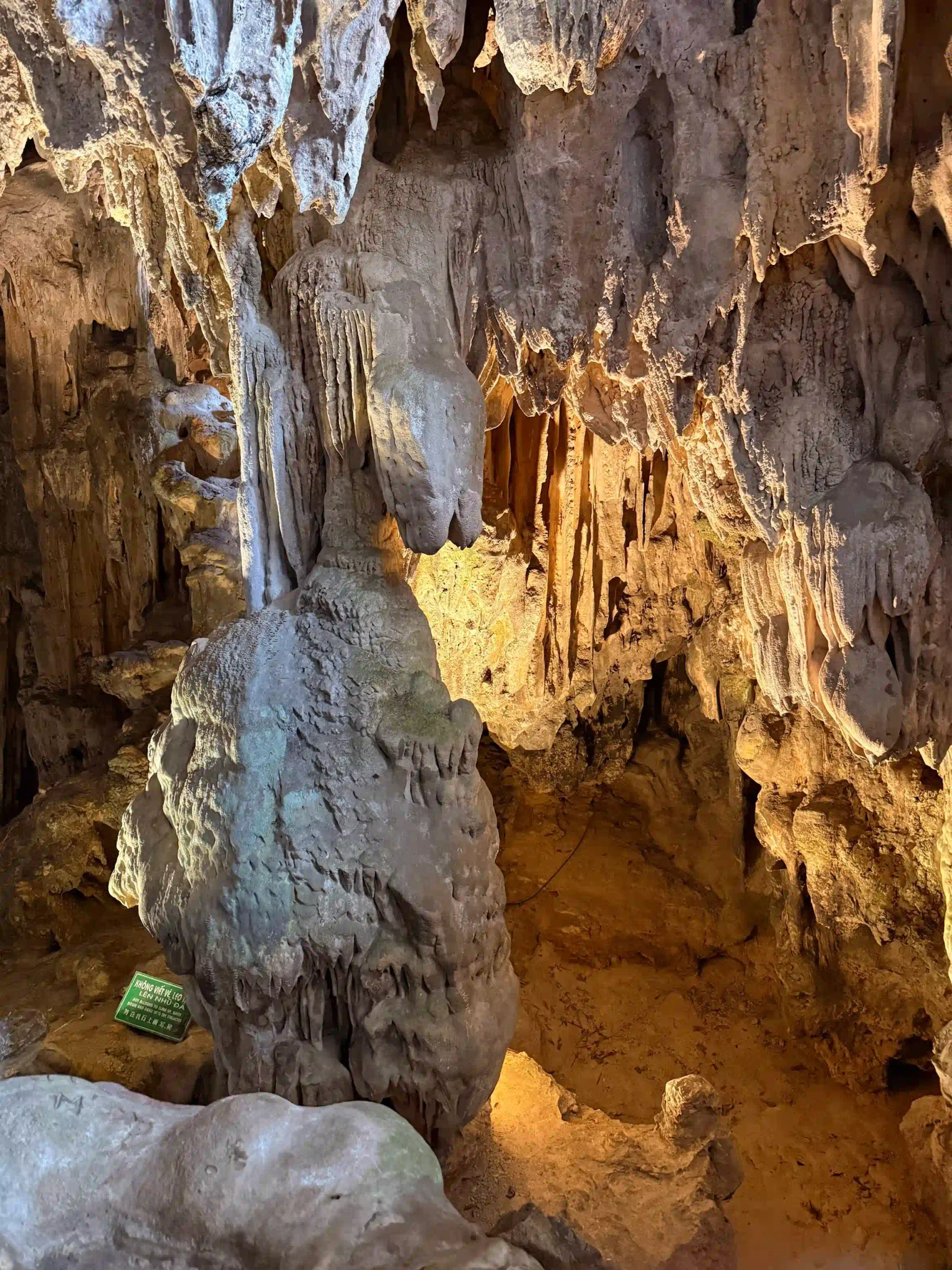
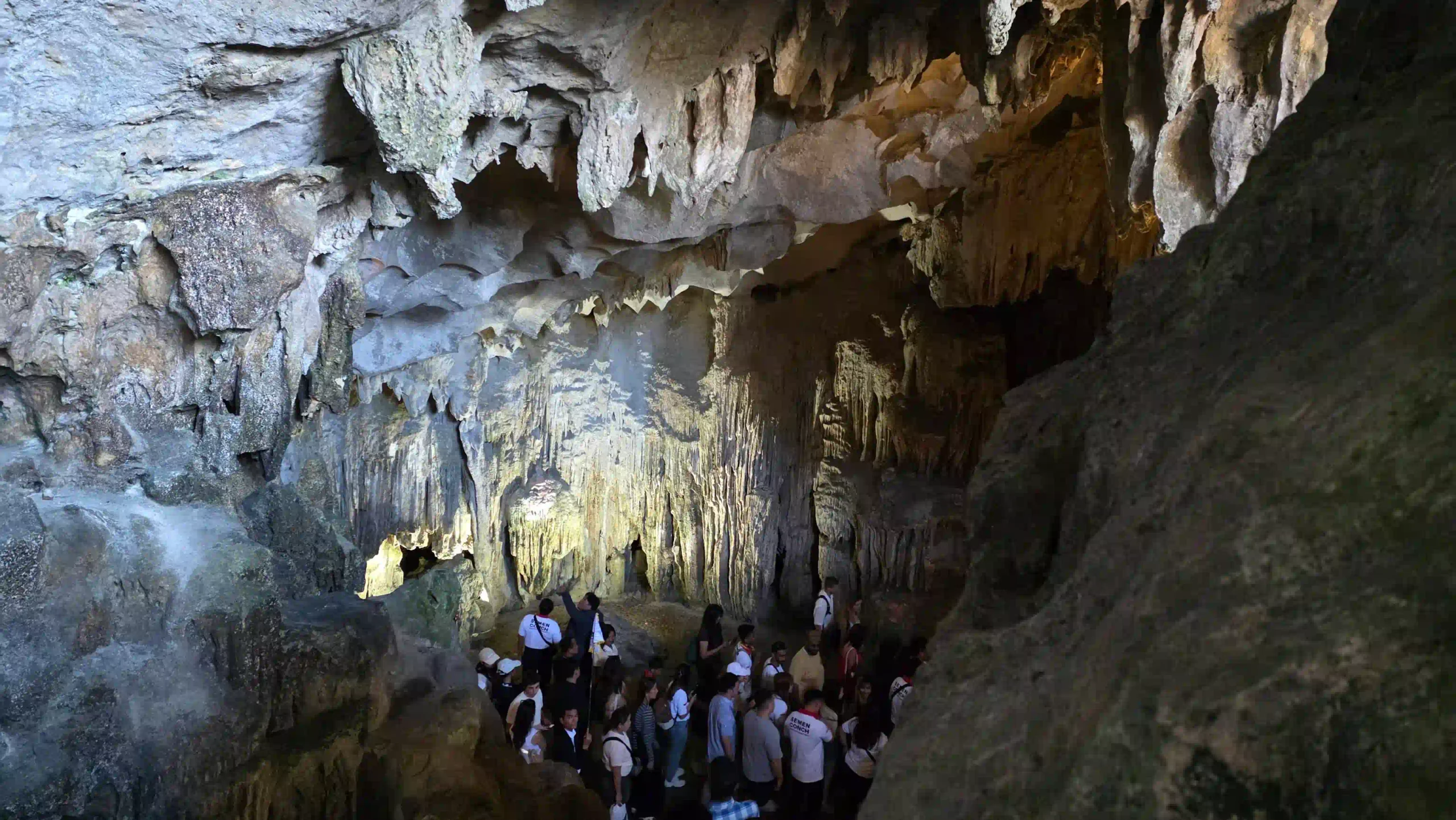
You climb the stairs, walk through a tiny crack in the rock face, and suddenly you are standing inside an underground cavern the size of a stadium. That’s Sung Sot.
It is divided into three chambers. The first two are sort of like waiting rooms, but the third one is the massive payoff. It’s so big you actually can’t see the ceiling clearly in some spots.
You need to know beforehand that the management here lights the cave with neon colors. Red, green, and blue lights shine on all the stalagmites. I hear European backpackers complaining about this all the time, saying it ruins the natural vibe. Whatever. It’s been like that since the 90s. The locals like it.
The path is paved stone. It’s a strict one-way loop. You walk in, take photos of the giant rock pillars that supposedly look like turtles and dragons (you kind of have to squint), and exit on a higher platform on the other side of the island.
It’s one of the most crowded places to visit in ha long bay. You will be walking in a slow-moving single-file line behind a tour group with a megaphone. Accept the crowd, look at the rocks.
3. Ti Top Island
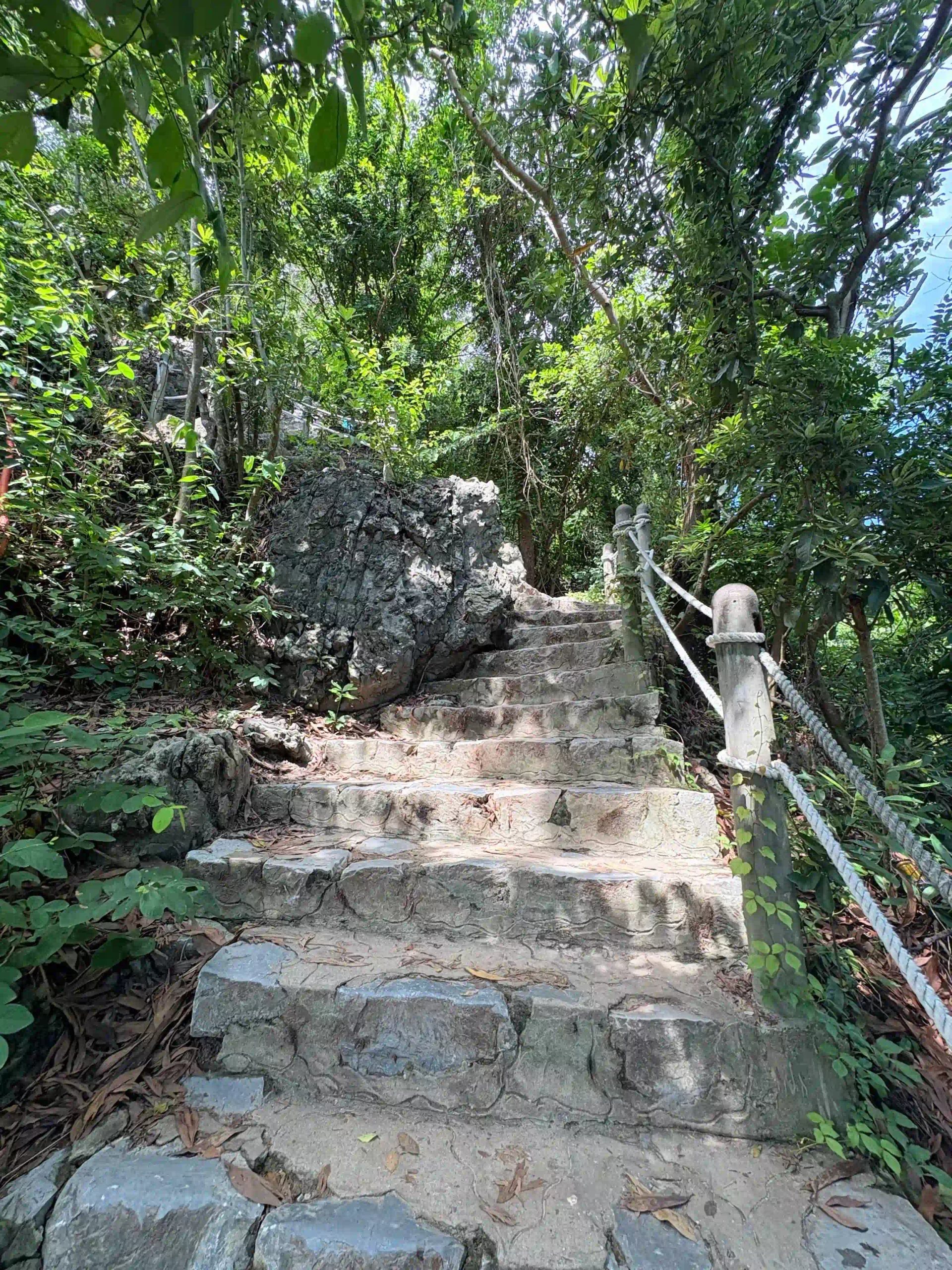
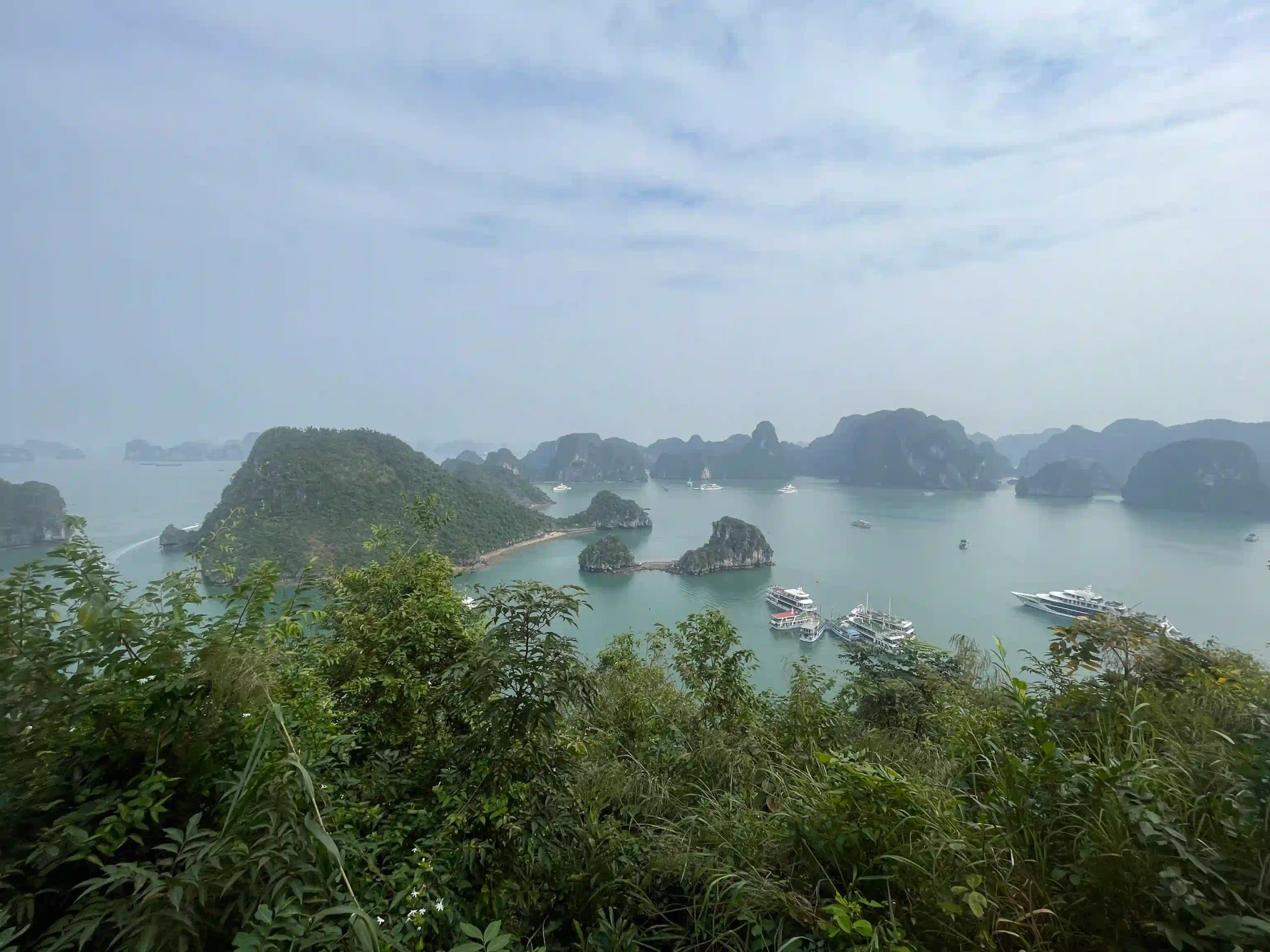
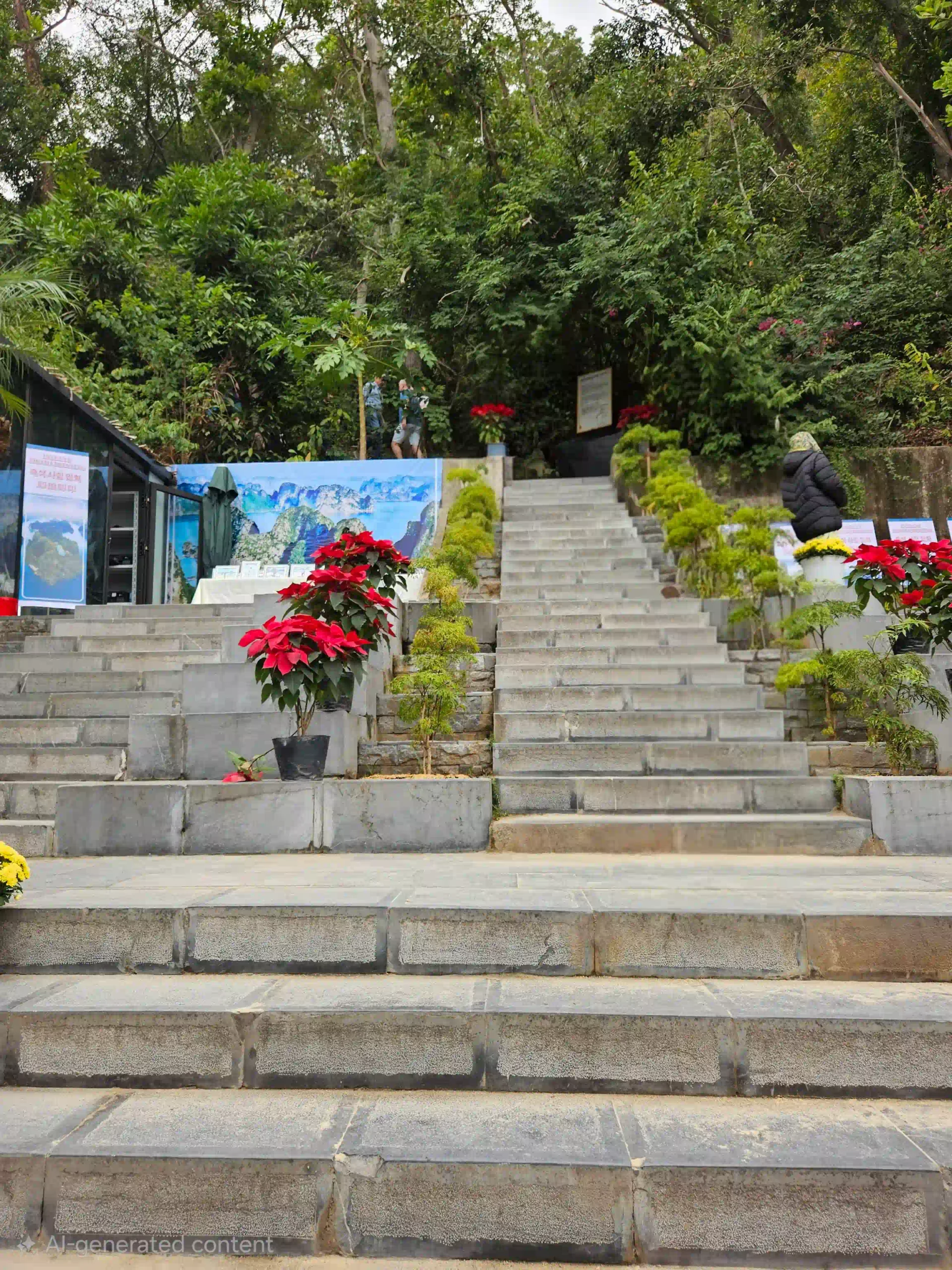
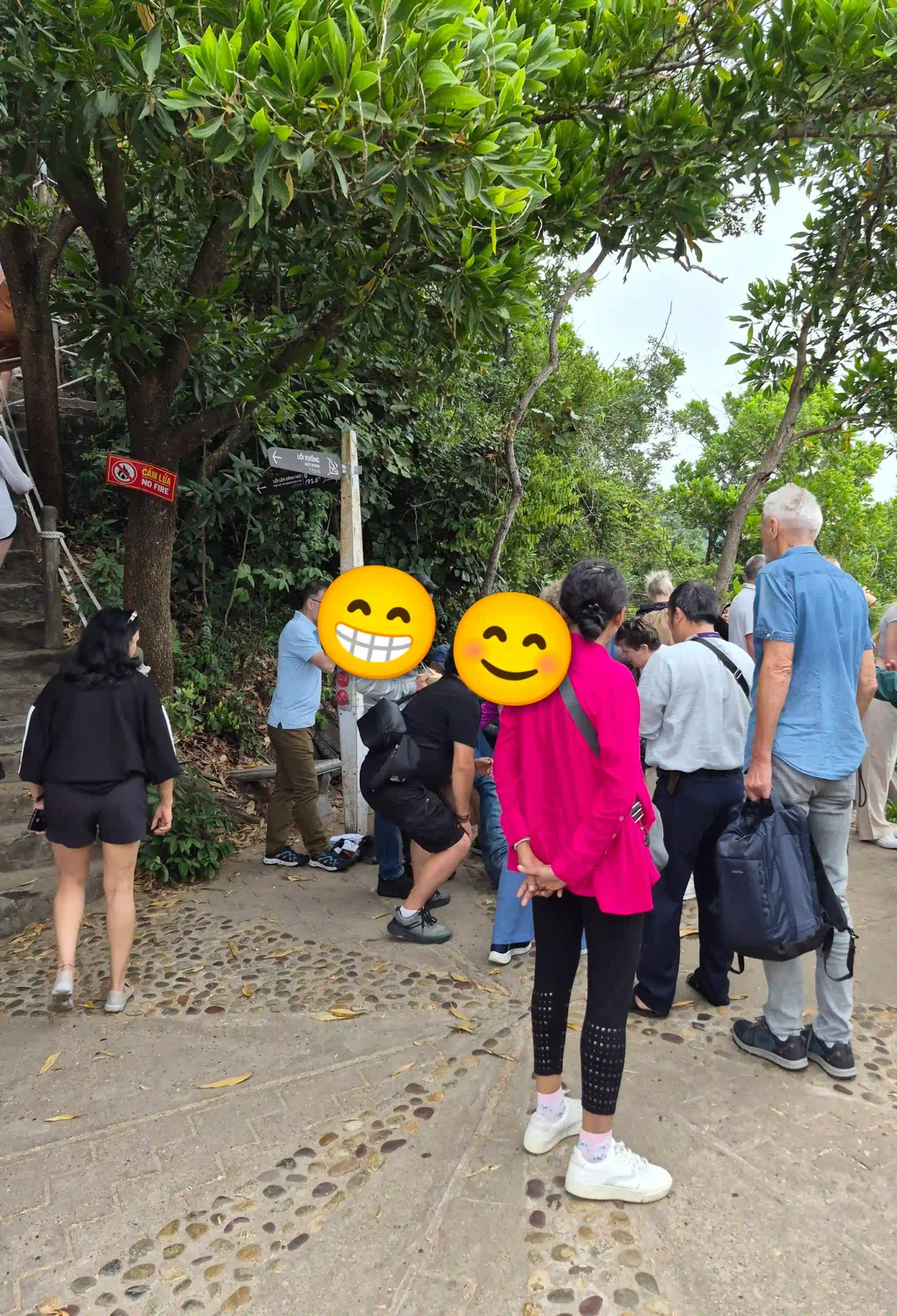
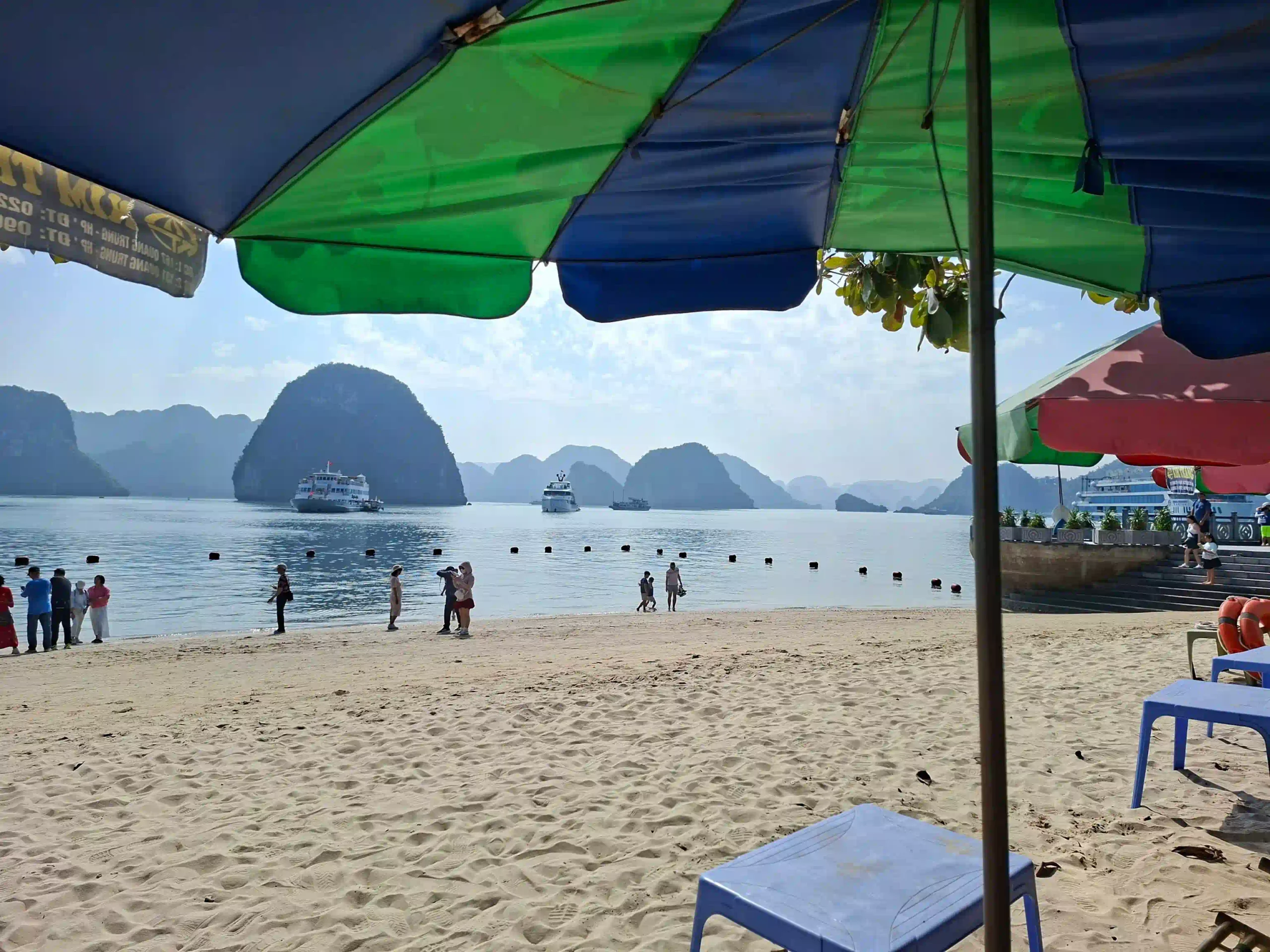
Just across the water from Bo Hon is Ti Top.
If you look at the promotional photos for the bay, there is always this one specific shot: taken from way up high, looking straight down at a crescent moon of white sand, with a dozen cruise ships parked in the green water.
That photo was taken on Ti Top Island.
The physical place is basically just a solitary, extremely tall spire of rock. It’s not an island you can walk around or explore. There are only two zones here.
Down at the water level is the beach. It’s totally man-made. They ship sand in on barges to keep it soft. It gets completely jammed with tourists from 2:00 PM to 5:00 PM. The swimming area is roped off so you don’t get hit by a propeller.
The main attraction is the stairs. They carved about 400 stone steps straight up the side of the cliff. It is punishing. There is almost no breeze against the rock wall. You drag yourself up, sweating completely through your shirt, until you hit the wooden viewing deck at the summit. The deck is tiny. You shove your way to the railing, get your wide-angle shot of the boats, and immediately go back down because there is literally nowhere to sit.
It sucks, but the view is arguably the best out of all the Halong Bay attractions.
4. Quang Ninh Museum
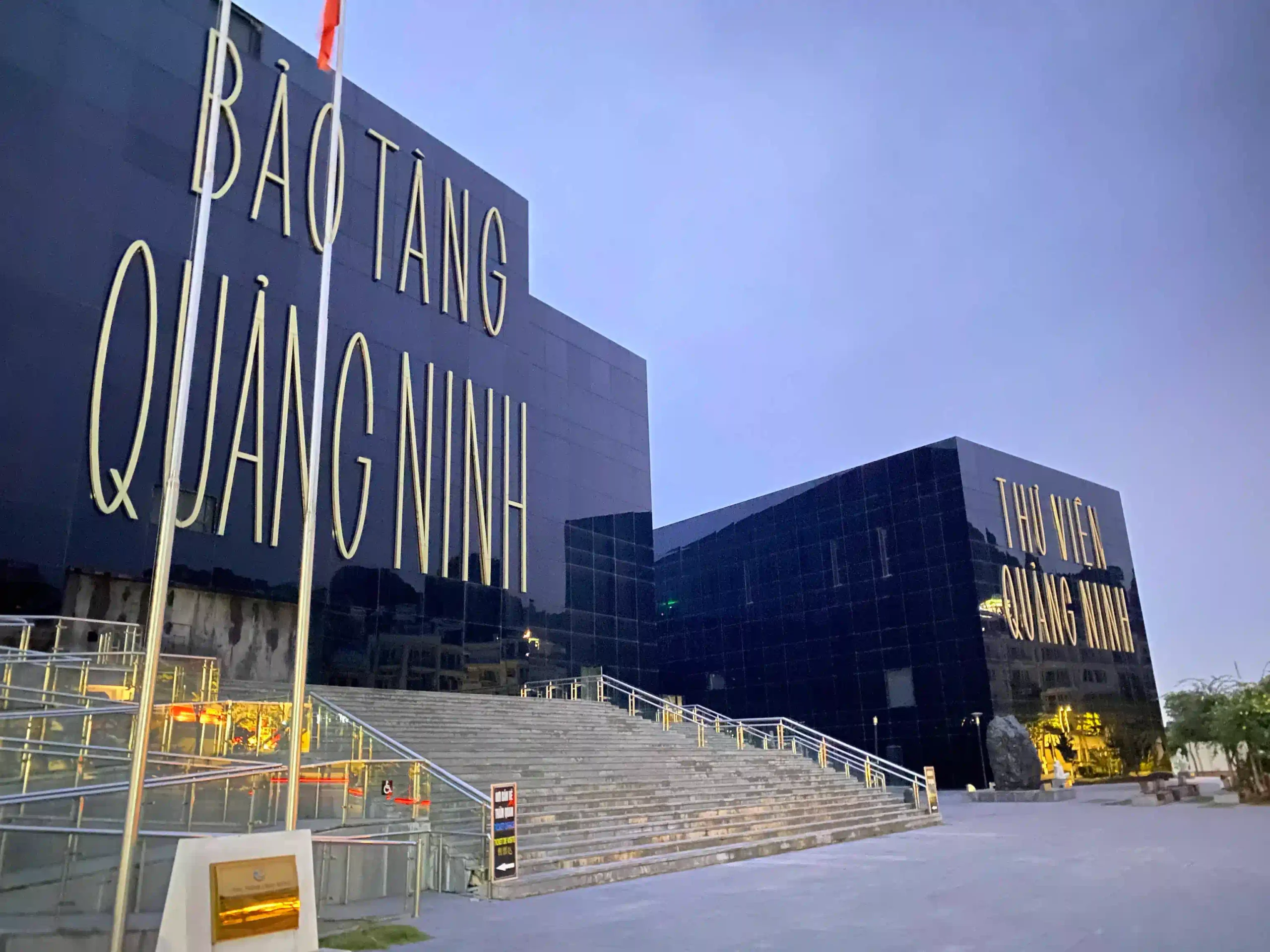
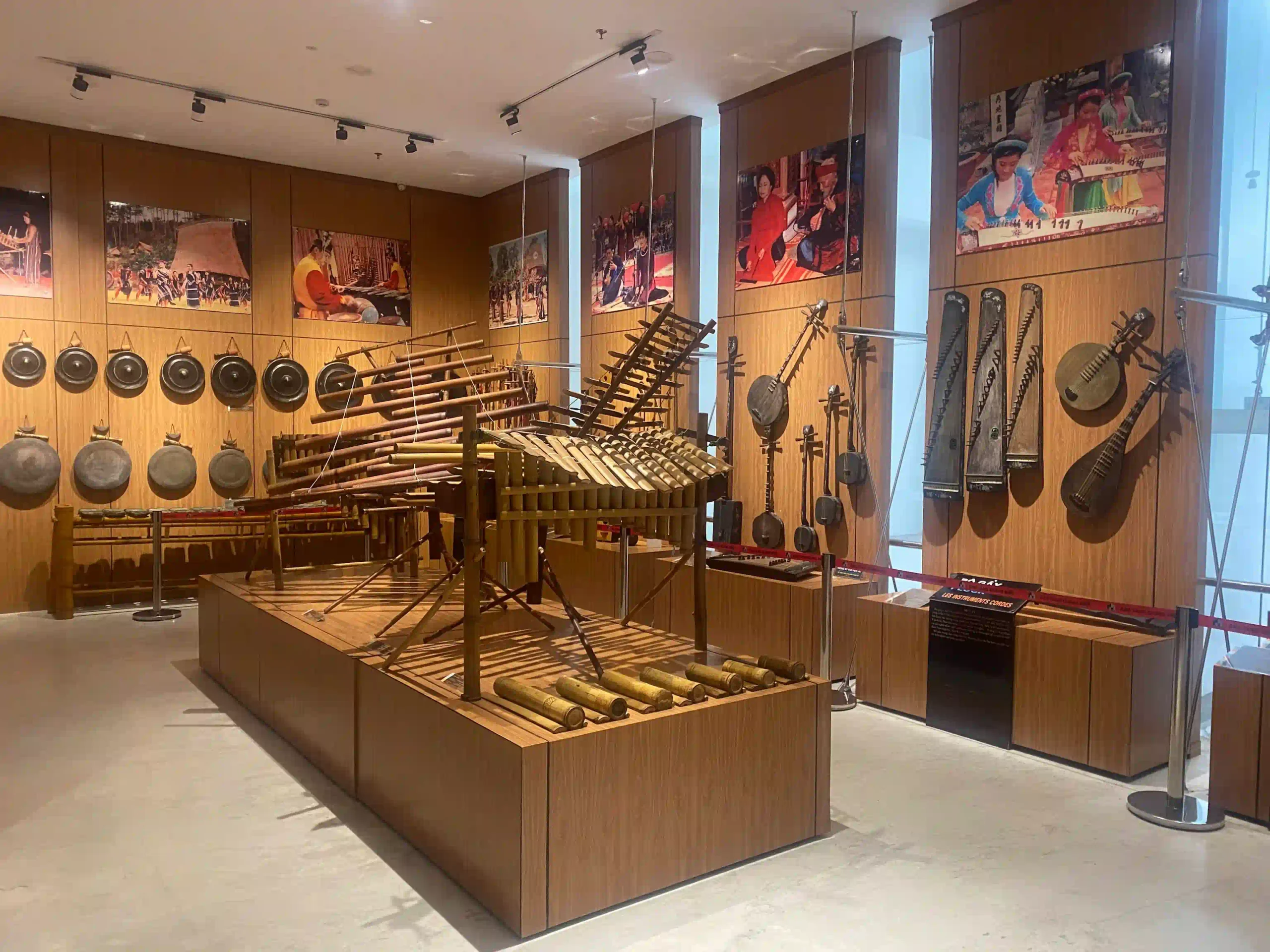
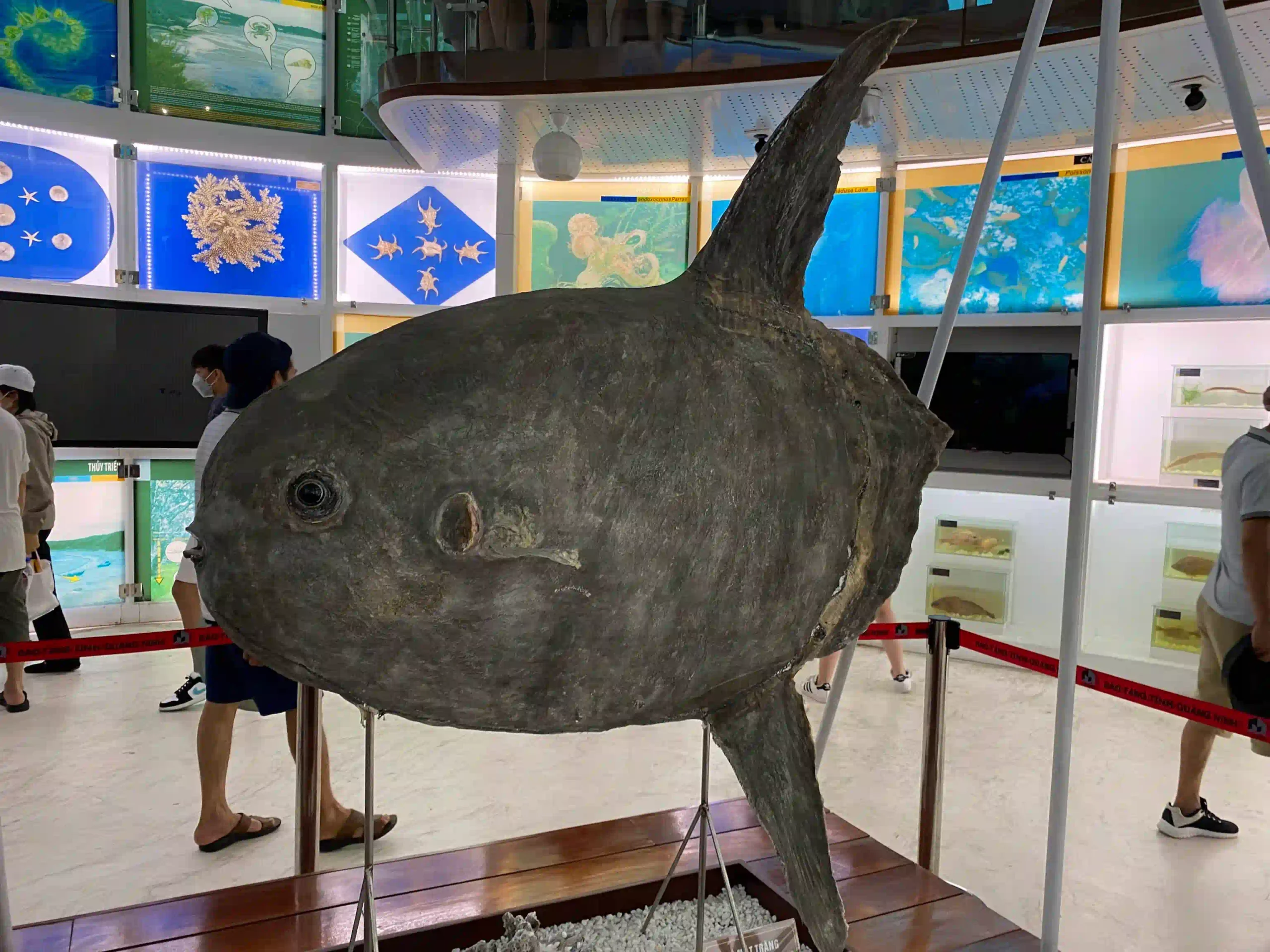
Okay, let’s step off the boat. Ha Long City itself is split by water into two halves. Bai Chay is where the massive hotels and tourists are. Hon Gai is where the local city is.
Right on the coastal street in Hon Gai (Tran Quoc Nghien road), there is this massive, weirdly shaped square building made completely out of black reflective glass. This is the provincial museum.
You usually skip museums in Southeast Asia because they are dusty and don’t have AC. You don’t skip this one.
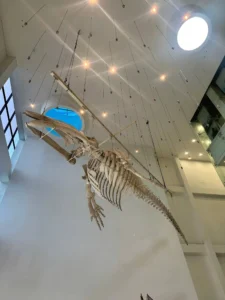
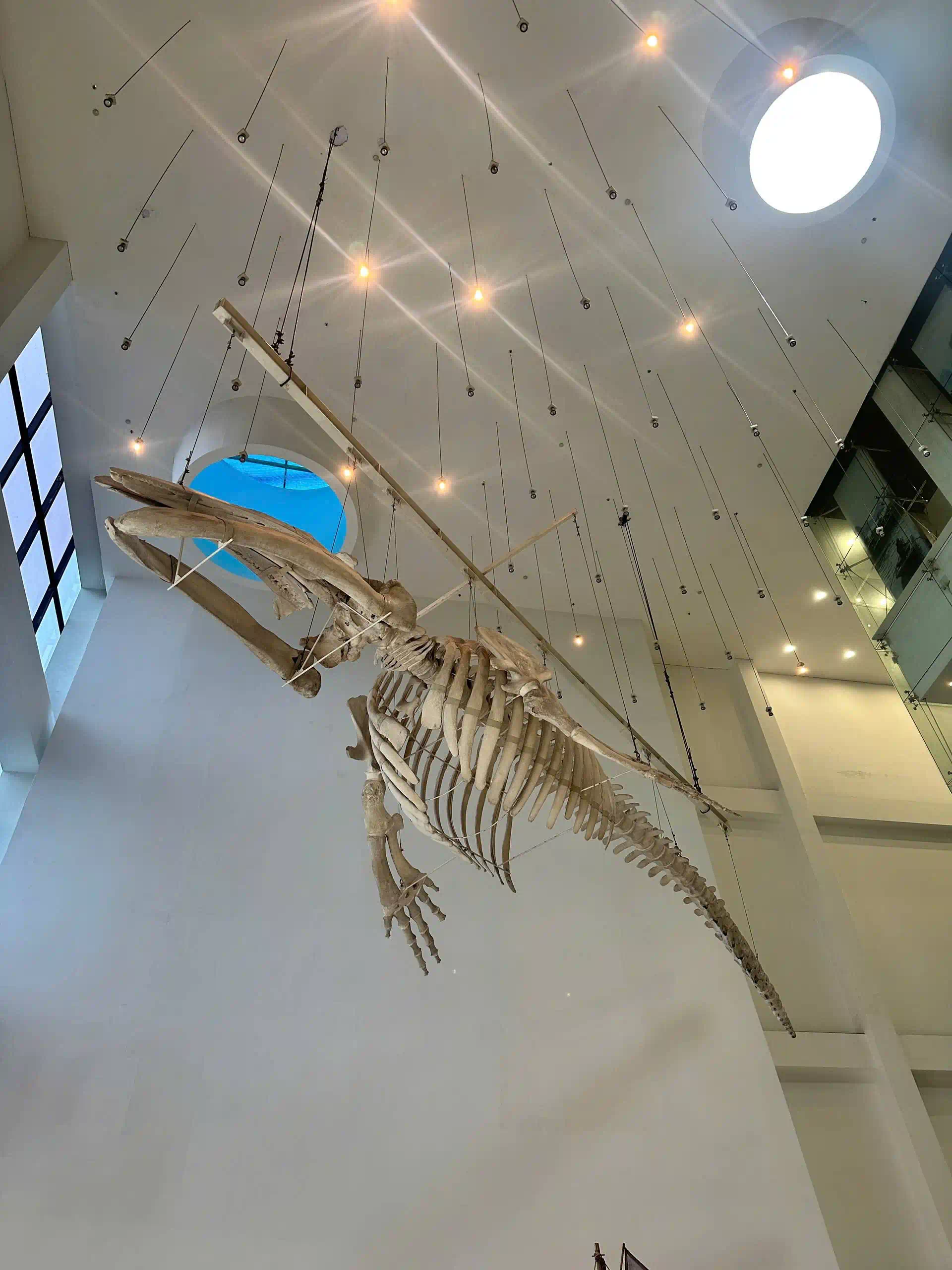
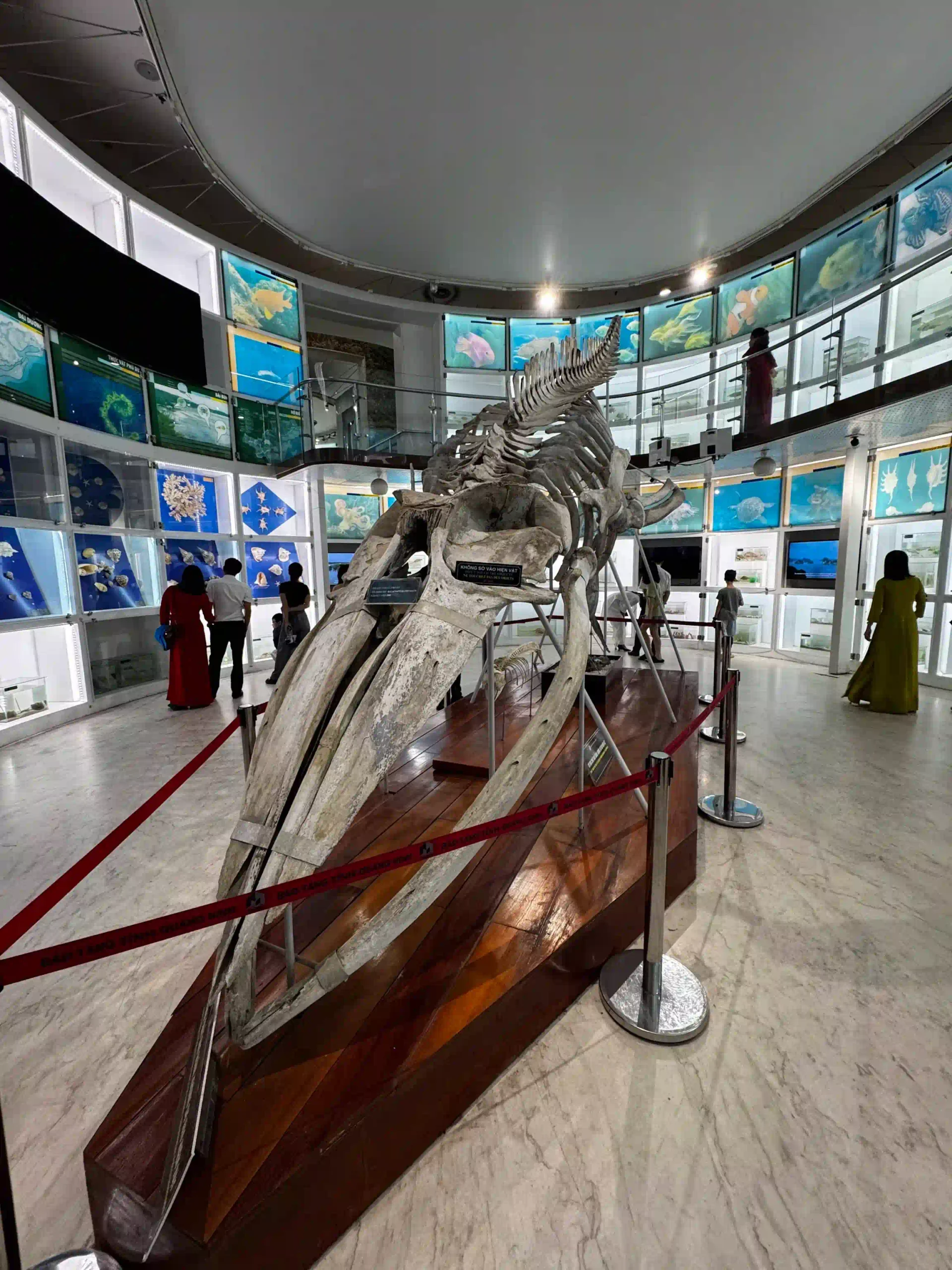
Quang Ninh is a ridiculously wealthy province, and all their money comes from coal mining. So they dumped a bunch of cash into this building. The bottom floor is a massive marine exhibit with a full whale skeleton suspended from the ceiling. It looks cool.
But the upper floors are what make it a weirdly specific place to visit in ha long bay. They built mock-ups of underground coal mines. You walk through these dark, simulated tunnels to see what it looks like under the mountains around the city.
The AC is freezing cold, which makes it the ultimate place to hide if you get stuck in the city during a 39-degree August afternoon. The entrance is like 40,000 VND. Total steal.
5. Sun World and Ba Deo Hill
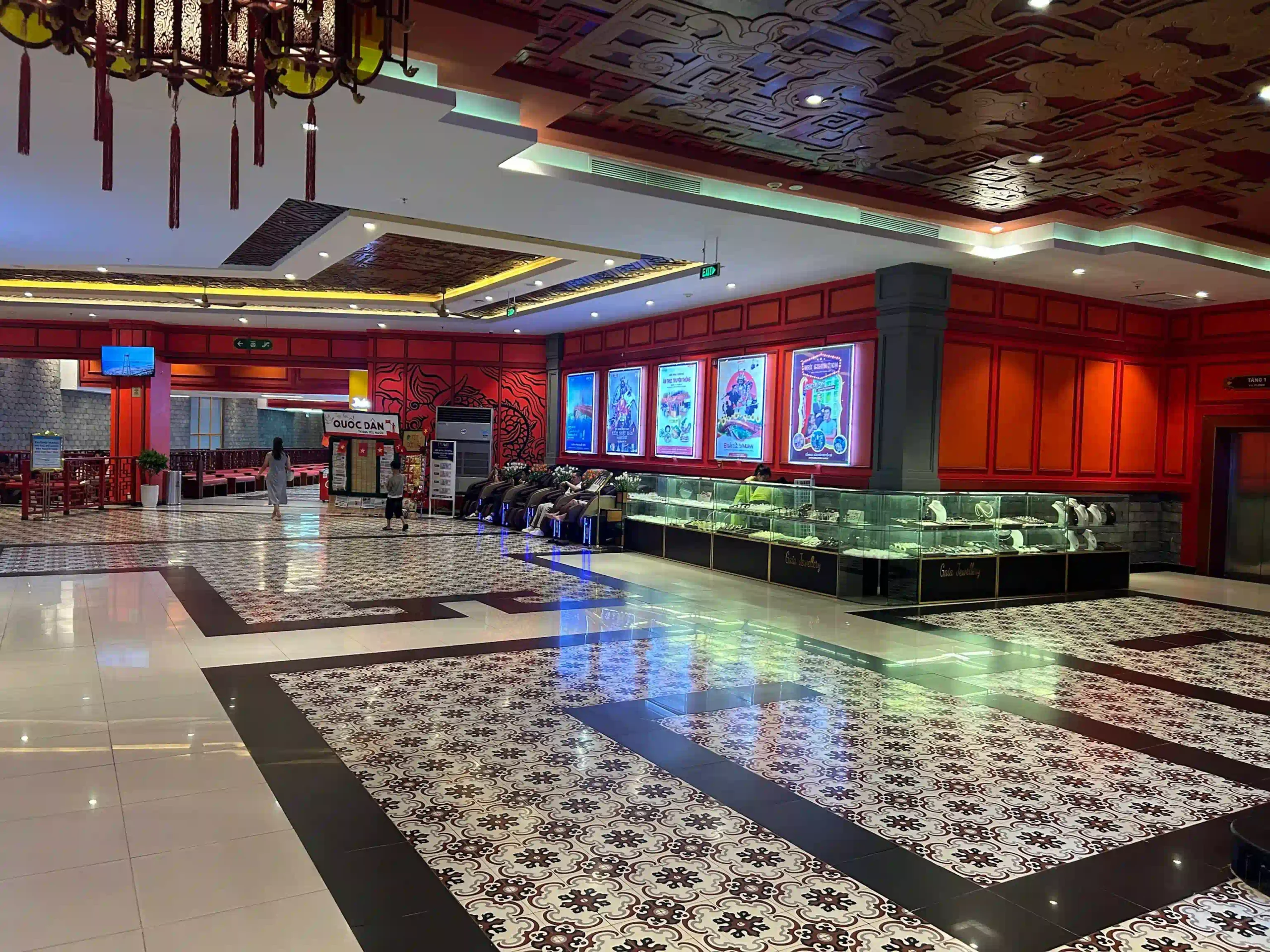
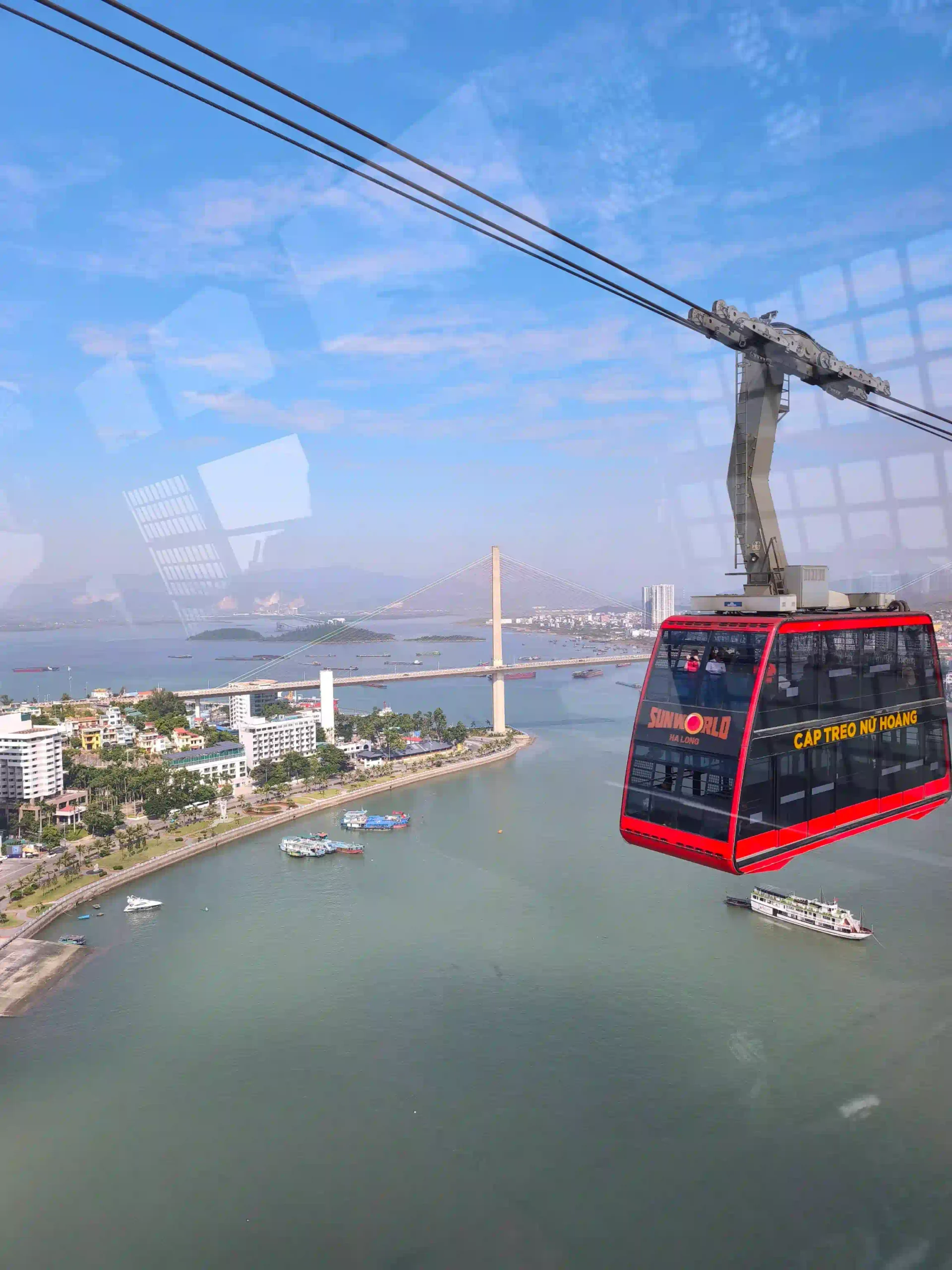
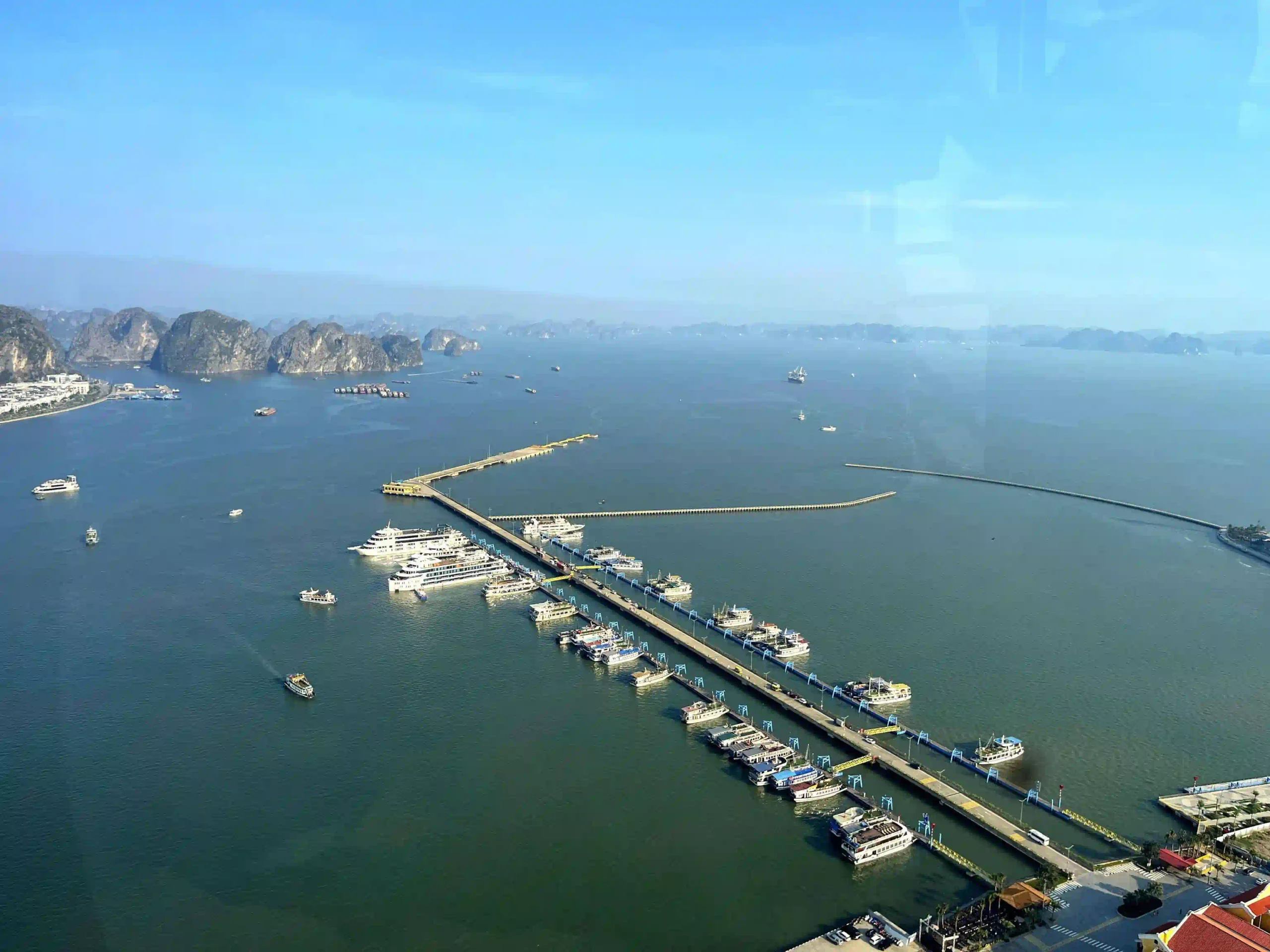
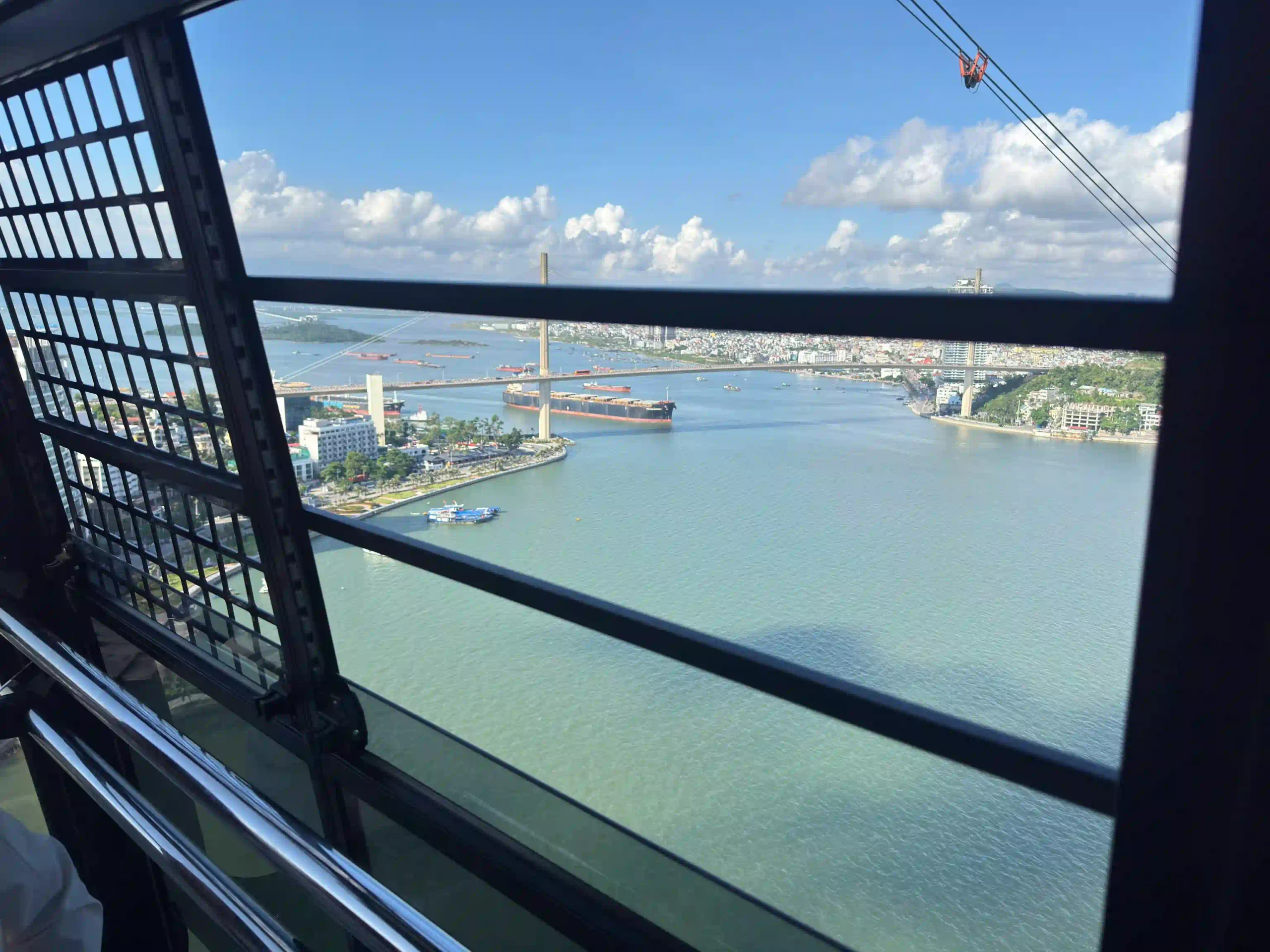
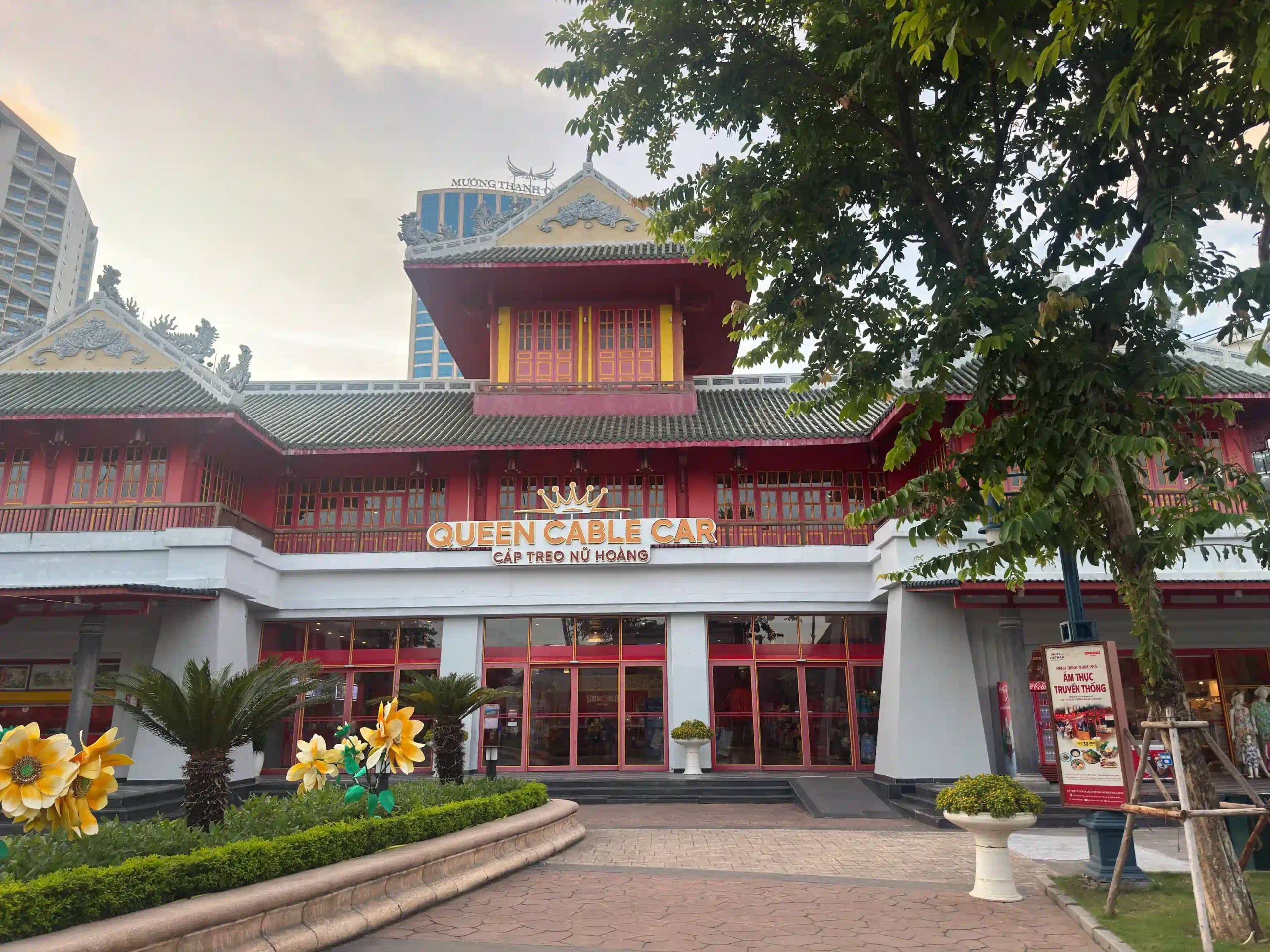
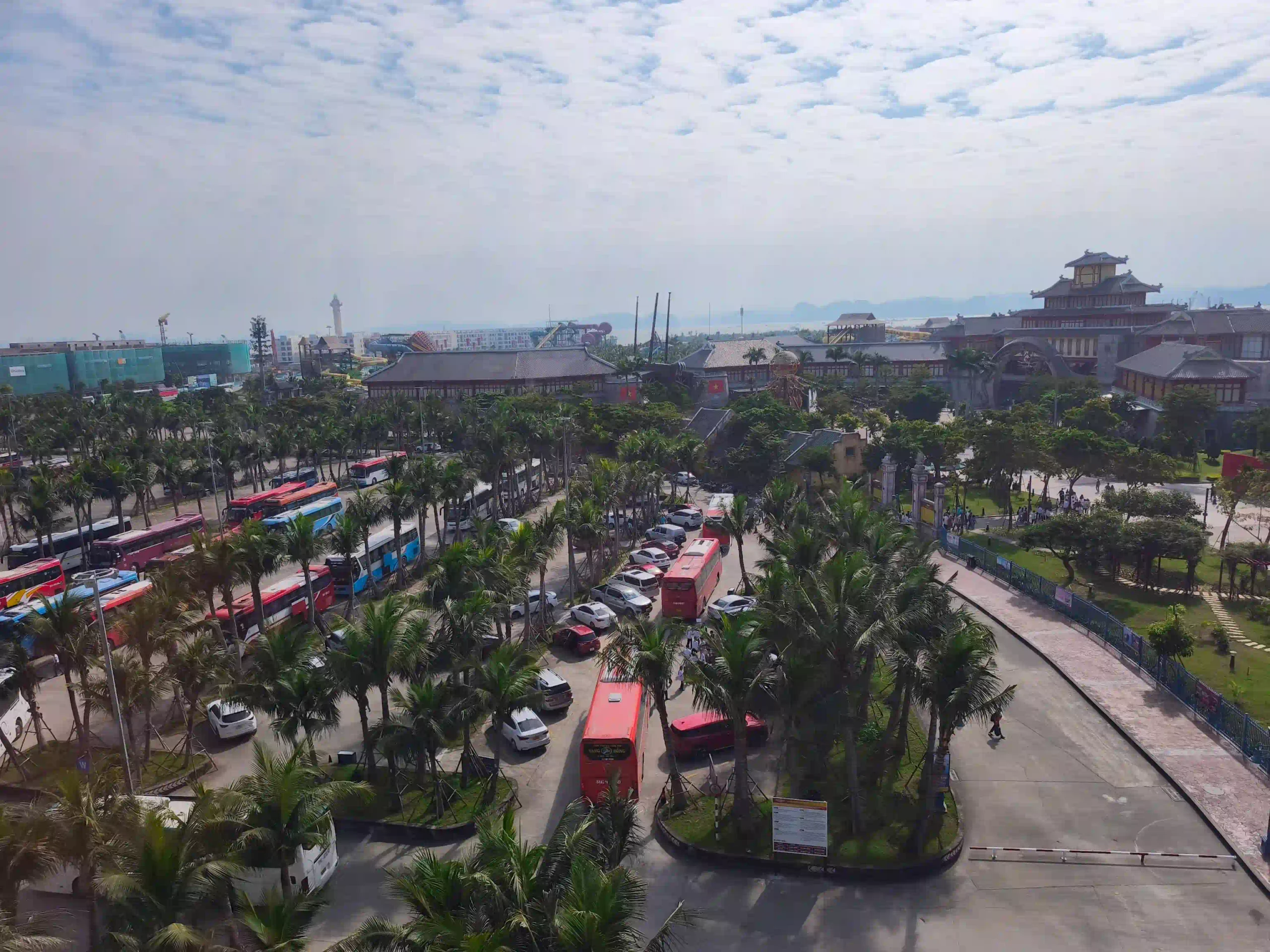
If you are standing anywhere in the city, you are going to look up and see massive metal support towers sitting in the ocean holding a cable car line.
A corporation called Sun Group owns a huge chunk of the tourist real estate here. They built a massive theme park complex. The rollercoasters are down on the beach in Bai Chay. You can skip those. You didn’t fly to Vietnam to go on a mediocre rollercoaster.
The physical attraction you care about is the Queen Cable Car and what it connects to.
The cable car cabins are stupidly huge. Two stories tall, completely glass, holding over 200 people at once. You get on in Bai Chay, and the machine pulls you high over the main shipping channel of the bay. You look directly down at the Bai Chay bridge and the massive cargo ships.
It drops you off on top of Ba Deo Hill on the Hon Gai side. They chopped the top of this hill off and built a massive, totally out-of-place Japanese Zen garden. They have giant koi ponds, bonsai trees, and the Sun Wheel (a giant red Ferris wheel you can see from 10 miles away).
It is entirely artificial. It has nothing to do with Vietnamese culture. But the sunset view looking backward over the city from Ba Deo hill is honestly crazy.
6. Luon Cave Lagoon
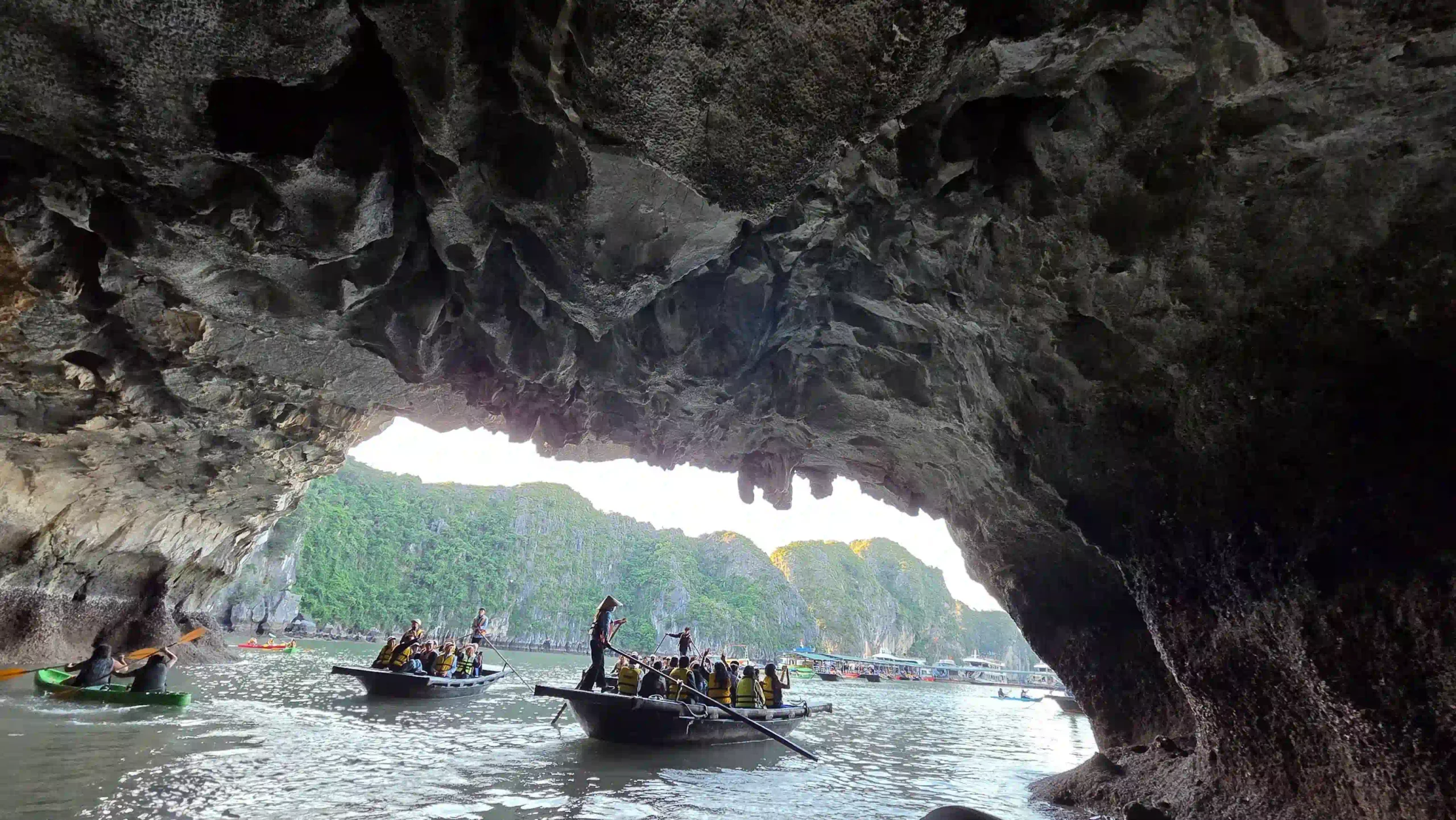
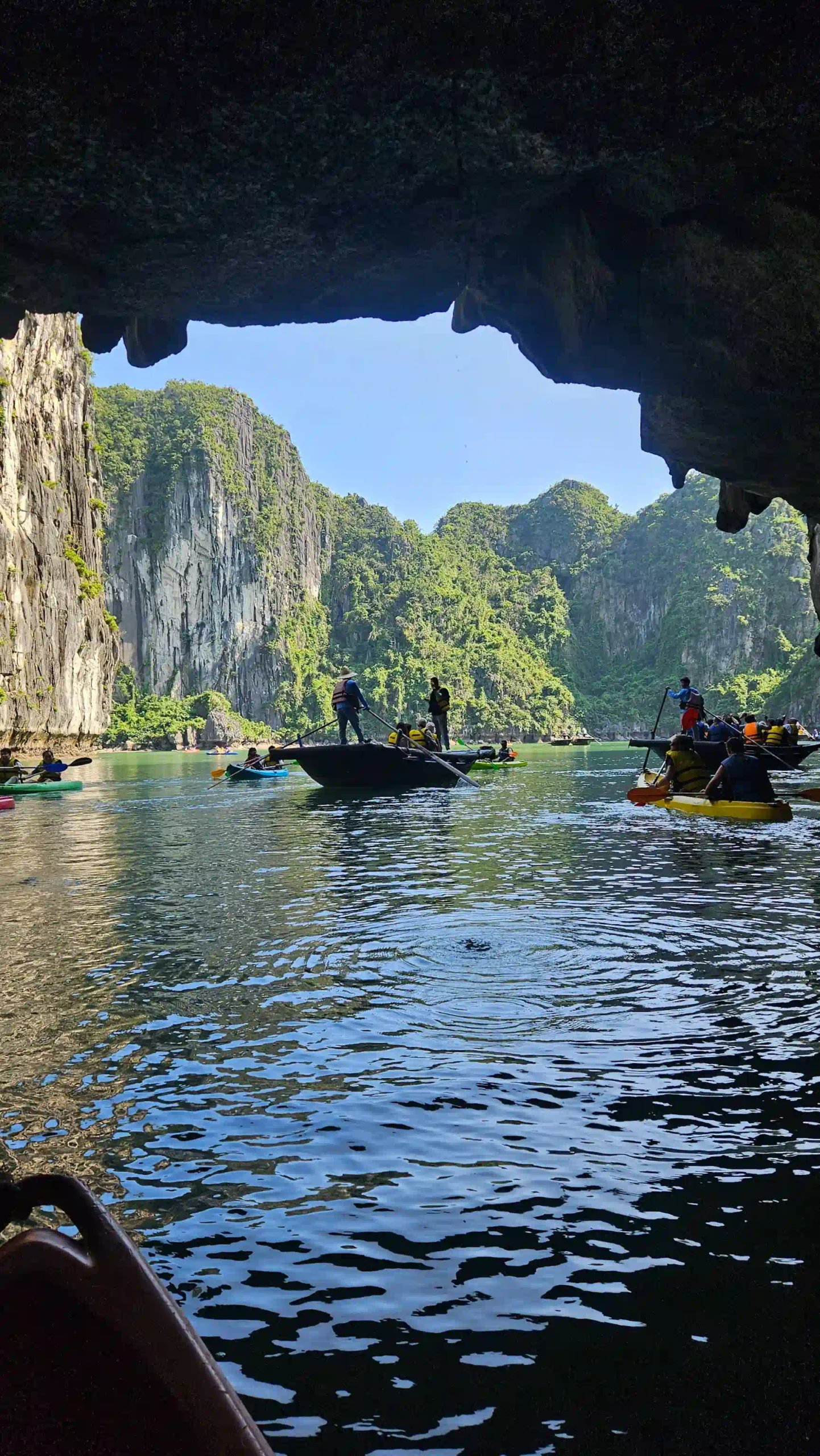
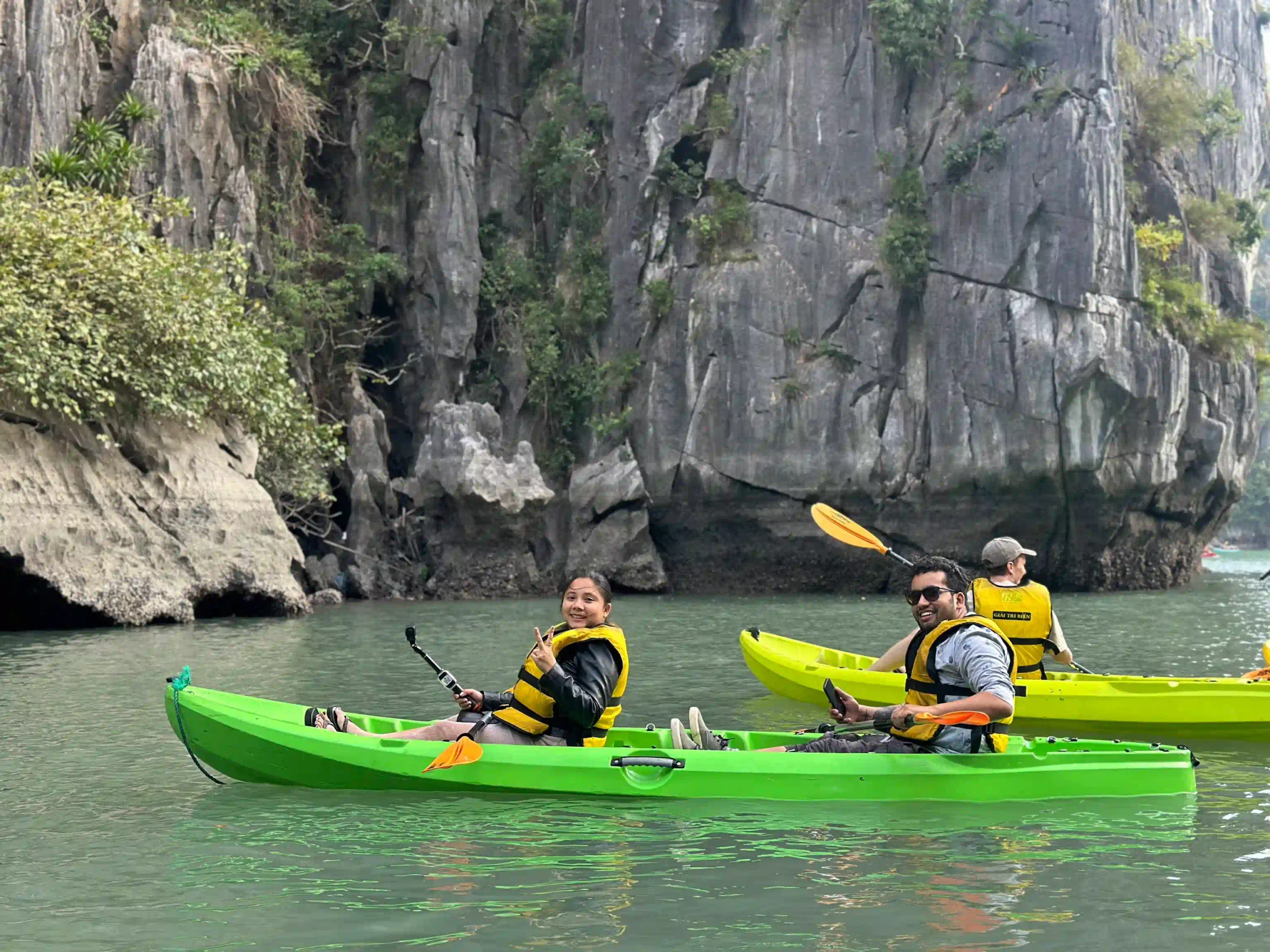
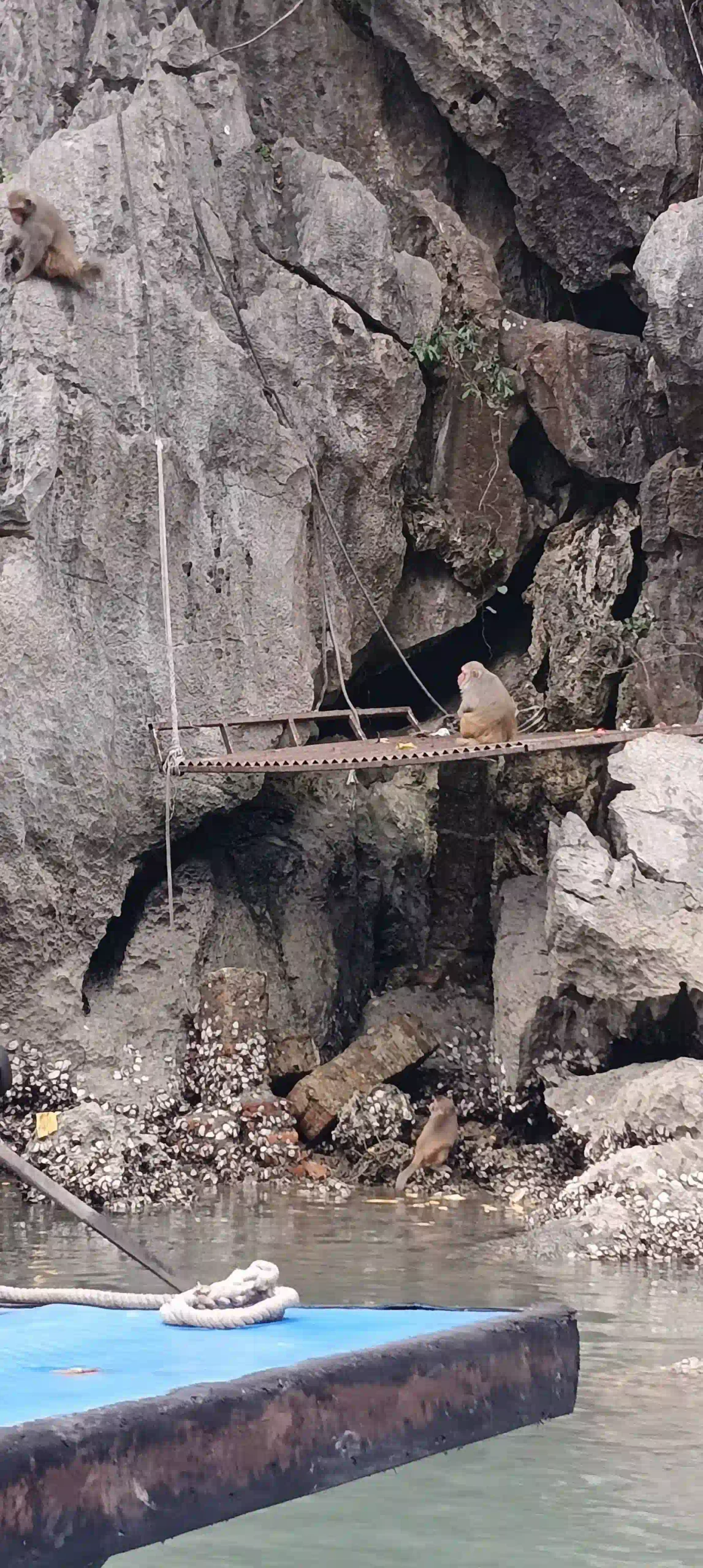
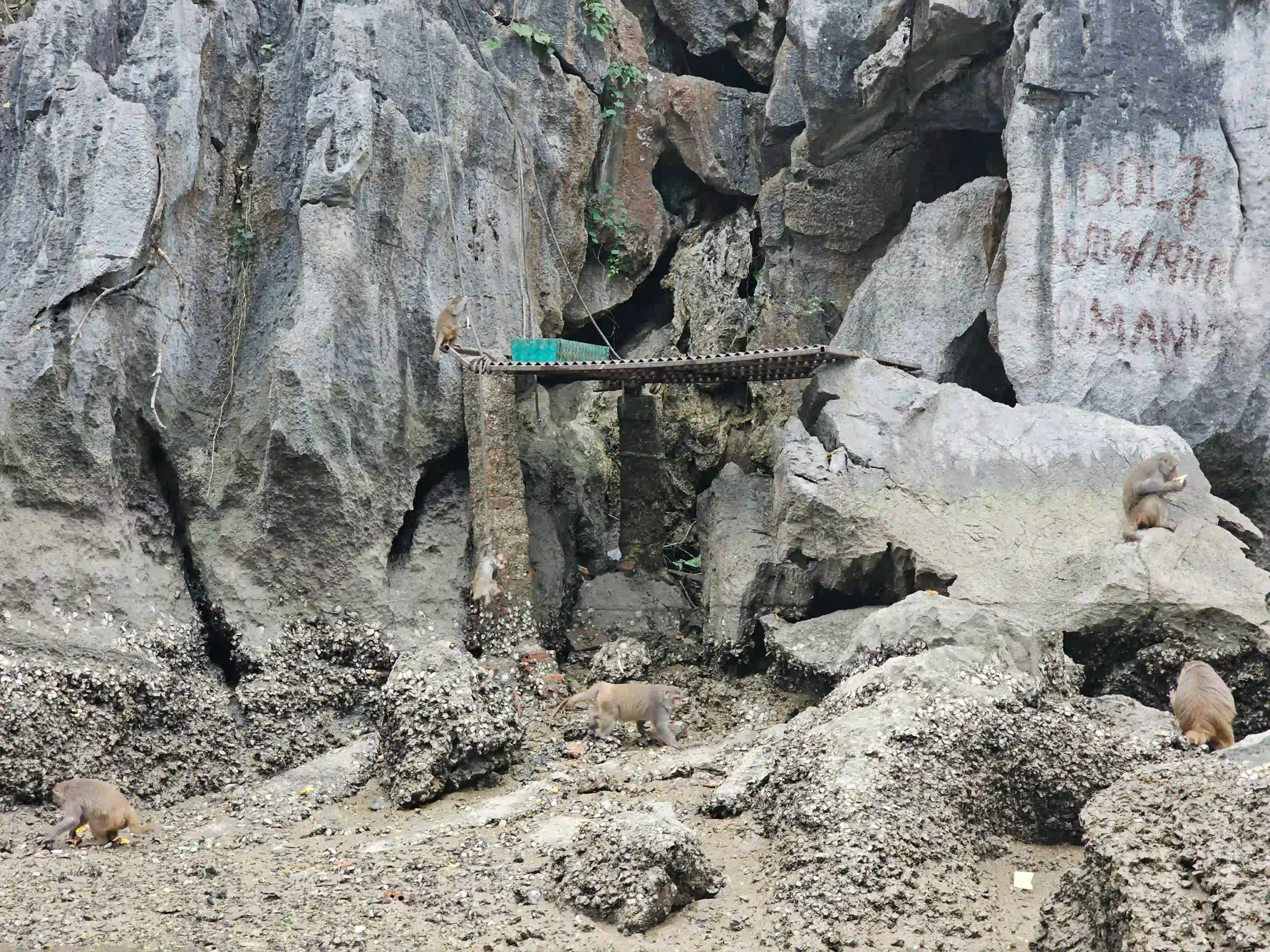
Back out to the islands. If Sung Sot is the giant walking cave, Luon Cave is the boating one.
This is probably one of the most geographically unique places to visit in ha long bay. You pull up in your boat, but there’s nowhere to dock. There is just a sheer vertical cliff dropping into the sea.
Right at the waterline, there is a hole. It’s a natural tunnel that the water carved entirely through the rock. It’s only a few meters high, so the big boats have to stay far back. You get a plastic kayak and you paddle into this dark hole.
You come out the other side and the entire world shuts up.
The tunnel leads into a completely sealed, circular lagoon. A massive limestone crater filled with ocean water. You cannot see the rest of the bay from inside. The wind stops. The waves stop.
The cliff walls are covered in dense vegetation, and this is where you run into the monkeys. There is a local macaque population trapped on the cliffs in here. Do not row your kayak directly up to the rocks. I watched a monkey jump onto a Canadian guy’s kayak last month, steal his open bag of chips, and screech at his face. Just stay in the middle of the lagoon.
If you are obsessed with checking out different grottos, you’ll probably want to read my upcoming guide on the Best caves in Ha Long because they are completely scattered around the map.
7. Tran Quoc Nghien Coastal Road
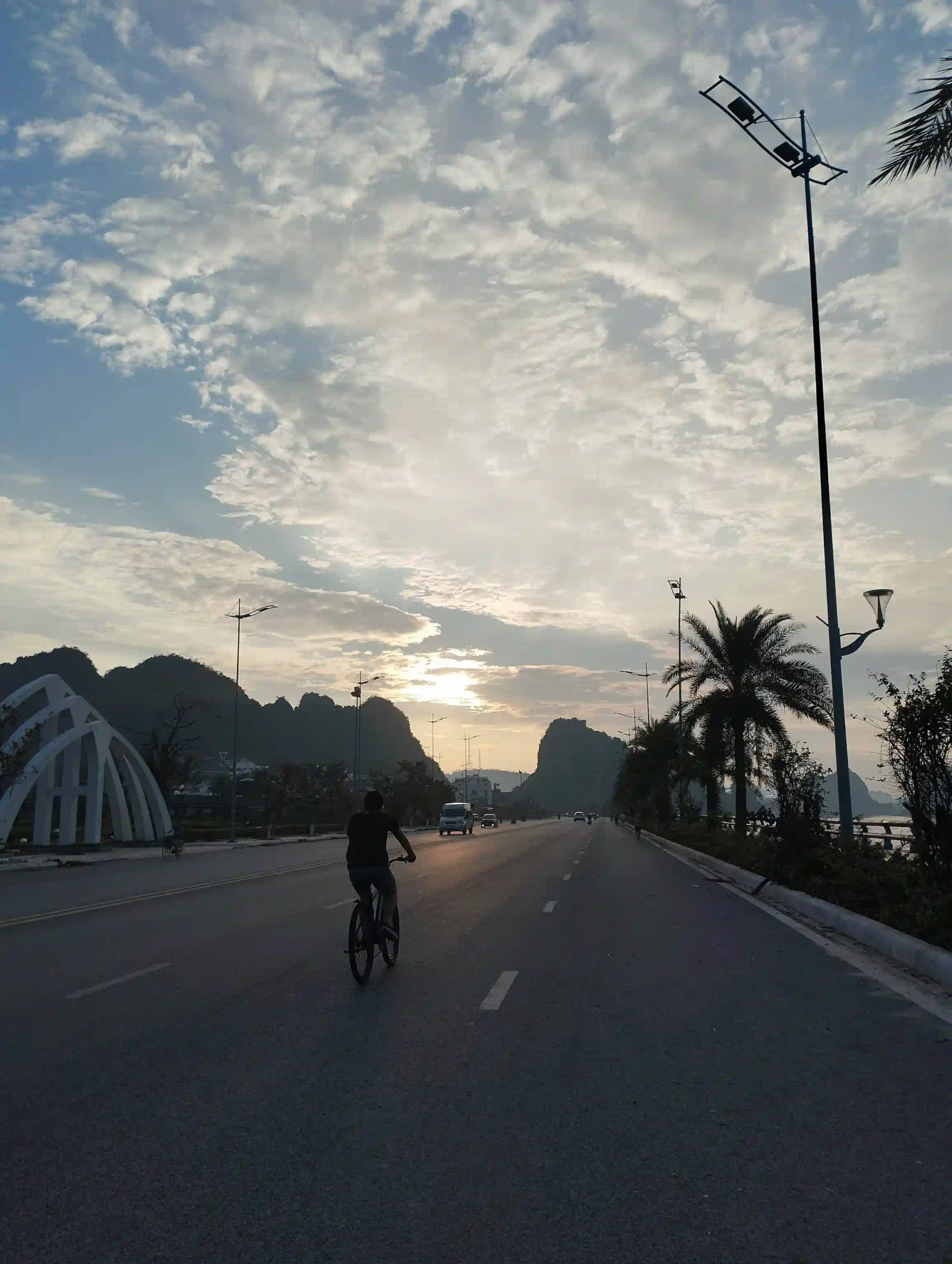
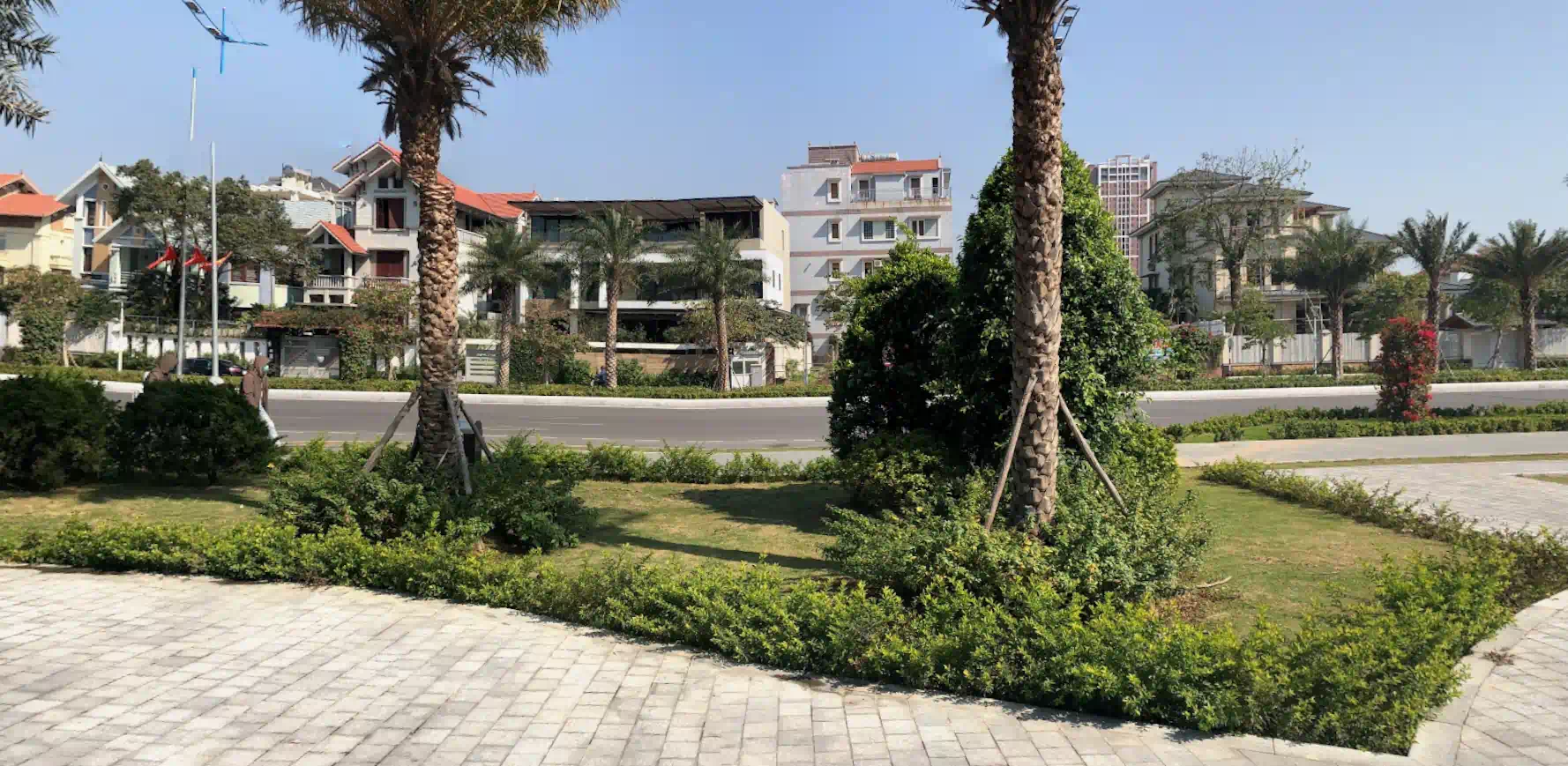
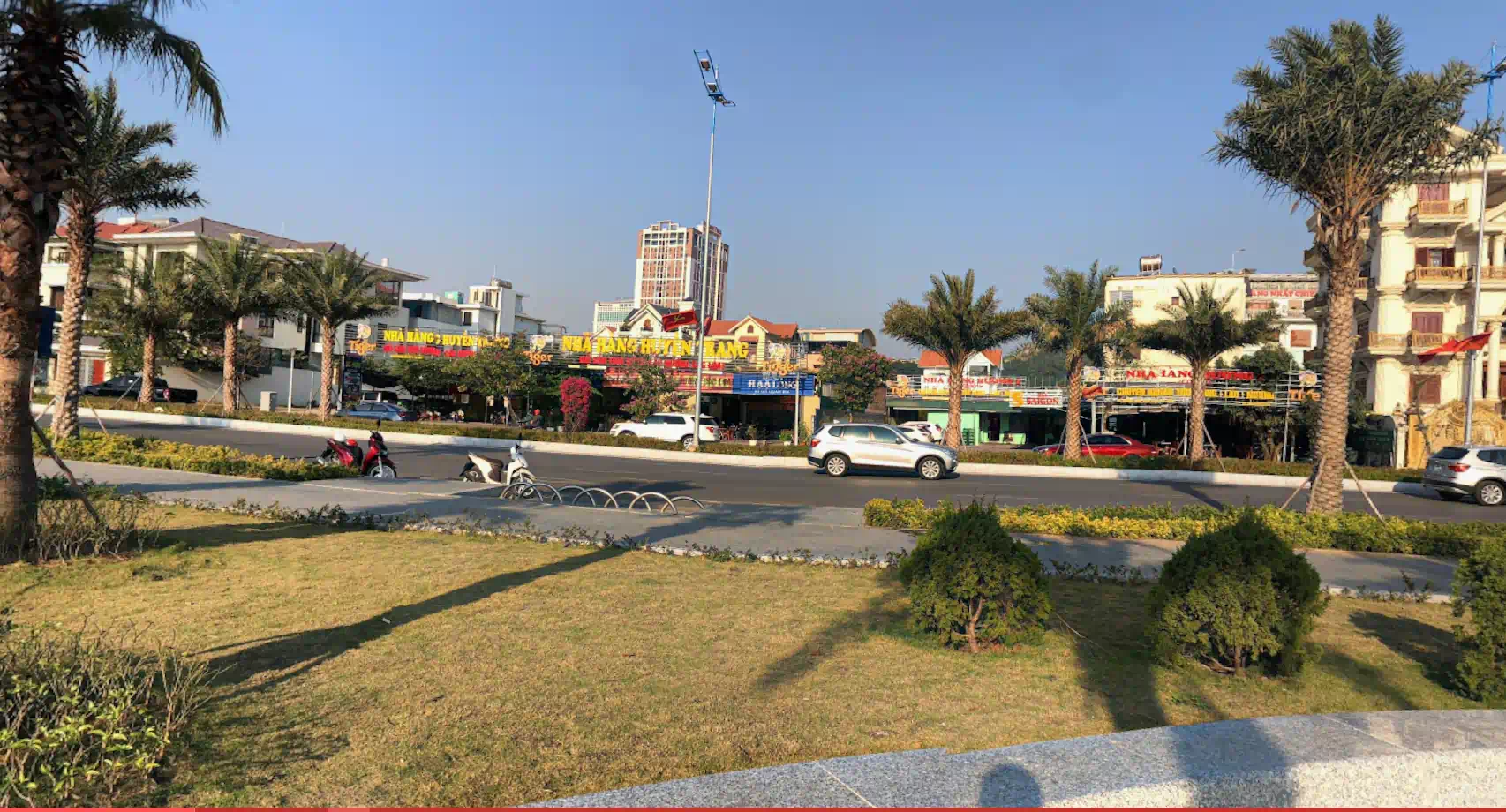
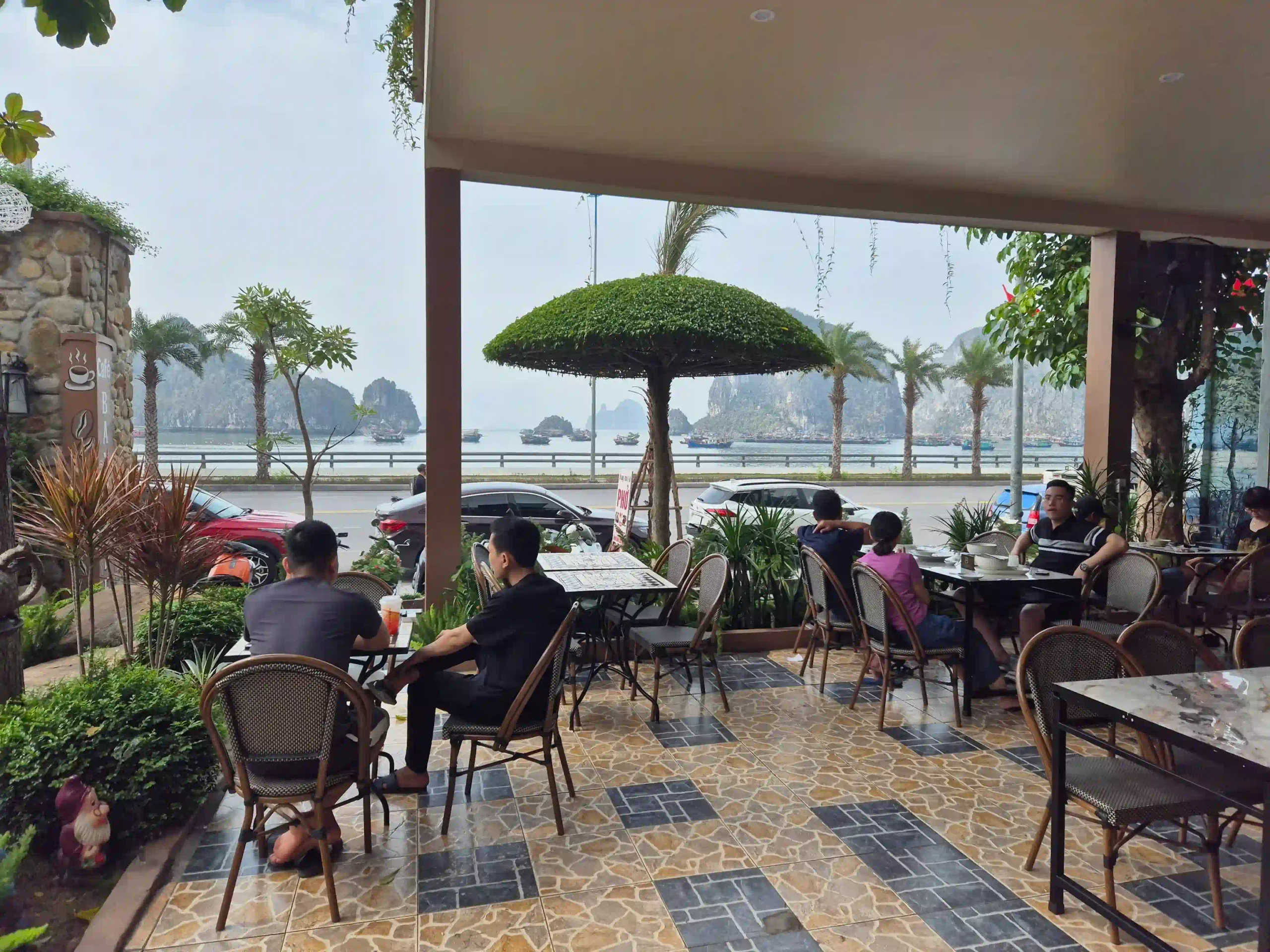
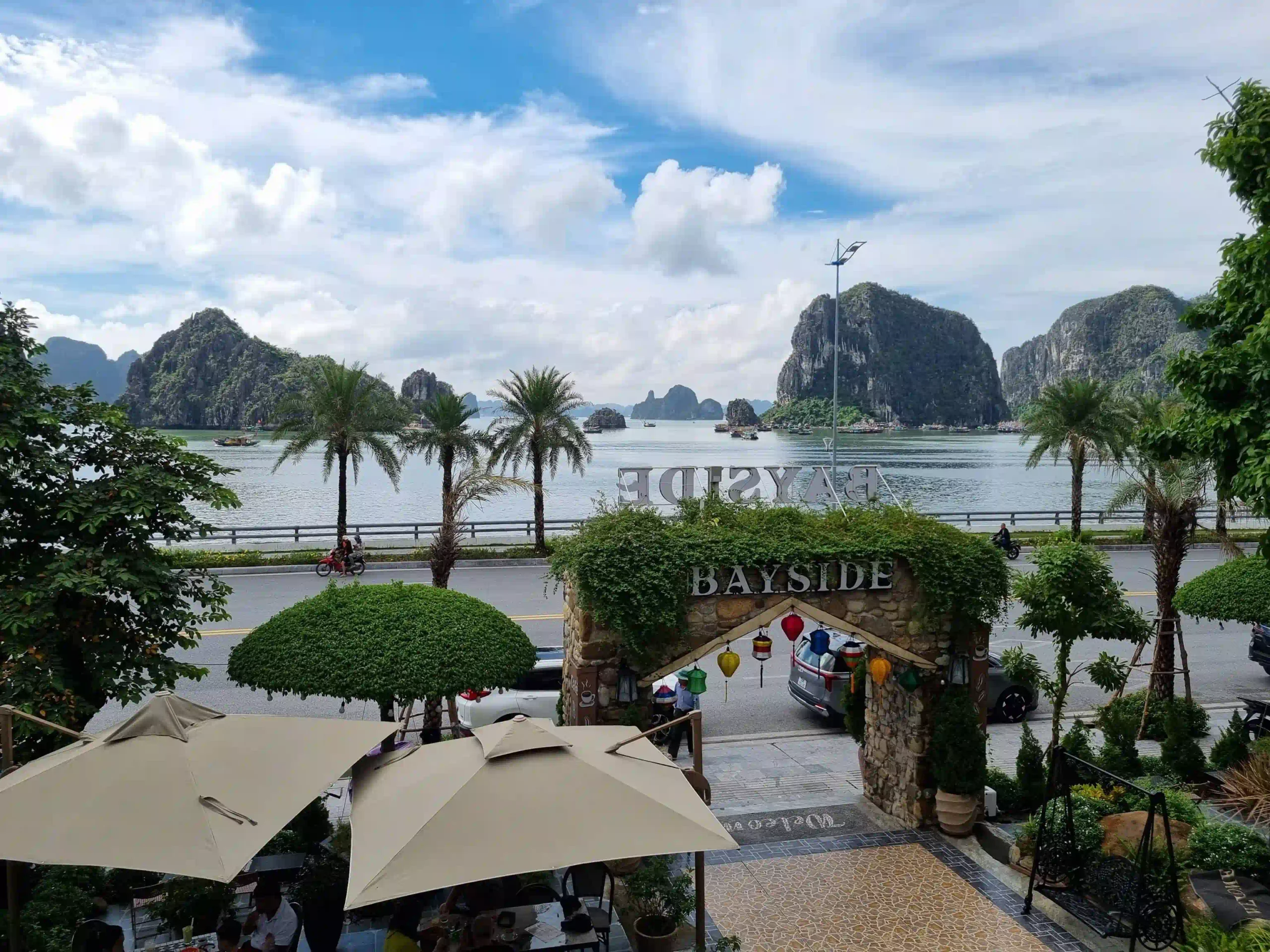
Tourists almost never realize this is a thing because travel agencies don’t sell tickets to a public street.
If you rent a scooter for the afternoon, get away from the big Bai Chay tourist hotels. Drive over the bridge to Hon Gai and get on Tran Quoc Nghien street.
The local government basically extended the land out into the ocean and built a massive, ultra-wide coastal boulevard. It runs for miles right along the water.
On your left, you are going to see some of the most absurd wealth in Northern Vietnam. Local coal barons built massive mansions. We are talking giant European-style castles with gold gates sitting next to modern glass villas.
On your right is a massive concrete sea wall with a wide sidewalk, looking out over the bay.
The reason this is one of the best Halong Bay attractions is the vibe. Come here at 5:00 PM. The local city wakes up. Hundreds of people come out here to jog, fly kites over the water, and drink iced tea sitting on small plastic chairs on the pavement.
You just pull your bike over, buy a tea for 10,000 VND, and watch the boats. No ticket required. No annoying tour guides.
8. Tuan Chau Marina
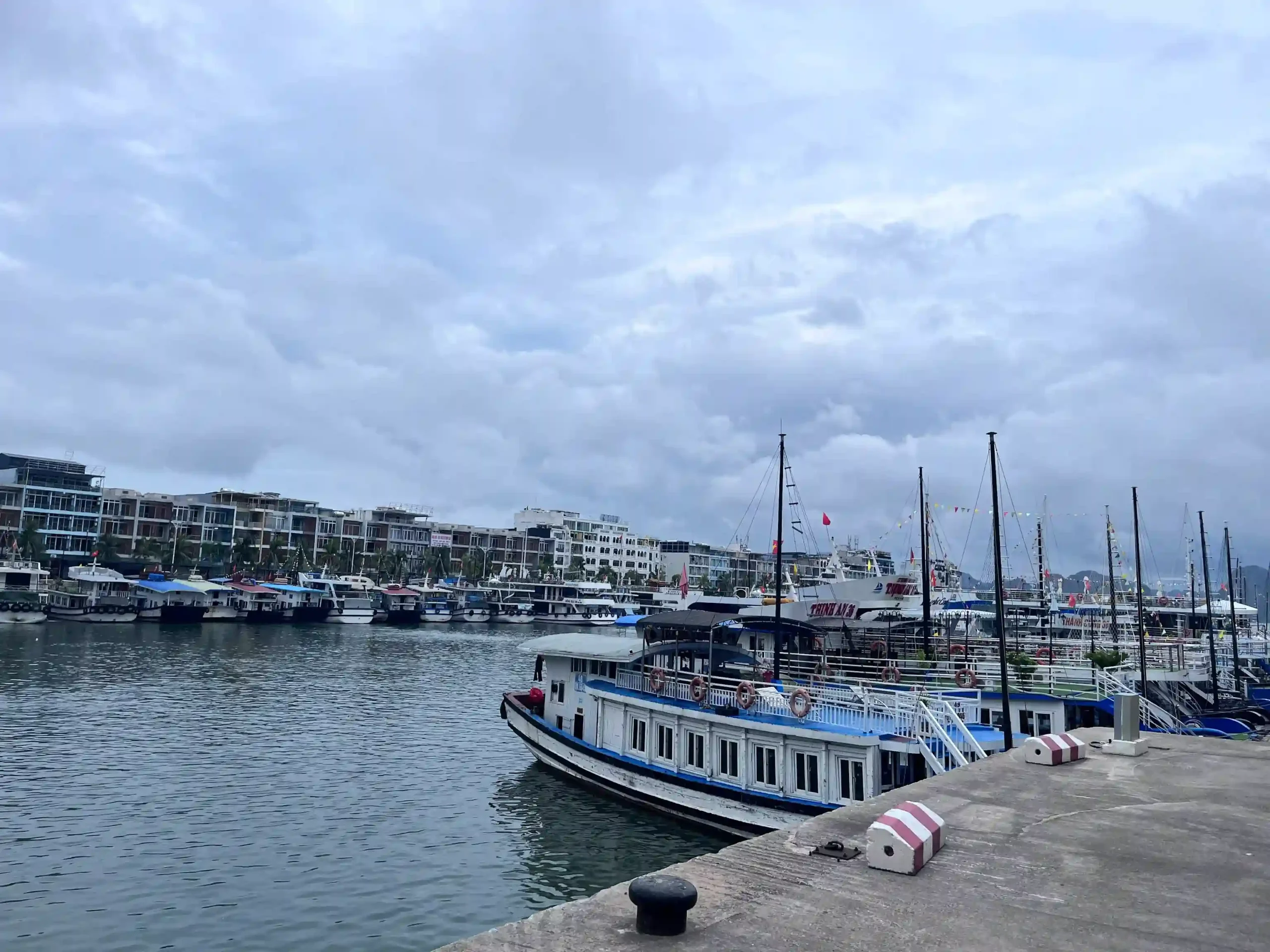
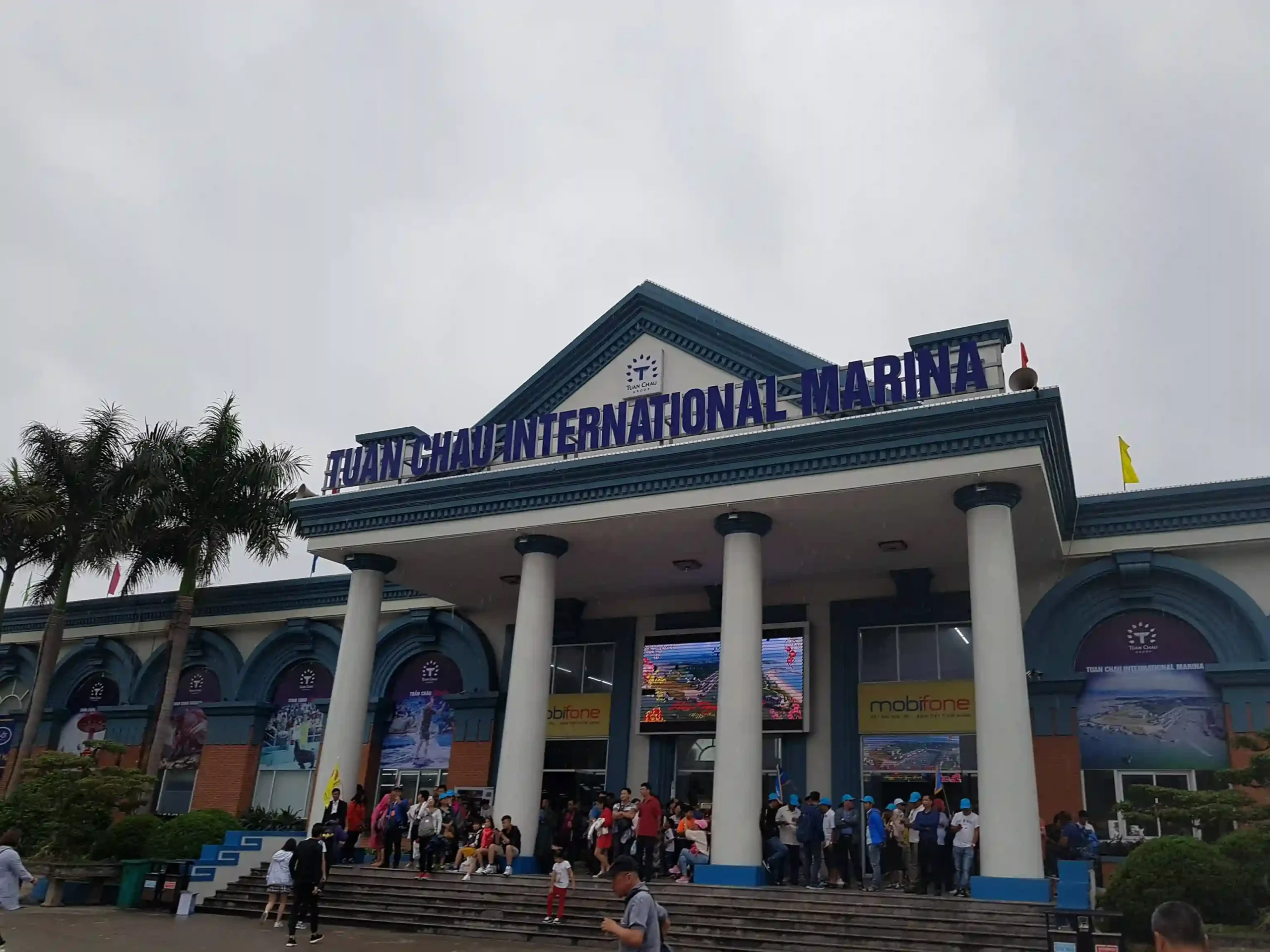
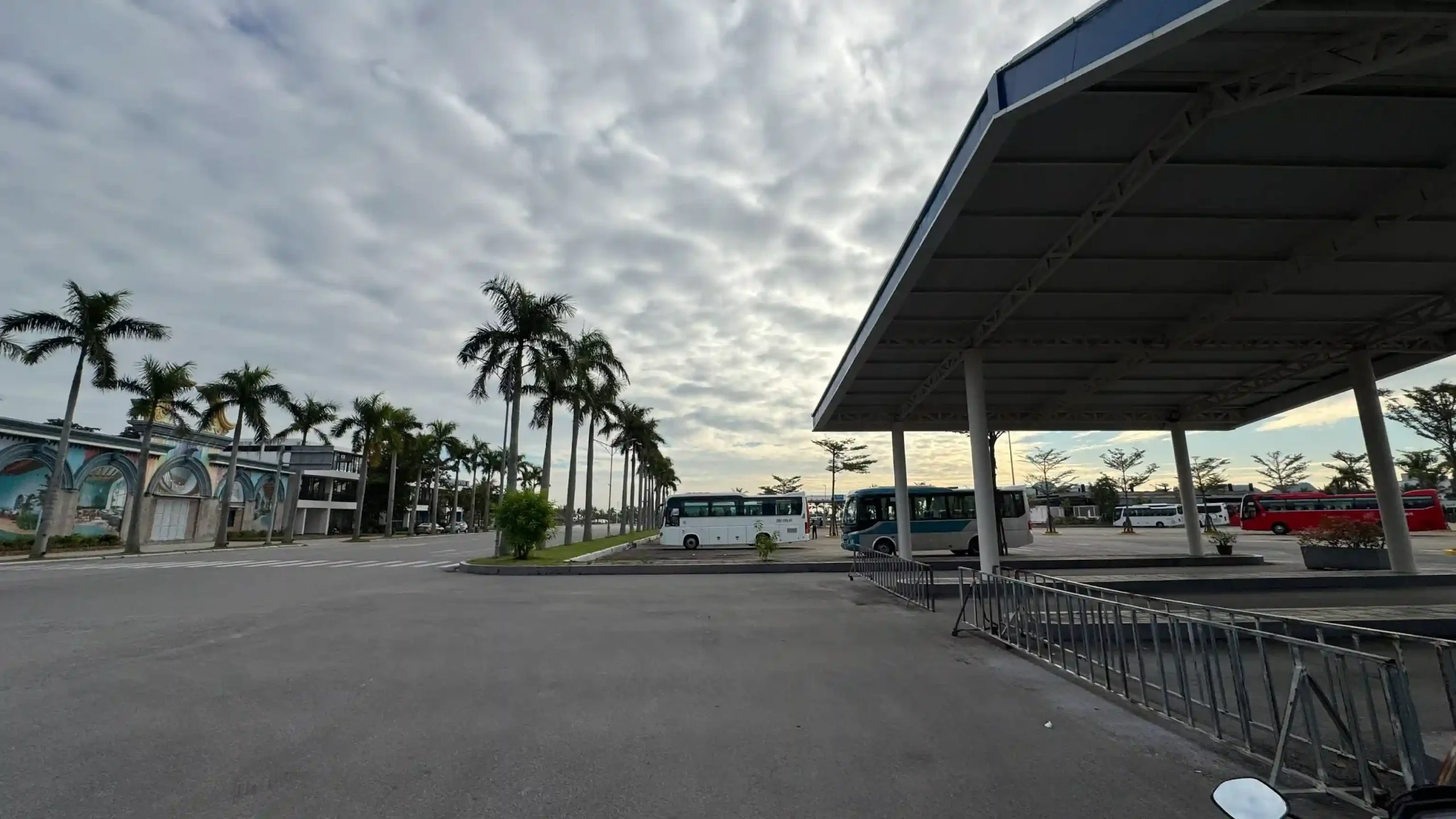
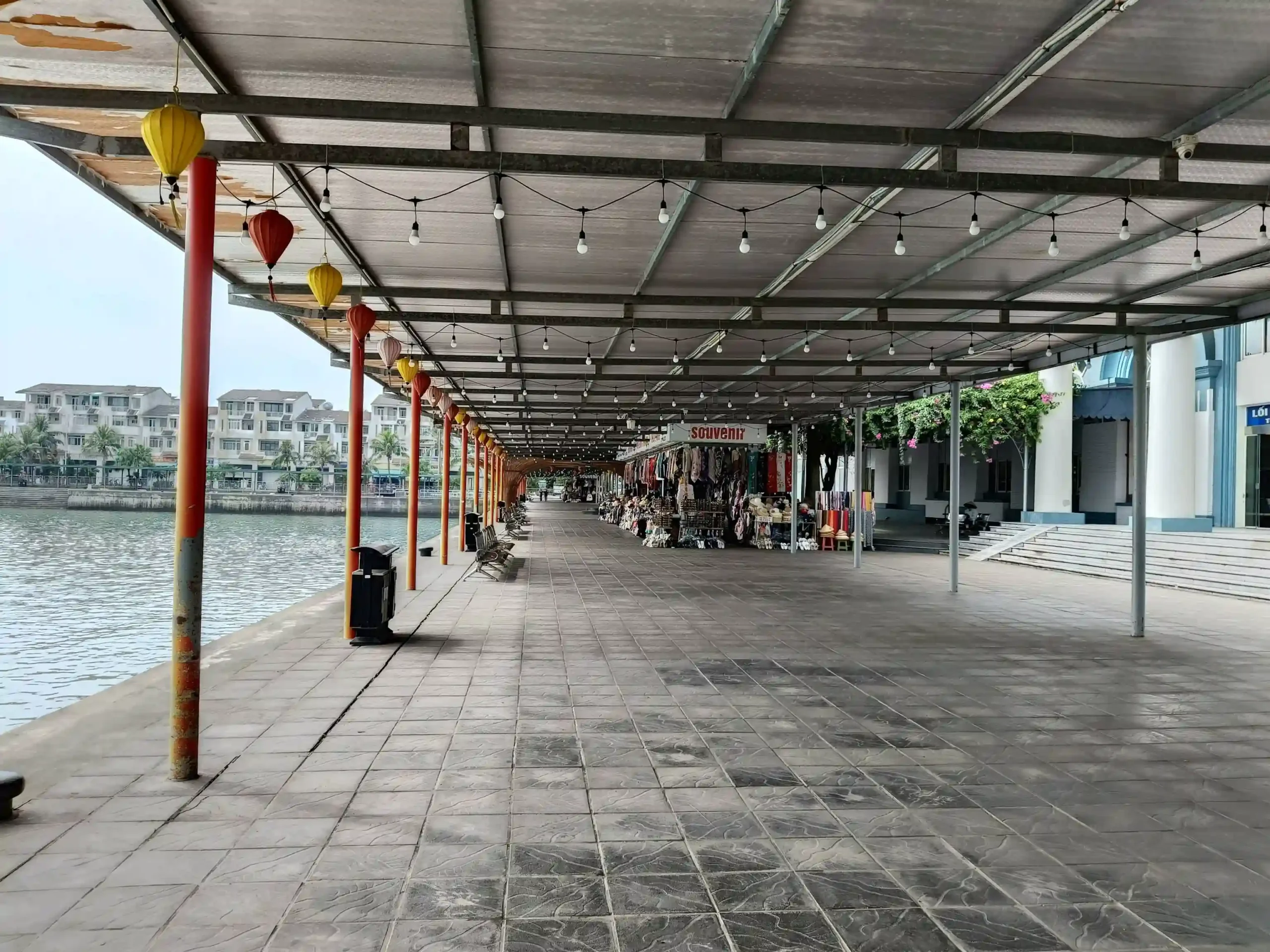
I’m listing this as an attraction because it’s a massive physical location that you will inevitably spend time at, and you need to be prepared for what it actually is.
Tuan Chau was originally a separate island. They filled the ocean with dirt to create a road connecting it to the highway. Now, it is the central departure point for like 80% of the overnight cruises.
When you get dropped off here around 11:30 AM, the marina building looks like a giant, chaotic airport terminal. There are thousands of people sitting around, dragging suitcases, while local agents run around screaming names into microphones trying to organize the boarding groups.
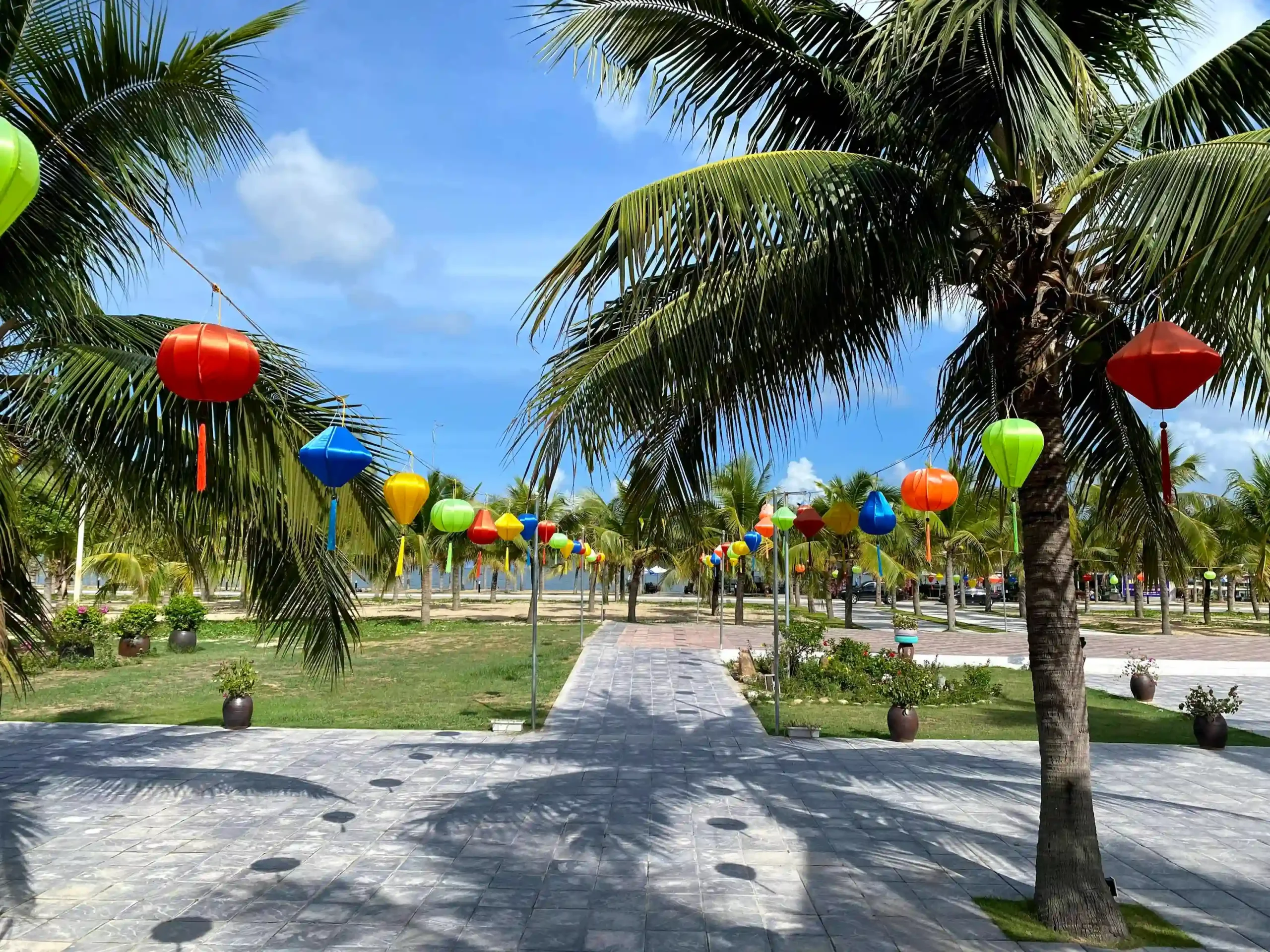
Outside the terminal building, Tuan Chau is a ghost town. They planned it as a massive luxury resort island, but most of the giant villas are empty, and the huge concrete amphitheater they built looks abandoned.
You don’t come to Tuan Chau to relax. You come here, find your waiting lounge, drink a terrible overpriced coffee, and wait for the speed boat to take you to your main ship. Just don’t expect a pristine island paradise when your taxi pulls up here.
9. Bai Tho Mountain
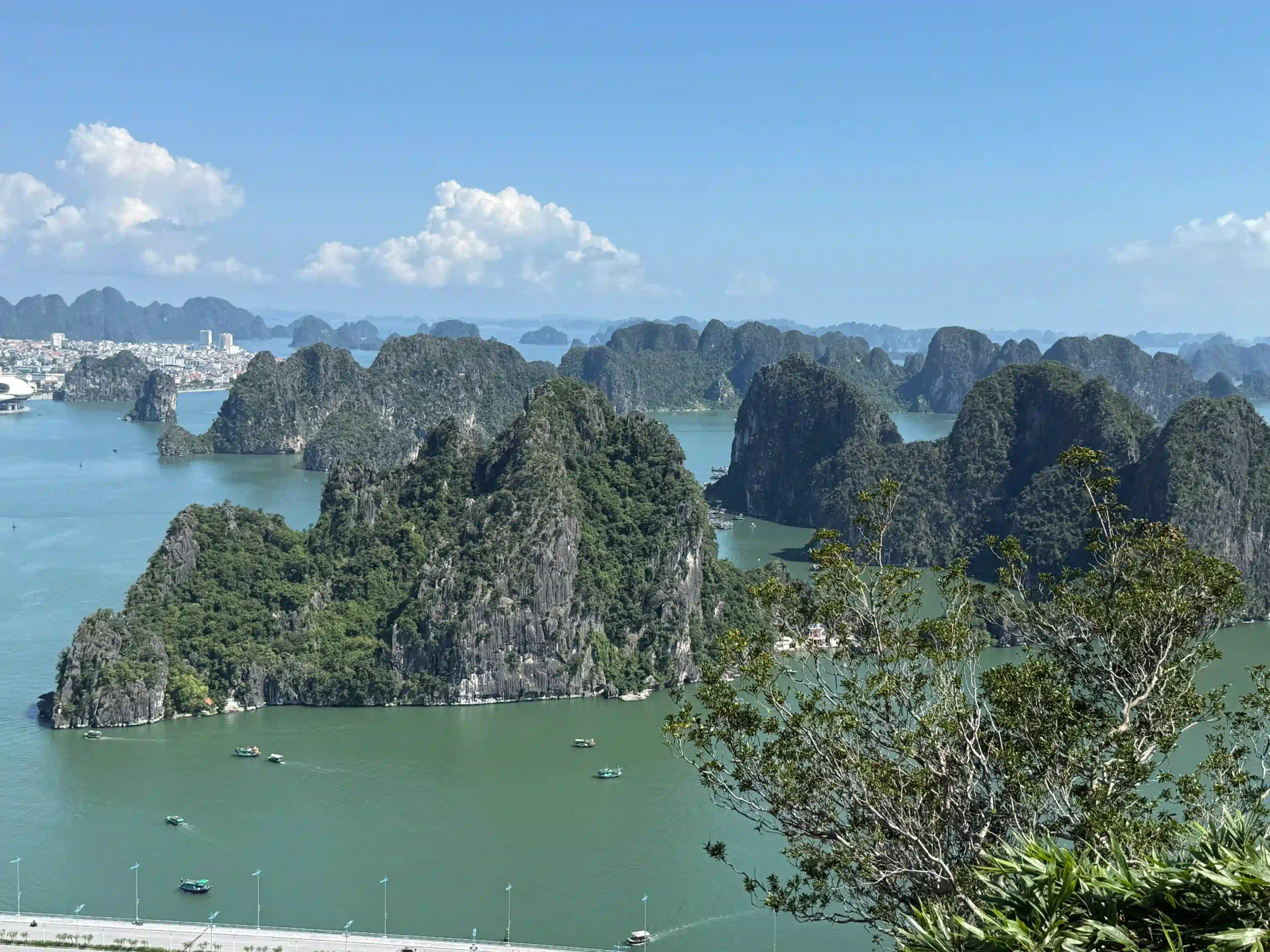
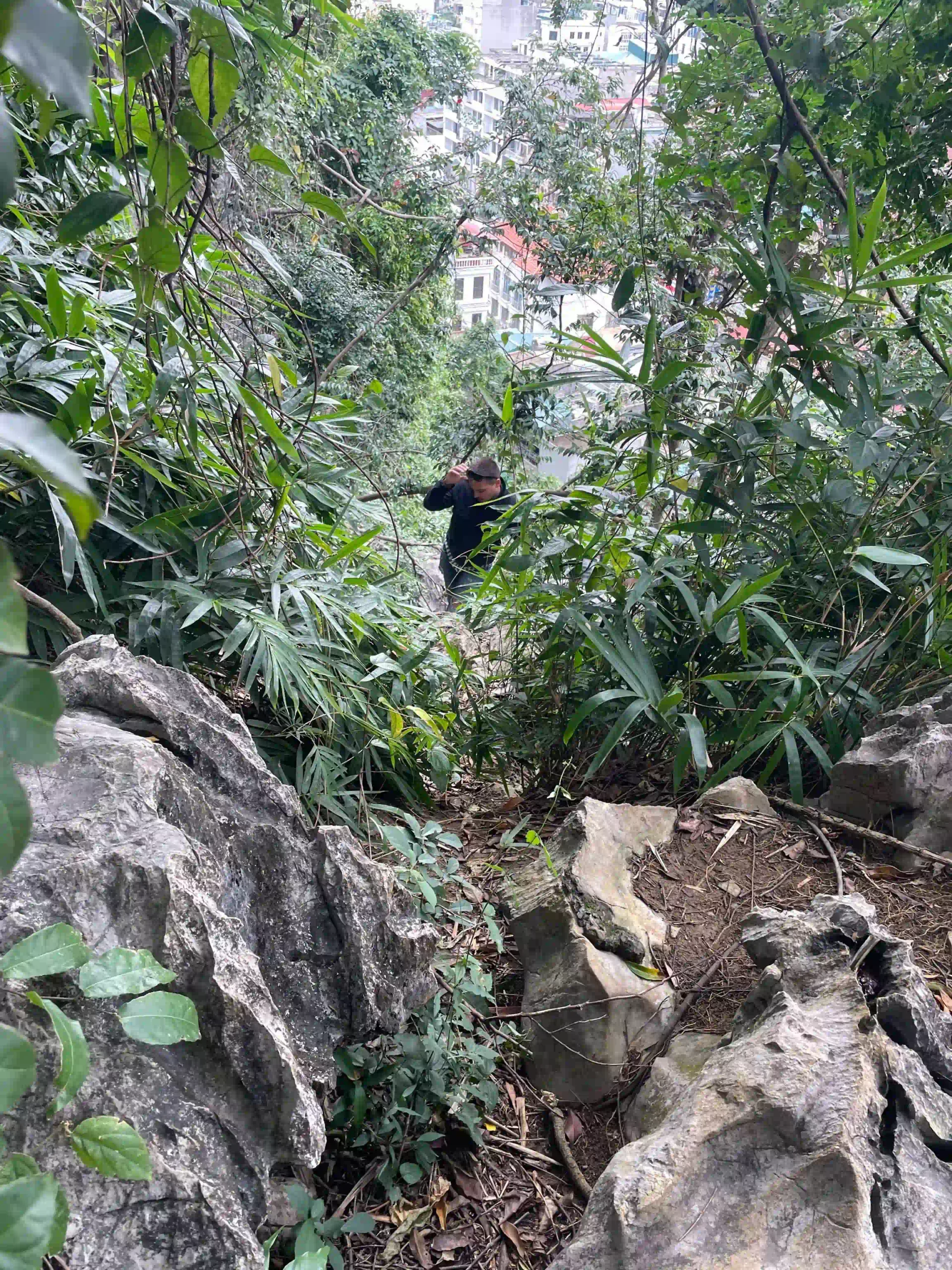
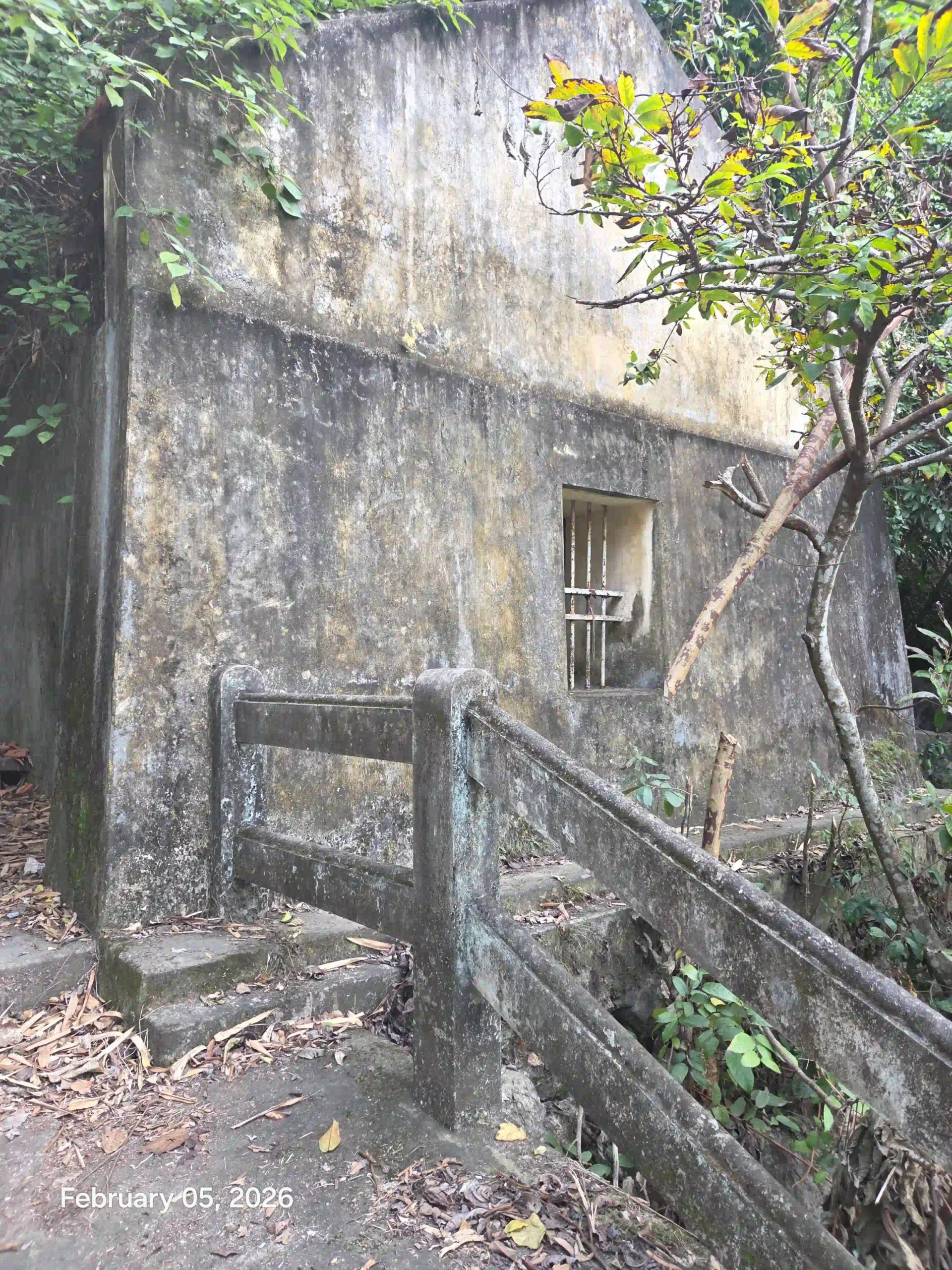
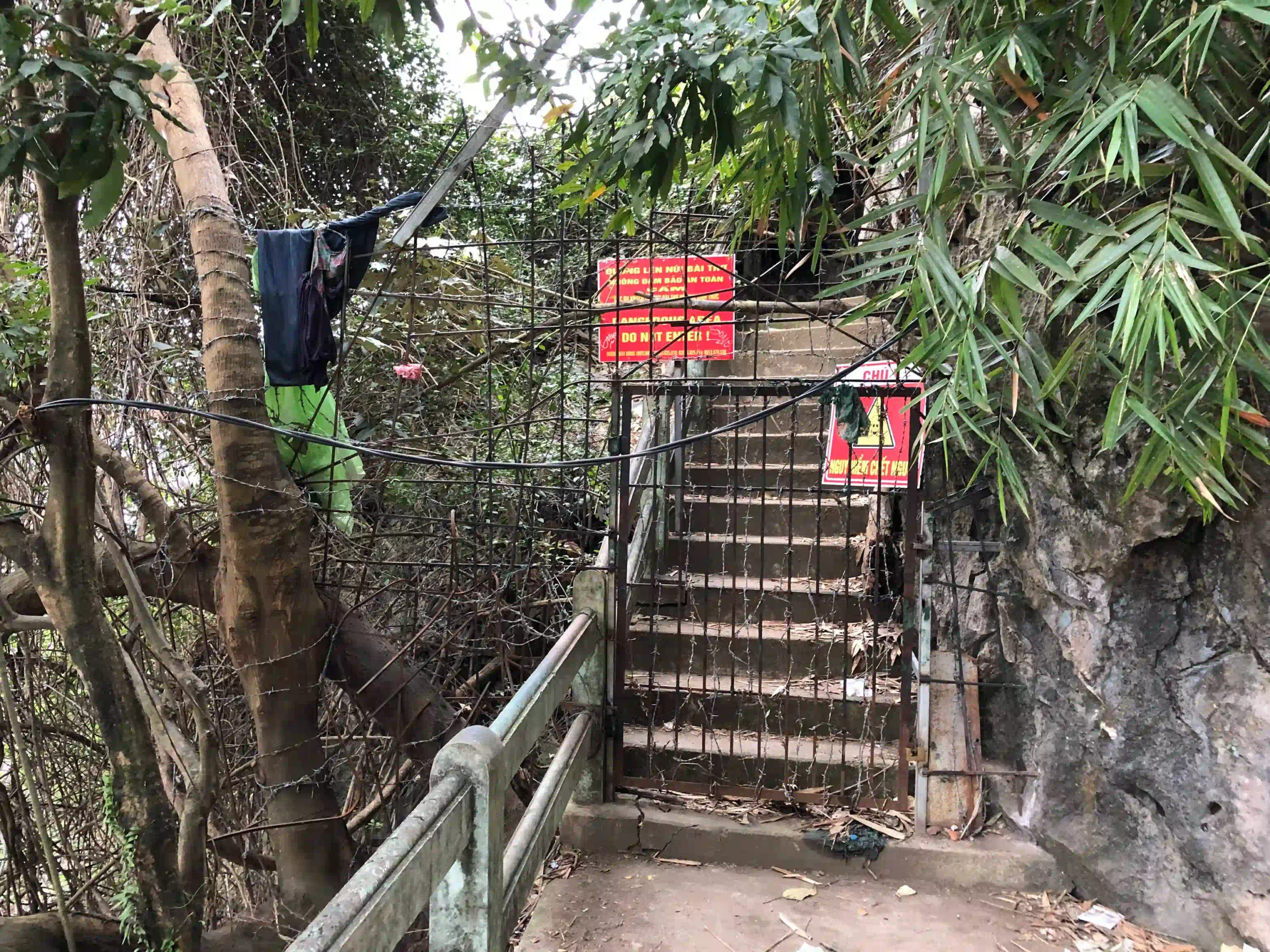
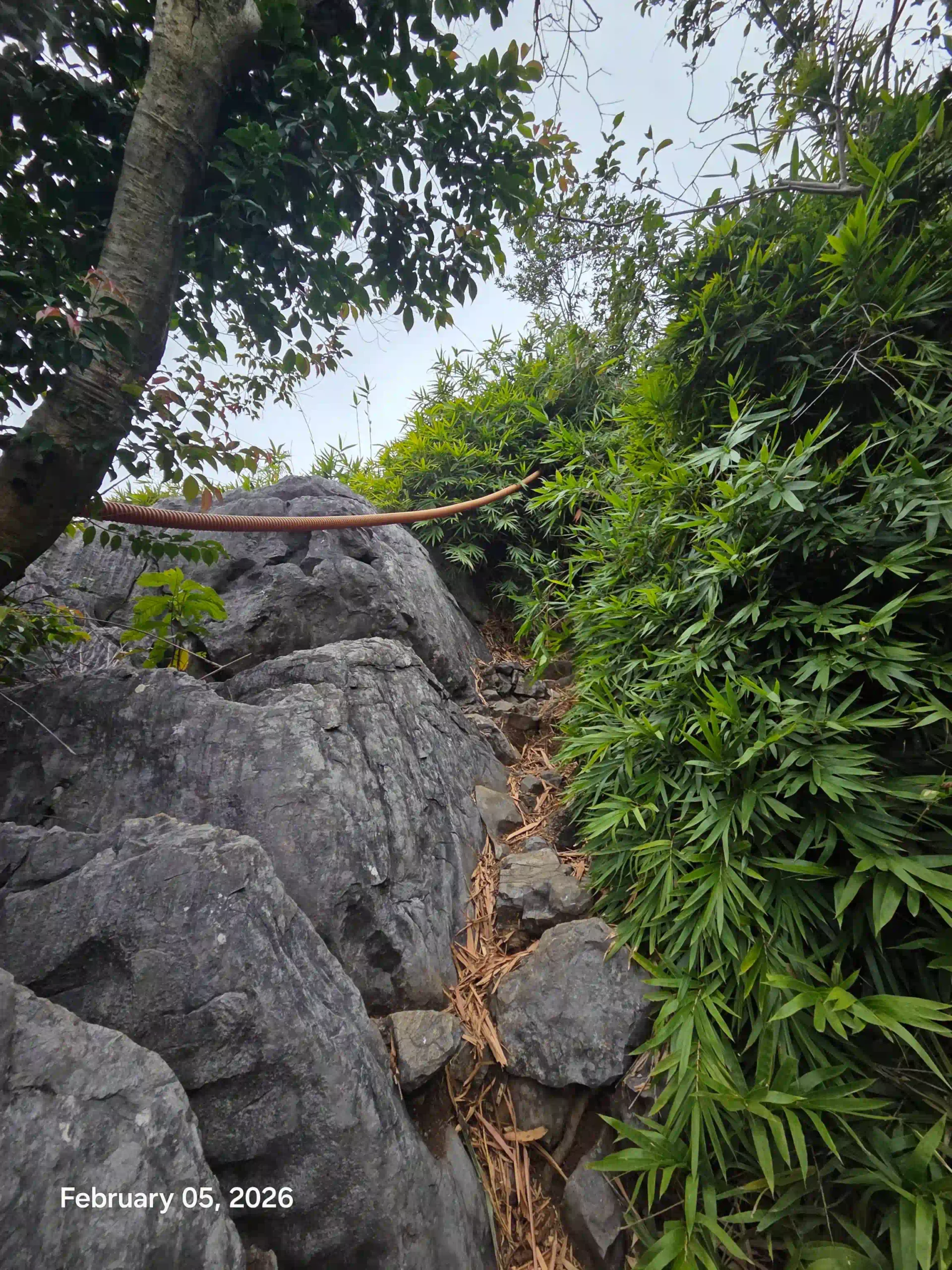
Right in the dense, chaotic center of Hon Gai ward, there is a giant limestone mountain shooting straight up into the sky. It casts a shadow over the streets below.
This is Poem Mountain.
A long time ago, a king carved some poetry onto a rock face here. Ten years ago, this was the absolute undisputed top spot on Instagram for the whole province. The hike was short, steep, and put you on a narrow, dangerous peak with a direct drop-off right above the city and the boats.
So what happened? People acted stupid, fires started, someone got hurt, and the government welded the entrance gate completely shut.
Officially, this is a closed attraction.
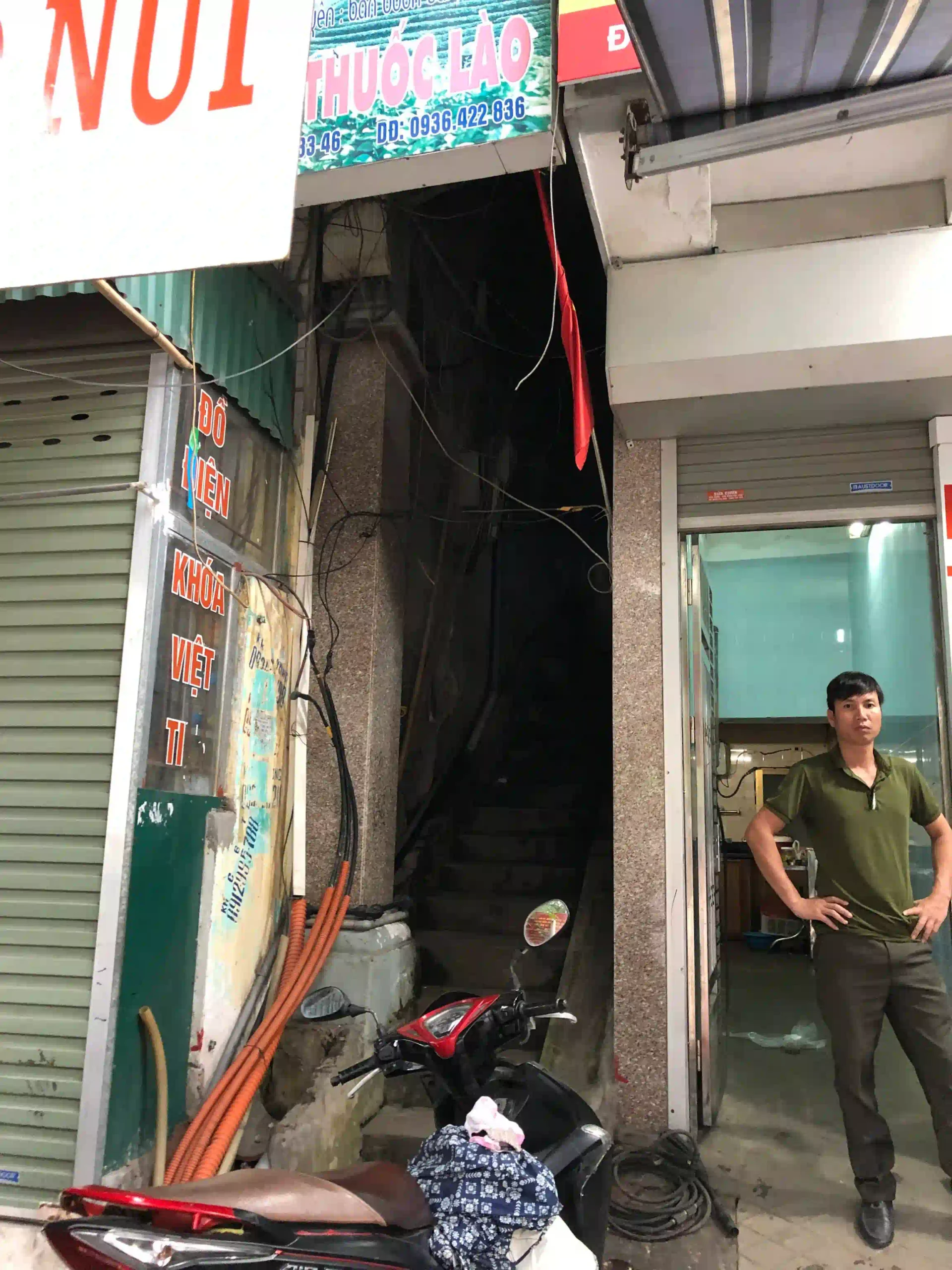
Unofficially? The trail still physically exists. The bottom of the trail starts in a messy, narrow alleyway on Hang Noi street. Usually, some local aunties are sitting in the alley. Since the trail runs right behind their backyards, they will—for a “tip” of about 50k to 100k VND—let you walk through their kitchen door, hop a rusty fence, and get onto the dirt path.
I am not telling you to go trespass. The rocks are jagged, the stairs are crumbling, and if you snap your leg, nobody is coming up there to get you easily. But as a physical landmark in the city, you will see it, and now you know why people point at it.
10. Cat Ba Island
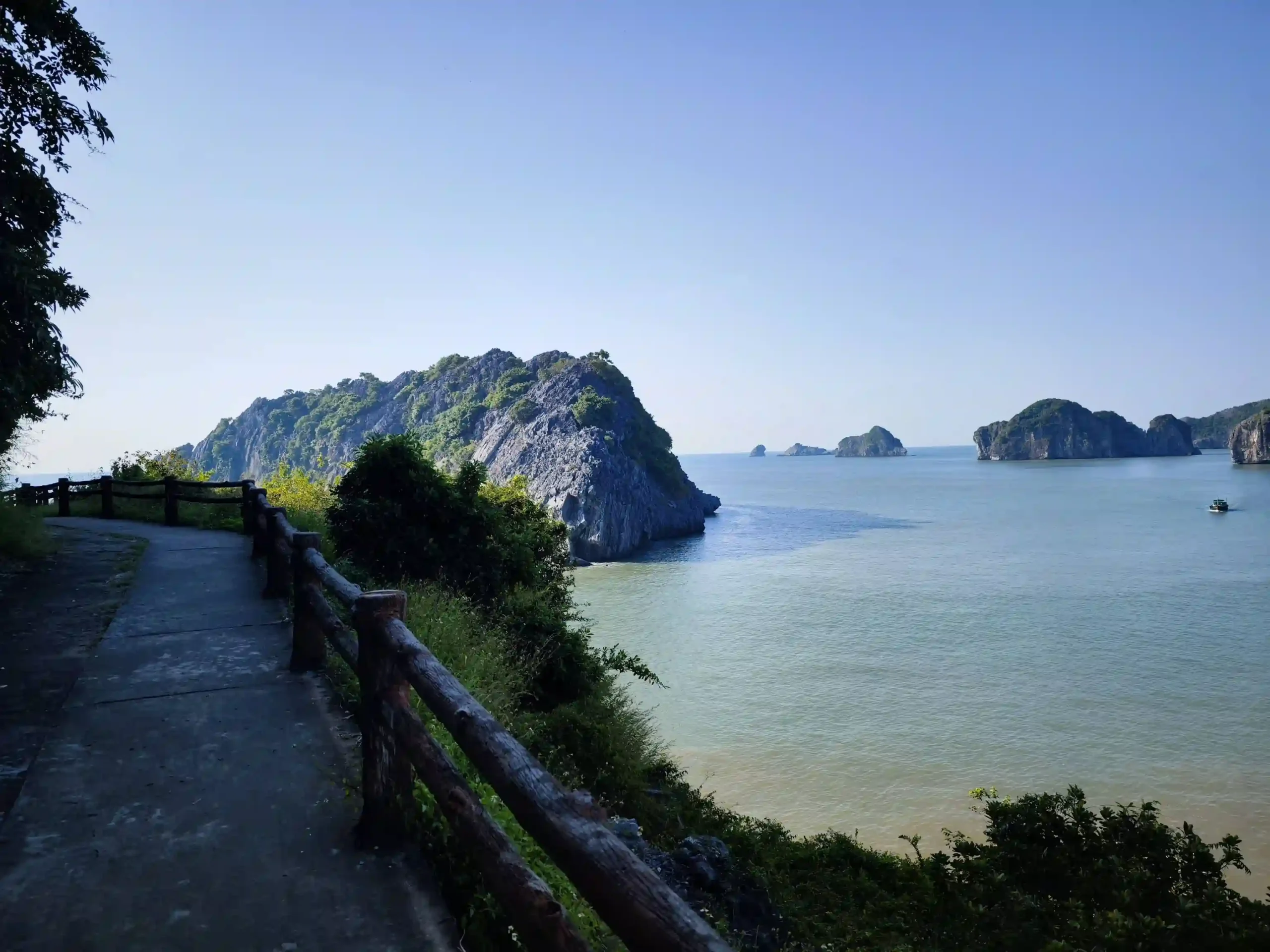
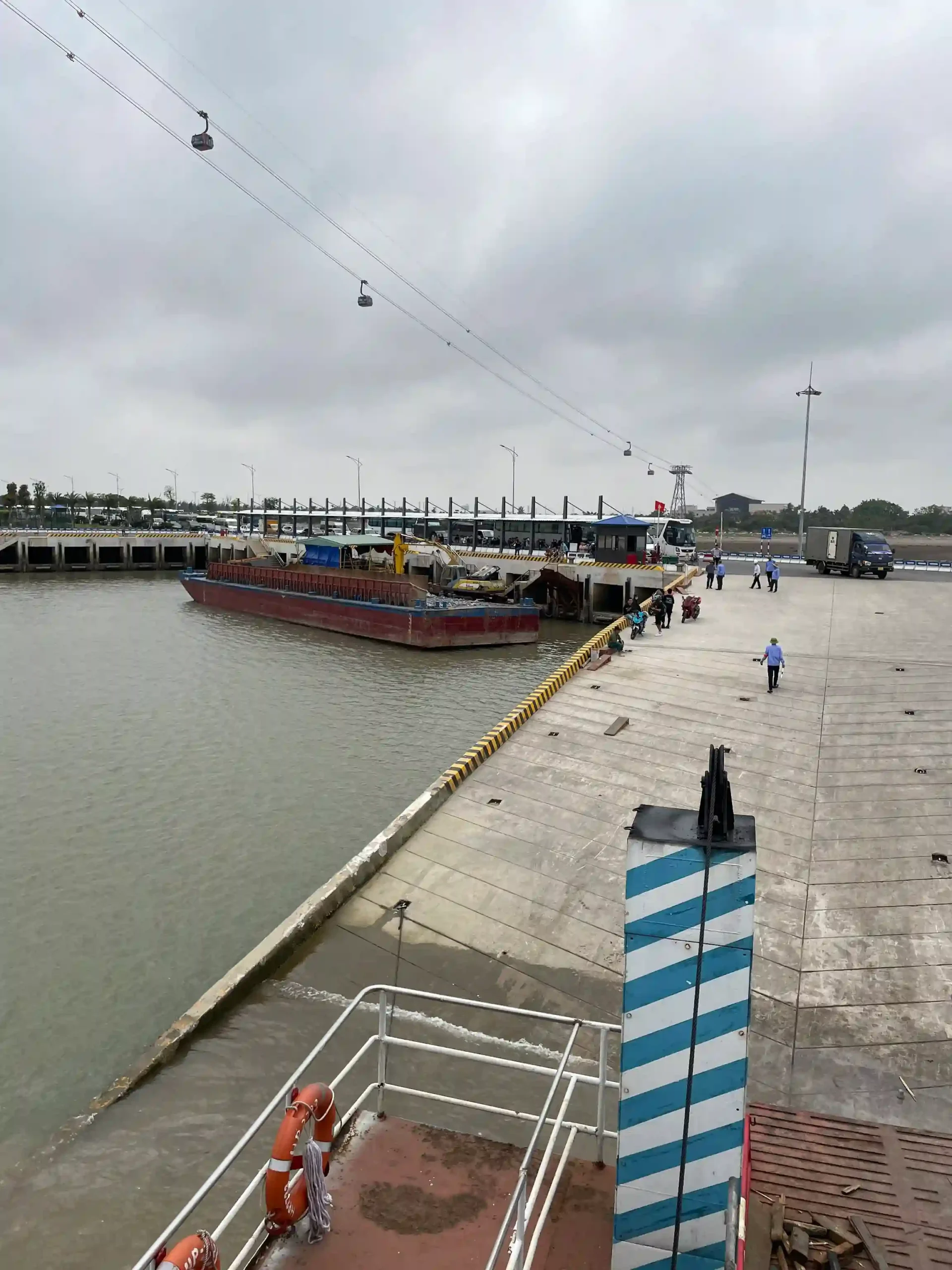
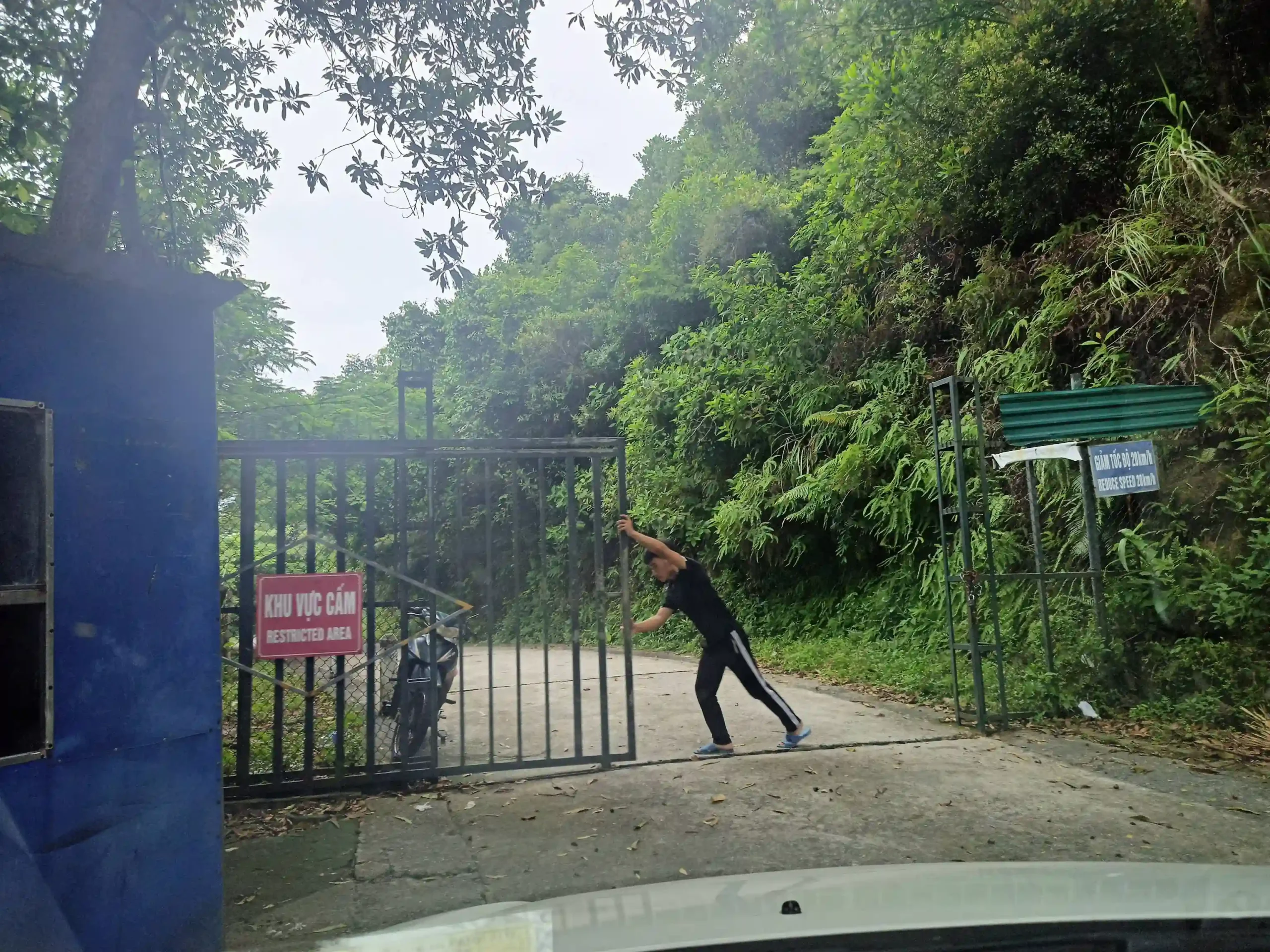
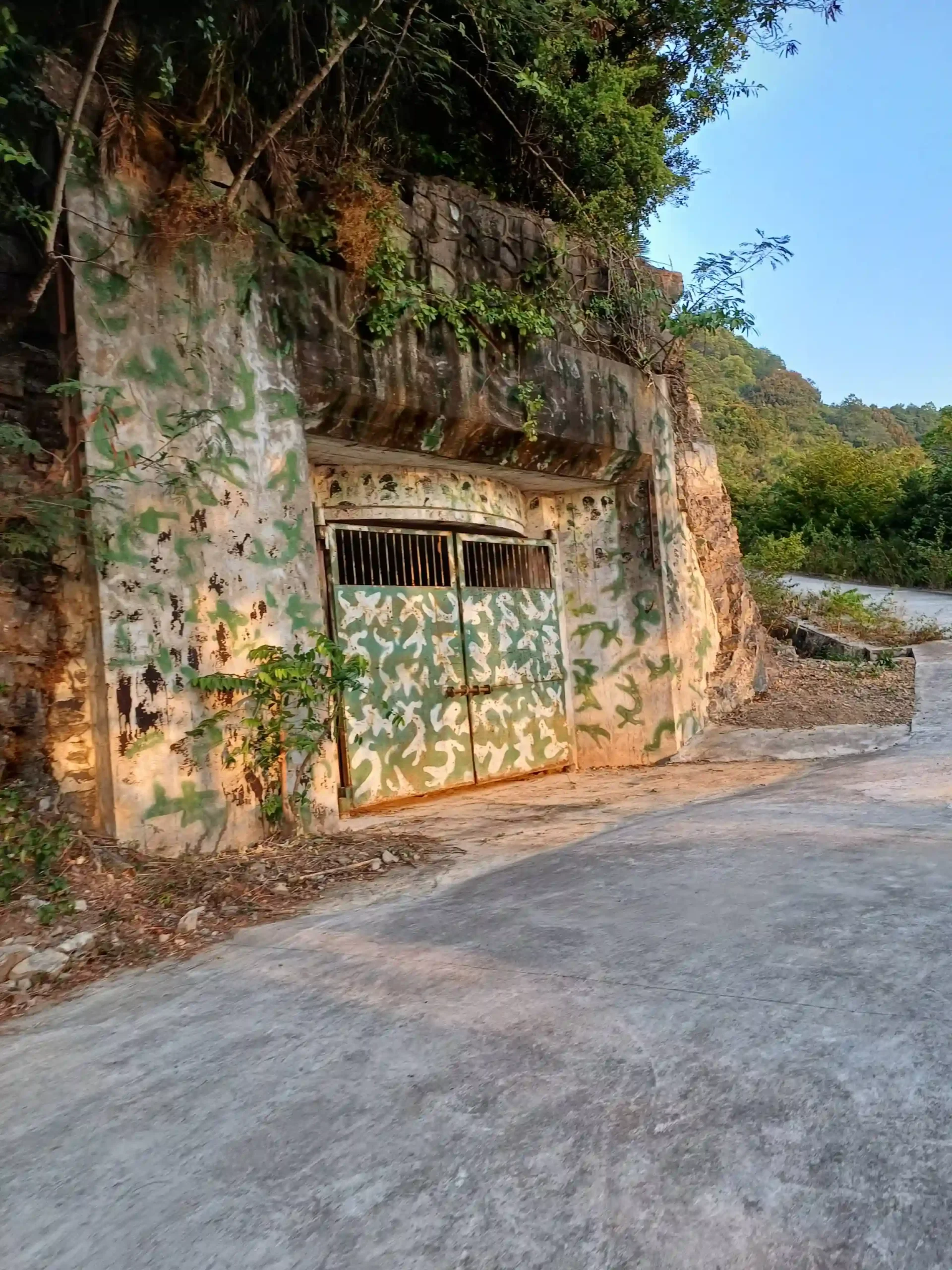
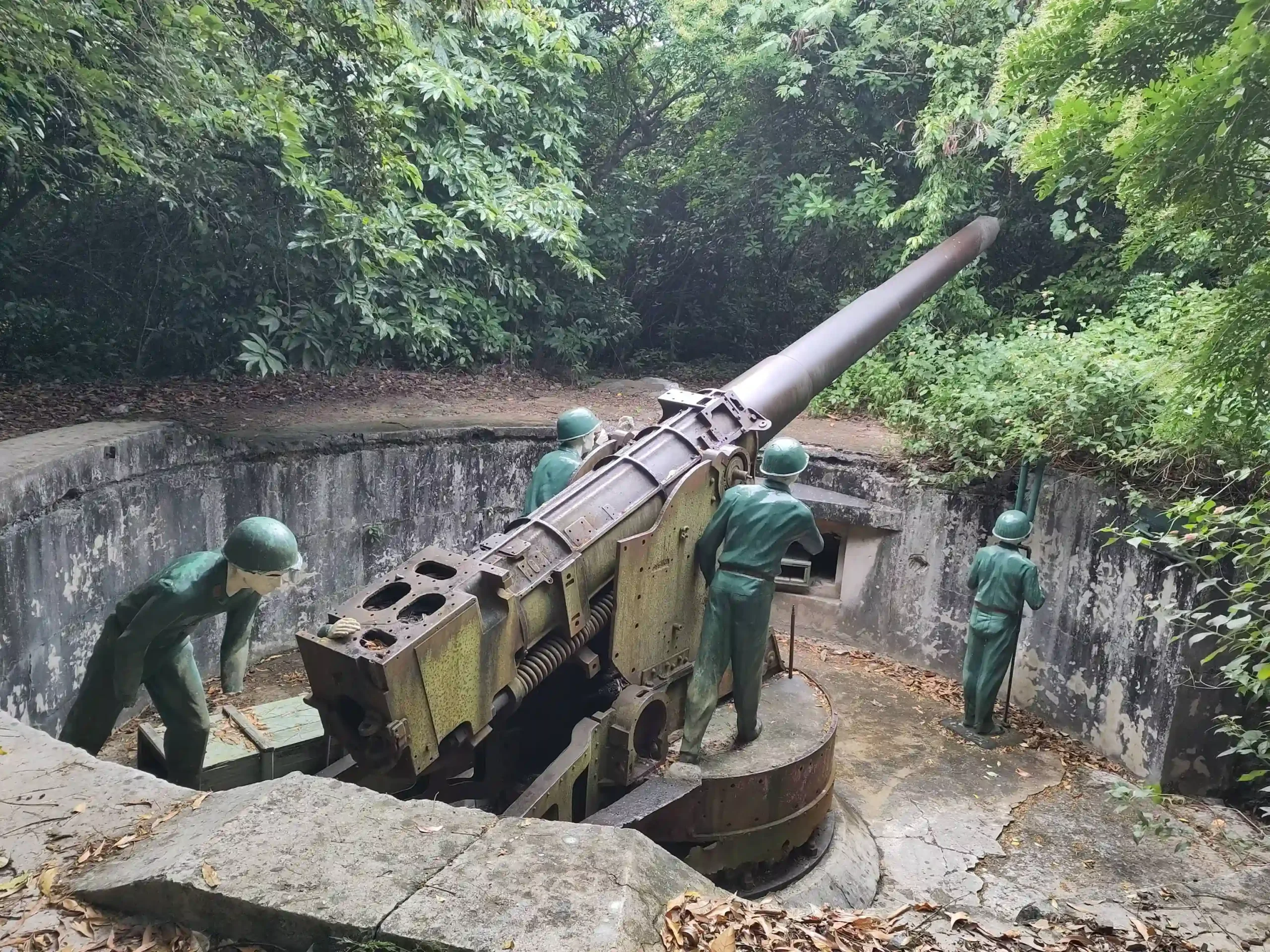
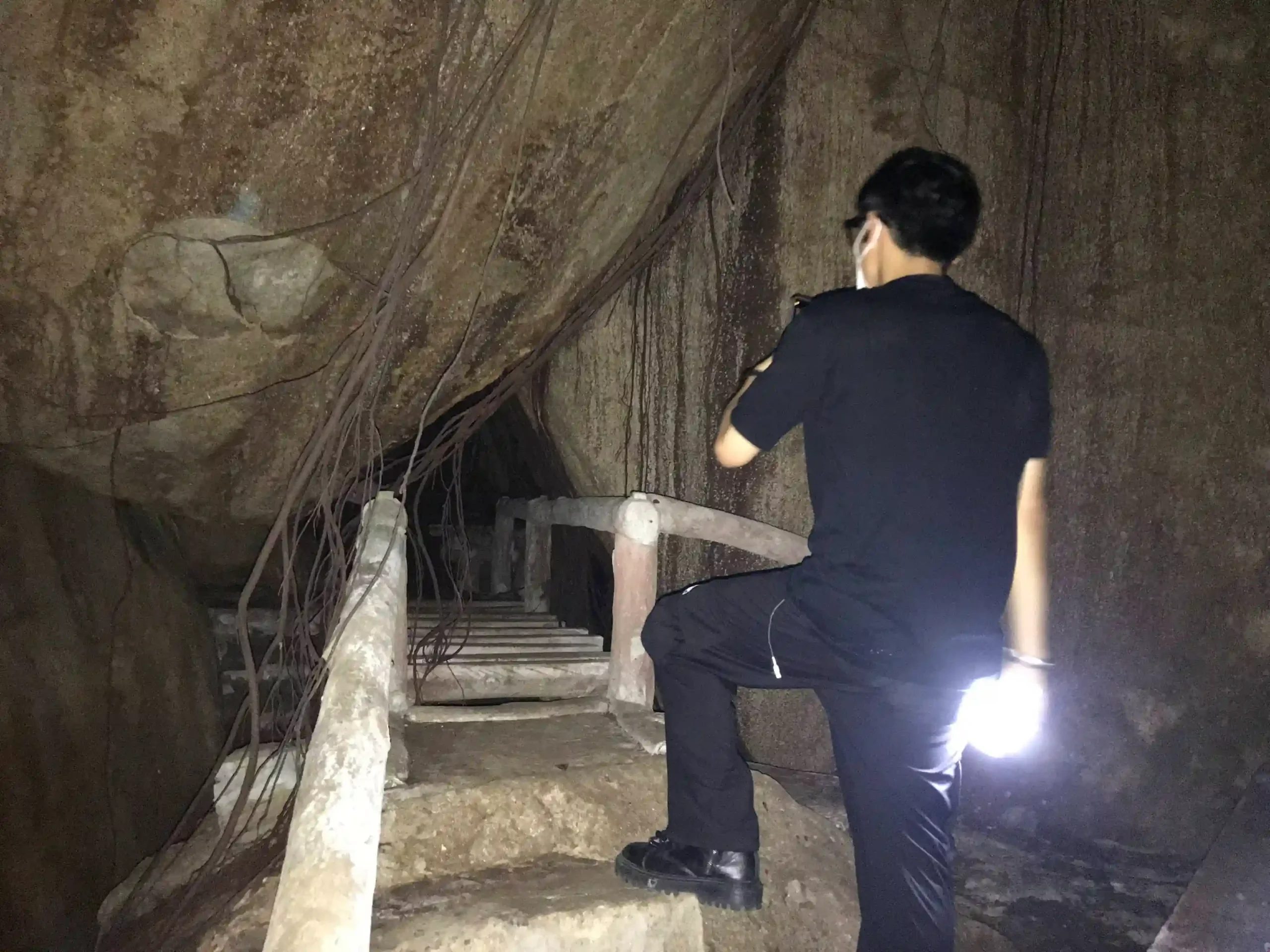
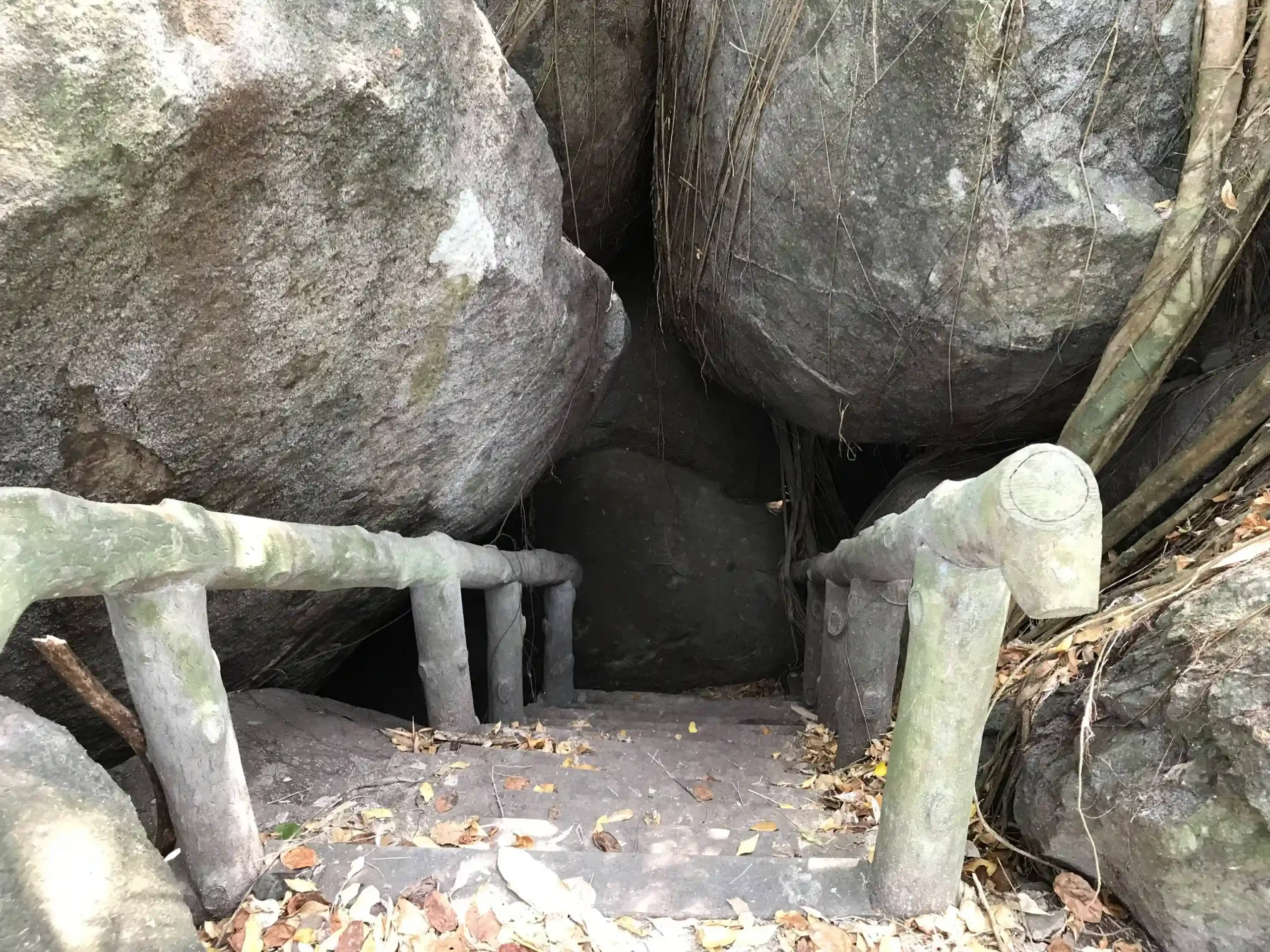
When you look at a map of the Halong Bay attractions, Cat Ba is the massive green blob holding the entire southern border.
Cat Ba is a district of Hai Phong, not Quang Ninh. And unlike the sharp rock pillars in the ocean that are completely uninhabitable, Cat Ba is a real, functioning island with a highway, towns, and local life.
It completely changes the geography of a trip. A lot of backpackers who can’t afford a $150 cruise ticket just take a local bus and ferry straight onto Cat Ba Island, sleep in a $12 hostel in town, and treat it as a base.
The physical places you go to here are land-based history. There is the Hospital Cave. During the war, they blasted out the inside of a mountain and poured a massive, three-story reinforced concrete hospital completely hidden underground. You can walk through the empty rooms now. It feels incredibly eerie.
Then there is the Cannon Fort. You rent a clunky scooter, drive up a terribly steep mountain road, and check out the rusting artillery guns sitting on concrete mounts overlooking the ocean.
If you are stuck choosing between the mainland city and Cat Ba island, they are completely different worlds. Cat Ba is cheap, rugged, heavily jungled, and a bit dirty in the main town. Ha Long City is wealthy, newly paved, and highly developed.
11. Cai Dam Wet Market
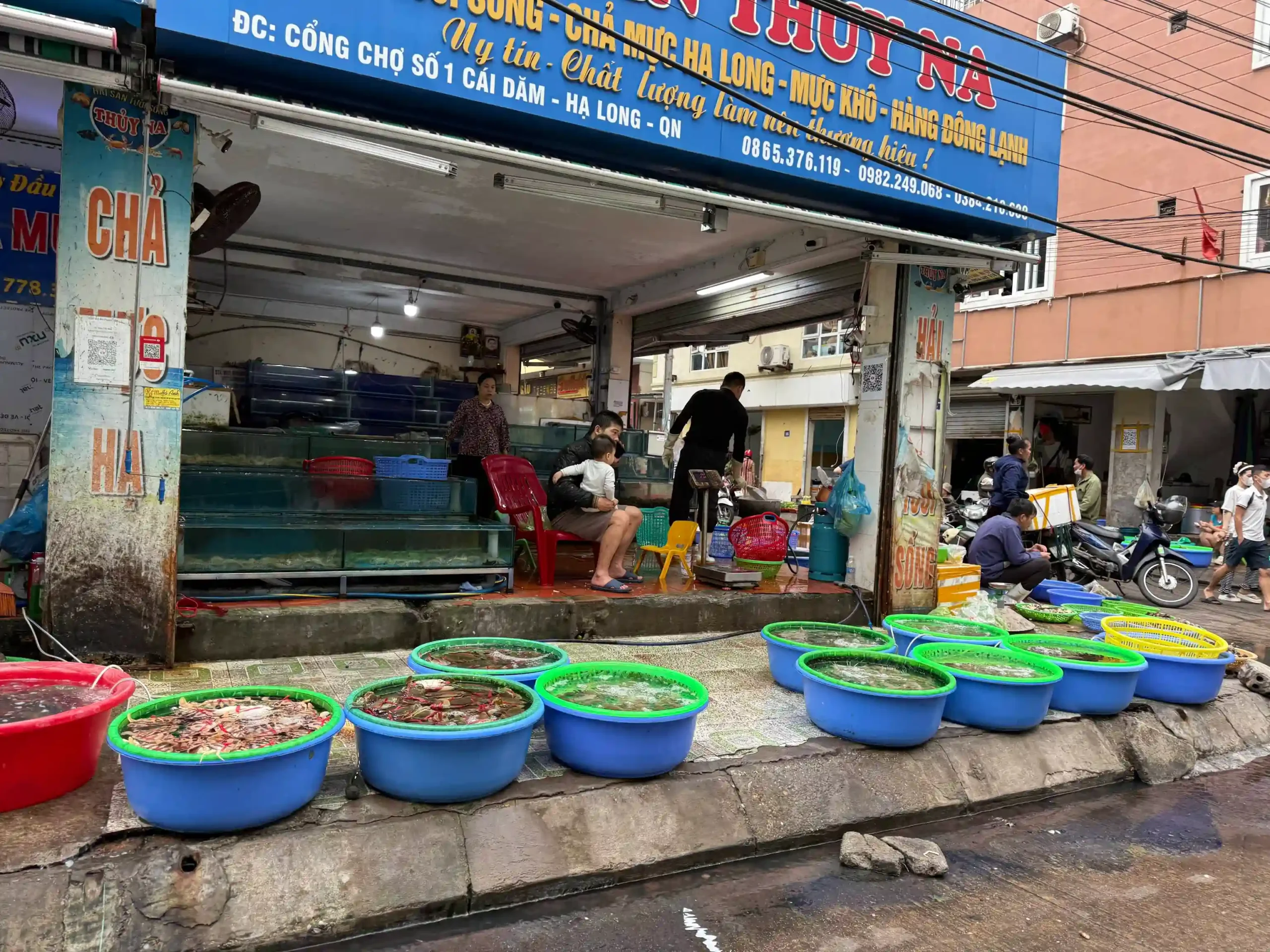
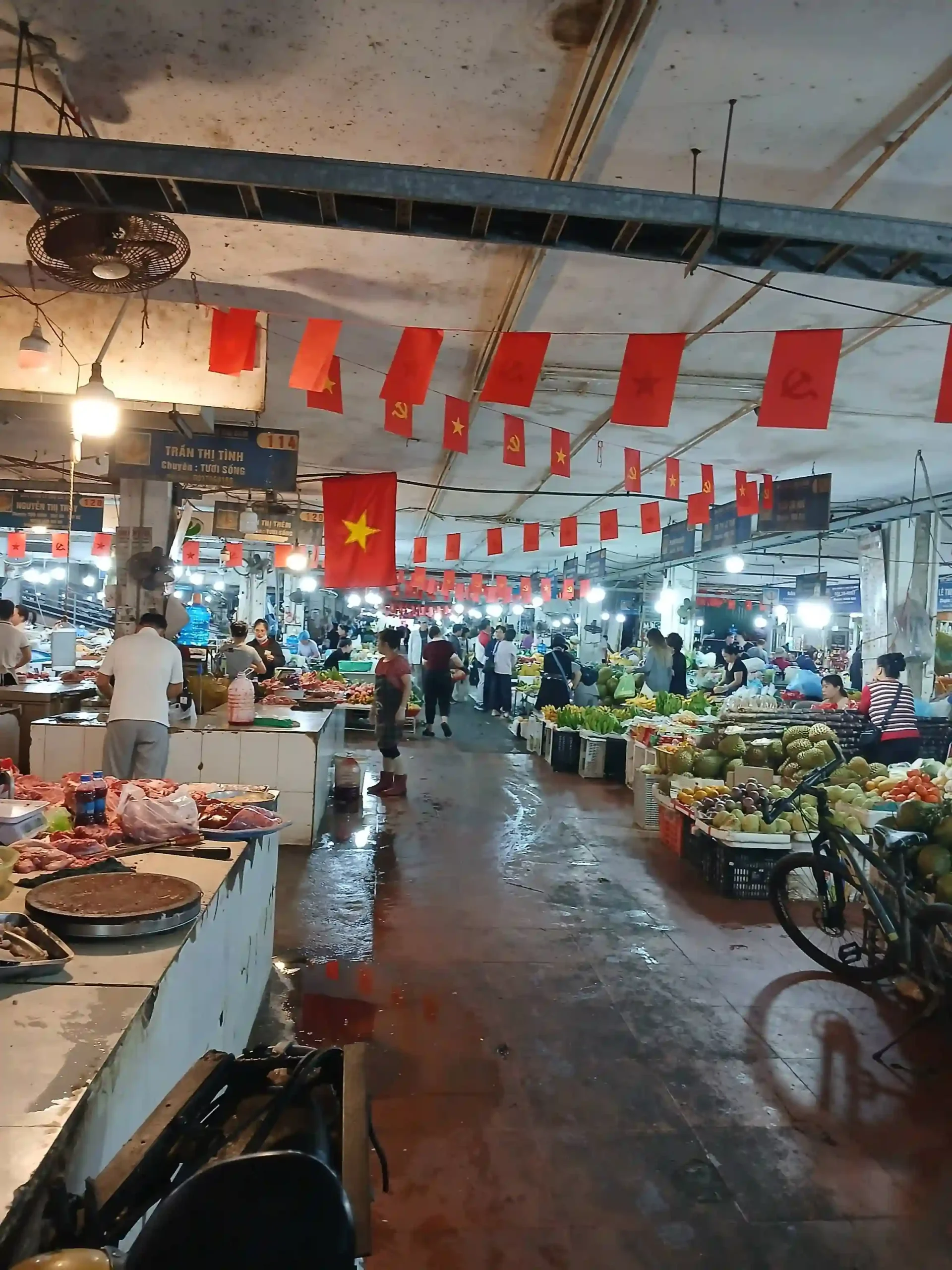
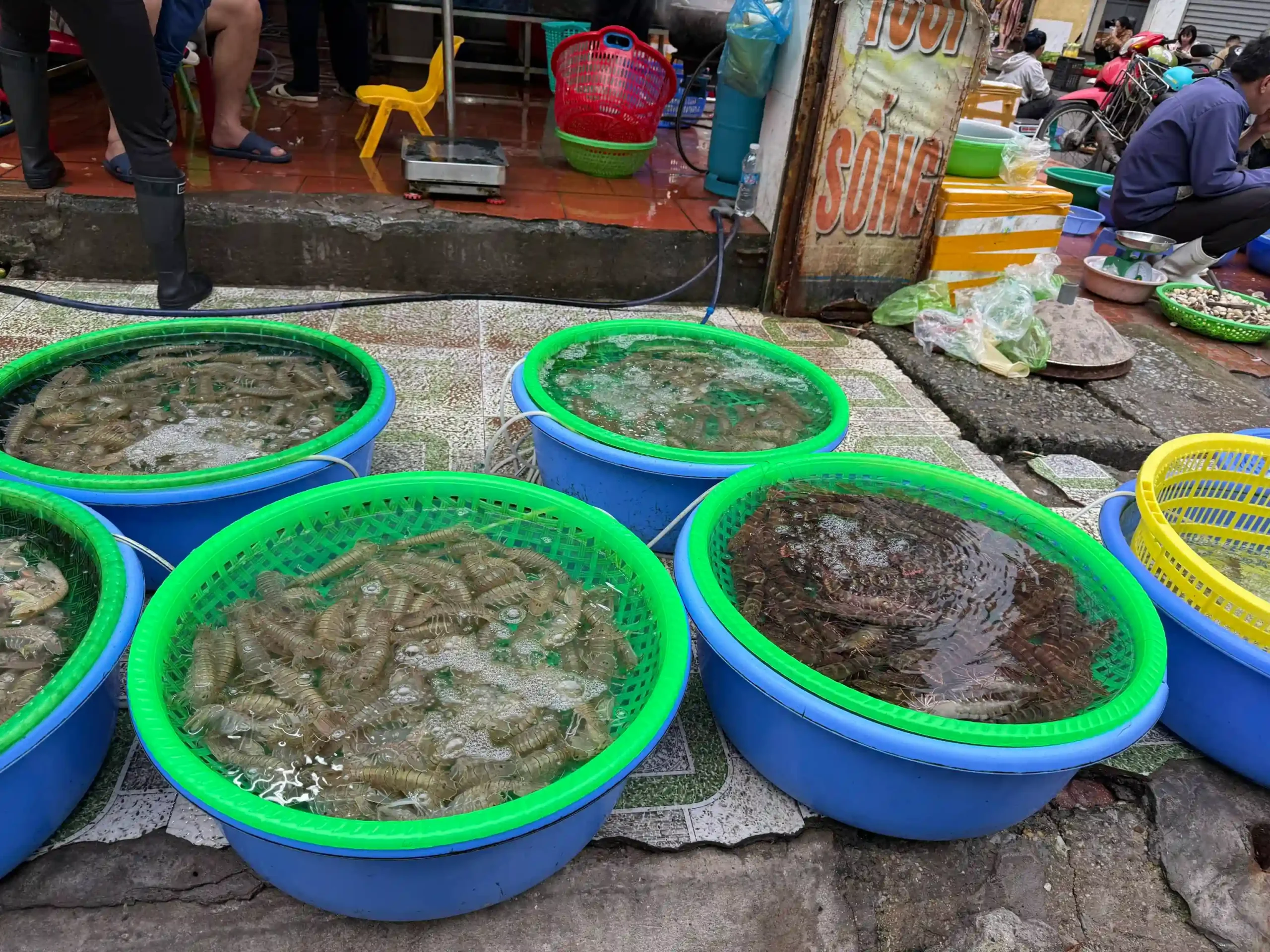
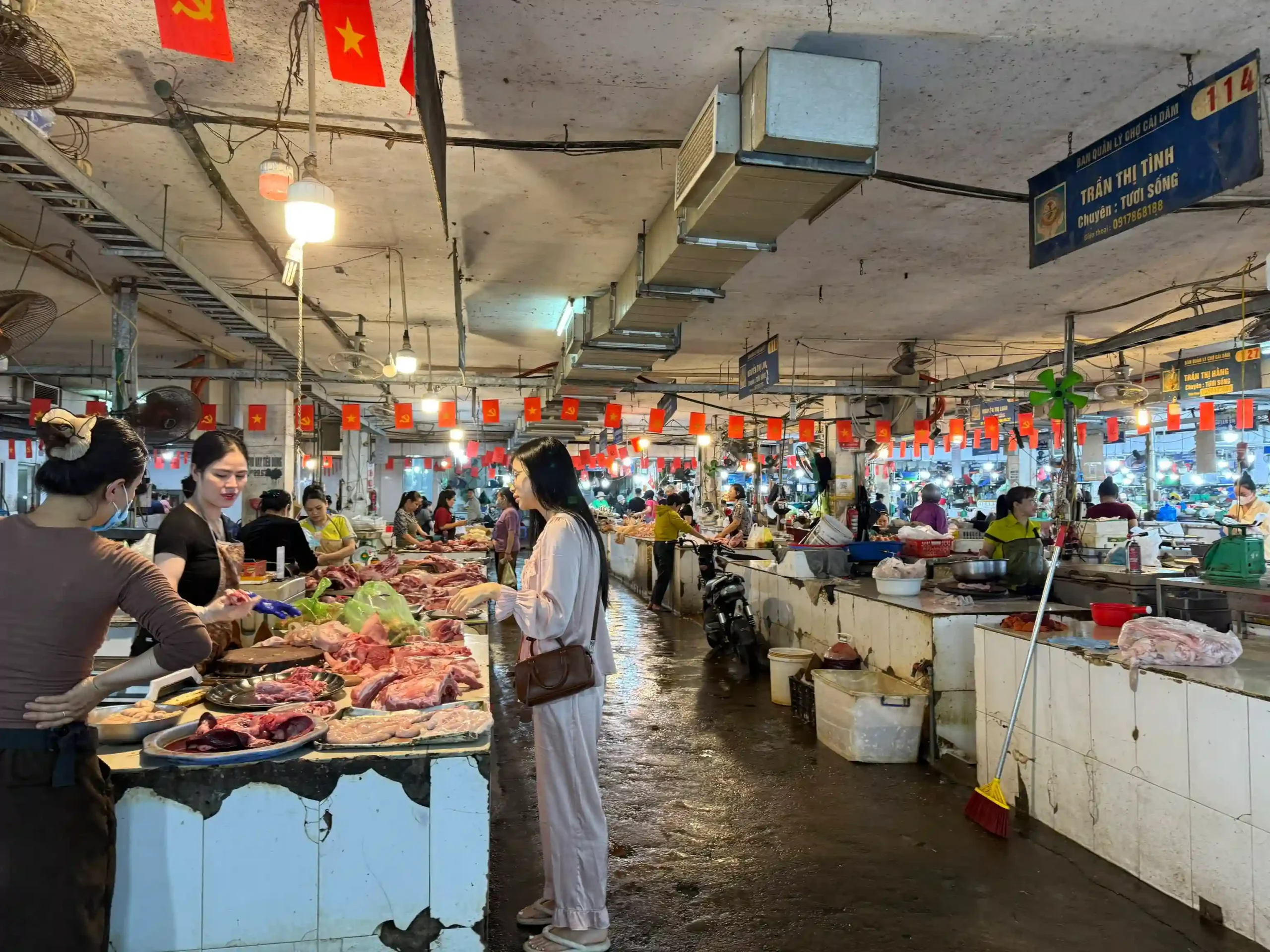
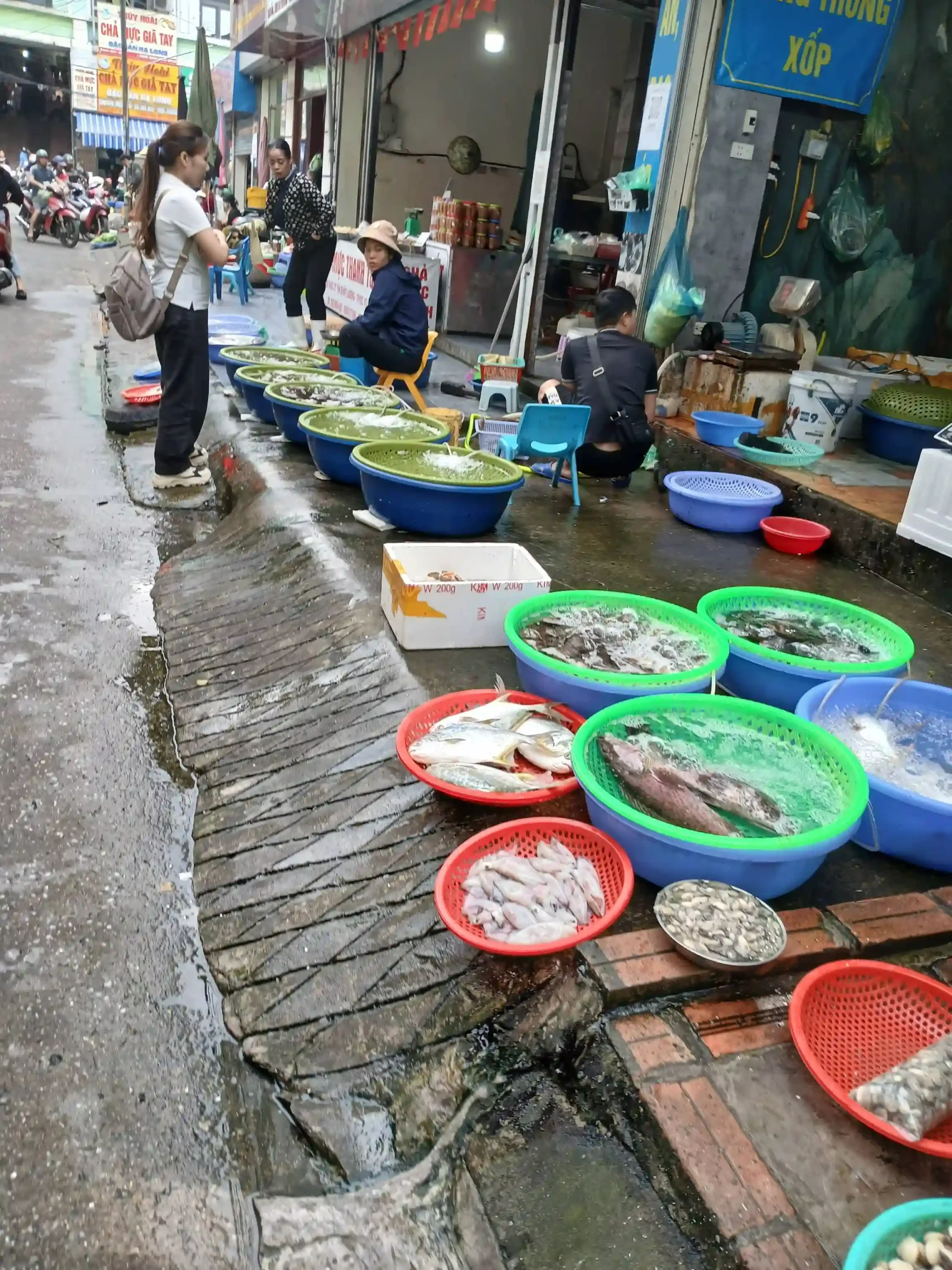
Let’s talk about Bai Chay again. The whole beachfront strip of Bai Chay is basically neon hotels and seafood restaurants charging double because they have English menus.
If you want to see a real physical landmark of how this city actually operates, drive a few kilometers west to Cai Dam Market.
This is a multi-story concrete building, but the ground floor and the surrounding alleyways are the hardcore local seafood exchange.
You need to put on shoes you don’t care about, because the ground is permanently covered in an inch of sludgy water. This is where the smaller fishing boats unload.
You are going to see things sitting in plastic blue bins that you probably can’t name. Giant geoducks, moray eels, massive tubs of mantis shrimp fighting each other, horseshoe crabs just piled on the pavement. The noise is deafening. Women squatting on the floor hacking massive fish apart with heavy cleavers, yelling at each other over the noise of scooter engines.
It is completely chaotic, smells strongly of salt and blood, and is one of the most honest places to visit in ha long bay if you want to understand how a coastal Vietnamese city eats.
12. Bai Tu Long Bay
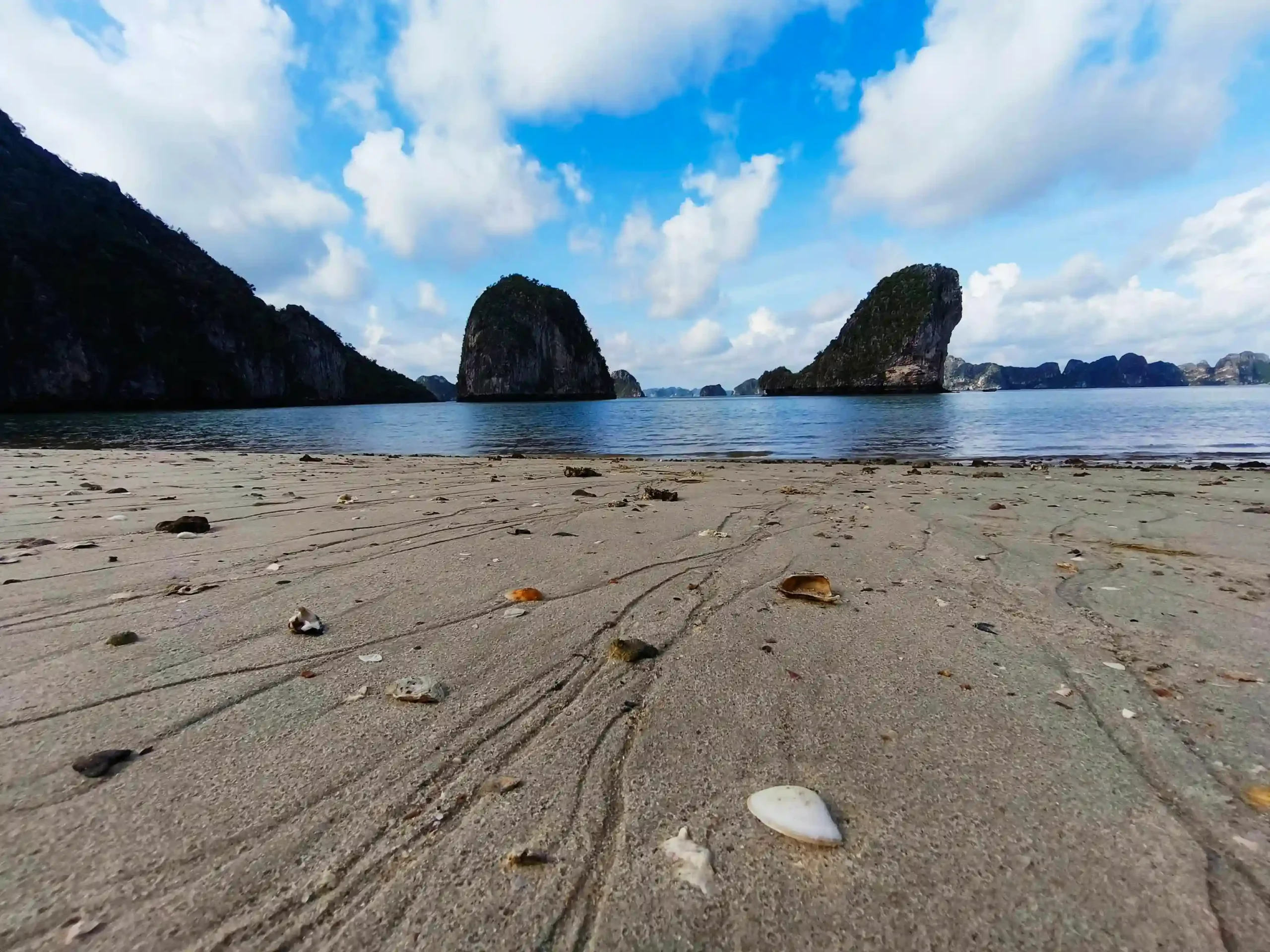
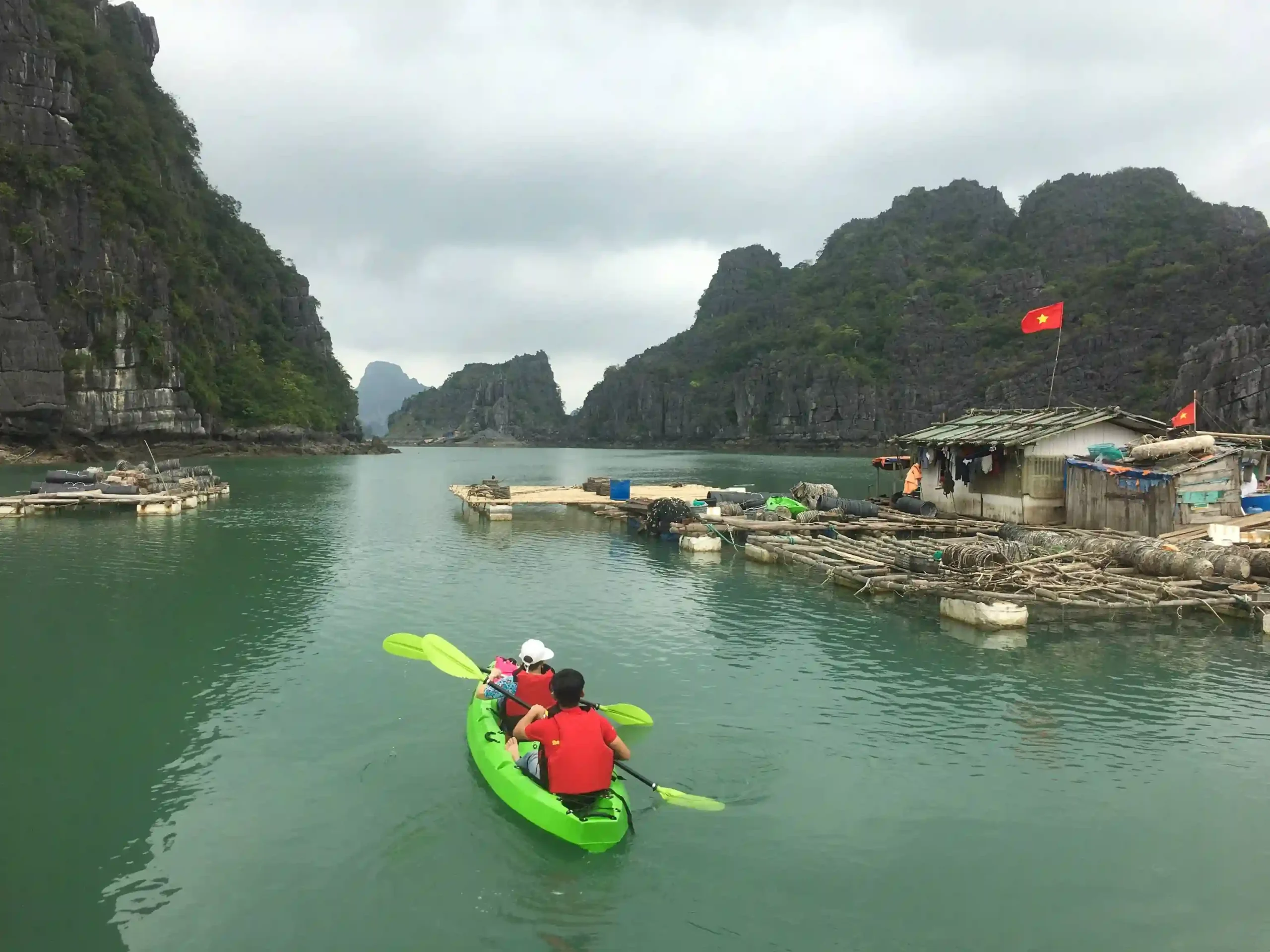
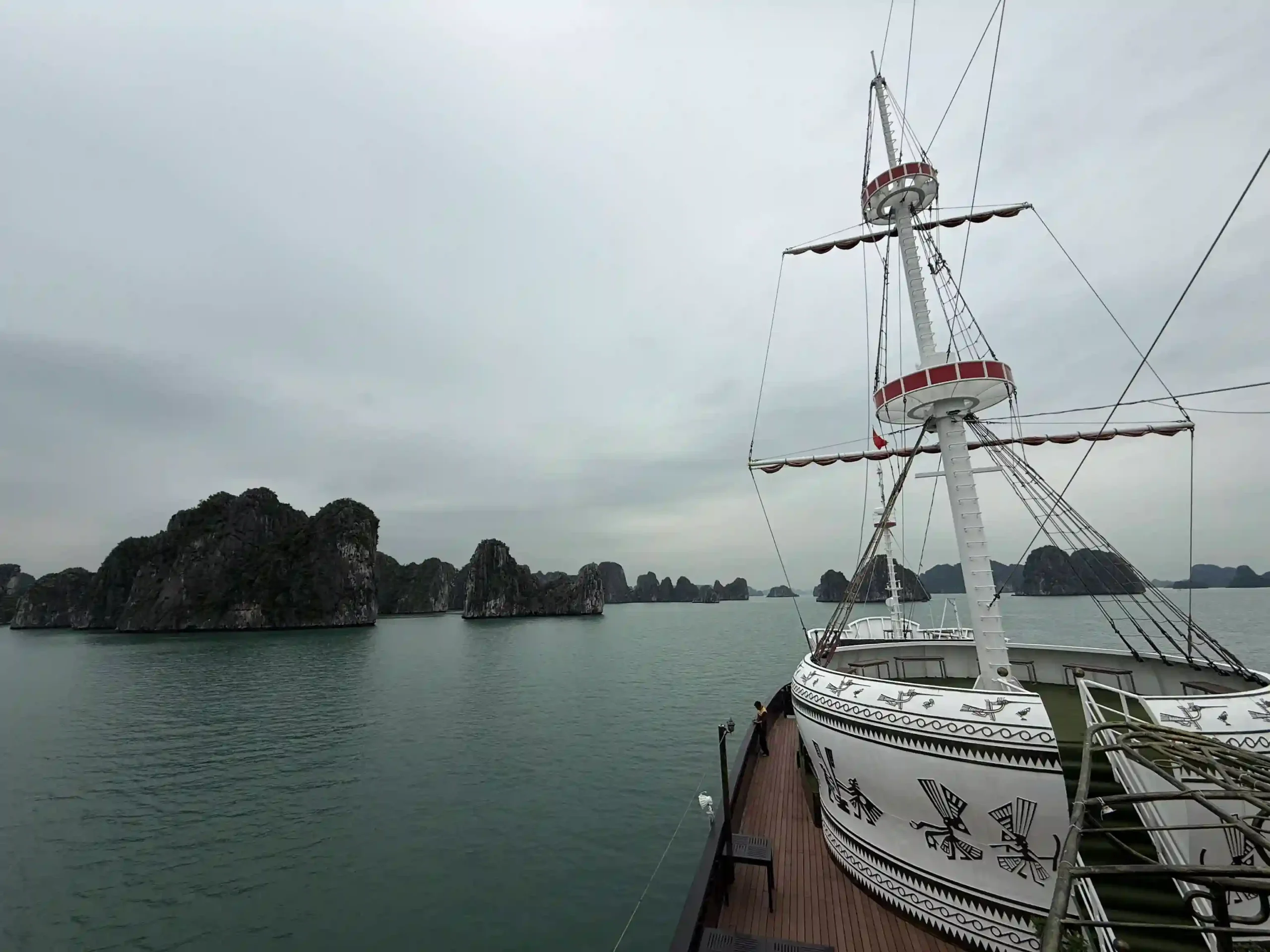
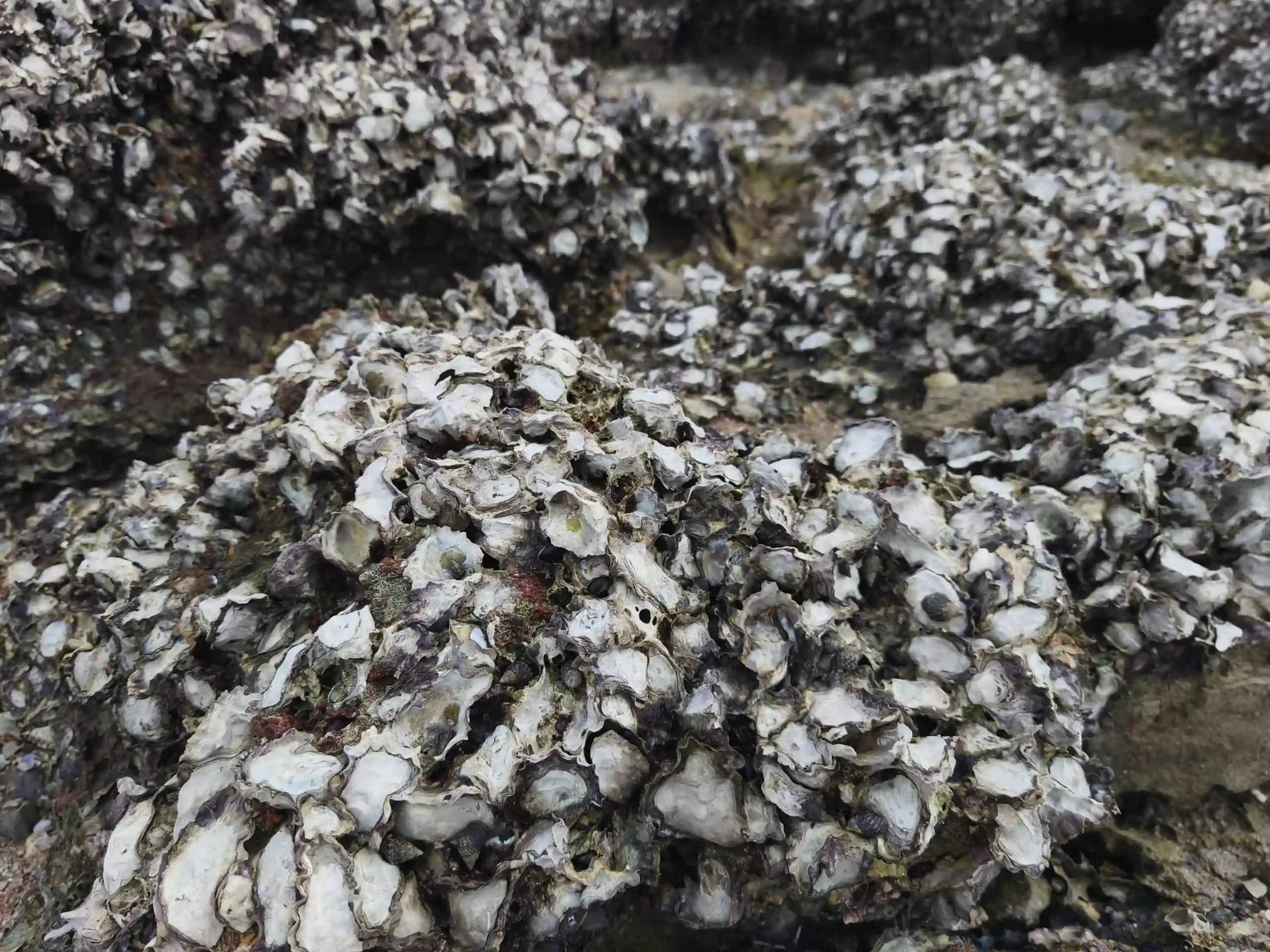
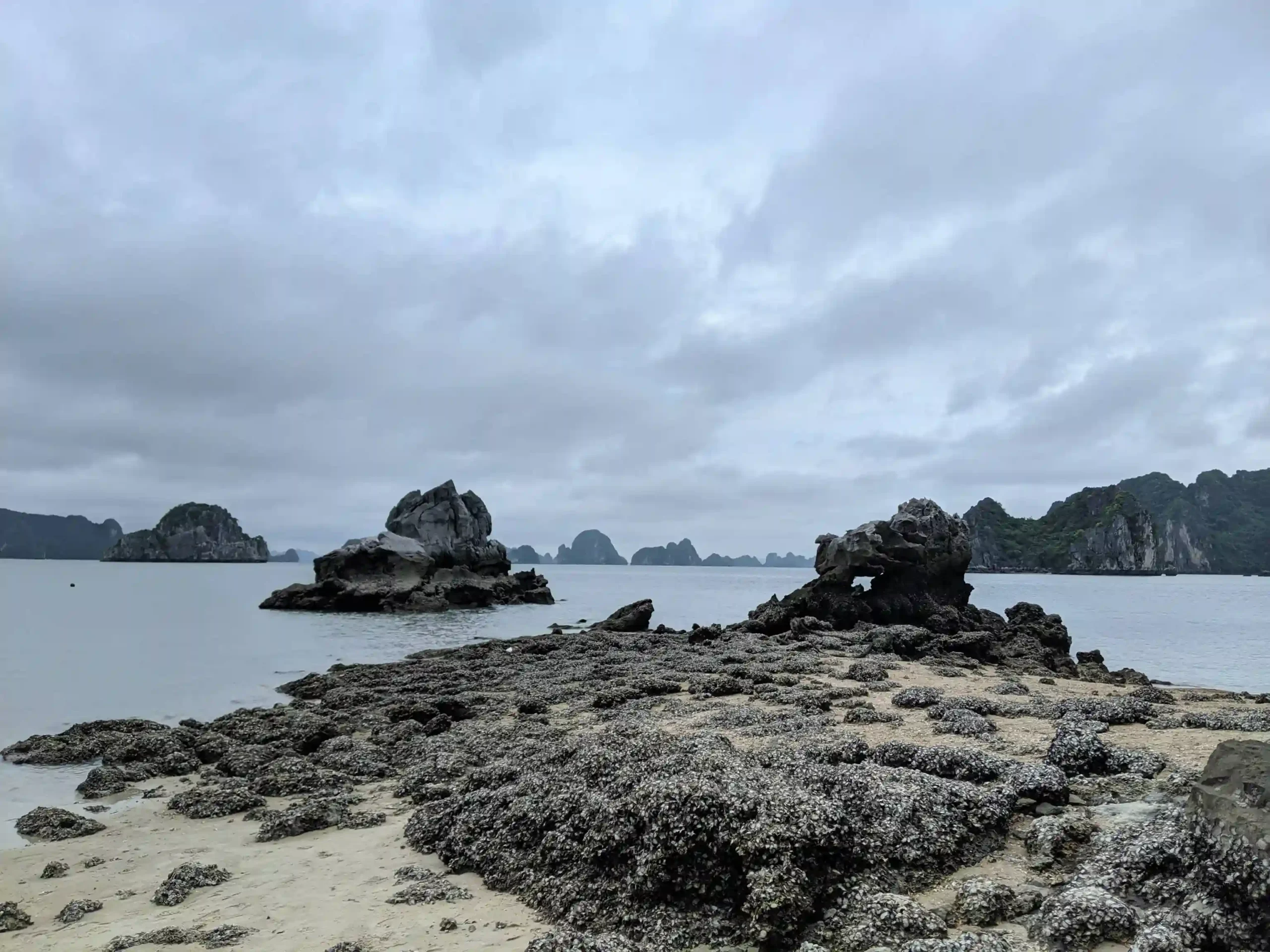
We started with Lan Ha Bay in the south, so let’s end with Bai Tu Long Bay in the far north.
If Lan Ha is “less crowded,” Bai Tu Long is basically “empty.”
The geographic border for this zone stretches way up toward Cam Pha city and out toward the Chinese border. The Vietnamese government heavily regulates which tour companies are even allowed to bring boats in here. You cannot just rent a random speedboat and cruise in.
Because of that strict limitation, the natural environment is completely pristine. The islands here feel more primitive. They are slightly larger and have more dense vegetation hanging off them.
The water is totally quiet. You might see a tiny local fishing raft or a pearl farming rig, but you are not seeing thirty white tourist boats lined up next to each other.
It is a place. But it’s a difficult place to reach. If you want to put this on your map, you are going to pay a heavy premium.
The few cruise companies that have permits to enter Bai Tu Long (like Indochina Junk) charge high prices for the exclusivity. It is completely worth it if your main priority is sitting on a deck chair in absolute silence.
How to map this all out
Don’t try to look at all 12 of these Halong Bay attractions and think you can do a weekend trip.
The geography doesn’t work that way. The distances across the water are massive, and boats move slowly.
If you only have two days, you are just going to pick one water zone (Lan Ha or the Center), check off the caves that specific boat stops at, and go back to Hanoi.
If you actually want to see the museum, drive the coastal road, and find the real wet markets, you have to factor in sleeping on the mainland. Look at my map and mentally separate your trip. Book a night in Hon Gai for the street culture, and then deal with Tuan Chau and the ocean the next morning.
Just realize that you don’t have to see every single rock. Once you’ve seen the big cave and you’ve been to the top of Ti Top or Ba Deo for the high-angle photo, the rest of the time should just be you getting away from the megaphones, grabbing a local beer, and actually looking at the water.

Keep Exploring Ha Long
-
See & do Ultimate10 best things to do in HaLong Bay you should do in 2026 ›
-
SpotsThe truth about a Halong Bay tour from Hanoi (2026 updated) ›
-
SpotsThe only Ha Long Bay overnight cruise I actually recommend ›
-
SpotsHalong Bay nightlife: What to do after the cruise’s over? ›
-
SpotsMy 20+ best places in North Vietnam after 8 years of living ›
-
Route Must read[2026] The only Ha Long Bay itinerary that matches all vibes ›
-
Guide Must readStop asking Is Ha Long Bay worth It in 2026, read this first ›











 Tiếng Việt
 한국어
한국어 中文 (中国)
 日本語
日本語 ไทย
ไทย Deutsch
 Español
 Destinations
 Instagram
 Facebook
 X (Twitter)
 Threads
 Tiktok
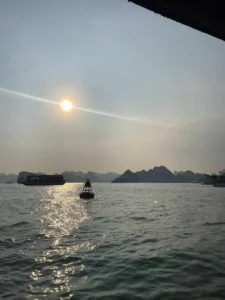
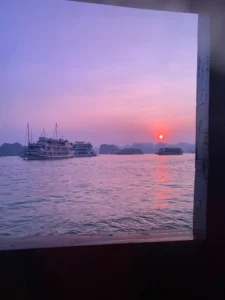
On a luxury cruise, you could see beautiful limestone cliffs and the blue sea. In particular, the minister of sunrise and sunset remained an unforgettable memory. On the cruise we had a leisurely time enjoying fresh seafood dishes and comfortable service.