I’m Derek, an American living in Saigon, Vietnam. I write for VietAdvisor to share the kind of practical stuff you actually need on the road, especially the places that aren't on Instagram. Usually found hunting for good coffee or figuring out local transport shortcuts.
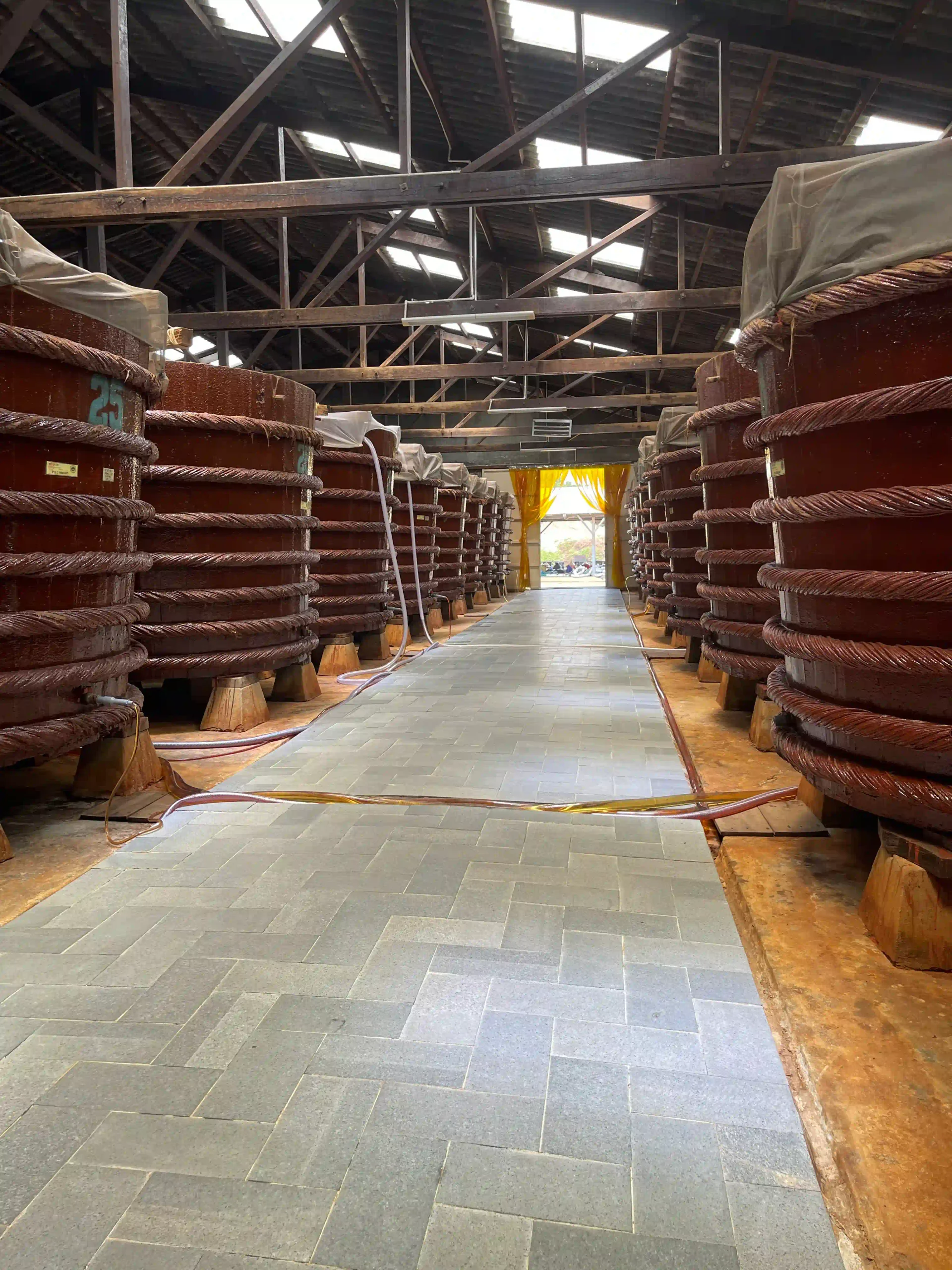
A Phu Quoc fish sauce factory tour is about fifteen or twenty minutes: a room of wooden barrels taller than you are, a smell that hits before you’re through the door, a tasting of two or three grades, and then a shop. Most are free, none of them take long, and the tour part is often more of a walk-through than a guided visit.
I’ve said before that the factories are showrooms with a story attached, and I still think so. But used properly, a factory is the best place on the island to learn what good fish sauce tastes like and to buy a bottle you’ll actually use, as long as you know which one to visit, what the numbers on the label mean, and how strict the airlines are about flying with it.
Quick Answer: A Phu Quoc fish sauce factory tour is a free 15 to 20-minute visit to a “nhà thùng”, a barrel house where anchovies and salt ferment in large wooden vats for around a year, followed by a tasting and a shop. Khải Hoàn in Duong Dong is the best-known and the best for a side-by-side tasting with an explanation in English, Thịnh Phát and Thanh Hà are smaller and more traditional, and Phụng Hưng in An Thới is the usual stop on tours of the south. Good Phu Quoc fish sauce is 40 degrees of protein or higher.
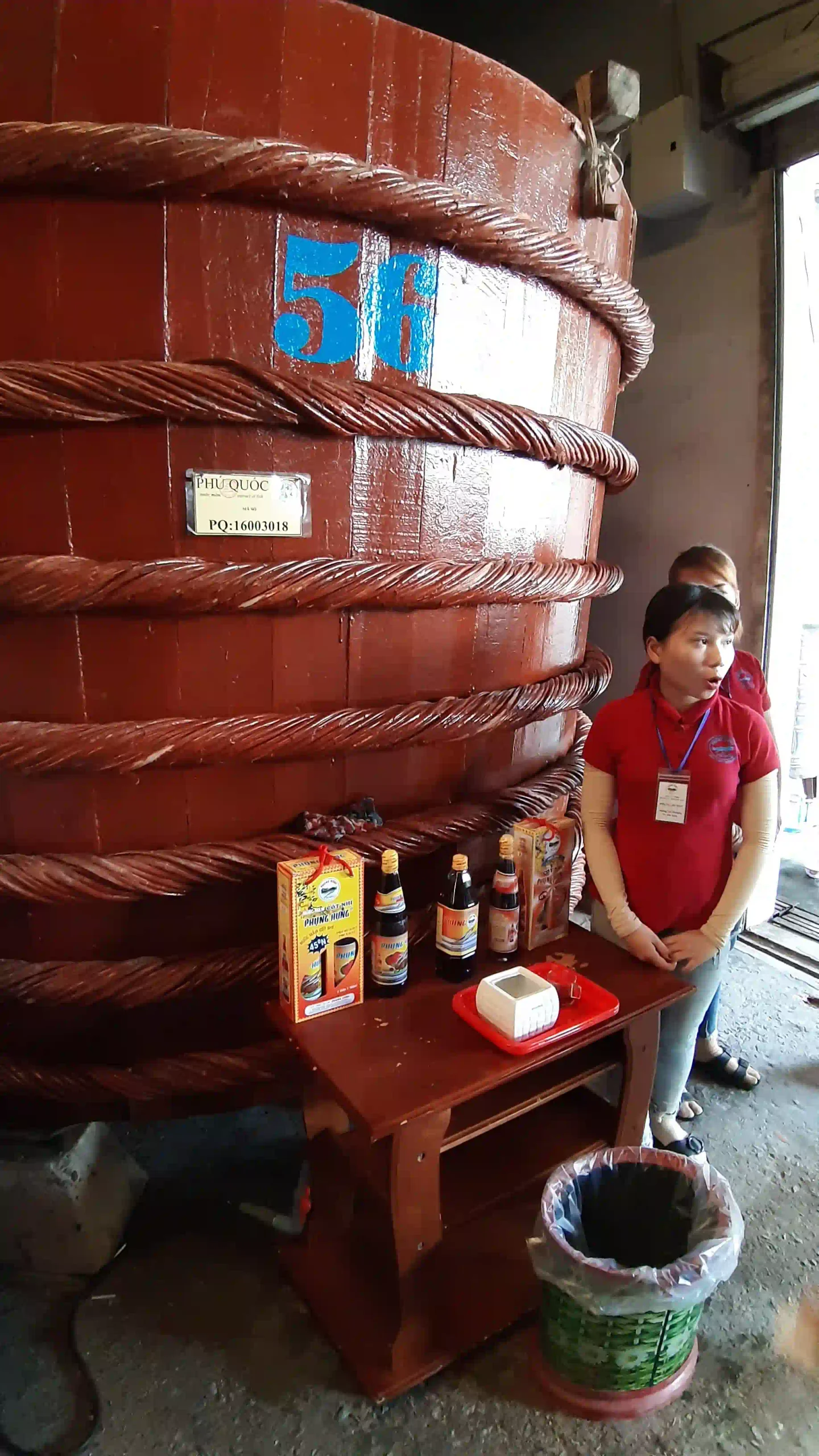
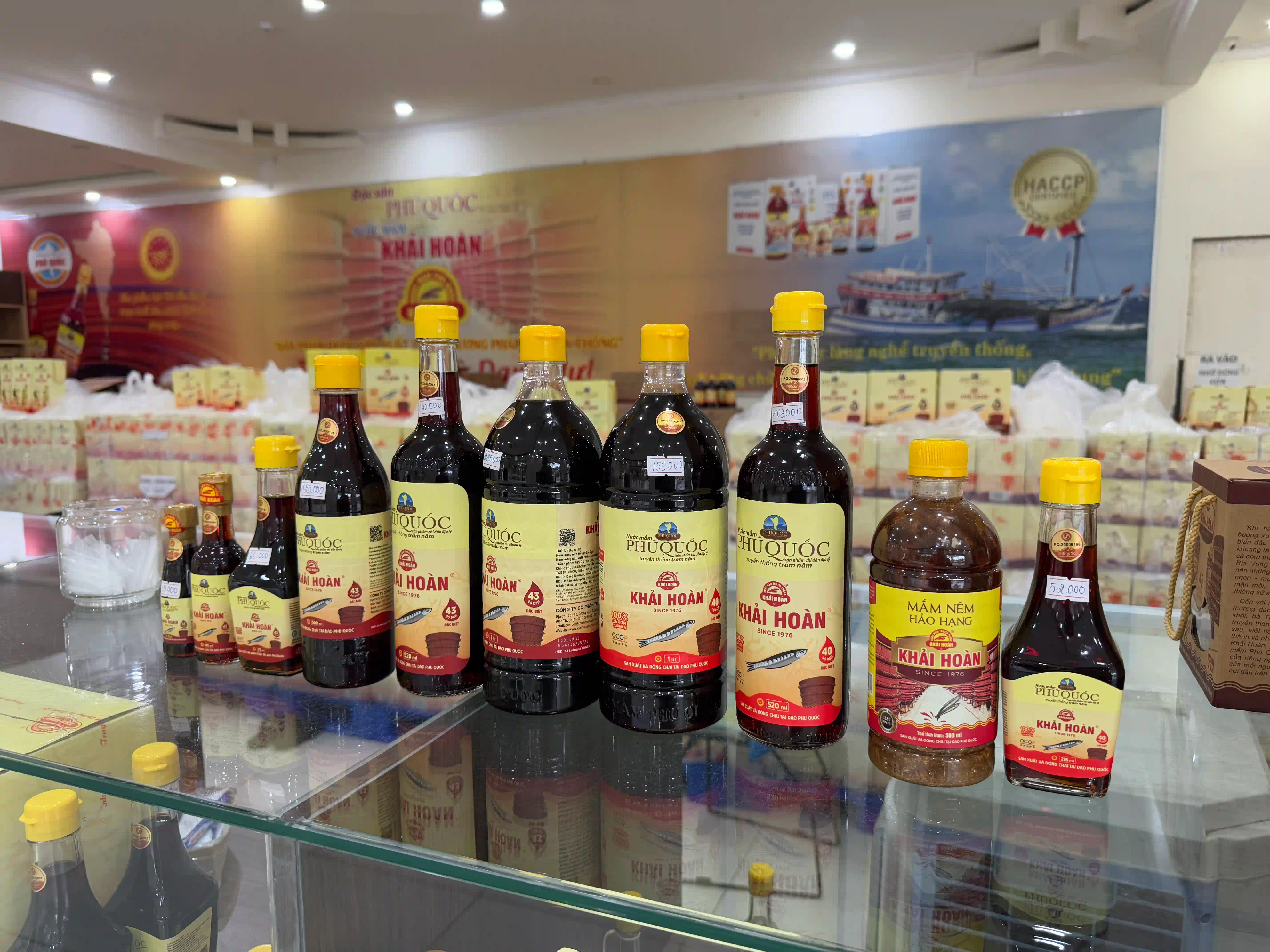
Reading the label: the degree is protein content. 40 degrees and up is the real thing, 43 to 45 is richer and saltier, and supermarket bottles are often around 25.
Flying with fish sauce:
Never in hand luggage.
Checked only, in plastic bottles, taped, sealed in a styrofoam box. Usually 3 to 4 litres per person, depending on the airline.
Rules change, so check with your airline before buying.
Is a Phu Quoc Fish Sauce Factory Tour Worth It?
Yes, for twenty minutes, if you go to taste and to buy. No, if you’re expecting a proper factory tour with a guide explaining the process from start to finish.
Most of the barrel houses let you walk among the vats, and some have a staff member who’ll explain things if you ask.
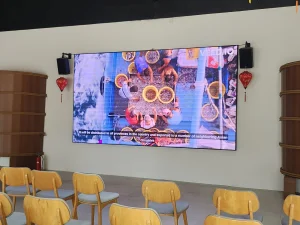
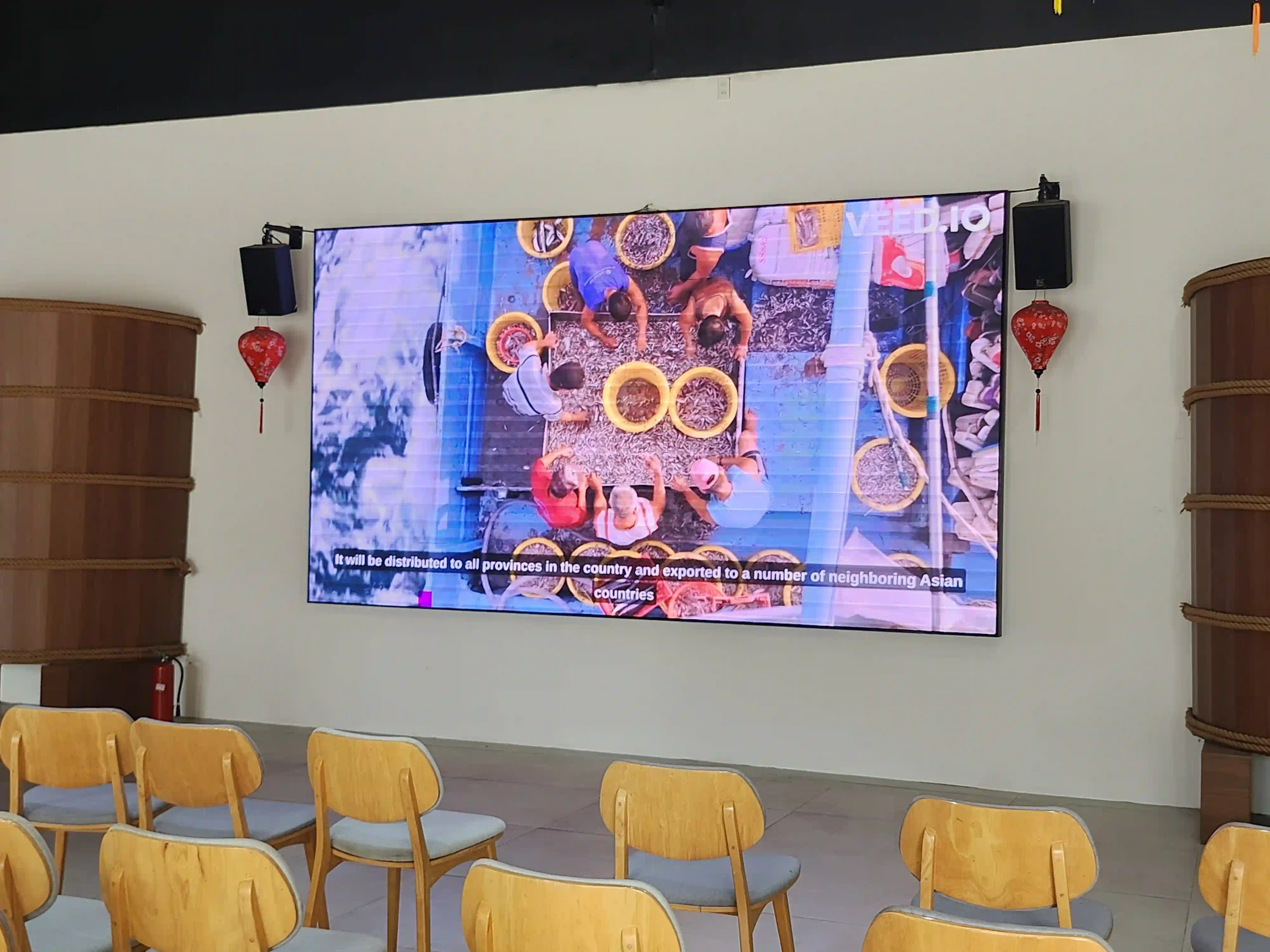
Khải Hoàn is the most likely to give you a real explanation in English, and Phụng Hưng plays a short video. The others are mostly a look at the barrels and a counter.
What makes the visit worth it is the tasting. Trying 40, 43 and 45-degree fish sauce one after the other is the quickest way to understand why Phu Quoc’s reputation exists, and it changes what you’ll buy afterwards.
Phu Quoc fish sauce has protected designation of origin status in the EU, the first Vietnamese product to get it, so what you buy at a barrel house on the island is the real thing in a way that a bottle with “Phu Quoc” on the front in a supermarket abroad often isn’t. That alone makes buying here worthwhile.
Not a real tour, but worth the tasting
What You See on a Fish Sauce Factory Tour
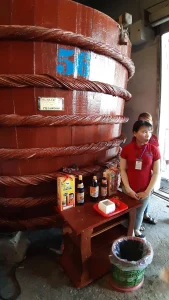
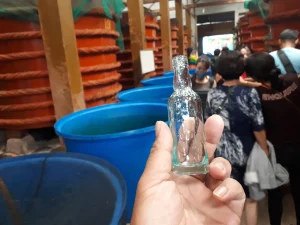
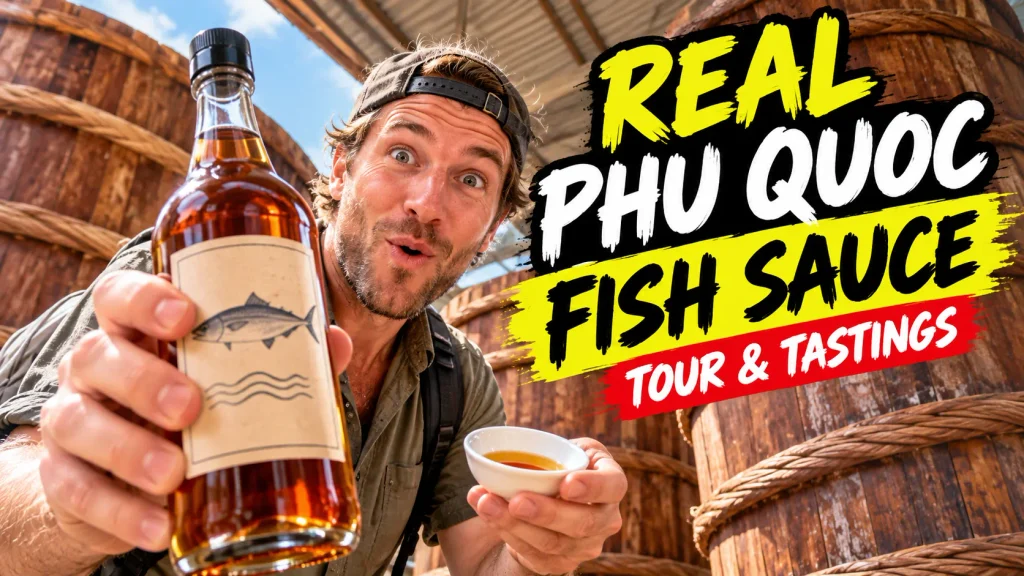
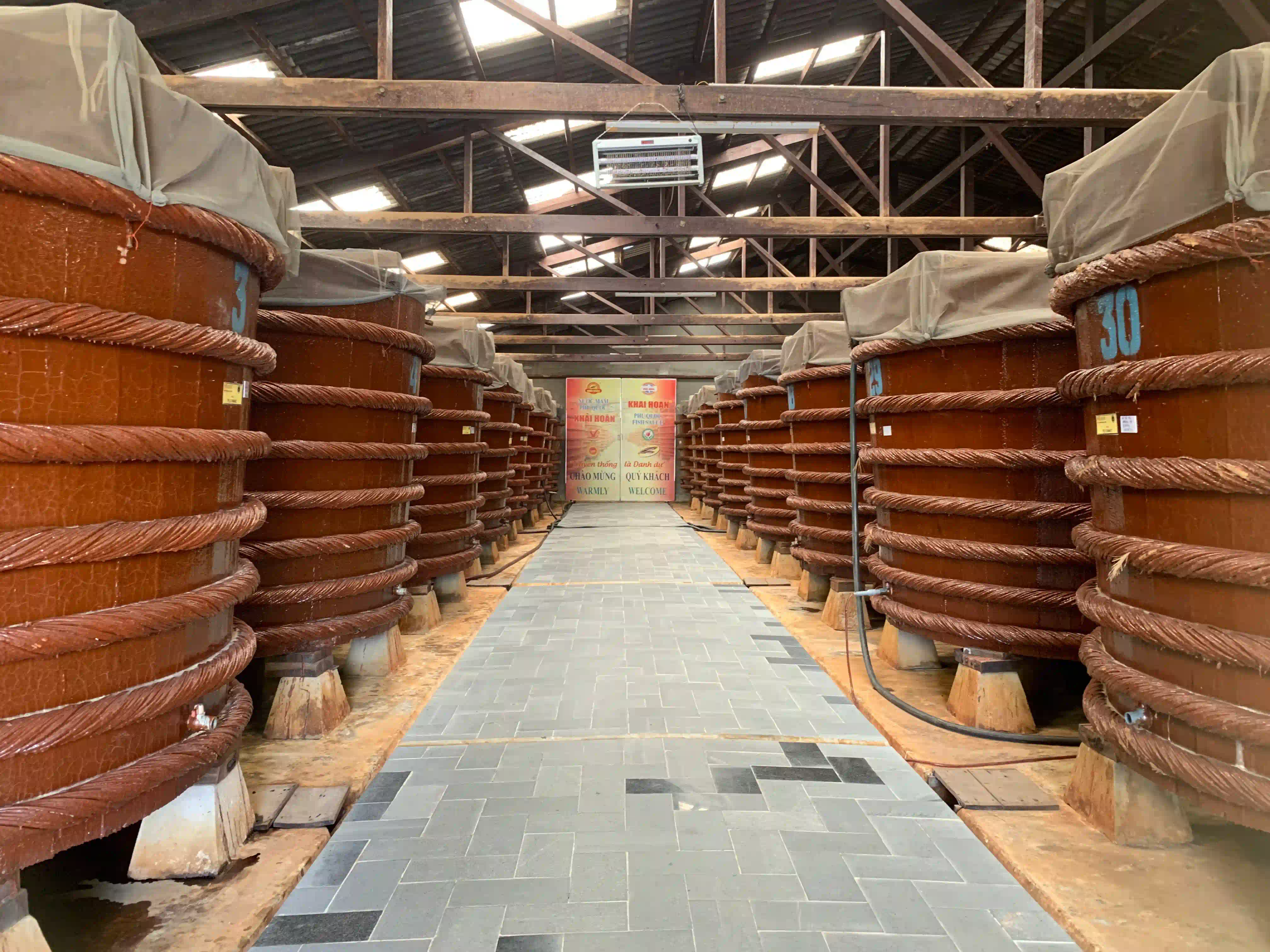
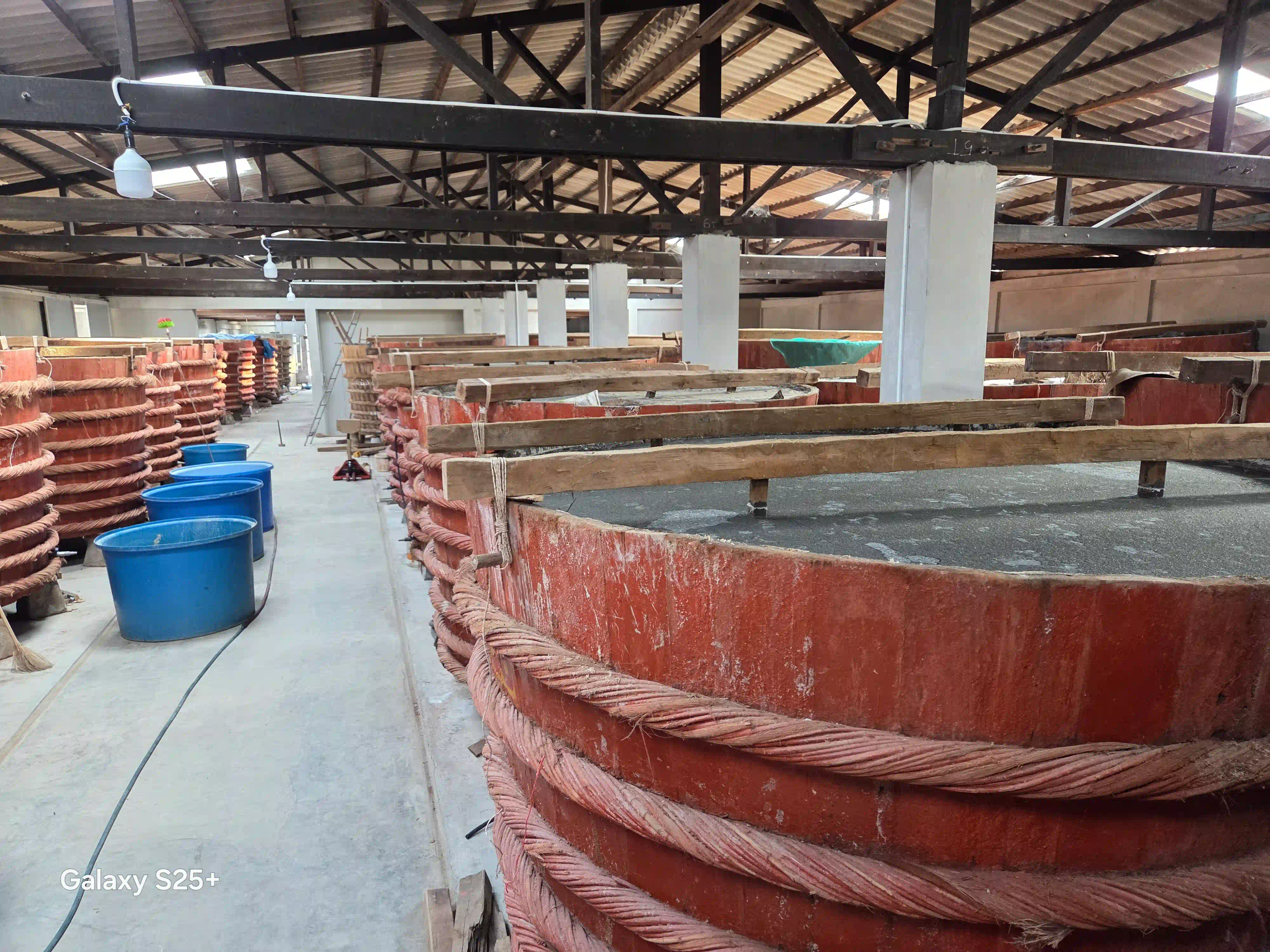
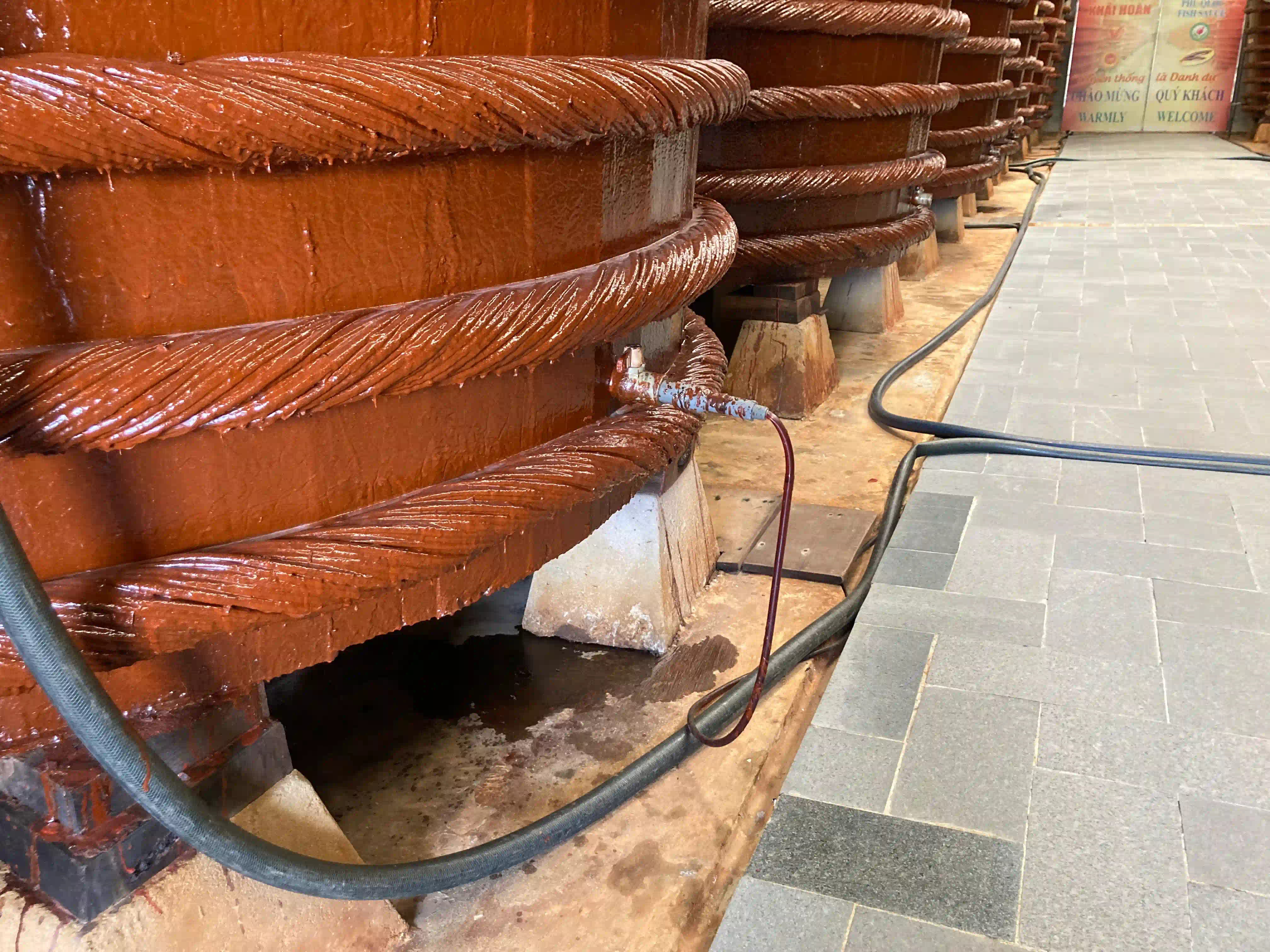
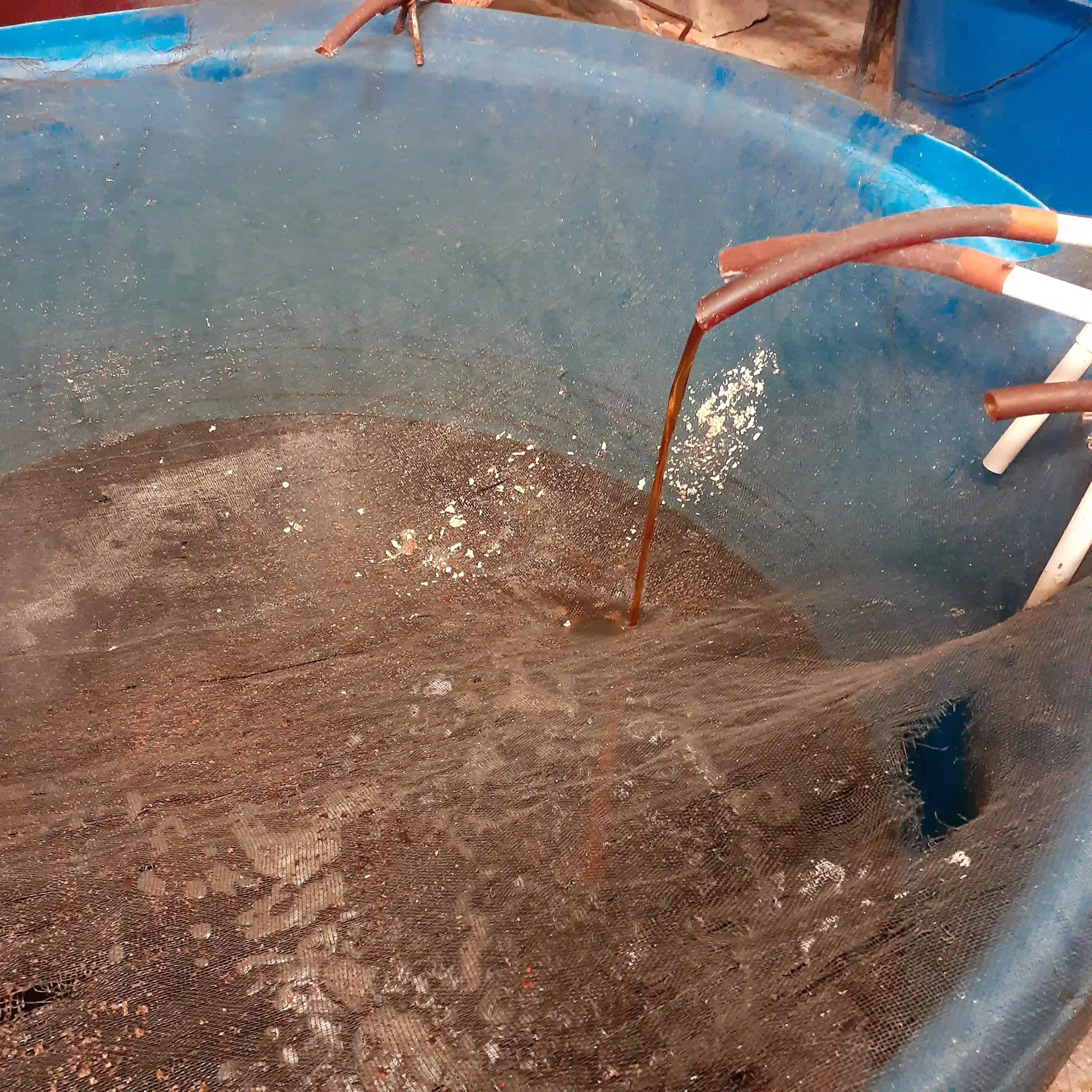
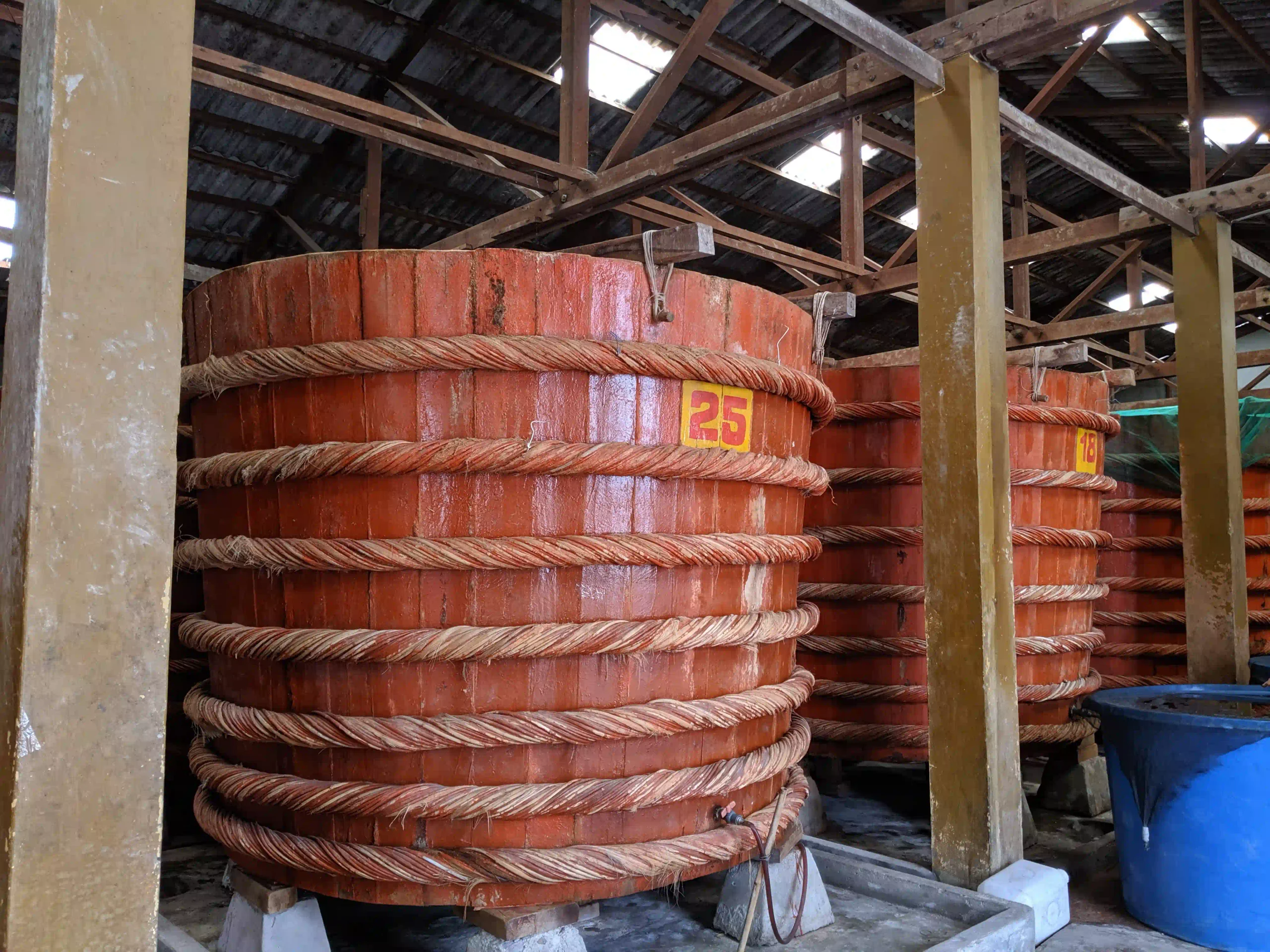
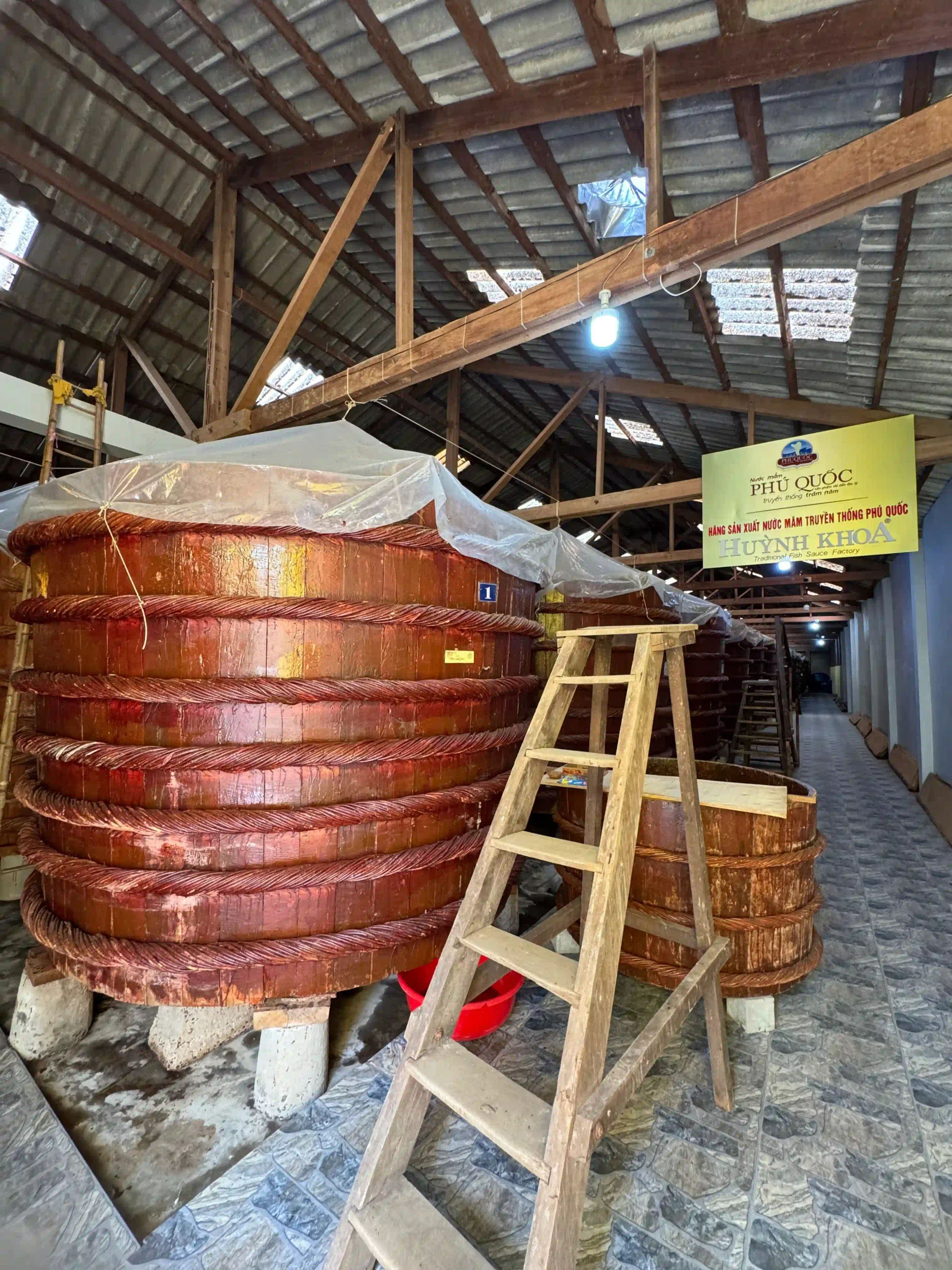
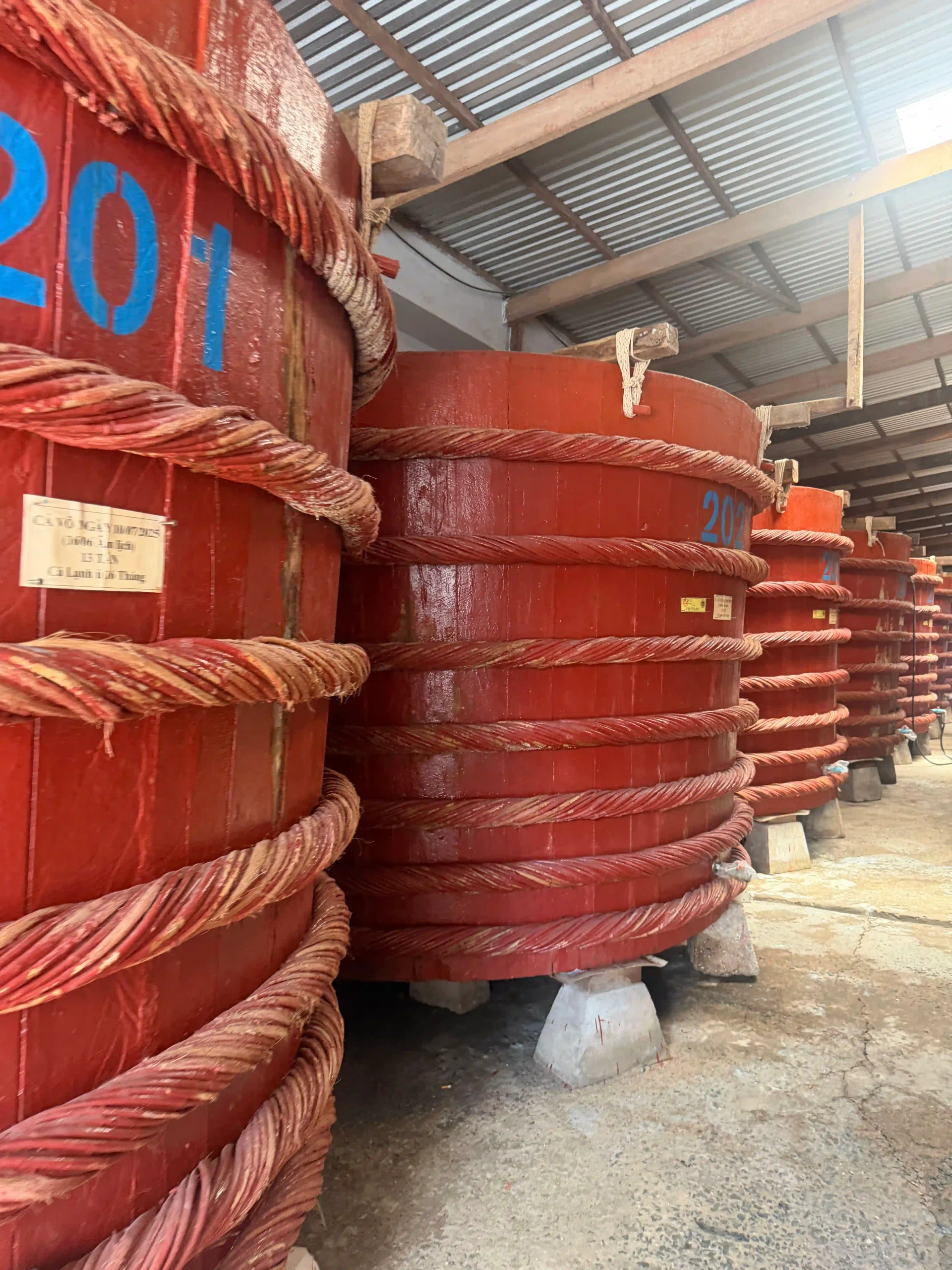
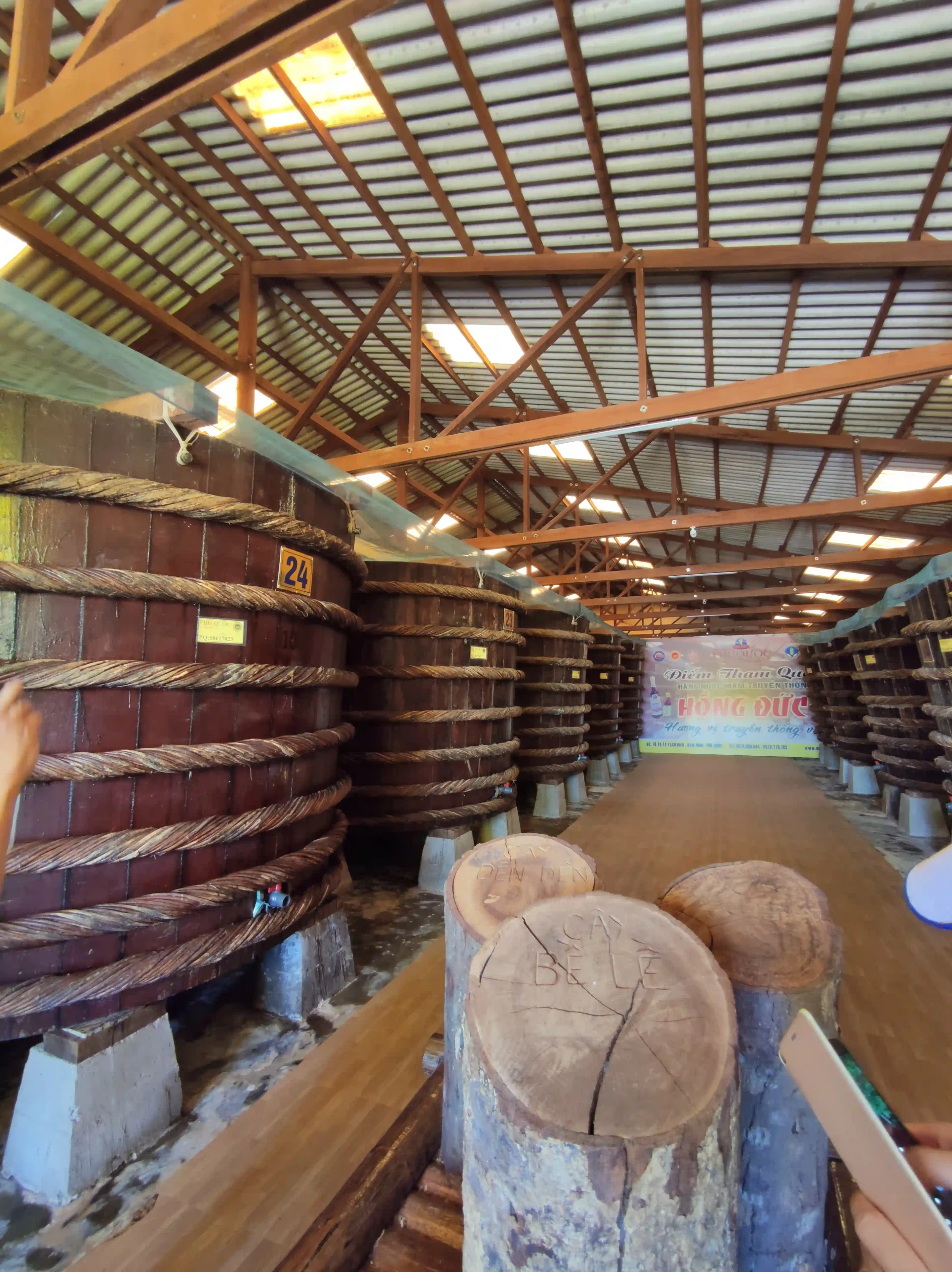
The barrel house, or nhà thùng, is the whole show. Inside are rows of huge wooden vats, often twice the height of a person, filled with anchovies and sea salt. The fish are layered with salt and left to ferment for 6 to 12 months, sometimes longer, and the liquid that drains from a tap at the bottom is the fish sauce. The first draw is the richest and the most expensive.
The smell is strong, sharp enough to make your eyes water in a closed room, and it’s worth knowing that before you go in. I stop noticing it after a minute or so, most people do, and it’s much milder in the shop next door.
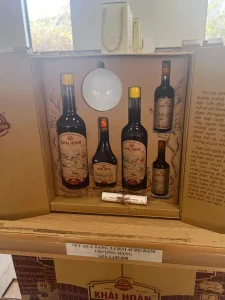
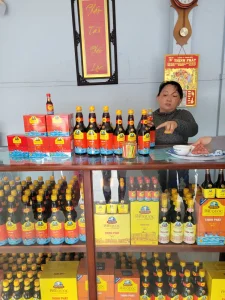
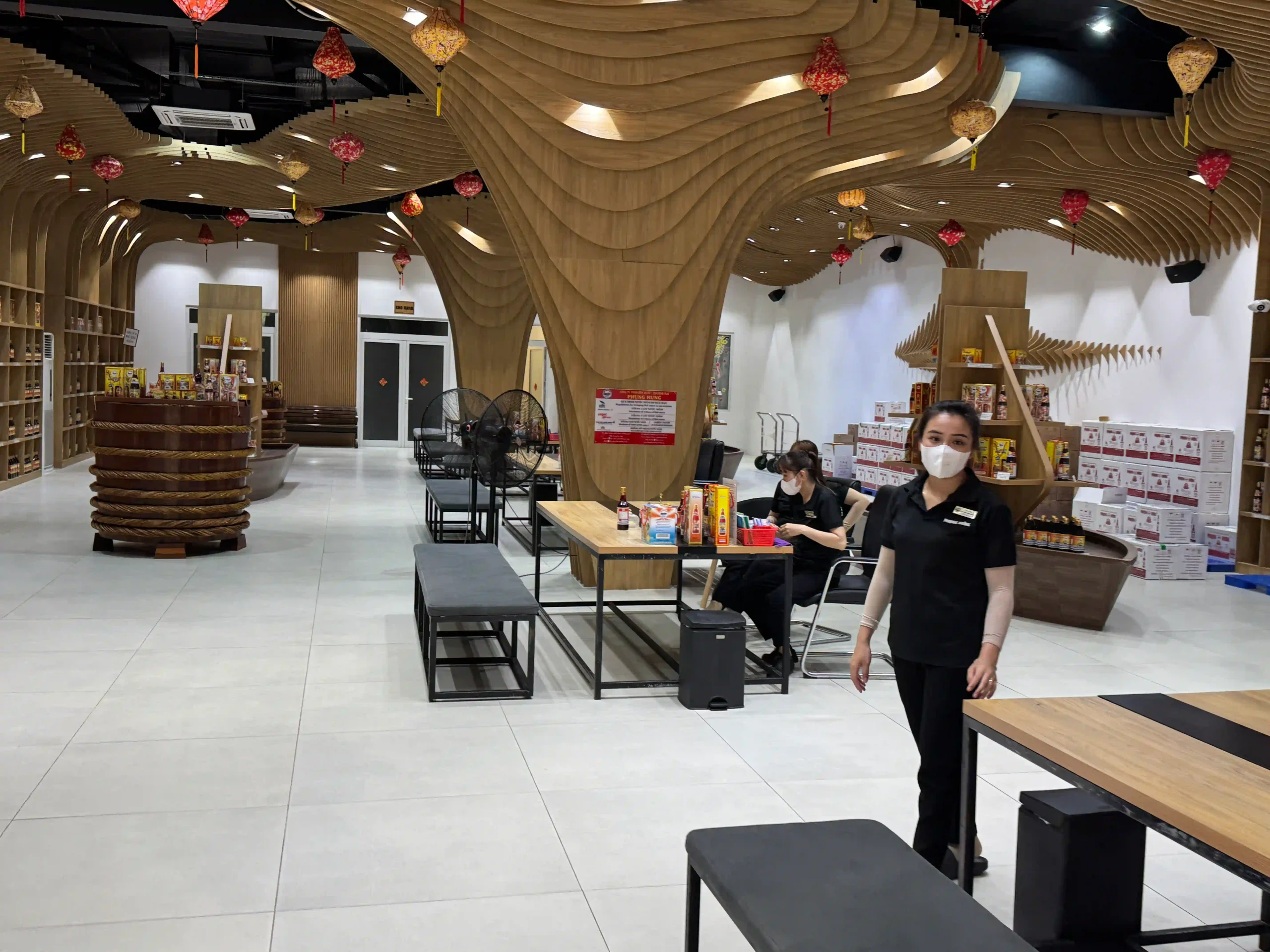
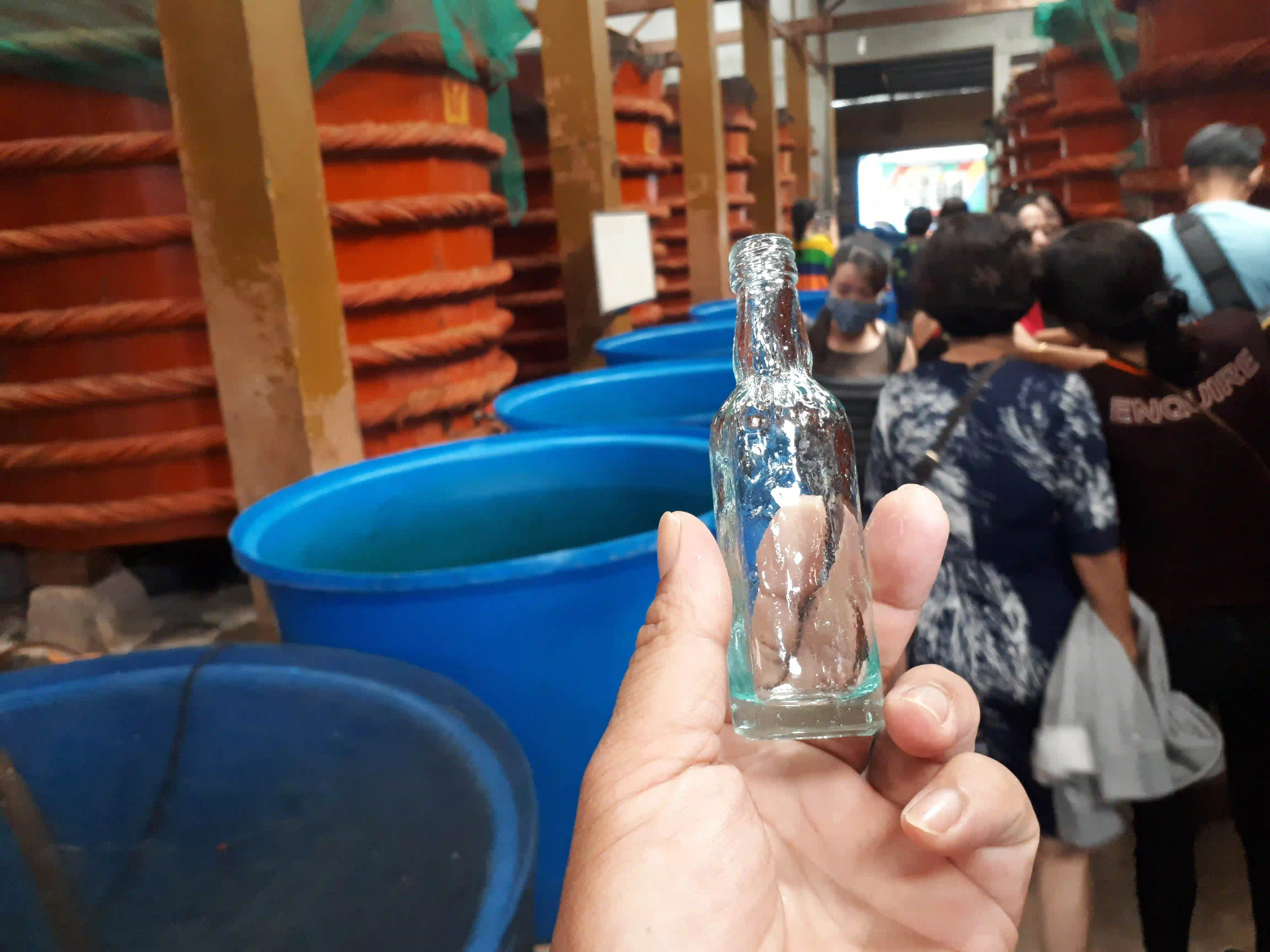
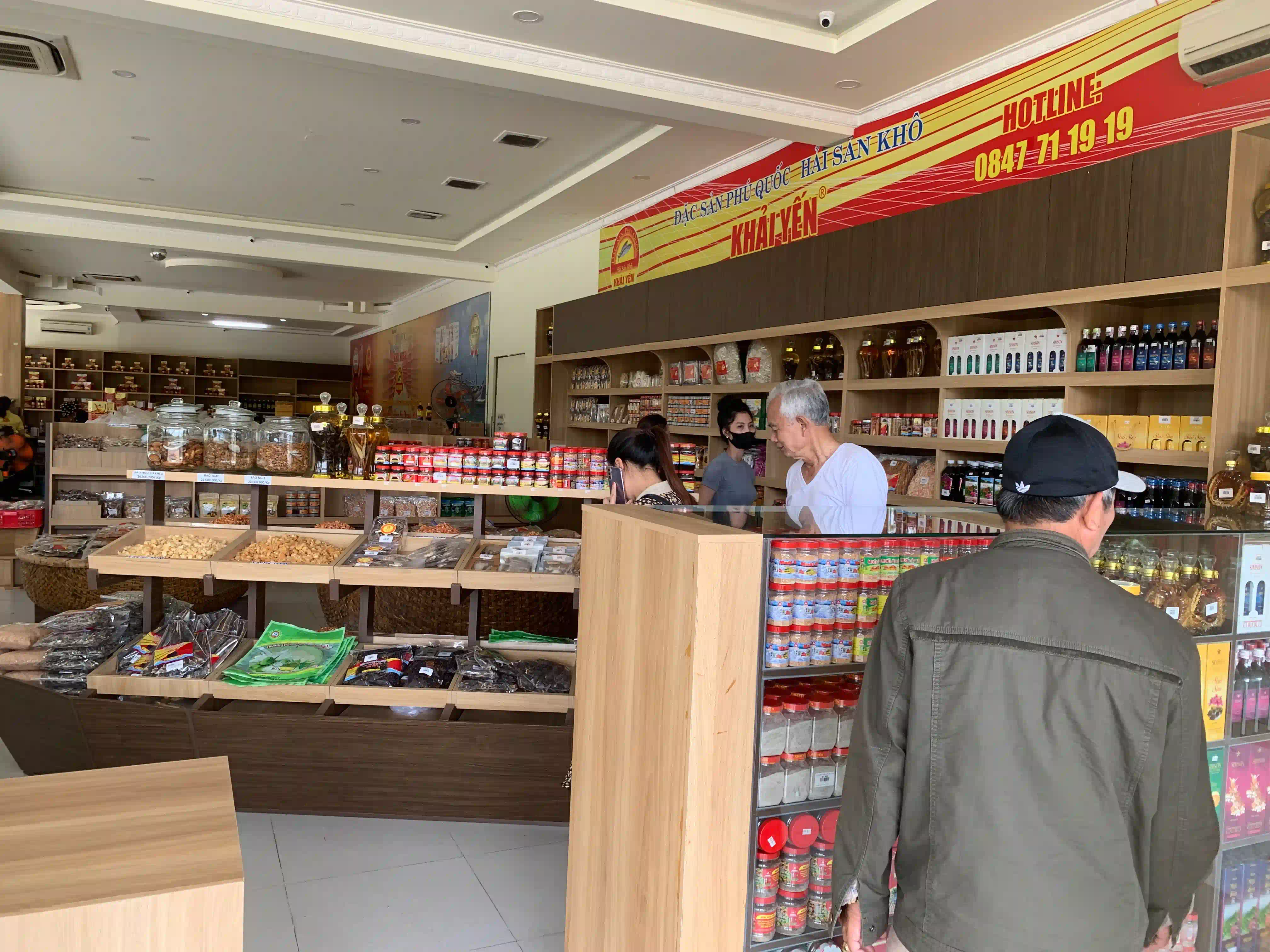
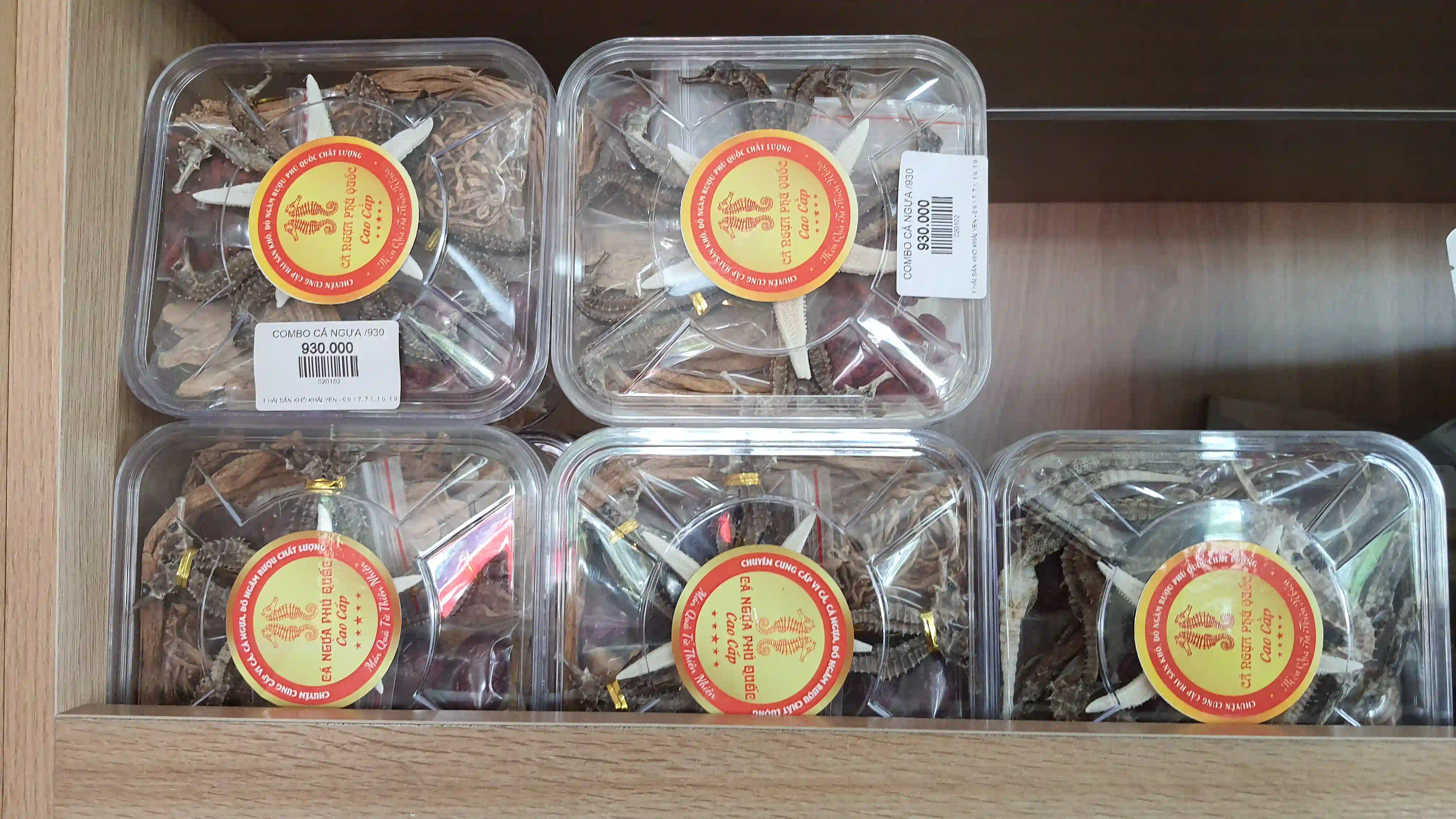
After the barrels comes the tasting. You’re usually given two or three grades on a spoon or with a piece of cucumber, and then shown the shelves: glass and plastic bottles from small sizes up to litres, gift boxes, and often mắm ruốc, shrimp paste, dried seafood and pepper as well. Nobody minds if you leave without buying, though most people don’t.
The whole visit takes 15 to 20 minutes. Visits are free, and most factories are open every day from early morning until five or later.
Giant barrels, sharp smells, and pure fish sauce
Which Phu Quoc Fish Sauce Factory to Visit
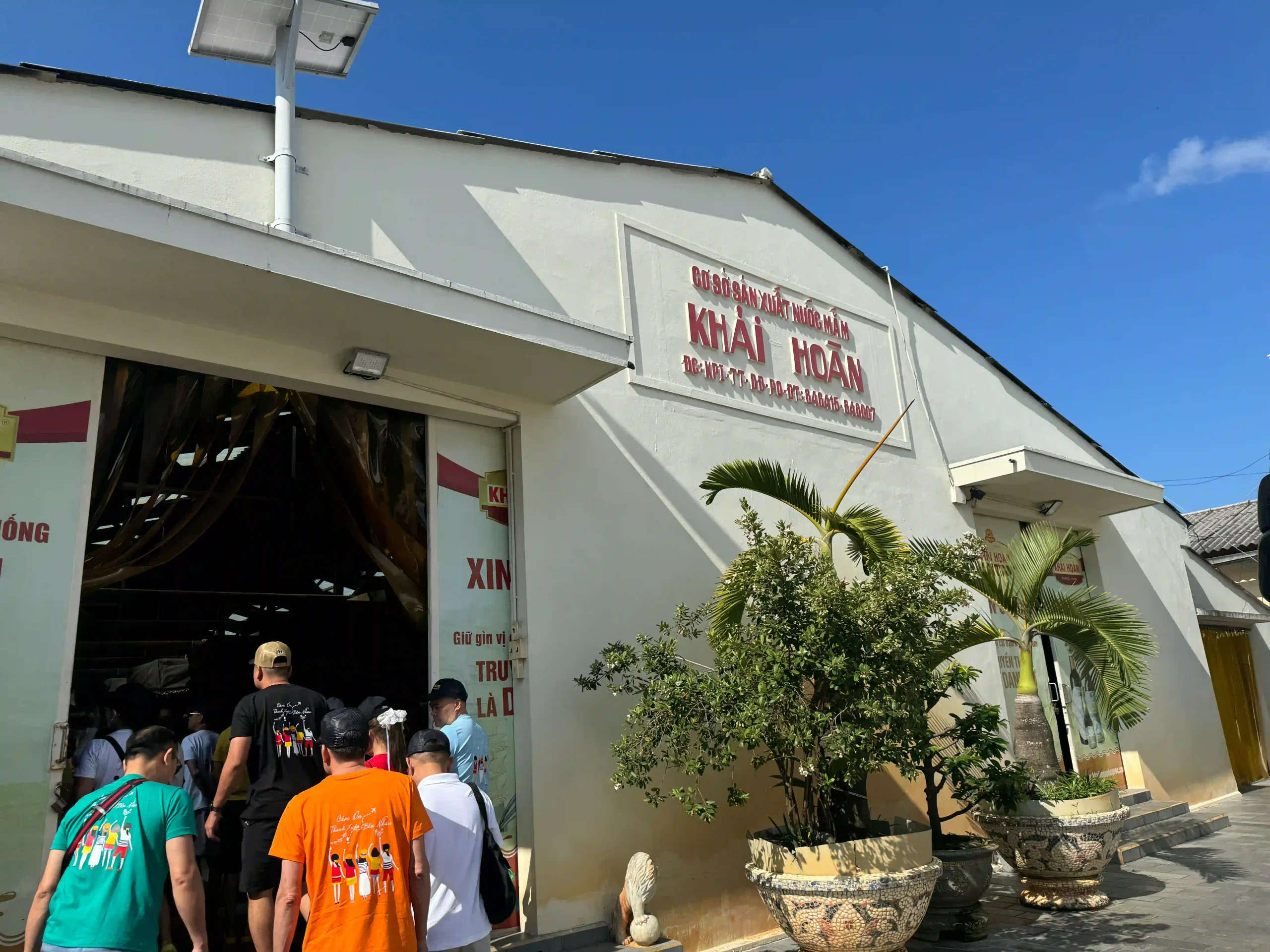
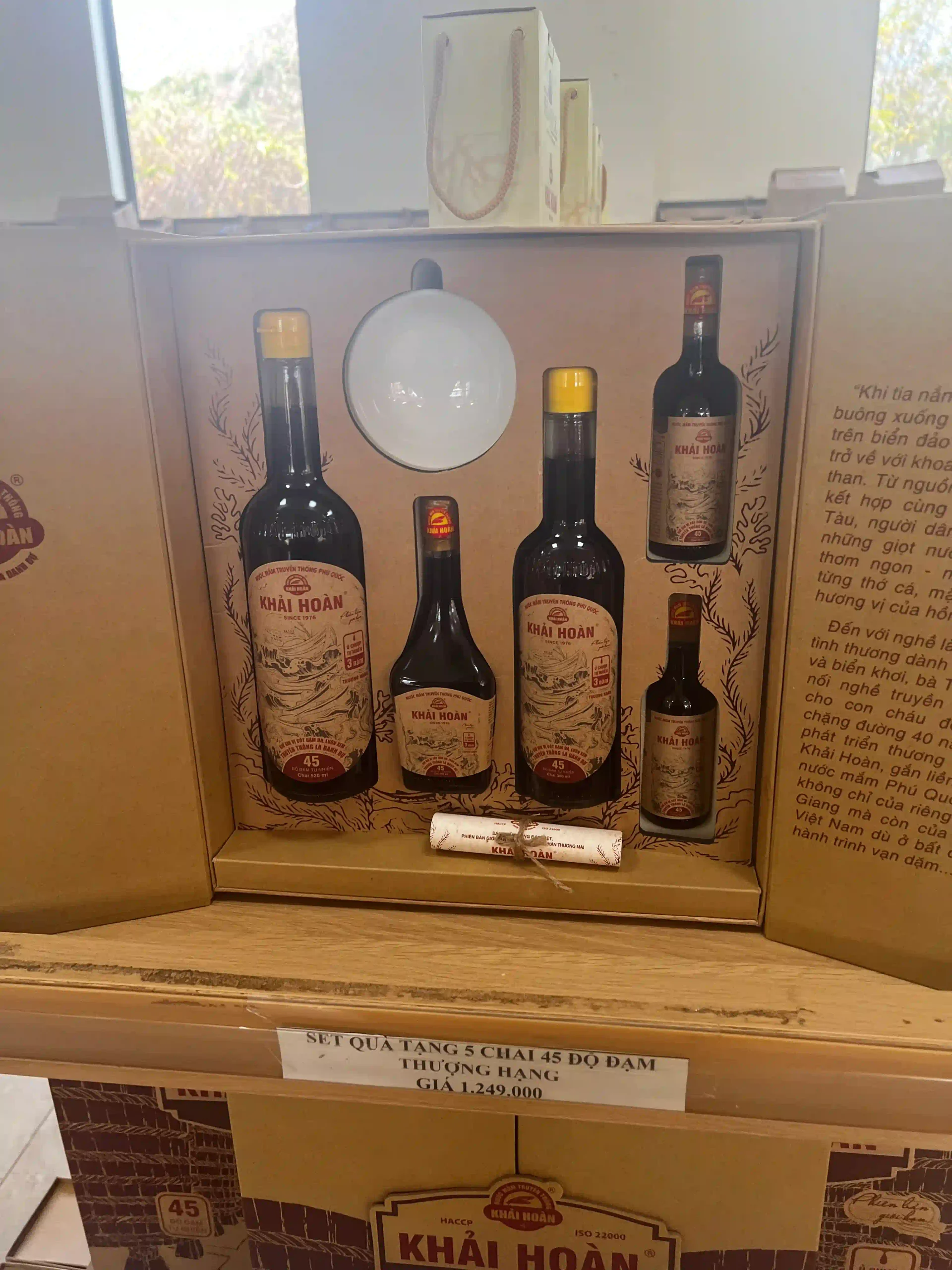
In Duong Dong, Khải Hoàn is the name most people know and the one I’d send a first-timer to. The original barrel house is at 11 Hùng Vương, and there’s a bigger showroom at 289 TL47 with vats behind it, both open 7am to 7pm. At the TL47 showroom you can usually get a 15 to 20-minute walk-through in good English if you ask, without booking, and the tasting there of 43 and 45 degrees side by side is the clearest demonstration of the difference I’ve had anywhere on the island. Staff are used to packing bottles for flights and will explain the rules.
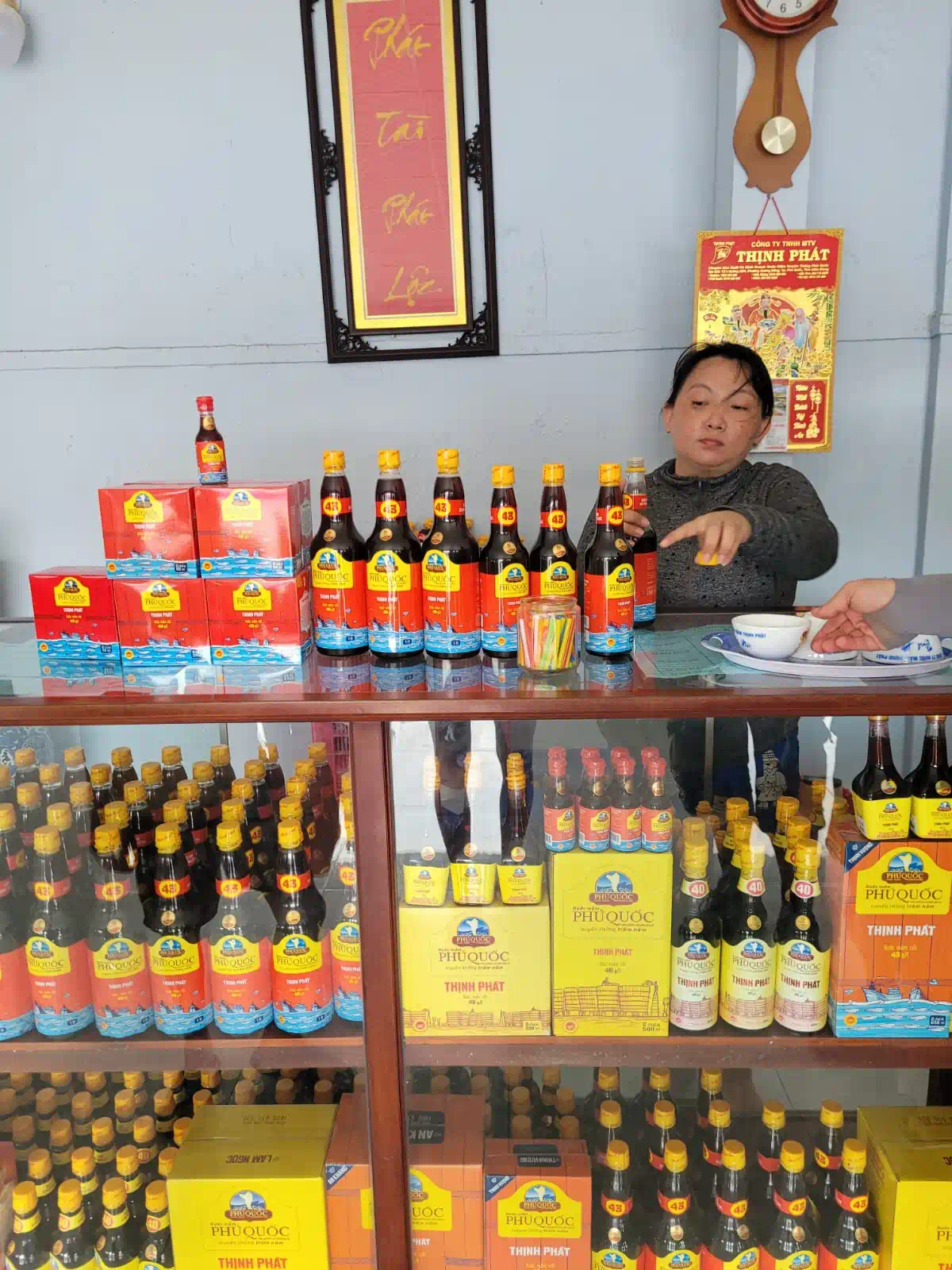
Thịnh Phát, on Đường 30/4 in town, is a small traditional factory where you can wander among the barrels on your own. It sells 40 and 43 degree sauce in different sizes, it’s cash only, and there’s very little explanation. I like it for exactly that reason: it’s a working barrel house with a counter, not a tour.
Thanh Hà, at 11/18 Nguyễn Huệ, is the one I’d point keen cooks to, and where I buy the 40 I cook with. It’s a family producer down a side street that takes a bit of finding, with almost nothing set up for tourists and very good sauce. It closes on Sundays.
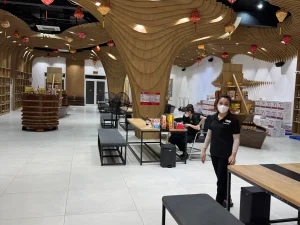
Huỳnh Khoa, on the Duong Dong bypass in Suối Đá, gives a short tour and a free tasting, has a good range of shrimp paste, candies and pepper sauce as well, and packs bottles carefully for luggage. It’s a good choice if you’re buying to fly.
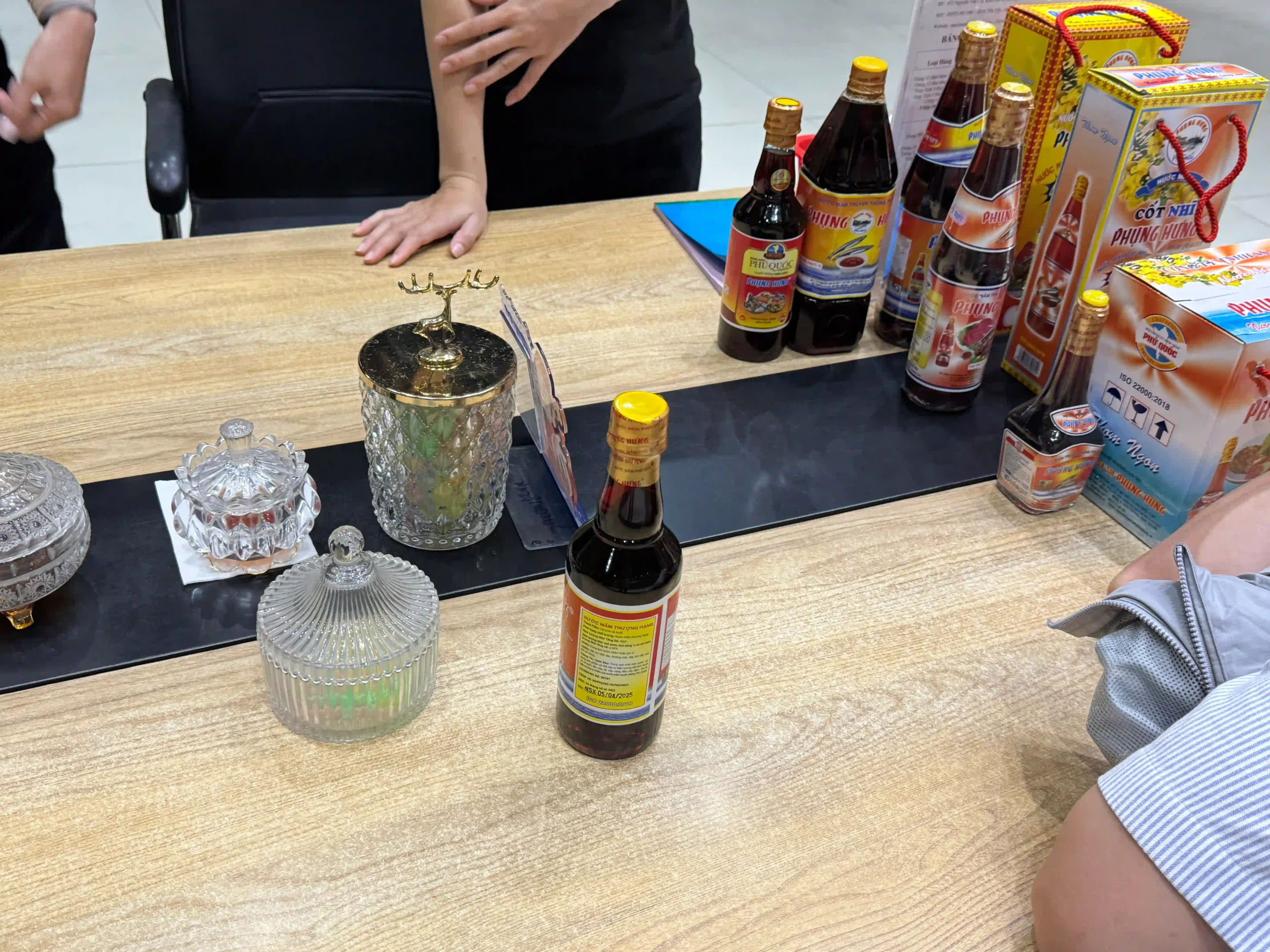
In the south, Phụng Hưng at 471 Nguyễn Văn Cừ in An Thới is where most tours of the south stop. You sit for a short video on how the sauce is made, look at the vats, then taste and shop, and it sells high-grade 45-degree sauce packed for long flights.
Hồng Đức, in Rạch Hàm on the east side, is a large stop set up for groups. Both are fine if your tour takes you there, and I wouldn’t ride out specially for either.
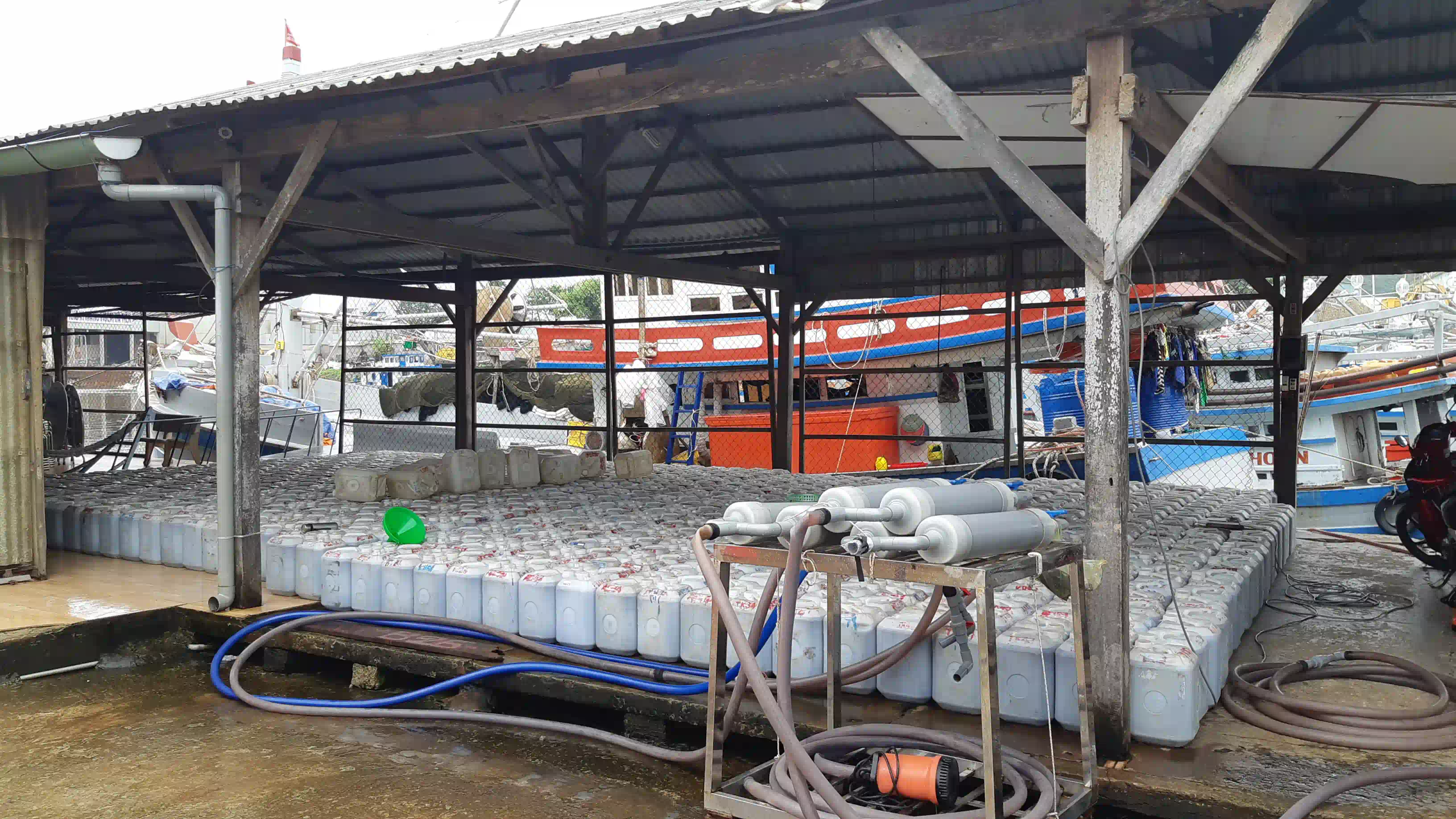
From tourist showrooms to raw, hidden barrel houses
How to Taste Fish Sauce and Read the Label
The number on a bottle of Phu Quoc fish sauce, usually written as 40°N, 43°N or similar, is the protein content, and it’s the main measure of quality. 40 degrees and above is genuine first-quality sauce. 43 and 45 are richer, deeper and saltier. Ordinary supermarket fish sauce is often around 25 degrees, and next to a 40 the difference is immediate.
Higher isn’t always better for every use. A 45-degree sauce is wonderful as a dip with lime and chilli, the way it comes with herring salad here, and a bit much splashed into a pot. For everyday cooking, 40 is the one I use most. For dipping, 43 or 45.
When tasting, I go in order from lowest to highest, and smell before tasting. Good sauce smells of fish and the sea and finishes slightly sweet. Thin, harsh or overly salty sauce that doesn’t fade is the sign of a lower grade or a shorter fermentation. A small bottle at a factory costs around 100,000 VND, and the price climbs with the degree.
40°N for cooking, 43°N+ for dipping
Going on a Tour, or Riding Yourself
Every fish sauce factory in Duong Dong is a short ride from town, and riding yourself means you can choose which one. If you’d rather not ride, most organised tours of the south of the island include a fish sauce stop, usually Phụng Hưng, along with a pepper farm and the beaches down there.
This Sao Beach tour of the south on GetYourGuide is one of them, though it’s worth checking the itinerary on the listing for which factory, if any, is included that day.
If you’re doing a day in the north instead, the pepper farms up near Gành Dầu make a better stop than any of the factories, and Khải Hoàn is easy to add on the way back into town.
Phu Quoc Fish Sauce vs the Bottles Abroad
A lot of what’s sold abroad as “Phu Quoc” fish sauce isn’t from the island. The name was used as a style for years before it was protected, and some well-known brands with Phu Quoc on the label, Flying Lion among them, are made in Thailand. Red Boat, which many people overseas know as the good one, is made on Phu Quoc and sold at 40 degrees.
That’s the real reason I buy here. At a barrel house you know where the sauce came from, you can taste it before you buy, and the degree on the label is the one in the bottle.
Back home in Saigon I can get good Phu Quoc sauce in a supermarket, but outside Vietnam it’s much harder to be sure, and a bottle from the factory is worth more than any of the gift boxes in the shop.
Phu Quoc Fish Sauce Factory FAQ
Is a Phu Quoc fish sauce factory tour free? Yes, almost always. You pay only for what you buy.
What is the best fish sauce factory in Phu Quoc? Khải Hoàn for a tasting with an explanation in English, Thanh Hà or Thịnh Phát for a small traditional barrel house.
How long does a fish sauce factory visit take? 15 to 20 minutes.
How is Phu Quoc fish sauce made? Anchovies and sea salt are layered in large wooden barrels and fermented for 6 to 12 months, and the liquid is drawn from a tap at the bottom.
What does the degree on Phu Quoc fish sauce mean? It’s the protein content. 40 degrees and above is top quality, 43 to 45 is richer.
Can I bring Phu Quoc fish sauce on a plane? Only in checked luggage, in sealed plastic bottles inside a taped styrofoam box, and within your airline’s limit, usually 3 to 4 litres. Never in hand luggage.
Taking Phu Quoc Fish Sauce Home
This is the part to sort out before you buy, because the airport is where people lose their bottles.
Fish sauce is never allowed in hand luggage on any Vietnamese airline, whatever the bottle size. In checked luggage it’s allowed in limited amounts and only if packed properly: plastic bottles, each one taped shut and not completely full, wrapped in plastic and sealed in a styrofoam box with tape.
Vietnam Airlines’ own rules allow up to 3 litres per passenger. VietJet has allowed up to 4 litres on flights out of Phu Quoc, and Bamboo 3. The rules have changed more than once over the years, and some routes and aircraft have refused it entirely, so it’s worth checking with your airline a day or two before flying.
The factories know all this. Most will sell sauce in plastic bottles and pack them in a styrofoam box for you, and at the airport there’s a packing service too, for a fee on top of the checked bag. For international flights, your destination’s customs rules on food apply as well.
If you’re going on to Saigon or Hanoi, the bigger factories will ship it to an address in Vietnam, which is what I do, since a box of fish sauce in my checked bag is one more thing to worry about between Phu Quoc and home.
Help Us Keep It Real 🥰
Vance Derek (Author)
Did you find this guide helpful for your trip? 🤔
Thank you so much! 🥰
Your contribution helps keep our community informed. If you love our authentic guides, please support us on Google! (It only takes 5 seconds) 😊
Got a question or an idea you want to discuss? Start a discussion here to get opinions and connect with other members.
Guest Post
Have a story, valuable experience, or a detailed guide to share? Contribute a high-quality article to enrich our community.
Your Post's Journey
To ensure quality, all new posts are not immediately visible on search engines like Google, Bing... Our team prioritizes reviewing high-value, insightful posts to feature publicly. You'll receive a notification when your contribution is selected!
Report Content
Create Story
×
Wait...
Choose your preferred language for localized experiences:
Table of Contents
Keep exploring
Your best next reads
A few focused next reads, chosen from what you’re viewing now.
Finding the most useful next reads for you…
Your reading trail
Your latest pages, shown in the order you read them.Oldest → newest










 Ha Giang
 Hanoi
Hanoi Ho Chi Minh City
 Ha Long
 Sapa
Sapa Mekong Delta
 Da Nang
 Hue
Hue Hoi An
 Ninh Binh
 Da Lat
 Nha Trang
 Phan Thiet
 Phu Quoc
 Quang Binh
 Quy Nhon
 Vung Tau
 Thai Nguyen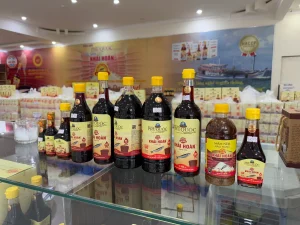













 Tiếng Việt
 한국어
한국어 中文 (中国)
 日本語
日本語 ไทย
ไทย Deutsch
 Español
 Destinations
 Instagram
 Facebook
 X (Twitter)
 Threads
 Tiktok