









 Ha Giang
 Hanoi
Hanoi Ho Chi Minh City
 Ha Long
 Sapa
Sapa Mekong Delta
 Da Nang
 Hue
Hue Hoi An
 Ninh Binh
 Da Lat
 Nha Trang
 Phan Thiet
 Phu Quoc
 Quang Binh
 Quy Nhon
 Vung Tau
 Thai Nguyen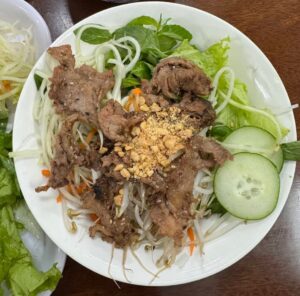
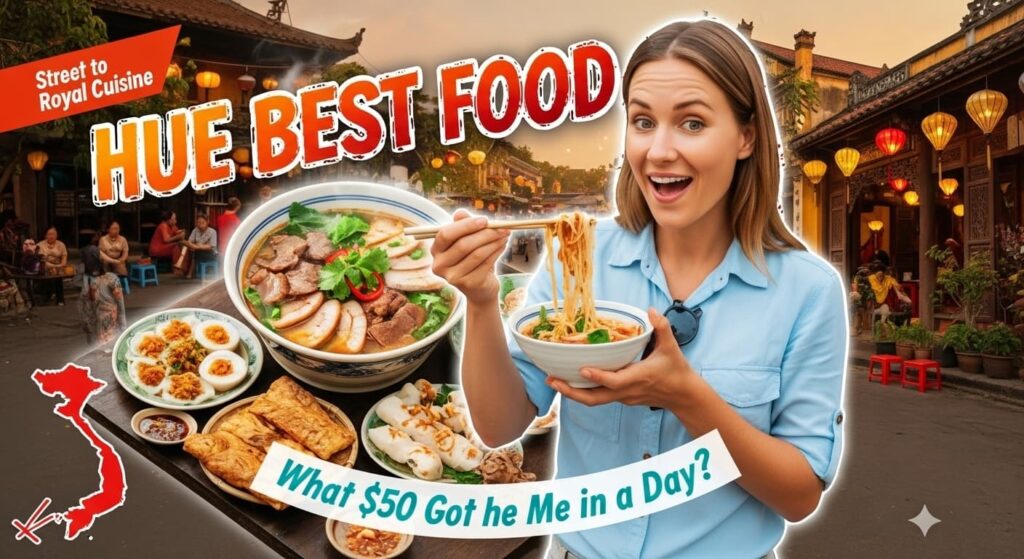

Let’s be clear: Hue is a food city. You don’t come here for the nightlife. You come here to eat.
The city’s past as the imperial capital of the Nguyen Dynasty means the food culture is incredibly deep. Royal standards and complex recipes trickled down from the palace walls right onto the street corner. The result is a city where you can eat like a king for just a few dollars.
I set out with a simple goal: eat the best, most essential things from morning until night on a $50 USD budget (about 1,250,000 VND).
This wasn’t about fine dining. This was about finding the Hue best food where the locals eat, on the plastic stools, in the loud, chaotic, wonderful places that make the city tick.
For those who just want the list, here’s the quick breakdown. This is the entire plan, no fluff.
The Plan & The Scorecard
- Your complete one-day Hue best food guide. Follow our step-by-step street food tour from spicy Bún Bò Huế for breakfast to authentic Cơm Hến at night. This review covers 6 must-try dishes with real addresses, updated prices, and local secrets.
- 1. Breakfast (8 AM): Your day must start with Bún Bò Huế, the city’s famous spicy beef and pork noodle soup—it’s far more robust and complex than Phở. Head to Bún Bò Mệ Kéo at 20 Bạch Đằng for a no-frills, incredibly authentic bowl that locals line up for.
- Cost: 40,000 VND (~$1.60).
- Crucial Tip: This is a breakfast-only spot. Go early (before 10 AM) because they close as soon as they sell out of broth for the day.
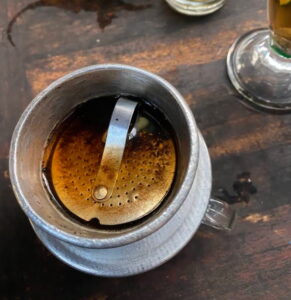
- 2. Mid-Morning (10 AM): Next, try the city’s most unique beverage, Cà Phê Muối (Salt Coffee), which tastes like a rich, creamy salted caramel coffee. Go to the source where the trend started: Cà Phê Muối at 10 Nguyễn Lương Bằng. It’s not a fancy cafe, just a classic Vietnamese coffee shop serving the real deal.
- Cost: 25,000 VND (~$1.00).
- How to Drink It: Let the strong coffee drip through the phin filter into the salted cream, give it a quick stir, and enjoy over ice.
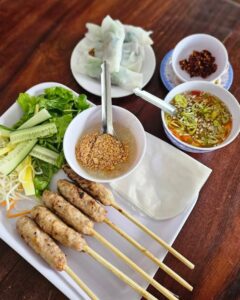
- 3. Lunch (1 PM) To taste Hue’s imperial heritage, head to Quán Hạnh at 11 Phó Đức Chính for a platter of the city’s famous bánh (small rice and tapioca dumplings).
- The Smart Move: Order the thập cẩm (mixed) platter to sample everything at once, including Bánh Bèo, Bánh Nậm, Bánh Lọc, the crispy Bánh Khoái pancake, and the hands-on Nem Lụi pork skewers you roll yourself in rice paper with herbs.
- Cost: Around 150,000 VND (~$6.00) for a big platter that’s more of an activity than just a meal.
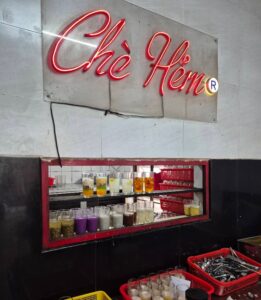
- 4. Afternoon Snack (4 PM): For a sweet and refreshing break, find the legendary dessert spot Chè Hẻm (“Alley Dessert”) at 1 Kiệt 29 Hùng Vương. It’s a dizzying array of over a dozen Vietnamese sweet soups and puddings (Chè).
- Easy Ordering Tip: If you’re overwhelmed by choice, just ask for Chè Thập Cẩm, a mixed glass with a little bit of everything, topped with crushed ice and coconut cream.
- Cost: A ridiculously cheap 15,000 VND (~$0.60).
- 5. Dinner (7 PM): For a smoky, interactive dinner, take a short ride out of the center to Bún Thịt Nướng Huyền Anh at 52/1 Kim Long. This packed, buzzing local institution specializes in two things you should get: Bún Thịt Nướng (a bowl of rice noodles and grilled pork) and more Nem Lụi, where you roll your own pork skewers in rice paper with a huge plate of fresh herbs.
- Cost: About 120,000 VND (~$4.80) for a very filling meal.
- Pro Tip: Plan your transport (like a Grab) as it’s not in the main tourist area; the journey is part of the adventure.
- 6. Late-Night Bite (9 PM): End your day with Cơm Hến (Baby Clam Rice), a humble but powerfully flavored dish unique to Hue. Go to a hyper-local spot like Cơm Hến Hoa Đông at 64 Kiệt 7 Ưng Bình for the real thing. It’s a mix of cool rice, tiny clams, pork cracklings, peanuts, and a very pungent fermented shrimp paste.
- Cost: 20,000 VND (~$0.80).
- Important Advice: The fermented shrimp paste (mắm ruốc) is incredibly strong. If you’re unsure, ask for it on the side (“mắm ruốc để riêng”) so you can control the funk level yourself.
The Breakfast: Bún Bò Huế
You start the day with Bún Bò Huế. There’s no other way. This isn’t like the gentle phở you find elsewhere in Vietnam.
It’s a heavyweight soup—spicy, rich, and intensely fragrant with lemongrass and the funky, necessary kick of fermented shrimp paste. It is what Hue is known for.
You don’t want a clean, tourist version of this. You need to go where people are slurping it down on their way to work, where the tables are metal and the broth has been simmering for hours.
My pick was Bún Bò Mệ Kéo at 20 Bạch Đằng. The place is named after the old woman who used to carry the entire stall around on a bamboo pole. Now it’s a fixed storefront near the river, but it has that same raw, functional feel.


There’s no menu. Don’t look for one. You sit down on a low plastic stool, and someone will come over. Just hold up your fingers for how many bowls you want. That’s the entire ordering process.
A few minutes later, you get a serious bowl of soup. The broth is a deep, glistening red from chili oil. Inside the broth, you’ll find thick, round rice noodles, tender slices of beef shank, a big pork knuckle, and a cube of congealed pig’s blood (huyết).
The pig’s blood sounds intimidating, but it’s an essential part of the authentic Hue cuisine. It has a mild, savory taste and a texture like firm tofu. If you’re truly not up for it, you can try asking for “không huyết,” but it’s worth trying at least once.
The taste is immediate and complex. Lemongrass hits first, then the deep, warming chili heat, and finally the unmistakable salty, umami flavor of shrimp paste.
On every table is a communal plate of shredded banana blossom, mint, and bean sprouts. Grab a handful and shove it into your bowl. It wilts slightly in the hot broth and adds freshness and a great crunchy texture that cuts through the richness of the meat.
There’s also usually a little pot of extra chili paste on the table for people who want to take the heat to another level.
A bowl is 40,000 VND. An absolute steal. Just get there before 10 AM, seriously. This is a working person’s breakfast, not a tourist brunch. They open at dawn and they close when the giant pot of broth is empty.
The Coffee Break: Salt Coffee
After the intense flavors of bún bò, a coffee break is in order. Specifically, Cà Phê Muối, or Salt Coffee. It’s a genuine Hue invention that has started to spread to other cities, but you need to try it at the source.
The place to get it is the original shop that started the whole trend, located at 10 Nguyễn Lương Bằng.
Again, don’t expect a modern cafe. It’s a classic, open-front Vietnamese coffee shop, a place for a quick drink and a chat, not for settling in with a laptop.


Here’s the process:
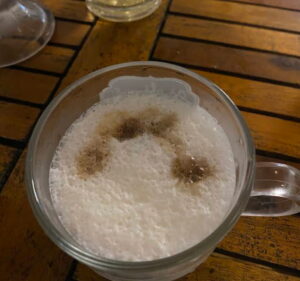
First, they put a thick, creamy, slightly salty foam in the bottom of a glass. I believe it’s a mix with condensed milk and a touch of salt.
Then they place a traditional phin filter on top and let the dark, strong Robusta coffee slowly drip down into it. They give it a quick stir and pour the whole thing over ice.
The result is surprisingly brilliant. The salt doesn’t make the coffee taste salty. Instead, it balances the sweetness of the condensed milk and cuts the natural bitterness of the robusta coffee beans.
The effect is similar to salted caramel, but in coffee form. It’s rich, creamy, and deeply satisfying. This is a definitive must try food in Hue—or drink, in this case—and for only 25,000 VND, there’s no excuse not to. The Hue food prices for everyday things like this make experimenting easy.
The Lunch: All The Bánh
Lunch is the time to dive into Hue’s royal past, but on a street level. The old Nguyen emperors were famously picky, demanding dozens of small, beautiful, and flavorful dishes at every meal.
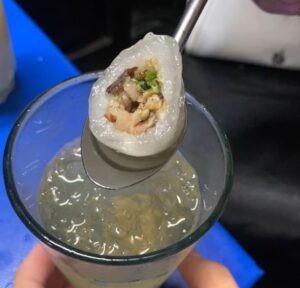
That tradition lives on as bánh, a massive category of little steamed dumplings and cakes made mostly from rice or tapioca flour.
A great, reliable place to sample these is Quán Hạnh at 11 Phó Đức Chính. It’s always busy, a well-oiled machine packed with both locals and clued-in travelers.
It strikes that perfect balance between authentic flavor and being just accessible enough for visitors. The move here is simple: order the big mixed platter, the thập cẩm.
You get to try everything without the stress of deciphering a long menu. For about 150,000 VND, a huge tray covered in food arrives.
Here’s a more detailed breakdown of what’s on it, and how to eat it:
- Bánh Bèo: Tiny steamed rice flour saucers with bright orange dried shrimp powder and crispy pork skin on top. They’re served in the little ceramic dishes they were steamed in. You get a bottle of light, sweet-and-savory fish sauce. Drizzle it over the tops and then use the special spoon (it’s shaped like a little paddle) to scrape the cake from the dish.
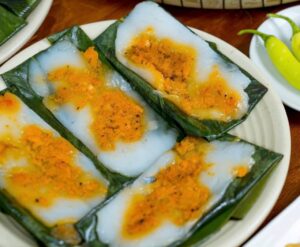
- Bánh Nậm: A flat, rectangular rice dumpling with a thin layer of minced pork and shrimp, steamed inside a banana leaf. You have to unwrap it like a present. The aroma of the banana leaf is part of the experience. It’s soft and delicate.
- Bánh Lọc: A chewy, clear-looking tapioca dumpling. Inside is a single whole shrimp (with the shell on for flavor and crunch) and a small piece of fatty pork. This one also comes wrapped in a banana leaf. The texture is the main attraction here – a fun, bouncy chewiness.
- Bánh Khoái: A small, thick, and very crispy pancake. It’s bright yellow from turmeric powder in the batter and is folded over pork, shrimp, and bean sprouts. This is served with a plate of fresh greens and the star of the show: a thick, savory, orange peanut-based dipping sauce called nước lèo. This is much heartier than the other bánh.
- Nem Lụi: Grilled pork skewers molded around lemongrass stalks. This is the interactive part. You get dry rice paper, a plate of herbs, and the pork. Here’s the technique: 1) Dip the rice paper in the bowl of water for a second until it’s pliable. 2) Lay it flat on your plate. 3) Add some herbs (lettuce, mint, etc.). 4) Take the pork off the lemongrass skewer and place it on top. 5) Roll it up tightly like a small burrito. 6) Dip the entire roll into that amazing peanut sauce.


This is not a quick lunch, it’s an activity. It perfectly represents the Hue ancient capital food tradition—complex, beautiful, and interactive.
The Afternoon Snack: Chè Hẻm
Sometime mid-afternoon, when the heat is peaking, you’ll want something sweet and cold. In Hue, that’s chè. This isn’t a single dessert; it’s a whole universe of sweet soups, puddings, and jellies.
The most famous spot is Chè Hẻm. The name literally means “Alley Dessert,” and that is exactly what it is.
You walk down the main street of Hùng Vương and look for a small sign at alley number 1 Kiệt 29. You turn into this tiny opening, and it leads to a little courtyard where a woman presides over about twenty big metal pots, each filled with a different colorful sweet.
It’s a dizzying display. You can try to ask for specific types, but the easiest thing to do is just point at a few that look interesting, or order the mix, the Chè Thập Cẩm.
The vendor will expertly ladle small scoops from various vats into a glass—you’ll get things like chewy tapioca pearls, soft taro paste, sweet corn, mung beans, and colorful jellies—then she’ll heap crushed ice on top and finish it with a generous pour of rich coconut cream.


It’s fantastic. It’s refreshing, not overly sugary. Every spoonful offers a different combination of textures—the chewiness of the tapioca against the soft, starchy taro paste is a highlight.
It’s fun to eat and it costs next to nothing, about 15,000 VND a glass. This experience is the definition of a great find on a self-guided Hue street food tour.
The Dinner: Grilled Pork & Rice Paper
As evening settles, the city smells like charcoal smoke. It’s time for grilled meat. For dinner, the mission is to head a little bit out of the main city center to Bún Thịt Nướng Huyền Anh at 52/1 Kim Long.


It’s not a simple walk from the tourist center, you’ll need a Grab or a scooter. The short ride is part of the adventure and gets you into a real local neighborhood.
The place itself is a big, open-air restaurant on a small hill, and it’s constantly packed and buzzing. The air is thick with grill smoke.
Don’t expect quiet conversation. You’re here for two dishes, and you should get both: Bún Thịt Nướng and Nem Lụi.
The Bún Thịt Nướng is a composed noodle bowl. You get fresh herbs and vegetables on the bottom, a layer of rice vermicelli noodles, then a generous topping of smoky, slightly sweet chargrilled pork, roasted peanuts, and crispy fried shallots.
It’s served with a bowl of that same rich nước lèo peanut sauce. You pour the sauce over everything, mix it all together, and dive in.
The Nem Lụi is what they’re famous for. It’s the same grilled pork on lemongrass skewers from lunch, but here it’s the main event.
It’s served hotter, fresher, and with a bigger pile of herbs and greens. You do the same self-assembly process with the rice paper, but here you perfect your rolling technique.
The combination of the hot, fatty, smoky pork with the massive amount of fresh, cool, zesty herbs (lettuce, mint, perilla leaves, shredded green mango and starfruit) is the perfect balance.
This hands-on, slightly messy meal is a core Vietnamese dining experience and a highlight of the Hue best food scene.
The Late Night Bite: Clam Rice
There’s still room for one more dish. It’s a humble, gritty dish called Cơm Hến, or Clam Rice. It’s made with tiny basket clams (hến) harvested from the Perfume River, and it has a unique flavor profile you won’t find anywhere else.
A great place to try it is deep in a web of alleys at Cơm Hến Hoa Đông (64 Kiệt 7 Ưng Bình) on Cồn Hến island.
This place is as local as it gets. The dish is a shock to the system, in a good way. You get a bowl of cool rice topped with a mountain of ingredients: tiny stir-fried clams, crispy pork cracklings, fried peanuts, shredded green mango, starfruit, bean sprouts, and herbs.
On the side is a bowl of hot, salty clam broth. But the key ingredient, the soul of the dish, is a pungent fermented shrimp paste called mắm ruốc. It is intensely funky.


You mix everything in the bowl together. The flavor is a storm: it’s briny, sour, spicy, nutty, and savory all at once. The textures are just as varied.
You can also get it with noodles instead of rice—either Bún Hến (vermicelli) or Mì Hến (instant noodles). It is a powerful taste that is pure Hue.
If you’re worried about the shrimp paste, ask for it on the side (mắm ruốc để riêng) so you can add it to your own taste. For just 20,000 VND, it’s an unforgettable way to end the day.
Final Thoughts
The final damage for the entire day was about 370,000 VND, which is less than $15. The $50 budget wasn’t just met, it was crushed. I could have eaten like this for three full days on that budget.
What could you do with the leftover $35? You could easily get a few beers at a rooftop bar overlooking the river, take a dragon boat trip, or just fund another entire day of eating to try the things you missed, like Bánh Canh (thick noodle soup) or Nem Chua (fermented pork sausage).
The main takeaway is that the best food in Hue is cheap, unpretentious, and served without any fuss. You don’t need reservations or fancy clothes. You just need an empty stomach and a willingness to sit on a plastic stool in a noisy alley. That’s where you’ll find the real, delicious soul of Vietnam’s former imperial capital.












 Tiếng Việt
 한국어
한국어 中文 (中国)
 日本語
日本語 ไทย
ไทย Deutsch
 Español
 Destinations
 Instagram
 Facebook
 X (Twitter)
 Threads
 Tiktok