









 Ha Giang
 Hanoi
Hanoi Ho Chi Minh City
 Ha Long
 Sapa
Sapa Mekong Delta
 Da Nang
 Hue
Hue Hoi An
 Ninh Binh
 Da Lat
 Nha Trang
 Phan Thiet
 Phu Quoc
 Quang Binh
 Quy Nhon
 Vung Tau
 Thai Nguyen
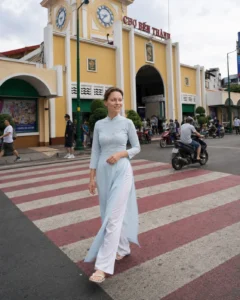
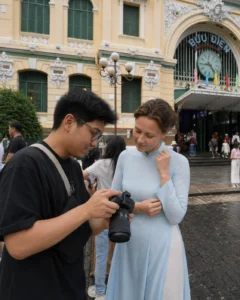
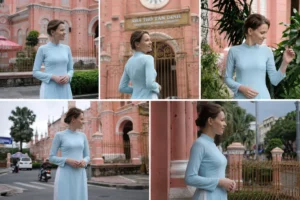
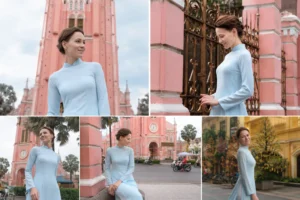
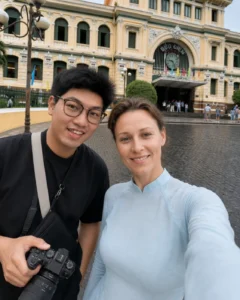



Half the photos you see on Instagram from Saigon are from an ao dai photo tour. Someone in a silk dress standing in front of the pink church, or the yellow columns of the Central Post Office, or the wrought iron gates of the Notre-Dame Cathedral. The photos are beautiful and the locations are genuinely photogenic, which is why the format keeps working.
But the promotional photos from tour operators tend to show the polished end of what these tours produce, and if you go in expecting a professional editorial shoot you’ll probably be surprised by what you actually get.
What you’re buying is a cultural experience with photos attached. The dress, the locations, the afternoon walking around the most photogenic parts of District 1 and District 3, and a guide-photographer who’s there to make sure you get good shots without it feeling like a full fashion production. That’s the deal.
Once you understand that, the ao dai photo tour in Ho Chi Minh City is one of the more enjoyable half-days you can spend in the city.
- Quick Answer: An ao dai photo tour in Ho Chi Minh City is a 3-hour experience that includes ao dai rental, a photographer-guide, and visits to 4-5 iconic Saigon locations. You end up with a few hundred candid and semi-posed photos in soft copy. Cost is typically $30-60 per person depending on the operator and any upgrades. Not a professional fashion shoot, but genuinely fun and the photos are usually better than people expect.
- What’s included:
- Ao dai rental for the duration of the tour
- Professional stylist assistance for fitting and selection
- Photographer-guide for the full 3 hours
- Soft copy of all edited photos sent after the tour
- Hair styling at some operators (check before booking)
- What’s NOT included:
- Tips for photographer (expected, budget 100,000-200,000 VND)
- Transport to starting location (take a Grab)
- Anything to drink (you’ll want water, buy it)
- Locations typically covered:
- Duration and pricing:
- 3 hours is standard
- $30-45 budget tours, $45-60 for more curated operators
- Who should do it:
- Anyone curious about wearing a traditional Vietnamese ao dai in an authentic setting
- Solo travelers, couples, small groups of friends
- People who want photos from their Saigon trip that aren’t just selfies in front of landmarks
- Kids do this too and the photos are usually great
The Fitting
The tour starts at the ao dai rental store. Most operators use a shop in the Tan Dinh area of District 1, often on or near Dinh Cong Trang Street. The Ao Dai Thuy Loan store at 325 Hai Ba Trung is the common starting points, and there’s also a second-floor space at 80 Dinh Cong Trang that some operators use. Get there by Grab, it’s 5-10 minutes from most central District 1 hotels.
The fitting itself takes maybe 20-30 minutes. A stylist helps you choose from a wall of ao dai in different colors, lengths, and styles. There are usually dozens to pick from, often over a hundred.
Traditional ao dai are fitted and floor-length. Modern interpretations sometimes come shorter. The traditional silk versions look better in photos, though they’re less comfortable in Saigon’s heat. The stylist will have opinions about what works for your coloring and frame, and those opinions are worth listening to.
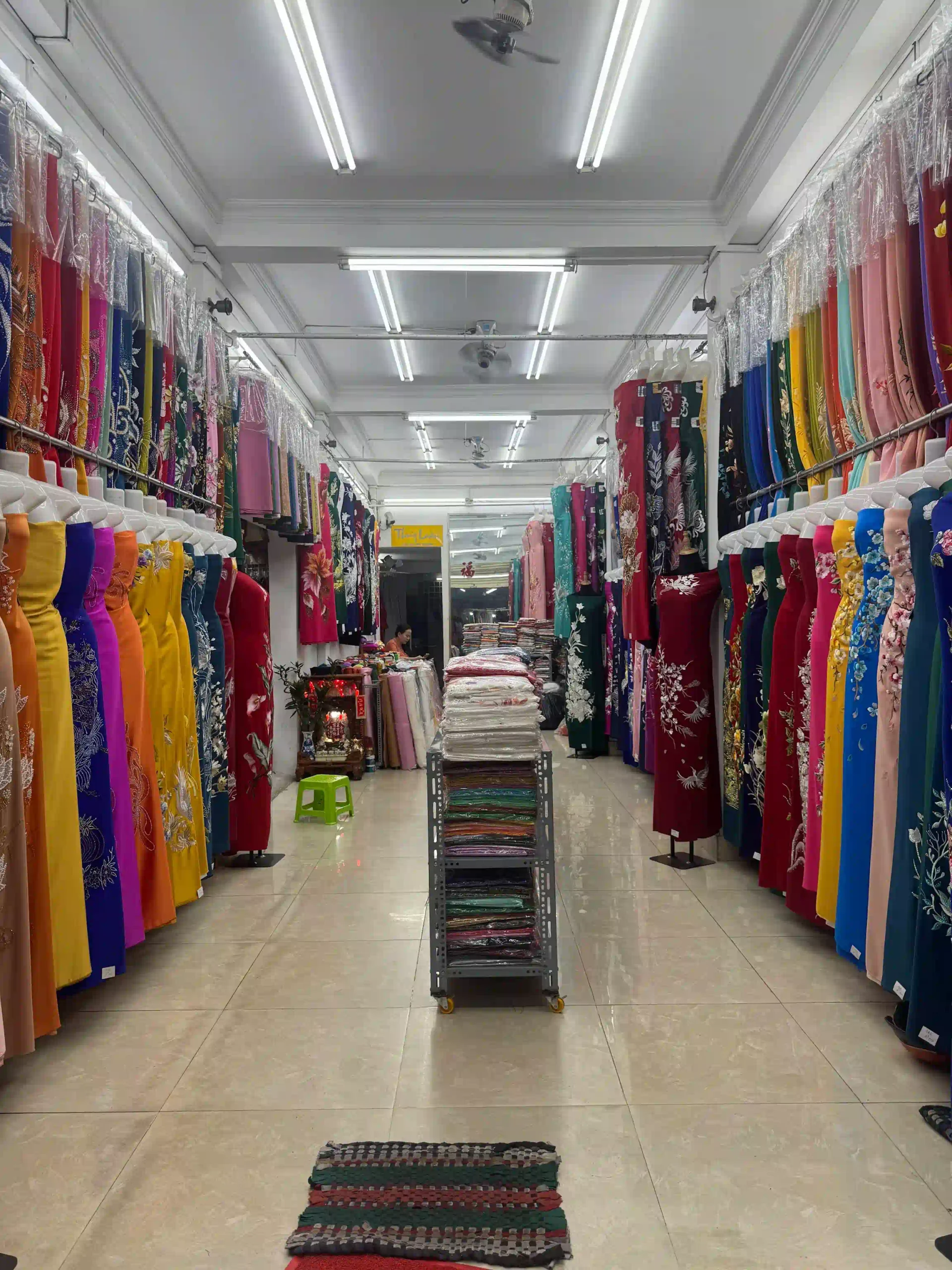
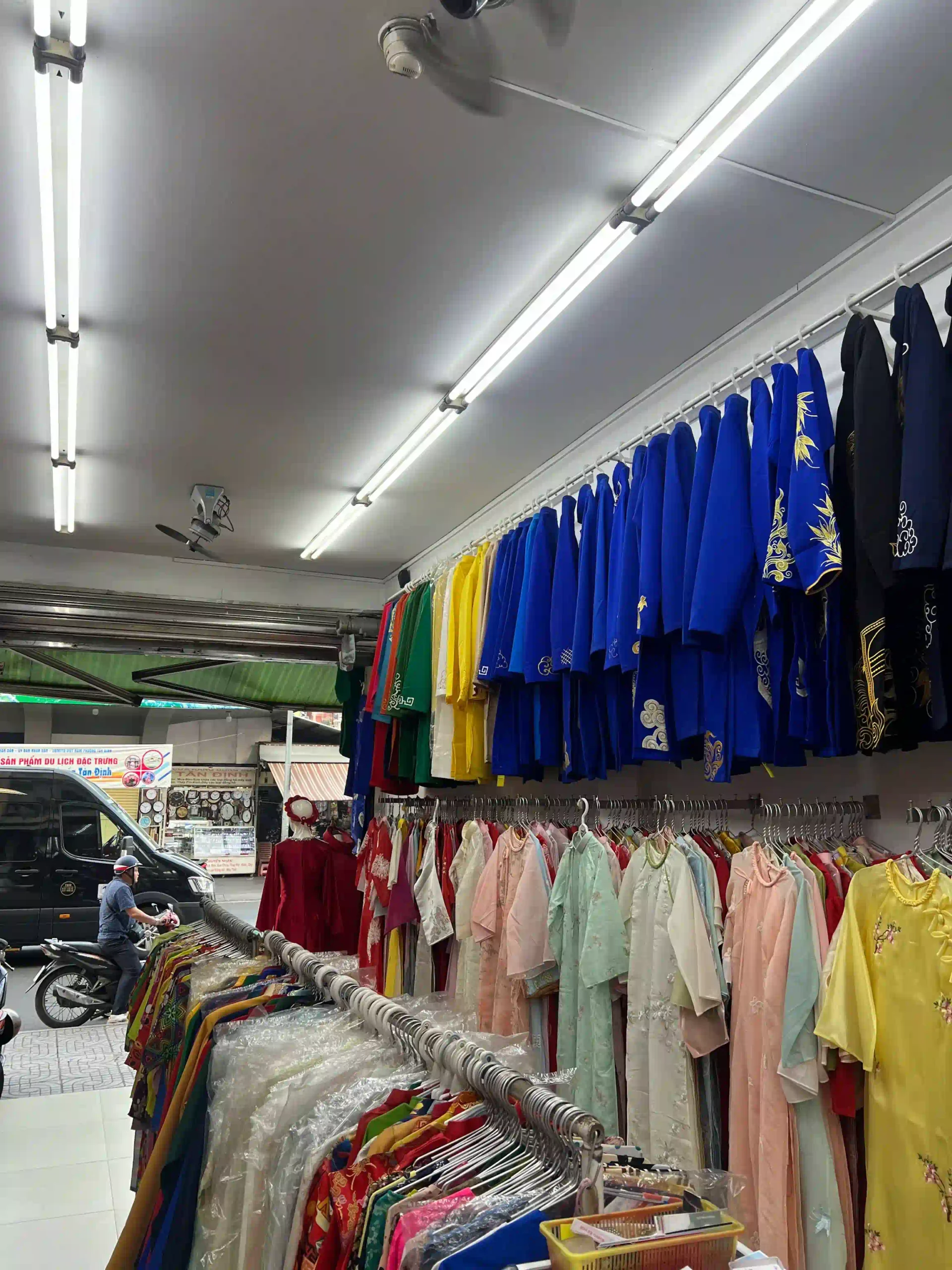
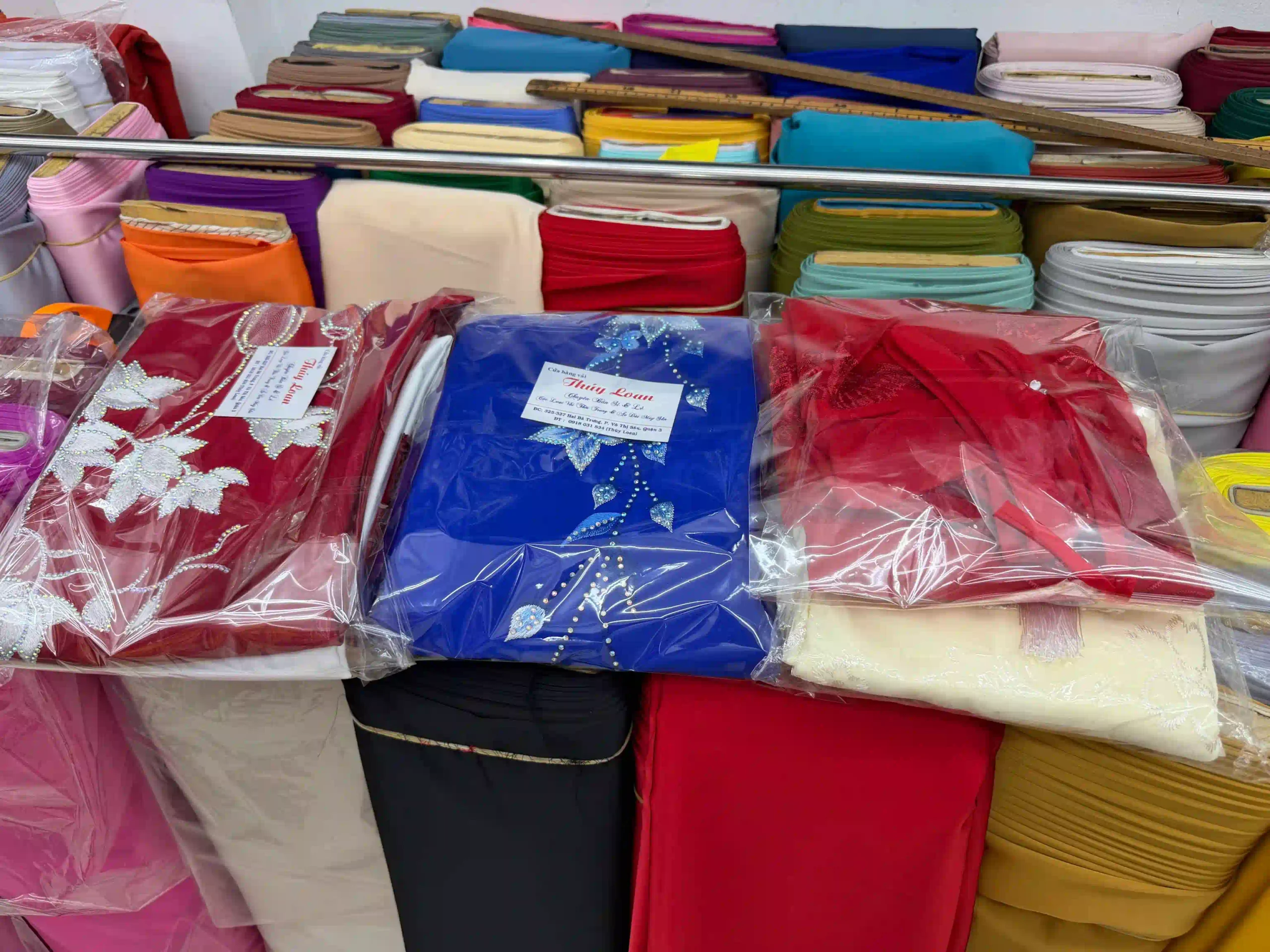
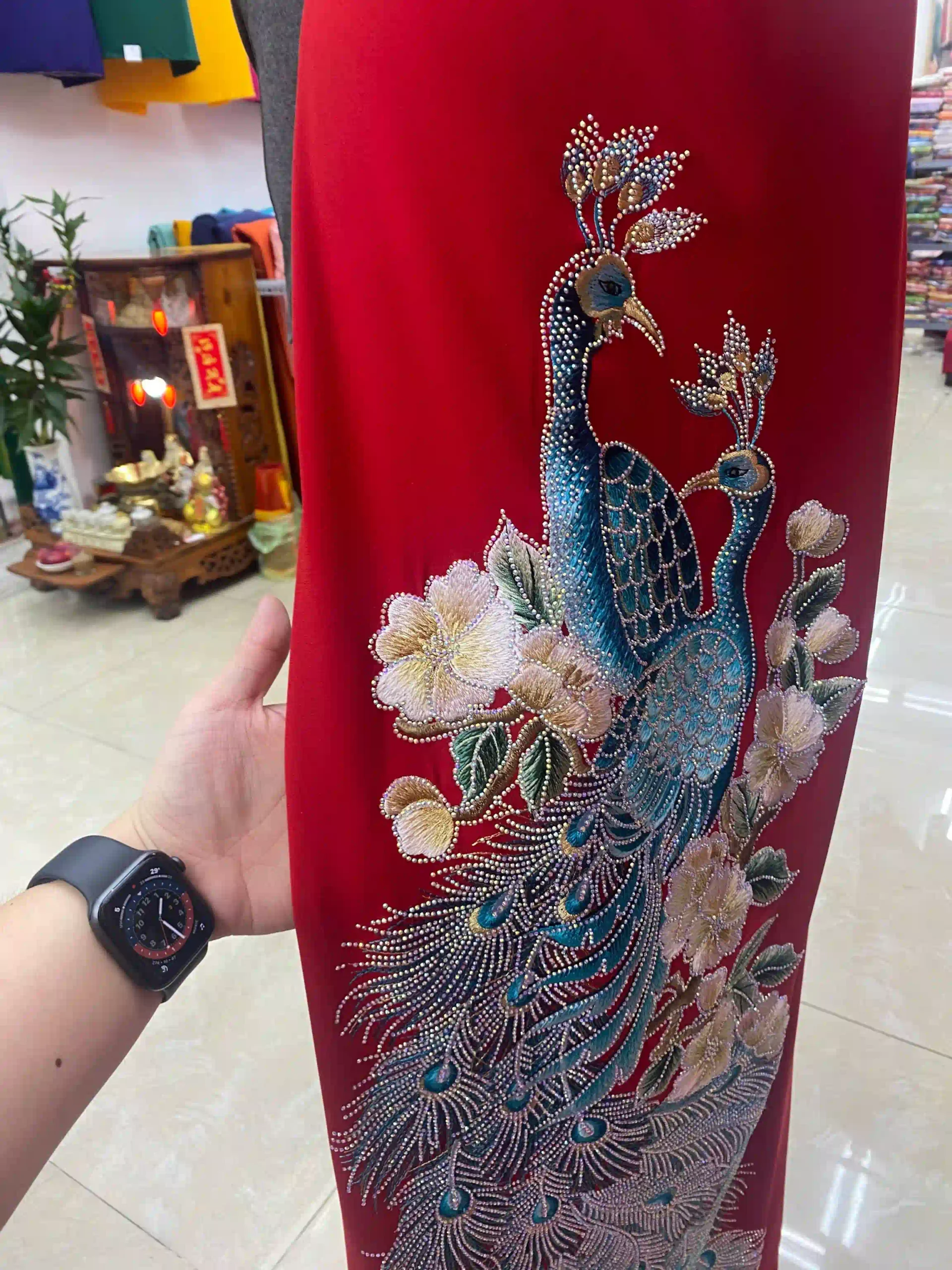
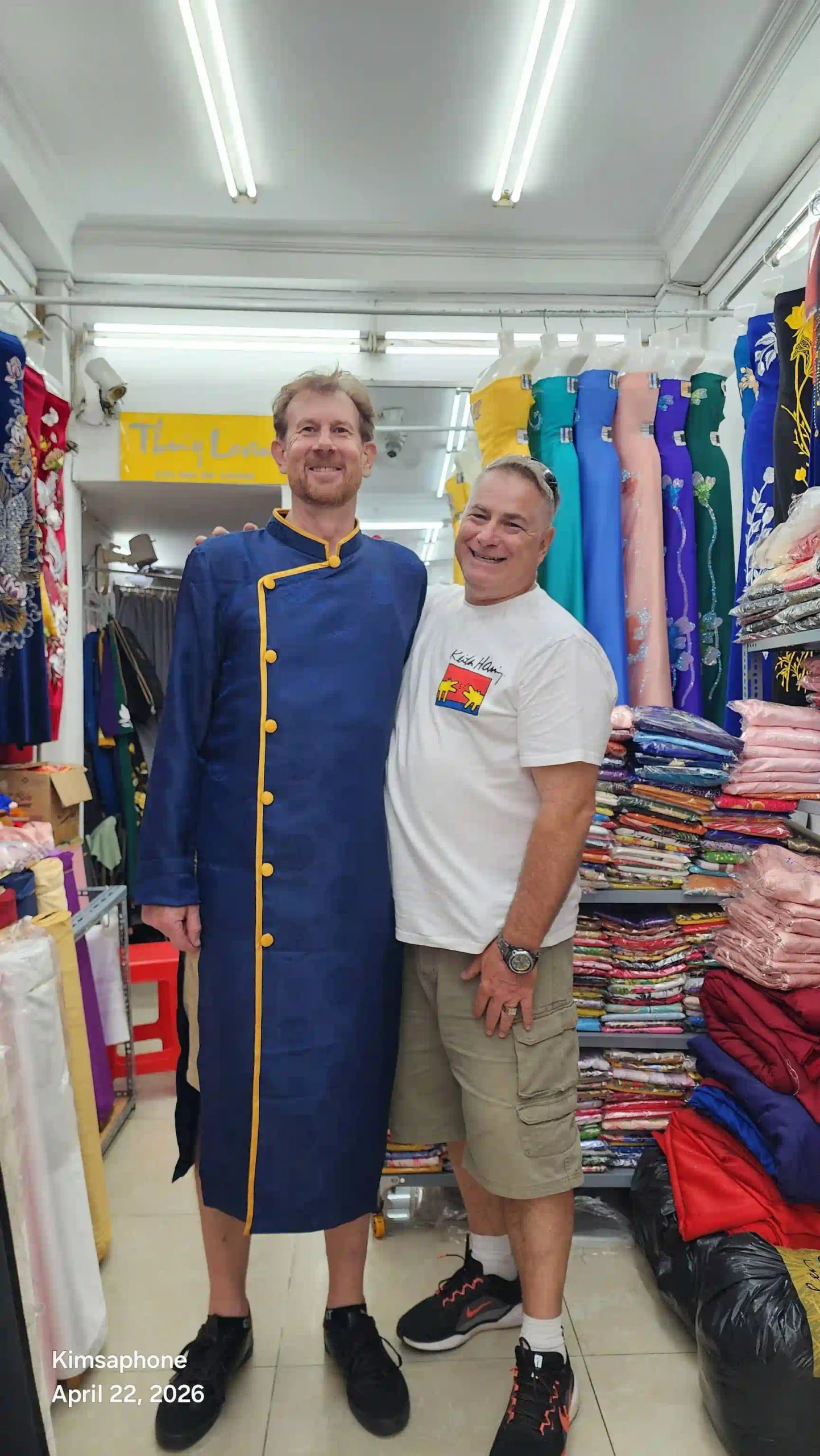
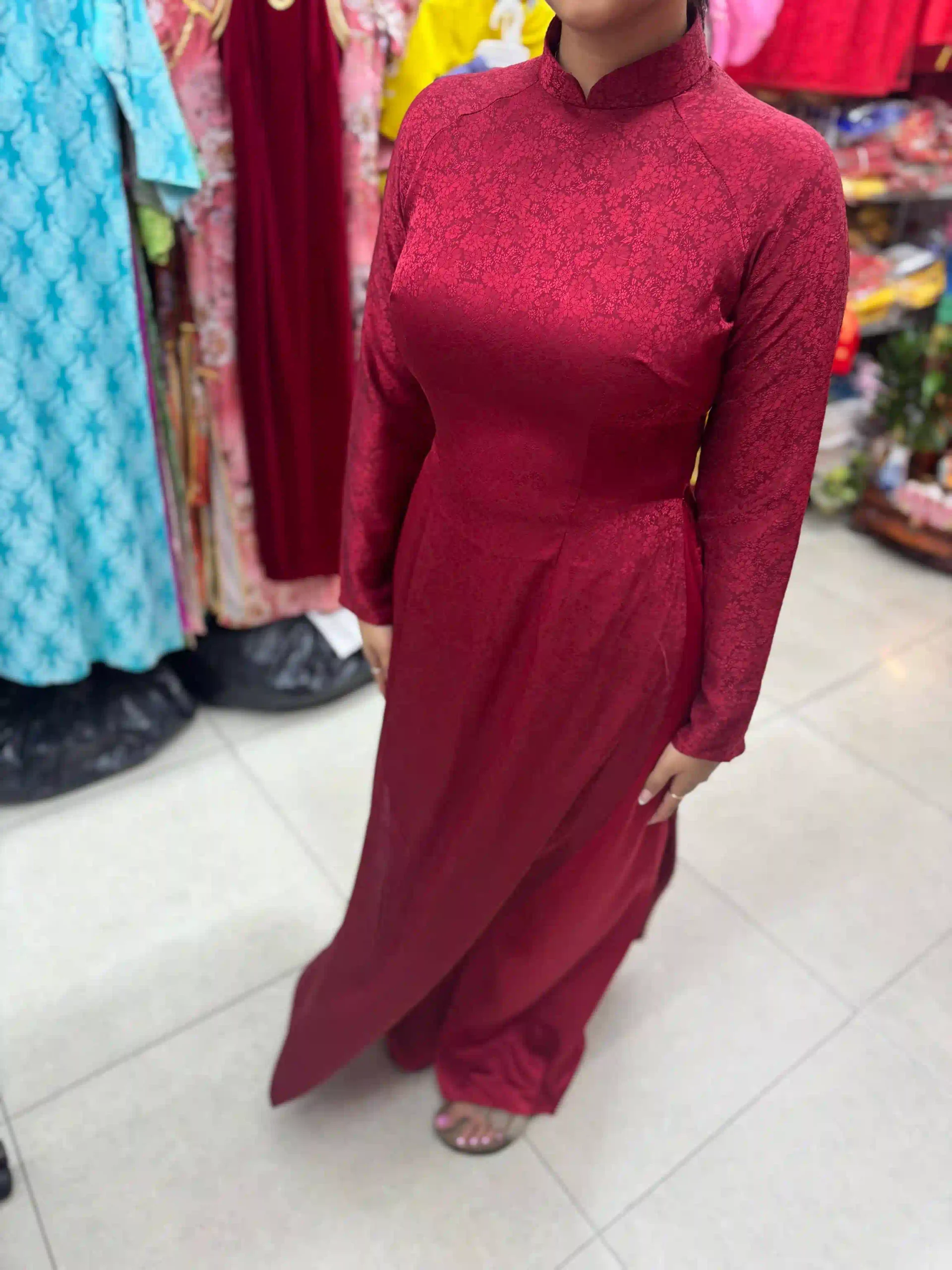
Here’s something worth knowing: if you have a specific color in mind, it’s fine to say so, but some of the less obvious colors photograph better than you’d think. A dusty pink or a pale green can do things in front of the yellow Post Office facade that a bright red doesn’t. The photographer-guide will also have thoughts on this if you ask, since they’ve seen what works at each location.
Hair pins, accessories, and sometimes a non (conical hat) come with the outfit and are handed to you at the shop. A few operators include light hair styling. If that’s important to you, check before you book.
You change at the shop, leave your regular clothes in a locker, and head out.
The Locations
The standard ao dai photo tour in Ho Chi Minh City hits 4-5 locations. The route varies slightly by operator but the core Saigon landmarks come up every time. Here’s what each location actually gives you:
Tan Dinh Church (Pink Church)
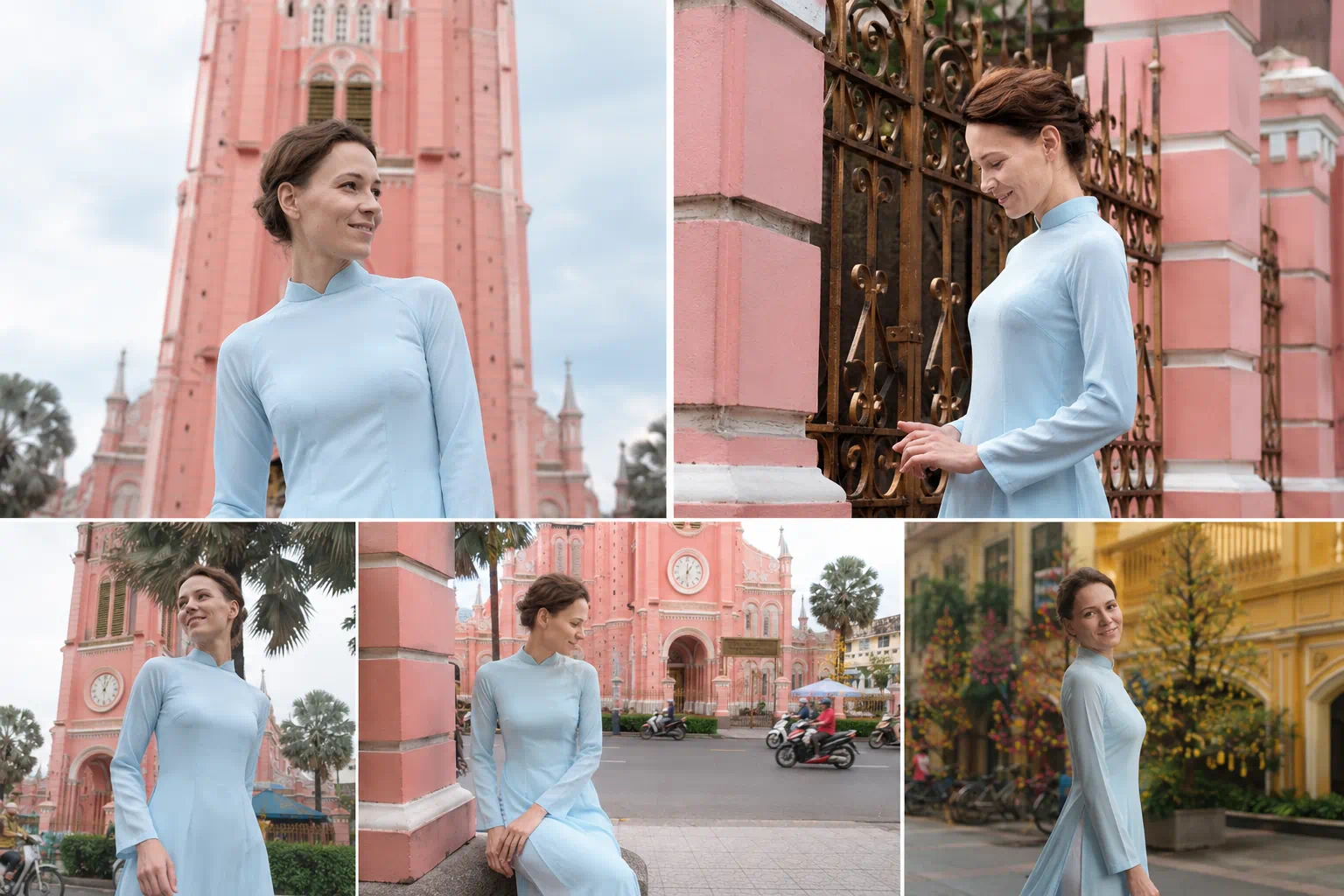
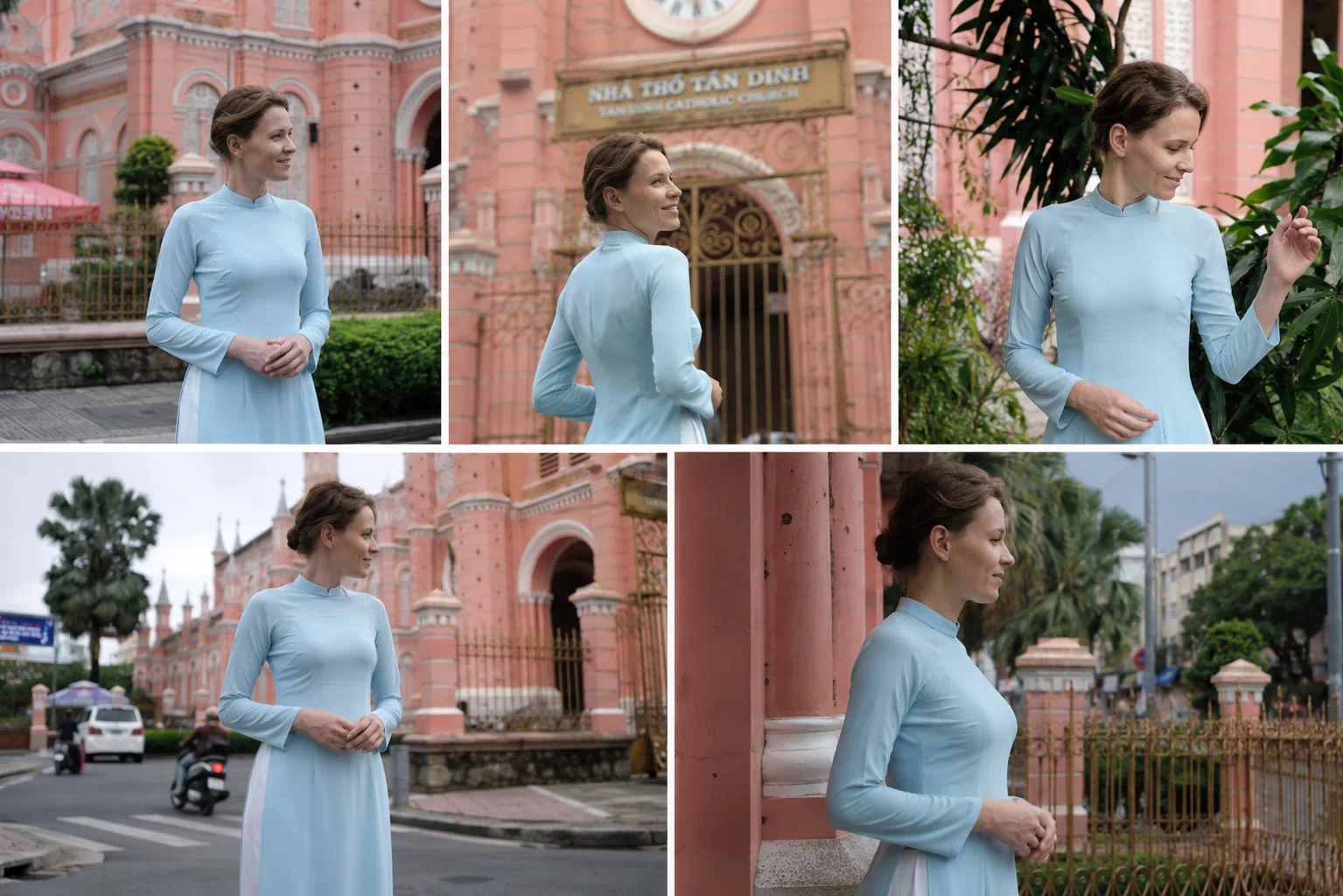
This is in District 3, on Hai Ba Trung Street. It’s actually pink, the photos aren’t filtered, and the color is as intense in real life as it looks online. The best shots here are in front of the facade between the two towers, or along the side walls.
It’s a functioning church, which means there are tourists and locals coming in and out constantly, and the ao dai photo tour approach is to work around them rather than wait for an empty frame. The candid energy of people walking past while you’re in frame often makes the photos more interesting, not less.
Morning light hits the front facade well. If your tour starts early enough to be here before 10am, the light is better. Most tours start around 8-9am for this reason.
Notre-Dame Cathedral and surroundings
The cathedral is currently under restoration, which affects some angles, but the square in front of it and the approaches from Dong Khoi Street remain photogenic. The columns of the Post Office across the square are actually often more useful as a backdrop than the cathedral itself right now.
Saigon Central Post Office
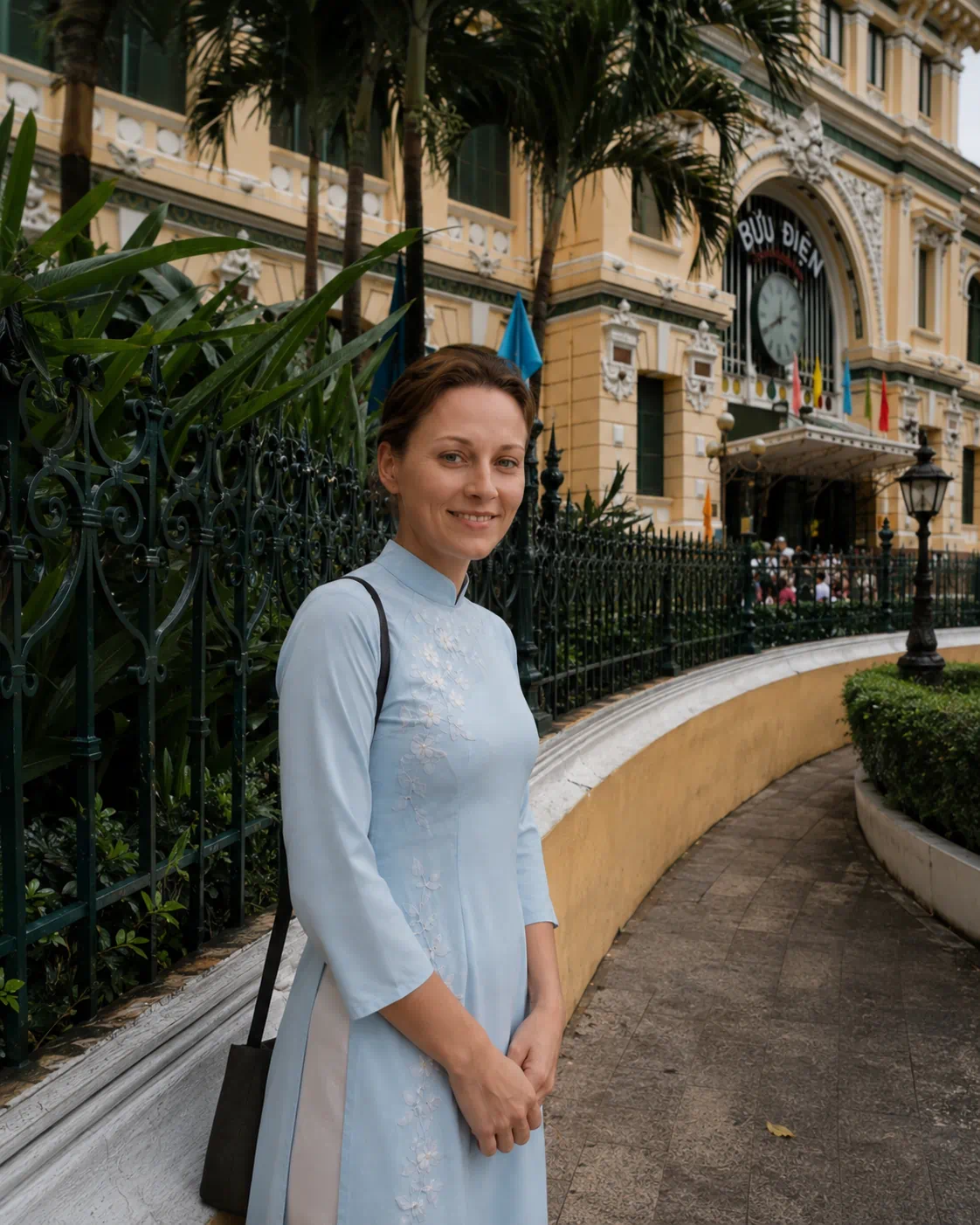
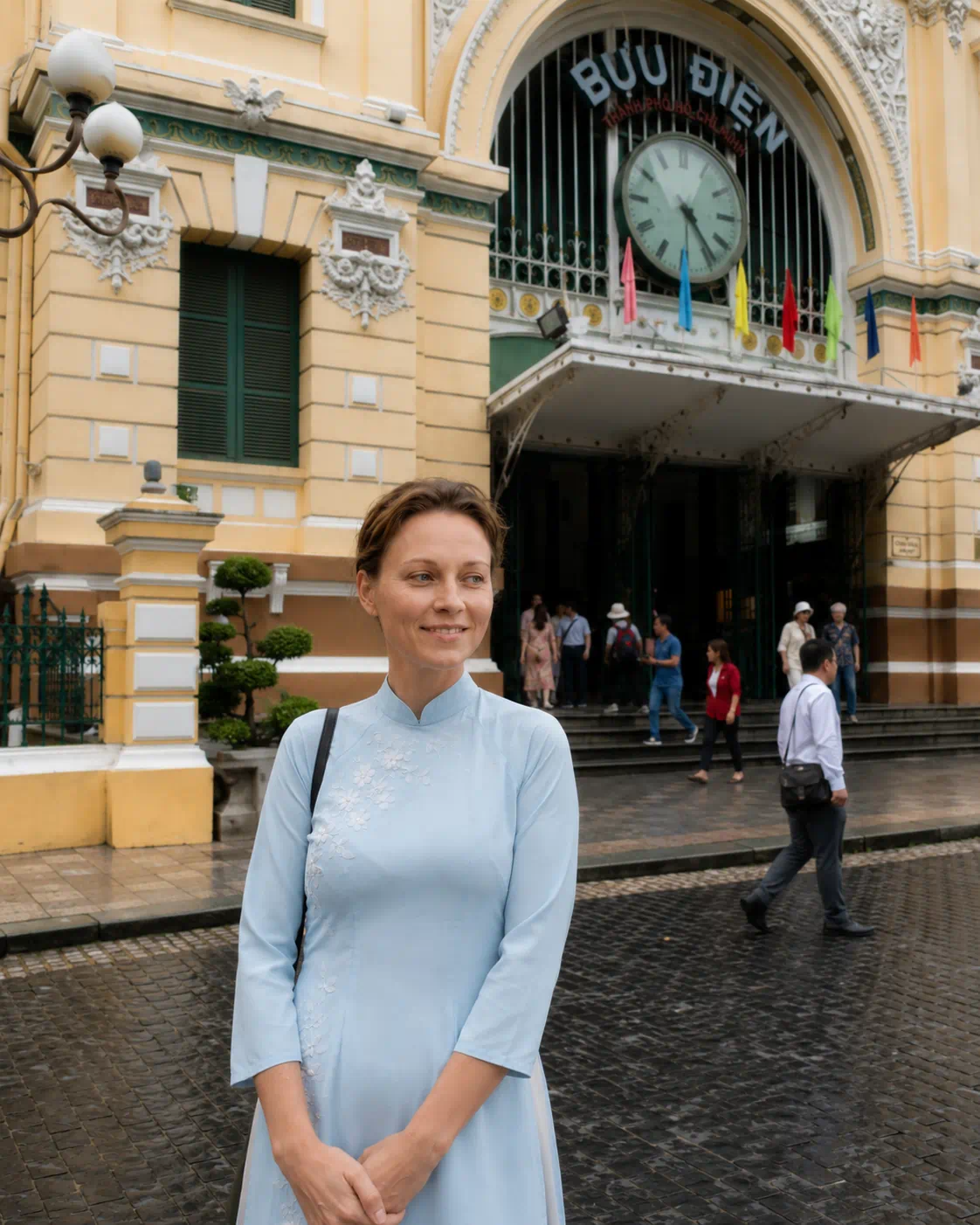
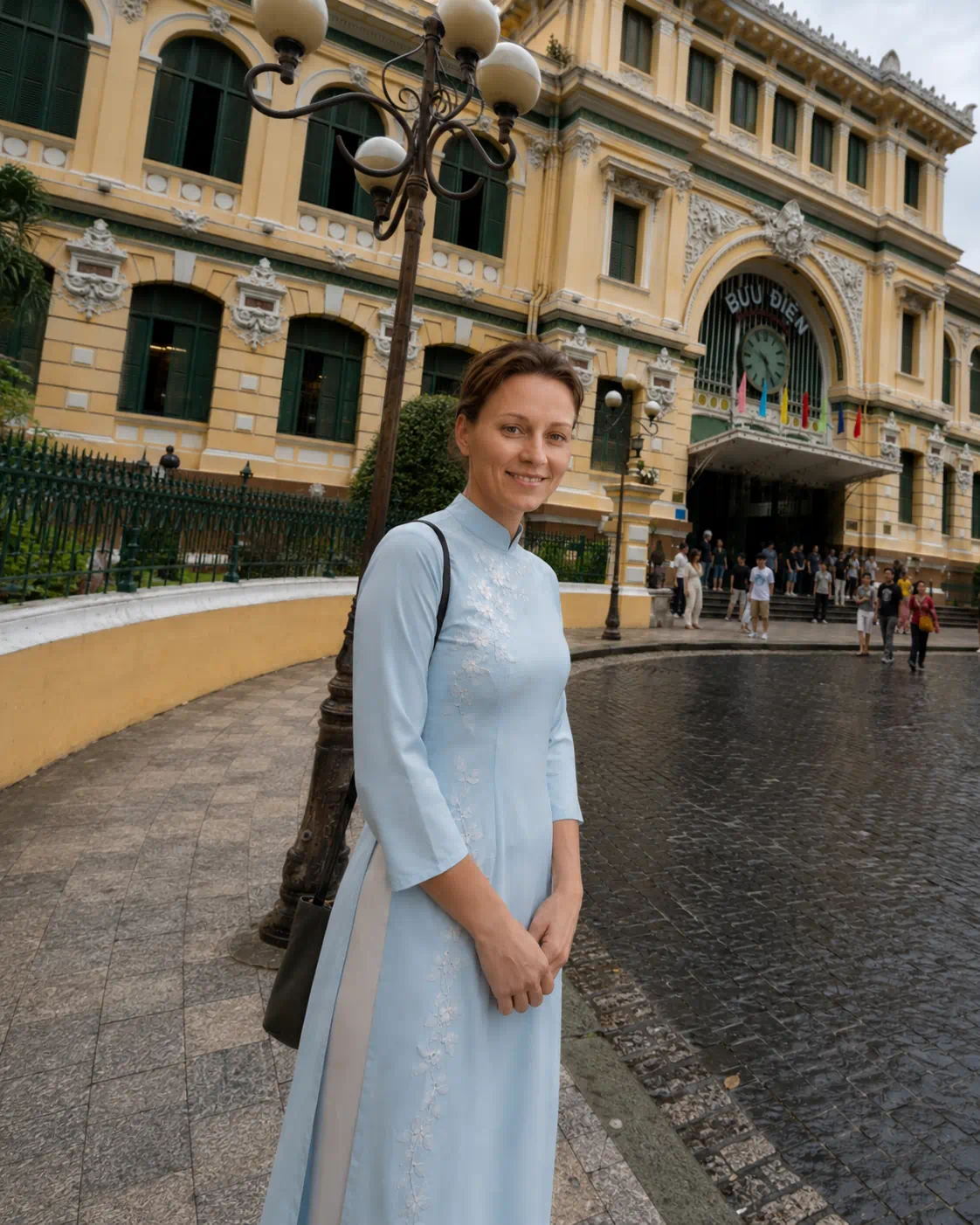
The yellow colonial building at the end of Dong Khoi. This is one of the better locations on the circuit for ao dai photos because the architecture is so specific and so Saigon. The tall arched ceilings inside work well for shots if you can time it between the crowds of tourists. The exterior columns and the arched entrance gate give you more options.
Independence Palace
Usually the exterior gates and the driveway approach rather than inside the palace itself. The surrounding park and the main gate offer good angles. This tends to be one of the more relaxed stops because there’s more physical space and you’re not jostling for position the way you can be in front of the Post Office.
Ben Thanh Market or Nguyen Hue Walking Street
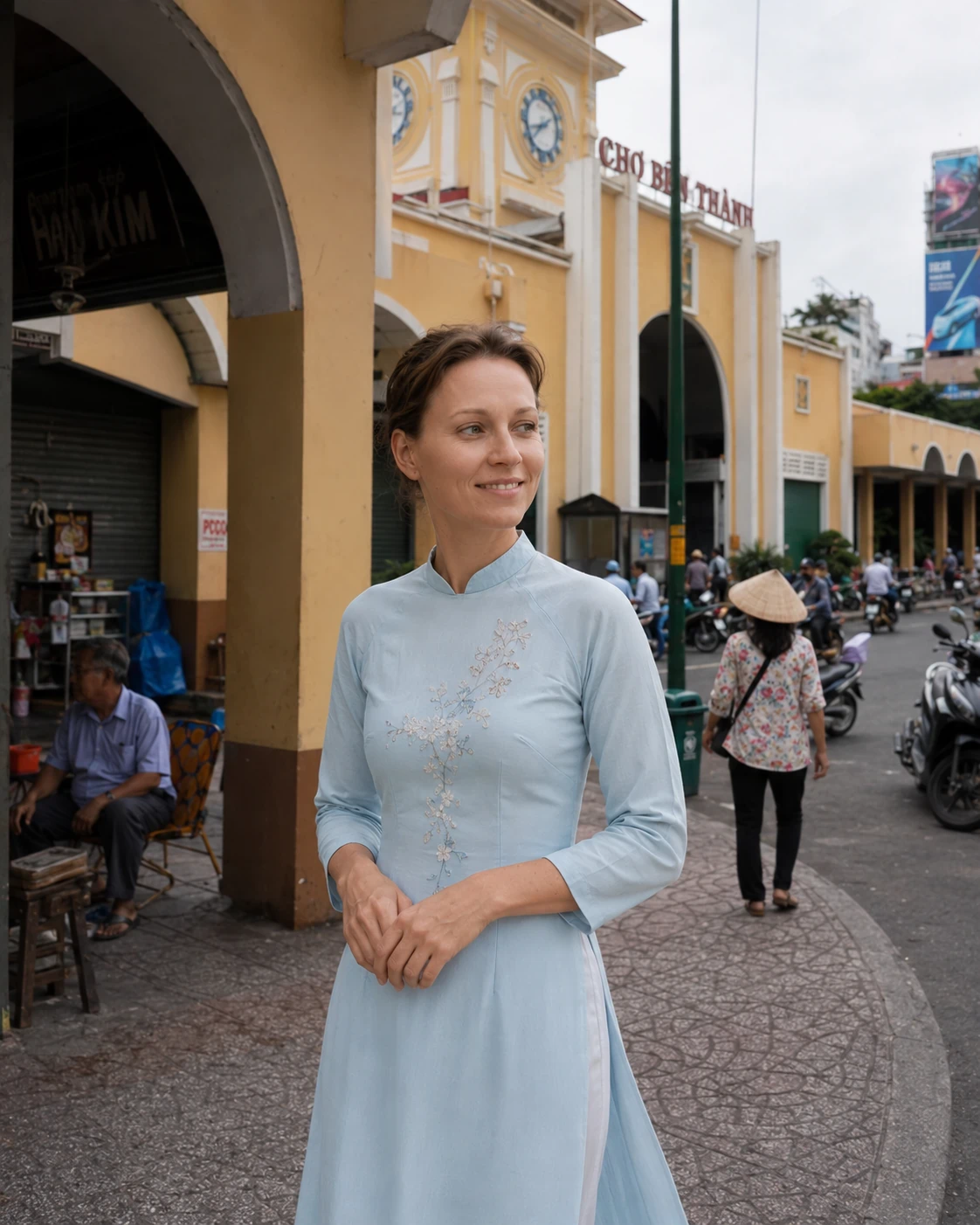
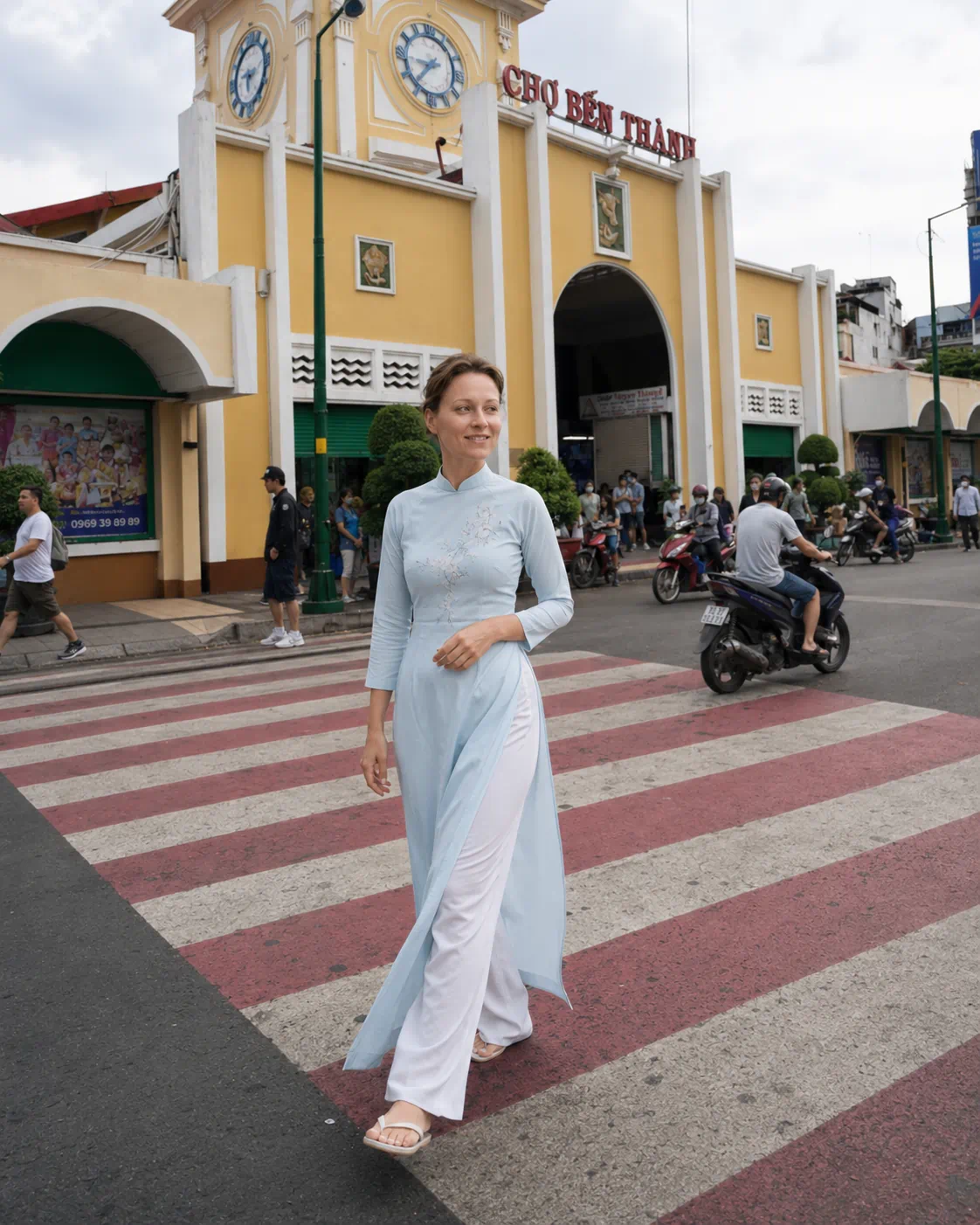
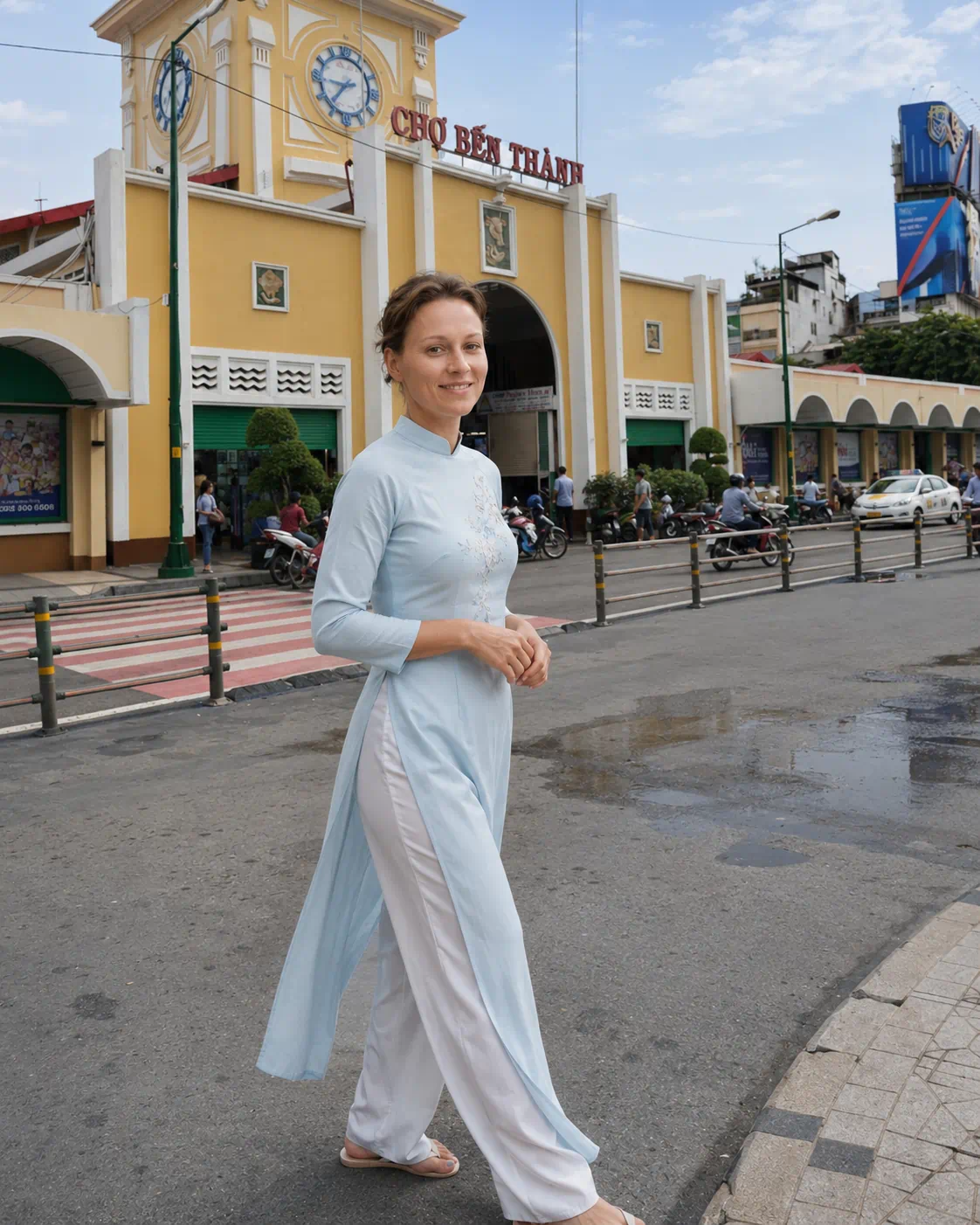
Often the closing location. Ben Thanh gives you the market facade and the surrounding street chaos, which produces a different kind of photo than the architectural locations. The ao dai against a backdrop of motorbikes and market stalls is one of the more striking images you’ll take home if you’re open to it.
Some operators include additional stops like the Book Street, the Saigon Book Street on Dinh Le, or other streets around central D1. The route also depends on what’s accessible on the day, since the Notre-Dame Cathedral area in particular has had varying accessibility.
What the Photography Is Actually Like
An ao dai photo tour in Saigon is not a professional fashion editorial shoot. There’s no lighting equipment, no stylist adjusting your outfit between shots, no elaborate posing direction. The photographer-guide is usually one person managing your experience, helping you navigate between locations, and taking photos throughout. They’re good at this, but they’re not a fashion photographer with a team.
What you get instead is a few hundred candid and semi-posed photos. The photographer shoots constantly while you’re walking, standing, looking at things, and occasionally takes more deliberate composed shots. The walking-and-shooting approach often produces photos that feel more natural than anything that comes out of a formal pose-by-pose session, especially if you’re not someone who’s comfortable being photographed in a studio setup.
The photo quality is genuine and a lot of people are surprised by how the photos turn out. The locations are doing a lot of the work. When you’re wearing a traditional ao dai in front of the pink church with good morning light, the photo is going to look good regardless of how professional the shoot is.
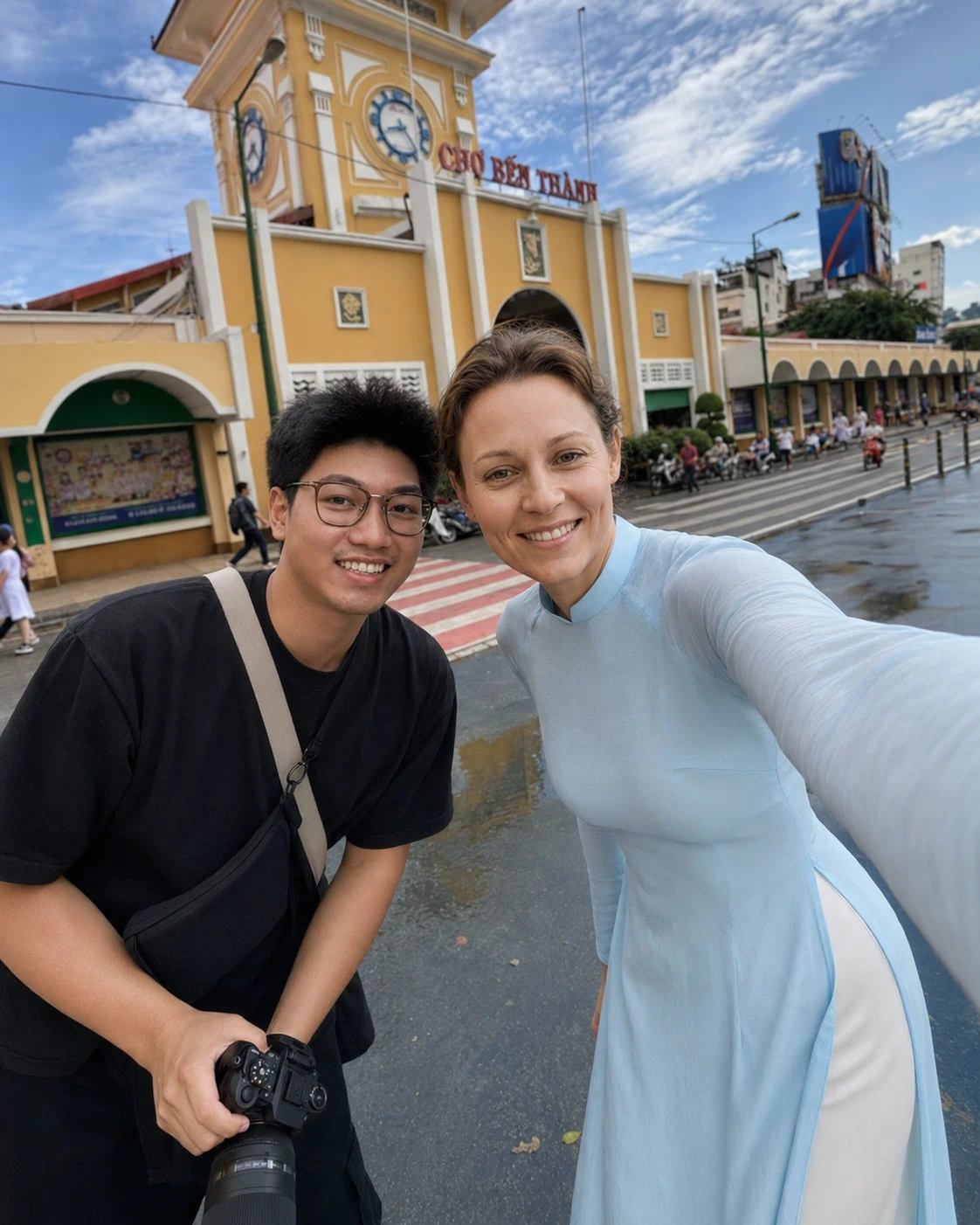
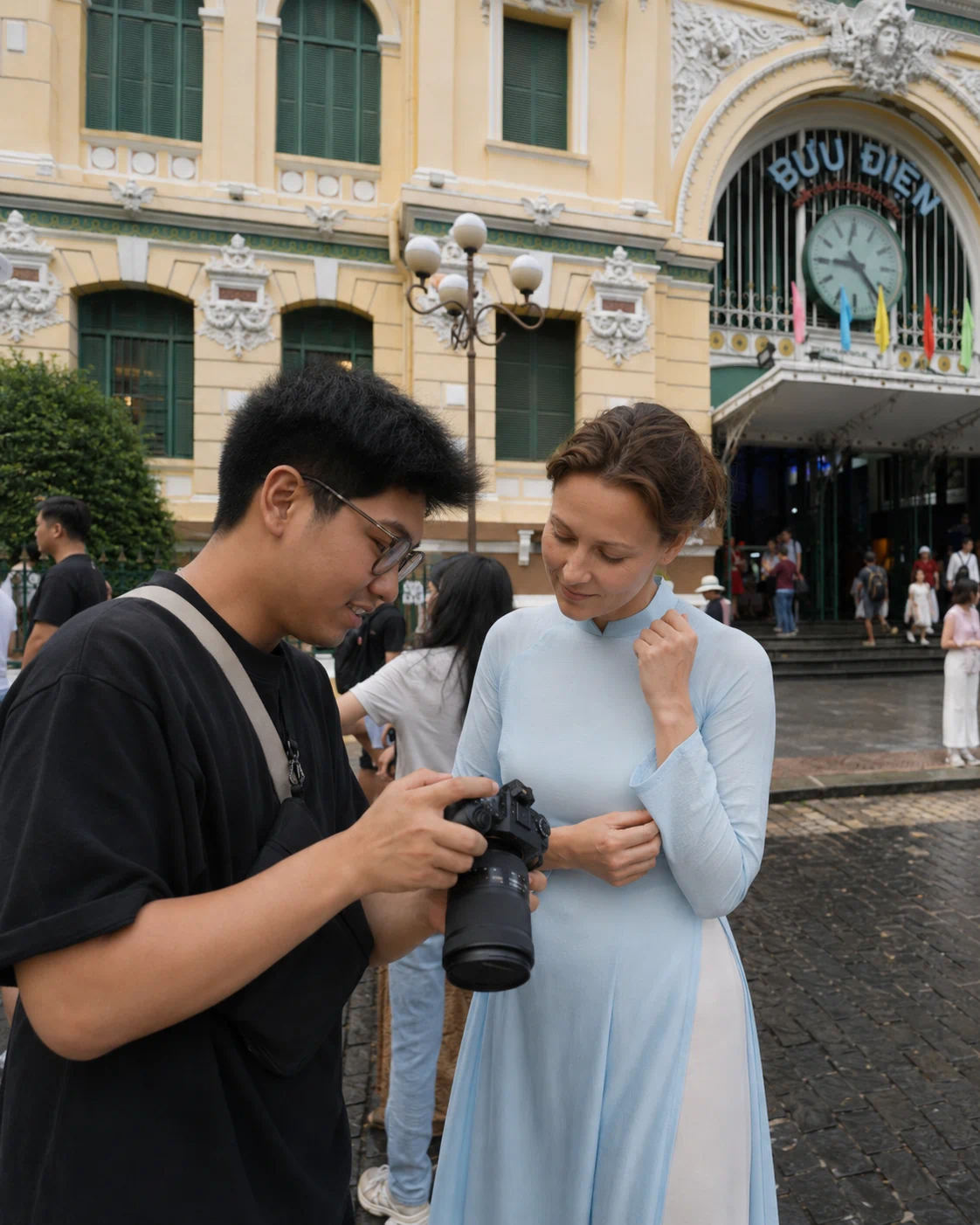
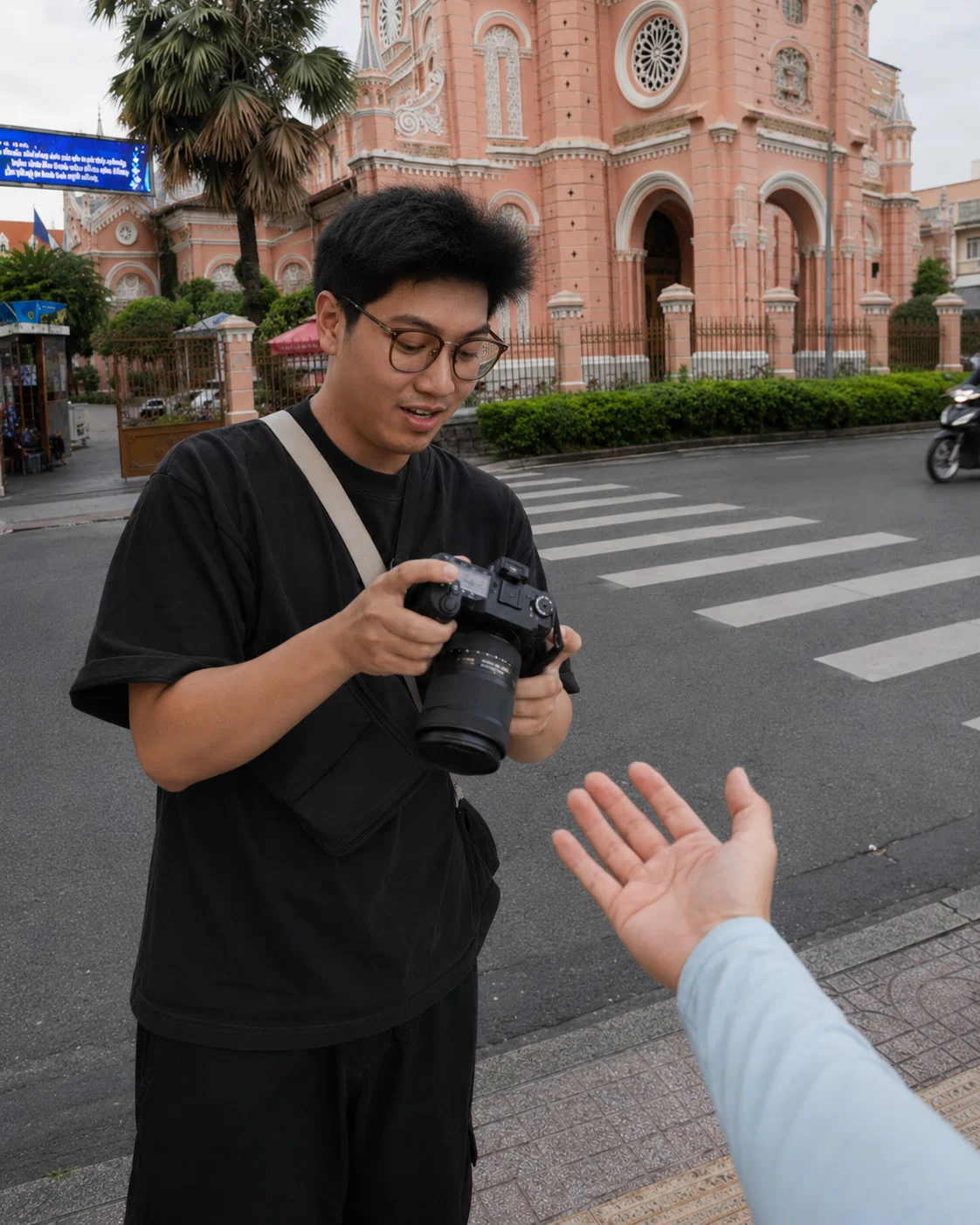
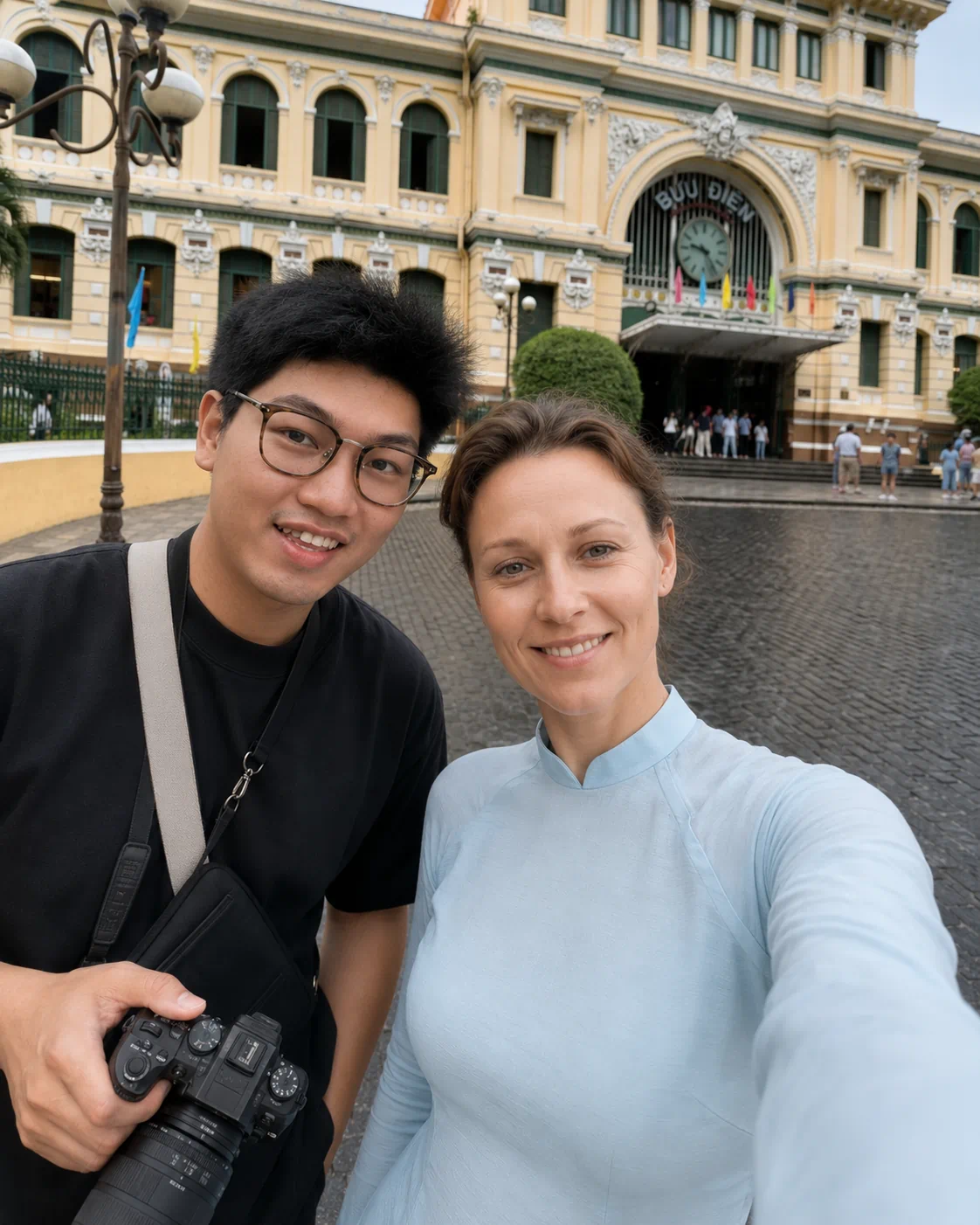
A few things about what the photographer actually does: they’ll position you relative to the background, suggest whether to look toward the camera or away, and adjust if the light is wrong. What they won’t do, unless you ask, is stop for fifteen minutes at each spot to work through a series of poses.
The pace is more fluid than that. If you want something specific, a particular angle or a specific shot you’ve seen somewhere, tell them. Every guide I’ve encountered on these tours responds well to specific requests. What they can’t do is read your mind.
The soft copy photos are delivered after the tour, usually via a link. You’ll get all the usable shots, not just a curated selection, and “a few hundred” is the accurate description of volume. That means some of them will be average. Some will be exceptional. The volume is useful because you have genuine options.
Some practical things about the photography:
- Guides Lucas, Tunny, and Jayson have come up specifically as being good at the photographic side of this. If your tour allows you to request a specific guide, it’s worth asking.
- If you want something more posed or have a specific vision, say so early rather than at the final location when everyone is tired.
- The candid shots from walking between locations are often the best ones. Don’t focus entirely on the posed shots.
- Vertical shots for Instagram and horizontal shots for regular photo albums are different compositions. If you have a preference, mention it at the start.
One thing that consistently comes up: people who go in expecting a “polished, professional shoot” come out initially underwhelmed and then look at the photos on their laptop later and are happy. The photos often look better once you’re back in your hotel room than they seemed in the moment.
The Heat
This is the one thing nobody mentions prominently enough and it should be in every description of an ao dai photo experience in Saigon.
The city is hot. If you’re visiting in the dry season, which is when most people come, afternoon temperatures are regularly 33-36 degrees Celsius with significant humidity. The ao dai is a fitted silk garment. You will be warm.
The good guides account for this. A guide who checked in at every stop about heat and whether the participant needed water or a break. That kind of attention makes a real difference to whether you finish the three hours feeling good or exhausted.
Things that genuinely help:
- Book a morning start (8 or 9am) rather than anything after 11. This is probably the single most useful thing you can do.
- Bring water. Don’t rely on buying it along the way because you’ll be occupied.
- Sunscreen on any exposed skin before you start. The ao dai covers most of you but neck and hands get sun.
- Wear minimal, breathable clothes underneath since the ao dai is fitted and anything bulky shows.
If you’re prone to overheating, the December-to-March window is noticeably more comfortable than April-June. Not impossible in summer, just harder work.
Which Tour to Book
The main bookable ao dai photo tour in Ho Chi Minh City that consistently comes up with verified 2025-2026 reviews is the Ao Dai Try on Photo Experience listed on GetYourGuide. The starting point is at the area in Tan Dinh Church, District 1. Three hours, photographer-guide included, soft copy of photos delivered afterward.
The version on Klook covers similar ground but has more reviews, so the Klook listing gives you more recent signal on what the current experience is like.
A few things to look for when you’re comparing listings:
- Check that the photos are soft-copy included, not just shown during the tour
- Confirm whether hair styling is included if that matters to you
- Check starting location so you can Grab there in advance
- Free cancellation 24 hours out is standard on both platforms, worth confirming
The price range for a 3-hour ao dai photo tour in Ho Chi Minh City through these platforms is currently $30-55 per person depending on the operator version and any upgrades. The mid-range is usually the best value because the budget versions sometimes cut the number of locations.
Who Should Do This
Honestly, a wider range of people than you’d expect.
It’s obviously well-suited for anyone who loves fashion, photography, or Vietnamese culture. But it also works really well for solo travelers who want photos of themselves that don’t look like arm-stretched selfies. When you’re traveling alone and you want actual photos of yourself in the places you’re visiting, having a photographer for three hours solves a problem that most solo trips struggle with.
It works for couples wanting something to do that produces something tangible at the end. The photos from these tours, because they’re happening in genuinely beautiful locations rather than in a studio, tend to look more like real memories than posed portraits.
Families work too. The guides I’ve seen manage kids on these tours handle it well, and children in ao dai are genuinely one of the better photo subjects you can have in Saigon. It’s a different experience with kids in tow since the pace slows down, but the photos are usually worth it.
One thing I’d say to anyone on the fence:
You don’t need to care about fashion or traditional Vietnamese clothing to enjoy this. The ao dai is an extraordinary garment to wear for a few hours in the city where it was made and where it’s still part of daily life. Even if you’re not someone who usually thinks about clothes, the experience of moving through Saigon in one of these changes how the city looks to you. The locals you walk past react differently to you. That’s a specific kind of experience you can’t get from any other activity in the city.
Who Should Skip It
If you don’t want to be photographed, this isn’t for you. That sounds obvious but it’s worth stating because the photos are the whole product. If you’d rather rent an ao dai and just wear it while you wander around without the photography component, some rental shops can accommodate that separately.
If you’ve already done this kind of experience in Hoi An or Hue, the novelty of wearing the garment will be lower. What Saigon specifically adds is the urban backdrop and these particular landmarks, which are different from the yellow walls and lanterns of Hoi An. Whether that difference justifies repeating the experience is personal.
If you’re specifically looking for professional editorial-quality photography, this isn’t the format. There are dedicated photographers in Saigon who do proper shoots, but they’re booked and priced differently from what a photo tour operator offers.
Before You Book
A few practical things worth knowing:
Timing: Morning starts (8 or 9am) are the right call. The light is better, the heat is more manageable, and the main locations are meaningfully less crowded. By 11am the Post Office and the area around Notre-Dame are full of tour groups and the photos get harder to make work.
What to wear underneath: Light, breathable, minimal. The ao dai is fitted and anything bulky shows. The stylist at the shop will give you specific guidance for whatever garment you choose.
Shoes: Heels are traditional and most shops include them or expect them. If three hours of walking in heels sounds like too much, flat sandals also work and nobody judges you for it. Your photos will look slightly different but still good.
What to bring: Sunscreen, water, your phone. A small bag is fine to carry.
Hair and makeup: Basic styling is usually included. For anything more elaborate, ask the operator in advance or find a salon near the starting point and go there 45 minutes before your tour starts.
Tipping: 100,000-200,000 VND for the photographer-guide for a full 3-hour session.
After the tour: You return to the shop, change, collect your things, and the photo link comes within 24-48 hours usually. Confirm the delivery timeline when you book.
Rainy season: June through September has regular afternoon rain. A morning start largely avoids this. If you’re visiting in the wet season, the light can actually be interesting after a brief downpour, and guides know which covered locations to use.
The experience fits naturally as a morning before lunch, which leaves the afternoon free for something else entirely. For how this might slot into your trip, the Ho Chi Minh City itinerary guide has the day-by-day picture. And for the full range of what to do in Saigon, the things to do in Ho Chi Minh City guide is the starting point.

Keep Exploring Ho Chi Minh City
-
See & do UltimateMy expat guide to stuffs to do in Ho Chi Minh city ›
-
Spots Must read10 Ho Chi Minh city attractions travelers must visit in 2026 ›
-
SpotsWhat $50 actually gets you on a Saigon river dinner cruise? ›
-
SpotsWhere expats actually go for Ho Chi Minh City nightlife ›
-
SpotsIs it worth doing Cu Chi Tunnels & Mekong Delta in a day? ›











 Tiếng Việt
 한국어
한국어 中文 (中国)
 日本語
日本語 ไทย
ไทย Deutsch
 Español
 Destinations
 Instagram
 Facebook
 X (Twitter)
 Threads
 Tiktok