









 Ha Giang
 Hanoi
Hanoi Ho Chi Minh City
 Ha Long
 Sapa
Sapa Mekong Delta
 Da Nang
 Hue
Hue Hoi An
 Ninh Binh
 Da Lat
 Nha Trang
 Phan Thiet
 Phu Quoc
 Quang Binh
 Quy Nhon
 Vung Tau
 Thai Nguyen



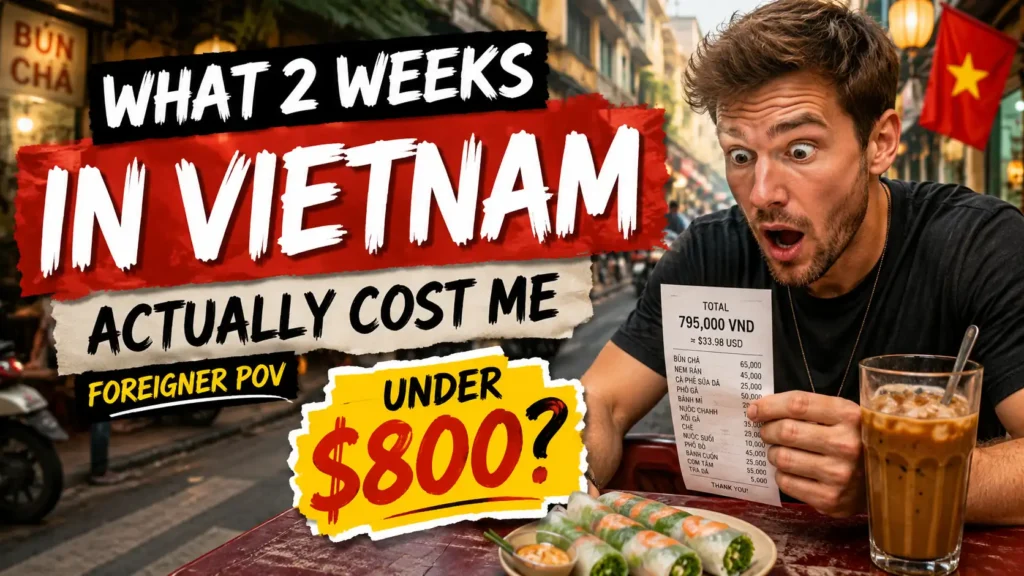

When you start researching your 2 week trip to Vietnam cost as a foreigner, you’ll find a lot of wildly conflicting information online. You’ll read blogs from backpackers claiming you can survive on $15 a day, and you’ll see luxury travel agents quoting $3,000 for a basic itinerary.
Vietnam in 2026 is not the dirt-cheap, undiscovered backpacker secret it was ten years ago. Prices have crept up, especially in the major hubs like Hanoi, Da Nang, and Ho Chi Minh City. But thanks to a very favorable exchange rate (hovering around 25,000 to 25,500 VND to $1 USD), it remains one of the absolute best value-for-money destinations on the planet.
This is my country-wide cost guide. If you’re doing the classic 2-week run through the country (Hanoi, Halong Bay, Hoi An, Saigon, maybe Sapa or Phu Quoc), this one’s for you.
This is going to be detailed.
- Quick Answer: A 2-week trip to Vietnam costs around $1,300-1,700 for backpackers, $2,500-3,500 for mid-range travelers, and $4,500-7,000+ for luxury travelers, all-in from a Western country. That includes international flights, e-visa, insurance, and your full in-country spend. The 4 line items that dominate any budget: Halong Bay cruise, Sapa tour, domestic flights between cities, and (if you bite) a Hoi An tailored suit.
- The Big Picture (all-in totals):
- Backpacker: $1,300-1,700 (from US/EU)
- Mid-range: $2,500-3,500 (from US/EU)
- Luxury: $4,500-7,000+ (from US/EU)
- Australia/Asia origin: subtract roughly $300-500 from flight component
- In-Country Spend Only (excl. international flights):
- Backpacker: $645-850 for 14 days
- Mid-range: $1,525-1,900 for 14 days
- Luxury: $3,200-5,400 for 14 days
- Pre-Trip Costs (before you even land):
- International flight: $600-1,500 depending on origin and season
- E-visa: $25 single entry, $50 multiple entry
- Travel insurance: $40-80 for 2 weeks
- Vaccines: $100-300 (optional but recommended)
- The 4 Big Budget Items:
- Halong Bay cruise: $95-450 per person
- Sapa tour: $80-550 per person
- 2 domestic flights (typical route): $80-200 total (HAN-DAD, DAD-SGN)
- Hoi An tailored suit: $200-700 (skip if not wanted)
- These four account for 40-50% of mid-range discretionary spend
- Where Daily Costs Land:
- Accommodation: $10-200 per night depending on tier
- Food: $10-50 per day depending on style
- Local transport (in-city): $5-20 per day
- Attractions: usually under $5 each
- Couples vs Solo:
- Couples save roughly 30-40% compared to two solos (shared rooms, shared private transfers)
- Family of 4 mid-range: $4,500-5,800 in-country
- My Pick for Most Travelers:
- Budget $2,800-3,200 USD all-in from the US for a comfortable mid-range 2 weeks. Splurge selectively (4-star Halong cruise, one nice dinner per city), save the rest by eating local.
The Headline Numbers
Most 2-week Vietnam trips fall into one of three tiers. Here’s what each looks like as a real total, broken into in-country spend and all-in from a Western departure point.
| Tier | In-country (14 days) | All-in from US/EU | All-in from Australia/Asia |
|---|---|---|---|
| Backpacker | $645-850 | $1,300-1,700 | $1,100-1,400 |
| Mid-range | $1,525-1,900 | $2,500-3,500 | $2,200-3,000 |
| Luxury | $3,200-5,400 | $4,500-7,000+ | $4,000-6,500+ |
The all-in number includes your international round-trip flight, $25 e-visa, around $50 travel insurance, and your full in-country spend across 14 days.
A few things to know about these tiers.
The backpacker number assumes hostel dorms ($5-12/night), street food only, sleeper buses instead of domestic flights, and group tours for Halong and Sapa. You can absolutely do this. Plenty of solo travelers do exactly this and post about how it was the best trip of their lives.
The mid-range number is what most non-backpacker travelers actually spend without trying hard. 3 to 4-star hotels ($35-60/night), a mix of street food and sit-down restaurants, two domestic flights, a 5-star Halong cruise, and a decent Sapa tour. It’s the sweet spot for most people.
The luxury tier is where Vietnam stops being “cheap” and starts being “incredible value.” A 5-star resort here costs what a 3-star costs in most Western cities, and the experiences (private boat tours, fine dining, spa treatments) are some of the best value in the world.
The 4 Budget Items That Dominate Everything
If there’s one thing worth understanding about a 2-week Vietnam trip cost, it’s this: most of your “discretionary” spend isn’t in the day-to-day stuff. It’s in 4 specific line items that you’ll spend big on regardless of your tier.
Together, these 4 items account for 40-50% of a mid-range traveler’s discretionary spending. Everything else (food, accommodation in cheaper cities, local transport) is fixed-cheap.
| Line Item | Backpacker | Mid-range | Luxury |
|---|---|---|---|
| Halong Bay cruise | $95-130 | $135-200 | $300-450 |
| Sapa trekking tour | $80-130 | $140-220 | $300-550 |
| 2 domestic flights | $50 (or skip via sleeper bus) | $100-180 | $200-300 |
| Hoi An tailored suit (optional) | Skip | $200-400 | $500-700 |
Plan these four properly and your trip cost is largely predictable. Get sloppy on these and your budget balloons.
A note on Halong Bay specifically. I’d genuinely avoid the cheapest day trips ($30-40) which are rushed, crowded, and miss the point. A 2-day-1-night overnight cruise is the experience worth having, starting around $95 for budget operators and topping out at $450+ for premium. Drink packages on overnight cruises are good value, by the way. The $145 cruise becomes $200+ after à la carte beer purchases anyway, so the $25-45 drink package usually pays for itself.
For Sapa, the choice is group tour vs private. Group tours are around $80-130 for a 2D1N, you trek with 6-12 strangers and stay in a basic homestay. Private tours with a guide and motorbike or car run $200-550 and let you go further off the beaten paths. Worth it if you want a real cultural experience, overkill if you just want a couple of nice rice terrace photos.
Pre-Trip Costs (Before You Even Land)
These are the costs you’ll pay before your trip starts, and they catch a lot of first-time visitors off guard.
International flights
This is your biggest single line item. Round-trip economy fares to Vietnam in 2026:
- From US (East Coast): $700-1,200
- From US (West Coast): $600-1,000
- From UK/Western Europe: $700-1,100
- From Australia/NZ: $500-900
- From regional Asia (Bangkok, Singapore, Tokyo): $150-400
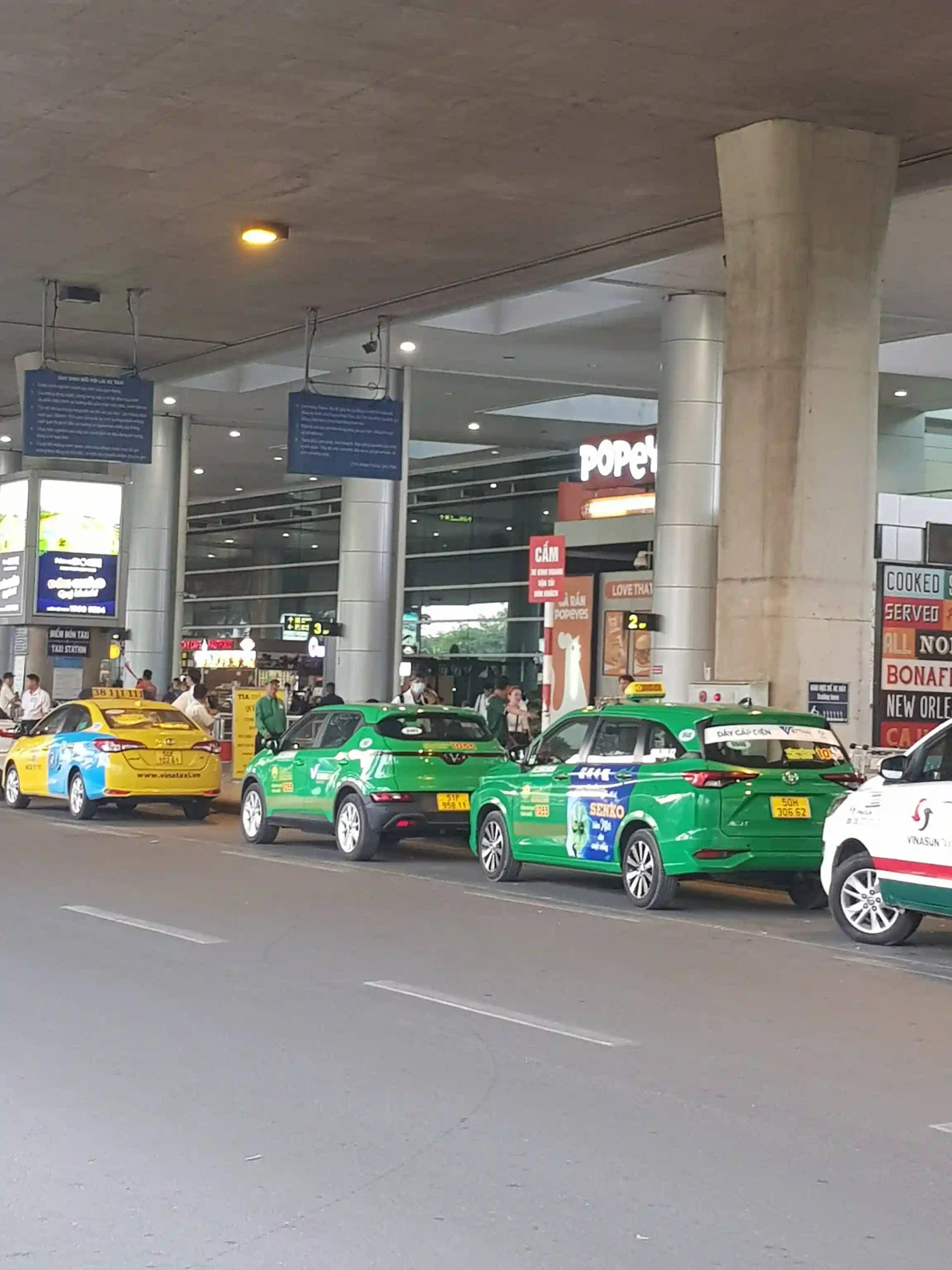
You’ll fly into either Hanoi (HAN/Noi Bai) or Ho Chi Minh City (SGN/Tan Son Nhat). For a classic 2-week trip, fly into one and out of the other. Most airlines won’t charge extra for an open-jaw booking, and it saves you a domestic flight to backtrack.
Best months to book cheaply: August-September (low season). Most expensive: June-July, late December, and Tet (Vietnamese New Year, usually late January or February).
Book 3-6 months ahead for the best fares. Last-minute booking can be 40-60% more expensive.
E-visa
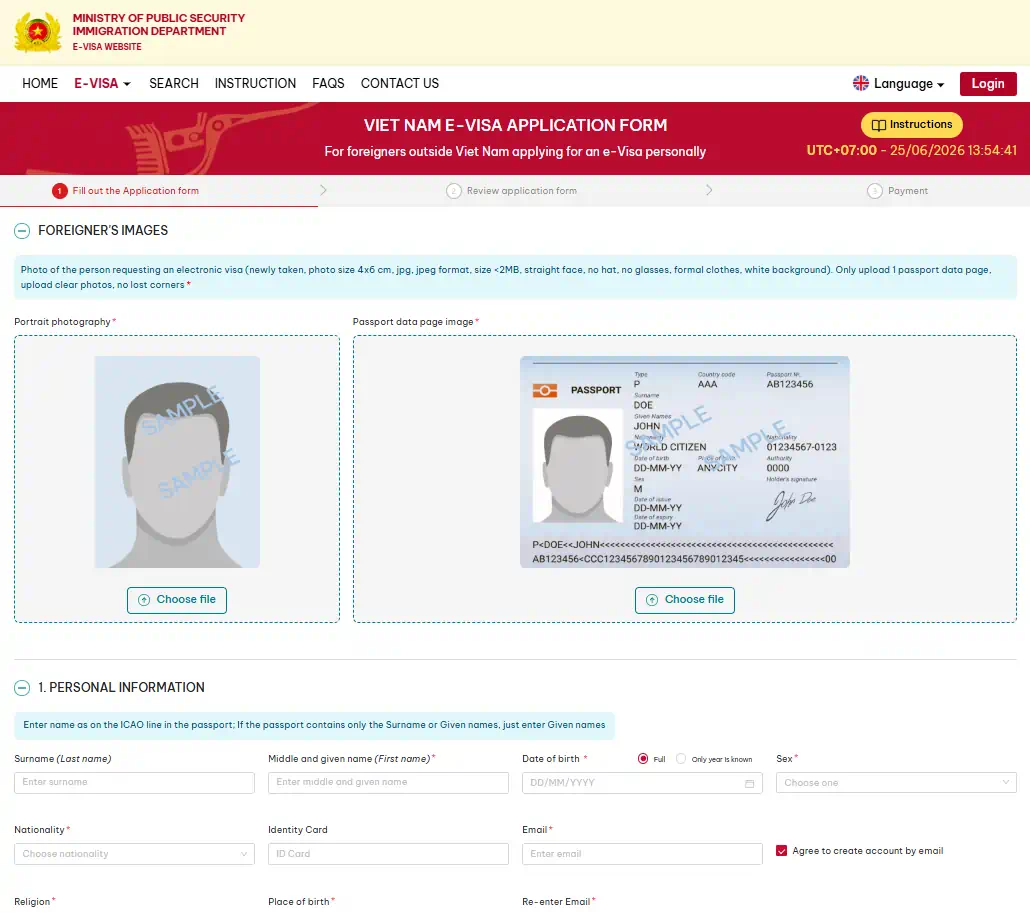
Vietnam’s e-visa system is straightforward in 2026:
- Single entry, 90 days valid: $25 USD
- Multiple entry, 90 days valid: $50 USD
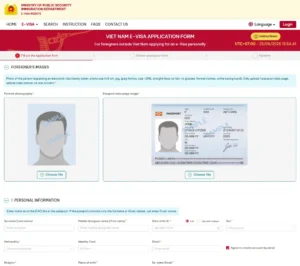
Apply at evisa.gov.vn. That’s the only official URL. You shouldn’t pay any third party more for the same thing. Processing takes 3-5 working days. Photo upload, passport scan, payment by international card. Your e-visa arrives as a PDF you print and bring.
Some nationalities get visa-free entry (UK, France, Germany, Italy, Spain get 45 days). Check your passport’s specific status before paying for an e-visa unnecessarily.
Travel insurance
For a 2-week Vietnam trip, expect to pay $40-80 USD for decent comprehensive coverage. SafetyWing, World Nomads, and HeyMondo are the names most travelers go with.
I’ll be direct: insurance is the line item people most often skip and most often regret. Vietnamese hospitals can be cheap by Western standards but a medical evacuation back home costs tens of thousands of dollars without coverage. A motorbike crash in a rural area can blow your entire trip budget instantly. Get insurance. Boring but essential.
Vaccines and meds
This depends on your origin country and your specific itinerary. Standard recommendations for Vietnam in 2026:
- Hepatitis A and B: if you don’t already have them, $100-200
- Typhoid: $50-100, recommended
- Japanese encephalitis: only if rural or extended stay, $200+ for the course
- Malaria pills: only for specific rural areas, otherwise not needed
Budget $100-300 if you need anything. Check with a travel clinic 6-8 weeks before you fly.
In-Country Daily Costs
Once you’re in Vietnam, your day-to-day costs break into 4 buckets.
Accommodation
Where you sleep is your single biggest daily expense. Vietnam has options at every tier:
| Type | Per night | Best for |
|---|---|---|
| Hostel dorm | $5-12 | Solo backpackers |
| Budget private room | $15-30 | Couples on budget |
| 3-star hotel | $30-50 | Most mid-range travelers |
| 4-star or boutique | $55-100 | Comfort upgrade |
| 5-star resort | $130-300+ | Luxury |
A few specifics. Hostels are excellent in major cities (Hanoi, Saigon, Da Nang, Hoi An). Mid-range hotels are honestly the sweet spot for value in Vietnam. A 3-star hotel here is usually clean, includes breakfast, has a pool, and costs less than a roadside motel in the US. I tend to use Agoda for Vietnam hotels since they often beat Booking.com on price for properties in this region, though it’s worth checking both.
Food
Food in Vietnam is one of the great deals in world travel. You can eat extremely well for very little money.
| Meal type | Cost |
|---|---|
| Street food (pho, banh mi, com tam) | $1.50-3 |
| Local sit-down restaurant | $4-8 |
| Mid-range restaurant | $8-15 |
| Western/tourist restaurant | $10-25 |
| Nice dinner with wine | $25-60 per person |
Daily food budget realistically:
- Backpacker eating street food only: $8-12
- Mid-range mixing local + sit-down: $20-35
- Comfortable with one nice dinner: $35-60
Local transport
| Type | Cost |
|---|---|
| Grab bike in cities | $0.60-2 |
| Grab car in cities | $1.50-5 |
| Sleeper bus between cities | $8-15 |
| Reunification Express train (1 segment) | $20-60 |
| Domestic flight (e.g. Hanoi-Da Nang) | $40-100 |
| eSIM data plan (2 weeks) | $8-16 |
Most travelers on a 2-week trip will take 2 domestic flights to save time. The classic route involves flying Hanoi → Da Nang (for Hoi An) → Saigon, or some variation. Skipping flights and taking sleeper buses or trains saves around $100-200 but adds 30+ hours of travel time across the trip.
For inter-city booking, 12Go is the easiest way to compare buses, trains and flights in one place. The interface handles connections between modes (e.g. flight + airport transfer) which saves real time.
Attractions and activities
Vietnam attractions are almost embarrassingly cheap individually:
- Most museums: under $2
- Temples and pagodas: free or under $1
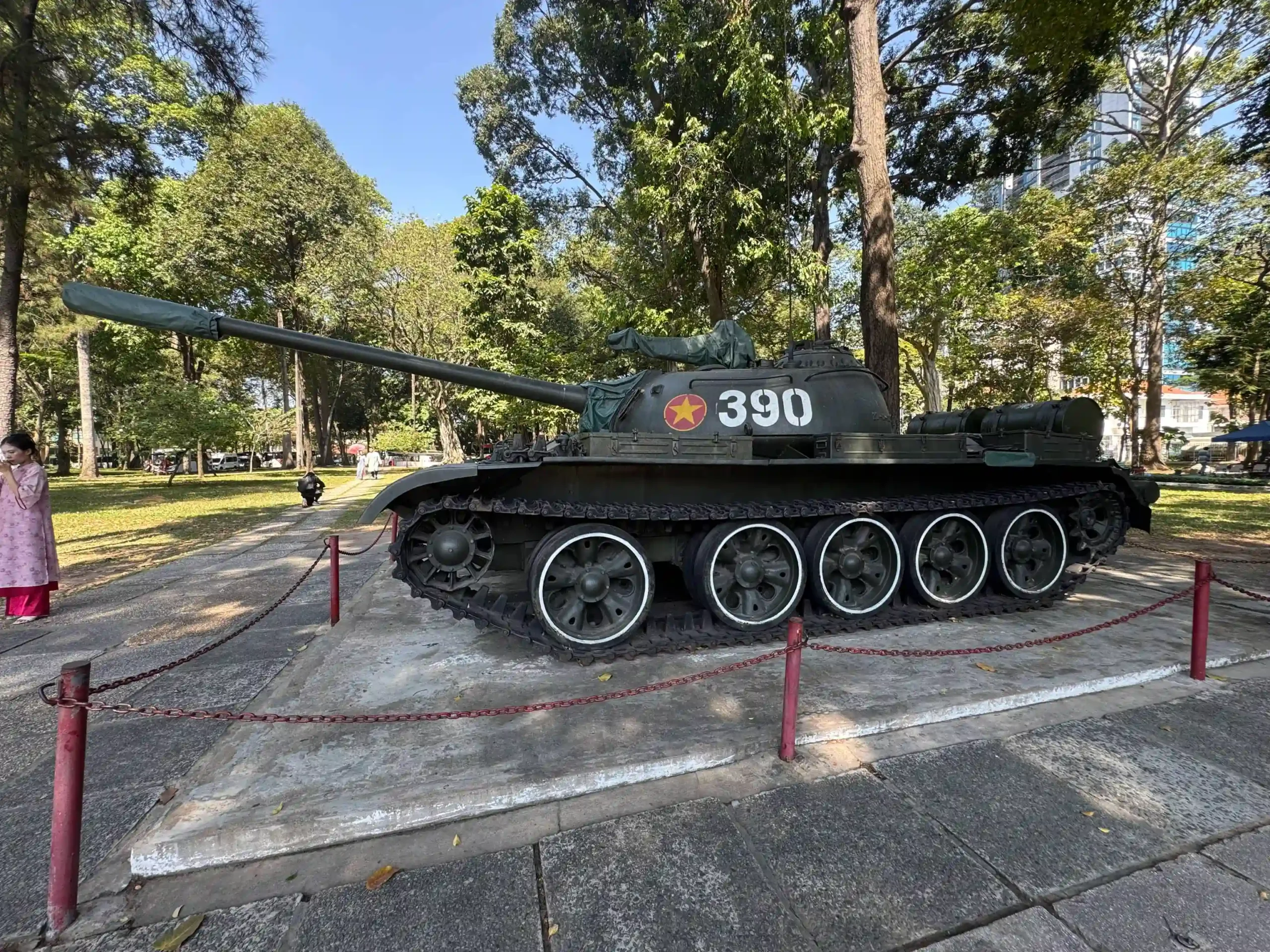
- Reunification Palace, War Remnants Museum: $1.60-2.60
- Cu Chi Tunnels (with tour): $15-30
- Mekong Delta day trip: $33-70
- Cooking class: $25-60
- Vespa night food tour: $50-80
- Halong Bay overnight cruise: $95-450
- Sapa trekking tour: $80-550
Your two big activities (Halong + Sapa) are already covered above. Everything else mostly fits inside a $5-50 range per item.







A Real Mid-Range 2-Week Sample Route
Sometimes the headline numbers don’t make sense until you see them broken into a real trip. Here’s the classic 2-week Vietnam route with realistic mid-range costs:
Days 1-3: Hanoi
- Accommodation: 3 nights × $40 = $120
- Food + drinks: 3 × $30 = $90
- Local transport (Grabs): $15
- Activities (Old Quarter, museums, water puppets, walking tours): $40
- Subtotal: $265
Days 4-5: Halong Bay
- 2D1N mid-range cruise (Bhaya Classic or similar): $150-180 per person
- Drinks package on board: $25
- Subtotal: $175-205
Days 6-7: Sapa
- Sleeper bus or train Hanoi-Sapa round trip: $40-70
- Sapa group trekking tour 2D1N: $130
- Subtotal: $170-200
Day 8: Domestic flight Hanoi → Da Nang
- Flight: $50-80
- Grab from airport to Hoi An: $15
- Subtotal: $65-95
Days 9-11: Hoi An
- 3 nights × $50 = $150
- Food + drinks: 3 × $30 = $90
- Old Town entry, lantern boat ride, bike rental: $30
- Cooking class: $35
- Subtotal: $305 (Add $300-500 if you commission a tailored suit)
Day 12: Domestic flight Da Nang → Saigon
- Flight: $50-80
- Grab to hotel: $10
- Subtotal: $60-90
Days 13-14: Saigon (Ho Chi Minh City)
- 2 nights × $50 = $100
- Food + drinks: 2 × $30 = $60
- Cu Chi Tunnels half-day tour: $25
- War Remnants Museum + Palace: $4
- Vespa night food tour: $60
- Subtotal: $249
Total in-country: ~$1,289-1,409 (without Hoi An tailor)
Add international flight ($800), e-visa ($25), insurance ($50), miscellaneous ($150) and you’re at roughly $2,300-2,450 all-in for a mid-range 2-week trip from the US.
If you want a deeper Saigon breakdown by day, my daily costs for HCMC guide has that.
North vs Central vs South Cost Differences
Vietnam isn’t a single price market. Costs vary noticeably across the country:
| Region | Relative Cost | Why |
|---|---|---|
| Hanoi & North | Cheapest of the big cities | Less Western influence, smaller tourist markup |
| Sapa | Cheap but tour costs add up | Specialized treks and homestays drive most of the bill |
| Hue & Central | Mid-range | Smaller scale, less developed tourist infrastructure |
| Hoi An | Tourist markup | Beautiful but heavily tourist-priced; tailors and lanterns add up |
| Da Nang | Mid-range | Modern city, decent value for beach access |
| Saigon | 10-20% more than Hanoi | Larger, more developed, more imported goods |
| Phu Quoc | Most expensive | Beach resort markup, isolated supply chains |
| Beach areas generally | 20-40% premium | Predictable tourism inflation |
If you’re trying to stretch your budget, spend more days in the cheaper regions (Hanoi, the north, central highlands) and fewer in Hoi An and Phu Quoc.
Solo vs Couple vs Family Math
Solo travelers, couples, and families don’t pay the same per-person cost for a 2-week Vietnam trip.
Solo travelers pay full price for everything. The single-room surcharge at hotels means a $50 double doesn’t become a $25 solo, it becomes a $40-50 solo. Solo activities are also priced per person. Mid-range solo all-in: $2,500-3,500 from the US.
Couples share rooms, which halves your biggest daily cost. You also often share private transfers, tour pickups, and meals (one bowl of two dishes is cheaper than two full meals). Mid-range couple all-in: $3,800-5,200 from the US (roughly 1.6x solo, not 2x).
Family of 4 (two adults + two kids): you’ll need bigger rooms or two connecting rooms, which adds to accommodation cost. Domestic flights multiply. Tour costs multiply. Mid-range family all-in: $7,500-9,800 from the US.
Kids under 12 often get discounted entries and free entries on cruises and tours. Some hotels include kids under 6 for free when sharing a parent’s bed.
Hidden Costs That Catch Foreigners Out
A few line items I see foreign travelers underestimate on a 2-week trip.
- ATM withdrawal fees. Around $1-3 per transaction, plus your home bank’s foreign fee. On a 2-week trip with 4-5 withdrawals you can lose $20+. Pull the maximum each time to spread the fee.
- The Hoi An tailor “just one quick suit” trap. Walks in for a curious browse, walks out having ordered a $300-500 suit and 4 shirts. Set a hard budget before you go into a tailor shop, or stay out of them.
- Halong Bay drink markups. Cruise prices look great until you start adding $5 beers all night. Pay for the drinks package up front.
- Last-minute domestic flight bookings. Booking the Hanoi-Da Nang flight the day before you fly can cost 2-3x what booking 2 weeks ahead does. Plan your route ahead.
- VAT and service charge at mid-range and up restaurants. 8-10% added at the bottom of the bill, sometimes more. Not optional.
- Airport transfers in both directions. People budget the arrival but forget the departure. Add $10-15 for your transfer back.
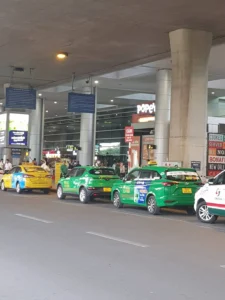
- Cash on arrival vs ATM. Don’t change much at airport currency desks (terrible rates). Pull cash from a Vietcombank or BIDV ATM in arrivals instead.
- eSIM if you don’t get one before you fly. Buying a local SIM at the airport at airport prices is 2-3x what an eSIM from Airalo costs if you set it up before you land.
When You Travel Changes the Cost
Vietnam pricing fluctuates by season more than people expect. Here’s roughly what to expect:
| Period | International flights | Hotels | Tours | My take |
|---|---|---|---|---|
| December to mid-January | Peak (+30-50%) | Peak (+20-40%) | Peak | Avoid for budget travel |
| Tet (late Jan/early Feb) | Peak + chaos | Peak | Many closed | Genuinely avoid |
| March to April | Mid-high | Mid-high | Standard | Excellent weather, fair prices |
| May to early June | Mid | Mid | Standard | Best value before rains pick up |
| Mid-June to August | Low | Low | Standard | Rainy season, cheapest |
| September to October | Low-mid | Low-mid | Standard | My pick for value + weather |
| November | Mid-high | Mid-high | Standard | Dry north, decent everywhere |
If your dates are flexible, September and early October consistently give the best value across the whole country. Flights are at their cheapest. Hotels haven’t hit peak rates yet. The weather is mostly fine (occasional rain in the north and central, generally fine elsewhere). And the tourist crowds at Halong, Sapa, and Hoi An are noticeably thinner than in peak season.
If you can only travel during peak Western holiday windows (Christmas, New Year, summer), budget 25-40% more than my mid-range estimate above. The trip is still excellent value, just less of a bargain.
How to Cut Costs Without Cutting the Experience
A few moves that genuinely save money without sacrificing what makes Vietnam great.
- Eat where locals eat. Street food and small family restaurants serve the best food in the country for a fraction of what tourist places charge. You’re missing the point of Vietnam if you only eat in places with English menus.
- Take the overnight sleeper train Hanoi to Da Nang or Da Nang to Saigon. Skips a hotel night and gets you there for $30-50 in a soft sleeper berth. It’s an experience in itself.
- Book Halong Bay direct with operators, not through your hotel. Hotels add 20-30% commission. Booking the same cruise direct (or through a comparison site) saves real money.
- Skip the Hoi An tailor unless you genuinely want a suit. The browsing-leads-to-buying funnel is well designed. Walk past if you don’t actually need clothing.
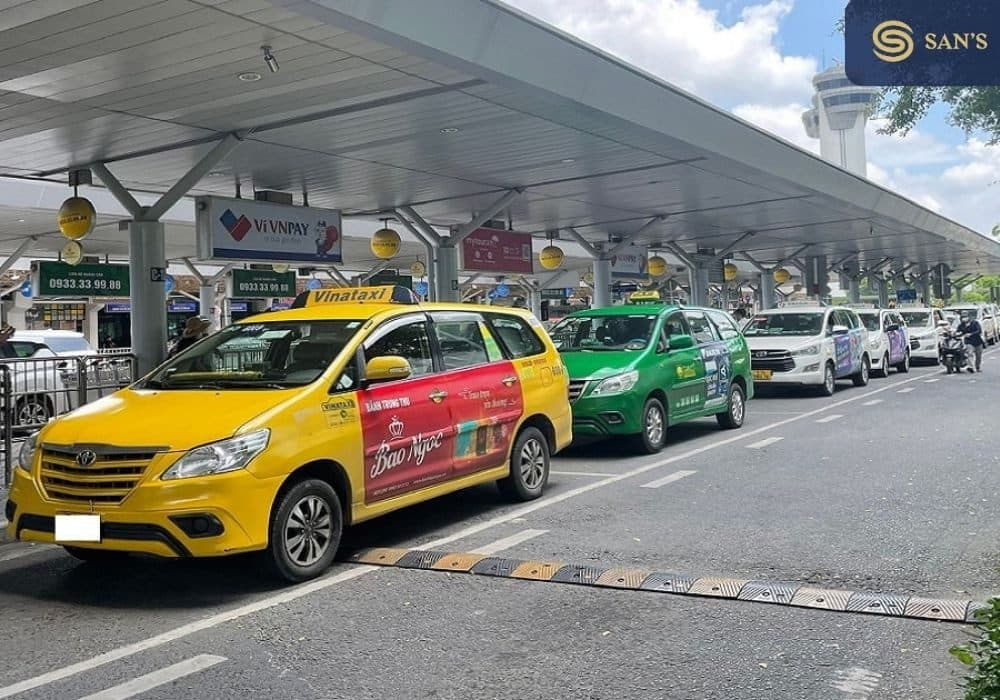
- Use Grab everywhere instead of regular taxis. Set price, no haggling, no scam risk.
- Book domestic flights 2-3 weeks ahead minimum. Same-day fares are 2-3x advance booking prices.
- Bring a card that doesn’t charge foreign fees. Charles Schwab, Wise, Revolut, etc. Over a 2-week trip with multiple ATM pulls, the savings add up to $30-50.
My Honest Pick for Most Travelers
If a friend asked me “what should I budget for 2 weeks in Vietnam from the US/UK in 2026,” I’d tell them to plan for $2,800-3,200 USD all-in for a comfortable mid-range trip.
That gives you nice 3-star hotels, two domestic flights, a 4-star Halong cruise, a small-group Sapa trek, a Vespa food tour in Saigon, and plenty of room to eat well and have a few drinks. You skip the tailor suit (or budget separately for it). You’re not in dorms, you’re not in 5-star resorts. You’re having the version of Vietnam most travelers come away from saying was the best value trip they’ve ever taken.
Drop to $1,500-1,800 if you’re a real backpacker and you’re willing to do sleeper buses and dorms. Push to $5,000-6,000 if you want 5-star resorts and private guides. Vietnam scales beautifully in both directions.
For deeper specifics on the cities themselves, my Saigon travel guide and the exact daily costs in Ho Chi Minh City guides cover the southern leg. And Hanoi / central Vietnam here. For booking transport between cities, 12Go is the platform I keep using because it works in English and handles bus, train and flight in one place.
Any questions about your specific 2-week budget? Drop them in the comments. I read everything.

Keep Exploring Hanoi
-
See & do UltimateReal things to do in Hanoi for travelers who hate big crowds ›
-
Guide Must readIs Hanoi worth visiting? Why I still love it after 10 years ›
-
GuideHanoi vs Da Nang 2026: Which city fits your vibe? ›
-
GuideInside the private Hanoi Da Nang train sleeper cabins ›
-
GuideThe best Hanoi to Sapa route I recommend to all my friends ›











 Tiếng Việt
 한국어
한국어 中文 (中国)
 日本語
日本語 ไทย
ไทย Deutsch
 Español
 Destinations
 Instagram
 Facebook
 X (Twitter)
 Threads
 Tiktok