









 Ha Giang
 Hanoi
Hanoi Ho Chi Minh City
 Ha Long
 Sapa
Sapa Mekong Delta
 Da Nang
 Hue
Hue Hoi An
 Ninh Binh
 Da Lat
 Nha Trang
 Phan Thiet
 Phu Quoc
 Quang Binh
 Quy Nhon
 Vung Tau
 Thai Nguyen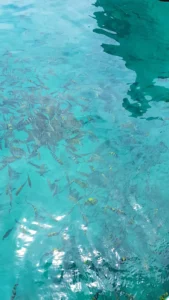


The reviews of these tours contradict each other badly. Some people call it the best day of their trip and some come back saying the coral is dead and they spent two hours being photographed on a beach.
Both of those are accurate descriptions of the same route, and which one you get comes down to a few things you decide before you land.
So, stop by stop: what’s worth your time, what the snorkelling is really like in 2026, whether the private upgrade is worth paying for, and whether the cable car on the end is good value or filler.
- Quick Answer: The 4-island speedboat run through the An Thới archipelago is the best day out on the island. The version I’d book is the Phu Quoc snorkeling tour that bundles the boat with the Hòn Thơm cable car and a buffet, currently around $80 for 8 to 8.5 hours including hotel pickup, gear, lunch and the water park. The cable car ticket alone costs 850,000 VND, about $33, which is most of what justifies the price.
- The Four Stops:
- Coral Park. Brief. This is where the Seawalker add-on is sold.
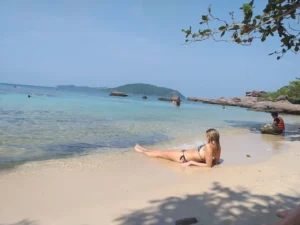
- Hòn Mây Rút. Two hours. Beach, shallow water, the photo and drone session.
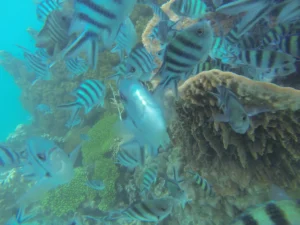
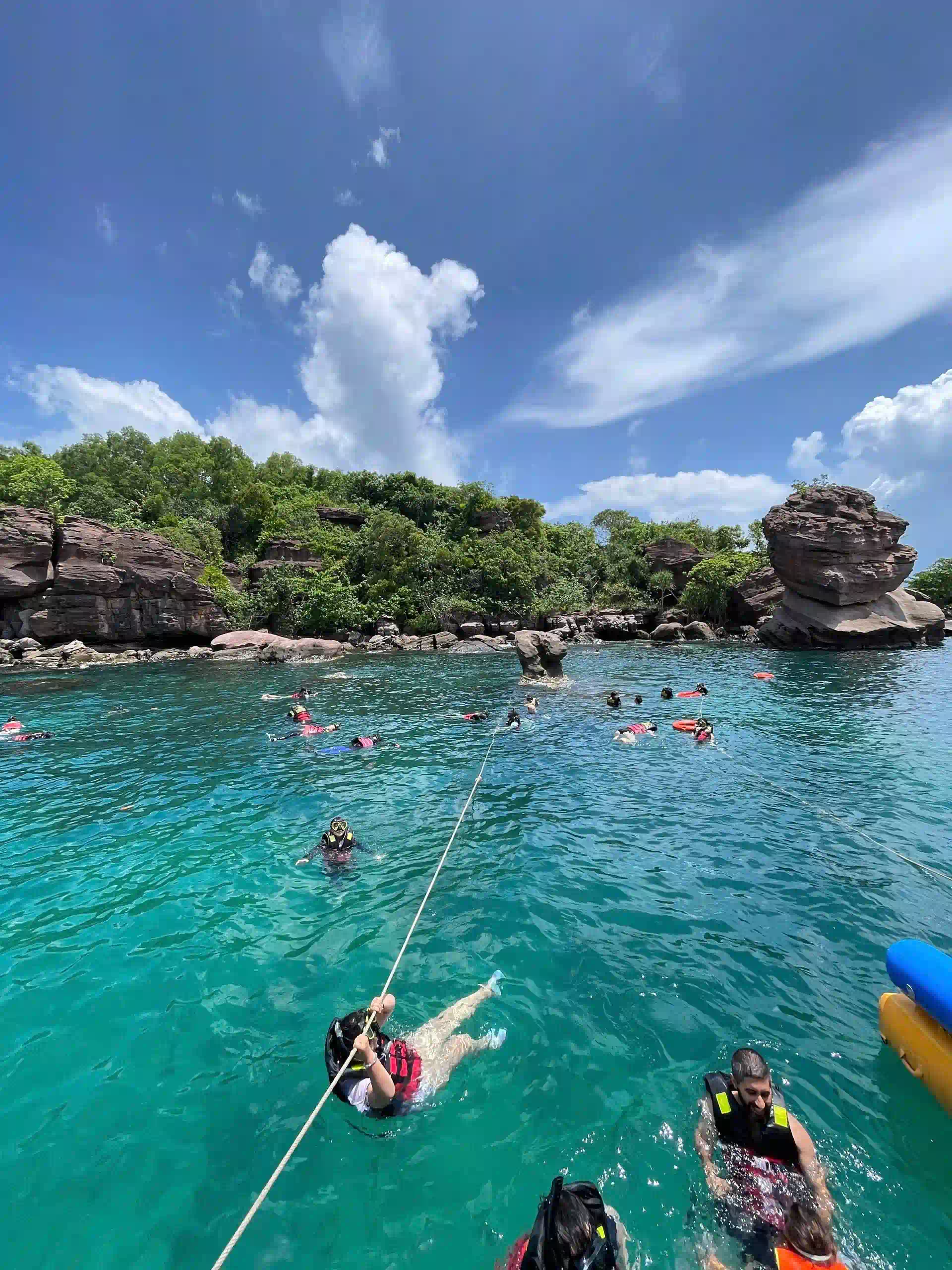
- Hòn Gầm Ghì. One hour. The real snorkelling, on reef sitting close to the surface.
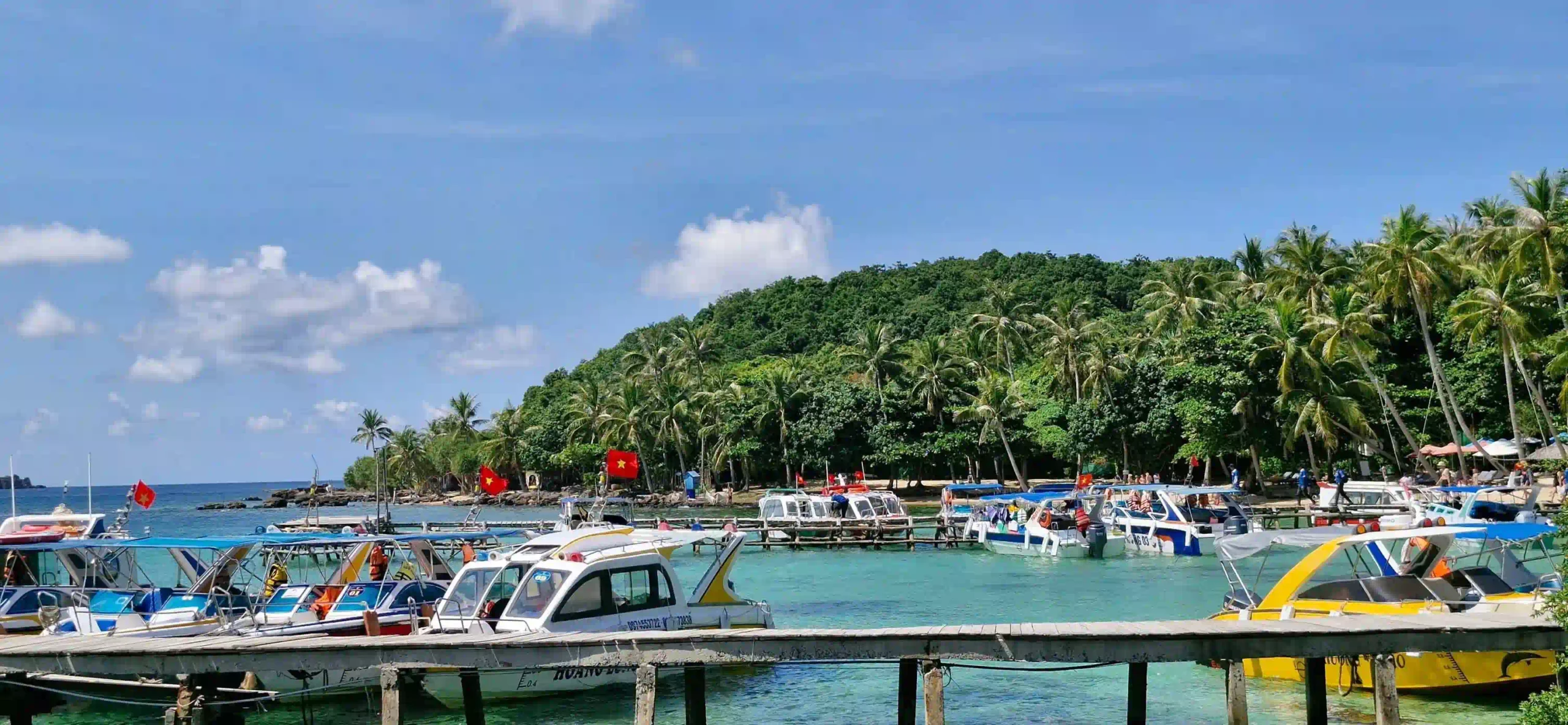
- Hòn Thơm. Buffet lunch, Aquatopia water park, cable car home across the sea.
- What I’d Want to Know Before Booking:
- Gầm Ghì’s coral has been worn down by years of boat anchoring and people standing on it. There’s still plenty to see. It isn’t the postcard.
- Mây Rút is the photo stop. You can ask the guide to take you snorkelling instead, at no cost.
- The buffet is a resort buffet. Fine, and no more than that.
- The cable car ends up being the highlight for a lot of people.
- Price and Conditions:
- $80 per person, free cancellation up to 24 hours before.
- Free pickup in Dương Đông, Bãi Trường and An Thới. Ông Lang and Vinpearl pay 100,000 VND extra. Hàm Ninh and the east coast aren’t served.
- Under 1 metre tall is free, 1 to 1.4 metres is a child rate.
- 100,000 VND holiday surcharge on Tết, 30/4, 1/5, 2/9, Christmas and New Year.
What the 4-Island Phu Quoc Snorkeling Tour Includes
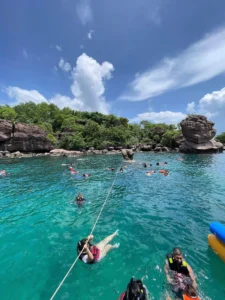
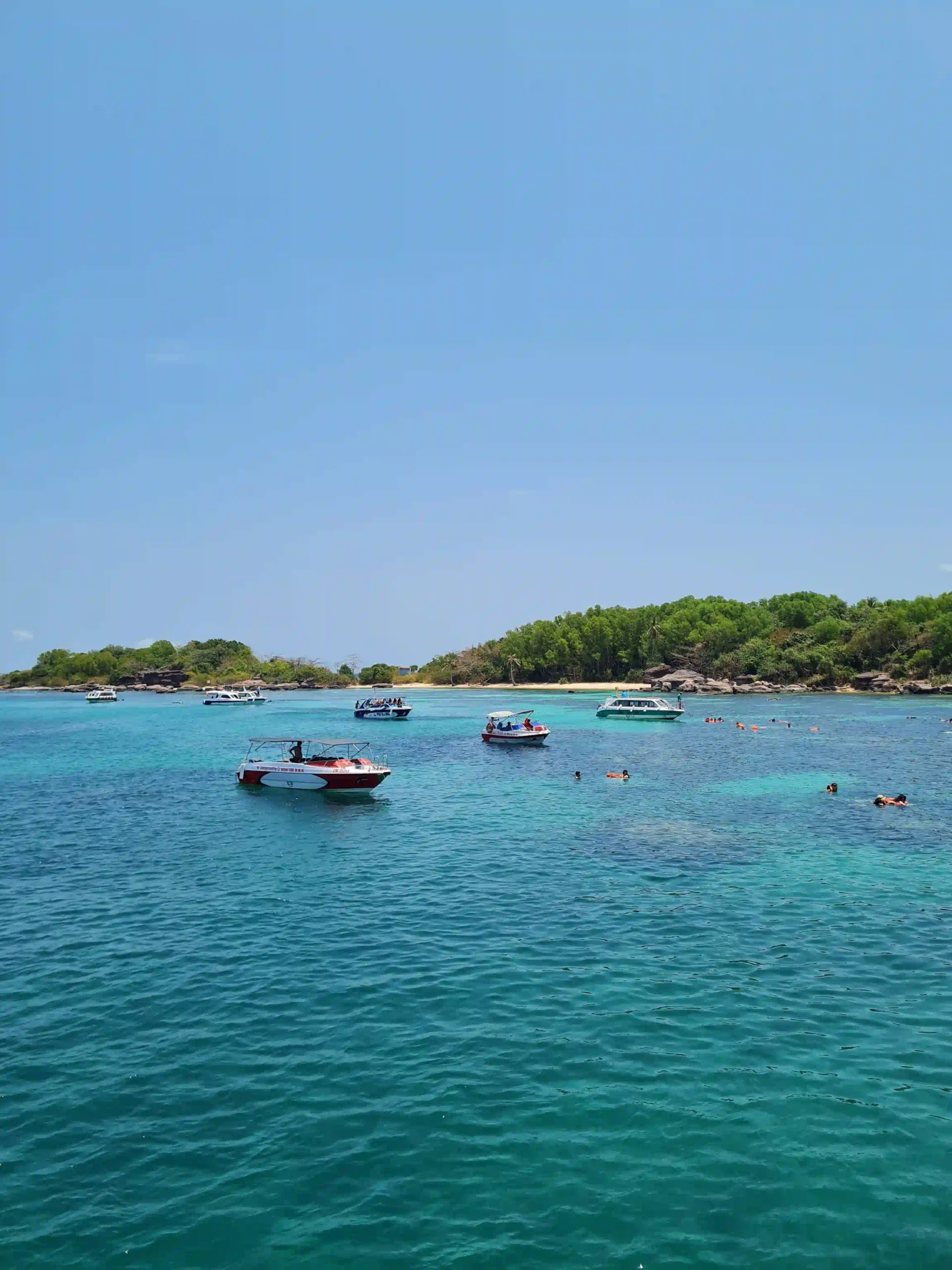
The An Thới archipelago is a scatter of small islands off the southern tip of Phu Quoc. Almost nobody lives on them, the water between them is calm from November through April, and everything worth snorkelling on this island is down there.
Every boat tour here runs some version of the same route. What changes is the boat, how many people are on it, how many stops it makes, and whether Hòn Thơm and the cable car are attached at the end.
| Duration | 8 to 8.5 hours, pickup around 8:30, back between 5 and 6 |
| Boat | Speedboat, not a wooden boat |
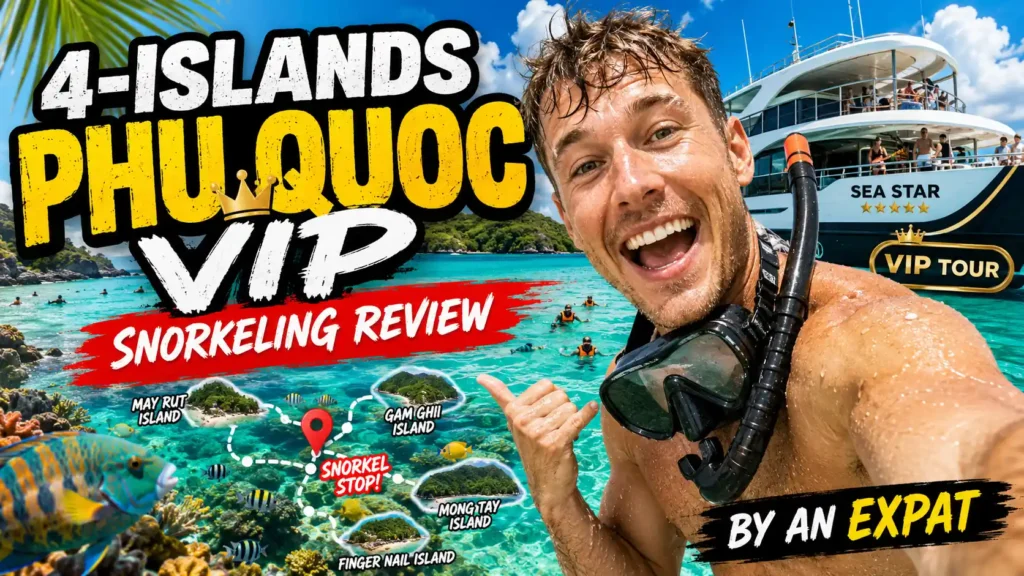
| Stops | Coral Park, Hòn Mây Rút, Hòn Gầm Ghì, Hòn Thơm |
| Included | Hotel pickup, snorkel gear, buffet lunch, Aquatopia entry, cable car ticket, photos and drone footage, water on the boat |
| Not included | Seawalker, drinks on Hòn Thơm, tips |
| Price | $83 per person, free cancellation to 24 hours out |
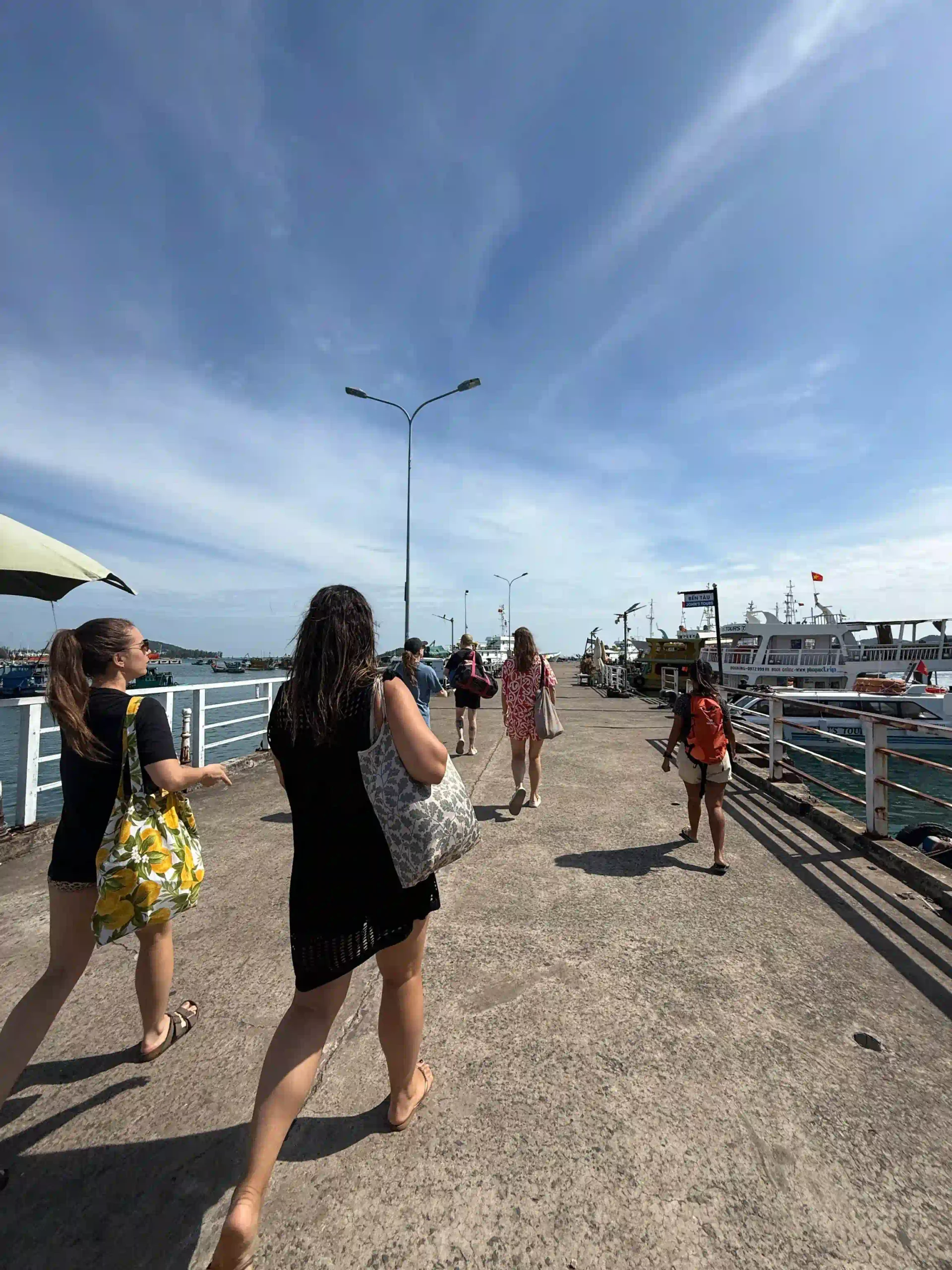
Pickup is free if you’re in Dương Đông, Bãi Trường or An Thới. Ông Lang and the Vinpearl end pay 100,000 VND more. If you’re staying over on the Hàm Ninh side or somewhere remote, pickup isn’t offered and you make your own way to the meeting point, which is worth checking before you book a hotel out there.
Guests staying central or north gather at Ngọc Hiền Pearl Farm and get about half an hour there before the transfer to the harbour. It’s a shop with a short explanation of pearl farming attached. The explanation is more interesting than I expected it to be. It’s still a shop.
I’d use the time to buy water and put sunscreen on, because once you’re on the boat you won’t want to be going through a bag.
The Four Stops, and What Each One Is Worth
Coral Park and the Seawalker Add-On
- Time: short, roughly 15 minutes on the water
- What it is: the first stop out of the harbour, and where the upsell happens
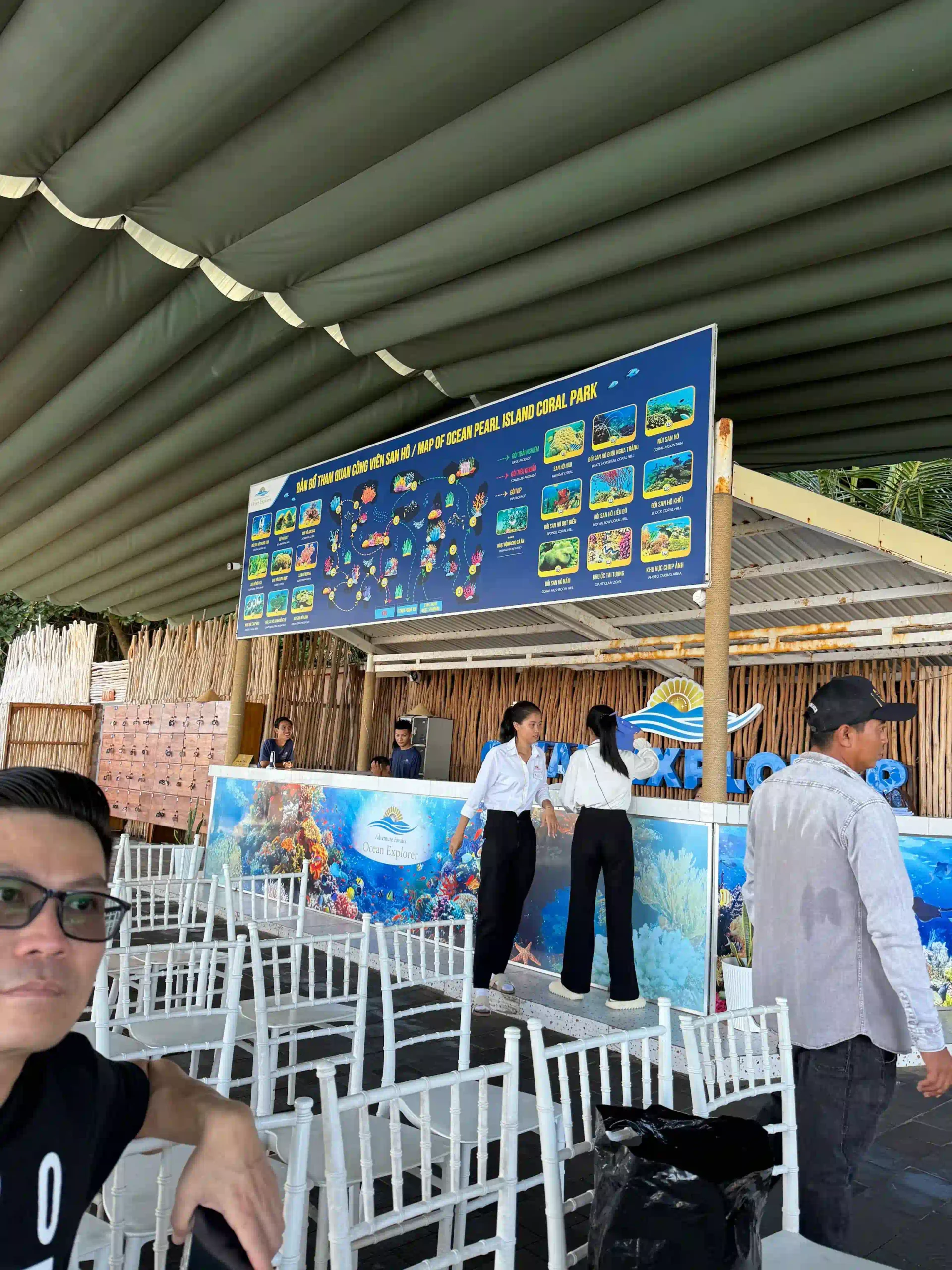
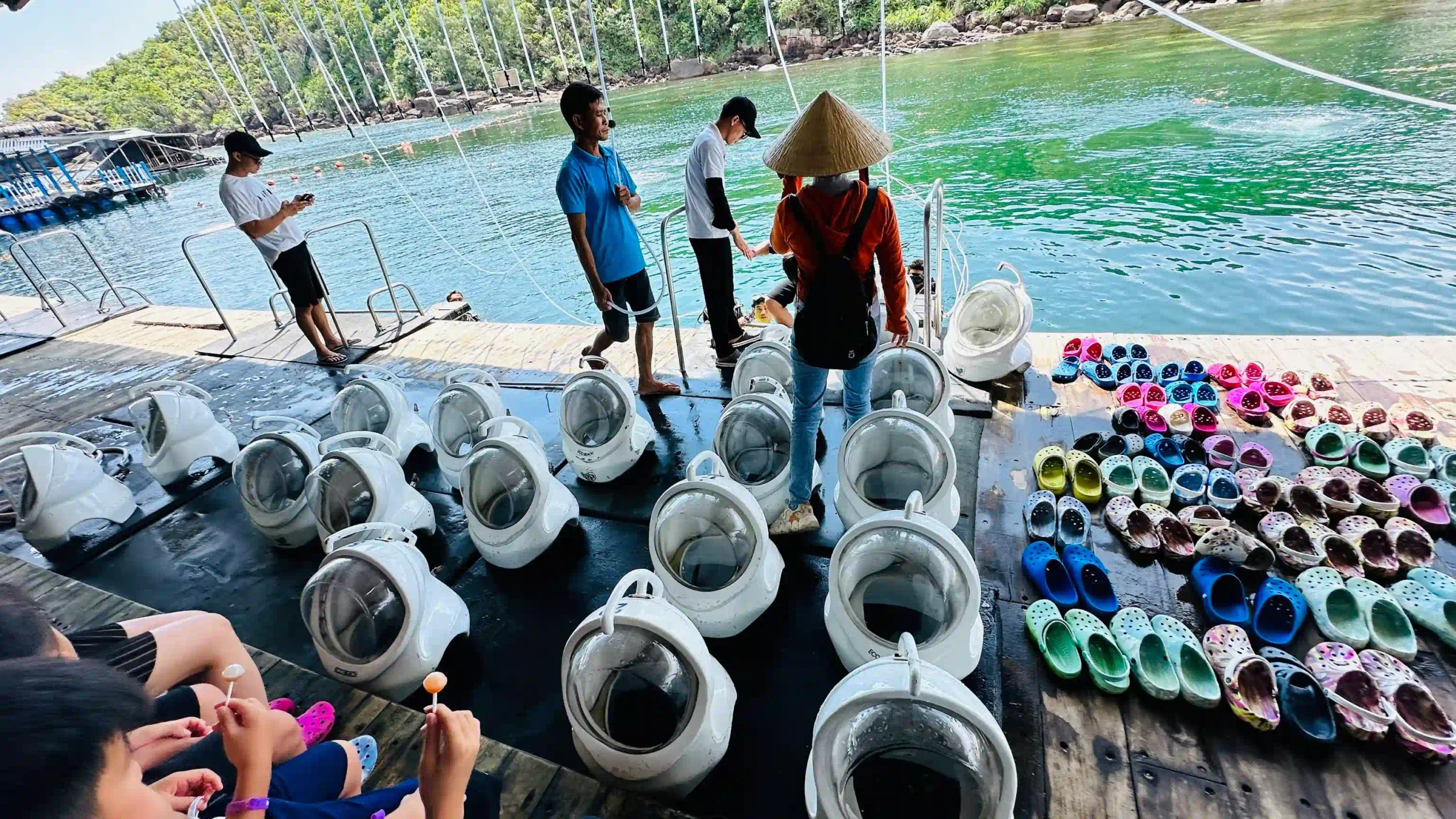
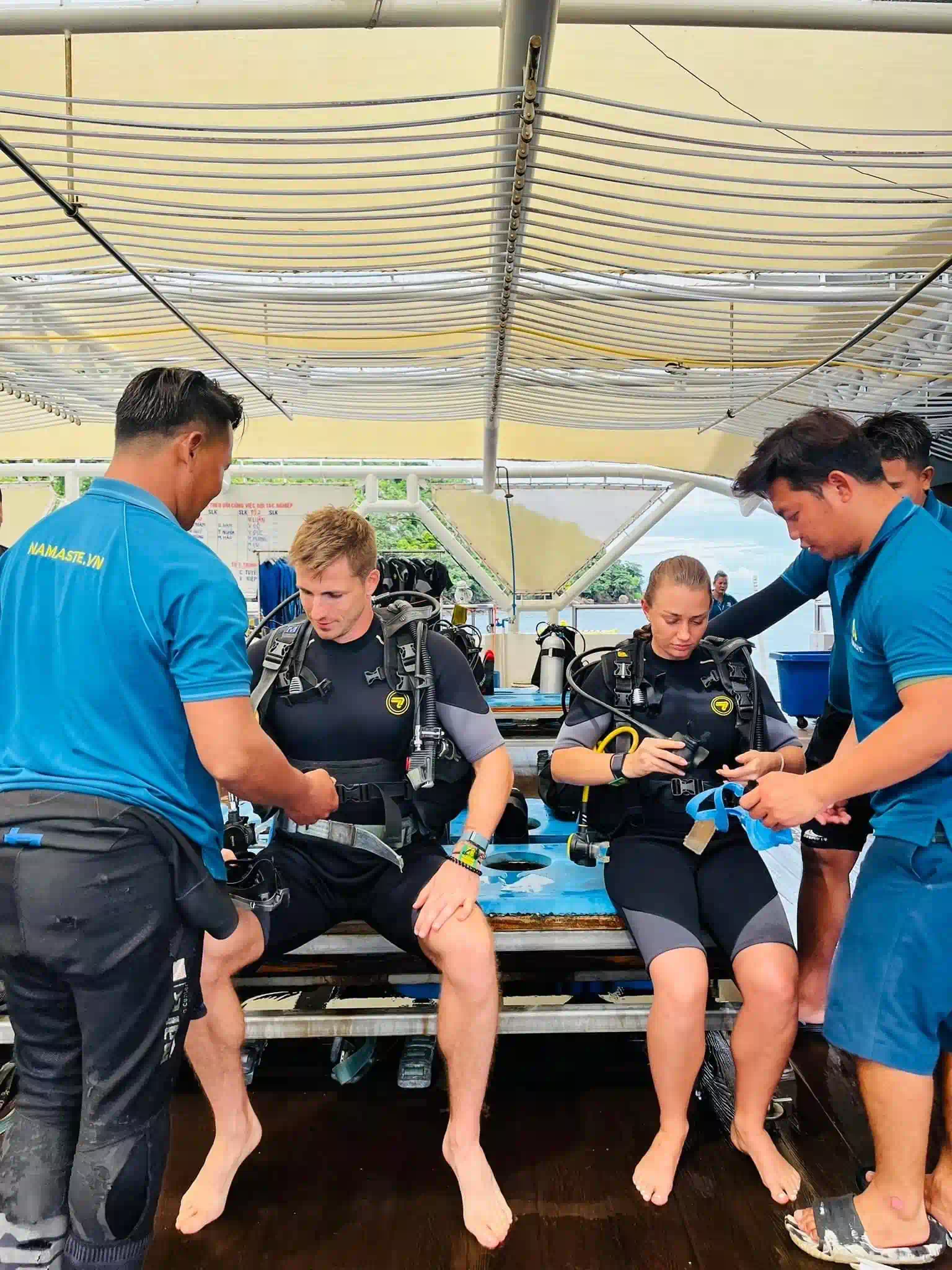
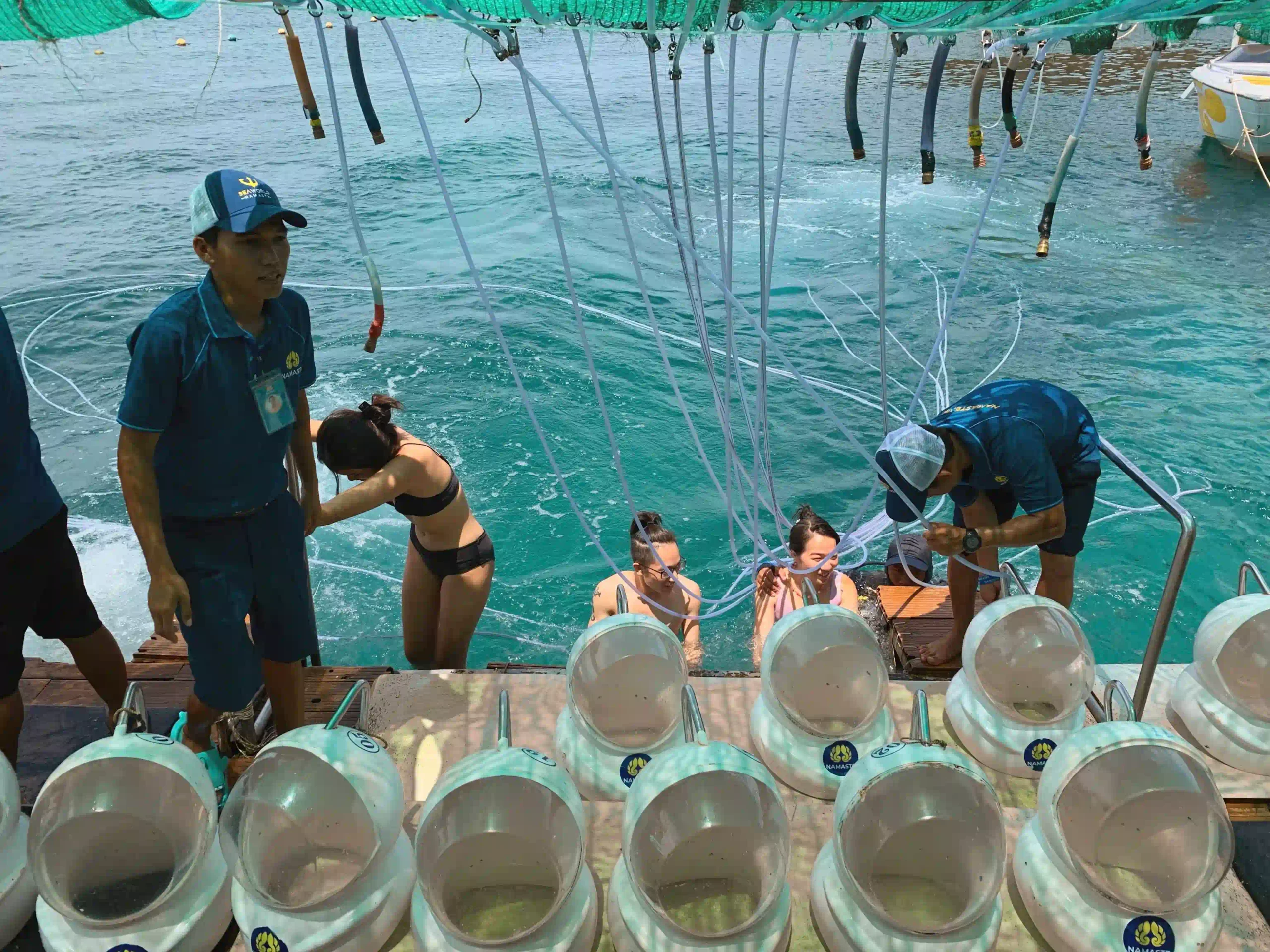
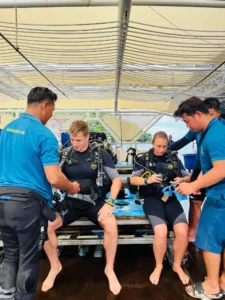
Seawalker is here. Helmet, air hose, you walk along the seabed. It costs extra on top of the tour price.
It exists for people who can’t or won’t swim, and for them it’s a reasonable buy. If you’re comfortable putting your face in the water with a mask on, Gầm Ghì later will show you more and you’ve already paid for it.
Hòn Mây Rút: The Beach Stop
- Time: 10:00 to 12:00, the longest stop of the day
- Order of business: swimming, photos, drone footage
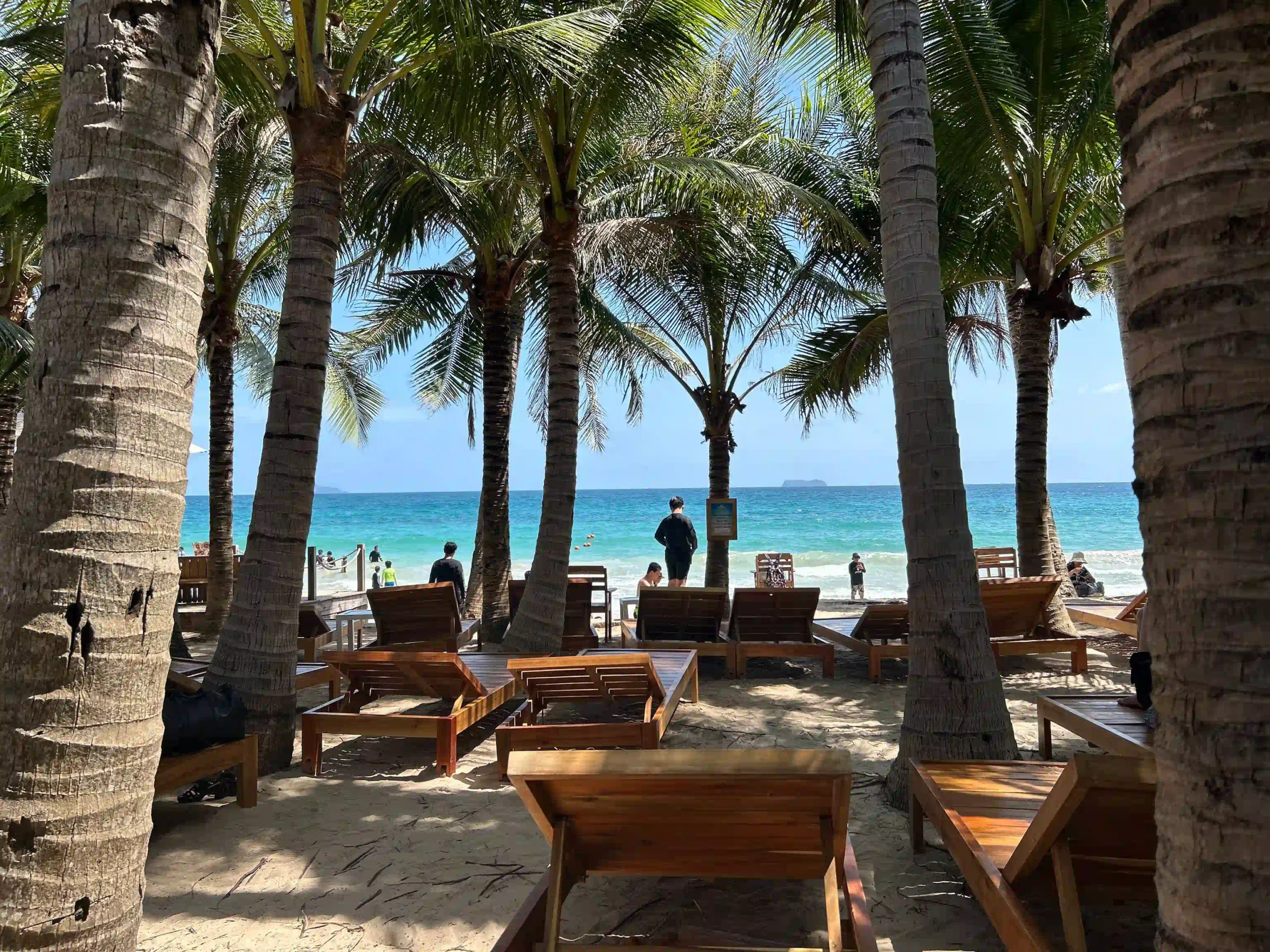
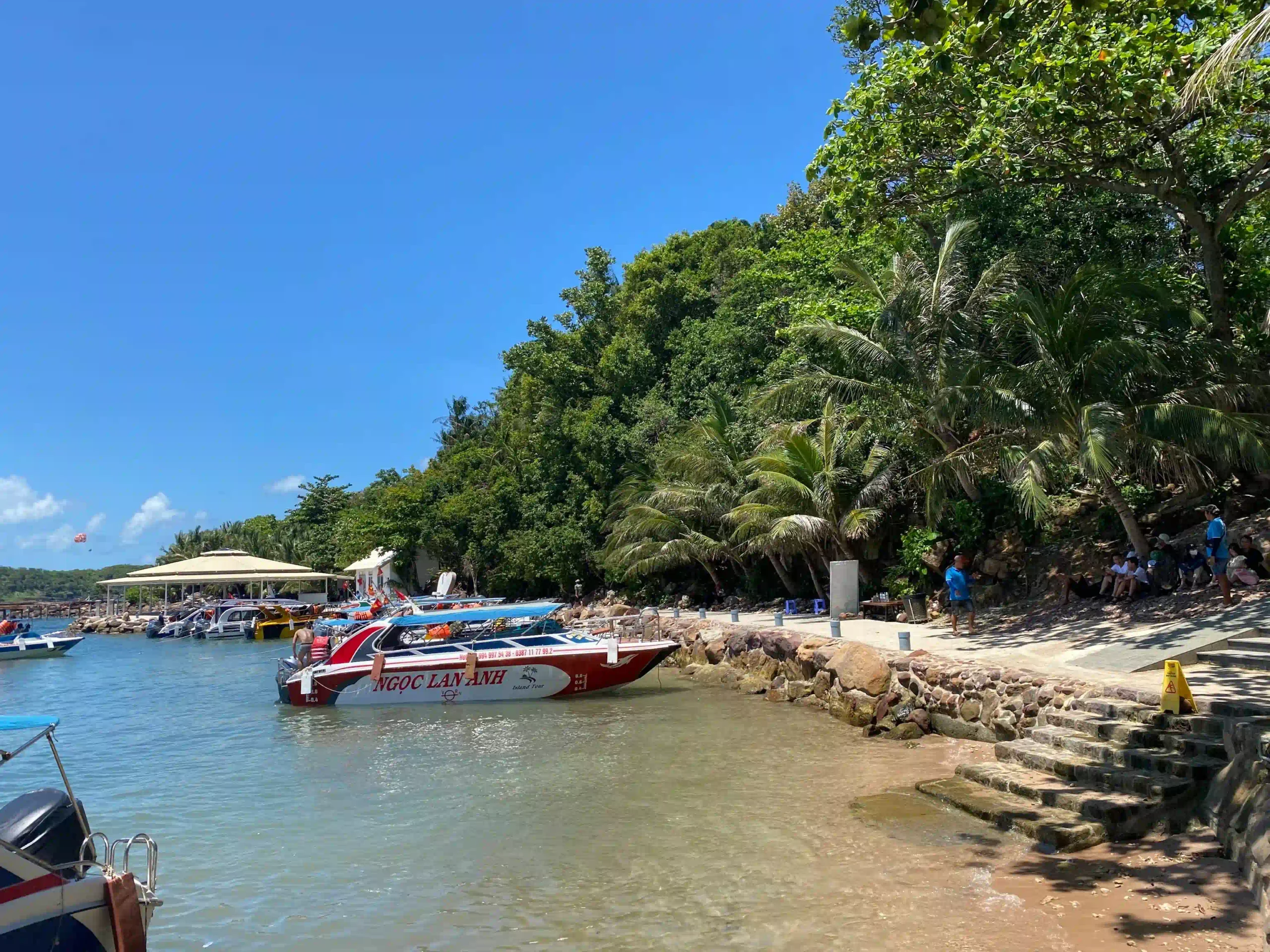
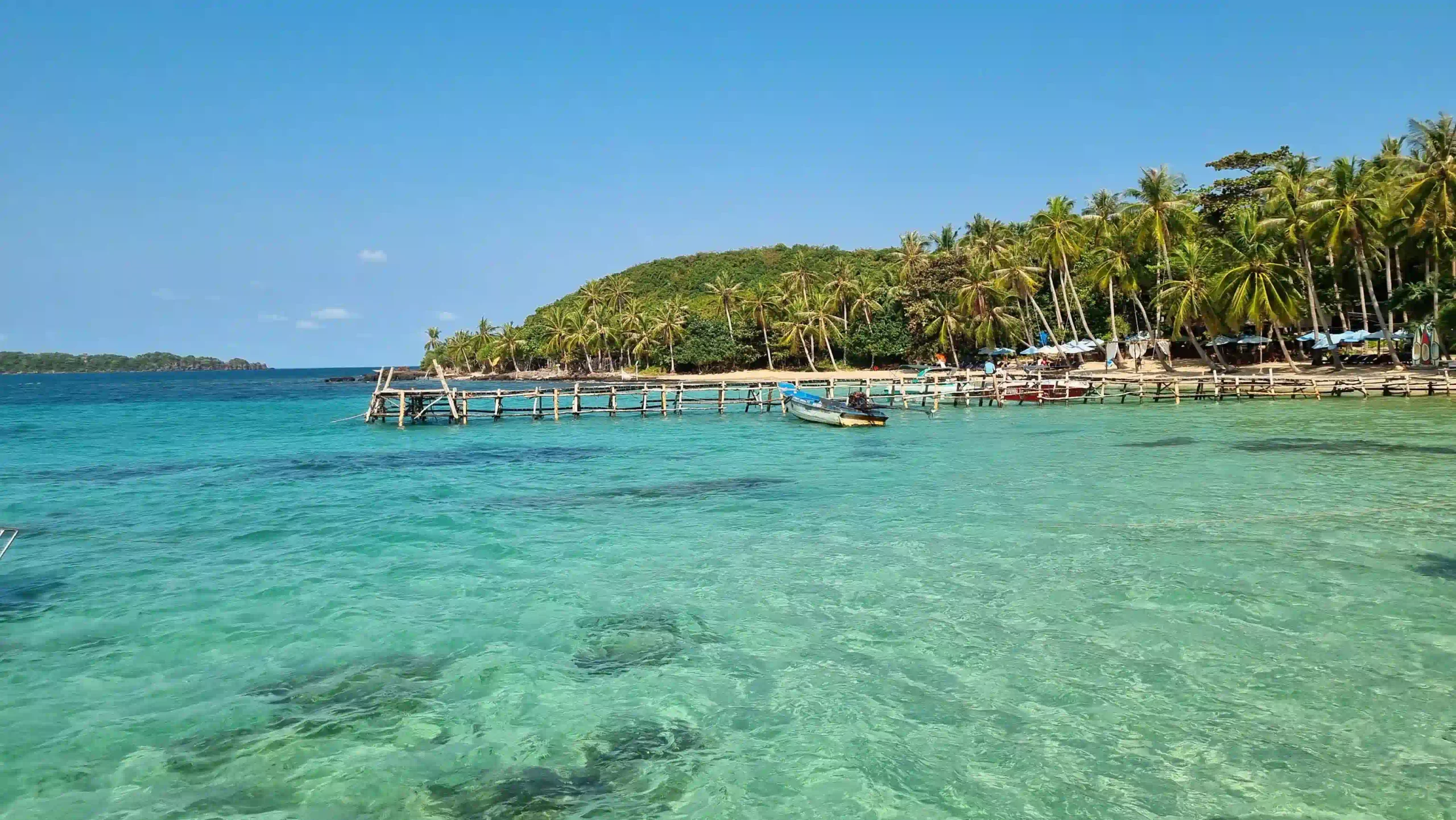
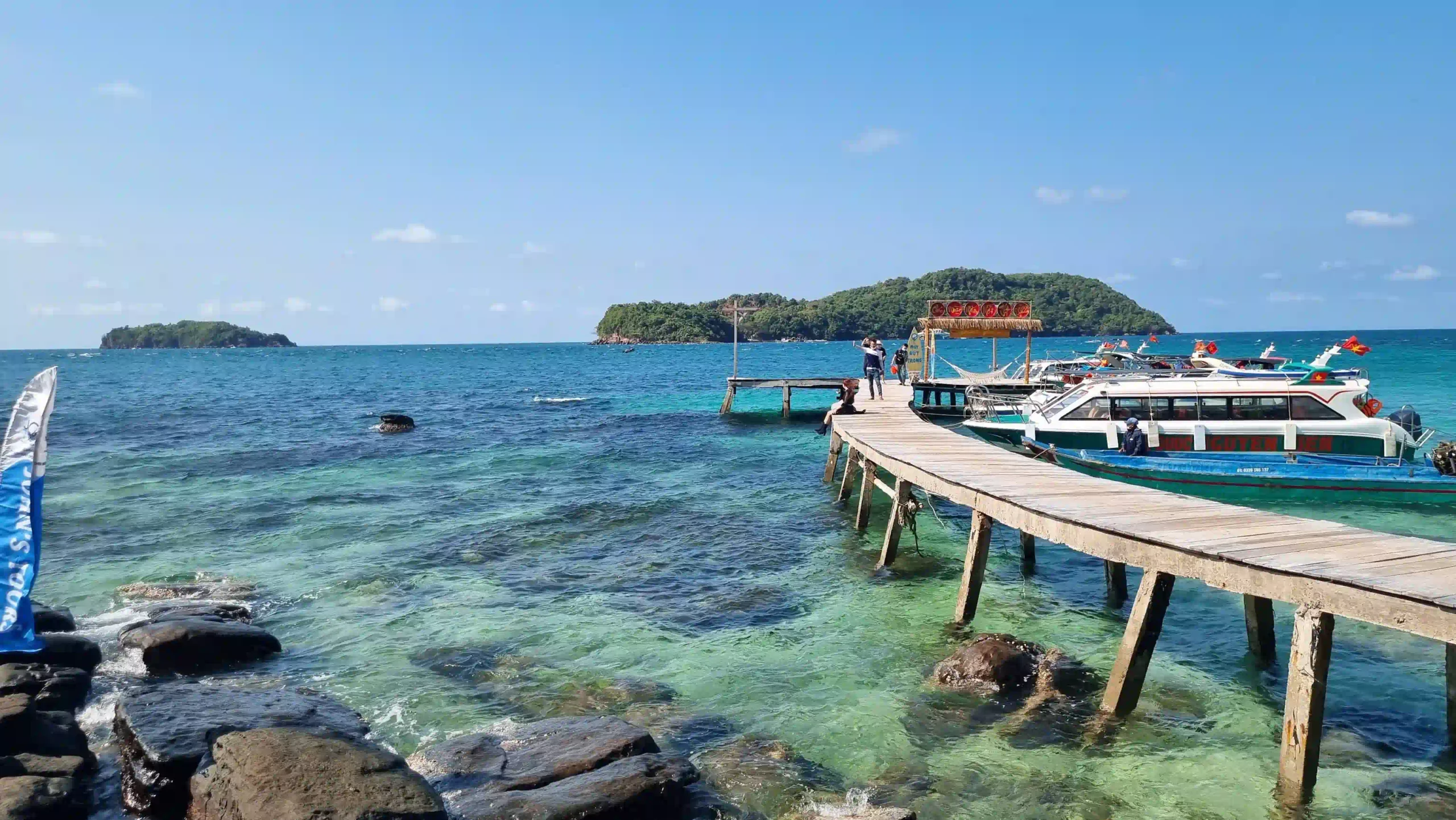
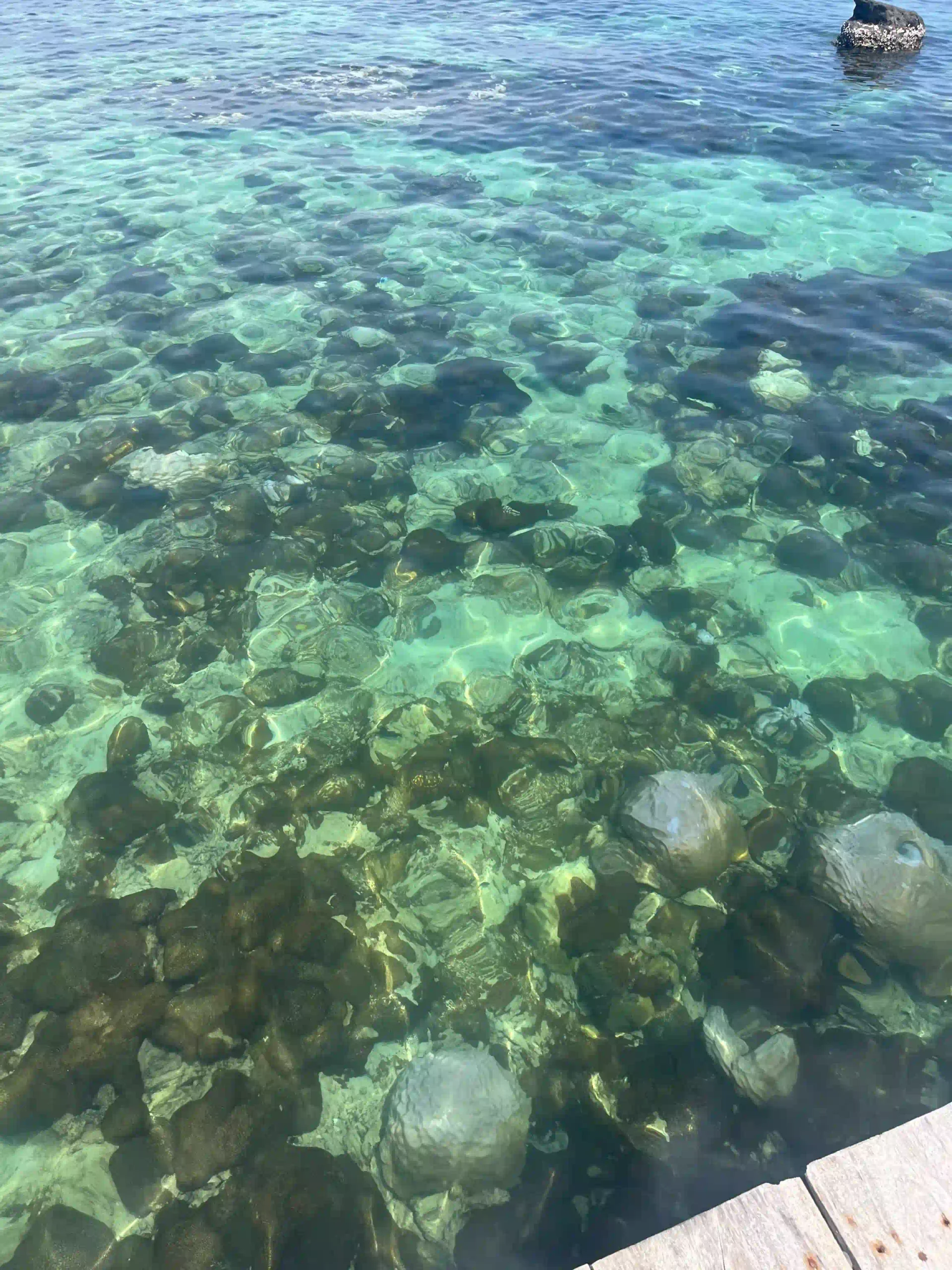
Mây Rút is the beach. White sand, water shallow enough to stand in a long way out, palm trees behind. This is where the tour photos come from, and the day includes a photographer and a drone that get used here.
Two hours is a lot of beach if you came for reef. If you’d rather be in the water, tell the guide and they’ll take you for extra snorkelling instead. It doesn’t cost anything and hardly anyone asks. I did it the second time and it was the better use of the morning.
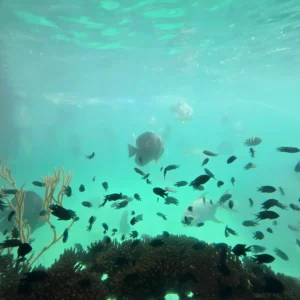
There is coral off Mây Rút, close in, with small fish over it. Warm water, no current, nothing to be nervous about. For a first-time snorkeller this is the gentler of the two spots and the place to sort your mask out.
Hòn Gầm Ghì: The Snorkeling Stop
- Time: 12:00 to 13:00
- Depth: shallow, roughly one to three metres over the reef
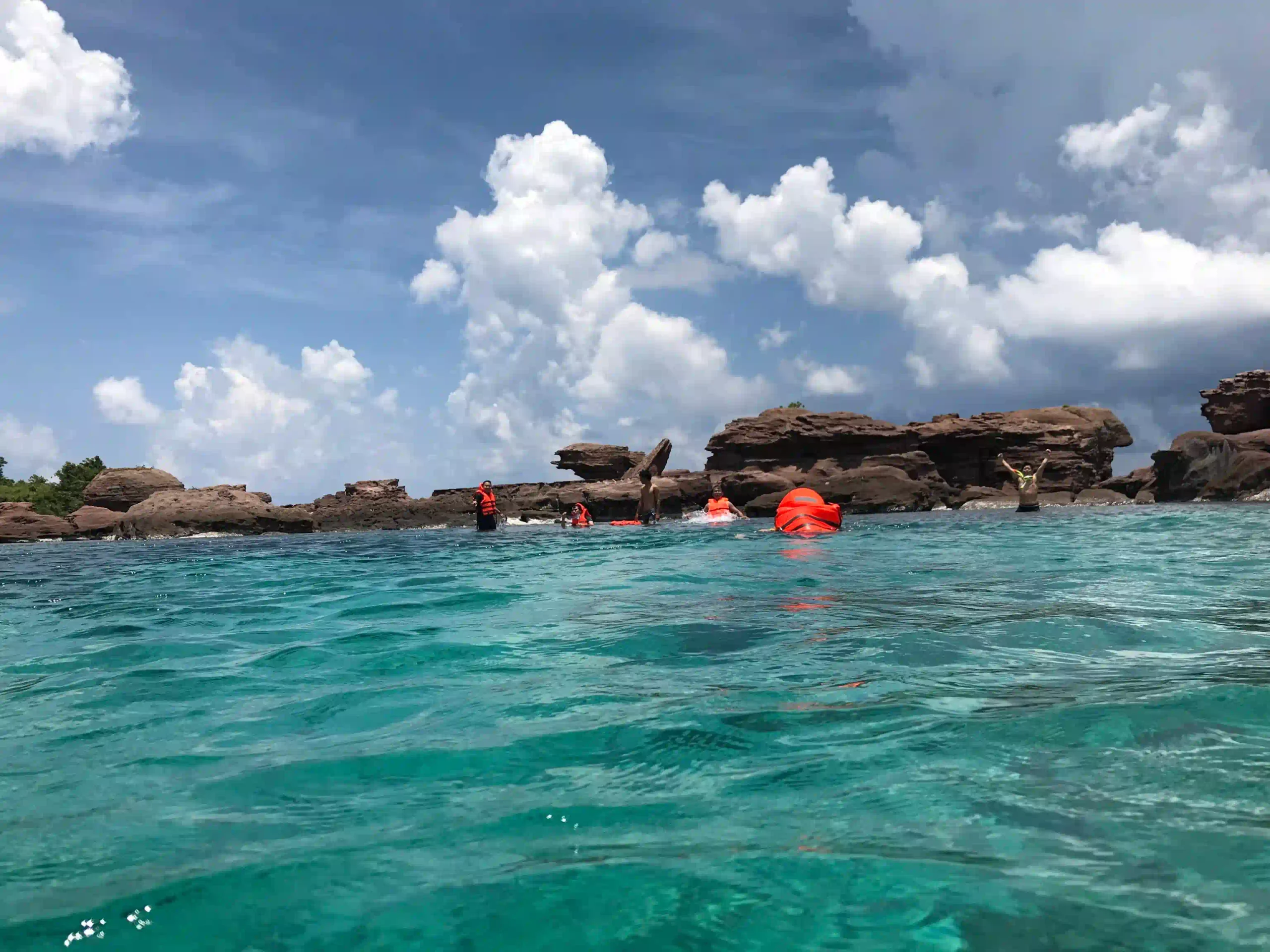
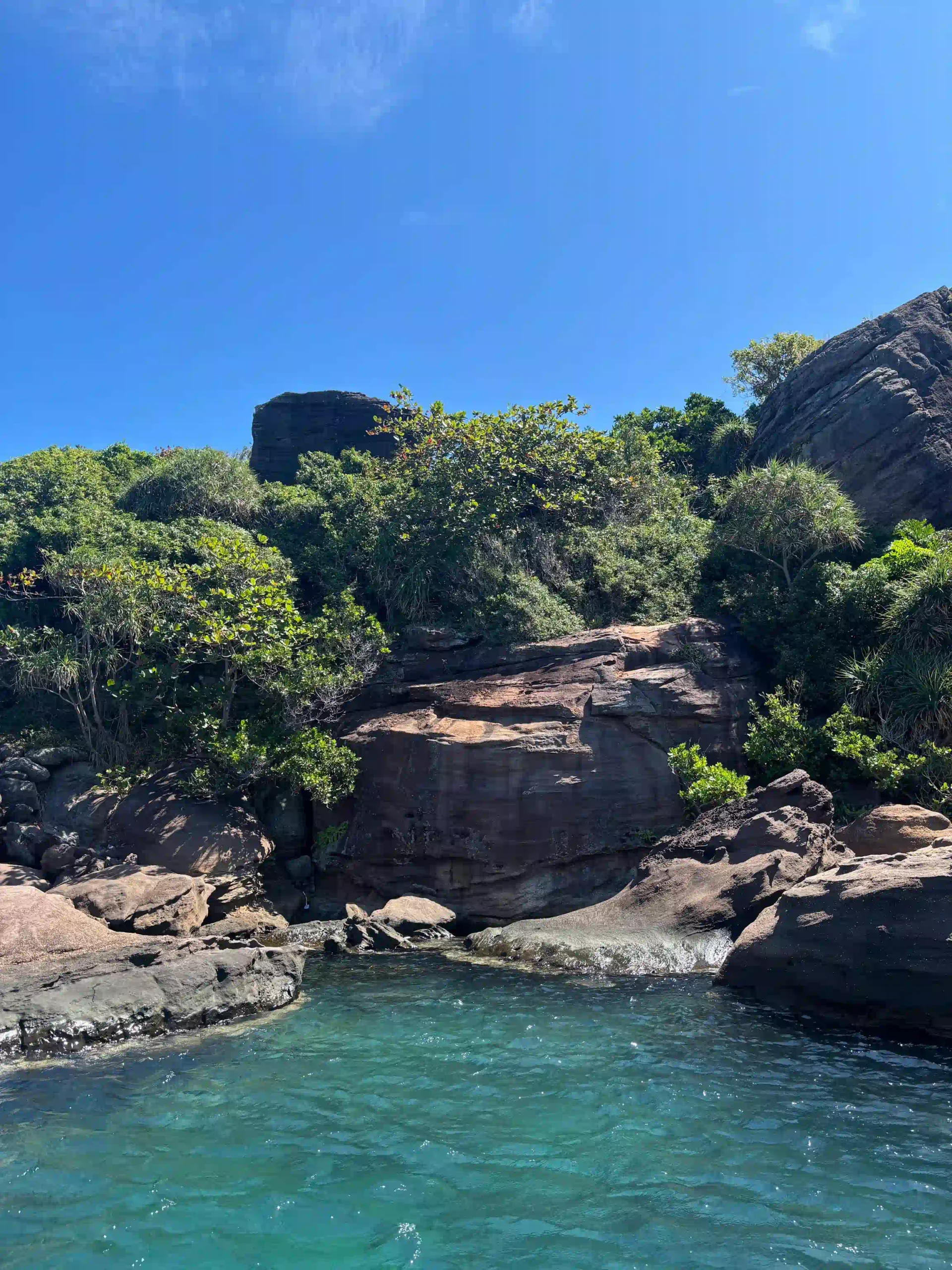
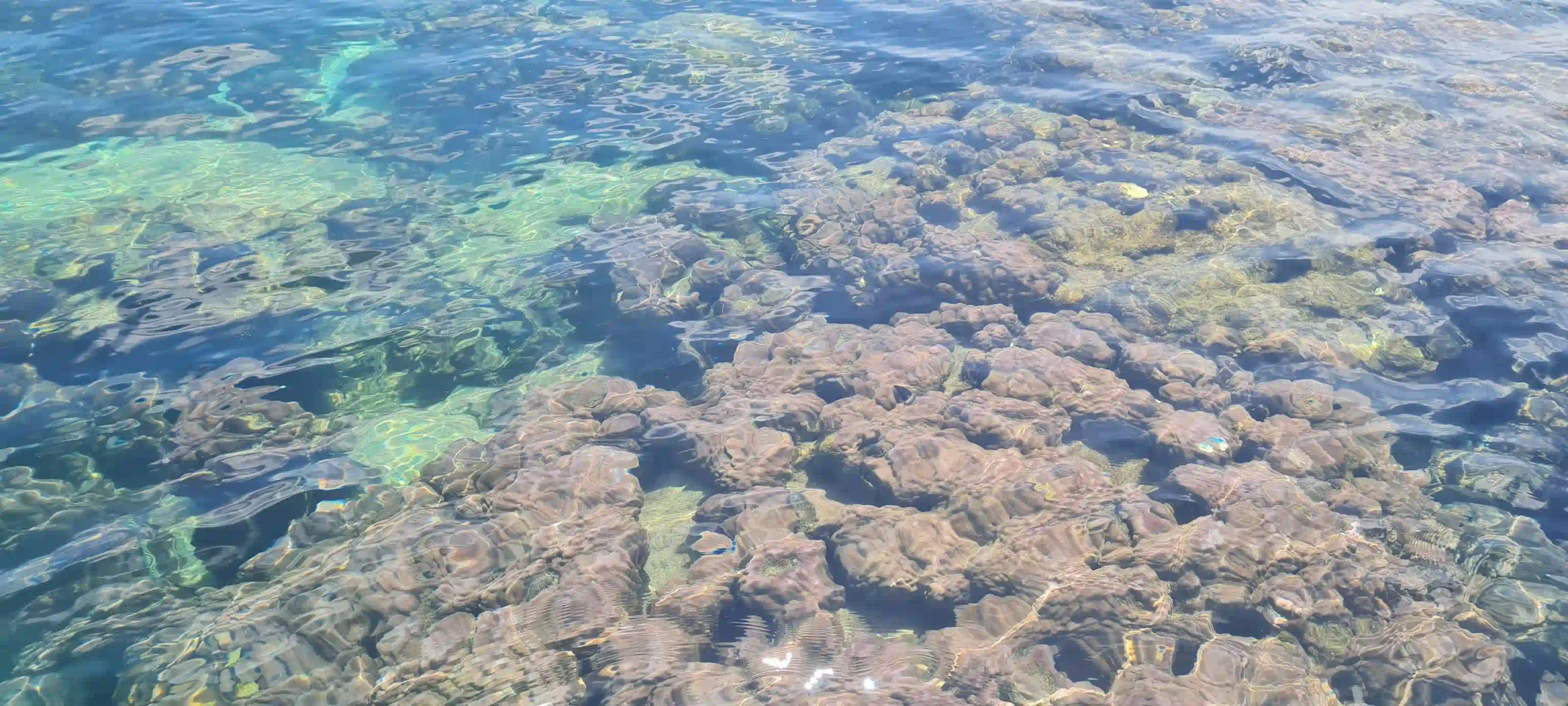
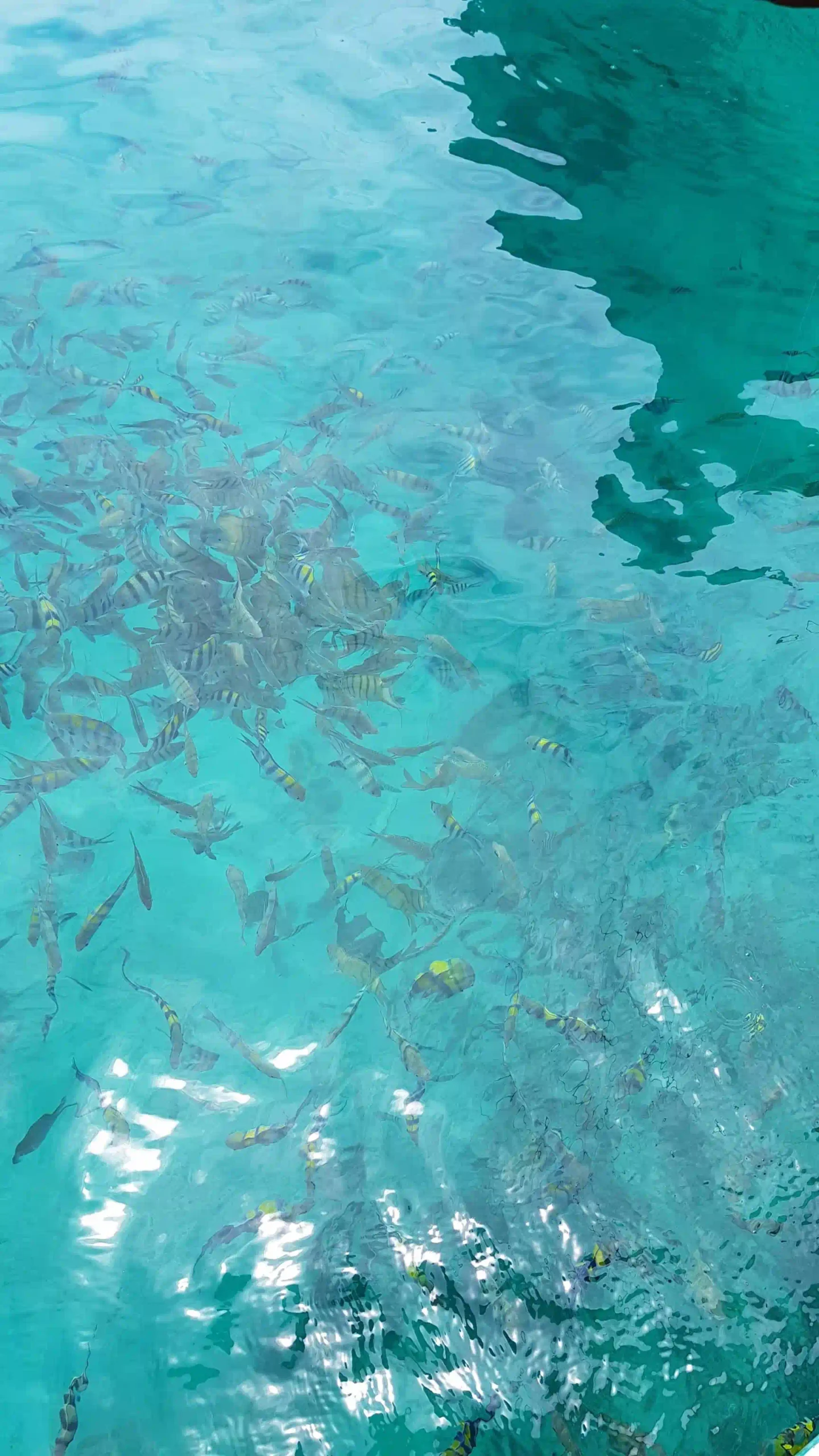
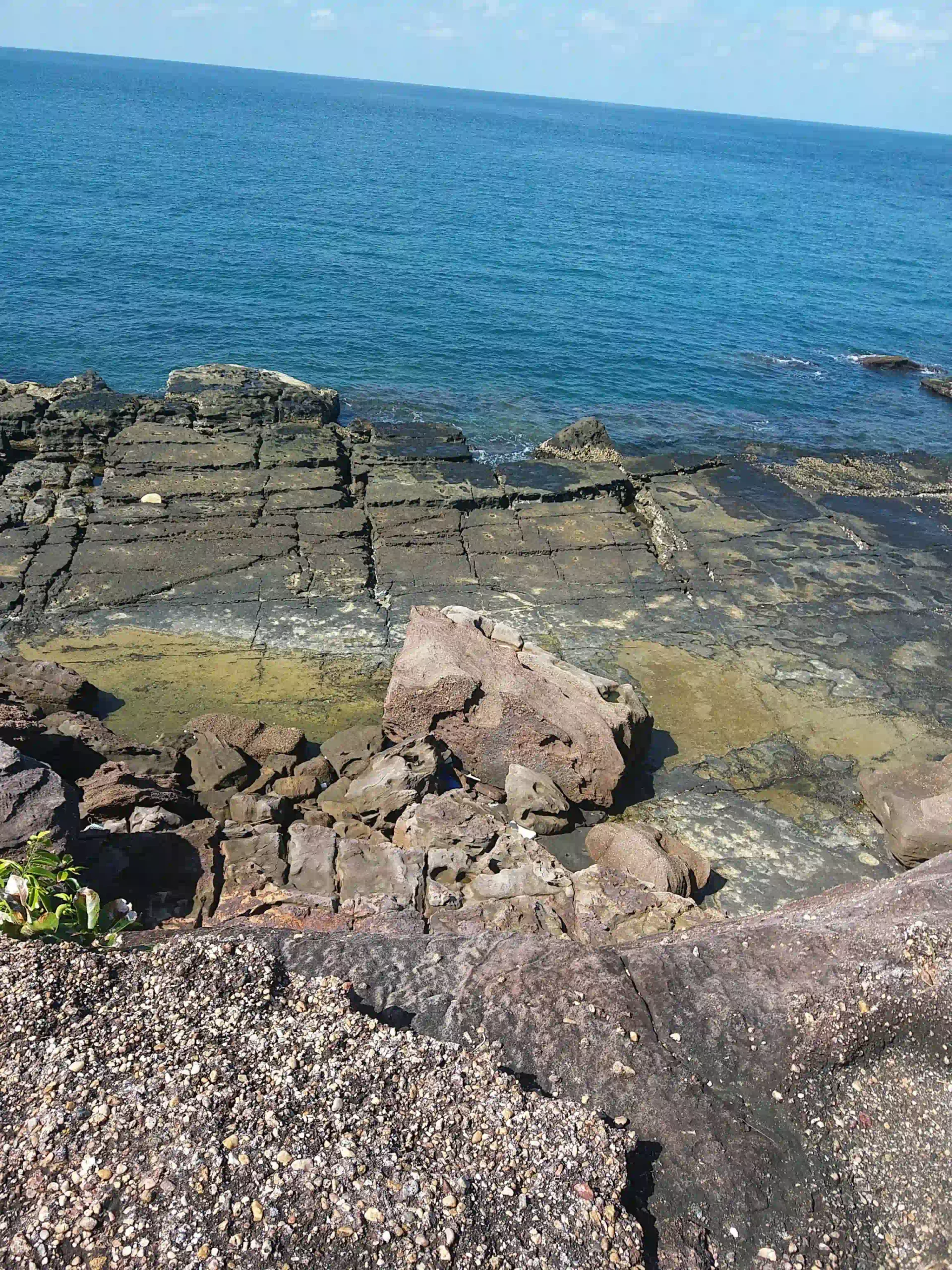
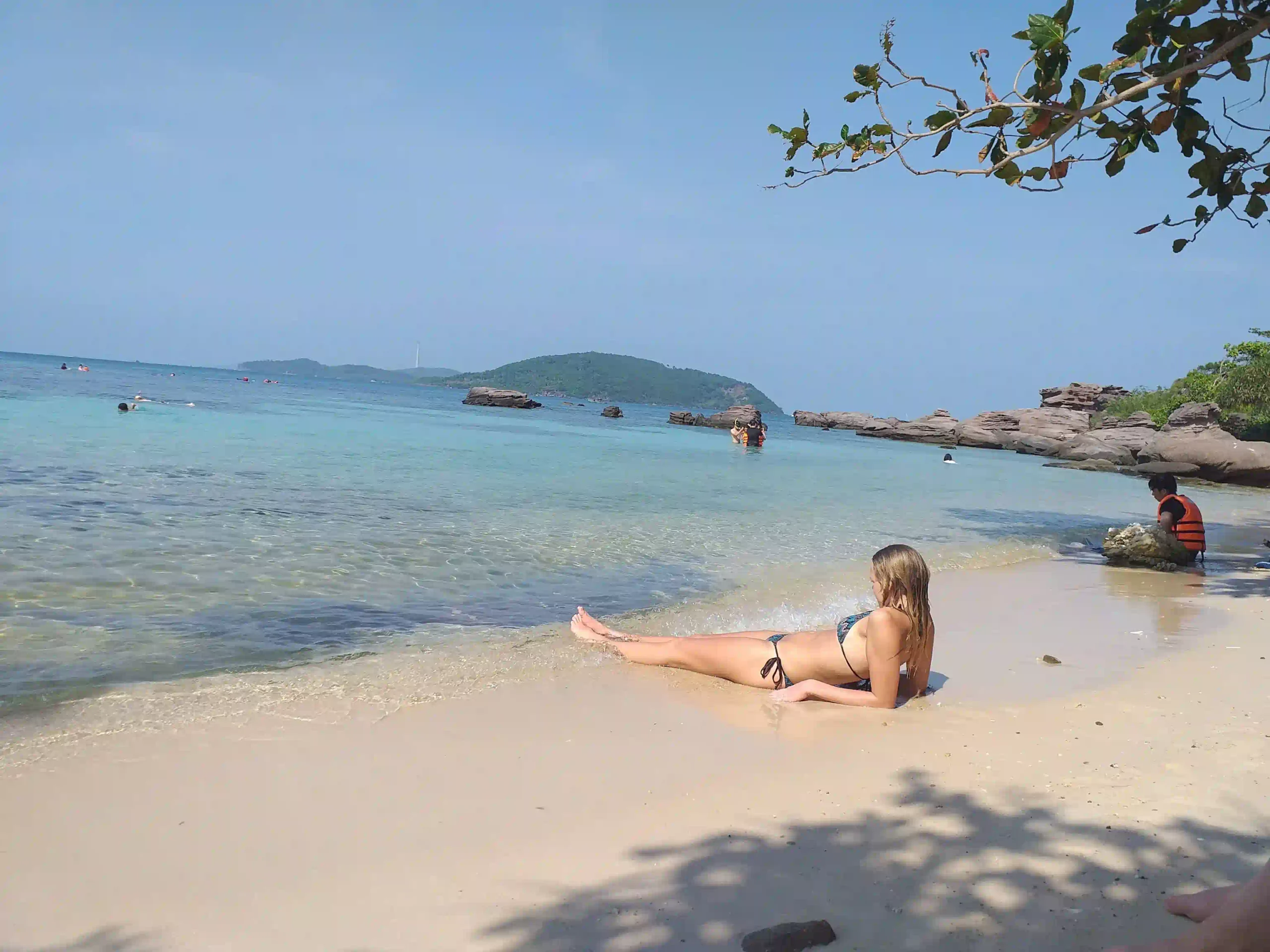
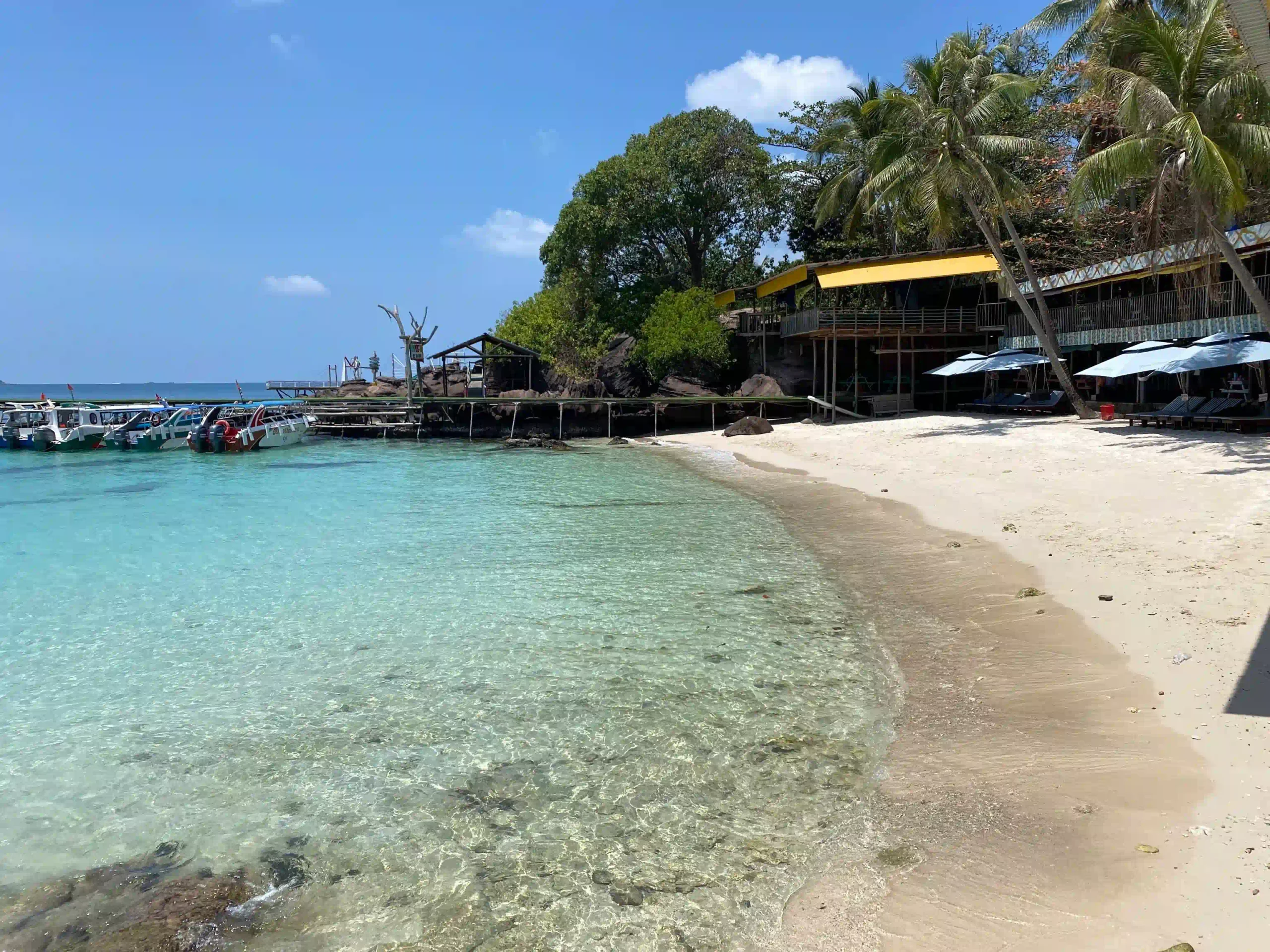
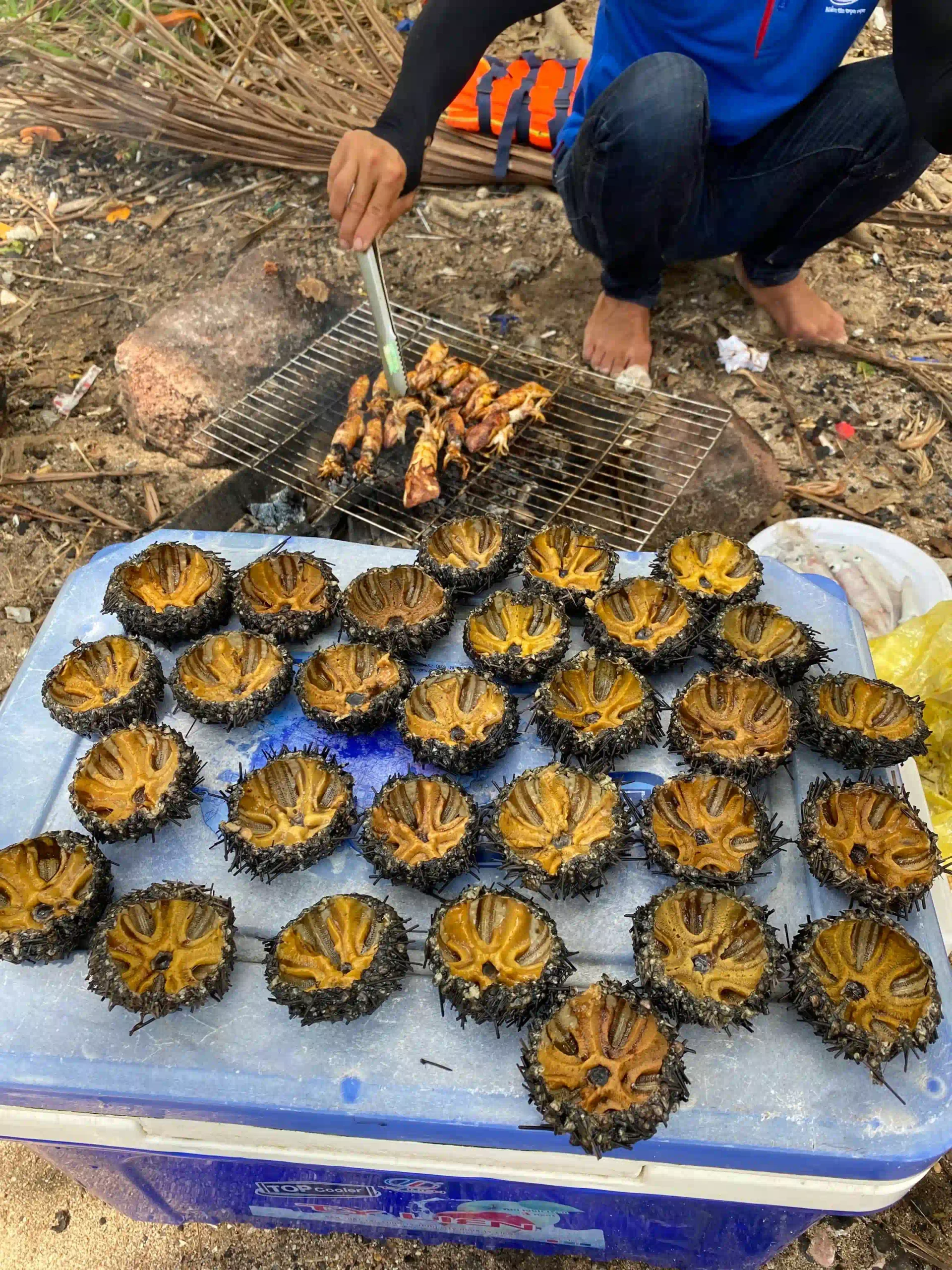
This is the stop the day is built around. Vietnamese guides call Gầm Ghì the coral kingdom and it’s the most photographed reef on Phu Quoc.
Hard corals and large plate formations sitting close enough to the surface that you never need to dive down, which is what makes it work for people who aren’t strong swimmers.
The shallowness is also the problem, which is the next section.
An hour is enough. The reef isn’t large and you’ll cover it. What I’d do with that hour is work the outer edge, because the middle is where every boat drops its group and where most of the group stays.
Hòn Thơm: Lunch, Aquatopia and the Cable Car
- Time: 13:30 to 16:00 on the island, cable car at 16:00
- Included: buffet at the Mango restaurant, water park entry, cable car ticket
The boat lands at Hòn Thơm and the day changes character.
Lunch is a resort buffet. Wide spread, plenty of it, no surprises in either direction. Then two and a half hours on the island with Aquatopia included.
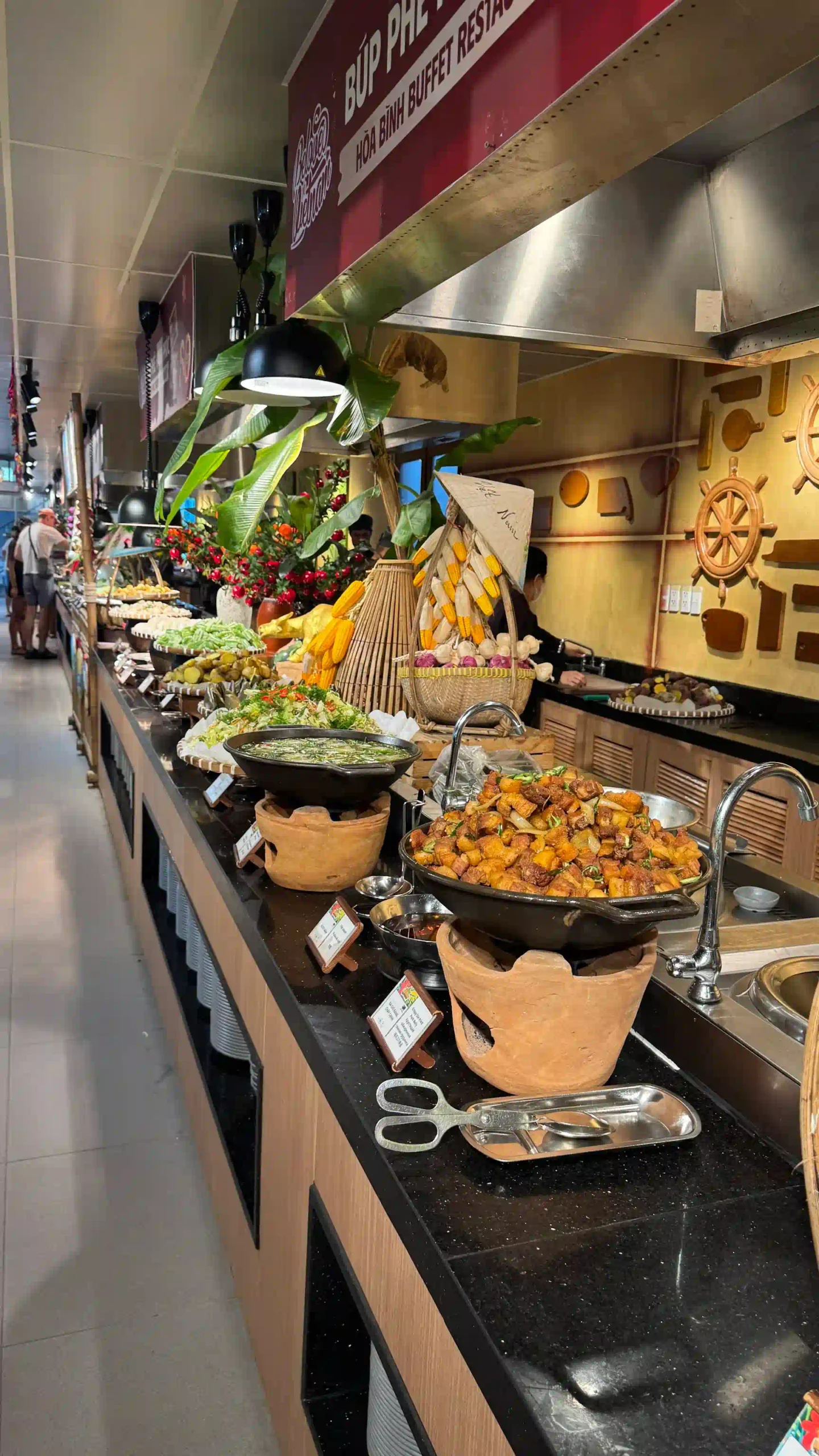
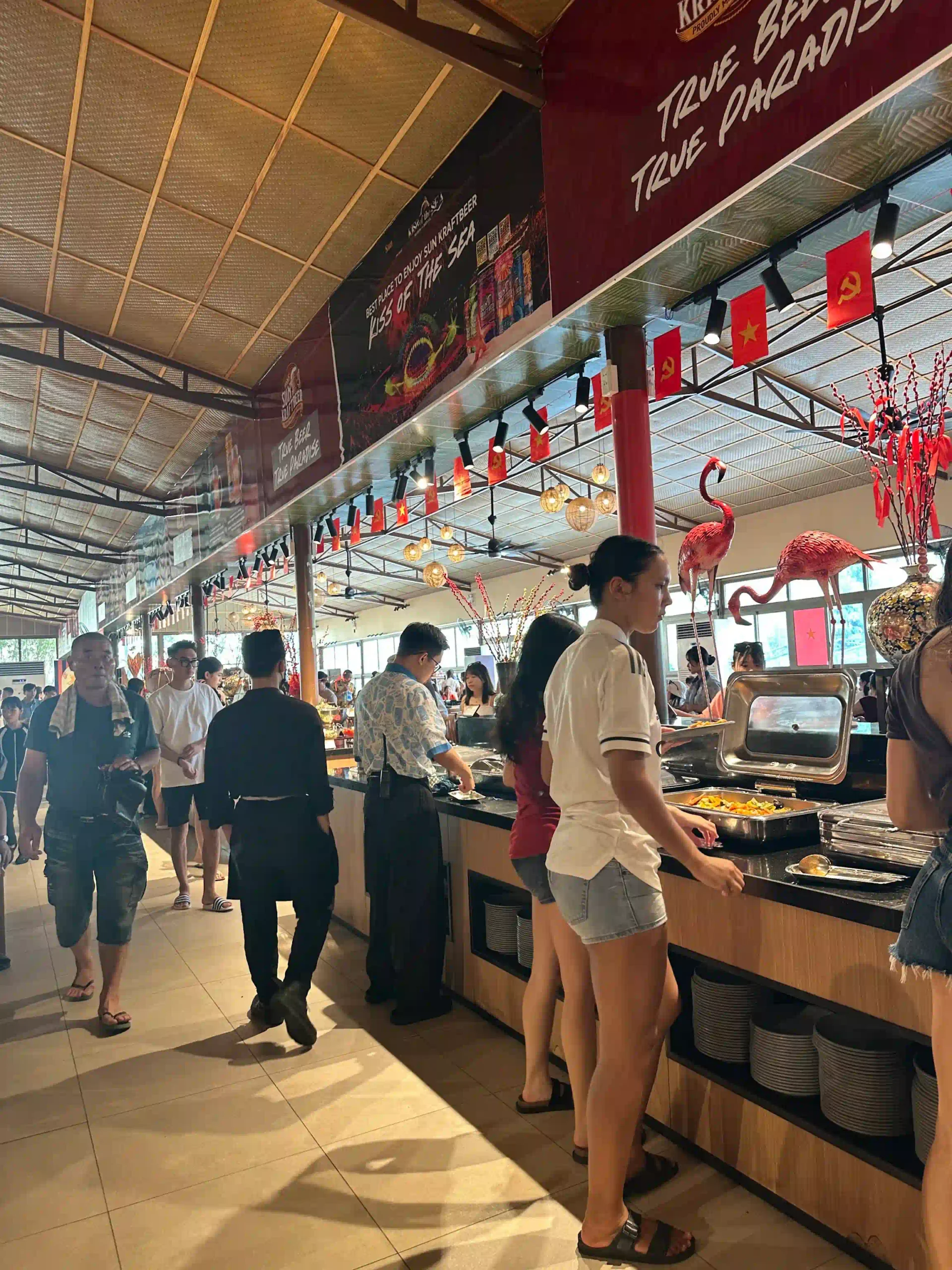

With kids, that’s your afternoon settled. Without kids you can swim off the beach, walk around, or find shade and stop moving.
The cable car is how you get home, and for a lot of people it’s the part they talk about afterwards.
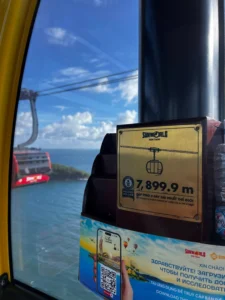
Eight kilometres across the sea, the longest three-wire crossing anywhere, landing at Ánh Dương station in An Thới, which most people still call An Thới station.
You spend a quarter of an hour looking down at fishing boats and at the islands you’ve just swum around, which puts the route in order in a way the boat never does.
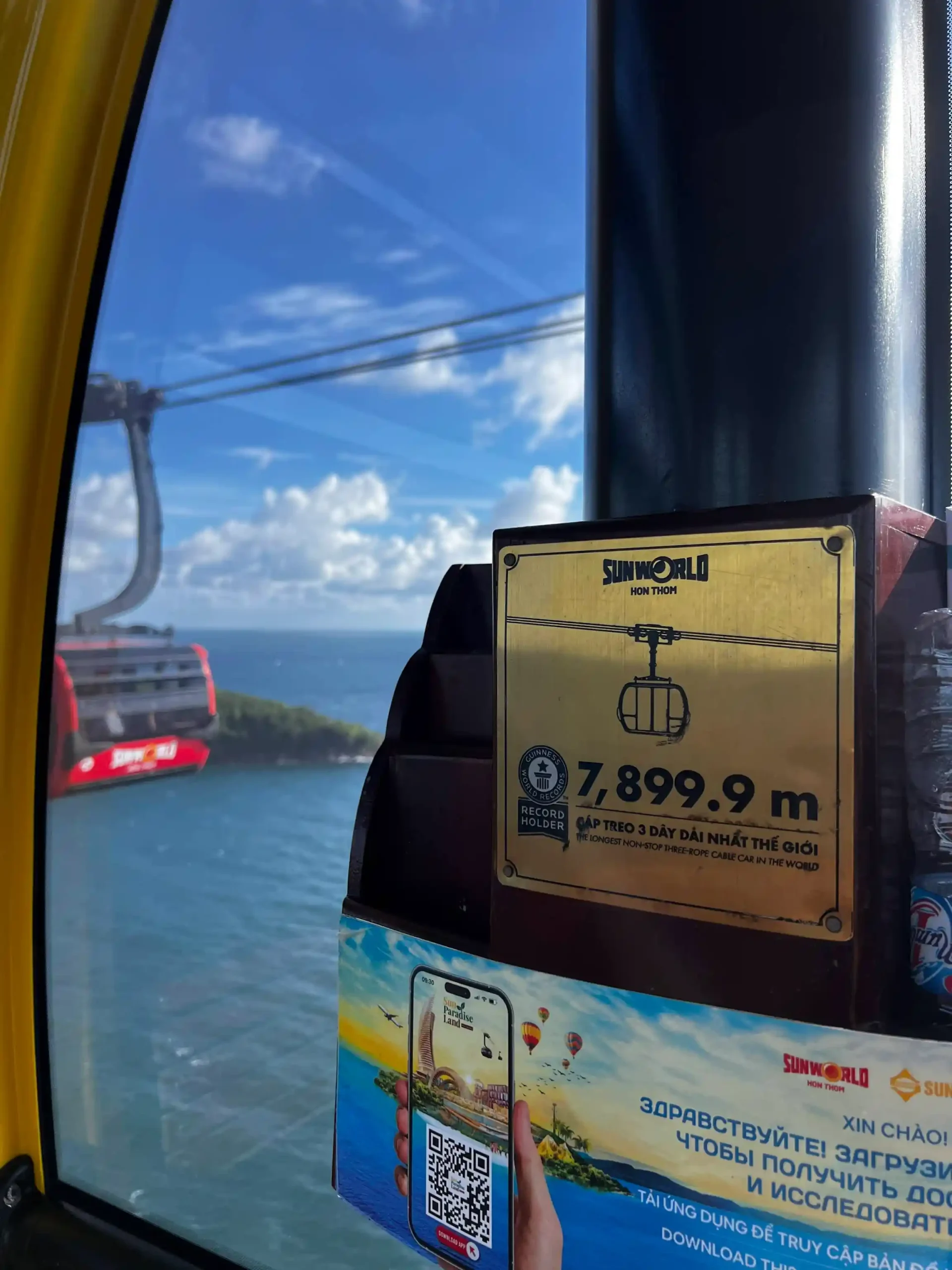
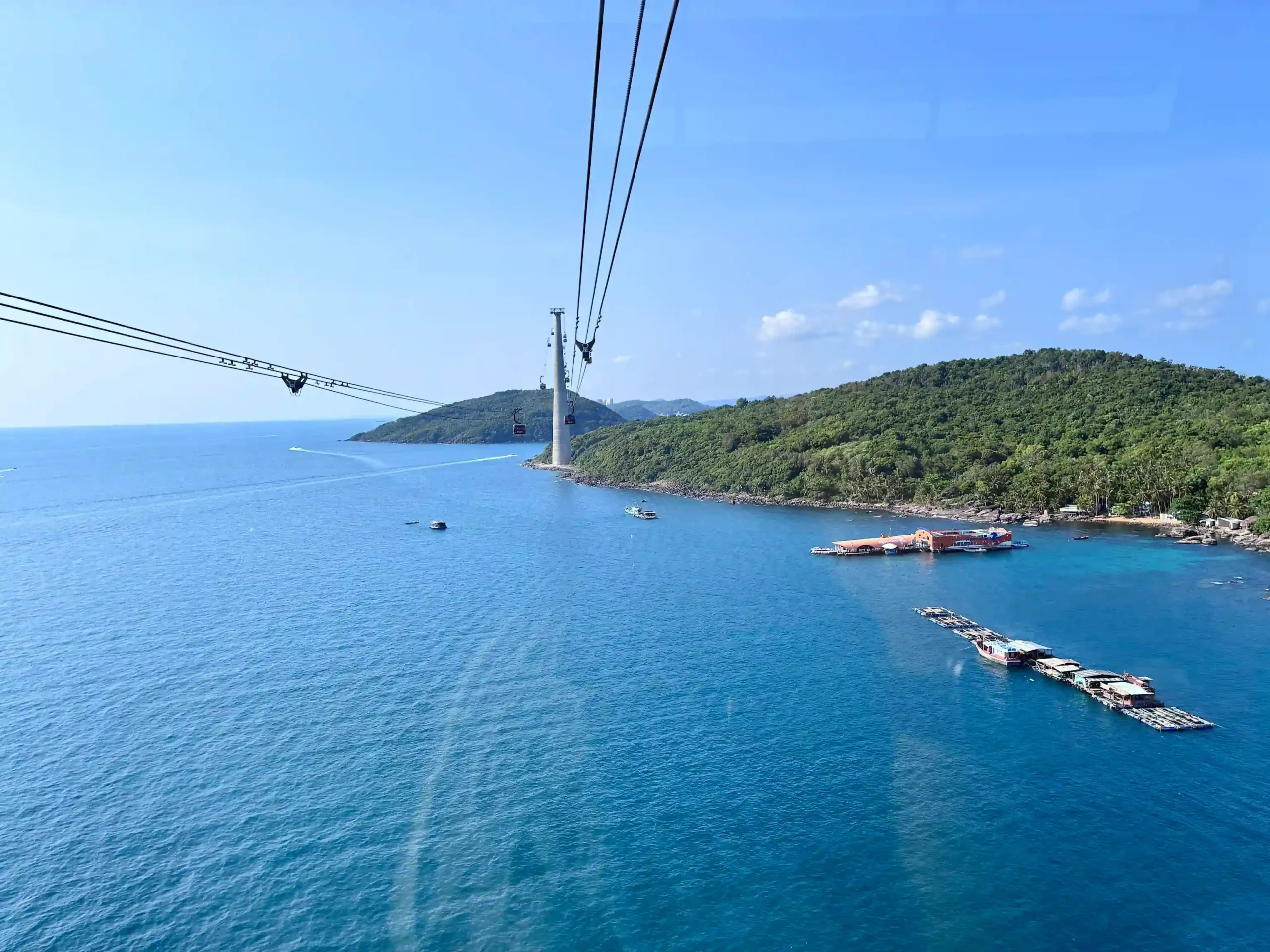
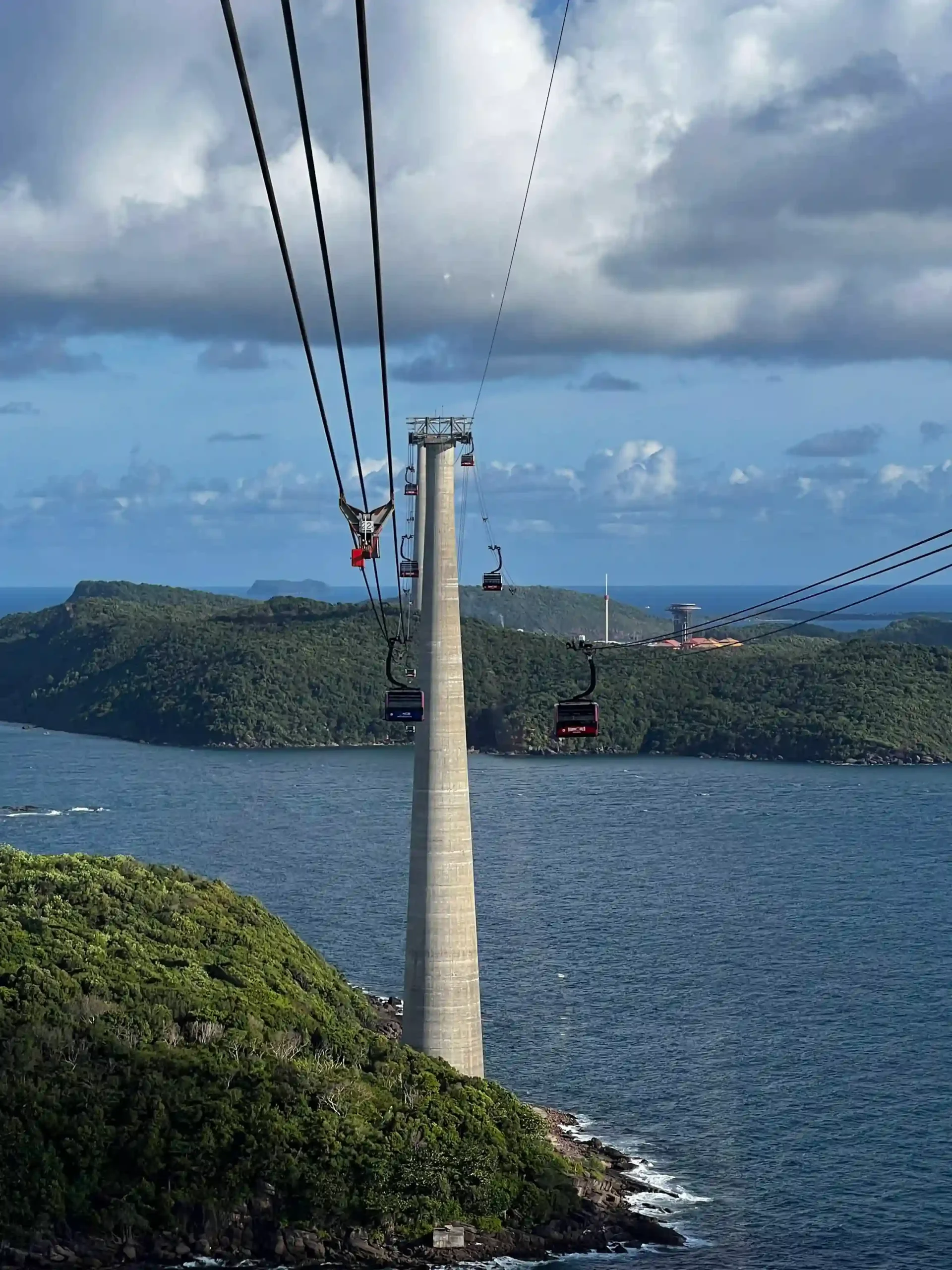
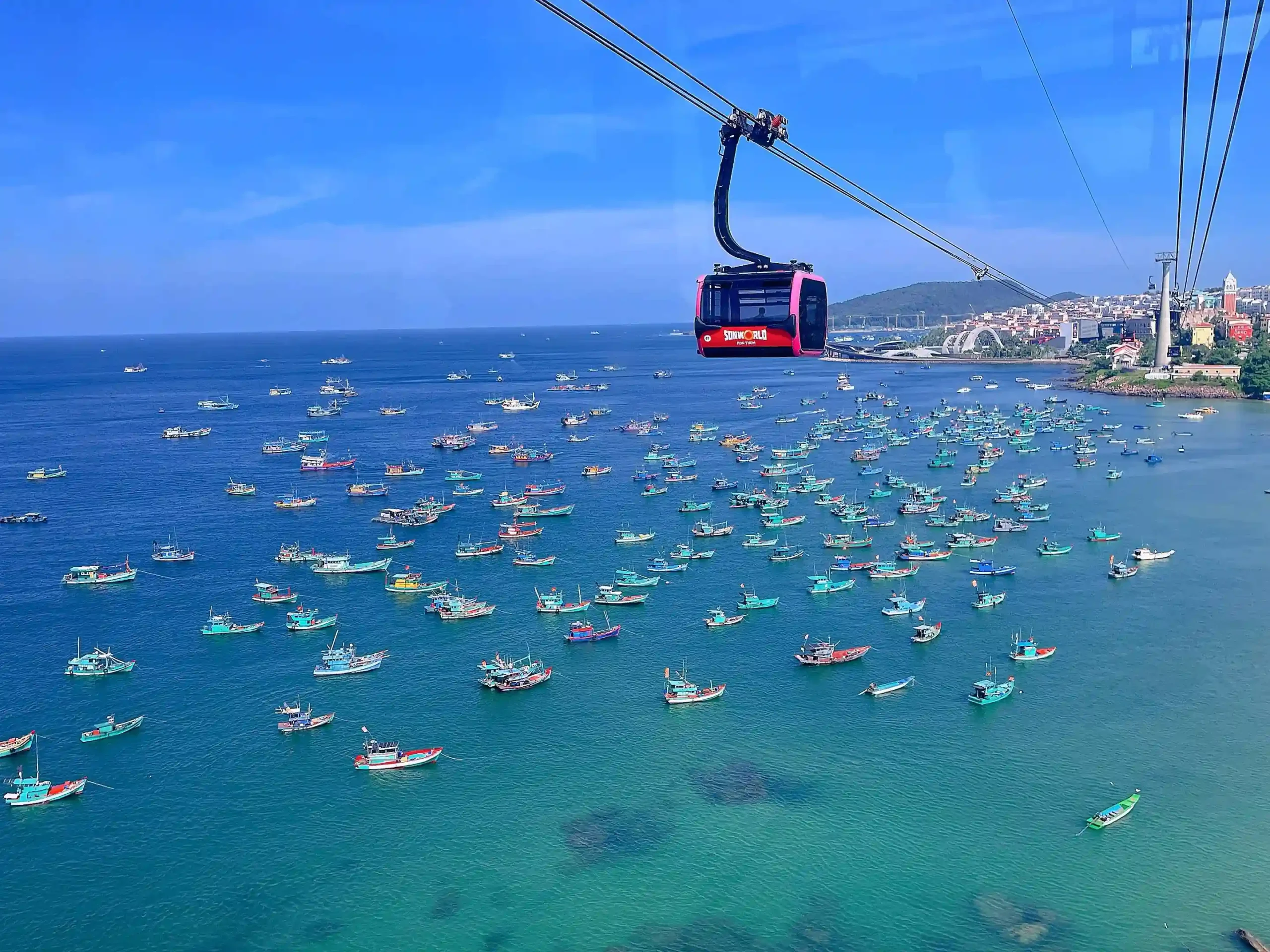
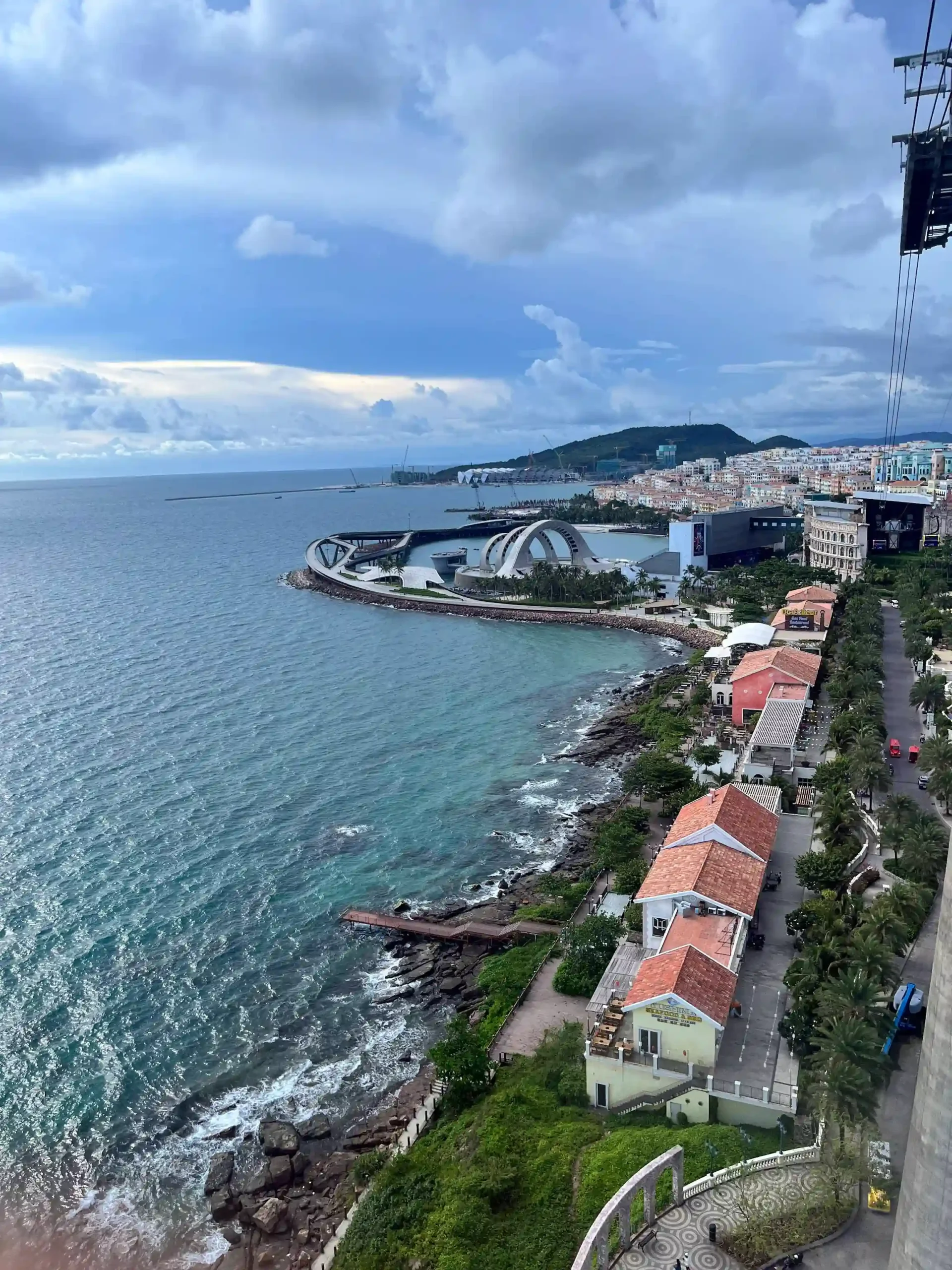
One timing detail worth having. Since March 2026 the cable car runs in three windows instead of continuously, and the last one ends at 17:30. The tour boards at four, comfortably inside it, but that’s the hard deadline of the day, not the drive back to your hotel.
What the Snorkeling Is Actually Like at Gầm Ghì
The Coral Damage the Listings Don’t Mention
The reefs down here are in worse condition than the marketing suggests.
At the two most famous spots, Gầm Ghì and Hòn Móng Tay, coral cover has dropped a long way. The reasons aren’t complicated: hundreds of people a day standing on shallow reef, and boats dropping anchor on it season after season.
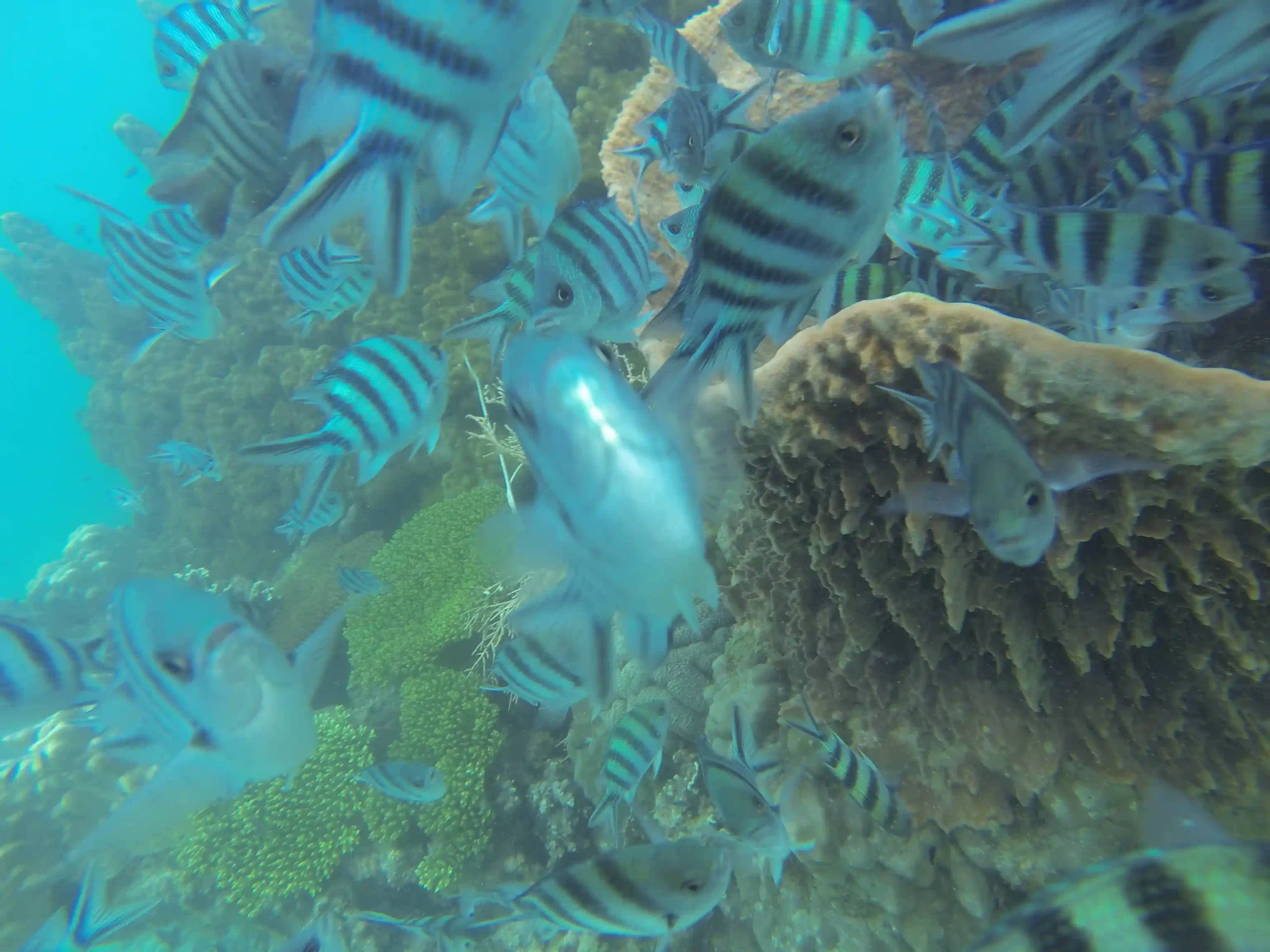
Dive operators based on the island have been saying this publicly for years, and there’s visibly dead coral on parts of the reef near Gầm Ghì.
What you get is live hard coral in decent quantity, plate formations, and a lot of fish. Clownfish, butterflyfish, parrotfish. Water clear enough in the dry season to see the bottom from the boat.
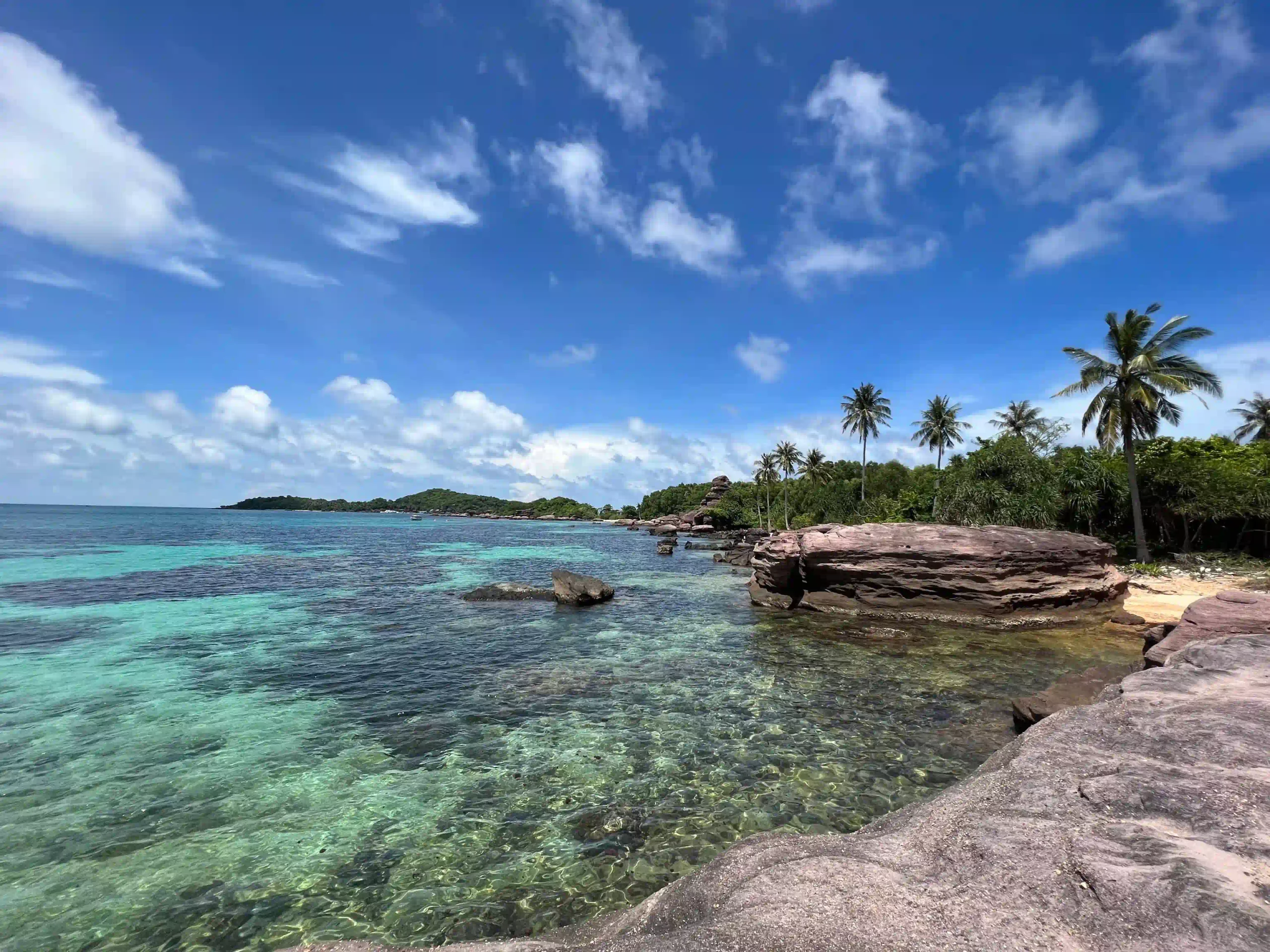
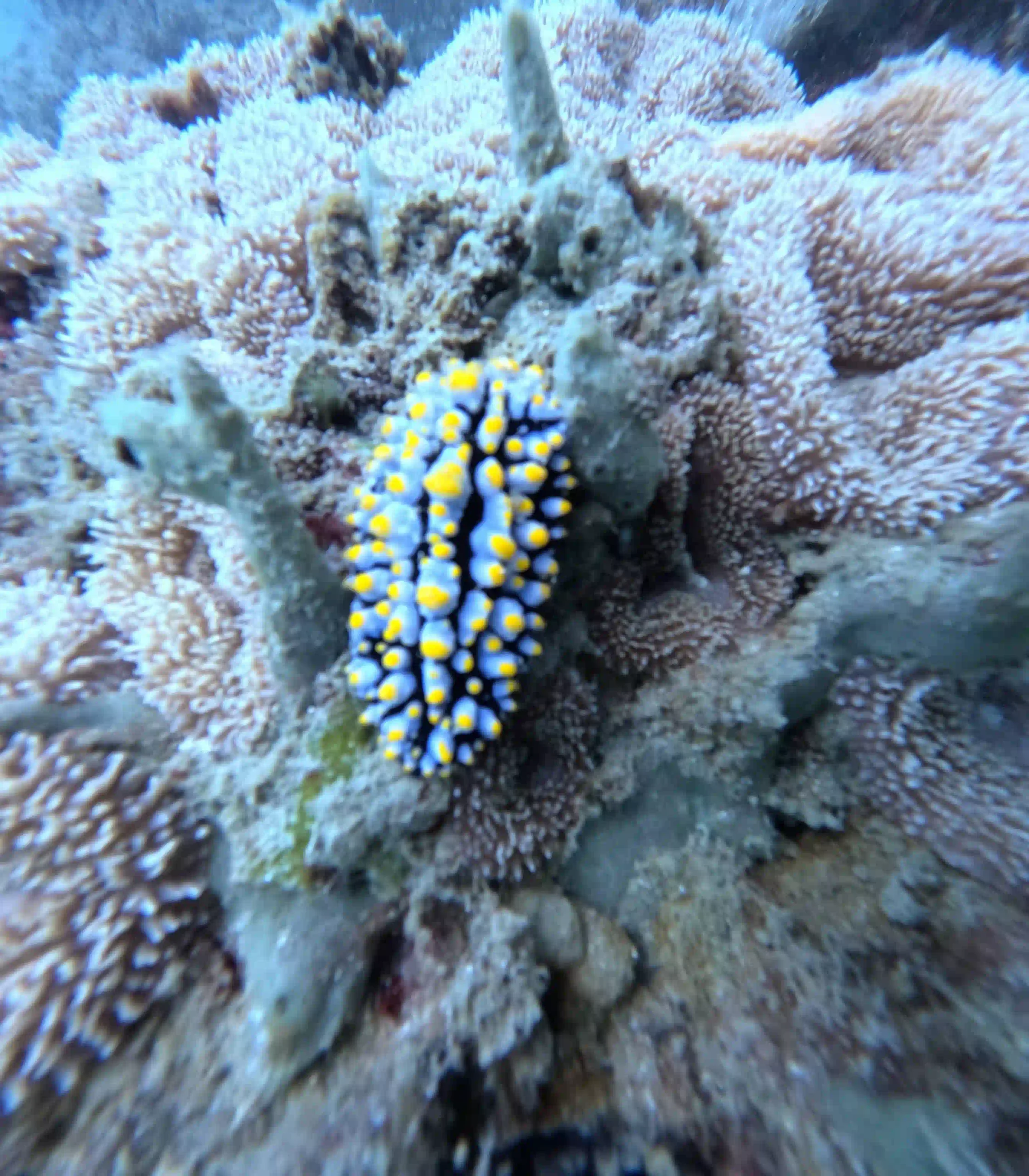
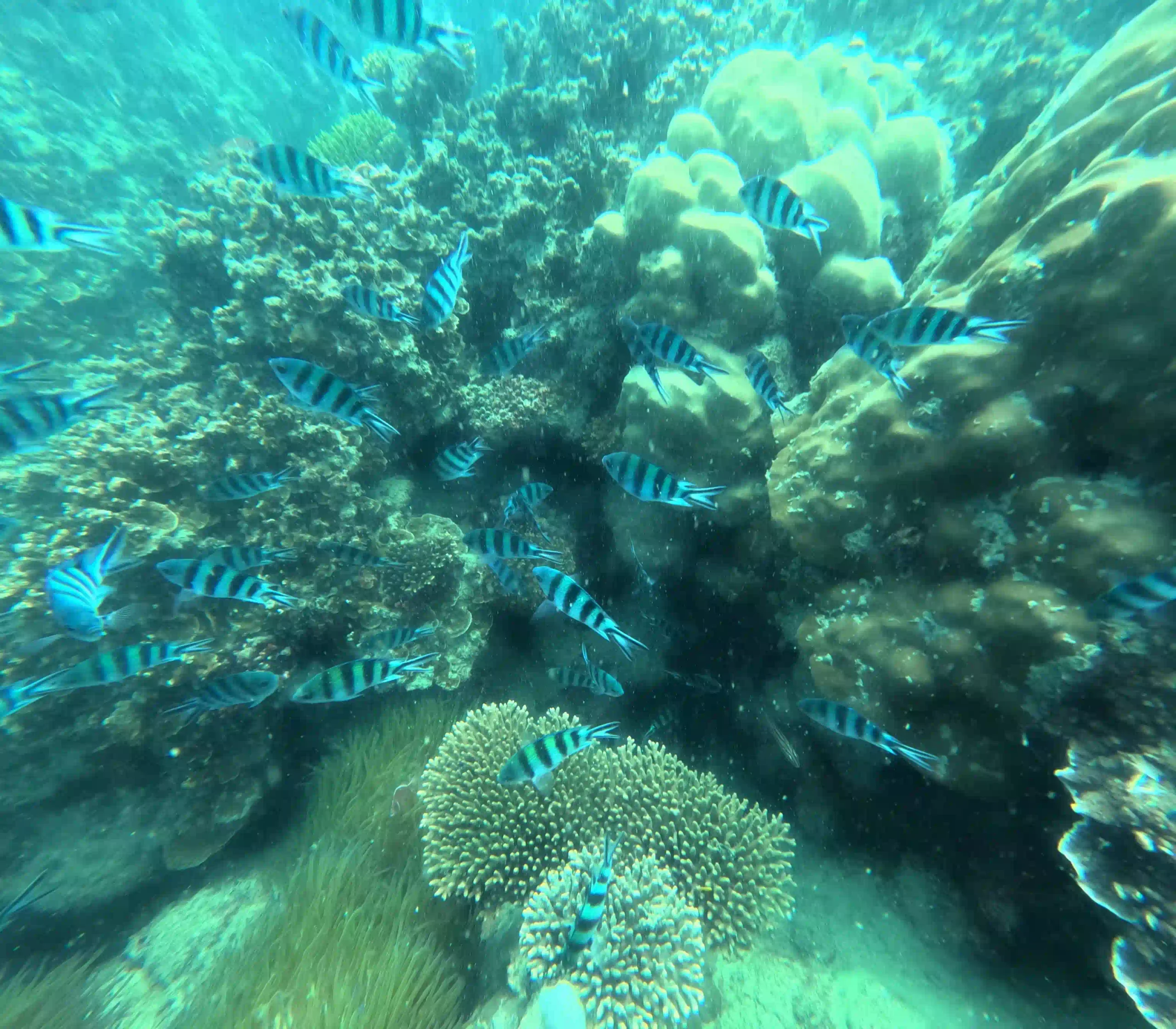
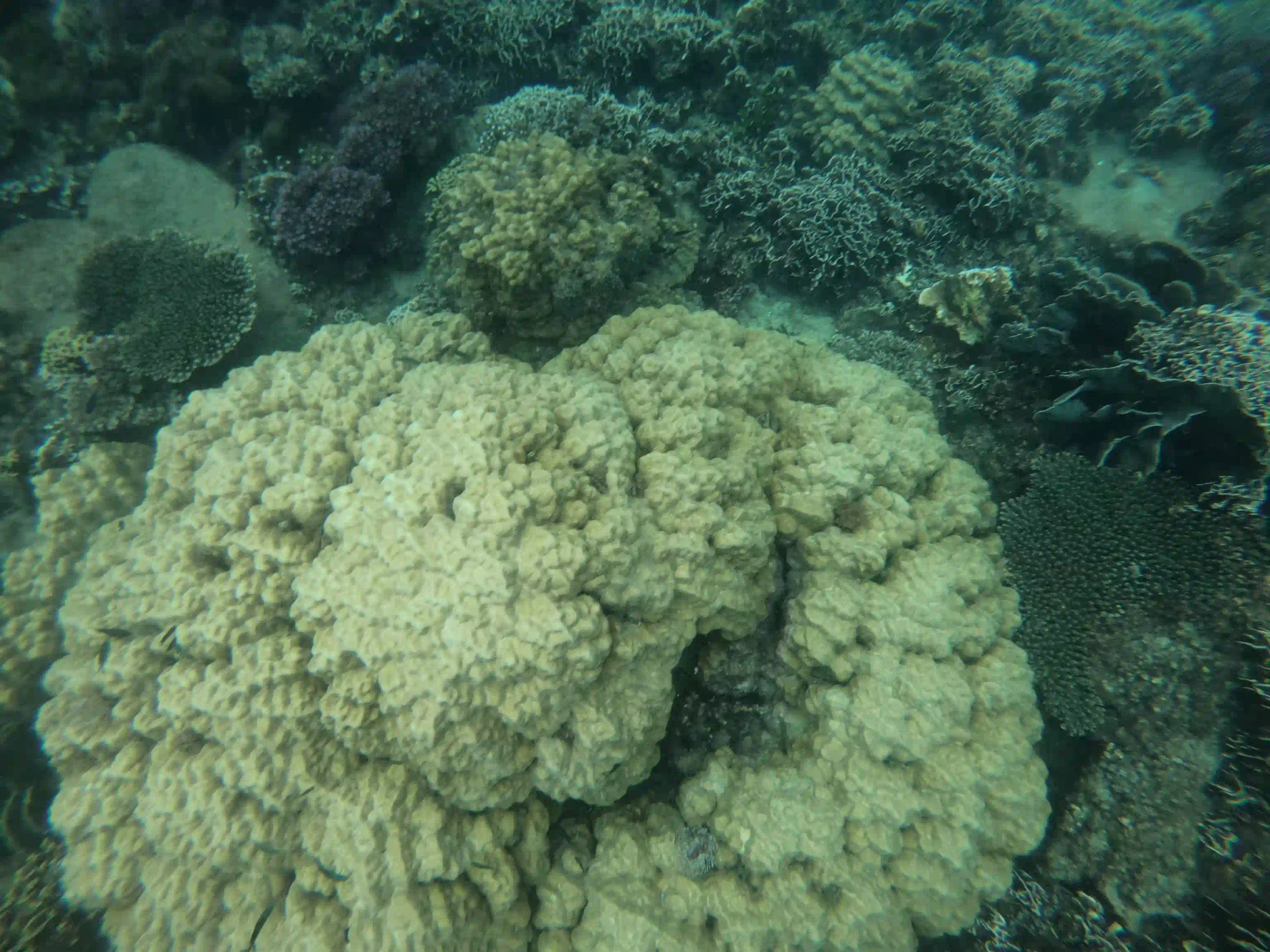
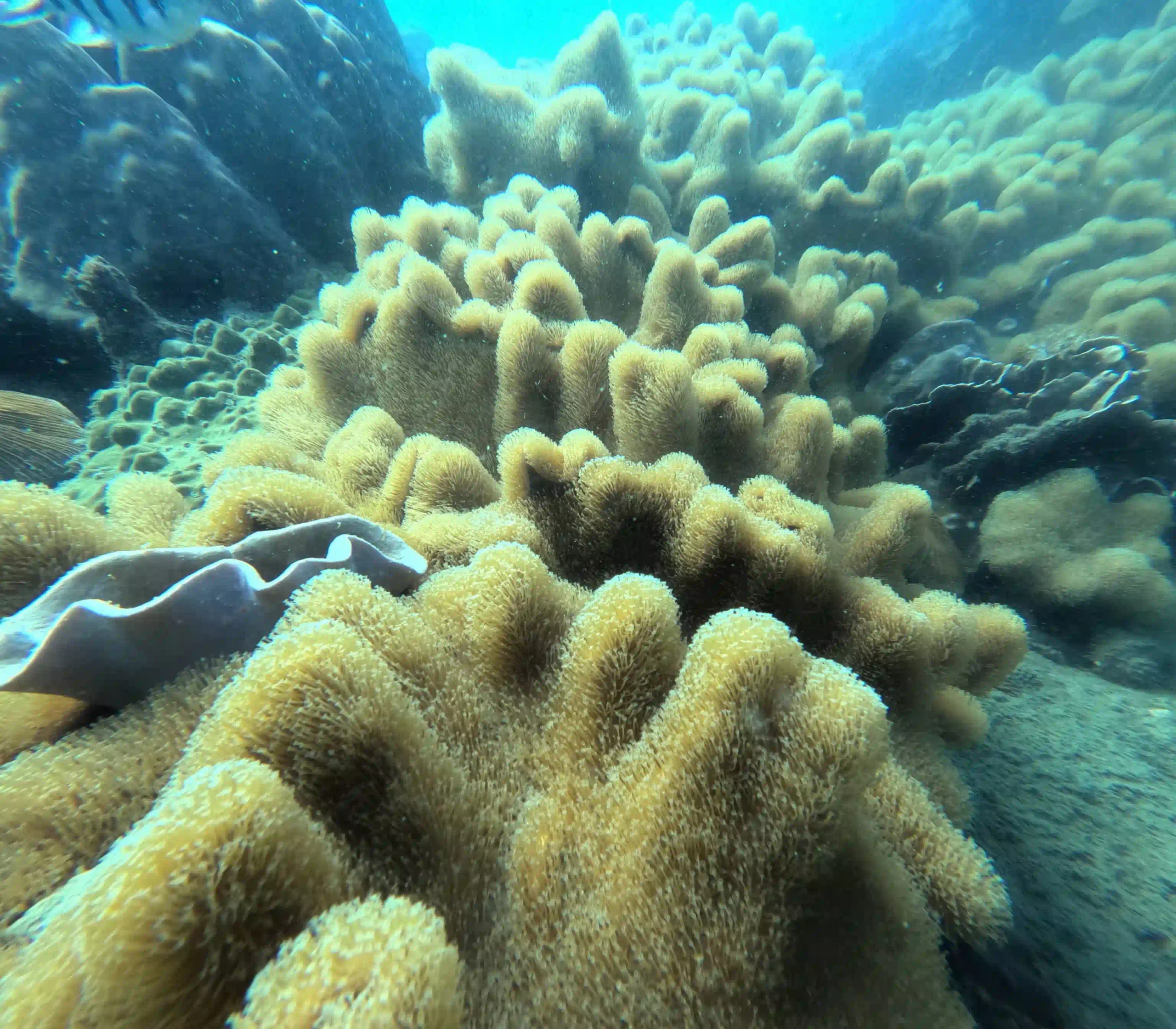
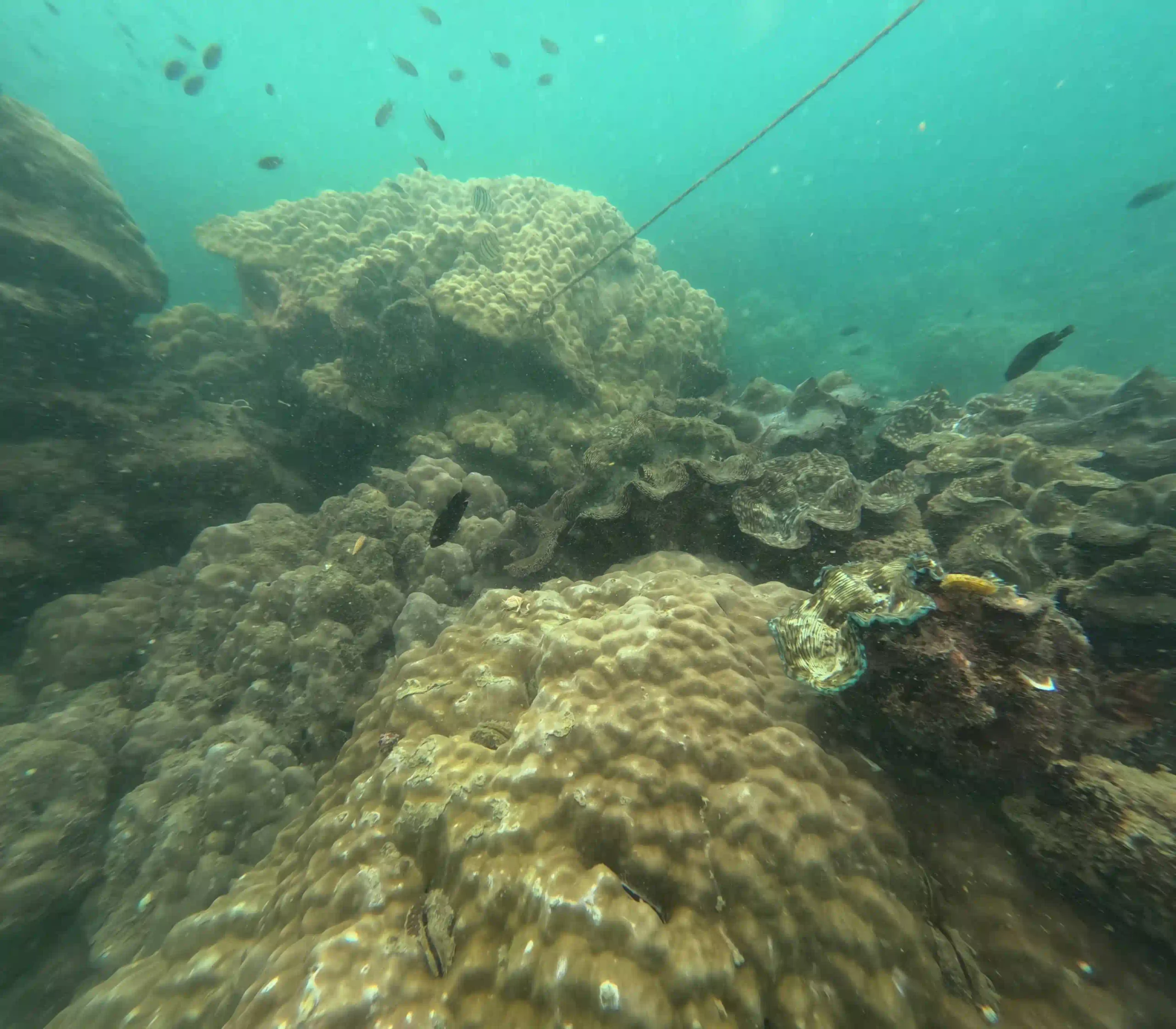
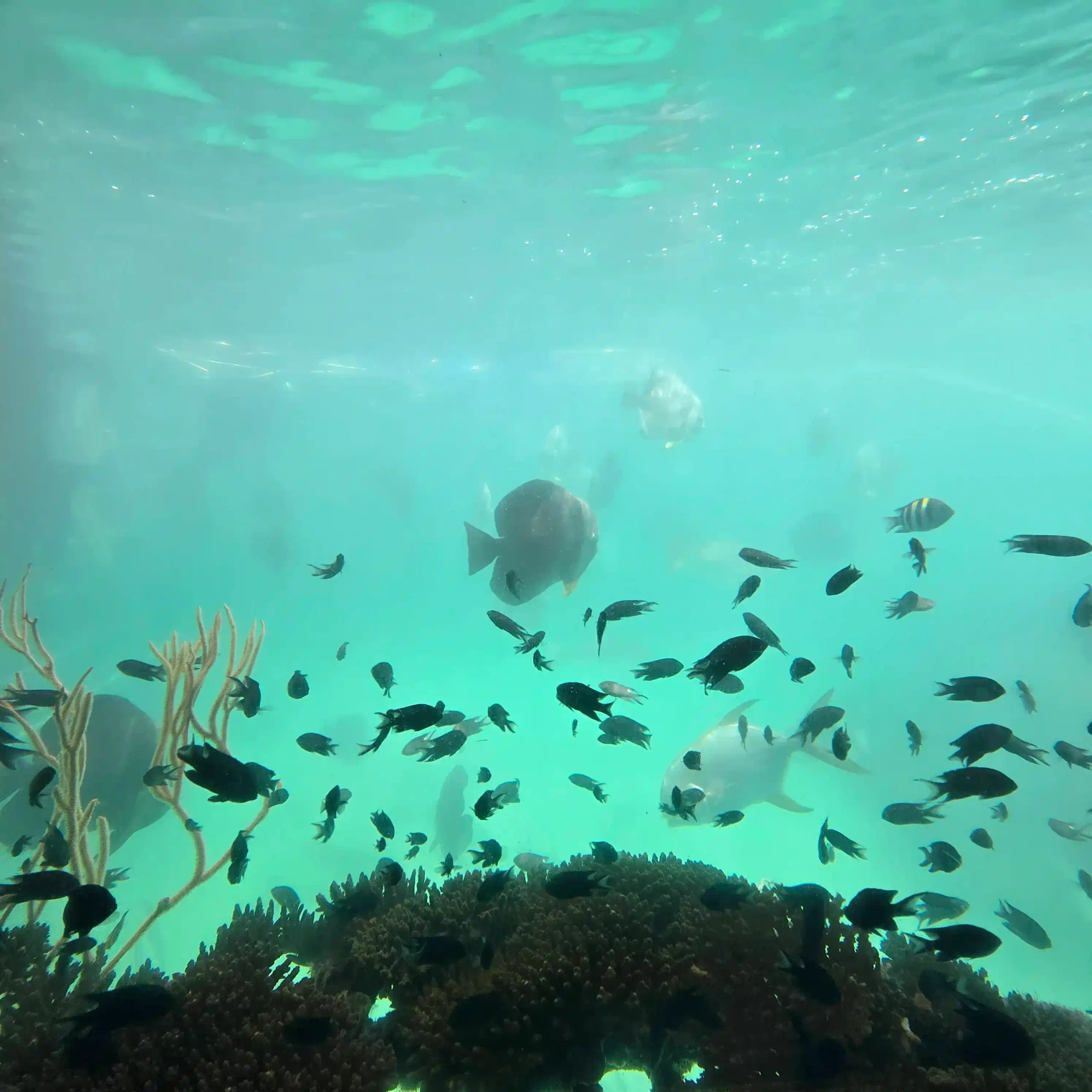
If you’ve snorkelled the Philippines or eastern Indonesia, you’ll find this thin. If you haven’t snorkelled much, you’ll have a good hour and remember it. Both of those reactions are reasonable and they’re why the reviews split the way they do.
The one thing I’d ask is that you don’t stand up. The reef is a metre below you in places and standing gets tempting when you’re tired. That’s the behaviour that has done the damage, and the oyster shells down there will cut your foot anyway.
Mask Fit, Gear and Visibility by Month
The masks are provided and they’re serviceable, but they’re one-size rentals and a mask that doesn’t seal will ruin the stop for you. Fit it on the boat, tighten it properly, swap it if it leaks. If you own a mask, bring it.
Visibility shifts across the dry season instead of being uniform. December and January were the clearest water I saw. By late March and April the sea is warmer and calmer but hazier. Neither is bad, but if you have a choice of dates inside the season, earlier is the better swim.
Is the Hòn Thơm Cable Car Combo Worth the Price?
$83 looks steep next to a $31 wooden boat tour, so here’s the arithmetic.
| What you’d pay for separately | Cost |
|---|---|
| Hòn Thơm cable car, return, adult | 850,000 VND, about $33 |
| Aquatopia water park and Exotica park | Already inside that cable car ticket |
| Buffet lunch on Hòn Thơm | Roughly $12 to $15 |
| Speedboat island hopping with gear | $55 to $60 for a comparable tour |
| Hotel pickup and drop-off | Included here, charged separately by some operators |
The cable car alone is $33 and it already covers the water park. Add a lunch and a speedboat day and you’re past $83 without trying.
So the question is whether you were going to do the cable car anyway. If you were, this is the cheapest sensible way to combine the two, and it saves you a separate 45 minute drive to the south of the island on another day. On a four day trip that’s worth more than the money.
If you had no interest in a cable car or a water park, you’re paying for things you didn’t want, and a snorkelling-only speedboat tour is $25 cheaper.
VIP or Group? What the Private Upgrade Actually Buys
The tour runs as a group by default, with a private option on top.
My read is: worth it at four or more people, particularly with kids. Not worth it as a couple.
What private buys you isn’t an empty island. Every boat lands on the same beaches at roughly the same times whatever you paid. What it buys is control of the schedule. You can cut the pearl farm, give Gầm Ghì ninety minutes instead of sixty, take less of Mây Rút, and eat when you want. On the group tour those calls are made for you, and they’re made for the majority, who want the beach and the photos.
For two people the maths doesn’t hold. You’re paying a real premium to reorder a day that works fine in the order it comes in. I’d put the difference into a second day on the water instead.
On Vietnamese public holidays the private option adds 20% on top of the holiday surcharge, so check the total before committing to anything around Tết or the April 30th weekend.
How It Compares to Other Phu Quoc Boat Tours
There are a lot of these and they’re not interchangeable.
| If you want | Book | Rough price |
|---|---|---|
| Snorkelling and the cable car in one day | This 4-island tour with cable car and buffet | $83 |
| Serious snorkelling, small group, nothing else | A max-10 pax speedboat snorkelling tour | $60 |
| The cheapest day on the water | A group 3-island tour | $31 |
| A slower, beach-focused day with kids | This one, and let them loose in Aquatopia | $83 |
| Diving, not snorkelling | A dedicated dive operator | Higher |
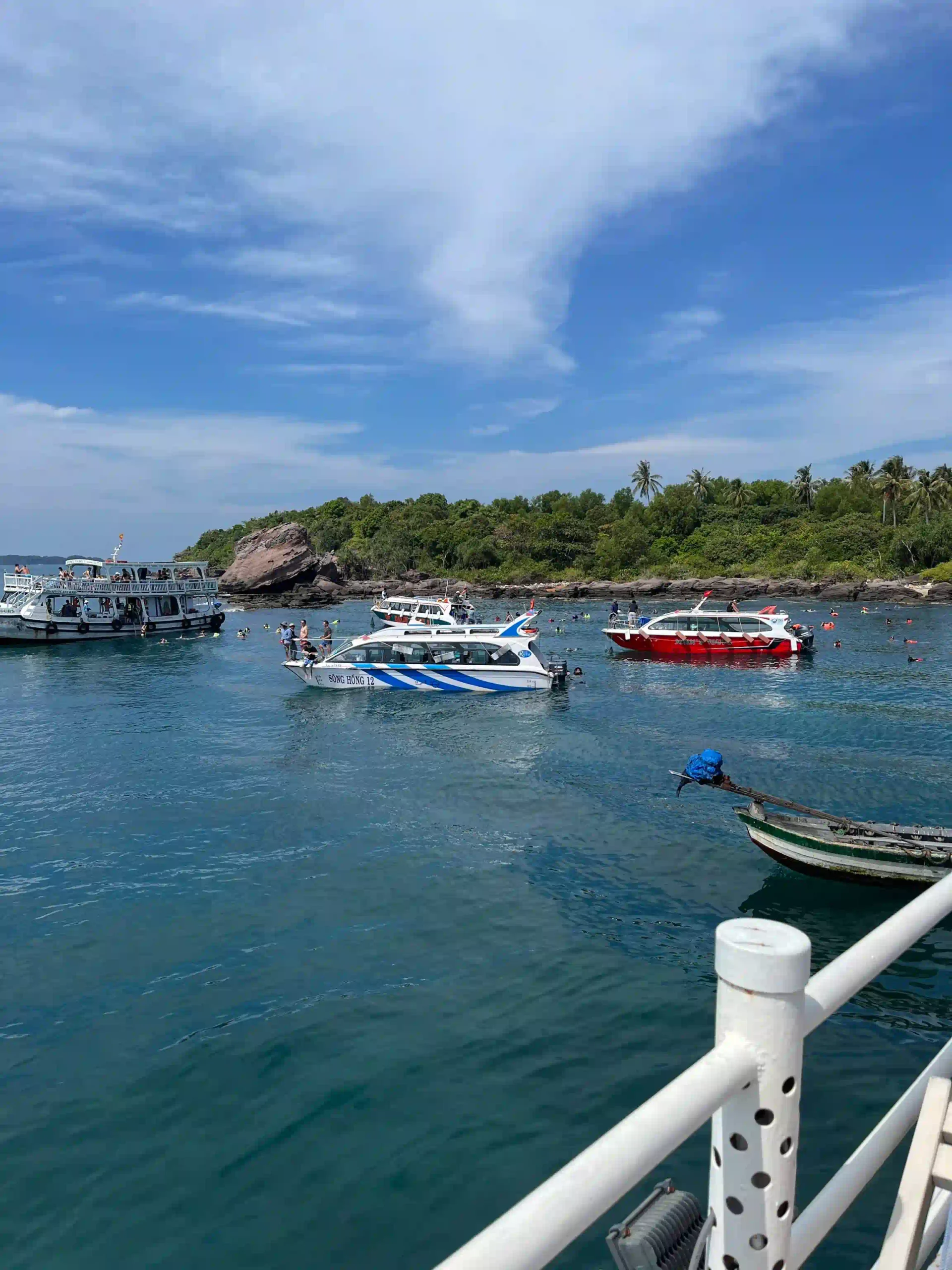
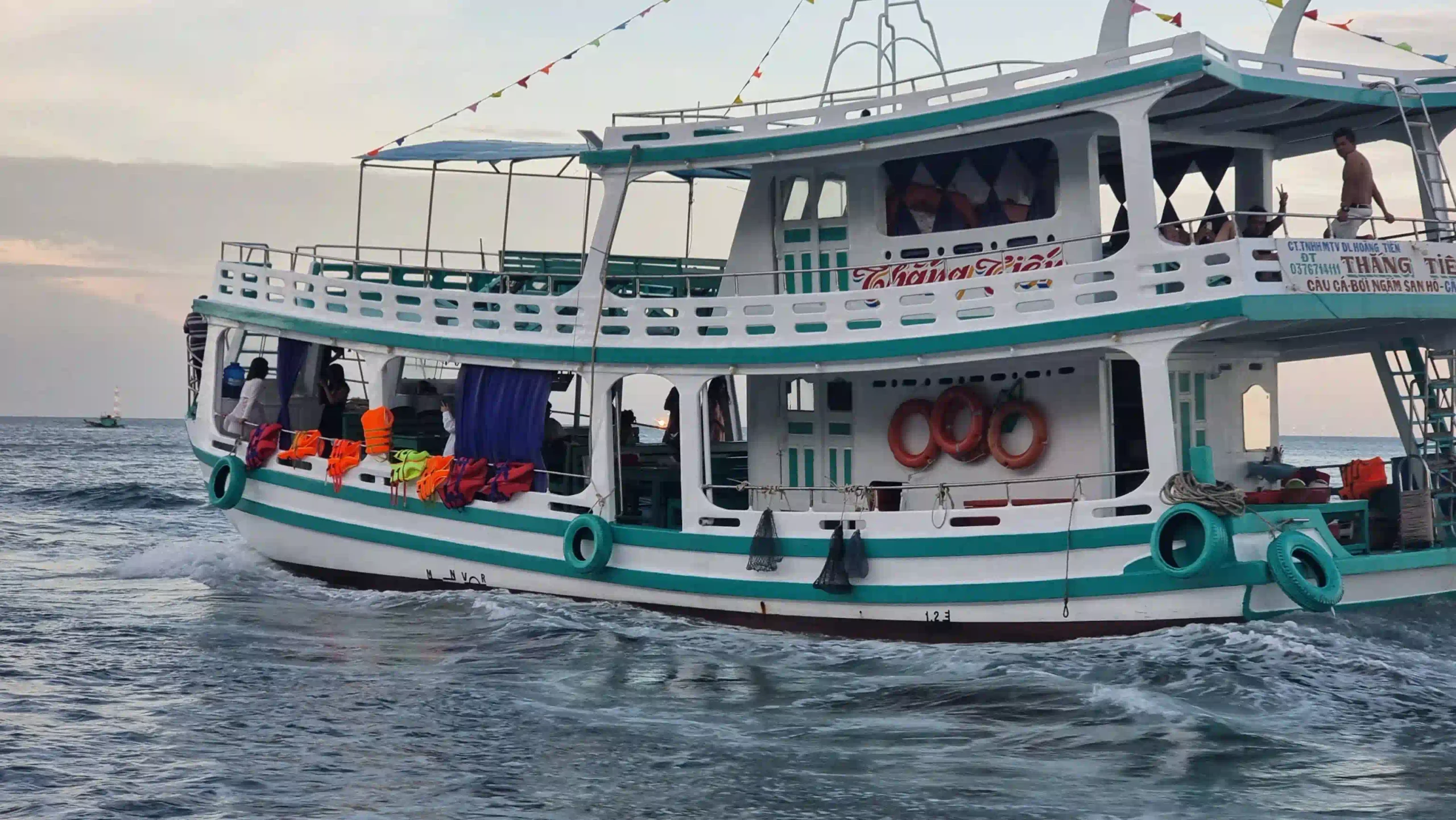
The distinction that matters most is speedboat against wooden boat. The wooden boats are slower and fuller, and a real chunk of the day is spent moving between islands. The saving is genuine and so is the difference. I did the cheap one first and I wouldn’t repeat it unless money was tight.
The second distinction is group size. If the snorkelling itself is the entire point, a capped small-group tour will give you a better hour in the water than any day that also carries a cable car and a water park. That isn’t a criticism of this tour. It’s a full day out with snorkelling in it, and that’s why it suits most people better.
Who Shouldn’t Book This Tour
Anyone travelling May to October
Rough sea, poor visibility, and these tours get cancelled. If those are your dates, book something with free cancellation and treat the boat day as a maybe.
This one refunds up to 24 hours out, which is the feature that matters in those months.
Experienced divers
You’ll find the reef thin and the day too structured.
Anyone who dislikes organised days
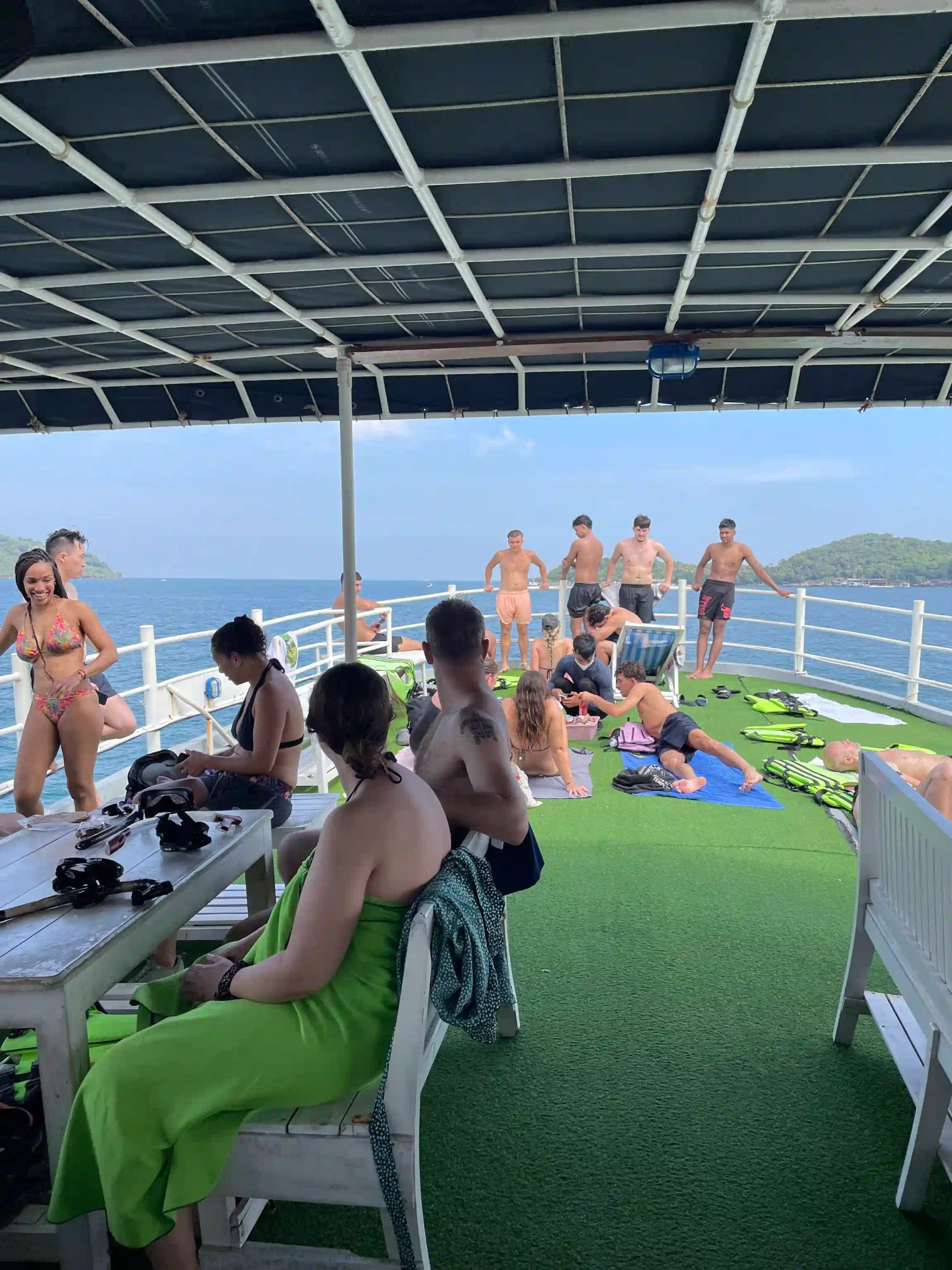
There’s a schedule, a guide, twenty-plus people and a photographer.
Pregnant travellers, and anyone with back or mobility problems
The operator excludes all three, and having been on that speedboat in choppy water I understand why.
Practical Notes Before You Go
- Wear a rash vest or a t-shirt you can swim in. You’re face down at midday with your back to the sun for a long stretch, and sunscreen comes off faster than you’d think.
- Take the smallest bag you can live with. There’s nowhere to lock anything, and you’re moving between a boat, a beach, a reef, a buffet and a water park.
- The photos and drone footage are included and they don’t arrive instantly. Ask the guide how you’ll get them before you step off the boat.
- Bring cash for the Seawalker if you think you’ll want it, and for drinks on Hòn Thơm.
- Eat before pickup. Lunch is at half one and there’s a lot of swimming first.
If you’re only here a few days, this is the booking I’d sort before you land, since it’s the day the rest of the trip ends up arranging itself around. I’ve written separately about how many days you actually need and where the boat day fits, and activities in Phu Quoc covers what’s left once you’ve done it.
One ask. The reef down there changes year to year and not slowly. If you go, come back and tell me what Gầm Ghì looked like when you were in the water, and whether your guide moved the group off the trampled middle or left everyone sitting in it. I’ll keep this review updated with what people send me, because the coral is the part of this day most worth being straight about.












 Tiếng Việt
 한국어
한국어 中文 (中国)
 日本語
日本語 ไทย
ไทย Deutsch
 Español
 Destinations
 Instagram
 Facebook
 X (Twitter)
 Threads
 Tiktok
A really great trip, highly recommended. The island we were taken to is beautiful with lots of incredible under water life in clear waters, thank you !
Unfortunately Vietnam does not manage its marine resources well but this is unfortunately not only here. Was not the fault of the tour operator though. Coral not the best, reasonable fish life. Still well worth it though as the snorkelling was still good to do but the social enjoyment was great. Enjoyable day.
After snorkeling at two spots, we went to a beach and had drinks and a light lunch. Recommend this place. Great experience