









 Ha Giang
 Hanoi
Hanoi Ho Chi Minh City
 Ha Long
 Sapa
Sapa Mekong Delta
 Da Nang
 Hue
Hue Hoi An
 Ninh Binh
 Da Lat
 Nha Trang
 Phan Thiet
 Phu Quoc
 Quang Binh
 Quy Nhon
 Vung Tau
 Thai Nguyen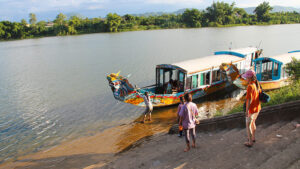



After years of grinding it out here, navigating the motorbikes and the questionable street food, I’m back. You read my rants about North Vietnam. Now, let’s talk about the middle bit – Central Vietnam. It’s been my stomping ground on and off for a good while.
This isn’t some travel magazine puff piece. This is my honest take, after getting lost, getting soaked, and sometimes getting ripped off, on the places that actually stuck with me. The real Central Vietnam gems.
This is Part 2 of my “Vietnam Deep Dive” series. Central Vietnam. It’s a different vibe from the North, less frantic than Hanoi, more about history, beaches, and hidden natural spots.
Quick Look for the Impatient (aka “What I’ll Grumble About Below”)
If you’re like me and just want the rundown before diving into my long-winded stories, here’s a quick summary of the best places in Central Vietnam I’ve spent time in.
- Beyond the brochures: The real North Vietnam. 🛵 This guide uncovers 20+ of the best places in North Vietnam, shared by a long-term expat. From serene lakes to majestic peaks, find out where to go, what to do, and how to genuinely connect with this incredible region.
- My Khe Beach: A wide, sandy city beach famous for beautiful sunrises and local life, offering easy access to ocean fun right from Da Nang’s vibrant center. Free to access, expect crowds during local peak hours (early morning/late afternoon).
- Marble Mountains: A cluster of five impressive limestone and marble hills filled with intricate caves, tunnels, and pagodas, providing stunning panoramic views of the coastline after a rewarding climb. Entry 40,000 VND, elevator available for 15,000 VND one-way.
- Linh Ung Pagoda & Son Tra Peninsula: Home to the massive Lady Buddha statue overlooking the sea, this serene pagoda complex on a scenic peninsula offers breathtaking coastal views and a chance to spot rare wildlife. Free entry, about a 30-minute drive from Da Nang city center.
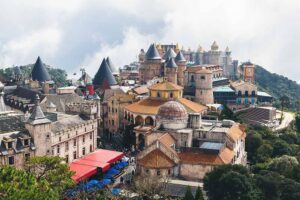
- Ba Na Hills & Golden Bridge: A unique mountain resort offering spectacular cable car rides, a quirky French-themed village, and the iconic Golden Bridge held by giant stone hands, providing surreal photo opportunities amidst mountain clouds. Ticket 900,000 VND (includes cable car), expect crowds especially on weekends.
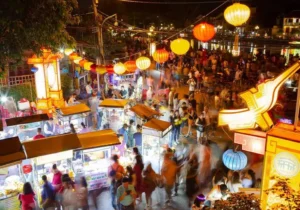
- Hoi An Ancient Town: A UNESCO World Heritage site renowned for its beautifully preserved yellow buildings, lantern-lined streets, and pedestrian-friendly evenings, perfect for soaking in a magical historical atmosphere and enjoying street food. Ticket 120,000 VND for specific sites, best explored on foot.
- An Bang Beach: A relaxed and charming beach just a short cycle or drive from Hoi An, offering soft sands, calm waters, and beachfront restaurants, ideal for a peaceful escape from the bustling town. Free access, sun loungers often free with food/drink orders.
- Hoi An Cooking Class & Food Tours: Essential for foodies, these experiences immerse you in Vietnam’s culinary scene, from market visits and hands-on cooking classes to guided tours discovering the best local street food. Classes typically $30-$50 USD, food tours $25-$40 USD.
- Imperial City (Dai Noi) & Forbidden Purple City: The sprawling, historic walled complex that served as the capital of the Nguyen Dynasty, offering a deep dive into Vietnam’s imperial past through its grand gates, temples, and restored palaces. Entry 200,000 VND, allow at least half a day for exploration.
- Tombs of the Emperors: Elaborate and architecturally distinct final resting places for Nguyen Dynasty emperors, scattered around Hue, each offering unique designs and peaceful garden settings reflecting their royal occupants. Each tomb has a separate entry fee, generally 150,000 VND per tomb.
- Thien Mu Pagoda & Perfume River: An iconic seven-story pagoda sitting gracefully by the tranquil Perfume River, often reached by a relaxing dragon boat ride, offering a serene spiritual experience and scenic views. Free entry to pagoda, boat rides around 100,000-200,000 VND/person.
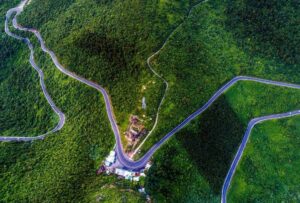
- Hai Van Pass: A legendary coastal mountain pass offering exhilarating motorbike rides and breathtaking panoramic views of the ocean, mountains, and winding roads between Da Nang and Hue. Free to access, best done via motorbike or “easy rider” tour (approx. $40-60).
- Bach Ma National Park: A biodiverse mountain retreat providing a cooler climate, lush trekking trails, and impressive waterfalls, perfect for nature lovers seeking an escape from coastal heat. Entry 60,000 VND, consider a guided tour for navigation.
- Tam Giang Lagoon (Hue): Southeast Asia’s largest lagoon, offering a unique glimpse into local fishing life and incredibly beautiful, vibrant sunsets over its vast, calm waters, away from typical tourist crowds. Best visited at sunset, about 30-45 minutes drive from Hue.
- My Son Sanctuary: A UNESCO World Heritage site featuring the atmospheric ruins of ancient Hindu temples built by the Champa Kingdom, providing a fascinating glimpse into Vietnam’s rich historical and architectural heritage. Entry 150,000 VND, go early to avoid heat and crowds.
- Phong Nha Cave & Paradise Cave: Two of the most accessible and awe-inspiring show caves in the UNESCO-listed national park, offering underground river boat rides (Phong Nha) and immense, exquisitely formed dry chambers (Paradise). Entry fees: Phong Nha 150,000 VND/person + boat fee; Paradise 250,000 VND/person.
- Son Doong Cave (and its reality): The world’s largest cave, a colossal underground world that is an ultra-exclusive, multi-day expedition for the adventurous and well-resourced, not a typical tourist visit. Extremely expensive (tens of thousands USD), requires booking years in advance and high fitness.
- Vinh Moc Tunnels & Hien Luong Bridge: A sobering yet vital historical site where villagers lived underground to survive bombing (Vinh Moc Tunnels) and the symbolic bridge that marked the division between North and South Vietnam during the war. Entry 50,000 VND for each site, best visited with a guided tour from Hue.
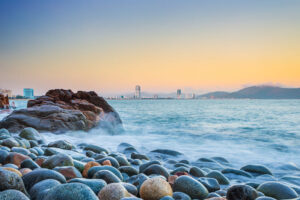
- Quy Nhon: A charming, laid-back coastal city boasting beautiful city beaches and stunning secluded coves, offering a more authentic Vietnamese beach experience away from mass tourism. Good seafood, easily explored by motorbike.
- Da Lat: A unique highland city characterized by its cool climate, French colonial architecture, lush pine forests, and quirky attractions like waterfalls and flower gardens, offering a refreshing change of pace. Cooler climate, perfect for relaxing and enjoying coffee.
My 15+ Central Vietnam Gems: I Discovered Them the Hard Way
Yeah, so you thought North Vietnam was wild? Central is a different beast. Less about scooters trying to run you over at every corner (mostly), more about heat, humidity, and history.
I’ve spent a lot of time here, hopping between cities, getting drenched in sudden downpours, and figuring out which “hidden gems” are actually worth the effort.
This is my rundown of the best places in Central Vietnam, the ones that genuinely stuck with me. These are the Central Vietnam gems that make you realize this country isn’t just about Hanoi and Ha Long.
Da Nang: The Dynamic Hub
Da Nang is where I usually fly into when I’m heading Central. It’s a modern city, relatively clean, and has a good vibe. It’s the gateway to a lot of the best places in Central Vietnam. It’s where I usually decompress after a long flight before hitting the road.
My Khe Beach


Everyone raves about My Khe. It’s wide, sandy, and usually has decent waves.
My unfiltered thoughts: It’s a city beach, so don’t expect untouched paradise. But for a city beach, it’s pretty damn good. I’ve seen some spectacular sunrises here, with locals doing tai chi and swimming before the heat sets in.
It gets packed with locals in the early morning and late afternoon – families, old folks exercising, young couples. I’ve spent hours just sitting there, nursing a terrible beach coffee, watching the waves and trying not to get hit by a rogue frisbee.
The water is warm, generally clean enough for a swim. It’s perfect if you want to combine city amenities with beach access. It’s definitely one of the top best places in Central Vietnam for quick beach access.
Practical bits: Free to access. Plenty of sun loungers for rent (around 50,000-100,000 VND). Restaurants and cafes line the beachfront road. Best times are sunrise and sunset.
Where to stay: For a beachfront stay, the Hyatt Regency Danang Resort and Spa (8.9/10 on Booking.com) is popular for luxury. If you want something still very good but a bit more affordable, Paris Deli Danang Beach Hotel (8.8/10) offers panoramic views. Both are reliable options.
You can also read my full guide here for the best hotels near My Khe beach.
Marble Mountains


A cluster of five limestone and marble hills, each named after one of the five elements (Metal, Wood, Water, Fire, Earth). Full of caves, tunnels, and pagodas.
My unfiltered thoughts: It’s a bit of a climb, even with the elevator. Seriously, wear good shoes. I remember sweating buckets getting up the steps to the main peak. But once you’re inside, some of the caves are cool – literally. It’s darker, a bit damp, and the natural formations are pretty wild.
The views from the top are great, you can see the coastline stretching out and the city. It’s a mix of natural beauty and spiritual sites. It can get crowded, especially the main Water Mountain (Thuy Son).
I once got stuck in a line for a cave entrance for about 15 minutes, listening to a group of tourists complain. Despite the crowds, it’s unique, though, definitely a worthwhile stop.
Practical bits: Entry fee is 40,000 VND for the main mountain (Thuy Son). Elevator is an extra 15,000 VND one-way. Open 7:00 AM – 5:30 PM. About a 20-minute Grab ride from Da Nang city center.
How to see it: You can easily do this independently. However, if you prefer a structured tour that combines it with other sights, many “Da Nang City Tours” or “Marble Mountains & Hoi An Day Tours” on Getyourguide include it. For example, a “Da Nang: Lady Buddha, Marble Mountains, and Am Phu Cave Tour“ often rated around 4.8/5 stars with hundreds of reviews, costing about $30-50. It’s a solid choice if you want to knock out two famous spots efficiently.
Linh Ung Pagoda & Son Tra Peninsula


The Linh Ung Pagoda is on the Son Tra Peninsula, famous for its massive Lady Buddha statue overlooking the sea.
My unfiltered thoughts: The Lady Buddha statue is huge, much bigger than photos suggest. It dominates the skyline from certain parts of Da Nang. The pagoda complex is quite grand, and the views of Da Nang city and the coastline are fantastic. It’s noticeably cooler up there than in the city, which is a relief.
I once spent an hour just sitting on a bench, looking out at the ocean, enjoying the breeze. The Son Tra Peninsula itself is worth a drive around if you rent a motorbike – there are hidden beaches and viewpoints, but be careful on the winding roads.
I even spotted some red-shanked doucs (rare monkeys) on one drive, chilling in the trees, which was a total surprise and made the whole trip feel a bit more wild and unique. It’s a great spot for an afternoon trip.
Practical bits: Free entry. Open generally during daylight hours. About a 30-minute drive from Da Nang city center. If you want to explore the peninsula, rent a scooter (around 150,000 VND/day) or hire a Grab.
Ba Na Hills & Golden Bridge


A mountain resort with a quirky French Village theme park, a massive cable car system, and the famous Golden Bridge held up by giant hands.
My unfiltered thoughts: Okay, let’s be real: this place is a total theme park. It’s Disney-meets-Vietnam-mountains. The Golden Bridge is cool for photos, no doubt – it’s actually quite impressive to see those giant hands.
The cable car ride up is genuinely spectacular, one of the longest in the world, and offers incredible views if the weather is clear. But the “French Village” is utterly bizarre and artificial, and it gets absolutely swamped with people.
I mean, shoulder-to-shoulder crowds, especially on weekends. If you hate crowds and artificial attractions, skip it. If you want a unique, somewhat surreal experience and don’t mind the crowds for that iconic photo, then go.
I went once. Got my photo. Probably won’t go again unless someone drags me, screaming.
Practical bits: Entrance ticket is expensive, around 900,000 VND (approx. $36 USD), which includes the cable car. Open 8:00 AM – 5:00 PM. Get there as early as possible to beat the tour buses.
How to see it: Many “Ba Na Hills & Golden Bridge Full-Day Tours“ are available from Da Nang, often rated 4.5/5 stars and costing around $50-70, including transport and entry. This saves you the hassle of figuring out tickets and logistics, which can be a pain given the crowds.
Hoi An: The Ancient Charm
Hoi An is beautiful, no doubt. It’s a UNESCO World Heritage site, famous for its lanterns, ancient architecture, and tailor shops. It’s arguably one of the most famous best places in Central Vietnam.
Hoi An Ancient Town


The heart of Hoi An, with its yellow buildings, lantern-lined streets, and pedestrian-friendly zones.
My unfiltered thoughts: It’s charming, yes. Especially at night when all the lanterns light up – the whole town glows, and it feels a bit magical, almost like a festival every night. It’s also very, very touristy. Prepare for crowds, especially on weekends.
But despite that, it still manages to retain some magic. Walking around, grabbing a coffee by the river, and just soaking it in is a must. The Japanese Bridge is iconic, though often under renovation, so don’t be surprised if it’s partly covered.
I’ve spent countless evenings just wandering the streets, trying different street food. I once found an incredible cao lầu stall down a tiny alley, far from the main drag, and it was one of the best bowls I’ve ever had. That’s the real Hoi An experience – finding those hidden local spots.
Practical bits: Entry into the Ancient Town is technically free, but to visit some historical houses, museums, or the Japanese Bridge, you need a ticket (120,000 VND for international visitors), which gives you access to 3-5 sites. Open all day, but pedestrian-only in the evenings.
Where to stay: You can stay right in the Ancient Town for convenience, but it can be noisy. The Hoi An Historic Hotel (9.0/10) is a classic. For a quieter spot just outside the main buzz but still walkable, Little Riverside Hoi An . A Luxury Hotel & Spa (9.5/10) is beautiful and well-rated.
An Bang Beach

Just a short drive from Hoi An, a popular beach with soft sand and calm waters.
My unfiltered thoughts: If you need a beach break from the ancient town, An Bang is good. I often cycle here from Hoi An; the ride through rice paddies and past local farms is a nice change of pace.
It’s got plenty of beachfront restaurants and bars with sun loungers. It’s not a deserted paradise, but it’s relaxed, the water is warm, and you can easily spend a day swimming, eating seafood, and chilling.
Much less crowded than My Khe in Da Nang, and feels more “beach town.” I usually find a quiet spot, grab a beer, and just listen to the waves.
Practical bits: Free access. Sun loungers usually free if you order food/drinks from a nearby restaurant. About a 15-minute Grab or 30-minute bike ride from Hoi An Ancient Town.
Hoi An Cooking Class & Food Tours


Hoi An is a food mecca, and a cooking class or a guided food tour is a great way to experience it.
My unfiltered thoughts: I’ve done both. A cooking class is super fun. You learn about local ingredients, get to visit a market – I remember being overwhelmed by the sheer variety of fresh produce and weird-looking fish – and then cook (and eat) some delicious Vietnamese dishes. It’s very hands-on, and you walk away with actual skills.
Food tours are great for hitting up all the best street food spots you might miss otherwise. I discovered bánh xèo on a food tour, and it became my obsession for weeks.
It’s a fantastic way to understand the local cuisine. These experiences are why Hoi An is considered one of the Central Vietnam gems for foodies.
Practical bits: Cooking classes typically cost $30-$50 USD for a half-day. Food tours are usually $25-$40 USD.
How to book: The “Hoi An Cooking Class with Market Tour and Basket Boat Ride“ (rated 4.9/5 stars with thousands of reviews on Getyourguide, costing around $35-40) is consistently popular and highly rated. For a food tour, search for “Hoi An Food Tour by Night“ (often 4.9/5 stars, ~$30). These provide a great intro to the local cuisine.
Hue: Imperial History
Hue was the imperial capital of Vietnam for centuries. It’s packed with history, tombs, and a slower pace than Da Nang or Hanoi.
Imperial City (Dai Noi) & Forbidden Purple City


The vast walled complex that was once the seat of the Nguyen Dynasty emperors.
My unfiltered thoughts: This place is huge. Seriously, give yourself at least half a day, maybe more. I remember walking for hours, just trying to take in the scale of it.
A lot of it was destroyed during the wars, but they’re doing a great job rebuilding and restoring. It’s sprawling, sometimes a bit overwhelming with the sheer size, but very impressive.
The intricate gates, the detailed temples, the quiet courtyards – it truly transports you back in time to the days of emperors and concubines. It’s a major historical centerpiece of the best places in Central Vietnam.
Practical bits: Entry fee is 200,000 VND. Open 7:00 AM – 5:30 PM (summer), 7:30 AM – 5:00 PM (winter). You can walk around or hire an electric cart inside.
How to see it: Many “Hue City Tours“ combine the Imperial City with other sights like the tombs and pagodas. A “Hue City Tour with Dragon Boat Cruise and Imperial City“ (often 4.9/5 stars, ~200+ reviews on Getyourguide, costing around $40-50) is a popular choice for a comprehensive overview.
Tombs of the Emperors

Scattered around Hue, these are elaborate final resting places for the Nguyen Emperors, each designed to reflect their personality.
My unfiltered thoughts: Each tomb is different, unique. I’ve visited a few, and they really are architectural marvels.
My favorites are Tomb of Khai Dinh (very ornate, almost gothic in its detail, with a surprising European influence – it felt less like a traditional tomb and more like a work of art) and Tomb of Minh Mang (more traditional, serene, with beautiful lakes and gardens – it was so peaceful to just walk through).
They are all grand, each reflecting a different era. You can take a dragon boat up the Perfume River to visit some, or hire a Grab taxi for the day.
Trying to see all of them in one go is overkill; pick 2-3 that appeal to you. They are truly magnificent examples of Central Vietnam gems.
Practical bits: Each tomb has a separate entry fee, generally 150,000 VND per tomb. Open 7:00 AM – 5:30 PM.
What I’d do: Hire a Grab or local taxi for a half-day or full-day to visit 2-3 tombs. Negotiate the price beforehand (expect 400,000-600,000 VND for a half-day depending on tombs).
Thien Mu Pagoda & Perfume River


An iconic seven-story pagoda, often reached by a peaceful dragon boat ride along the Perfume River.
My unfiltered thoughts: The pagoda itself is striking, visible from afar, and the setting by the river is very peaceful.
The boat ride is relaxing, a nice break from land travel – I remember the gentle hum of the engine and the cool breeze on the water, watching local life pass by on the banks.
It’s not just about the pagoda; it’s about the journey there, gliding along the river, soaking in the calm. It’s also famous for the car that transported a monk who self-immolated in Saigon in 1963, a sobering piece of history on display.
Practical bits: Free entry to the pagoda. Dragon boat rides (usually combined with city tours or hired individually) cost around 100,000-200,000 VND per person for a short trip.
Central Vietnam Road Trips & Nature
This region has some amazing routes and natural escapes beyond the cities.
Hai Van Pass

A legendary mountain pass on the central coast, offering spectacular views of the ocean, mountains, and winding roads.
My unfiltered thoughts: This pass is iconic for a reason. Featured in Top Gear, it’s a biker’s dream. I’ve ridden it countless times on a motorbike, the wind rushing past, the smell of pine mixing with the salt air.
The views are incredible – you get sweeping vistas of Da Nang, Lang Co Bay, and the dramatic coastline. It can be foggy at the top, thick enough to make you feel like you’re driving through clouds, but when it clears, it’s absolutely stunning, earning its “Ocean Cloud Pass” name.
If you’re going between Da Nang and Hue, it’s a must-do. This is one of the definitive best places in Central Vietnam for scenic drives.
Practical bits: Free to access. Best done by motorbike (either self-driven if you’re experienced, or with an easy rider). Allow 3-4 hours for a leisurely ride with stops. Be careful of trucks and buses, especially on blind corners.
How to see it: Look for “Hai Van Pass Motorbike Tours“ from either Da Nang or Hue. Many companies offer “easy rider” options where a local drives you. These tours are generally highly rated (often 4.9/5 stars, ~$40-60 for a half-day to full-day trip, including luggage transfer if going between cities).
Bach Ma National Park


A biodiverse national park located between Hue and Da Nang, offering trekking, waterfalls, and cool mountain air.
My unfiltered thoughts: This is a gem for nature lovers, less crowded than some other national parks. It’s noticeably cooler up here, a fantastic escape from the oppressive coastal heat.
I remember feeling the temperature drop significantly as we ascended. There are several trails to waterfalls (like Do Quyen Waterfall with its 300 steps down, and 300 steps back up – prepare your legs!
My calves ached for days, but the spray from the falls was invigorating) and viewpoints. It’s lush, green, and a great place to spot wildlife if you’re lucky. The cool air was pure relief.
Practical bits: Entry fee is 60,000 VND. Best explored with a local guide or by hiring a 4×4 if you don’t want to drive yourself (roads inside can be steep and winding). Located about 40-60 minutes drive from Lang Co Beach.
How to see it: There are “Bach Ma National Park Full-Day Tours“ from Hue or Da Nang (rated around 4.7/5, ~$50-70), which often include transport, guide, and a packed lunch. This is highly recommended as navigating the park can be tricky on your own.
Tam Giang Lagoon (Hue)


Southeast Asia’s largest lagoon, offering a unique glimpse into local fishing life and incredibly beautiful sunsets.
My unfiltered thoughts: This is a truly hidden Central Vietnam gem. It’s not on every tourist’s radar, which is part of its charm.
The real draw is sunset – the sky explodes with color over the vast, calm waters, dotted with fishing boats silhouetted against the fiery sky. It’s a profoundly peaceful experience.
You can take a boat trip with local fishermen, learn about their techniques, and even try your hand at casting nets. I remember the old fisherman patiently showing me how to throw a net, though I was terrible at it.
It’s incredibly peaceful and authentic, a world away from the busy cities. I had one of my most memorable sunsets here, just watching the sky change and listening to the quiet lapping of the water.
Practical bits: Best visited in the late afternoon for sunset. Located about 30-45 minutes drive from Hue city. You can hire a local taxi or Grab for a round trip (~300-500k VND). Boat trips with locals are negotiable, often around 100-200k VND per person for a short ride.
How to see it: While not many large tours exist, look for local operators in Hue offering “Tam Giang Lagoon Sunset Tours“ or “Hue Countryside & Lagoon Tours.” These often include transport, a boat trip, and dinner. It’s a great local experience.
My Son Sanctuary


A UNESCO World Heritage site, featuring a complex of abandoned and semi-ruined Hindu temples constructed by the Champa Kingdom between the 4th and 13th centuries.
My unfiltered thoughts: These are the “Angkor Wat of Vietnam,” kind of. They’re not as grand or as well-preserved as Angkor, but they’re still incredibly impressive for their age and the intricate carvings that have survived.
It’s sobering to see the destruction from bombing during the war, marked by craters, but what remains is fascinating and beautiful. You can really feel the history here.
Go early in the morning to avoid the heat and the biggest crowds; I remember the quiet calm before the tour buses arrived, making the crumbling bricks feel even more ancient.
It’s definitely a significant historical site and one of the most important Central Vietnam gems for history buffs.
Practical bits: Entry fee is 150,000 VND. Open 6:00 AM – 5:00 PM. About an hour’s drive from Hoi An.
How to see it: Many “My Son Sanctuary Half-Day Tours“ from Hoi An are available, often rated 4.9/5 stars (hundreds of reviews, ~$20-30). They often include transport and a guide, which is helpful for understanding the history and the impact of the war. Some tours combine it with a river cruise back to Hoi An, which is a nice, relaxing end to the trip.
Phong Nha-Ke Bang: Cave Kingdom
This national park is a UNESCO World Heritage site, famous for its massive cave systems, including the world’s largest, Son Doong. It’s a true natural wonder and one of the most exciting best places in Central Vietnam.
Phong Nha Cave & Paradise Cave


Two of the most accessible and popular show caves in Phong Nha-Ke Bang National Park.
My unfiltered thoughts: Entering Phong Nha Cave by boat is a surreal experience – gliding into the darkness, the only sound the gentle hum of the engine and the dripping water.
The scale of the caverns as they open up is incredible. Paradise Cave is a dry cave, and it’s even more enormous.
The sheer size of the chambers inside is hard to grasp until you’re actually standing there, dwarfed by the massive stalactites and stalagmites.
I remember feeling a strange mix of awe and claustrophobia walking along the wooden walkways, surrounded by geological formations millions of years old.
Both are impressive, but Paradise Cave often leaves people more awestruck due to its sheer scale. It’s hot and humid inside, but absolutely worth it. These are must-sees if you’re into caves.
Practical bits: Phong Nha Cave: Boat fee is 550,000 VND per boat (max 12 people) + entrance fee of 150,000 VND/person. Paradise Cave: Entry fee 250,000 VND/person. Open 7:30 AM – 4:30 PM. They are about 30 minutes drive from each other.
How to see it: Most people stay in Phong Nha town. Many “Phong Nha Cave & Paradise Cave Day Tours“ from Phong Nha town are available (rated 4.9/5, hundreds of reviews, ~$40-60 including transport and lunch). This is the easiest way to see both if you don’t want to rent a motorbike.
Son Doong Cave (and its reality)


The world’s largest cave, a colossal underground world.
My unfiltered thoughts: Okay, let’s clear this up: you probably won’t be going into Son Doong. It’s not just big; it’s a multi-day, extremely expensive (tens of thousands of dollars, not just thousands), ultra-exclusive expedition for a very small number of people each year.
It’s not a tourist attraction you just rock up to and buy a ticket for. I’ve only seen photos and videos, and it looks utterly insane – like another planet.
If you’ve got the cash, the fitness level of a professional athlete, and the patience to book literally years in advance, then go for it. For the rest of us, Phong Nha and Paradise Cave are more than enough to give you a taste of this incredible region.
Don’t expect to just walk in, it’s a serious commitment and a true wilderness expedition, not a casual tour.
Practical bits: If you are interested, research Son Doong Cave Expedition • Oxalis Adventure. They are the only licensed operator. You’ll need to book literally years in advance and pass a fitness test.
The DMZ: War History
The Demilitarized Zone (DMZ) was the heavily militarized border between North and South Vietnam during the war. It’s a sobering but important historical area.
Vinh Moc Tunnels & Hien Luong Bridge


The Vinh Moc Tunnels are an underground village where locals lived for years to escape bombing, and Hien Luong Bridge (or Peace Bridge) marked the wartime division of the country.
My unfiltered thoughts: The Vinh Moc Tunnels are incredible. Unlike the Cu Chi Tunnels near Saigon, which were built for fighting, these were actually used by villagers – families, old people, children – to live in for years to escape constant bombing.
They’re slightly larger and more habitable than Cu Chi, but still incredibly cramped and dark. Walking through them gives you a chilling sense of what life was like under constant bombardment.
It’s dark, hot, humid, and claustrophobic at times, but a profoundly powerful and humbling experience. I remember ducking through the low passages, trying to imagine raising a family down there.
The Hien Luong Bridge is also very symbolic, with its two halves painted different colors to represent North and South, a poignant reminder of a divided nation.
Practical bits: Vinh Moc Tunnels entry: 50,000 VND. Hien Luong Bridge/Museum: 50,000 VND. Best visited as part of a tour from Hue, as the sites are spread out.
How to see it: A “DMZ Full-Day Tour from Hue“ (rated 4.6/5 stars, hundreds of reviews, ~$40-60) is highly recommended. It includes transport, a guide (essential for context, as there’s not much signage), and visits to key sites like the tunnels, bridge, and sometimes Khe Sanh Combat Base. It’s a long but vital day for understanding Vietnam’s recent history.
South-Central Coast & Highlands
These spots are a bit further south but are often grouped with Central Vietnam due to their proximity and accessibility from major Central hubs like Da Nang. They’re also some of the best places in Central Vietnam for diverse experiences.
Quy Nhon


A laid-back coastal city with beautiful beaches, seafood, and a less touristy vibe than Da Nang or Nha Trang.
My unfiltered thoughts: I love Quy Nhon. It’s got a great beach right in the city (Quy Nhon Beach), but also stunning secluded coves just a short drive away (like Eo Gio or Ky Co Beach, which requires a boat trip – I remember the clear turquoise water and felt like I’d stumbled upon a secret paradise).
The seafood here is incredible and cheaper than the bigger cities. It feels more local, more authentic, and less developed.
If you want a genuine Vietnamese beach city experience without the mass tourism, this is a top pick. It’s quickly becoming one of my favorite Central Vietnam gems for a relaxed coastal escape.
Practical bits: Easily accessible by train or flight from Da Nang/Ho Chi Minh City. Rent a motorbike to explore nearby beaches and attractions (~120-150k VND/day).
Where to stay: The FLC Luxury Resort Quy Nhon (8.8/10) is a popular, grand option outside the city center. For something more central and budget-friendly but still good, AVANI Quy Nhon Resort & Spa (9.0/10) is a decent choice.
Da Lat


A highland city known for its cool climate, French colonial architecture, pine forests, flowers, waterfalls, and unique attractions.
My unfiltered thoughts: Da Lat is… weird. In a good way. It’s like a completely different country compared to the rest of Vietnam.
The cool air is a huge relief from the coastal humidity – I remember needing a light jacket even in the middle of the day, which was a welcome change.
It’s got a slightly bohemian, romantic vibe, popular with Vietnamese honeymooners. You’ll see quirky architecture (like the Crazy House, which looks like something out of a Dr. Seuss book), beautiful flower gardens, and some decent waterfalls.
I wrote a blog for the amazing things to do in Da Lat that you might want to read, check it out here.
It’s a good place to slow down, enjoy a coffee in a chilly climate, and do some light hiking. It’s definitely one of the most unique best places in Central Vietnam, despite being in the highlands.
Practical bits: Best reached by flight from Da Nang or train/bus from Nha Trang. Rent a motorbike (around 120-150k VND/day) or hire a private car to explore.
How to see it: A “Da Lat City Tour“ (rated 5/5 stars, ~$30-40) is a good way to hit the main sights like Datanla Waterfall, Xuan Huong Lake, and the Crazy House efficiently. For accommodation, Dalat Palace Heritage Hotel (8.9/10) offers classic colonial charm, while Swiss-Belresort Tuyen Lam Dalat (8.6/10) provides a quieter, scenic retreat outside the city.
Conclusion
Central Vietnam offers an incredible blend of history, natural beauty, and unique cultural experiences. From the ancient charm of Hoi An to the imperial grandeur of Hue, the vibrant city life of Da Nang, and the wild caves of Phong Nha, these Central Vietnam gems are waiting to be explored.
It’s a region that demands time and a willingness to embrace its diverse offerings. Don’t just tick off the boxes, really dig in, try the local food, talk to people, and you’ll find it’s one of the best places in Central Vietnam for a truly unforgettable journey.
This is just Part 2. I’ve got plenty more to say about South Vietnam from my years here. Stay tuned.
So, are you ready to discover your own favorite spots in Central Vietnam? What’s at the top of your list after reading this?












 Tiếng Việt
 한국어
한국어 中文 (中国)
 日本語
日本語 ไทย
ไทย Deutsch
 Español
 Destinations
 Instagram
 Facebook
 X (Twitter)
 Threads
 Tiktok