









 Ha Giang
 Hanoi
Hanoi Ho Chi Minh City
 Ha Long
 Sapa
Sapa Mekong Delta
 Da Nang
 Hue
Hue Hoi An
 Ninh Binh
 Da Lat
 Nha Trang
 Phan Thiet
 Phu Quoc
 Quang Binh
 Quy Nhon
 Vung Tau
 Thai Nguyen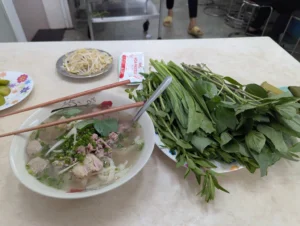


Whenever I fly down to Ho Chi Minh City from Hanoi, my daily routine shifts quite a bit. Up north, meals often feel a bit more structured around seasons and specific established neighborhood corners. In the south, eating feels heavily influenced by the constant 35-degree heat and the sheer size of the urban grid. It’s a very practical, fast-paced food scene.
You can find nearly any Vietnamese dish inside District 1 if you walk around enough. The issue is that the center has changed a lot in recent years. High rents have pushed a lot of the older, family-run pavement stalls further out. So, if you want the food to taste like it has for decades and pay the normal local rate, you really need to rely on motorbike taxis to hop around the borders of District 3, 4, 5, and Phu Nhuan.
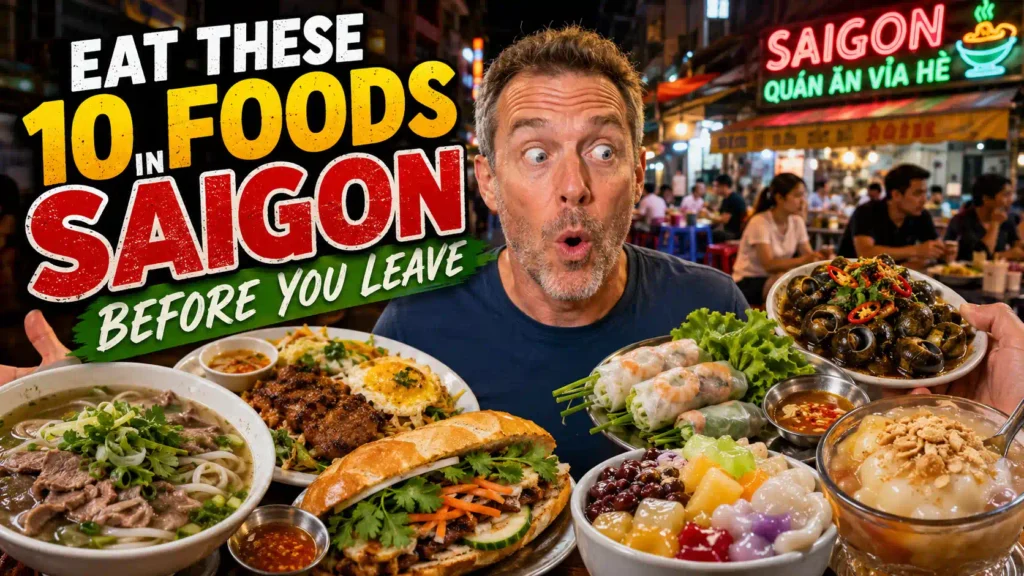
Below are 10 standard, everyday Saigon street foods. I’m listing the ones I actually eat when I have a few days in town, along with rough notes on how to get them, the cost, and what the street usually looks like.
- Quick Answer: Saigon street foods are sweeter, spicier, and heavier on fresh herbs than up north. Skip the fancy central eateries; instead, take Grab bikes to Phu Nhuan for early morning broken rice, Cholon for dry garlic noodles, and the curbs of District 4 for cheap late-night seafood.
- Morning Staples (Before 9:00 AM)
- Cơm Tấm (Broken Rice): Charcoal-grilled sweet pork chops with scallion oil. Eat this at Cơm Tấm Ba Ghiền (Dang Van Ngu street, Phu Nhuan).
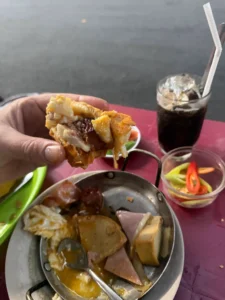
- Bánh Mì Chảo (Sizzling Pan Breakfast): Sunny-side-up eggs, pâté, and sausage served on a hot skillet in an alleyway. Get this at Bánh Mì Hòa Mã (Cao Thang street, District 3).
- Midday & Afternoon Lunches (11:00 AM – 2:00 PM)
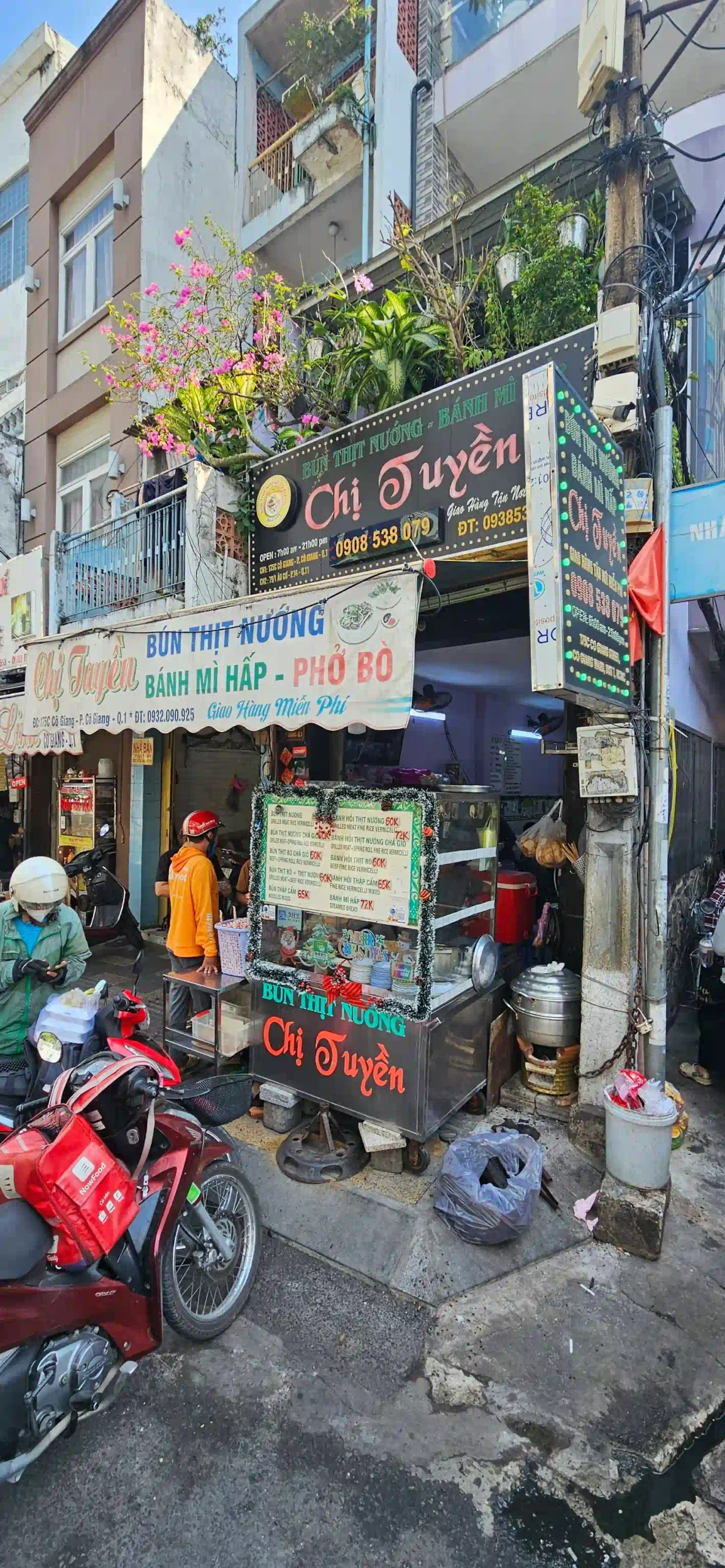
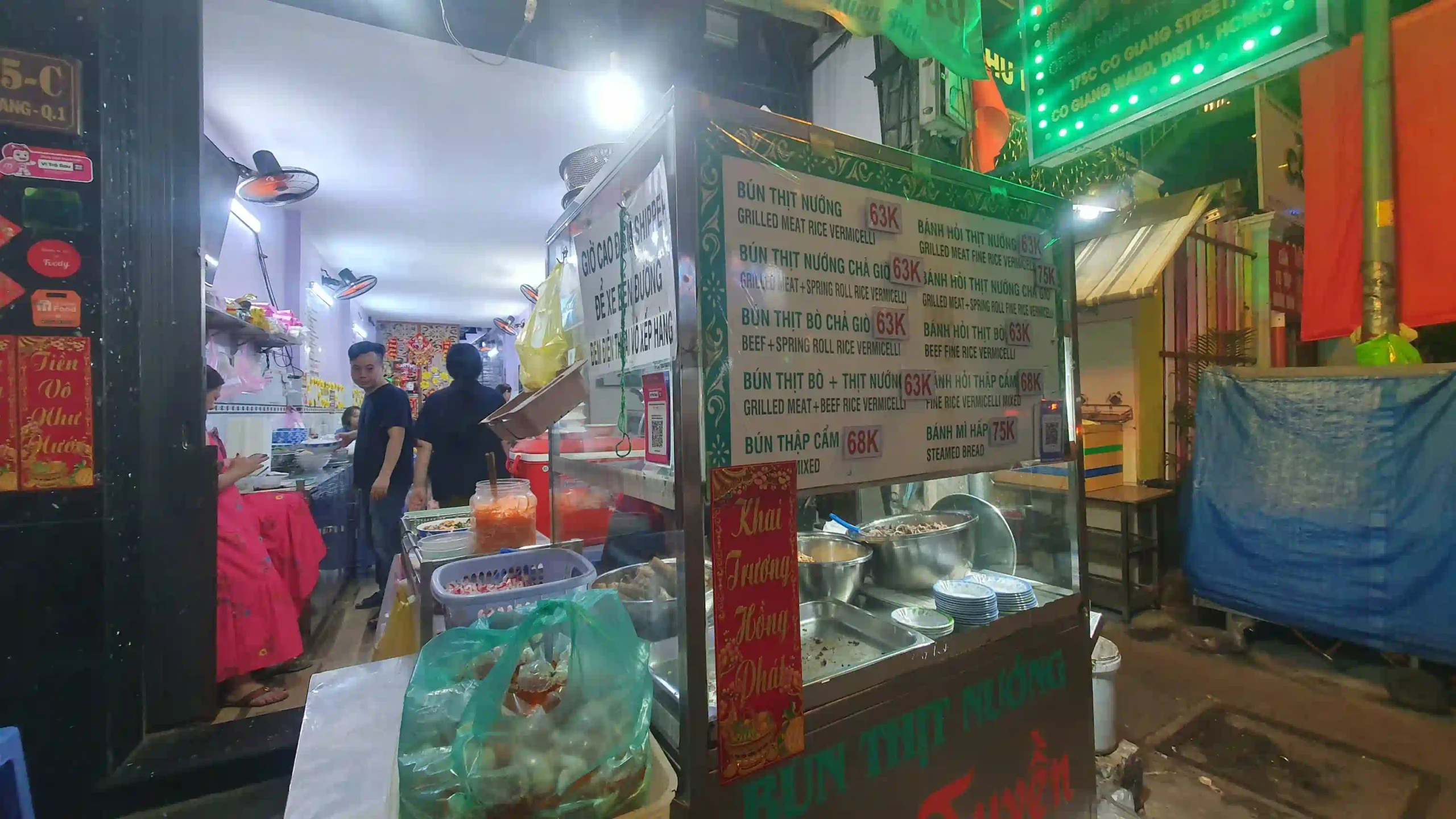
- Bún Thịt Nướng: Cold rice vermicelli noodles with grilled pork, fresh herbs, and spring rolls. Best at Quán Chị Tuyền (Co Giang street, District 1).
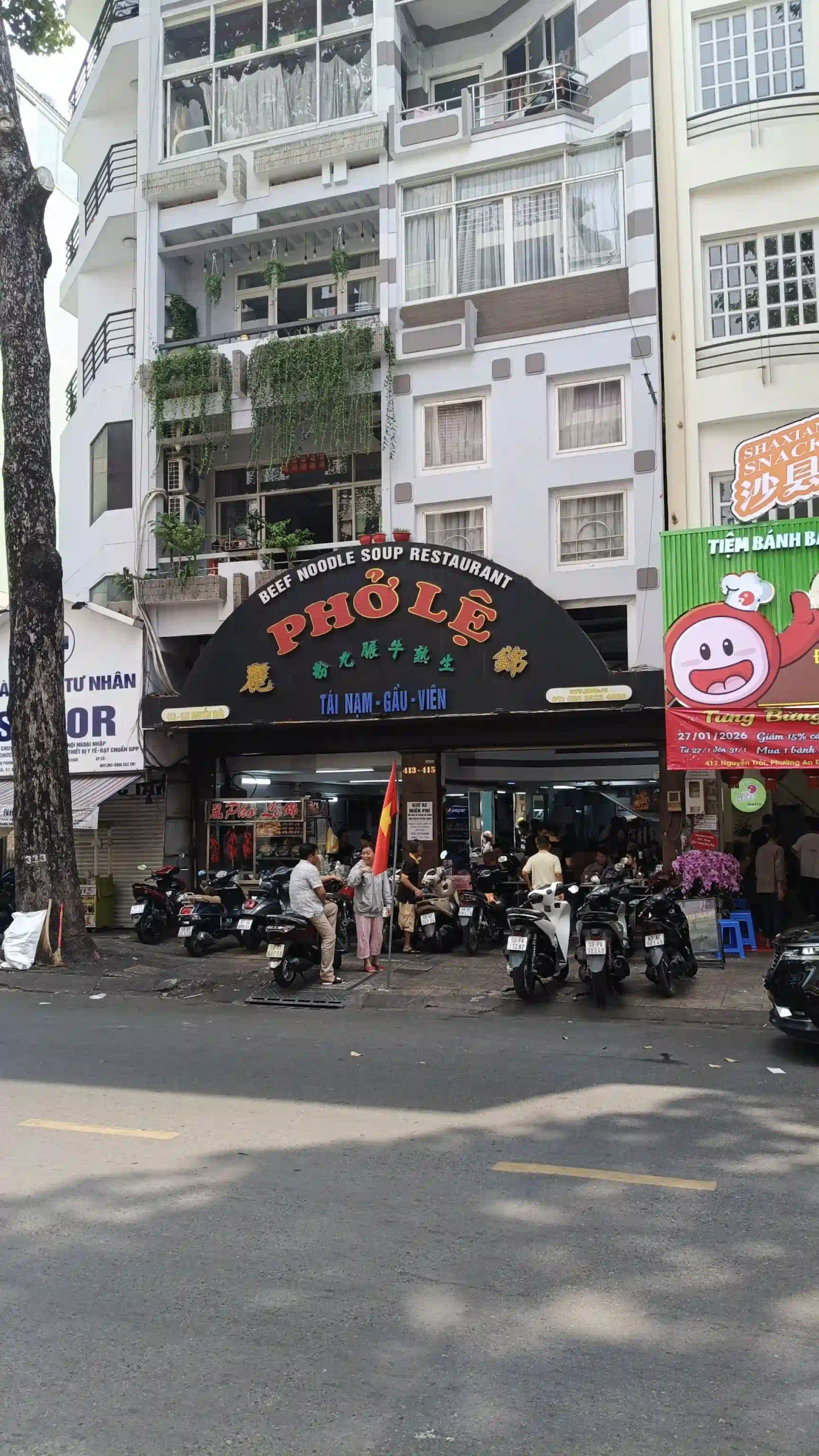
- Southern-Style Phở: A richer, fatter beef broth customized with hoisin sauce and a massive basket of raw herbs. Best at Phở Lệ (Nguyen Trai street, District 5).
- Bánh Xèo: Giant crispy yellow rice-flour crepes stuffed with pork and shrimp. Wrap them in raw mustard leaves at Bánh Xèo 46A (Dinh Cong Trang street, District 1).
- Evening & Night Grills (After 5:00 PM)
- Hủ Tiếu Nam Vang: Chewy noodles with pork broth, liver, quail eggs, and garlic oil. Order it dry (khô) in Cholon (District 5).
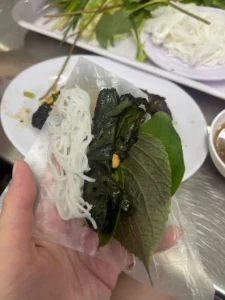
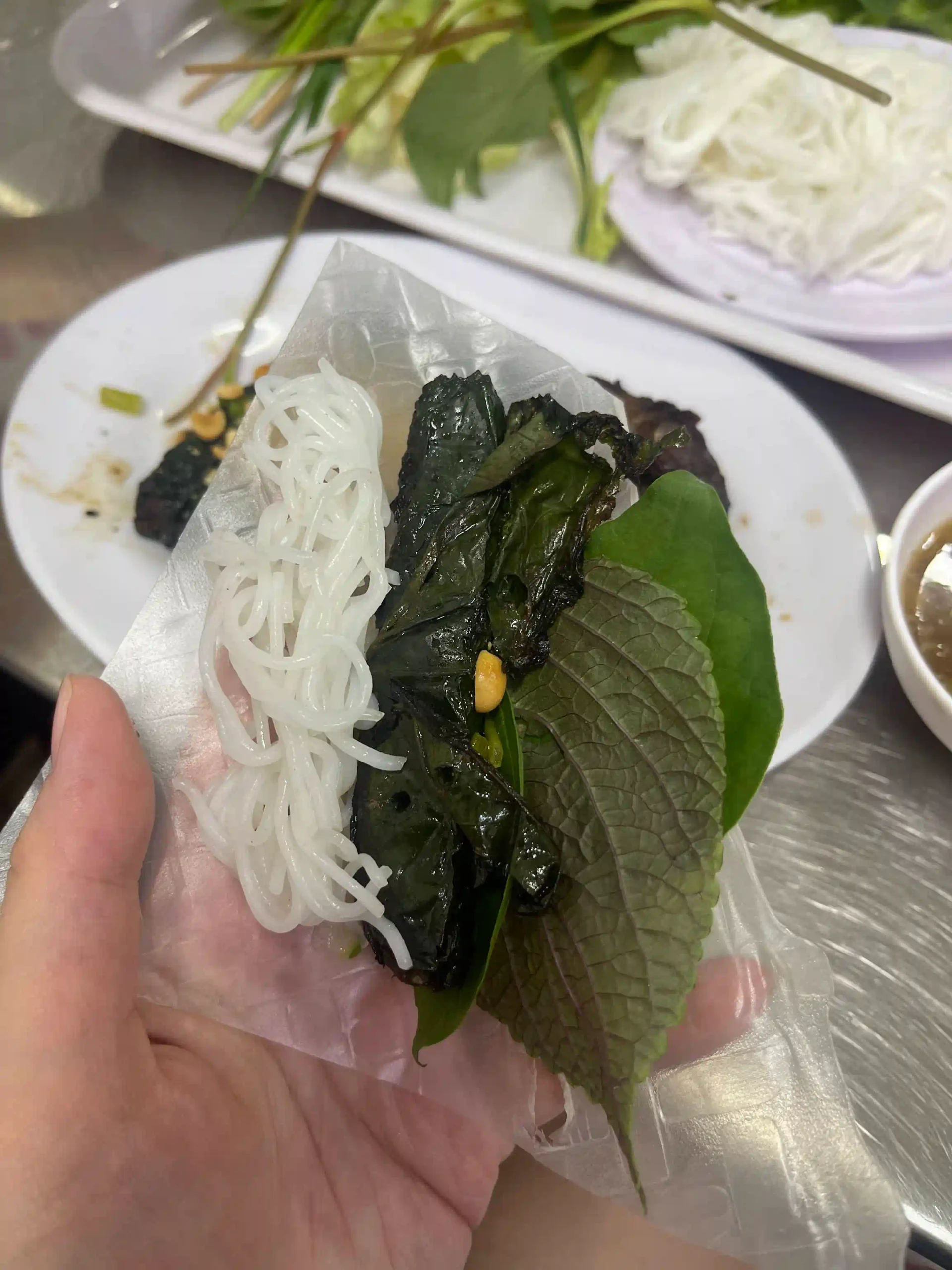
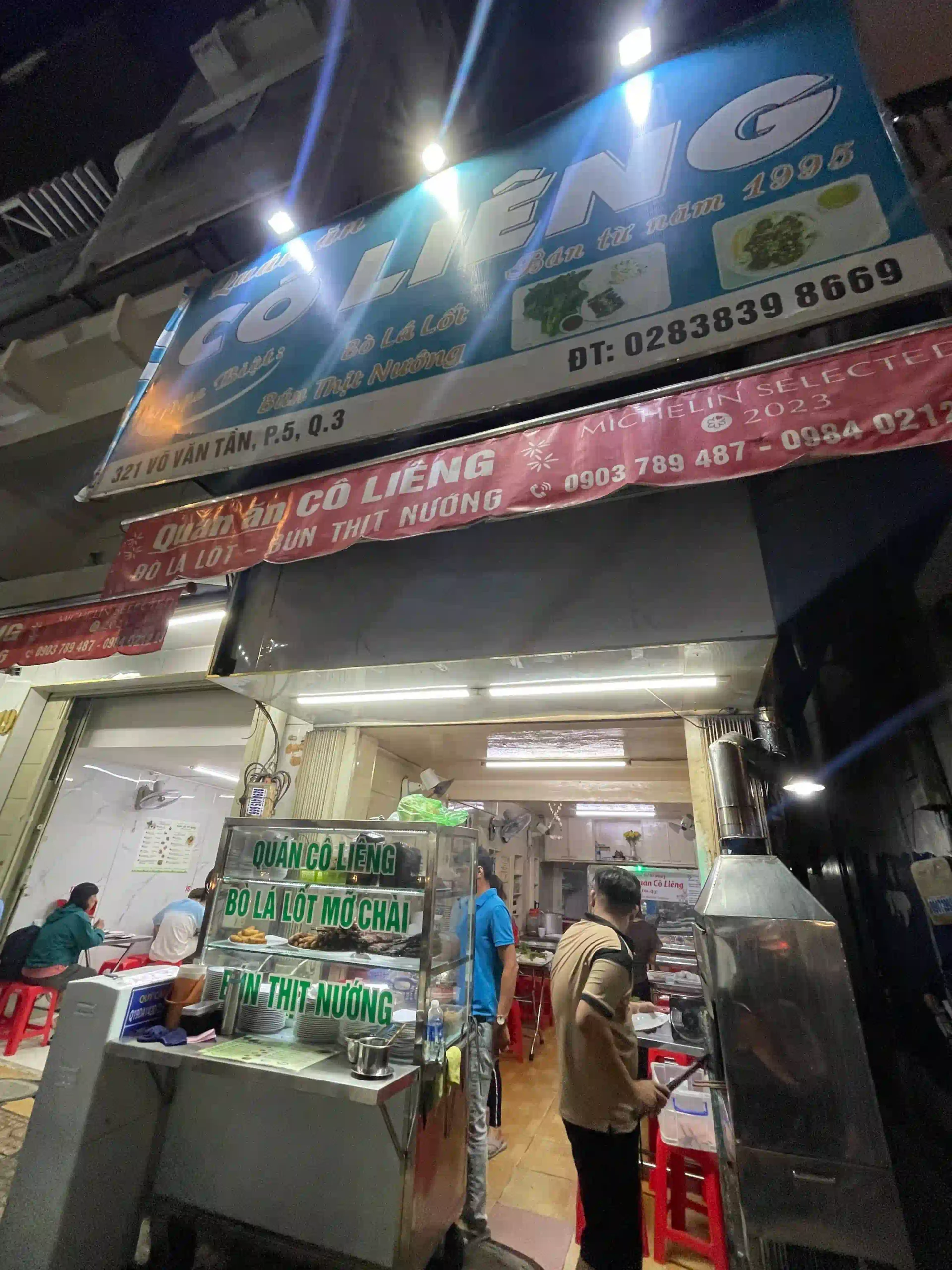
- Bò Lá Lốt: Minced beef wrapped in wild betel leaves and grilled over open coals. Dip it in pungent pineapple-anchovy sauce at Quán Cô Liêng (Vo Van Tan street, District 3).
- Ốc (Sea Snails & Shellfish): Grilled blood cockles and snails cooked in sticky sweet tamarind sauce. Head to the metal tables on Vinh Khanh street (District 4).
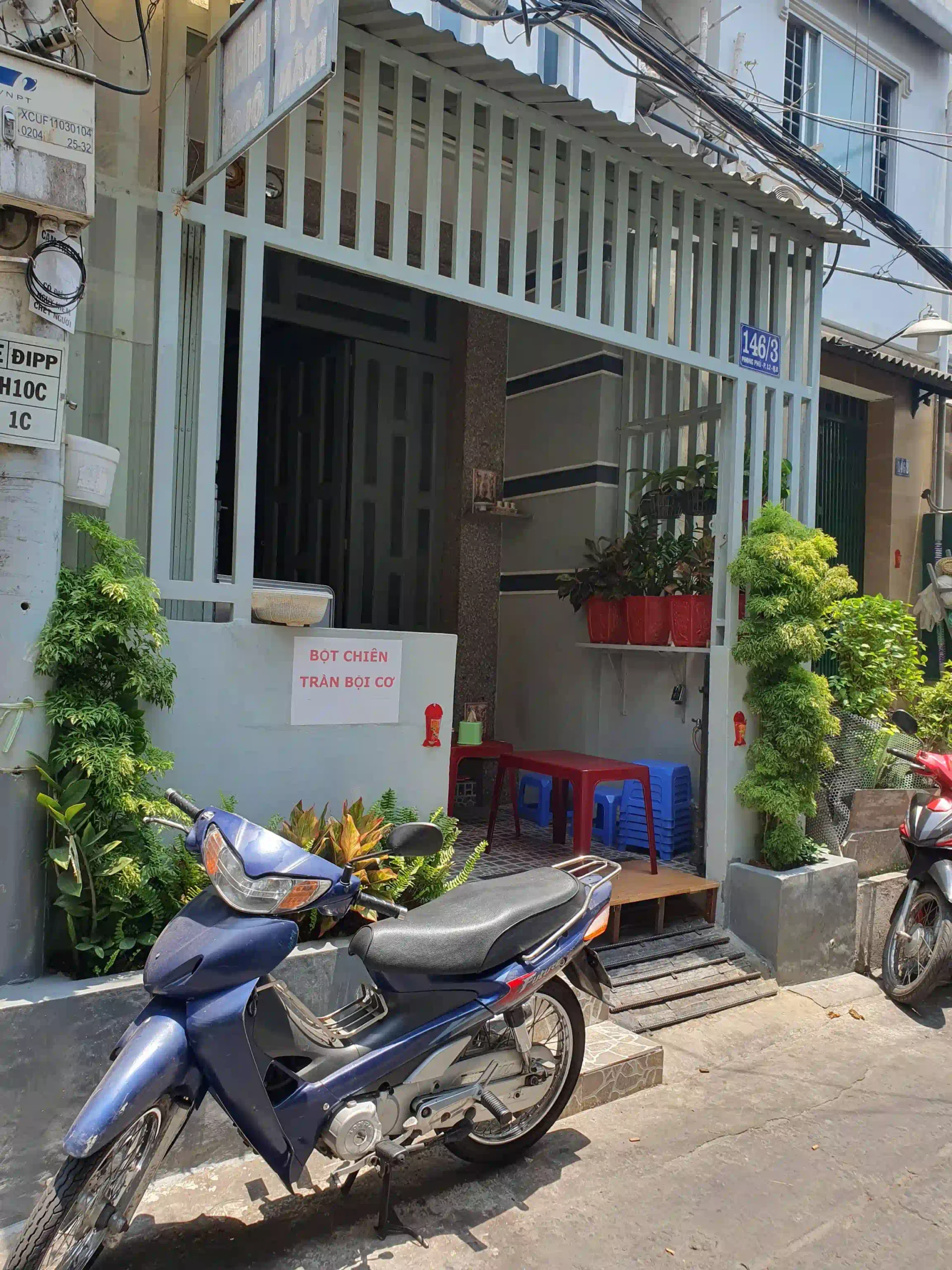
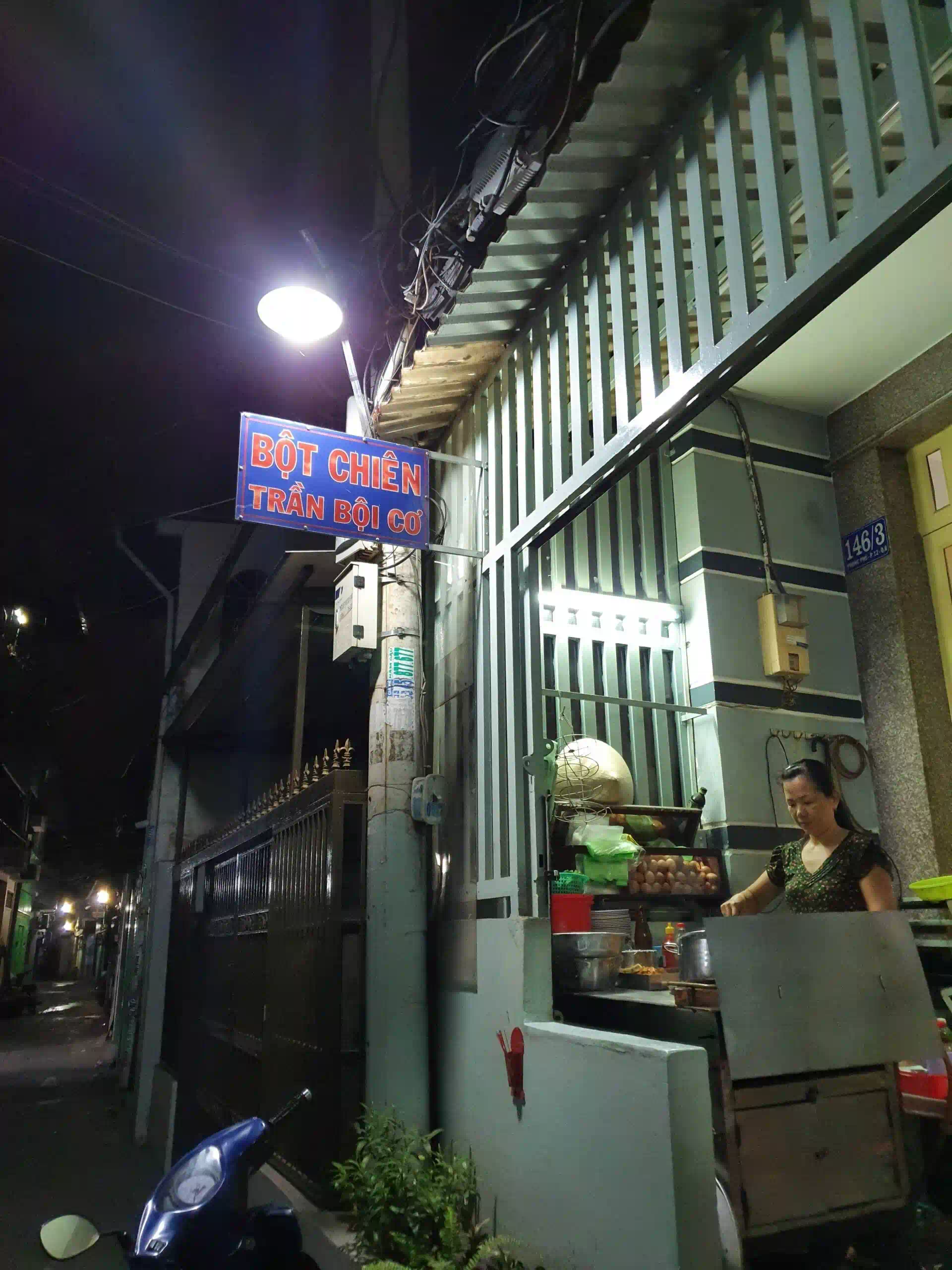
- Bột Chiên & Chuối Nếp Nướng: Crispy pan-fried rice-flour blocks with egg, or sweet grilled bananas wrapped in sticky rice and warm coconut milk. Found on late-night street carts around District 5 and Binh Thanh.
1. Cơm Tấm (Broken Rice with Grilled Pork)
This is the meal I associate most strongly with this part of the country. Historically, when rice was milled, the grains that fractured were set aside. They were cheaper, so locals used them to make a heavy, working-class breakfast. The smaller, broken grains happen to have a softer texture that absorbs sauces really well.
The standard plate here is called cơm tấm sườn bì chả.
You get a scoop of rice. Over that goes a large piece of grilled pork chop (sườn). Then they add shredded pork skin (bì) mixed with toasted rice powder for texture, and a square cut of steamed pork-and-egg meatloaf (chả). Finally, they brush some scallion oil over the meat and give you a small dish of sweet, chili-infused fish sauce. You just spoon the sauce over the rice.
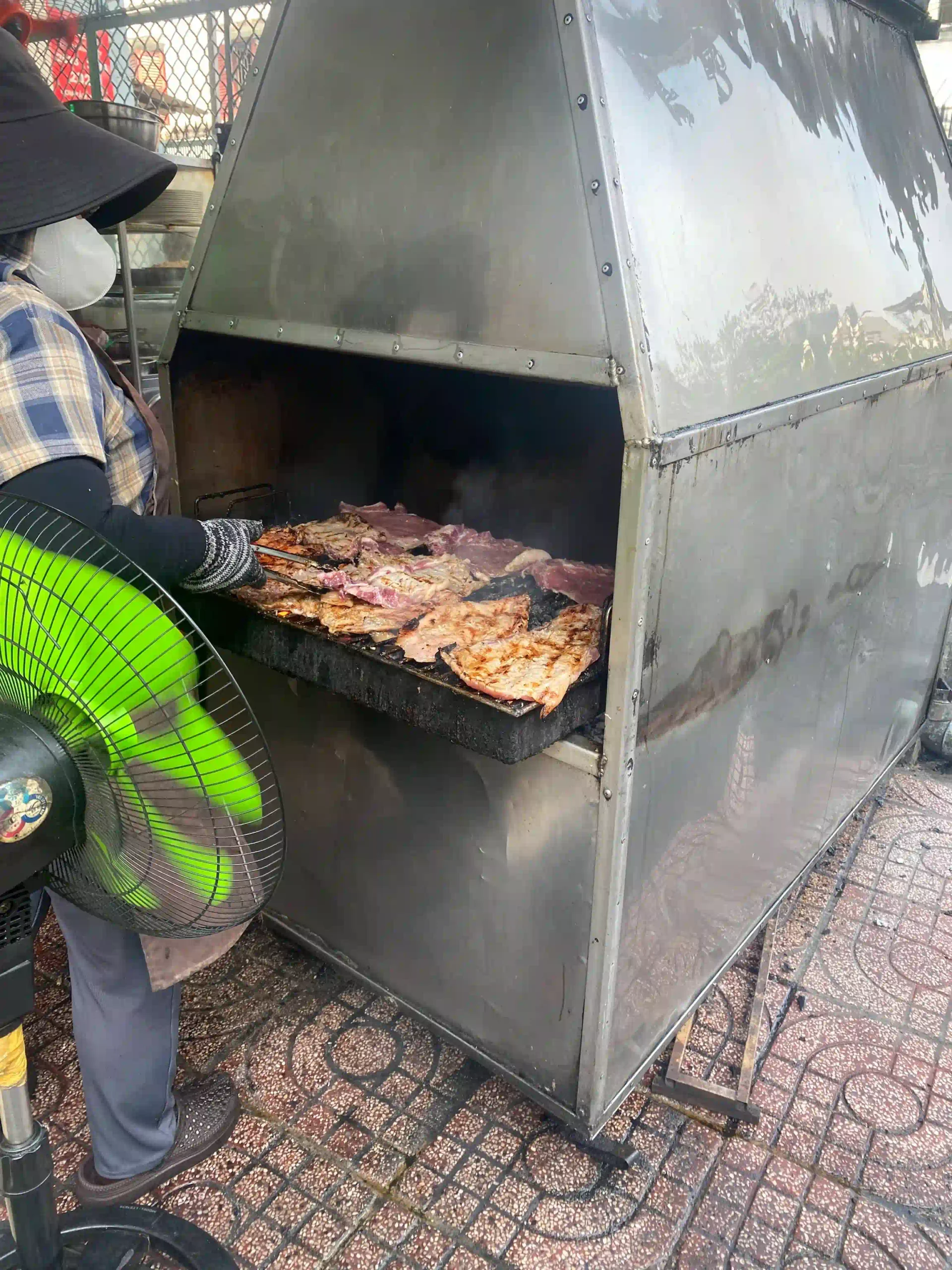
You’ll know a street has a good Cơm Tấm stall because of the smell. Around 6:30 or 7:00 in the morning, vendors set up small charcoal grills right on the curbs edge to cook the pork. The marinade usually contains lemongrass and a bit of honey, so the smoke is thick and smells fairly sweet.
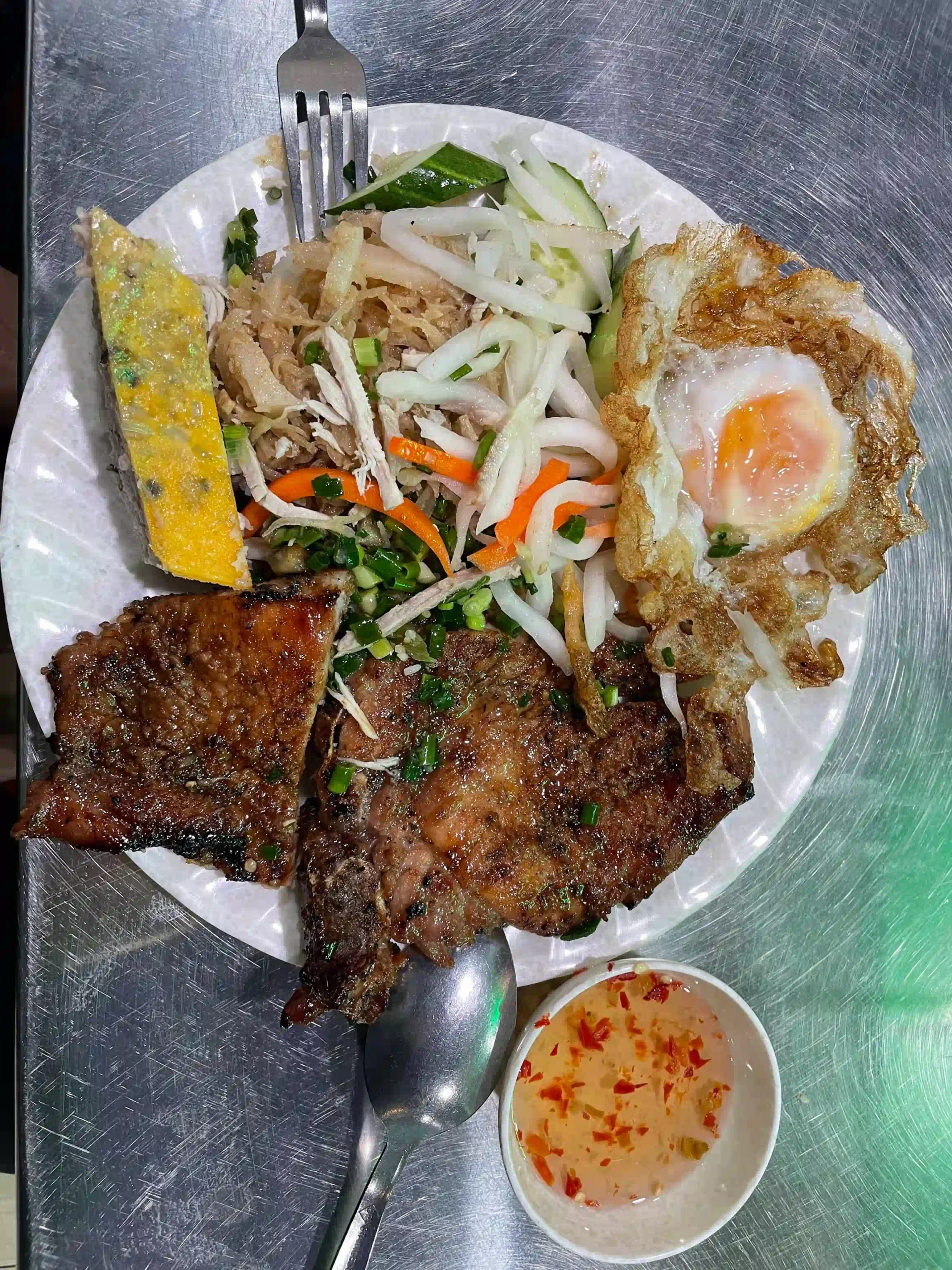
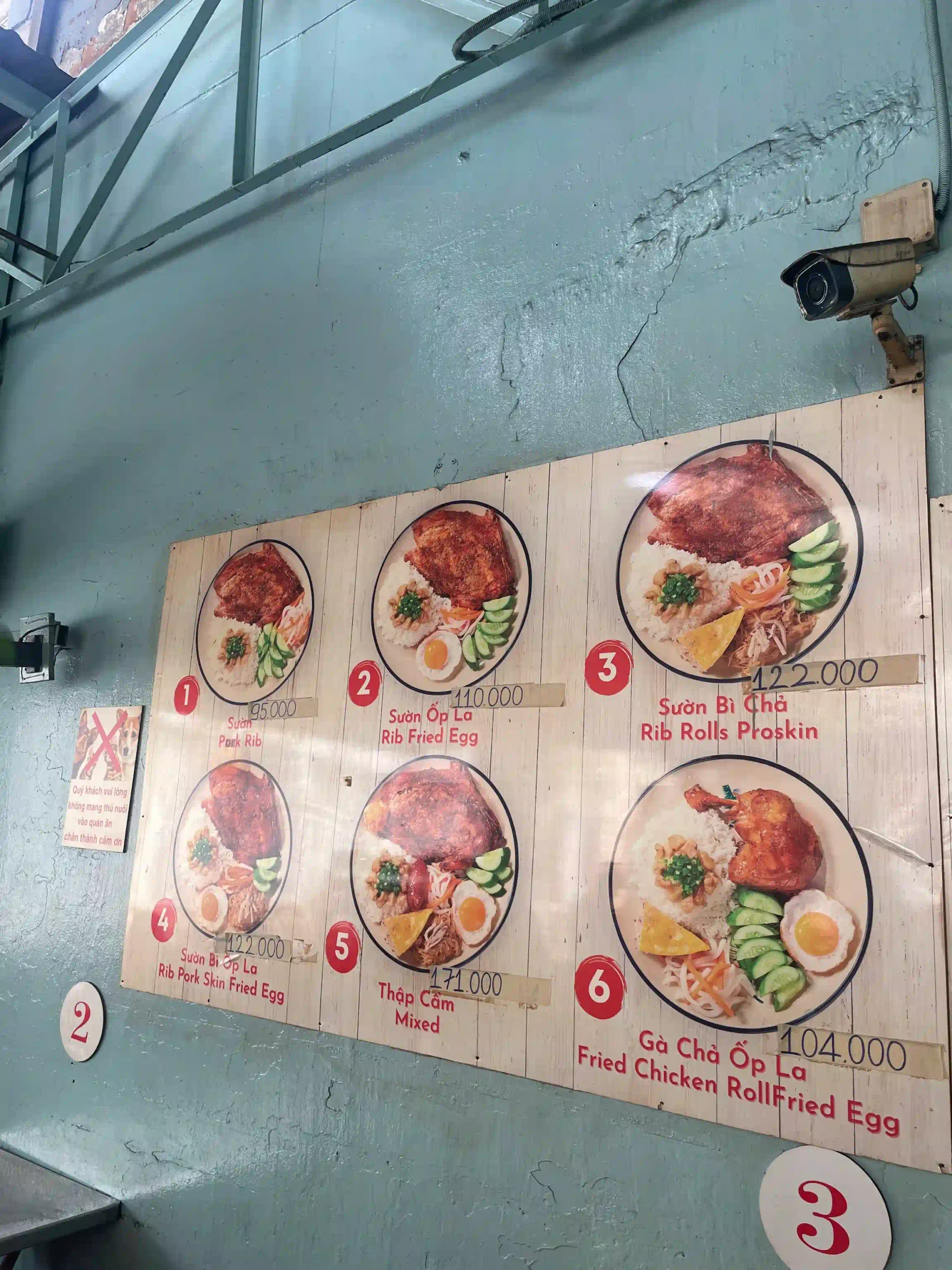
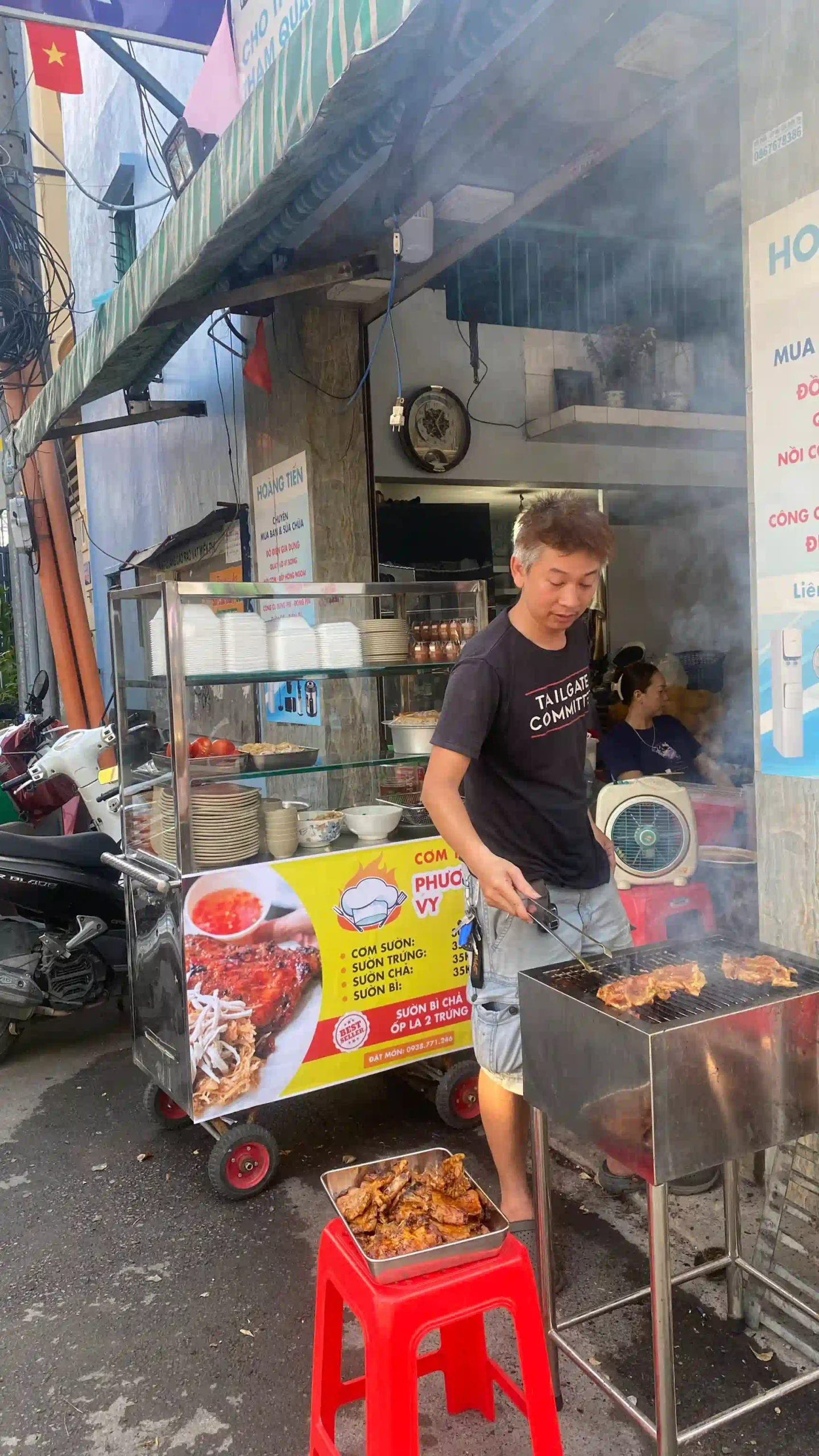
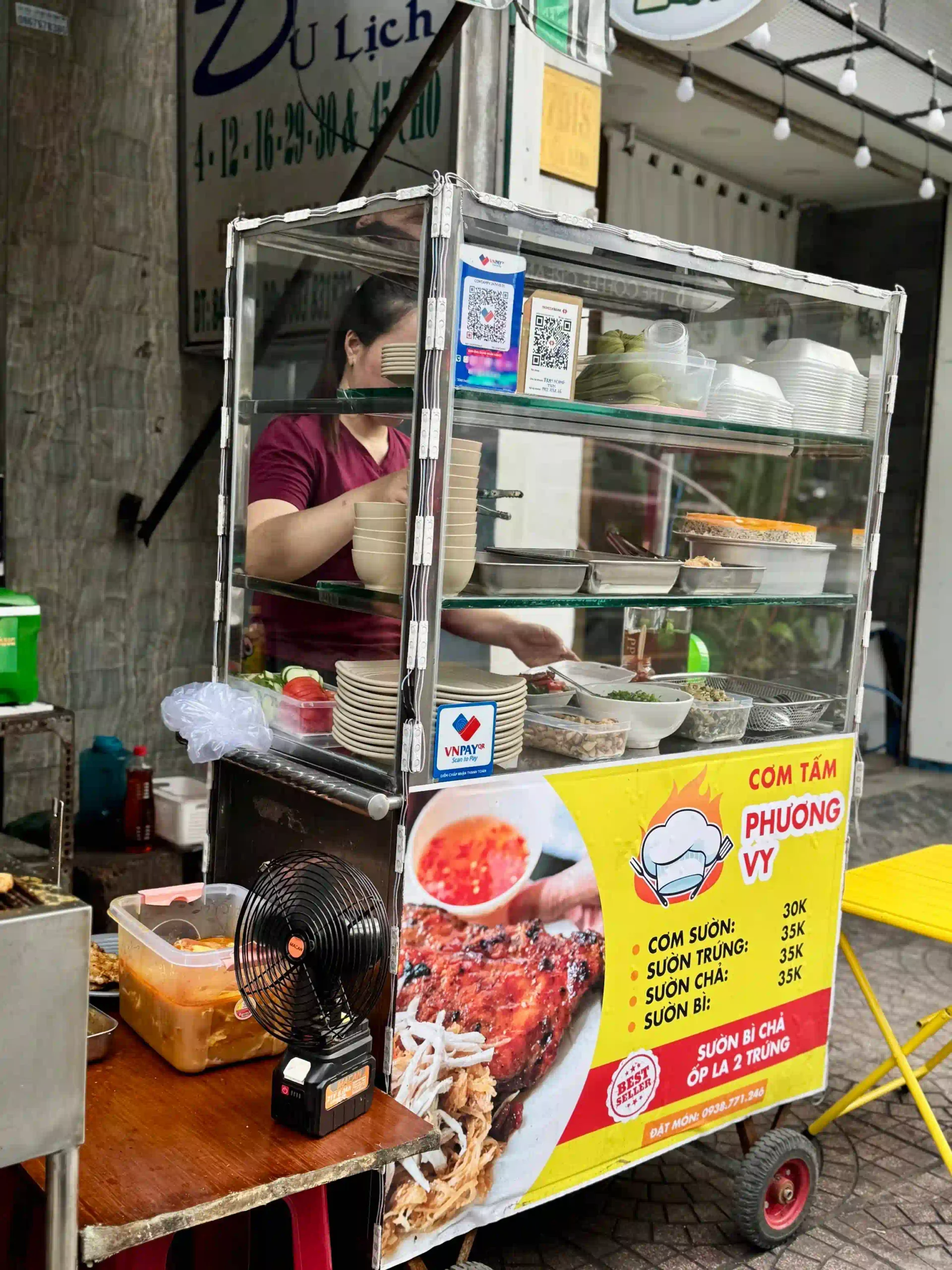
Where to find it:
Honestly, any neighborhood side-street at 7am will have one.
If you want the most famous iteration of this, take a ride up to Cơm Tấm Ba Ghiền on Dang Van Ngu street in the Phu Nhuan district. The portion of meat they serve here is unusually large and deeply charred. It’s an open-front shop with low metal tables and a loud exhaust fan. A plate there is slightly pricey now, maybe 90,000 or 100,000 VND, but on normal alleys, you pay about 40,000 VND.
2. Bún Thịt Nướng (Grilled Pork over Cold Vermicelli)
Walking around at midday in the dry season here is tiring. Sometimes, sitting down for a bowl of boiling soup at 1pm is the last thing I want to do.
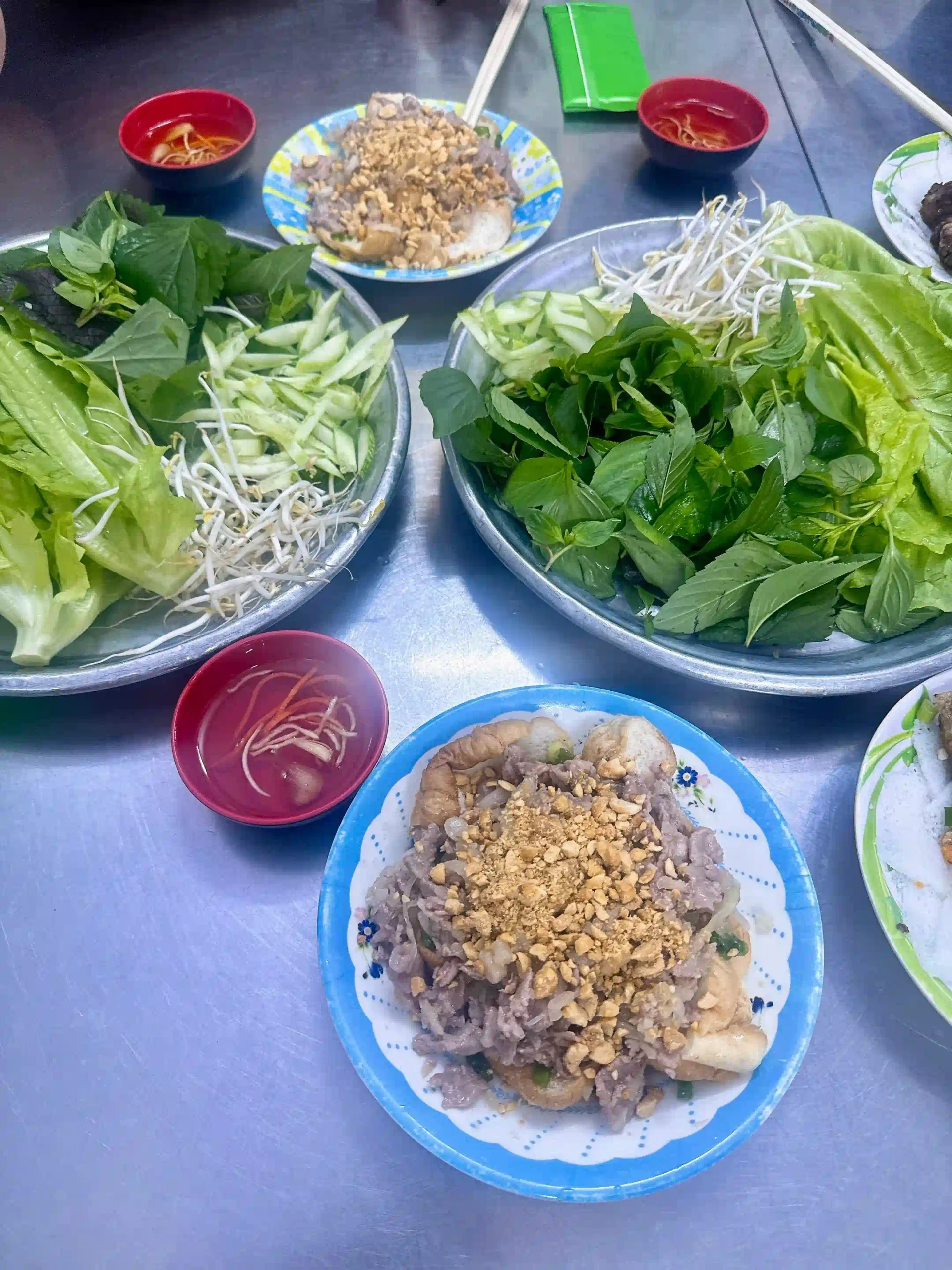
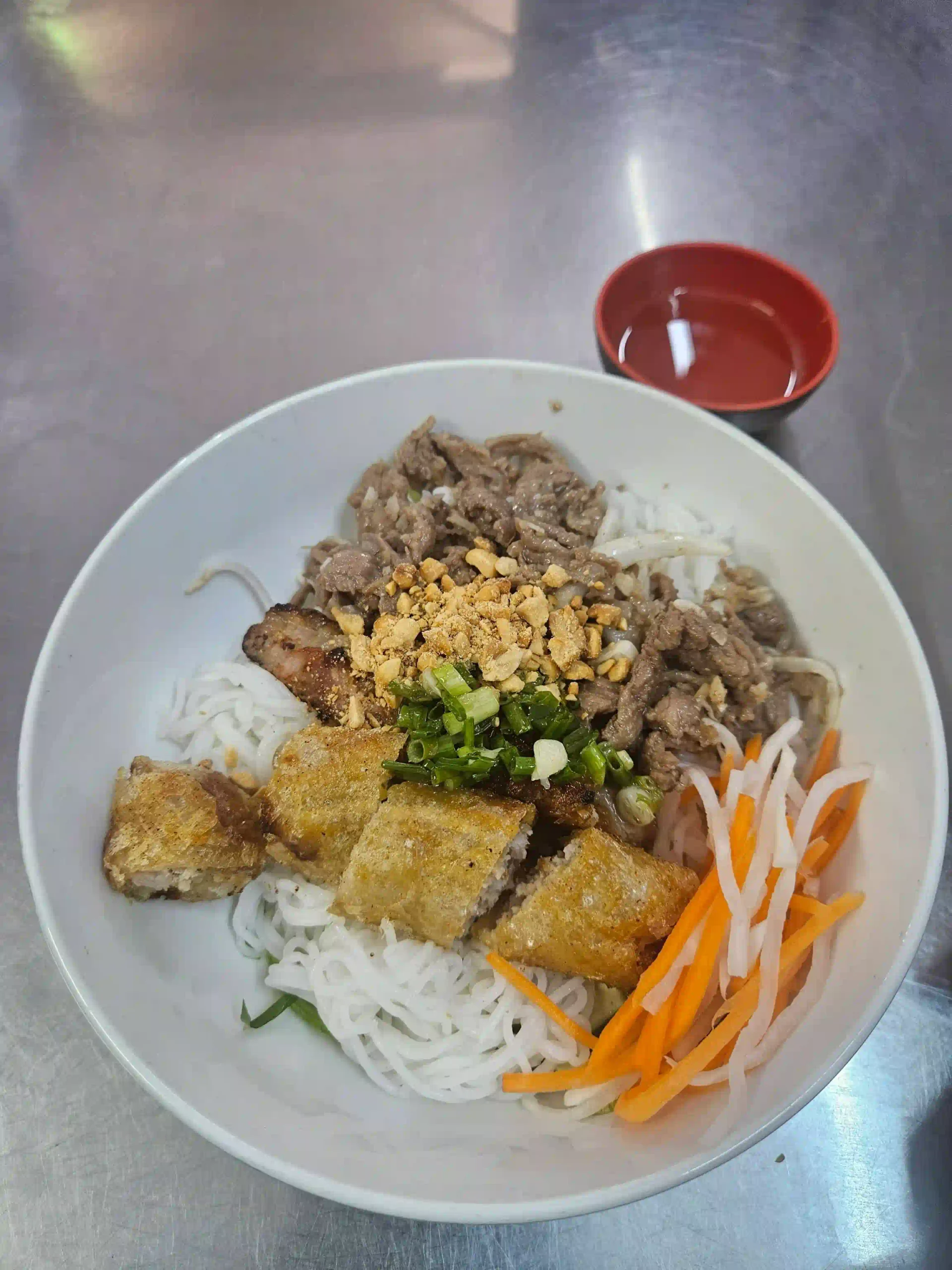
Bún Thịt Nướng solves that problem. There’s no broth. It’s served at room temperature, making it a very light, easy lunch. The vendor fills the bottom of your bowl with fresh, thin rice noodles (bún). They add a large handful of greens – mostly shredded lettuce, cucumber, basil, and bean sprouts. Then they snip pieces of hot, freshly grilled pork into the bowl along with pieces of a crispy fried spring roll (chả giò), and top it off with some crushed peanuts.
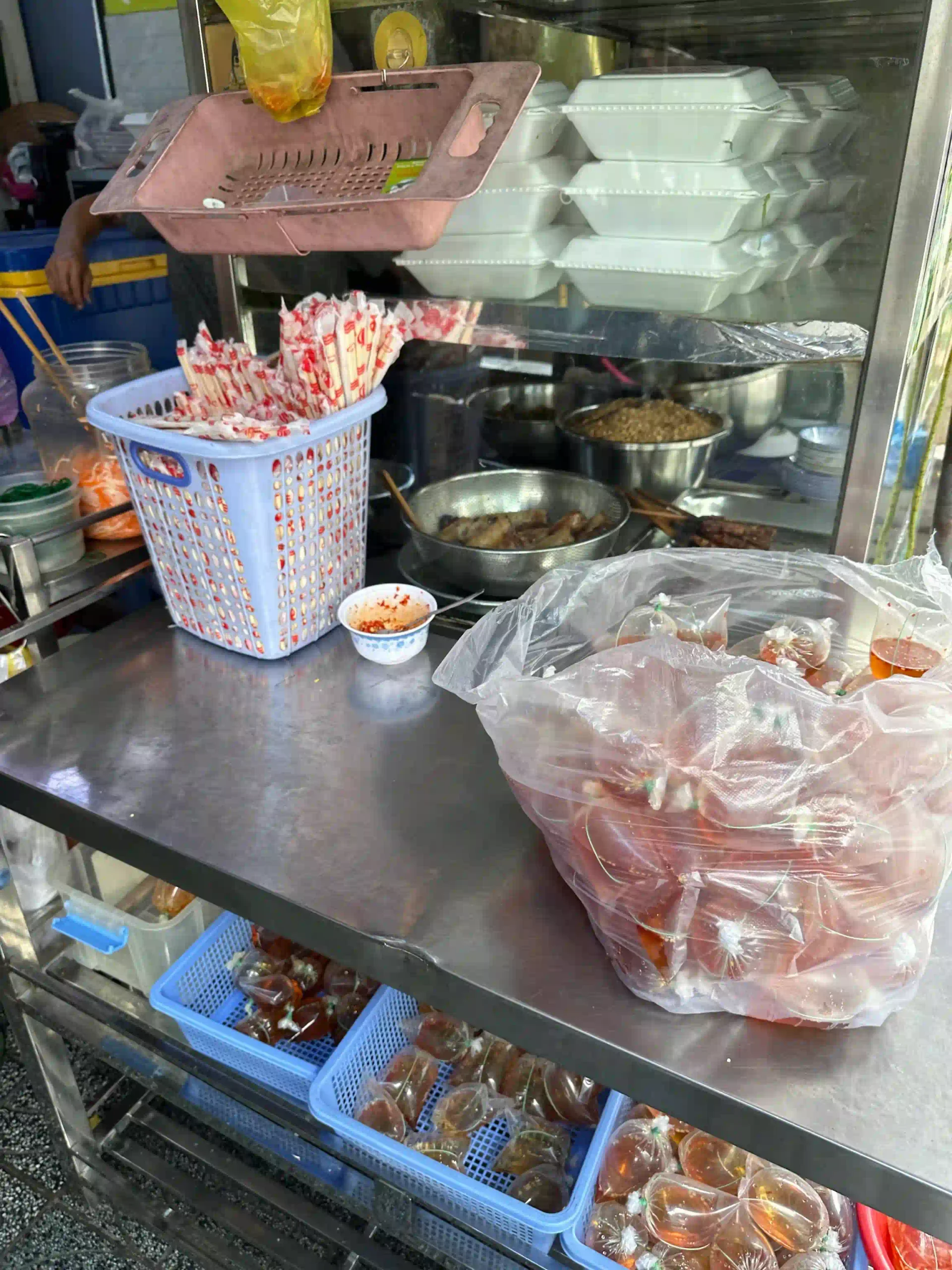
When they bring it to your table, they give you a bowl of amber-colored fish sauce that is heavily diluted with sugar and water so it’s sweet rather than fishy. You pour it into your bowl, stir the cold noodles, the vegetables, and the hot pork all together with your chopsticks, and eat.
Where to find it:
Down near the Co Giang market area in District 1, there are usually a few carts set up on the corners. Bún Thịt Nướng Chị Tuyền on Co Giang street is an established local favorite. It gets very cramped at noon. You sit elbow-to-elbow with people on their office lunch breaks. Prices range around 65,000 to 75,000 VND.
3. Hủ Tiếu Nam Vang (Phnom Penh-style Noodle Soup)
District 5, which sits west of the city center, is known as Cholon (the old Chinatown). The food out here reflects generations of Chinese, Vietnamese, and Cambodian cross-migration. That history shows up clearly in Hủ Tiếu Nam Vang.
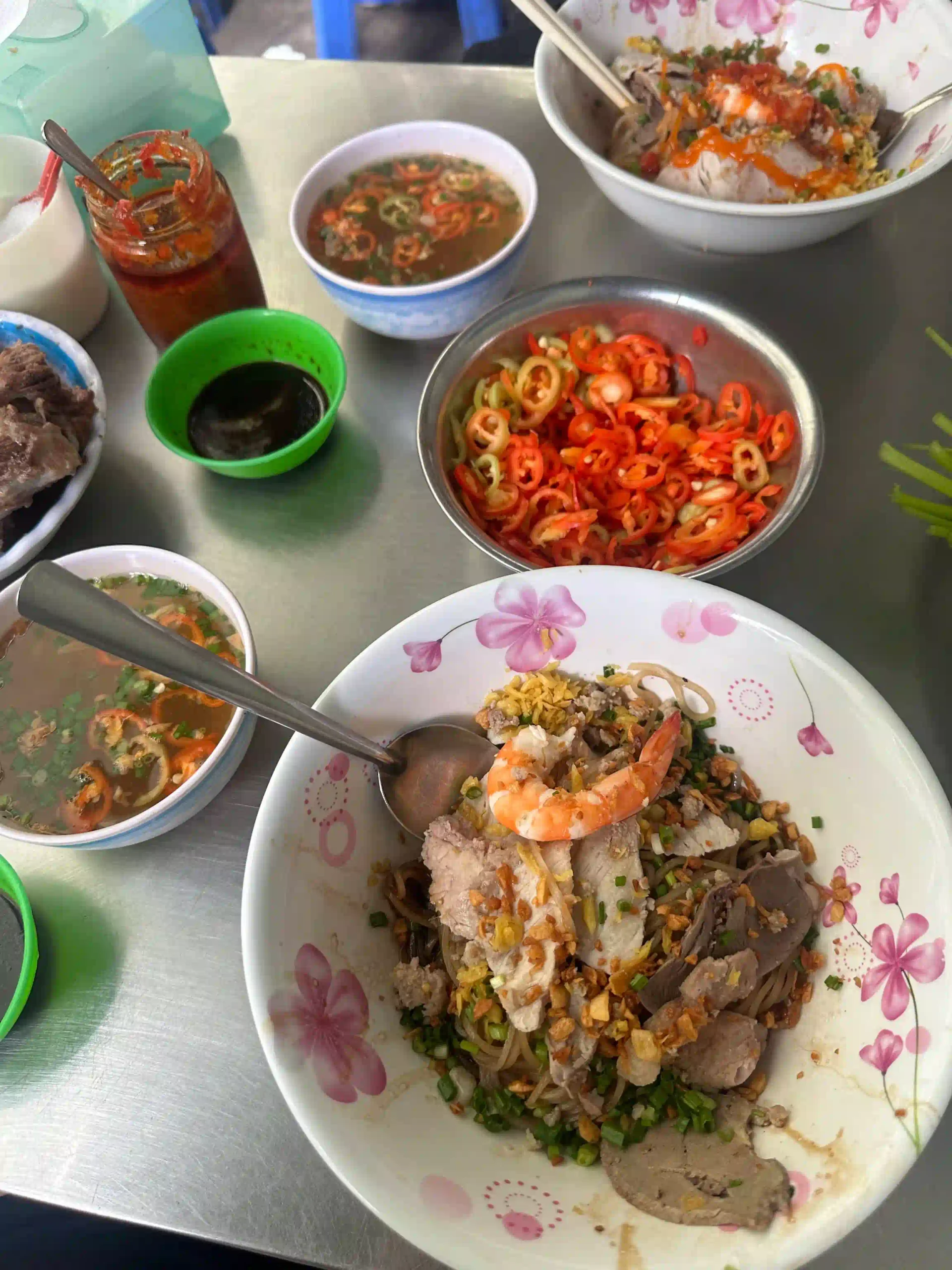
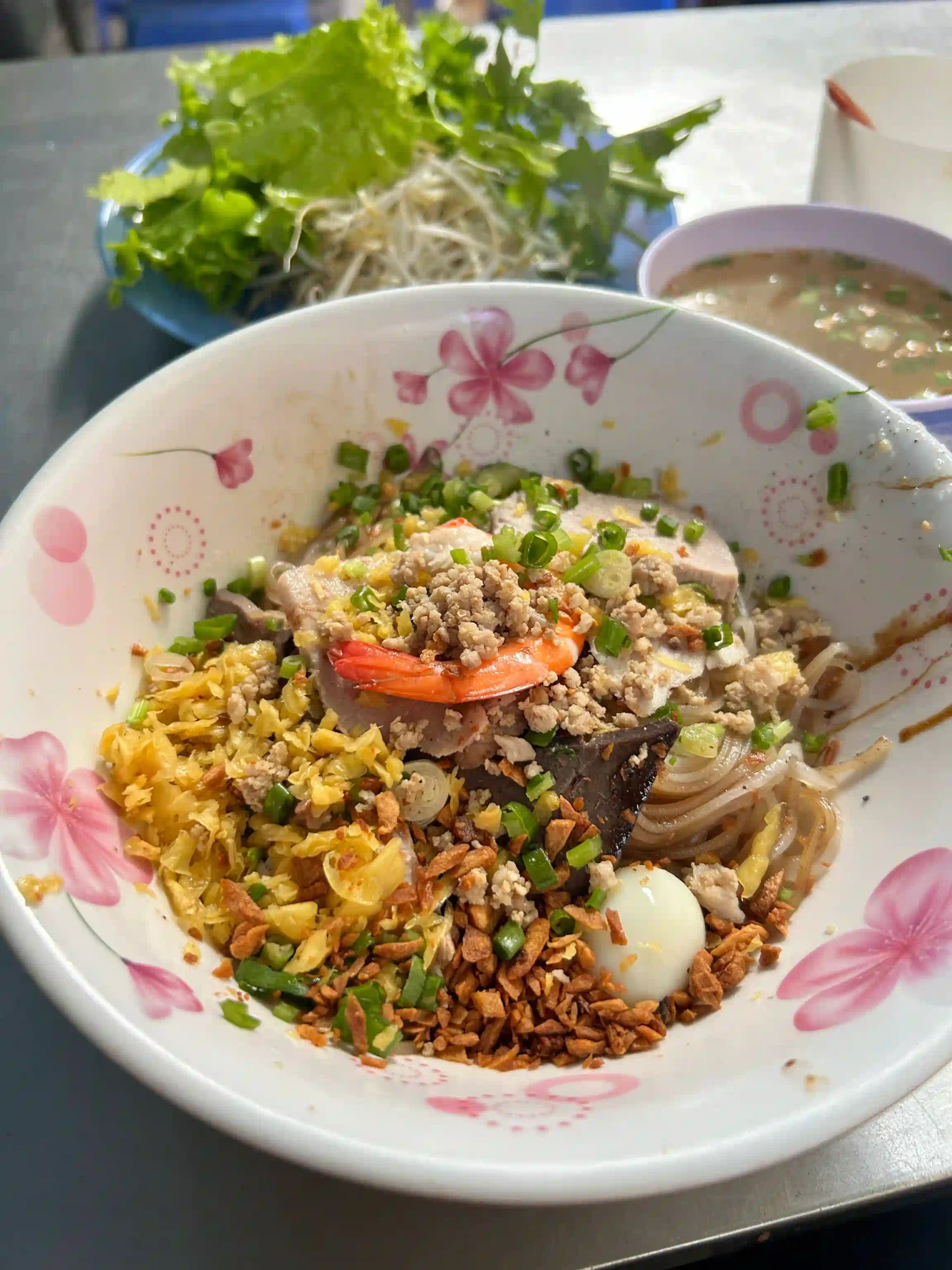
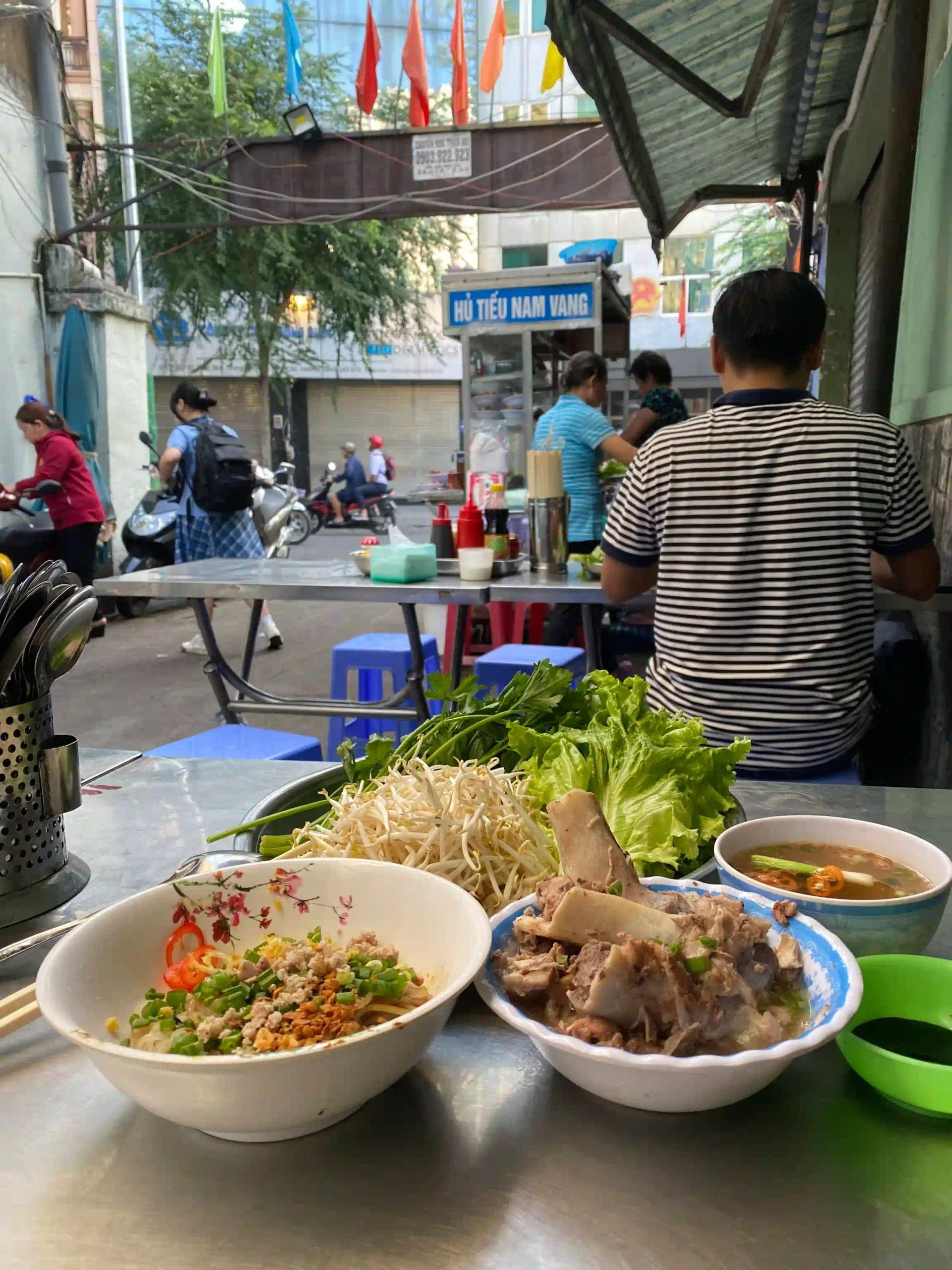
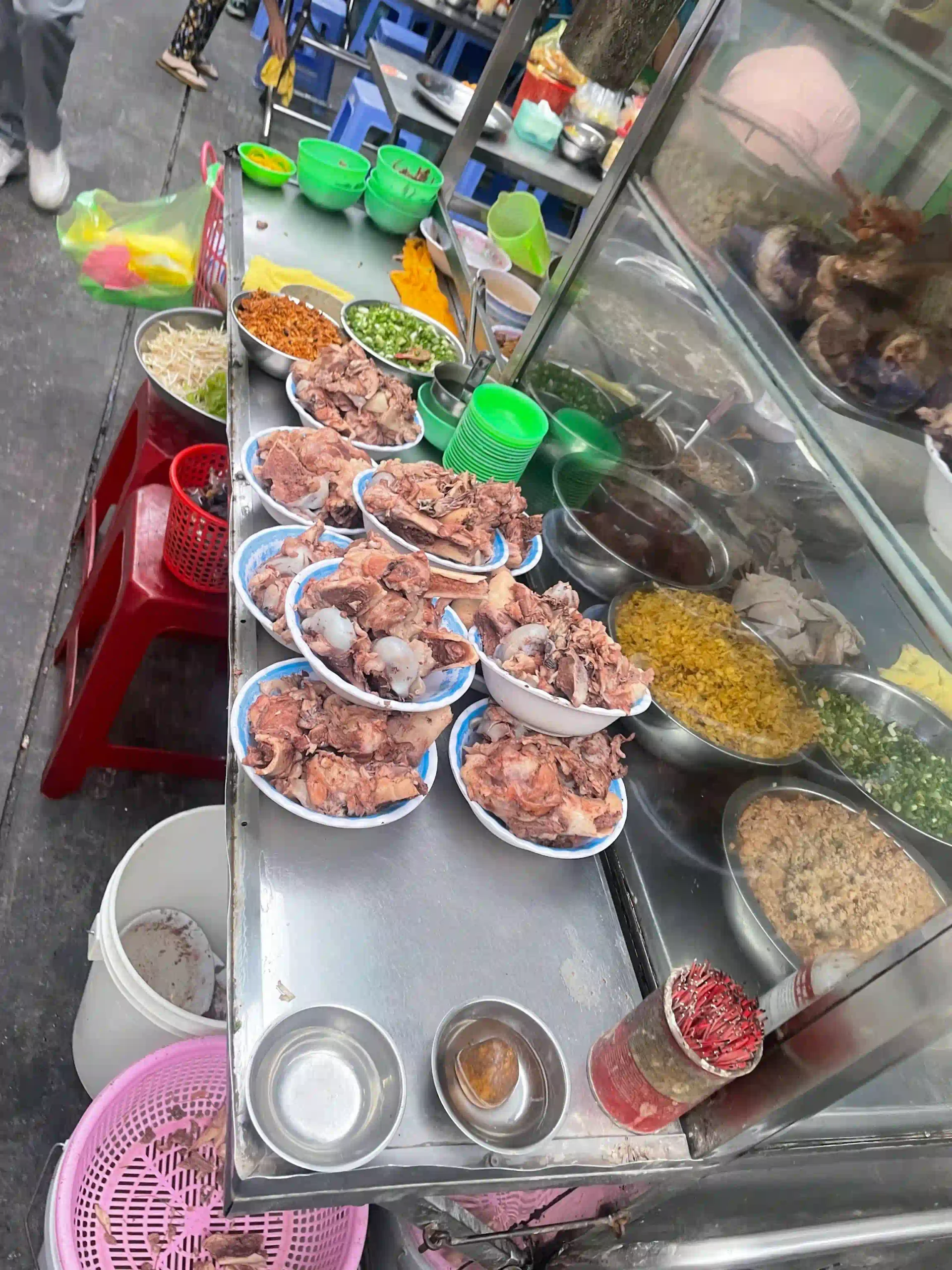
“Nam Vang” refers to Phnom Penh. The noodles are translucent and slightly chewy, made from tapioca and rice. The soup is boiled down from pork bones, dried shrimp, and squid, which makes the base fairly sweet. They serve it with a mix of toppings: usually sliced pork liver, boiled shrimp, a quail egg, and some ground pork.
The main defining flavor of Hủ Tiếu is the fried garlic. They pour a small spoon of toasted garlic and garlic-infused oil over the bowl right before they serve it.
You can ask for it “dry” (hủ tiếu khô). This is my preferred way to eat it. The noodles arrive in a bowl mixed with soy sauce, oyster sauce, and pork fat, while the hot broth comes in a small, separate cup. It’s a bit saltier this way, and you drink the soup between bites.
Where to find it:
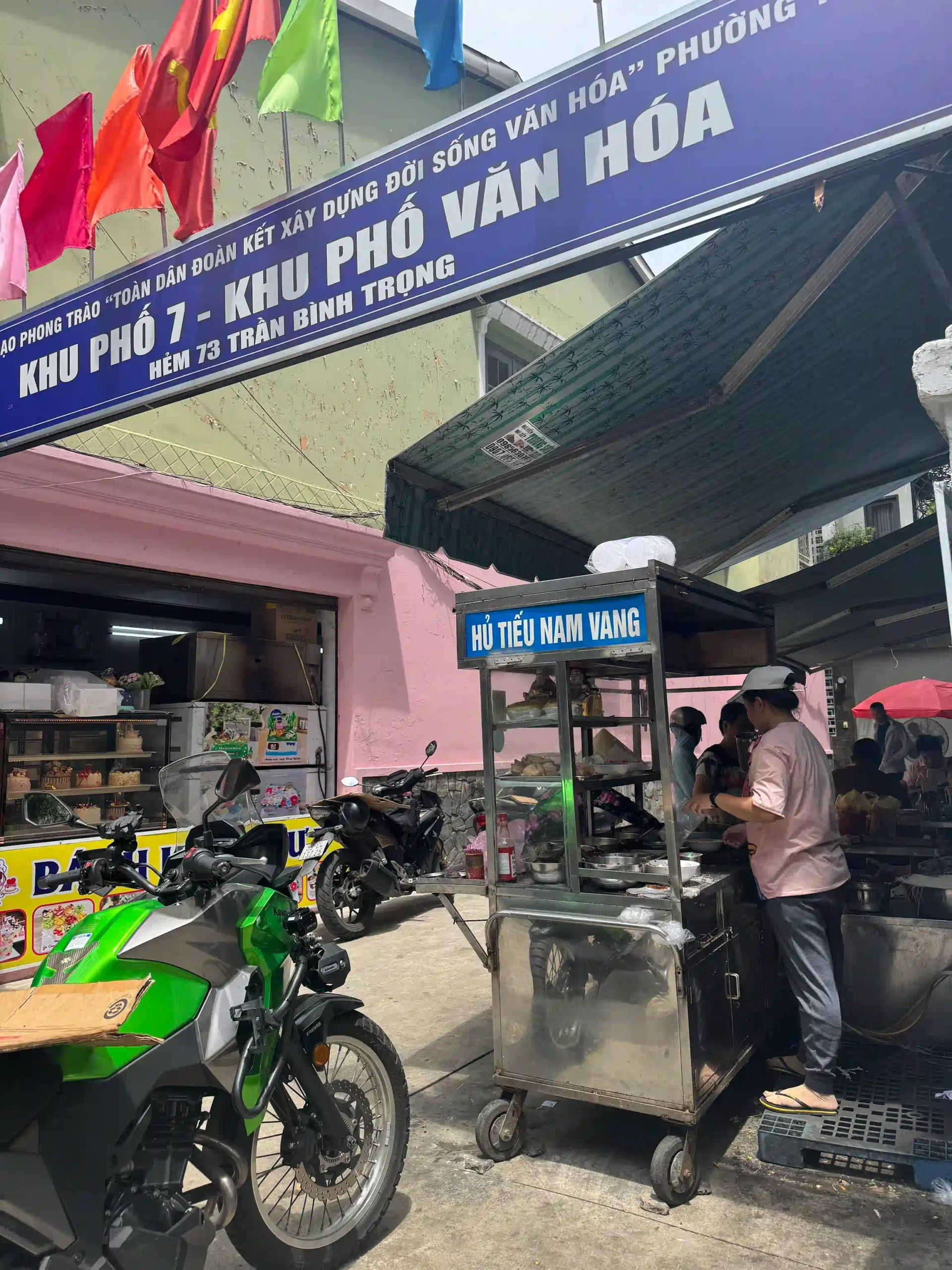
Just wandering around the side streets off Tran Hung Dao or Vo Van Kiet in District 5 will yield good options. Many of the carts here only operate from late afternoon until midnight. A normal bowl sits around 50,000 to 60,000 VND.
4. Bò Lá Lốt (Charcoal-Grilled Beef in Betel Leaf)
If I’m walking through District 3 in the late afternoon, I keep an eye out for Bò Lá Lốt stands. It has a very specific, slightly peppery smoke.
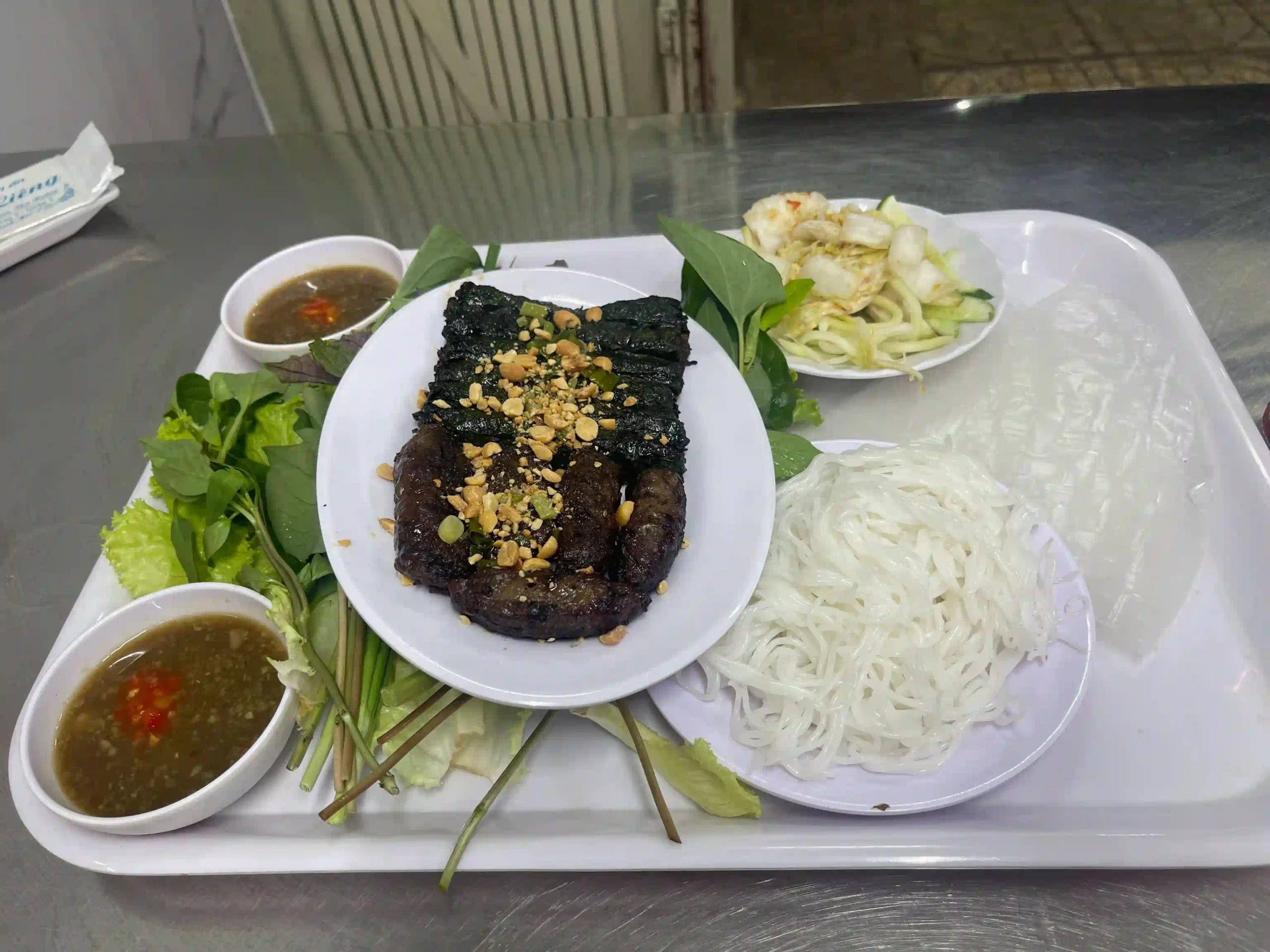
The cooks take seasoned ground beef (usually mixed with garlic and sometimes small bits of peanut), form it into a small cigar shape, and wrap it inside a fresh lá lốt leaf. It’s sometimes translated as betel leaf, but it’s technically in the pepper plant family. They thread these green rolls onto a bamboo stick and grill them directly over hot charcoal.
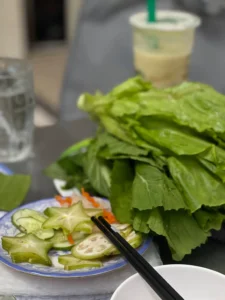
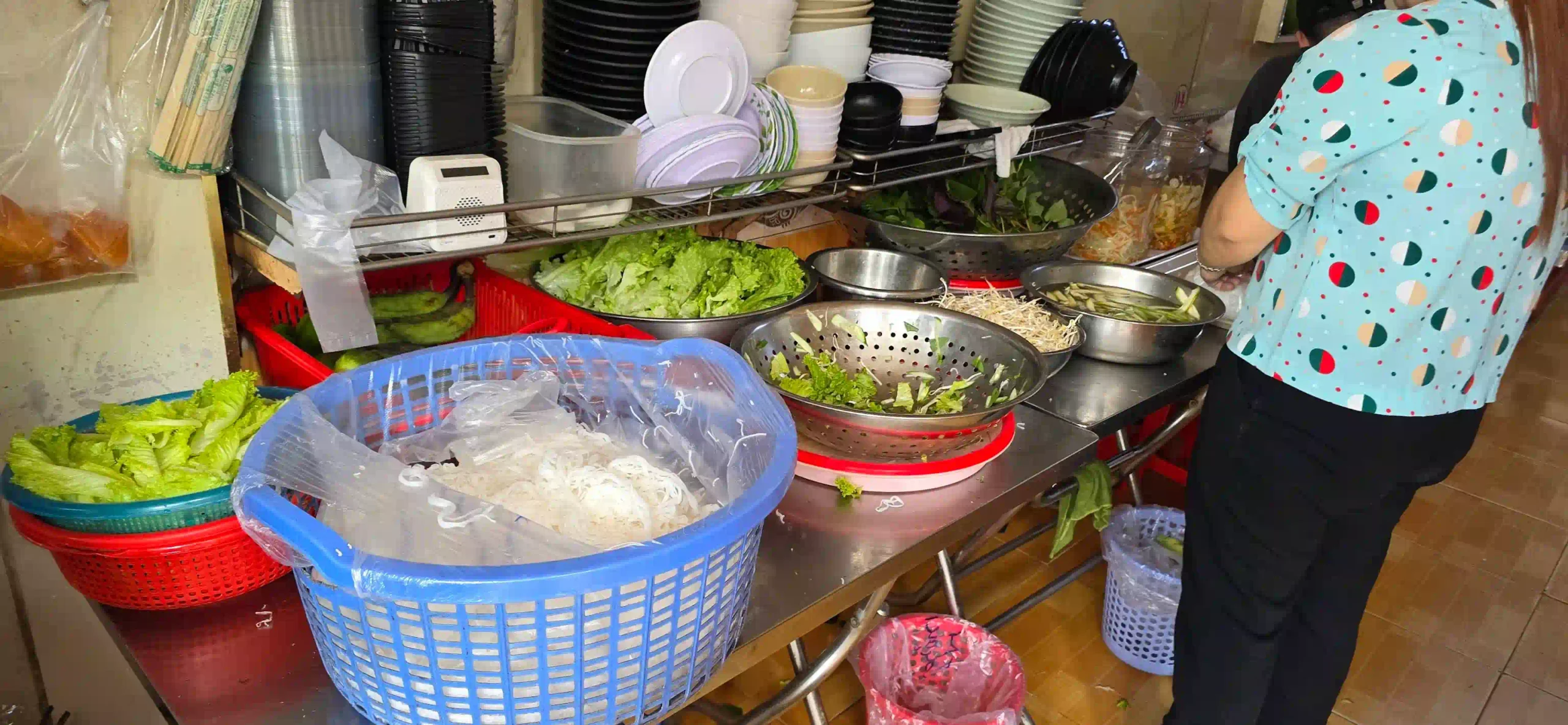
As the leaf burns, it chars and releases oils that sink into the beef. When it’s done, you eat it almost like a DIY spring roll kit. They place the grilled beef on a plate next to some thin rice paper, lettuce, and sour fruit like sliced green banana and starfruit. You roll the beef and the fruit up inside the rice paper.
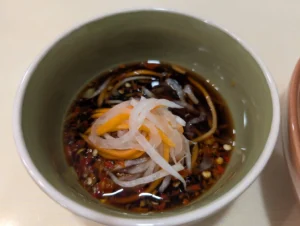
Most places serve this with Mắm Nêm. This is an unfiltered fermented anchovy sauce mixed with crushed pineapple. It is a very pungent, cloudy sauce. The sourness from the pineapple cuts through the fat of the beef nicely, though some visitors find the smell difficult to handle. If you prefer something lighter, ask the vendor for regular nước mắm (sweet fish sauce) instead.
Where to find it:
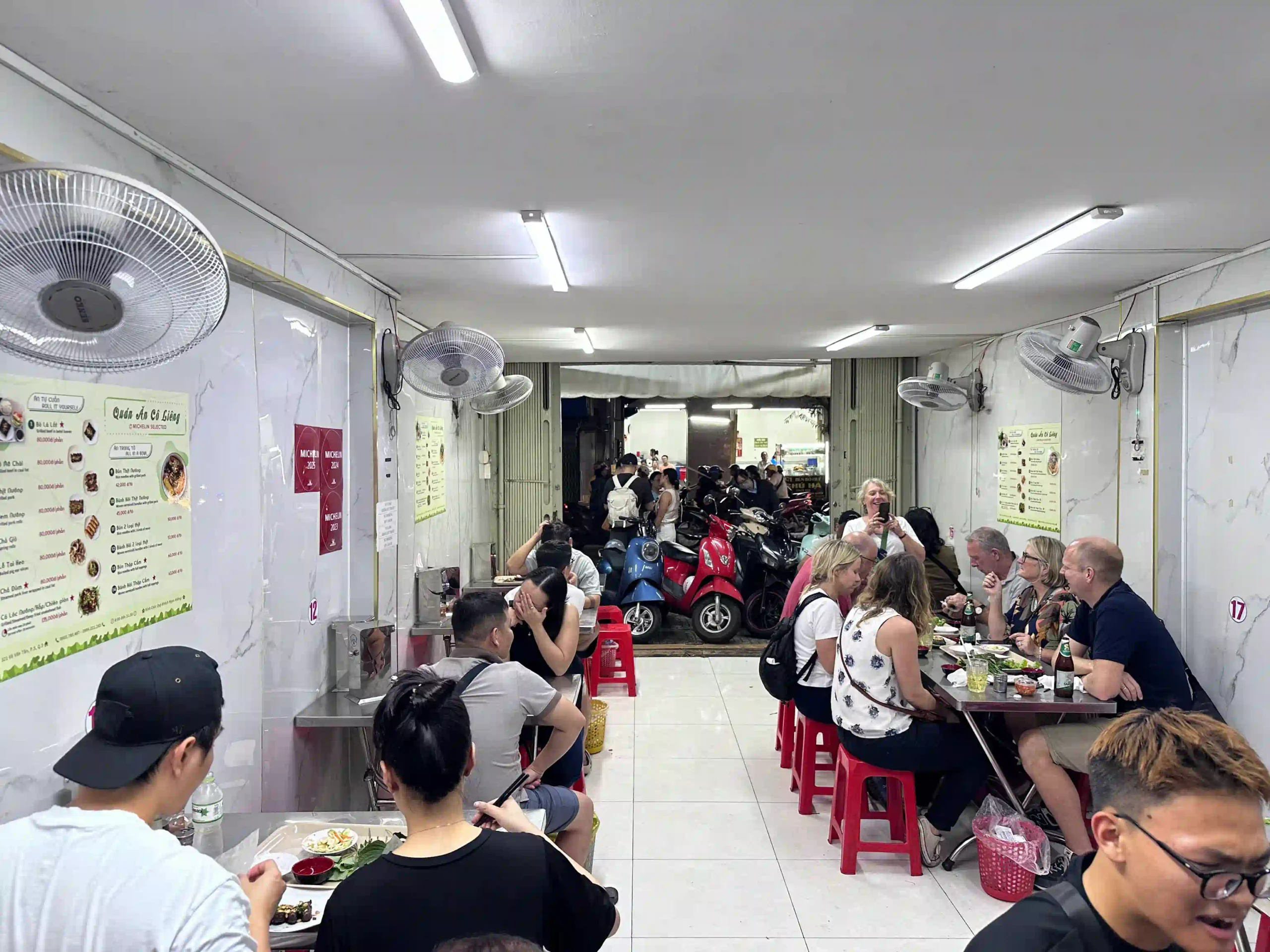
There is a well-known cluster of casual, open-air Bò Lá Lốt shops right along Vo Van Tan street near the District 3 border, like Cô Liêng. A plate of the rolls will cost you about 60,000 VND, and it’s a good early dinner option around 5pm.
5. Ốc (Sea Snails and Local Shellfish)
You really haven’t seen Ho Chi Minh City’s local eating culture until you spend a few hours sitting on the pavement eating snails.
The generic term Ốc covers a wide range of snails, clams, scallops, and even crab claws. This is less of a quick meal and more of a social event. Groups of friends come out, order a lot of cheap lagers, and pick away at plates of shells until midnight.
When you go to an ốc street, you’ll see small metal carts surrounded by buckets and ice trays displaying different shells. If you aren’t sure what to do, you can just point to an ingredient, and the owner will hold up their hands showing a frying pan motion or a grill to suggest how to cook it.
Here are a few standard dishes that are easy to start with:
- Ốc hương rang muối ớt: A small sea snail roasted with heavy chili salt. It’s dry, spicy on the lips, and you pull the meat out with a tiny fork.
- Sò điệp nướng mỡ hành: Scallops cooked directly on the half-shell over charcoal, topped with scallion oil and crushed peanuts.
- Ốc mỡ xào me: Flat mud snails cooked in a dark, thick tamarind sauce. It’s sweet and sour. You will want to order a plain banh mi baguette just to tear apart and mop up the sauce at the bottom of the plate.
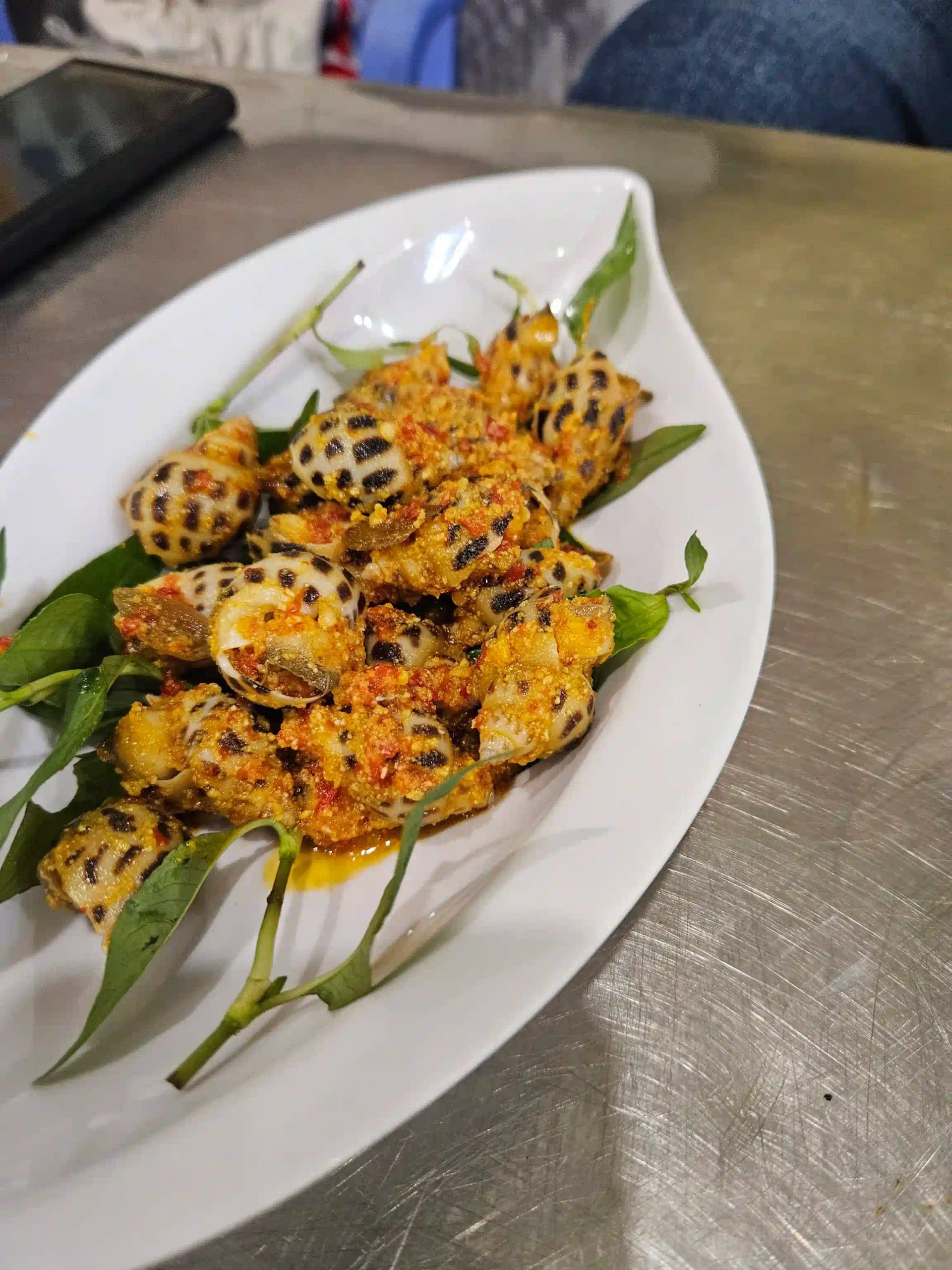
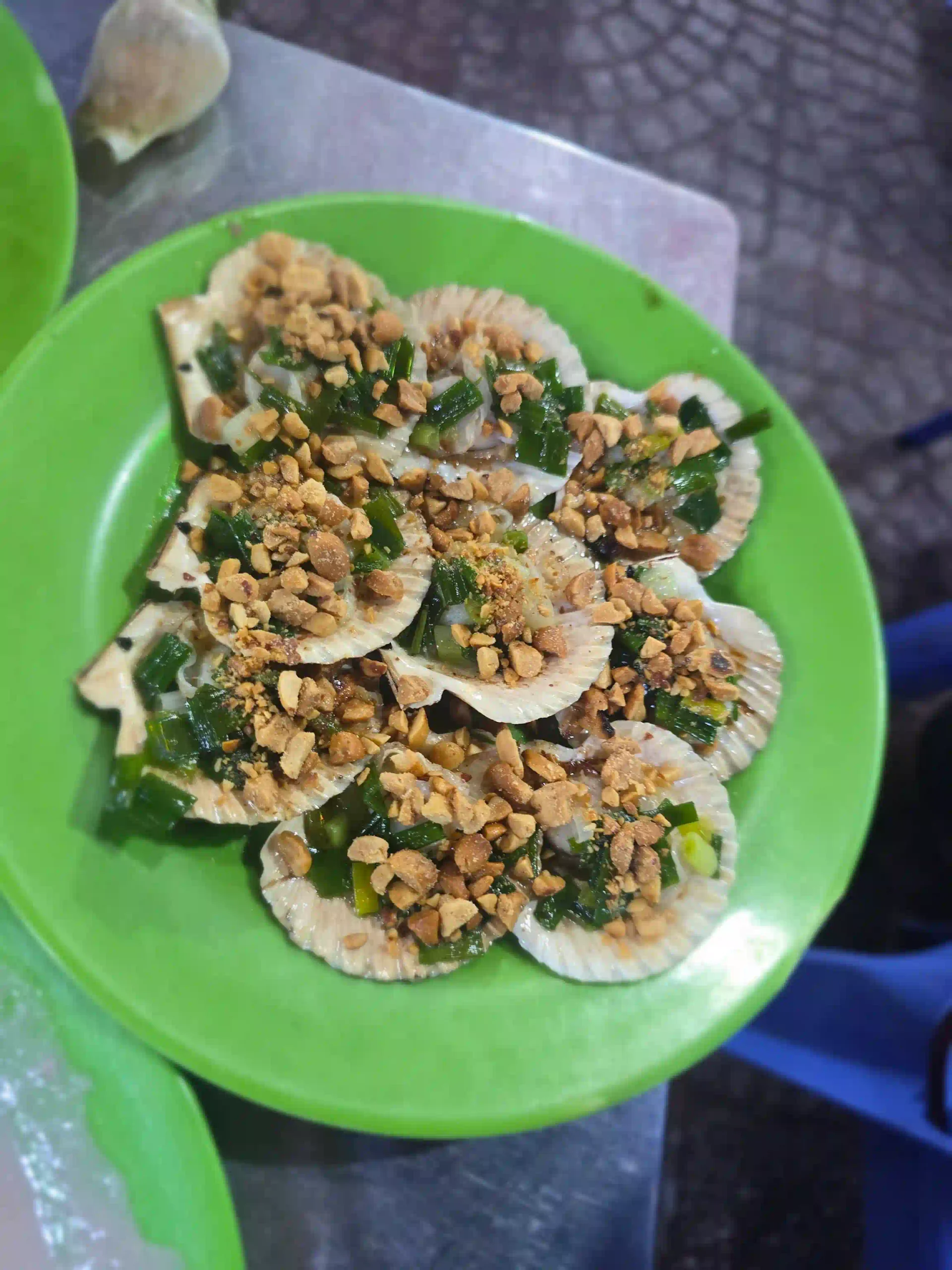
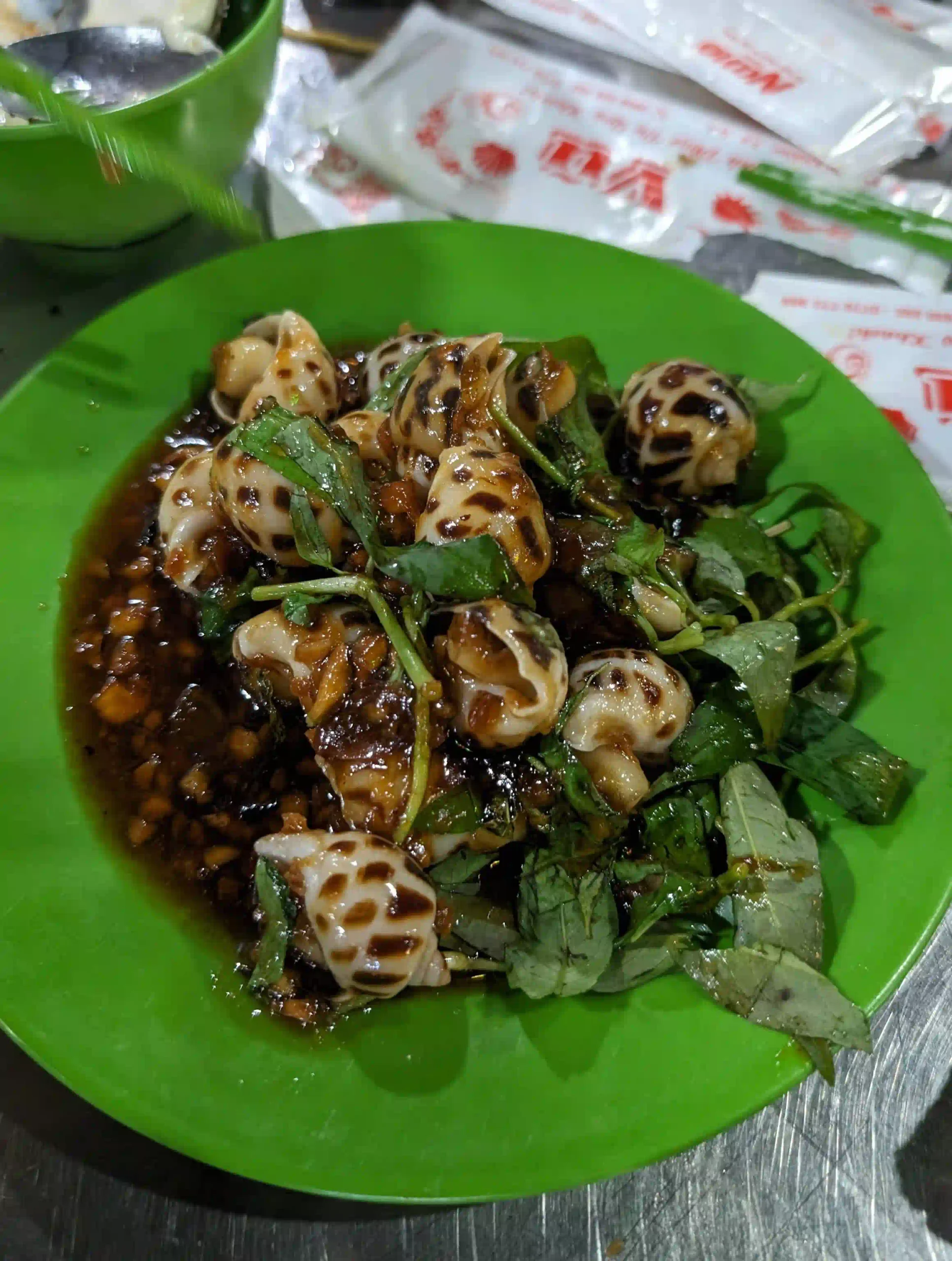
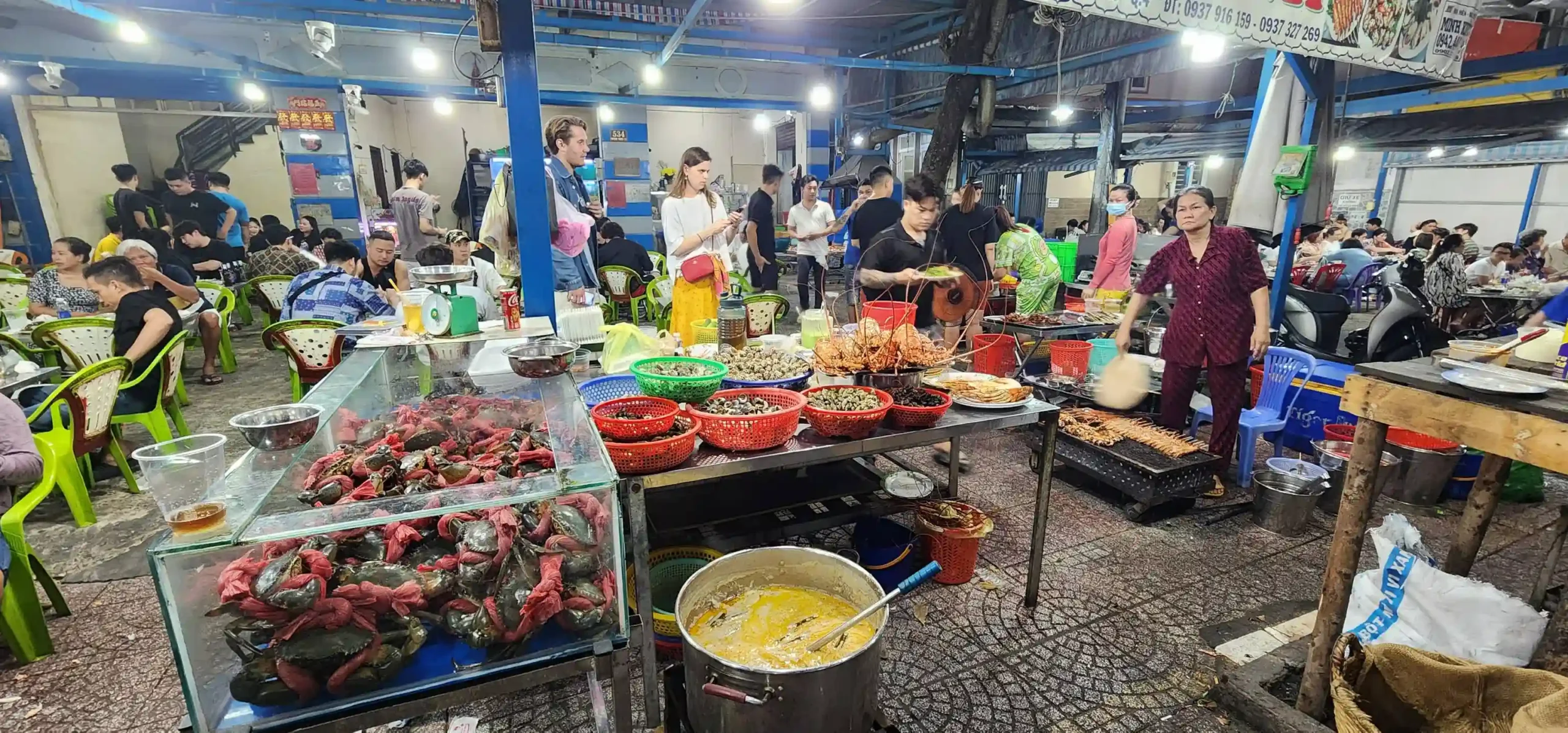
Where to find it:
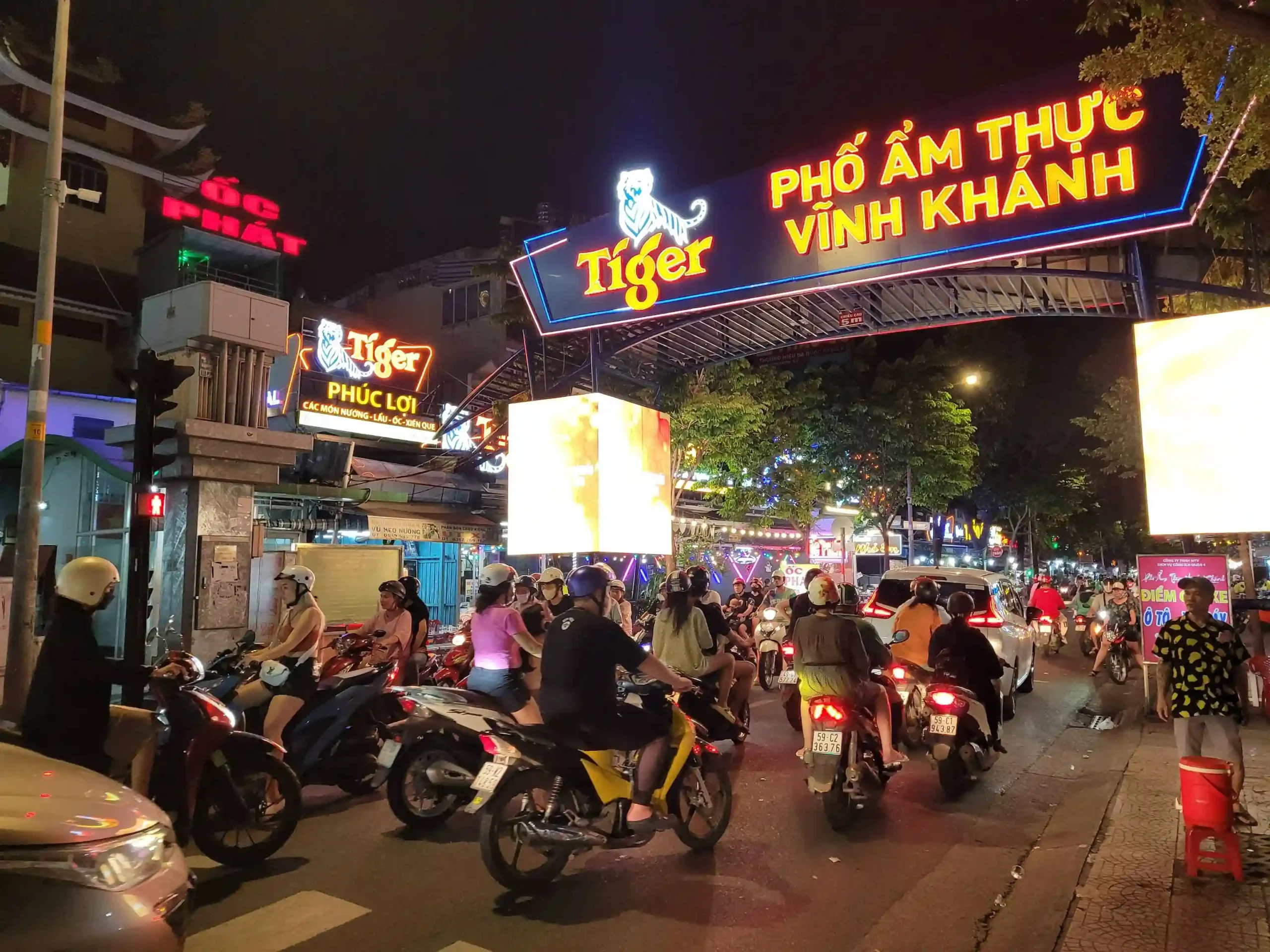
Vĩnh Khánh Street in District 4 is famous for this. To get there from the center, you cross the small bridge over the Ben Nghe canal. The entire street is essentially a corridor of seafood joints sitting under fluorescent tube lights. Motorbikes will pass uncomfortably close to the back of your plastic chair while you eat. Expect to pay about 60,000 to 100,000 VND per small plate.
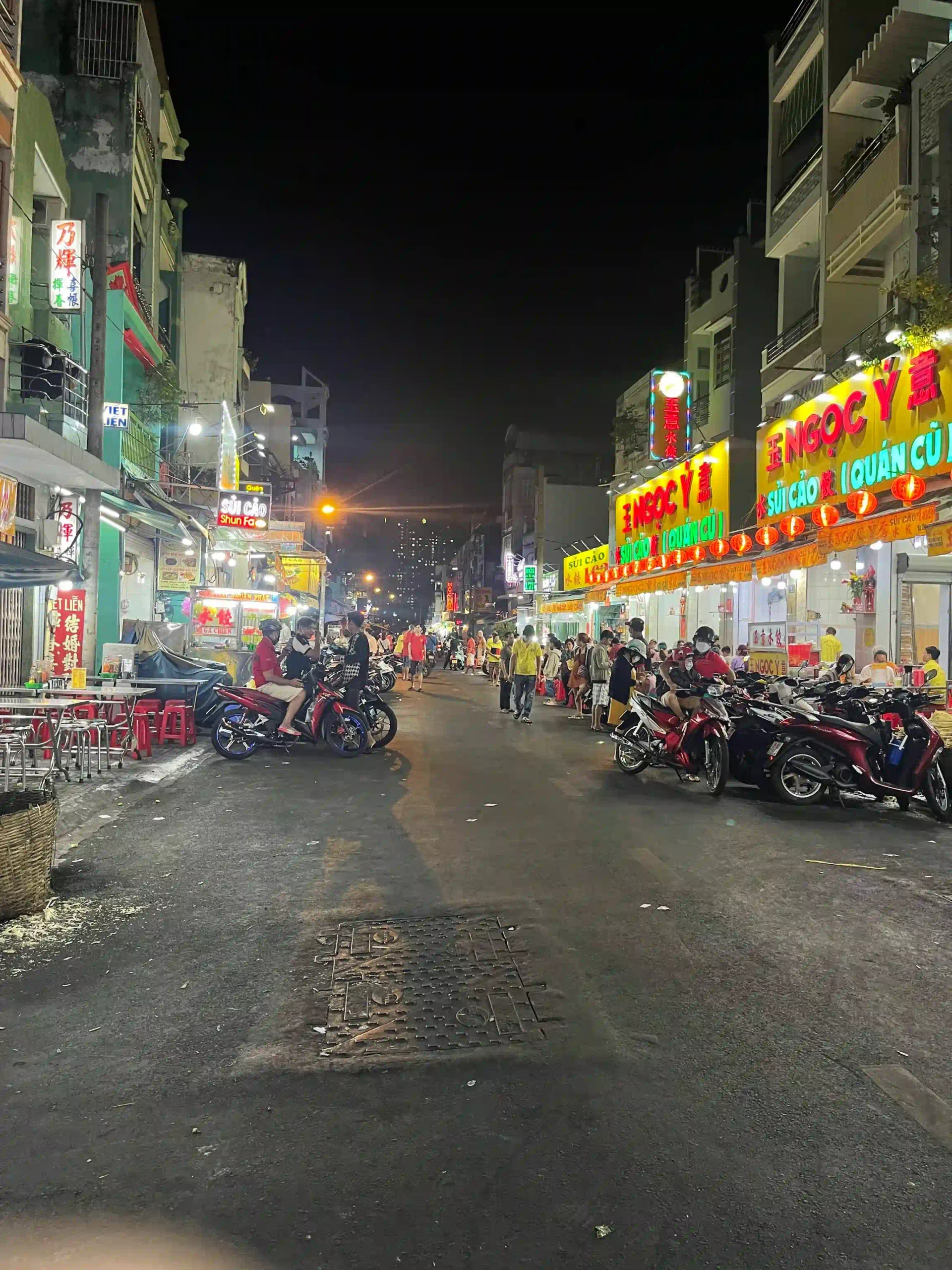
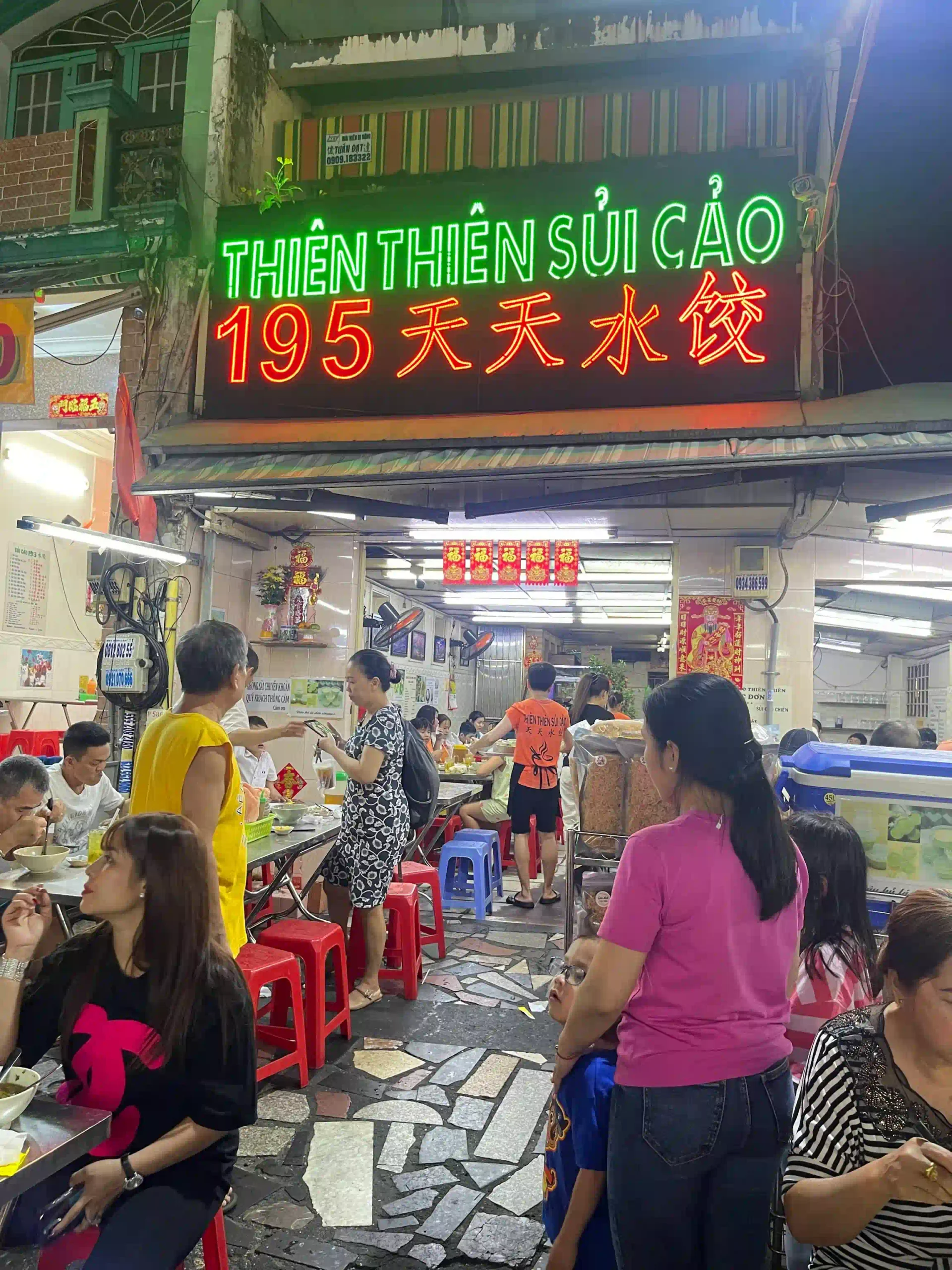
6. Sủi Cảo (Shrimp Dumplings in District 5)
Most general lists stick strictly to classic Vietnamese staples, but ignoring the heavy Chinese-Vietnamese food in District 5 means missing out on one of the best evening food scenes in the city.
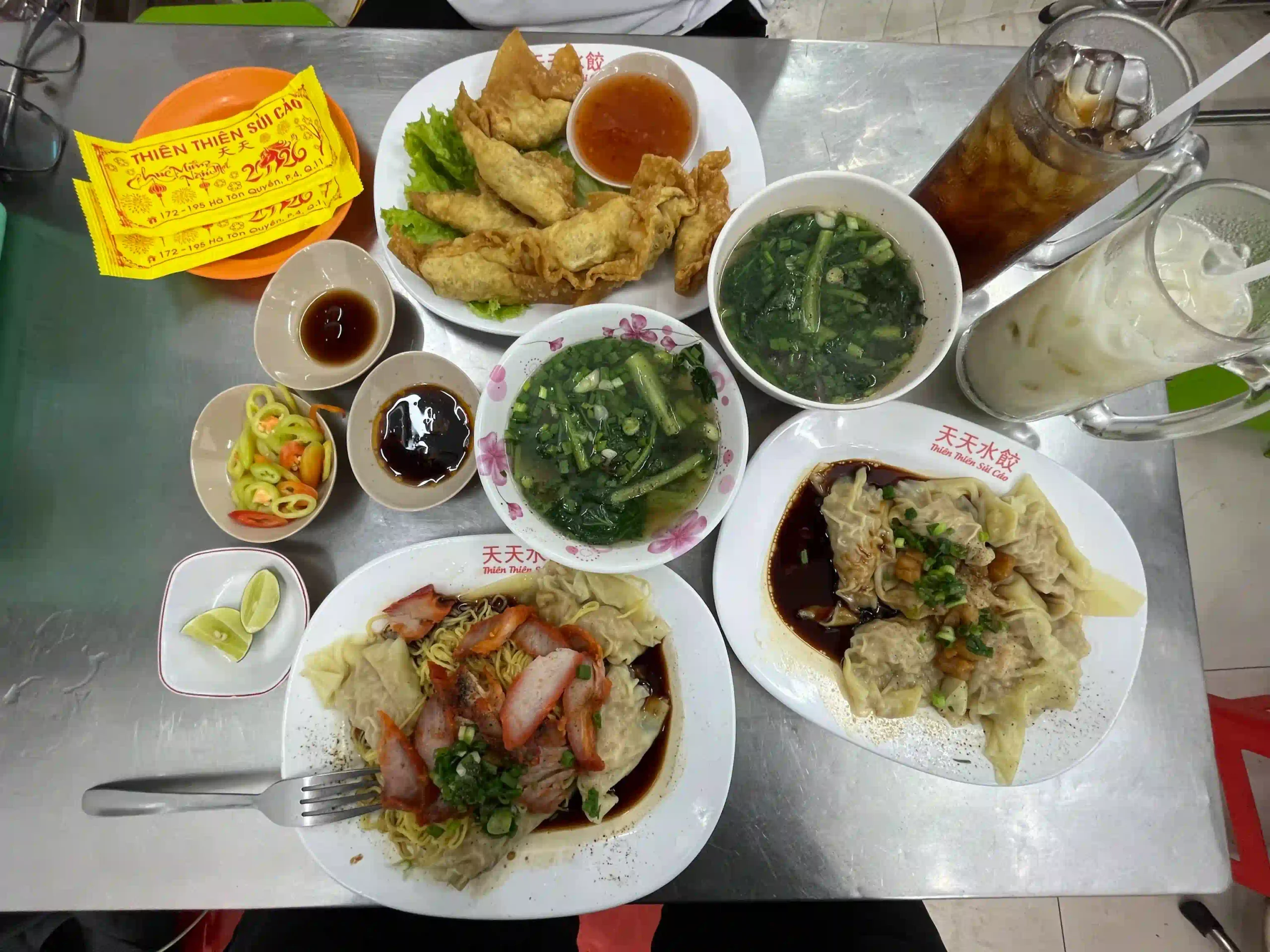
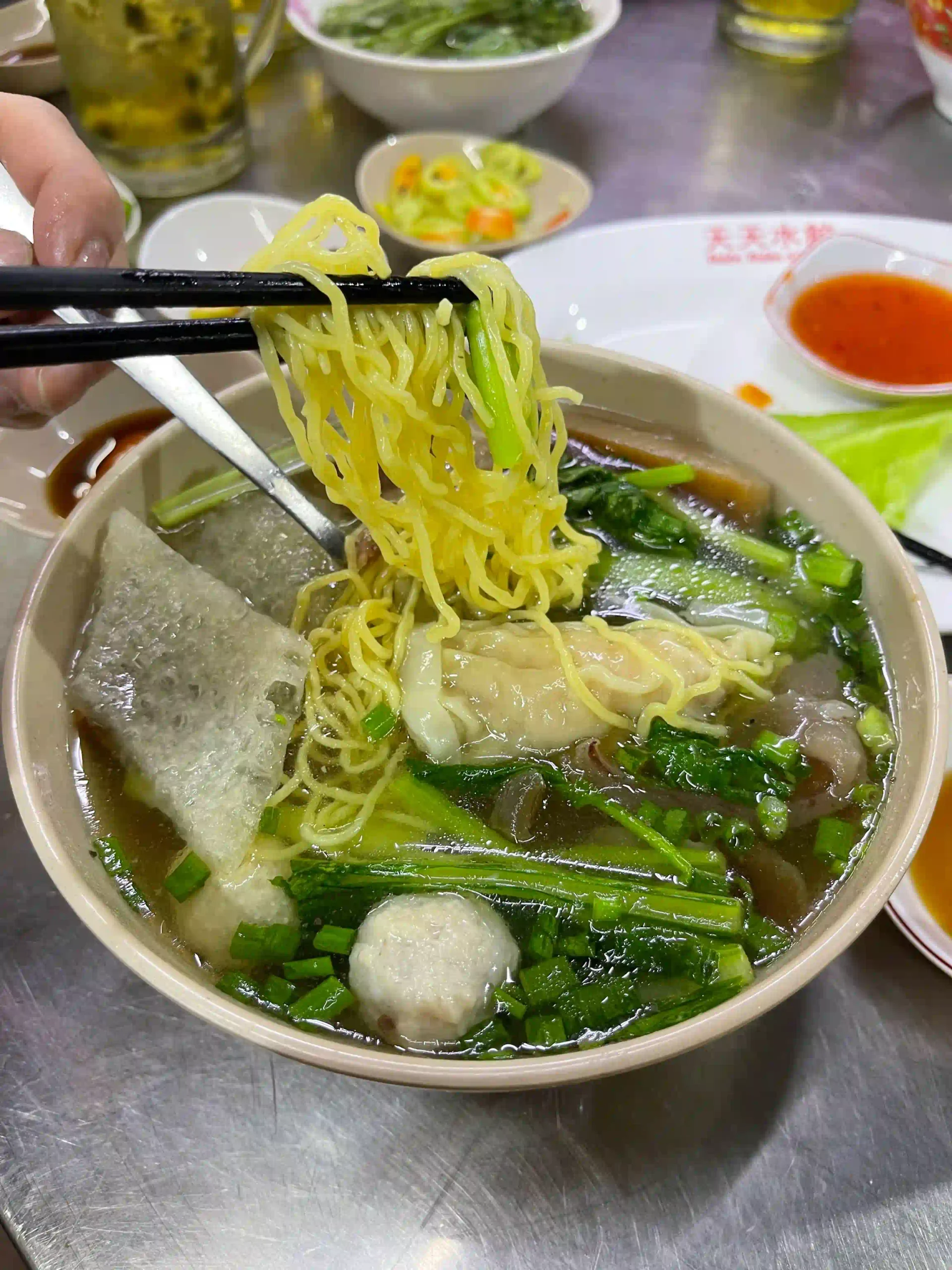
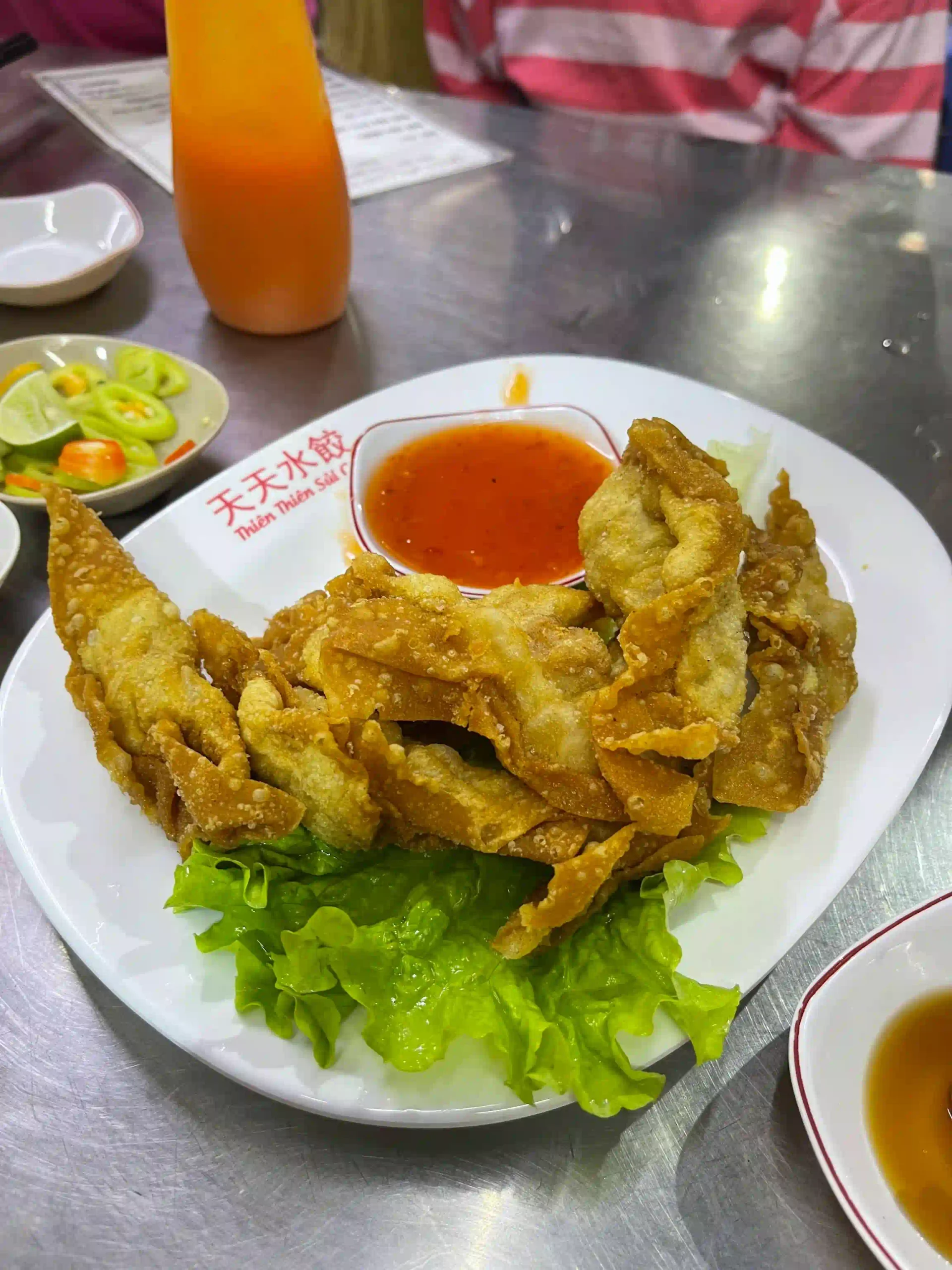
Sủi Cảo are large, very loosely folded dumplings. In this specific neighborhood, the filling relies heavily on large pieces of shrimp mixed with a little bit of ground pork, giving it a much more pronounced seafood flavor compared to standard meat dumplings.
You usually sit out on a plastic chair in front of a shophouse. You can get the dumplings either steamed dry with soy sauce and vinegar on the side, or served in a large bowl of very clear, subtly sweet broth. Most places also give you the option to add some thick egg noodles (mì) to the bowl, and they almost always drop a large handful of fresh choy sum greens on top. It’s a very clean, comforting meal.
Where to find it:
If you get a taxi over to Hà Tôn Quyền street around 7pm, you’ll find several adjoining family-run Sủi Cảo shops taking up an entire block. Places like Thiên Thiên are popular here. The vendors shout orders across the tables to the kitchens. A bowl will set you back roughly 65,000 VND.
7. Bánh Mì Chảo (Skillet Breakfast)
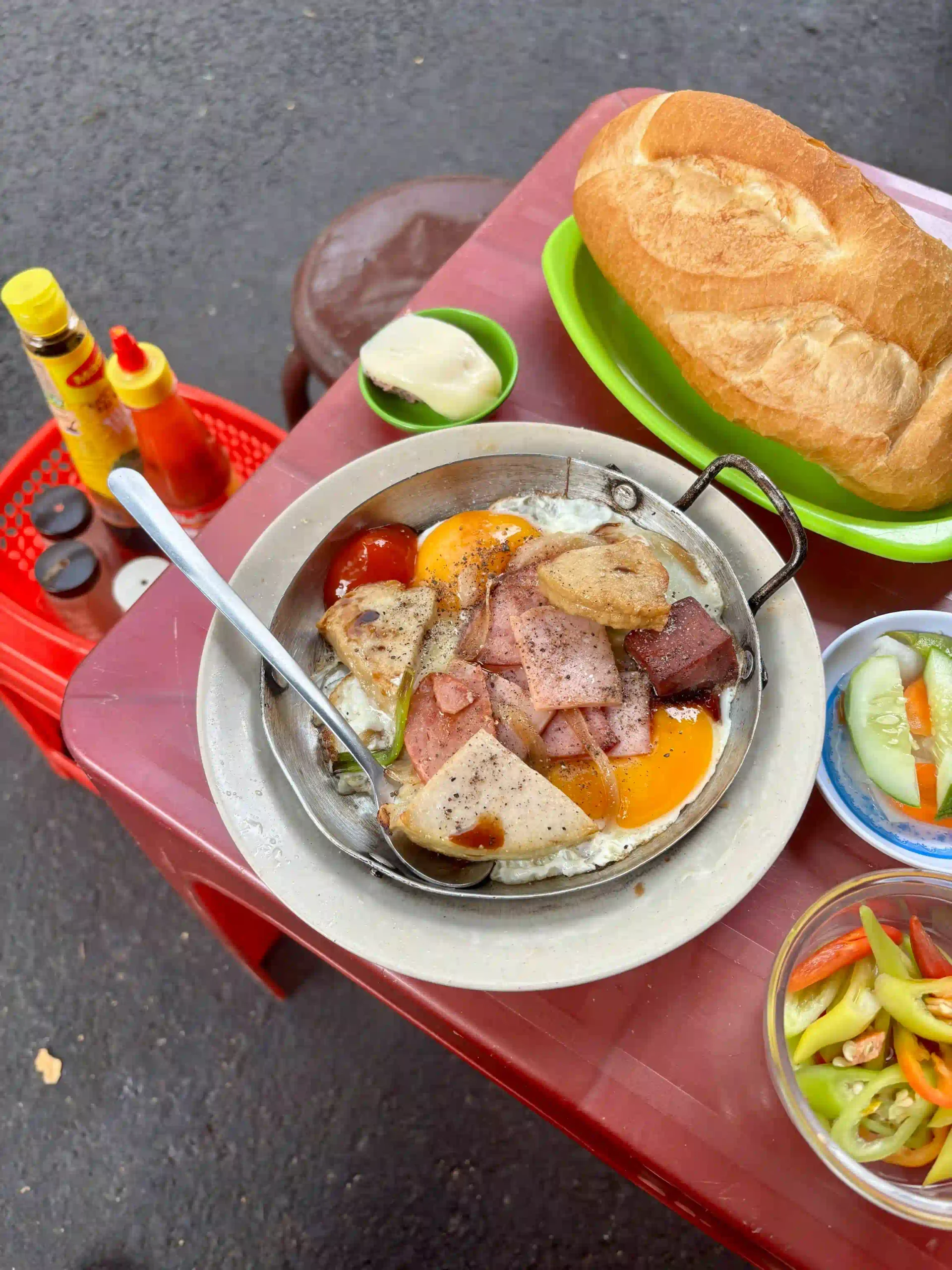
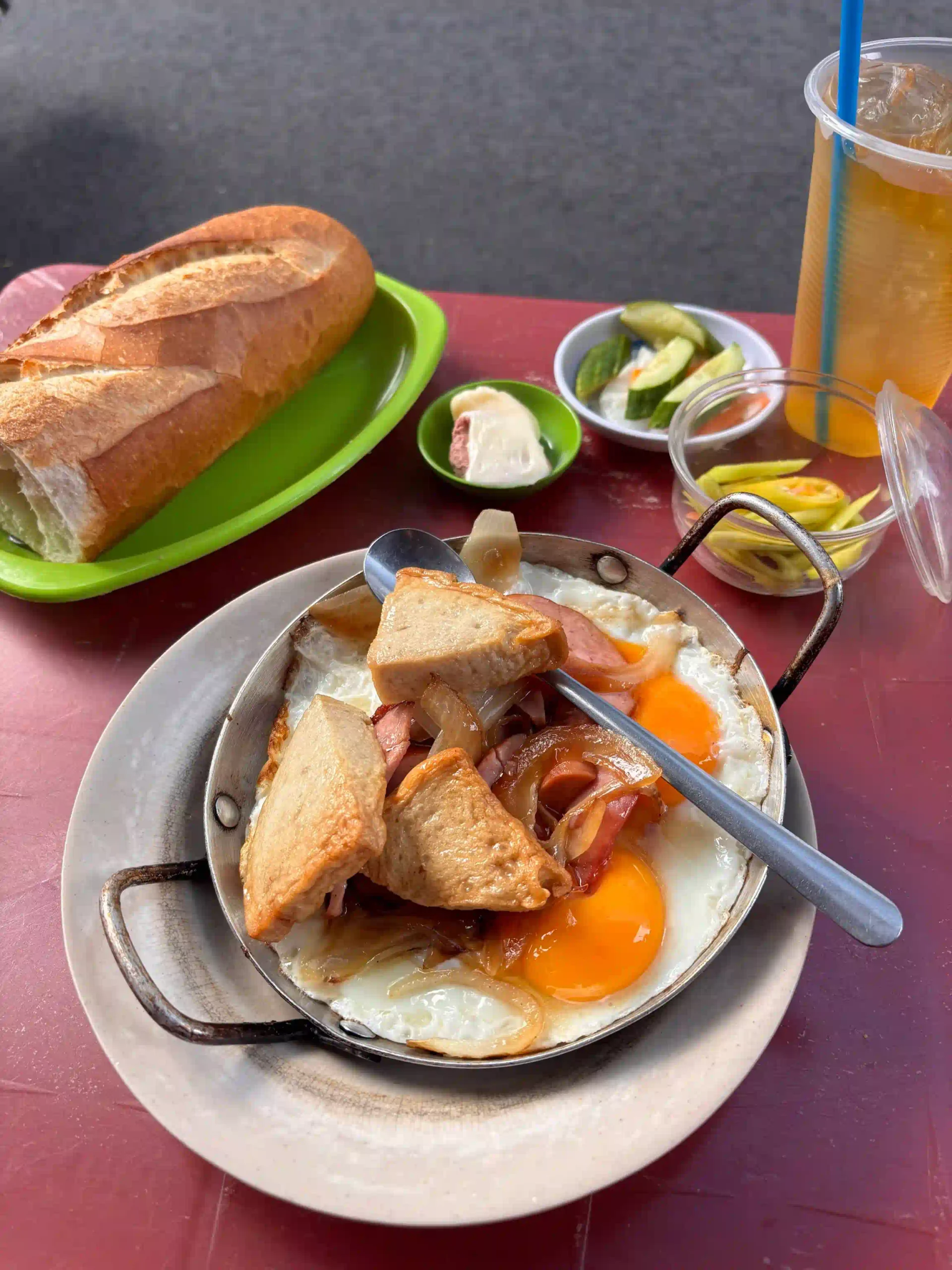
We all know the standard takeaway Bánh Mì. Down here, they offer a variation called bánh mì chảo, which basically translates to pan bread. It’s a sit-down breakfast rather than something you eat while walking.
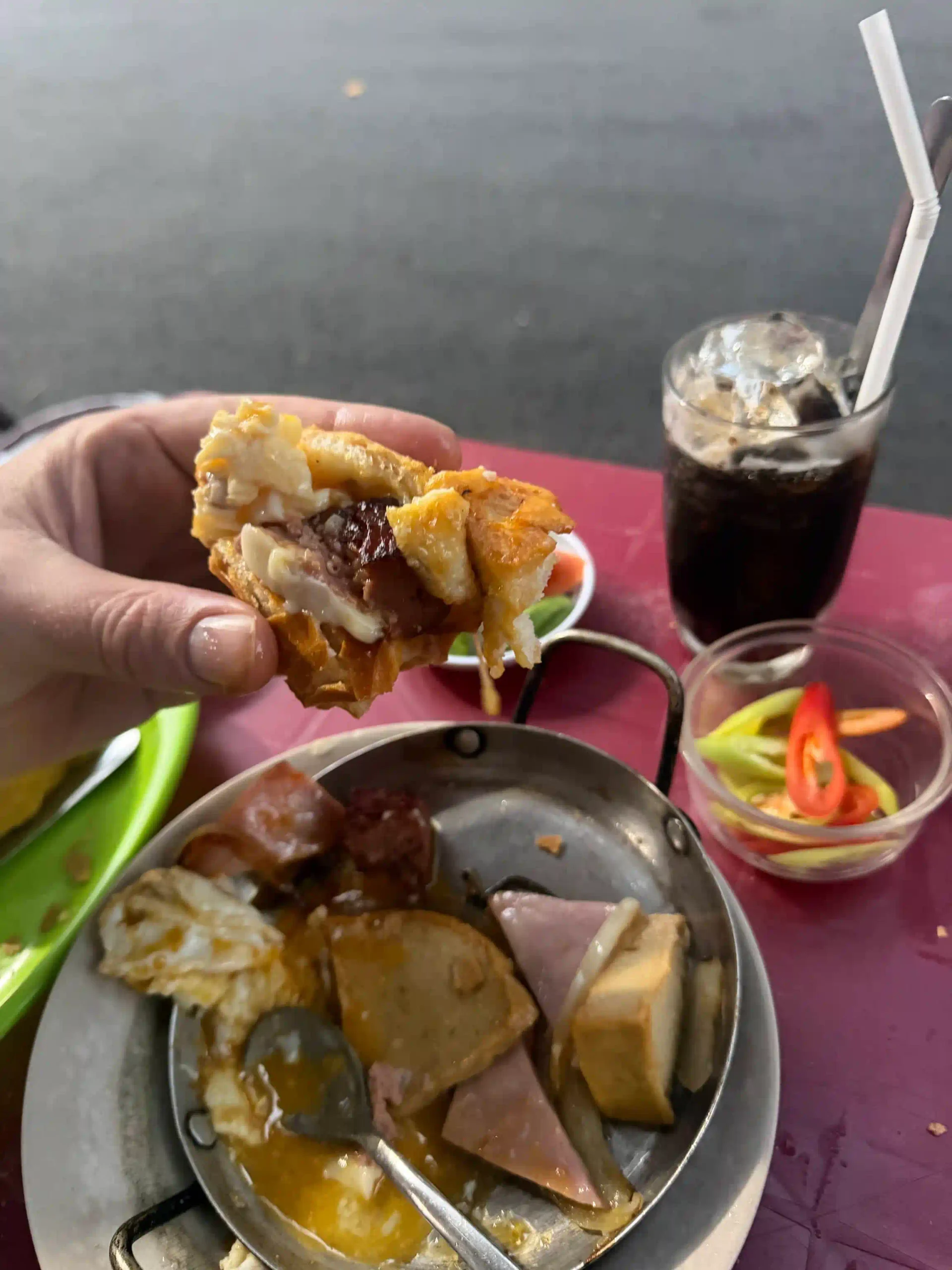
You sit at a table, and they bring out a hot, heavy, black cast-iron skillet. Inside, there are usually two eggs frying in a small pool of oil or butter. Sitting next to the eggs will be slices of pork sausage, some local bologna (chả lụa), and a thick smear of dark pork pâté. A dash of dark soy or Maggi seasoning is sprinkled on the pan right as it is taken off the flame.
A basket of warm, crusty bread sits in the middle of the table. You tear a chunk of bread off and dip it into the runny yolks, scrape up the warm pâté, and mix it into the hot fat at the bottom of the skillet. Some places will add a tiny dish of sour pickled cucumber slices on the side to give you a break from the rich flavors.
Where to find it:
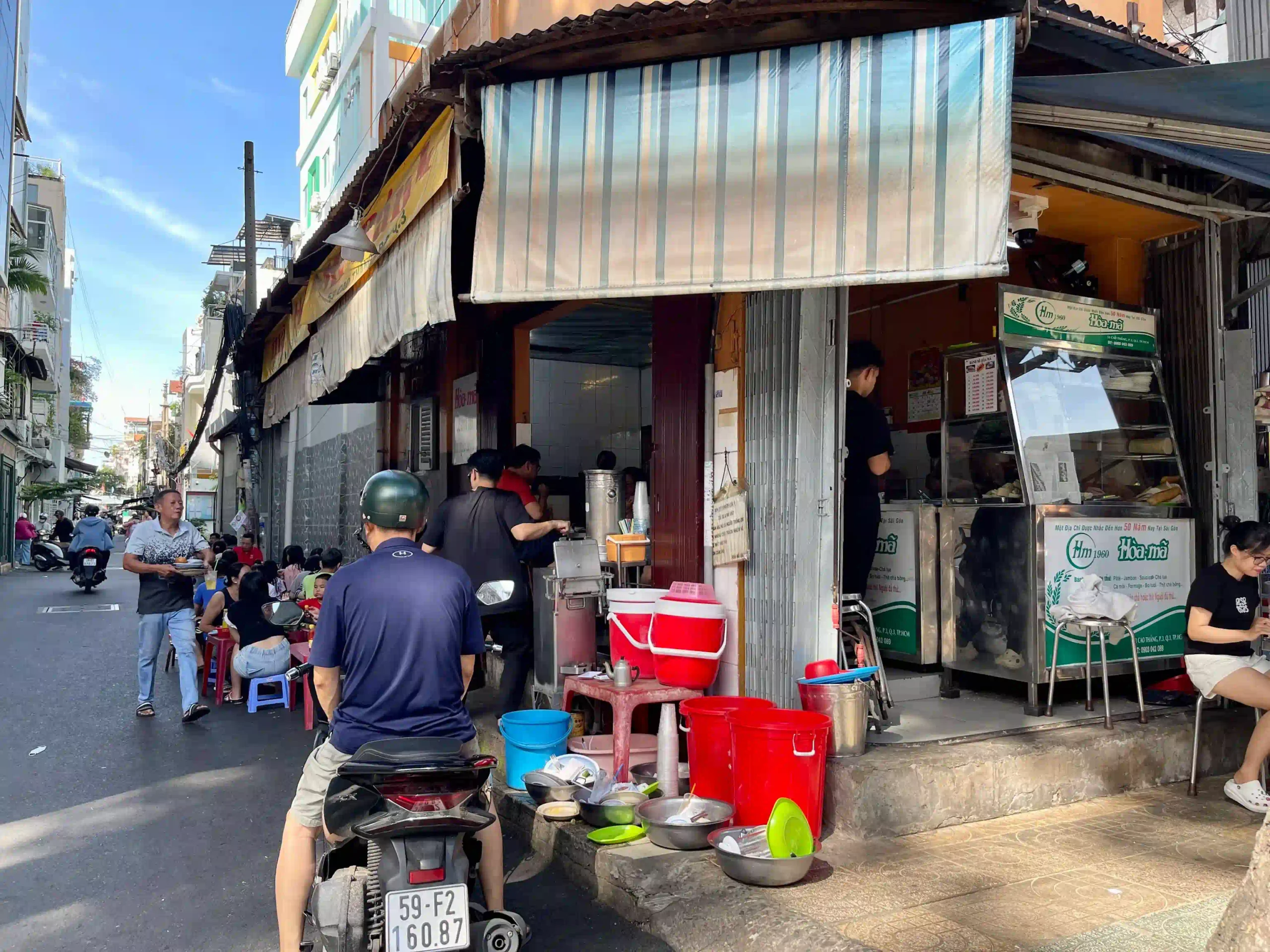
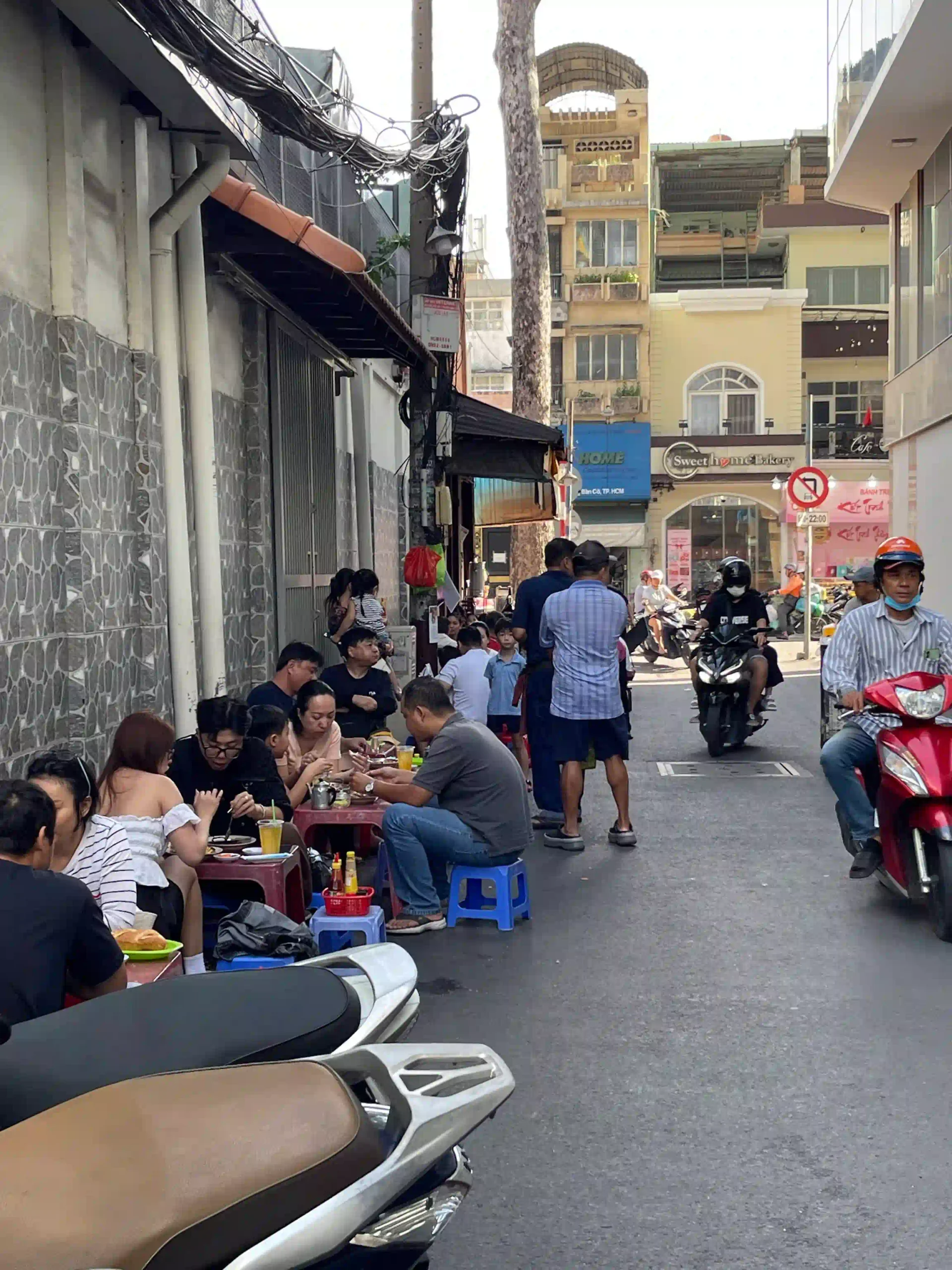
Walk down Cao Thang street in District 3 and look for the alleyway next to Bánh Mì Hòa Mã. They set out small tables facing directly into the alley walls. This family has been doing this exact skillet format since the late 1950s. A skillet and bread combo usually runs about 60,000 VND. It closes by mid-morning, so you need to arrive by 8 or 9am.
By the way, if you want a detailed map mapping out specifically just sandwiches and baguettes, you can reference the dedicated page on Best regional styles of Banh Mi across town.
8. Bánh Xèo (Southern Rice Crepe)
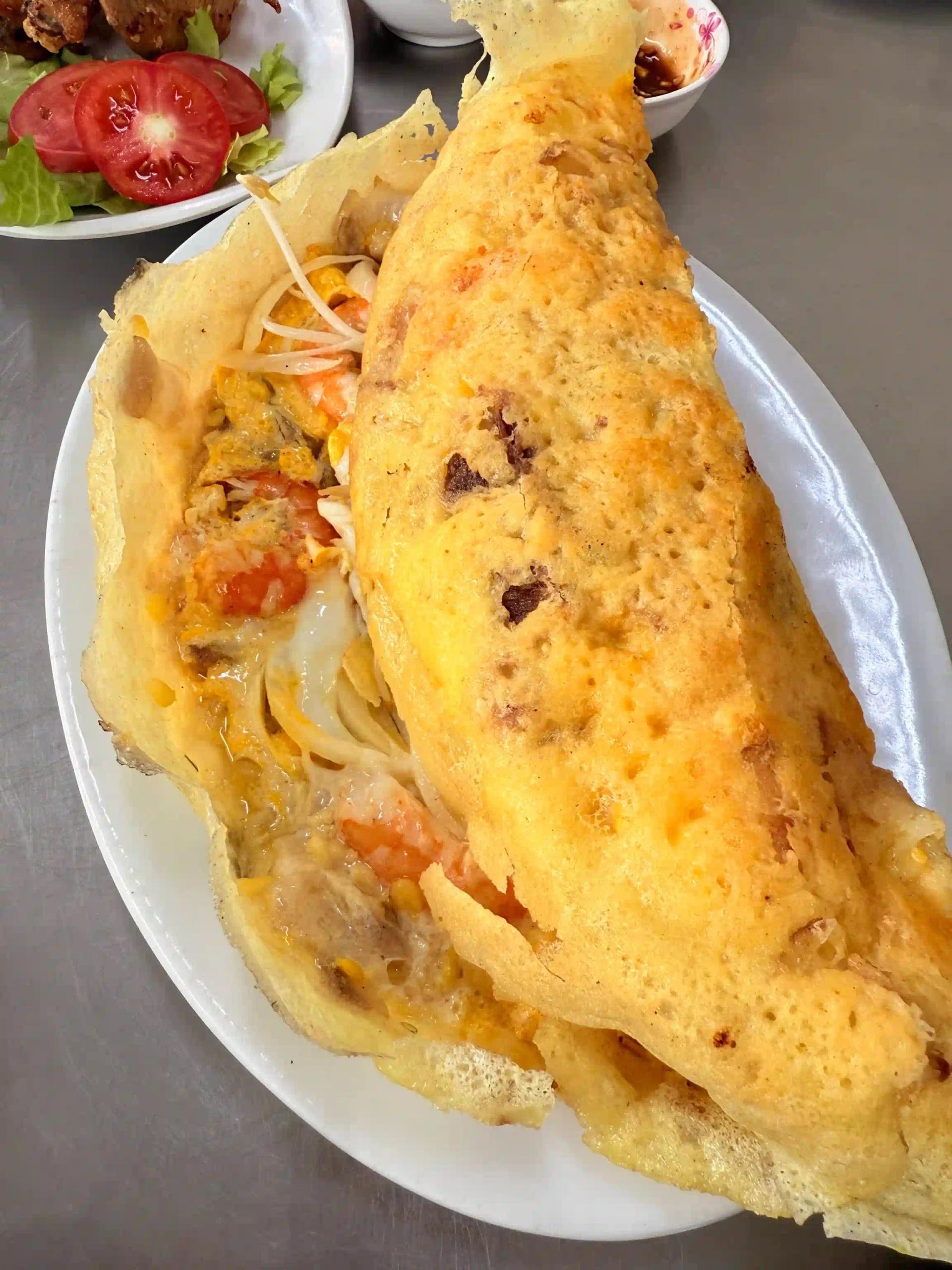
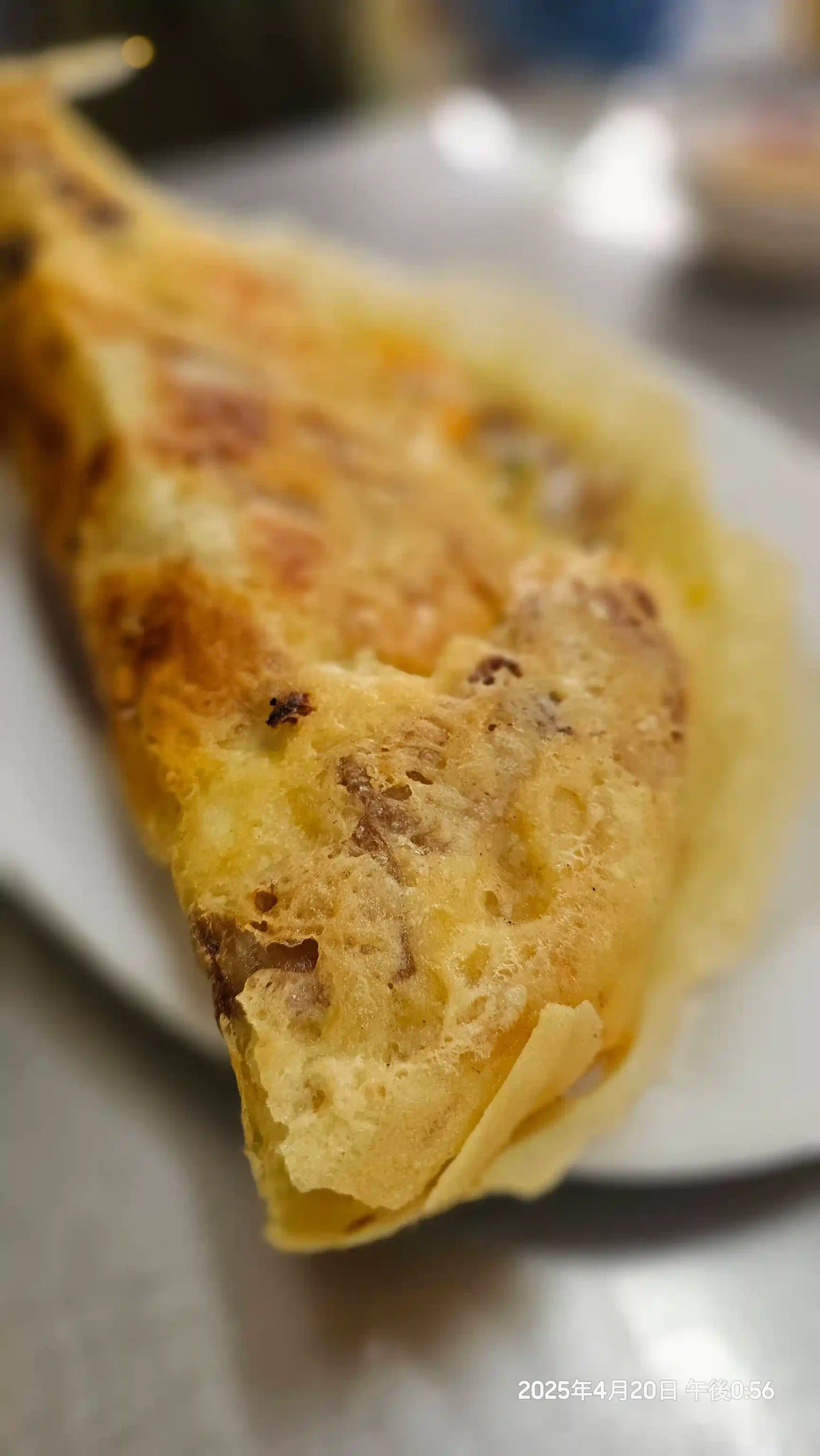
If you go to central Vietnam (like Hoi An), a bánh xèo is a small, pan-fried snack. Down here, they make them massive. Sometimes a single crepe takes up the entire space of an aluminum table tray.
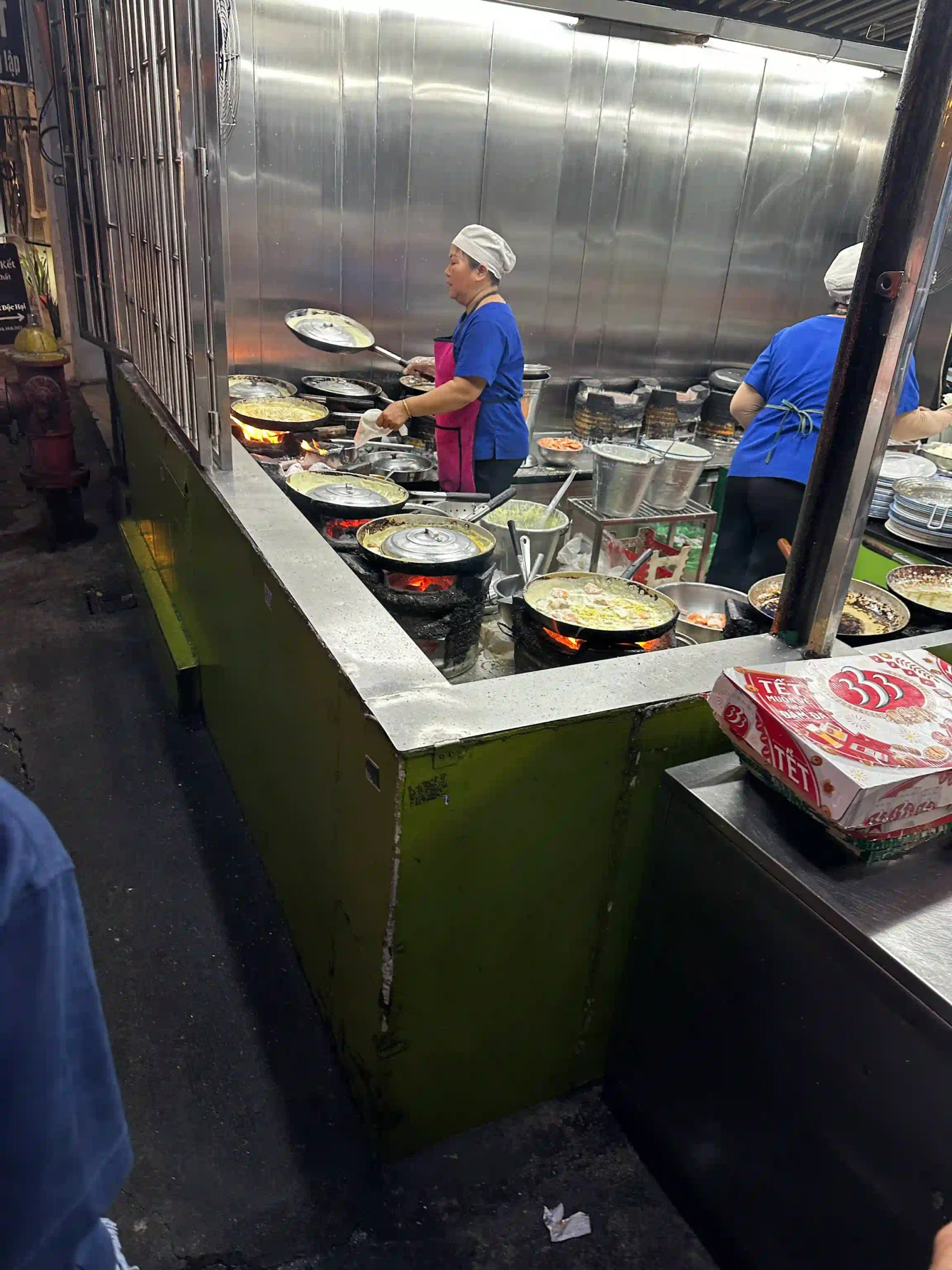
The batter is rice flour, water, and turmeric, mixed with coconut milk to thin it out and allow the edges to fry and become lace-like and crunchy in a large wok. They toss a few whole, unpeeled shrimp into the middle along with fatty pork slices and a handful of bean sprouts, and fold the giant crepe over like a half-moon.
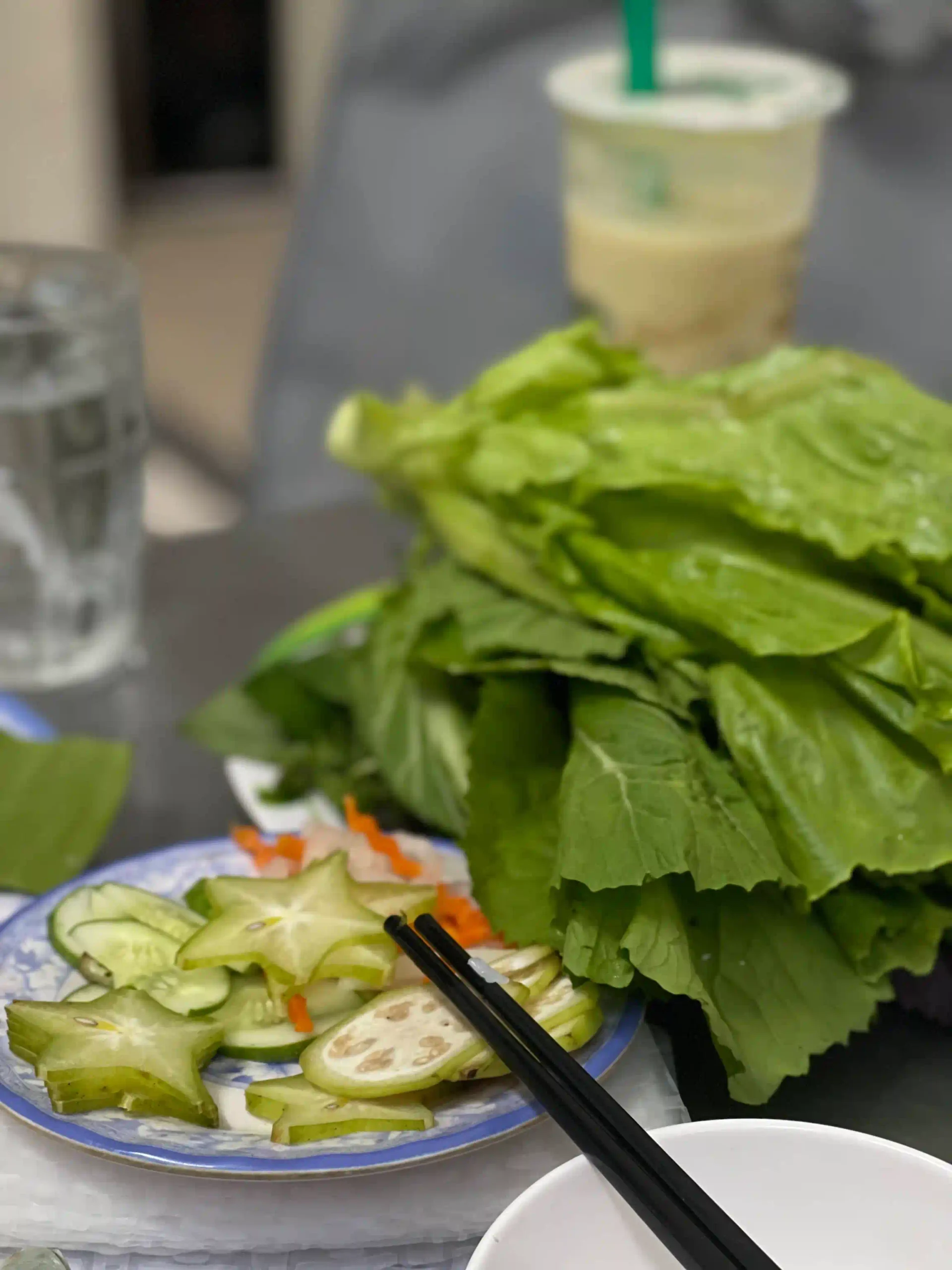
It arrives at the table with an overwhelming amount of raw leaves. Usually, it’s a basket overflowing with large mustard greens (cải bẹ xanh) and several types of mint.
To eat it, you lay a flat leaf on your palm, use your chopsticks to tear off a crunchy edge of the crepe and some filling, place it inside the leaf, and wrap it into a tight roll. Dip the roll into your diluted fish sauce and take a bite.
Where to find it:
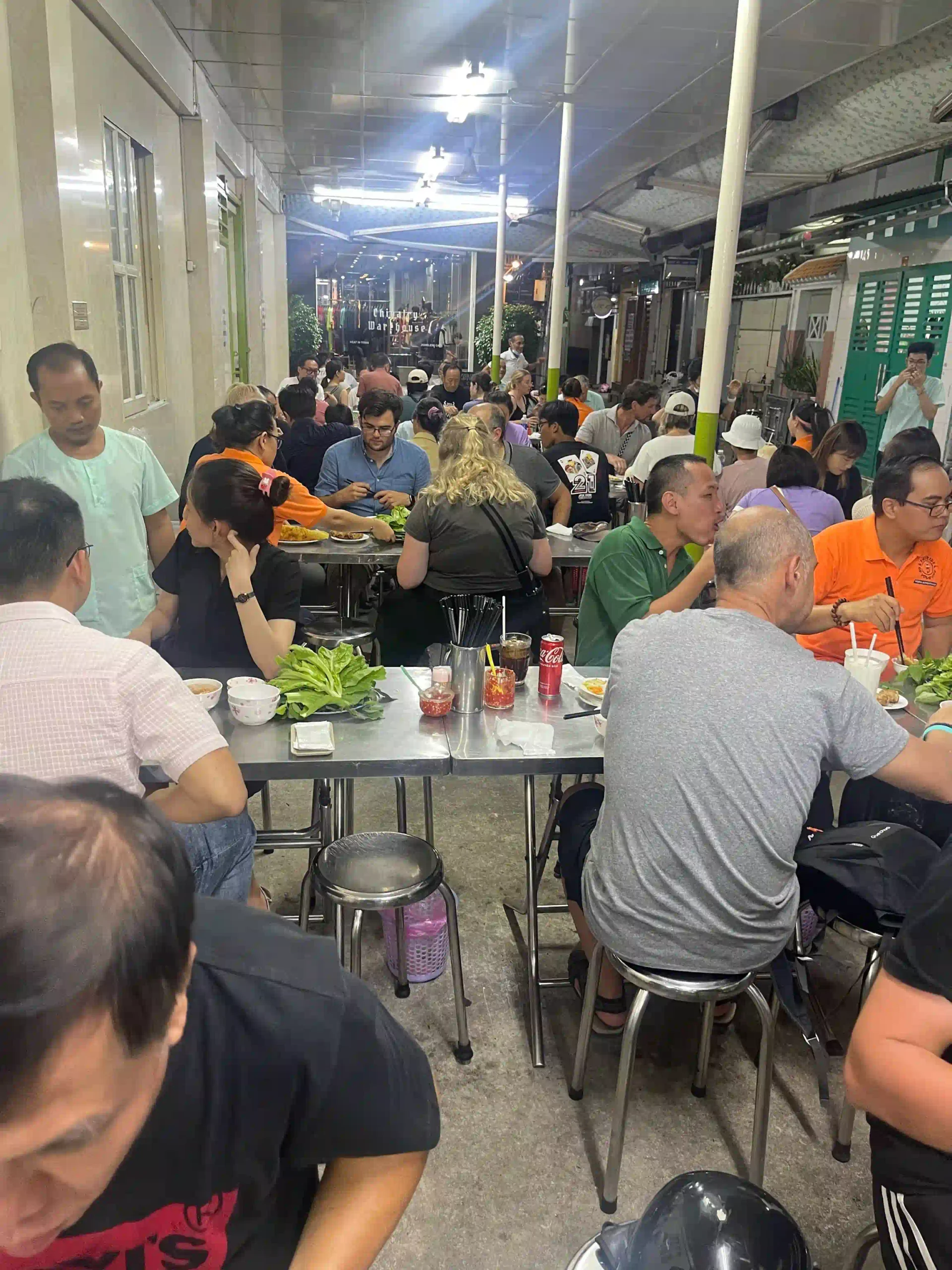
Bánh Xèo 46A (located near Tan Dinh market in D1/D3 border) is a common suggestion. Yes, it’s heavily trafficked by domestic tourists and expats, but sitting in the shaded courtyard watching the men manage six flaming woks at once is visually interesting. Expect a meal for two here to cost about 180,000 to 250,000 VND total.
9. Southern-Style Phở (Phở Miền Nam)
As I mentioned earlier, southern food isn’t focused on delicate minimalism. The difference between northern and southern Pho is significant enough that people argue about which one is authentic.
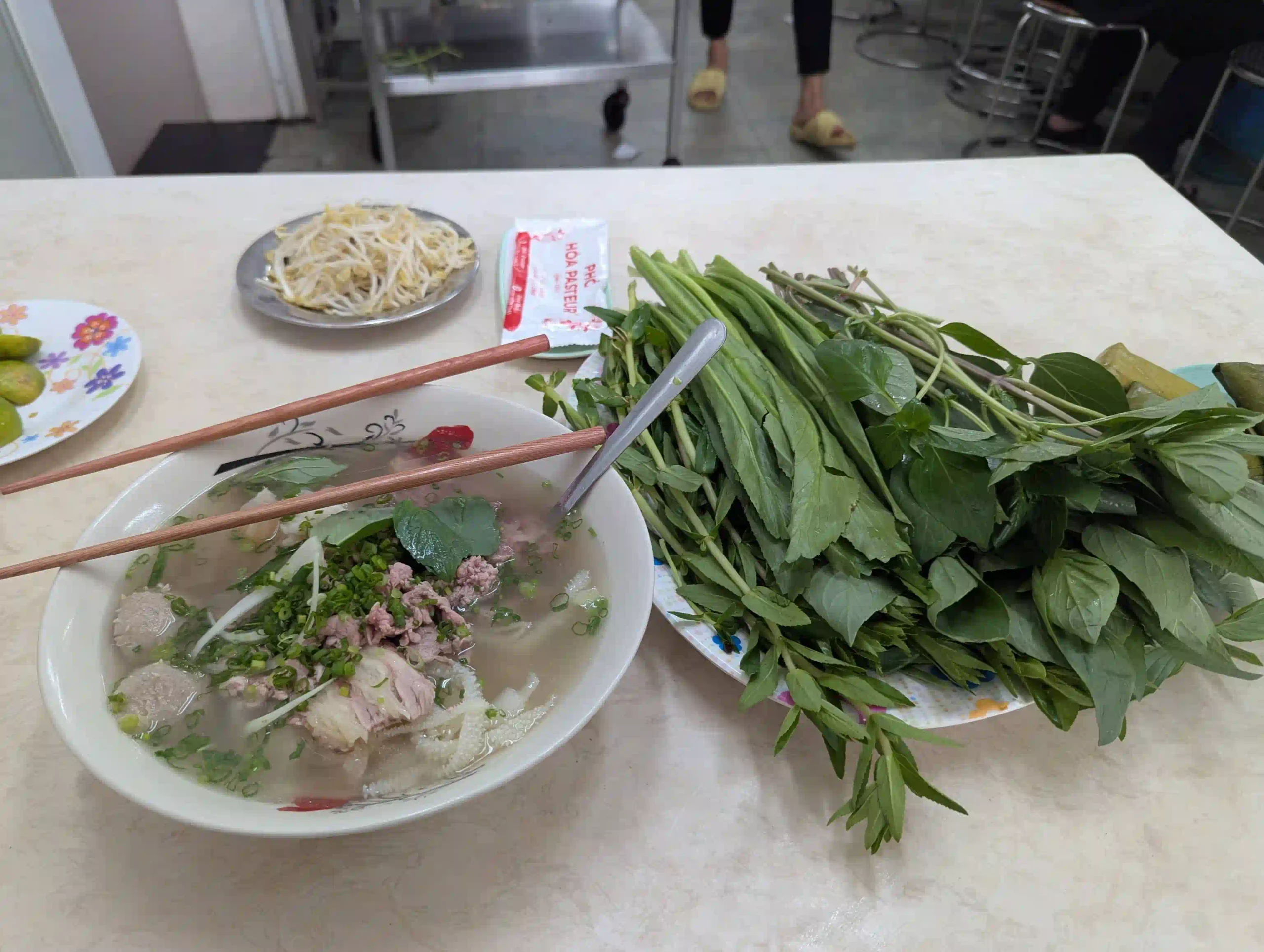
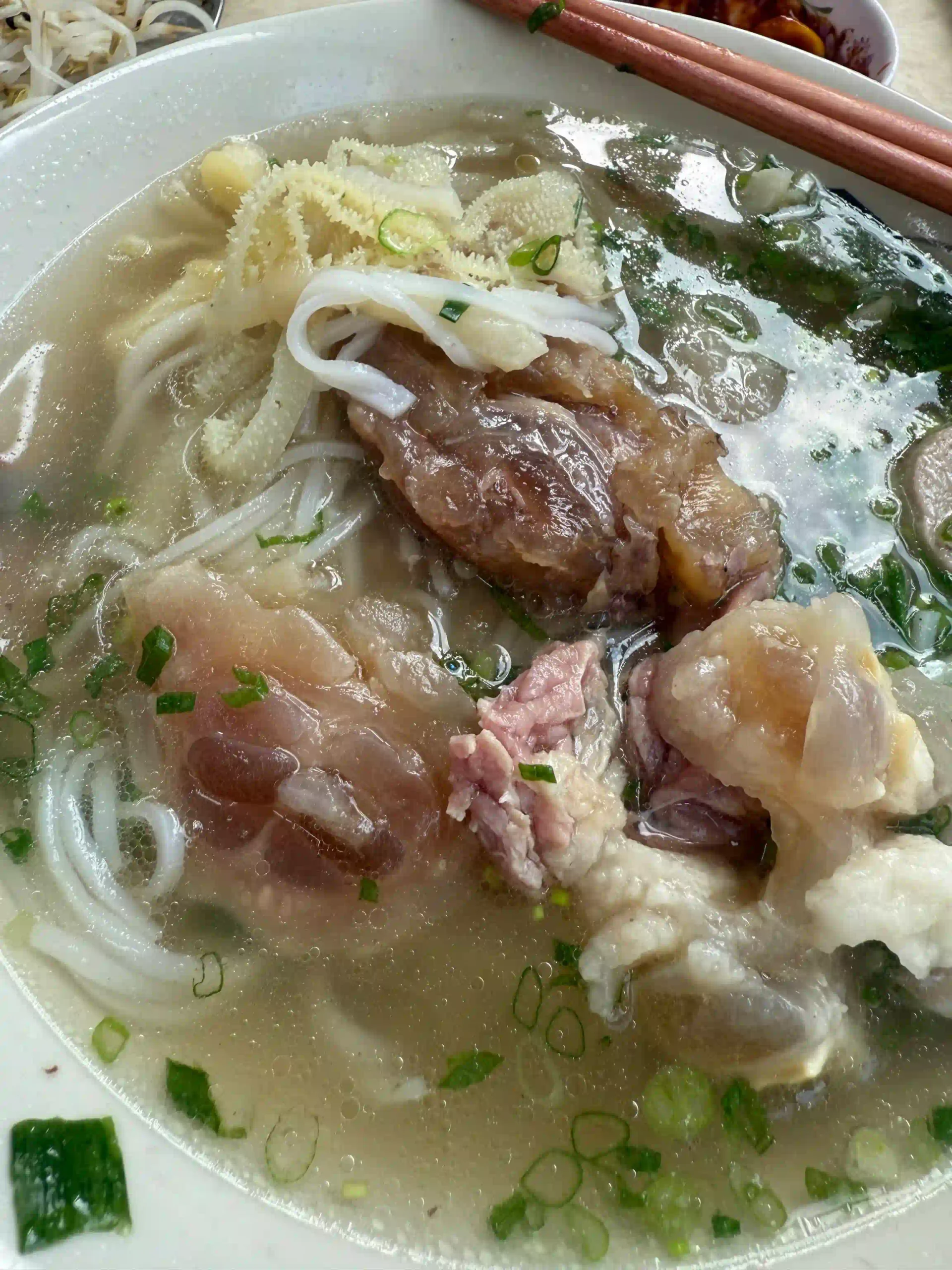
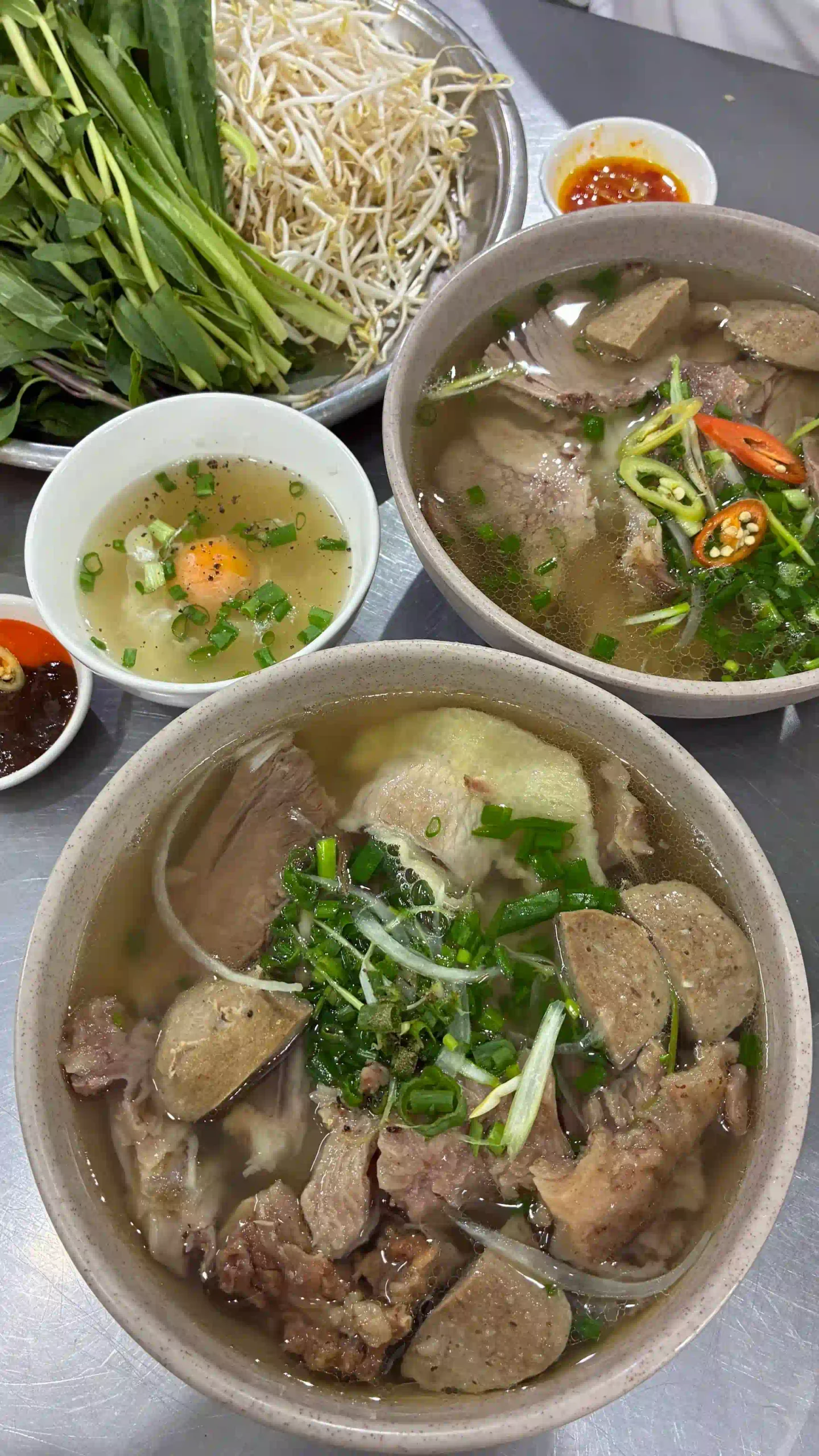
When a bowl is placed in front of you in Ho Chi Minh City, the broth looks cloudier and slightly darker. The chefs here tend to use roasted onions and more sugar in their bone broth base. It yields a much fatter, noticeably sweeter liquid.
Then comes the garnishing. Next to the bowl, you will find a large plate piled with fresh thai basil, sawtooth coriander, and raw bean sprouts. They also leave plastic squeeze bottles on the table holding black hoisin sauce and a bright red, slightly sweet chili sauce.
You manually tear the leaves up, submerge them into the hot soup, and squeeze small pools of hoisin and chili either into a dipping saucer for your meat, or directly into the bowl. It alters the flavor entirely into a dark, heavy, herbaceous soup.
Where to find it:
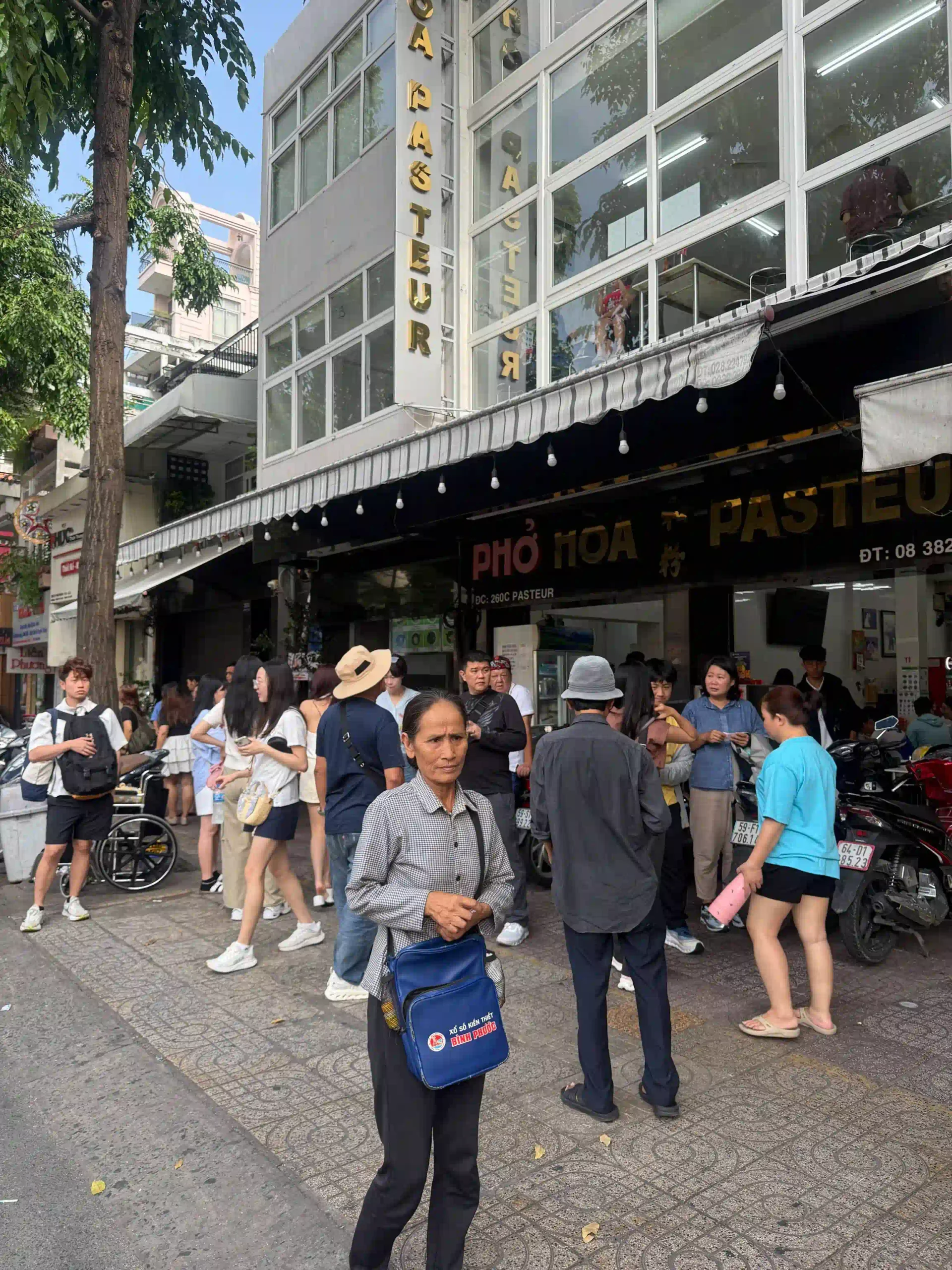
An easy, consistently solid example of this profile is Phở Hòa Pasteur (on Pasteur street, District 3), which has a fairly large, old-school open dining room.
If you want something even darker and richer, grab a taxi to Phở Lệ over on Nguyen Trai street (District 5). You order specific cuts, but Tái (thinly sliced rare flank that cooks in the broth) is standard. Prices run around 65,000 to 90,000 VND.
10. Bột Chiên (Fried Rice Flour Cake)
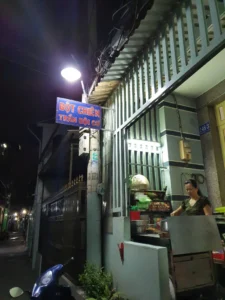
In the late afternoon, usually right around when school lets out at 4 or 5pm, small metal carts will appear on wide residential corners selling this.
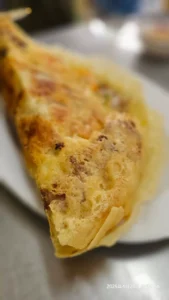
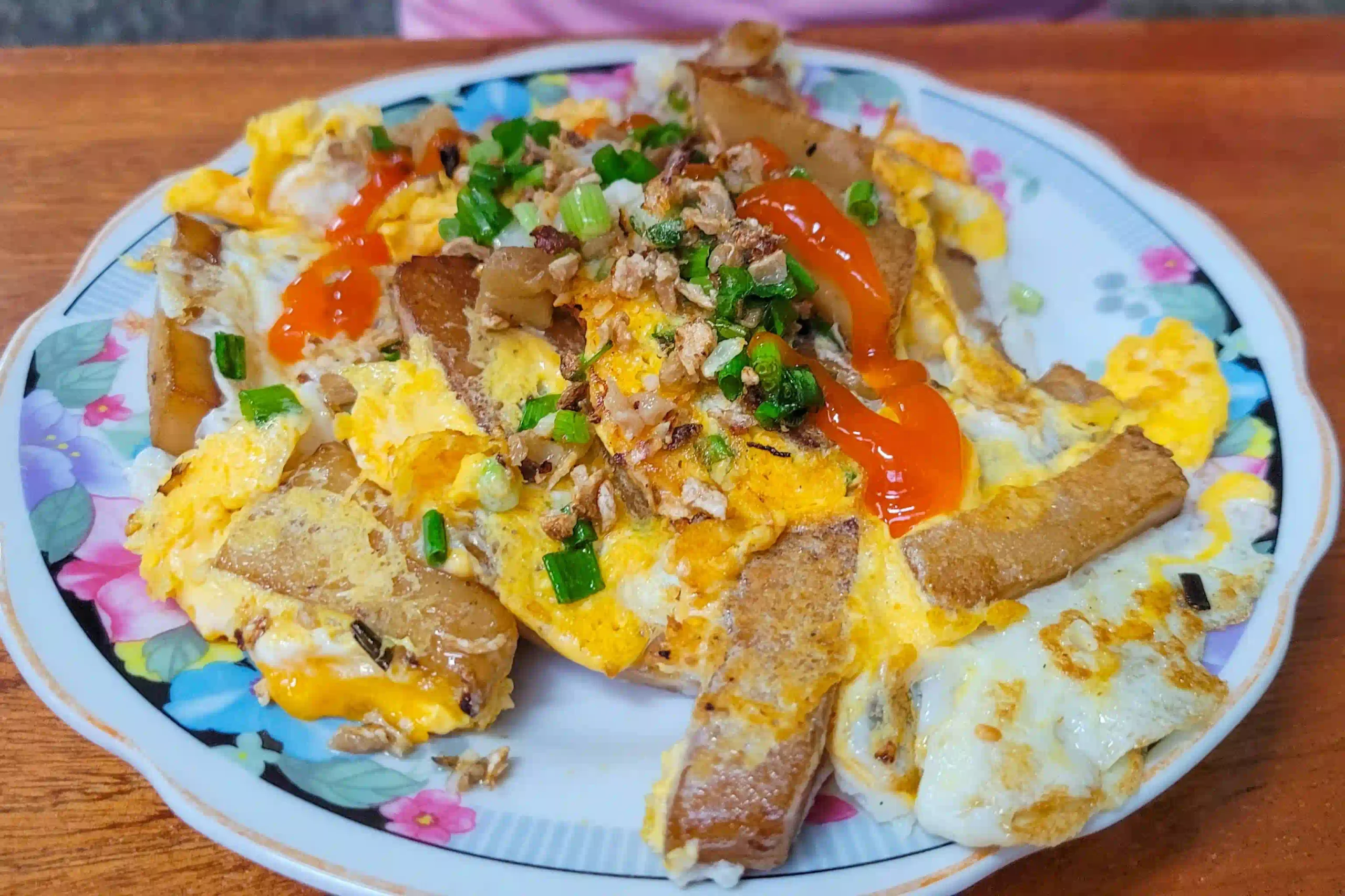
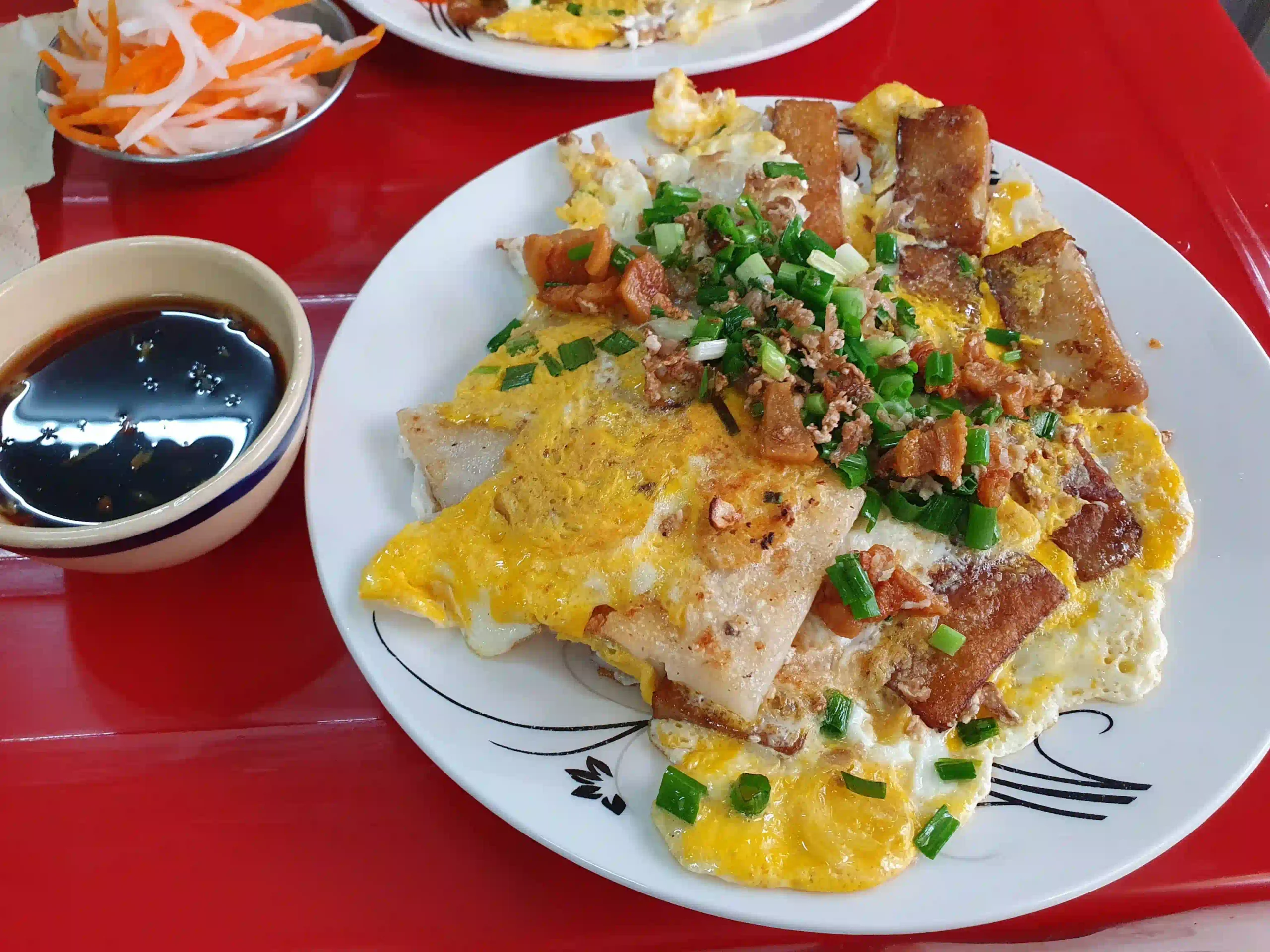
It is essentially heavy comfort food. A cook takes blocks of dense steamed rice flour and chops them up into domino-shaped pieces. They throw a couple of handfuls of these cubes onto a massive flat metal griddle with plenty of hot cooking fat. They flip the pieces over until they develop a tough, crispy, golden-brown crust on all sides while remaining soft and doughy inside.
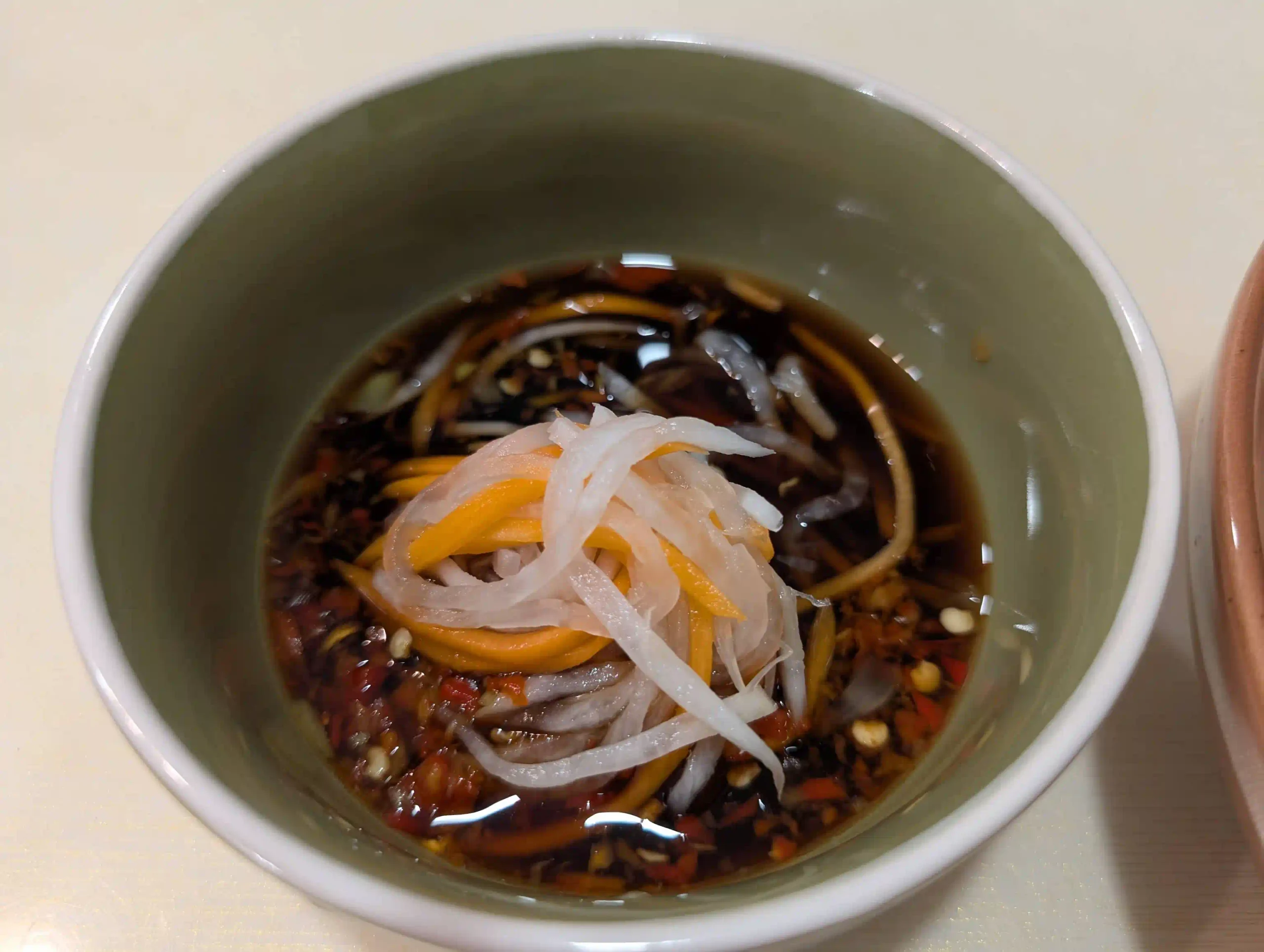
To bind it together, they crack an egg over the sizzling flour chunks, scrambling it slightly, and then sprinkle a handful of sliced scallions on top. They slide it off the grill onto a small plate alongside a pile of shredded raw papaya. The final touch is pouring a very watery, dark soy and vinegar dressing over the top.
Where to find it:
Much like Sủi Cảo and Hủ Tiếu, this originated with Chinese migrants. You find good versions on street corners in the Chinese neighborhoods along Vo Van Kiet, or along Hải Thượng Lãn Ông street in District 5 as the sun goes down. A plate of this starchy, filling dish is cheap, usually hovering around 30,000 to 40,000 VND.
Summary of typical mid-range pricing in 2026
Here is a short guide showing approximate standard local prices (in Vietnamese Dong) so you understand what to expect before sitting down at an informal setting. Prices in District 1 tourist blocks will likely skew 20-30% higher than listed.
| Dish Name | Main Profile | Common Serving Time | Approx. Pavement Price |
|---|---|---|---|
| Cơm Tấm (Broken Rice) | Rice & Sweet Grilled Pork | Early Morning (6am – 9am) | 40,000 – 80,000 VND |
| Bún Thịt Nướng | Cold Rice Noodles, Pork, Herbs | Midday Lunch | 40,000 – 55,000 VND |
| Hủ Tiếu Nam Vang | Garlic, Pork offal, Tapioca noodle | Lunch / Late Night | 50,000 – 70,000 VND |
| Sủi Cảo (Dumplings) | Boiled Shrimp Dumplings, Choy Sum | Evening / Dinner | ~ 65,000 VND |
| Bò Lá Lốt | Grilled minced beef in betel leaf | Late Afternoon / Dinner | 50,000 – 70,000 VND |
| Bánh Xèo | Large crispy crepe with shrimp/pork | Dinner | 80k – 150k (per shared plate) |
| Ốc (Snails & Shellfish) | Stir-fried / Grilled mixed seafood | Evening (post-6pm) | 50,000 – 100,000 per dish |
| Bánh Mì Chảo | Fried egg & pate cast-iron skillet | Breakfast | 45,000 – 65,000 VND |
| Phở Miền Nam | Dark beef broth, basil, hoisin | All Day | 60,000 – 90,000 VND |
| Bột Chiên | Crispy fried starchy dough and egg | Late afternoon (after school) | 30,000 – 45,000 VND |
(Note: Currently 100,000 VND hovers roughly around $4 USD).
Some practical realities of ordering Saigon Street food
Sitting at local spots in Saigon isn’t complicated once you know the basic unspoken routines, but there are a few practical logistics that might be helpful if you are used to Western restaurant service.
How ordering works:
The setup is very informal. When you approach a stall sitting in an alleyway, don’t stand at the street curb waiting for a host to seat you. Look for an empty plastic stool, preferably one somewhat out of the sun, and claim it by placing a bag under the table. Once you have a seat, walk over to wherever the massive soup pot or grill is located.
Most places only sell one specific dish. Just make eye contact with the person cooking and hold up fingers for how many portions you need. Sometimes they will nod. Sometimes they will ignore you, but they heard you. Go sit down.
Managing exact change:
Everything is mostly paid for in cash on the streets. Getting change is frequently a headache. If your bill for some grilled meat and noodles is 45,000 VND, do not hand the vendor a bright green 500,000 VND note (which equates to about 20 USD). A street seller will not have enough small paper bills to give you change without halting her business.
A good daily habit is walking into any Circle K convenience store in the morning, buying a bottle of water, and paying with the large 500k notes you got from the ATM. Take the smaller 50k, 20k, and 10k notes you receive in change and use those exclusively to pay the small alley vendors.
The “Hygiene” conversation:
A lot of tourists express concern regarding food safety. Most established sidewalk vendors sell to the exact same fifty locals from the surrounding block every day. Turnover is fast, meaning ingredients don’t sit in fridges for days.
My general rule is simple: if the soup pot is boiling hard, or the wok is violently sizzling, it is fine. It’s also entirely normal for you to pull a tissue from the box on the table and give your spoon and chopsticks a quick, firm wipe to remove any urban road dust before your meal arrives. Everyone does it.
If you are just figuring out exactly how to map out a broader plan with a mix of street options and actual restaurants, checking an overview on how The Saigon Restaurant scene balances between fine dining and the sidewalk provides good context.
Eating here basically demands leaving the quiet, clean interior spaces and sitting close to the traffic. Sometimes it gets a bit noisy, you deal with exhaust fumes occasionally, and it is almost always humid. But tracking down a decent bowl of Hu Tieu deep in a neighborhood out west, finding an empty stool, and trying it for yourself will quickly give you a clear sense of what normal life looks like here.
Have some broken rice in the morning, pace yourself in the afternoon shade, and try navigating District 4’s seafood culture when dusk falls.

Keep Exploring Ho Chi Minh City
-
See & do UltimateMy expat guide to stuffs to do in Ho Chi Minh city ›
-
FoodSolo guide to DIY Saigon night food & restaurants ›
-
FoodRating 3 popular Ho Chi Minh City cooking classes ›
-
FoodI review Ho Chi Minh City food tour vs self guided ›
-
Stays Must readWhere to stay in Ho Chi Minh city as a first-timer? ›
-
Spots Must read10 Ho Chi Minh city attractions travelers must visit in 2026 ›











 Tiếng Việt
 한국어
한국어 中文 (中国)
 日本語
日本語 ไทย
ไทย Deutsch
 Español
 Destinations
 Instagram
 Facebook
 X (Twitter)
 Threads
 Tiktok
As a Vietnamese-American, I love seeing com tam get the love it deserves! This list makes me miss Saigon so much. Gonna hunt down some broken rice in LA now.
Dude, banh xeo is my new obsession after reading this. Had it at a random stall in District 3, and the crispy pancake with all those herbs was unreal. Thanks for the guide!
Tried bun thit nuong based on this and it was so fresh and flavorful. Just wish I had more time to try all 15 dishes before leaving HCMC.