









 Ha Giang
 Hanoi
Hanoi Ho Chi Minh City
 Ha Long
 Sapa
Sapa Mekong Delta
 Da Nang
 Hue
Hue Hoi An
 Ninh Binh
 Da Lat
 Nha Trang
 Phan Thiet
 Phu Quoc
 Quang Binh
 Quy Nhon
 Vung Tau
 Thai Nguyen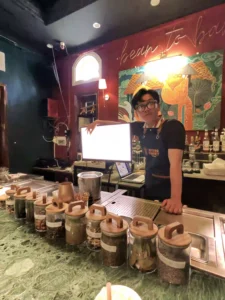
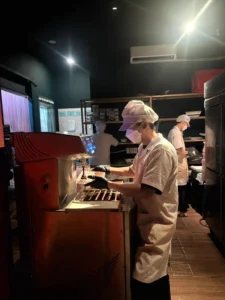
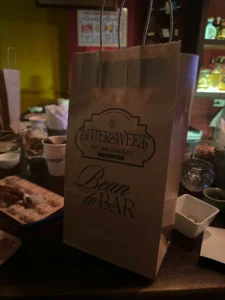
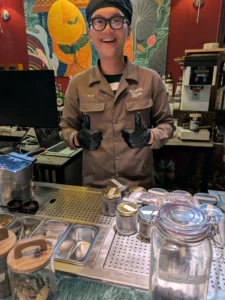
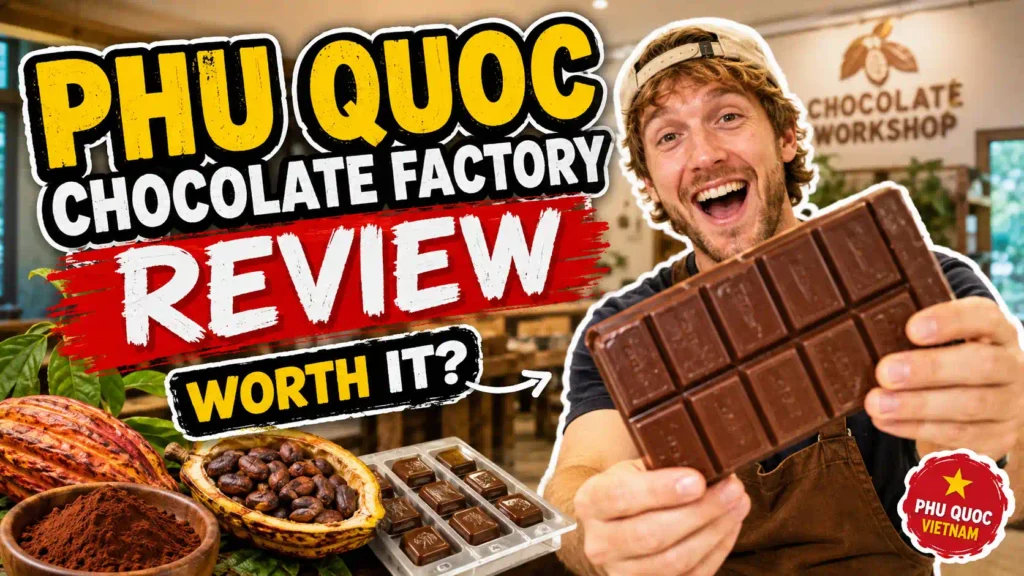

I booked this on an afternoon I had nothing planned for, expecting a gift shop with a walkthrough attached, which is what most factory tours in tourist places turn out to be.
It’s a working bean-to-bar operation and the tour goes through the actual production rooms. But I made a booking mistake that cost me the best part of it, and after reading through what other people have written since, I’m clearly not the only one.
So this is how the 95 minutes went, and what I’d do differently.
- Quick Answer: The Phu Quoc chocolate factory workshop at Bittersweet in Cửa Lấp is worth the roughly $19 it costs, especially with kids or on an afternoon the weather has taken from you. It’s a genuine bean-to-bar producer, not a shop with a tour bolted on, and it runs about 95 minutes. Book the option that includes the full tasting and the cacao liqueur, because the cheaper tier leaves out the part everyone remembers.
- How the 95 Minutes Went:
- Cacao garden first, about ten minutes, and shorter than the photos suggest.
- Then the production rooms: roasting, grinding, tempering, moulding.
- You make your own iced or hot cacao. Dairy milk only, no plant-based option.
- Chocolate moulding, boxed and bagged to take home, plus a certificate.
- Tasting at the end, and how much you taste depends on what you booked.
- What I’d Change:
- Pay up for the tier with the liqueur tasting and 20 pieces. The gap is small and the tasting is the good bit.
- Go earlier in the day and not on a Sunday.
- Leave room in the bag, because the shop is better value than anywhere in Dương Đông.
- The Thing They Don’t Say: the cacao isn’t grown on Phu Quoc. This island grows pepper. The beans come from the Mekong Delta and the Central Highlands, and the garden on site is a demonstration planting.
- Details: Hẻm Sô Cô La, Cửa Lấp. 4.7 from over 500 Google reviews. Around 95 minutes. No hotel pickup.
Getting There, and What the Place Is
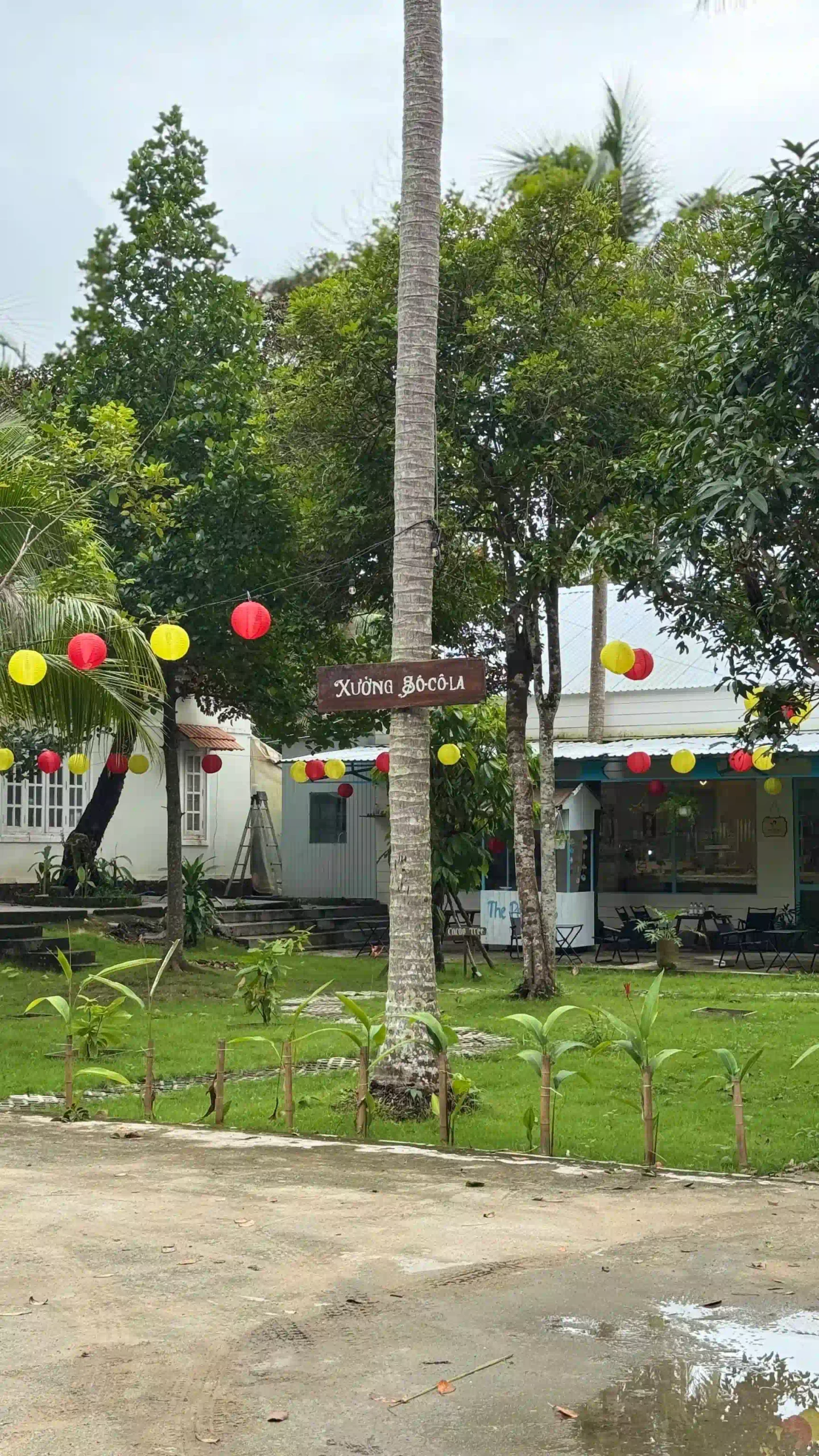
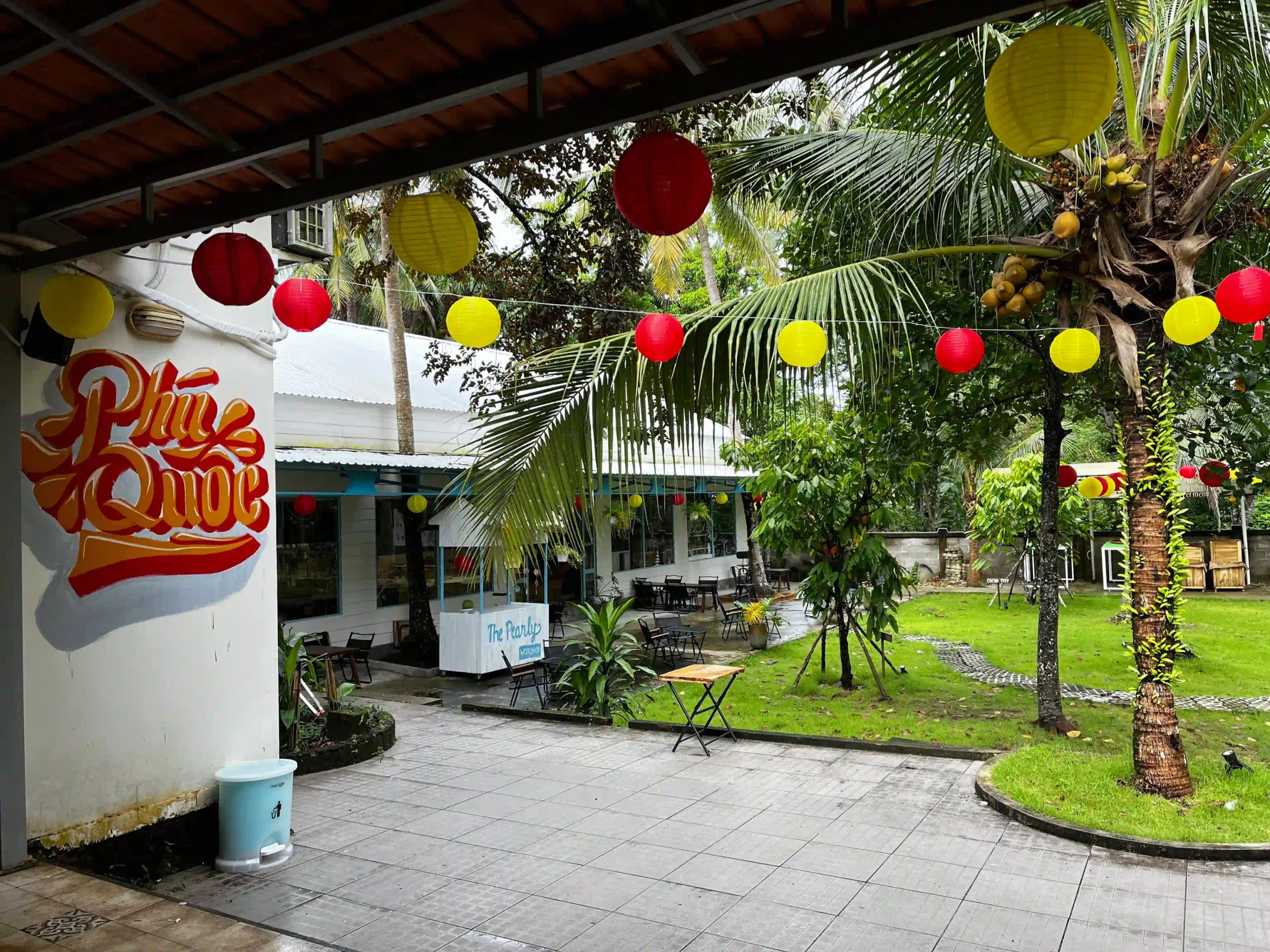
The address is Hẻm Sô Cô La in Cửa Lấp, which translates as Chocolate Alley and is presumably named after them, not the other way round.
There’s no hotel pickup, so budget a Grab each way. From Cửa Lấp or anywhere on the central stretch of Long Beach it’s small money. From Ông Lang or the far south it’s less small.
Bittersweet opened the workshop at the start of 2023 and it’s the first chocolate producer on the island.
Small operation, deliberately so, and they supply 5-star resorts here as well as selling their own bars.
I’d walked past the shop side of it a few times without registering there was a factory behind, which tells you roughly what scale we’re talking about.
Booking is worth doing ahead. Sessions run at set times through the day and they take groups of 8 to 12 or more as private bookings arranged directly, which is worth knowing if you’re travelling with family and would rather not share the table.
The Cacao Garden, and the Thing Nobody Mentions
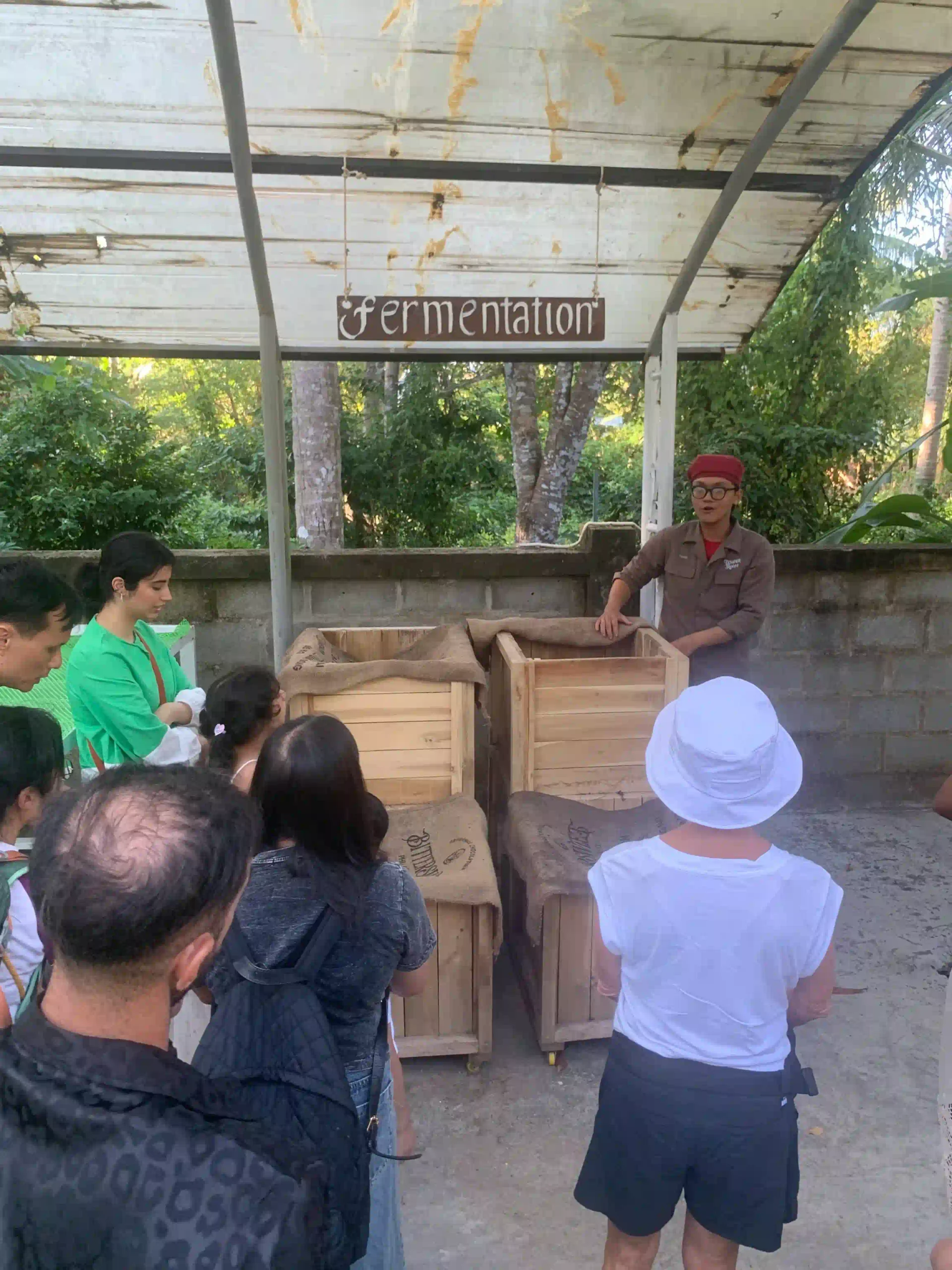
The tour starts in the garden and it’s the shortest section, about 10 minutes.
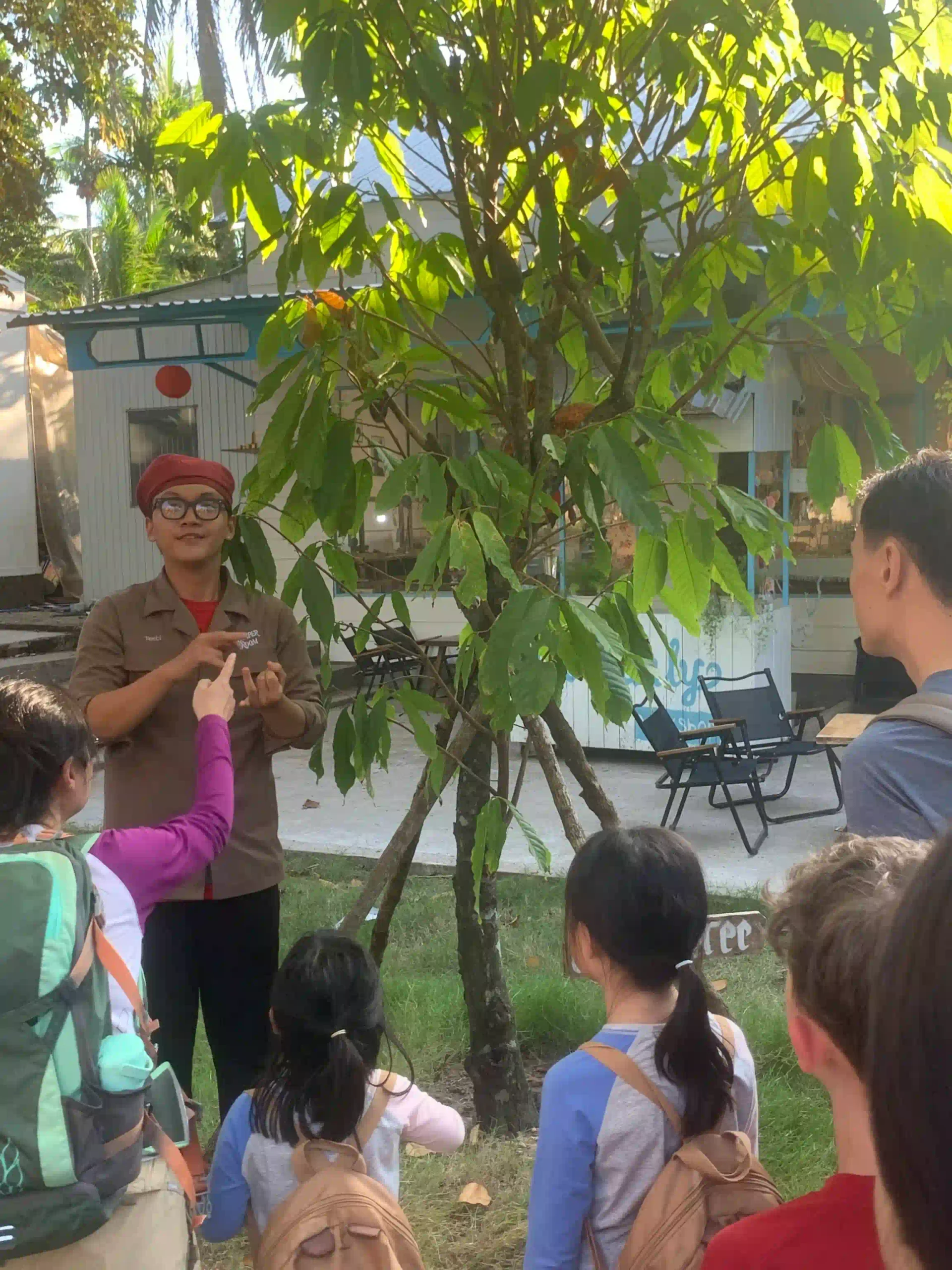
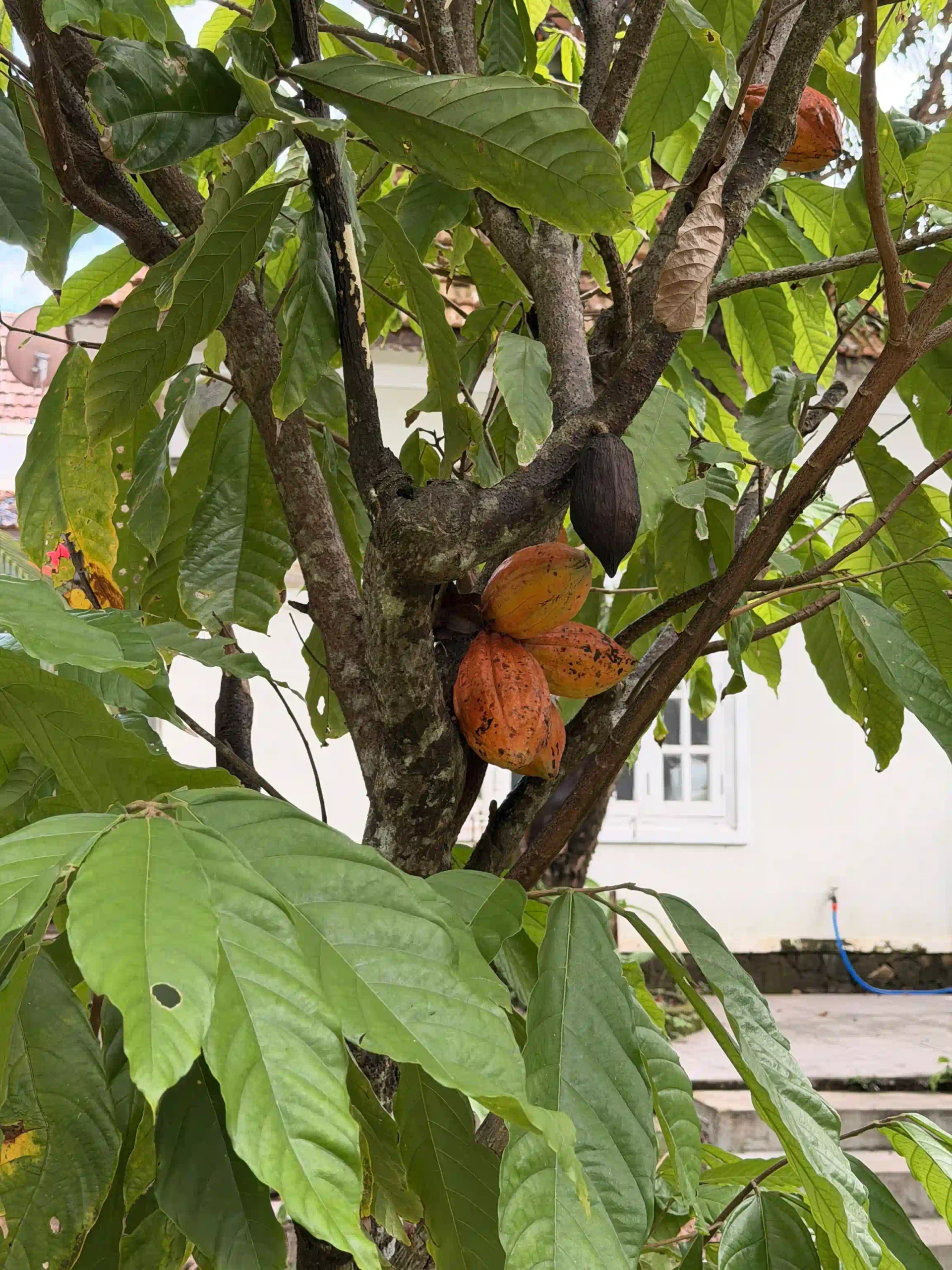
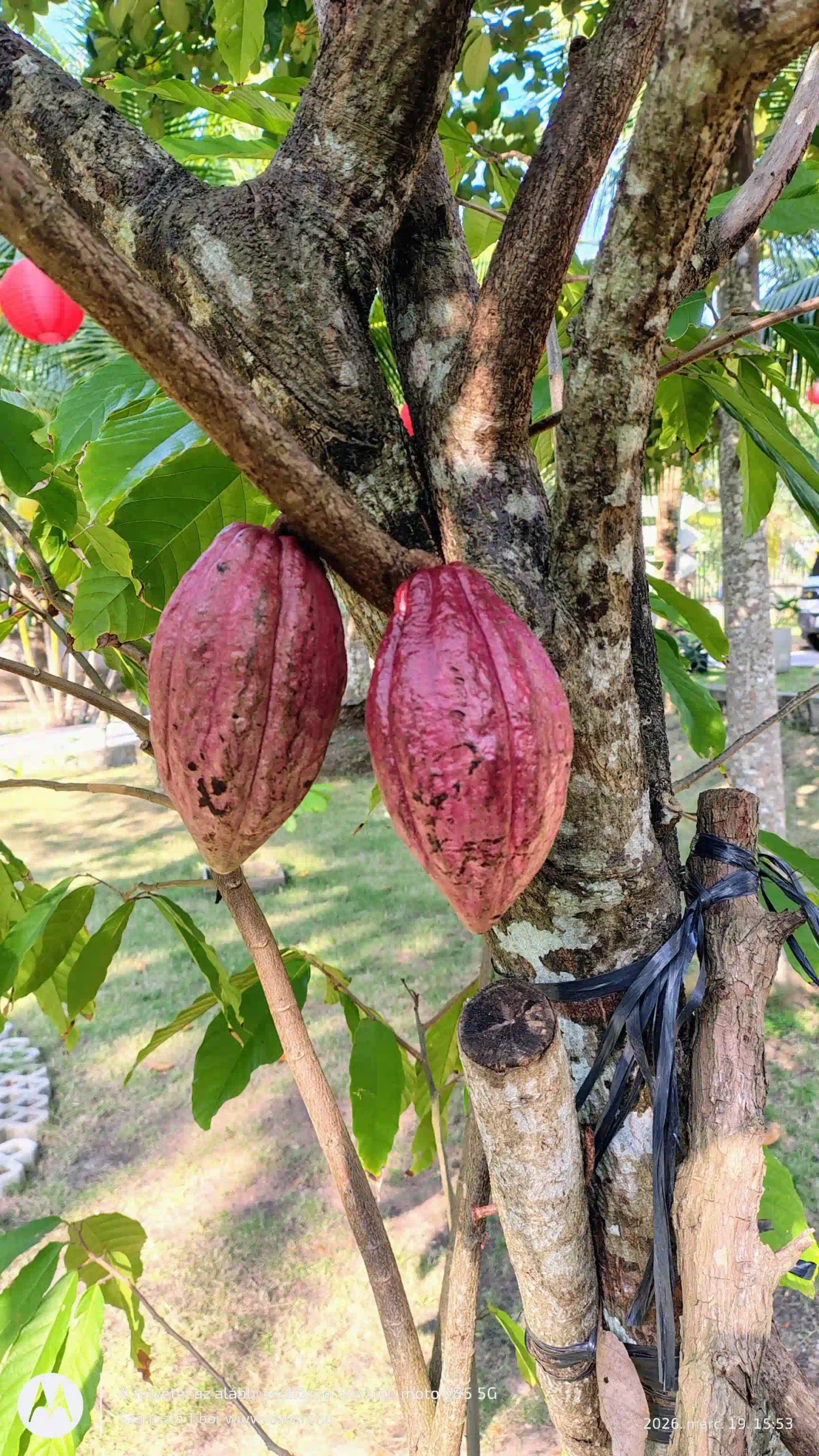
You walk between the trees and get the background on how cacao came to Vietnam and how it’s farmed. The pods hang straight off the trunk, which is the detail that surprises everyone, including me. They’re strange-looking things, somewhere between a rugby ball and a papaya, and they come in reds and greens depending on ripeness.
What I didn’t know before going, and what nobody quite says out loud, is that this isn’t where their cacao comes from.
Cacao isn’t a Phu Quoc crop at all. The island grows pepper. Their beans come from the Mekong Delta and the Central Highlands, which is where Vietnamese cacao is actually farmed, usually intercropped under coconut shade, harvested around April to May and again October to November. Their own bar range is named for those regions, which is the giveaway if you look at the labels.
The founder has been open about this in Vietnamese press. Logistically Hanoi or Saigon would have been easier, and he chose Phu Quoc because he wanted the brand tied to the island. Fair enough as a decision.
So the garden is a demonstration planting, not a working plantation. It’s still worth the ten minutes, since most people have never seen a cacao pod.
But if part of the appeal was watching an island crop go from tree to bar in one place, that isn’t what this is, and it would have been better to know walking in.
Inside the Factory
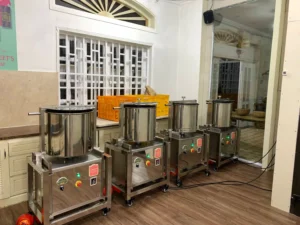
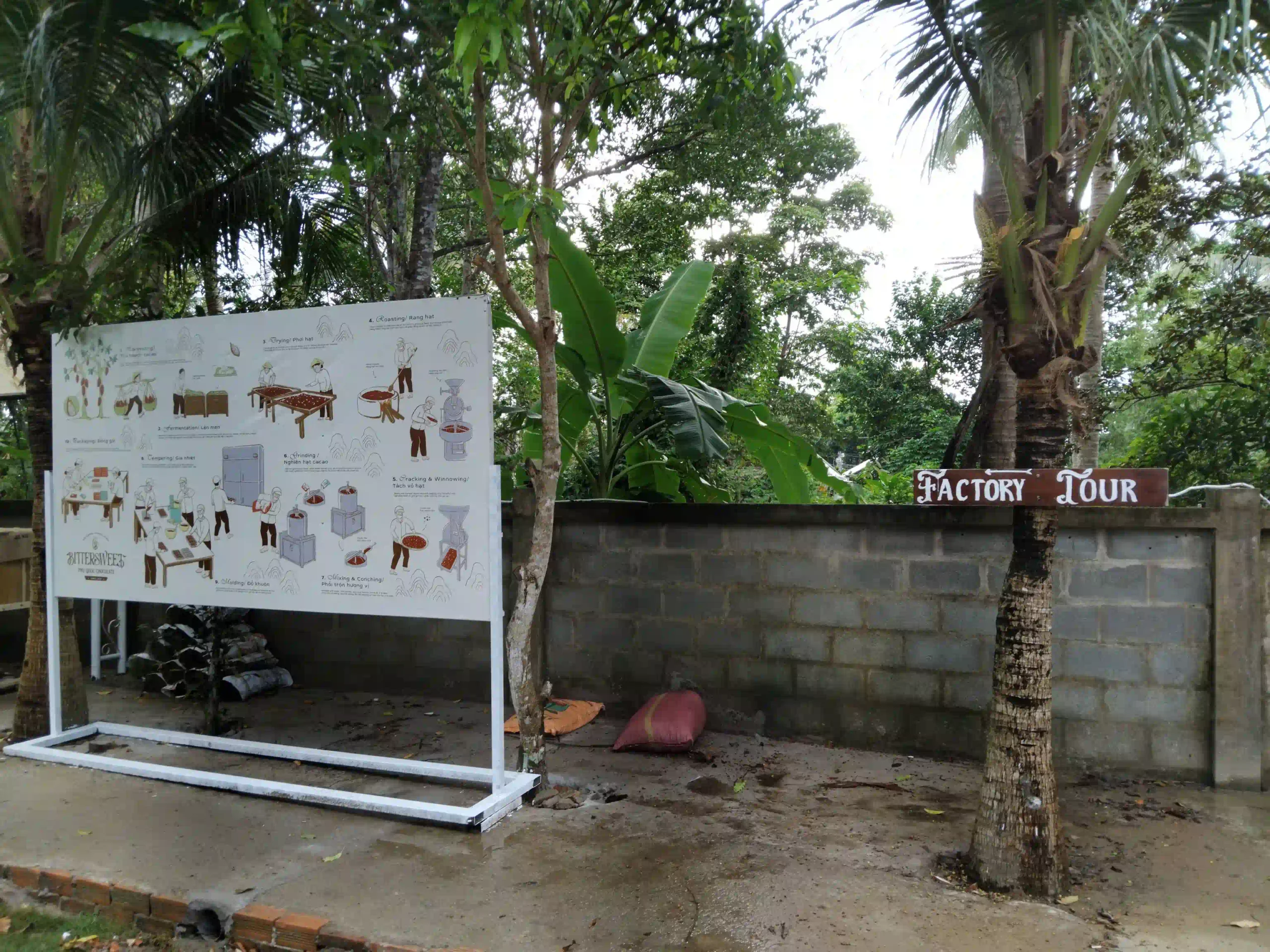
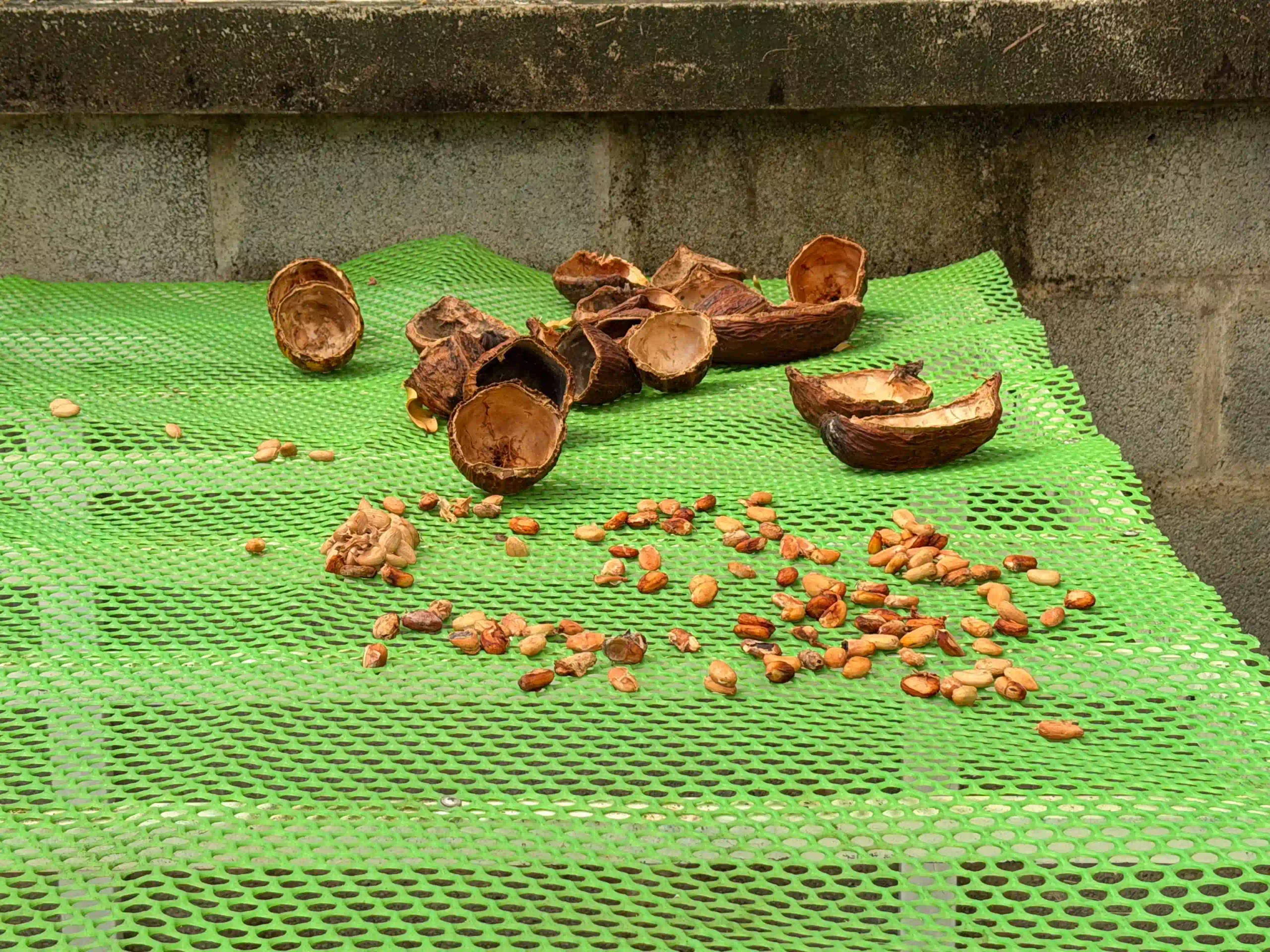
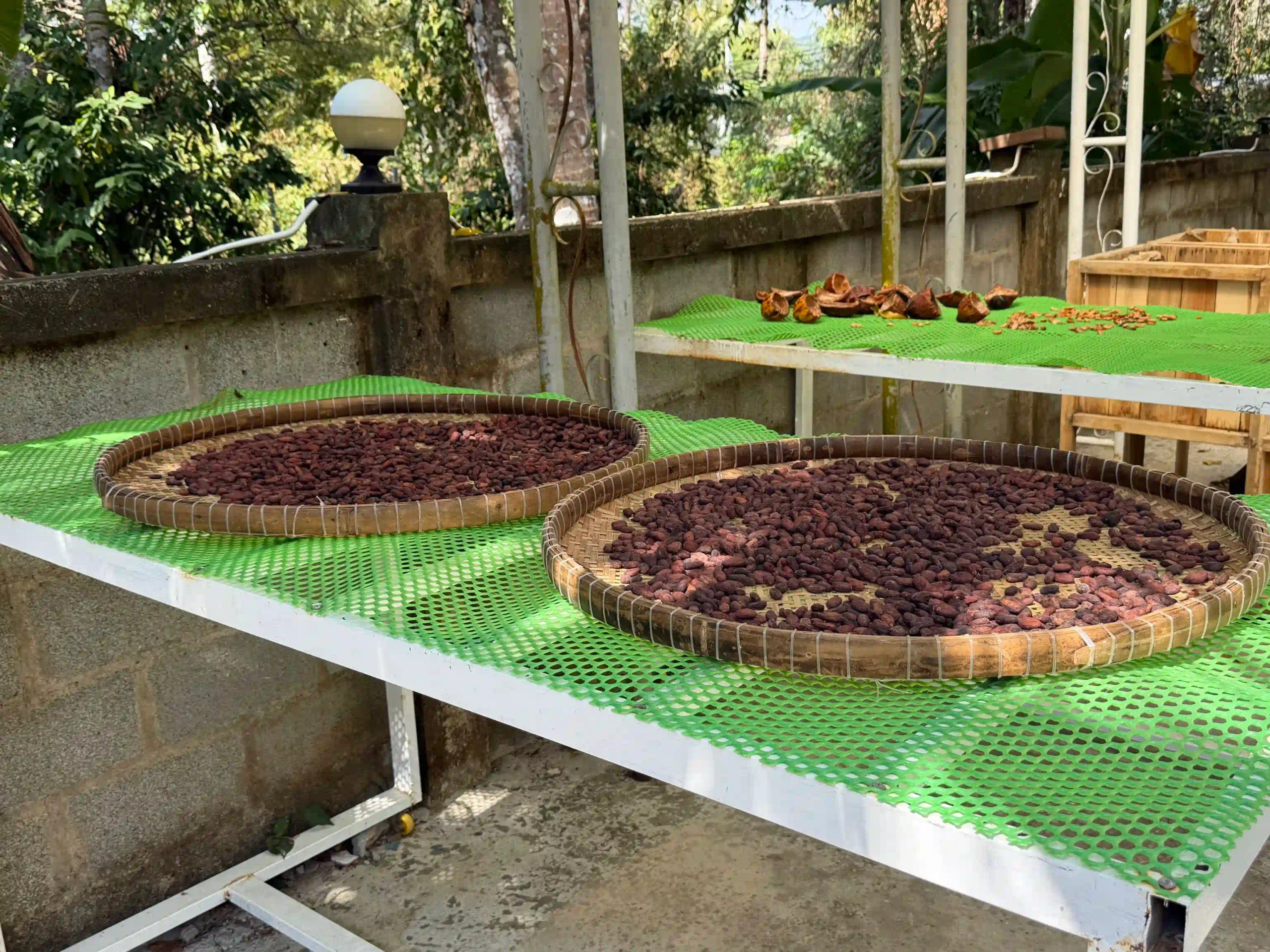
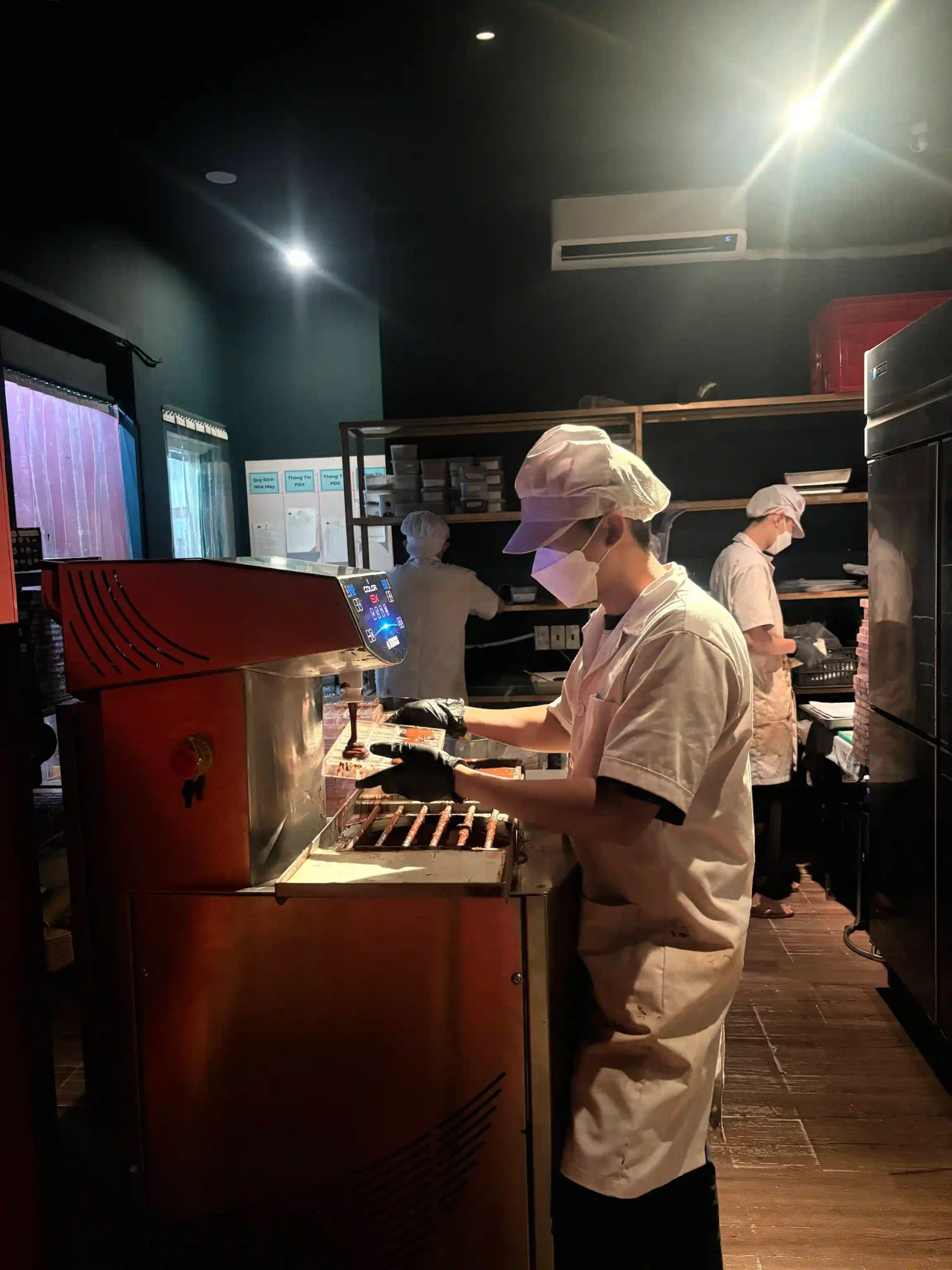
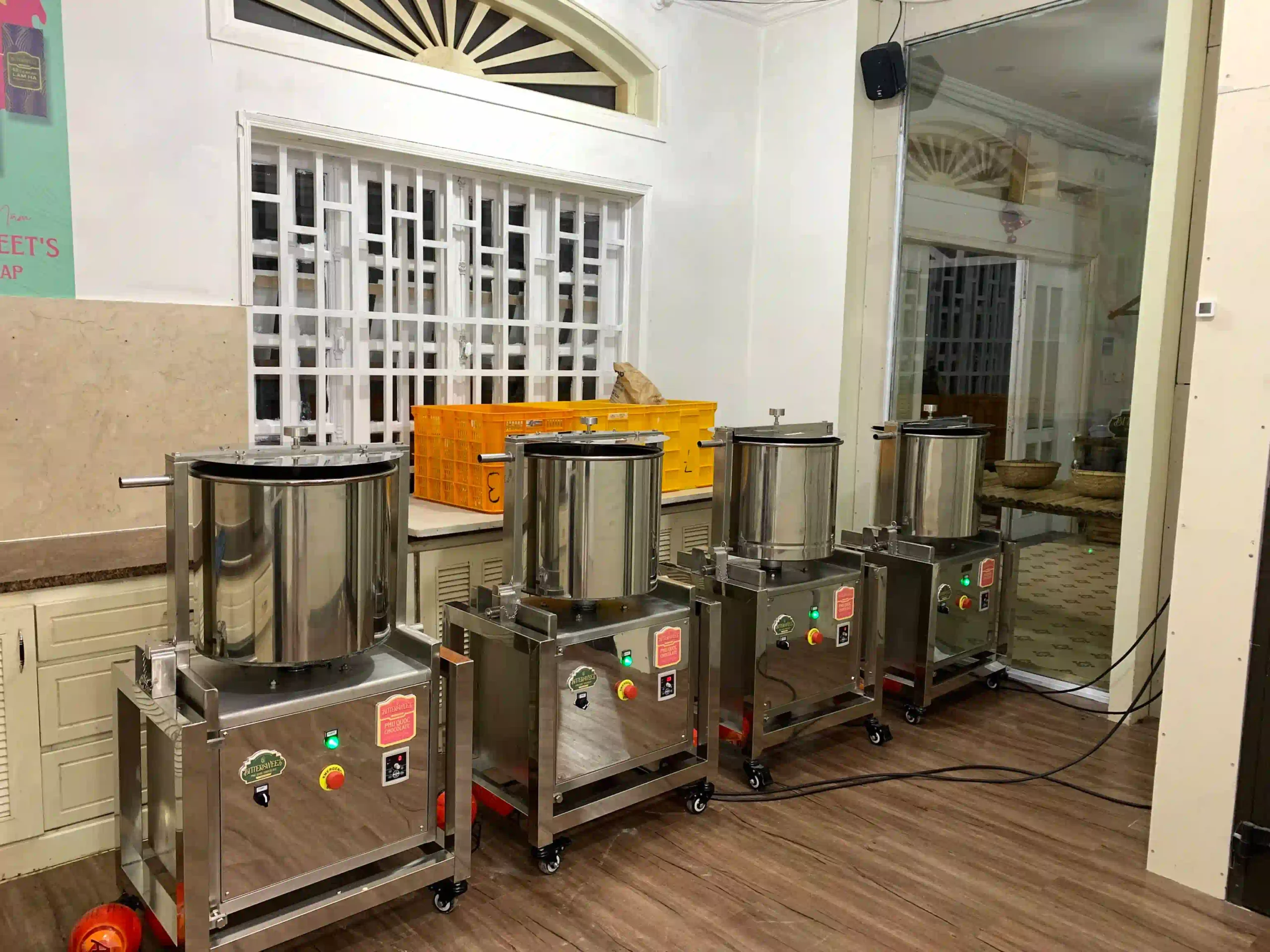
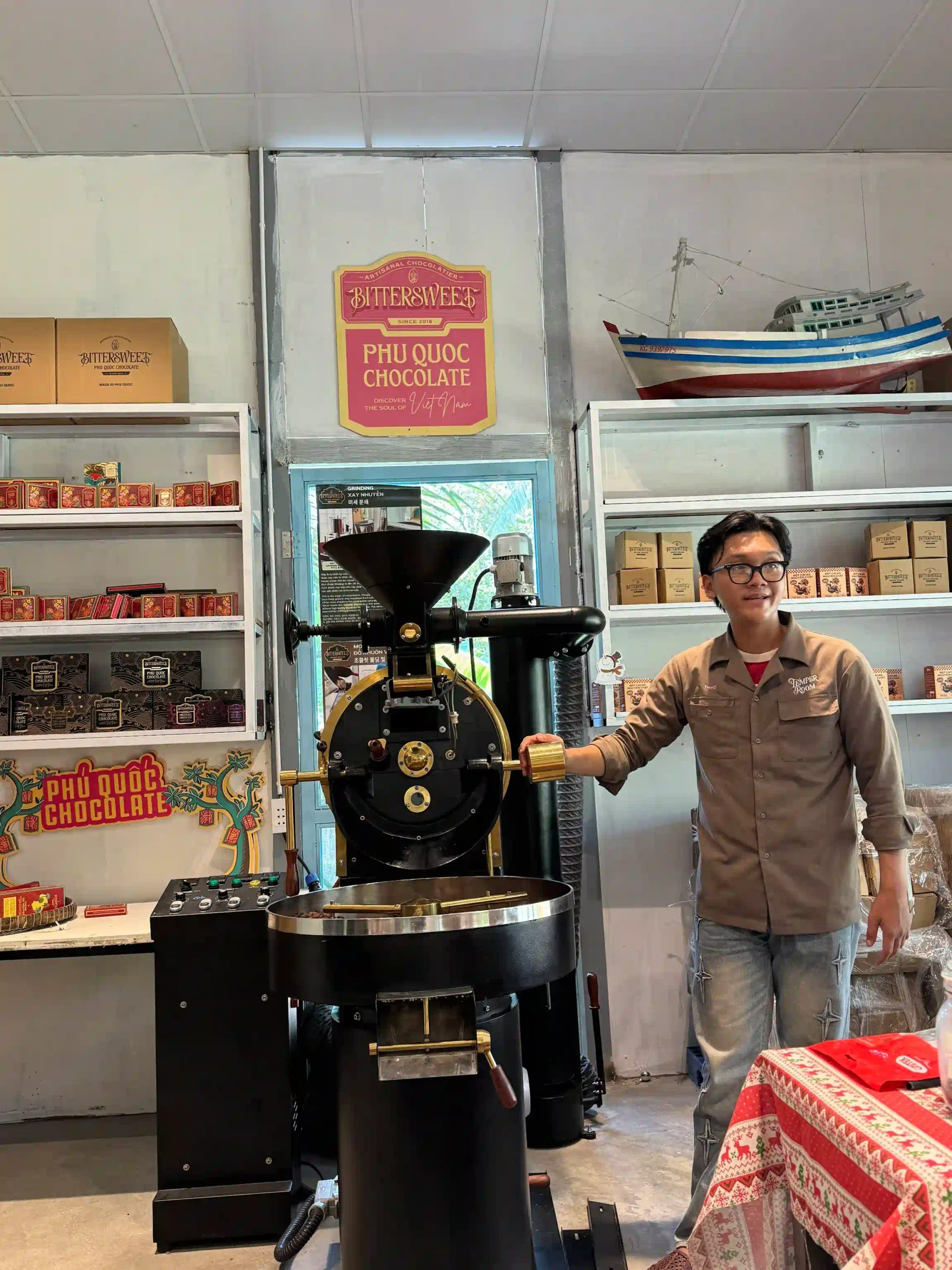
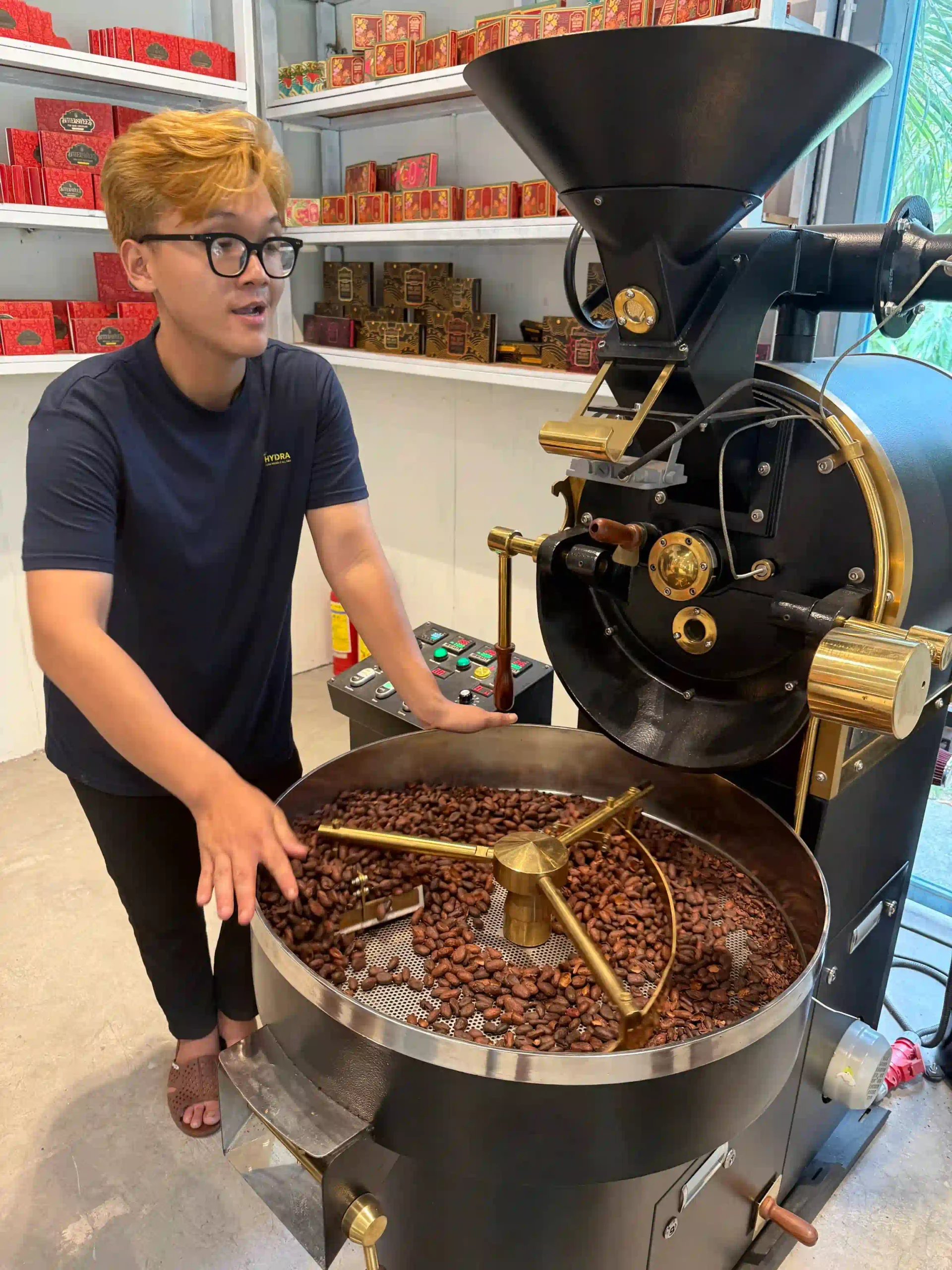
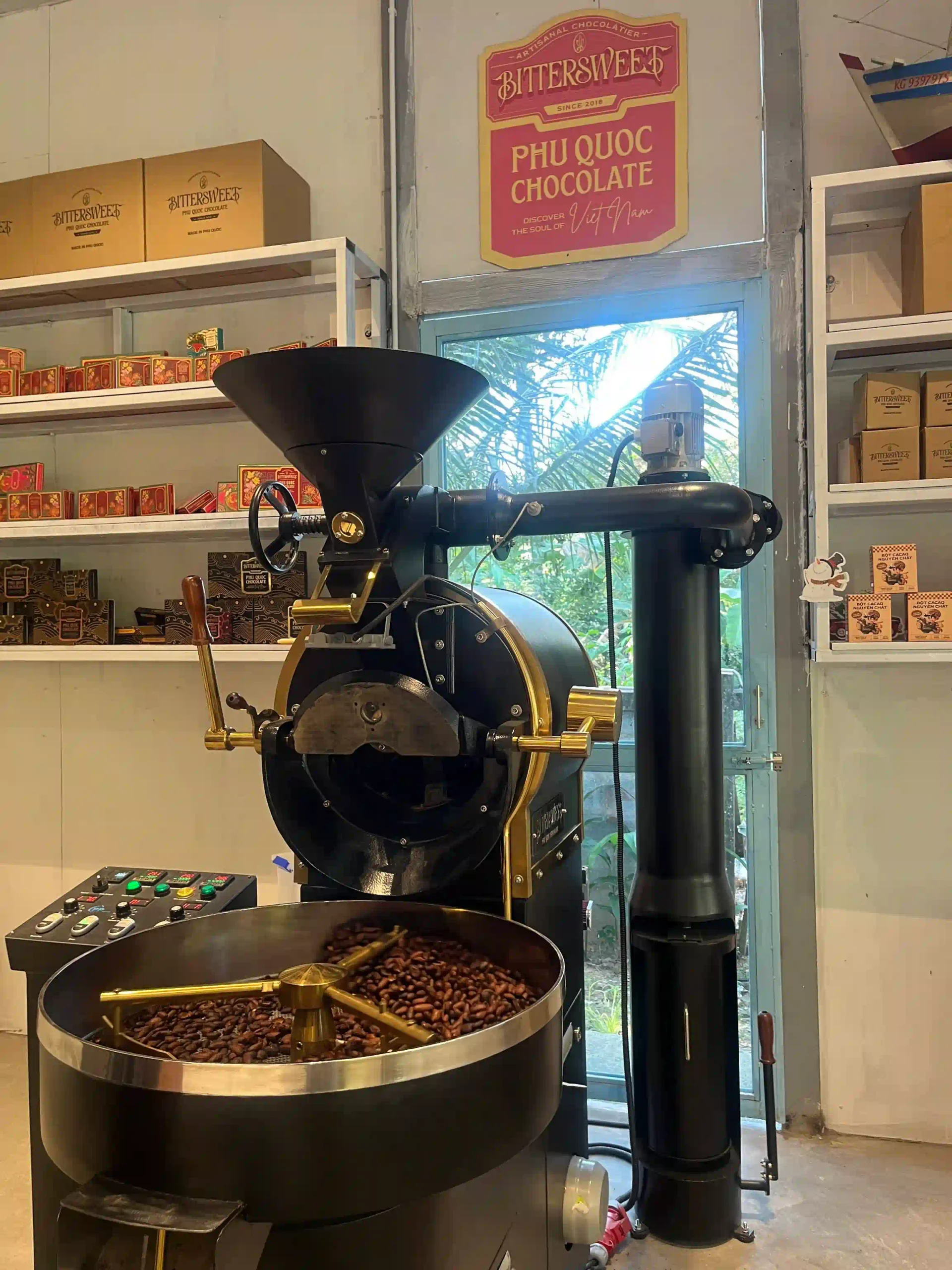
You go through the production rooms in sequence: roasting, grinding, tempering, moulding. The machines are small and there aren’t many of them, but they’re real and they were running when I went, which turns out to matter more than I realised at the time.
Sunday is the one day the factory closes. The workshop still runs, but nothing is in production, so there’s no roasting to watch and no cacao tea to try.
People who’ve gone on a Sunday describe touring a stopped line, which is a fraction of the point. I went on a weekday by accident.
If your schedule has any give in it, make that deliberate, and go in the morning while things are still moving.
What I took away from this section is how long the process is. Chocolate is one of those products where the distance between what you eat and how it’s made is enormous, and seeing the beans at each stage closes that gap. Bean-to-bar at this scale is rare to see anywhere.
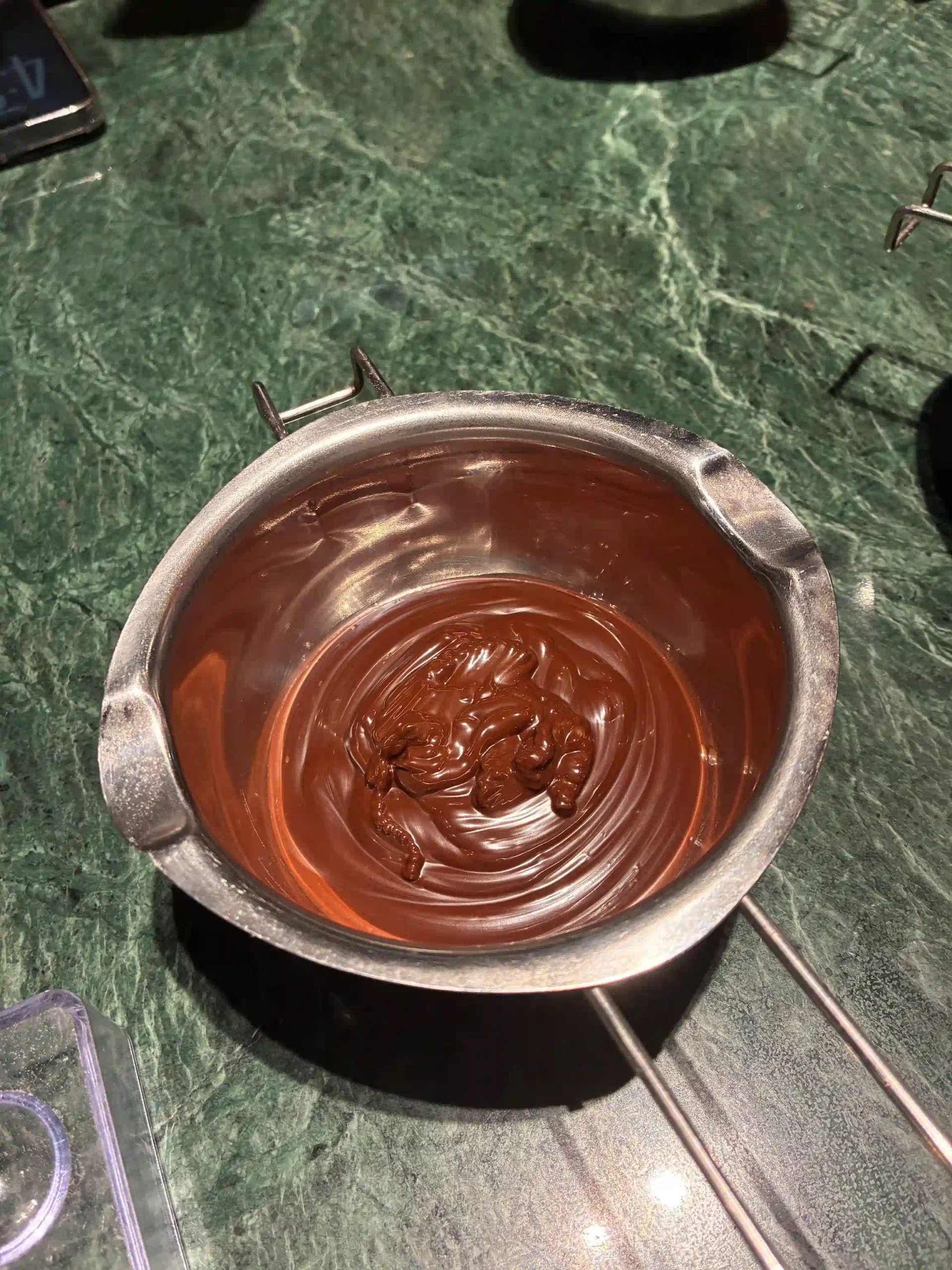
The roasting is the stage that reframes it. Raw cacao doesn’t smell or taste like chocolate at all, and everything you associate with the word arrives in that one step. From there it’s grinding for hours, then tempering, which is the fussy bit where the chocolate is taken up and down through set temperatures so it sets with a snap instead of going dull and grainy. That’s the step home cooks get wrong and it’s why bars from a factory look the way they do.
The group was small. They cap at 25 but the session I was in had fewer than 10, so it never felt like being processed through anything.
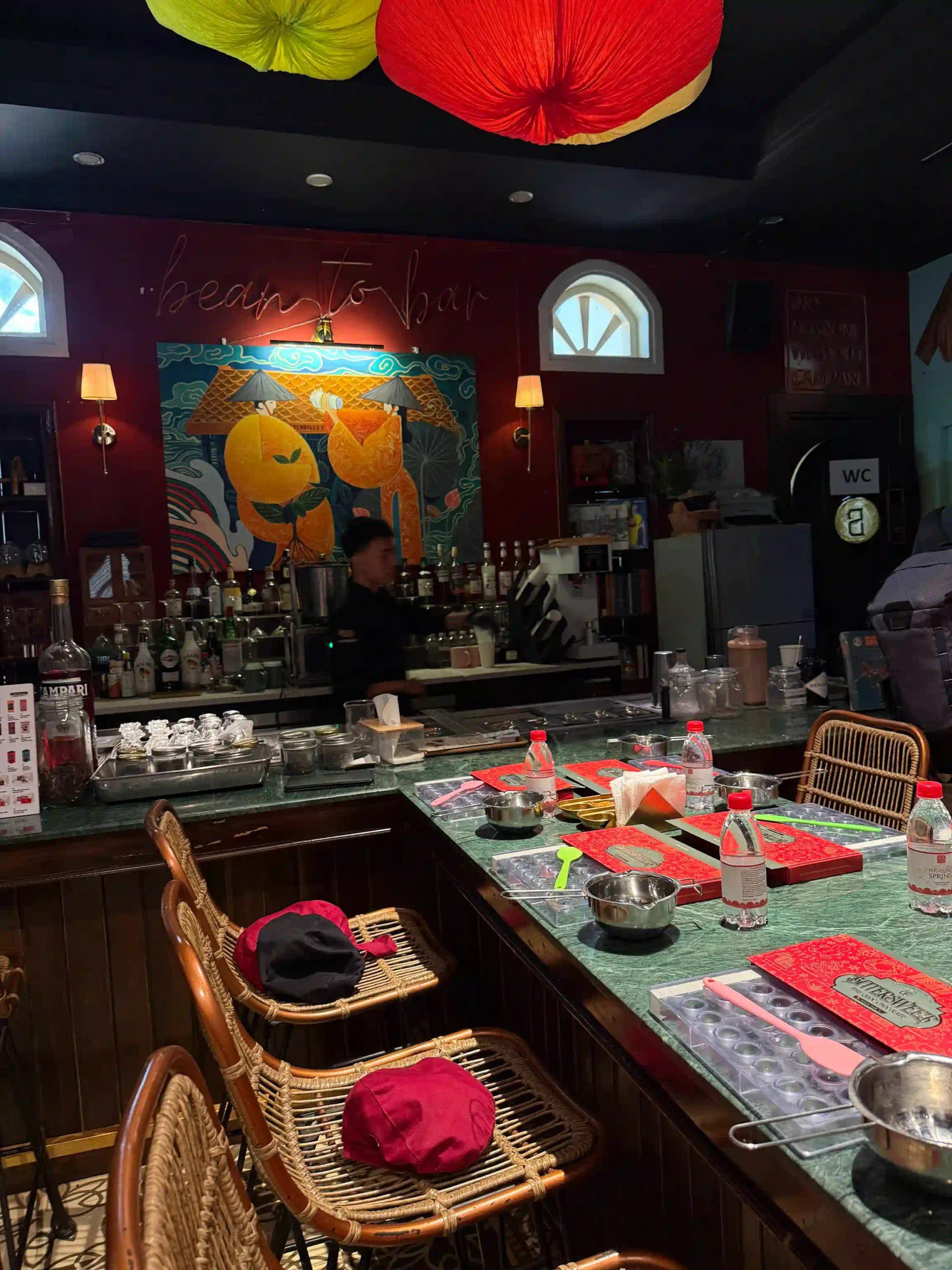
The table in the tasting room seats a good deal more than that, which suggests high season fills it properly, and I’d guess the experience changes with it.
Making Your Own
Two hands-on bits, and they’re easy.
First you make a drink, iced or hot cacao, which is more assembly than skill. Worth flagging that the milk is dairy and there’s no plant-based alternative.
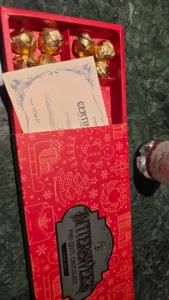
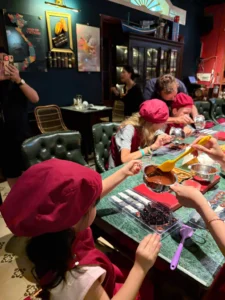
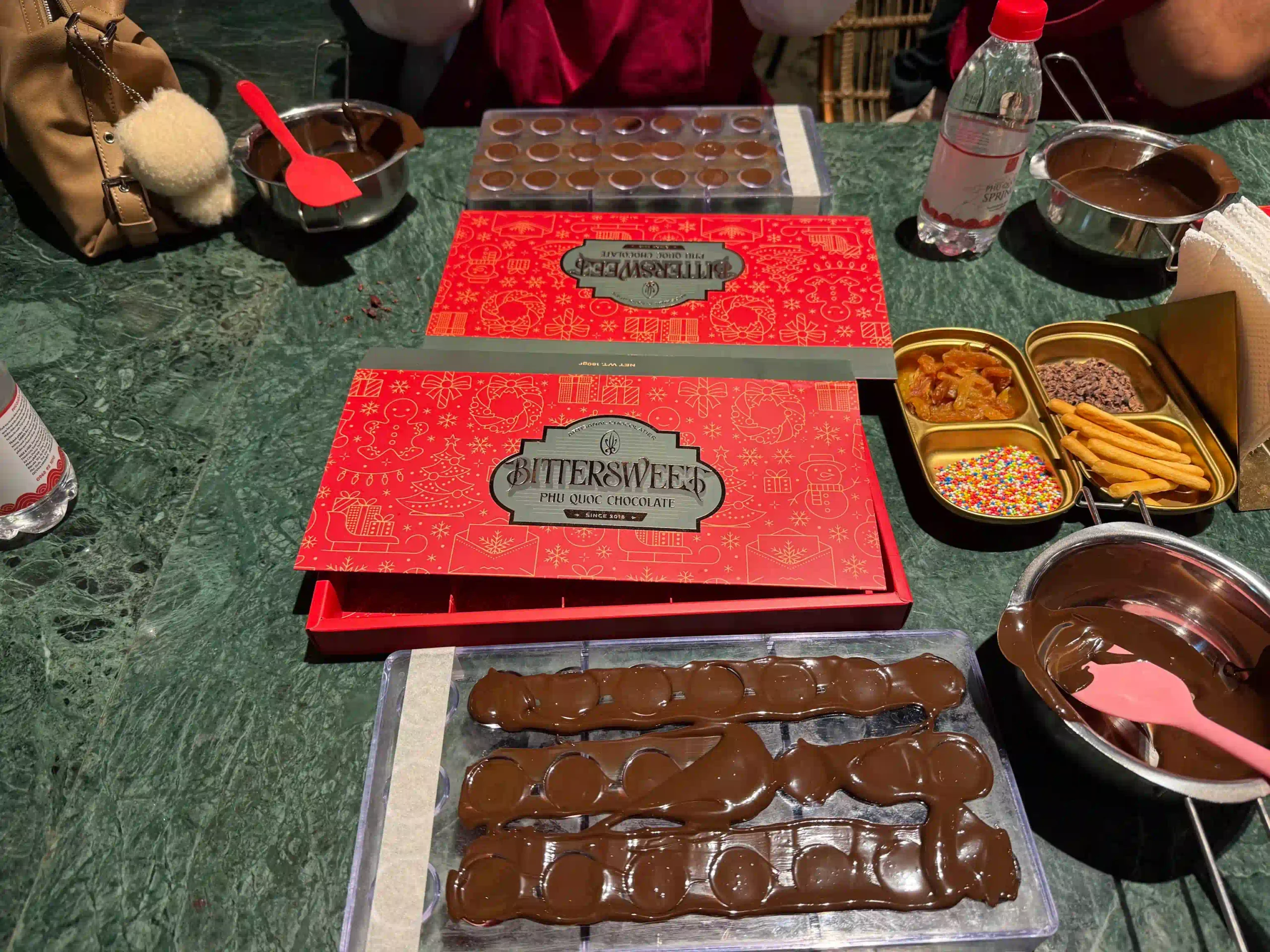
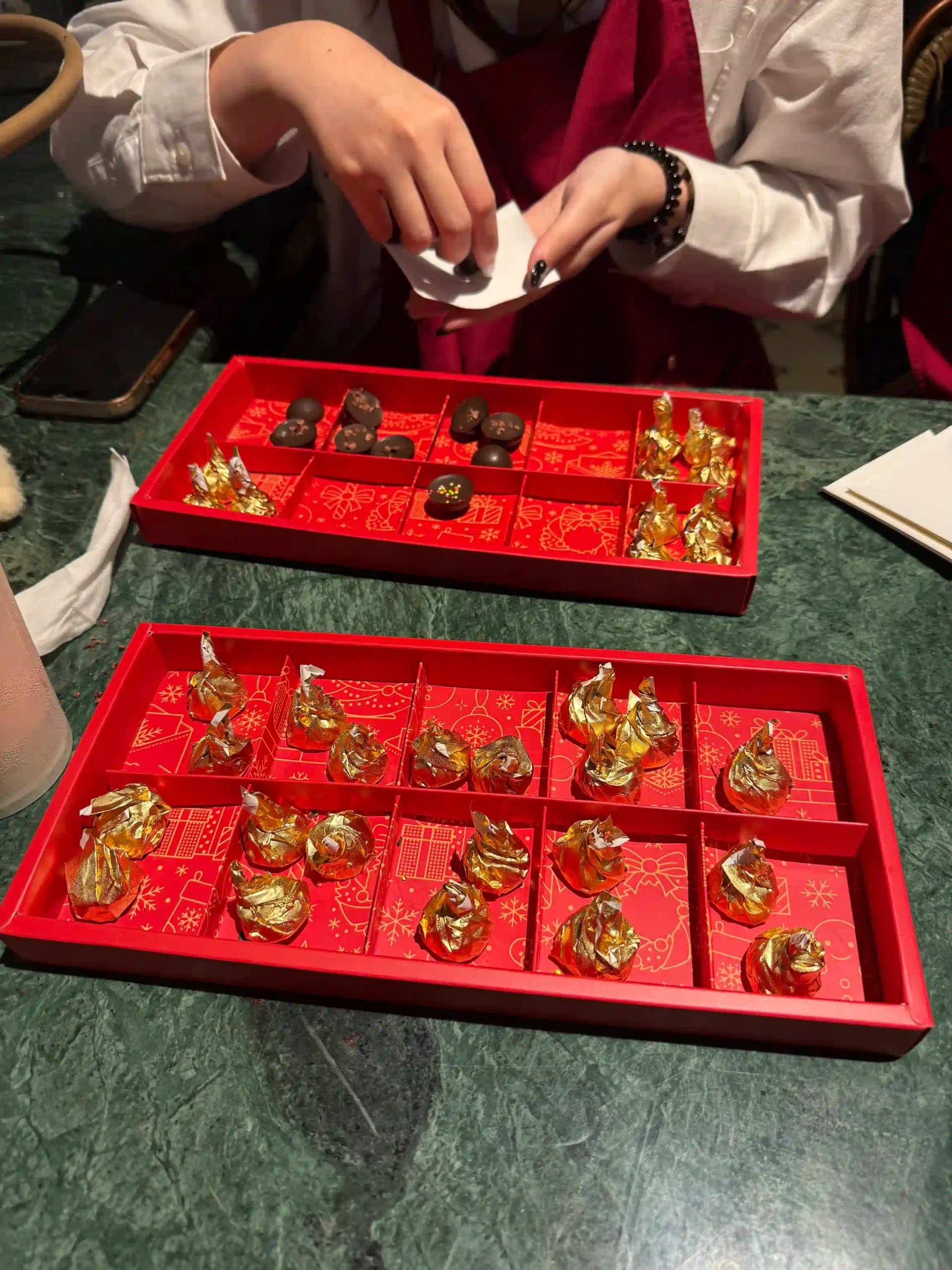
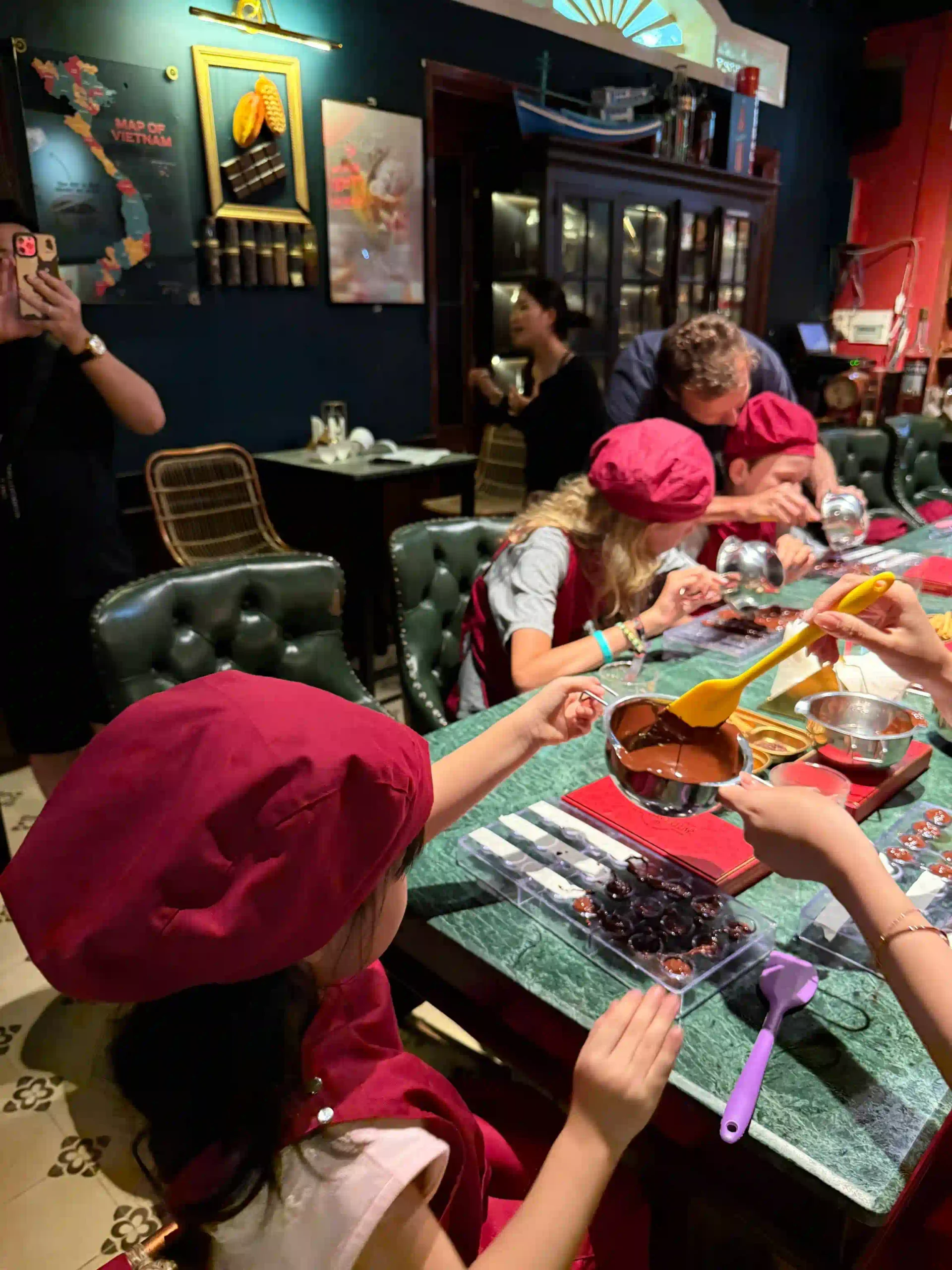
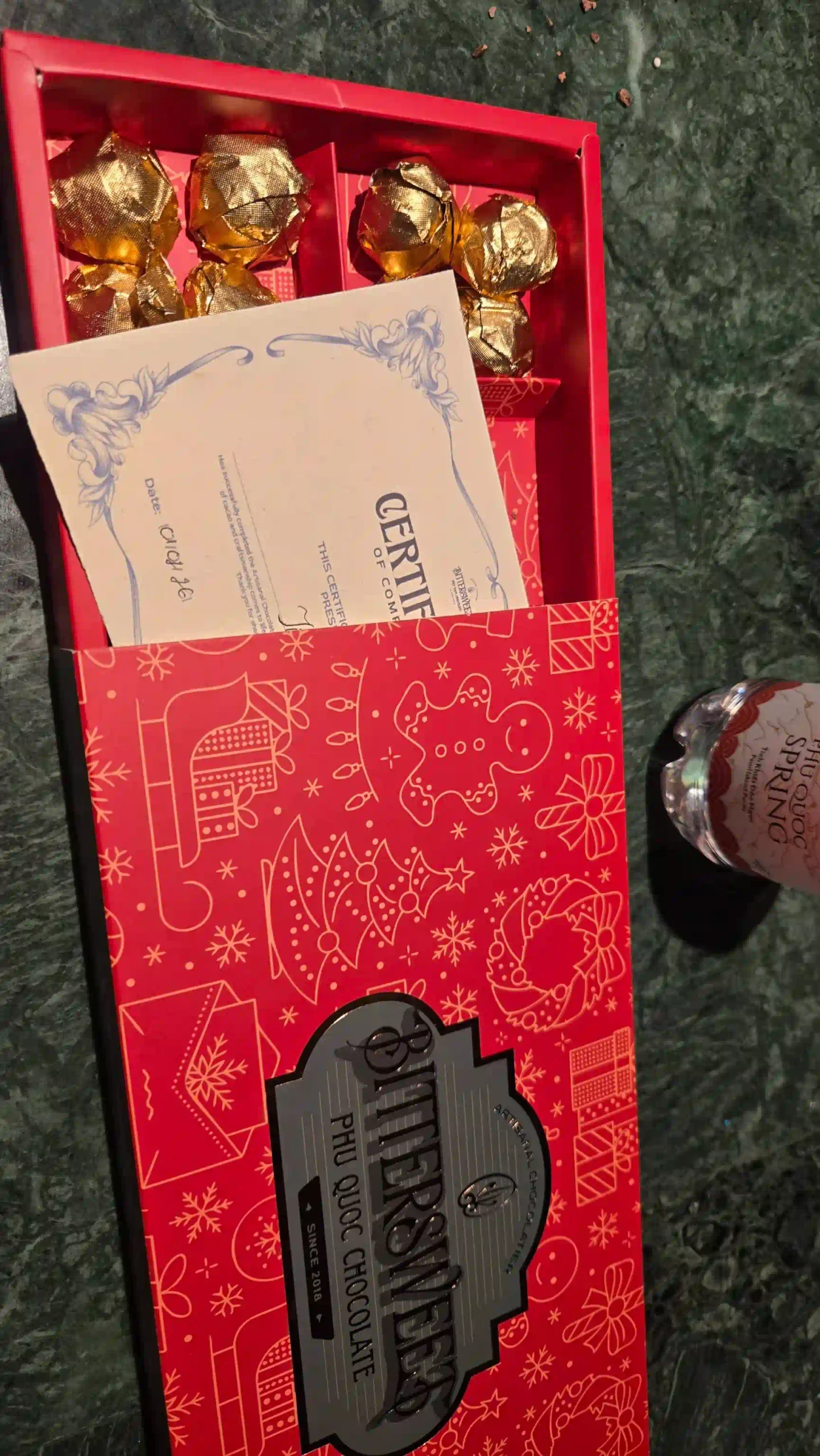
Then the moulding. You pour, add flavourings, decorate, and they box and bag it for you with a certificate at the end. There’s no skill barrier at all, which is the appeal if you’ve got children with you and the limitation if you were hoping to actually learn something about tempering. The higher option gets you 20 pieces to make instead of a handful.
If I’d brought a seven-year-old, this is the section they’d have talked about afterwards. As an adult it’s pleasant and it’s over quickly, and I finished mine wondering whether the whole thing was aimed at children. The tasting answered that, but I’ll come back to the tasting.
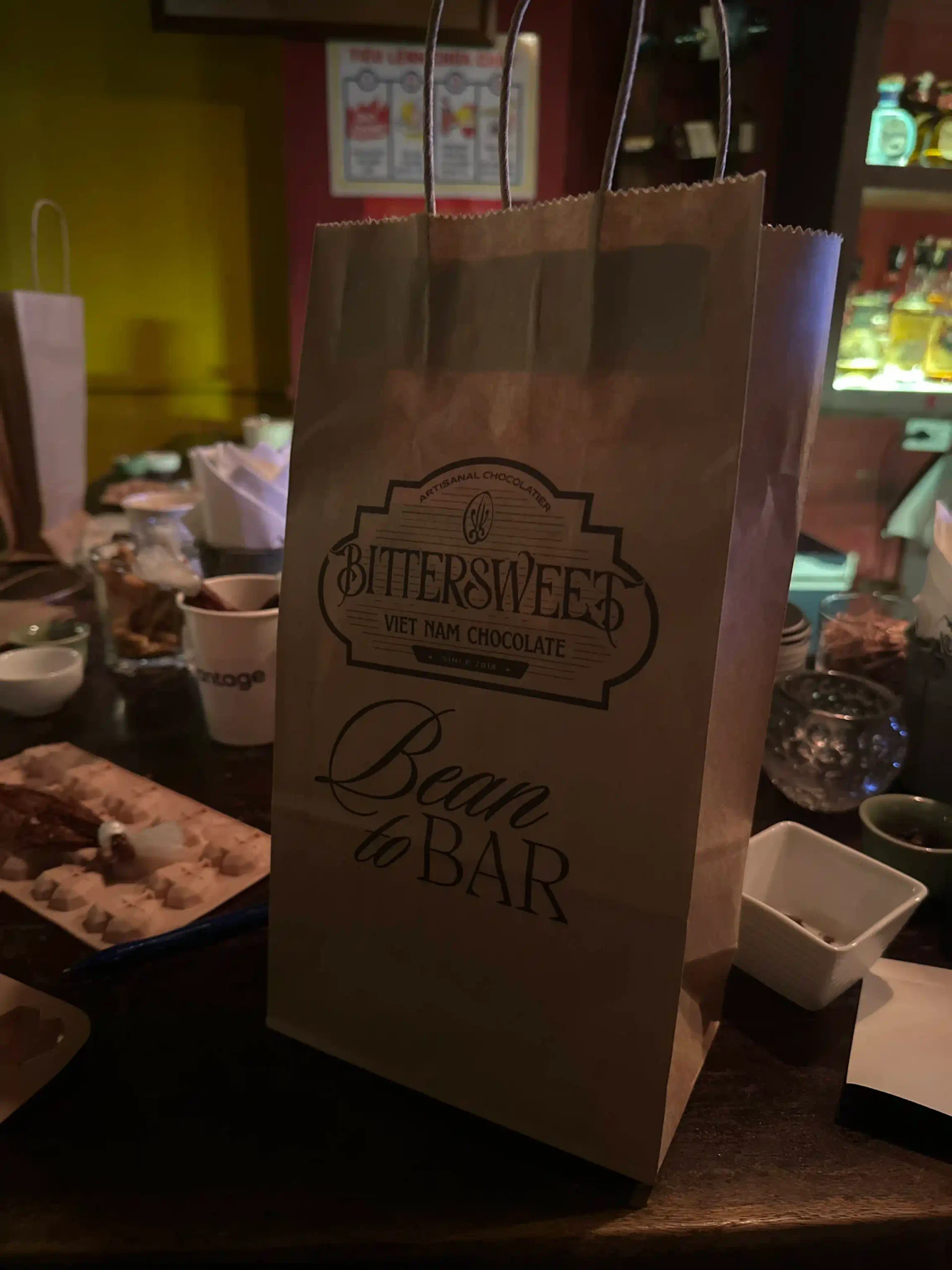
The Tasting, and the Mistake I Made
I booked the cheaper option. What that gets you is the garden, the factory tour, the moulding and a hot chocolate. What it doesn’t get you is the full tasting flight or the cacao liqueur, both of which sit on the higher tier. The listing does say the liqueur depends on the option. It says it in a place you won’t read.
I got a hot chocolate and a few things to try, which was enough to know what I’d skipped. The range runs from dark single-origin bars through to flavoured ones using Vietnamese ingredients, and the fruit-forward acidity that Vietnamese cacao is known for comes through clearly at the higher percentages.
If your reference point is supermarket chocolate, the dark ones read as sharp with a sour finish. That’s the bean. The flavoured bars are where it gets interesting, and jasmine and citrus were the two I ended up buying.
This is also, as far as I can tell, the reason the reviews of this place split so hard. Most are warm. A few are angry, and the angry ones are specific: no roasting seen, no real explanation of the process, basic praline work with no instruction, a liqueur tasting promised and never delivered. The operator has replied to at least one of those publicly, apologised, and accepted the explanation was thin.
Reading them back, most describe the cheap option with the expectations of the expensive one. The fix is at the booking stage and it costs very little. Pay the difference.
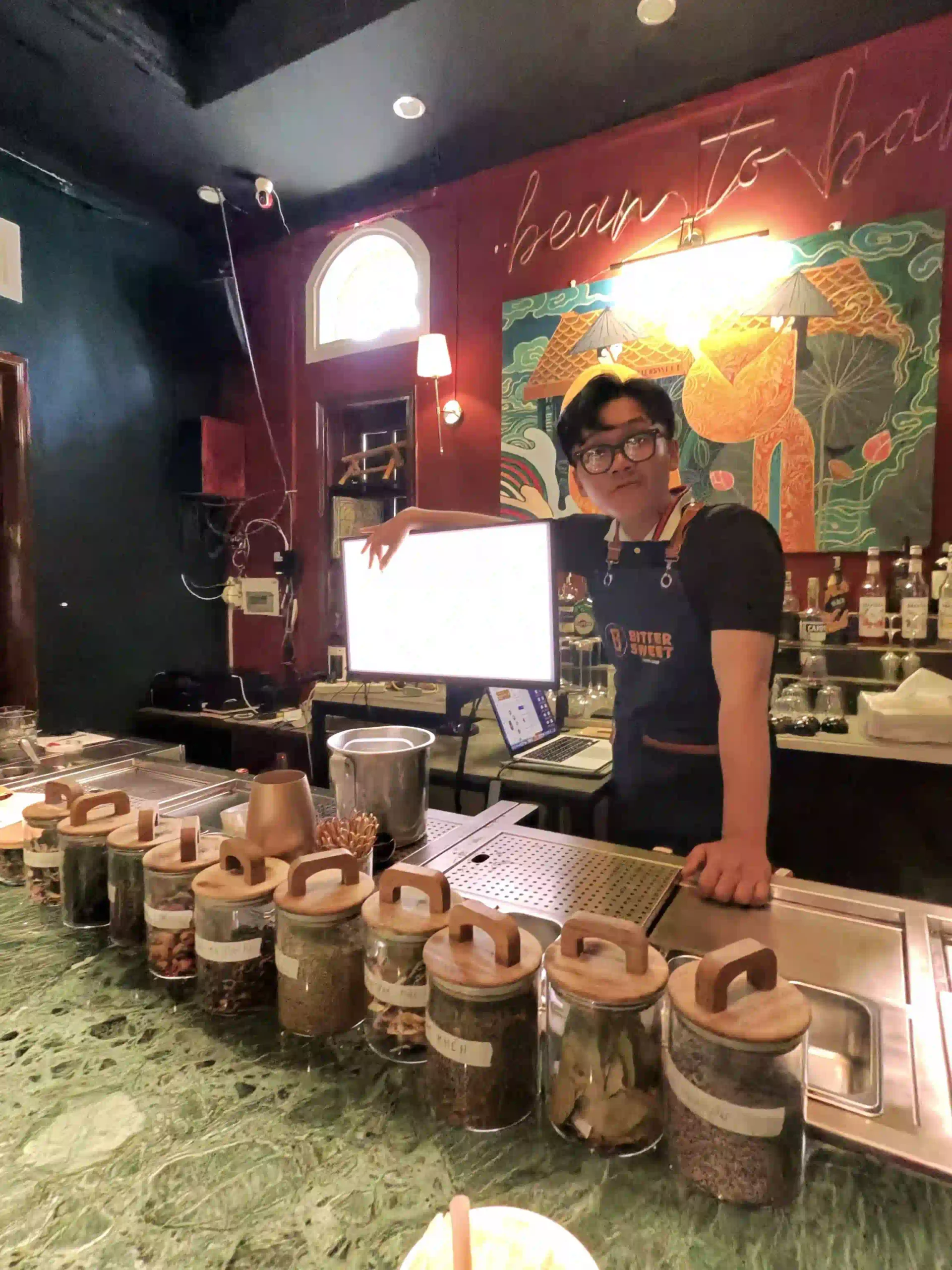
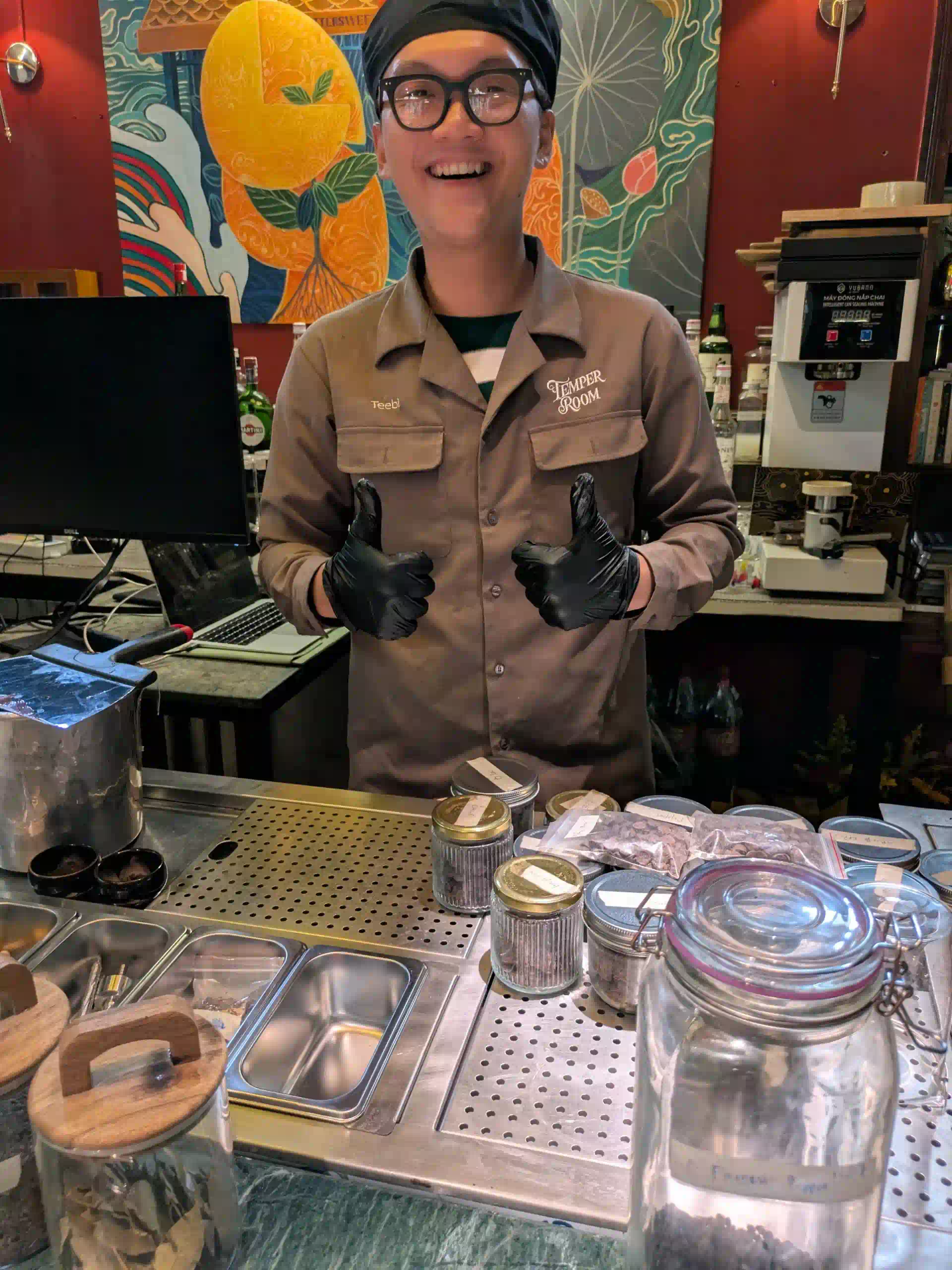
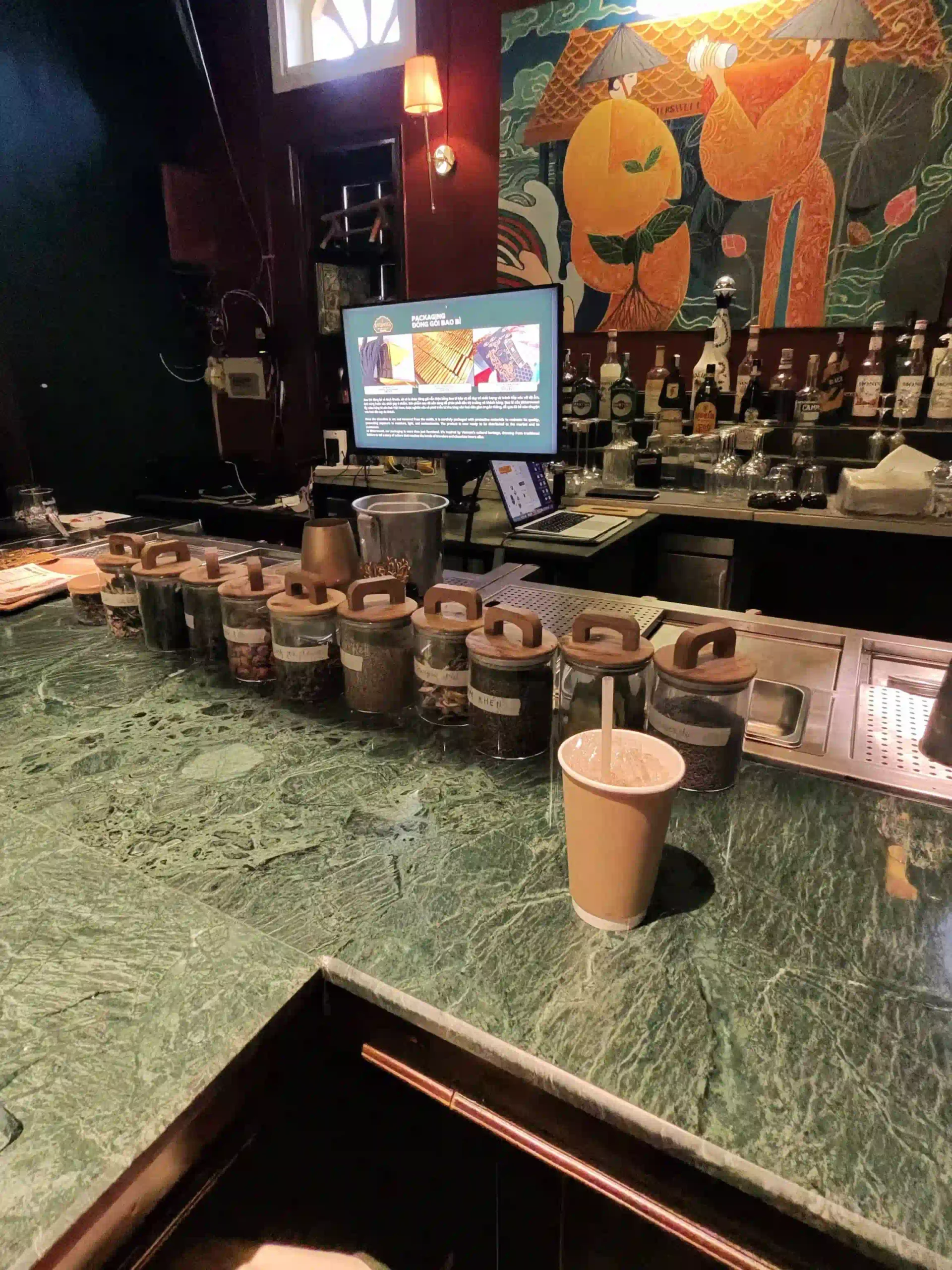
The shop at the end is priced reasonably by island standards, which isn’t something I say often here. If you were buying edible souvenirs anyway, the bars beat the pepper and fish sauce gift boxes at the airport by a distance.
There’s also a bar behind the shop, a separate thing from the workshop, which I’ve mentioned in the Phu Quoc nightlife piece as one of the few places here doing something other than beer on a beach.
So Is the Phu Quoc Chocolate Factory Workshop Worth It?
For $19 and 95 minutes, yes, with the caveat that you book the right tier.
The strongest case is families. Moulding chocolate is exactly the sort of task that occupies a child, the certificate goes down well, and nobody has to sit still for long.
The second strongest is a day the weather has ruined. From May to October the boat trips get cancelled and people go looking for something indoors, and there isn’t a long list on this island. This costs almost nothing, it’s under 2 hours, and it runs regardless of what the sea is doing.
The third is if you like knowing how things are made. That’s a smaller group but they’ll get the most out of it, because the production side is the strongest part of the tour and the part that would still be interesting without any chocolate at the end.
I’d skip it on a 3-day trip. The time goes on the water instead, for the reasons in 3 vs 5 days in Phu Quoc. I’d also skip it if you’ve done a chocolate workshop somewhere else, because the scale here is small and it won’t add much.
One comparison worth making, since both come up when people are filling an afternoon. A Phu Quoc cooking class is a different commitment entirely: half a day, often starting at a market or a garden, and you sit down to eat what you cooked. Troc’s Kitchen is a few minutes from the chocolate factory in the same part of Cửa Lấp, and The Hidden is up at Ông Lang. The chocolate workshop fills a gap. A cooking class fills a day. Which class is worth booking is a longer conversation and one for its own piece.
If you go, tell me which option you booked and whether the tasting matched what you were expecting, because that seems to be the one thing this place is inconsistent on and it’s the whole difference between a good afternoon and a one-star review.
I’d also like to know whether they’ve sorted a non-dairy option for the drink yet, since it looks like an easy fix. For the other indoor options when the weather turns on you, things to do in Phu Quoc has the fuller list.












 Tiếng Việt
 한국어
한국어 中文 (中国)
 日本語
日本語 ไทย
ไทย Deutsch
 Español
 Destinations
 Instagram
 Facebook
 X (Twitter)
 Threads
 Tiktok