









 Ha Giang
 Hanoi
Hanoi Ho Chi Minh City
 Ha Long
 Sapa
Sapa Mekong Delta
 Da Nang
 Hue
Hue Hoi An
 Ninh Binh
 Da Lat
 Nha Trang
 Phan Thiet
 Phu Quoc
 Quang Binh
 Quy Nhon
 Vung Tau
 Thai Nguyen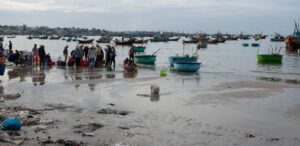

A desert shouldn’t be here.
Not in this humid, coastal strip of Vietnam defined by fish sauce and coconut palms. The concept is a geological error. Yet, the White Sand Dunes Mui Ne exist, a persistent image on every travel feed, a mandatory stop on the tourist circuit.
The conventional portrayal is one of shared joy: friends laughing in a jeep, a couple silhouetted against the sunrise.
This is an account of that same experience, stripped of the companions. An observation of the phenomenon, alone. It wasn’t a spiritual quest. It was a test of a well-marketed product.
This is what you need to know if you’re just here for the data.
Operational Briefing: Solo Mission to White Sand Dunes Mui Ne
- The White Sand Dunes Mui Ne is a paradox: a stunning natural wonder packaged in a chaotic tourist operation. This detailed solo travelogue breaks it all down. Learn how to navigate the aggressive quad bike sellers, the pros and cons of the standard sunrise at White Sand Dunes tour, and what to really expect from the other stops. We provide a step-by-step account, offering practical, unfiltered advice for your Mui Ne trip.
- Objective Assessment: Is the destination worth the logistical effort? Affirmative. The visual spectacle is undeniable, but it is packaged within a highly efficient, and aggressive, commercial framework. Proceed with managed expectations.
- Optimal Timing: The 04:30 departure for the sunrise tour remains the superior tactical choice. It offers cooler temperatures and optimal photographic light. The sunset alternative involves higher heat, greater atmospheric haze, and peak crowds.
- Procurement of Transport: A jeep tour Mui Ne is the standard method. Bookable via any hotel or street-side agent on Nguyen Dinh Chieu. Hotel booking offers convenience at a premium. Street agents offer better pricing through direct negotiation. A private jeep (approx. 600,000 VND) is recommended for solo travelers to maintain control over the timeline. Joining a group tour is cheaper but subjects you to the group’s pace.
- Financial Outlay (Estimated):
- Private Jeep: 600,000 – 700,000 VND
- Site Access Fee: 15,000 VND (Confirm if included in tour price).
- Quad Bike/ATV: This is the primary variable cost. 300k-400k VND for a driven ride to the main viewing point. 600k-700k VND to operate the vehicle yourself for a limited time (approx. 30 minutes). Prices are firm at peak times.
- The Quad Bike Decision: The walk from the entrance to the high dunes is significant (25-30 mins) through difficult, soft sand. The quad bike Mui Ne service is a logistical necessity for reaching the optimal sunrise location in time without significant physical exertion. Consider it a non-negotiable surcharge for viewing the primary asset.
- Standard Tour Itinerary:
- White Sand Dunes Mui Ne (Primary objective)
- Red Sand Dunes (Secondary, lesser site)
- Mui Ne Fishing Village (Cultural/sensory observation point)
- Fairy Stream (Low-intensity final stop)
- Required Equipment:
- Outer layer (jacket/hoodie) for the cold, high-wind transit phase.
- Cash. Large supply of small denominations. Card payment is not an option.
- Eye protection (sunglasses) and UV skin protection.
- A sealable bag for electronics. Fine sand will infiltrate everything.
Phase 1: The 04:00 Extraction
The transaction was simple. A woman behind a plastic table, a laminated menu of tours. No pleasantries. “Sunrise. One person. Private jeep.” A price was stated. 600,000 VND. A time was given. 4:30 AM. A receipt was written. The efficiency was cold, admirable.
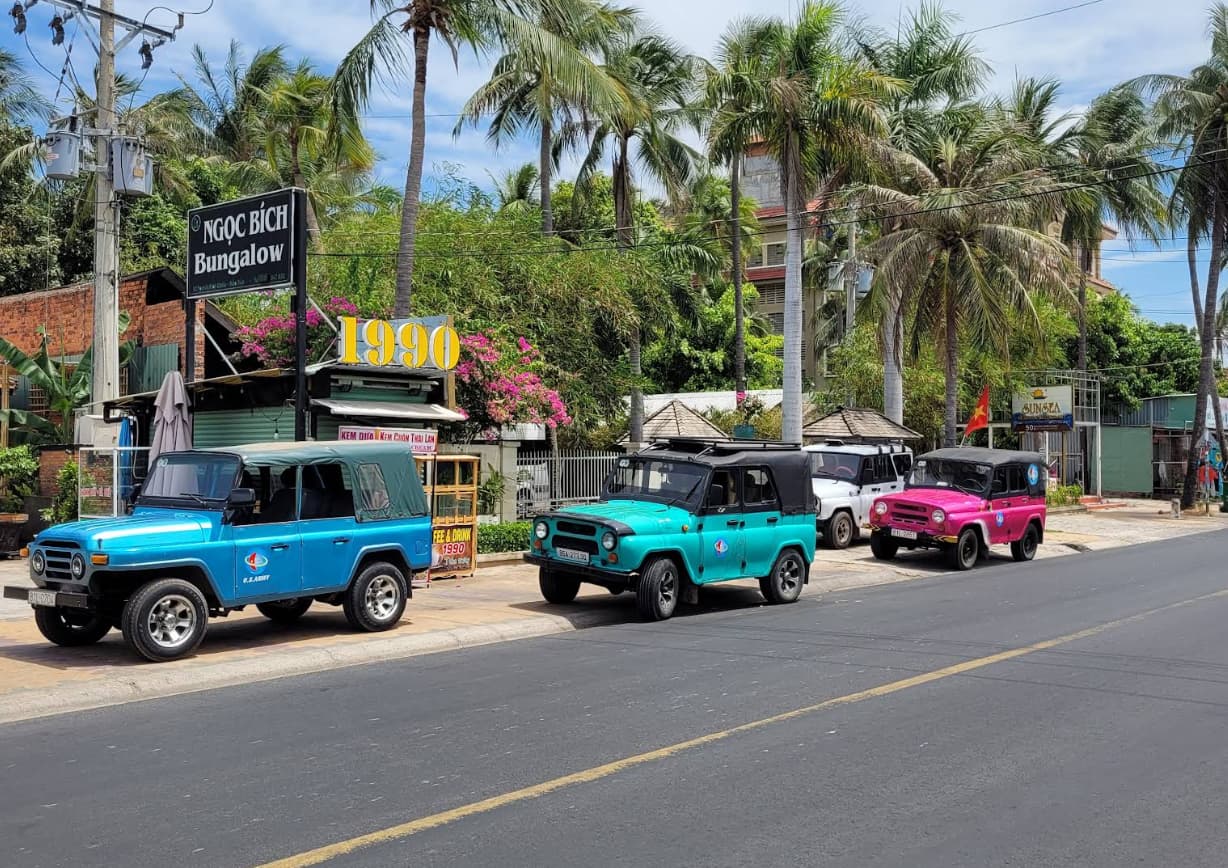
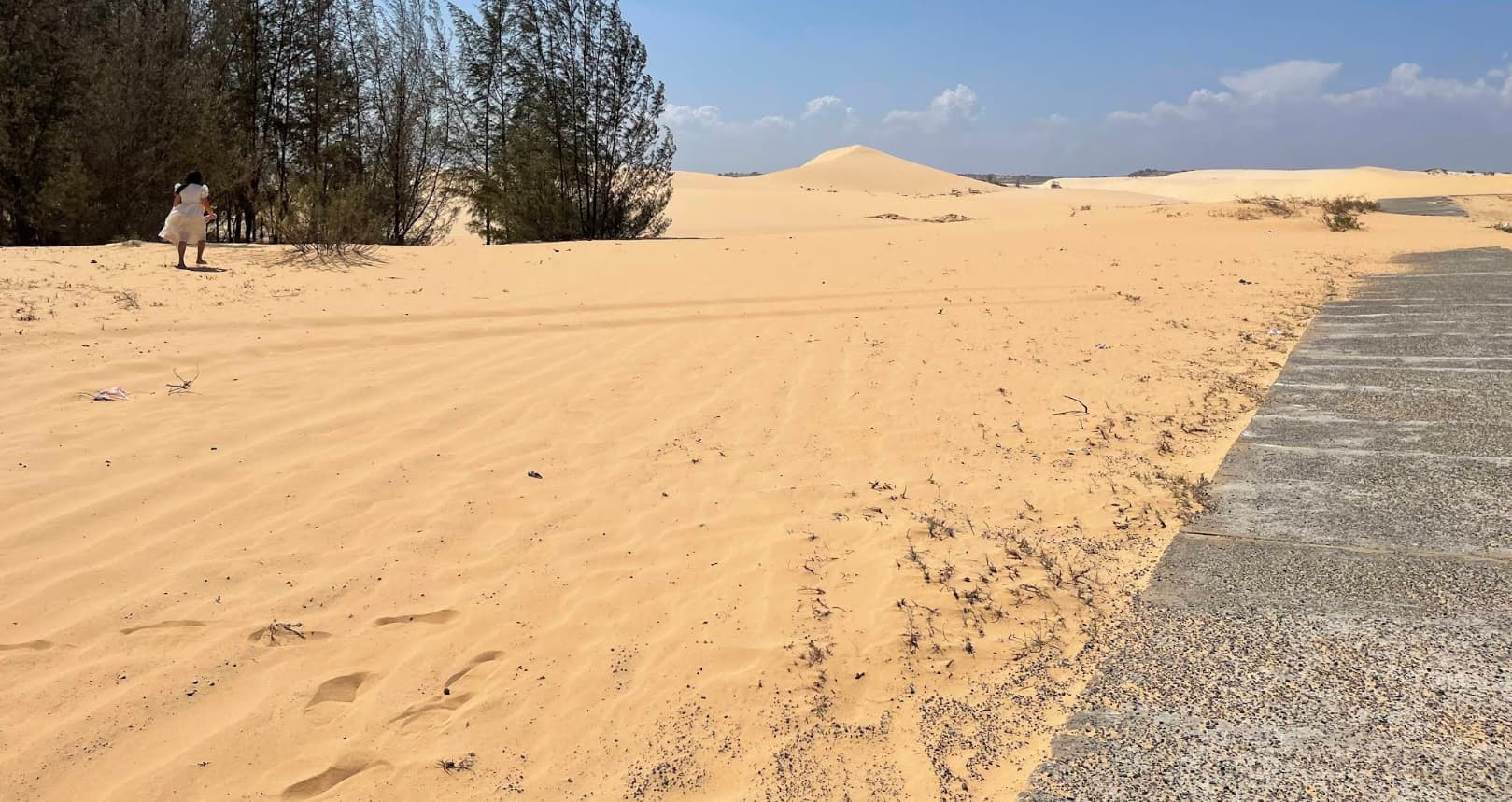
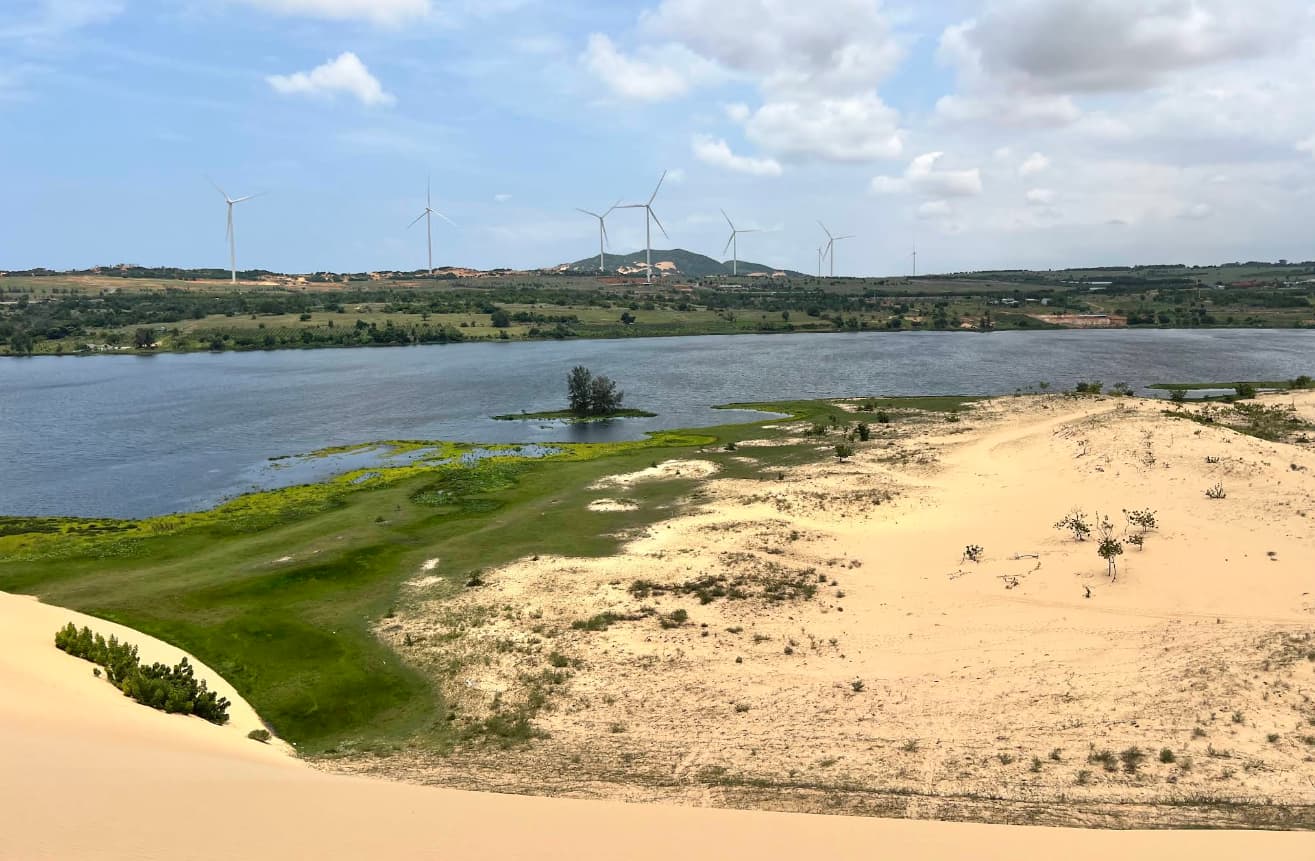
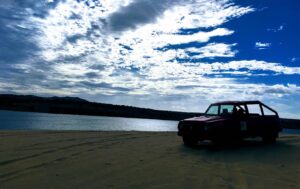
At 4:30, the sound of a rattling engine announced the arrival. Not a modern SUV, but a boxy, open-topped jeep, a design that likely saw military service. The driver, a young man, communicated with a single nod. No name, no greeting. A gesture to the passenger seat. The contract was underway.
The drive to the White Sand Dunes Mui Ne is not a scenic tour. It’s a 40-minute physical trial. The jeep moves at speed down the empty coastal highway. With no roof and no proper windows, the wind is not a breeze.
It’s a sustained, kinetic force that pushes against your skull and forces your eyes shut. It’s cold. The kind of damp, penetrating cold that gets into your bones. This is why a jacket is not a suggestion; it’s a requirement for basic comfort.
The journey is a sensory deprivation tank on wheels. Pitch blackness outside the narrow beam of the headlights. The smell of salt and diesel. The constant, deafening roar of the engine and the wind. You are simply a package being delivered, rattling along in the dark.
There’s nothing to do but sit there and endure it.
Phase 2: Arrival at The Zone
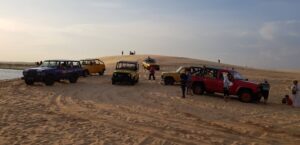
The transition is jarring. From the solitary darkness of the road, you are deposited into a chaotic, brightly lit staging area. This is the operational hub for the White Sand Dunes Mui Ne. Dozens of jeeps are parked in formation. The air is thick with engine fumes and the high-pitched whine of quad bikes. It’s a business, and business is starting.
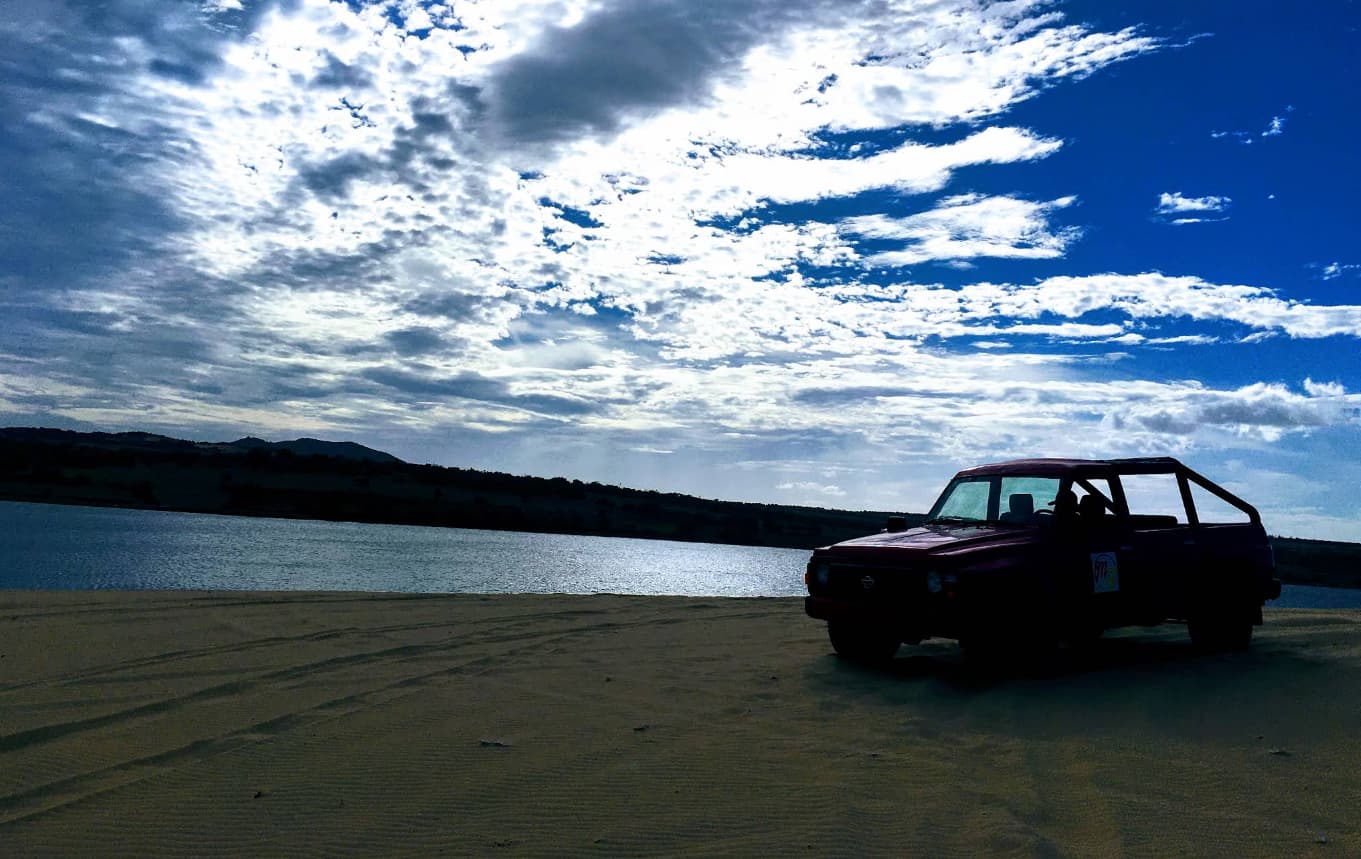
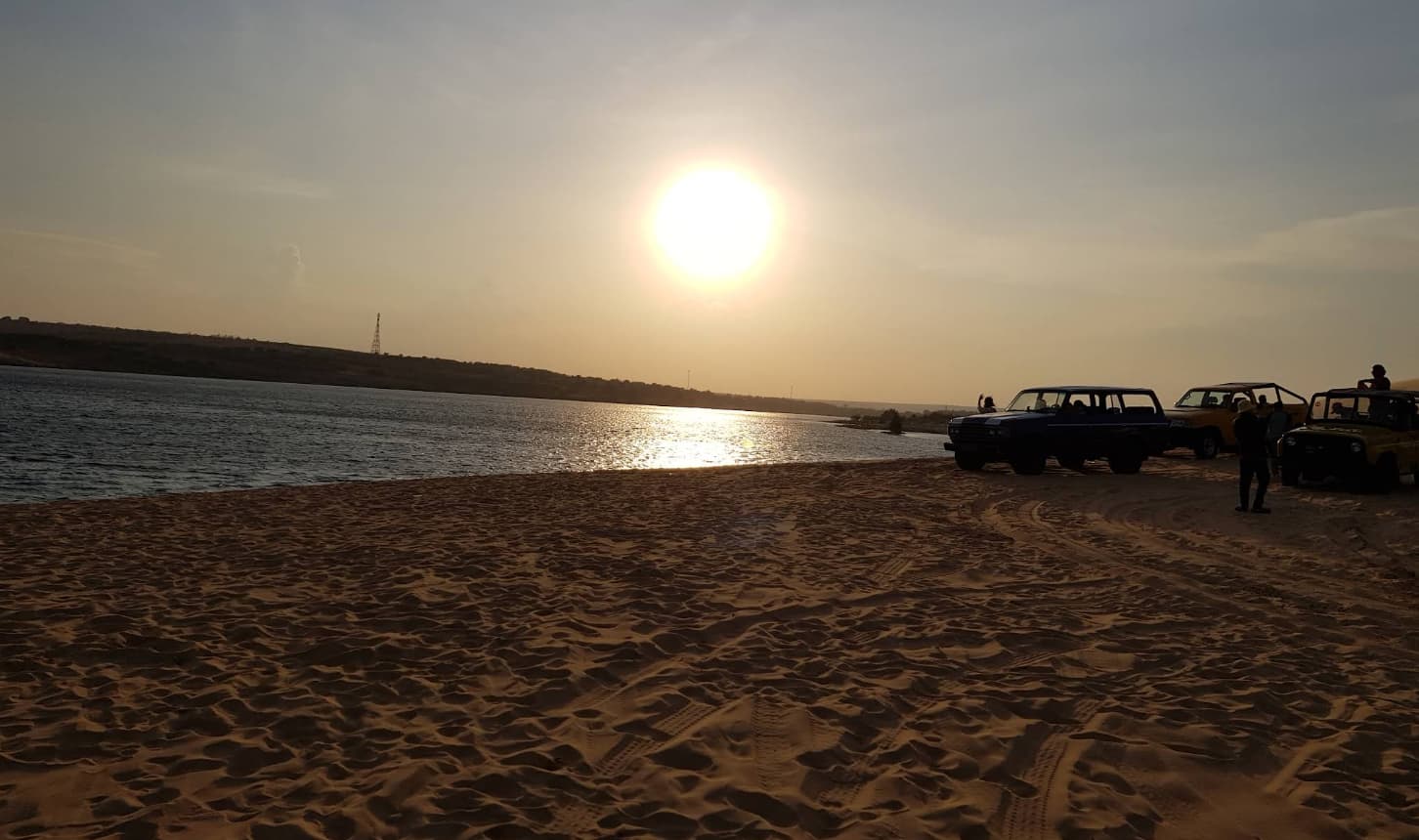
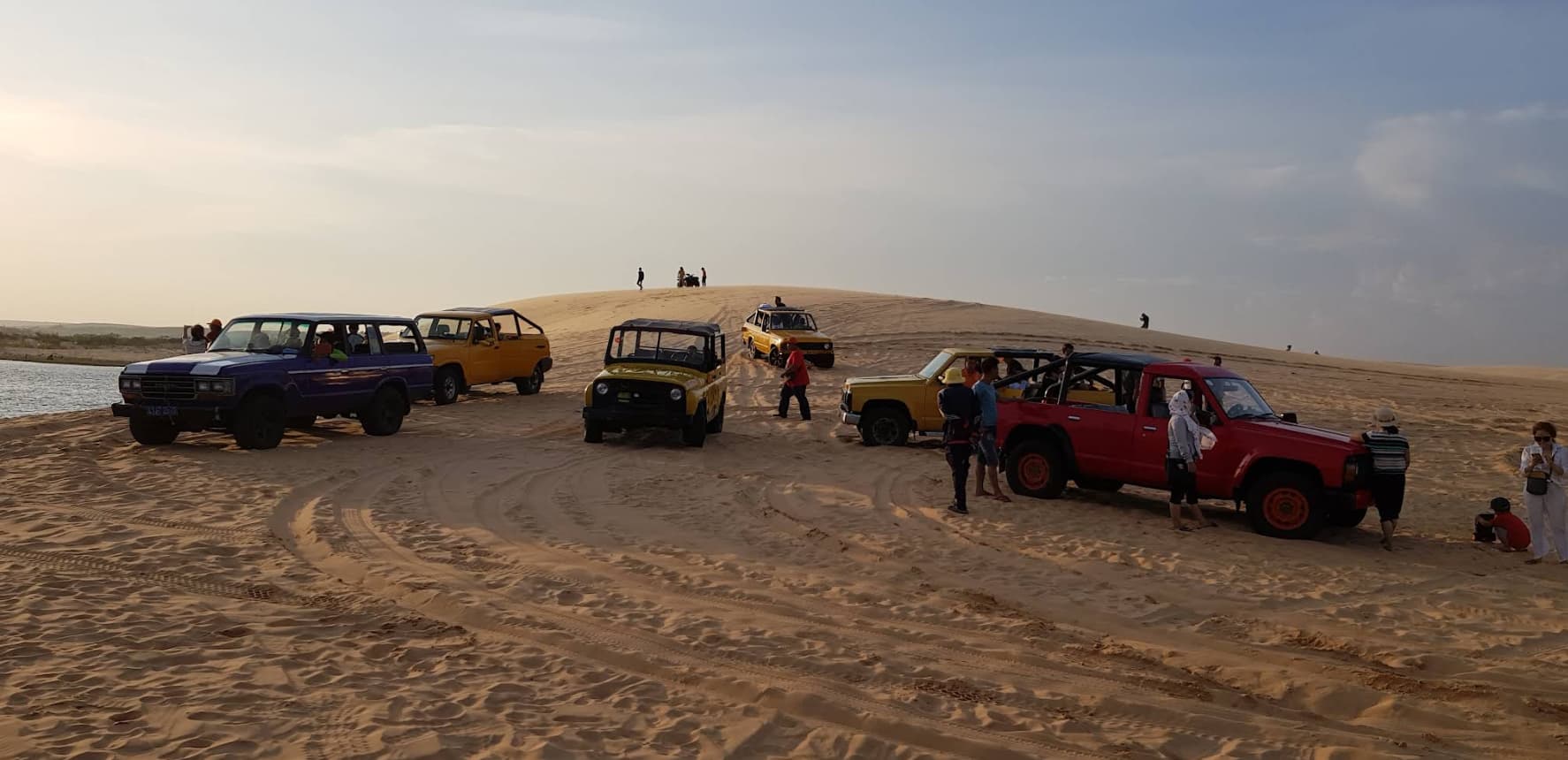
Men emerge from the gloom, shouting. “ATV!” “Quad bike, you want?” “Go to top for sunrise!” It’s an immediate, disorganized, high-pressure sales environment.
This is not a place for quiet contemplation. The driver’s job is done. He points toward the source of the noise. “You go there,” he says, before slumping over his steering wheel to sleep. He is the delivery driver. The next phase of the experience is handled by a different set of operators.
Here, the critical decision must be made. The main dunes, the ones from the photographs, are visible as dark masses against a slightly less dark sky. They look walkable. They are not. Not if you value your time and energy. The sand is like fine powder. Every step sinks. To walk would be to arrive at the top exhausted, sweaty, and late.
This is the engineered problem for which the quad bike Mui Ne is the pre-packaged solution. It’s a beautifully simple business model.
A negotiation-that-wasn’t-a-negotiation occurred.
“To the top. How much?”
A finger points at a handwritten sign. 400,000 VND for a passenger, 700,000 VND to drive. The prices are non-negotiable at this hour. They have a monopoly on elevation and speed.
The cash was exchanged. A driver was assigned. He gestured to the back of his vehicle. The transaction was complete. The ascent would begin.
The ride is brutal and efficient. The driver doesn’t follow a path. He aims the machine at the steepest part of the dune and engages the throttle. The engine screams. You lurch upwards at an impossible angle, holding on to a metal bar to keep from being thrown off. The quad bike claws its way up the sand wall.
It’s a five-minute vertical assault. Then, silence. He cuts the engine at the summit of a long, knife-edge ridge.
“Sunrise,” he grunts, pointing east. “You stay. I wait.” He then moves off to find a spot to smoke a cigarette, his part of the job temporarily concluded.
Phase 3: The 20-Minute Window
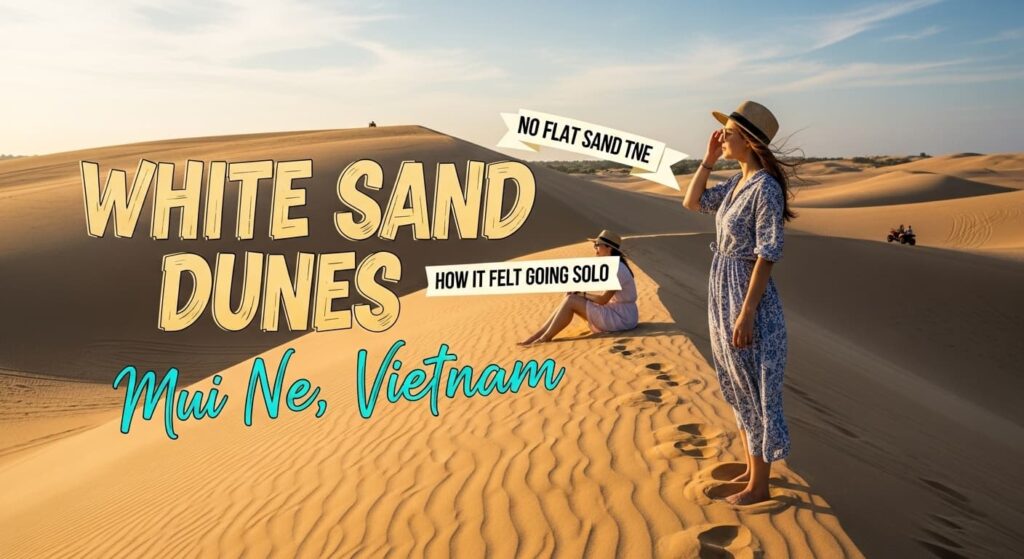
The chaos of the staging area is now a distant hum. Up here, on the ridge, the wind is the only sound. A clean, constant hiss across the sand. A few other small groups are scattered about, but distance is easy to achieve. A 50-meter walk along the ridge provides complete isolation.
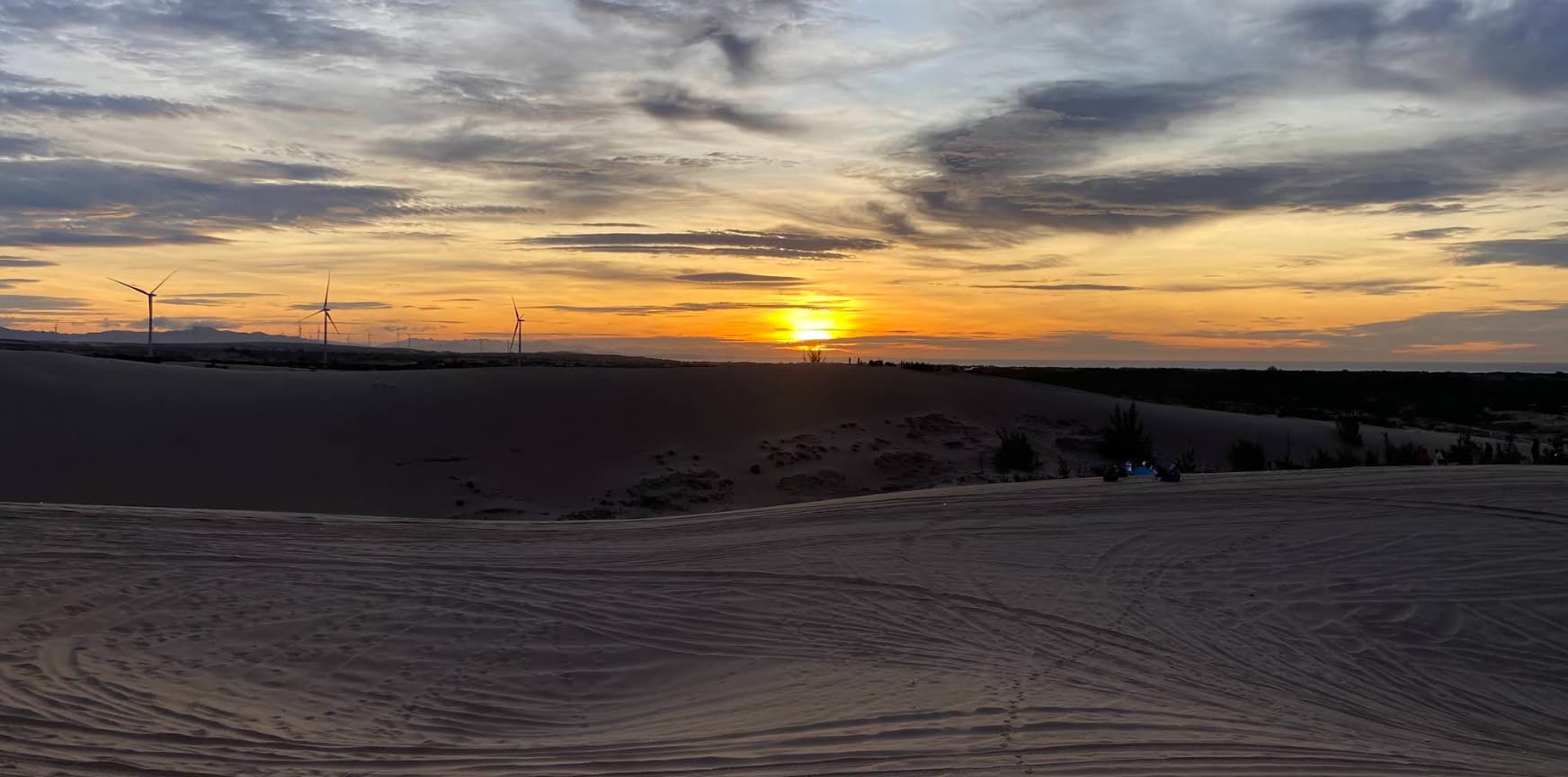
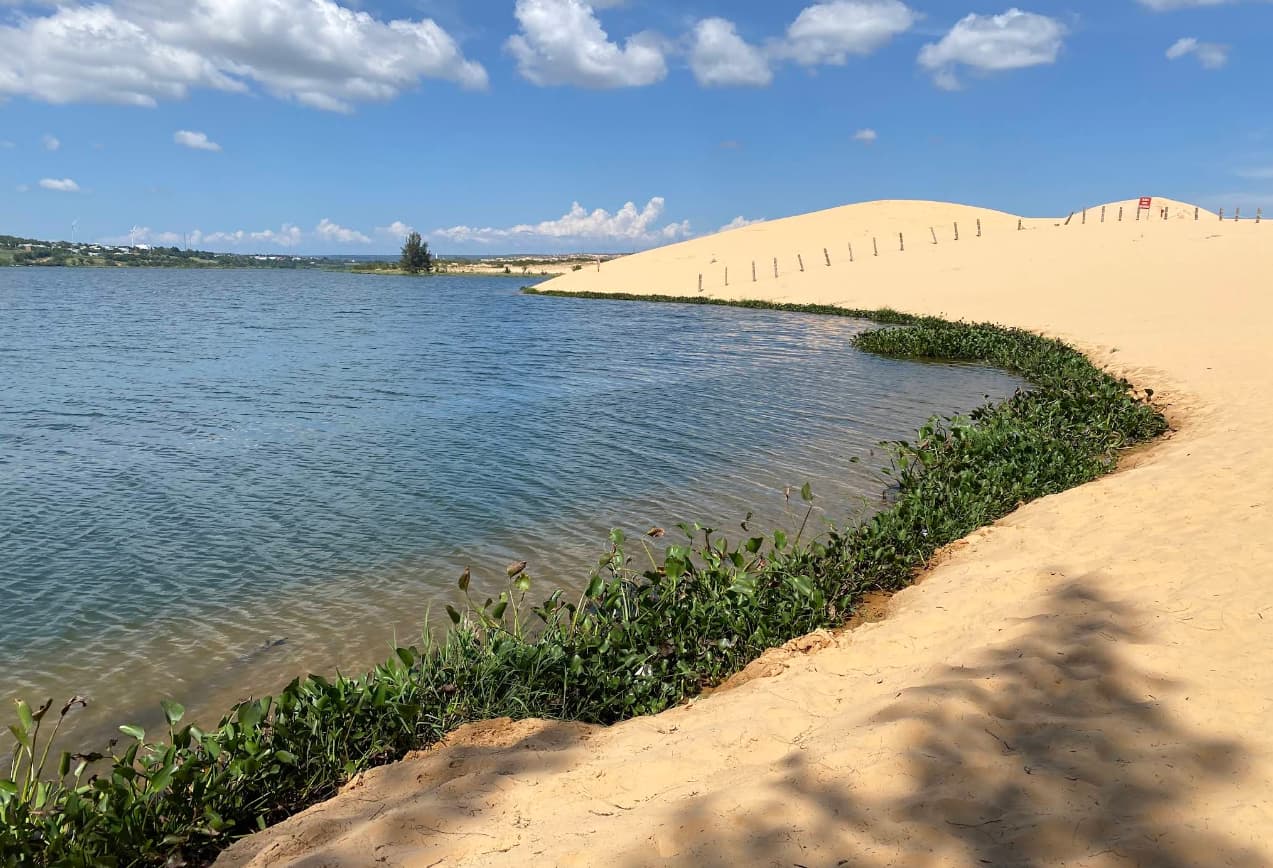
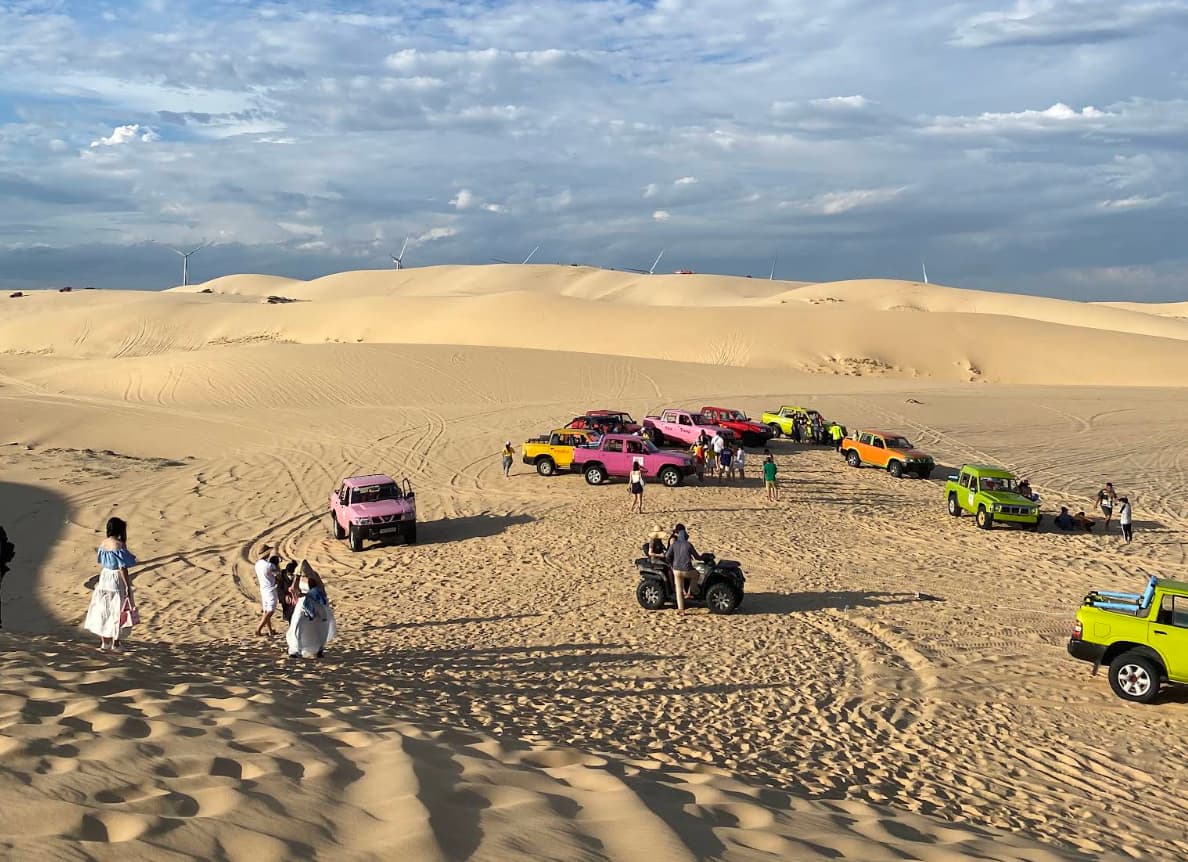
This is the product. This is what the money buys.
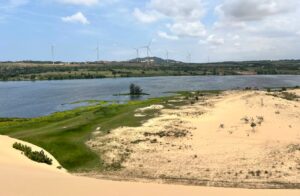
The pre-dawn light is clinical. It drains the world of color, reducing the dunes to a series of intersecting geometric shapes. Endless curves and sharp, perfect lines carved by the wind.
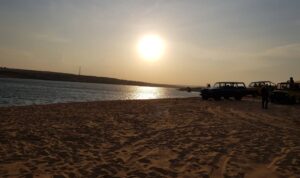
The scale is disorienting. It’s a truly alien environment. In the distance, the water of Bau Trang (White Lake) is a flat, dark grey sheet.
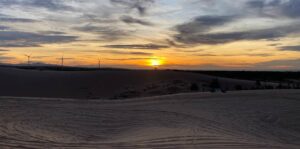
Then, the color bleeds back into the world. It starts as a faint purple band on the horizon, which then warms to a lurid pink, then a saturated orange. The process is slow, methodical. For about 20 minutes, the landscape is transformed by this shifting light.
The moment the sun’s upper limb breaks the horizon is the apex of the experience. The light is horizontal, catching only the high points.
The tops of the dunes ignite in a brilliant, warm gold, while the deep bowls and valleys remain in cool, blue-black shadow. The contrast is stark and graphically beautiful.
Observing this alone is a different experience. There is no social obligation. No need to perform enjoyment for a companion. There is only the act of watching. Of registering the changing light, the immense silence, the strange, sculpted shapes of the sand.
It is not an emotional experience. It is an observational one. A moment of profound visual clarity. This is the core value of the entire Mui Ne sand dunes tour. It is a 20-minute window of exceptional visual phenomena.
Phase 4: System Shutdown
The moment the sun is fully clear of the horizon, the window closes. The system changes.
The soft, angled light is replaced by a harsh, vertical glare. The temperature instantly begins to rise. The magic, if one were to call it that, is over. The gold turns to a flat, uninteresting yellow.
And the noise returns.
The staging area below has been busy. Now, a steady stream of quad bikes, filled with the next wave of tourists, roars up the dunes. The silence is shattered. The empty ridges fill with people. The dunes are no longer a landscape; they become a backdrop. A setting for Instagram photoshoots. The quiet observation is over. The attraction is now fully open for business.
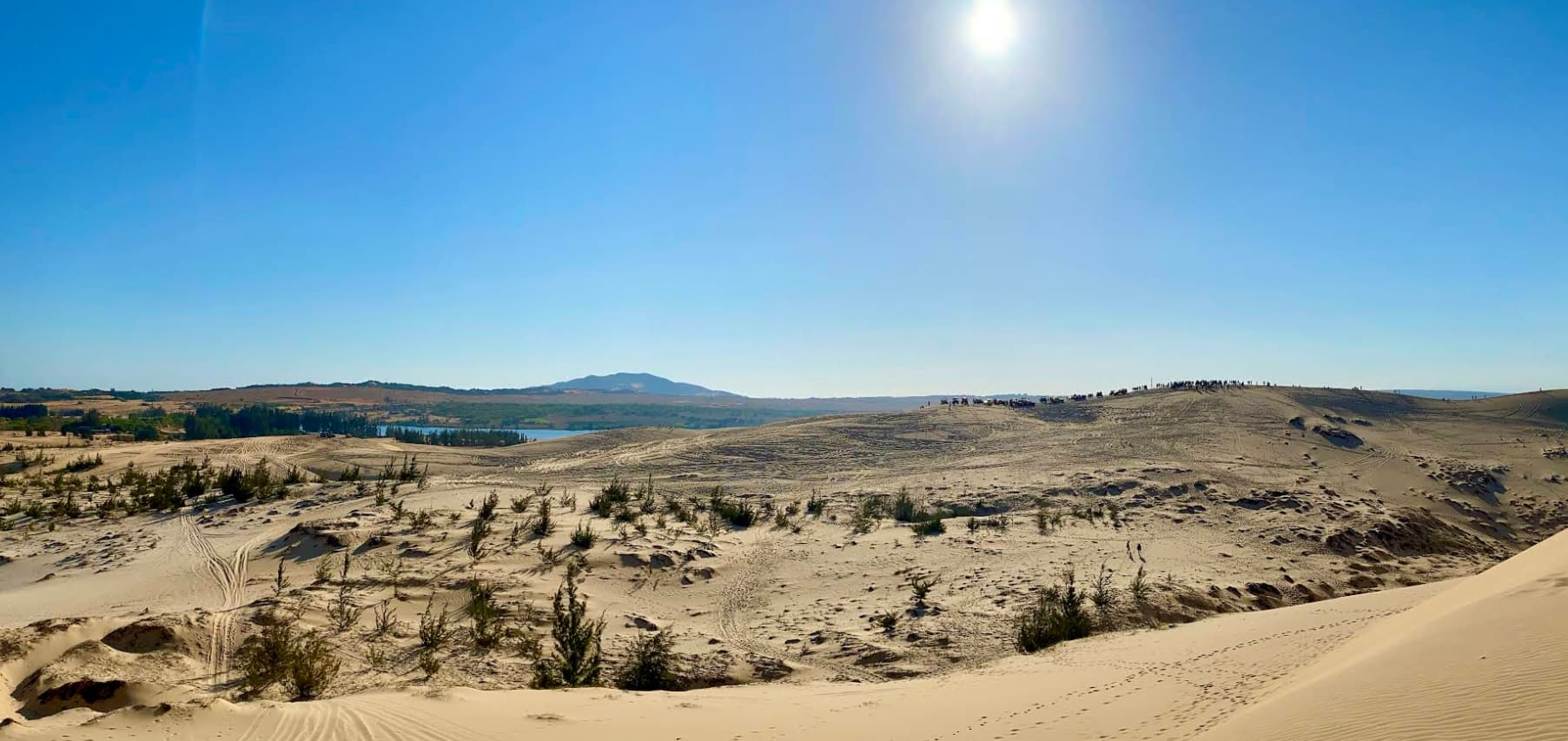
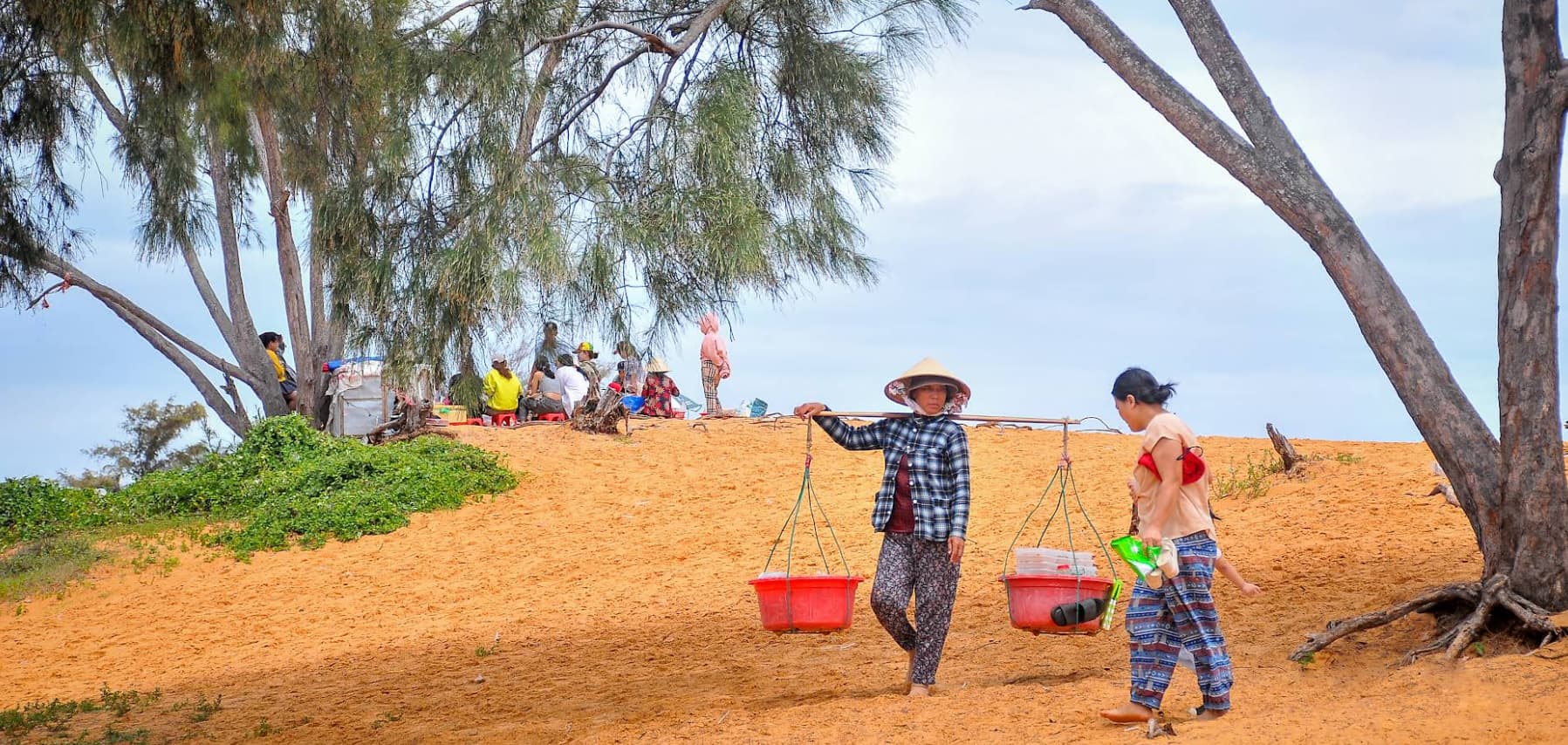
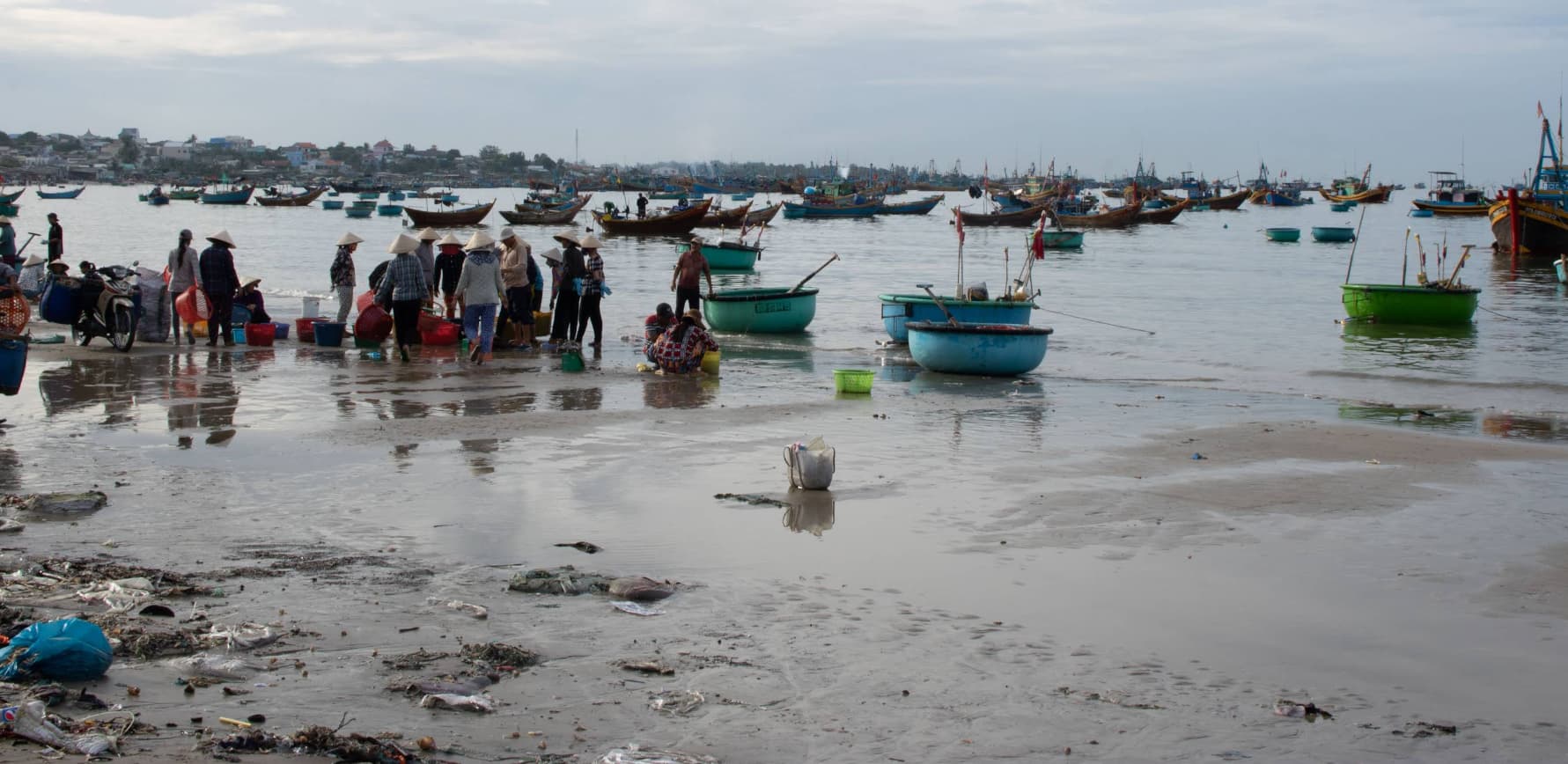
The driver finds you. The ride down is quick and unceremonious. Back at the staging area, the entire character of the place has changed.
It’s now a full-blown tourist trap in the bright morning light. Stalls are open, selling instant noodles and lukewarm Red Bull. The energy is frantic.
My driver is awake. Another nod. It’s time to move to the secondary locations.
The Red Sand Dunes are the tour’s B-side. They are conveniently located next to the main road back to town. They are smaller, more crowded, and the sand is a dusty, orange-brown. The main activity is sliding down the short slopes on thin plastic sheets rented by local children. A five-minute distraction. A box to be ticked.
The Mui Ne Fishing Village is next. The sensory input here is overwhelming. At 7:30 AM, the market is at its peak. The beach is a mass of people, plastic tubs overflowing with fish and crabs, and the iconic blue basket boats.
The smell is the most memorable part: a thick, inescapable wall of salt, fish, and brine. It is an authentic, chaotic, and fascinating scene of local commerce. It is a powerful contrast to the manufactured experience at the White Sand Dunes Mui Ne.
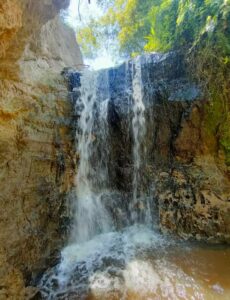
The final stop is the Fairy Stream. A shallow, ankle-deep creek that you walk through. The water is warm. The sand is soft. On one side are strange formations of red and white clay. It’s a pleasant, low-effort activity. A way to wash the sand from your feet and cool down. It is an entirely harmless and moderately interesting end to the tour.
At 9:00 AM, the jeep returns to the starting point. The four-and-a-half-hour operation is complete.
Post-Mission Analysis & Recommendations
A solo trip to the White Sand Dunes Mui Ne is not a journey of self-discovery. It is a series of transactions undertaken to witness a specific and impressive geographical feature. Success requires a tactical approach.
Financial Protocol:
Operate on a cash-only basis. Assume no electronic payment systems exist. Carry at least 1,000,000 VND in small notes.
The price of the ATV is the biggest variable; treat it as a fixed cost. Any attempt to haggle will be met with indifference. They have the superior position.
Asset Protection:
Sand is an invasive element. It will compromise phones, cameras, and any equipment with moving parts. A dry bag or even a simple Ziploc bag is not optional, it is essential. Keep devices sealed until you are stationary and ready to use them.
Transport Choice:
The private jeep is the superior choice for a solo operator. It eliminates the variable of a group’s schedule. Renting a motorbike to self-drive is an option for those with high risk tolerance and familiarity with Vietnamese road conditions.
For more on this, see the in-depth guide to motorbike rental in Vietnam. The darkness and potential for police stops make it a sub-optimal choice for this specific mission.
In conclusion, the operation was a success. The objective was met: the sunrise over the dunes was observed. The experience is a paradox.
It is a highly manufactured, commercialized tourist machine that provides access to a genuinely sublime natural spectacle.
The key to appreciating it is to understand the machine. To see the quad bikes not as a scam, but as a tool. To see the crowds not as an annoyance, but as a predictable environmental factor.
To go alone is to see this mechanism with clarity. You are not distracted by conversation. You are simply a single observer, processing the data.
The noise, the transactions, the brief, stunning window of silence, and the stark beauty of a desert where it has no right to be. It was worth it. Not because it was moving, but because it was interesting.












 Tiếng Việt
 한국어
한국어 中文 (中国)
 日本語
日本語 ไทย
ไทย Deutsch
 Español
 Destinations
 Instagram
 Facebook
 X (Twitter)
 Threads
 Tiktok