









 Ha Giang
 Hanoi
Hanoi Ho Chi Minh City
 Ha Long
 Sapa
Sapa Mekong Delta
 Da Nang
 Hue
Hue Hoi An
 Ninh Binh
 Da Lat
 Nha Trang
 Phan Thiet
 Phu Quoc
 Quang Binh
 Quy Nhon
 Vung Tau
 Thai Nguyen








Ninh Binh city itself isn’t worth visiting.
I mean that fairly literally, it’s a provincial administrative center with wide roads and not much reason to linger. But almost nobody who says they’re “going to Ninh Binh” actually means the city. They mean the karst valley 10-15km south of it, the Tam Coc and Trang An area, where the limestone mountains and rice paddies and boat rides everyone pictures actually are. This confusion trips up more first-time planners than you’d think, so it’s the right place to start.
- Quick Answer: Ninh Binh (specifically the Tam Coc and Trang An karst area, not the city itself) is genuinely worth visiting for anyone interested in dramatic limestone landscapes, boat rides through caves, and rural Vietnam at a slower pace. It’s about 100km / 2 hours from Hanoi, safe by any reasonable measure, affordable at $25-50/day mid-range, and best visited September through May.
- Is It Worth It:
- Yes, if you like nature and landscapes; the karst-and-rice-paddy scenery is genuinely unique in Vietnam.
- Ninh Binh city proper is skippable; the Tam Coc/Trang An area is the actual destination.
- Best Time to Go:
- March-May (green rice, 22-28°C) and late September-November (golden harvest, 24-29°C) are the two sweet spots.
- December-February is coolest and clearest but busiest and priciest.
- Rainy season (roughly July-September) brings short, intense afternoon downpours rather than all-day rain, and prices drop 15-25%.
- Money:
- Budget travelers can do $15-25/day
- Mid-range comfortable is $25-50/day
- Boat tours run 250,000-300,000 VND, entrance fees are separate and modest, homestays run $10-40/night.
- Getting There:
- 100km from Hanoi, roughly 2 hours by car or bus.
- Options are a guided day tour, self-drive/private car, train to Ninh Binh city plus local transport, or public bus.
- Safety:
- Genuinely one of Vietnam’s safer provinces. Real risks are road/scooter safety and minor scams (inflated fares, boat tour upsells), not crime.
- Culture:
- Dress modestly (knees and shoulders covered) at temples and pagodas.
- Basic courtesy with rowers and vendors goes a long way.
- Common Mistakes:
- Treating it as a rushed single stop between Hanoi and Halong Bay without an overnight
- Booking Tam Coc instead of Trang An without knowing the difference
- Not confirming tour pickup points (changed in 2026).
Is Ninh Binh Actually Worth It?
Yes, with the geography caveat from the intro.
The karst limestone landscape around Tam Coc and Trang An is genuinely one of the more distinctive things you can see in Vietnam.
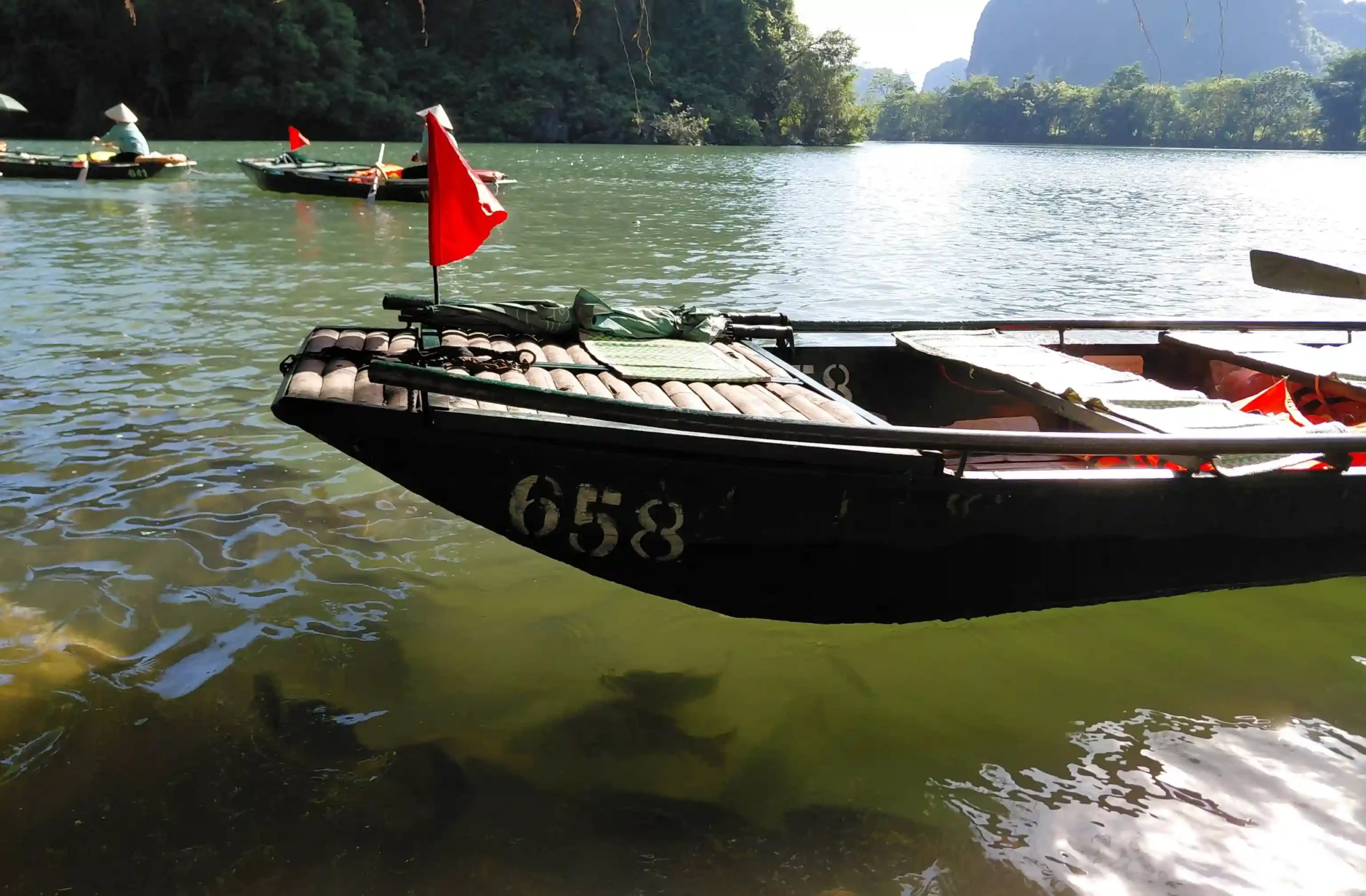
Rivers threading through caves under mountains, rice paddies boxed in by sheer limestone walls, sampans rowed by hand through passages you’d swear were dead ends until the boat turns and the mountain opens up again. Some guides call it “Halong Bay on land,” and the comparison is lazy but not wrong, the visual drama comes from the same kind of karst formation, just surrounded by rice fields instead of ocean.
Where the “worth it” question gets murkier is expectations. If you’re picturing an untouched, empty landscape, that’s not quite what you’ll get, Trang An and Tam Coc are established, well-visited attractions with tour buses, ticket queues, and boat operators working an established system. What you do get is a landscape dramatic enough that the tourism infrastructure doesn’t really diminish it. I’ve taken people who were skeptical about “another boat tour” and watched them go quiet when the boat rounds the first bend into the mountains.
Ninh Binh city itself, the actual urban center, is where you’d land if arriving by train and where some administrative and transport infrastructure sits, but there’s little reason to spend time there beyond passing through. When people ask “should I stay in Ninh Binh,” what they usually mean, and what I’d recommend, is staying in the Tam Coc or Trang An area specifically, not the city.


Getting the Geography Right
This confuses enough first-time planners that it’s worth spelling out clearly.
Ninh Binh Province is the administrative area, roughly 1,400 square kilometers, covering the city, the karst region, and several other districts.
Ninh Binh City is the provincial capital, a functional but unremarkable town where the train station is and where you might pass through, but not where the attractions are.
Tam Coc / Trang An is the karst valley area about 10-15km south of the city, where essentially everything worth doing sits: the boat tours, Mua Cave, Hoa Lu, Bich Dong Pagoda, most of the accommodation. This is what everyone actually means by “visiting Ninh Binh.”
When you’re booking accommodation, searching “hotels in Ninh Binh” on a booking platform can surface options in the city that put you 15-20 minutes from everything you actually want to see. Search or filter for the Tam Coc or Ninh Hai commune area specifically, or check the map location before booking, not just the review score.
When to Go
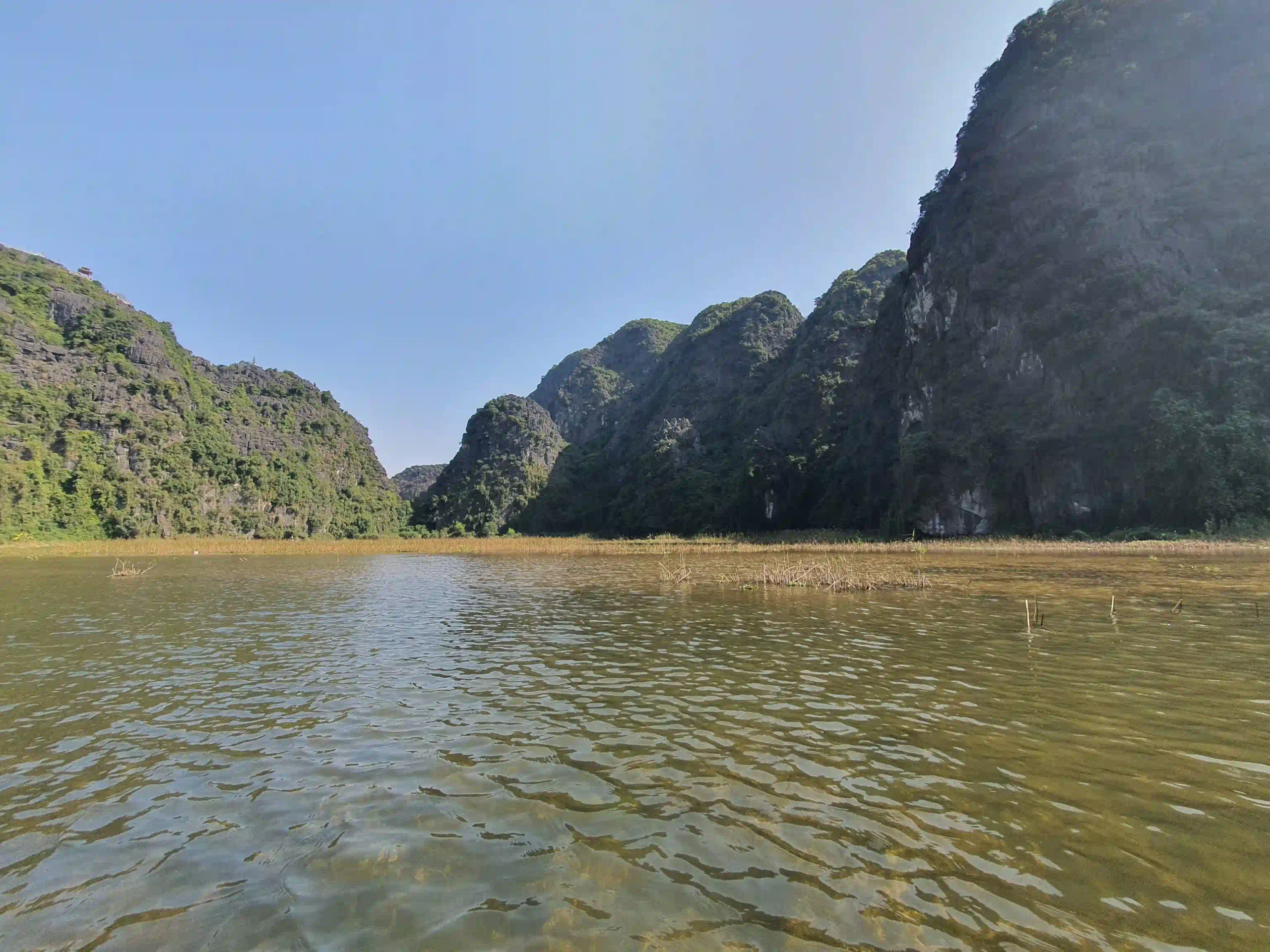
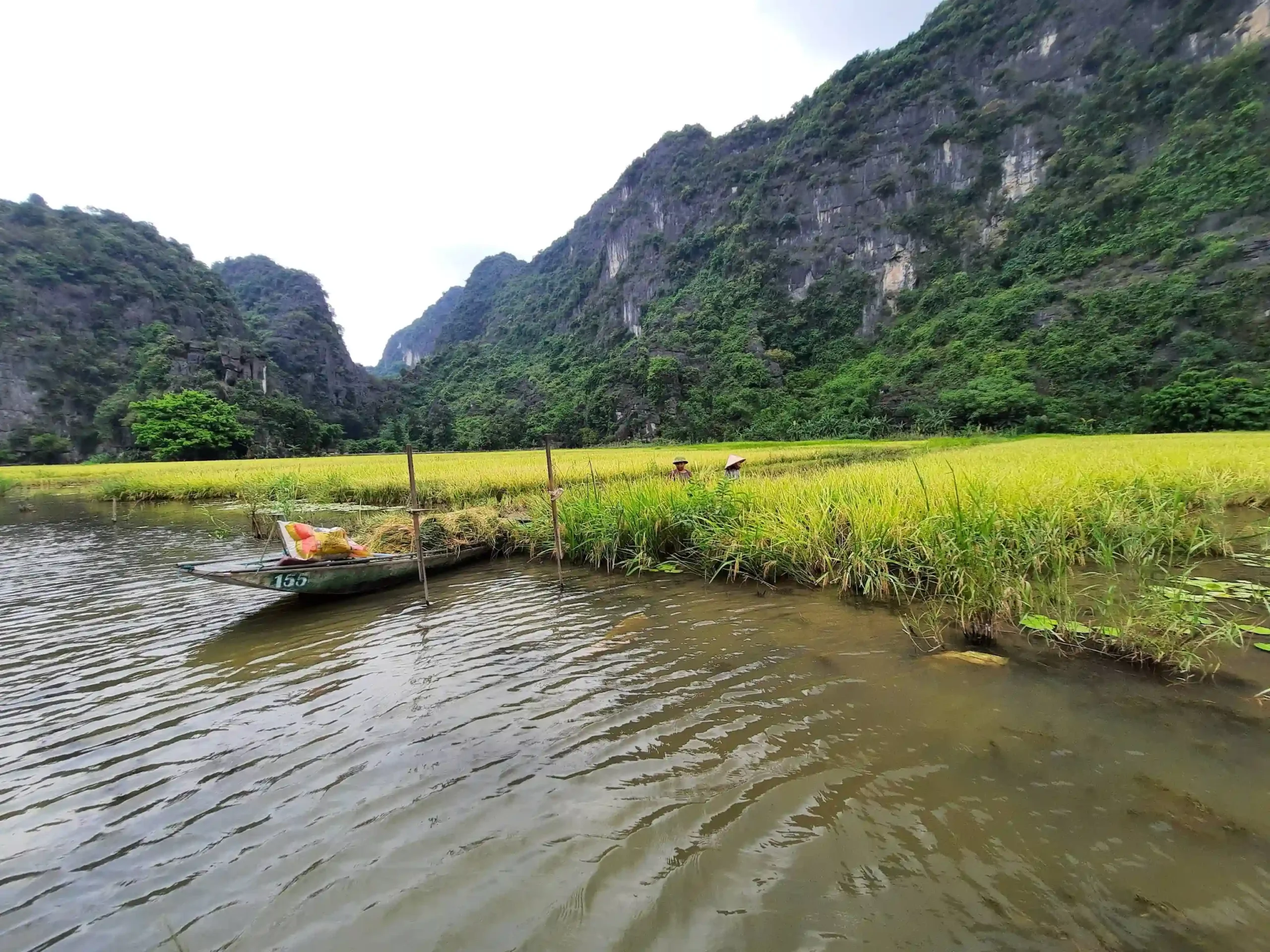
Ninh Binh’s seasons matter more than people expect, mostly because of the rice fields, which change color through the year and genuinely change how the landscape photographs and feels.



March to May
Green rice season, comfortable temperatures (22-28°C), generally good weather. This is one of the two windows I’d point people toward.
June to August
Hot, increasingly humid, and this is when the rainy season starts building. Domestic Vietnamese tourism also peaks here since it overlaps with summer holidays, so expect more crowds despite the weather.
Late September to November
Golden harvest season, temperatures cool to 24-29°C, humidity drops. This is the other sweet-spot window, and if I had to pick one month, October specifically tends to combine good weather, harvest-gold rice fields, and manageable crowds better than any other month.
December to February
The coolest, clearest stretch of the year and technically peak dry season. It’s also peak tourist season, which means the highest accommodation prices and the busiest boat queues. Worth it for the clear skies if you don’t mind the crowds and cost.
The rainy season reality check: Guides tend to make July-September sound like a washout, and it’s not. Rain typically arrives as a 30-60 minute intense afternoon burst rather than an all-day event, mornings are usually clear, and the misty, moody quality the karst takes on after rain is arguably more photogenic than the flat blue-sky version, just less predictable. Prices also drop 15-25% in this window and boat queues shrink dramatically. If you’re flexible and don’t mind some uncertainty, this is a legitimately good time to visit on a budget.
Money and Costs
Ninh Binh is affordable relative to most of what people spend elsewhere in Vietnam, and significantly cheaper than Hanoi or Ho Chi Minh City for accommodation specifically.
| Category | Budget | Mid-Range |
|---|---|---|
| Accommodation (per night) | $10-20 (homestay/hostel) | $30-70 (hotel/resort) |
| Meals (per day, 3 meals) | $8-12 | $15-25 |
| Boat tour (Trang An or Tam Coc) | 250,000-300,000 VND shared | 1,000,000-1,250,000 VND private |
| Mua Cave entrance | 100,000 VND | Same |
| Motorbike/bicycle rental (per day) | $5-8 motorbike, $2-4 bicycle | Same |
| Day tour from Hanoi (all-inclusive) | $35-50 | $60-90 (small group) |
A realistic daily budget for a mid-range traveler doing this independently: $30-50/day covers a decent homestay, meals, one boat tour amortized across the stay, and local transport. Budget travelers can comfortably do $15-25/day staying in hostels and eating at local spots.
Cash is still the practical default for smaller transactions, boat tickets, motorbike rentals, food stalls, though larger hotels and some restaurants take cards. ATMs are available in Ninh Binh city and at some points in the Tam Coc area, but it’s worth arriving with enough cash for at least your first day or two.
Compared to Hanoi, where accommodation and dining run noticeably higher for equivalent quality, Ninh Binh’s countryside pricing genuinely stretches further. A homestay that would cost double in central Hanoi runs $15-25 here, and a full local meal that’s $8-10 in a Hanoi tourist restaurant is often $3-5 at a Tam Coc guesthouse kitchen. This is one of the underrated reasons Ninh Binh works well as a lower-cost stop on a longer Vietnam trip, not just as a scenic detour.
Getting There and Around
Ninh Binh is about 100km south of Hanoi, roughly 2 hours by expressway.
Guided day tour from Hanoi is the simplest option for a first visit, especially a short one. Transport, guide, boat tickets, and usually lunch are bundled, and you’re picked up from central Hanoi.
Important 2026 update: tourist buses are no longer permitted to enter Hanoi’s Old Quarter directly. If you’re booking a day tour, confirm the pickup point with the operator, most now use nearby streets (Hai Ba Trung, Trang Thi, around the Opera House) rather than picking up inside the Old Quarter itself.
Train runs from Hanoi to Ninh Binh station several times daily, about 2-2.5 hours, tickets in the 80,000-120,000 VND range. From the station you’ll need a taxi or arranged transfer to reach Tam Coc, about 10-15 minutes further.
Private car with driver gives the most flexibility, useful for groups of 3-4 splitting the cost, roughly 1,200,000-2,000,000 VND for a full day.
Public bus exists and is the cheapest option but involves more waiting and coordination than most visitors want to deal with for a short trip.
Once you’re in the Tam Coc/Trang An area, a rented bicycle or motorbike is genuinely the best way to get around locally. Most accommodation rents both, and the roads through the rice paddy villages are flat and manageable even for nervous riders, though the main roads connecting to the highway see real vehicle traffic and deserve caution.
Safety
Ninh Binh ranks among Vietnam’s safer provinces, and this holds up in the data as well as in general reputation, violent crime against tourists is uncommon and the atmosphere in the main visitor areas is relaxed.
The actual risks worth knowing about are more mundane. Road safety is the biggest one, if you’re renting a scooter or motorbike, roads can be narrow, unevenly surfaced, and shared with trucks, buses, and occasionally livestock in the more rural stretches. Go slow, especially on unfamiliar roads, and don’t ride if you’re not genuinely comfortable on two wheels.
Minor scams do happen and are worth knowing about rather than being paranoid over: inflated taxi or motorbike-rental quotes, add-on charges during boat tours, tourist pricing at some stalls near major sites. None of this is aggressive or dangerous, and asking prices upfront, booking through your accommodation when possible, and keeping small bills handy solves most of it.
Solo travelers, including solo women, generally report feeling comfortable in the main tourist areas. The compact geography (most sites within about 15km of Tam Coc) and mature homestay infrastructure make it an easier solo destination than more remote parts of northern Vietnam. Occasional staring or persistent vendors happen, as they do most places in Vietnam, but this rarely escalates into anything more than mildly annoying.
Health-wise, heat and mosquitoes are the practical concerns rather than anything serious. Sun protection, insect repellent, and water are the basics, standard advice but genuinely relevant given how much time you’ll spend outdoors on a boat or bike. Flooding during heavy rain is an occasional risk in the wetter months, mostly affecting low-lying paths and rice paddy areas rather than main roads, and it tends to clear within a day.
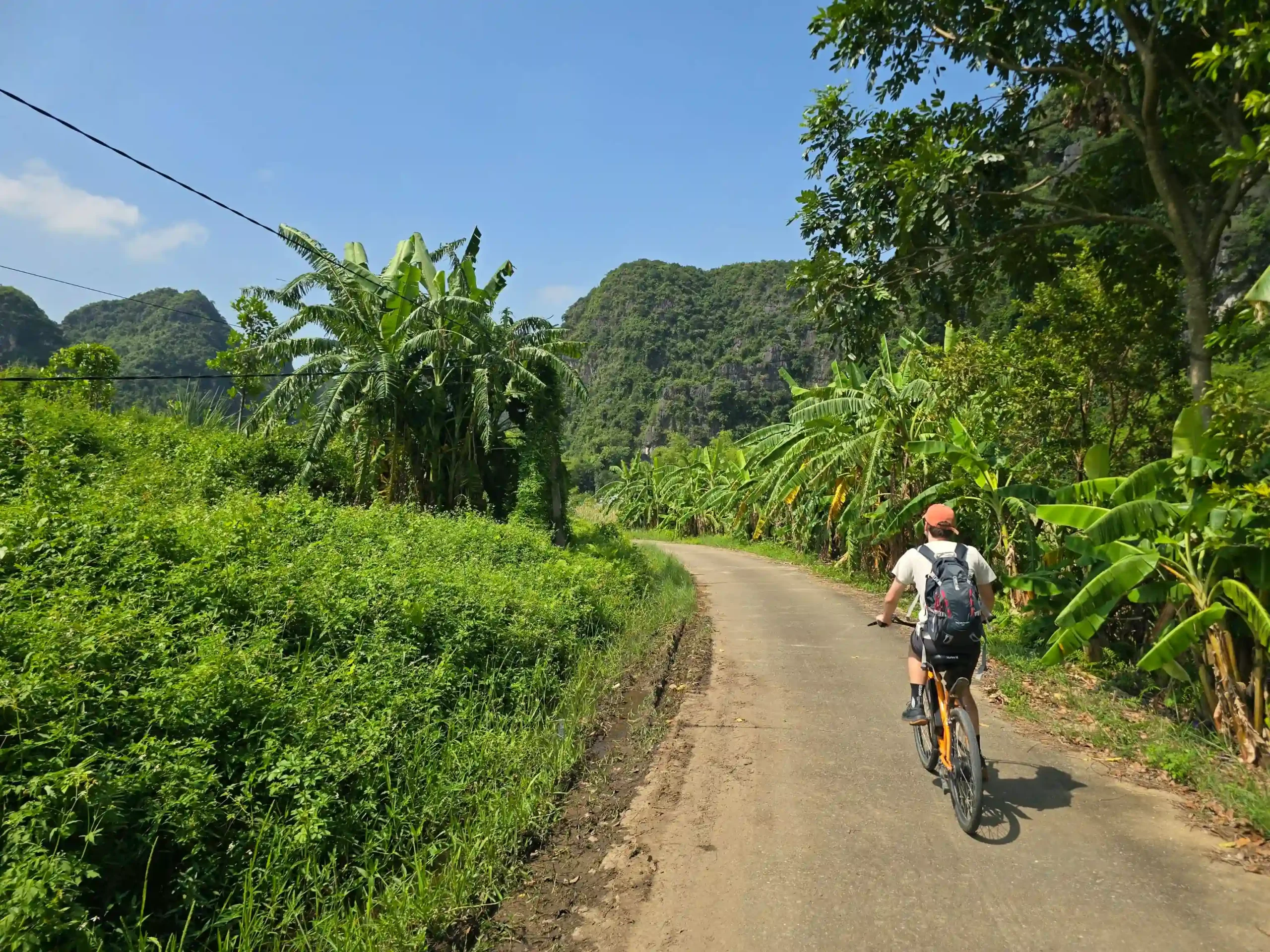
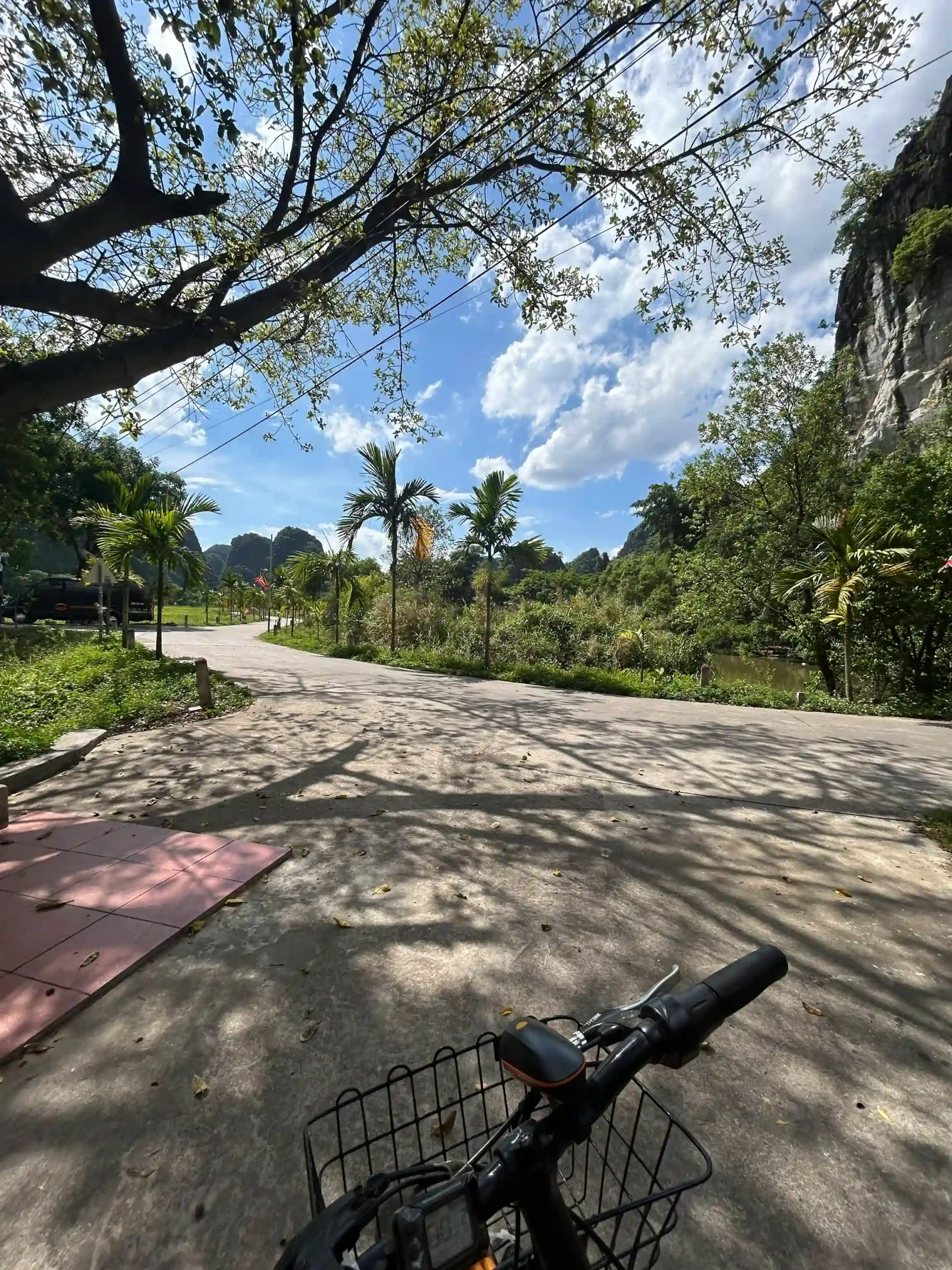
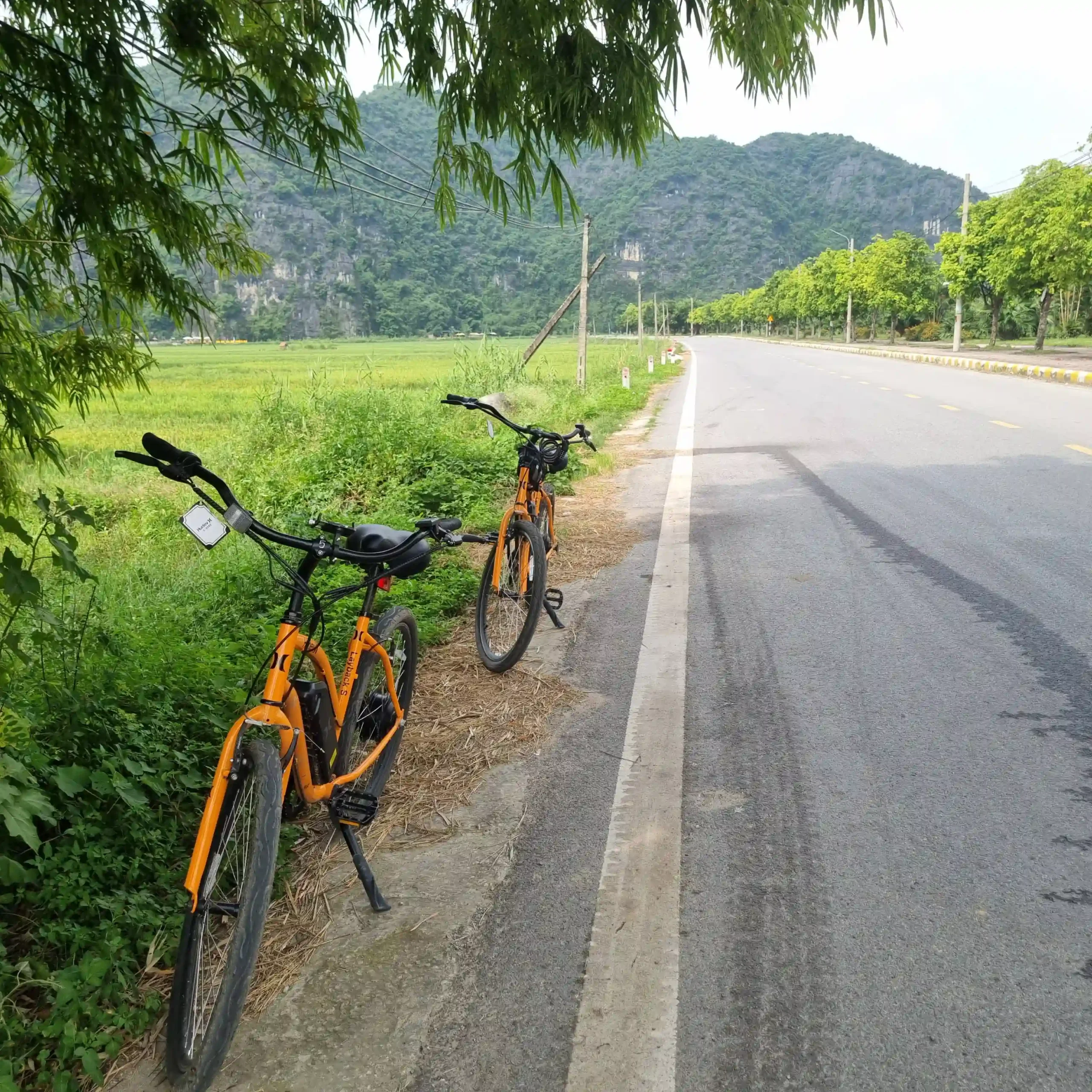
One thing I’d add from having watched a lot of first-time visitors here: the actual danger isn’t the destination, it’s arriving too relaxed. Vietnam’s traffic patterns, uneven pavement, and general pace of road use catch people off guard specifically because Ninh Binh feels so calm and rural compared to Hanoi. That calm is real, but it doesn’t mean the roads work differently.
Culture and Etiquette
Ninh Binh’s temples and pagodas (Bich Dong, Hoa Lu, Bai Dinh) are active religious sites, not museum pieces, and the basic dress expectation applies: knees and shoulders covered. Pack a light scarf or sarong if your regular travel clothes run shorter, since this comes up at multiple stops if you’re doing a full day of sightseeing.
With boat rowers specifically, a bit of courtesy goes a long way, they’re working physically demanding jobs for modest pay, and a reasonable tip at the end of a Trang An or Tam Coc boat tour (loosely, 30,000-50,000 VND per person) is appreciated though not strictly obligatory on top of the ticket price.
Photography of local people, especially the boat rowers and farmers in the rice paddies, is generally fine but worth a quick smile or gesture of acknowledgment rather than just pointing a lens at someone without any interaction.
Mistakes First-Timers Commonly Make
Treating it as a rushed stopover
Ninh Binh gets squeezed between Hanoi and Halong Bay on a lot of itineraries, sometimes reduced to a few hours. It genuinely rewards at least an overnight; see the itinerary guide for how the pacing works out.
Not knowing Trang An and Tam Coc are different experiences
Both are boat tours through karst scenery, and they get lumped together, but they’re distinct enough that doing both makes sense on a longer stay, and picking the wrong one for a short trip based on unclear information is a common regret. Trang An is generally the better single choice if you can only pick one.
Booking accommodation in the city instead of the Tam Coc area
Covered above, but worth repeating since it’s an easy mistake on a booking platform that doesn’t distinguish clearly.
Skipping the early morning
The best light, smallest crowds, and coolest temperatures are all before 9am. A lot of first-timers, especially on a day trip with a fixed pickup time, miss this window entirely.
Not confirming tour logistics in advance
The Hanoi Old Quarter pickup restriction that started in 2026 has caught some travelers off guard when they assumed pickup would happen right at their hotel door. Confirm specifics with whichever operator you book.
What to Pack
Beyond standard Vietnam travel basics: comfortable closed shoes for the Mua Cave climb (500 steps, not sandal territory), a hat and sunscreen, a light rain layer if you’re visiting in the wetter months, insect repellent, and a scarf or light layer for temple visits.
If you’re planning to cycle, padded shorts aren’t necessary but a comfortable saddle-appropriate outfit helps for longer rides.
Frequently Asked Questions
Is Ninh Binh worth visiting if I’ve already seen Halong Bay?
Yes, they’re different enough. Halong Bay is ocean karst; Ninh Binh is river-and-ricefield karst. The landscapes share a geological origin but feel distinct in person, and Ninh Binh’s boat tours pass through caves and past temples that Halong Bay’s format doesn’t really offer.
How far is Ninh Binh from Hanoi?
About 100km, roughly 2 hours by car or bus on the expressway. Train takes slightly longer at 2-2.5 hours but is a relaxed alternative.
Is one day enough to see Ninh Binh?
It covers the essentials but is genuinely rushed; see the itinerary guide for a full breakdown of how different trip lengths work.
Do I need a guide, or can I do this independently?
Both work. A guide adds real value at Hoa Lu specifically, since the historical context is easy to miss without one. For the boat tours and Mua Cave, independent visits are entirely manageable, and staying overnight independently gives you the flexibility a group tour schedule doesn’t.
Is Ninh Binh safe for solo female travelers?
Generally yes. It’s one of the more comfortable solo destinations in northern Vietnam, with a mature homestay scene and low reported harassment in the main tourist areas.
Got a Ninh Binh question this didn’t cover, or something that’s changed since I wrote this? Let me know, the practical stuff here is exactly the kind of thing that goes stale fastest. Otherwise, the things to do in Ninh Binh picks up where this leaves off.

Keep Exploring Ninh Binh
-
See & do UltimateRanking of things to do in Ninh Binh that worth your time ›
-
GuideHa Giang to Ninh Binh: My route, cost & travel experience ›
-
GuideHow I traveled from Ninh Binh to Pu Luong with ease (2026) ›
-
GuideShould you visit Ninh Binh or Ha Long Bay, or both? (2026) ›
-
Food Must readNinh Binh food guide: What to eat and where to find it ›
-
Stays Must readBest places to stay in Ninh Binh for views & fast access ›











 Tiếng Việt
 한국어
한국어 中文 (中国)
 日本語
日本語 ไทย
ไทย Deutsch
 Español
 Destinations
 Instagram
 Facebook
 X (Twitter)
 Threads
 Tiktok