








 Ha Giang
 Hanoi
Hanoi Ho Chi Minh City
 Ha Long
 Sapa
Sapa Mekong Delta
 Da Nang
 Hue
Hue Hoi An
 Ninh Binh
 Da Lat
 Nha Trang
 Phan Thiet
 Phu Quoc
 Quang Binh
 Quy Nhon
 Vung Tau
 Thai Nguyen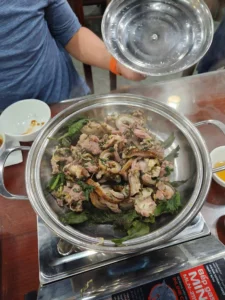
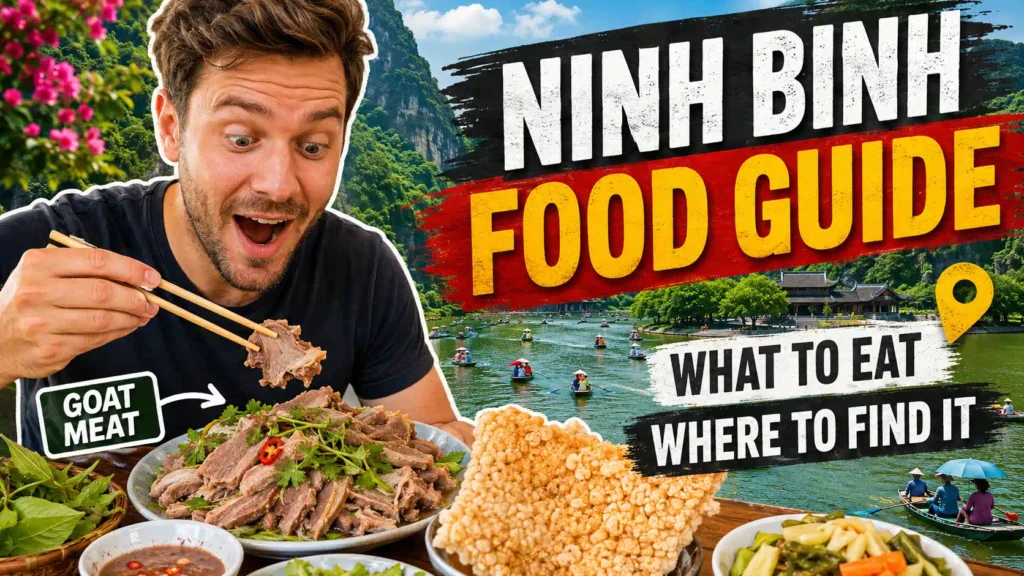

Ask anyone in Ninh Binh what to eat and you’ll hear one word before you’ve finished the question: dê. Goat. It’s not a niche regional curiosity here, it’s the actual culinary identity of the place, the way pho belongs to Hanoi or bun cha to a specific corner of Vietnamese food culture. If you leave Ninh Binh without having eaten goat at least once, you’ve technically visited but you haven’t quite eaten here.
This guide covers what to actually eat, why the food here looks different from what you’ve had in Hanoi, roughly what things cost, and how to find good food without overthinking it. It’s a general overview rather than a ranked restaurant list, since specific picks and reviews are better handled separately.
- Quick Answer: Ninh Binh’s food identity centers on dê núi (free-range mountain goat, prepared a dozen different ways) and com chay (crispy scorched rice, usually served with a savory topping). Both are genuinely distinct from food you’ll find in Hanoi or elsewhere in Vietnam, tied to the region’s limestone terrain and its history of resourceful rice cooking. Meals are affordable, 15,000-60,000 VND for simple dishes, 150,000-300,000 VND for a shareable goat meat plate.
- The Signature Dishes:
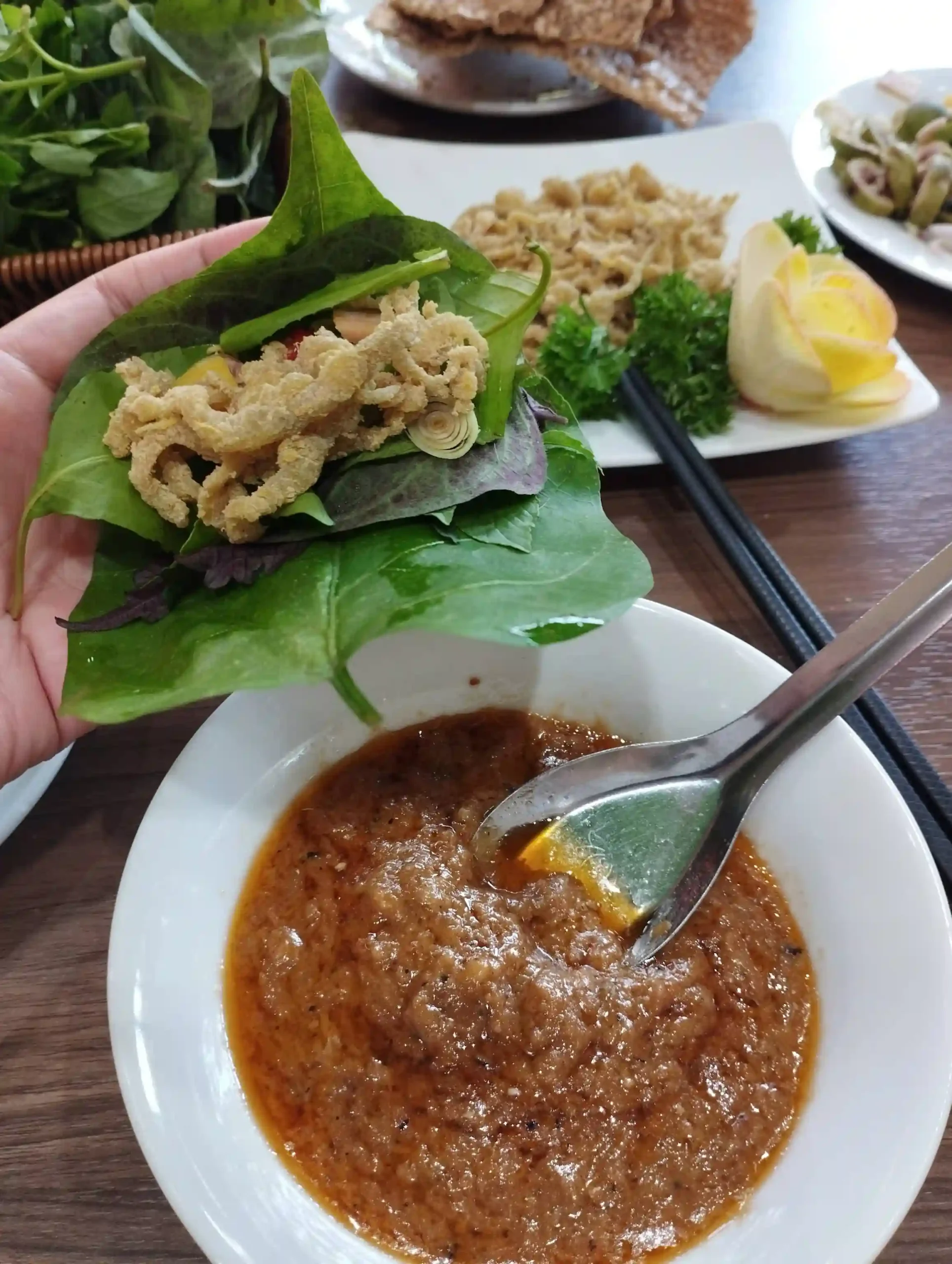
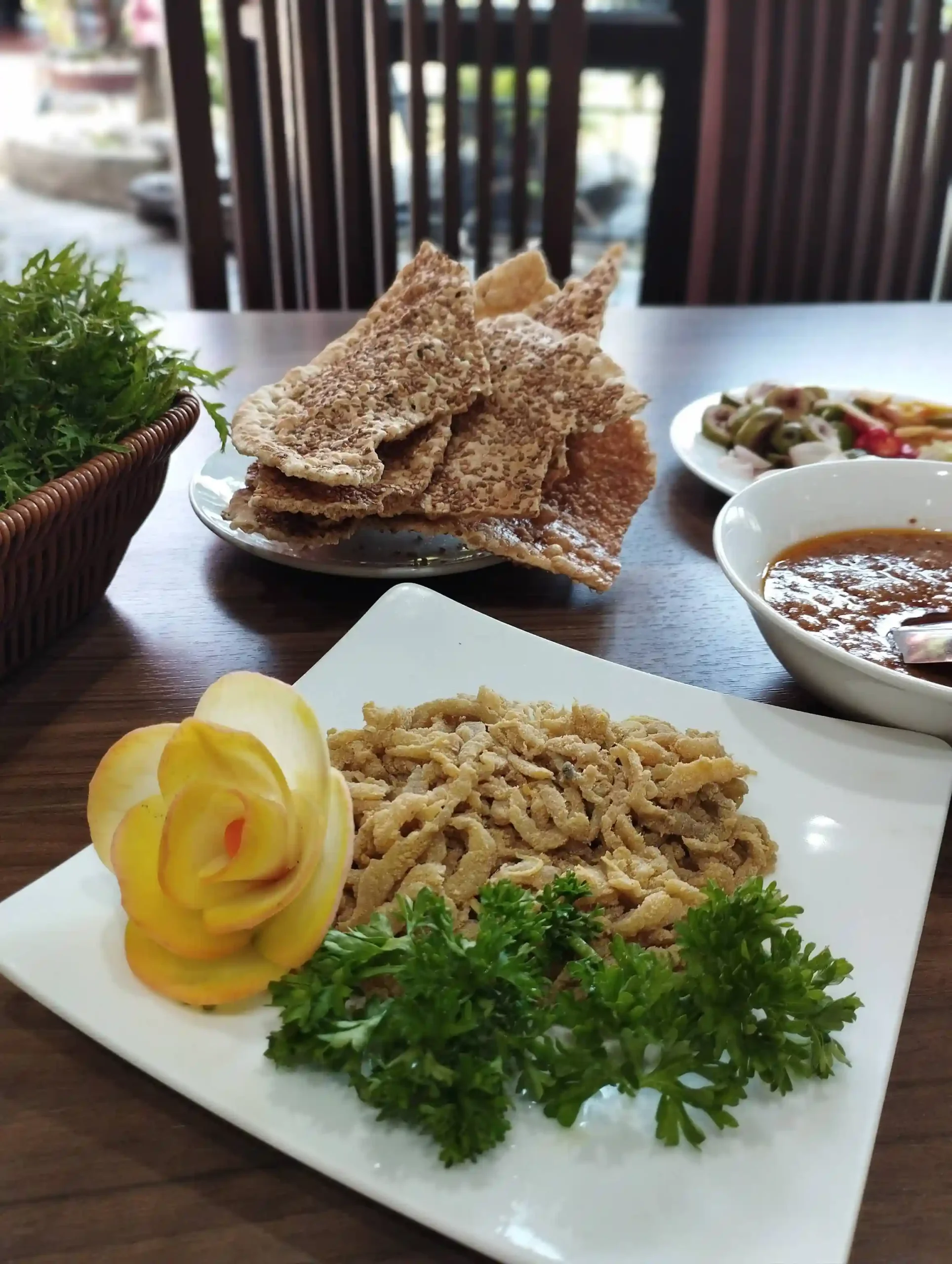
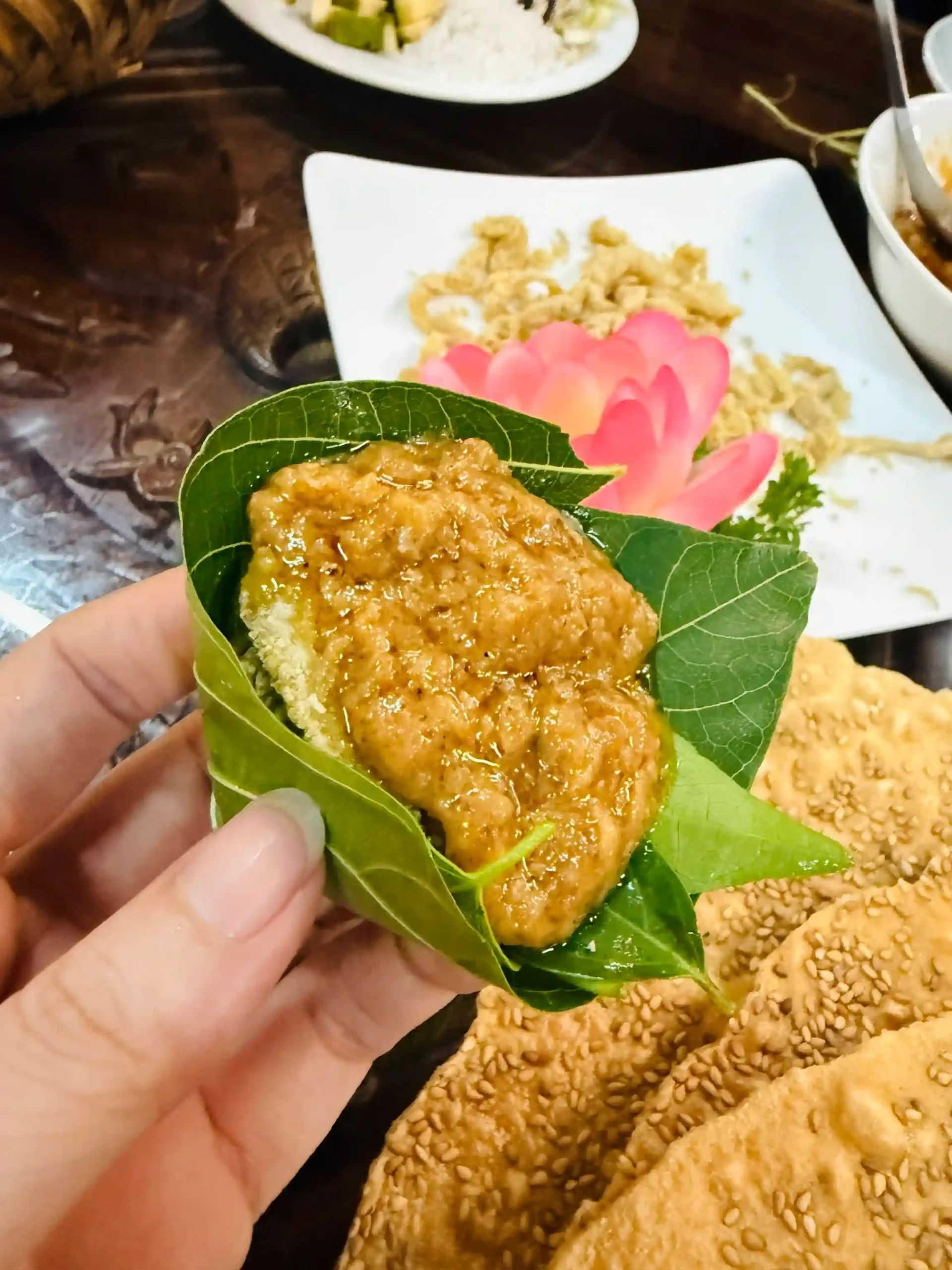
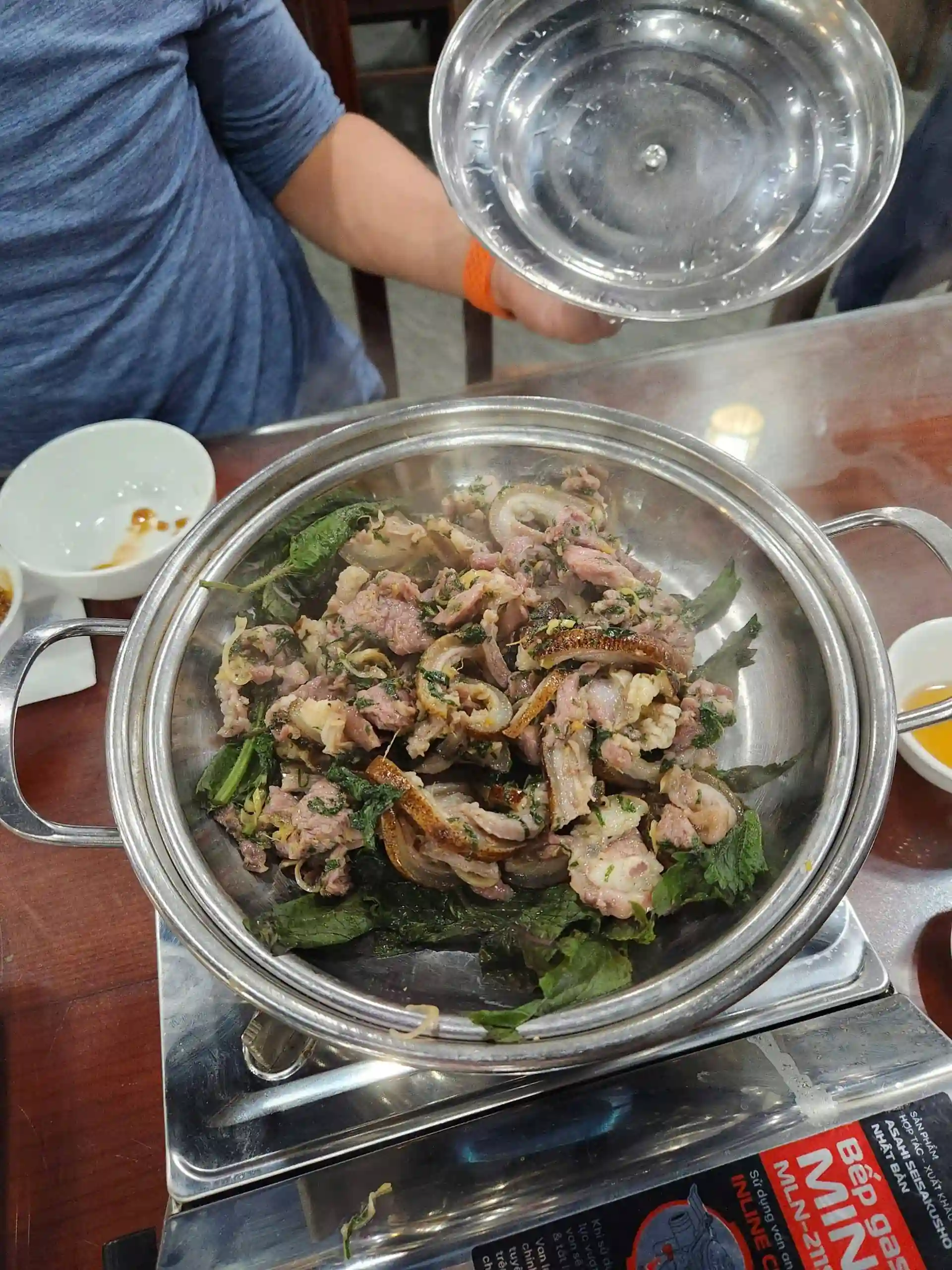
- Dê núi (mountain goat): steamed, grilled, stir-fried with lemongrass, served rare with lime, or as hotpot. The dish everyone means when they say “Ninh Binh food.”
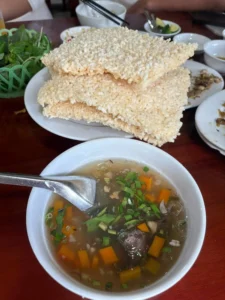
- Com chay (crispy rice): sun-dried steamed rice, deep-fried, served with a savory topping. Also a popular takeaway gift.
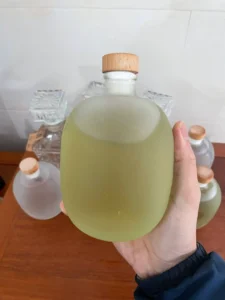
- Kim Son rice wine: local specialty, traditionally paired with goat meat.
- Xoi trung kien (sticky rice with ant eggs): a genuine seasonal curiosity from the Nho Quan district, worth trying if it’s in season and you’re adventurous.
- Where to Actually Eat:
- Family-run goat restaurants near Trang An and Tam Coc, several with English menus
- Homestay-cooked meals, often the best value and most personal option
- Roadside and market stalls for cheap, fast, genuinely local eating
- What It Costs:
- Simple meals/snacks: 15,000-60,000 VND
- Goat meat dishes (shareable): 150,000-300,000 VND
- Com chay: 30,000-80,000 VND per plate
- For Vegetarians: com chay without meat topping, tofu dishes, and vegetable-based dishes are widely available, though not the default on most menus, so asking is normal and expected.
Why Ninh Binh’s Food Looks Different
A quick word on why this matters before getting into specific dishes.
Ninh Binh’s cuisine is shaped directly by its geography in a way that’s more literal than most food-and-place connections.
The limestone mountains that make the landscape famous are also where the region’s goats have historically grazed, wild and free-range rather than farmed in the conventional sense, feeding on herbs and wild vegetation across the karst terrain. That diet produces meat that’s leaner and more herbally aromatic than farmed goat elsewhere in the country, and it’s the reason dê núi carries genuine regional pride rather than being just another meat dish on a menu.
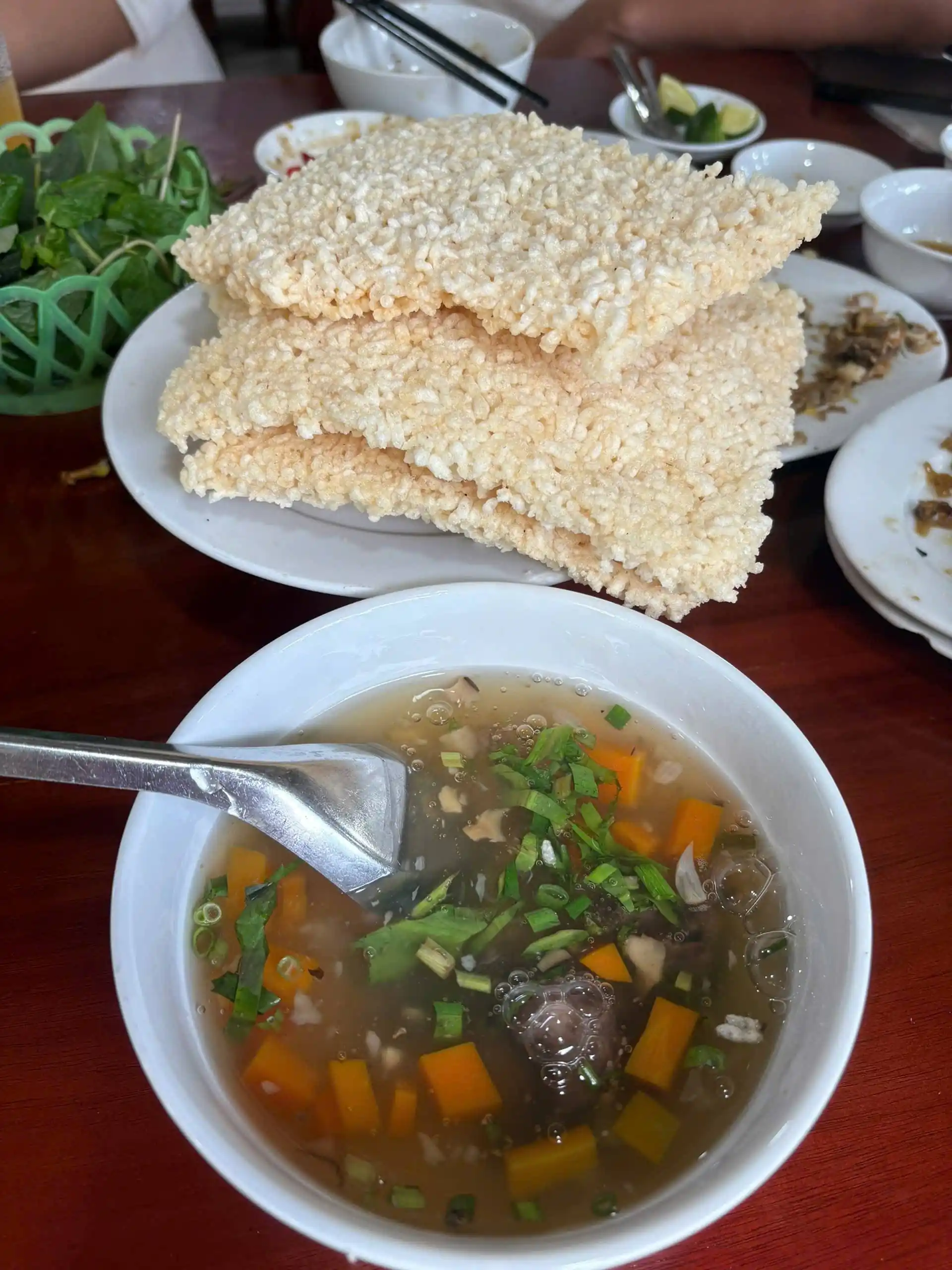
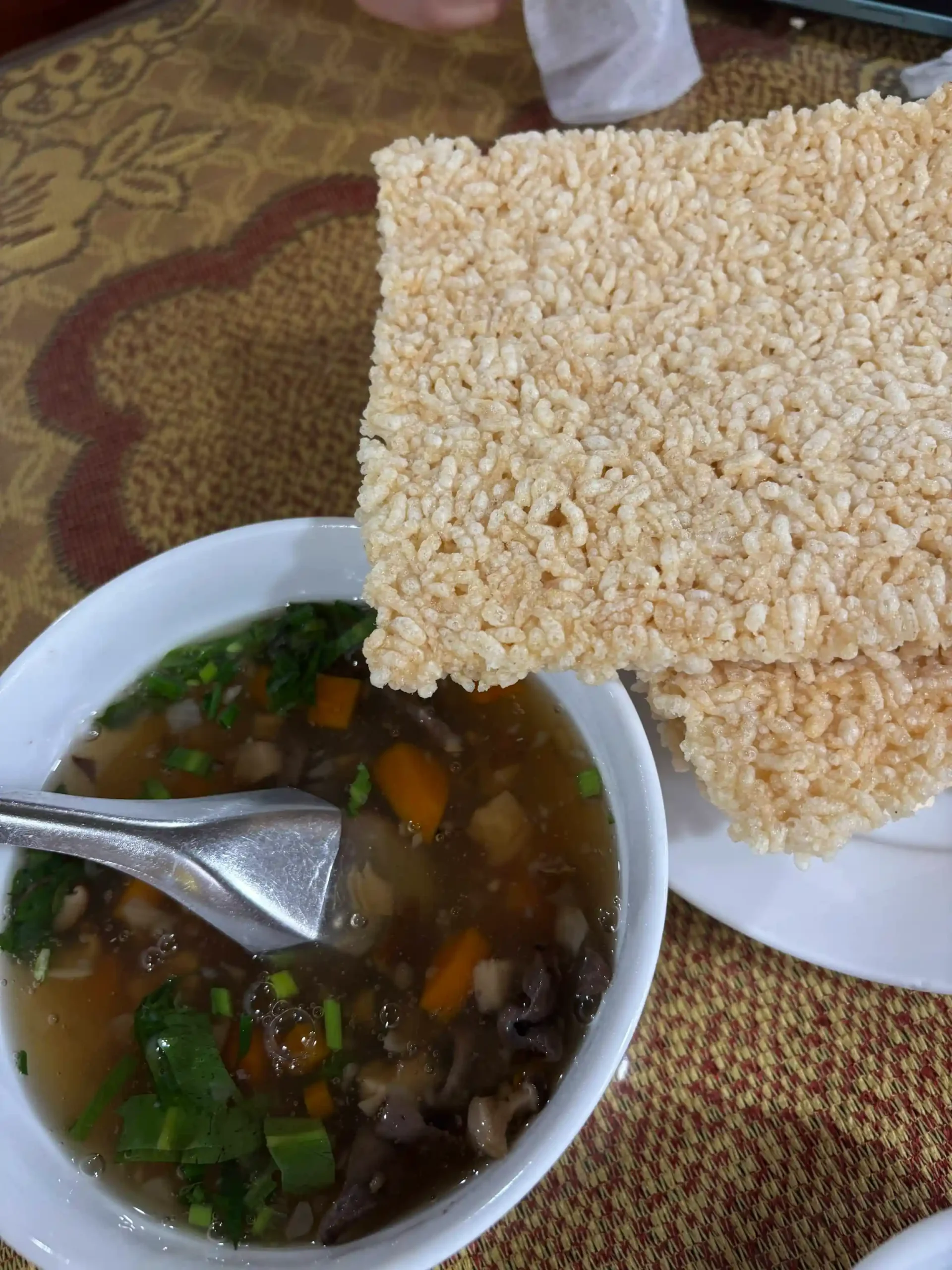
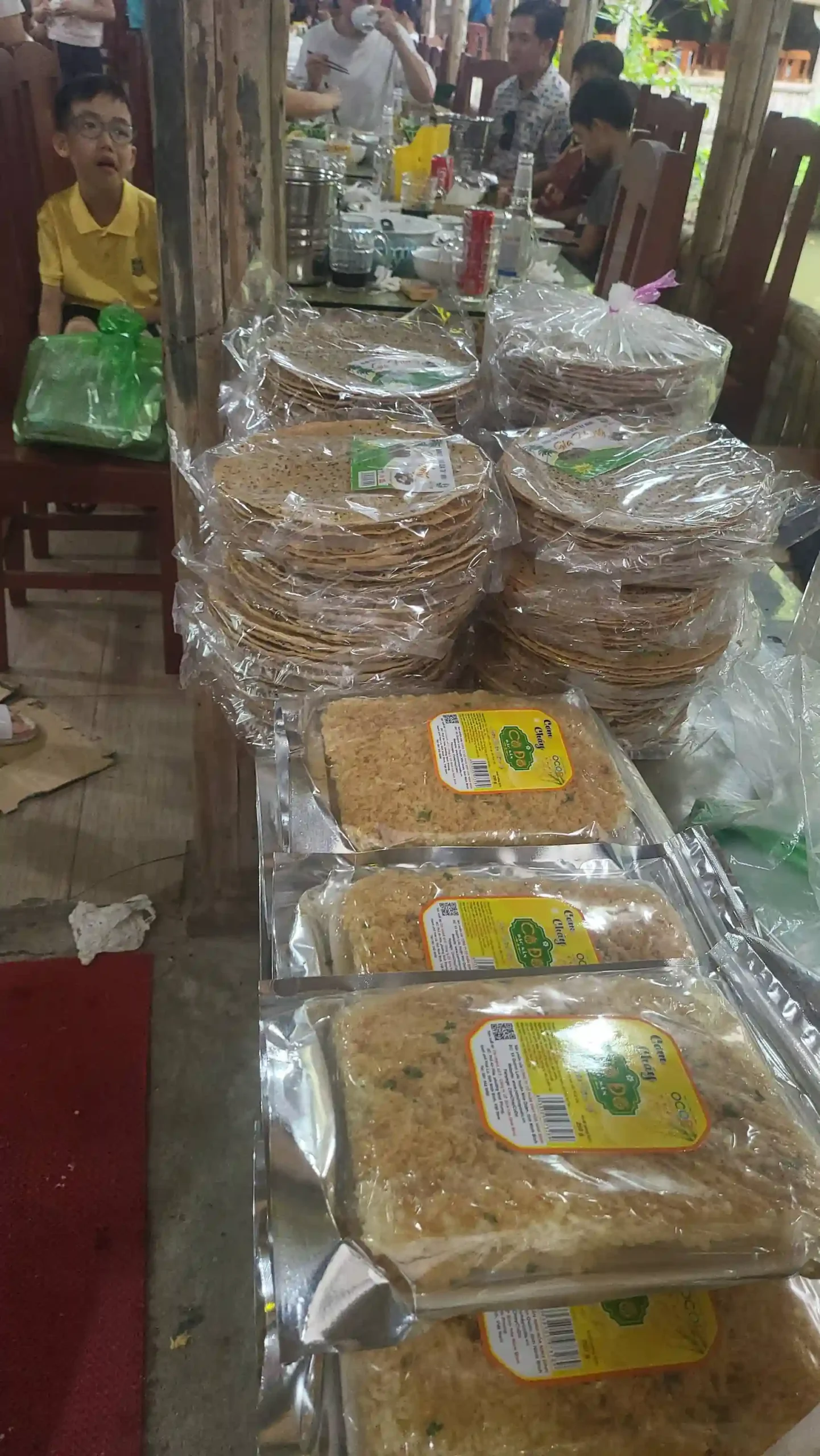
Com chay has a more practical origin story. The scorched, crispy layer of rice at the bottom of a traditional clay cooking pot, which most cuisines treat as a byproduct or waste, became its own dish here: pressed, sun-dried, and fried until crisp, then topped with a savory sauce. It’s the kind of resourceful cooking that turns leftover cooking residue into a genuine specialty, and it’s now sold as a packaged gift item precisely because it travels well and keeps for weeks.
Both dishes reflect something about Ninh Binh generally: unpretentious, tied closely to the land, and built more on what the region actually produces than on any elaborate culinary tradition imported from elsewhere.
Dê Núi: The Dish You Came Here to Eat
If you only try one thing, make it this.
Mountain goat isn’t a side note in Ninh Binh cooking, it’s the reason a lot of people specifically detour through certain restaurants on their way between Tam Coc and Trang An.
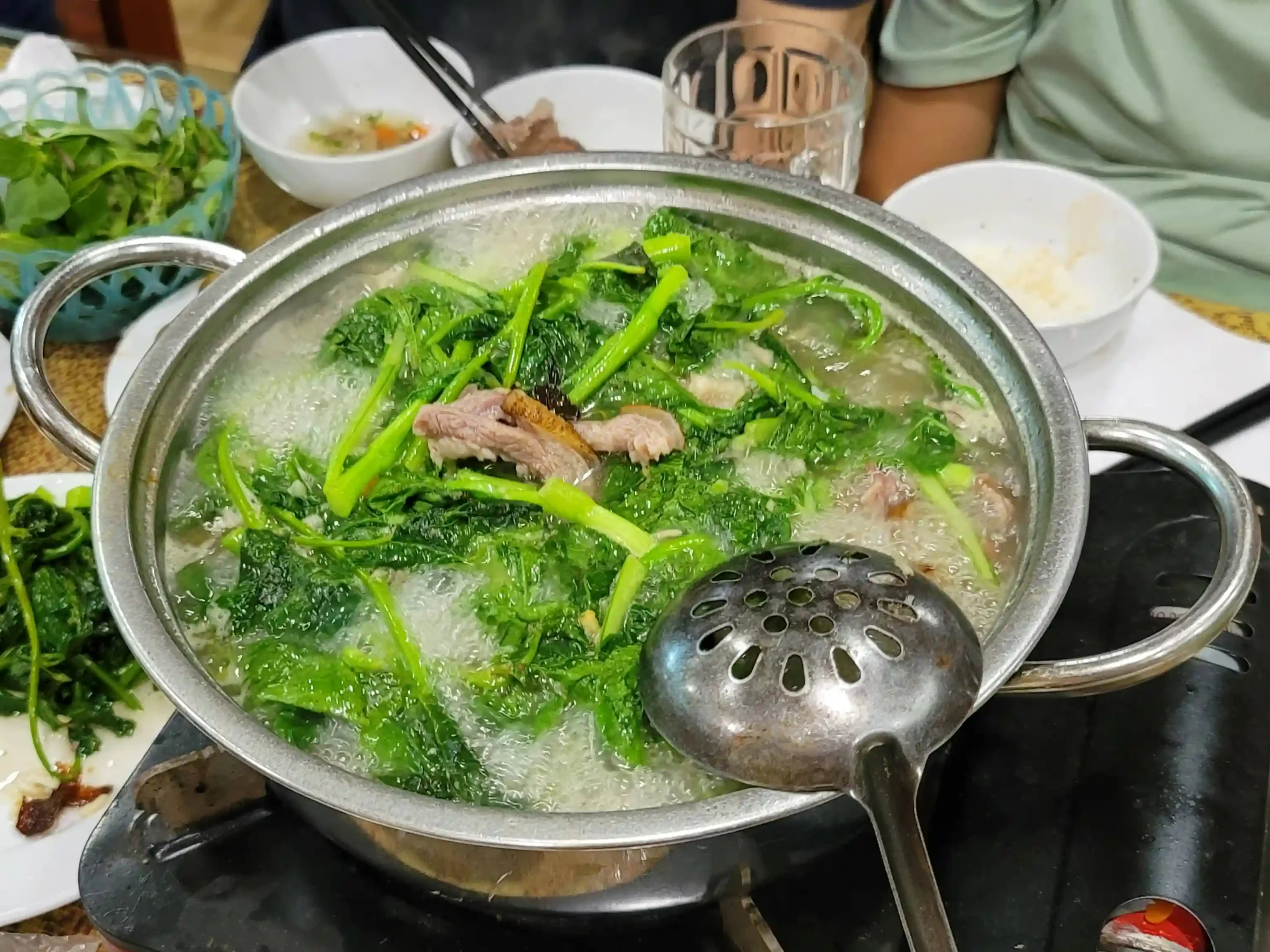
The preparations vary enough that a single visit barely scratches the surface:
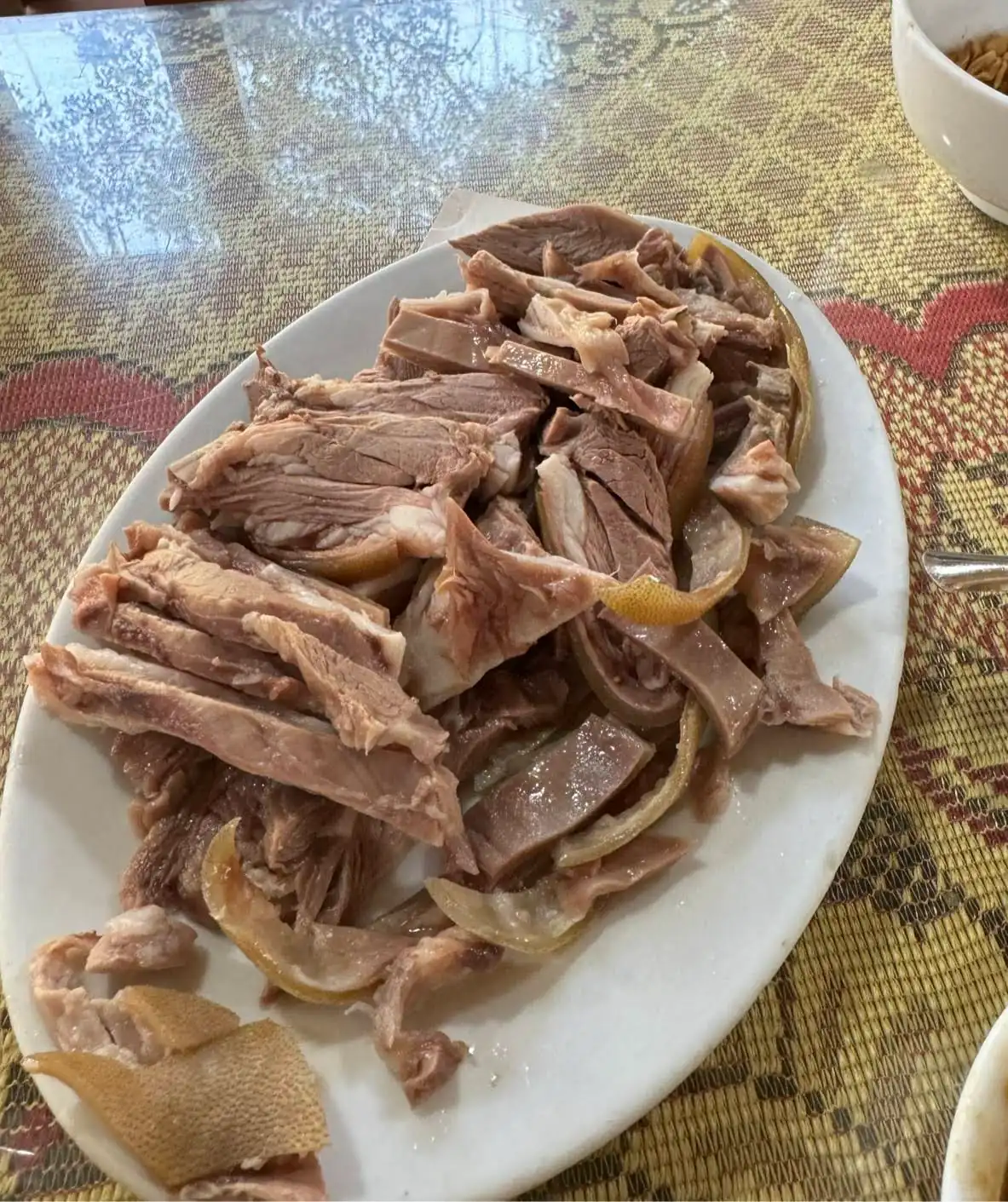
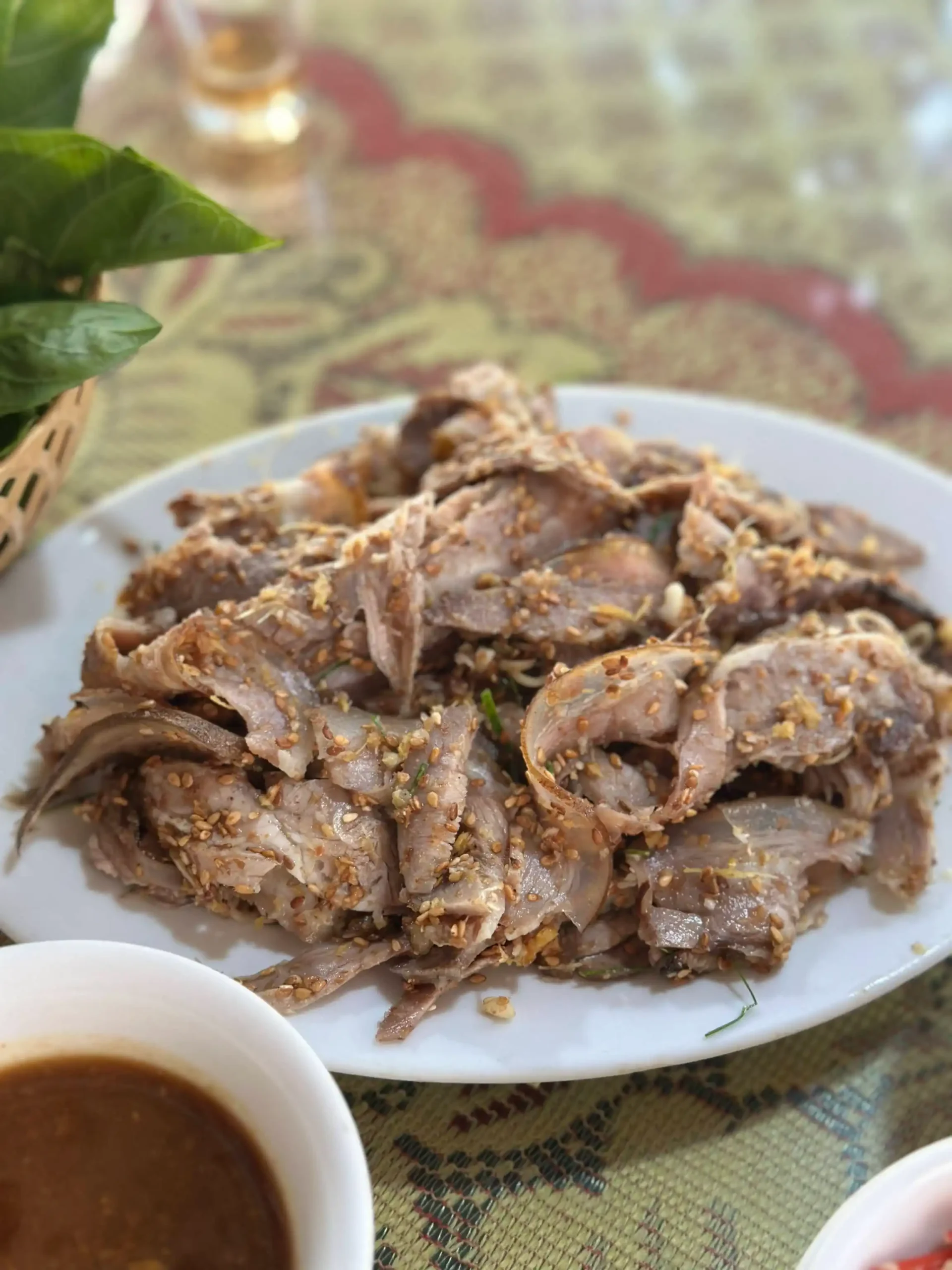
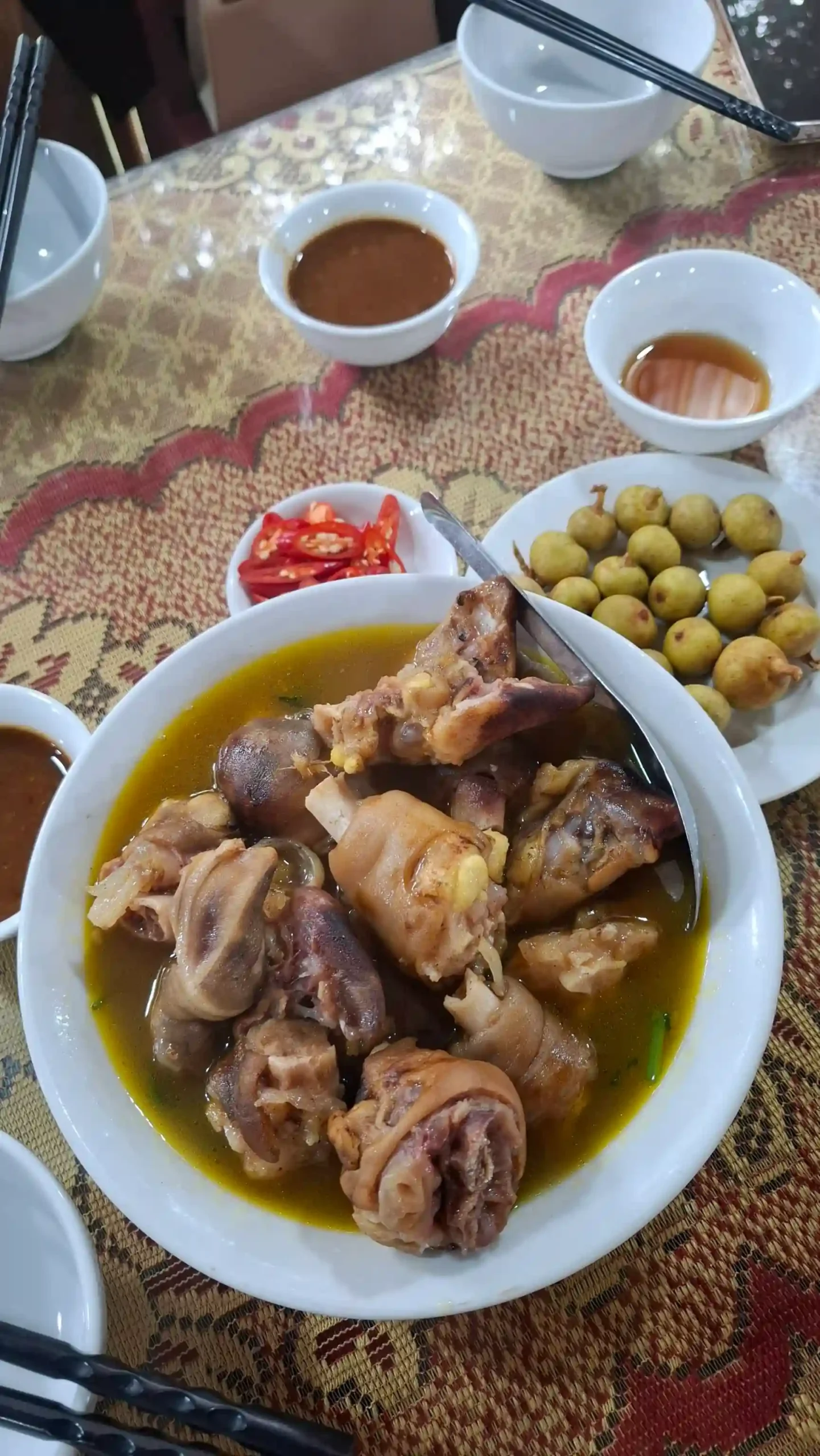
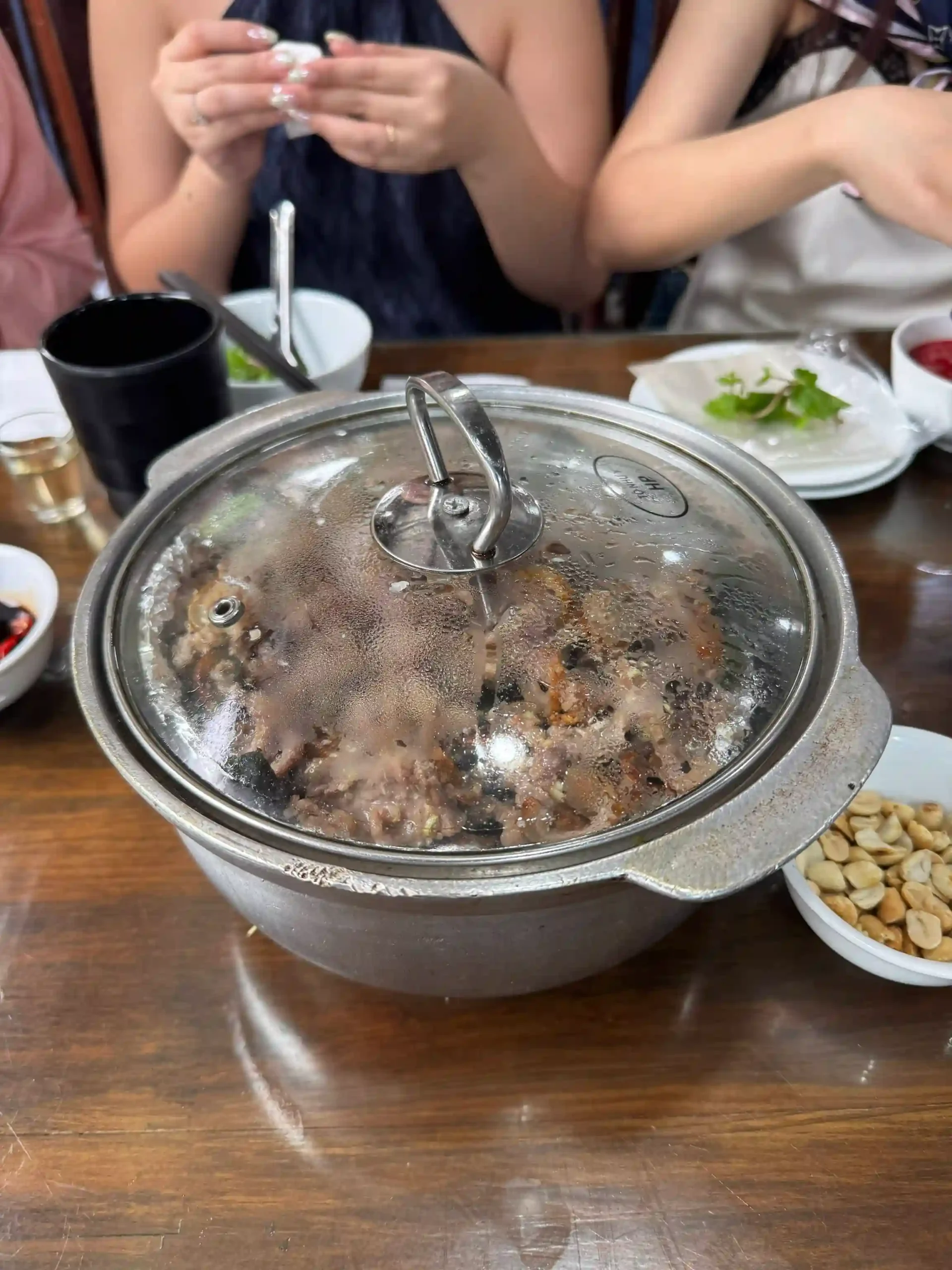
Dê hấp (steamed goat)
Is the gentlest preparation, usually with ginger, and lets the meat’s natural flavor come through without heavy seasoning.
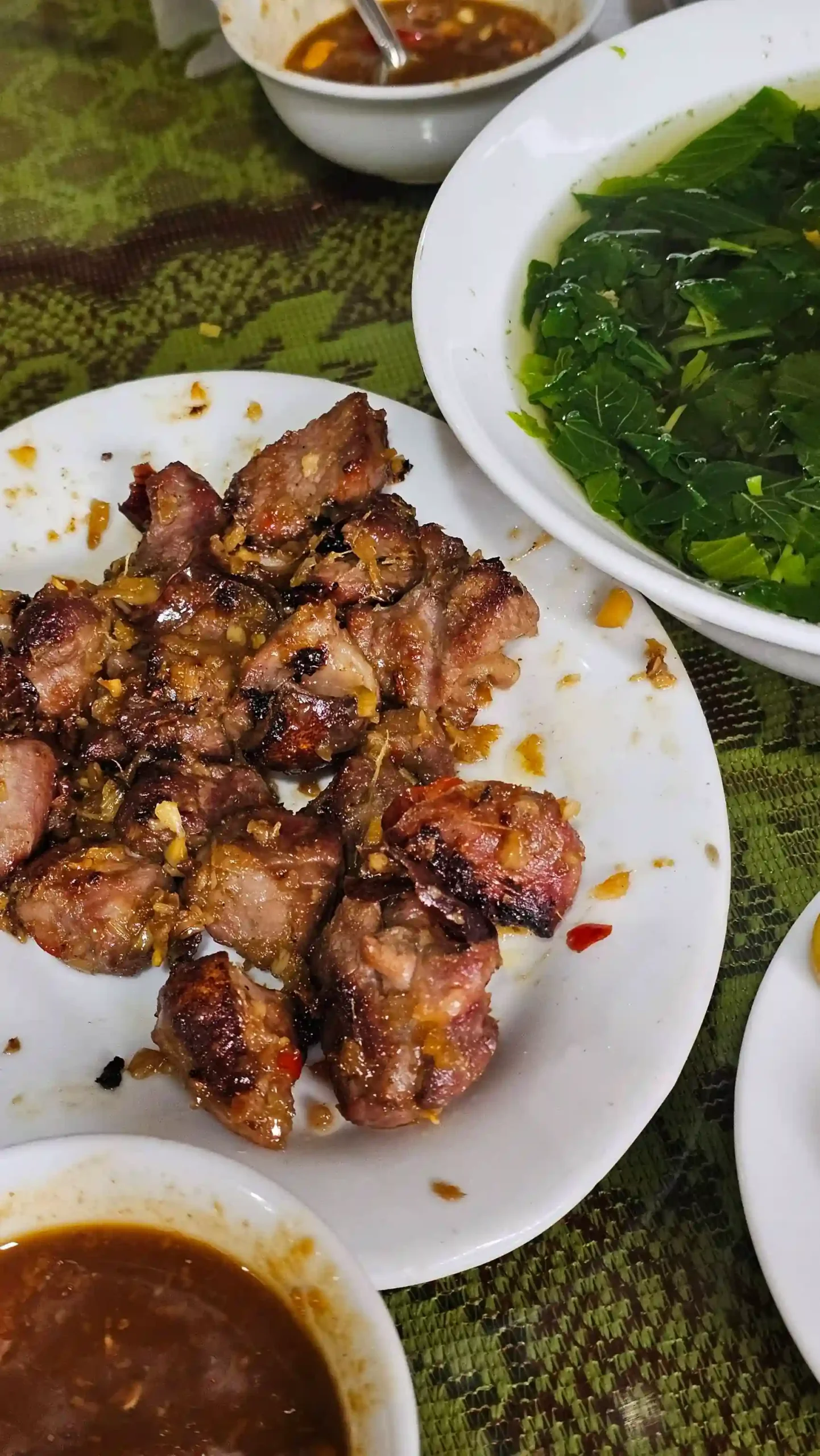
Dê nướng (grilled goat)
Brings a smokier character, often marinated with lemongrass before hitting the charcoal.
Dê tái chanh
Is goat served rare with lime and sesame, more of an acquired preparation for some visitors but a genuine favorite among locals who want the meat’s texture front and center.
Dê xào mẻ
Stir-fries the meat with a fermented rice vinaigrette sauce, which gives it a tang that cuts through the richness.
Lau dê (goat hotpot)
Is the group option, a simmering pot of goat and vegetables that works well for a table of four or more sharing a long, unhurried meal, which is genuinely how a lot of goat meat meals unfold here. Nobody’s in a rush at a good goat restaurant.
A few restaurants worth knowing by name as starting points, not as an exhaustive ranked list:
- Nha Hang Cuong De, a family-run spot known for tender goat and a version of com chay that regularly gets singled out, has riverside views, and is popular enough that booking ahead during peak hours is worth doing.
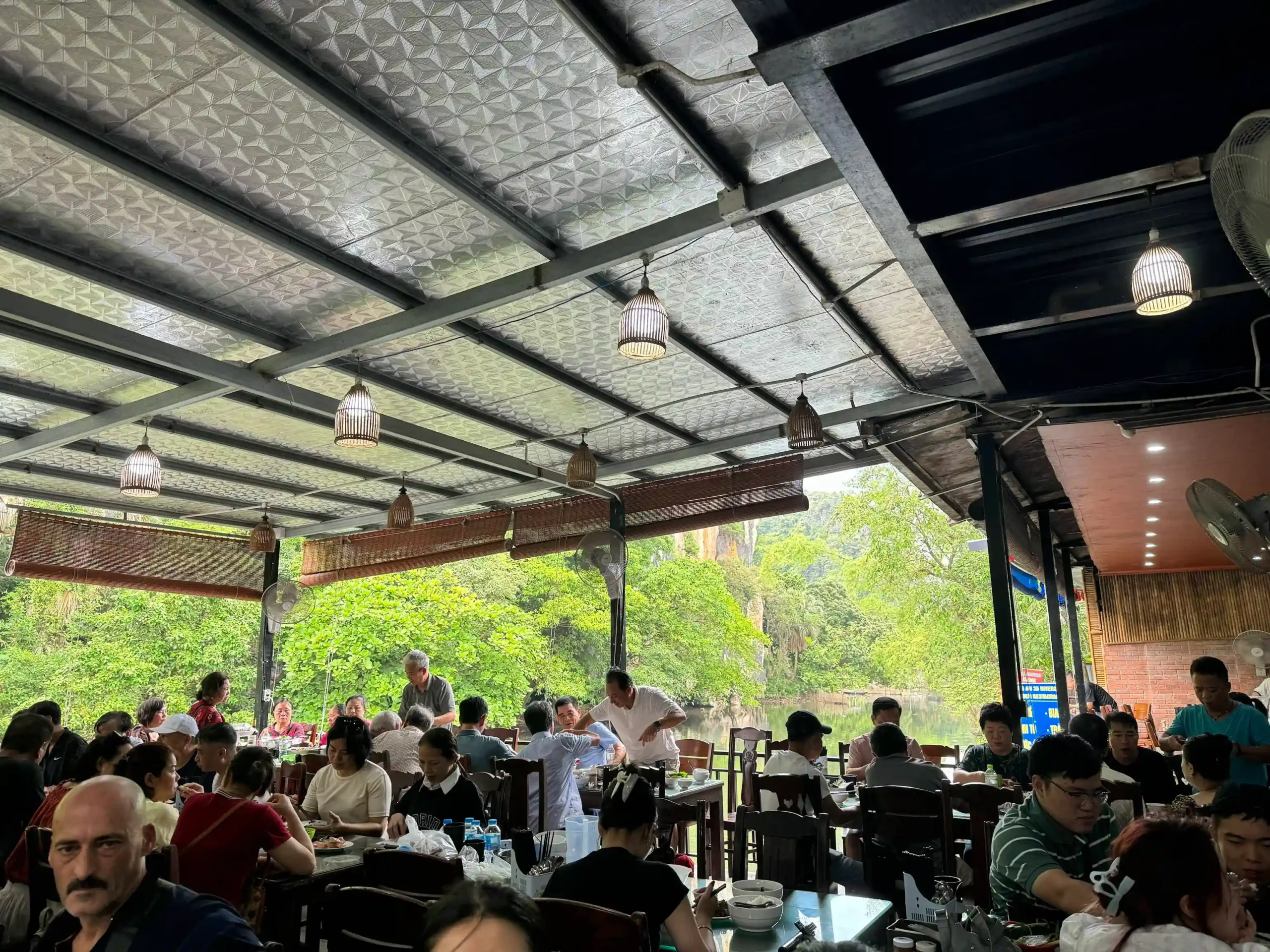
- Dung – De Pho Nui, right next to the Trang An tourist area, sits against the cliff face with an open, airy layout and leans into rare lemon goat and grilled goat specifically. Both are the kind of place you could find on your own by walking into whichever goat restaurant looks busiest near Trang An or Tam Coc, since a full dining room at lunchtime is a fairly reliable local-approval signal here.
What I’d say to anyone nervous about ordering goat for the first time: start with the steamed or grilled version rather than the rare lime preparation. Both give you the meat’s texture and the herbal quality that makes Ninh Binh goat distinct, without the more challenging edge of the rare preparation. Once you’ve got a sense of what the meat actually tastes like, the more adventurous versions make a lot more sense.
Prices for goat dishes run roughly 150,000-300,000 VND per plate, and most are meant to be shared across a table rather than ordered as an individual portion, so factor that into how many dishes you order for your group.
Com Chay: The Other Essential
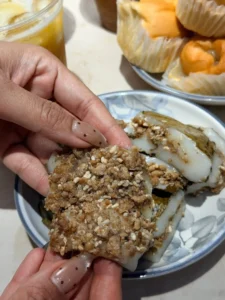
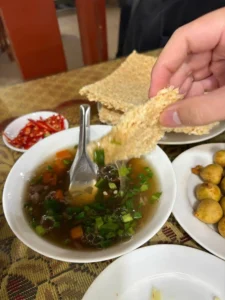
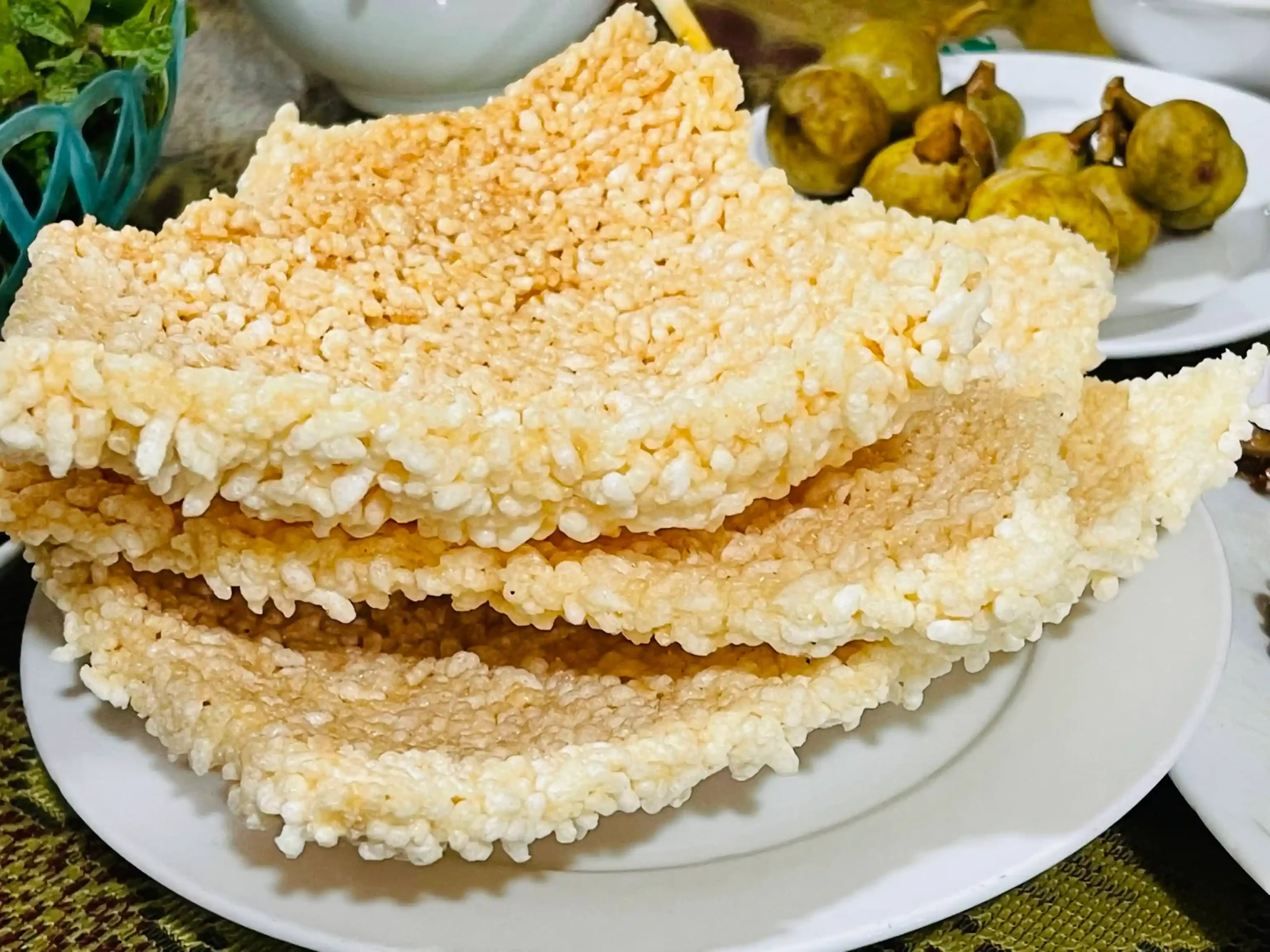
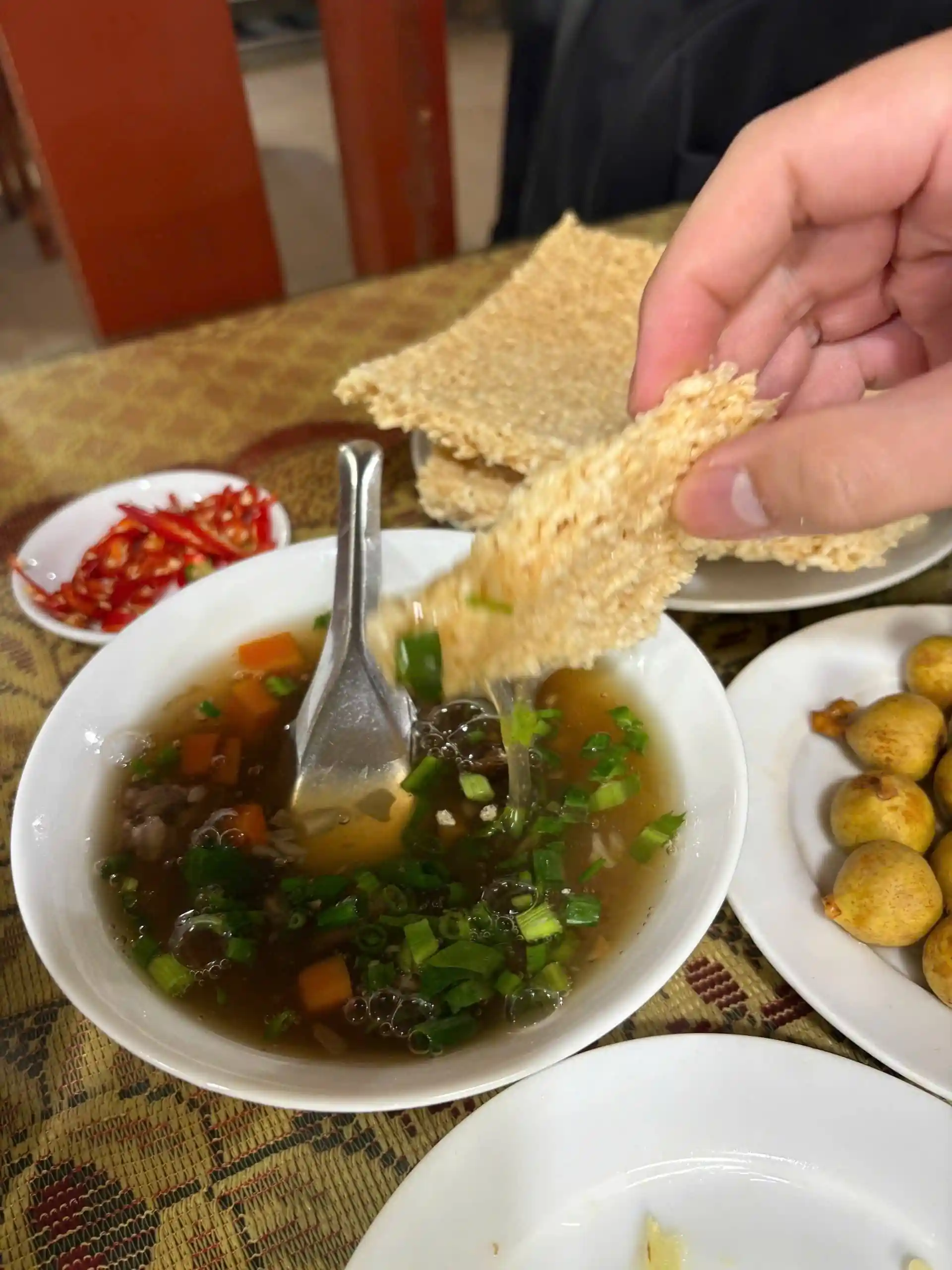
Com chay is less of a headline dish than dê núi, but it shows up constantly, as a starter, a side, an appetizer before the goat arrives, or a snack on its own. The texture is the whole point: a genuinely satisfying crunch giving way to whatever topping it’s served with, most commonly a savory sauce built from shredded pork and spring onion, sometimes with a bit of goat meat or pork heart mixed through.
It’s sold at basically every restaurant that serves goat, and separately as a packaged snack you can buy to take home, since the dried, fried texture means it keeps for weeks without refrigeration. If you want a food souvenir from Ninh Binh that isn’t perishable and actually represents the place, this is it.
Price runs 30,000-80,000 VND per plate depending on the topping and the restaurant. The premium versions, with a goat meat or seafood topping, cost more but are worth the upgrade if com chay is going to be one of the few dishes you specifically remember.
Kim Son Rice Wine and Fish Sauce
Kim Son, a district within Ninh Binh province, produces two things worth knowing about even if you’re not planning to drink much or cook with fish sauce on your trip.
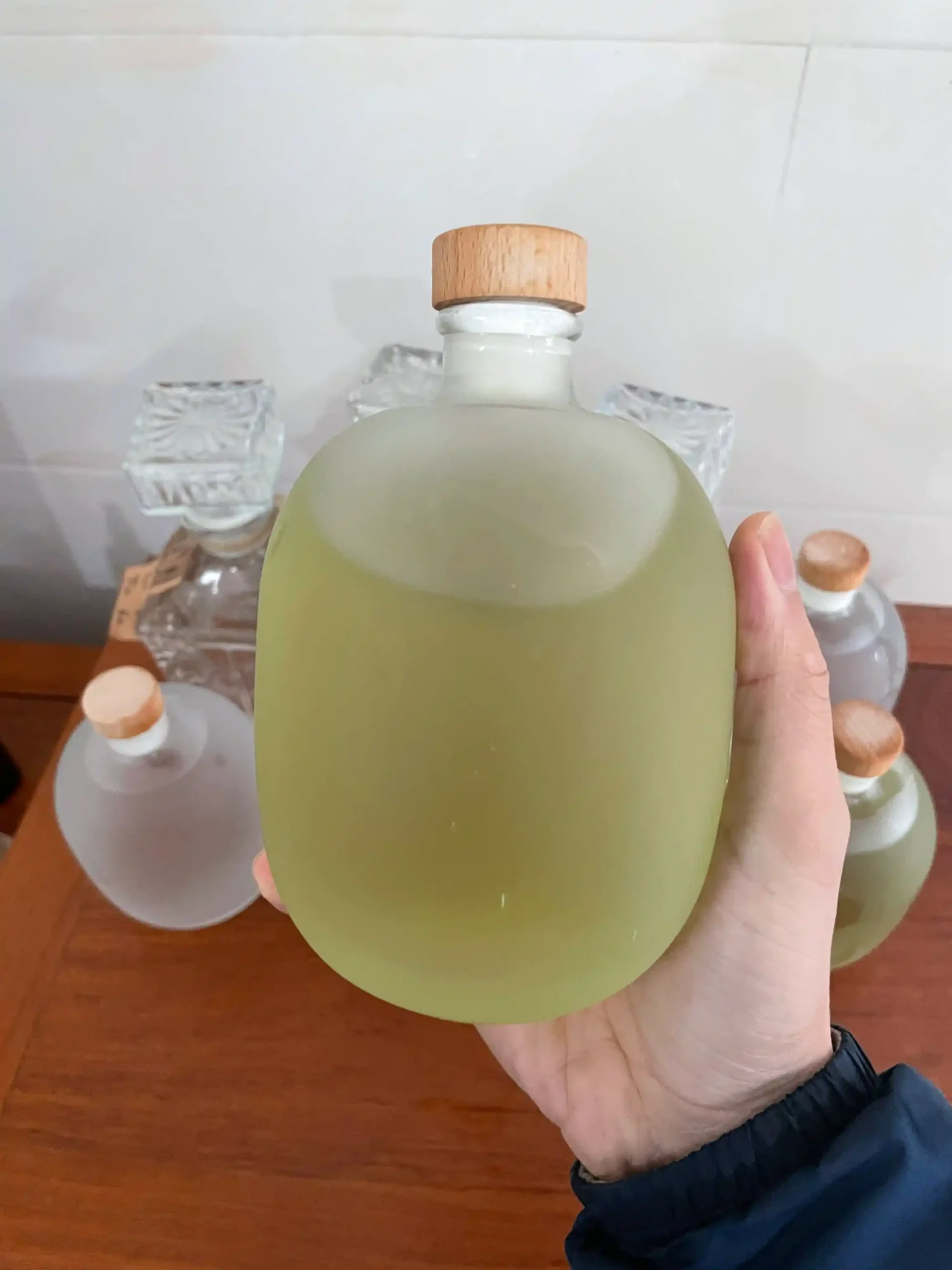
Kim Son rice wine
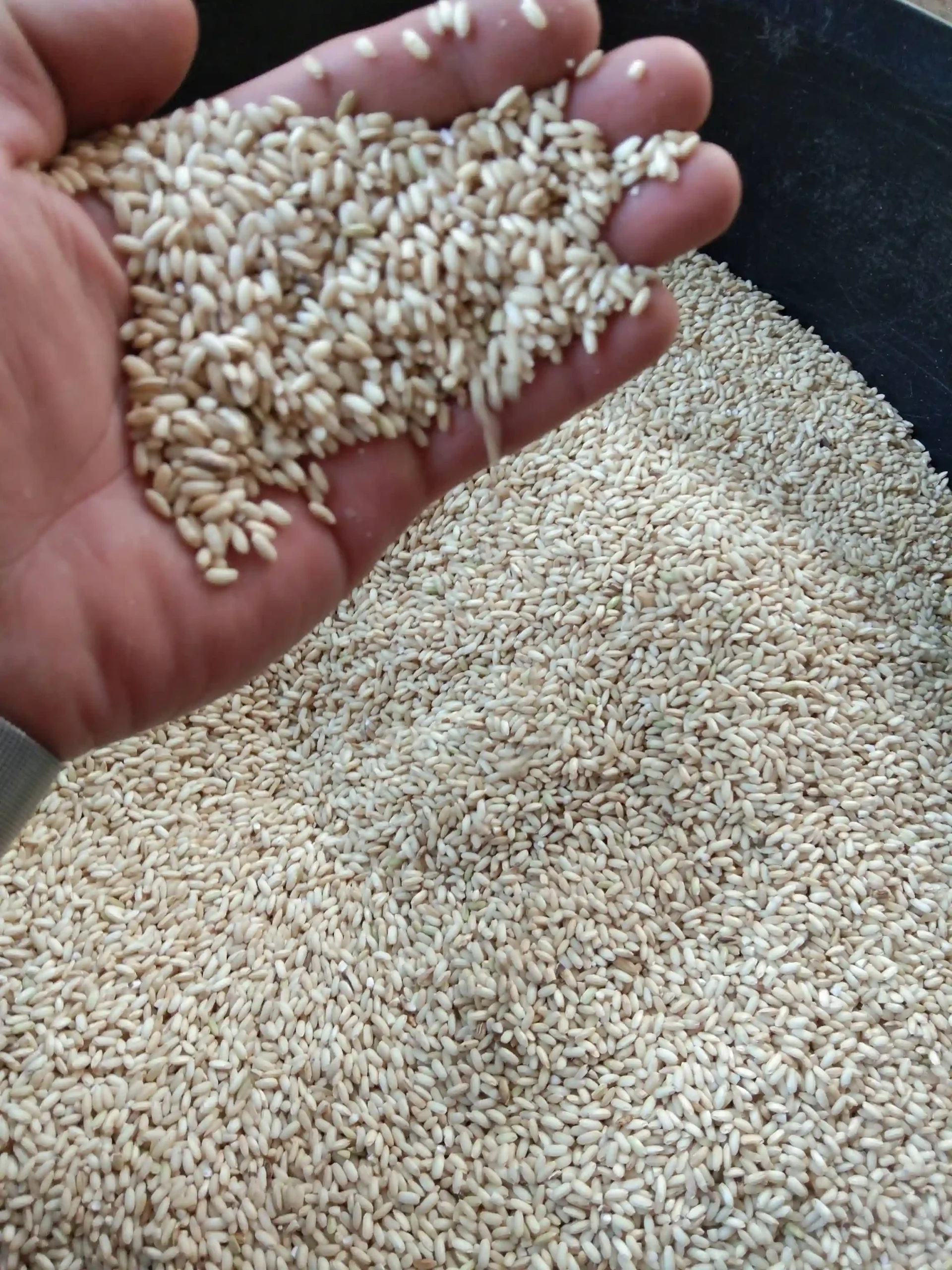
Kim Son rice wine is distilled from local glutinous rice and spring water, and it’s the traditional pairing for goat meat meals here, the way a specific regional wine gets paired with a specific regional dish elsewhere. It’s smoother than a lot of Vietnamese rice spirits, and it shows up at family gatherings and celebration meals as much as in restaurants. If your goat meat dinner comes with a round of this poured for the table, that’s a genuine local custom rather than a tourist add-on.
Kim Son fish sauce
Made from anchovies fermented in wooden barrels using a traditional method, is a quieter specialty but a genuine point of local pride. It’s the kind of thing that doesn’t photograph well or make it onto “must-try” lists as often as goat meat does, but if you’re someone who cares about fish sauce quality, it’s worth seeking out a bottle at a local market as a practical, non-touristy souvenir.
The Seasonal and Adventurous Options
A couple of dishes worth knowing about even if you don’t end up trying them, since they come up in conversation and on menus during certain months.
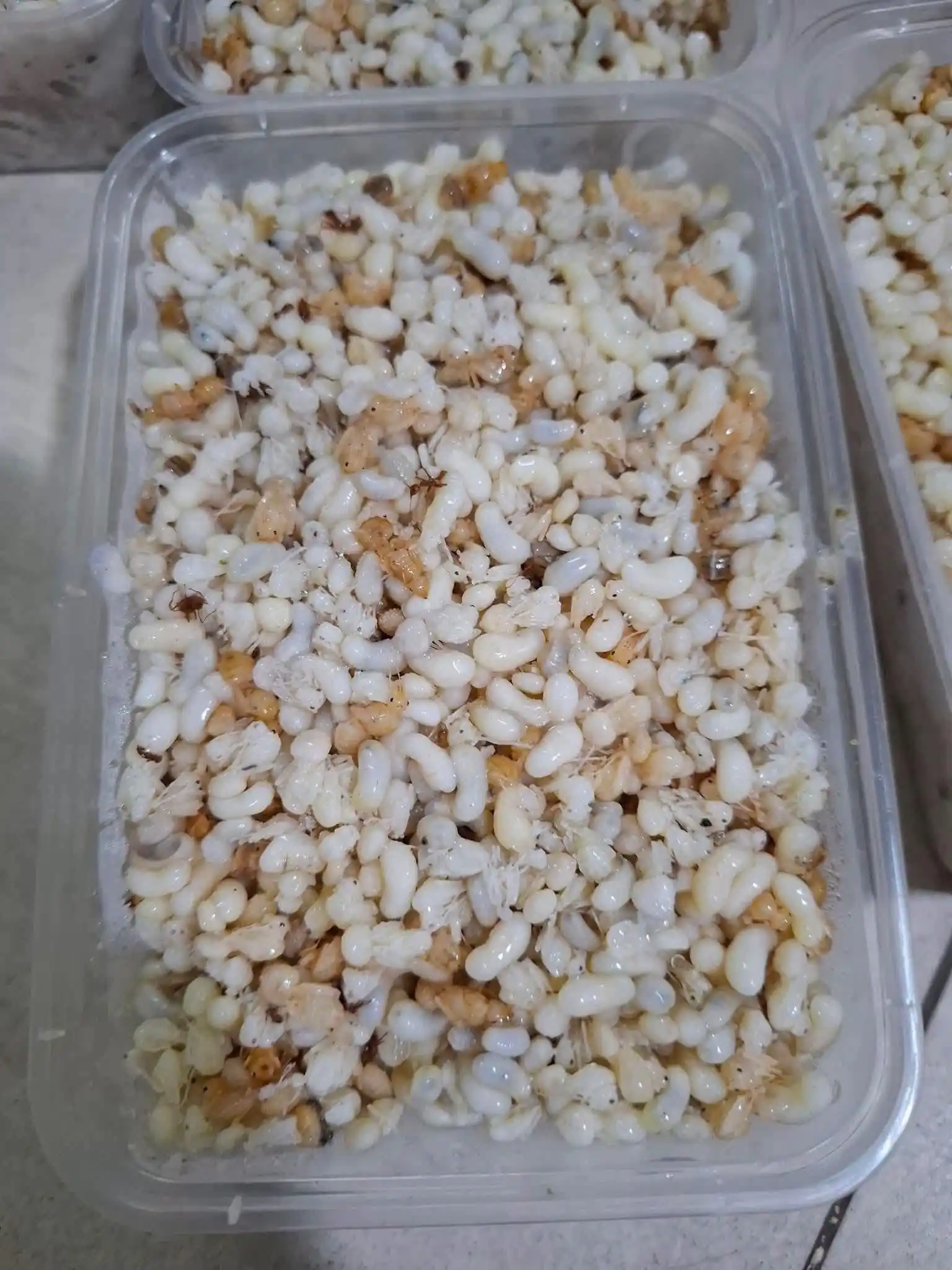
Xoi trung kien (sticky rice with ant eggs)
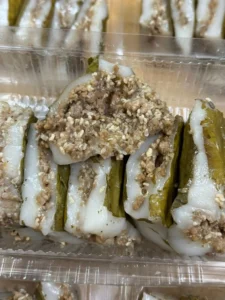
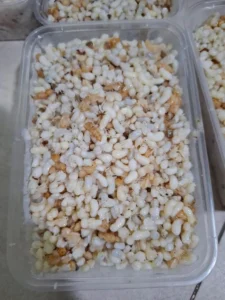
Xoi trung kien is a genuine seasonal specialty from the Nho Quan district, harvested from limestone forests. The white ant eggs are sautéed with spices, wrapped in banana leaves, and steamed with glutinous rice, producing something with a nutty, buttery character and a distinctive popping texture. It’s not on every menu and it’s not for everyone, but if you see it available and you’re the kind of traveler who tries the unusual thing, this is a genuinely interesting one.
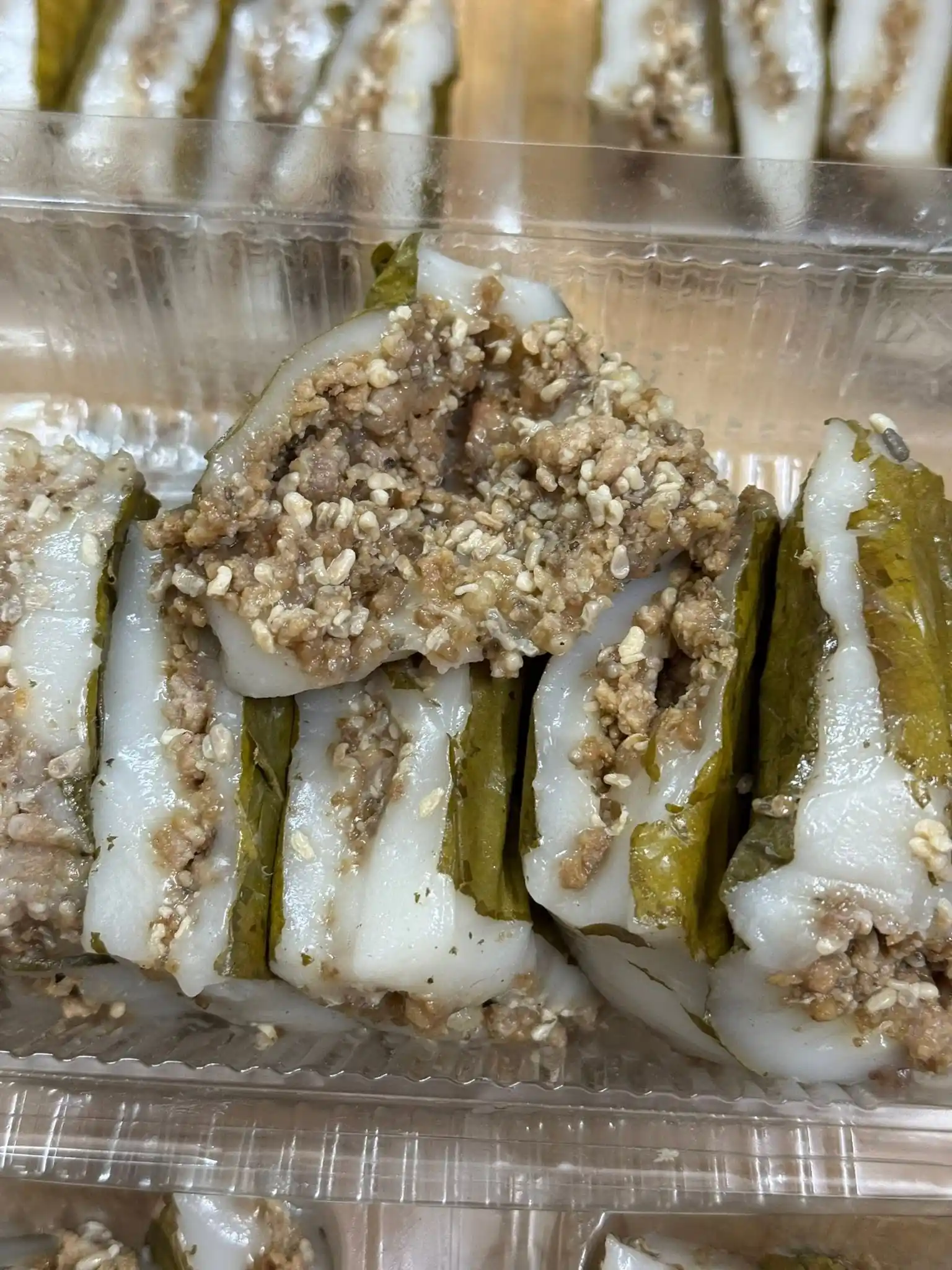
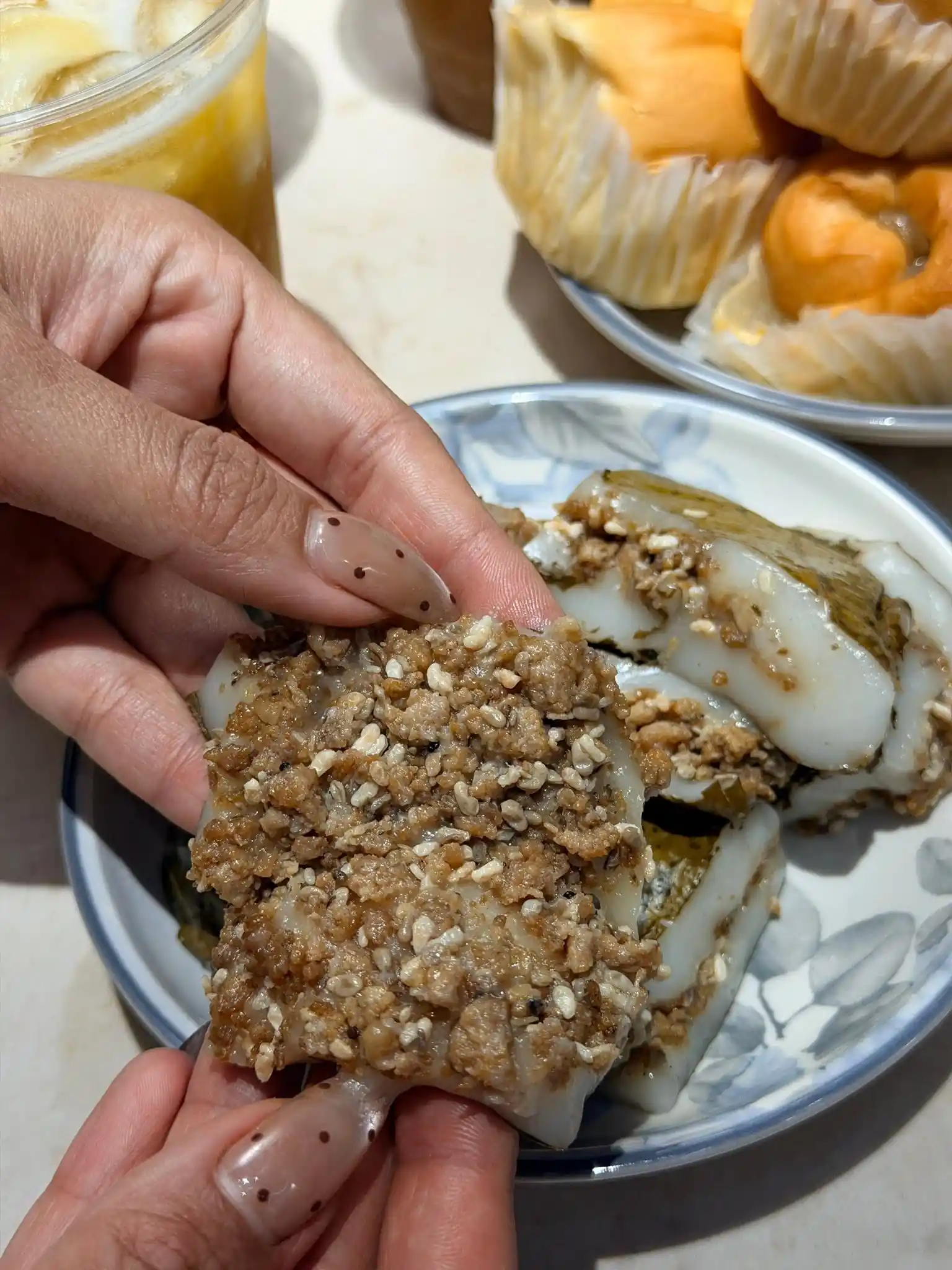
Goi ca nhech (eel salad) and mountain snails (oc nui)
Round out the more adventurous end of Ninh Binh’s food identity, both seasonal, both leaning into the region’s willingness to use what the local terrain and rivers actually produce rather than importing ingredients from elsewhere.
None of these are necessary to a good Ninh Binh food experience, dê núi and com chay cover the essentials, but they’re worth knowing exist if you’re curious and the timing works out.
Timing matters more for these than for the two headline dishes. Ant eggs specifically have a harvest window tied to the forest ecology in Nho Quan, so a restaurant menu might list xoi trung kien one visit and not have it available a few months later. If you see it, that’s usually a sign it’s genuinely in season rather than a preserved or frozen version, which is part of why it’s worth trying on the spot rather than assuming you can find it whenever you’re ready.
A Word on How Meals Actually Work Here
Worth understanding the shape of a typical meal before you sit down, since it’s a bit different from ordering a single plate for yourself the way you might elsewhere.
Ninh Binh dining, especially around goat meat, leans heavily toward shared eating.
A table of four might order three or four dishes to split, plus rice, plus a shared broth or soup, rather than each person ordering their own individual plate.
This isn’t unique to Ninh Binh, it’s fairly standard Vietnamese dining culture, but it’s worth knowing if you’re used to Western-style individual ordering, since a solo diner or a couple can genuinely struggle to order well without either over-ordering or missing the point of the shared format.
If you’re dining alone, most restaurants will happily do a smaller single-portion version of a goat dish alongside a plate of com chay, and this is completely normal to ask for rather than feeling like you need to order a full shareable spread meant for four. Staff at the restaurants near Tam Coc and Trang An deal with solo travelers regularly enough that this isn’t an unusual request.
Meals also tend to run unhurried once they start, particularly a proper goat meat dinner with rice wine involved. Nobody’s rushing you out for the next seating. If you’ve got somewhere to be afterward, it’s worth building in more time than you’d expect for what looks on paper like a straightforward dinner.
Where to Actually Eat
Restaurants near Tam Coc and Trang An are the most straightforward option, especially for goat meat specifically. Several have English menus at this point given how established the area is for tourism, and a genuinely useful rule of thumb: a restaurant with a packed dining room at lunchtime, full of a mix of Vietnamese families and visitors, is a more reliable signal than any review score.
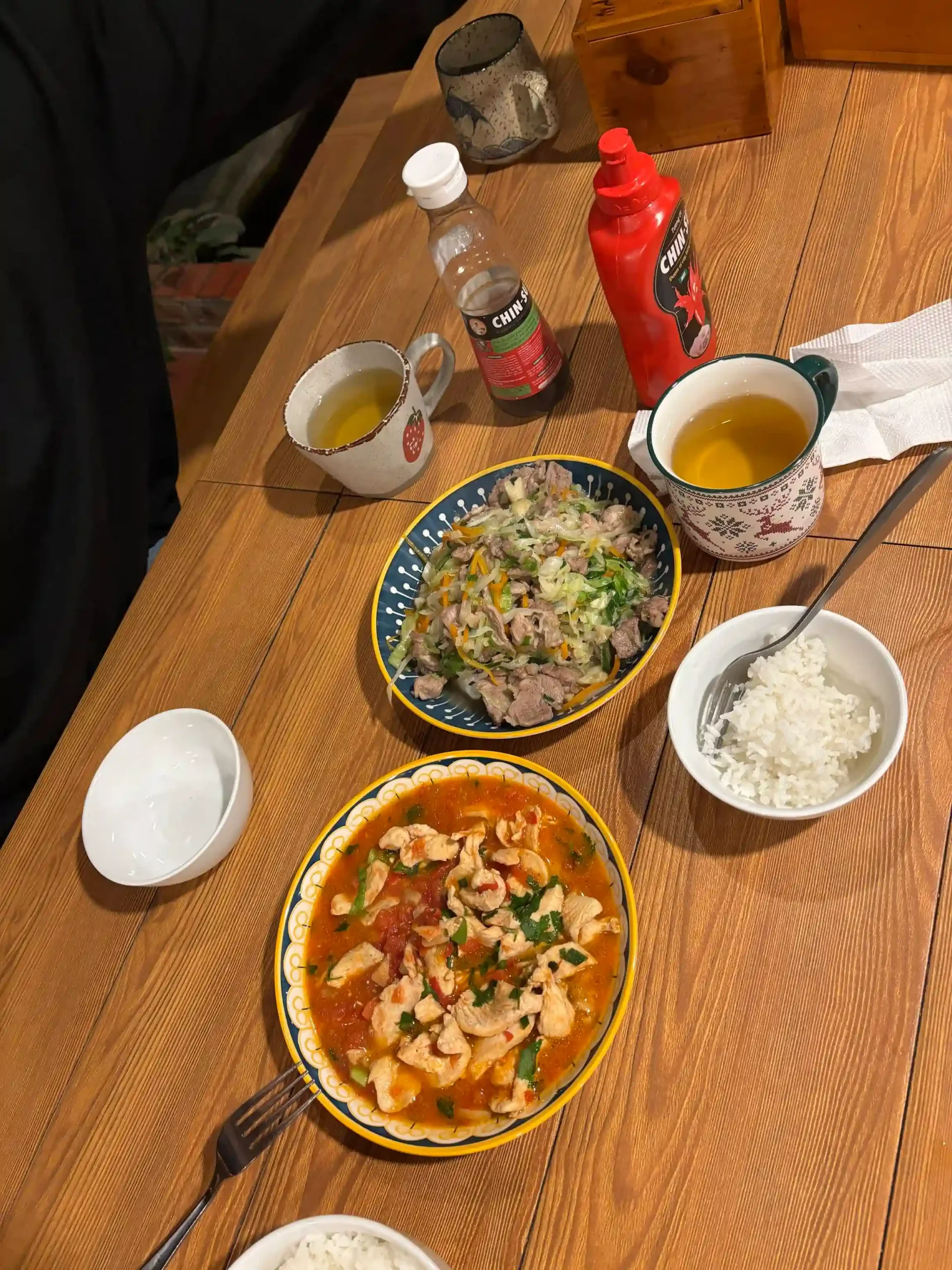
Homestays often serve some of the best food you’ll eat in Ninh Binh, precisely because it’s cooked for the household rather than plated for a menu. If your accommodation offers a home-cooked dinner option, take it at least once during your stay. It’s usually the most personal and often the most memorable meal of a Ninh Binh trip, and it typically costs less than a restaurant meal of comparable quality.
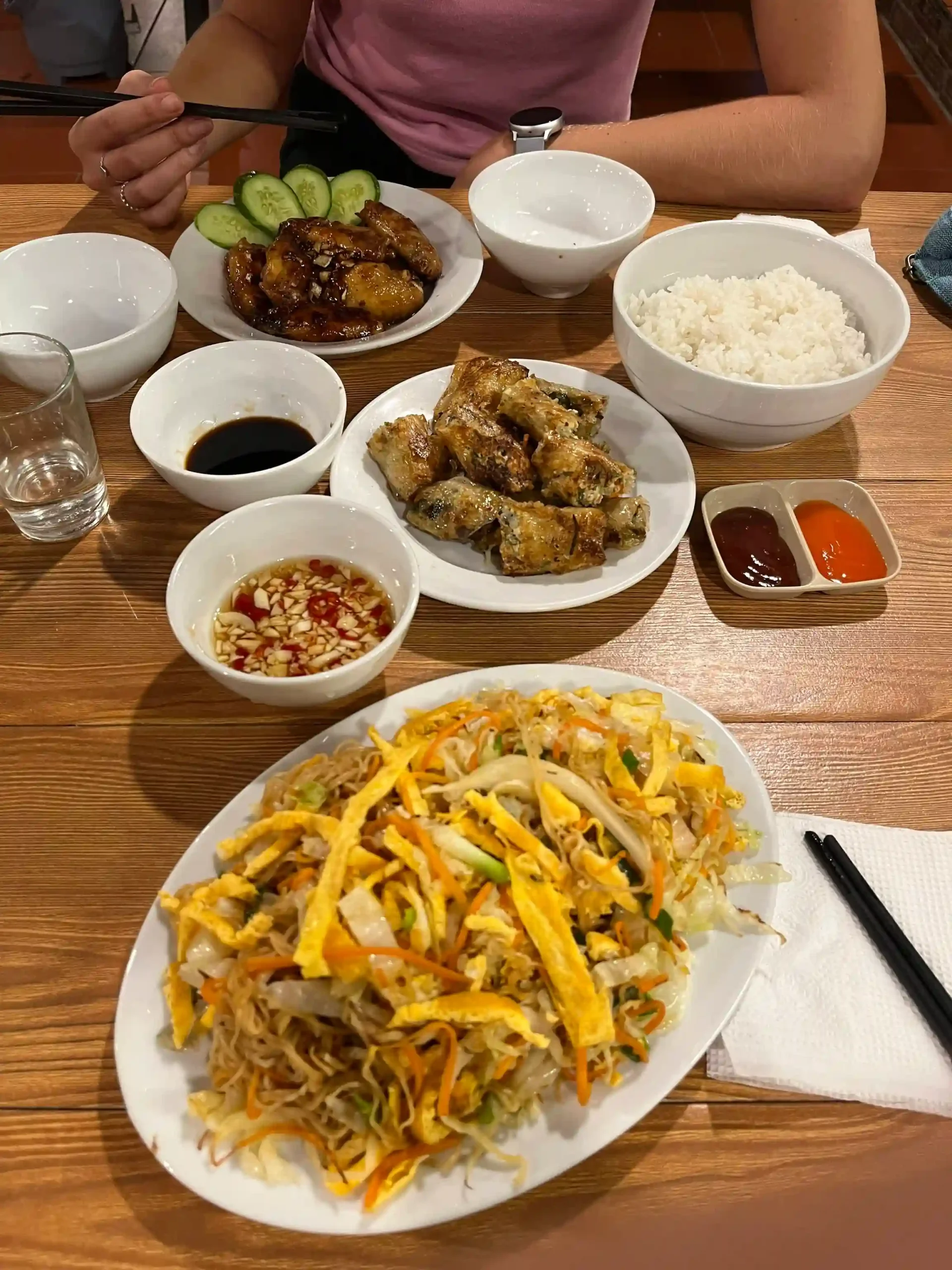
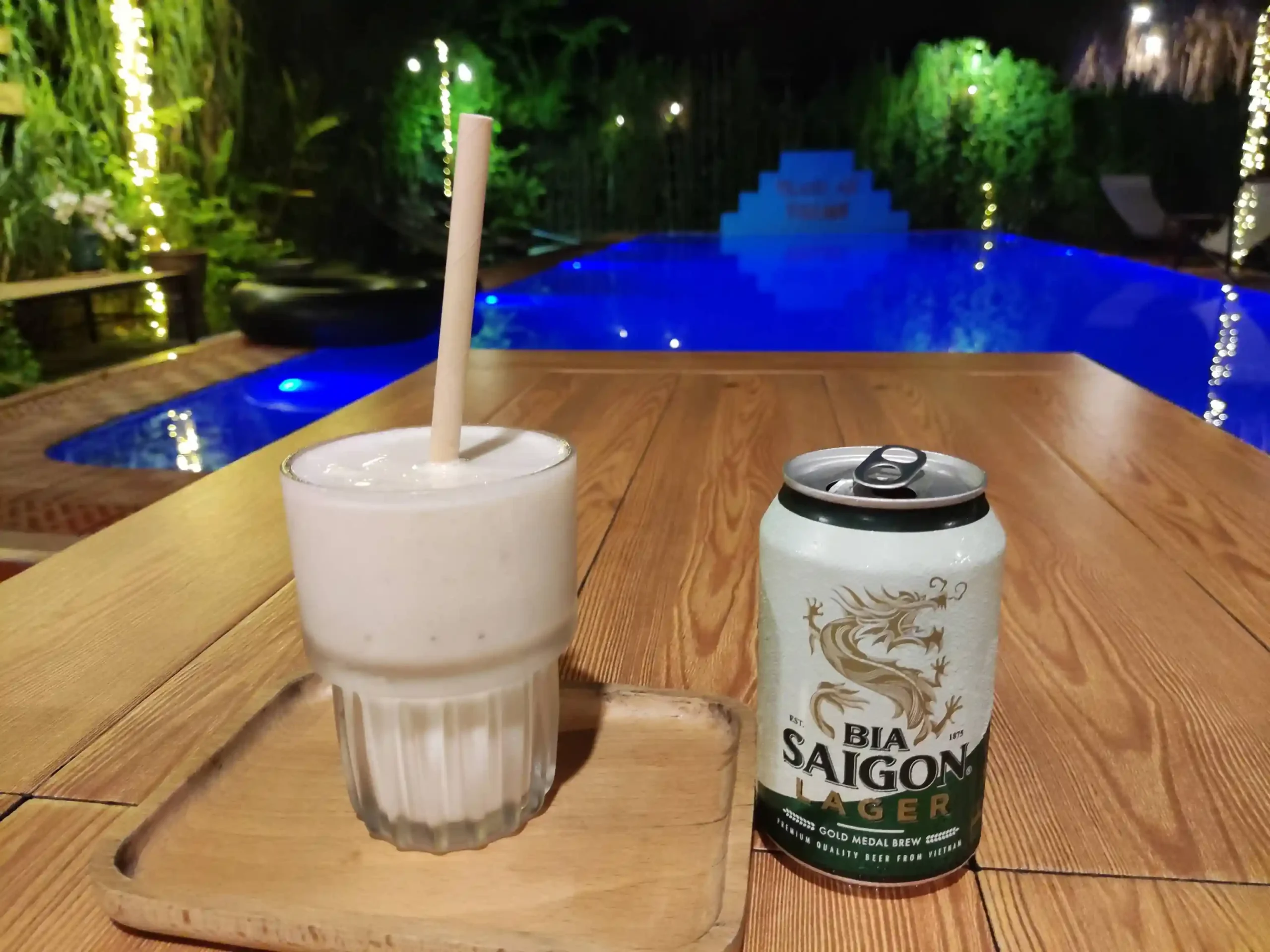
Roadside and market stalls are where you’ll find the cheapest, fastest versions of com chay, simple noodle dishes, and snacks. Nothing fancy, but genuinely local, and a good option if you’re cycling through the villages and want to stop somewhere quick rather than sitting down for a full restaurant meal.
Day tours that include lunch are worth mentioning since a lot of visitors experience their first Ninh Binh meal this way. The food on an included group-tour lunch tends to be perfectly decent but rarely the standout meal of the trip, since it’s catering to a mixed group with varied preferences rather than showcasing the specific things Ninh Binh does best. If your day involves a group tour lunch, I’d treat it as adequate fuel and plan a proper goat meat meal separately if you have the time.
What Things Cost
| Item | Price Range |
|---|---|
| Com chay (plain) | 30,000-50,000 VND |
| Com chay (with goat/seafood topping) | 50,000-80,000 VND |
| Goat meat dish (shareable) | 150,000-300,000 VND |
| Simple noodle dish or snack | 15,000-40,000 VND |
| Kim Son rice wine (bottle) | 50,000-150,000 VND depending on quality |
| Full sit-down goat meal, per person, group of 4 | roughly 150,000-250,000 VND |
Ninh Binh runs noticeably cheaper than Hanoi for equivalent quality, which is worth knowing if you’re budgeting a longer Vietnam trip and want to eat well without spending much.
Practical Eating Notes
Spice levels are generally mild across Ninh Binh cuisine compared to some other regions, but you can always ask for more chili if that’s what you want. Nobody will find the request strange.
Vegetarians aren’t left with nothing, com chay without meat topping, tofu dishes, and vegetable-based sides are commonly available, though they’re rarely the headline item on a menu built around goat meat. It’s normal and expected to ask specifically about vegetarian options when you sit down, especially at goat-focused restaurants where the menu skews heavily toward meat.
Reservations matter more than you’d expect at the well-known goat restaurants, particularly around lunch on weekends when domestic tourism peaks. If you have a specific restaurant in mind, a quick call or a message through your homestay to book a table ahead saves you from standing around waiting.
Take-home food is genuinely worth considering here in a way it isn’t in every destination. Com chay and Kim Son rice wine both travel well, and buying a package of either at a local shop rather than an airport souvenir stand tends to mean better quality and a fairer price.
Frequently Asked Questions
Is Ninh Binh goat meat safe and hygienic for tourists to eat?
Yes, at the established restaurants near Tam Coc and Trang An that see regular tourist traffic. These are working restaurants with consistent turnover, not roadside stands of uncertain provenance.
The usual travel-food common sense applies (freshly cooked, hot, busy establishment) but there’s no specific reason to avoid goat meat here beyond normal food safety awareness.
What does goat meat actually taste like if I’ve never had it?
Milder and less gamey than a lot of people expect, especially the Ninh Binh version specifically, since the free-range, herb-grazing diet of the local goats produces a leaner, more subtly flavored meat than farmed goat elsewhere.
Steamed or grilled preparations taste closer to a lean, slightly herbal beef than anything strongly “goaty.” The rare lime preparation is a bigger jump for a first-timer.
Can I find non-goat food easily if I’m not interested in trying it?
Absolutely. Standard Vietnamese dishes, noodle soups, rice dishes, spring rolls, are available everywhere, and com chay itself doesn’t require goat meat as a topping. Nobody will push goat meat on you if it’s genuinely not something you want to try.
Is street food in Ninh Binh as good as in Hanoi or Ho Chi Minh City?
It’s a different kind of street food scene, smaller and more rural, without the dense, layered street food culture of the big cities. What Ninh Binh does well is the specific regional dishes tied to the terrain, goat meat and com chay specifically, rather than a broad street food ecosystem.
If street food variety is your priority, Hanoi does that better. If regional specialty dishes done well are your priority, Ninh Binh delivers on its narrower focus.
Do homestays typically include meals?
Many do, either as an optional add-on or bundled into certain packages. It’s worth asking specifically when you book, since a home-cooked dinner is frequently one of the better food experiences of a Ninh Binh stay, and it’s not always advertised prominently on booking platforms even when it’s available.
What’s the best single dish to try if I only have time for one?
Dê nướng (grilled goat) or dê hấp (steamed goat), paired with com chay on the side. That combination covers both of Ninh Binh’s signature specialties in one sitting and gives you the clearest sense of what makes the region’s food distinct.
Wondering what I’m eating on my next trip back, or found a goat restaurant that deserves a mention here? Drop it in the comments, this is exactly the kind of guide that improves with local tips rather than staying fixed once it’s published.
For the bigger picture on planning a Ninh Binh trip, the things to do in Ninh Binh guide has the ranked list of sights, and the basics on logistics and timing live in the general travel guide.

Keep Exploring Ninh Binh
-
See & do UltimateRanking of things to do in Ninh Binh that worth your time ›
-
Food5 best Ninh Binh restaurants better than Tripadvisor Top 10 ›
-
FoodInside Tam Coc’s best family-run cooking class (Ninh Binh) ›
-
Stays Must readBest places to stay in Ninh Binh for views & fast access ›
-
Route Must readHow many days in Ninh Binh to see everything worth seeing ›











 Tiếng Việt
 한국어
한국어 中文 (中国)
 日本語
日本語 ไทย
ไทย Deutsch
 Español
 Destinations
 Instagram
 Facebook
 X (Twitter)
 Threads
 Tiktok