









 Ha Giang
 Hanoi
Hanoi Ho Chi Minh City
 Ha Long
 Sapa
Sapa Mekong Delta
 Da Nang
 Hue
Hue Hoi An
 Ninh Binh
 Da Lat
 Nha Trang
 Phan Thiet
 Phu Quoc
 Quang Binh
 Quy Nhon
 Vung Tau
 Thai Nguyen

These two cost roughly the same and both take up a morning in the old town, but they’re doing quite different jobs and I don’t think it’s really a choice between equivalents.
The photo tour is a private photographer walking you around and sending you the pictures afterwards. The walking tour is a local guide explaining what all the buildings are and why the architecture keeps changing every hundred metres.
I’d usually point people towards the photoshoot, mostly because of what you’re left with a week later, though there’s a reasonable case for the guided walk and I’ll get into where I think it earns its money.
- Quick Answer: A Hoi An photo tour costs around $33 for one and a half to three hours with a private photographer, and you get 25 to 40 edited images plus all the raw files the next day. A guided walking tour of Hoi An Ancient Town runs $12 to $25 for two and a half to three hours and covers the Japanese Bridge, the Chinese assembly halls and the old merchant houses. Neither one includes the 120,000 VND Ancient Town ticket, which surprises people on both.
- The Two, Priced:
- Photo tour: about $33, private, 25–40 edited photos plus the raw files, ao dai available as a paid add-on, and there’s a 6am slot.
- Walking tour: $12–$25, two and a half to three hours, small group, live guide, and some of them email a digital guide afterwards.
- Free walking tour: tip-based, around three hours, larger groups, reasonable as orientation.
- Ancient Town ticket: 120,000 VND, and it’s separate on both of them.
- Things That Aren’t Obvious From the Listings:
- Ao dai rental isn’t offered on the 6am session, and there are weight limits on it.
- The photographers speak basic English and direct your posing through gestures.
- Photo tours go ahead in the rain, while walking tours get moved around more.
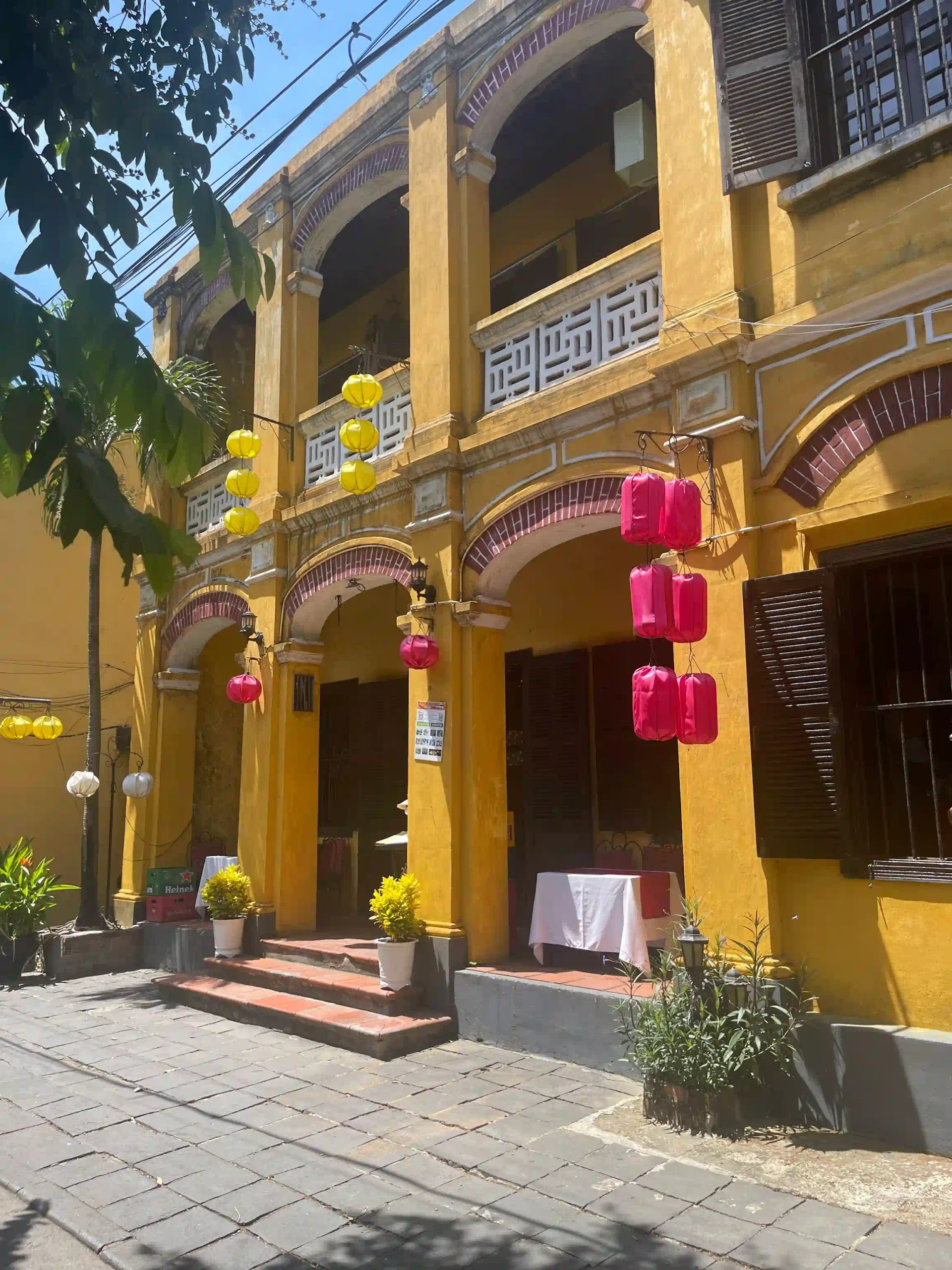
- Solid colours photograph better against the yellow walls than anything patterned.
- The heritage houses open at eight, which fits neatly after an early shoot.
What the Photo Tour Costs and What Comes With It
Around $33, for one and a half to three hours depending which length you choose.
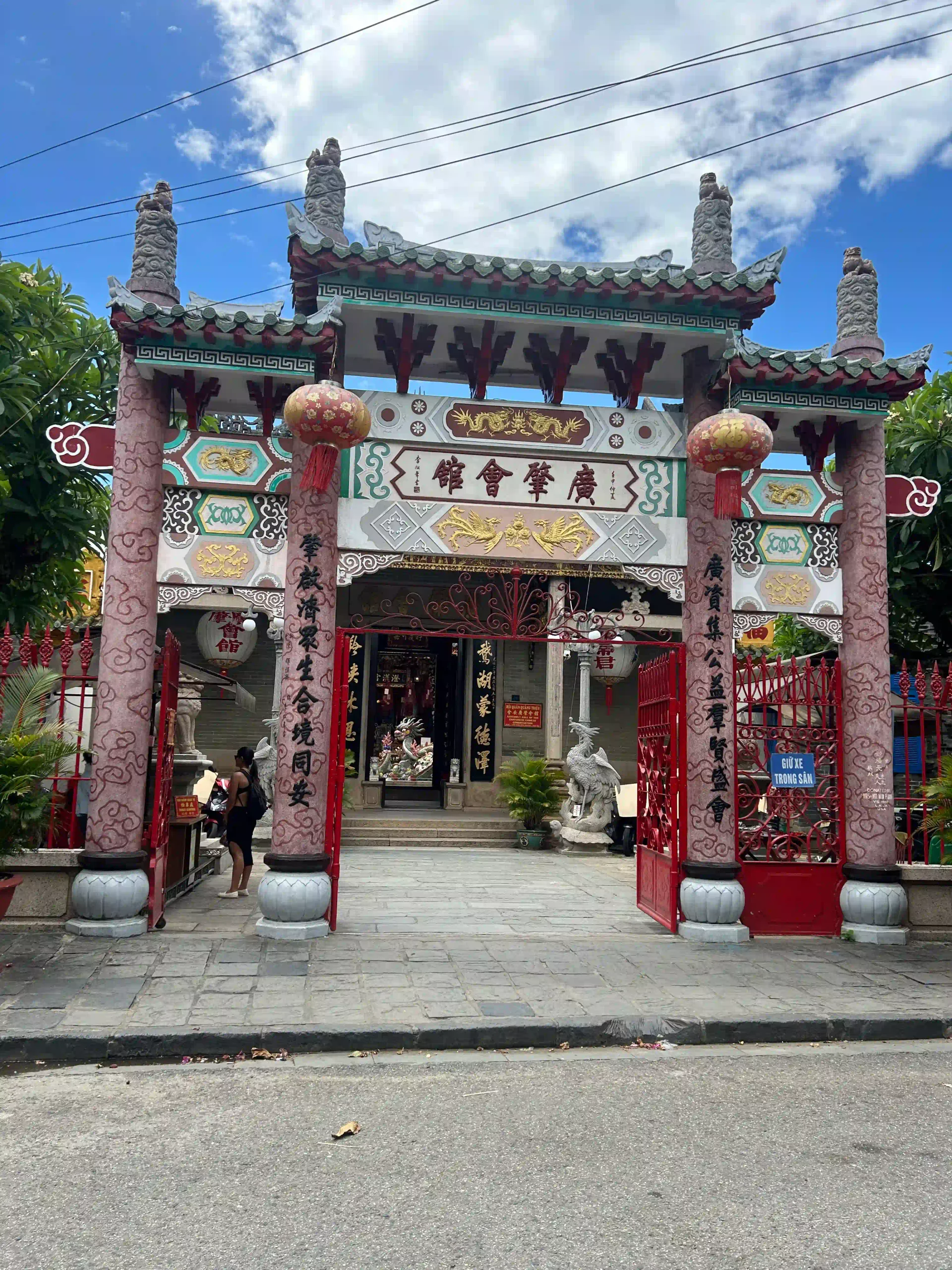
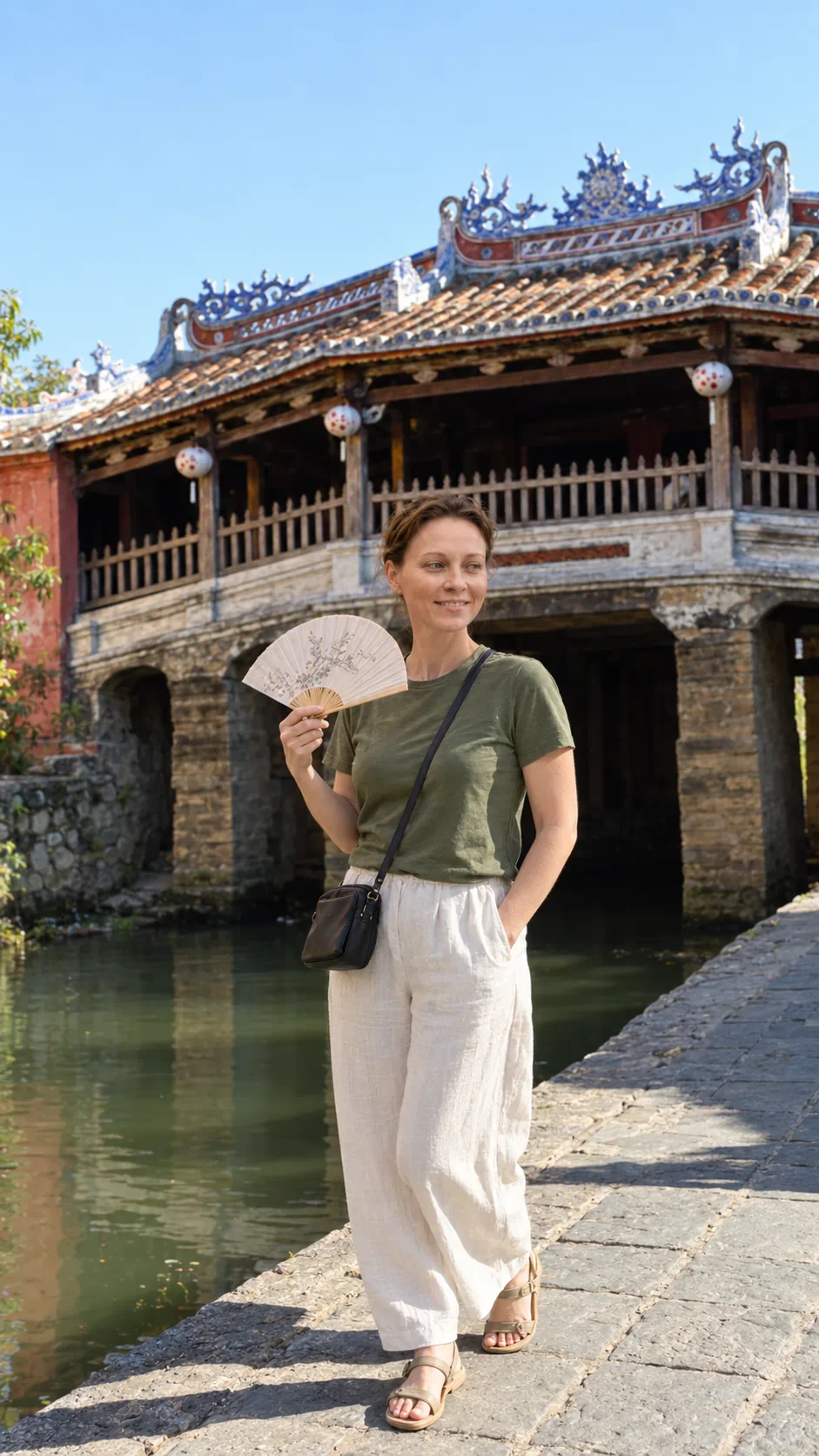
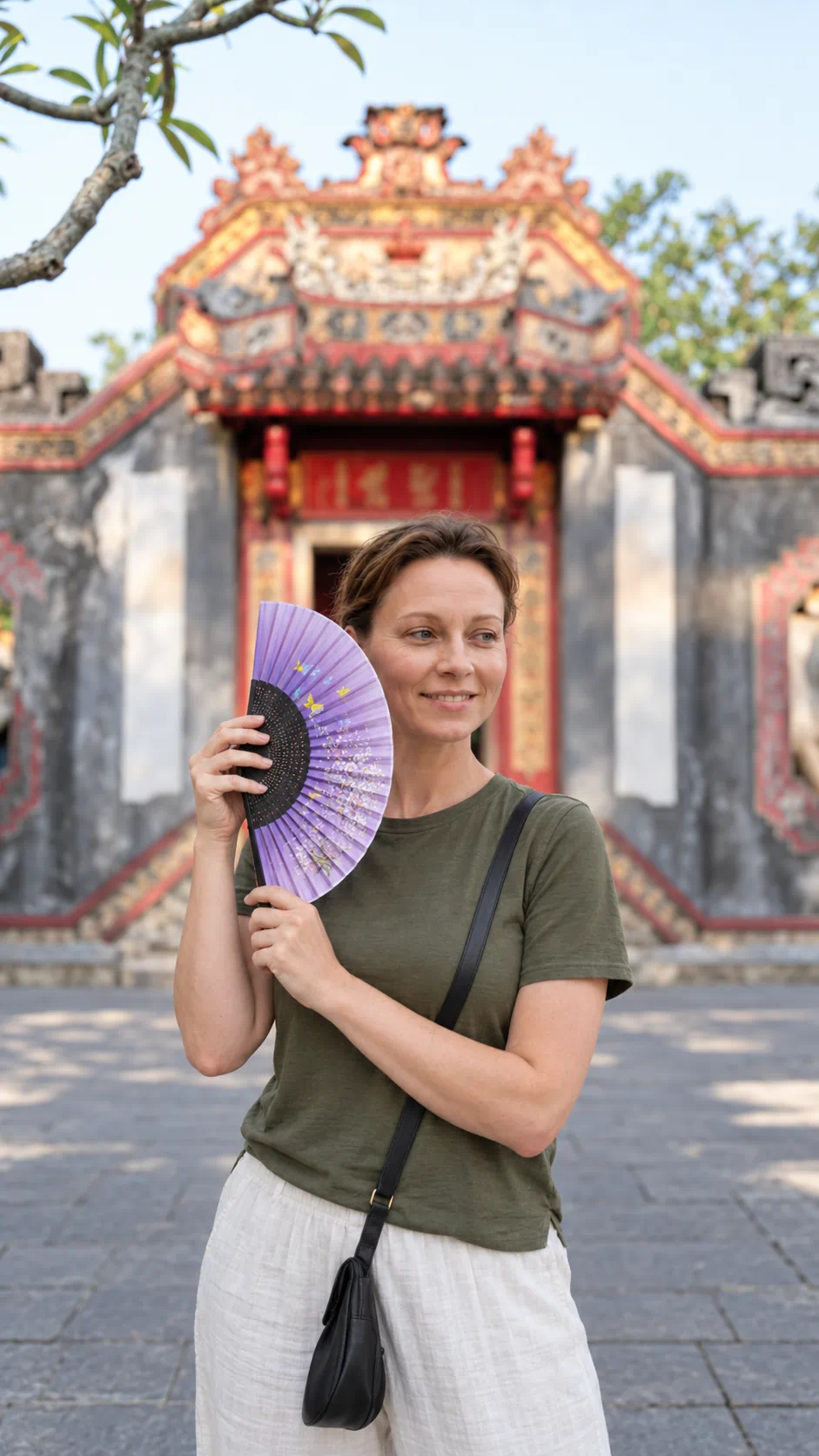
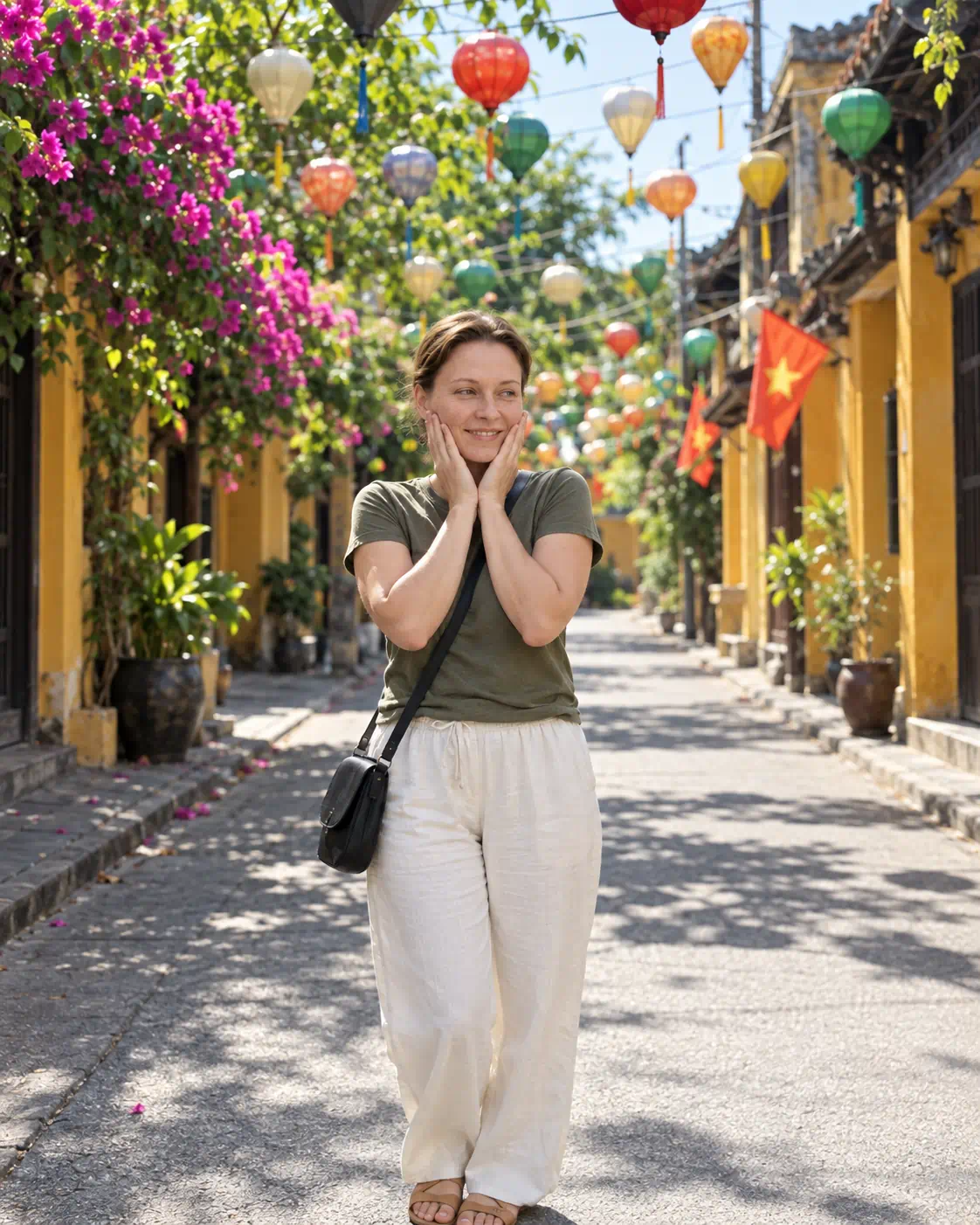
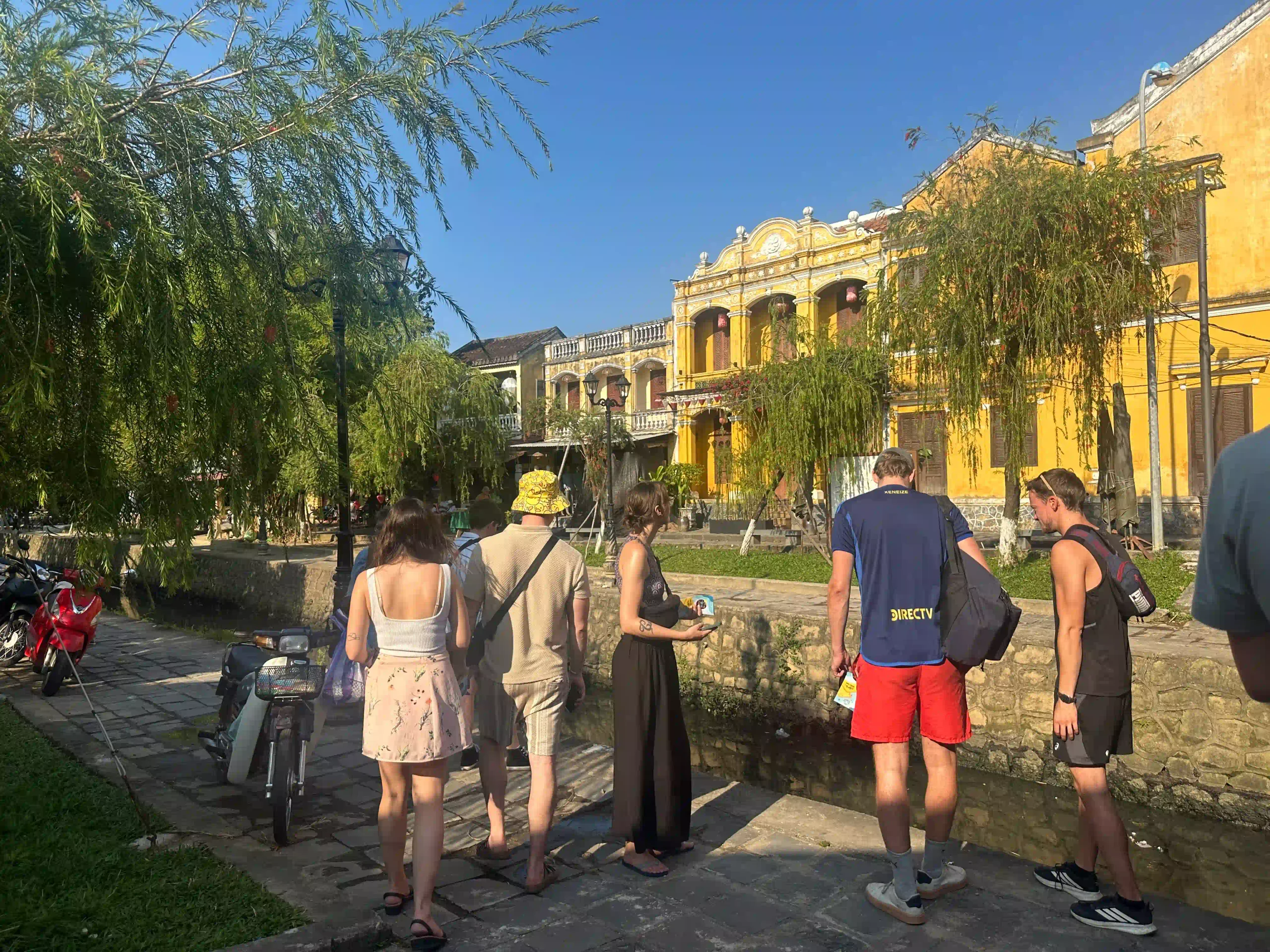
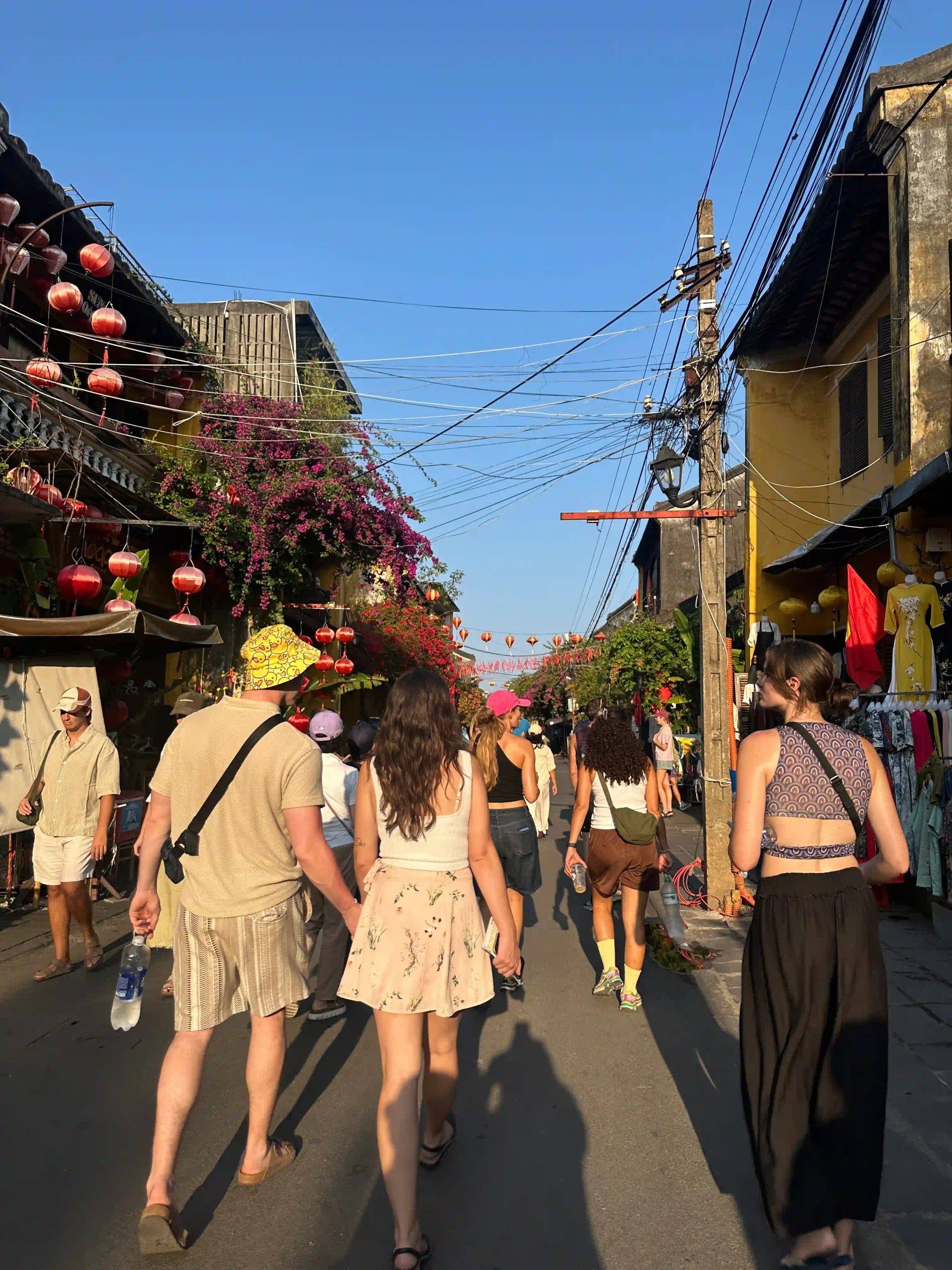
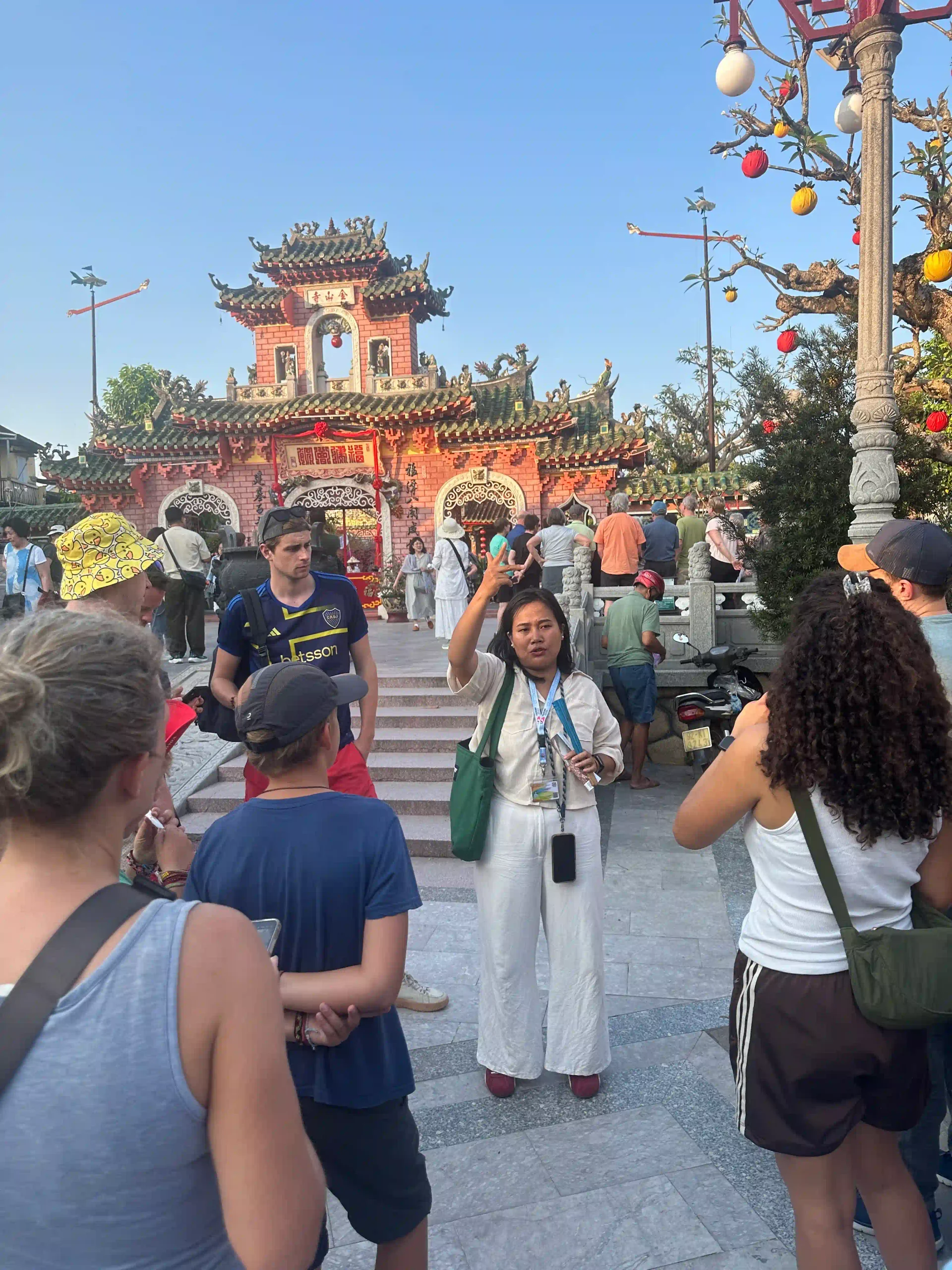
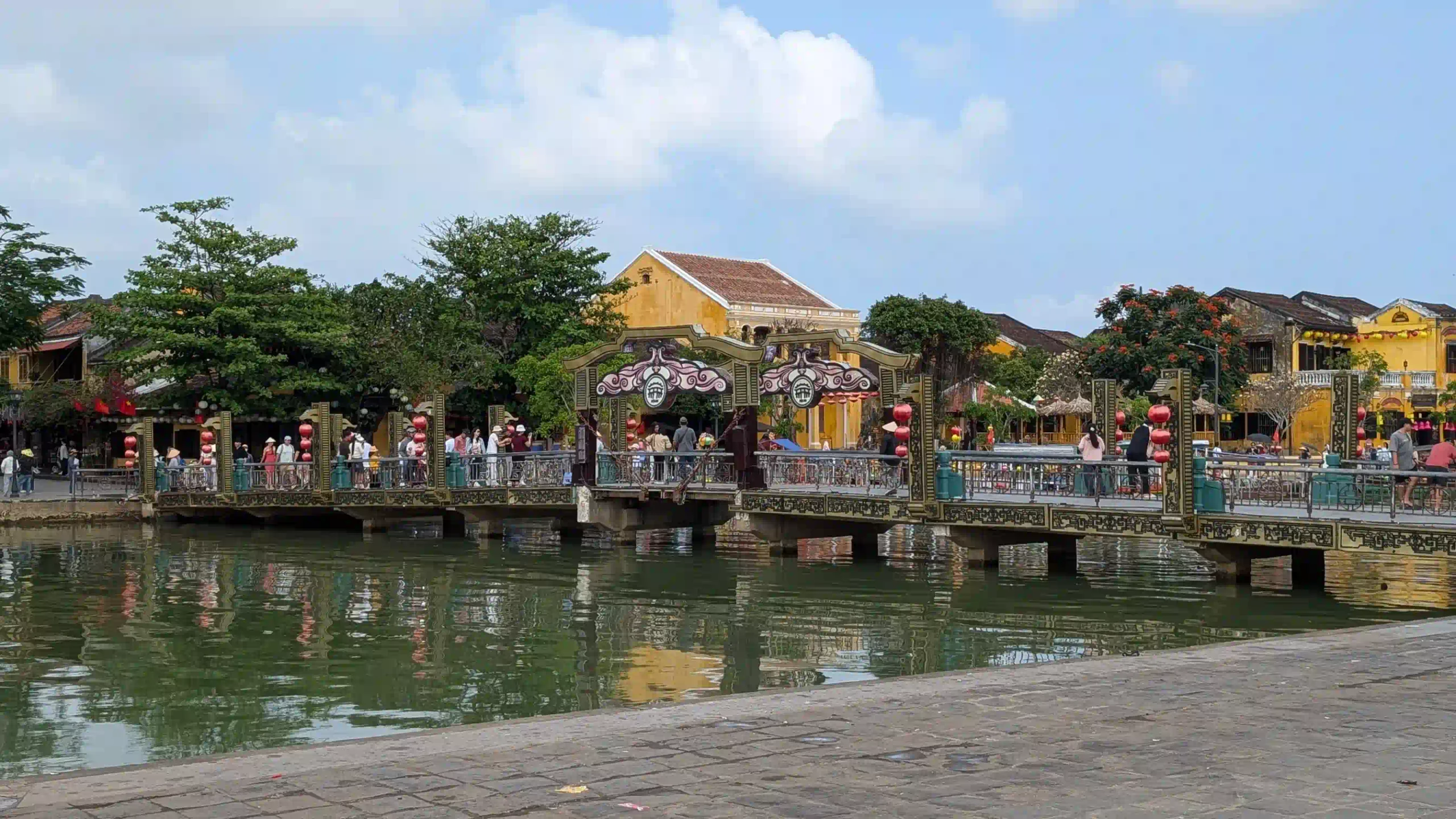
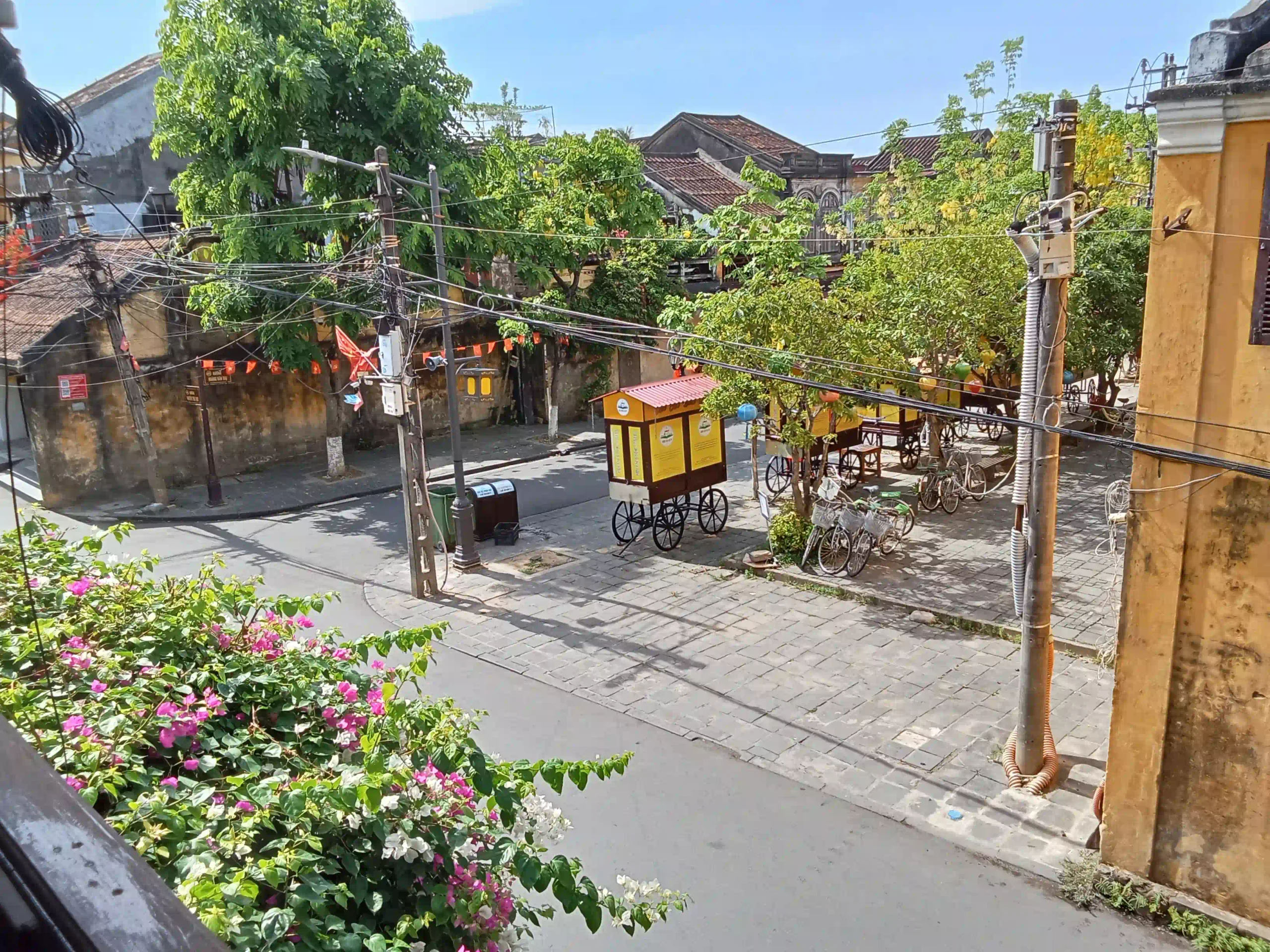
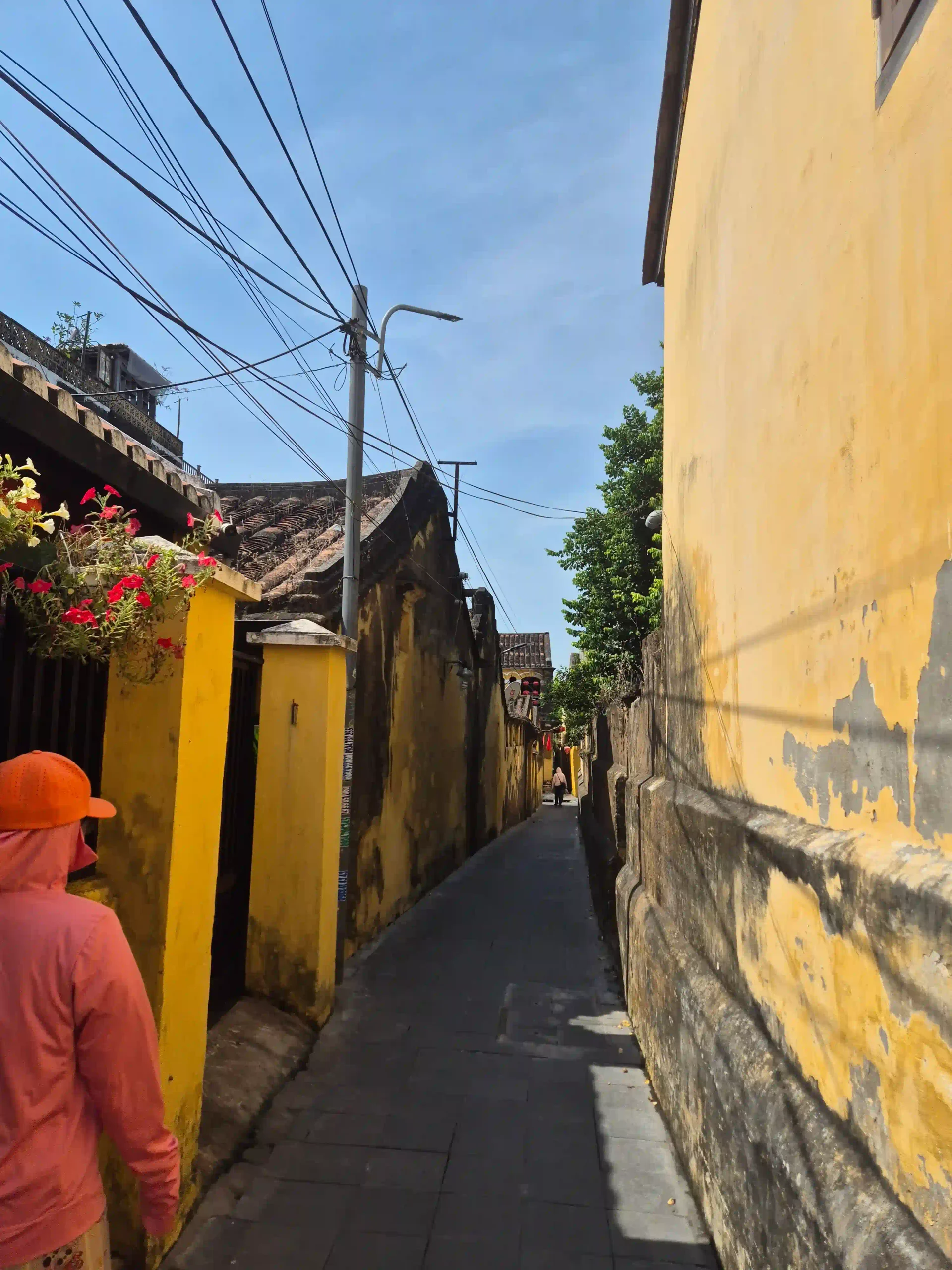
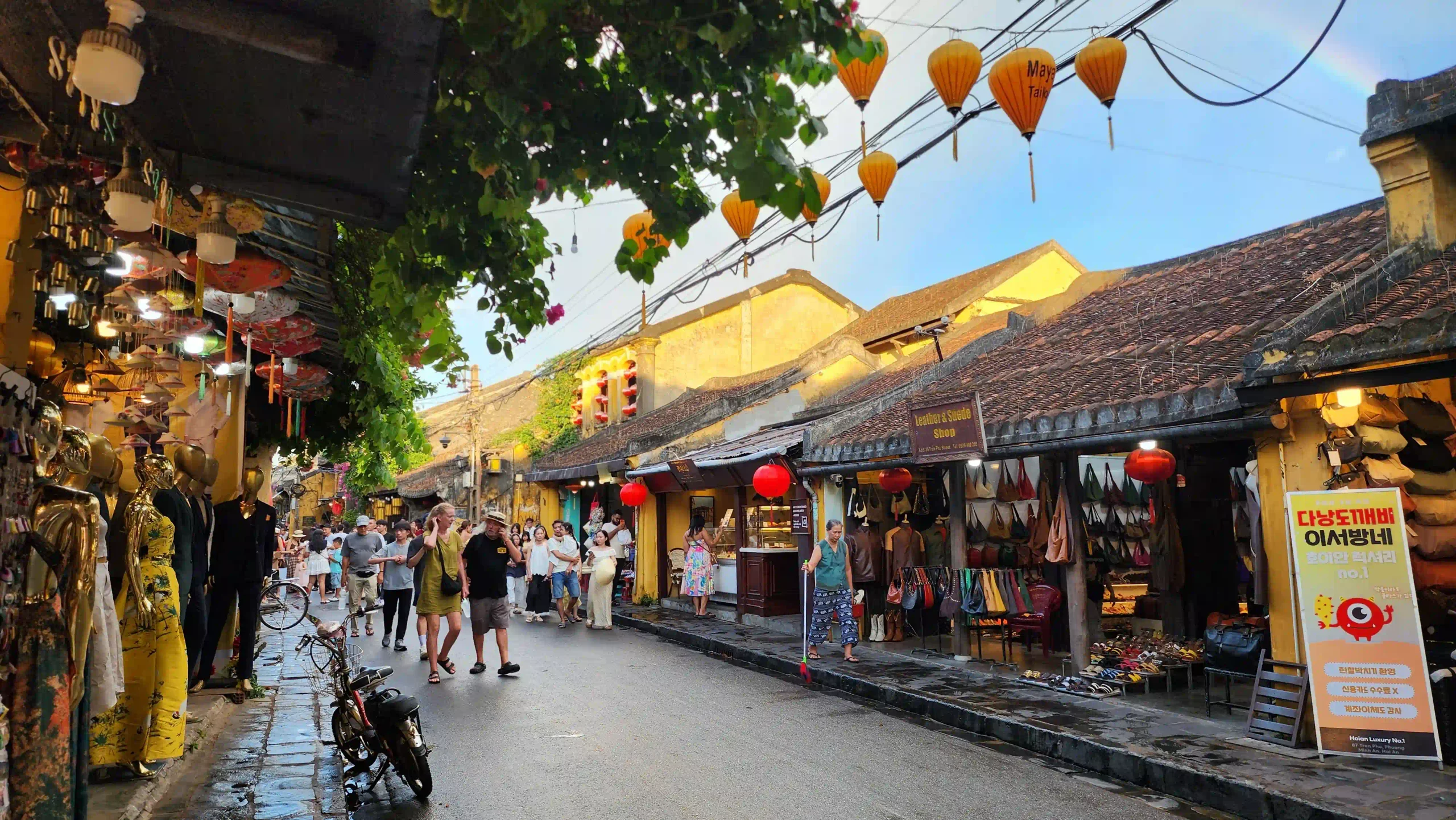
You meet the photographer at the Cantonese Assembly Hall. There’s a few minutes of posing tips, then you set off, and they shoot while you’re moving, so you don’t end up with a set of formal portraits. The route is the yellow walls, the Hoai River, the lantern streets and a handful of the alleys.
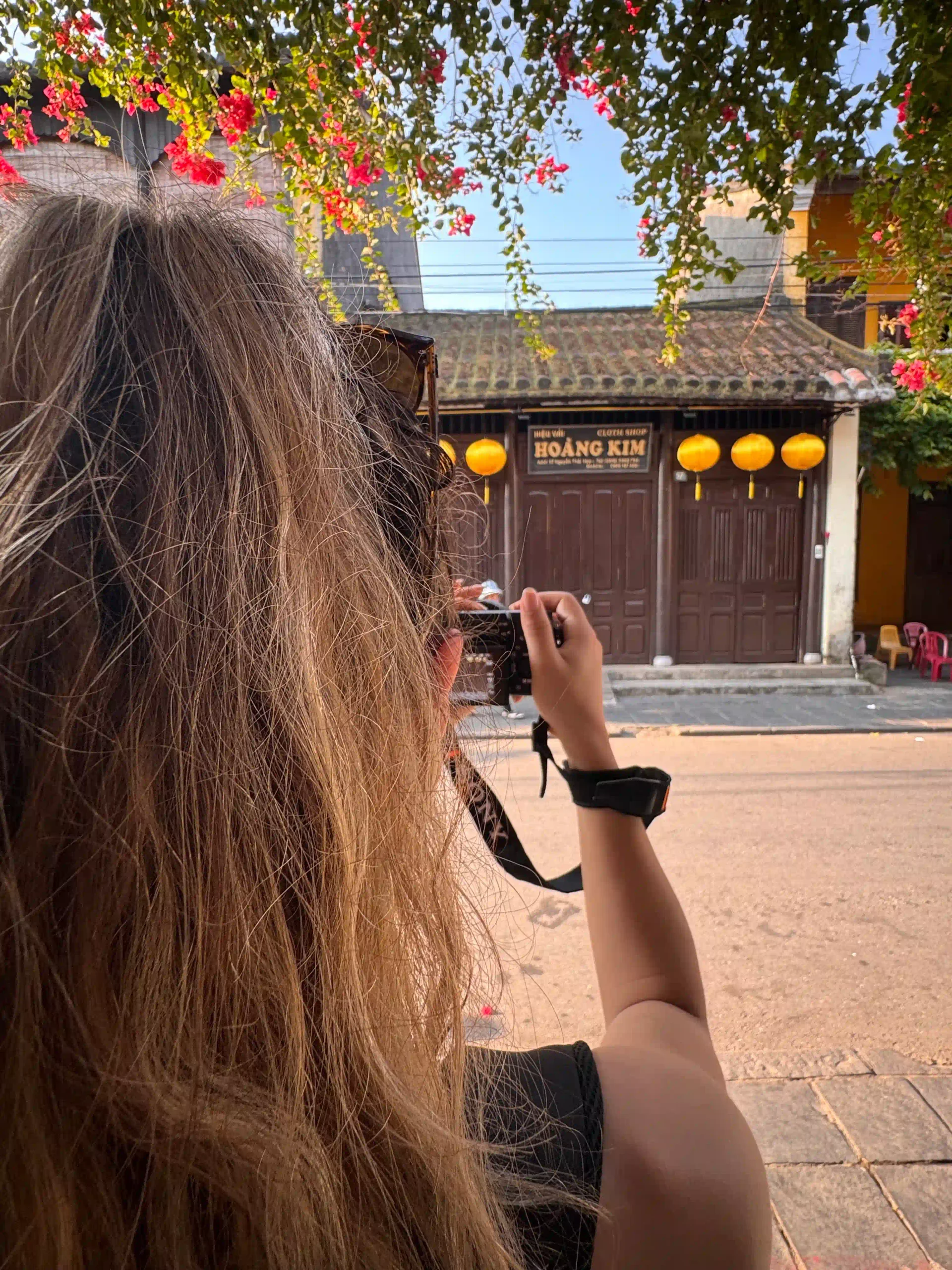
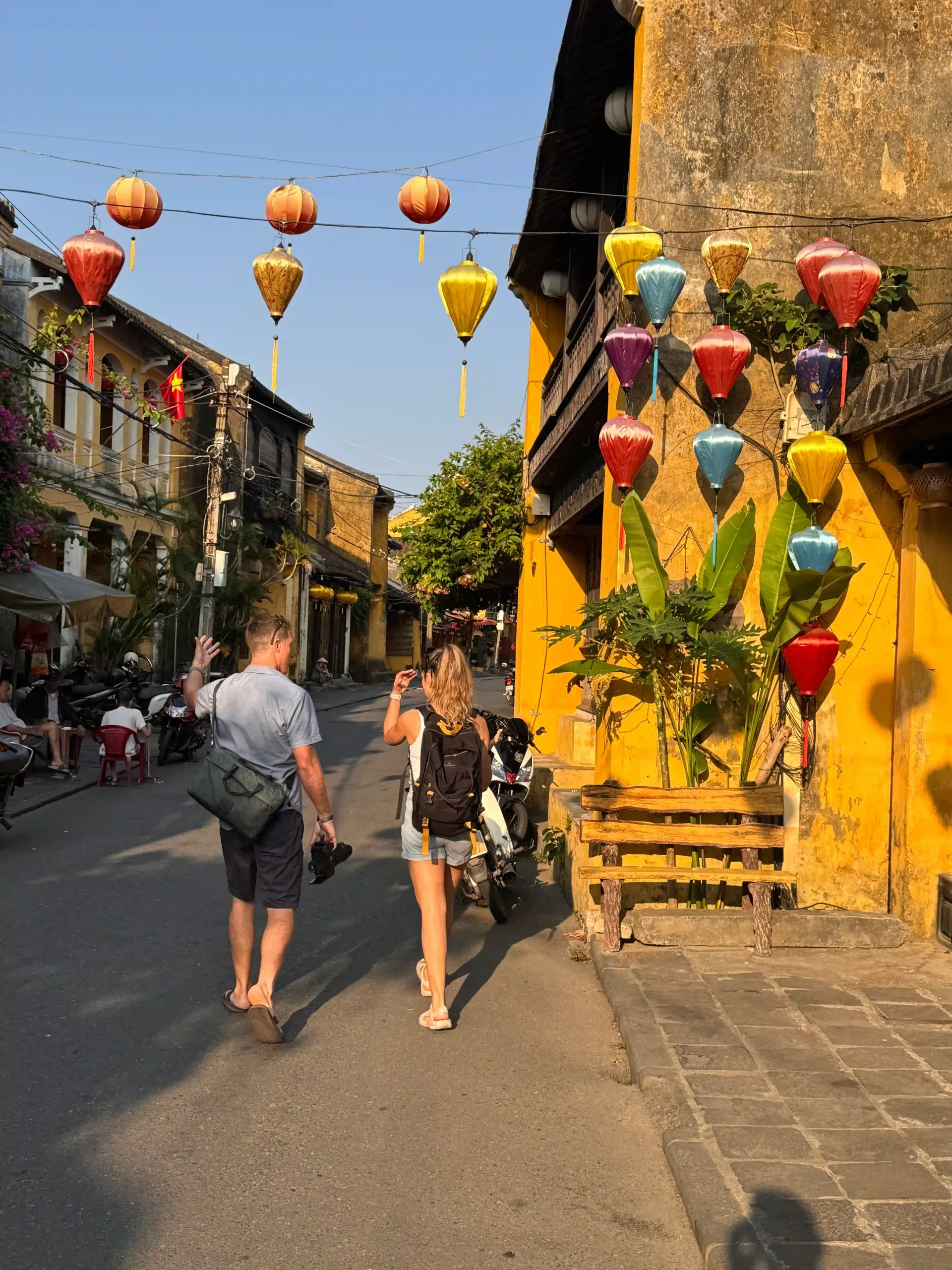
The pictures come back the next day, 25 to 40 edited ones plus every unedited frame they took, which is usually a few hundred.
I think the raw files are the more useful half of that, because editors pick according to their own taste and it doesn’t always match yours, and having the originals means you can go back and choose differently.
There’s a small charge for photographing with lanterns at the night market, and that’s folded into the price. So is a cup of mót tea, which is worth about 15,000 VND, so I’d call that a courtesy and not an inclusion.
The Early Slot
There’s a 6am session and it’s the one I’d book, for the fairly simple reason that Hoi An before 8 in the morning is a much easier town to photograph than Hoi An at 10.
Shops are opening, there are very few people about, and the light on the yellow walls is soft, where later on it goes flat and white. Most of the photographs of this place that people admire were taken either at that hour or after dark, which isn’t a coincidence.
Book nine o’clock and the photographer spends a good part of the session working around tour groups. They’re generally quite skilled at it. There’s still a limit to what anyone can do once a coach has emptied onto Tran Phu.
I’m not much of a morning person and I’d still take the early one, though I understand that’s easier said on paper than done on the day.

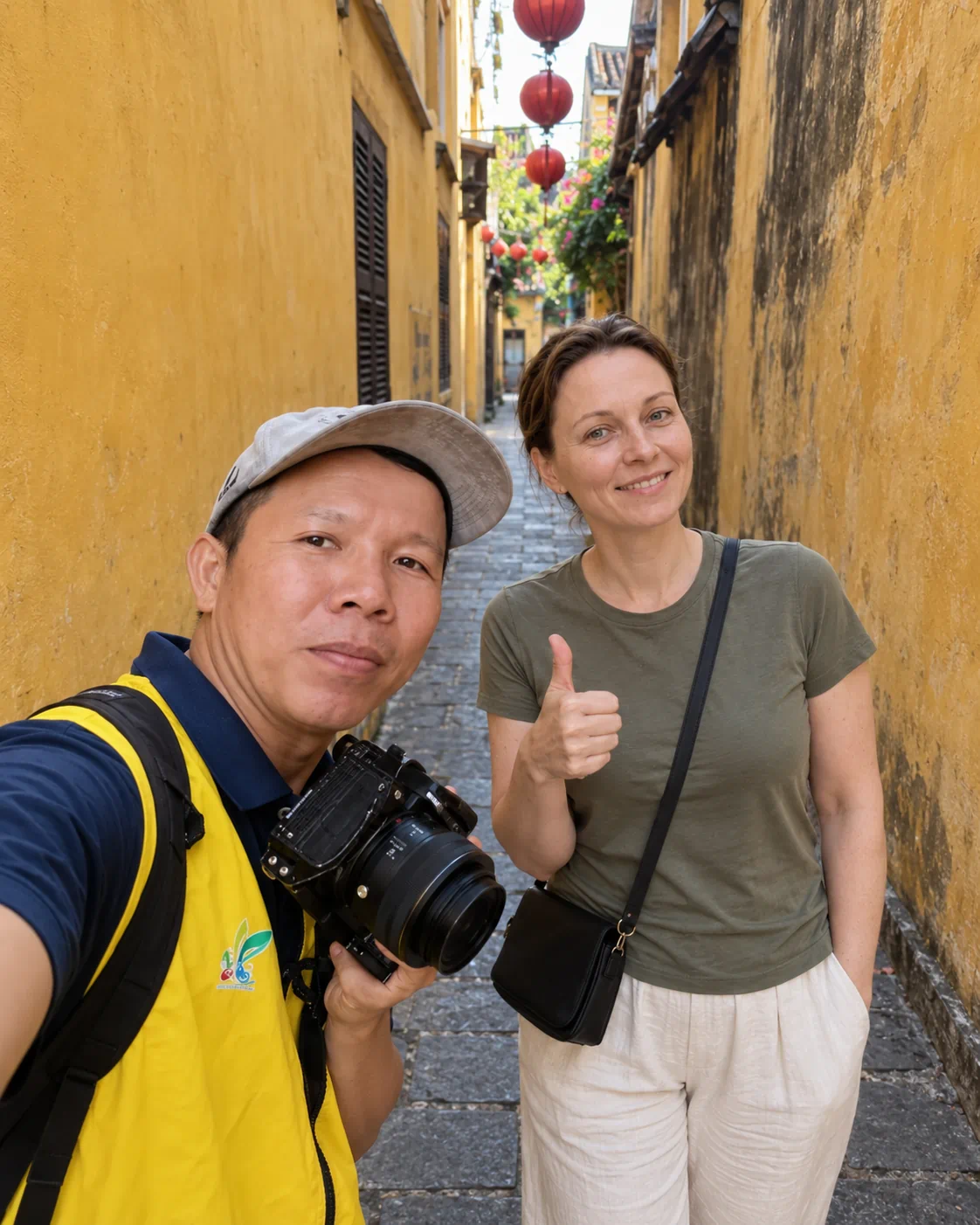
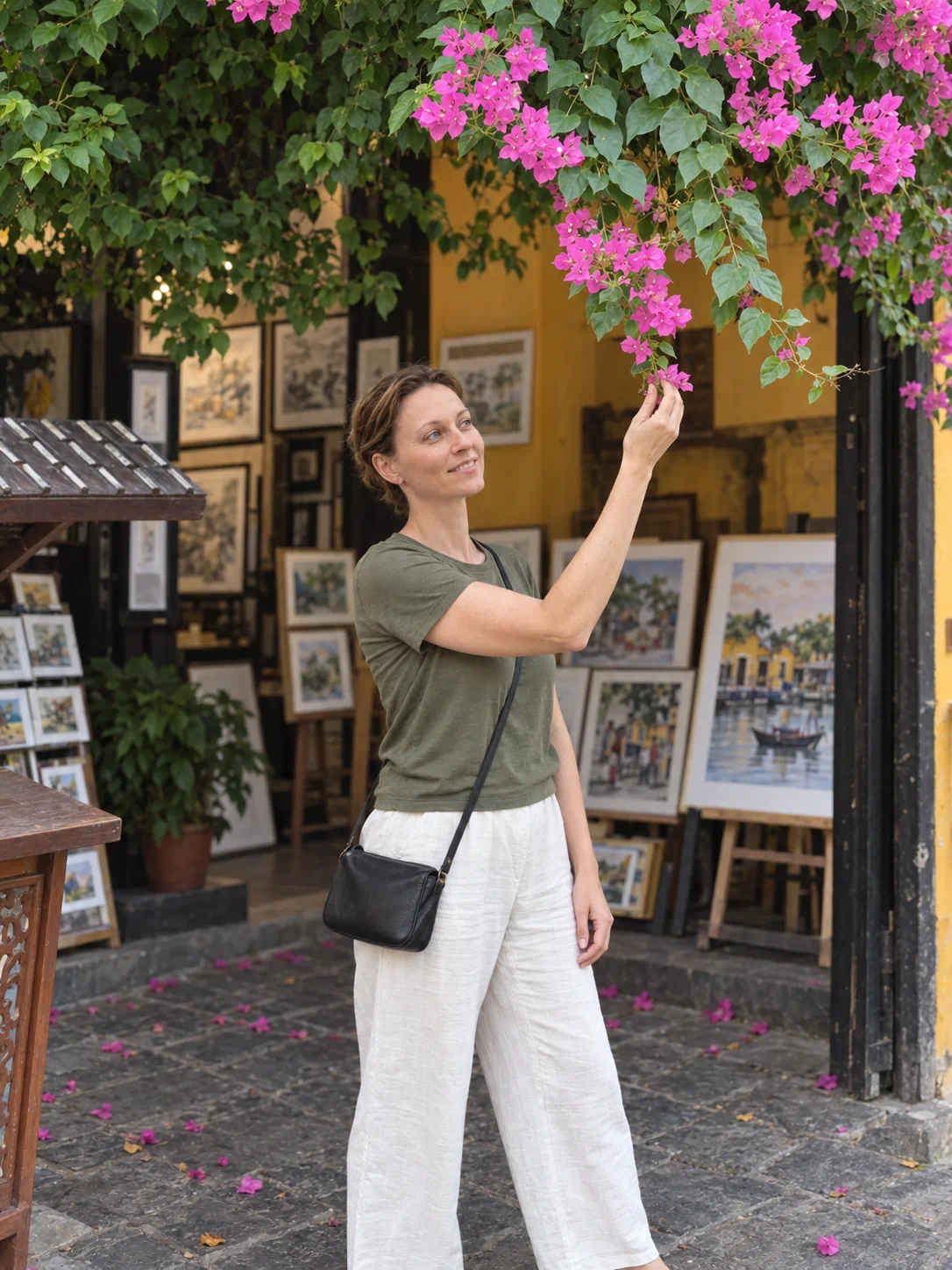
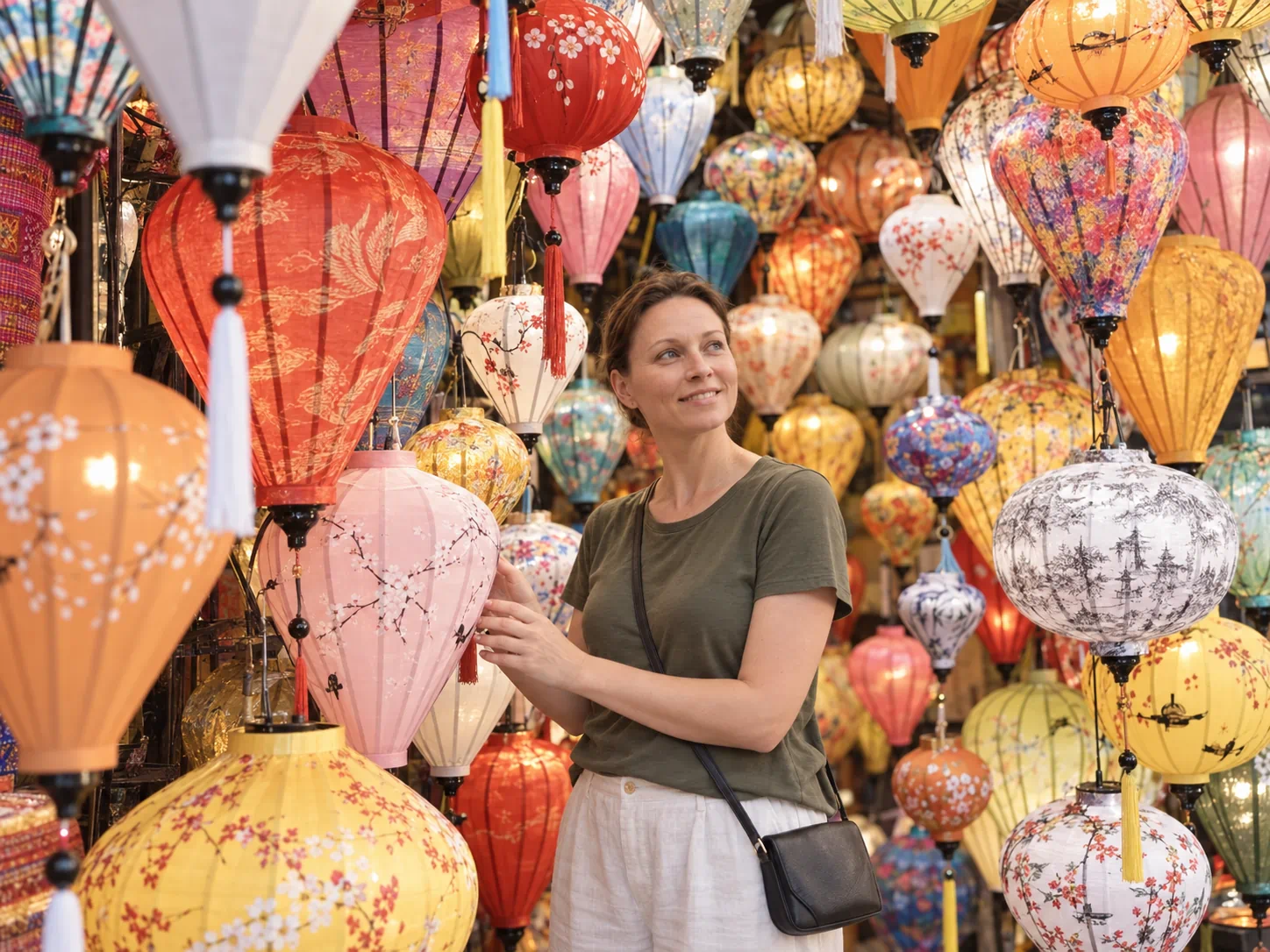
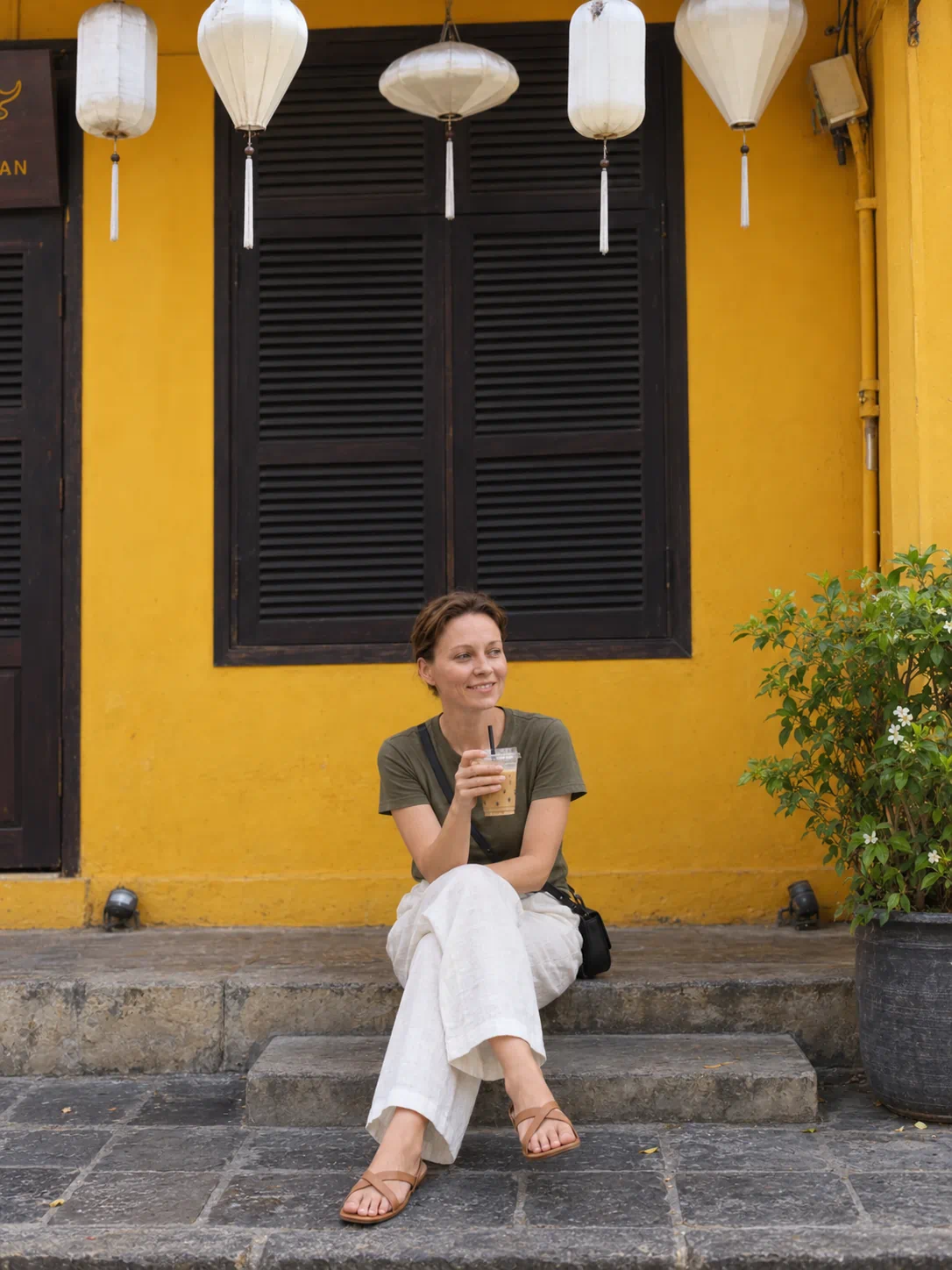
Ao Dai
Renting one is an add-on and not part of the base price, and there are weight limits attached to it, under 70kg for women and under 80kg for men.
The complication is that it isn’t offered on the 6am session, so if wearing the dress is the main reason you’re booking, you’re accepting a later slot and the crowds that come with it. That’s a genuine trade-off and I’d think it through at the booking stage.
For what it’s worth I wouldn’t bother with the rental. Ordinary clothes photograph perfectly well against those walls as long as you stick to one solid colour, since patterns tend to fight with the buildings and the pictures end up busy.
Where the Guided Walking Tour Earns Its Money
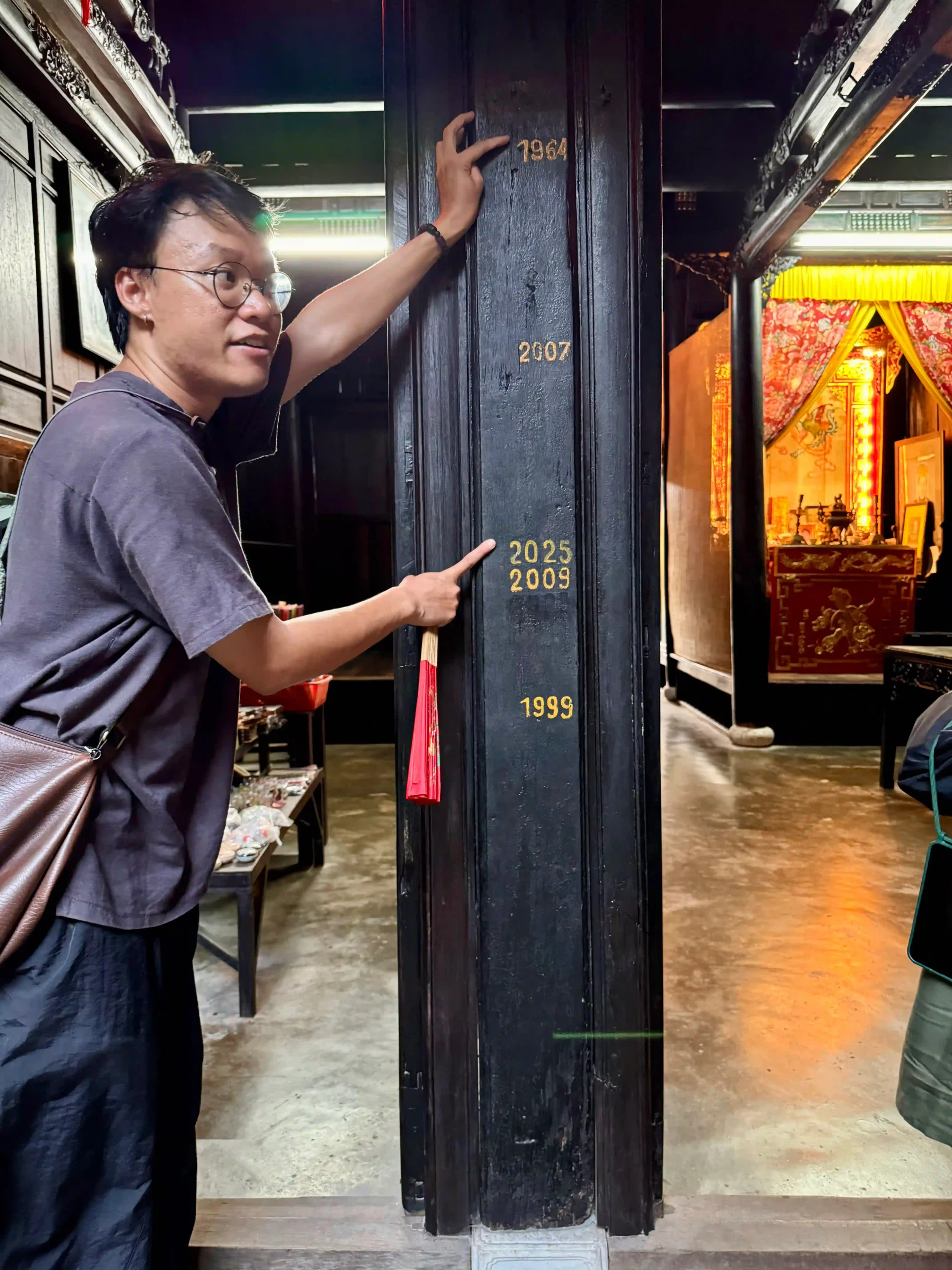
The walking tour costs $12 to $25 for two and a half to three hours, and the standard route takes in the Japanese Covered Bridge, one or two of the Chinese assembly halls, an old merchant house, the Ba Mu temple gate and the market.
Some throw in a traditional dessert and tea, and a few send you a digital guide afterwards with their own restaurant and tailor recommendations on it.
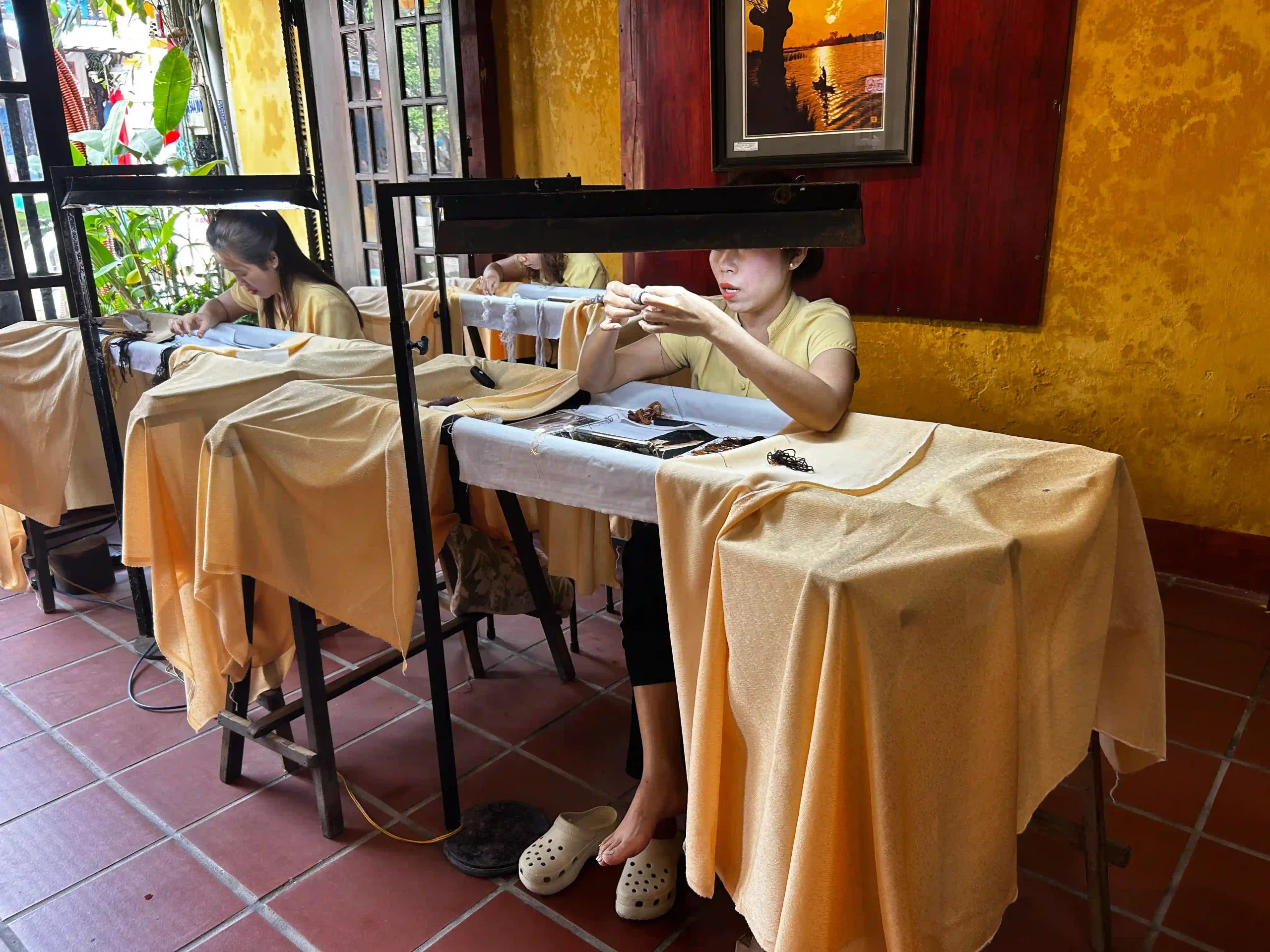
What you’re paying for is context. Hoi An benefits from that more than most places, because it looks like a nice town with yellow walls until somebody explains that it was a trading port where Japanese, Chinese, Dutch and Portuguese merchants each had their own quarter.
That’s why the buildings stop matching each other halfway down a street, and why the assembly halls were built by particular Chinese communities from particular provinces.
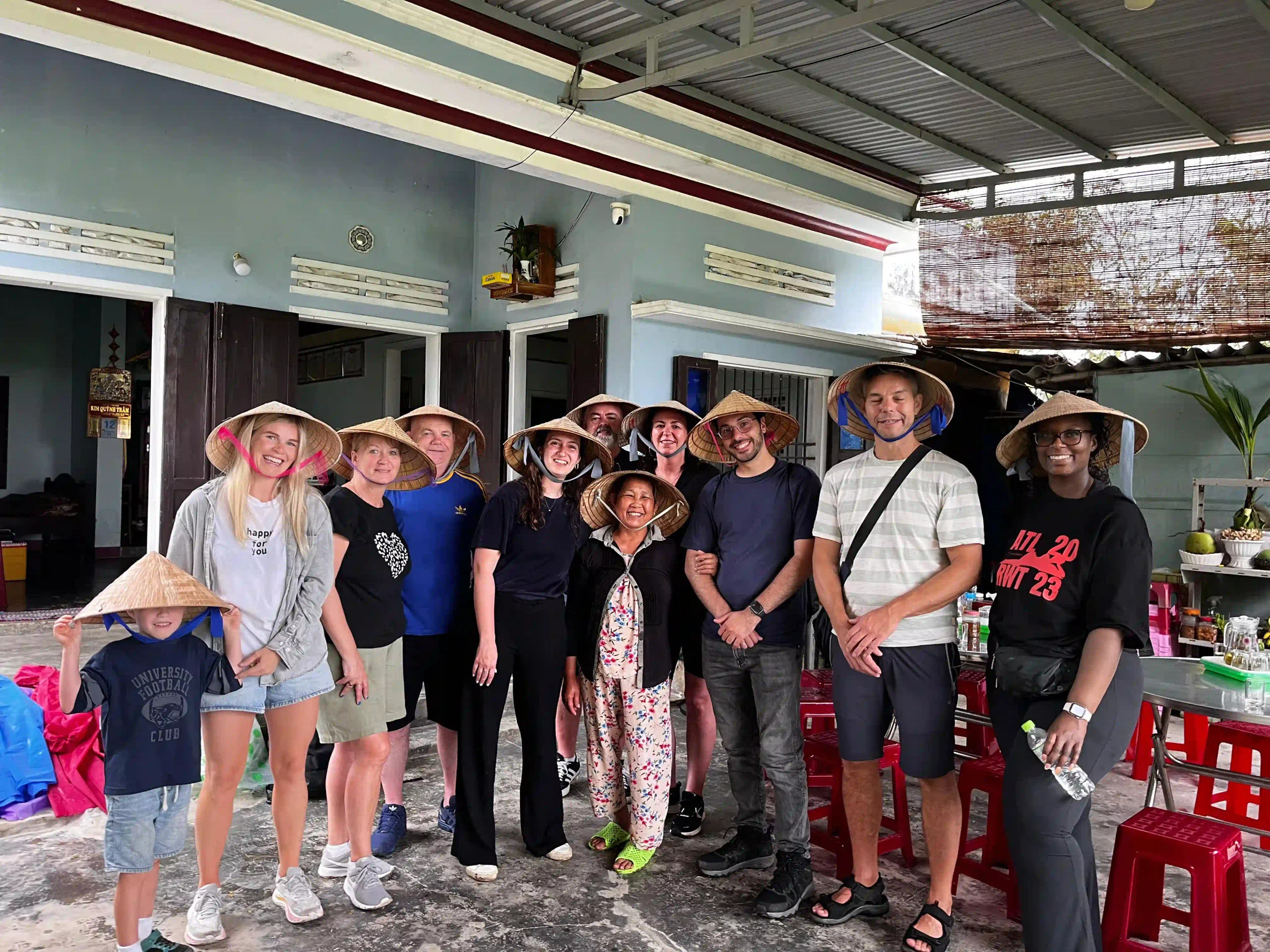
The Free Walking Tour
There’s a tip-based version that runs about three hours and it works well enough as orientation on a first morning, though the groups are larger and it’s less personal.
You’re expected to tip at the end and most people give 100,000 to 200,000 VND, so it isn’t really free, and for twelve dollars you could take the small-group one and probably enjoy it more.
The Ancient Town Ticket
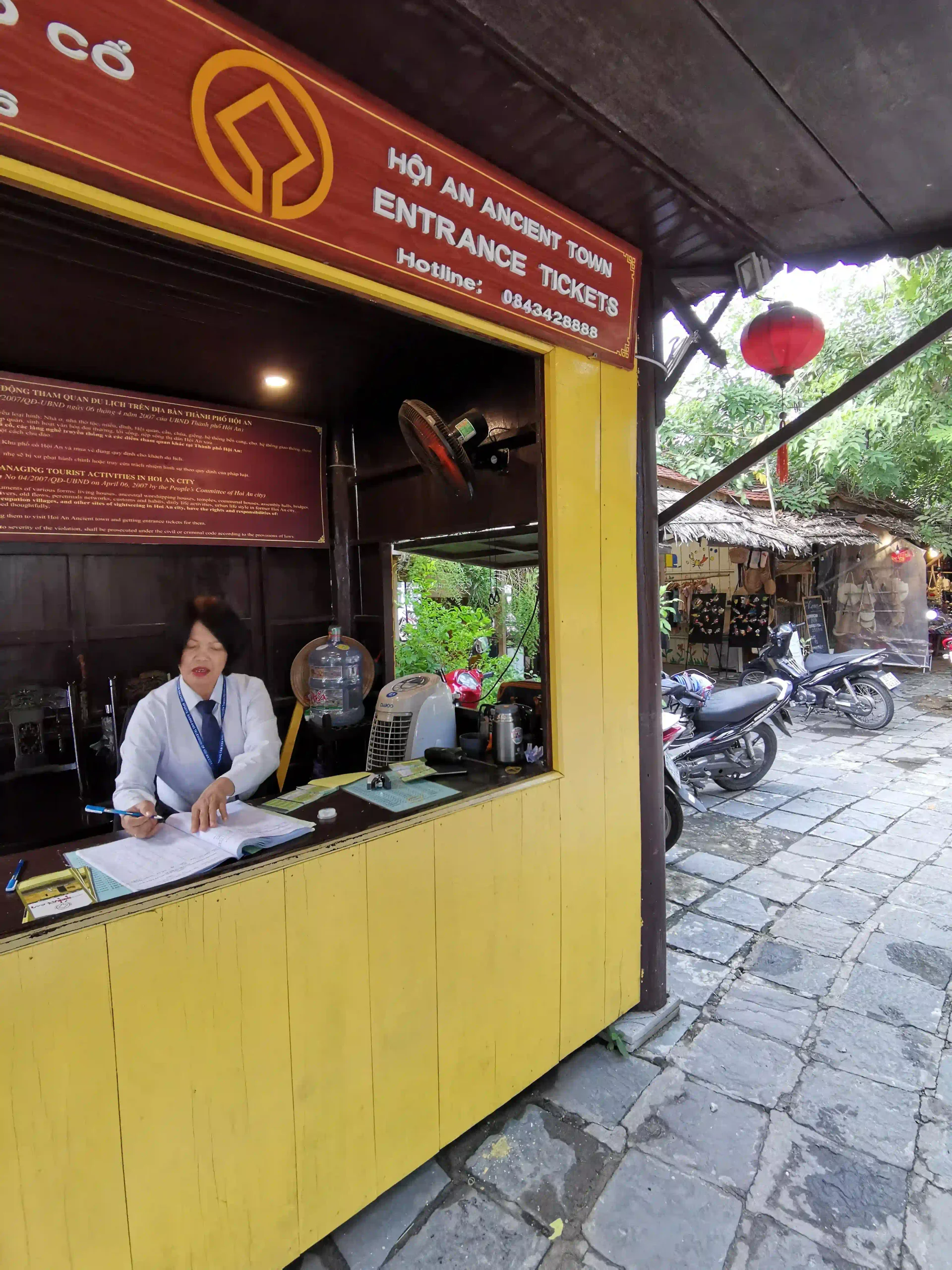
Neither tour includes it and that catches people out on both of them.
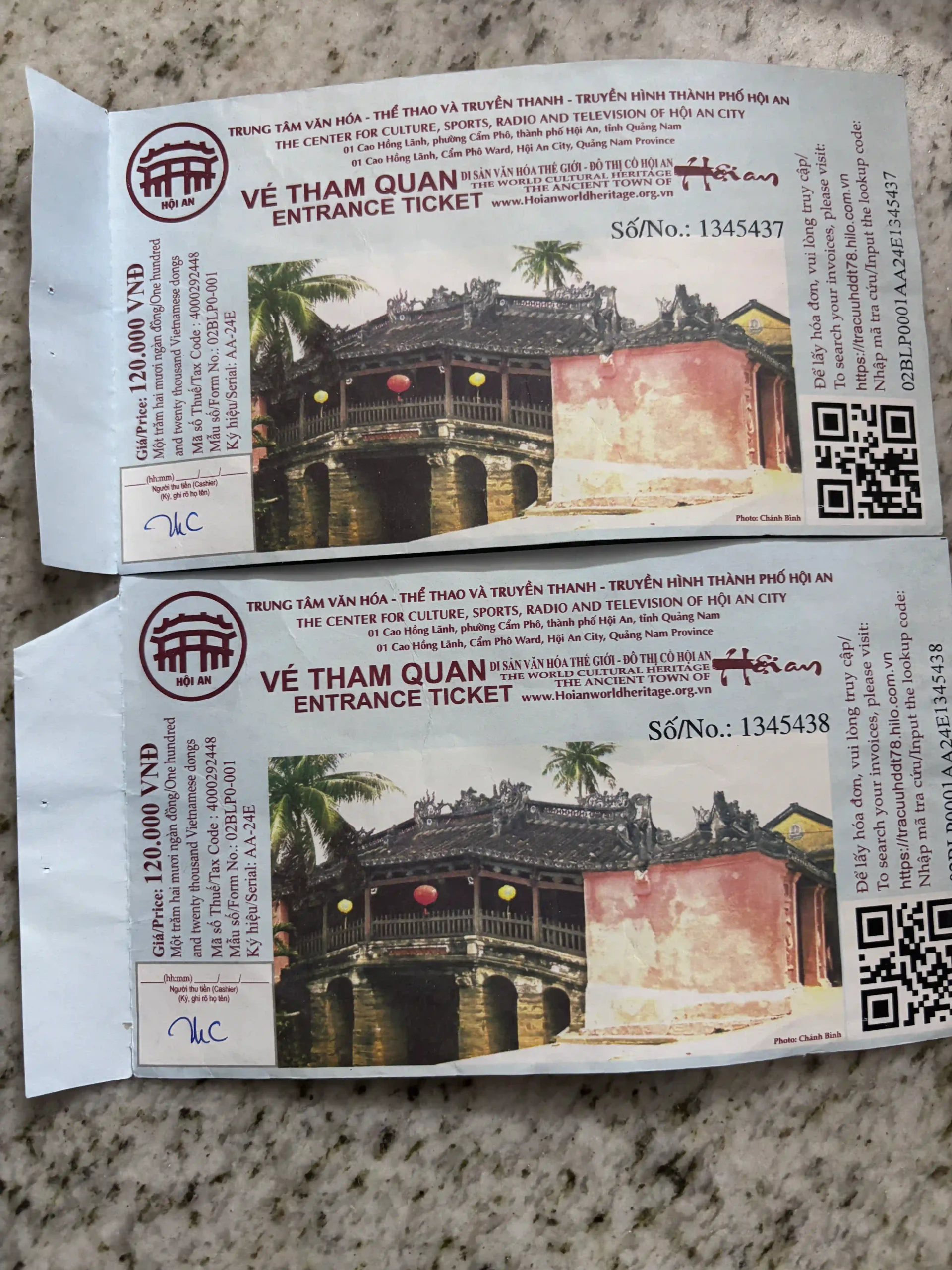
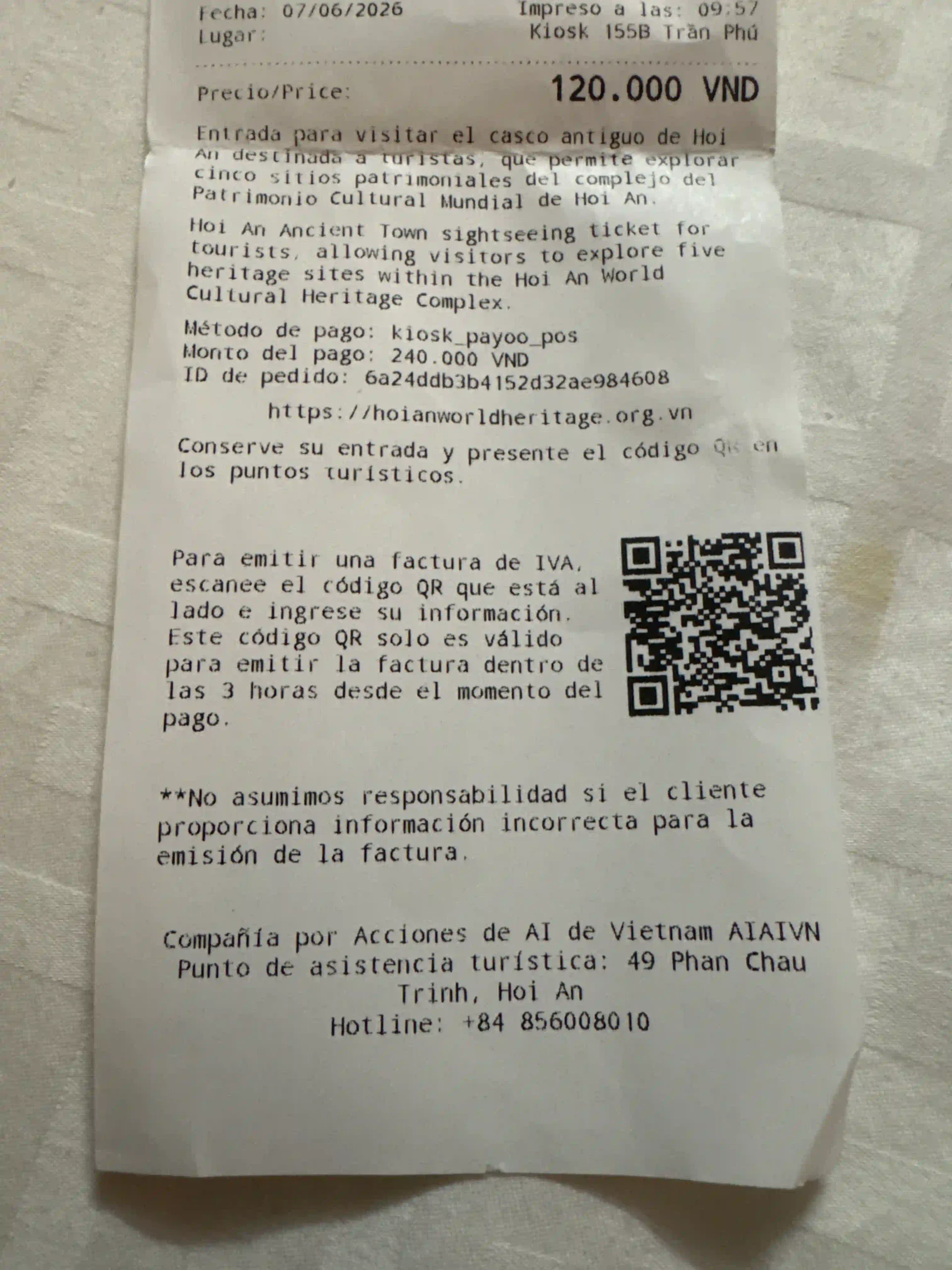
It’s 120,000 VND for foreign visitors, sold as a booklet with five tear-off tabs covering five of the heritage sites.
If your walking tour goes inside an assembly hall or one of the old houses you’ll need one. Ask whether entries are covered when you book, because a few operators fold it in and most don’t.
For a photoshoot you don’t strictly need it since you’re outdoors the whole time, but I’d buy one anyway if you’re planning to see the heritage houses at any point during your stay, and use the tabs the same morning. They open at eight, which lines up well with the end of an early shoot.
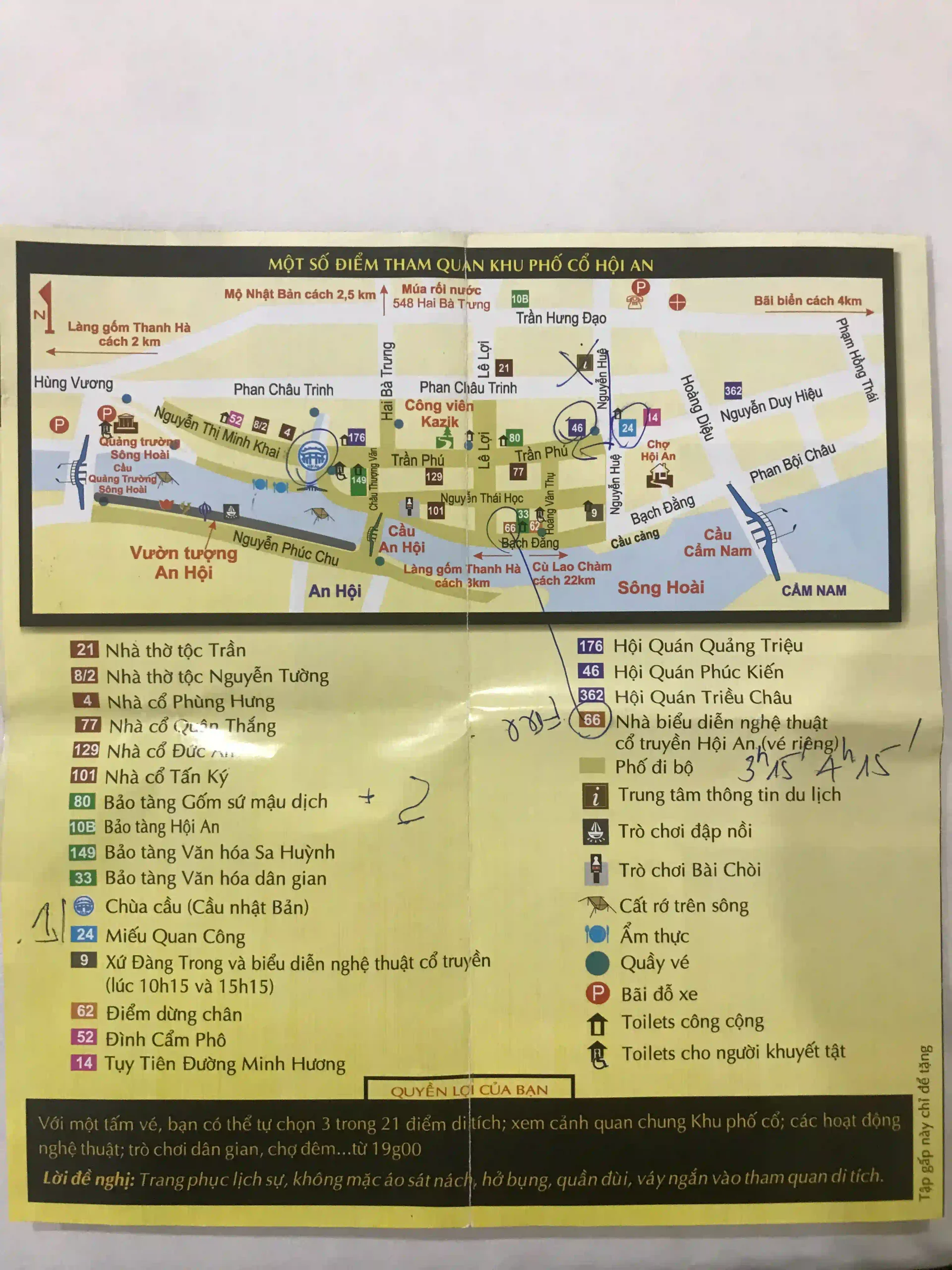
The Photo Spots, If You’d Rather Do It Yourself
None of these are secret and the old town is only about a kilometre across.
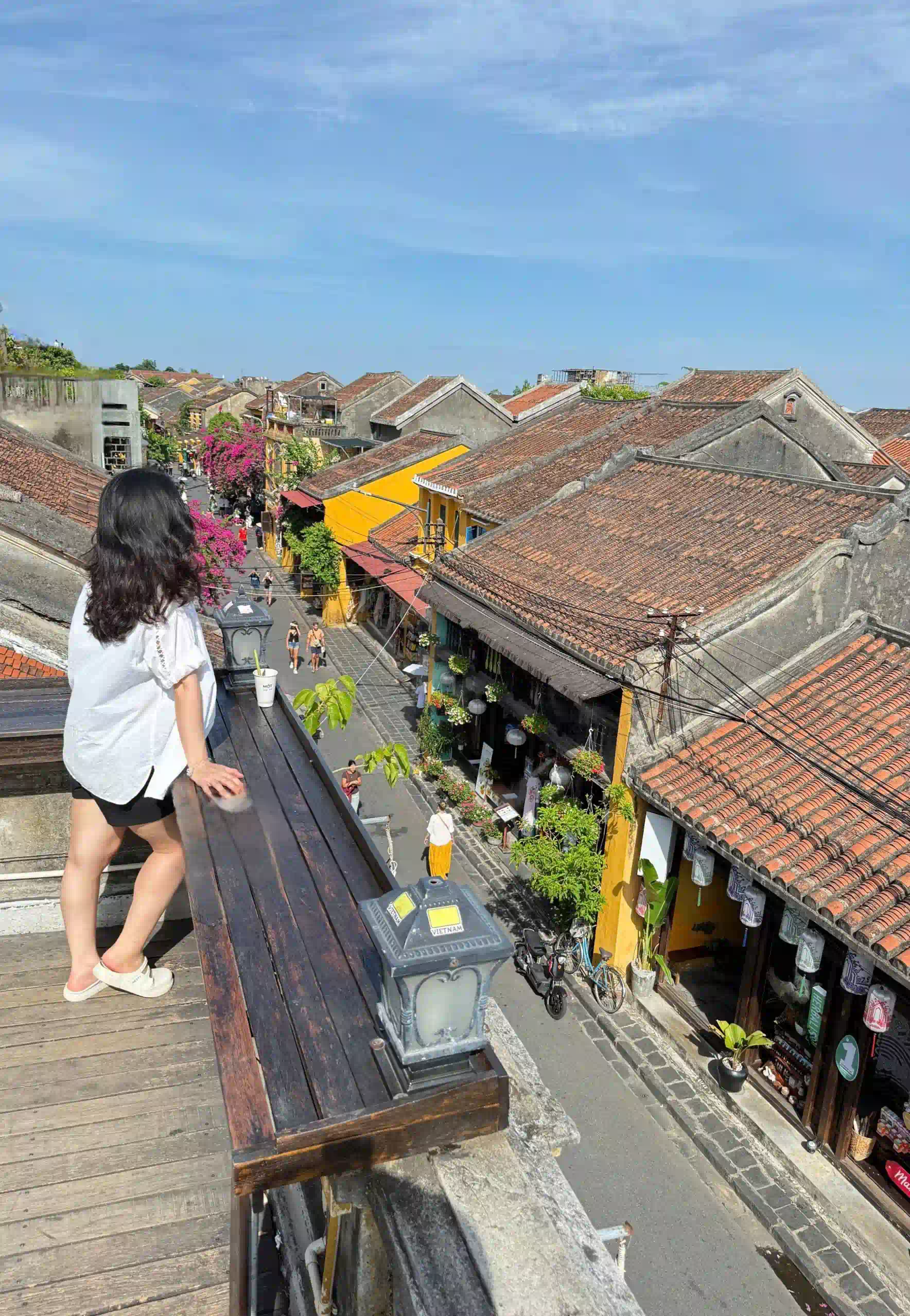
- The yellow walls on Hoang Van Thu and the lanes running off Tran Phu. This is the shot everyone wants and there’s usually a queue at the best-known one by mid-morning.
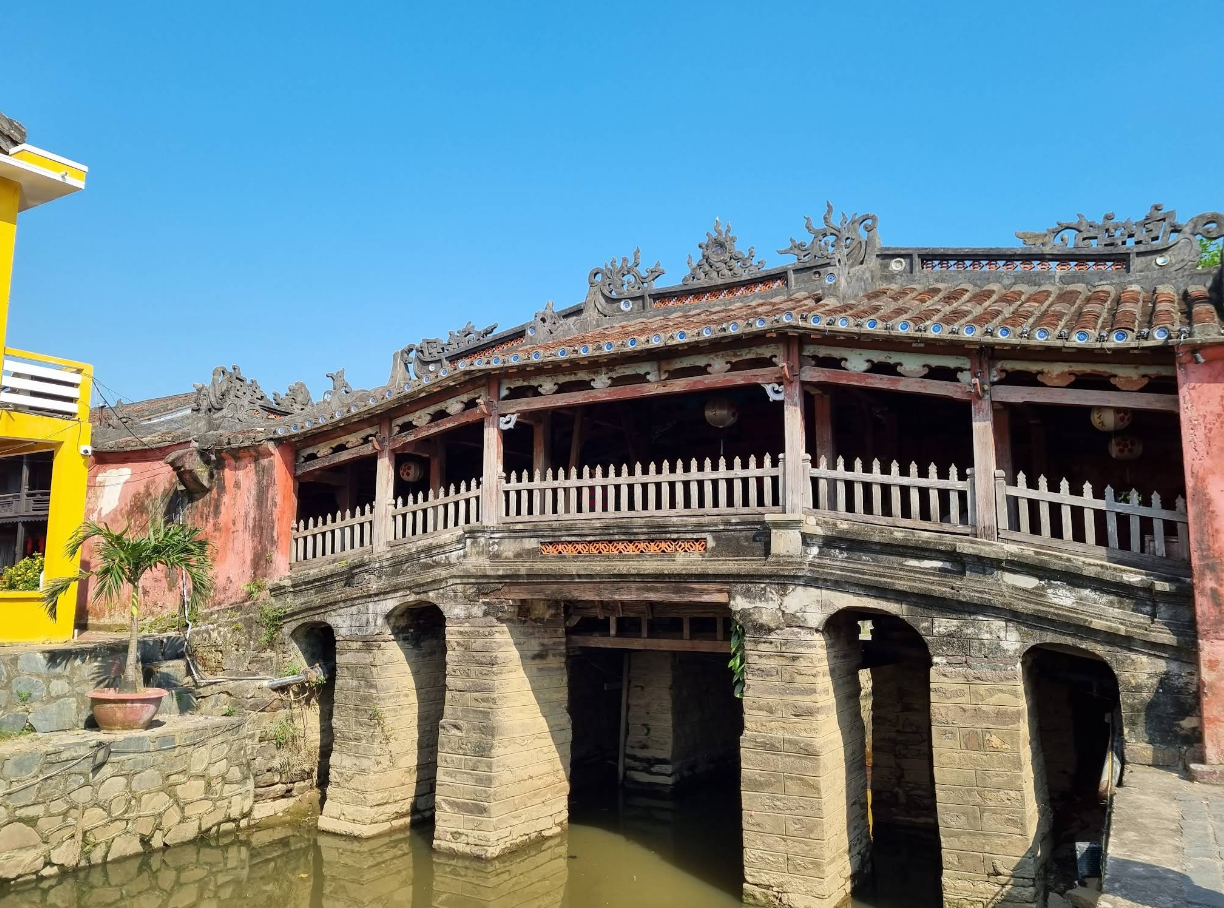
- The Japanese Covered Bridge, which is on the 20,000 dong note and is more or less impossible to photograph empty after about half seven.
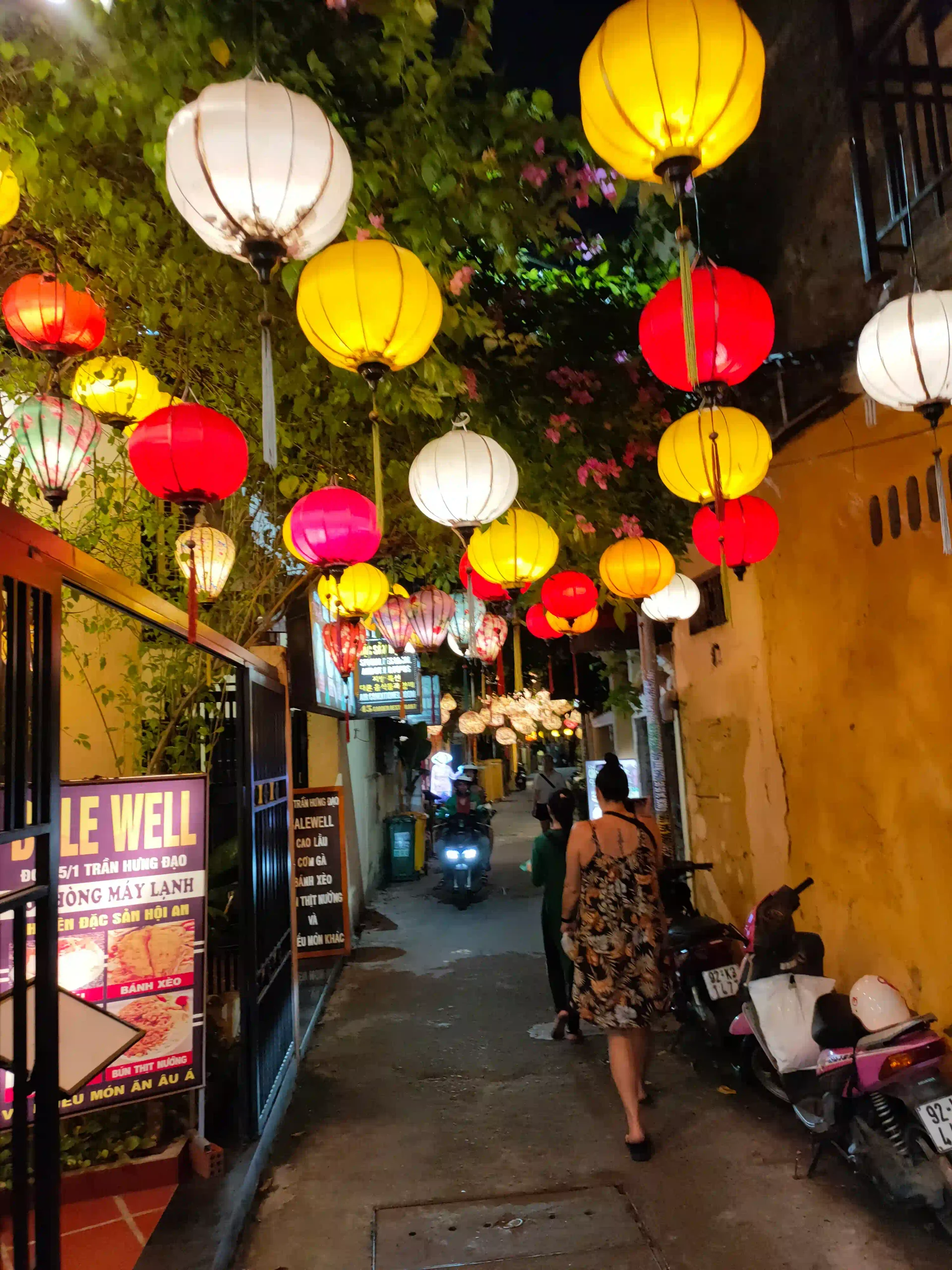
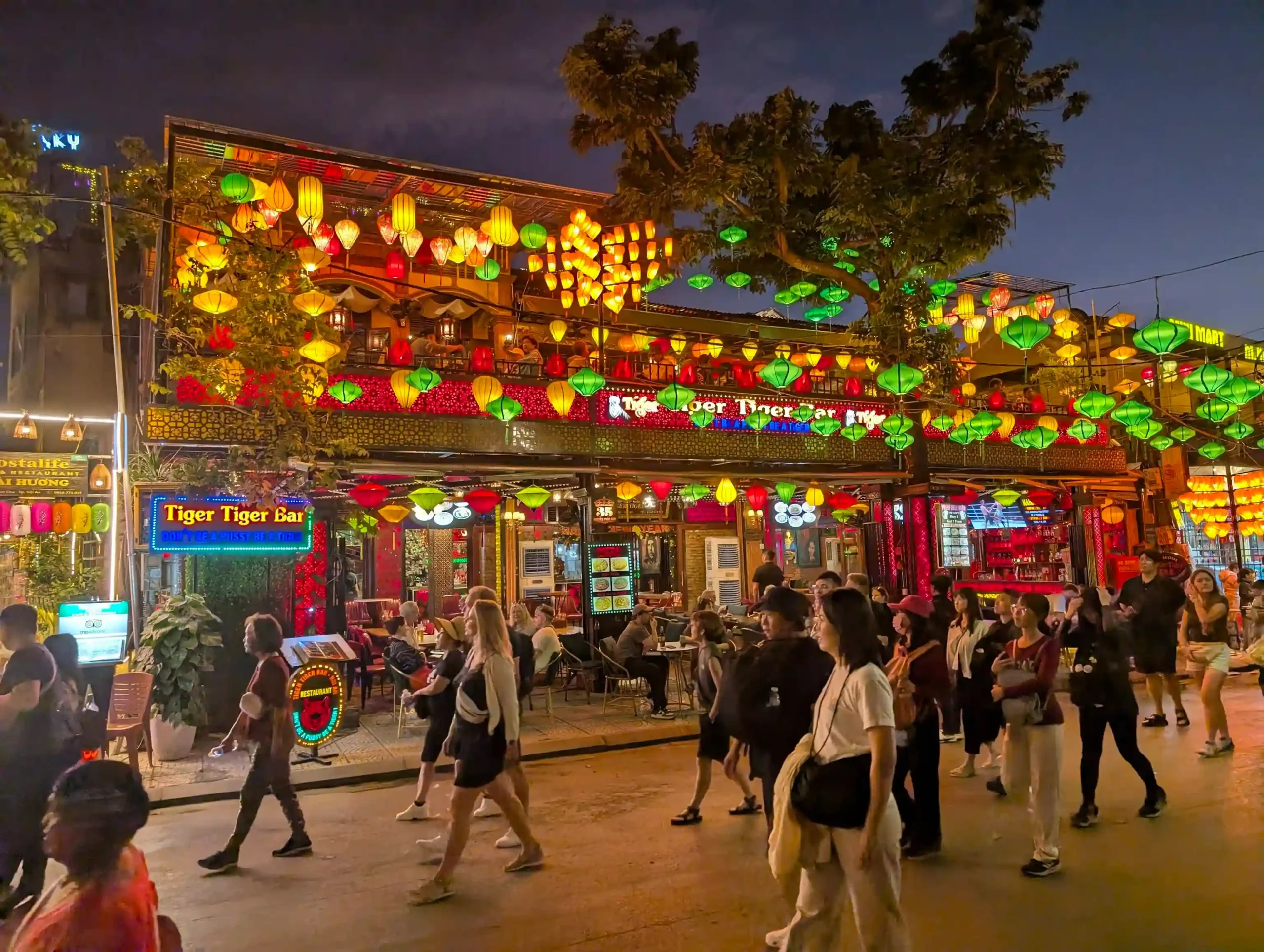
- Lantern street, meaning Nguyen Thai Hoc and the surrounding lanes, at their best once they’re lit in the evening.
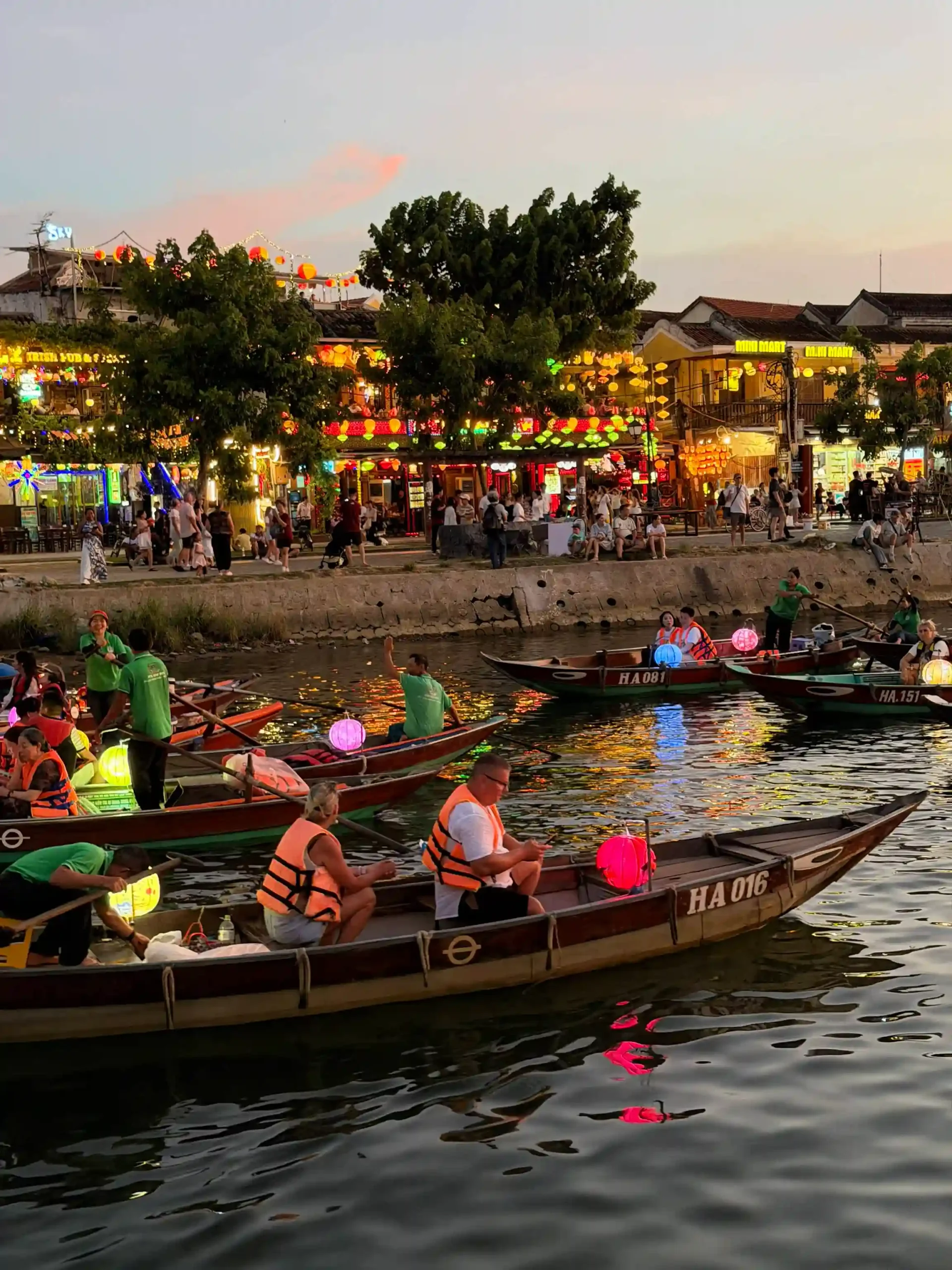
- The Hoai River, from the An Hoi Bridge or from either bank, which works well at dusk.
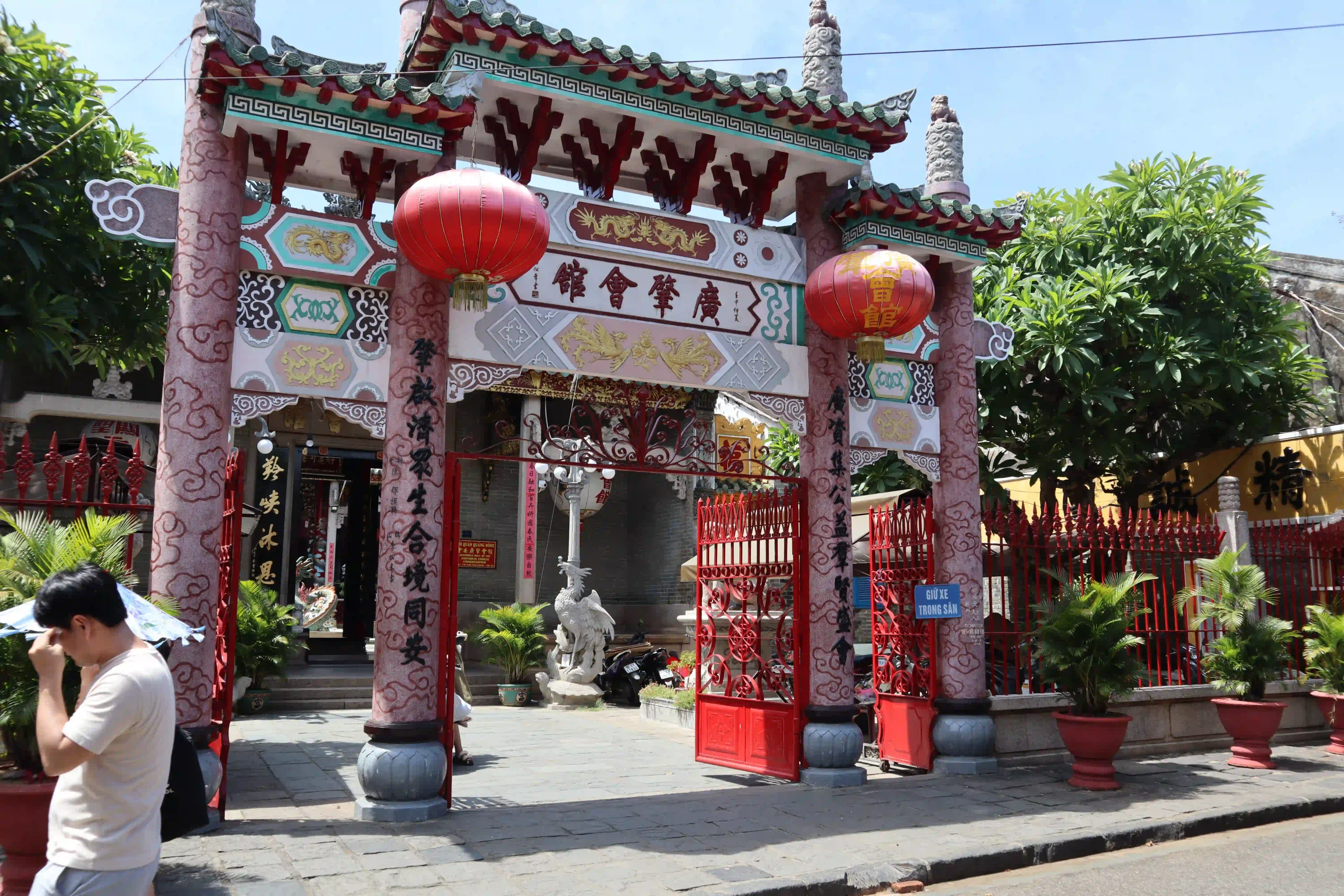
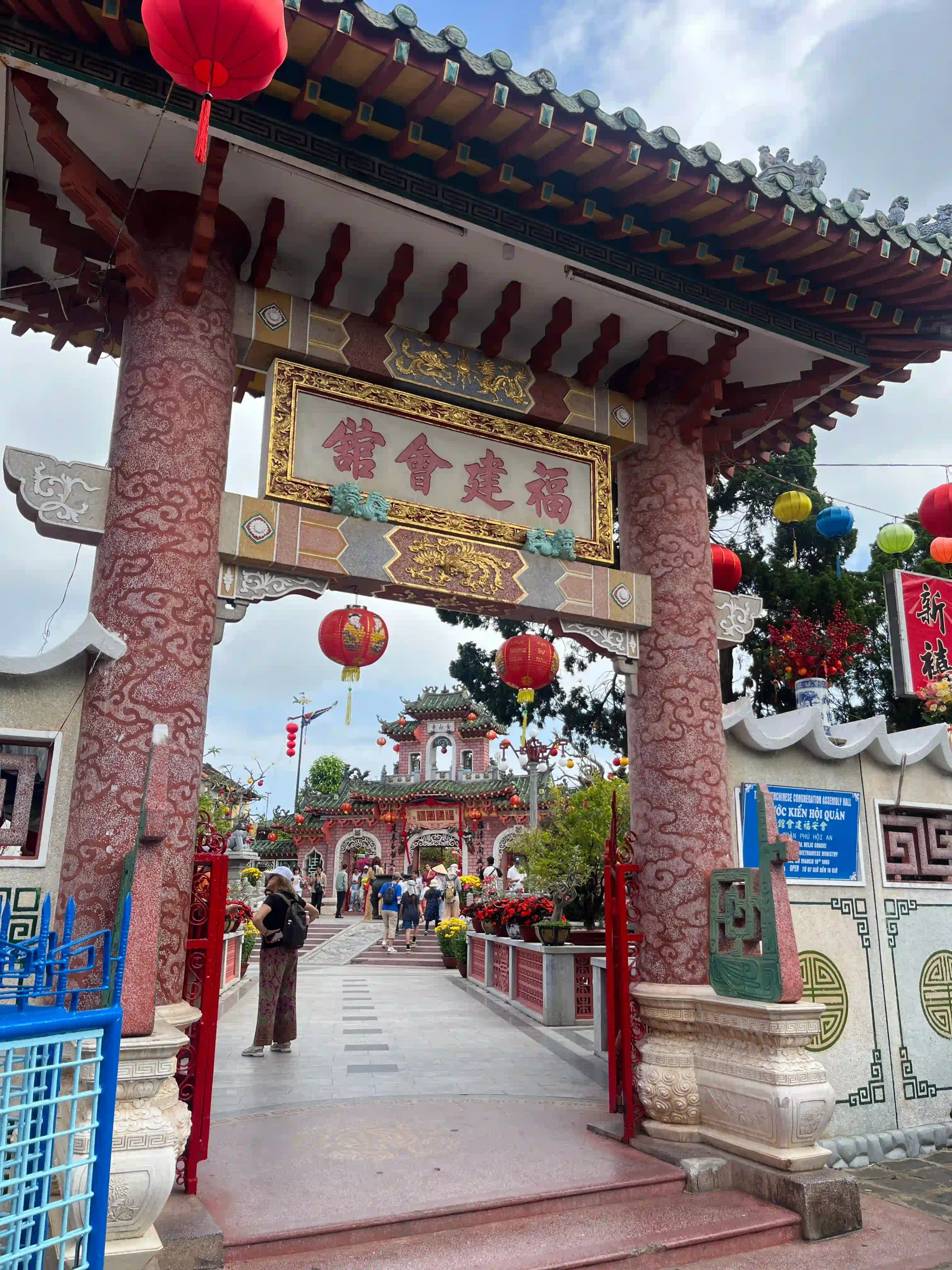
- The Cantonese Assembly Hall, where the photoshoots start, and the Fujian one with the pink gate.
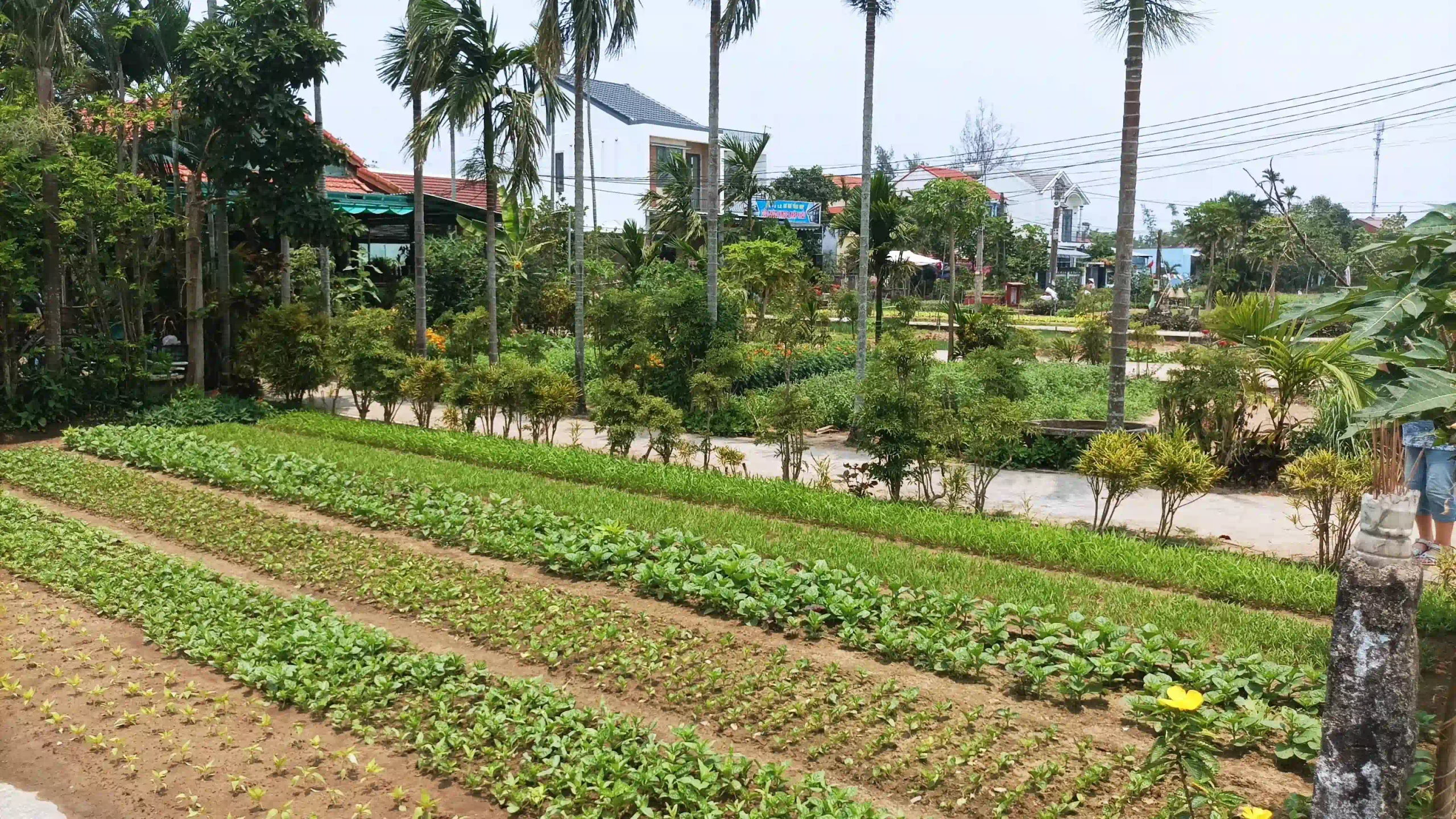
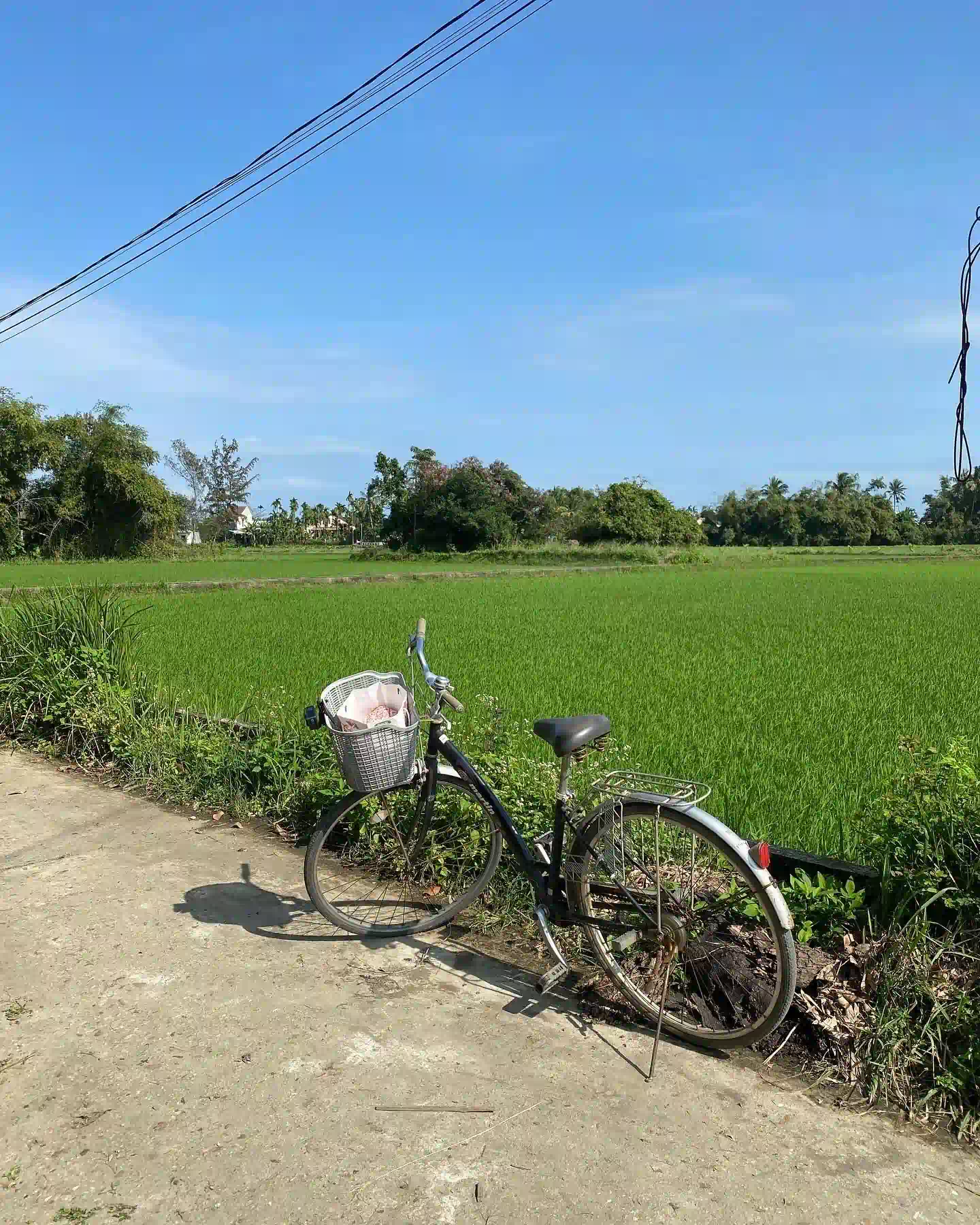
- Tra Que and the rice fields if you’d like green in the background instead of yellow, although most photo tours stay inside the old town.
The main thing is going before eight, which applies whether you’ve paid a photographer or not.
Walking the Old Town Without a Guide
A self-guided walking tour is easy here because the old town is small enough that you can’t get properly lost in it.
The loop I’d walk starts at the Japanese Covered Bridge on Tran Phu, heads east past the assembly halls, drops down to Nguyen Thai Hoc, follows that to the market at the far end, and comes back along Bach Dang beside the river. About an hour at a slow pace. Longer if you go inside things.
It’s worth screenshotting a Hoi An walking tour map before you set off, because Google Maps doesn’t know which lanes are closed to traffic at which hours and it will route you round the houses.
What you’re giving up is the explanation and the local recommendations a guide hands over at the end, and what you’re saving is twenty dollars and the obligation to keep up with a group. There’s a version of that walk timed properly in my 3 days in Hoi An itinerary.
Evening Versions of Both
A Hoi An walking tour at night takes in the same streets with the lanterns lit, usually adding the night market and sometimes a sampan ride. Prettier, and less informative, because the heritage sites have closed by then.
Photoshoots run in the evening too and lantern-lit pictures are a large part of why people book them, though the streets are packed between six and nine so you’ll be working around other people. Six in the morning and after nine at night are the quieter windows.
If food is what you actually want from an evening, that’s the evening walking food tour, which is a separate question.
Who I’d Send Where
| If you are | I’d book |
|---|---|
| Travelling solo | Photo tour |
| A couple with no pictures of the two of you | Photo tour |
| Here a few days and wanting context | Walking tour, first morning |
| Interested in the history | Walking tour |
| Set on wearing ao dai | Photo tour, later slot |
| Happy to be up at six | Photo tour, 6am |
| On a tight budget | Free walking tour, then walk it again alone |
| Uncomfortable being photographed | Walking tour |
| With young children | Neither, probably. The cooking class and basket boat suits them better |
Doing Both
It works fine in one morning. Photoshoot at six, breakfast somewhere after, walking tour at nine, and you’re finished by half eleven with the rest of the day still in front of you.
They don’t overlap much, since one is pointed at you and the other at the buildings.
The objection is money. That’s about $50 of tours before lunch in a town where a bowl of cao lau costs a dollar fifty, and whether it’s sensible depends on the kind of trip you’re having.
If I had to drop one of them I’d drop the walking tour, read about the town instead, and put the difference towards dinner somewhere good.
Booking Either
Free cancellation is the thing I’d check on both, more so than the price, particularly in October and November when the weather here does whatever it feels like.
The photoshoot to look at is the private one meeting at the Cantonese Assembly Hall, and it’s worth saying which slot you want when you book because the six o’clock fills up first. Mention ao dai at the same time if you want it, since it needs arranging.
For the guided version, the small-group Ancient Town walk is the one where the same guide names keep appearing in reviews.
Common Questions
How many photos do you get? Between 25 and 40 edited ones the next day, plus all the unedited files.
Do the photographers speak English? Basic English, and posing is directed with gestures, which works better than it sounds.
How long is a Hoi An walking tour? Two and a half to three hours for the standard Ancient Town route.
Is the free walking tour worth doing? As orientation, yes, though you should budget 100,000 to 200,000 VND for the tip.
Can I do a self-guided walking tour? Easily. Screenshot a map, start at the Japanese Bridge and allow an hour.
Do I need the Ancient Town ticket? For going inside the heritage sites, yes, 120,000 VND. For walking the streets and taking pictures, in practice no.
What should I wear for a photoshoot? One solid colour, since the walls are yellow and patterns make the pictures look busy.
If You’ve Only Got One Free Morning
I’d book the photoshoot for six and then walk the old town myself afterwards with a coffee, which gets you the empty streets and the good light, and still has you past the Japanese Bridge and the assembly halls before the first coach turns up.
The history is all written down somewhere and you can read it on the flight home whenever you like, whereas the photographs need somebody to be standing there with a camera on the morning you happen to be in Hoi An.












 Tiếng Việt
 한국어
한국어 中文 (中国)
 日本語
日本語 ไทย
ไทย Deutsch
 Español
 Destinations
 Instagram
 Facebook
 X (Twitter)
 Threads
 Tiktok