









 Ha Giang
 Hanoi
Hanoi Ho Chi Minh City
 Ha Long
 Sapa
Sapa Mekong Delta
 Da Nang
 Hue
Hue Hoi An
 Ninh Binh
 Da Lat
 Nha Trang
 Phan Thiet
 Phu Quoc
 Quang Binh
 Quy Nhon
 Vung Tau
 Thai Nguyen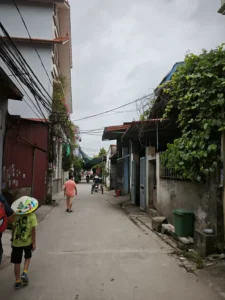
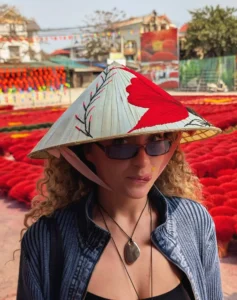


The incense village looks beautiful, but it also looks like the kind of highly staged, exhausting tourist trap that I usually try to avoid at all costs.
Last month, when my cousin came to town, she begged me to go. I looked up the options. You can technically rent a motorbike and drive down to Ung Hoa district yourself, but the roads are massive, dusty highways filled with huge gravel trucks, and finding the actual courtyards where they dry the incense is a pain because they move them depending on the wind and the sun.
We ended up booking a popular day trip called the Hanoi: Incense Village, Hat & Lacquer Artisanal Tour. We went with the private, full-day option because I didn’t want to be stuck in a tour bus with twenty other people holding selfie sticks.
I wanted to write an honest, completely unfiltered review of what actually happens on this tour. I’m going to tell you about the dust, the chemical smells, the photo setups, the home-cooked lunch, and whether it’s actually worth leaving the city center for a day.
- Quick answer: The Quang Phu Cau incense village tour is absolutely worth it, but book the private full-day option. The bright red incense photo setups are staged, but the tour is real, you visit gritty family factories, paint conical hats in Chuong, and eat a massive home-cooked lunch.
- The Actual Itinerary (What you do)
- Stop 1: Chuong Conical Hat Village: You sit in a local family courtyard, watch palm leaves being stitched onto bamboo rings, and paint your own souvenir hat to take home.
- Stop 2: Quang Phu Cau (The Incense Village): You get your photos in the colorful family yards, then tour the raw, loud factories to see the bamboo being sliced, dyed, and coated in paste.
- Stop 3: Ha Thai Lacquer Village: You watch artisans do intricate eggshell and mother-of-pearl inlay work on black lacquered trays.
- Lunch & Drop-off: Includes a massive, fresh home-cooked meal of spring rolls and local dishes at an artisan’s house, and an optional drop-off at Train Street.
- Brutally Honest Realities
- The Photo Setups: Yes, the massive arrangements (like the Vietnam flag) are staged for tourists, but they are incredibly scenic and run smoothly by the locals.
- Guide Role: Having a private guide is crucial. They act as your personal photographer, directing angles and throwing incense sticks in the air for action shots.
- The Mess: The pink and red incense dye is highly concentrated, and the factories are very dusty. You will get dirty, do not wear white clothes or white shoes.
- Chemical Smells: The lacquer workshops use heavy industrial paints. If you have a sensitive nose, you will need to wear a mask.
- The Verdict
- Skip the Half-Day: It doesn’t include the lacquer village or lunch, and you spend almost as much time driving back and forth in the van.
What you actually book
This specific tour has a few options. You can do a half-day or a full-day, and you can go group or private.
If you do the half-day, you only see the conical hat village and the incense village, and then they drop you back in Hanoi around lunchtime. There is no lunch included in that one.
We chose the full-day private option. It includes:
- Pickup from your hotel in the Old Quarter in an air-conditioned car.
- Chuong Conical Hat Village.
- Quang Phu Cau Incense Village.
- Ha Thai Lacquer Village.
- A home-cooked lunch at a local artisan’s house.
- An optional drop-off at Train Street at the end.
The drive out of Hanoi takes about an hour and fifteen minutes. You cross the bridge, leave the narrow alleys of the Old Quarter behind, and get onto these massive, industrial roads heading south.
It is not a scenic drive. It is mostly concrete factories, dusty construction sites, and big trucks. But once you turn off the highway into the rural districts, the landscape finally changes into small canals, banana fields, and old brick houses.
Stop 1: Chuong Conical Hat Village (Nón Lá)
Our guide, a local guy named Harry, picked us up at 7:30 AM sharp. He was full of energy and immediately warned us that the day was going to be hot and we needed to drink water constantly.
Our first stop was Chuong village, which has been making those iconic Vietnamese conical hats for over 300 years.
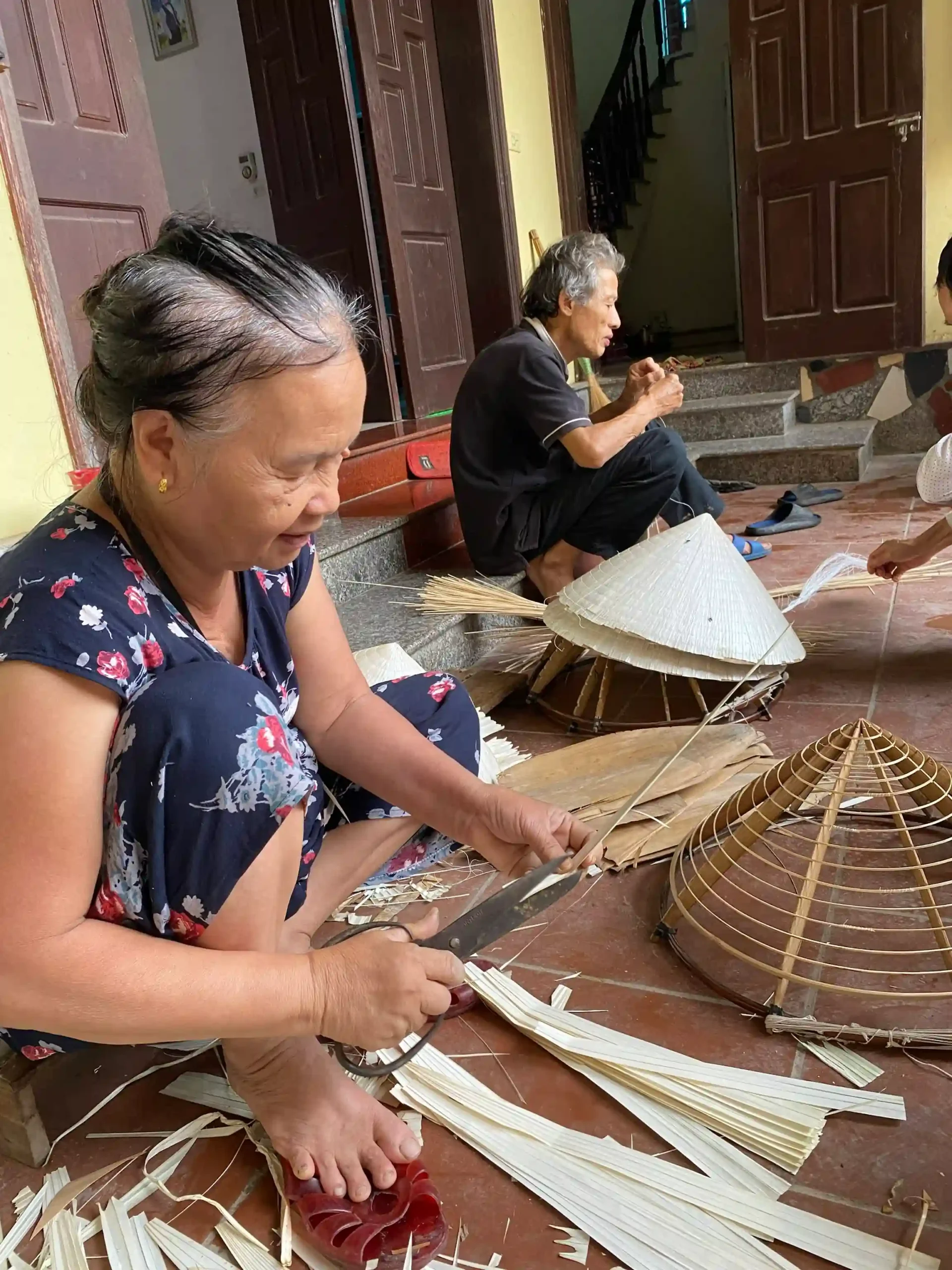
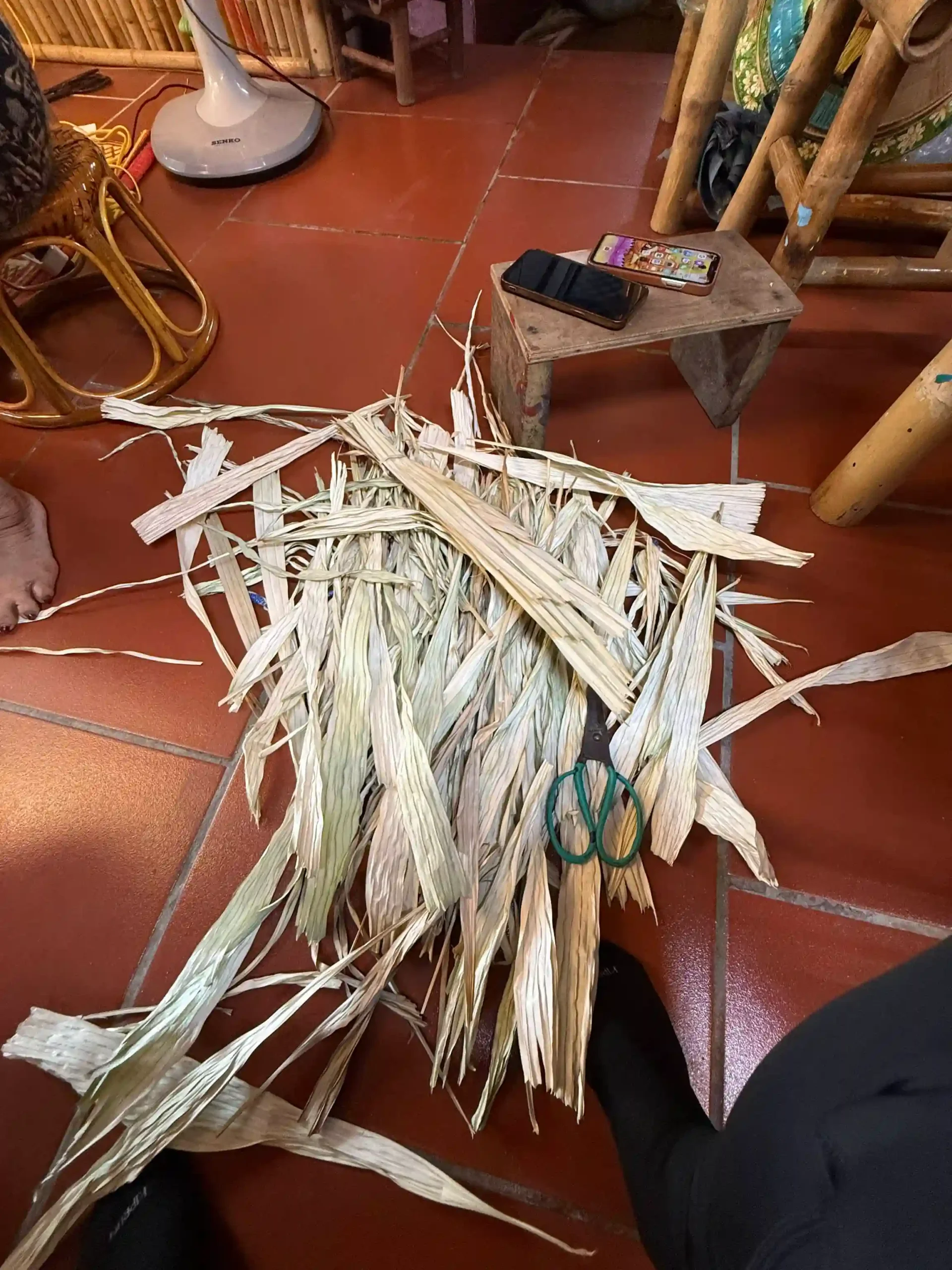
I figured we would just pull up to a gift shop, but Harry actually took us down a narrow alley to the house of a local family who has been doing this for generations. You sit on the floor of their courtyard. The air smells like dried palm leaves and split bamboo.
An old lady, whose hands were incredibly fast and calloused, showed us the actual process. It is ridiculously tedious.
They take bamboo, split it into tiny, flexible rings, build a conical frame, and then stitch palm leaves onto the frame using a huge needle and nylon thread. Watching her do it made me realize why these hats are so durable, they are practically engineered.
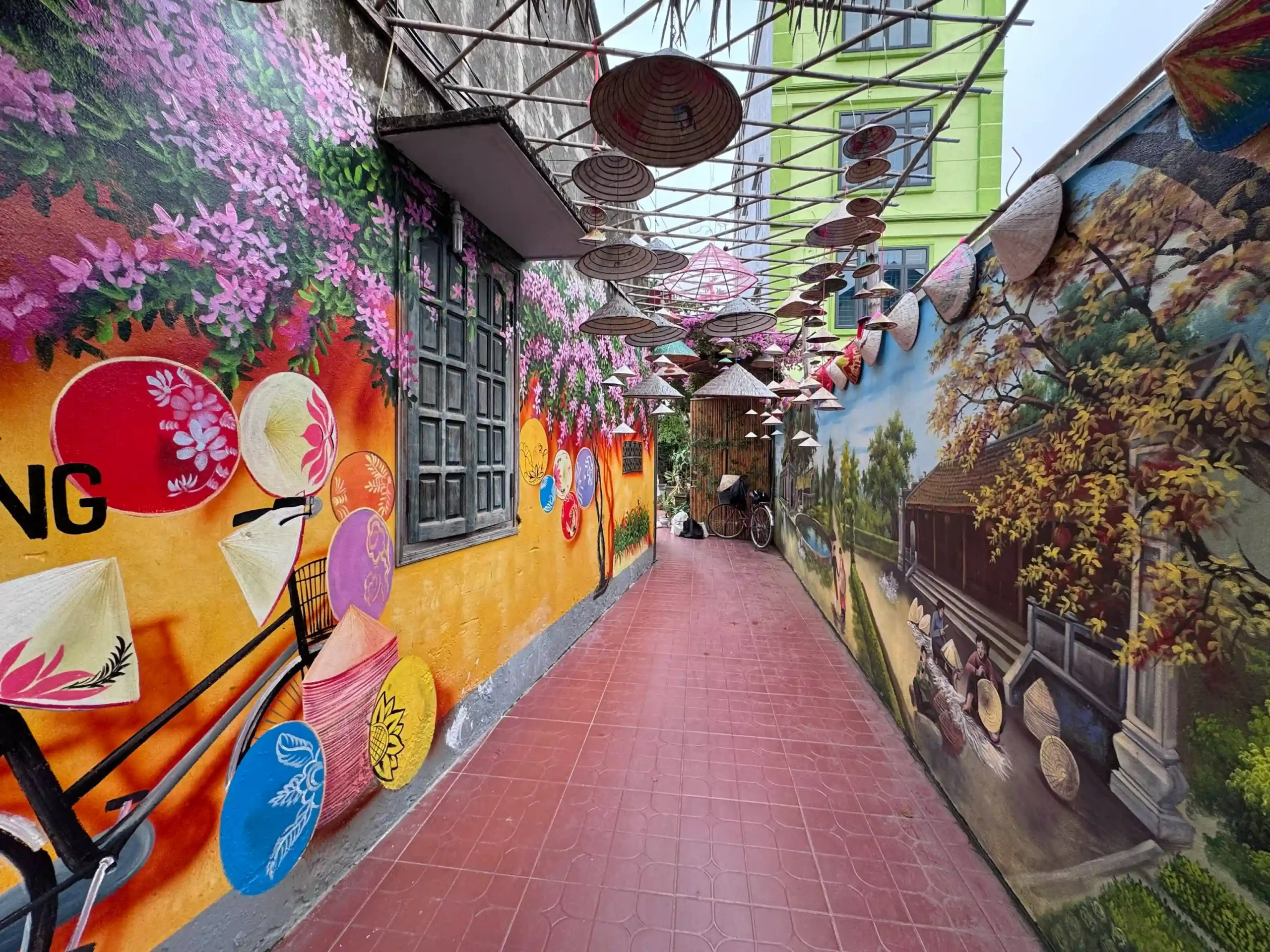
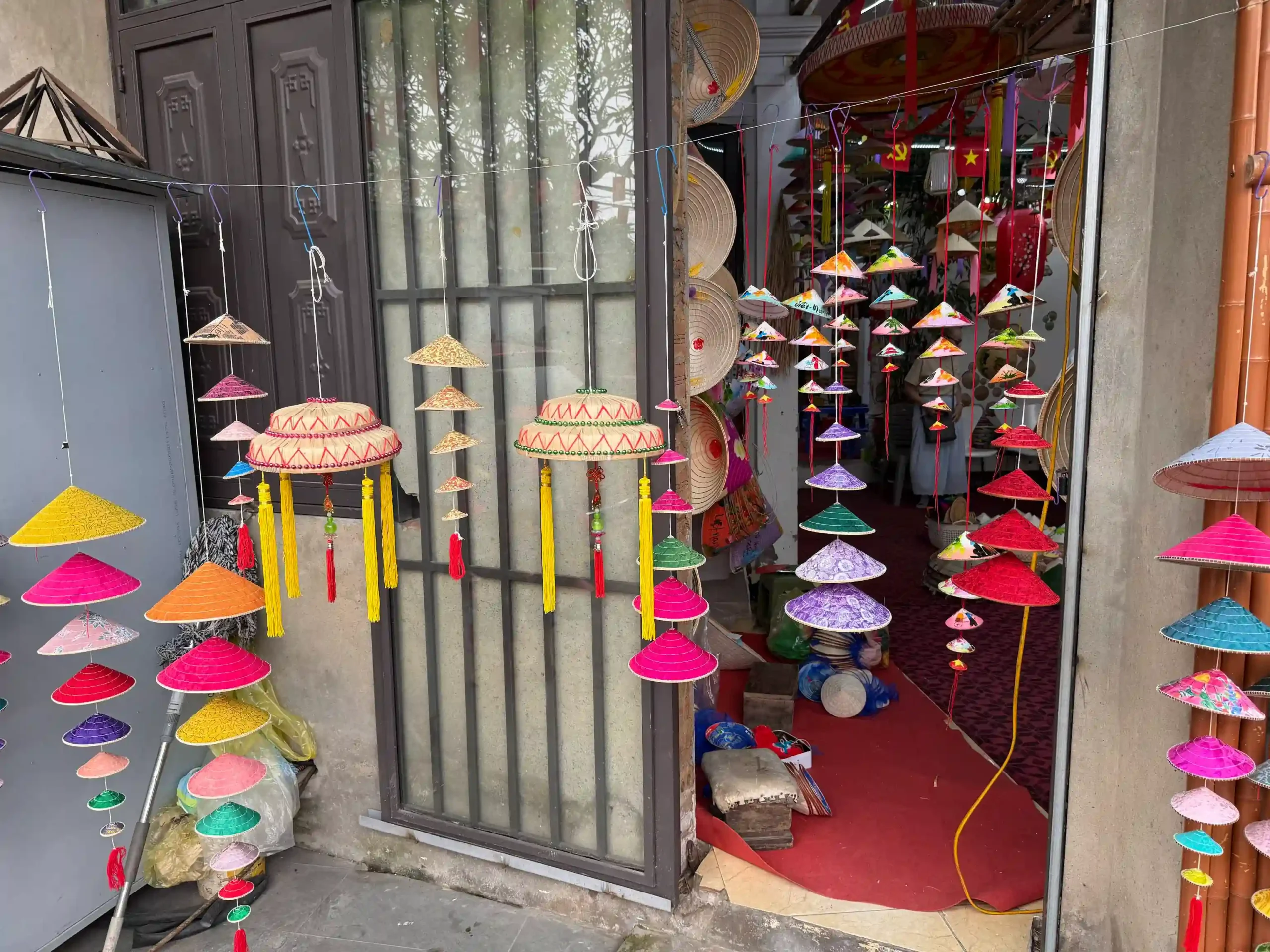
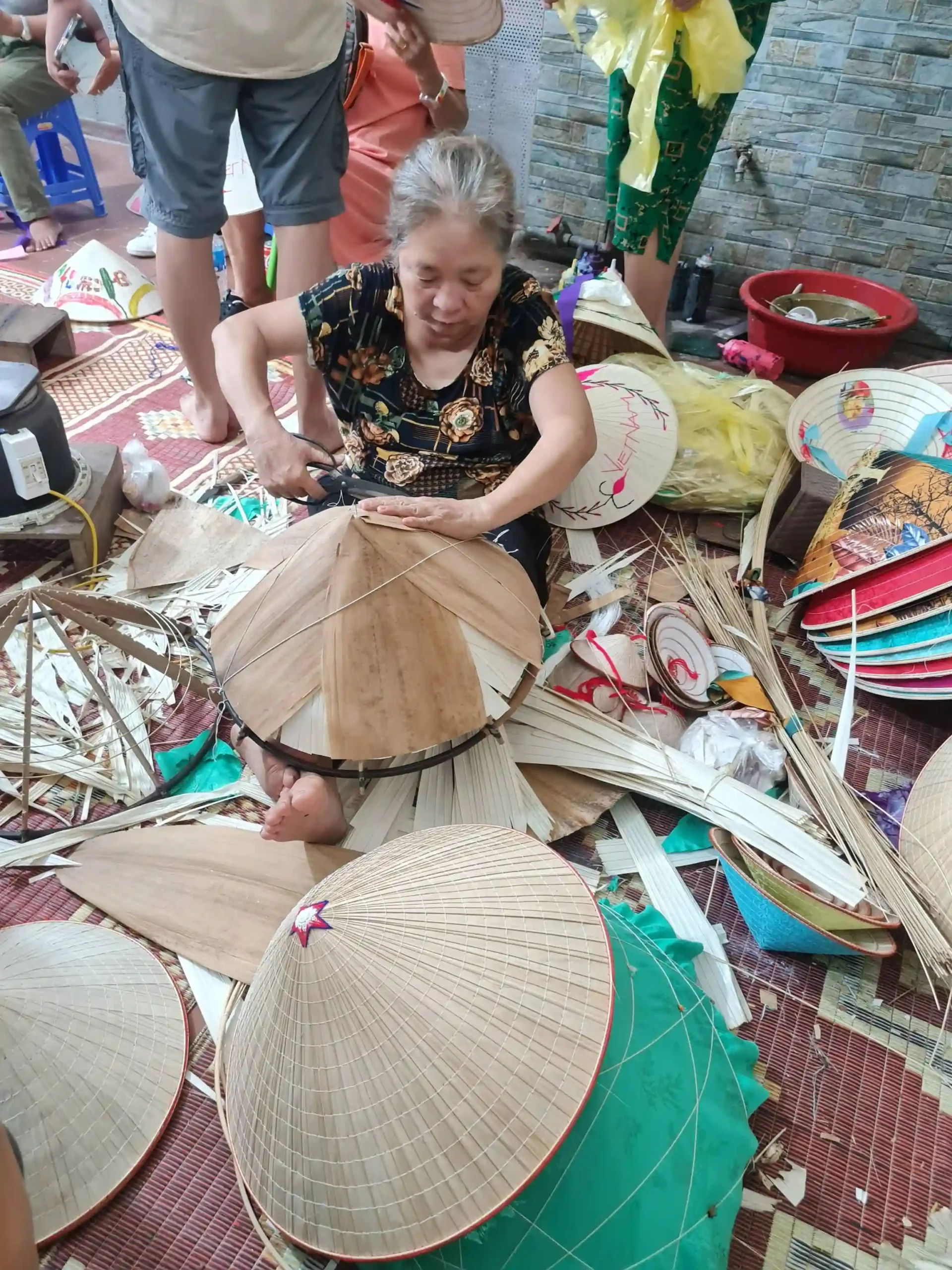
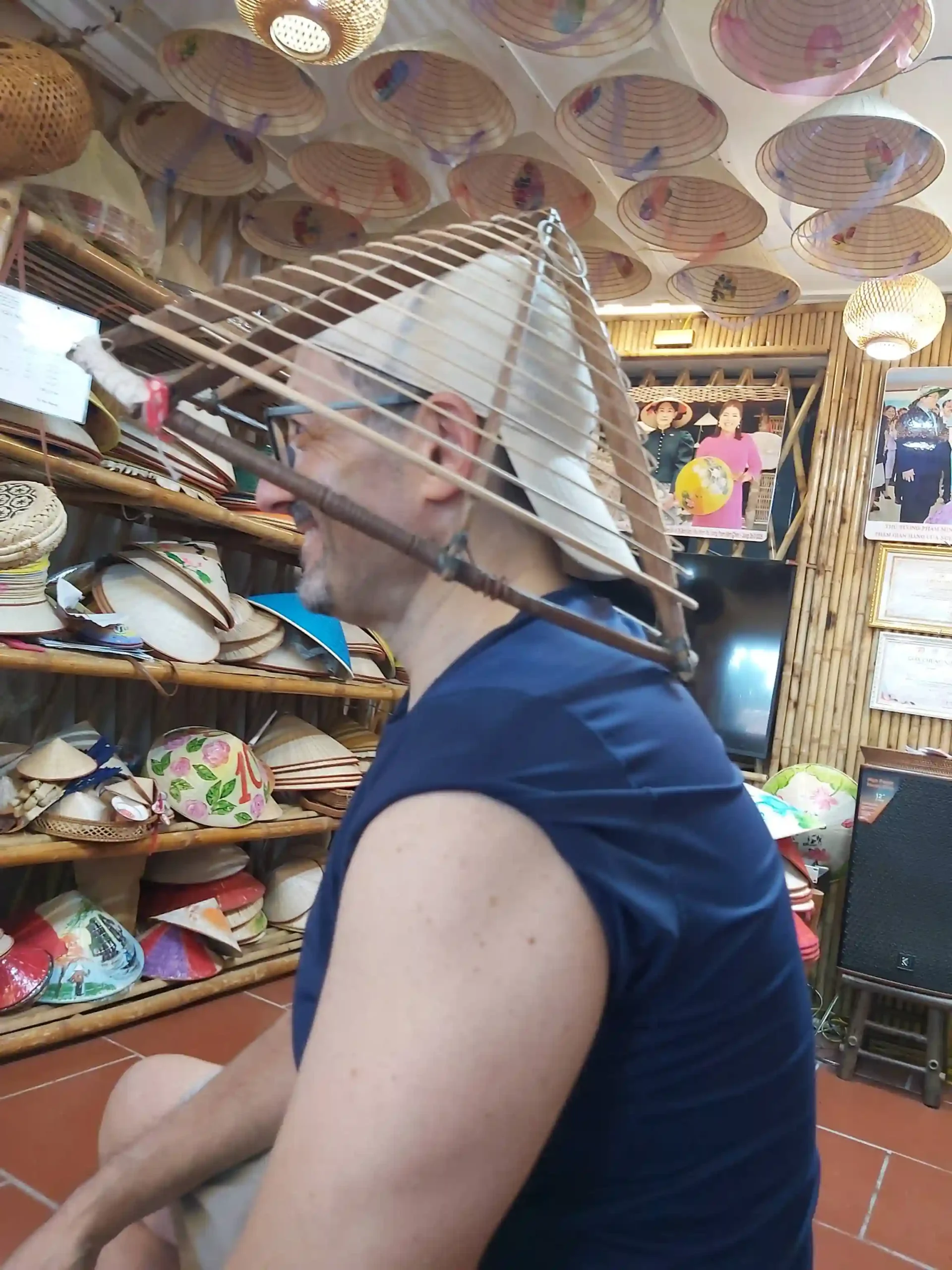
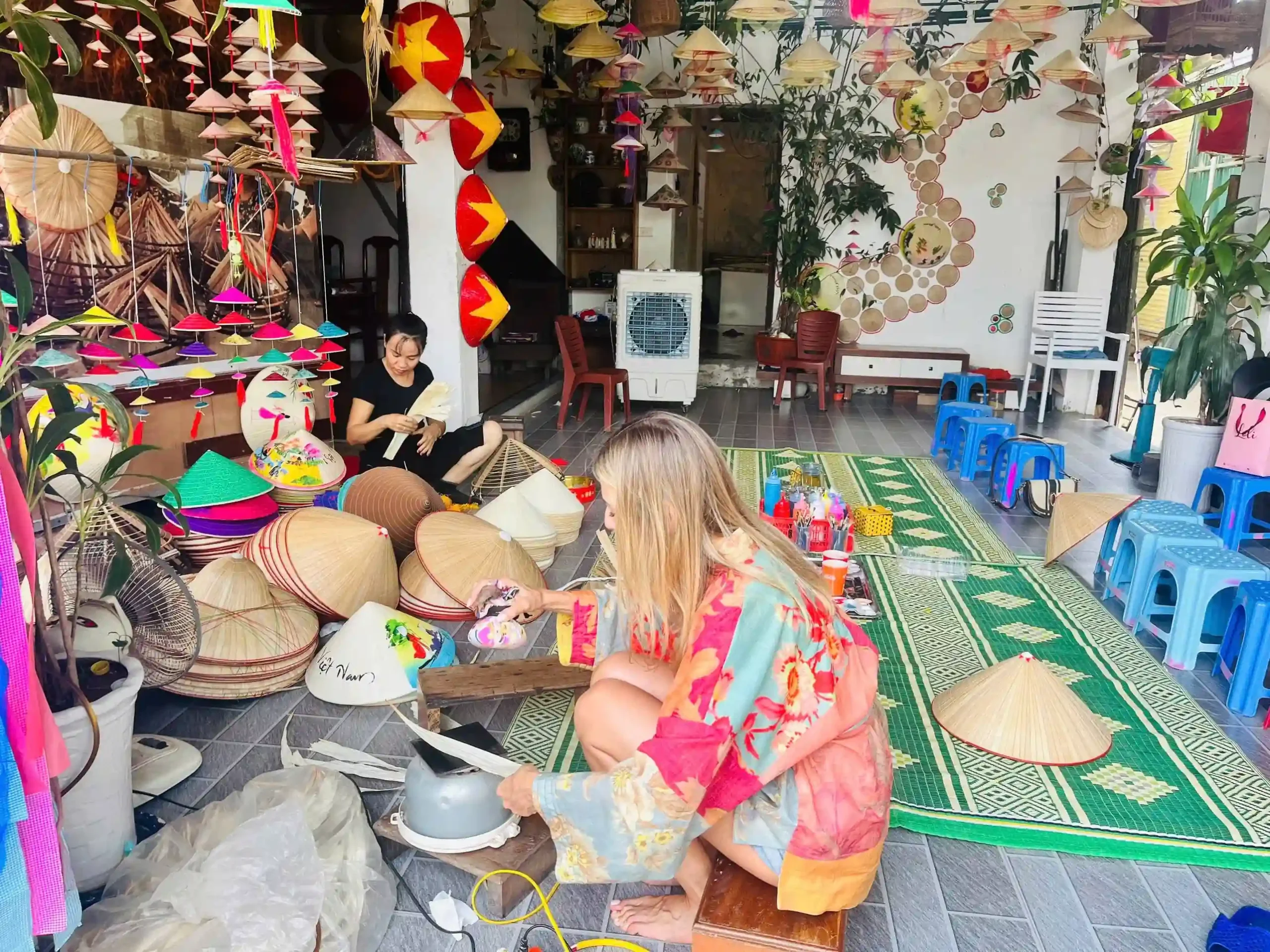
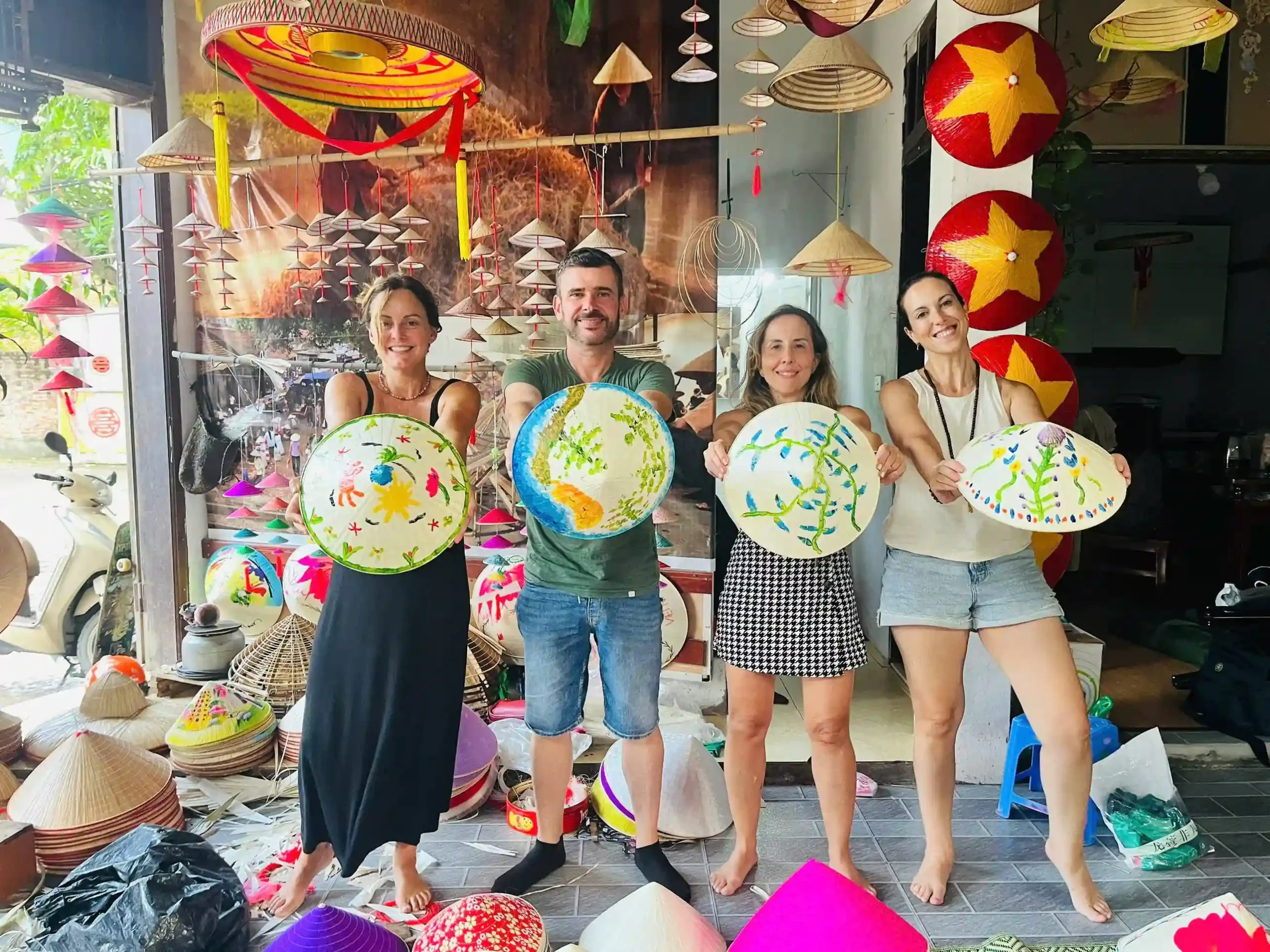
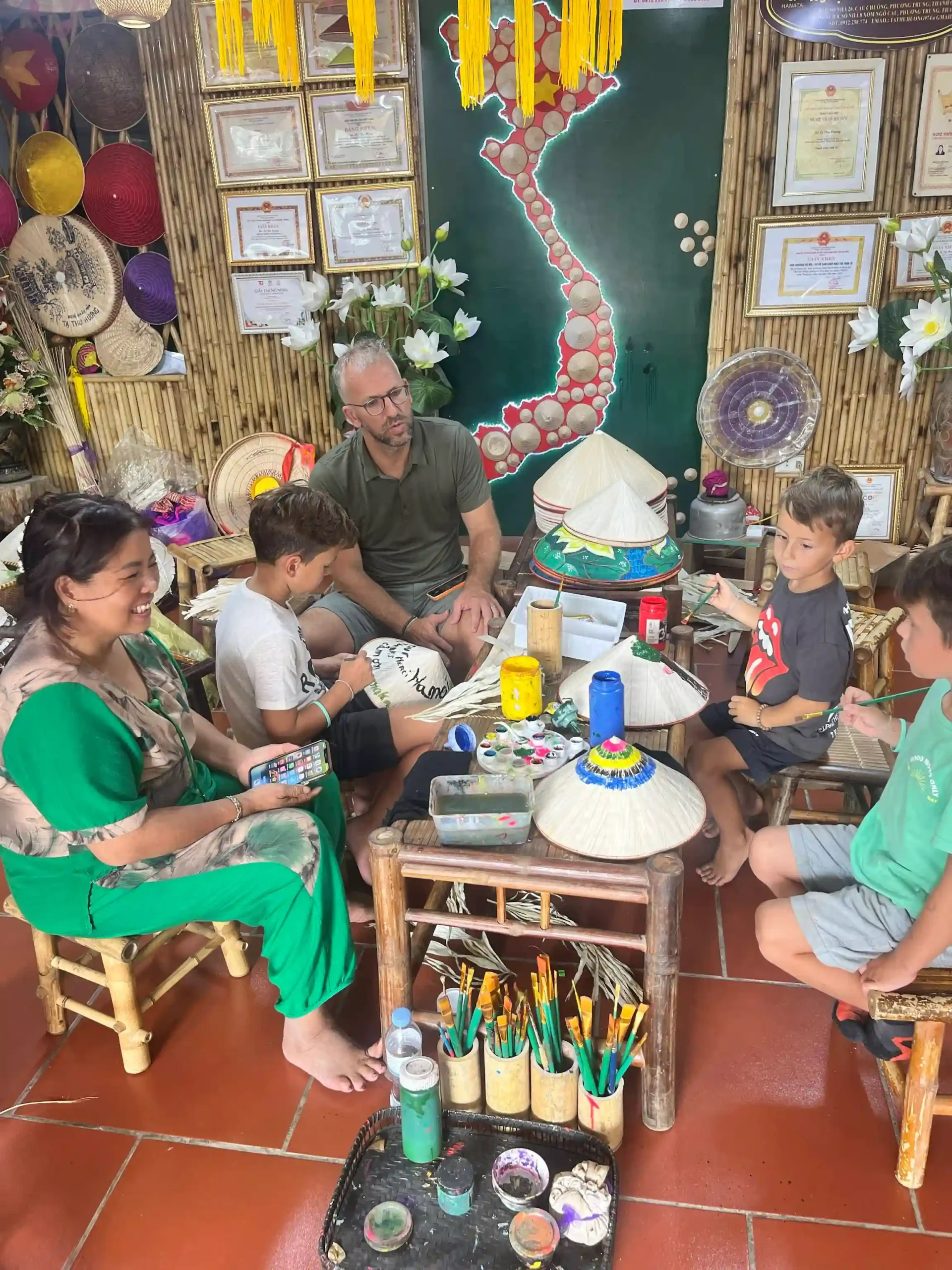
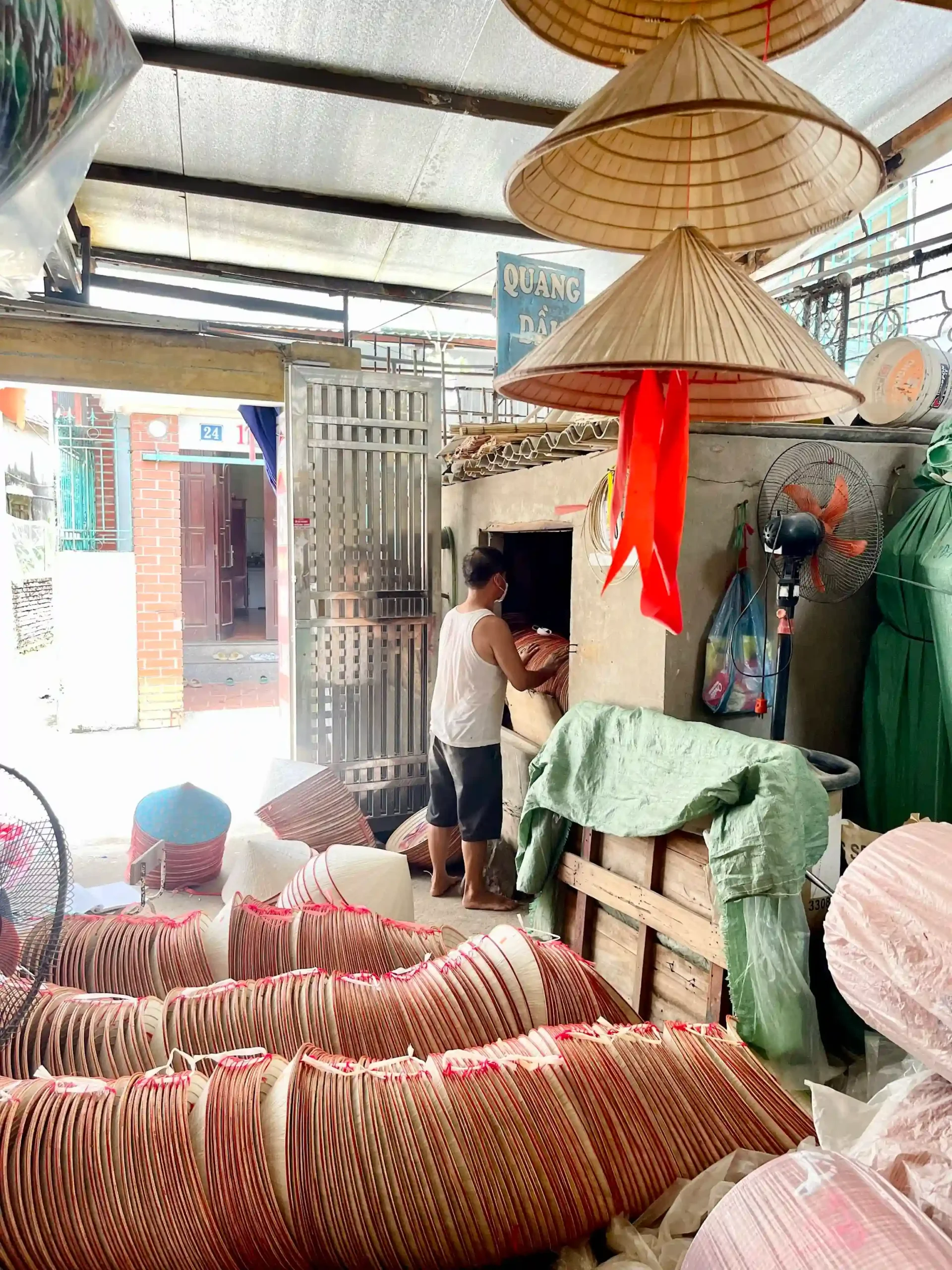
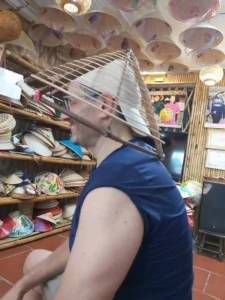
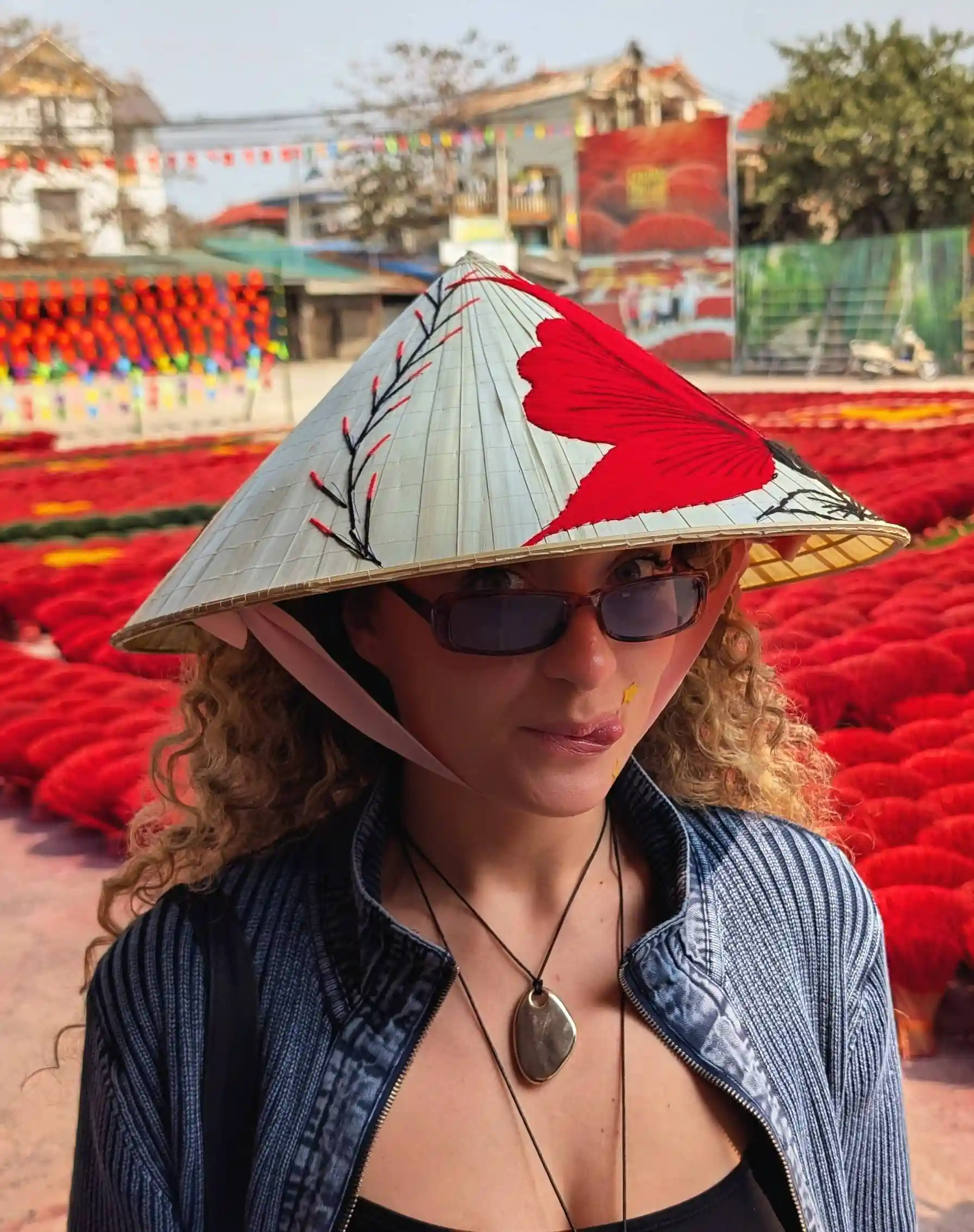
Then came the “tourist” part of the stop. They gave us each a plain, white conical hat and a palette of acrylic paints. You sit there and paint whatever you want on the hat, and then you get to keep it as a souvenir.
My cousin loved this. She spent thirty minutes carefully painting bamboo leaves on hers. I am terrible at art, so I just painted a messy red star and called it a day.
The reality check: The paint they use is cheap acrylic, and the smell of the paint mixed with the heat of the courtyard can get a bit heavy. But the family was incredibly sweet, they made us hot tea, and it felt like a genuine interaction rather than a forced sales pitch. Plus, you get a free hat to block the sun for the rest of the day, which turned out to be crucial.
Stop 2: The Quang Phu Cau incense village tour
After we finished our masterpiece hats, we got back in the car and drove another twenty minutes to the main event: Quang Phu Cau.
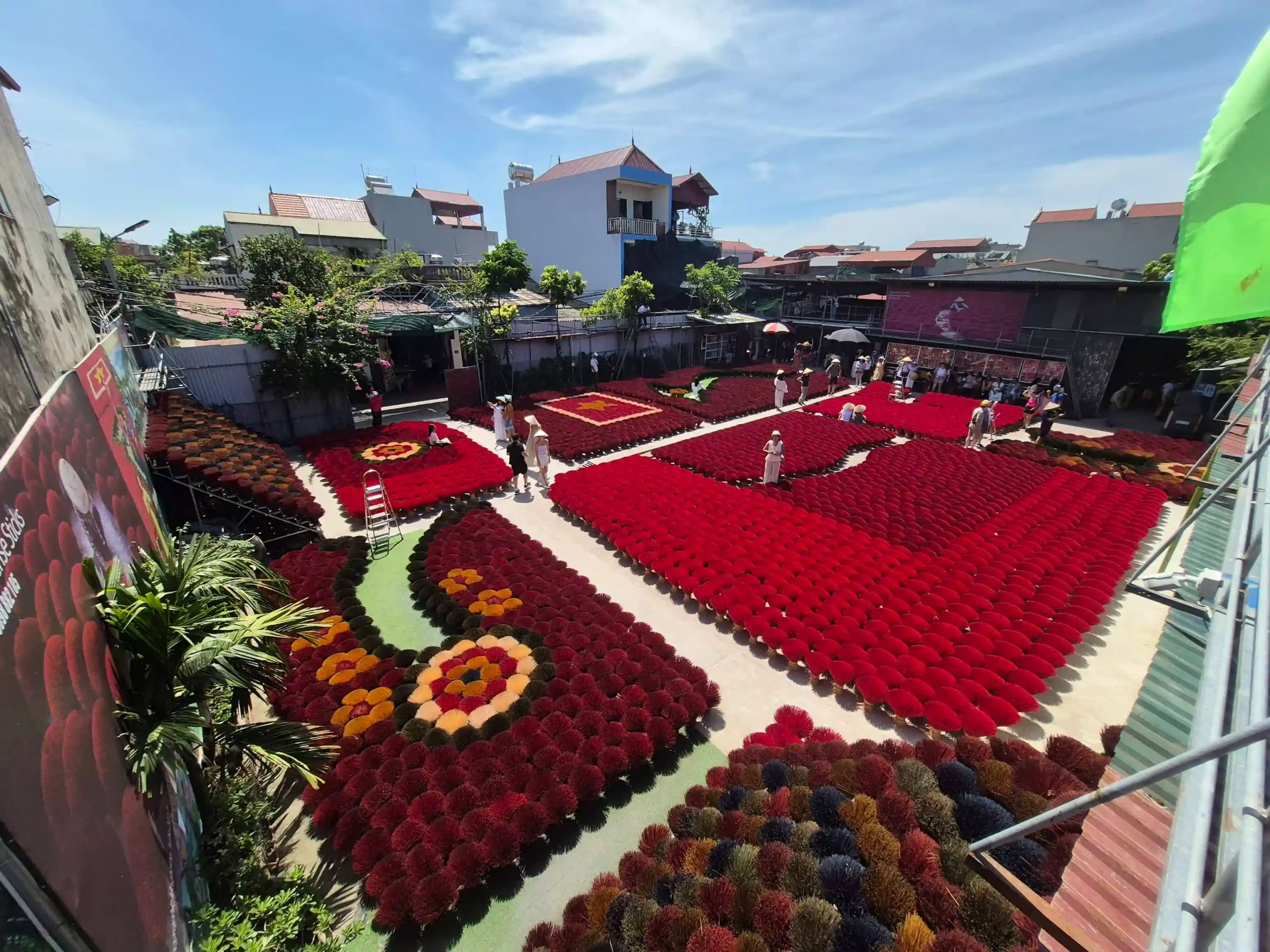
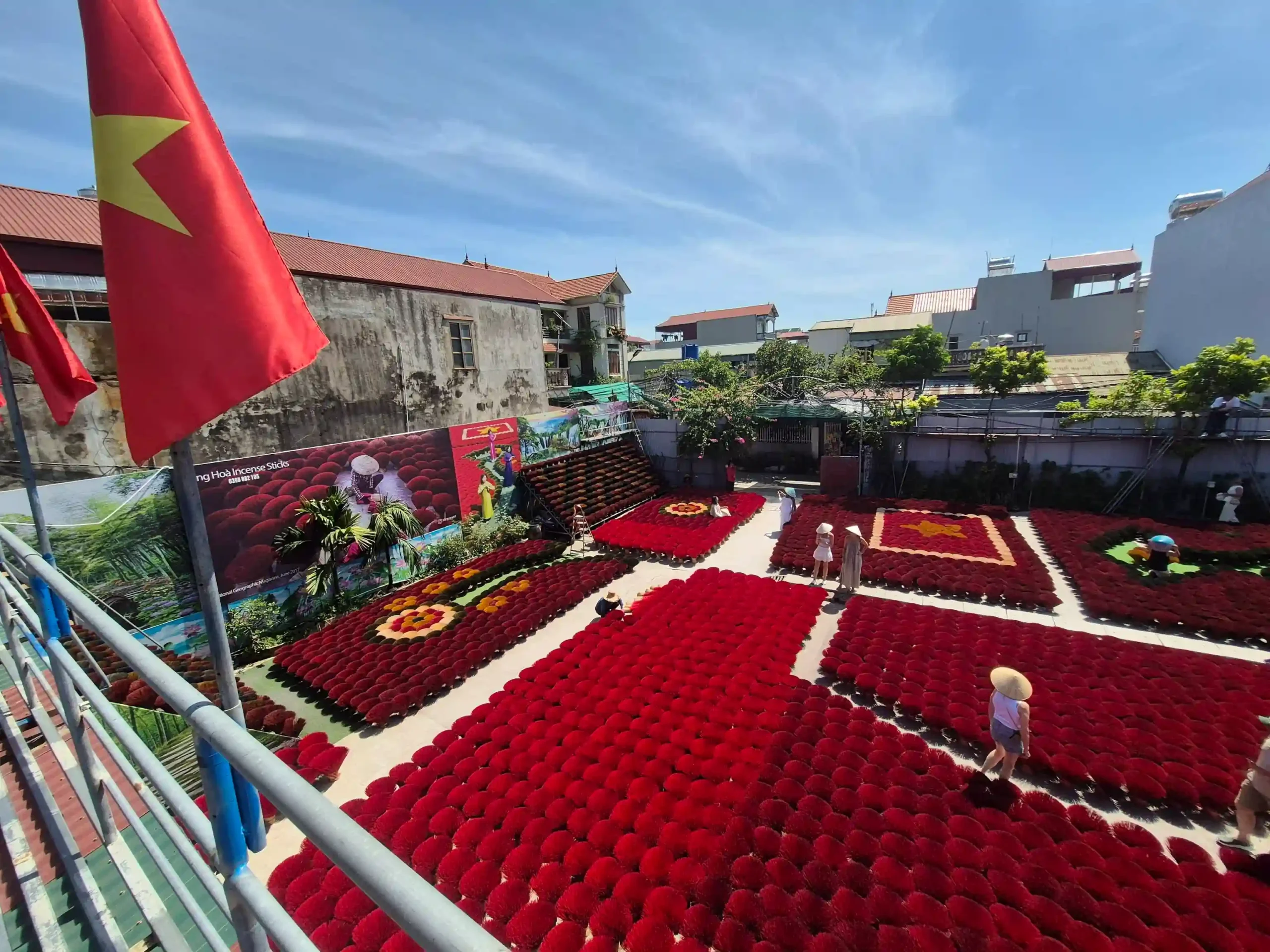
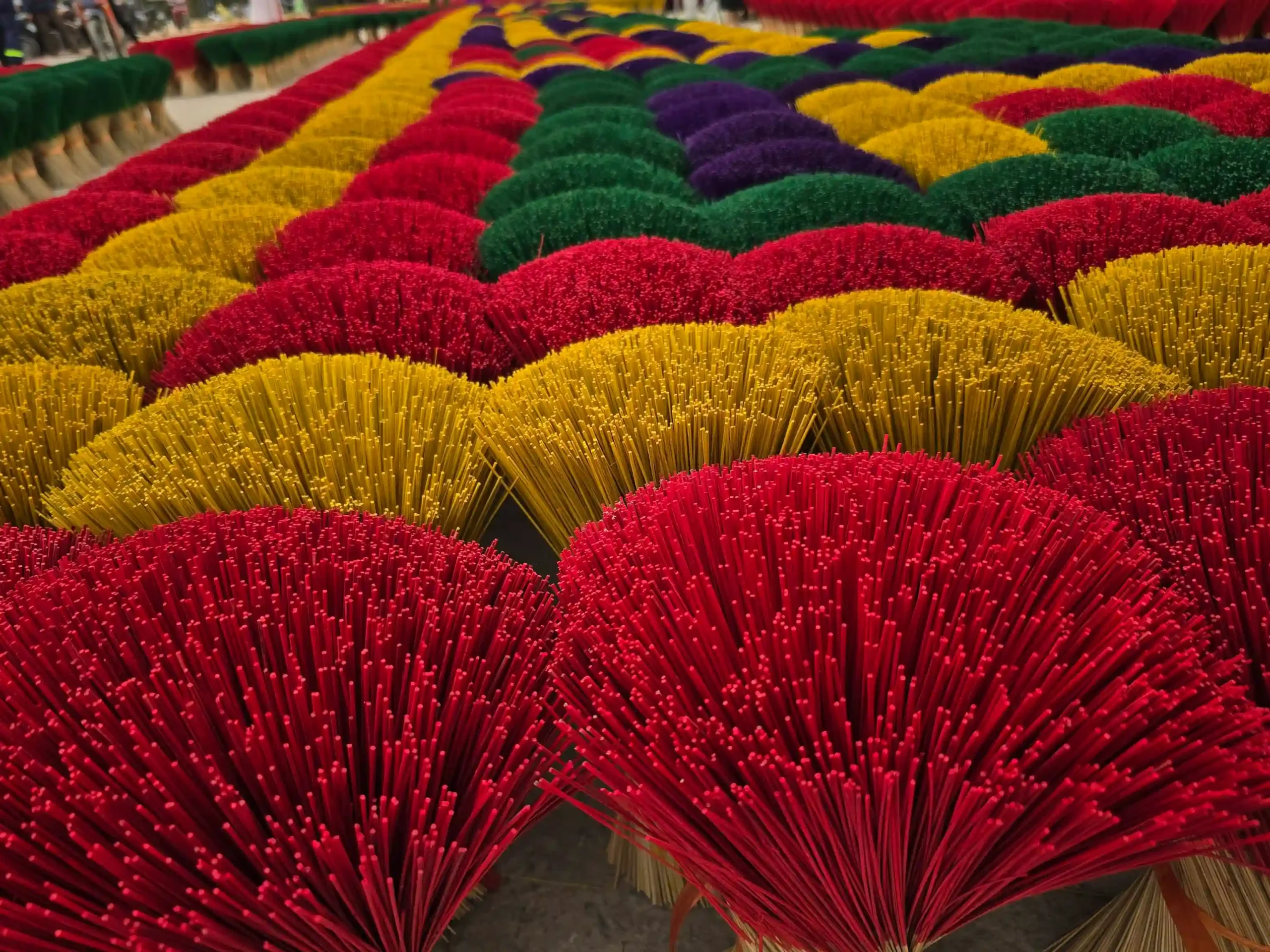
This village has been making incense for over a century. As you drive in, you start seeing the incense before you even get to the center. It’s on the side of the road, on the roofs of houses, in the middle of school playgrounds, just massive bundles of pink, red, and yellow sticks drying in the sun.
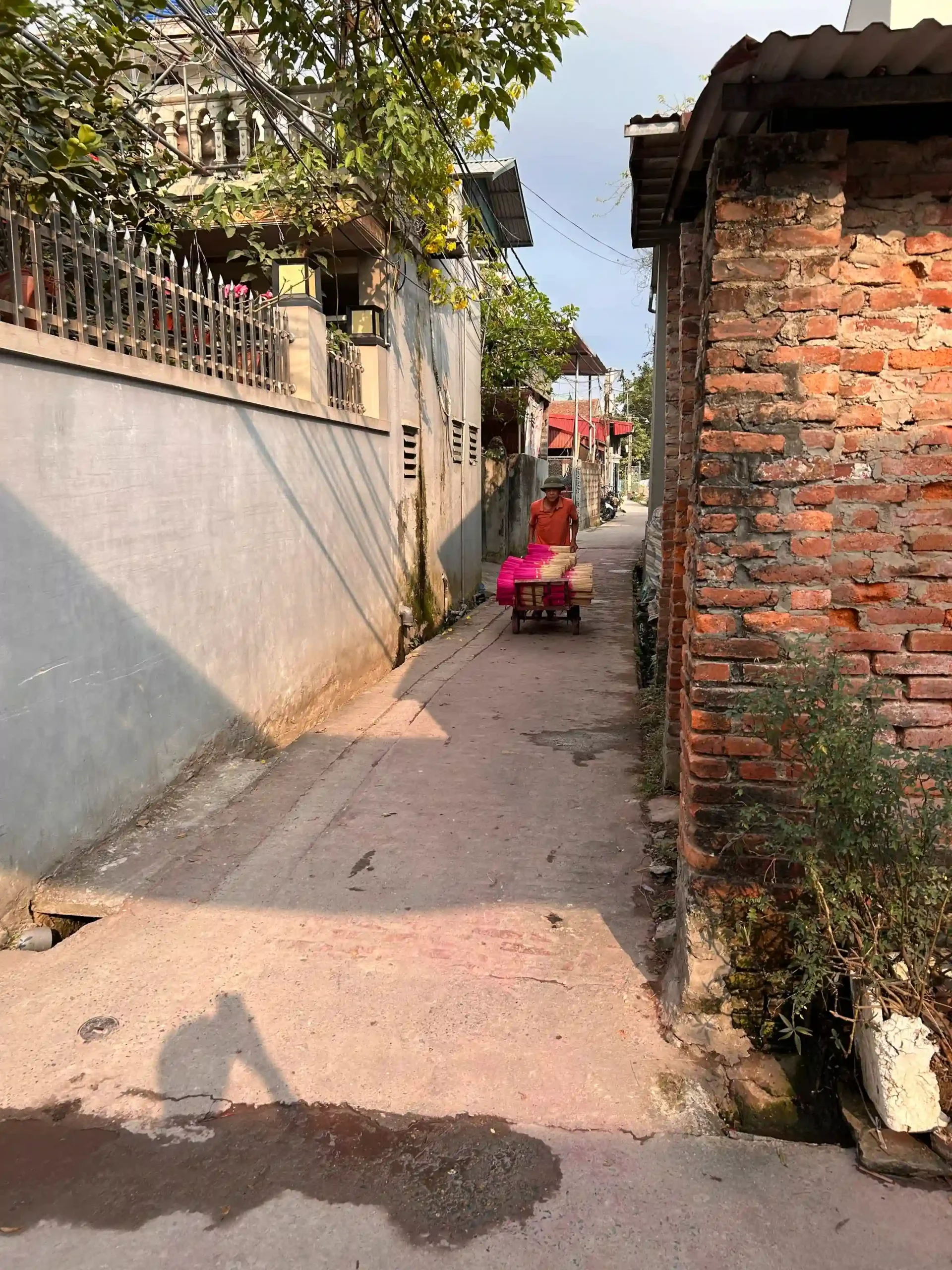
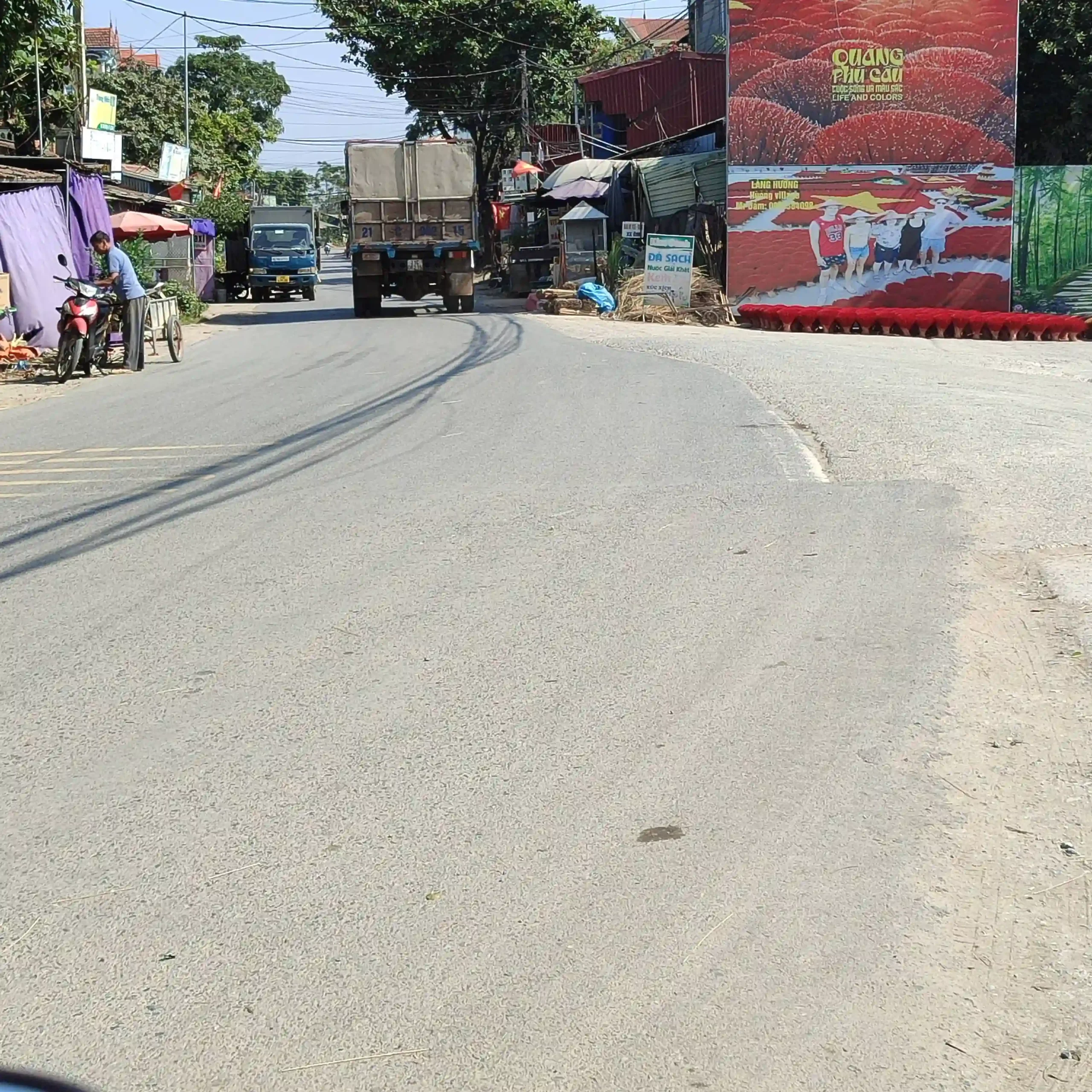
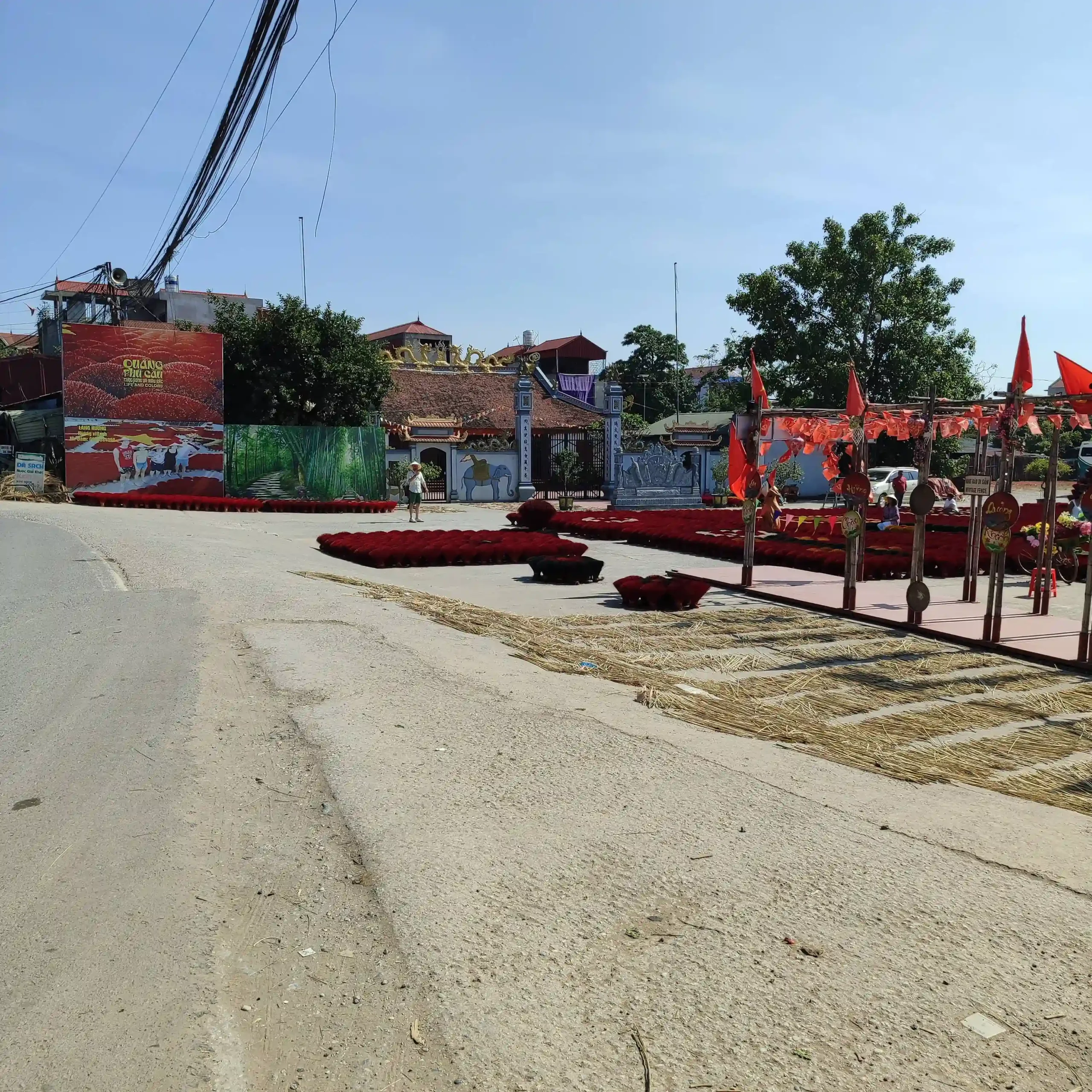
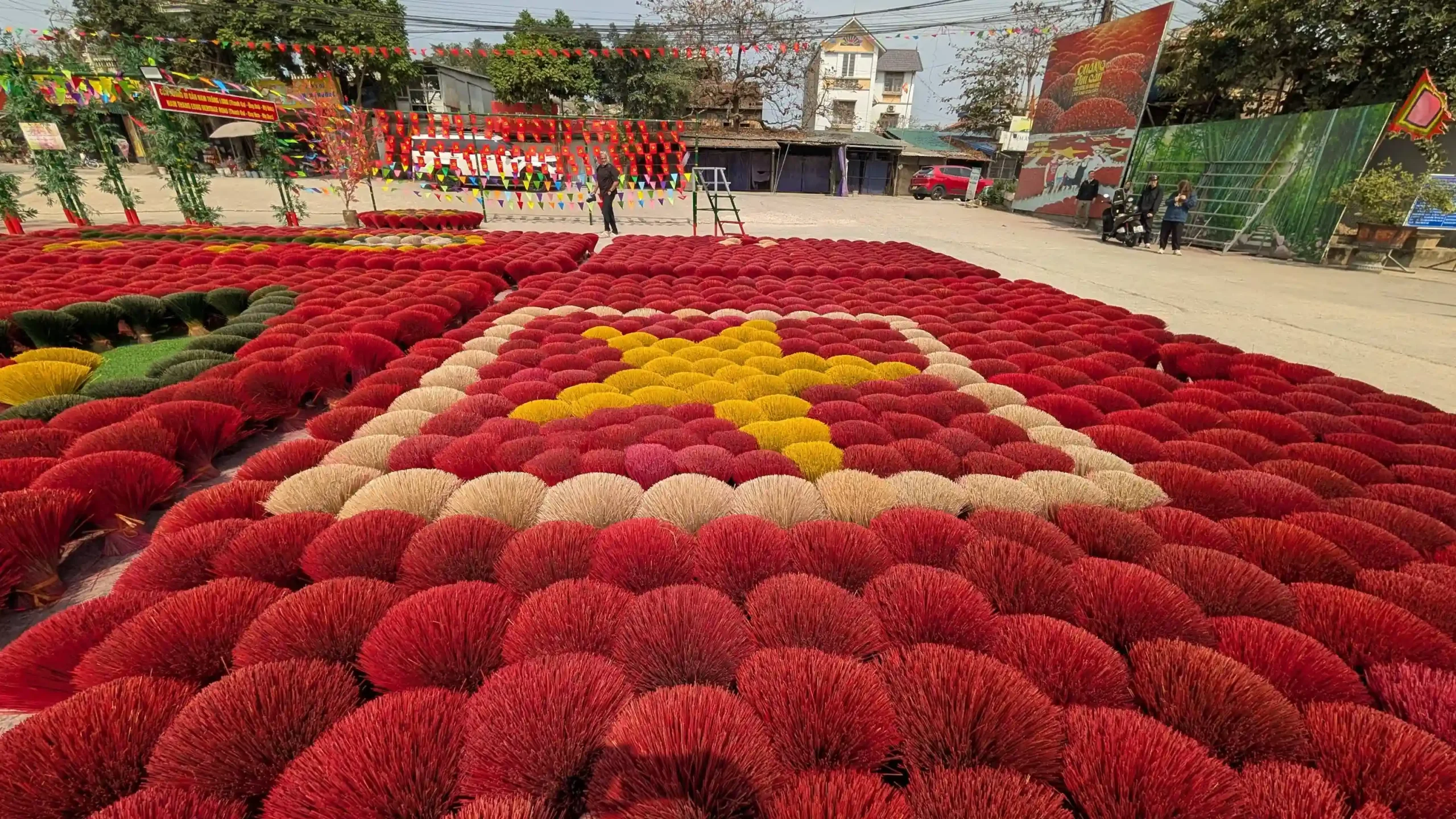
Harry took us to one of the main courtyards. And yes, it is exactly what you see on Instagram.
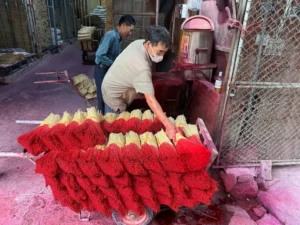
The locals have realized that tourists love the colors, so they have set up these massive displays. They bunch the incense sticks together so they stand upright, creating these huge, wavy patterns of red and yellow. In the middle of one courtyard, they had arranged them to look like the map of Vietnam and the yellow star of the national flag.
The Photo Mechanics (And why having a guide is essential)
Here is the thing: You have to pay a small fee (about 50,000 VND / $2) to enter these courtyards if you are a DIY traveler, but it was already built into our tour price.
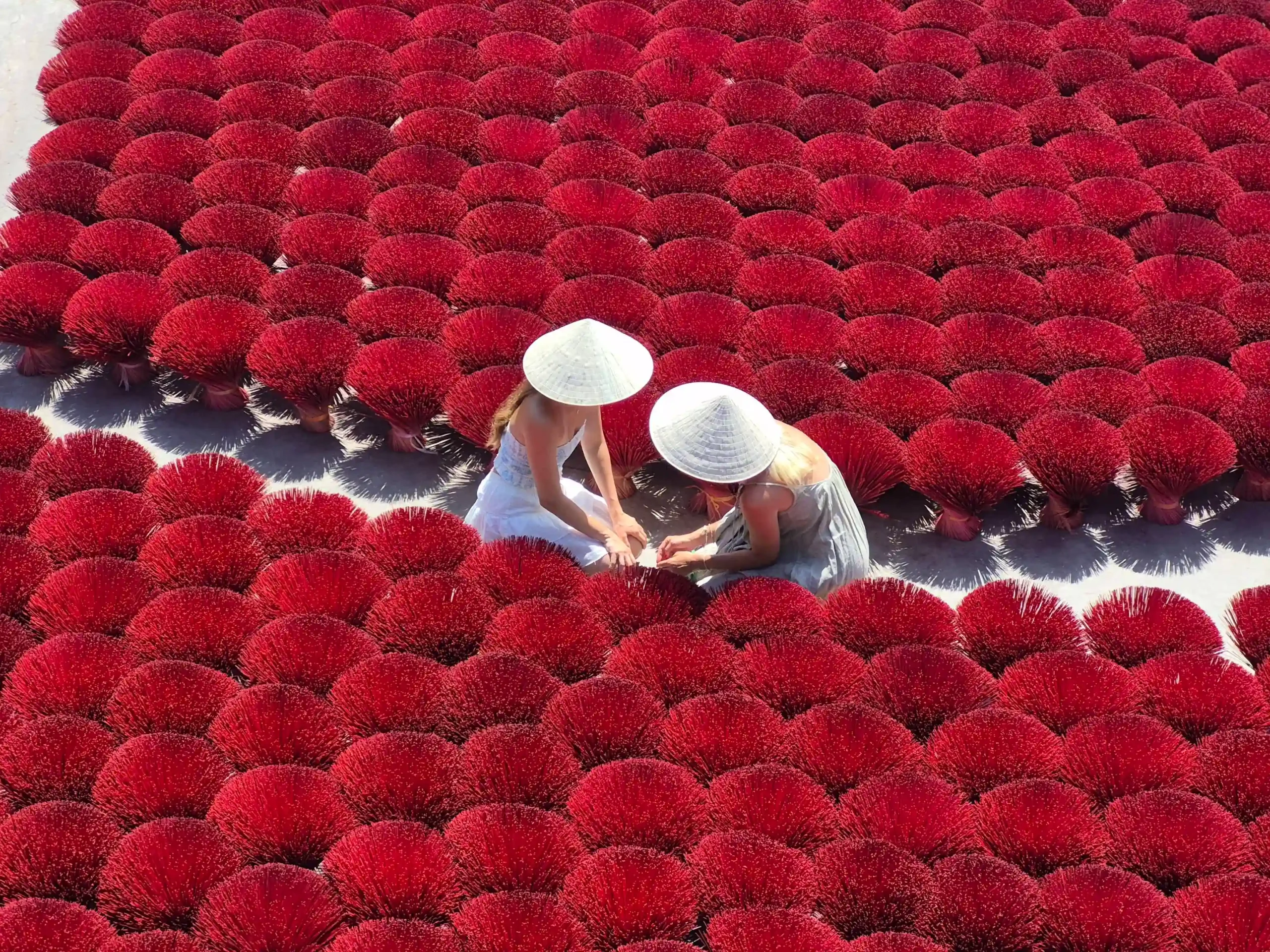
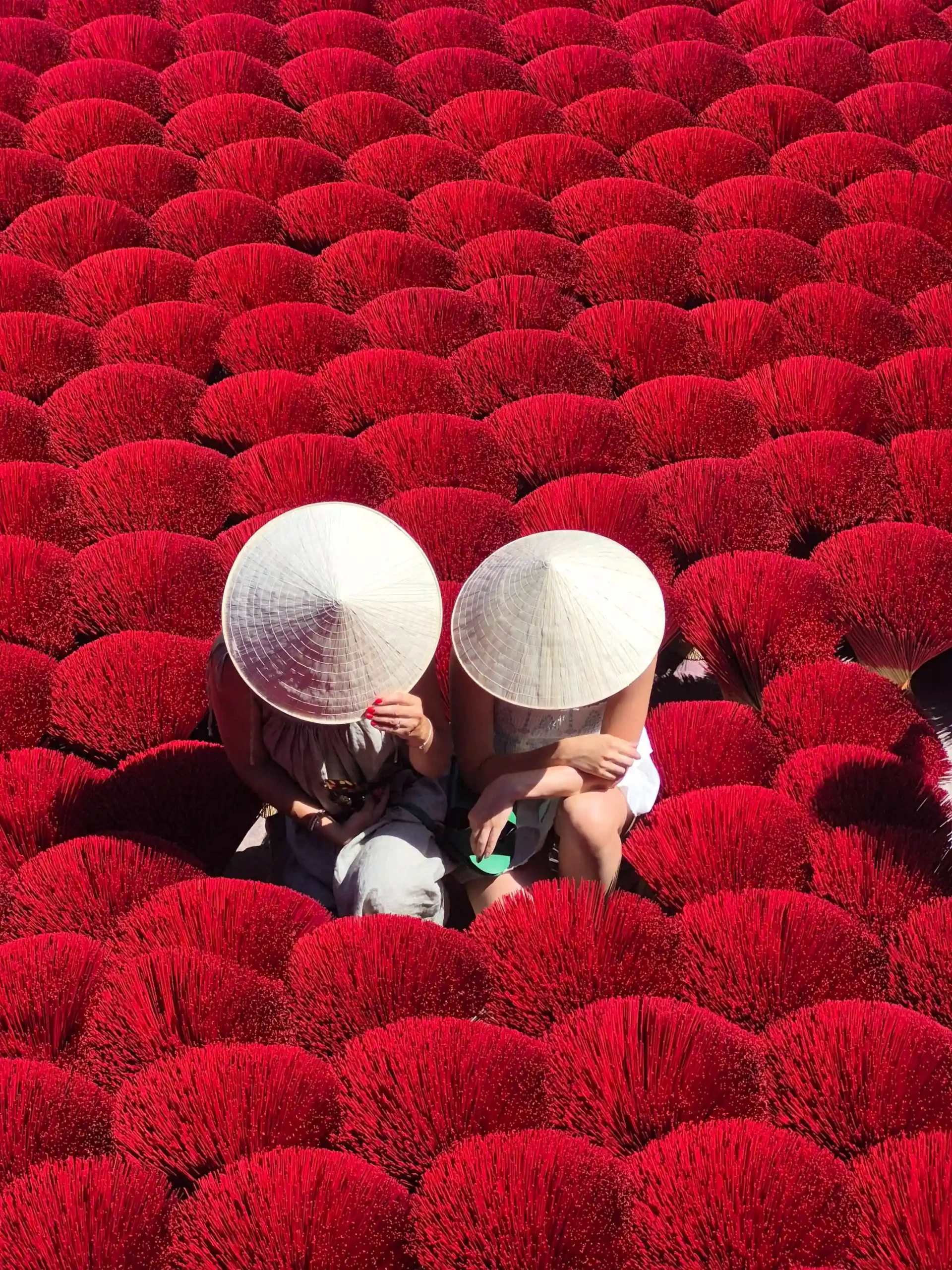
I thought taking photos would feel incredibly awkward, but Harry turned out to be an absolute professional photographer. He knew exactly which angles worked.
He took my cousin’s phone, made her climb up onto a small wooden ladder to get a top-down shot, and even had us pose while he threw a handful of loose incense sticks into the air to get a “dynamic” action shot. It was hilarious, a bit ridiculous, but the photos actually turned out incredible.
But if you only do the photo shoot, you are missing the actual village.
The Gritty Reality: The Factory Tour
Once we finished playing influencer, Harry walked us out of the pretty courtyard and took us down the street to the actual production factory.
This is where the tour gets real.
The factory is loud, dusty, and hot. There are old manual machines slicing giant stalks of bamboo into those tiny round sticks. The air is thick with the smell of sawdust, burning coal, and the herbal paste they use for the incense.
We watched a guy whose job was to grab huge bundles of bamboo sticks and dip the ends into a vat of bright pink dye. His arms were literally stained pink up to his elbows. He didn’t care; he was just listening to music on his phone and working at a lightning pace.
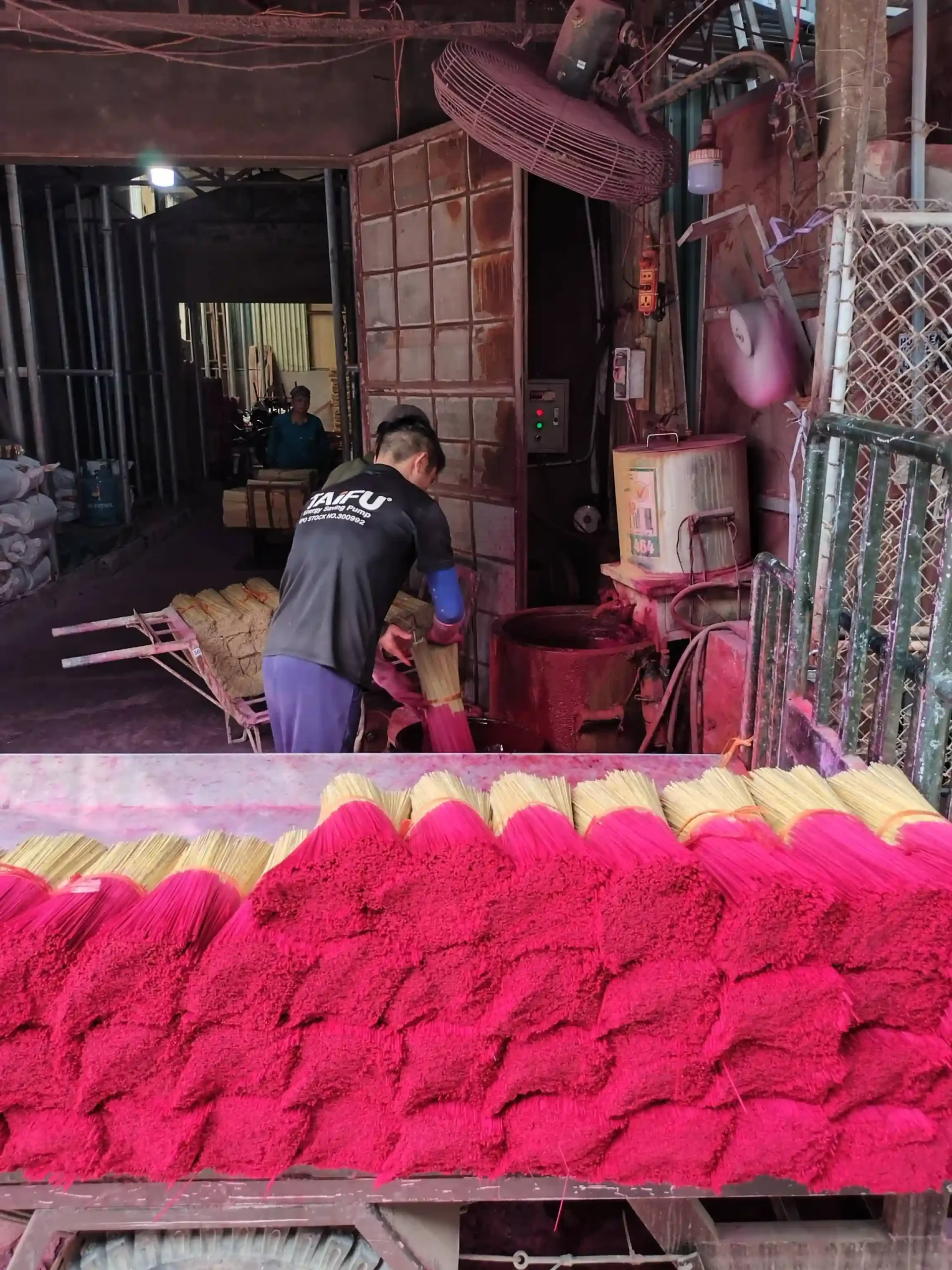
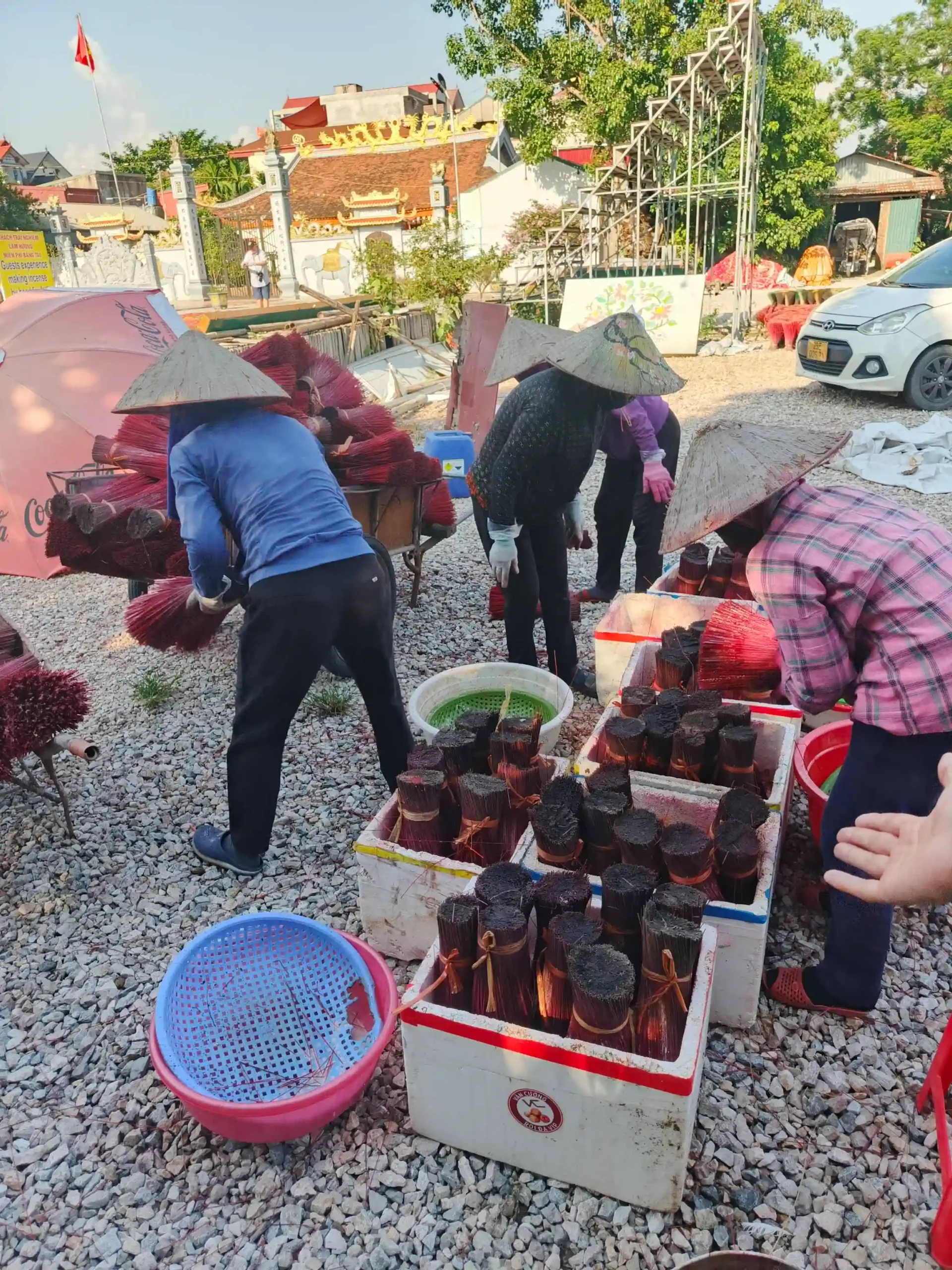
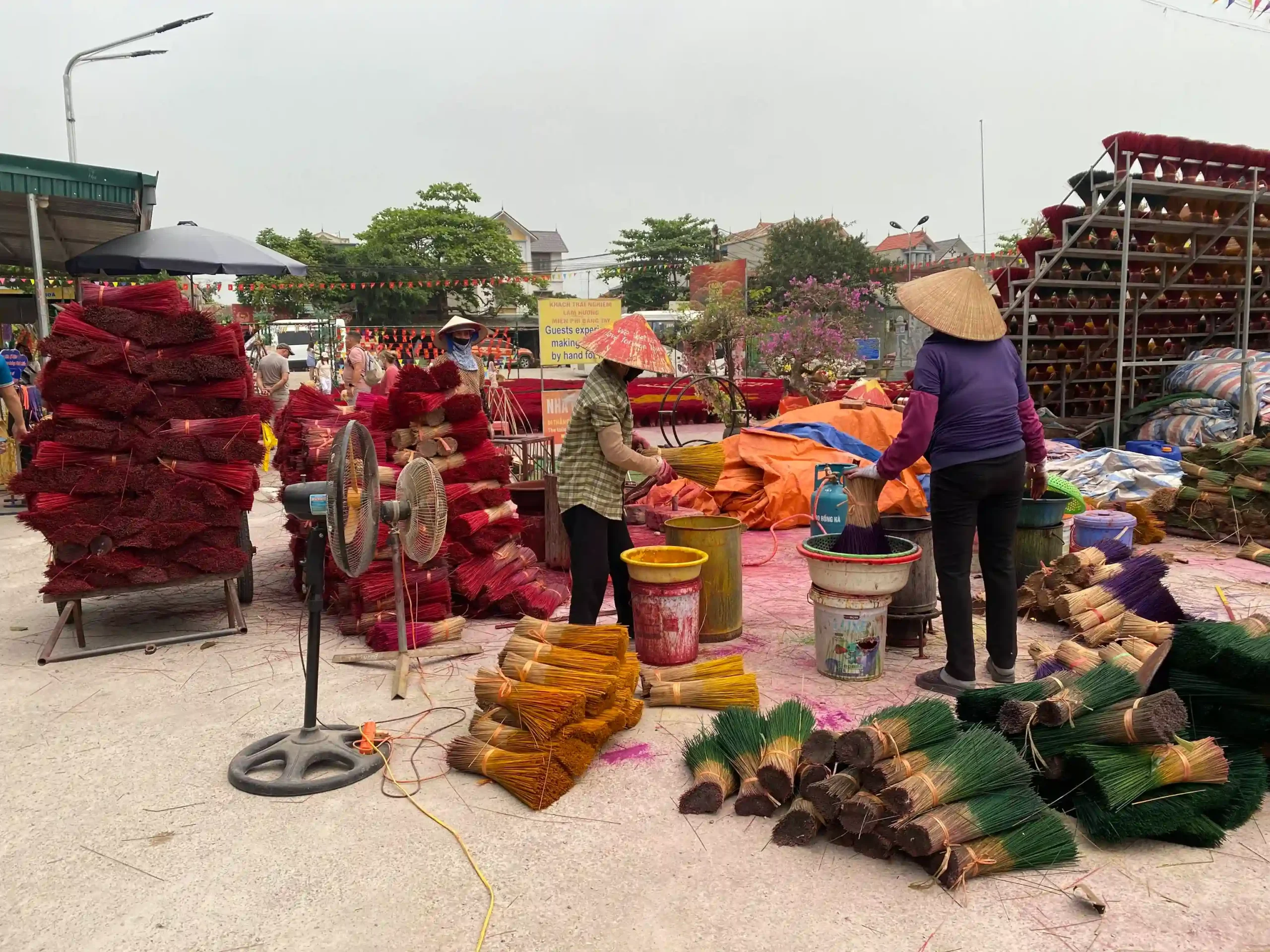
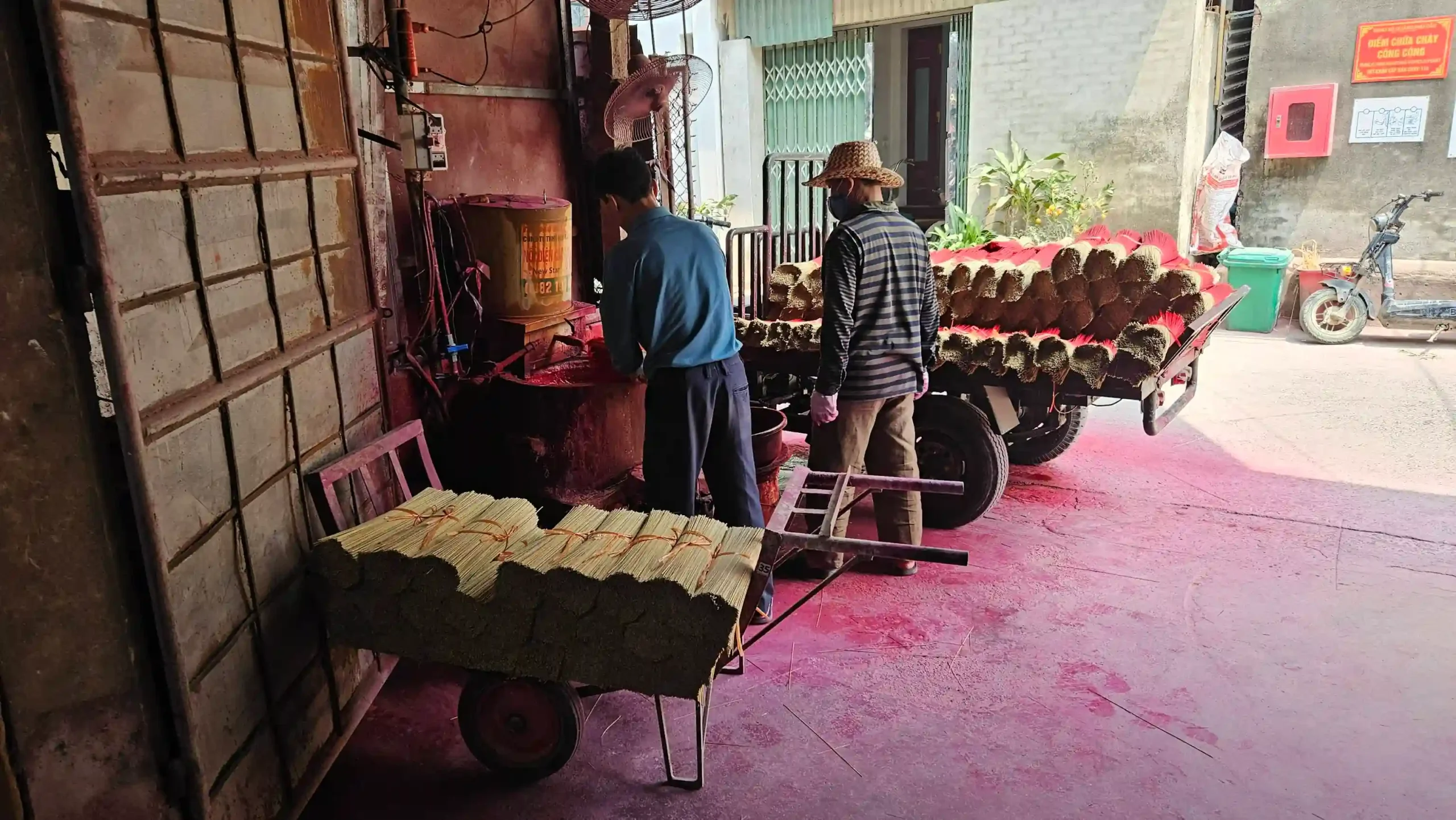
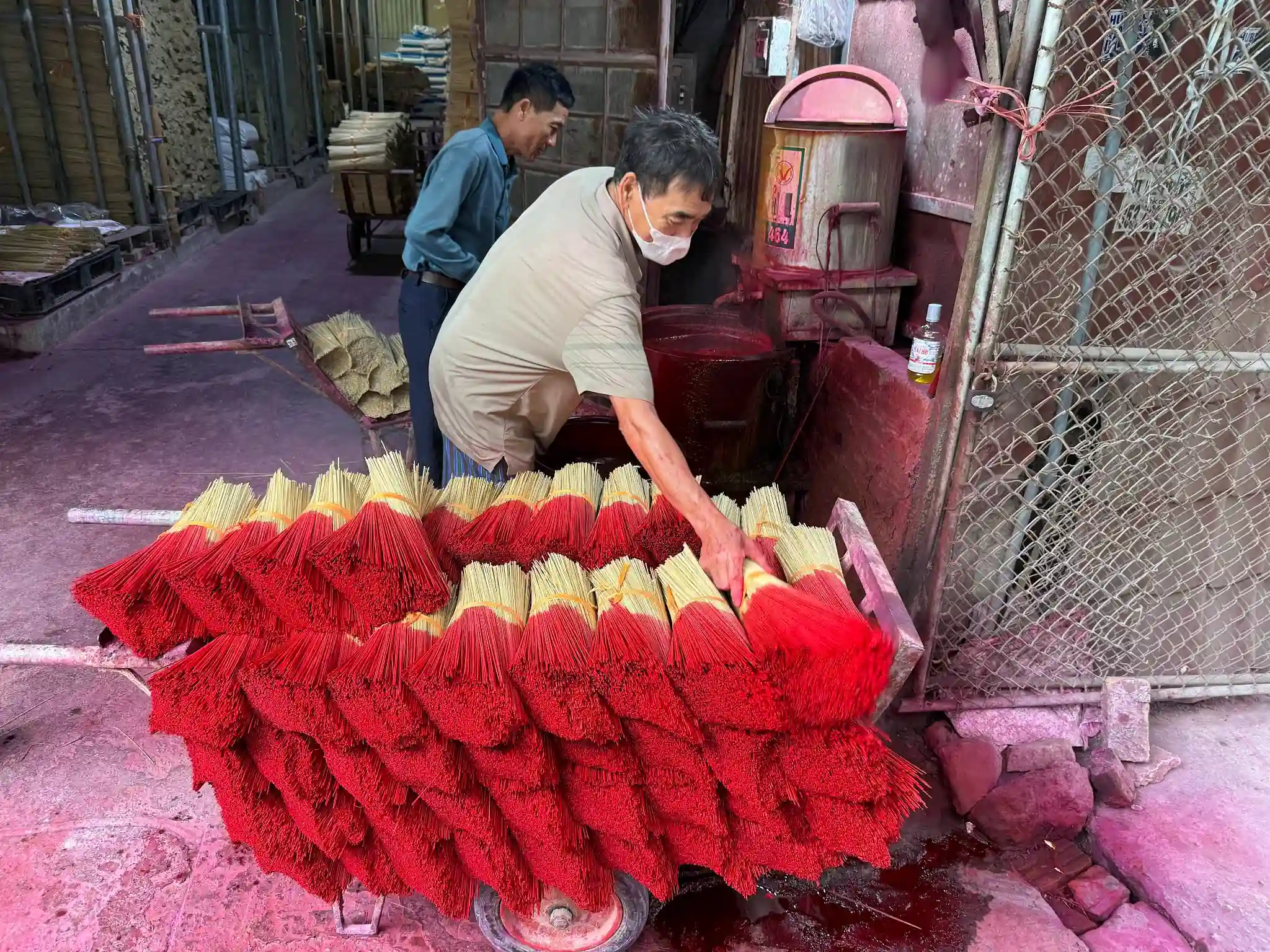
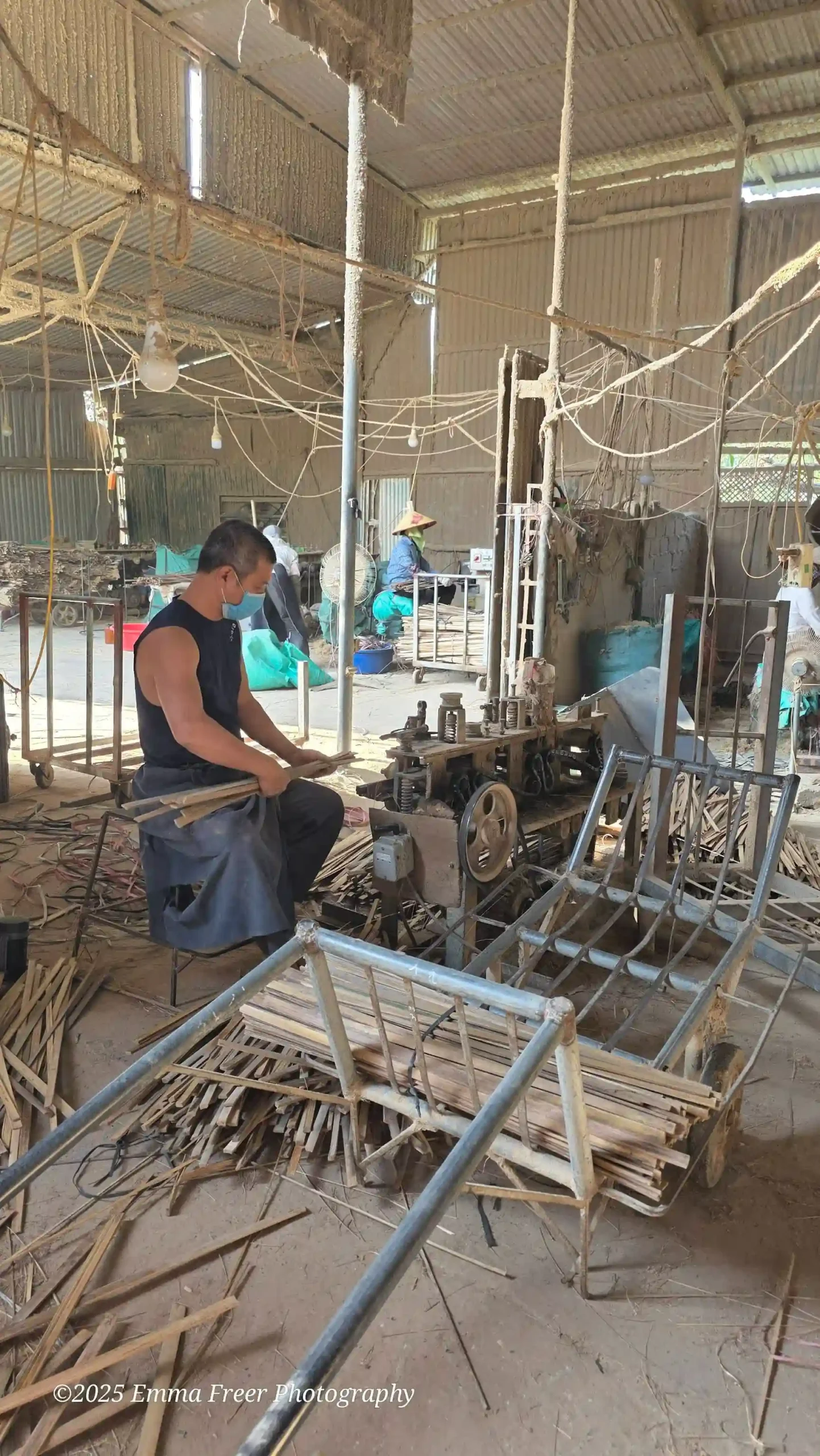
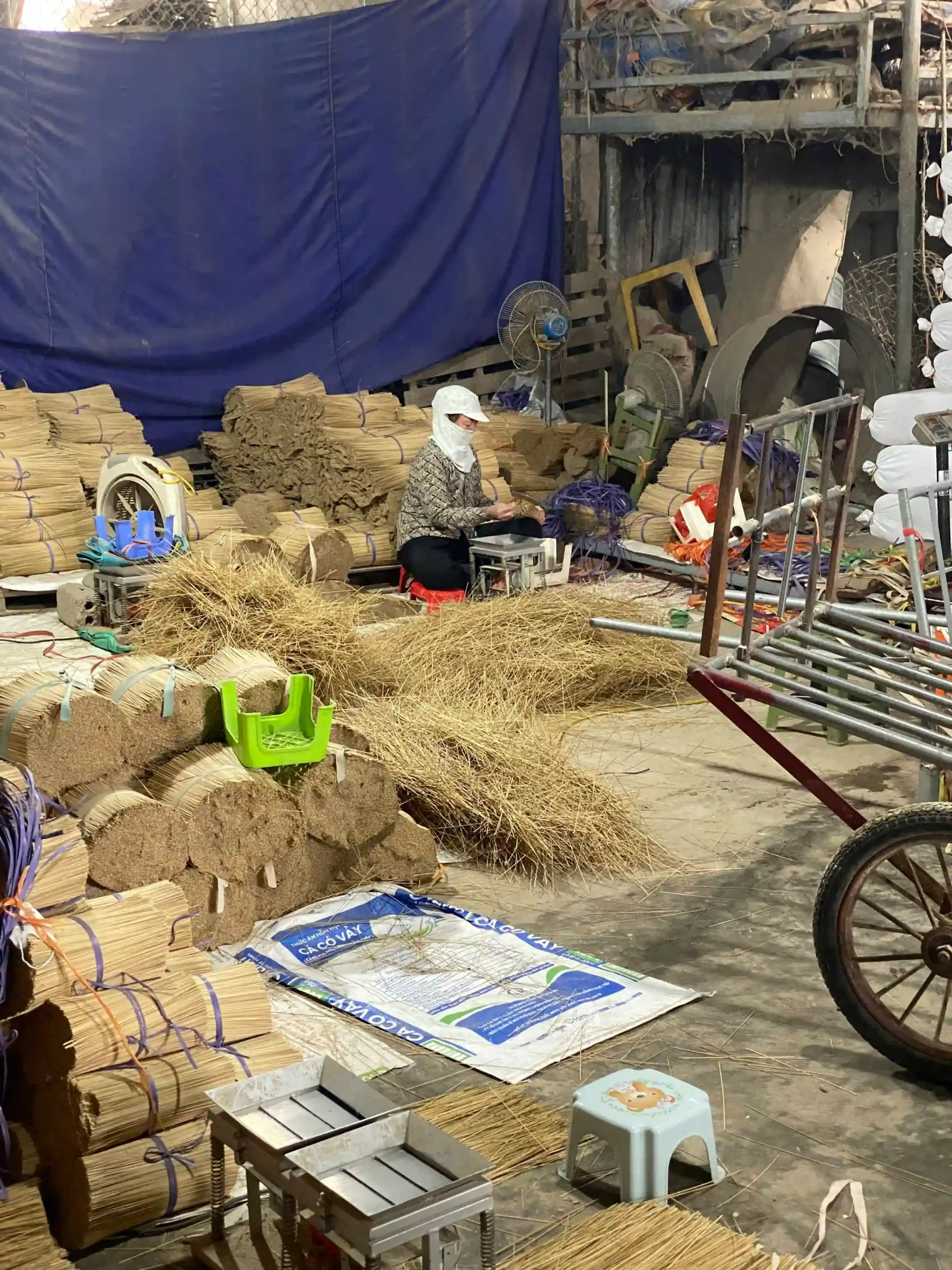
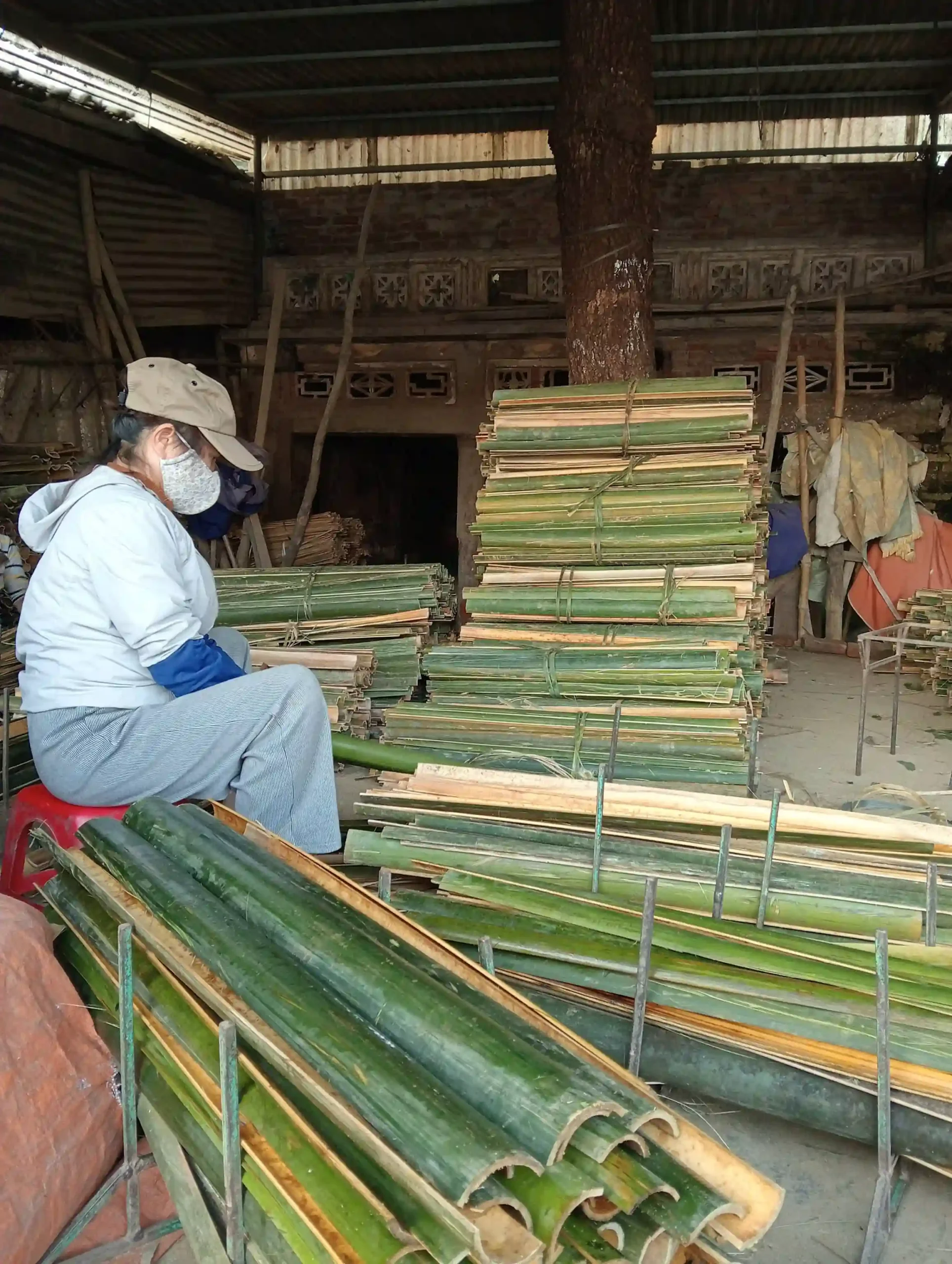
Further back, they showed us how the incense paste is made. They grind up cedar bark, cinnamon, and charcoal, mix it with a natural tree glue, and then run the bamboo sticks through a machine that coats them in the paste.
It is hard, physical, manual labor. It is hot and the air is full of particles. If you are sensitive to dust or strong smells, you will want to wear a mask here. But seeing this side of the village made me appreciate the craft ten times more than just looking at the pretty arrangements in the courtyard.
Incoming article: The history of craft villages in Hanoi
Stop 3: The home-cooked lunch & Ha Thai Lacquer Village
By 12:30 PM, my stomach was growling. If you do the half-day tour, this is where you go home hungry. But because we did the full day, we drove over to a local artisan’s house in the lacquer-making district for lunch.
I’ve eaten a lot of tourist lunches on day trips in Vietnam, and they are usually pretty bad, dry fried rice and cold spring rolls.
But this meal was outstanding.
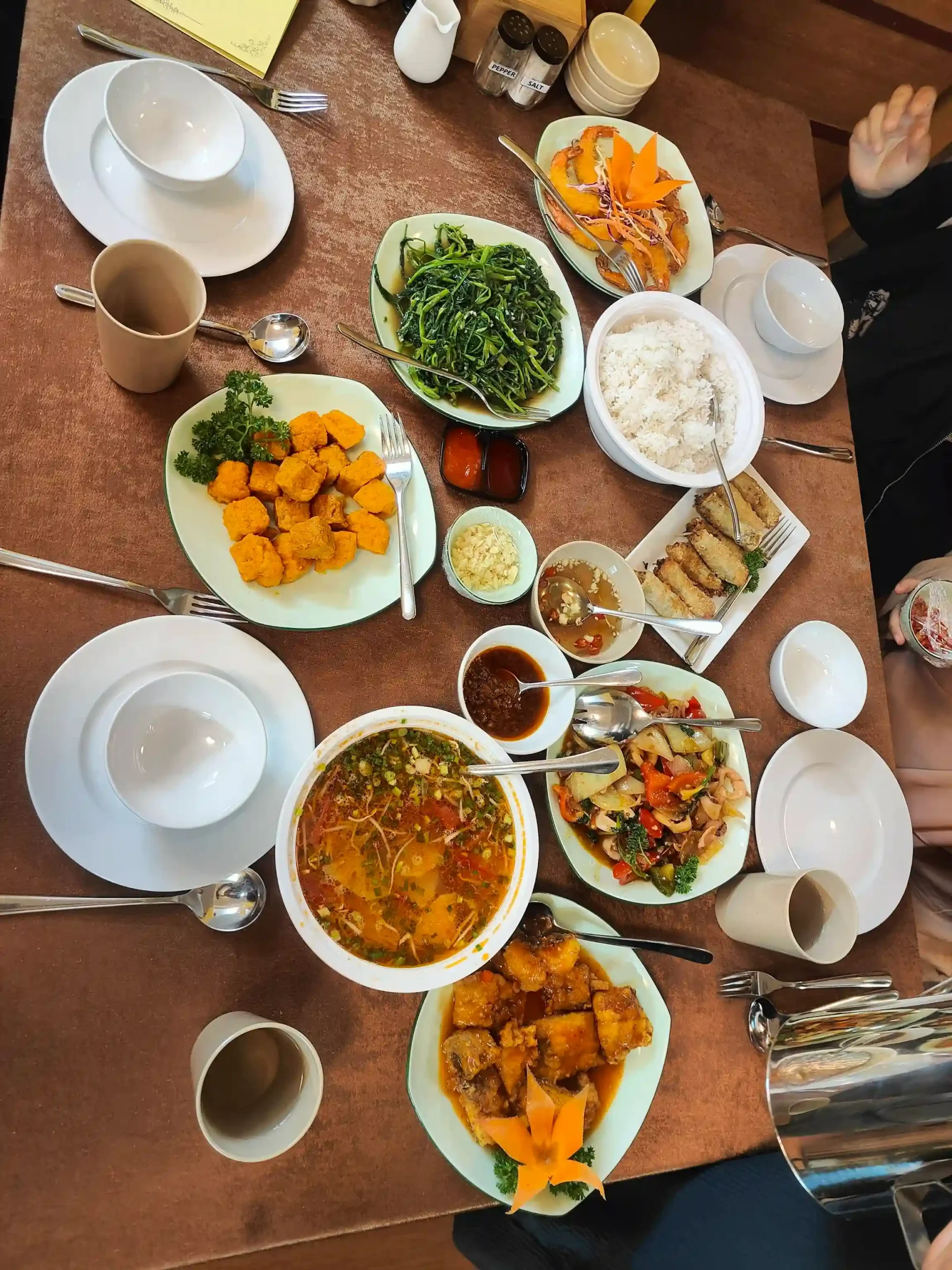
They set up a table in the shade of a tiled courtyard. The family brought out plate after plate of food: crispy pork spring rolls, boiled chicken with lime leaves, fried tofu in tomato sauce, morning glory sautéed with garlic, and a massive bowl of potato and pork soup. It was simple, fresh, home-cooked food, and we ate until we couldn’t move.
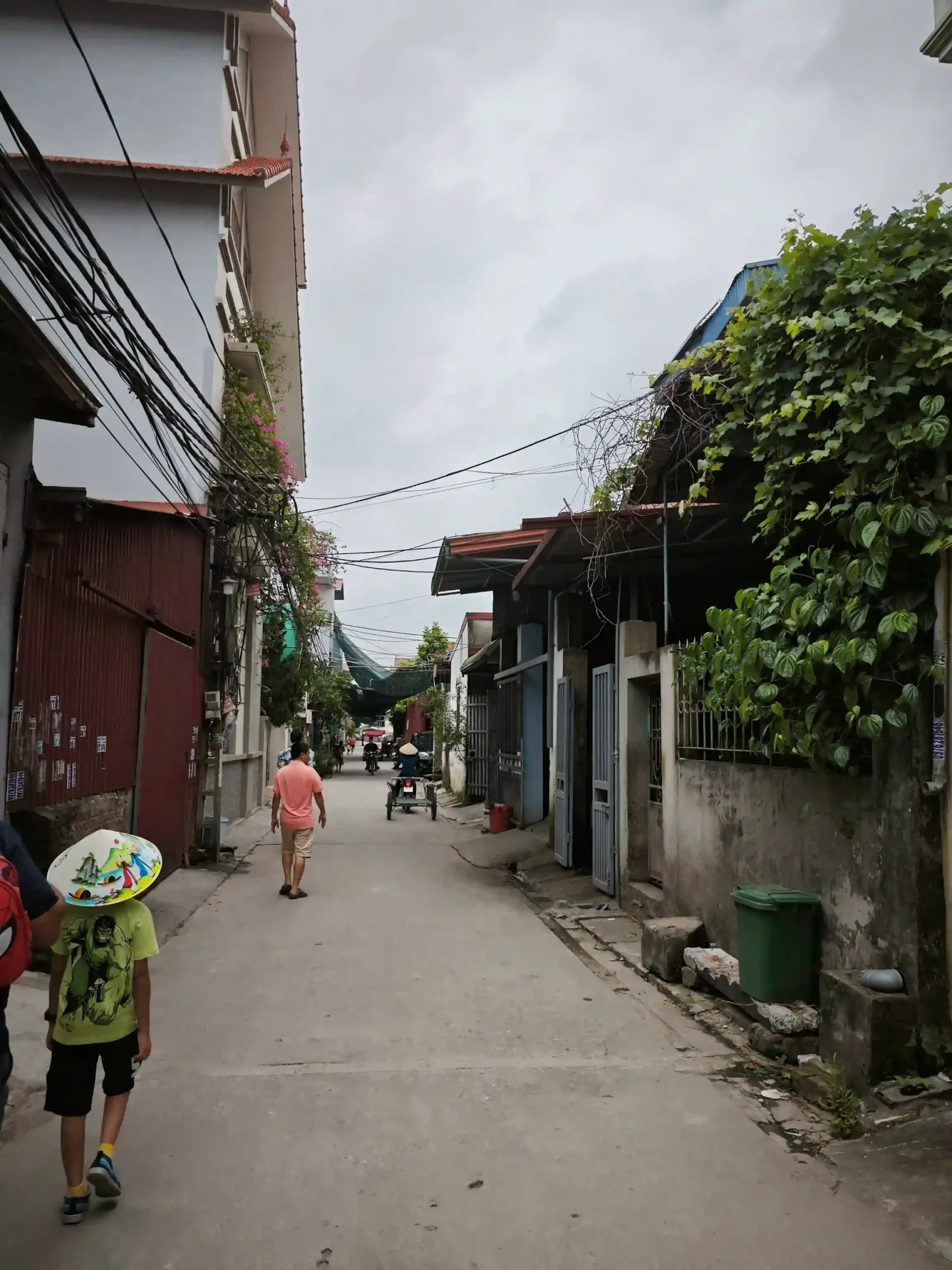
After lunch, we walked down the road to check out the Hanoi Lacquer Crafting Village (Ha Thai).
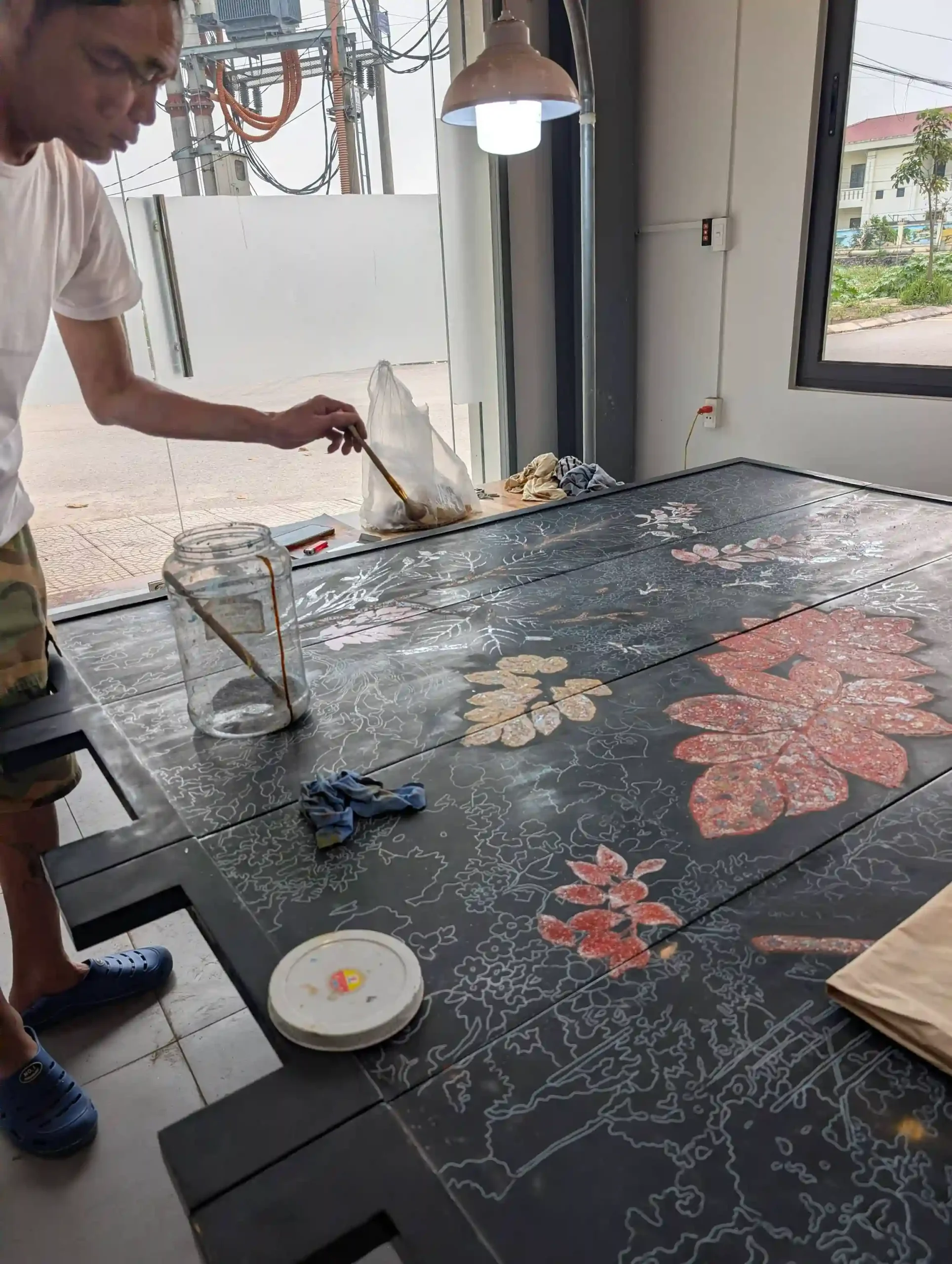
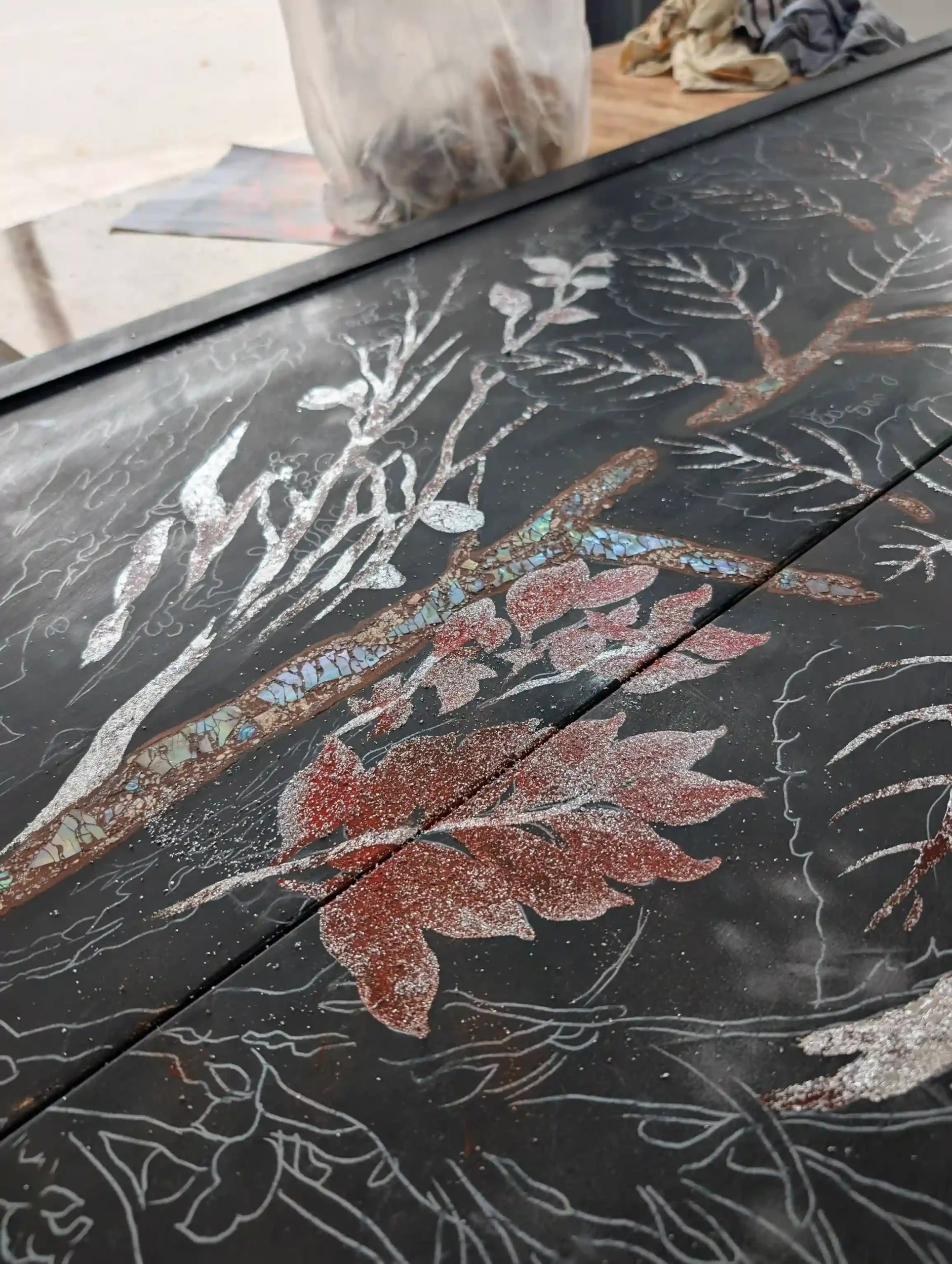
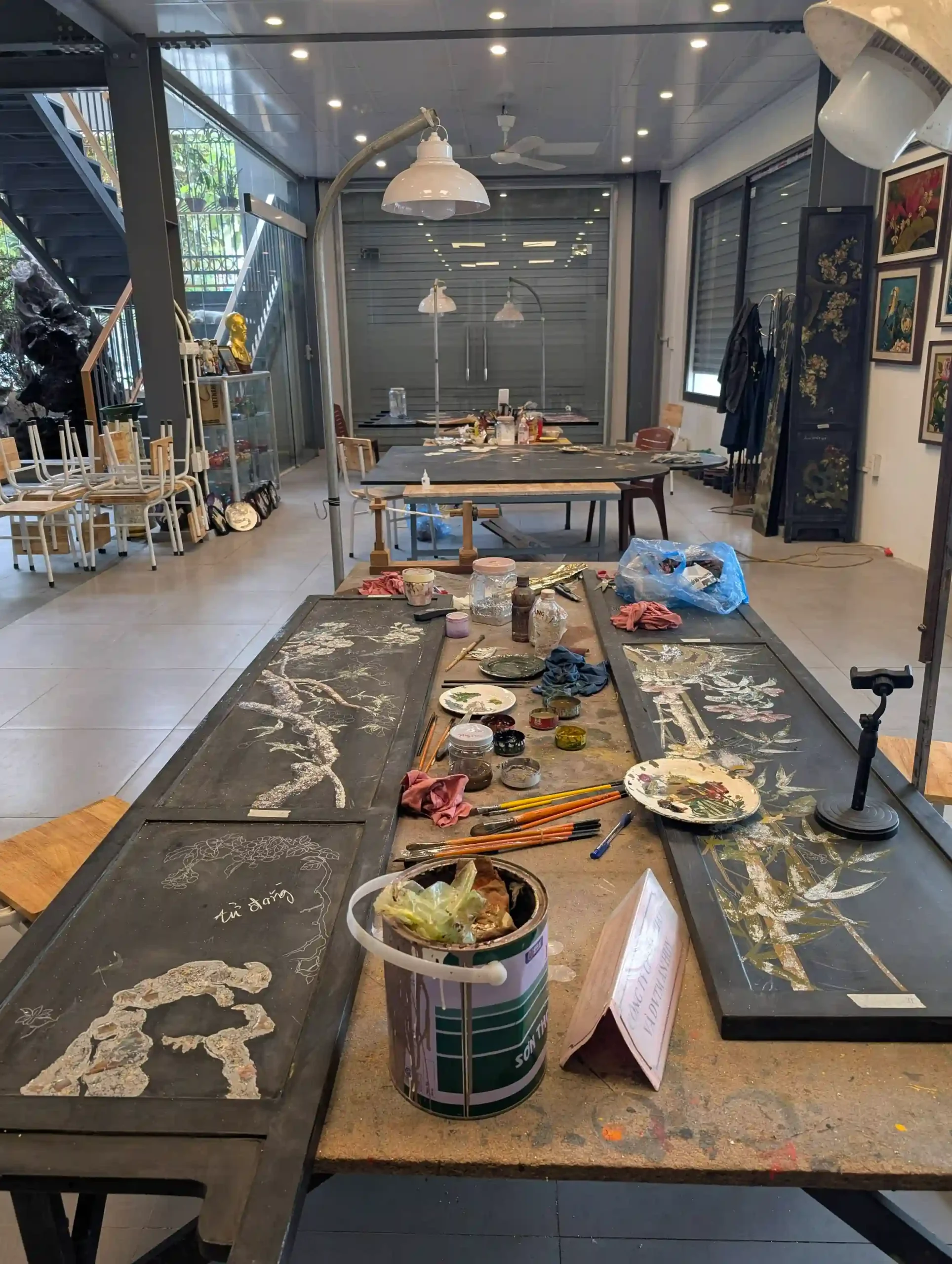
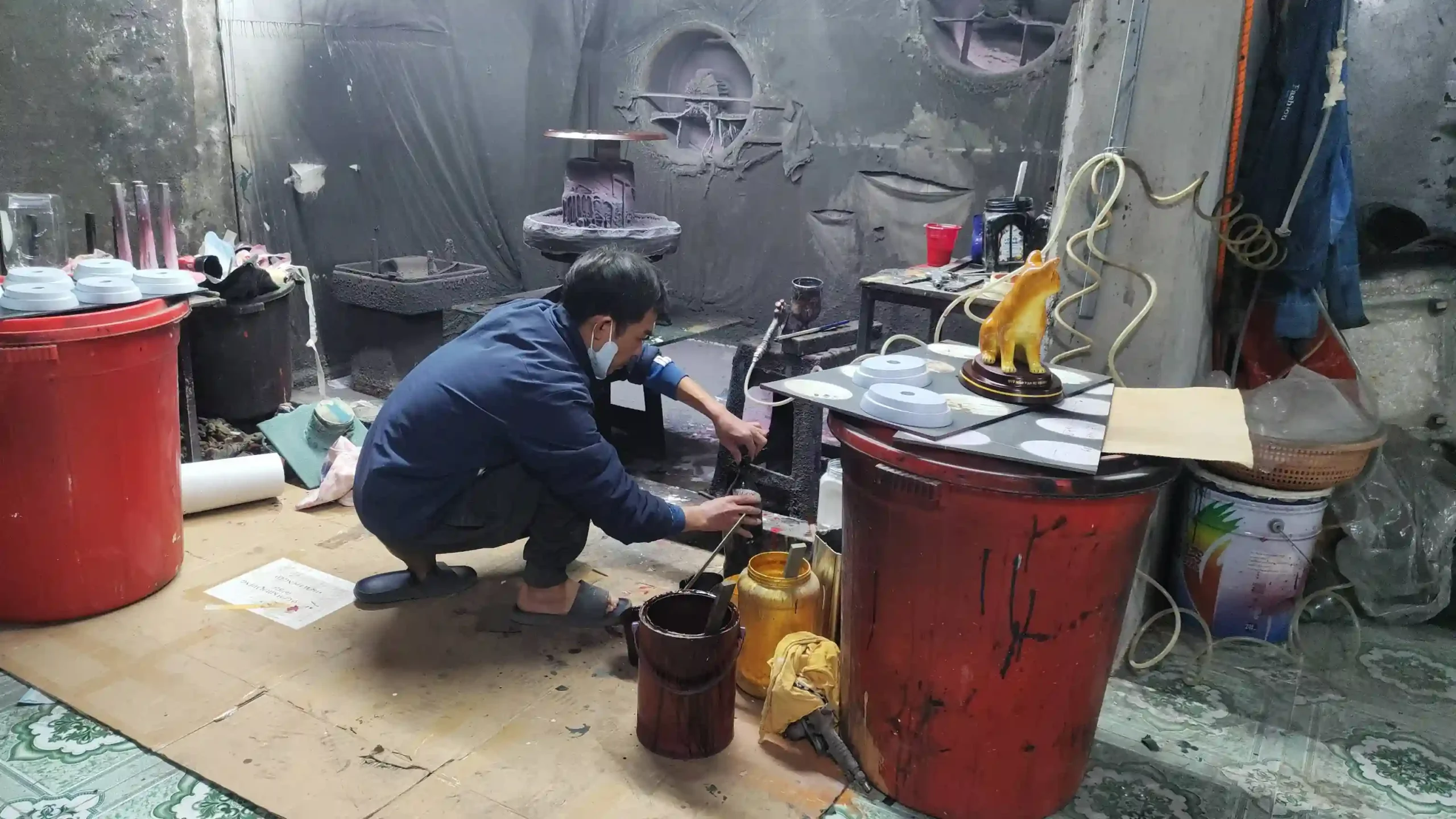
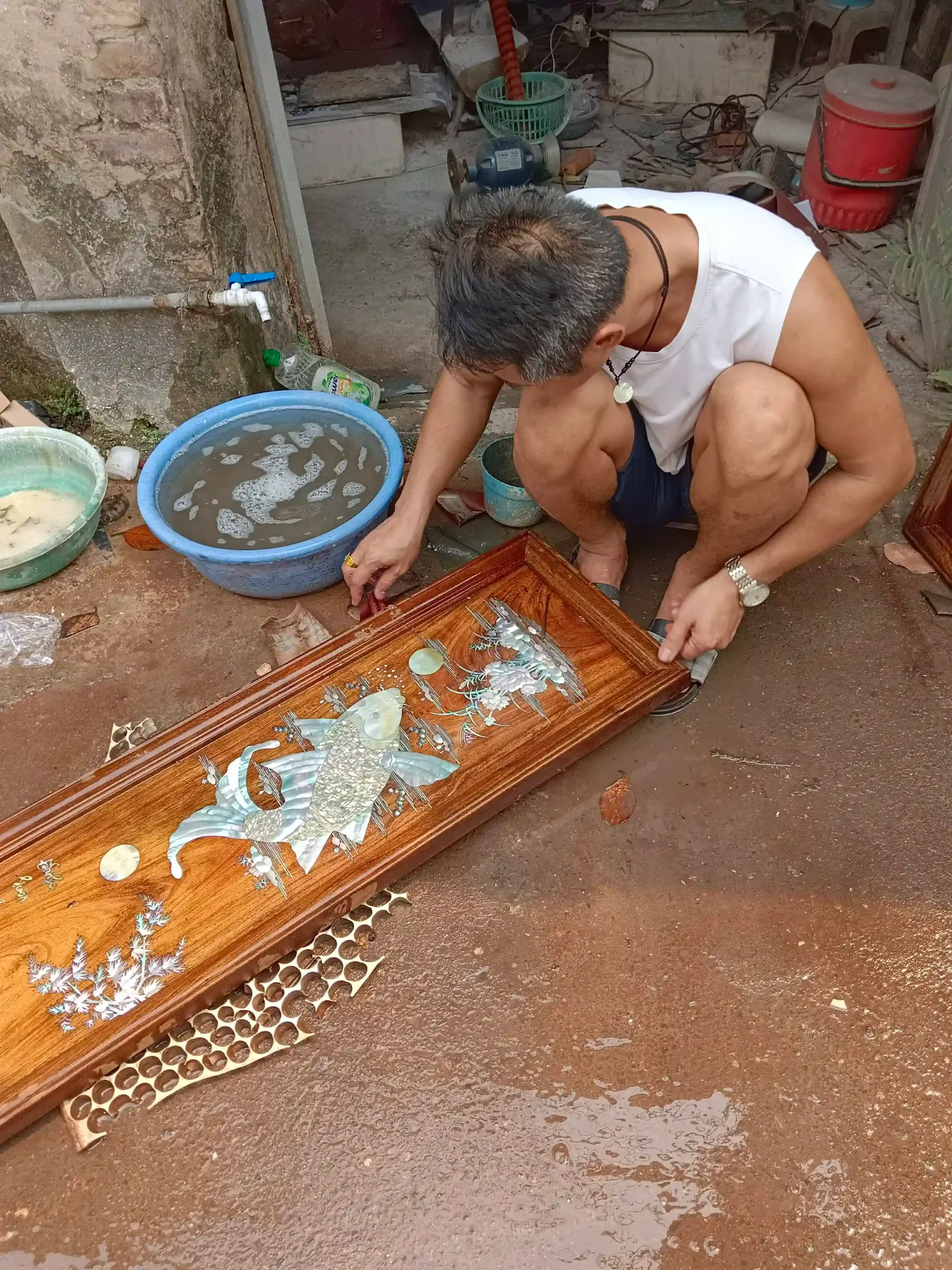
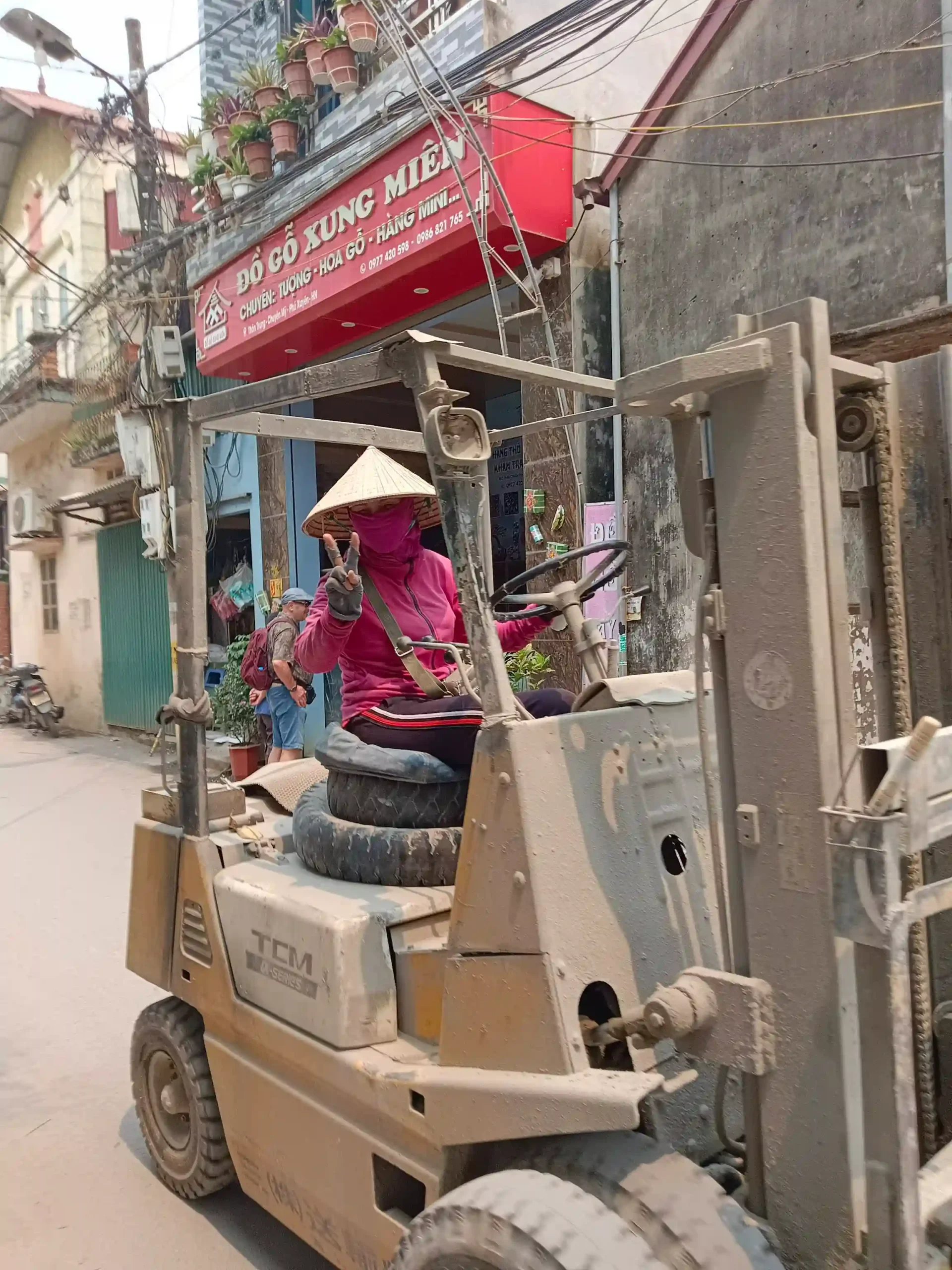
Lacquerware is another massive traditional craft here. They take wood or bamboo, coat it in layers of natural sap from the lacquer tree, sand it down under water, paint it, inlay it with mother-of-pearl or eggshells, and repeat the process like ten times.
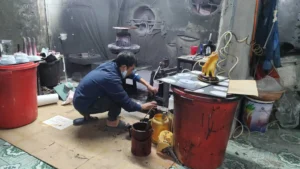
We visited a workshop where two guys were sitting in silence, carefully placing tiny fragments of duck eggshells onto a black painted tray using tweezers to create the shape of a lotus flower. The level of patience required for this job is mind-blowing.
A quick warning: The workshops use a lot of industrial paints and acrylic lacquers now alongside the traditional natural sap. The smell inside the drying rooms is very chemically. If you have a sensitive nose, you will want to step outside into the courtyard quickly. But the finished pieces, these massive, shining paintings and bowls, are beautiful.
The return and the Train Street drop-off
We got back in the van around 3:30 PM to head back to Hanoi.
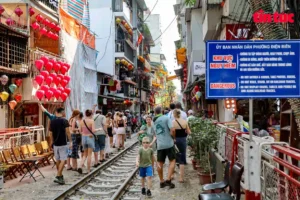
The tour has an optional drop-off at Train Street. Since my cousin hadn’t seen it yet, we decided to do that.
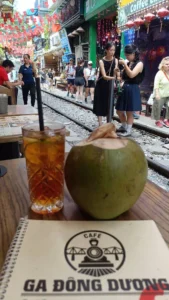
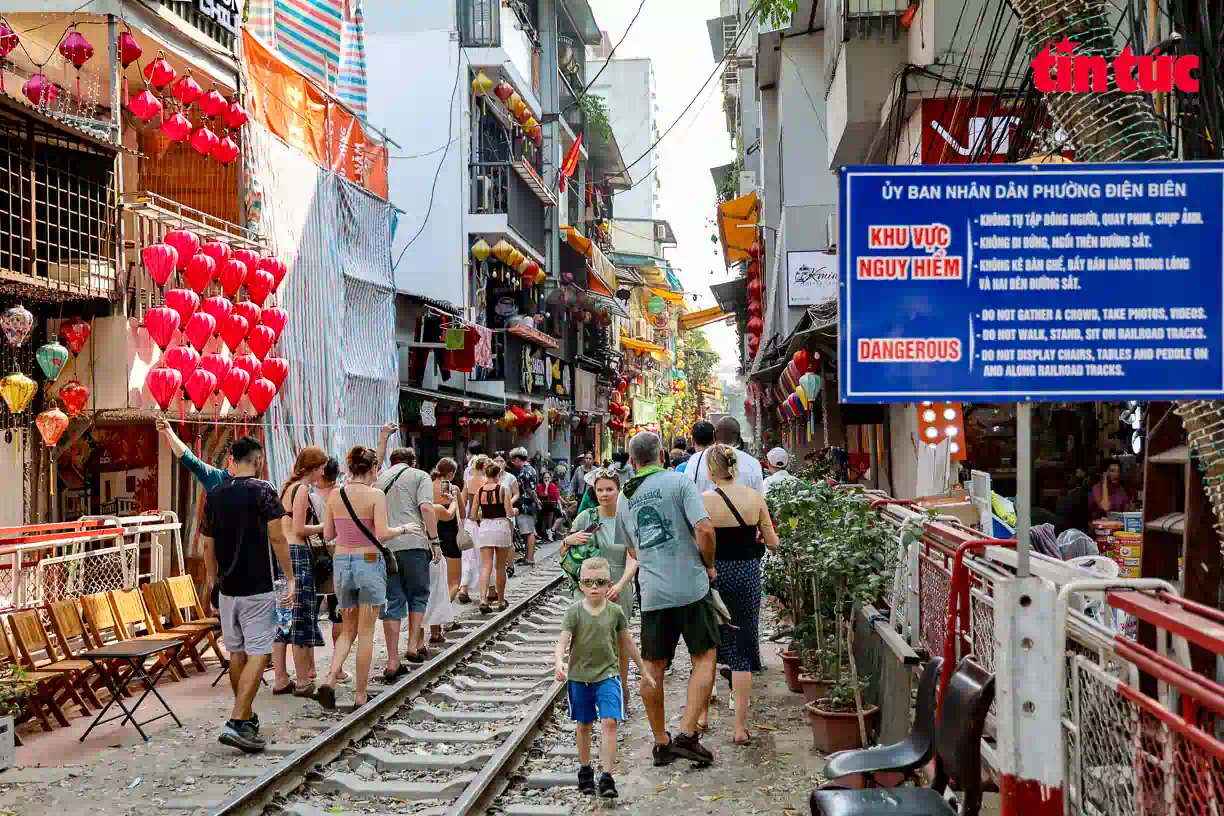
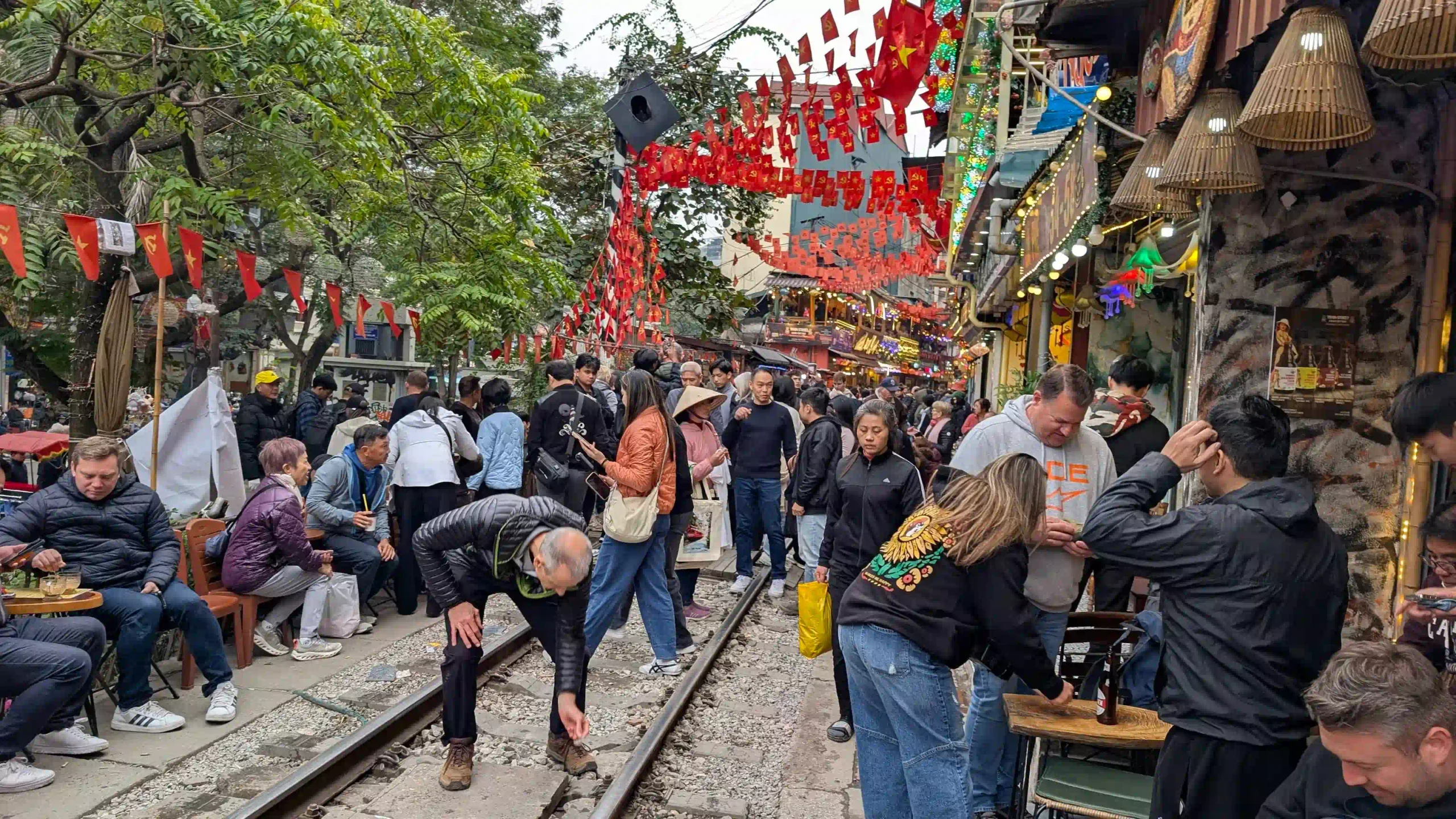
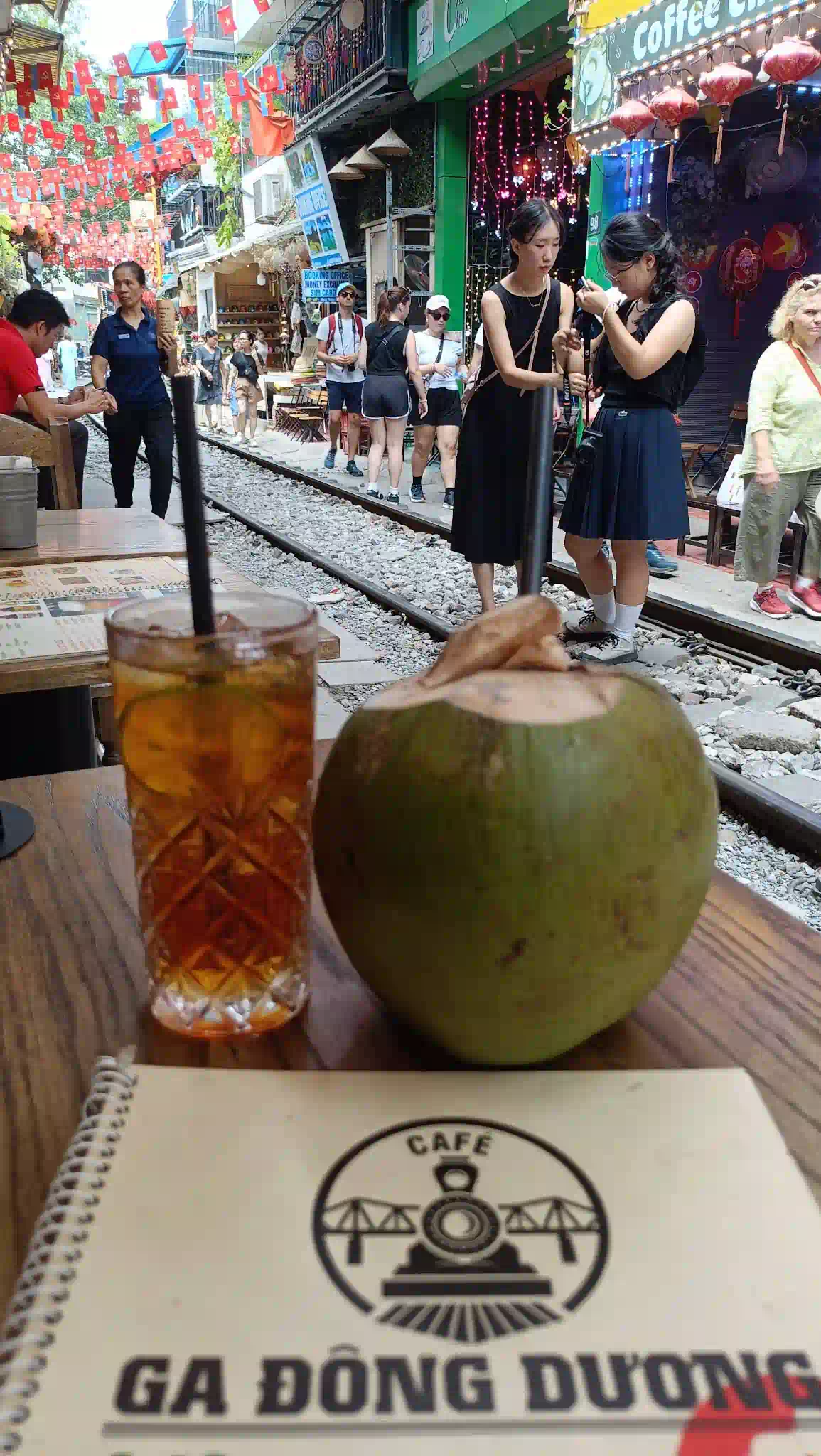
The van dropped us off near the tracks in the Old Quarter. Harry walked us past the police barricade (which, as I wrote in my other guide, is usually closed to solo tourists unless you are with a local) and got us seats at a tiny cafe right next to the rails.
It was the perfect way to end the day. We drank a cold coconut, watched the train squeeze past our table, and then walked back to our hotel on our own.
Read more: How to successfully visit Train Street in 2026
Is the Quang Phu Cau tour actually worth it?
Let’s look at the financial reality of this.
You can find this tour on GetYourGuide starting at around $25 to $30 per person depending on the options. The private version costs more, obviously, but if you are traveling with a partner or a small group of friends, the private car and personal guide are worth every penny.
Here is my honest take: Yes, it is absolutely worth it.
I went into this expecting a fake, Instagram-only trap. But because the tour actually takes you into the working factories and the local houses, it feels like a real day trip. You aren’t just looking at props; you are watching a 100-year-old industry function.
Plus, the inclusion of the conical hat-making and the lacquer village makes the day feel complete. It’s not just a 4-hour drive for one photo. It is a full immersion into the crafts of the Red River Delta.
A few practical tips from an expat before you go:
- Don’t wear white. The incense dye is incredibly strong. When you are walking through the bundles to take photos, the pink and red dust will get on your shoes and the hem of your pants. Wear dark colors and shoes you don’t mind getting dirty.
- Wear sunscreen and bring a bottle of water. You are walking around unshaded concrete courtyards in the middle of the day. It gets brutally hot. The tour guide gives you bottled water, but bring an extra one just in case.
- Embrace the photo shoot. Don’t try to look cool or pretend you are above taking the tourist photos. Just let your guide direct you. The photos of the colorful incense really do look amazing, and you’ll want them when you get home.
- Bring some cash. There are small souvenir stands at both the hat village and the incense village. They sell cool incense burners and hand-painted hats. It’s cheap, and the money goes directly to the families who live there.
If you are trying to figure out how to squeeze this into your trip, check out my Hanoi itinerary planning guide where I show you exactly how to fit a day trip like this into a 3-day or 5-day schedule without burning out.
But yeah, booking this tour was a solid decision. It’s a long day, you will come back dusty and smelling slightly of cinnamon and wood smoke, but you’ll have a phone full of incredible photos and a handmade hat on your head.

Keep Exploring Hanoi
-
See & do UltimateReal things to do in Hanoi for travelers who hate big crowds ›
-
Spots Must read15 attractions in Hanoi every traveler needs to see! ›
-
SpotsWhy I Prefer Hanoi scooter tours over cyclos (Updated 2026) ›
-
SpotsThe most realistic Hanoi hop on hop off bus review in 2026 ›
-
SpotsIs a half day trip to Bat Trang Ceramic Village worth it? ›











 Tiếng Việt
 한국어
한국어 中文 (中国)
 日本語
日本語 ไทย
ไทย Deutsch
 Español
 Destinations
 Instagram
 Facebook
 X (Twitter)
 Threads
 Tiktok