Writing for VietAdvisor lets me explore the hidden gems and rich traditions from one end of the country to the other. I'm excited to share these local insights with you and help you see Vietnam through a more authentic lens.
Most of central Hanoi is small enough to walk, and the parts that matter on a first visit, the Old Quarter and the French Quarter just south of it, don’t need a guide. A phone with the map downloaded and a decent pair of shoes is enough. These are the two routes I walk with friends when they come to stay, one through the old streets in the morning and one through the French Quarter late in the afternoon.
I don’t pay for a guided Hanoi walking tour of the streets. The one thing I’d pay a guide for is food, and that’s further down, along with the free tours run by students and what “free” actually means with them.
Quick Answer: A self-guided Hanoi walking tour works well in two parts: the Old Quarter in the morning (about 2.5km, 1.5 to 2 hours, from O Quan Chuong gate through Hang Chieu, Bach Ma Temple, 87 Ma May and the tinsmiths’ street to Phung Hung) and the French Quarter in the late afternoon (about 2km, around an hour, from St Joseph’s Cathedral past the Metropole to the Opera House). Bach Ma Temple is closed on Mondays and the cathedral is closed inside from 11am to 2pm.
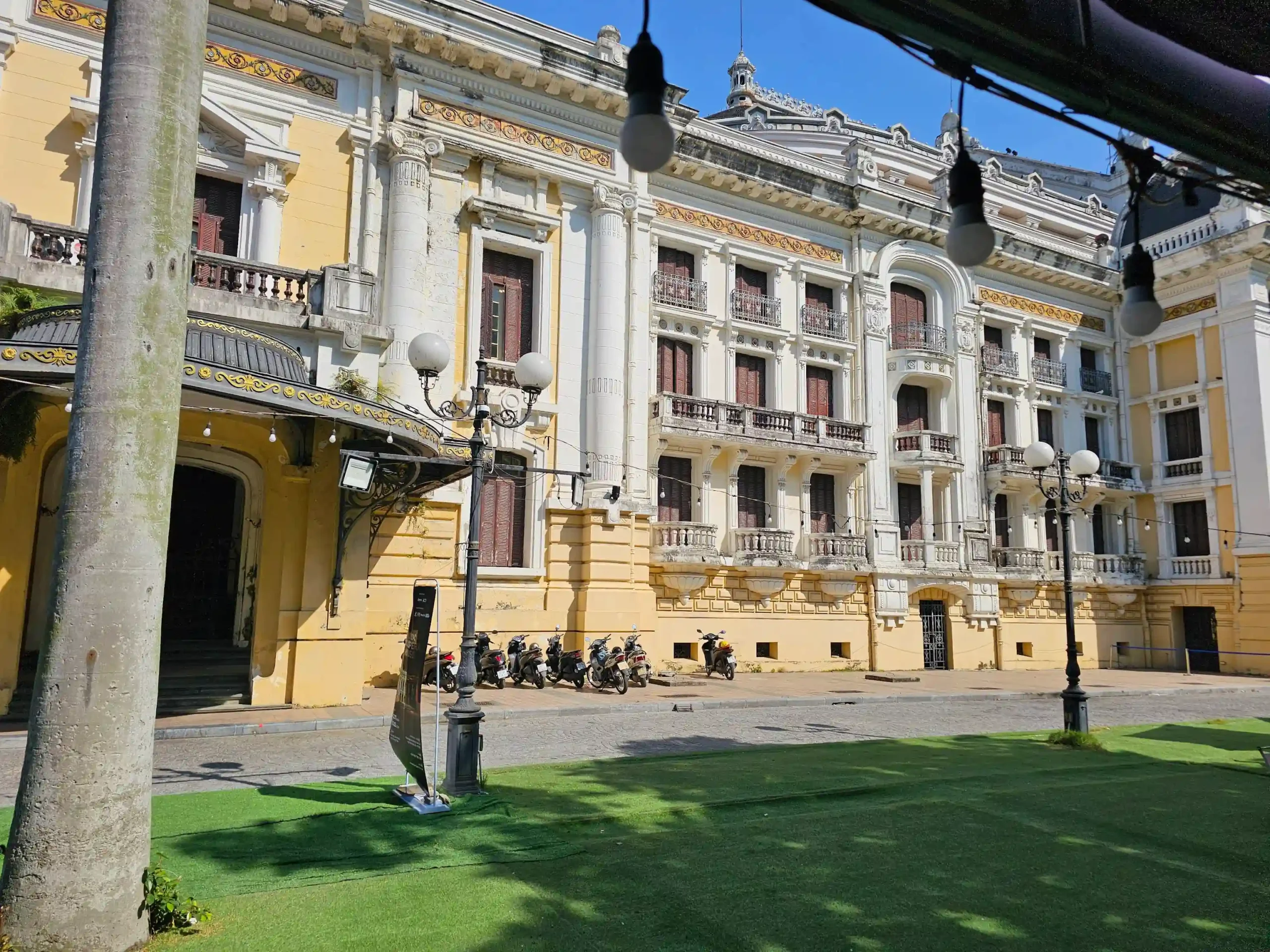
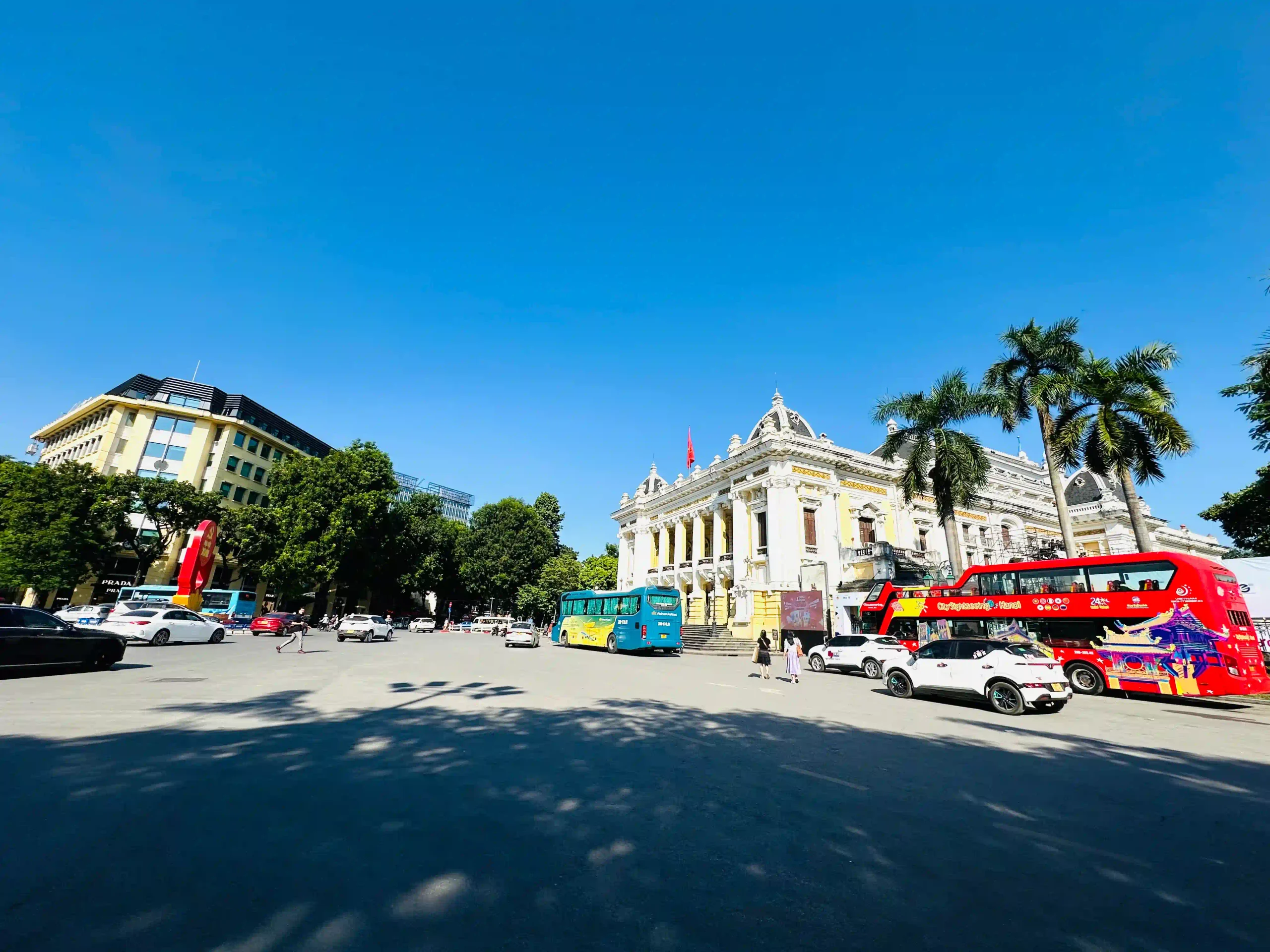
Trang Tien street, the Opera House from outside, best lit up after dark.
Free tours:
Hanoi Kids: students, book days ahead, they don’t take money personally.
GuruWalk and similar: about 3 hours, 9am or 2pm, tip expected.
A fair tip for a good 3-hour tour: around 100,000 to 200,000 VND a person.
Evenings: lake, bia hơi, weekend night market. Ngoc Son Temple closes early evening, so go there first.
Practical: walk on the edge of the road, cross slowly and steadily, offline map, café stops for toilets and air-con.
You’ll notice I’ve linked to a few hotels and activities I used or recommend, you can even highlight any text to check prices and book instantly. If you make a booking through them, I receive a small commission, which really helps support the work I do here, at no additional cost to you.
Do You Need a Guide for a Hanoi Walking Tour?
For the streets, no. The Old Quarter is about a square kilometre, the French Quarter starts a few minutes south of the lake, and almost everything on both routes is free to look at from outside. What a guide adds is the story behind the buildings, and on the main streets you can get a lot of that from a phone.
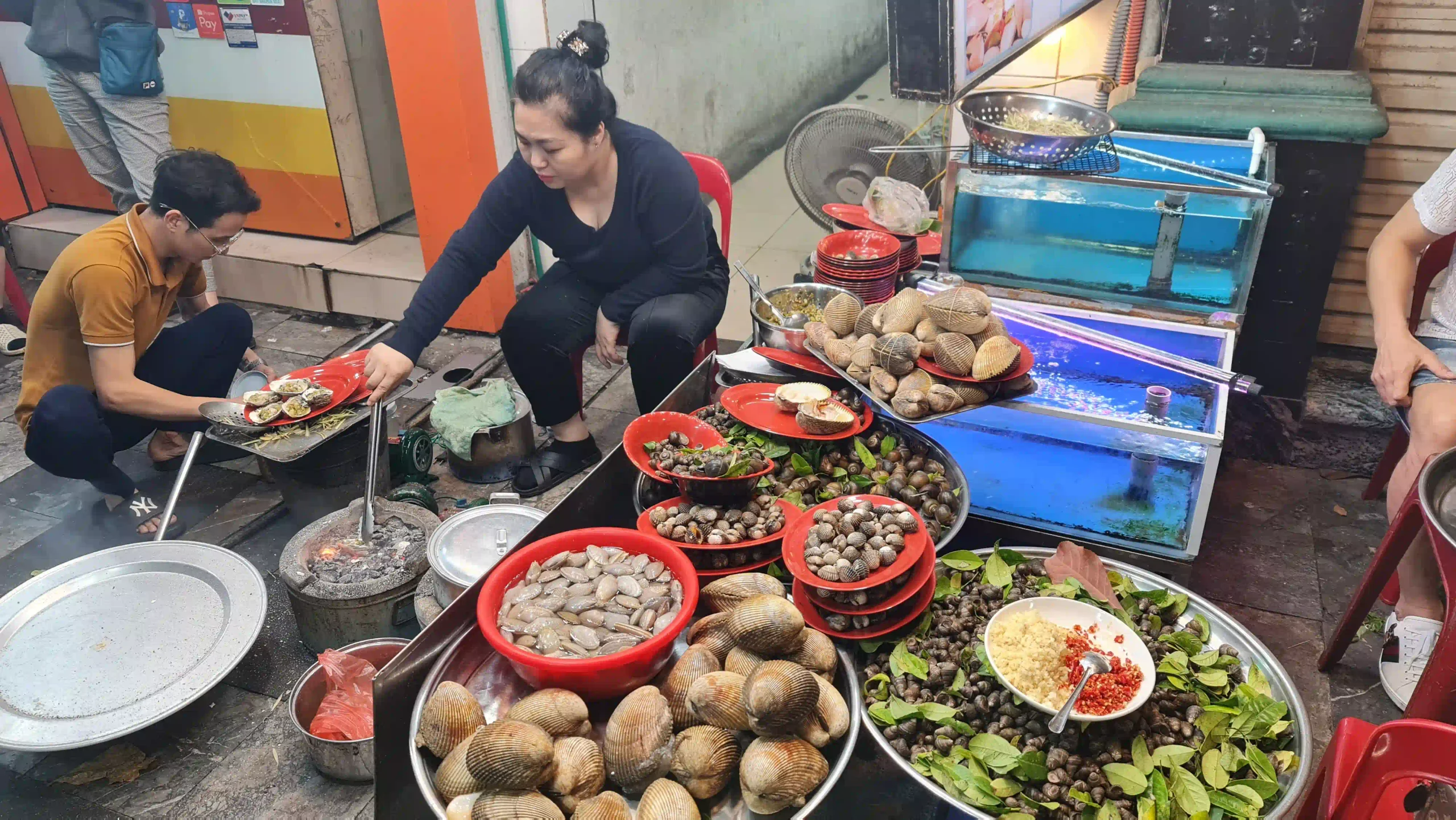
Where a guide does make a difference is food. Knowing which stall does the dish properly, what to order, how to eat it, and what time each place sells out is hard to work out on your own in a couple of days, and a food tour on the first evening pays for itself over the rest of the trip.
The other in-between option is a free walking tour with a student guide, which suits a first morning if you’d like someone local to talk to. More on those below.
I’d split the walking into two parts on two different times of day, and on a hot day in summer I wouldn’t do both on the same day. If you’re fitting this into a short trip, it’s the first day of the 2 day Hanoi itinerary.
Route 1: Hanoi Old Quarter Walking Tour in the Morning
About 2.5km and an hour and a half to two hours at a slow pace. I’d start around 8, when the streets are busy with deliveries and breakfast and it isn’t hot yet.
O Quan Chuong to Hang Chieu
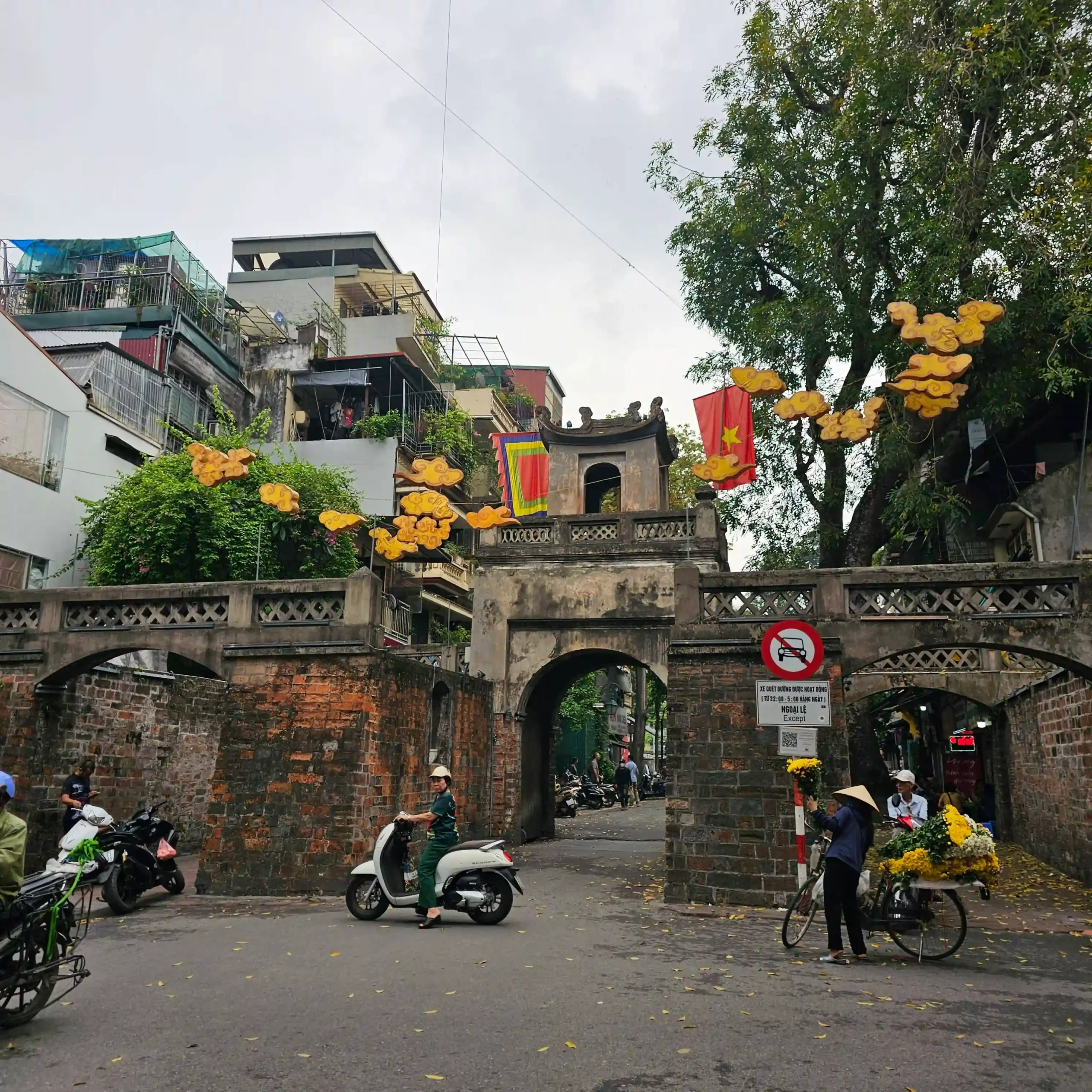
O Quan Chuong, the old east gate at the corner of Hàng Chiếu and Thanh Hà, is the only gate of the old citadel walls still standing. It was built in the 18th century, it’s free and open all day, and it’s small, a few minutes with motorbikes going through the arch while you look. It’s a good place to start because it’s easy to find and it sets the tone.
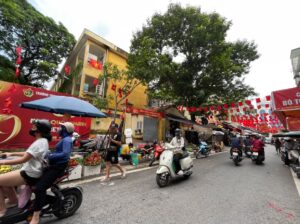
From the gate, Hàng Chiếu runs west towards the market. This is the edge of the wholesale area around Dong Xuan market, and in the morning it’s full of handcarts, sacks and people shouting prices. The market itself is a big covered hall of wholesale clothes and household goods, and I’d walk past the front of it more than go in.
From the ancient gate into busy market streets
Bach Ma Temple and 87 Ma May
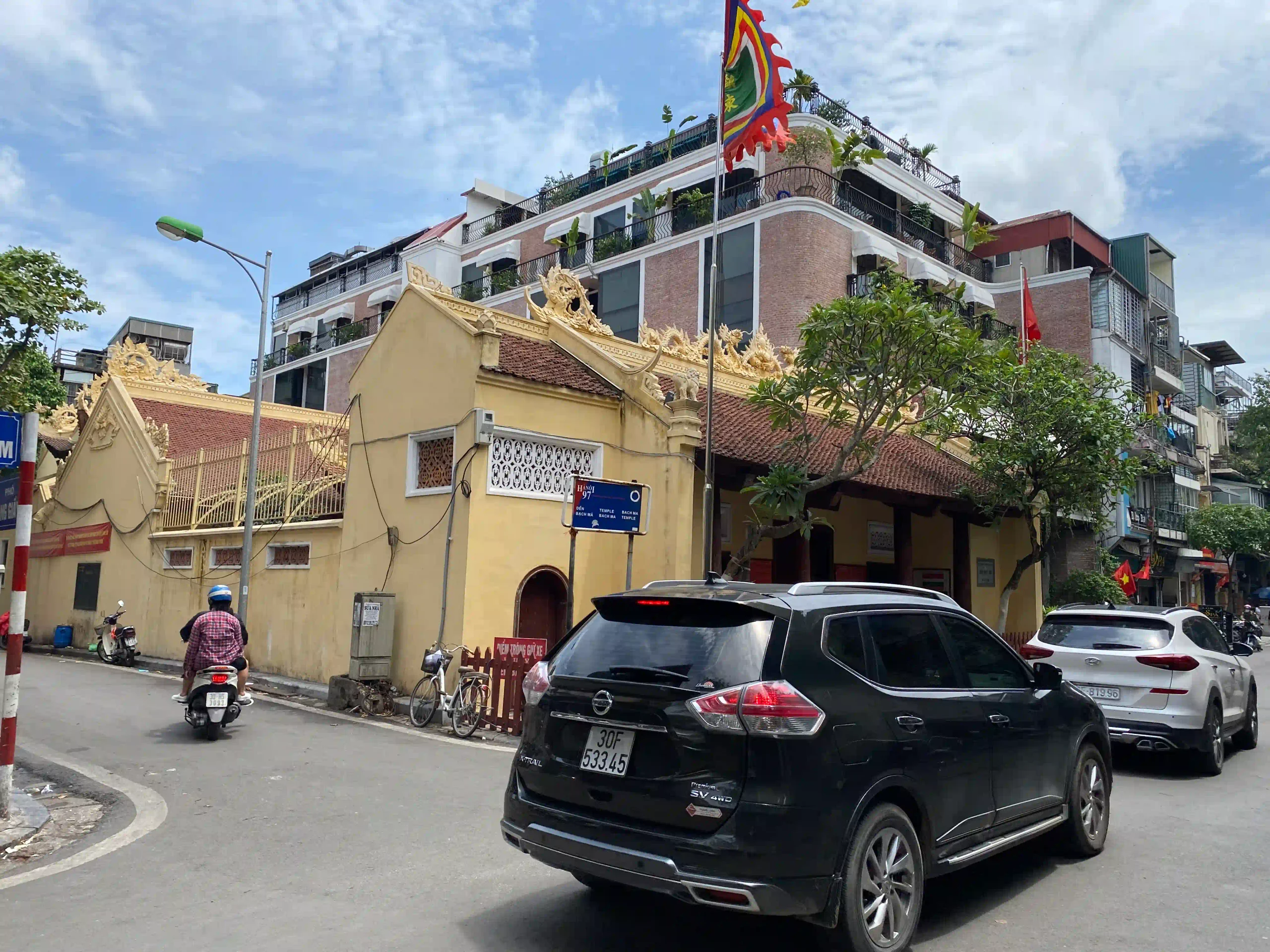
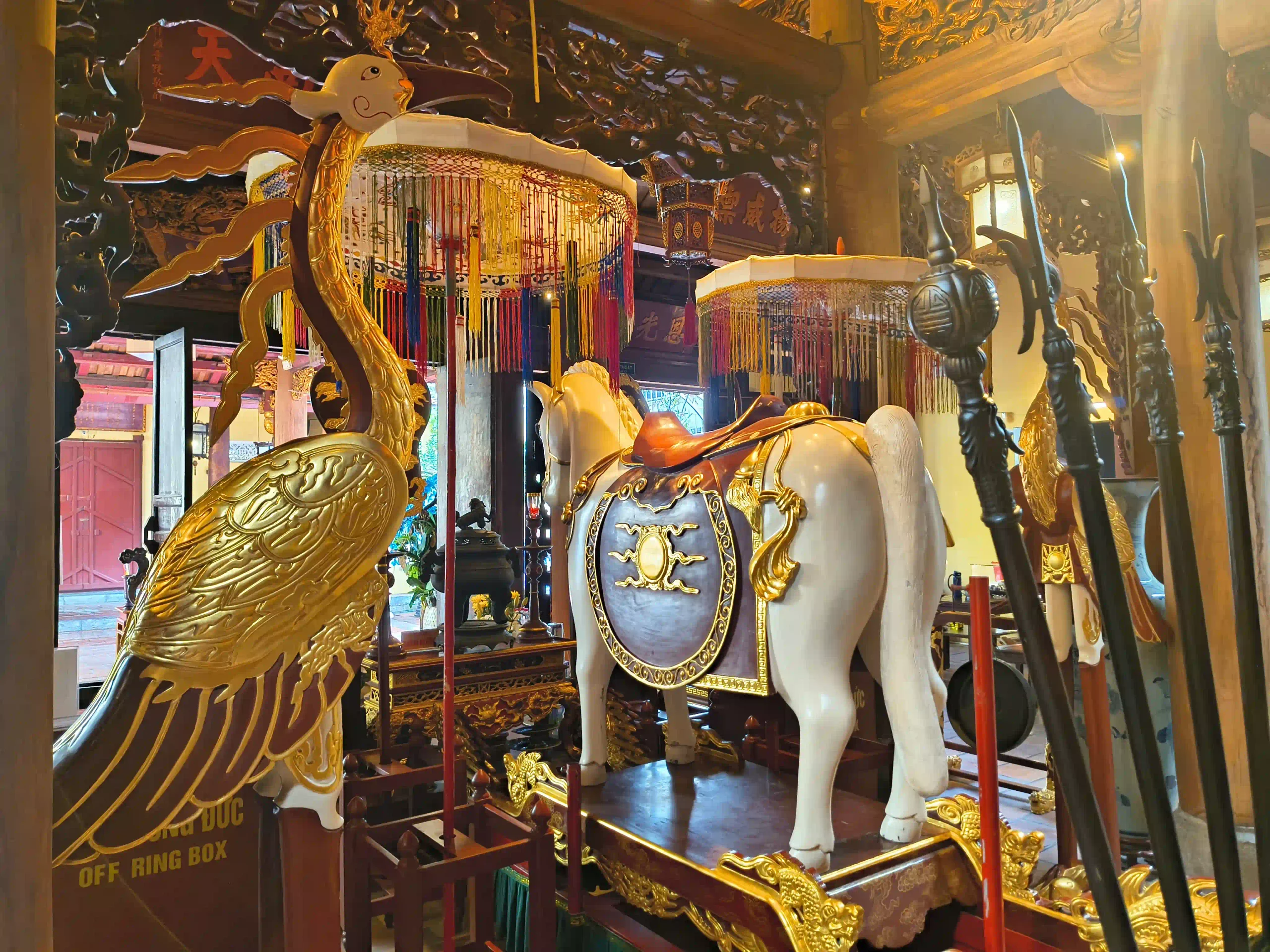
One street south, on Hàng Buồm, is Bach Ma Temple at number 76, the oldest temple in the Old Quarter. It’s small, dark and quiet, free to go in, and open from about 9 to 5:30 every day except Monday, when it’s shut. Shoulders and knees should be covered. Most people walk past without noticing it’s there.
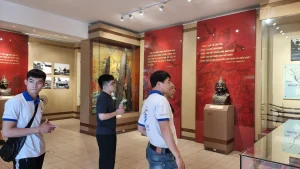
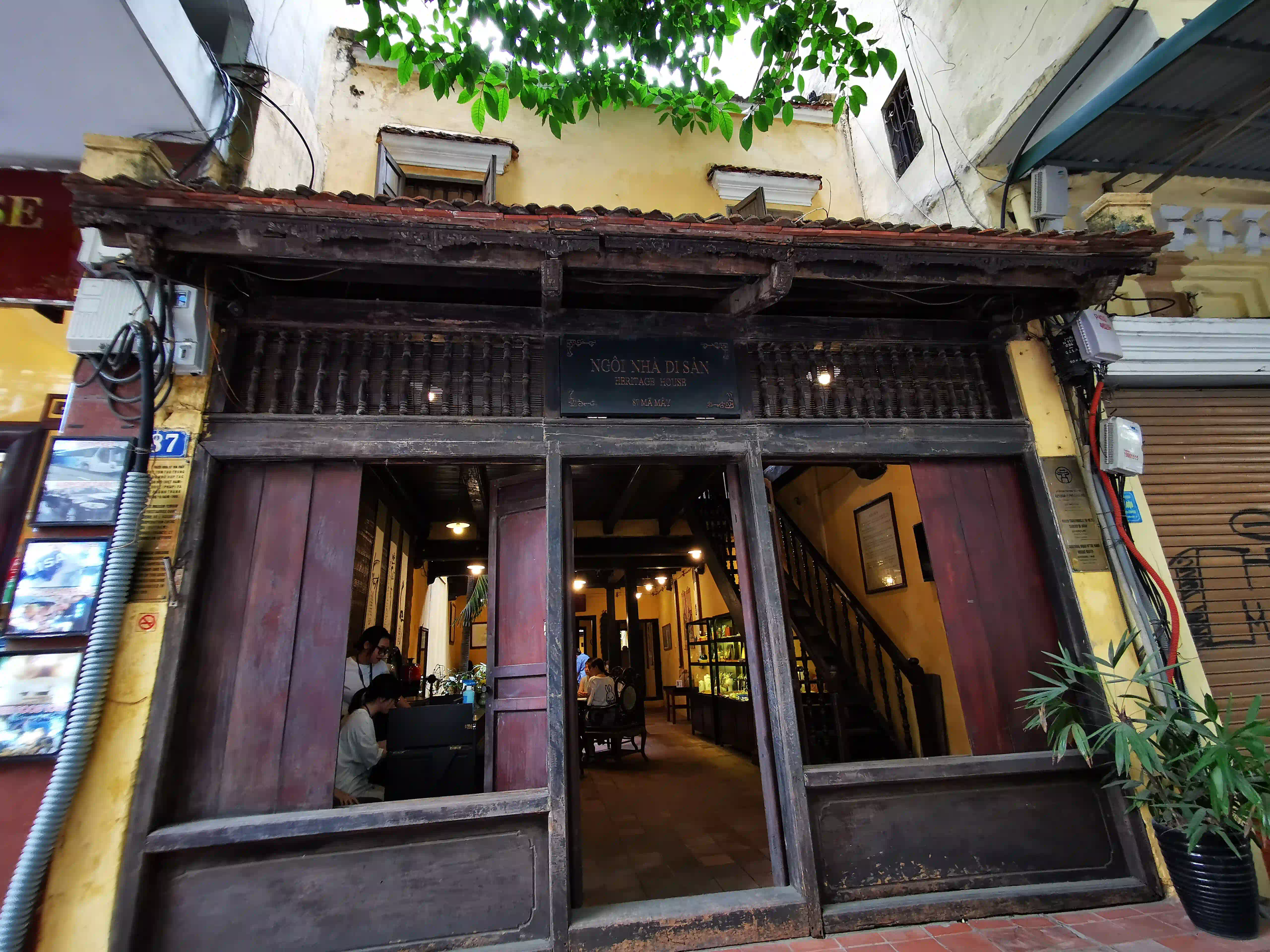
From there it’s a couple of minutes to 87 Mã Mây, an old merchant’s house restored and opened to visitors for 10,000 VND. It shows how the narrow tube houses of the Old Quarter work, a narrow shop front, then a courtyard, then the rooms going back and back, two or three metres wide and many times that deep. It closes for lunch from 12 to 1:30, which is one more reason to do this route early.
Two quiet heritage stops in the Old Quarter
Hang Bac to the Tinsmiths
Mã Mây comes out on Hàng Bạc, the silver street, which still has a few silver and jewellery shops among the hostels and travel agents.
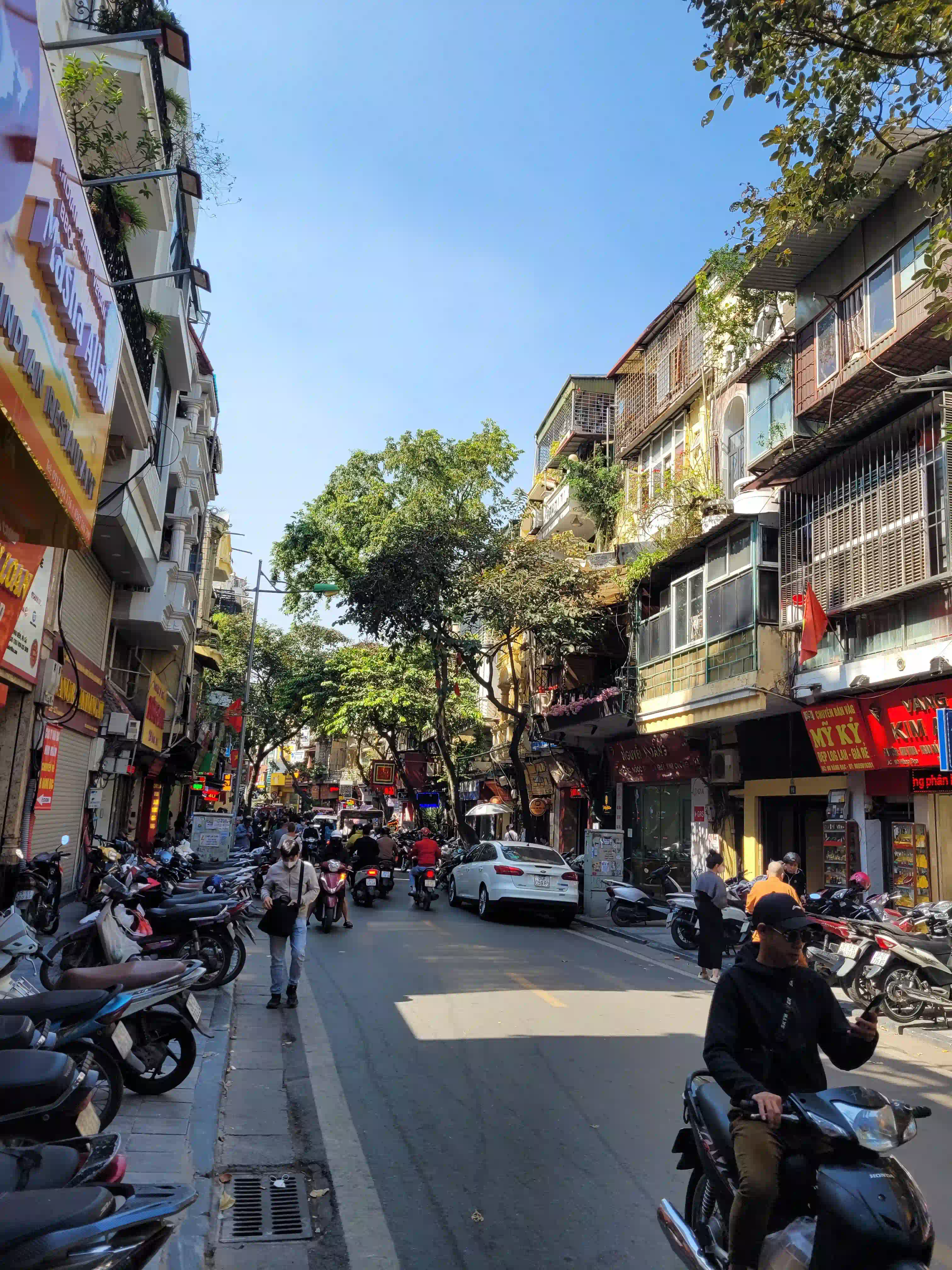
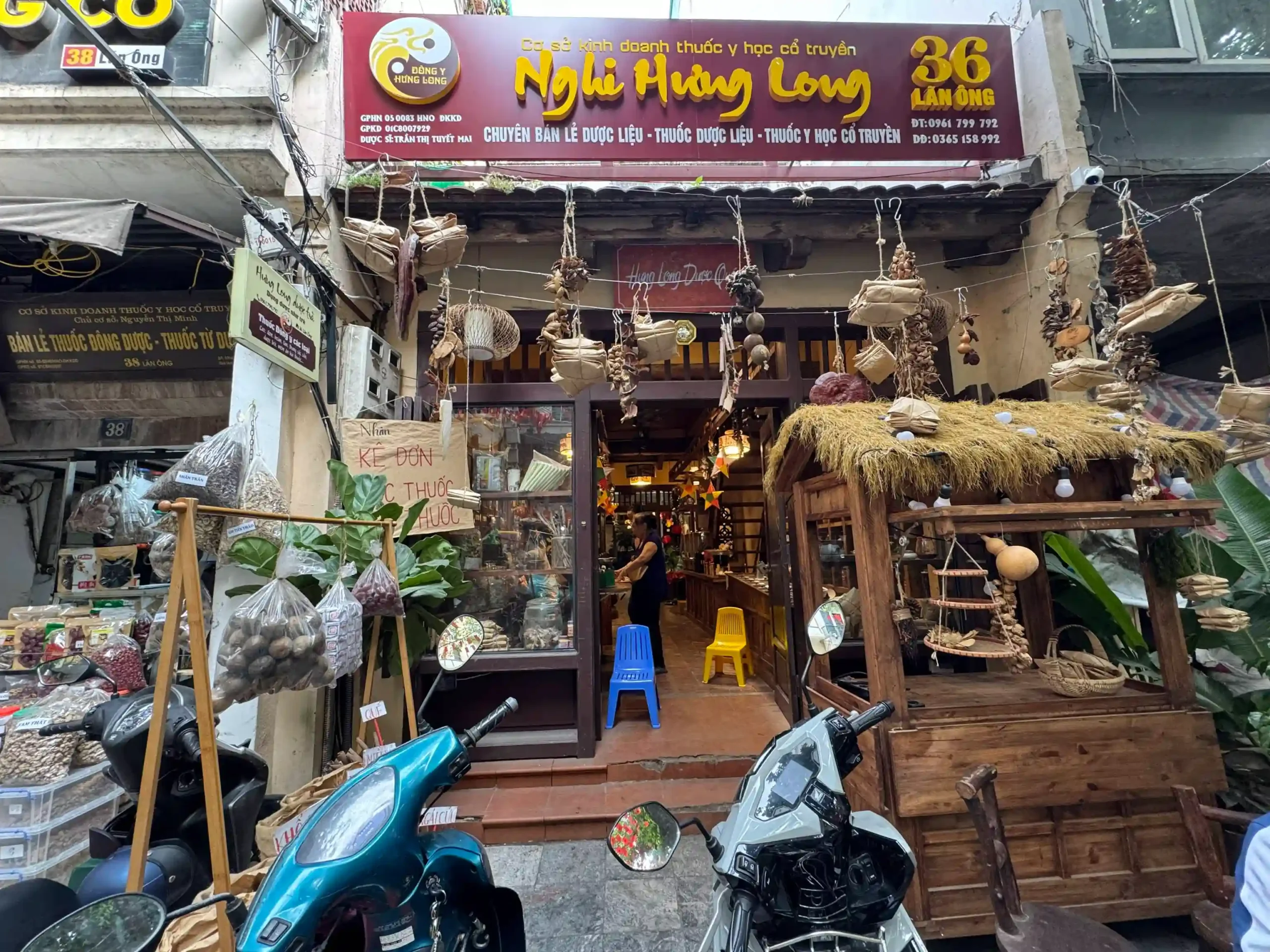
The streets of the Old Quarter were named for what they sold, and some of them still sell it and some don’t. On Thuốc Bắc you can smell the herbs before you see the shops, sacks of dried roots and bark and seeds.
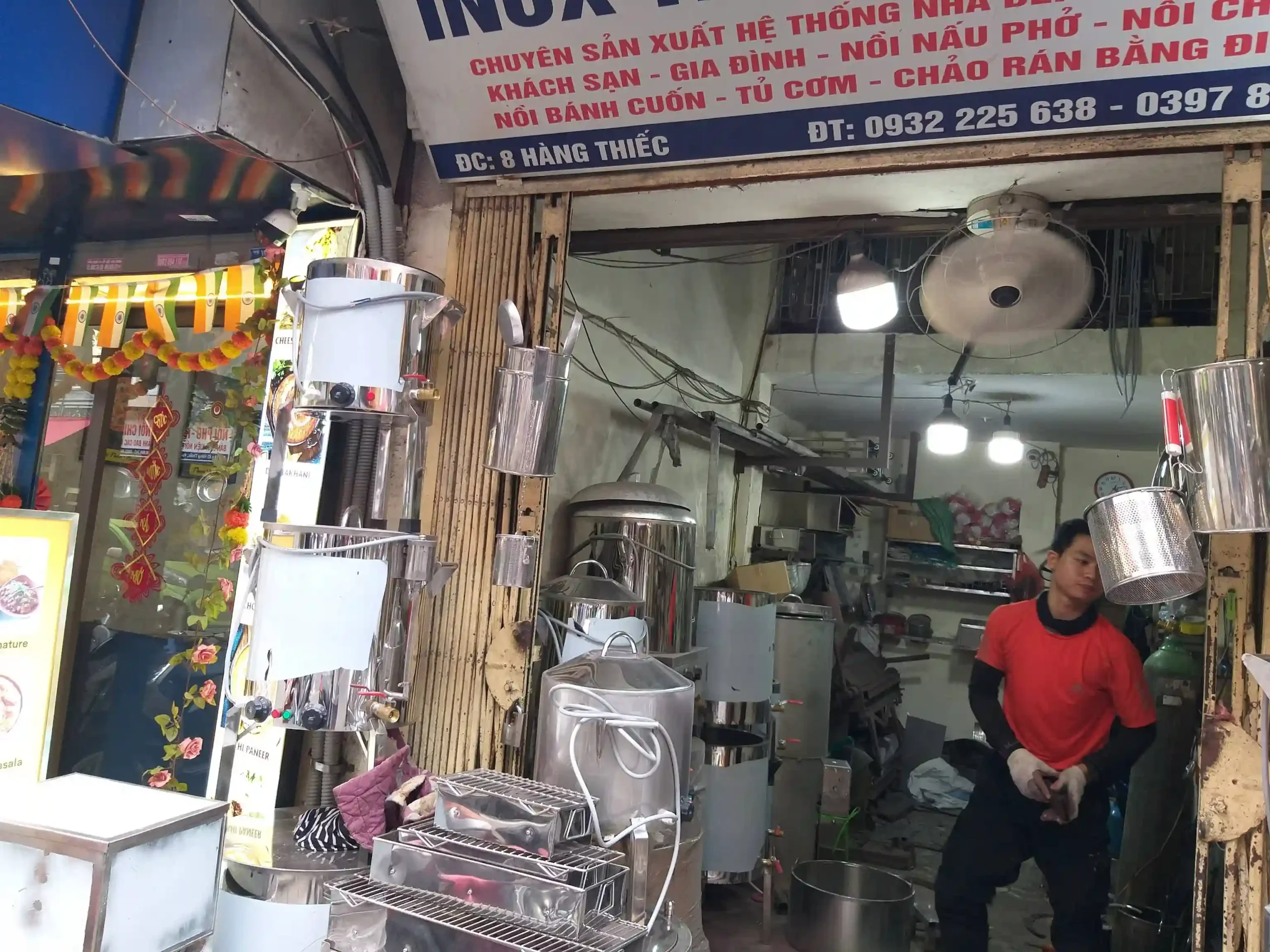
Hàng Thiếc, just off it, is the street of tinsmiths, and it’s the one I like most on this route, men hammering sheet metal into boxes, lanterns and pipes on the pavement, very loud, and nobody paying you any attention.
Old Quarter streets still keeping their craft
Phung Hung Murals
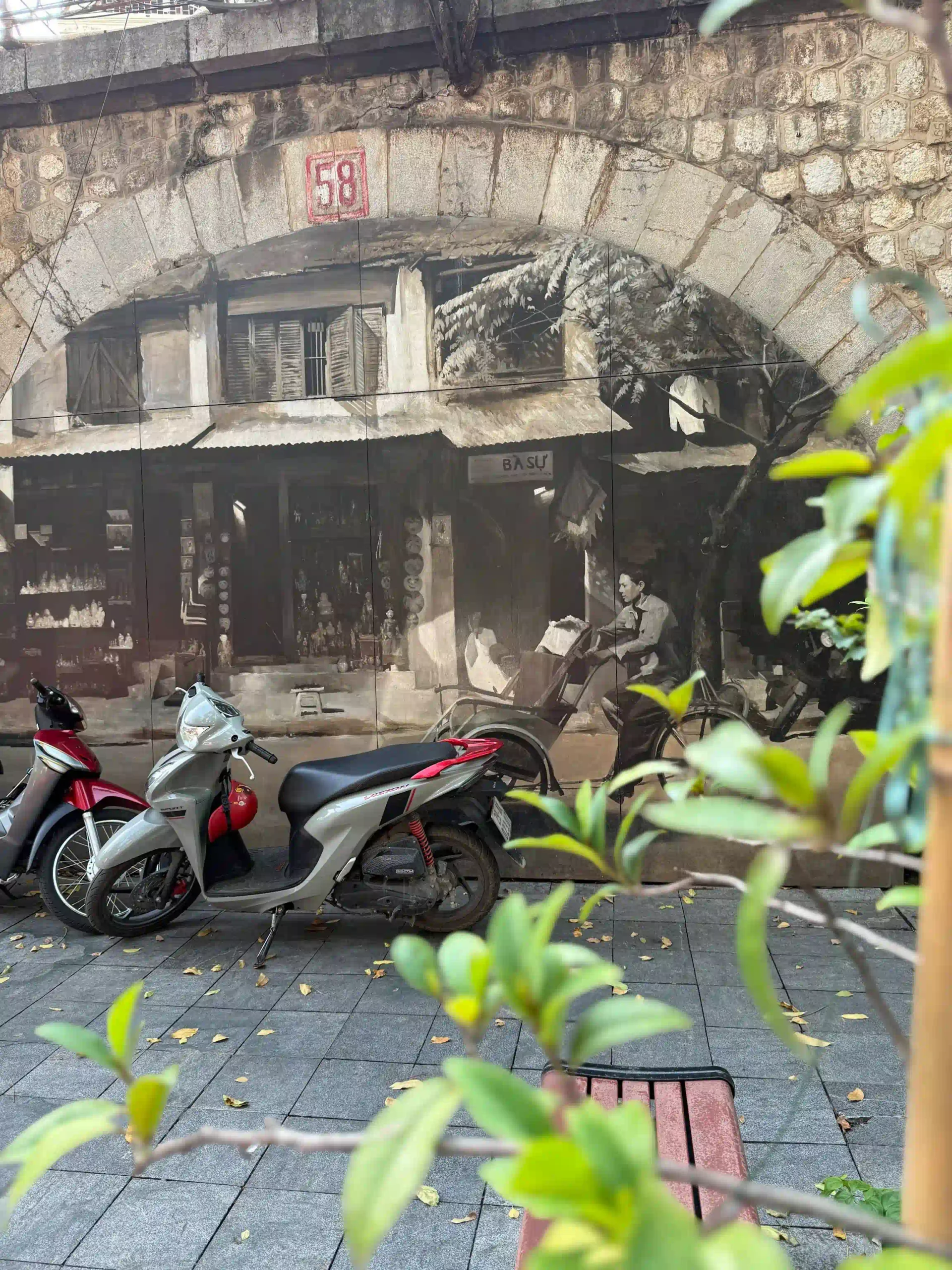
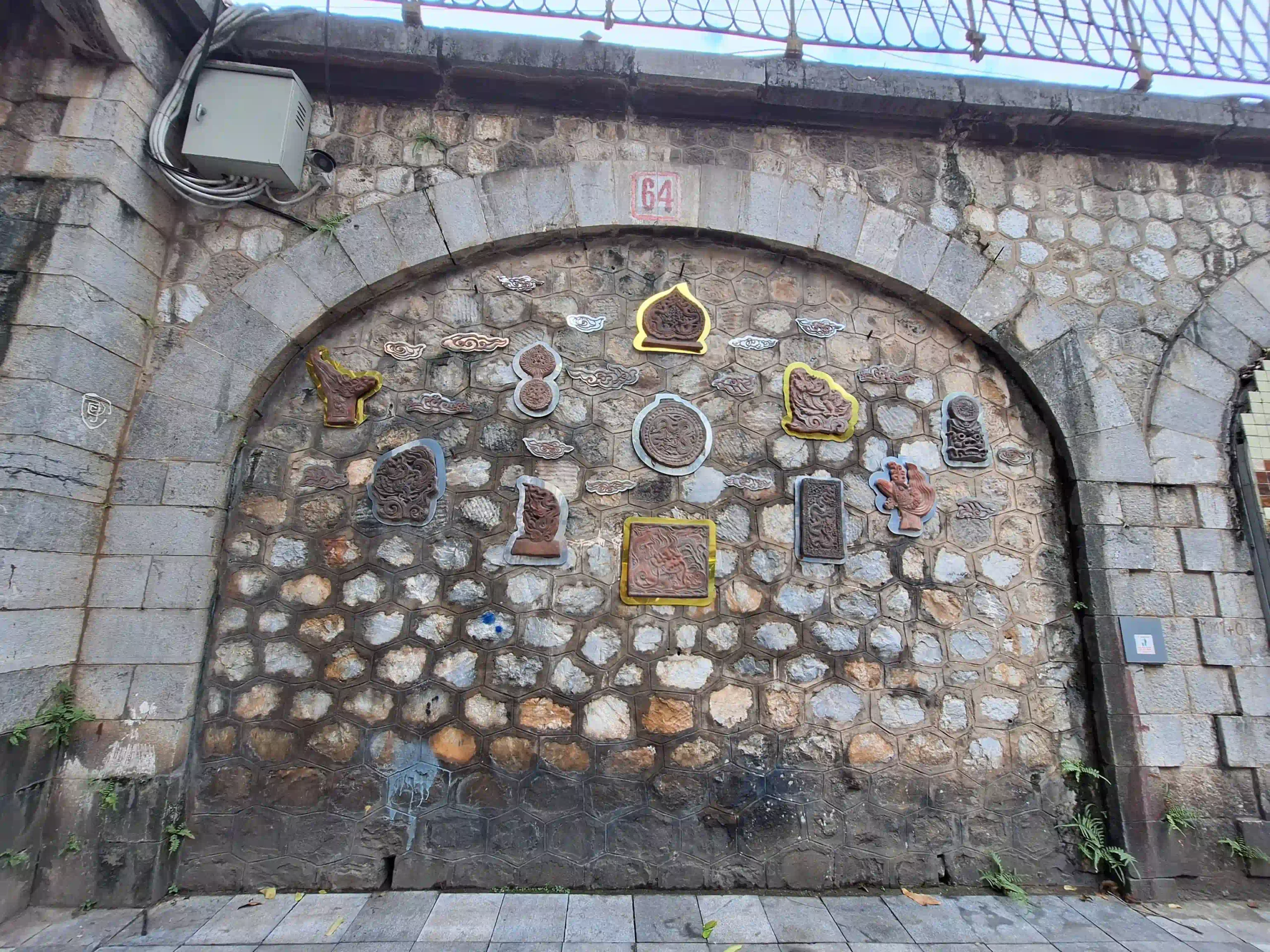
The route ends on Phùng Hưng, along the old railway viaduct, where the arches were painted with murals of old Hanoi a few years ago. I’d treat it as something you pass on the way out more than a stop. A lot of the paintings have faded and peeled, some are printed panels more than painted walls, motorbikes park right in front of them for much of the day, and there are a few stray dogs around. Early in the morning, before the bikes fill up the space, it’s at its best for a quick photo.
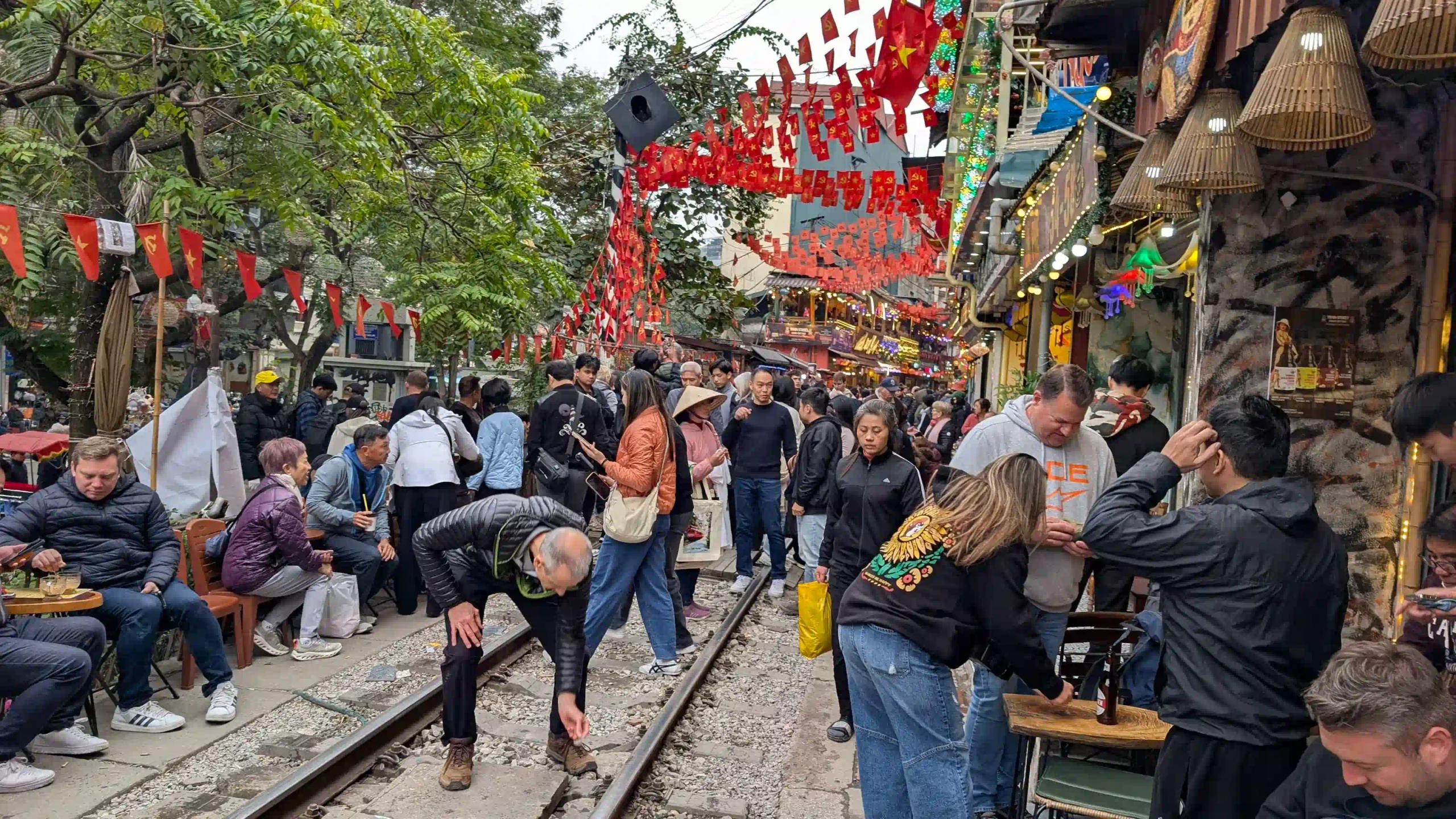
From Phùng Hưng, train street is close by, and the station end of the Old Quarter is a short walk back to the lake. By now it’s late morning and getting hot, which is when I’d stop for coffee and leave the rest of the walking for the afternoon.
There’s no shortage of places to sit on this route. The cafés with tiny stools facing the street are the ones I go for, an iced coffee with condensed milk for 20,000 or 30,000 VND, and the people-watching is half of the walk anyway.
The route doesn’t have to be done in this order. If it’s a Monday, I skip Bach Ma and spend longer on Hàng Thiếc. If you’re staying at the south end of the Old Quarter, it works just as well backwards, starting at Phùng Hưng early before the bikes arrive and finishing at the gate.
Quick photo stops along Phùng Hưng
Route 2: French Quarter Walking Tour in the Late Afternoon
About 2km and an hour, more if you stop. Around half past three is when I’d set off, so that the light is softer and the cathedral is open again.
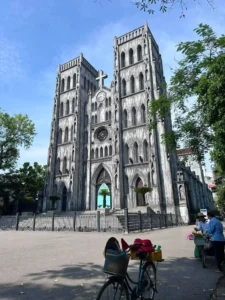
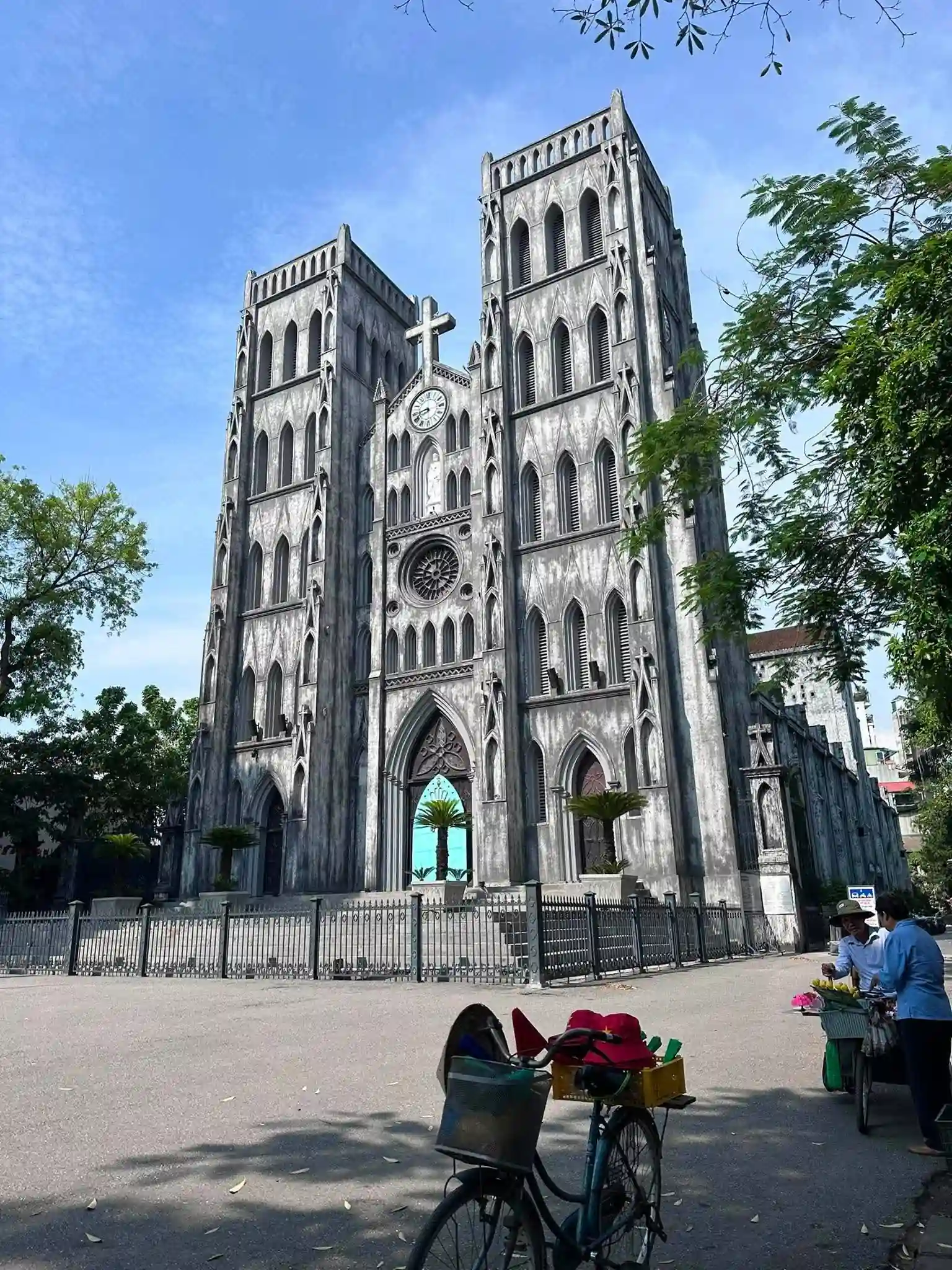
St Joseph’s Cathedral
St Joseph’s Cathedral, on Nhà Chung, is open inside from 8 to 11 in the morning and 2 to 5 in the afternoon, and closed in between, though the square in front is always open.
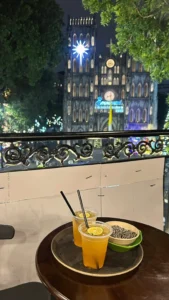
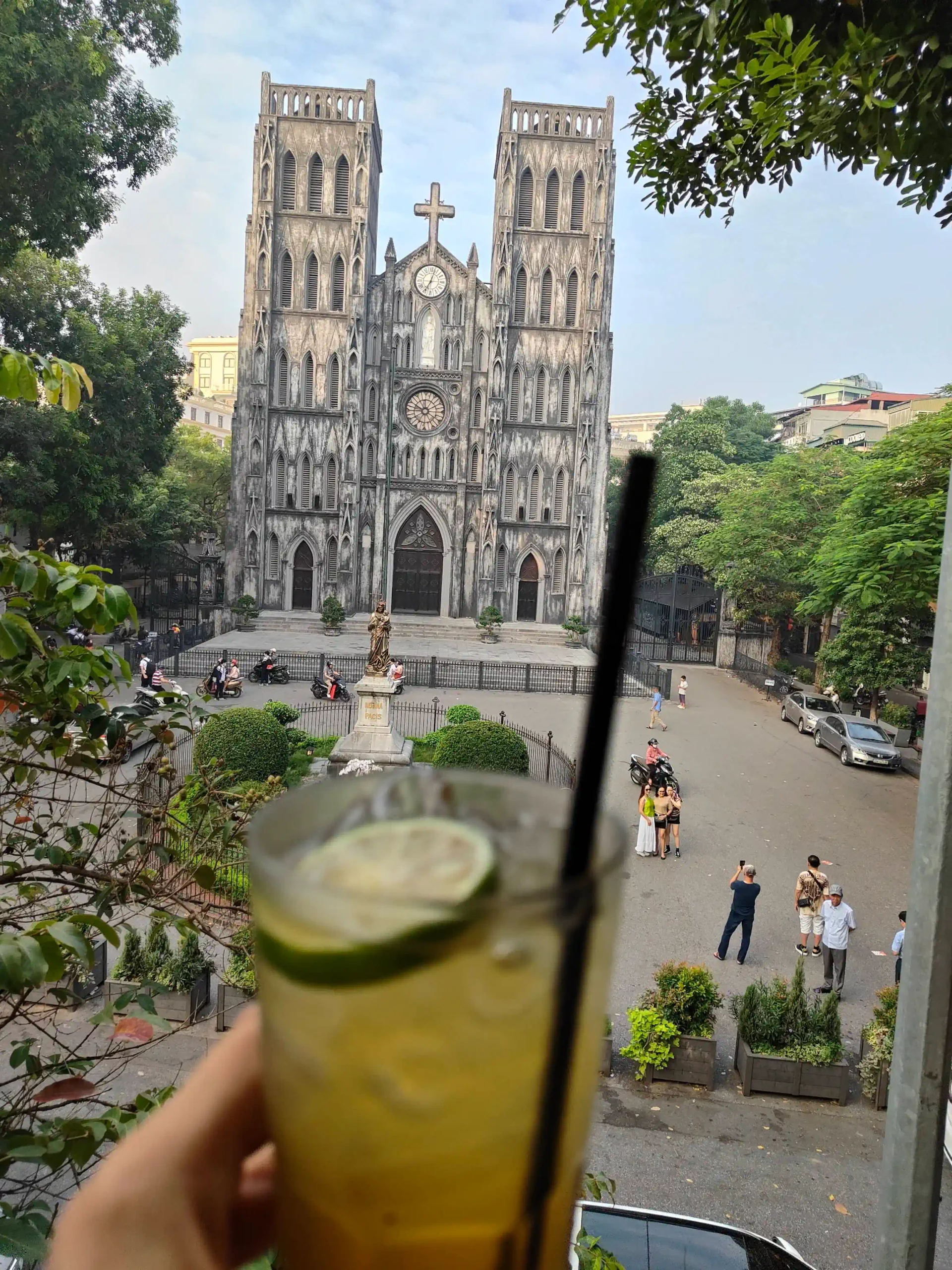
Going in isn’t always possible outside those hours, and Sundays are busy with Mass. Late afternoon is when the square is liveliest, with people drinking iced lemon tea on tiny stools across the road.
Iced lemon tea and cathedral views in afternoon
The Lake, the Metropole and the Frog Garden
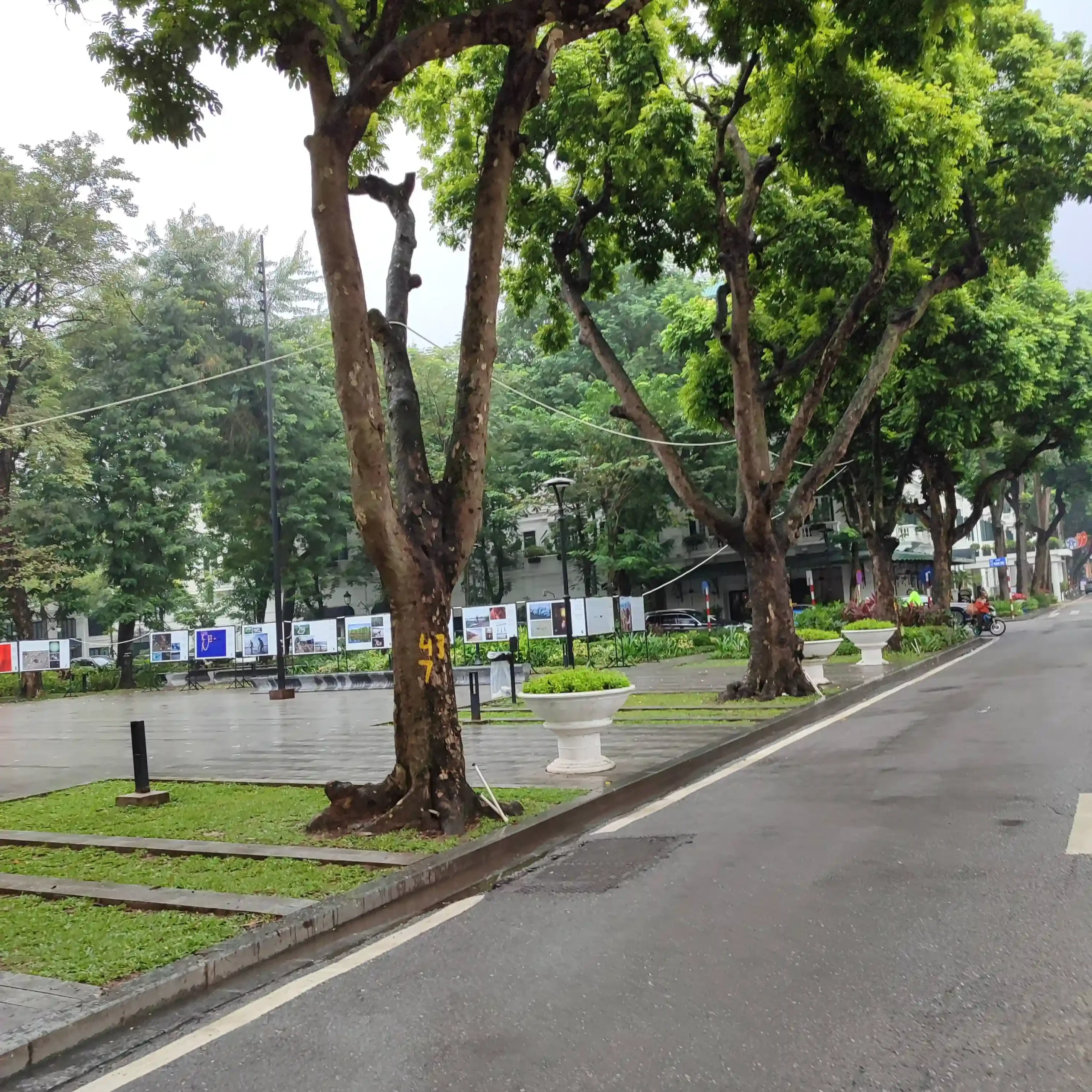
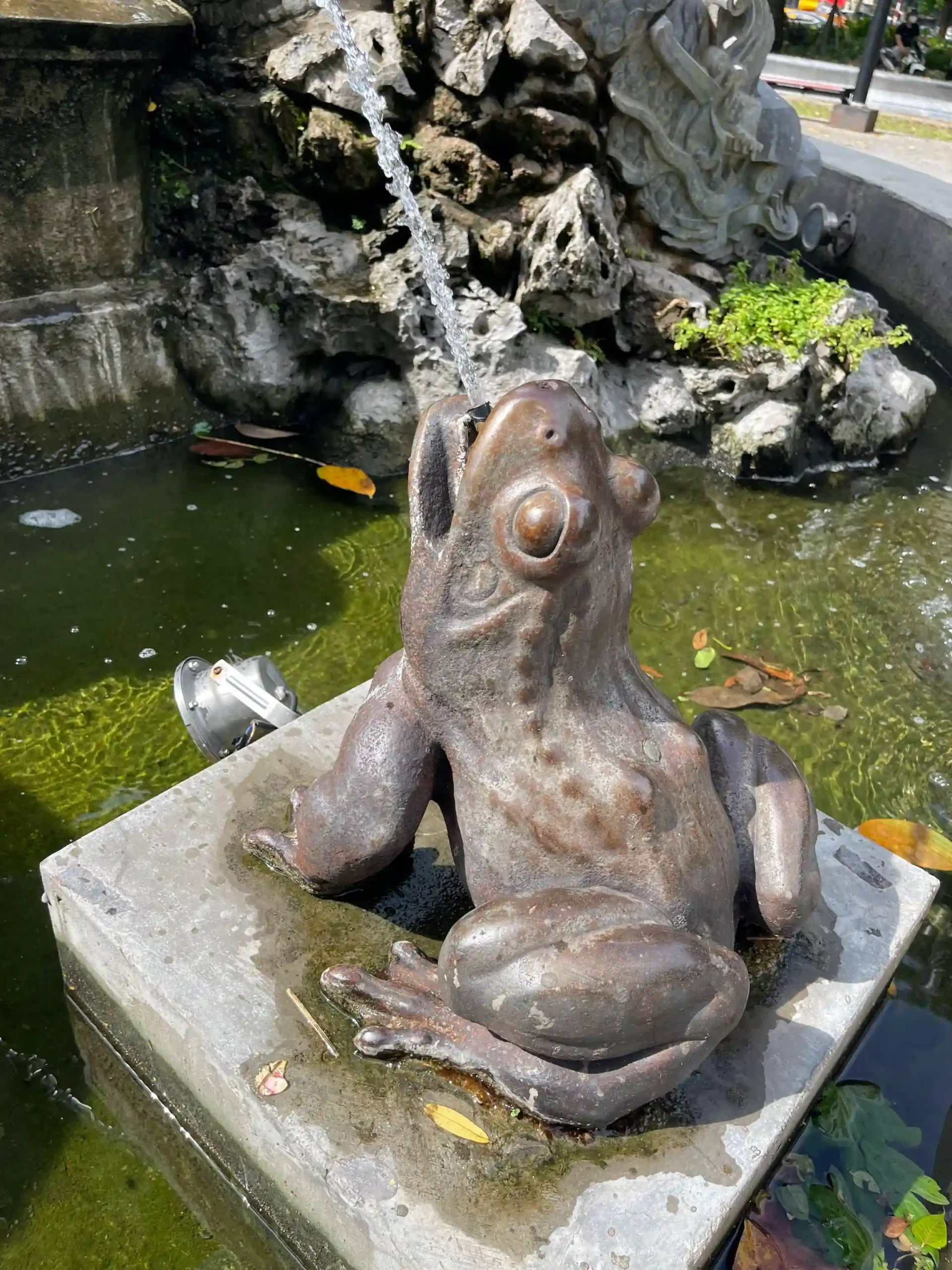
From the cathedral it’s a few minutes down to the south end of Hoan Kiem Lake and the statue of King Lý Thái Tổ, where groups gather to dance and exercise as it gets cooler. Then east to the Sofitel Legend Metropole on Ngô Quyền, the grand white hotel from the French period, and the small garden opposite, which people call the Frog Garden.
You can walk through the hotel’s lobby bar area for a look, and a drink in the courtyard is expensive but very pleasant if you’d like a break.
Trang Tien and the Opera House
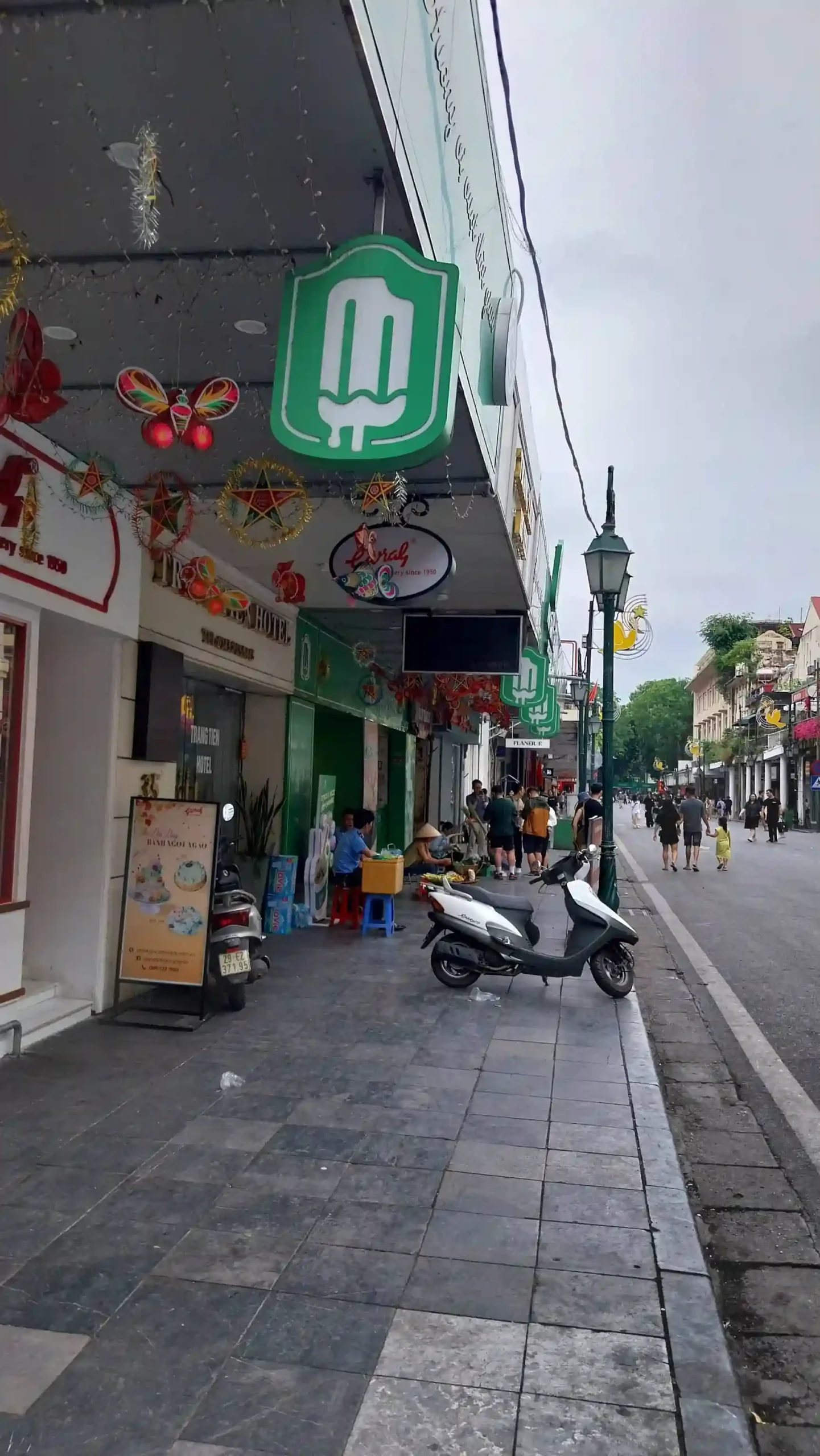
Tràng Tiền runs from the lake to the Opera House, with old bookshops and the ice cream shop Hanoians have been queuing at for decades.
The Hanoi Opera House at the end is something to see from outside. There are no regular visiting hours, you only get in with a ticket for a performance, and up close the facade could do with some repair. It looks best after dark, lit up, so this is a good place to finish as the lights come on.
If your legs have had enough by then, the hop on hop off buses stop at the Opera House, and a single loop is an easy way to see the rest of the centre sitting down. The Women’s Museum and Hoa Lo Prison are both a short walk from here too, for another day.
For a longer version of this French Quarter walking tour, some of the old villas along Bà Triệu and Hai Bà Trưng, many of them now banks and ministries with guards at the gate, make a nice slow wander, mostly looked at from the pavement opposite.
Free Walking Tours in Hanoi, and What “Free” Means
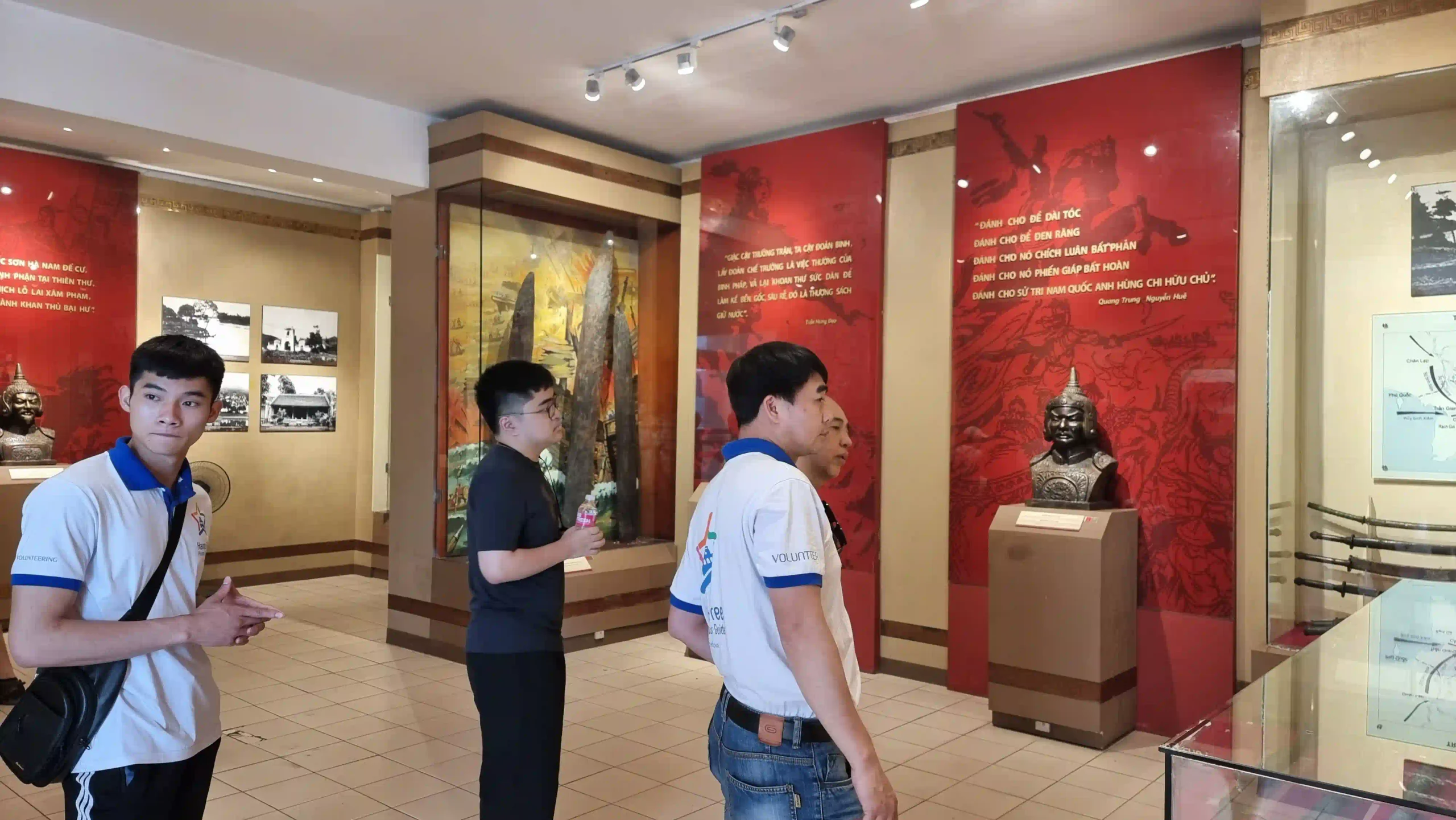
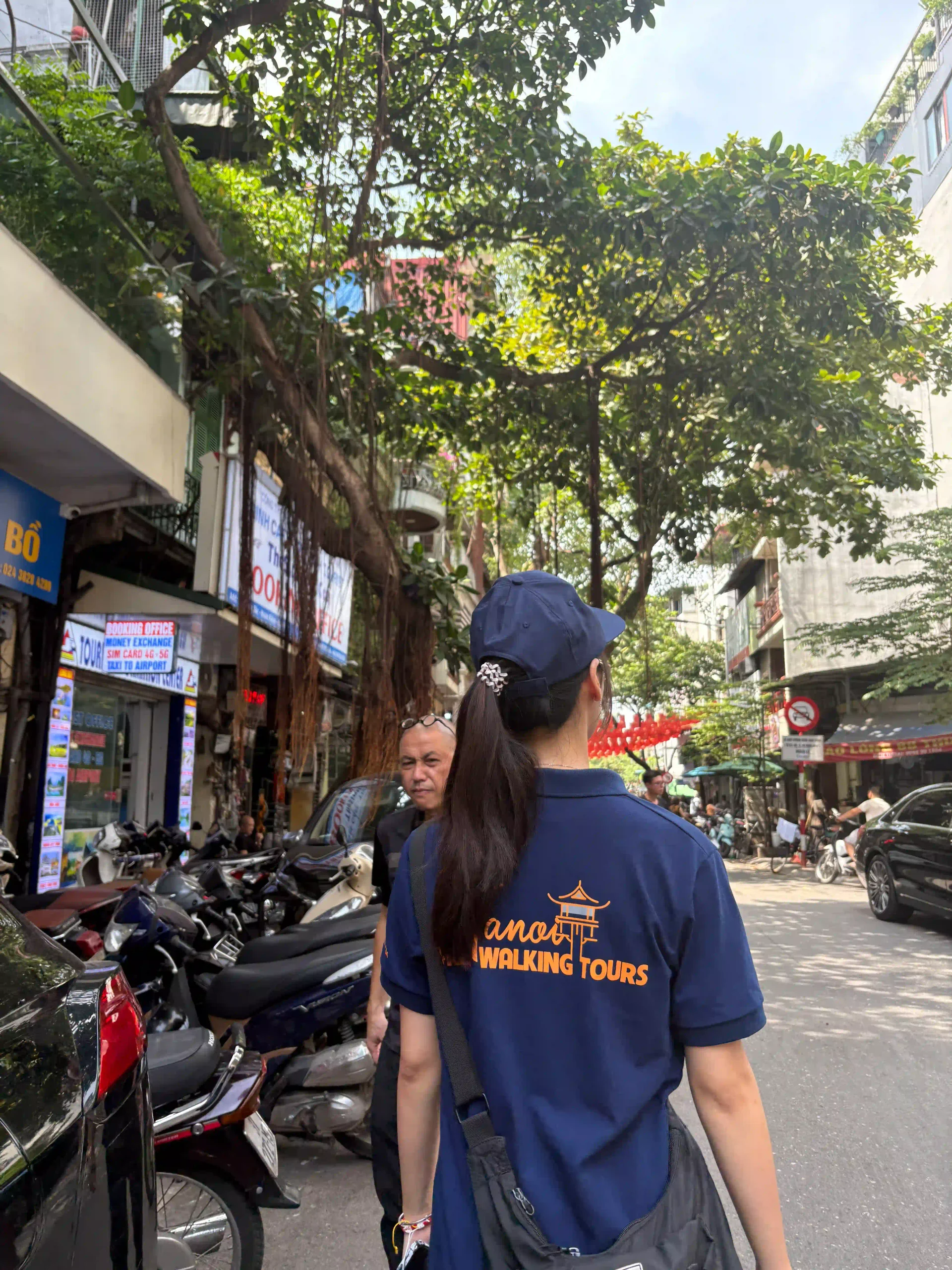
There are several free walking tours in Hanoi, mostly run by university students who want to practise their English, and they’re a nice way to spend a first morning with a local. They go down back lanes and talk about everyday life more than the big sights, so they’re best for anyone curious about how people live here, and less good if what you want is the famous places in a row.
Hanoi Kids is the one I’d book. It’s a student organisation, the guides are volunteers, and the students don’t accept money themselves, so if you want to say thank you it’s a donation to the organisation. They book up, so it helps to request a date several days ahead.
Through platforms like GuruWalk, there are dozens more, most about three hours on foot over 2 or 3km of flat streets, starting at 9am or 2pm. They’re advertised as free, but the guides live on tips, and some state a minimum, around $10 a person. That’s annoyed a lot of people who expected to pay what they felt. So I’d ask about tipping before booking, along with how big the group is and where it finishes, since some end a long way from where they started.
A fair amount for a good three-hour tour is around 100,000 to 200,000 VND a person, and if the guide has stated a minimum up front, that’s what it is.
Students on these tours are usually happy to talk about anything, from university to what their parents think of tourists, and that’s the part people remember. For a paid, guided Hanoi walking tour with the main sights in one go, the walking tour below takes in the lake, Ngoc Son Temple, Long Bien Bridge, Dong Xuan and train street, with coffee and a foot massage included.
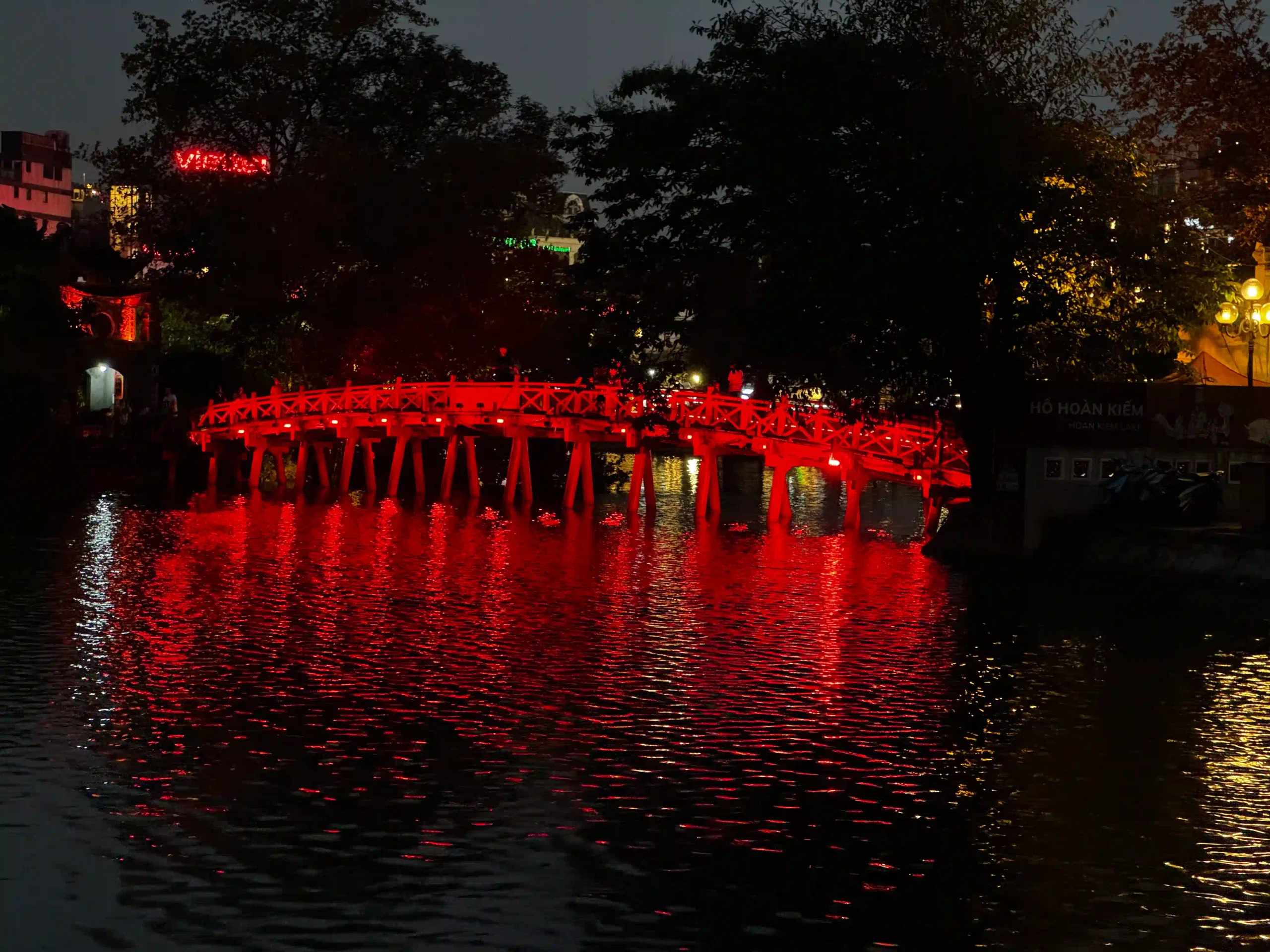
Evenings are a different walk. Temples and museums are closed or closing, and the centre is about the lake, the beer and the street food. Ngoc Son Temple, on its island in the lake, closes around 6 or 7, so on an evening walk it’s the first stop, and after dark it’s just the red bridge lit up from the shore.
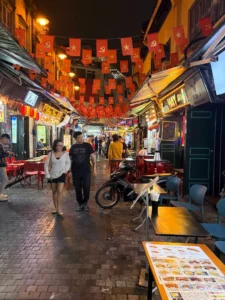
A slow loop of the lake is about 1.7km and takes around 45 minutes. From Friday evening until Sunday night the roads round it close to traffic, the weekend night market runs north from Hàng Đào, and the whole centre turns into a big walking street, which is lovely and very crowded.
On weeknights it’s calmer. Either way it ends with bia hơi on a plastic stool around Tạ Hiện, and if you’re near train street, a look at it after dark, keeping off the tracks.
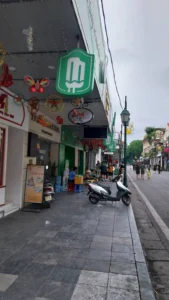
Easy evening walk around Hanoi’s Old Quarter
How to Walk in Hanoi
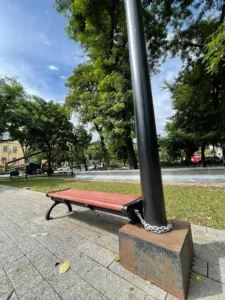
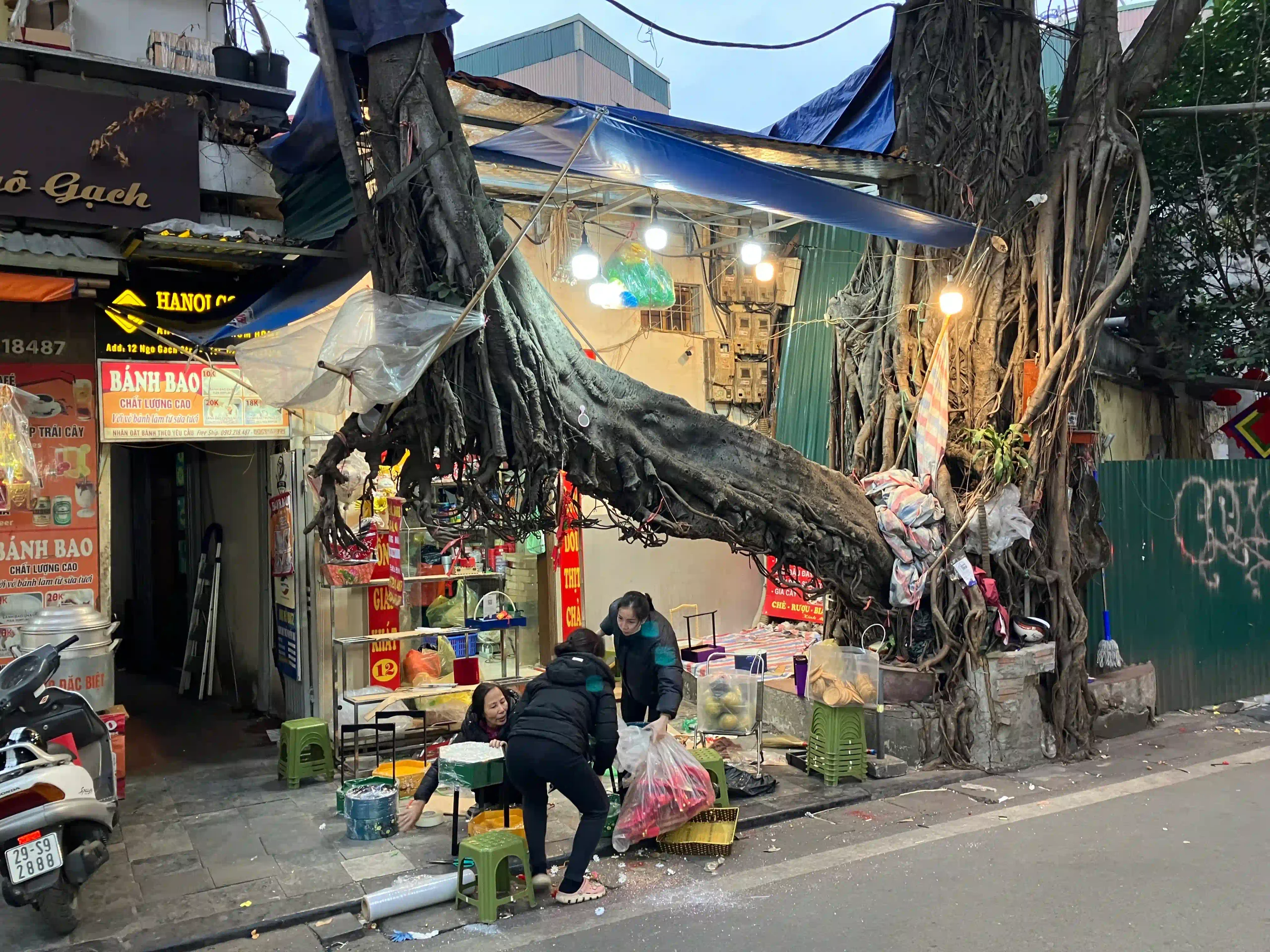
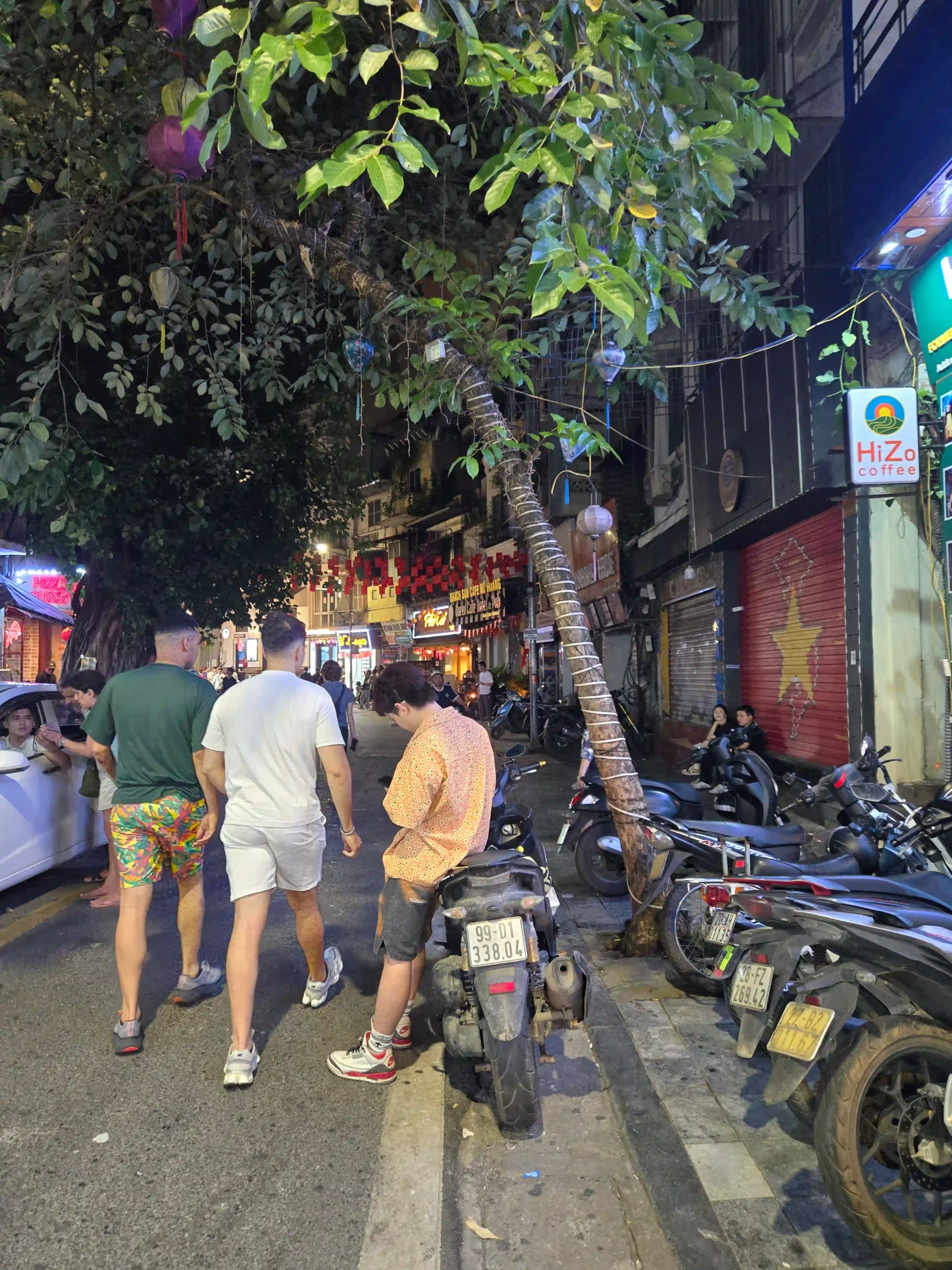
The pavements in the Old Quarter are for parking motorbikes, selling things and eating, and walking comes some way after that. You’ll spend about half the time walking along the edge of the road, which feels strange for a day and then normal. Sturdy shoes help, because the pavements that are free are uneven.
Crossing the road is simpler than it looks. At a slow, steady pace, the motorbikes go round you. The two things that cause trouble are running and stopping suddenly, because then nobody can predict where you’ll be.
I download the map offline before leaving the hotel, since the signal drops in some of the narrow lanes. Public toilets are hard to find, so I use cafés: buy a drink, use the toilet, sit in the air-conditioning for a quarter of an hour, and carry on. Water is 10,000 to 15,000 VND a bottle at any corner shop.
From May to September it’s hot and humid with heavy afternoon rain, and the only comfortable times to walk are early morning and evening. October and November are the best months for this. In winter it can be grey and cool enough for a light jacket, which is good walking weather. And when it pours, the pavements flood and it’s time for a museum and a long coffee, with a cyclo or a scooter tour for a day when walking doesn’t appeal.
Help Us Keep It Real 🥰
Astrid Freja (Author)
Did you find this guide helpful for your trip? 🤔
Thank you so much! 🥰
Your contribution helps keep our community informed. If you love our authentic guides, please support us on Google! (It only takes 5 seconds) 😊
Got a question or an idea you want to discuss? Start a discussion here to get opinions and connect with other members.
Guest Post
Have a story, valuable experience, or a detailed guide to share? Contribute a high-quality article to enrich our community.
Your Post's Journey
To ensure quality, all new posts are not immediately visible on search engines like Google, Bing... Our team prioritizes reviewing high-value, insightful posts to feature publicly. You'll receive a notification when your contribution is selected!
Report Content
Create Story
×
Choose your preferred language for localized experiences:










 Ha Giang
 Hanoi
 Ho Chi Minh City
 Ha Long
 Sapa
 Mekong Delta
 Da Nang
 Hue
 Hoi An
 Ninh Binh
 Da Lat
 Nha Trang
 Phan Thiet
 Phu Quoc
 Quang Binh
 Quy Nhon
 Vung Tau
 Thai Nguyen





















 Tiếng Việt
 한국어
 中文 (中国)
 日本語
 ไทย
 Deutsch
 Español
 Destinations
 Instagram
 Facebook
 X (Twitter)
 Threads
 Tiktok