I’m Chloe, an Australian living in Vietnam. Most of what I write starts with me getting curious about something. For VietAdvisor, I share what I actually liked, what I’d skip, and the practical stuff I’d tell a friend before they came to Vietnam.
Something I only worked out after a few trips up here. The best food in Ha Giang is almost all sold at times when a tour group is on a motorbike. Bánh cuốn stalls shut at half ten in the morning. Cháo ấu tẩu is an evening dish and it’s a city dish. Thắng cố is at the markets, which happen at six in the morning. So if you’re on a three-day tour with nine meals included, you can very easily go the whole loop and eat none of the five things this province is known for.
So the question of where to eat in Ha Giang really splits in two. If you’re on a tour, it’s about the one or two evenings you have in Ha Giang city at either end. If you’re riding independently, you can eat wherever you like and there are some very good places.
Below are the five dishes, where I’d eat in Ha Giang city and out on the loop, and the two or three small decisions that get you the good stuff and not four days of the same shared dinner.
Quick Answer: The best food in Ha Giang is bánh cuốn trứng, the egg rice rolls served with bone broth that you’ll find in Dong Van old quarter and in Ha Giang city. The other four dishes worth hunting down are cháo ấu tẩu, a medicinal porridge eaten at night, thắng cố offal stew at the Sunday markets, xôi ngũ sắc five-colour sticky rice, and highland black pork or smoked buffalo. For restaurants, Nhà Hàng Chay on Nguyễn Thái Học is the highest-rated place in Ha Giang city at 4.9, and Adventure Restaurant in Meo Vac is the best meal on the loop itself.
The five dishes:
Bánh cuốn trứng. Egg rice rolls in bone broth, 40,000 to 50,000 VND. Breakfast only.
Cháo ấu tẩu. Porridge made from aconite root, cooked four hours to make it safe. Evenings.
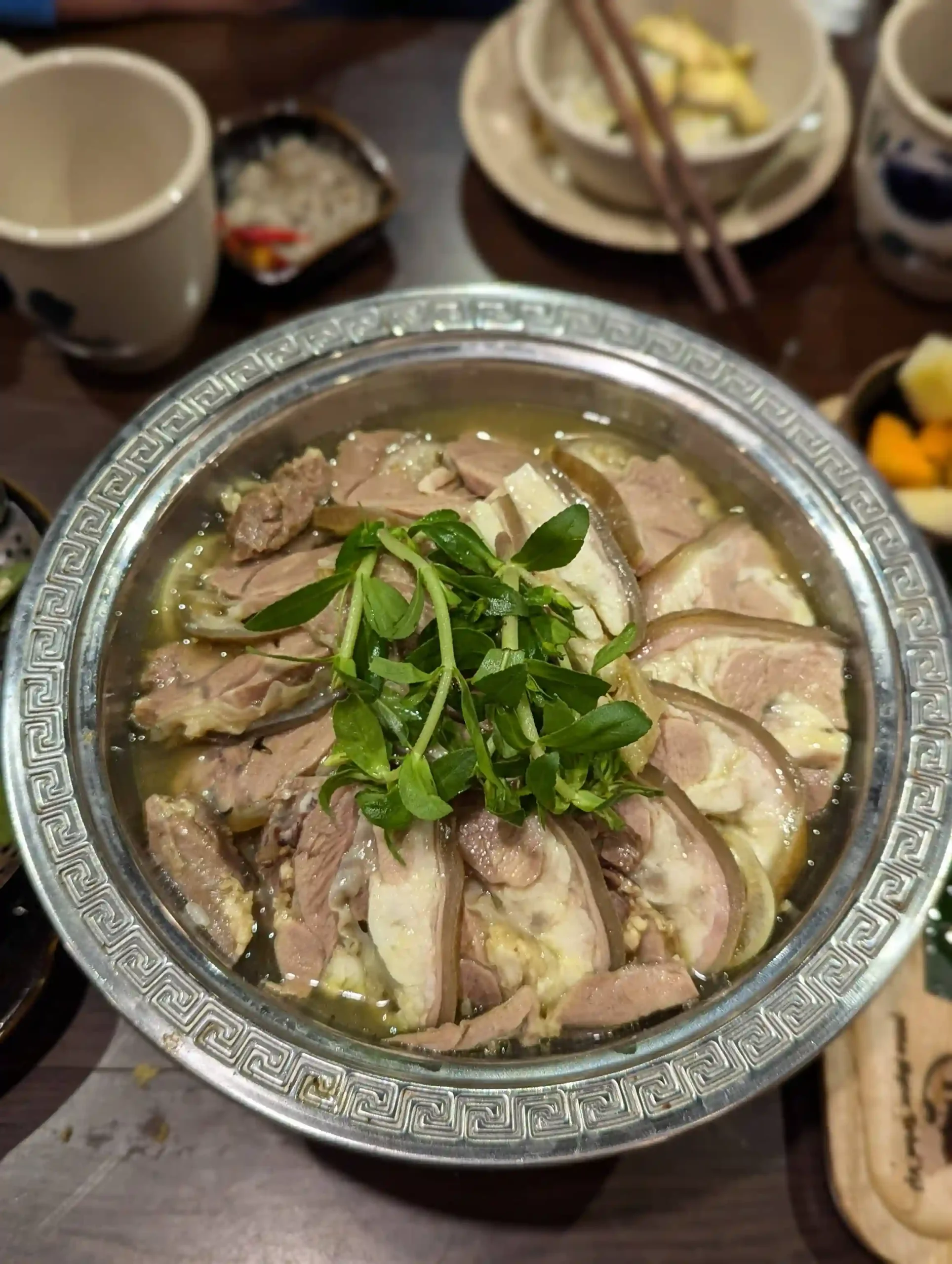
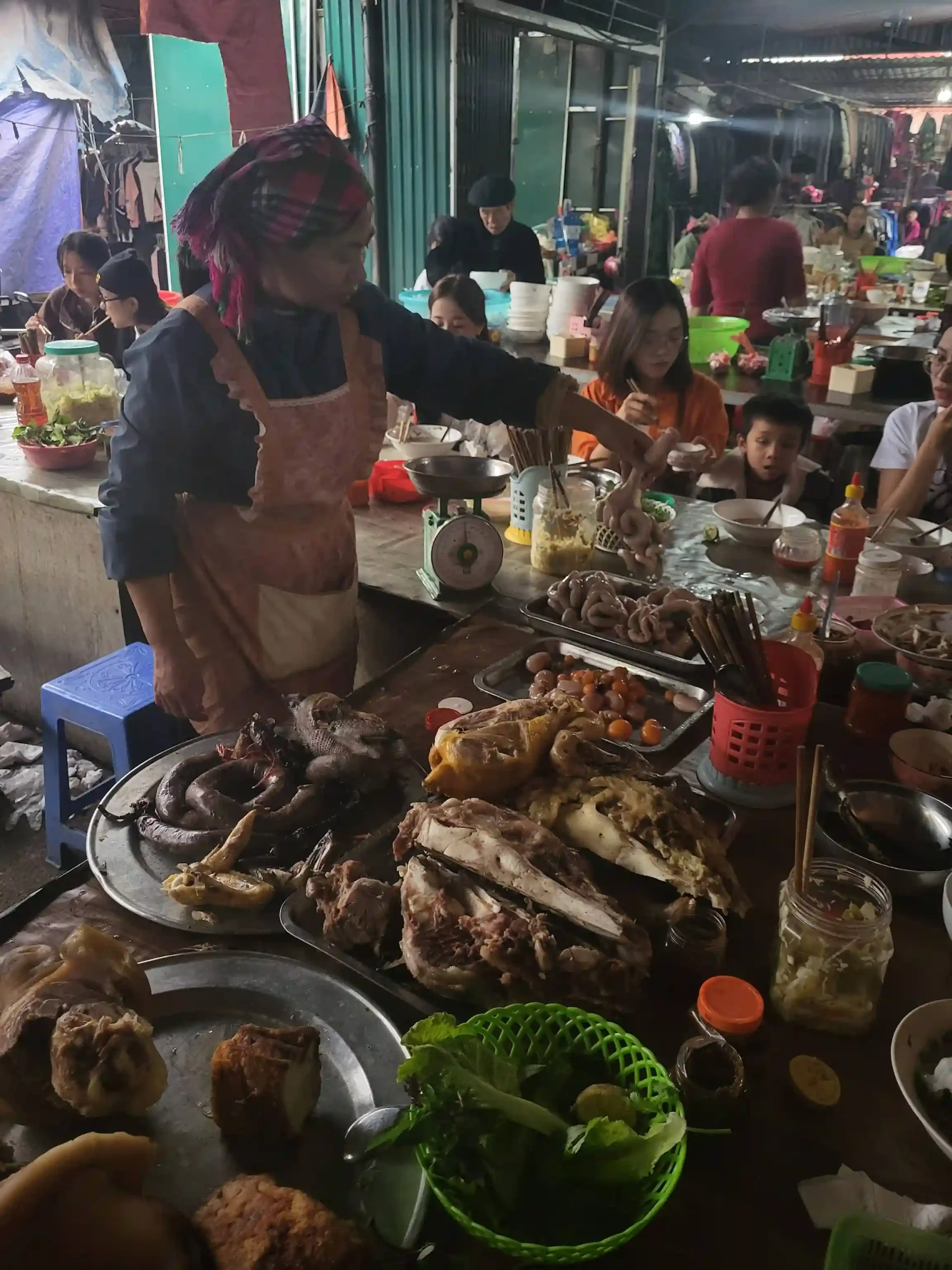
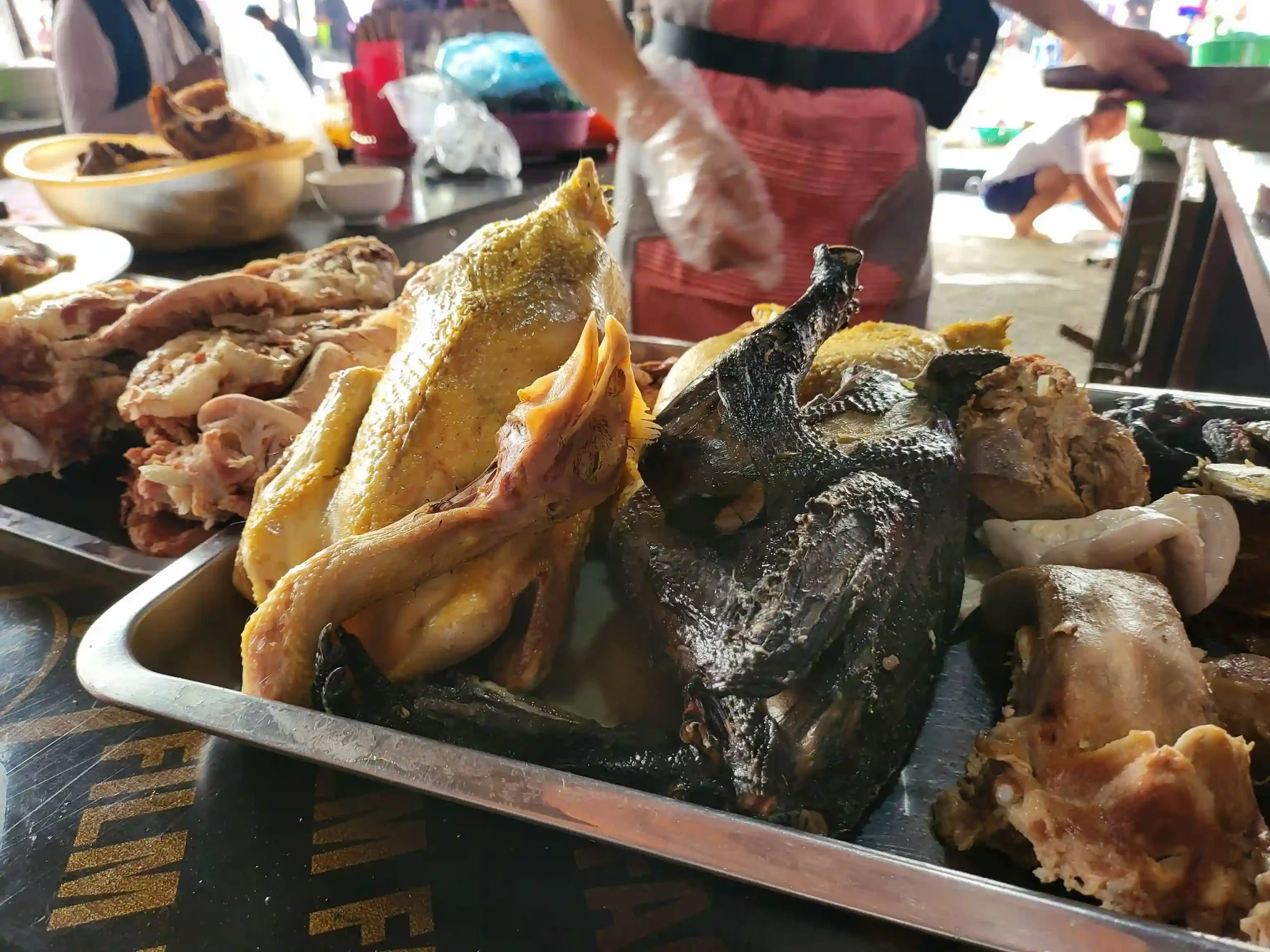
Thắng cố. Offal and bone stew, traditionally horse. Market dish, and not for everyone.
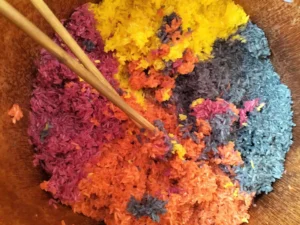
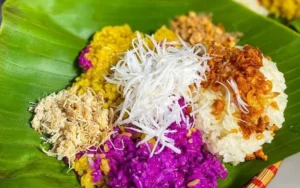
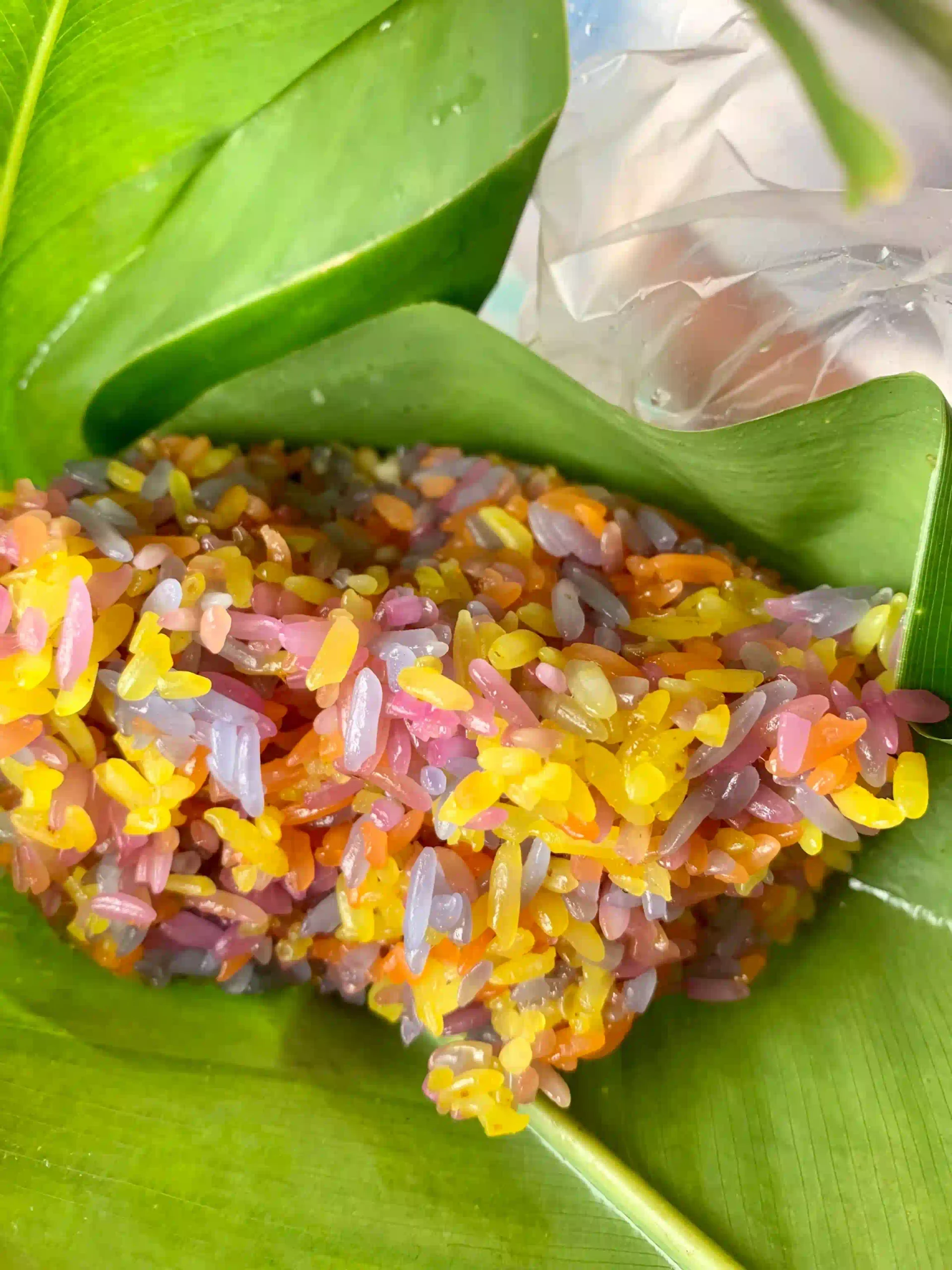
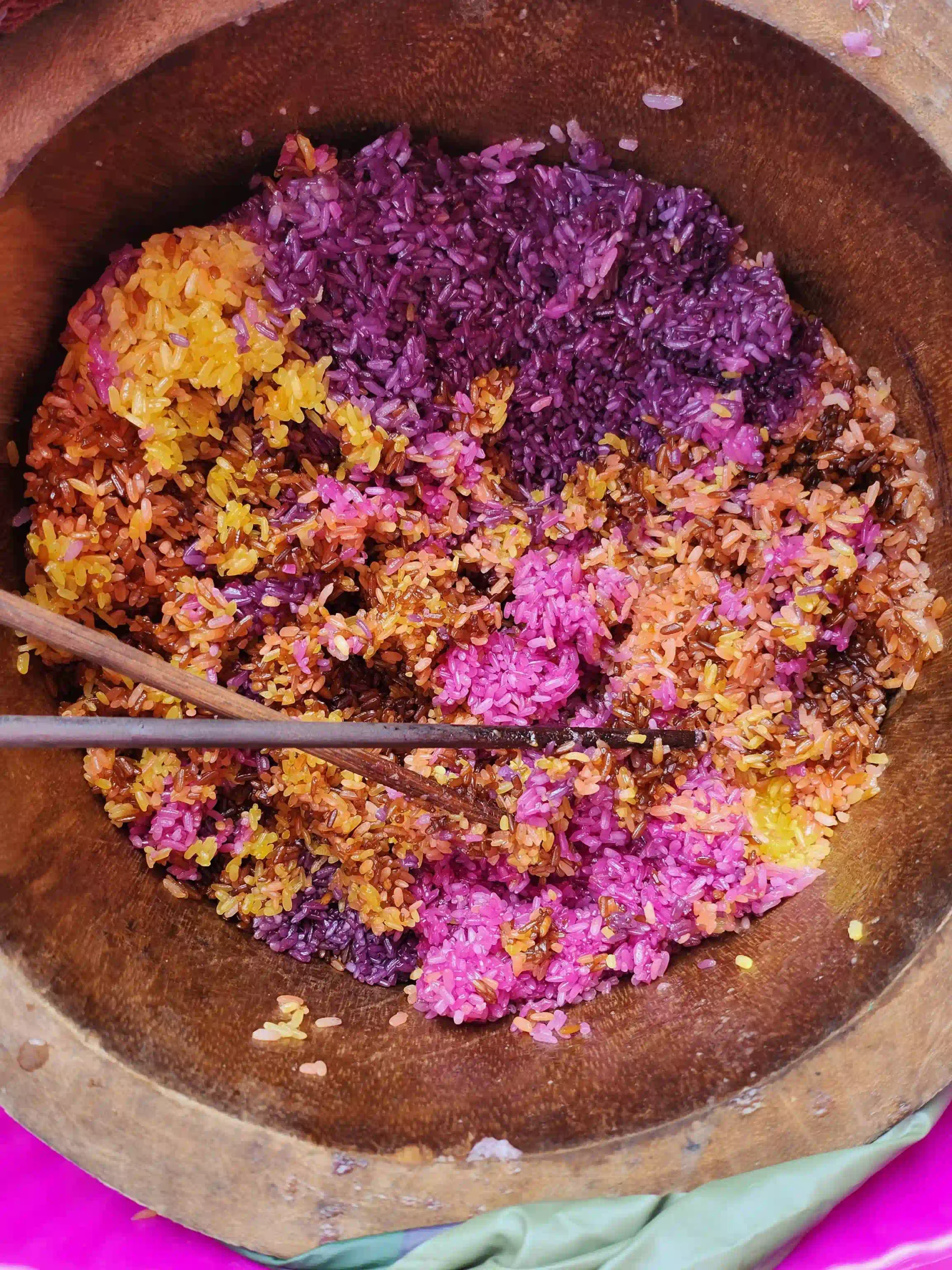
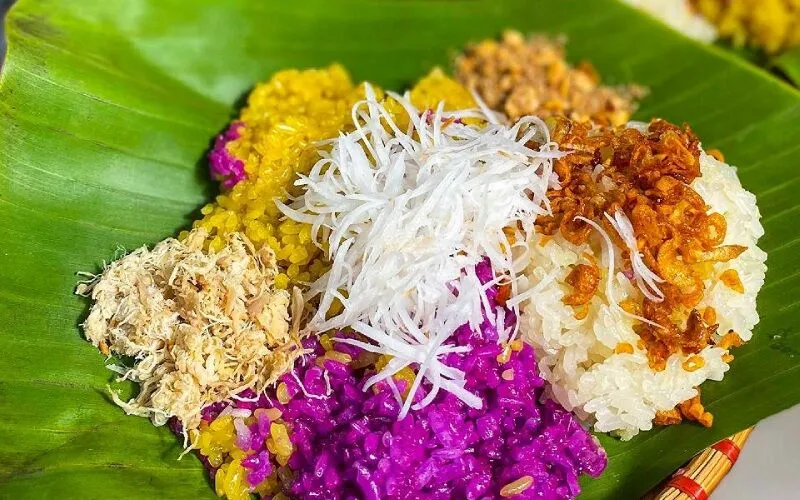
Xôi ngũ sắc. Five-colour sticky rice, usually sold alongside bánh cuốn.
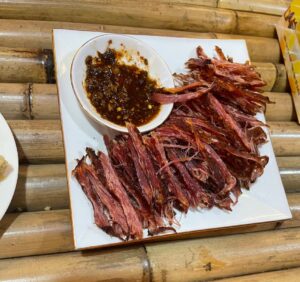
Thịt lợn đen and thịt trâu gác bếp. Highland black pork, and buffalo smoked over the kitchen fire.
Best restaurants in Ha Giang city:
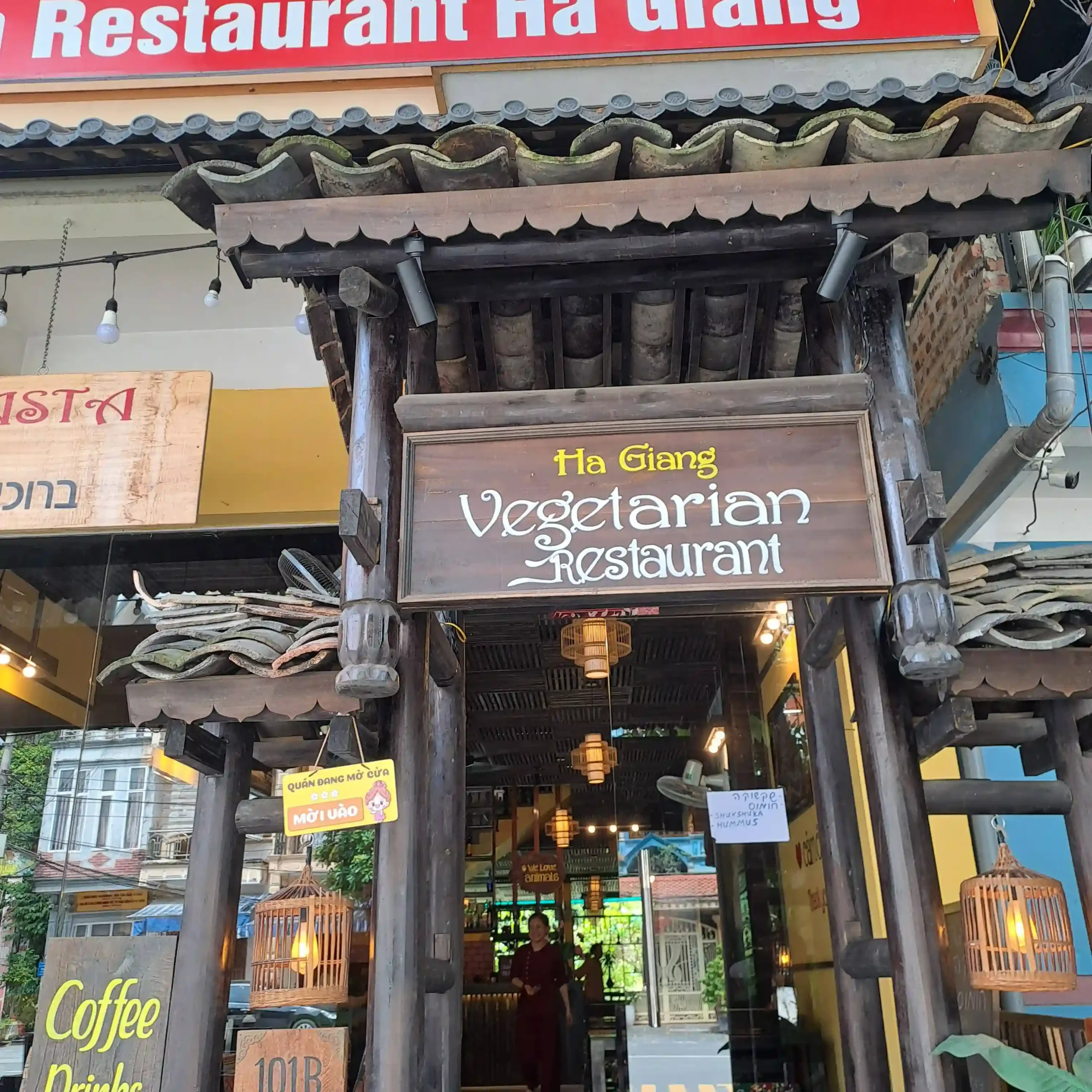
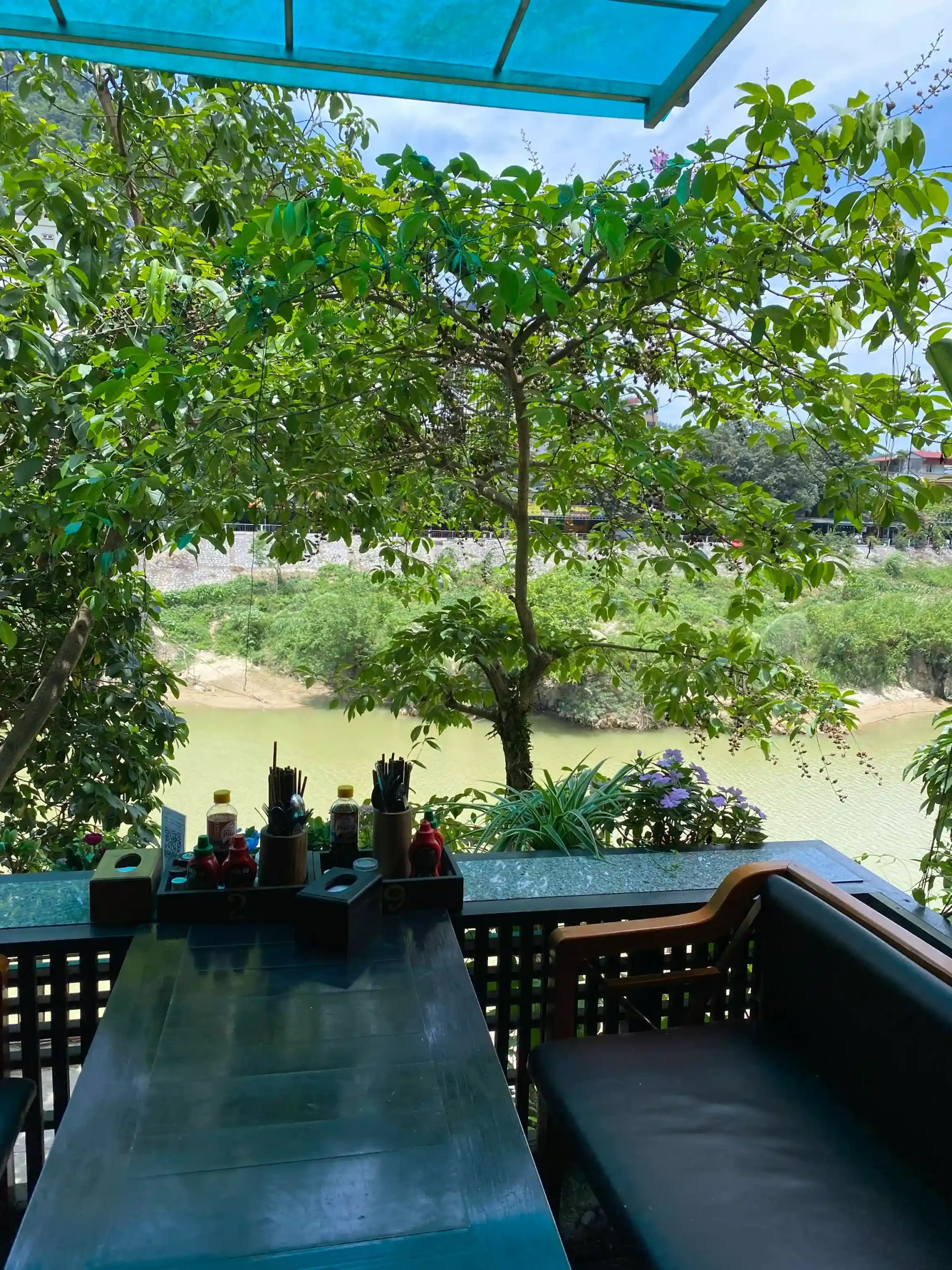
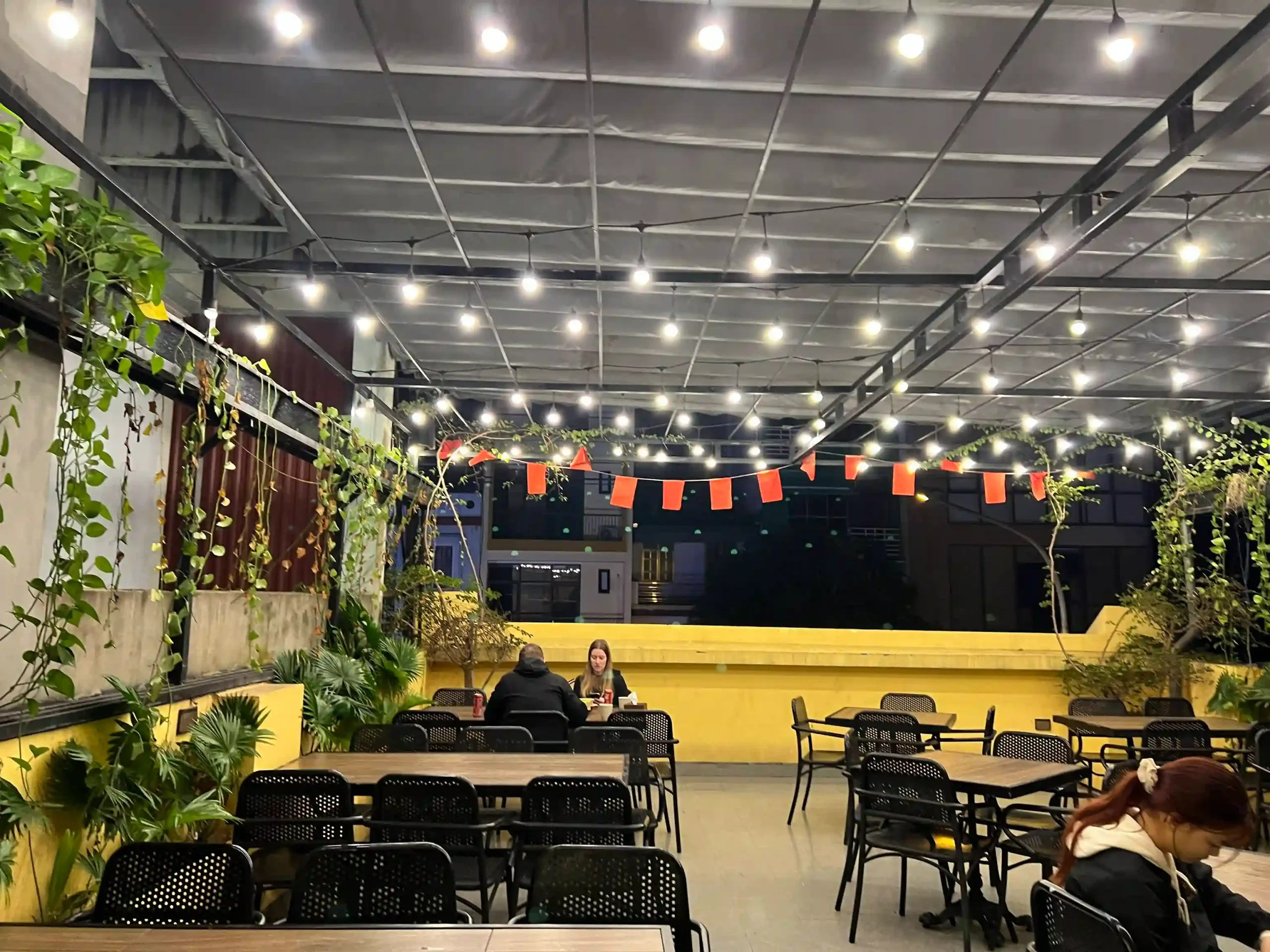
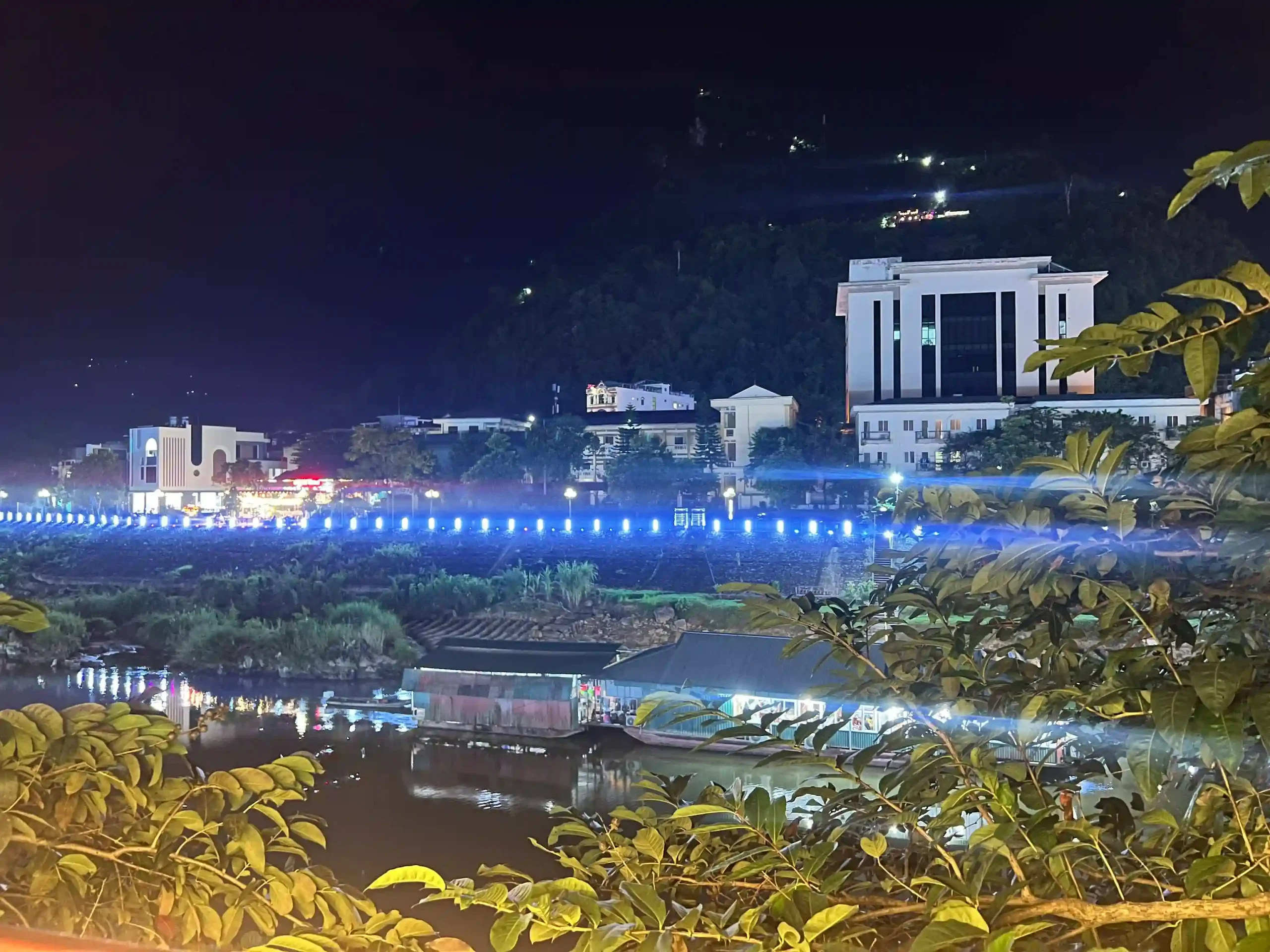
Nhà Hàng Chay Ha Giang, 101B Nguyễn Thái Học. 4.9 from 665 reviews. Vegetarian, cheap, terrace over the river.
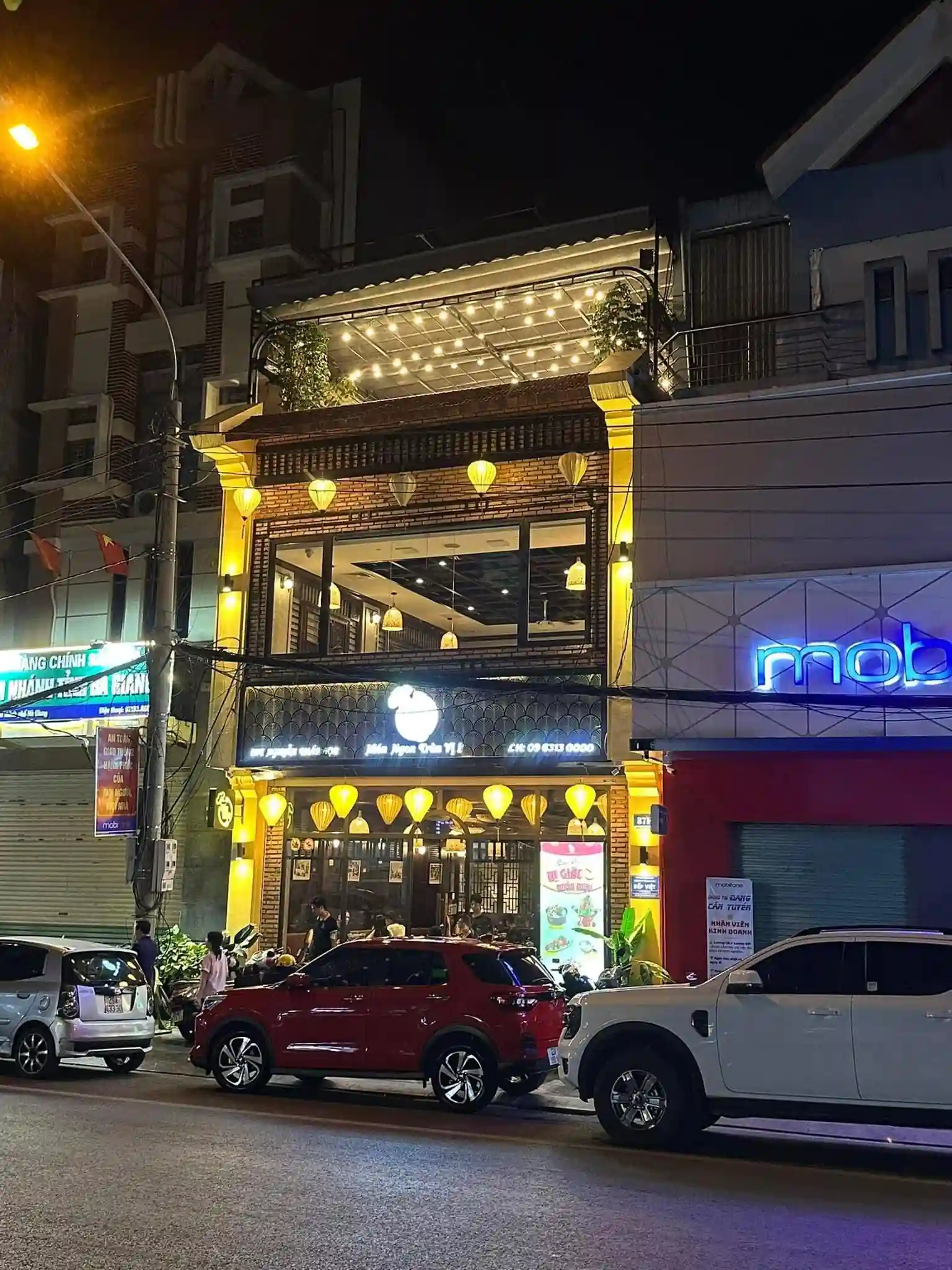
Bếp Việt, 87E Nguyễn Thái Học. 4.3 from 296. Big, busy with locals, fast.
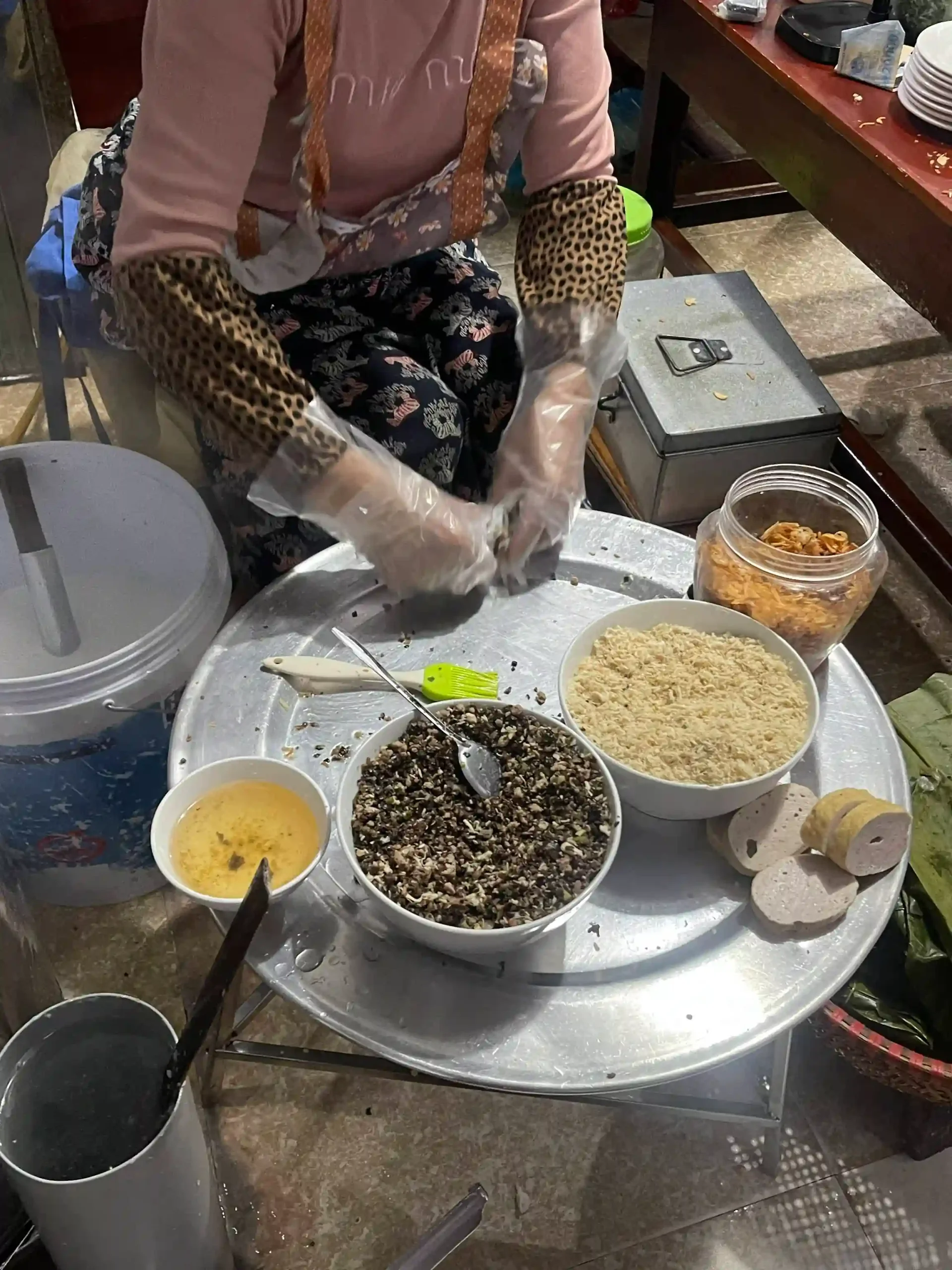
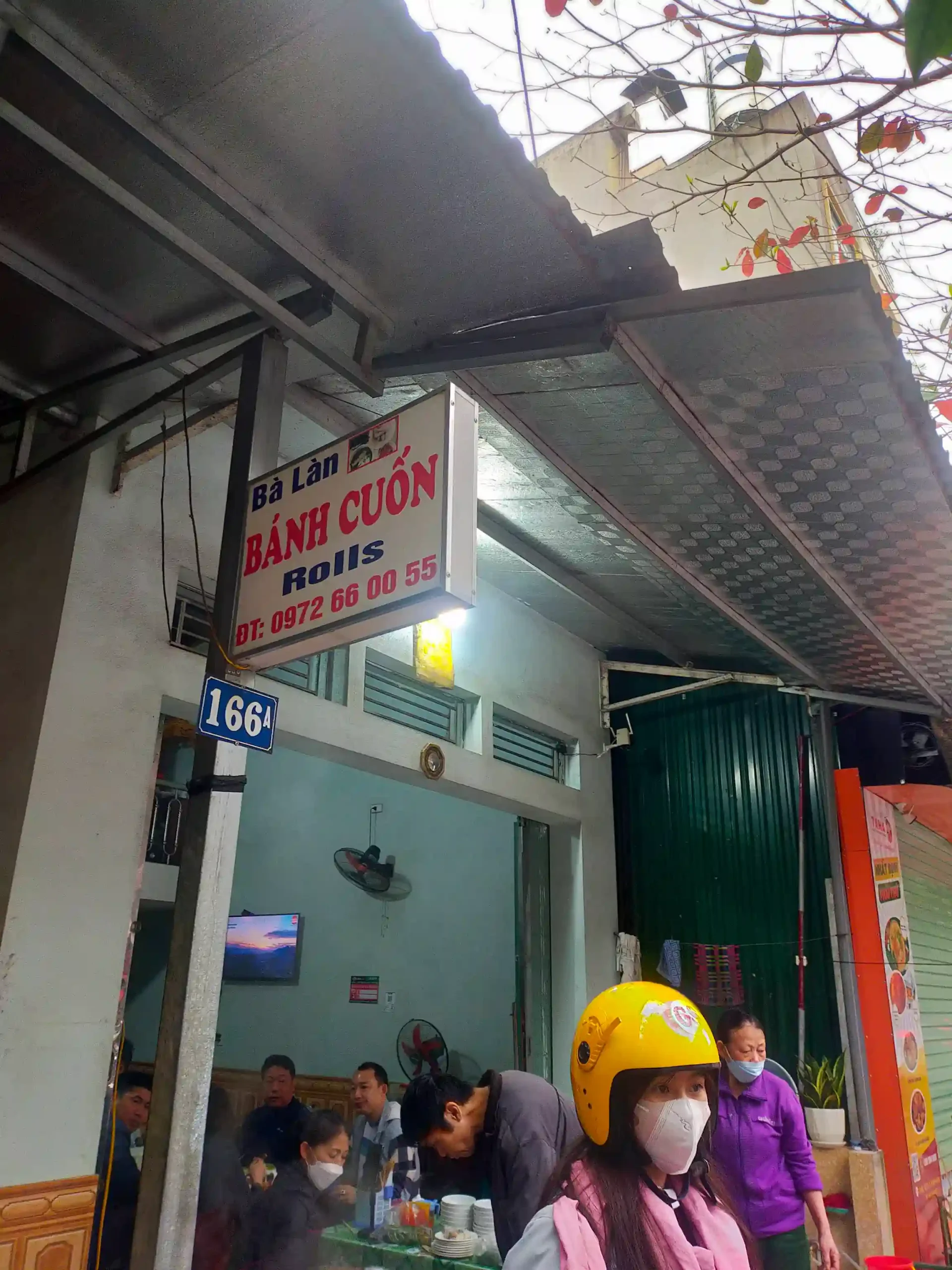
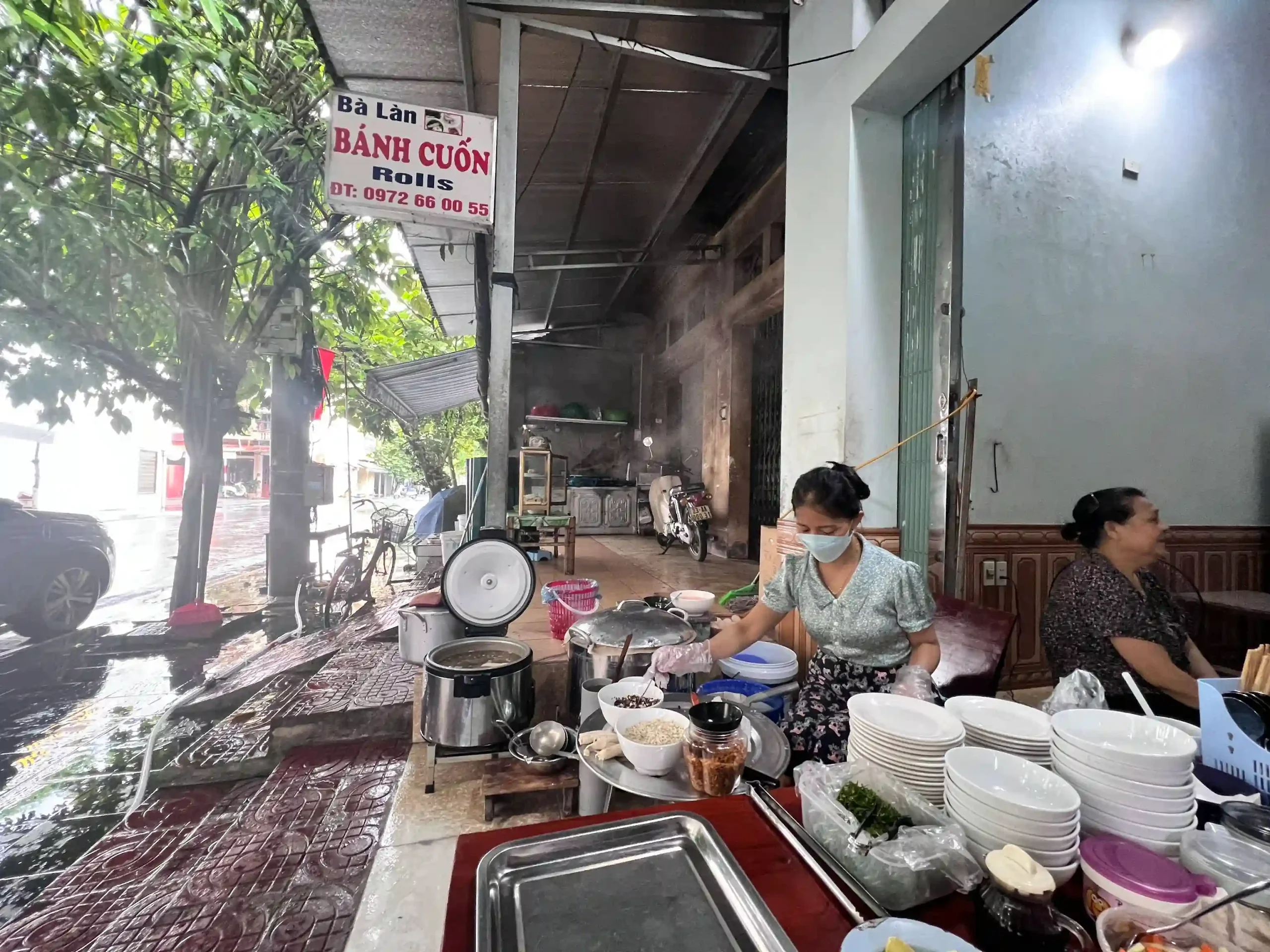
Bánh cuốn Bà Làn. Off the tourist strip, and the best bánh cuốn in the city.
Best places to eat on the loop:
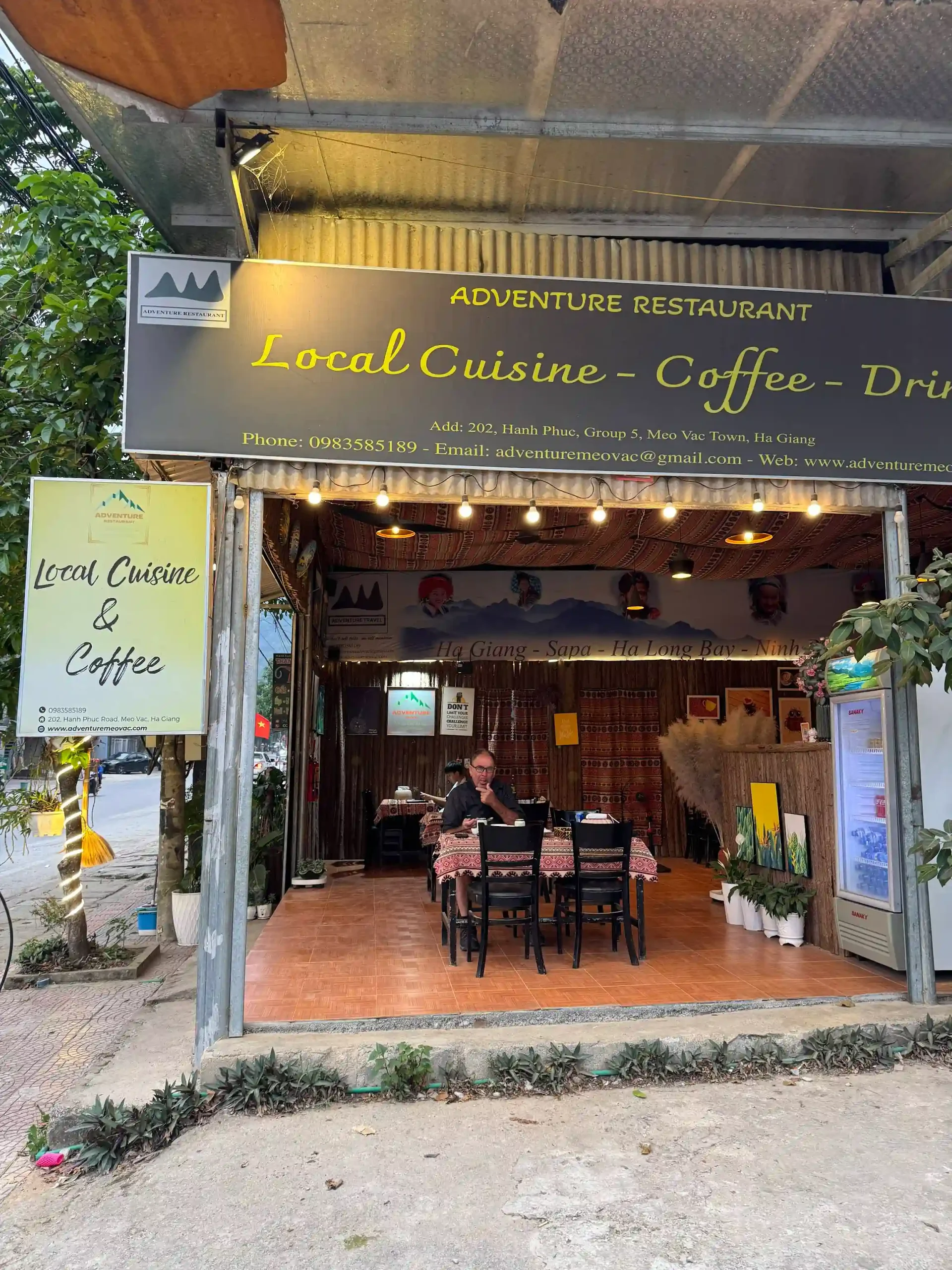
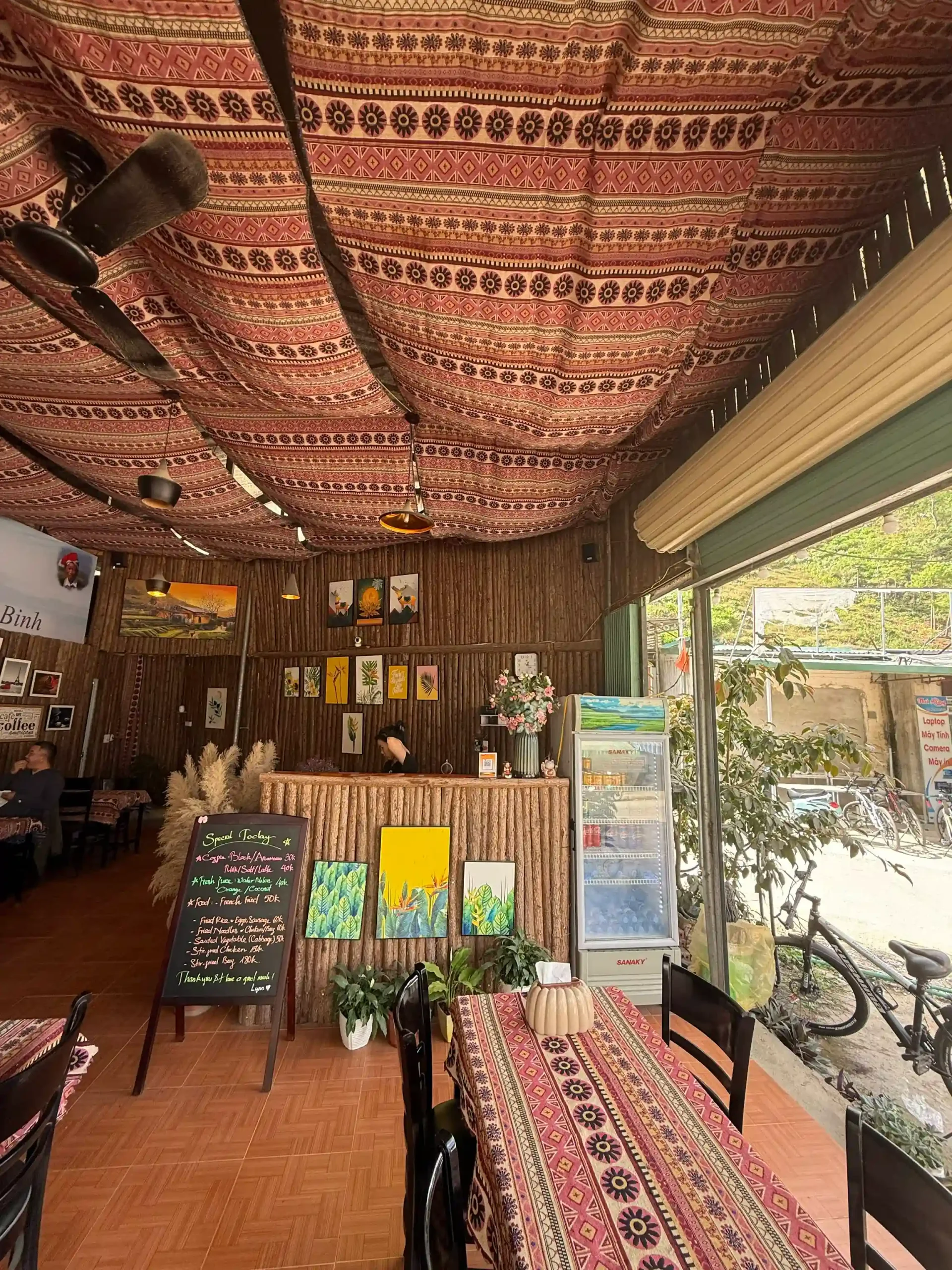
Adventure Restaurant, Meo Vac. 5.0 from 292 reviews. Small menu, everything fresh.
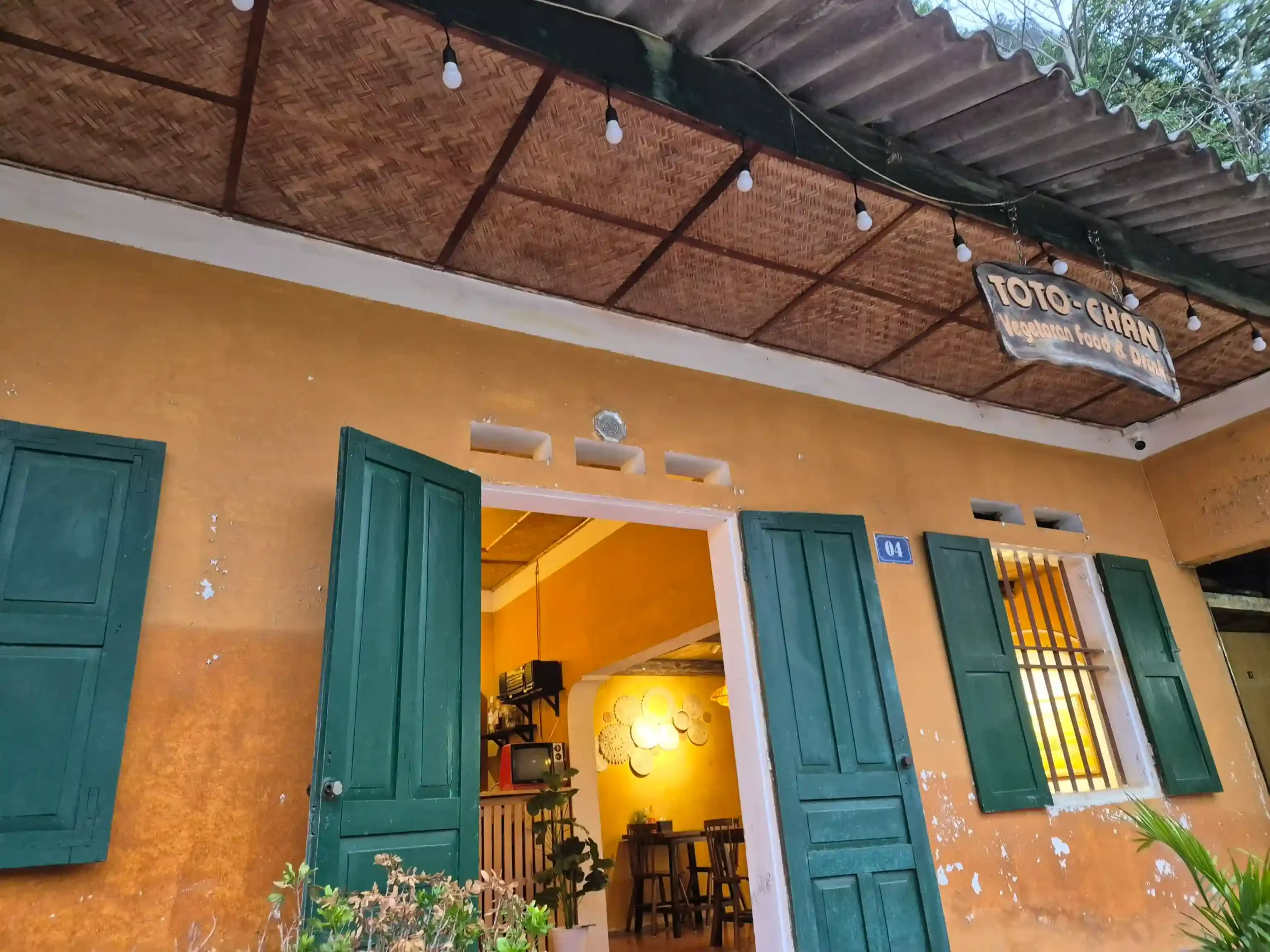
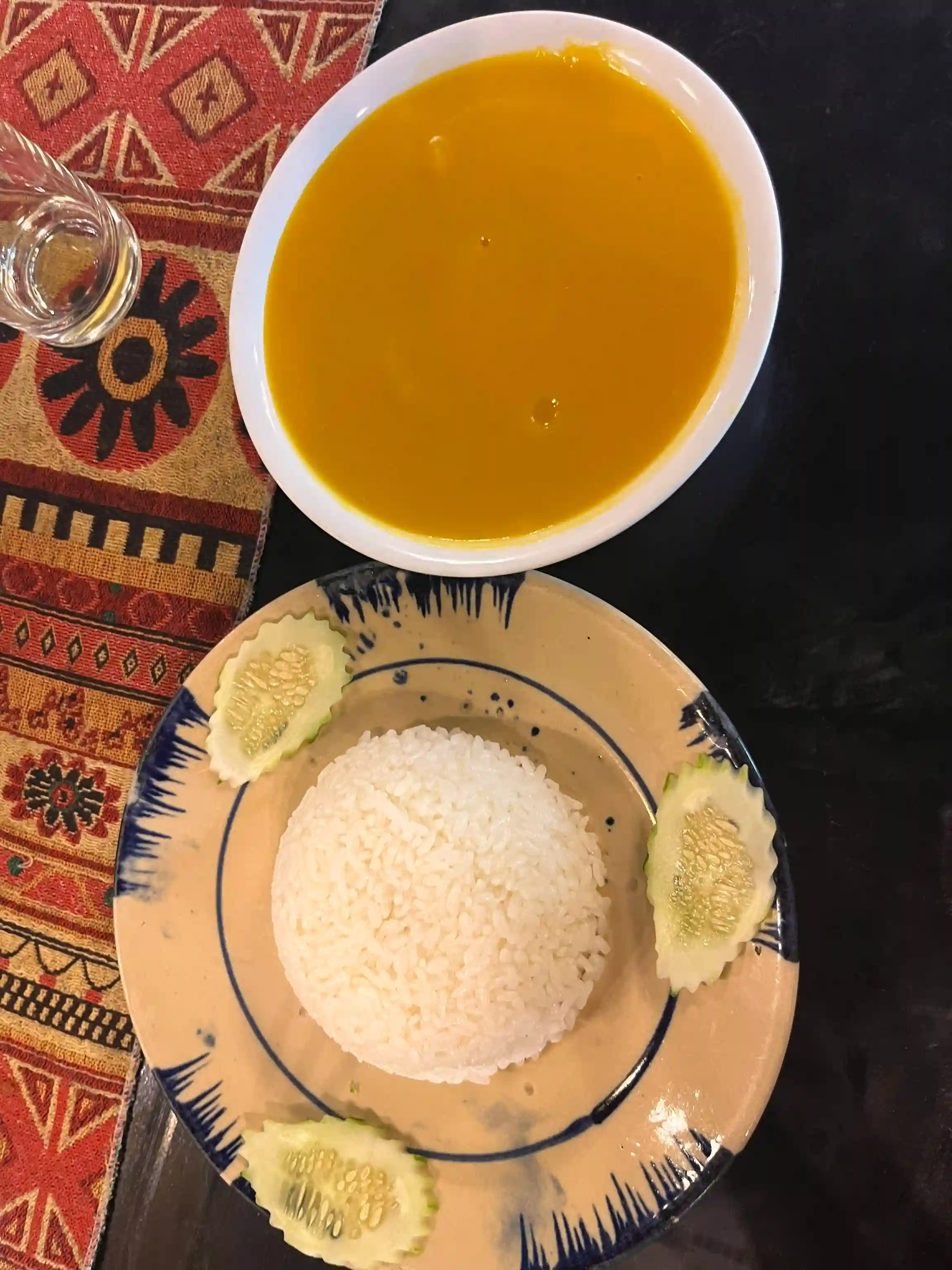
ToTo-Chan, Dong Van. Vegetarian, down a quiet alley, pumpkin soup and hot pot.
Bánh cuốn Hà Yên, 31B Phố Cổ, Dong Van. 4.9, open 6am to 10:30am only.
Worth knowing:
Food poisoning on the loop is common enough to be a search term. Most of it traces back to homestay set meals.
Corn wine at dinner is free and refilled without asking. It’s stronger than it tastes.
Almost everything is cash, and 40,000 to 60,000 VND is a normal price for a bowl of something.
What Food Is Ha Giang Known For?
Northern highland cooking, and Ha Giang cuisine is not much like what you’ll have eaten in Hanoi. Ha Giang traditional food runs to less fish sauce, fewer fresh herbs, more pork and offal, more sticky rice and a great deal more broth.
The cold is why. Winters up here are properly cold at altitude and the cooking is built around it, so nearly everything arrives hot and heavy.
The corn matters too, because maize grows where rice won’t, which gets you corn wine, corn cake and animals fed on corn.
And then there’s the timetable, which is the thing I’d actually plan around.
What to Eat in Ha Giang: the 5 Dishes
1. Bánh cuốn trứng (banh cuon trung)
40,000 to 50,000 VND.
Breakfast only, roughly 6am to 10:30am.
If you eat one local thing up here, make it this.
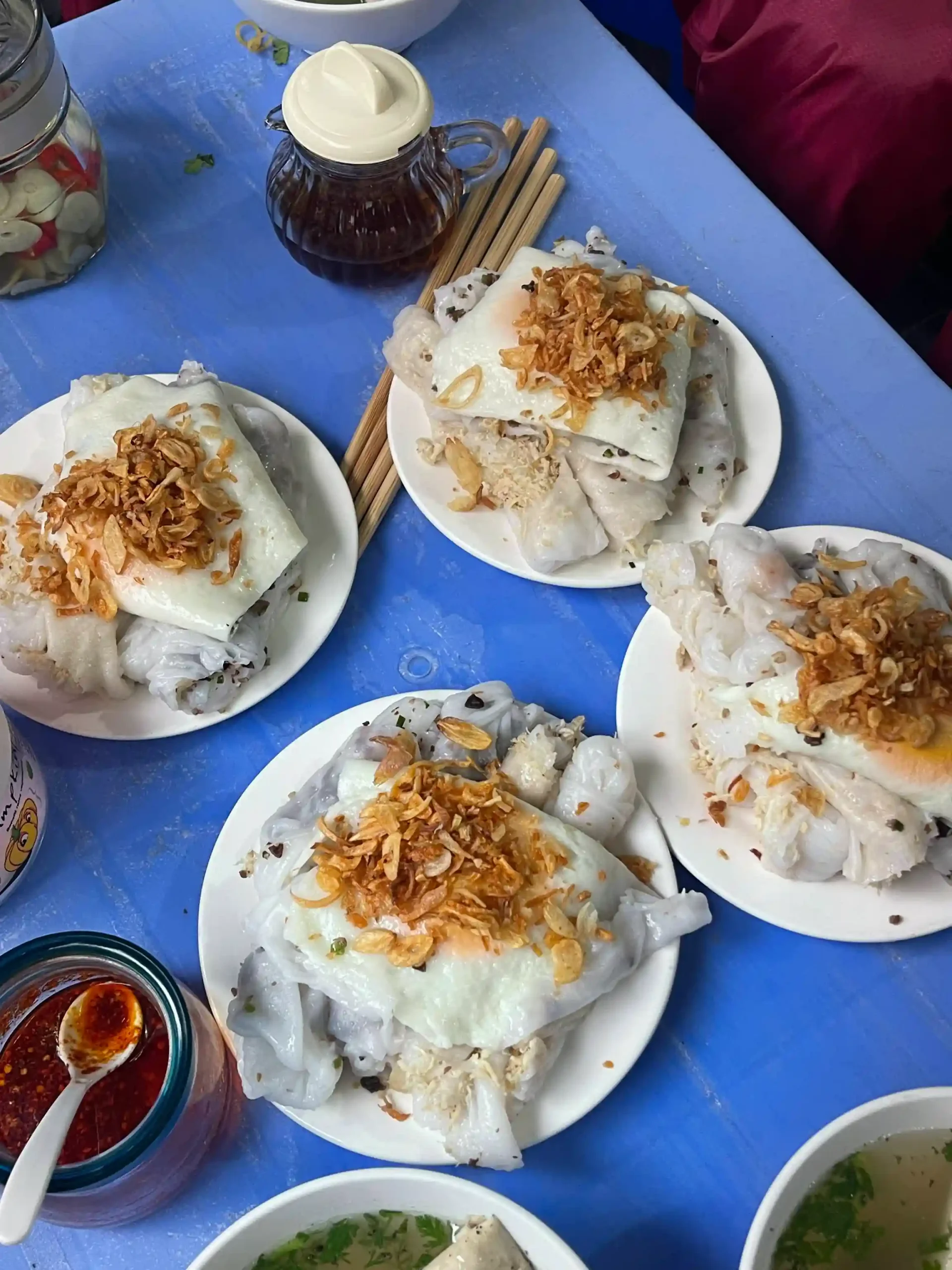
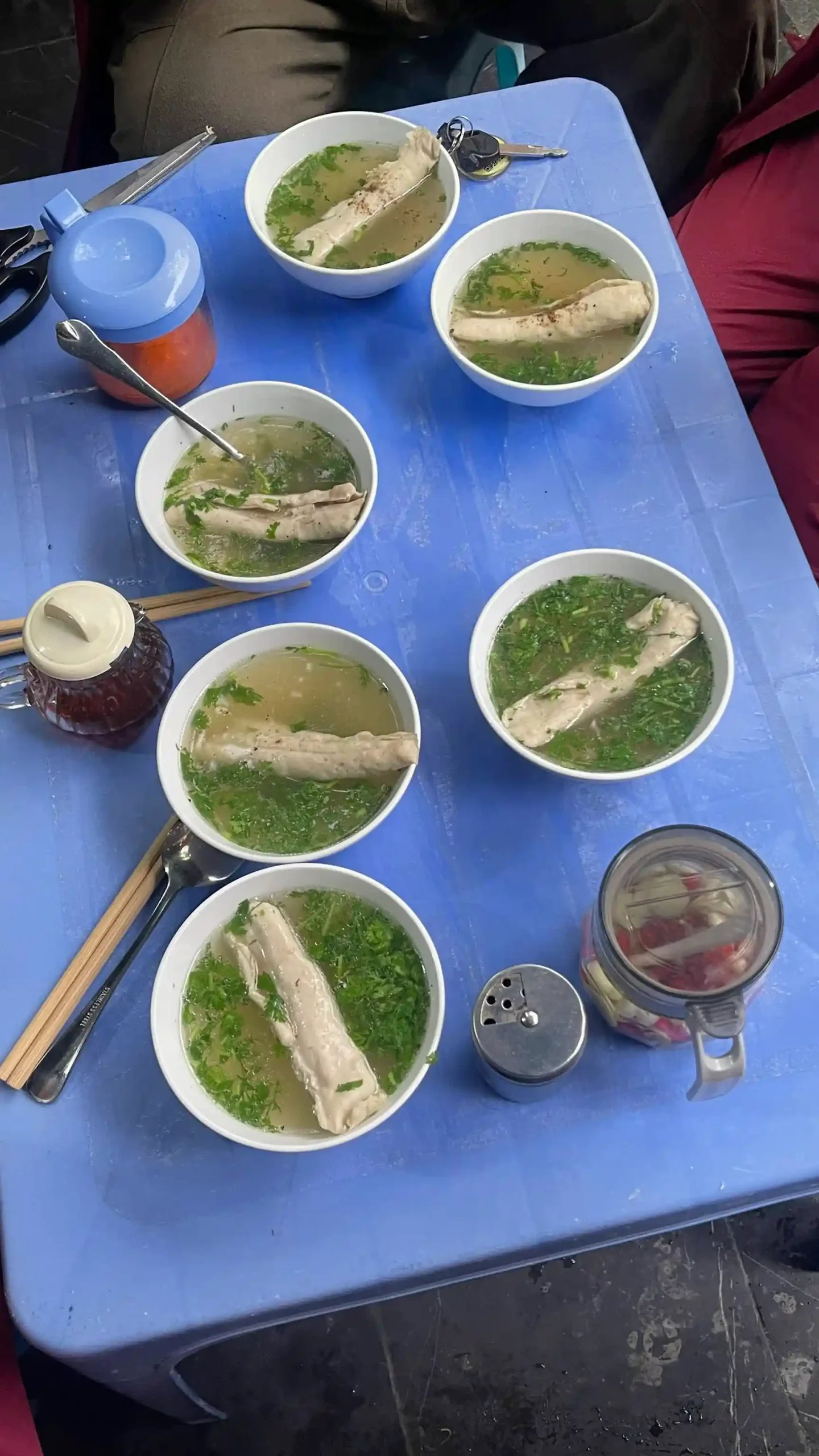
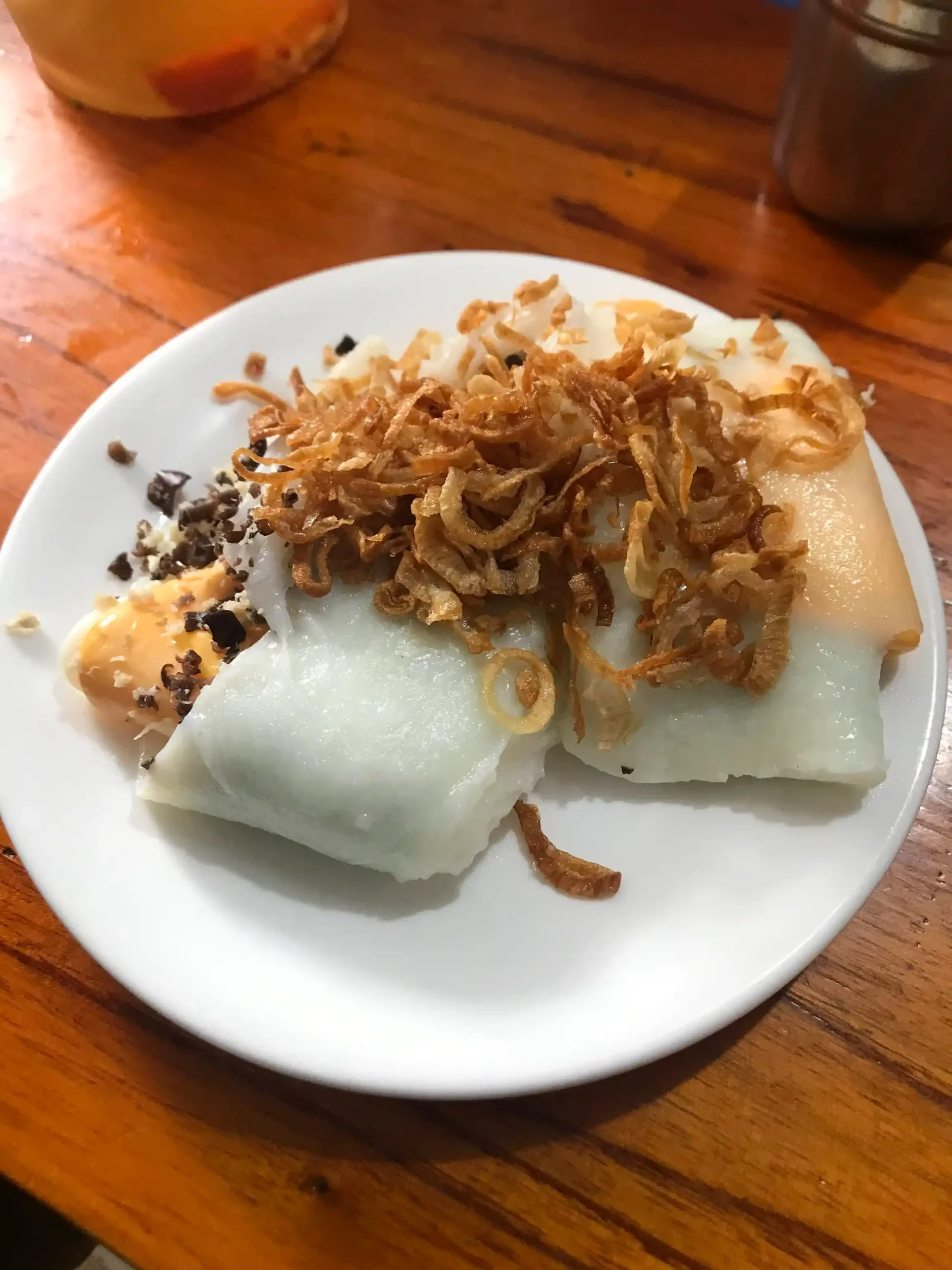
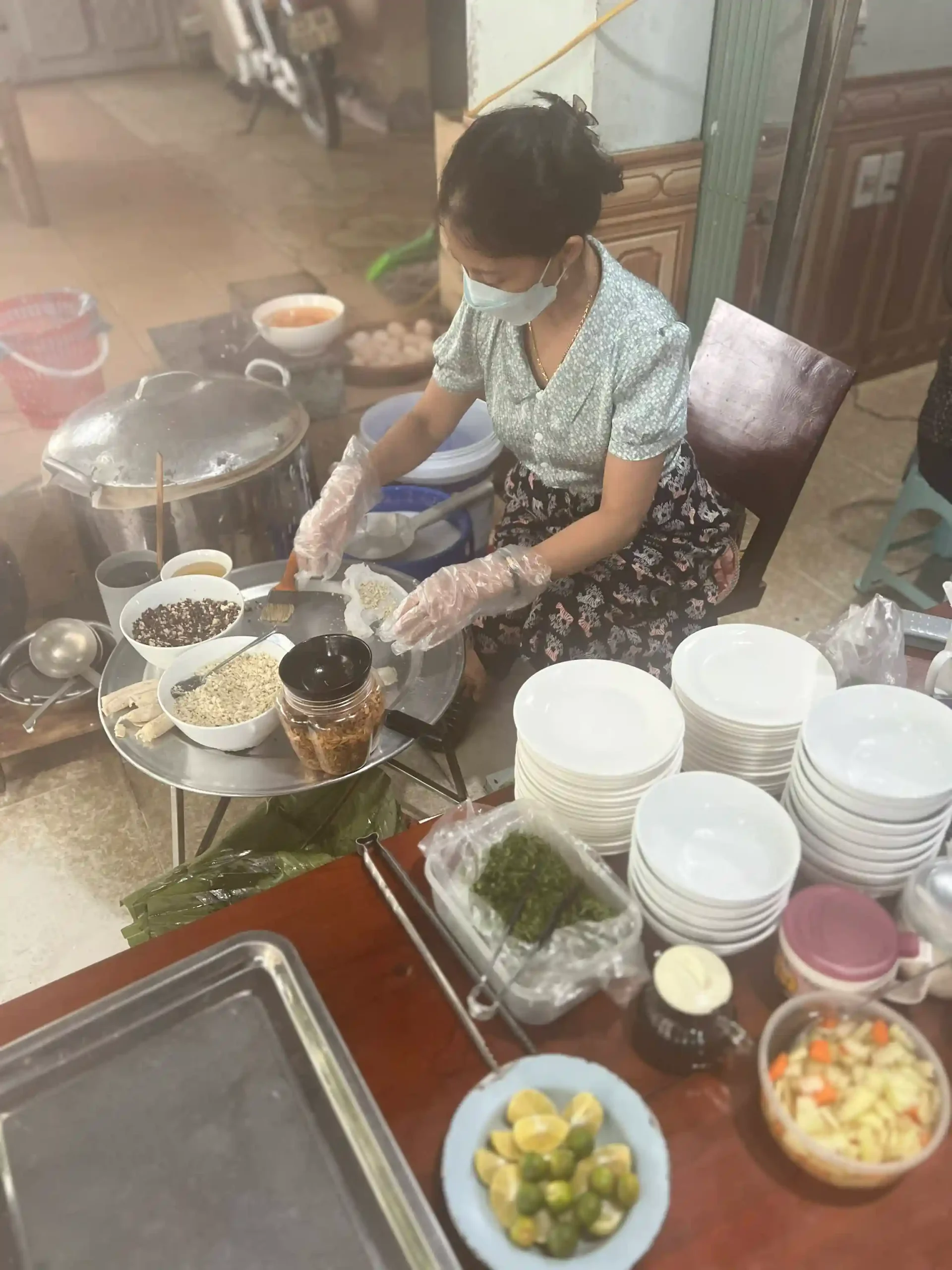
Thin steamed rice rolls with pork, wood ear mushroom and a whole egg folded inside, fried shallots over the top, and a bowl of hot bone broth alongside. It looks unremarkable on the plate.
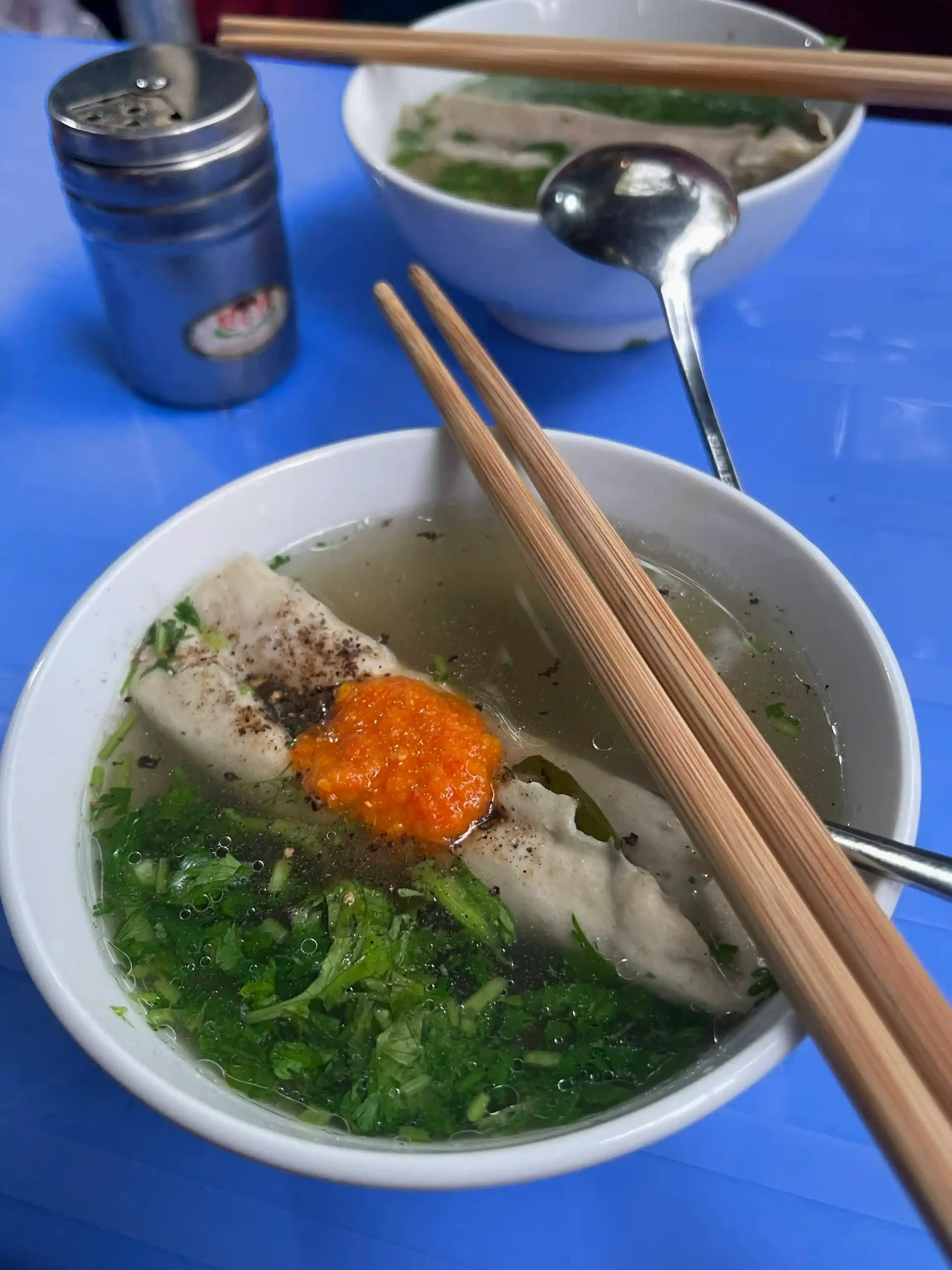
The broth is the entire dish. Cut a piece off, put it on the spoon, dip the spoon in the broth so the roll soaks it up, then eat. Eating it dry with chopsticks is what most foreigners do on the first go and it’s why some people come away wondering what the fuss was about.
It comes with a slice of pork sausage and often a pork patty. The five-colour sticky rice alongside turns it into a real breakfast.
Took me three trips to work out that the version in Ha Giang city is better than the famous one in Dong Van. More on that below.
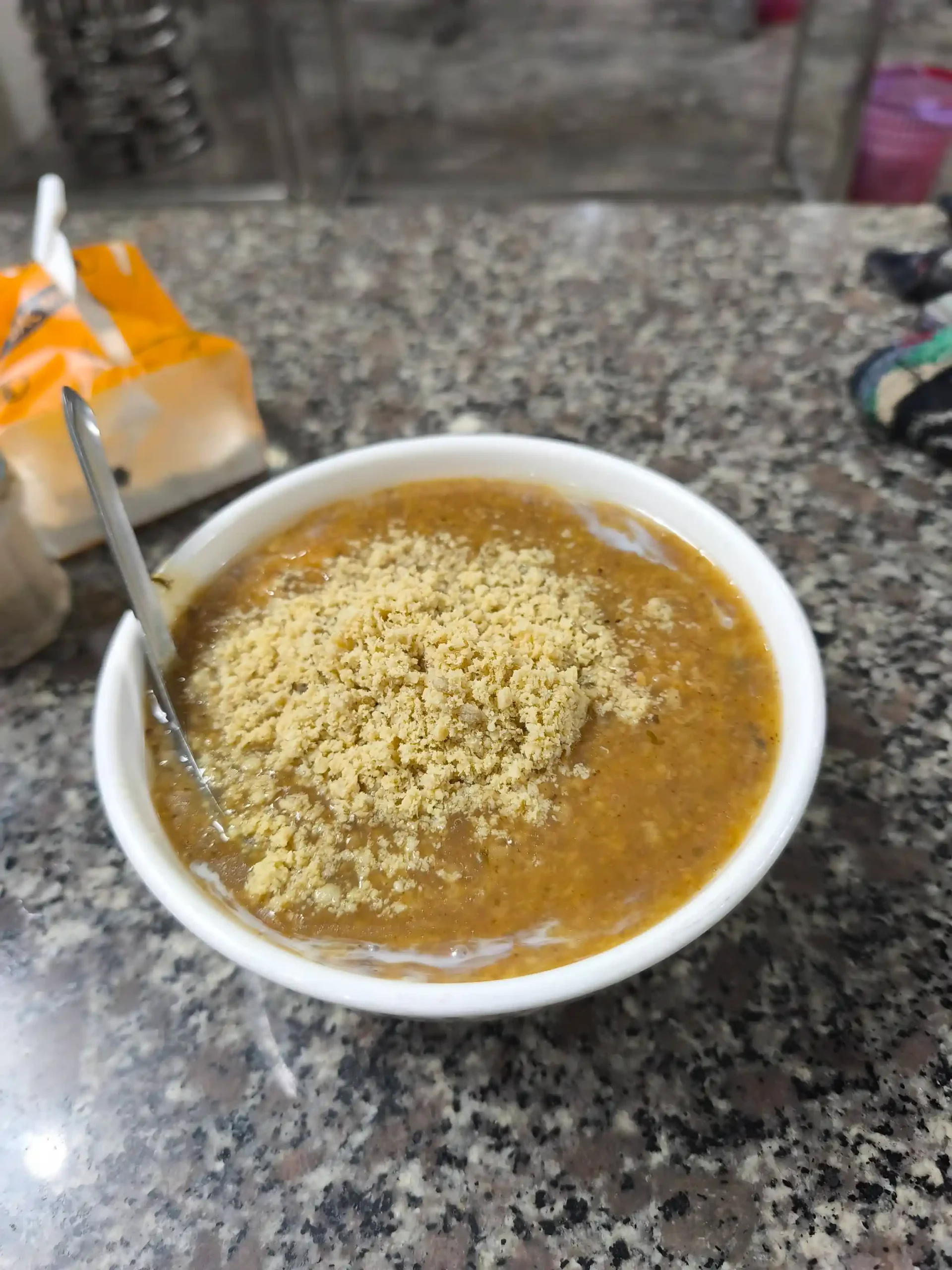
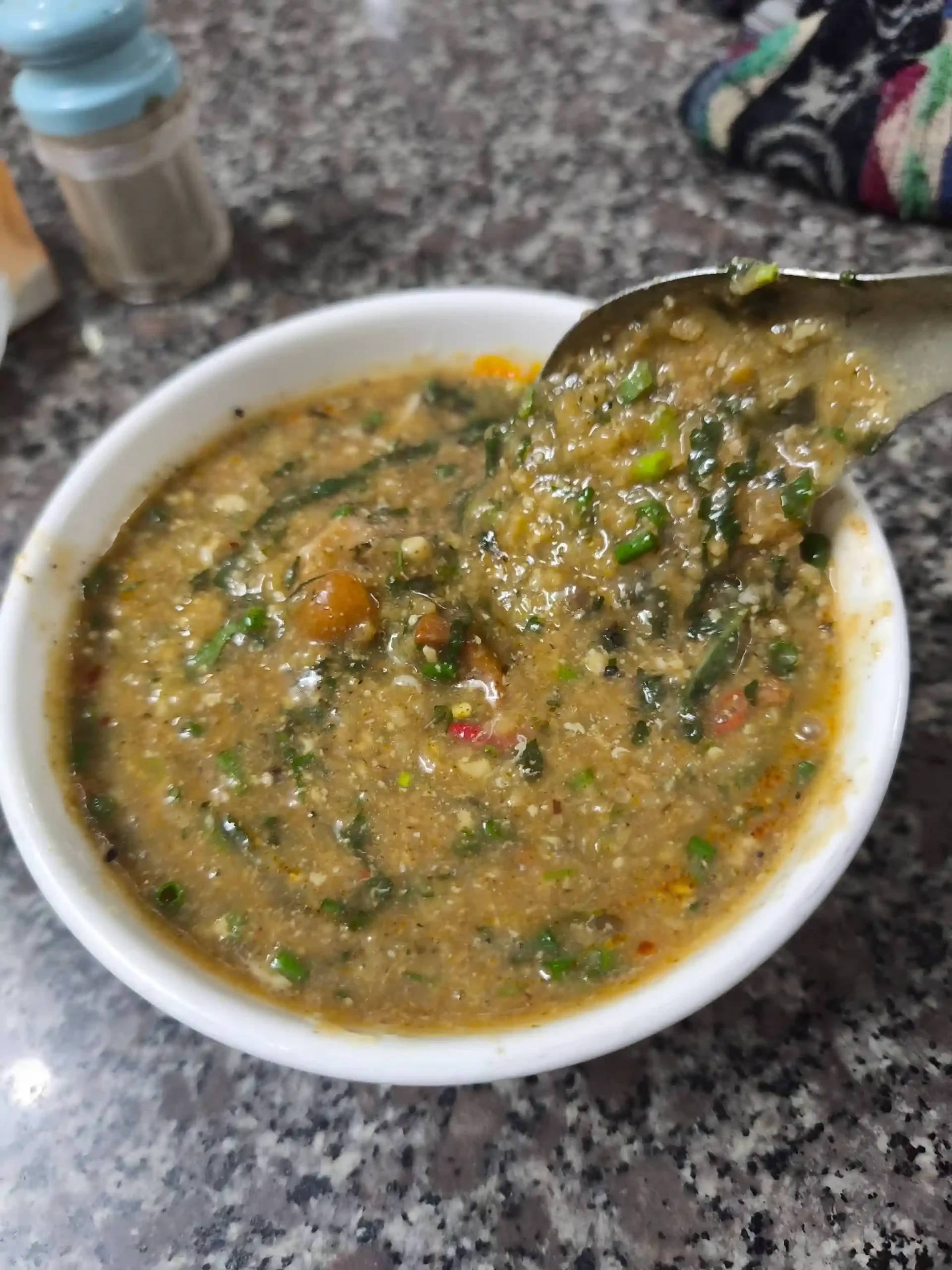
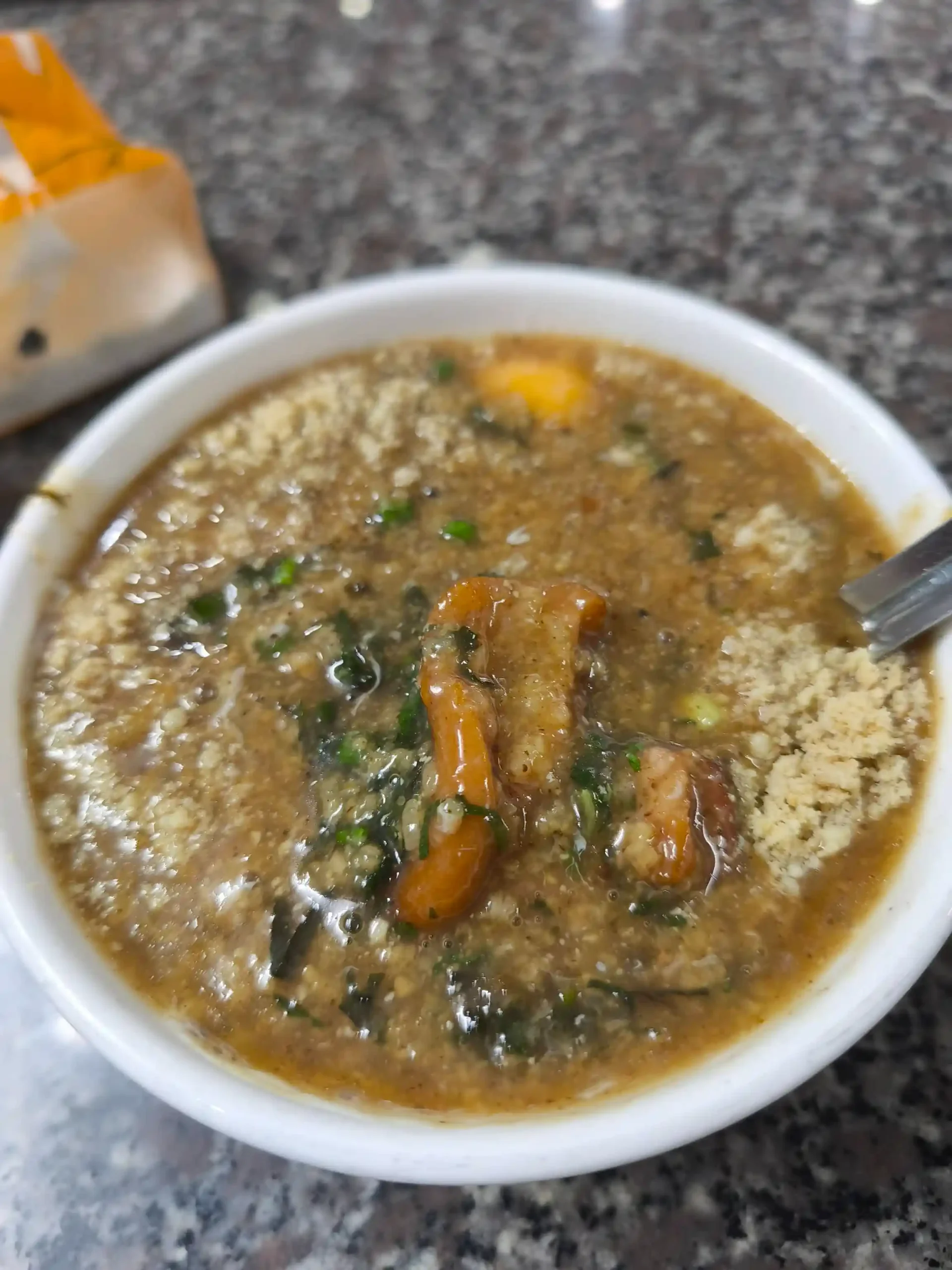
2. Cháo ấu tẩu (chao au tau)
30,000 to 50,000 VND
Evenings.
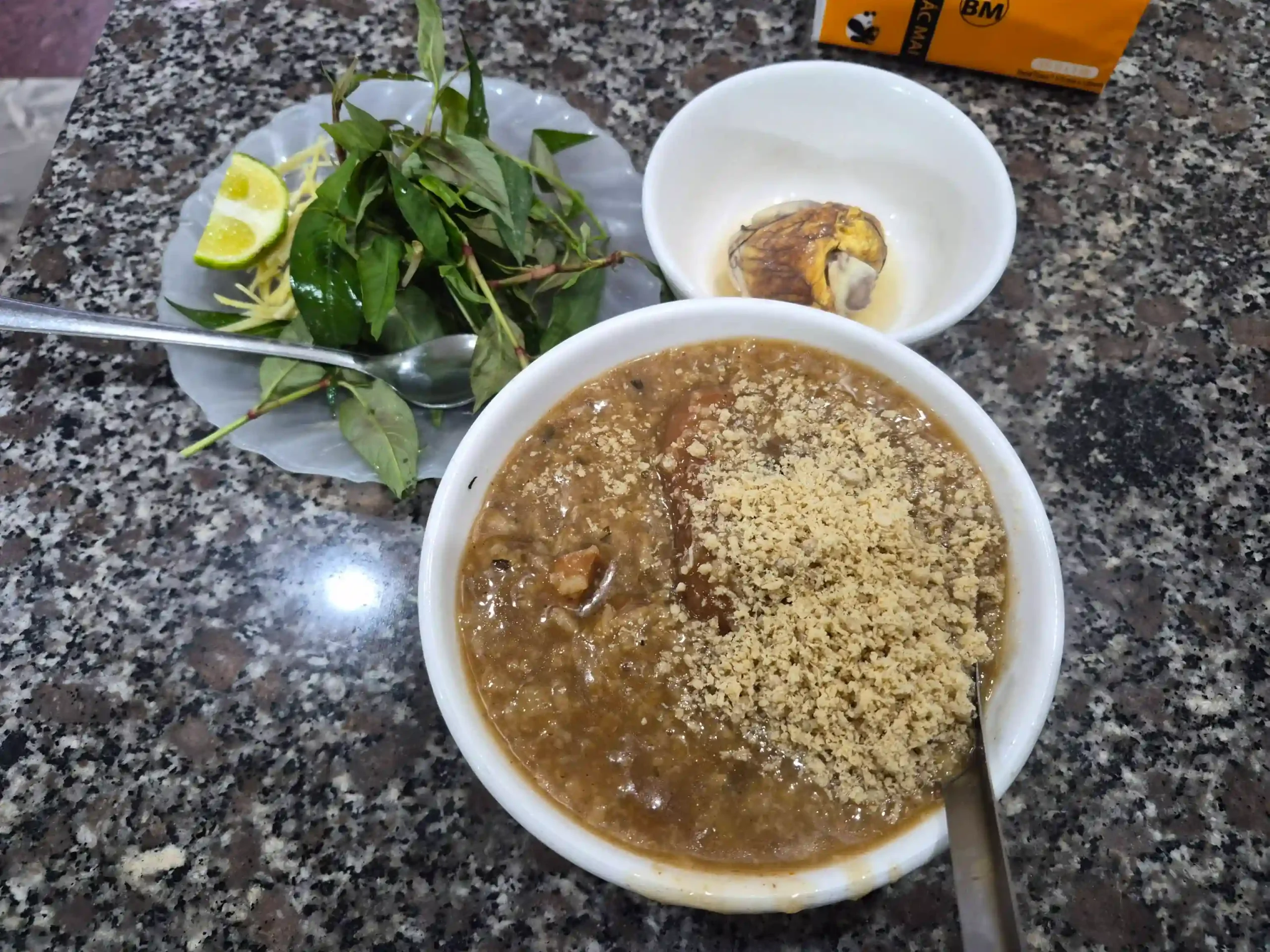
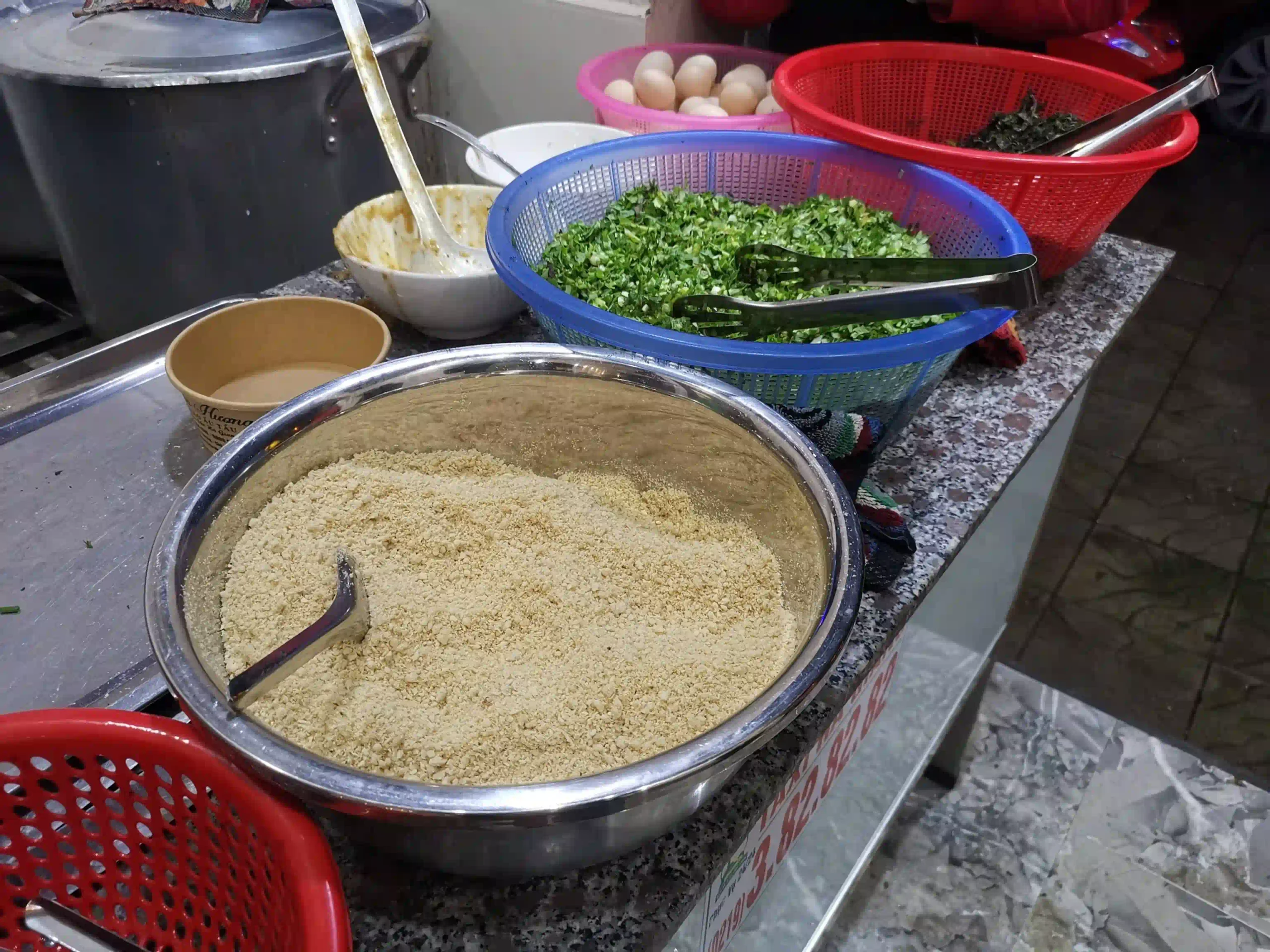
Porridge made from the ấu tẩu bulb, which is aconite, and which is poisonous raw. Boiling it for four hours or more with herbs, pork and sticky rice is what makes it safe, and that long cook is not approximate.
I know how that sounds. It’s fine, it’s been eaten here for generations, and nobody is improvising.
It’s thick, slightly bitter, herbal, and served near boiling. People eat it at night for aching muscles, which after a day on a bike is a decent pitch.
This is a Ha Giang city dish more than a loop dish, so your one free evening in the city is when to have it.
If bitter and herbal isn’t your thing, skip it. Of the five this is the one I’d call acquired.
3. Thắng cố (thang co)
60,000 to 100,000 VND
Market mornings.
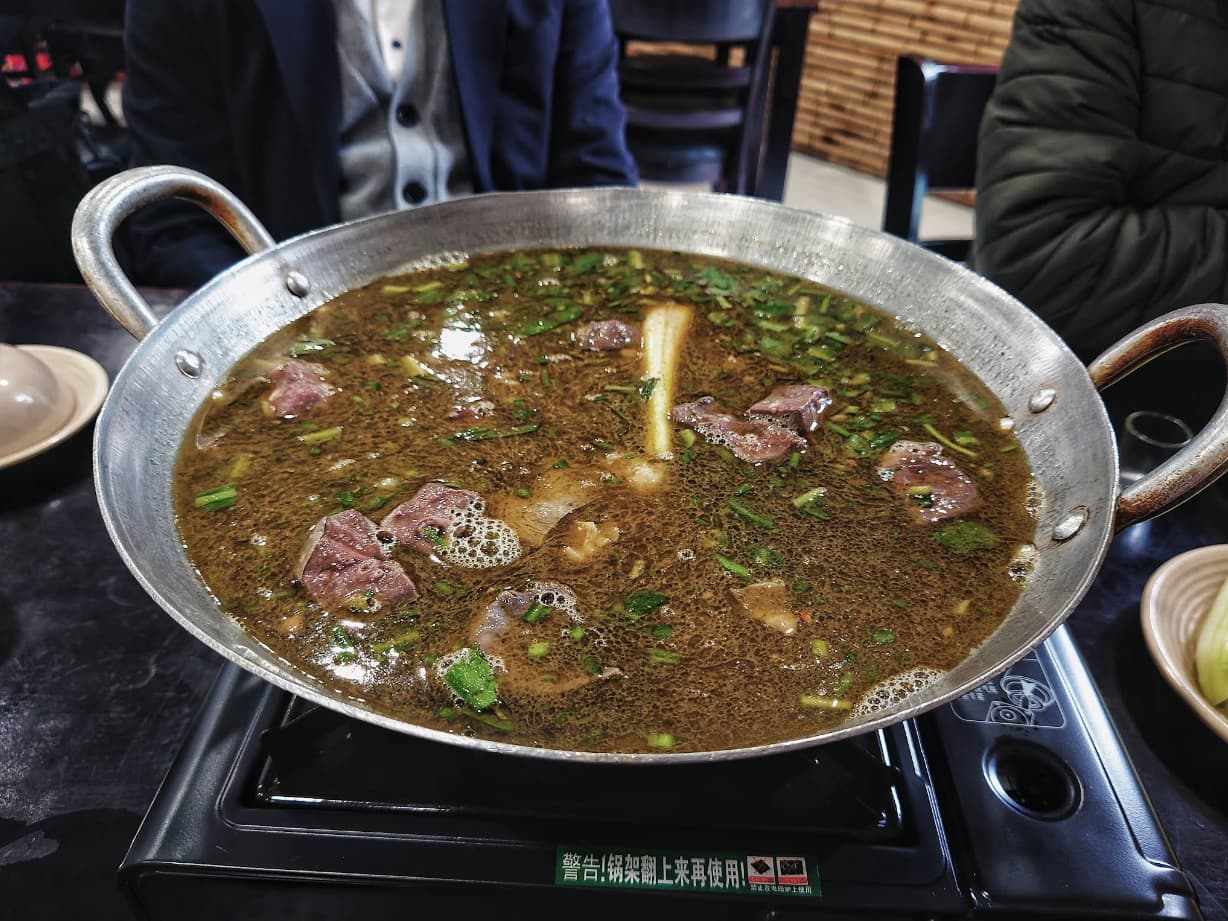
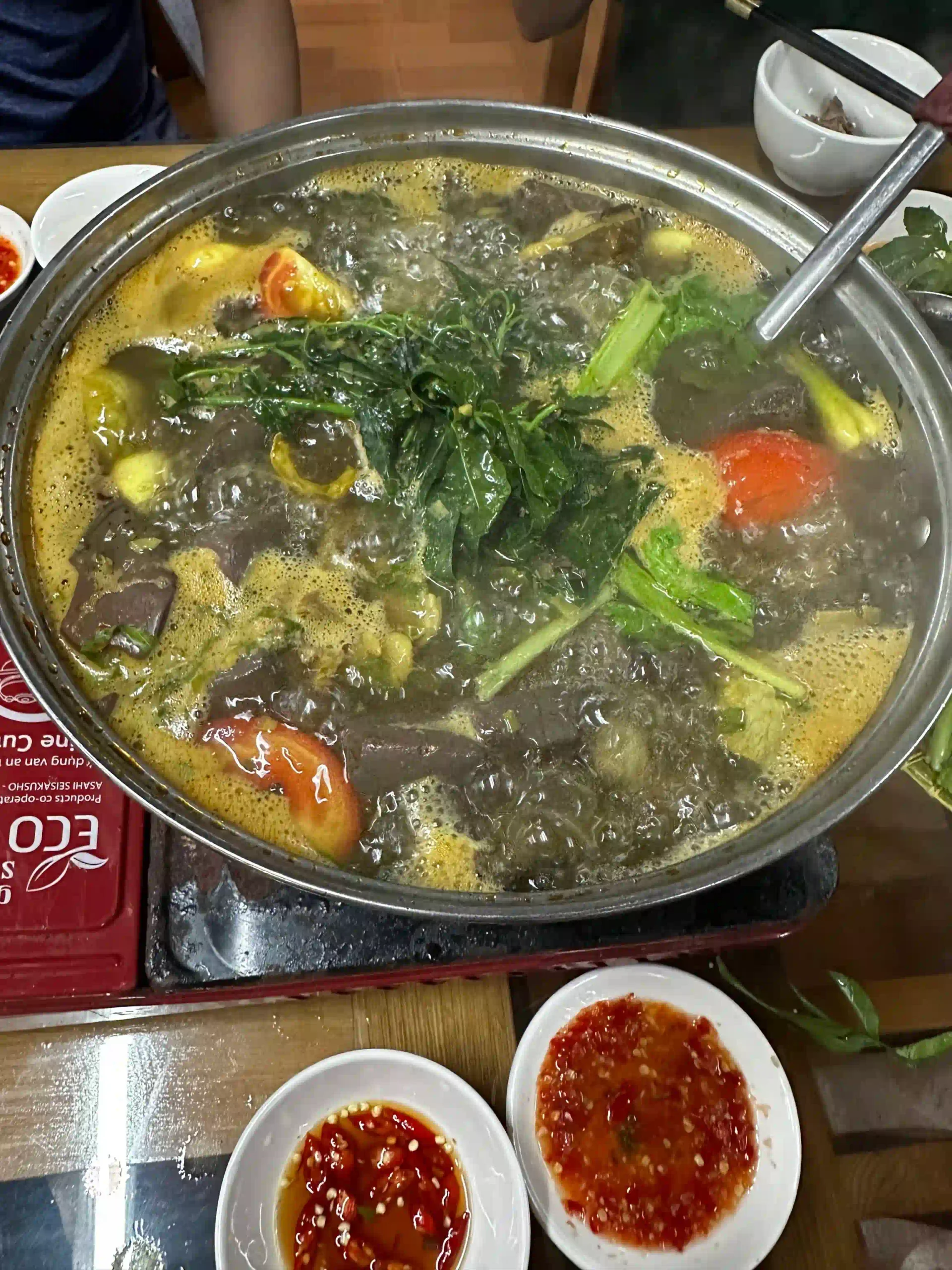
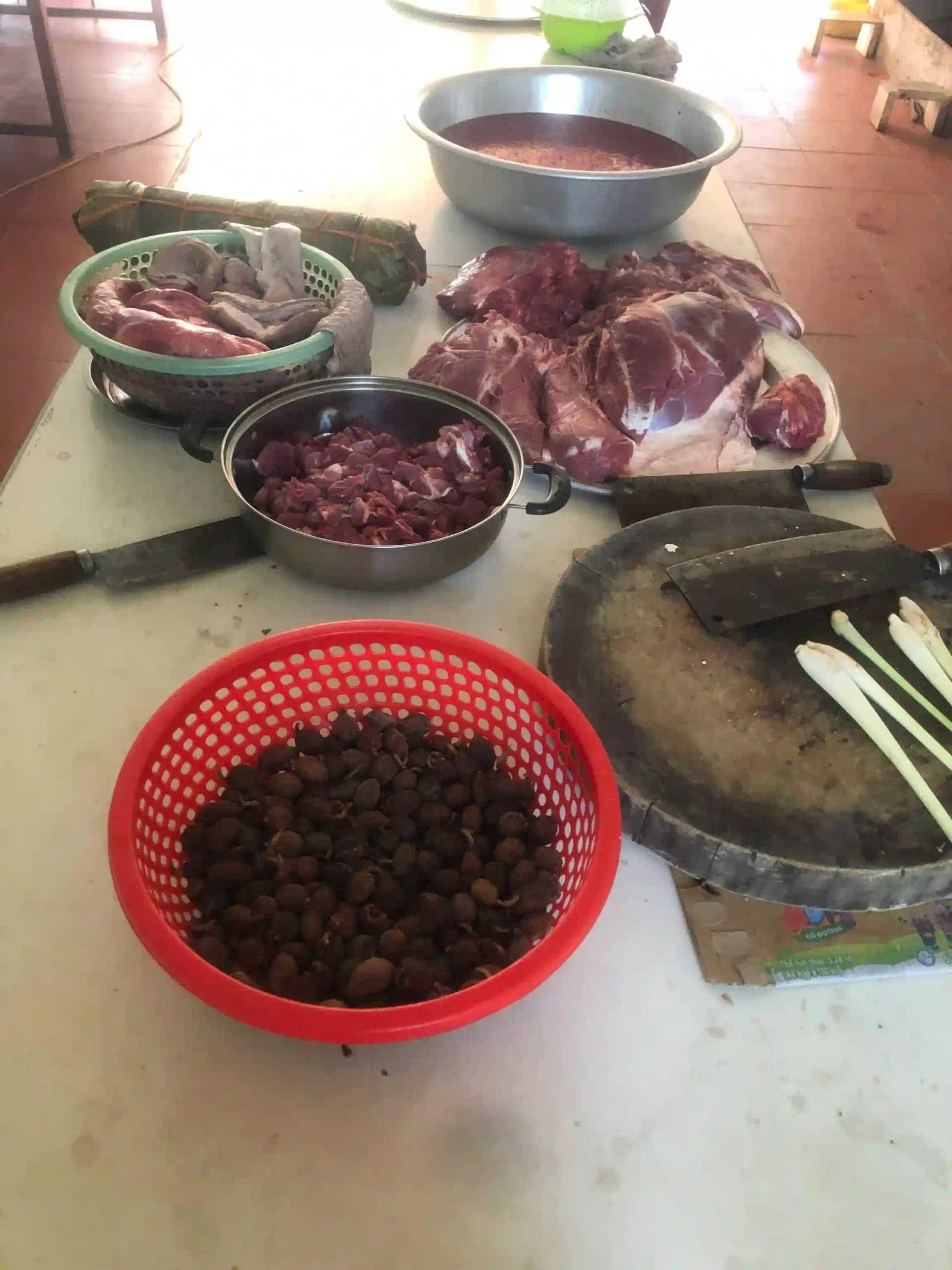
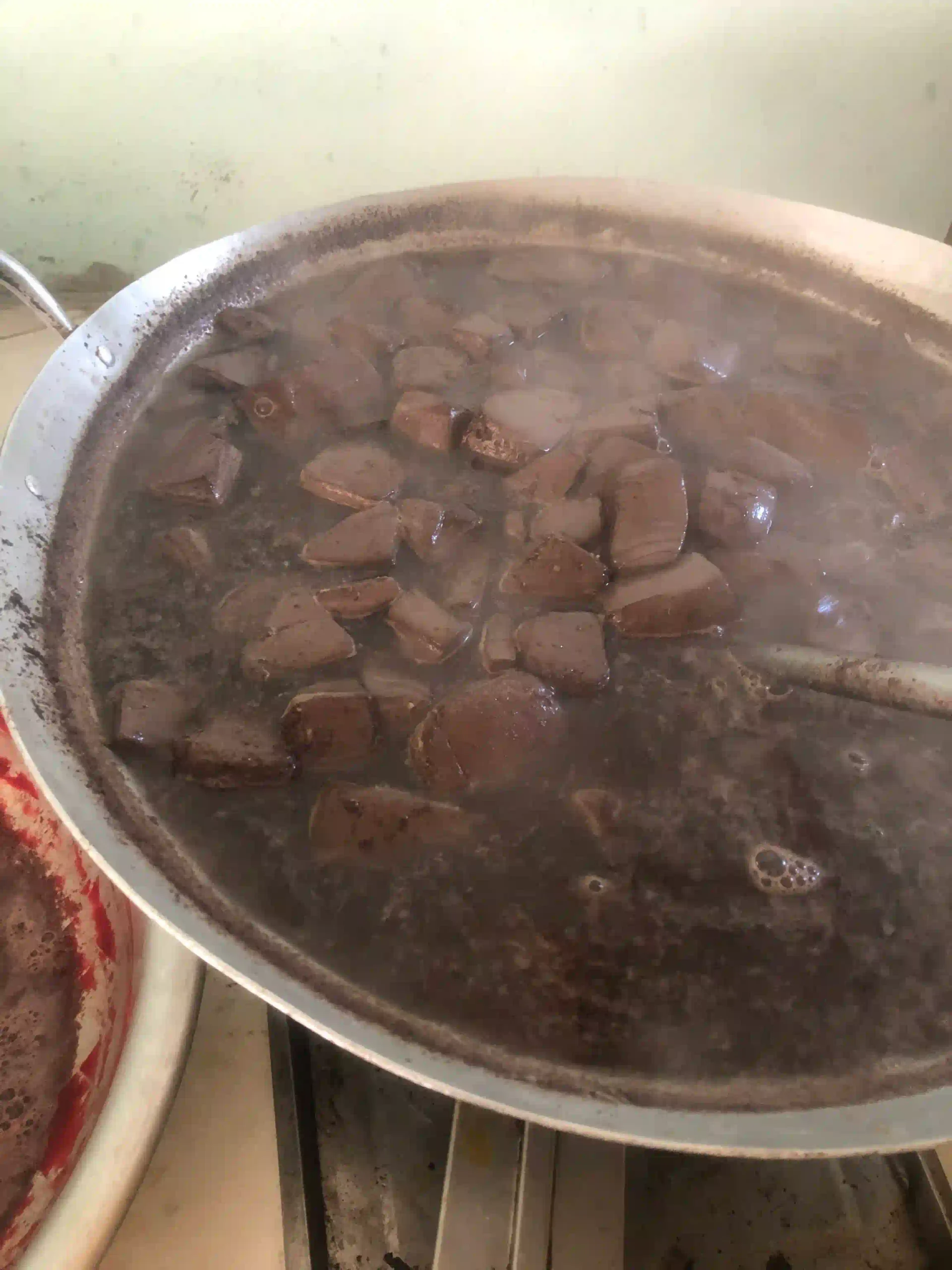
Bones, offal and meat, traditionally horse, now often beef or buffalo, simmered all morning in a pan the size of a bath with cardamom and highland spices.
I’ve had it three or four times and I don’t like it. I’m saying that plainly because I spent a while pretending otherwise, and there’s no point.
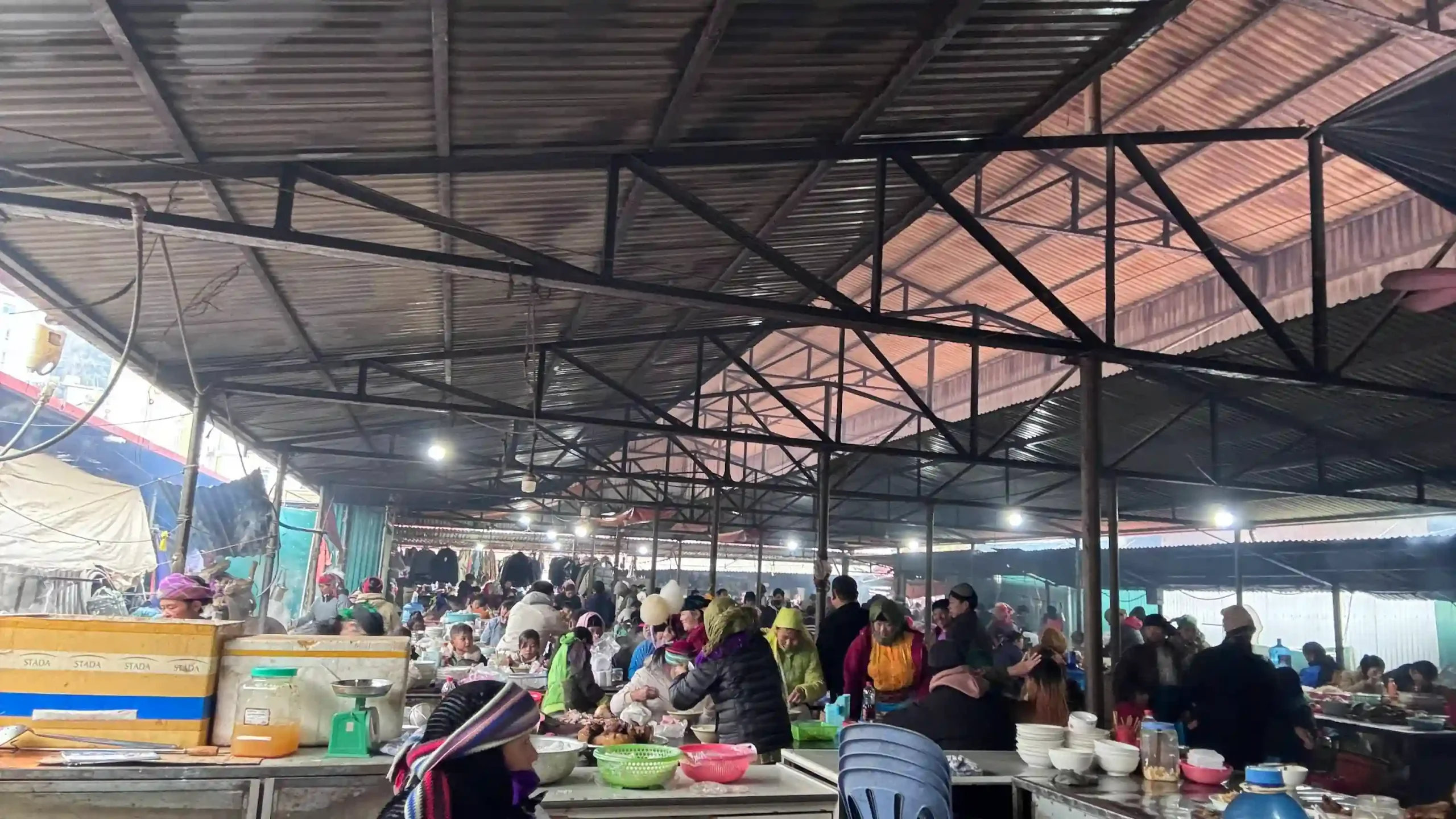
It’s very offal-forward, the smell arrives before the bowl does, and plenty of Vietnamese visitors from Hanoi don’t finish it either. But it’s the most local thing on this list, it’s eaten at the market with corn wine at eight in the morning, and if you’re at Dong Van market on a Sunday it’s right in front of you.
Have a few spoonfuls of somebody else’s. Don’t order a bowl for yourself the first time.
4. Xôi ngũ sắc (xoi ngu sac)
20,000 to 30,000 VND.
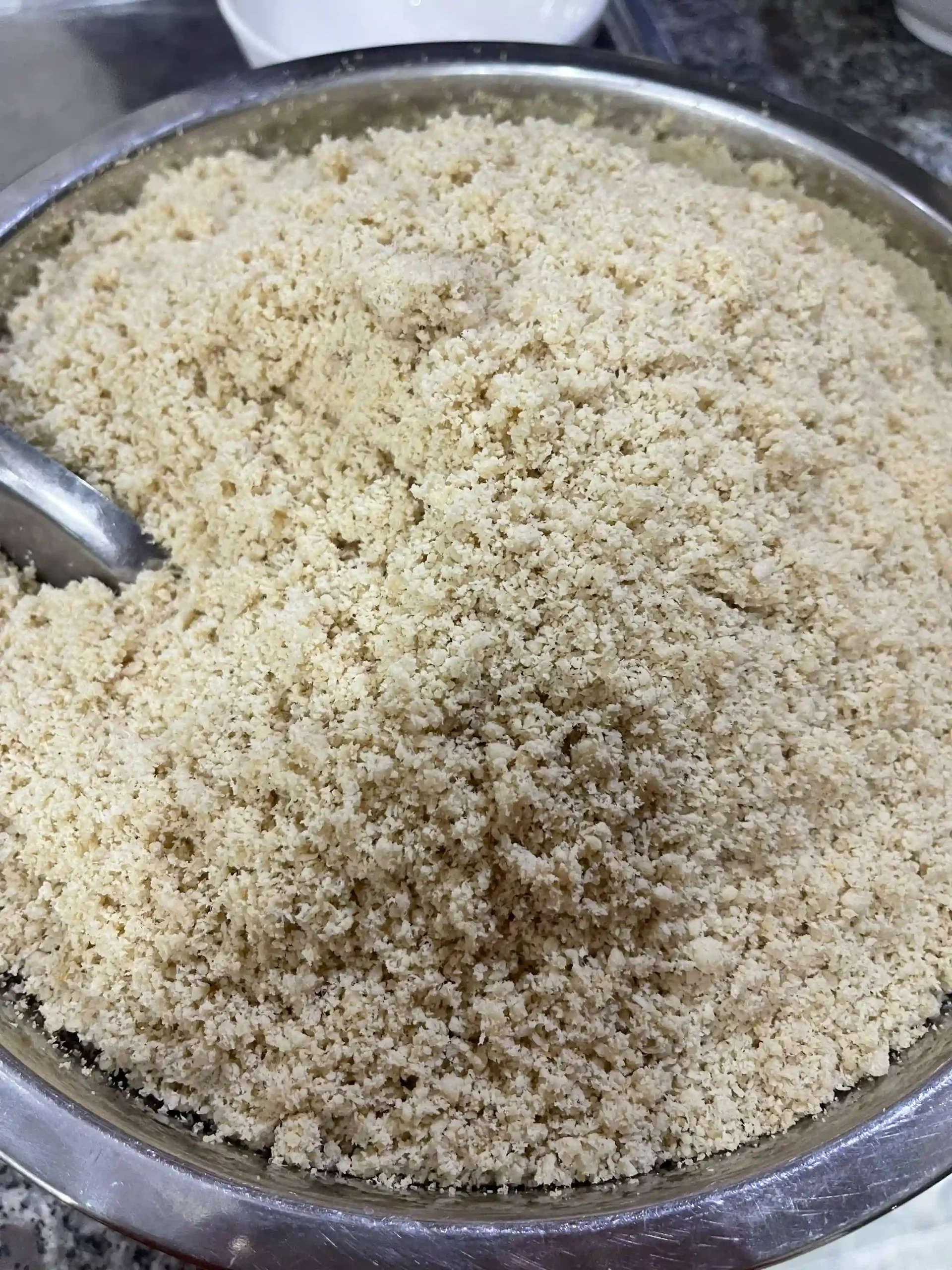
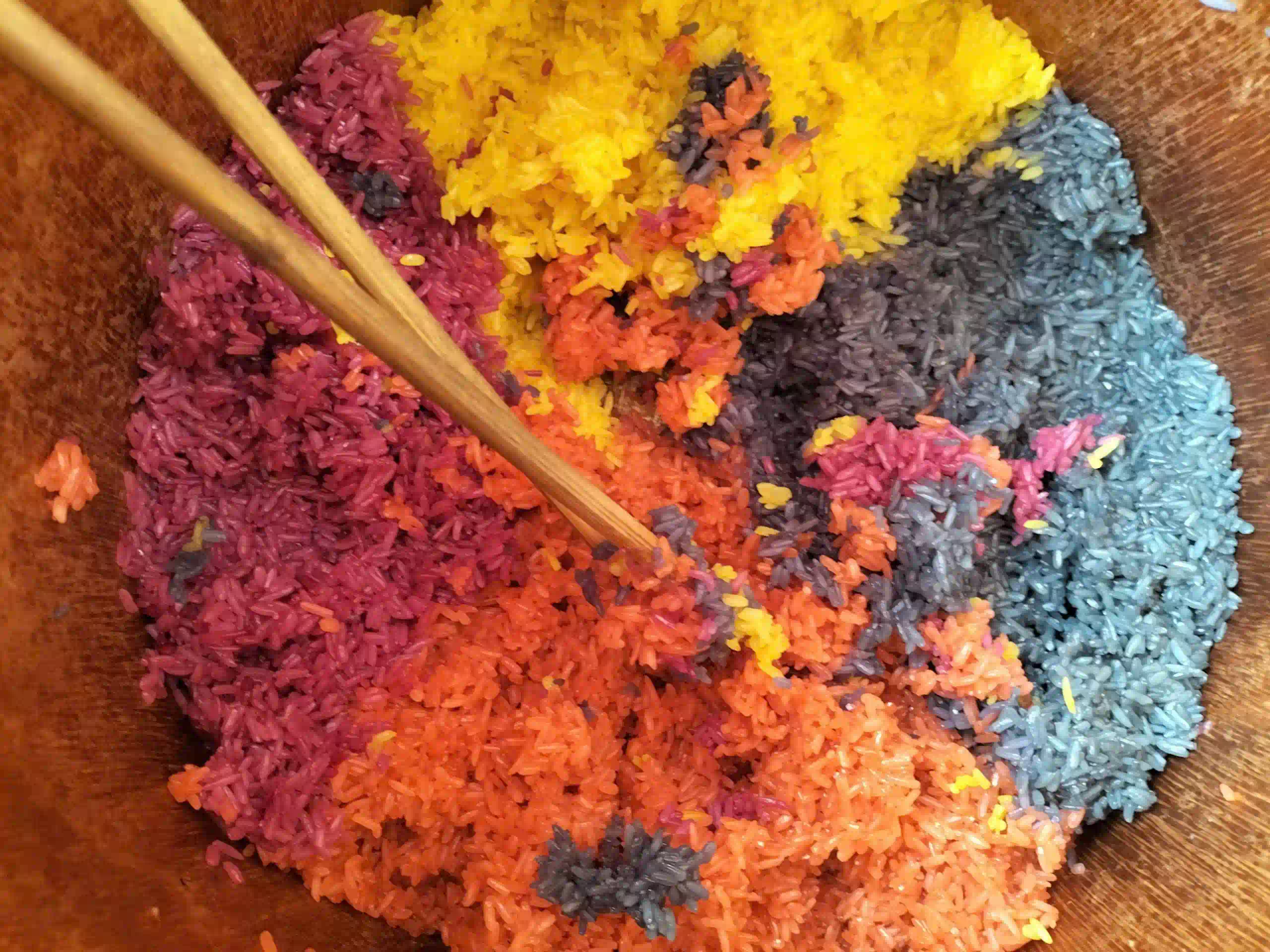
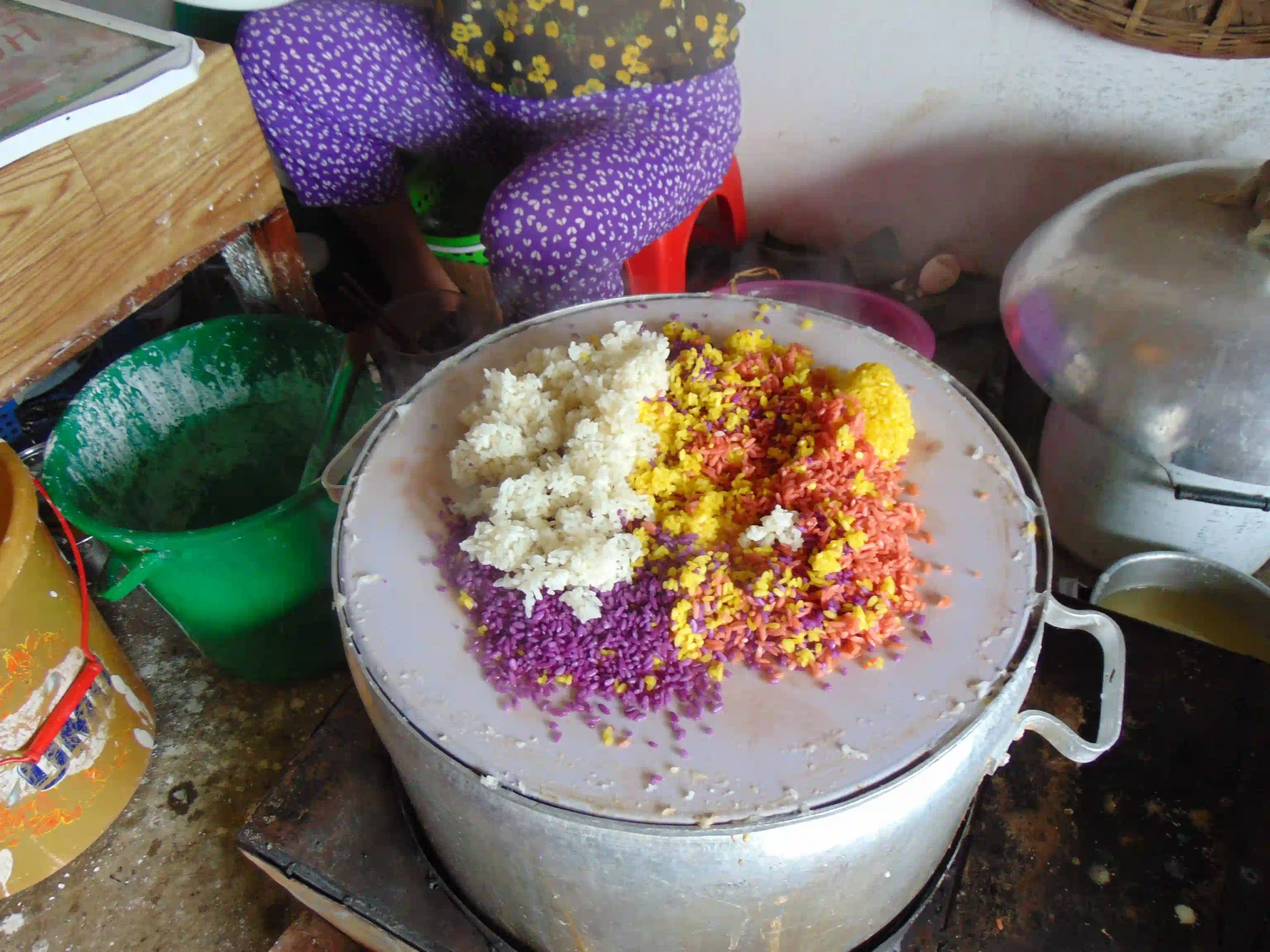
Sticky rice in five colours, dyed with plants, sold from the same stalls as the bánh cuốn and usually handed over in a leaf or a box.
Mildly sweet, very filling, and the easiest thing on this list to like.
It’s also the one that travels. There is almost nothing to eat between the towns on the loop, so a box of this from the morning market is the most useful purchase you’ll make all day. I buy it every time.
5. Thịt lợn đen and thịt trâu gác bếp
Restaurant dishes, priced by the plate.
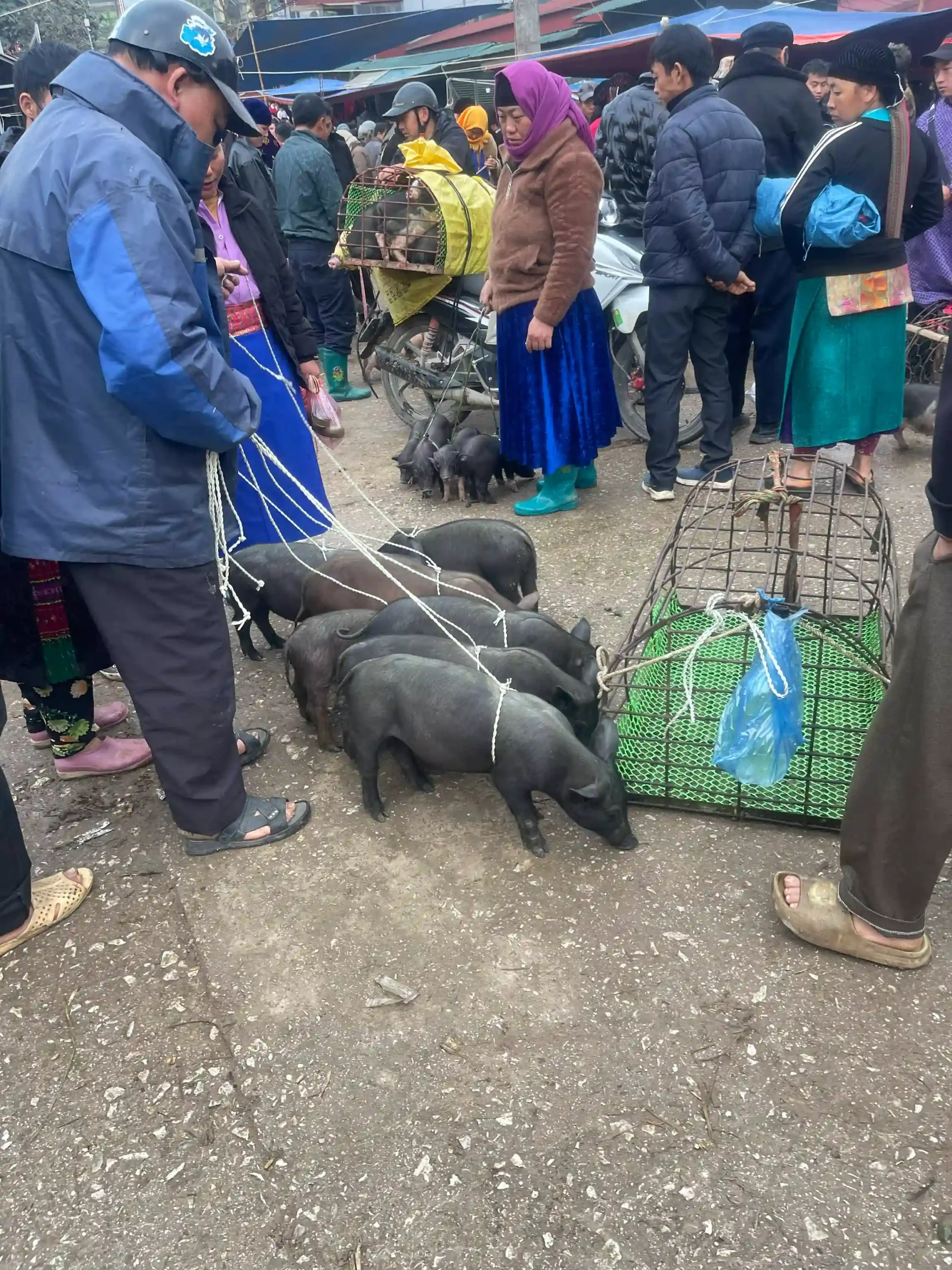
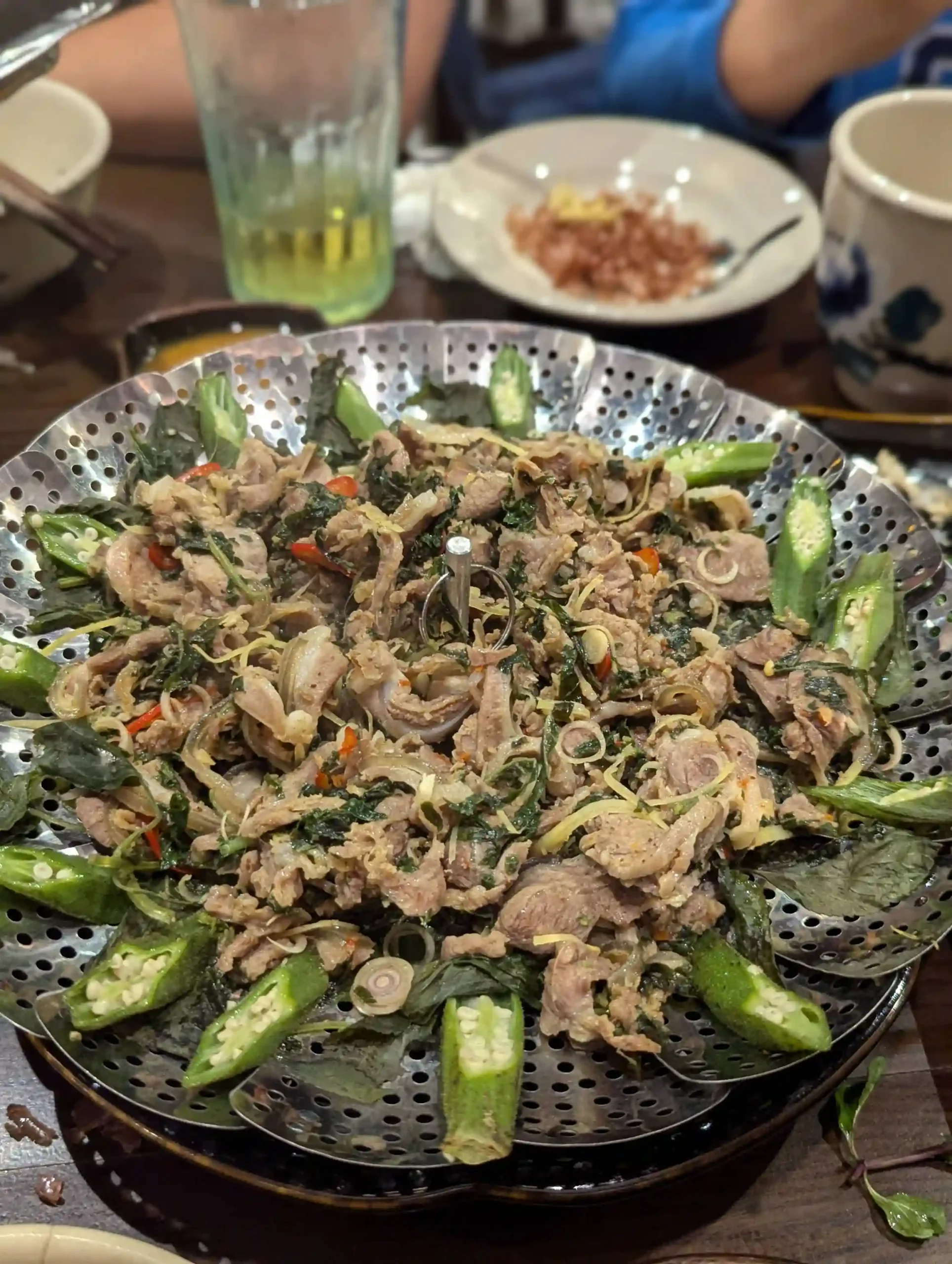
Black pork comes from the small pigs you’ll see wandering through every village. The meat is darker and firmer than lowland pork and it usually turns up grilled or in a clay pot. You’ll eat this whether you look for it or not, because it’s at every homestay dinner.
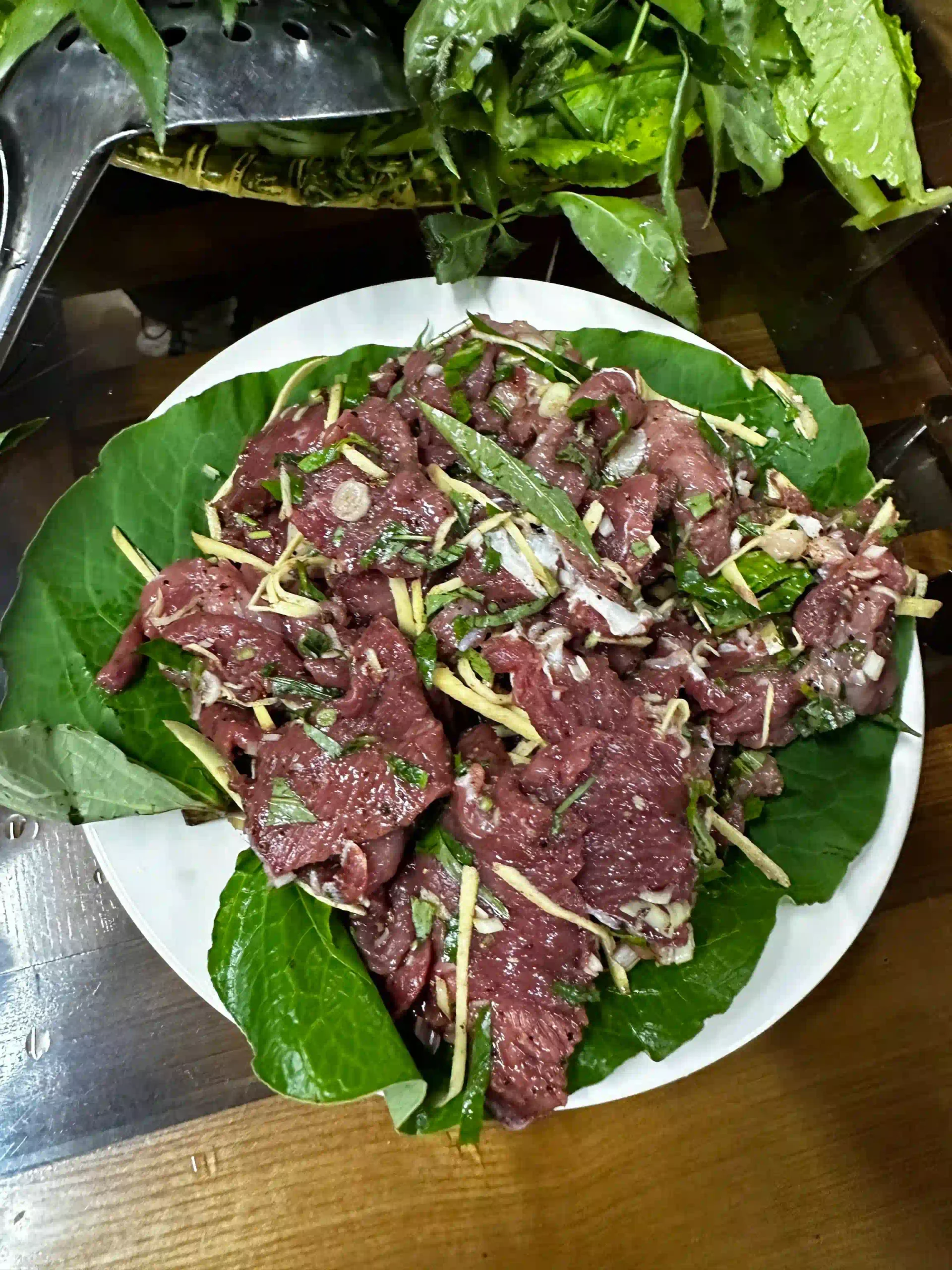
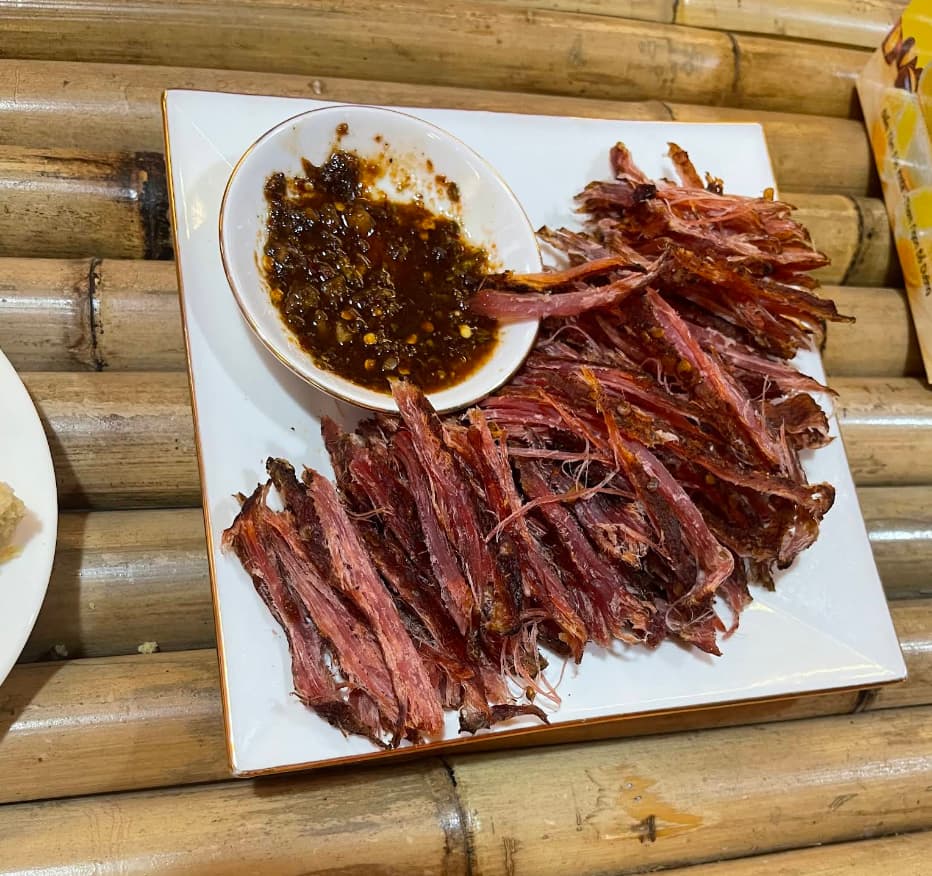
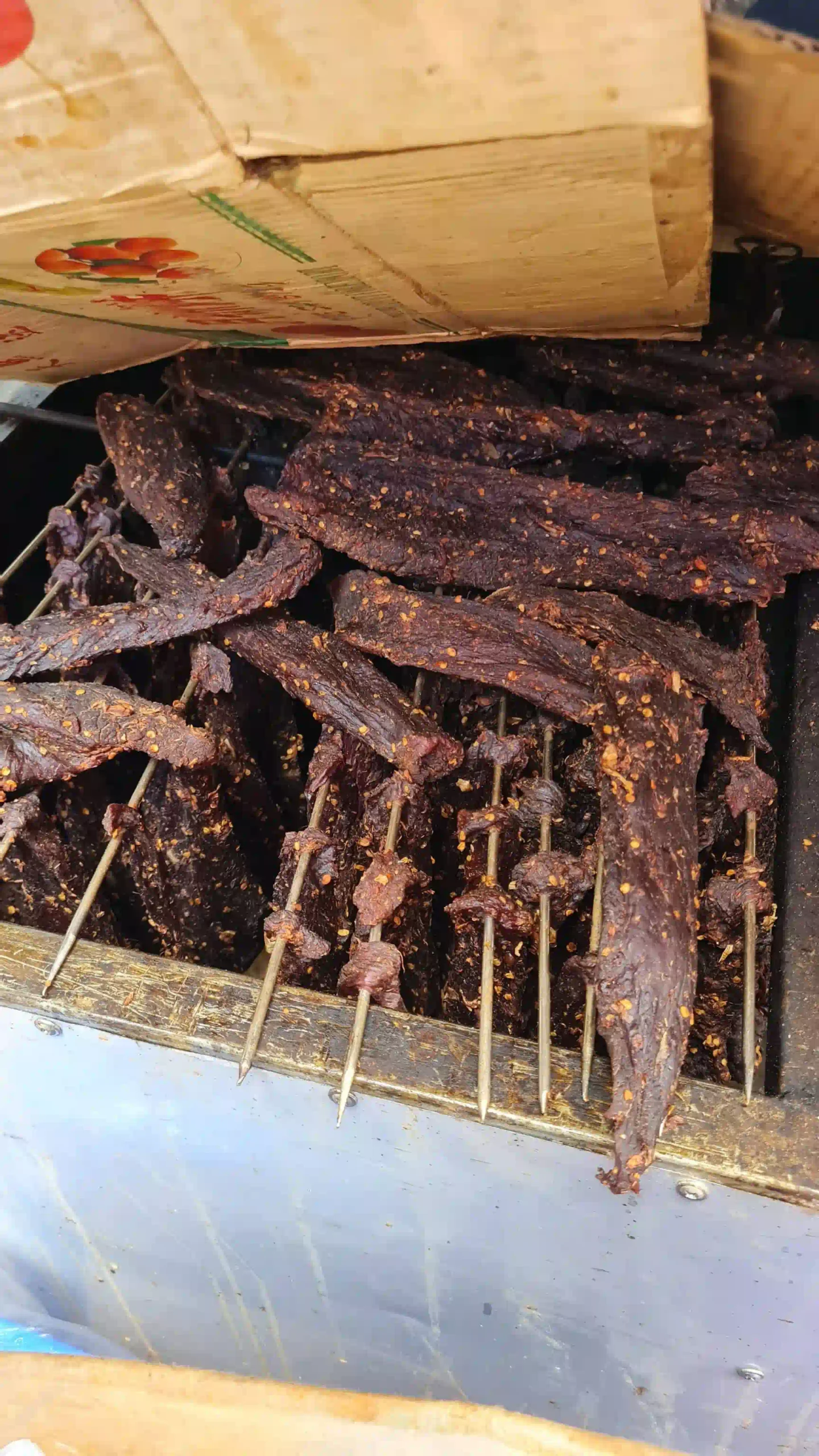
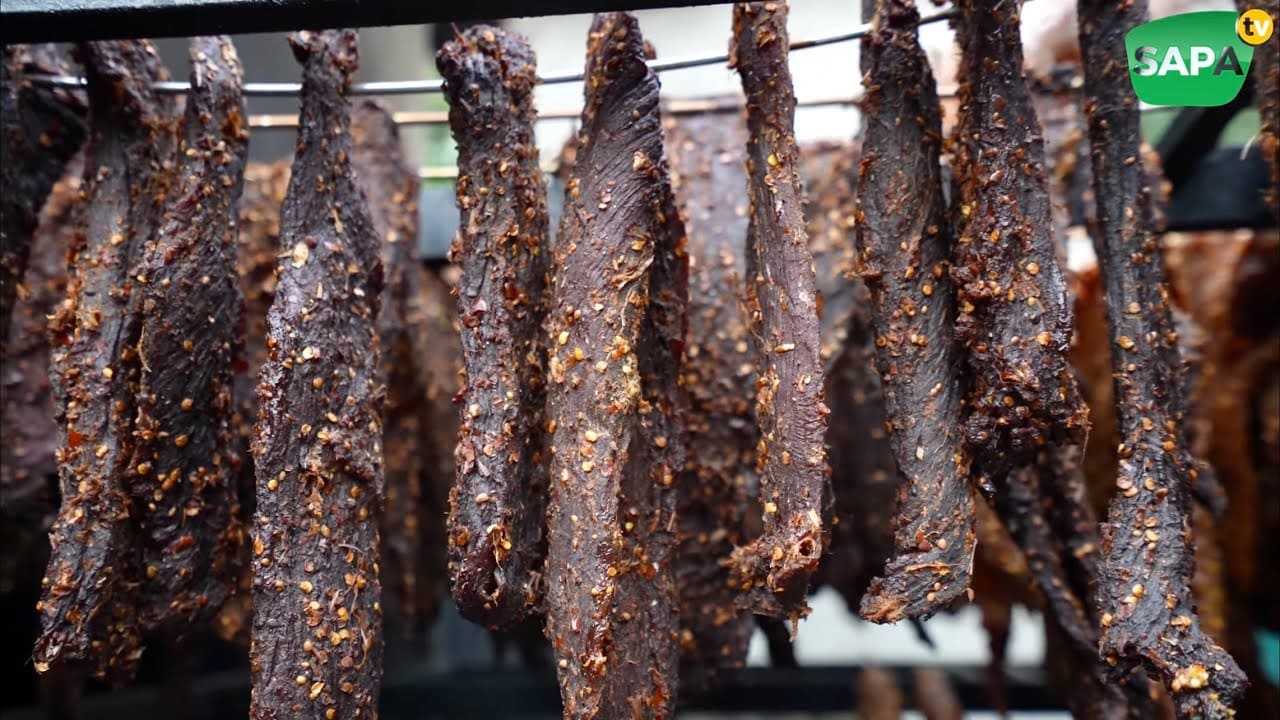
Smoked buffalo is the one to go looking for. Cured over the kitchen fire for weeks until it’s dark and dry, then shredded and eaten with beer or pounded with chilli. Chewy, smoky, salty. It keeps, so it’s the thing to buy if you want to take something home.
Ha Giang Restaurants: Where to Eat in the City
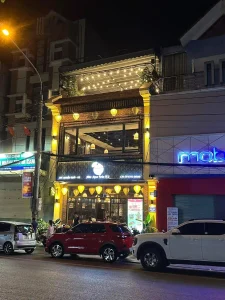
The best places to eat in Ha Giang are all here, not on the loop, and nearly all of them are on Nguyễn Thái Học along the river or a short walk off it.
Nhà Hàng Chay Ha Giang
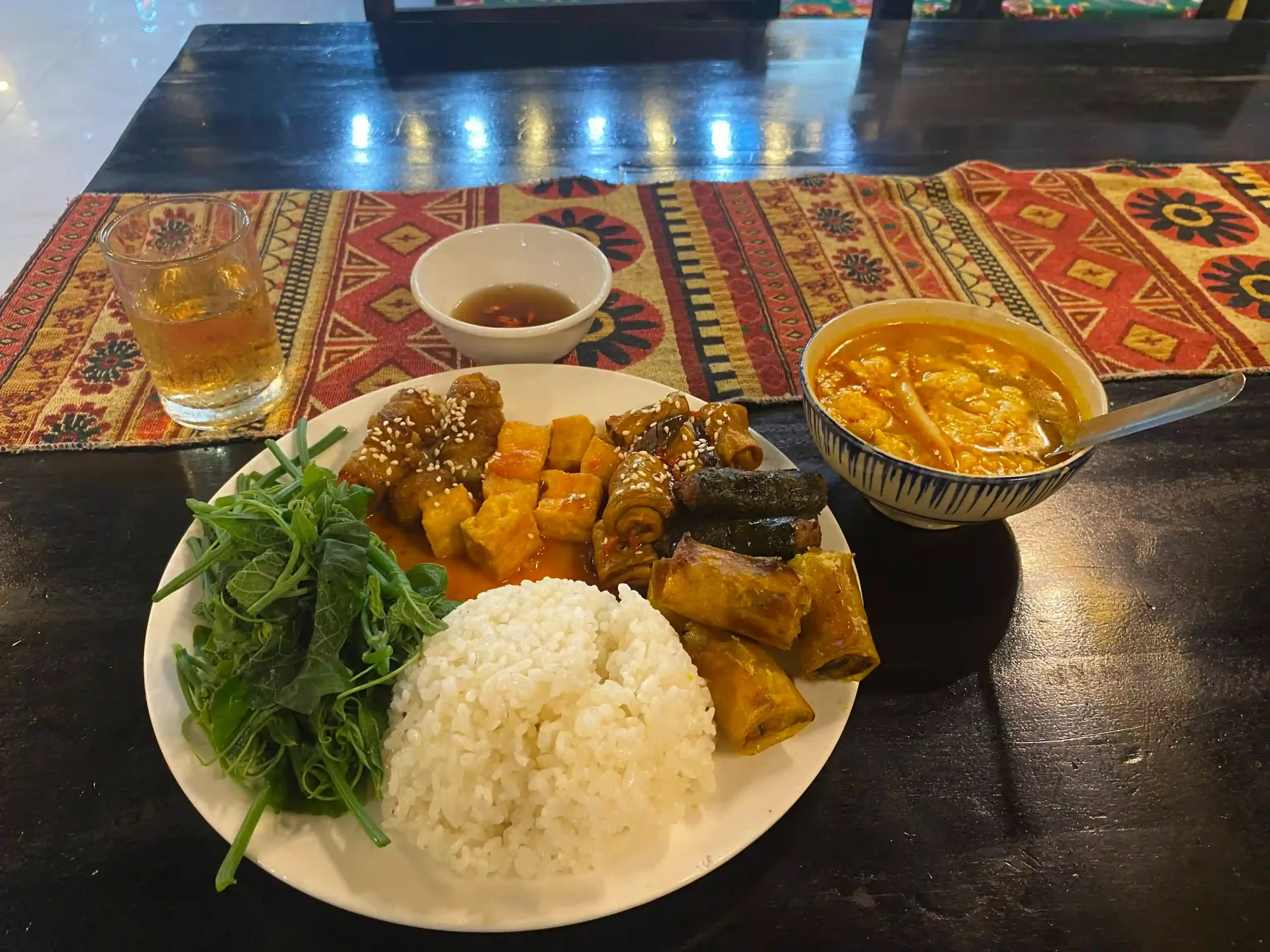
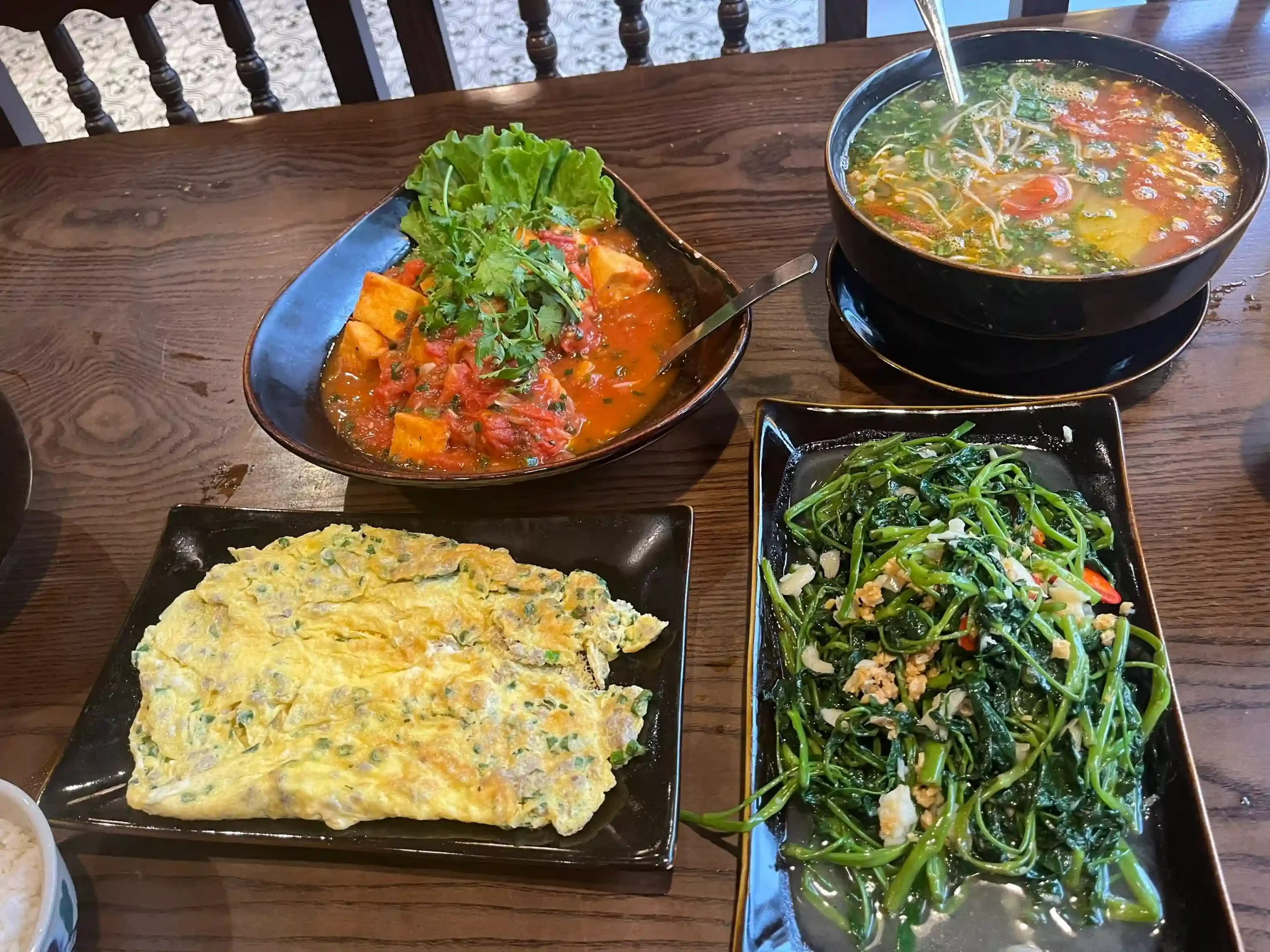
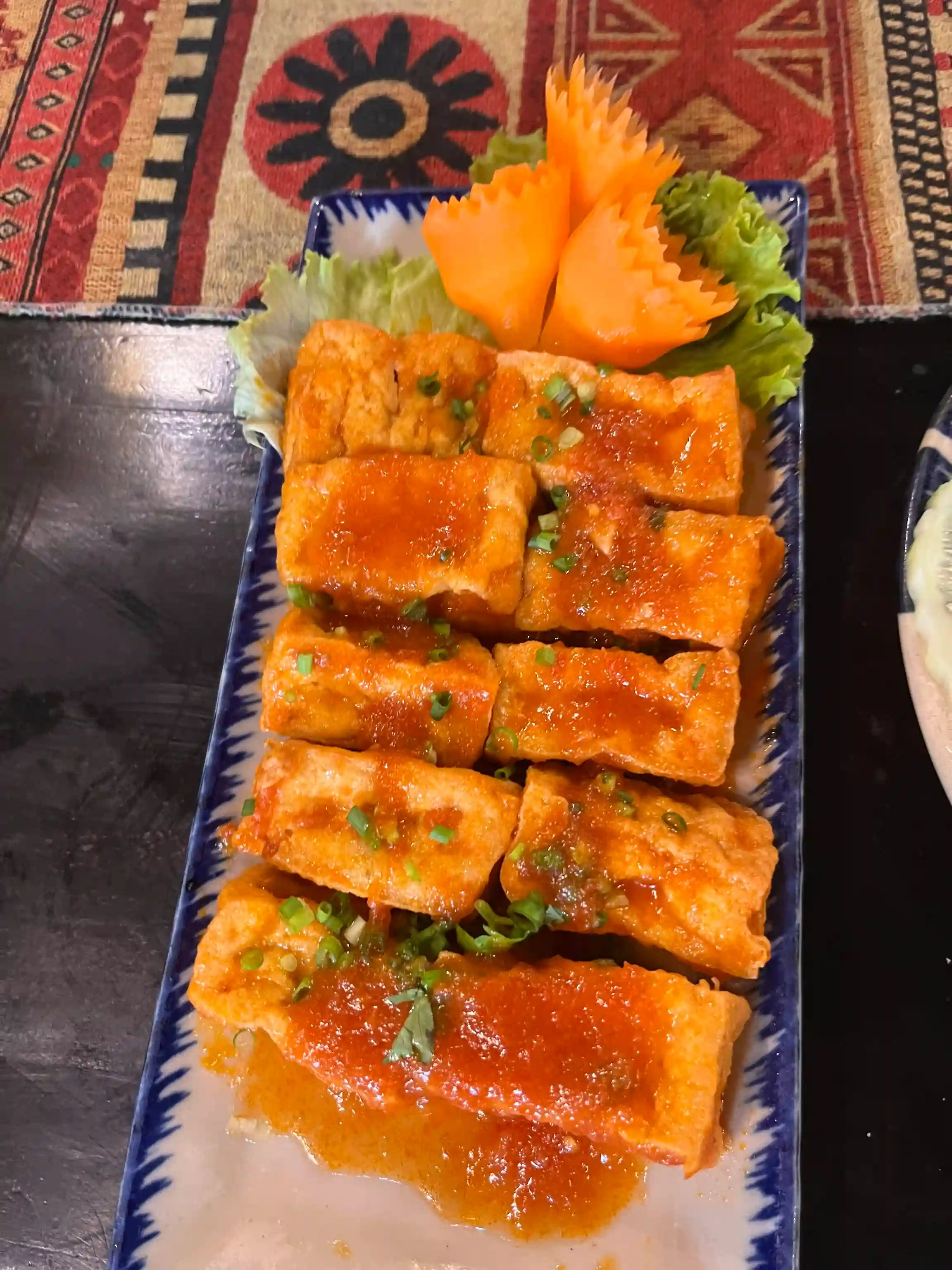
101B Nguyễn Thái Học, is where I’d eat. It’s vegetarian, it’s the cheapest thing on this page, and there’s a terrace over the water. The vegan crab noodle soup and the deep-fried mushrooms with the red sauce are the two things to order. Open 9am to 10pm, and there’s a buffet at 120,000 VND a couple of times a month if the dates line up.
I realise recommending a vegetarian restaurant in a province famous for pork needs some explaining. It’s just the best-cooked food in the city, and I’m not a vegetarian.
Bánh cuốn Bà Làn
Bánh cuốn Bà Làn is off the main strip and worth the walk. This is the bánh cuốn I’d have over the famous Dong Van stalls: cleaner kitchen, better broth, bigger portions, and cheaper.
Bếp Việt
87E Nguyen Thai Hoc, is where to go for an ordinary Vietnamese dinner with no fuss. Big, fast, full of local families. Sizzling goat and fried tofu. Closed 2pm to 5pm.
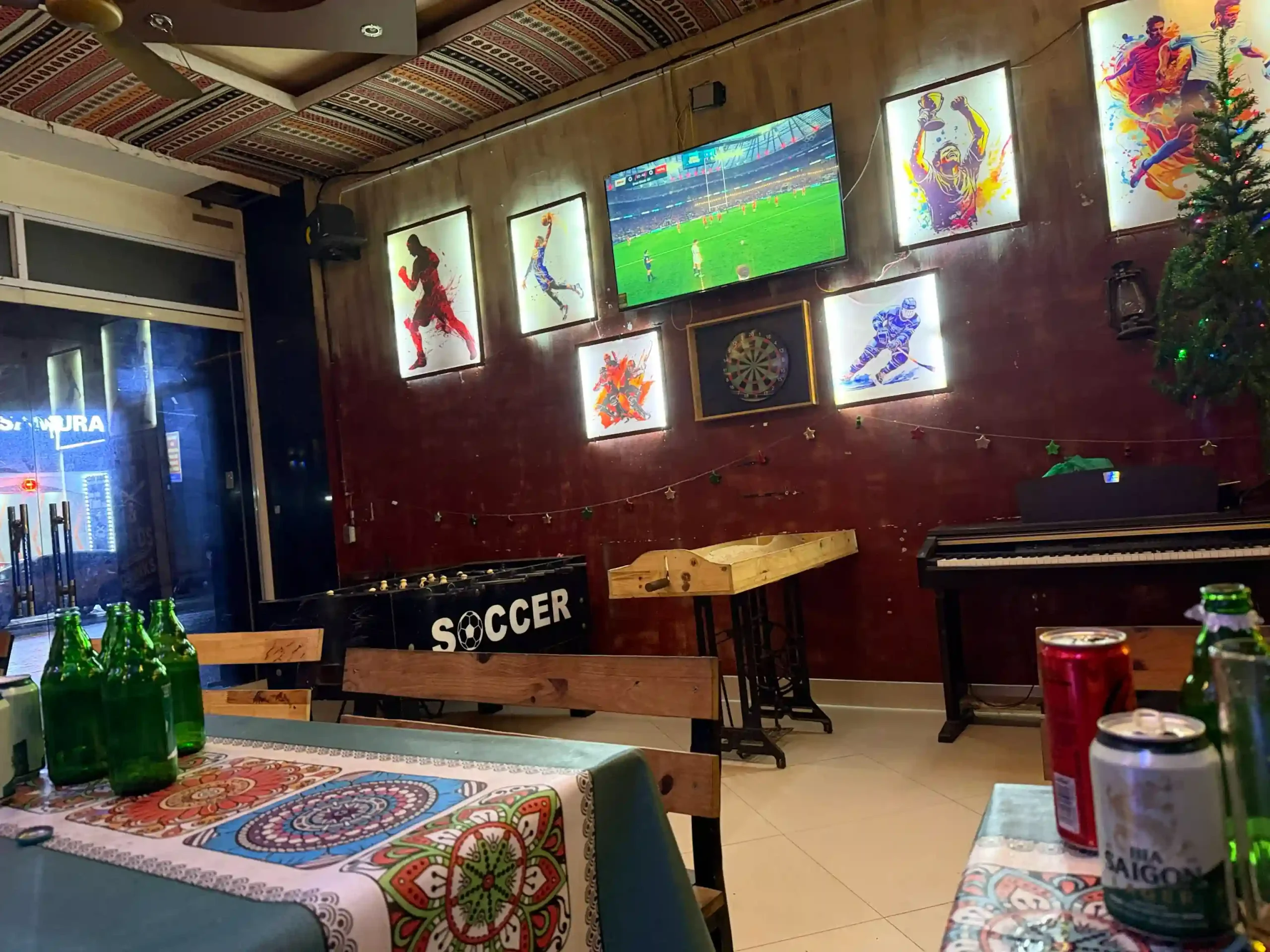
Ha Giang Sports Bar
87C, right next to Bep Viet, isn’t about the food. It’s where everyone starting or finishing the loop ends up, and it’s useful on your last night if you want to find out what the road was like from people who’ve just come off it.
There’s also a Neapolitan pizza place on the same street doing serious volume. If you’ve been in Vietnam three weeks, no judgement.
Ha Giang Loop Restaurants: the Best Places to Eat on the Road
Fewer options out here, and Ha Giang local food is easier to find in the towns than between them.
Adventure Restaurant
202 Đường Hạnh Phúc, Meo Vac. Run by a woman called Lynn with her children, opened in 2024, and the menu is short because everything is cooked when you order it.
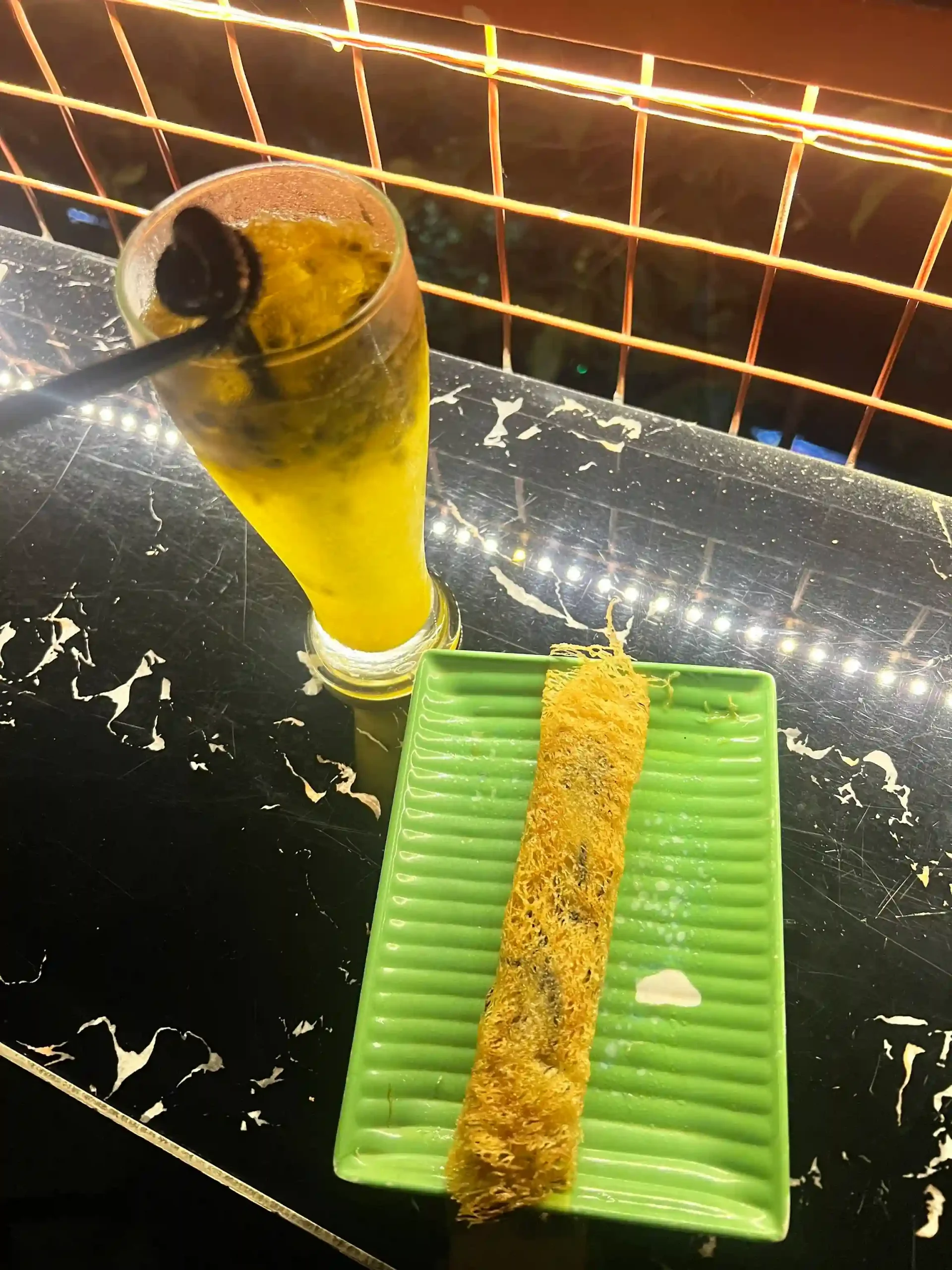
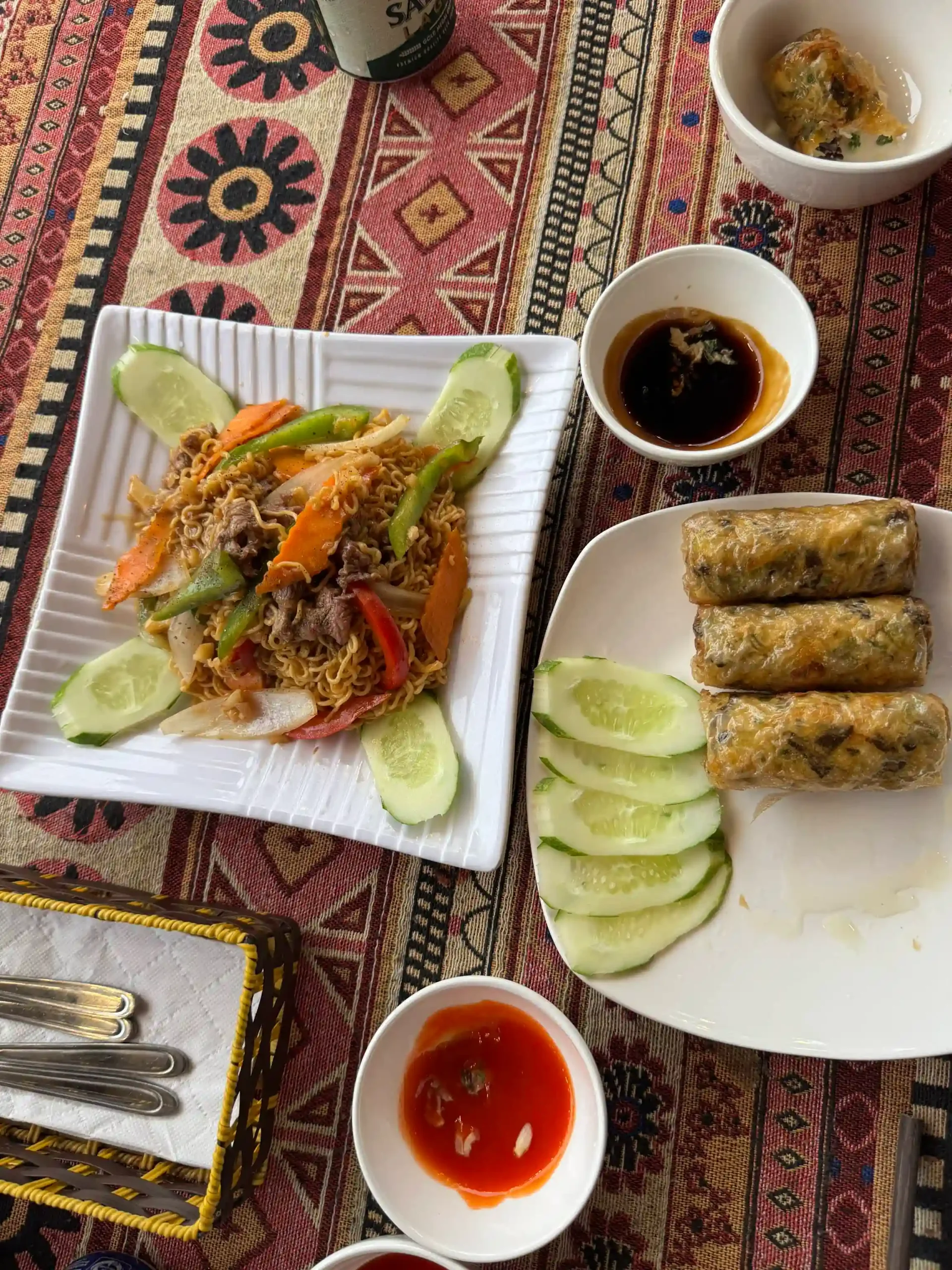
The fried noodles and the spring rolls are what I’d get, and the fresh juices are worth the extra. Open 8am to 9pm. If you’re overnighting in Meo Vac and you’re allowed out of your homestay, this is where to go.
ToTo-Chan
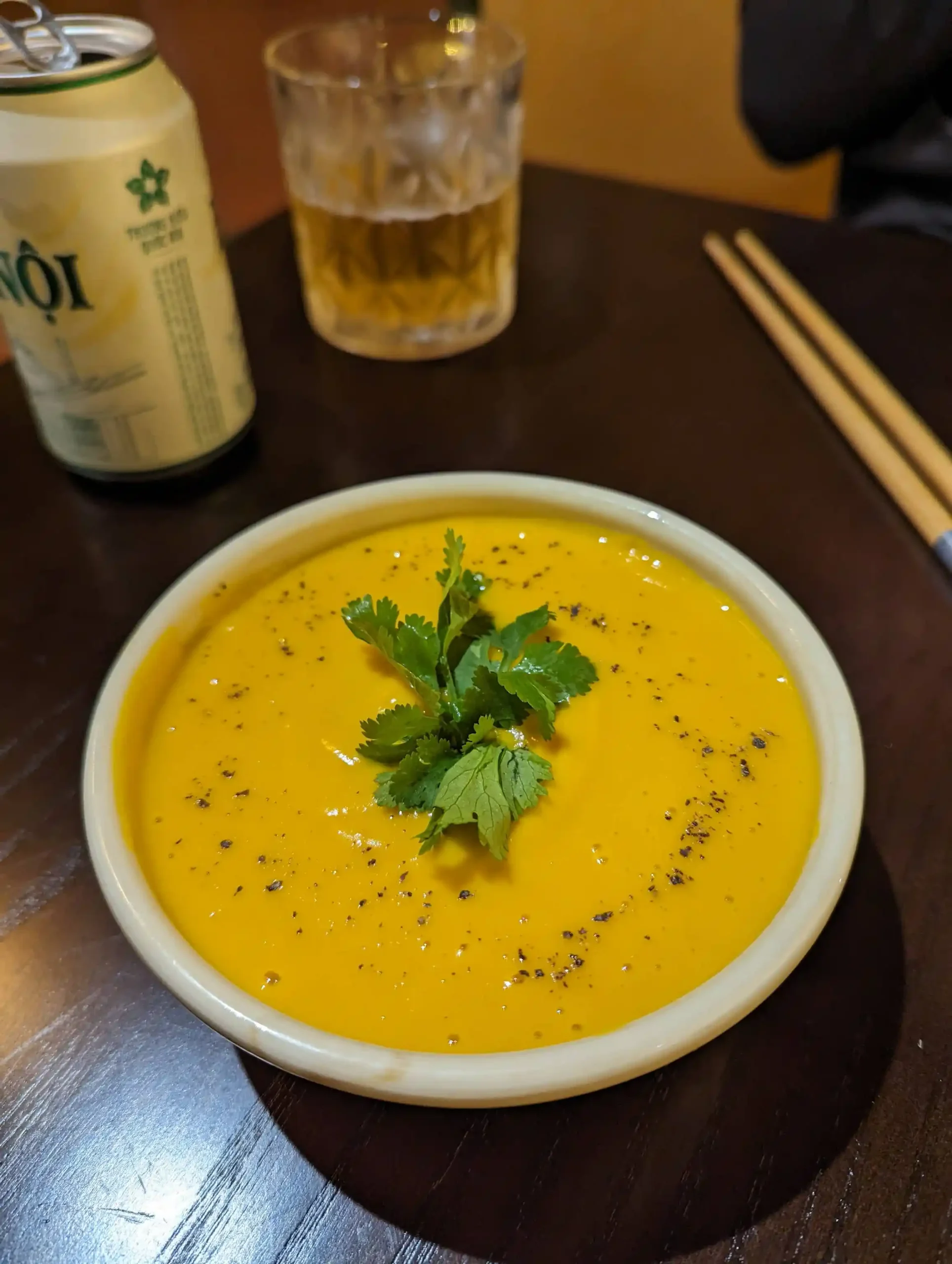
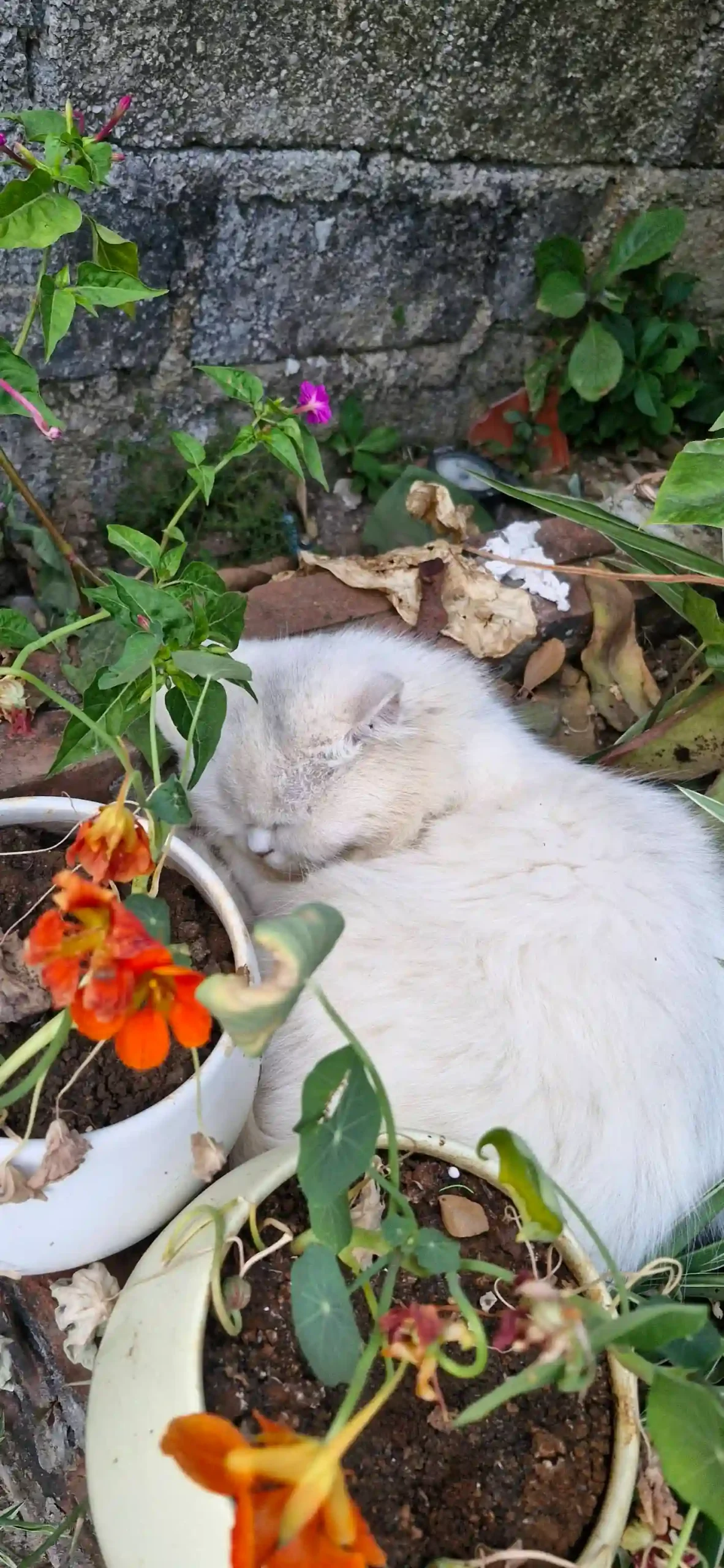
Dong Van Ancient Town. Vegetarian, tucked down an alley off the main square, and easily the quietest place to eat in that town. Pumpkin soup after a cold day on the pass is better than it has any right to be. There’s a cat.
Dong Van market, Sunday morning
Not a restaurant, and the best eating on the loop. Any other day of the week it’s an ordinary market and there’s no reason to go. Sunday it’s thắng cố, corn wine and a lot of people who’ve come in from the villages.
If your dates land on a Sunday, that’s the morning to skip your tour breakfast for.
The Bánh Cuốn Street in Dong Van, and Which Door to Pick
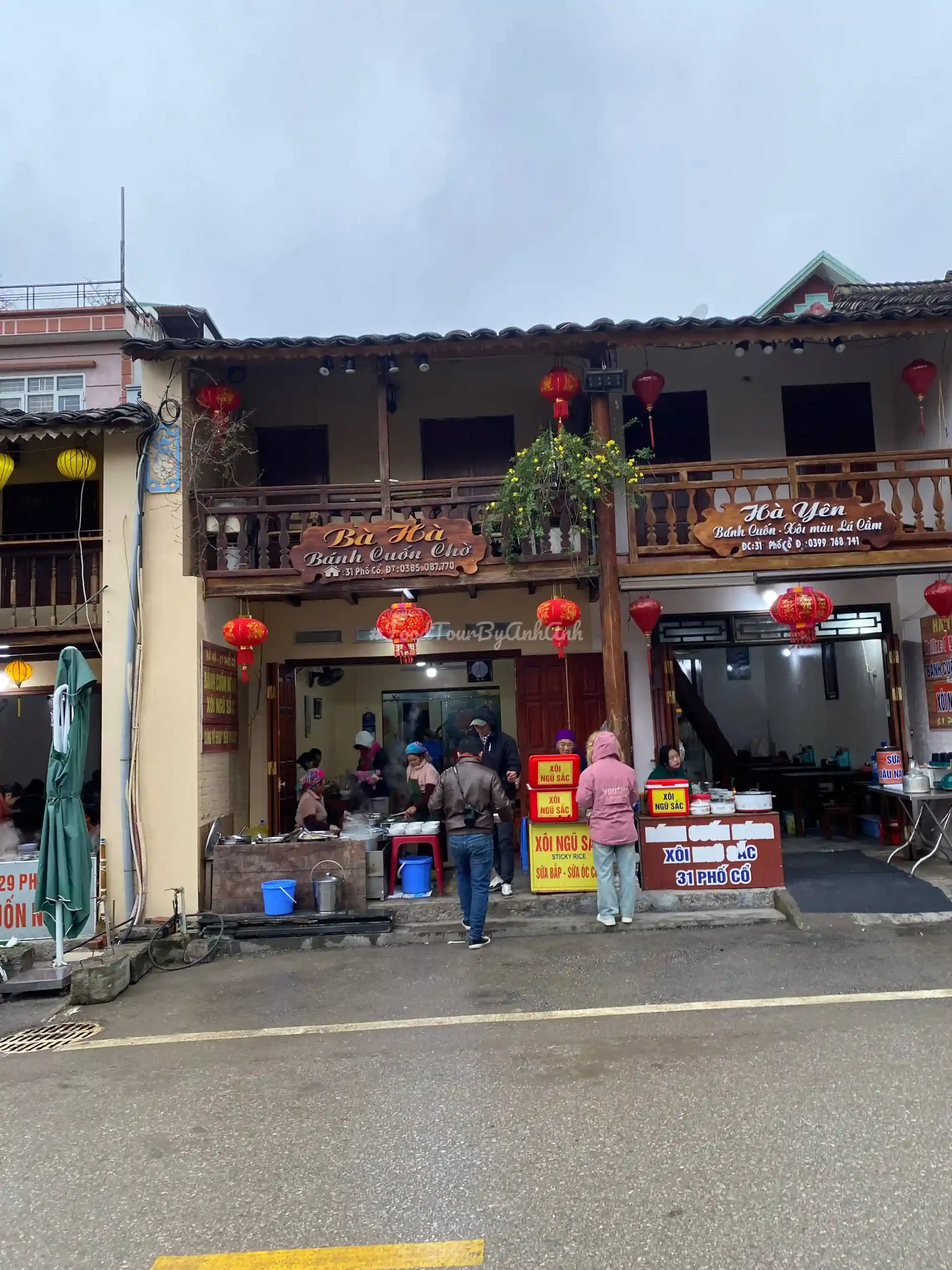
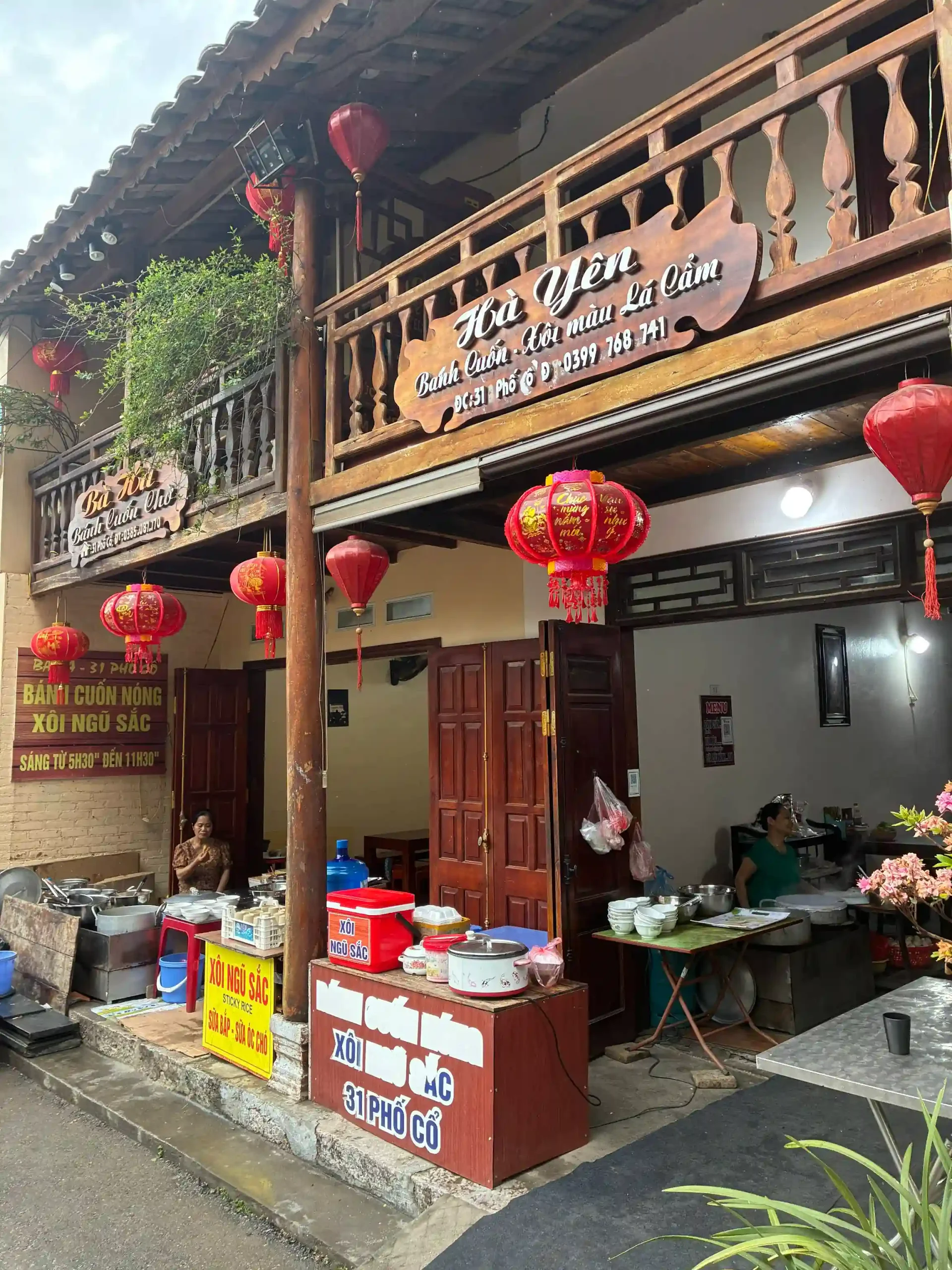
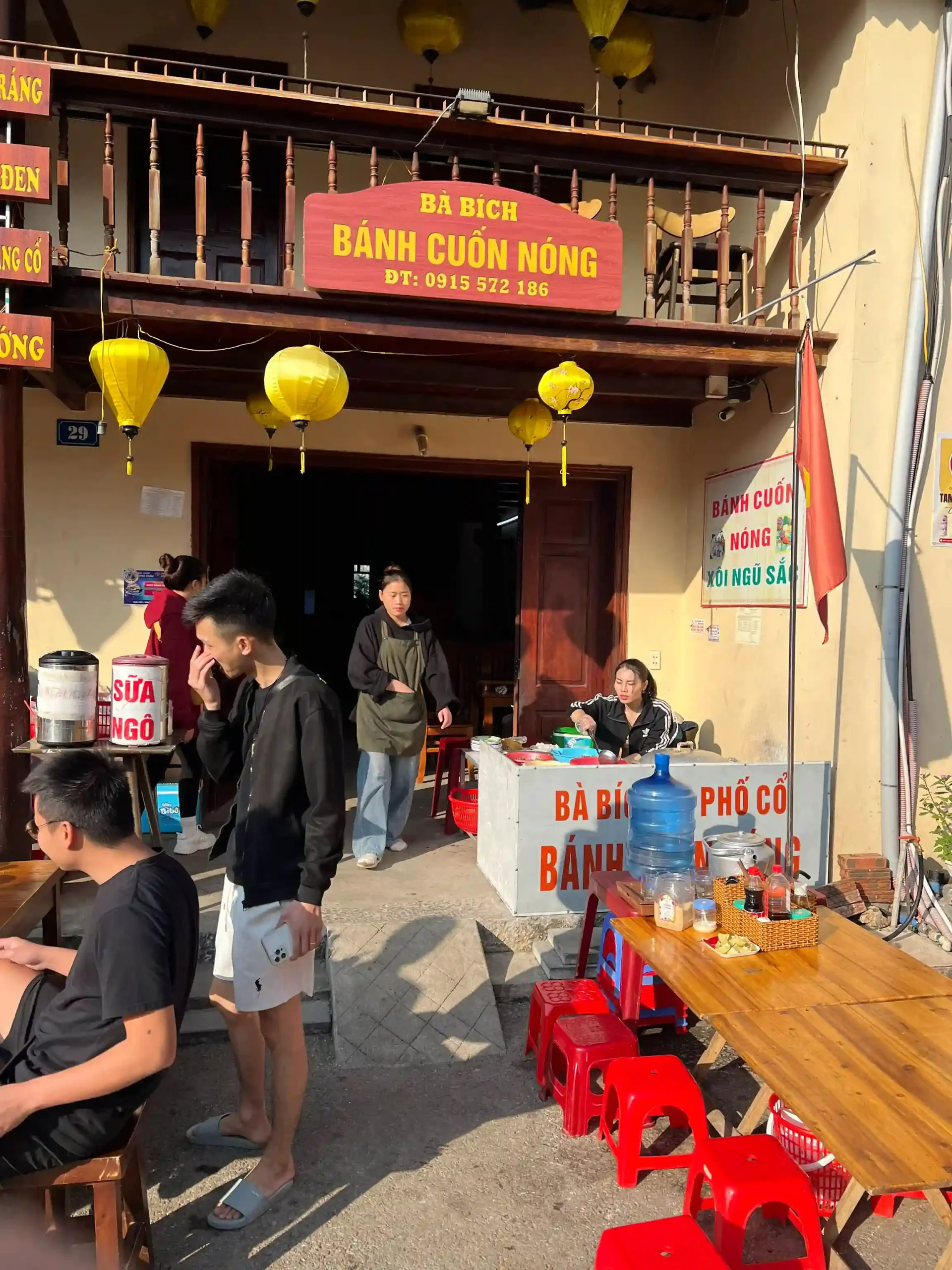
There’s a row of bánh cuốn stalls on Phố Cổ in the old quarter at numbers 29, 31 and 31B. They look identical from the street. They are not.
31B, Bánh cuốn Hà Yên, is the one. Open 6am to 10:30am, and the chilli oil is why you’d come back.
31, Bánh cuốn Bà Hà, is the famous one, and it’s fine. Go early. Late in the morning the broth has been topped up too many times and it shows.
29, Ba Bich, I’d walk past. Prices move depending on who’s asking, and agreeing a number before you order is the only way to avoid a conversation about it afterwards.
Three doors, one dish, and a full point and a half of difference between them. It’s the most useful thing I know about eating in Dong Van and it took a couple of trips to sort out.
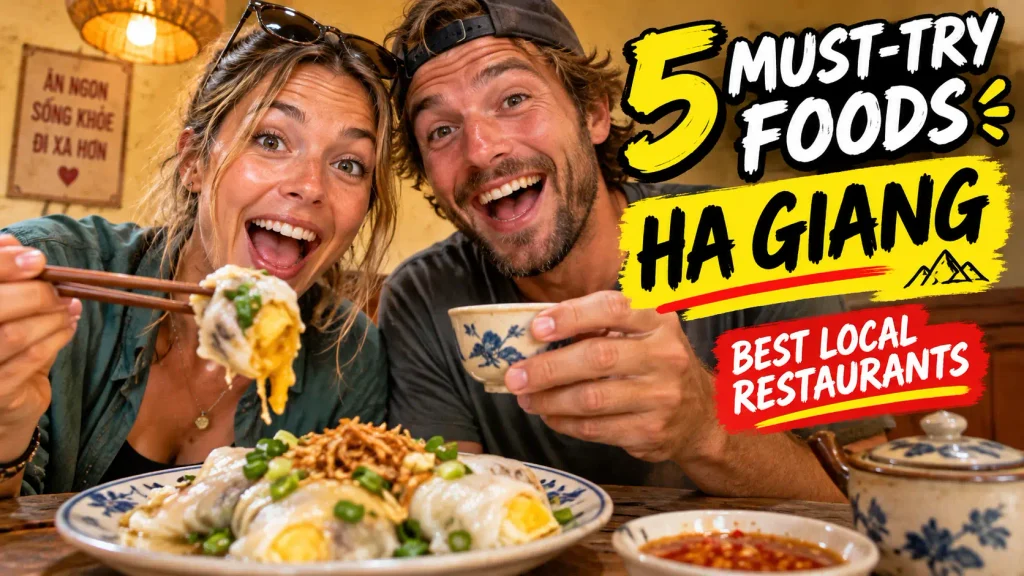
Three identical stalls side-by-side, but 31B wins
If You’re on a Tour, You Don’t Choose
Worth being plain about because it changes how you should read everything above.
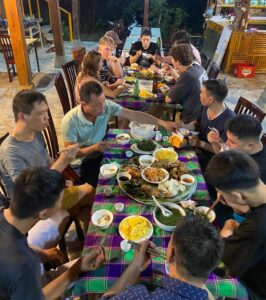
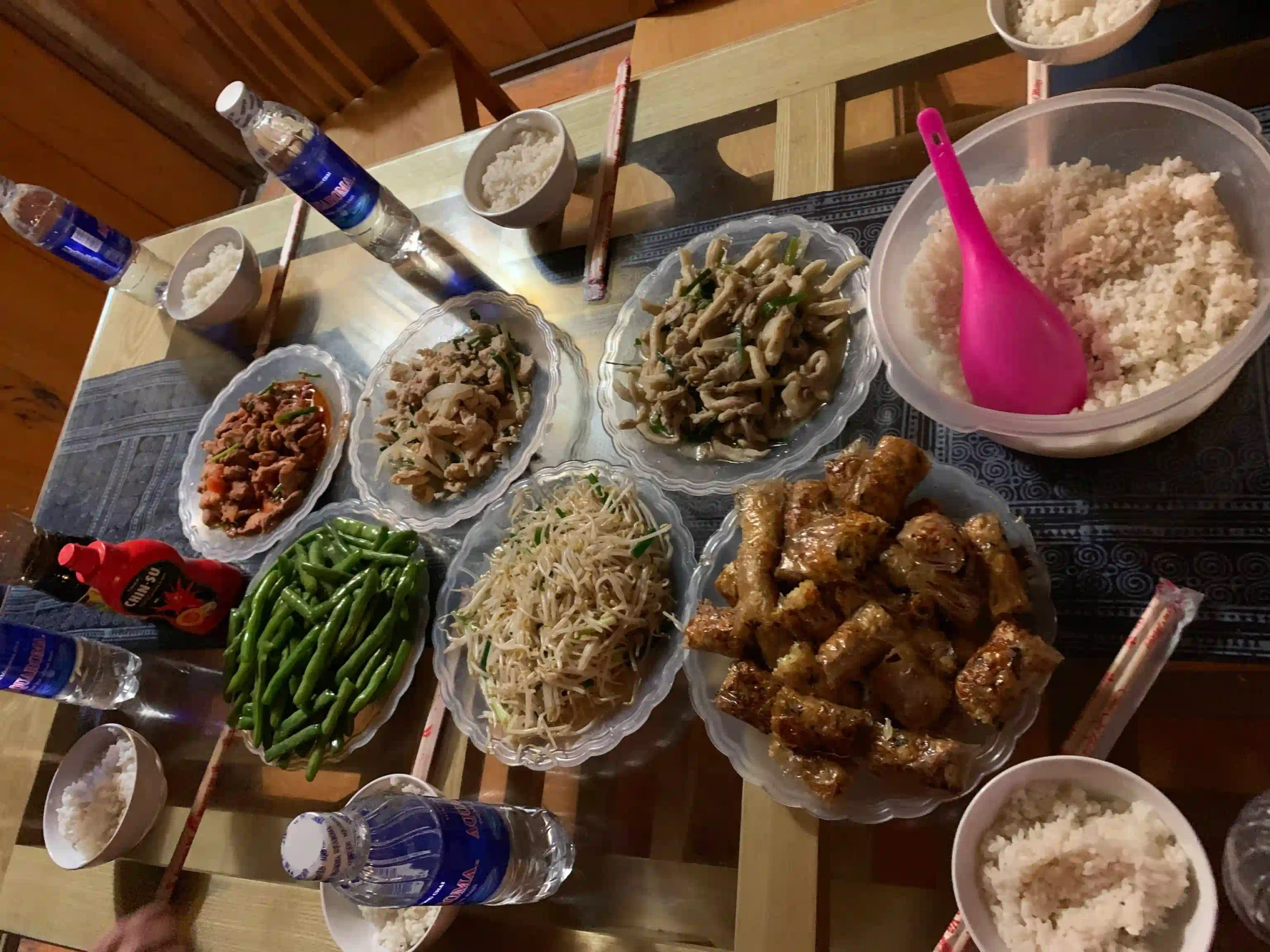
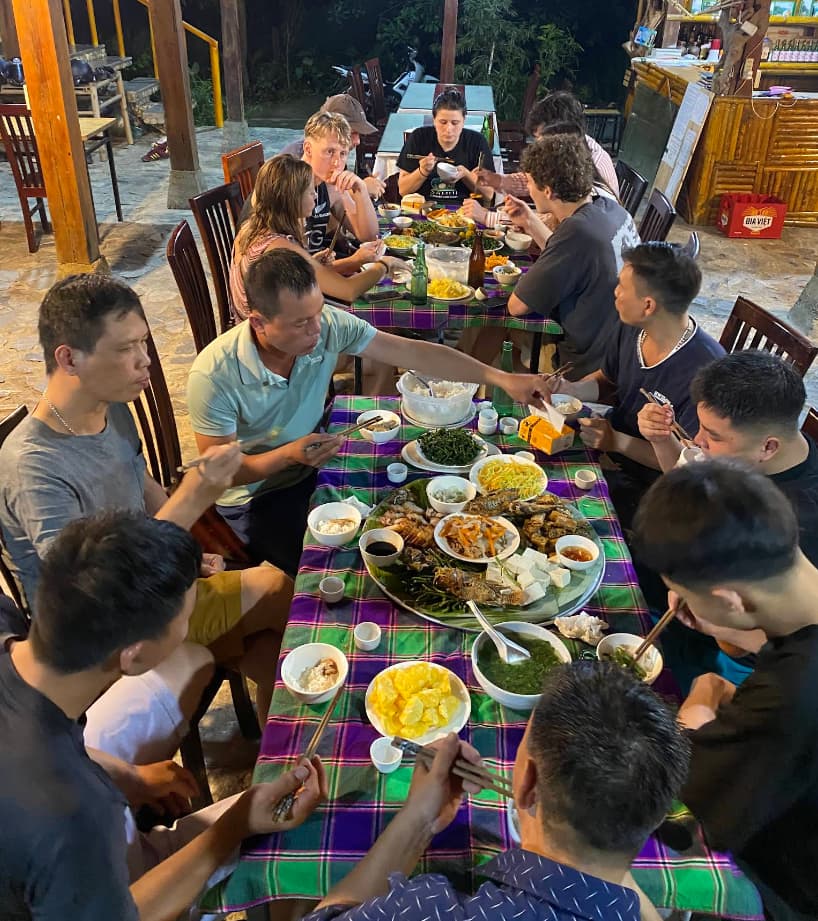
A three-day tour includes around nine meals and a four-day one about twelve. They’re at homestays and at a few roadside places the company has arrangements with, served family style in the middle of the table, and you get what everyone gets.
The food is decent and there’s always too much of it. It’s also the same four or five dishes on rotation. Black pork, spring rolls, morning glory, tofu, rice, and corn wine whether you asked or not.
What you won’t get is bánh cuốn trứng, cháo ấu tẩu or the Sunday market, because all three happen at hours when your group is either asleep or riding.
So there are two things I’d do. Ask your operator whether you can skip the included breakfast in Dong Van and walk down to Phố Cổ instead, which most of them will shrug at and agree to. And I’d keep the free evening in Ha Giang city actually free, because it very easily becomes a beer on the hostel roof.
Tour food: endless, repetitive, and zero choice
Ha Giang Loop Food Poisoning, and How to Lower the Odds
People get ill on this trip more than they do elsewhere in Vietnam, and it’s common enough that it has its own corner of TikTok.
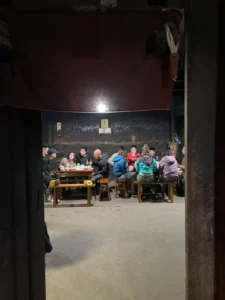
It nearly always follows the same shape. Day two or three, several people in the same group at once, and traced back to a shared homestay dinner and not to anything anyone bought themselves.
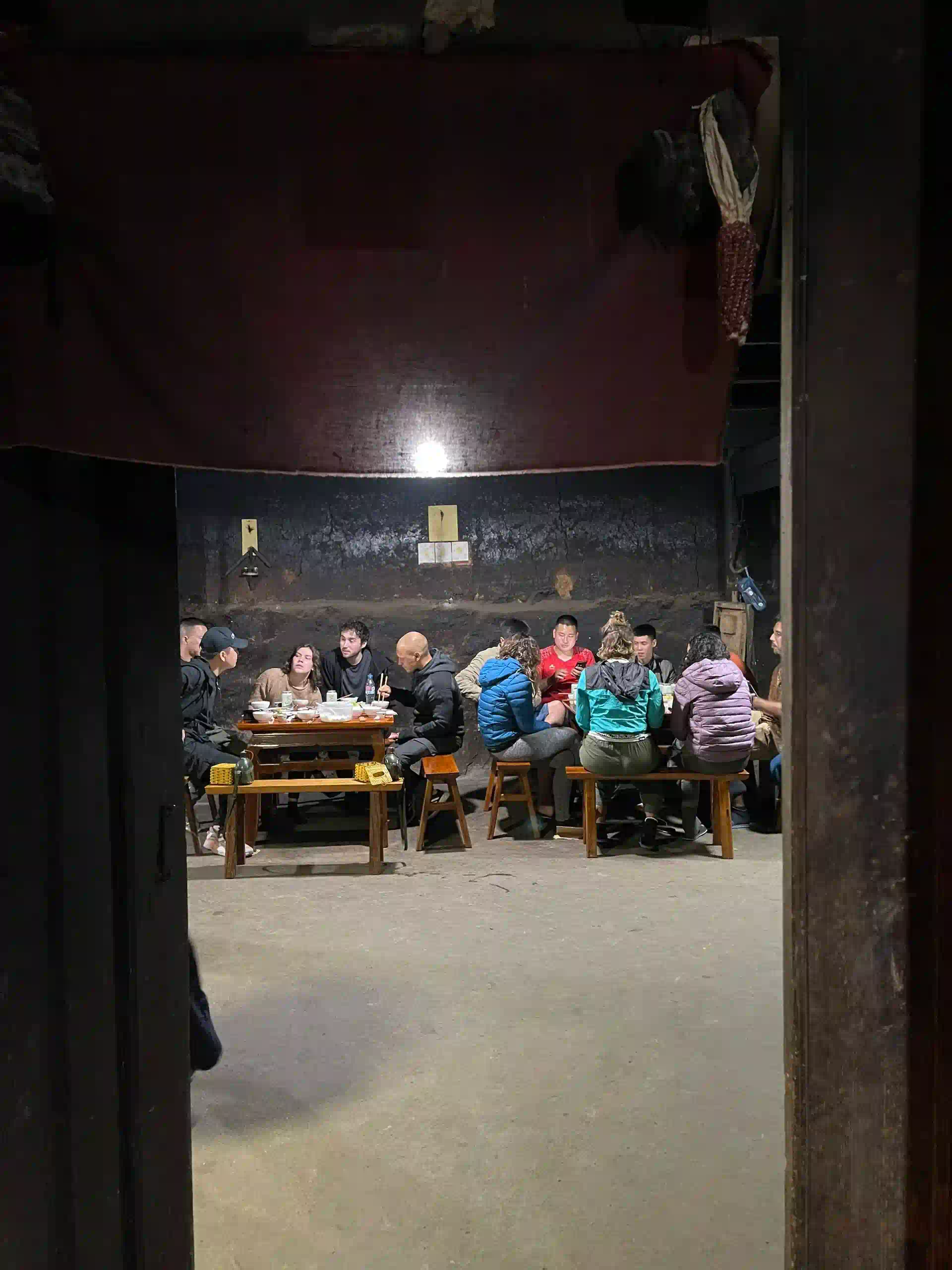
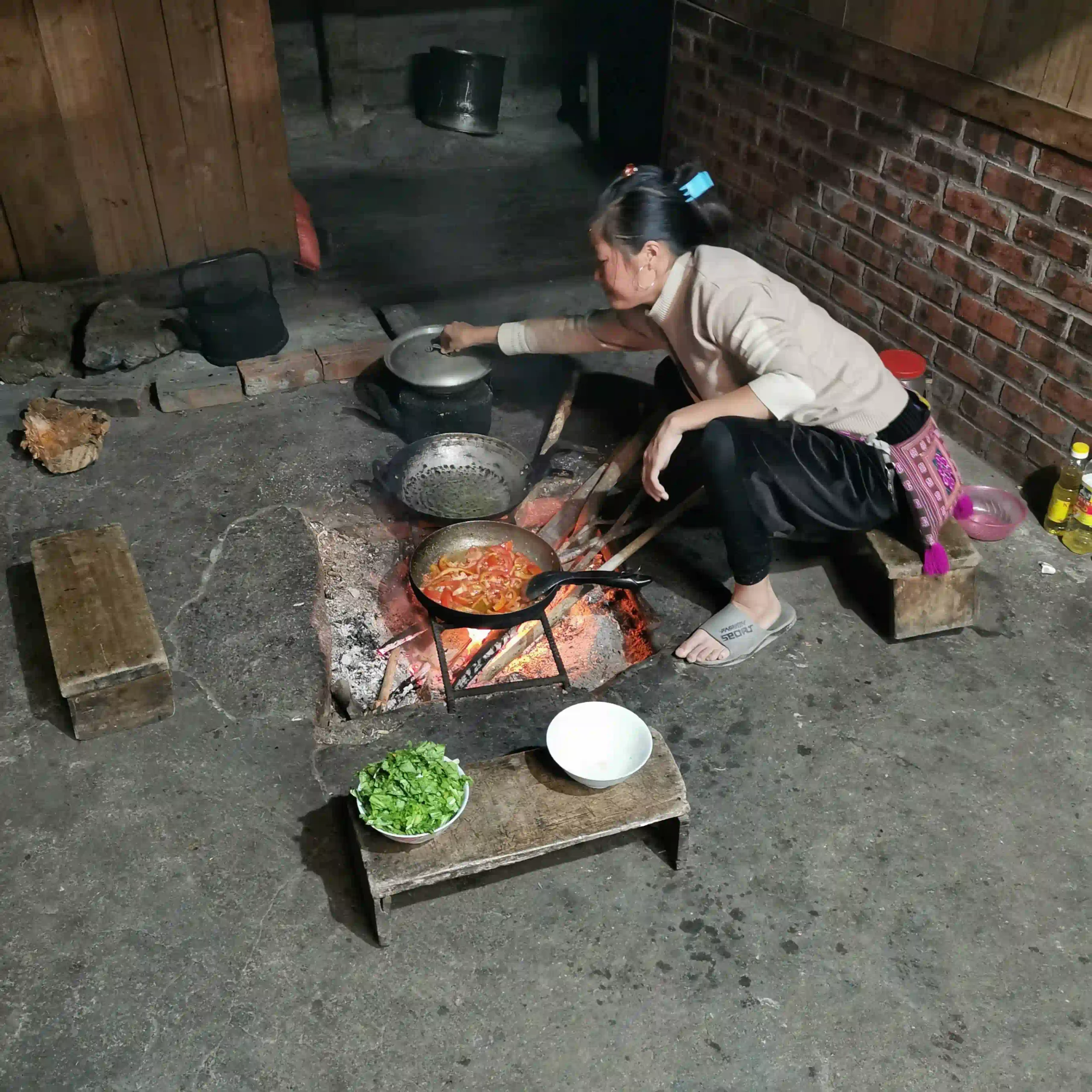
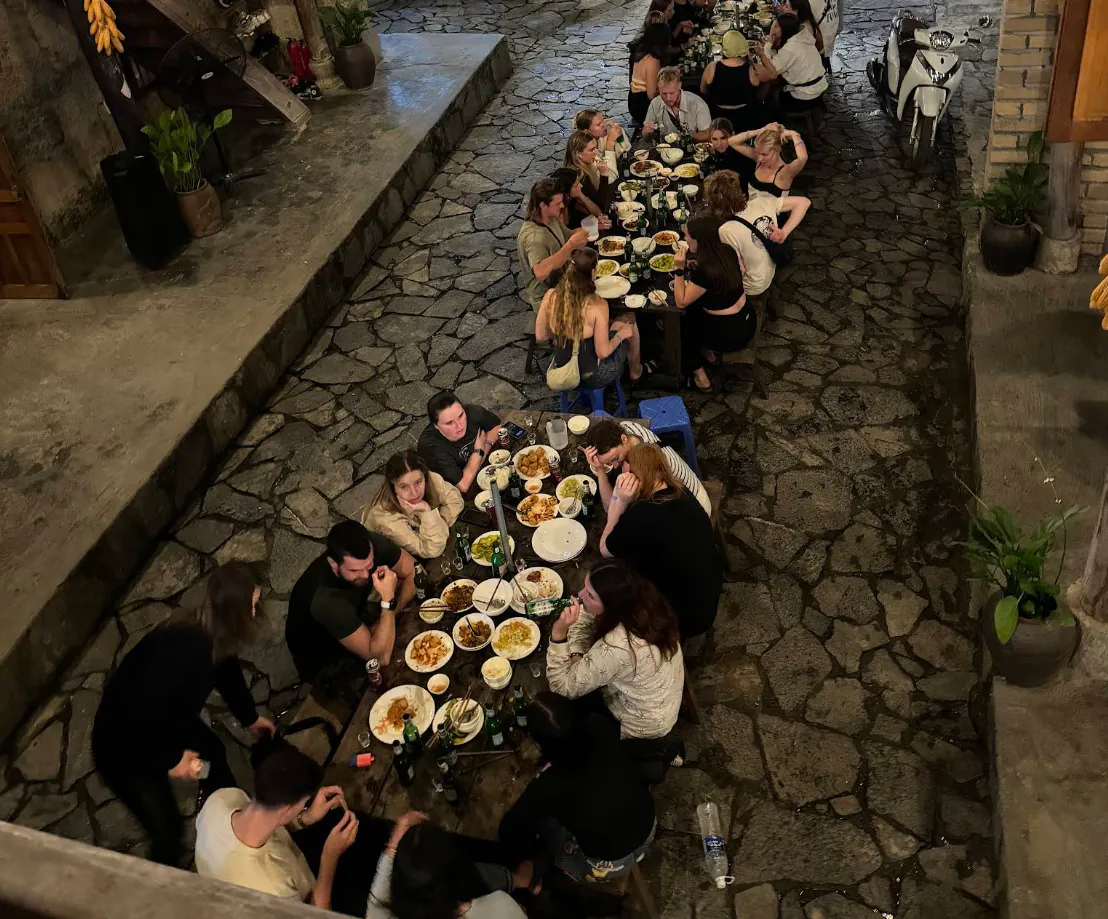
None of which is surprising when you look at how those dinners work. A homestay is cooking for thirty or forty people in a rural kitchen with no commercial refrigeration, the food comes out in big communal bowls, and it sits on the table for an hour in a warm room while everyone drinks corn wine. Then you get on a motorbike the next morning dehydrated.
What I do about it, none of it dramatic. I stick to the things that are still steaming, which up here is most of the food anyway, and I leave the cold plates that have been sitting out. I go easy on the corn wine the night before a long riding day, and I drink actual water alongside it. And where there’s a choice between a homestay dinner and a restaurant in town, I take the restaurant, which is one of the quieter arguments for riding independently.
If it does happen, the drivers on these tours are good about it and will get you to a clinic. Insurance that covers you as a motorbike passenger is worth having regardless.
Homestays: where the Loop sickness usually starts
Vegetarian and Vegan Food in Ha Giang
Better than you’d expect, and better than Hanoi in places.
Ha Giang city has two good vegetarian restaurants on the same stretch of Nguyễn Thái Học, and the one at 101B is the best food in the city full stop. Dong Van has ToTo-Chan. Between them that covers your city evening and your Dong Van evening, which is most of what a tour leaves you.
On the road it’s harder, and it comes down to telling the tour company when you book and not when you sit down. Homestays can cook vegetarian and they need warning, because the default spread is built around pork. I’d say it twice, once at booking and again to your driver on the first morning.
Vegan is a bigger ask than vegetarian, mostly because of fish sauce and egg, and I’d name both specifically.
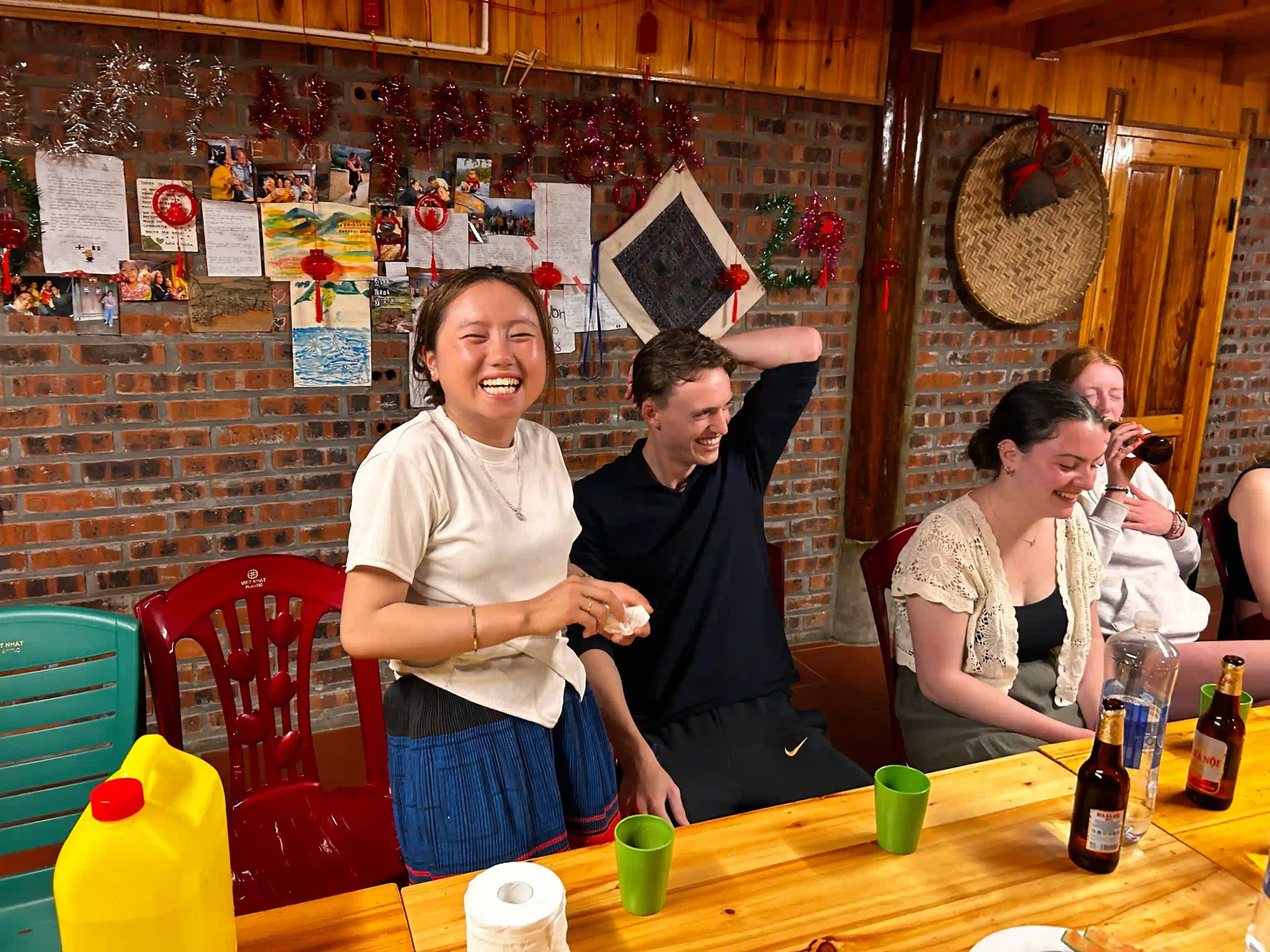
Great veggie food, but always tell tours beforehand
What It Costs
Cheap, and cash. A bowl of bánh cuốn with sticky rice is 40,000 to 50,000 VND. Cháo ấu tẩu is 30,000 to 50,000. Thắng cố at the market is 60,000 to 100,000. Dinner for two at any of the restaurants above, with drinks, comes to 300,000 to 500,000 VND.
ATMs exist in Ha Giang city, Dong Van and Meo Vac and not much in between, which is in the Ha Giang Loop guide along with everything else you’ll want cash for.
A Few Things Worth Adding
If I had to add just a couple of food stops to a Ha Giang trip, I’d make time for bánh cuốn trứng, either at 31B in Dong Van or Bà Làn in Ha Giang City, and try cháo ấu tẩu one evening in the city.
If you’re in Dong Van on a Sunday, the market is also worth getting up early for. You don’t have to try thắng cố if it doesn’t appeal to you; the market itself is reason enough to go.
Food on the Ha Giang Loop can vary a lot depending on where you stay and how you travel, so there’s still plenty I haven’t tried. If you’ve found a small restaurant, local dish, or homestay meal that stood out, I’d genuinely like to hear about it.
Got a question or an idea you want to discuss? Start a discussion here to get opinions and connect with other members.
Guest Post
Have a story, valuable experience, or a detailed guide to share? Contribute a high-quality article to enrich our community.
Your Post's Journey
To ensure quality, all new posts are not immediately visible on search engines like Google, Bing... Our team prioritizes reviewing high-value, insightful posts to feature publicly. You'll receive a notification when your contribution is selected!
Report Content
Create Story
×
Wait...
Choose your preferred language for localized experiences:
Table of Contents
Keep exploring
Your best next reads
A few focused next reads, chosen from what you’re viewing now.
Finding the most useful next reads for you…
Your reading trail
Your latest pages, shown in the order you read them.Oldest → newest










 Ha Giang
 Hanoi
Hanoi Ho Chi Minh City
 Ha Long
 Sapa
Sapa Mekong Delta
 Da Nang
 Hue
Hue Hoi An
 Ninh Binh
 Da Lat
 Nha Trang
 Phan Thiet
 Phu Quoc
 Quang Binh
 Quy Nhon
 Vung Tau
 Thai Nguyen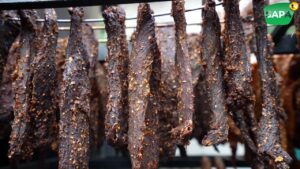













 Tiếng Việt
 한국어
한국어 中文 (中国)
 日本語
日本語 ไทย
ไทย Deutsch
 Español
 Destinations
 Instagram
 Facebook
 X (Twitter)
 Threads
 Tiktok