









 Ha Giang
 Hanoi
Hanoi Ho Chi Minh City
 Ha Long
 Sapa
Sapa Mekong Delta
 Da Nang
 Hue
Hue Hoi An
 Ninh Binh
 Da Lat
 Nha Trang
 Phan Thiet
 Phu Quoc
 Quang Binh
 Quy Nhon
 Vung Tau
 Thai Nguyen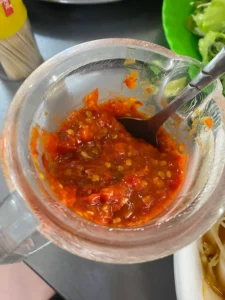

Da Nang is a weird food city. Because it sits right in the middle of the country, it pulls heavy, salty flavors from the north and the sweeter stuff from the south. But Central Vietnam has its own aggressive spice profile. They use a lot of chili. They use fermented fish pastes that smell absolutely toxic to a foreigner but taste incredible once you get used to them.
Most people show up here, get overwhelmed by the motorbikes and the heat, and just default to eating a generic bowl of Pho or a Banh Mi near their hotel. That is a massive waste.
I put together this Da Nang food guide because I want to explain the actual mechanics of eating here. How you pick a spot. How you sit down. How you don’t get scammed at the big seafood joints.
When you are out sweating and trying to tick off your massive list of tourist spots to check out in the city, you need to know how to refuel properly. Think of this as your foundational manual. Later on, you can dig into the hyper-specific spots, but for now, you just need to know how the system operates.
- Quick Answer: The best Da Nang food is found at crowded street stalls with tiny plastic chairs, not empty tourist restaurants. Your must-eat list should include Mi Quang (turmeric noodles), Bun Cha Ca (fish cake soup), and Banh Xeo (crispy pancakes). Expect to pay 30,000-50,000 VND per street meal.
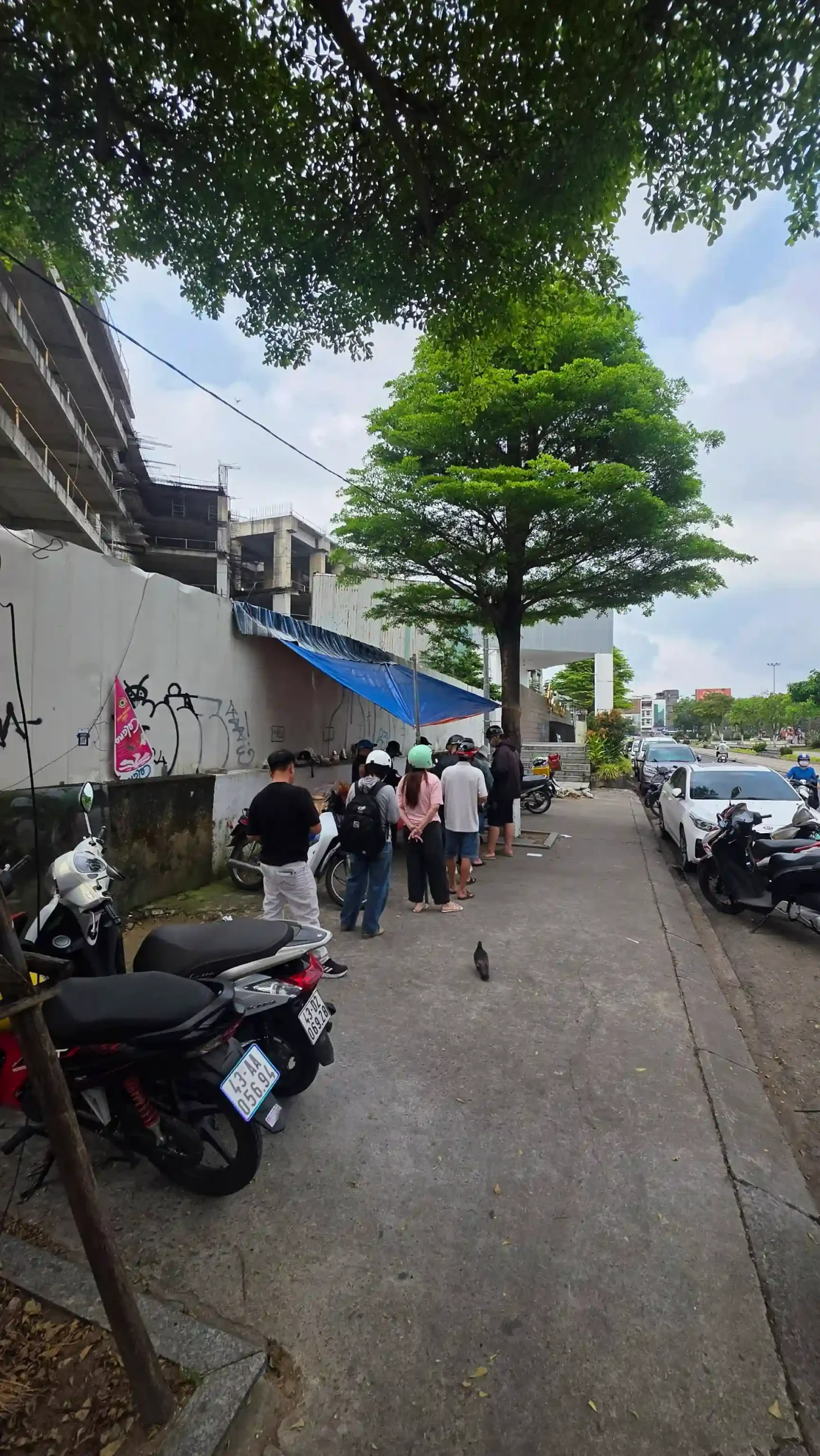
- The Golden Rule of Street Food: Always look for a dirty floor. Napkins and lime wedges on the ground mean high turnover, fresh ingredients, and a local crowd.
- The “Big Three” Local Dishes:
- Mi Quang: Thick turmeric noodles with a tiny bit of rich pork broth, shrimp, peanuts, and a rice cracker.
- Bun Cha Ca: A sweet and sour fish cake noodle soup. Eat this for breakfast.
- Banh Xeo: Crispy rice flour crepes filled with pork and shrimp, rolled in rice paper with a peanut dipping sauce.
- Surviving the Seafood Restaurants:
- Never just point at a fish. Always ask the price per kilo (“Bao nhieu tien mot ky?”) before they weigh it.
- Make the staff dump the heavy water out of the weighing basket so you don’t pay seafood prices for tap water.
- Strict Meal Timings:
- Soup is for breakfast (6:00 AM – 9:00 AM). Rice buffets are for lunch (11:00 AM – 1:30 PM).
- Between 2:00 PM and 5:00 PM, good street food is closed. Wait for dinner after 6:00 PM.
- Health & Hygiene Truths:
- The factory-made tube ice in your iced coffee is perfectly safe.
- The raw leafy greens washed in tap water are the real gamble. Skip them if you have a sensitive stomach.
The Mechanics of the Plastic Stool
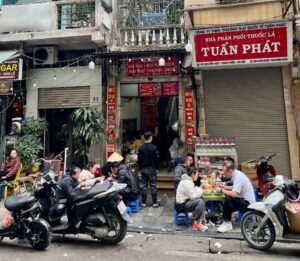
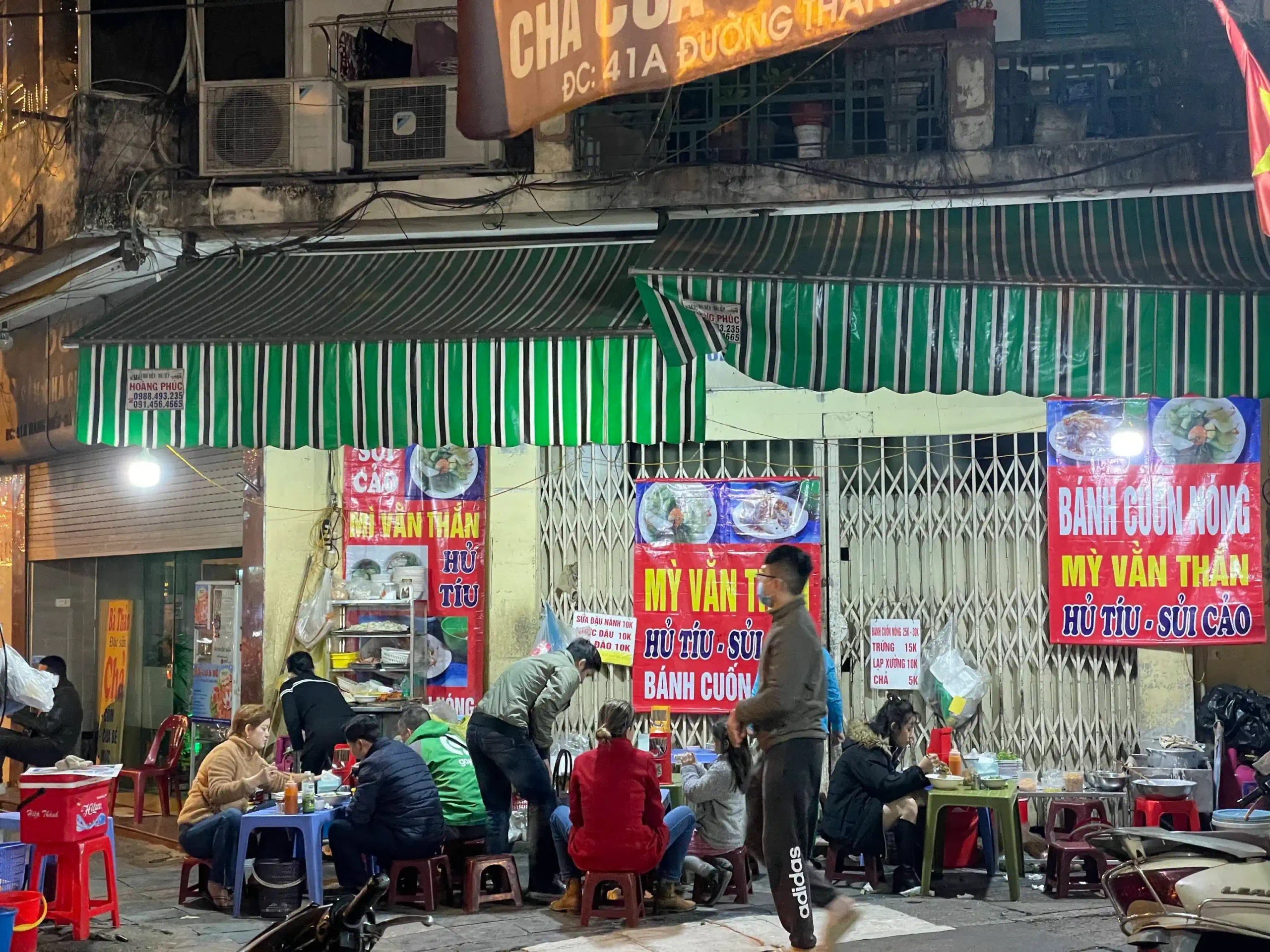
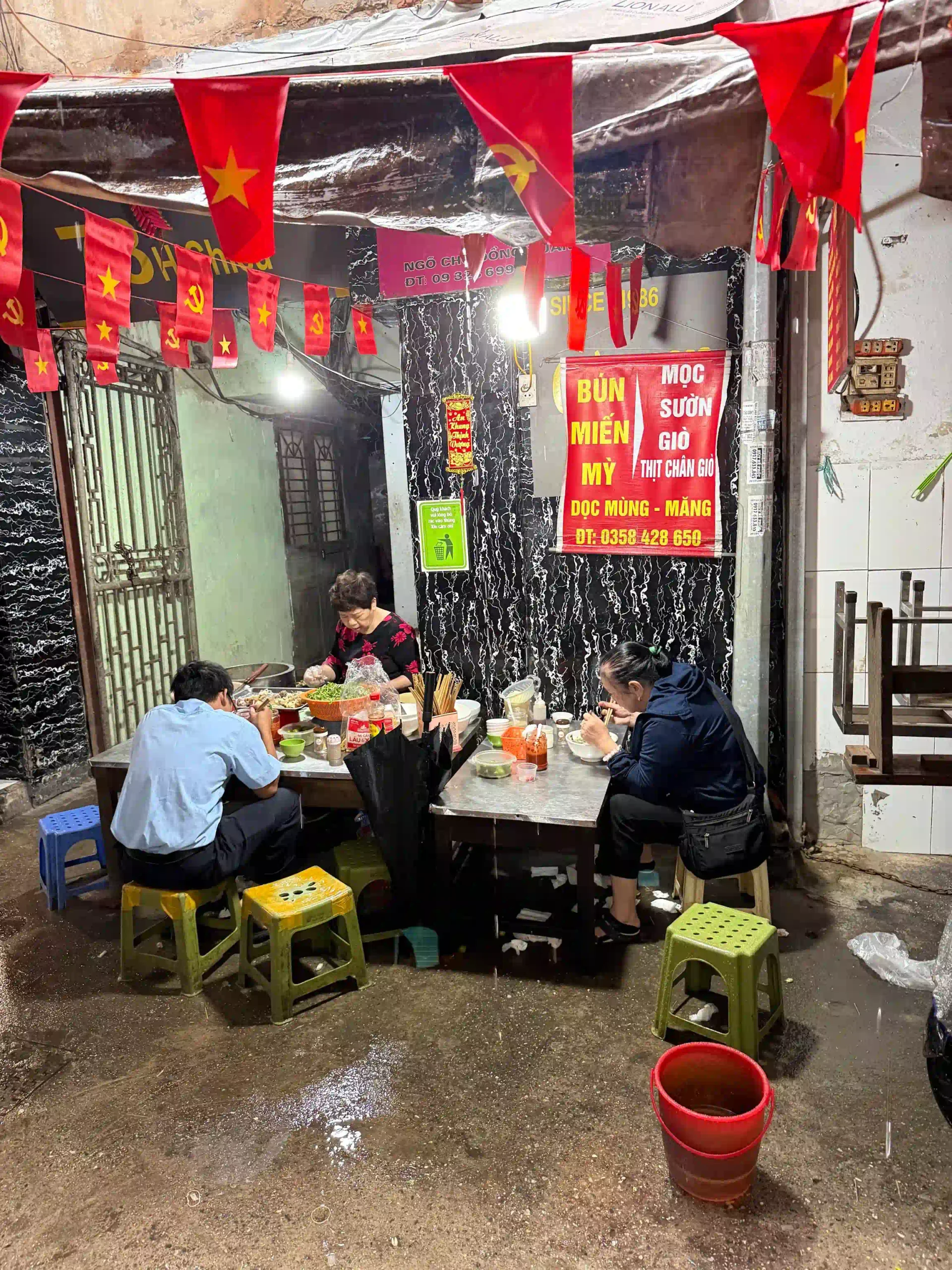
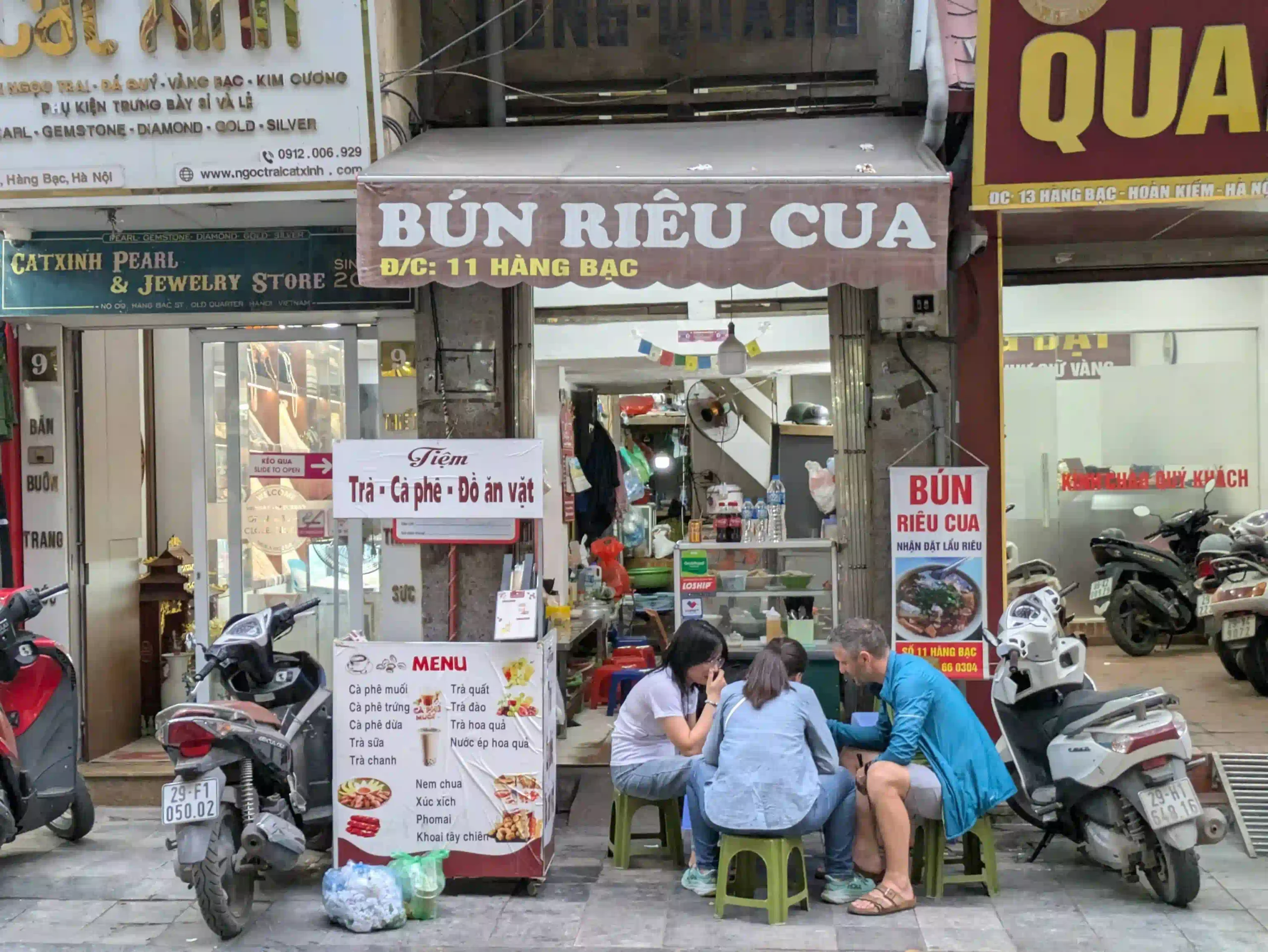
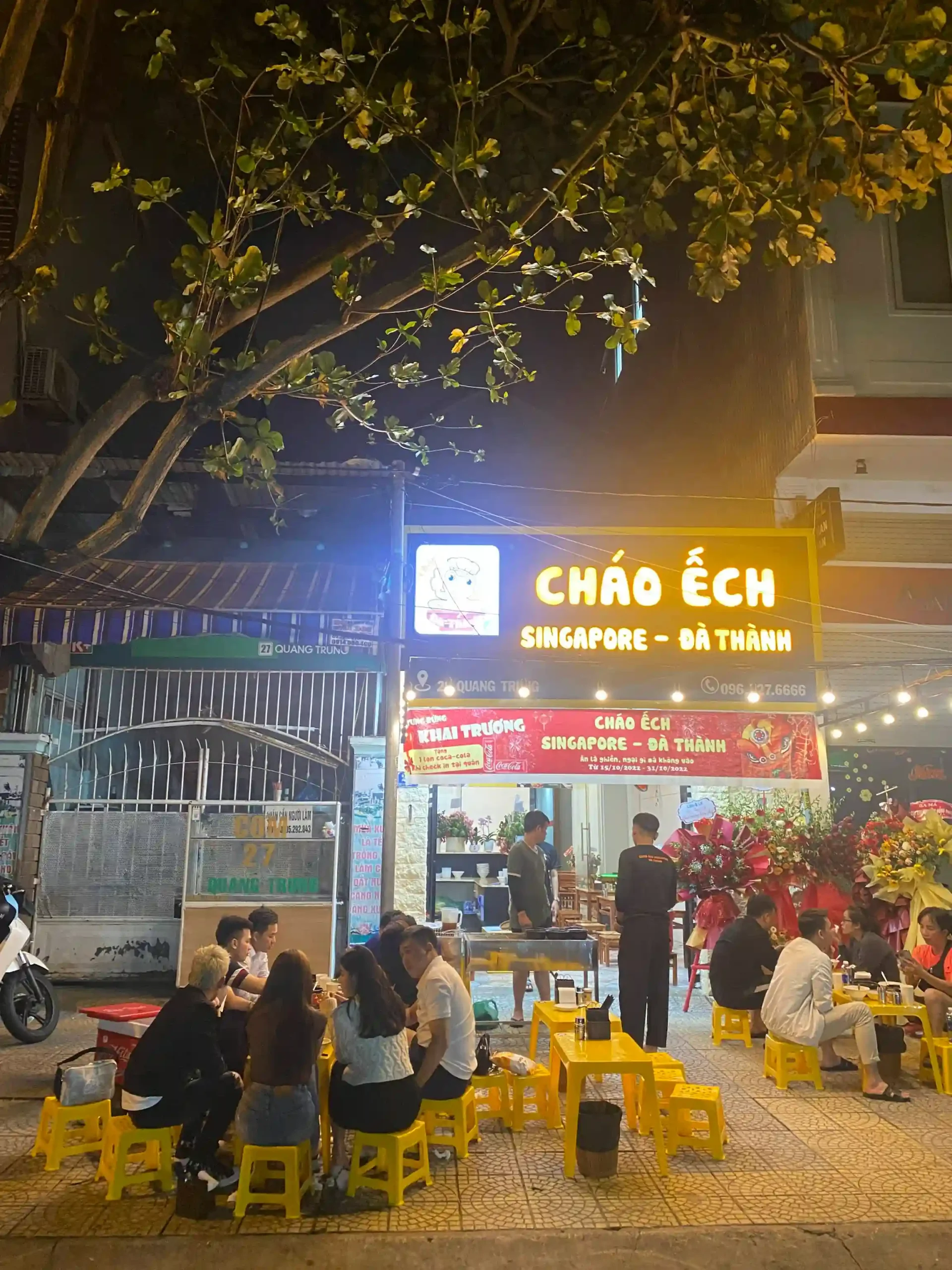
You have seen the photos. Vietnamese people sitting on the sidewalk on tiny red and blue plastic chairs, hunched over a bowl of noodles.
That is where the good food is. But walking into one of these places for the first time feels incredibly awkward. Nobody speaks English. There is usually no menu. You feel like an intruder.
Here is how you handle it.
You just walk in and find an empty table. You don’t wait to be seated. You sit down.
Usually, a street stall only sells one thing. The lady running the giant metal pot at the front isn’t cooking a diverse menu. She cooks Mi Quang, or she cooks beef stew. That’s it.
So you just hold up your fingers for how many bowls you want. One finger means one bowl.
They will bring the food to your table. You eat. When you are done, you stand up, walk over to the person who looks like they are in charge of the money, and you pay. You do not ask for a check at the table. You just hand them cash on your way out.
In 2026, a standard street bowl costs between 30,000 and 45,000 VND. Hand them a 50k note and take your change.

The Dirty Floor Rule
This goes against everything you learned in the West.
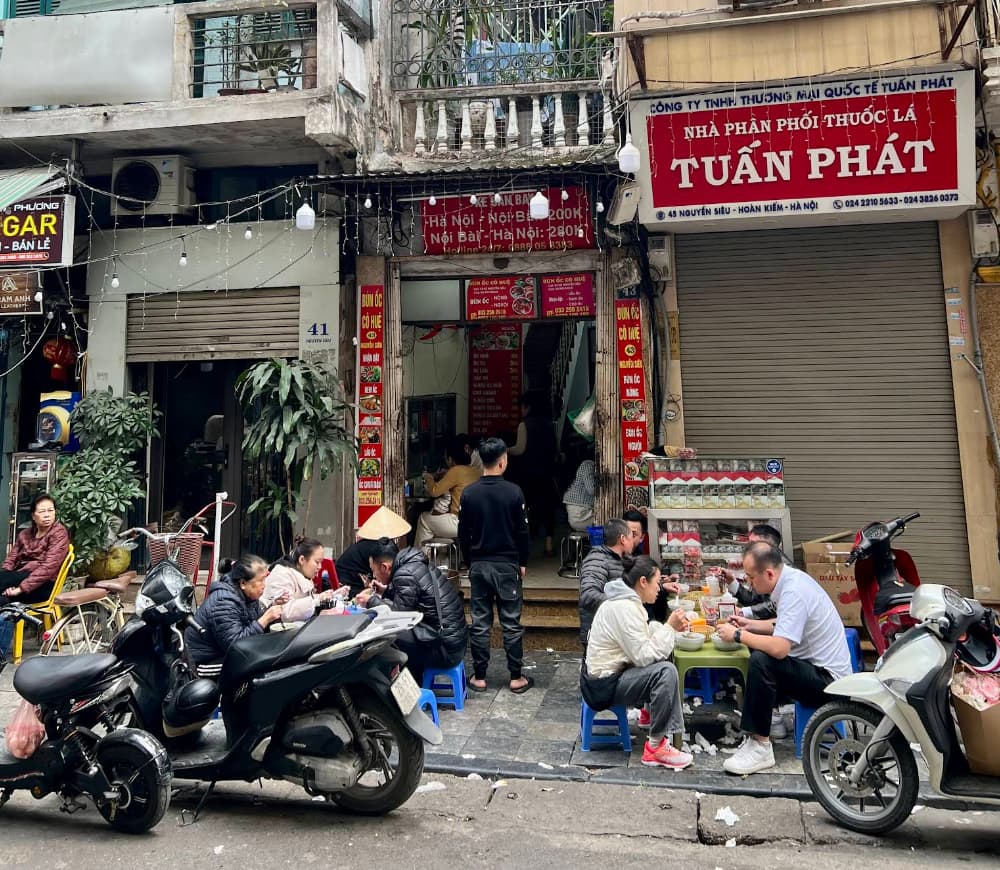
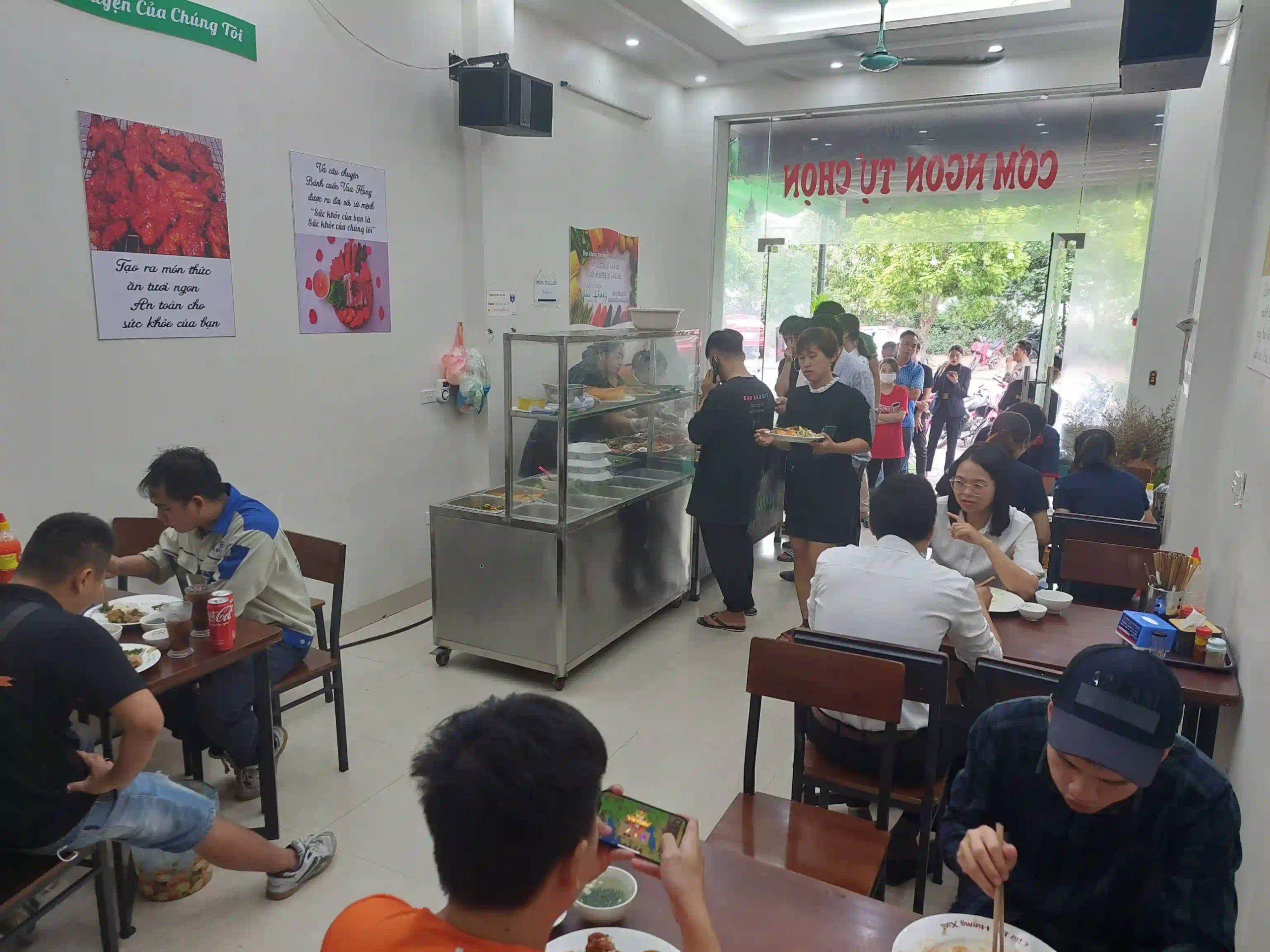
When you look at a street stall, look at the ground under the tables. Is it covered in crumpled napkins, squeezed lime wedges, and wooden chopsticks?
That is a five-star rating.
Vietnamese street food culture dictates that you drop your trash on the floor. You wipe your mouth with a tissue, you drop it. It sounds gross, but a dirty floor means the place has been packed all morning. It means the ingredients are turning over fast. The broth is fresh.
If you walk past a place and the floor is spotless, and the tables are perfectly wiped down, keep walking. Nobody is eating there for a reason.
The Condiment Tray
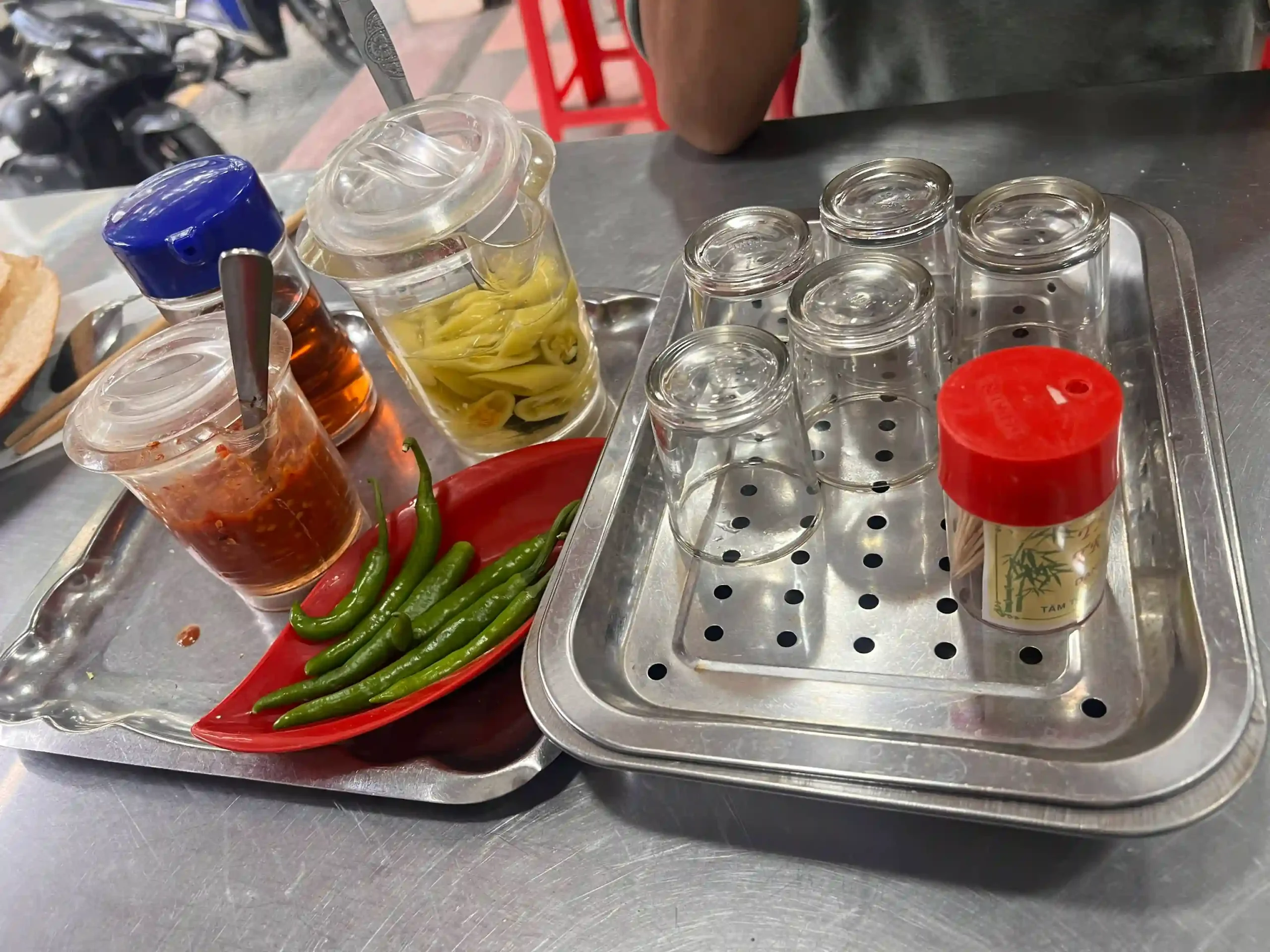
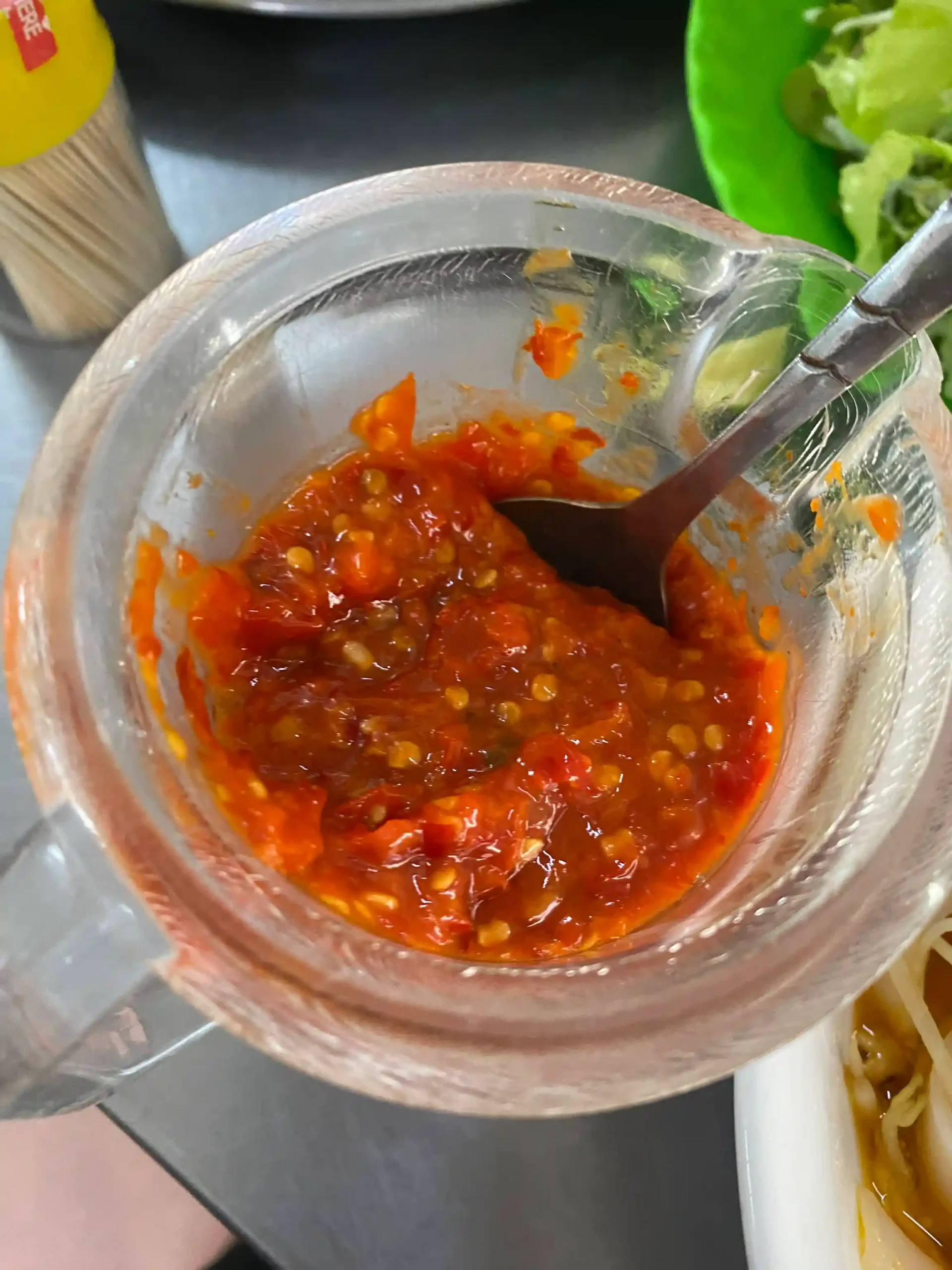
When you sit down, there will be a plastic tray in the middle of the table. It usually contains a small jar of chili paste, some sliced fresh chilies, a jar of pickled garlic or bamboo shoots in vinegar, a little dish of lime wedges, and maybe some fish sauce.
Do not ignore this tray.
Vietnamese food is served incomplete on purpose. The chef makes the base broth, but you are expected to finish the dish yourself.
Taste the broth first. Does it need acid? Squeeze a lime. Does it need heat? Add a tiny scoop of the chili paste (the central Vietnamese chili paste is violently hot). Is it too sweet? Add a spoon of the garlic vinegar.
You customize the bowl. If you just eat it exactly as it was handed to you, you are doing it wrong.
The Big Three (What you actually need to eat)
I’m not going to list fifty different dishes. I’m going to give you the three core central Vietnamese dishes that define Da Nang. You can read up on the highly specific reviews of individual local tours and restaurants later, but you need to memorize these three names first.
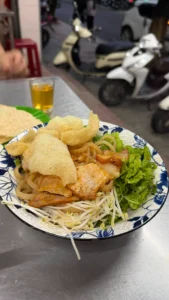
1. Mi Quang (Turmeric Noodles)
This is the undisputed king of Da Nang food. You cannot leave without eating it.
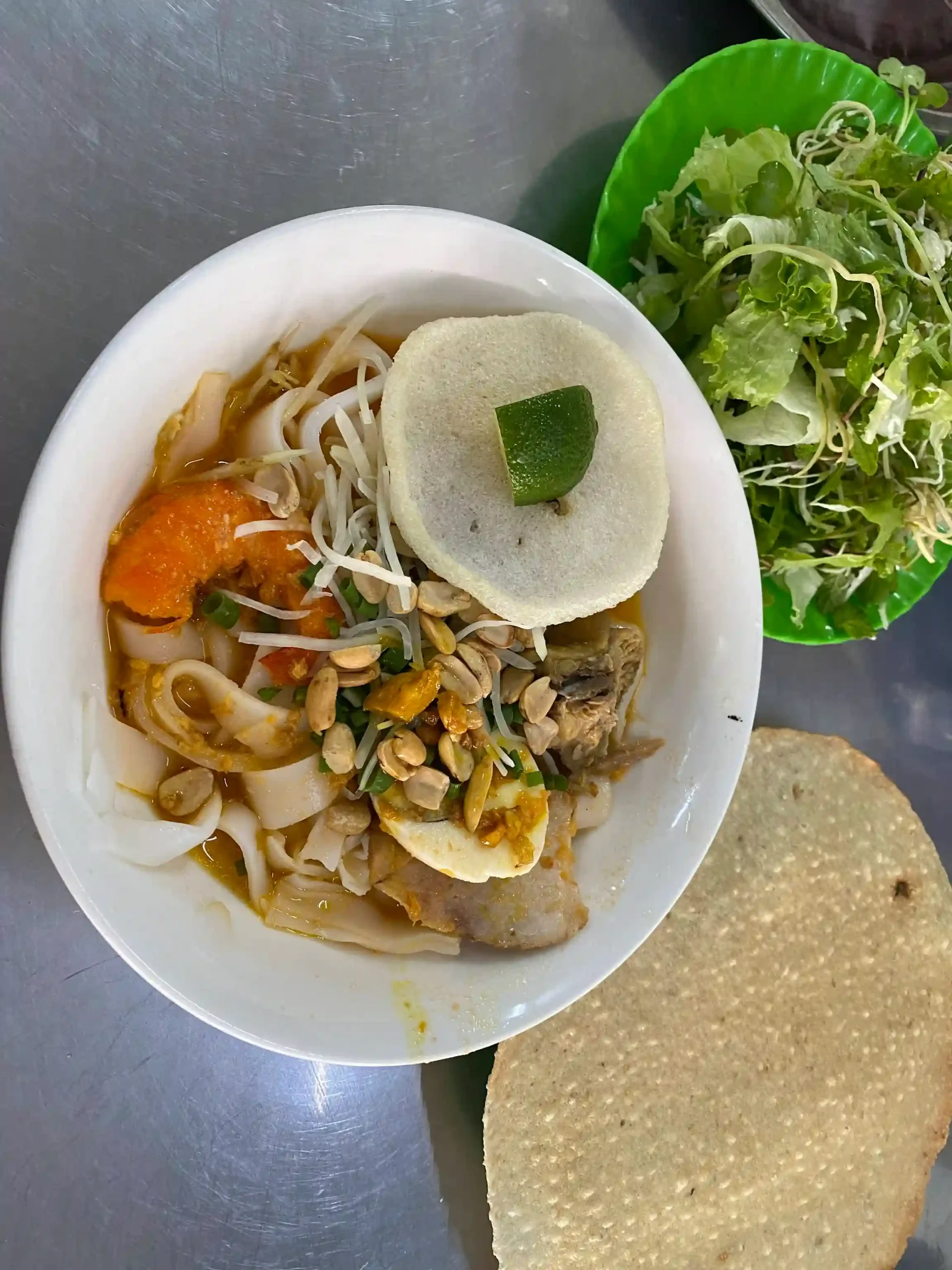
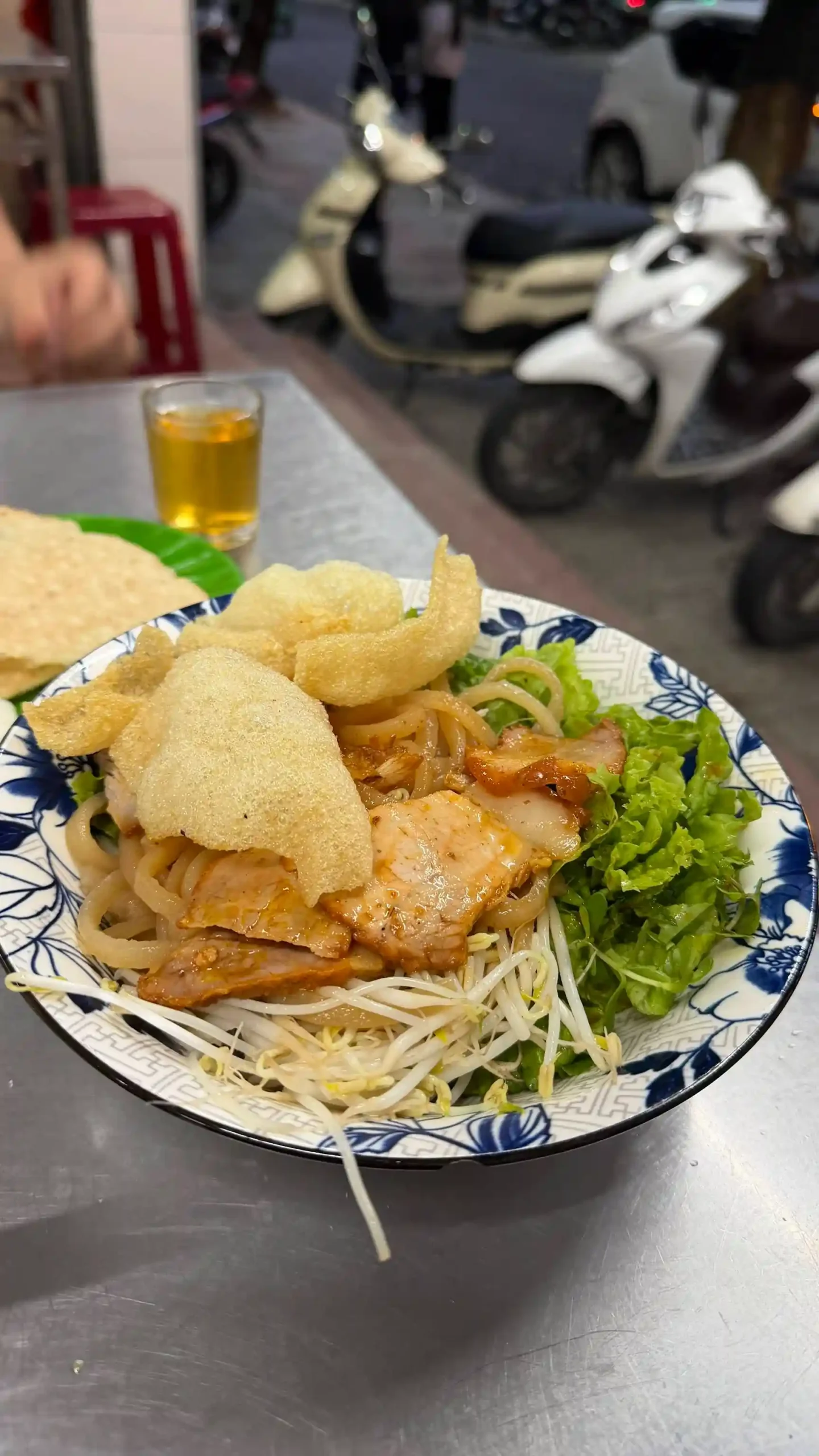
It is not a soup. It is a “dry” noodle dish. They put thick, wide rice noodles in a bowl. The noodles are sometimes yellow because they are dyed with turmeric.
Then they add a very small amount of intensely flavored pork and bone broth, just enough to wet the noodles.
They top it with slices of fatty pork, a shrimp, a boiled quail egg, roasted peanuts, and a massive handful of fresh herbs.
You get a giant piece of toasted sesame rice paper on the side. You break the rice paper up and mix the shards into the bowl for crunch.
It is heavy, earthy, and incredible.
2. Bun Cha Ca (Fish Cake Noodle Soup)
This is what locals eat for breakfast.
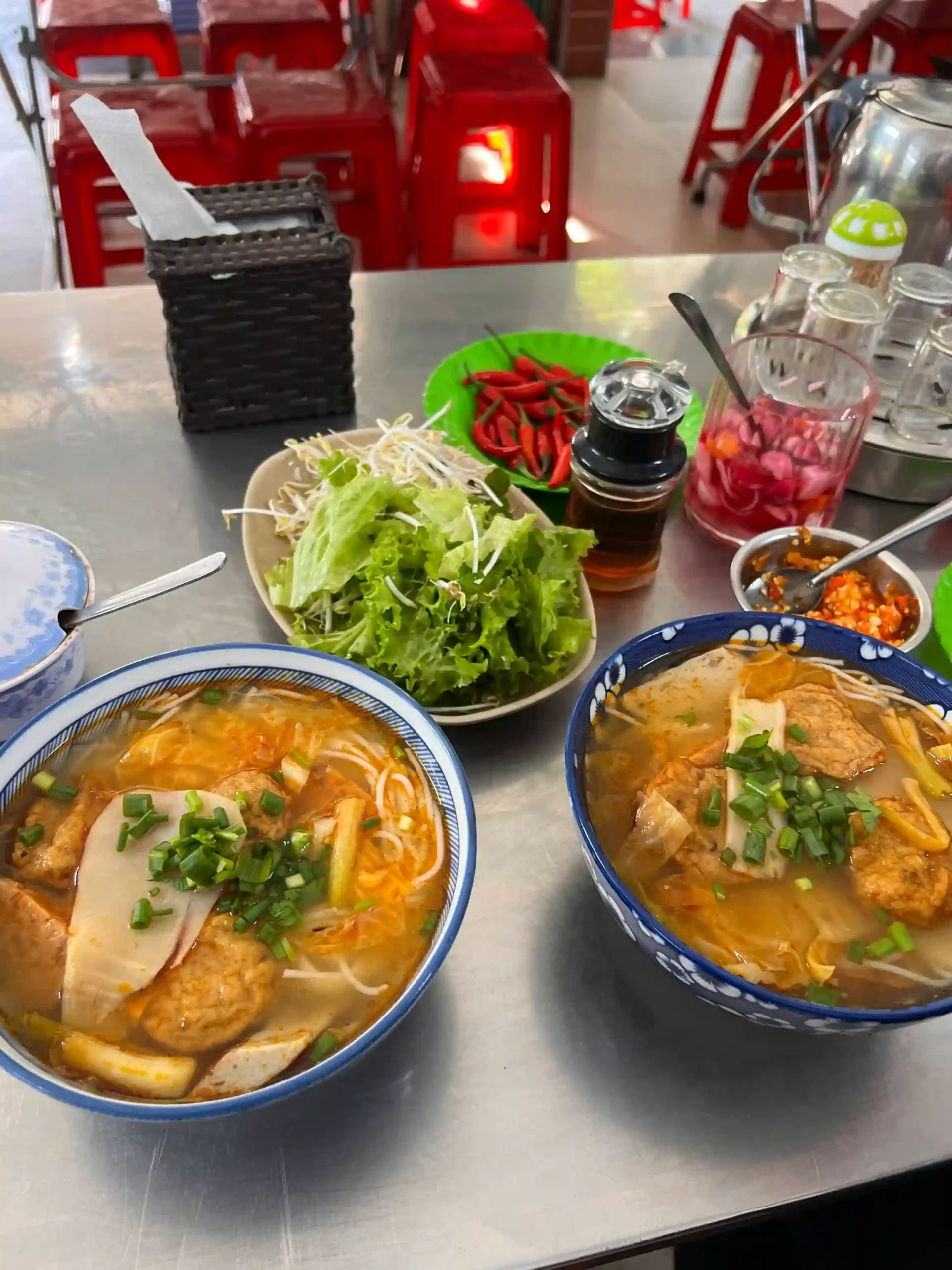
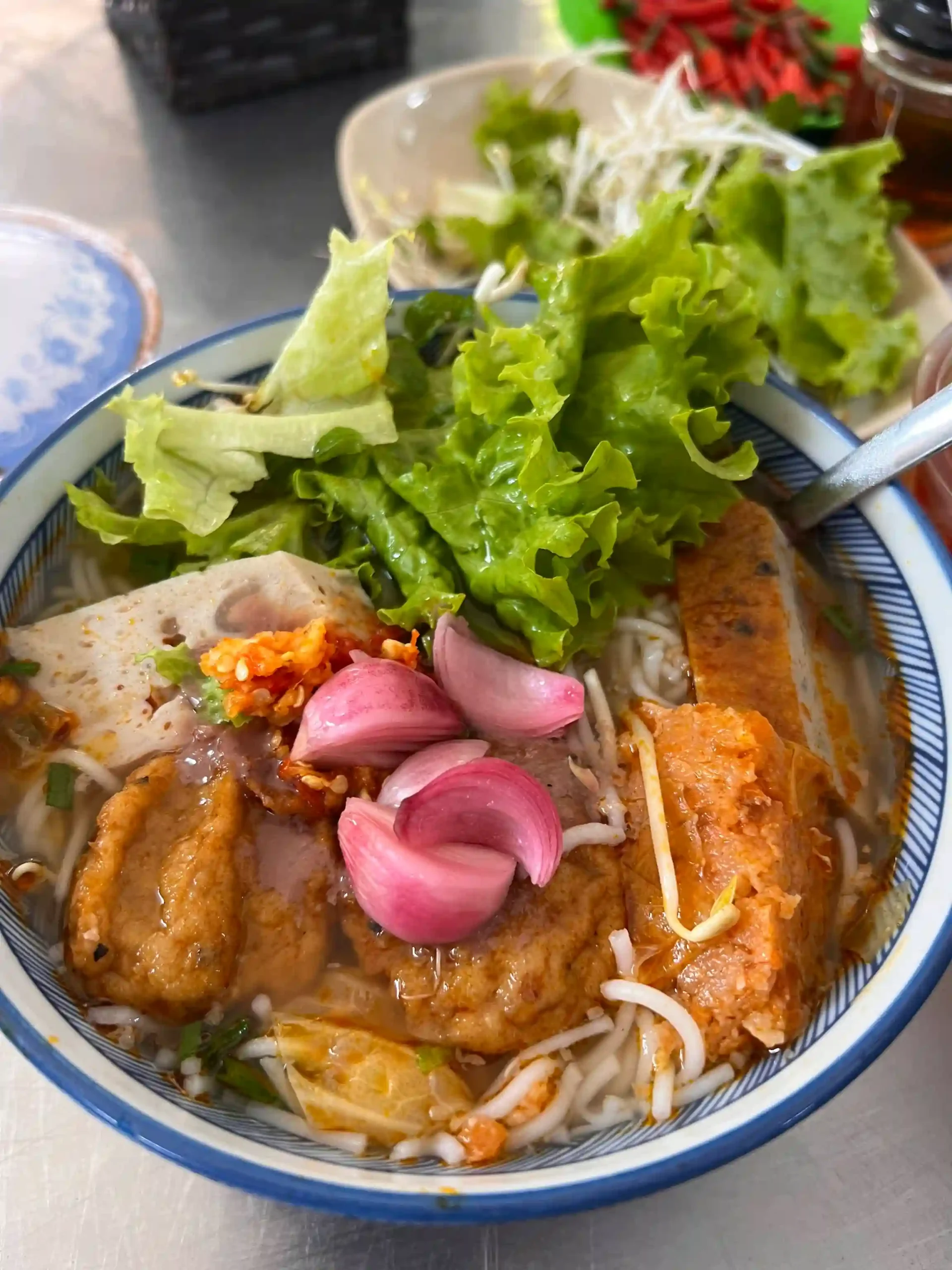
It’s a bowl of thin rice vermicelli noodles (Bun) in a broth made from simmering fish bones, pumpkin, pineapple, and bamboo shoots. It has this very distinct sweet and sour flavor profile.
The meat is chunks of fried and steamed fish cake (Cha Ca). They usually serve it with a side of fermented shrimp paste. You dip the tip of your chopstick into the purple shrimp paste and mix it into the soup. It smells crazy, but it adds a massive hit of umami.
3. Banh Xeo (Central Style)
You might have had Banh Xeo in Ho Chi Minh City, where it is the size of a dinner plate. The Da Nang version is different.
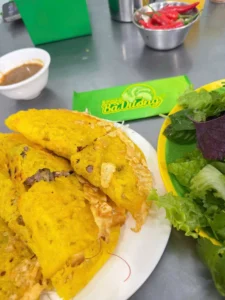
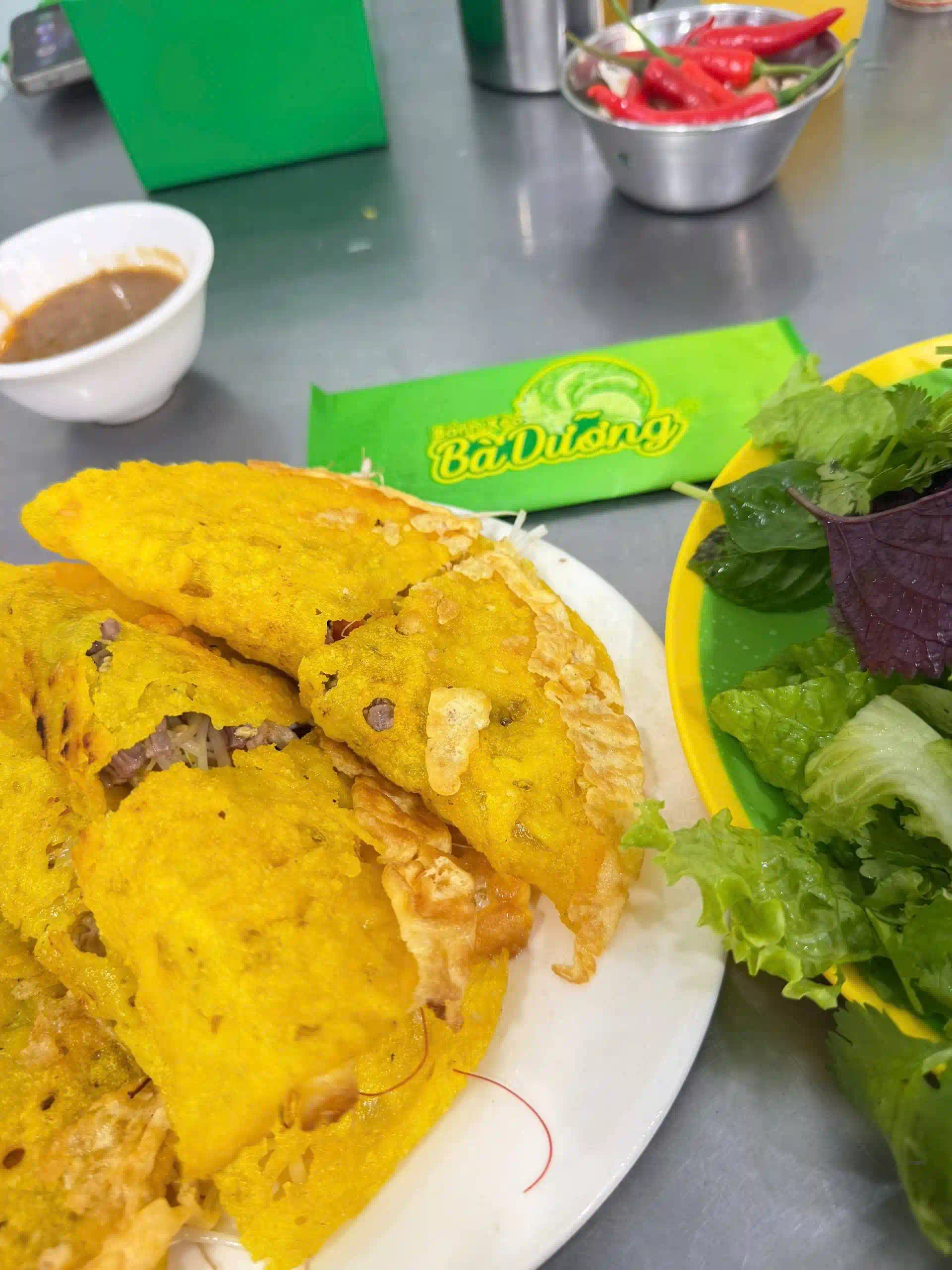
It is a small, crispy rice flour crepe, folded in half, stuffed with pork, shrimp, and bean sprouts. It is fried in a lot of oil until the edges are dark brown and shattering crisp.
You don’t eat it with a fork. They give you a stack of thin, dry rice paper. You take a piece of rice paper, lay it flat on your hand, put a bunch of fresh lettuce and mint on it, snap off a piece of the crispy pancake, and roll the whole thing up like a cigar.
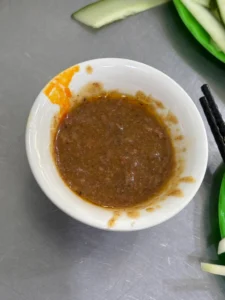
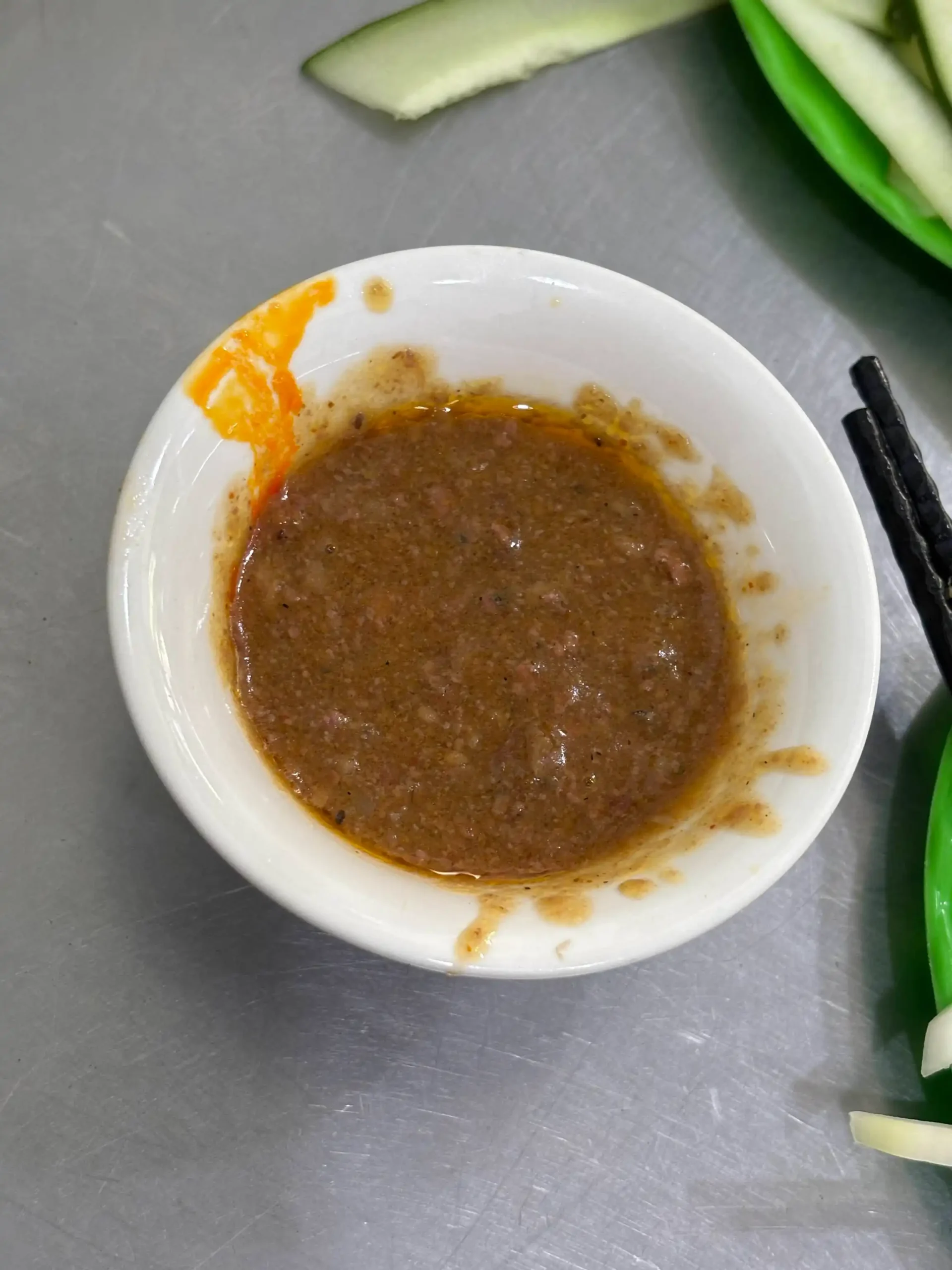
Then you dip it into a warm, thick peanut and pork liver sauce.
The Seafood Trap (How to survive the beach road)
Da Nang is a coastal city. The seafood here is ridiculous. But eating seafood is also the easiest way to blow your entire vacation budget if you don’t know the rules.
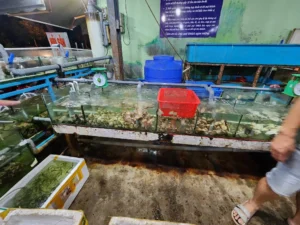
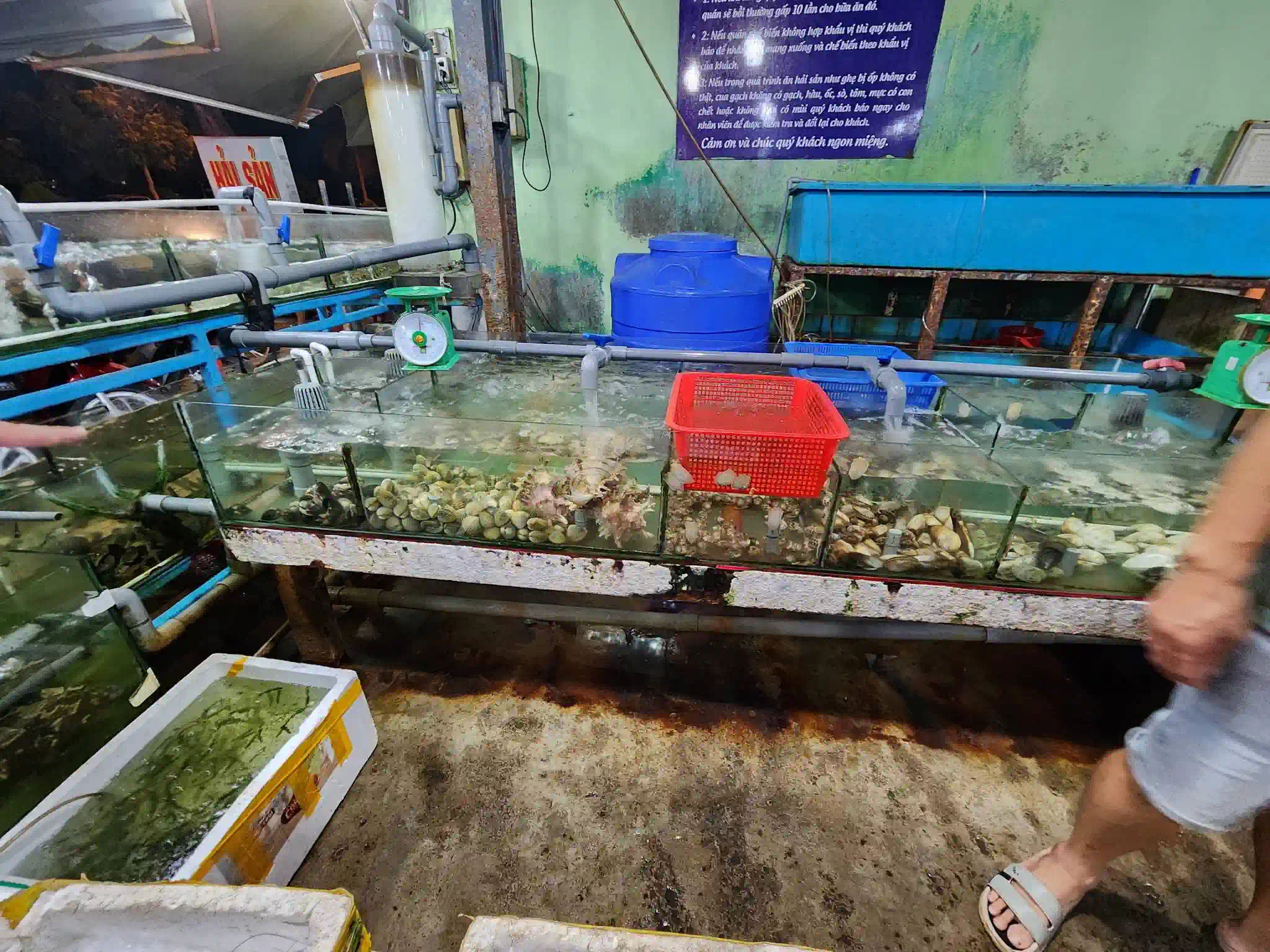
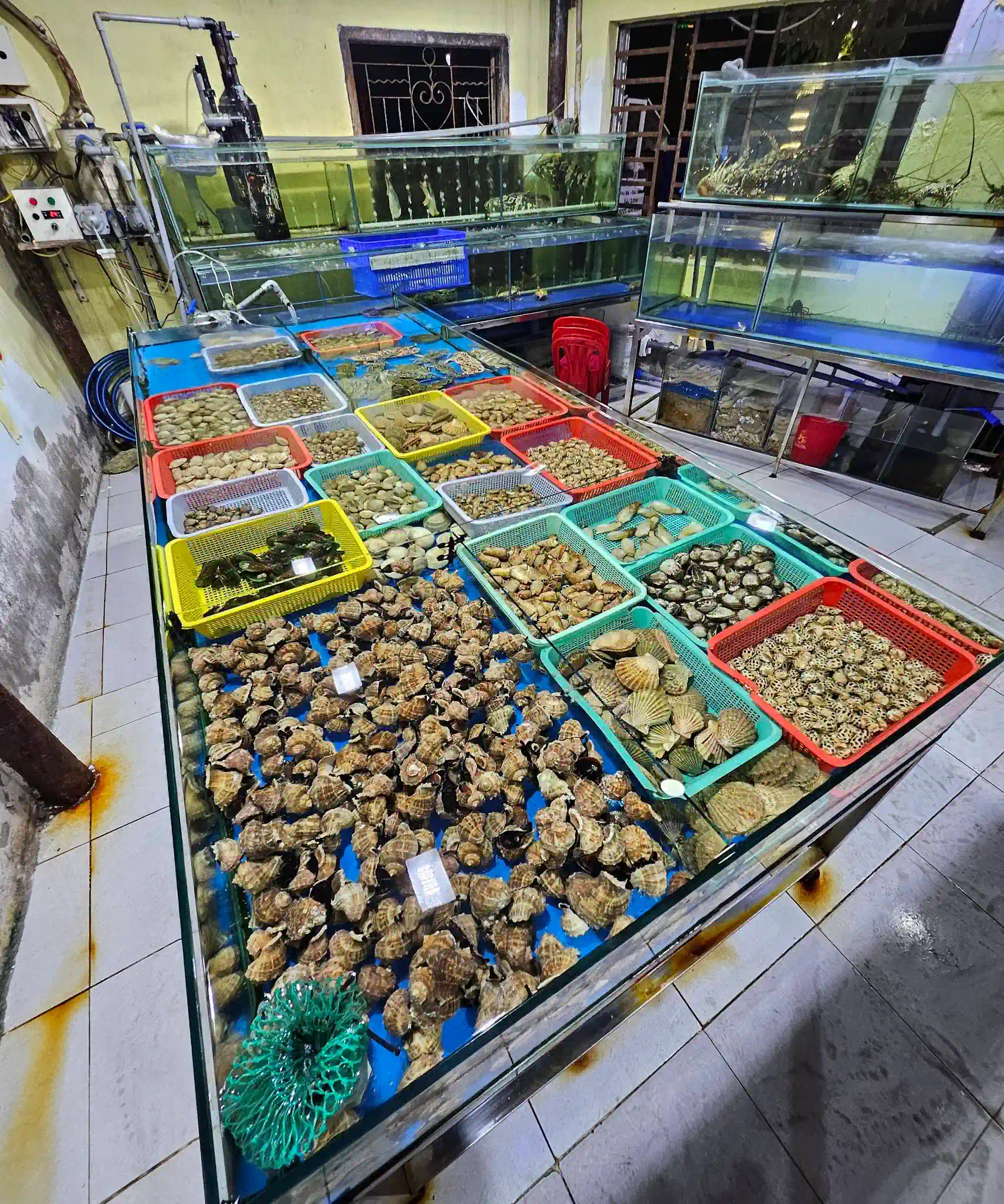
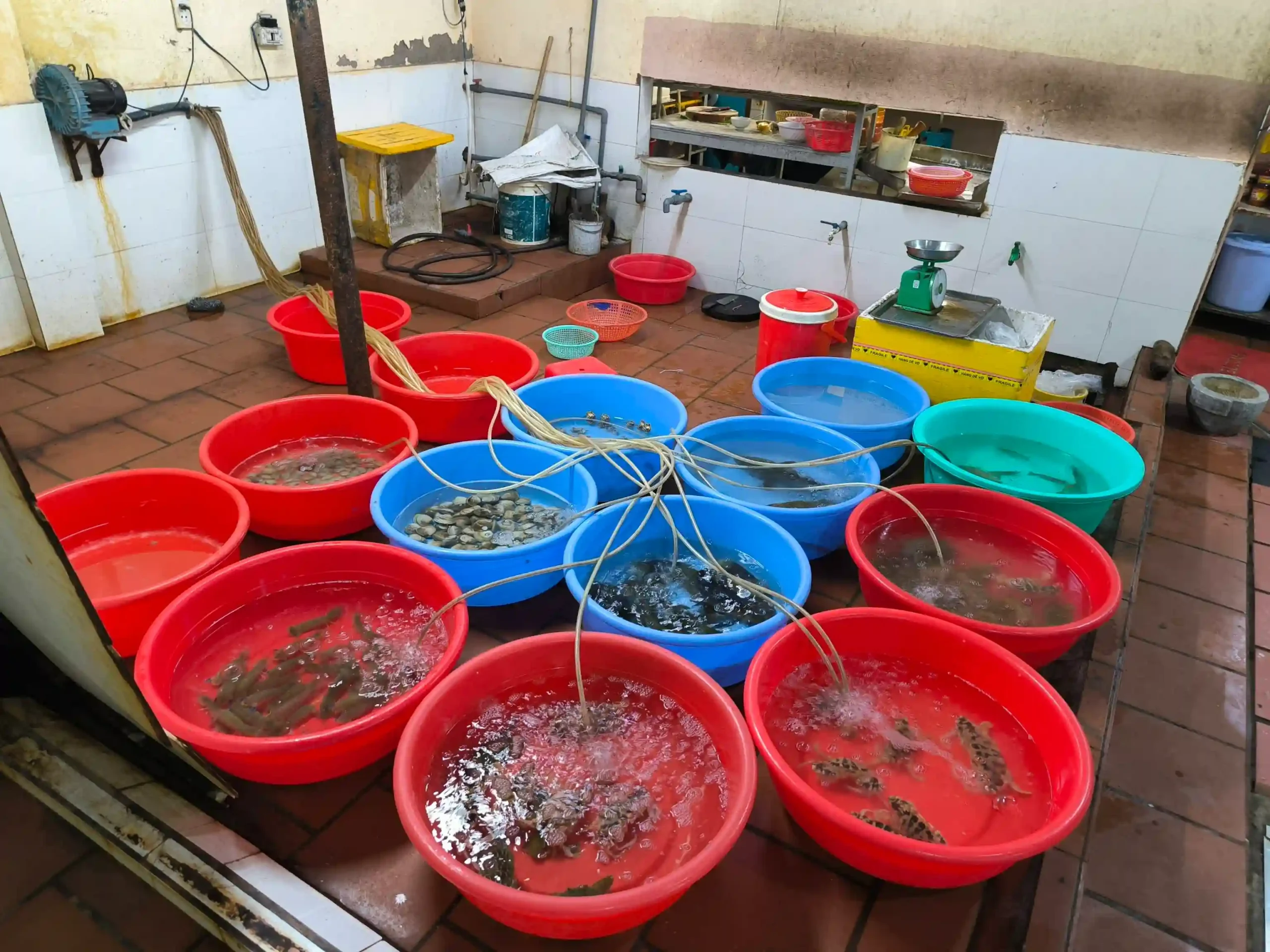
If you walk down Vo Nguyen Giap street (the main road running along My Khe beach), you will see massive restaurants. They have blinding neon lights and hundreds of blue plastic tanks filled with live crabs, lobsters, eels, and grouper.
These are the “Nhau” (drinking and eating) spots.
How ordering works:
You don’t sit down and look at a paper menu. You walk straight to the tanks.
A guy with a net will follow you. You point at what you want.
This is the critical moment. Do not just nod your head.
You must ask: “Bao nhieu tien mot ky?” (How much money for one kilo?).
Or just pull out your phone calculator, point at the shrimp, and hand the calculator to the guy so he can type in the price.
In 2026, decent tiger prawns should be around 600,000 to 800,000 VND per kilo. Clams are cheap, maybe 150,000 VND per kilo. Lobsters are insanely expensive.
The Weighing Scam:
Watch them weigh the fish. They take it out of the tank, put it in a plastic basket, and put it on a scale.
Sometimes, they leave a lot of water in the basket. Water is heavy. You are paying seafood prices for tap water. Tell them to dump the water out before they read the weight. Just point at the basket and make a dumping motion. They know exactly what they are doing and they will laugh and do it.
How to get it cooked:
Once you agree on the weight, you tell them how to cook it.
Keep it simple.
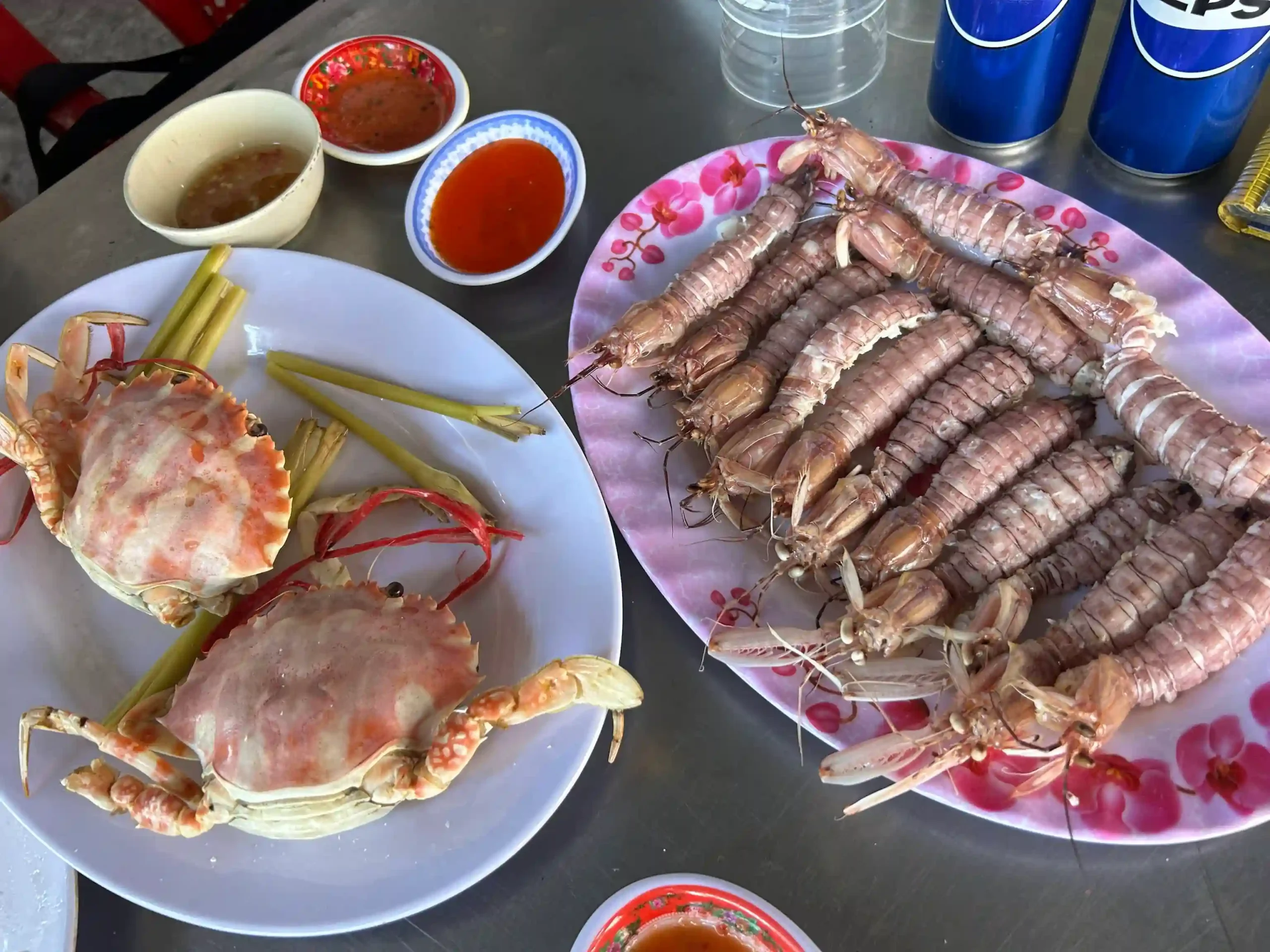
- Clams? Ask for “Hap Sa” (Steamed with lemongrass).
- Prawns? Ask for “Nuong Toi” (Grilled with garlic).
- Squid? Ask for “Chien Mam” (Fried with fish sauce).
Go sit down, order a bucket of local Larue beer on ice, and wait. It’s loud, it’s messy, and you throw the shells right on the floor.
Getting sick
This Da Nang food guide wouldn’t be honest if I didn’t address the elephant in the room. Everyone is terrified of food poisoning.
Here is the truth: The cooked food is almost always safe. The broth has been boiling at 100 degrees Celsius for four hours. The pork was grilled over white-hot coals. That stuff won’t hurt you.
The danger comes from the water and the raw stuff.
The Ice
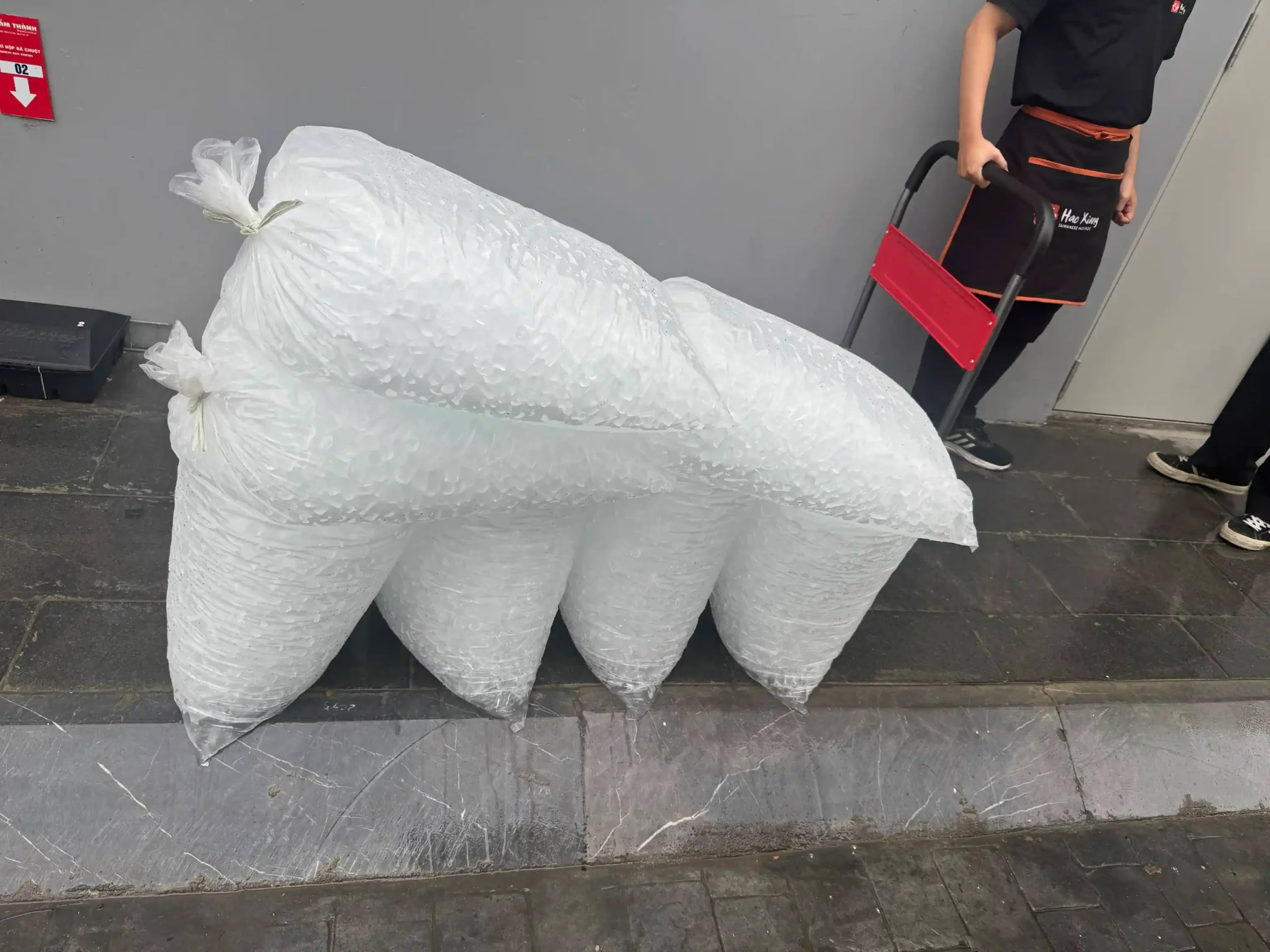
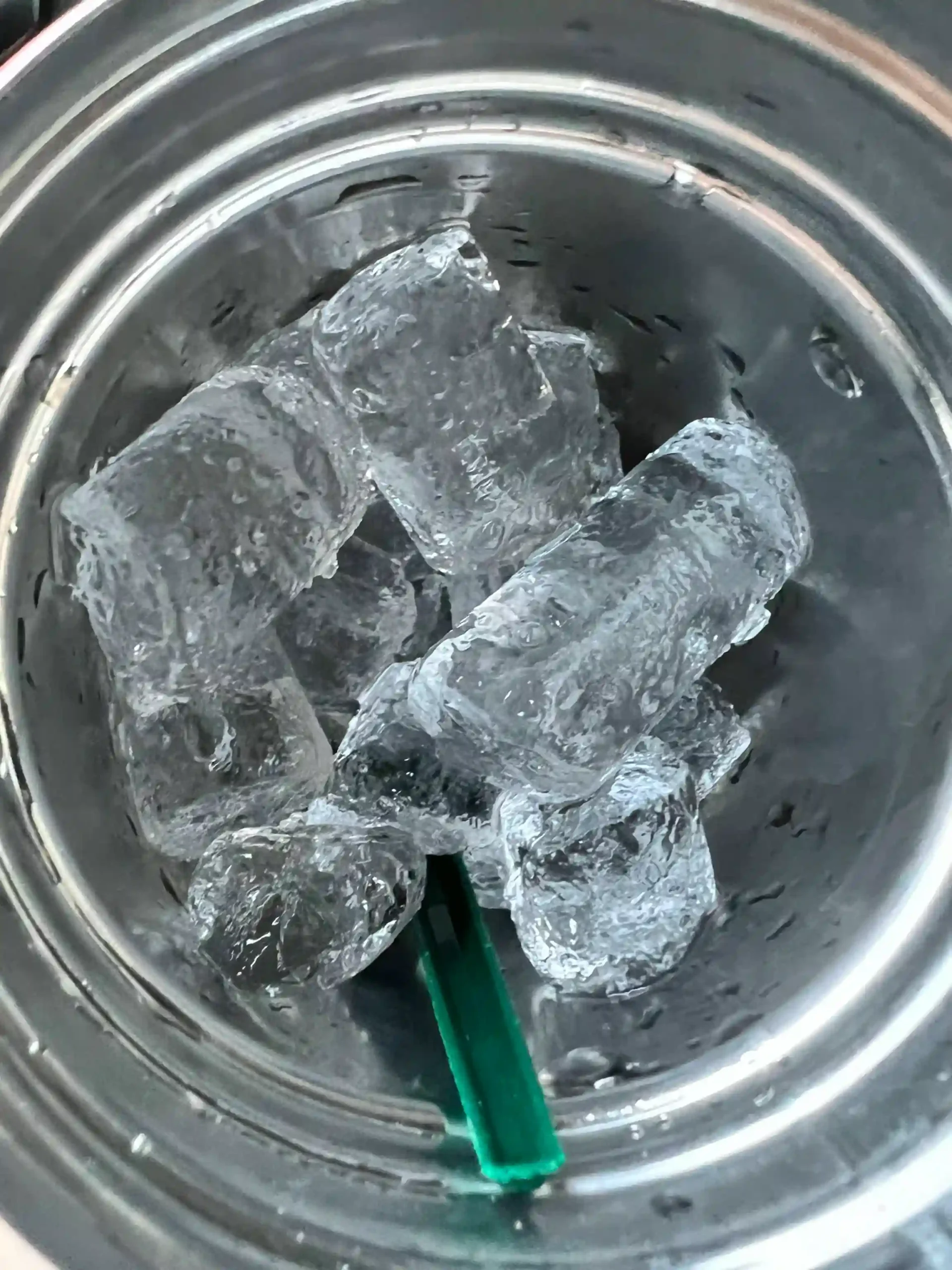
I mentioned this in my general tips and tricks for visiting the city, but it bears repeating here. The ice in your drinks is fine. The cylindrical ice with a hole in the middle is produced in regulated factories. The locals don’t want to drink dirty water either. Do not be afraid to drink an iced coffee.
The Raw Herbs
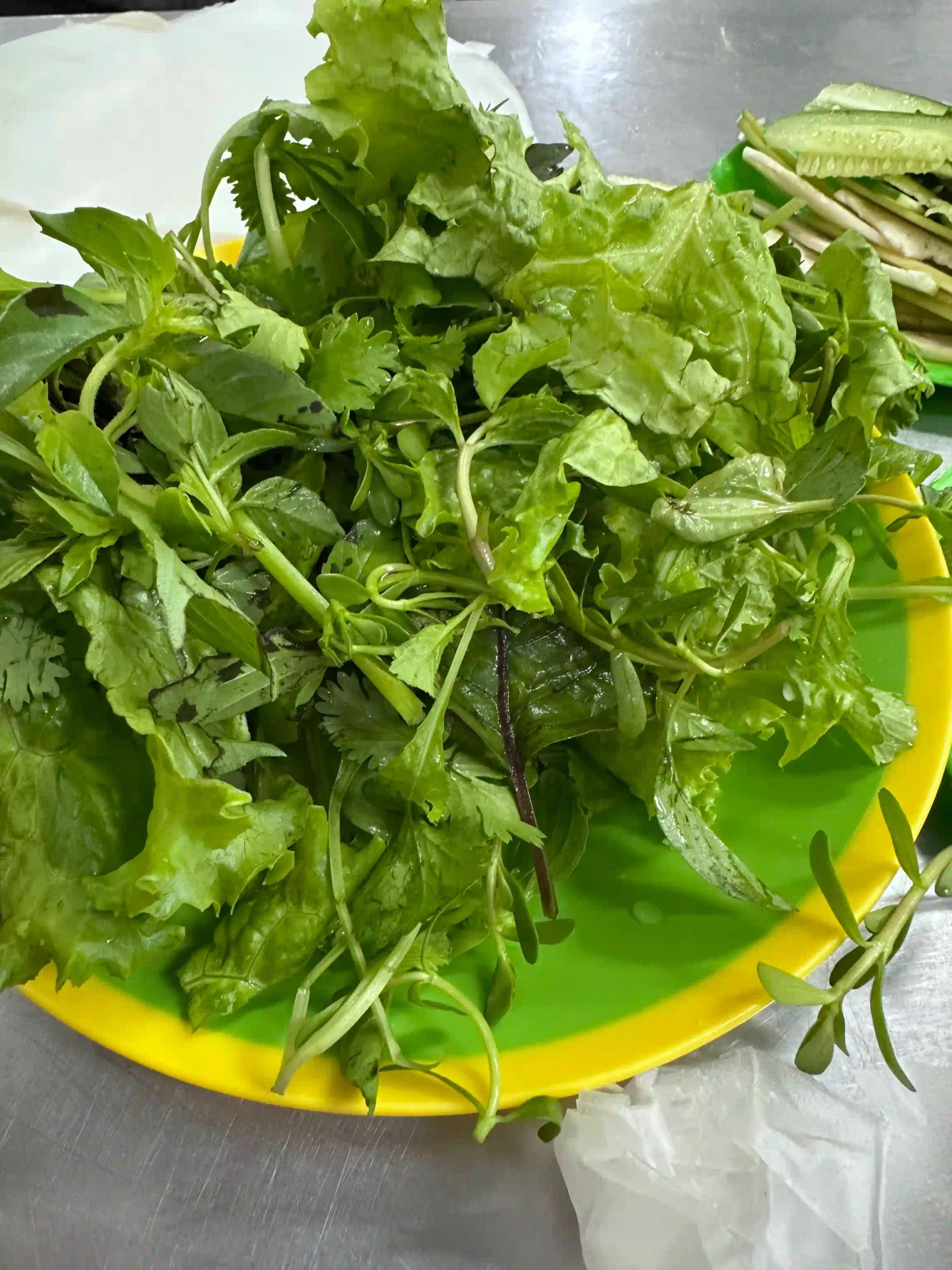
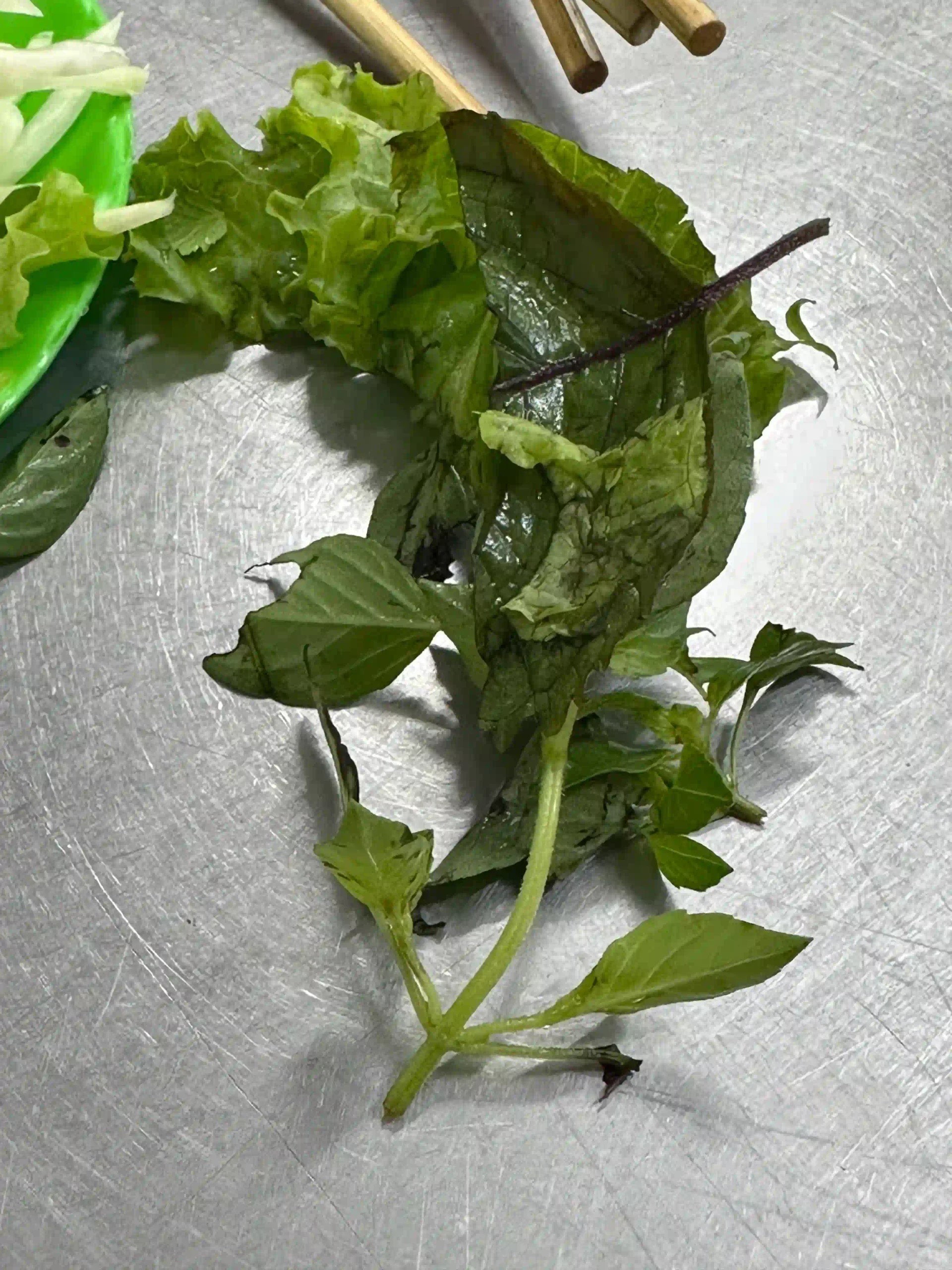
When you order noodles or pancakes, they will plop a massive plastic basket of raw leafy greens on your table. Lettuce, mint, fish mint, basil.
This is the gamble.
Those herbs were washed in the back of the restaurant using tap water. Tap water in Da Nang is not drinkable. If you have a sensitive Western stomach that isn’t used to the local bacteria flora, eating a massive handful of wet, raw lettuce is a good way to spend the next 24 hours in your hotel bathroom.
If you are worried, just skip the raw greens for the first few days. Eat the cooked food. Let your stomach adjust.
The Chopsticks
When you sit down, grab a pair of wooden chopsticks and a spoon from the plastic container on the table. Grab a tissue and wipe them down vigorously before you eat. Everyone does this, even the locals. It just gets the ambient street dust off them.
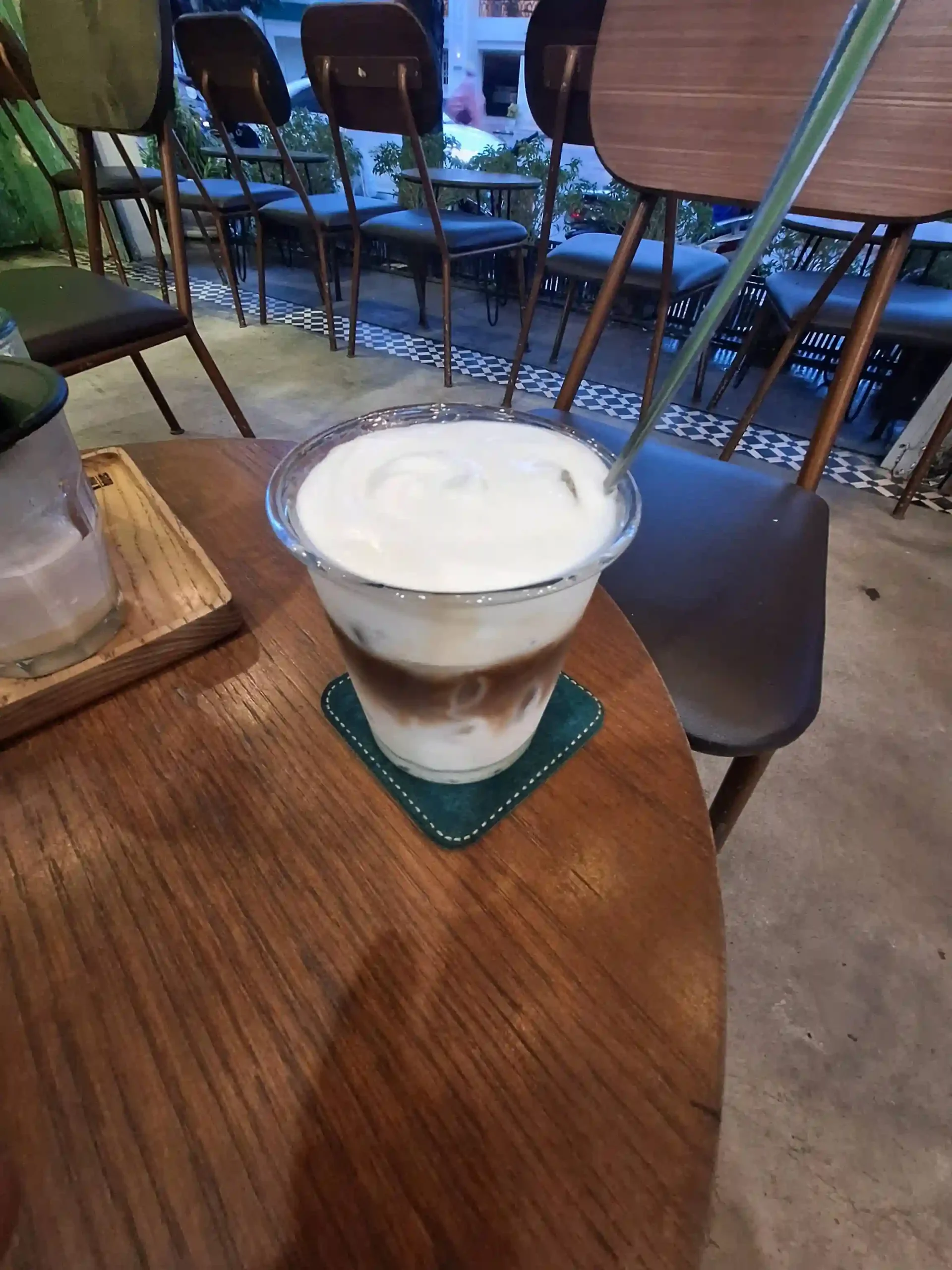
Coffee is a food group here
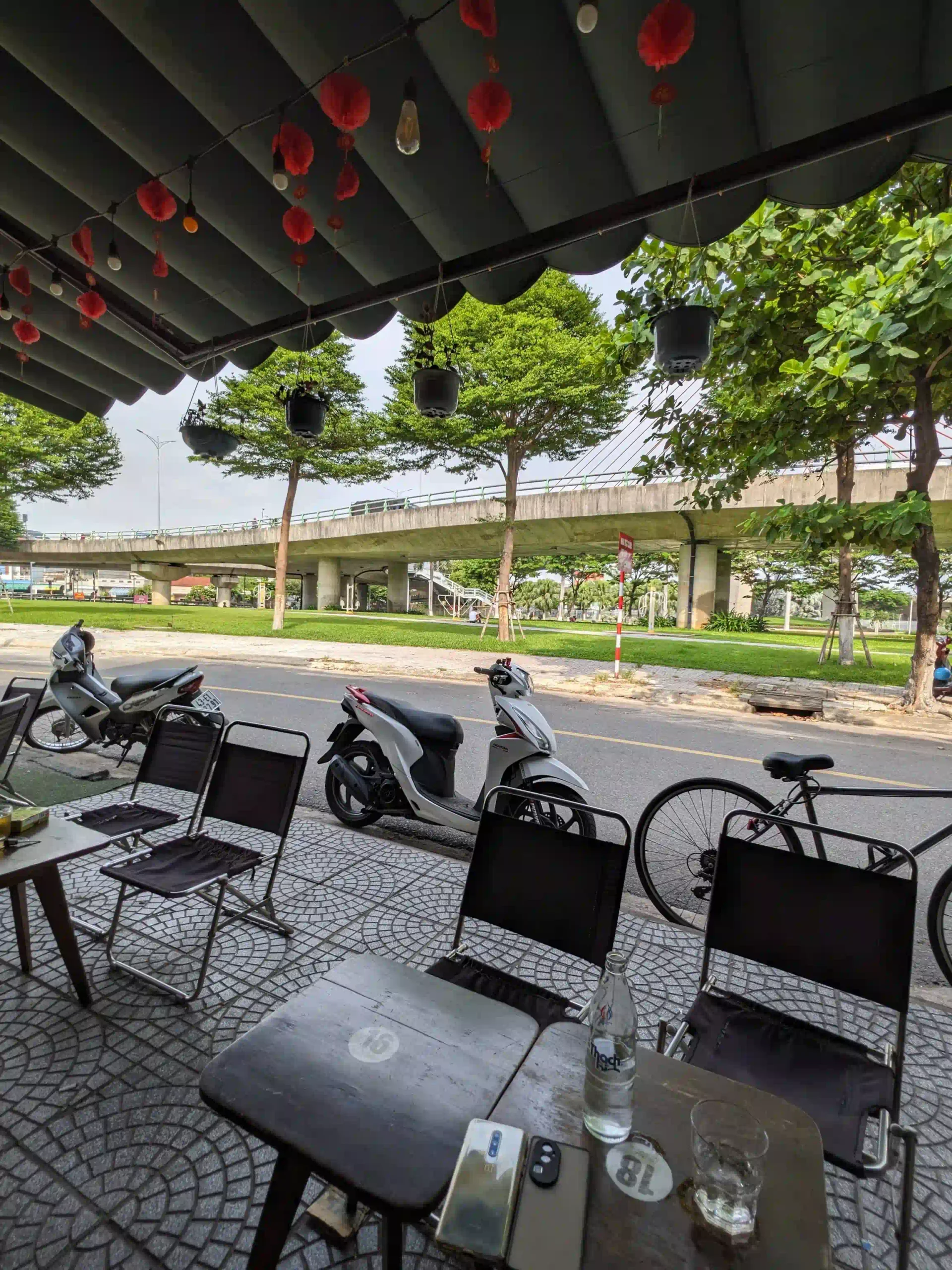
You cannot write a Da Nang food guide and ignore the coffee. Vietnam is the second-largest coffee exporter in the world. The coffee culture here is deeply embedded in daily life.
Vietnamese coffee uses Robusta beans. It is dark, bitter, and has about twice the caffeine of the Arabica coffee you drink at Starbucks. It will make your heart beat fast.
Ca Phe Sua Da (Iced Milk Coffee)
This is the default. They drip the dark coffee through a metal filter into a glass that has a thick layer of sweetened condensed milk at the bottom. You stir it up and pour it over ice. It is basically rocket fuel mixed with melted ice cream. It costs about 20,000 VND on the street.
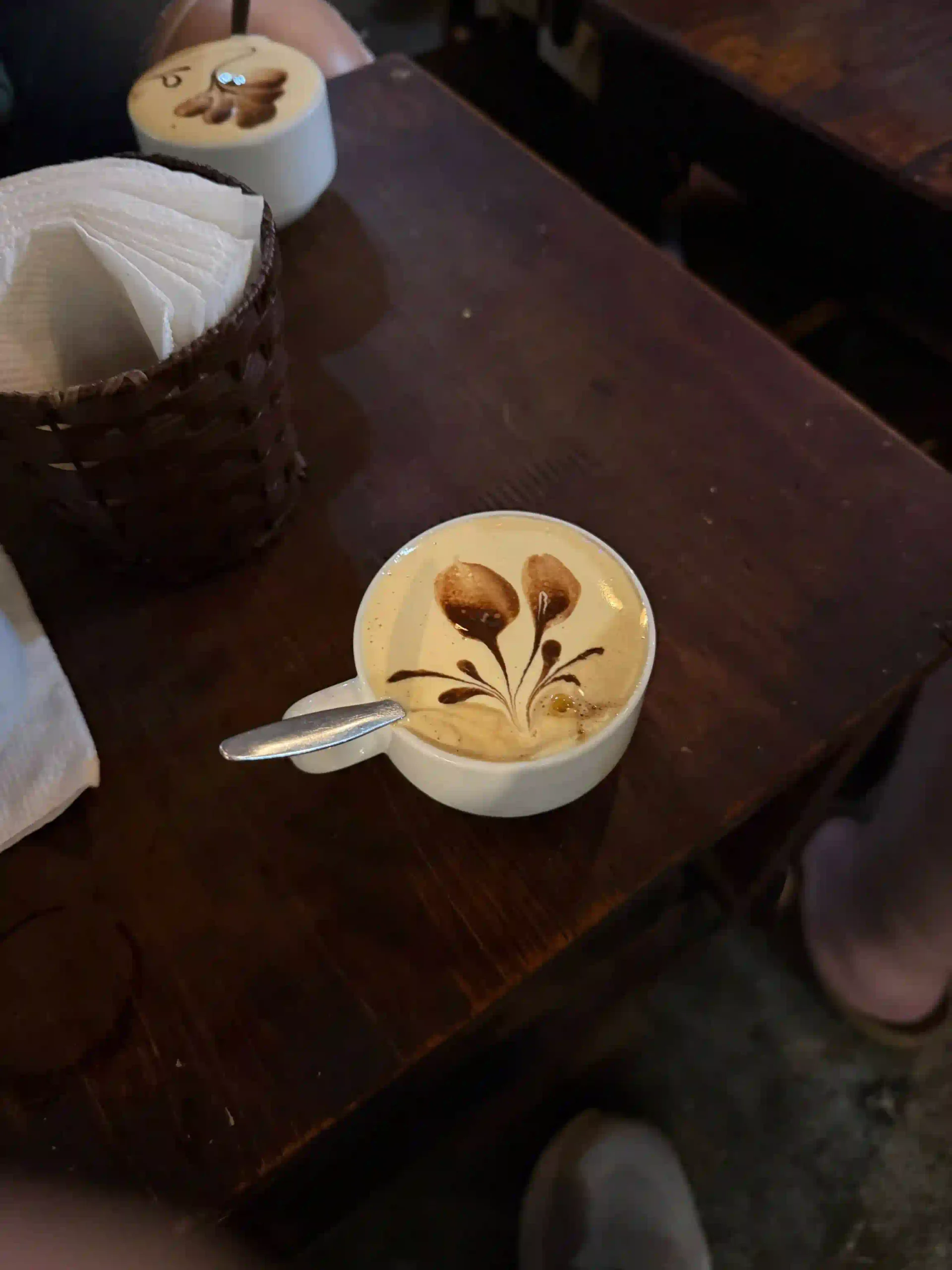
Ca Phe Muoi (Salt Coffee)
This actually originated in Hue, but it has completely taken over Da Nang in the last few years. It sounds disgusting, but it is amazing.
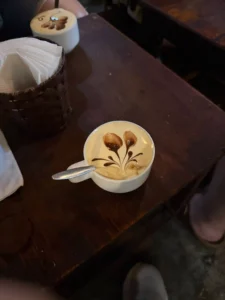
They take black coffee and top it with a thick layer of salted, whipped cream. You drink the coffee through the salty foam. It tastes like a salted caramel dessert. You have to try it at least once.
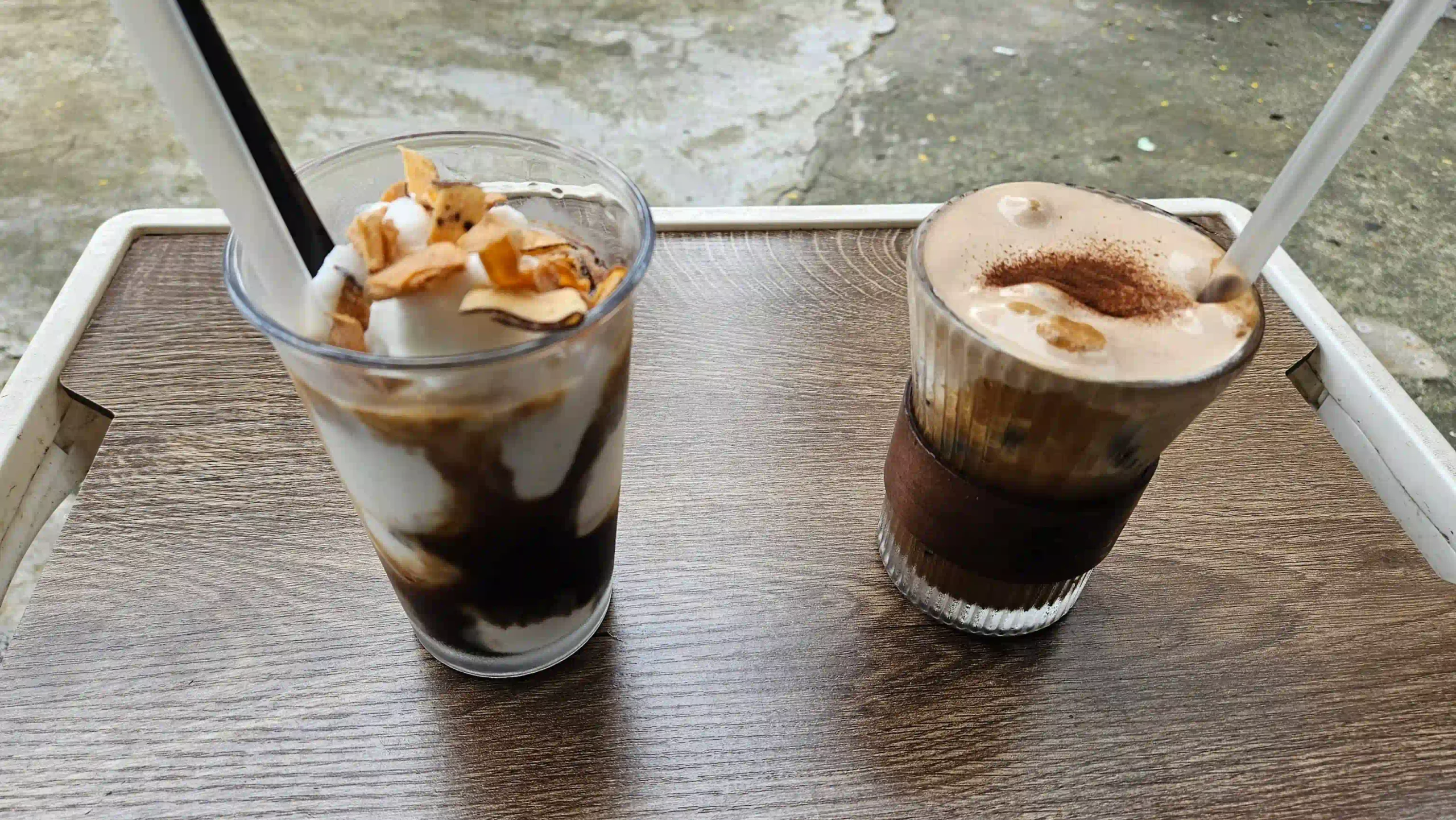
Coconut Coffee
They blend coconut milk, condensed milk, and ice into a thick slushie, and then pour a shot of black coffee over the top. It’s perfect for a 35-degree afternoon.
The Schedule: You can’t eat whenever you want
This is a massive mistake tourists make. In the West, restaurants are open all day. You can go get a burger at 3:00 PM.
Vietnam operates on very strict meal times.
Breakfast (6:00 AM to 9:00 AM)
The city wakes up early. This is soup time. Pho, Bun Cha Ca, Bun Bo Hue. By 9:30 AM, the big pots of broth are empty, and the stalls close up and literally wash the sidewalk.
Lunch (11:00 AM to 1:30 PM)
This is when people eat rice. Look for signs that say “Com Binh Dan” (Working class rice). It’s a buffet. You point at a piece of fried fish, some braised pork belly, and some morning glory, and they put it on a plate of rice for 35,000 VND. By 1:30 PM, the food is gone, and everyone goes to sleep for an hour.
The Dead Zone (2:00 PM to 5:00 PM)
Do not try to find a good local meal right now. The street stalls are closed. The only things open are tourist restaurants charging double the price, or cafes. Just drink coffee or eat a Banh Mi from a cart.
Dinner (6:00 PM to 9:00 PM)
The streets come alive again. This is when the Banh Xeo places open. This is when the seafood joints get loud. This is when people sit outside and drink beer.
If you try to eat outside of these windows, your options drop by 90%. Plan your days accordingly.
The Language Barrier
Don’t let the lack of English stop you from eating.
Vietnamese is a tonal language. Even if you memorize the word for chicken (Ga), if you say it with the wrong pitch, you might be saying the word for train station. It is incredibly frustrating.
Just use your eyes. Walk past the food stalls. Look at what the people sitting down are eating. If it looks good, point at their bowl, hold up one finger, and smile at the owner. They will understand.
Google Translate is somewhat helpful, but the camera translation feature struggles with handwritten Vietnamese signs, and the names of the dishes don’t always translate literally. Just accept that you might occasionally order something you didn’t expect. That’s part of the game.
Dealing with the “Foreigner Tax”
It happens. You sit down, you eat a bowl of noodles, and they charge you 50,000 VND instead of the 35,000 VND they charge the locals.
Some people get incredibly angry about this. They argue over the 15,000 VND (which is literally 60 cents).
My advice after ten years here: Pick your battles.
If a seafood restaurant tries to overcharge you by $50 because they rigged the scale, absolutely fight it. Walk away. Call them out.
But if an old lady working over a boiling pot of broth for twelve hours a day charges you an extra 50 cents for a bowl of noodles, just pay it. You are on vacation. Your currency is massively stronger. It is not worth ruining your mood or causing a scene over half a dollar. Pay the slight premium, enjoy the food, and move on.
Tying it all together
Eating in Da Nang is an aggressive, loud, and incredibly rewarding experience. It forces you to get out of your comfort zone.
You will sweat. You will sit on chairs meant for toddlers. You will accidentally eat a piece of chili that makes you question your life choices.
But you will also eat some of the most complex, fresh, and cheap food on the planet.
Use this Da Nang food guide as your courage. Ignore the empty restaurants with the glossy menus. Walk down the narrow alleys. Look for the dirty floors. Point at the weird fish. If you follow the basic rules of high turnover and cooked food, your stomach will be fine, and your wallet will thank you.
Now get out there and find a bowl of Mi Quang.

Keep Exploring Da Nang
-
See & do UltimateMy best things to see in Da Nang if you only have 3 days ›
-
FoodI ate everything to rank the 10 best food in Da Nang ›
-
FoodI asked 50 locals to rank 5 best restaurants in Da Nang ! ›
-
Stays Must readWhere to stay in Da Nang: I lived everywhere, here’s my pick ›
-
Spots Must readI tried 10 Da Nang activities so you know what to skip ›











 Tiếng Việt
 한국어
한국어 中文 (中国)
 日本語
日本語 ไทย
ไทย Deutsch
 Español
 Destinations
 Instagram
 Facebook
 X (Twitter)
 Threads
 Tiktok