









 Ha Giang
 Hanoi
 Ho Chi Minh City
 Ha Long
 Sapa
 Mekong Delta
 Da Nang
 Hue
 Hoi An
 Ninh Binh
 Da Lat
 Nha Trang
 Phan Thiet
 Phu Quoc
 Quang Binh
 Quy Nhon
 Vung Tau
 Thai Nguyen
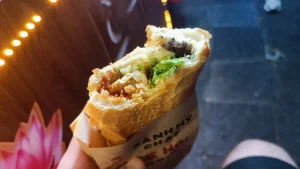
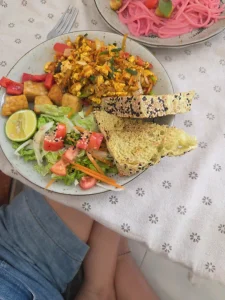
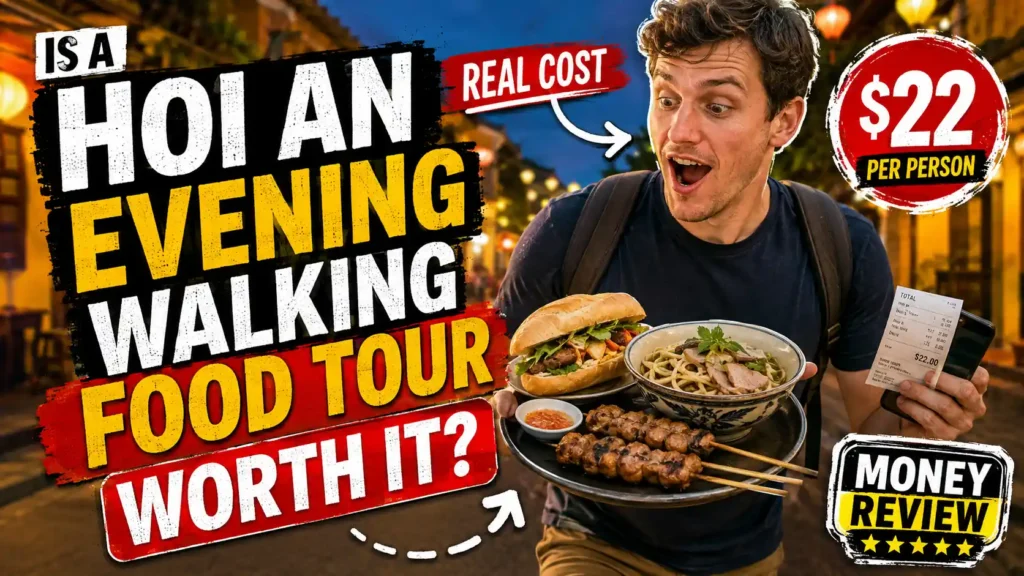

The argument for a food tour anywhere is usually that a local walks you into places you’d never have found on your own, and in Hanoi or Saigon that argument holds up fine, because those cities are enormous and the good stall really is down an alley you would never turn into.
Hoi An is about a kilometre and a half across. Every restaurant a guide could take you to has thousands of reviews on Google Maps and a queue outside it.
So the standard pitch doesn’t really work here, and I think a lot of people book a Hoi An food tour on that pitch and then feel slightly odd about it afterwards without being able to say why.
I still think it’s worth booking, for some people, on some nights. Just for completely different reasons than the listings give, and not at the prices some of them are asking.
- Quick Answer: A Hoi An food tour costs $26 to $60 for two and a half to three hours, six or seven tastings and a group of eight to twelve people. Ordering the same food yourself comes to around 250,000 VND, so you’re paying roughly two and a half times the food cost for the guiding. That’s a fair trade on your first or second night in central Vietnam and a poor one after that.
- The Numbers:
- Small-group evening walking tours: from $26, 2.5 to 3 hours, max 10 people.
- Intrepid’s sunset street food tour: around $39, 4:30pm start, max 12.
- Private evening food tours: $55 to $165 a head.
- Doing the same route yourself: 220,000 to 290,000 VND, about $9 to $11.
- Before You Book:
- Most tours start at 6pm and finish by the river around 8:30pm.
- Roughly 4km of flat walking, six or seven stops.
- Ask for half a banh mi. The first two stops are full meals and people run out of room.
- If the route uses Madam Khanh, check the start time. That shop shuts at 7pm.
- The “entrance ticket included” is the 120,000 VND Ancient Town ticket. Heritage houses shut at 5:30pm, so take the physical ticket and spend it the next morning.
- Vegetarian is fine with notice. Vegan is not really workable here.
What a Hoi An Food Tour Costs in 2026
The prices have spread out a lot in the last couple of years and the spread doesn’t track quality in the way you’d hope it would.
| Tour | Length | Start | Group | Price |
|---|---|---|---|---|
| Small-group walking food tour | 2.5 to 3 hrs | 6pm, Tran Hung Dao | Max 10 | From $26 |
| Intrepid, sunset street food tour | 2.5 hrs | 4:30pm, Hoi An Post Office | Max 12 | ~$39 |
| Premium small-group walking tour | 3 hrs | 6pm | Max 8 | $55 to $60 |
| Hostel street food tour | 4 hrs | 3pm | Large | ~$20, over 18s |
| Private evening food tour | 3 to 4 hrs | Hotel pickup | Your group | $55 to $165 pp |
The $26 walking tours and the $59 ones are doing much the same thing over much the same three hours. What you get at the top end is a smaller group, a hotel pickup, and on the sunset version a longer route out through the residential streets north of the centre with more tastings hung off it. That’s a nicer evening.
I’m not sure it’s $33 nicer, and in a town where you can walk the whole thing anyway I’d put the difference towards dinner somewhere good the following night.
The hostel tours are cheap for the reason you’d guess. Twenty people moving through streets this narrow is a different sort of evening, more of a social thing than a food thing, which is fine if that’s what you’re after.
What the Same Food Costs If You Just Go and Order It
This is the number the whole question turns on, so here it is properly. These are what the small local places charge. The riverside restaurants in the old town are two or three times this for the same dishes, which is its own thing and I’ve written about it in the ten best foods in Hoi An.
| Dish | What you’d pay |
|---|---|
| Cao lau | 30,000 to 40,000 VND |
| Banh mi at Phuong or Madam Khanh | 25,000 to 50,000 VND |
| Banh xeo, nem lui and grilled pork, shared | 80,000 to 120,000 for two |
| White rose dumplings | 50,000 to 80,000 VND |
| Mót herbal drink | 10,000 to 15,000 VND |
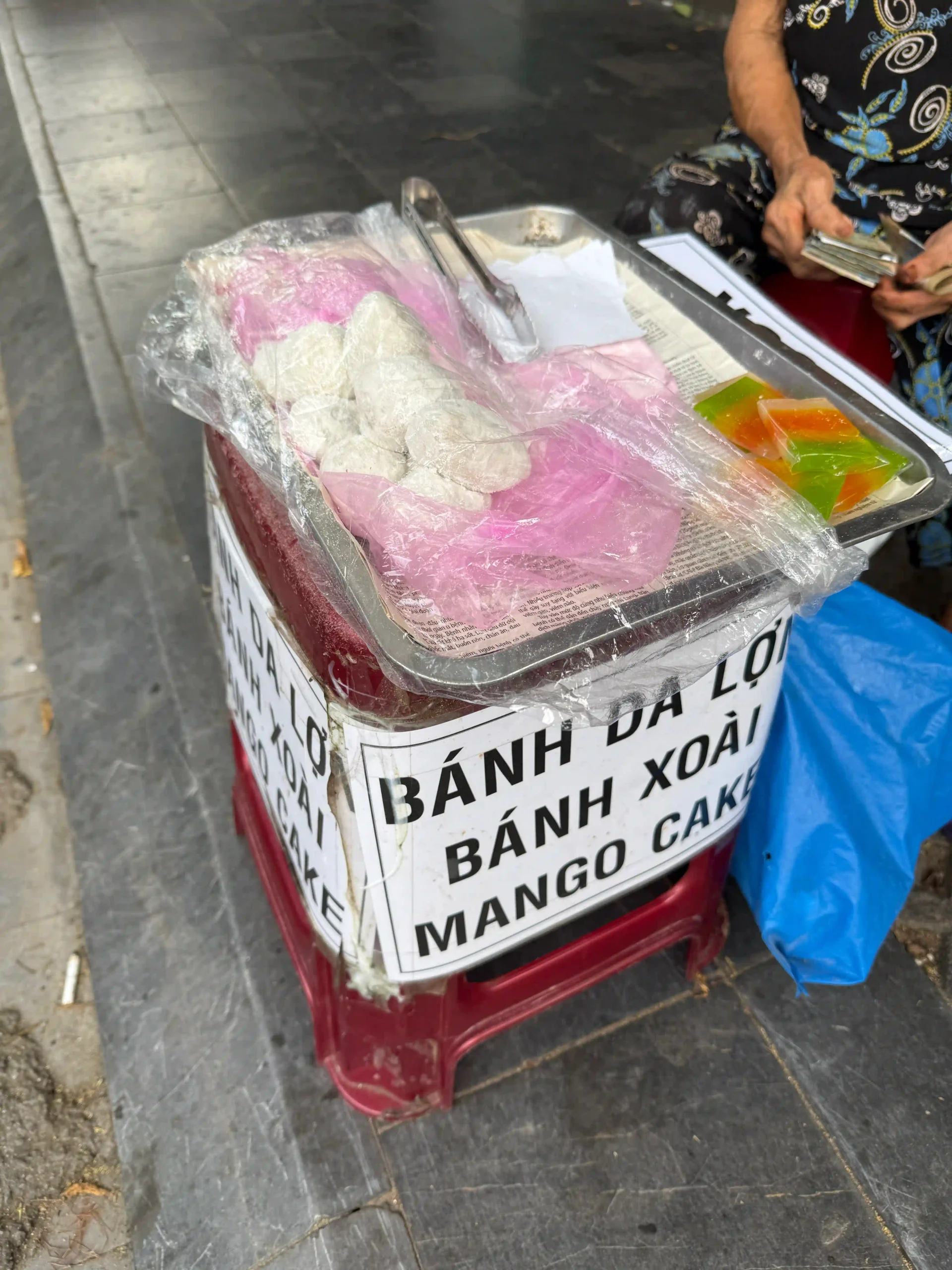
| Banh xoai | 10,000 to 15,000 VND |
| Per person, all of it | 220,000 to 290,000 VND, about $9 to $11 |
So the $26 tour is running at about two and a half times what the food costs, and the $59 one at roughly six times.
For comparison, food tours in Saigon usually run three to five times the food cost, because the food there is cheaper and the distances are longer, so the guiding is doing more work. Hoi An is the town where the sums come out closest to fair, mostly because the walking is easy and the tours are short.
Two of you can eat this entire route for under 600,000 VND, which is about what one person pays for the tour. Sit with that for a second before you book, because it’s the real shape of the trade.
So What Are You Actually Paying For Here?
Not the food, which is a third of the ticket. Here’s the rest of it, in the order I think each part is worth paying for, and one part I don’t think you’re getting at all.
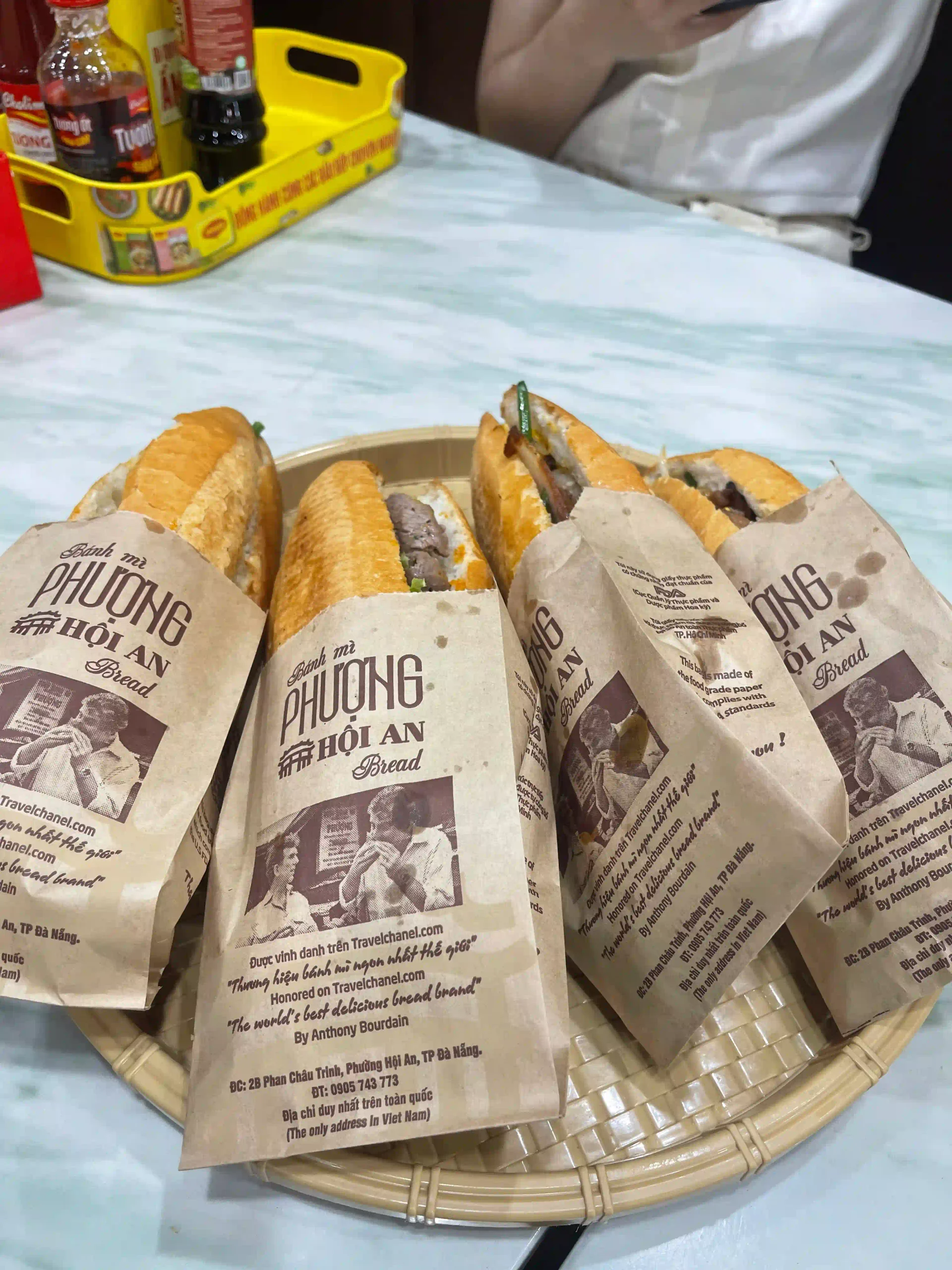
A seat at Banh Mi Phuong
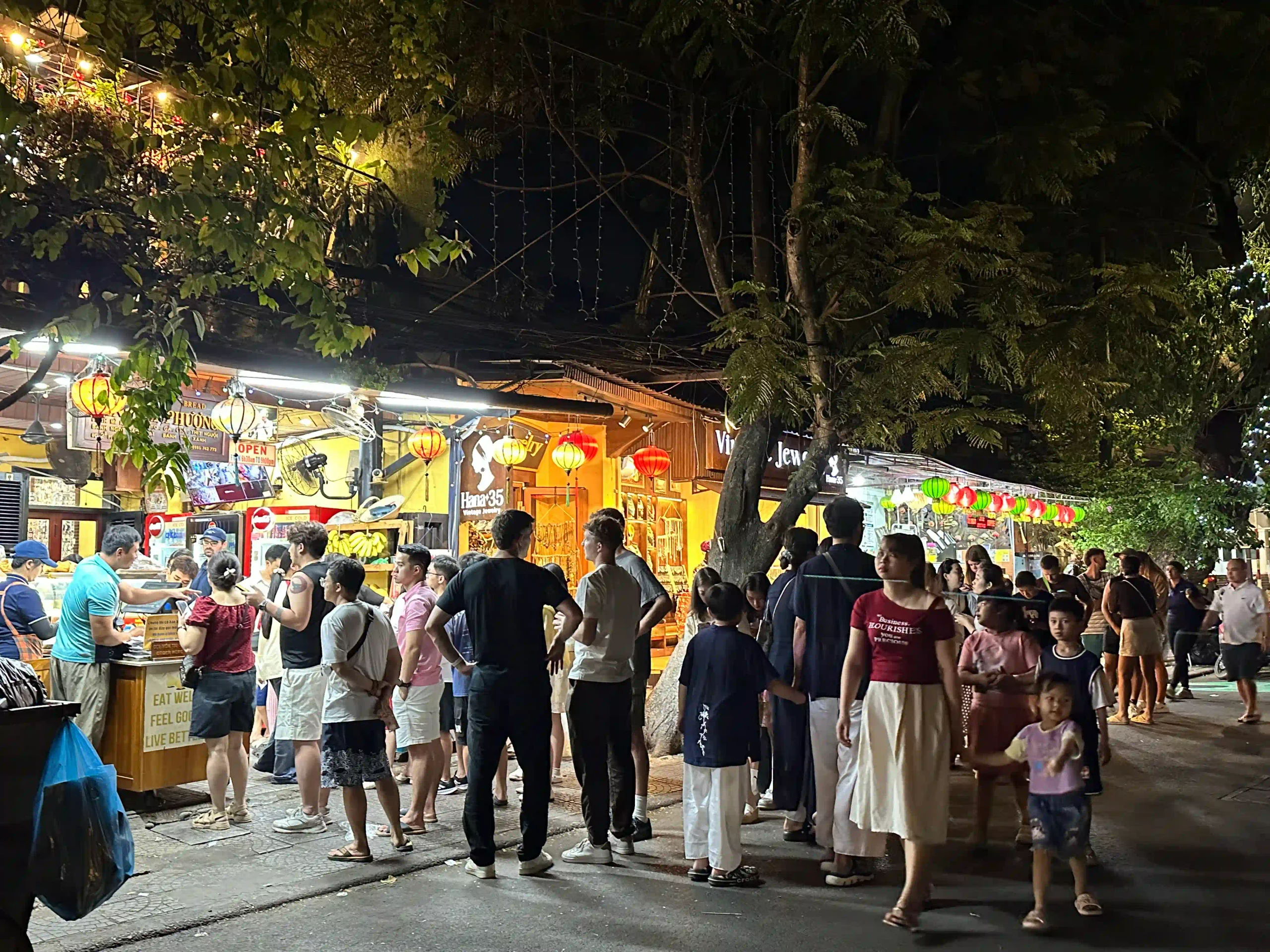
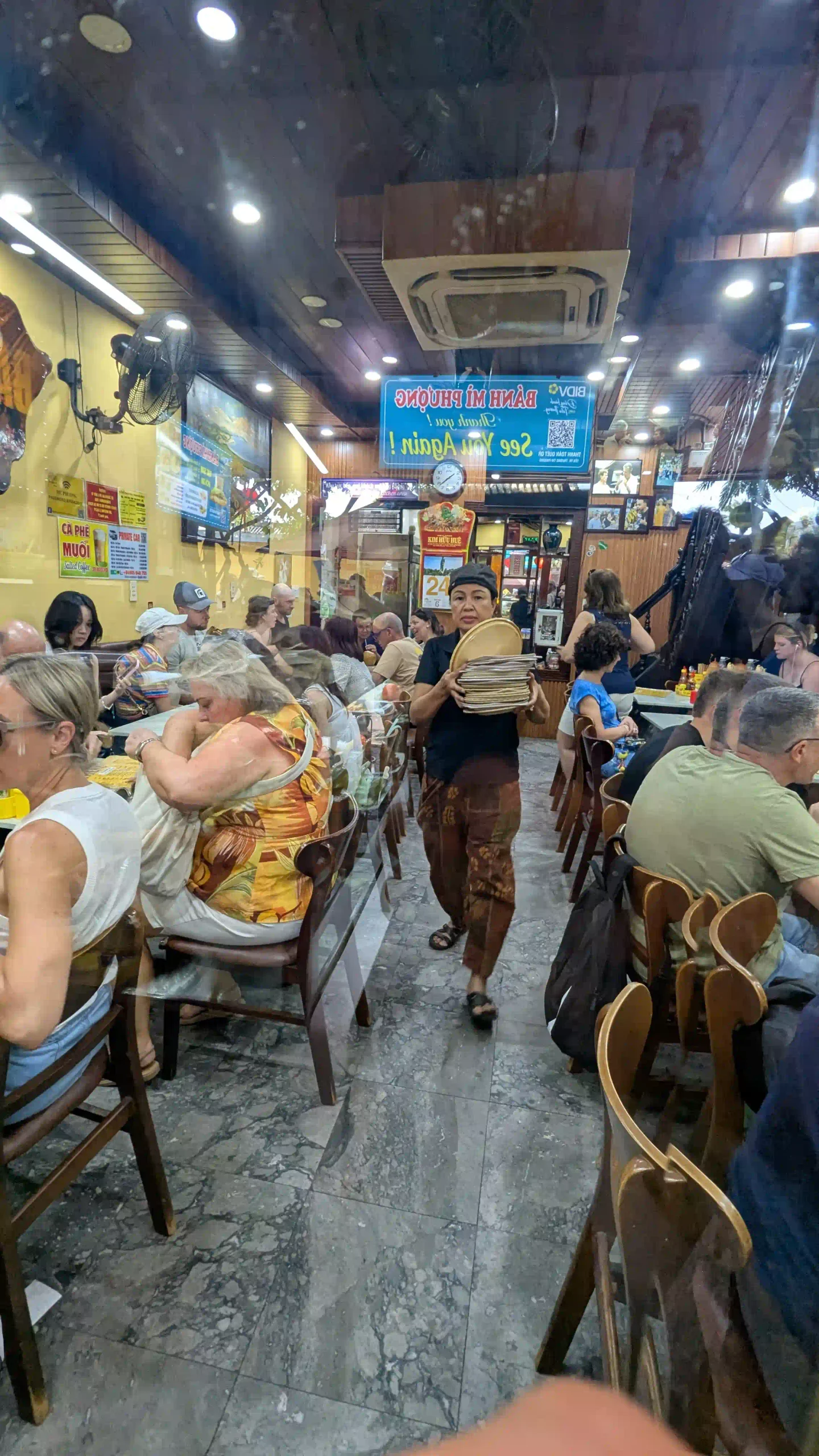
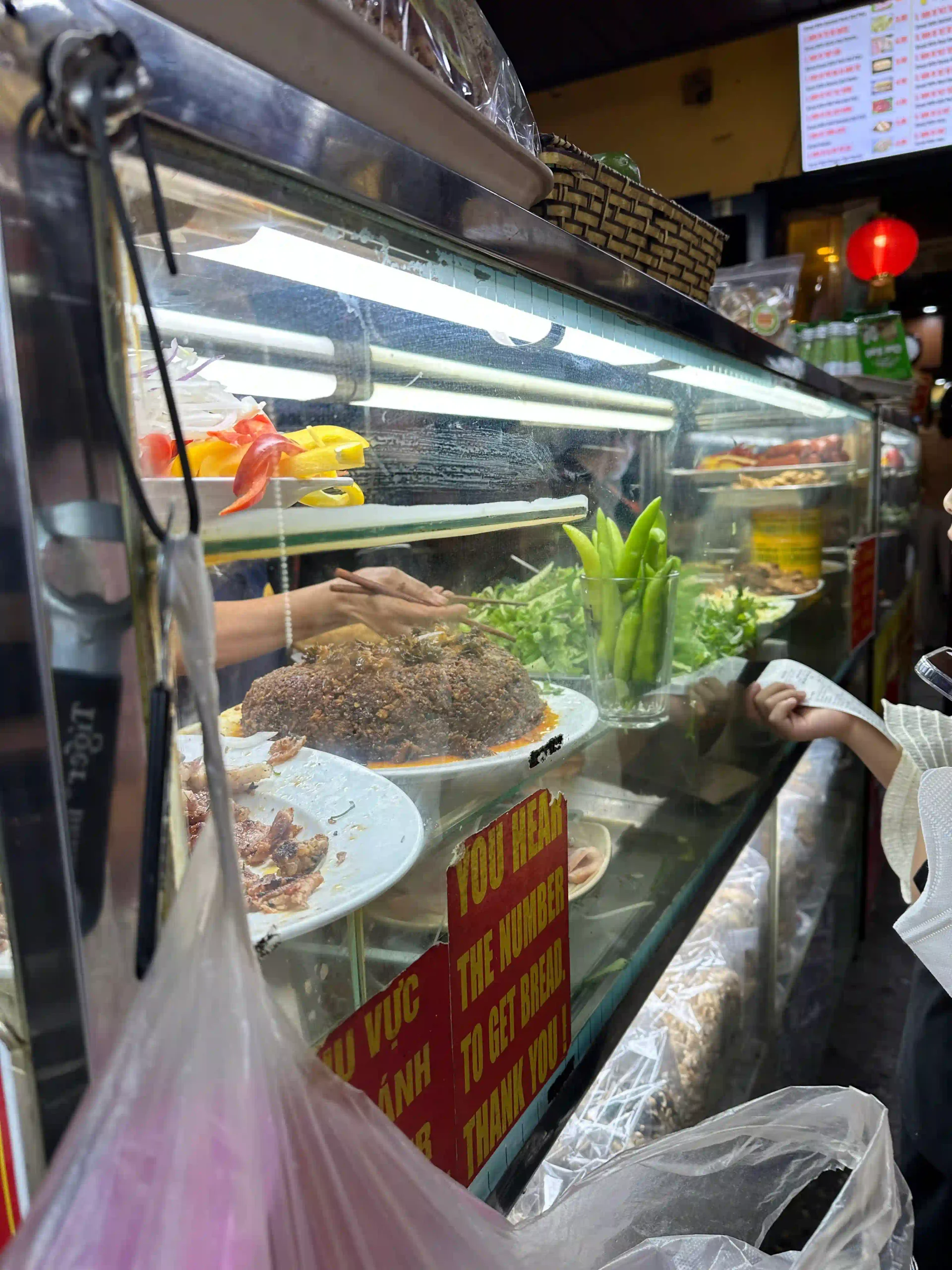
Phuong has a line out the door most evenings. You order, you get a receipt with a number on it, you stand nearby and wait for the number to be called. At peak that’s twenty to thirty minutes.
There is a large upstairs room that seats about a hundred, so the “you’ll be eating standing on the pavement” line you see in a lot of guides isn’t quite right. What a tour buys you is a table already held and somebody who has ordered ahead.
I’ve stood in that queue plenty of times and I’ll stand in it again. But if you’re travelling with someone whose patience for queuing is limited, that’s half an hour and a small disagreement you’ve bought your way out of.
Being told what you’re eating while it’s in front of you
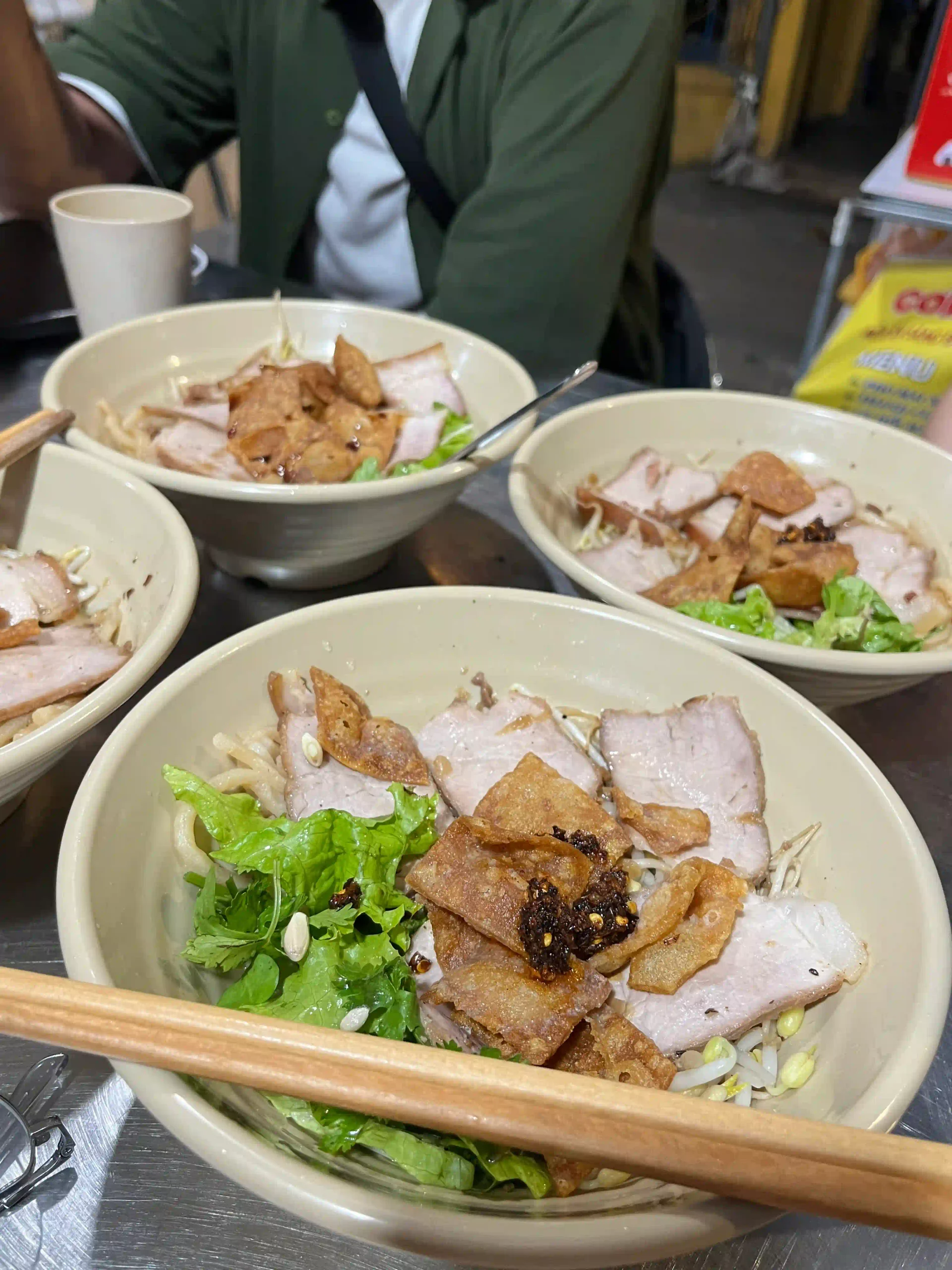
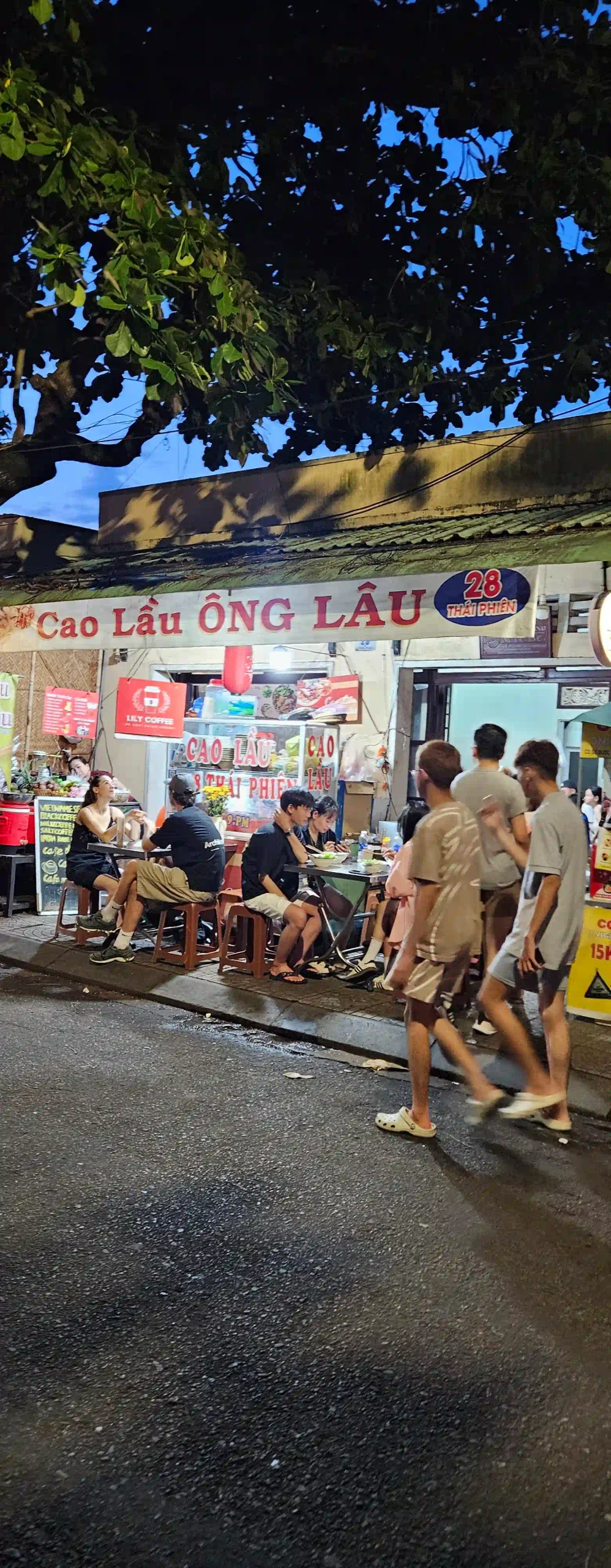
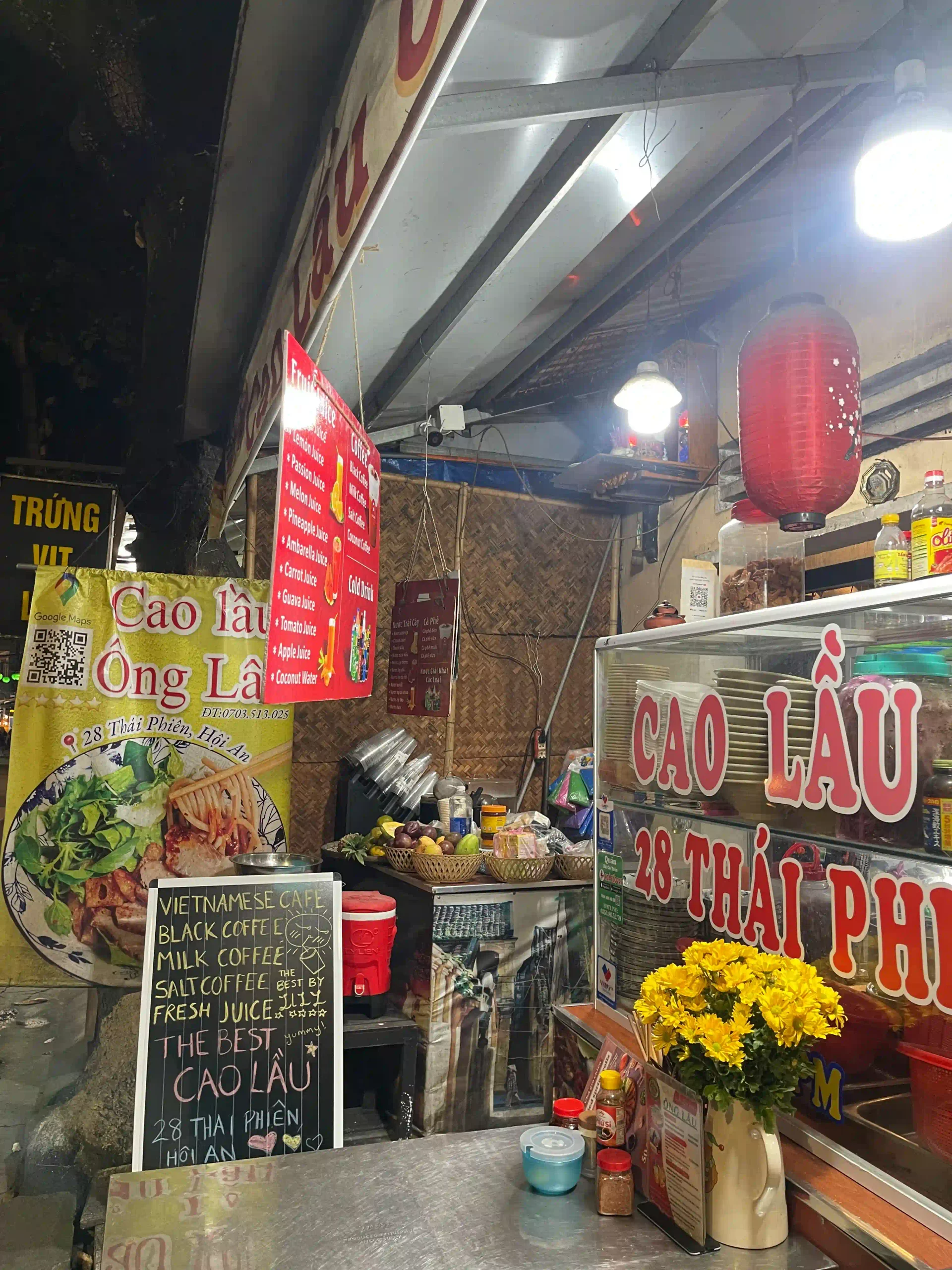
Cao lau is the dish most first-timers get wrong, and they get it wrong on arrival, not on taste.
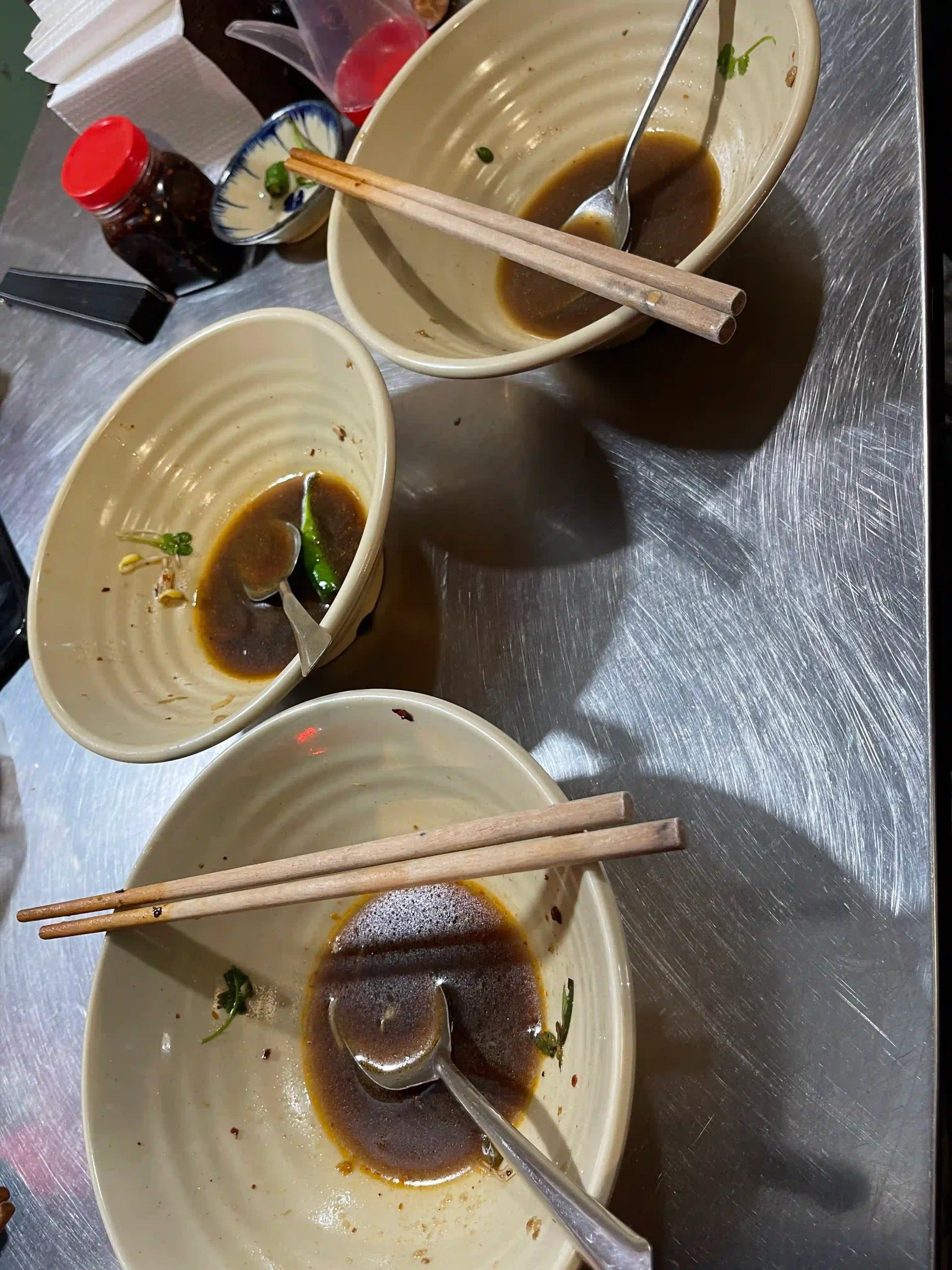
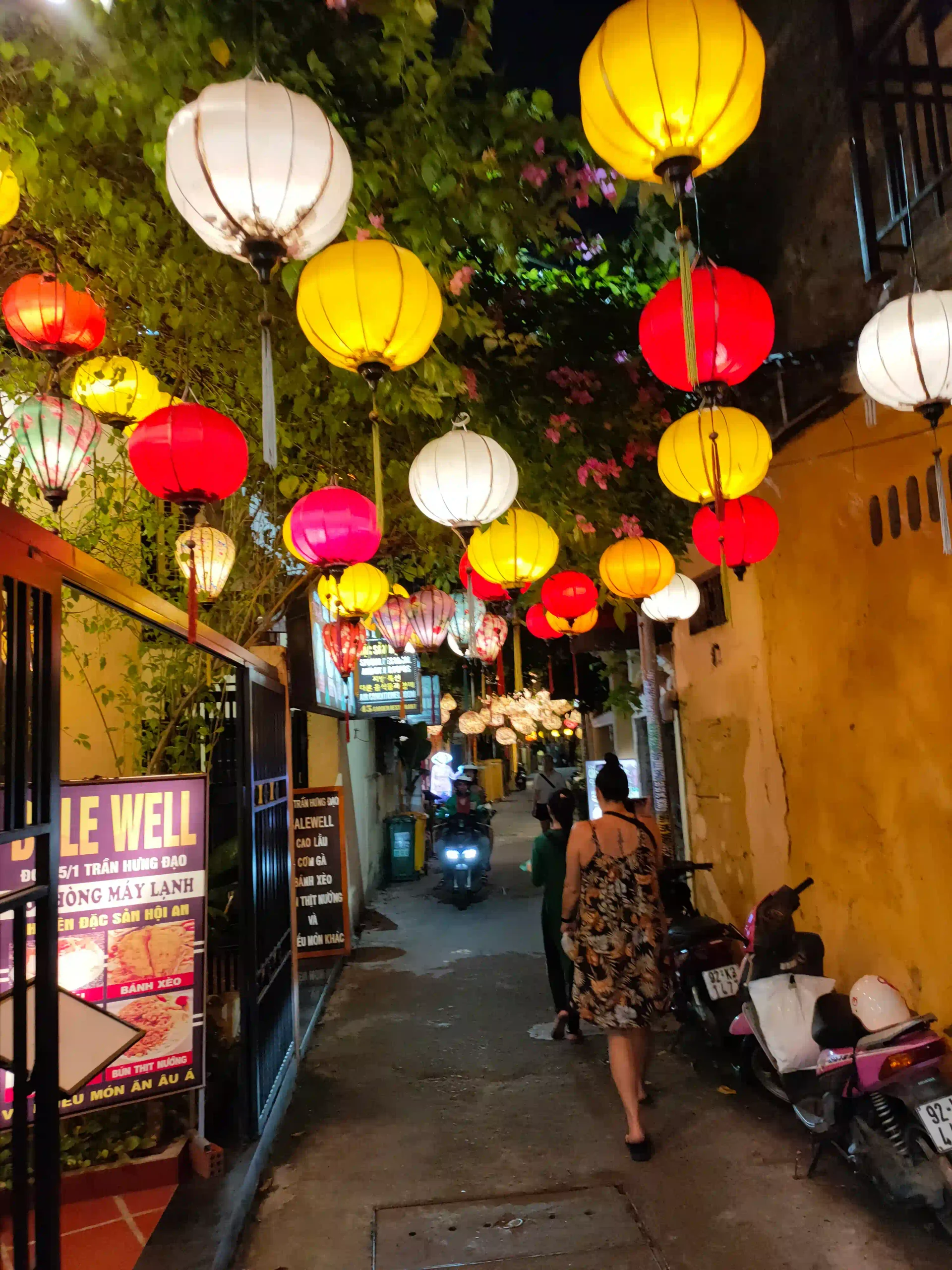
People are expecting a soup and it isn’t one. There’s a spoonful of broth down at the bottom and that’s deliberate, and the noodles are made with water from the Bá Lễ well and lye ash from Cham Island wood, which is why the same dish in Da Nang never quite lands.
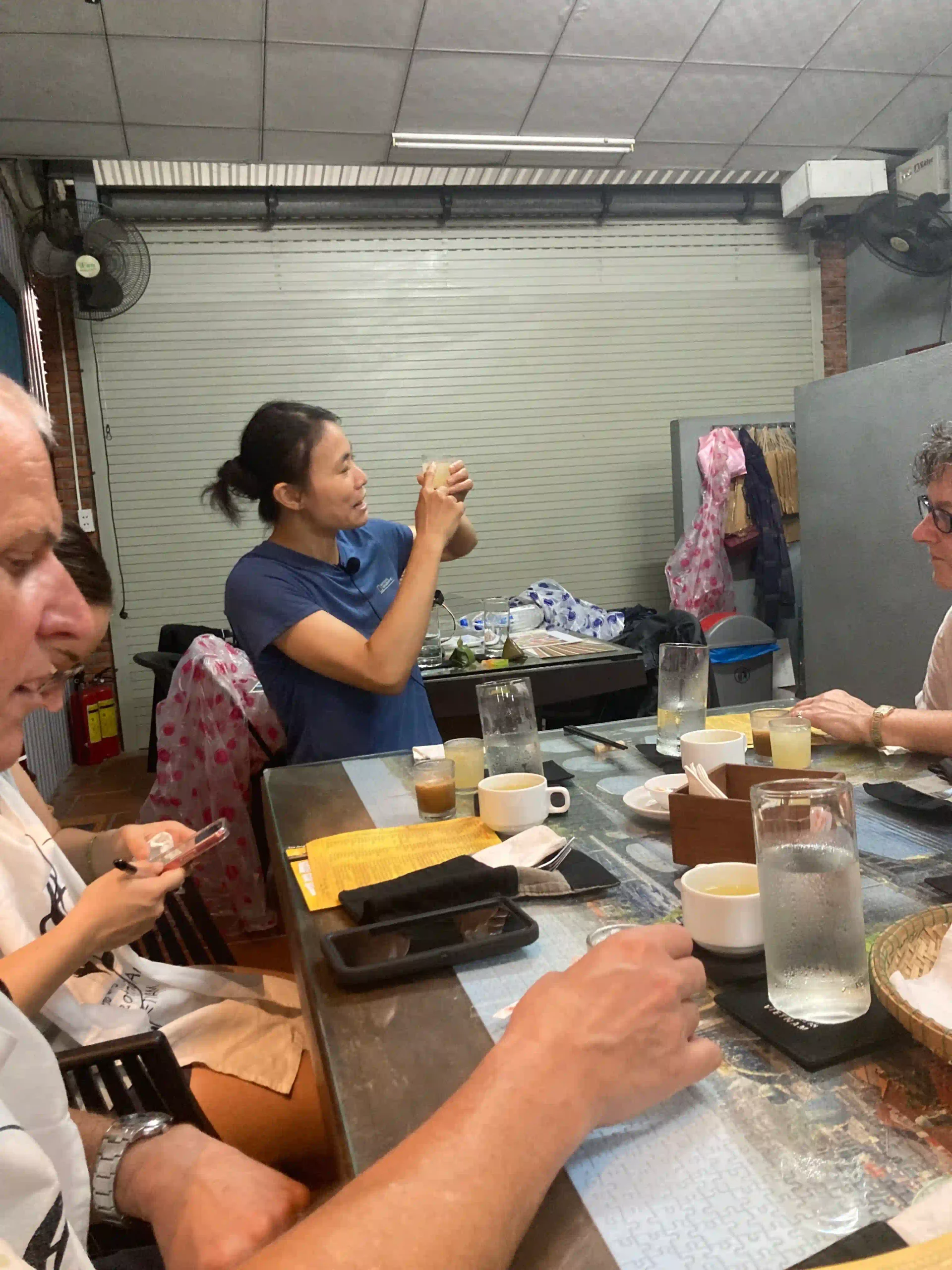
You can read all of that. Having someone say it while you’re looking at the bowl does hit differently, and this is the part of a Hoi An food tour I’d defend hardest.
The order things arrive in
Six things across three hours, sequenced so the heavy stuff comes before the sweet stuff. Left to your own devices on your first night you’ll eat two dishes, get full, and go to bed having tried a fraction of what you meant to. There’s a catch to this that I’ll come to.
The company
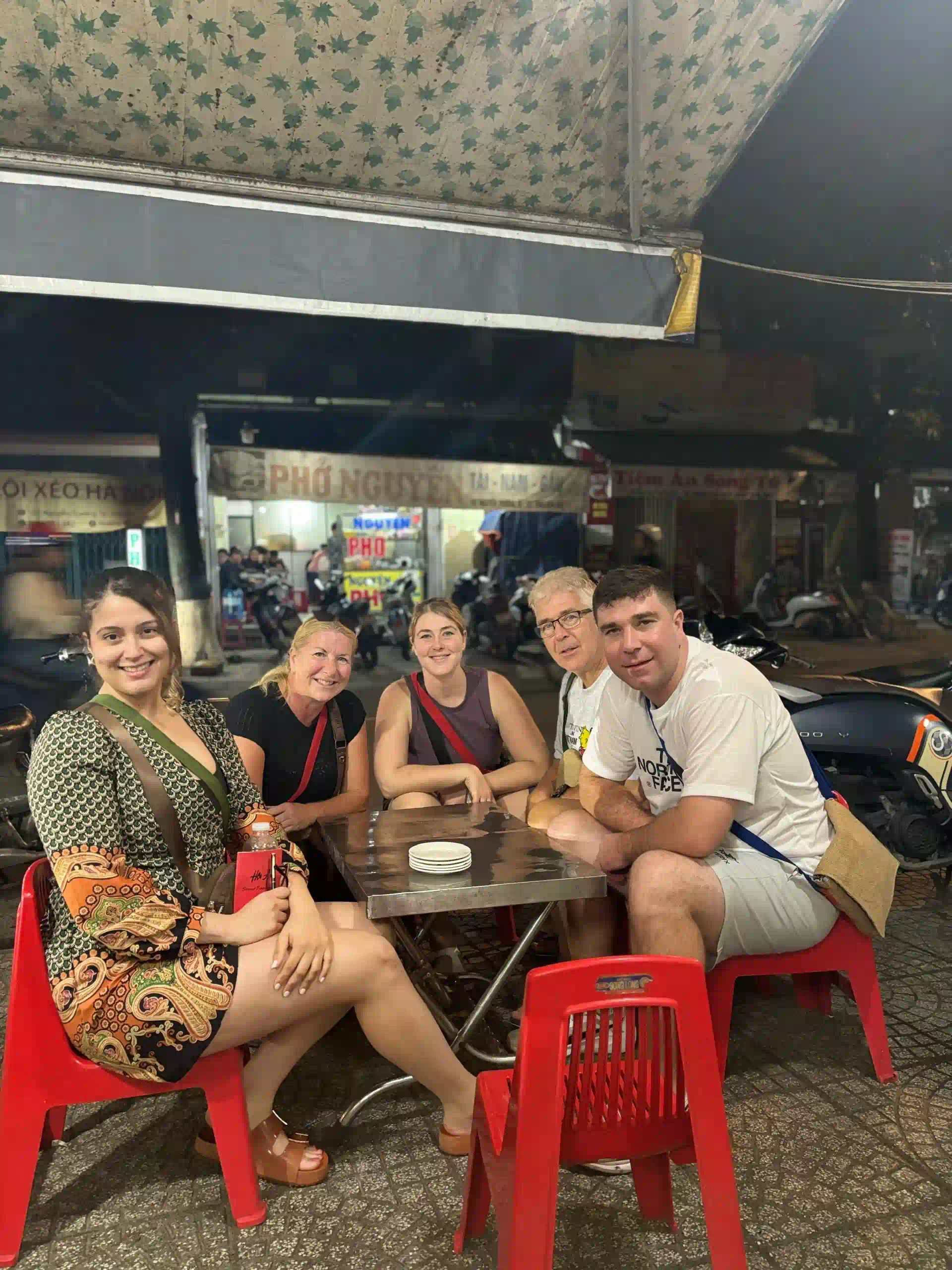
Groups of about eight, mostly couples and solo travellers. If you’re on your own and you’ve had three quiet dinners in a row, that’s a real reason to book and I’d never be snobby about it.
Solo travellers give these tours their best reviews by a distance, and it isn’t because the food was better for them.
What you aren’t buying, whatever the listing says
Access. Some version of the phrase “local eateries you’d never find on your own” is in nearly every Hoi An street food tour description, and in a town you can cross on foot in twenty minutes it’s thin.
Here’s the test. Banh Mi Phuong has over 16,000 Google reviews. Madam Khanh has 12,000. Mót has nearly 4,000. The night market has 50,000. These are the most reviewed food addresses in central Vietnam and they are the stops on the tour.
The places are small and family-run and good. They’re also findable by Wednesday if you’re paying any attention at all.
What Happens on a Hoi An Evening Food Tour, Stop by Stop
Routes vary by operator and by night, but the shape is consistent enough across the walking tours that this is a fair picture of most of them.
- 6pm, meet. Usually on Tran Hung Dao, sometimes at the post office. Introductions, quick head count, and you’re off. About 4km of walking over the evening, all of it flat, none of it rushed.
- Cao lau. A small local place, not somewhere with a view. Full-size bowl. The tour is at its best here because this is the dish that most needs explaining.
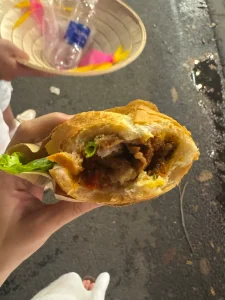
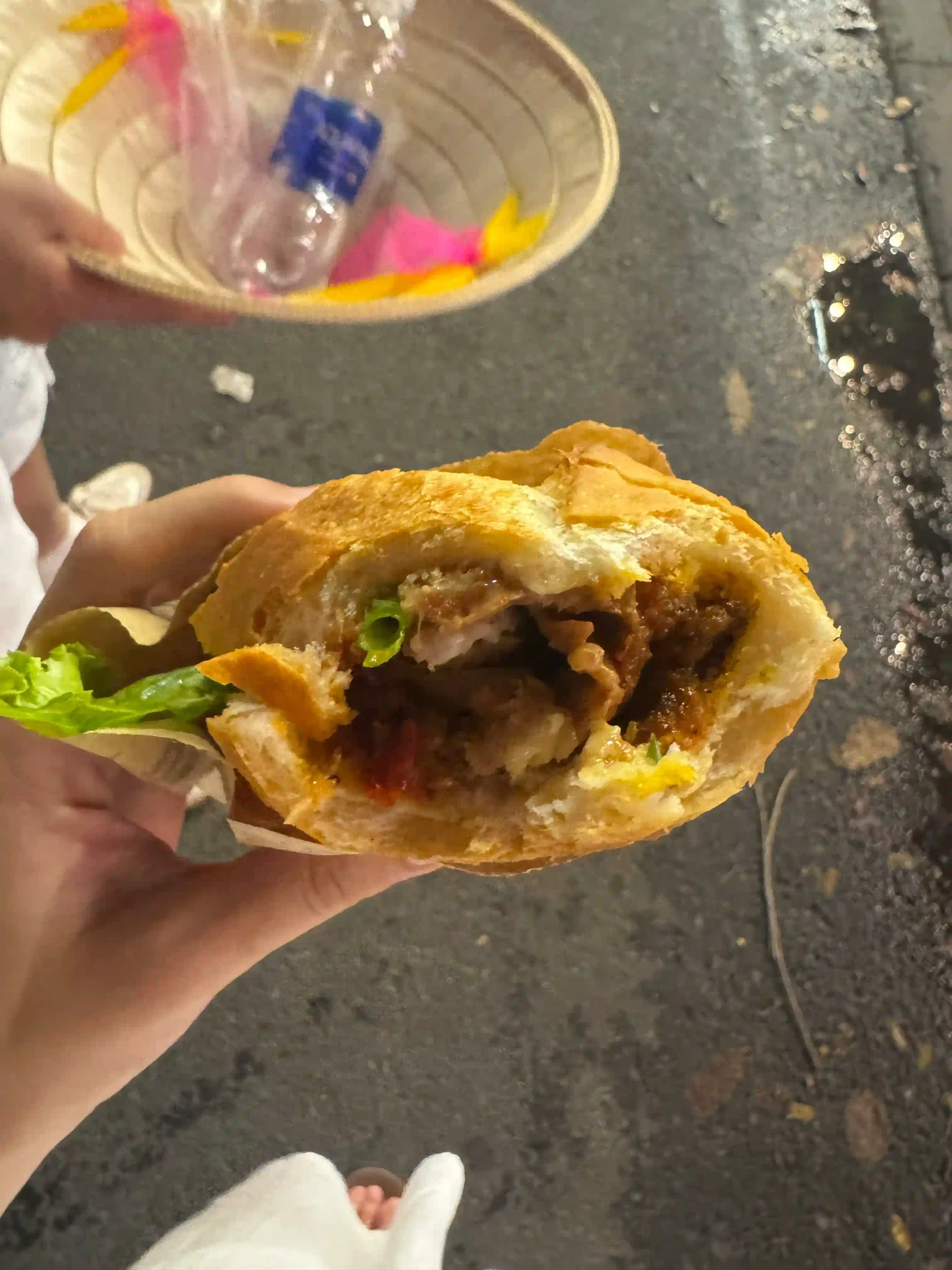
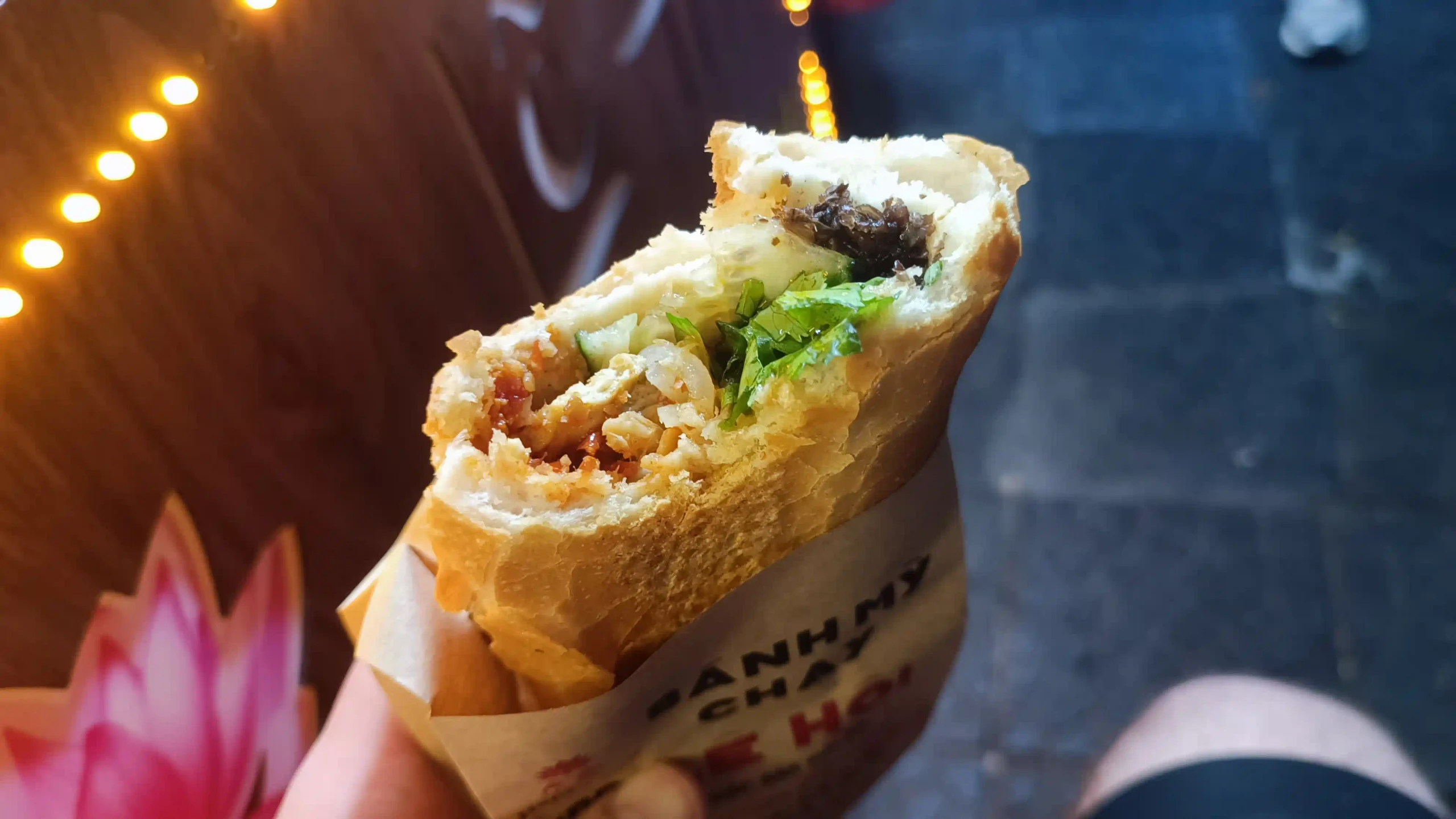
- Banh mi. Phuong (open until 9pm) or Madam Khanh (shuts at 7pm, so only on the earlier routes). You choose your own filling, which matters if you don’t eat pork or you’re wary of pate. Also full size.
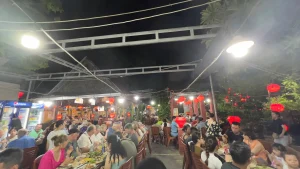
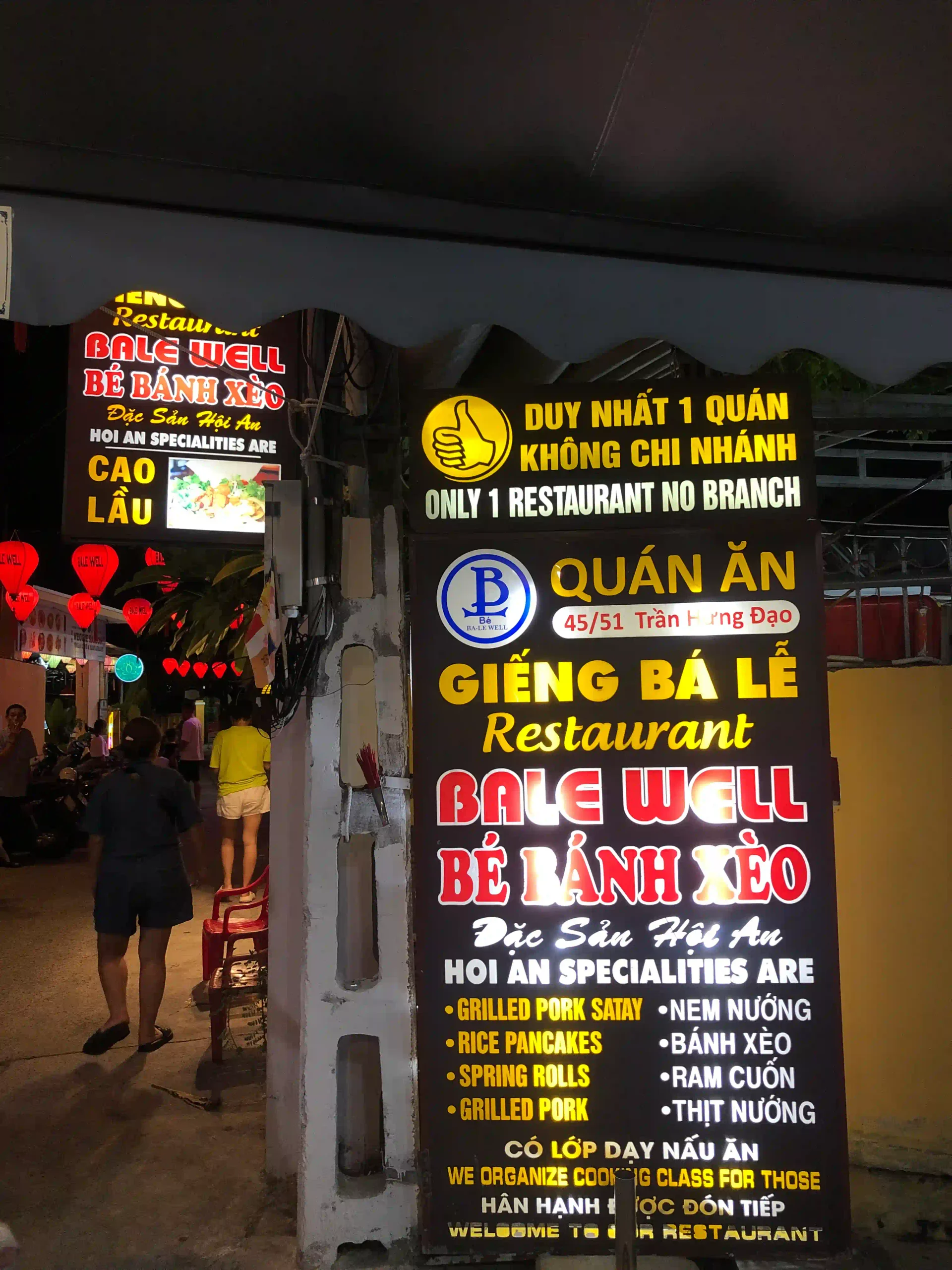
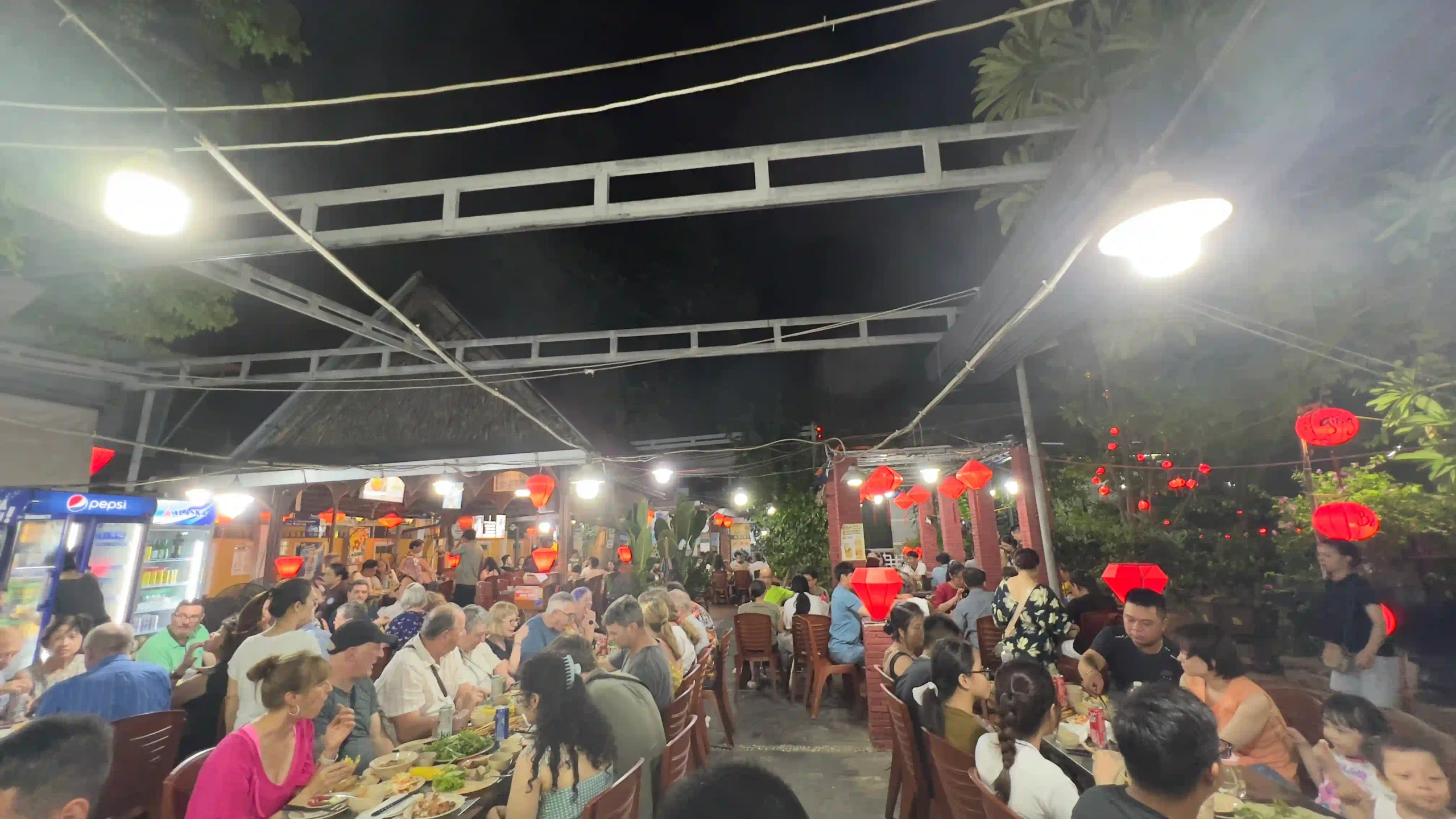
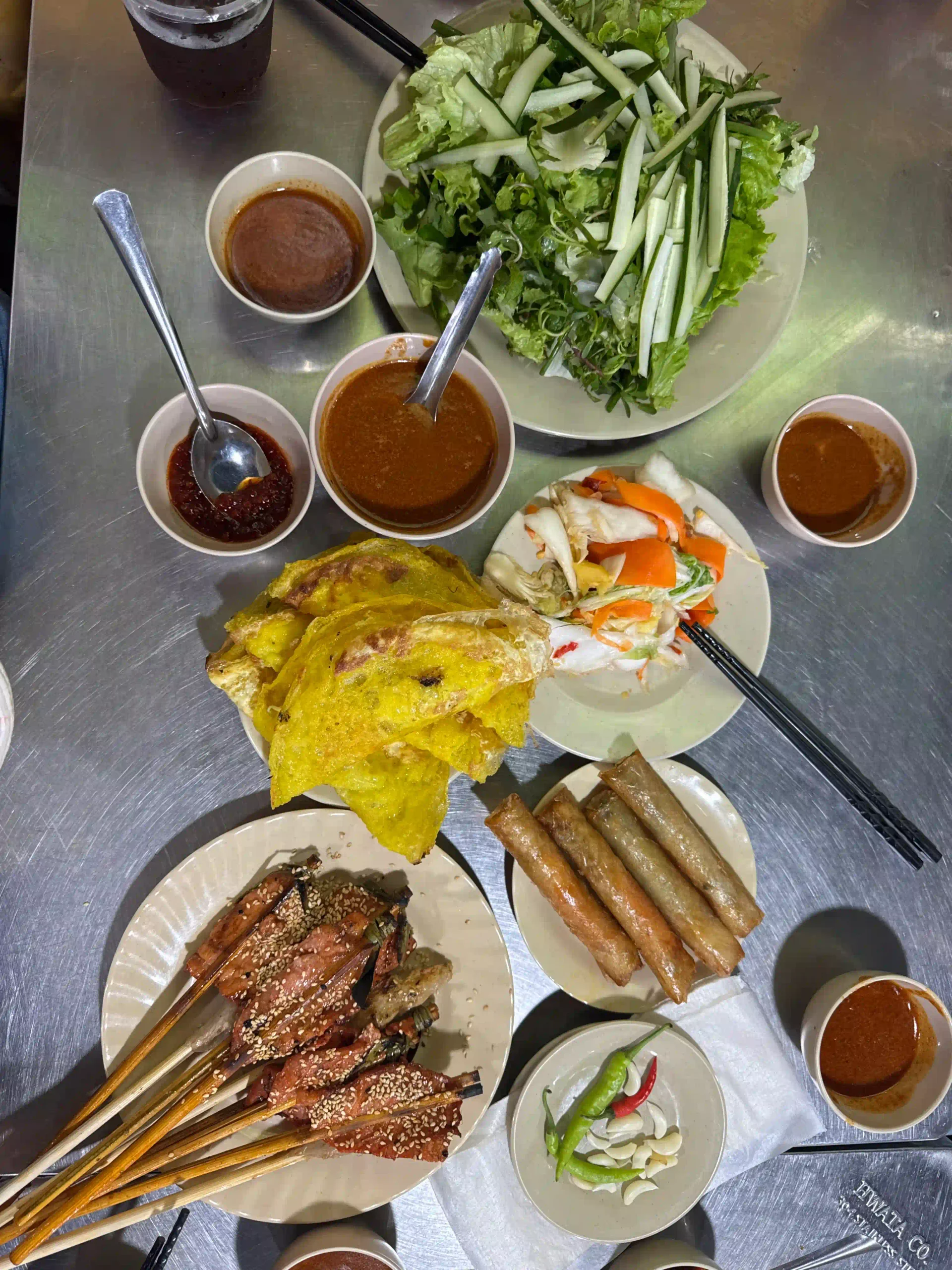
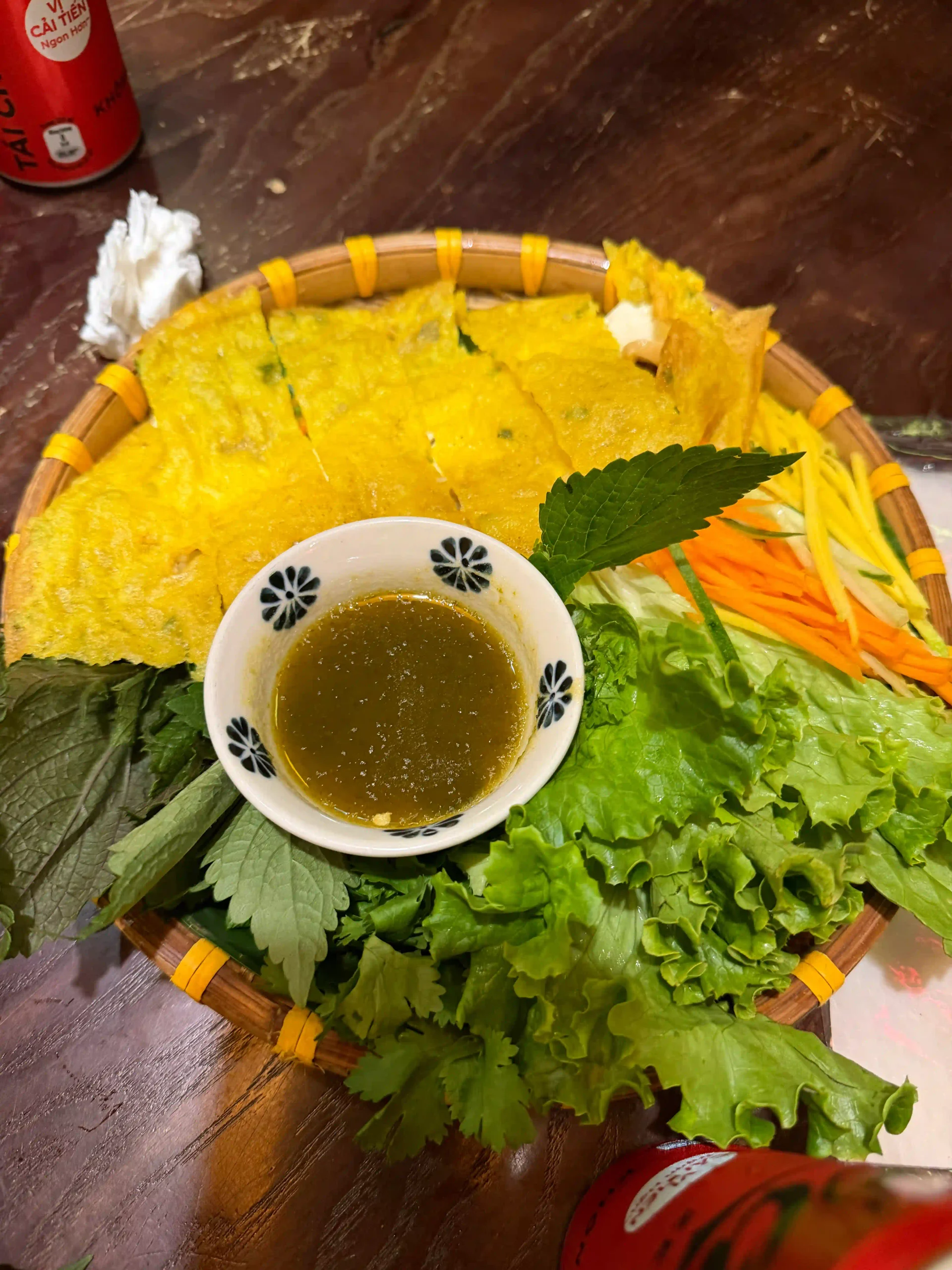
- The shared table. Banh xeo, nem lui, grilled pork, crispy spring rolls, a mountain of herbs and rice paper, and you wrap them yourself at the table. Someone shows you how and gets it slightly wrong and everyone laughs. This is the stop people remember.
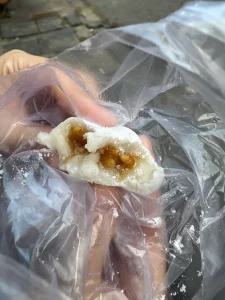
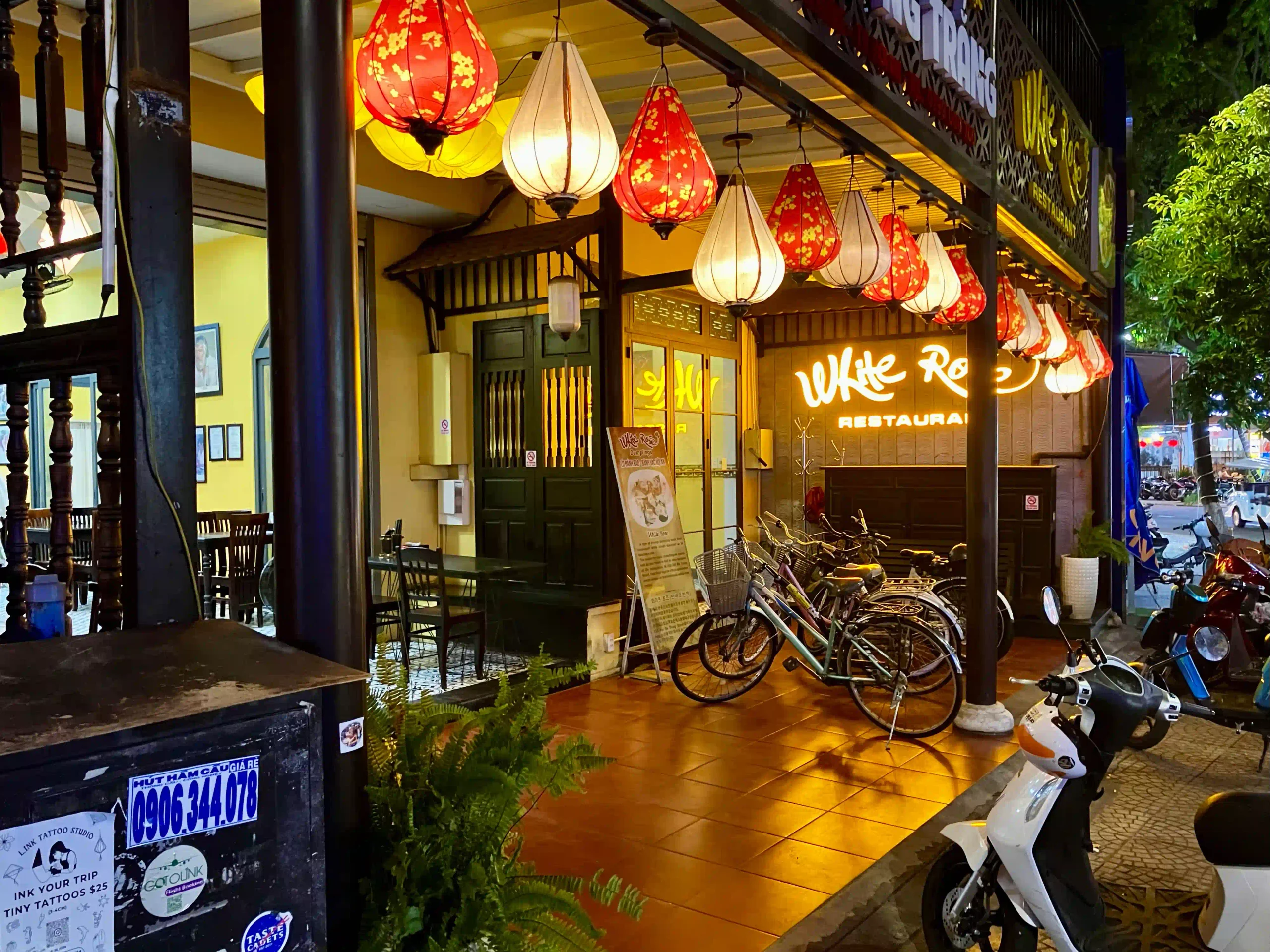
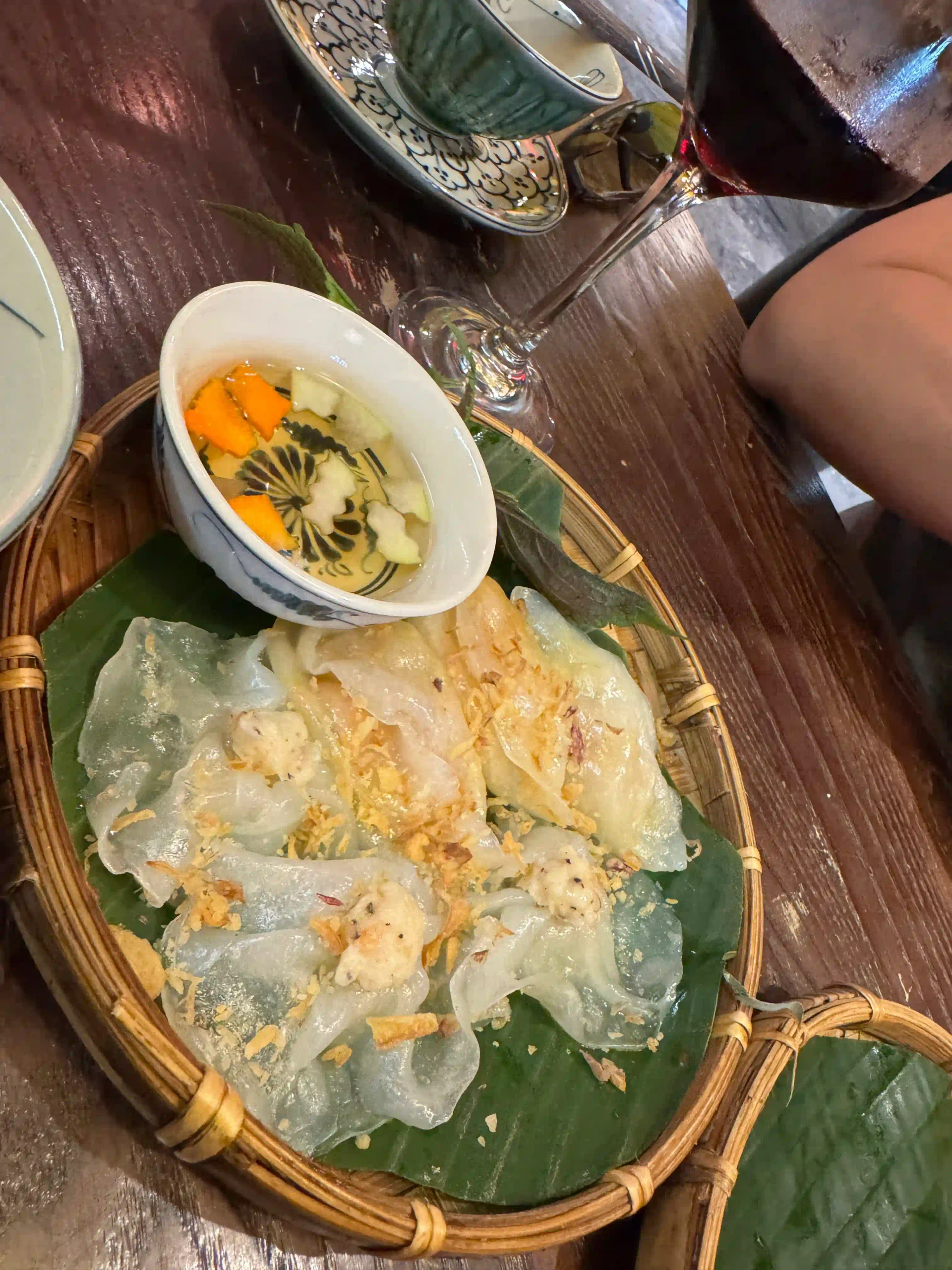
- White rose dumplings. Shared plates, often at the workshop restaurant on Hai Ba Trung that makes them for half the town. Two dishes on the whole menu. Good, though by this point you’ve stopped tasting properly.
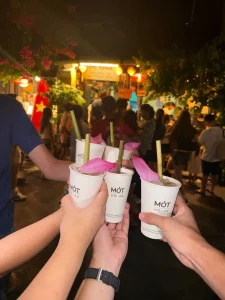
- Mót. The herbal drink from the corner on Tran Phu, lemongrass and lime and lotus leaf with a bit of liquorice in it. It costs 10,000 to 15,000 VND if you buy it yourself, it’s takeaway only, and there’s always a crowd blocking the pavement outside. On a tour it turns up at exactly the right moment.
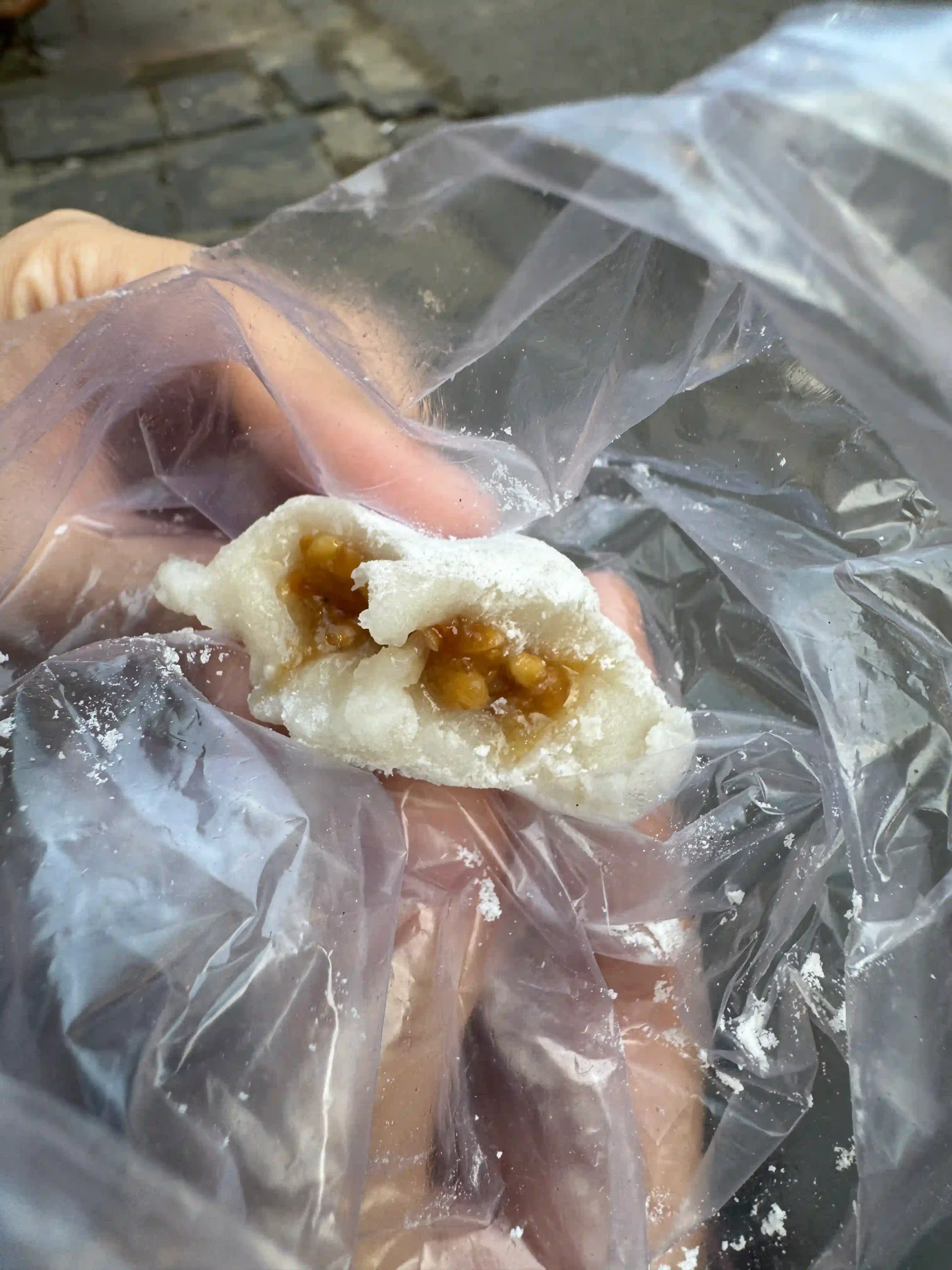
- Banh xoai. Mango cake, which has no mango in it and tastes of peanuts. The name is apparently about the shape. Nobody has ever explained this to me in a way I found convincing.
- Around 8:30pm you finish somewhere near the river, which leaves you the good half of the evening. The old town after eight is when I actually like being in it.
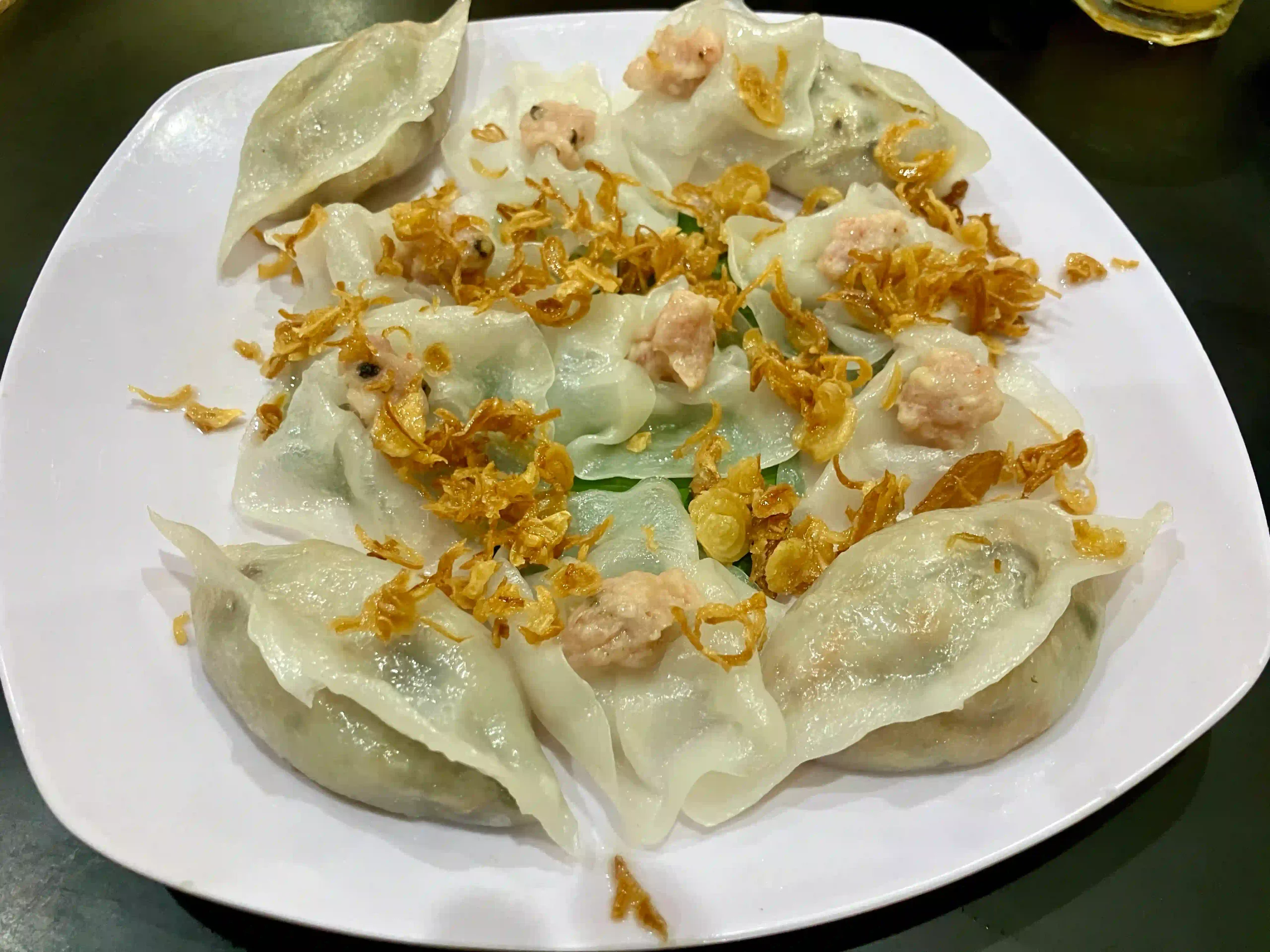
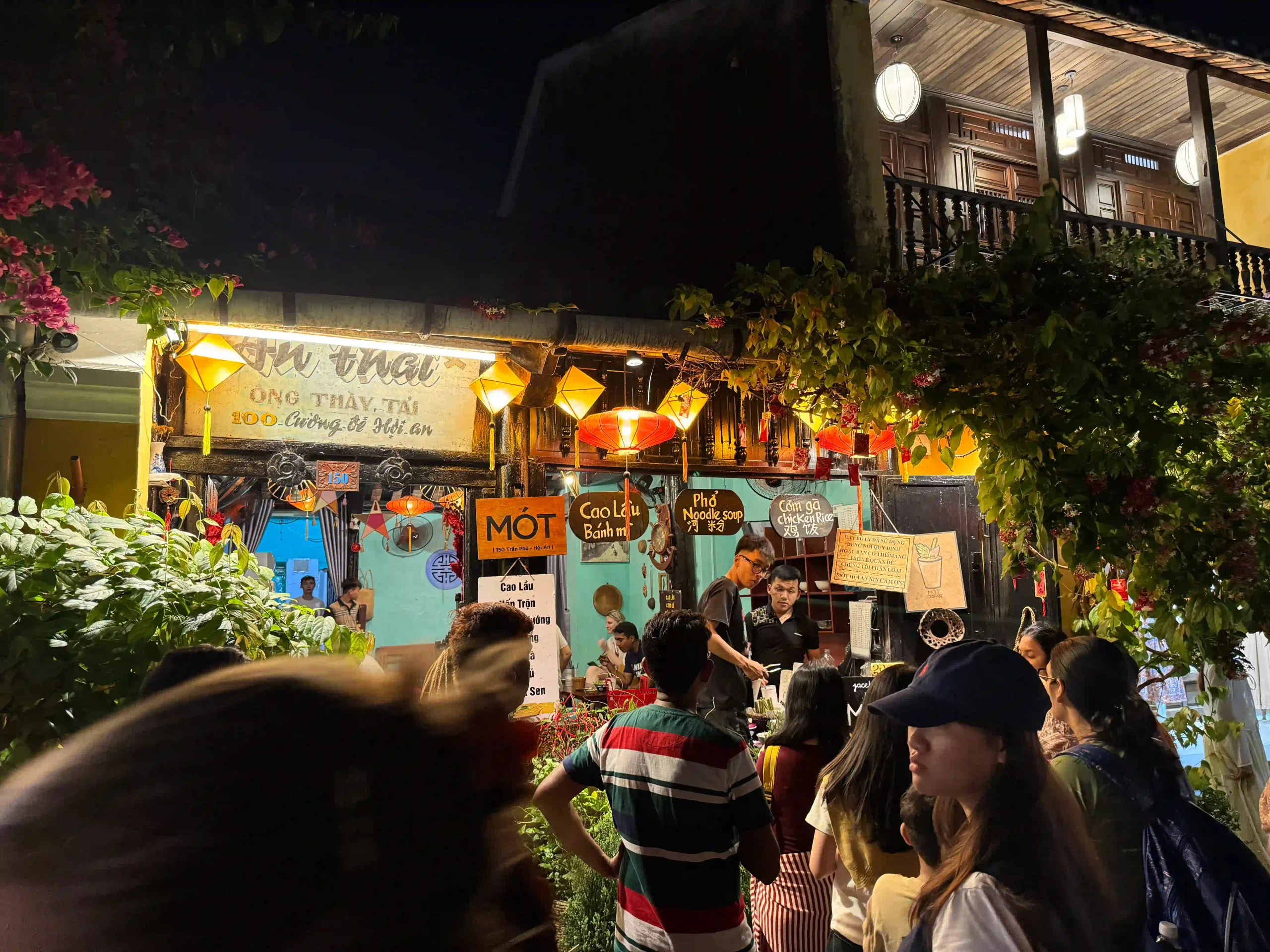
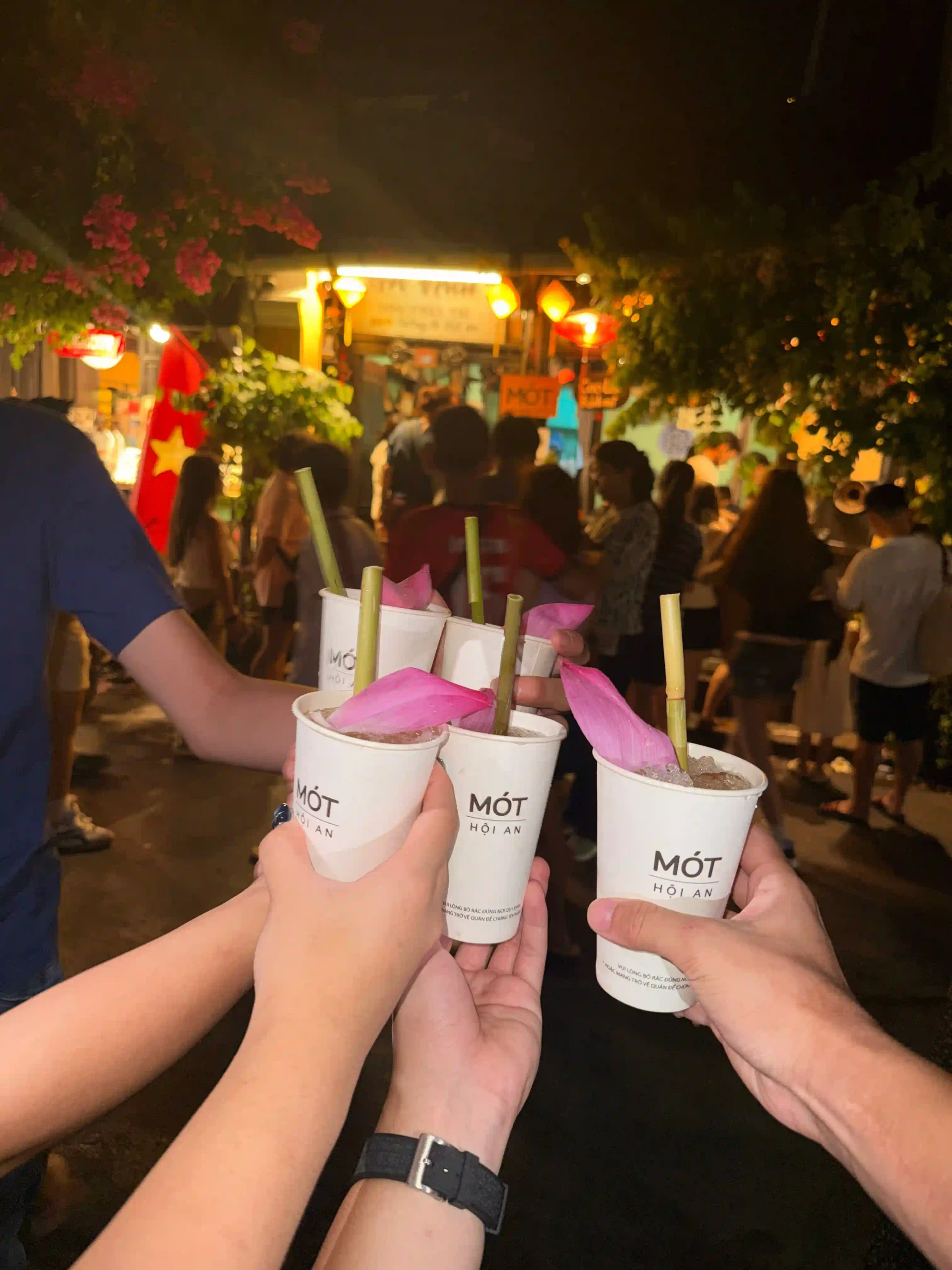
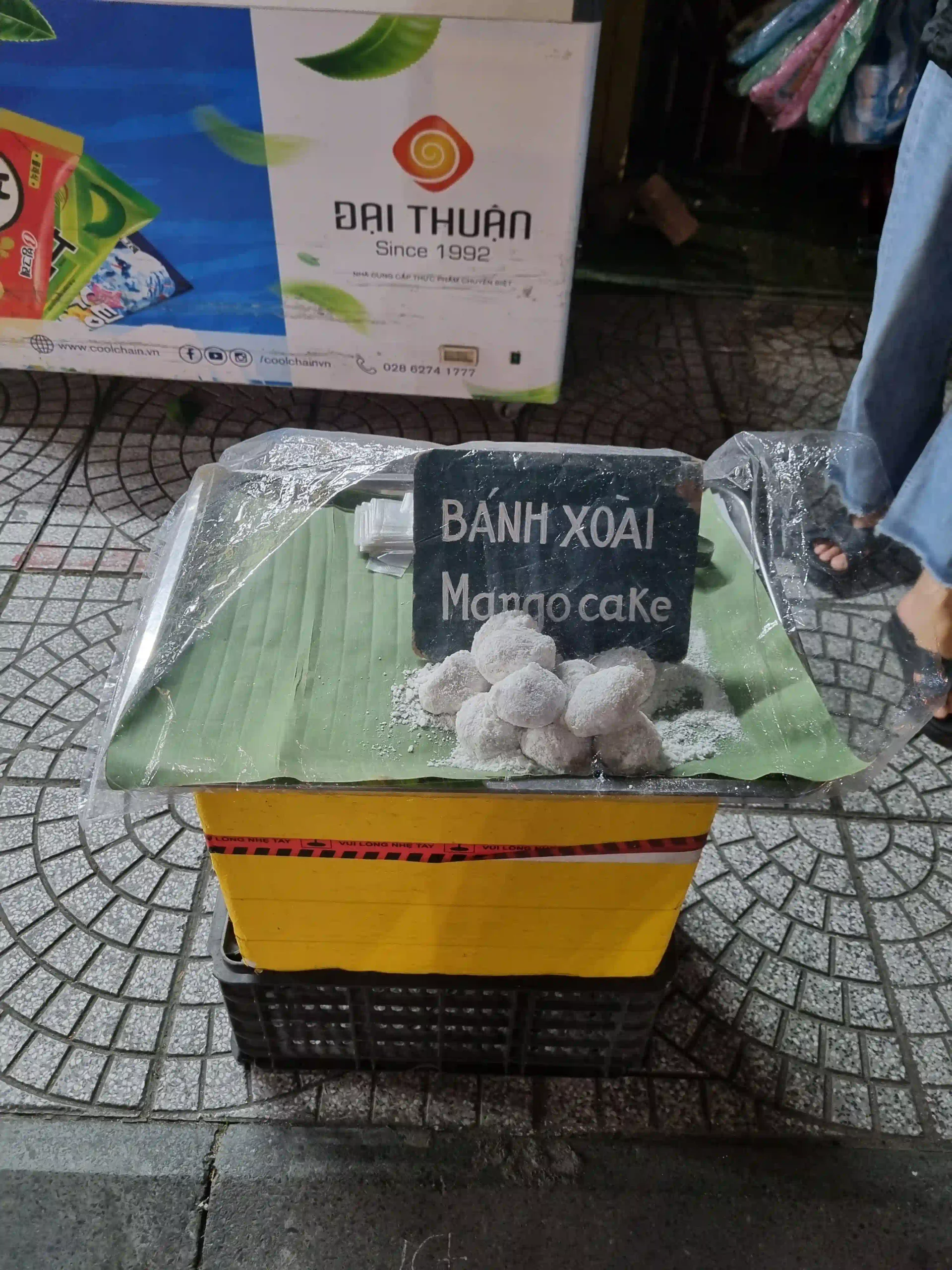
The portion problem, and the one sentence that fixes it
The most common complaint in reviews, and it isn’t close, is that there’s too much food and it comes in the wrong order.
The first two stops are each a full meal. If you don’t eat much you’ll be done after the banh mi and you’ll spend the back half of the evening looking at plates you can’t face.
The fix takes one sentence, said out loud at the second stop. Ask for half a banh mi. Guides sort it out without fuss, and reviewers who’ve done it say it’s the difference between enjoying stops four through six and enduring them. I’d leave half the cao lau too, which feels rude and isn’t.
The Entrance Ticket, and How Not to Waste It
A lot of Hoi An evening food tours list an entrance ticket in the inclusions, valued at about $6. That’s the Ancient Town heritage ticket, 120,000 VND for foreign visitors, five tear-off tabs good for five of the twenty-odd heritage sites.
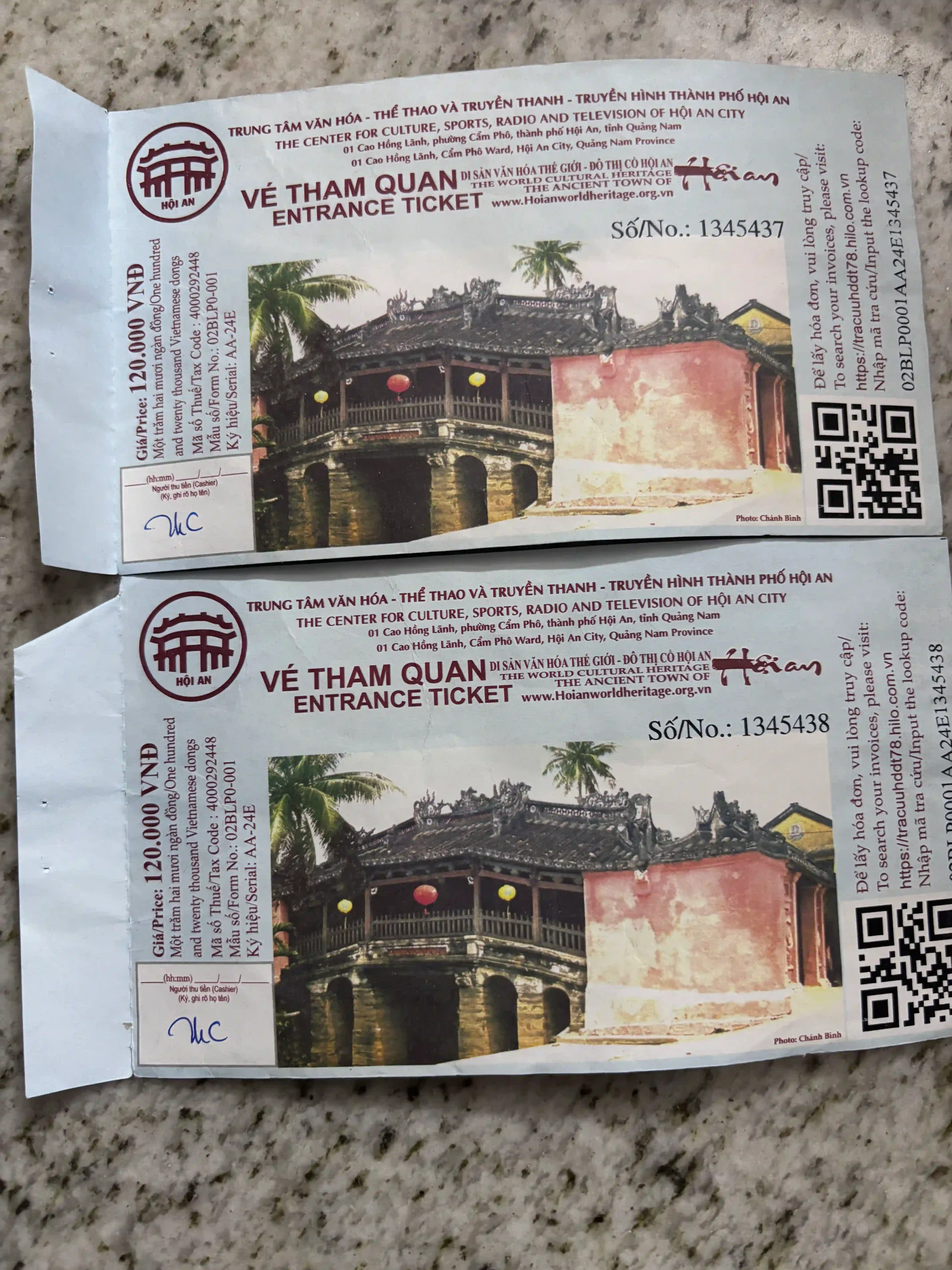
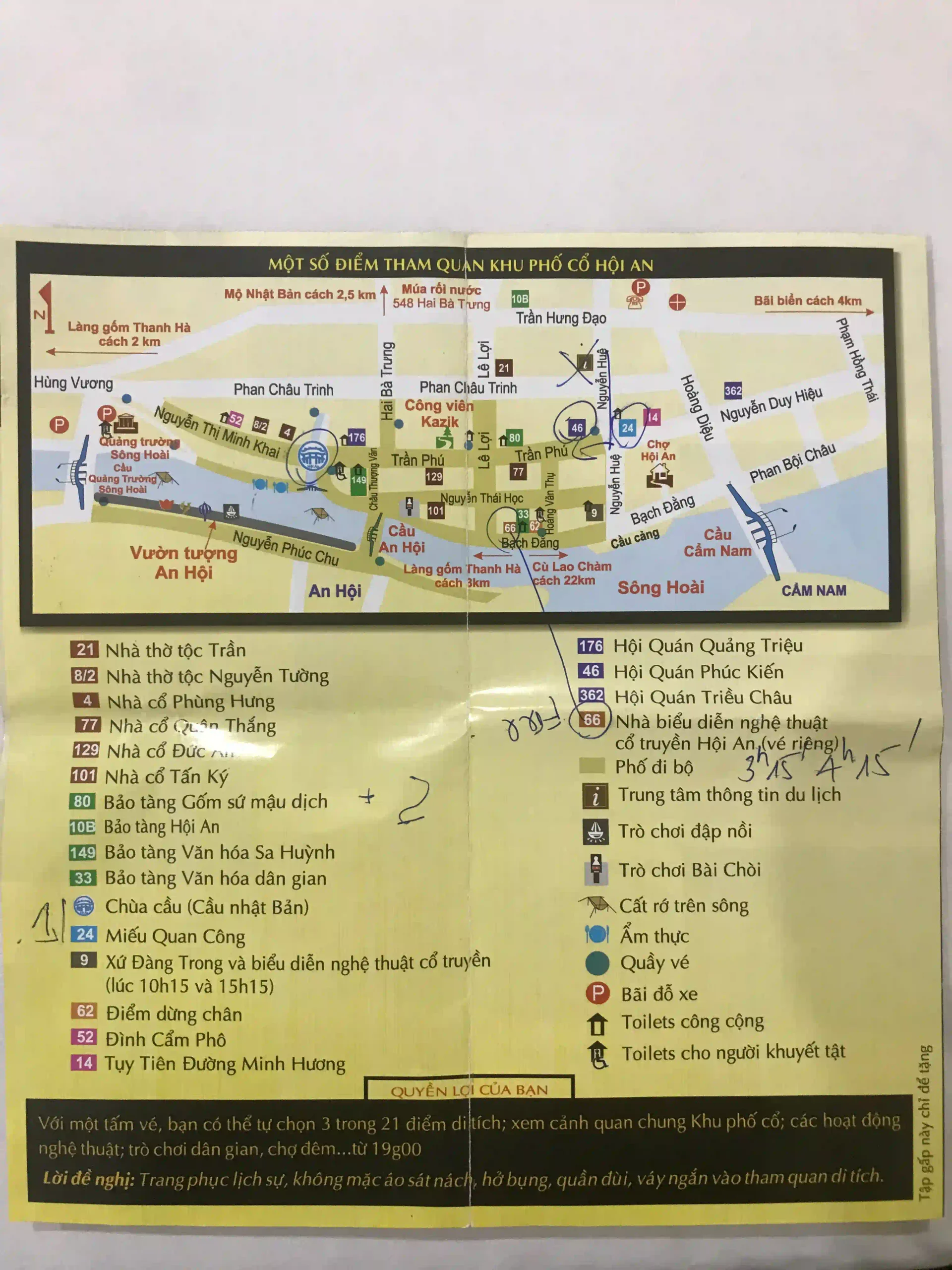
The bit the listings leave out is that the heritage houses, assembly halls and museums all close around 5:30pm. A tour starting at 6pm cannot use a single tab that evening, and the streets themselves are free to walk after dark with nobody checking anything. So on the night, that inclusion is worth nothing at all.
It’s dated, though, and the official line is 24 hours from purchase. Ask your guide to hand you the physical ticket at the end of the walk and go and spend the tabs the next morning on Tan Ky House and the Fujian Assembly Hall, before the buses from Da Nang land. Do that and it’s a real $5 of value. Don’t and you’ve paid for a piece of card, which is what most people do with it.
Who Should Book One and Who Shouldn’t
- Book it if this is your first or second night in central Vietnam, because the whole case rests on not yet having a baseline, and that window shuts faster than you’d think.
- Book it if you’re travelling alone and you’d like an evening with other people in it.
- Book it if you’ve got teenagers with you. Family reviews are consistently good, the wrap-your-own stop keeps everyone busy, and most operators take children from about five.
- Book it if you eat a lot, because you’ll get $26 of food into you and enjoy all of it, which is not true for everybody.
Now the other direction.
- If you’ve been in Vietnam three weeks you already know what banh mi is, and you’ll spend the evening being told things you picked up in Hanoi.
- If you’re vegan or celiac, see below, but the short version is don’t.
- And if you’re a small eater, two full meals in the first hour isn’t a good use of your money or your evening.
I’d also skip the expensive end whatever your situation. I’ve looked at the $59 walking tours next to the $26 ones and I can’t find an argument for the difference that survives reading both itineraries.
Vegetarian, Vegan and Allergies
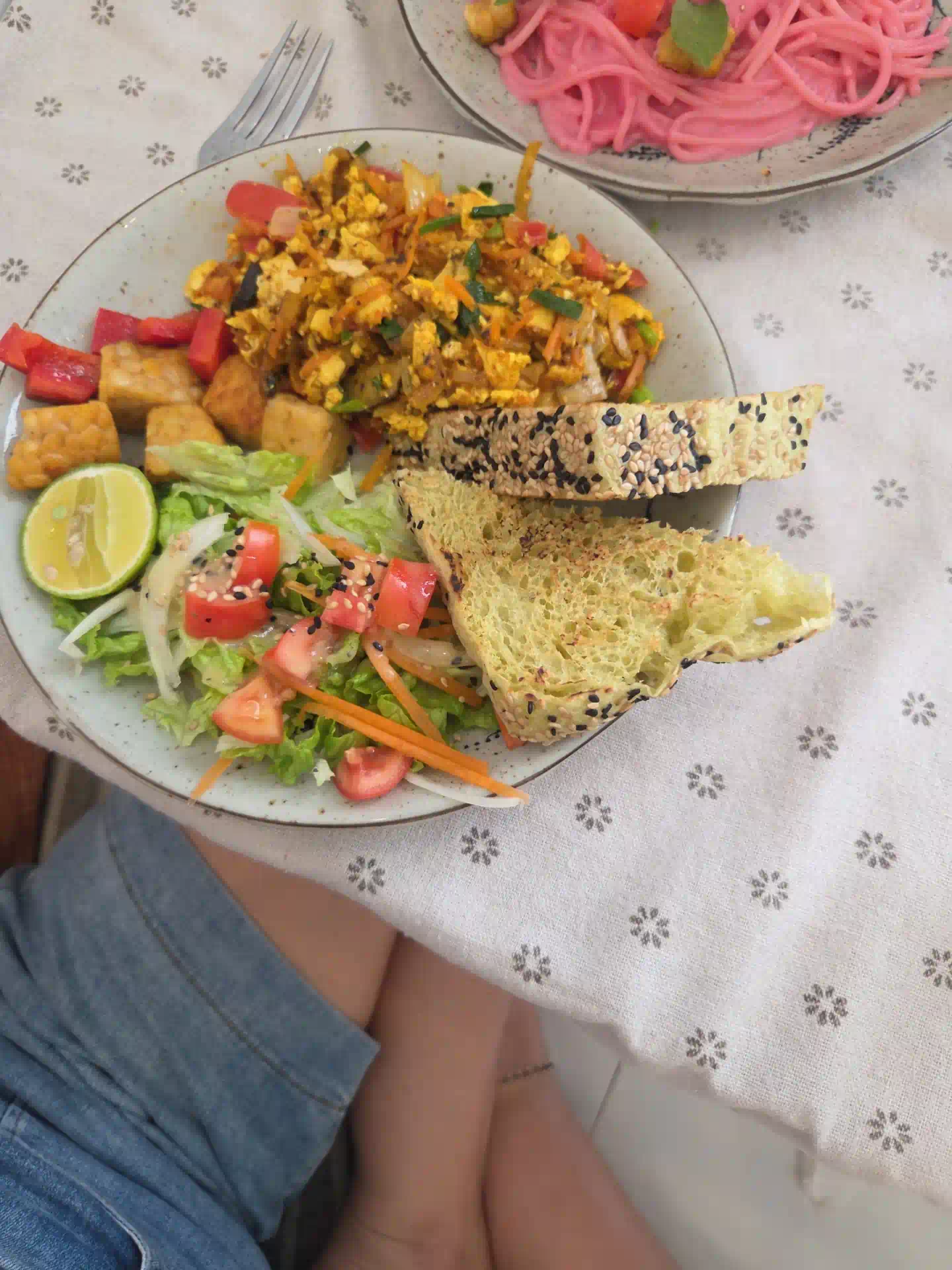
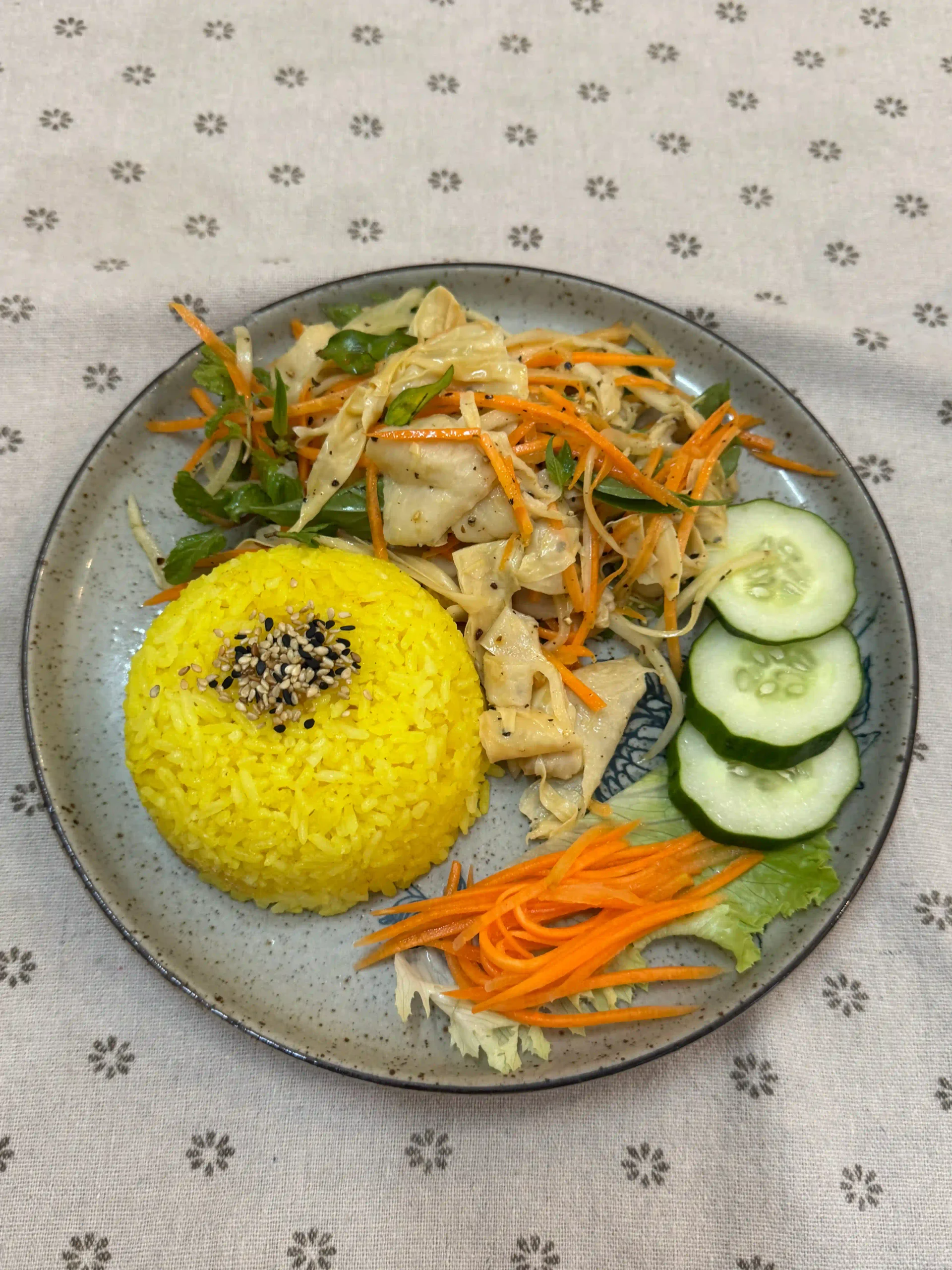
Vegetarian works. Message the operator when you book, and most of them will swap the pork stops for tofu and mushroom versions.
Hoi An has more vegetarian cooking than most Vietnamese towns because of the temples, so guides aren’t improvising when you ask.
Vegan is where I’d say don’t bother with a tour. Fish sauce is in nearly everything, including plenty that looks plant-based, and a vegan Hoi An food tour turns into you watching other people eat.
Walk the route yourself and use the vegan banh mi places, which are cheap and very good.
Gluten-free is the fiddly one. Cao lau, banh xeo and white rose are all rice-based and fine. Banh mi is a wheat baguette and soy sauce shows up in the dipping bowls. Give them notice and plan on skipping a stop.
Walking, Vespa or Bicycle?
Three formats, and for this town the walking one wins without much of a contest.
A Vespa or motorbike food tour runs $60 to $70 and takes you out to the suburbs and the villages. It’s a good ride. The food is along for the journey, so book it as a scooter tour that feeds you and judge it on that.
Bicycle food tours go out in the afternoon towards Cam Nam and the paddies. Lovely, and not an evening thing.
The evening walking food tour is the one that fits, because the old town closes to vehicles after dark anyway and everything worth eating is inside that zone.
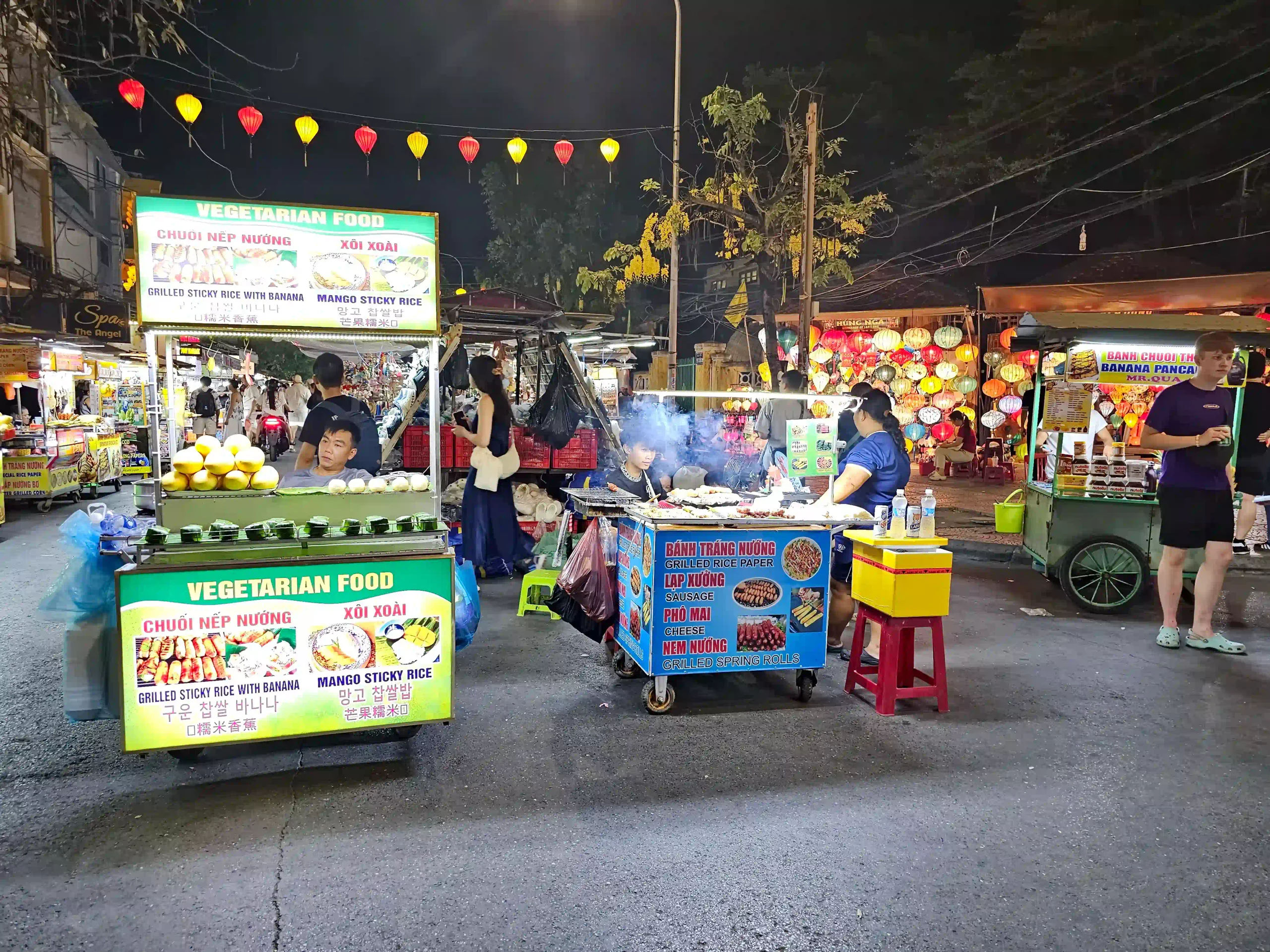
Does It Include the Night Market?
Mostly no, and I think that’s the right call.
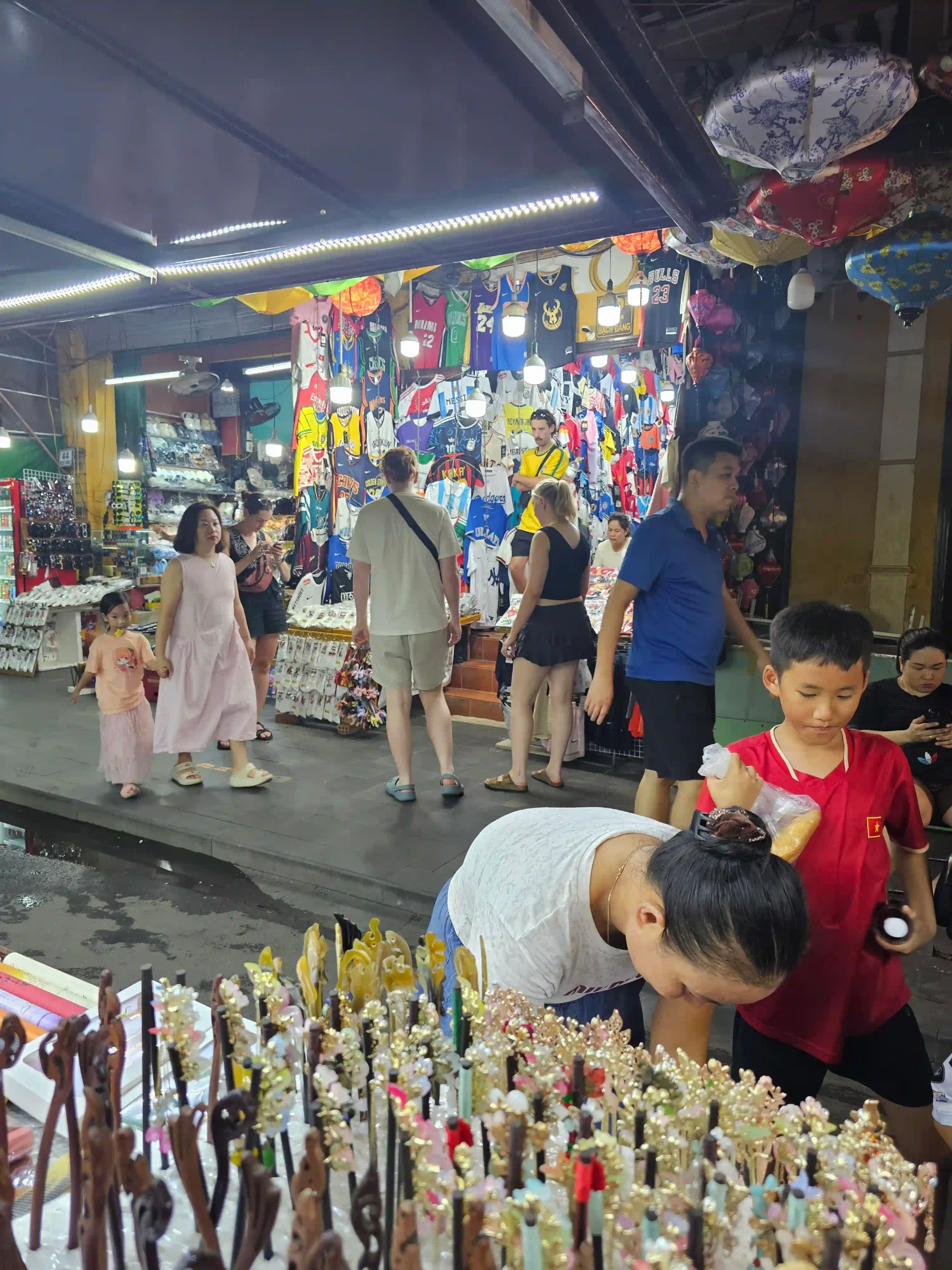
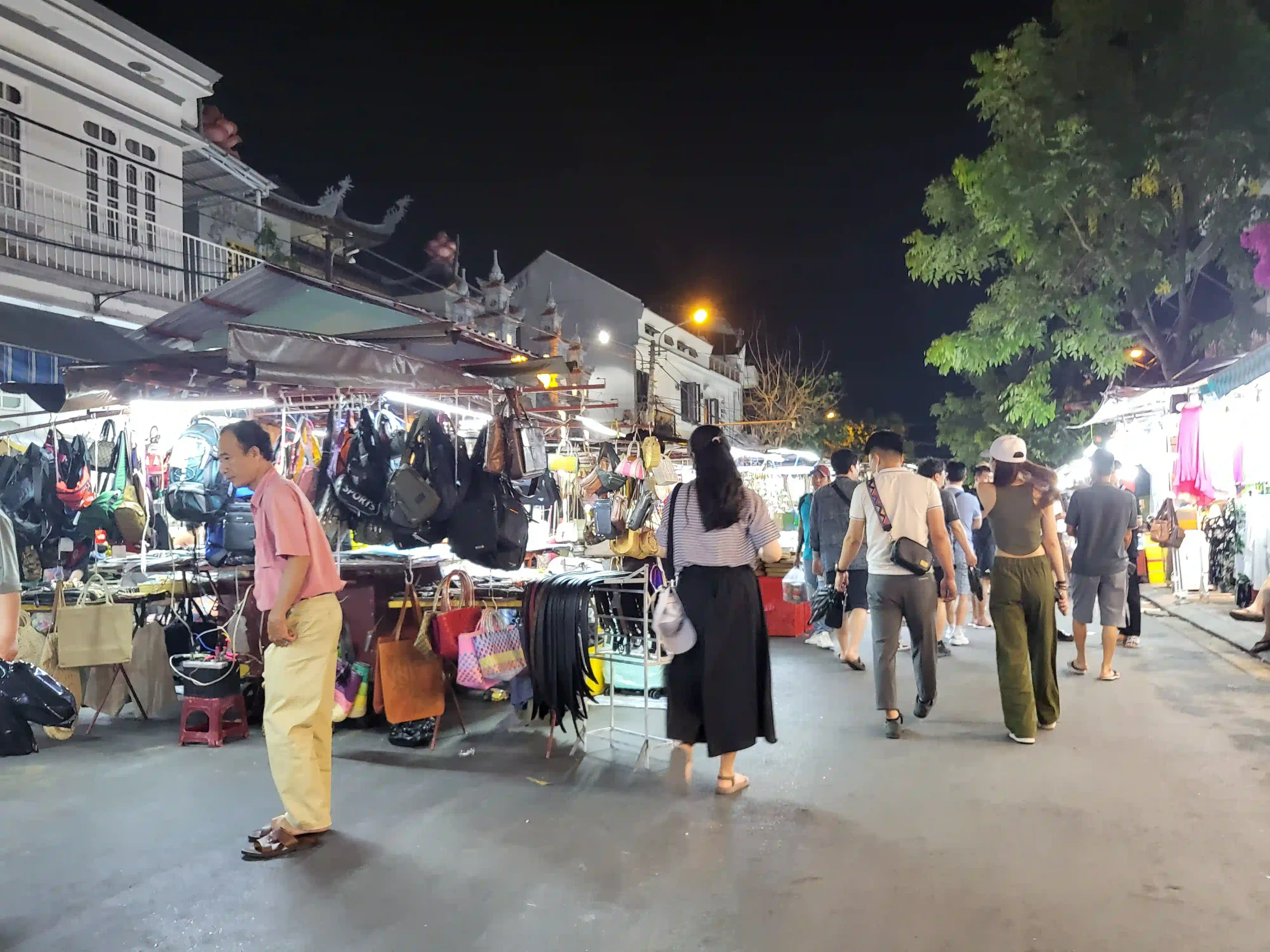
Hoi An Night Market runs along Nguyen Hoang Street on An Hoi islet, across the bridge, and winds down around 10pm.
It’s mainly lanterns and silk and souvenirs with snack food attached, and it’s a pleasant twenty minutes. The food there is not why anyone should go. The lanterns are, and so is the boat ride from the bank below it, which I’ve written up in the lantern boat ride guide.
A tour that spends an hour walking you up and down 300 metres of souvenir stalls is padding the time. If a Hoi An night market food tour is specifically what you want, do it yourself once the tour finishes at half eight. It’s a five-minute walk from where you’ll be standing.
Where I’d Book It
Booking direct with a guide over WhatsApp is a few dollars cheaper and plenty of people here do it that way. The trade is paying a stranger in advance with no cancellation terms, which I’m relaxed about after years of living in Vietnam and wouldn’t push onto anyone on a two-week trip.
The one I’d send a friend to is the 6pm small-group walk that meets on Tran Hung Dao. Eight to ten people, about $26, run by one person and not a rota of guides, which is the reason the reviews are as consistent as they are and also the reason it books out days ahead in season.
Free cancellation up to 24 hours ahead, which matters more here than it sounds like it should. The town floods in October and November most years, and an evening walking tour in ankle-deep water is nobody’s idea of dinner.
Questions I Get Asked
How much is a Hoi An food tour? $26 to $60 for a small-group evening walk, $55 to $165 a head for a private one. The food itself is about $10 of that.
Is a Hoi An food tour worth it? On your first or second night in central Vietnam, yes. After that you’re paying a guide to tell you things you already worked out.
How long does it take? Two and a half to three hours, six or seven stops, about 4km of flat walking. Most start at 6pm and finish near the river around 8:30.
Will I be too full? Probably, and it’s the number one complaint. Ask for half a banh mi at the second stop and leave half the cao lau.
Can I do it myself? Yes, and it costs 220,000 to 290,000 VND per person. Walk Tran Hung Dao to Tran Phu and the stops are all within fifteen minutes of each other.
Is it good for kids? From about five, yes. The wrap-your-own stop is the one they’ll remember, and family reviews are consistently strong.
Does it include the night market? Usually not, and you don’t want it to. The market is a five-minute walk from where the tour ends.
Is the Ancient Town ticket really included? The card is. The heritage houses it opens close at 5:30pm, so take the physical ticket and use the tabs the next morning.
Book It for the Second Night, Not the First
Everybody tells you to book the food tour for your first night so it sets up the rest of your trip. I said something close to that myself in the Hoi An food guide, and I’ve changed my mind about it.
Book it for the second night instead. On night one, go and find a plastic-stool place with no English sign and eat one bowl of cao lau by yourself for 35,000 VND. Then take the tour.
Now you’ve got something to measure it against, and three hours of tastings becomes a comparison, not a parade of unfamiliar plates you’re being told to like.
My expectation is that the tour’s cao lau won’t beat the one you found on your own, and that you’ll still come away thinking the evening was worth the money. Both of those can be true at once, and the gap between them is the whole case for paying someone to feed you in a town you could have walked around for free.

Keep Exploring Hoi An
-
See & do UltimateMy 7 favorite things to do in Hoi An as an expat ›
-
Food Must read10 best foods in Hoi An Vietnam (authentic dishes only) ›
-
FoodBest banh mi in Hoi An: Banh Mi Phuong vs. Madam Khanh? ›
-
FoodThe only 5 restaurants in Hoi An I recommend (expat guide) ›
-
FoodHoi An cooking class & boat ride combo review: Worth it? ›











 Tiếng Việt
 한국어
 中文 (中国)
 日本語
 ไทย
 Deutsch
 Español
 Destinations
 Instagram
 Facebook
 X (Twitter)
 Threads
 Tiktok