









 Ha Giang
 Hanoi
Hanoi Ho Chi Minh City
 Ha Long
 Sapa
Sapa Mekong Delta
 Da Nang
 Hue
Hue Hoi An
 Ninh Binh
 Da Lat
 Nha Trang
 Phan Thiet
 Phu Quoc
 Quang Binh
 Quy Nhon
 Vung Tau
 Thai Nguyen




Most people doing Ninh Binh never make it out to Cuc Phuong. It’s an extra 45km past Tam Coc, an extra day that most itineraries just don’t have room for, and I understand why it gets left off.
I still think that’s a mistake if you’ve got the time to spare, and after actually doing it, I’d go as far as saying it’s the one Ninh Binh day I’d recommend most to anyone who’s already done the standard boat-and-cave circuit once before.
This is a piece under my things to do in Ninh Binh guide, which ranks Cuc Phuong as a Tier 3 pick for anyone with an extra day. This article walks through what a day trekking Cuc Phuong National Park with a guide actually looks like.
- Quick Answer: Cuc Phuong is Vietnam’s oldest national park, about 45km from the main Ninh Binh basin, and a guided day trip here means a real forest trek, not a stroll to a viewpoint. The day covers the Endangered Primate Rescue Center, a roughly 5km trail through rainforest, a prehistoric cave, and a jungle tree that’s over 1,000 years old.
- The Drive Out and Primate Center:
- Pickup before 8am, roughly an hour of driving as the karst valleys give way to actual forest and the traffic thins out.
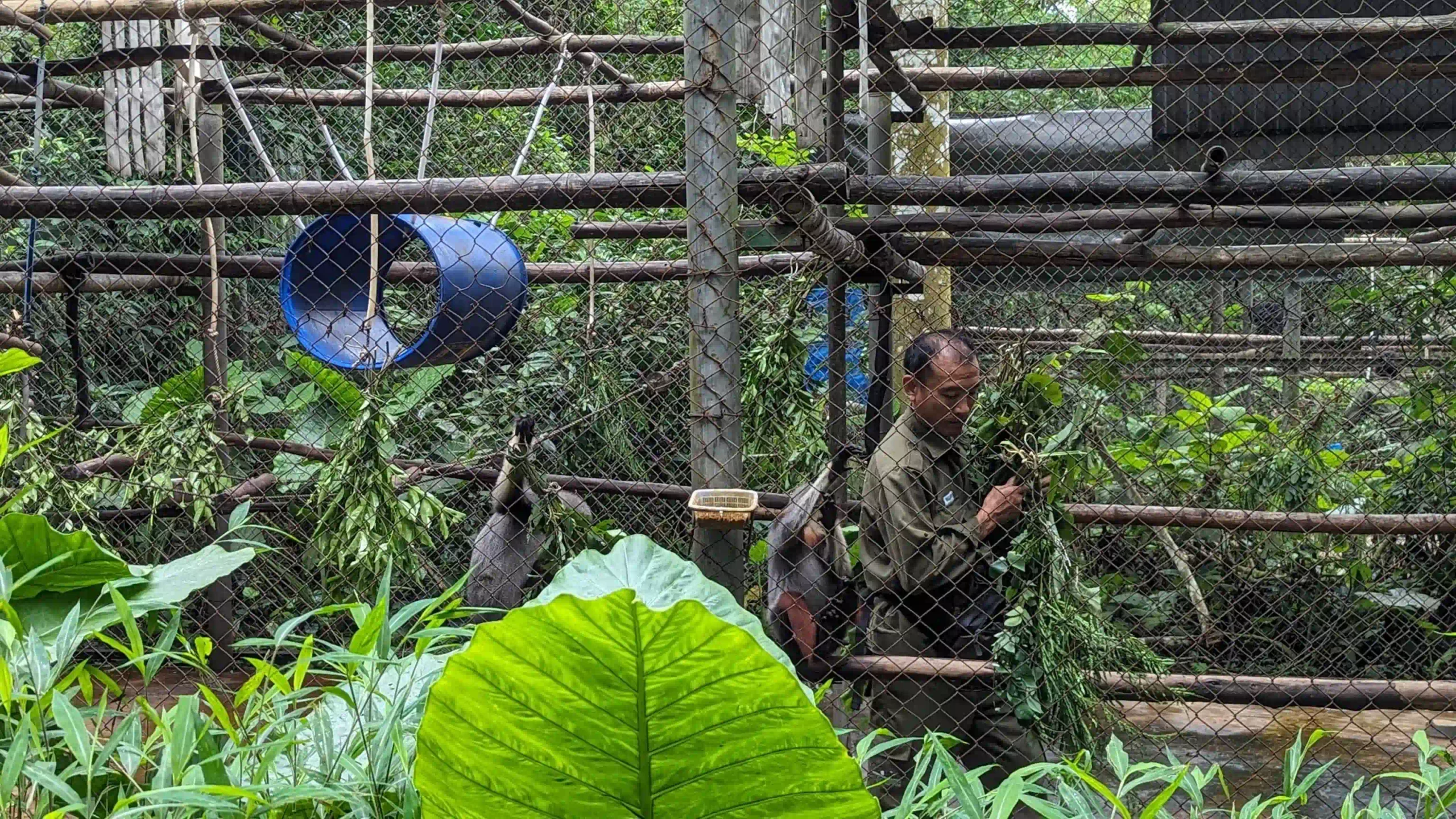
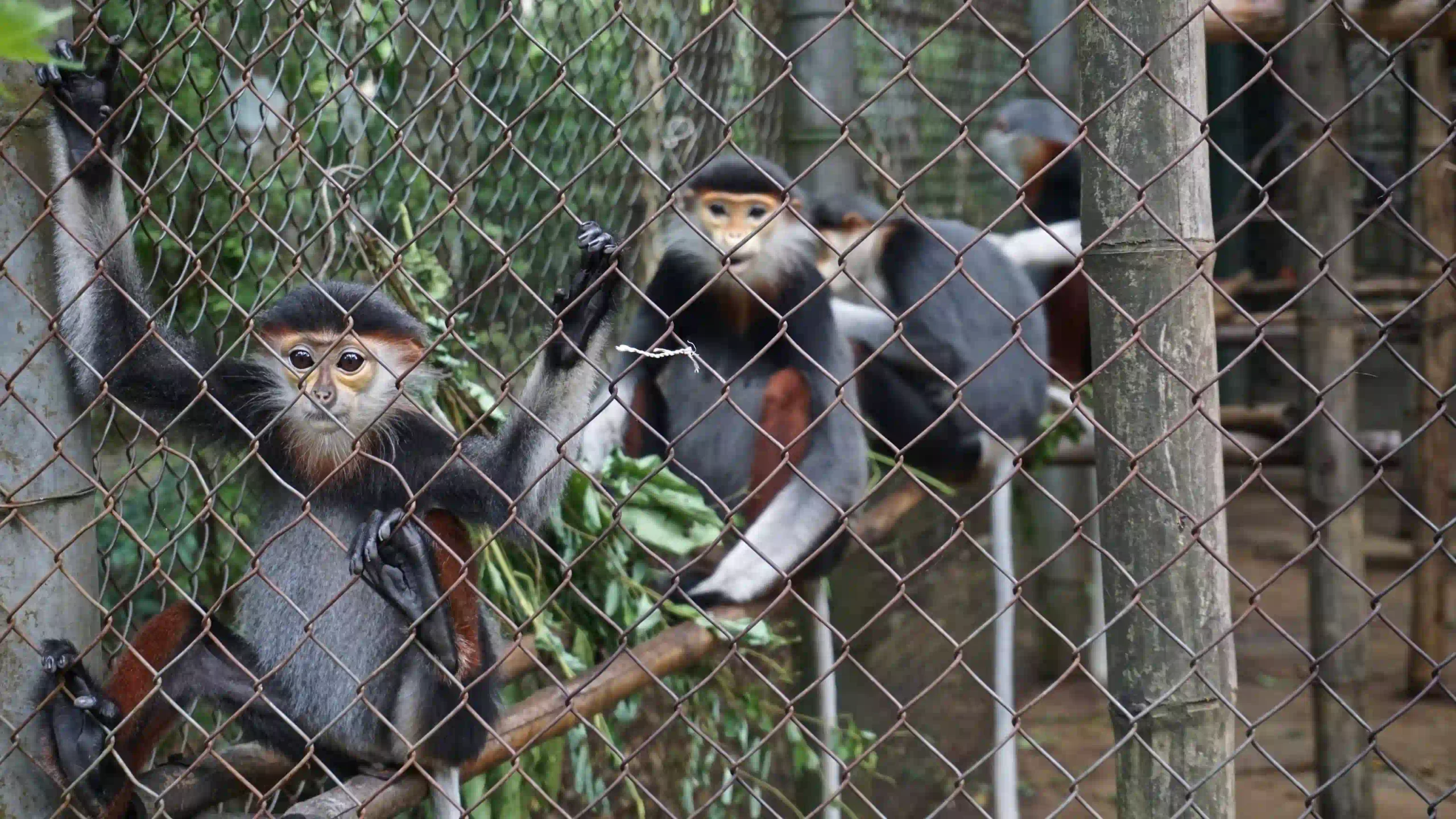
- The Endangered Primate Rescue Center comes first, home to 150+ primates including the critically endangered Delacour’s langur, real planted enclosures rather than bare cages.
- Worth budgeting close to an hour here, longer than it sounds like it should take.
- The Trek Itself:
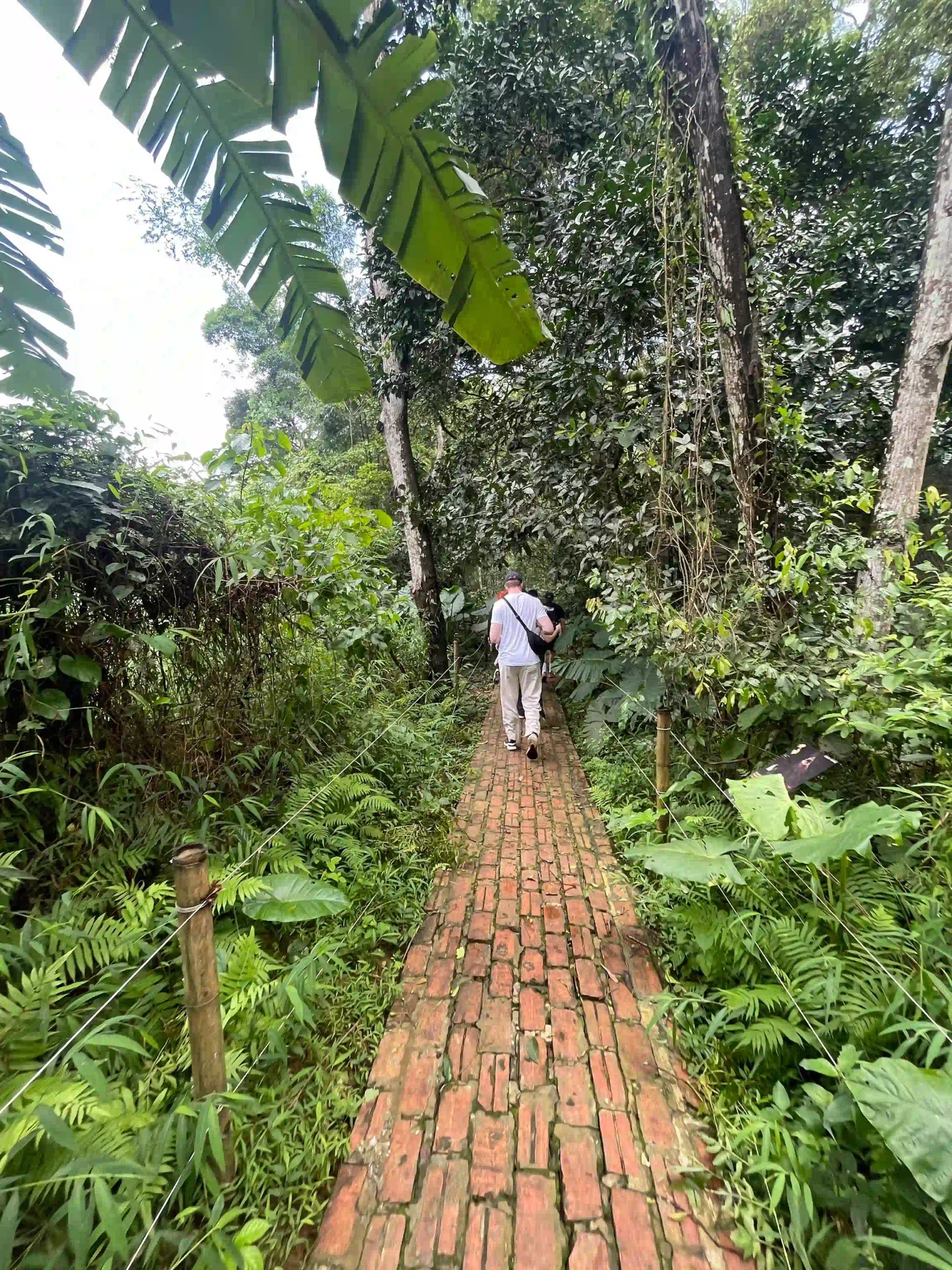
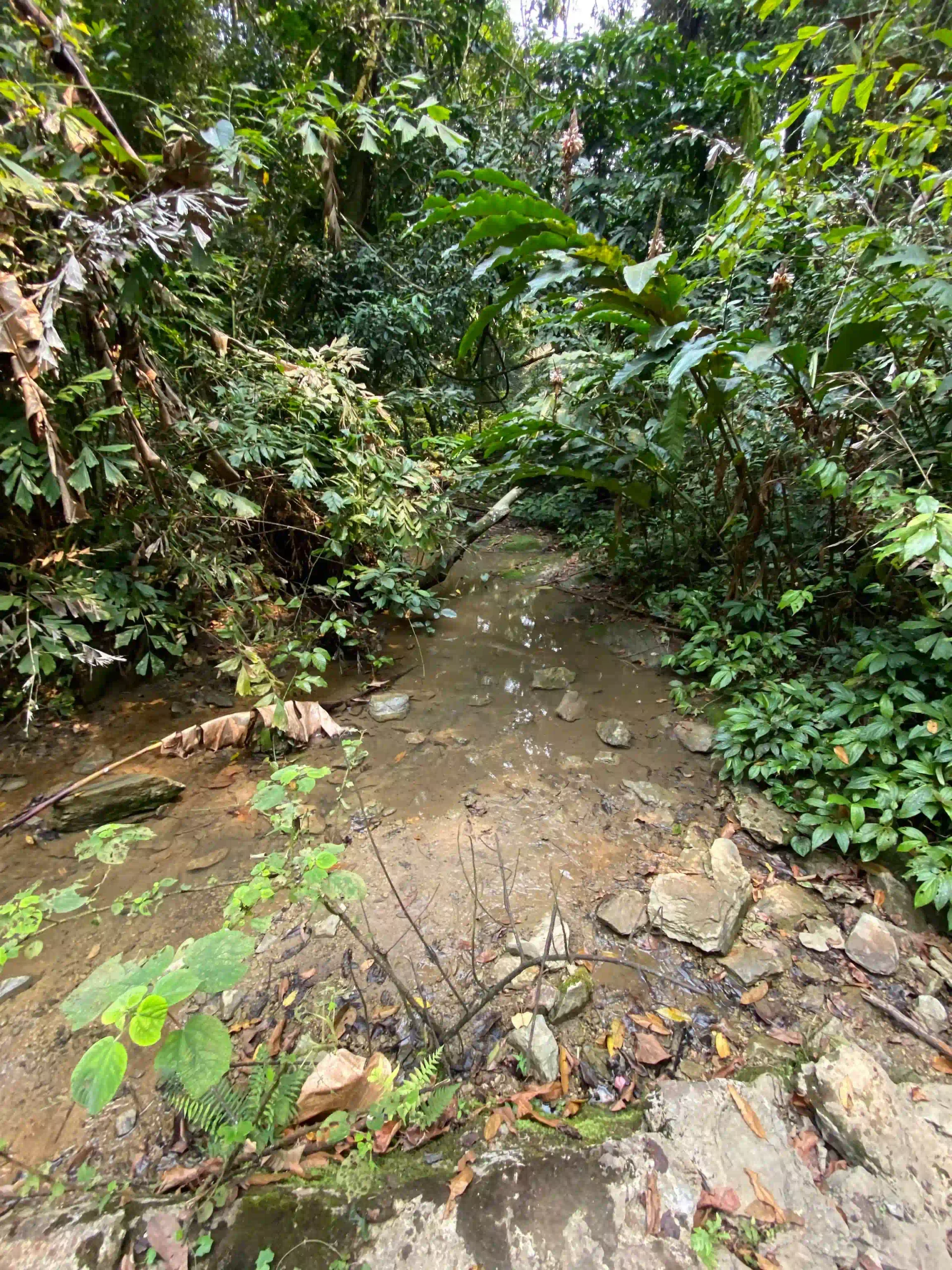
- A genuine 5km trail through old-growth rainforest, not a paved loop, with real mud in the lower sections.
- A guide’s value shows up here specifically, spotting wildlife (a civet, in our case) that you’d walk straight past alone.
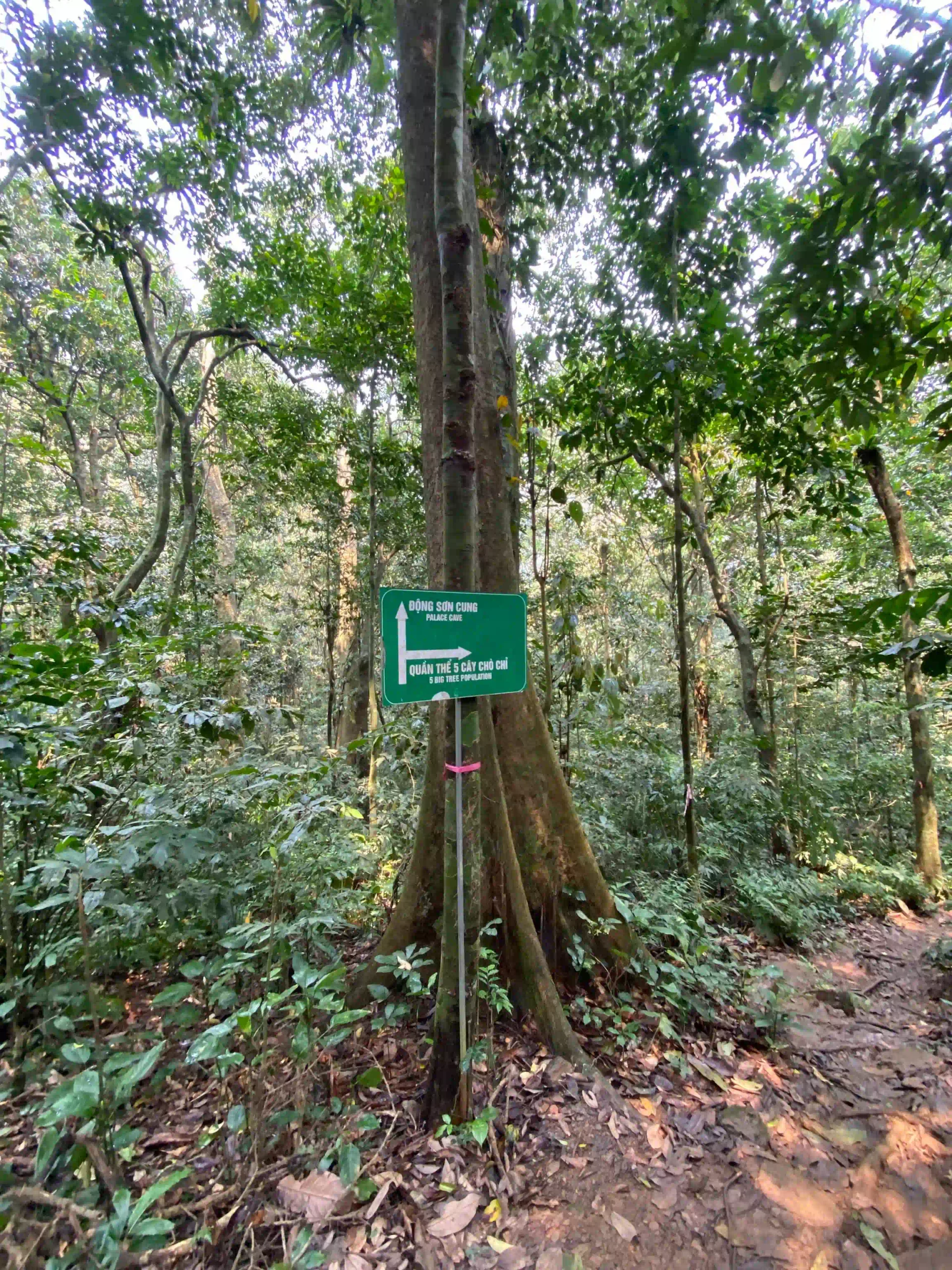
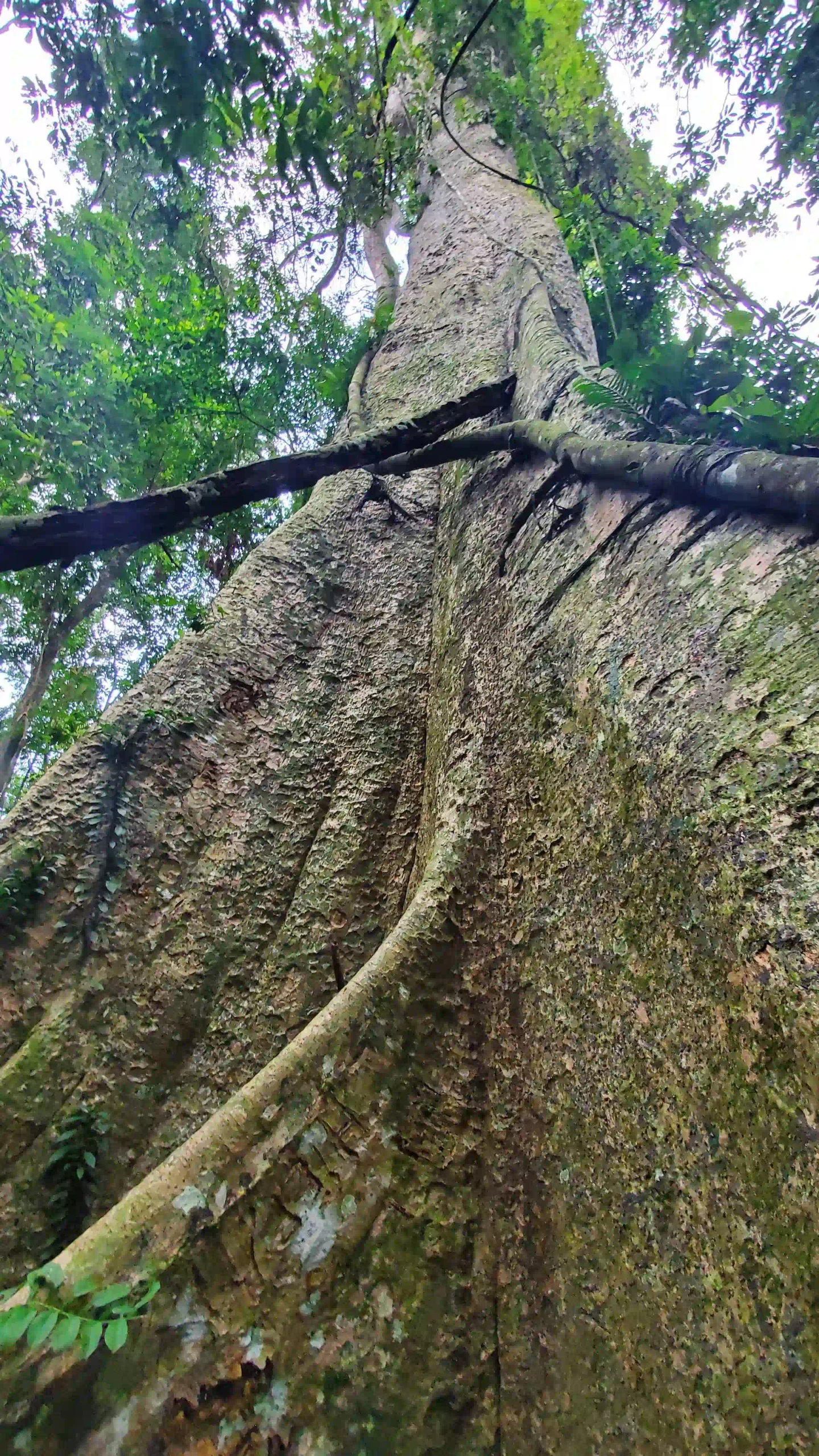
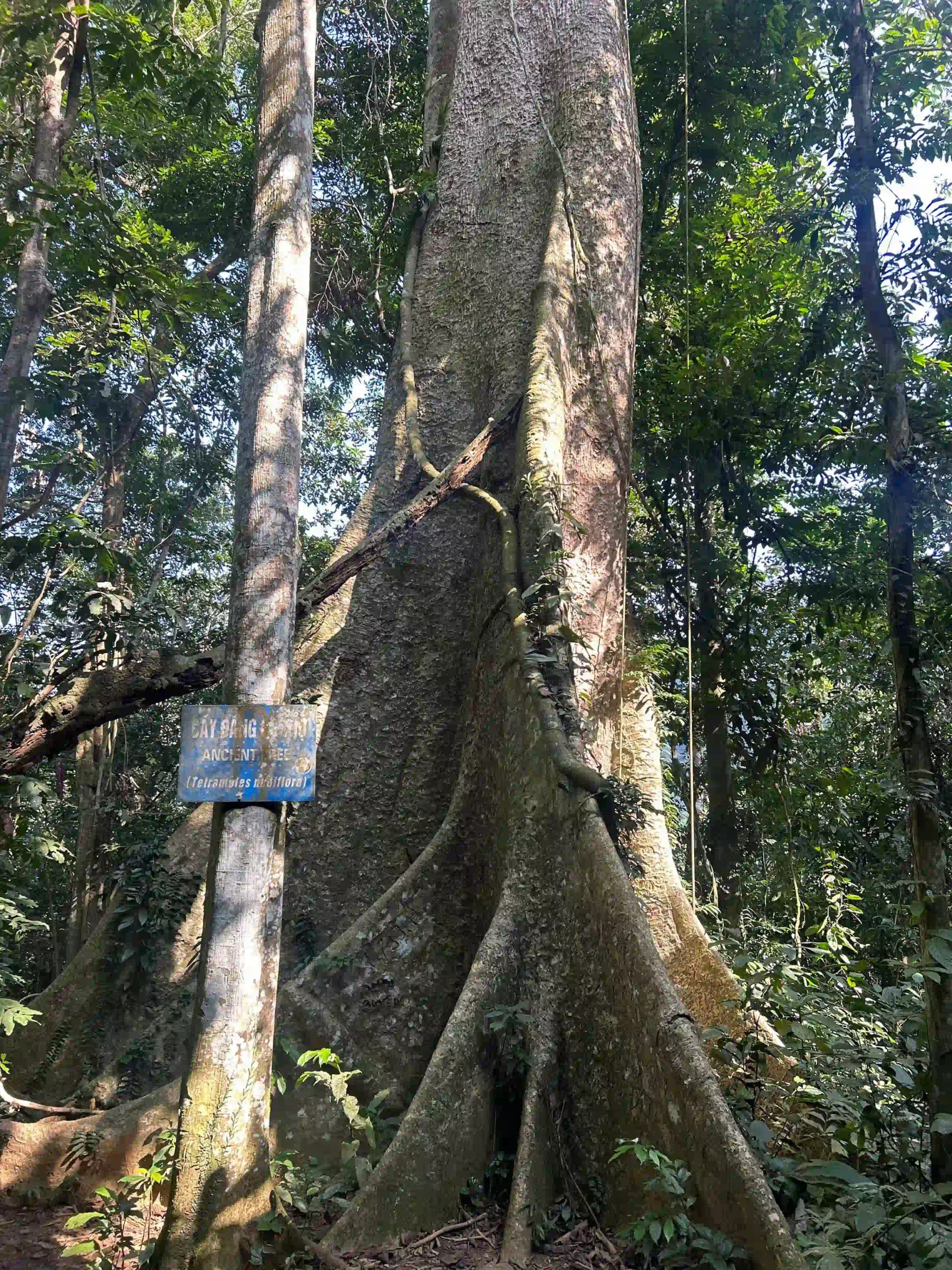
- The trail passes a 1,000-year-old tree and a cave used by prehistoric humans, both genuine highlights of the day.
- What Nobody Tells You Upfront:
- Leeches are real after rain, not dangerous but worth closed shoes and long socks over sandals.
- Not every tour delivers a real trek. Some advertise “jungle hike” and give you a short walk instead, so check the listed trail distance before booking.
- Some litter shows up in a few spots, and heavy rain can genuinely disrupt the trail, worth knowing rather than expecting untouched wilderness.
- Getting There and Booking:
- Runs about 9 hours from Ninh Binh, or closer to 12 if you’re coming from Hanoi.
- The best-reviewed option departs Ninh Binh/Tam Coc directly, primate center plus trek plus lunch included.
- Self-guided entry is possible but skips most of what makes the day work, the guide’s wildlife knowledge and the conservation context at the center.
- Is It Worth the Extra Day: genuinely optional on a short karst-focused trip, but worth it if you’ve got a spare day and want wildlife and old-growth forest instead of another limestone view.
The Drive Out
Pickup happens before 8am, and the first hour is mostly spent watching the scenery change through the window as rice paddies give way to smaller roads and then to actual hills. The karst valleys flatten out behind you, the traffic thins considerably, and for long stretches it’s just forest pressing in on both sides, thicker and older than anything around Tam Coc.
After a few days of boat tours and temple visits, the quiet alone is noticeable, the kind of quiet that makes you realize how much low-level noise you’d gotten used to without registering it.
By the time the van turns off toward the park entrance, the air already smells different, wetter and heavier in a way that’s hard to place until you’re actually out of the vehicle and standing in it.
Our guide met us right at the gate rather than somewhere further in, introduced himself, and ran through the plan for the day in a handful of sentences. No forms to sign, no long safety lecture, just straight into it. He carried a small backpack and a walking stick worn smooth at the grip, the kind of wear that only comes from doing the same walk hundreds of times.
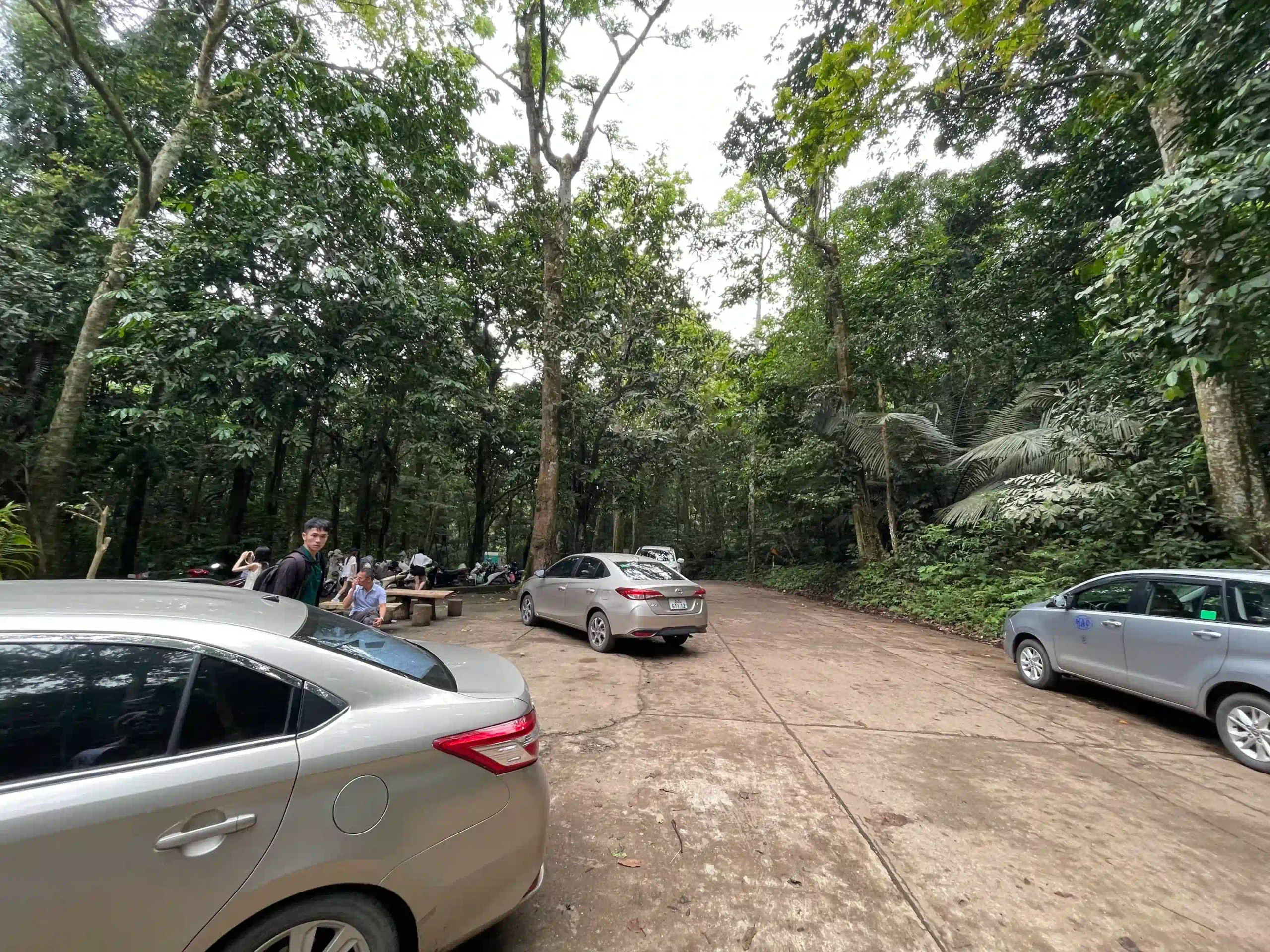
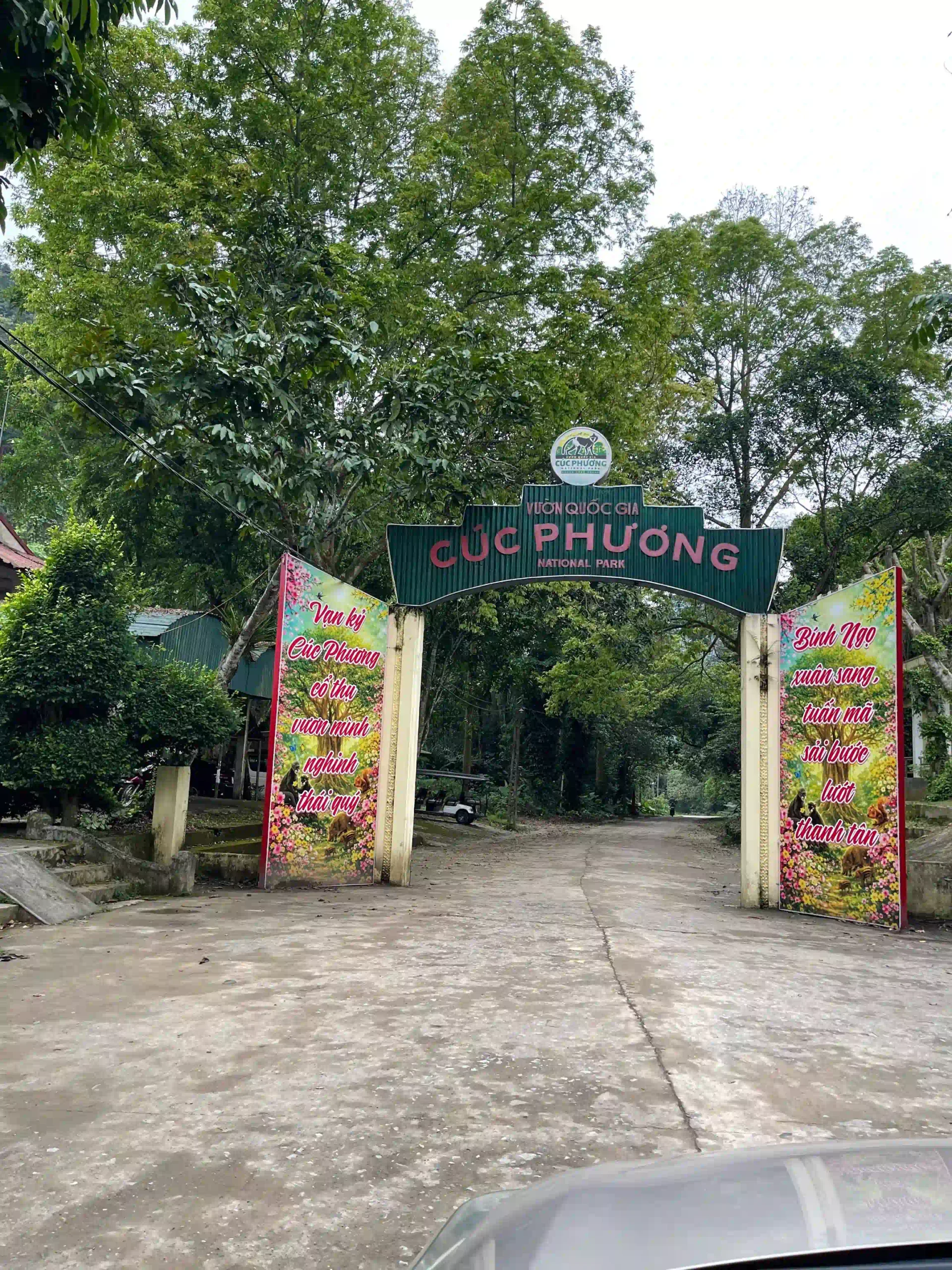
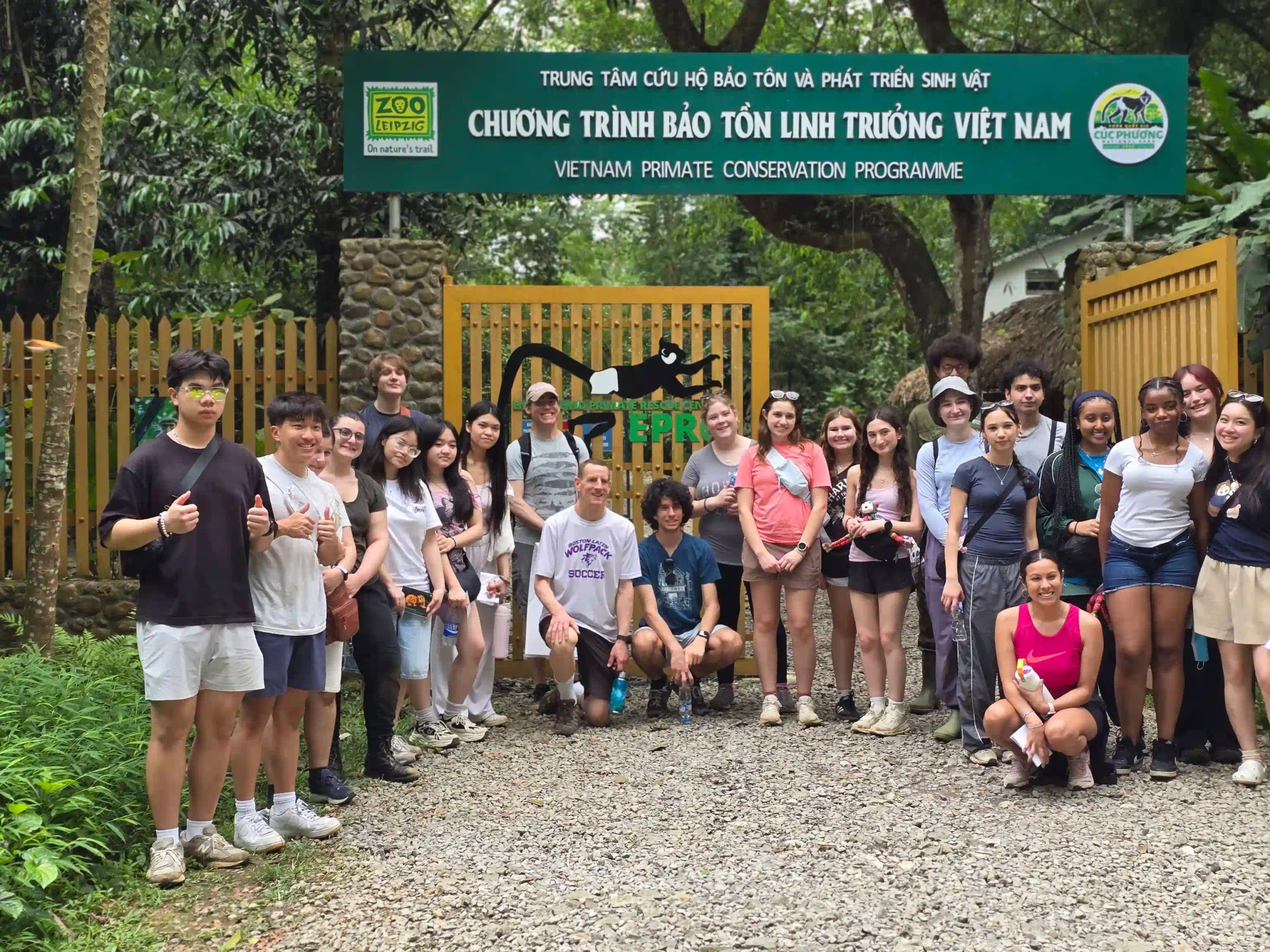
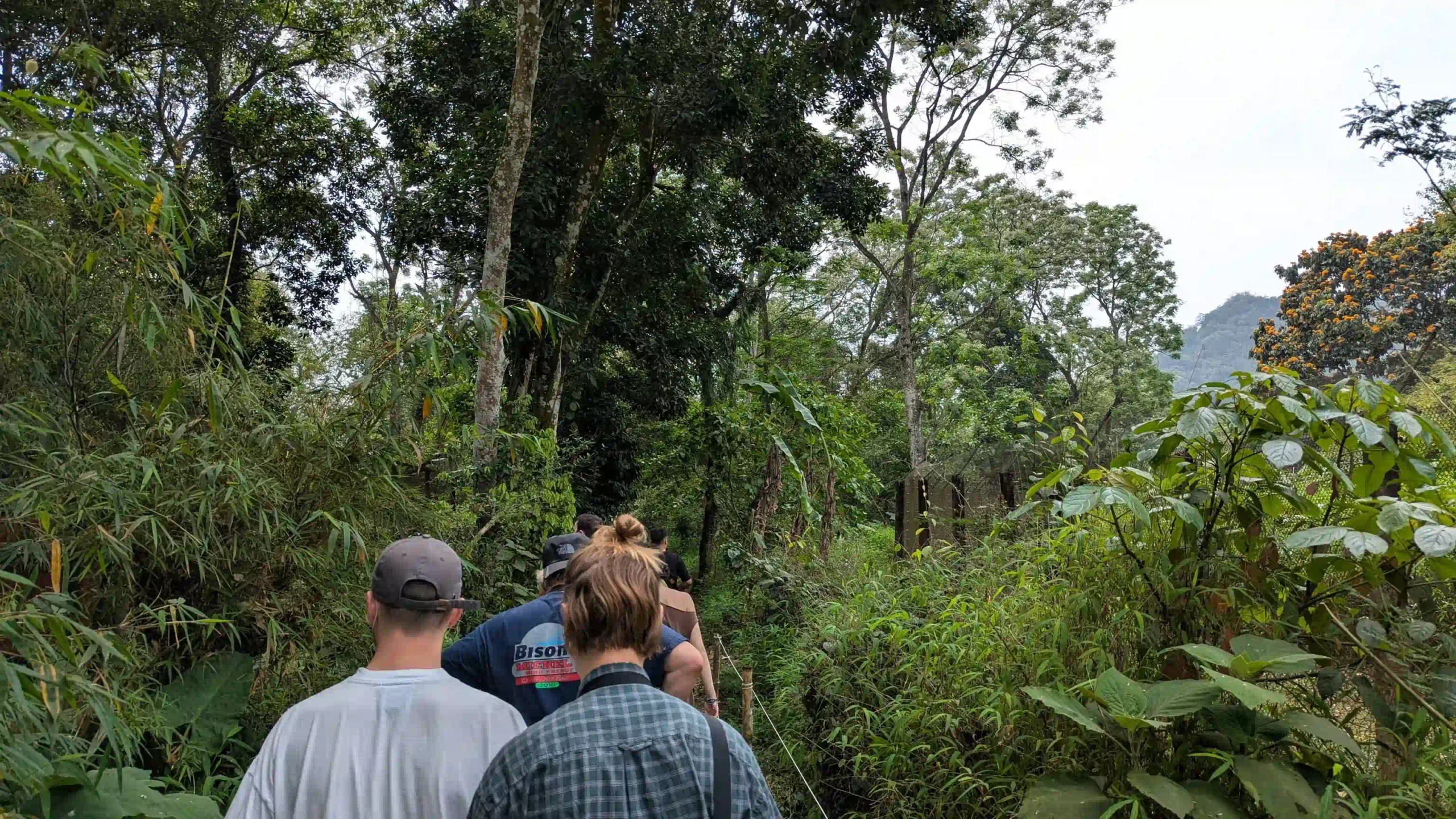
Cuc Phuong was established in 1962, Vietnam’s first national park, and that fact is easy to read and move past until you’re actually standing at the entrance looking at trees wide enough that you couldn’t get your arms around the trunk. This is old-growth forest, not the regrown secondary jungle you find in most of the region, and the scale of it is obvious before you’ve taken a single step onto the trail. Vendors near the entrance sell water and snacks from small stalls, worth grabbing an extra bottle here since the options thin out considerably once you’re actually on the trail.
The Primate Center First
Most guided days start here, before the trek, and once you’ve done it that order makes sense.
The Endangered Primate Rescue Center holds more than 150 primates, several species that exist almost nowhere else on the planet. The Delacour’s langur is the one people stop for specifically, black and white fur, and the reason the center exists for them in the first place isn’t a story with an easy ending.
The enclosures are bigger and greener than the phrase “rescue center” tends to suggest, real trees inside them with branches to actually climb rather than bare concrete and steel bars. One family group was grooming each other when we walked up, completely unbothered by the small crowd watching, and a young one kept scrambling to the top of a branch and dropping onto its mother over and over, ignoring all of us entirely.
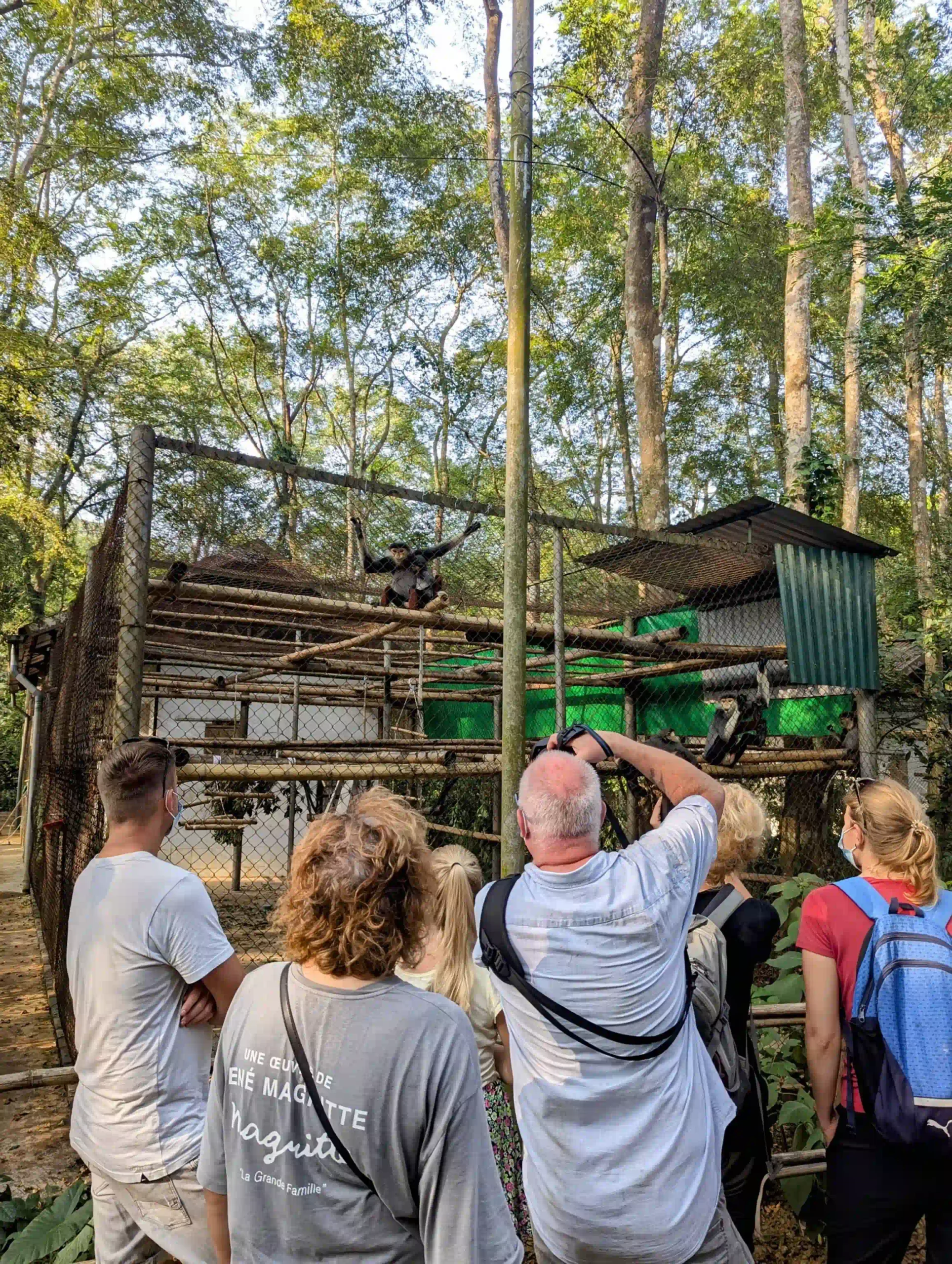
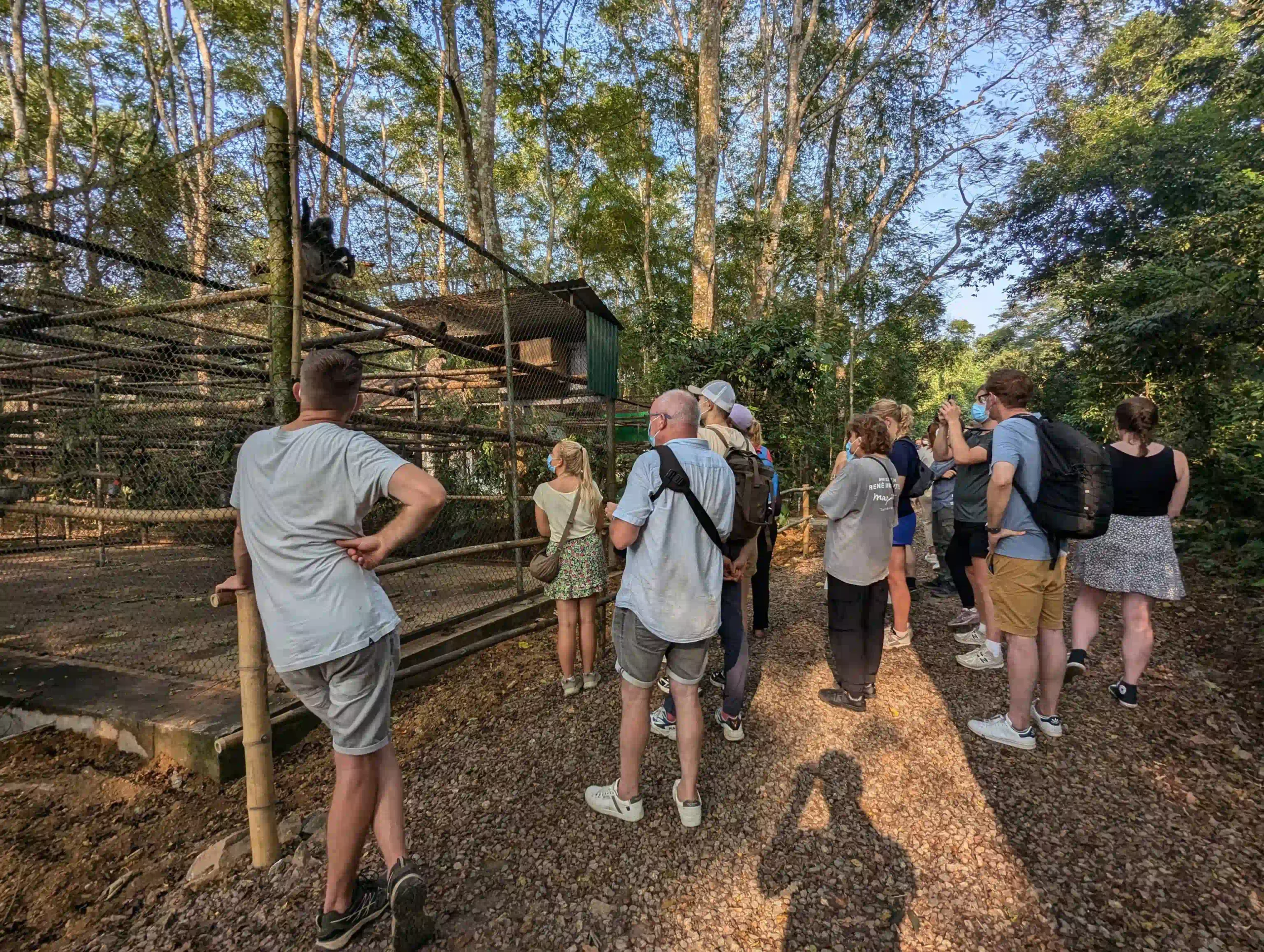
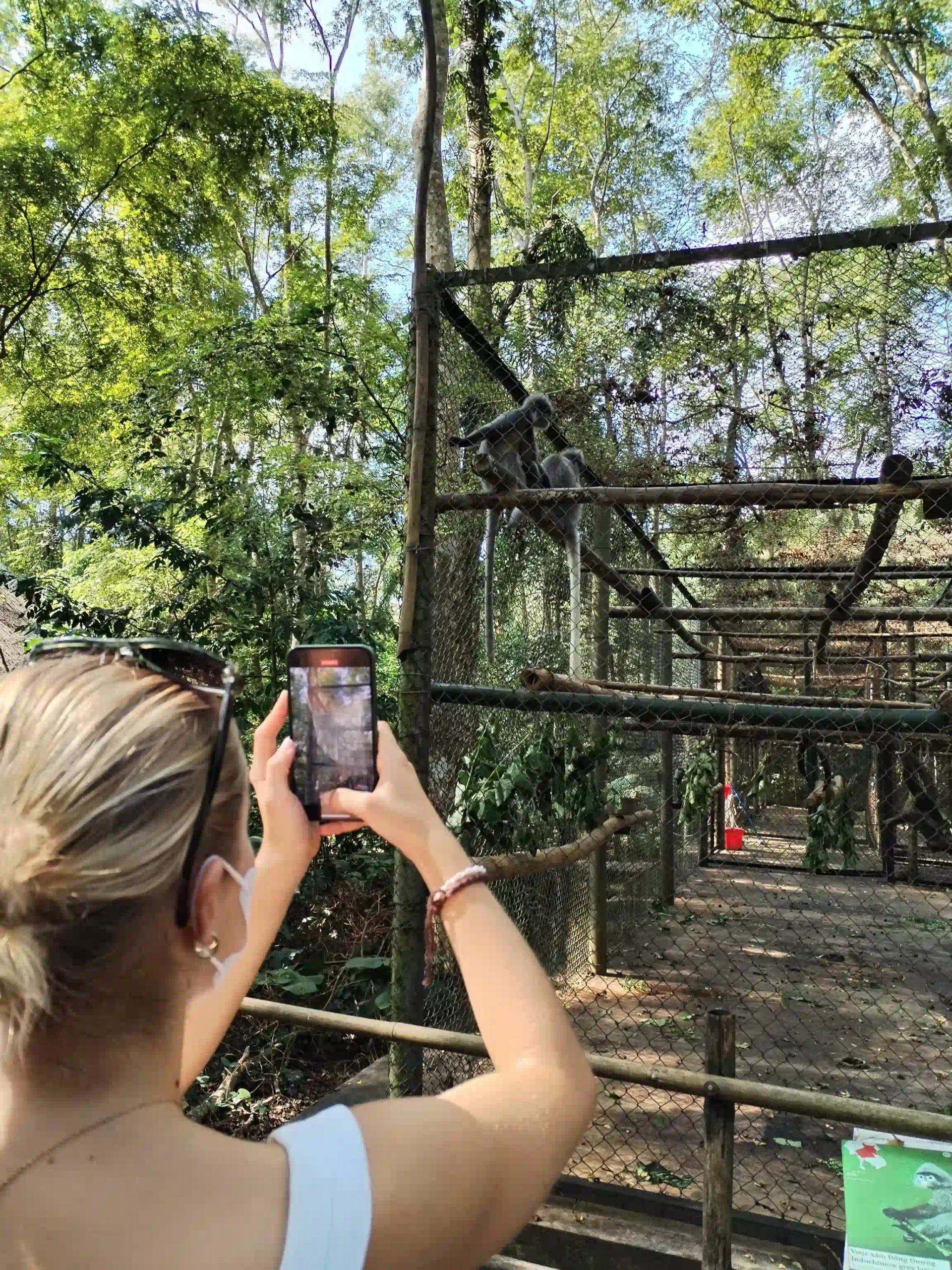
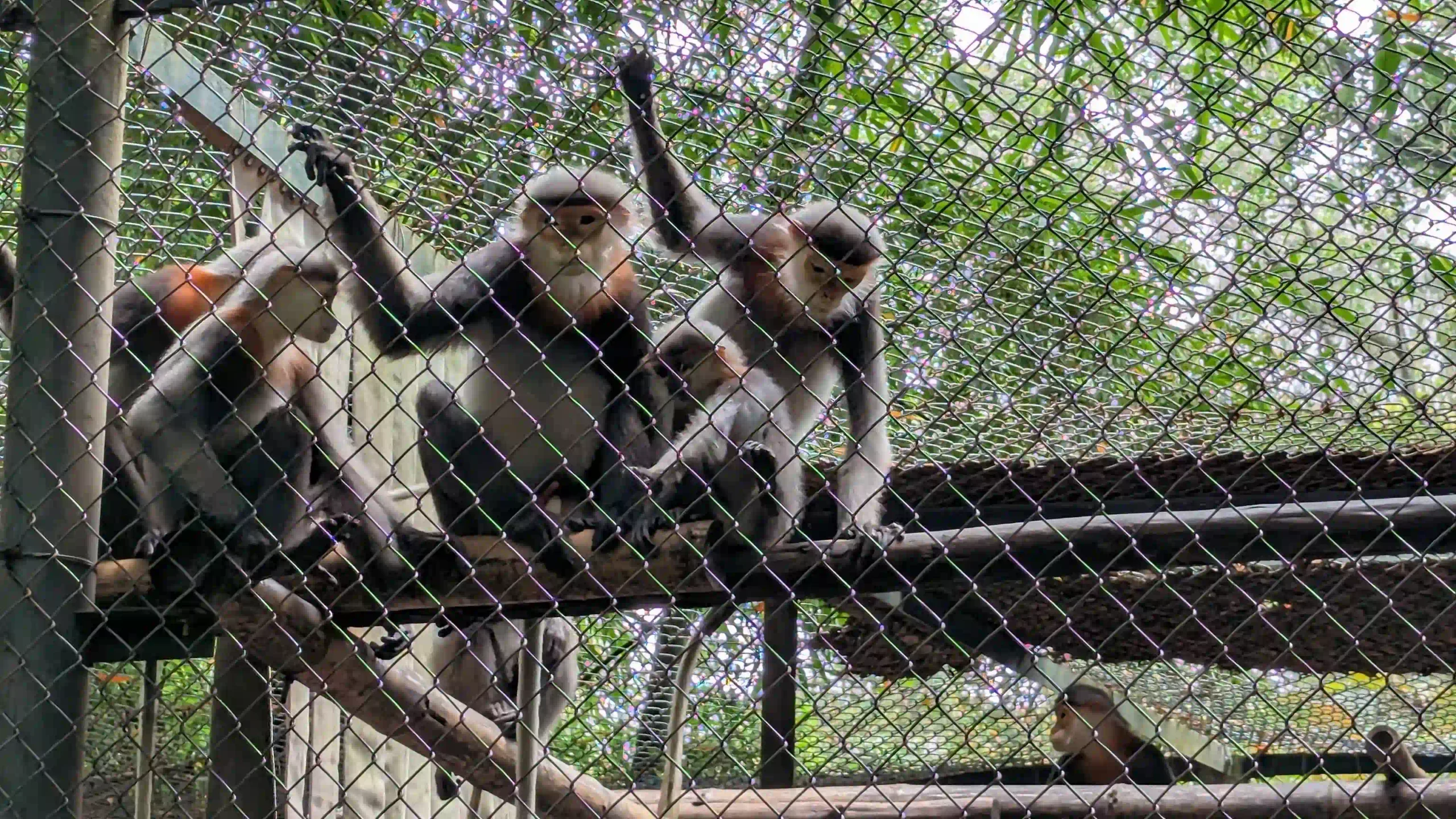
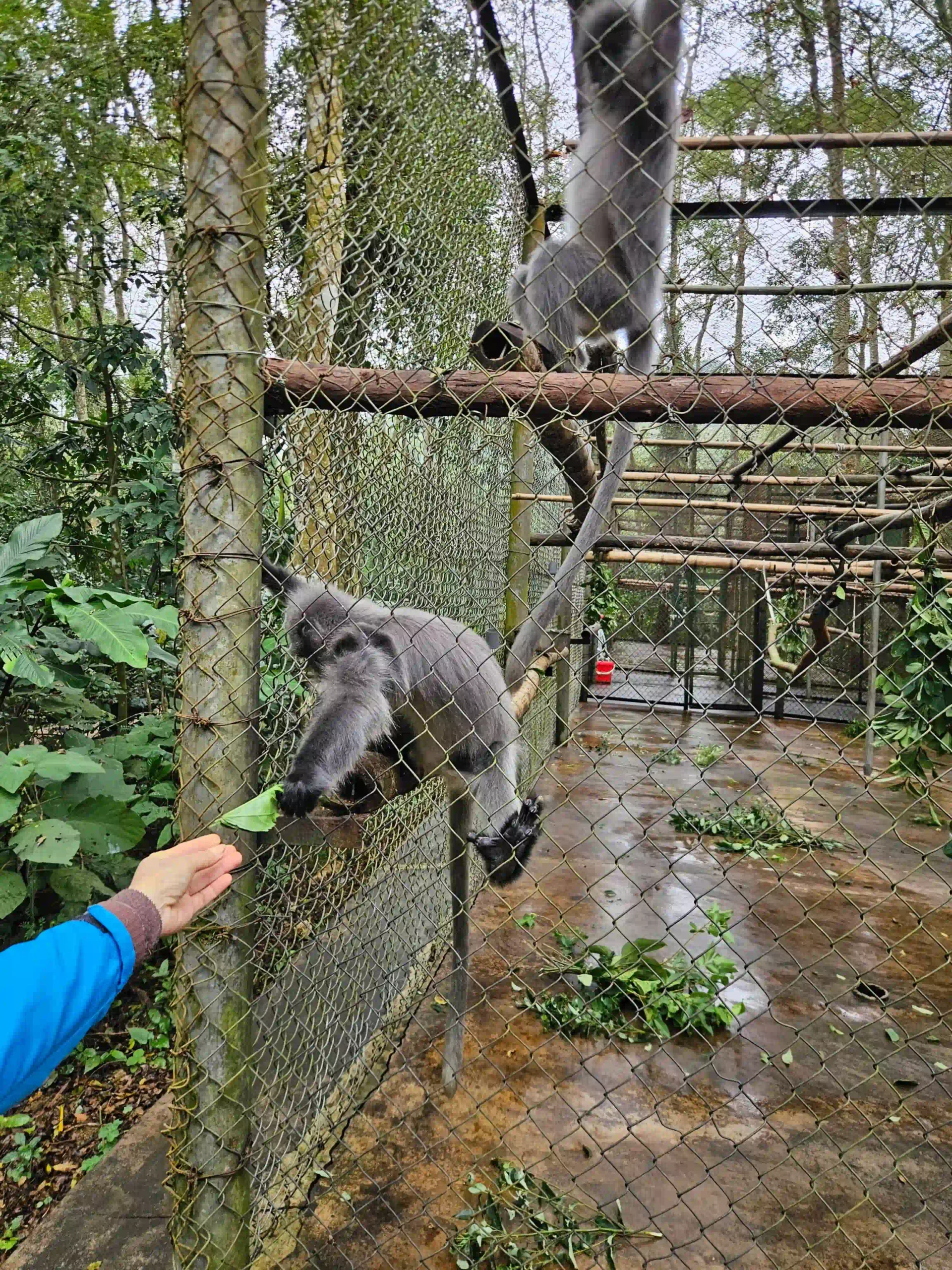
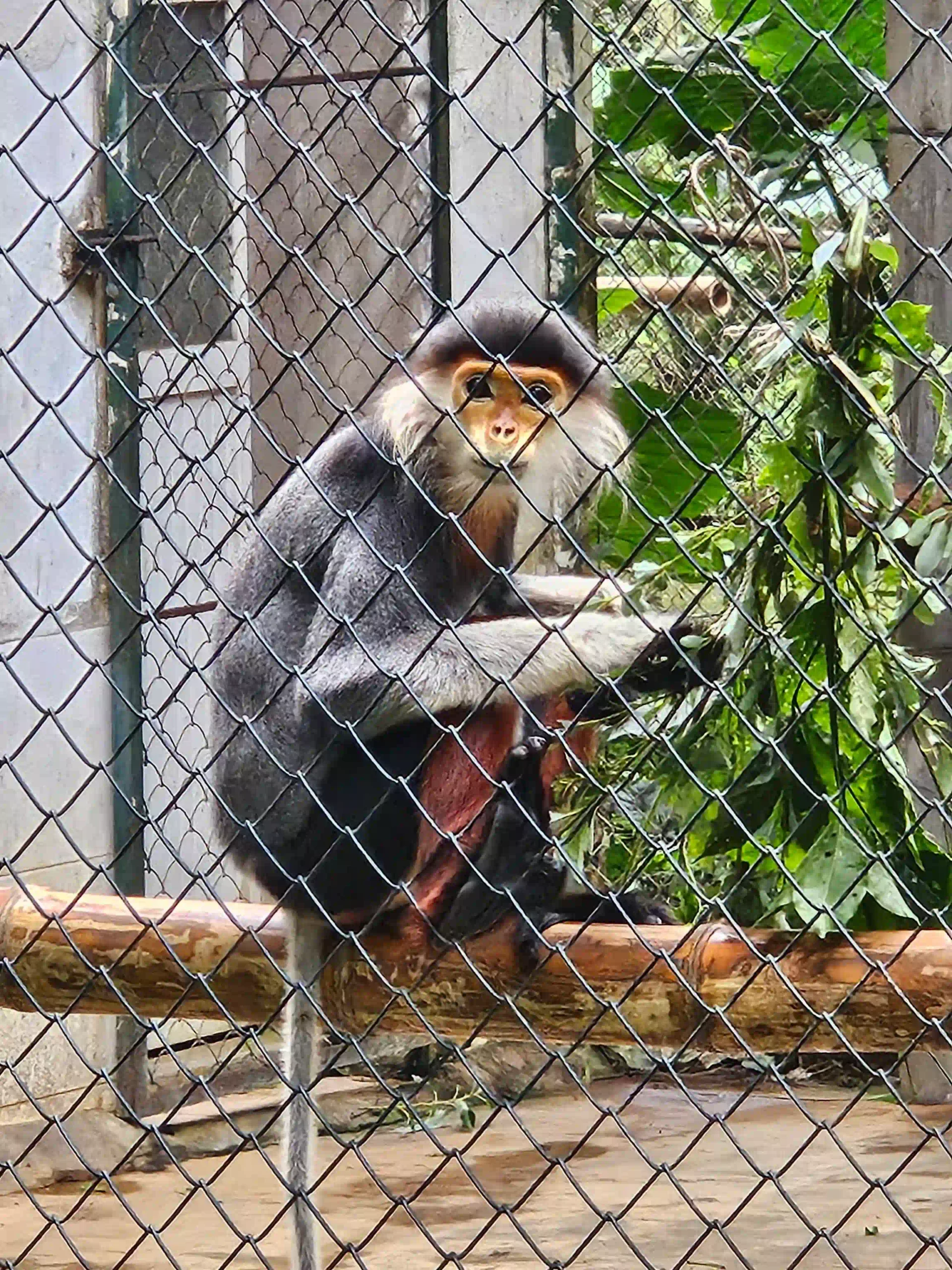
Our guide didn’t just walk us past enclosures naming species off a list. He pointed out specific animals, one rescued from a market, one that arrived too young to have learned how to forage on its own, and told us plainly that some of them will never be released, too used to people now, or too injured to survive back in the wild. That honesty landed harder than a cheerful tour script would have.
We ended up staying close to an hour, longer than I’d expected walking in. There’s a viewing spot partway through where you can just stand and watch a family group for a while without being nudged along to the next stop, and that turned out to be the best part of the whole visit, not the informational stretches but just watching them exist for a few minutes with nobody talking.
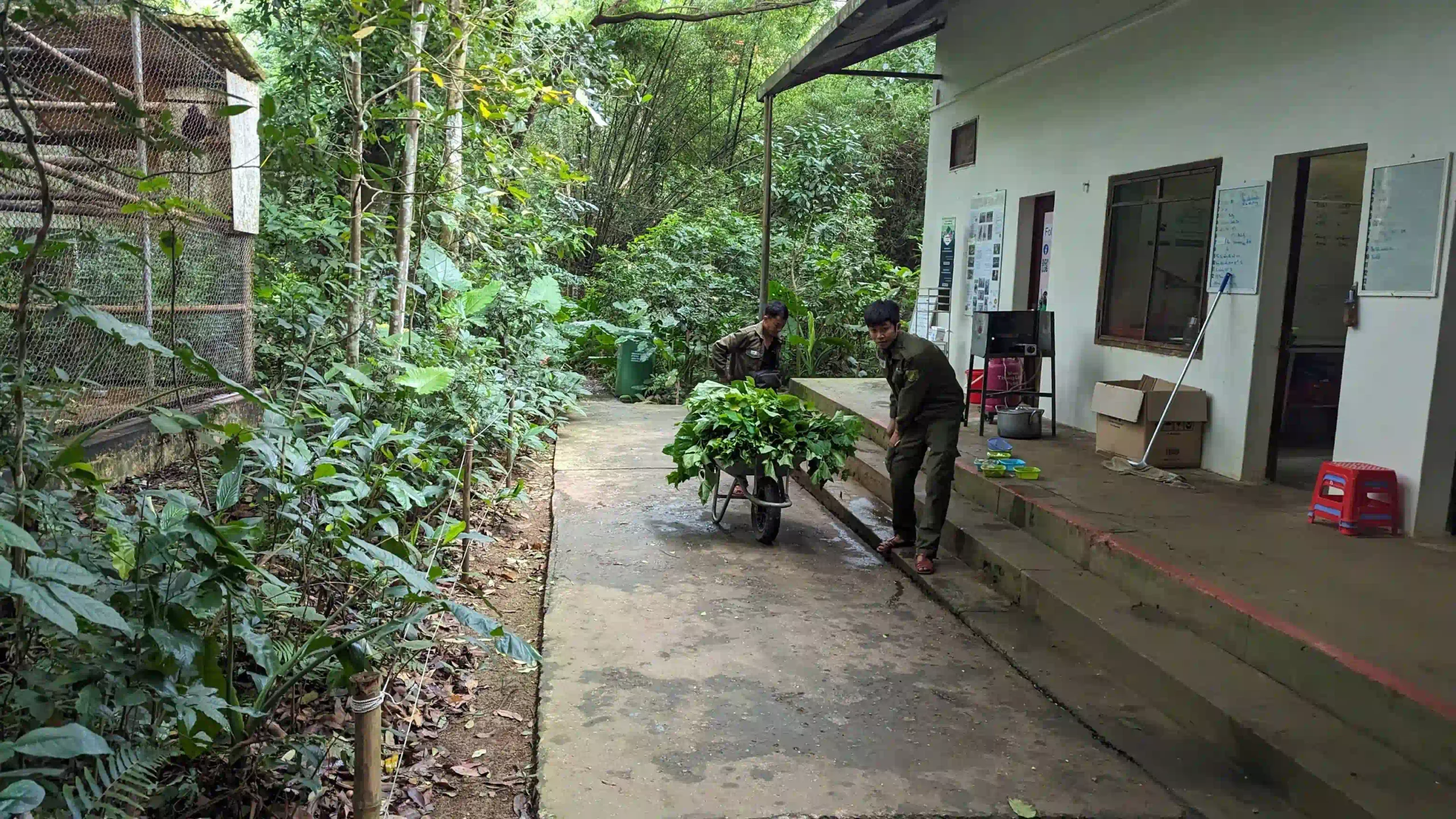
A keeper came through partway with a small cart of fresh leaves, tossing green bundles one at a time rather than dumping the whole pile, and the entire group stopped talking to watch that instead of moving on like the schedule probably suggested we should.
Trekking Cuc Phuong National Park’s Actual Trail
The trek starts from a marked point near the center, and it’s a genuine trail rather than a paved loop, roots underfoot within the first few minutes and the canopy closing overhead fast enough that the temperature drop is immediate and obvious.
The sound changes completely once you’re under the trees, cicadas and the occasional bird call somewhere up in the canopy replacing whatever traffic noise you’d gotten used to over the previous few days.
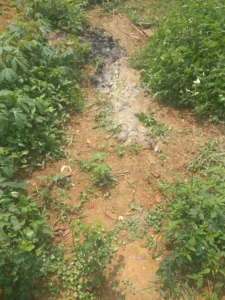
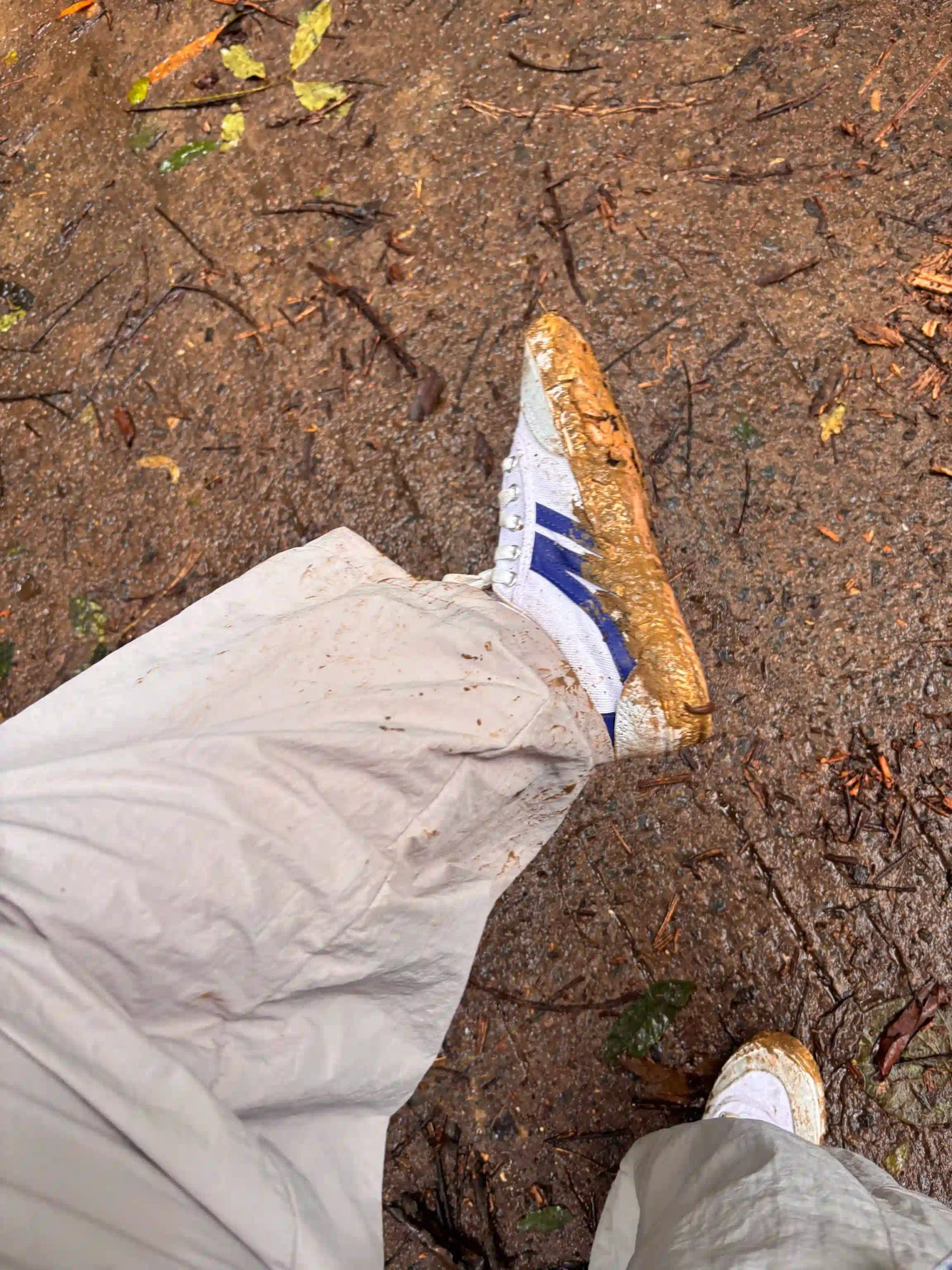
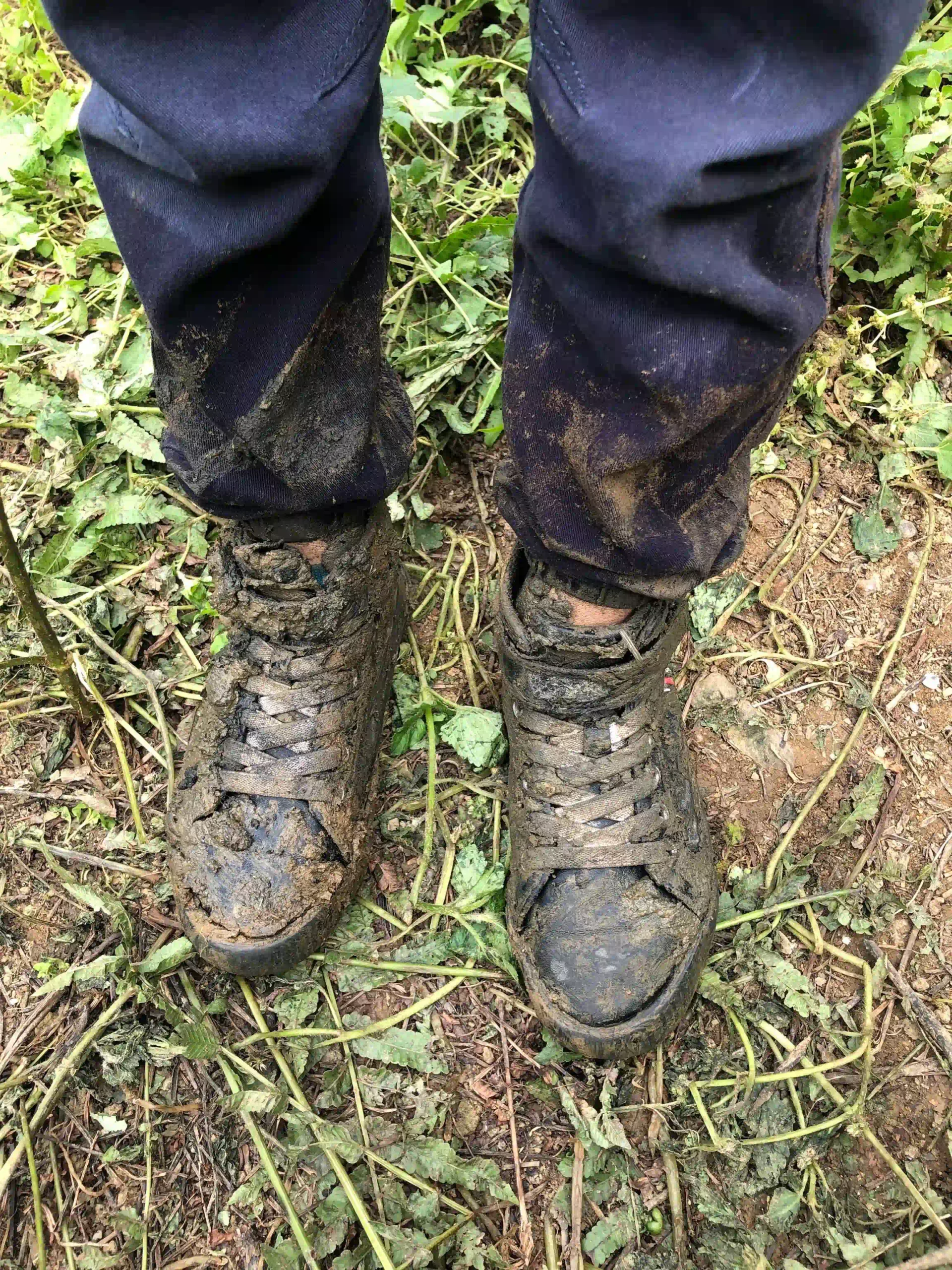
The standard route runs about 5km, and it isn’t flat the whole way. Some stretches are firm, easy walking, while others turn to genuine mud, especially lower down near the wetter sections, which is exactly where decent shoes stop being optional.
Our guide set a pace that never felt rushed and never dragged either, stopping without much warning whenever something was worth stopping for.
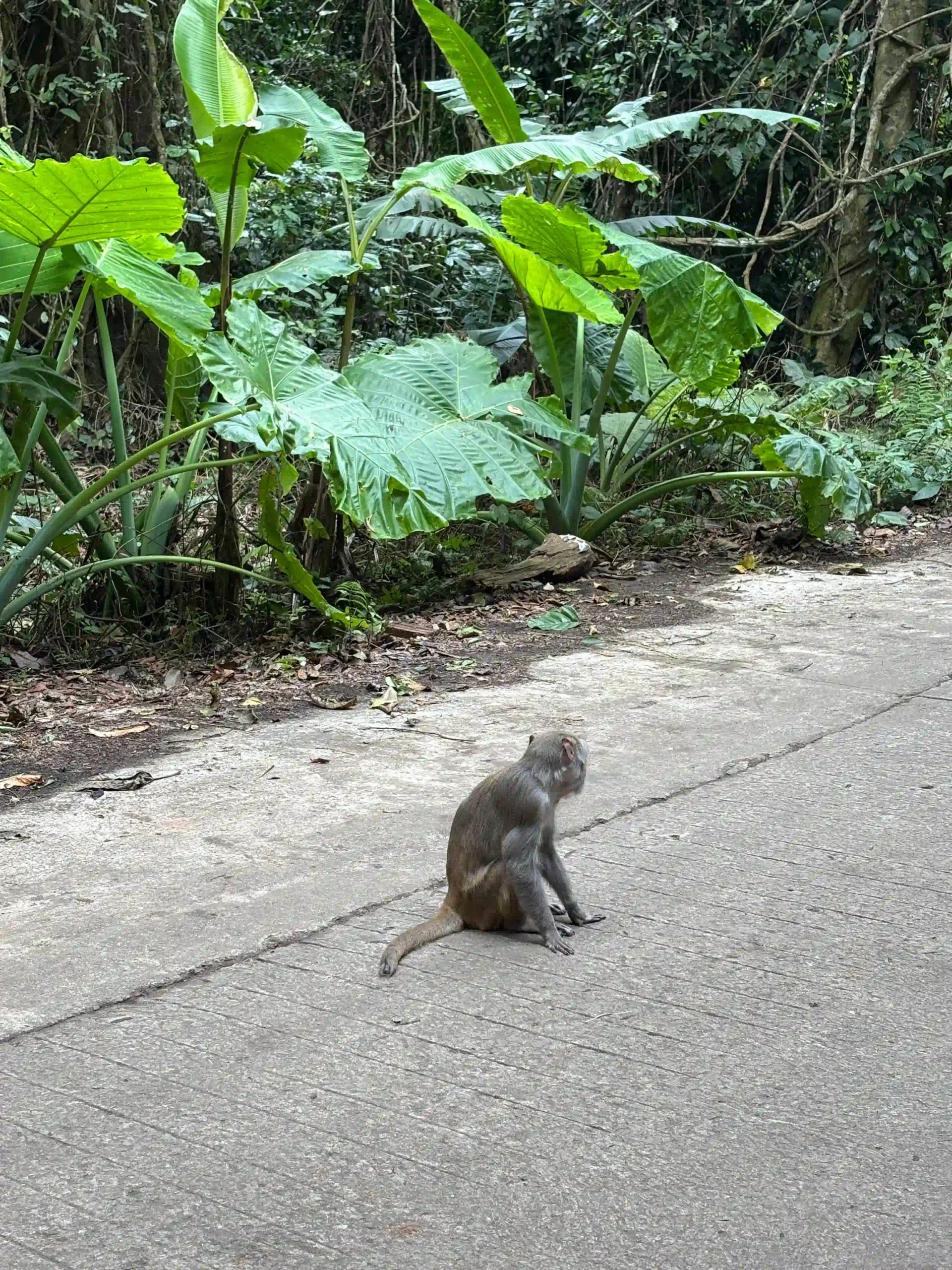
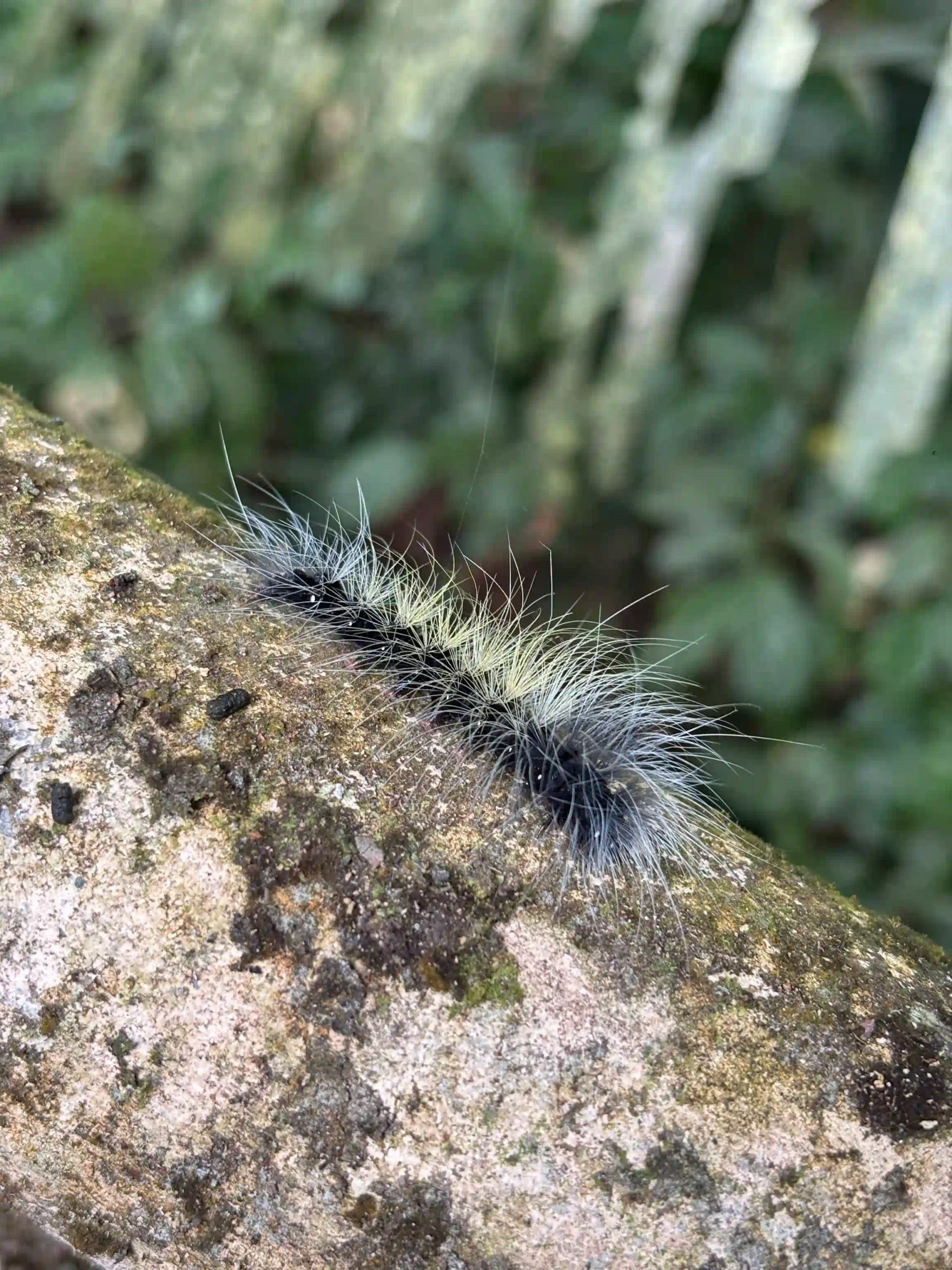
Twenty minutes or so in, he pointed suddenly into the undergrowth at a civet that was gone before most of us had properly focused on it. He’d clearly known exactly where to look, some habit built from years of walking this exact stretch, and left alone with just a trail map I’d have walked straight past that patch of forest without noticing a thing.
He mentioned, once we’d started walking again, that certain sections of the trail tend to be more active depending on how much rain fell the night before, damp ground drawing animals closer to the path looking for food that’s easier to find there than deeper in. It’s the kind of practical, specific knowledge that only comes from actually spending years working a place, not something a trail map or a guidebook chapter could give you.
Butterflies showed up constantly along the narrower sections, more of them and more kinds than a single morning walk seemed like it should produce, some settling on damp patches of trail long enough to get a proper look before scattering as we got close.
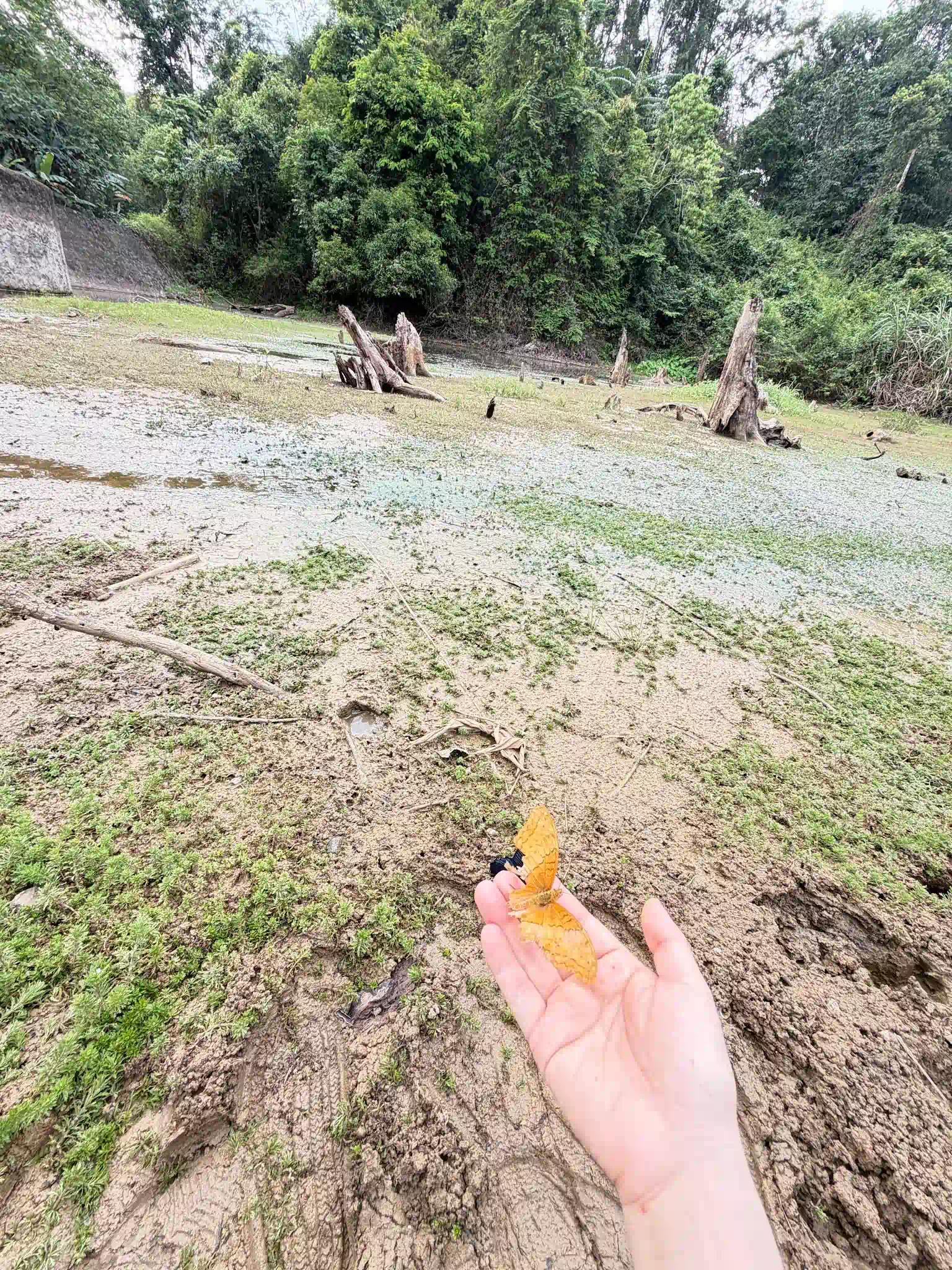
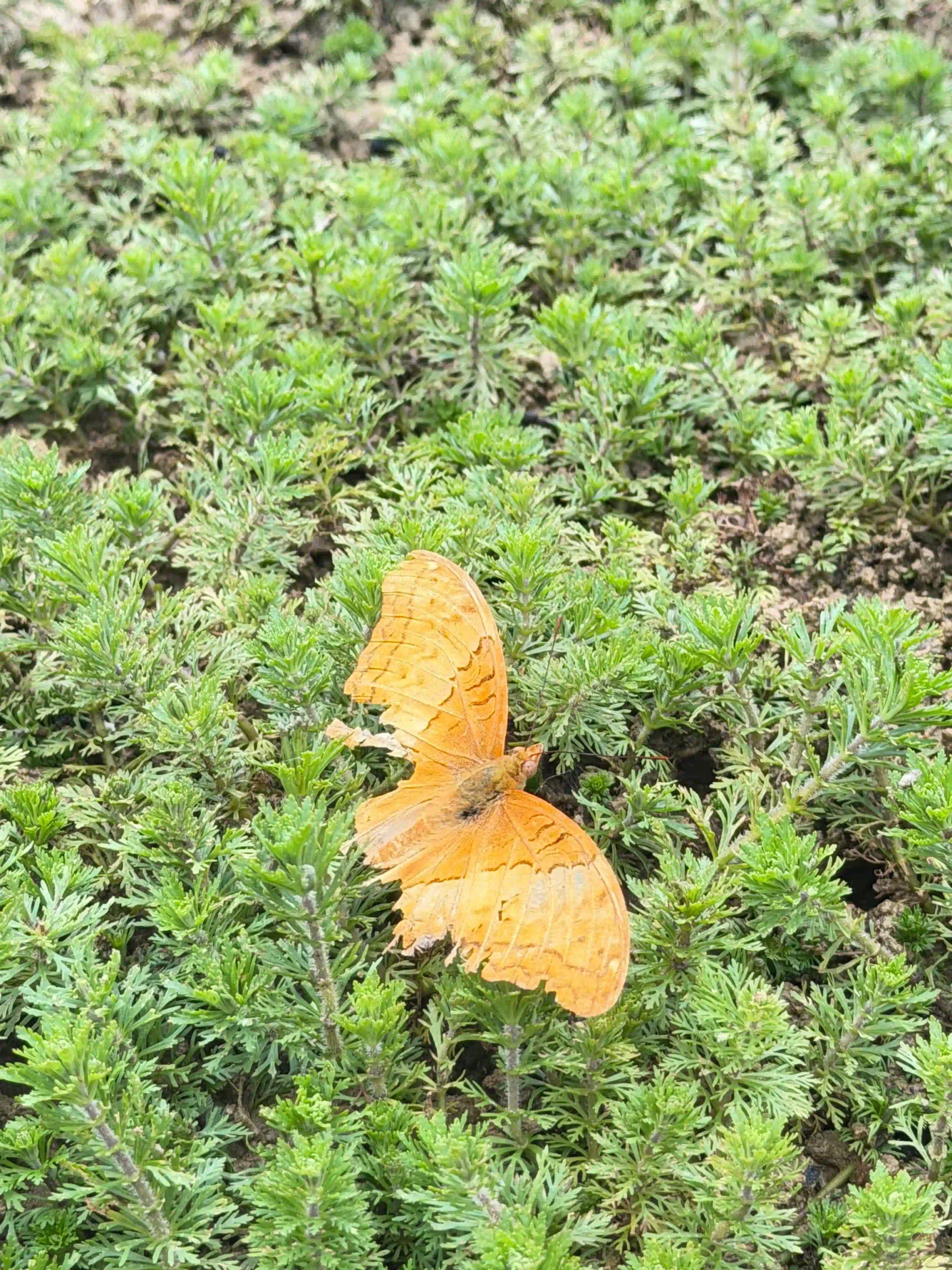
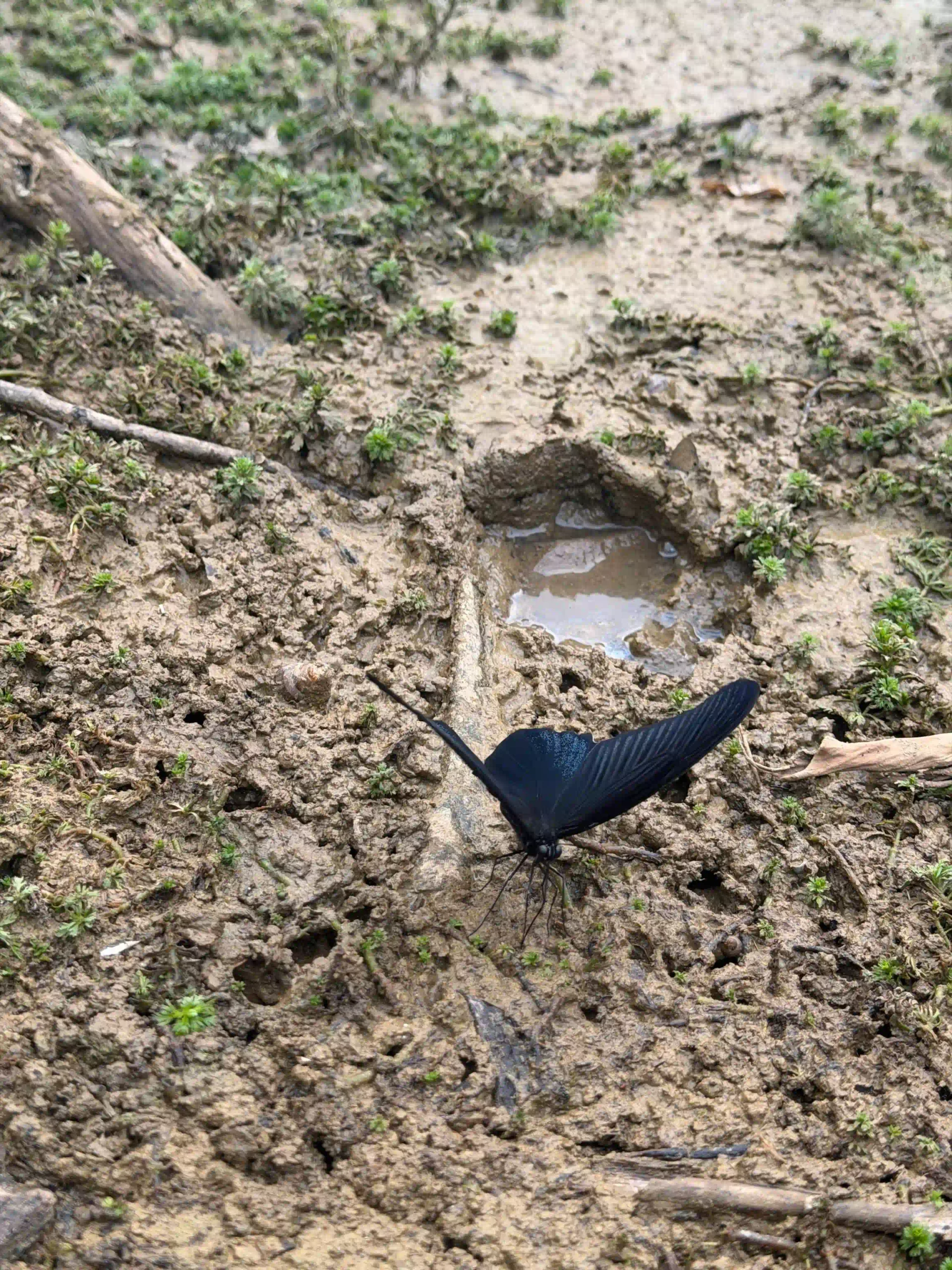
A small stream crossed the path at one point, nothing dramatic, just enough water to need stepping stones, and for a stretch it was the loudest thing in the whole forest. Someone in our group slipped slightly on one of the wetter stones and grabbed a low branch to catch themselves, laughing about it for the rest of the walk.
About halfway in, the trail reaches the park’s actual landmark, a tree estimated at over 1,000 years old, tall enough that you tip your head all the way back and still don’t quite see the top, with buttress roots at the base wide enough that several people together couldn’t circle it with their arms.
Nobody in the group said much standing there. There wasn’t a lot that needed saying. Someone eventually asked how they even estimate a tree’s age without cutting it down to count rings, and the answer was a combination of growth-rate models for the species and whatever historical records exist for the area, not an exact science but close enough to hold up.
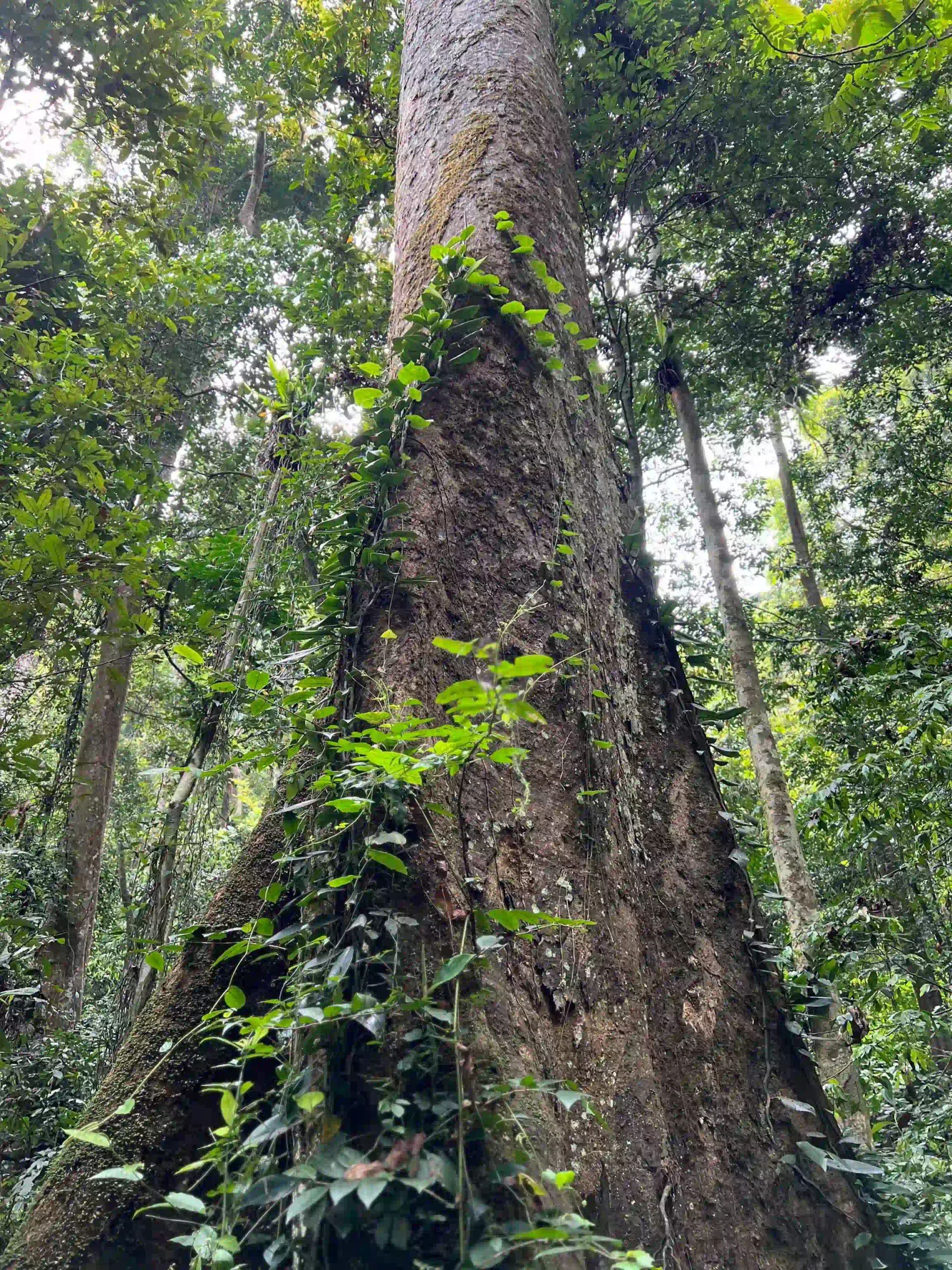
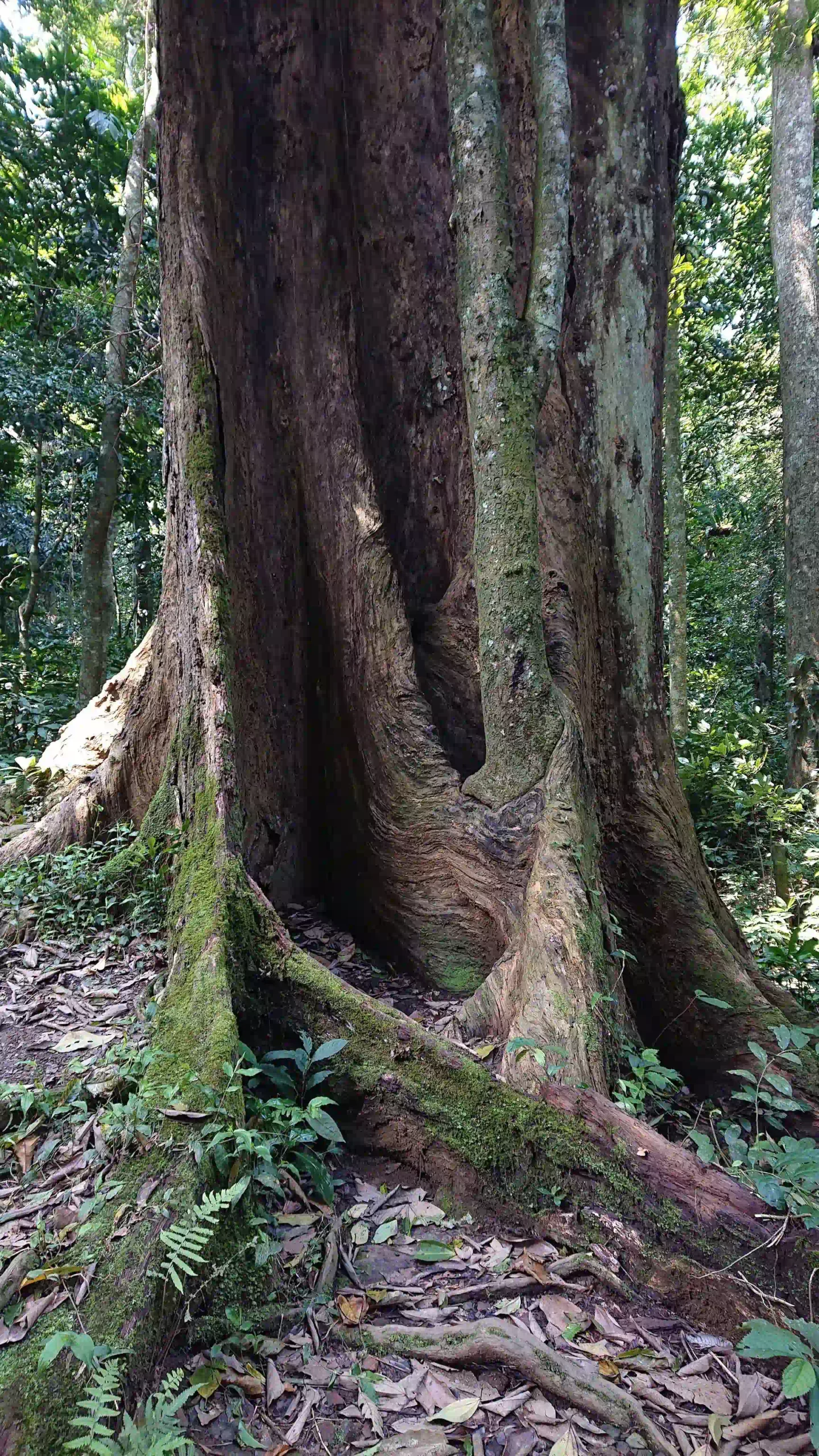
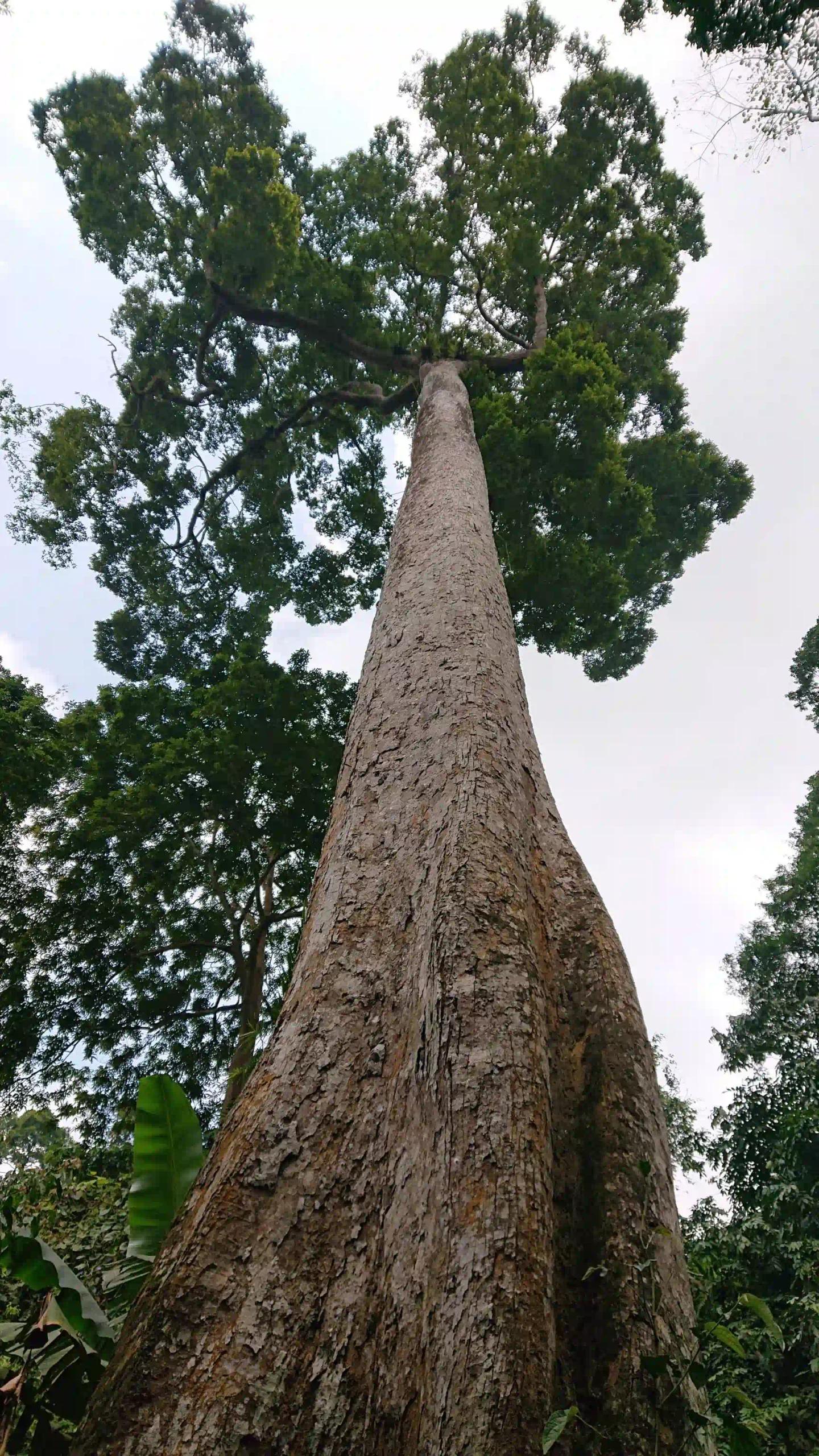
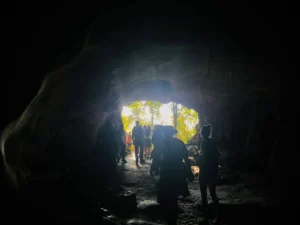
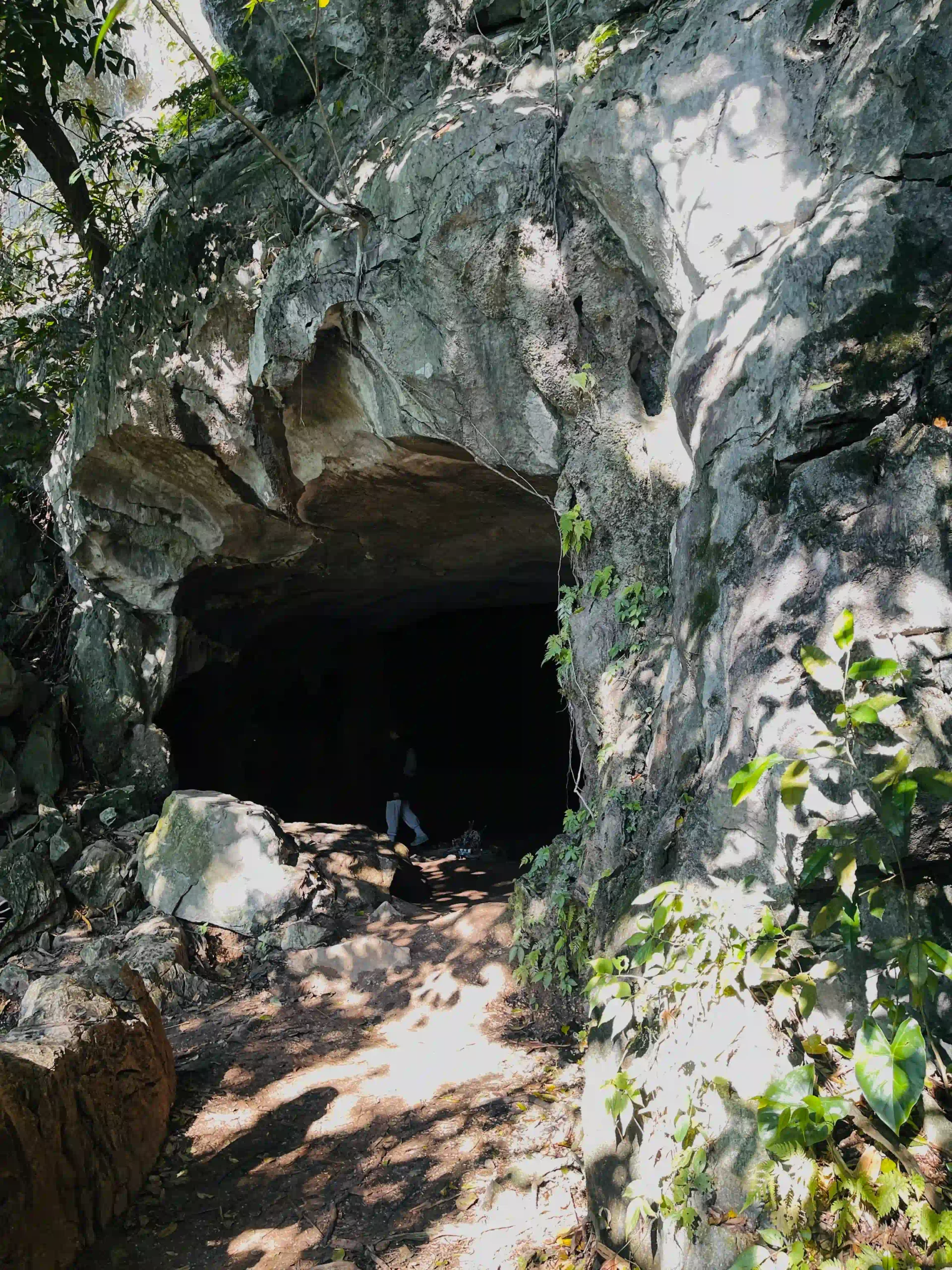
Not far past it is a cave used by prehistoric humans thousands of years ago, reached by some steep steps that need real attention but nothing technical. Inside it’s cool and dim, a genuine break from the humidity of the trail, and our guide pointed out patches of stone worn smooth by fire and tool use that meant nothing to me until he showed me exactly where to look.
There’s a spot near the entrance where the ceiling opens just enough to let a shaft of light through around midday, and we happened to be there close enough to that time to catch it. People lived in that spot thousands of years before anything resembling modern Vietnam existed, and standing there with a water bottle in hand, that timeline is hard to fully process.
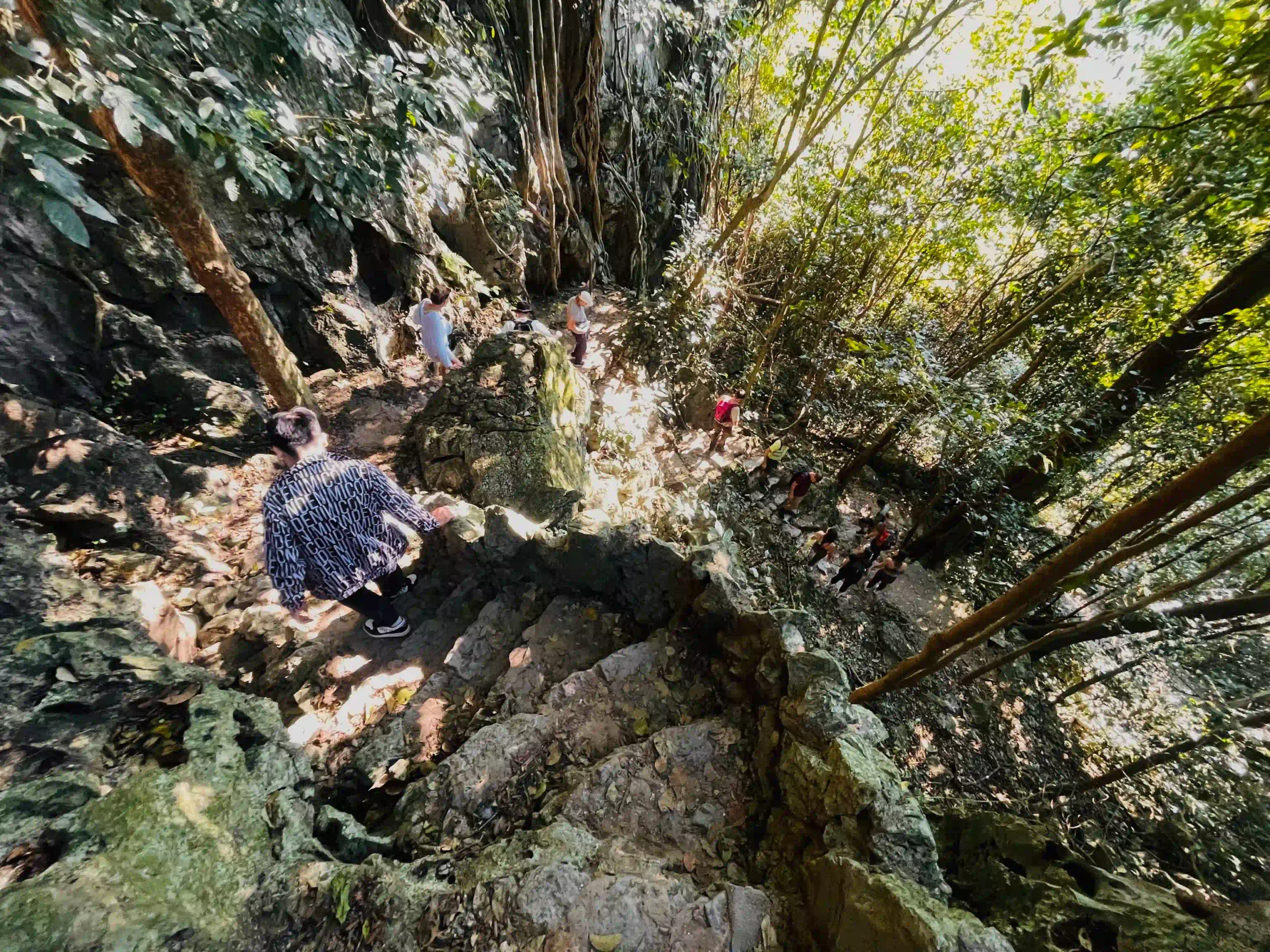
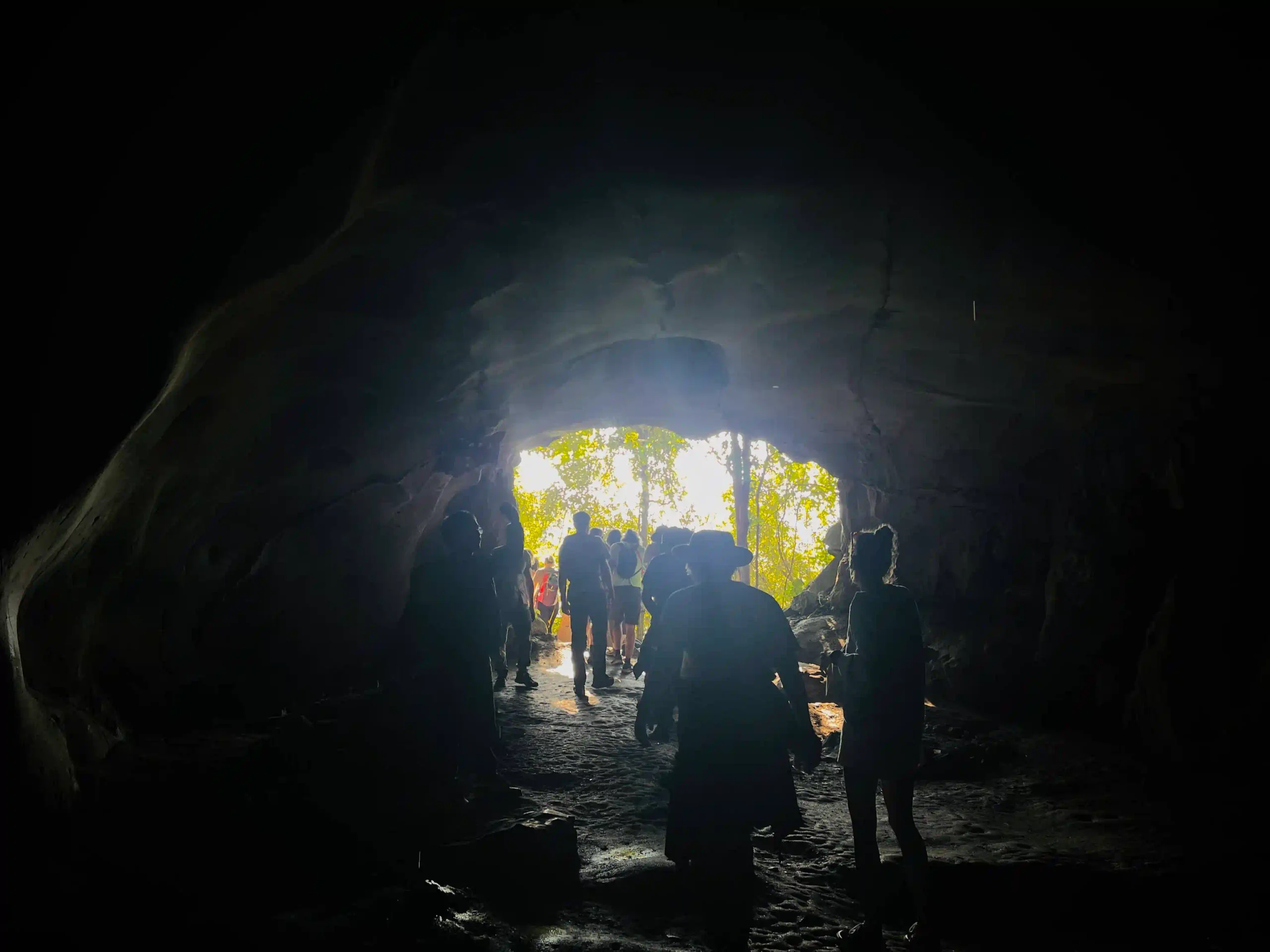
The walk back out felt quieter than the way in, less talking and more just looking, which suited the mood fine after a morning like that. Near the very end, someone spotted a langur high up in the canopy, just a shape moving between branches really, but the whole group stopped anyway.
What Hiking Cuc Phuong National Park Doesn’t Tell You Upfront
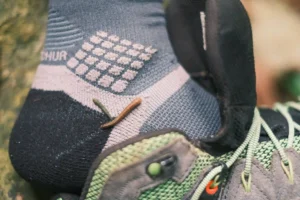
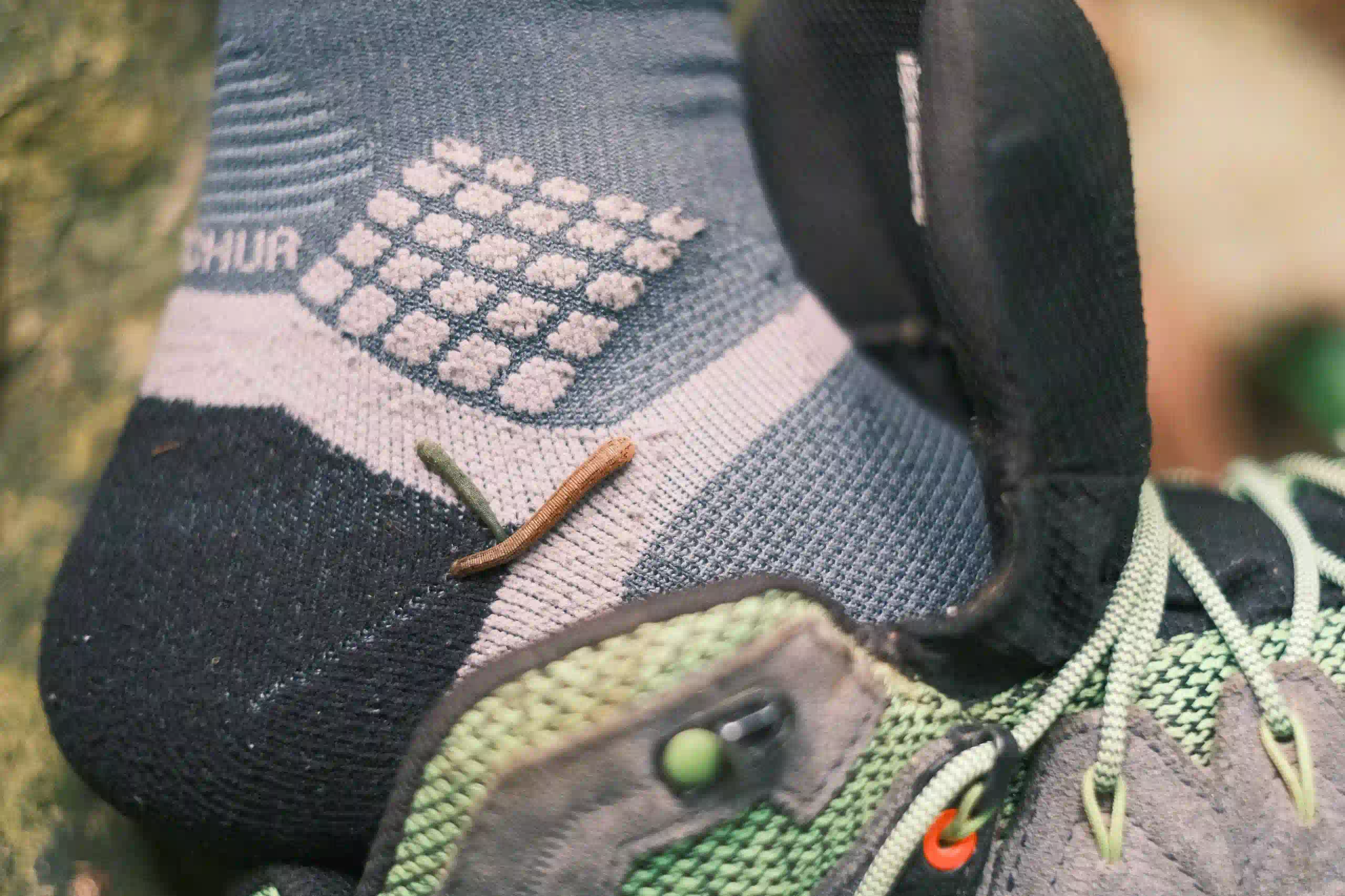
Leeches are real here, and if it’s rained recently, which in this part of Vietnam it usually has, expect them. They’re not dangerous and barely register as a bite, the anticoagulant they use just means a small cut bleeds more than its size would suggest, which looks worse than it actually is. Closed shoes help, and long socks tucked into your trousers help more.
Someone in our group found one attached mid-trek, dealt with it in about ten seconds with a flick and a laugh, and kept walking without much fuss. Another person spent the rest of the walk checking their ankles every few minutes regardless, which our guide found genuinely funny by around the fourth check.
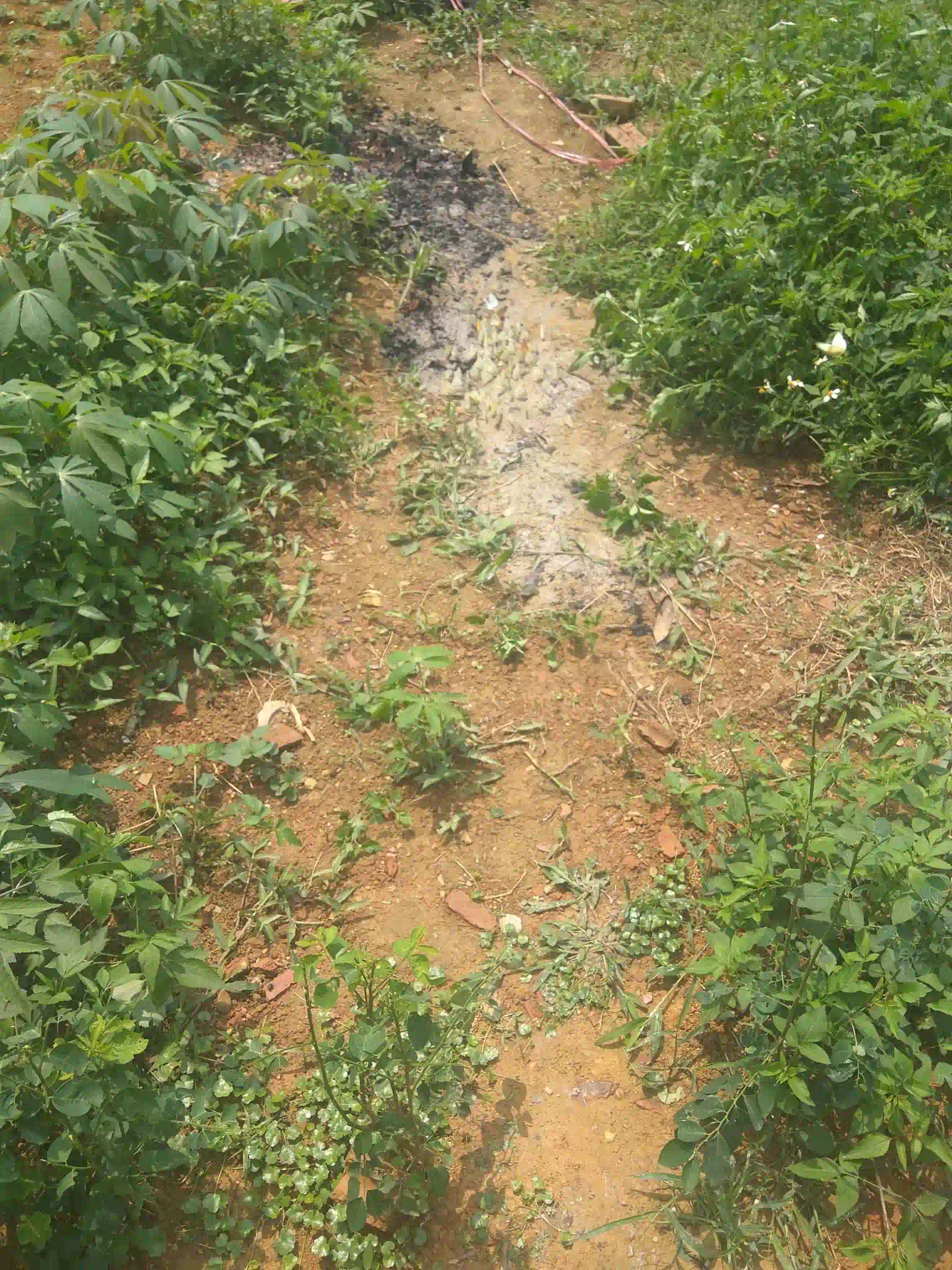
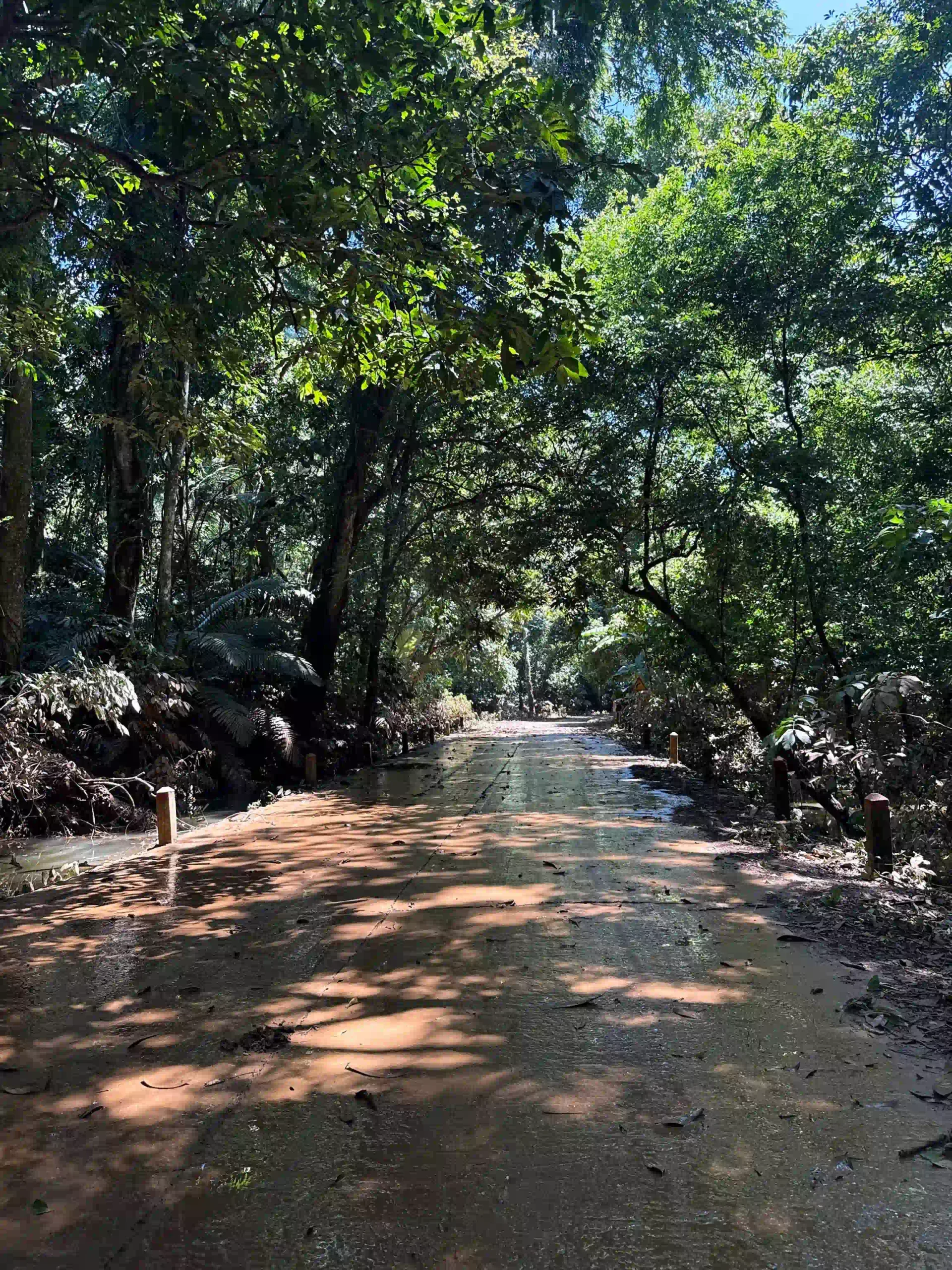
Not every operator running this trip actually delivers a trek. Some advertise a jungle hike and give you a short walk to a viewpoint with no real trail option offered, closer to a stroll than anything worth calling trekking. If trail distance matters to you specifically, it’s worth checking the listing before you book instead of assuming every version of this tour covers the same ground. Ours ran the full 5km. Not all of them do, and it’s the kind of thing that’s genuinely easy to check before handing over money for something that turns out to be a short walk to a photo spot.
There’s litter in a few spots too, along some of the paved stretches and occasionally just inside the cave entrance. Worth knowing going in, since expecting untouched wilderness at every step sets you up for disappointment. It doesn’t define the day, but pretending it isn’t there would be dishonest. Our guide mentioned that park staff do regular cleanup runs through the more accessible sections, though clearly not often enough to catch everything before the next visitor notices it.
Heavy rain genuinely disrupts the trek as well, flooding sections of trail and turning already-muddy stretches into something closer to a real problem. A guide who knows the park adapts to that, spending more time at the center or shortening the trek if conditions call for it, instead of pushing a group through something unsafe just to stick to the schedule. We got a dry morning and only a brief shower right at the end, enough to test whether the rain layer actually worked without turning the trail into a genuine mess.
Physically the day sits somewhere in the moderate range, a full day on your feet with a genuine climb built into the cave approach, enough that you’ll feel it in your legs by evening even if nobody in the group struggles outright. The oldest person in our group, probably somewhere in his sixties, kept pace just fine and only slowed down noticeably on the steepest section near the cave, which nobody found remarkable given the terrain.
Heading Back
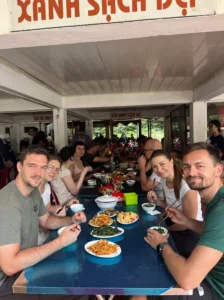
Lunch happened at a restaurant inside the park grounds, simple food, rice and a handful of dishes, nothing elaborate but genuinely welcome after the walk.
Sitting there afterward with mud still on my shoes, it was easy to run back through the day in order, the primate center that morning, the tree, the cave. It didn’t feel like a checklist. It felt like a day that had actually taken all nine hours to earn.
People who’d been strangers that morning were comparing phone photos by the time we sat down, mostly arguing over who’d actually managed to photograph the civet nobody else had properly seen. One person swore they’d gotten a shot. Nobody quite believed it until they actually pulled it up, blurry but genuinely real.
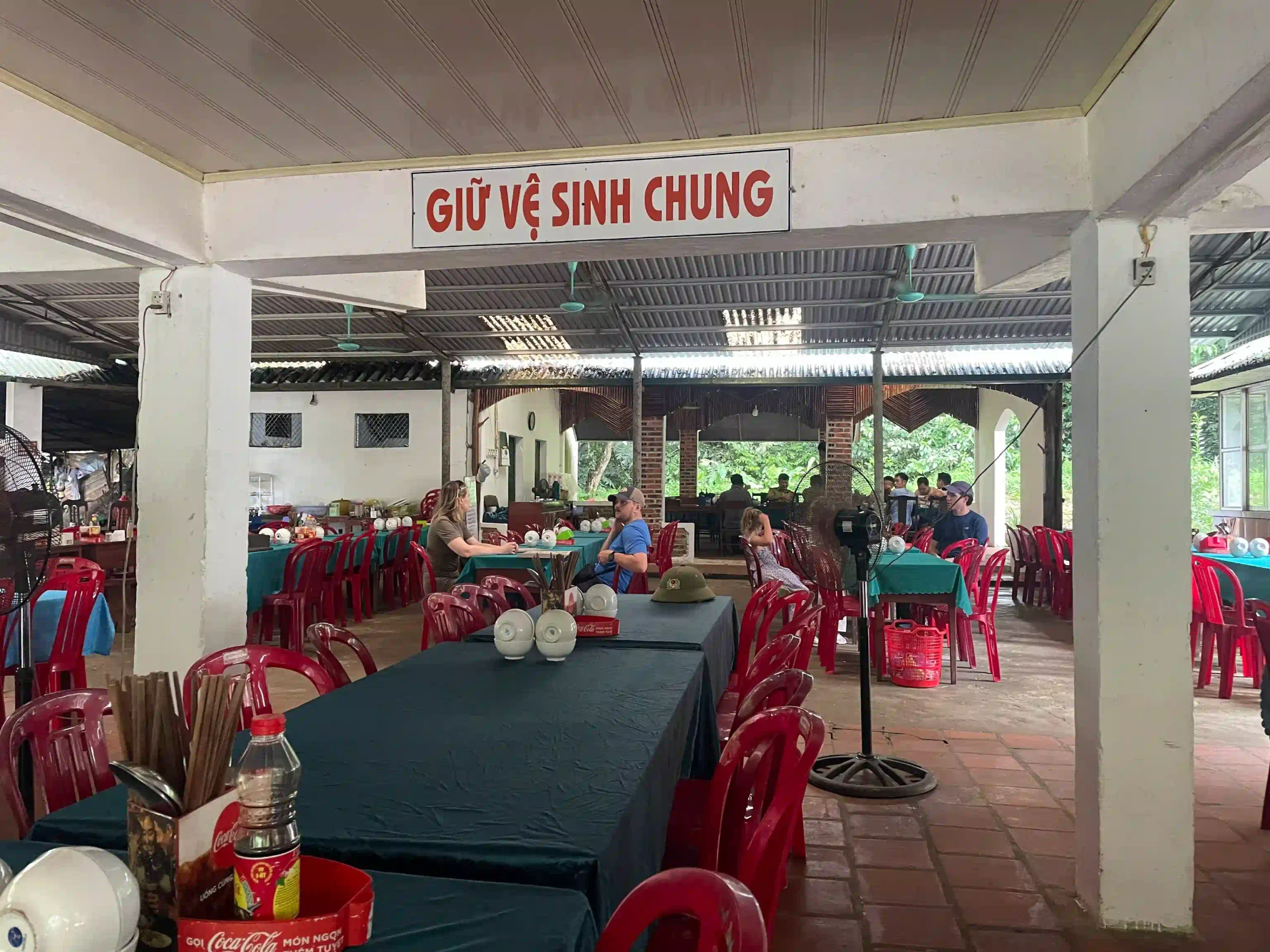
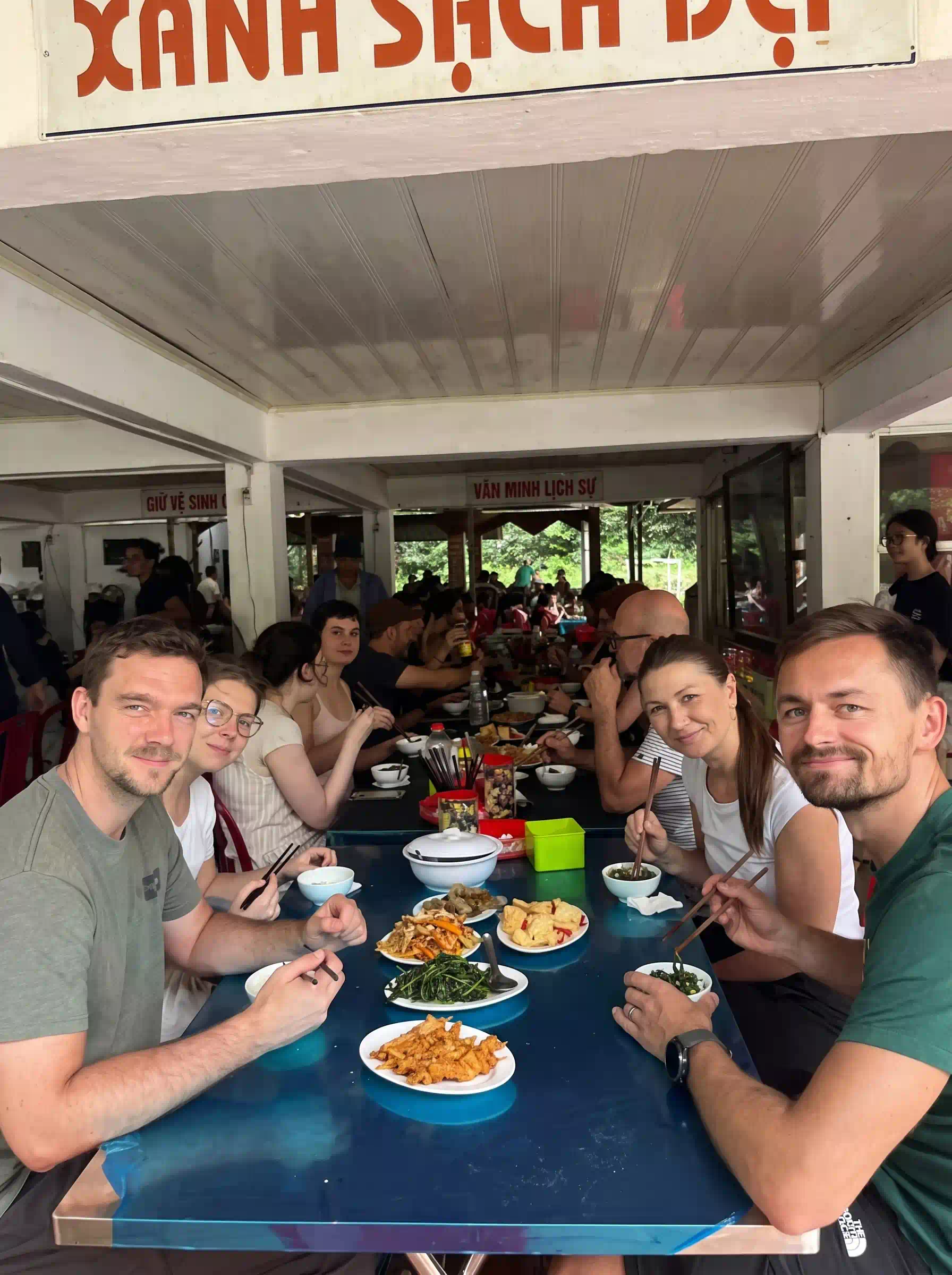
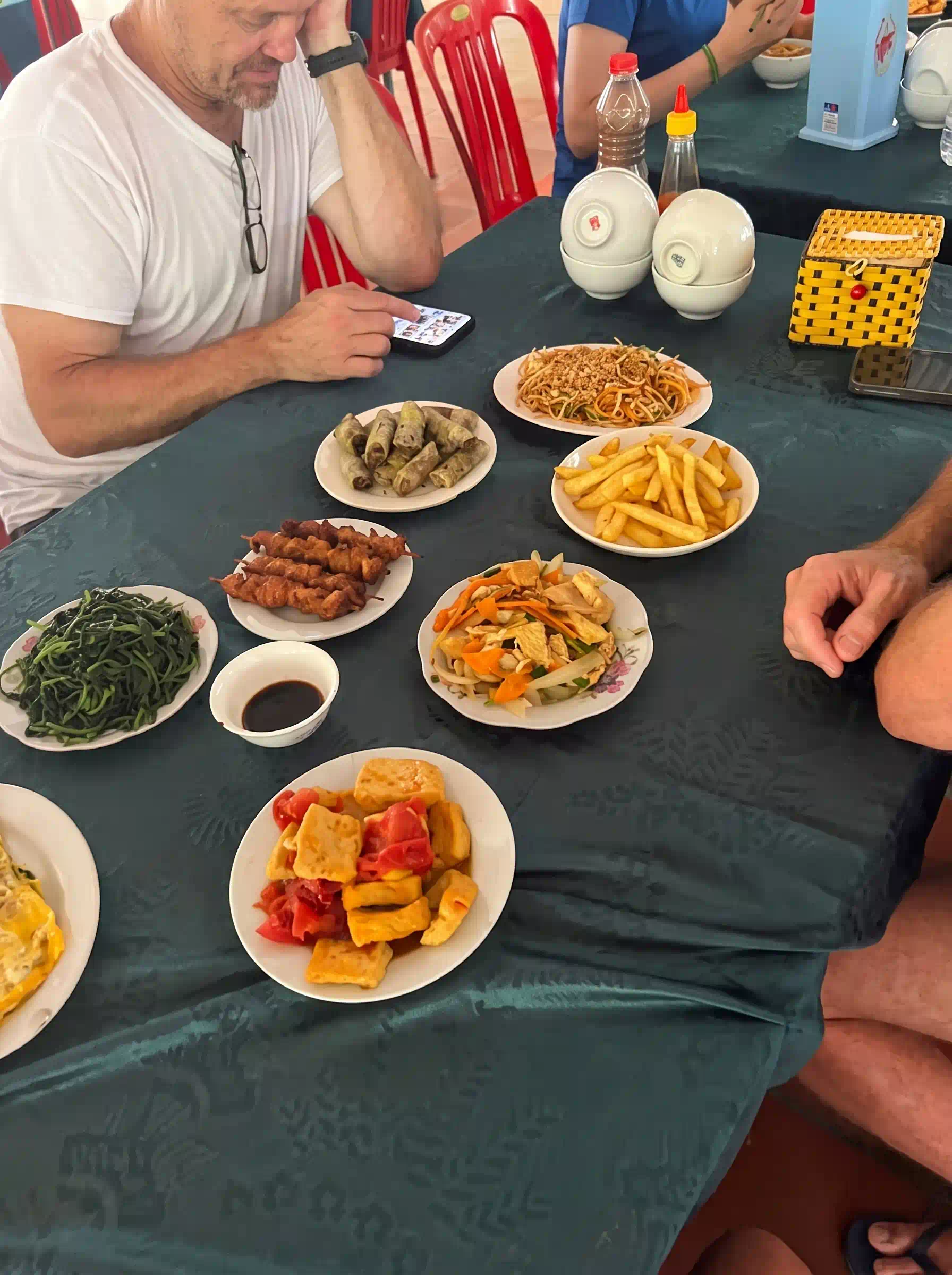

The trip runs close to 9 hours door to door from the Ninh Binh area, lunch included at that restaurant inside the park. Coming from Hanoi instead adds roughly 2 hours each way to that total, a longer day but the same core experience once you actually arrive. Pack accordingly either way: closed shoes with real grip, light trousers, a rain layer since forest weather shifts fast under the canopy, mosquito repellent, and more water than feels necessary given how much the humidity adds up over several hours of walking.
Worth knowing too that phone signal drops out for most of the trek itself, patchy at best once you’re properly under the canopy. Worth telling anyone expecting to hear from you that day, and worth having offline maps downloaded if you’re the type who likes to track where you actually are. Cash is also worth carrying in small denominations, for anything at the stalls near the entrance or extra snacks after the walk, since card payment isn’t really a thing out here.
It’s backed by hundreds of reviews, which for a day trip this far out and this involved is worth something. You’re not gambling on an unknown operator for something that takes this much planning to get right.
You can go hiking in Cuc Phuong National Park independently too, paying the entrance fee and walking the marked trails from headquarters on your own. You’ll miss most of what actually makes the day work though, the wildlife spotting a trained eye catches and you wouldn’t, the context at the rescue center that turns cages into an actual conservation story instead of just animals behind glass.
This is one of the few places in Ninh Binh where hiring a guide for trekking Cuc Phuong National Park genuinely earns its cost, more so than at Trang An or Mua Cave, where going it alone works perfectly well.
Don’t try to stack this with anything else the same day. It needs its own slot, and squeezing Trang An or Mua Cave in around it just means rushing both.
If your Ninh Binh trip is short, a day trip or an overnight built around the karst basin, this is genuinely optional, since the boat tours and Hoa Lu already cover the region’s signature experience without it.
If you’ve got the extra day and you’d rather see wildlife and old-growth forest than one more limestone view, hiking Cuc Phuong National Park is worth the trip out. It’s a genuinely different kind of day from everything else Ninh Binh offers, and coming back to Tam Coc afterward, the karst scenery somehow feels less repetitive for having spent a day somewhere completely different.
For the bigger picture on how many days makes sense here overall, my Ninh Binh itinerary guide covers that, and Cuc Phuong is exactly the kind of addition that tips the calculation toward staying longer.












 Tiếng Việt
 한국어
한국어 中文 (中国)
 日本語
日本語 ไทย
ไทย Deutsch
 Español
 Destinations
 Instagram
 Facebook
 X (Twitter)
 Threads
 Tiktok