







 Ha Giang
 Hanoi
Hanoi Ho Chi Minh City
 Ha Long
 Sapa
Sapa Mekong Delta
 Da Nang
 Hue
Hue Hoi An
 Ninh Binh
 Da Lat
 Nha Trang
 Phan Thiet
 Phu Quoc
 Quang Binh
 Quy Nhon
 Vung Tau
 Thai Nguyen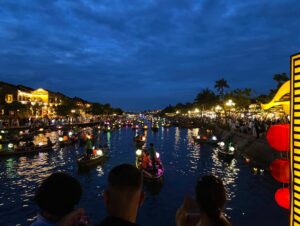

Most travel advice about Vietnam festivals is wrong. It’s written by people who visited for two weeks, saw a lantern, and called it a day. Or it’s a copy-paste job from a tourism board brochure.
After a decade of living inside this calendar of beautiful, chaotic, and often frustrating celebrations, here’s the guide I wish I’d had.
This is about the reality—the crowds, the costs, the noise, and whether you should even bother.
This is a breakdown of what these festivals actually are on the ground, for a foreign traveler.
The Quick-and-Dirty Breakdown (For People With Places to Be)
- The ultimate guide to Vietnam festivals by a 10-year expat. Forget the tourist brochures. Learn the real strategy: why the week before Tet is magical but the holiday is a ghost town, how to see the Hoi An Lantern Festival without the crowds, and which major festival is a logistical nightmare to avoid. This is the practical, unfiltered advice you need for authentic cultural travel Vietnam, covering the best times, costs, and scams.
- Tet (Lunar New Year): The Great Shutdown.
- When: Late Jan / Early Feb.
- The Reality: The week before is a fantastic, manic spectacle of preparation. The actual holiday is a ghost town for tourists where everything is closed or triple the price. It’s a logistical trap. Don’t come for the party; there isn’t one for you.
- Hoi An Lantern Festival: The Instagram Trap That’s Still Worth It.
- When: 14th day of each lunar month.
- The Reality: Yes, it’s gorgeous. It’s also a human traffic jam of the highest order. You will be pushed, you will be sweaty, and you will fight for every photo. It’s manageable if you have a strategy.
- Mid-Autumn Festival: A Loud, Sugary Street Party for Kids.
- When: Sept / Oct.
- The Reality: This is one of the most accessible and genuinely fun festivals. It’s less about ancient tradition now and more about deafening drums, plastic toys, and a city-wide sugar high. Experience it in Hanoi’s Old Quarter for maximum sensory overload.
- Hue Festival: The Organized, Grown-Up Option.
- When: Biennial (every two years), usually around April-June.
- The Reality: A rare example of a large-scale, organized event in Vietnam. It’s an international arts festival, not a spontaneous local party. Requires booking everything months in advance and is for the serious culture traveler, not the casual backpacker.
- Da Nang International Fireworks Festival: The Modern Spectacle.
- When: Weekends over June/July.
- The Reality: A world-class pyrotechnic show that turns the city into a logistical nightmare. It’s a spectacular party, not a traditional cultural festival. Requires serious advance planning and a battle plan for a good view.
- Hung Kings’ Temple Festival: Don’t Go. Seriously.
- When: Early in the 3rd lunar month.
- The Reality: An event of immense national pride and a pilgrimage for millions of Vietnamese. For a foreigner, it’s a public safety hazard with crushing crowds and zero payoff. Appreciate it from afar.
Tet (Lunar New Year): How to Experience It Without Ruining Your Trip
Every new expat and tourist thinks they’ve figured it out: “I’ll go to Vietnam for Tet! It’ll be the biggest party of the year!” This is the number one misconception.
Tet is the equivalent of Christmas, Thanksgiving, and New Year’s Eve rolled into one, and its primary purpose is family. Not parties. Not tourists. Family.
For a visitor, the experience is split into two distinct, opposite phases.
Phase 1: The Pre-Tet Chaos (This is What You Want)
The 7 to 10 days leading up to the last day of the lunar year are among the most visually spectacular times to be in Vietnam. This is not a celebration; it’s a national mission.

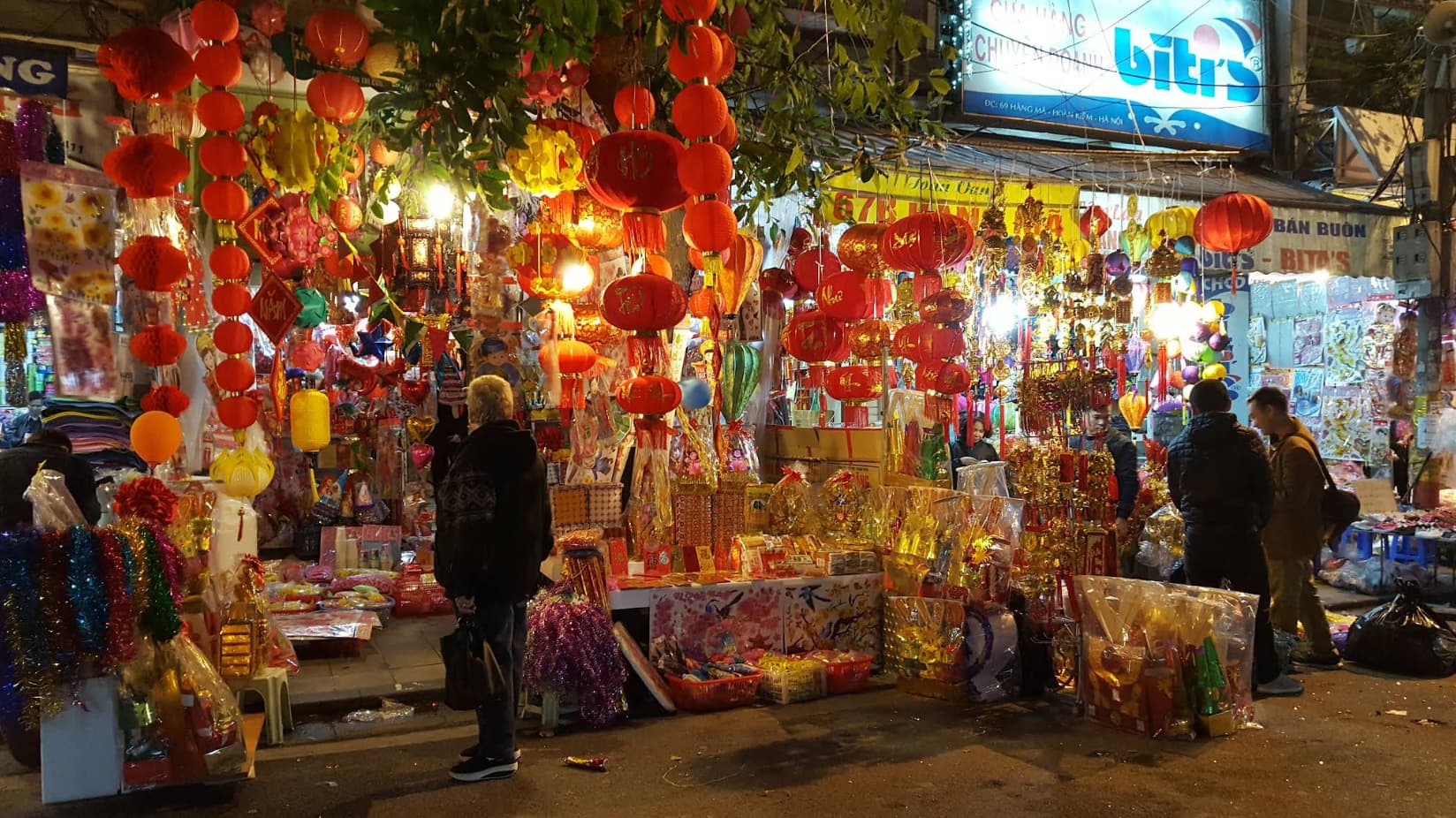
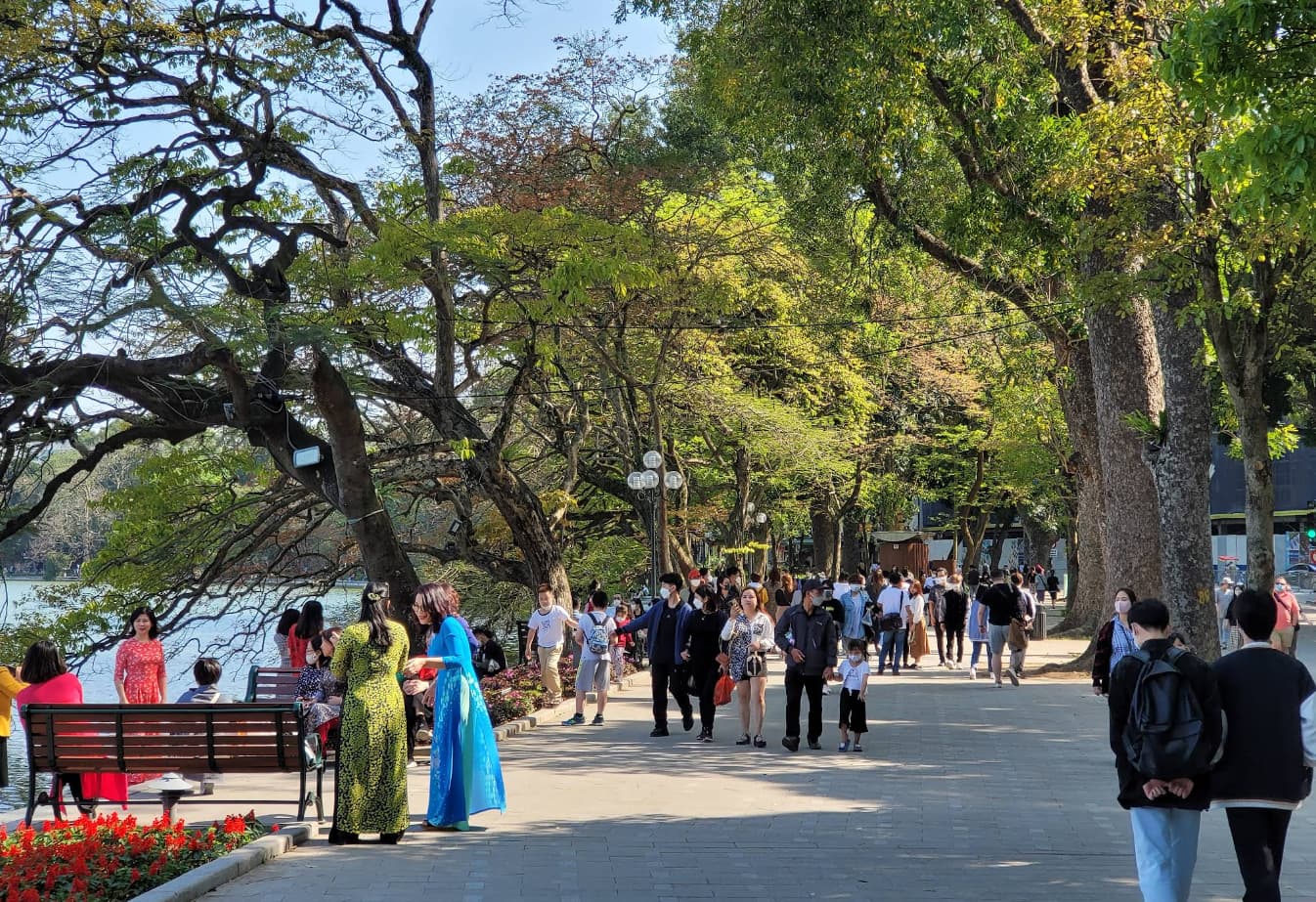
The country operates with a frantic, buzzing energy. In Hanoi, the streets are choked with motorbikes carrying peach blossom branches that are taller than the riders.
The Quang Ba flower market operates 24/7, a chaotic mess of flowers, people, and money changing hands under bare lightbulbs.
In Ho Chi Minh City, Nguyen Hue walking street is shut down to traffic and transformed into an elaborate, and sometimes bizarre, flower display based on the year’s zodiac animal.
This is the time. You witness the real culture of Tet: the shopping, the cleaning, the cooking, the palpable feeling of a country rushing to get everything done before the clock strikes twelve.
It is one of the most authentic Vietnam festivals you can observe because you’re seeing the preparation, not a performance.
Phase 2: The Eerily Quiet Holiday (This is What You Want to Avoid)
On the afternoon of the last day, it’s like a switch is flipped. The noise stops. The traffic vanishes. The cities, especially the big ones, bleed people as millions return to their ancestral hometowns.
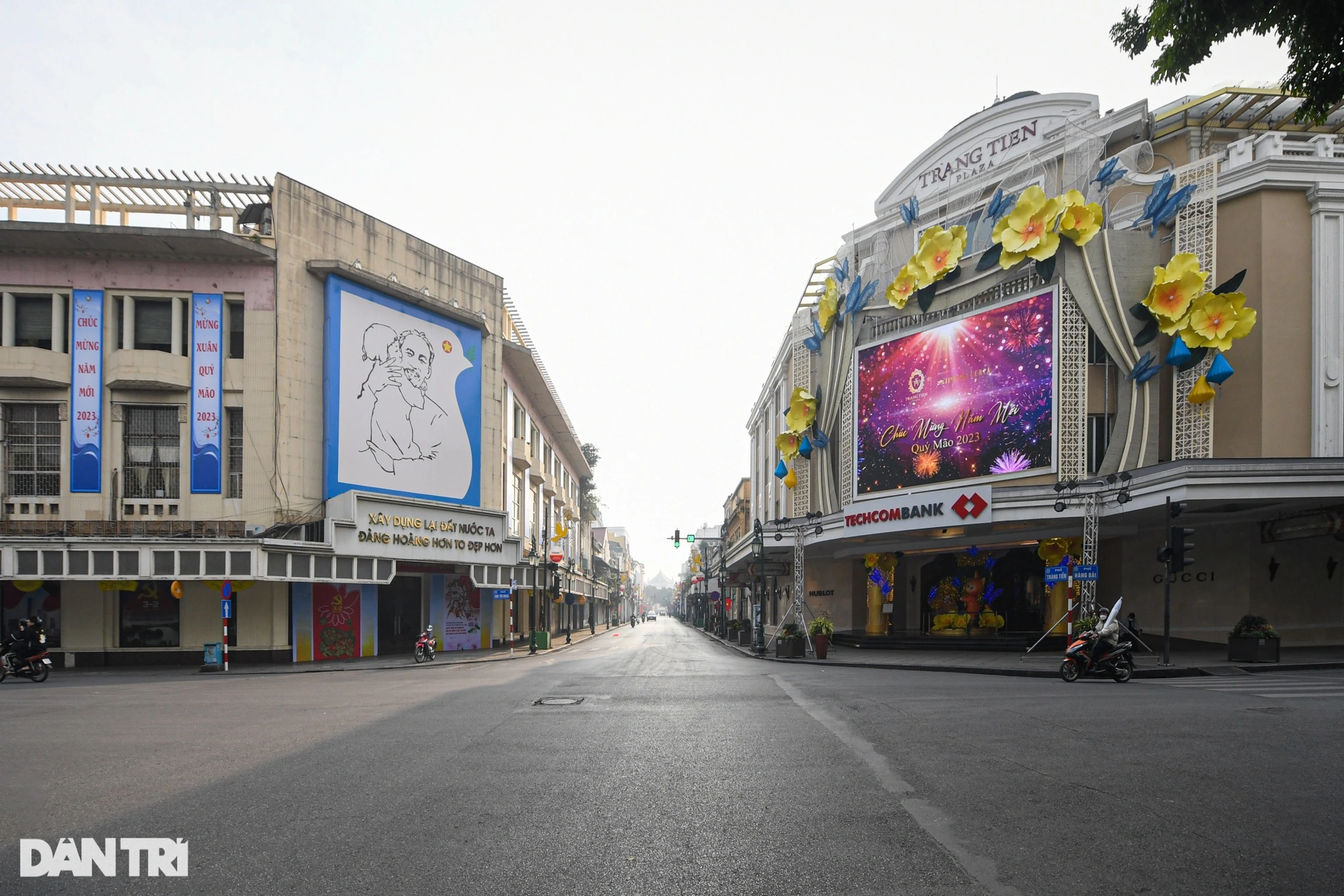
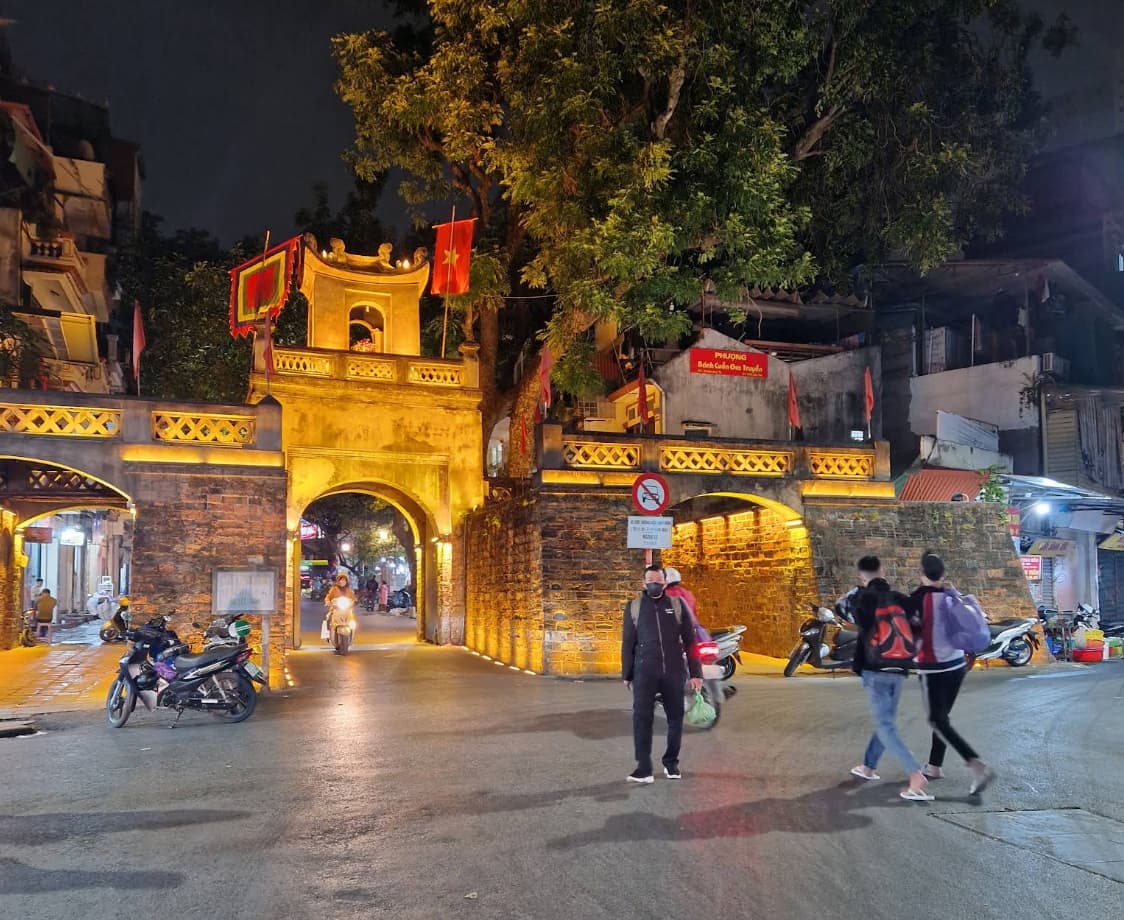
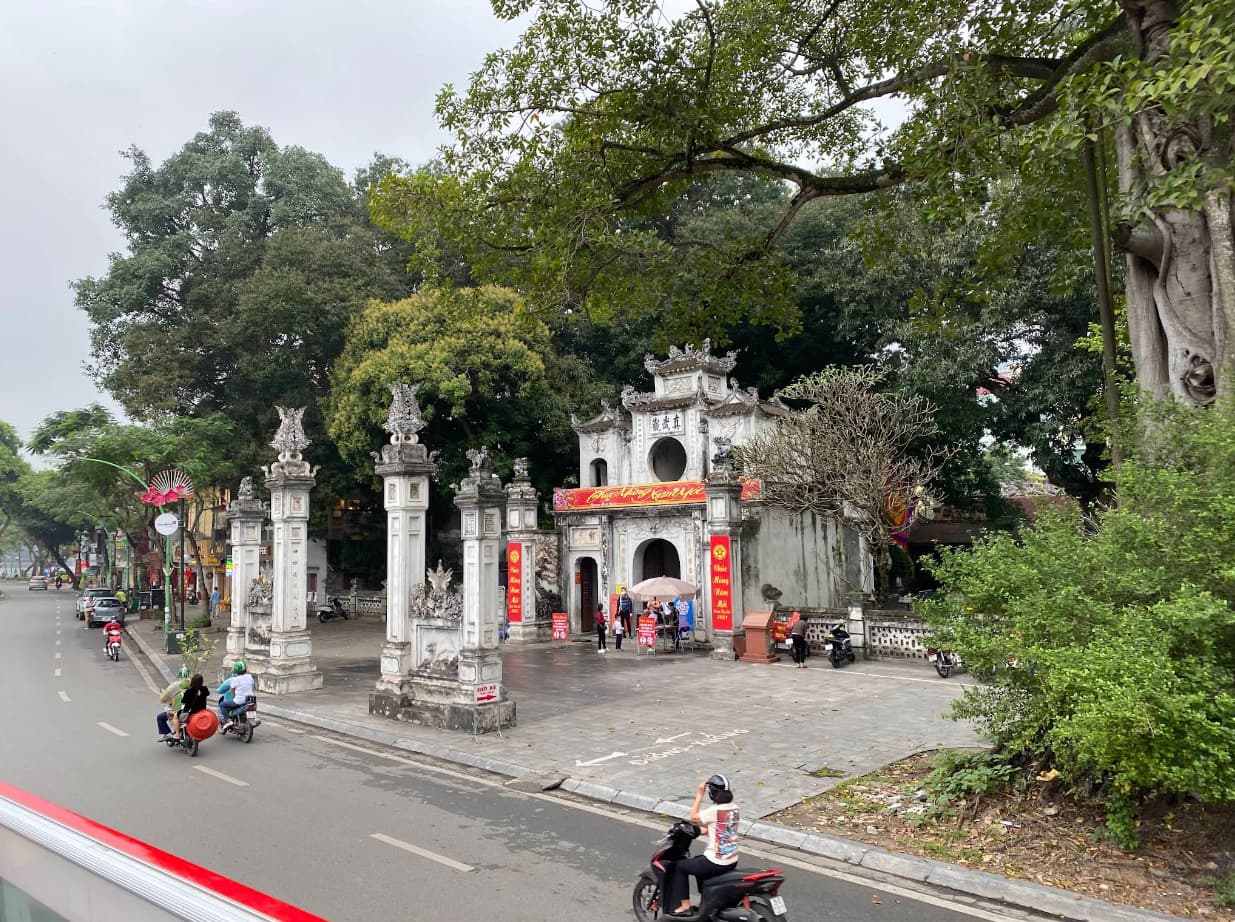
From the 1st to the 4th day of the new year, finding a restaurant that’s open is a project. The ones that are will have a special “Tet Menu” which is code for “we’re charging you 50-100% more because we can.” A beer that was 10,000 VND yesterday is 20,000 VND today.
ATMs run out of cash. Grab drivers are nearly non-existent. Tourist sites operate on limited hours, if at all. It can be peaceful, walking through a completely deserted Hanoi Old Quarter. But it’s a bizarre, post-apocalyptic quiet.
If you’re on a two-week trip, spending three or four of those days unable to do or buy anything is a waste.
The Strategy:
- Timing is Everything: Arrive in Vietnam 10 days before Tet. Soak in the manic energy. Then, on the first day of the new year, either fly out of the country or have a pre-booked room at a beach resort in a place like Phu Quoc or Da Nang, where tourist services will continue to operate (at inflated prices).
- Book It All. Now. If your trip overlaps with Tet, book flights and hotels at least four months in advance. Not three. Four. Otherwise, you’re not going.
- Cash is King: Assume ATMs will be empty. Go to the bank a few days before the holiday and withdraw more cash than you think you’ll need.
- Forget the Party: The fireworks at midnight are the only real public “party.” The rest is spent inside homes, with family. If you’re lucky enough to be invited into a home, that’s the real experience. Otherwise, you’re just a spectator to a holiday you’re not part of.
Hoi An Lantern Festival: Navigating the Sea of People
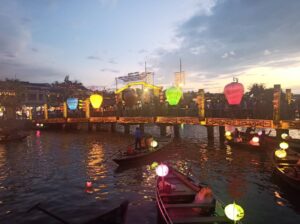
The Hoi An Lantern Festival is held on the full moon, the 14th day of the lunar calendar. It’s the town’s biggest brand, and it delivers on its visual promise.
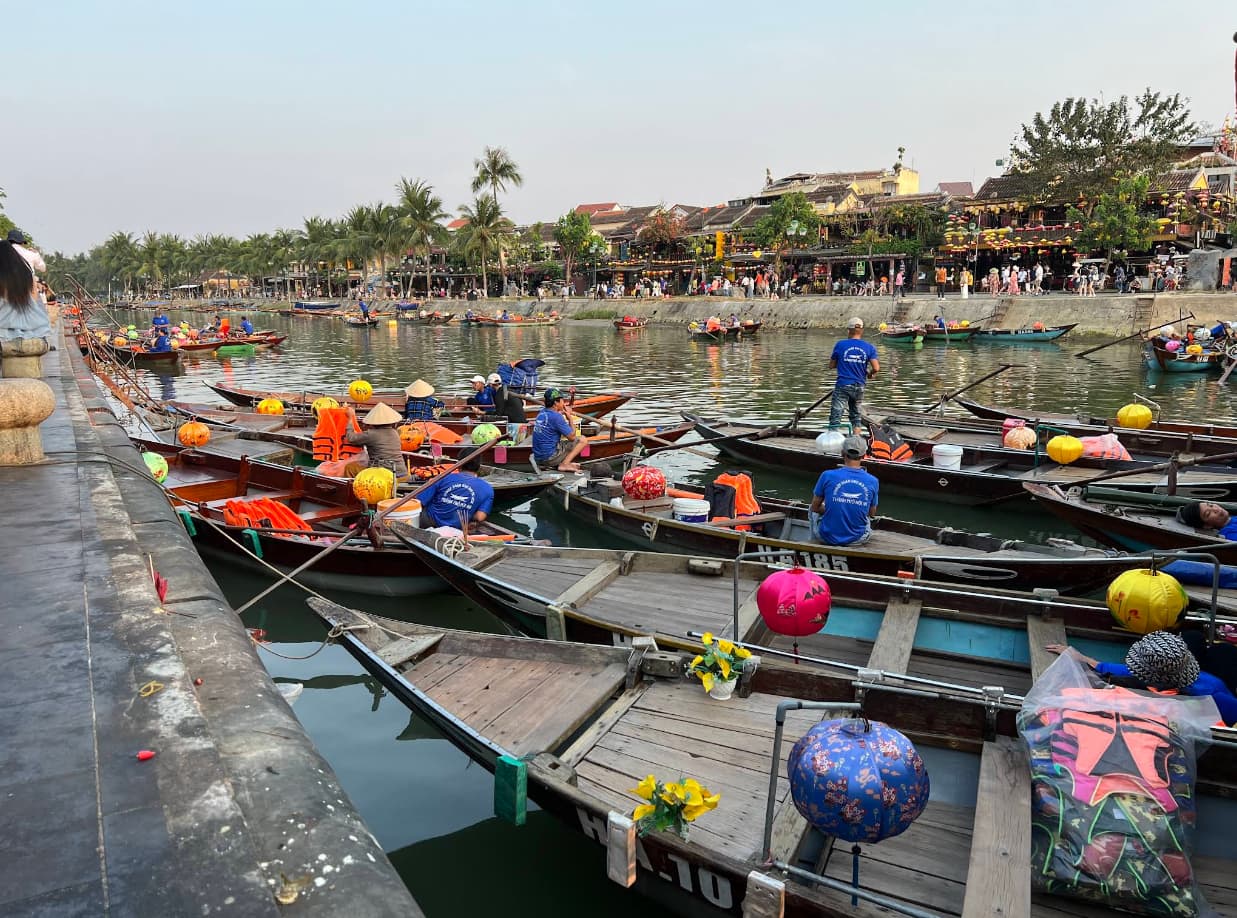
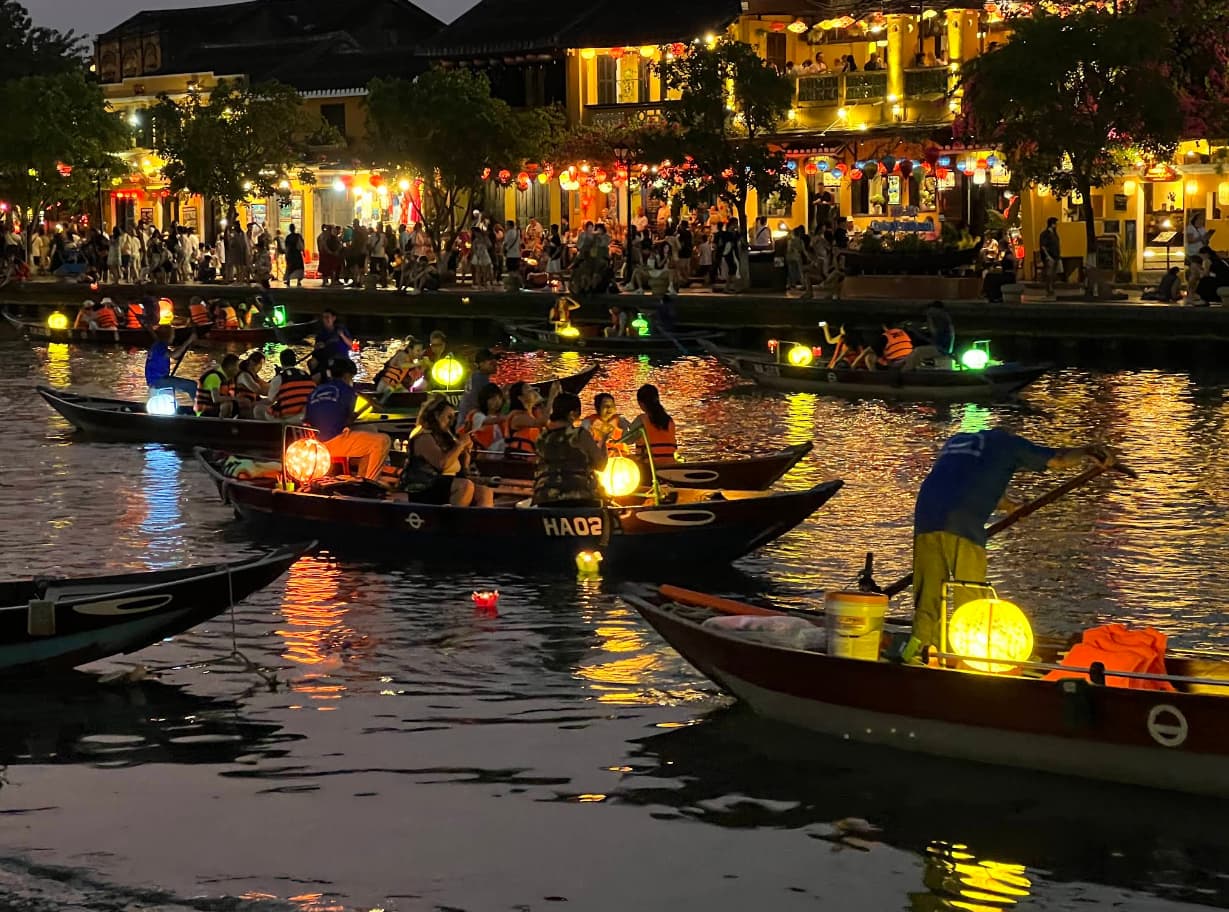
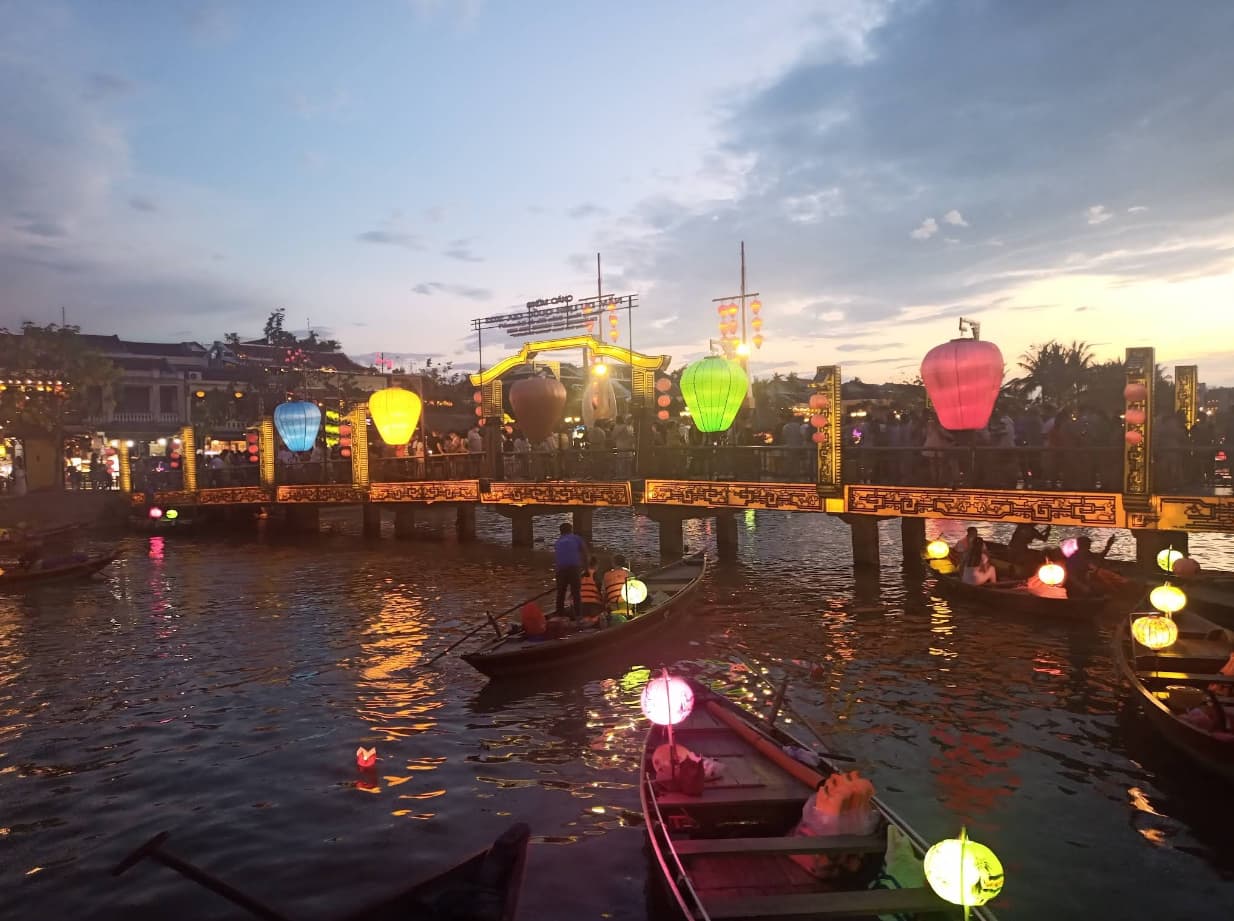
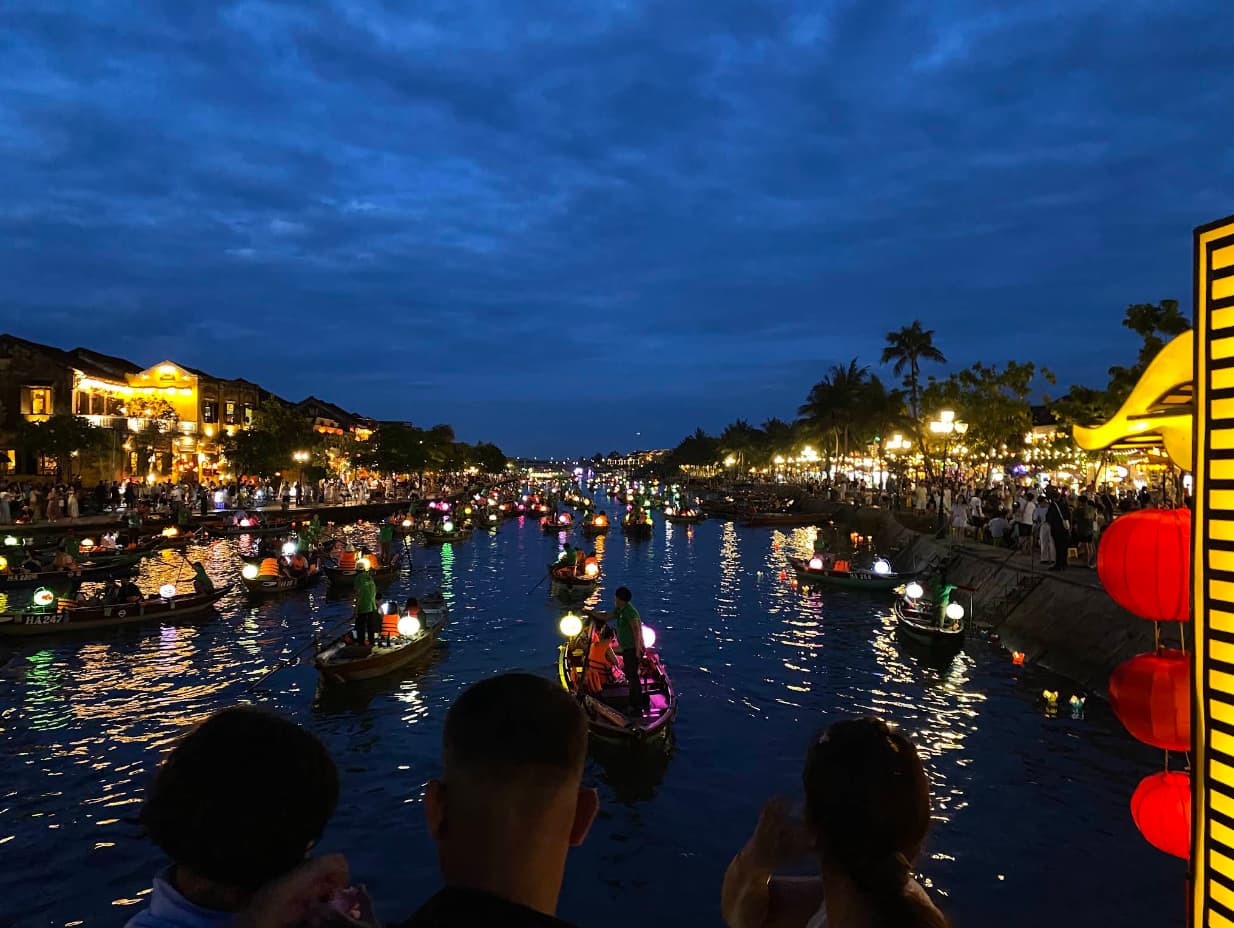
The old town powers down its harsh electric streetlights, leaving only the soft glow of thousands of silk lanterns. It’s genuinely beautiful.
It is also, without exaggeration, a human traffic jam. The Japanese Bridge becomes impassable choke points. You are not walking; you are being moved by the mass of the crowd.
The air gets hot and thick with the heat of a thousand bodies. Everyone is trying to take the exact same picture, holding a paper lantern over the water. Vendors selling these lanterns are relentless. The boat rowers are even more so.
It can be a miserable, sweaty experience if you try to tackle it head-on. But after seeing it countless times, there’s a better way.
The mistake is trying to be in the chaos on the riverfront between 7 PM and 9 PM. The smart move is to spectate from a strategic position.
The Strategy:
- Get High: Arrive before 7 PM. Go to Bach Dang street, which runs along the river. Don’t stay on the street. Find a cafe or a restaurant with a second-floor balcony. There are dozens. Order a drink or some food. From up there, you can watch the entire scene unfold below you—the boats, the lanterns, the river of people—without being in it.
- Wait It Out: The peak crush of people is from about 7:30 PM to 9:00 PM. After 9 PM, the tour bus crowds start to thin out. This is your time to descend and walk the streets. It’s still busy, but it’s manageable.
- Go Sideways: The main chaos is concentrated on the two streets flanking the river. Just one block inland, the crowds drop by 80%. You still get the beautiful lantern-lit atmosphere, but you can actually walk and breathe.
- Manage Costs: A paper lantern to release on the water should cost 10,000 VND. They might ask for 20,000. A boat ride is a pure haggle. They’ll start at 300,000 VND. The real price for a 20-minute paddle is closer to 150,000 VND. If you hate haggling, just skip the boat or book a tour. The view is better from the shore anyway. For visitors, this is the most visually iconic of the monthly Vietnam festivals, and it’s a key part of any good guide to surviving Hoi An’s tourist scene.
Mid-Autumn Festival: More Noise Than Nuance
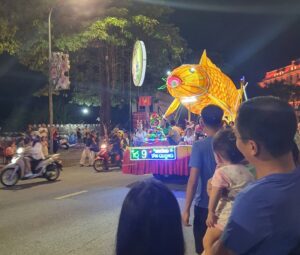
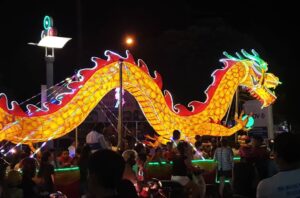
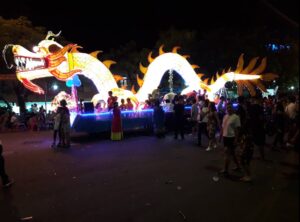
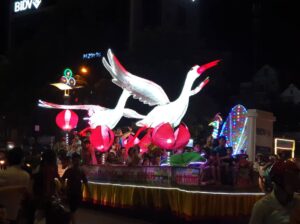
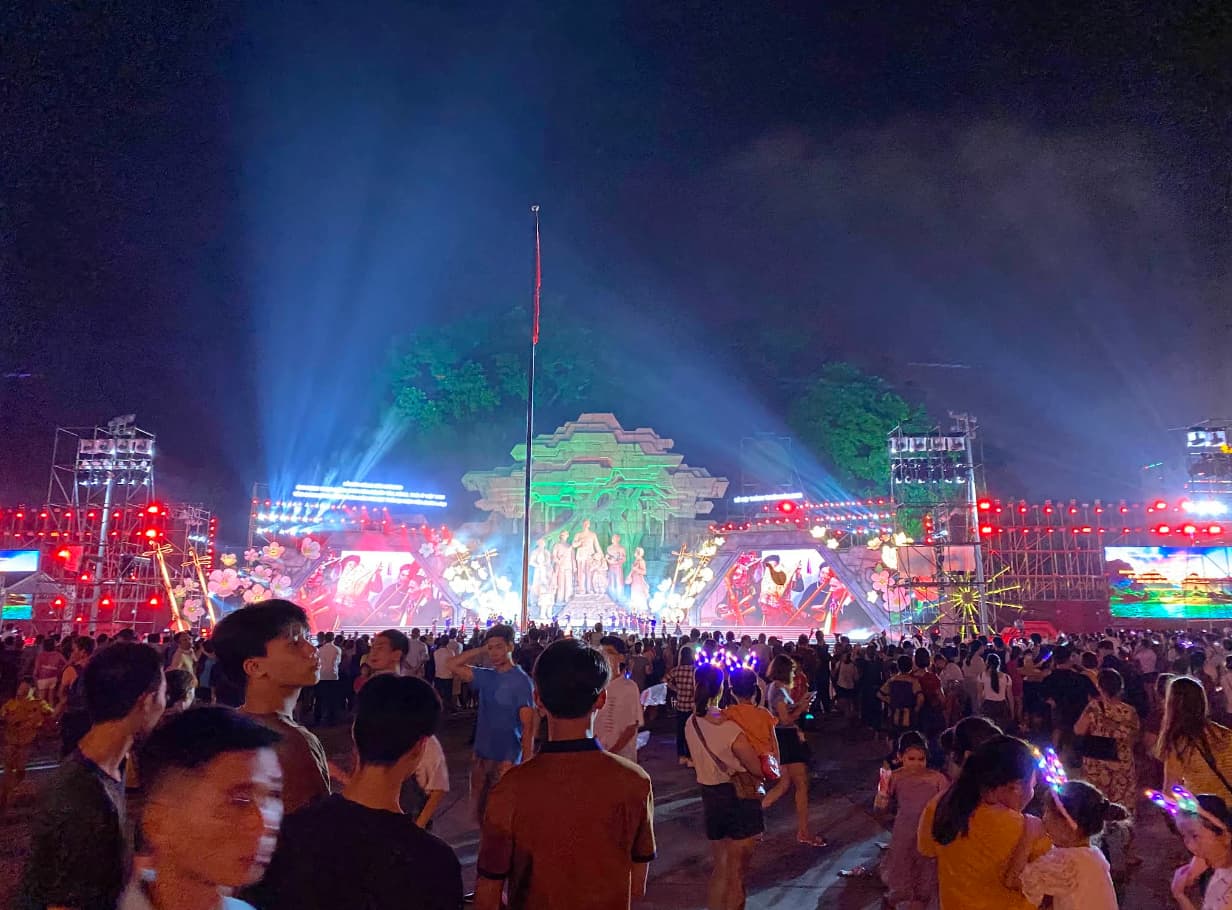
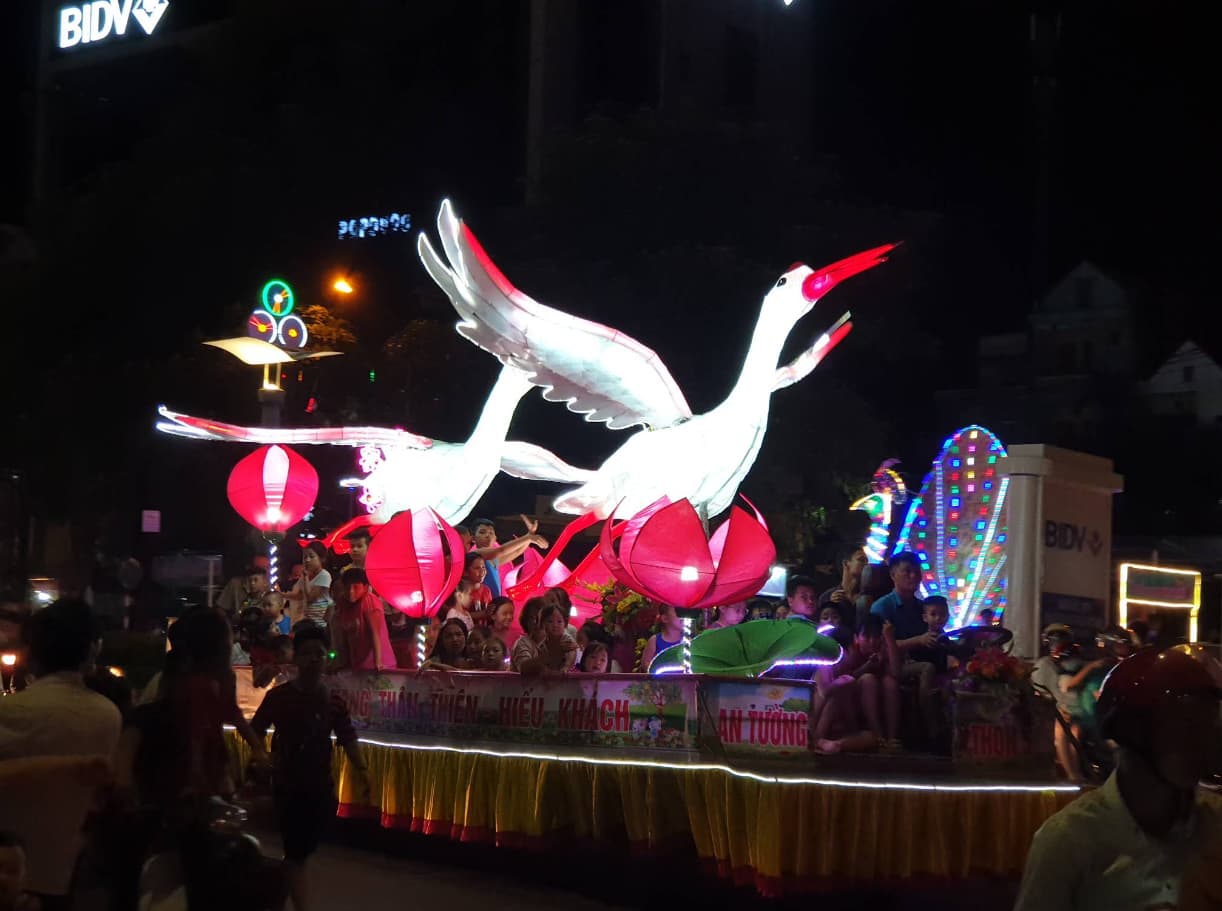
Known as Tết Trung Thu, this festival on the 15th day of the 8th lunar month is marketed as a harvest festival. In modern Vietnam, especially in the cities, it’s a festival for children. And that means noise, sugar, and cheap plastic toys. It is loud, chaotic, and a lot of fun if you have the right expectations.
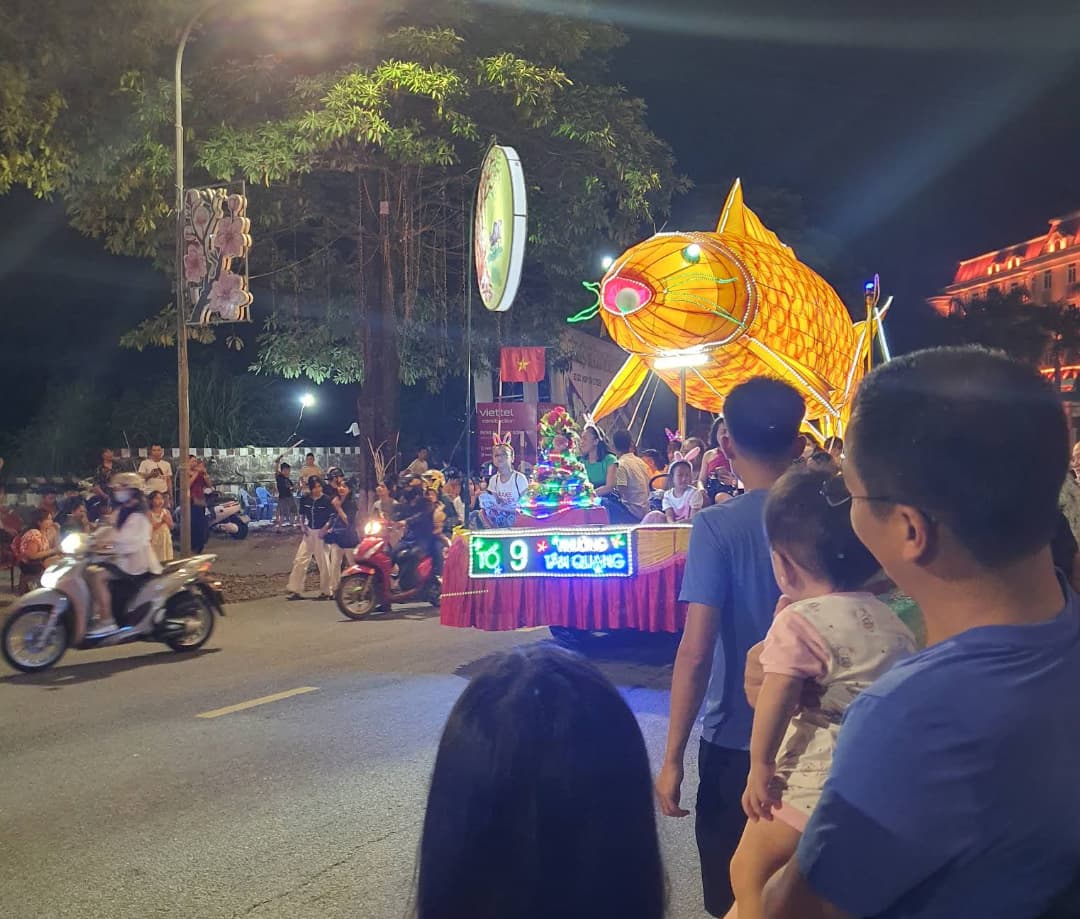
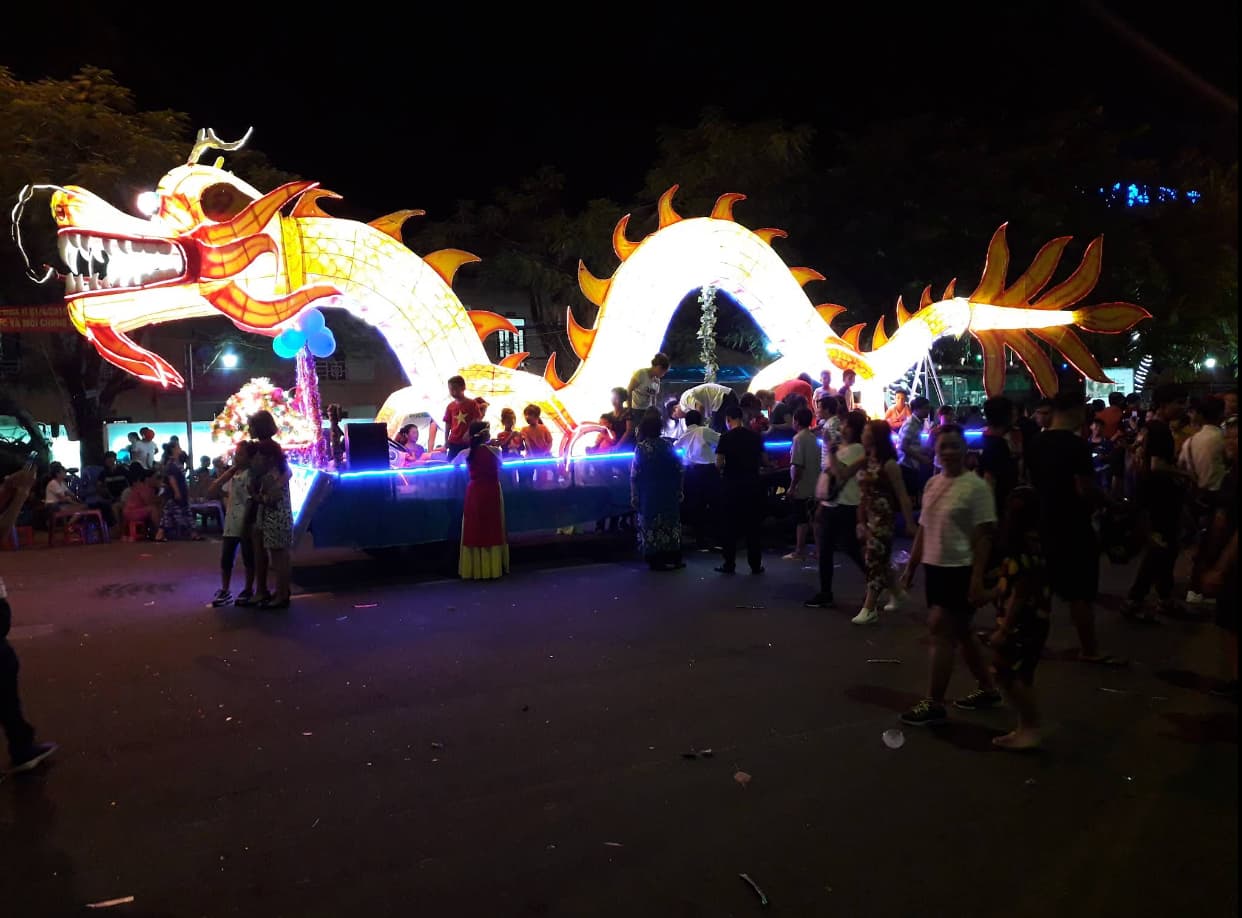
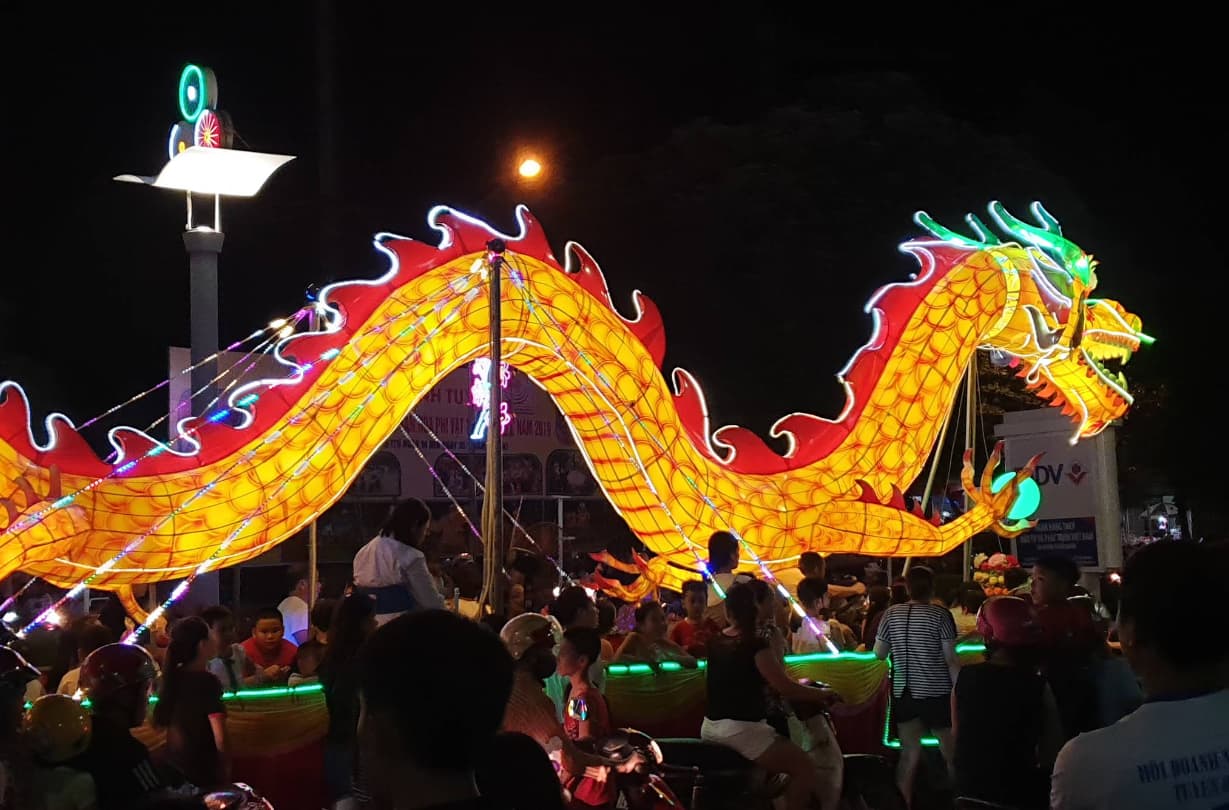
For weeks leading up, the entire country is obsessed with mooncakes (bánh trung thu). These are dense, hockey-puck-like pastries that are, frankly, a culinary challenge for most Westerners.
A traditional one with mixed nuts, sausage, and a salted egg yolk tastes like nothing you’ve ever had, and maybe for good reason. They are a cultural staple, but not a treat.
The real festival is on the streets. In Hanoi, you go to Hang Ma street. For the week leading up to the main night, the entire street is a market for every conceivable type of lantern, noisy toy, and grotesque plastic mask. On the night of the full moon itself, the street becomes a solid block of people.
The soundtrack to the festival is the lion dance. But don’t expect a polished, professional performance. The best part is the amateur troupes—groups of teenagers with a single drum, a couple of cymbals, and a well-worn lion head.
They roam the streets, stopping in front of shops to perform a frantic, uncoordinated dance for a bit of lucky money.
The drumming is relentless and often off-beat. The clang of the cymbals is tinny and deafening. It is raw, energetic, and completely authentic.
The Strategy:
- Epicenter: In Hanoi, it’s Hang Ma street and the surrounding Old Quater alleys. In Ho Chi Minh City, the lantern street Lương Nhữ Học in District 5 (Cholon) is the place to be.
- Embrace the Chaos: Don’t go with a plan. The entire point is to get lost in the crowd and wander. Follow the sound of the drums.
- Go a Day Early: The night before the full moon is often just as lively but with slightly fewer people, making it a bit more navigable.
- It’s for Kids: Remember what you’re seeing. It’s not a solemn, ancient ritual. It’s the Vietnamese equivalent of Halloween, a night of excitement and treats for children. Adjust your expectations accordingly.
Hue Festival: The Exception to the Rule
If you’re tired of the chaotic, unpredictable nature of other Vietnam festivals, the Hue Festival is the answer.
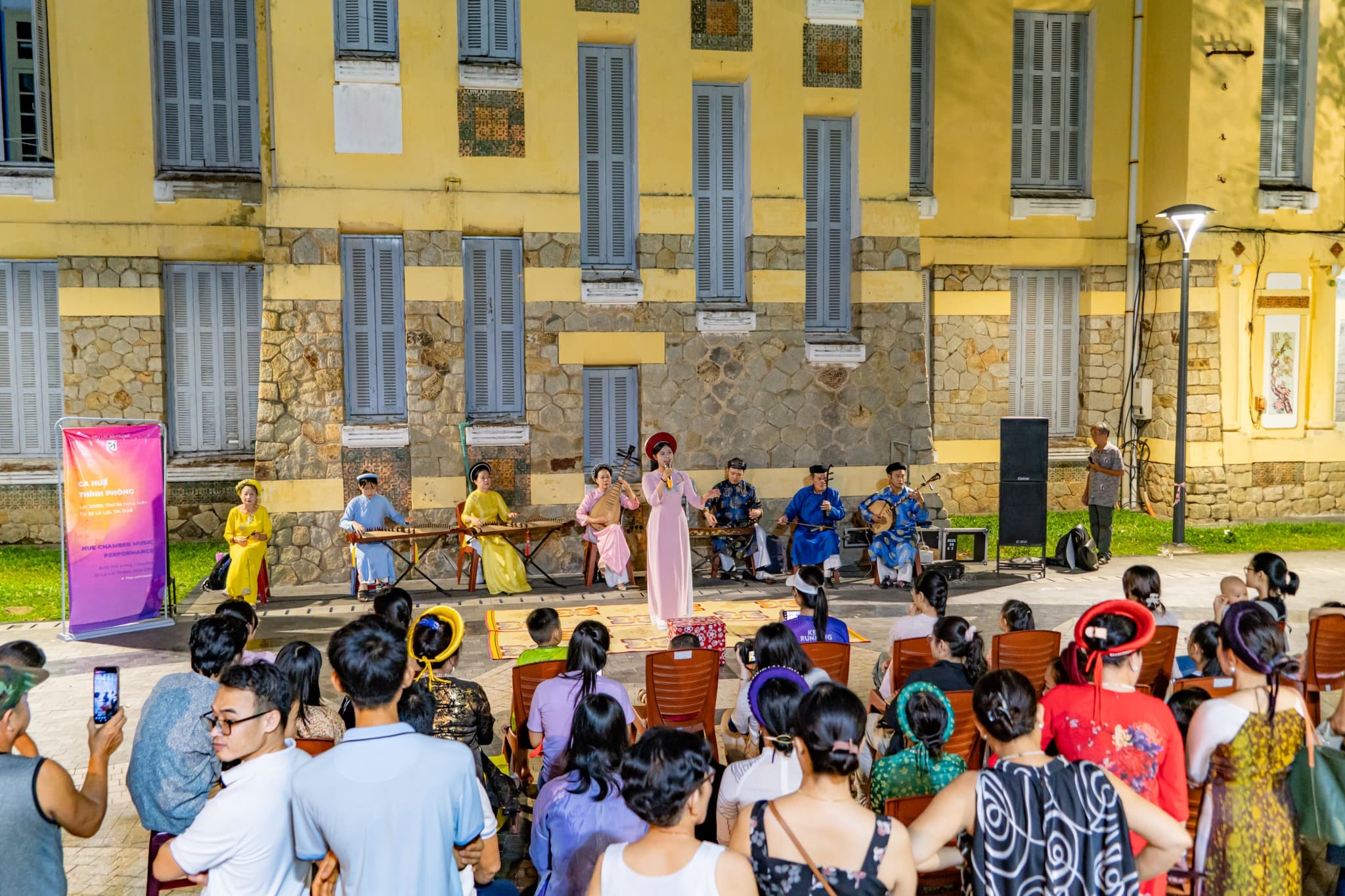
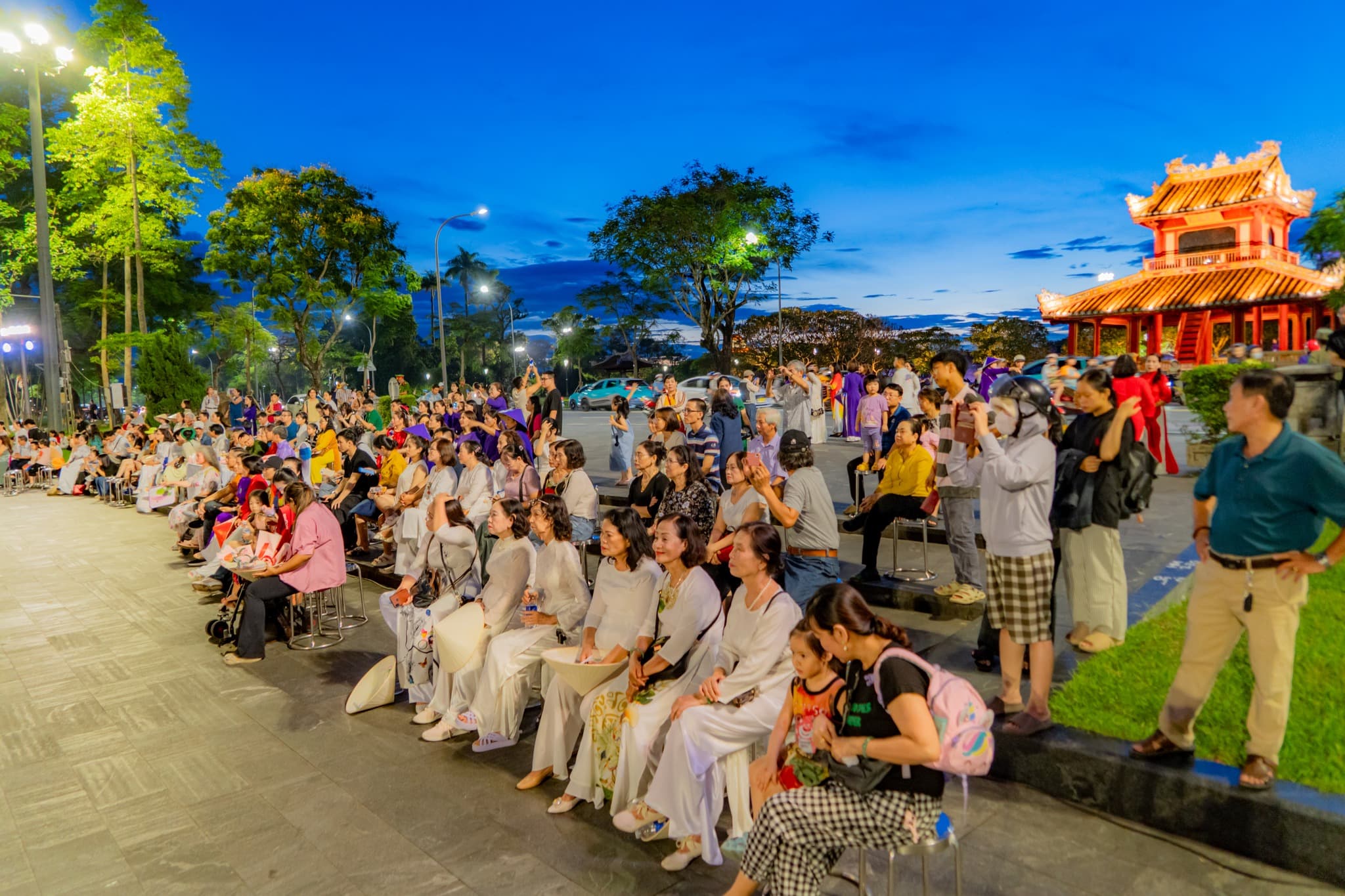
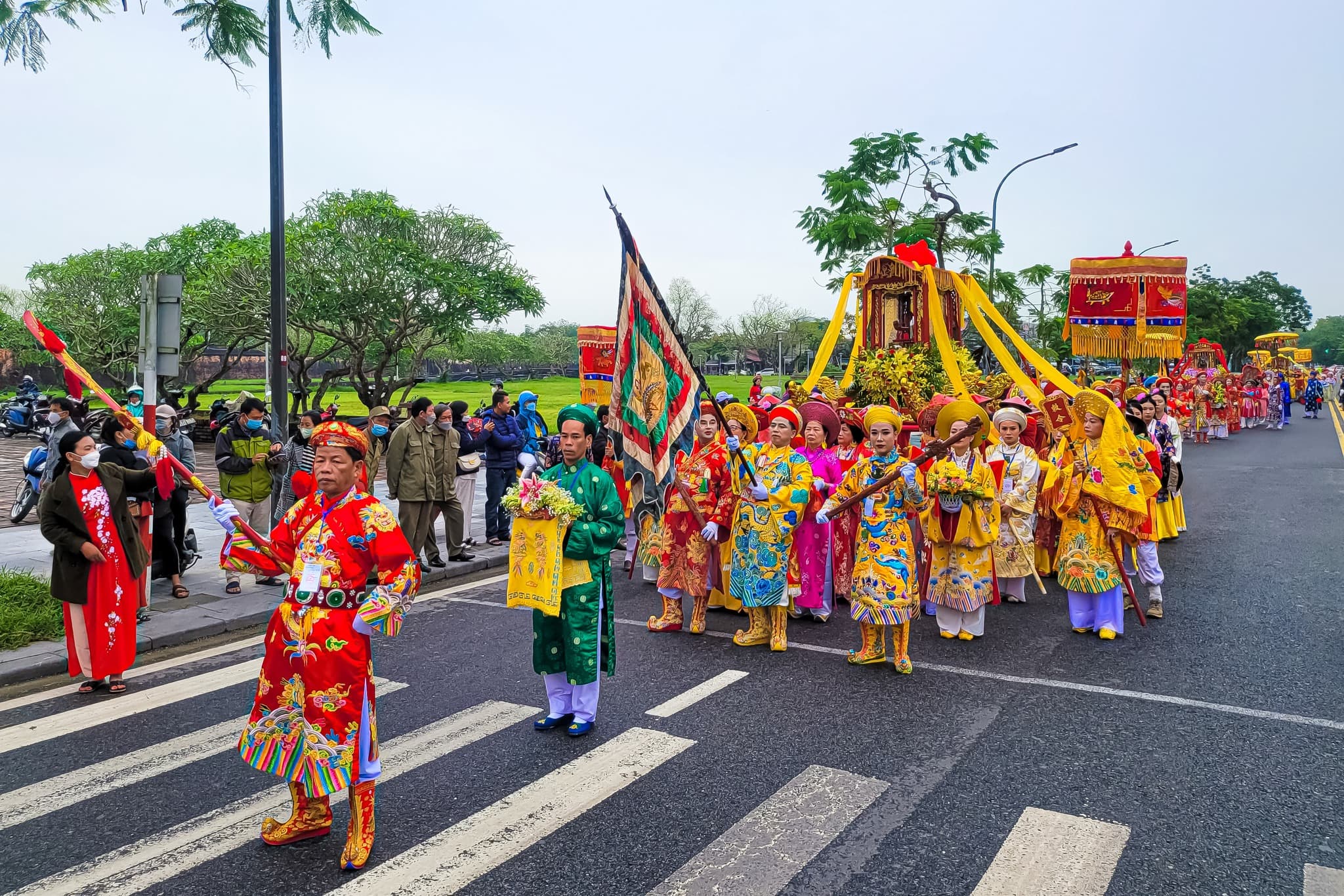
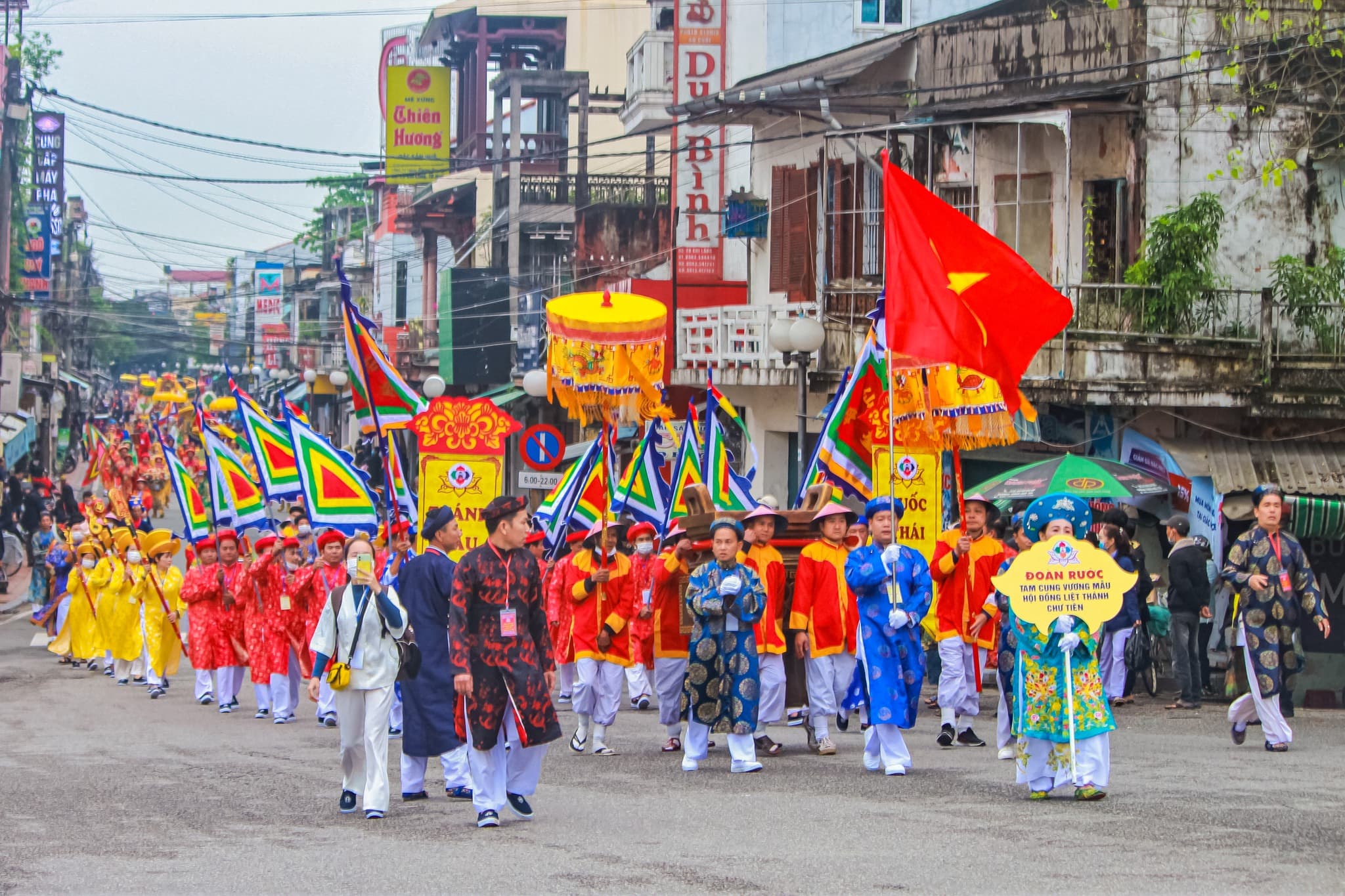
This is a different beast entirely. It’s a large-scale, ticketed, international arts festival held every two years in Vietnam’s former imperial capital.
This is a plan-six-months-ahead event. It’s not a show-up-and-see-what-happens situation. The festival’s schedule is published well in advance, featuring everything from Vietnamese royal court music and traditional theatre to international acts like French acrobats or Japanese drummers. The main venues are the Citadel and other historic sites, which are transformed into stunning outdoor stages.
[travel_mood location=”Vietnam”]The experience feels professional and polished. It is impressive to see the ancient walls of the Imperial City used as a backdrop for a modern light show or a classical music concert.
It’s an event designed for a seated audience, for people who appreciate art and culture in a more formal setting. There’s an Ao Dai (traditional dress) show, a food festival focusing on Hue’s famously complex cuisine, and various art exhibitions.
Anyone interested in cultural travel Vietnam should consider timing their trip for this.
The downside is that it lacks the spontaneous, raw energy of a local street festival. It can feel a bit sterile at times. The city of Hue also becomes incredibly crowded and expensive.
The Strategy:
- Plan Ahead: This cannot be overstated. As soon as the dates for the next festival are announced (check the official website), book your flights and hotel. Prices will double or triple, and everything will sell out.
- Buy Tickets Online: For the major headline performances inside the Citadel, buy tickets from the official festival website in advance. Don’t wait until you get there.
- Mix and Match: Don’t just stick to the ticketed events. A lot of the festival’s atmosphere comes from the free performances that happen on stages set up along the Perfume River and in the city’s parks.
- Explore Beyond: Use the festival as a base, but make sure to plan days to escape the city and see the royal tombs and pagodas, which will be less crowded. Our guide to Hue’s tombs can help you organize these side trips.
Da Nang International Fireworks Festival
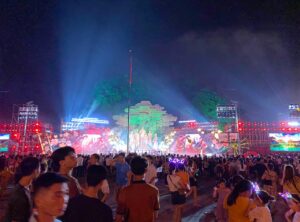
This is not a traditional Vietnam festival. There are no ancient legends or sacred rituals here. The Da Nang International Fireworks Festival (DIFF) is a modern, commercial, and massively popular event.
It is a competition where teams from different countries put on world-class pyrotechnic shows over the Han River on several weekends during the summer (usually June and July). It is spectacular. It is also a logistical warzone.
The entire city of Da Nang, normally one of Vietnam’s more manageable and modern cities, transforms. Hotel prices triple.
The streets along the river become impassable zones of human and vehicle gridlock hours before the show starts.
The entire event is a massive exercise in crowd control, and for a tourist, the primary challenge isn’t enjoying the fireworks, but simply finding a decent place to see them without losing your mind.
The experience you have is entirely dependent on your strategy and budget.
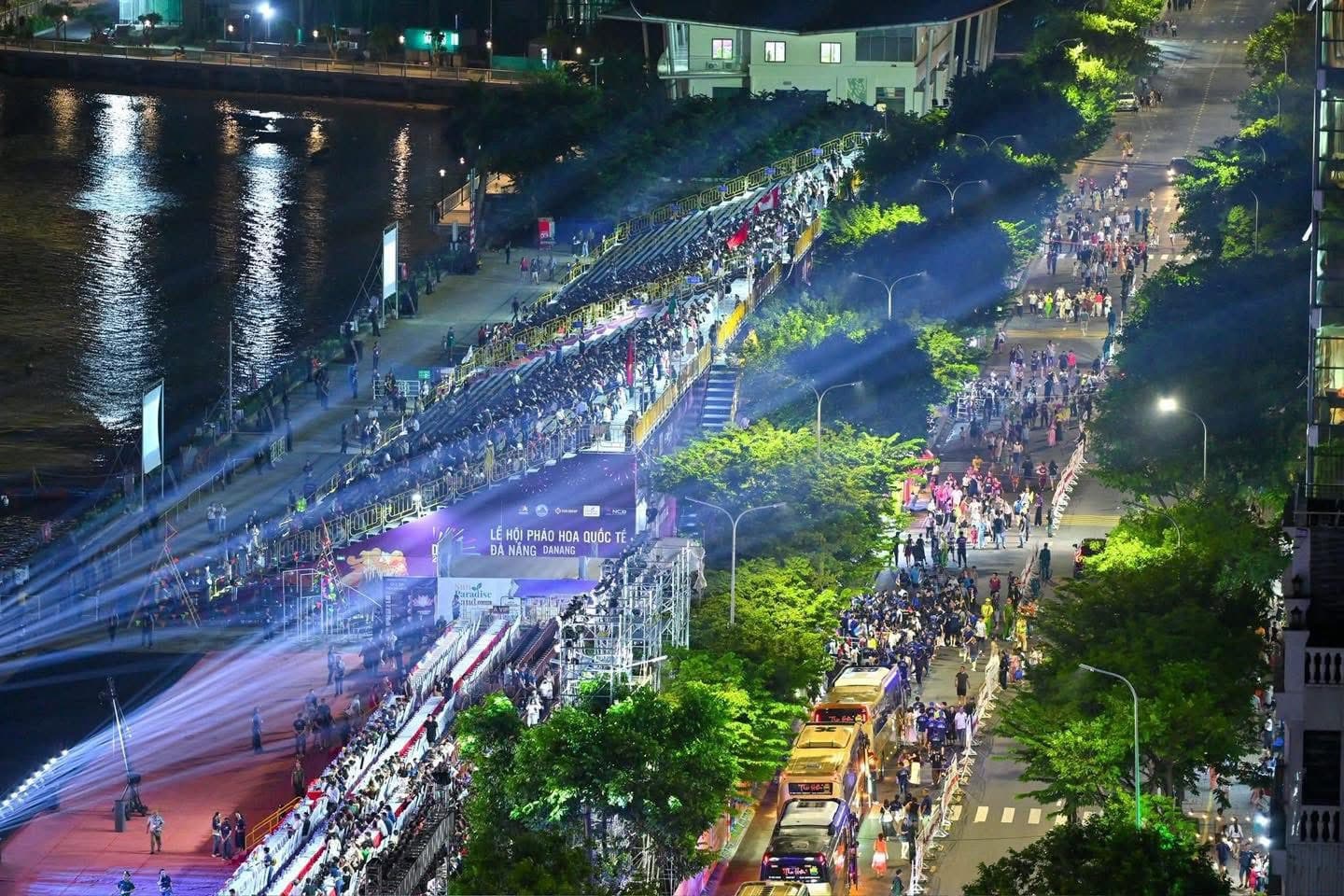
Option 1: The Official Grandstand (The Expensive, “Easy” Way)
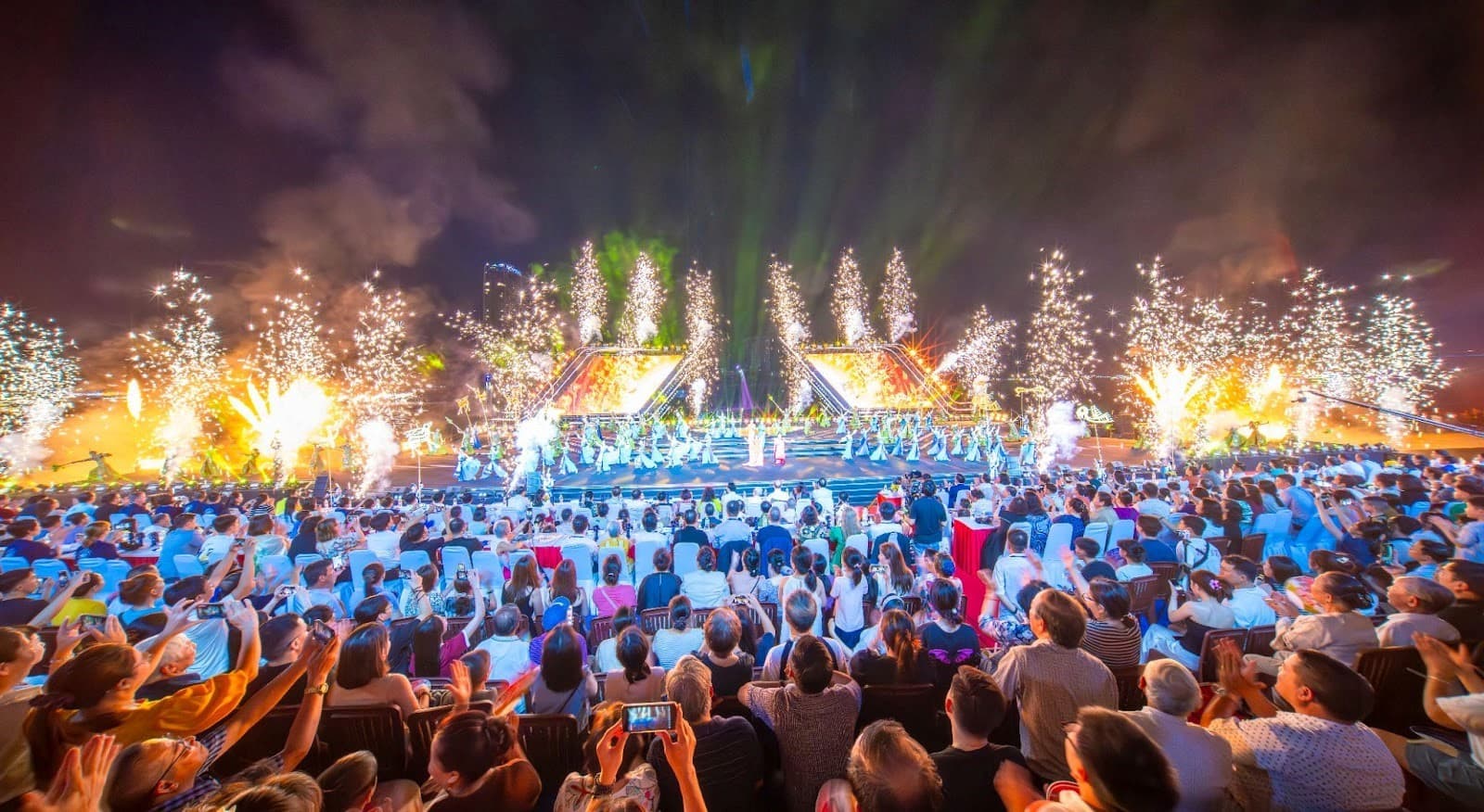
The organizers build a massive grandstand with ticketed seating directly opposite the launch point.
- Pros: This is the best, most direct, and unobstructed view. The sound system is synced perfectly to the music, which is a huge part of the show.
- Cons: The tickets are expensive, ranging from around 1,000,000 VND to over 3,000,000 VND ($40 – $120+) per person, per night. Getting into and, more importantly, out of the grandstand area after the show is a nightmare of human traffic.
Option 2: The Rooftop Bar Gambit (The Comfortable, Pricey Way)
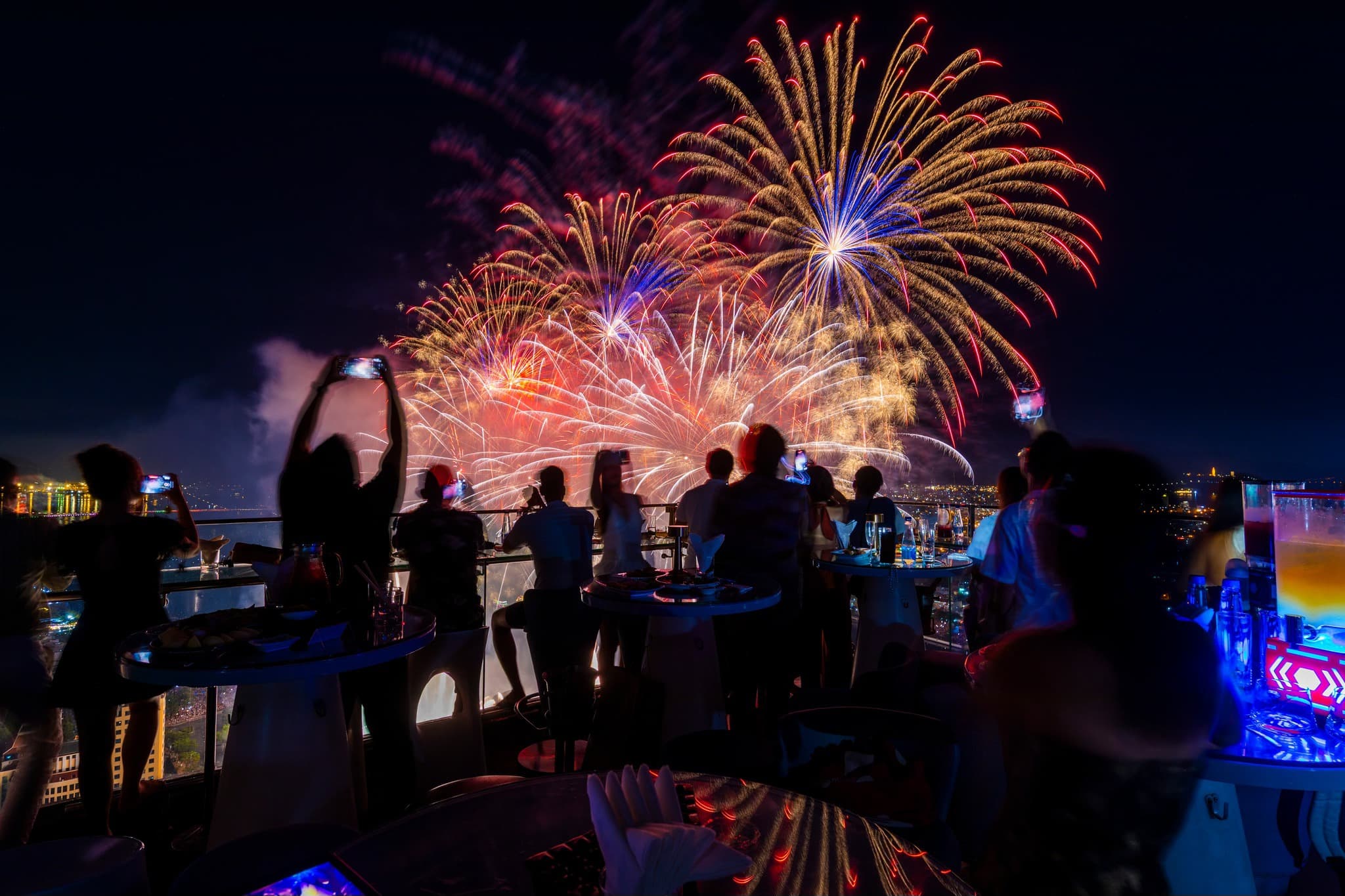
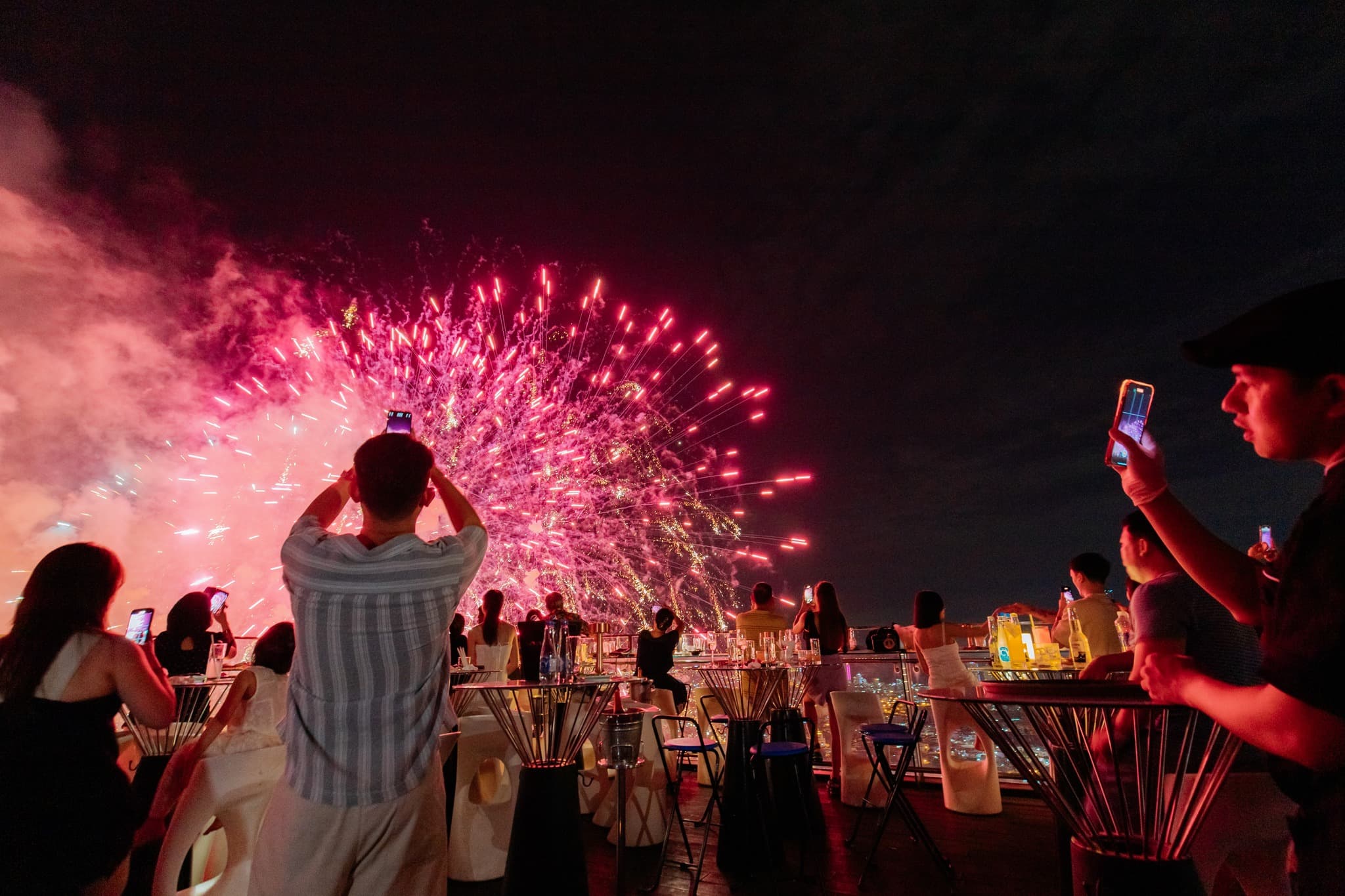
The high-rise hotels and bars along the Han River (like the Novotel or Hilton) offer seating with a view.
- Pros: You get a comfortable chair, drinks, food, and a bathroom. The view is excellent, high above the worst of the street-level crowds.
- Cons: You’re not just buying a drink; you’re buying a package or committing to a very high minimum spend. You must book these spots weeks, sometimes months, in advance.
Option 3: The Public Bridges (The Free-for-All Chaos)
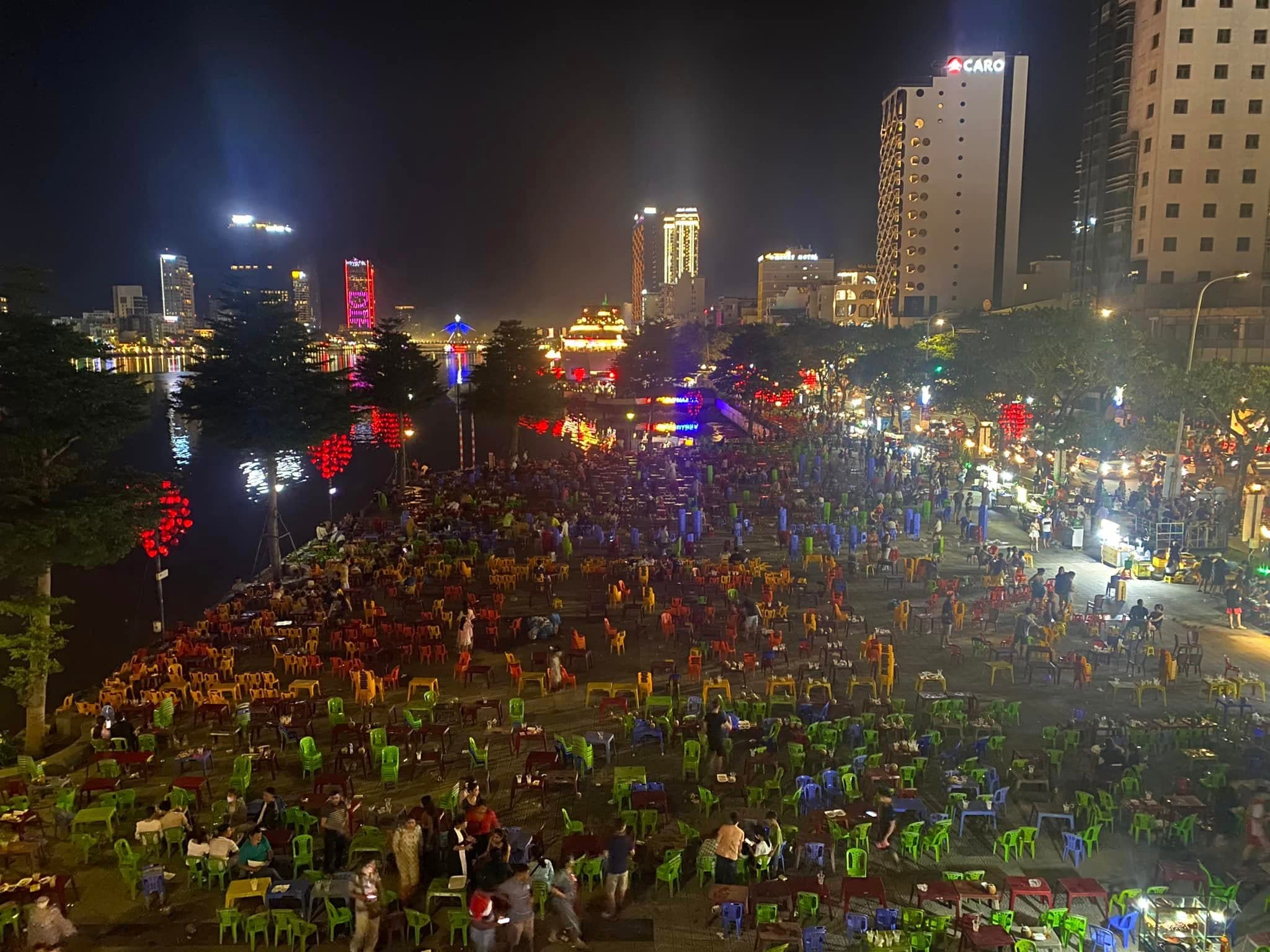
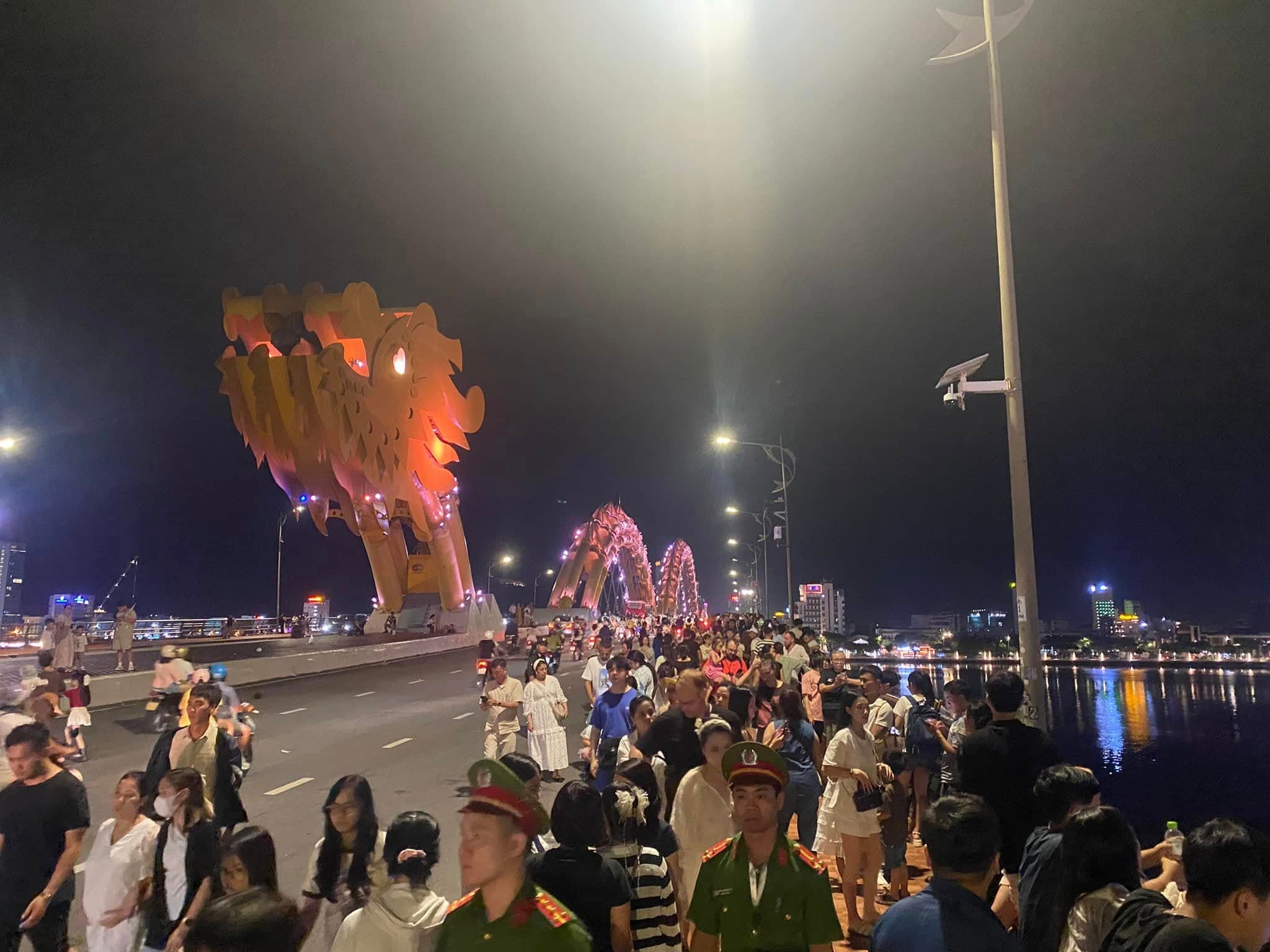
The Dragon Bridge, Han River Bridge become unofficial, free viewing platforms.
- Pros: It costs nothing.
- Cons: This is where the real chaos is. People claim their spots with plastic stools three or four hours before the show. It is shoulder-to-shoulder, incredibly loud, and a prime spot for petty theft. You will be fighting for every inch of space.
The Strategy:
- Book Far, Far in Advance: If you plan to visit Da Nang during the festival period, book your hotel and flights at least 4-5 months ahead. Not an exaggeration.
- Pick Your Battle: Decide what you value more: comfort and cost (rooftop bar), the best view at a high price (grandstand), or saving money at the cost of your sanity (public bridge). There is no perfect option.
- Plan Your Night Around It: On a fireworks night, do not plan to travel across the city after 5 PM. To say there is “traffic” is an understatement. Get to your chosen zone early and plan to stay there late. Walk wherever possible.
- Manage Expectations: This is a world-class firework show and a giant party. It is not a deep cultural dive. It’s fun, it’s impressive, but it’s a modern entertainment event, not an ancient tradition.
Hung Kings’ Temple Festival: The National Pilgrimage You Should Avoid
On the 10th day of the 3rd lunar month, Vietnam celebrates a public holiday for its founding fathers, the Hung Kings.
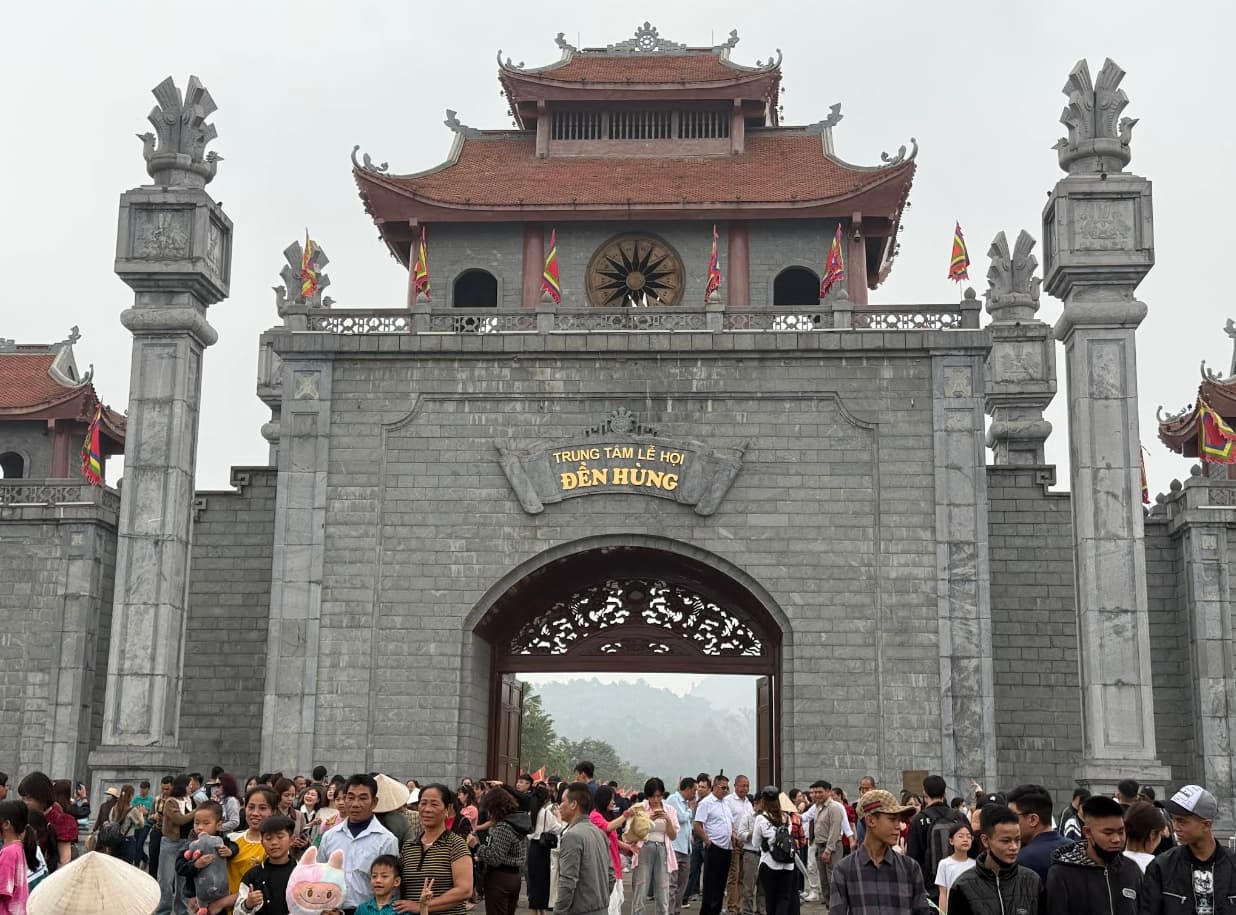
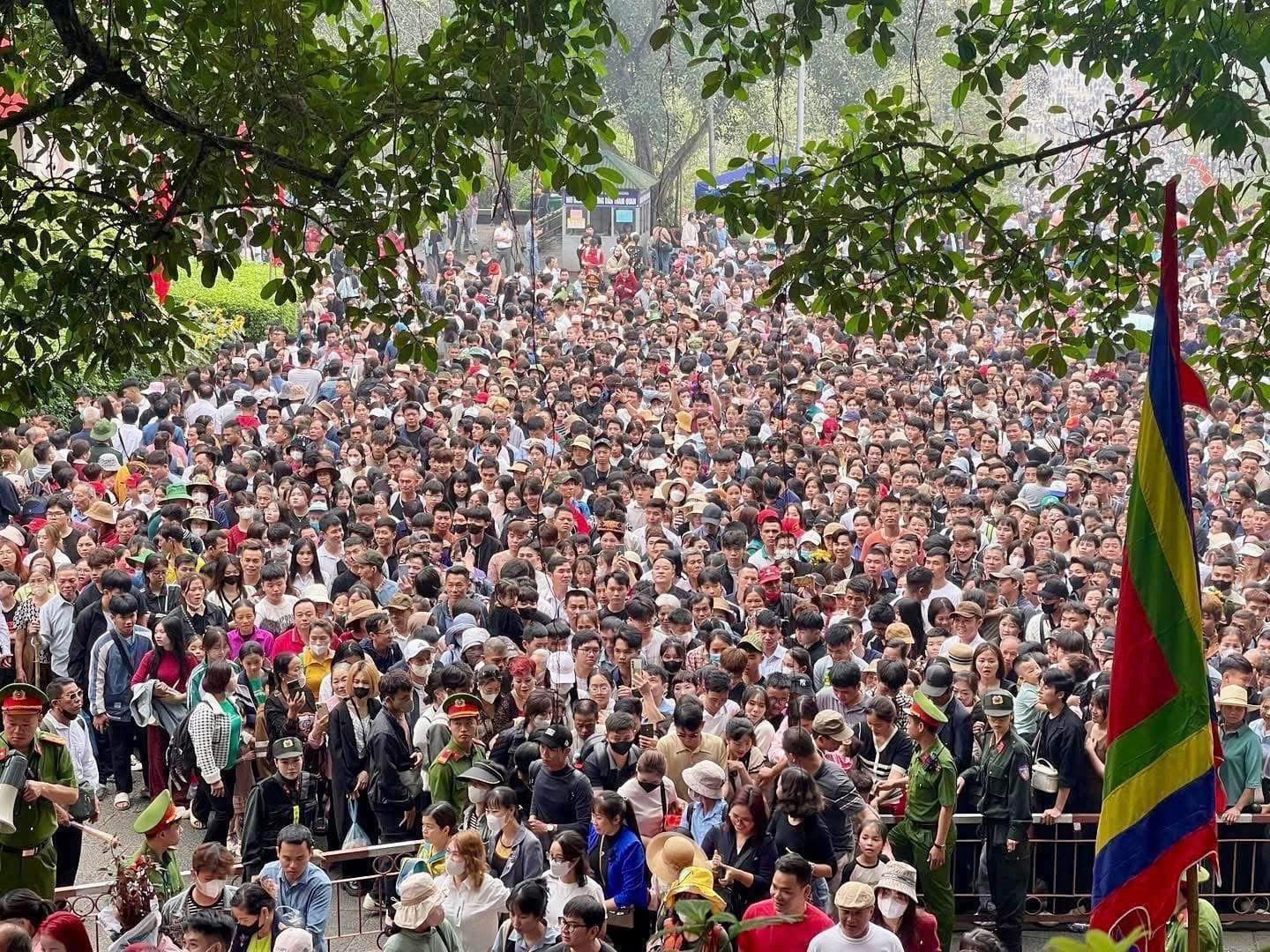
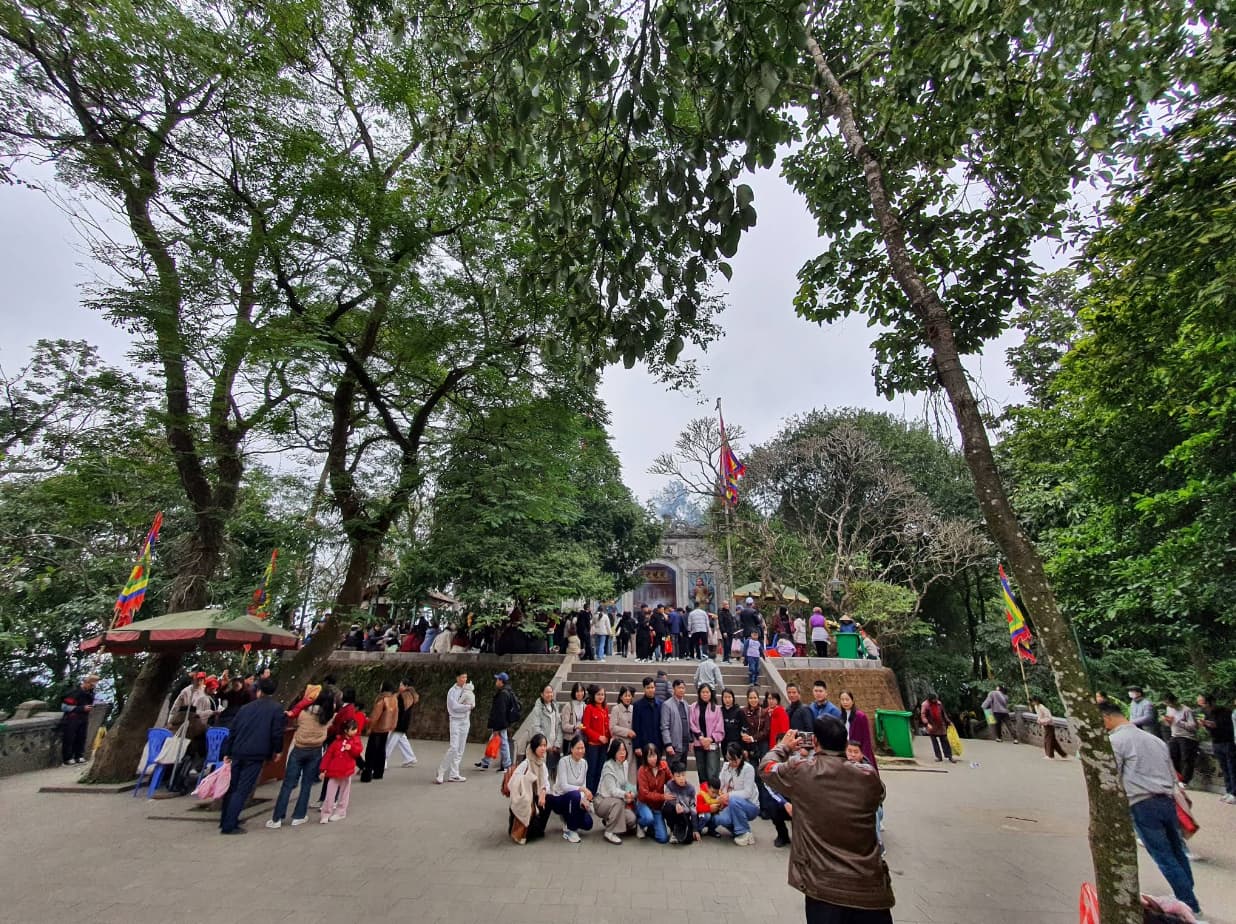
The focal point is the Hung Temple complex in Phu Tho province. On this day, millions of people make a pilgrimage to the temple.
The photos are incredible. The reality for a foreigner is a logistical and safety nightmare. The crowds are so dense that stampedes are a real risk. All roads to the area are gridlocked for miles. Accommodation is non-existent. Sanitation is overwhelmed.
This is an event of deep meaning for the Vietnamese people. It is a powerful expression of national unity and heritage. But it is not a travel experience. It offers nothing for an outside observer except extreme discomfort and frustration. Watch it on TV. Read about its importance. Do not try to attend.
The Unwritten Rules of Vietnam Festivals
Some truths apply to all of them.
- Forget Personal Space: The concept as it exists in the West does not apply here. You will be touched, pushed, and packed in like sardines. Getting angry about it is pointless. It’s not malicious, it’s just the way it is.
- Your Plan Will Fail. That’s the Point: Don’t try to follow a strict itinerary during a festival. Roads will be blocked, places will be closed, and events will start late or not at all. The real experience is in the detours and the chaos.
- Price is a Suggestion: During any holiday, assume the first price you are quoted is a “tourist price.” For everything. Food, drinks, taxis, souvenirs. Bargain politely or walk away.
- Sound is a Weapon: Vietnamese celebrations are loud. The music from loudspeakers is distorted, the drumming is relentless, and the karaoke is unavoidable. Earplugs can be a good idea if you’re sensitive to noise.
- Look for the Small Stuff: The main stage or the big parade is often the most boring, most crowded part. The best moments are found in the side streets—watching a family prepare their offerings, seeing kids play with their new toys, finding a quiet corner of a pagoda to just watch people. That’s the real festival.












 Tiếng Việt
 한국어
한국어 中文 (中国)
 日本語
日本語 ไทย
ไทย Deutsch
 Español
 Destinations
 Instagram
 Facebook
 X (Twitter)
 Threads
 Tiktok