









 Ha Giang
 Hanoi
Hanoi Ho Chi Minh City
 Ha Long
 Sapa
Sapa Mekong Delta
 Da Nang
 Hue
Hue Hoi An
 Ninh Binh
 Da Lat
 Nha Trang
 Phan Thiet
 Phu Quoc
 Quang Binh
 Quy Nhon
 Vung Tau
 Thai Nguyen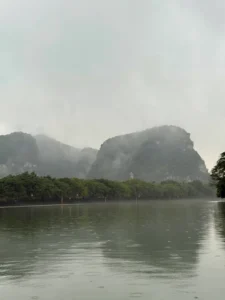



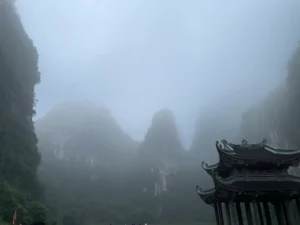



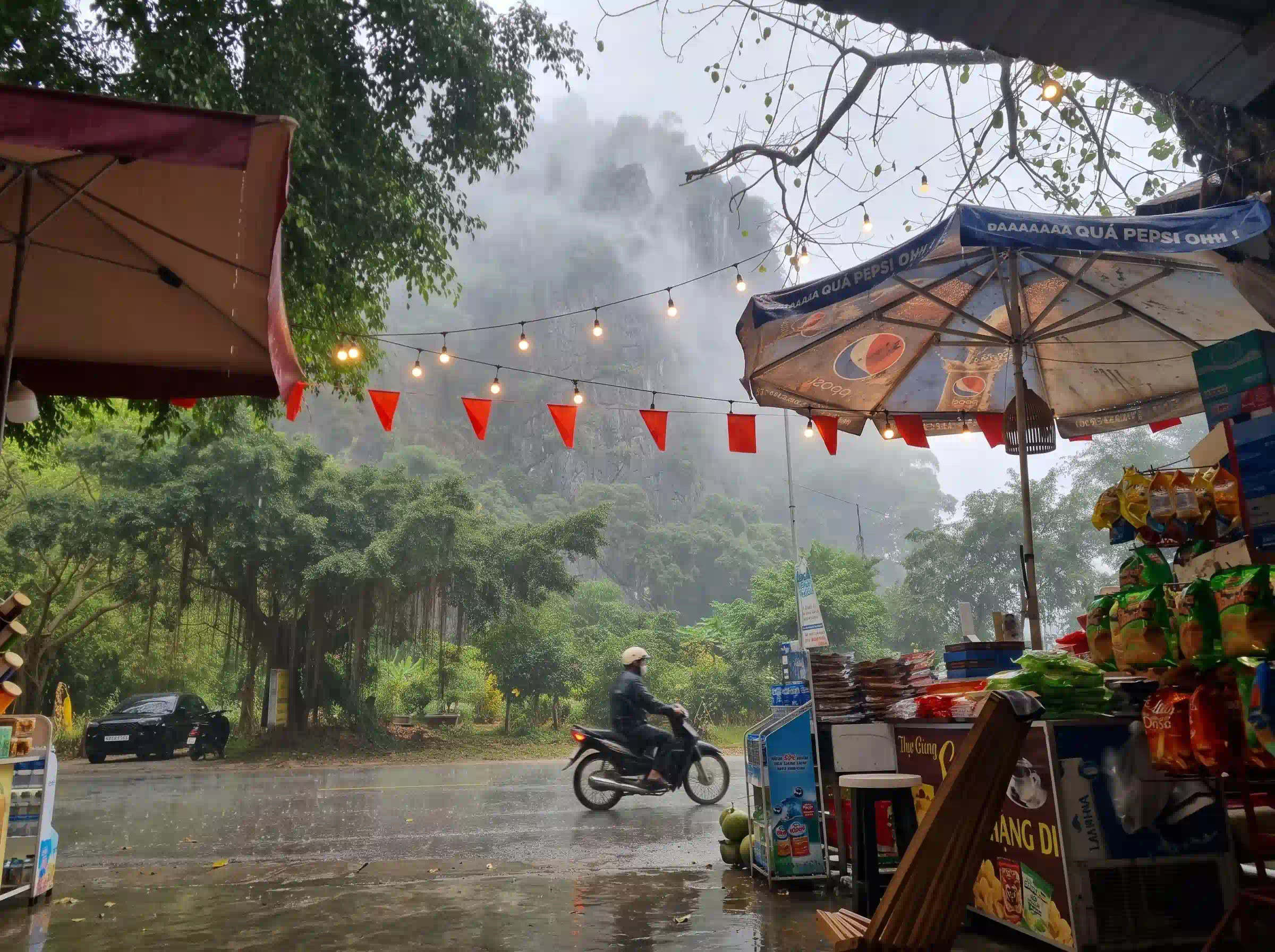
The rain that catches people off guard in Ninh Binh usually isn’t the soaking, day-ruining kind. It’s a hard afternoon downpour that rolls in around 2 or 3pm, lasts forty minutes to an hour, and clears out enough that by dinner you’d barely know it happened.
That’s the pattern most of the year, and it’s worth knowing before you panic and rebook your whole trip because the forecast shows a rain icon.
That said, some days genuinely do stay grey and wet longer than that, and if you’re visiting in the wetter stretch of the year (roughly June through September) or you just get unlucky with a slower-moving system, it helps to actually know what still works when the sky doesn’t clear.
I’ve been caught out here, sitting under a cafe awning watching a downpour I hadn’t planned for, and these are the five things that turned those days into something other than a wasted morning.
This is an article under my Ninh Binh itinerary guide, which covers pacing and trip length more broadly. This is specifically about what to do in Ninh Binh when it rains, the hours when the weather doesn’t cooperate.
- Quick Answer: Rain in Ninh Binh is usually a brief, intense afternoon event rather than an all-day washout, so the smart move is scheduling outdoor activities for the morning and having a rain-day plan ready for the afternoon. The Trang An boat tour still runs in light-to-moderate rain and is genuinely atmospheric under grey skies.
- The 5 Ways:
- Take the Trang An boat tour anyway, mornings before 2pm, rain gear packed.
- Bai Dinh Pagoda, the most covered, least weather-exposed major site.
- Hoa Lu Ancient Capital, historical and less outdoor-heavy than a hike.
- A cooking class, which can shift indoors when the farm activity can’t happen.
- Slow down: massage, a cafe afternoon, or the local market.
- What to Skip in Heavy Rain:
- Mua Cave’s 500 steps, genuinely slippery and not worth the risk.
- Cycling the rice paddy routes, fun in light drizzle, miserable in a downpour.
- Rain Gear Worth Packing: a poncho beats an umbrella on a boat, closed shoes with grip for anywhere involving steps or wet stone.
What Ninh Binh Looks Like When It Rains
Worth being precise about this before the list, since a lot of travel content makes the rainy season sound worse than it usually is.
The wet stretch runs roughly June through September, and within that window, the typical pattern is a clear or partly cloudy morning followed by a build-up of heavy cloud through early afternoon, then a genuinely intense downpour starting somewhere between 1 and 3pm that lasts anywhere from twenty minutes to a couple of hours. By evening it’s usually cleared, sometimes leaving the air noticeably cooler and the light better for photos than it was before the rain.
This means the single most useful piece of planning advice for spending time in Ninh Binh on rainy days is simple: put your outdoor activity in the morning, and have a plan for the early afternoon.
Most of what follows assumes you’re either working around that pattern or you’ve genuinely hit one of the slower, all-day grey stretches that happen occasionally, especially outside the main June-September window when a weather system parks itself over the region for longer than a typical afternoon burst.
1. Take the Boat Tour Anyway
This is the one people assume gets cancelled, and mostly it doesn’t. Both Trang An and Tam Coc run daily regardless of weather, closing only for genuinely severe conditions like a typhoon, not for regular rain.
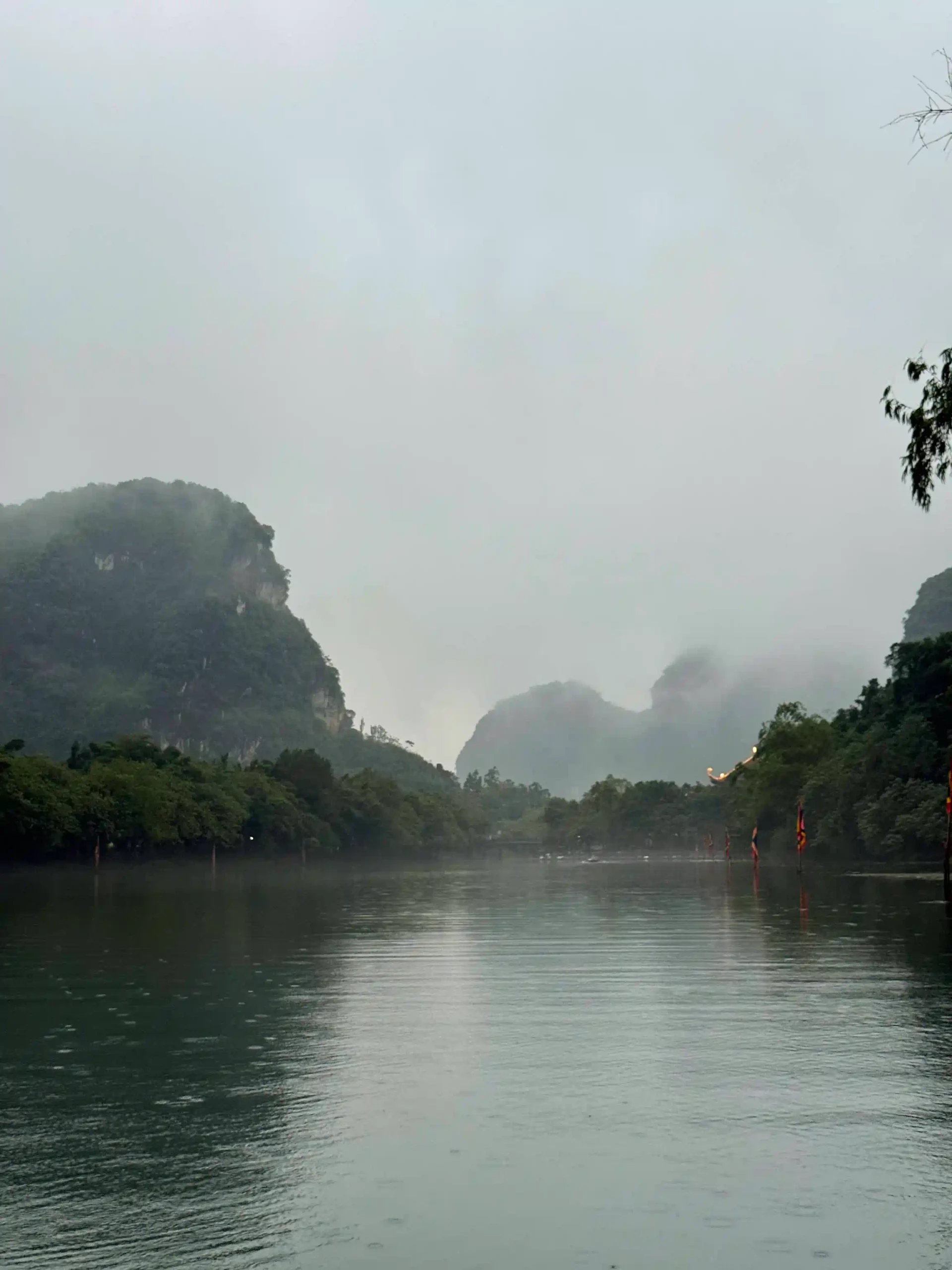
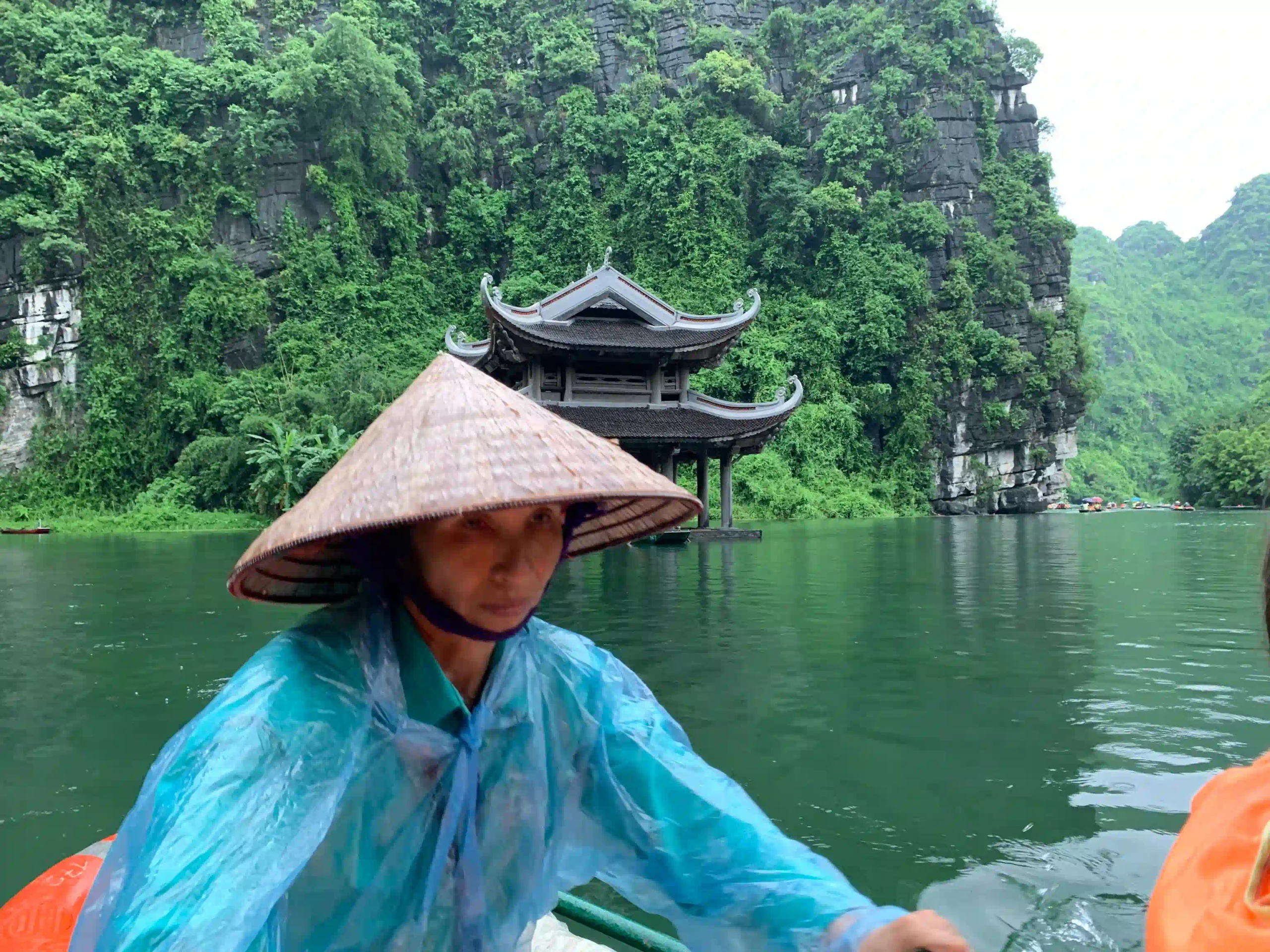
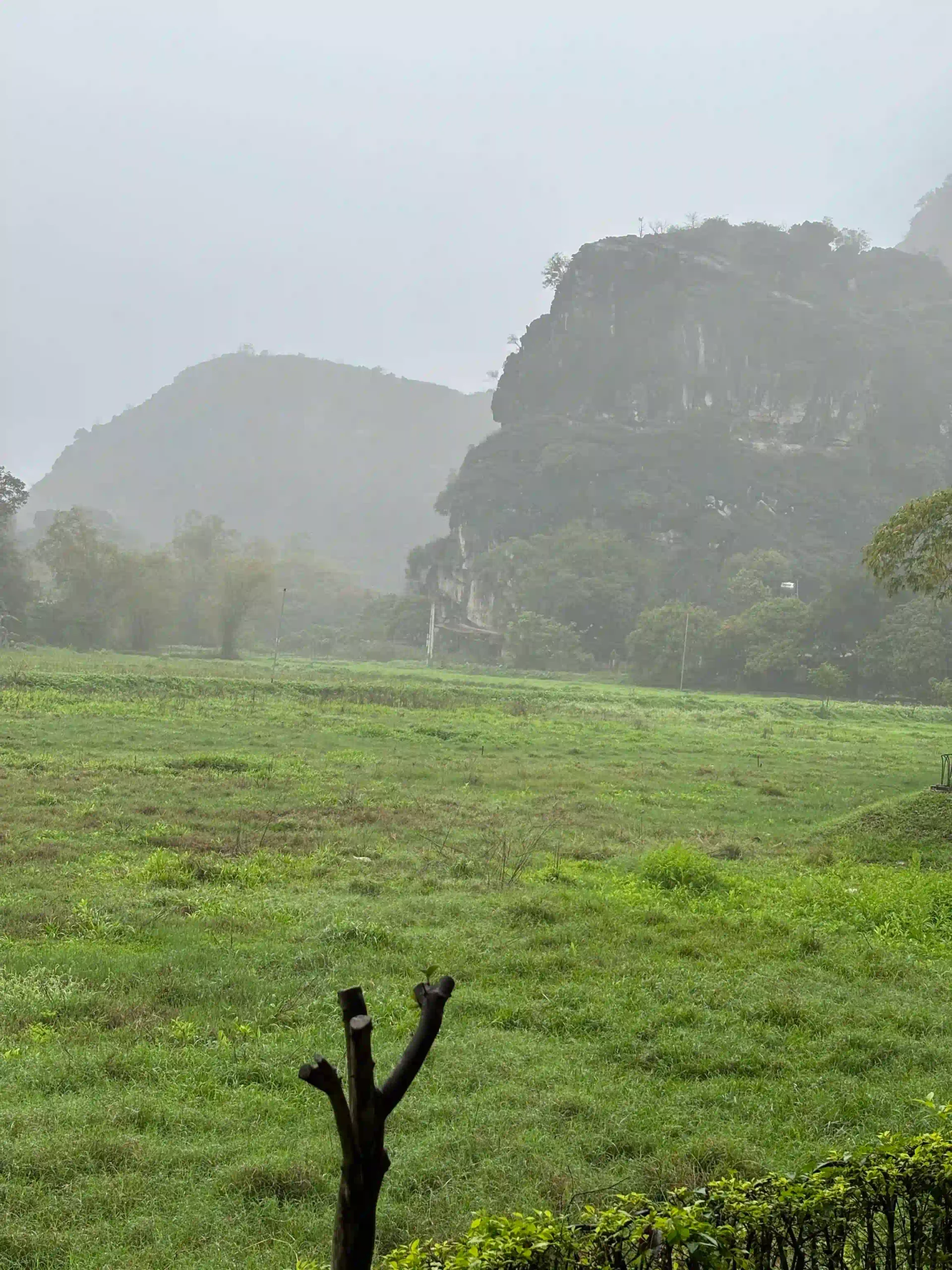
Trang An specifically handles rain better than Tam Coc, both practically and atmospherically. The caves and passages give you real shelter for a meaningful chunk of the route, and the limestone under grey, misty conditions has a mood that a bright sunny day just doesn’t produce, closer to the ink-wash paintings the region gets compared to than the crisp postcard version.
I did this route once under a fine, steady drizzle and the karst disappearing into low cloud was genuinely one of the better versions of Trang An I’ve seen.
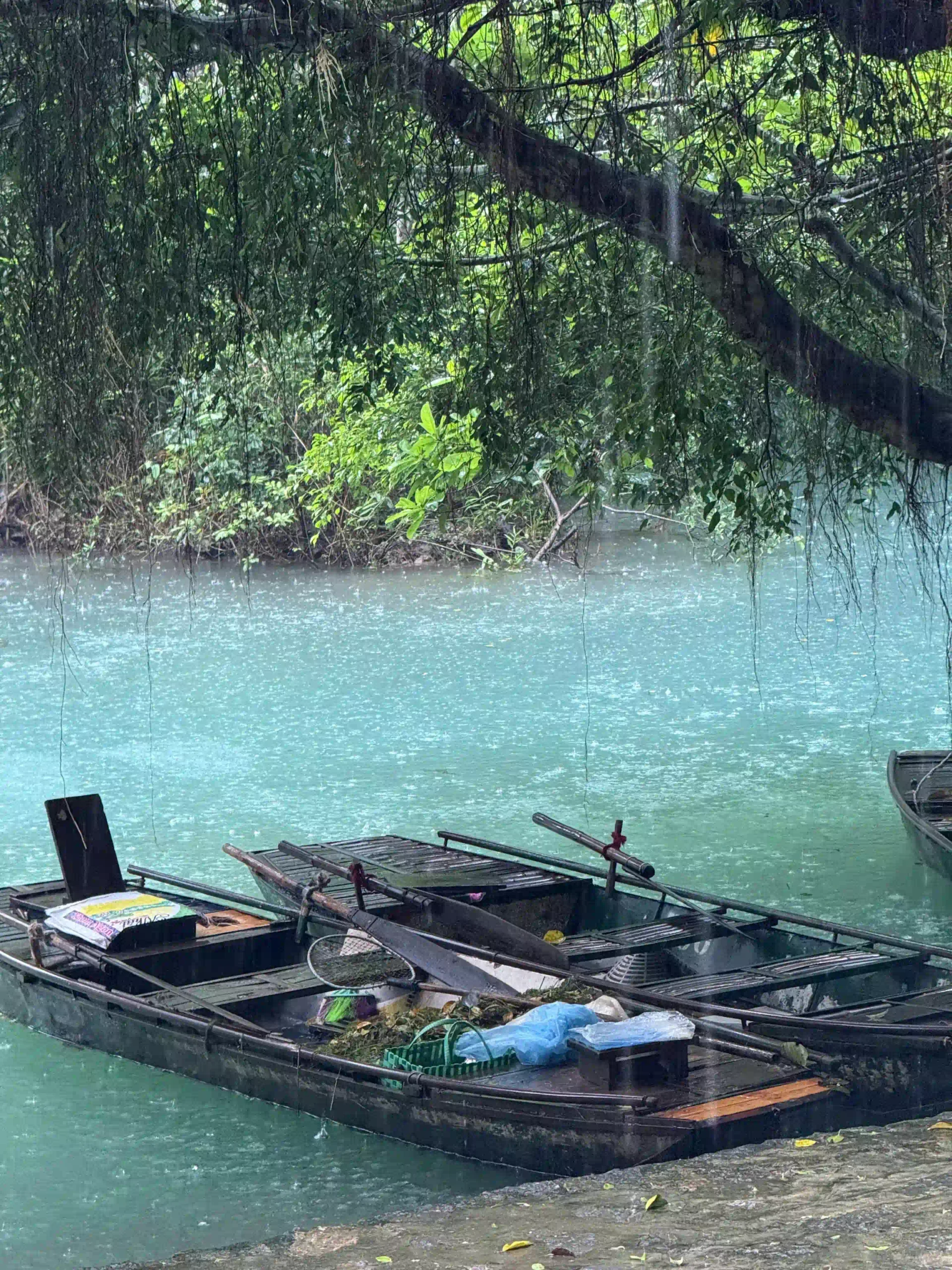
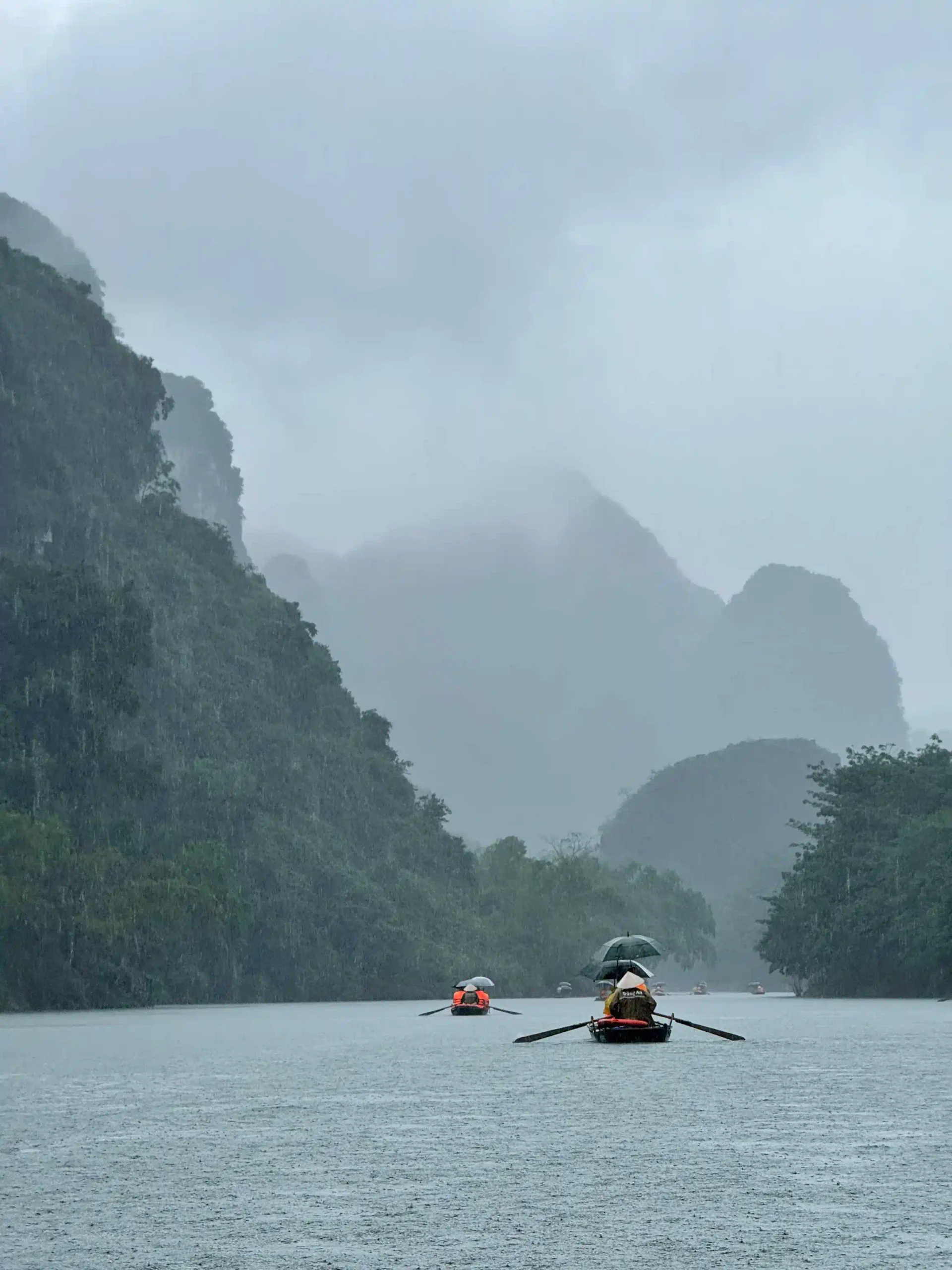
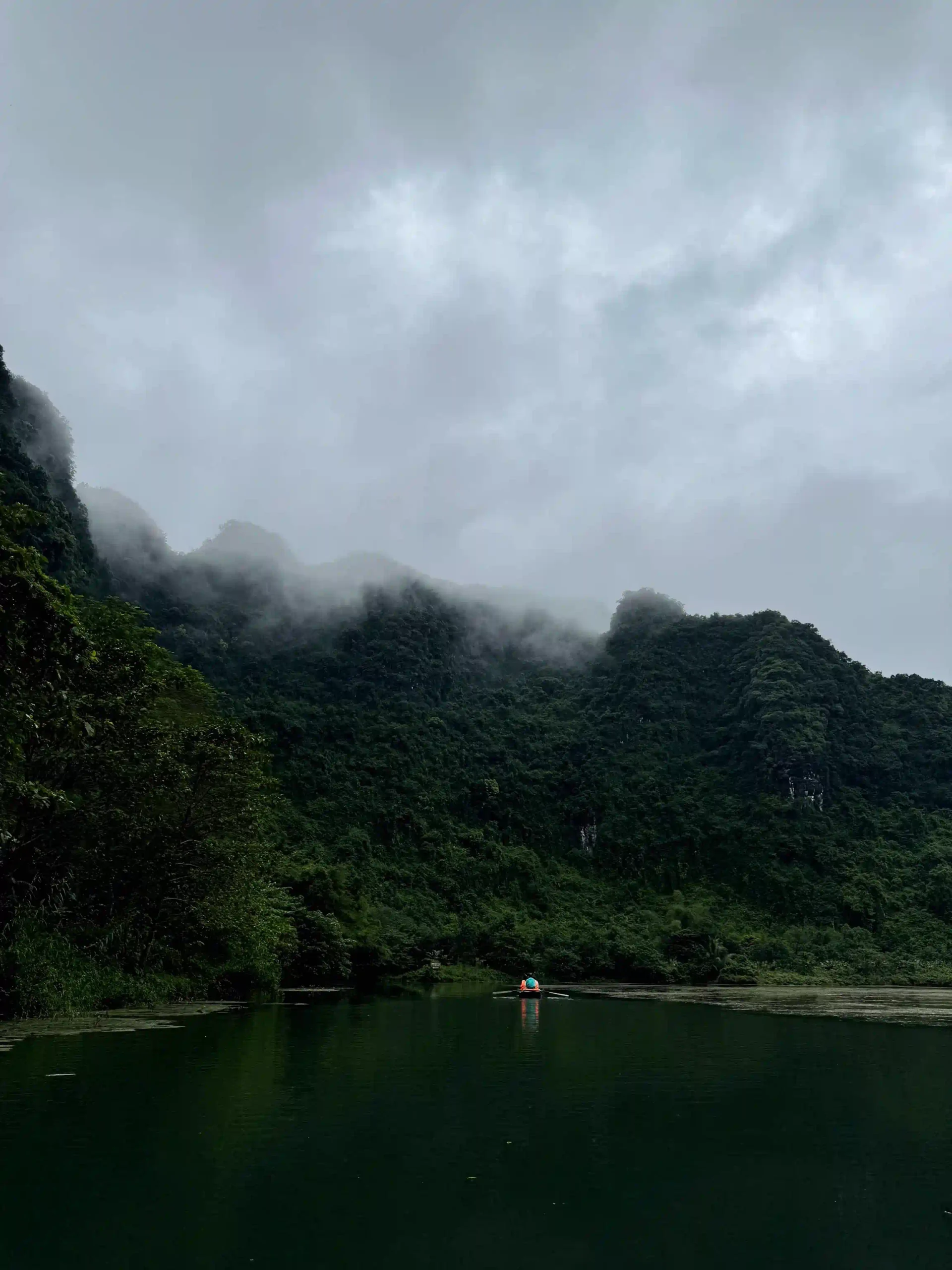
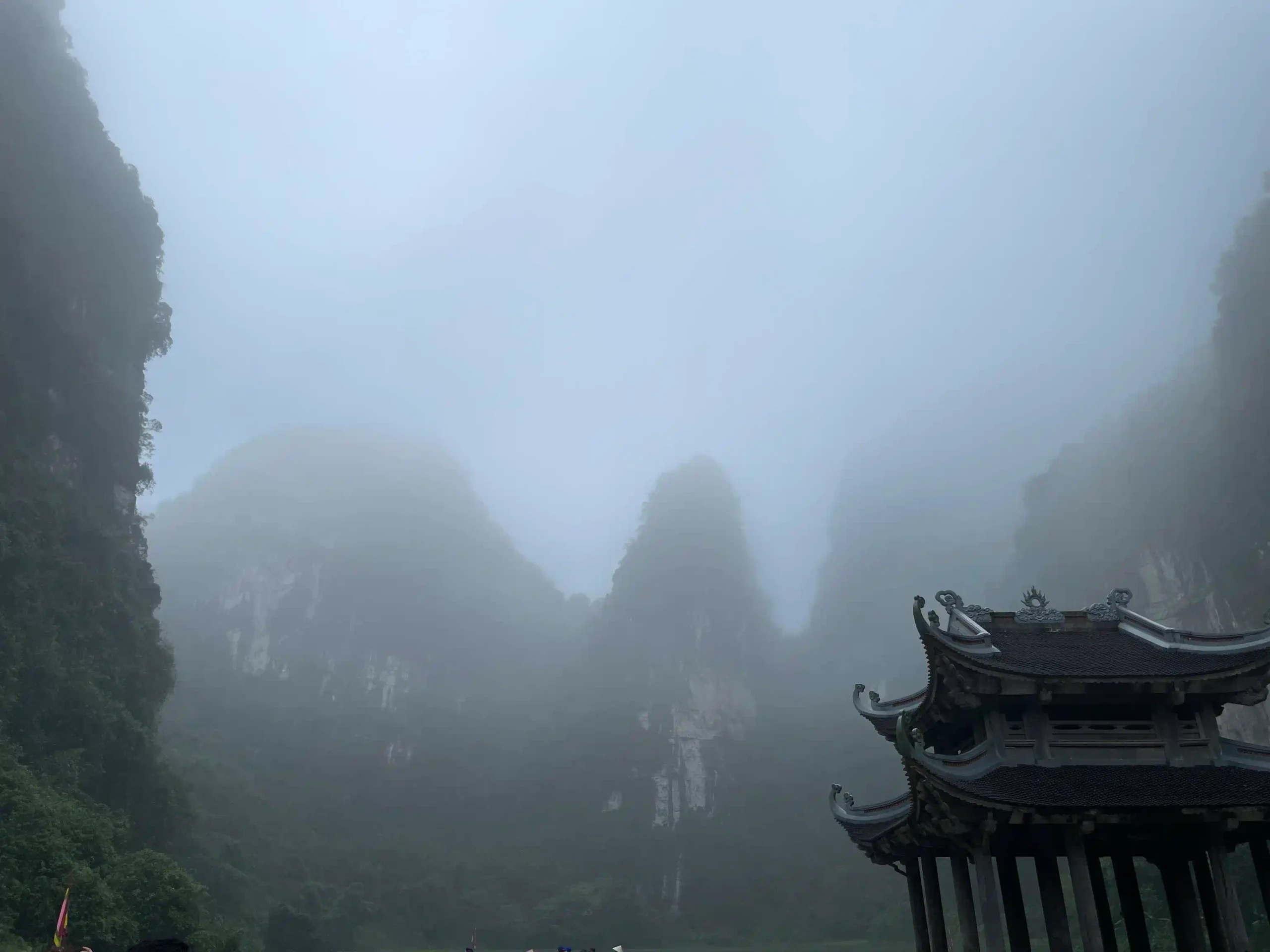
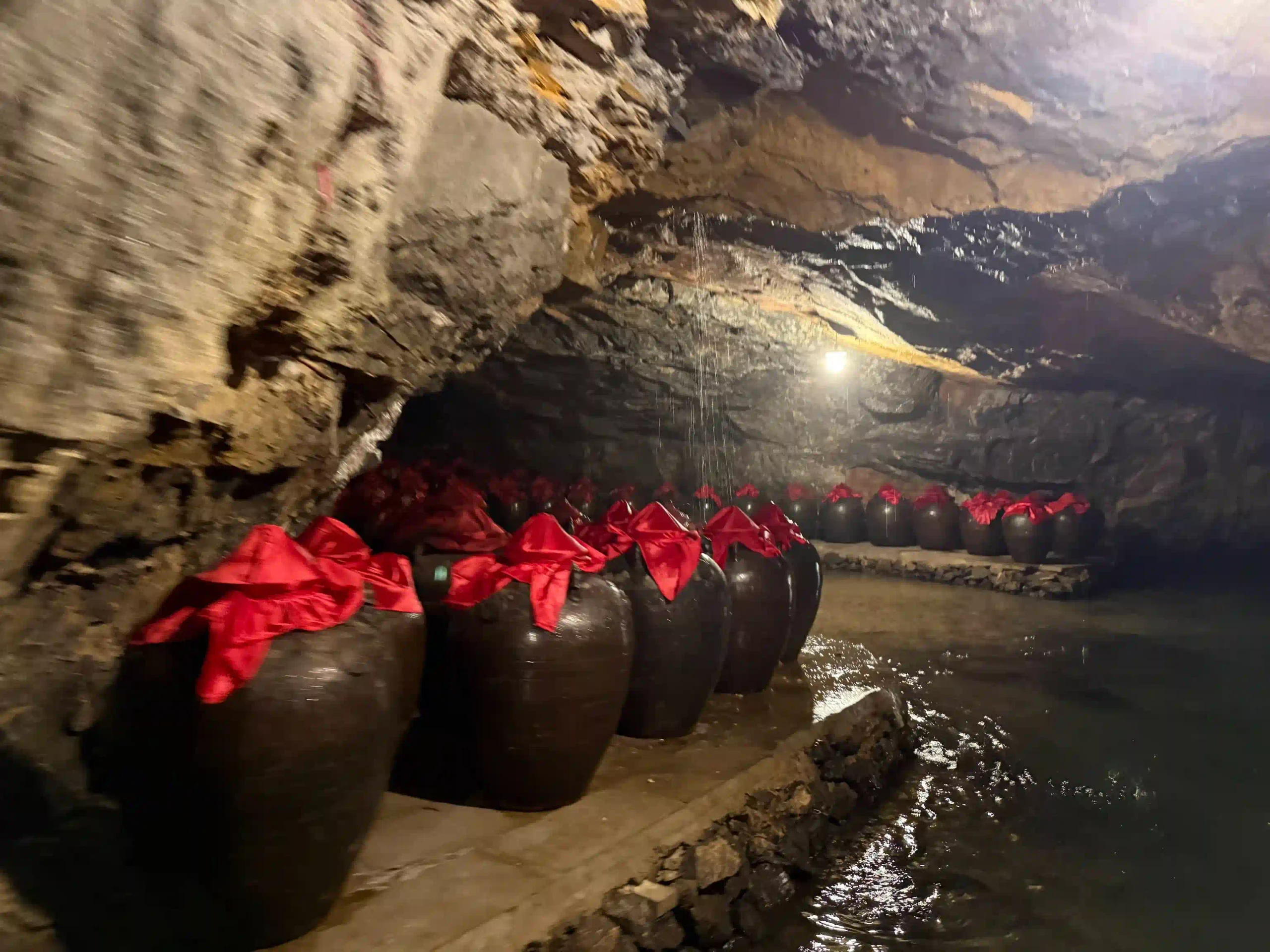
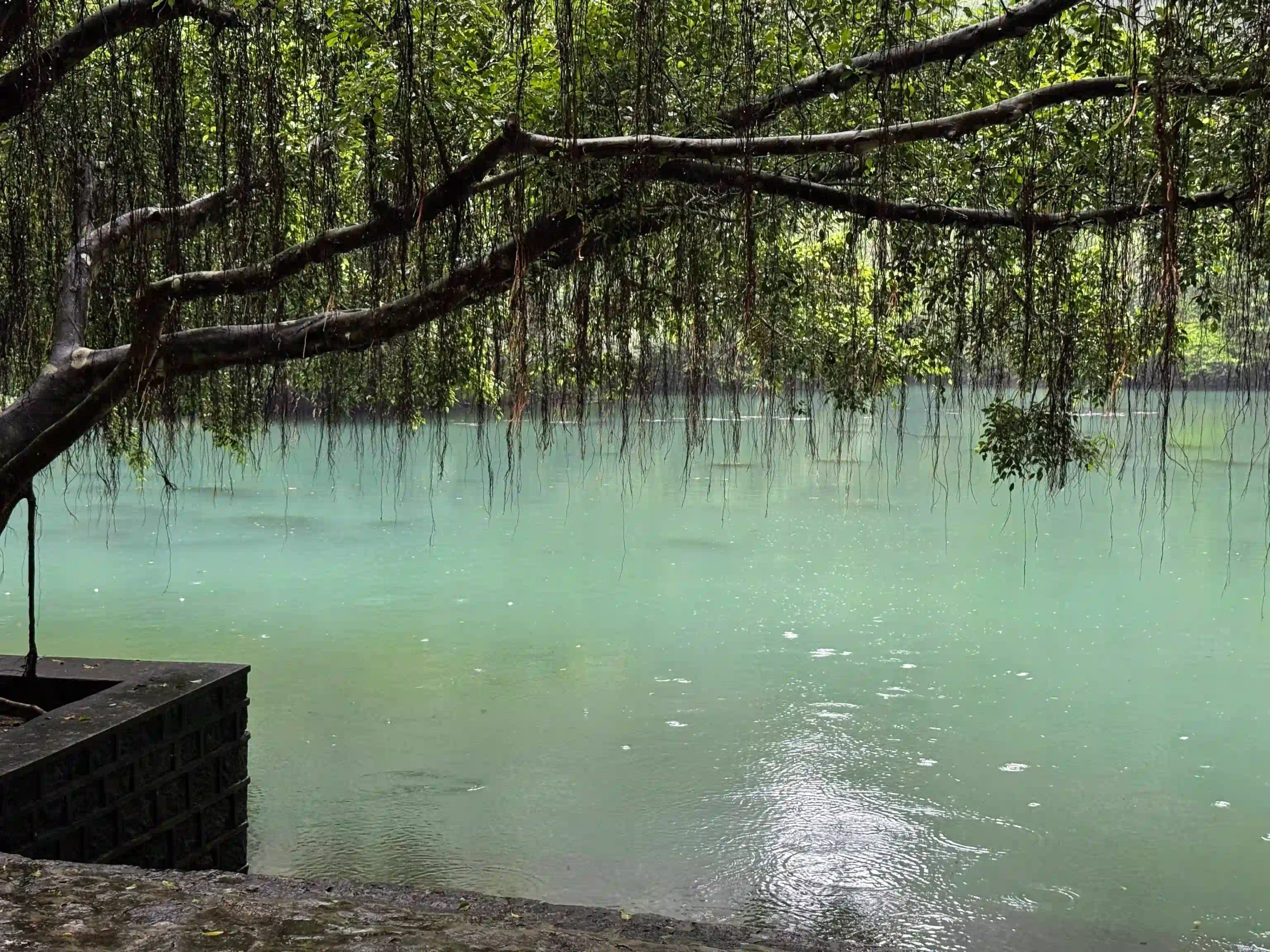
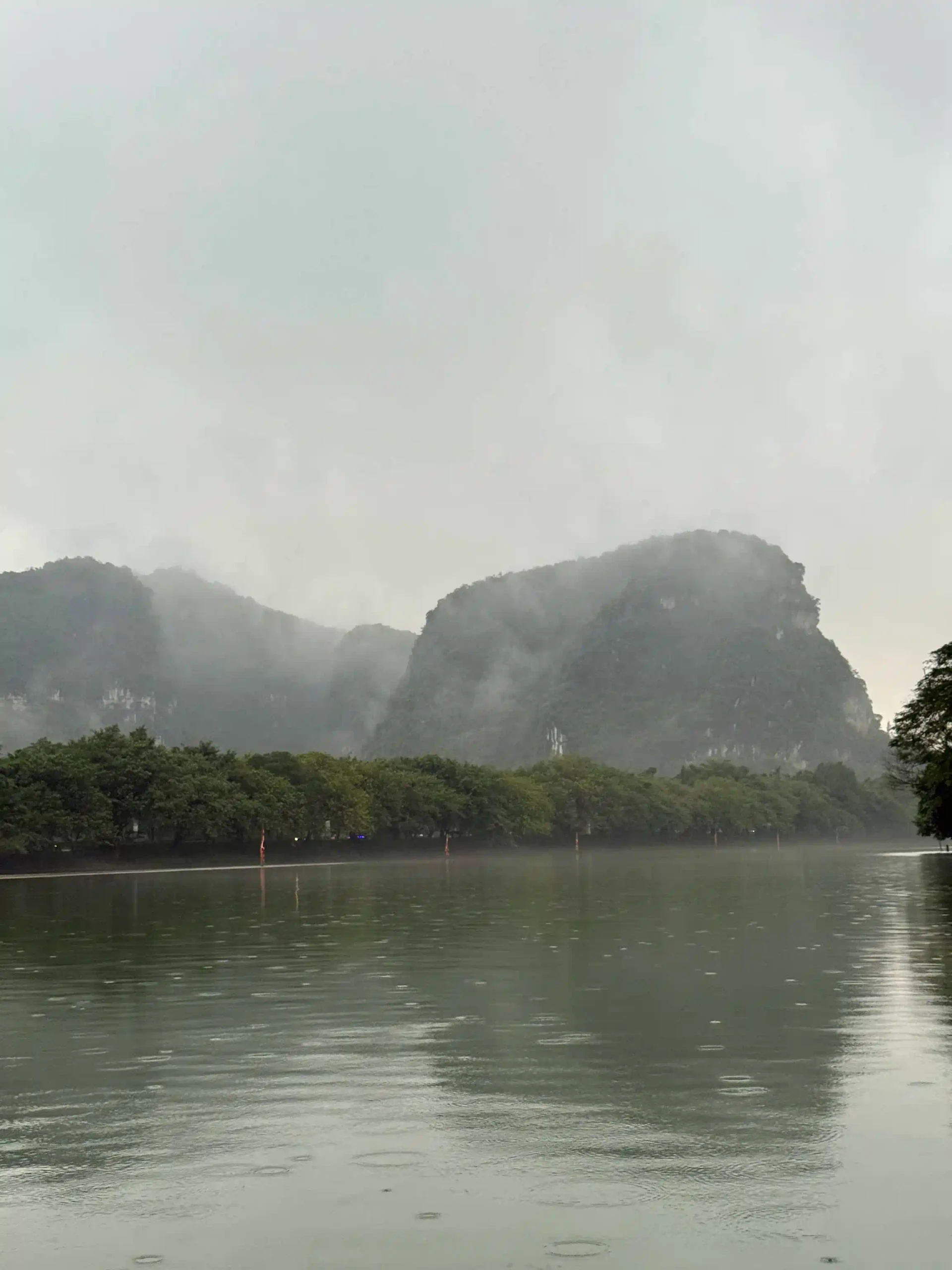
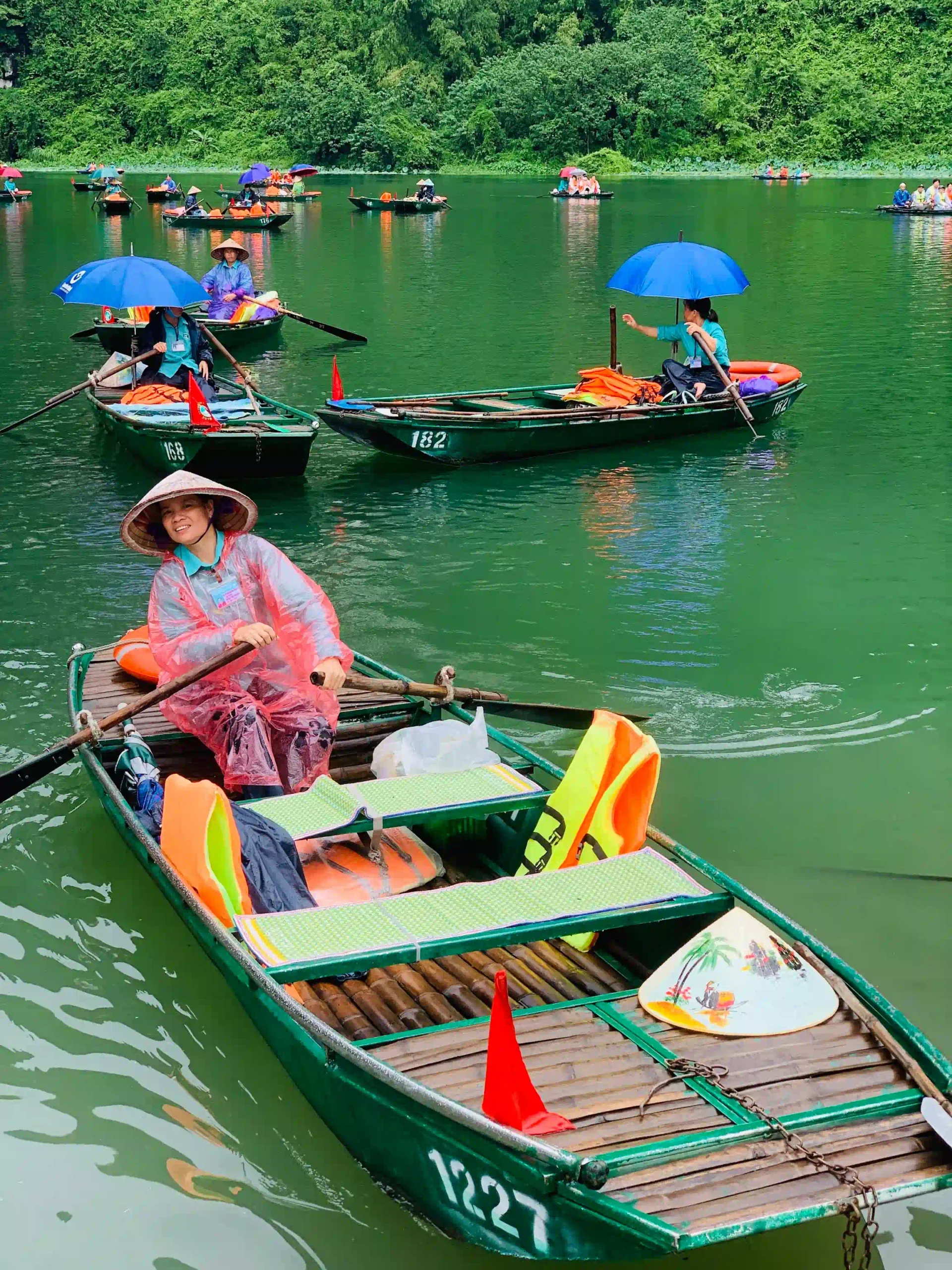
The rower on my boat didn’t seem bothered at all, pulling a plastic sheet over the cushions when we hit the cave sections and continuing at the same steady pace as any clear-weather trip.
Tam Coc is more exposed, since its route runs through open rice paddies rather than as much cave cover, and the boats themselves have no roof on either route, so you will get wet regardless of which one you choose.
Light rain is entirely manageable with a poncho. Heavy rain is a different story, uncomfortable, and your photos won’t come out the way you’d hoped since the caves don’t offer much protection from wind-driven rain.
There’s also a genuine upside to doing this in rain that surprised me the first time: fewer people. The queues that build up at both boat piers during good weather thin out noticeably when the forecast shows rain, which means shorter waits and a boat with fewer other groups crowding the same stretch of river. If crowds bother you more than a bit of dampness, a grey-sky boat tour can genuinely be the better version of the experience, not just a fallback.
Rowers themselves are used to working through rain and generally keep the same pace and route regardless of conditions, since a canceled trip means no income for the day.
Most boats carry a folded plastic sheet for exactly this situation, pulled over passengers’ laps or the cushions when a shower hits, which does a reasonable job of keeping the worst of it off you even without a poncho. Bring your own rain layer anyway rather than relying on the boat’s setup, since a shared plastic sheet across two or three passengers only covers so much.
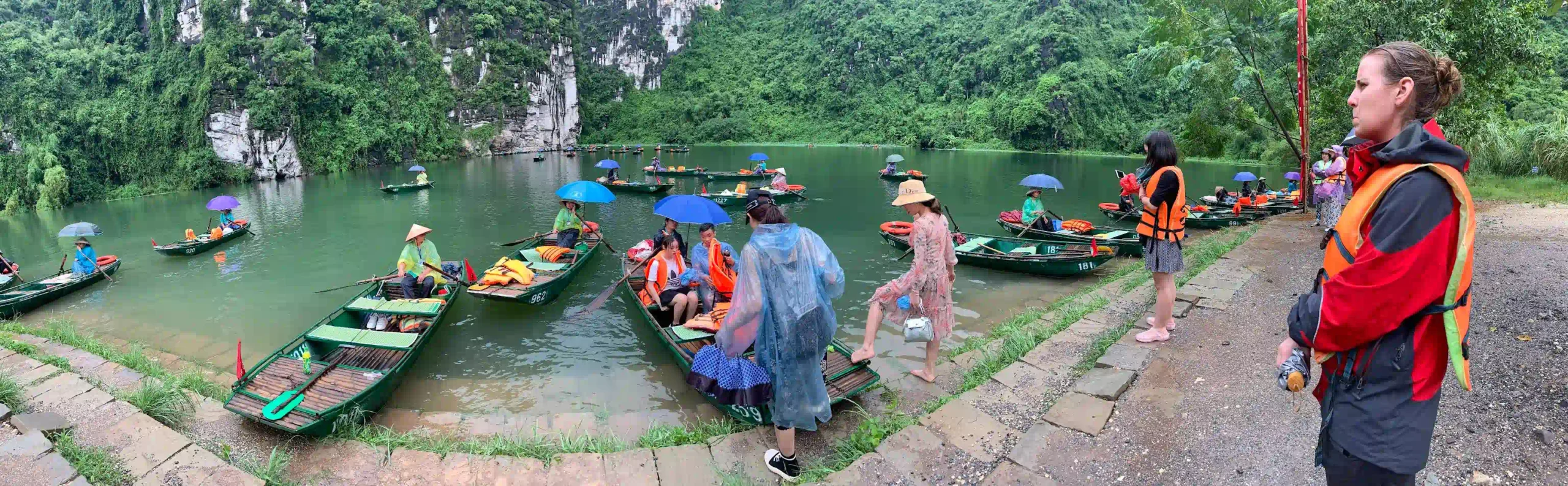
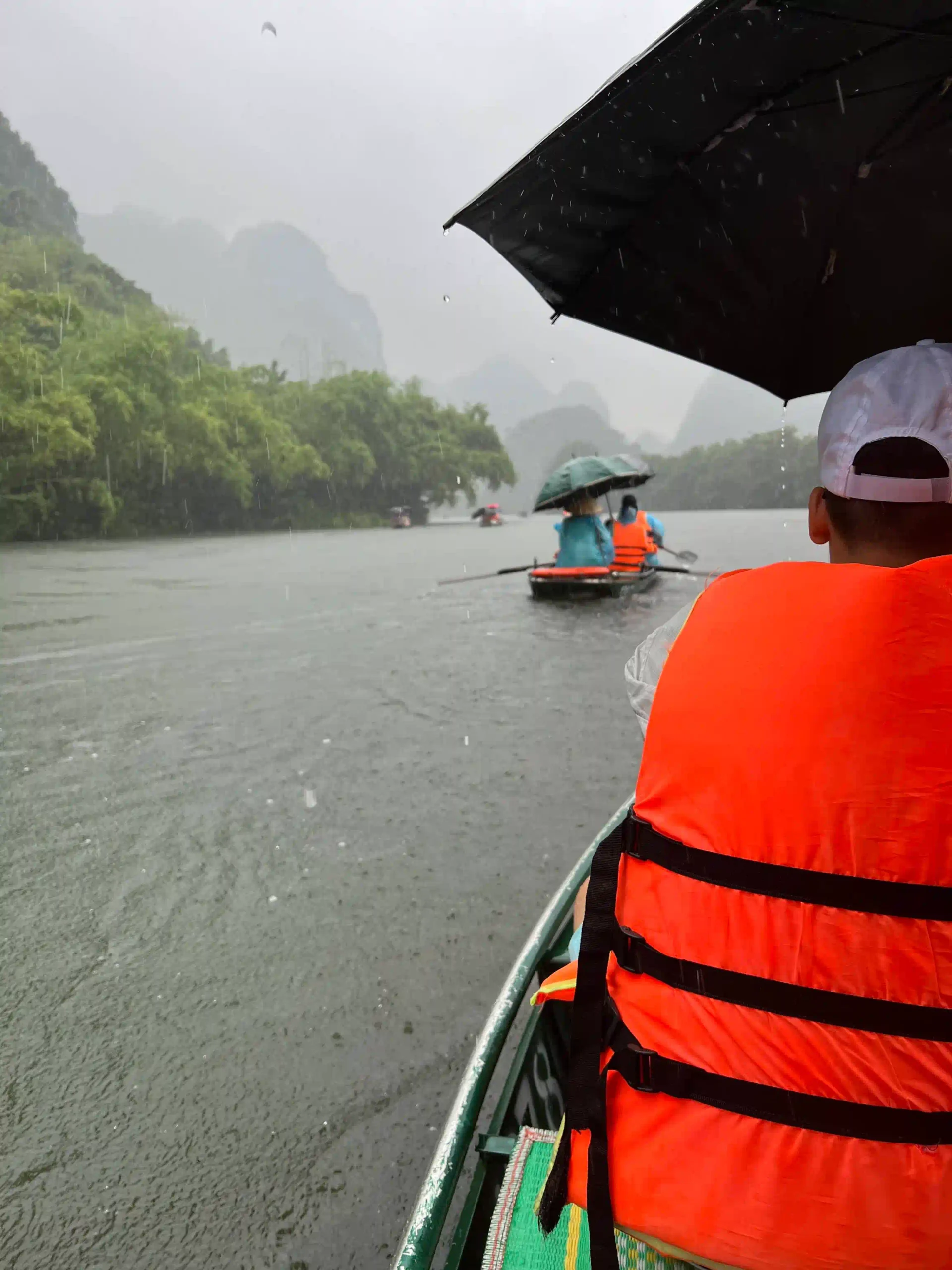
The practical move: book your boat tour for the morning, ideally before 11am, well ahead of the typical 1-3pm downpour window. If the forecast shows a slow-moving, all-day system instead of the standard afternoon burst, that’s the one scenario where I’d actually consider postponing.
2. Bai Dinh Pagoda
If you want a plan B that barely notices the rain, this is it.
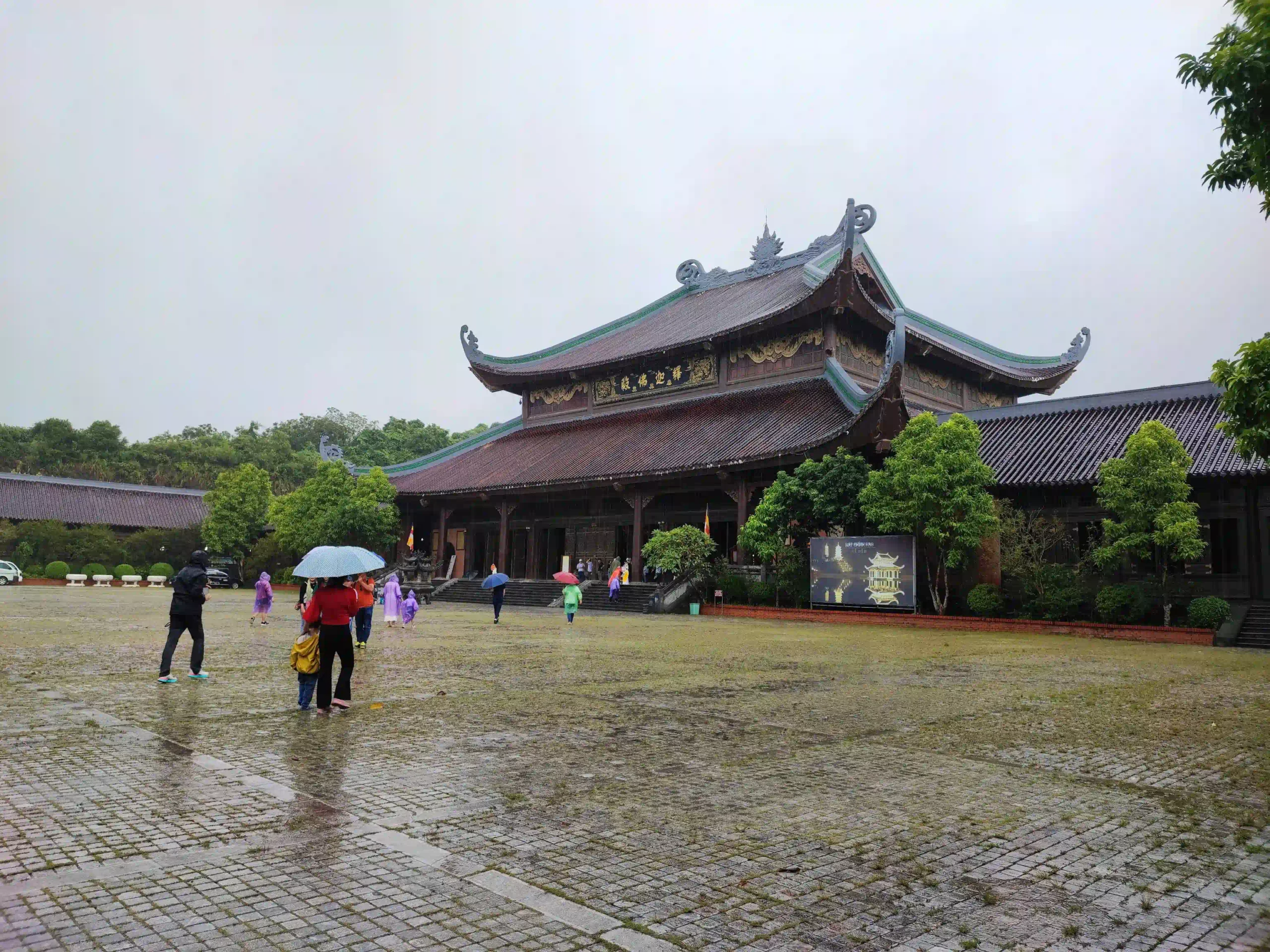
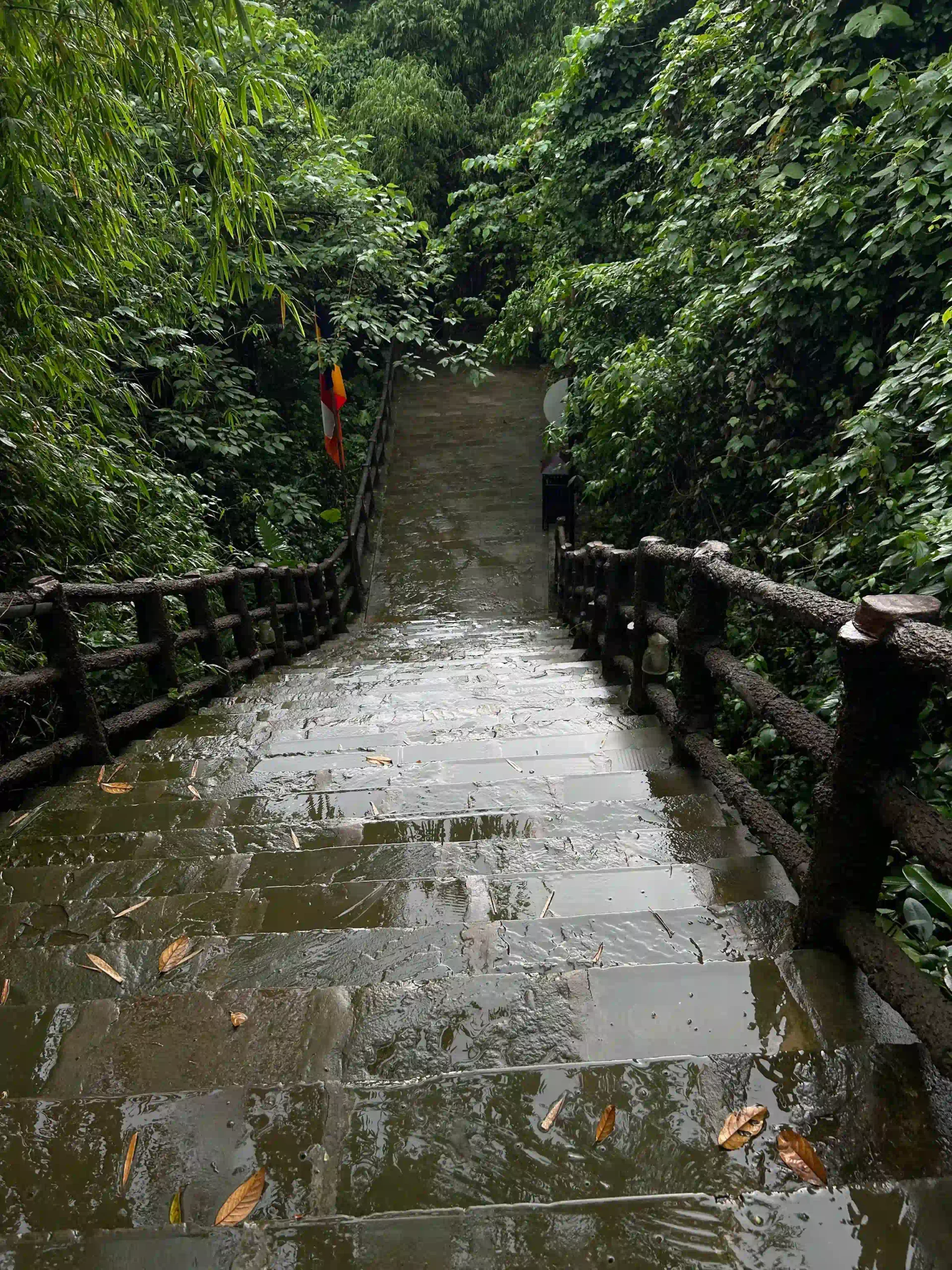
Bai Dinh is the largest Buddhist complex in Southeast Asia, and the sheer scale of it means long covered corridors connecting the main halls, which genuinely shelter you from a good portion of a downpour that would otherwise soak you at a more open site.
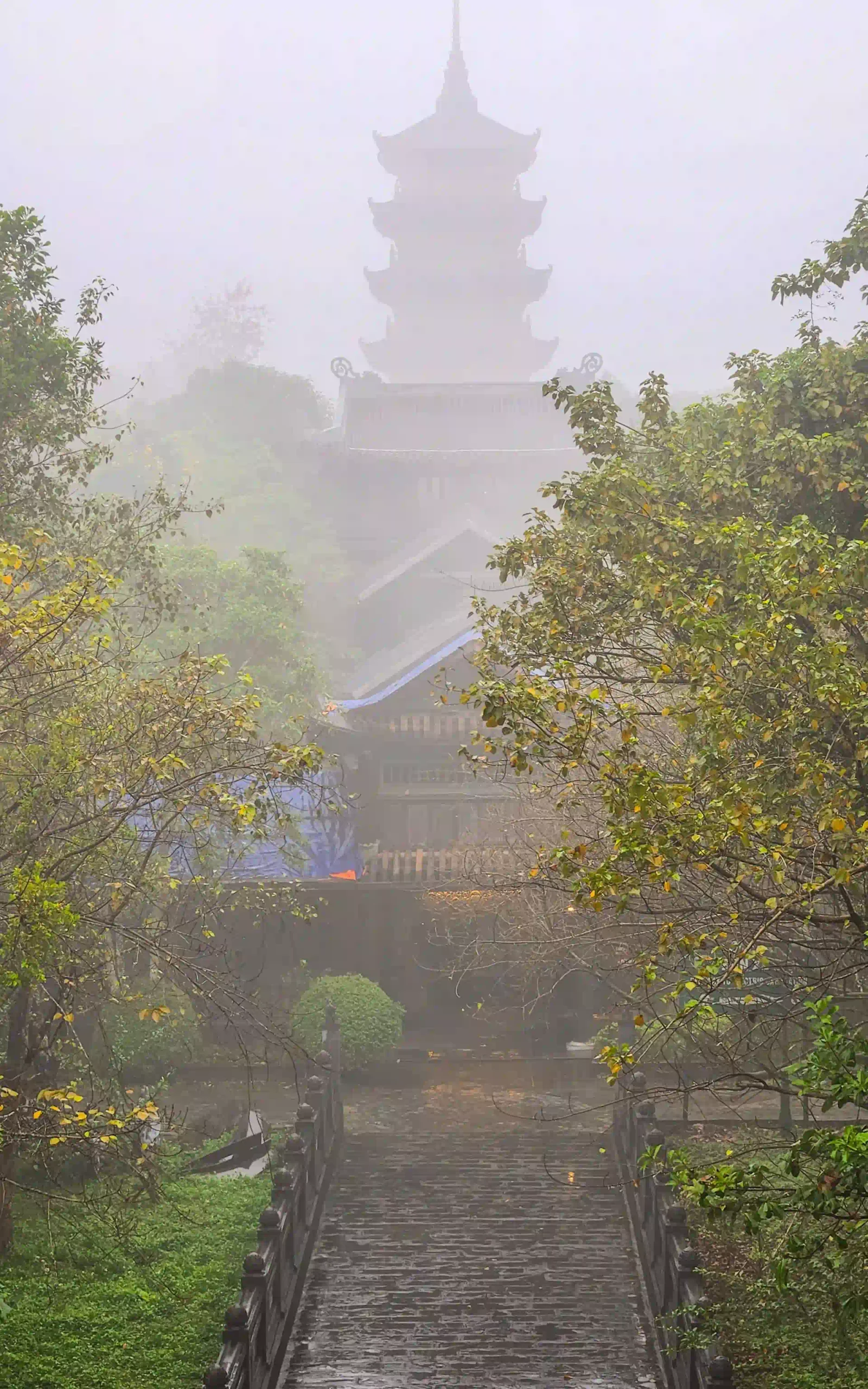
The complex spans multiple levels up a hillside, with the Guanyin Hall, the bronze Buddha hall, and the pagoda tower connected by these covered walkways instead of the open courtyards a lot of smaller Vietnamese temples are built around. That architectural choice, whatever the original reasoning behind it, happens to make Bai Dinh one of the few major Ninh Binh sites where a full visit is genuinely possible without much direct rain exposure at all.
The electric buggy service that ferries visitors around the complex is also worth using specifically on a wet day, since it cuts down the amount of open-air walking between sections considerably.
I’d normally suggest walking parts of Bai Dinh to take in the scale properly, but on a rainy afternoon the buggy is the better call, and nobody will think less of you for it.
I took the buggy on a day when the rain hadn’t quite let up from the morning, and it turned what would have been a genuinely soggy hour of walking into something closer to a covered tour with brief dashes between stops.

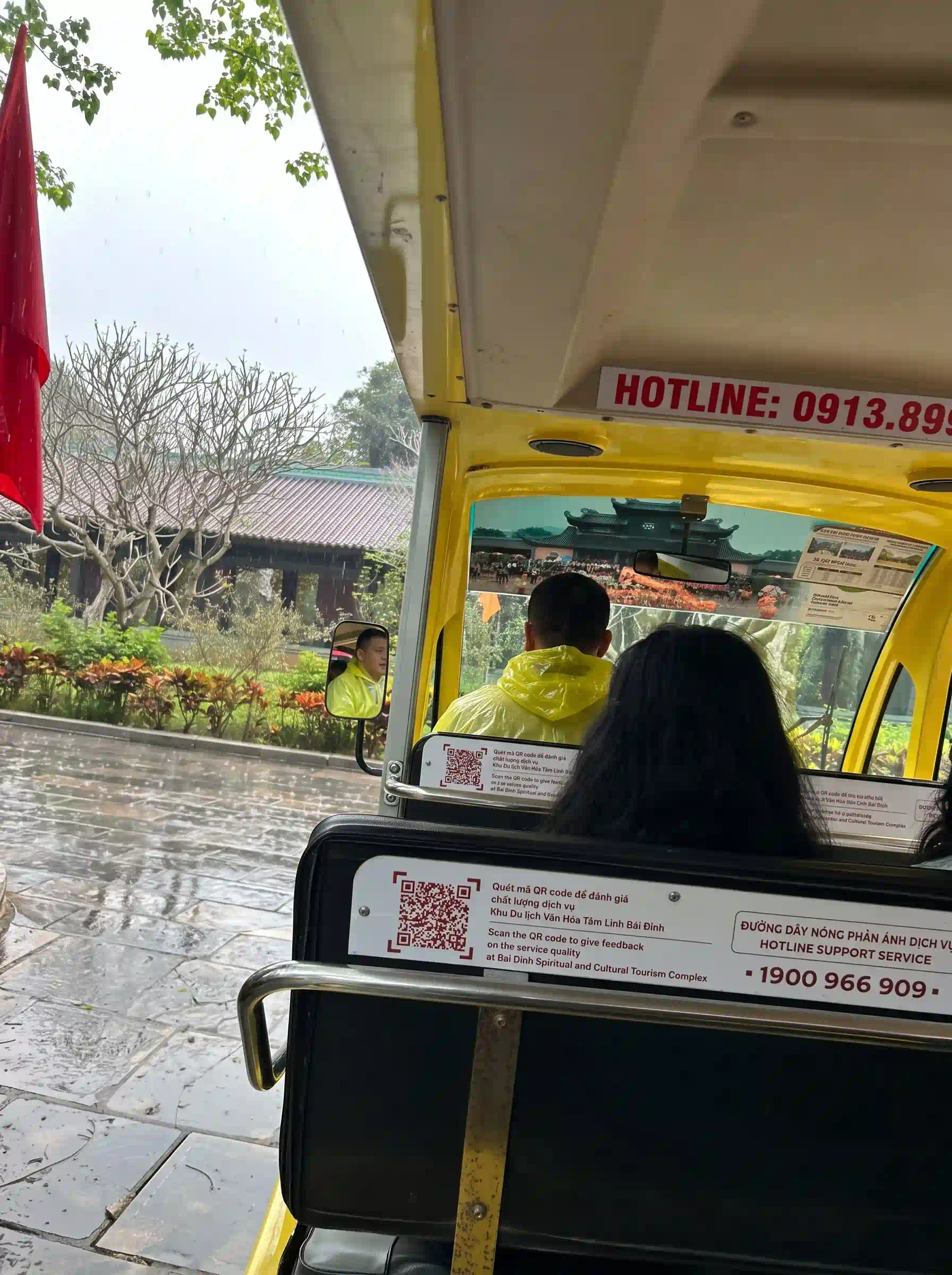
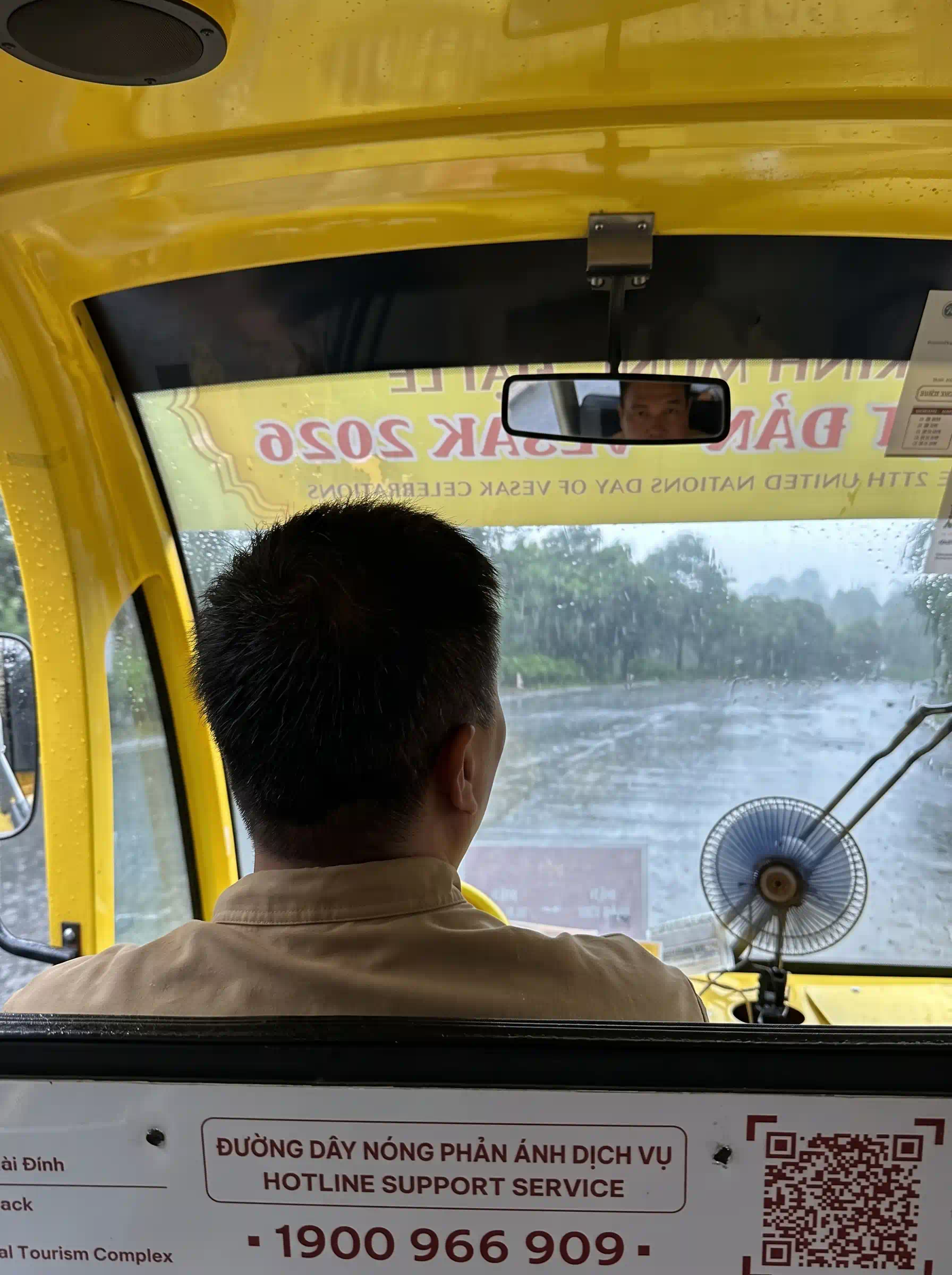
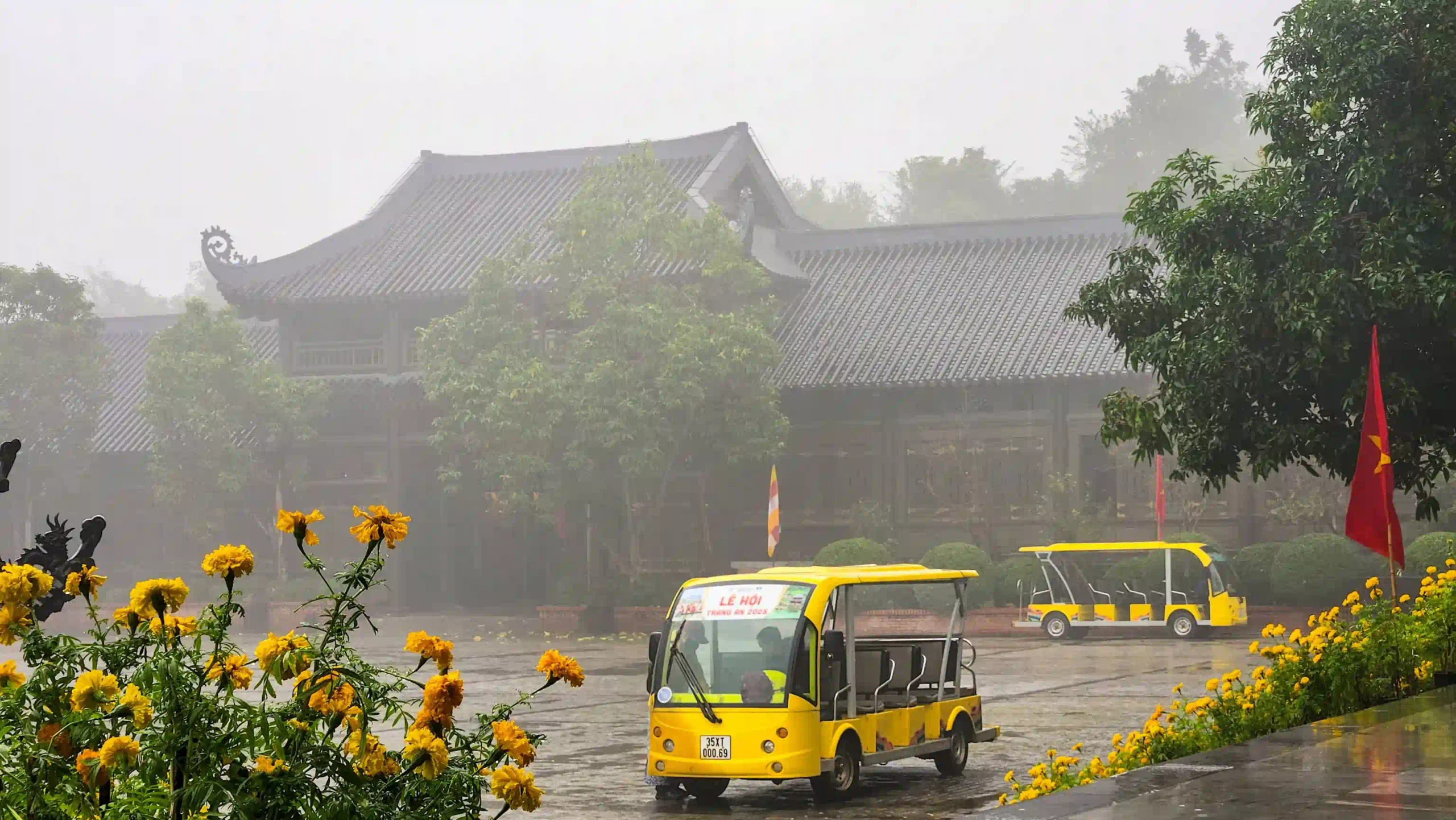
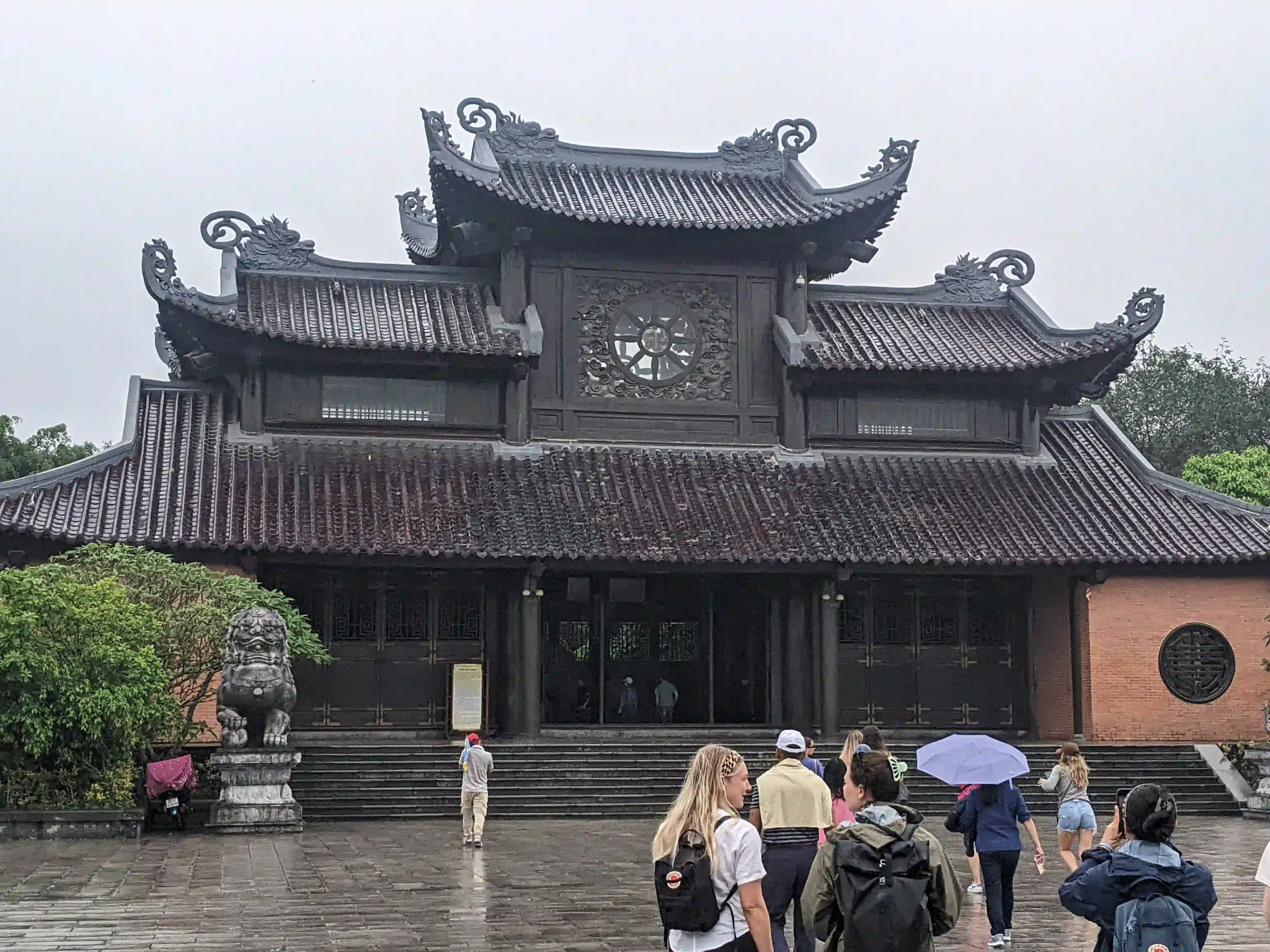
The interior halls themselves are enormous and give you real time to spend indoors, looking at the statues and architecture at a pace a sunny-day visit rarely encourages, since you’d normally rather be outside taking in the grounds.
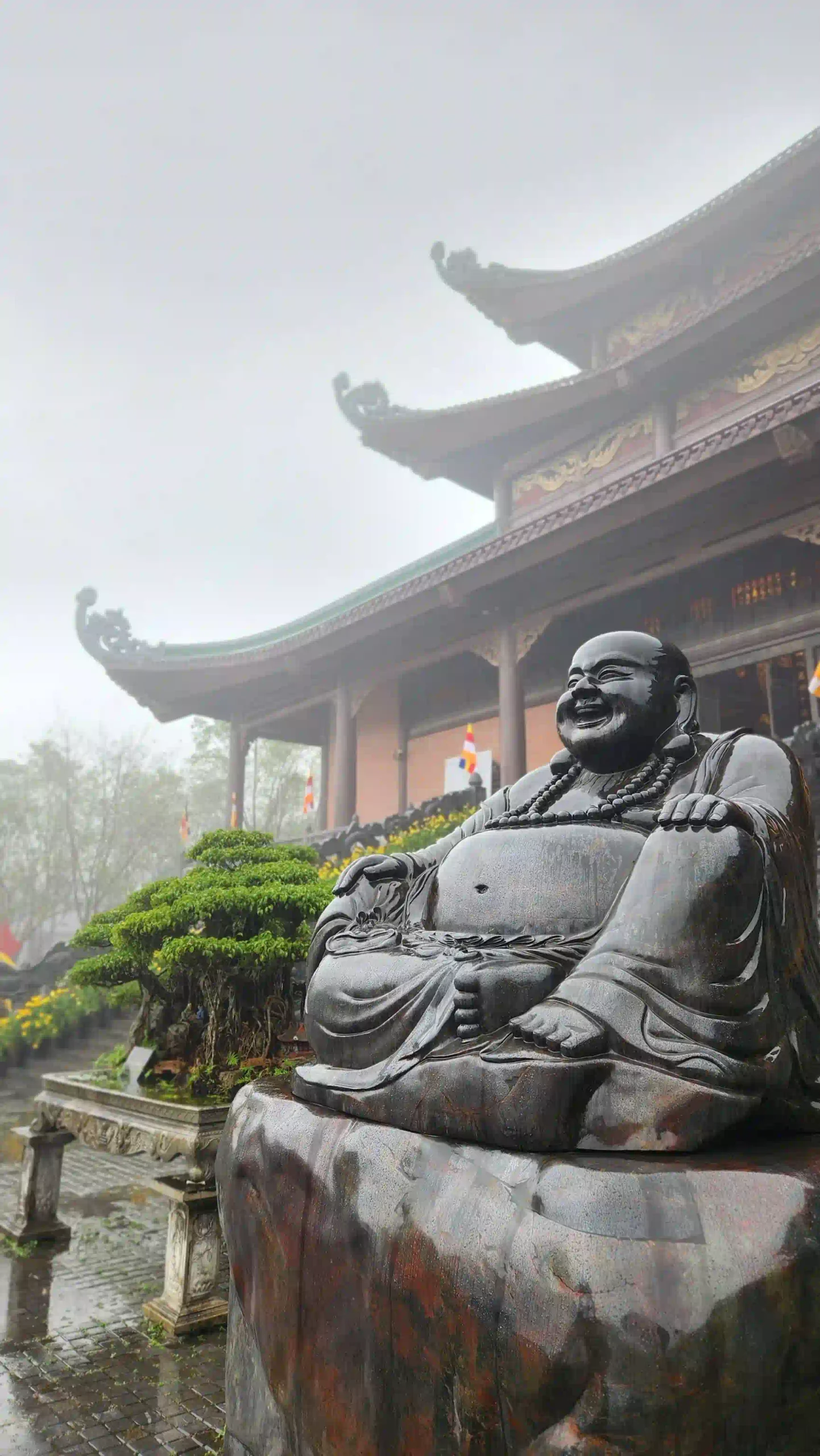
There’s something to be said for a rainy day pushing you into slowing down and actually looking at the details instead of rushing through for photos of the exterior. The giant bronze Buddha statue and the corridor of Arhat statues, hundreds of individually carved figures lining one of the walkways, both reward the kind of unhurried attention a rain day naturally provides.
The trade-off, as I mentioned in the main stuffs to do in Ninh Binh ranking, is that Bai Dinh can feel like sensory overload even in good weather, vast and crowded rather than intimate. On a rain day that’s actually a reasonable trade, since you’re there to stay dry and see something impressive, not for a quiet contemplative wander.
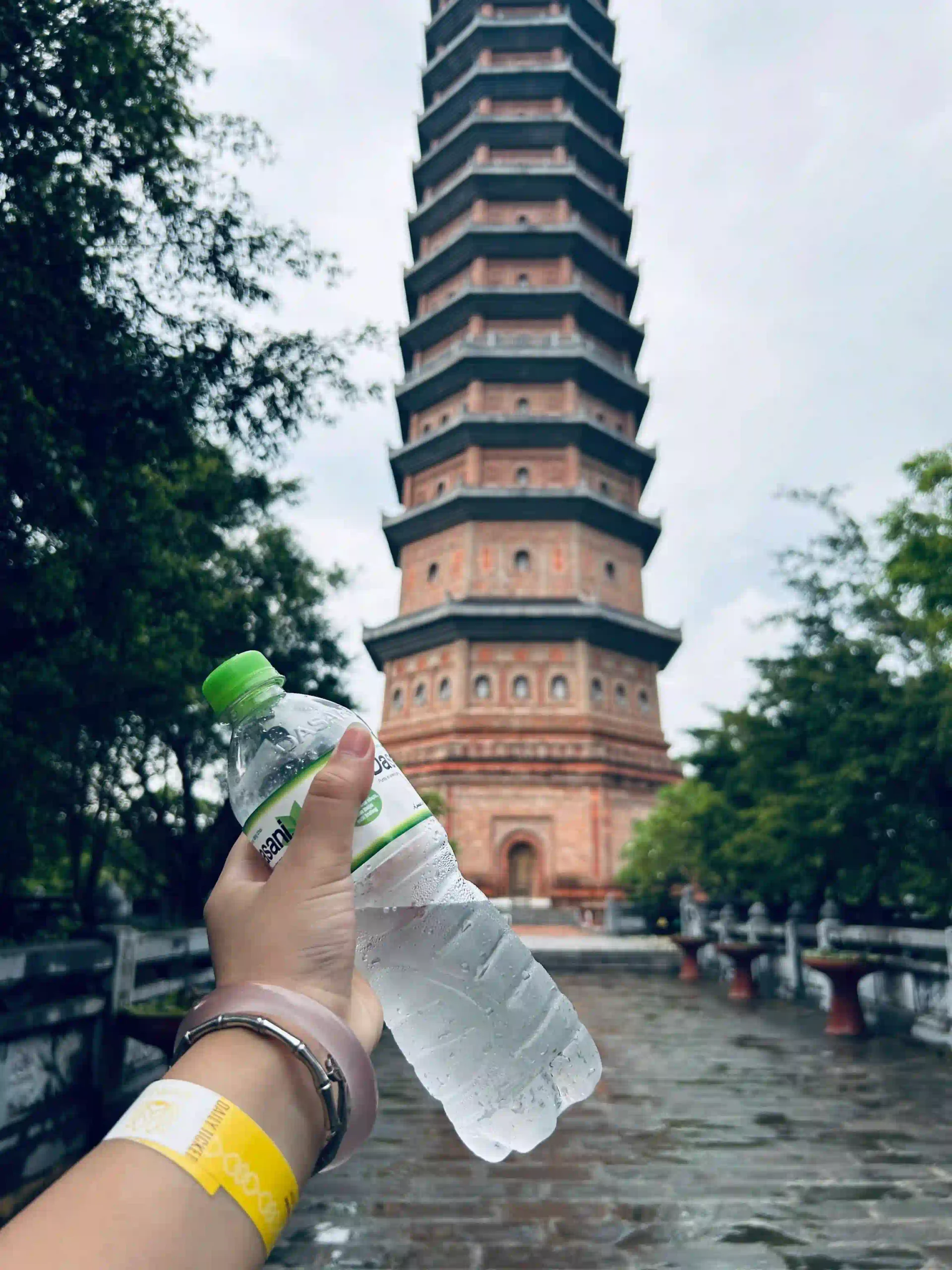
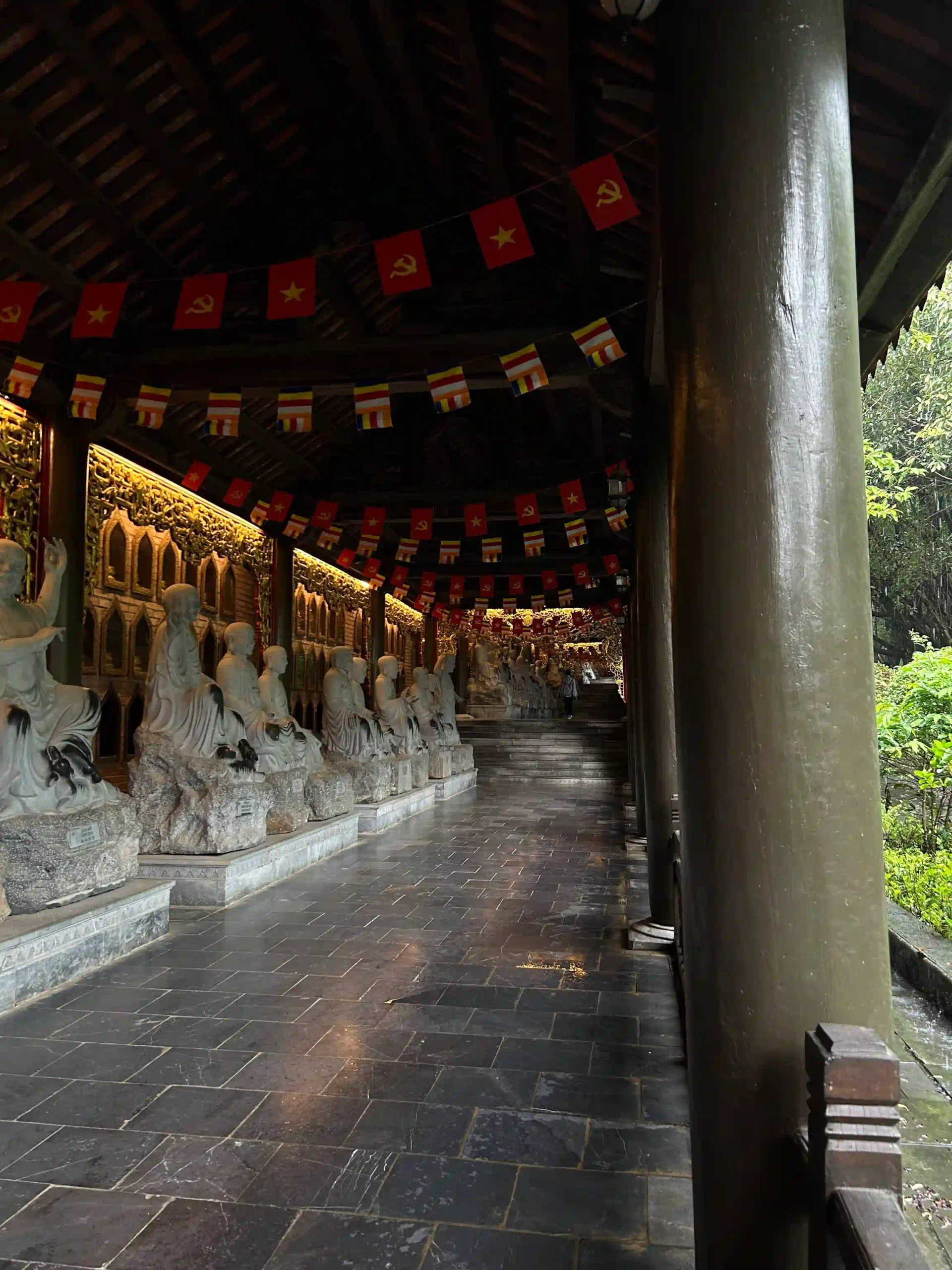
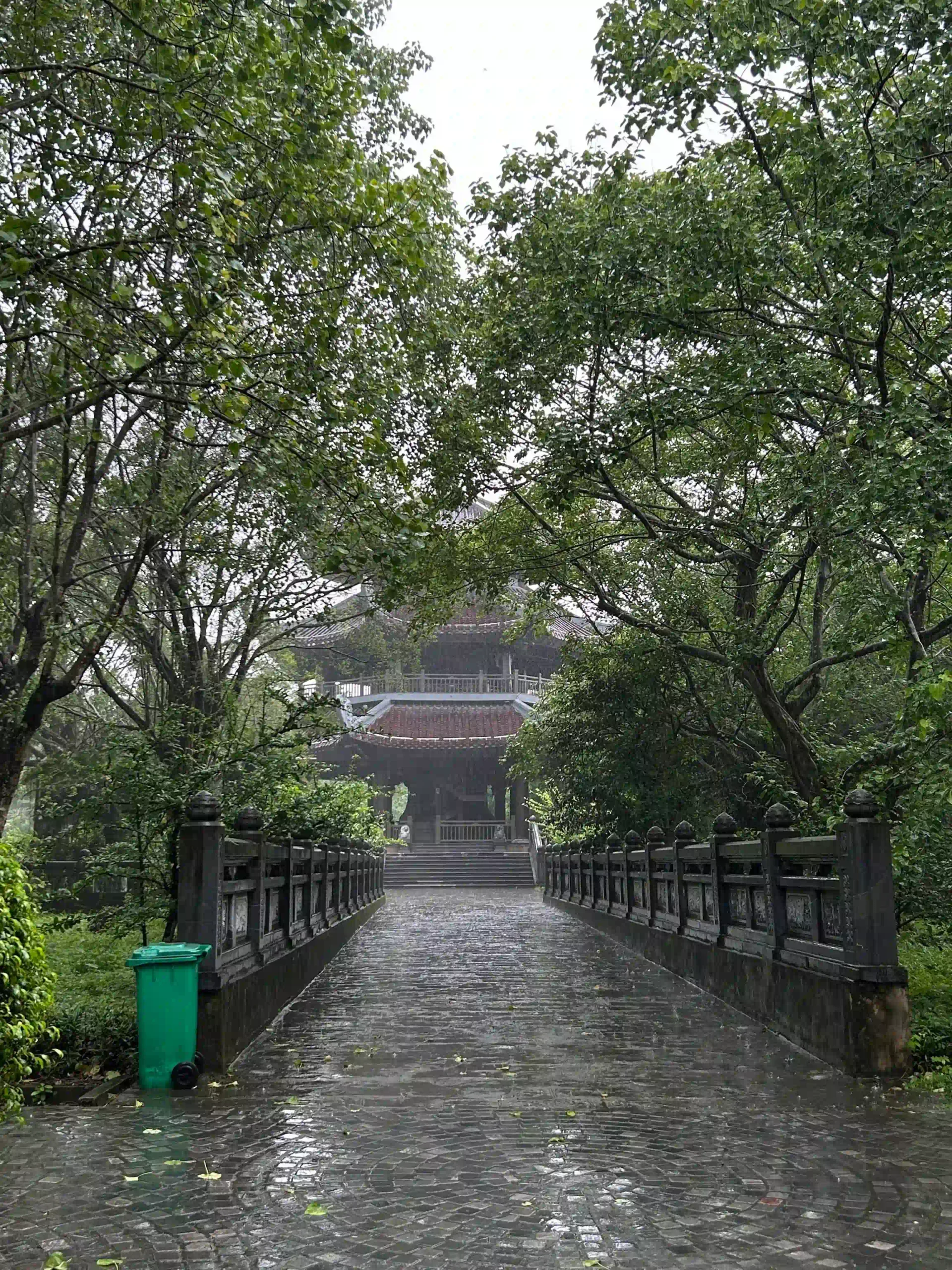
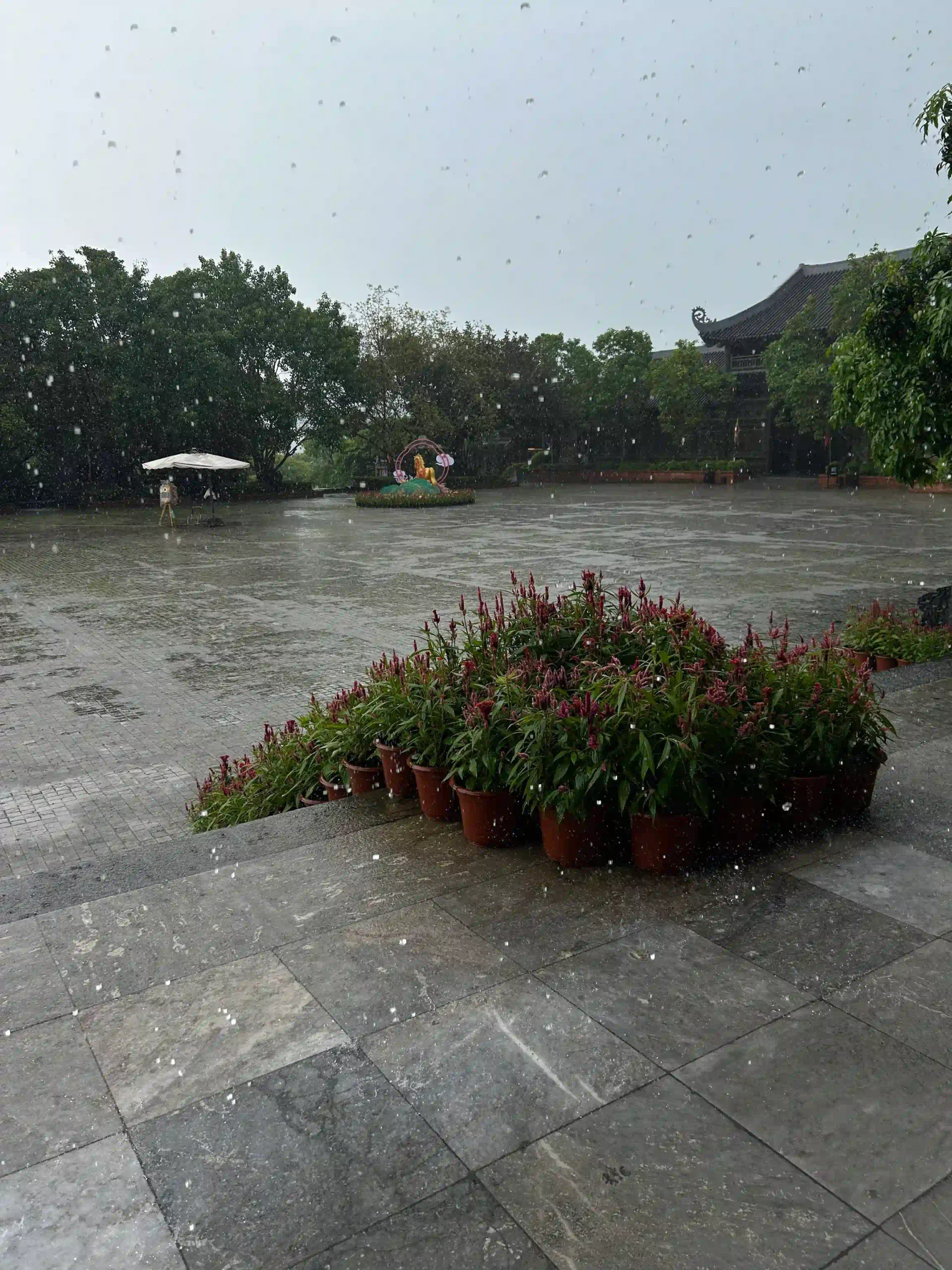
3. Hoa Lu Ancient Capital
Hoa Lu involves less open walking than a lot of Ninh Binh’s other big draws, which makes it a solid rain-day pick even though it’s not fully covered.
The temple complexes honoring King Dinh Tien Hoang and King Le Hoan are compact relative to somewhere like Bai Dinh, and a guide can keep you moving between covered sections without much dead time standing in the open.
The temples themselves sit close together, and the courtyards between them are small enough that a quick dash under an umbrella or poncho covers the exposed stretches without much real soaking.
The carved stone and old brickwork also photograph well in flat, grey light in a way that surprised me, none of the harsh shadows you get on a bright afternoon, just even, soft light on details that are easy to overlook when you’re squinting into the sun.
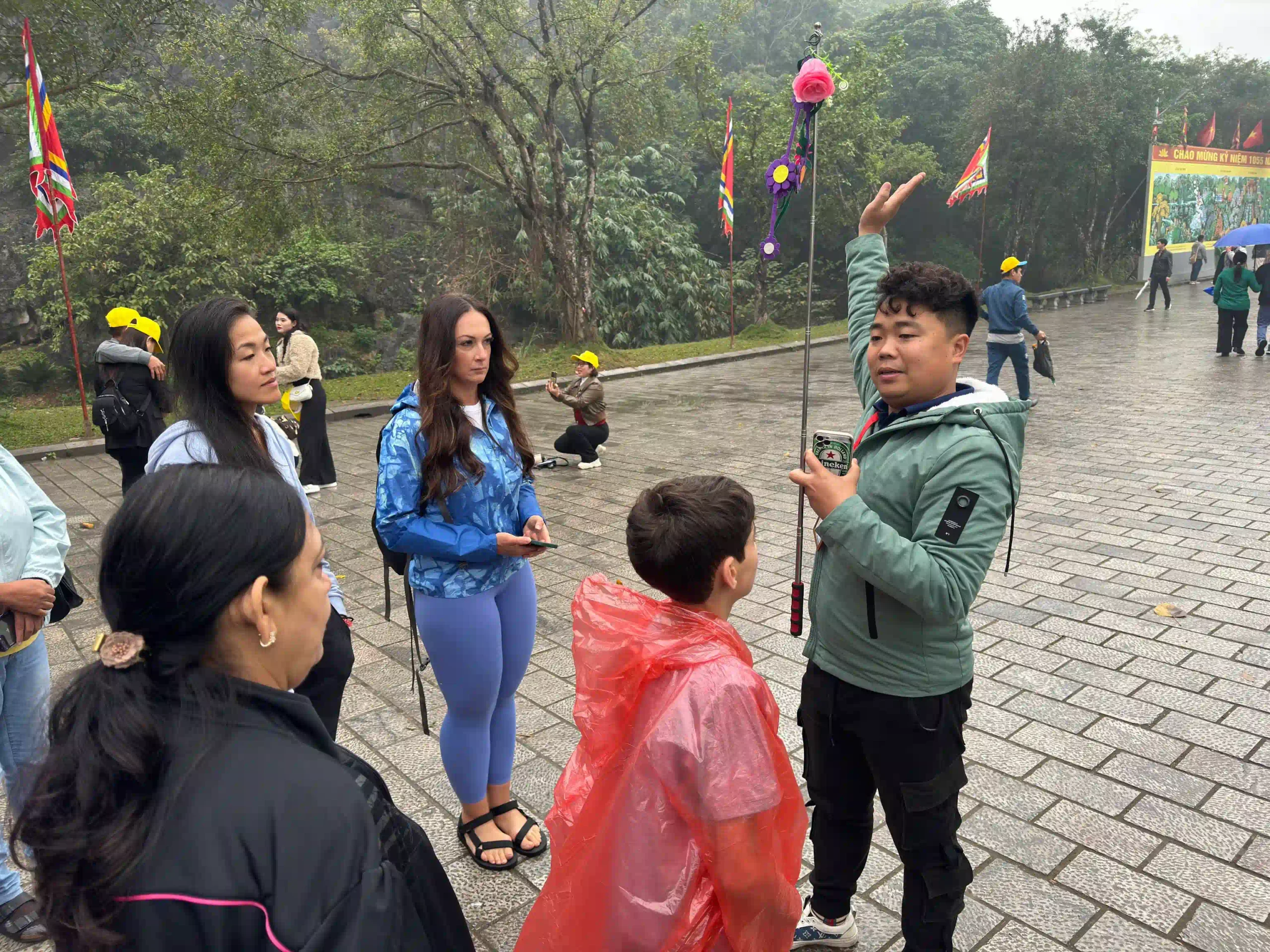

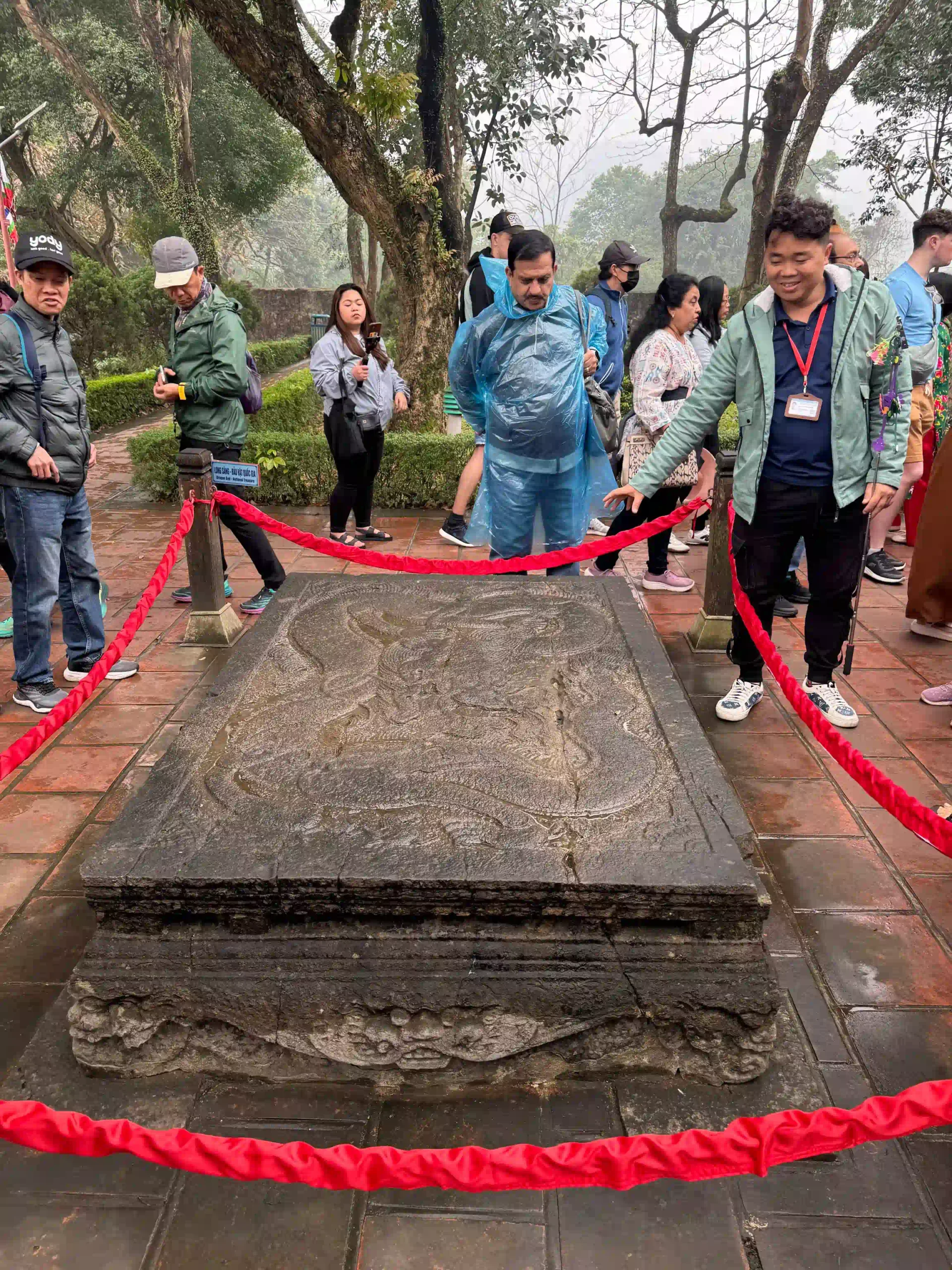
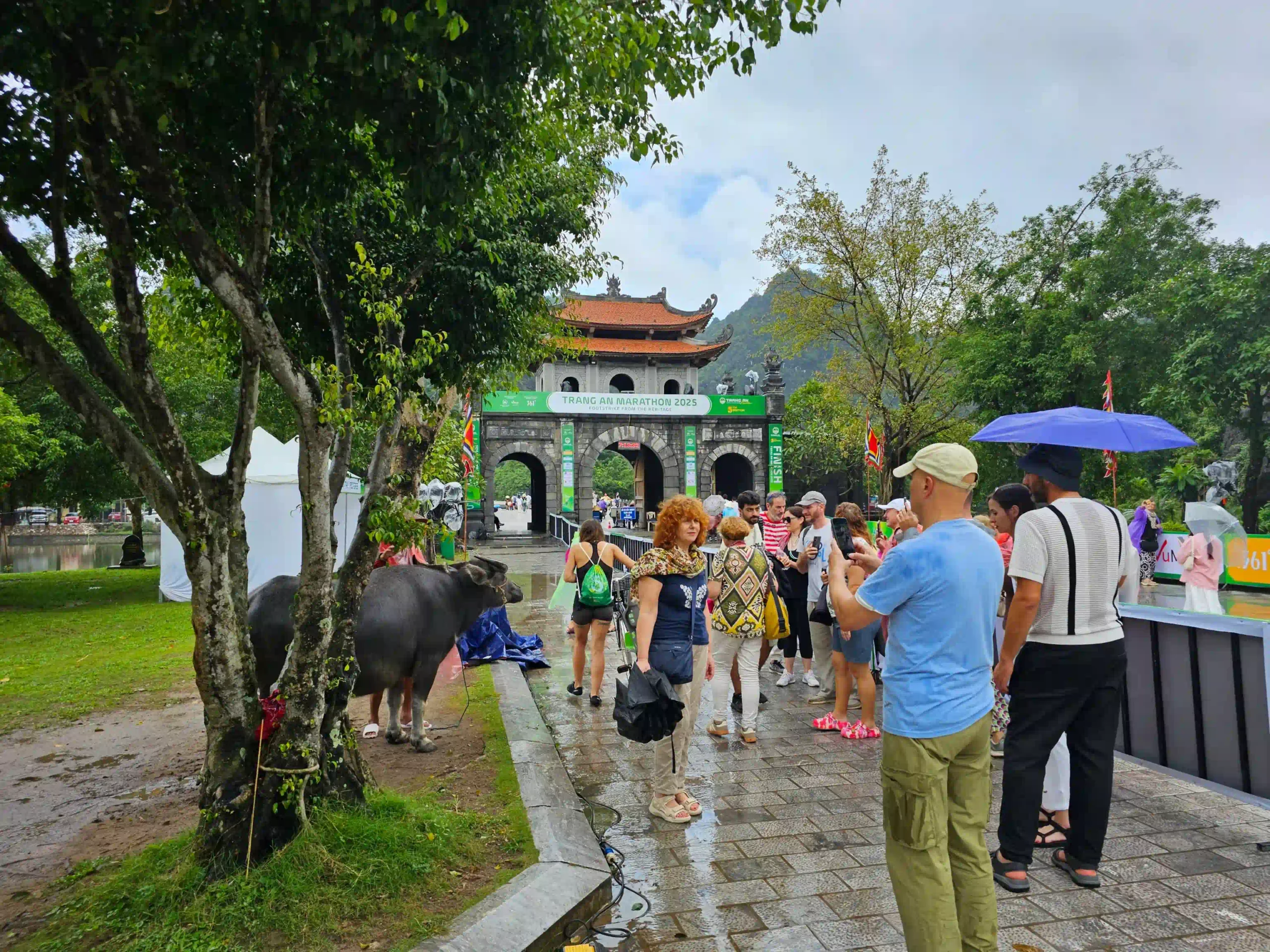
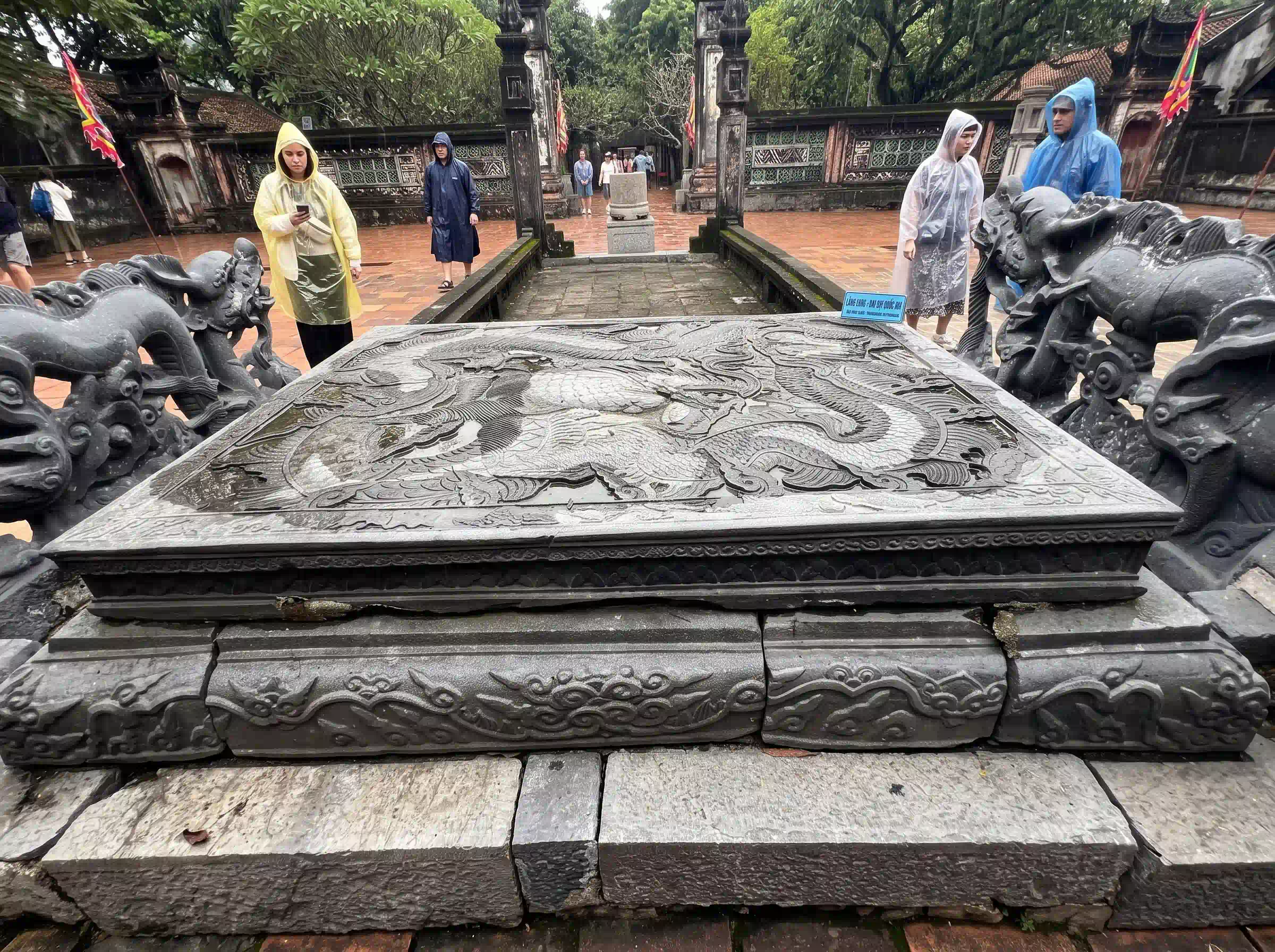
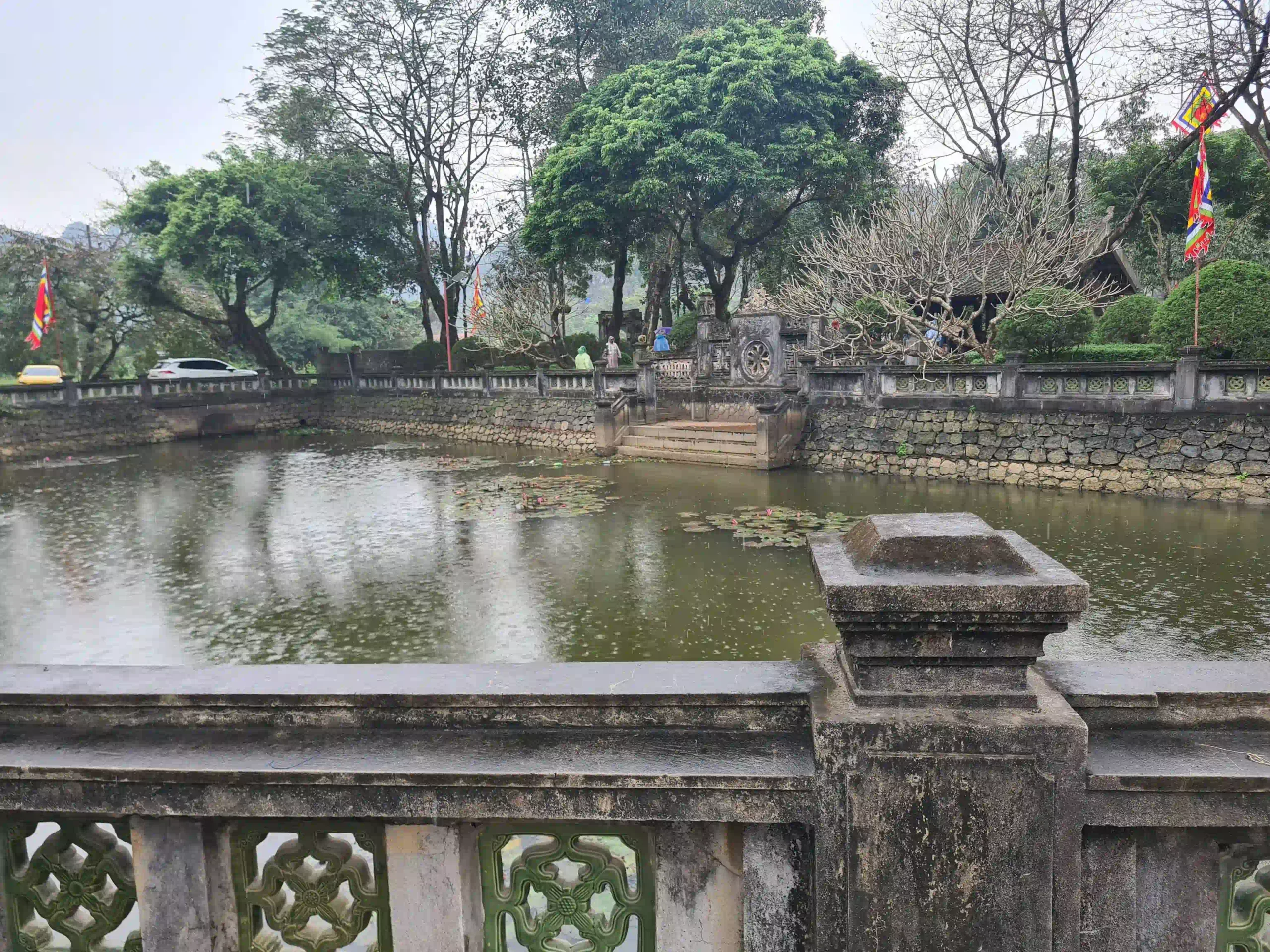
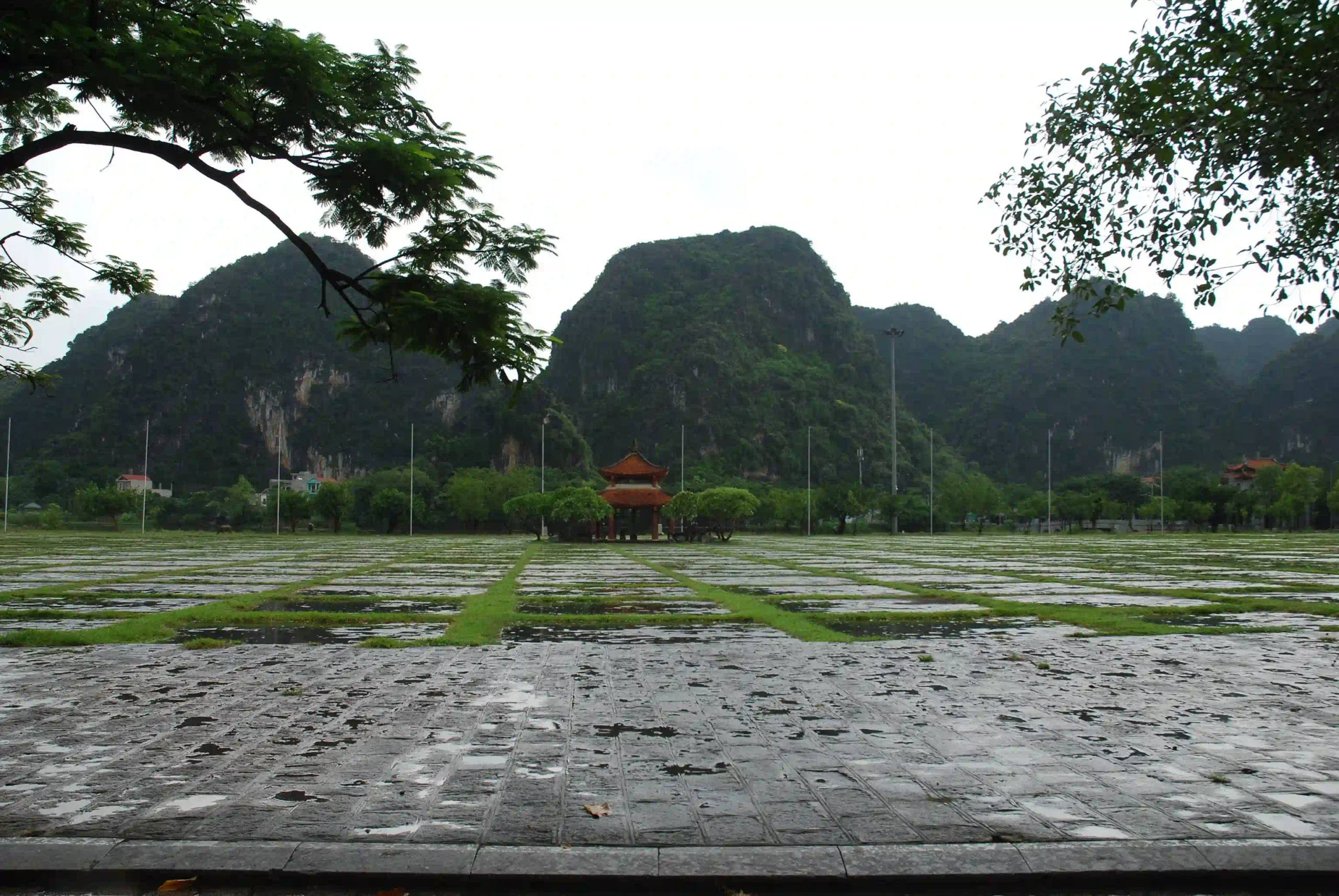
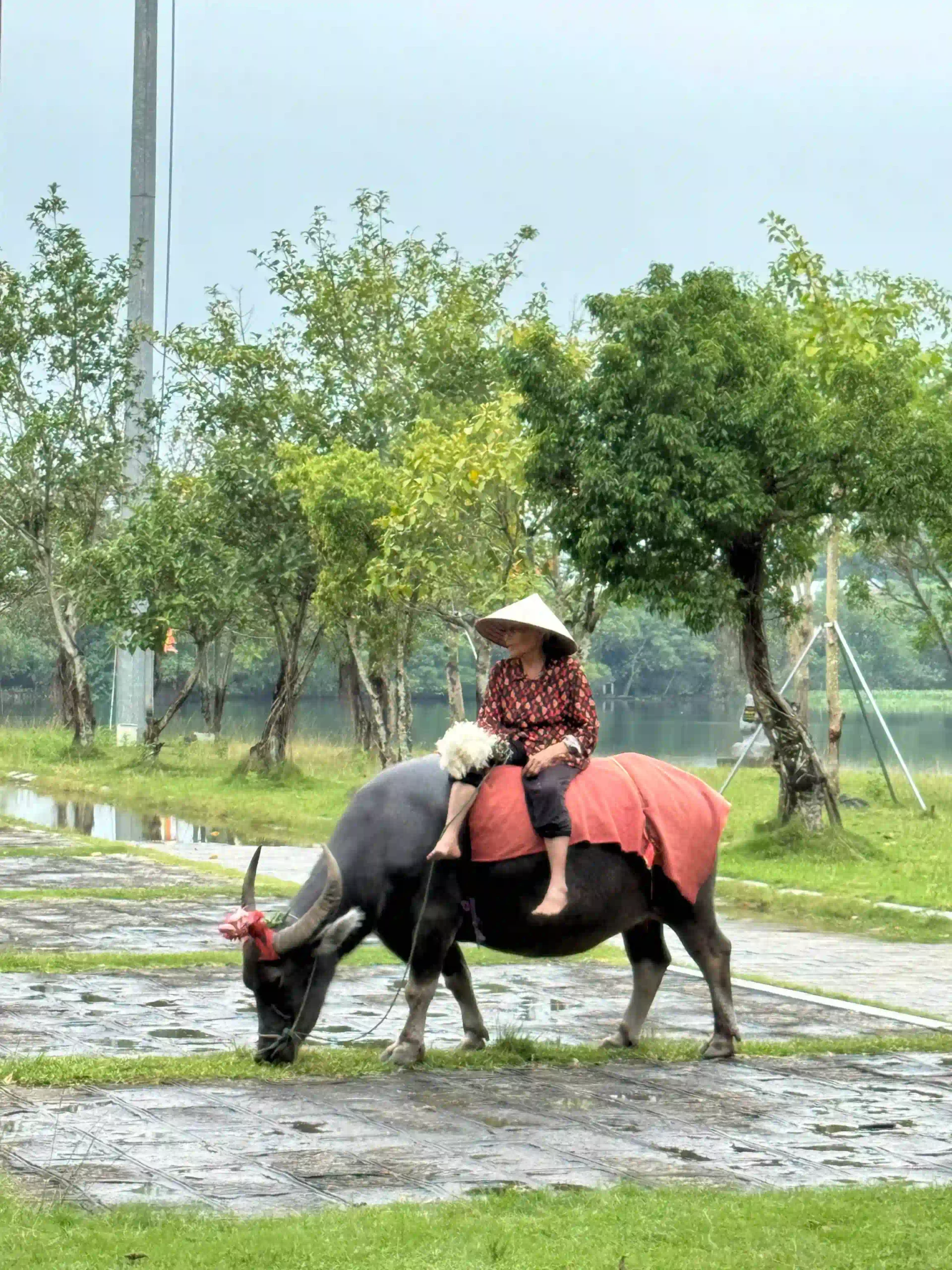
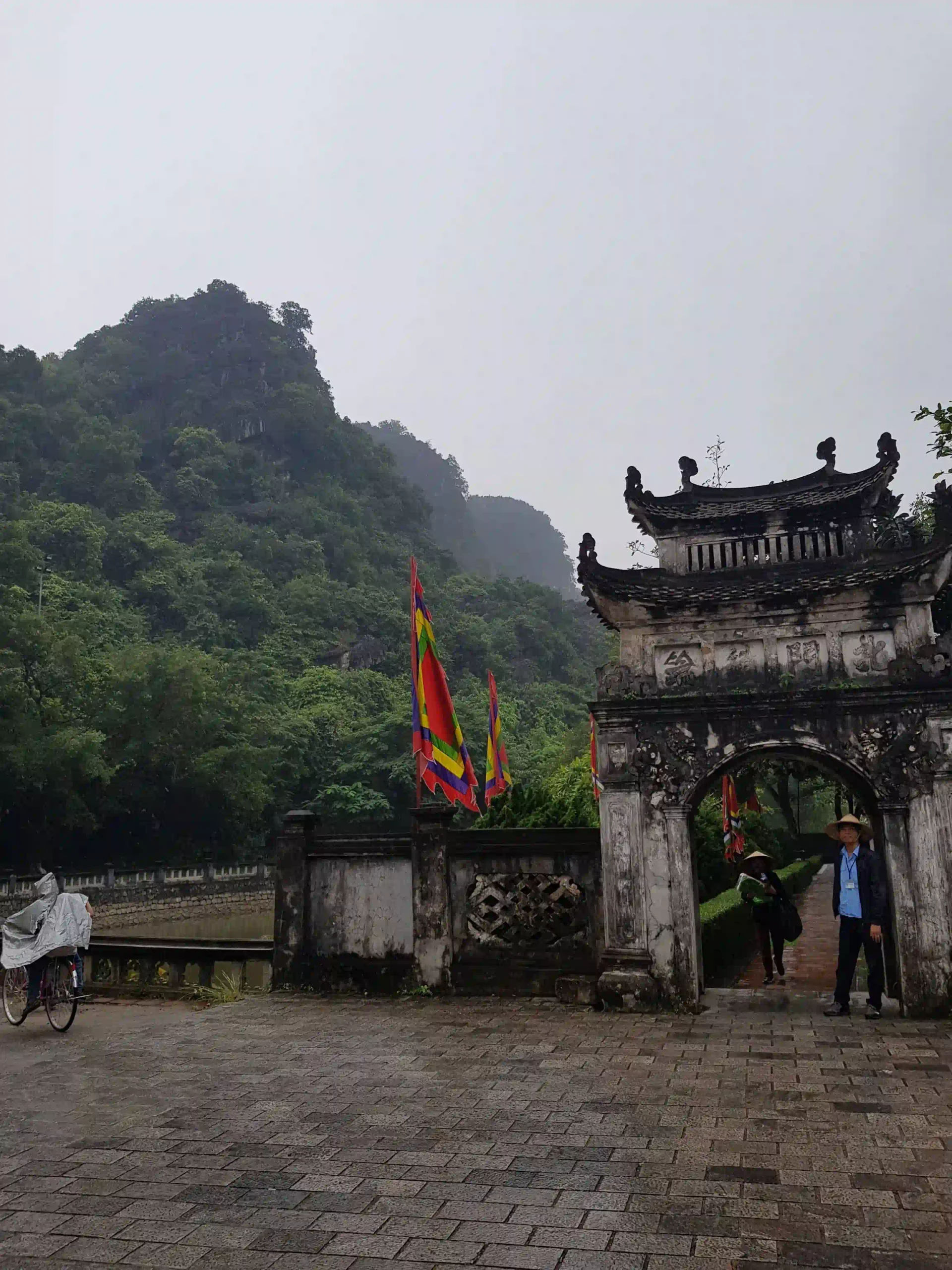
This is also where I’d actively recommend booking a guide, more so on a rain day than a clear one. A good guide manages the pacing around the weather, timing your outdoor moments between the worst of it, in a way that’s harder to replicate wandering on your own with a phone screen getting rained on while you check a map, standing under whatever tree is nearest waiting out a burst a local guide would have simply timed around.
The historical context also matters more here than at some sites, since Hoa Lu’s significance as Vietnam’s first capital isn’t something you pick up just from looking at the architecture without someone explaining what you’re actually looking at.
Most organized day tours already fold Hoa Lu in alongside Trang An, so if you’re on one of those, this part of the day is already planned for you regardless of weather.
4. Shift the Cooking Class Indoors
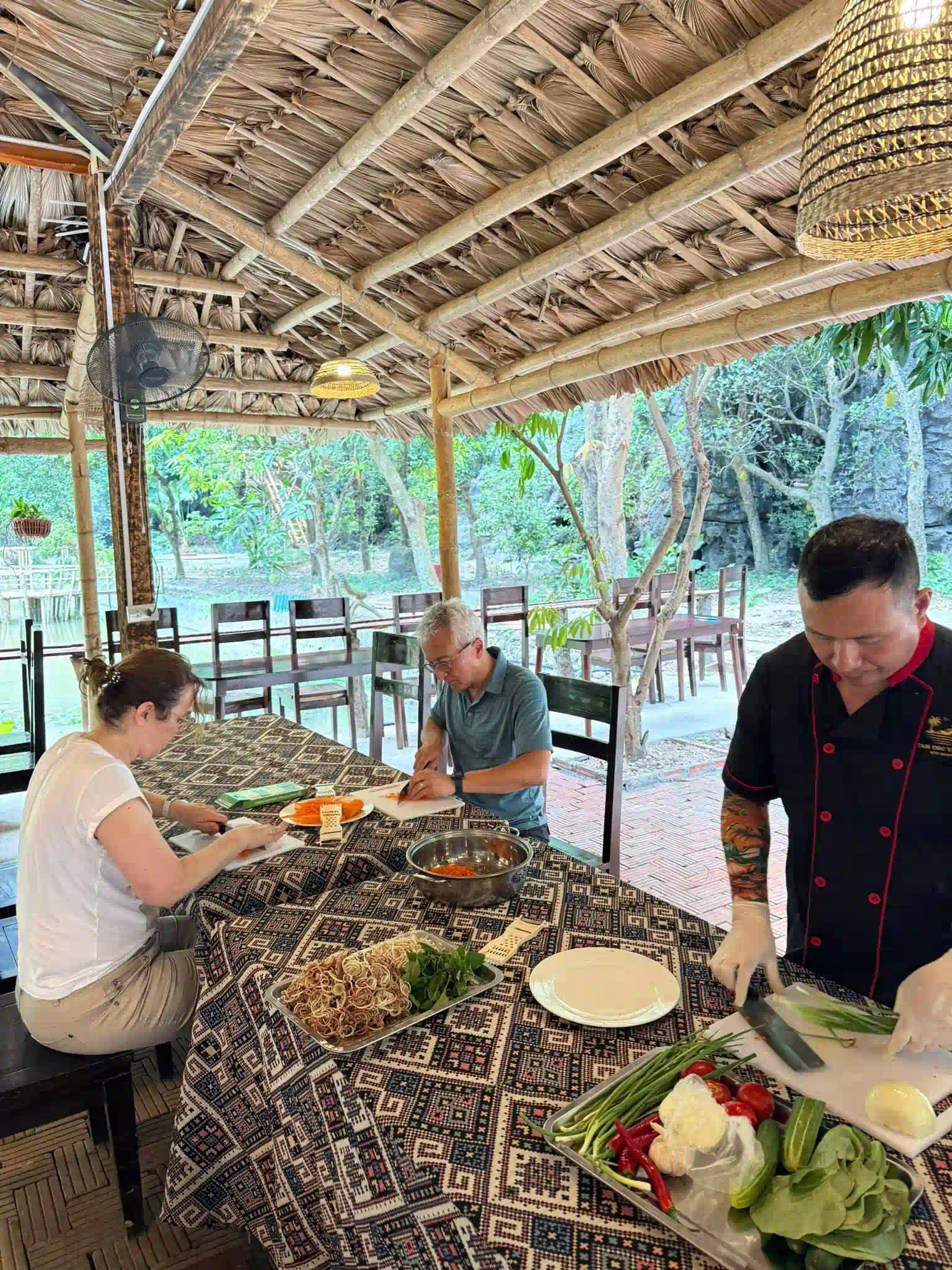
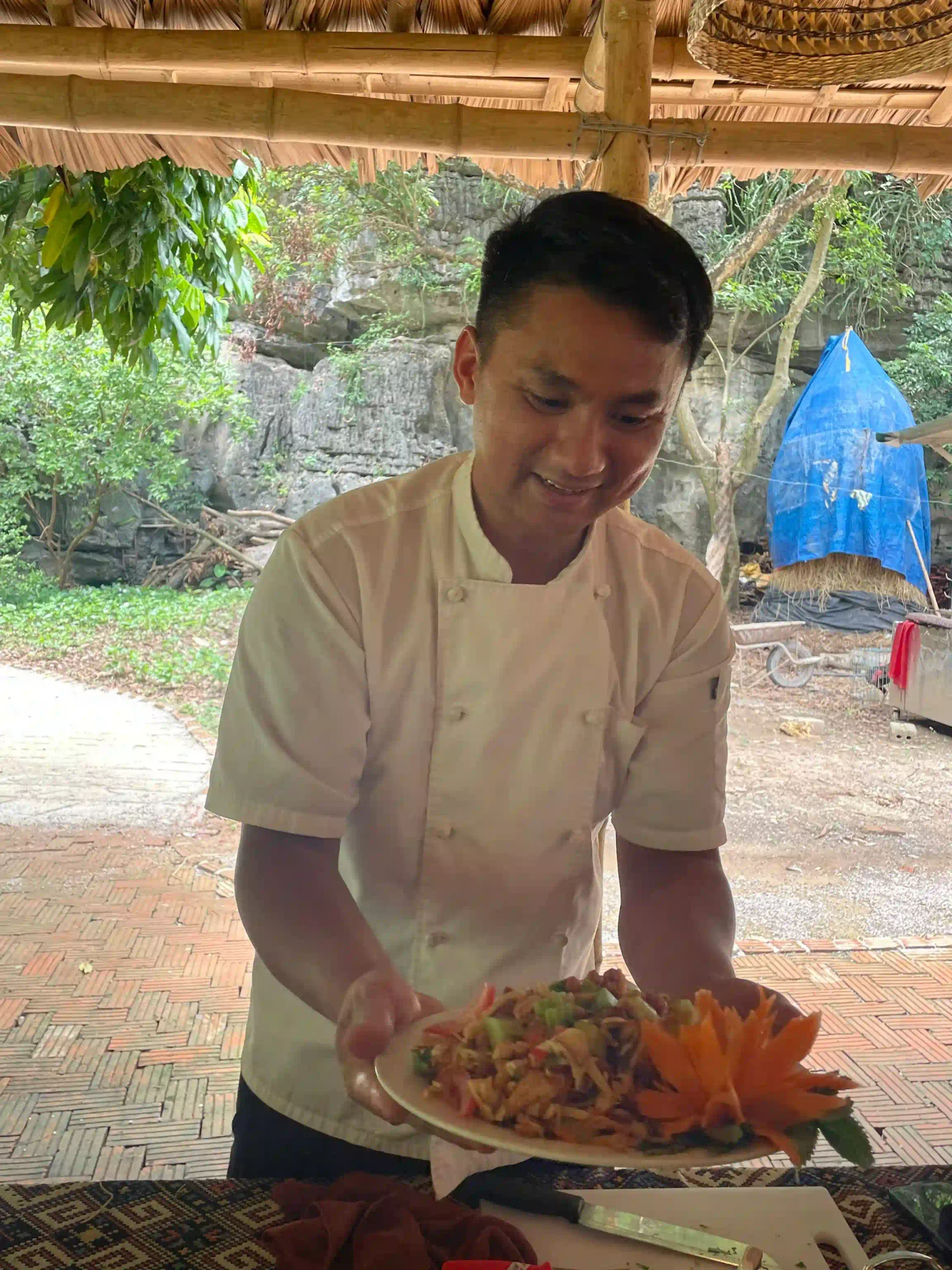
The family-run cooking class near Tam Coc that I’ve covered separately has an outdoor component, typically bamboo-cage fishing or a similar farm activity, that doesn’t work well in heavy rain.
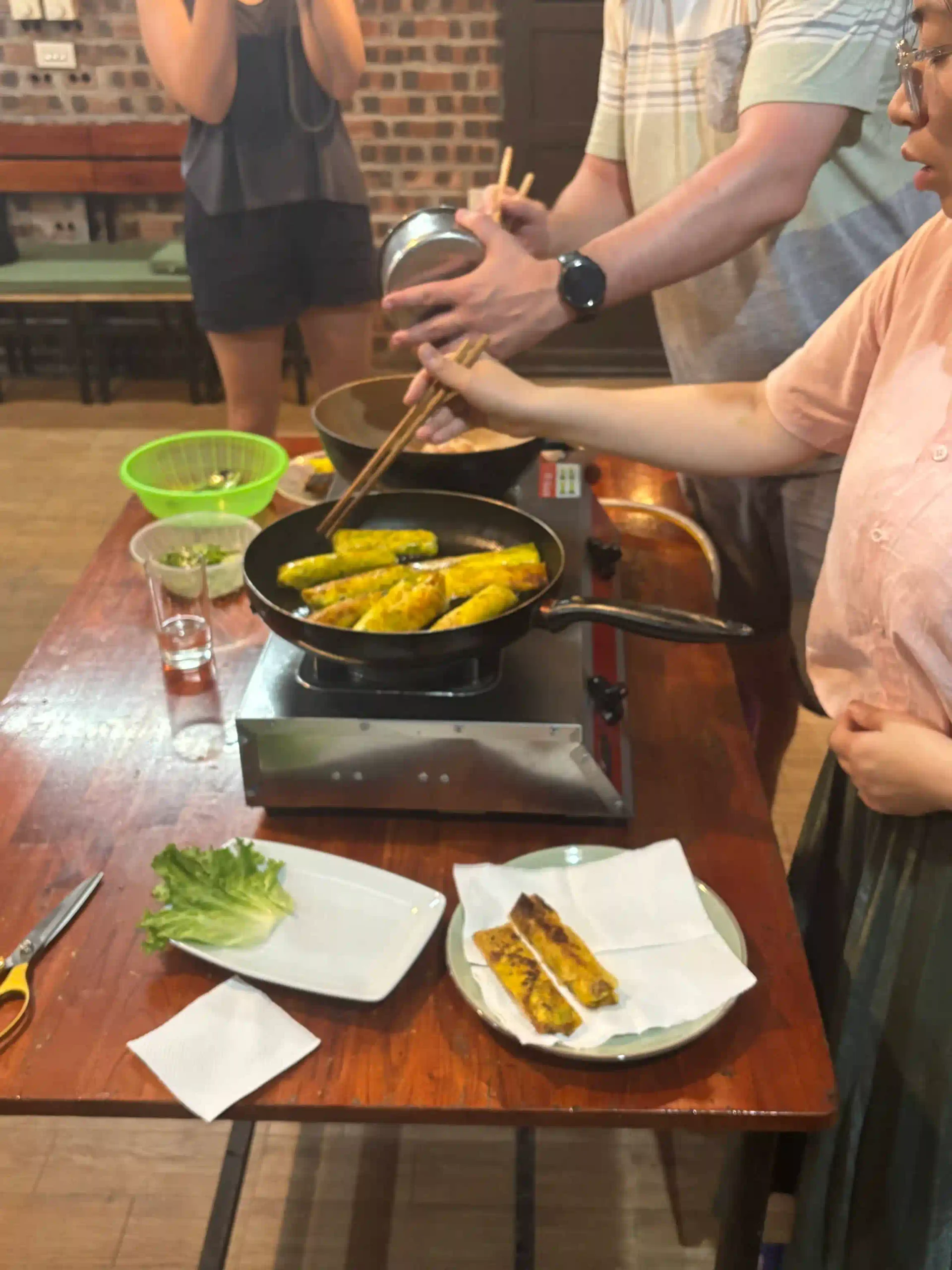
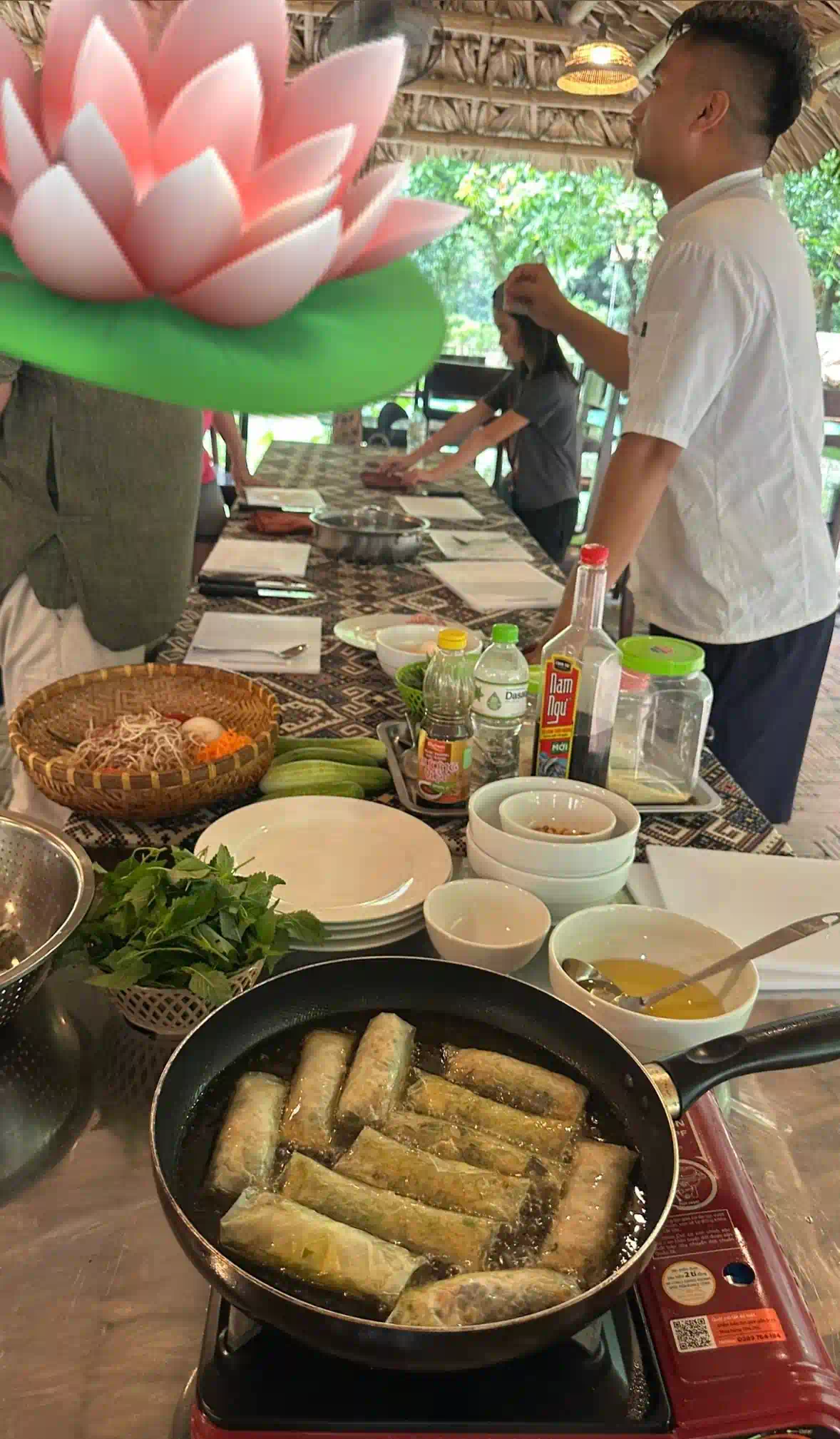
What I’ve found is that good operators simply move the day indoors when the weather doesn’t cooperate: the cooking portion happens under the same thatched or covered kitchen area regardless of what’s happening outside, and the family adapts the morning activity to something that doesn’t need dry ground, sometimes shifting straight to food prep and letting you spend more time on technique instead.
More time on the spring roll technique, more chance to ask questions, and the family seemed just as relaxed about the change of plan as I was. There’s something about being under a covered kitchen area, rain coming down just past the edge of the roof, that makes the whole thing feel more intimate than it might on a dry, sunny day with people moving in and out constantly.
If you’ve got a cooking class booked and the forecast looks rough, message the operator directly rather than assuming it’s cancelled. In my experience these small, flexible operations are generally better at adapting to weather than a bigger tour with a fixed script, precisely because there’s no large group logistics to reshuffle.



5. Slow the Day Down
Sometimes the actual right answer to a genuinely wet day is not fighting it. Ninh Binh has enough of a slow, rural pace built into its identity that a rain day spent doing less isn’t a wasted day, it’s arguably a more honest version of what a countryside stay is supposed to feel like.
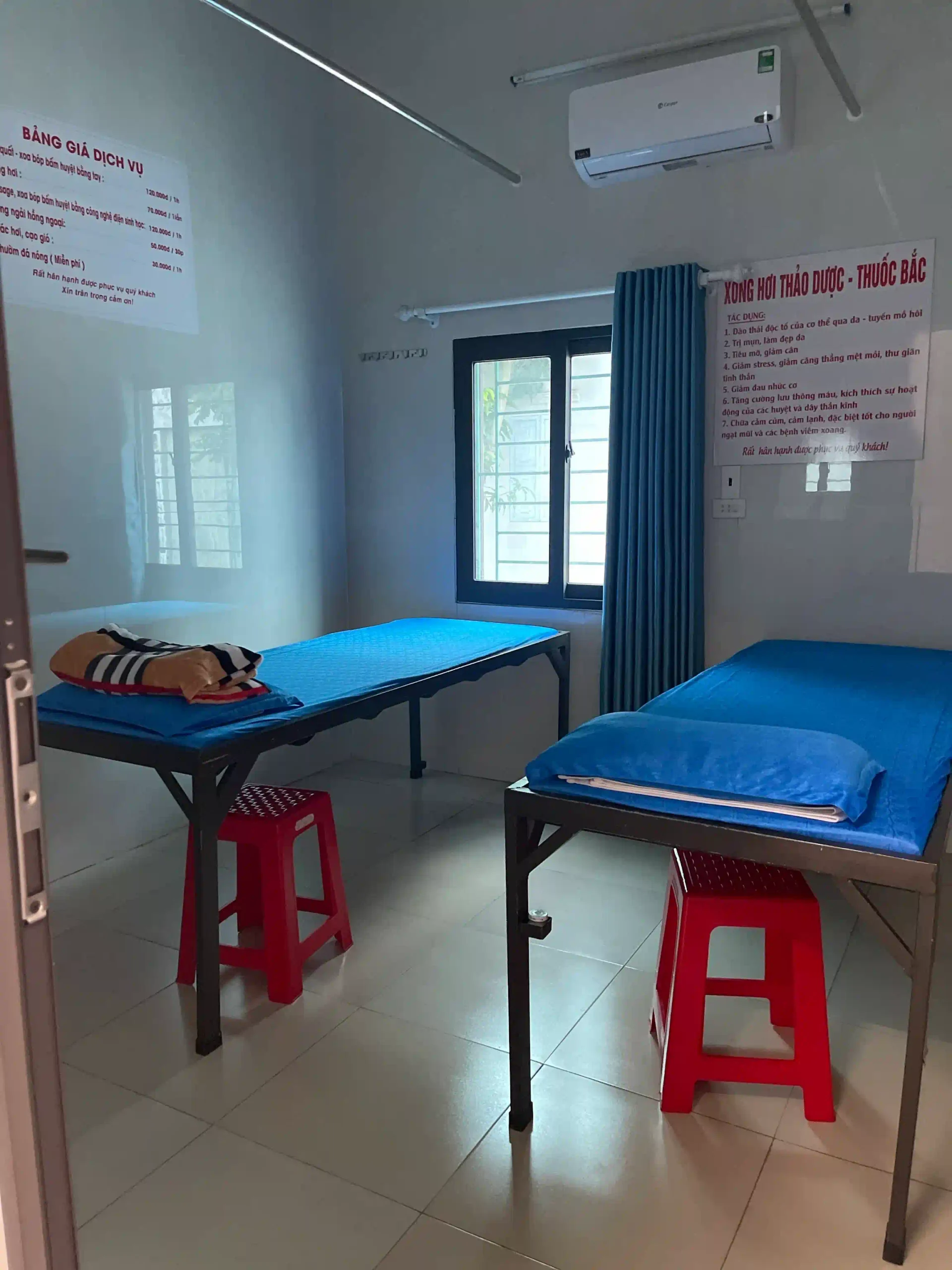
A massage at your homestay is a good use of a grey afternoon, especially paired with the pool if the property has one and the water’s still warm enough to be pleasant in the rain. There’s a particular pleasure in floating in a warm pool while rain patters on the water around you that a clear, sunny pool day doesn’t quite match, half novelty, half genuine relaxation.
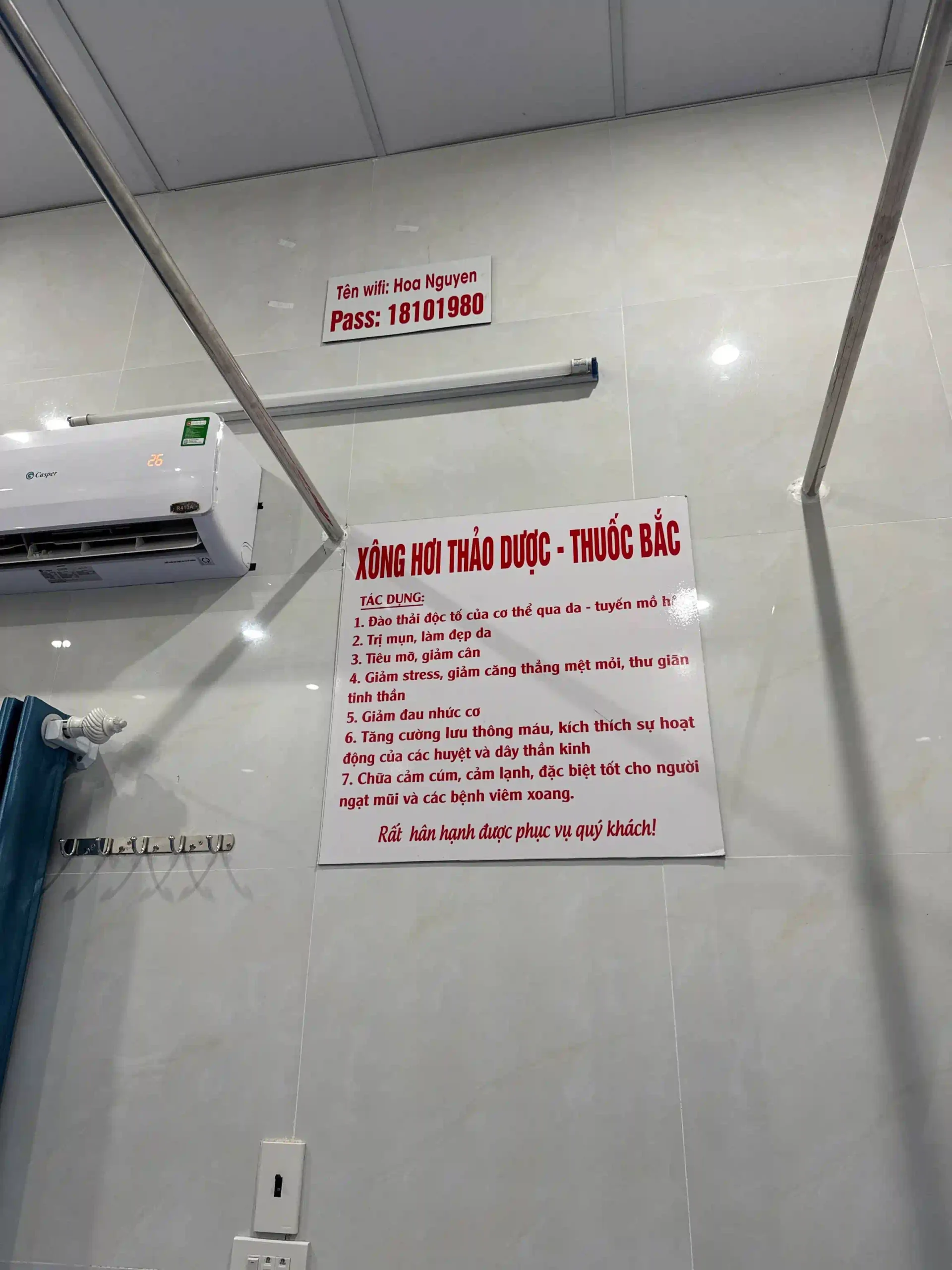
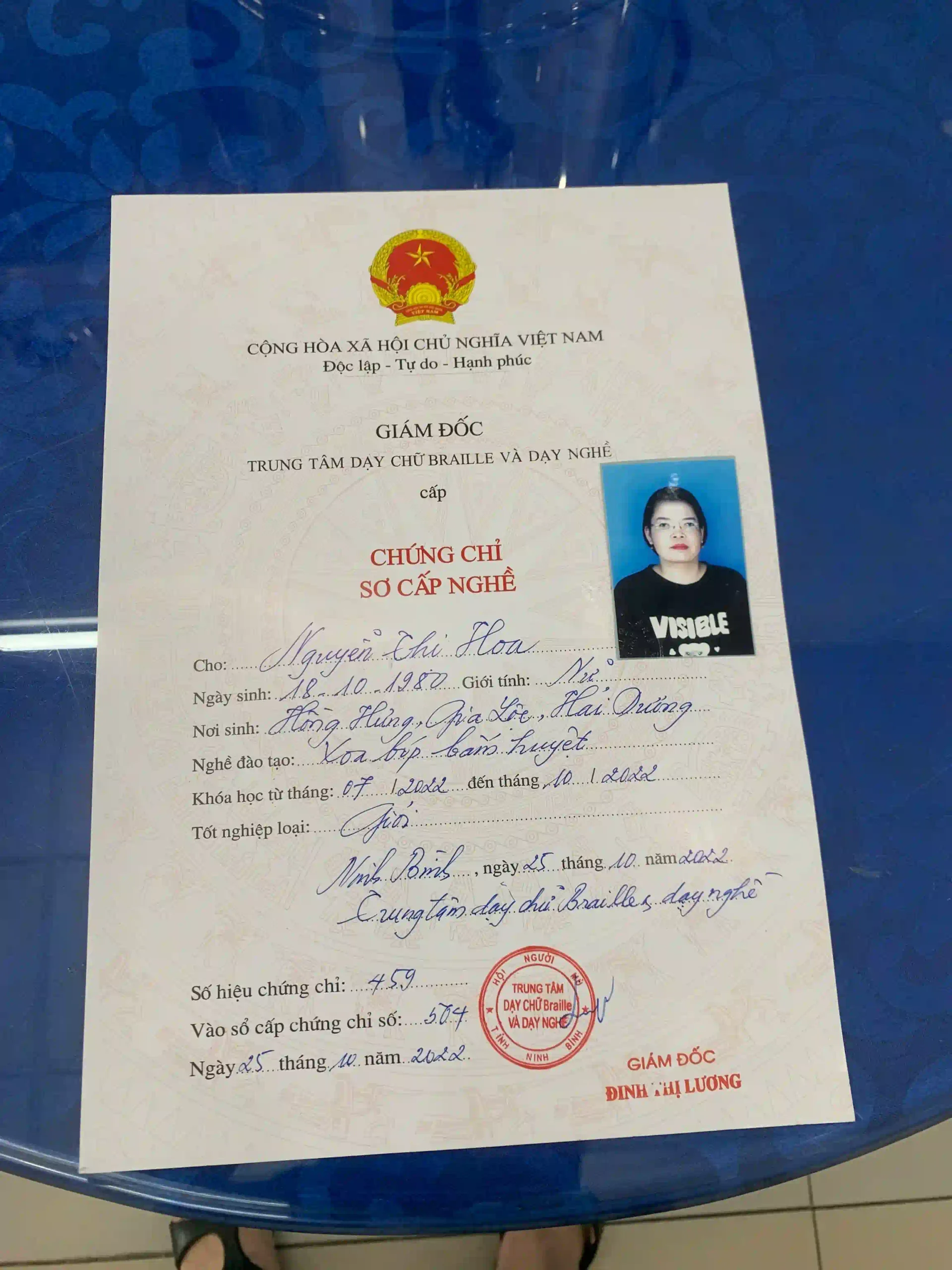
Several homestays in the Tam Coc area also have a genuinely good local massage option nearby: Blind massage, a well-regarded spot known specifically for employing blind massage therapists, which adds a real charitable dimension to what’s otherwise just a practical rain-day activity. I went once purely and came out having spent an hour thinking about something other than the weather forecast.
A slow coffee at one of the cafes overlooking the rice paddies works too, and honestly, watching a downpour move across the karst valley from under a covered terrace with a coffee in hand is one of the better ways to experience the landscape.
The mist that settles into the valleys during and just after rain gives the mountains a layered, almost theatrical look that a clear day doesn’t produce, peaks fading into grey at different distances rather than the flat, uniform green you get under full sun.

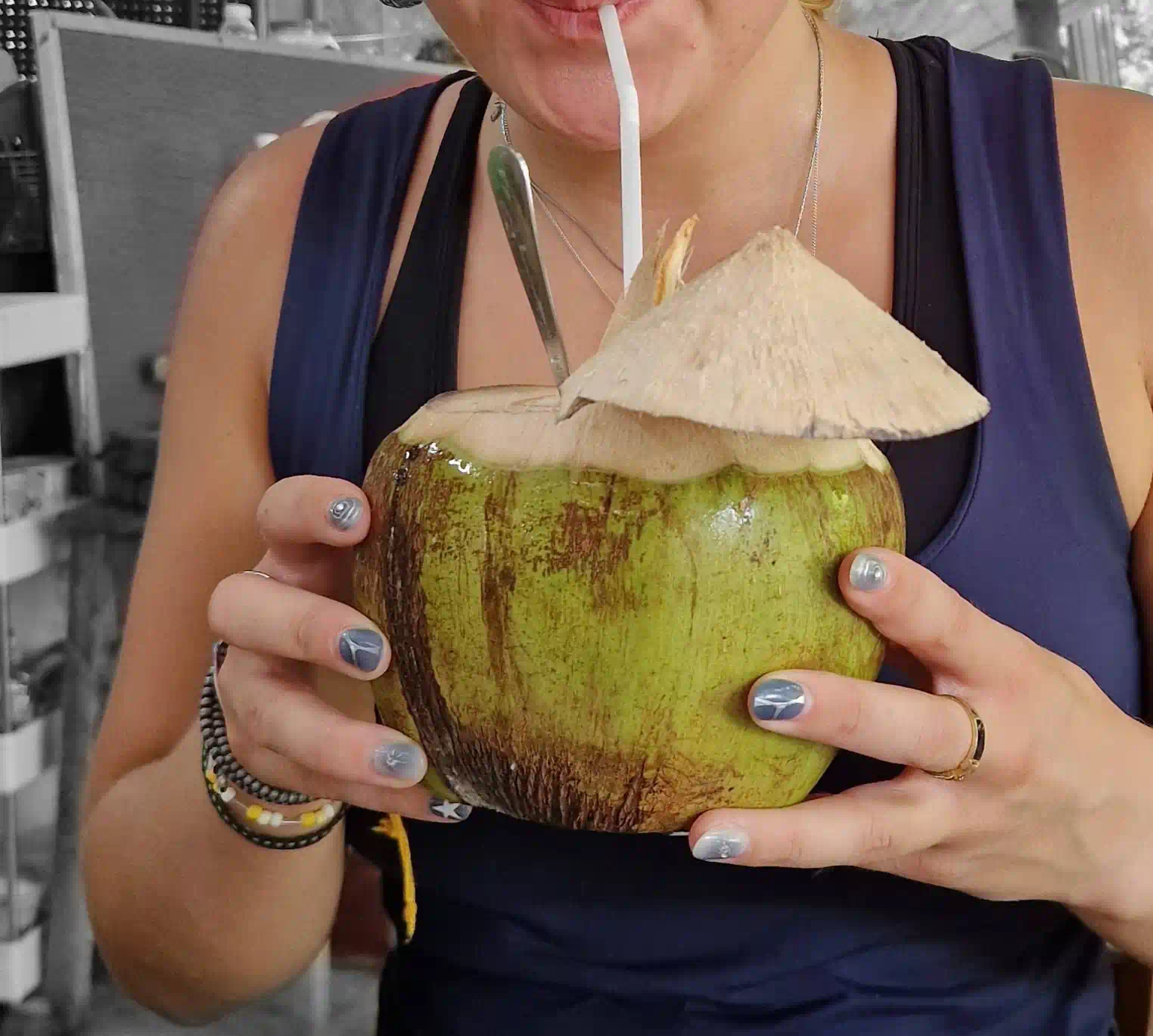
The local market in Ninh Binh town, mostly covered, gives you something to browse and a genuine slice of daily life that a sunny day sometimes crowds out with tourist traffic. Vendors under the covered stalls go about their normal business regardless of the weather outside, and wandering through with no particular agenda, just looking at what’s actually sold and eaten here day to day, is a different kind of Ninh Binh experience than the boat-tour-and-cave circuit most visitors stick to.
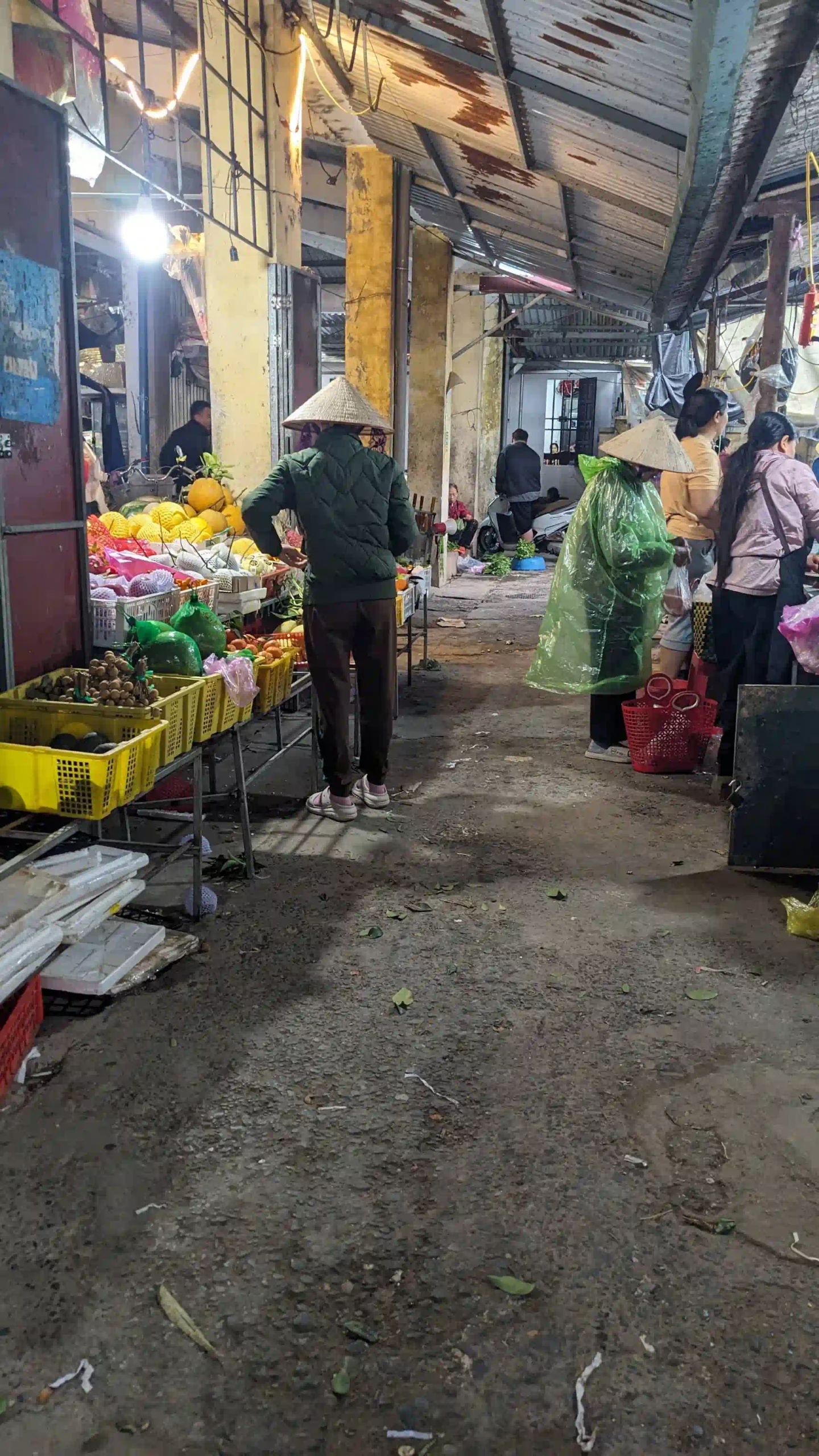
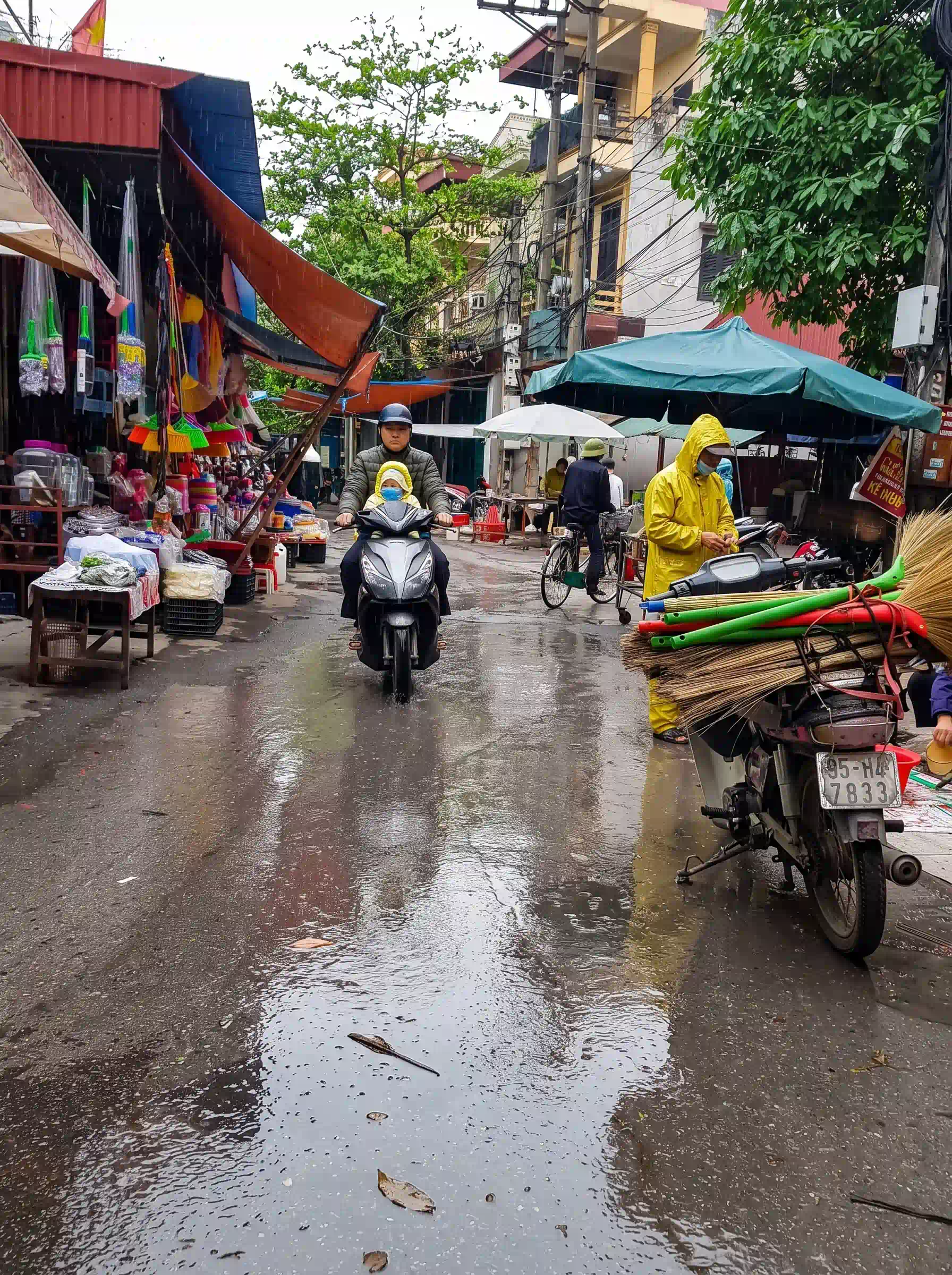
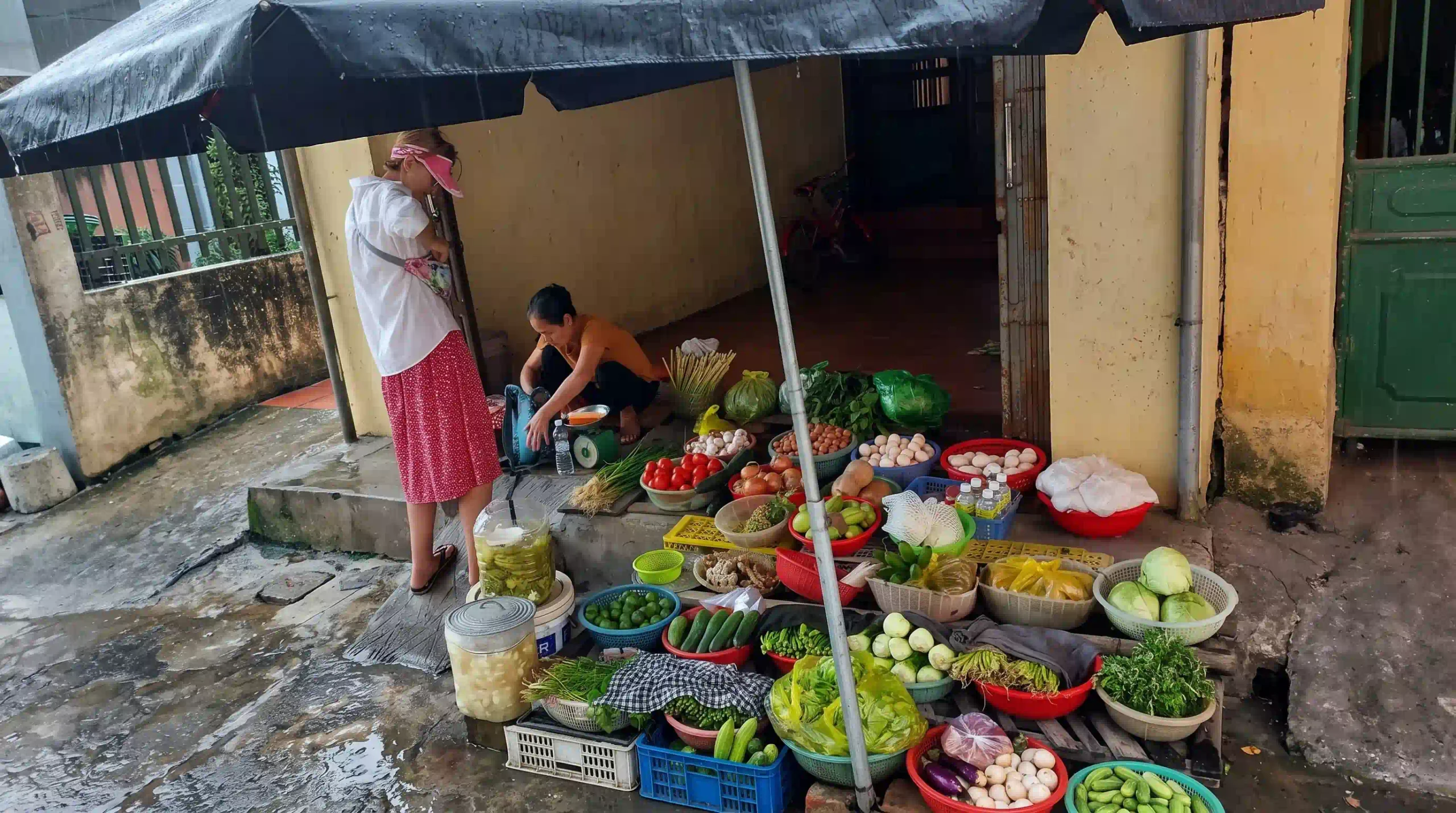
None of this requires planning or booking ahead, which is part of the appeal on a day when the weather has already thrown off whatever schedule you had in mind. A rain day built around a massage, a slow coffee, and a wander through the market can end up being one of the more memorable days of a Ninh Binh trip precisely because it isn’t trying to check off a list of famous sights.
What to Skip When It’s Actually Pouring
Mua Cave’s 500 steps
The stone steps get genuinely slippery in rain, and this is a climb where a fall has real consequences given the height and the uneven, worn surface of some sections. In a genuine downpour, save it for a drier window rather than pushing through.
Cycling the rice paddy routes
Delightful in a light drizzle if you don’t mind getting a bit damp, genuinely unpleasant and occasionally unsafe in a proper downpour, since the dirt paths turn to mud fast and visibility on a bike in heavy rain isn’t great.
I’ve done a light-rain ride here that I’d happily repeat, cool air, quiet paths, that specific smell of rain on dry earth that shows up the moment a shower starts.
A heavy downpour ride is a different, much less pleasant experience, mud flicking up the back of your legs and barely any visibility past a few meters.
What to Pack for a Wet Day
A poncho works better than an umbrella almost everywhere on this list, since you’ll often have your hands full with a phone, a camera, or a bike’s handlebars, and an umbrella is useless on an open boat anyway.
Closed shoes with actual grip matter more than people expect, flip-flops on wet stone steps or a muddy path are a genuine hazard, not just an inconvenience.
A dry bag or a simple ziplock for your phone is worth the two dollars it costs, since Ninh Binh’s downpours are the kind that soak through a regular bag pocket fast. I learned this one the expensive way, a phone that spent a few minutes in a bag pocket during a sudden burst and came out working but with a fogged camera lens for the rest of the day.
A light change of clothes, kept dry in your day bag rather than what you’re wearing, is worth the extra weight if you’re planning to do the boat tour and then move on to something else afterward. Sitting in wet clothes for the rest of a day, even in warm weather, gets uncomfortable faster than you’d expect.
A Word on Whether to Avoid the Rainy Season Entirely
Worth addressing directly since it’s the question underneath most of this.
The trade-off is real: more risk of a disrupted afternoon, but also lower prices, thinner crowds, and a genuinely different, moodier version of the landscape that a lot of dry-season visitors never see.
Unless your trip is short enough that losing even one afternoon to weather would genuinely wreck your plans, it’s not the write-off some guides make it sound like.
If you’ve found another way to enjoy Ninh Binh on rainy days that held up on a genuinely wet trip, I’d like to hear about it, this is one of those guides that only gets better with more people’s actual wet-weather experience added to it. For the fuller planning picture beyond just weather, the Ninh Binh itinerary guide covers how many days makes sense for your trip overall.












 Tiếng Việt
 한국어
한국어 中文 (中国)
 日本語
日本語 ไทย
ไทย Deutsch
 Español
 Destinations
 Instagram
 Facebook
 X (Twitter)
 Threads
 Tiktok