









 Ha Giang
 Hanoi
Hanoi Ho Chi Minh City
 Ha Long
 Sapa
Sapa Mekong Delta
 Da Nang
 Hue
Hue Hoi An
 Ninh Binh
 Da Lat
 Nha Trang
 Phan Thiet
 Phu Quoc
 Quang Binh
 Quy Nhon
 Vung Tau
 Thai Nguyen

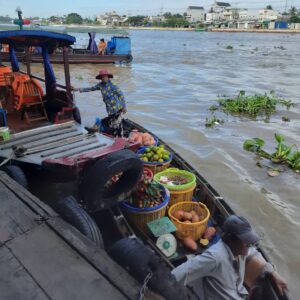



The idea of a bustling market on the water, with boats overflowing with colourful produce and the smell of noodle soup wafting across the river at sunrise, is what draws most people to Vietnam’s Mekong Delta.
And the star of this show is the Cai Rang Floating Market. Tour companies in Ho Chi Minh City and Can Tho sell this dream in neat, tidy packages.
But if you’re the kind of traveler who cringes at the thought of a tour guide with a flag and a fixed schedule, you’re probably asking the right question: can I do this myself?
Yes. And you absolutely should. Going to the Cai Rang Floating Market on your own is not just cheaper and more flexible, it’s the only way to get a glimpse of the real thing instead of the sanitized show put on for tour buses.
- Planning to visit Cai Rang Floating Market without a tour? This is the only guide you need. I break down the 4:45 AM start, how to negotiate a boat at Ninh Kieu Wharf for the right price (300k-500k VND), and why a floating bowl of hủ tiếu is mandatory.
- 1. Timing is everything. Do not get this wrong. Your entire experience hinges on getting to the market at its peak.
- 2. Getting Your Own Boat: The How, Where, and What.
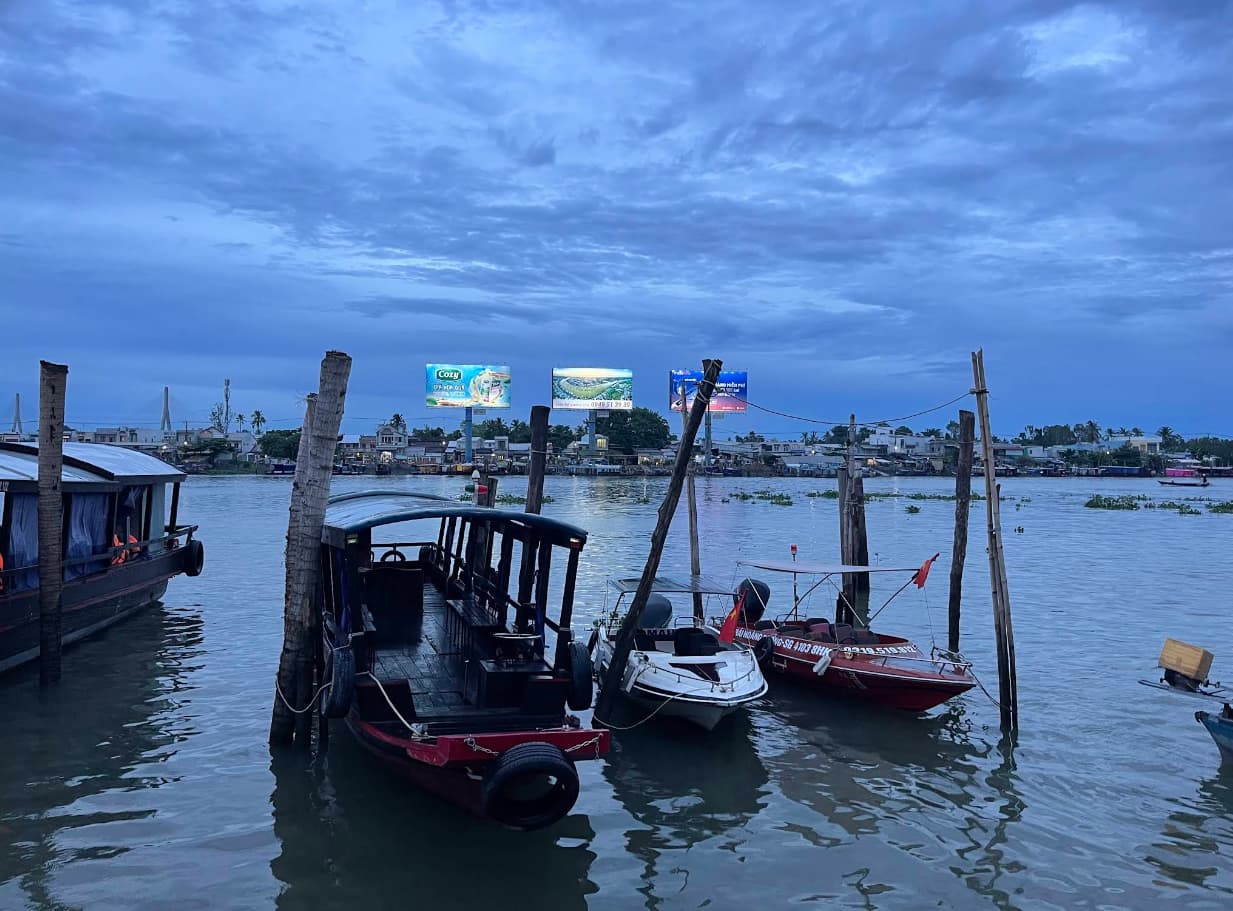
- – Where to go: Head straight to the main pier, Ninh Kieu Wharf (Bến Ninh Kiều), in Can Tho city. Even in the pre-dawn darkness, this is the main hub.
- – What to look for: You will be approached by boat operators. Politely ignore the offers for large, covered boats. You want a small, private, wooden boat (a sampan). This allows you to get close to the action and have a more intimate experience.
- 3. The Price Negotiation: Your Playbook to Not Getting Ripped Off. This is the most important conversation you’ll have. Be clear and confident.
- – The Target Price: For a private sampan that takes you only to the Cai Rang Floating Market for a duration of 2.5 to 3 hours, a fair price is between 300,000 and 500,000 VND.
- – Crucial Clarification: This price is PER BOAT, not per person. Confirm this clearly.
- – Define the Itinerary: Be firm that you only want to see the market. Use the phrase: “Chỉ đi chợ nổi Cái Răng” (Only go to Cai Rang Floating Market). If you don’t want the optional stops, say no from the start.
- – The Tactic: Once you agree on a number, show it to the driver on your phone’s calculator to avoid any language barrier issues. If the price is too high, be prepared to politely walk away; another offer will likely appear quickly.
- 4. The On-Water Experience: What to Expect and What to Eat.
- – How the Market Works: This is a wholesale market. Big boats sell in bulk. To see what a boat is selling, look for the tall bamboo pole (cây bẹo) with a sample of their produce hanging from the top.
- – Breakfast is Mandatory: The best part is the food vendors in smaller boats who will pull up alongside you. Your driver can help you flag one down.
- + Noodle Soup: Order a bowl of hủ tiếu or bún riêu. It will cost around 30,000 – 40,000 VND and will be handed to you directly in your boat.
- + Coffee: Don’t miss out on a strong, sweet Vietnamese iced coffee (cà phê sữa đá).
- + Fruit: Look for the pineapple boat. For about 20,000 VND, they will cut up a fresh pineapple for you on the spot.
- 5. The “Optional Side Quests”: Noodle Factories & Fruit Gardens.
- – Your driver will almost certainly offer to take you to a nearby noodle factory or fruit garden after the market.
- – These are tourist-focused stops. They can be mildly interesting but are designed to get you to buy things. It is perfectly acceptable to politely decline if you are not interested. A simple “Không, cảm ơn” (No, thank you) is all you need to say.
- 6. Final Quick Tips for the Trip:
- – Bring Cash: Everything is paid for in cash (VND). Make sure you have small notes for food and drinks.
- – What to Wear/Bring: Light clothing, a hat, and sunscreen are essential as the sun gets intense quickly. A bottle of water is also a good idea.
The Problem with the Packaged Tour Experience
I have nothing against organized tours, they’re necessary. But for the Cai Rang Floating Market, they almost guarantee you a lesser experience.

The big tour buses from Ho Chi Minh City are on a schedule that doesn’t care about the market’s rhythm. They roll into Can Tho mid-morning, bundle you onto a big, loud boat with 30 other people, and motor you out to see the last dregs of the market as it’s packing up.
You’re kept at a distance, a spectator watching from a floating bus. You’re not in it.
When you go yourself, you flip that. You’re on the water when it’s still dark. Your boat is a tiny wooden sampan, low in the water, powered by a sputtering but determined motor.
You can weave through the bigger boats, pull right up to a woman with a giant pot of bubbling broth, and have a real interaction.
You can ask your driver (through gestures, if needed) to just stop for ten minutes so you can watch a watermelon boat unload.
You’re in control. You’re part of the chaos, not just observing it. That’s the whole point.
The Pre-Dawn Mission: Getting Yourself to the Market
First things first, you need to be in Can Tho. Don’t even think about this as a day trip from Ho Chi Minh City, it’s a recipe for misery.
The 3-4 hour bus ride is actually pretty comfortable. Grab a ticket with FUTA (Phuong Trang) or a similar company. Their sleeper buses or “limousine” vans are cheap (around 150,000 VND) and efficient. A huge plus is they usually have free shuttle vans waiting in Can Tho to take you from the main bus station to your hotel. Ask for it. Get a hotel near the riverfront, get a decent night’s sleep, and set your alarm for 4:30 AM.
Yes, 4:30 AM. It hurts, but it’s necessary.
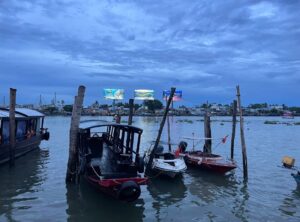
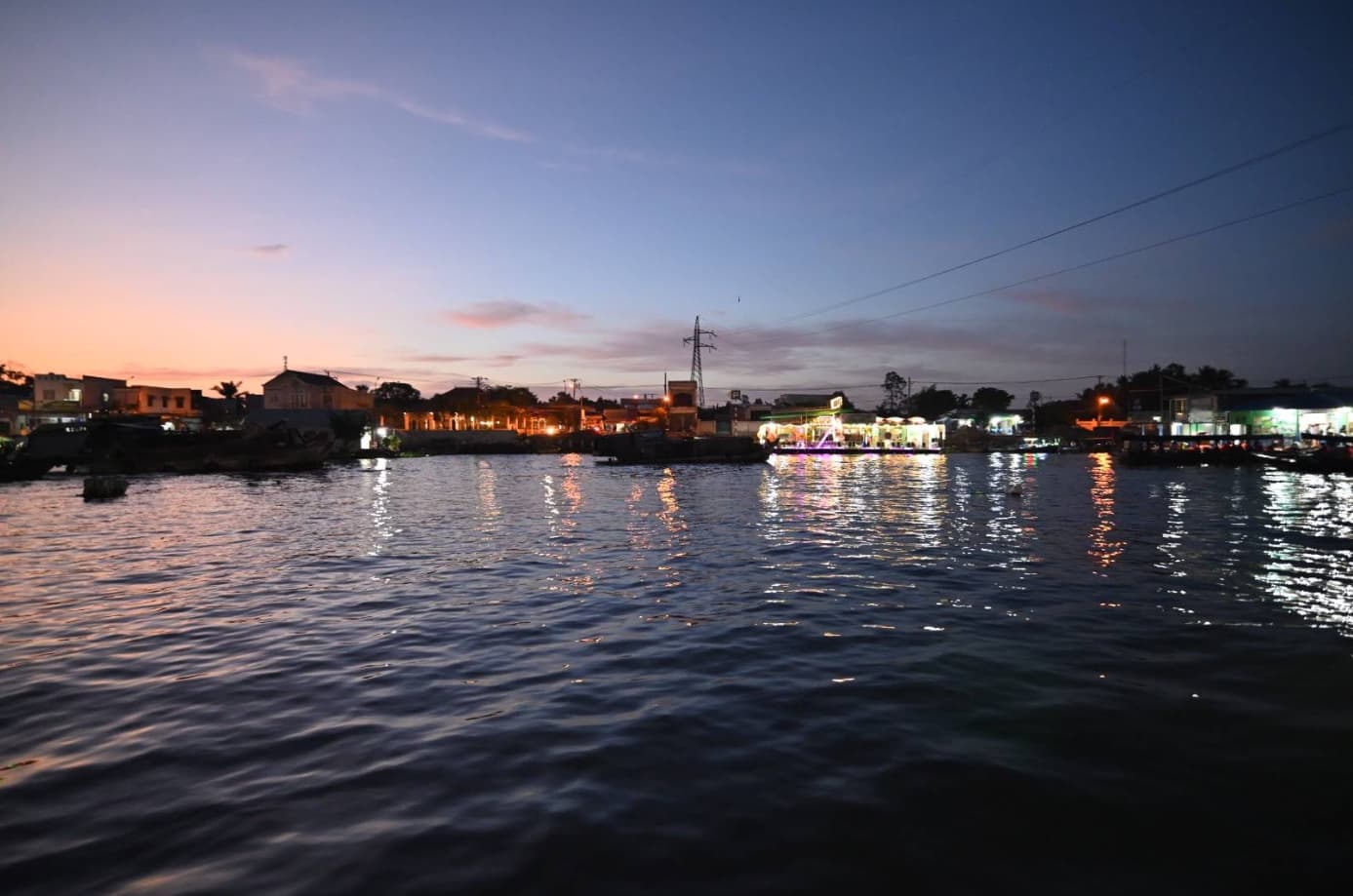
The streets will be dark and surprisingly cool. Grab a ride-hailing bike or car to Ninh Kieu Wharf. This is the main, touristy pier, and even at this hour, it’s the hub. This is where you’ll find your captain.
As you approach the water, women will materialize out of the dim light. “Boat? You want boat? Floating market?” Don’t be intimidated. They’re just trying to make a living.
This is your moment to find a boat. Ignore the bigger, covered boats. You want the small, wooden sampan. It might look less comfortable, but it’s the key to the whole experience.
Now, let’s talk money. This is important.
The price for a Cai Rang Floating Market boat is a moving target. Here’s how to handle it:
- The First Offer is a Test: They might start at 700,000 or 800,000 VND (~$25 – $30 USD). Just smile.
- Know Your Price: A fair price for a private sampan for around 3 hours, to see only the market, is 300,000 to 500,000 VND. This is for the entire boat. If you’re solo, it’s a bit pricey. If you’re a couple or a small group, it’s a bargain.
- Be Specific: This is the most crucial step. They will want to add on a noodle factory tour, a fruit garden tour, maybe a stop at their cousin’s souvenir shop. These trips make them extra money. If you just want the market, make it crystal clear. Use your hands. Say the name: “Chợ nổi Cái Răng.” Then shake your head and say “No noodle factory. No garden.” Specify the time: “Ba tiếng” (3 hours).
- Confirm Everything: Before you go, pull out your phone’s calculator. Type in the final price (e.g., 400,000). Point to the boat. Point to yourself and your friends. Get a nod. This simple act avoids any “misunderstandings” later. If they won’t agree to a fair price, just say thank you and walk away. Someone else will.
Once you’ve settled on a deal, you’ll follow your driver to her boat. The motor will cough to life, and you’ll push off into the dark. The city lights fade, and the real journey to the Mekong Delta floating market begins.
In the Thick of It: What the Cai Rang Floating Market is Actually Like
The 30-minute ride to the market is part of the experience. It’s not silent. The chug of your boat’s motor is the soundtrack.
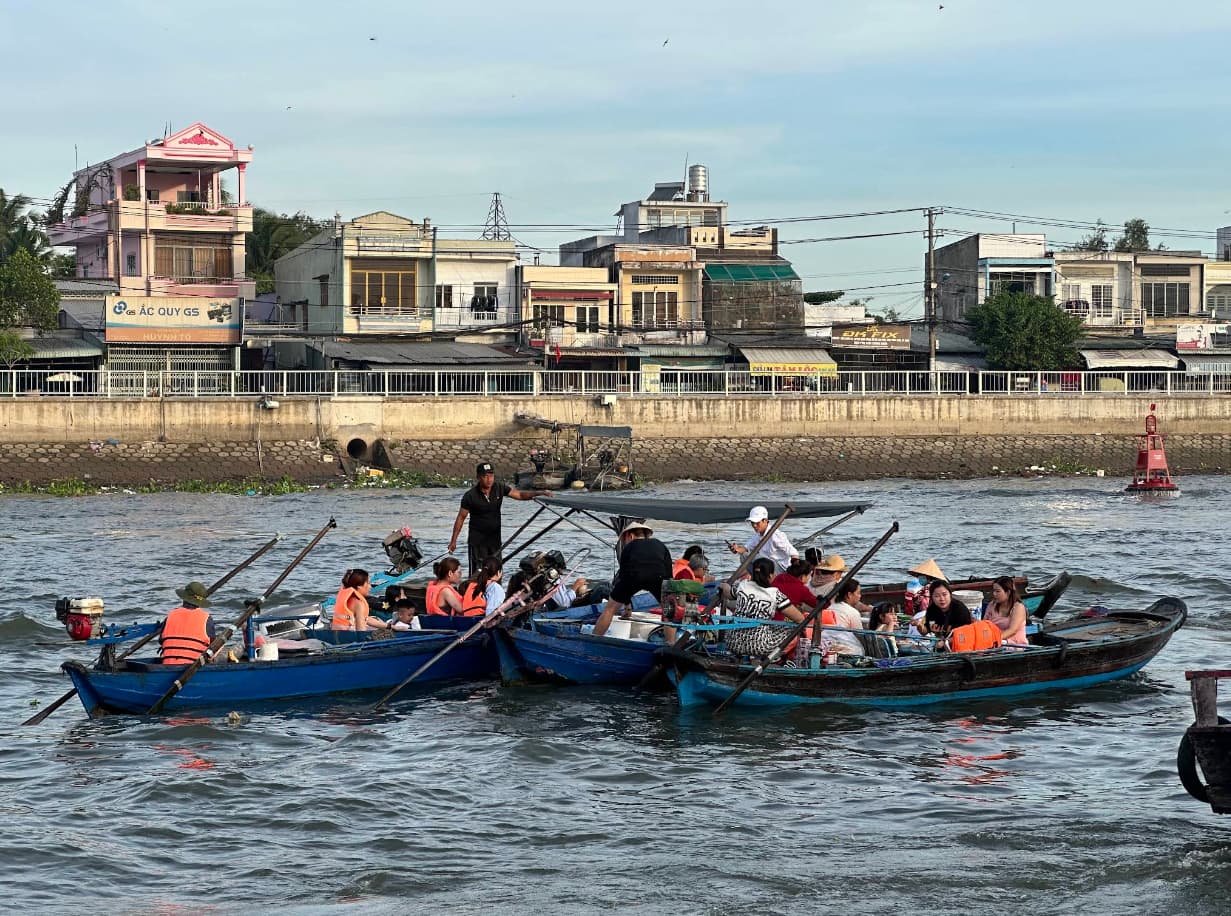
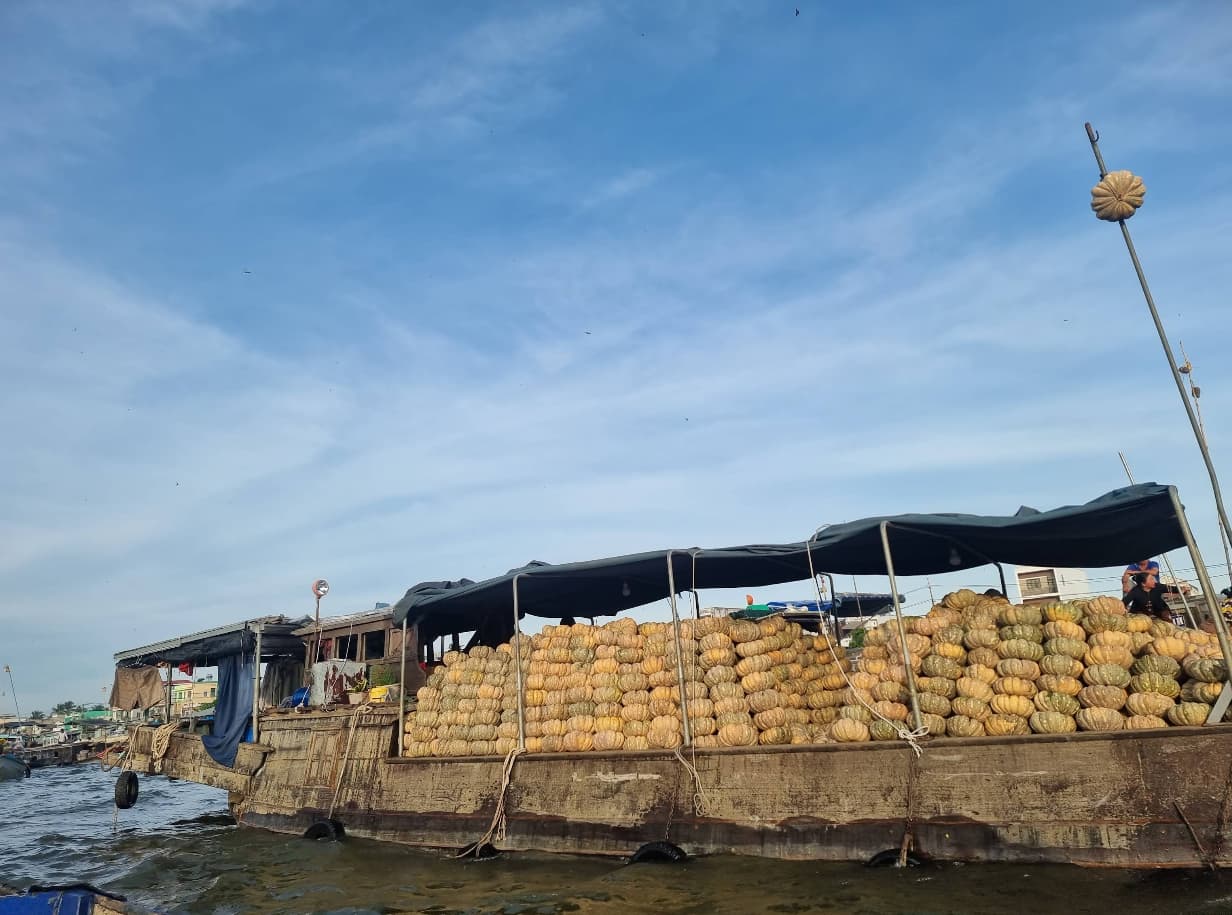
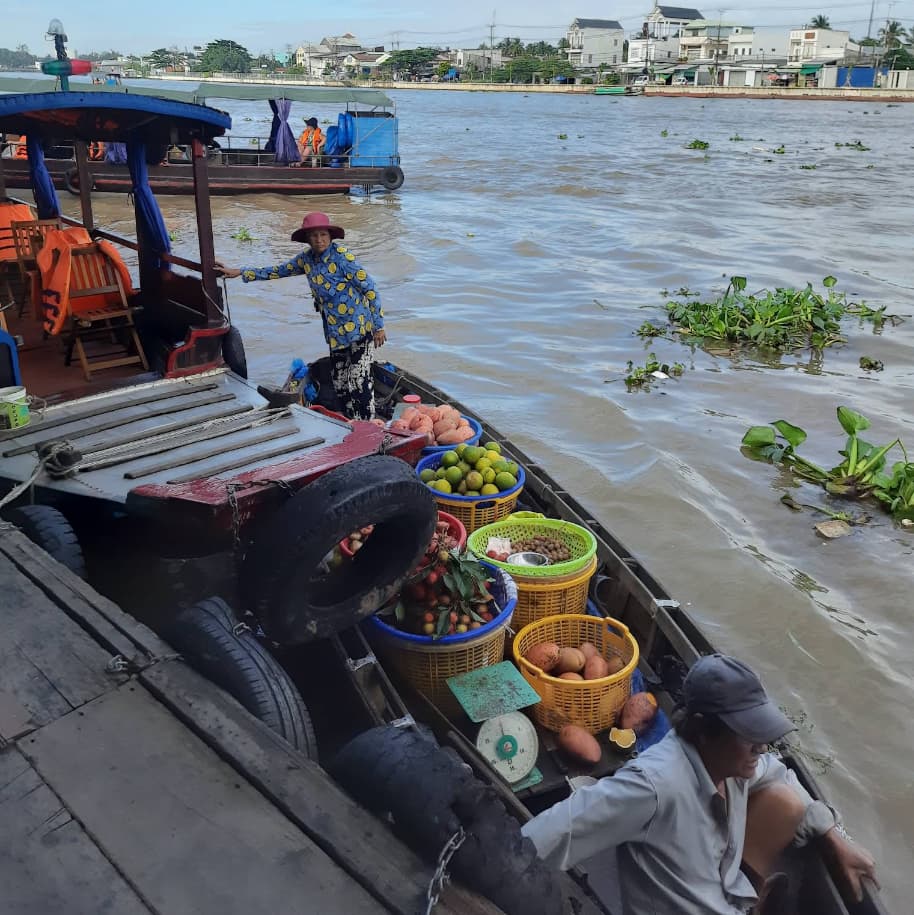
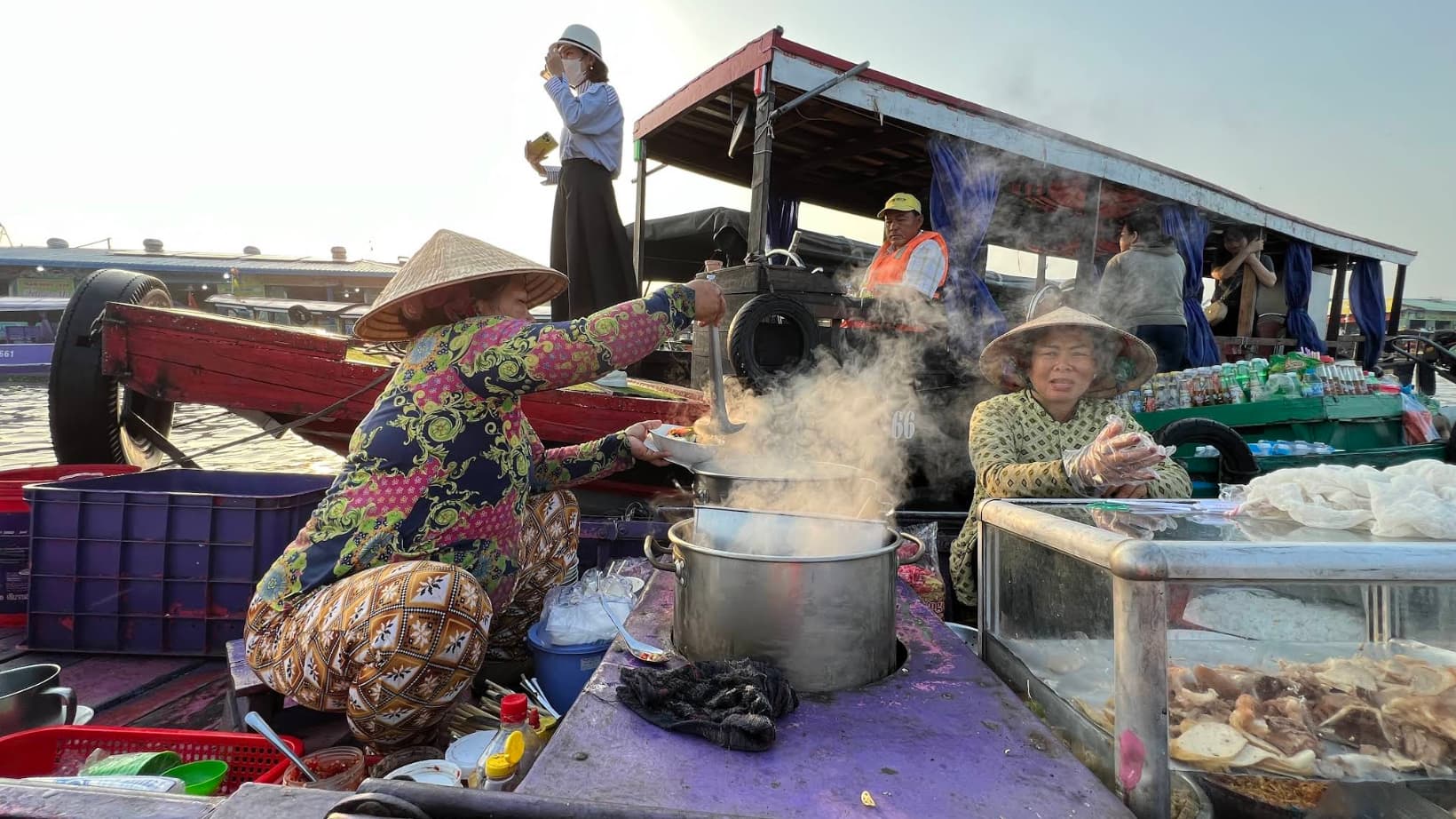

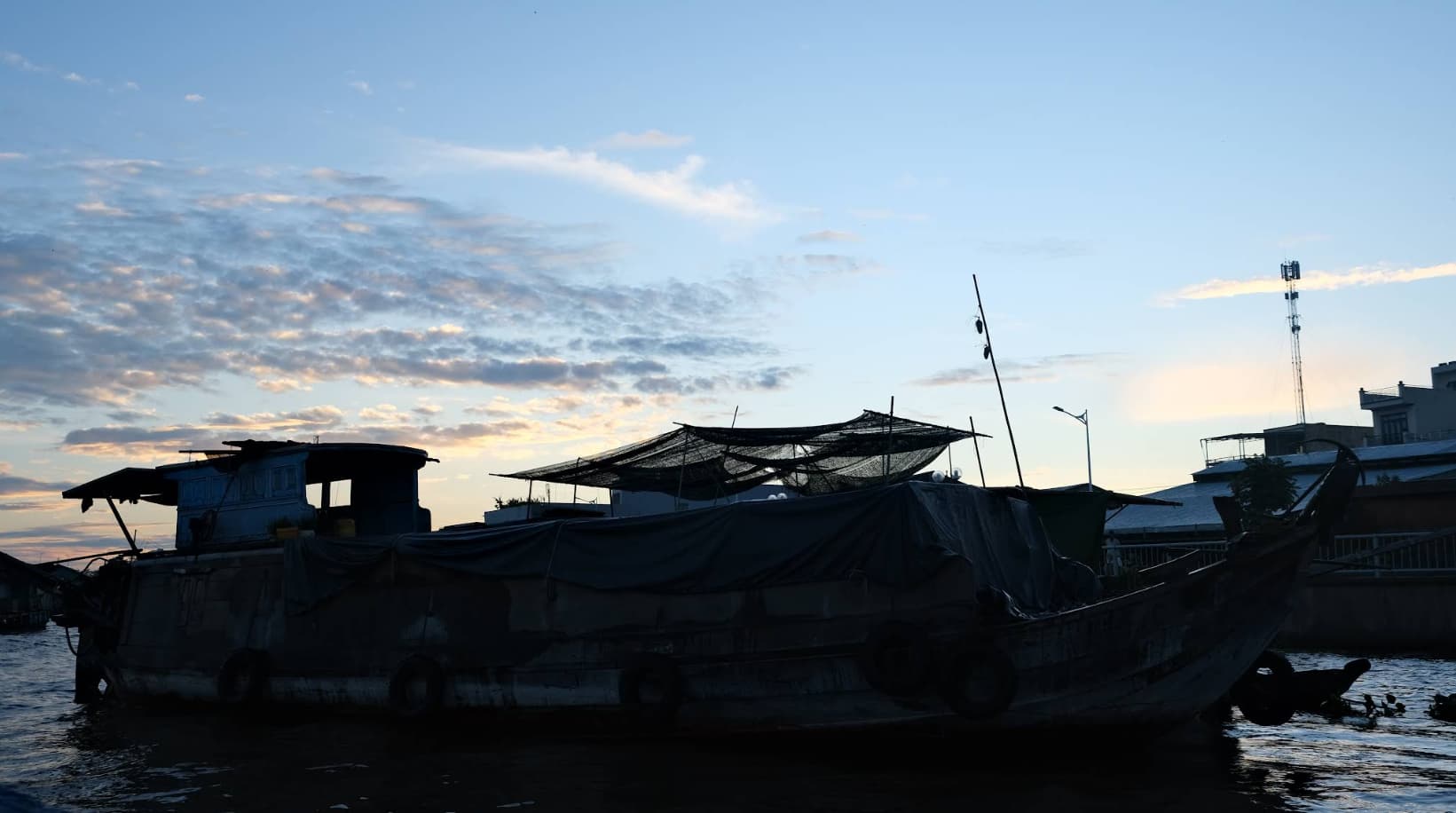
You’ll see the silhouettes of other, bigger boats loaded with produce, all heading to the same spot. The sky shifts from black to a hazy grey, then streaks of orange appear on the horizon.
You’ll know you’re close when the river traffic suddenly becomes dense. It’s a jumble of boats, big and small. It’s loud. It smells of river water, diesel fumes, and somewhere, faintly, of fruit.
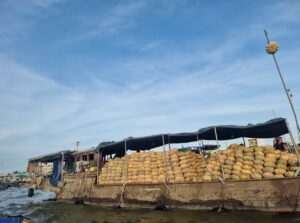
Don’t look for stalls or a central pier. The market is the collection of boats. The biggest ones are the wholesalers. They are essentially floating warehouses of pineapple, watermelon, cabbage, sweet potatoes—whatever is in season.
How do you know what they’re selling? Look up. Every boat has a tall bamboo pole, a cây bẹo, and hanging from the top is a sample of their wares.
A pineapple on the pole means they’re selling pineapples by the hundred. It’s a simple, low-tech, and brilliant system.
Your little sampan will be able to get much closer than the big tour boats. You’ll glide past a boat stacked so high with coconuts you can’t see the person driving it.
You’ll watch as produce is tossed from one boat to another with practiced ease. This is real life. It’s a workplace. People are shouting, negotiating, and making deals.
For anyone curious about the agricultural heart of this country, our article on Vietnam’s rice production in the Mekong Delta offers a deeper look into the region’s economy.
The real magic for a visitor, though, comes from the smaller boats. These are the service industry of the market. They dart through the heavier traffic, selling everything the workers and buyers (and you) might need. And that means it’s time for breakfast.
Your driver will know what to do. Just mime eating or drinking coffee. She’ll wave someone down. A tiny boat, expertly handled by a woman with a huge pot of steaming broth balanced in the center, will pull alongside.
For about 30,000 VND, she’ll hand you a dangerously full bowl of hủ tiếu or bún riêu. Eating hot soup from a ceramic bowl while sitting in a wobbly boat is a skill you didn’t know you needed.
Then comes the coffee boat. A vendor will pull up and pour you a plastic cup of thick, sweet Vietnamese iced coffee (cà phê sữa đá).
Then maybe the pineapple boat will float by. For a dollar, a woman will grab a pineapple, and in about 15 seconds of flashing knife work, hand you a perfect, ready-to-eat piece of fruit.
This isn’t just a meal, it’s an interaction. It’s the whole reason you came.
The ‘Tourist Trap’ Question: The Noodle Factory and Other Add-Ons
After an hour or so at the main market, as things start to thin out, your driver will probably point to the shore and ask, “Noodle factory?”
This is the standard tourist loop. It’s a stop at a small, family-run place where they show you how rice vermicelli is made.
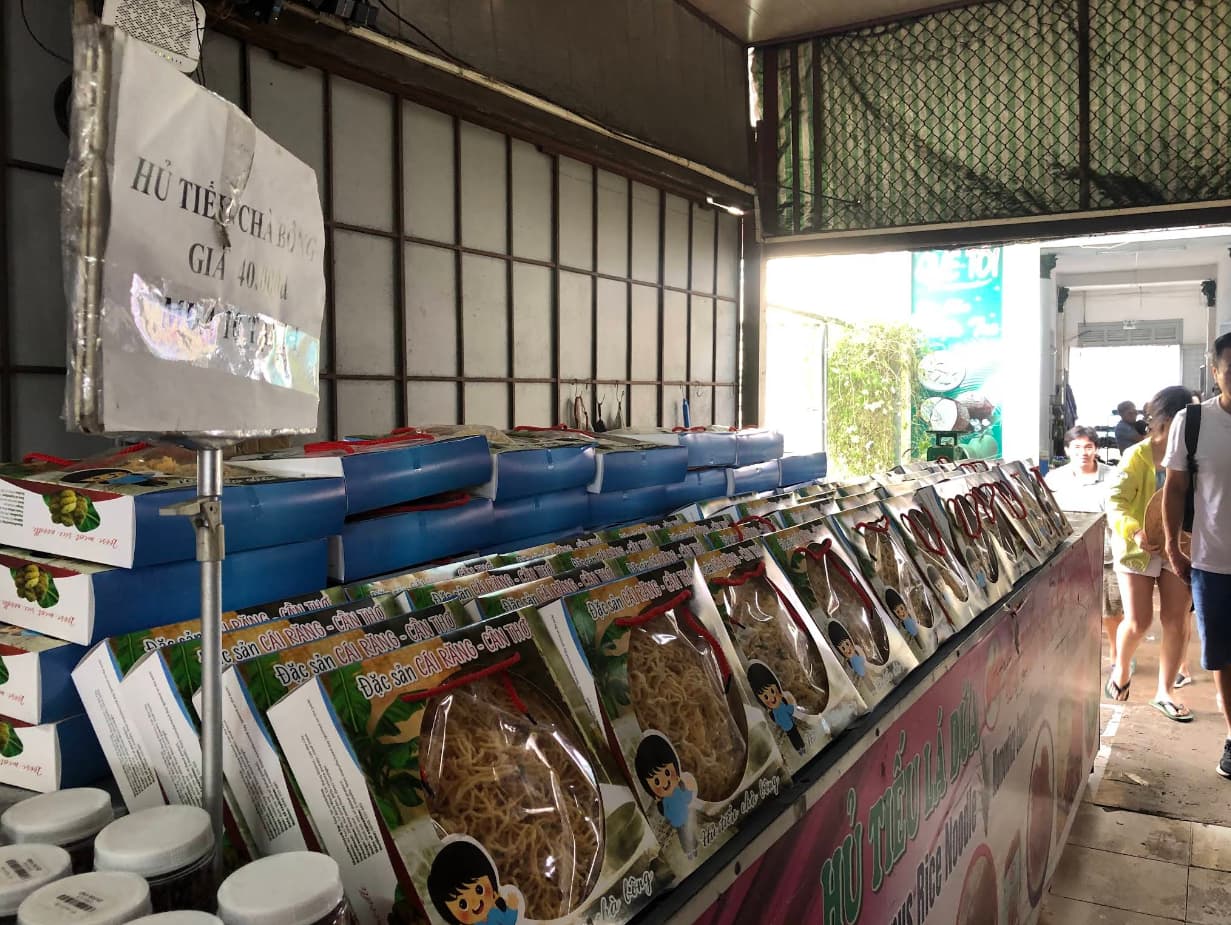
You watch them spread the rice batter, steam it into sheets, and shred it into noodles. It’s mildly interesting, and at the end, there’s a small shop. The same goes for the “fruit orchard” or “cacao farm” stops.
So, should you go?
Honestly, it depends on your level of cynicism. The first time you see it, it’s kind of neat. But it is, without a doubt, a stop designed for tourists.
Your driver gets a small cut for bringing you. It can feel a bit canned. If you’ve spent any time in Southeast Asia, you’ve probably seen a similar craft demonstration elsewhere.
My advice? If you are genuinely curious and have extra time, go for it. But if your main goal was to see the Cai Rang Floating Market, and you’d rather spend another 30 minutes just floating and observing, then politely refuse.
A simple “Không, cảm ơn, chỉ đi chợ nổi” (No, thank you, just the floating market) works perfectly. Don’t feel bad about it. You hired the boat, it’s your trip.
Getting the Timing Right is Everything
I’m going to say this again because it’s the single most important piece of advice: if you get to the market late, you will have wasted your time. It will be a ghost of what it was, populated only by other confused tourists.
- 4:30 AM: Alarm goes off.
- 4:45 AM: At Ninh Kieu Wharf, finding a boat.
- 5:00 AM – 5:30 AM: Motoring towards the market. This is a beautiful time on the river.
- 5:30 AM – 7:30 AM: This is the prime time. The market is buzzing. The sun is rising. Food boats are everywhere.
- 8:00 AM: The big boats start to leave. The energy shifts.
- 9:00 AM: It’s basically over. All that’s left are the tourist boats looking at other tourist boats.
Do not let anyone tell you that a 7:00 AM start from your hotel is early enough. It isn’t. The early start is what separates a genuine experience from a disappointing one.
If you’re planning a longer trip through the region, this same “early bird” rule applies to many local markets, which we detail in our Ultimate Mekong Delta Itinerary.
Practical Stuff You Might Forget
- What to Wear: Light clothes. A hat. Sunglasses. It gets brutally sunny, fast.
- What to Bring:
- Cash. Small bills. Nothing runs on credit cards here.
- Sunscreen. The glare off the water will cook you.
- Your Phone/Camera. But hold on to it tightly. A wrist strap isn’t a bad idea.
- Patience. Things are a bit chaotic. That’s part of the charm.
- Cost Reality Check: For a solo traveler, this DIY trip isn’t necessarily a huge money-saver over the cheapest tours, but the experience is ten times better. For two or more people, it’s significantly cheaper. You’re paying for freedom.
So, is it worth the effort?
Yes. A thousand times, yes. The hassle of the early morning, the slightly awkward price negotiation, the bumpy boat ride—it all melts away when you’re floating in the middle of that beautiful chaos with a hot coffee in one hand and a bowl of noodles in your lap.
You’ll leave feeling like you actually connected with the place, not just looked at it through a window. And that, really, is what travel is all about.












 Tiếng Việt
 한국어
한국어 中文 (中国)
 日本語
日本語 ไทย
ไทย Deutsch
 Español
 Destinations
 Instagram
 Facebook
 X (Twitter)
 Threads
 Tiktok