Vietnam has been my home for 9+ years now, and it’s been quite a ride. Writing for VietAdvisor lets me explore the hidden gems and rich traditions from one end of the country to the other. I'm excited to share these local insights with you and help you see Vietnam through a more authentic lens.
The Hoi An lantern festival falls on the fourteenth day of the lunar month, which is the night before the full moon and not the full moon itself.
There are thirteen of these nights inside the 2026 calendar year. The dates are below, along with what the evening actually consists of, which parts of it I think are worth arranging your week around and which are not, and a section on Tết Trung Thu, which in 2026 falls the night after a lantern night.
Quick Answer: The Hoi An lantern festival 2026 falls on the fourteenth day of each lunar month, giving thirteen dates: 2 January, 1 February, 2 March, 1 April, 30 April, 30 May, 28 June, 27 July, 26 August, 24 September, 23 October, 22 November and 22 December 2026. It runs from roughly 6pm to 10pm, it is free, and there is no ticket. The Old Town closes to traffic, the electric street lighting is switched off at around 8pm, and floating lanterns go onto the Thu Bồn. The largest night of the year is Monday 2 March, the first full moon after Tết.
The queue for a rowing boat is the longest it gets in the month.
You’ll notice I’ve linked to a few hotels and activities I used or recommend, you can even highlight any text to check prices and book instantly. If you make a booking through them, I receive a small commission, which really helps support the work I do here, at no additional cost to you.
Hoi An Lantern Festival 2026 Dates
These are worked out from the lunar calendar and checked against Vietnamese sources for the anchor dates, since the English listings disagree with one another and several of them are a day out.
Tết 2026 falls on Tuesday 17 February, and Rằm tháng Giêng, the first full moon of the lunar year, falls on Tuesday 3 March, which puts that lantern night on Monday 2 March.
Month
Date
Day
What to expect
January 2026
2 January
Friday
Cool, quiet, low season
February 2026
1 February
Sunday
Two weeks before Tết
March 2026
2 March
Monday
Rằm tháng Giêng, the largest of the year
April 2026
1 April
Wednesday
Good weather, manageable crowds
April 2026
30 April
Thursday
Reunification Day, extremely busy
May 2026
30 May
Saturday
Hot, and a Saturday
June 2026
28 June
Sunday
Peak summer heat
July 2026
27 July
Monday
Peak season
August 2026
26 August
Wednesday
Peak season, humid
September 2026
24 September
Thursday
Trung Thu the following night
October 2026
23 October
Friday
Flood season, the river may be too high
November 2026
22 November
Sunday
Flood season
December 2026
22 December
Tuesday
Cool and clear, and the one I would choose
Two things about 2026 in particular. April has two lantern nights, on the 1st and the 30th, which happens roughly once a year and is useful if your dates are otherwise stuck. And there is no lantern night in the second half of February, because Tết falls on 17 February and the fourteenth day of the first lunar month does not come round until March.
What Time the Lantern Festival Starts
The evening begins at around six, when the vehicle ban takes effect and the lanterns come on, and the electric street lighting goes off closer to eight. By ten the shops are shutting and it is largely over, because Hoi An winds up early whether there is a festival on or not.
The stretch worth being on the river for is between half past seven and half past nine, since earlier than that there is still light in the sky and the effect is diluted.
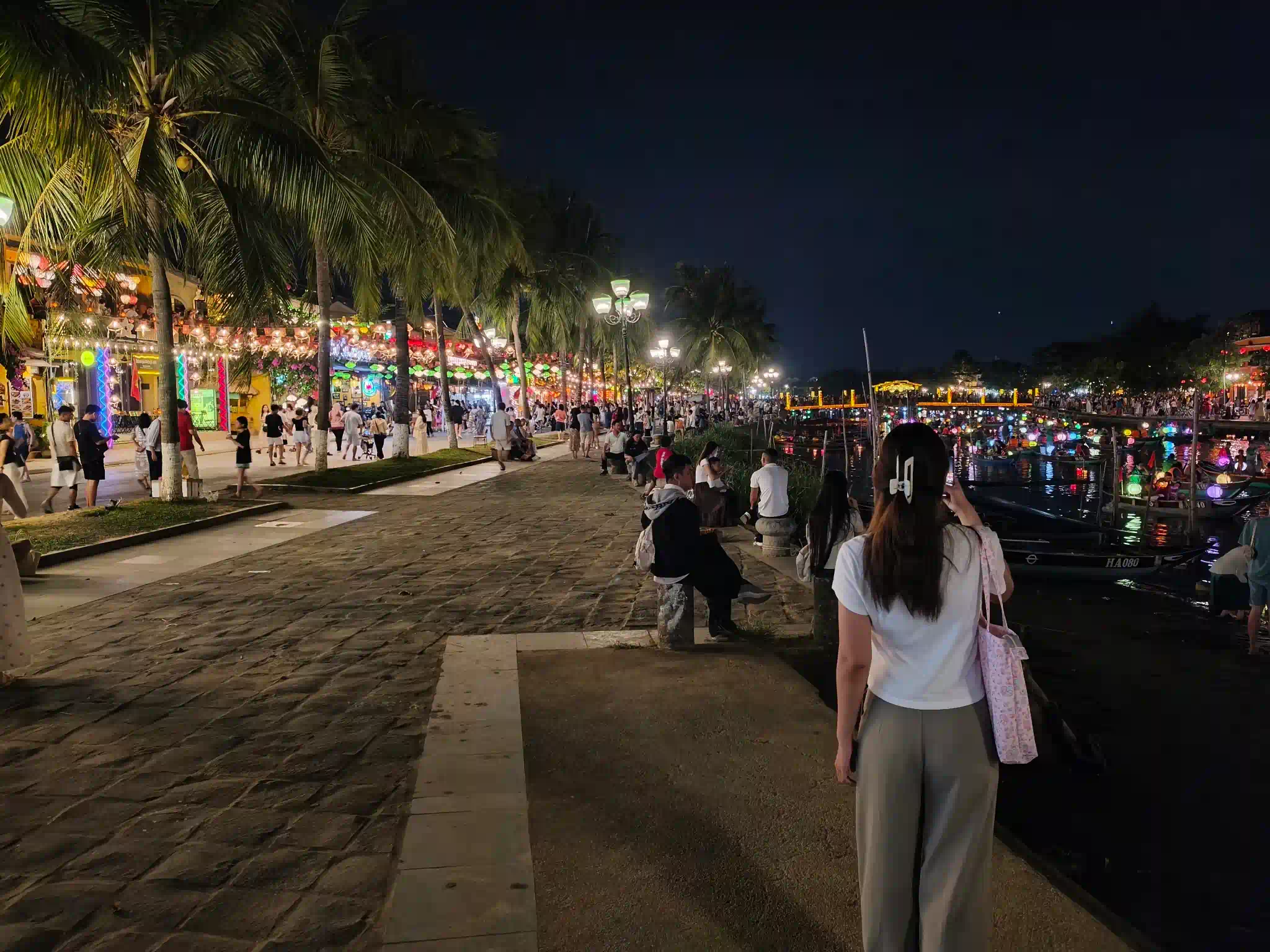
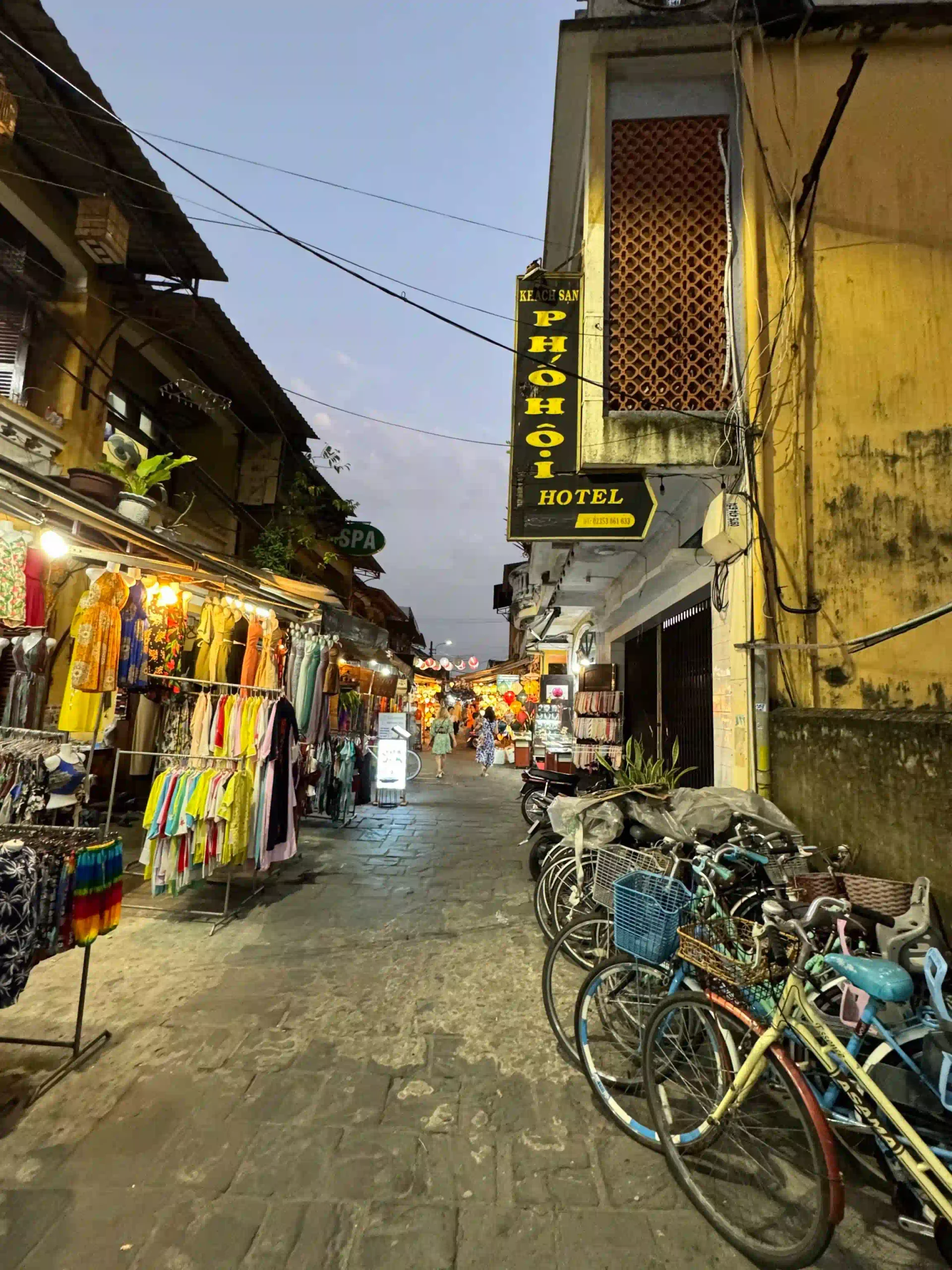
The lights-off part is where expectations need managing. Trần Phú goes properly dark, as does Nguyễn Thái Học and the run of Bạch Đằng along the water, but the night market on the An Hội side keeps its bulbs on, the bars do, and the shopfronts along the main streets still spill light into the road.
What you are getting is the historic core, dimmed, for about two hours, which is a fine thing to see but is not the town lit by candles alone that the photographs suggest.
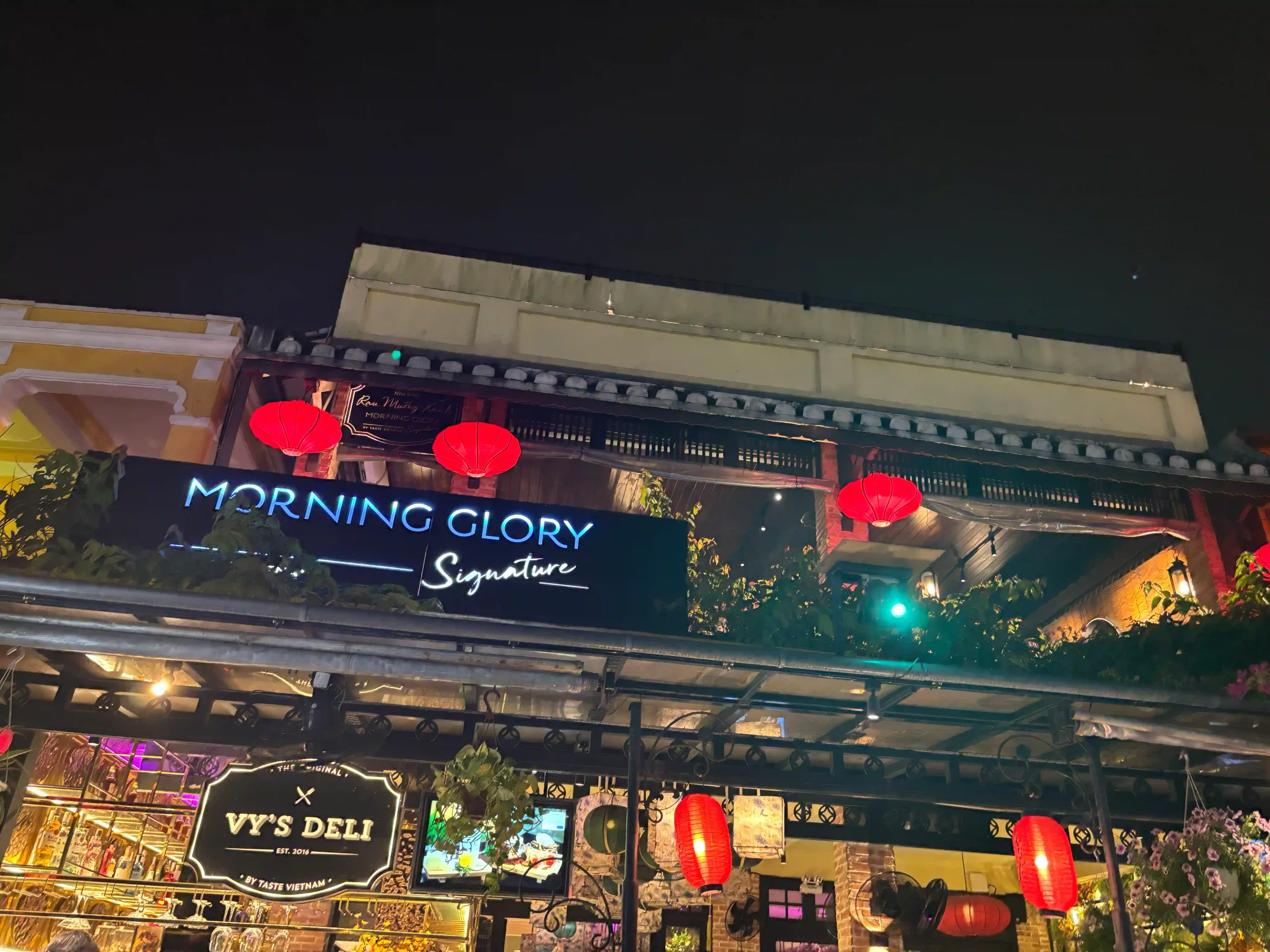
Best on the river between 7:30 and 9:30 PM, before it all shuts down
What the Evening Consists Of
The part I would rate highest has nothing to do with lanterns. The Old Town closes to all motorised traffic from around six, and walking down Trần Phú without listening for a horn coming up behind you is a different experience of that street entirely. On an ordinary evening you spend the whole walk stepping aside.
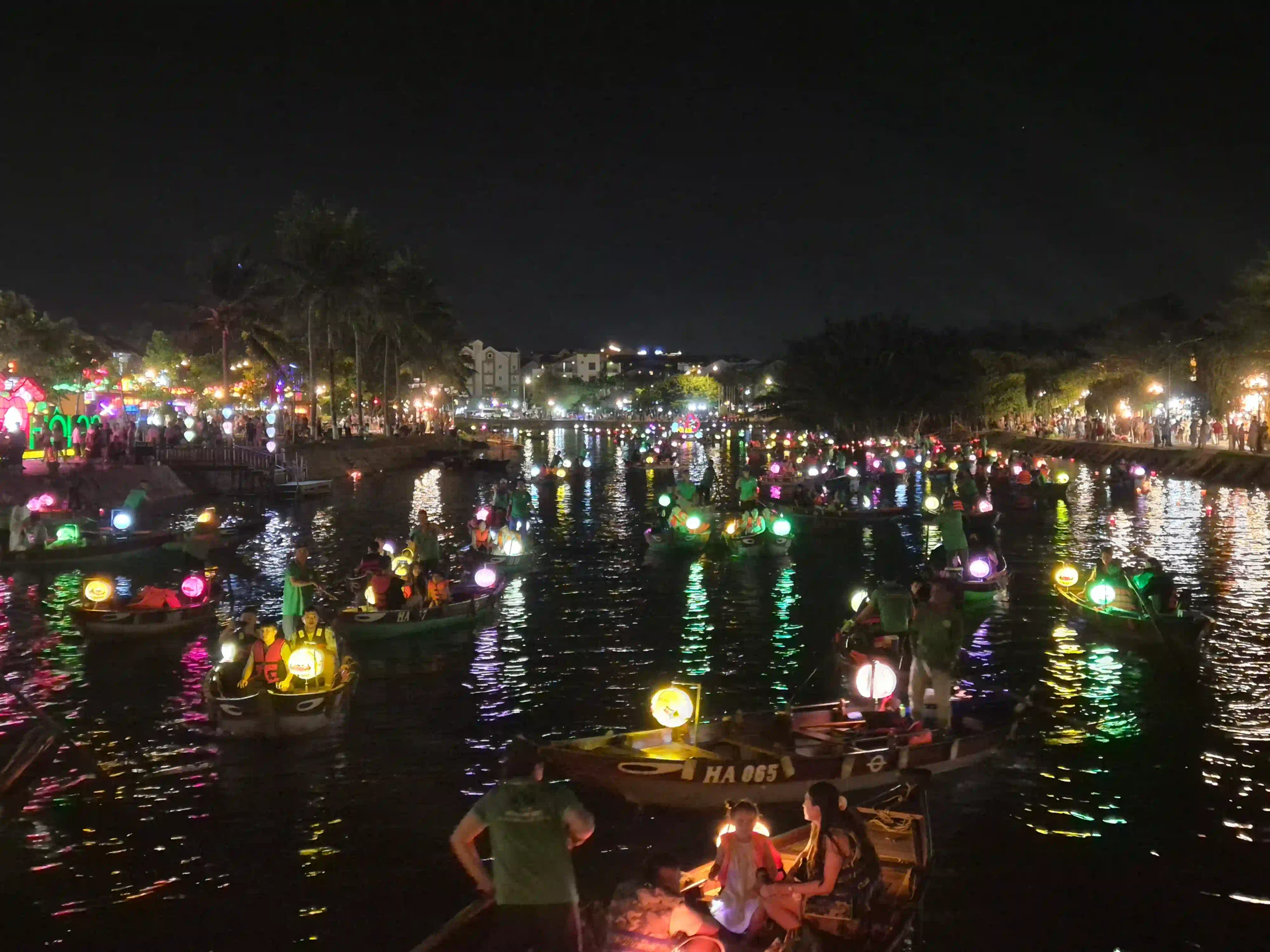
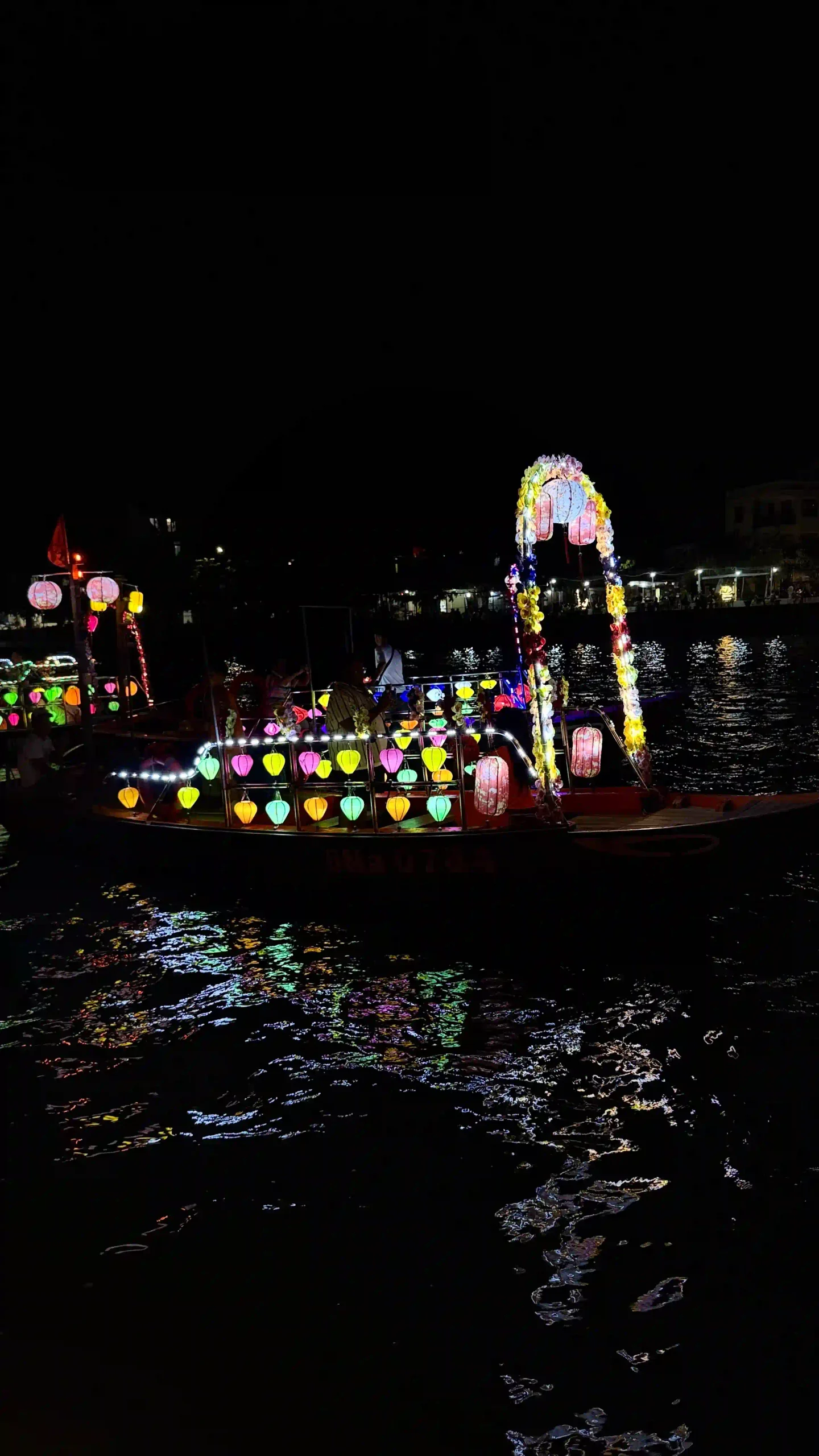
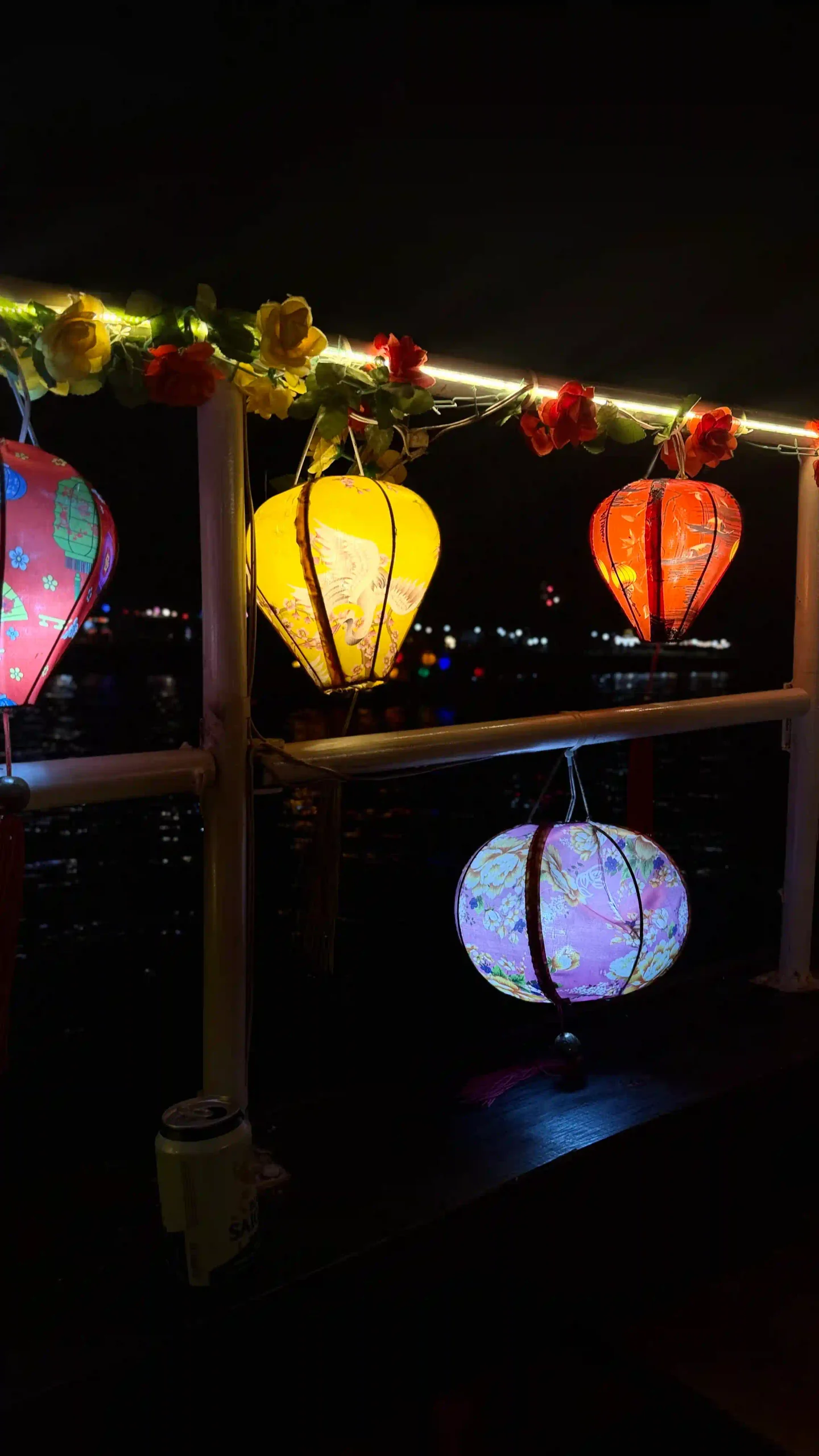
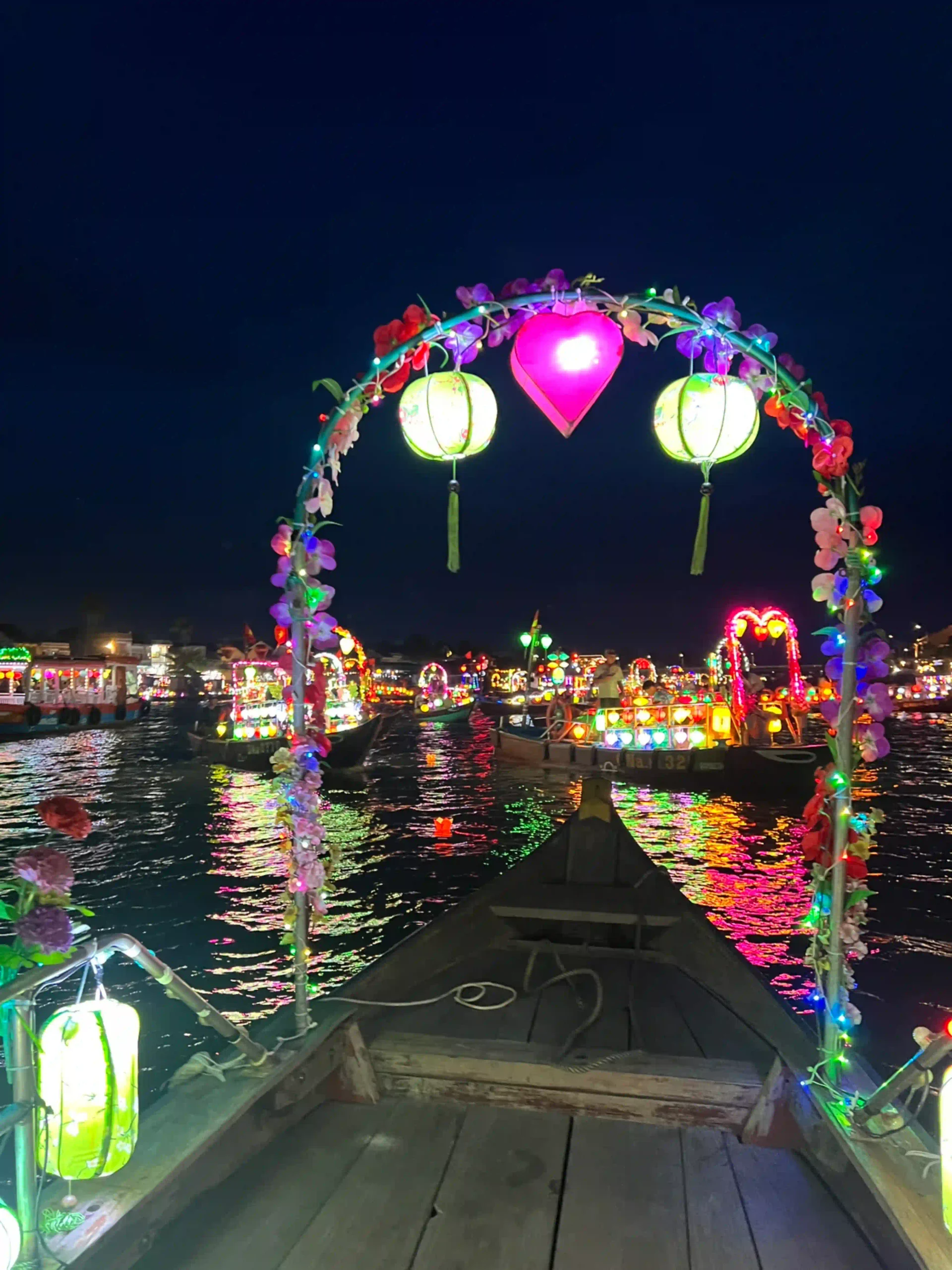
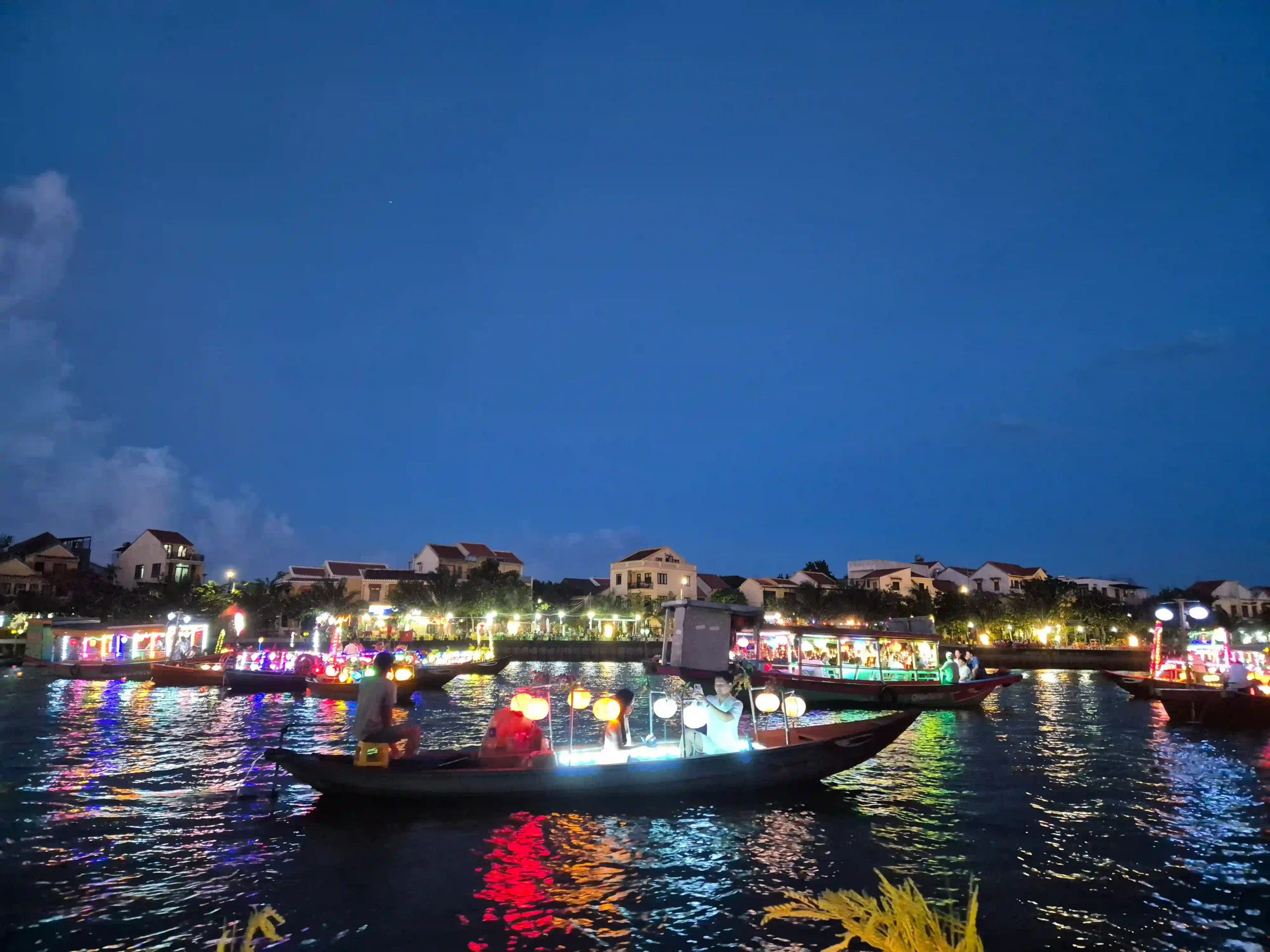
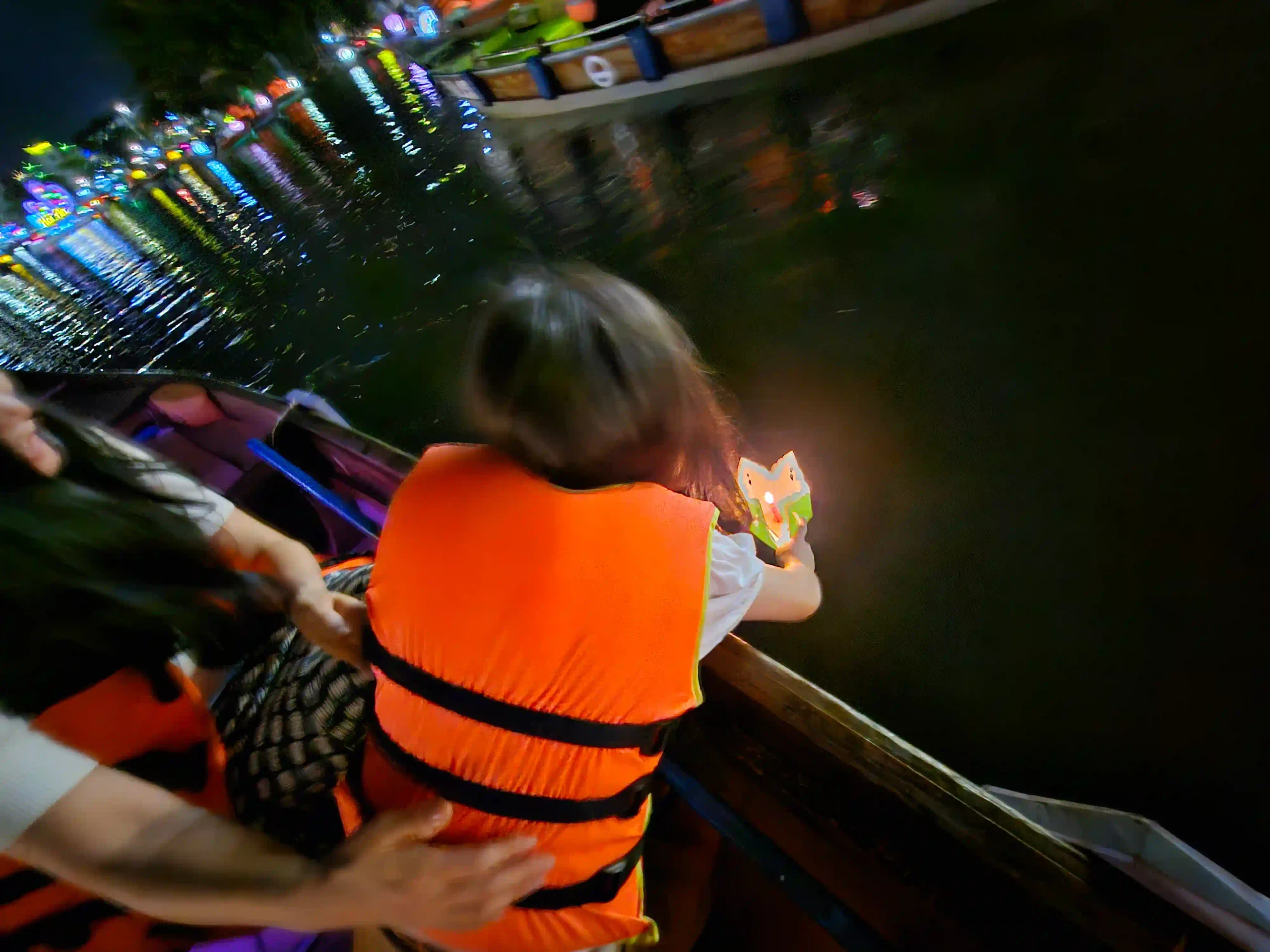
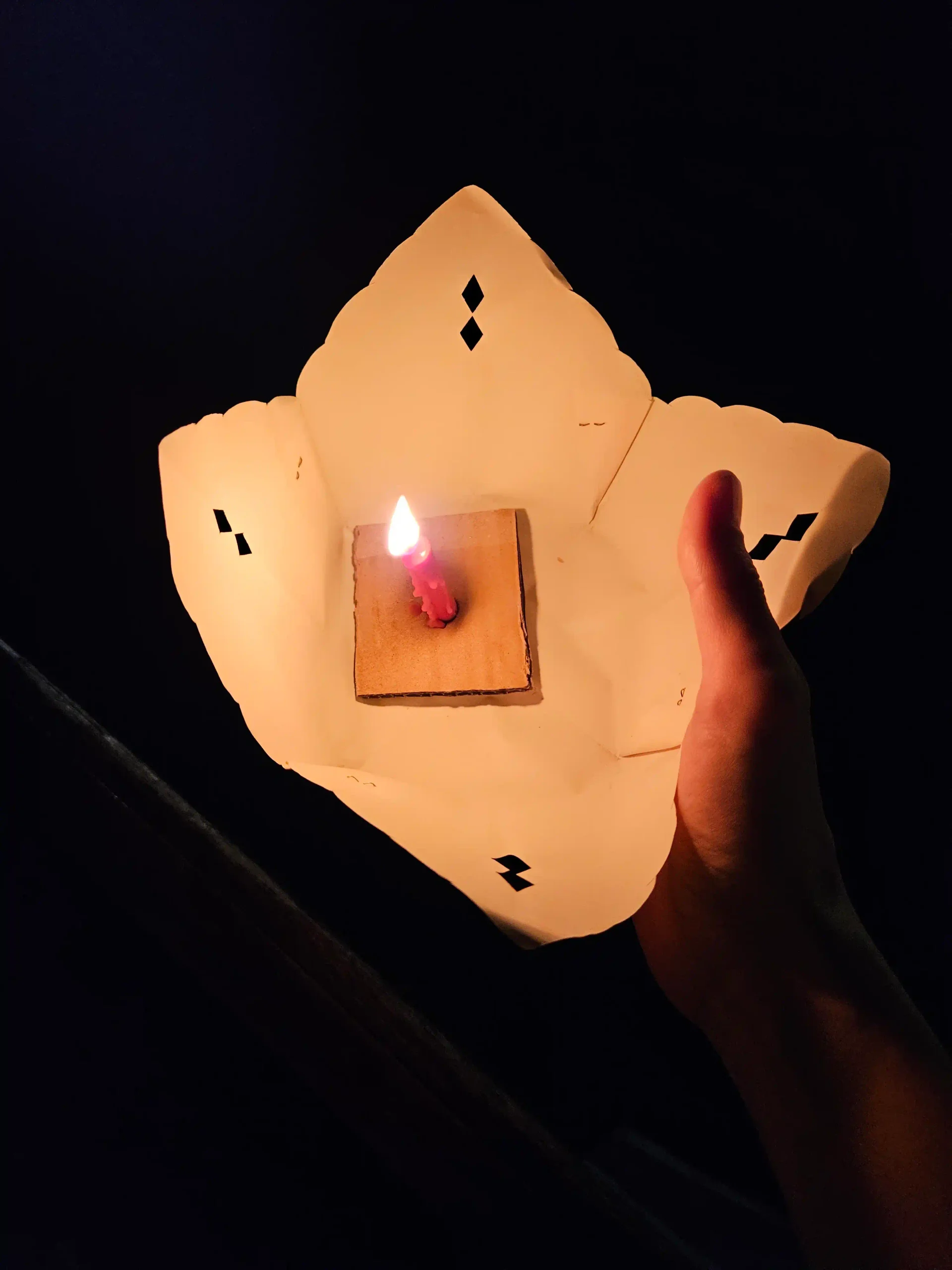
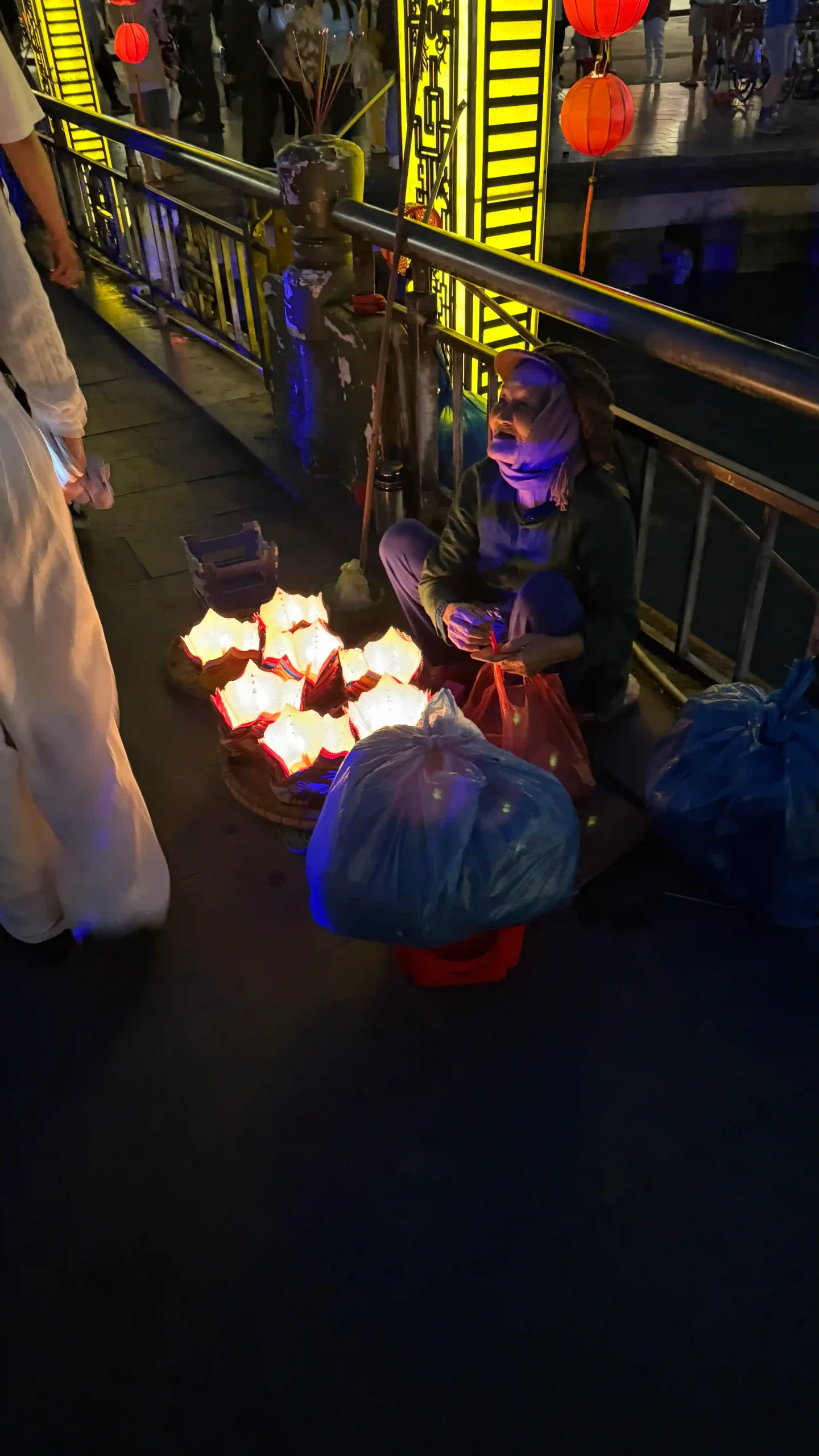
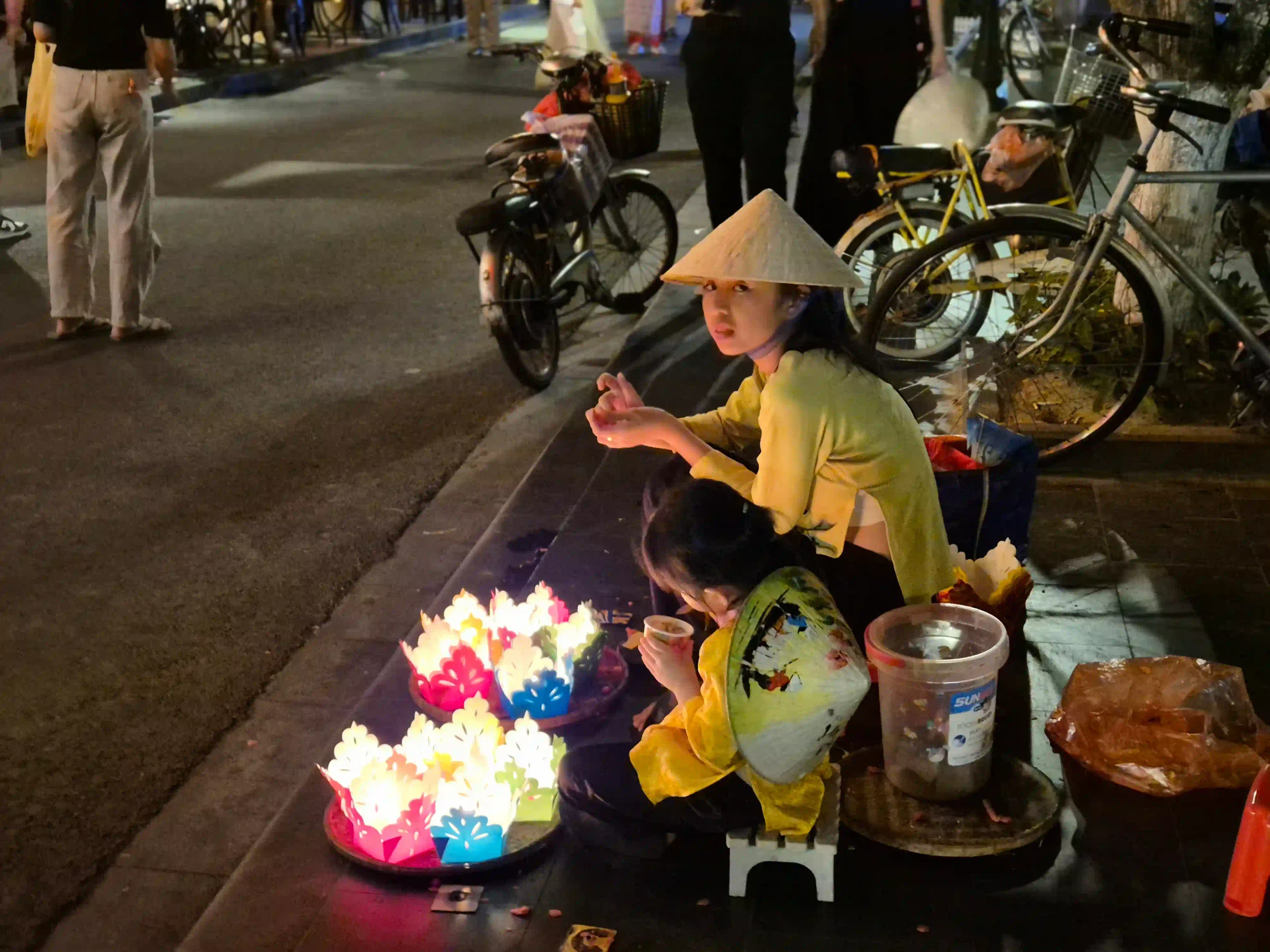
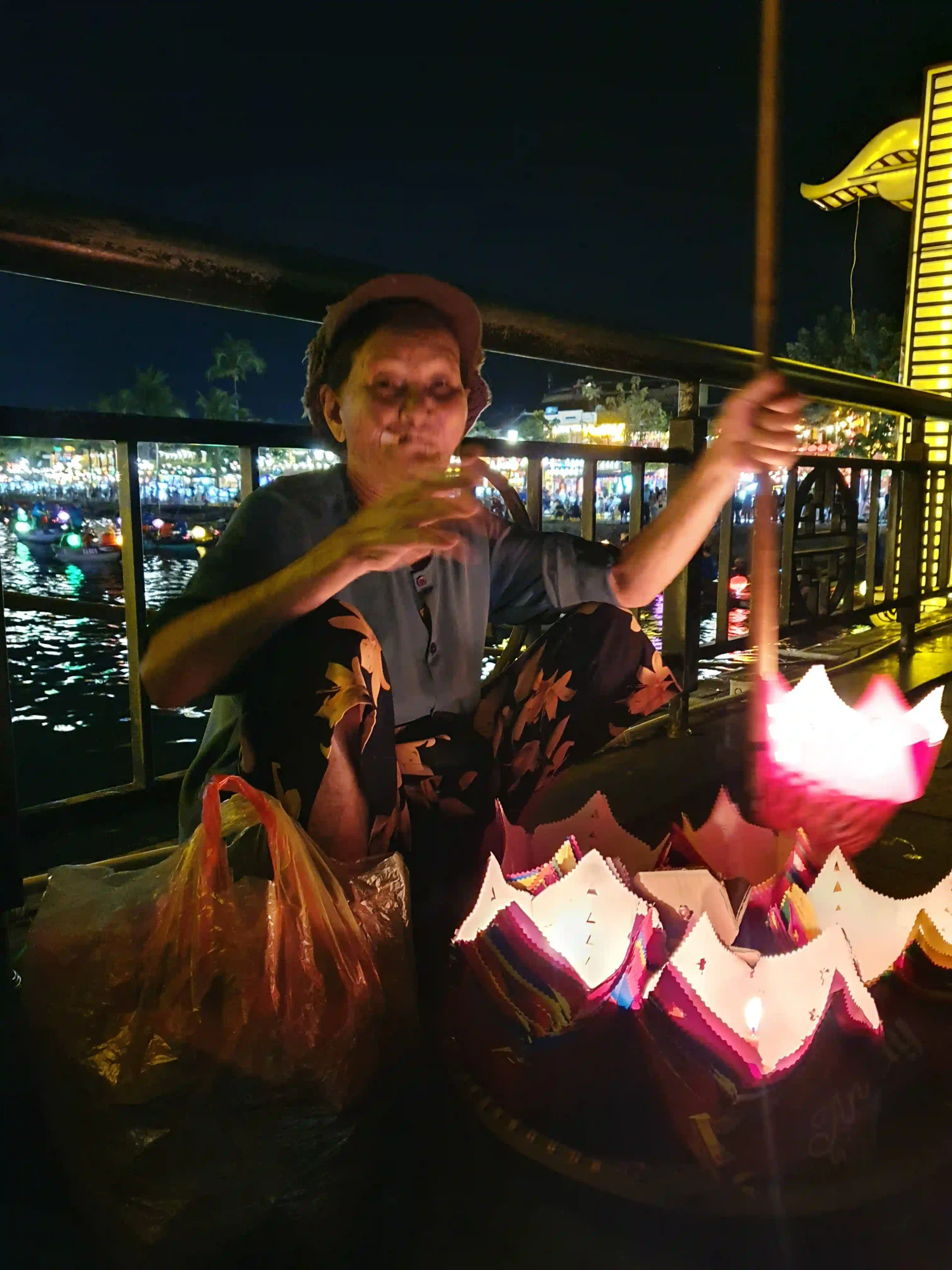
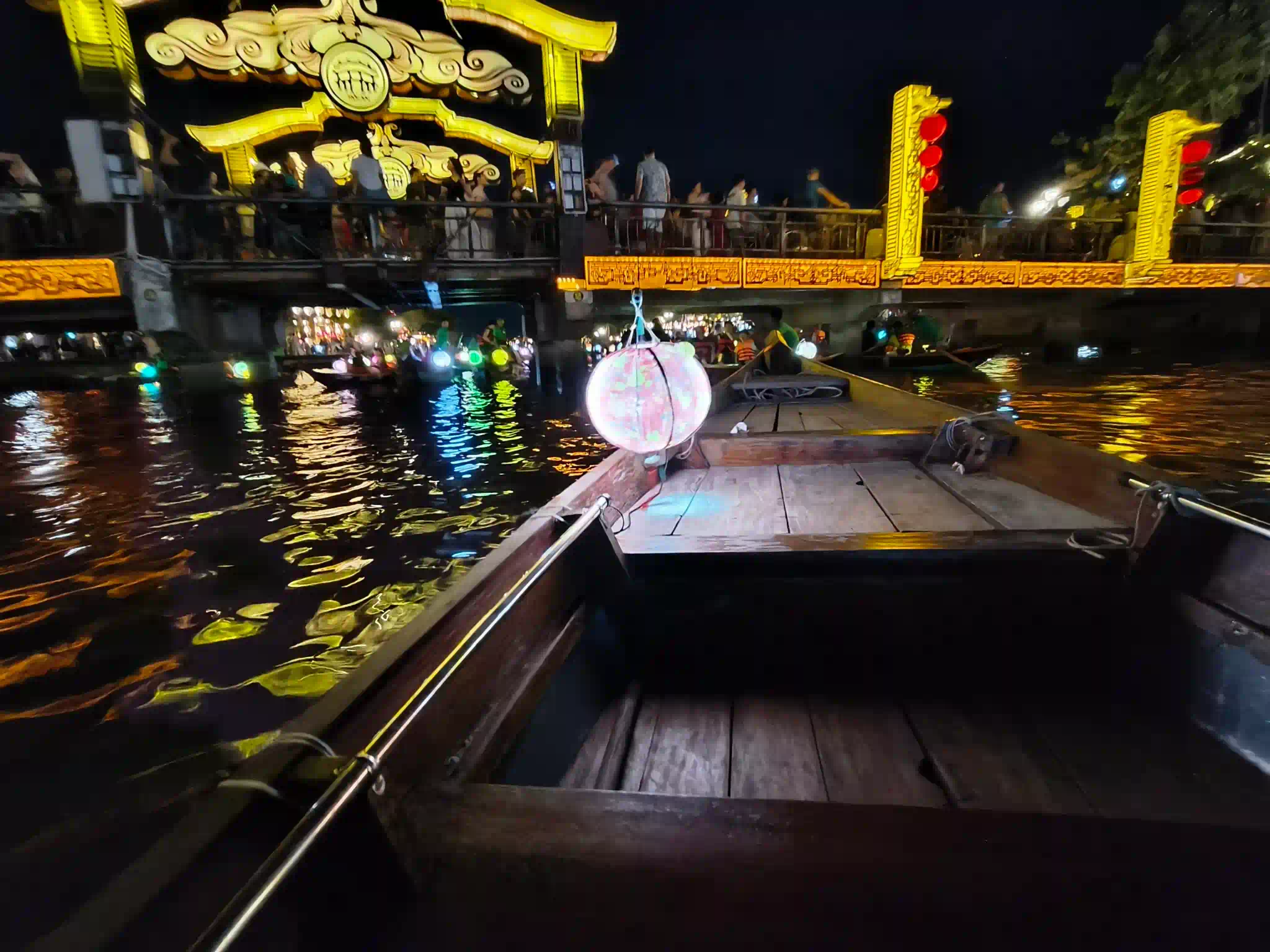
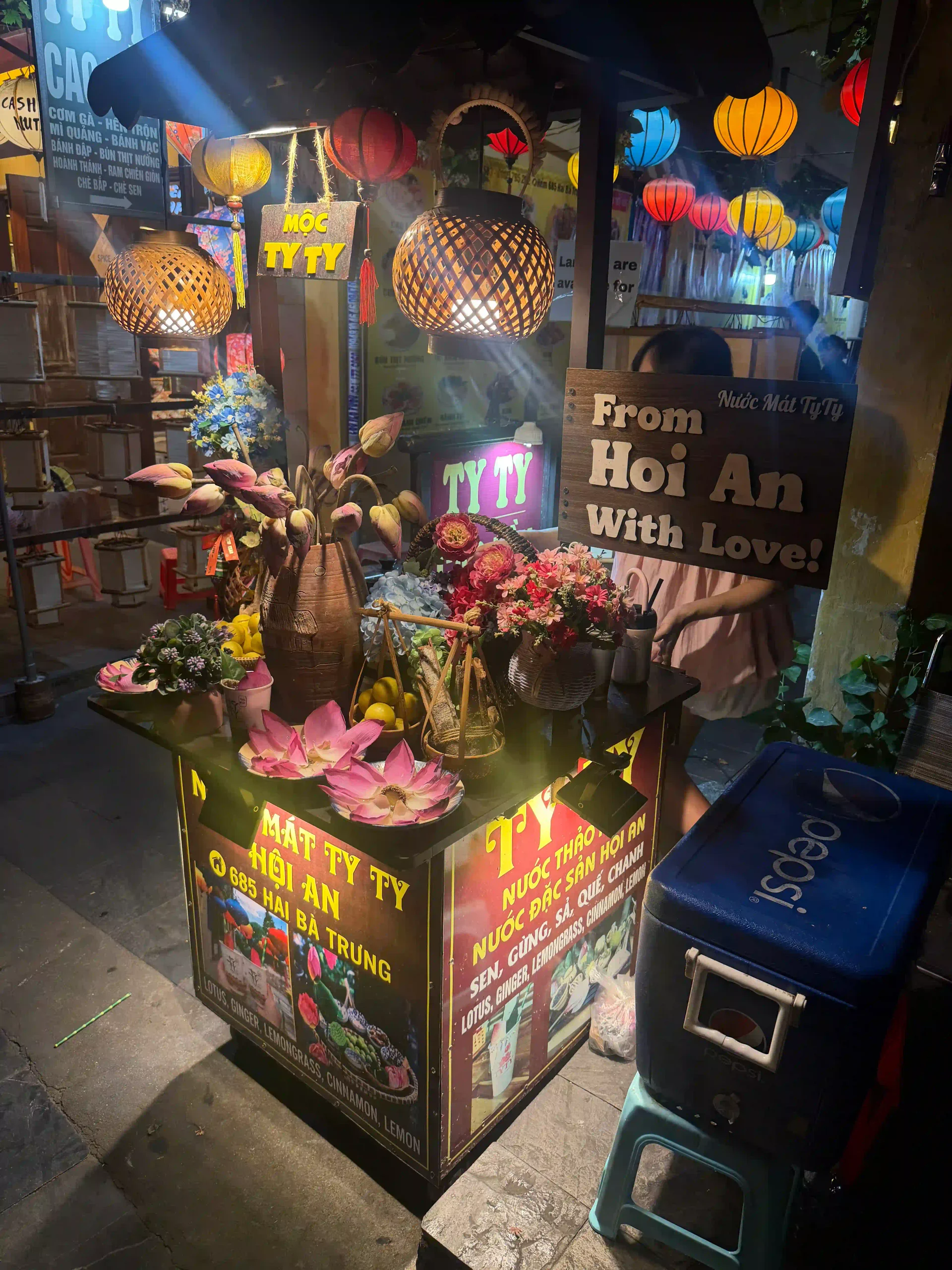
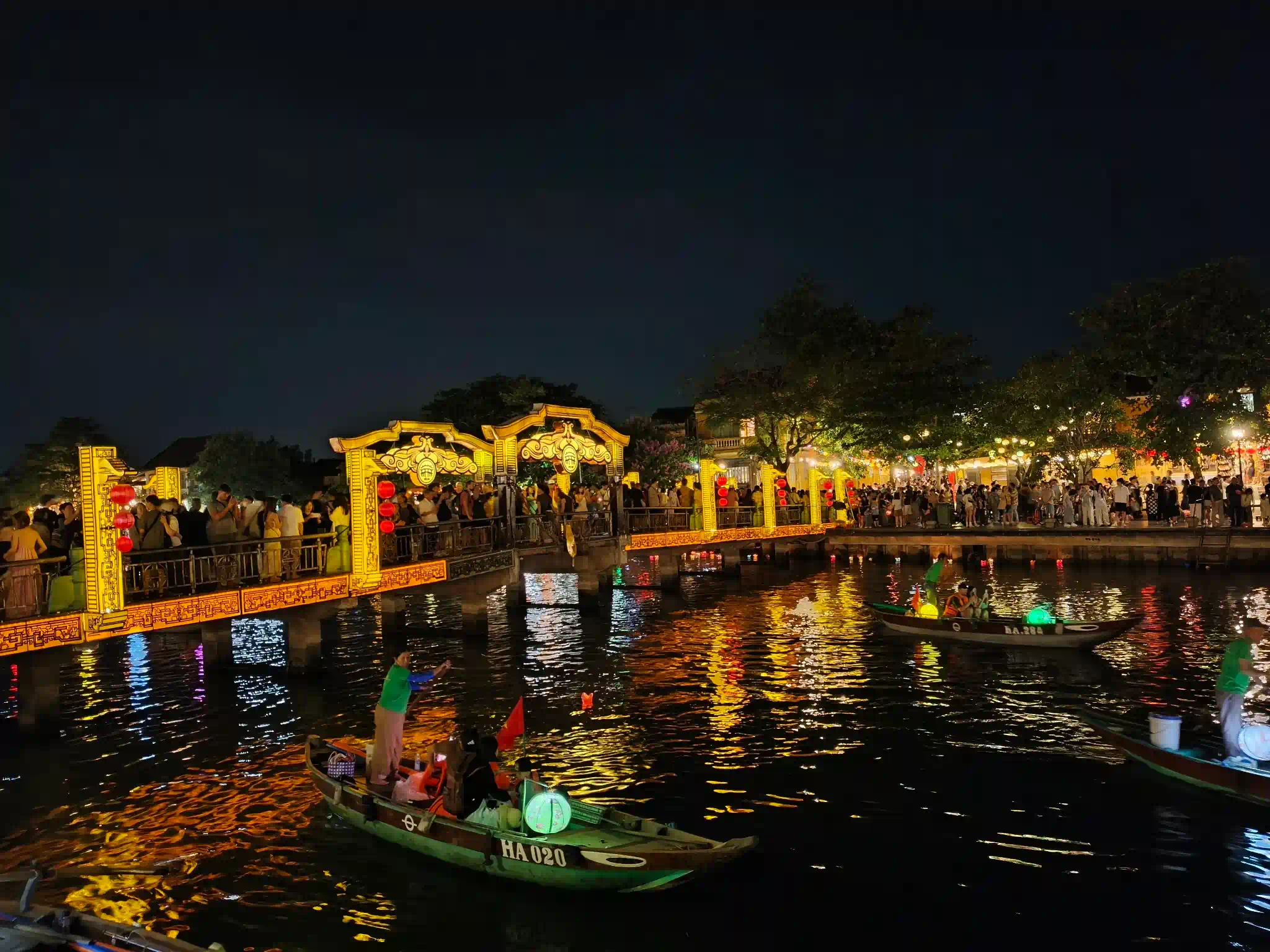
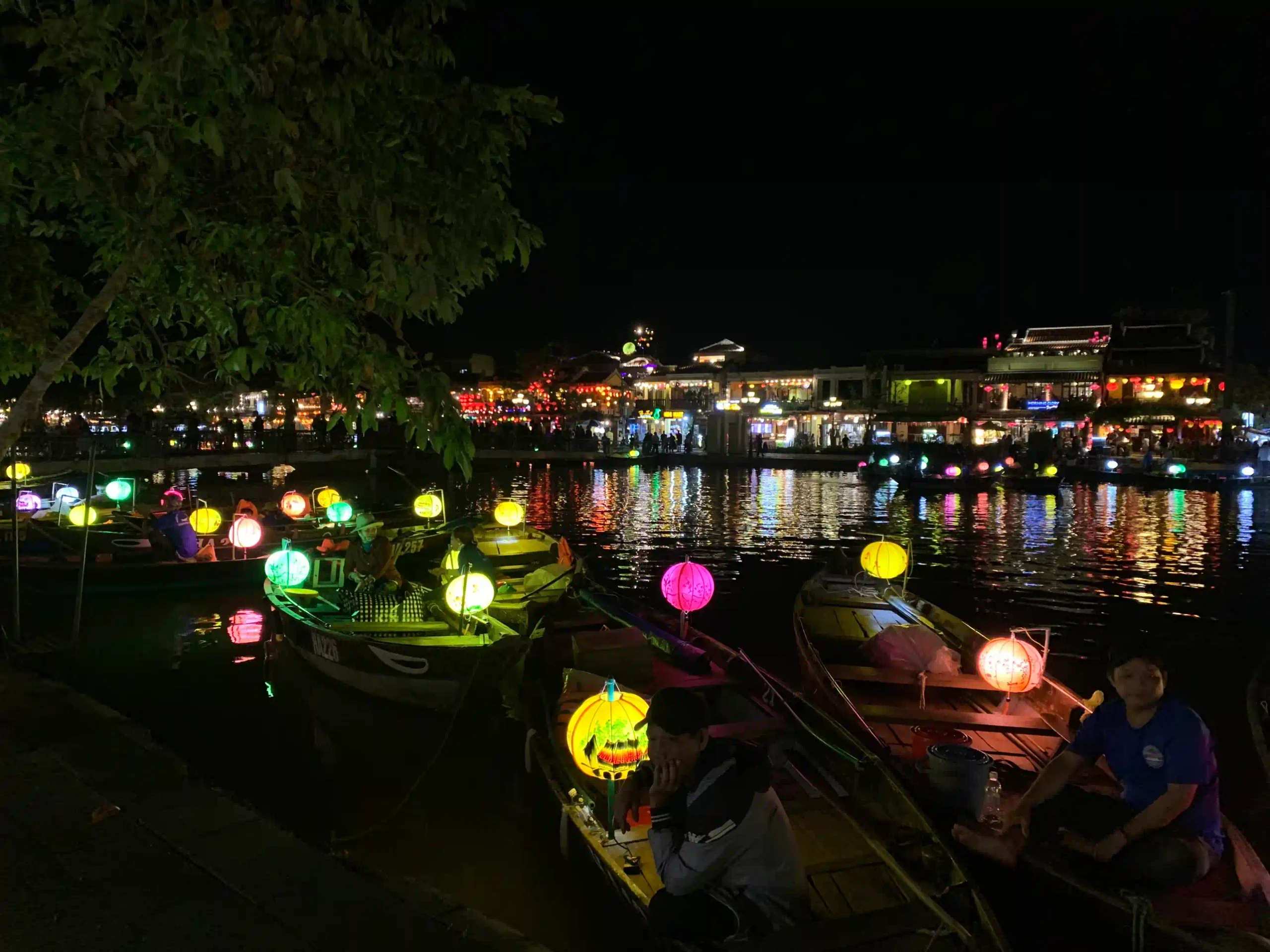
The river is the part everyone comes for. Women sell the small paper and wax lanterns along the Bạch Đằng bank and on the An Hội footbridge, at 10,000 to 30,000 VND depending on how far you have walked from the bridge, and people light them and set them onto the water from the steps or from a boat.
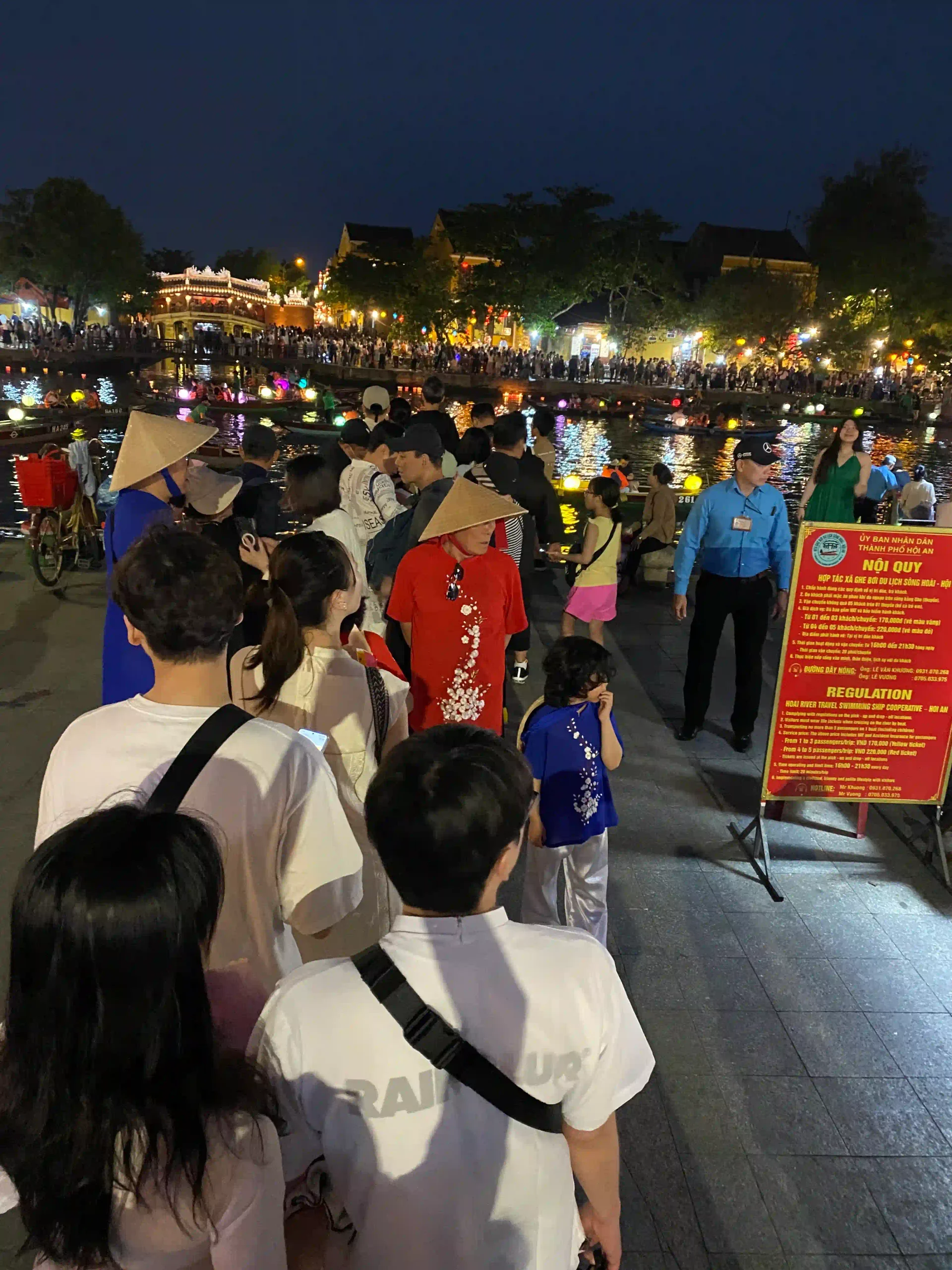
The hand-rowed boats run all evening and the queues at the riverside booths are at their monthly worst on the fourteenth.
The fares are fixed by the town, the booths are along Bạch Đằng and Nguyễn Phúc Chu, and I have covered the whole thing including the price gap with the booking sites in the Hoi An lantern boat ride guide, so there is no sense repeating it here.
Street vendors, long boat queues, and paper lanterns drifting into the night
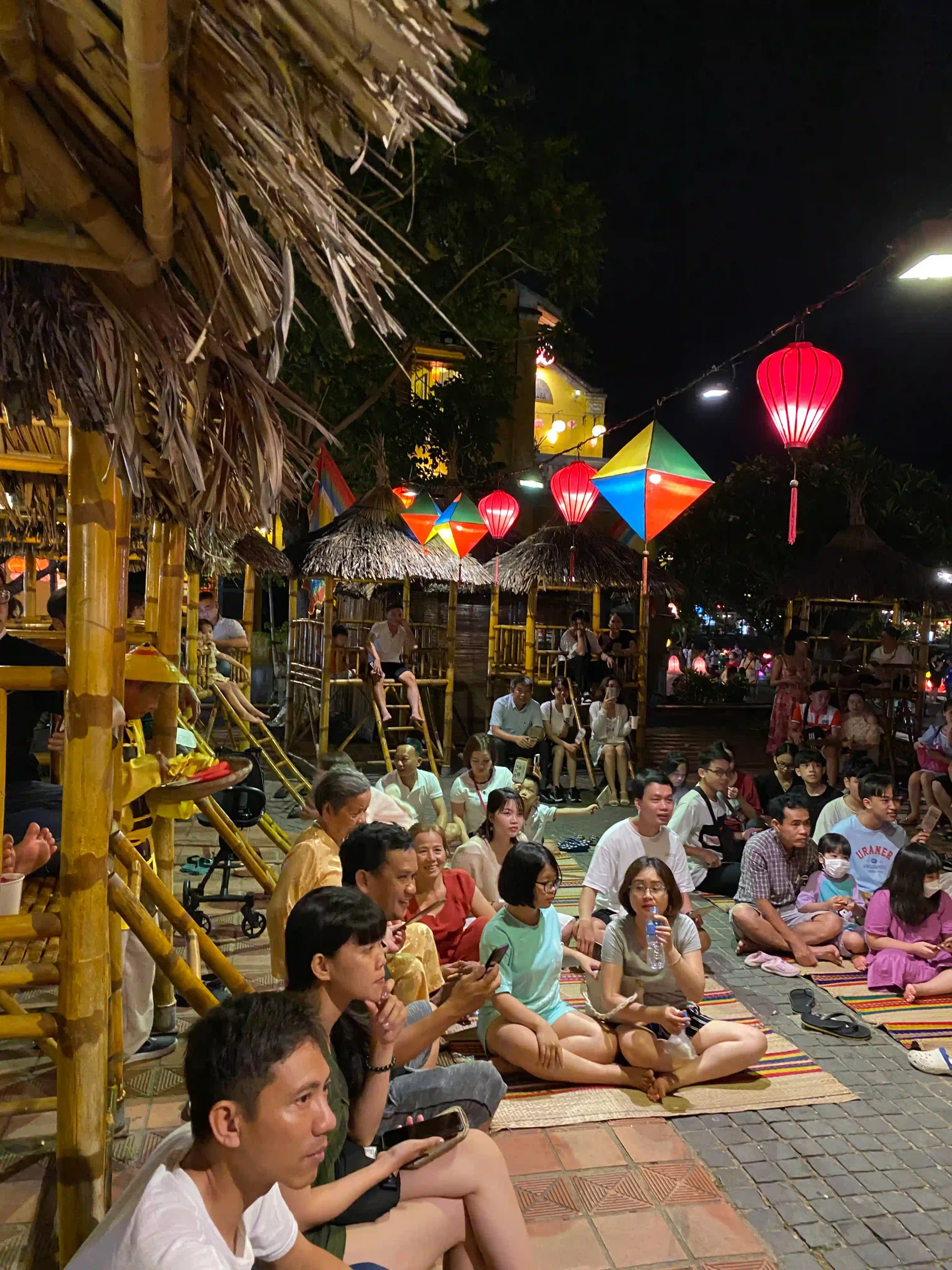
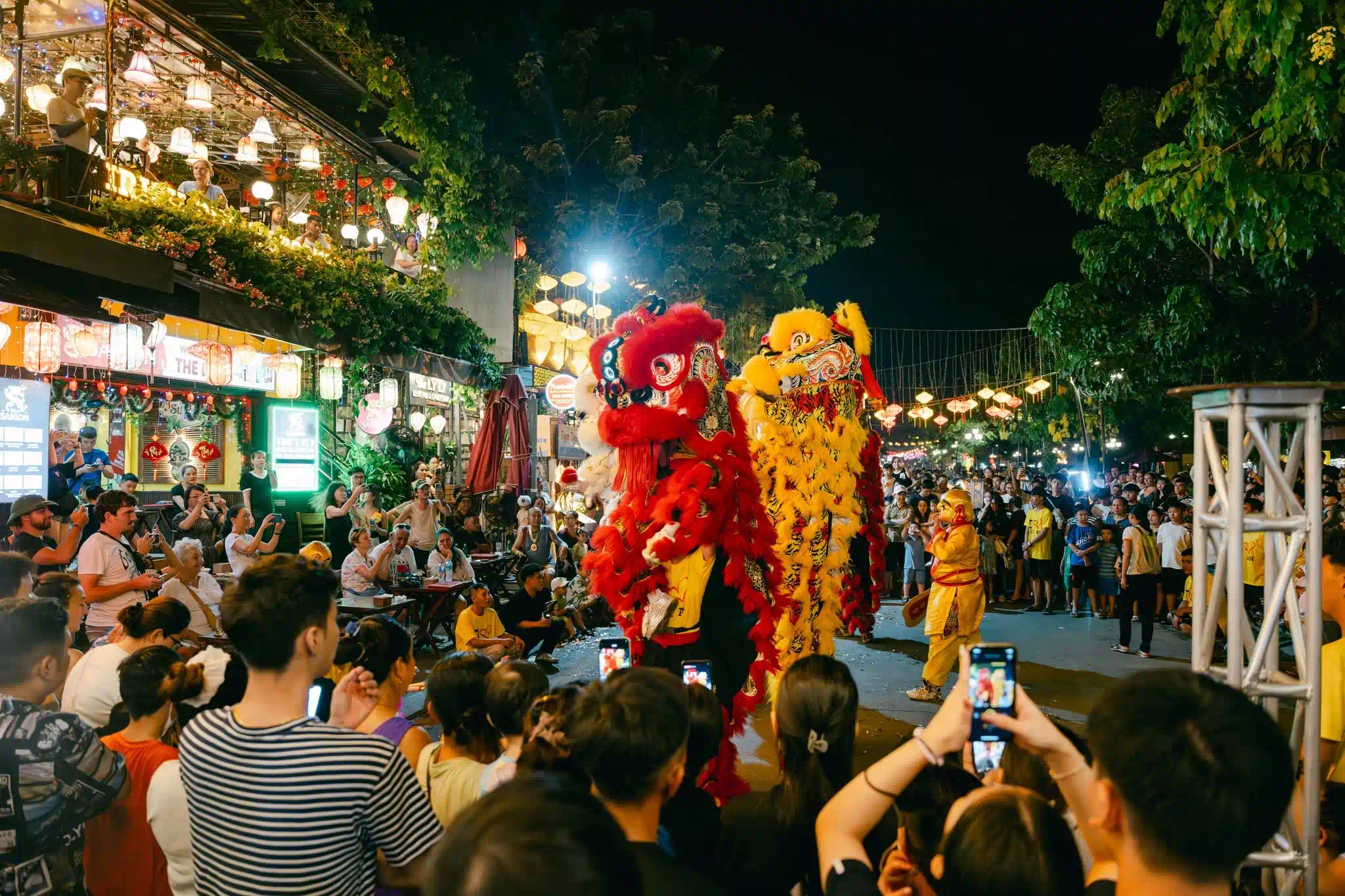
Performances are the element that varies most from month to month, and I would keep expectations low unless you are here on 2 March.
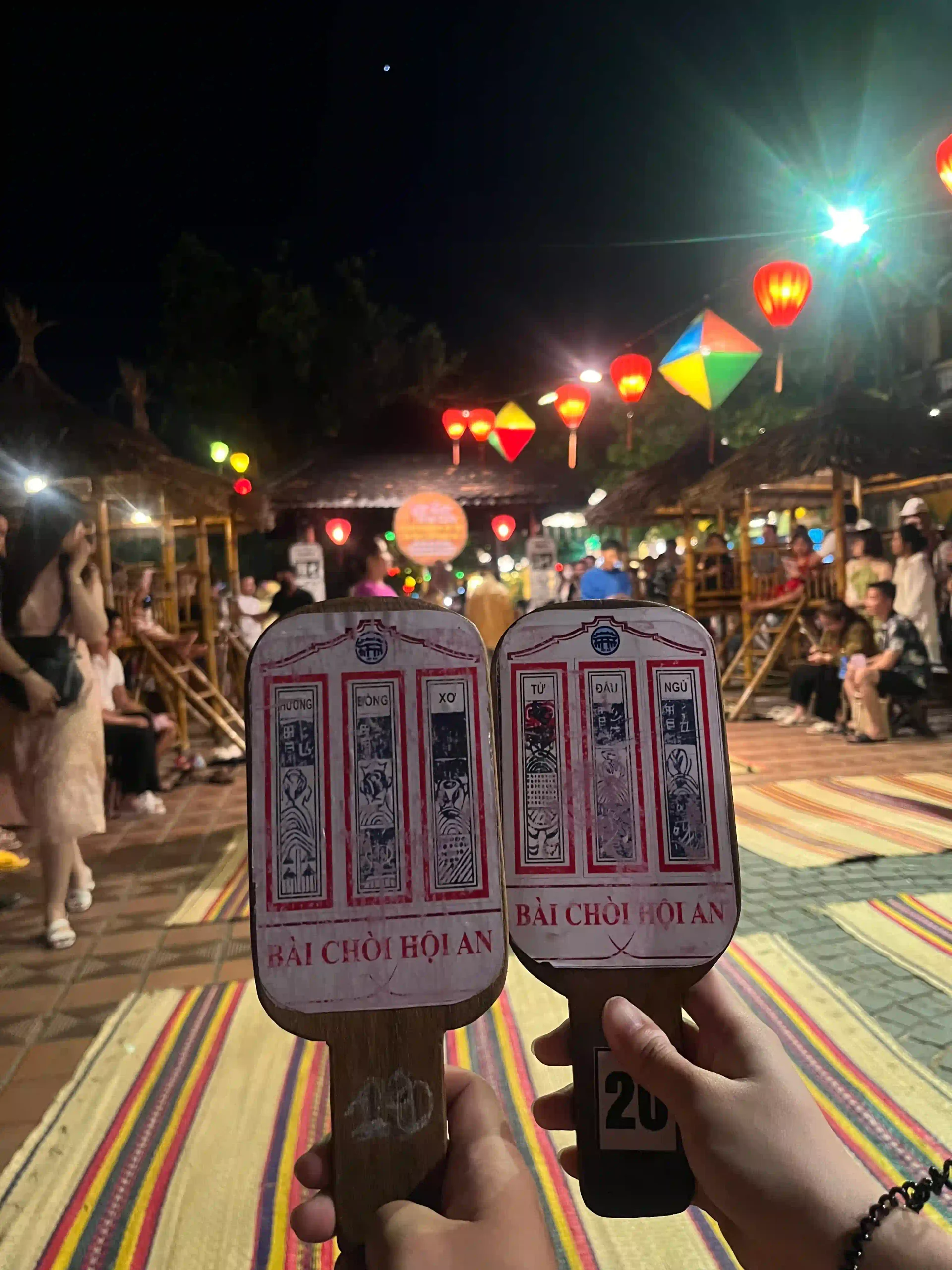
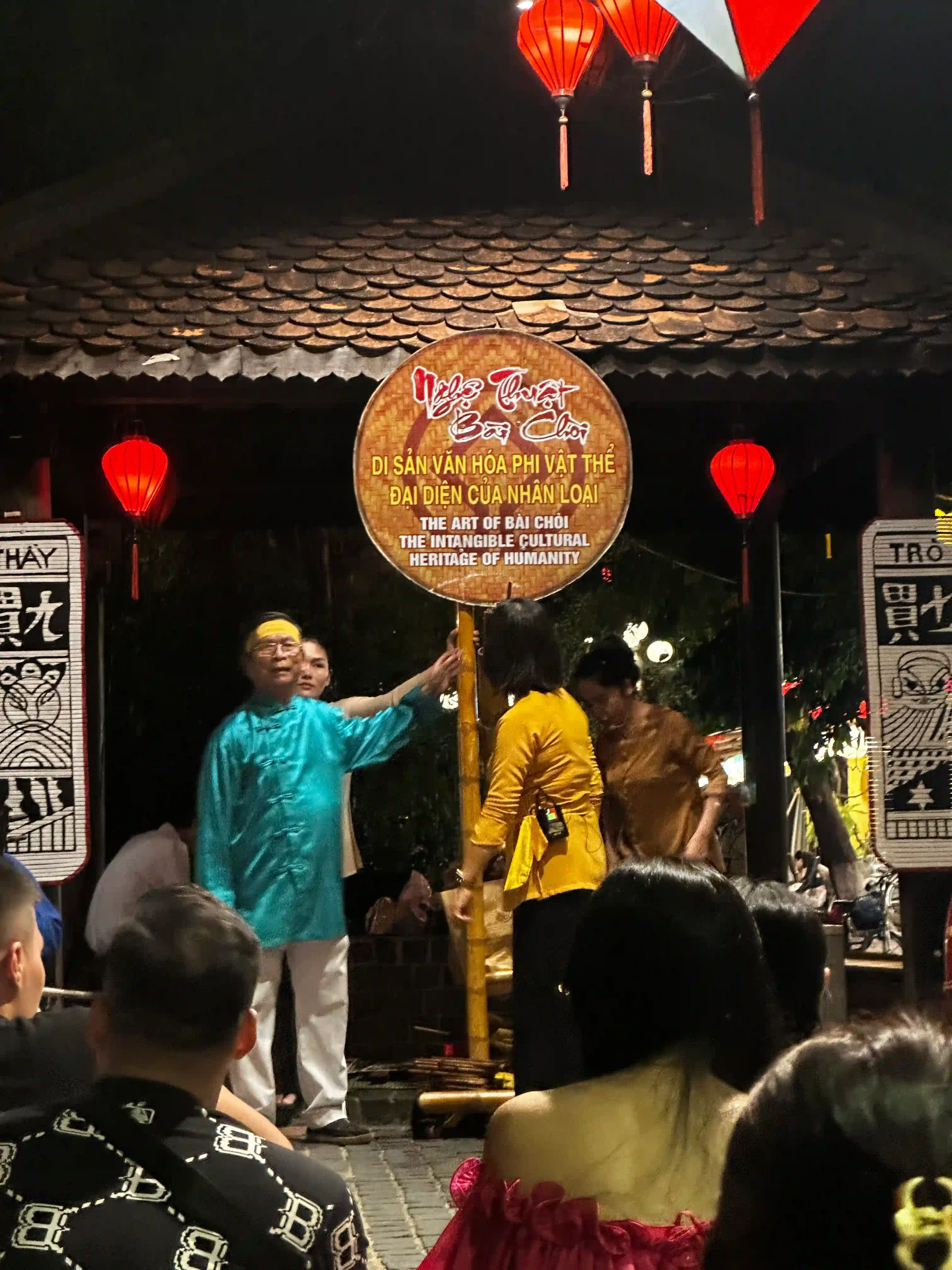
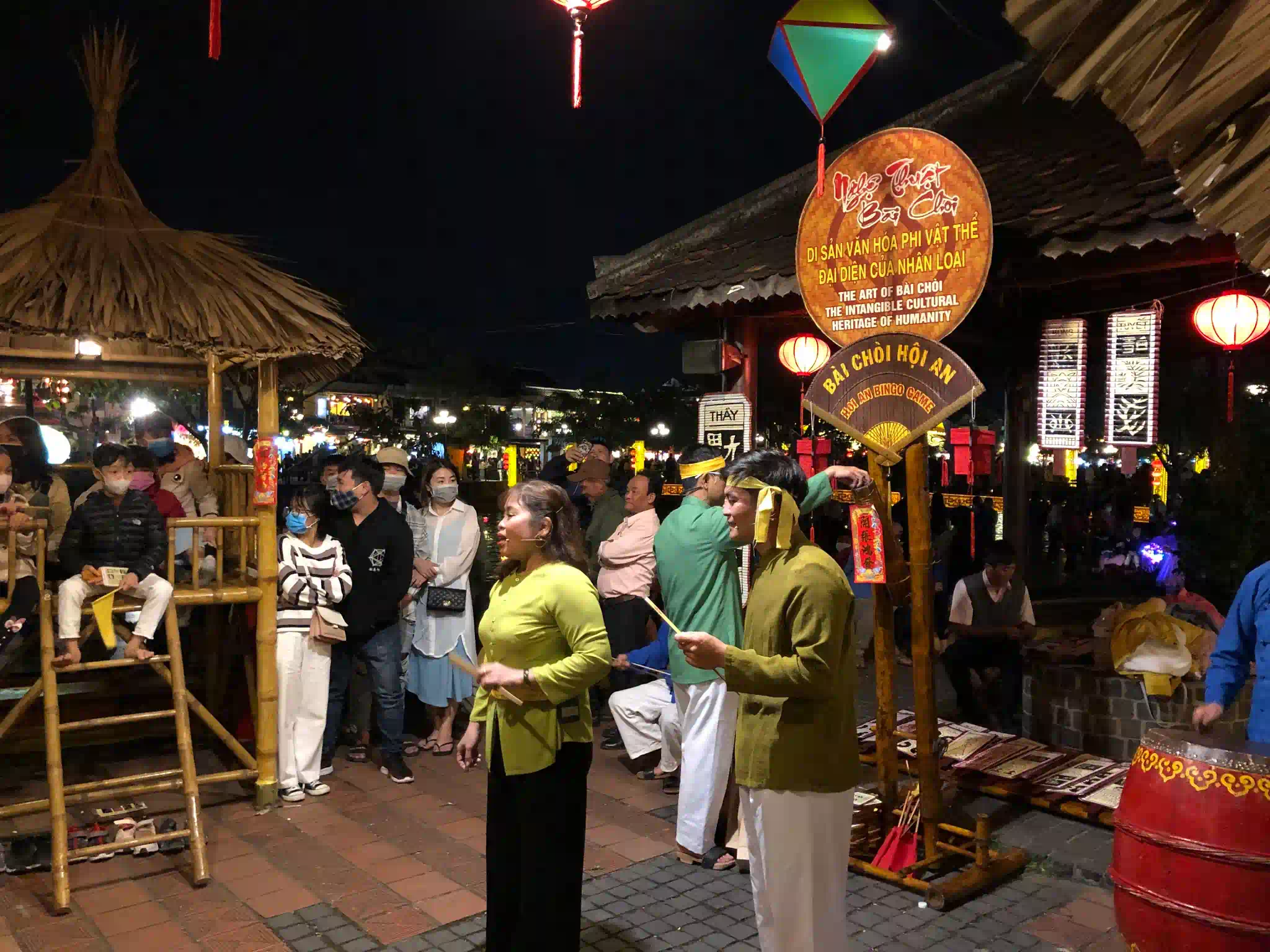
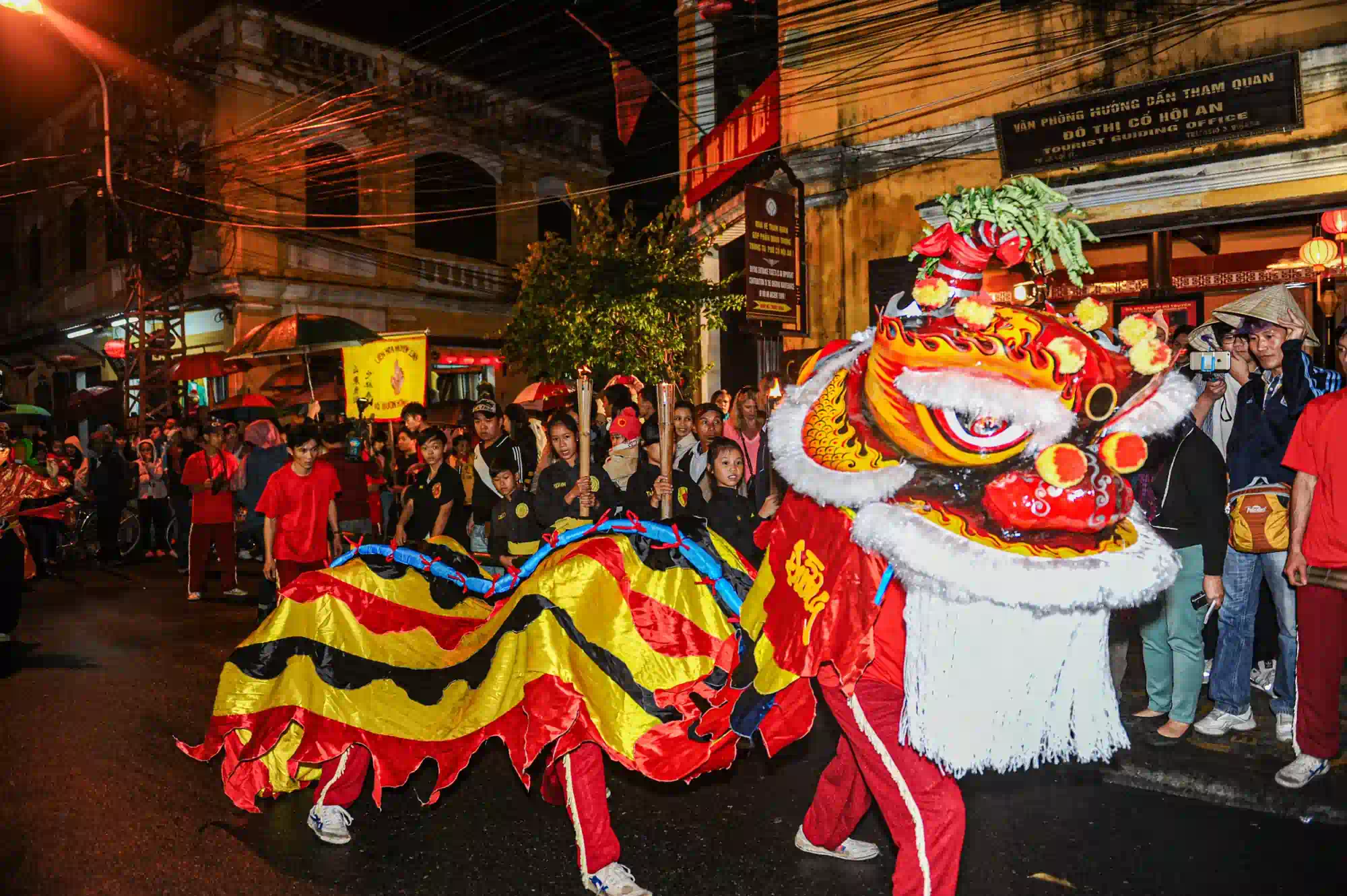
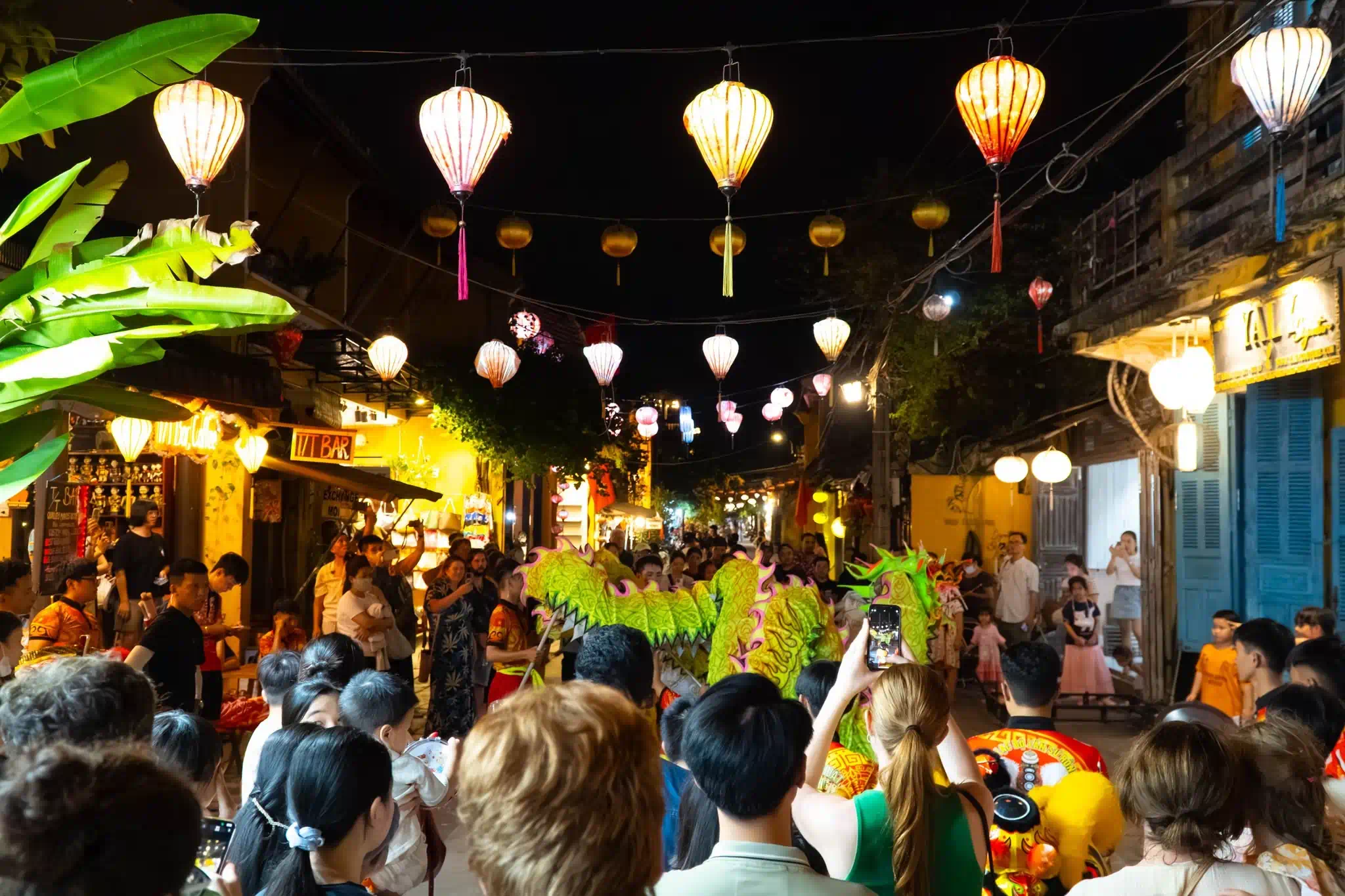
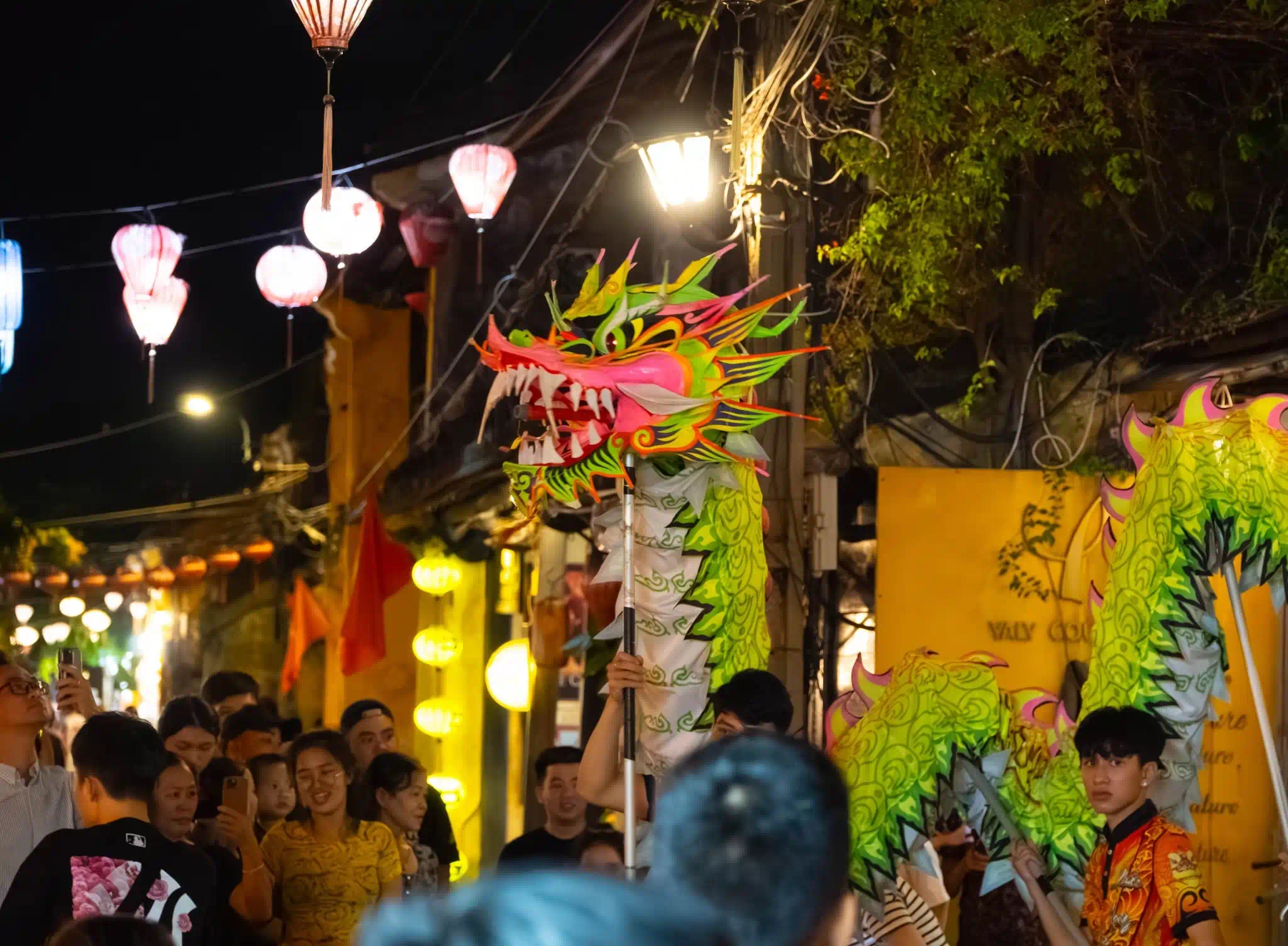
On a good night there is bài chòi being played on the square near the Japanese Bridge and some traditional singing, and on 2 March there is a full programme with lion dancing and processions between the temples.
On an ordinary Monday in July there may be nothing organised beyond the lanterns themselves, which is not a problem unless you have arrived expecting a parade.
Quiet lantern walks or full lion dances: it all depends on the night
Where to Stand
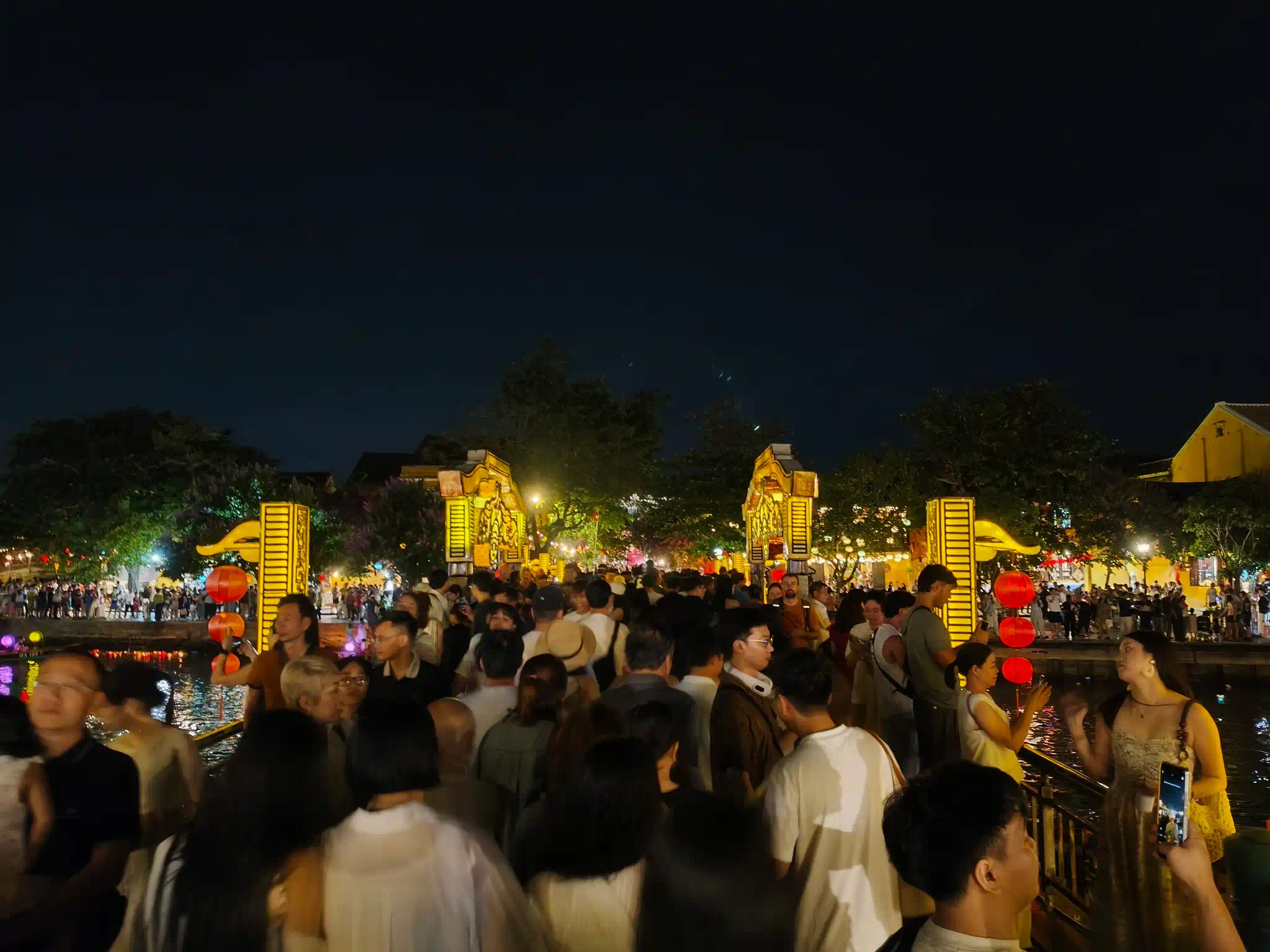
Almost everyone stands on the An Hội footbridge, because it gives the view back towards the Old Town that appears in every photograph of this place, and by eight there is no room on it.
I would go down onto the Bạch Đằng bank on the town side, west of the Japanese Bridge, where it is quieter and you are at the same level as the lanterns on the water.
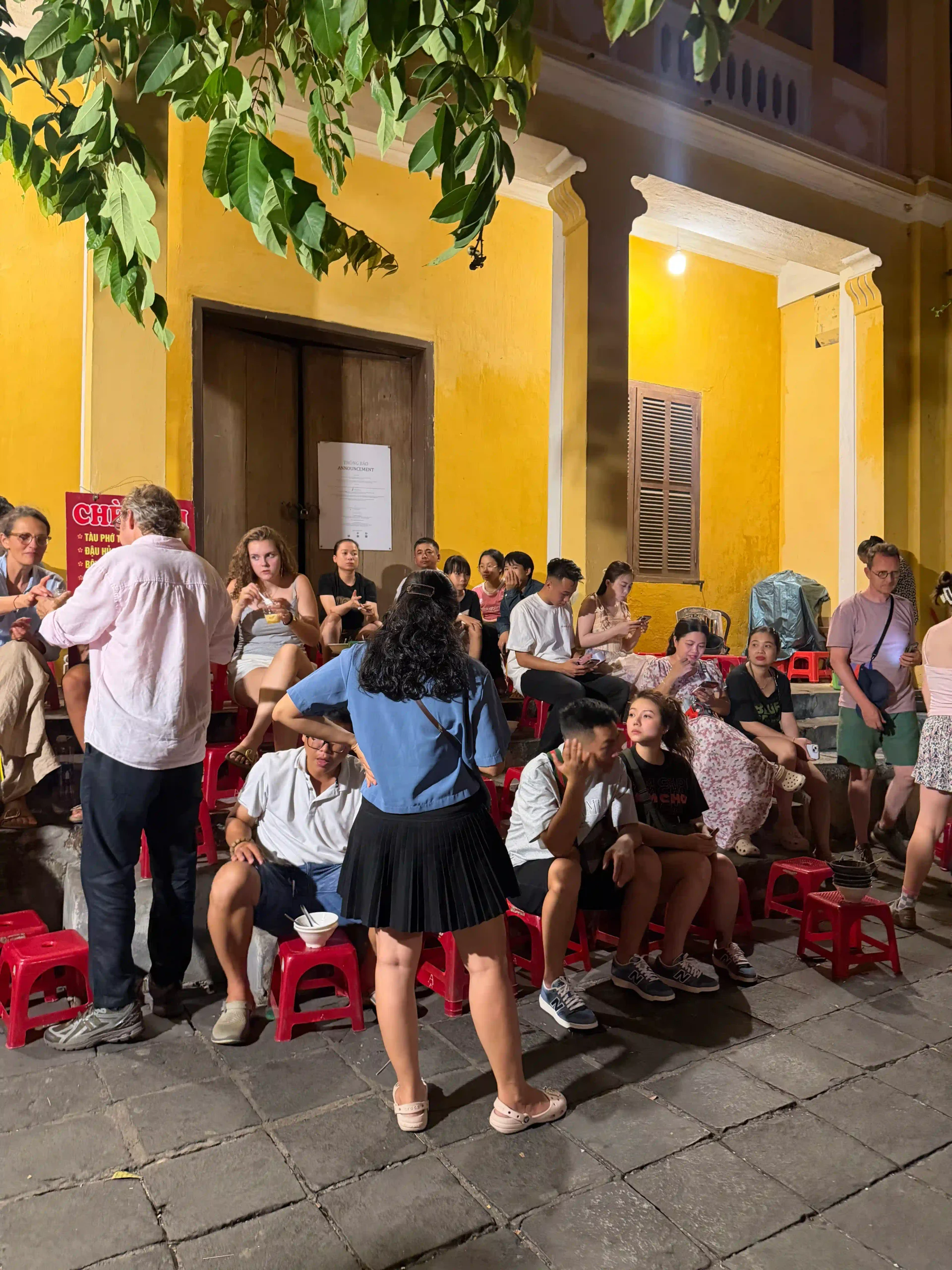
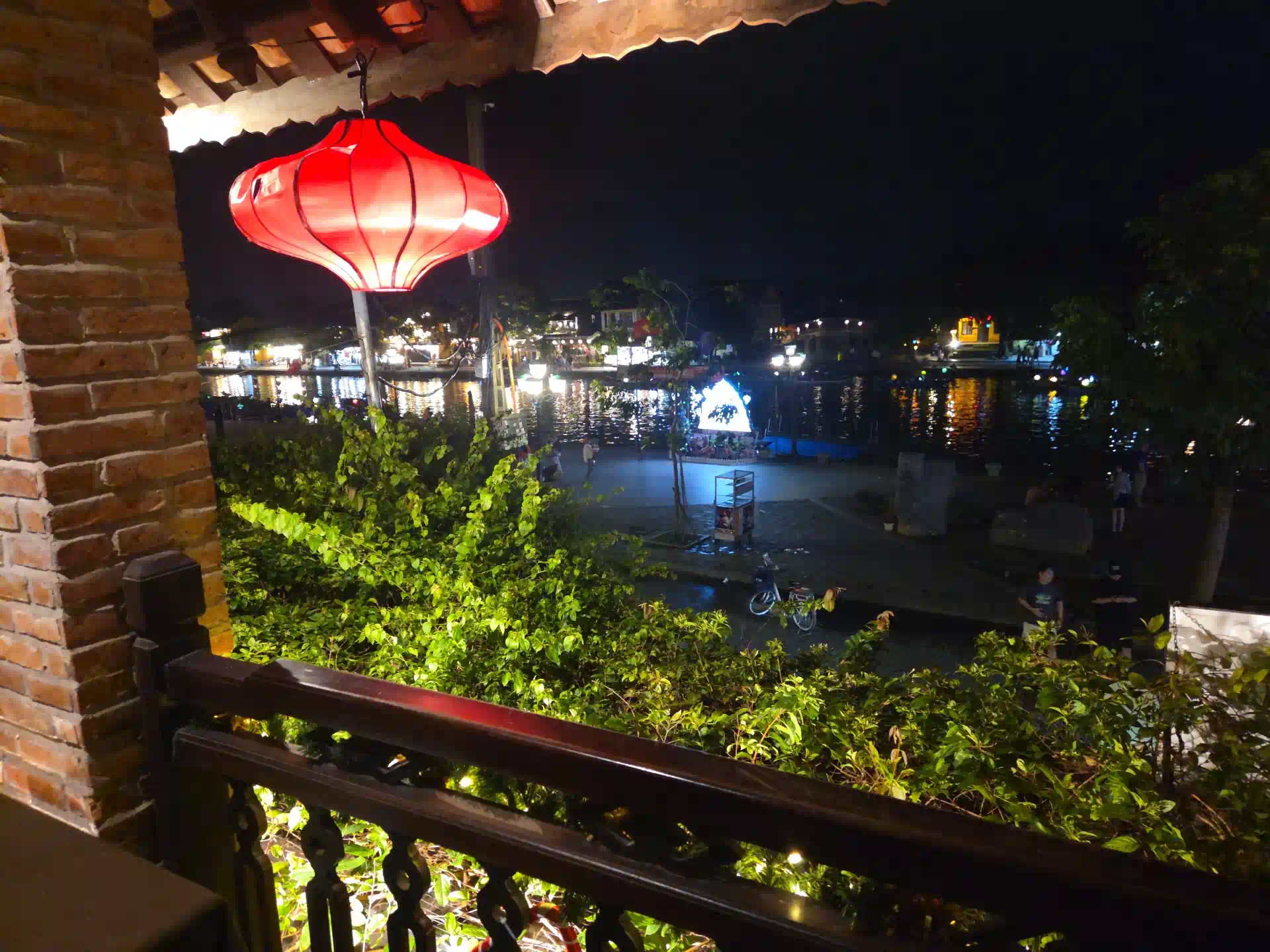
The alternative, and the one I would take at the end of a long day of walking, is to buy a coffee upstairs at one of the first-floor places on Nguyễn Thái Học and watch the whole thing over the top of the crowd, which for the price of a drink is the best value in town.
Packed footbridge, quiet riverbank, or an upstairs café above the crowd
Cẩm Nam, five minutes east over the bridge, is the other option and hardly anybody goes. It is not the immersive version and I would not choose it on a quiet month, but on 2 March it is the sensible one.
For photographs it is the twenty minutes immediately after the street lighting goes off that matters, and it is worth bringing something that copes in low light, because lanterns read considerably dimmer to a sensor than they do to the eye.
Tết Trung Thu in Hoi An: 25 September 2026
Tết Trung Thu falls on Friday 25 September 2026, the fifteenth day of the eighth lunar month, and the September lantern night is the Thursday immediately before it. The two running back to back does not happen every year, and it makes the last week of September the most interesting week on this calendar.
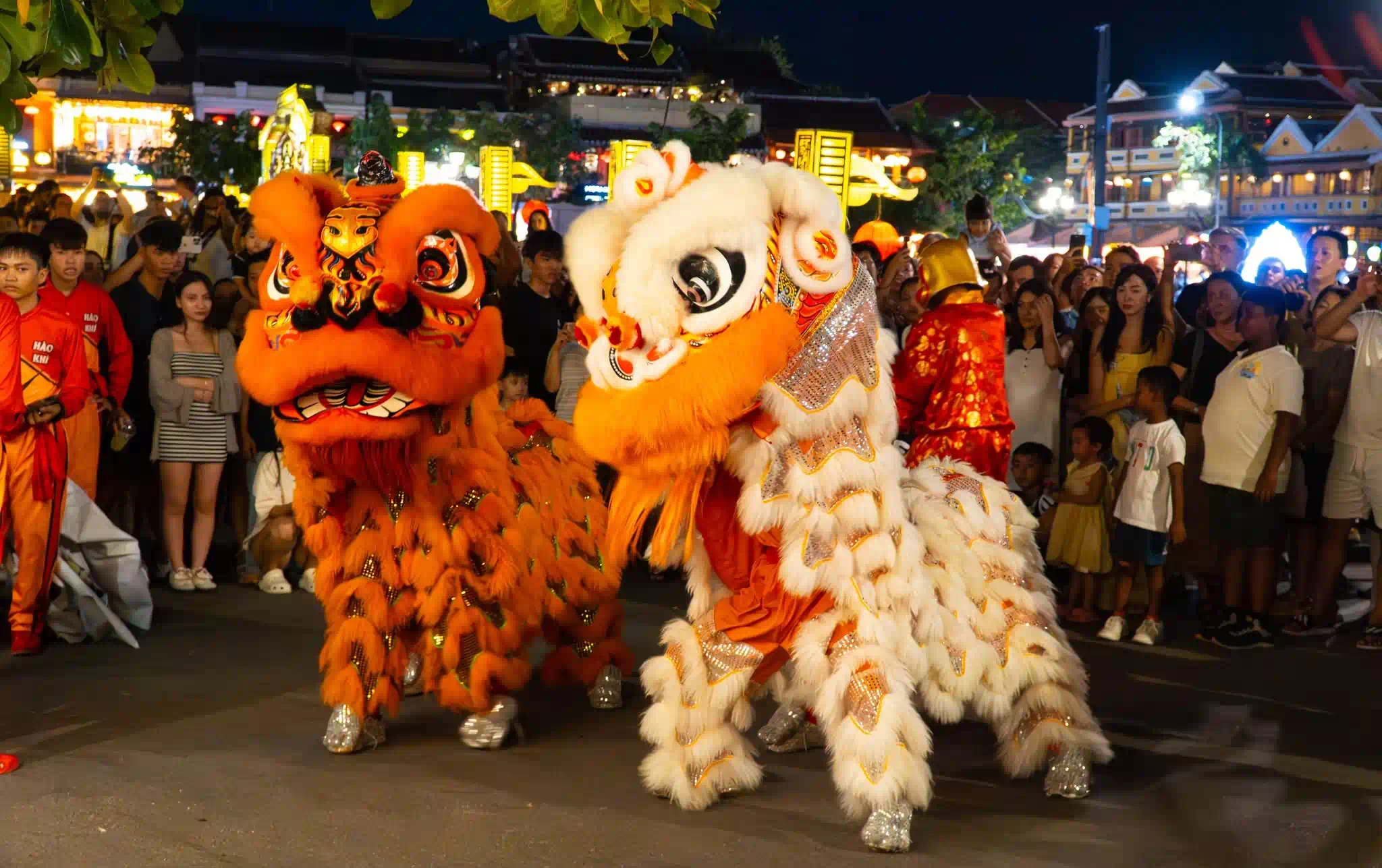
It is a different event from the monthly lantern night. Trung Thu here is local. Neighbourhood groups and schools spend days preparing for it, the whole occasion is pitched at children first, and visitors are welcome without being the reason it happens. The town treats it as heritage in a way it does not quite treat the monthly full moon night.
Múa Thiên Cẩu
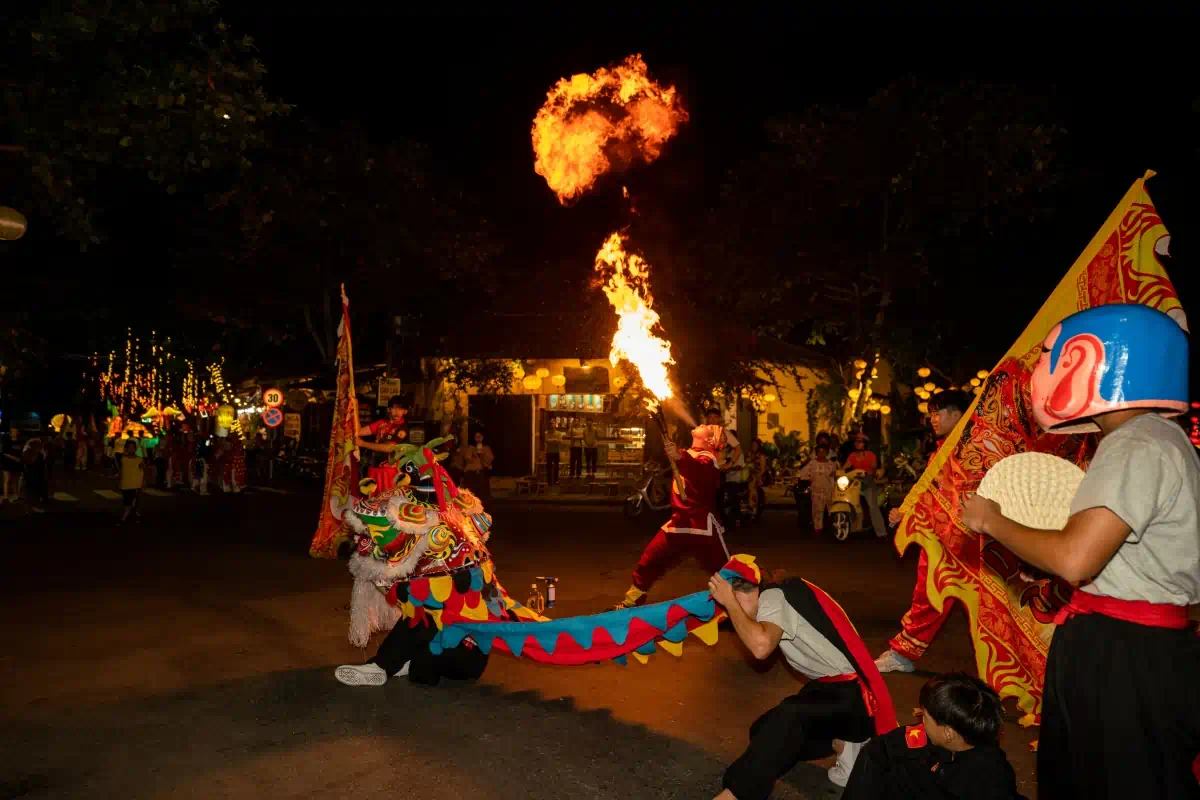
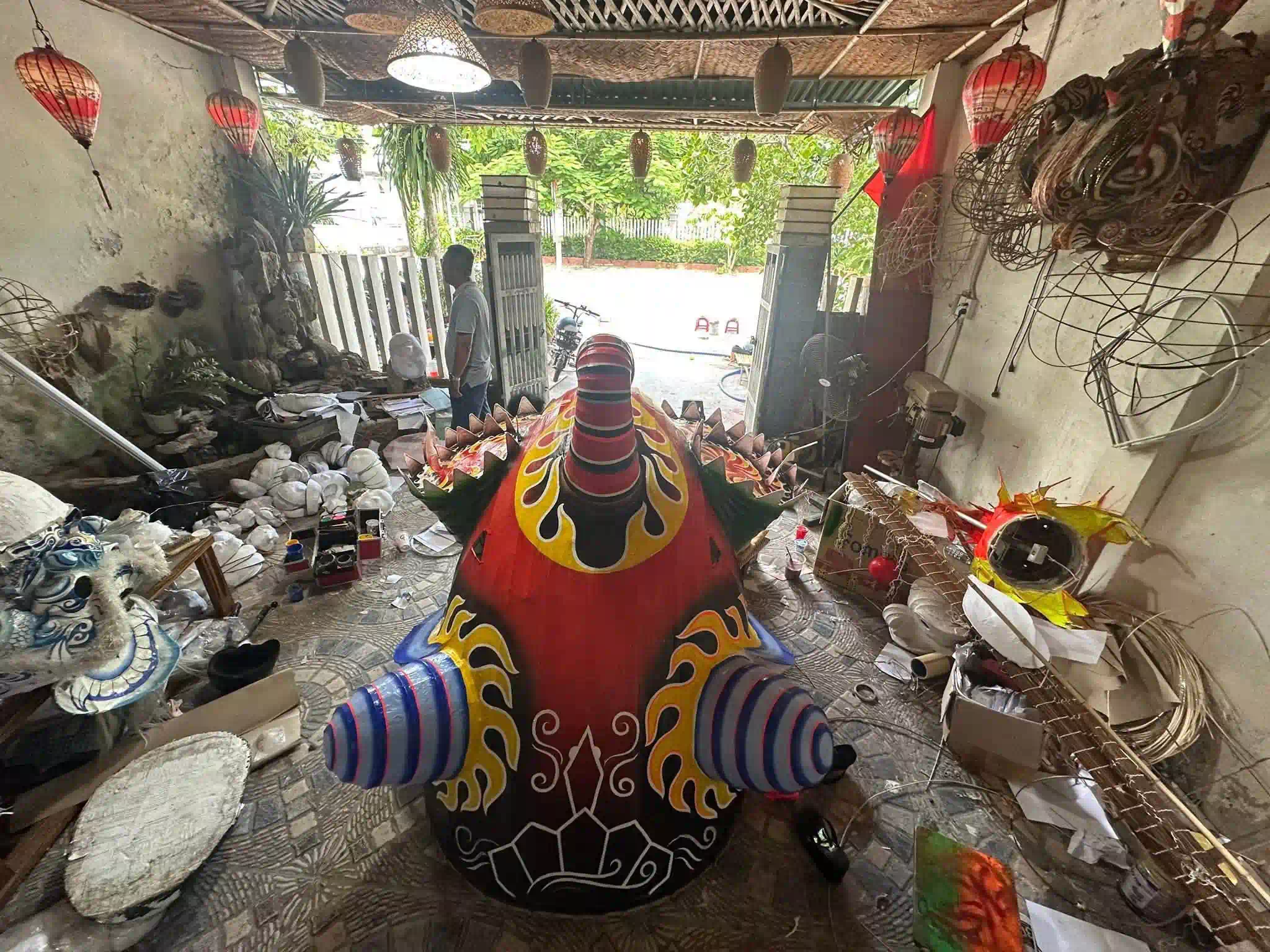
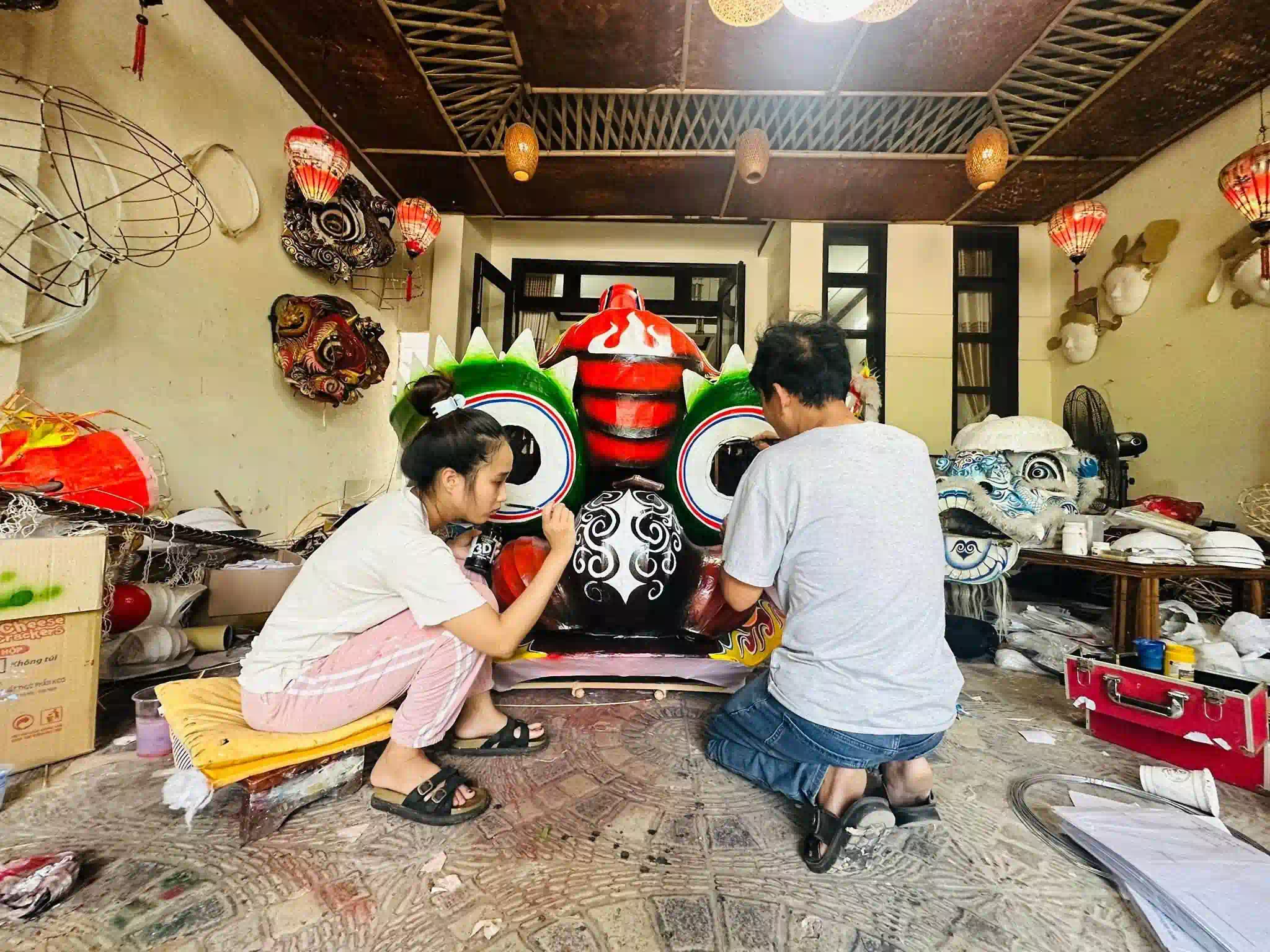
Thiên Cẩu means heavenly dog, and it belongs to Hoi An specifically in a way that the lion dance does not. The head is built from rattan, bamboo and paper and painted in the five colours of the ngũ hành, and the eyes are large and bulging and meant to be threatening. It is danced alongside Ông Địa, the round grinning figure with the fan and the belly, whose function throughout is to provoke the Thiên Cẩu and be chased for it.
Older artisans still teach the school teams how to build the heads and how to move them, and the teams compete against one another in the days leading up to the rằm.
Of everything in this article, this is the part I would most want someone to see.
The rest of the programme
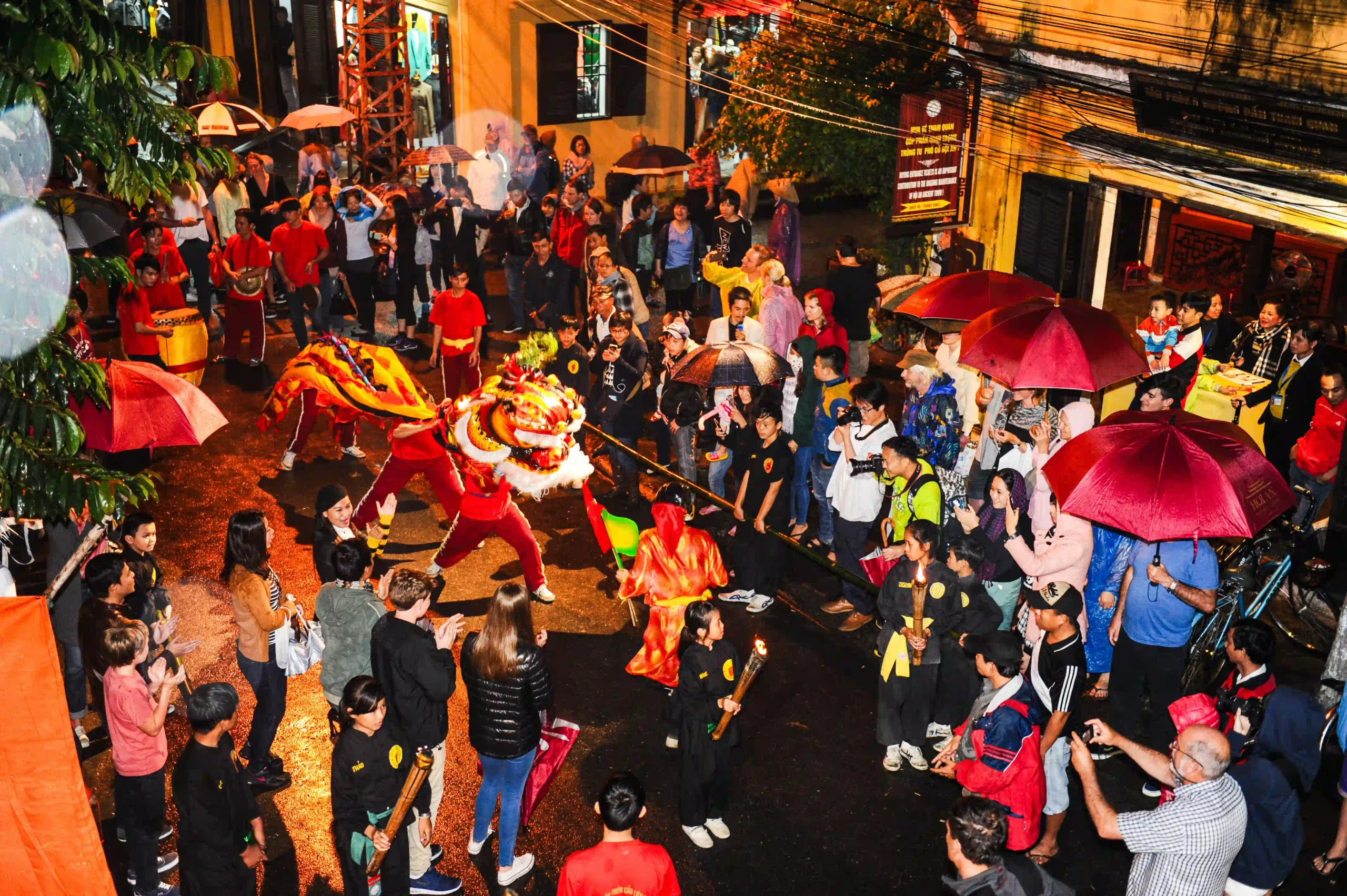
The 2026 events run across the Hội An, Hội An Đông and Hội An Tây wards, which is how the area has been divided administratively since Quảng Nam was merged into Đà Nẵng city in 2025. Expect Thiên Cẩu and lion dance competitions, a lantern procession with children carrying their own, mâm cỗ displays, and performances on the square.
Đà Nẵng has also flagged an international lantern event in Hội An for September 2026, so the month may be heavier than a normal September.
Mooncakes appear about three weeks beforehand, and the ones from the older Hoi An bakeries are a different proposition from the boxed supermarket versions.
With children, this is the best week of the year to be here, and I would say that even accounting for the crowds. Without children, and if crowds are the thing you travel to avoid, the last week of September is the week to skip.
Lion dances, lantern processions take over the town
Which 2026 Lantern Night to Choose
2 March is the maximum version. Rằm tháng Giêng is the full moon Vietnamese people actually observe, so the programme is the largest of the year and the town is at its most decorated, and it is also the most crowded night and the most expensive week for a room. It is the one I would recommend to someone who wants the full spectacle and the one I would personally avoid.
22 December is the quiet answer, and an odd-sounding one. The air is cool and clear, the summer crowd has gone, and the floods have usually finished by then. If December sounds bleak, 1 April and 30 May are the sensible middle choices.
24 and 25 September if you are travelling with children, for the reasons above.
30 April I would avoid unless the domestic holiday atmosphere is the thing you want. Reunification Day opens a four-day national break and central Vietnam fills with Vietnamese families, which makes for a good evening if you like the noise, but there is no room to move and the hotels price accordingly.
October and November carry real risk. Those are the flood months, the boats stop running when the Thu Bồn is high, and the riverfront streets go under from time to time. It is worth chancing if the rest of your trip already puts you here, but I would not build anything expensive on top of 23 October.
Getting Into Town on a Festival Night
The Old Town is closed to vehicles, so whatever you arrive in stops at the edge and you walk the last few hundred metres in.
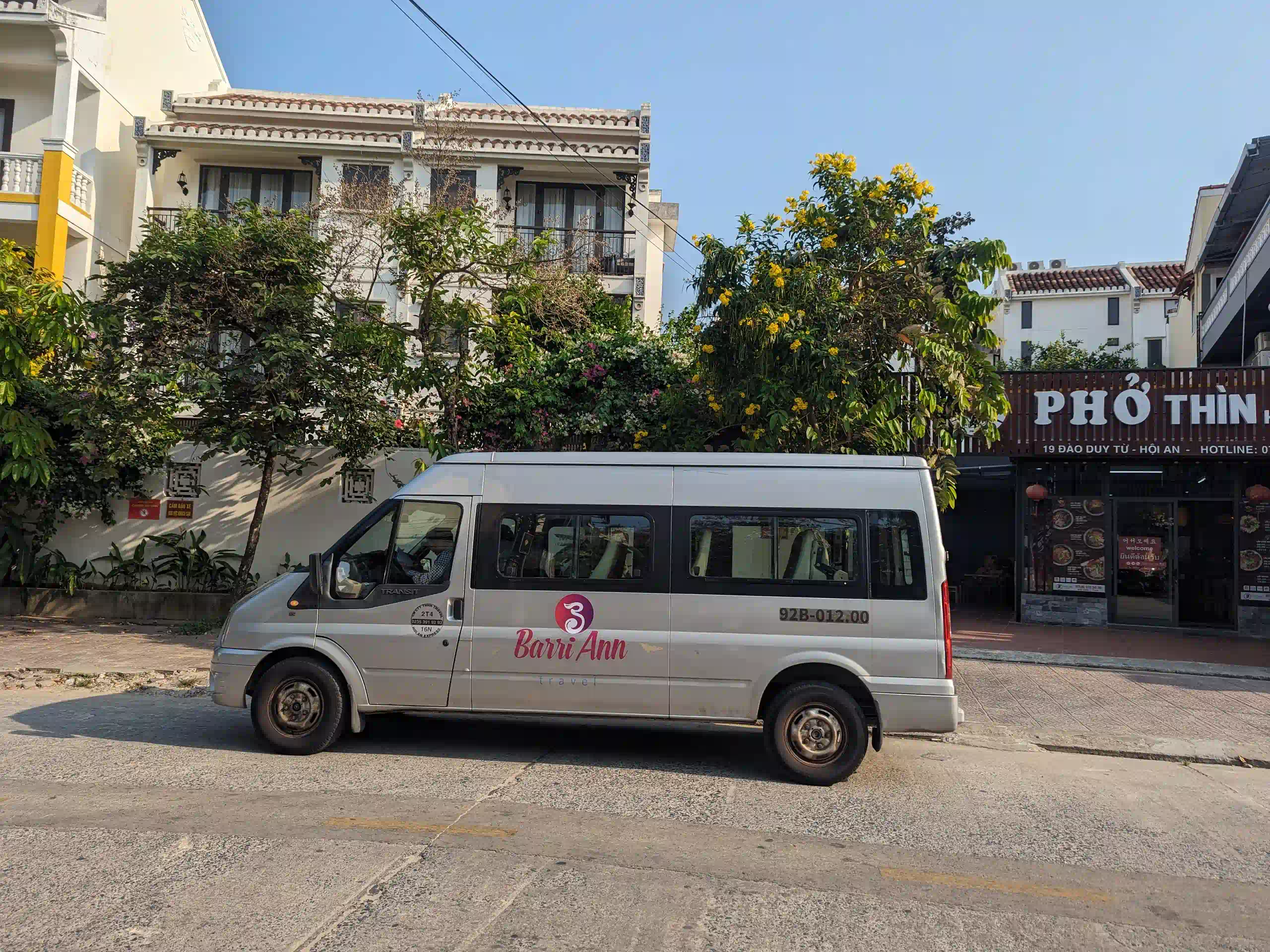
Coming from Da Nang, allow more than the usual forty minutes on 2 March and 30 April in particular. Grab and metered taxis both work, and you will be set down somewhere around Phan Châu Trinh or the bus station end. The routes and current fares are in my Da Nang to Hoi An guide.
The thing that catches people out is the journey home. If you are staying at An Bàng or Cửa Đại, arrange the car before you go out, because Grab availability at half past ten on the edge of a closed Old Town is unreliable and there is nowhere pleasant to stand while you work that out.
Rooms fill faster for lantern nights than for anything except Tết, and the good mid-range places nearest the Old Town go first.
For 2 March I would book two to three months ahead. For 30 April I would book by February, because the domestic market fills central Vietnam early and foreign visitors tend to notice too late. For an ordinary lantern night, three or four weeks is enough outside July and August.
On a festival night specifically it is worth paying to be inside or on the edge of the Old Town, purely so that you can walk home at the end of it. On any other night of the year I would argue the opposite and stay somewhere quieter with a pool, and which areas suit which sort of trip is in where to stay in Hoi An.
Hoi An is lantern-lit every night of the year, the boats run every night, and you can float a lantern every night. What the fourteenth adds is the traffic ban, the street lighting going off, and a denser feeling for a couple of hours.
That is a real difference and I do go out of my way for it, but it is not a separate attraction, and if your dates are fixed you have not missed the thing you came to Hoi An to see.
One scheduling note while you are working out the week: lantern making workshops fill up on festival days, so that belongs on a different afternoon.
FAQ
When is the Hoi An lantern festival 2026? On the fourteenth day of each lunar month. All thirteen dates are in the table above, running from 2 January to 22 December.
Do you need tickets? No, it is free. The Ancient Town heritage ticket is a separate purchase and is not needed to walk the streets.
What time does it start? From about 6pm, with the street lighting off closer to 8pm and the town quiet by 10pm.
Is it every month? Twelve or thirteen times a year, depending on how the lunar months fall.
How much are the floating lanterns? 10,000 to 30,000 VND, and less the further you buy from the footbridge.
Are there lanterns on a normal night? Every night of the year. The difference on the fourteenth is the traffic ban and the lighting.
Is Trung Thu the same thing? No. Tết Trung Thu is 25 September 2026 and it is a larger and considerably more local event.
Conclusion
Arrange the trip around the weather and around how long you actually want in central Vietnam, then look at the table, and if one of the dates falls within a day or two of where your Hoi An nights already sit, move them. That is a small adjustment for a real payoff. Rearranging Hanoi and Sapa so that you can be here on 22 November is not worth it.
If none of the dates work at all, go out on an ordinary evening at about eight and walk the river east towards Cẩm Nam, and the appeal of the place will be obvious regardless of what the moon is doing. What else there is to do here after dark is in the Hoi An at night guide, and how any of it fits into two or three days is in how many days in Hoi An.
Help Us Keep It Real 🥰
Astrid Freja (Author)
Did you find this guide helpful for your trip? 🤔
Thank you so much! 🥰
Your contribution helps keep our community informed. If you love our authentic guides, please support us on Google! (It only takes 5 seconds) 😊
Got a question or an idea you want to discuss? Start a discussion here to get opinions and connect with other members.
Guest Post
Have a story, valuable experience, or a detailed guide to share? Contribute a high-quality article to enrich our community.
Your Post's Journey
To ensure quality, all new posts are not immediately visible on search engines like Google, Bing... Our team prioritizes reviewing high-value, insightful posts to feature publicly. You'll receive a notification when your contribution is selected!
Report Content
Create Story
We keep it real. Cookies keep it free.
To provide you with brutally honest travel advice without charging a dime, we use cookies. They help us track links and analyze site traffic to improve your experience. Is that cool with you?
Functional
Always active
These cookies are strictly necessary to make the site work properly, like letting you move around the site or keeping it secure. We can't turn these off.
Preferences
The technical storage or access is necessary for the legitimate purpose of storing preferences that are not requested by the subscriber or user.
Statistics
These help us understand how you use VietAdvisor (e.g., which reviews are actually helpful) so we can create better content. Data is kept anonymous.The technical storage or access that is used exclusively for anonymous statistical purposes. Without a subpoena, voluntary compliance on the part of your Internet Service Provider, or additional records from a third party, information stored or retrieved for this purpose alone cannot usually be used to identify you.
Marketing
Essential for our survival! These cookies track affiliate links so we earn a commission when you book a hotel/tour through our site. No extra cost to you, but it keeps our lights on.










 Ha Giang
 Hanoi
Hanoi Ho Chi Minh City
 Ha Long
 Sapa
Sapa Mekong Delta
 Da Nang
 Hue
Hue Hoi An
 Ninh Binh
 Da Lat
 Nha Trang
 Phan Thiet
 Phu Quoc
 Quang Binh
 Quy Nhon
 Vung Tau
 Thai Nguyen
















 Tiếng Việt
 한국어
한국어 中文 (中国)
 日本語
日本語 ไทย
ไทย Deutsch
 Español
 Destinations
 Instagram
 Facebook
 X (Twitter)
 Threads
 Tiktok