









 Ha Giang
 Hanoi
Hanoi Ho Chi Minh City
 Ha Long
 Sapa
Sapa Mekong Delta
 Da Nang
 Hue
Hue Hoi An
 Ninh Binh
 Da Lat
 Nha Trang
 Phan Thiet
 Phu Quoc
 Quang Binh
 Quy Nhon
 Vung Tau
 Thai Nguyen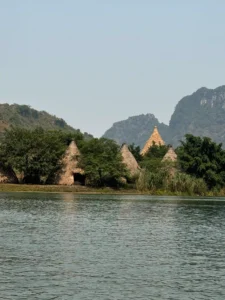
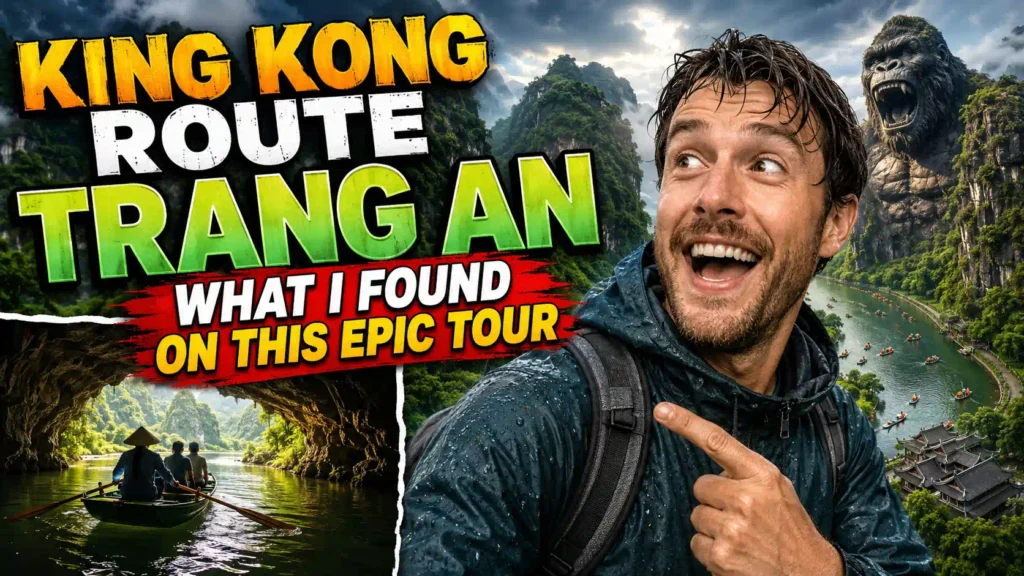

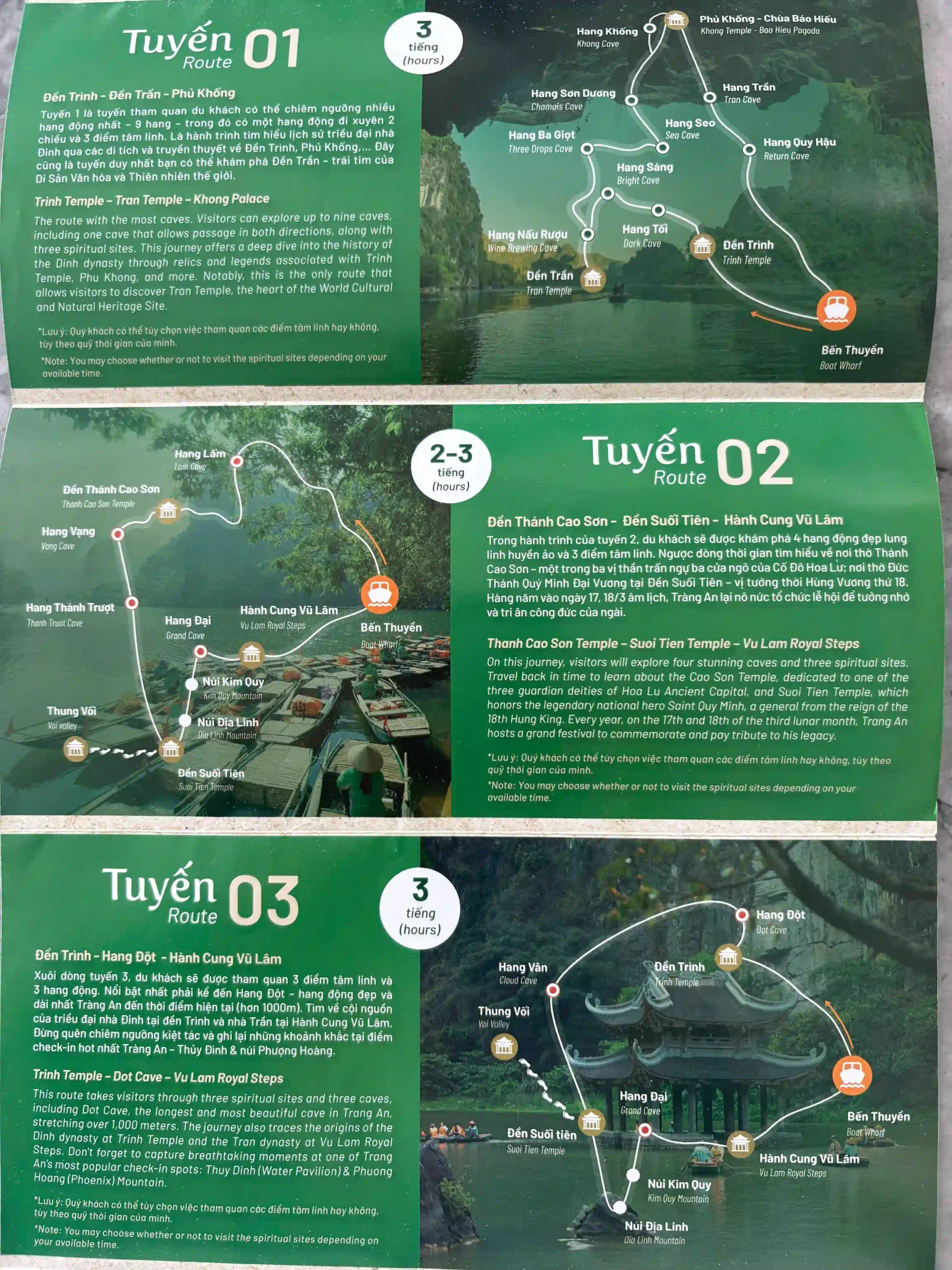
I usually point first-timers toward Route 2, the well-rounded default I’ve recommended before for anyone doing Trang An as part of a single day trip. Route 3 is a different trip entirely, longer, harder to get pointed toward at the ticket counter, and built around the strangest, most cinematic stretch of the whole complex, the one that shows up in Kong: Skull Island.
I went back specifically to do this one properly, and what I found was better in some ways and more honest in others than I expected going in.
I’m biased toward Trang An generally over Tam Coc for the boat experience, a preference I’ve mentioned before in my activities in Ninh Binh ranking, and the Trang An King Kong route specifically is a big part of why. Fewer other boats, longer stretches of genuine quiet, and a payoff at Dot Cave that neither of the shorter routes really matches.
- Quick Answer: The Trang An King Kong route is Route 3, the longest and least-requested of the three boat routes, built around Dot Cave, a 1,000-meter passage crossed in near-total darkness. That cave leads into the valley used for Kong: Skull Island’s most striking scenes. The actual movie set was dismantled in 2019 to protect the UNESCO site, so the landscape itself, not any leftover props, is what you’re actually going to see.
- The Route, Broken Down:
- Duration: 3 to 3.5 hours, the longest of the three Trang An routes.
- Price: 250,000 VND per adult, 125,000 VND per child under 1.4m, same as Routes 1 and 2.
- Crowds: noticeably thinner than Route 2, which most tour groups default to.
- Boat setup: wooden sampan, 4-5 passengers, one rower.
- What You Actually See:
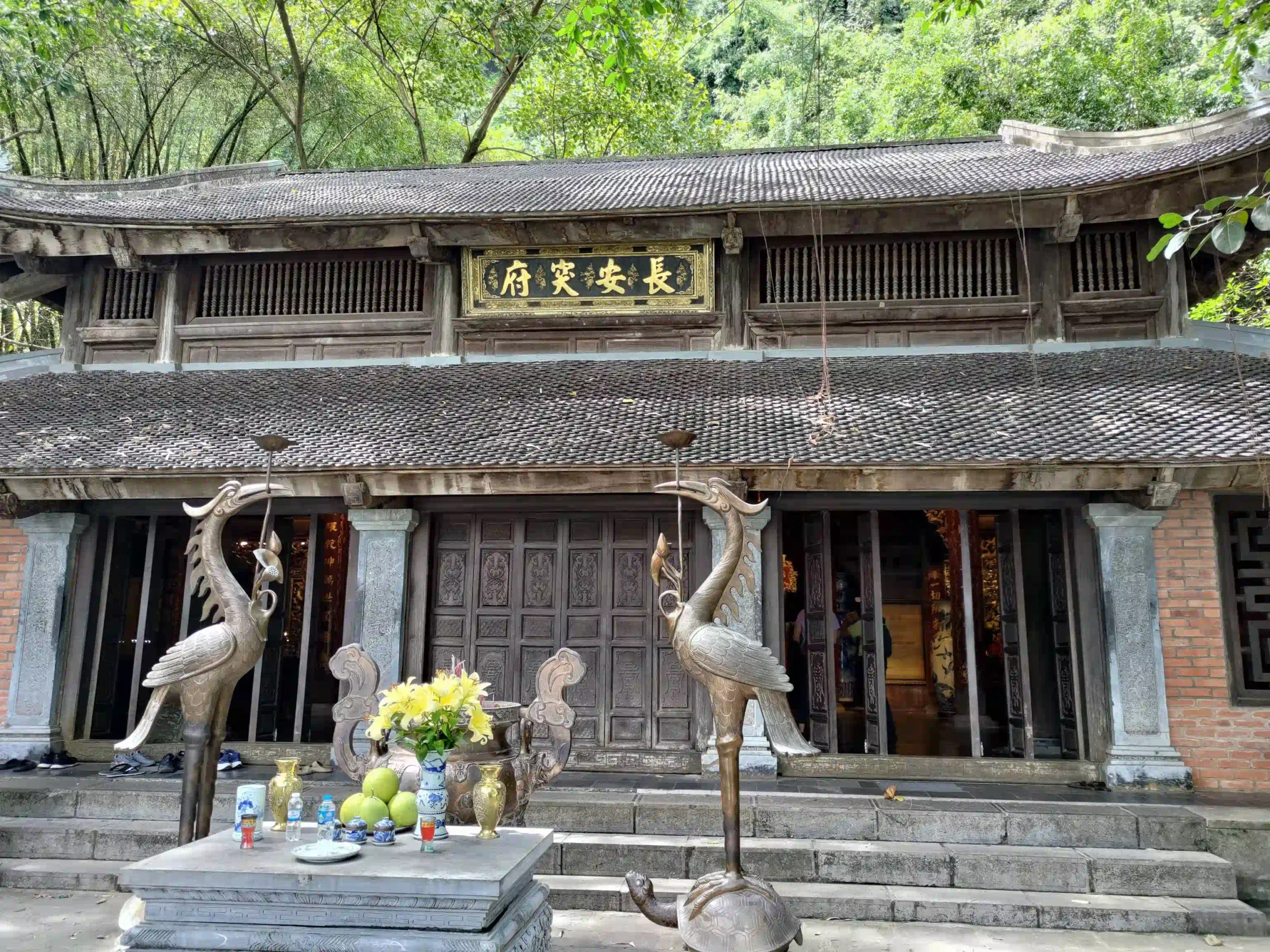
- Trinh Temple: the first stop, minor, not the reason to pick this route.
- Dot Cave: 1,000 meters, the longest cave in Trang An, ~20 minutes in near-darkness.
- The valley beyond it: the closest real landscape to the film’s fictional island.
- Vu Lam Palace (Hanh Cung Vu Lam): a genuine 13th-century Tran Dynasty site, not built for the movie.
- The former film set: landscape only, all props and structures removed in 2019.
- Booking Specifics:
- You must ask for Route 3 by name or number, staff default to Route 2 unless asked.
- No online booking, tickets purchased at the counter on arrival.
- Free digital audio guide via QR code at the entrance, multiple languages.
- Some tour operators can pre-arrange Route 3 if you mention the King Kong connection when booking.
- Compared to Routes 1 & 2: Route 1 has the most caves but the smallest scale; Route 2 is the balanced default most tours book; Route 3 trades a longer day for the least crowded water and the only route that includes both Dot Cave and Vu Lam Palace.
Getting Onto the Trang An King Kong Route in the First Place
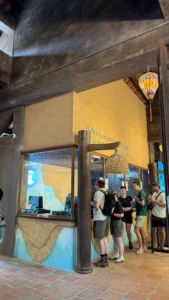
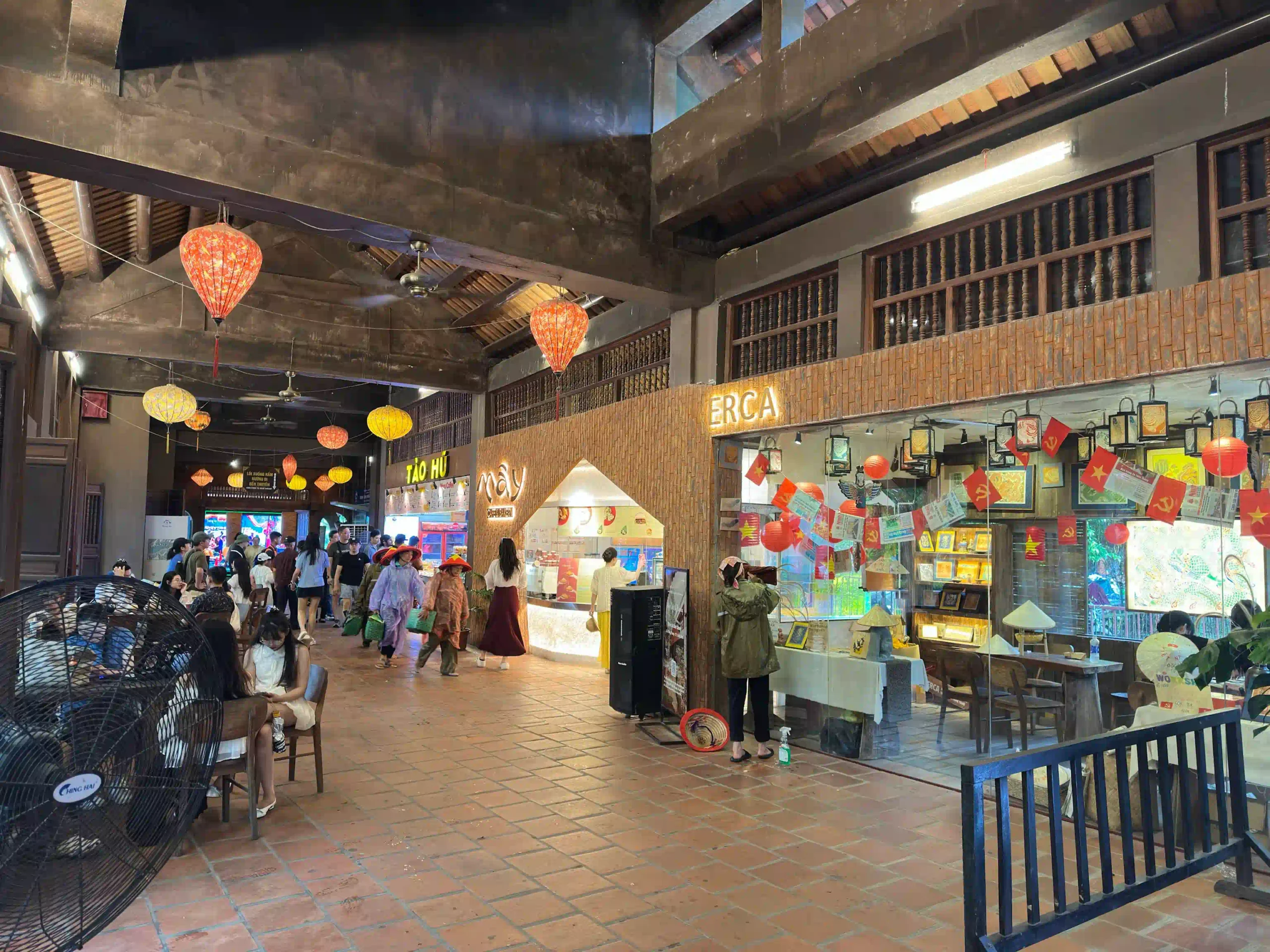
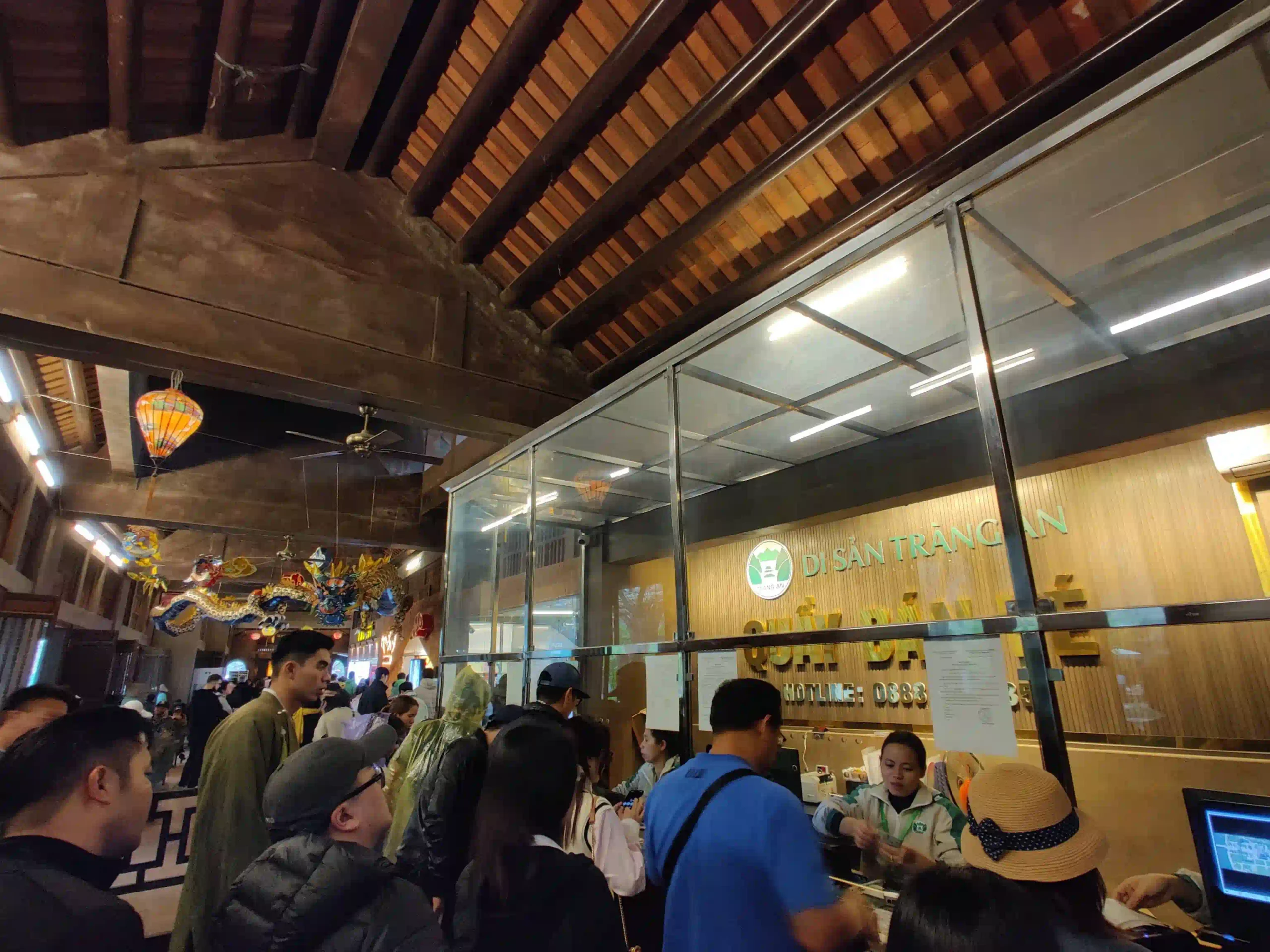
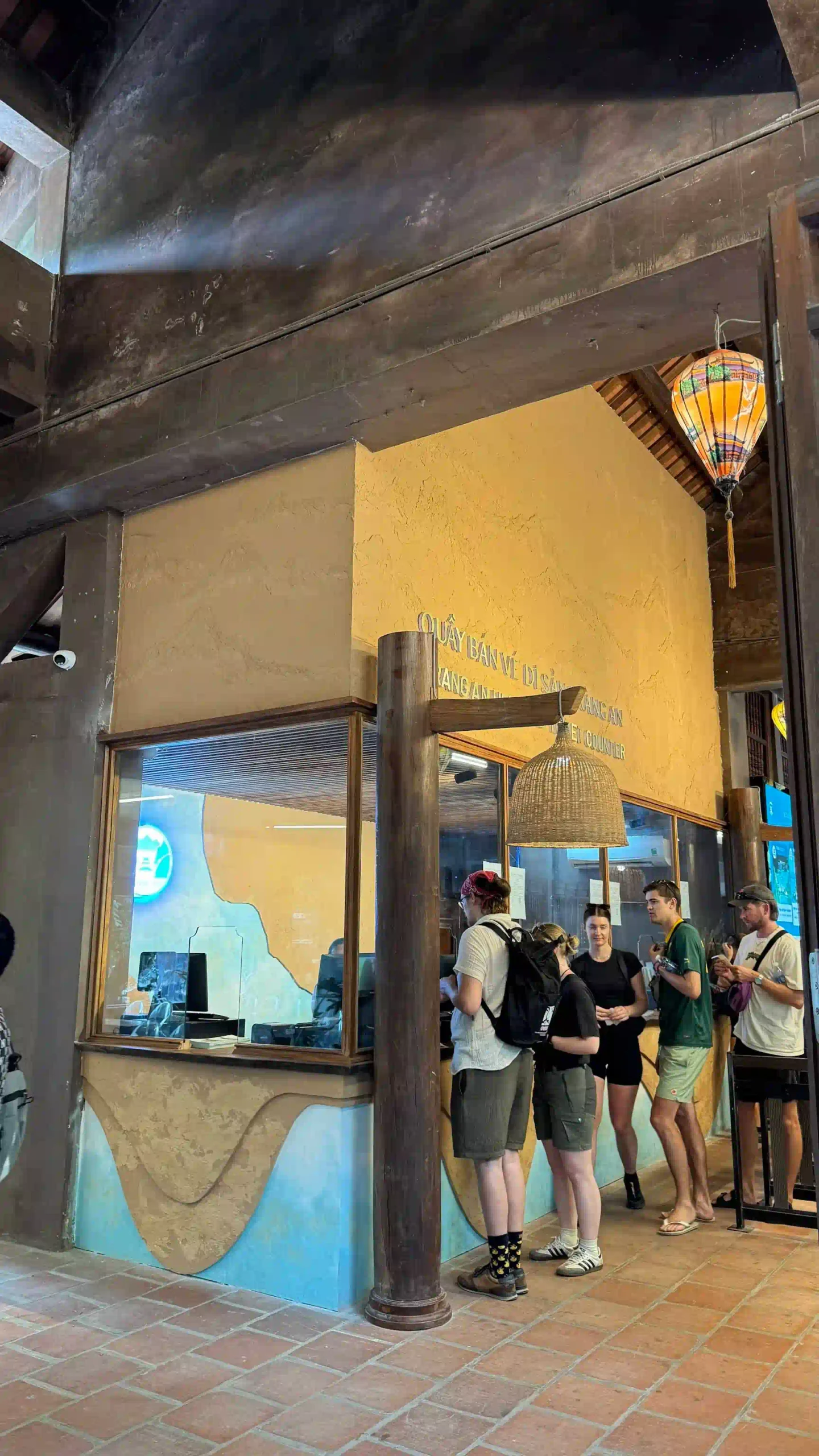
This took more effort than it should have. Trang An’s ticket counter defaults most visitors toward Route 2, shorter, more temples, generally the version group tours are built around.
Route 3 exists, costs exactly the same, and covers genuinely different ground, but you have to ask for it specifically by name or number rather than assuming it’s offered automatically.
Staff at the counter didn’t push back once we asked, but they also clearly weren’t going to suggest it unprompted, which tracks with how few boats we passed once we were properly underway.
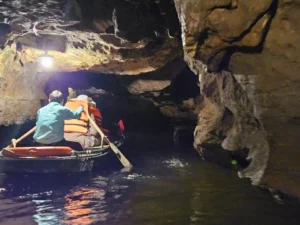
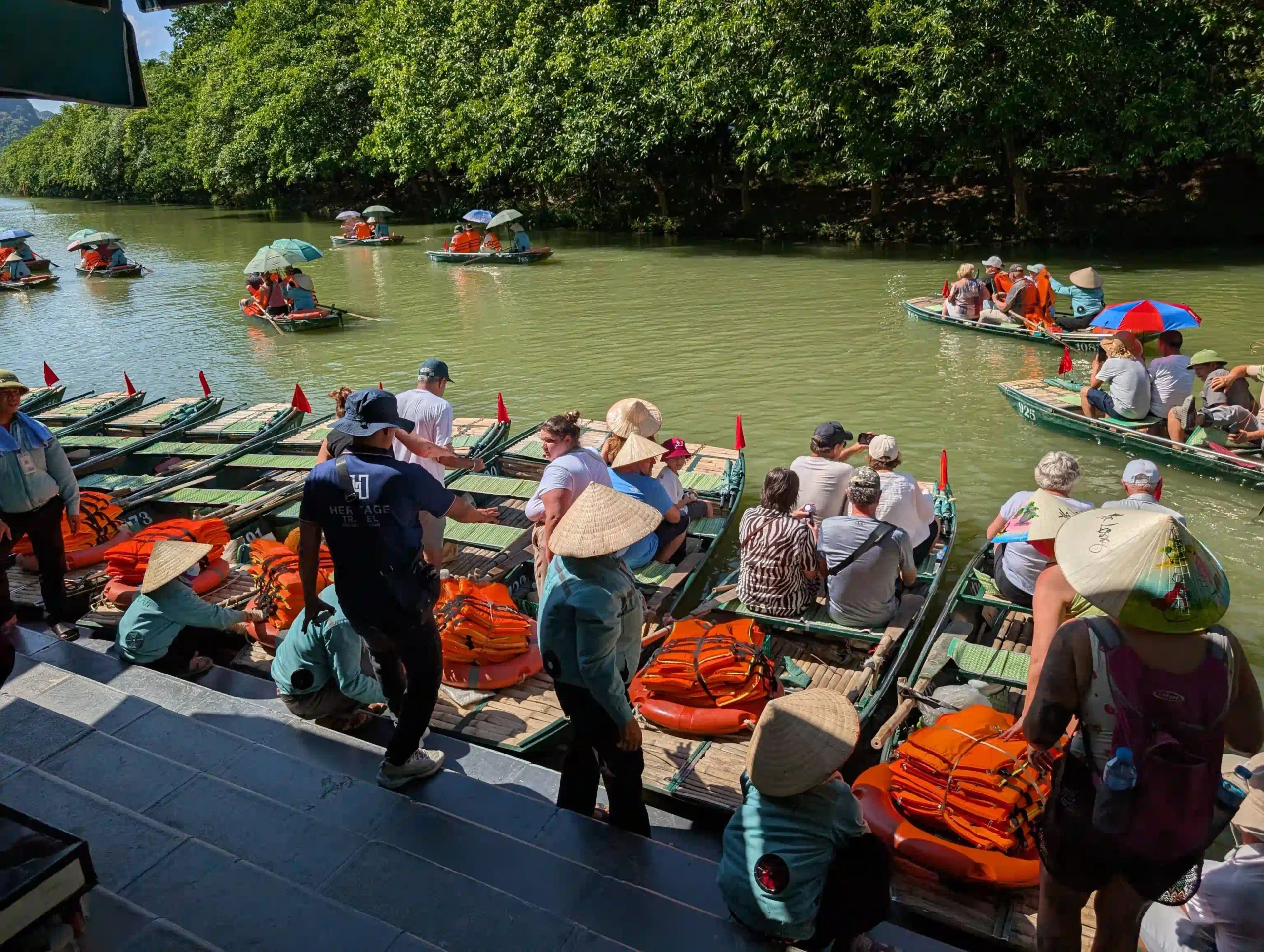
Once you’re assigned a boat, the setup is the same regardless of route: a wooden sampan, four to five passengers, one rower working the boat by hand and foot depending on the stretch. A digital audio guide is available through a QR code at the entrance if you want commentary in your own language along the way, though ours mostly worked in comfortable silence, which suited the landscape better than narration would have.
Our rower spoke enough English to answer direct questions but didn’t offer a running commentary unprompted, which I preferred, since a lot of what makes this route work is the quiet itself.
Trinh Temple, Then the Water Opens Up
The first stretch runs past Trinh Temple and a handful of smaller stops, pleasant but not the reason anyone picks the Trang An King Kong route specifically.
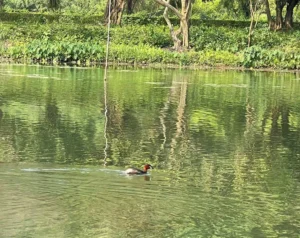
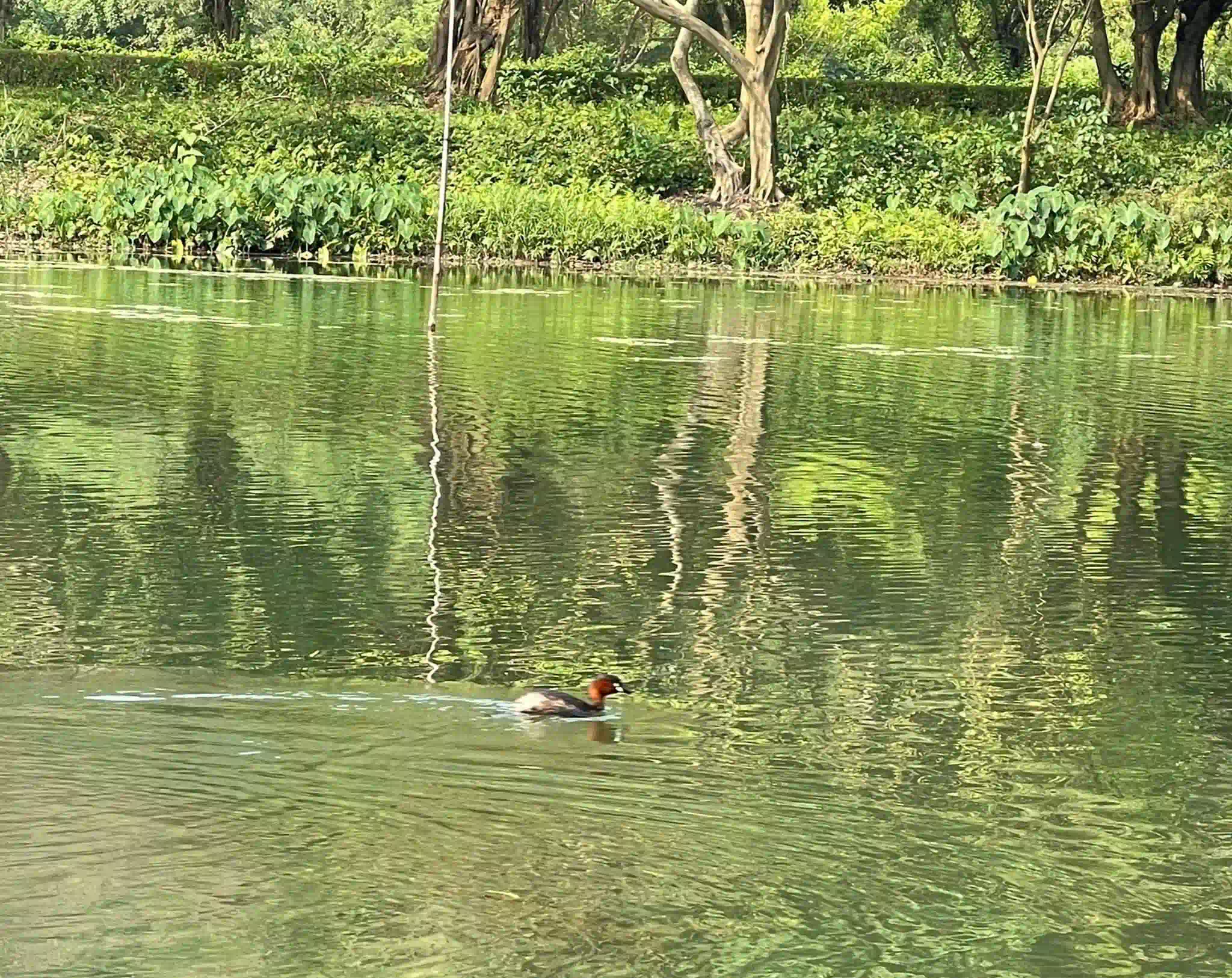
The water is glass-still in most sections, limestone walls rising directly out of it on both sides, close enough in places that you could reach out and touch the rock from the boat. A handful of birds, egrets mostly, worked the shallows near the temple stop, unbothered enough by the passing boats that they barely shifted position as we glided past.
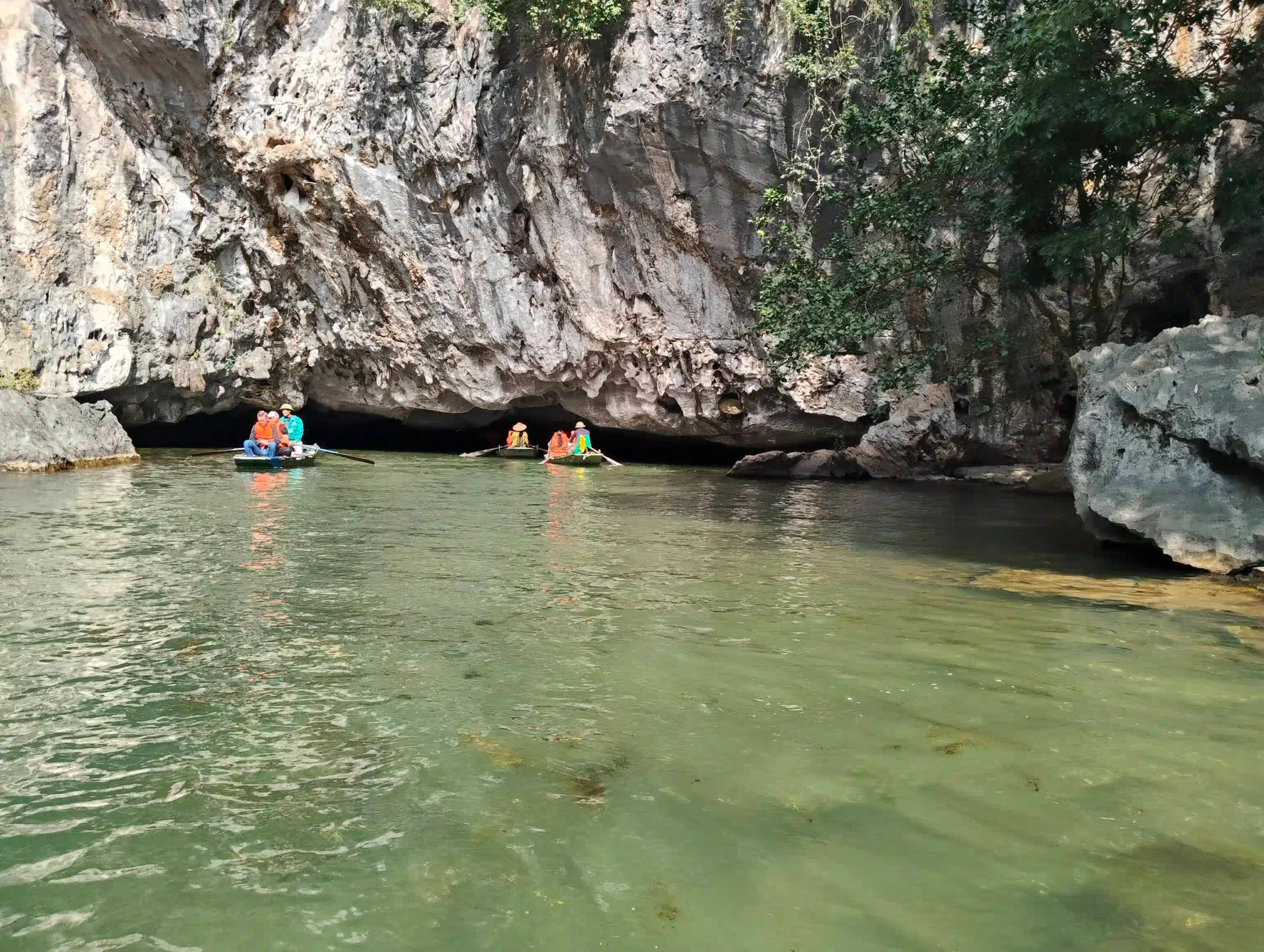
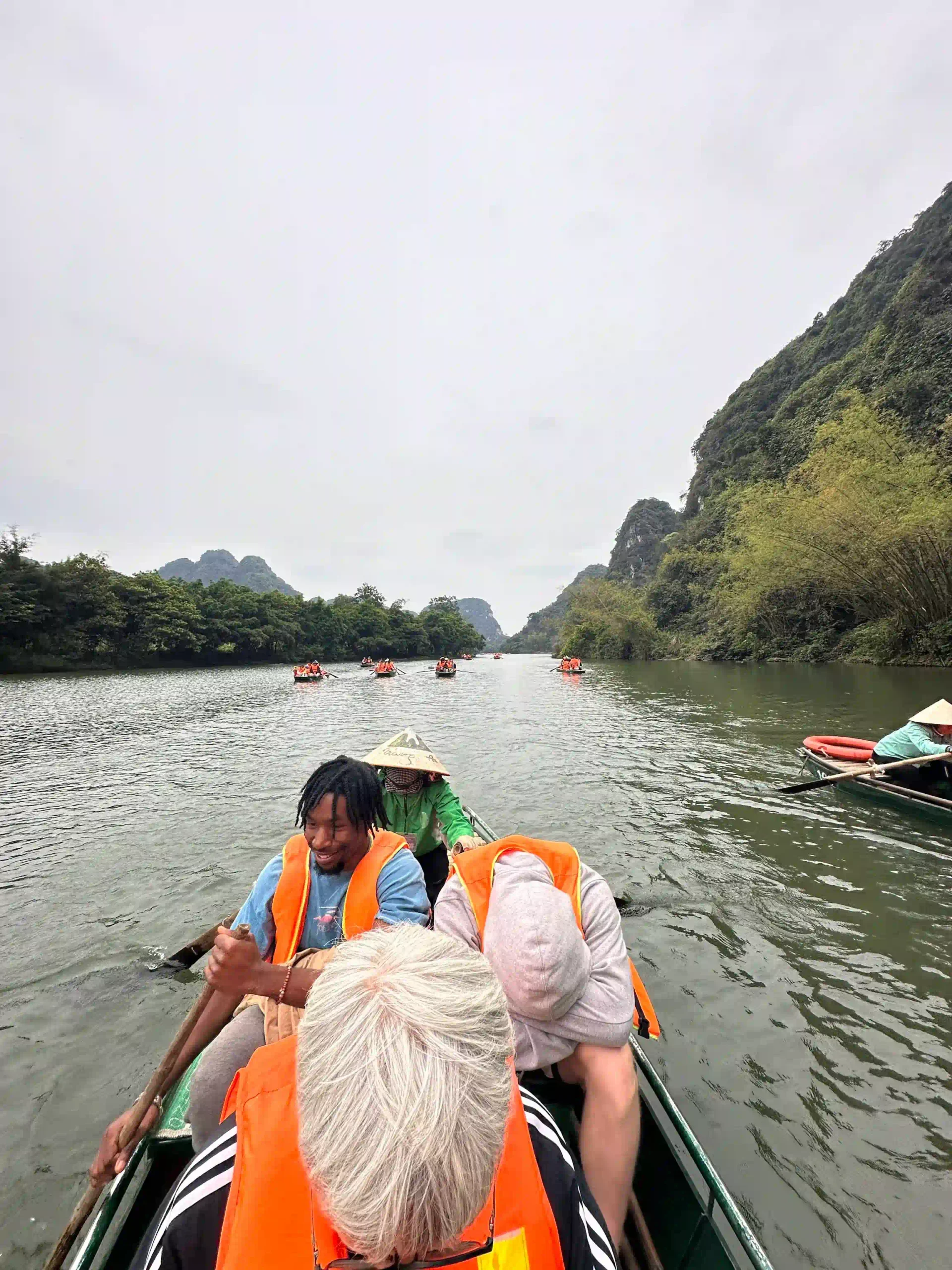
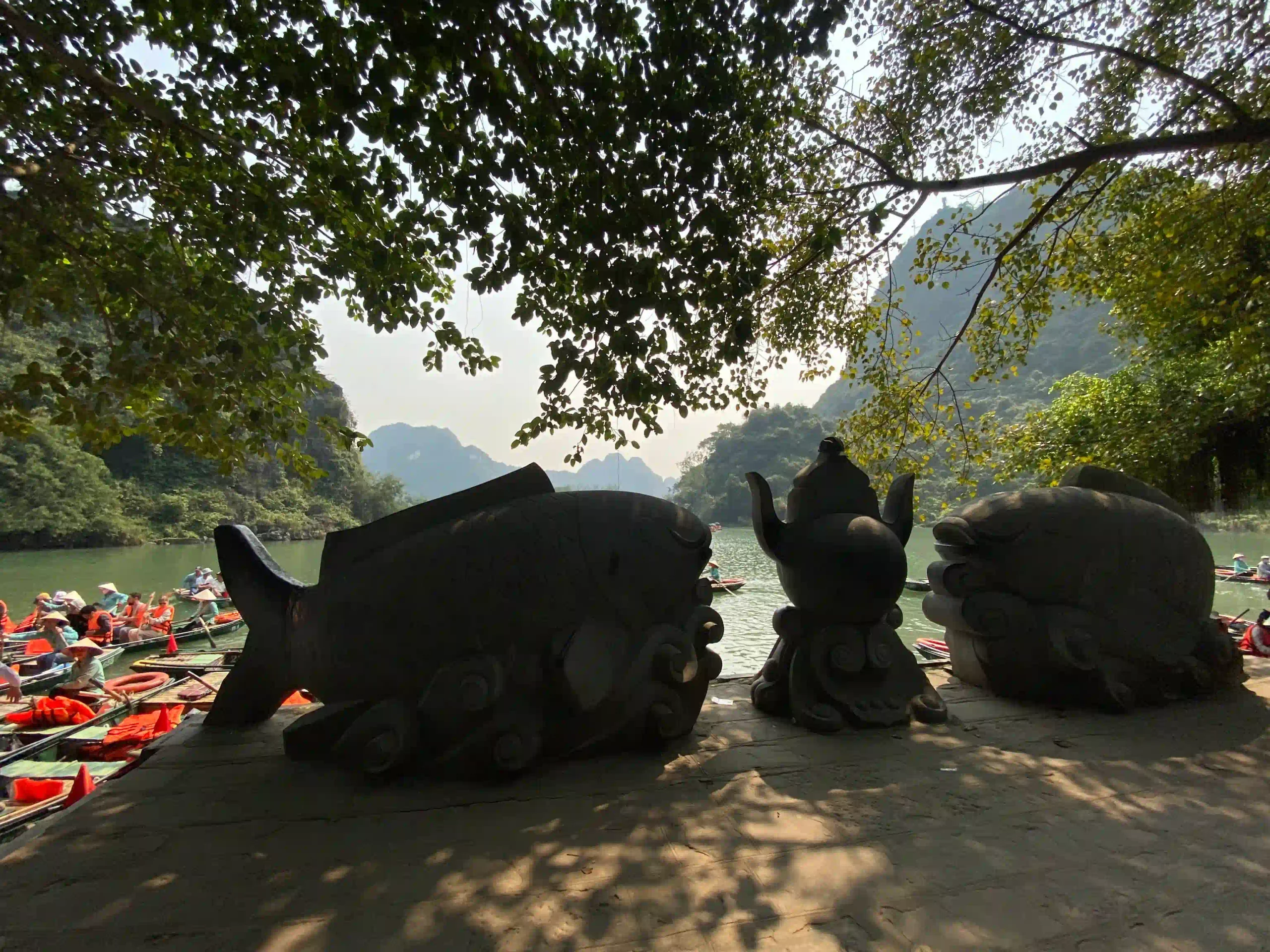
What struck me early on was how quickly the crowds thinned. Route 2’s boats were still visible in the distance for the first twenty minutes or so, then gradually weren’t. By the time we reached the approach to Dot Cave, it felt like we had the whole valley to ourselves, just our rower’s paddle and water settling back into stillness after each stroke.
That specific quality, the sense of having genuinely left the busier part of Trang An behind, is something the shorter routes structurally can’t offer, since they’re built to cycle more boats through in less time.
Dot Cave: Twenty Minutes That Actually Earn the Detour
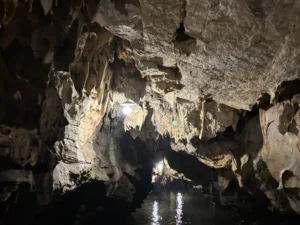
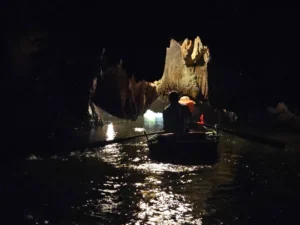
This is the specific reason to choose Route 3 over the other two. Dot Cave runs roughly 1,000 meters, the longest cave anywhere in the Trang An complex, and unlike some of the shorter passages on Routes 1 and 2, it commits fully to the darkness.
The rower’s headlamp becomes the only light for most of the crossing, the ceiling drops low enough in stretches that you instinctively duck even when there’s clearance, and the sound changes completely, water against stone, the occasional drip, our own breathing suddenly noticeable in a way it hadn’t been outside.
The cave isn’t uniform the whole way through. Some stretches open up enough that the ceiling disappears into darkness above the headlamp’s reach, giving a genuine sense of scale even without being able to see it directly. Other sections narrow down close enough that the rower has to duck and adjust the paddle stroke to clear the rock on either side, and you feel the boat’s rhythm change accordingly, shorter, more careful strokes rather than the longer glide from the open water outside.
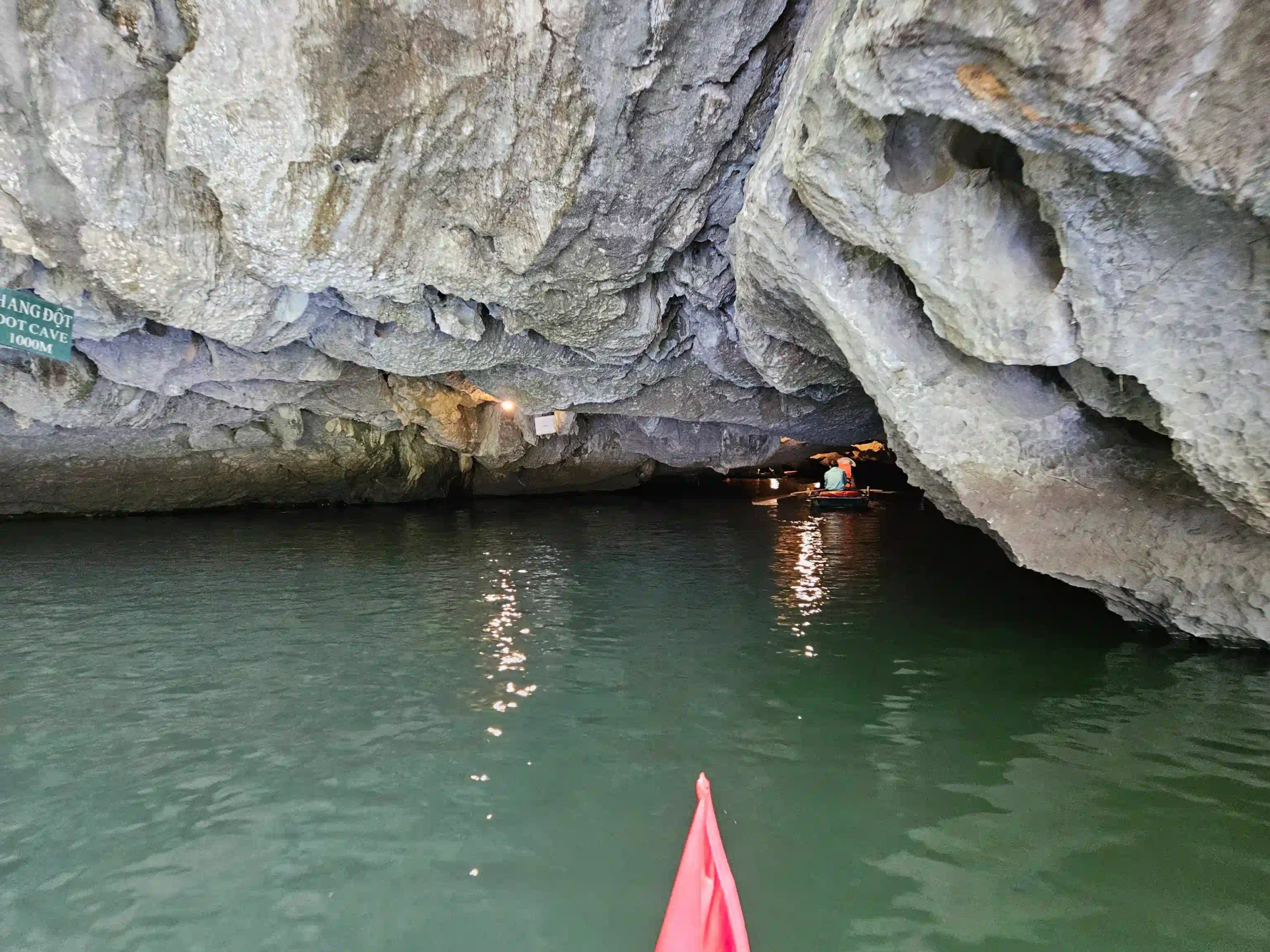
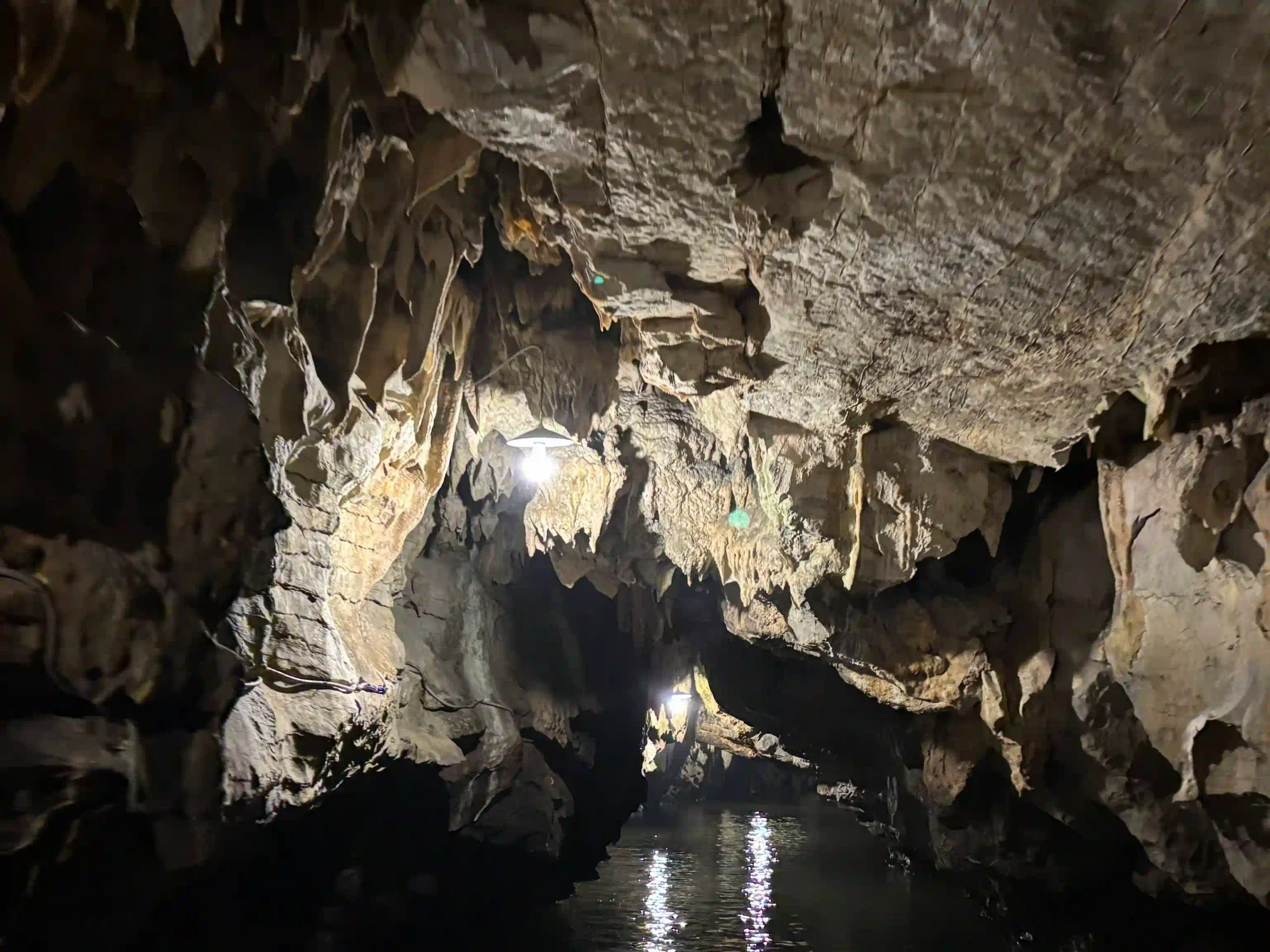
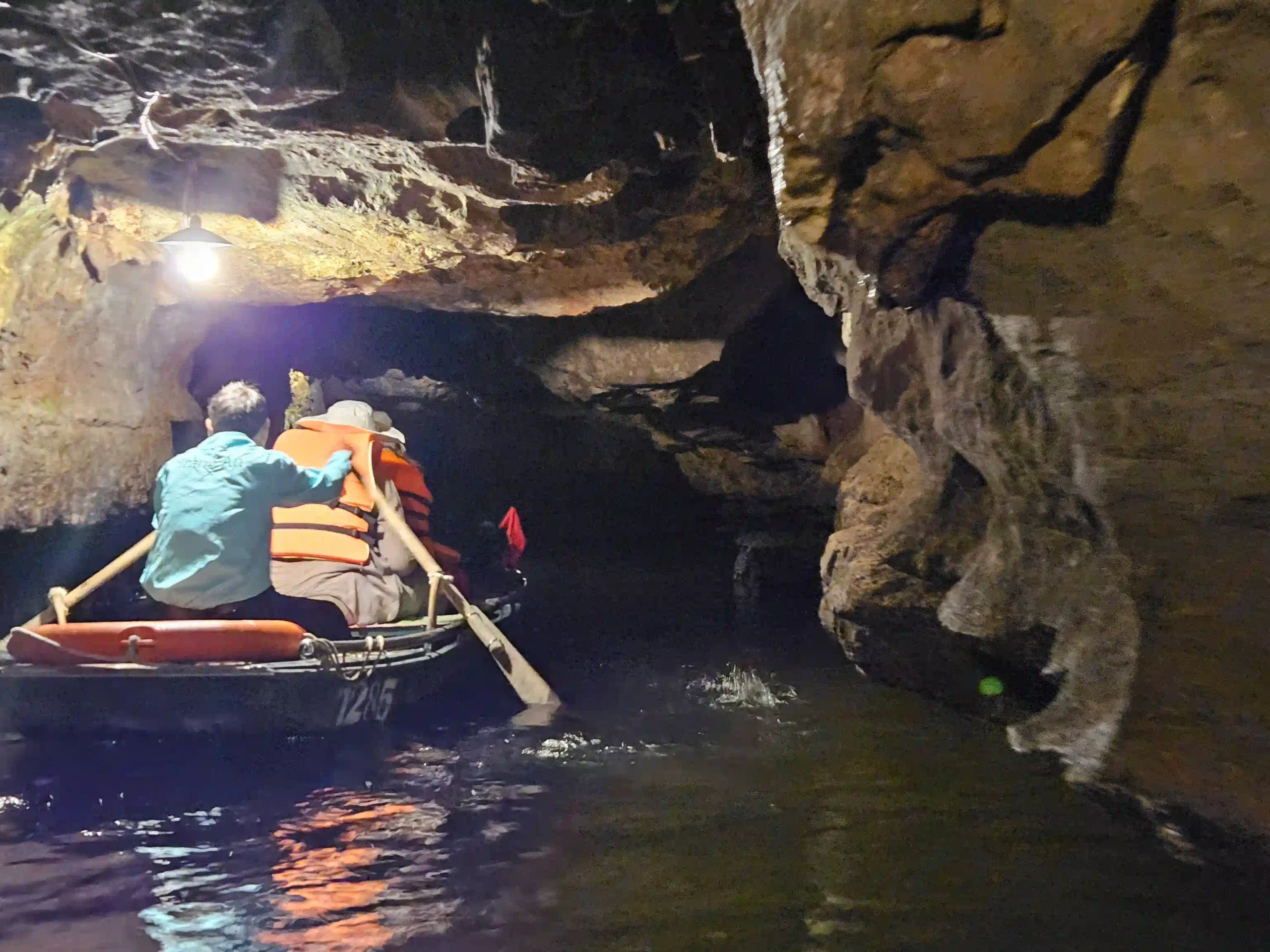
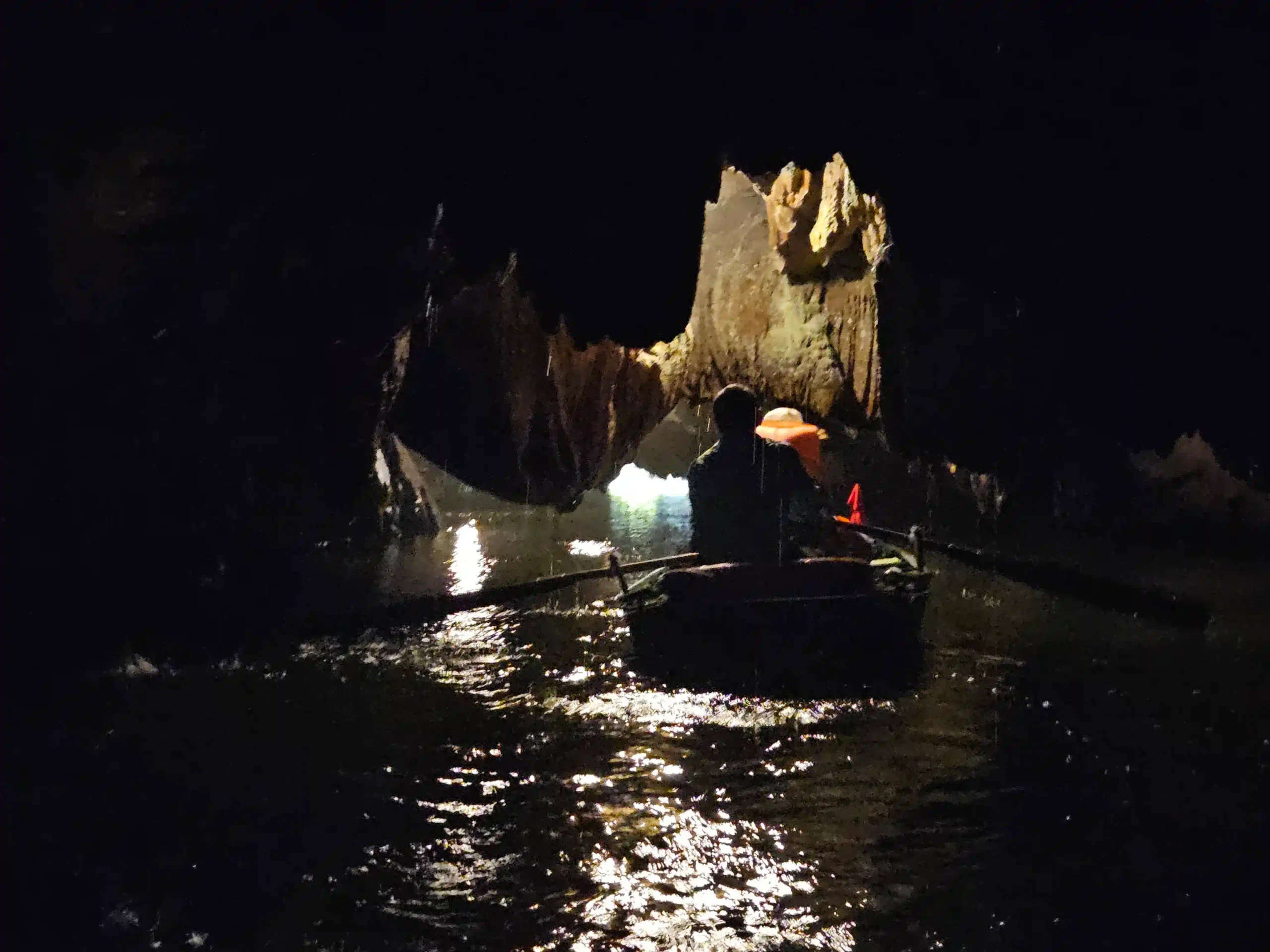
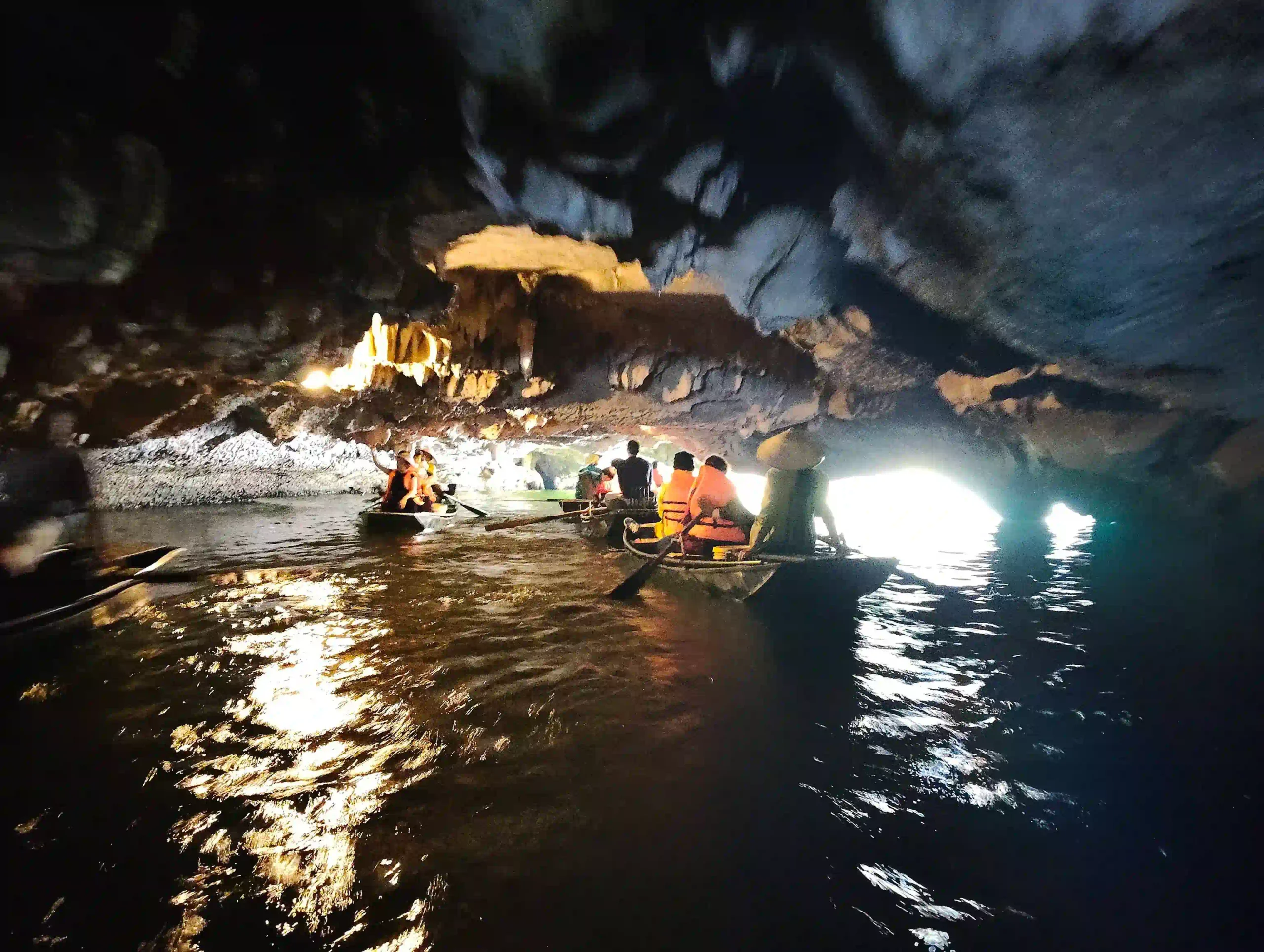
Twenty minutes doesn’t sound long written down. It felt considerably longer in the boat, in the good way, the kind of stretch where you stop checking the time because there’s nothing to check it against.
About two-thirds of the way through, our rower stopped paddling entirely for a moment, just letting the boat drift while the dripping water and our own breathing were the only sounds, and that pause did more to convey the actual scale of the place than any amount of narration would have.
Coming out the other side into daylight again was genuinely disorienting for a few seconds, eyes adjusting, the valley beyond suddenly enormous after that much enclosed dark. Someone in our boat actually gasped audibly at the transition, which felt like a completely reasonable reaction rather than an overreaction to a cave.
The Valley That Actually Looks Like the Movie
This is where Route 3 earns the “King Kong” framing honestly.
The stretch of water beyond Dot Cave opens into a valley that’s about as close as real geography gets to the film’s fictional island, sheer limestone walls rising straight out of clear water, no visible development, nothing to place it in any specific decade.
It’s easy to see why a production scouting for an untouched, slightly alien landscape landed here specifically.
The scale is what actually gets you, more than any single feature. The walls on either side run high enough that looking straight up puts them at a genuinely uncomfortable angle, and the valley itself curves enough that you can’t see more than a few hundred meters ahead at any point, which keeps a real sense of not-quite-knowing-what’s-next running through the whole stretch.
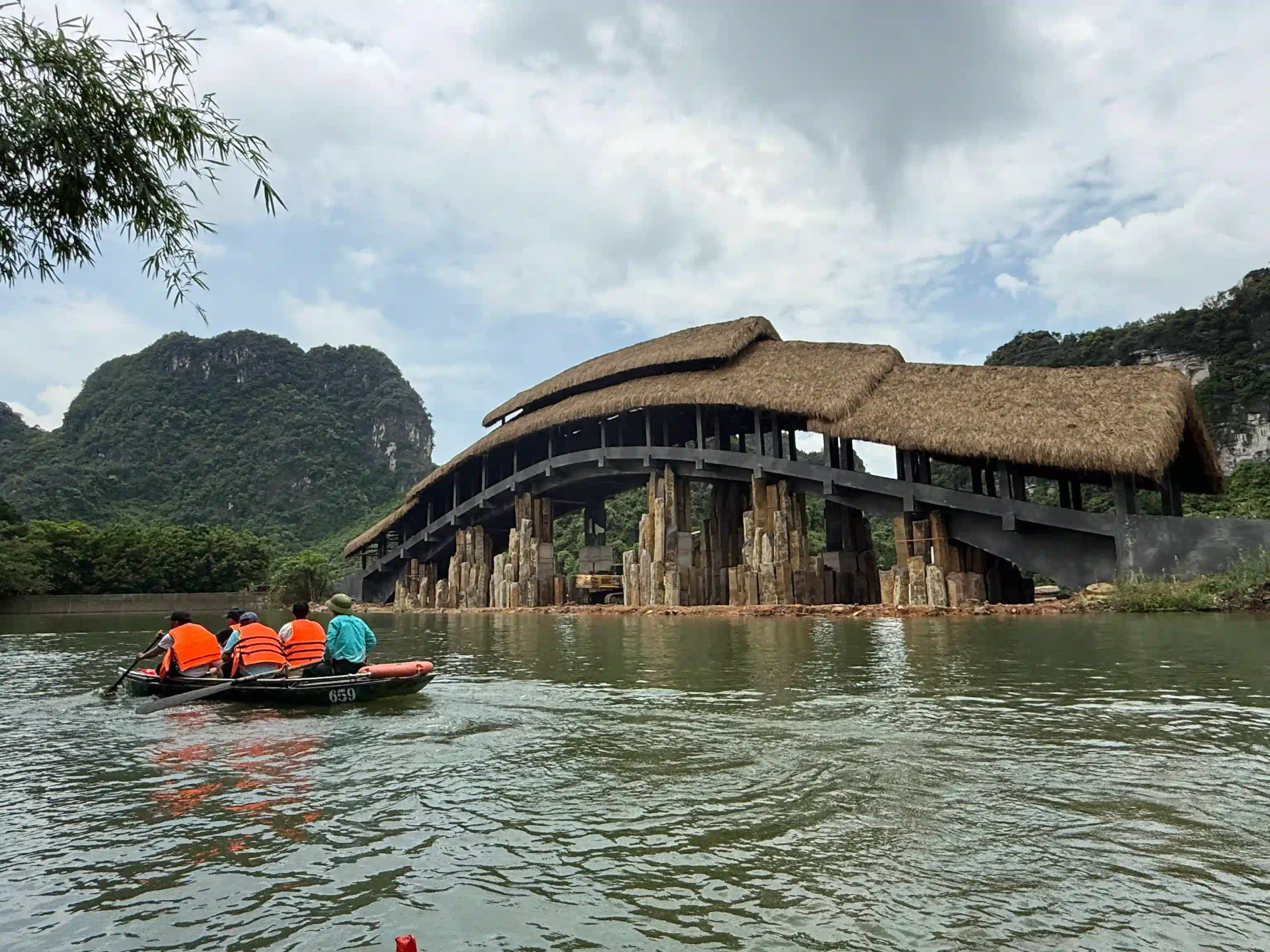
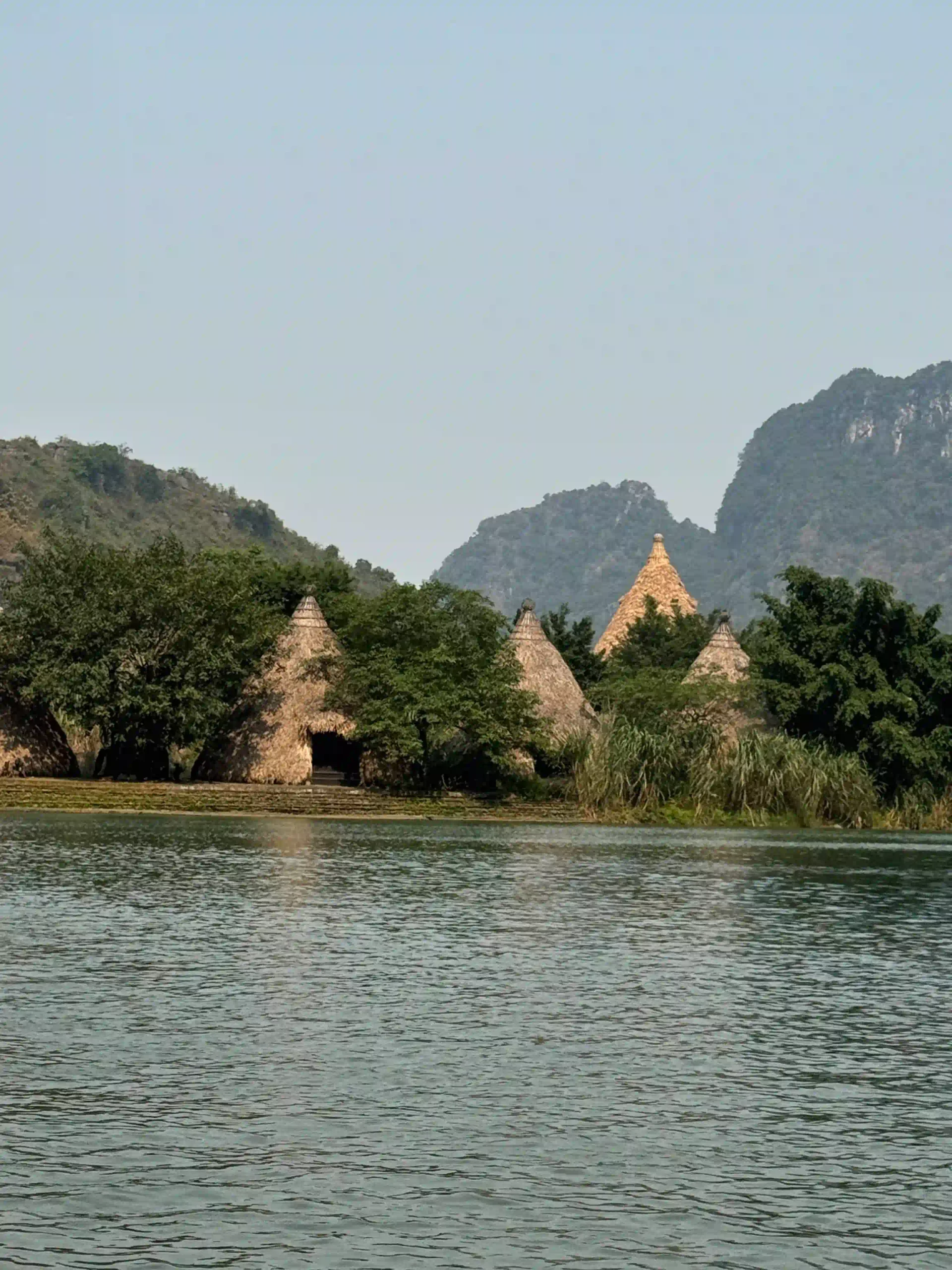
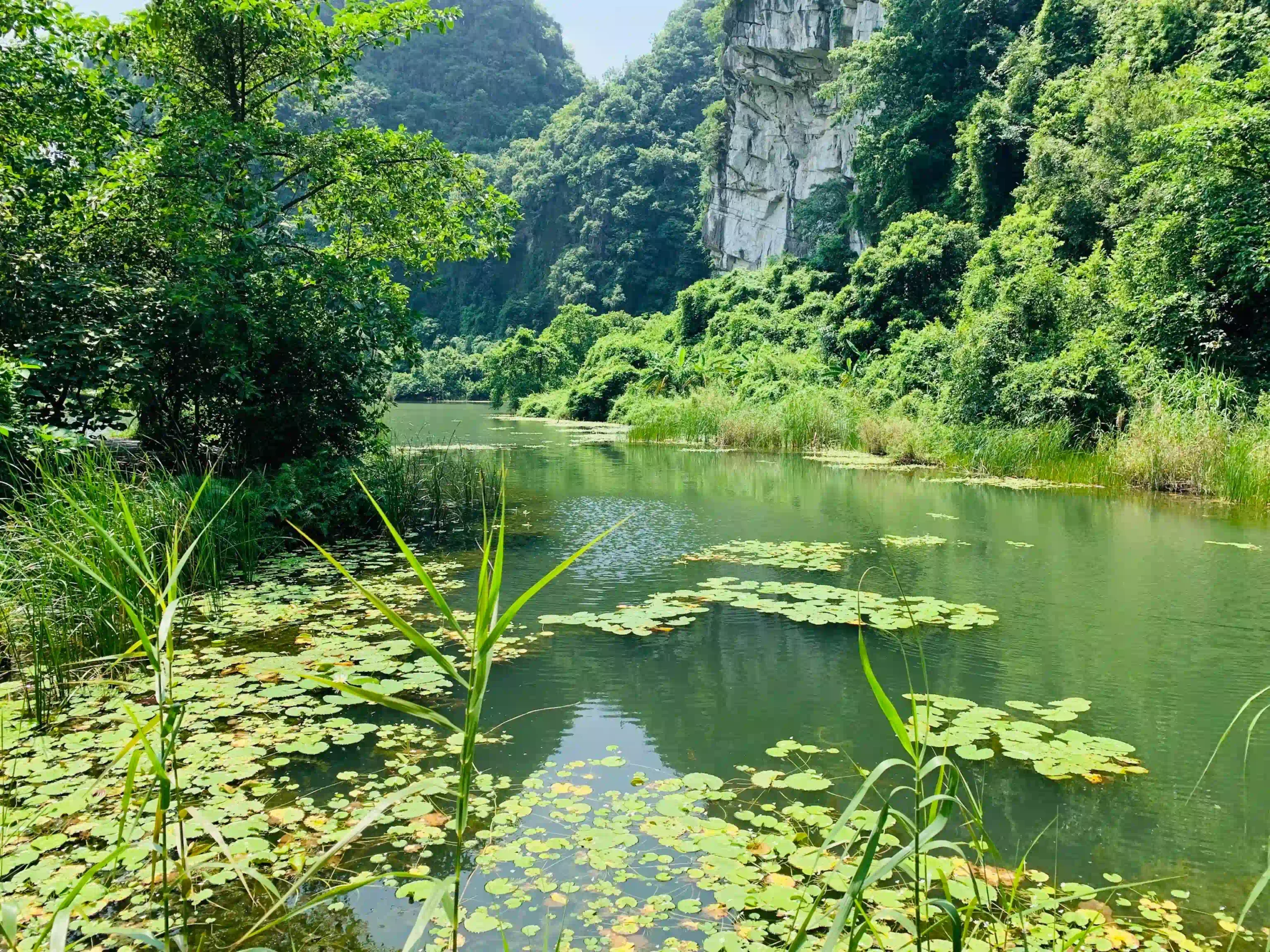
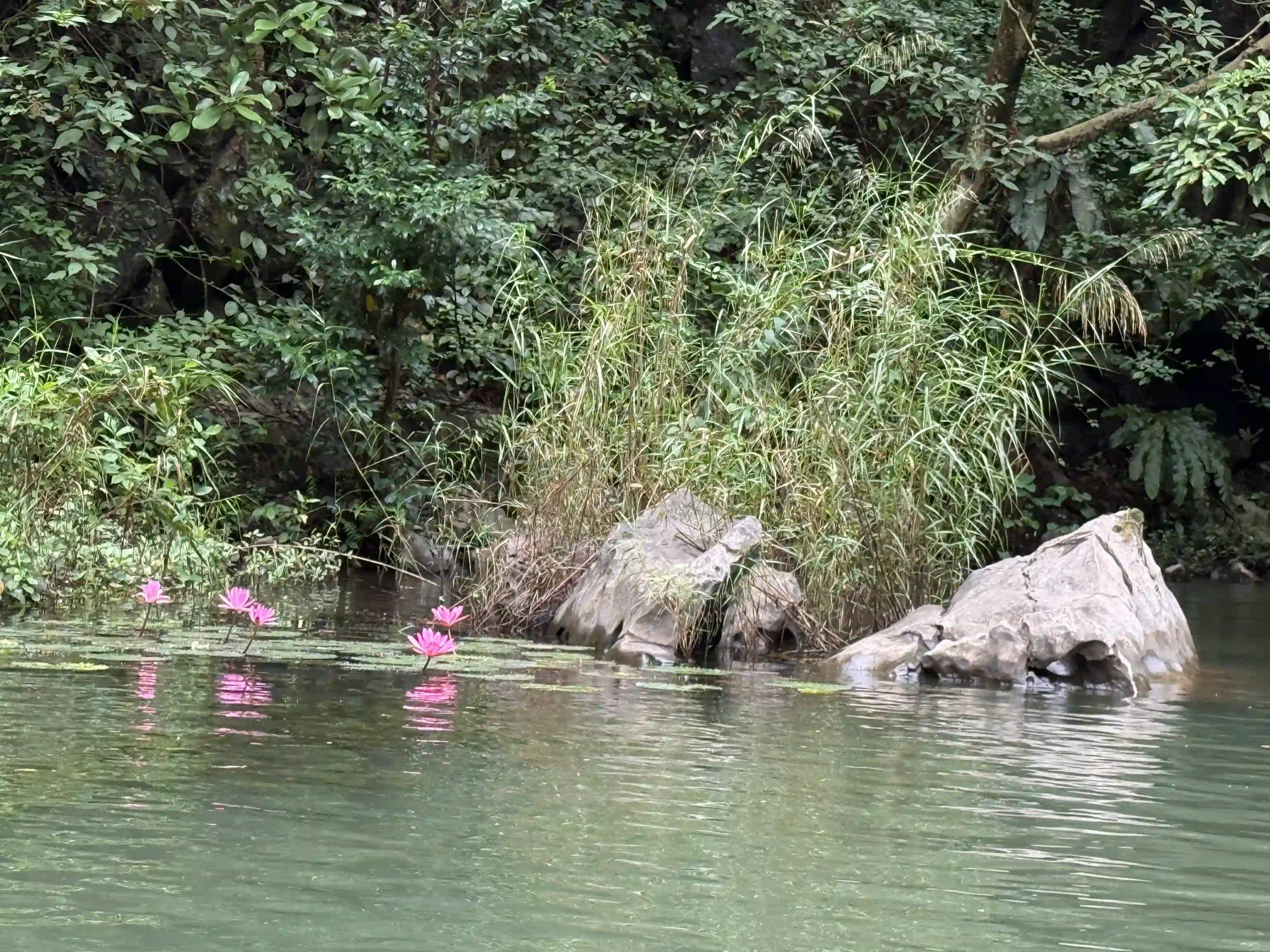
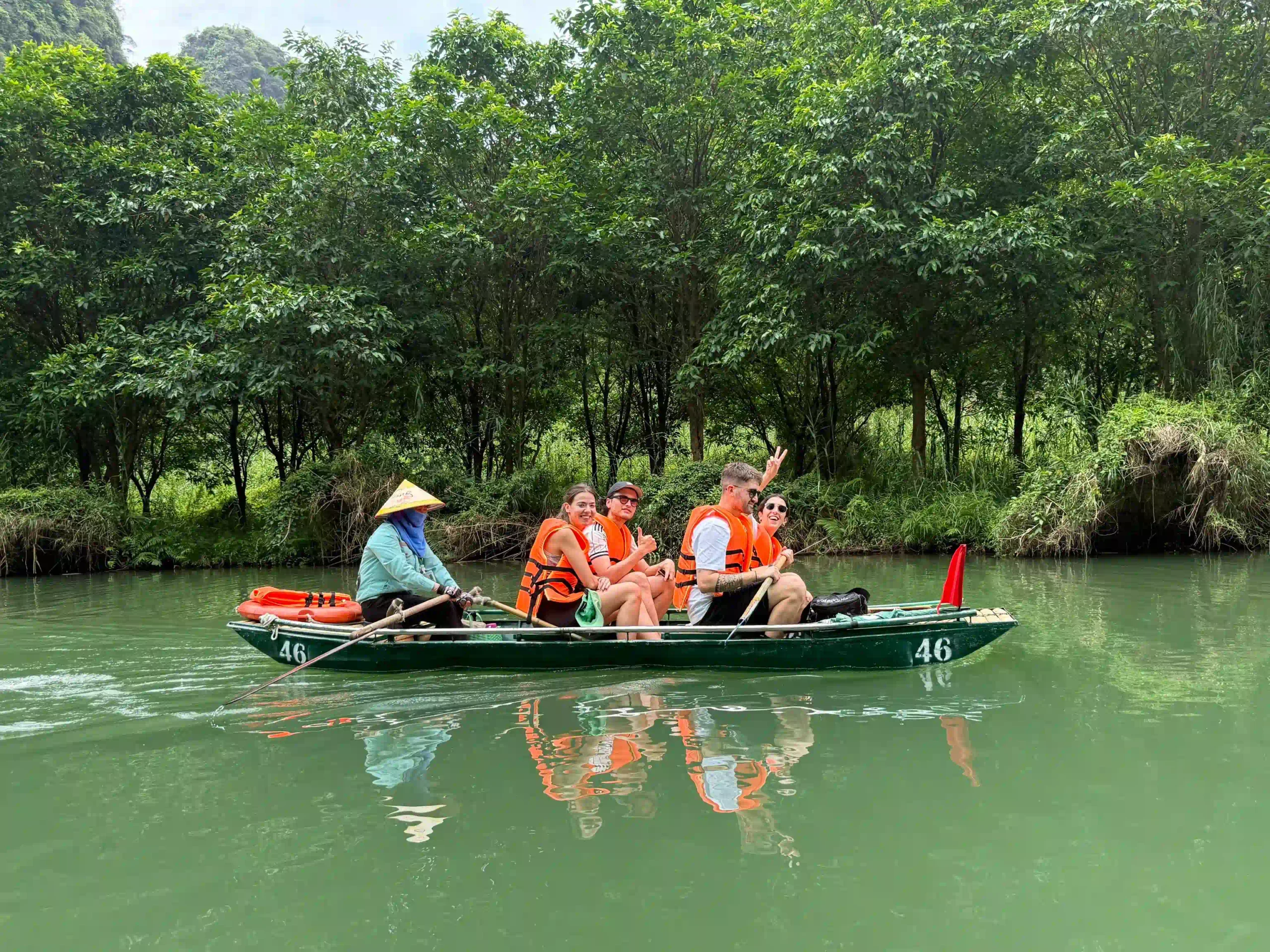
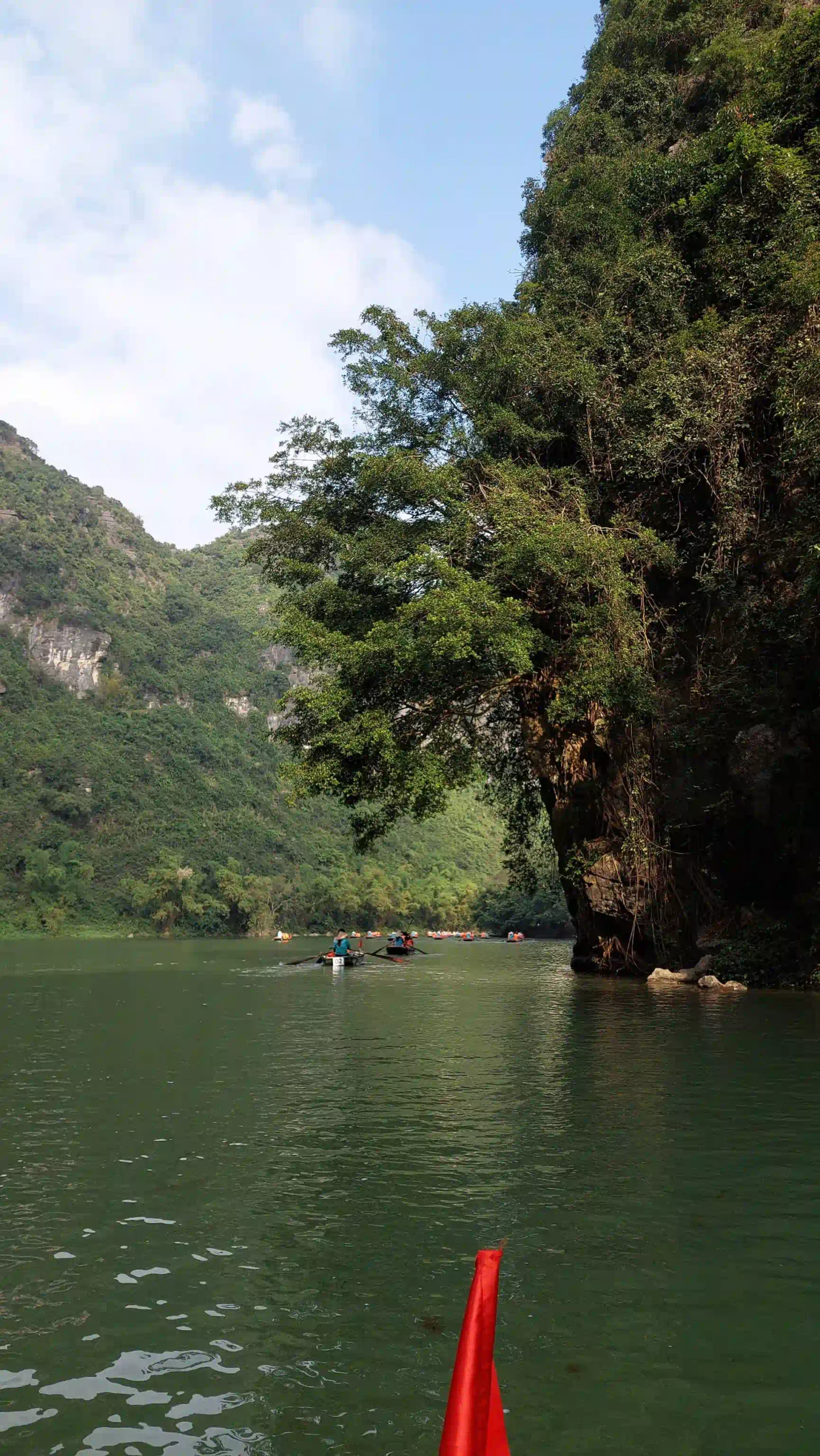
It’s not hard to imagine why a location scout walked through here once and decided this was close enough to a lost world that they didn’t need to build one from scratch.
The water itself is clearer through this section than elsewhere on the route, clear enough to see mossy growth on submerged rock a couple of feet down. Small fish moved visibly beneath the surface in a few spots, and at one point a kingfisher, or something close enough to one that I couldn’t confirm without a better look, cut across the water ahead of us and disappeared into a gap in the rock.
Nobody in our boat said much through this stretch. There wasn’t a lot that needed saying, and the quiet felt like the right response rather than something to fill.
Vu Lam Palace: The Part That Isn’t About the Movie at All
Hanh Cung Vu Lam, sometimes called Vu Lam Palace or the Vu Lam Royal Steps, sits further along Route 3 and predates the film by about seven centuries.
It’s a genuine Tran Dynasty historical site, and while the wooden pavilion itself is modest rather than grand, the setting around it, the same limestone amphitheater effect as the rest of the route, gives it a weight that a purely reconstructed site wouldn’t have.
The site served as a retreat for Tran Dynasty kings, a place they came specifically to withdraw from court life, and standing there it’s genuinely easy to understand the appeal, the same isolation and scale that made this landscape work as an alien planet on screen also made it work as a place to actually get away from thirteenth-century politics.
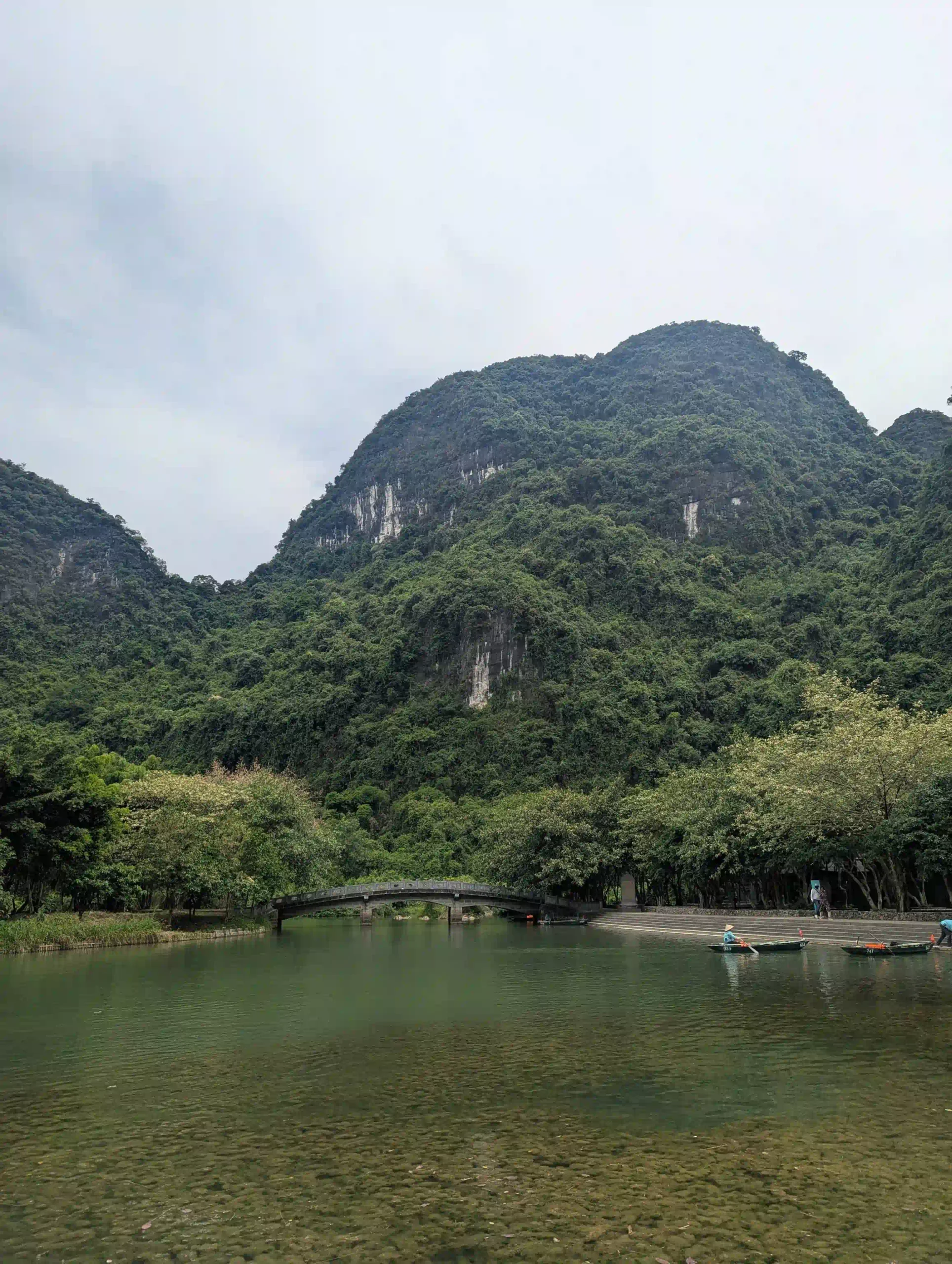
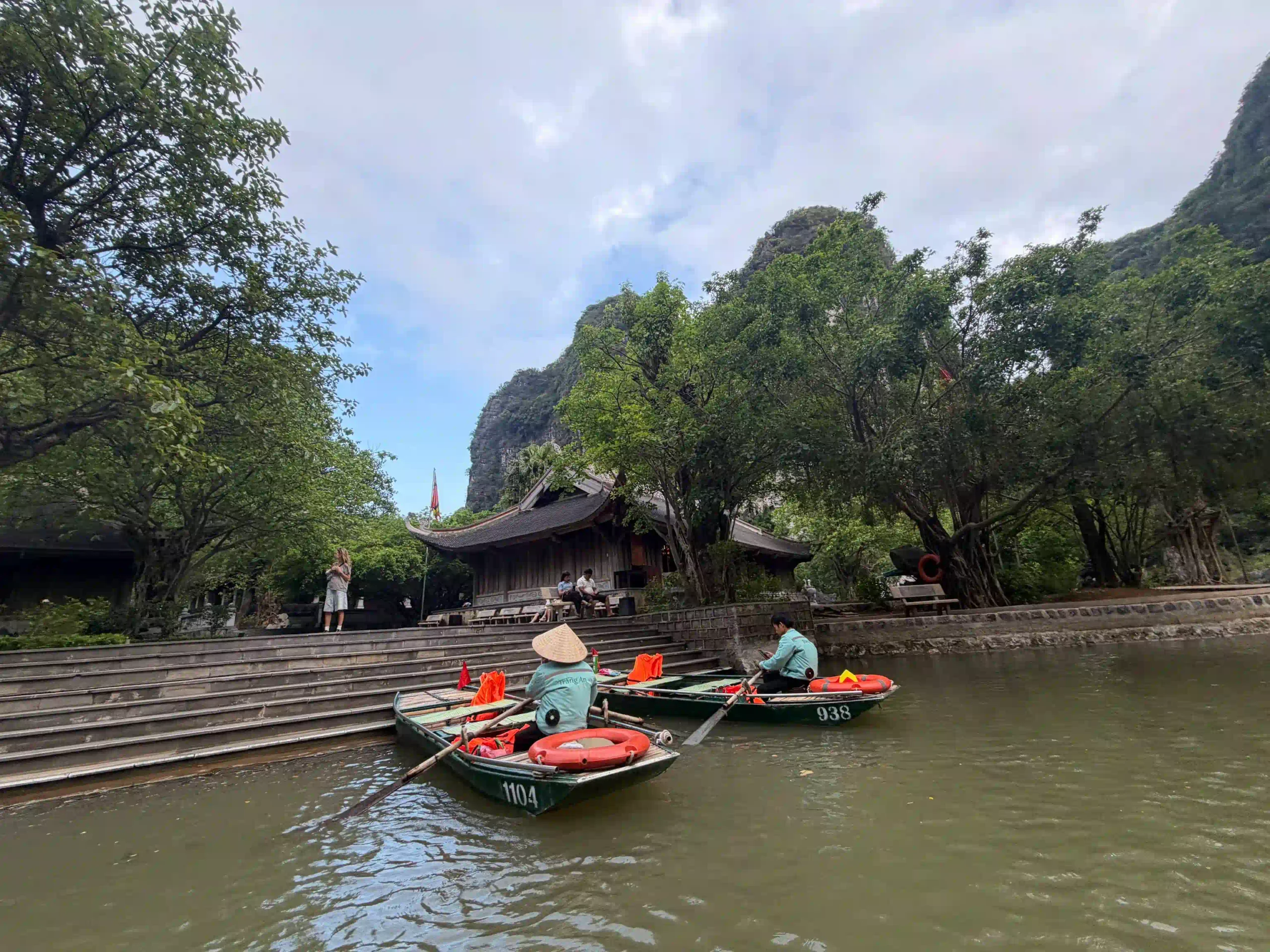
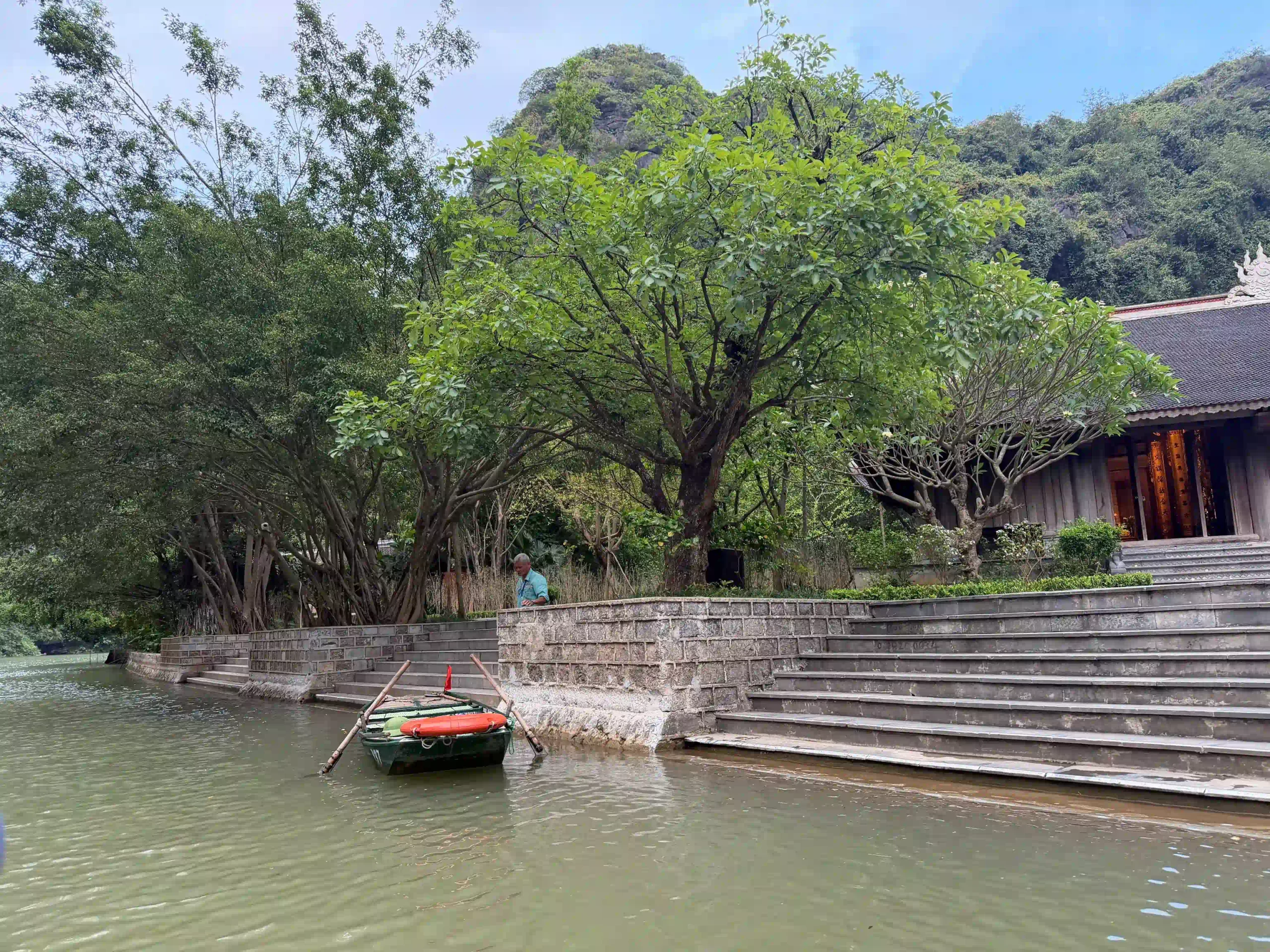
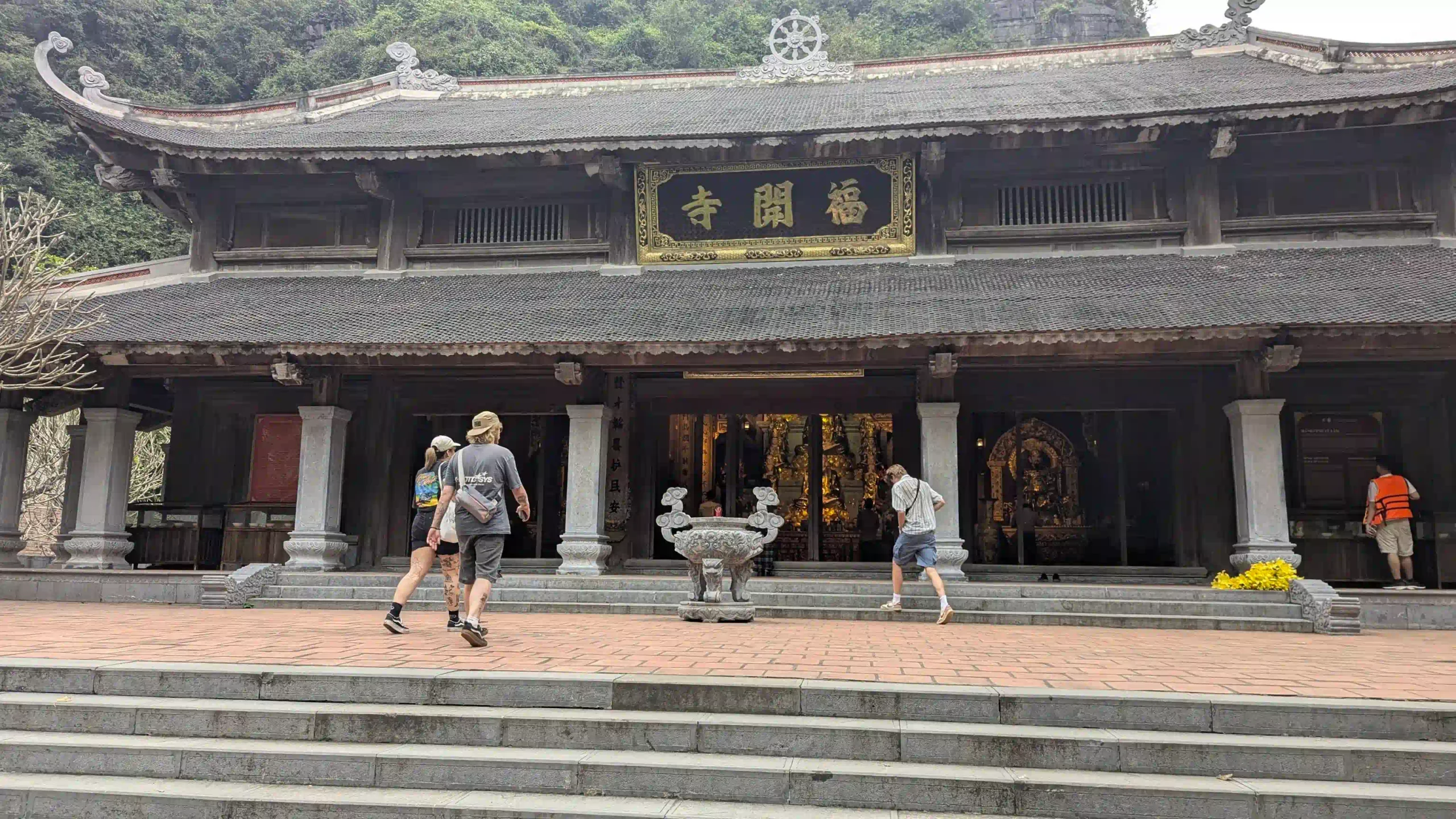
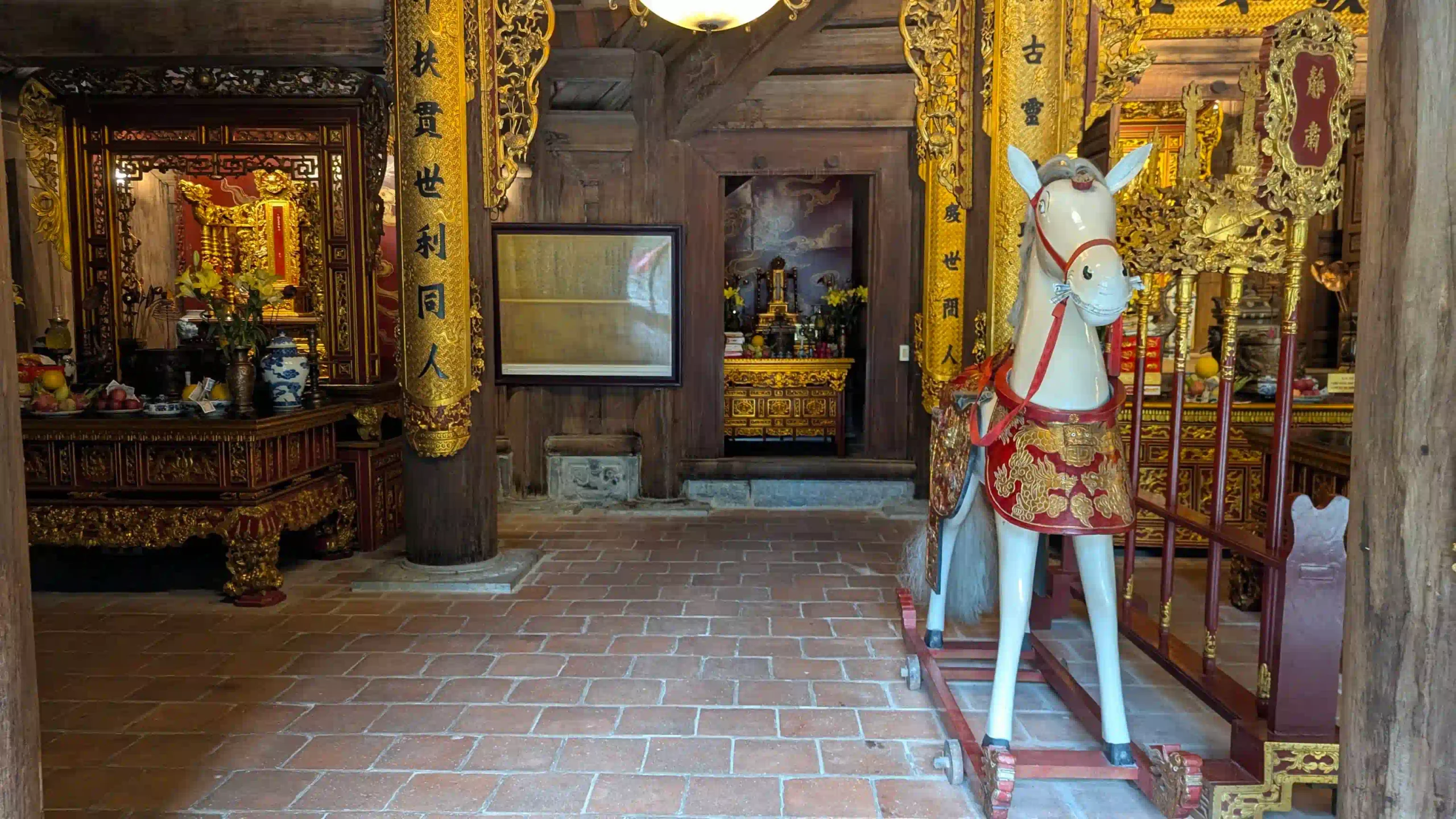
Our rower tied up the boat and gave us a few minutes to walk up to the pavilion itself, worn stone steps leading to a small wooden structure that’s more meaningful for what it represents than for its own physical presence.
I’d call this the most underrated stop on the whole route. Everyone comes for Dot Cave and the King Kong association, and the actual historical site gets treated as a quick photo stop on the way to something else, when it’s genuinely worth a few extra minutes to actually take in rather than rush past.
There’s a stillness here that’s different from the valley’s dramatic scale, quieter and more contemplative, the kind of place that rewards actually stopping instead of photographing and moving on.
The Film Set Itself: Here’s the Honest Part
This is worth being direct about, since a lot of what gets written about this route implies you’ll find an intact movie set waiting.
Officially, the large-scale set, the organized village of huts, a fake plane wreck, tribal props, was dismantled in 2019 on UNESCO’s recommendation, and recently there’s an empty landscape rather than a standing set. That said, I’d treat this as the general expectation to set rather than an absolute guarantee, a handful of structures or smaller remnants still show up depending on exactly where you look and when, so don’t be shocked either way.
What we actually found was mostly just the landscape, still a village, but no plane wreck, no crowd of actors in tribal costume the way the site operated before 2019.
If you’re picturing something resembling a theme park attraction built around the movie, recalibrate that expectation now rather than after you’ve made the trip.
Whether that’s a letdown depends entirely on what you came for. If you wanted photos next to recognizable movie props, you’ll be disappointed, and I’ve read enough other accounts saying exactly that to know it’s a common reaction.
If what actually drew you to this route was the landscape itself, the caves, the valley, the water, none of that needed the set to begin with, and all of it is still fully intact.
I fell into the second camp, and the empty landscape without the props felt more honest than a rebuilt set would have anyway, closer to what actually convinced a film crew this place looked otherworldly in the first place rather than a reconstruction of their interpretation of it.
A short buggy ride typically returns you from this general area back toward the main ticket station if you’re on a package tour, a small but genuinely welcome comfort after three-plus hours in a boat.
If you’ve arranged the route independently rather than through a package, confirm this detail with whoever you booked through, since it isn’t universal across every operator running Route 3.
The Trang An King Kong Route vs. the Other Two, Honestly
Worth laying out plainly since most guides to Trang An either ignore Route 3 entirely or mention it only in passing. Here’s how the three actually compare once you’ve done the homework most visitors skip.
| Route 1 | Route 2 | Route 3 (King Kong Route) | |
|---|---|---|---|
| Duration | Shortest | Moderate | Longest, 3-3.5 hours |
| Focus | Most caves, stalactite formations | Balanced, Thuy Dinh Pavilion | Dot Cave + King Kong valley + Vu Lam Palace |
| Crowds | Heaviest | Moderate, most tour groups | Thinnest |
| Best for | Cave enthusiasts, claustrophobia a concern either way | First-time visitors wanting a bit of everything | Longer stays, film location interest, wanting fewer crowds |
If claustrophobia is a genuine concern, know that Dot Cave commits harder to darkness and enclosure than the shorter passages on the other routes, worth factoring in honestly rather than assuming all three caves feel the same.
Booking the Trang An King Kong Route
Tickets run 250,000 VND per adult, 125,000 VND for children under 1.4 meters, the same price across all three routes, purchased at the main ticket counter, not booked online in advance. If you’re arranging things yourself instead of through a tour, specifically request Route 3 by number when you reach the counter, and don’t assume staff will offer it unprompted since Route 2 is the default most visitors get pointed toward.
Arrive early in the day if you can manage it. We went out mid-morning and still passed a reasonable number of other boats on the way in, whereas a friend who did the same route closer to opening reported having Dot Cave almost entirely to themselves.
Weekday visits also thin the numbers out compared to weekends, worth factoring in if your schedule has any flexibility at all.
If you’d rather have this handled for you, most Ninh Binh day tours from Hanoi or from the Tam Coc area can specifically request the Trang An King Kong route if you mention the film connection when booking, though it’s worth confirming directly rather than assuming a generic “Trang An boat tour” listing defaults to this specific route.
A few operators specifically advertise the King Kong angle in their tour descriptions, which is usually a reliable signal that Route 3 is what you’ll actually get rather than needing to request it separately once you arrive.
Whether Trang An beats Tam Coc overall, and where this specific route ranks against everything else in the region, comes down to what kind of day you’re after, something I’ve weighed out more broadly elsewhere.
Found something on the Trang An King Kong route that’s changed since I went, or a detail worth adding? I’d like to know, the site’s own rules around the UNESCO designation mean things here shift more than people expect.












 Tiếng Việt
 한국어
한국어 中文 (中国)
 日本語
日本語 ไทย
ไทย Deutsch
 Español
 Destinations
 Instagram
 Facebook
 X (Twitter)
 Threads
 Tiktok