









 Ha Giang
 Hanoi
Hanoi Ho Chi Minh City
 Ha Long
 Sapa
Sapa Mekong Delta
 Da Nang
 Hue
Hue Hoi An
 Ninh Binh
 Da Lat
 Nha Trang
 Phan Thiet
 Phu Quoc
 Quang Binh
 Quy Nhon
 Vung Tau
 Thai Nguyen


If you come to Da Nang and you don’t rent a motorbike, you are basically doing it wrong.
Sure, Grab cars are cheap. You can walk around the beach areas. But Da Nang is spread out. The good local food is hidden down narrow alleys in the city center. The best beaches are miles down the coast. And if you want to drive up the Son Tra Peninsula to see the monkeys, a taxi isn’t going to cut it. You need your own wheels.
But renting a motorbike in Vietnam can feel like the wild west if you haven’t done it before. You walk down the street, and every hotel, cafe, and random guy on the corner has a row of dusty scooters with “FOR RENT” written on a piece of cardboard. Some of them are great. Some of them are death traps with no brakes that will break down on the Hai Van Pass and leave you stranded.
So, I put together this guide. First, I’m going to give you the three actual best shops for motorbike rental in Da Nang. These are the places expats use and recommend in the local Facebook groups. After that, I’ll give you my complete A-Z guide on how to rent a motorbike in Da Nang without getting scammed, what the police situation is actually like in 2026, and how to survive the traffic.
Once you get your bike sorted, you can finally start hitting up all the places you actually want to check out around the city without waiting for a taxi every time.
- Quick Answer: To safely handle motorbike rental in Da Nang, use reputable shops like The Motorbike Station, Tom Motorbike Rentals, or TUAN Motorbikes. Expect to pay 120,000-180,000 VND per day. Never leave your physical passport as a deposit, always check the brakes, and be aware of strict police checkpoints.
- The 3 Best Rental Shops:
- The Motorbike Station: Best for well-maintained bikes and one-way rentals over the Hai Van Pass to Hue (150k-180k VND/day).
- Tom Motorbike Rentals: Best for beachside locations (An Thuong) and fast WhatsApp breakdown support (130k-150k VND/day).
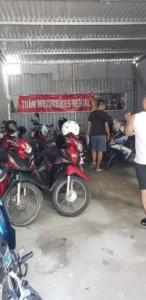
- TUAN Motorbikes Rental: Best for honest service, free hotel delivery, and local driving advice (120k-150k VND/day).
- Crucial Rental Rules:
- Deposits: Never leave your physical passport. Give a photo of it plus a cash deposit (1-2 million VND) instead.
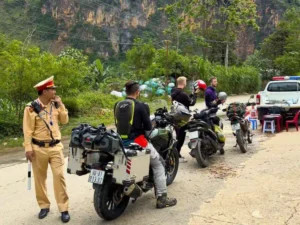
- The Police (2026): Checkpoints are very common. Legally, you need a 1968 IDP + home motorcycle license. If stopped without one, expect a 1.5 to 2 million VND fine.
- Bike Check: Always take a video of the bike’s scratches before leaving the shop. Test the horn and brakes immediately.
- Driving & Logistics:
- Gas: Don’t ask for liters. Say “50,000 VND” to fill an empty scooter. Always pay in cash.
- Parking: Look for sidewalk guards, pay 5,000 VND, and never lose your paper ticket.
- Flat tires: Look for “Sửa Xe” signs on the sidewalk. A patch costs 30,000 VND and takes 10 minutes.
The 3 Best Shops to Rent a Motorbike in Da Nang
I picked these three because they speak English, they actually maintain their bikes, and they don’t play games with your deposit.
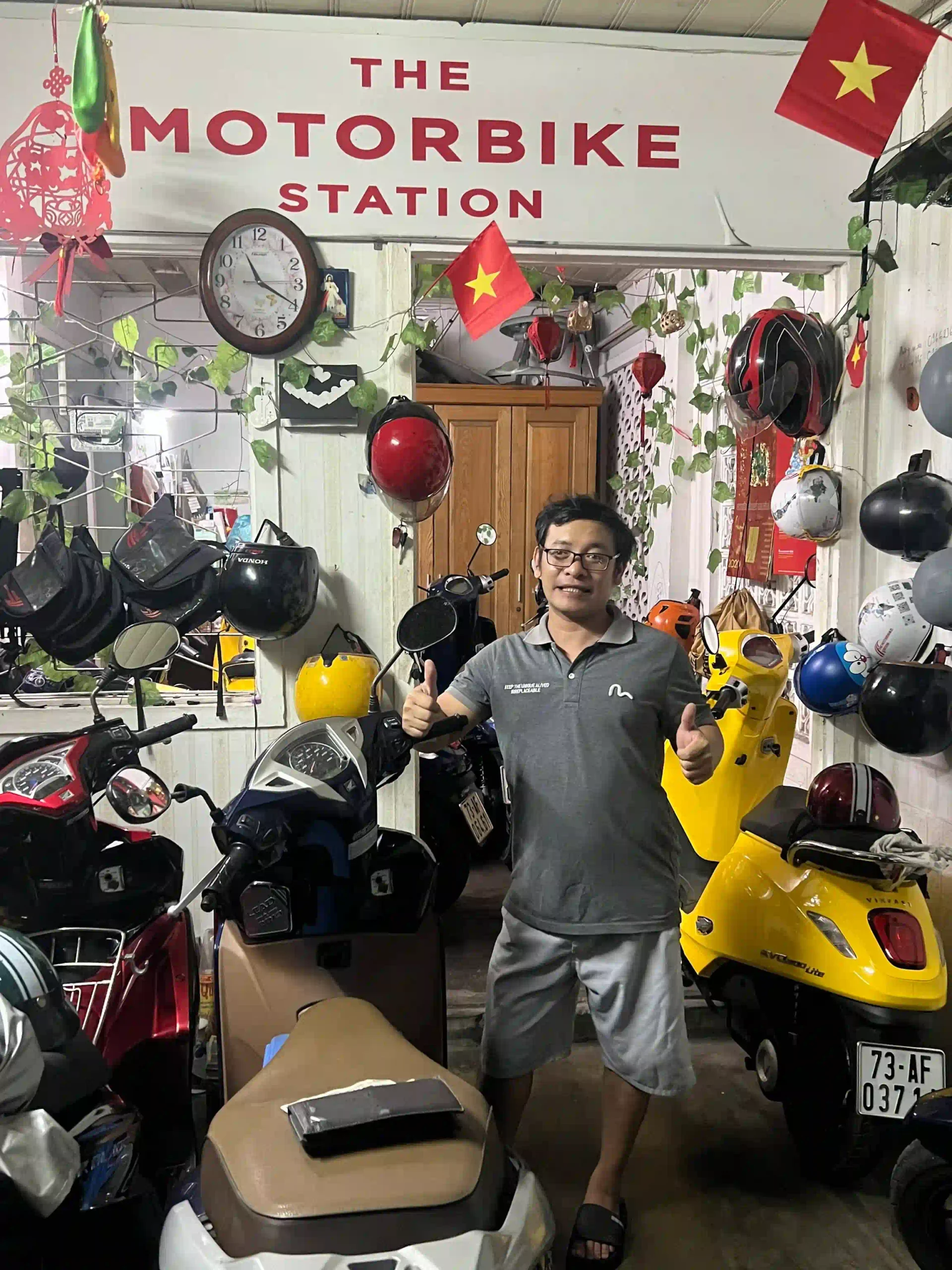
1. The Motorbike Station
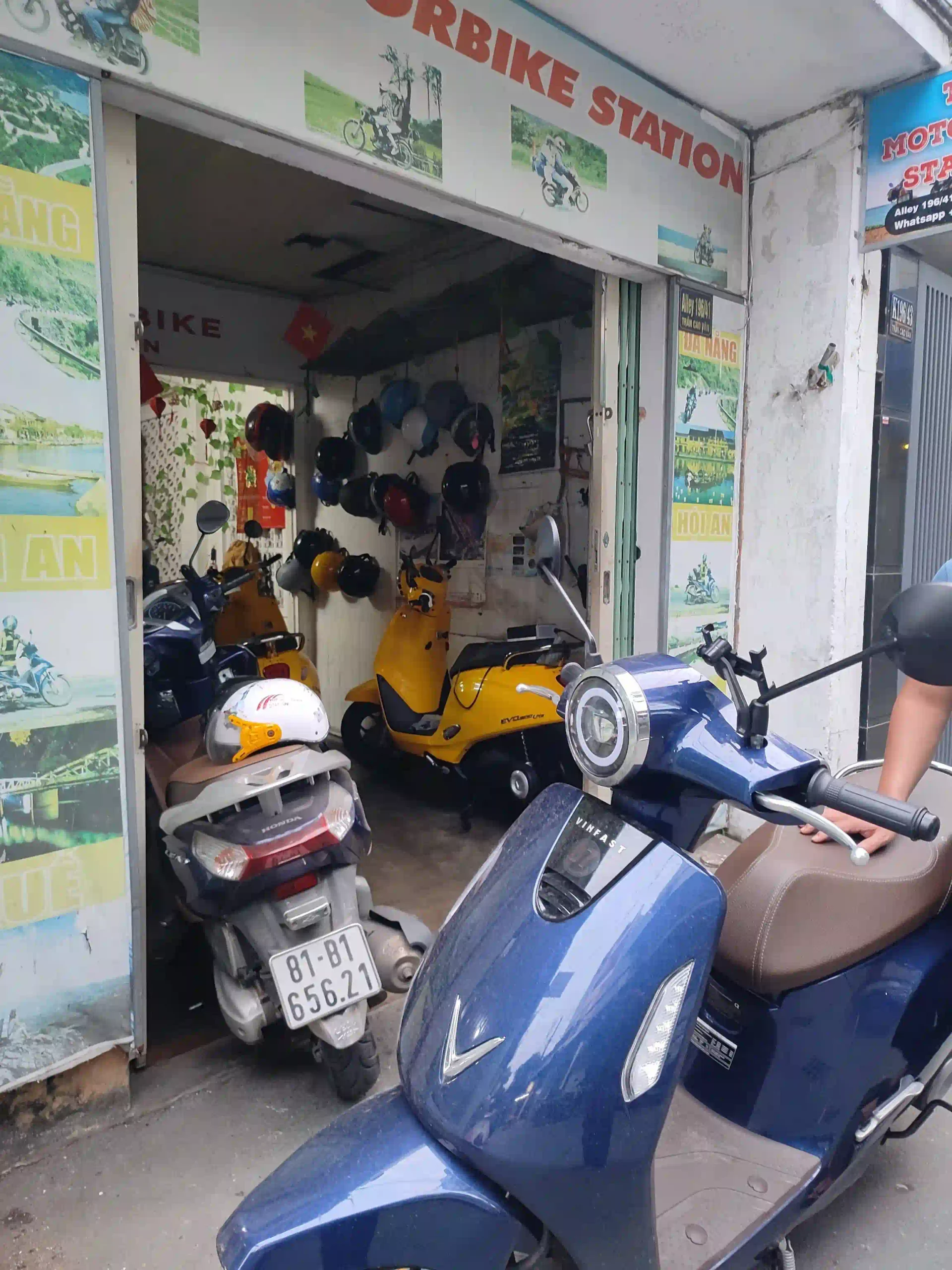
If you ask any expat in Da Nang where to rent a bike, this is usually the first name they drop. They have a couple of locations, but their main hub is tucked away in an alley on Tran Cao Van street.
Why they are good:
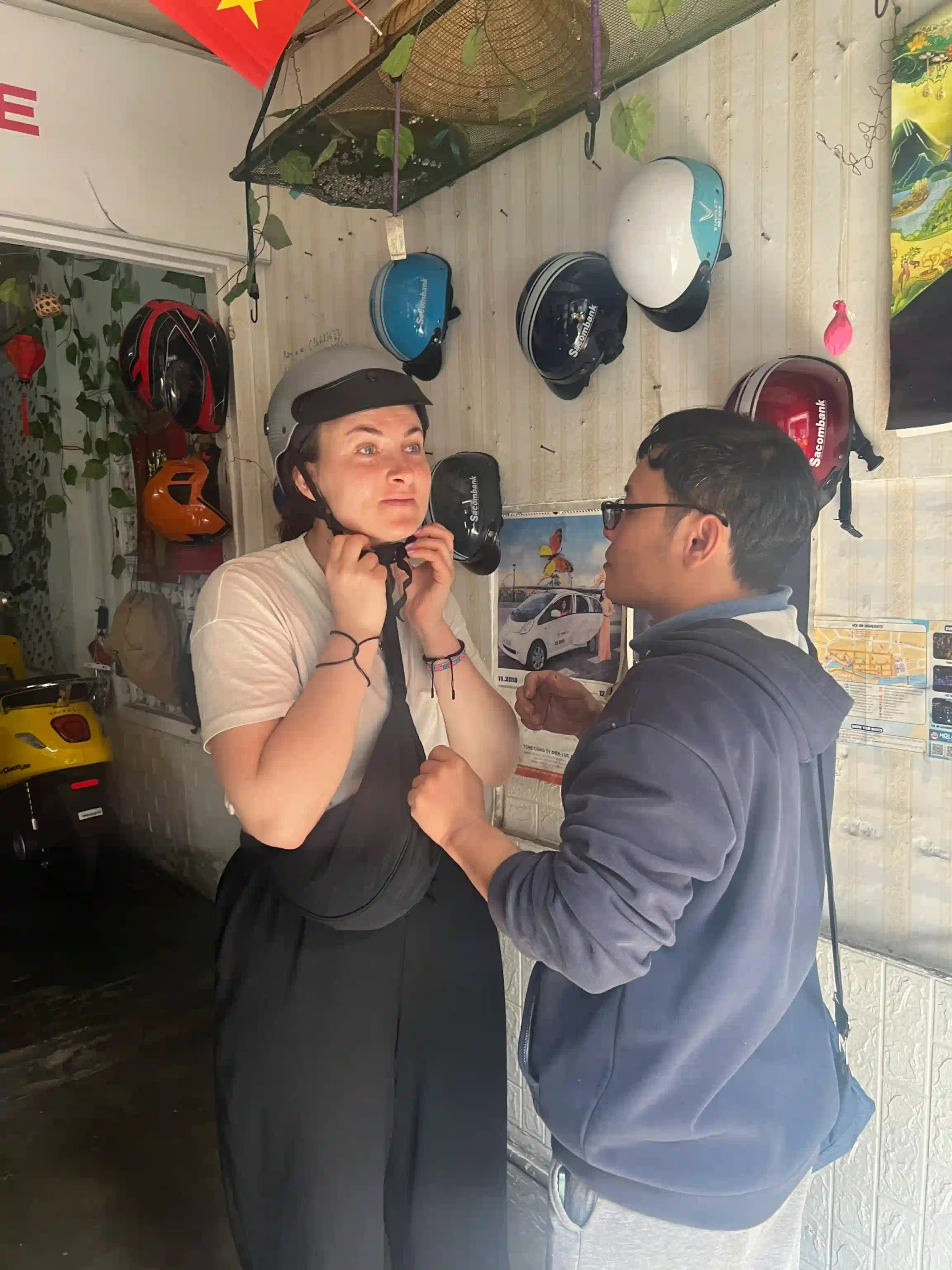
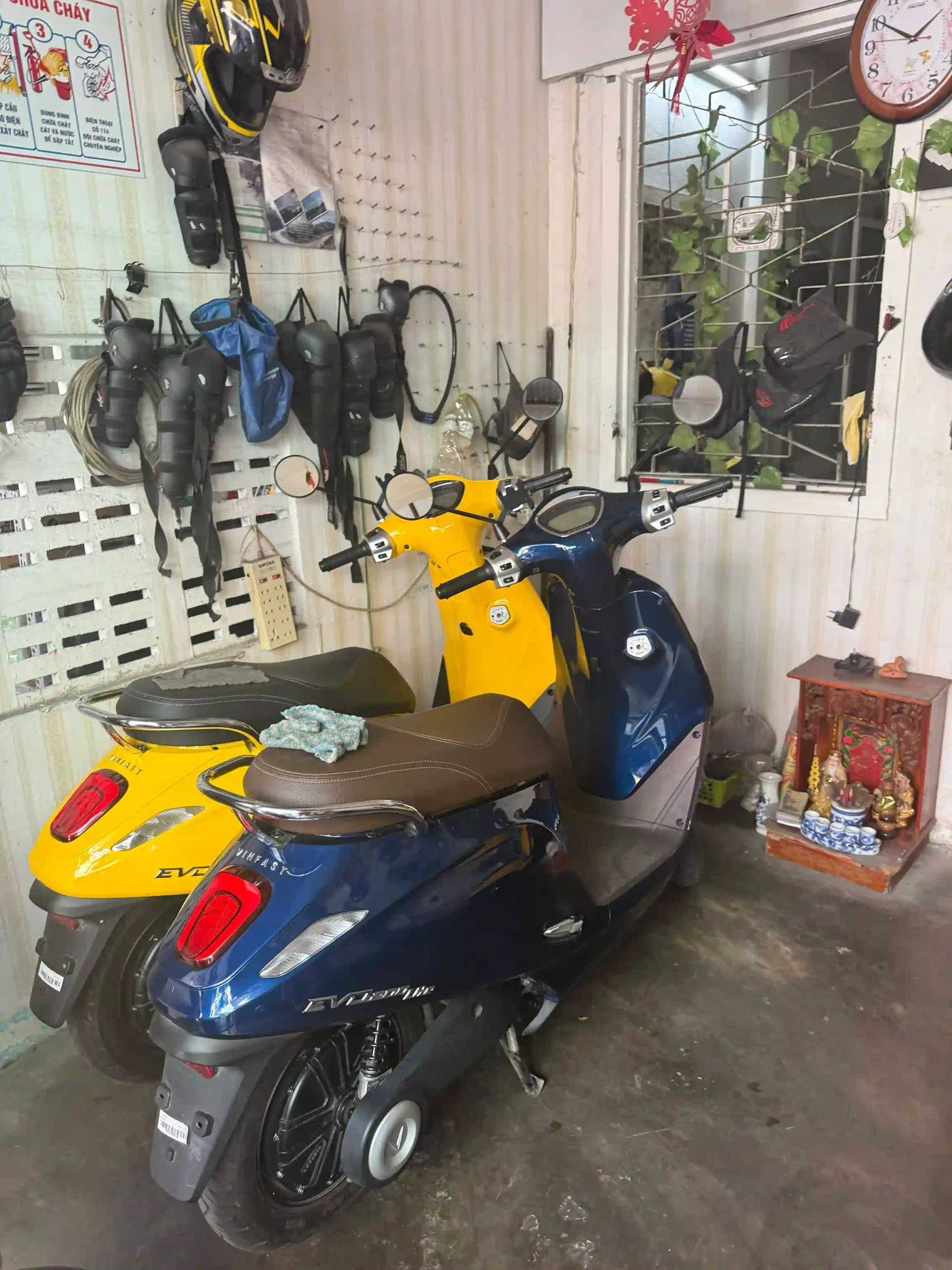
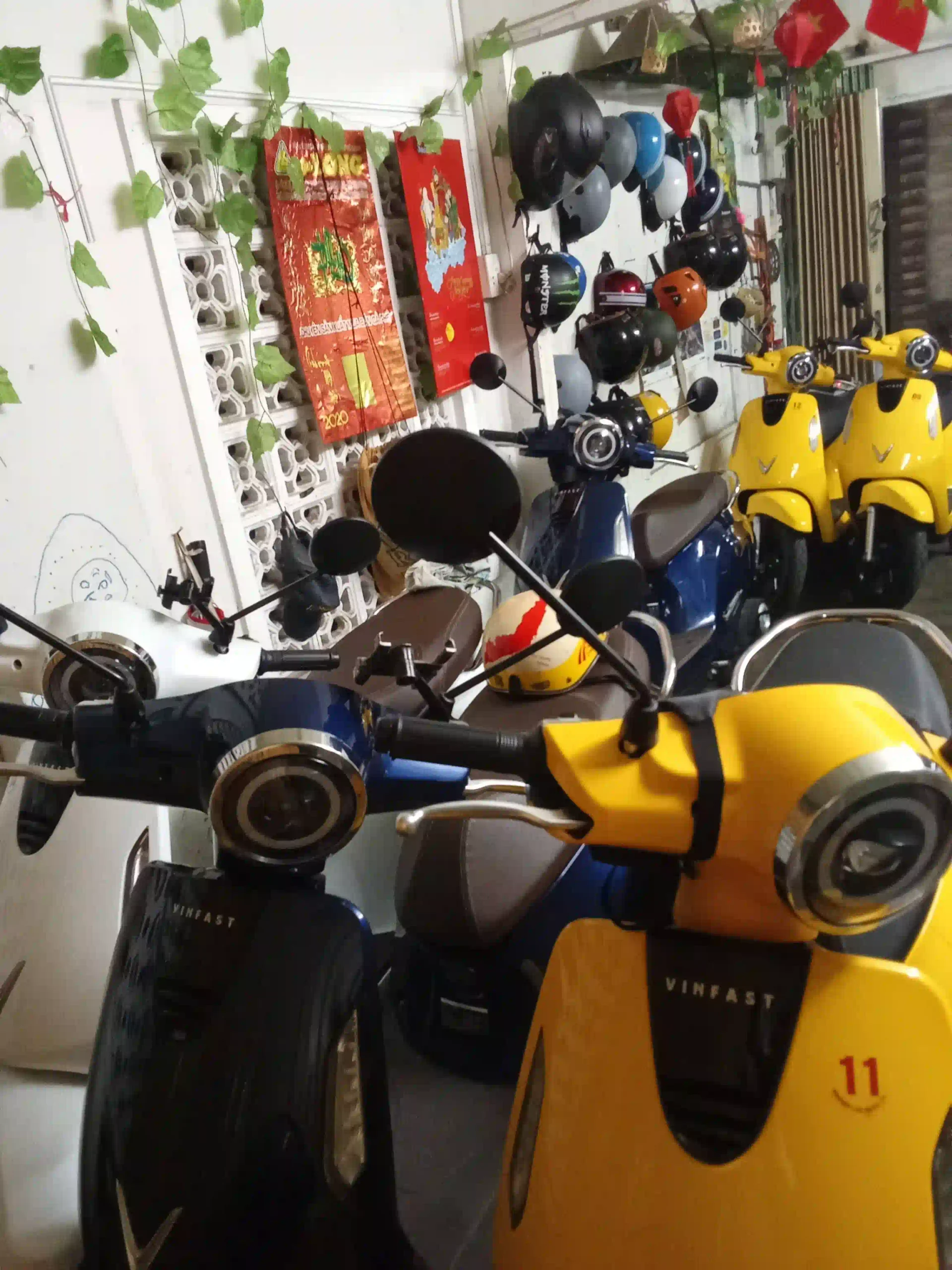
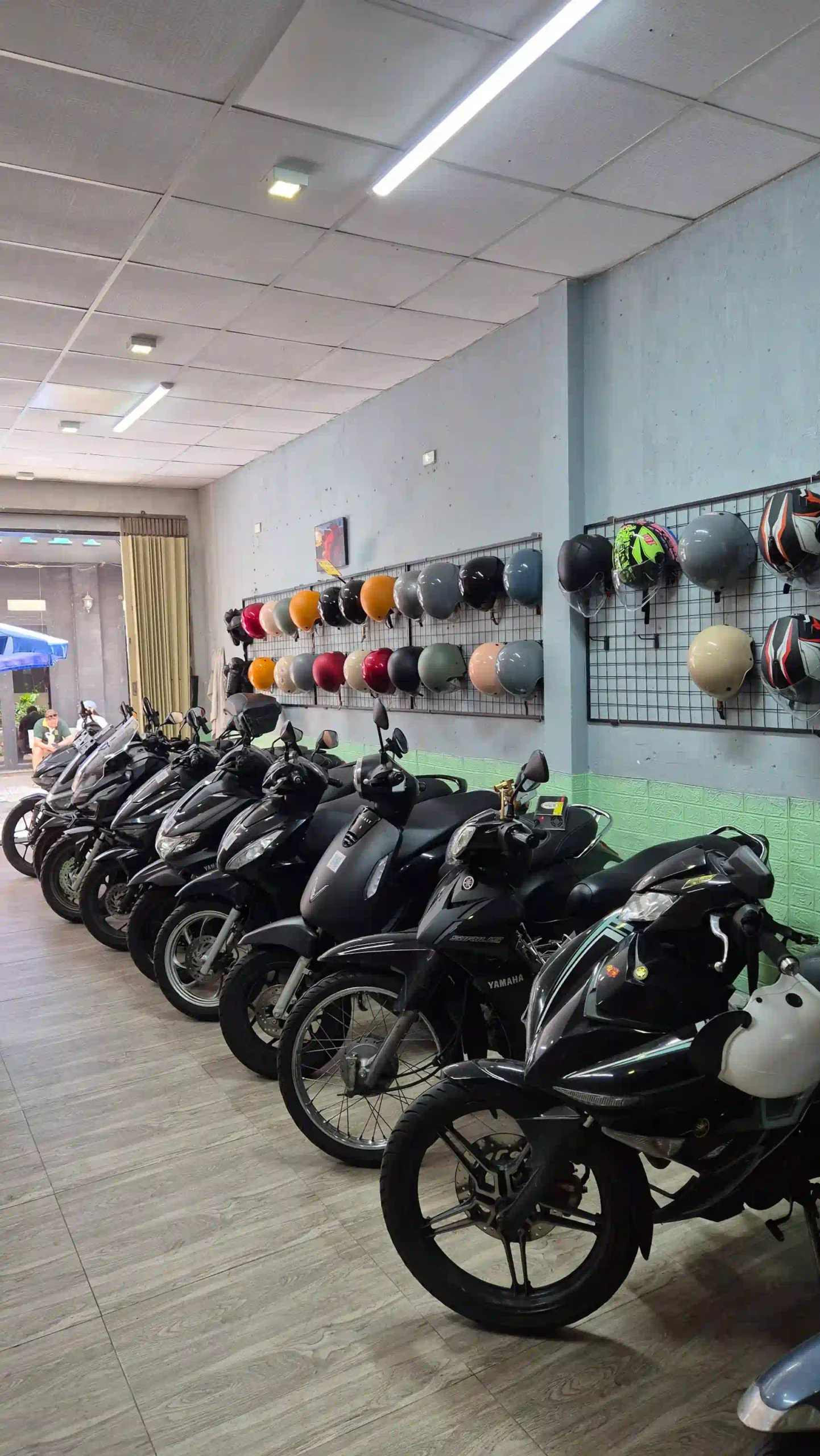
They are incredibly professional. This isn’t just a guy with five bikes in his living room. They have a massive fleet of well-maintained Honda Airblades, Yamaha NVXs, and semi-automatics.
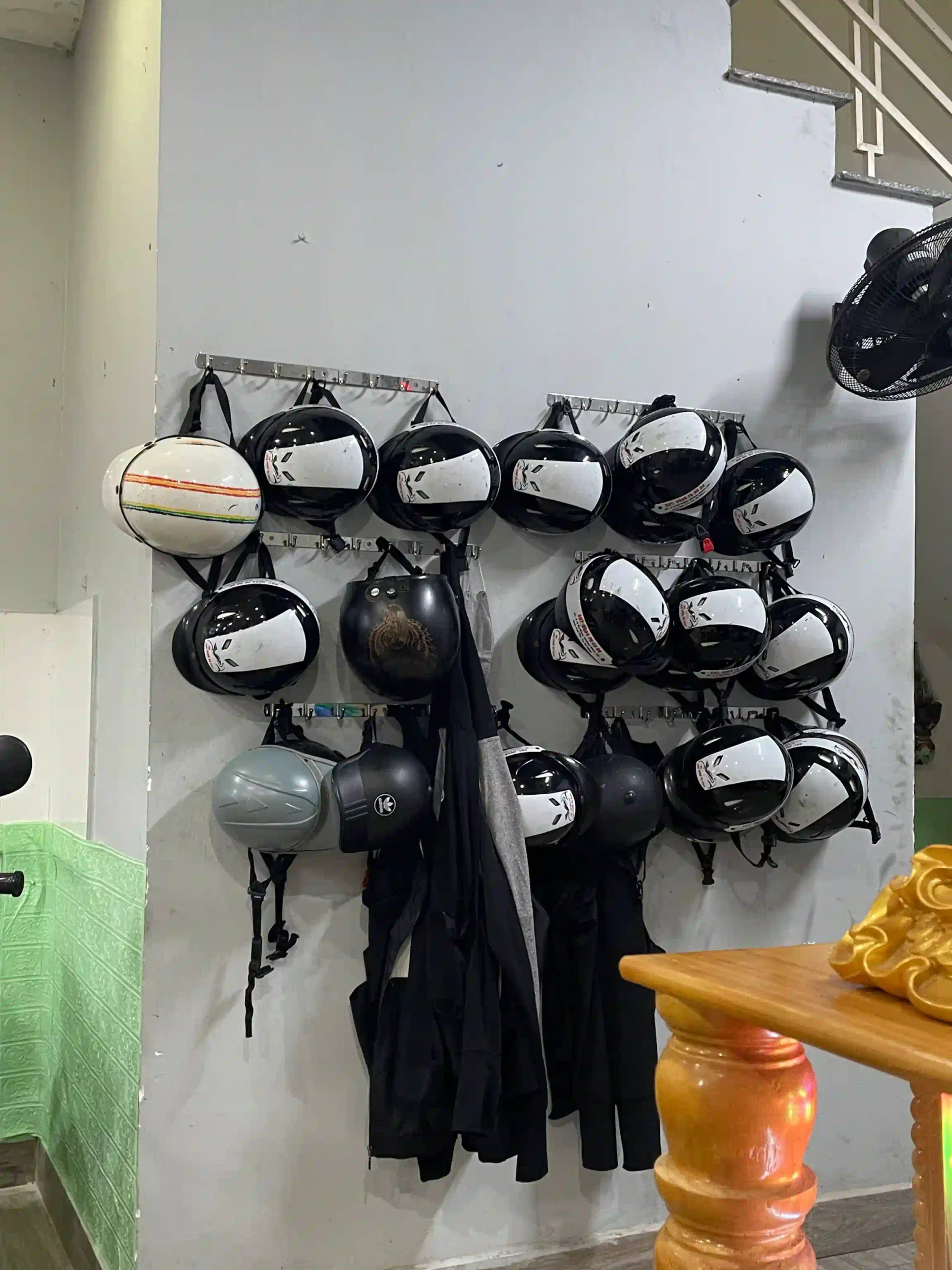
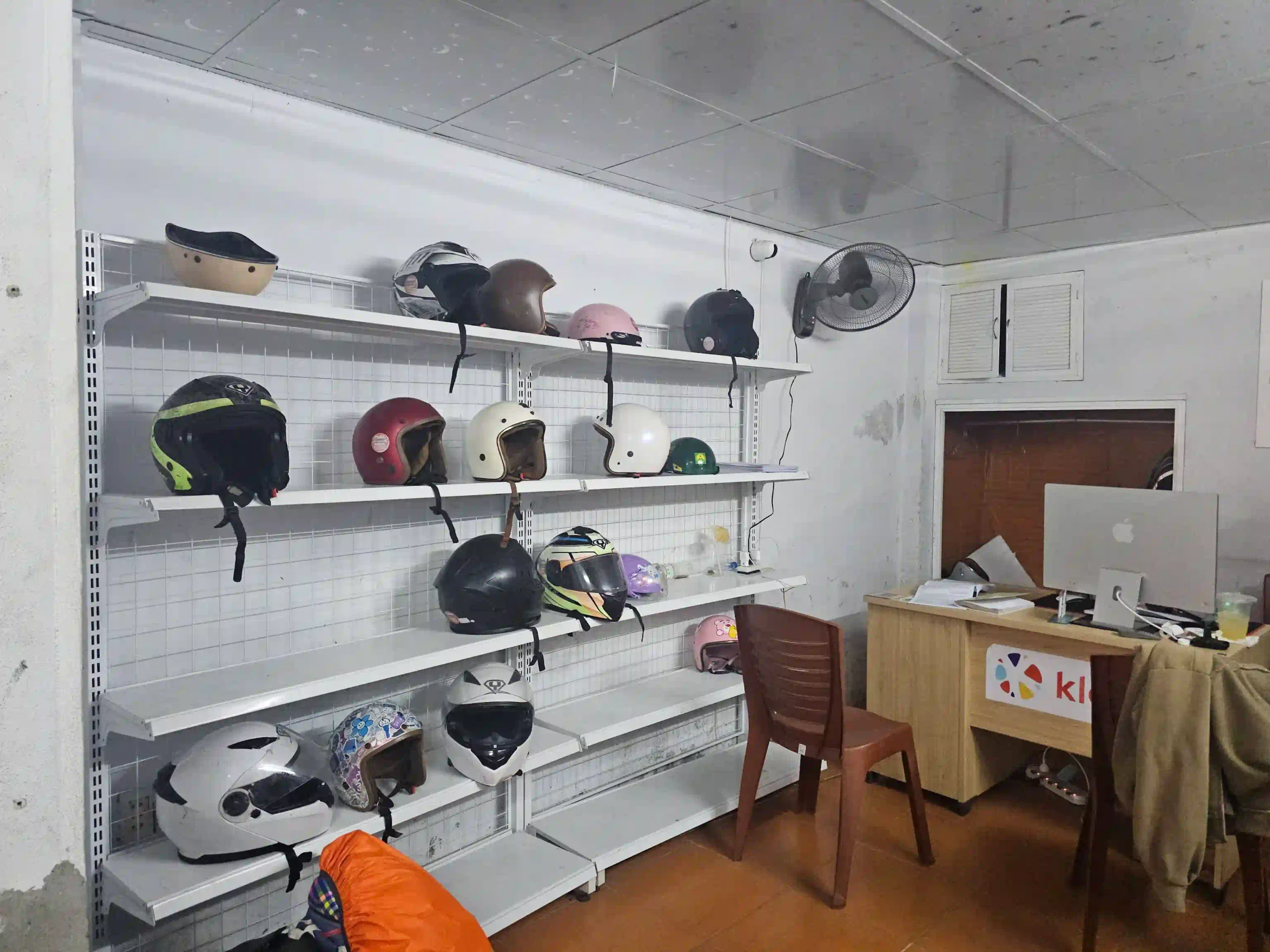
When you rent from them, the bike actually comes with a proper helmet (not those cheap plastic baseball caps most places give you), a phone mount, and a raincoat.
They are also the absolute best option if you want to do a one-way rental. A lot of people want to rent a bike in Da Nang, drive over the Hai Van Pass to Hue, and drop the bike off there.
The Motorbike Station specializes in this. They will even take your heavy luggage and transport it to your hotel in Hue by bus so you don’t have to strap a massive suitcase to your scooter.
Read more: My Danang Hue Hoi An detail itinerary built for slow travelers
The prices (2026):
You pay a slight premium here, but it’s worth it. A standard 125cc automatic scooter will run you about 150,000 VND to 180,000 VND per day. If you rent monthly, it drops to around 1.5 million to 2 million VND depending on the bike.
2. Tom Motorbike Rentals
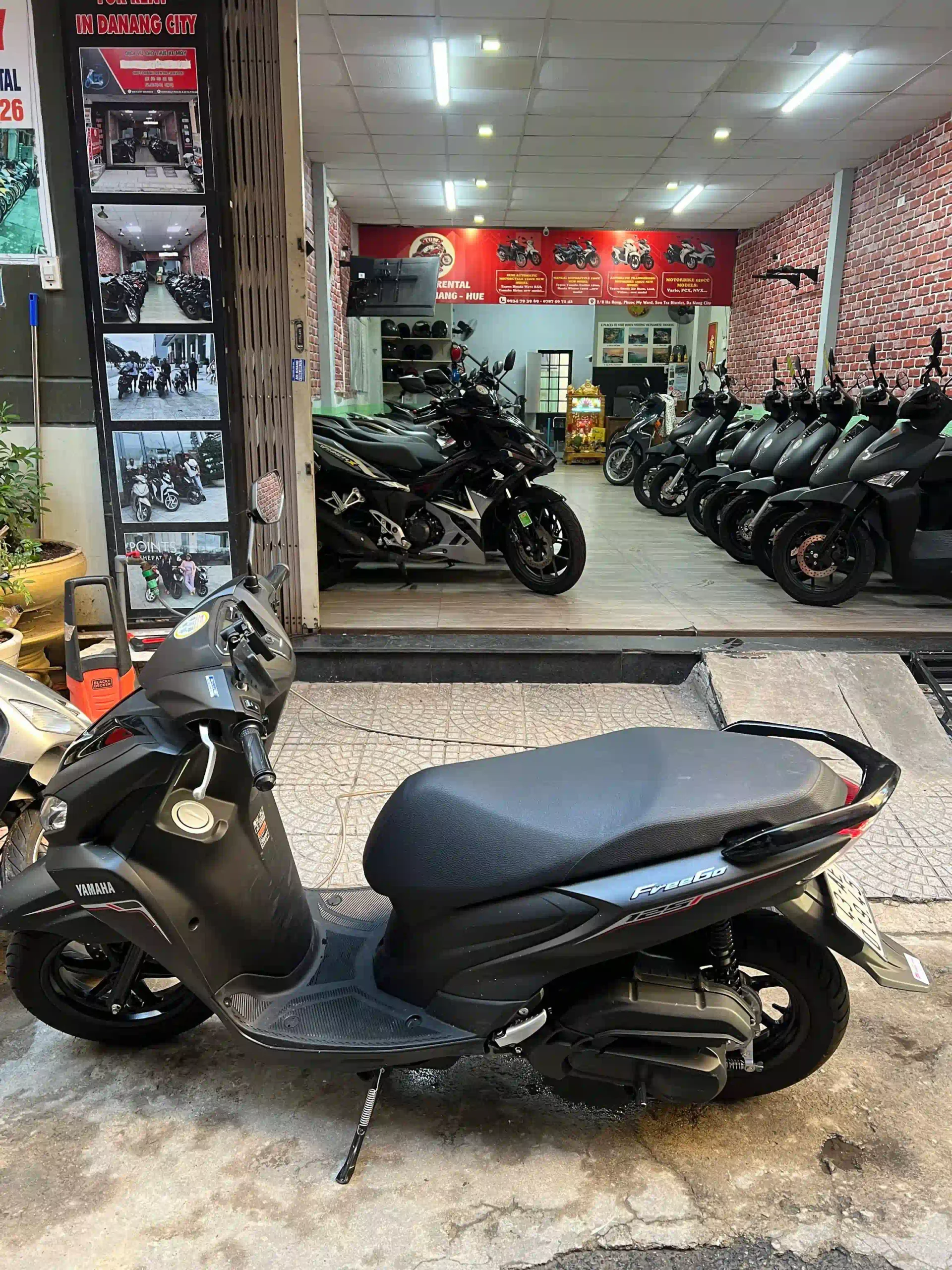
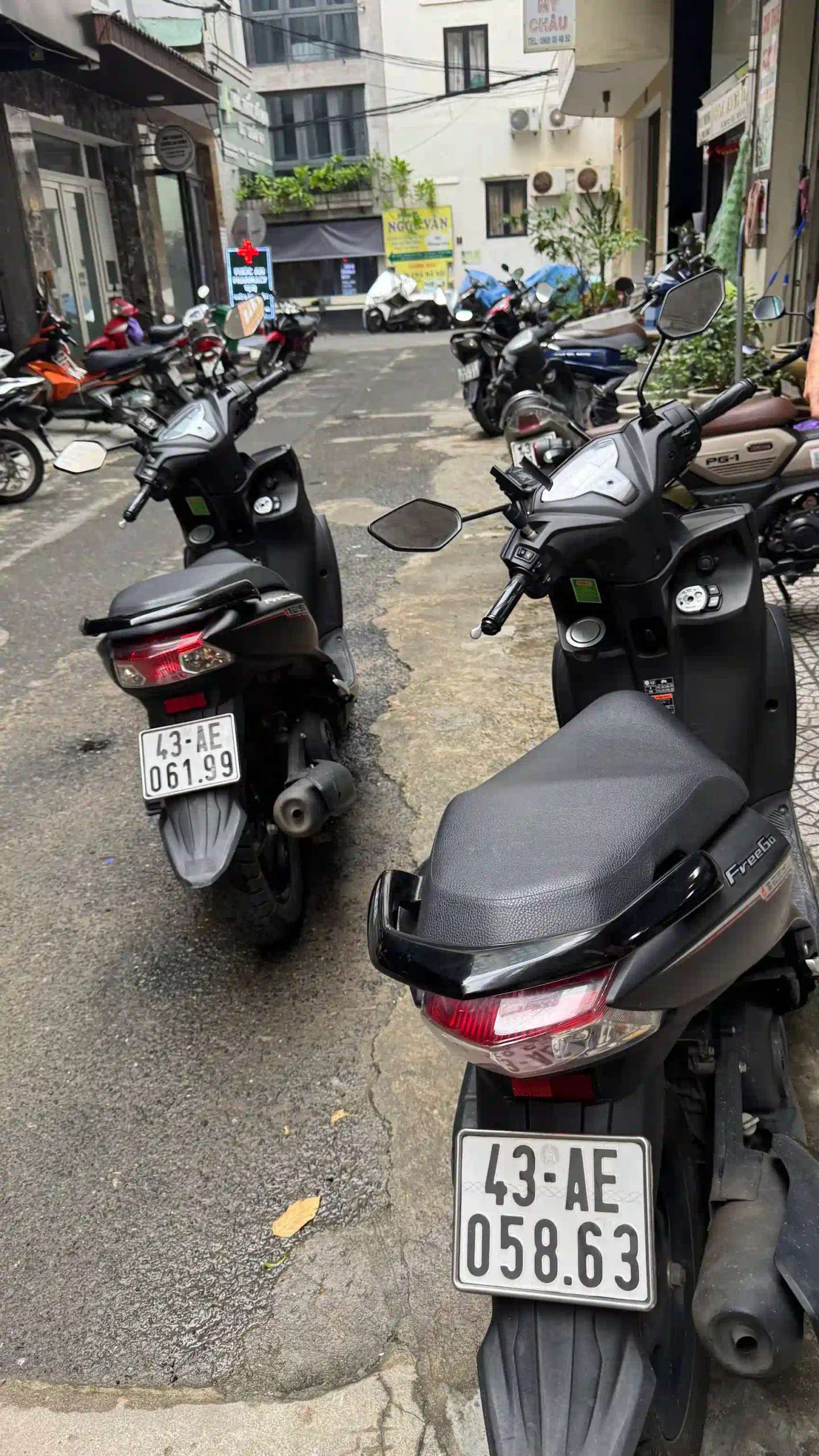
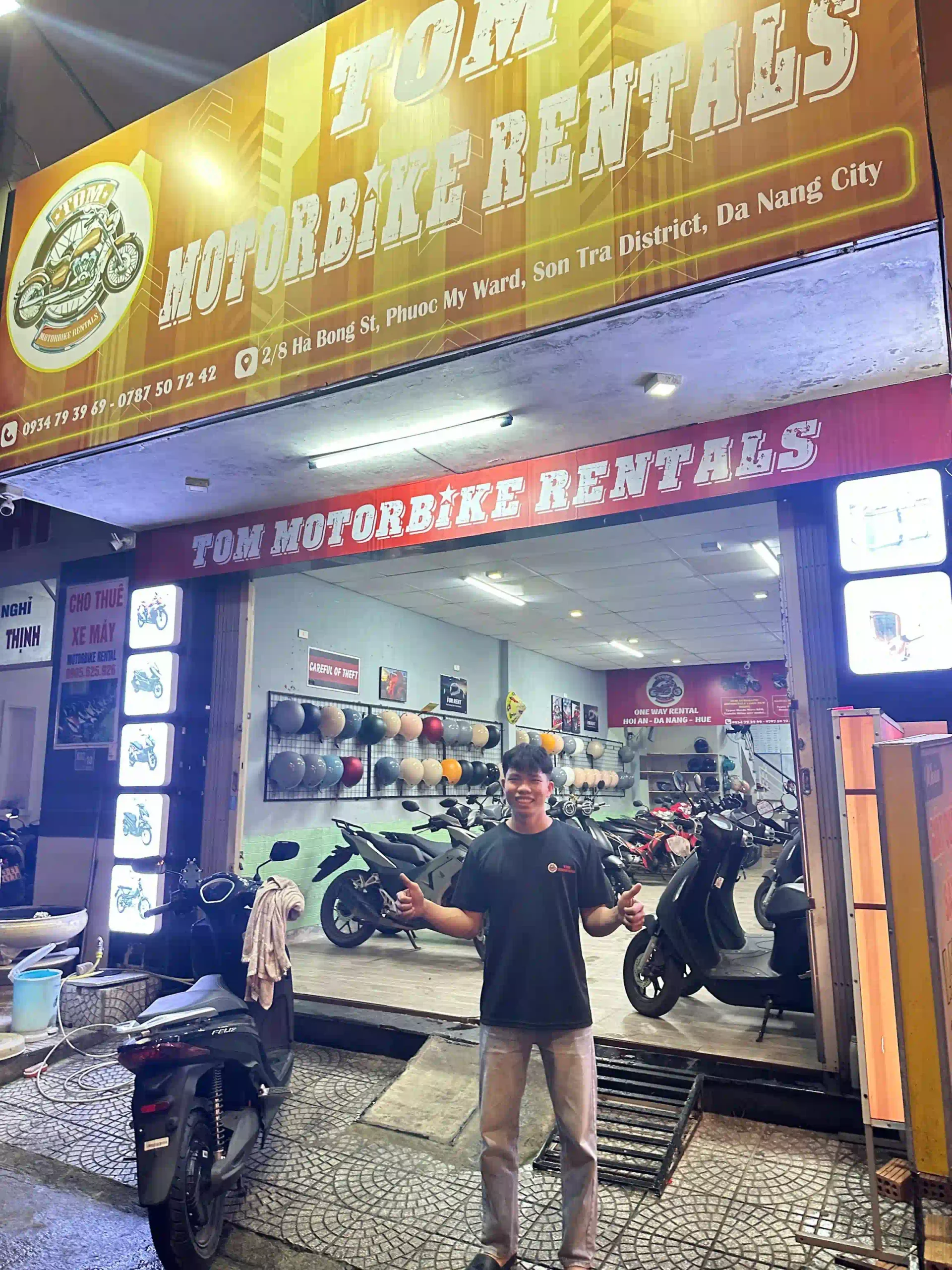
If you are staying on the beach side (An Thuong or My Khe area), Tom Motorbike Rentals is probably your best bet. They have a shop right in the thick of the tourist area on Ha Bong street.
Why they are good:
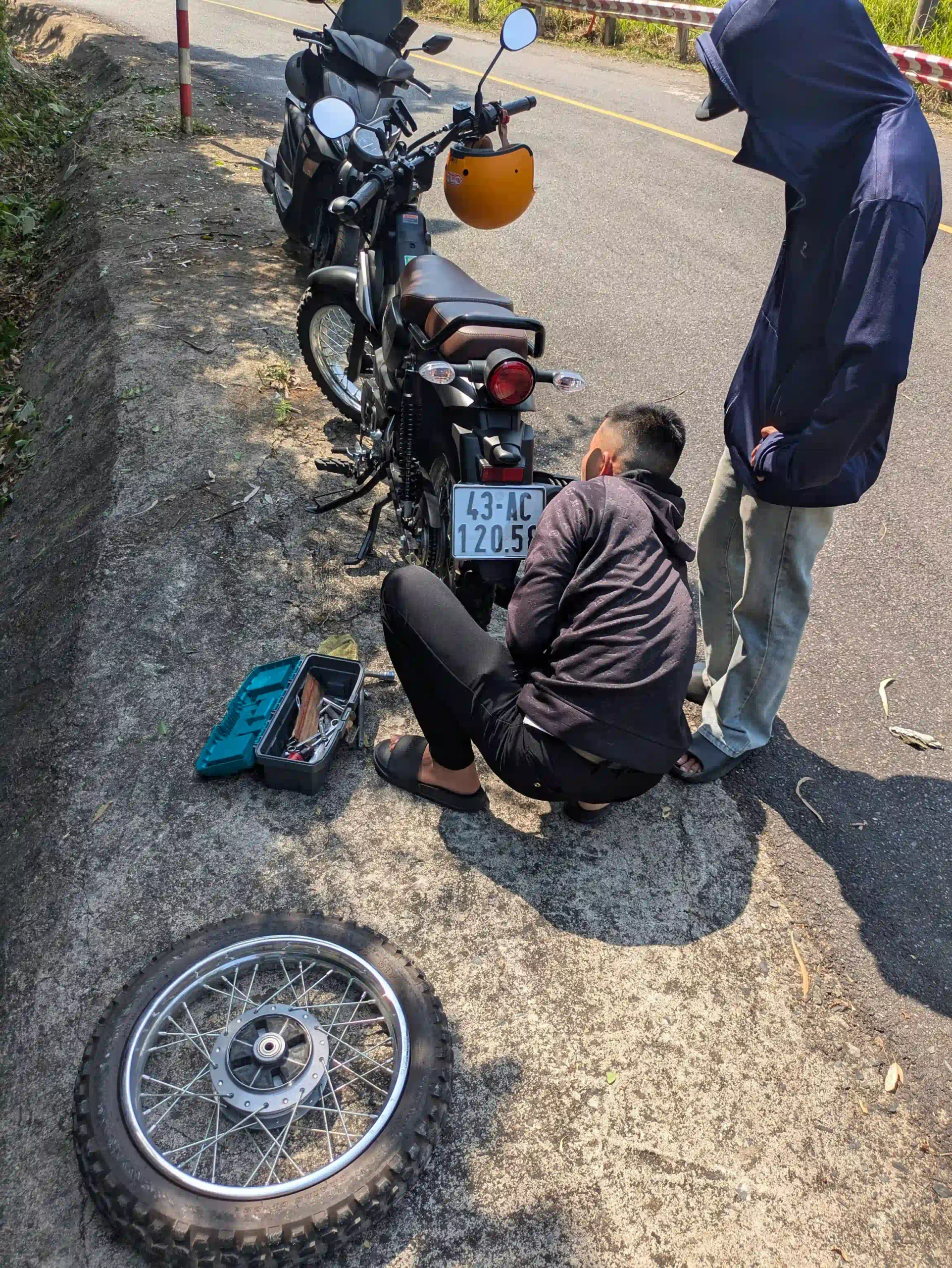
Tom and his team are just super reliable. They are known for having really good customer service. If your bike gets a flat tire or breaks down anywhere in the city, you just message them on WhatsApp (0934793969), and they will send a mechanic out to fix it or bring you a replacement bike. That kind of peace of mind is huge when you are driving around a foreign country.
They also don’t force you to leave your physical passport as a deposit. They will usually just take a photo of it and maybe ask for a small cash deposit or a different form of ID. Never leave your actual passport with a rental shop if you can avoid it.
The prices (2026):
Very competitive. You can get a solid Honda Vision or Airblade for about 130,000 to 150,000 VND a day. They also have bigger bikes like Honda PCXs if you are a taller guy and need more legroom, which usually go for around 200,000 VND a day.
3. TUAN Motorbikes Rental
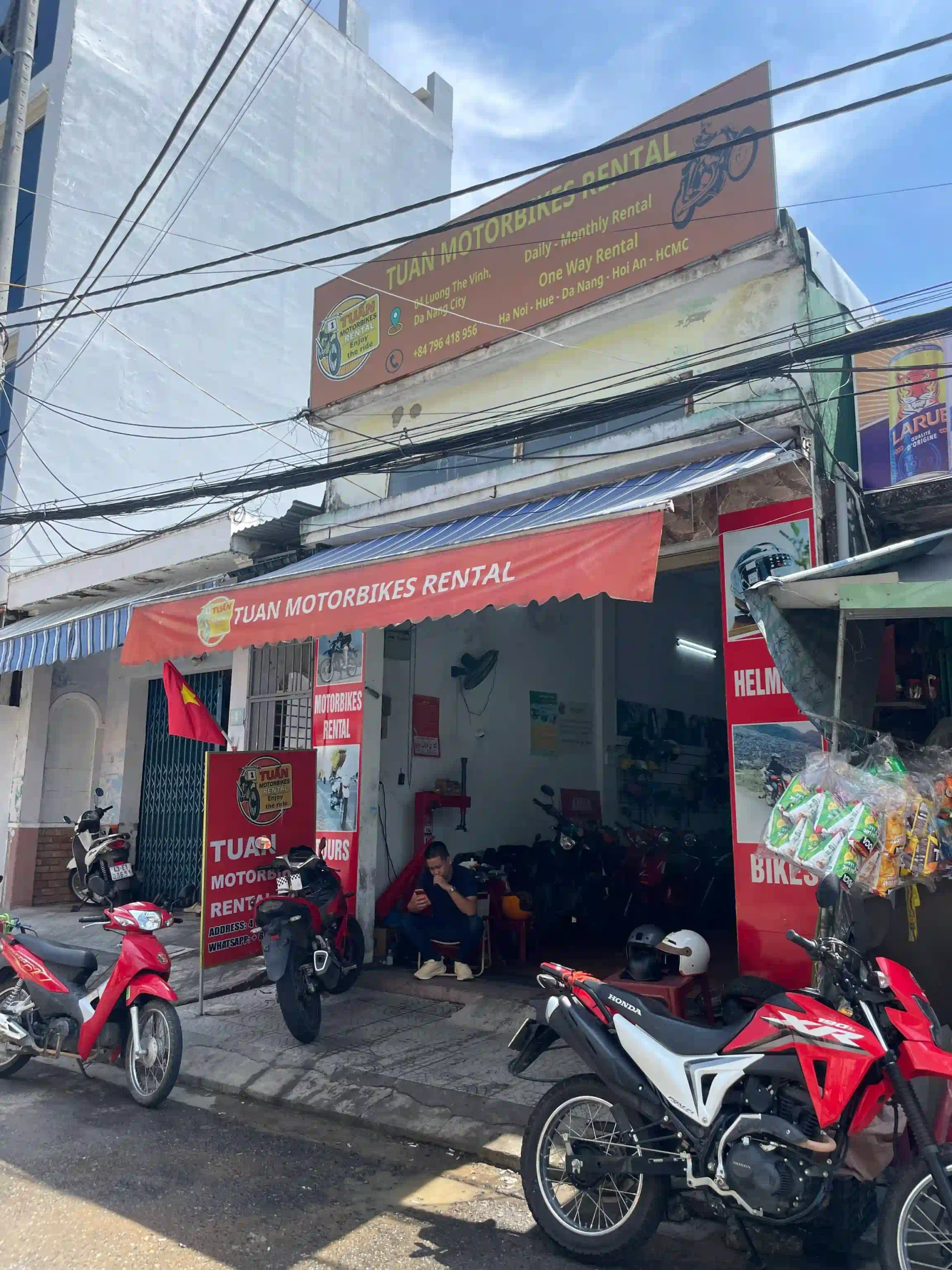
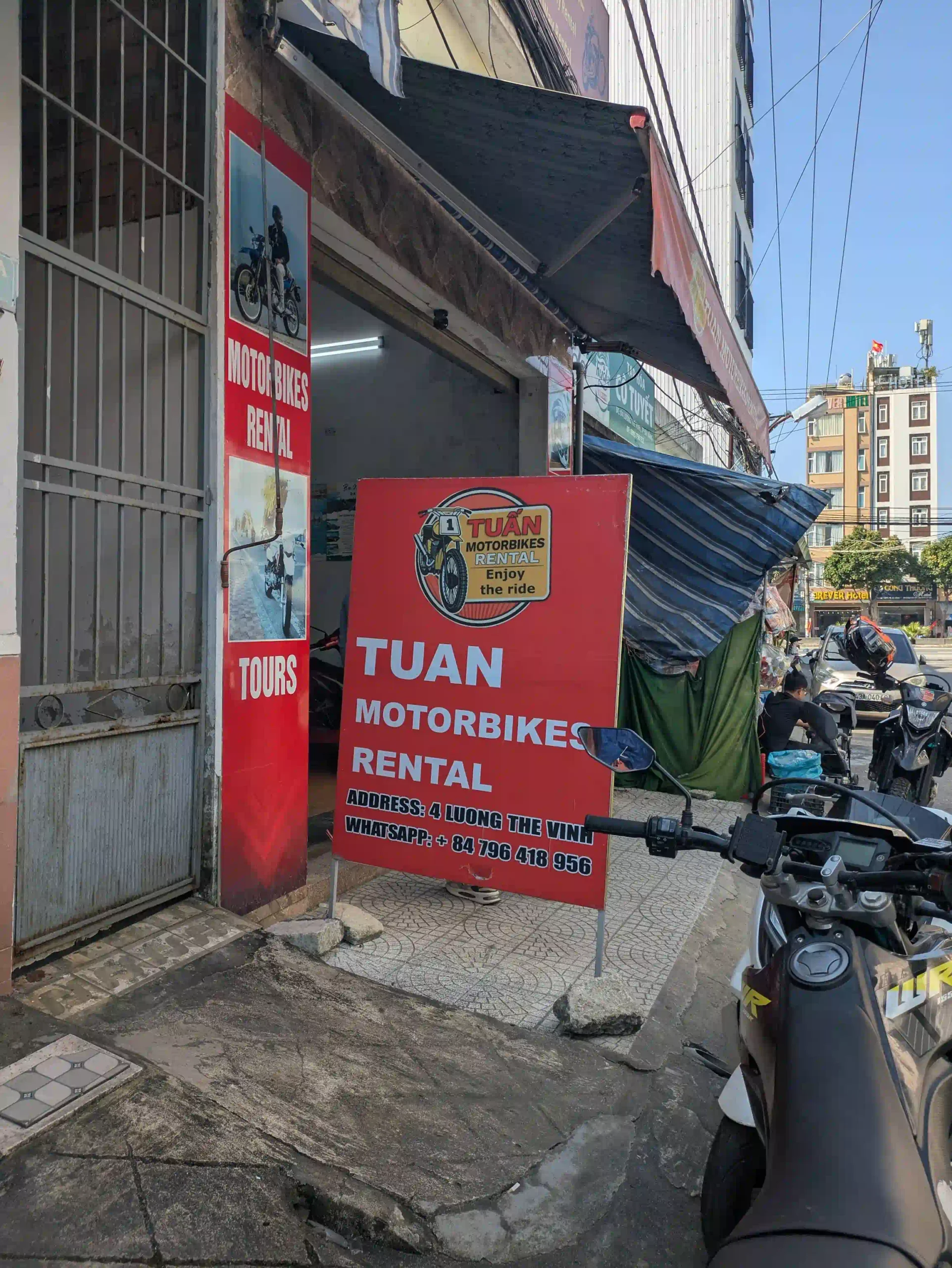
This place is located on Luong The Vinh street, which is just across the Dragon Bridge on the east side. It’s a great middle ground between the city and the beach.
Why they are good:
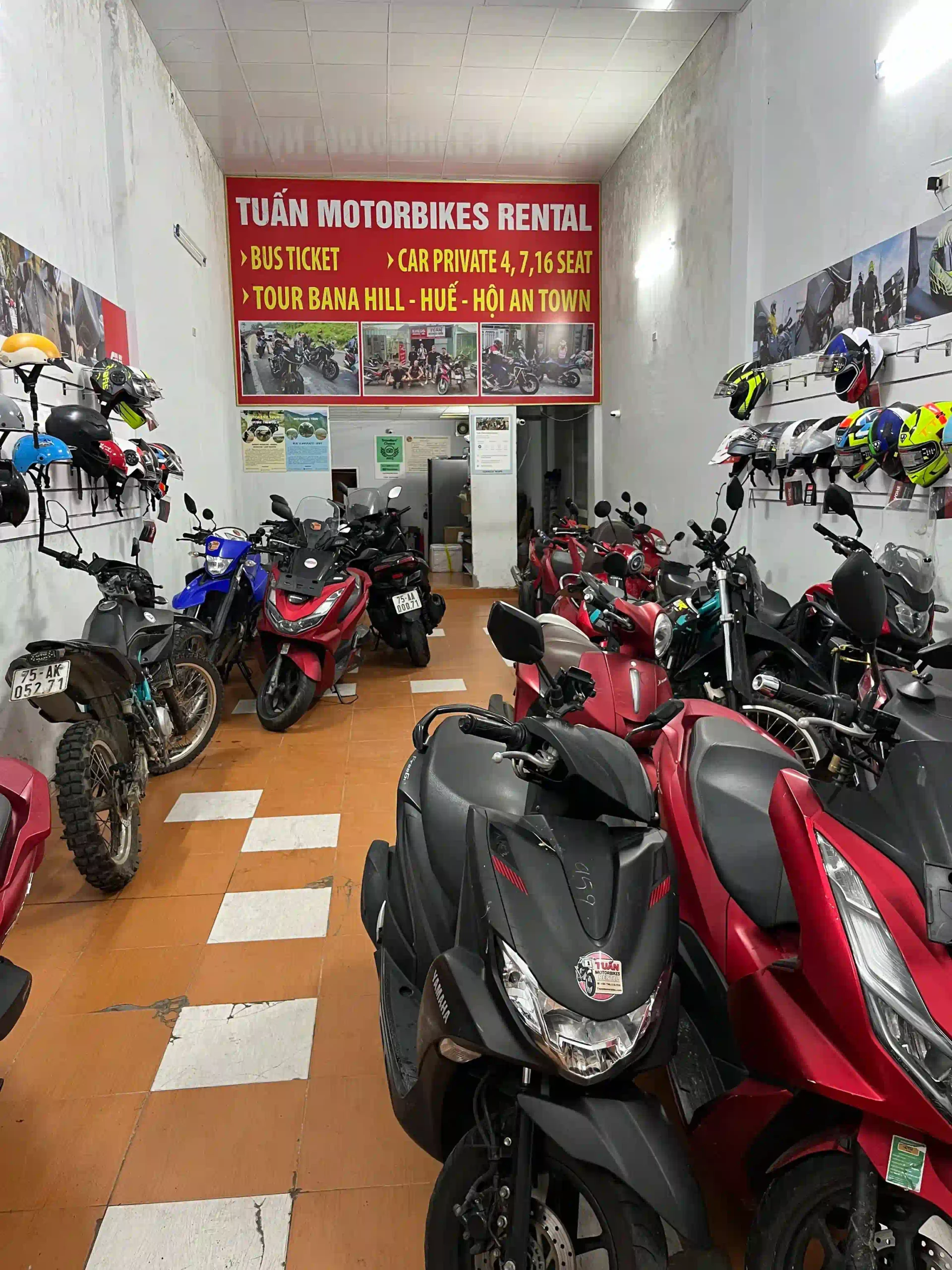
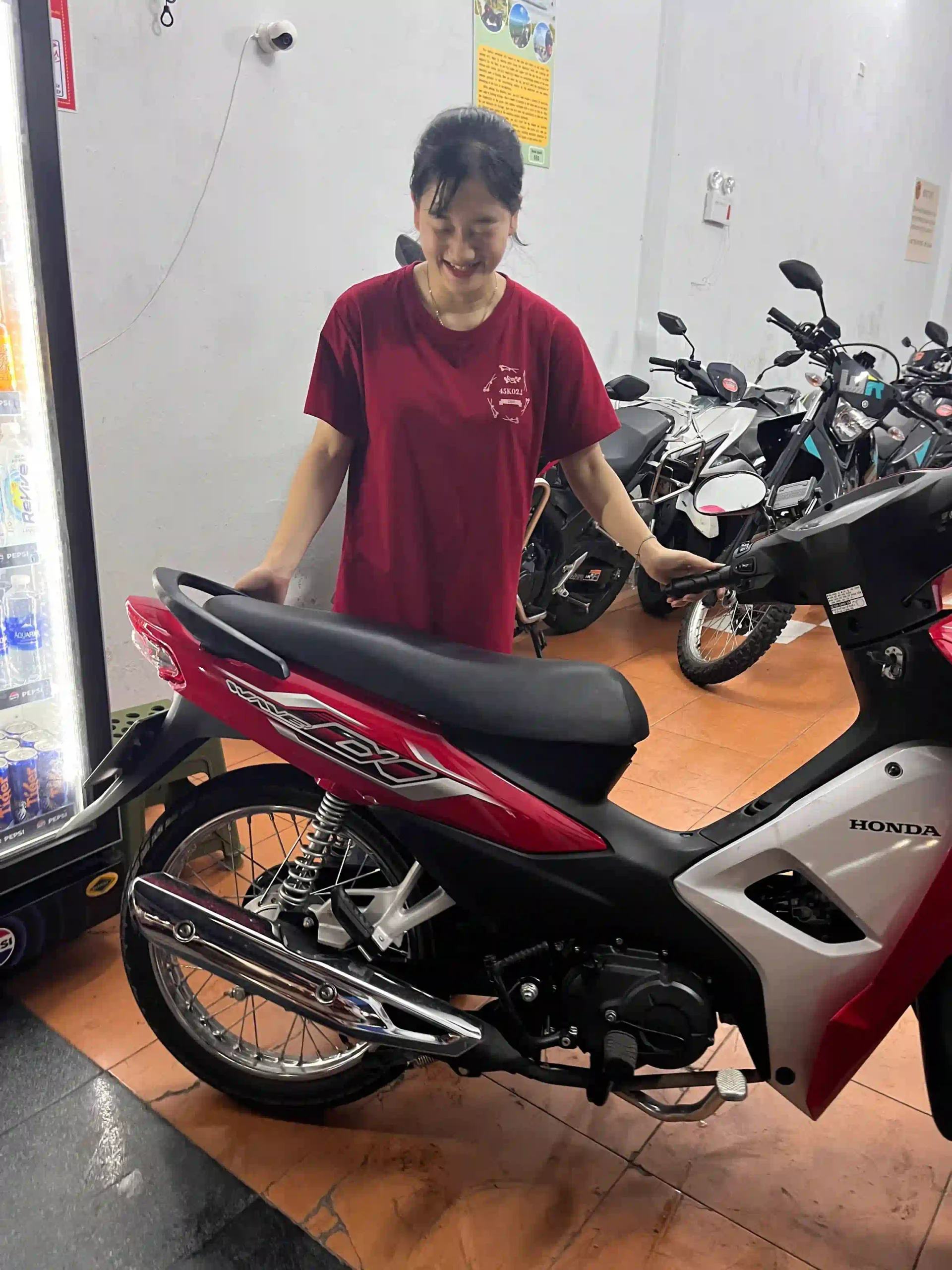
Tuan is a legend in the local community. His shop has over a thousand reviews online, and almost all of them are five stars. The reason is simple: he doesn’t rent out garbage. Every bike is washed, the oil is changed regularly, and the brakes actually work.
He is also really good at explaining the local traffic rules to foreigners who have never driven in Vietnam before. He will sit down with a map, show you where the police checkpoints usually are, and tell you which roads to avoid during rush hour. They also offer free delivery to your hotel or the airport, which saves you a Grab ride.
The prices (2026):
Standard daily rates apply here. Expect to pay 120,000 to 150,000 VND for a good automatic scooter. If you want a manual dirt bike like a Honda XR150 to go up into the mountains, he usually has a few, but you need to book them in advance. Those run closer to 350,000 VND a day.
My A-Z Guide to Motorbike Rental in Da Nang
Okay, so you know where to go. Now you need to know how the system actually works. Renting a bike here is easy, but there are a lot of unwritten rules. Let’s break it down.
1. Choosing the right type of bike
When you walk into a shop, you basically have three choices. Don’t just pick the one that looks the coolest. Pick the one that fits your skill level and what you plan to do.
The Automatic Scooter (Honda Airblade, Honda Vision, Yamaha Freego)
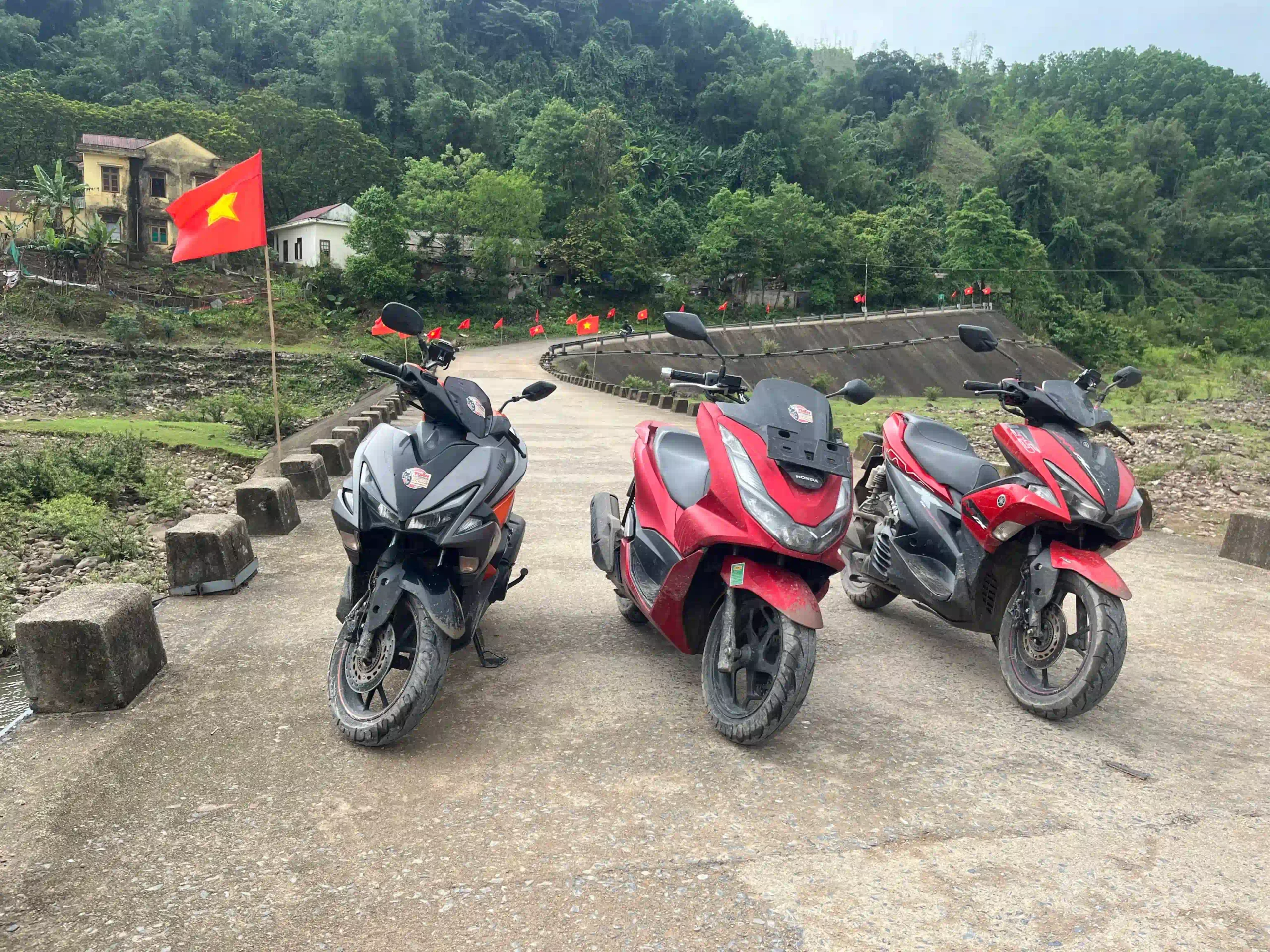
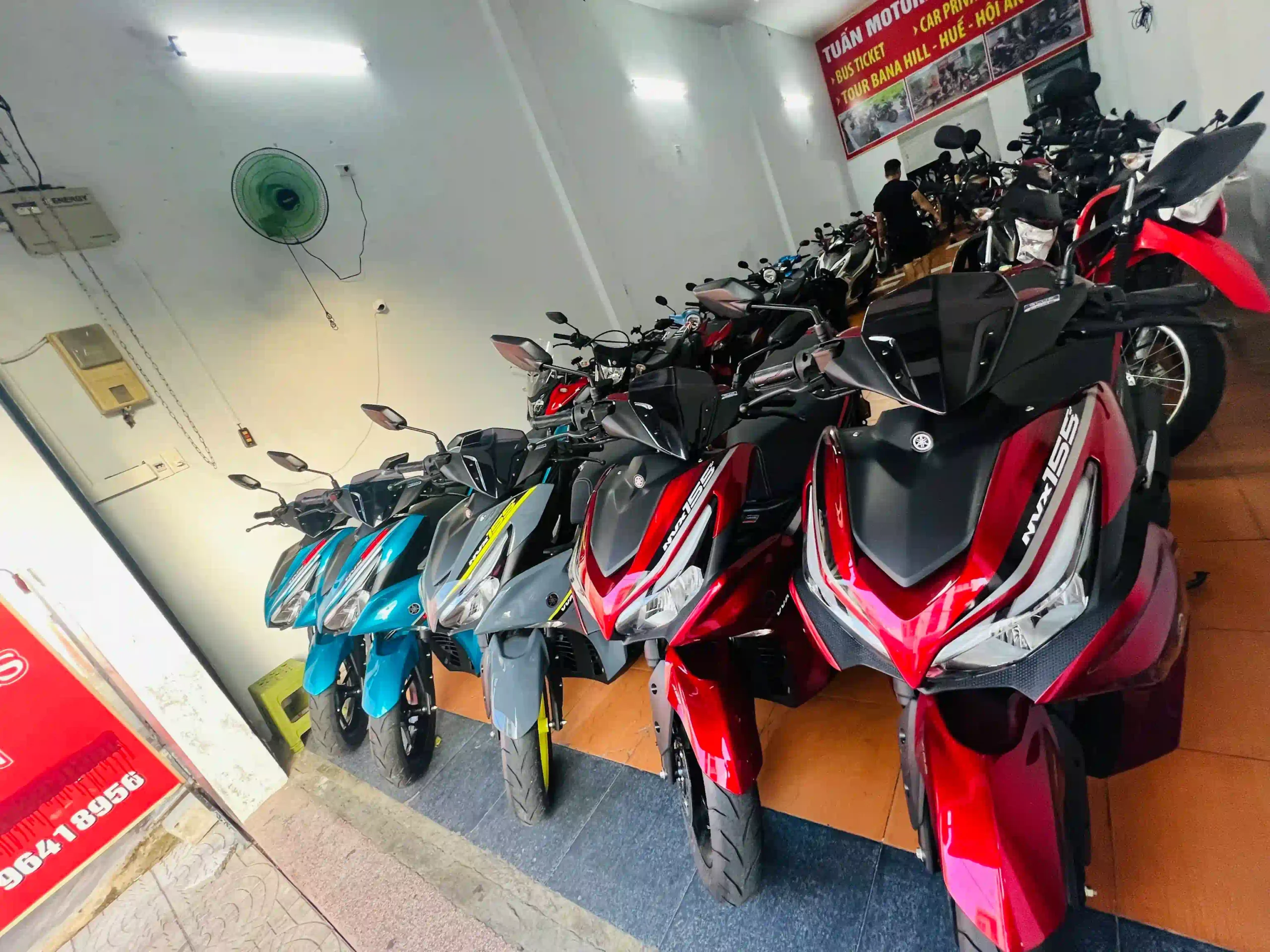
If you have never driven a motorbike before, or if you just want to cruise around the city to get coffee and go to the beach, get an automatic. You just twist the throttle and go. Both brakes are on the handlebars like a bicycle.
- The Honda Vision is small, light, and great for shorter people or solo riders.
- The Honda Airblade is a bit bigger, has more power (usually 125cc or 150cc), and is much better if you have a passenger on the back.
The Semi-Automatic (Honda Wave, Yamaha Sirius)
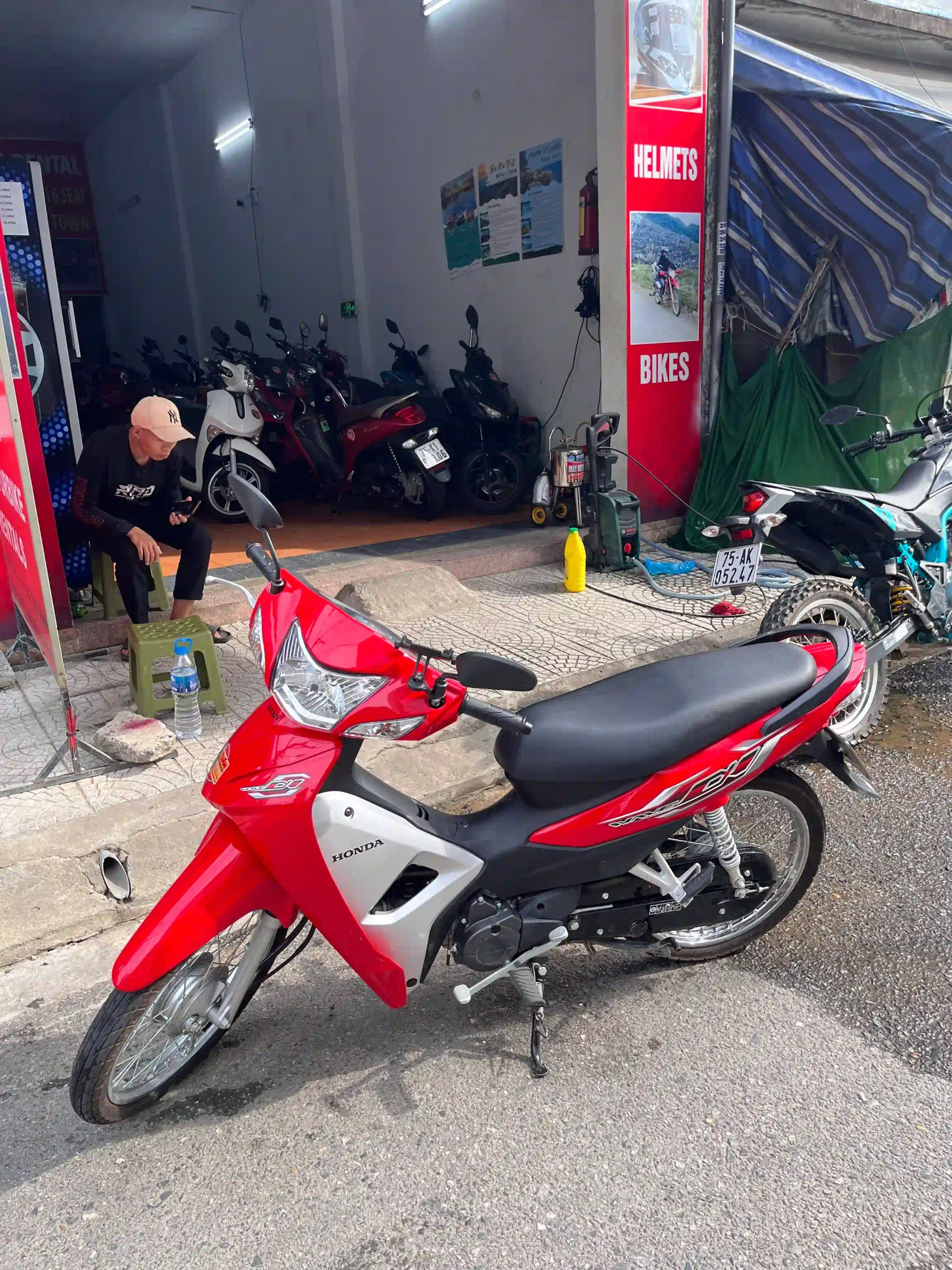
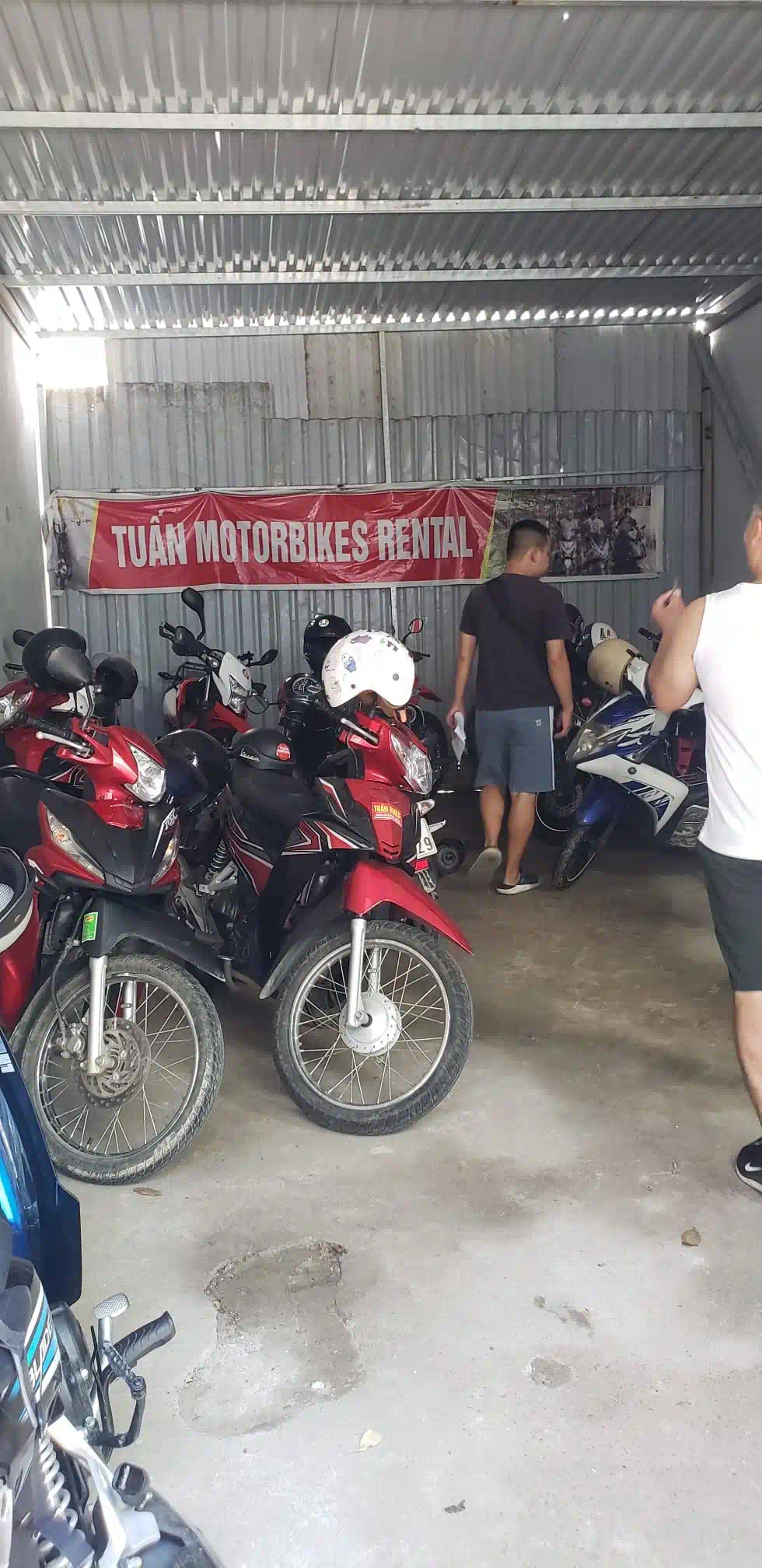
These are the bikes you see all the locals driving. They have gears, but no manual clutch. You shift gears with your left foot.
- Why get one? They are cheaper to rent (usually around 100,000 VND a day). They are also much better for climbing steep hills. If you plan to drive up the Son Tra Peninsula to see the giant Lady Buddha or the monkeys, an automatic scooter will struggle on the steep parts, and the brakes can overheat on the way down. A semi-automatic lets you use engine braking. If you know how to use gears, get a Honda Wave.
The Manual Bike (Honda XR150, Yamaha Exciter)
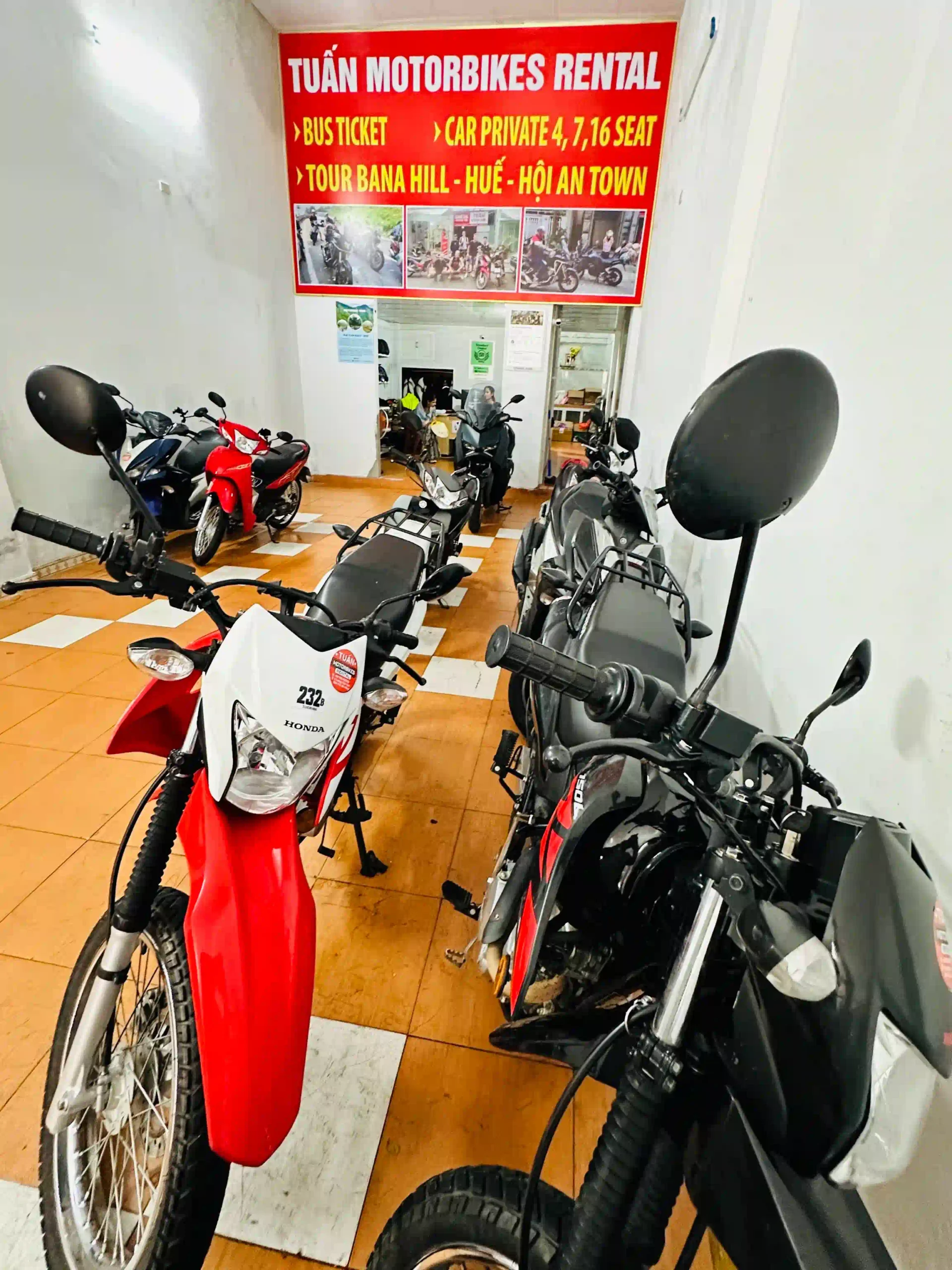
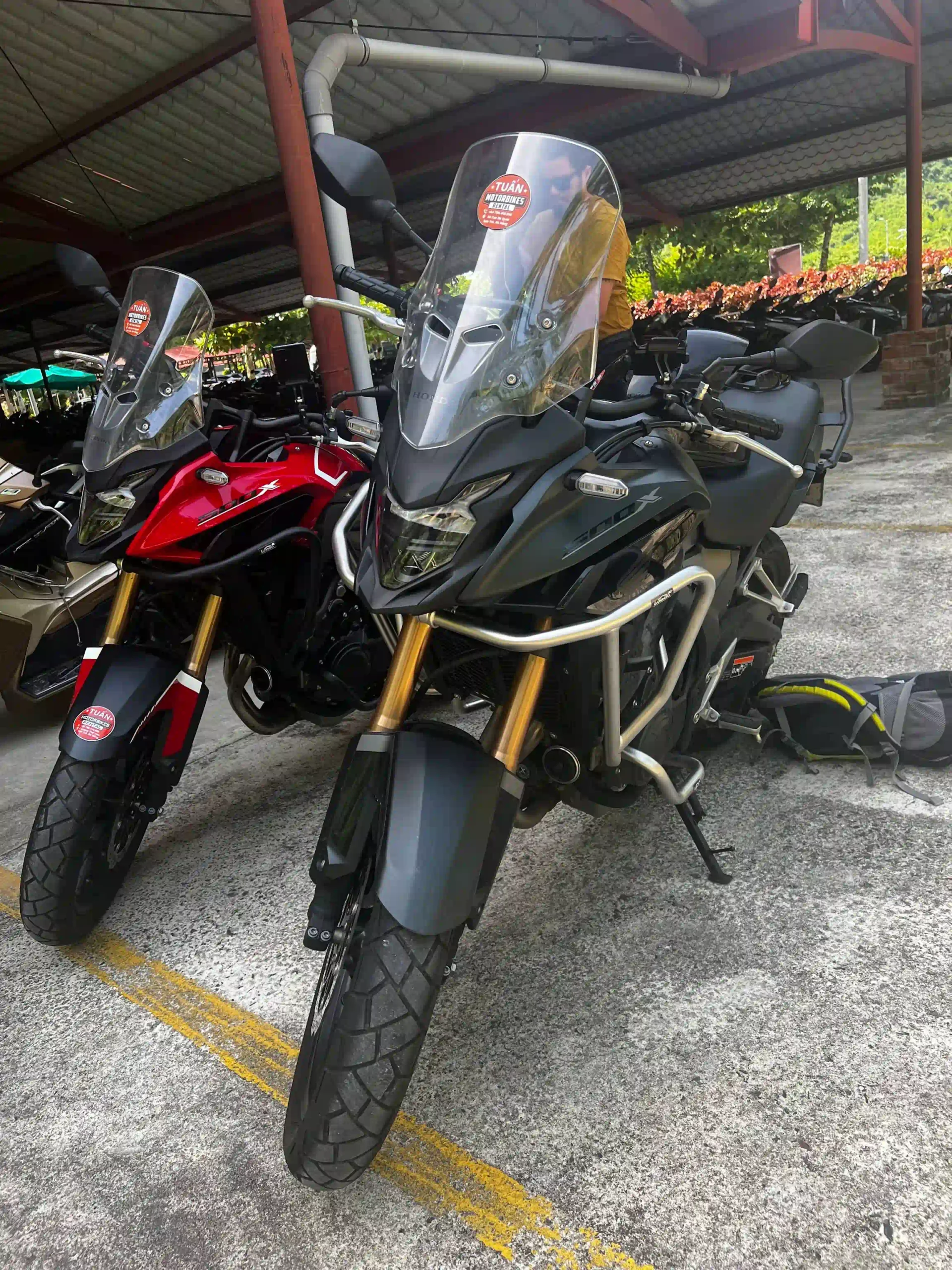
These have a manual clutch on the left handlebar. Unless you are planning to do a massive road trip into the mountains near the Laos border, you really don’t need a manual bike in Da Nang. The city traffic is stop-and-go, and constantly pulling the clutch in and out gets annoying fast.
2. The Police and the License Situation (The Reality in 2026)
This is the most common question I see online: “Do I need a license to rent a motorbike in Da Nang?”
Here is the legal answer: Yes. To drive legally in Vietnam, you need a Vietnamese driver’s license, or an International Driving Permit (IDP) that is explicitly valid in Vietnam (which usually means the 1968 Vienna Convention IDP, not the 1949 Geneva one that the US and Australia issue), AND you must have a motorcycle endorsement on your home country license.
Here is the reality on the ground: The rental shops do not care. They will rent a bike to anyone with a pulse and cash. They will not ask to see your license.
However, the Da Nang traffic police do care.
In the past, the police mostly ignored foreigners. But in 2026, they have cracked down hard. There are regular checkpoints on the main roads, especially on the roads leading up to the Hai Van Pass, the Son Tra Peninsula, and along the beach road (Vo Nguyen Giap).
If you get pulled over and you do not have the correct legal IDP, they will fine you. The standard fine for driving without a license is around 1.5 million to 2 million VND. Sometimes they will just take the cash on the spot (a bribe, let’s be honest), and sometimes they will actually impound the motorbike.
If they impound the bike, you have to go back to the rental shop, tell them what happened, and pay the shop for the days the bike is locked up in the police lot. It’s a massive headache.
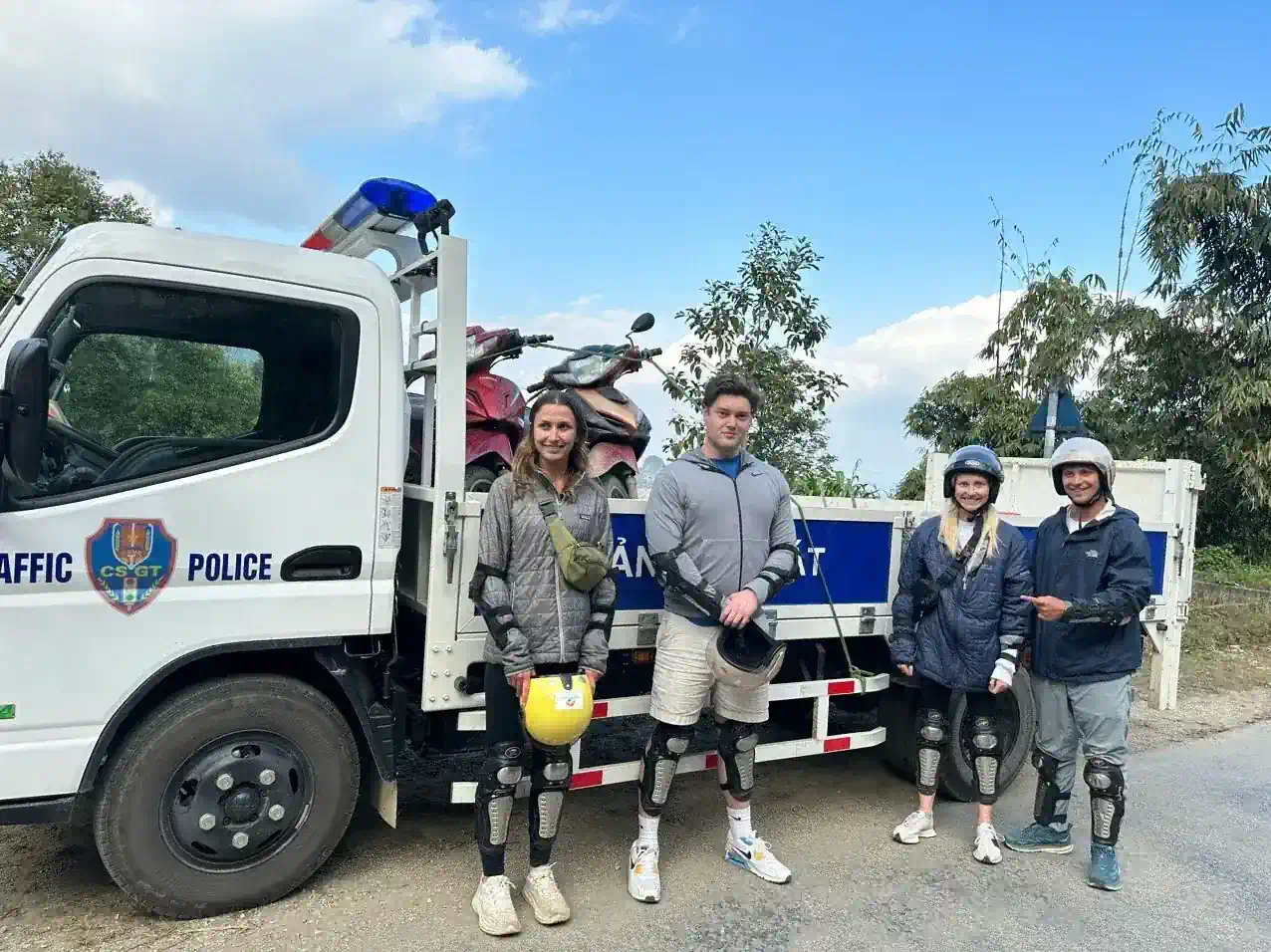
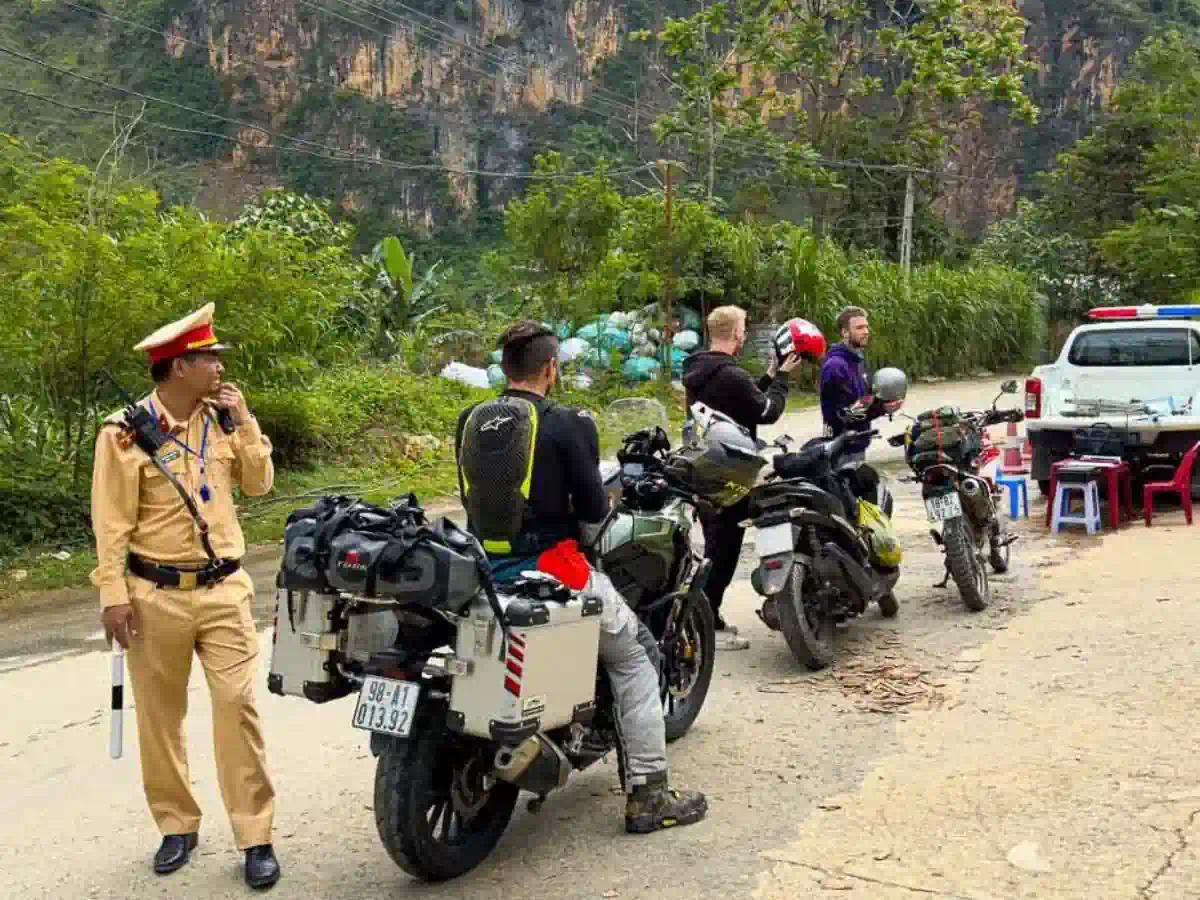
My advice: If you don’t have a legal license, drive very carefully. Wear your helmet. Do not speed. Do not drink and drive (the alcohol limit is strictly zero in Vietnam, and they do breathalyze).
If you get pulled over, be polite, don’t argue, and have a million VND tucked away in a separate pocket from your main wallet to pay the “fine” quickly.
3. Deposits and Passports
Never, ever leave your physical passport with a rental shop. Your passport is your only way out of the country. If you get into a dispute over a scratch on the bike, and they have your passport, they have all the leverage. They can demand whatever money they want.
The good shops (like the three I mentioned above) will accept a photo of your passport, plus a cash deposit (usually around 1 million to 2 million VND), or they will hold a different form of ID, like your home country driver’s license or a national ID card.
If a shop absolutely insists on keeping your physical passport, walk away. There are a hundred other shops on the same street.
4. The “Blue Card”
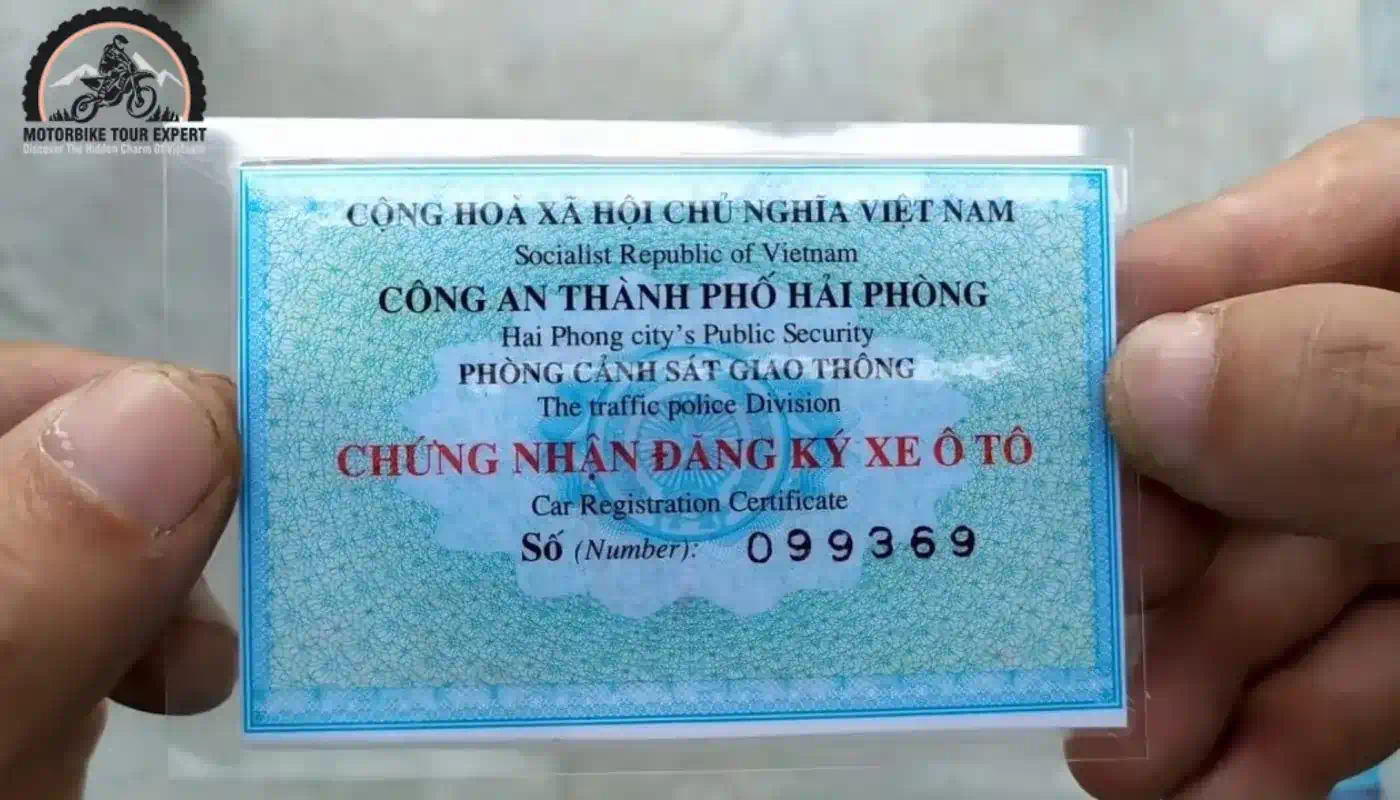
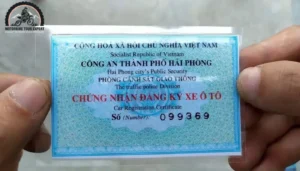
Every motorbike in Vietnam has a registration card, known as the “blue card.” It proves who owns the bike.
When you rent a motorbike in Da Nang, the shop will give you a notarized photocopy of the blue card. They will not give you the original. This is normal. Keep that photocopy in the storage compartment under the seat. If the police pull you over, they will ask to see it to prove the bike isn’t stolen.
5. How to check the bike before you drive away
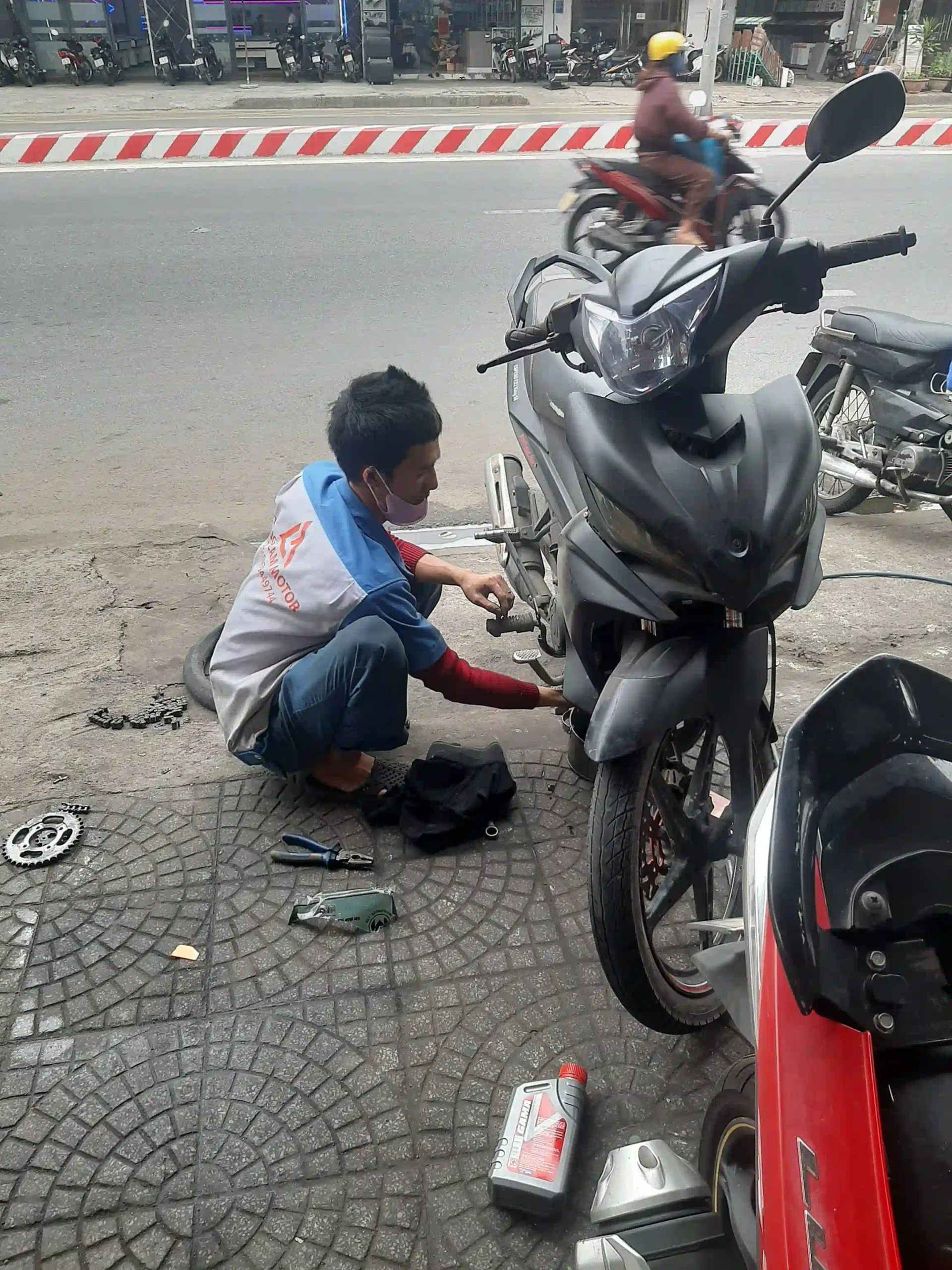
Do not just hand over the cash and drive off. Take five minutes to inspect the bike. If you don’t, you might end up paying for damage you didn’t cause.
- Take a video: Walk around the entire bike with your phone camera recording. Point out every scratch, dent, and cracked piece of plastic. Make sure the shop owner sees you doing this. This prevents the “scratch scam” where they try to charge you for old damage when you return the bike.
- Check the brakes: Sit on the bike, pull both brake levers hard, and try to push the bike forward. It shouldn’t move. If the brakes feel spongy or go all the way to the handlebars, ask for a different bike.
- Check the tires: Look at the tread. A lot of rental bikes have bald tires. Da Nang gets a lot of rain, and driving on bald tires on wet asphalt is like driving on ice. If the tires are smooth, refuse the bike.
- Check the lights and horn: Turn on the headlights. Check the turn signals. And most importantly, honk the horn. You will use the horn constantly in Vietnam. It is your main safety tool. If the horn doesn’t work, the bike is useless.
6. Gas Stations and Fuel
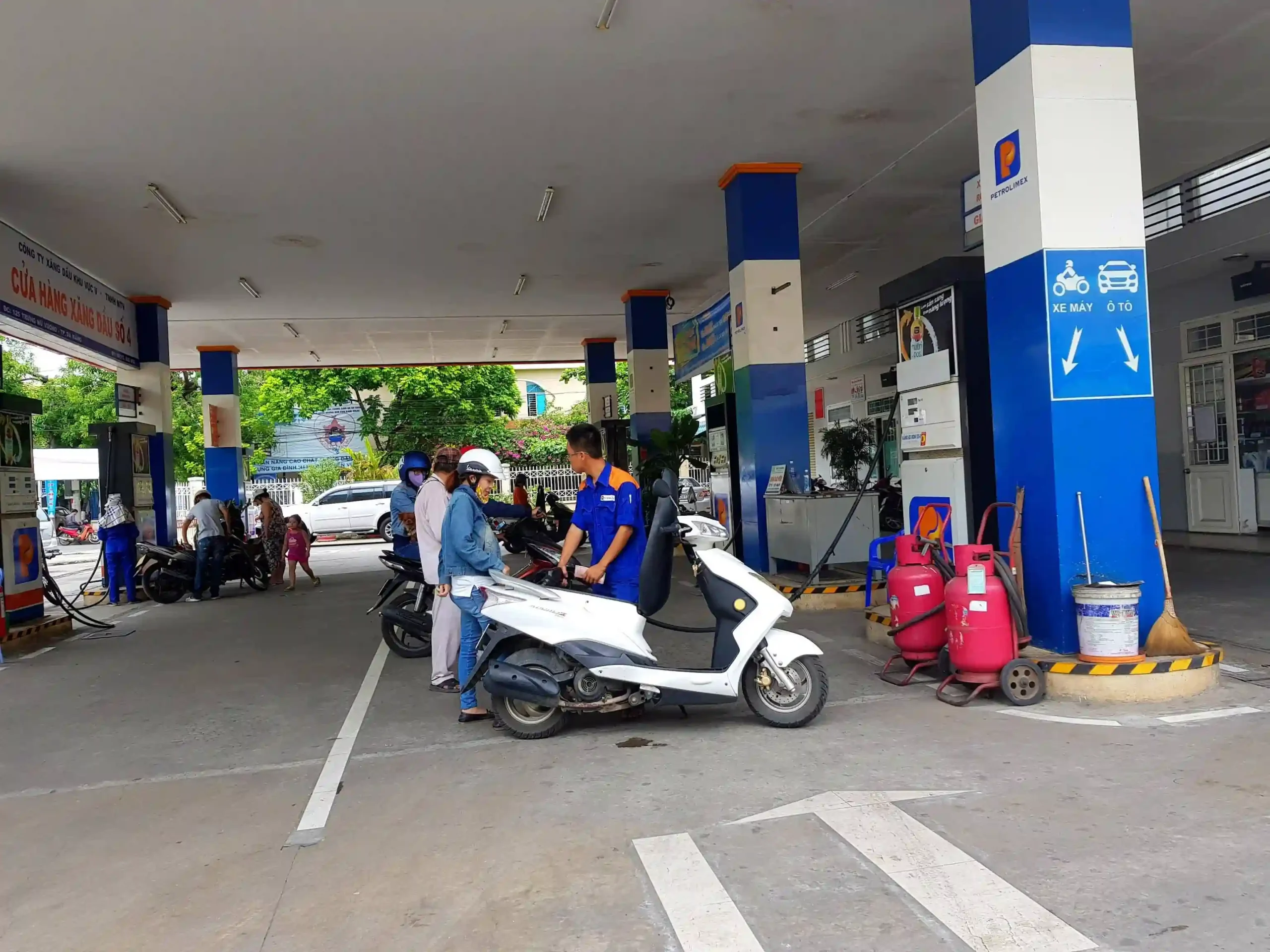
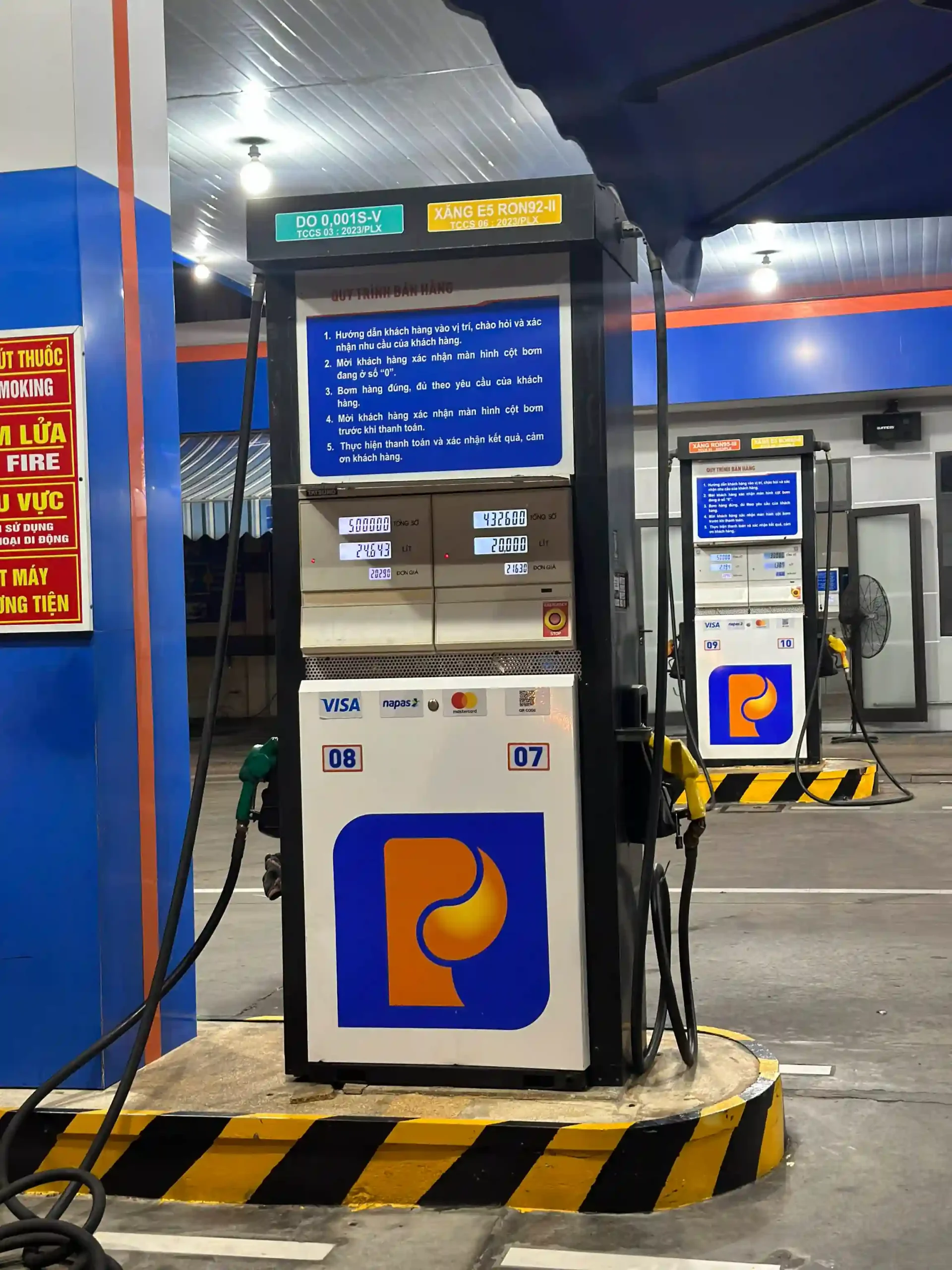
When you get the bike, the gas tank will probably be completely empty. The shop will usually give you just enough gas to make it to the nearest station.
Gas stations in Da Nang are everywhere. You don’t pump your own gas. You pull up, pop the seat open, and tell the attendant how much you want.
Don’t try to calculate liters. Just use cash amounts. Say “Fifty thousand” (Năm mươi ngàn) or “One hundred thousand” (Một trăm ngàn). 50,000 VND will usually fill up a standard scooter from empty.
Always pay in cash. Most gas stations do not accept credit cards. And watch the meter on the pump to make sure they reset it to zero before they start pumping. It’s a rare scam these days, but sometimes an attendant will leave the previous person’s total on the screen and overcharge you.
7. Surviving Da Nang Traffic
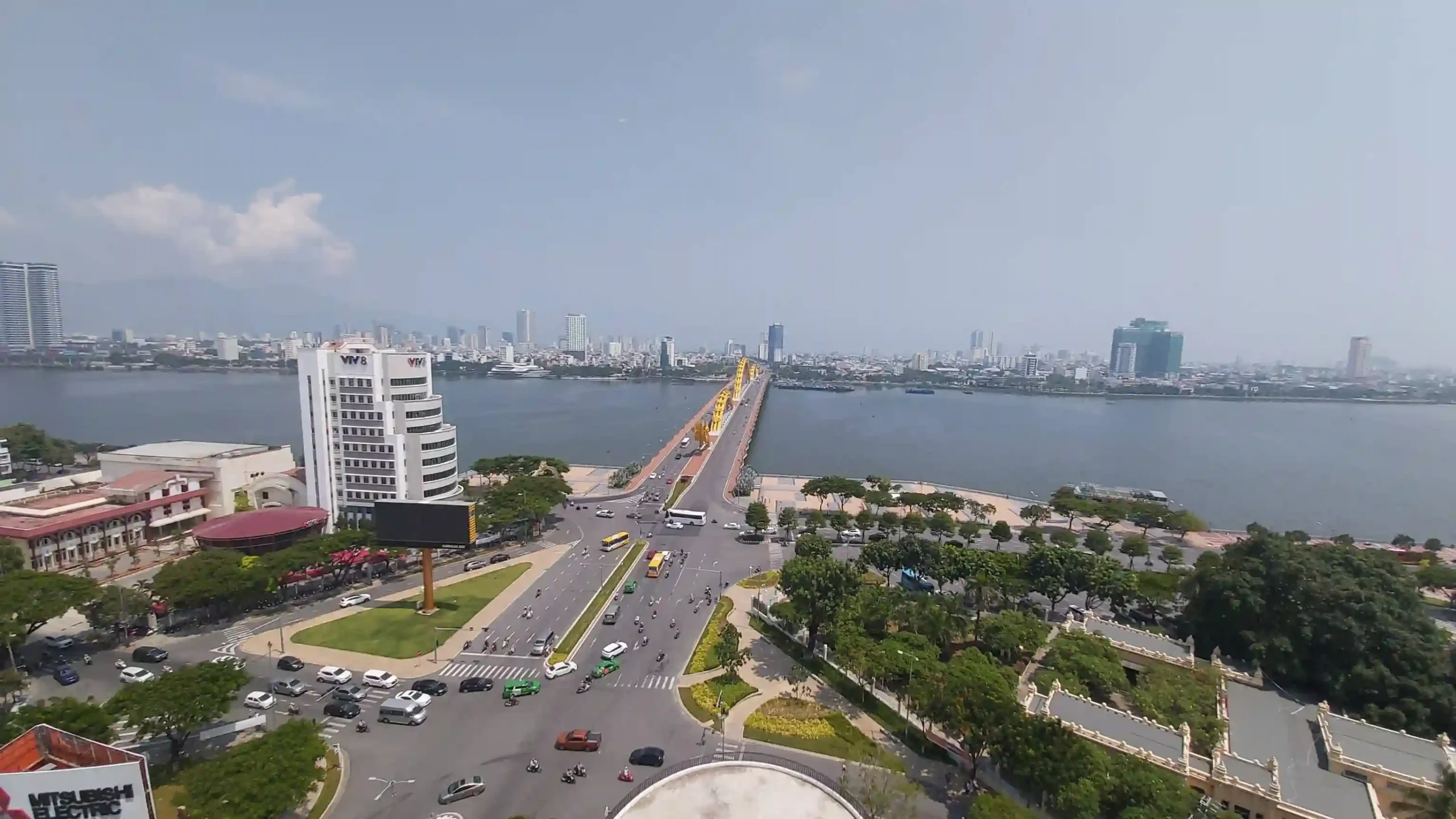
Driving in Da Nang is not like driving in Hanoi or Ho Chi Minh City. It is much less chaotic. The roads are wider, and the traffic is lighter. But it still has its own set of rules that make zero sense to a foreigner.
- The Right of Way is an illusion: In the West, if you are on a main road, you have the right of way. In Vietnam, the bigger vehicle has the right of way. Trucks and buses will not stop for you. If a bus is pulling out, you get out of the way.
- The “Flow”: Traffic here moves like a school of fish. Don’t make sudden stops or sharp turns. Move predictably. If you need to cross an intersection, just keep a slow, steady pace, and people will naturally weave around you.
- Roundabouts: Da Nang loves roundabouts. They are everywhere. The rule is supposed to be that you yield to traffic already in the roundabout. The reality is that everyone just pushes their way in. Stay on the outside edge if you are turning right, and slowly merge to the inside if you are going straight or turning left. Use your horn to let people know you are there.
- The Ninja Leads: Watch out for local women driving Honda Leads, completely covered head-to-toe in sun-protective clothing, wearing sunglasses and face masks. They are known locally as “Ninja Leads.” They have zero peripheral vision and are famous for turning left without looking or signaling. Give them a wide berth.
8. Parking your bike
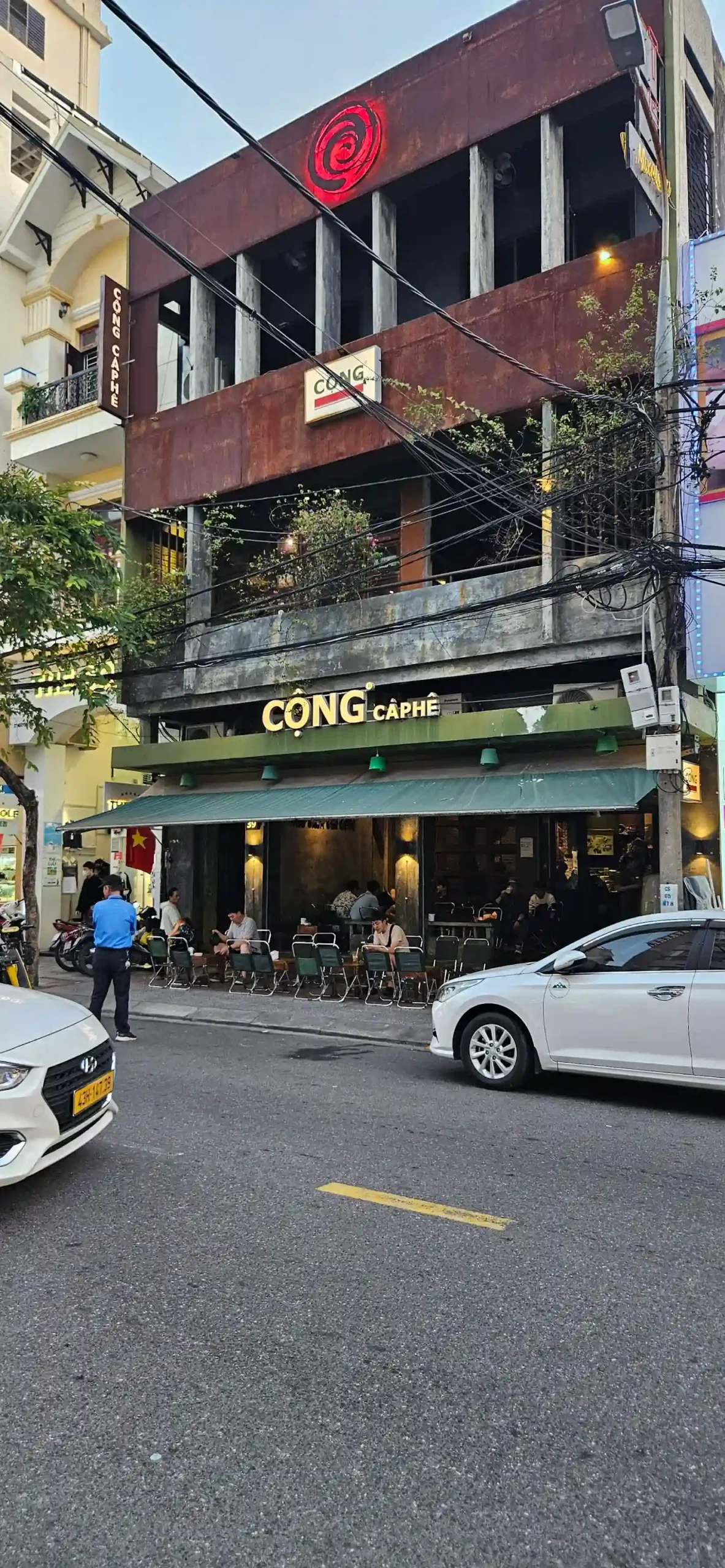
You can’t just leave your bike anywhere. If you park on the sidewalk in the wrong spot, the police will come with a truck and take it away.
Whenever you go to a cafe, restaurant, or market, look for the designated parking area. There will usually be a security guard sitting in a plastic chair. Pull up, and he will either write a number on your seat with chalk or hand you a laminated ticket.
Parking usually costs 5,000 VND. You pay when you leave. Do not lose the ticket. If you lose it, you have to wait until the place closes to prove the bike is yours.
If you are parking at your hotel or apartment overnight, always lock the steering column. Turn the handlebars all the way to the left, push the key in, and turn it counter-clockwise. Motorbike theft isn’t rampant in Da Nang, but it happens, especially with newer Honda Airblades.
Read more: What to do in Da Nang at night when you’re tired of bars
9. What to do if you get a flat tire
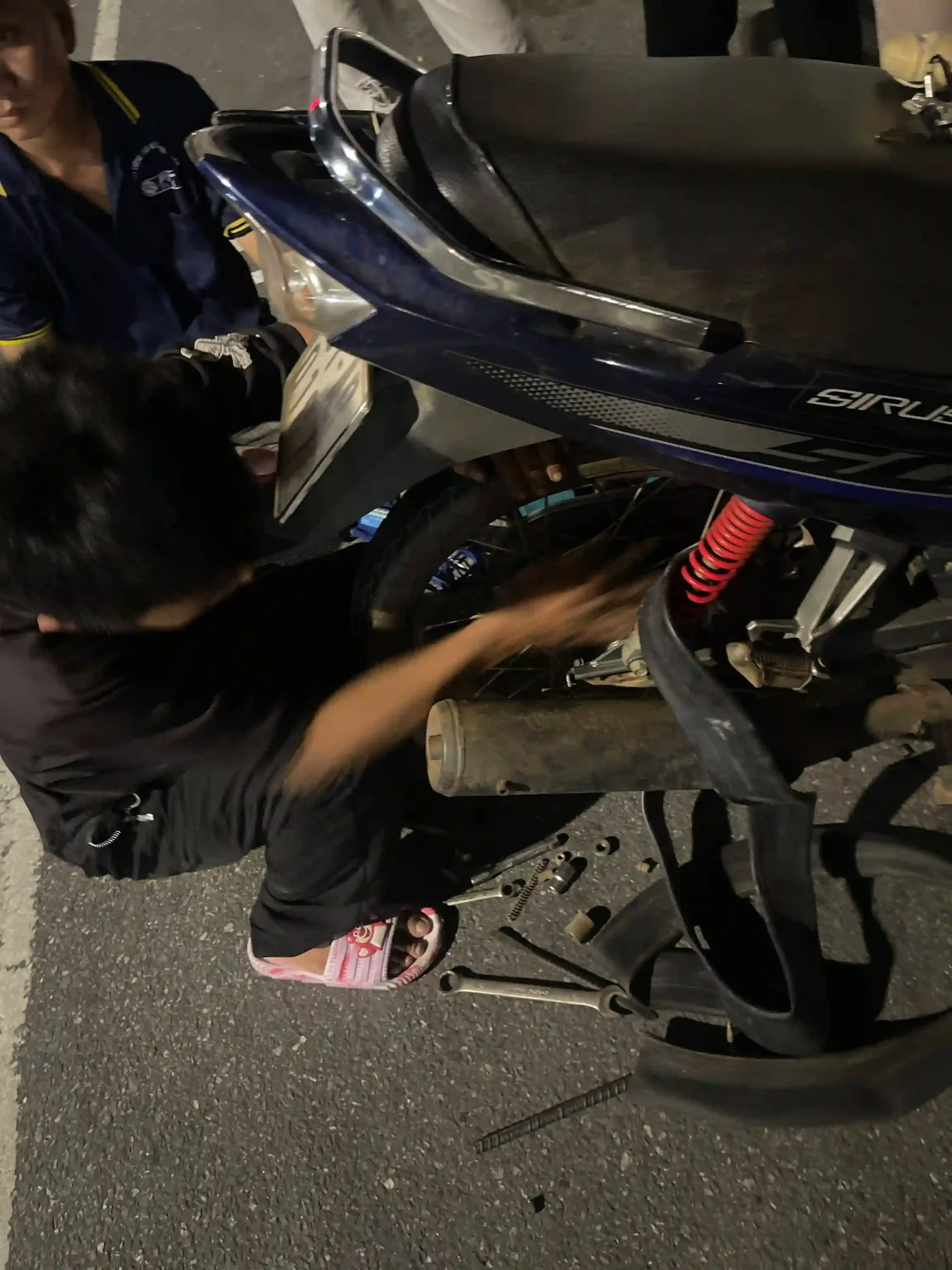
It will happen. You will run over a nail or a piece of wire, and your tire will go flat.
Do not panic. Do not try to drive on a flat tire, or you will ruin the metal rim, and the rental shop will charge you a lot of money to replace it.
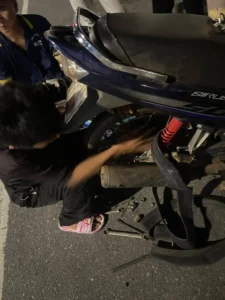
Just get off the bike and start pushing it along the sidewalk. Look for a small sign that says “Sửa Xe” (Motorbike Repair). They are literally everywhere, usually just a guy sitting on the sidewalk with an air compressor and a toolbox.
Point to the tire. He will know what to do. If it’s a tubeless tire, he will plug the hole. If it has an inner tube, he will patch it or replace it. A patch costs about 30,000 VND. A new inner tube costs about 100,000 VND. It takes ten minutes. Pay him in cash and get back on the road.
10. Insurance
Your travel insurance probably does not cover you if you crash a motorbike in Vietnam.
Read the fine print of your policy. Almost all travel insurance companies state that they will only cover medical bills from a motorbike accident if you were driving legally.
As I mentioned earlier, driving legally means having a valid IDP and a motorcycle license from your home country. If you don’t have those, and you break your leg, you are paying the hospital bill out of pocket.
The rental shops do not provide insurance. If you crash the bike and break the plastic panels, you have to pay the shop to fix it.
The good news is that fixing a motorbike in Vietnam is incredibly cheap. Replacing a whole side panel on a Honda Vision might cost you $20 USD. Just be honest with the shop when you return it.
Wrapping it up
Renting a motorbike in Da Nang is the best decision you can make for your trip. It gives you total freedom. You can wake up at 5 AM and drive to the beach before the crowds arrive. You can drive up to the Hai Van Pass at sunset. You can get lost in the alleys looking for the perfect bowl of Mi Quang.
Just be smart about it. Go to a reputable shop like The Motorbike Station, Tom’s, or Tuan’s. Don’t leave your passport. Take a video of the bike before you leave. Wear your helmet, use your horn, and don’t argue with the police.
Get your bike sorted, fill up the tank, and go explore. The city is yours.

Keep Exploring Da Nang
-
See & do UltimateMy best things to see in Da Nang if you only have 3 days ›
-
Guide Must readDa Nang travel guide: Save hours of stress with this article ›
-
GuideComparing all 4 ways to get from Da Nang to Hoi An ›
-
GuidePhu Quoc vs Da Nang: Where expats actually prefer to live ›
-
GuideHanoi vs Da Nang 2026: Which city fits your vibe? ›











 Tiếng Việt
 한국어
한국어 中文 (中国)
 日本語
日本語 ไทย
ไทย Deutsch
 Español
 Destinations
 Instagram
 Facebook
 X (Twitter)
 Threads
 Tiktok