









 Ha Giang
 Hanoi
Hanoi Ho Chi Minh City
 Ha Long
 Sapa
Sapa Mekong Delta
 Da Nang
 Hue
Hue Hoi An
 Ninh Binh
 Da Lat
 Nha Trang
 Phan Thiet
 Phu Quoc
 Quang Binh
 Quy Nhon
 Vung Tau
 Thai Nguyen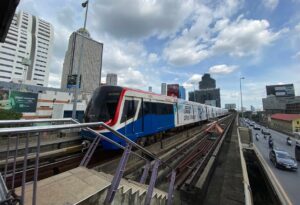
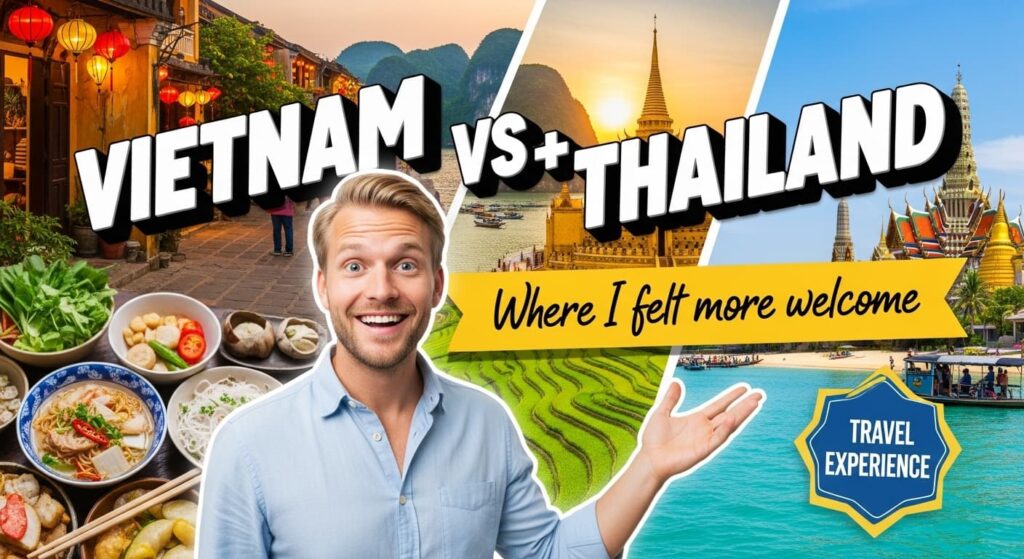

The “Vietnam vs Thailand travel” question is a permanent fixture on the internet. It’s the perpetual motion machine of travel forums.
You’ve seen it: “Two weeks, solo female, first time in Asia, where should I go?” The answers are always a predictable list of pros and cons about food, beaches, and budget.
But those lists miss the most important, most human part of travel: How does a place feel? Beyond the sights and the costs, where do you feel a sense of connection? Where do you feel genuinely welcome?
Having spent years traveling and living in both countries, I can tell you the answer is complicated. It’s not about which country has “nicer” people—that’s a useless metric.
The real difference is in the style of the welcome. Thailand offers you a welcome that is polished, practiced, and incredibly easy to accept. Vietnam’s welcome is something different. It’s rawer, asks for a bit more from you, and often feels like something you have to earn. Once you do, however, it can feel more personal.
This isn’t about crowning a winner. It’s a look at the texture of daily life in both places, to help you figure out which country’s welcome mat is the right fit for your travel style.
Look, If You’re Short on Time, Here’s the Honest Summary
No time to read 3000 words? I get it. Here are the key differences in how it feels to be a traveler on the ground.
- Planning your Vietnam vs Thailand travel? Don’t just look at the price. This guide explores a more vital question: Where will you truly connect? We compare Thailand’s ‘Land of Smiles’ to Vietnam’s raw authenticity, real safety on the ground, and daily interactions. The answer may surprise you.
- The Bottom Line, Fast:
- Thailand: Welcoming from the moment you land. It’s built for tourists. Everything is smooth, easy, and comfortable. Think of it as a fantastic, well-designed product.
- Vietnam: The welcome isn’t handed to you. It’s chaotic, direct, and takes some getting used to. But the connections you make feel less transactional and more genuine because you put in a little work for them.
- First 24 Hours – The Landing Experience:
- Thailand (Bangkok): Orderly, quiet, and efficient. Signage is clear. Getting into the city is a simple choice between a train or a systematized taxi queue. It’s a soft landing.
- Vietnam (Hanoi/HCMC): A wall of sound, humidity, and energy. The airport exit is a jumble of people. The taxi ride is an immediate, full-immersion lesson in the country’s rhythm. It demands your attention from minute one.
- Daily Interactions – The Social Currency:
- Thailand: The famous “Land of Smiles.” Politeness is the default. Service is excellent. It’s pleasant but can sometimes feel like you’re interacting with a very well-rehearsed script.
- Vietnam: The default is often a curious stare, not a smile. Interactions are blunt. But when you break through that initial reserve—by trying a few words of Vietnamese, for instance—the resulting warmth feels significant and memorable. The friendly locals in Vietnam are there; you just have to uncover them.
- The Scam Situation – How to Keep Your Guard Up:
- Thailand: Thailand tourist scams are well-documented and can be quite elaborate. Think of the “Grand Palace is closed” tuk-tuk saga. They feel like rehearsed plays you might stumble into.
- Vietnam: Scams here feel more opportunistic and less complex—like someone trying to overcharge you at a market. Annoying, but modern apps like Grab have almost entirely eliminated the biggest historical issue: the rigged taxi meter.
- Getting Around – Order vs. Organized Chaos:
- Thailand: Bangkok’s Skytrain (BTS) is a sterile, air-conditioned dream. Moving between cities is straightforward via buses, trains, and planes. It’s predictable.
- Vietnam: The motorbike is king. Navigating Vietnam means hopping on the back of a Grab bike. It’s not just transportation; it’s a sensory experience that plugs you directly into the city’s chaotic pulse.
- The Budget Question – Where Your Money Feels Better:
- Both are cheap. But the general cost of travel in Vietnam is noticeably lower for daily expenses like food, coffee, and beer. That small difference can make you feel freer to explore and linger.
The First Impression: A Polished System vs. A Wall of Life
The first day in a new country colors the rest of your trip. This is where the Vietnam vs Thailand travel contrast is at its most extreme.
Arriving in Thailand
Stepping into Bangkok’s Suvarnabhumi Airport (BKK) feels like entering a well-oiled machine. The air is cool, the floors are polished, and the silence after a long flight is noticeable.


Immigration is a process, but it’s a defined one. Once you’re out, the choices are laid out for you with crystal clarity.
Airport Rail Link to the city center for 45 THB ($1.25)? The sign is right there. Public taxi? Go to the official kiosk, get a ticket, and you’re assigned a driver who will use the meter.
There’s no hustle. No confusion. It’s designed to eliminate stress. This feeling of engineered ease follows you into the city.
In tourist areas like Khao San Road or parts of Chiang Mai, the infrastructure is built around the visitor. Everyone speaks some English. Menus have pictures. Tour agencies are everywhere. Thailand seems to say, “Welcome. We’ve taken care of everything. Your job is to relax.” For a traveler weary from a long flight or nervous about their first trip to Asia, this is an incredible relief.
Arriving in Vietnam
My first arrival at Hanoi’s Noi Bai Airport (HAN) was different. The moment the automatic doors slid open, it felt like the country exhaled on me.

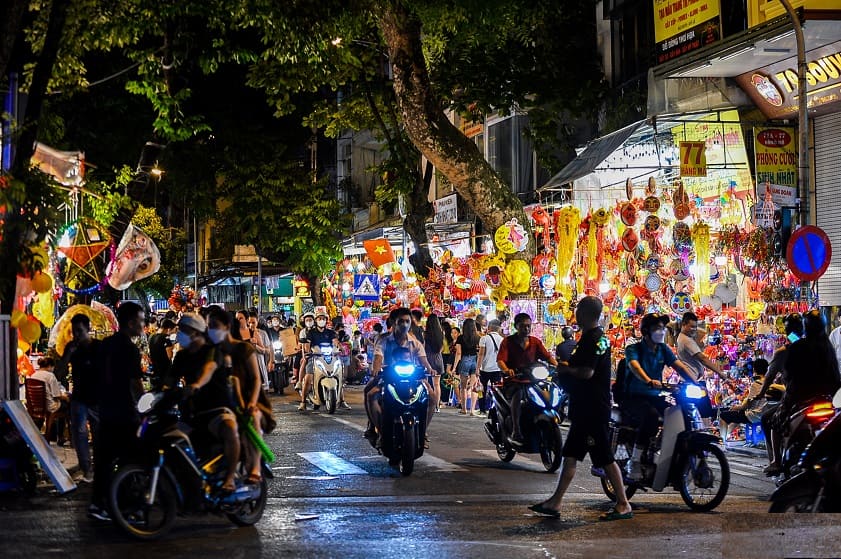
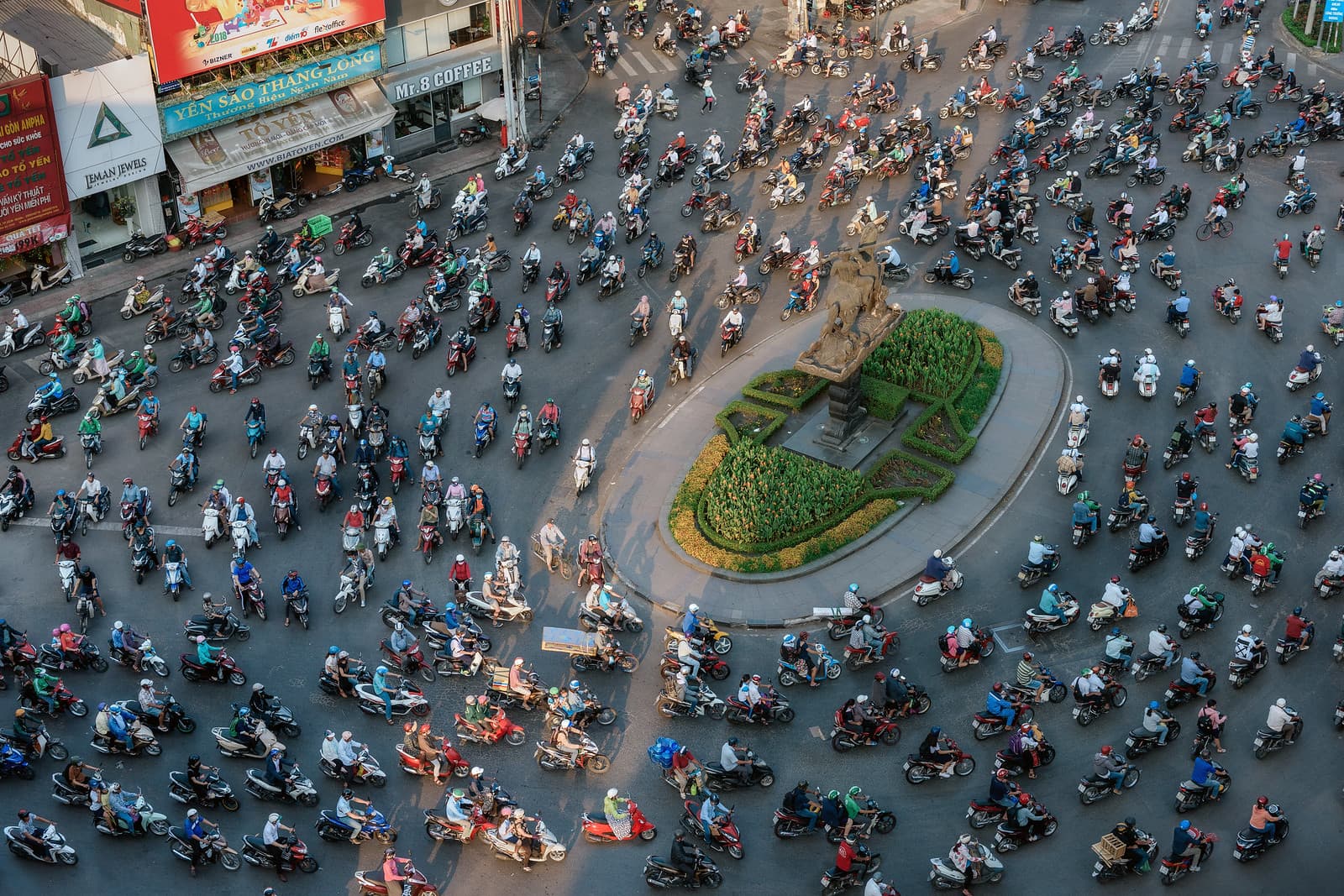
A thick, humid wave of air carrying the smells of diesel, damp earth, and something vaguely cooking. The sound hit next—a cacophony of voices, horns, and the general hum of a place with no empty space.
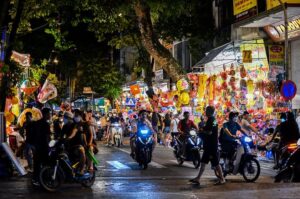
Outside, there’s no quiet, orderly queue. It’s a scrum of drivers and families. The real introduction to Vietnam happens in the car on the way to the Old Quarter.
The traffic isn’t just traffic; it’s a living organism. A river of thousands of motorbikes, each its own entity, flowing in a way that defies all Western traffic logic.
Horns aren’t used in anger; they are a constant, conversational “beep-beep” that means “I’m here, you’re there, let’s not hit each other.”
For some, this initial immersion is jarring. It feels chaotic, overwhelming, maybe even hostile. But it’s not. It’s just Vietnam, completely unfiltered. The country doesn’t give you a gentle orientation. It throws you right into its pulse.
he welcome isn’t a handshake; it’s an immediate, forceful hug. In the Vietnam vs Thailand travel comparison, this first hour is a perfect litmus test for what kind of traveler you are.
The Human Element: A Given Smile vs. an Earned One
This is the core of it. The interactions that make up your days.
Thailand: The Currency of the Smile
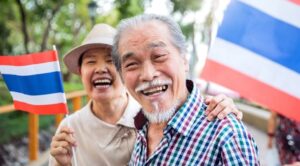
It’s called the Land of Smiles for a reason. The smile is the default social setting in Thailand. The 7-Eleven clerk, the hotel receptionist, the street food vendor—they will almost all greet you with a smile and a “wai.”

It makes every small transaction feel pleasant and frictionless. The service culture is phenomenal. Things get done efficiently and politely.
In heavily touristed spots, however, this constant pleasantness can start to feel like a beautiful, impenetrable wall. The smile is part of the service, the uniform. Getting beyond it to have a real, off-the-cuff conversation can be a challenge.
The interaction is often defined by your role as a customer and their role as a provider. It’s a warm welcome, but it’s often a professional one. It’s incredibly consistent, but it’s not always personal.
Vietnam: The Curious Stare and the Breakthrough Grin
You won’t get a default smile from a stranger in Vietnam. What you’ll get is a stare. An direct, unblinking, sometimes unnerving stare.

My first few weeks here, I found it intimidating. I thought I’d done something wrong. I eventually learned it’s rarely hostile. It’s curiosity. You’re different. Your face, your clothes, your way of walking—it’s all new data. It’s a sign of engagement, not judgment.
This is a common piece of culture shock in Southeast Asia that many people misinterpret.
Interactions are more blunt. There’s less of a social buffer. A street vendor might seem grumpy. Someone might not acknowledge your “thank you.” But this is what makes the moments of connection so powerful. The welcome in Vietnam is not a given; it’s a discovery.
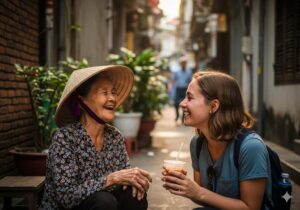
It happens when you sit on a tiny plastic stool to drink a coffee. You try to order in mangled Vietnamese: “Một cà phê sữa đá.” The woman running the stall, who has been ignoring you, looks up.
Her stern face cracks. A huge, genuine grin spreads across her face, followed by a laugh. She might shout something to her friend, who also laughs. Suddenly, you’re not just a customer. You’re a participant. You’re the funny foreigner trying. These are the moments that stick.
The friendly locals in Vietnam are everywhere, but they respond to effort. The welcome feels earned, and because of that, it often feels deeper.
The Trust Factor
Feeling welcome is impossible if you feel like you’re constantly being tricked. Both countries have their share of tourist traps, but the style is, once again, very different.
Thailand’s Famous Tourist Traps
The Thailand tourist scams are so well-known they have their own Wikipedia entries. They often feel like elaborate productions with multiple actors.

You’ll hear about the “Grand Palace is closed” scam before you even land in Bangkok. A friendly, well-spoken man will approach you nearby, tell you the palace is shut for a royal ceremony, and offer a “special deal” on a tuk-tuk tour.
The tour is real, but it’s a tour of gem shops and tailors where you’ll face intense pressure to buy things. The palace, of course, was open the whole time (official hours are 8:30 AM – 3:30 PM).
In beach towns like Pattaya or Phuket, the jet ski scam is infamous. You rent a jet ski, and upon return, the owner “discovers” pre-existing scratches and demands hundreds of dollars for repairs, sometimes with threats.
These scams feel calculated. They can make you paranoid because they start with a friendly face. It makes you question genuine offers of help.
[travel_mood location=”Vietnam”]Vietnam’s Opportunistic Overcharging (and the Tech Solution)
Vietnam’s scams feel less like elaborate conspiracies and more like on-the-spot opportunism. The classic was the taxi scam, where drivers used rigged meters or took you on a “scenic tour” of the city’s industrial parks.
But this is a problem that has been almost completely solved by technology.
Using ride-hailing apps like Grab or GSM is non-negotiable when navigating Vietnam. You book a car or a motorbike, the price is fixed upfront, and there is zero negotiation. It has single-handedly removed the number one source of tourist frustration and conflict from the equation. It’s a simple, elegant solution.
The other things you’ll encounter are minor. Dual pricing at a market, where the price for you is higher than for a local.
A street vendor who “gives” you their carrying pole for a photo and then demands you buy a coconut for an inflated price. These are annoying but easily handled with a firm “Không, cảm ơn” (No, thank you) and walking away.

It feels less like you’re being lured into a trap and more like you need to be firm and aware. In a strange way, the transparency of Grab makes day-to-day travel in Vietnam feel safer and more straightforward than in Thailand in 2025.
Movement and Flow
How you get around shapes your entire perception of a place.
Thailand: The Comfort of a System
Getting around Thailand is a solved problem. In Bangkok, the BTS Skytrain is a gift from the heavens—clean, fast, air-conditioned, and above the city’s notorious traffic. It’s a fantastic way to get between major hubs.

For longer trips, you can book comfortable buses or trains online. Budget airlines connect every corner of the country. It’s all very logical and low-stress. You move through the country in a comfortable bubble, observing it from a window.
Vietnam: Joining the Flow
Vietnam’s public transport is few years behind. The country doesn’t function on metro lines; it functions on two wheels. As a traveler, the best thing you can do is embrace this.

Booking a Grab Bike (xe ôm) is, for me, the quintessential Vietnam experience. For about 15,000 VND ($0.60), a driver will pull up, hand you a helmet, and you’ll join the river of motorbikes.
It sounds terrifying, but it’s not. The drivers are incredibly skilled. You aren’t watching the city go by; you are in it. You feel the shifts in temperature as you pass a park, you smell the grilling pork from a street-side stall, you see the details of daily life at eye level.
This isn’t just a way to get from A to B. It’s a direct injection of the country’s energy. It’s an act of trust, and that trust makes you feel less like a visitor and more like a part of the city’s incredible, chaotic ballet.
The Daily Budget
It might feel a bit crude to talk about money when you’re discussing something as nuanced as culture, but let’s be honest: how much things cost directly impacts how free and relaxed you feel in a place. And that feeling of freedom is a huge part of feeling welcome.
Both Vietnam and Thailand are famously easy on the wallet, but the way your money disappears—or doesn’t—creates a different daily rhythm.


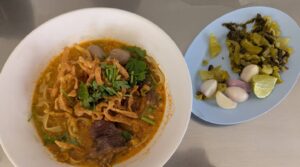
On the surface, the costs look similar. In Chiang Mai, a fantastic, memorable bowl of Khao Soi from a street stall will set you back maybe 70 baht, a little over two dollars. It’s an incredible value.
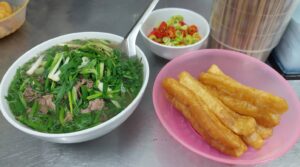
But in Hanoi, you can sit down for a world-class bowl of Phở that will change your life, and you’ll often get change back from the equivalent of two dollars.
The difference on a single meal is negligible. But it’s the accumulation of these small differences, meal after meal, coffee after coffee, that starts to change the texture of your trip.


Where this really shifts from a simple budget line item to a genuine feeling is with the small, daily indulgences.
A large bottle of Chang beer with your dinner in Thailand is a standard purchase, maybe $2.50 or $3.00 in a simple restaurant. It’s affordable, but you’re aware you’re buying it.
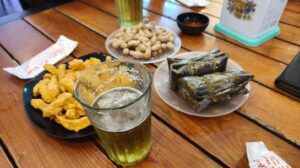
In Vietnam, especially in the north, sitting down for a bia hơi is a ridiculously cheap social event. You’ll see glasses of fresh draft beer going for 10,000 VND, which is about fourty cents. Thirty cents.
This isn’t about being a cheapskate. It’s about a subtle psychological shift. When a beer or a coffee costs next to nothing, you stop calculating. You stop thinking, “Should I have another one?” You just do. You linger.
You order a second glass and watch the endless river of motorbikes flow past for another hour, not because it’s a planned activity, but because there’s no financial reason not to.
That tiny price tag is an implicit invitation to slow down, to participate in the local sidewalk life without constantly checking your wallet.
This financial breathing room encourages a kind of casual spontaneity that’s harder to come by when every small purchase adds up.
You’re more likely to try a weird-looking snack from a vendor, to take a chance on a random cafe, to just sit and exist. That lack of low-grade financial pressure is its own form of welcome.
It makes the entire country feel more accessible, less of a transaction and more of an experience you can afford to immerse yourself in completely.
Final Thoughts: What Kind of Welcome Are You Looking For?
After all this, the Vietnam vs Thailand travel question doesn’t have a simple answer. It has a personal one.
Thailand’s welcome is one of professional hospitality. It’s a country that has perfected the art of tourism. It’s smooth, beautiful, and incredibly easy. It removes the friction from travel, allowing you to have a true vacation.
If you want to relax, de-stress, and have a trip where everything just works, Thailand is waiting for you with a smile and open arms.
Vietnam’s welcome is a challenge and an invitation. It doesn’t lay everything out for you. It asks you to be patient, to be observant, and to engage. It’s the gruff-looking woman who wordlessly pushes an extra piece of chả quẩy into your phở.
It’s the genuine surprise and delight when you use a few words of their language. It’s the thrill of surviving your first motorbike ride through a hectic intersection.
Thailand provides a fantastic holiday. Vietnam provides an adventure that gets under your skin. For the traveler who measures a trip in stories and memorable interactions rather than in comfort and ease, Vietnam’s welcome, once you find it, feels more like being invited in. It’s a welcome that sticks with you.












 Tiếng Việt
 한국어
한국어 中文 (中国)
 日本語
日本語 ไทย
ไทย Deutsch
 Español
 Destinations
 Instagram
 Facebook
 X (Twitter)
 Threads
 Tiktok