









 Ha Giang
 Hanoi
Hanoi Ho Chi Minh City
 Ha Long
 Sapa
Sapa Mekong Delta
 Da Nang
 Hue
Hue Hoi An
 Ninh Binh
 Da Lat
 Nha Trang
 Phan Thiet
 Phu Quoc
 Quang Binh
 Quy Nhon
 Vung Tau
 Thai Nguyen
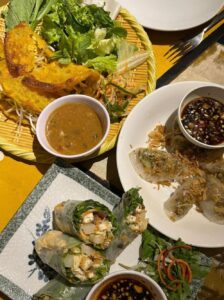
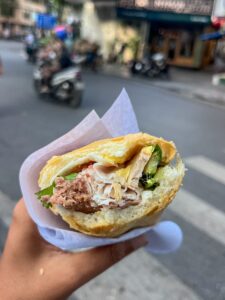
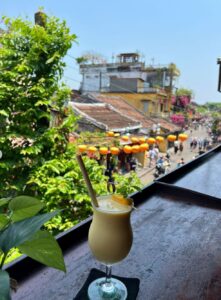
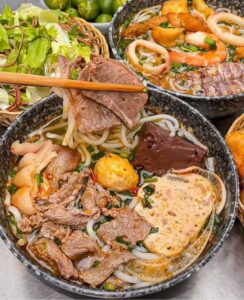


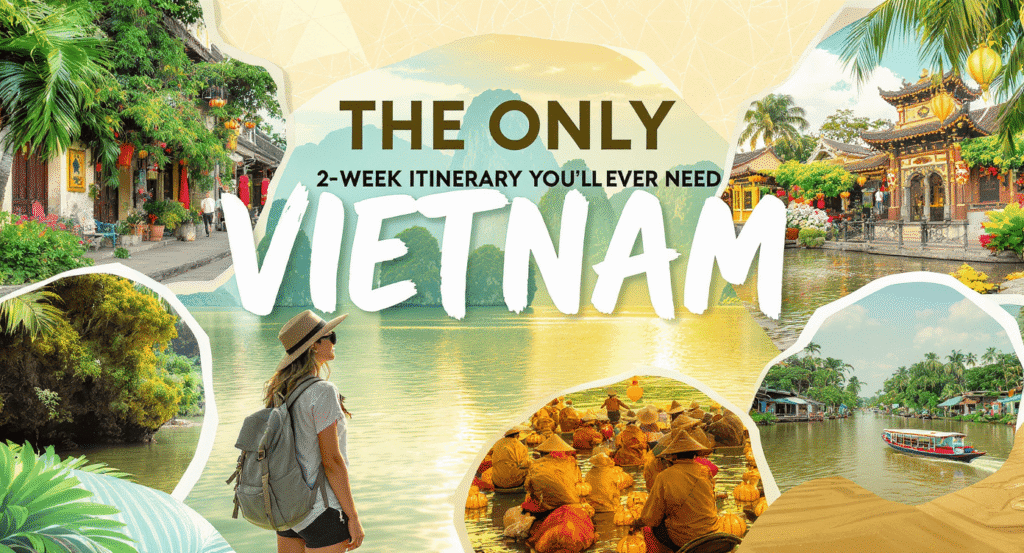


Alright, listen up. I’ve been kicking around Vietnam for a good while now – long enough to know the difference between a tourist trap and a genuine experience, long enough to have my favorite pho joint and to still get ripped off by a taxi driver every now and then.
So, when people ask me how to do Vietnam 2-week itinerary, I usually just sigh, grab a coffee, and tell them this. Because honestly, this is the most efficient, least stressful, and most real way to do it. This isn’t just a list; it’s based on countless trips, good decisions, and a few truly terrible ones I’ve learned from.
- No time to read 7000 words? Here’s the absolute TL;DR (Too Long; Didn’t Read) for your 2-week Vietnam adventure. This covers the critical stuff you need to know, day-by-day, with estimated costs and key tips. Click on any point to open straight to the detailed breakdown:
- – Day 1-3: Hanoi – Your Entry Point & Sensory Overload (in the best way).
- Getting In: Fly into Noi Bai (HAN). Take a Grab to the Old Quarter (300k-400k VND / $12-16 USD) – download the app before you land to avoid scams.
- What to Do: Dive into the chaotic, charming Old Quarter on foot (just wander!), visit Hoan Kiem Lake (especially early mornings), and see the peaceful Temple of Literature (30k VND / $1.20 entrance). Consider the Ho Chi Minh Mausoleum (check specific, limited opening hours).
- Must-Eat: Pho Bat Dan (40k-60k VND), Bun Cha Huong Lien (40k-70k VND), and Egg Coffee at Cafe Giang (30k-40k VND). Eat street food where locals are queuing.
- Where to Stay: Old Quarter is best. Budget: Hanoi City Backpackers Hostel ($8-12/dorm). Mid-range: La Siesta Classic Ma May ($70-120/night).
- Pro Tip: For an easier introduction to street food, consider a Hanoi street food tour (often $25-40 on GetYourGuide).
- – Day 4-5: Ha Long Bay – The Iconic Limestone Karsts (Don’t Skimp on the Boat!).
- Getting There: Book a 2-day/1-night cruise that includes hotel pickup from Hanoi (2.5-3.5 hr drive).
- Choosing Your Cruise: Don’t go for the absolute cheapest. Mid-range (e.g., Aspira Cruises, Paradise Cruises) is best for comfort and safety, costing $150-$300+ USD per person for the full package (transport, meals, activities, cabin). Reputable operators are key.
- What to Expect: Cruising through stunning landscapes, kayaking, visiting a cave (like Sung Sot Cave), and full board. Limited Wi-Fi, enjoy the digital detox.
- What to Pack: Swimsuit, sunscreen, hat, light jacket (evenings can be cool), and any essential personal medications.
- – Day 6-7: Hue – Imperial History & Tranquil Rivers.
- Getting from Hanoi/Ha Long: Take an overnight soft sleeper train (12-14 hrs, $40-60 USD) or fly (1 hr 15 min, $50-100 USD) to Hue (HUI). Flights are more efficient.
- What to Do: Explore the massive Imperial City (200k VND / $8 entrance, allow 3-4 hours). Take a dragon boat ride on the Perfume River to Thien Mu Pagoda (150k-250k VND for private boat) and combine with visits to royal tombs (e.g., Tomb of Tu Duc, Khai Dinh – consider a half-day tour, $20-40).
- Must-Eat: Bun Bo Hue (spicy beef noodle soup, 40k-60k VND) and various small rice cakes (Banh Beo, Banh Loc).
- Where to Stay: You’ll need to book a hotel or homestay for 1 nights in Hue. Prices are very reasonable (often $20-50/night for good options). Focus on areas around the Perfume River for easy access to sights and food.
- – Day 8-9: Hoi An – Lanterns, Tailors, and Beach Vibes.
- Getting from Hue: DO THE HAI VAN PASS. The best way is an Easy Rider motorbike tour ($50-70 USD, 5-6 hrs) – they handle luggage, stop at viewpoints. Private car is an alternative ($60-90). Don’t just take a direct bus.
- What to Do: Explore the UNESCO Ancient Town (120k VND / $5 ticket for heritage sites) – magical at night with lanterns. Get custom clothes or shoes made by tailors (e.g., Yaly, Bebe Tailor – prices vary widely but negotiate). Take a cooking class ($30-50) or lantern making class ($10-20). Head to An Bang Beach for a chill afternoon (15-20 min Grab, ~80k VND).
- Where to Stay: Near Ancient Town (Allegro Hoi An, $80-150) or slightly outside for more peace (Laluna Hoi An Riverside Hotel & Spa, $60-100).
- – Day 10-11: Ho Chi Minh City (Saigon) – Southern Energy & Modern History.
- Getting from Da Nang: Fly from Da Nang (DAD) to HCMC (SGN) (1 hr 20 min, $40-90). Grab from airport to District 1 (150k-250k VND / $6-10).
- What to Do: Visit the powerful War Remnants Museum (40k VND / $1.60 entrance, allow 2-3 hrs) and the historic Reunification Palace (40k VND / $1.60). Experience the bustling Ben Thanh Market (bargain hard). Explore Bui Vien Walking Street at night for intense nightlife.
- Must-Eat: Com Tam (broken rice), Banh Xeo (savory pancake), and Vietnamese iced coffee (Ca Phe Sua Da).
- Pro Tip: A motorbike food tour (e.g., $35-60 on GetYourGuide) is highly recommended for experiencing the city’s food scene and nightlife from a local perspective.
- Where to Stay: District 1. Budget: Bandlive Backpacker Hostel ($5-15/dorm). Mid-range: Liberty Central Saigon Citypoint Hotel ($80-150).
- – Day 12-13: Mekong Delta – River Life & Floating Markets.
- Choosing a Tour: Opt for a 2-day/1-night tour from HCMC (from $70-150+) to properly experience the Cai Rang Floating Market (best visited early morning). A 1-day trip (My Tho/Ben Tre, $25-50) is a quicker taste.
- What to Expect: Boat rides through canals, visits to floating markets, local workshops (coconut candy, rice paper, bee farms). More relaxed pace than the cities.
- – Day 14: Departure from HCMC.
- Logistics: Allow ample time (at least 3 hours for international flights) to get to Tan Son Nhat (SGN) due to unpredictable HCMC traffic.
- – Essential Vietnam Travel Tips (Crucial Info You NEED to Know):
- Visas: Most nationalities require an e-visa (apply well in advance, $25 for 30 days) or VOA. ALWAYS check official government sites for current rules.
- Money: Vietnamese Dong (VND). Cash is king for street vendors. ATMs widely available (expect fees, withdrawal limits of ~2-3 million VND). 1 USD ≈ 24,000-25,000 VND.
- SIM Cards: Get an e-SIM or local SIM (Viettel, Mobifone, Vinaphone) upon arrival (150k-250k VND / $6-10 for data plan) – essential for Grab/maps.
- Transportation: Fly for long distances. Use Grab (app-based) for taxis/motorbikes in cities (transparent pricing, safer). Avoid unfamiliar taxis. Motorbike rental only for experienced riders with IDP and specific insurance.
- Safety: Generally safe, but be aware of petty theft (phone/bag snatching). Agree on prices beforehand with cyclos/vendors. Cross streets slowly and predictably.
My Actual, Lived-In Vietnam 2-Week Itinerary
Okay, let’s break this down. This is the route I’d recommend to anyone who asks me, tweaked and refined over years of doing it myself or guiding friends through their first trips. We’re starting North and heading South. It just flows better.
Day 1-3: Hanoi – My First (And Still Favorite) Shock to the System
Landing in Hanoi, man, it hits you. That wall of humid air, the immediate symphony of horns, the smell of exhaust mixed with something delicious cooking on a street corner.
It’s exhilarating and overwhelming all at once. My first time, I just stood there, grinning like an idiot. This is where your Vietnam 2-week itinerary absolutely has to begin.
Getting from the Airport: How Not to Start Your Trip with a Scam
From Noi Bai International (HAN) to the Old Quarter, you’re looking at about 300,000-400,000 VND ($12-16 USD). Now, here’s my first big tip: download Grab before you land. I cannot stress this enough.
I’ve seen countless tourists get absolutely fleeced by dodgy taxi drivers at the airport. They’ll quote you insane prices, or the meter “breaks.” Just open the Grab app, put in your hotel, and the price is set.
It’s a lifesaver. Once you’re actually in the Old Quarter, forget taxis. Walk. Everything is incredibly close, and that’s how you actually experience it.
For anything a bit further, Grab Bike (the motorbike taxi) is even cheaper, and frankly, it’s a hell of a lot of fun. Just hold on tight.
Sleeping in Hanoi: Places I’ve Crashed (And Why I’d Go Back)
You absolutely want to stay in the Old Quarter. Yes, it’s noisy. But you’re in the thick of it, everything’s walkable, and the atmosphere is unbeatable. My first move after landing in Hanoi? Grab that Grab straight to my pre-booked hotel in the Old Quarter.
Get checked in, ditch the bags, maybe a quick splash of water on the face, and then I’m out the door.
- Budget: I’ve stayed at various hostels, but Hanoi City Backpackers Hostel (they have a few locations, just check their website) is always a good bet for meeting other travelers. Dorms are like $8-12, private rooms around $25-35. It’s basic, but clean enough, and they often have a good vibe for solo travelers.
- Mid-range: When I want a bit more comfort, I usually go for one of the La Siesta Classic Ma May locations (like Ma May or Lo Su). They’re fantastic. Rooms usually start from $60-120. Great service, super comfy beds, and somehow they manage to be quiet despite being right in the Old Quarter. I’ve personally stayed at the Lo Su one multiple times; their breakfast spread alone is worth it.
- Splurge: If you’re feeling fancy, the Sofitel Legend Metropole Hanoi is iconic. It’s a slice of colonial history. Rooms start at $250+. If you want to treat yourself to something truly luxurious and historic, this is it.
Hanoi Must-Dos: My Go-To Spots in the Old Quarter and Beyond
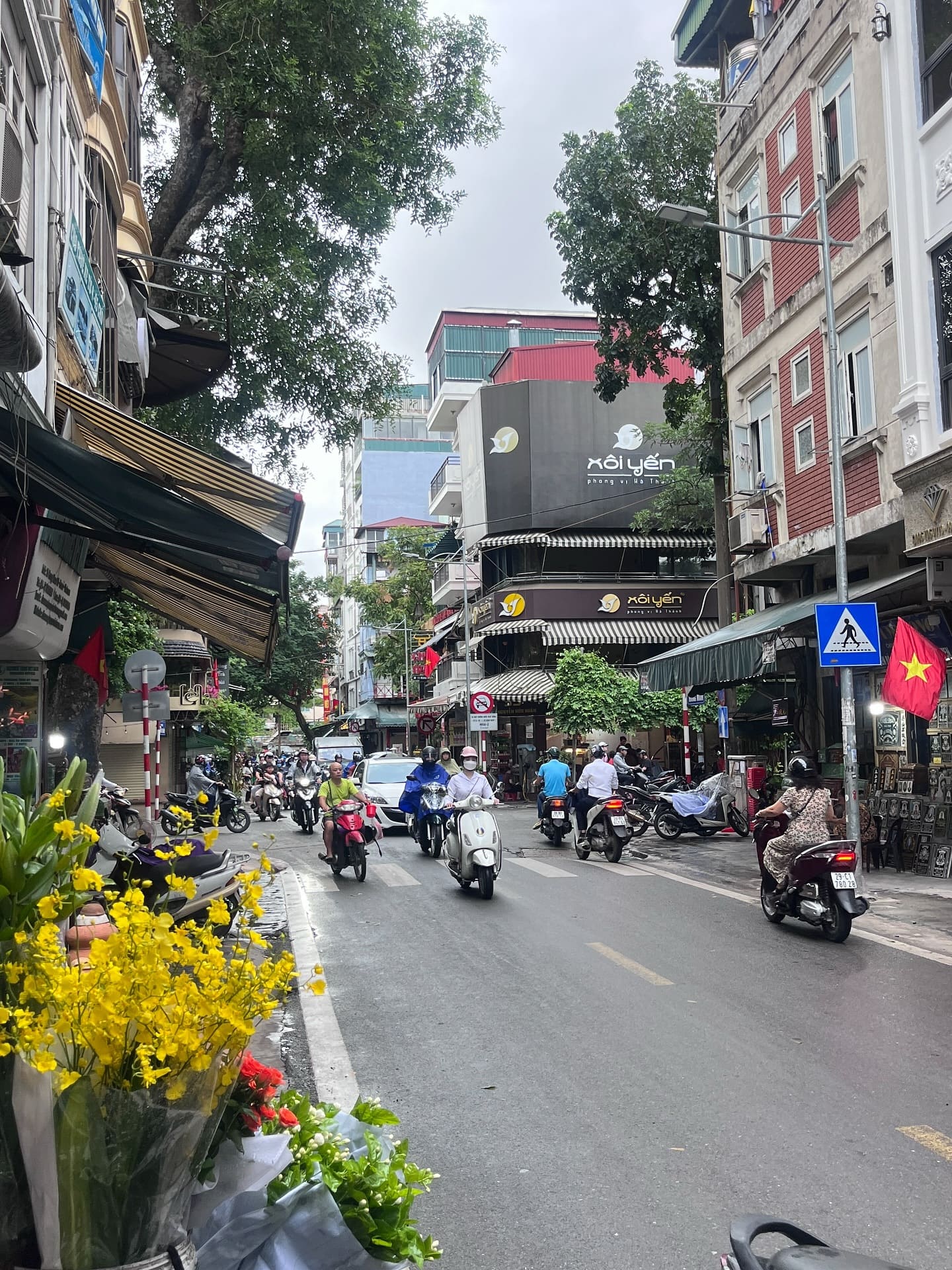
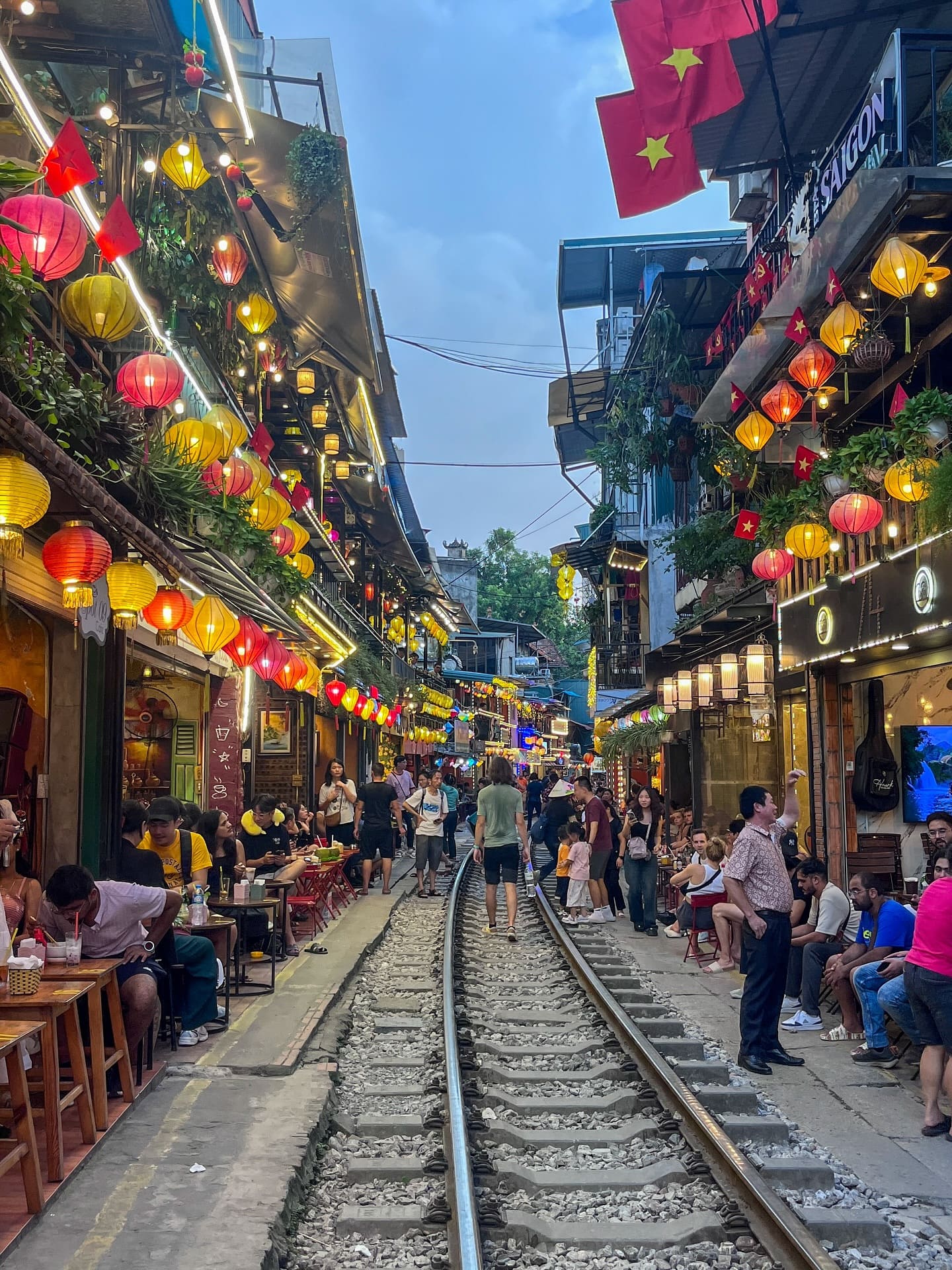
My first full day in Hanoi, I don’t plan much. I literally just drop my bag at the hotel and walk. The Old Quarter is a glorious, noisy, beautiful mess. It’s a maze.
You will get lost, and that’s the point. Every street used to be for a specific trade – Silk Street, Silver Street, etc. – and while it’s more mixed now, you still see hints of that history.
You’ll stumble on tiny temples hidden down alleys, people cooking on the sidewalk, barbers cutting hair right there. It’s real life, unfiltered.
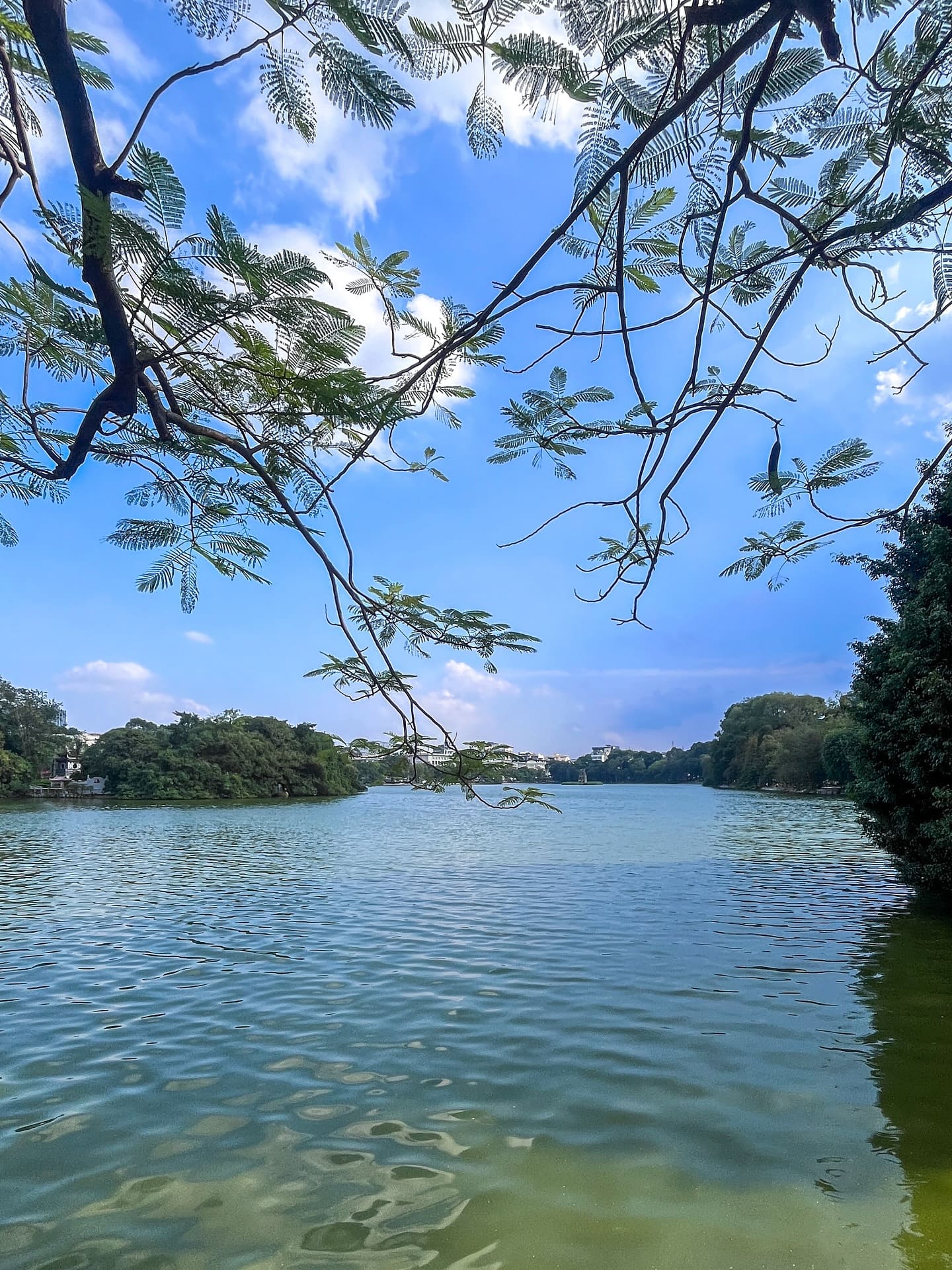
Hoan Kiem Lake is the geographical and spiritual heart of the city. I love going there in the early morning, around 6 AM. It’s surreal.
The usual chaos of Hanoi is replaced by hundreds of locals doing tai chi, aerobics, dancing, even playing badminton.
It’s peaceful, then the city slowly wakes up. The Ngoc Son Temple on the small island is worth a quick look if you’re already there – 30,000 VND ($1.20) entrance, not a bank breaker.
Then I usually head over to the Temple of Literature. It’s Vietnam’s first national university, super calm and beautiful inside, a total contrast to the Old Quarter.
I usually spend an hour or so just soaking it in. Entrance is still 30,000 VND ($1.20). I also usually make a point to swing by the Ho Chi Minh Mausoleum Complex. It’s this huge, imposing structure. It’s incredibly important culturally, but fair warning: check the opening hours religiously.
It’s closed a lot, often for long periods in the afternoon, and for maintenance for weeks at a time. I’ve tried to go in a few times and just ended up staring at a closed gate or a ridiculously long queue.
Honestly, seeing it from the outside and understanding its significance is enough for me these days, but if you’re a history buff, you might want to try your luck getting inside.
Read my full guide here to Explore Hanoi Old Quarter with $35/Day Itinerary
Eating in Hanoi: Where I Actually Eat (And What I’m Obsessed With)
This is where Hanoi absolutely crushes it. Forget anything fancy for a bit. Eat on the street. It’s where the magic happens.
- Pho: You cannot, under any circumstances, leave Vietnam without eating pho. And Hanoi has the best. My absolute go-to, the place I drag all my visitors to, is Pho Bat Dan (49 Bat Dan Street). It’s got no frills, you sit on those tiny plastic stools, often sharing a table with strangers. It’s pure, unadulterated, classic pho. Just beef, noodles, broth. No fancy add-ons. Costs about 40,000-60,000 VND ($1.60-$2.40). It’s perfect.
- Bun Cha: This grilled pork with vermicelli noodles is uniquely Hanoi. Everyone knows the story about Obama and Bourdain. The place they went to, Bun Cha Huong Lien (24 Le Van Huu Street), is still ridiculously popular, and for good reason. It’s packed, but the bun cha is fantastic. I’ve probably eaten there 20 times. 40,000-70,000 VND ($1.60-$2.80).
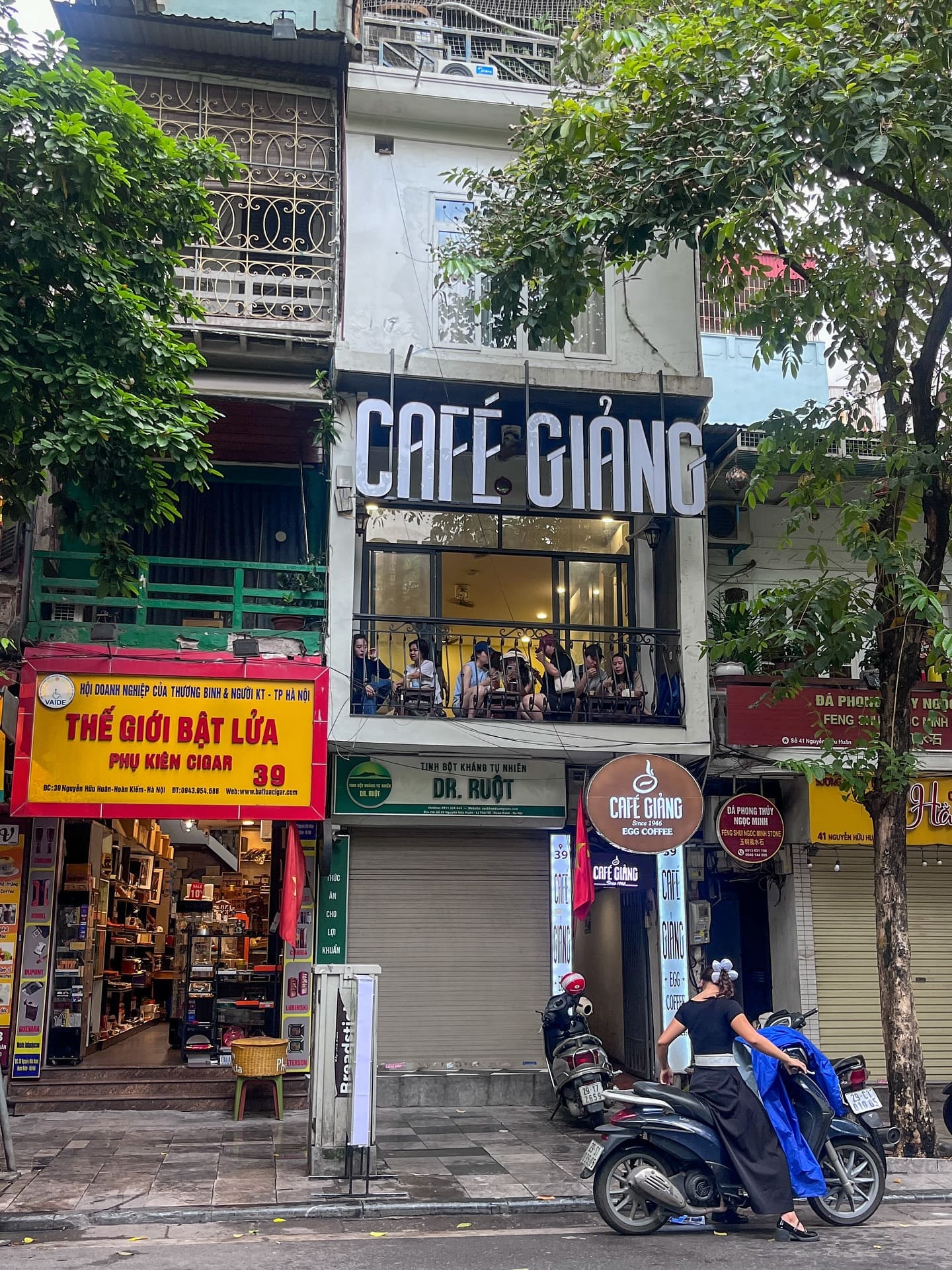
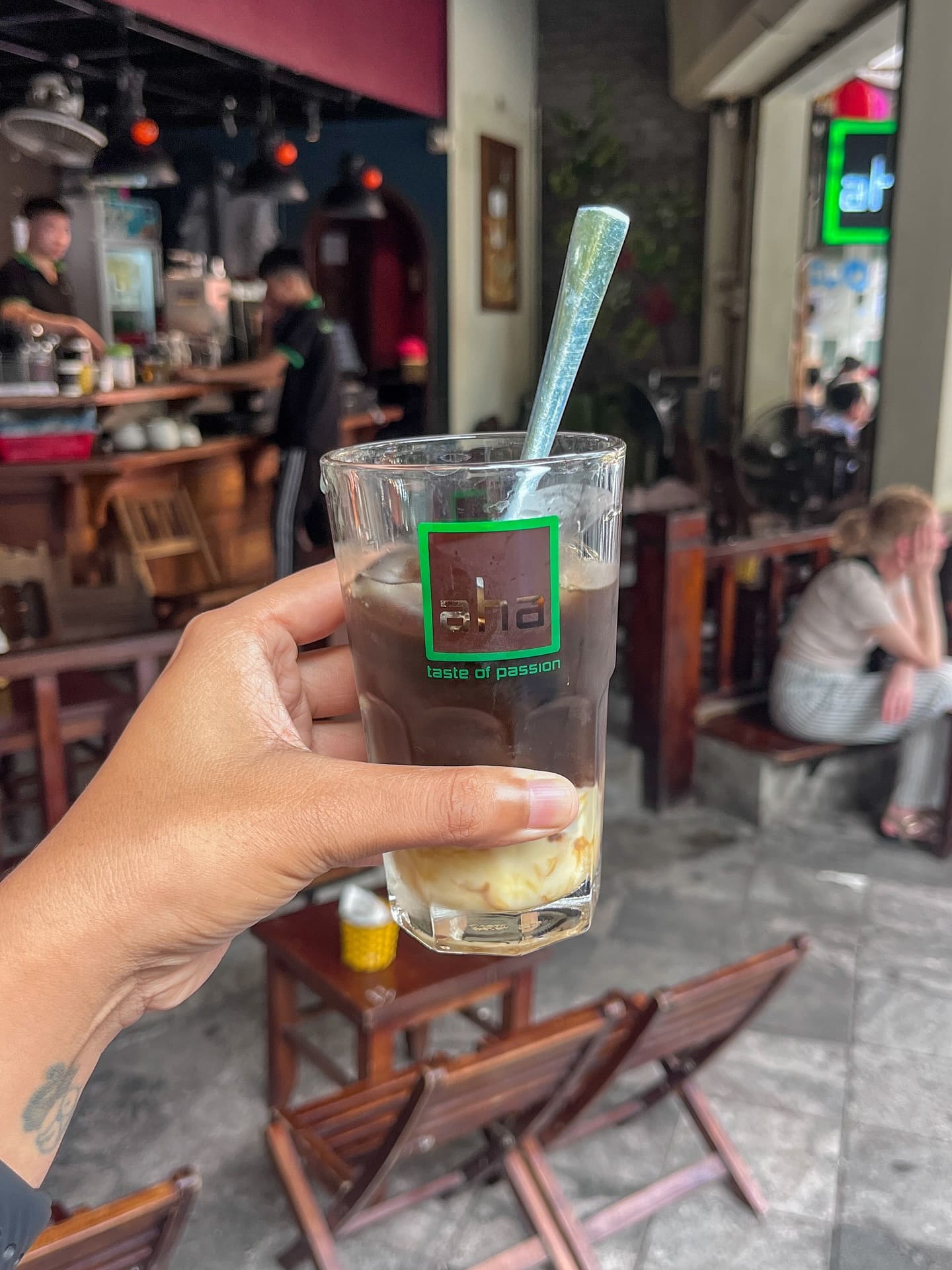
- Egg Coffee (Ca Phe Trung): Okay, this sounds bizarre. Coffee with egg yolk? Trust me. It’s like a creamy, sweet, rich dessert in a cup. Cafe Giang (39 Nguyen Huu Huan Street) invented it. It’s a tiny, old place, tucked away. Go. You won’t regret it. Around 30,000-40,000 VND ($1.20-$1.60). I still crave this regularly.
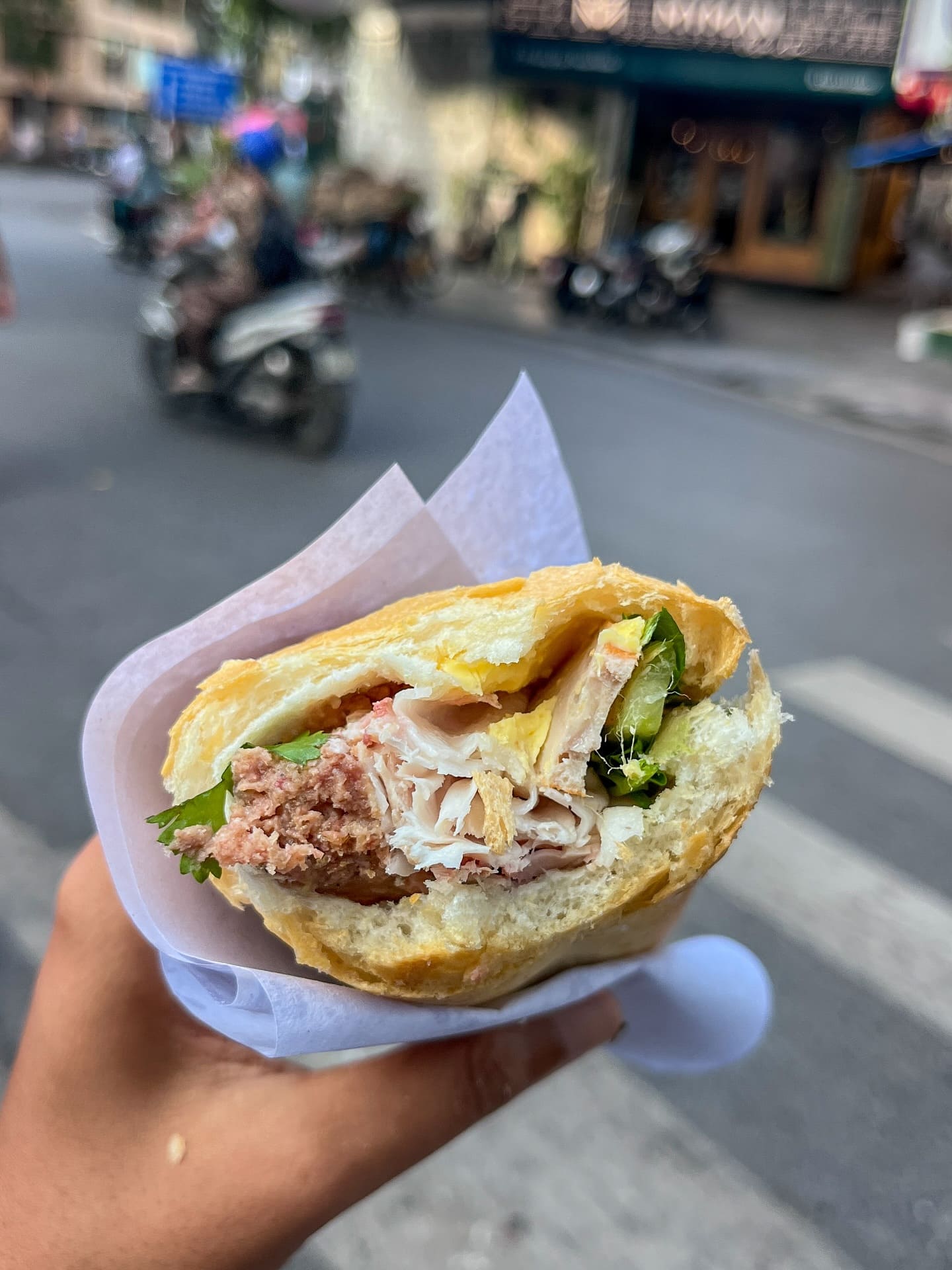
- Banh Mi: The Vietnamese sandwich. You’ll find them everywhere. Just grab one from a street vendor. Seriously, they’re all good. My personal preference is usually one with some paté and grilled pork. 20,000-30,000 VND ($0.80-$1.20).
My Honest Food Hack: See those places with tiny plastic stools, packed with locals, food cooking over open flames on the sidewalk? That’s where you eat. Don’t be shy. Point at what others are eating if you don’t know the name. And always have small bills ready.
If you’re a bit hesitant to just jump into street food, or you want to understand what you’re eating, I’ve had friends do a Hanoi street food tour. I often recommend checking out the ones on GetYourGuide because they tend to vet their operators.
They’ll take you to hidden gems, explain the dishes, and make sure you try all the essentials. They usually run about $25-40 for a 3-4 hour tour. It’s a solid investment if food is a big part of your trip.
Day 4-5: Ha Long Bay – Yeah, It’s Worth the Hype (But Pick Right)
This is the classic postcard shot of Vietnam. And yeah, it’s touristy. Everyone goes. But holy moly, for good reason. Those limestone karsts sticking straight out of the water? It’s just breathtaking. You gotta see it. It’s a non-negotiable part of any proper Vietnam itinerary.
Choosing a Cruise: My Big Warning and My Honest Picks
This is the make-or-break part of your Ha Long Bay experience. Do NOT go for the cheapest option. Seriously. I’ve had friends who went with budget cruises and ended up on rusty boats, with terrible food, and feeling crammed in.
It’s not worth saving $50 to have a miserable time in one of Vietnam’s most iconic places. Mid-range is where it’s at for a comfortable, enjoyable trip.
Most tours are 2-day/1-night cruises. They’ll almost always include hotel pickup from Hanoi. The drive to Ha Long Bay is about 2.5-3.5 hours, depending on traffic and which port you’re heading to.
What I always tell people to look for:
- Reputable Operators: These are the ones I’ve heard consistently good things about from other expats and travelers: Paradise Cruises, Indochina Sails, Bhaya Cruises, Emeraude Classic Cruises, Aspira Cruises. They’ve got their act together. They have safety standards and decent food.
- Itinerary: Most will include kayaking (a must!), visiting a big cave (like Sung Sot Cave, it’s huge), swimming, and sometimes a stop at a pearl farm or a short hike up to a viewpoint like Titop Island. Make sure the activities sound good to you.
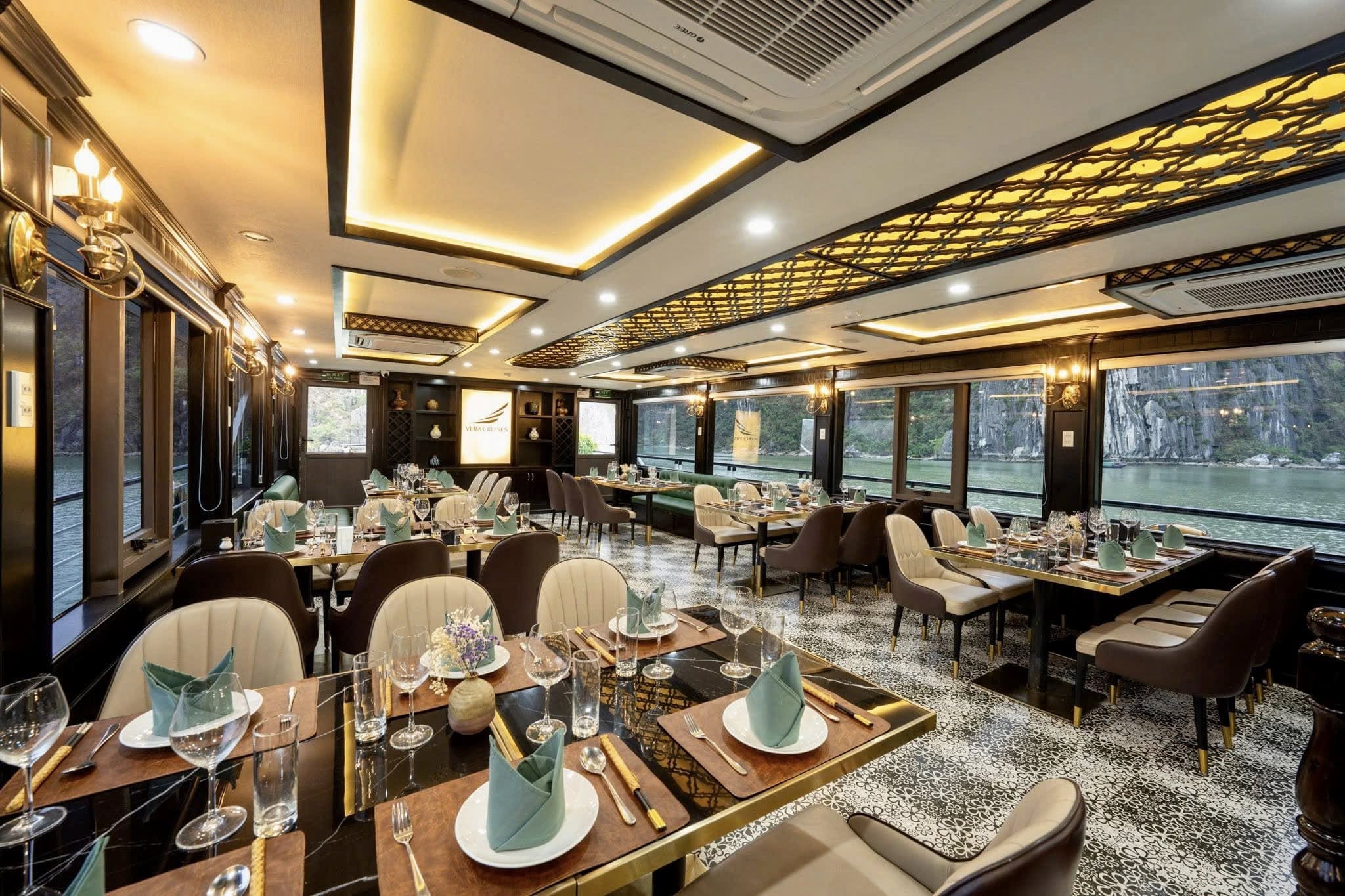
- Meals: Full board is standard. The food is generally pretty good – a mix of Vietnamese and international dishes. Think fresh seafood.
- Cabins: Make sure they’re clean, well-maintained, have AC, and an en-suite bathroom. You’ll be sleeping on the boat, so comfort matters.
- Price: A good, comfortable 2-day/1-night mid-range cruise will cost you anywhere from $150-$300+ USD per person. It’s not cheap, but it includes everything: transport, all your meals, activities, and accommodation. If you see something advertised significantly cheaper, that’s your red flag. I’ve personally been on an Lux cruise (booked through GetYourGuide, where they usually run around $160 per person), and it was fantastic. The boat was clean, the staff was great, and the food was surprisingly good. I’d recommend it to anyone.
Read my full guide here for the best cruise for for an Epic Journey Ha Long Bay.

Where to Stay in Ha Long Bay
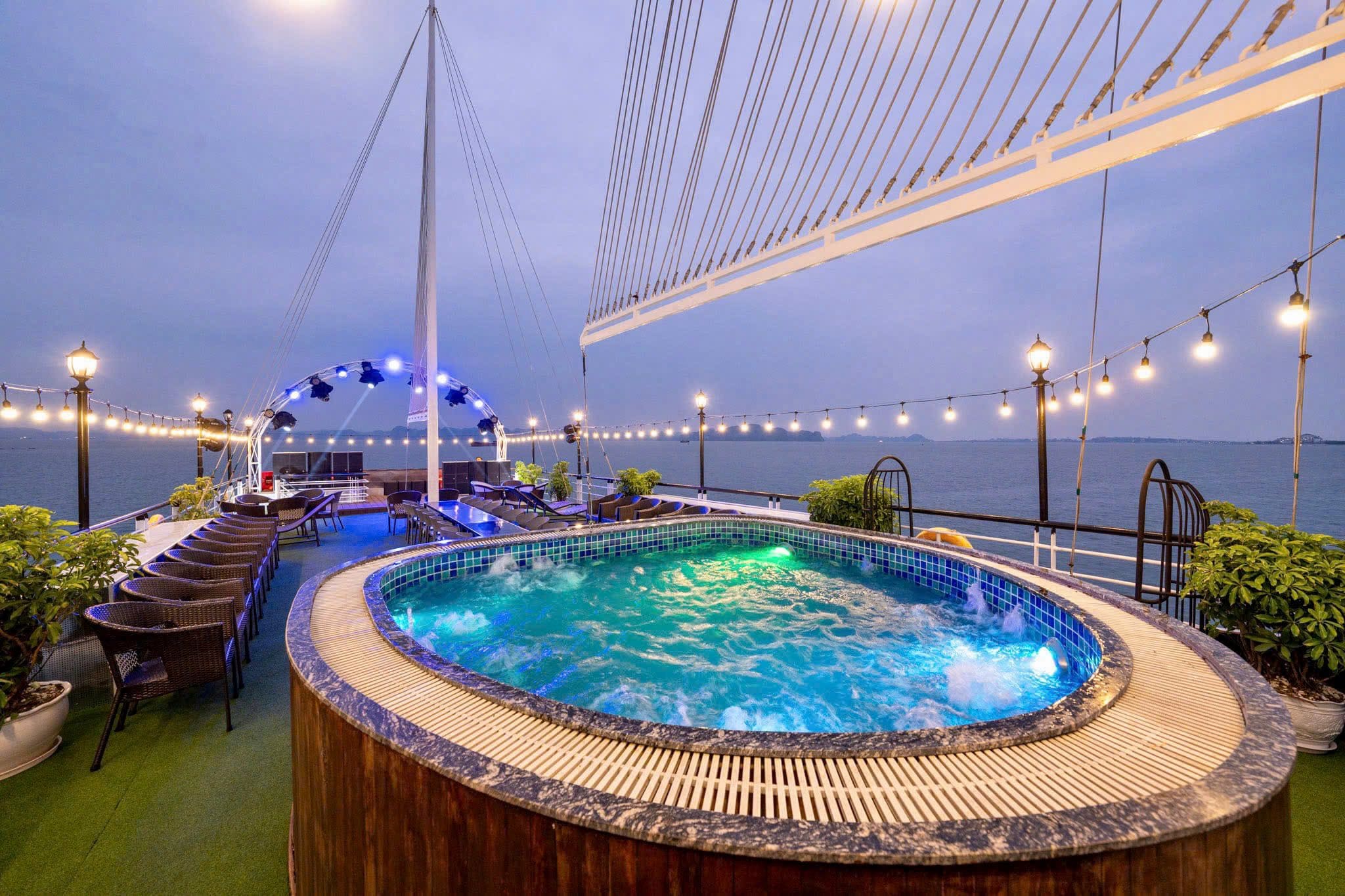
For a 2-day/1-night cruise, your accommodation is directly on the cruise boat itself. You’ll have your own cabin, usually with an en-suite bathroom and air conditioning. This is part of the package price. There’s no need to book a separate hotel in Ha Long City unless you plan to spend extra days there before or after your cruise (which most people don’t do).
What Happens on Board: It’s Not a Party Boat (Usually)
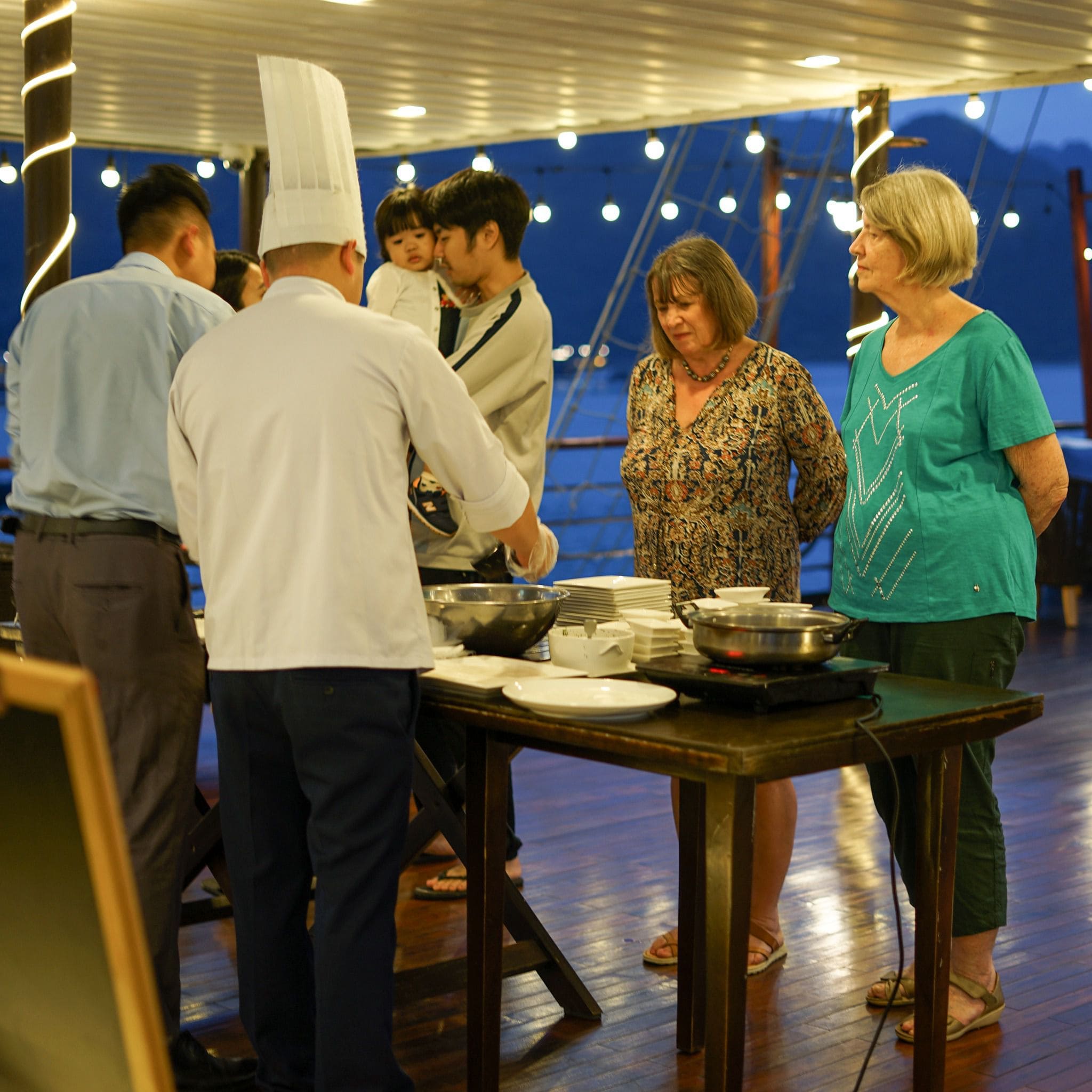
You’ll spend most of your time just cruising. The scenery is genuinely stunning, especially during sunset and sunrise. I usually try to get up for the sunrise tai chi session on deck, even if I’m half-asleep – the views are worth it.
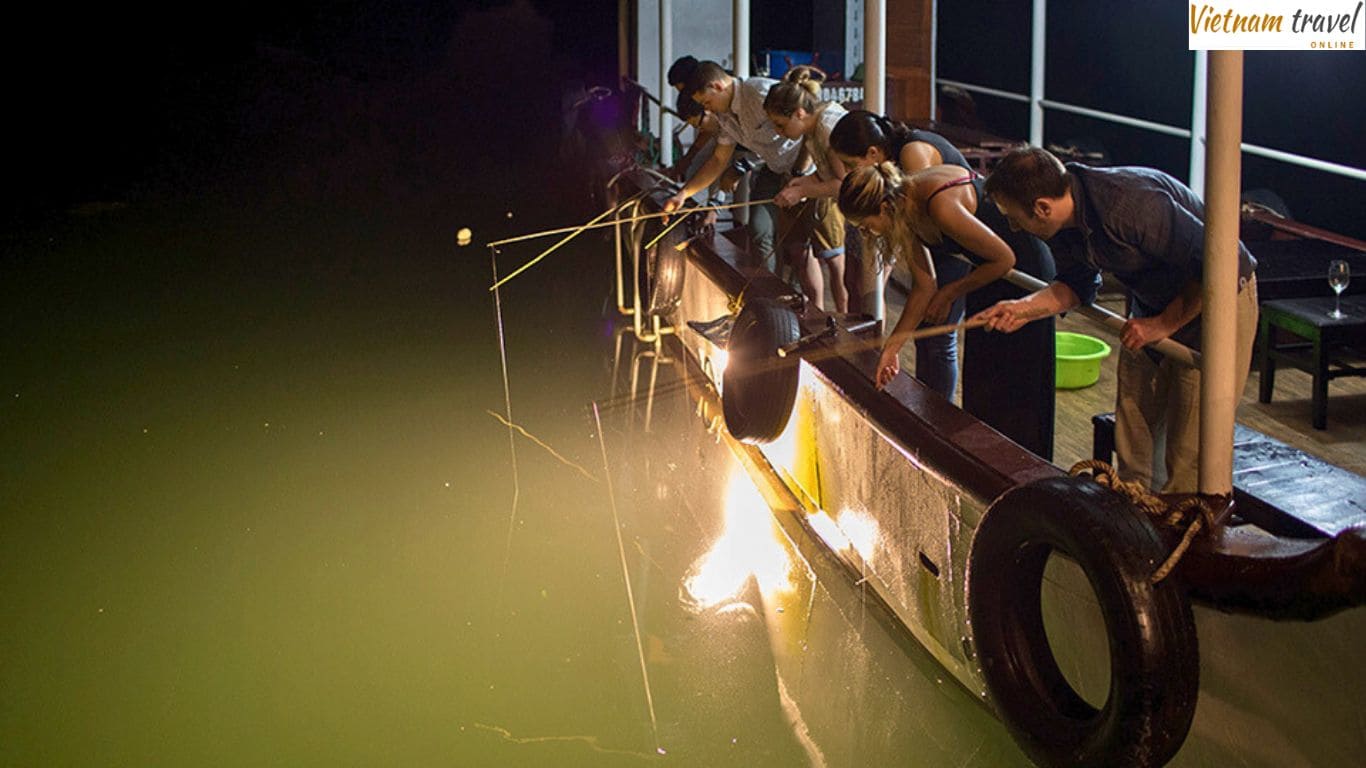
You’ll typically have an afternoon activity (kayaking through lagoons is my favorite part), then dinner on board. Sometimes they do “squid fishing” at night (don’t expect to catch much, it’s more for laughs). Breakfast, another activity, then lunch before heading back.
It’s generally a pretty relaxed pace. Don’t expect blazing fast Wi-Fi out in the bay. Use it as an excuse to actually unplug and just stare at the scenery. It’s worth it.
Packing for the Bay: Don’t Forget This One Thing
Swimsuit (obvious), sunscreen, a hat, sunglasses. Comfy shoes for walking in caves or on islands. A light jacket or a long-sleeved shirt for evenings – it can get surprisingly cool on the deck, especially in the cooler months. Camera, obviously.
And importantly: any personal medications you absolutely need. You’re out on a boat, far from pharmacies. Most cruises will provide towels.
Day 6-7: Hue – The Imperial City That Gets Overlooked Too Often
After the natural beauty of Ha Long, it’s time for some serious history. Hue was the imperial capital of Vietnam for over a century, and that past is still very much alive here.
It’s a completely different vibe from Hanoi, much slower, more serene in parts. It’s an essential stop on a deep-dive Vietnam itinerary.
Getting to Hue: My Train Stories (Good and Bad)
- Overnight Train: This is a truly classic Vietnamese travel experience. From Hanoi, the SE1 or SE3 trains take about 12-14 hours. A soft sleeper berth (a cabin with 4 beds) costs around $40-60 USD. I’ve done this route multiple times. It’s basic, the beds are a bit hard, and it’s noisy, but you save a night on a hotel, and it’s a great way to cover ground. Book this well in advance, especially during peak season. One time, my top bunk was right next to the AC vent and it was freezing all night. Bring layers!
- Flight: This is what I usually do now, honestly, because I’m past the “roughing it on a train” phase. Fly from Hanoi (HAN) to Hue (HUI). It’s quick, about 1 hour 15 minutes. Flights are frequent and usually run $50-100+. It’s just more efficient if you’re on a tighter schedule.
Where to Crash in Hue
Once you arrive in Hue (either by train or plane), your first step should be to head directly to your pre-booked hotel or homestay to check in and drop off your bags. After settling in, you’ll be ready to explore.
The city center and areas around the Perfume River are excellent choices for convenience, with easy access to restaurants and sights. Prices are generally very reasonable here, so you can often get a very comfortable room without breaking the bank.
I’ve personally enjoyed staying in quieter boutique hotels or charming homestays with a garden vibe when in Hue, as it complements the city’s more relaxed pace. You can find many great options ranging from $20-50 USD per night for a clean, comfortable, and well-located room.
The Citadel: It’s Huge, Trust Me
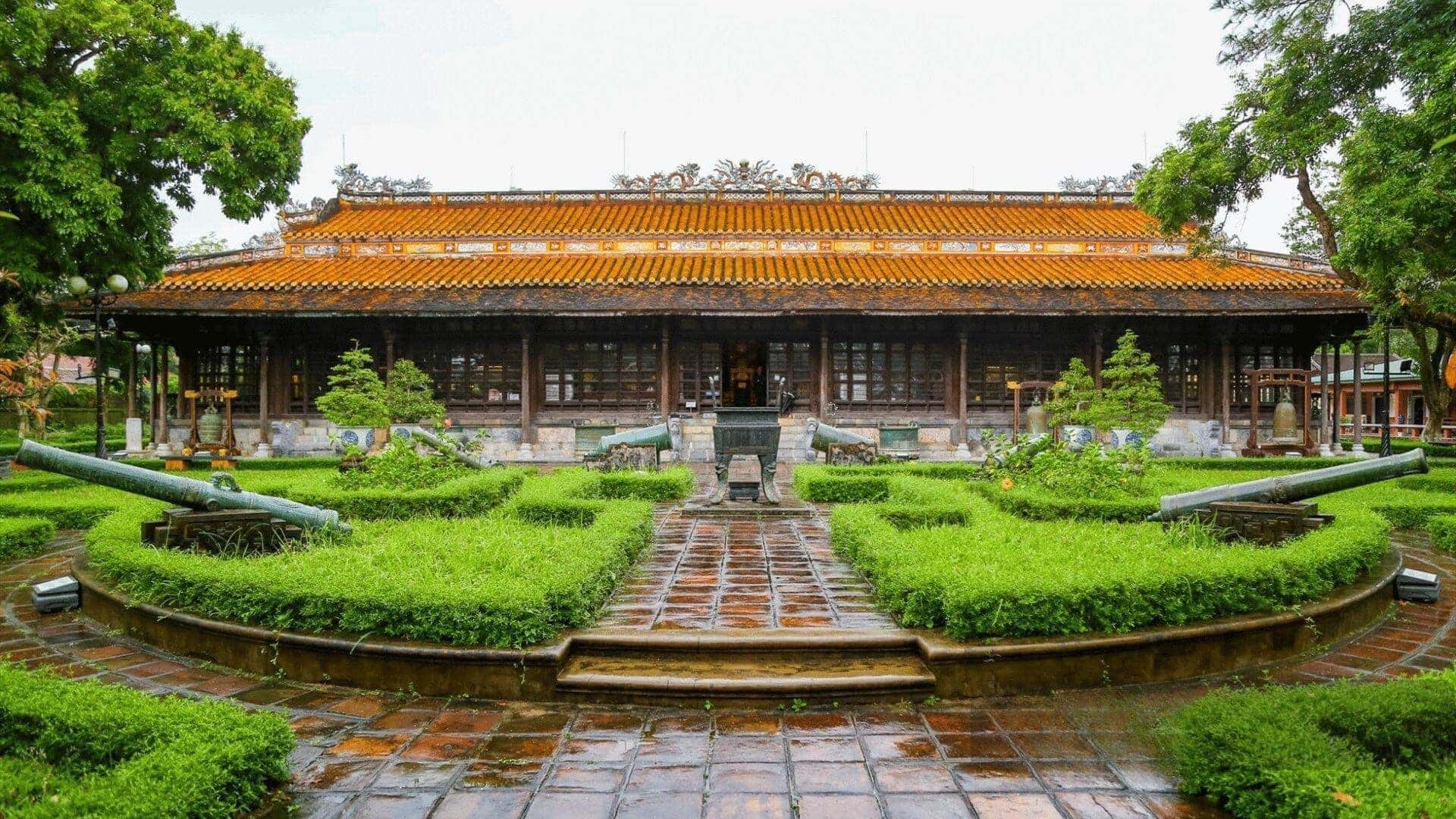
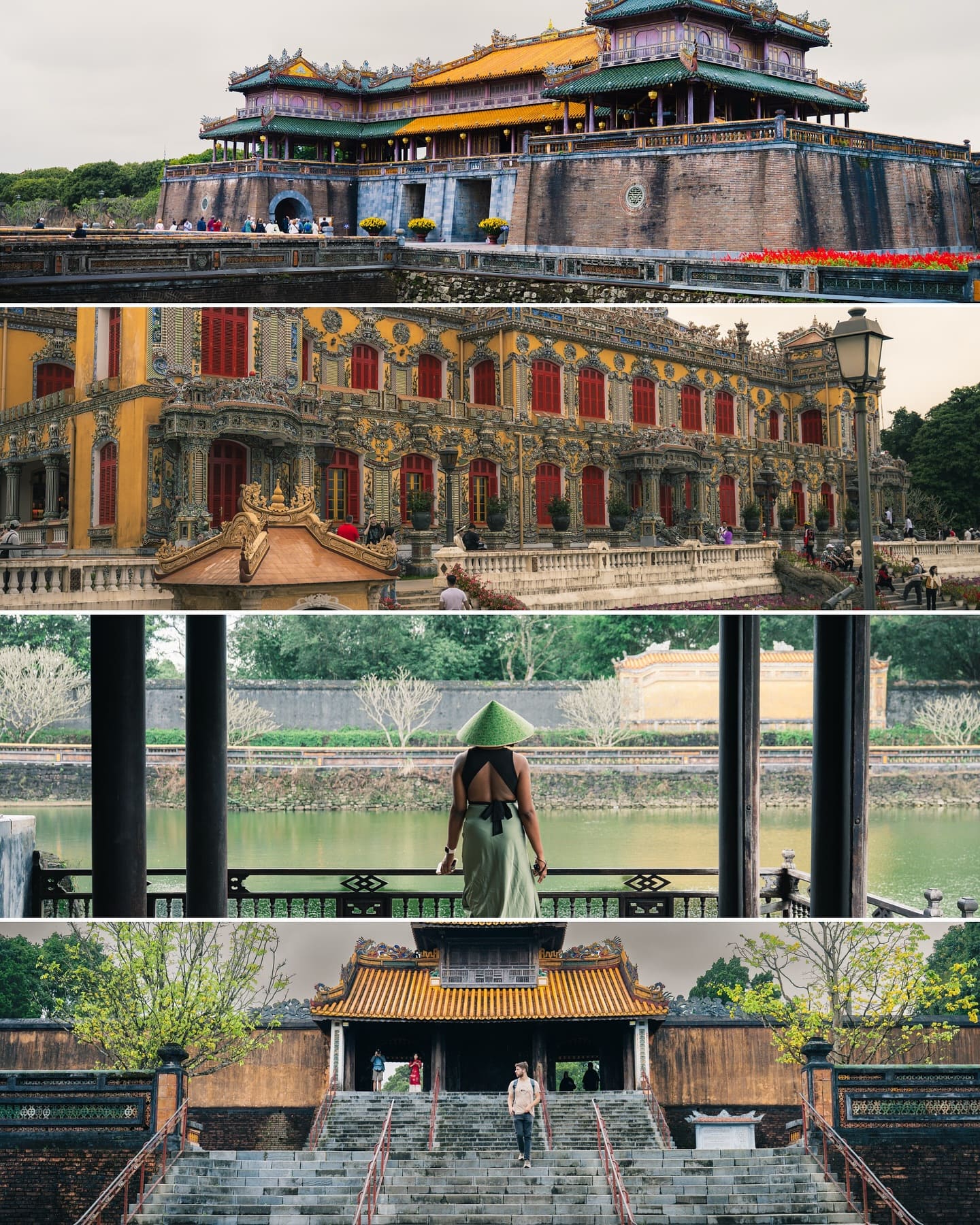
The main draw here is the Imperial City, also called the Citadel. This massive complex was home to the Nguyen Dynasty emperors. It took a real beating during the Vietnam War, but they’ve been doing incredible restoration work, and much of it is now restored.
You need to give yourself a solid 3-4 hours here, minimum. Just wander through the gates, the palaces, the temples. The sheer scale is impressive. Entrance fee is 200,000 VND ($8). My first time, I rushed it and immediately regretted it. Take your time.
River & Tombs: How I Do It Now
I always recommend taking a dragon boat ride on the Perfume River to Thien Mu Pagoda. The pagoda itself is iconic, sitting on a hill overlooking the river. The boat ride is relaxing, and you get some nice views of the riverbanks.
A private dragon boat for an hour or two usually costs 150,000-250,000 VND ($6-10) – haggle a bit. I often combine this with visits to a couple of the elaborate royal tombs located outside the city. The Tomb of Tu Duc and the Tomb of Khai Dinh are particularly impressive and very different from each other.
You can hire a Grab car for a few hours to take you around to the tombs after the pagoda, or find a local tour operator. I’ve done a half-day tour that included the pagoda and a couple of tombs, and it was well-organized and informative, usually costing around $20-70 USD. It gives you a good sense of the imperial history.


Hue Food: My Surprising Discoveries
Hue cuisine is its own thing – it’s more refined and often spicier than what you find up north.
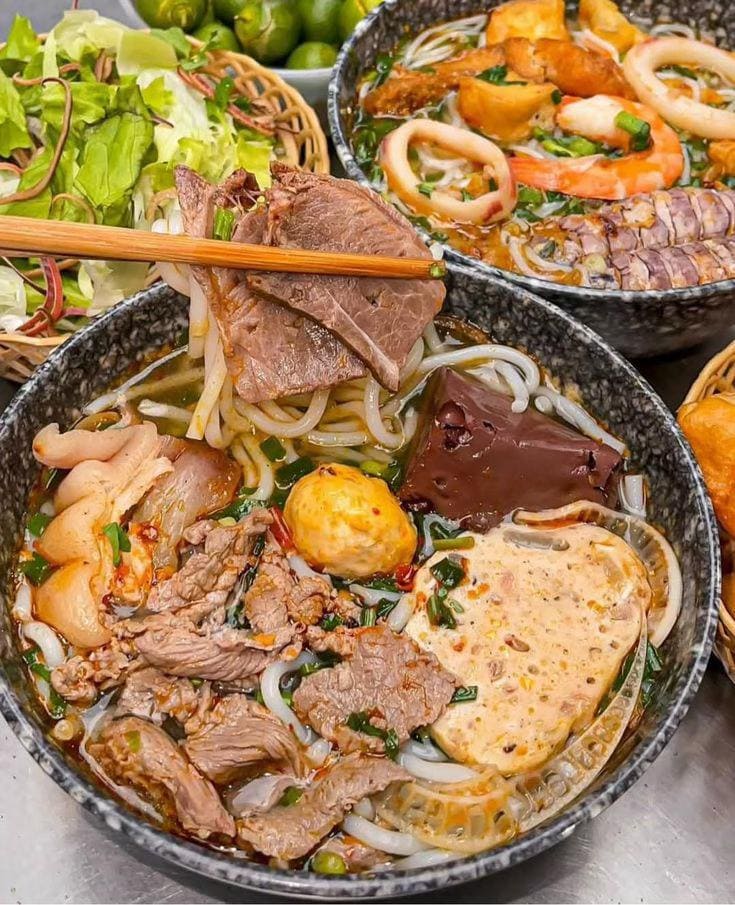
- Bun Bo Hue: This spicy beef noodle soup is Hue’s signature dish. It’s richer and spicier than pho. My go-to is usually Quán Bà Gái (60 Tran Quang Khai Street) or Hạnh Restaurant (11 Phó Đức Chính). It’s got a kick, and it’s totally different from pho. Around 40,000-60,000 VND ($1.60-$2.40).
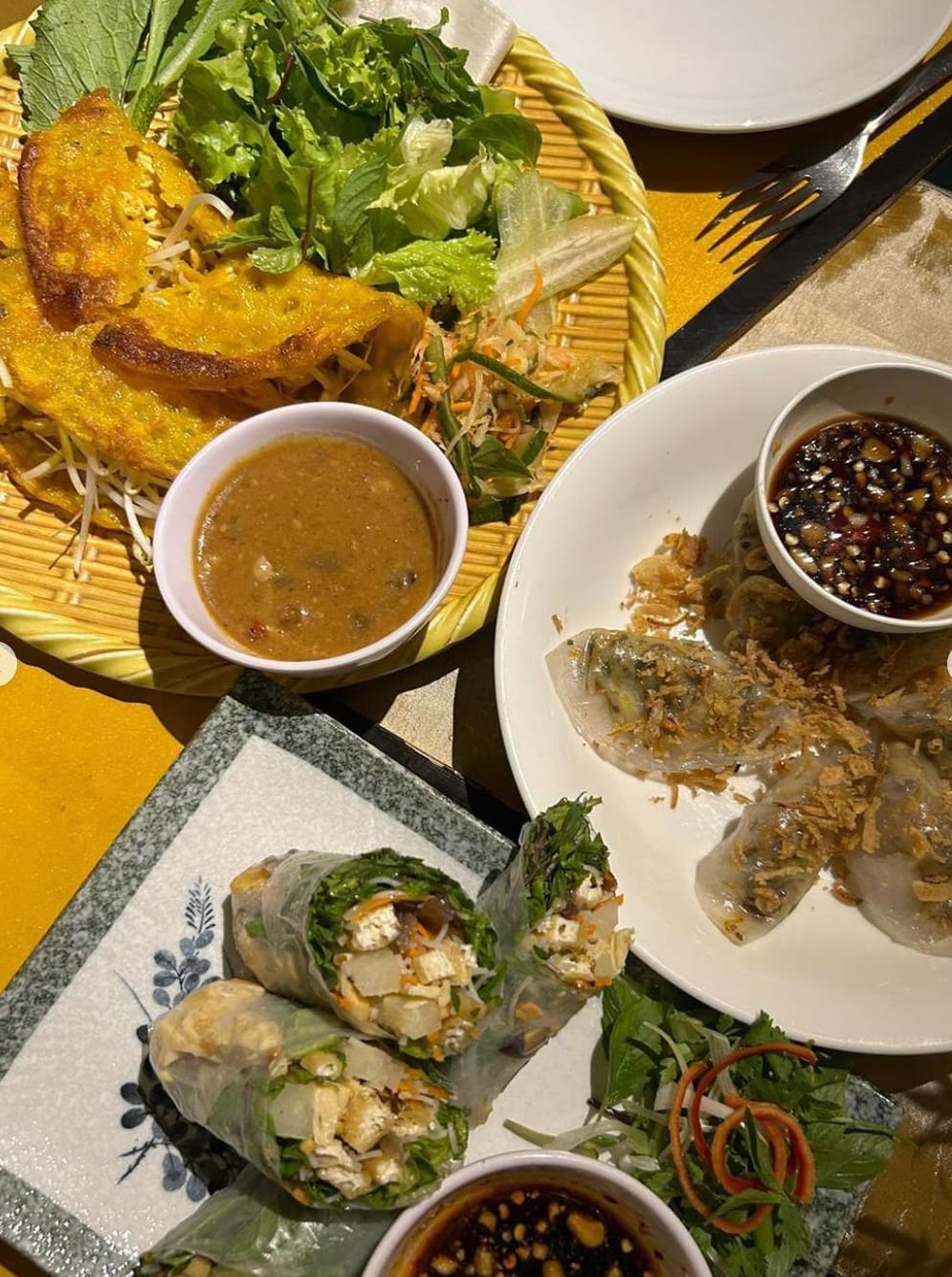
- Banh Beo, Banh Loc, Banh Nam: These are various types of small, steamed rice cakes. They’re usually served with shrimp and dipping sauce. Perfect for a snack. Just keep an eye out for local eateries serving them. They’re light and addictive.
- Nem Lui: Grilled pork skewers, wrapped in rice paper with fresh herbs and a delicious dipping sauce. I usually just order a big plate of these and call it a meal.
Read my guide here for 4 best Hue Food Tour I tried as a food blogger in Vietnam
Day 8-9: Hoi An – My Go-To Place to Unwind
After the grand history of Hue, you hit the utterly charming, lantern-lit streets of Hoi An. Everyone loves Hoi An, and for good reason. It’s genuinely beautiful, relaxed, and just has a good vibe. It’s a non-negotiable for a truly memorable Vietnam itinerary.
The Hai Van Pass: Don’t You DARE Skip This
Seriously. If you’re going from Hue to Hoi An (or vice versa), do not just take a regular bus. The Hai Van Pass is one of the most stunning coastal roads in the world. It was made famous by Top Gear, and it lives up to the hype.
- Motorbike Tour (Easy Rider): This is the ultimate way to do it. You hop on the back of a motorbike with an experienced local driver (an “Easy Rider“) who handles your luggage. They stop at all the best viewpoints, tell you about the local areas, and it’s an incredible experience. It takes 5-6 hours. Prices are usually around $50-70 USD per person. I’ve done this route several times, both driving myself (which is exhausting) and with an Easy Rider. Trust me, let someone else drive. It’s worth every single penny to just enjoy the scenery without worrying about traffic.
- Private Car: If motorbikes aren’t your thing, you can hire a private car. They’ll also drive you over the pass, stopping for photos. Costs around $60-90.
- Train to Da Nang, then Taxi: You could take the “train of a thousand views” from Hue to Da Nang (about 3 hours, $5-10), which does go through the pass, but it’s not the same panoramic view as driving the road itself. From Da Nang, it’s a 30-45 minute taxi/Grab ride to Hoi An (around 200,000-300,000 VND / $8-12). But if you have the chance, do the Hai Van Pass properly.
Old Town Vibes: Day vs. Night, My Take
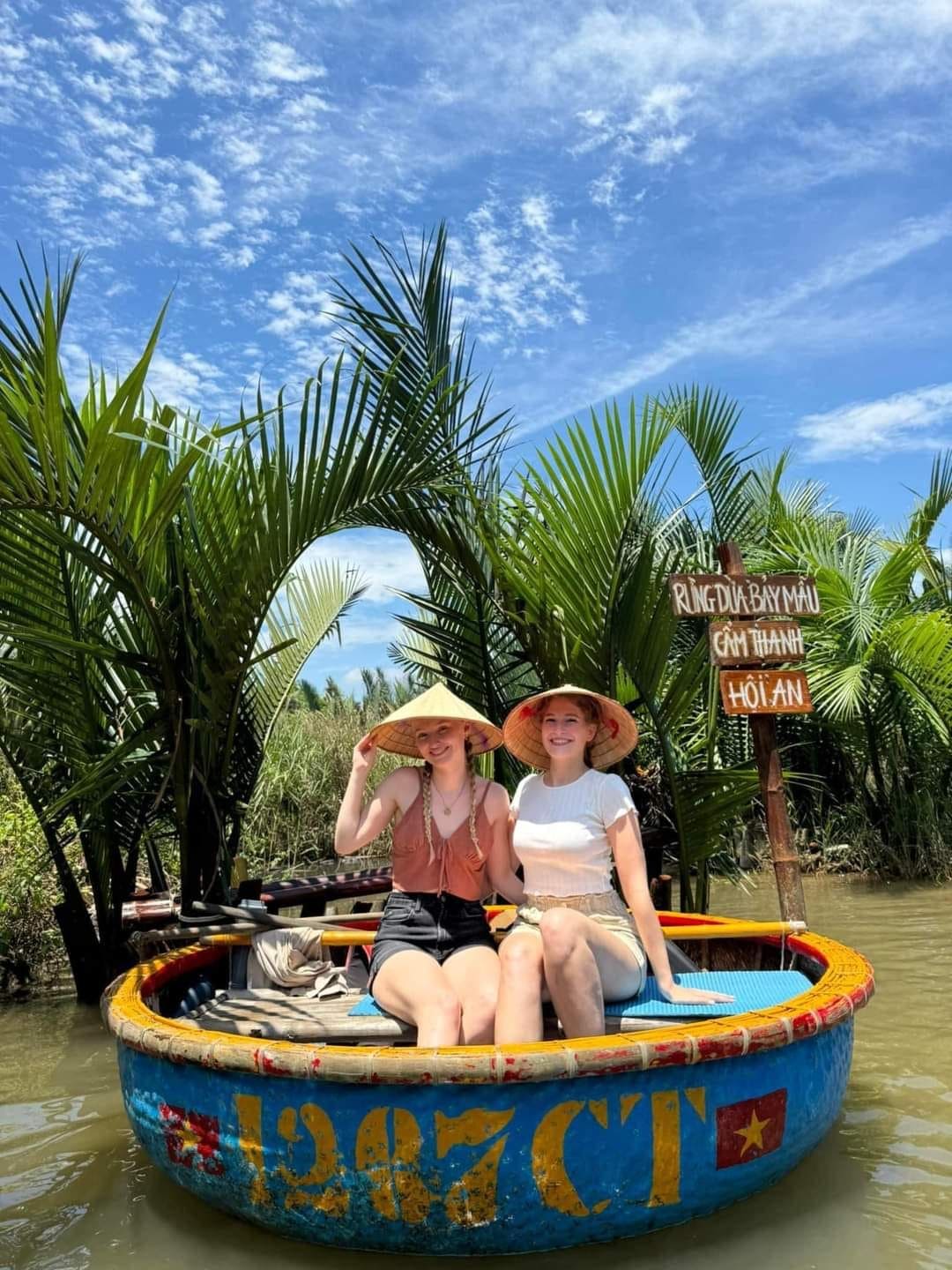
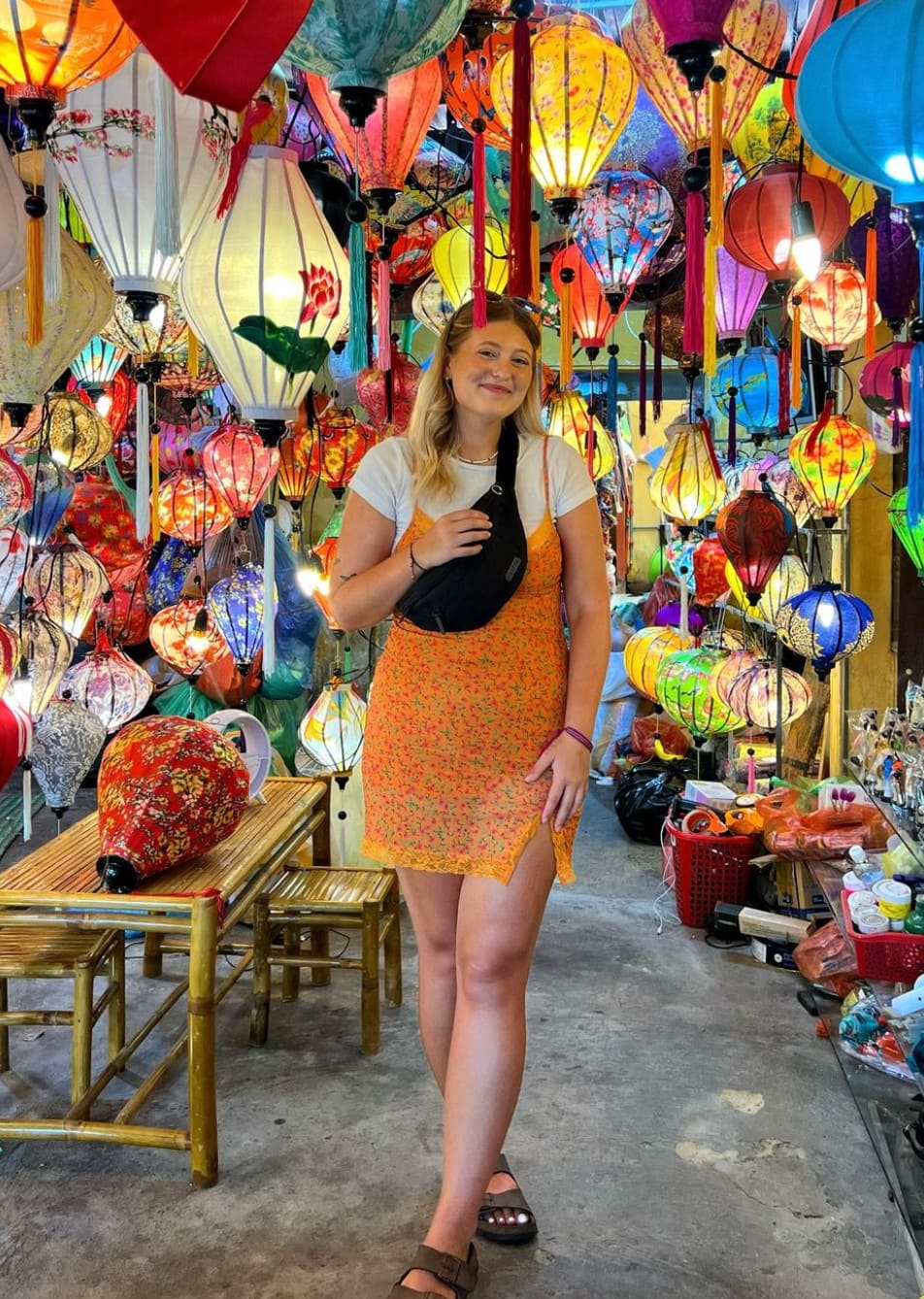
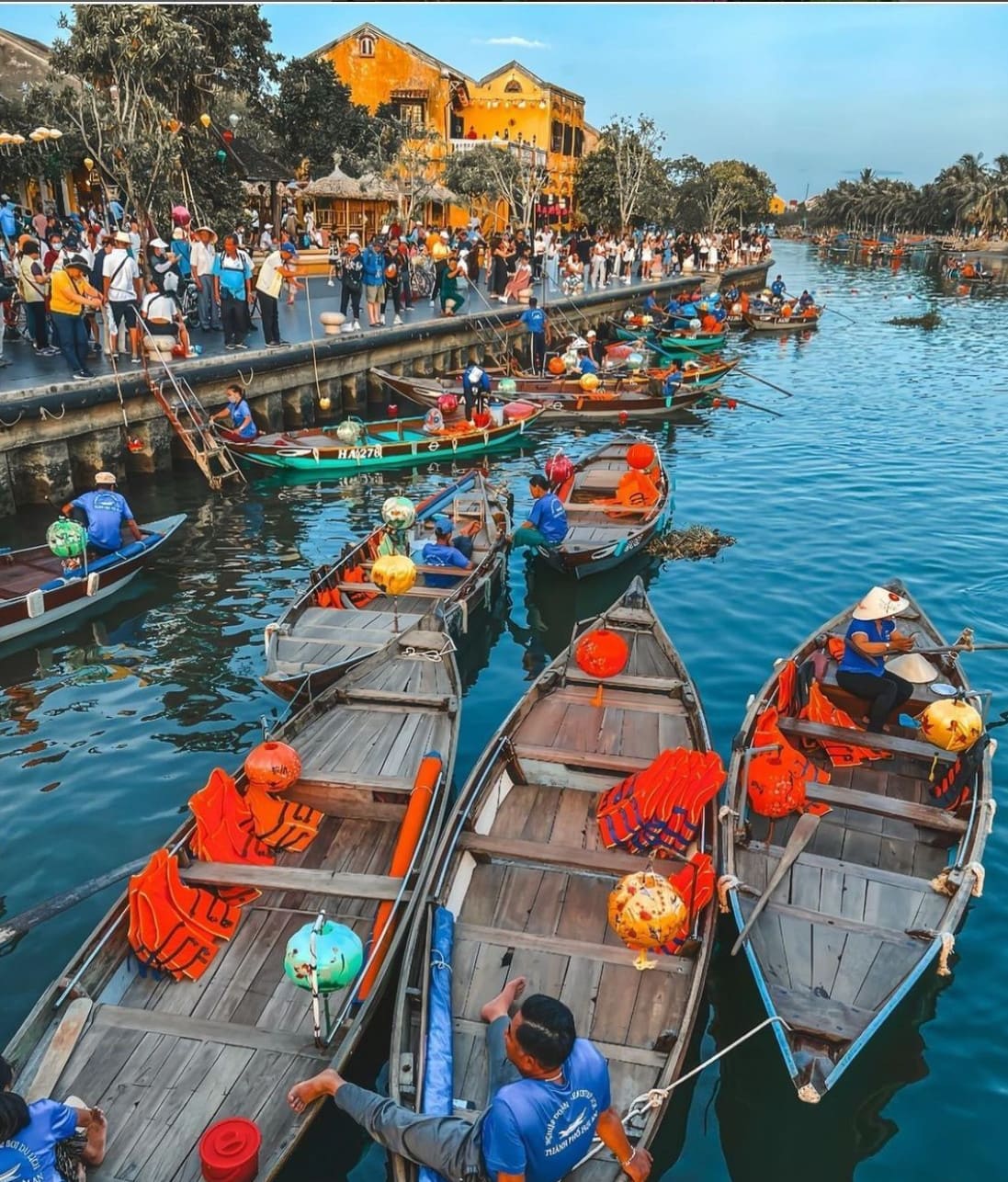
Hoi An’s Ancient Town is a UNESCO-listed site, and it’s magical, especially at night when the lanterns come alive. During the day, I usually wander through the historic buildings, visit the Japanese Covered Bridge (entry included with an Old Town ticket, 120,000 VND / $5, which gives you access to several heritage sites).
Just browse the shops, grab a coffee overlooking the river. But evening is when it transforms. The river fills with small boats carrying candles, the streets glow with colorful lanterns.
It’s bustling, but somehow still feels charming. It can get really crowded, especially on weekends, but it still manages to hold its magic.


Tailors: My Experience (And What to Expect)
Hoi An is famous for its custom tailoring. Suits, dresses, shirts, shoes – you can get them made in 24-48 hours. Yaly Couture and Bebe Tailor are the big, well-known names, very professional. But there are literally hundreds of smaller shops too.
Be prepared to haggle a bit, and know exactly what you want before you go in. Bring pictures if you have a specific style in mind. Prices vary wildly depending on the fabric and complexity, but a custom shirt might be $25-40, a dress $50-150, and a suit $150-400+.
I had a couple of shirts and a custom leather bag made here once, and they were surprisingly good quality for the price. Just manage your expectations – it’s not Savile Row, but it’s great value.
Beyond Shopping: Cooking & Beach Days
These are great ways to spend an afternoon and experience more of the local culture.
- Cooking Class: I’ve done a few of these, and they’re always a blast. Many places offer half-day classes, often starting with a market visit to pick out ingredients. Red Bridge Cooking School and Hoi An Eco-Tours are popular choices. Prices are usually around $30-50 USD. You learn to make classics like fresh spring rolls, banh xeo, and pho. And you get to eat what you cook, which is the best part.
- Lantern Making Class: A fun, quick activity. You spend an hour or two making your own traditional lantern. About $10-20 USD, and you get a cool souvenir to take home.
- An Bang Beach Chill: If you need a break from the walking and shopping, An Bang Beach is just a short Grab ride away (15-20 minutes, around 80,000 VND / $3.20). It’s a nice beach with plenty of good beachside restaurants and places to rent sun loungers. Perfect for an afternoon unwind. I usually grab a beer and just chill.
Where I Stay in Hoi An
- Near Ancient Town: For convenience and atmosphere. I’ve really liked Allegro Hoi An – Little Luxury Hotel & Spa (from $80-150 USD). It’s super comfortable and literally a 5-minute walk to the old town. Or, if you want to really treat yourself, La Siesta Hoi An Resort & Spa ($150+).
- Outside Ancient Town (near rice paddies/beach): If you prefer more peace and quiet, there are tons of charming homestays and villas a short bike ride away. Many hotels here offer free bike rentals, which is awesome for exploring the rice paddies. I’ve stayed at Laluna Hoi An Riverside Hotel & Spa ($60-100) and Tra Que Garden Villa ($40-80) – both were lovely, much calmer, and a nice way to see a different side of Hoi An.
Day 10-11: Ho Chi Minh City (Saigon) – The Grind, The Buzz, The Everything
Time to fly south. Ho Chi Minh City – most locals still call it Saigon – is a sprawling, energetic, almost overwhelming metropolis. It’s a completely different energy from Hanoi; faster, more modern in many ways, but still very Vietnamese. Your Vietnam itinerary absolutely needs this buzzing hub.
How I Get South: Hint: It’s Fast
Fly from Da Nang (DAD) to Ho Chi Minh City (SGN). This is the only sensible way. Flights are plentiful and take about 1 hour 20 minutes. Prices typically range from $40-90 USD. It’s quick and easy.
From Tan Son Nhat International Airport (SGN), a Grab or taxi to District 1 (the main tourist area) will cost around 150,000-250,000 VND ($6-10). Again, Grab is your friend here. Saigon traffic can be a beast, especially during rush hour, so factor that in when planning airport transfers.
Where I Crash in HCMC
My routine in HCMC after landing? Get to the hotel, ditch the bags, maybe a quick shower, and then I hit the ground running. District 1 is generally the most convenient for tourists.
- Budget: The backpacker area around Bui Vien is loaded with hostels. Bandlive Backpacker Hostel is well-regarded for its social atmosphere, dorm beds from $10-15 USD. Good if you’re looking to meet people.
- Mid-range: I’ve had good experiences at Liberty Central Saigon Citypoint Hotel (from $80-150 USD) or Fusion Suites Saigon (from $100-120 USD). Both are comfortable, modern, and very well-located, close to the main attractions.
- Splurge: Park Hyatt Saigon (from $250+ USD). If you want ultimate luxury and service in Saigon, this is your spot.
Looking for something more budget-friendly but still cozy for two? I’ve got you covered with my personal picks for 5 Saigon Hotels Under $50 that are Best for Couples.
History: It’s Heavy, But Essential
These two sites are non-negotiable for understanding modern Vietnam. They’re powerful, and they can be emotionally heavy, but they provide crucial context.
- War Remnants Museum: This museum doesn’t pull its punches. It’s graphic, raw, and tells the story of the Vietnam War (or the American War, as it’s known here) from the Vietnamese perspective. It’s a truly impactful experience. Allocate at least 2-3 hours. Entry is 40,000 VND ($1.60). I’ve been multiple times, and each time I find something new or see something that makes me stop and think.
- Reunification Palace (Independence Palace): This was the former presidential palace of South Vietnam. It’s famous for the North Vietnamese tanks crashing through its gates on April 30, 1975, marking the end of the war. Stepping inside is like walking into a 1960s time capsule. It’s fascinating. Entry is 40,000 VND ($1.60).
My Take on Markets and Bui Vien
- Ben Thanh Market: It’s a central landmark, a massive market selling everything from souvenirs and clothes to street food. It’s very touristy, and you will be approached by vendors constantly. You need to bargain hard here – like, start at 50% of what they say and work up. It’s good for people-watching and grabbing a quick, cheap meal from the food stalls inside, but I usually get my souvenirs elsewhere.
- Bui Vien Walking Street: This is the backpacker street, and at night, it just explodes. Bars, clubs, loud music, street performers, people trying to sell you everything. It’s pure chaos, loud, and bright. If you’re into nightlife and want to see the wild side of Saigon, this is your spot. If not, just walk through once to get a feel for the energy, then escape to a quieter area. It’s definitely an experience, but not for everyone.
Saigon Food & Coffee: My Daily Fixes
Saigon’s food scene is incredibly vibrant and diverse. You could eat something new every meal for a month.
- Com Tam: Broken rice with grilled pork, a fried egg, and other toppings. It’s a quintessential Southern dish. Find a street stall, pull up one of those tiny plastic chairs, and dig in. It’s super comforting.
- Banh Xeo: This crispy, savory pancake filled with shrimp, pork, and bean sprouts is fantastic. You tear off a piece, wrap it in fresh lettuce and herbs, and dip it in fish sauce. Delicious.
- Coffee: Vietnam is the world’s second-largest coffee exporter, and Saigon is the heart of its coffee culture. You must try a traditional Vietnamese iced coffee (ca phe sua da) – it’s strong, sweet with condensed milk, and unbelievably refreshing. Or a coconut coffee. Coffee shops are everywhere, from trendy, air-conditioned cafes to tiny street-side spots. For a truly old-school, local vibe, check out Cheo Leo Cafe (109-111 Nguyen Thien Thuat, District 3). It’s been there forever, brews coffee over charcoal, and is a real piece of Saigon history.
My #1 Food Rec in Saigon: Do a motorbike food tour. Seriously. This is my absolute favorite thing to do in HCMC. You hop on the back of a scooter with a guide, and they whisk you through the crazy traffic, taking you to all these incredible local food spots you would never find on your own.
It’s an exhilarating way to see the city at night, and the food is consistently amazing. Many highly-rated ones are on GetYourGuide, typically around $55-60 USD for 3-4 hours. It’s worth every penny for the experience and the food. I’ve sent countless friends on these, and they all rave about them.
Day 12-13: Mekong Delta – Getting Off the Main Drag (A Bit)
The Mekong Delta is Vietnam’s “rice bowl,” a vast, green network of rivers, canals, and incredibly fertile land. It’s a fascinating contrast to the bustling cities, very peaceful and focused on river life. If you have the time, this is a beautiful addition to your Vietnam itinerary.
Tour Choices: Day Trip or Deeper Dive?
Most people do a 1-day or a 2-day/1-night tour from HCMC.
- 1-Day Tour: These usually focus on My Tho or Ben Tre, the closer parts of the Delta. You’ll usually visit a coconut candy factory, take a boat ride, and see some local life. It’s a quick taste, but you won’t get a deep sense of the Delta. Prices typically range from $25-50 USD. It’s fine if you’re really pressed for time.
- 2-Day/1-Night Tour: This is my recommendation if you can swing it. It allows you to go further into the Delta, typically to Can Tho, where you can experience the vibrant Cai Rang Floating Market. This market is best visited early in the morning, which you can only do if you stay overnight. It’s a unique experience and worth the extra time. Many tours include an overnight stay in Can Tho, either in a simple hotel or a homestay. Prices from $70-150+ USD. I always suggest looking for tours that specifically highlight the Cai Rang Floating Market, as it’s the most impressive. Many of the Mekong Delta 2-day tours on GetYourGuide are good options; I’ve had friends use them and come back with great stories about the floating market.
What You’ll Actually See (Beyond the Tourist Traps)
The Cai Rang Floating Market is genuinely incredible to witness. It’s not just for tourists; it’s a real, working market with boats of all sizes selling fruits, vegetables, and goods directly from their boats. It’s noisy, colorful, and a bit chaotic. You’ll usually take a smaller boat to navigate through the market itself.
Many tours will also include visits to local workshops. These can feel a bit touristy, but they offer good insights into local industries:
- Coconut Candy Factories: You’ll see how coconut is processed into various sweets. And yes, you’ll get to sample a lot of candy.
- Rice Paper Making: See how the thin, delicate rice paper used for spring rolls is made by hand.
- Bee Farms: You can taste local honey and royal jelly.
It’s a more relaxed pace down here, a good contrast to the bustle of Saigon.
What to Throw in Your Bag
Light clothing, a hat, sunscreen, insect repellent (absolutely essential, especially if staying overnight in a homestay). Your camera, of course, and some small cash for any little souvenirs or snacks.
Day 14: Heading Out (from HCMC)
Depending on your flight schedule, you might have time for some last-minute souvenir shopping or one final, glorious Vietnamese meal. Then it’s off to Tan Son Nhat International Airport (SGN) for your departure.
Give yourself plenty of time to get to the airport – Saigon traffic can be unpredictable and brutal, especially during rush hour. I always aim for at least 3 hours before an international flight.
The Real-World Survival Guide for Vietnam
Alright, now for the stuff that actually matters day-to-day. These are the things I tell anyone coming to visit, the little hacks and warnings that make your trip smoother. This general advice applies to your entire Vietnam itinerary.
Visas: Seriously, Don’t Screw This Up
Most nationalities need a visa for Vietnam. This is not something to leave until the last minute. Trust me, I’ve seen people get turned away from flights because of this.
- E-visa: For many nationalities, this is the easiest. Apply online through the official Vietnamese government website. It costs about $25 USD for a single-entry 30-day visa. Process usually takes 3-5 business days, but I’ve heard of it taking longer, so do it well in advance.
- Visa on Arrival (VOA): Requires an approval letter before you fly, obtained from a reputable agency online. Then you get the actual visa stamped at the airport on arrival. It’s still common, but the e-visa is generally preferred now if available for your nationality.
- Visa Exemptions: A few countries (like the UK, France, Germany, some ASEAN nations) have visa exemptions for short stays (usually 15-45 days). ALWAYS, ALWAYS, ALWAYS double-check the official government websites for the most current rules for your specific nationality. These rules change without much warning. I can’t stress this enough.
Money: My ATM Woes and Cash Hacks
- Currency: Vietnamese Dong (VND). Roughly 1 USD = 24,000-25,000 VND. Don’t try to convert exact amounts in your head; just think of 25,000 VND as roughly a dollar, or 100,000 VND as four bucks. It’ll save your brain.
- ATMs: Widely available in cities. Look for bank names like Vietcombank, Agribank, BIDV. Most have a withdrawal limit (e.g., 2,000,000-3,000,000 VND / $80-120 USD) per transaction and will hit you with a fee (around 30,000-50,000 VND / $1.20-$2). Take out the maximum amount you can to minimize fees. I’ve had cards eaten by dodgy ATMs once, so try to use ATMs attached to actual banks during business hours if you can.
- Cash is King: Especially for street food, local markets, small shops, Grab bikes. Always carry small denominations (10,000, 20,000, 50,000 VND notes). It’s annoying to pay for a 30,000 VND coffee with a 500,000 VND note.
- Cards: Credit cards are accepted at most hotels, larger restaurants, and tour agencies. But don’t expect to use them at your local noodle shop.
SIM Cards: Get One, Immediately
Seriously, this is your first purchase after getting out of the airport. It’s cheap, and it makes life infinitely easier. You need it for Grab, Google Maps, checking restaurant reviews, everything.
- Providers: Viettel, Mobifone, Vinaphone are the main ones. Viettel generally has the best coverage, especially if you’re heading to more rural areas or even some of the more remote parts of your Vietnam itinerary.
- A data-only SIM with ample data (like 5GB-10GB per day for 15 days) costs around 150,000-250,000 VND ($6-10 USD). You’ll be set. Just buy one from a kiosk at the airport or a phone shop in the city. They’ll set it up for you.
- Wi-Fi is everywhere too – most hotels, cafes, and restaurants offer free Wi-Fi, usually decent.
Getting Around: My Love-Hate for Vietnamese Transport
- Flights: For long distances (Hanoi-Hue/Da Nang, Da Nang-HCMC), flying is just the most efficient. Domestic airlines like Vietnam Airlines, Vietjet Air, and Bamboo Airways are generally reliable. Book a bit in advance for better prices.
- Trains: A good option for overnight travel or if you want a scenic ride (like Hue-Da Nang). The soft sleeper is the most comfortable. Book through official sites or reliable agents. Just manage your expectations; it’s not luxury.
- Buses: Cheap, but can be slow, uncomfortable, and sometimes sketchy (overcrowding, unexpected stops, or drivers dropping you off in the middle of nowhere). I generally avoid overnight “sleeping buses” if I can help it, unless I’m on a super tight budget and really don’t care about comfort or sleep.
- Grab: Your ultimate savior in cities. Use the Grab app for taxis (GrabCar) and motorbikes (GrabBike). Prices are set, no haggling, safer than flagging down random taxis. It’s essential for navigating your Vietnam itinerary smoothly. I use it daily.
- Motorbike Rental: Only for experienced riders. Vietnamese traffic is wild, and accidents are common. Helmets are legally required. If you choose this, make sure your travel insurance explicitly covers motorbike accidents (many don’t), and you must have an International Driving Permit. Seriously, if you’re not an experienced rider in chaotic environments, don’t do it.
Staying Safe: My Street Smart Tips
Vietnam is generally safe for tourists, but common sense is vital.
- Petty Theft: This is the most common issue. Be aware of snatch-and-grab thieves, especially on motorbikes. Keep your phone and wallet secure on your person, not in an easily accessible bag pocket. Don’t walk with your phone out on the street, especially not near the curb. I’ve heard too many stories of phones being snatched mid-call.
- Taxis: Stick to reputable taxi companies (Mai Linh, Vinasun in HCMC, G7 in Hanoi) or, better yet, just use Grab. Avoid unmarked taxis or those that seem too eager.
- Overcharging/Scams: Some street vendors, cyclo drivers, or random people offering “help” might try to overcharge or scam you. Always agree on a price beforehand. If a price seems too good to be true, it probably is. If something feels off, just politely say “Không, cảm ơn” (No, thank you) and walk away.
- Traffic: Crossing the street in Vietnam is an art form. The key: walk slowly and predictably. The motorbikes will flow around you. Don’t try to run, don’t stop suddenly in the middle. Just keep a steady pace. It feels terrifying at first, then becomes second nature.
Packing: What I Actually Use
- Lightweight, Breathable Clothing: It’s hot and humid almost everywhere. Cotton, linen, quick-dry fabrics are your best friends. Leave the heavy jeans at home.
- Rain Gear: A light rain jacket or a small umbrella, especially during the wet season (roughly May-October in the south, September-March in the north). Even outside these times, a sudden downpour isn’t uncommon.
- Comfortable Walking Shoes/Sandals: You’ll be doing a lot of walking, especially in cities like Hanoi and Hoi An. Make sure they can handle uneven sidewalks.
- Swimsuit: For Ha Long Bay and Hoi An beach.
- Sun Protection: Sunscreen (high SPF), a wide-brimmed hat, sunglasses. The sun is intense.
- Insect Repellent: Absolutely essential, especially in the evenings, and particularly in the Mekong Delta or if you visit anywhere rural. Dengue fever is a real concern.
- Universal Adapter: Type A, C, or G plugs are common.
- Small Daypack: For daily excursions, carrying water, sunscreen, etc.
- Copies of Passport/Visa: Keep them separate from the originals, maybe one on your phone, one in your main luggage.
Eating Smart: My Rules for Street Food
- Bottled Water: Only drink bottled water. Avoid tap water. Be cautious with ice unless you’re sure it’s made from purified water. My rule is: if it’s a big, clear, hollow block of ice with a hole in the middle, it’s usually safe as it comes from a factory. If it’s small, cloudy, and irregularly shaped, it might be tap water.
- Street Food: Embrace it! It’s the best food in Vietnam, and incredibly cheap. My rule: look for busy stalls. High turnover means fresh ingredients. Also, look for places where the food is cooked fresh in front of you. Cooked food is generally safer than raw salads or unpeeled fruits from less reputable places. And always carry hand sanitizer.
- Chopsticks: Most Vietnamese dishes are eaten with chopsticks. Don’t stick them upright in your rice bowl – that’s an offering to the dead.
- Sharing: Many dishes are designed for sharing.
- “No, thank you” (Không, cảm ơn): Learn this phrase. You’ll use it a lot for persistent street vendors, especially in markets.
Bargaining: It’s a Dance
In markets (like Ben Thanh or the Old Quarter shops) and for unmetered services (like cyclos or small boat rides if you don’t book a formal tour), bargaining is expected. It’s part of the culture. Start at about 50% of their initial offer and work your way up.
Be polite, smile, but be firm. If you can’t agree on a price, just walk away – often, they’ll call you back with a better offer. For major purchases like tailored clothes, it’s less aggressive haggling and more negotiating the overall package price.
A Few Words: They Go a Long Way
Even knowing just a few basic Vietnamese phrases will get you smiles and better service. Locals really appreciate the effort.
- Hello: Xin chào (sin chow)
- Thank you: Cảm ơn (gam un)
- Please: Làm ơn (lam un)
- Excuse me/Sorry: Xin lỗi (sin loy)
- Yes / No: Dạ / Không (yah / khom) (Use “dạ” for yes, it’s more polite, especially when addressing elders or in formal situations)
- How much?: Bao nhiêu? (bow nyoo)
- Delicious!: Ngon quá! (ngon wah!)
Final, Honest Thoughts on Your Vietnam 2-Week Itinerary
Look, this Vietnam 2-week itinerary is ambitious. You’re covering a lot of ground. But it’s designed to give you a true, unfiltered taste of the country without feeling like you’re constantly running.
You’ll hit the major historical sites, eat incredible food, see some jaw-dropping natural beauty, and experience the utterly unique, sometimes chaotic, always vibrant energy of Vietnam.
My biggest piece of advice, after all these years? Don’t over-plan every single second. Leave room for spontaneity. Some of my absolute best memories from living here have come from just wandering, stumbling into a random street food stall that smelled incredible, or striking up a conversation with a local who didn’t speak a word of English but shared a laugh.
Vietnam is an assault on the senses, in the best possible way. It’s loud, it’s beautiful, it’s a bit messy, and it’s endlessly fascinating.
Go with an open mind, be patient when things don’t go perfectly (they won’t, it’s Vietnam!), and just embrace the madness.
You’re going to have an incredible, unforgettable time. And probably get addicted to egg coffee. You’ve been warned.
So, seriously, what part of this Vietnam itinerary are you actually most excited about? Because I’m excited for you.

Keep Exploring Hanoi
-
See & do UltimateReal things to do in Hanoi for travelers who hate big crowds ›
-
Route Must readDecide how many days in Hanoi with this ultimate guide! ›
-
RouteExplore Hanoi Old Quarter with This $35/Day Itinerary ›
-
RouteSave money & take this Hanoi walking tour route ›
-
RouteThe local way to a 2-day Hanoi weekend itinerary ›











 Tiếng Việt
 한국어
한국어 中文 (中国)
 日本語
日本語 ไทย
ไทย Deutsch
 Español
 Destinations
 Instagram
 Facebook
 X (Twitter)
 Threads
 Tiktok
아주 잘 읽었습니다. 베트남 여행에 매우 귀중한 정보를 얻어서 감사함니다.