








 Ha Giang
 Hanoi
Hanoi Ho Chi Minh City
 Ha Long
 Sapa
Sapa Mekong Delta
 Da Nang
 Hue
Hue Hoi An
 Ninh Binh
 Da Lat
 Nha Trang
 Phan Thiet
 Phu Quoc
 Quang Binh
 Quy Nhon
 Vung Tau
 Thai Nguyen
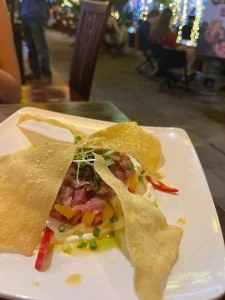
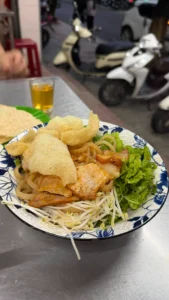
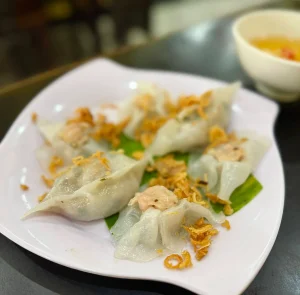
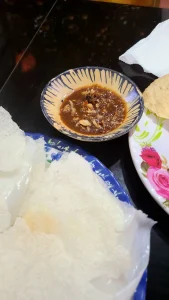
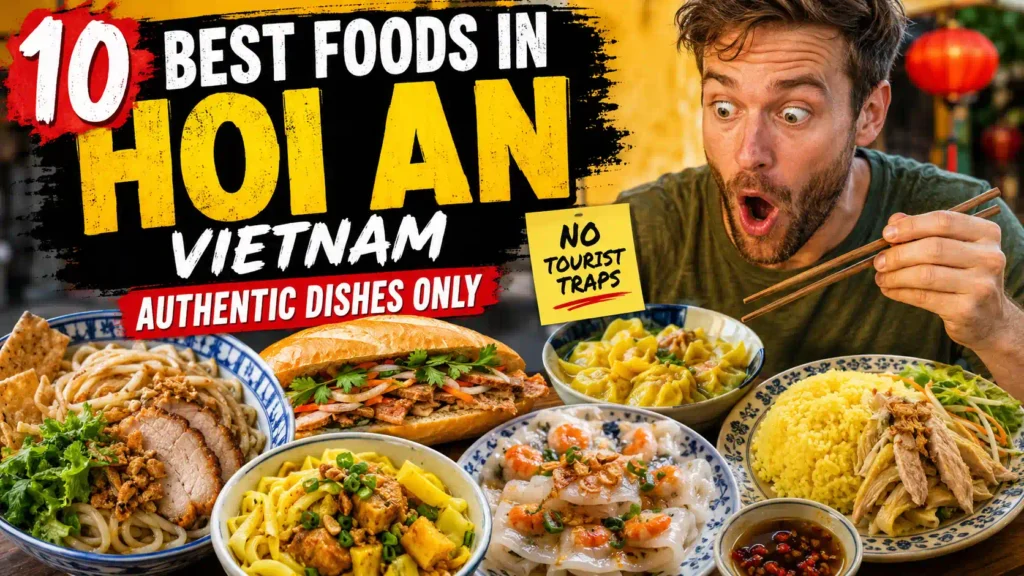


I came to Hoi An food from Hanoi, which is not a neutral starting point. Northern food is quiet. Clear broths, a lot of herbs, not much heat. Quang Nam cooking is turmeric and peanuts and chilli and sesame rice crackers cracked over the top of things, and the first few trips I honestly didn’t know what to make of it.
What changed it was working out that half the famous foods in Hoi An Vietnam aren’t really Vietnamese food at all. It’s Chinese food, adapted by Hoa families in a trading port over a couple of hundred years, and a couple of the dishes literally cannot be made anywhere else.
So this is the 10 I’d actually send you to eat, sorted by how much Hoi An is actually in them. Where to eat each one is a shorter answer than the dish deserves, and I’ve linked out where there’s a longer piece.
- Quick Answer: The must-eat foods in Hoi An Vietnam are cao lau, white rose dumplings, Hoi An wontons, com ga chicken rice and banh mi, all five of which are properly local and three of which you can’t get anywhere else in the country. After those, mi quang, banh dap with clams, banh xeo with nem lui, che bap and xi ma are the ones worth chasing.
- The Ten, in Order of How Hoi An They Are:
- Cao lau. Only exists here. Bá Lễ well water and ash from Cham Island wood.
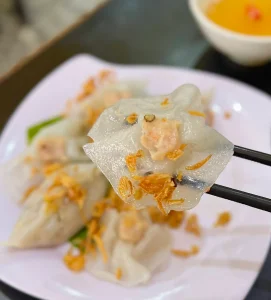
- White rose dumplings. Made by one family, sold by half the town.
- Hoi An wontons. Fried or in broth, and nothing like the Chinese original now.
- Com ga Hoi An. Turmeric rice, shredded chicken, herbs.
- Banh mi. The Hoi An style is pate and house sauce, heavier than elsewhere.
- Mi quang. Province dish, not town dish, but eat it here anyway.
- Banh dap and hen xao. Smashed rice cracker and baby clams, out on Cam Nam.
- Banh xeo with nem lui. Small, crisp, wrapped at the table.
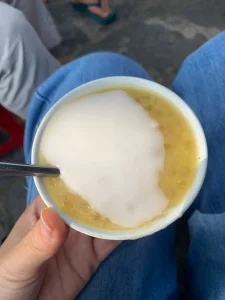
- Che bap. Corn sweet soup from the corn grown on the island in the river.
- Xi ma. Black sesame soup, and there’s barely anyone still selling it.
- What Hoi An Food Costs:
- Street stall dish: 20,000 to 40,000 VND.
- Old town restaurant version of the same dish: 60,000 to 120,000.
- Banh mi: 20,000 to 35,000.
- Beer: 15,000 to 25,000 at a local place, more on the river.
- My One Rule: eat the famous dishes at the small places and save restaurants for the things that need a kitchen.
Hoi An Food Specialties You Can’t Eat Anywhere Else
Worth separating these out, because “Hoi An specialty” gets used loosely and most of what’s on the tourist menus is just Vietnamese food being served in Hoi An.
1. Cao lau
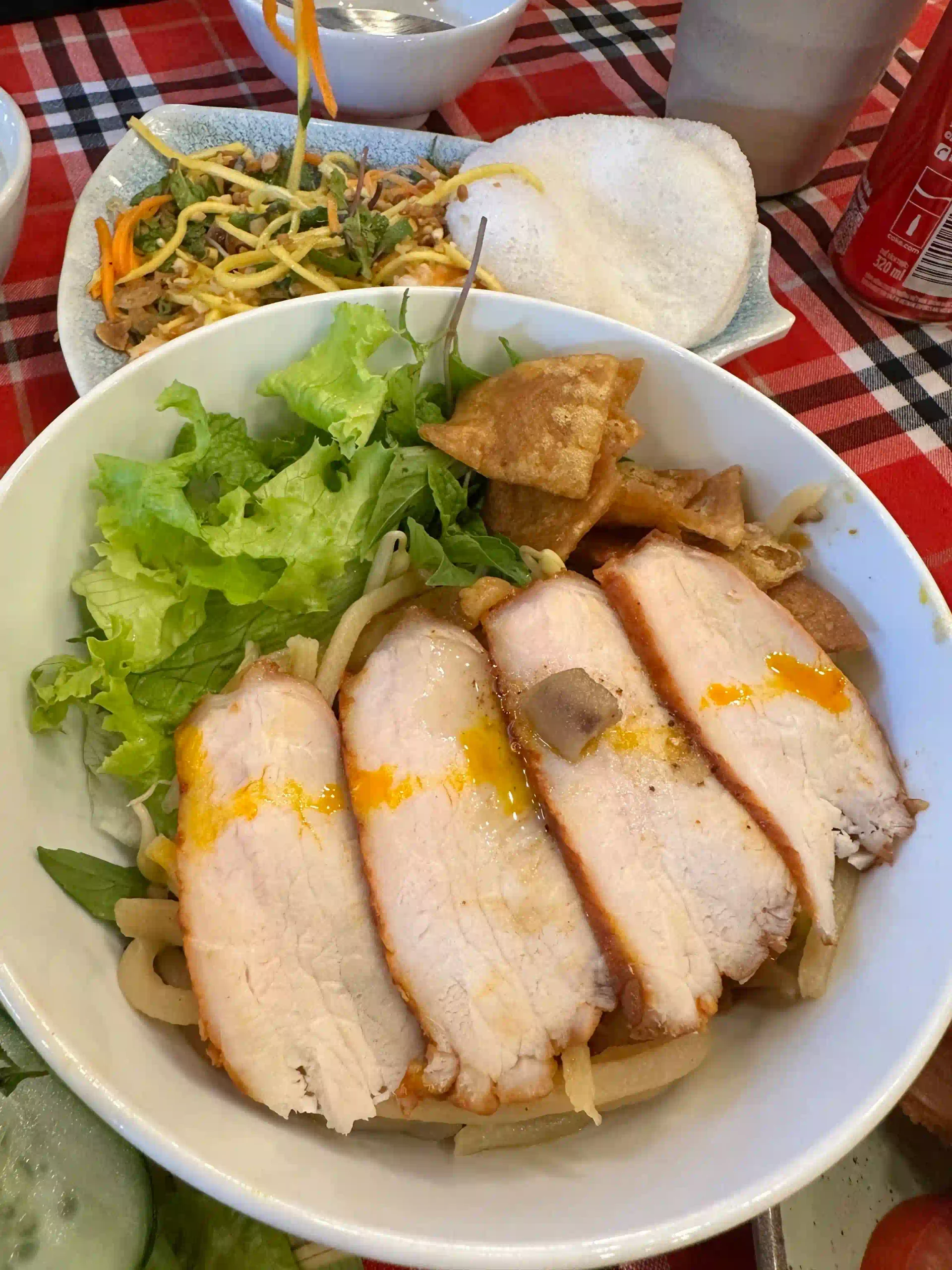
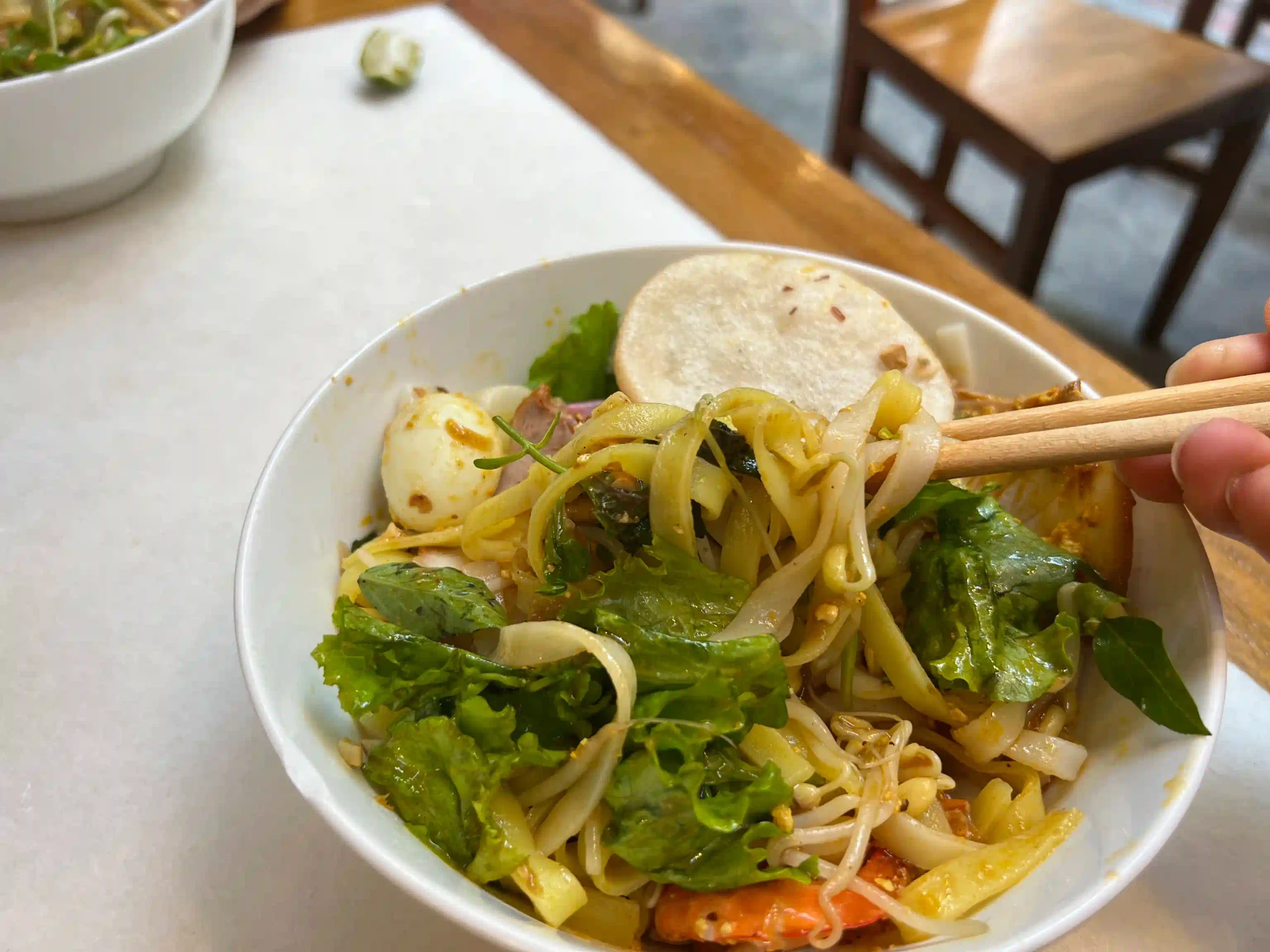
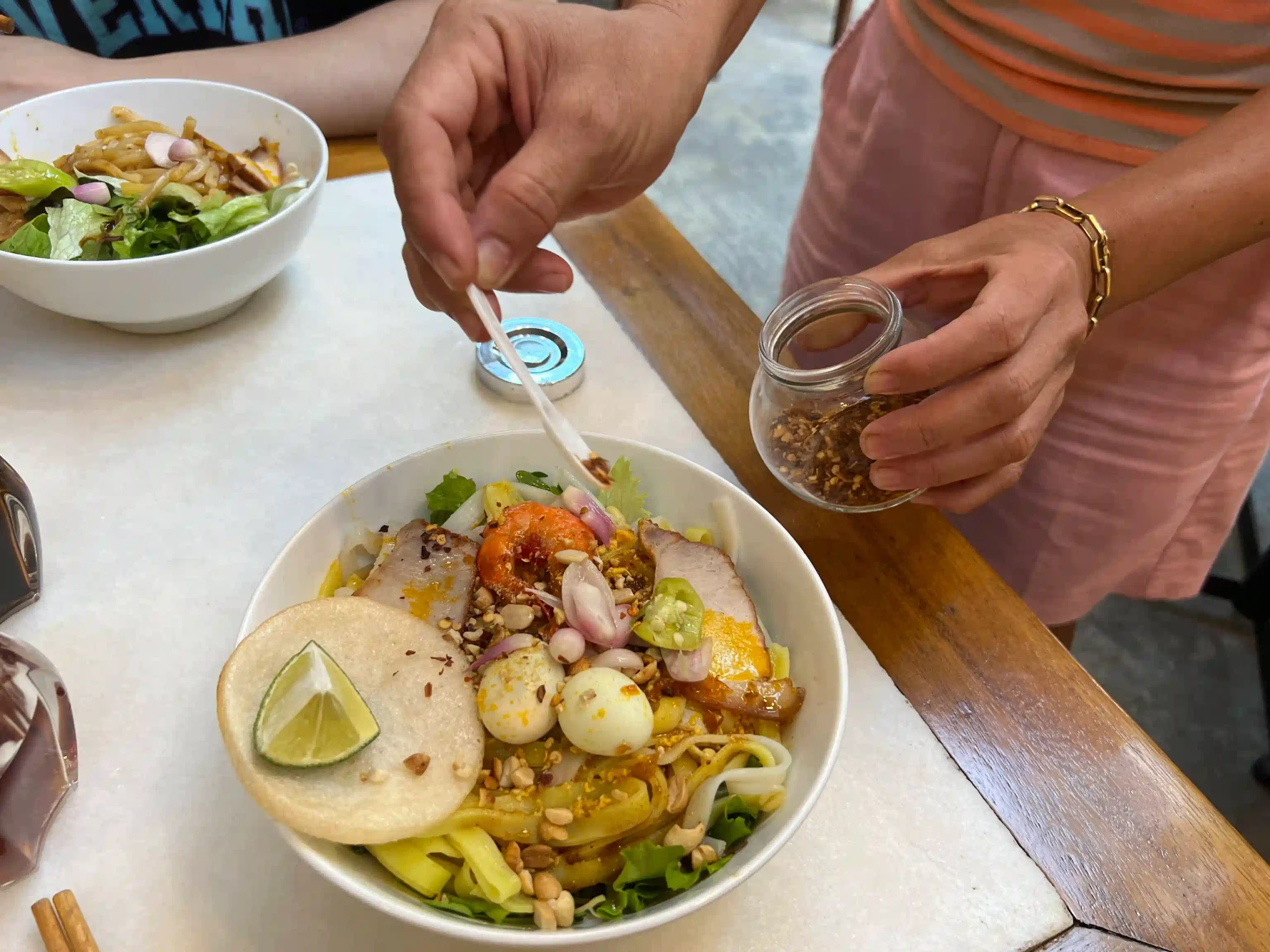
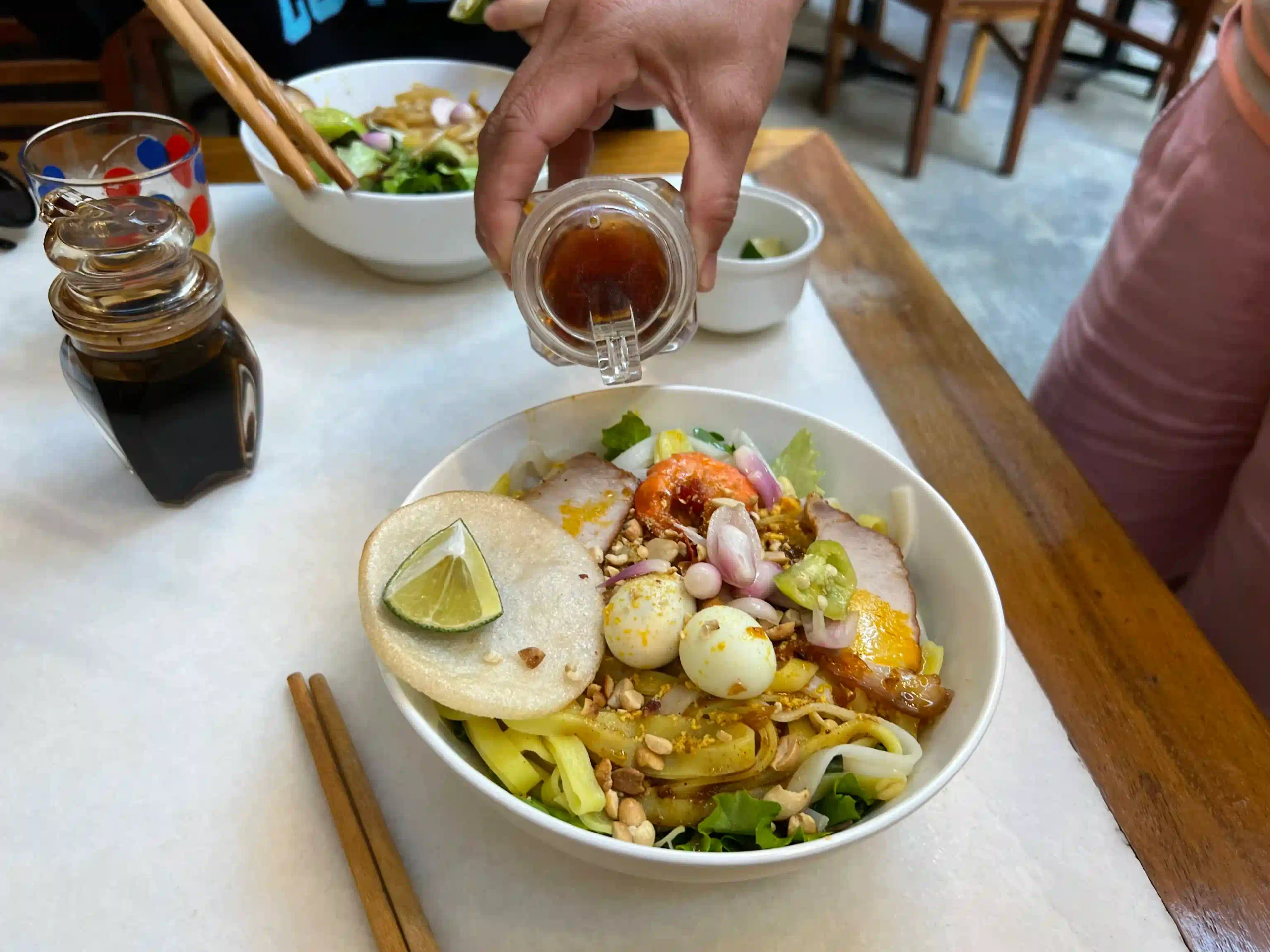
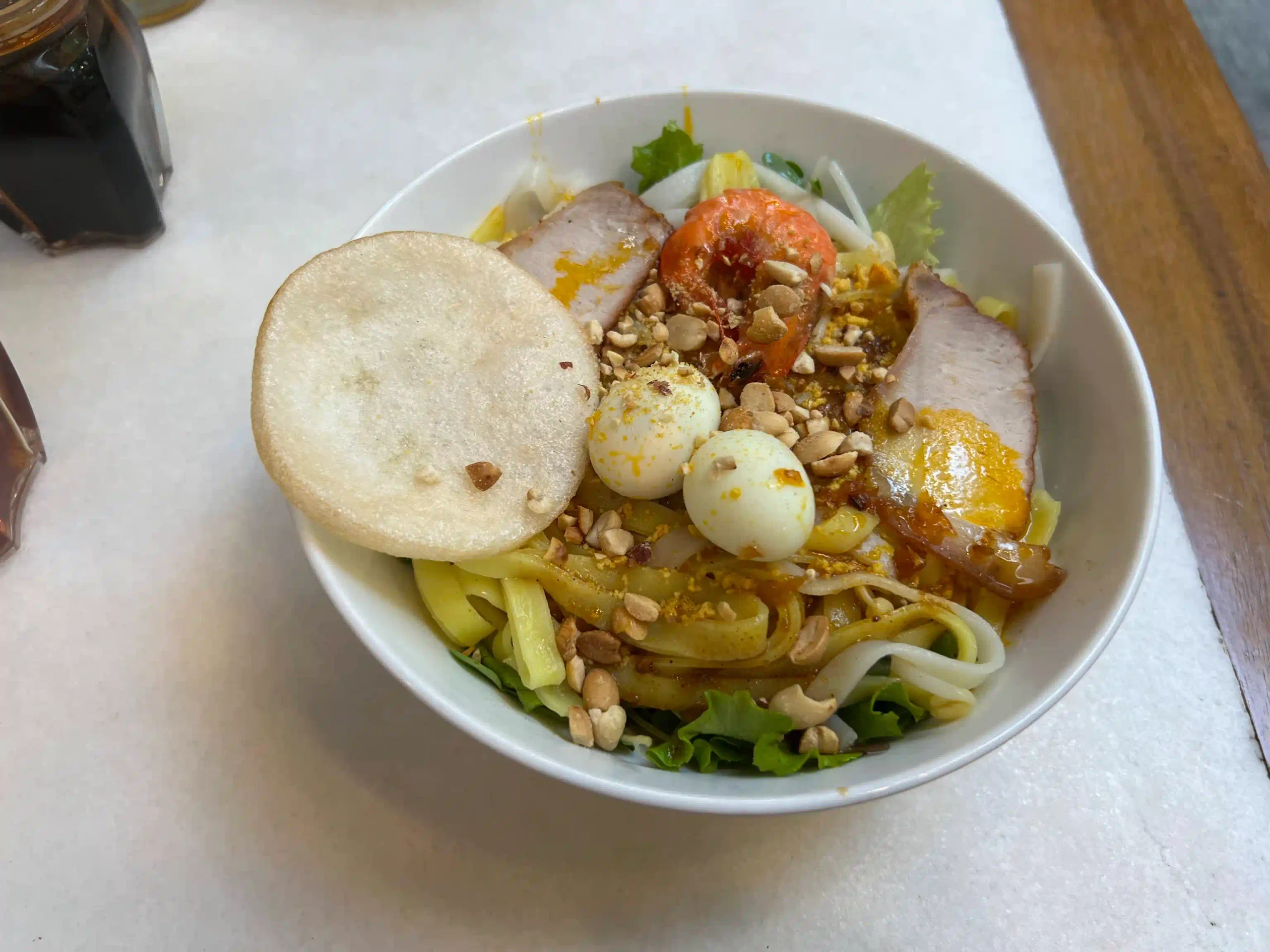
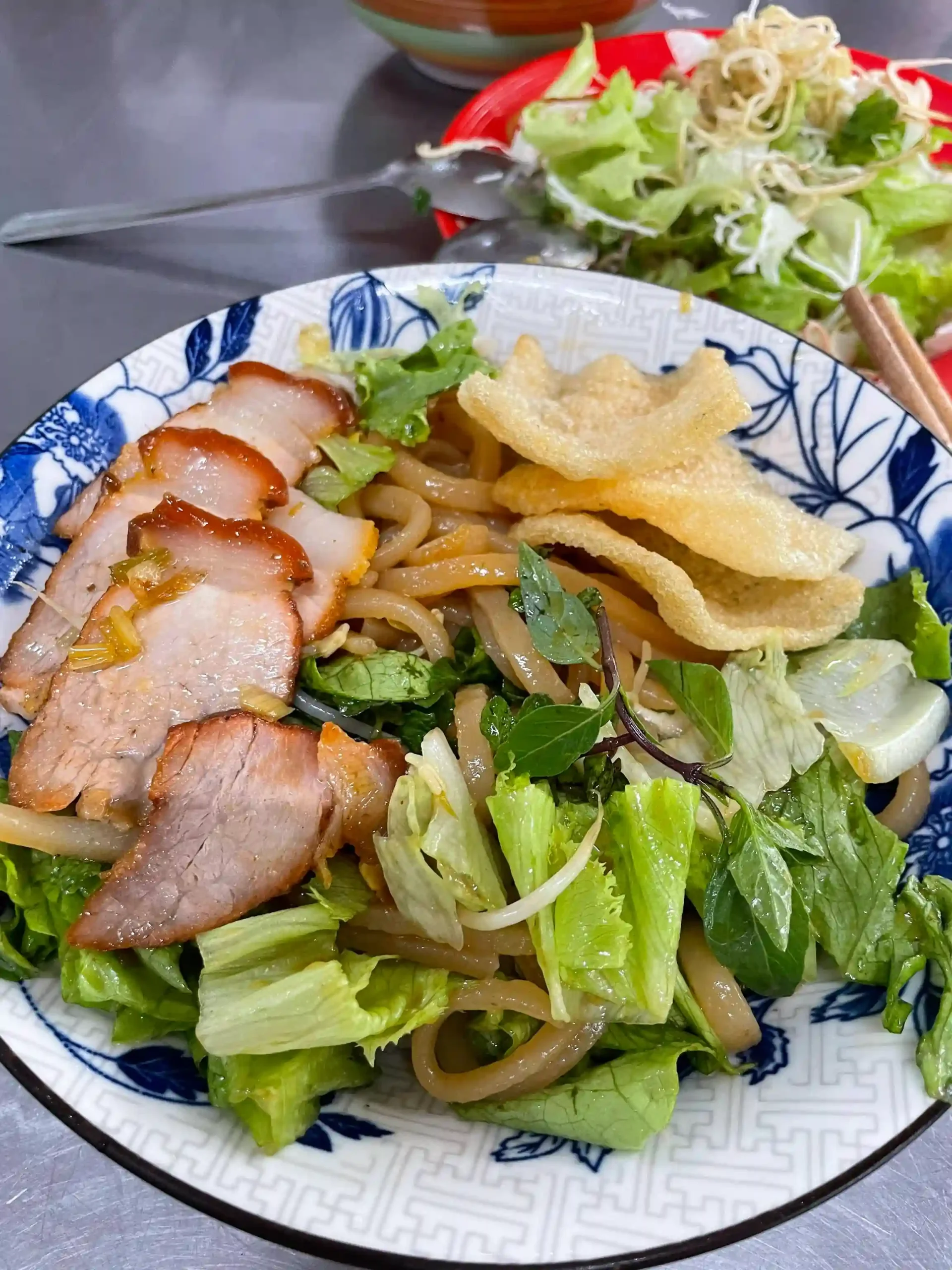
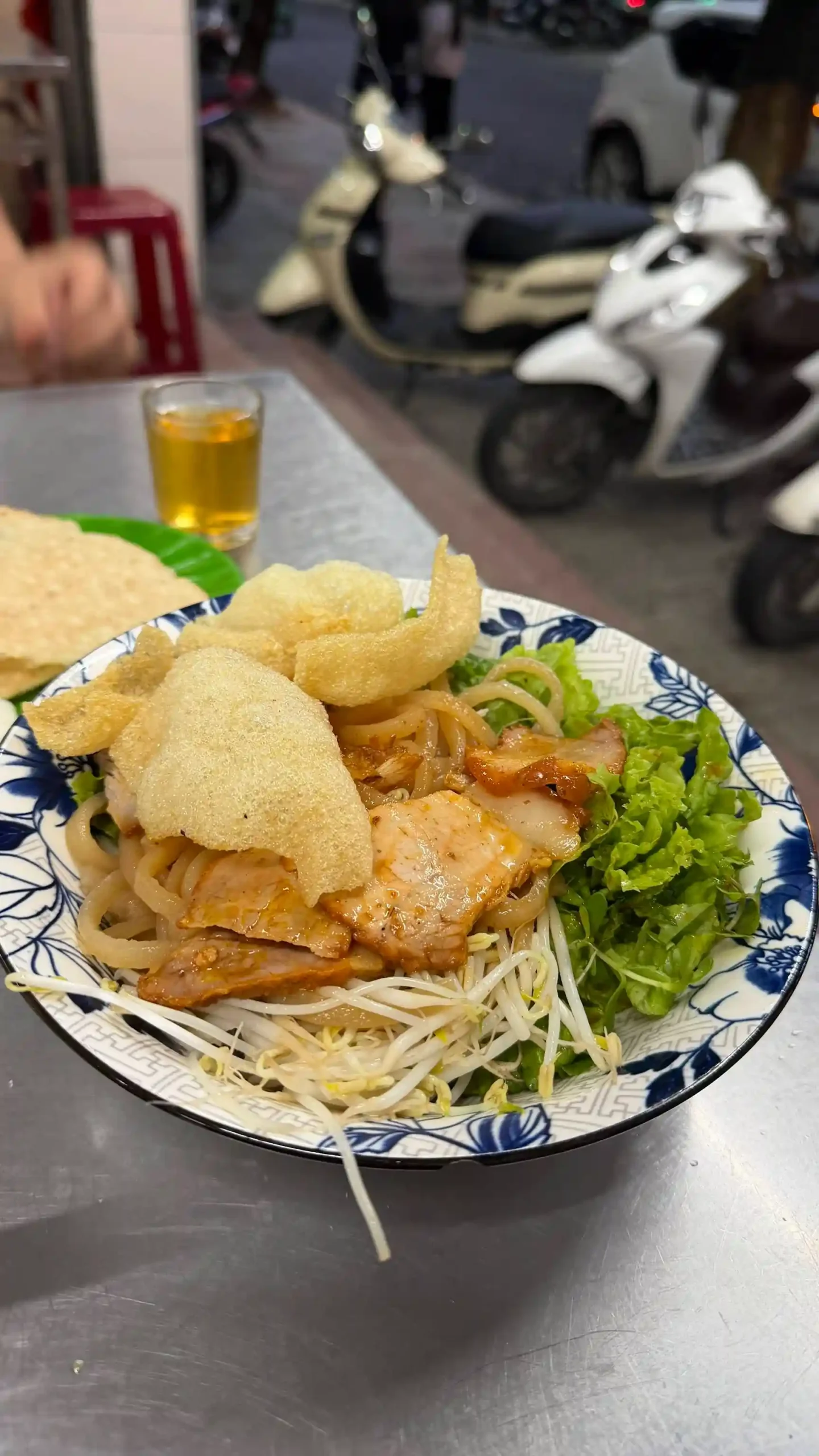
If you eat one thing here, this. It’s thick chewy noodles, slices of pork, herbs, a few crisp squares of fried dough on top, and only a spoonful or two of broth down at the bottom.
People expect a soup and it isn’t one, and I think that’s why some visitors find it underwhelming on the first go.
What makes it Hoi An’s is the noodle. The dough gets made with water from the Bá Lễ well, an old well in the middle of town, and mixed with lye ash from wood off Cham Island.
That combination gives the noodles their colour and that particular chew, and it’s why cao lau made in Da Nang or Hanoi is never quite the same. I’ve had versions elsewhere and they’re fine and they’re not this.
Street price is 20,000 to 40,000 VND. In an old town restaurant with a view of the river you’ll pay four times that for something not four times better.
Where to eat it properly is its own question and I’ll go into it in the best restaurants in Hoi An piece, but as a rule of thumb, the market and the streets north of it beat anywhere with an English sign outside.
2. Banh bao banh vac, the white rose dumplings
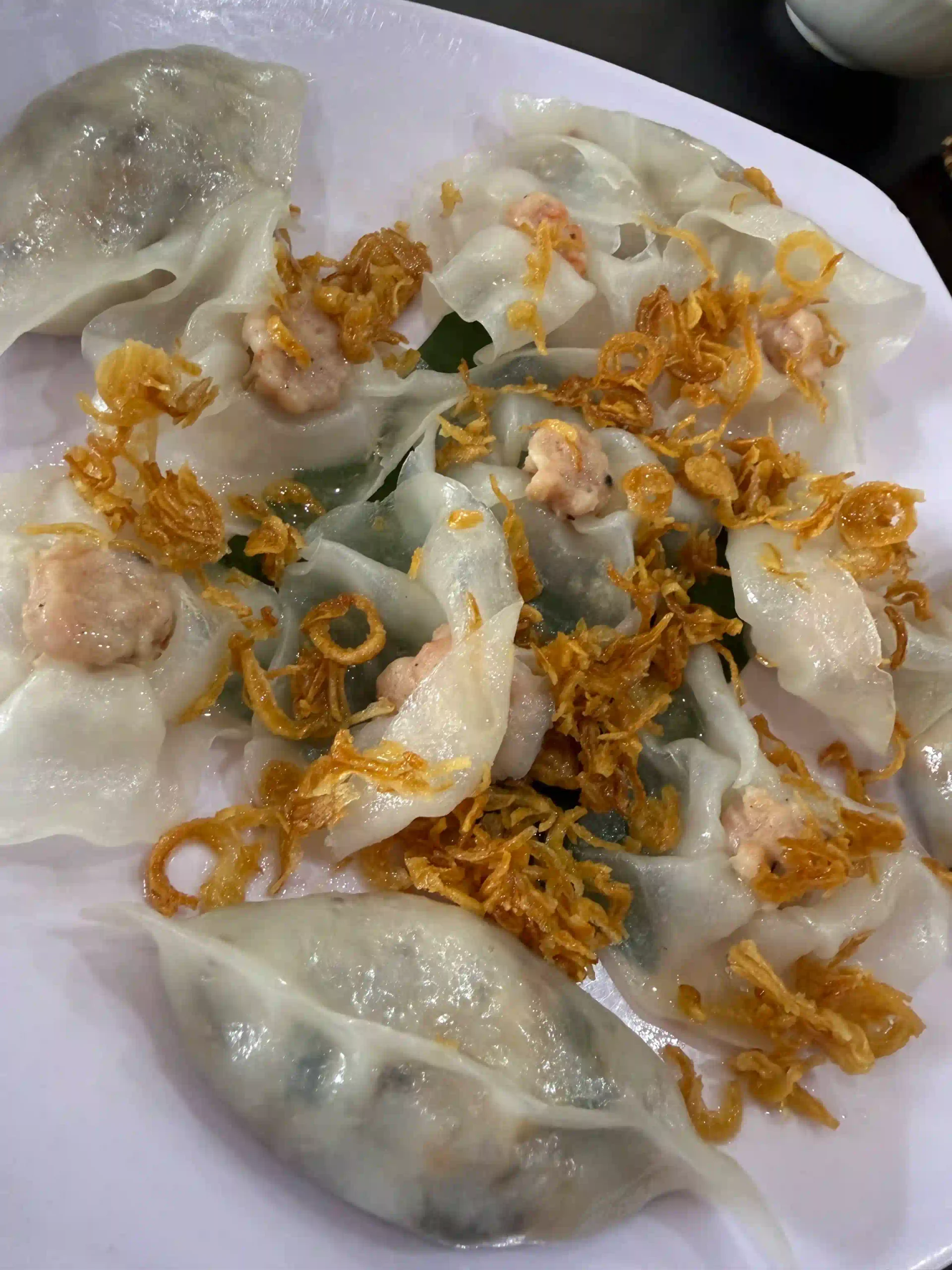
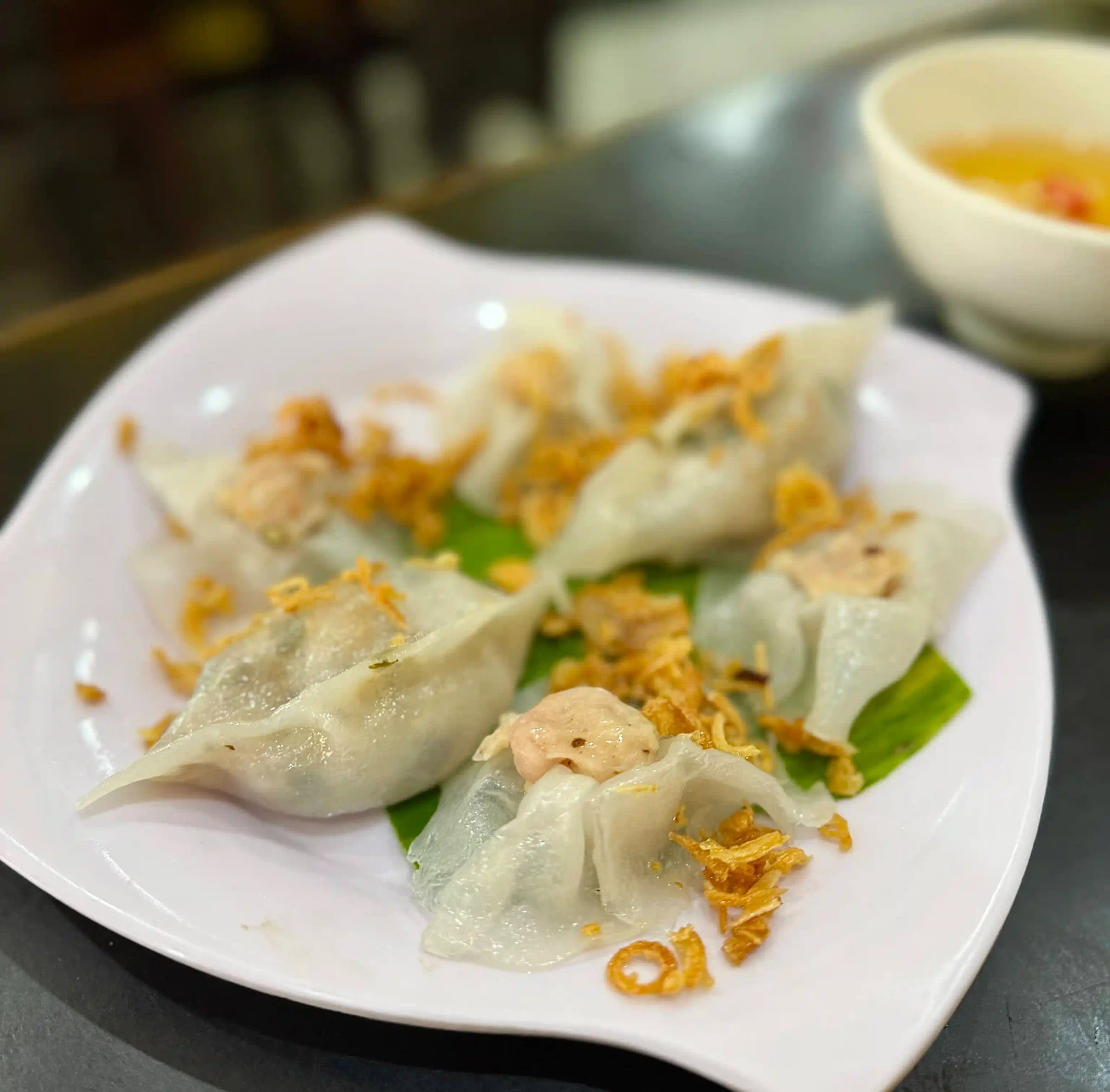
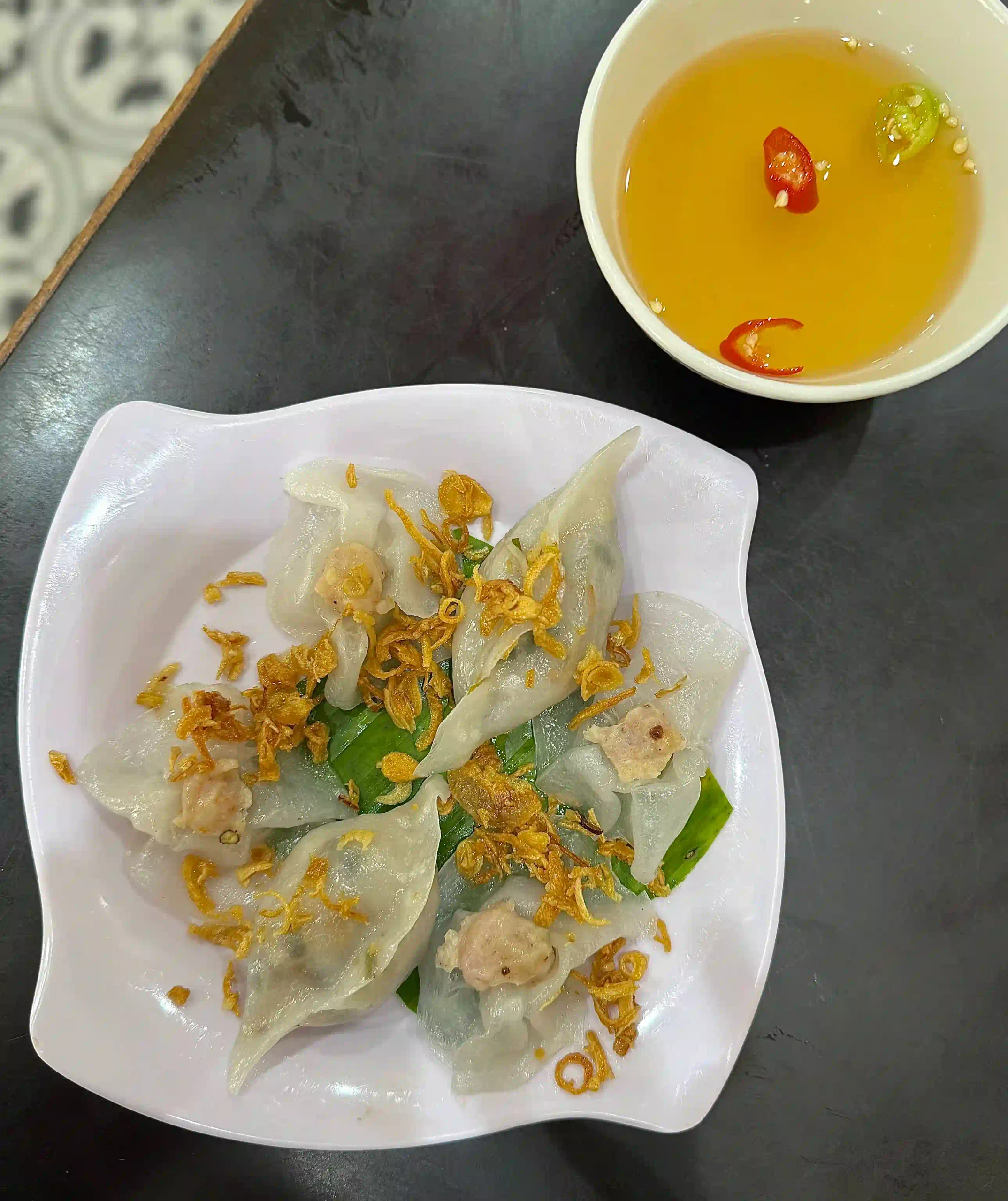
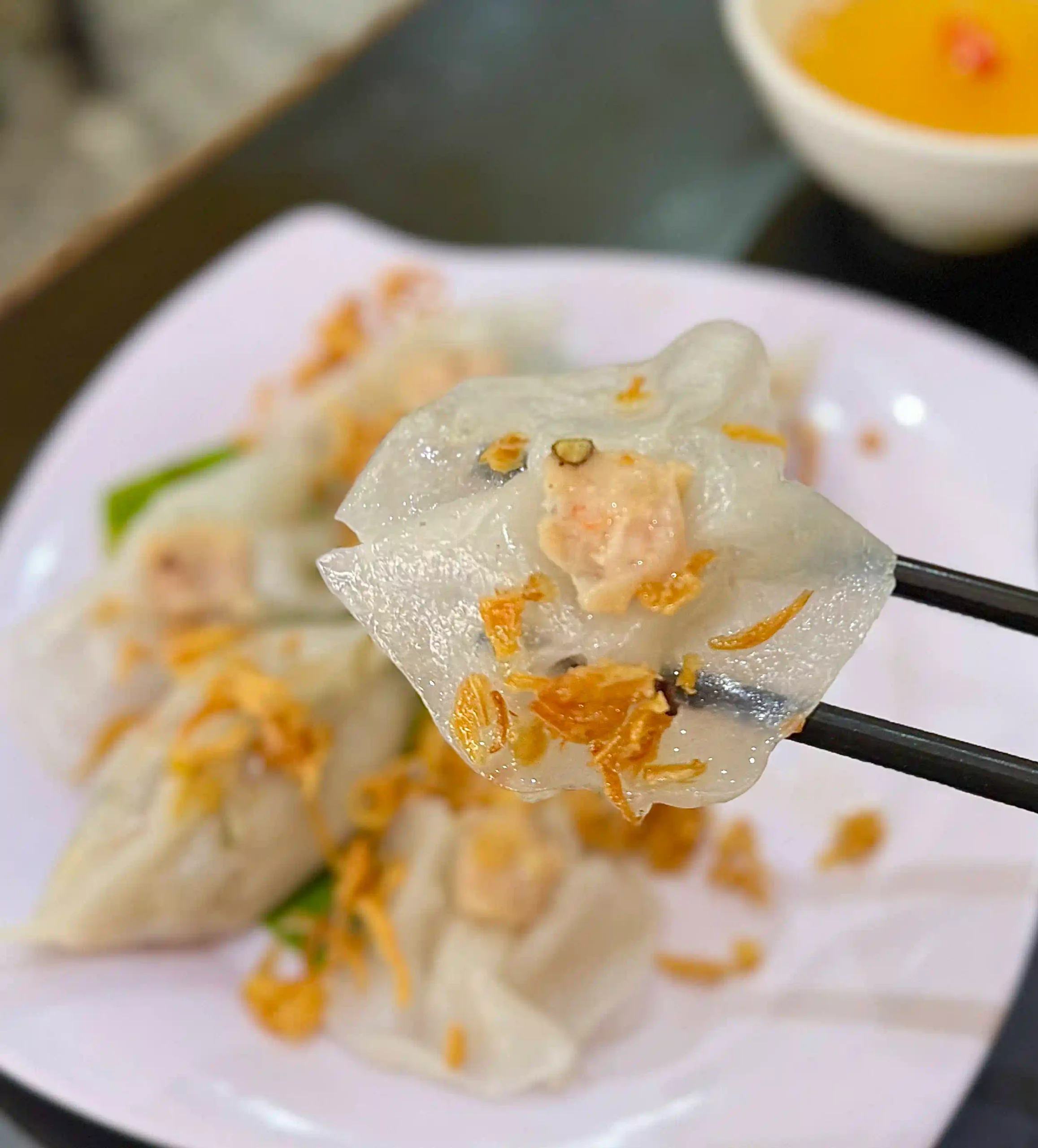
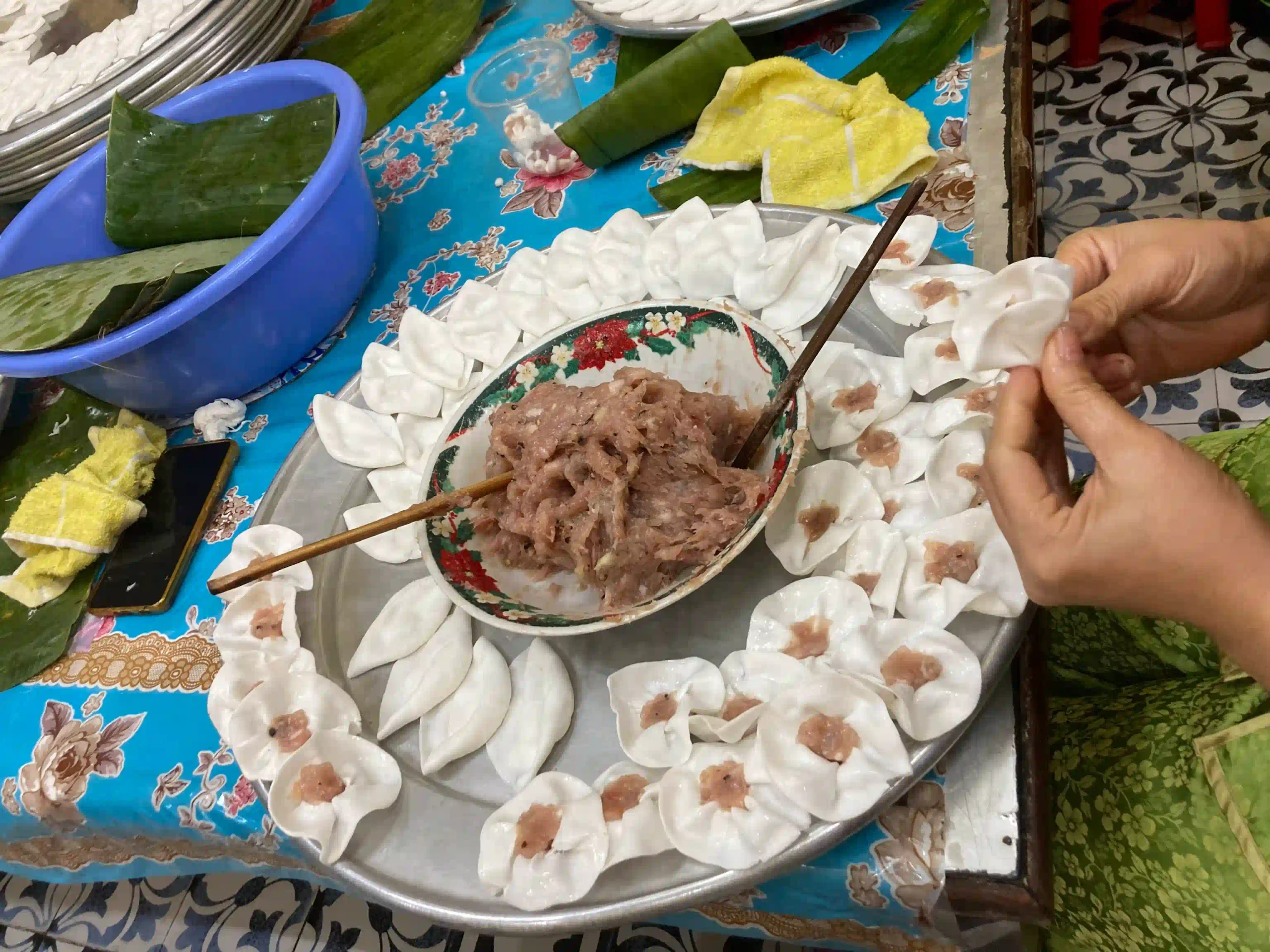
These are the pretty ones you’ll see on every menu, translucent rice wrappers pinched into flower shapes, shrimp in the round ones and pork with wood ear in the folded ones, fried shallots over the top and a shallow dish of nuoc mam made with the shrimp water.
Here’s the part I love. Almost every restaurant in Hoi An that serves these is buying them from the same family workshop, which has held the recipe for generations and grinds the rice with Bá Lễ well water like the cao lau. So when you compare two restaurants’ white roses you’re mostly comparing plates, not dumplings.
The English name came from a tourist in the early nineties who couldn’t pronounce the Vietnamese and a café owner who improvised “white rose” on the spot. It stuck, and now the Vietnamese menus use it too.
Expect 50,000 to 100,000 VND a plate depending on where you sit. It’s one of the few dishes here where I don’t mind the tourist price, because you can’t get it anywhere else.
3. Hoanh thanh, the Hoi An wonton
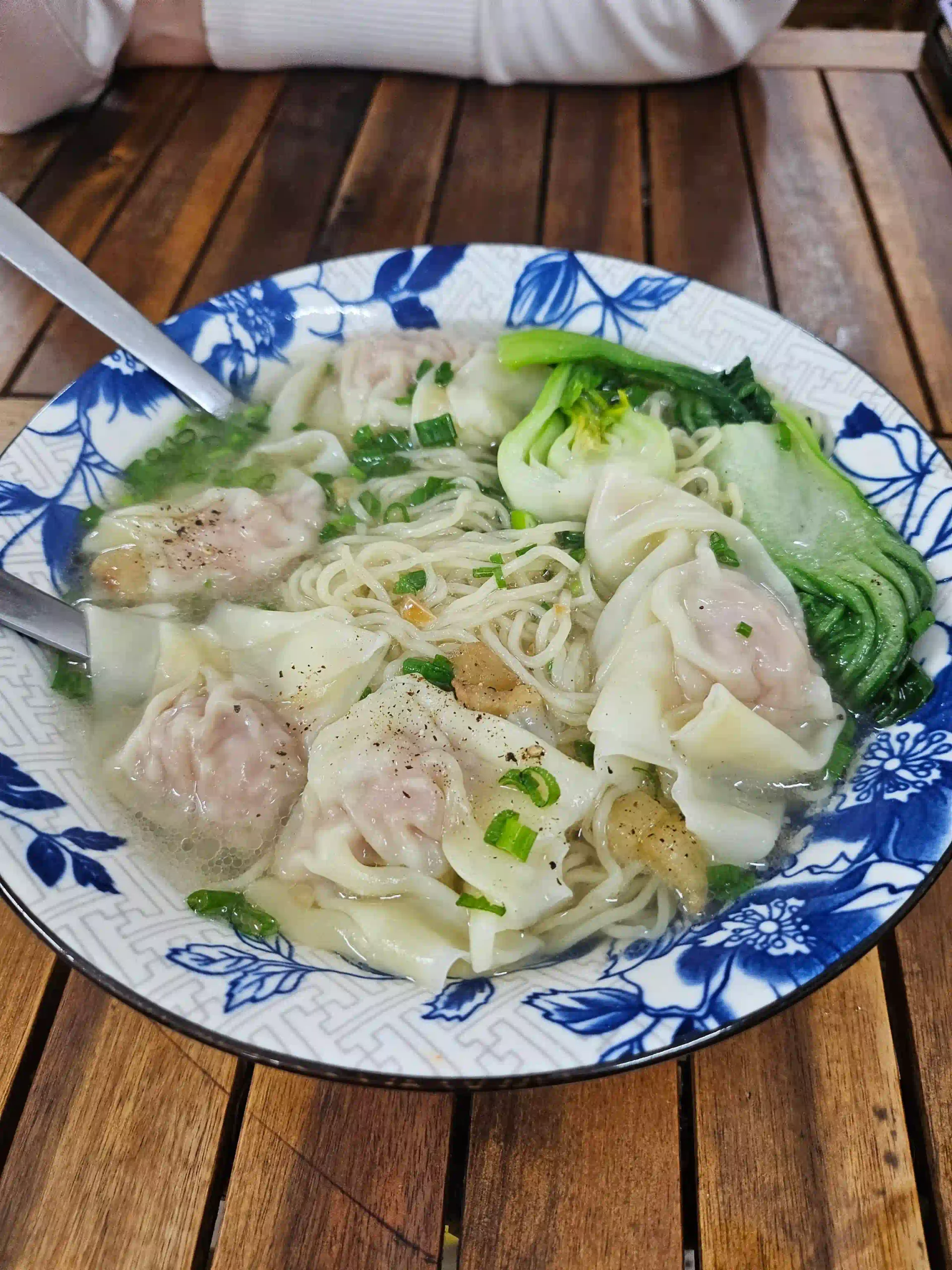
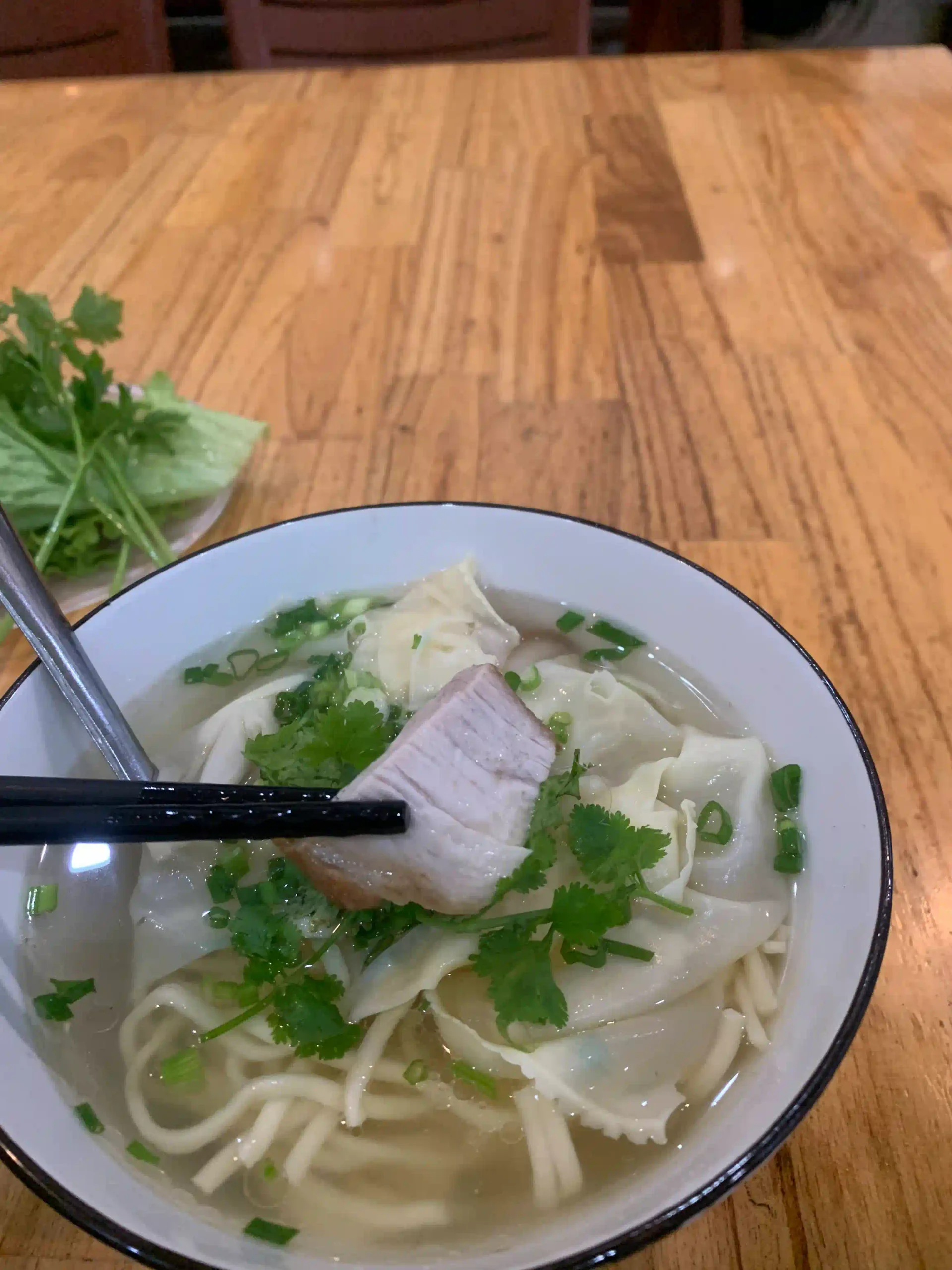
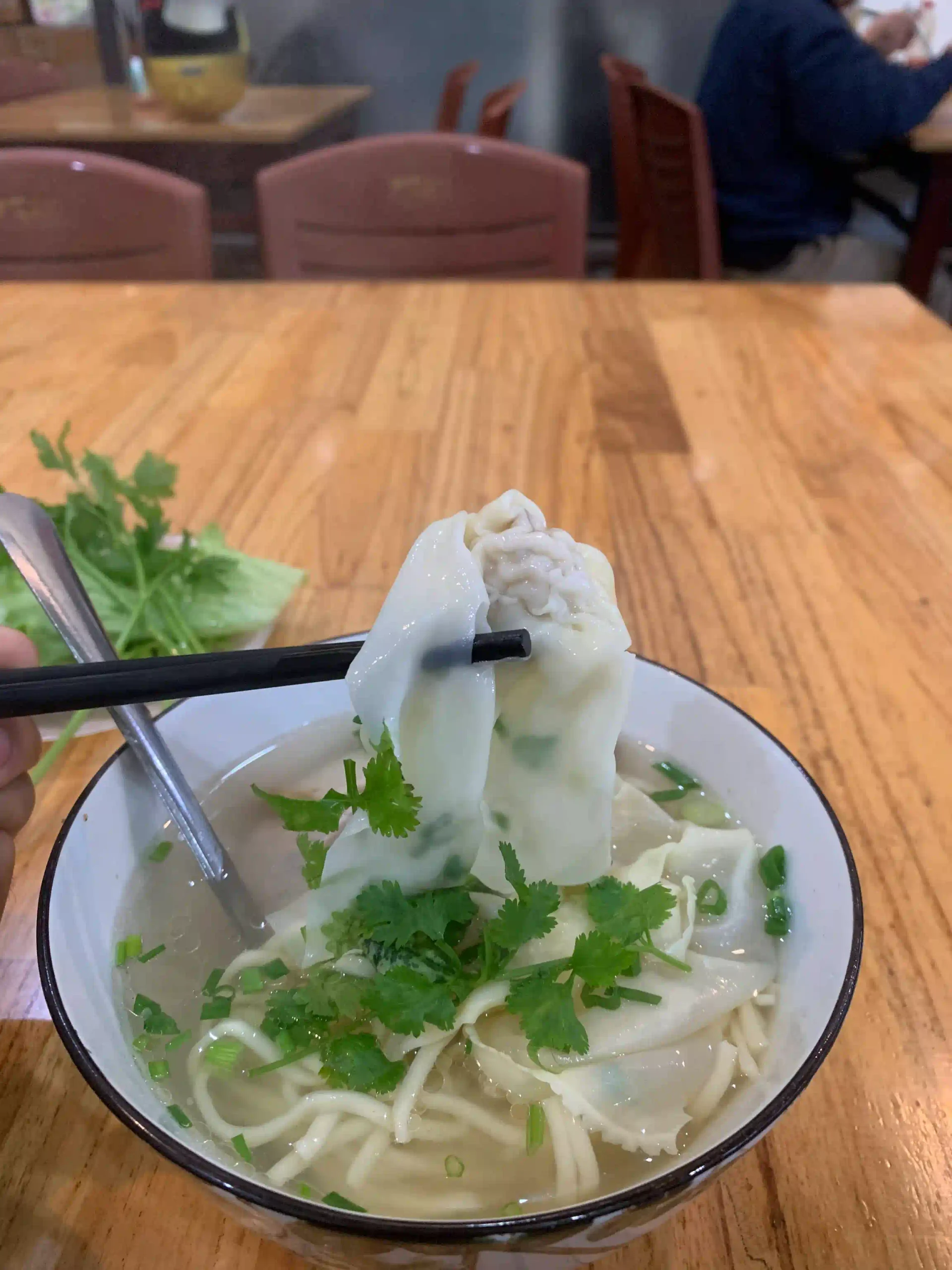
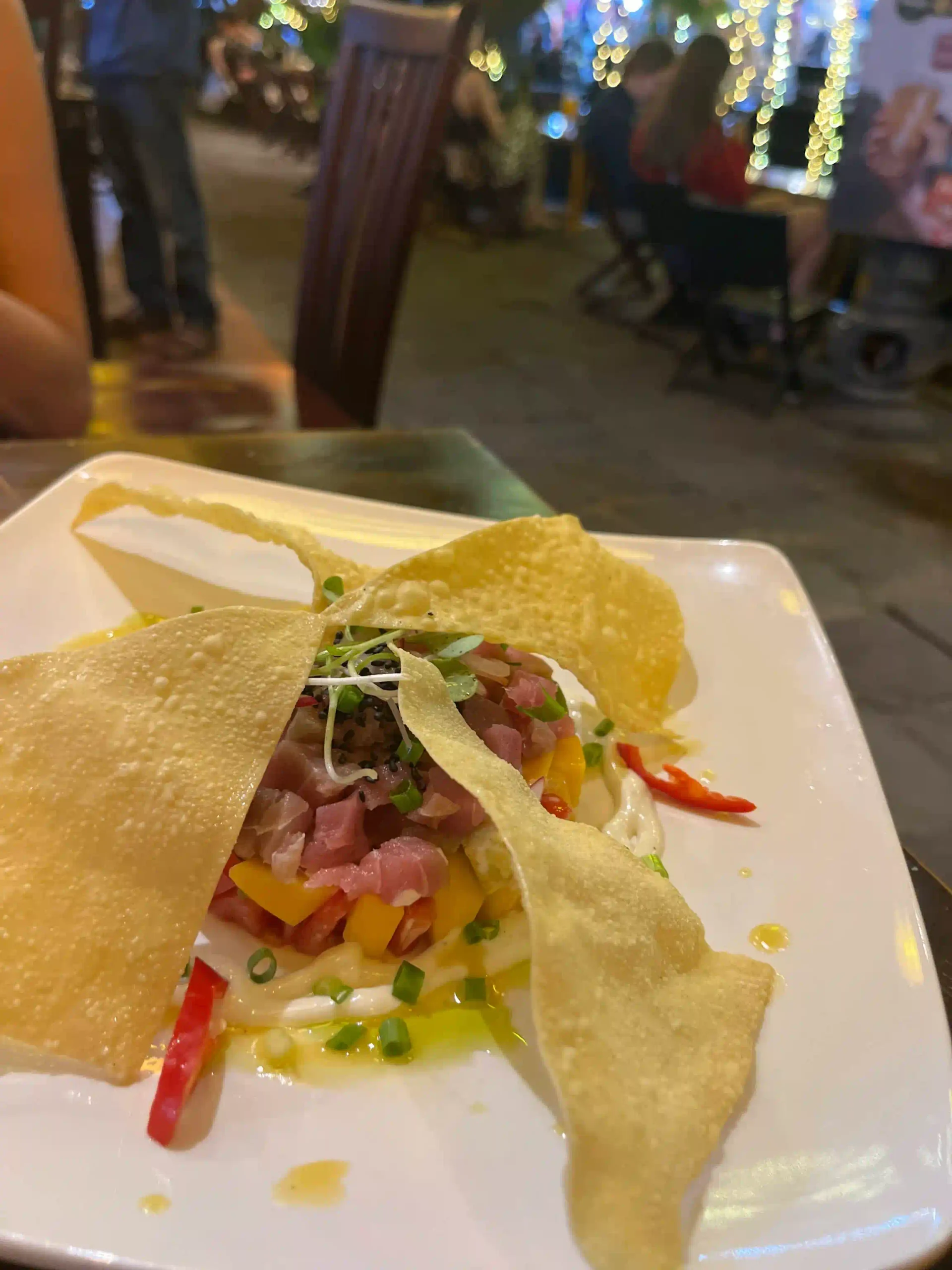
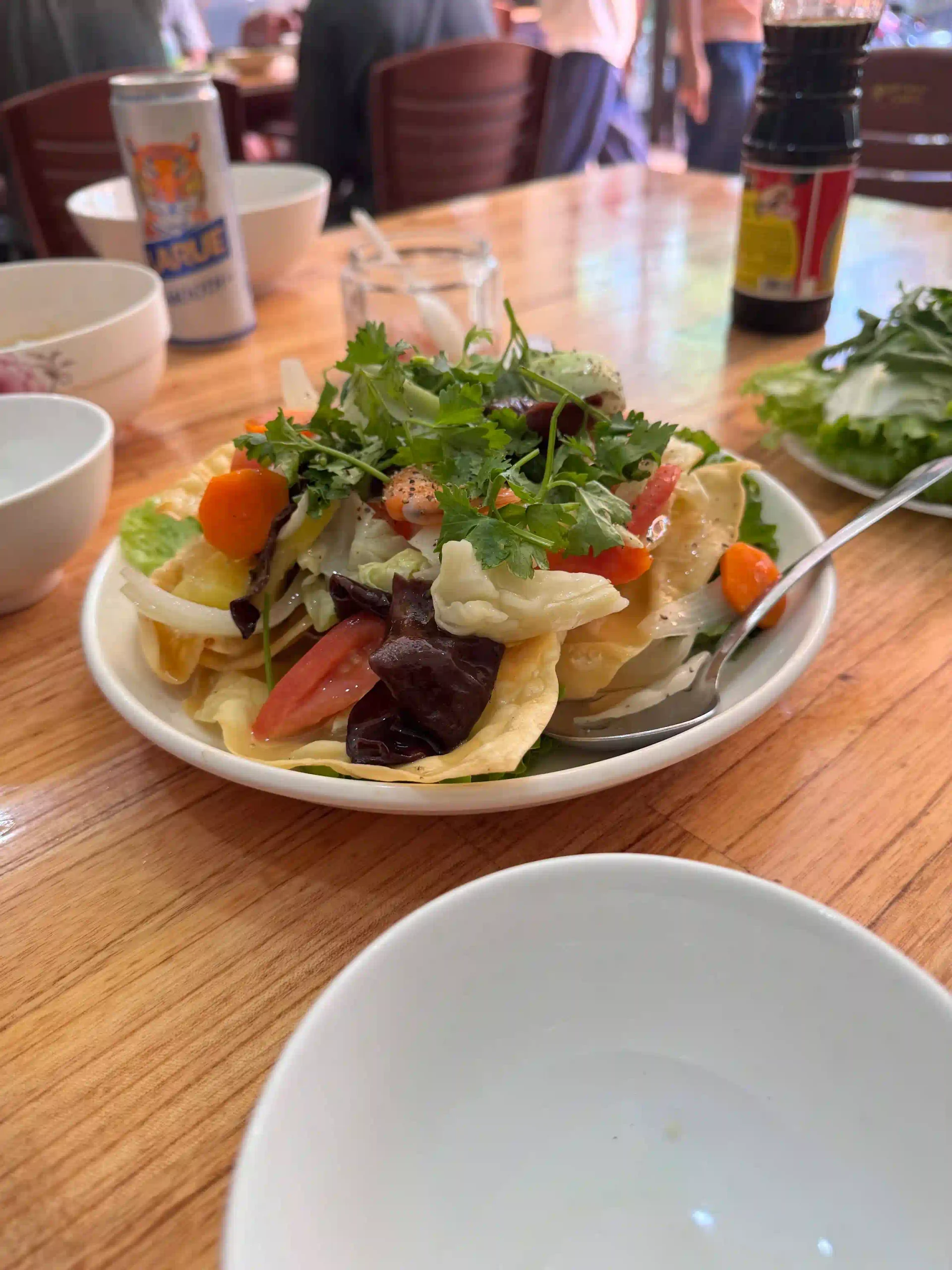
Wontons came in with Chinese traders and then Hoi An did something odd with them.
The fried version is a crisp flat pastry with a pile of tomato, prawn and pork on top, more like a small pizza than a dumpling. The steamed and soup versions are closer to what you’d recognise.
Order the fried ones. They’re the ones that don’t exist anywhere else in this form and they go well with a beer.
Traditional Hoi An Food That Exists Elsewhere, Done Differently Here
4. Com ga Hoi An
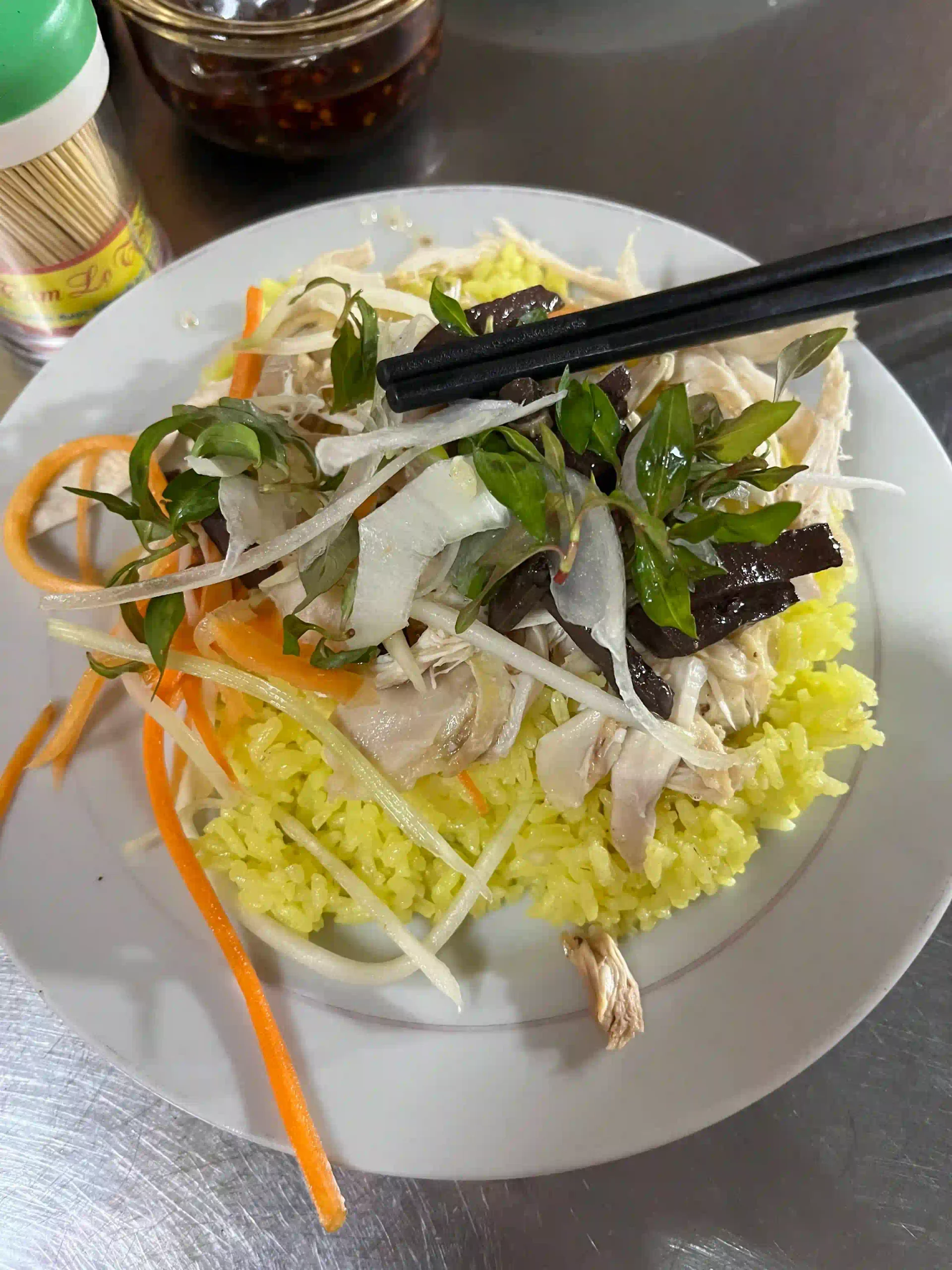
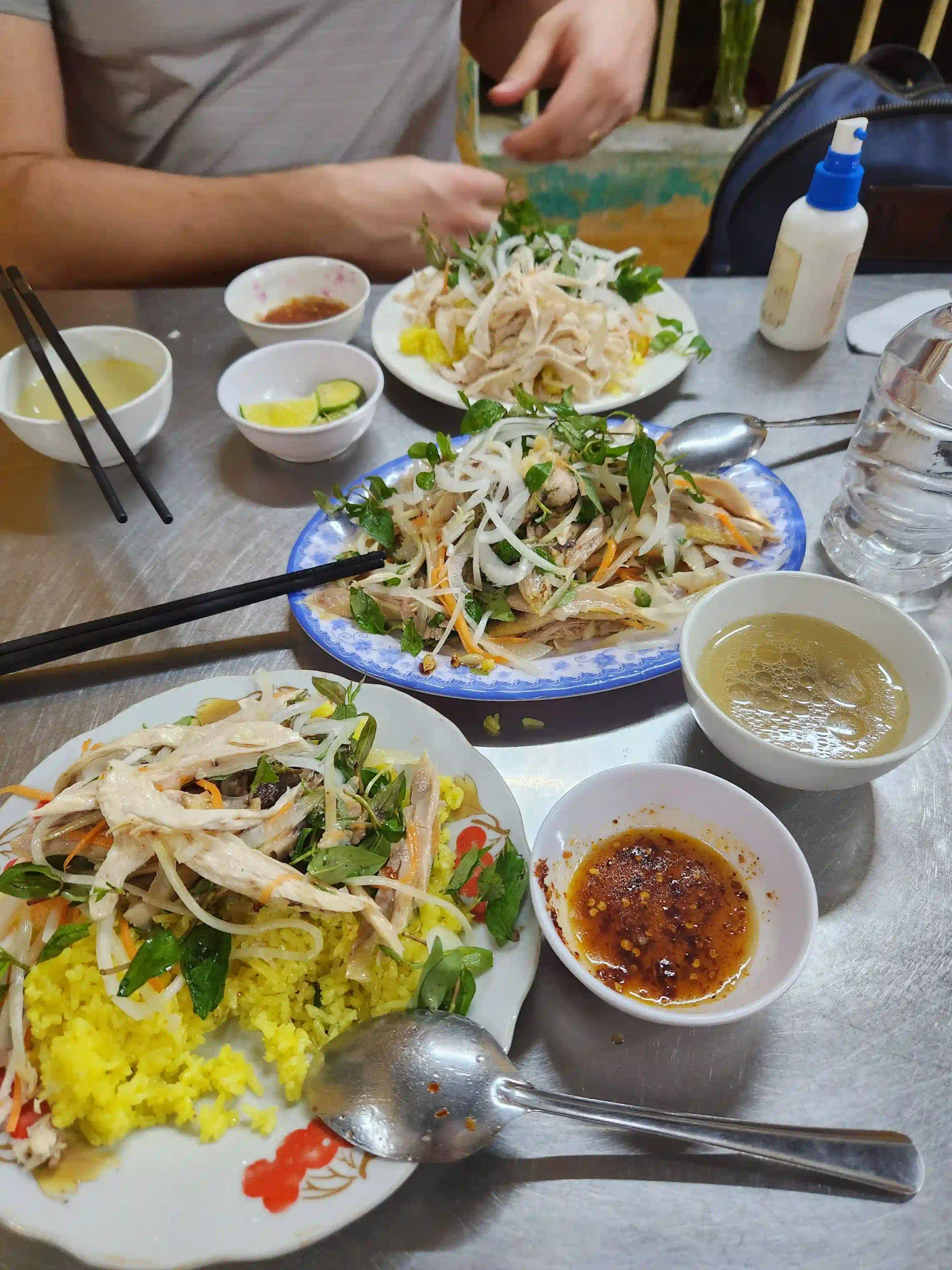
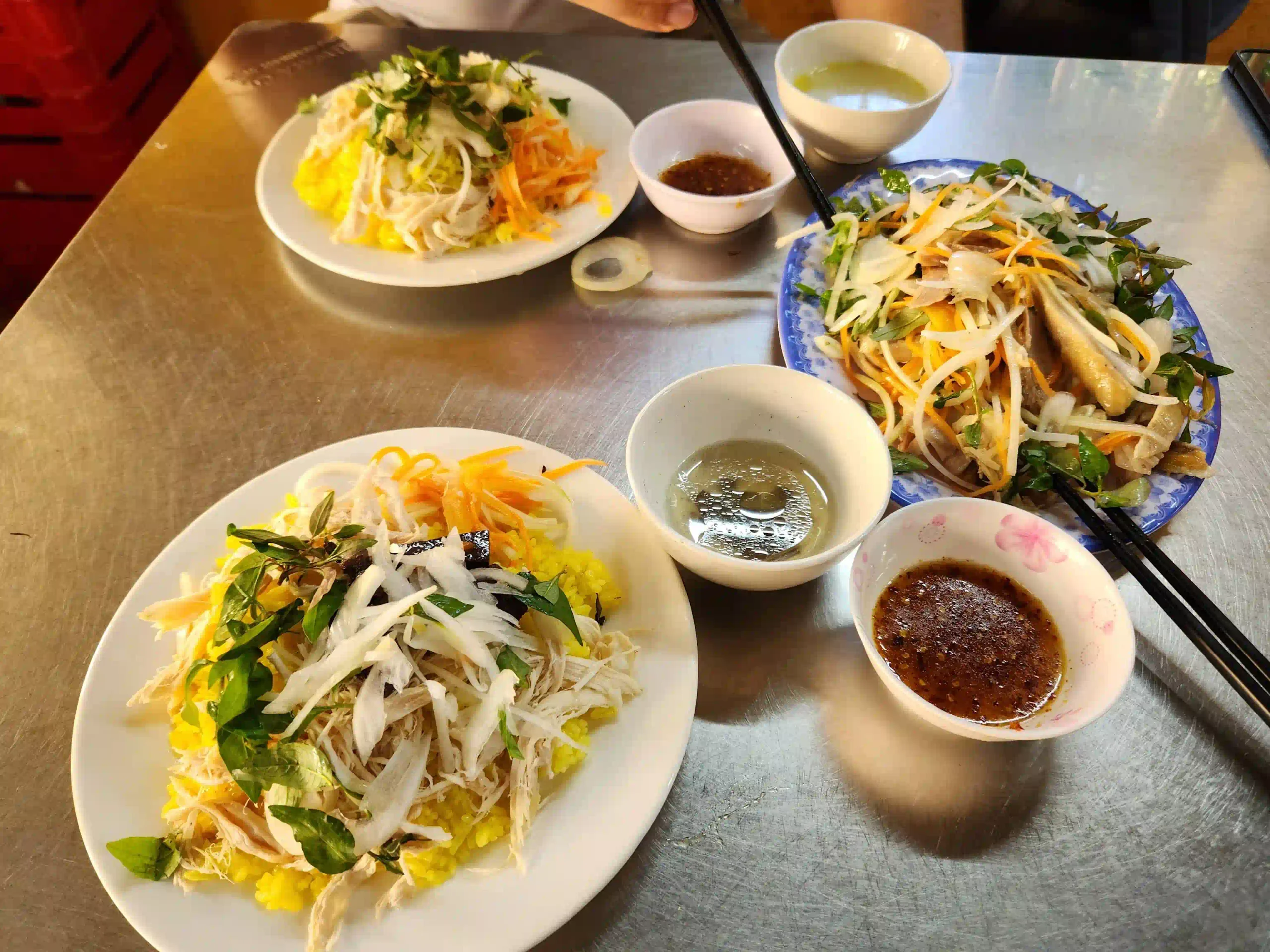
Chicken rice, and every province in Vietnam has a version, but the Hoi An one is worth eating on its own terms.
Rice cooked in chicken stock until it’s yellow with turmeric, shredded poached chicken tossed with onion and Vietnamese coriander on top, a bowl of broth on the side and usually a bit of pickled papaya.
It’s a lunch dish here, not a dinner one. 40,000 to 70,000 VND at a proper com ga place.
The thing to know is that the good ones are family operations that have been doing exactly this for decades and they sell out. If you turn up at two and there’s nothing left, that’s the correct outcome and you should come back earlier tomorrow.
5. Banh mi
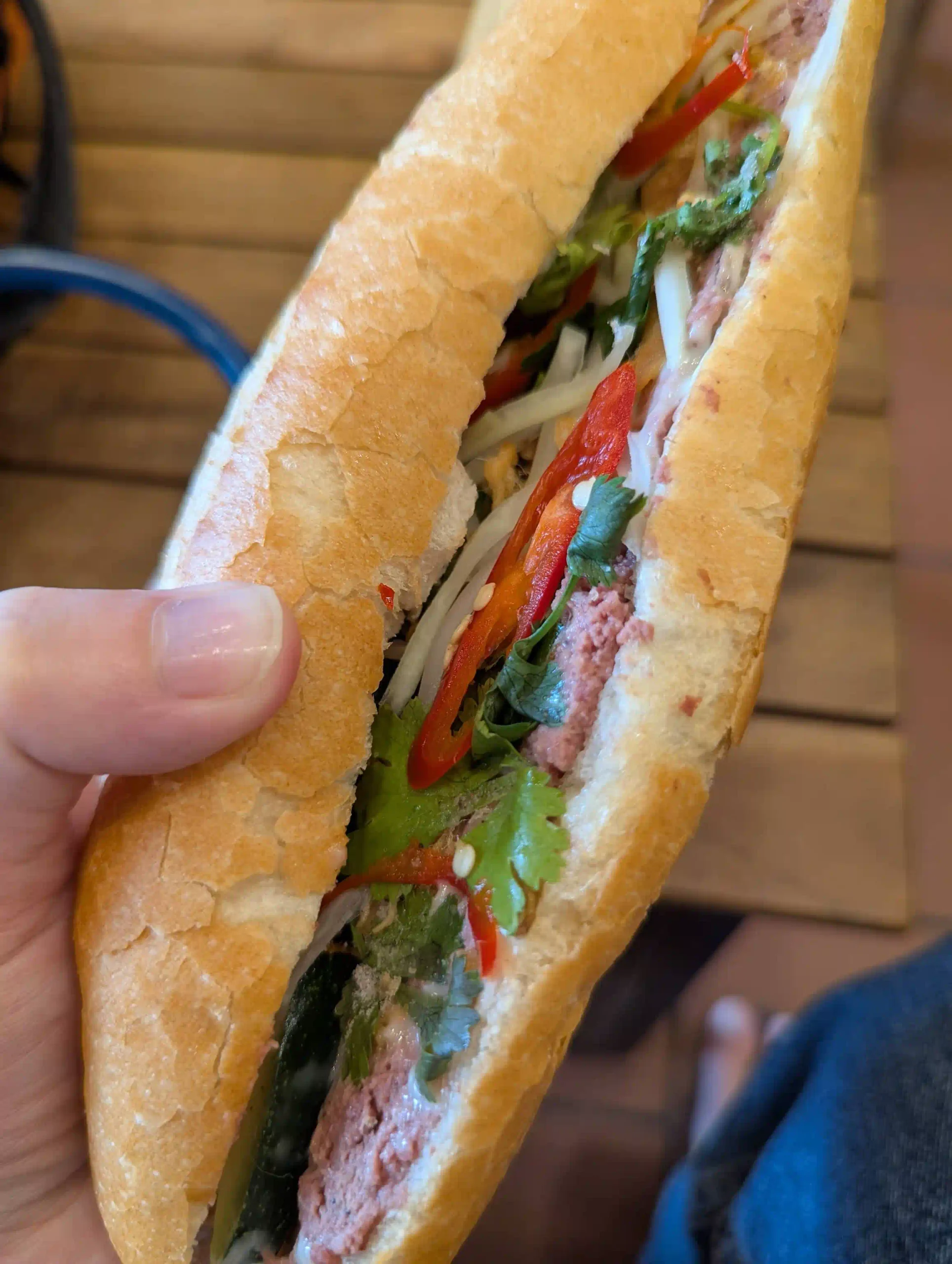
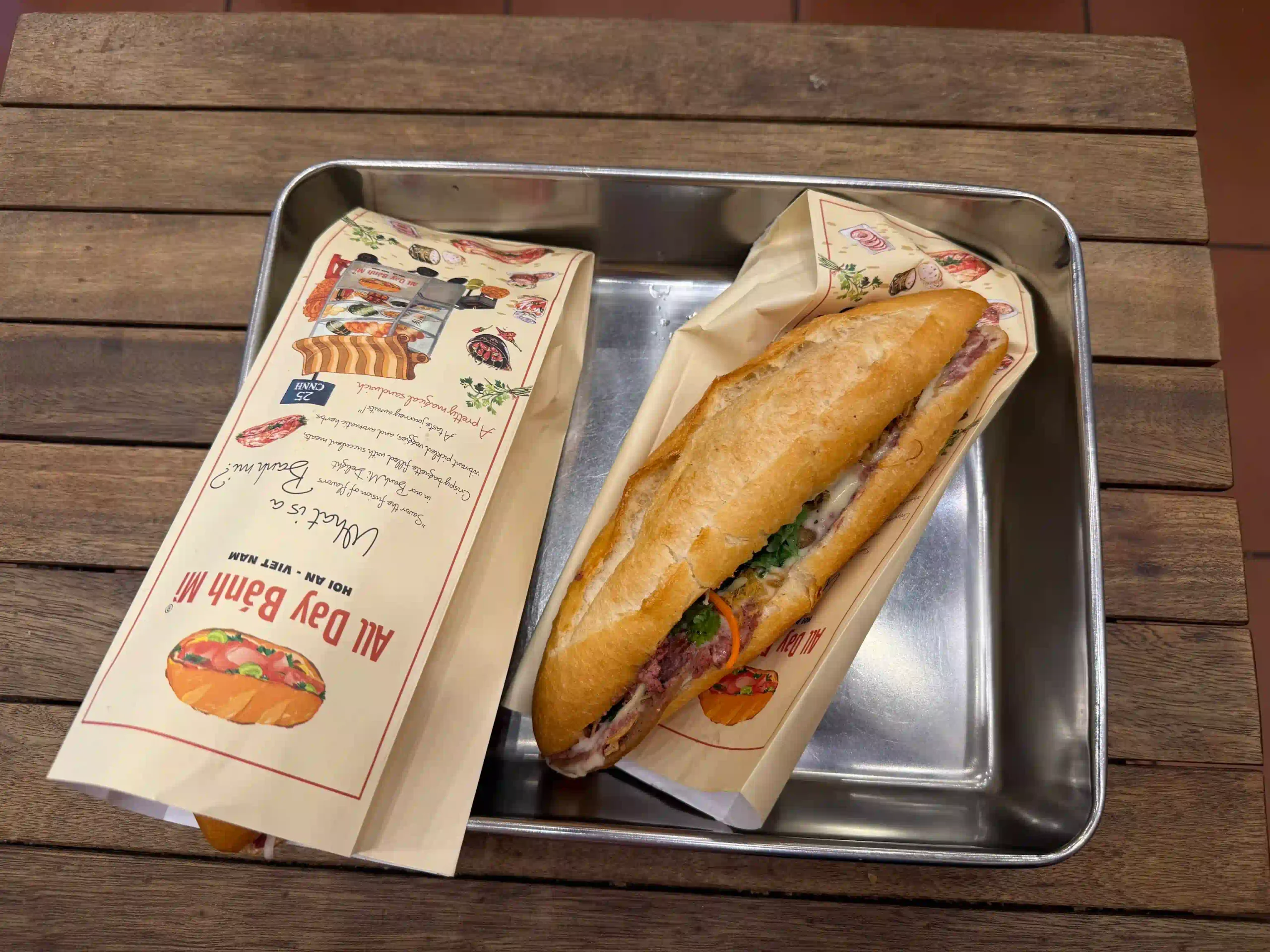
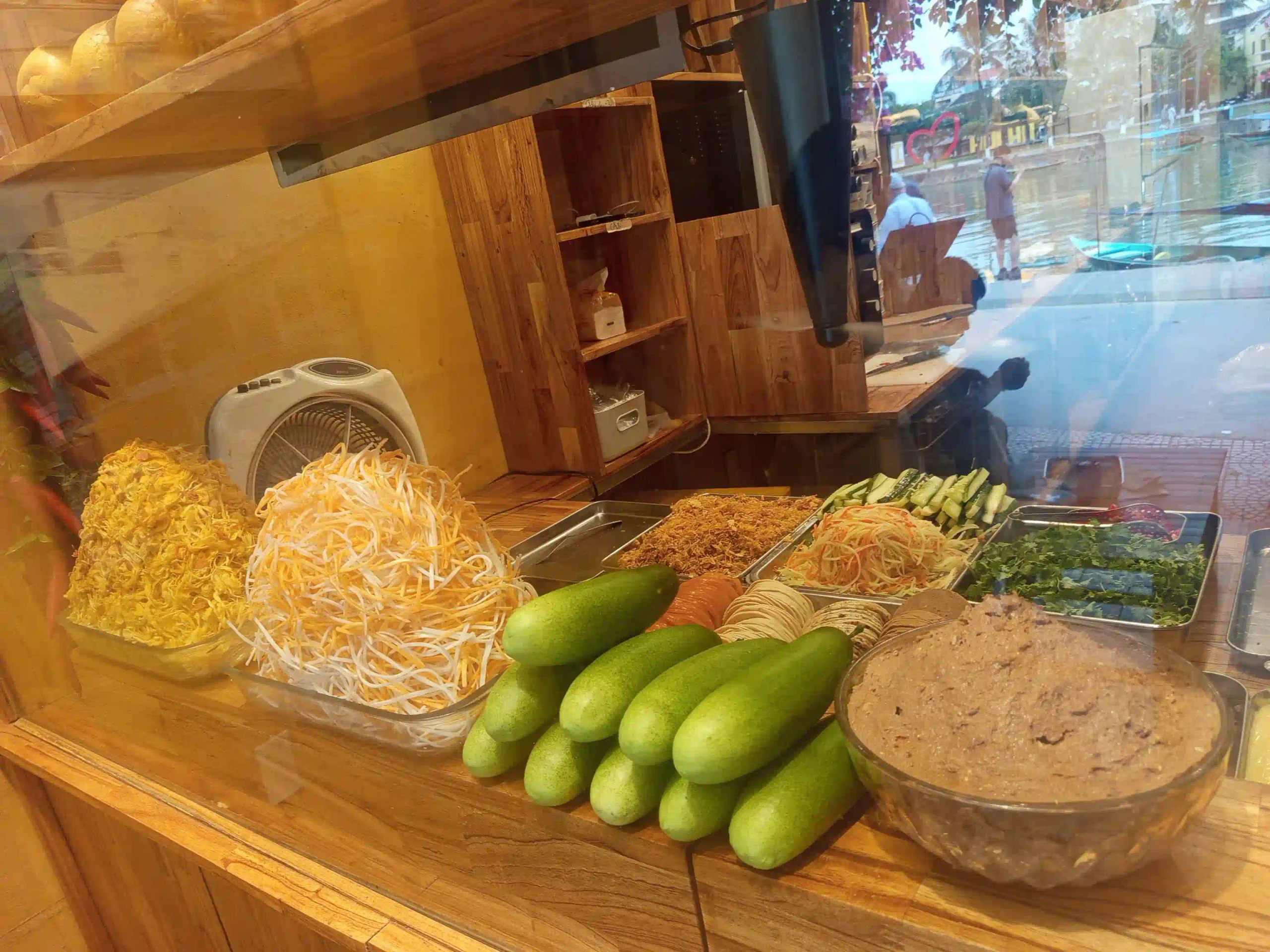
Banh mi is national, obviously, but Hoi An’s take is its own thing, and if you’ve eaten banh mi in Saigon you’ll notice immediately.
There’s more pate, there’s a house sauce that varies by shop and gets guarded fairly seriously, and the whole thing is wetter and heavier than the northern version.
Two shops have global reputations here and there’s a lively local argument about which is better, plus a general view among people I know in town that a couple of unfamous places are better than both.
That argument is a whole piece on its own and it’s in where to eat banh mi in Hoi An.
20,000 to 35,000 VND. Breakfast, or the thing you eat at eleven at night on the way home.
The Quang Nam Dishes: Regional, Not Strictly Hoi An’s
6. Mi quang
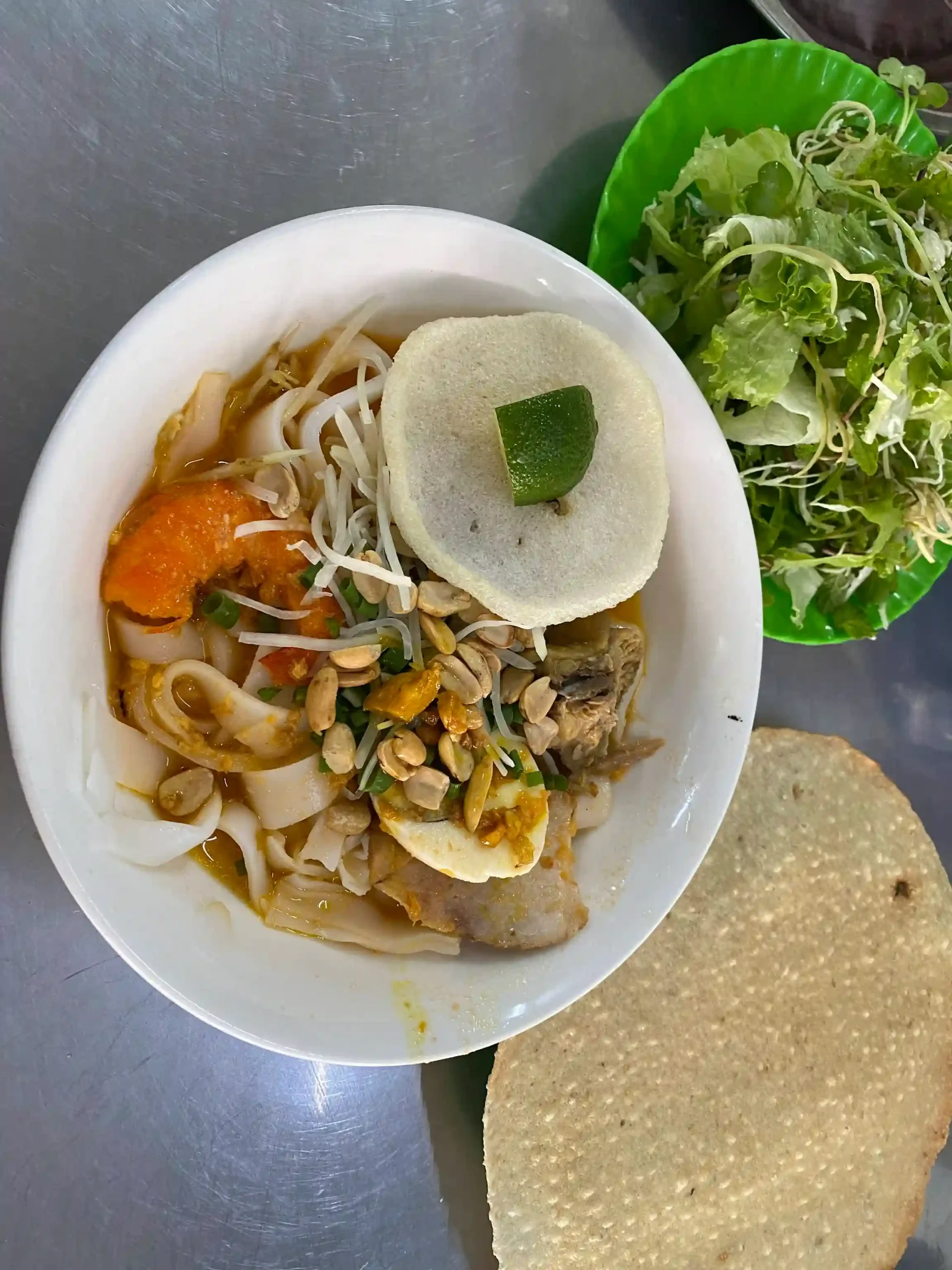
The province’s dish and the one you’ll see locals eating most. Wide turmeric-yellow rice noodles, a very small amount of intensely flavoured broth, pork and prawn or sometimes chicken, peanuts, herbs, and a sesame rice cracker you snap over the top and eat with.
The little broth thing throws northerners. It threw me. In Hanoi a noodle dish is a bowl of soup with things in it, and mi quang is basically a salad that happens to be wet at the bottom. Once I stopped expecting pho I liked it a lot.
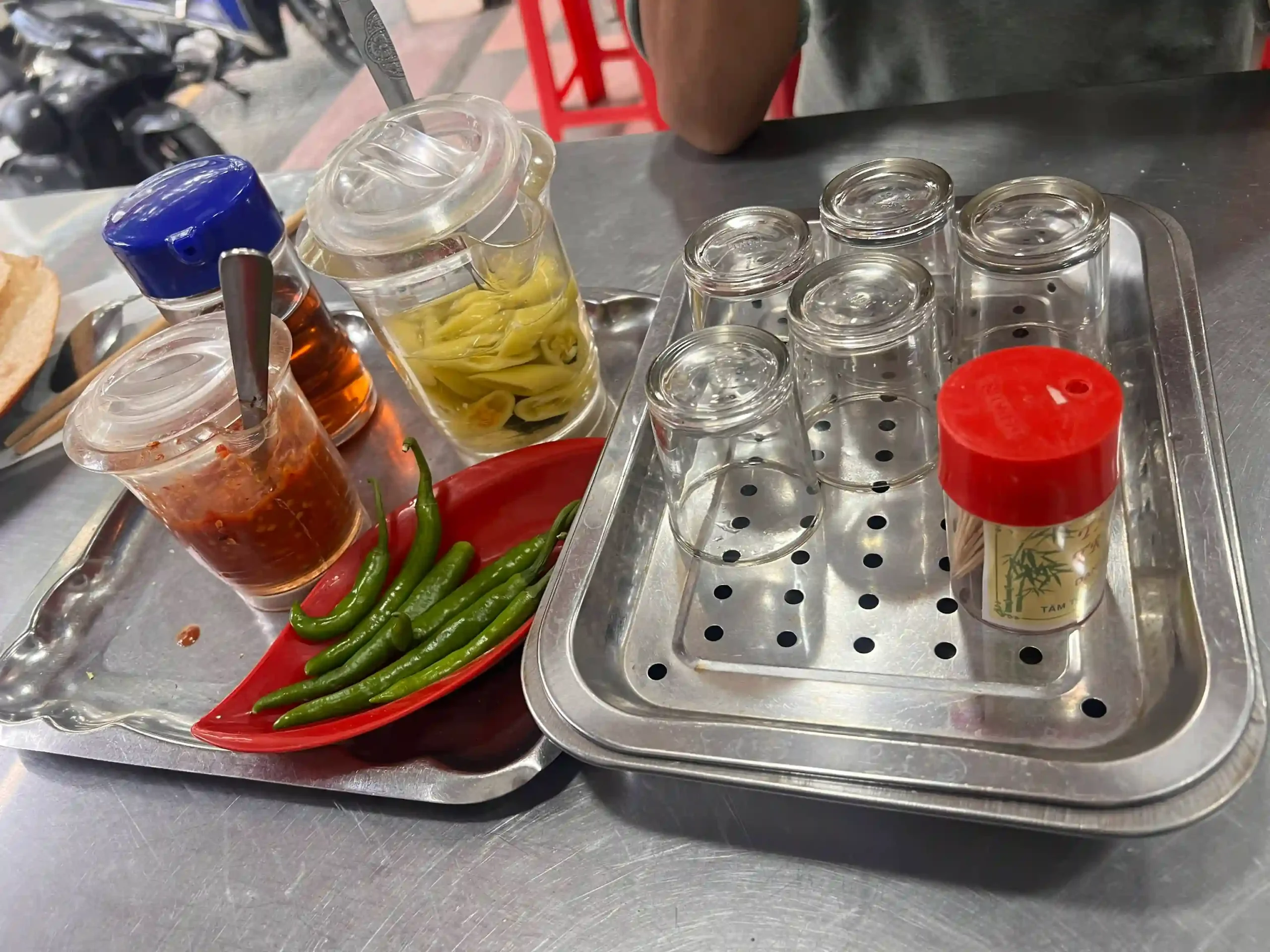
25,000 to 50,000 VND. If you eat it anywhere, eat it in a place with plastic stools.
7. Banh dap and hen xao
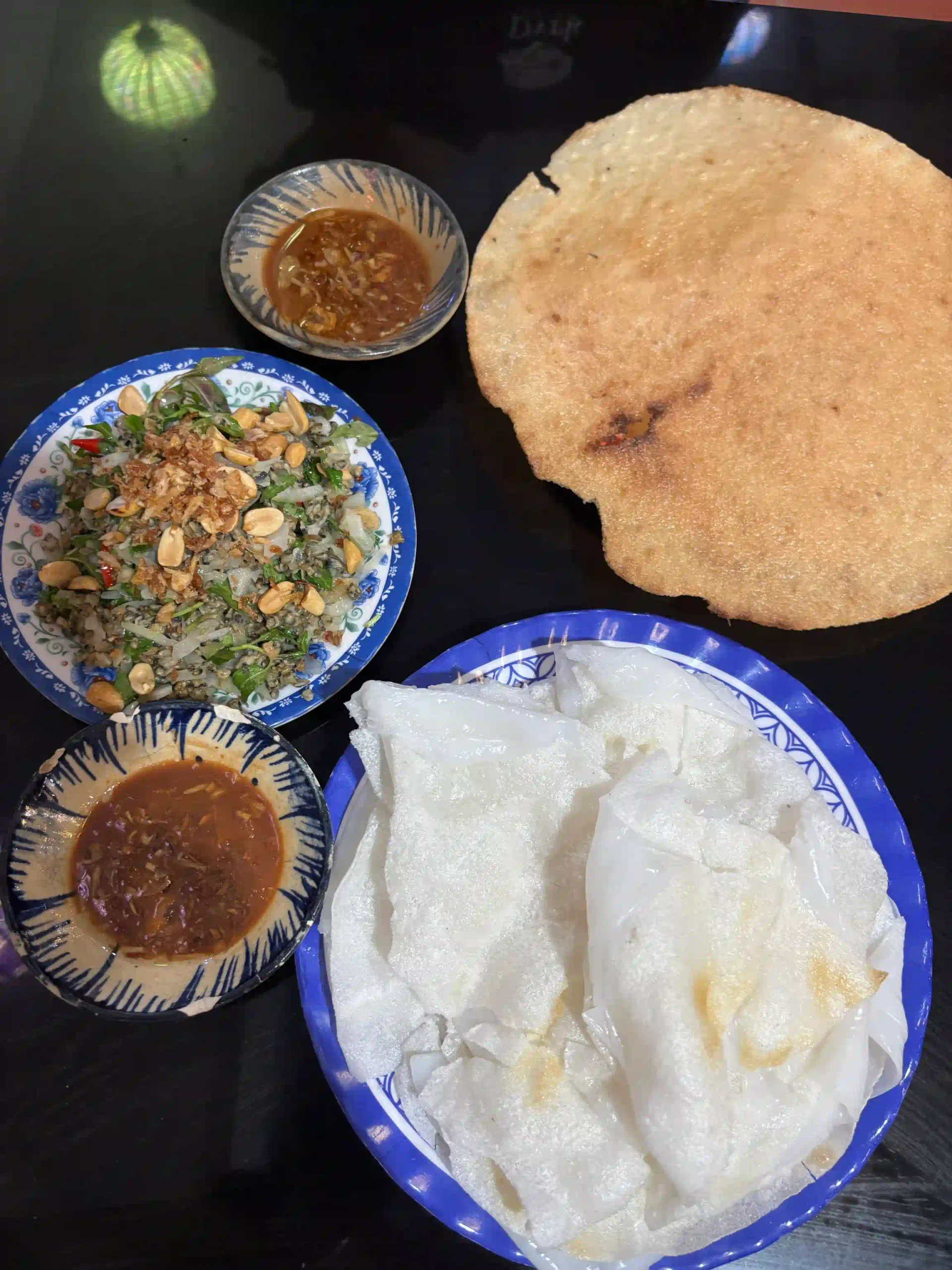
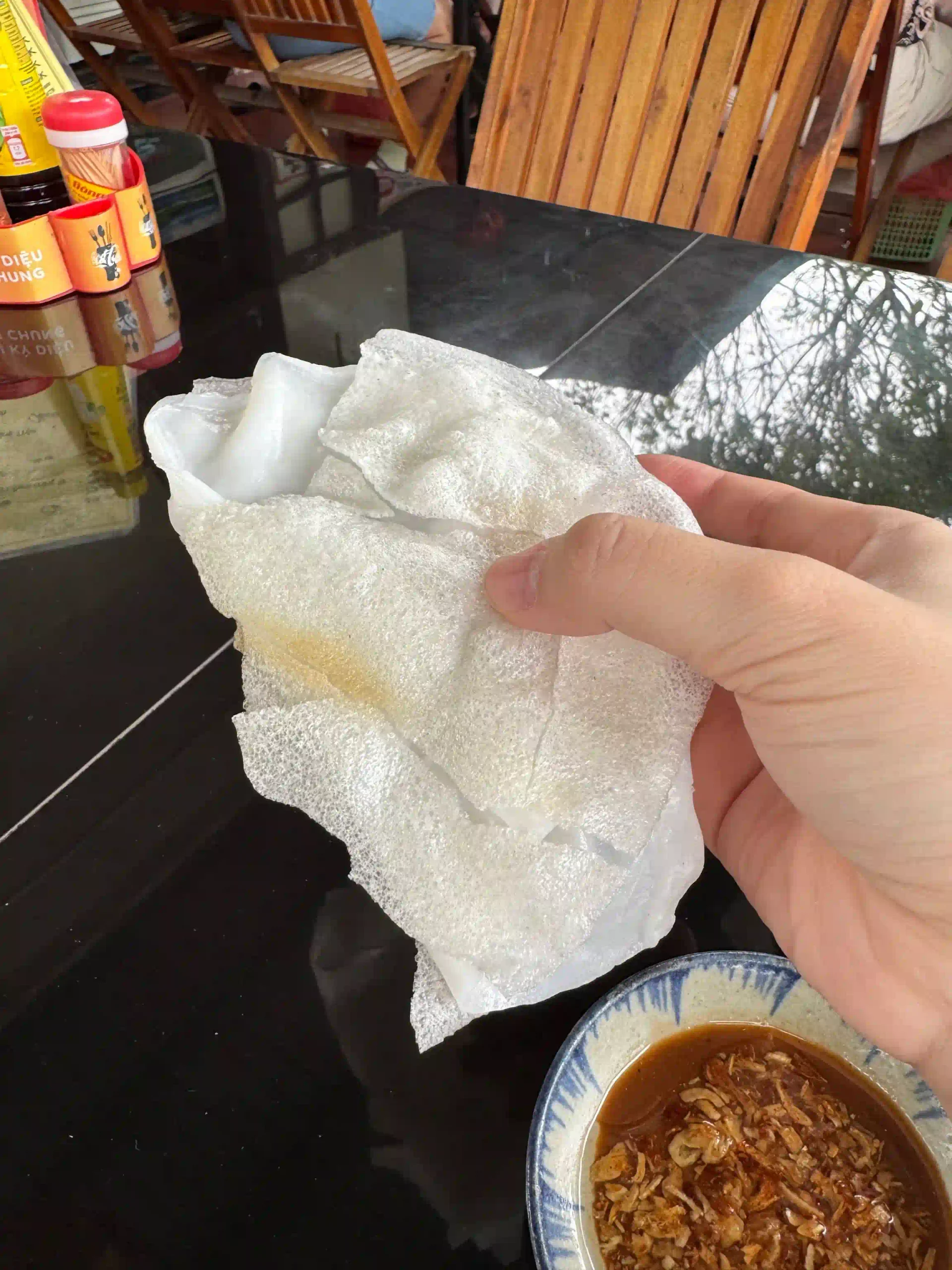
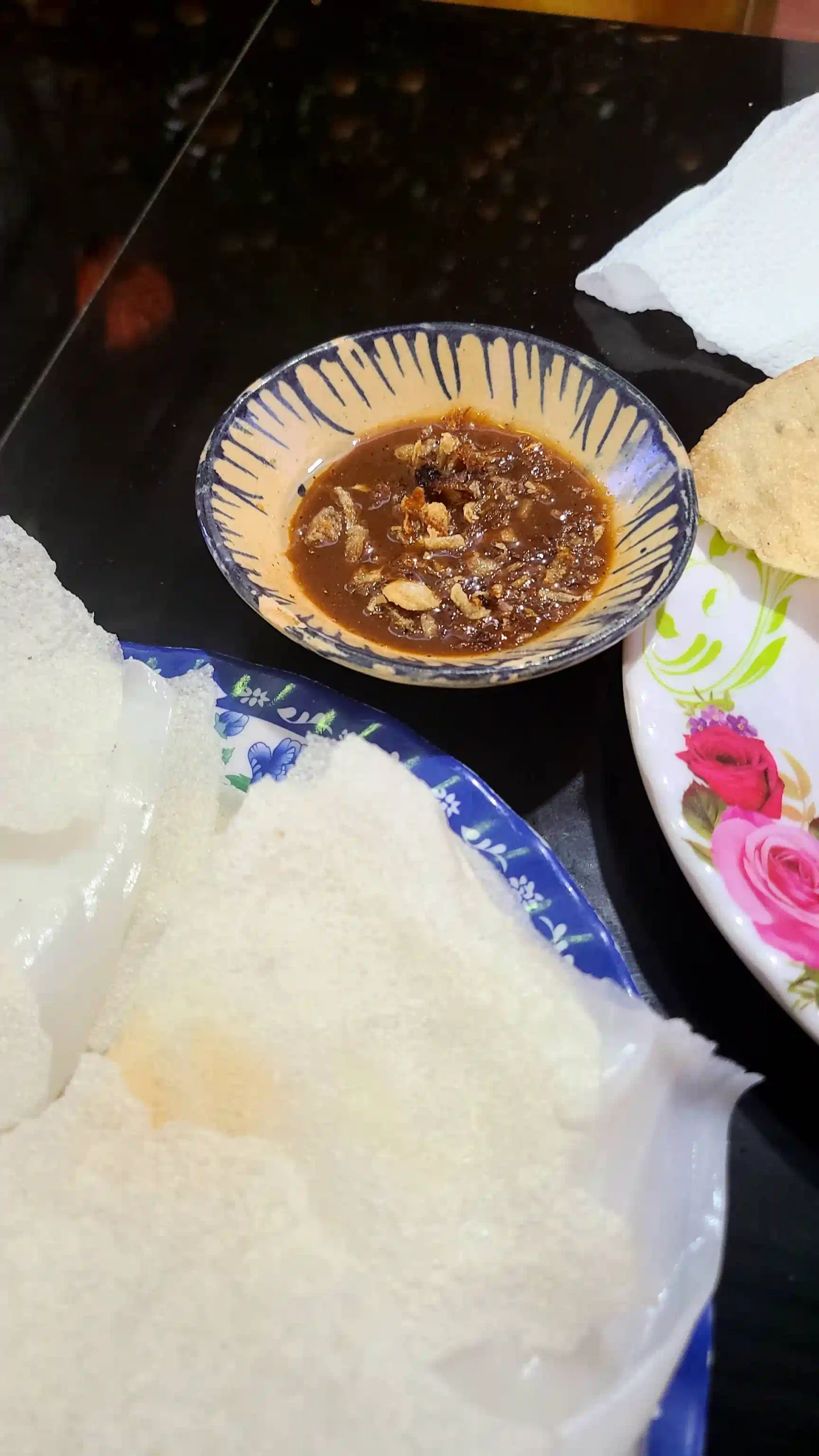
This is the one I’d send you across the bridge for. Banh dap is two layers of rice cracker, one crisp and one soft, that you smash with your hand before dipping in fermented anchovy sauce. Hen xao is baby clams from the river stir-fried with onion, chilli and herbs, eaten with more crackers.
It’s a Cam Nam island thing, ten minutes on a bike from the old town, and it’s the cheapest good meal in Hoi An. Two people can eat properly for under 100,000 VND.
Fair warning on the mam sauce, it is pungent and it is not optional. If fermented seafood isn’t your thing, order the clams and skip the dipping.
8. Banh xeo with nem lui
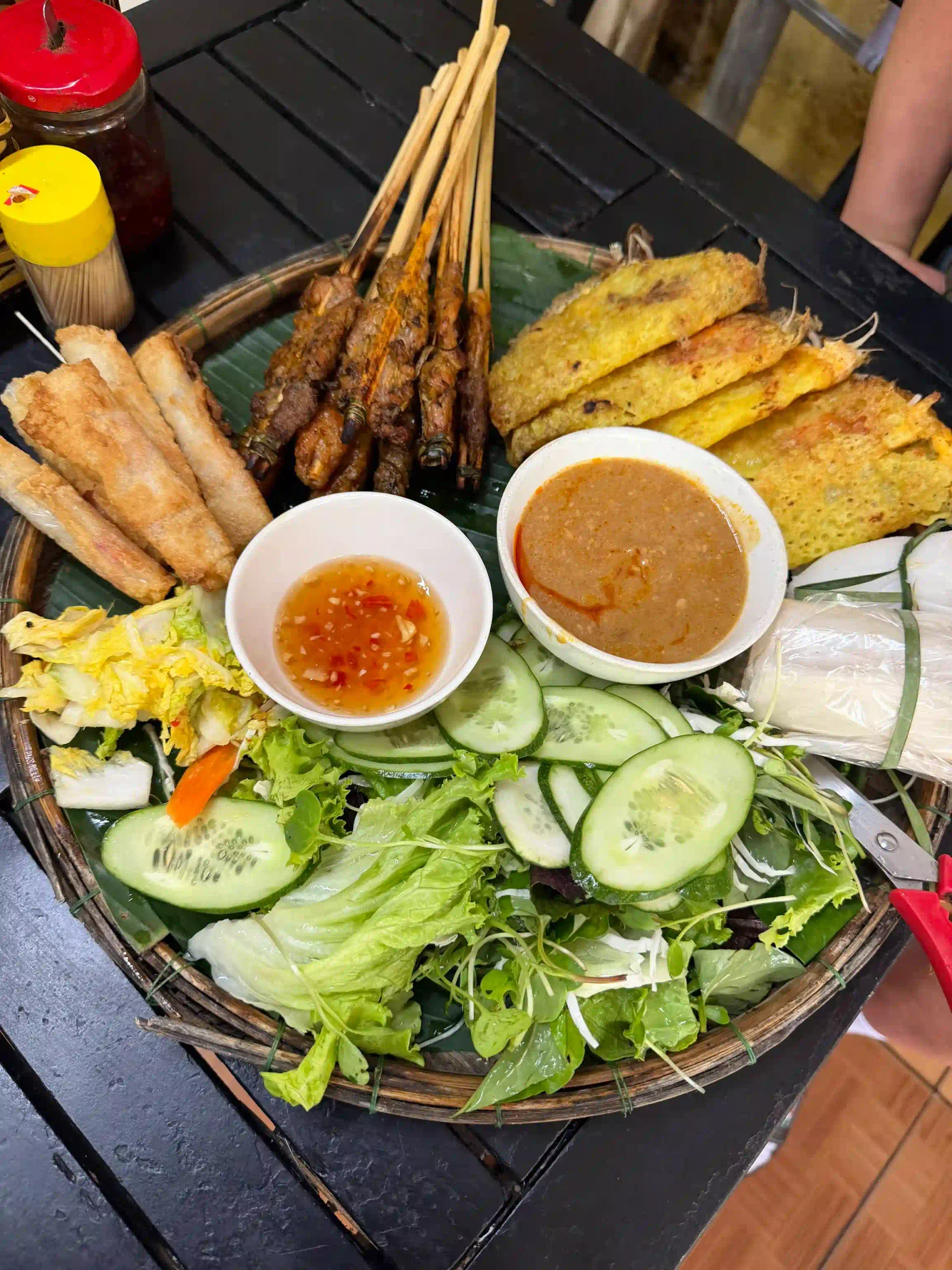
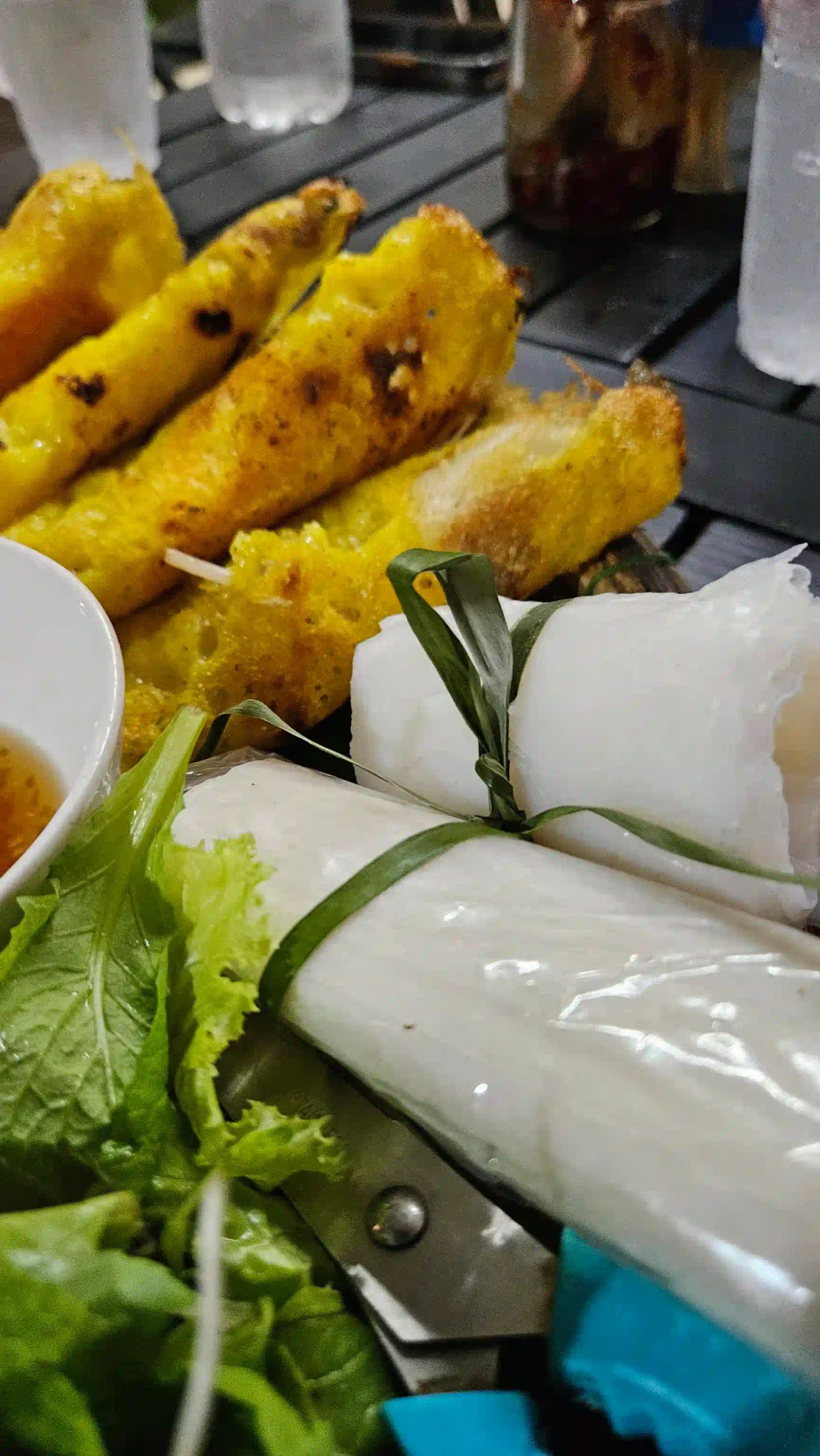
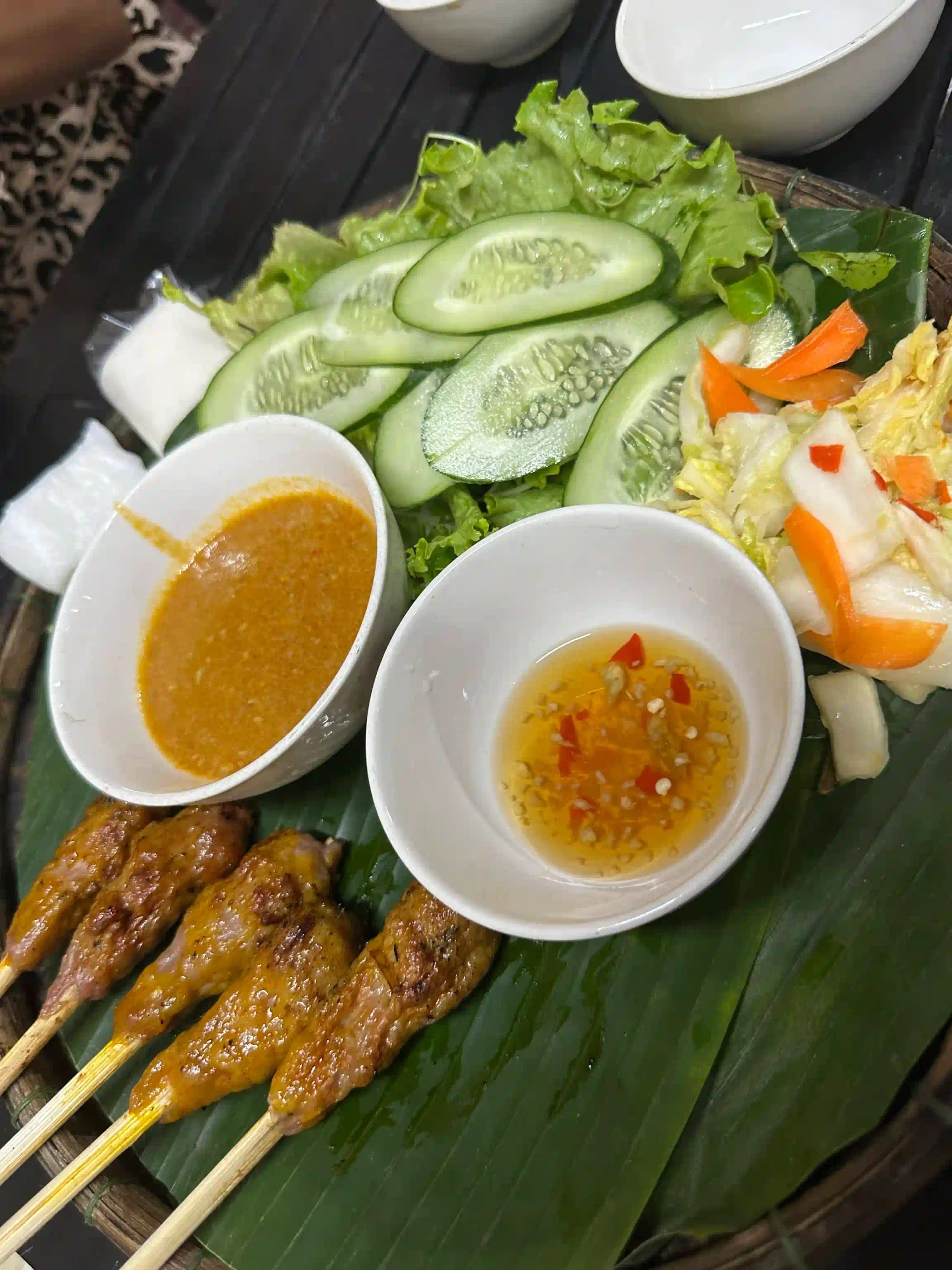
Central Vietnamese banh xeo are much smaller than the southern ones, roughly saucer-sized, and crisper.
You get a stack of them with rice paper, a mountain of herbs and a peanut-based dipping sauce, and you wrap them yourself at the table. Nem lui, pork grilled on lemongrass sticks, usually turns up on the same plate.
It’s a sit-down, get-your-hands-messy dinner and it’s better with a group. Somebody will show you how to wrap the first one, which is a nice thing about eating here.
Two Sweets Almost Nobody Orders
9. Che bap
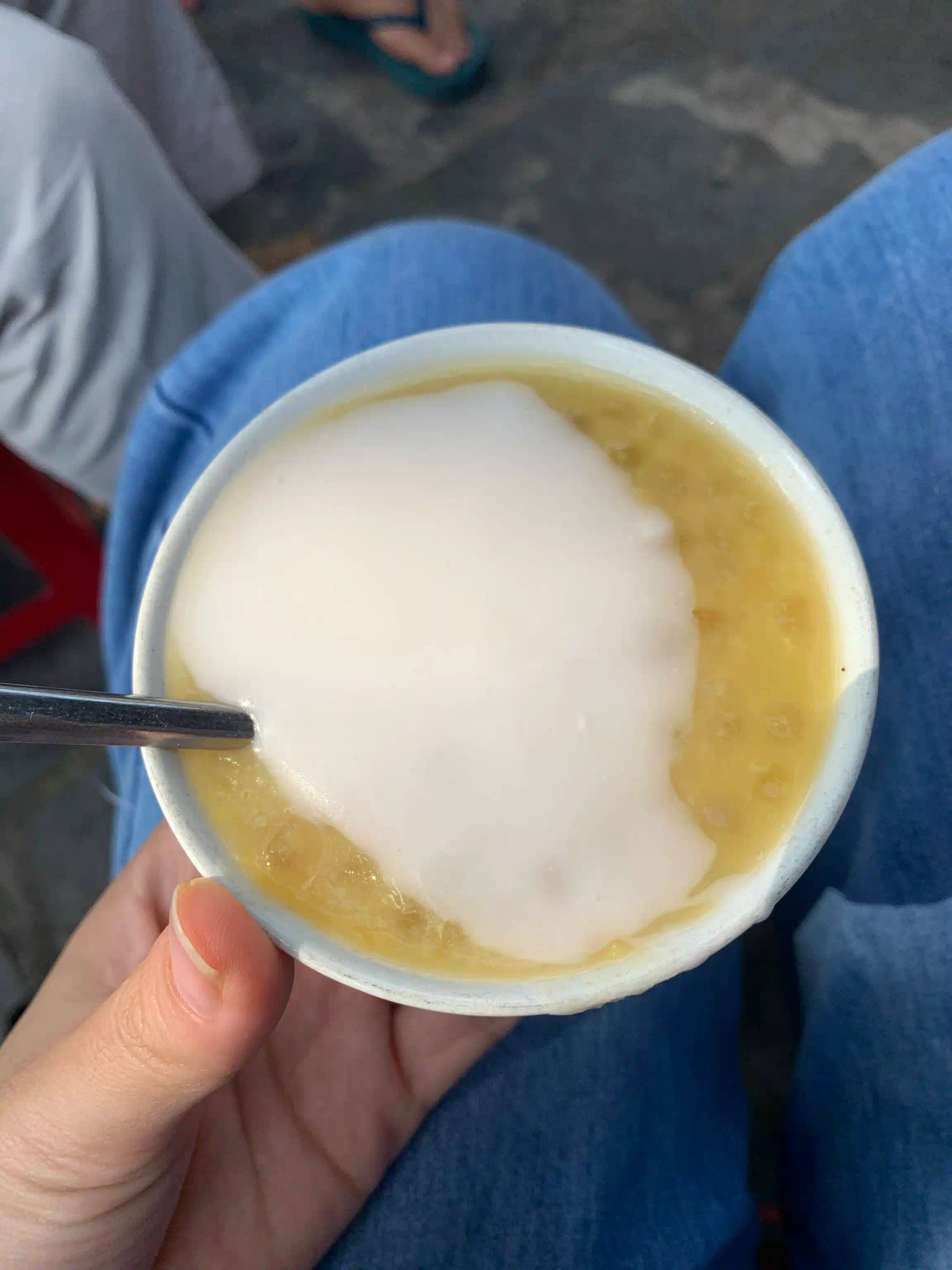
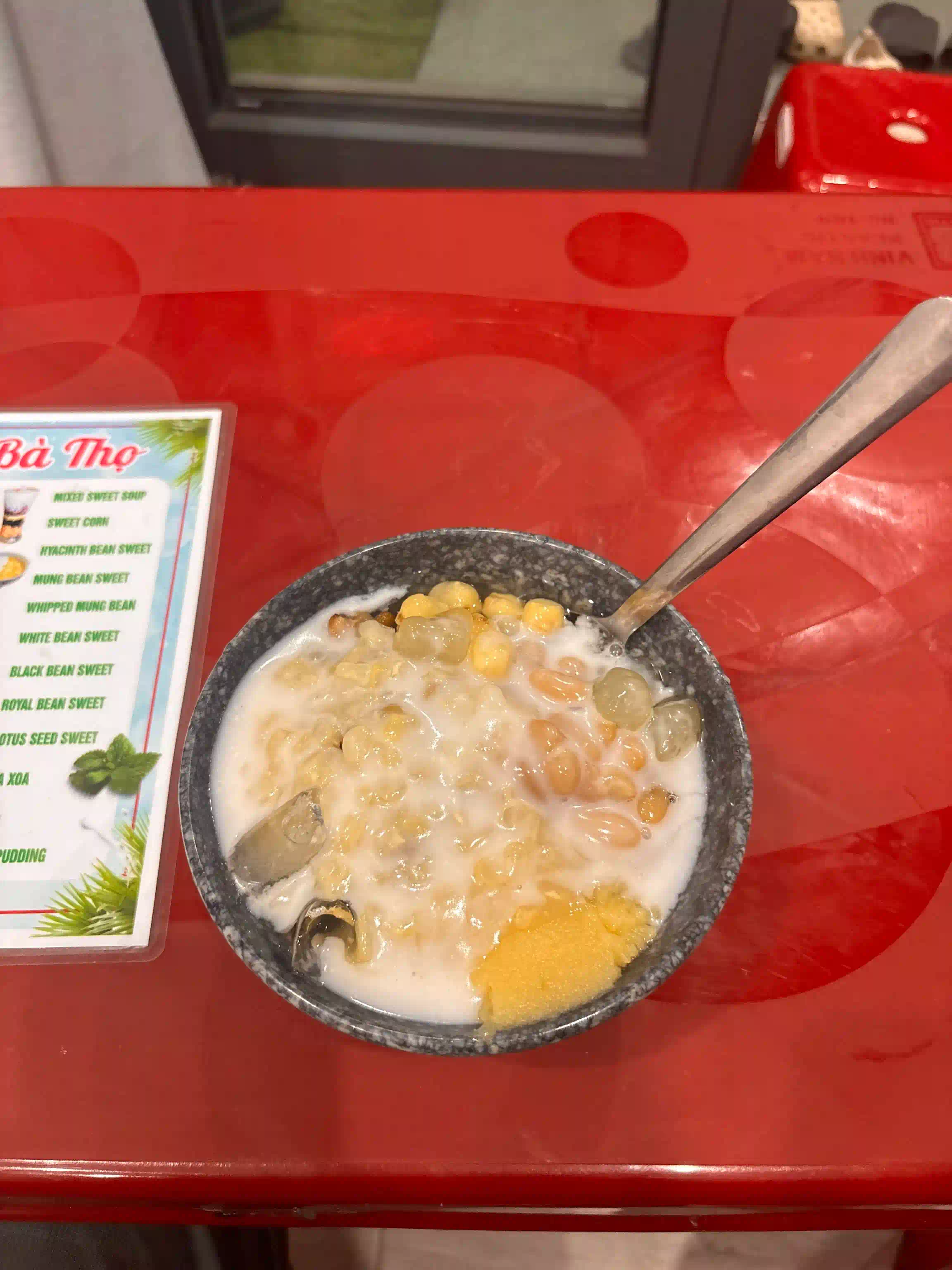
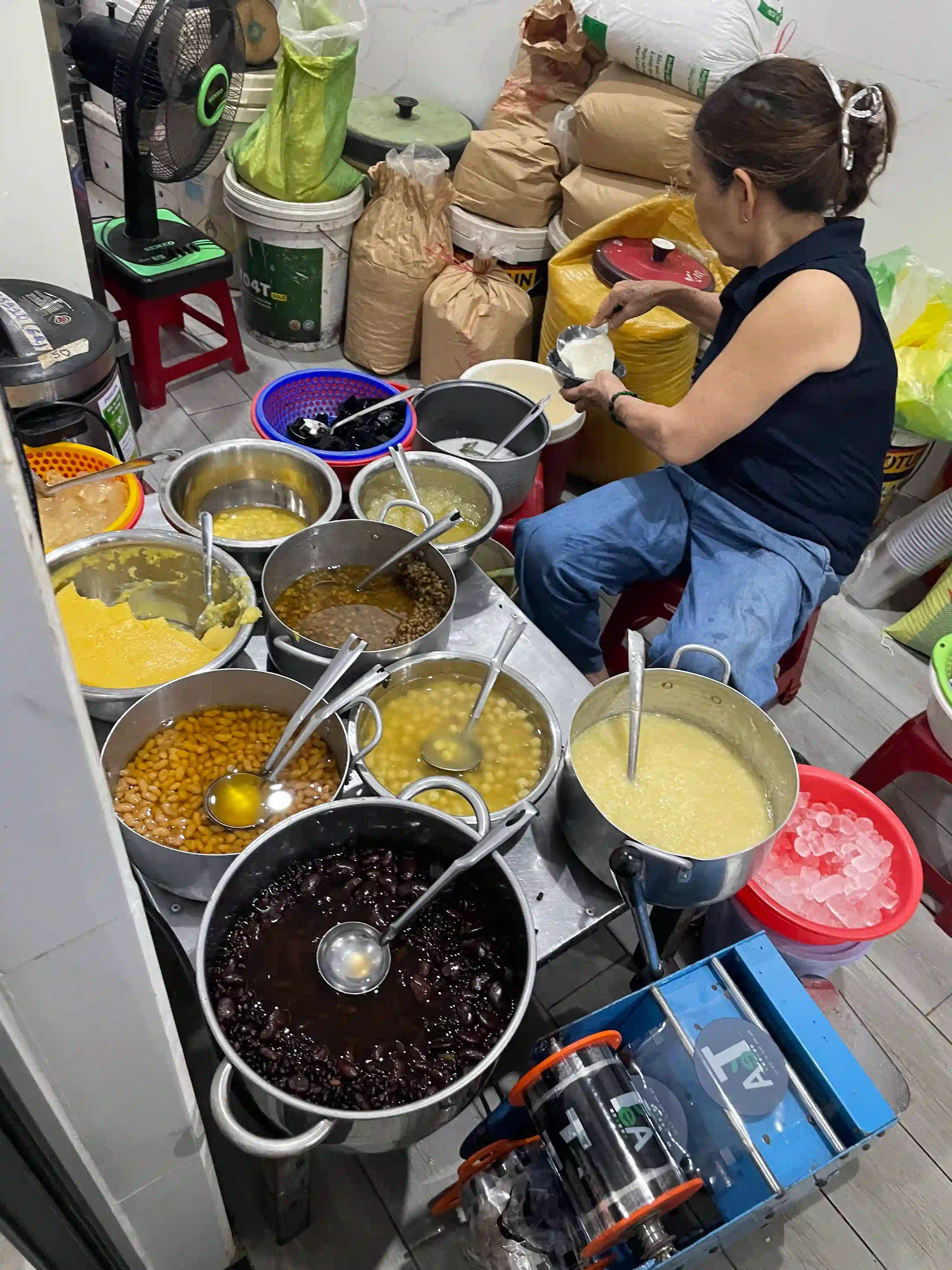
Corn sweet soup, made with corn grown on the sandbank islands in the Thu Bon, which is apparently sweeter than corn grown elsewhere and I’m in no position to argue. Sweet coconut milk, whole kernels, served warm or cold in a small bowl.
10,000 to 20,000 VND. It’s a small thing and it’s lovely after a heavy lunch, and I get one most days I’m here.
10. Xi ma
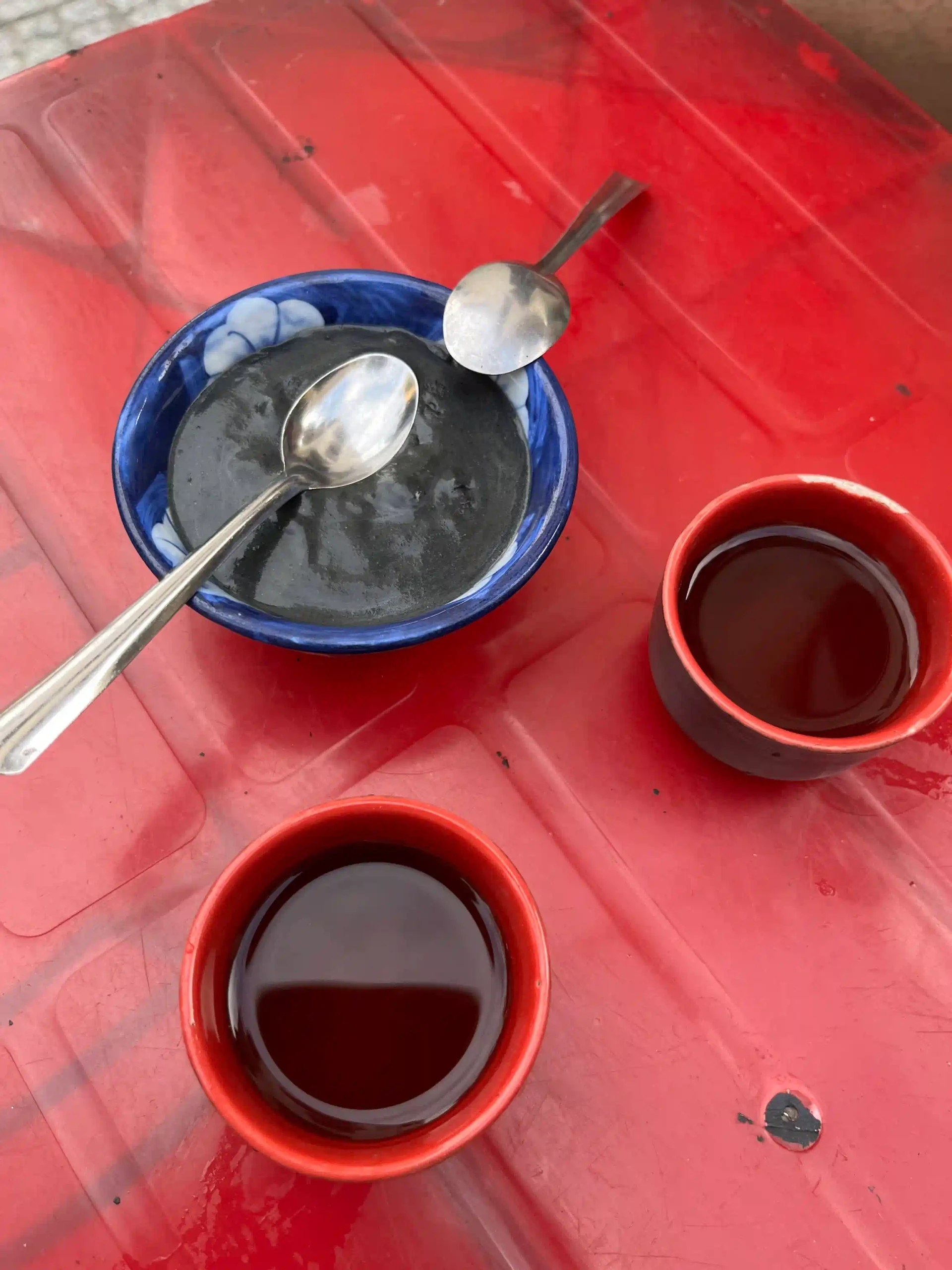
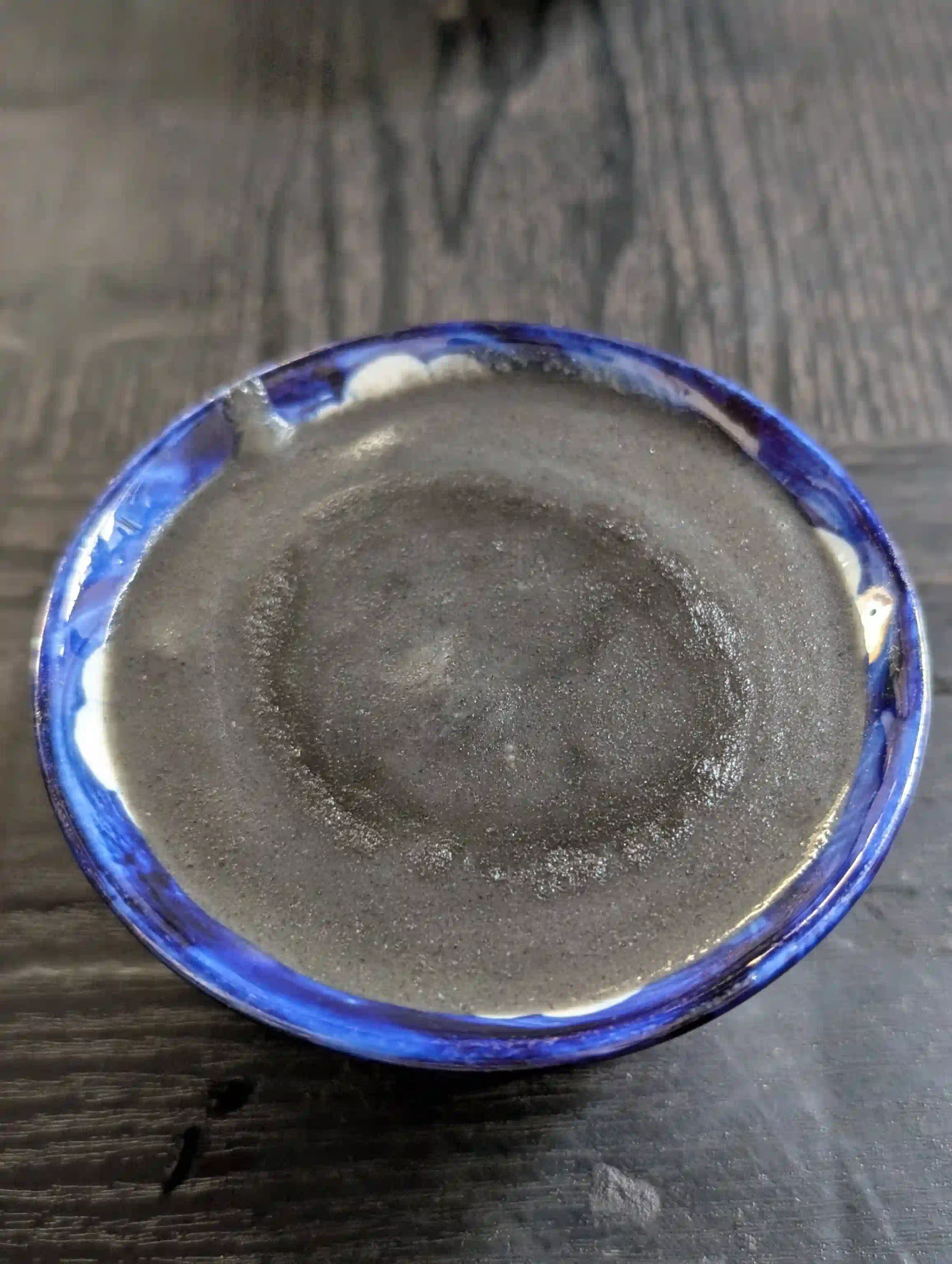
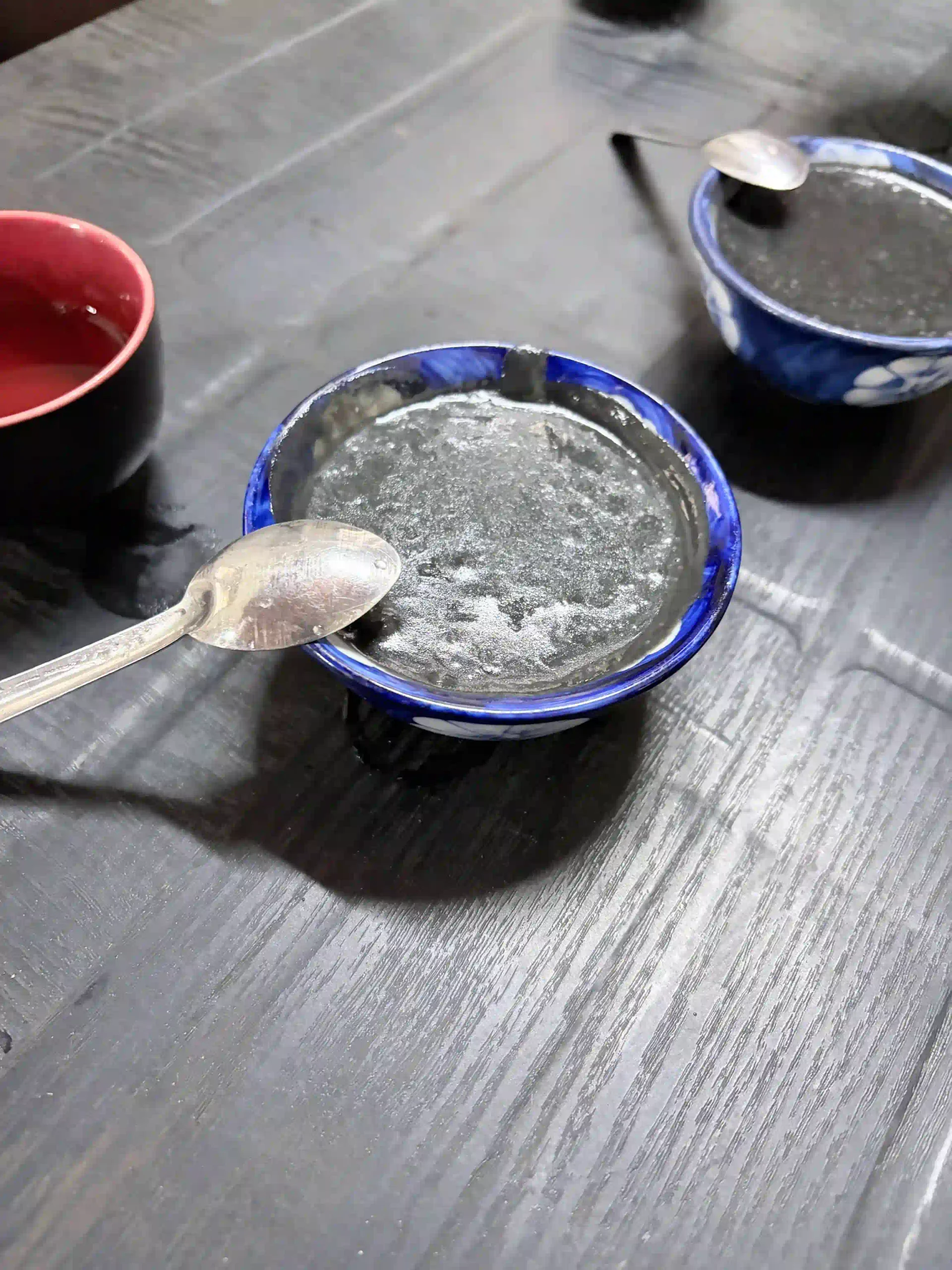
Black sesame soup, thick and warm and slightly bitter, sold from a cart. It’s a Chinese-origin thing, it’s medicinal in the way old sweets often are, and there are very few people still making it.
I mention it partly because it’s good and partly because it’s the sort of thing that quietly disappears from a town like this. If you see a cart with it, buy one even if you’re not hungry.
Hoi An Food Prices: Street Stall vs Old Town Restaurant
The gap between street prices and restaurant prices here is bigger than almost anywhere else in Vietnam, and it’s not because the restaurant food is better.
| What | Street stall | Old town restaurant |
|---|---|---|
| Cao lau | 20,000-40,000 | 80,000-150,000 |
| White rose | 50,000-70,000 | 90,000-120,000 |
| Com ga | 40,000-70,000 | 100,000+ |
| Mi quang | 25,000-50,000 | 80,000+ |
| Banh mi | 20,000-35,000 | n/a |
| Beer | 15,000-25,000 | 40,000-60,000 |
What you’re paying for in the old town is the building, the river, and someone speaking English. Sometimes that’s worth it, particularly in the evening when sitting somewhere pretty is the point.
My rule is to eat the famous dishes at the small places, where they’re made by people who make only that, and save the restaurants for the things that need a kitchen and a bit of comfort. Two people can eat very well here on $15 a day if they want to.
Where to Eat in Hoi An, Roughly by Time of Day
Not restaurant names, since that’s a longer list and it’s in the best restaurants in Hoi An guide. But the pattern that took me a few trips to learn.
- Mornings are for banh mi and com ga, and for the market. Ba Le market has a food section at the back where a bowl of something costs almost nothing and the whole town eats.
- Afternoons are worth spending on the other side of the river. Cam Nam for banh dap and clams, or An Bang if you want seafood by the sea.
- Evenings are when the old town restaurants earn their prices, and when the night market comes out. The night market food is fine and it’s not where I’d send anyone for a proper meal.
If you’d rather have someone else do the choosing on your first evening, a walking food tour is a reasonable way to spend three hours and it does solve the where-do-I-start problem.
The One Thing I’d Tell a First-Timer
Order the same dish twice, in two different places, on two different days.
That sounds obvious and nobody does it, because there’s a list and everyone works through the list. But the difference between an average cao lau and a good one is enormous and you can’t see it from one bowl. Same with com ga and banh mi.
Hoi An is a small enough town that eating twice is easy. It’s also the only way I know of to actually learn what the food here is meant to taste like.
….
Right, the bit where I need help.
I’ve never sorted out xi ma properly. I know the dish, I’ve had it a handful of times from carts, and I’ve never managed to find out who’s still making it and where they park. If you find one, tell me the street and roughly what time, and I’ll go and eat it and put it in properly.
Same for cao lau, honestly. I have places I like and I’m not confident they’re the best in town, only that they’re better than the ones with the English signs. If you’ve got one you’d defend, put it in the comments.
For where all this fits into a trip, things to do in Hoi An has the wider list, and if you’re still deciding whether to come at all, that’s is Hoi An worth visiting.

Keep Exploring Hoi An
-
See & do UltimateMy 7 favorite things to do in Hoi An as an expat ›
-
FoodBest banh mi in Hoi An: Banh Mi Phuong vs. Madam Khanh? ›
-
FoodThe only 5 restaurants in Hoi An I recommend (expat guide) ›
-
FoodHoi An cooking class & boat ride combo review: Worth it? ›
-
FoodIs a Hoi An evening walking food tour worth the money? ›
-
Stays Must readWhere to stay in Hoi An: All 4 areas ranked for first timers ›
-
Route Must readHow many days in Hoi An is ideal for first timers? ›











 Tiếng Việt
 한국어
한국어 中文 (中国)
 日本語
日本語 ไทย
ไทย Deutsch
 Español
 Destinations
 Instagram
 Facebook
 X (Twitter)
 Threads
 Tiktok
White Rose dumplings are underrated—they’re literally shaped like a flower and taste so elegant.
Just came across this list—so many things I missed last trip! Banh Xeo and Cao Lau are must-eat.
Banh Xeo must be eaten hot & crisp. True street‑food bliss