









 Ha Giang
 Hanoi
Hanoi Ho Chi Minh City
 Ha Long
 Sapa
Sapa Mekong Delta
 Da Nang
 Hue
Hue Hoi An
 Ninh Binh
 Da Lat
 Nha Trang
 Phan Thiet
 Phu Quoc
 Quang Binh
 Quy Nhon
 Vung Tau
 Thai Nguyen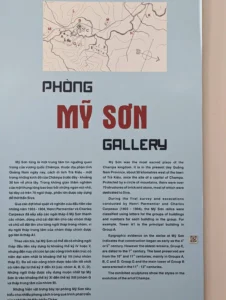

Most people come to Central Vietnam to drink cheap beer, sit on the sand, and maybe drive a motorbike over a mountain. Looking at old rocks inside a building doesn’t usually make the top of the priority list.
But the Da Nang Museum of Cham Sculpture is different. For one, you have probably already driven past it a dozen times without realizing what it is. It’s that bright yellow, old-looking building sitting right on the massive roundabout where the Dragon Bridge meets the city side (the intersection of Bach Dang and 2/9 Street).
You can absolutely visit the Da Nang Museum of Cham Sculpture without a guide, and honestly, it’s a better experience if you do it on your own terms. You can go at your own pace, skip the parts you find boring, and leave when you get too hot.
If you are putting together a master list of places you want to check out around town, you should slot this in for a morning when you have an hour to kill. Here is exactly how to do it, what you are actually looking at, and the logistics of getting in and out without a headache.
- Quick Answer: Visiting the Da Nang Museum of Cham Sculpture is easy without a guide, just scan the free QR-code audio guide inside. For 60,000 VND, you get access to the world’s largest collection of ancient Cham artifacts. Go at 7:30 AM to beat the heat, as the historic building has no air conditioning.
- Essential Info:
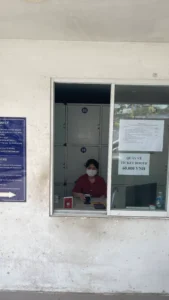
- Tickets: 60,000 VND ($2.50). Buy at the gate (cash is best).
- Hours: 7:30 AM – 5:00 PM daily.
- Parking: Drive inside the gate. Pay the guard 5,000 VND. Don’t park on the street or you’ll get towed.
- How to skip the guide:
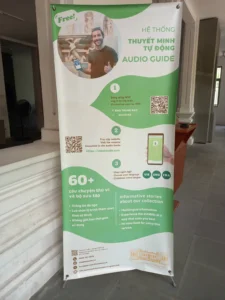
- Free Audio App: Look for QR codes on the walls. It works in English and French. Bring your own headphones.
- Plaques: Most major statues have decent English descriptions.
- Expert Tips:
- The Heat: It’s an open-air building. Avoid 10:00 AM to 3:00 PM or you will melt.
- Must-See Items: Look for the Bronze Tara statue (Dong Duong room) and the Tra Kieu Pedestal.
- Pairing: Do this museum the day after you visit the My Son Sanctuary ruins to see where the actual statues went.
What is the Champa Kingdom anyway?
Before you walk in and just stare at sandstone carvings, you need a tiny bit of context. Otherwise, it’s just a bunch of statues of elephants and guys with multiple arms, and you will get bored in ten minutes.

Here is the very short, non-academic version of the history.
A long time ago, the Vietnamese people mostly lived way up north, around Hanoi. The central and southern parts of what is now Vietnam were ruled by a completely different civilization called the Champa Kingdom. They were here for a long time, roughly from the 2nd century all the way to the 1800s.
The Cham people were heavily influenced by India. They were sea traders. Because of that Indian influence, their religion was mostly Hinduism (worshipping Shiva, Vishnu, Brahma) and later some Buddhism. They built massive brick temple complexes all over Central Vietnam. The most famous one is My Son Sanctuary, which is about an hour away from Da Nang.
Eventually, the Vietnamese moved south, fought a lot of wars with the Cham, and took over the territory. The Cham temples were abandoned, swallowed by the jungle, and mostly forgotten.
Then the French showed up in the late 1800s. French archaeologists started digging around in the jungle, found all these incredible statues, and decided they needed a place to put them. So, in 1915, they built the Da Nang Museum of Cham Sculpture.
That’s why the building looks like a weird mix of a French colonial mansion and a Hindu temple. It holds the largest collection of Cham artifacts in the entire world.
Why you really don’t need a human guide
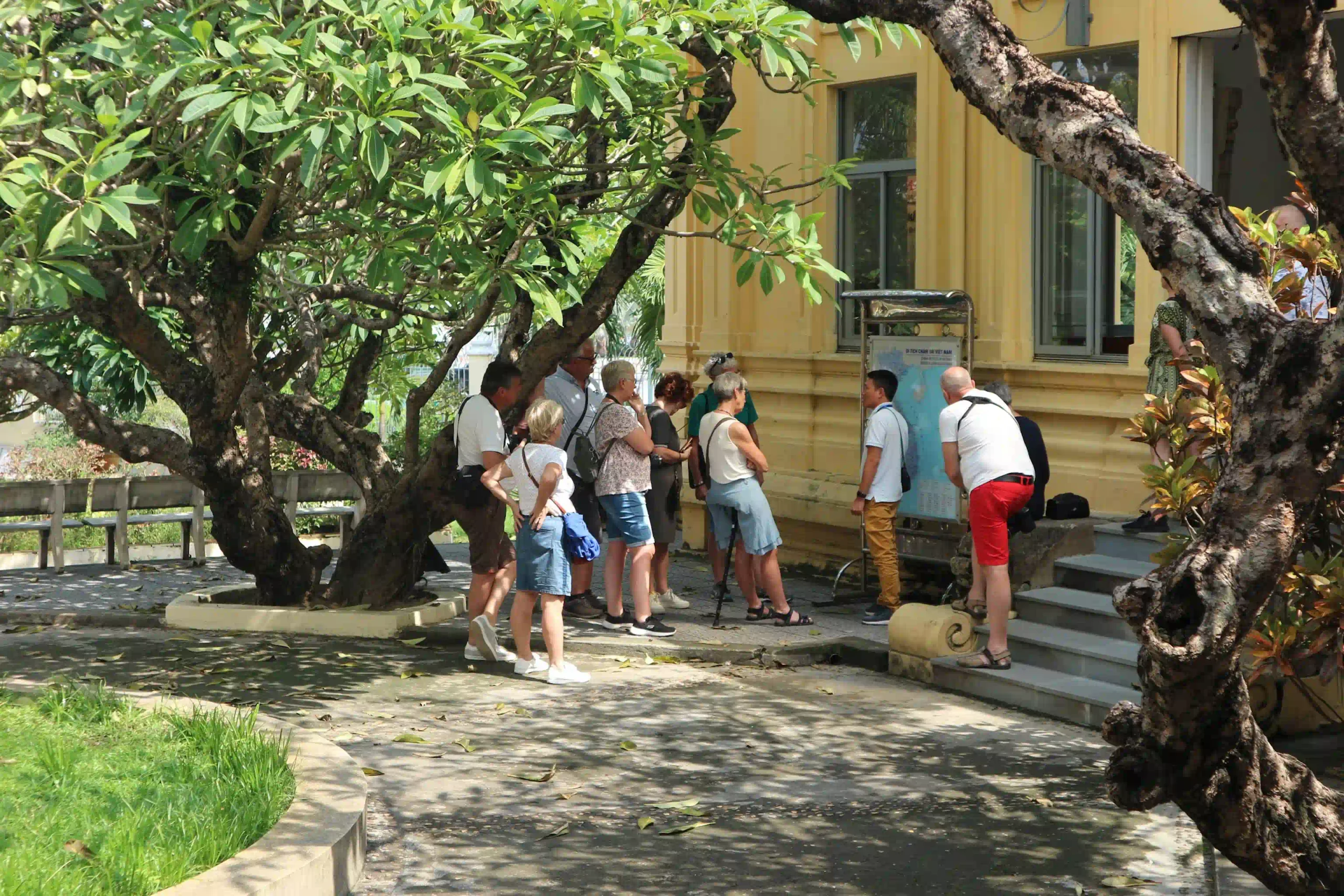
A lot of travel blogs will tell you that you have to hire a local guide to understand the museum. I disagree.
First of all, hiring a private guide just for this museum is expensive and usually unnecessary. Sometimes you get a great guide who tells amazing stories. But a lot of the time, you get a guide who just walks you from statue to statue and reads the plaque out loud in heavily accented English that is hard to hear over the echo in the rooms.
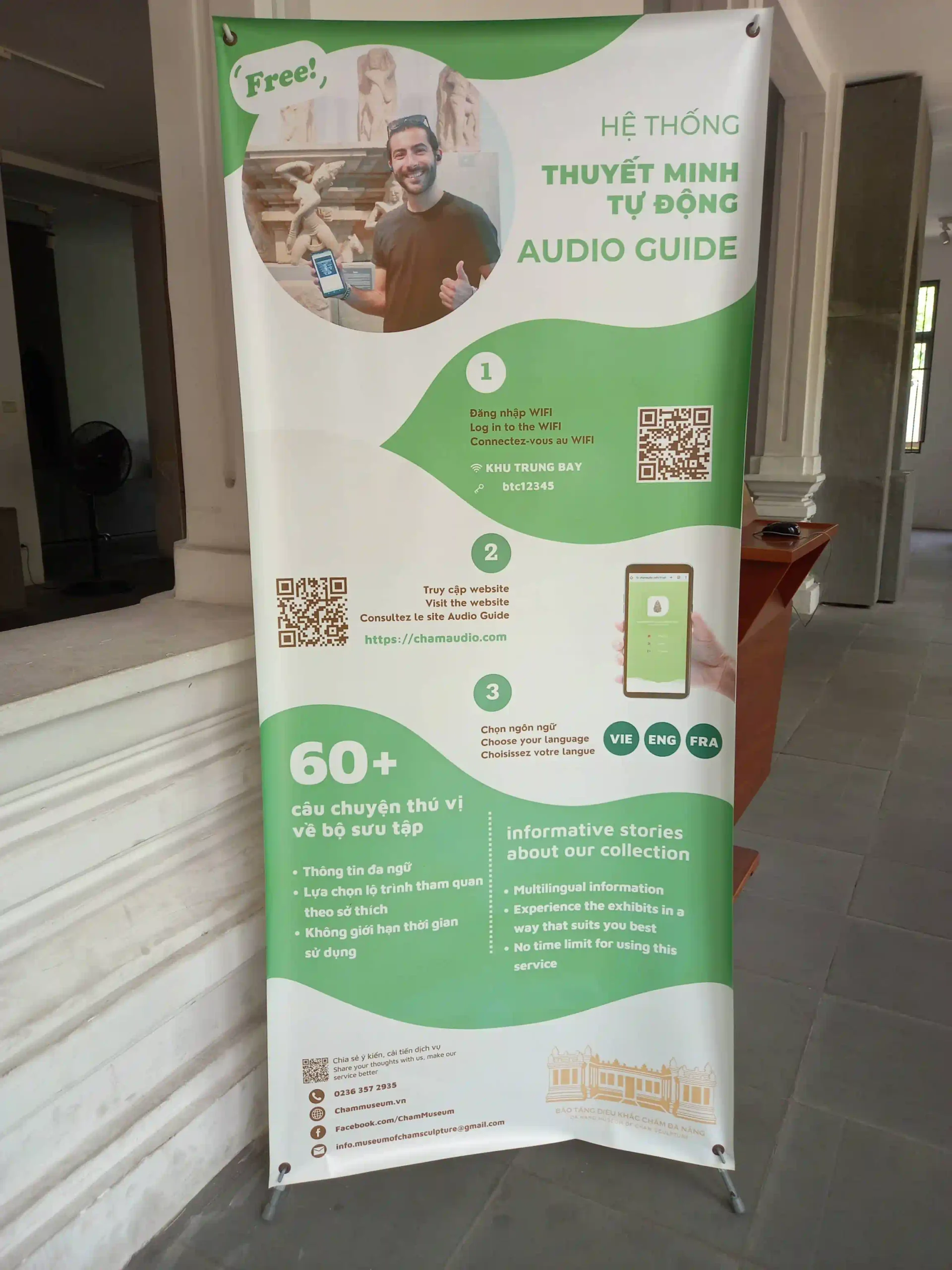
The museum has actually modernized a lot recently. They now have a free audio guide system.
When you buy your ticket and walk in, you will see signs with QR codes. You just scan the code with your phone, and it opens a web app. You type in the number you see on the display case, and a voice on your phone tells you the history of the piece.
Even if you don’t want to use the audio guide, the physical plaques next to the major artifacts are written in Vietnamese, English, and French. The English translations are actually pretty good now. They give you enough information to understand what you are looking at without overwhelming you with archaeological jargon.
The Logistics: Tickets, Parking, and the Heat
Let’s get the practical stuff out of the way so you don’t look confused at the gate.
Buying the ticket
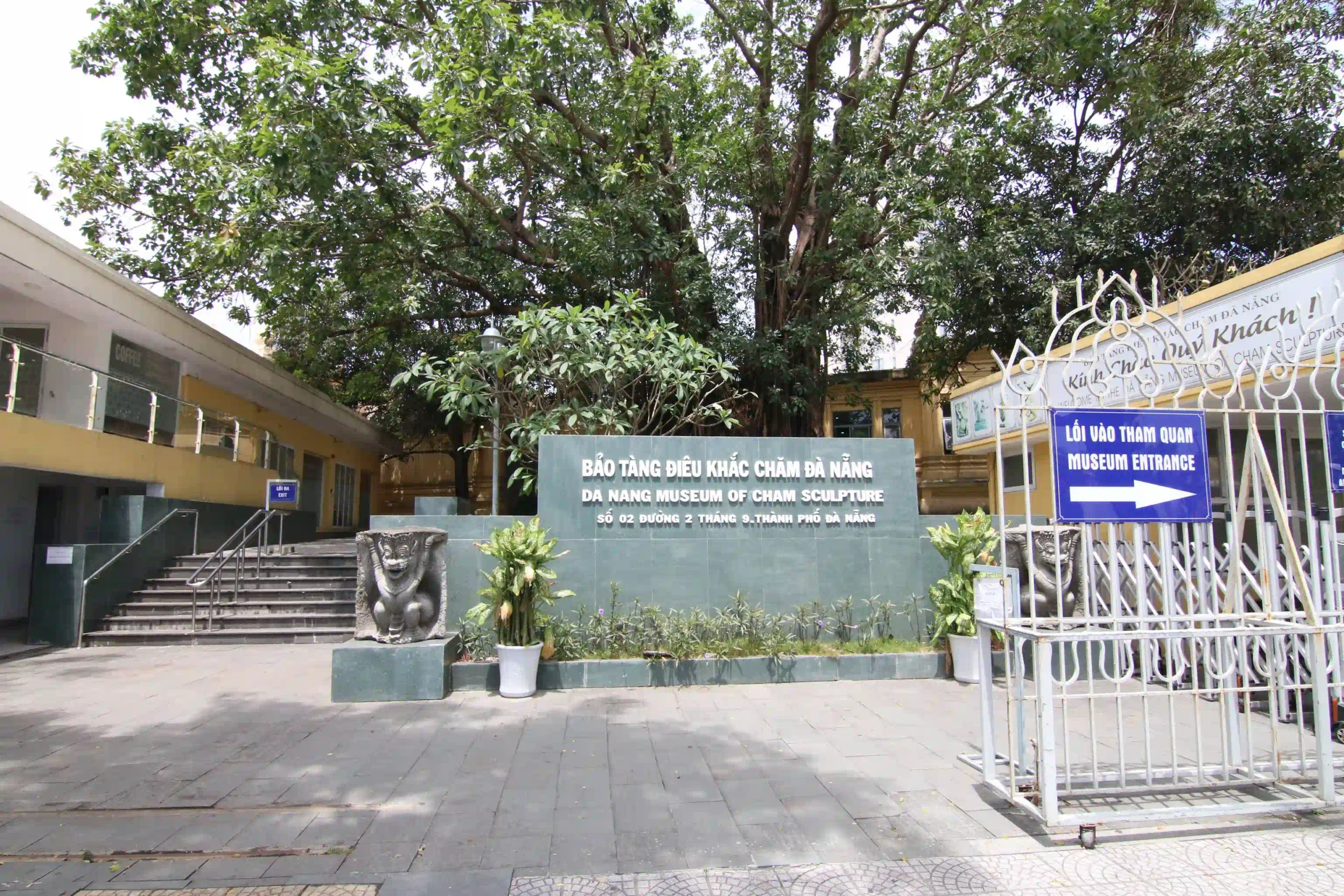
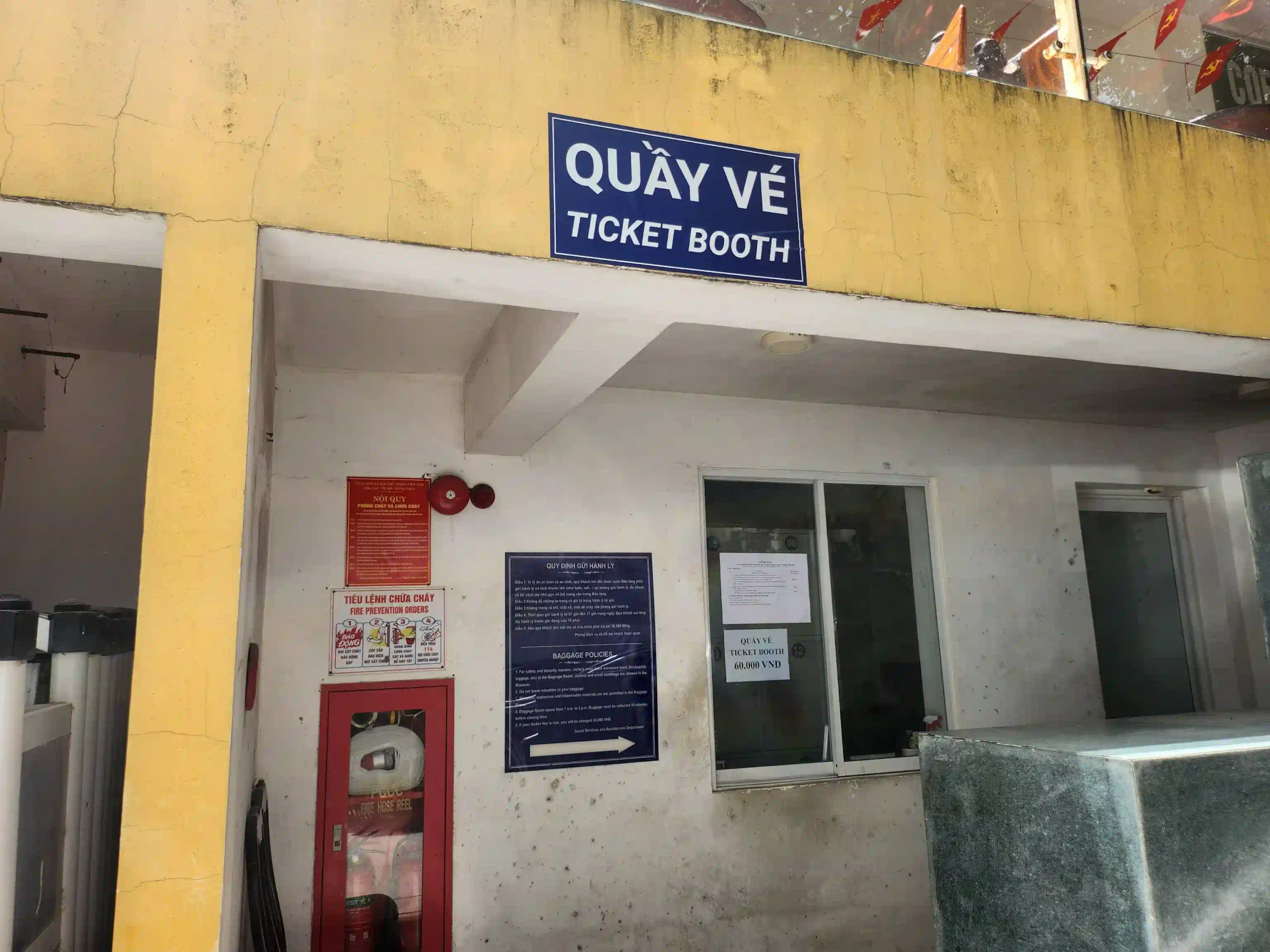
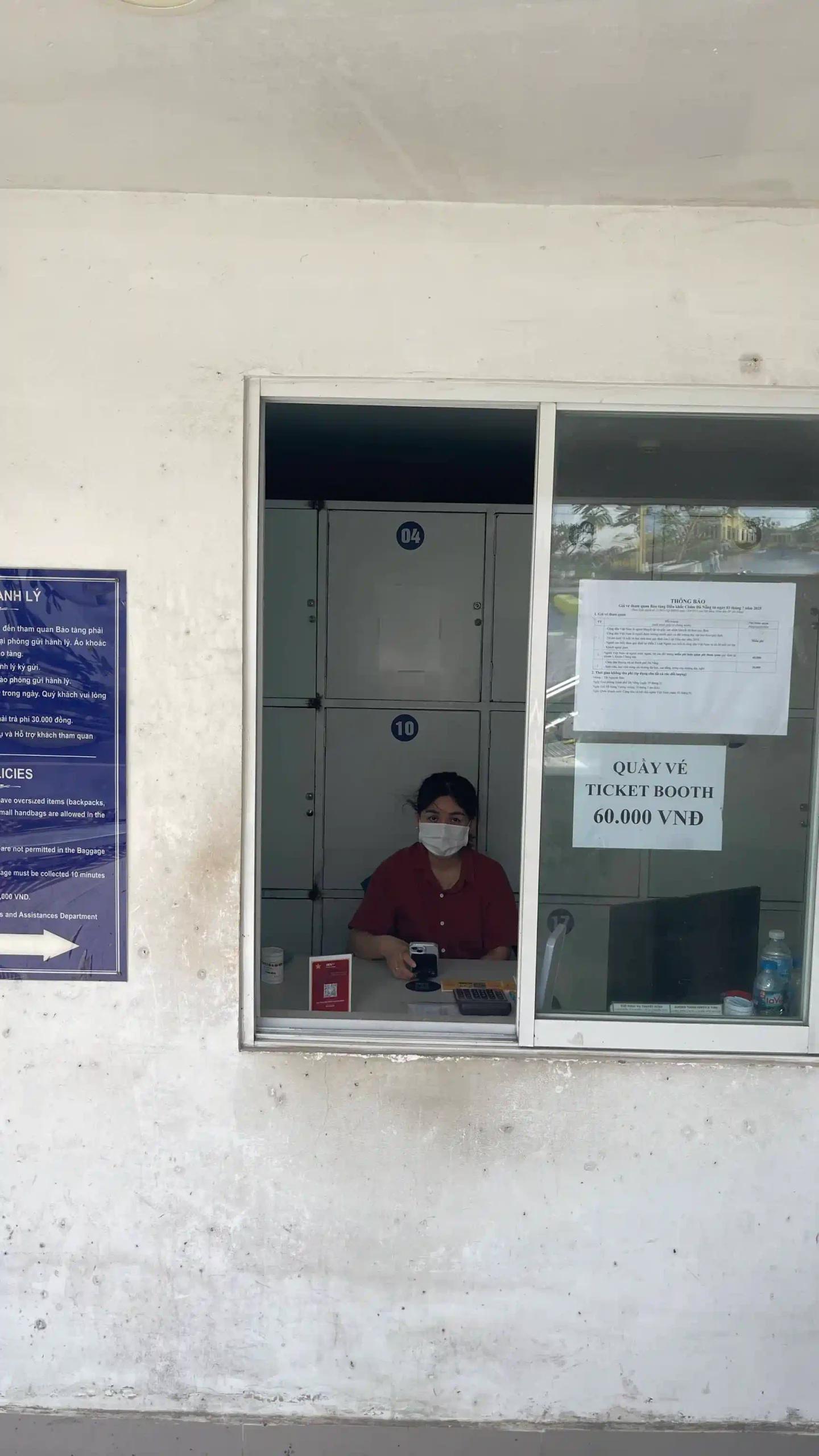
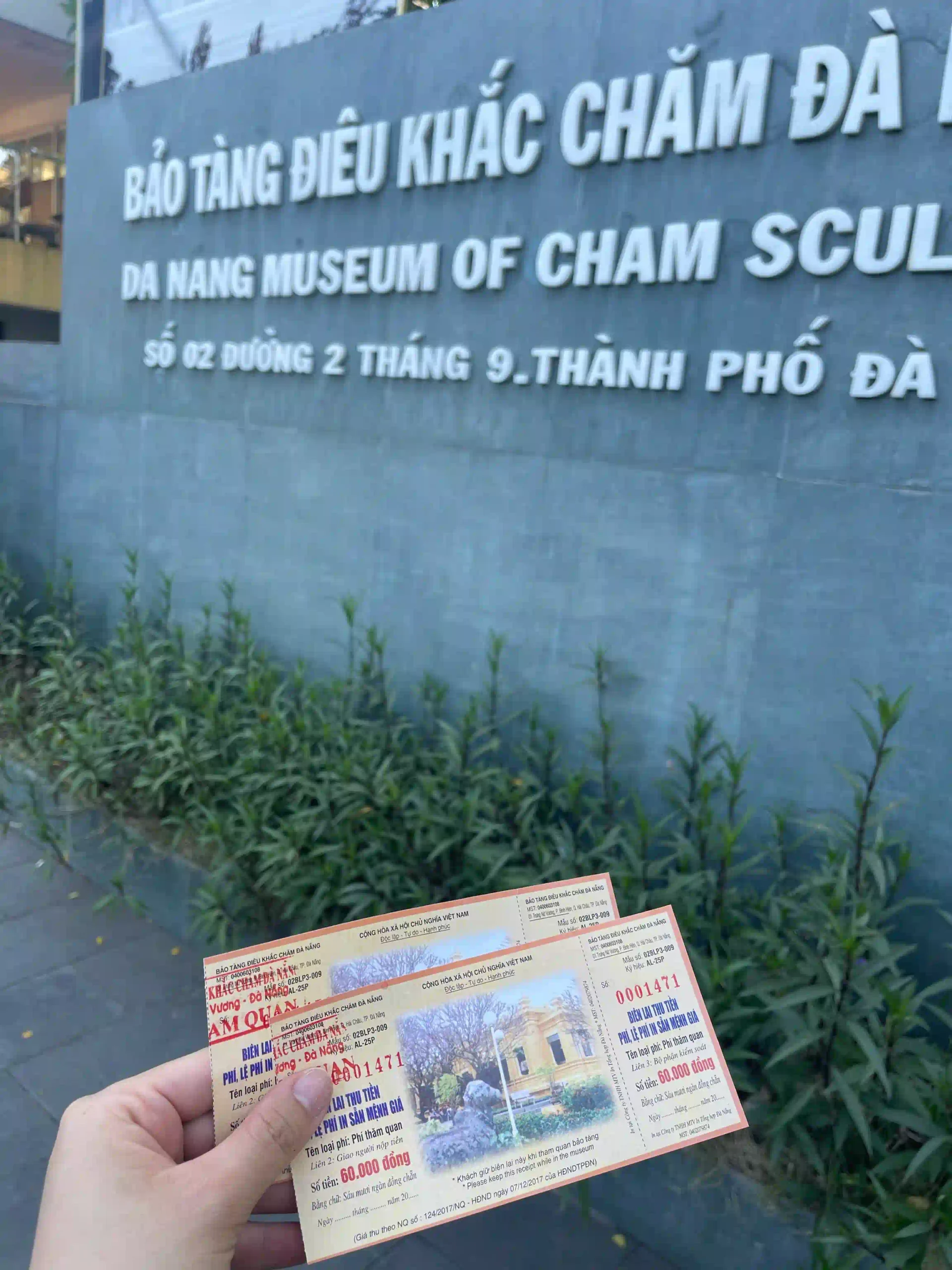
In 2026, the entrance fee is 60,000 VND. That is roughly $2.50 USD. It is incredibly cheap. You buy the ticket at the small booth right at the main gate on 2/9 Street. They take cash, and sometimes they have a QR code for local bank transfers, but just bring cash to be safe. They don’t usually take foreign credit cards for a 60k transaction.
Where to park your motorbike
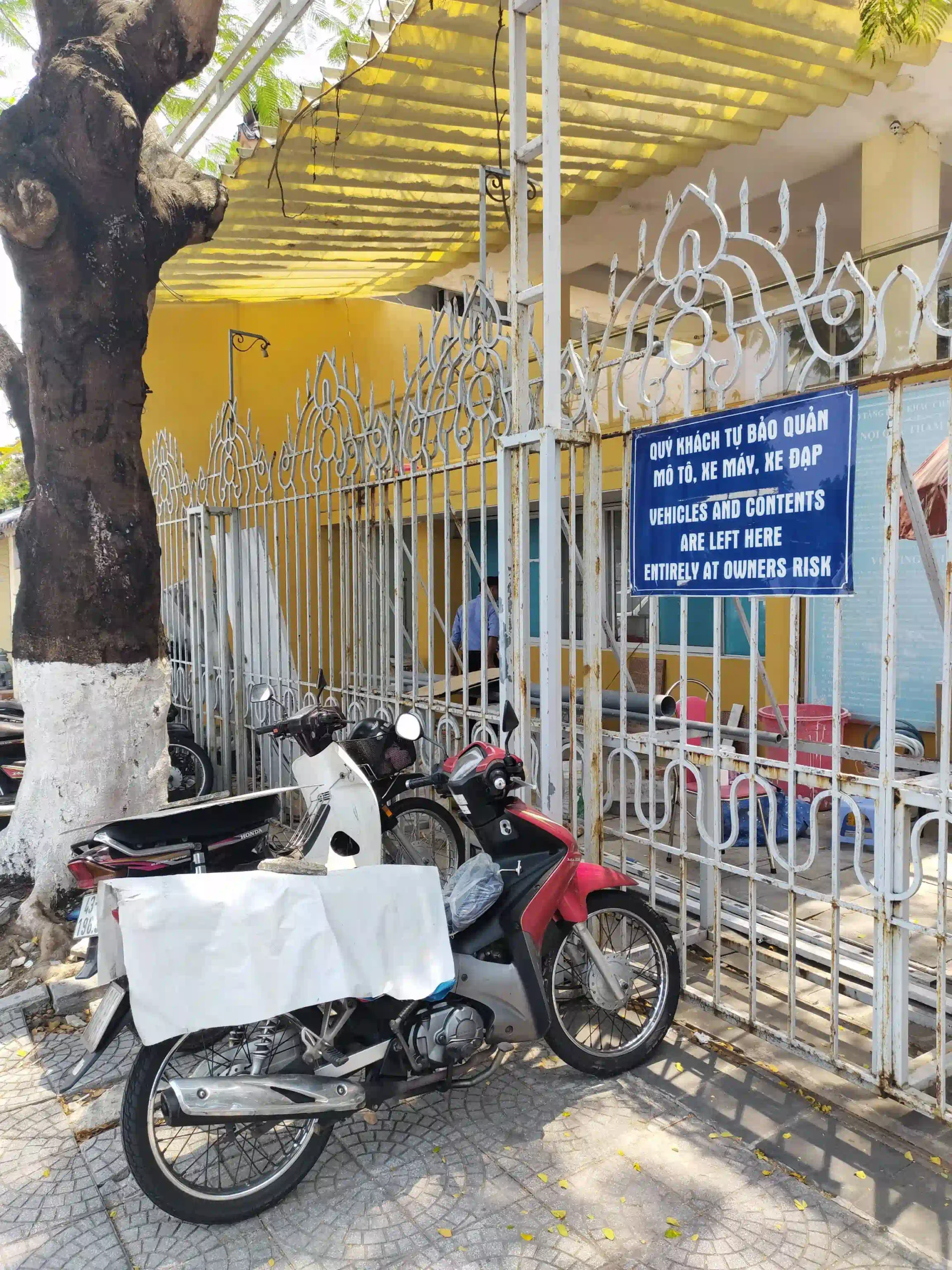
If you drove your own scooter, don’t just leave it on the sidewalk outside the gate. The police patrol this roundabout heavily and they will tow it.
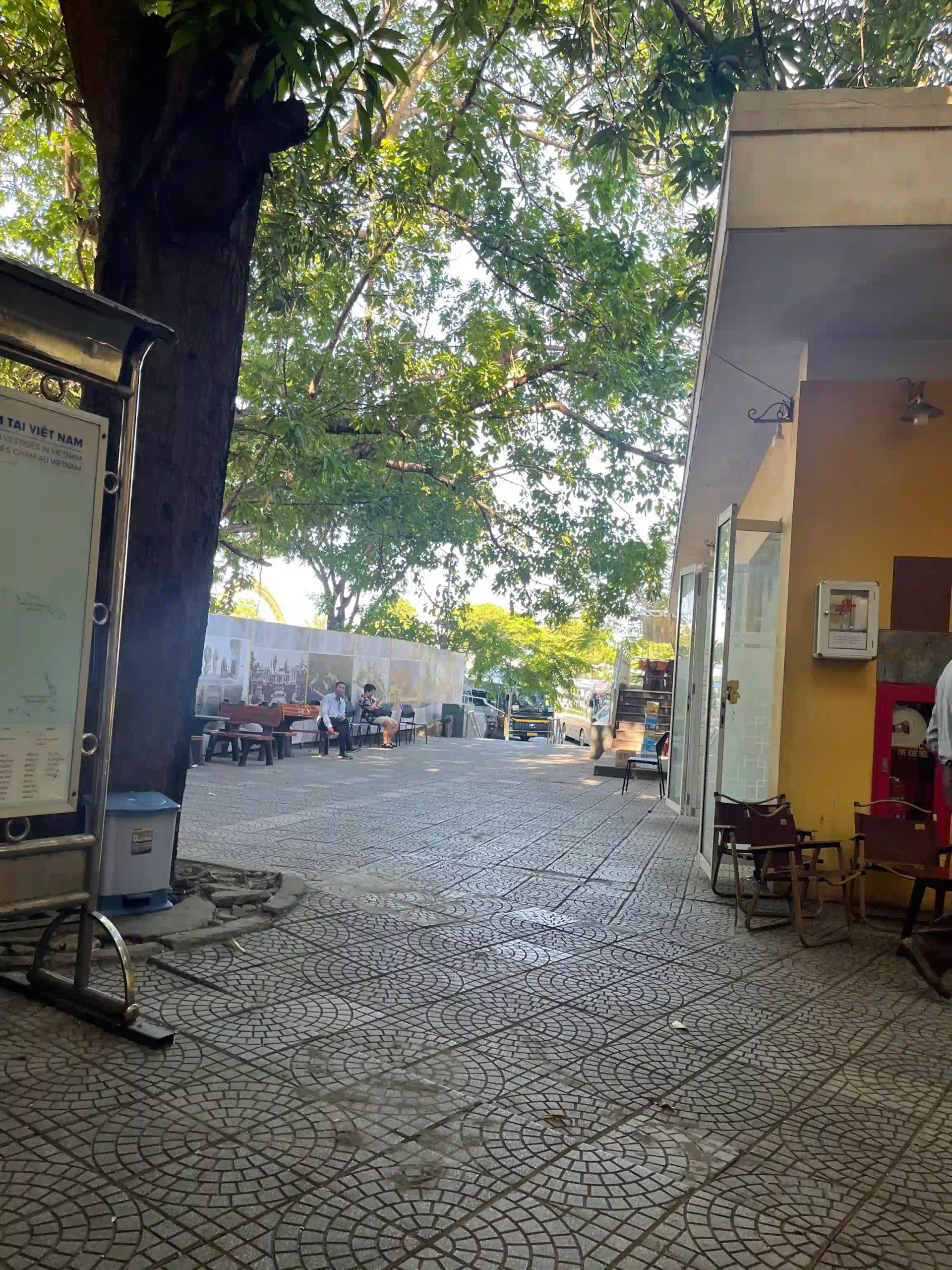
Drive through the main gate. Right inside, usually to the left, there is a designated parking area for visitors. There is a security guard sitting there. You park, he gives you a little laminated ticket with a number on it, and you pay him 5,000 VND when you leave. Keep the ticket in your pocket.
The Heat Warning
This is the biggest mistake people make. The Da Nang Museum of Cham Sculpture is an old building. It was designed in 1915 to use natural ventilation.
That means there is almost no air conditioning.
The rooms have high ceilings and some ceiling fans, and the doors are left open to let the breeze in. But if you go at 1:00 PM in July, the building turns into an oven. You will be sweating so much that you won’t even care about the statues; you will just be looking for the exit.
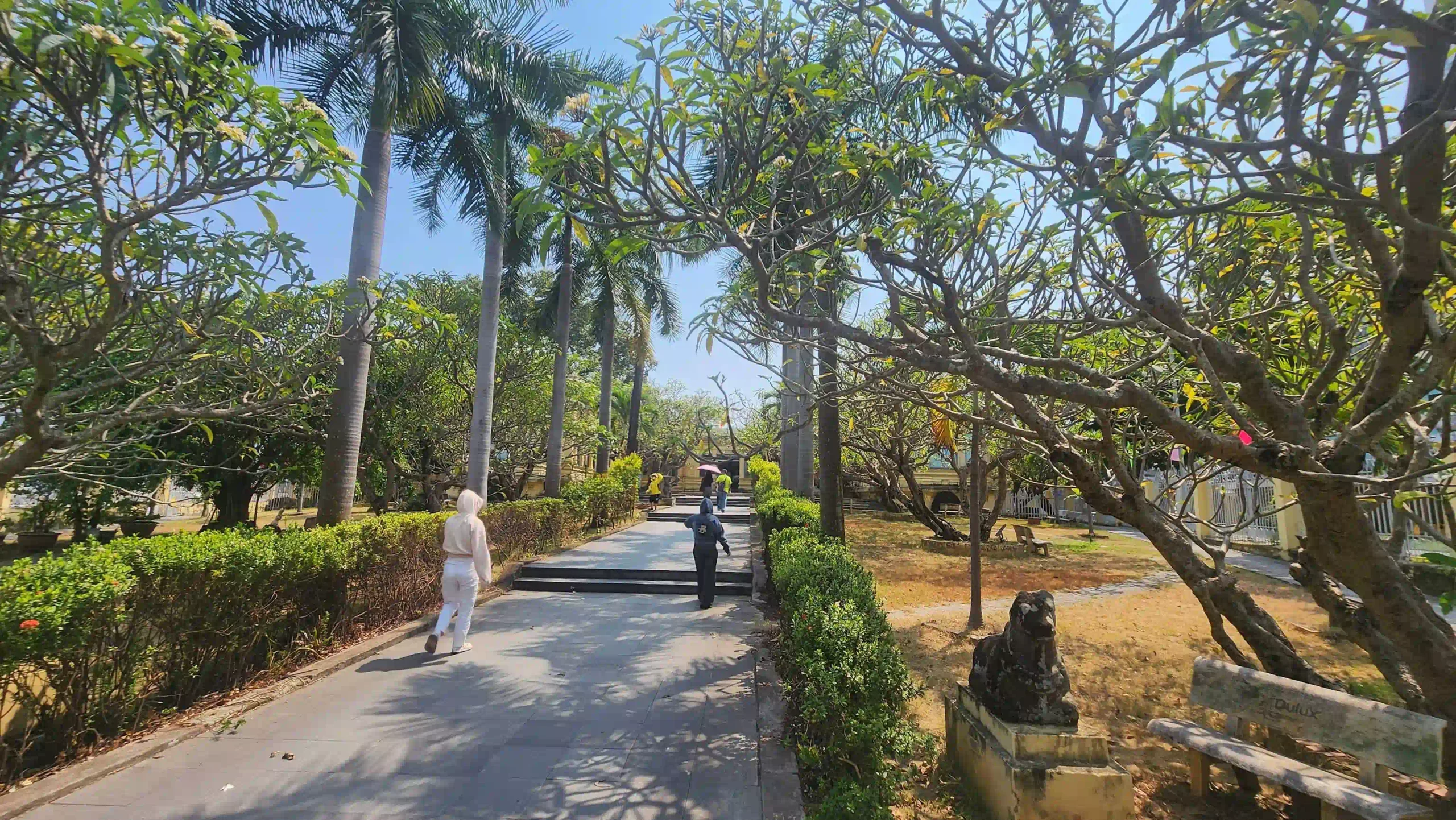
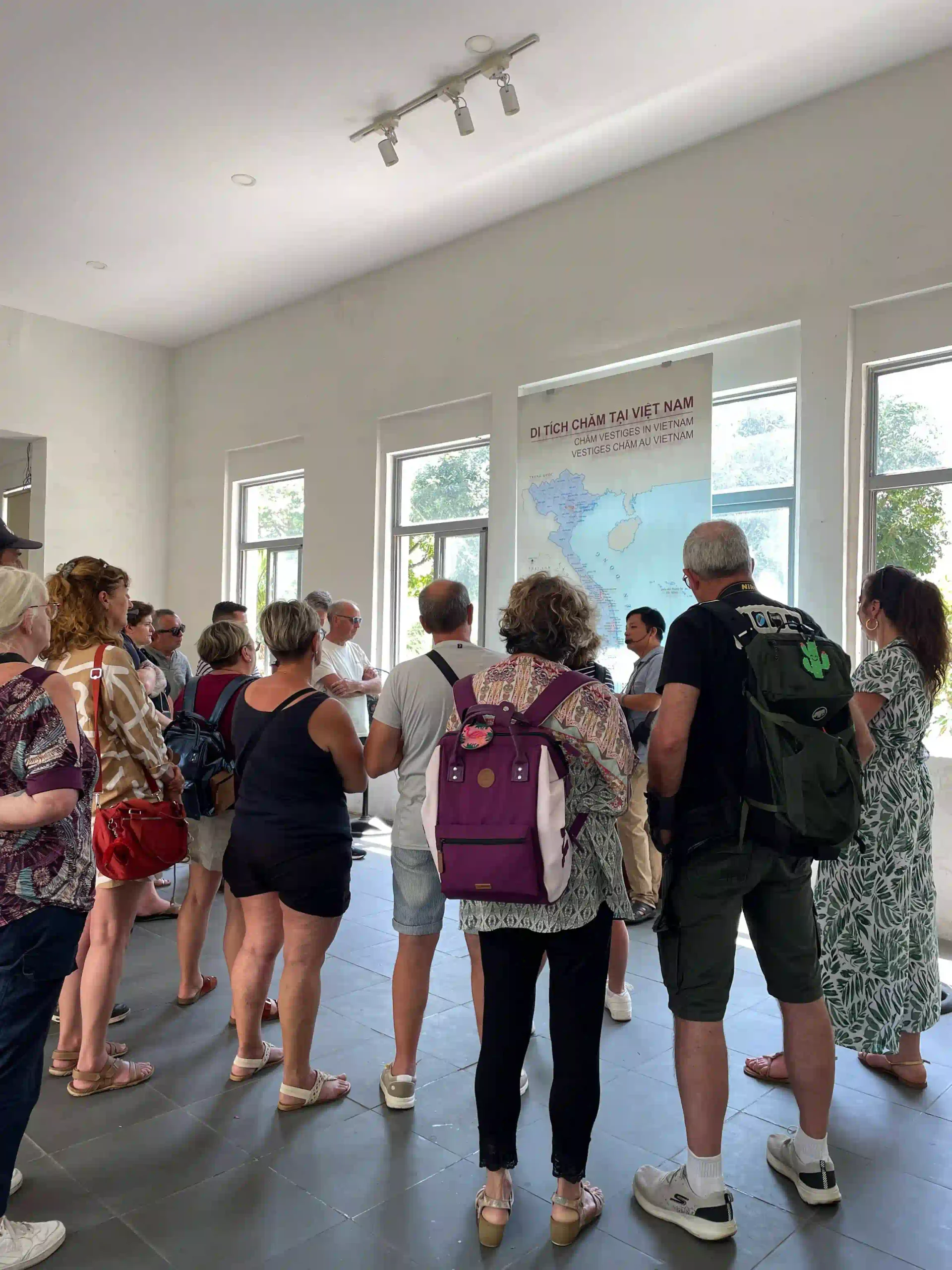
The best time to go is right when they open at 7:30 AM. The air is still somewhat cool, and you will basically have the place to yourself before the big tour buses show up around 9:30 AM.
If you can’t do the morning, go around 3:30 PM or 4:00 PM. The museum closes at 5:00 PM, so that gives you enough time to see everything as the sun is going down.
How to walk through the museum (The Layout)
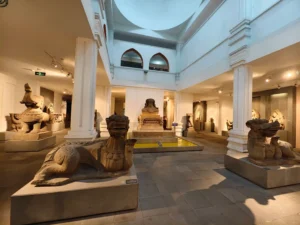
The museum is laid out geographically. The rooms are named after the specific areas in Central Vietnam where the statues were dug up. You basically walk in a big U-shape around a central courtyard.
You don’t need to memorize the map, but here is a rough guide to what you are actually looking at as you walk through.
1. The Tra Kieu Room
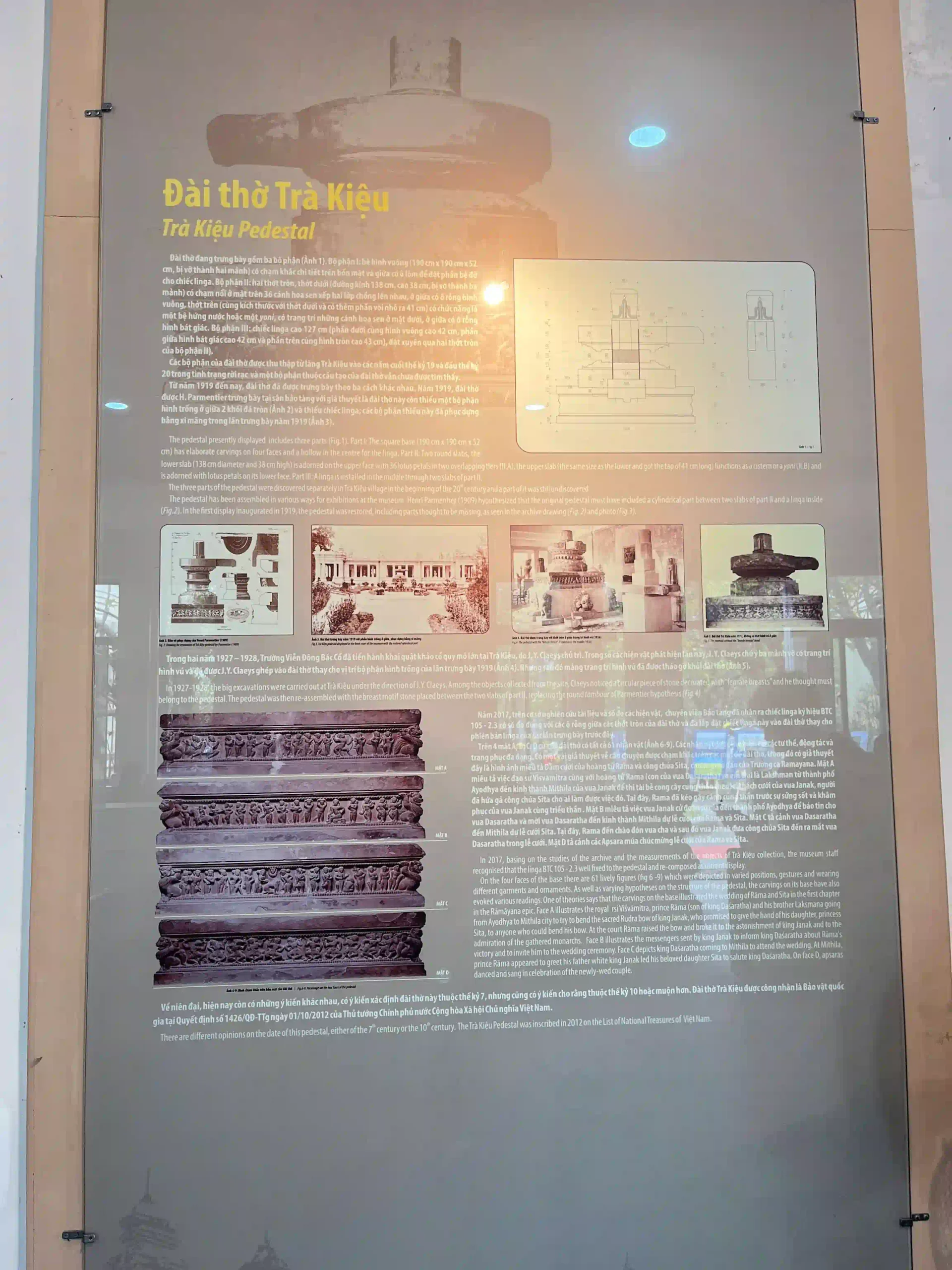
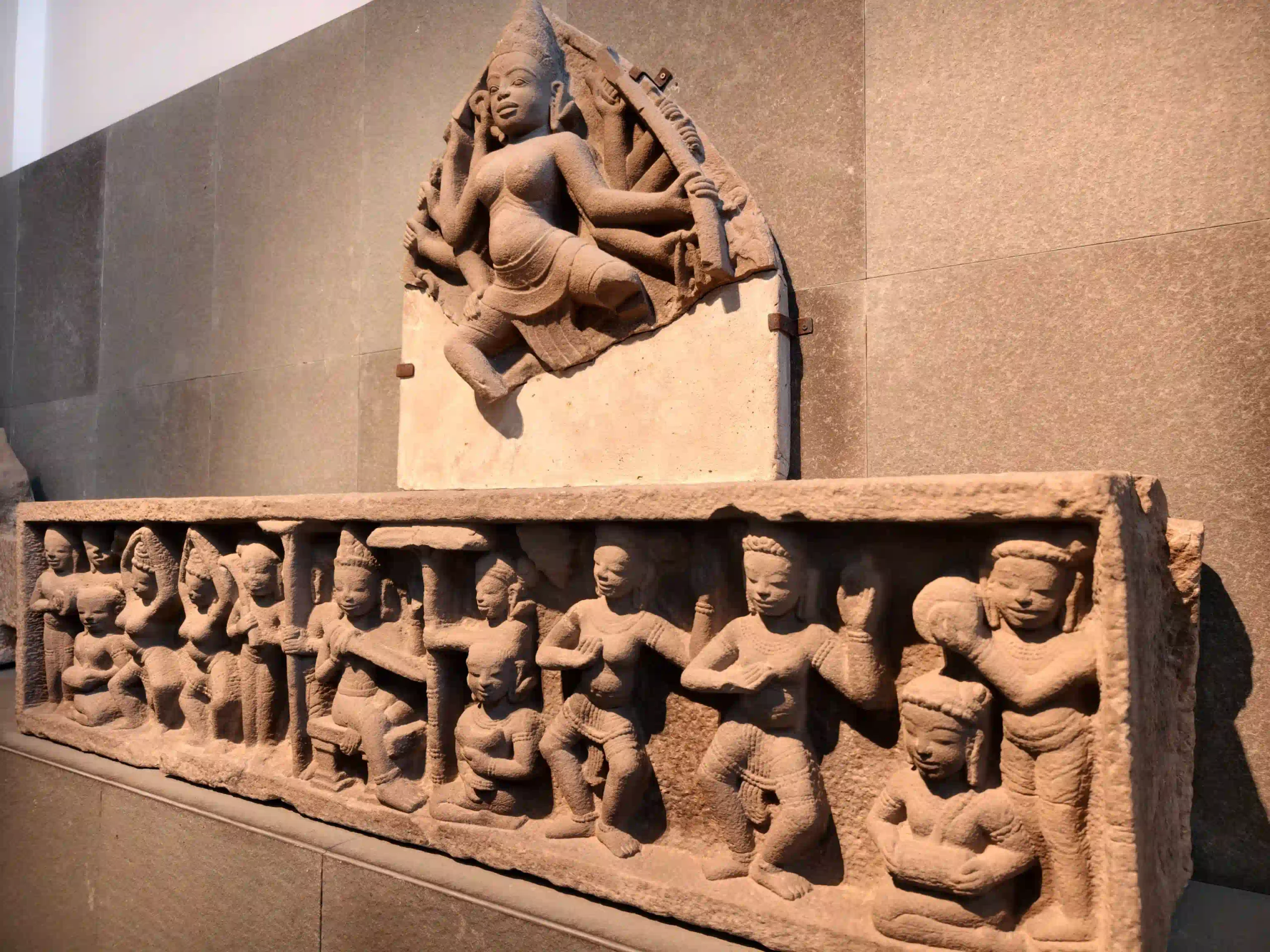
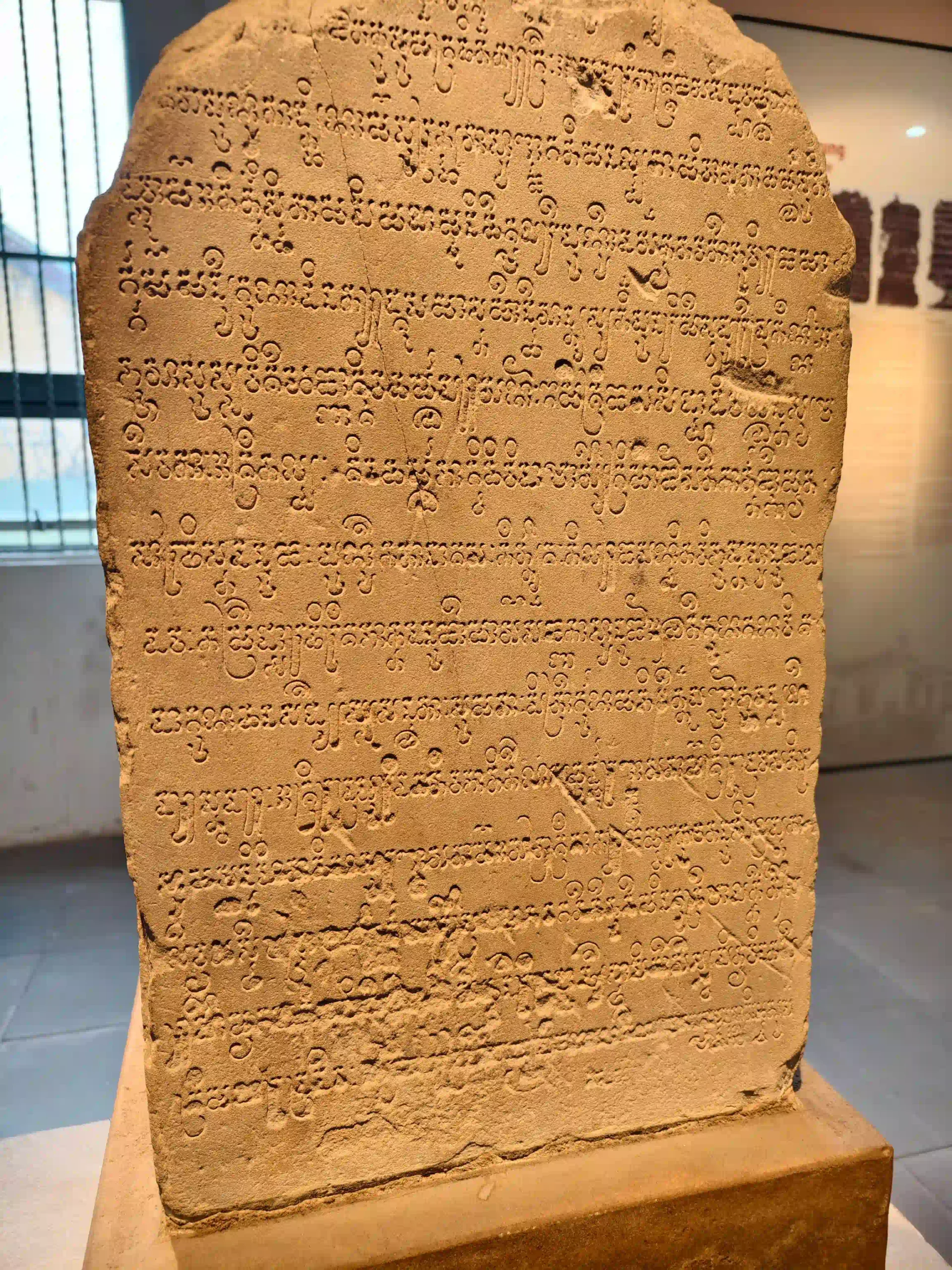
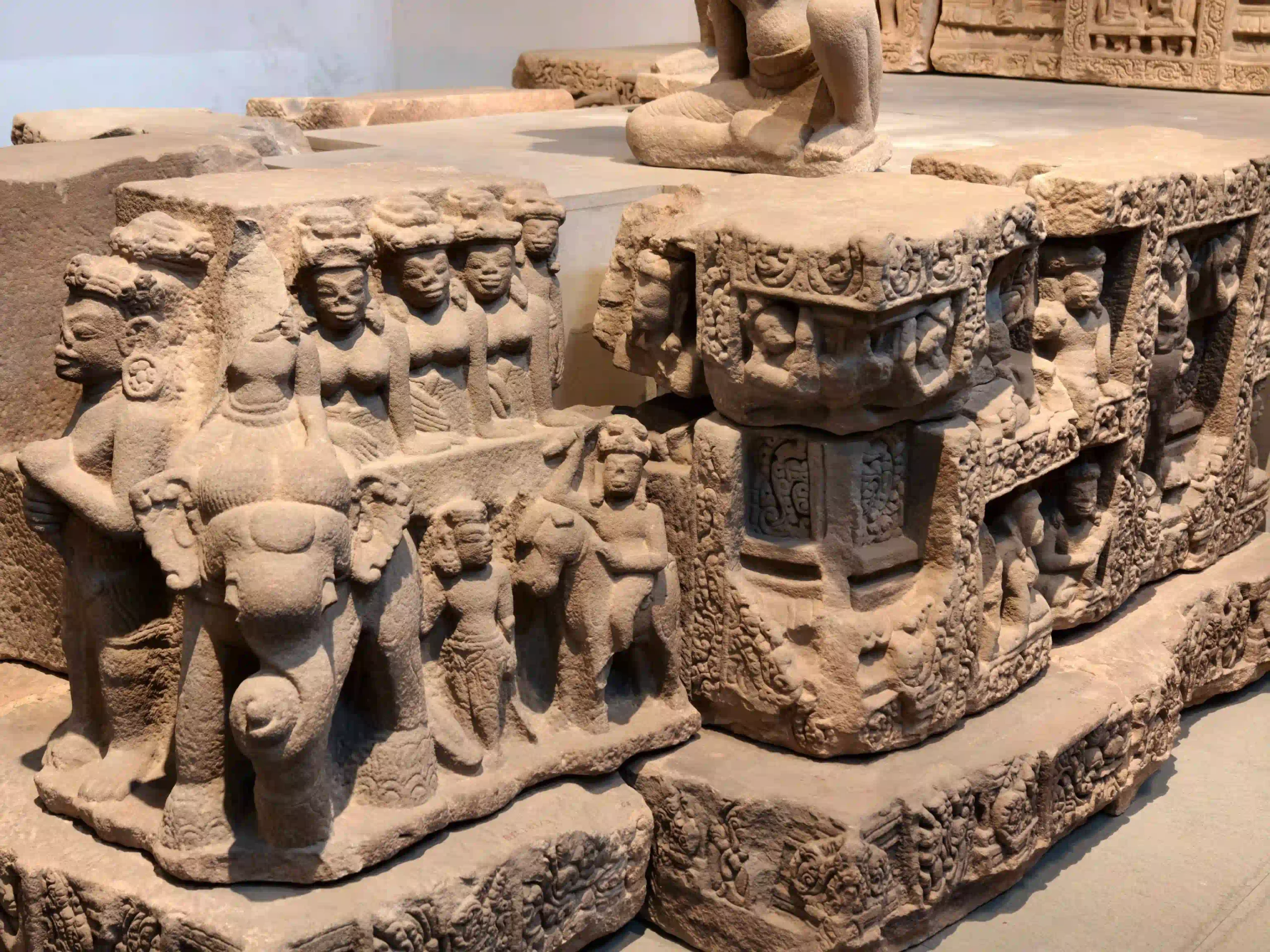
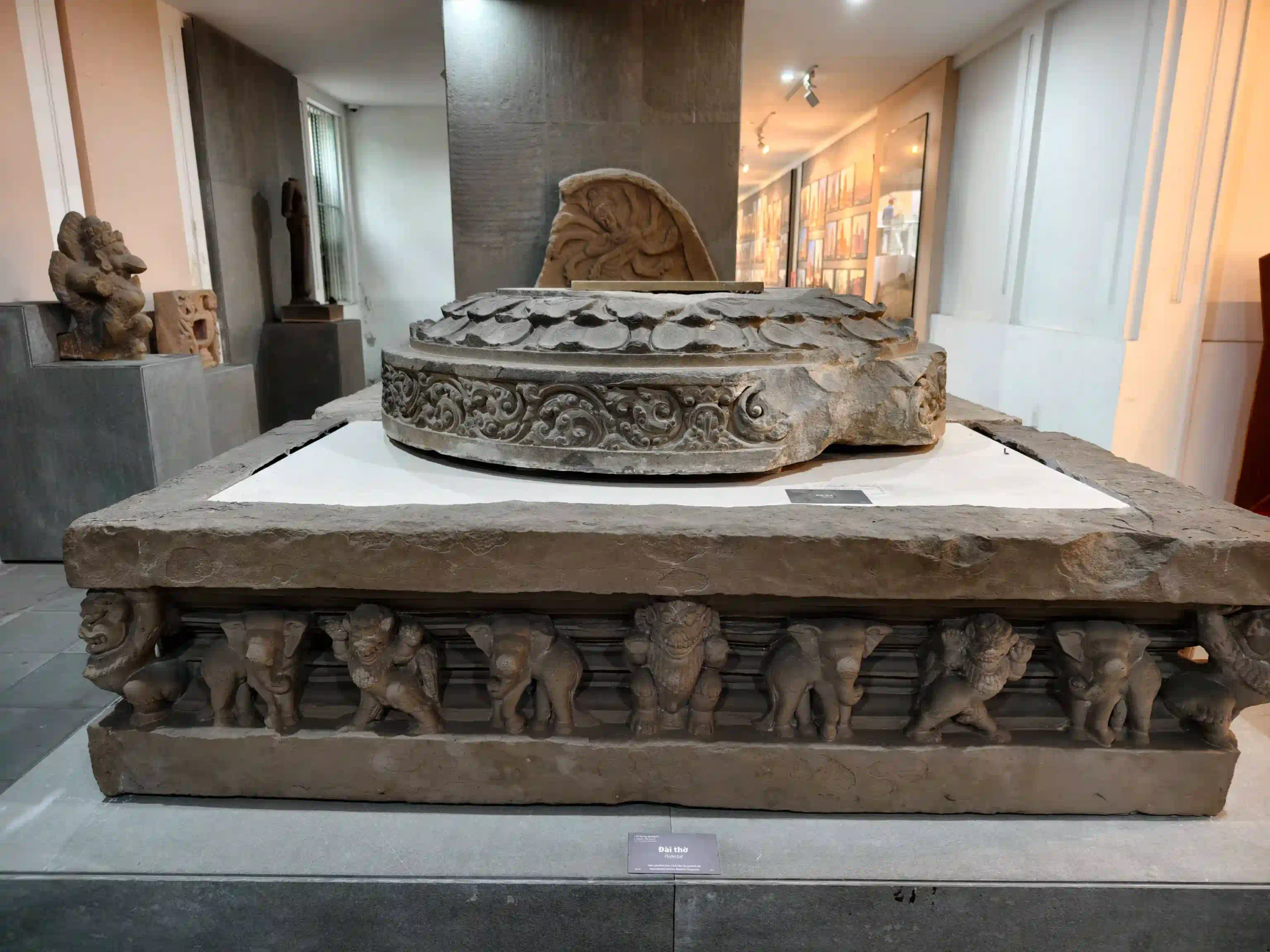
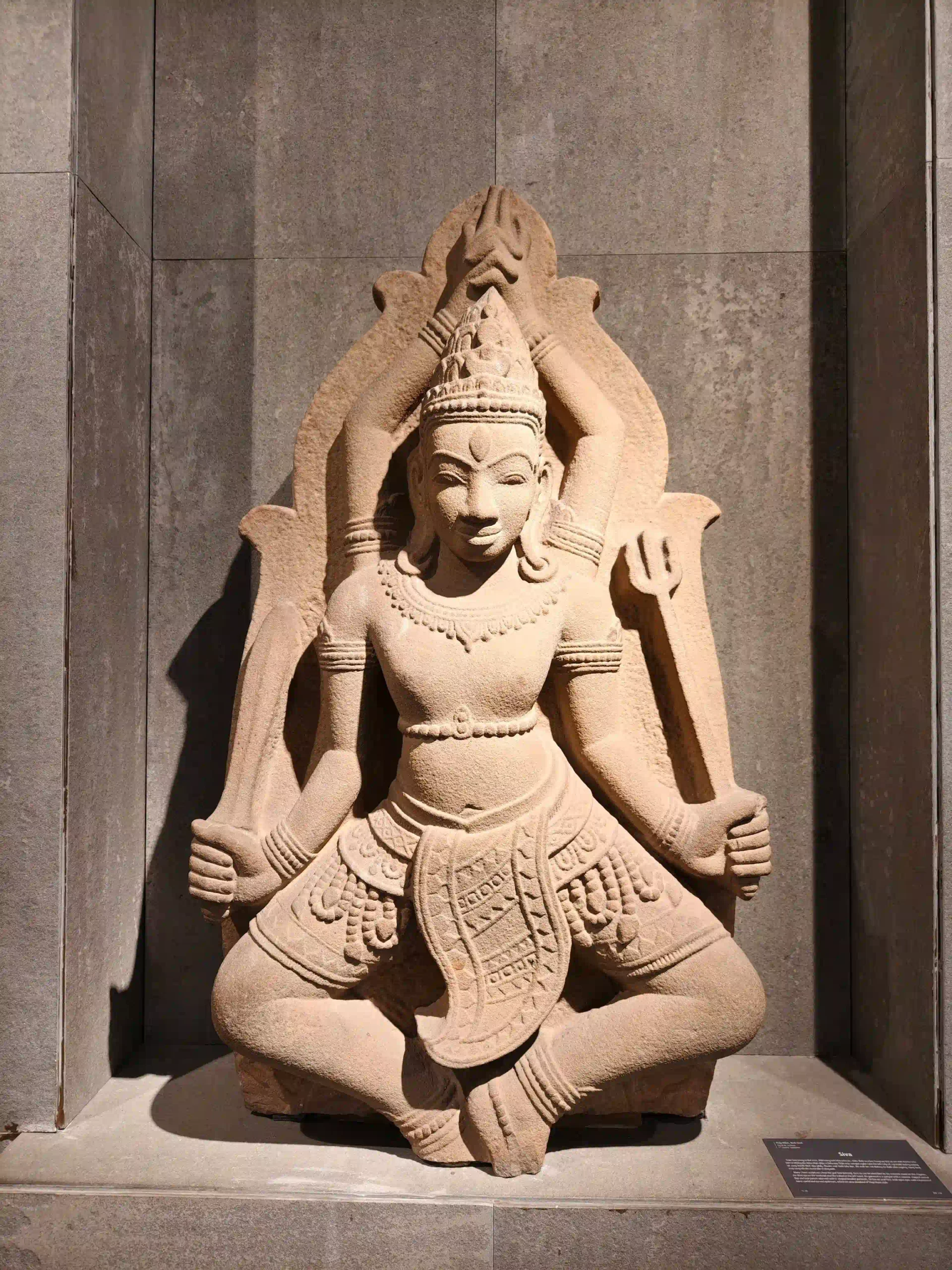
This is usually the first main area you walk into. Tra Kieu was the political capital of the Champa Kingdom for a long time.
The stuff in here is heavily Hindu. You are going to see a lot of carvings of Vishnu, Shiva, and Brahma.
The masterpiece in this room is the Tra Kieu Pedestal. It’s a massive square block of stone that used to hold up a bigger statue. The sides of the pedestal are carved with incredibly detailed scenes from the Ramayana (the ancient Indian epic). Even if you don’t know the story of the Ramayana, just look at the detail.
The people who carved this a thousand years ago were doing it with basic hand tools, and the proportions of the bodies and the movement in the carvings are amazing.
2. The My Son Room
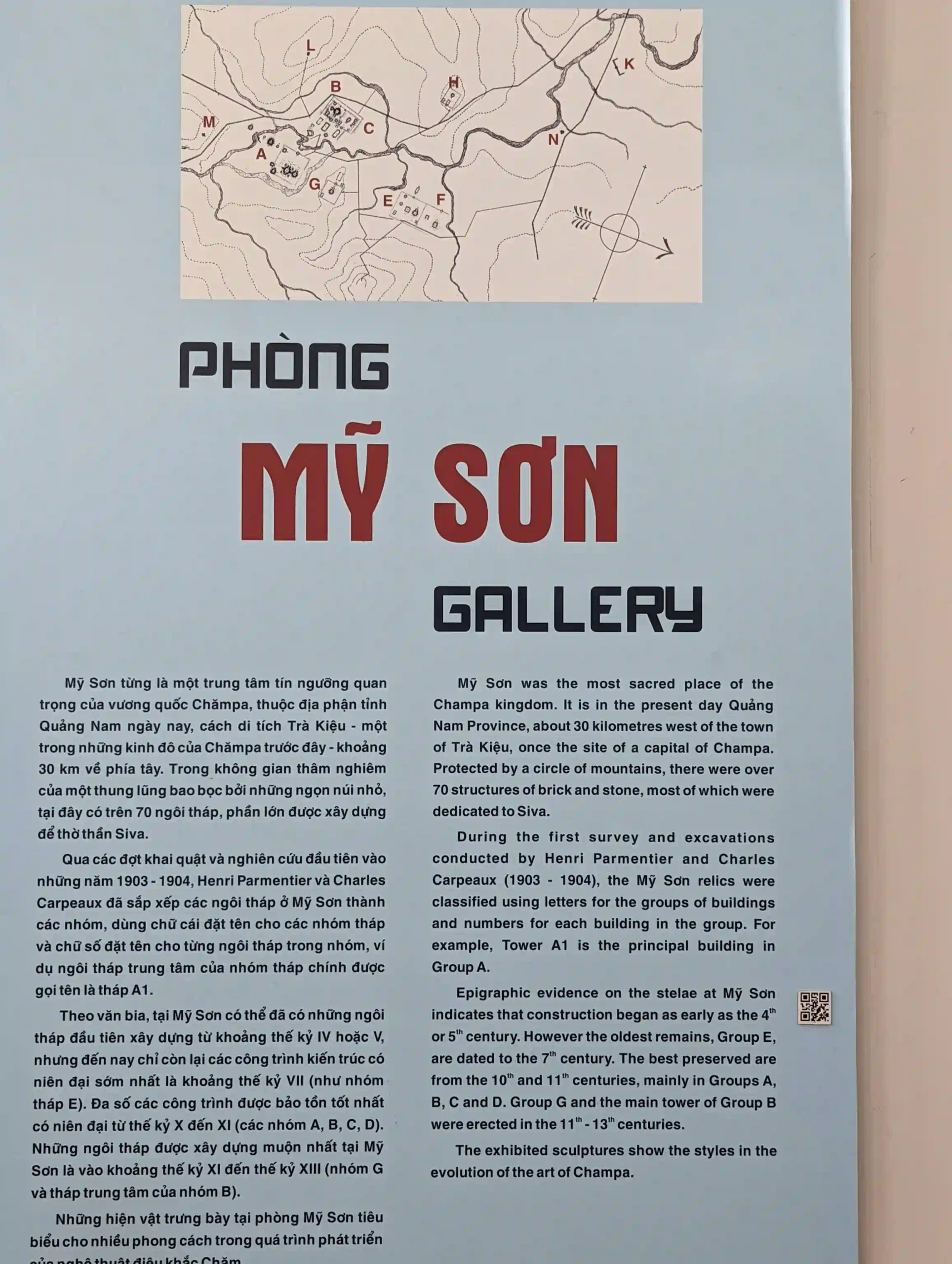
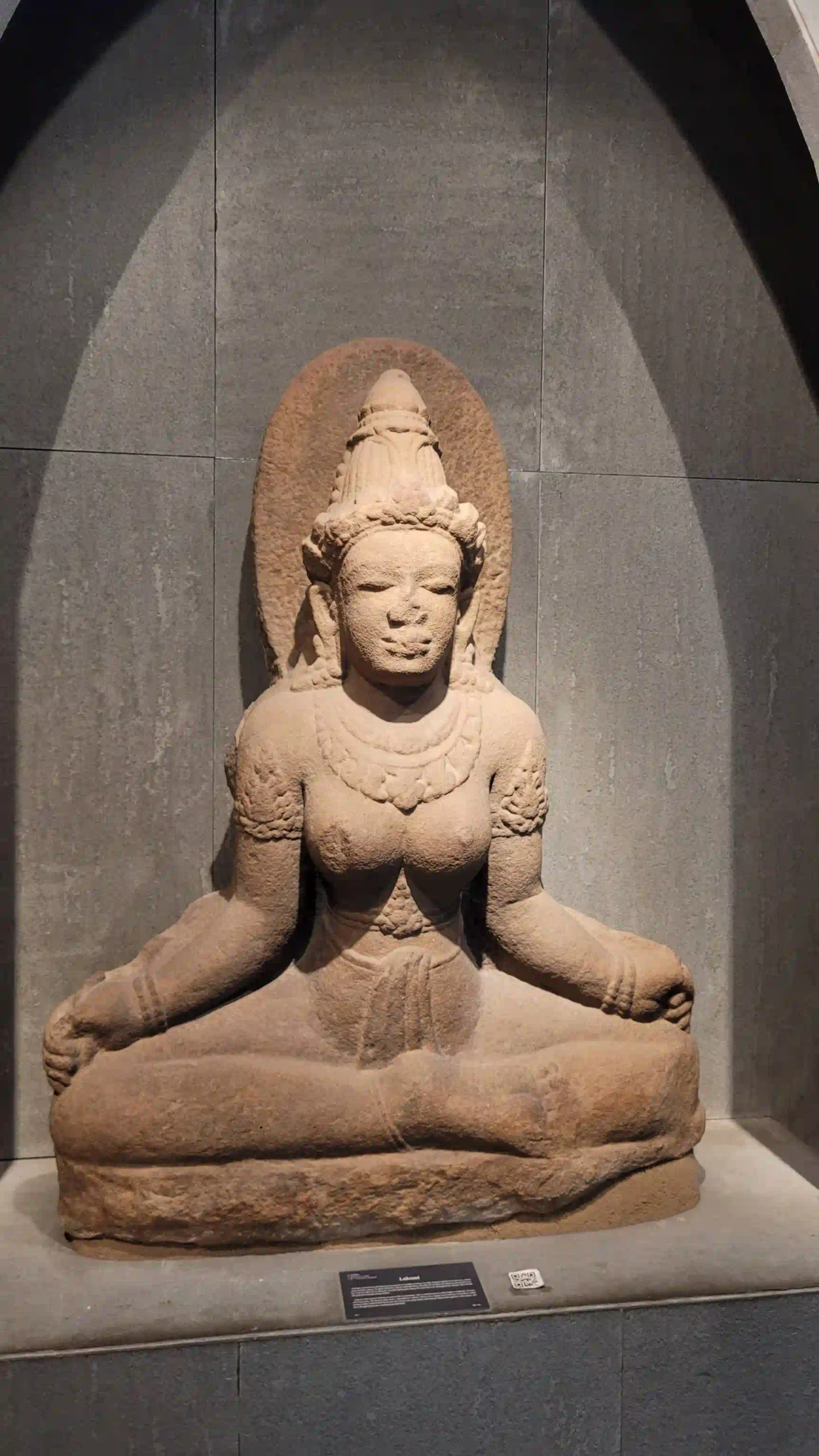
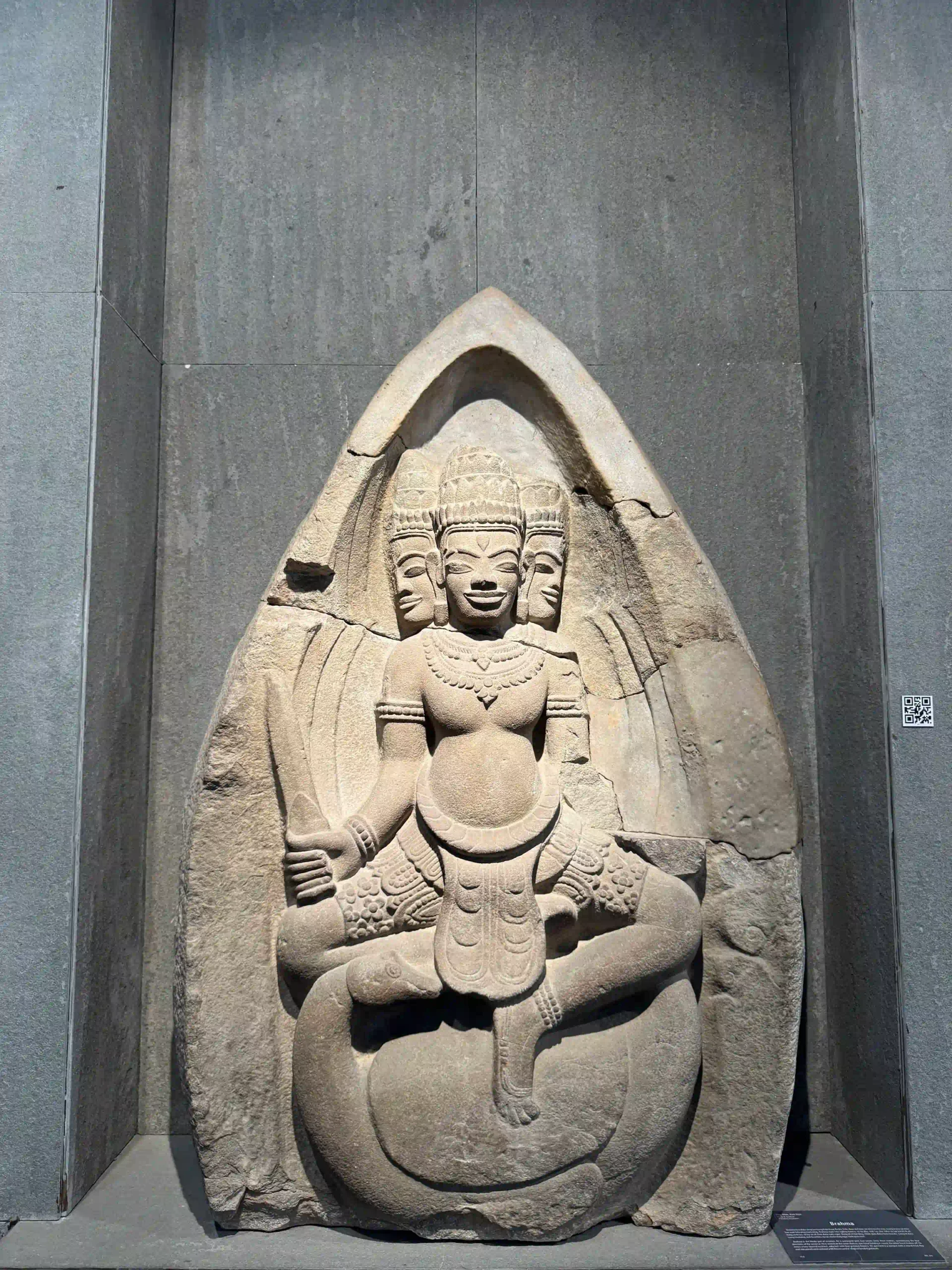
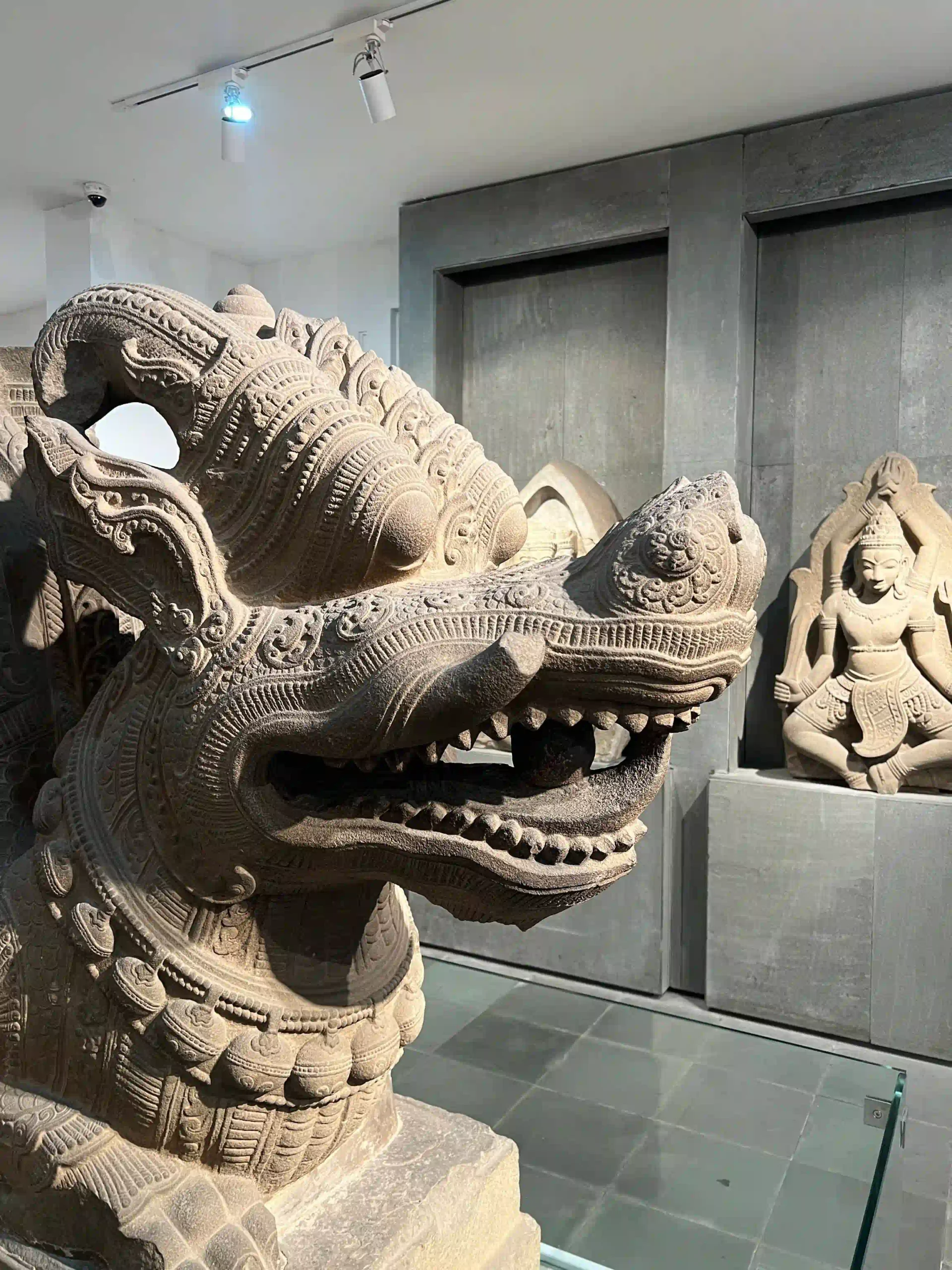
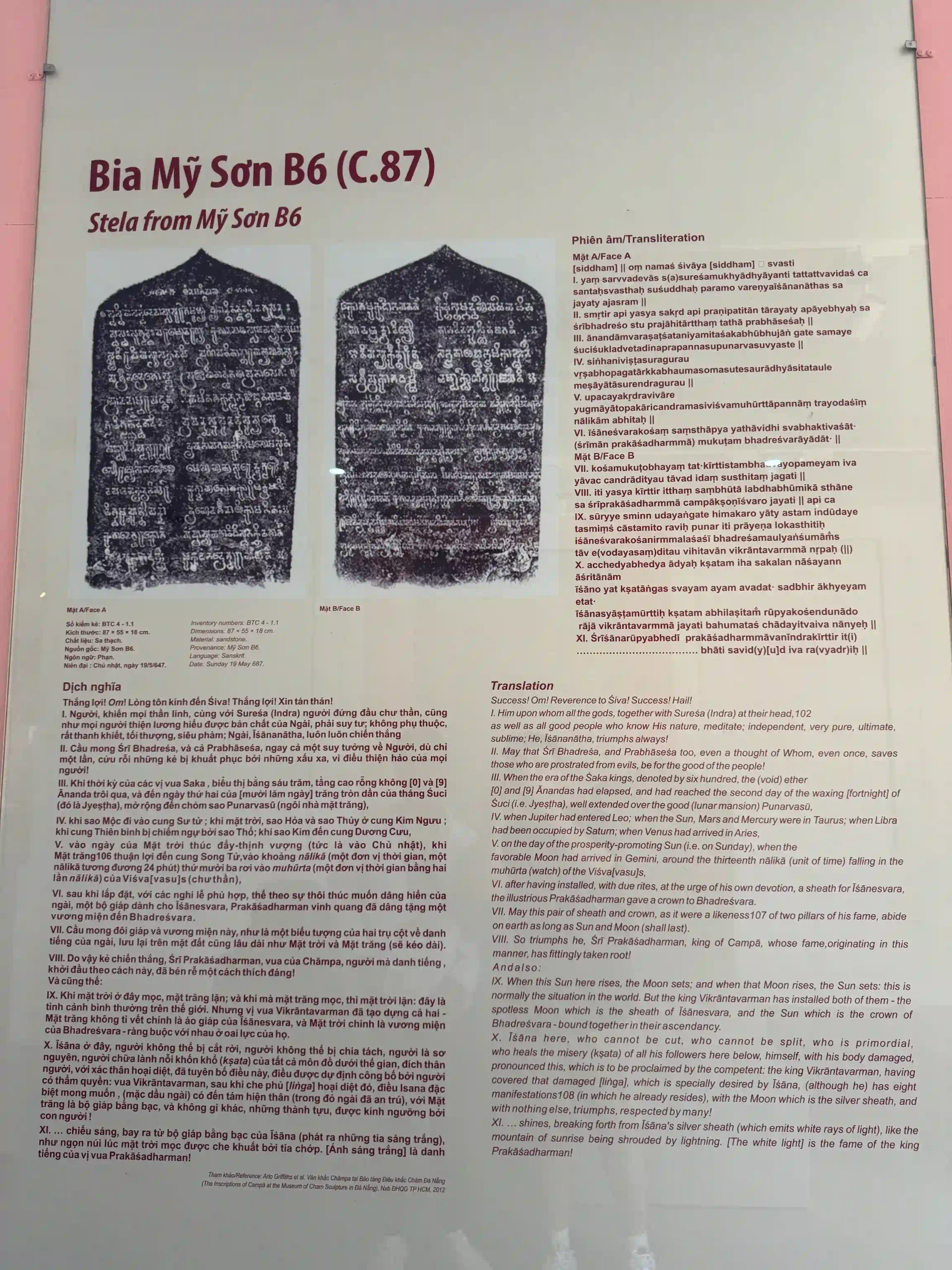
My Son was the religious center of the Champa Kingdom. If you have already taken a day trip to the My Son Sanctuary ruins, this room will make a lot of sense. When the French excavated My Son, they took the best, most intact statues and brought them here to protect them from looters and the weather.
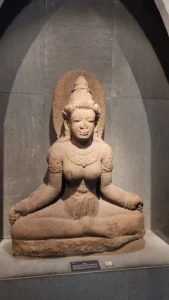
This room has a lot of Shiva statues. Shiva was the main god the Cham kings worshipped. You will see Shiva dancing, Shiva meditating, and Shiva holding various weapons.
You will also see a lot of Ganesha statues here. Ganesha is the god with the elephant head. These are usually the crowd favorites because they are easy to recognize.
3. The Dong Duong Room
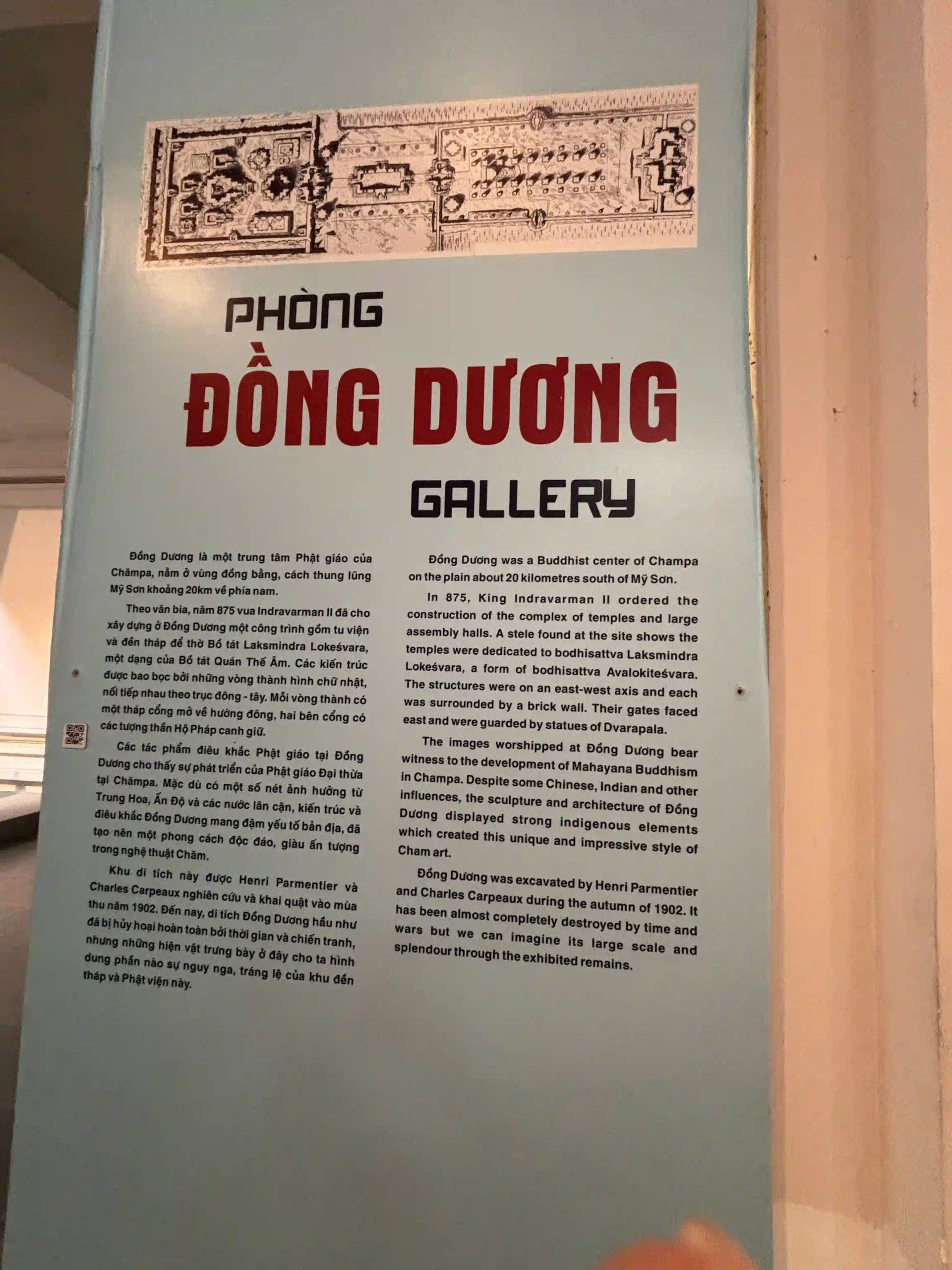
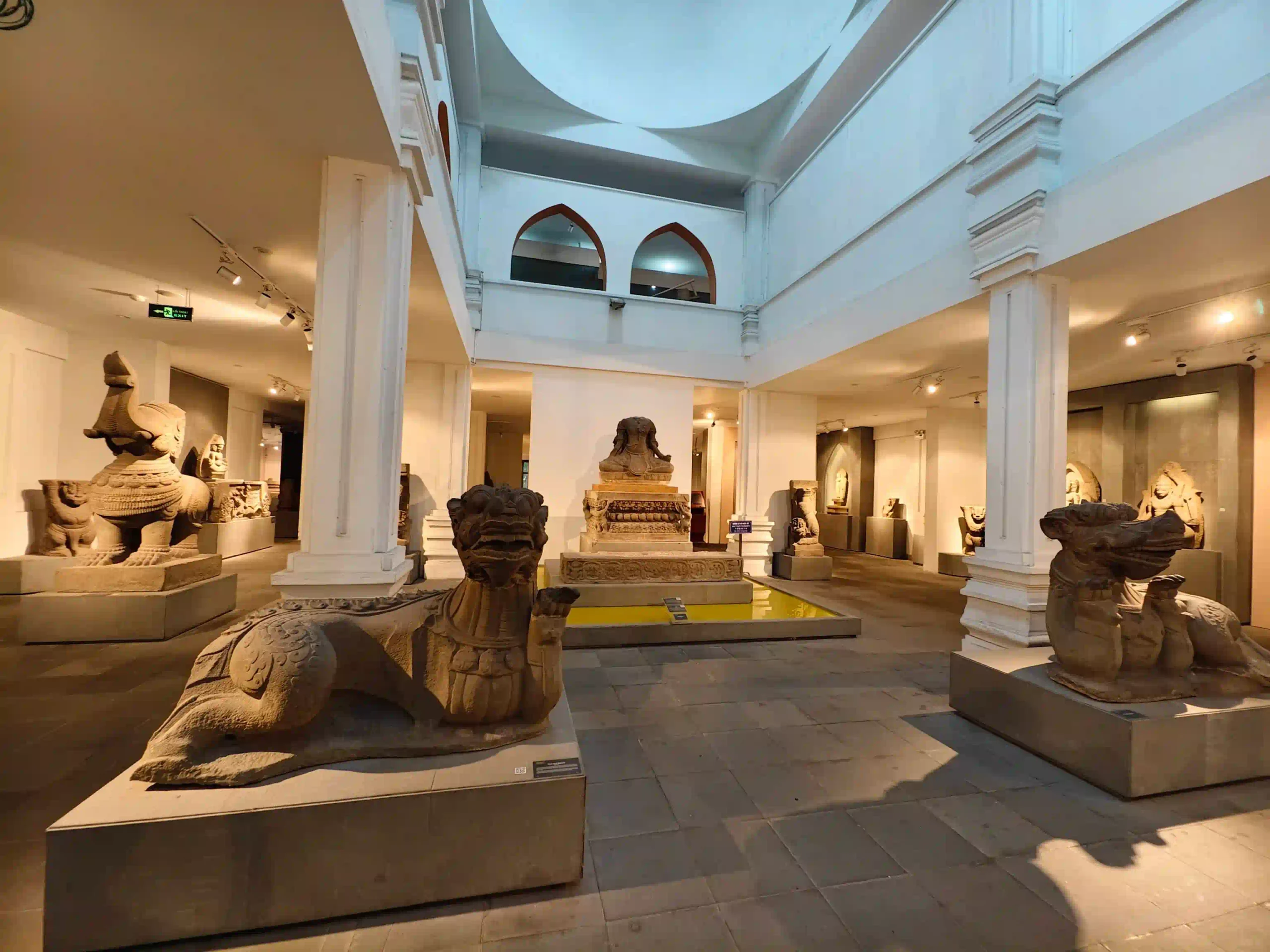
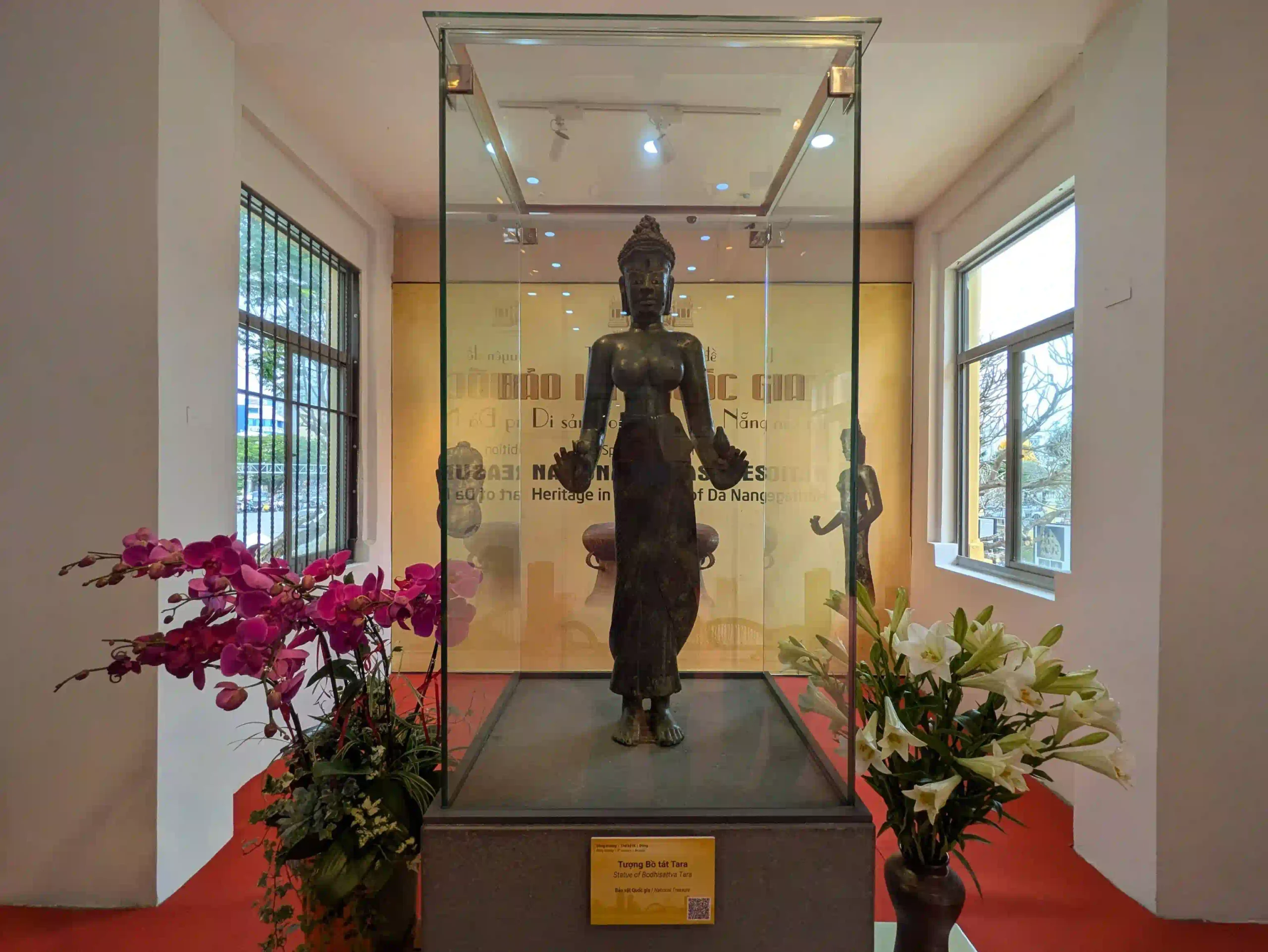
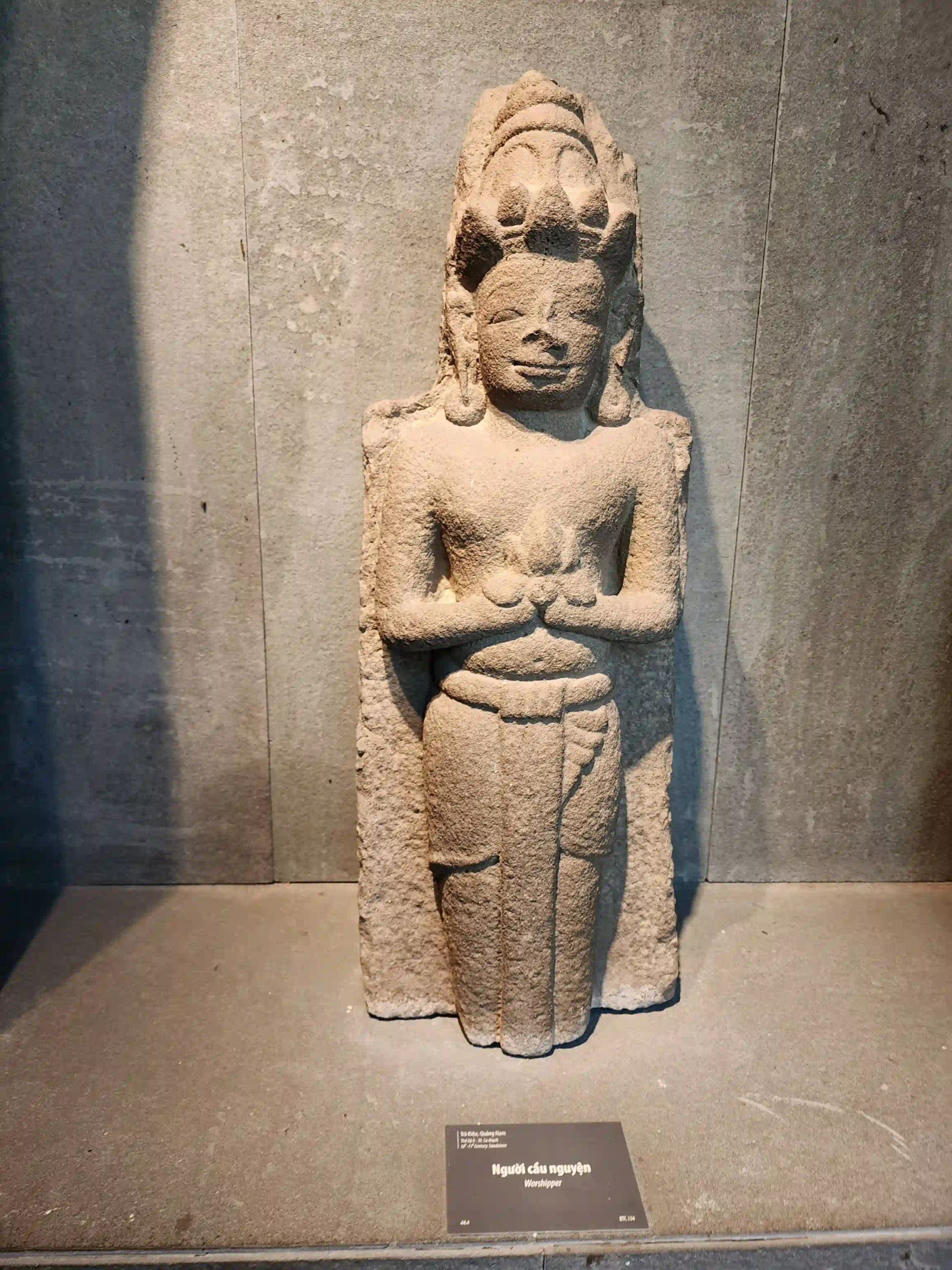
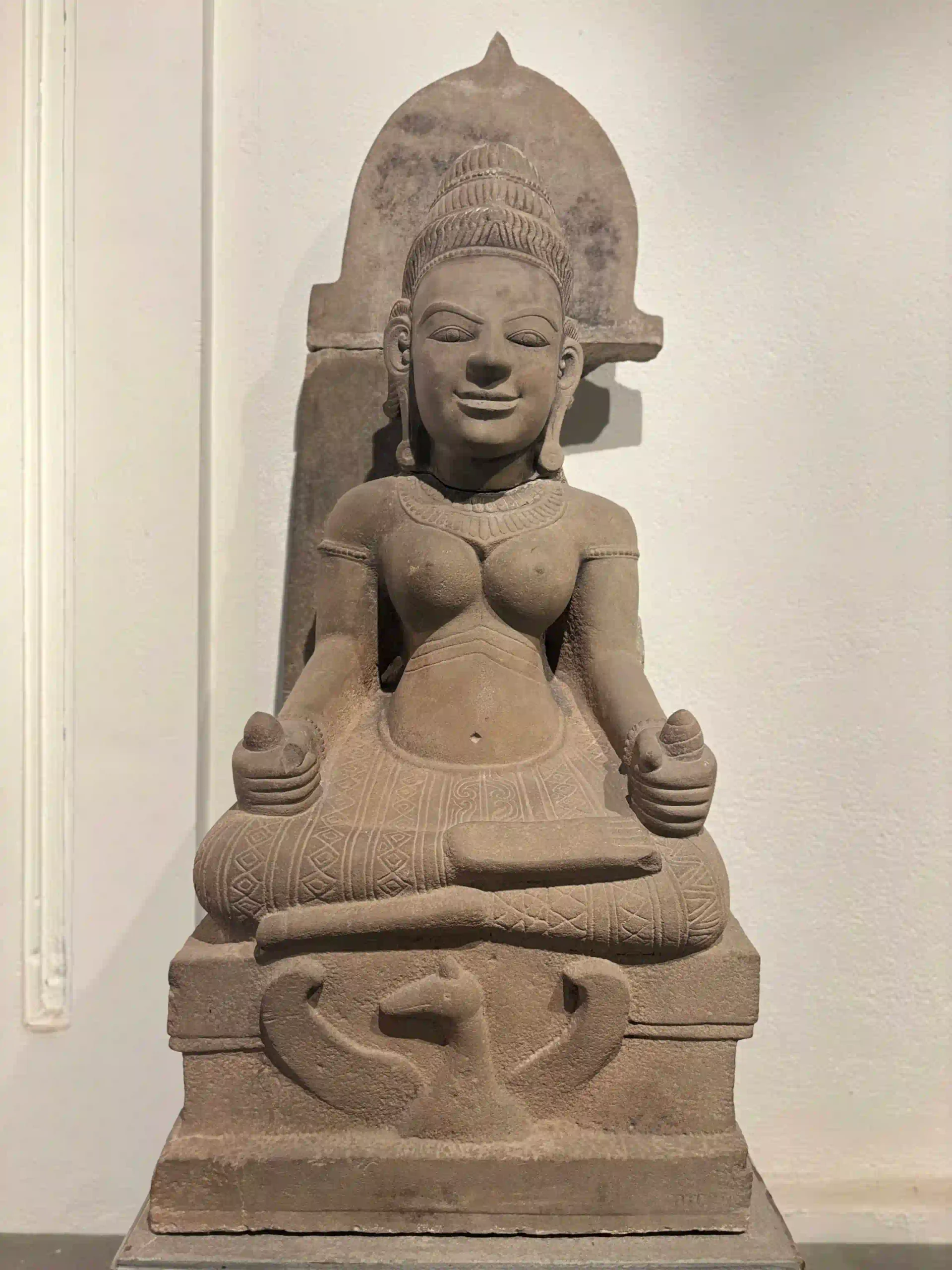
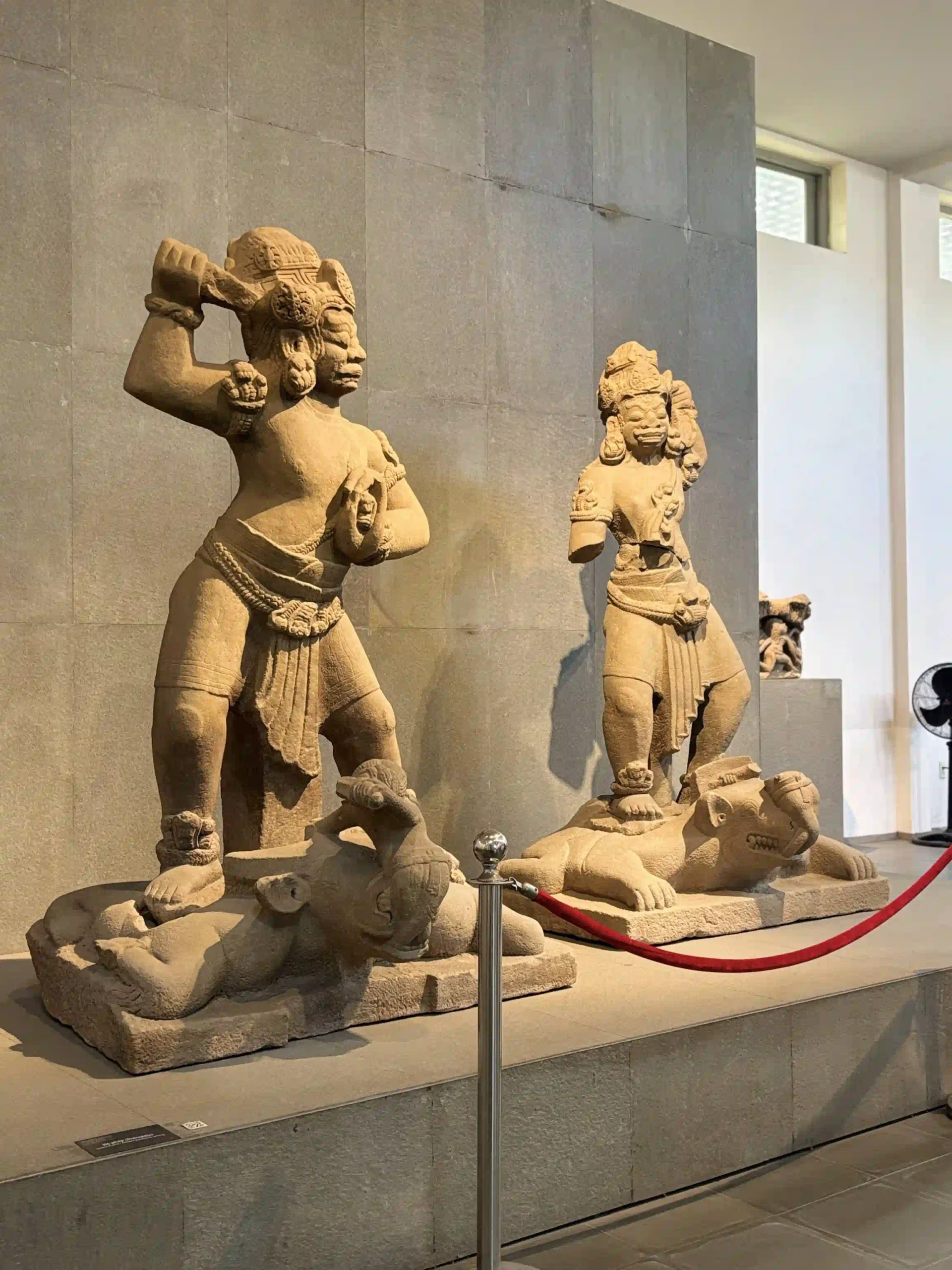
This room feels different from the others. Dong Duong was a Buddhist monastery complex built in the 9th century. So instead of Hindu gods, you are looking at Buddhist art.
The style of the carvings here is very distinct. The faces on the statues have thick lips, broad noses, and very intense expressions. It doesn’t look like the typical serene Buddha statues you see in modern Vietnamese pagodas. It looks older and heavier.
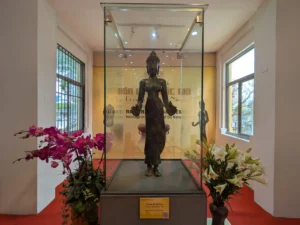
The most famous piece in the entire Da Nang Museum of Cham Sculpture is from Dong Duong. It is the Statue of Tara.
Tara is a Buddhist savior goddess. The statue is made of bronze, and it is huge, almost four feet tall. It is incredibly rare because most bronze statues from that era were melted down for weapons or coins during the centuries of wars.
It was actually found by accident by some local villagers in the 1970s. It is kept behind glass, and it is the one thing in the museum you absolutely have to stop and look at.
4. The Thap Mam Room
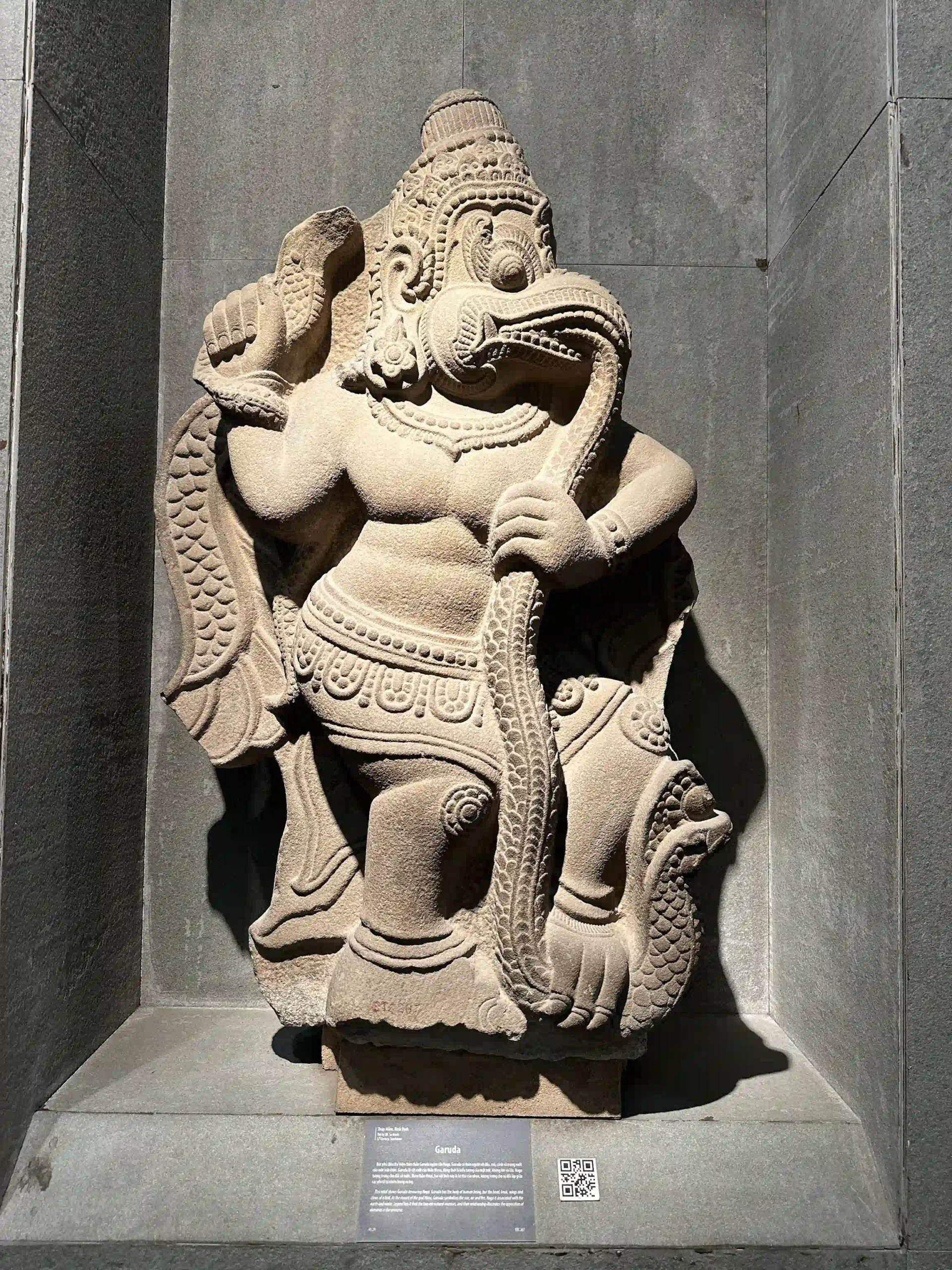
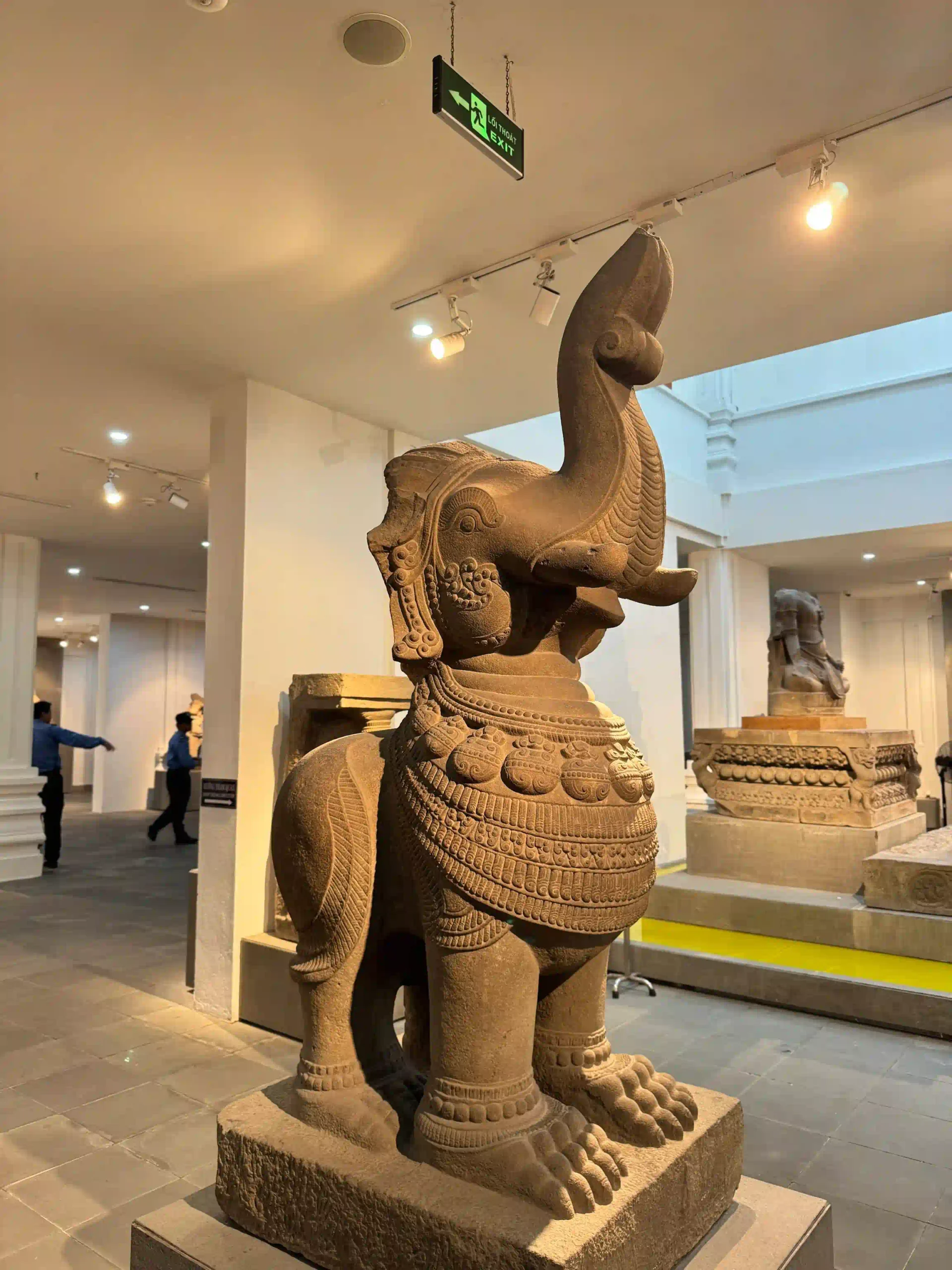
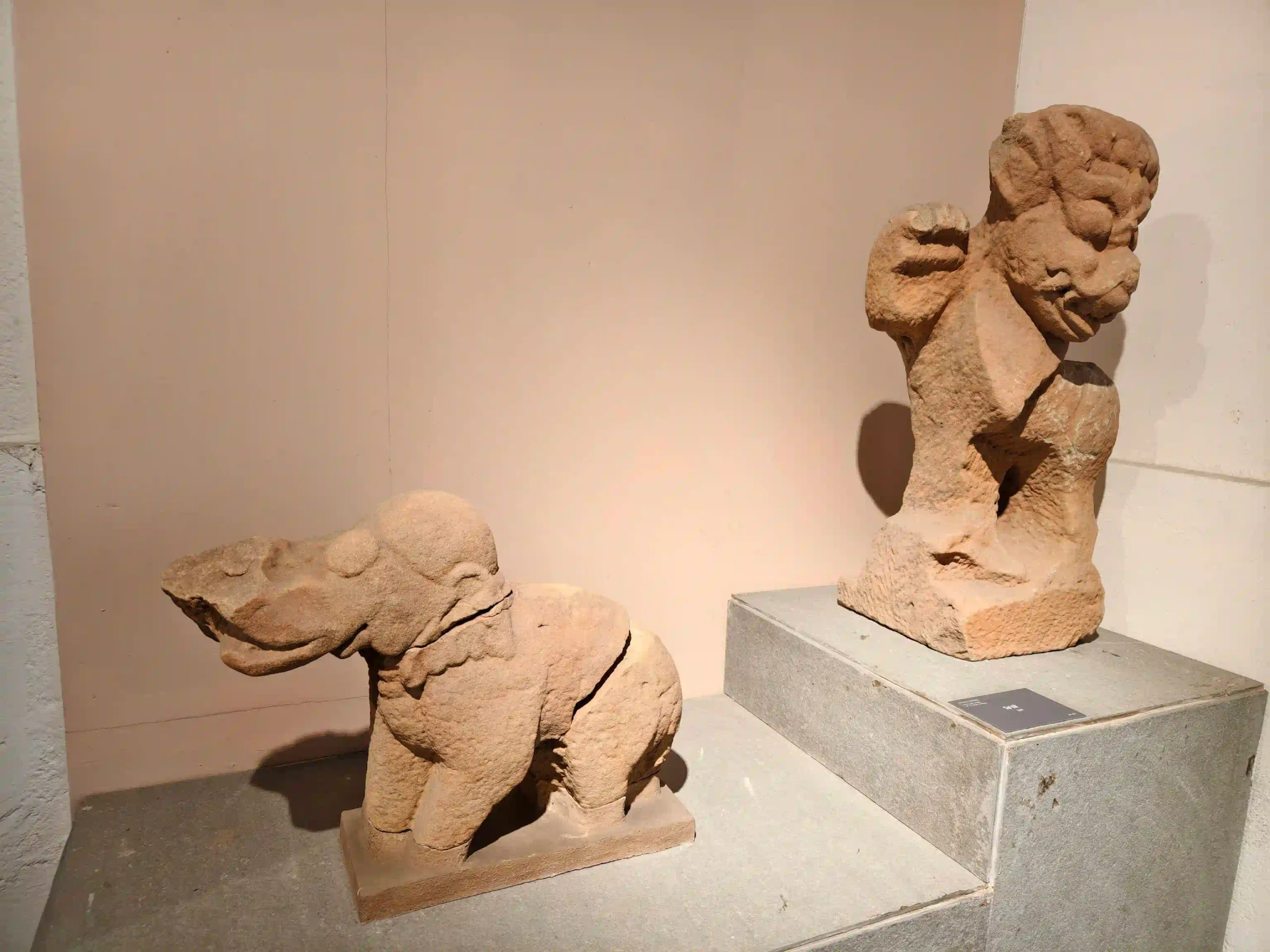
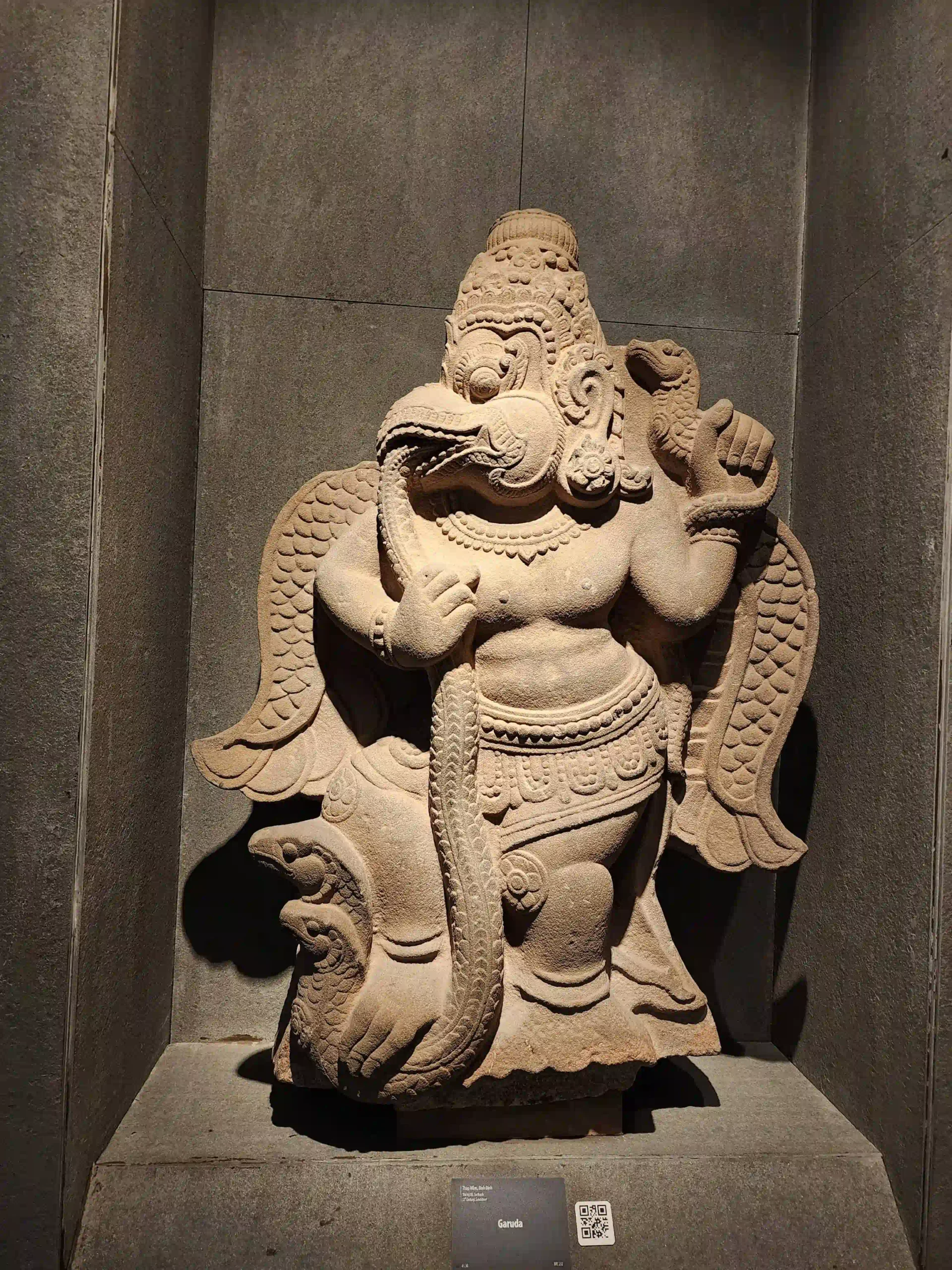
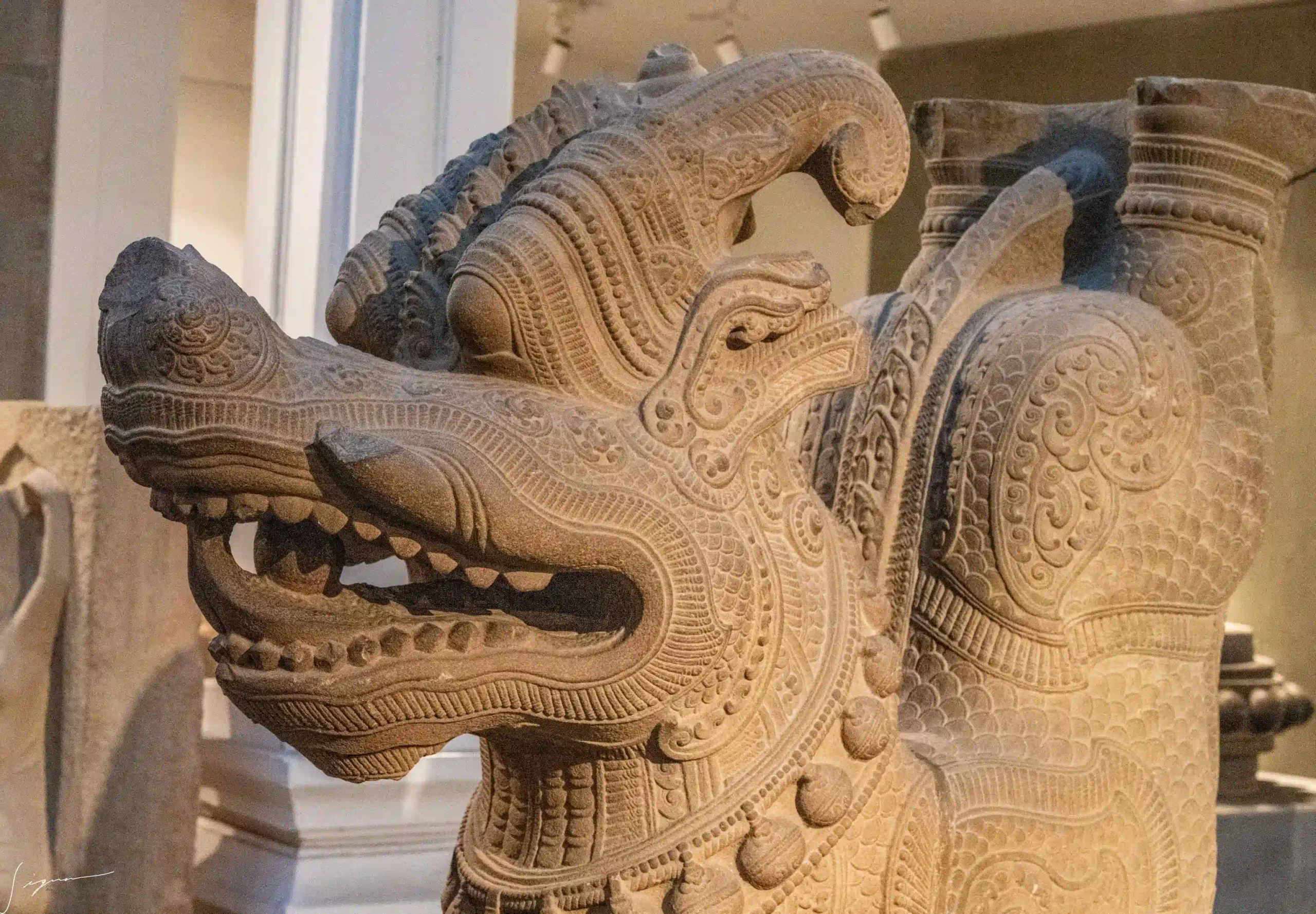
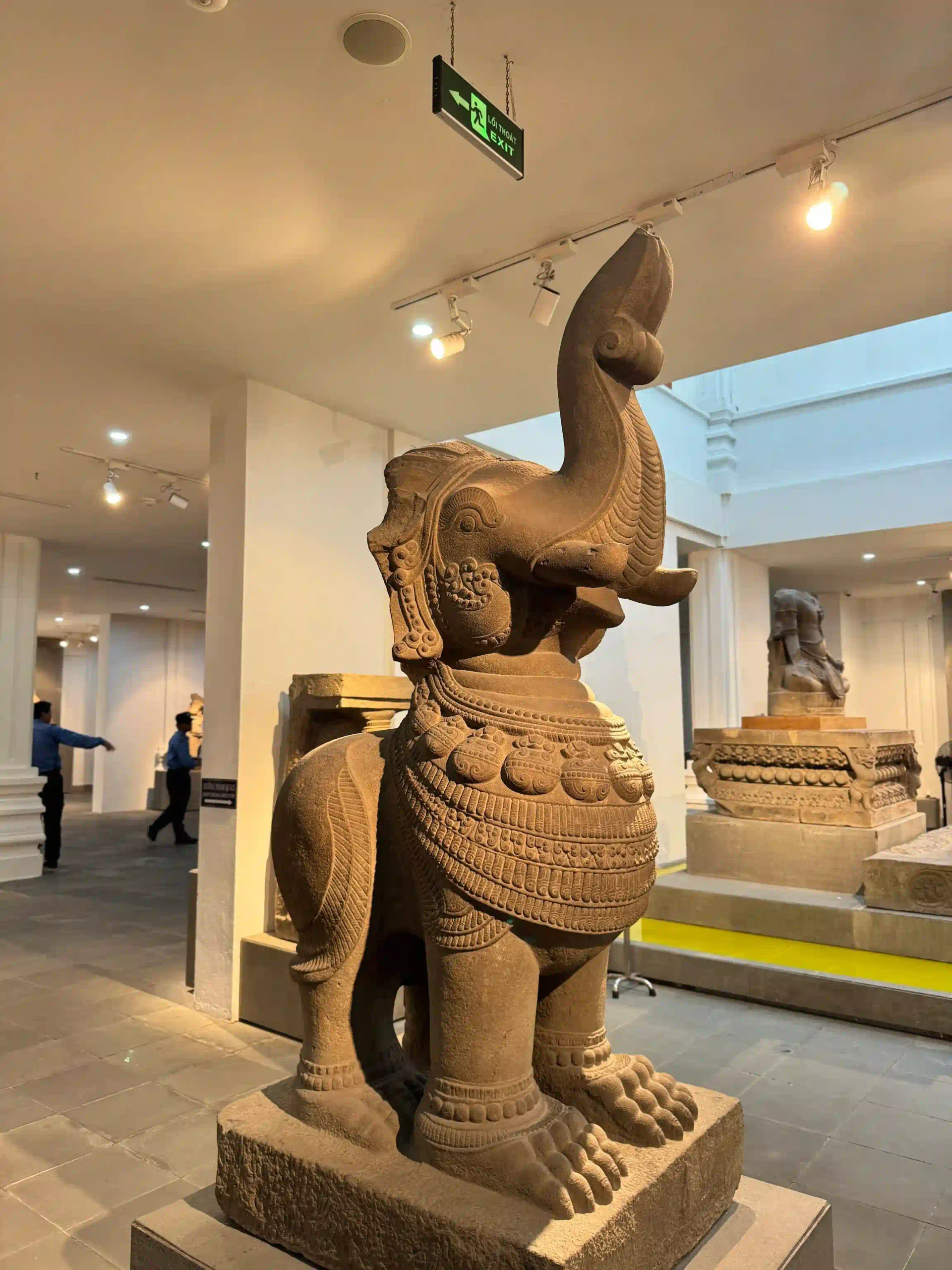
This is from a later period in Champa history, around the 12th to 14th centuries, when the kingdom was being pushed further south by the Vietnamese.
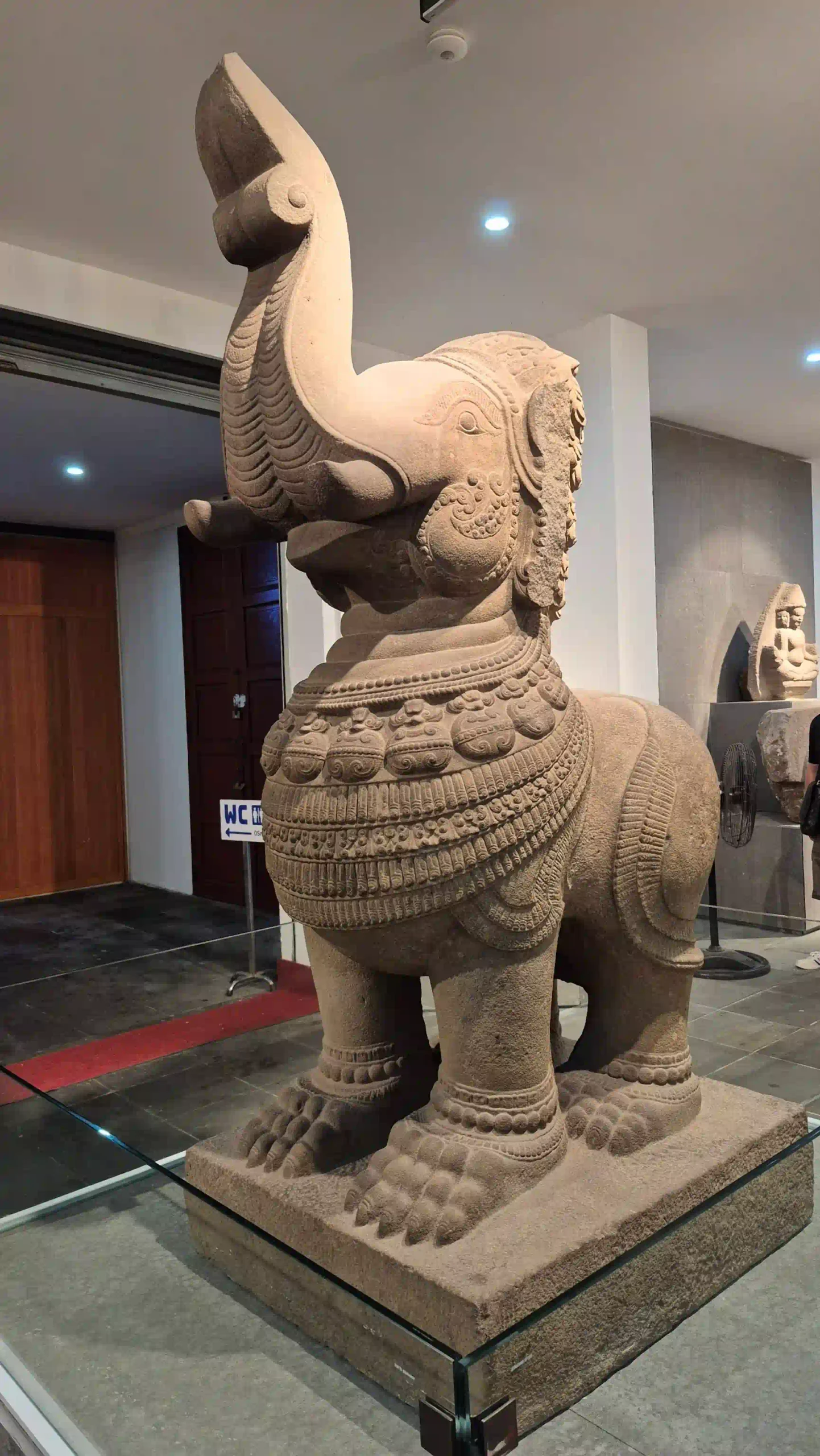
The art here gets a bit wilder. You will see a lot of mythical creatures. There are Makaras (sea monsters with elephant trunks and crocodile jaws), Garudas (half-man, half-bird creatures), and massive stone elephants. The carvings are very stylized and almost look like fantasy art.
The Linga and Yoni (Explaining the rocks)
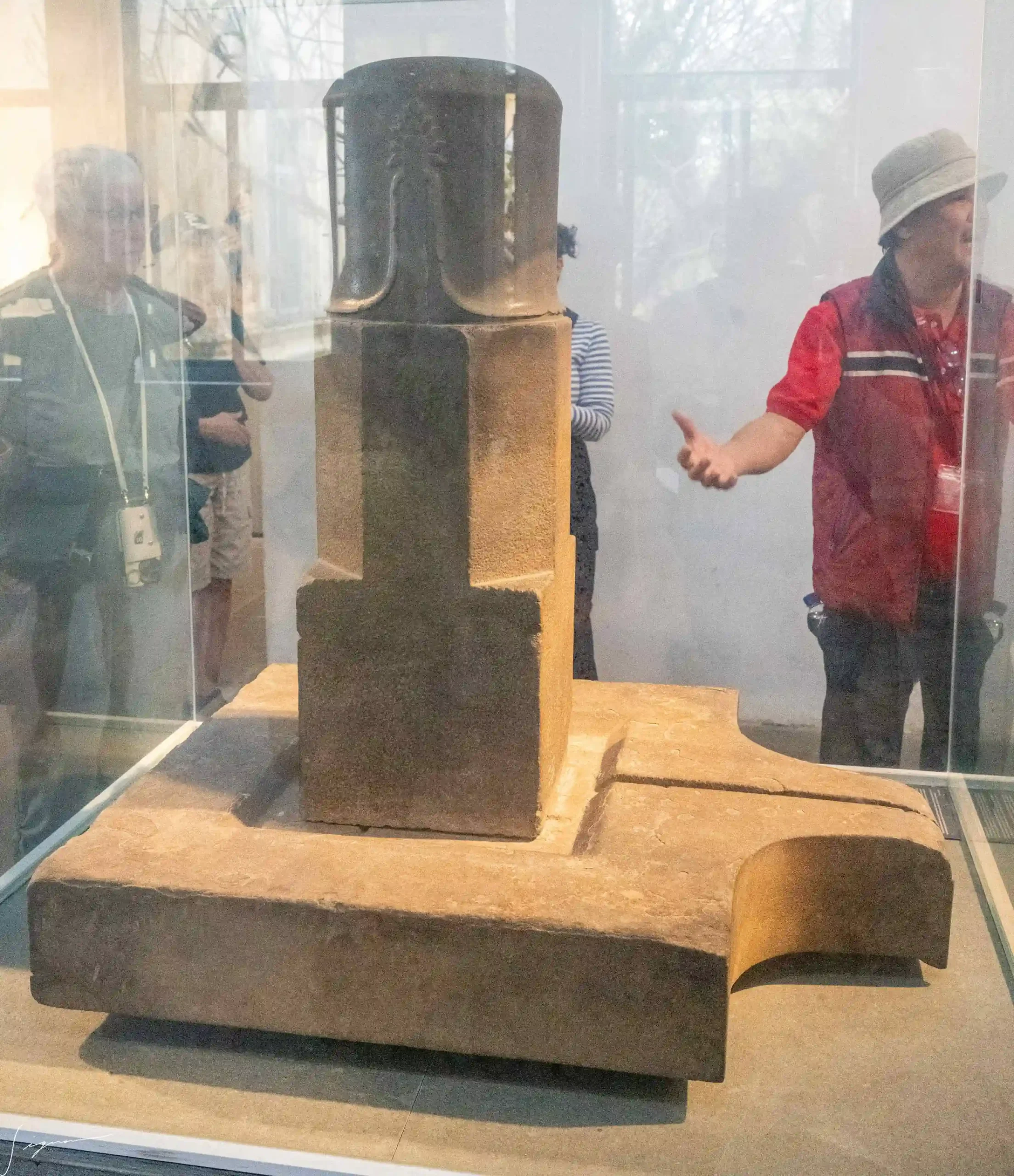
I have to include a section on this because if you walk through the museum, you are going to see dozens of these things, and tourists always look confused or start making jokes.
You will see a lot of stone displays that look like a square base with a spout on one side, and a cylindrical stone pillar sticking up out of the middle.
The square base is the Yoni. The pillar is the Linga.
Yes, they represent the female and male reproductive organs. But it’s not meant to be a crude joke. In Hinduism, the Linga is the symbol of the god Shiva, representing creation and energy. The Yoni represents the goddess Shakti. Together, they represent the absolute source of all life and the universe.
In the ancient Cham temples, the priests would pour water or milk over the top of the Linga. The liquid would wash down, collect in the Yoni, and flow out of the spout. That liquid was then considered holy water.
So when you see a room full of these stone pillars, you aren’t looking at ancient pornography. You are looking at the most sacred religious objects the Cham people had. Every single temple had one in the center.
Pairing the museum with My Son Sanctuary
A lot of people ask if they should do the museum or go to the My Son Sanctuary ruins.
The honest answer is that you should do both, but you have to do them in the right order.
My Son Sanctuary is the actual archaeological site. It’s out in the jungle. You walk around the ruined brick towers. It is very atmospheric, but the towers are mostly empty. The statues that used to be inside them are gone.
The Da Nang Museum of Cham Sculpture is where all those statues went.

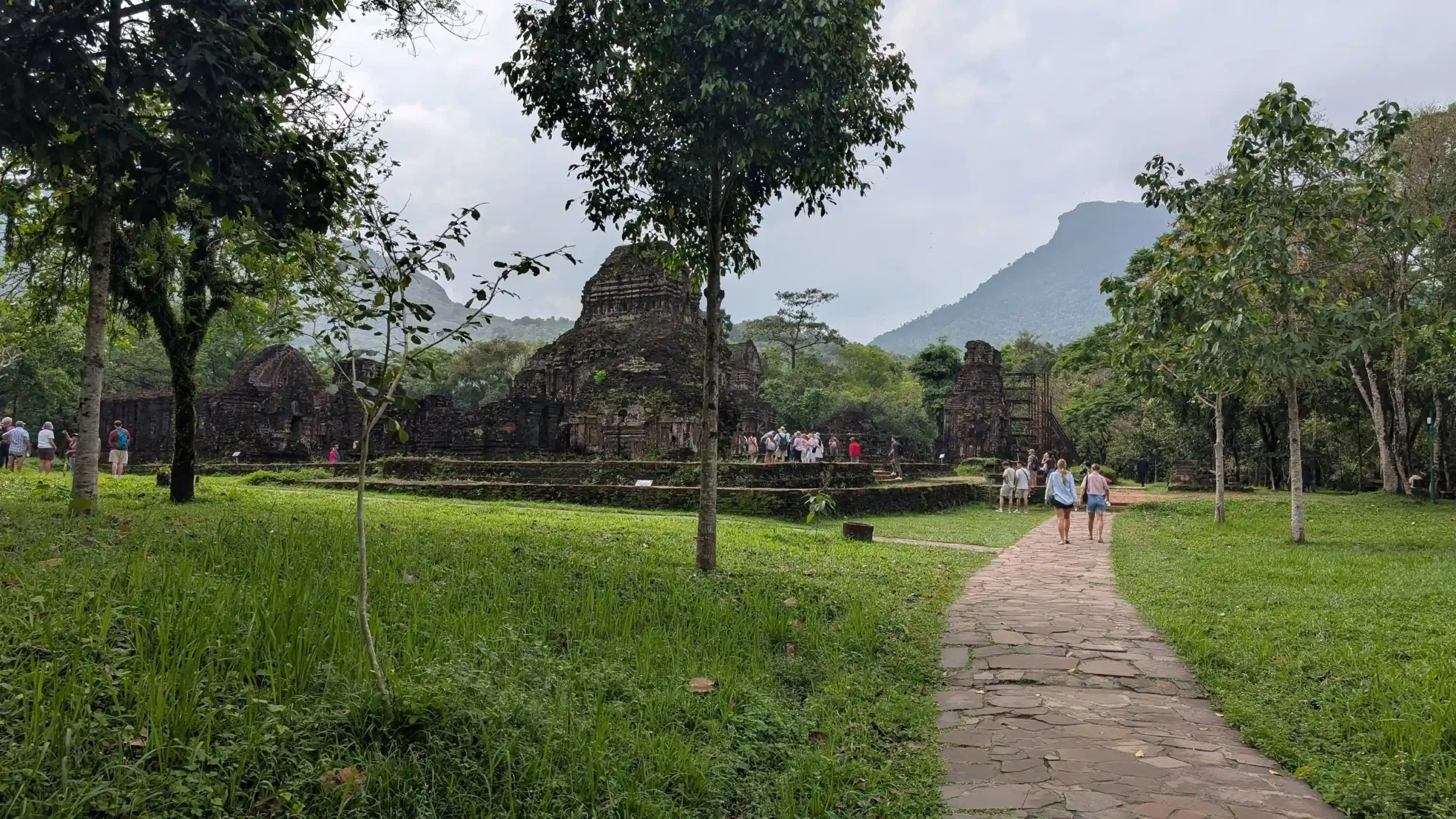
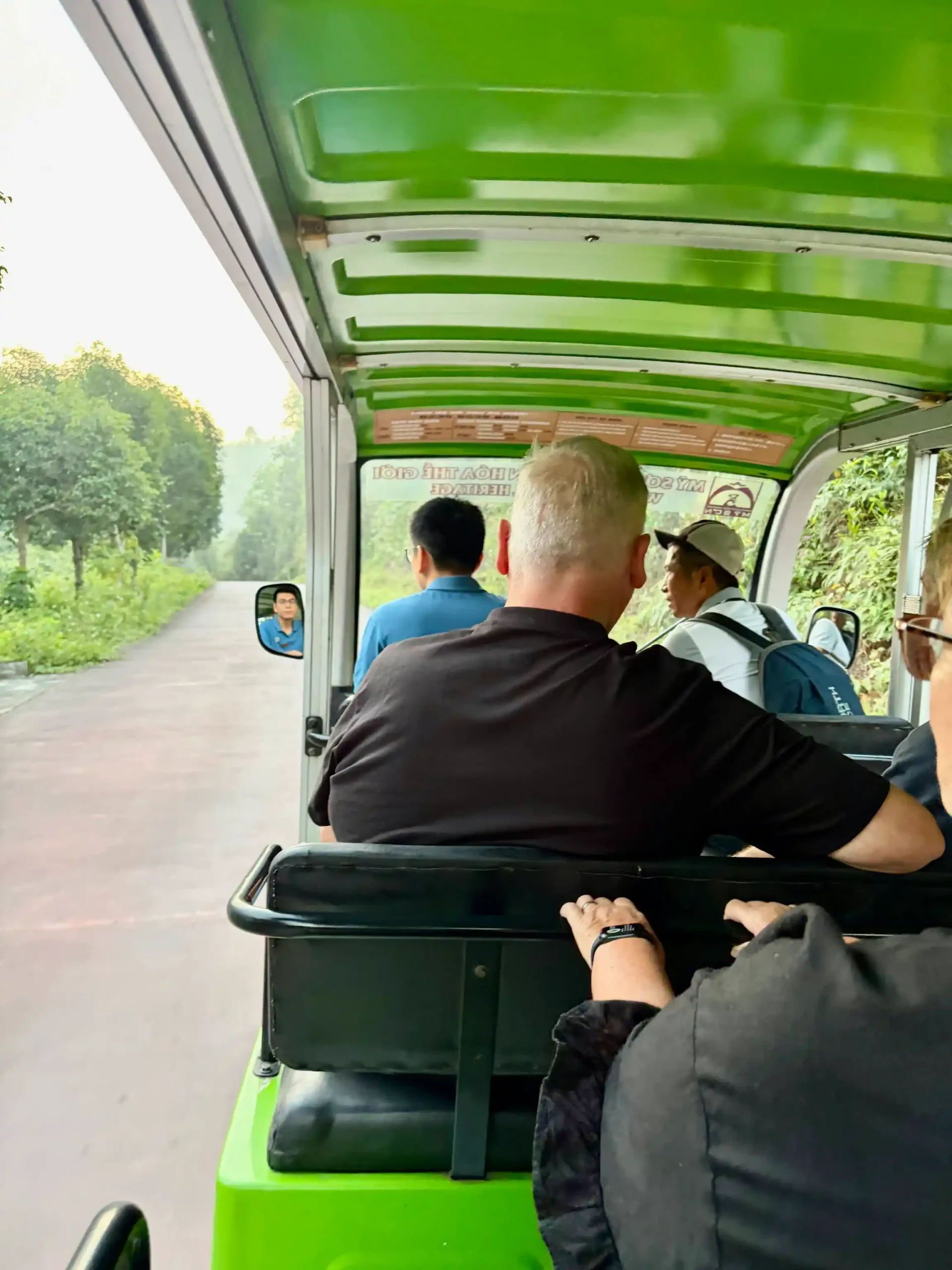
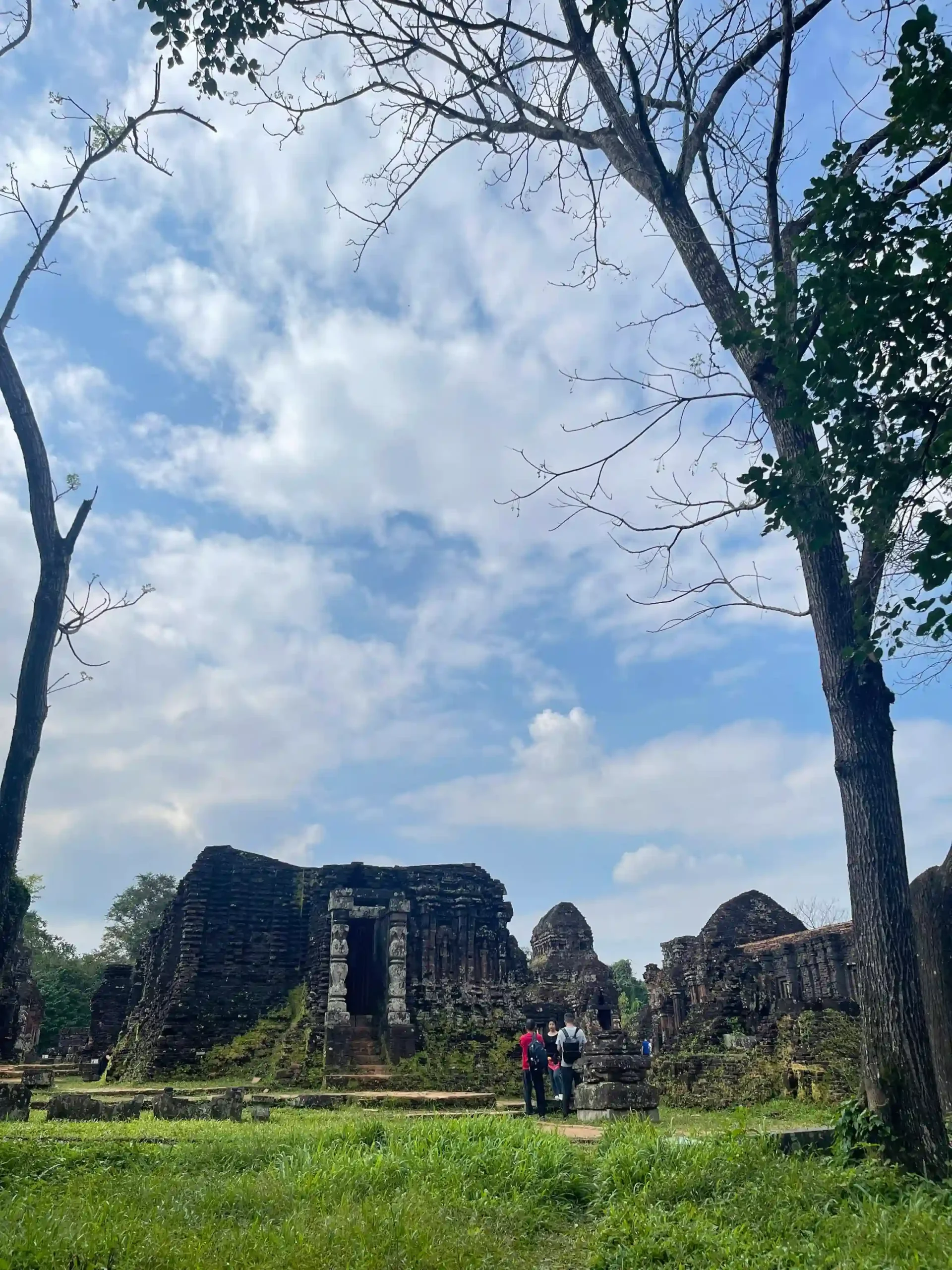
If you have the time, go to My Son Sanctuary first. Walk around the ruins, feel the heat of the jungle, and see the scale of the temples. Then, the next day, come to the museum in Da Nang. When you see the statues in the museum, you will be able to picture exactly where they used to sit inside those brick towers in the jungle. It connects the dots in your head.
If you only have time for one, it depends on what you like. If you want an outdoor adventure and cool photos of ruins, go to My Son. If you don’t want to sit on a bus for two hours and just want to see the actual art, go to the museum.
What to do after the museum
The museum is not huge. Even if you read every single plaque, you are going to be done in about an hour and a half. Most people finish in 45 minutes.
Because of where it is located, it’s really easy to tie this into the rest of your day.
When you walk out the front gate, you are right on Bach Dang street. This is the main road that runs along the Han River.
If you turn left and walk up Bach Dang, you are walking towards the city center. The sidewalk here is wide and paved. There are dozens of cafes looking out over the river. Just pick one, order a Ca phe sua da (Vietnamese iced coffee with condensed milk), and sit under the fans to cool down.
If you are hungry, you are only about a five-minute Grab ride away from the Han Market area, where you can find endless street food stalls selling Mi Quang (the local turmeric noodle dish) or Banh Mi.
You are also right next to the tail of the Dragon Bridge. If you go to the museum late in the afternoon on a weekend, you can grab dinner nearby and then walk over to the bridge to watch the fire and water show at 9:00 PM.
Read more: I asked 50 locals to rank 5 best restaurants in Da Nang !
Is it boring?
I’ll be straight with you. If you have absolutely zero interest in history, religion, or art, then yes, you will probably find a building full of grey sandstone rocks boring. You should probably just go to the beach.
But if you have even a slight curiosity about the country you are visiting, the Da Nang Museum of Cham Sculpture is genuinely impressive.
Vietnam is changing so fast. Da Nang is full of massive glass hotels, neon lights, and modern bridges. It is easy to forget that people have been living here and building complex societies for thousands of years.
Walking through this museum is a quiet reminder of that. You are looking at things that were carved by hand a thousand years ago by a civilization that basically doesn’t exist anymore.
The fact that these statues survived centuries of jungle overgrowth, wars, and bombings, and are now just sitting quietly in a yellow building next to a busy traffic roundabout, is pretty wild when you think about it.
So skip the expensive tour guide. Pay your 60,000 VND. Put your headphones in, listen to the audio app, and spend an hour looking at some really old, really cool art. It’s worth the time.

Keep Exploring Da Nang
-
See & do UltimateMy best things to see in Da Nang if you only have 3 days ›
-
Spots Must readI tried 10 Da Nang activities so you know what to skip ›
-
SpotsEverything actually useful about Da Nang Dragon Bridge in 2026 ›
-
SpotsHighlights & my honest Da Nang paragliding review in 2026 ›
-
SpotsThe safest & 4 best massage places in Da Nang for foreigners ›











 Tiếng Việt
 한국어
한국어 中文 (中国)
 日本語
日本語 ไทย
ไทย Deutsch
 Español
 Destinations
 Instagram
 Facebook
 X (Twitter)
 Threads
 Tiktok