









 Ha Giang
 Hanoi
Hanoi Ho Chi Minh City
 Ha Long
 Sapa
Sapa Mekong Delta
 Da Nang
 Hue
Hue Hoi An
 Ninh Binh
 Da Lat
 Nha Trang
 Phan Thiet
 Phu Quoc
 Quang Binh
 Quy Nhon
 Vung Tau
 Thai Nguyen


So, the Ha Giang Loops. Everyone talks about it. You see the photos. And yeah, it lives up to the hype. I just got back from riding it myself, and it’s something else. This isn’t just a scenic drive; it’s a proper motorbike adventure through some of the wildest, most beautiful parts of Northern Vietnam. Forget your usual tourist spots. This is raw, real, and a bit rugged.
This guide isn’t some generic rundown. It’s built from my own experience – what I learned, what worked, and what you genuinely need to know to make your Ha Giang Loops trip happen. No B.S., just the practical stuff from someone who actually did the kilometers.
Quick Look: The Absolute Must-Knows for the Ha Giang Loops
- What it is: The Ha Giang Loops is a renowned motorbike circuit in Northern Vietnam, famous for its breathtaking mountain passes, terraced fields, and deep gorges. It’s fundamentally a motorbike adventure.
- My 3 Proven Itineraries: I’ve detailed 3-day, 4-day, and 5-day itineraries that are realistic and cover the essential sights. These include major landmarks like Quan Ba Heaven’s Gate, the unique Dong Van Karst Plateau, the iconic Ma Pi Leng Pass, and the stunning Nho Que River.
- Best Time to Go: Aim for the dry season, from October to April. October and November are ideal for witnessing golden rice terraces, while March to May offers blooming flowers and comfortable, mild temperatures. It’s best to avoid the heavy rainy season (June-August) for safer riding.
- Motorbike Rental & Safety Essentials: Renting from a reputable agency is crucial. Expect prices ranging from 250,000 to 550,000 VND per day (~$9 – $21), with additional costs for insurance (which is highly recommended). An International Driving Permit (IDP), specifically for motorcycles (Category A), is mandatory, as police checkpoints are common. Always prioritize safety gear: a good quality full-face helmet, long sleeves and pants, and sturdy closed-toe shoes. If you’re not confident riding, consider hiring an Easy Rider – a local guide who drives you.
- Accommodation & Food: You’ll primarily find homestays (typically 5-10 USD/night, often including breakfast) and guesthouses (around 15-30 USD/night). Embrace local cuisine; it’s inexpensive and delicious, with staples like pho, sticky rice, and local hotpot widely available.
- Cash is King: ATMs are scarce once you leave Ha Giang City and the main towns like Dong Van or Meo Vac. Carry a sufficient amount of Vietnamese Dong (VND) cash for all your daily expenses.
- Smart Packing: Pack layers – temperatures can vary significantly from day to night, especially at higher altitudes. Bring reliable rain gear, a basic first-aid kit, and sunscreen.
- Embrace the Unpredictable: Roads can be challenging, weather can change quickly, and communication might sometimes be difficult. These are all part of the authentic Ha Giang Loops experience.
- Cultural Respect: You’ll encounter many diverse ethnic minority groups. Be respectful of local customs, ask permission before taking photos, and learn a few basic Vietnamese phrases.
Why the Ha Giang Loops Isn’t Just Another Item on the List
I’d been hearing about the Ha Giang Loop for ages before I finally decided to bite the bullet. Friends had told me stories, seen photos, and the buzz was always about how wild it was. But nothing, absolutely nothing, truly prepares you for the sheer scale and raw beauty of it. You see those pictures of roads clinging to cliffs, rice paddies like giant green steps down impossible slopes, mountains disappearing into the mist. It’s all real. And it’s better.

This isn’t the chaotic buzz of Hanoi’s old quarter or the chilled-out vibe of a beach in the south. This is deep Vietnam. Every single turn on the Ha Giang Loops reveals a new, mind-blowing panorama. You feel small, but in the best possible way. And then there are the people – the Hmong, Dao, Tay, Nung, and countless other ethnic minority groups. Their villages are tucked into valleys, their lives intertwined with these mountains. It’s not just about riding a motorbike; it’s about seeing a way of life that feels ancient and incredibly resilient. The Ha Giang Loops definitely throws challenges at you, but the reward? That feeling, that sense of accomplishment, that connection with a place, it’s just something else. It sticks with you.
Getting Started: Ha Giang City & Your Ride
First things first, you need to get yourself to Ha Giang City. It’s the common starting point for virtually everyone doing the Ha Giang Loops.
Getting from Hanoi to Ha Giang City:

Your best bet here is the sleeper bus. They’re comfortable enough for a night, and they get you there directly. Buses typically leave from Hanoi’s main stations like My Dinh or Giap Bat. The ride usually takes about 6 to 8 hours. Expect to pay somewhere between 250,000 to 350,000 VND (~$9 – $13) for a one-way ticket. I sorted mine through my hostel, which was easy enough. A lot of hostels in Ha Giang City (like Bong Backpacker Hostel, where many travelers start) can even arrange a direct pick-up from the bus station when you arrive. It’s a pretty seamless process.
Once you’re in Ha Giang City, the real fun begins: finding your wheels for the Ha Giang Loops.
Your Steed for the Ha Giang Loops: Motorbike Rental
This is where your adventure truly kicks off. Riding a motorbike is hands down the best way to experience the Ha Giang Loops. You’re free to stop whenever you want, take in the views, and really feel the road beneath you.


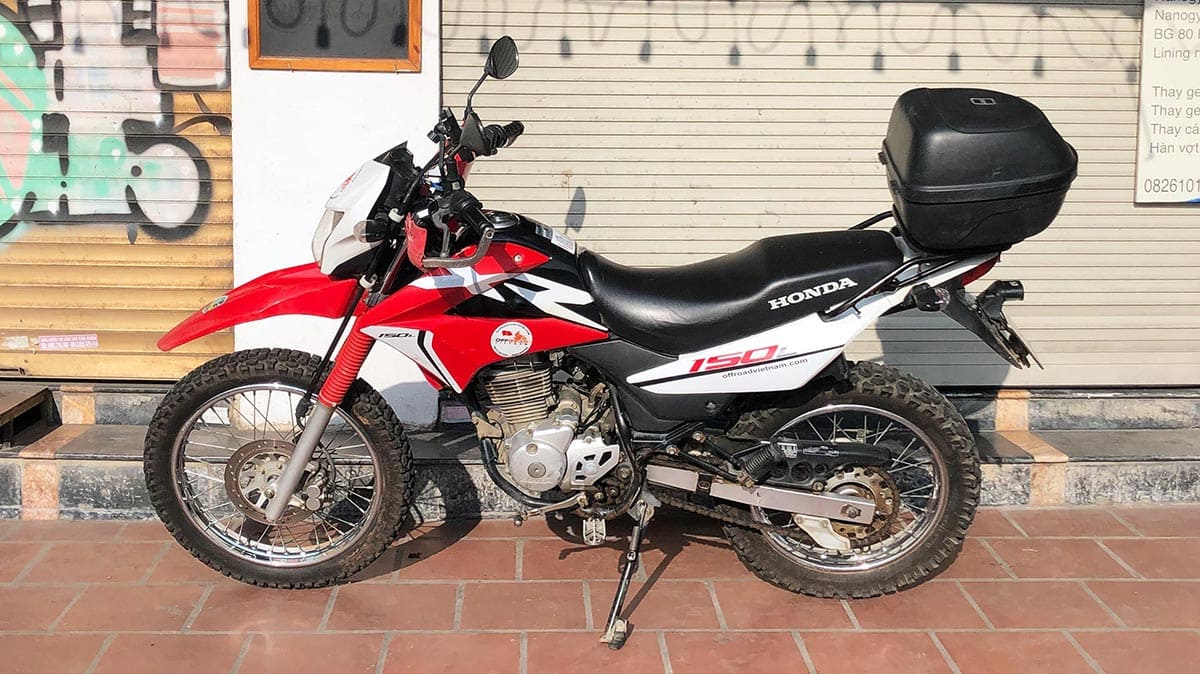
Rental Costs:
- Automatic Scooter (e.g., Honda Vision, Air Blade): These are easiest to handle, especially if you’re not super experienced. You’ll generally pay around 250,000 VND per day (about $10 USD).
- Semi-Automatic (e.g., Honda Future, Wave): A solid middle ground, offers a bit more control than an automatic. These usually go for 180,000-300,000 VND per day (about $7 USD to $11).
- Manual (e.g., Honda XR 150cc, Yamaha YB 125cc): If you’re an experienced rider, a manual offers better power and control on the steep climbs and descents that are typical on the Ha Giang Loops. Prices start from about 350,000 VND up to 550,000 VND per day (roughly $15-23 USD).
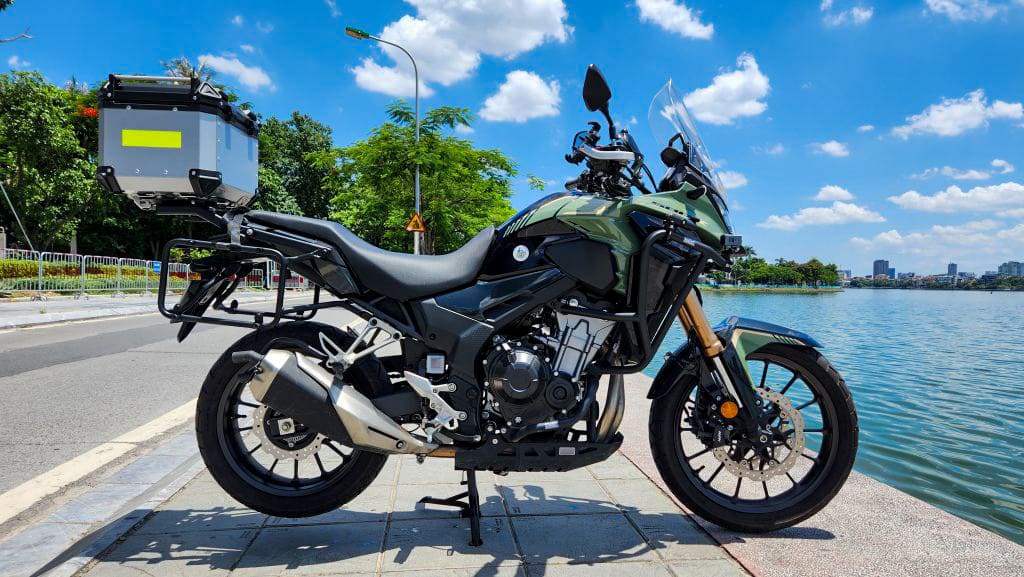
- Larger Dirt Bikes: For serious enthusiasts, you can even find larger bikes like a Honda CB500X, but expect to pay significantly more, often around $50-60 USD/day.
- Insurance: Most reputable rental shops offer basic insurance, usually for an additional 70,000-250,000 VND per day. Get it. It’s a small price to pay for peace of mind when you’re navigating the challenging roads of the Ha Giang Loops. Accidents happen, and even minor ones can be costly without coverage.
What to Look For Before You Ride: Don’t just grab the first bike. Give it a quick check:
- Brakes: Crucial for the steep descents. Make sure both front and back work well.
- Lights & Horn: Essential for tunnels and tight turns. Test them.
- Tires: Check the tread. You’ll be on some rough roads.
- Mirrors: You definitely want to see what’s behind you.
- Helmet: Don’t just accept any old helmet. Demand a good quality, well-fitting one. A full-face helmet offers the best protection for the Ha Giang Loops.
- Luggage Rack: Most rental bikes come with one. Make sure it’s secure for strapping your backpack.
- International Driving Permit (IDP): This is absolutely non-negotiable. Police checkpoints are increasingly common on the Ha Giang Loops, especially as you leave Ha Giang City and around Dong Van. If you’re caught without a valid IDP (specifically for motorbikes, Category A), you’re looking at significant fines, and your bike could be impounded. Don’t risk derailing your Ha Giang Loops adventure over this. Get your IDP before you leave your home country.
The “Easy Rider” Option: If you’re not confident riding a motorbike yourself, or just prefer to relax and soak in the views, consider an “Easy Rider” tour. This means a local guide drives you on their motorbike. They know the Ha Giang Loops roads like the back of their hand and can often provide insights into local culture. Prices vary, but generally range from 250-300 USD for a 3-4 day tour, often including accommodation and some meals. It’s a fantastic way to experience the Ha Giang Loops without the stress of driving.
When to Go?
The timing of your trip to the Ha Giang Loops can really change the whole experience.

Optimal Times (Dry Season):
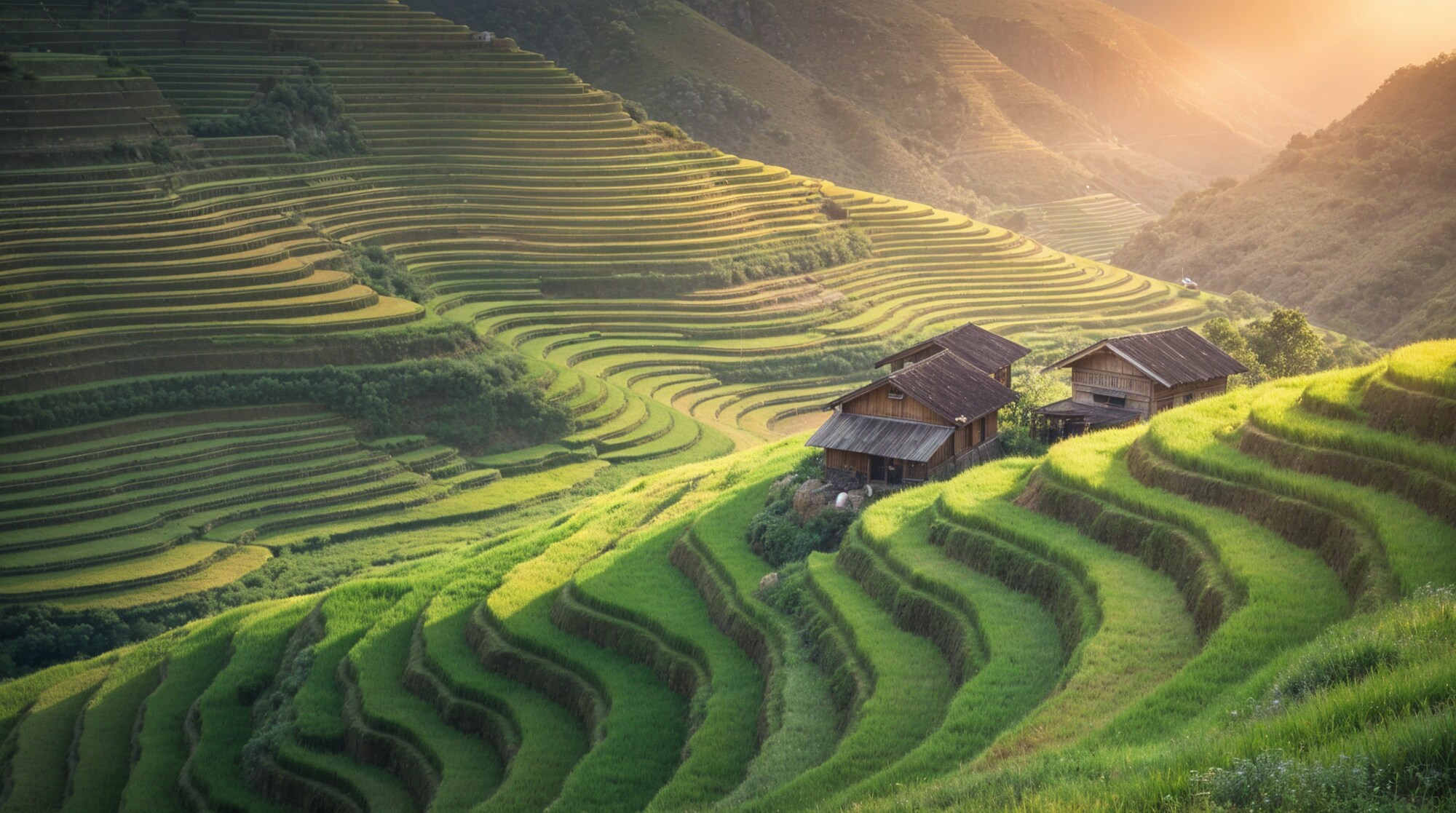
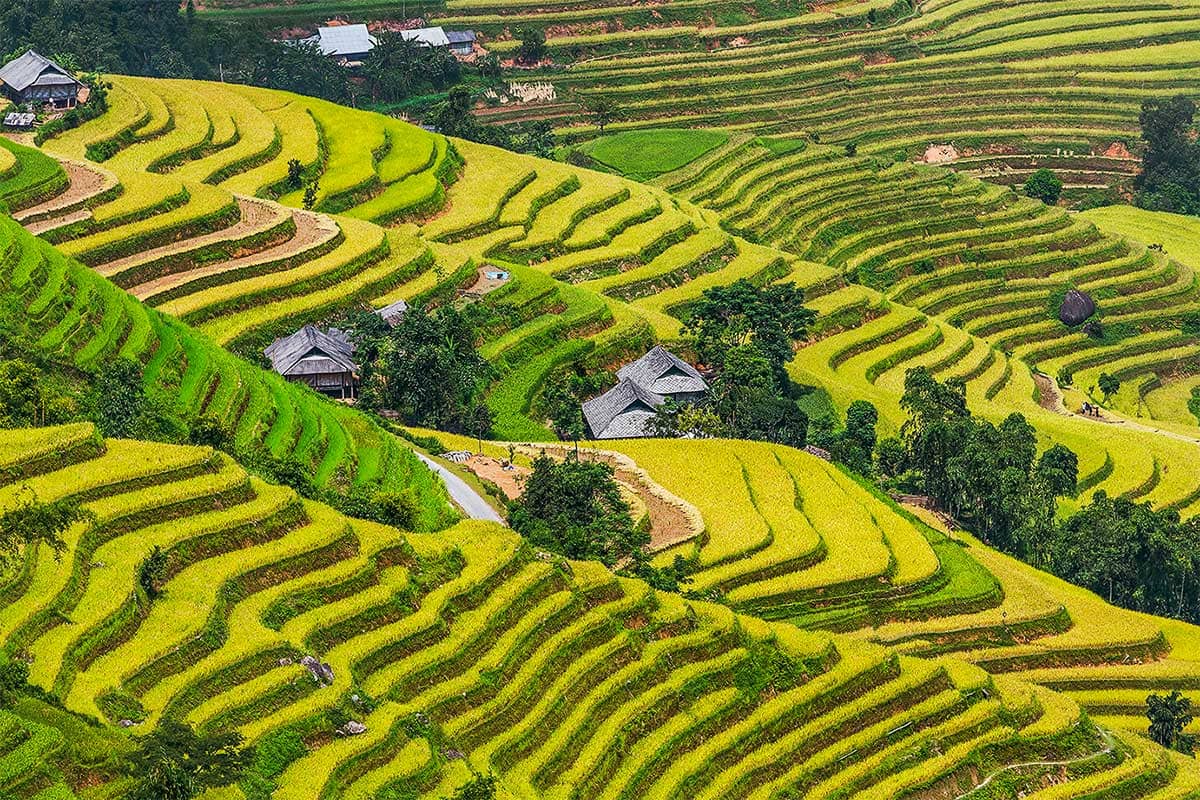
- October to November: Many travelers (including myself) consider this the sweet spot. The weather is generally cool and dry, with clear skies, offering incredible, unobstructed views of the mountains. Crucially, this is harvest season, so the terraced rice fields transform into a stunning golden hue, creating breathtaking landscapes that are perfect for photos.
- March to May: Spring brings milder temperatures, usually ranging from 15-28°C. This is when many of the local flowers, like plum and peach blossoms, are in full bloom, especially in March and April. The landscapes are lush and vibrantly green. You might encounter occasional showers in May, but generally, conditions are good.
Shoulder Season:
- September: This is the transition from summer to autumn. Temperatures are still warm, typically around 22-31°C, but rainfall starts to decrease. It’s still a good time to go, though you might encounter some lingering rain.
Less Ideal (But Still Possible with Planning):
- June to August (Summer/Rainy Season): This period sees high rainfall, frequent heavy downpours, and even thunderstorms. Roads can become slippery, and landslides are more likely. It’s also hot and humid, with temperatures often exceeding 30°C. While the landscapes are intensely green, riding conditions are much more challenging. If you choose this time, pack serious waterproof gear.
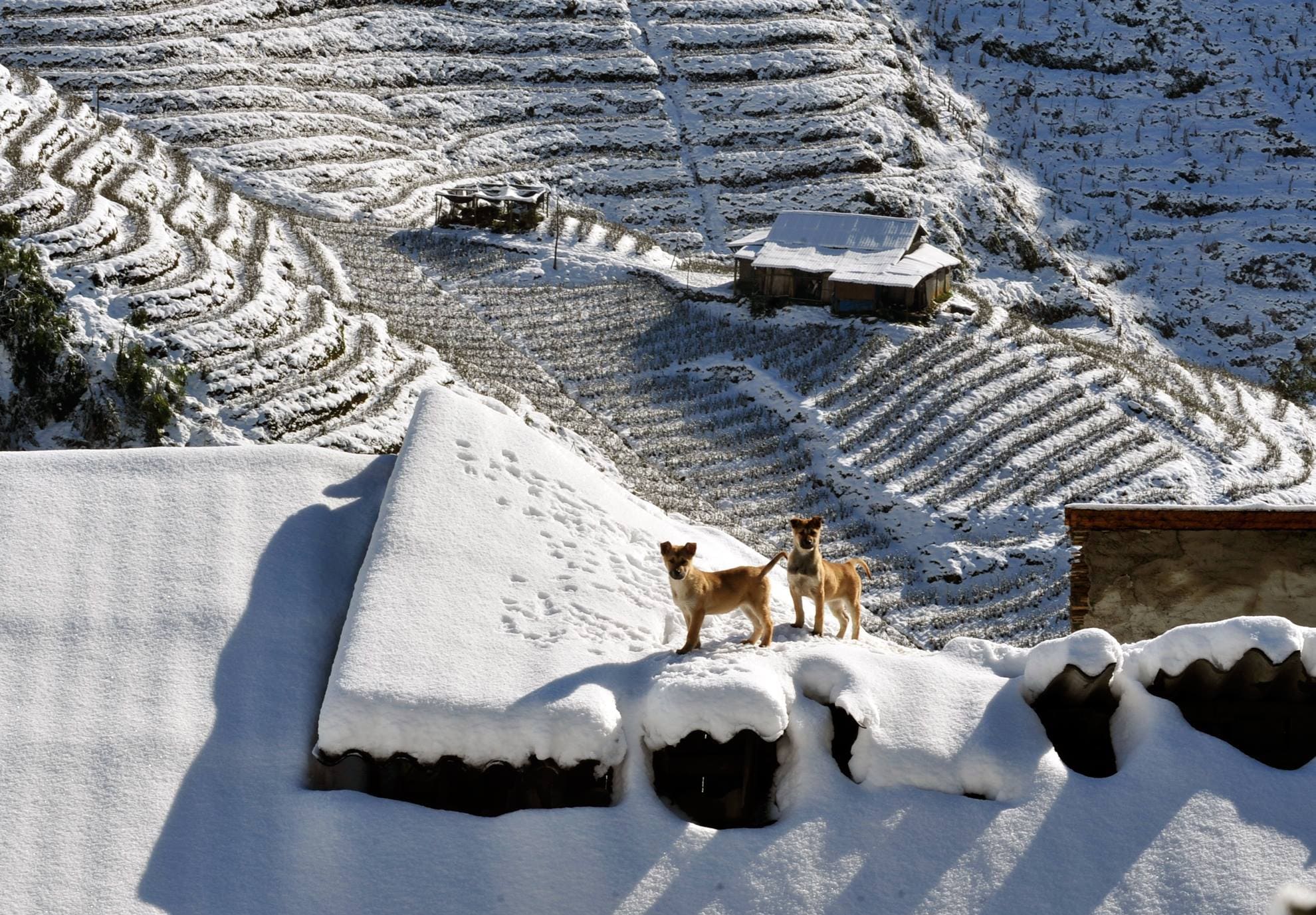
- December to February (Winter): Temperatures drop significantly, especially at higher altitudes, sometimes falling below 10°C, occasionally even close to freezing. Fog is common, which can severely limit visibility and obscure those panoramic views. While rare, snow on the highest peaks isn’t unheard of. If you brave the Ha Giang Loops in winter, pack plenty of warm layers.
I hit the Ha Giang Loops in late October, and seeing those golden rice fields stretching across the mountains was truly something else. Highly recommend that window.
Three Itineraries That Actually Work
Here are three tested itineraries for the Ha Giang Loops, ranging from a quick dash to a more leisurely exploration. Remember, these are flexible guides. The actual pace will depend on the weather, road conditions, and how you feel on any given day.
Itinerary 1: The Express Ha Giang Loops (3 Days / 2 Nights) – Approx. 350km
This 3D2N route is designed for those with limited time who still want to experience the absolute highlights of the Ha Giang Loops. It’s fast-paced but completely doable.


- Day 0: Arrival in Ha Giang City:
- Take an overnight sleeper bus from Hanoi to Ha Giang City, arriving in the early morning. Check into your guesthouse or hostel (my guide down below). Pick up your motorbike and get settled.
- Day 1: Ha Giang City to Dong Van (Approx. 145-160km)
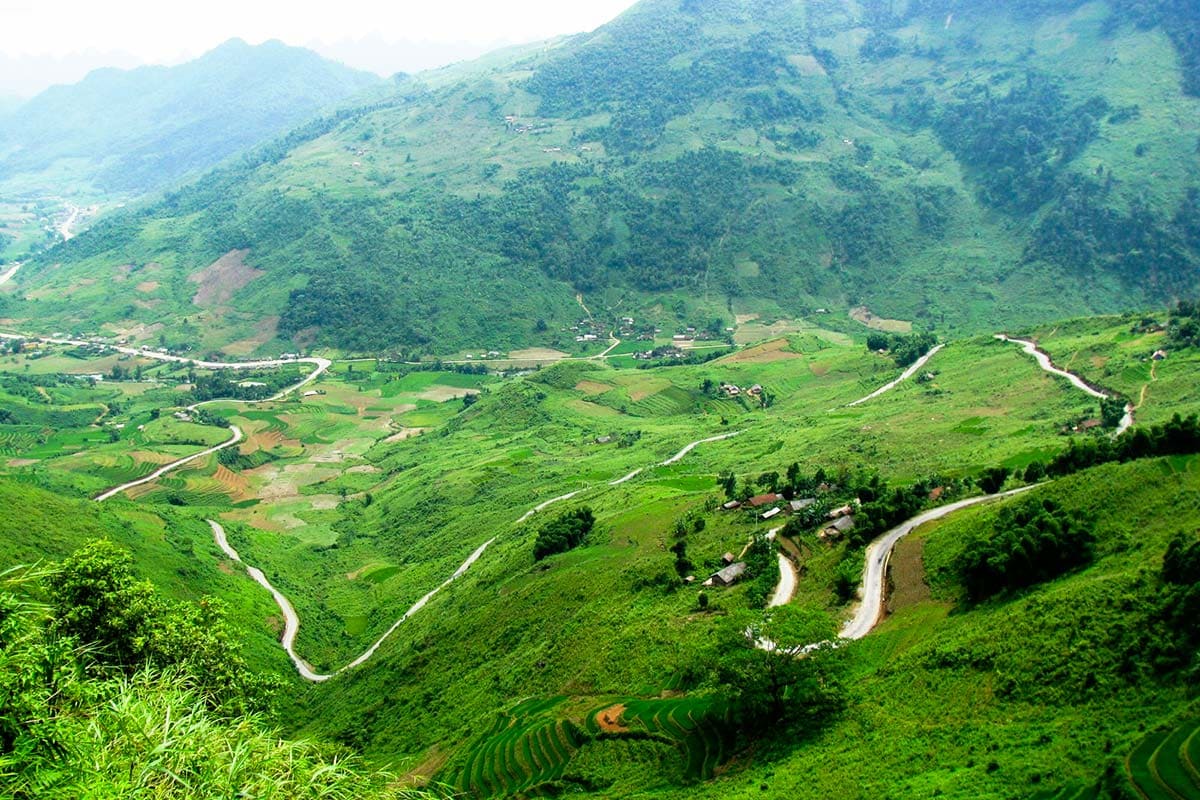
- Morning Start (around 8:00 AM): Hit the road early from Ha Giang City, heading north on QL4C. Your first significant climbs will be the winding Bac Sum Pass, which quickly offers stunning views. Continue to Heaven’s Gate (Quan Ba Pass), where you can stop at a viewpoint to admire the iconic Twin Mountains. These are great photo opportunities, so take your time.
- Mid-day: Ride on towards Yen Minh. The road remains incredibly scenic, with more winding passes and glimpses into small ethnic minority villages. Grab lunch in Yen Minh, a convenient stop for a quick meal.
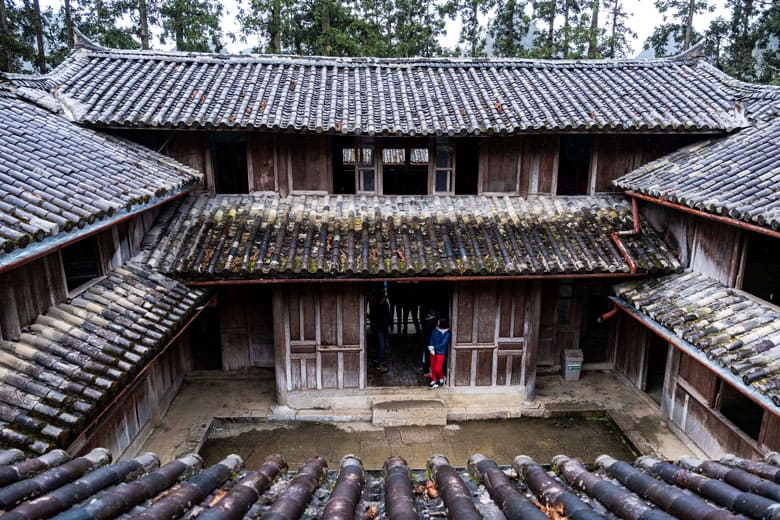
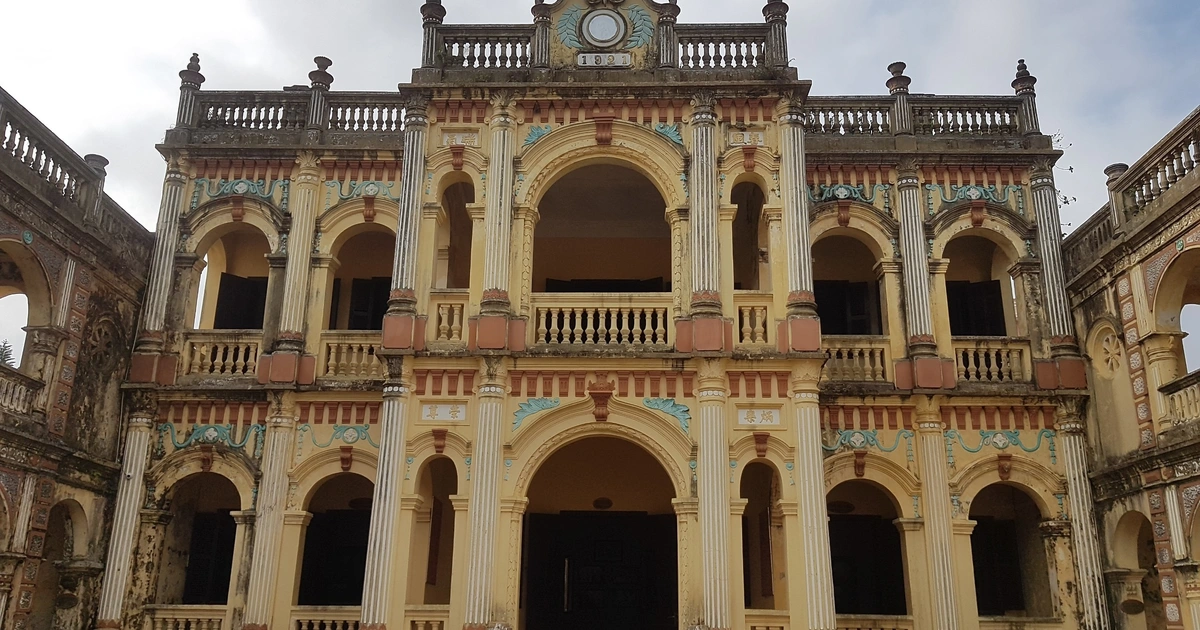
- Afternoon: The stretch from Yen Minh to Dong Van is arguably the most dramatic of the day. You’ll tackle the legendary Tham Ma Pass, a series of nine sharp, winding turns that are a famous photo spot. Further along, make sure to visit the Hmong King’s Palace (Vuong Chi Sinh Palace) near Sa Phin. This historical fortress-like structure offers fascinating insight into the local Hmong culture and history.
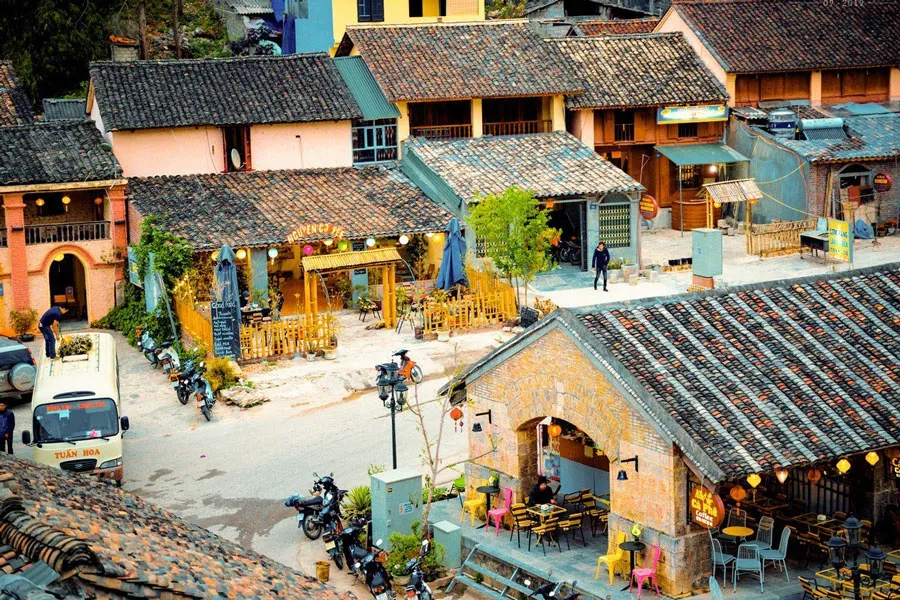
- Evening: Arrive in Dong Van town, the central point of the Dong Van Karst Plateau Geopark. Check into your chosen guesthouse or homestay. Take a stroll through the Dong Van Ancient Street, which has a unique charm, especially in the evening. Enjoy a local dinner, and perhaps sample some of the local “Happy Water” (rice wine).
- Key Highlights Today: Bac Sum Pass, Heaven’s Gate, Tham Ma Pass, Hmong King’s Palace. These are quintessential parts of the Ha Giang Loops experience.
- Day 2: Dong Van to Meo Vac (Via Lung Cu & Ma Pi Leng Pass) (Approx. 80-100km)
- Morning (Early Start): Depart from Dong Van and head north towards Lung Cu Flag Tower, which marks the northernmost point of Vietnam. It’s a roughly 25km detour each way from Dong Van, but the panoramic views from the tower are truly breathtaking and hold significant historical importance. Spend time taking in the vast landscape.
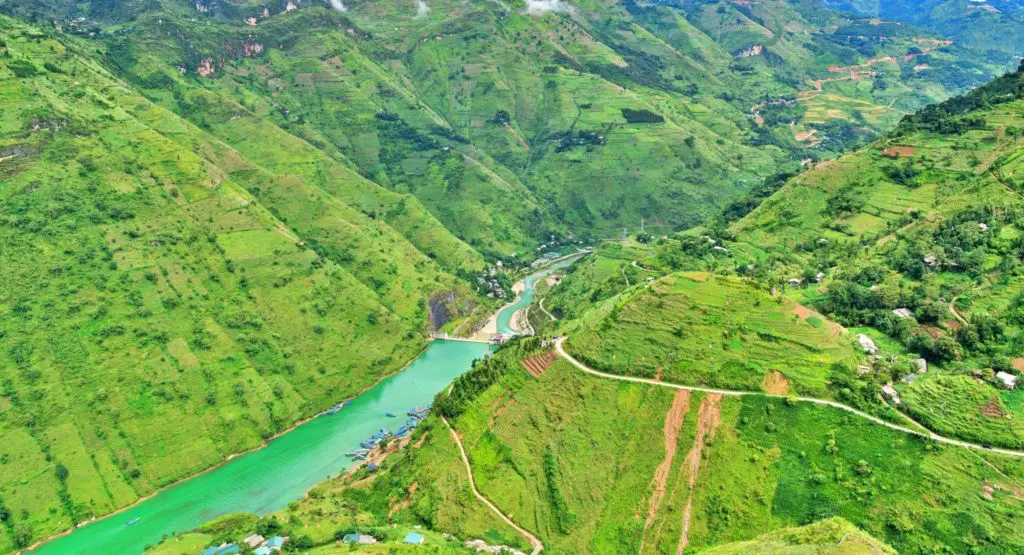
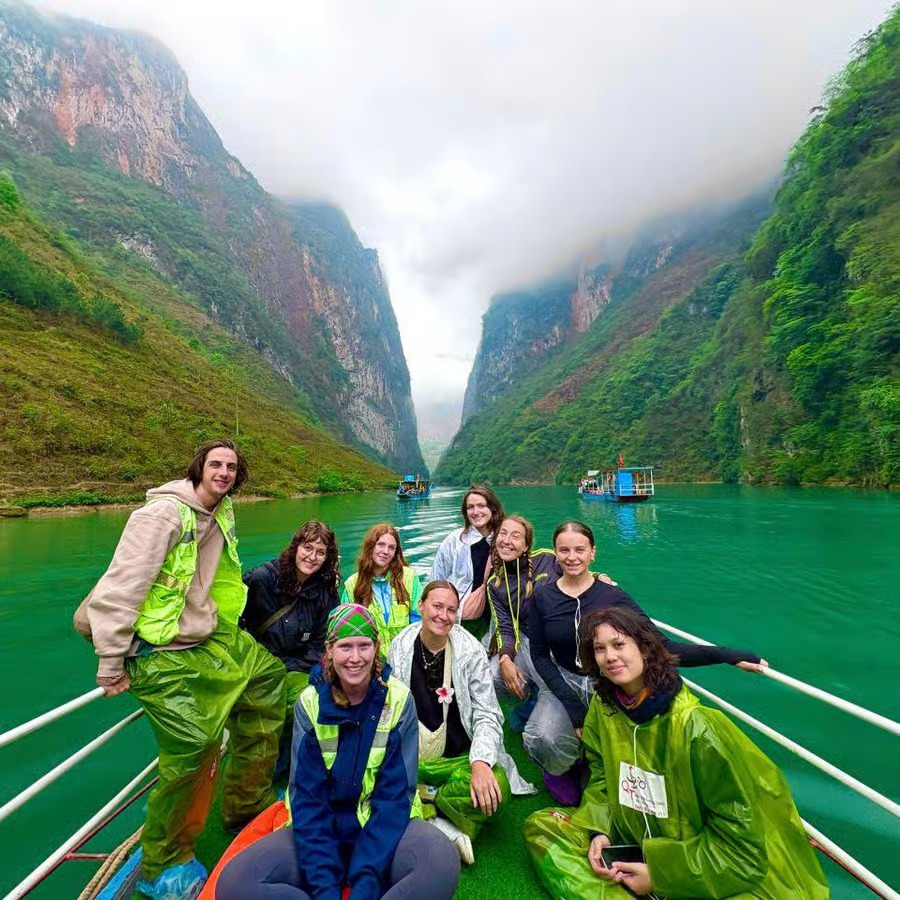
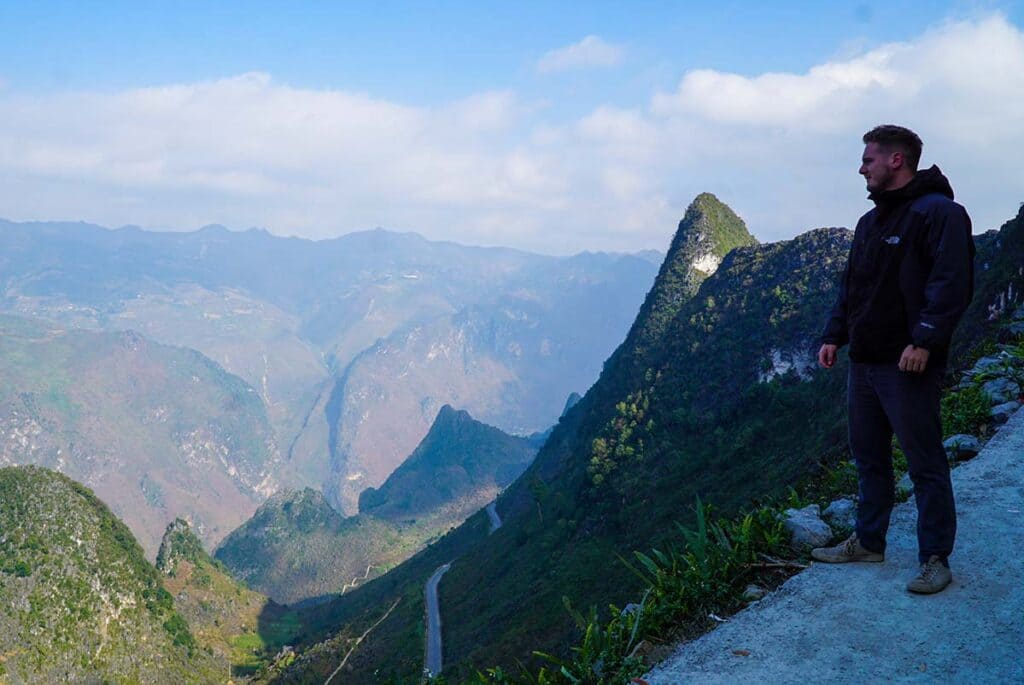
- Mid-day: Ride back to Dong Van. From Dong Van, your journey continues east towards the magnificent Ma Pi Leng Pass. This pass is often called one of the “Four Great Passes” of Vietnam and is the absolute crown jewel of the Ha Giang Loops. The views of the Nho Que River carving its way through the dramatic gorge are simply unreal. Make sure to stop at multiple viewpoints along the pass; each one offers a different perspective.
- Afternoon: Descend the pass into Meo Vac. If time and weather permit, and you’re feeling adventurous, consider taking a boat trip on the Nho Que River from the base of Ma Pi Leng Pass (around 100,000 VND per person ~$4 USD). It offers a stunning, ground-level view of the majestic gorge.
- Evening: Arrive in Meo Vac. Check into your accommodation. If your trip falls on a Sunday, you might be lucky enough to catch the vibrant Meo Vac market, a bustling gathering of various ethnic minority groups.
- Key Highlights Today: Lung Cu Flag Tower, the unparalleled Ma Pi Leng Pass (the defining feature of the Ha Giang Loops), and a boat trip on the Nho Que River.
- Day 3: Meo Vac back to Ha Giang City (Approx. 160-180km)
- Morning: Begin your return journey towards Ha Giang City. The most common and generally recommended route for the return is to take DT176 and then DT181 towards Du Gia. This route is equally scenic, cutting through different remote valleys and offering fresh perspectives of the Ha Giang Loops landscape.
- Mid-day: Ride through smaller, less-frequented villages. You’ll encounter a more relaxed, rural way of life. Stop for lunch along the way in a local eatery.
- Afternoon: Continue your ride back to Ha Giang City. The roads gradually become less challenging as you get closer to the city.
- Evening: Arrive back in Ha Giang City, return your motorbike. From there, you can either spend another night or catch an overnight sleeper bus directly back to Hanoi.
- Key Highlights Today: The scenic return via different routes, exploring remote villages, and a new perspective on the overall Ha Giang Loops scenery.
Itinerary 2: The Classic Ha Giang Loops (4 Days / 3 Nights) – Approx. 400-450km
This 4D3N is the most popular duration for the Ha Giang Loops and strikes a good balance between covering the main sights and allowing for a slightly more relaxed pace.

- Day 0: Arrival in Ha Giang City: Same as the 3-day itinerary. Arrive, settle in, get your bike.
- Day 1: Ha Giang City to Yen Minh (Approx. 100km)
- Morning: Kick off your Ha Giang Loops adventure from Ha Giang City. Ride through the impressive Bac Sum Pass and continue to Heaven’s Gate (Quan Ba Pass), taking time for photos.
- Mid-day: Continue your ride and make a worthwhile detour to visit Lung Khuy Cave (entrance fee around 40,000 VND ~$1.5 USD). It’s a beautiful, well-maintained cave system worth exploring.
- Afternoon: Arrive in Yen Minh. This is a quieter, smaller town, making it a perfect spot to unwind after your first day of intense riding on the Ha Giang Loops. Check into a local guesthouse or homestay.
- Key Highlights Today: Bac Sum Pass, Heaven’s Gate, and Lung Khuy Cave.
- Day 2: Yen Minh to Dong Van (Approx. 90-100km)
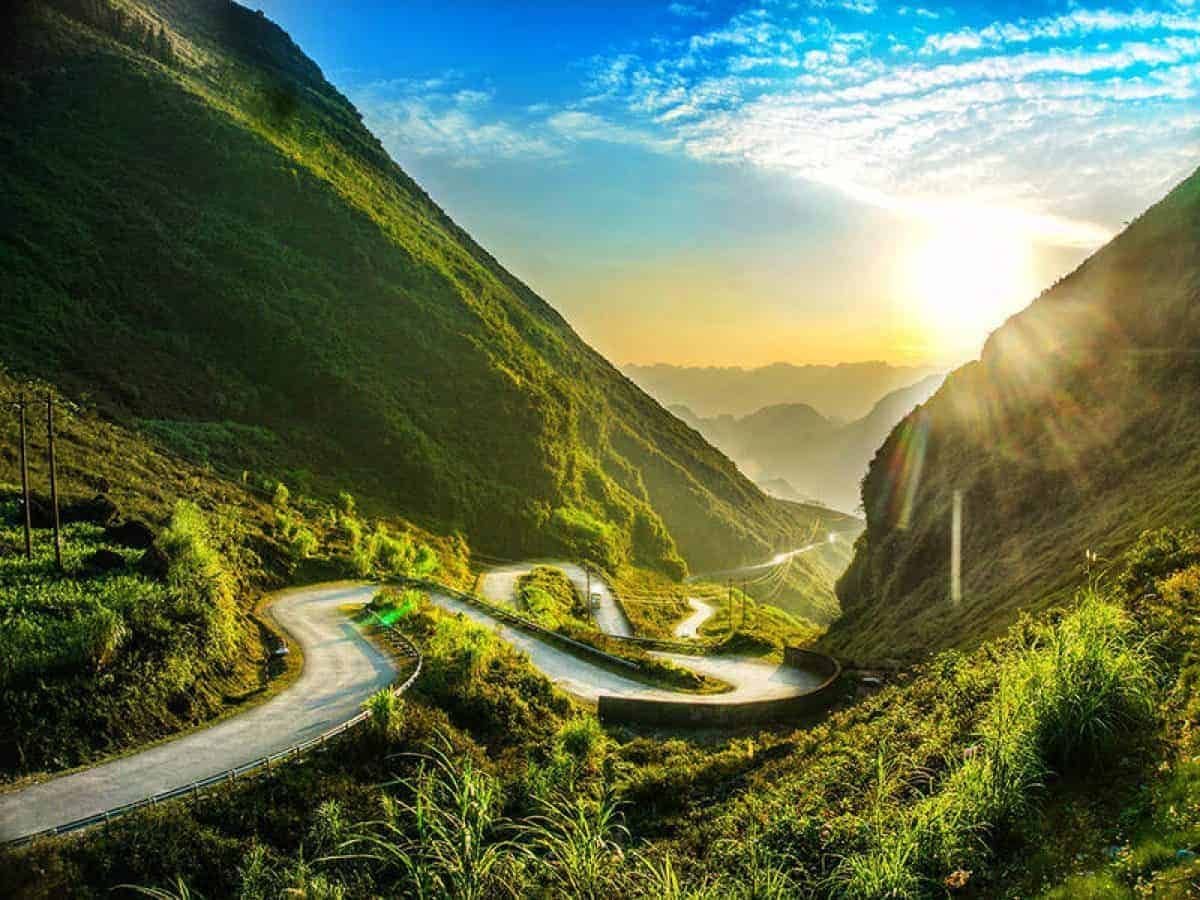
- Morning: Resume your journey, riding through the iconic Tham Ma Pass, allowing plenty of time for photos at its various viewpoints.
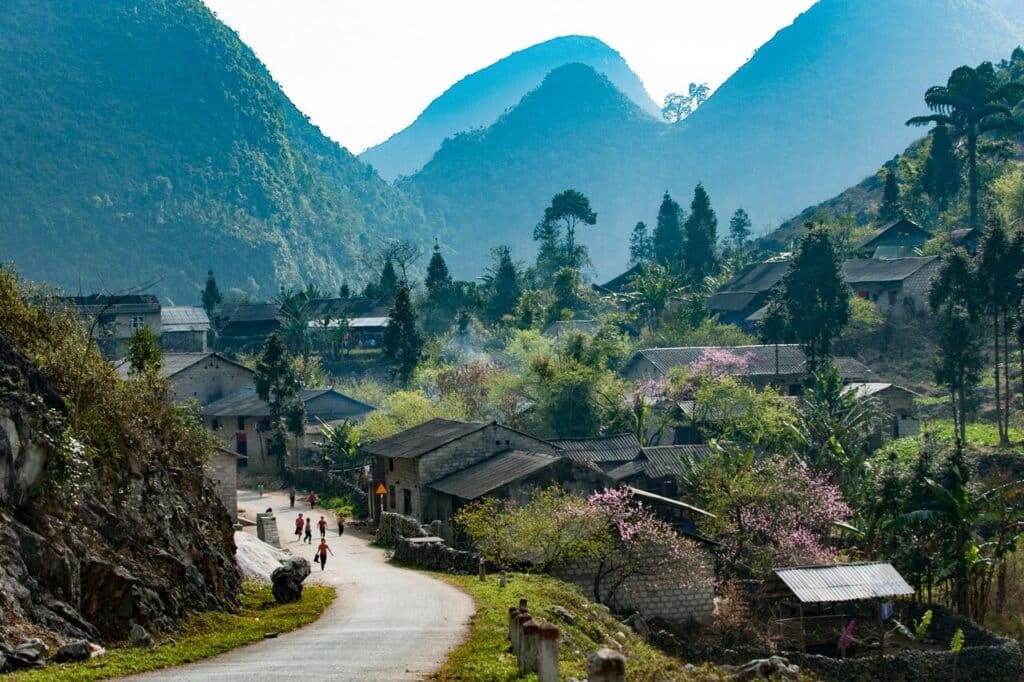
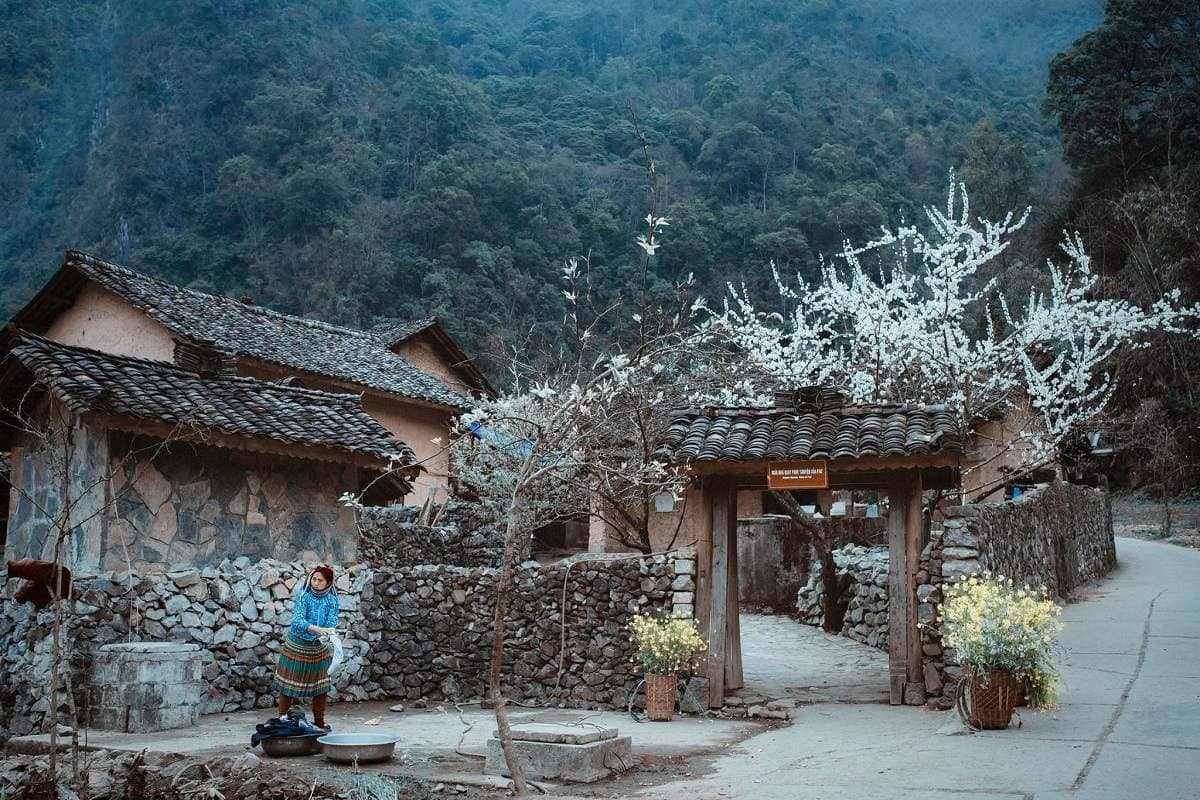
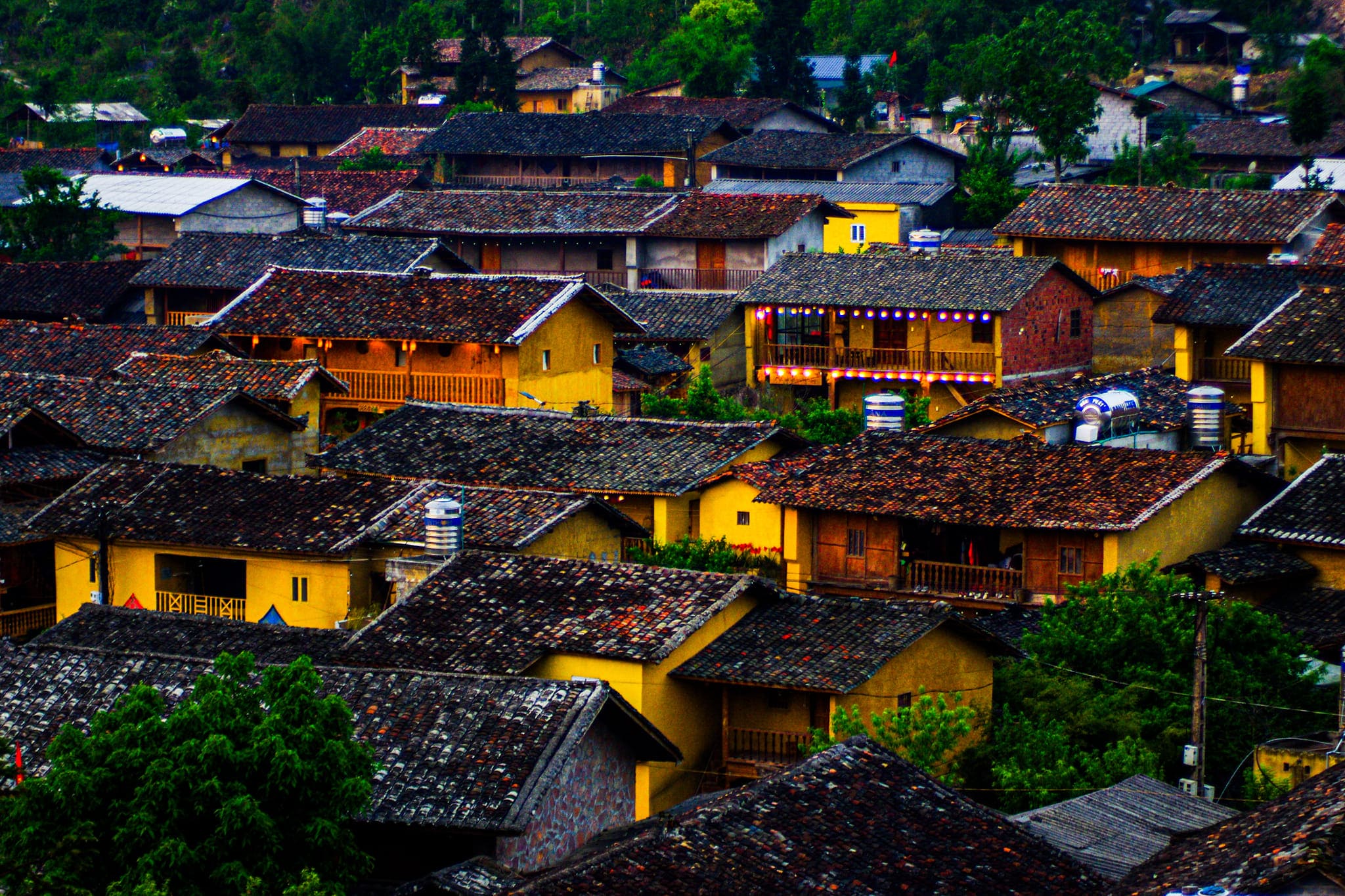
- Mid-day: Consider a detour to explore the unique town of Pho Bang. This small, charming town features traditional earthen-walled houses and offers a quiet, authentic glimpse away from the main tourist trail of the Ha Giang Loops. After, visit the Hmong King’s Palace.
- Afternoon: Arrive in Dong Van. After settling into your accommodation, dedicate some time to exploring the Dong Van Old Quarter. If your visit falls on a weekend, you might be able to catch the bustling Sunday market.
- Key Highlights Today: Tham Ma Pass, Hmong King’s Palace, and the charming detour to Pho Bang.
- Day 3: Dong Van to Meo Vac (Via Lung Cu & Ma Pi Leng Pass) (Approx. 80-100km)
- Morning: This is the big day for the Ha Giang Loops‘ most famous sections. Head north from Dong Van to Lung Cu Flag Tower. Take your time ascending the tower and soaking in the sweeping views from Vietnam’s northernmost point.
- Mid-day/Afternoon: Embark on the truly unforgettable ride over Ma Pi Leng Pass. This is where the magic of the Ha Giang Loops really comes alive. Stop frequently at the numerous viewpoints to fully appreciate the majestic landscape and the deep gorge carved by the Nho Que River. Seriously, don’t rush this part. Consider the optional Nho Que River boat trip for a different perspective.
- Evening: Descend into Meo Vac. Explore the town’s small streets, find a local spot for dinner, and unwind after a day of incredible scenery.
- Key Highlights Today: Lung Cu Flag Tower, the unparalleled Ma Pi Leng Pass, and the scenic Nho Que River. These are the heart of the Ha Giang Loops.
- Day 4: Meo Vac to Ha Giang City (Via Du Gia) (Approx. 160-180km)
- Morning: Instead of simply retracing your steps, take the scenic route from Meo Vac towards Du Gia. This path is less traveled but equally stunning, guiding you through remote valleys and past picturesque waterfalls.
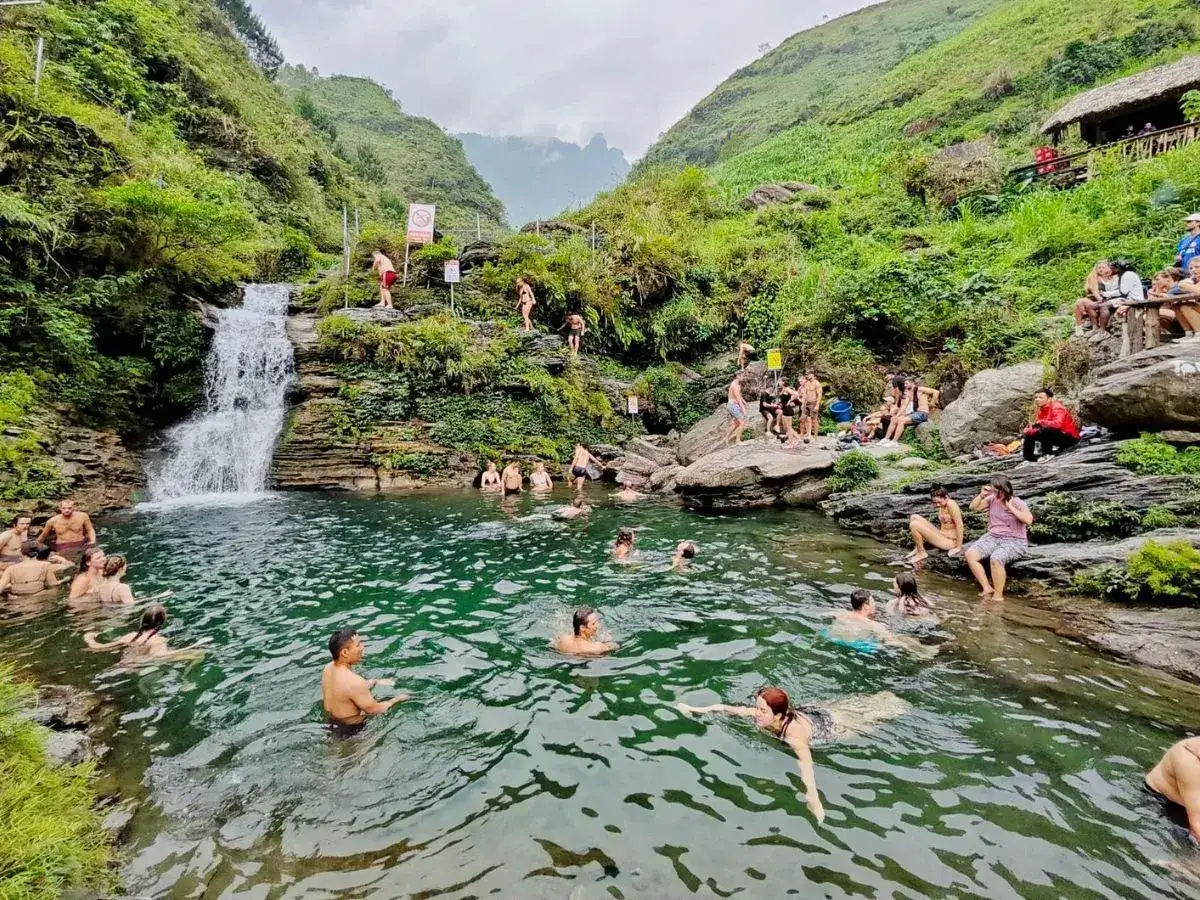
- Mid-day: Stop for lunch in Du Gia, a lovely, peaceful valley. You can also visit Du Gia Waterfall, a refreshing spot for a quick dip if the weather is warm.
- Afternoon: Continue your ride from Du Gia back to Ha Giang City. The landscapes will shift as you descend from the higher mountain regions towards the city.
- Evening: Arrive back in Ha Giang City, return your motorbike, and prepare for your onward journey, whether it’s an overnight bus back to Hanoi or another night in Ha Giang.
- Key Highlights Today: The scenic Du Gia Valley, Du Gia Waterfall, and a deeper dive into the remote beauty of the Ha Giang Loops.
Itinerary 3: The Immersive Ha Giang Loops (5 Days / 4 Nights) – Approx. 500-600km
This one gives you more time. You can go slower, take detours, and really get into the culture and even some “secret” spots of the Ha Giang Loops.

- Day 0: Get to Ha Giang City: Same as other itineraries.
- Day 1: Ha Giang City to Yen Minh (Approx. 100km)
- Ride through Bac Sum Pass and Heaven’s Gate.
- Visit Lung Khuy Cave.
- Visit Lung Tam Village for hemp weaving.
- Overnight in Yen Minh.
- Day 2: Yen Minh to Dong Van (Approx. 90-100km)
- Ride through Tham Ma Pass, take your time for photos.
- Explore Pho Bang, that charming, quiet village.
- Visit the Hmong King’s Palace.
- Explore Sung La Valley for its traditional houses and stunning scenery.
- Arrive in Dong Van, explore the Old Quarter.
- Day 3: Dong Van (Explore Surroundings / Day Trip to Lung Cu & More) (Approx. 50-80km)
- Morning: Dedicate this day to really explore the Dong Van Karst Plateau. Do the round trip to Lung Cu Flag Tower from Dong Van. Spend solid time there soaking in the views. Don’t miss Lo Lo Chai Village at its base.
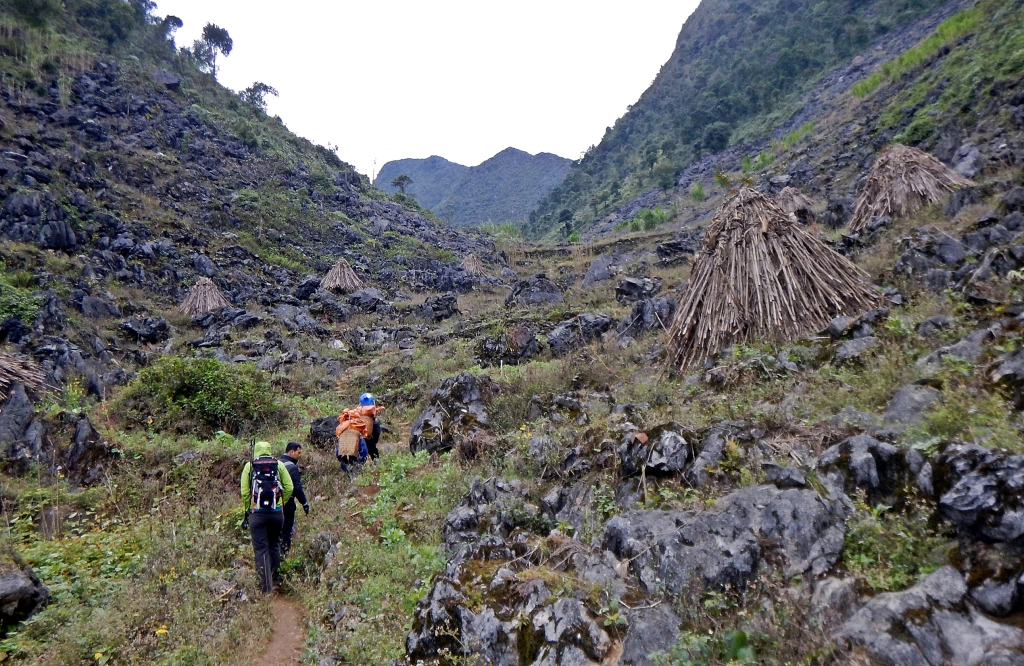
- Afternoon: Explore other, deeper aspects of the Dong Van area. Consider a hike around Dong Van, or seek out Vua Meo (Meo Vac King) market if it’s a market day. If you’re truly adventurous and have local guidance, you could look for secret viewpoints or minor treks in the surrounding karst landscape that aren’t on typical tourist maps, often leading to incredible, untouched vistas. Just relax in Dong Van.
- Highlights Today: More in-depth exploration of Dong Van and its surroundings, more time at Lung Cu and Lo Lo Chai, and the potential for off-the-beaten-path discoveries on the Ha Giang Loops.
- Day 4: Dong Van to Meo Vac (Via Ma Pi Leng Pass & Nho Que River) (Approx. 50km)
- Morning: Today is focused on the epic ride over Ma Pi Leng Pass. Go slow, stop at every viewpoint. Take your time to really absorb the majesty of the Ha Giang Loops. Do the Ma Pi Leng Sky Walk.
- Mid-day: Take the Nho Que River boat trip. You need to do this to truly appreciate the canyon.
- Afternoon: Descend into Meo Vac. If you get there early, explore the town, perhaps visit the Meo Vac Market (especially if it’s a Sunday), which is one of the most vibrant in the region. You could also seek out the Auberge de Meo Vac, a beautifully restored old French-colonial building offering a unique stay.
- Highlights Today: Unrushed experience of Ma Pi Leng Pass and Nho Que River, Ma Pi Leng Sky Walk, and deeper exploration of Meo Vac town and its market. This is peak Ha Giang Loops beauty.
- Day 5: Meo Vac to Ha Giang City (Via Du Gia or Bao Lac) (Approx. 160-200km)
- Morning: Head south from Meo Vac. The popular route back to Ha Giang City is via Du Gia, which is incredibly scenic, taking you through remote valleys. You’ll pass through Mau Due with its stunning rice fields. Another option, if you want a different landscape and are comfortable with a longer ride, is heading towards Bao Lac first, then cutting across to Ha Giang, showing you a completely different part of the province. This path often offers more remote villages and unspoiled nature.
- Mid-day: Stop in Du Gia for lunch and a break. Hit Du Gia Waterfall and enjoy the serene valley.
- Afternoon: Continue from Du Gia back to Ha Giang City, thinking about the incredible journey you’ve just completed on the Ha Giang Loops.
- Evening: Arrive back in Ha Giang City, return your bike, and catch your sleeper bus.
- Highlights Today: Deeper exploration of remote Ha Giang Loops regions, Du Gia valley, Du Gia Waterfall, Mau Due rice fields, and the satisfaction of truly exploring the entire loop, potentially via the less-traveled Bao Lac route.
What to Expect While Doing the Ha Giang Loops
Beyond the specific routes, understanding the daily realities of life on the Ha Giang Loops will make your trip smoother and more enjoyable.
Accommodation
You’ll find a pretty straightforward mix of options along the Ha Giang Loops, mostly designed for budget-conscious travelers. The vibe is generally communal and welcoming, which is part of the experience.


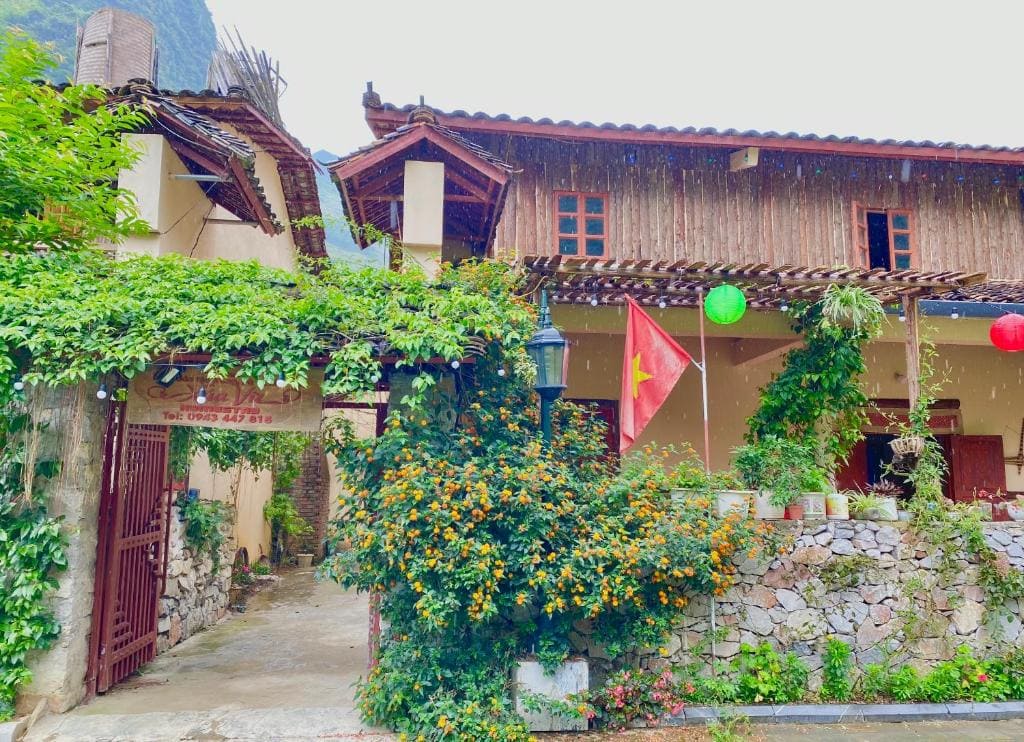
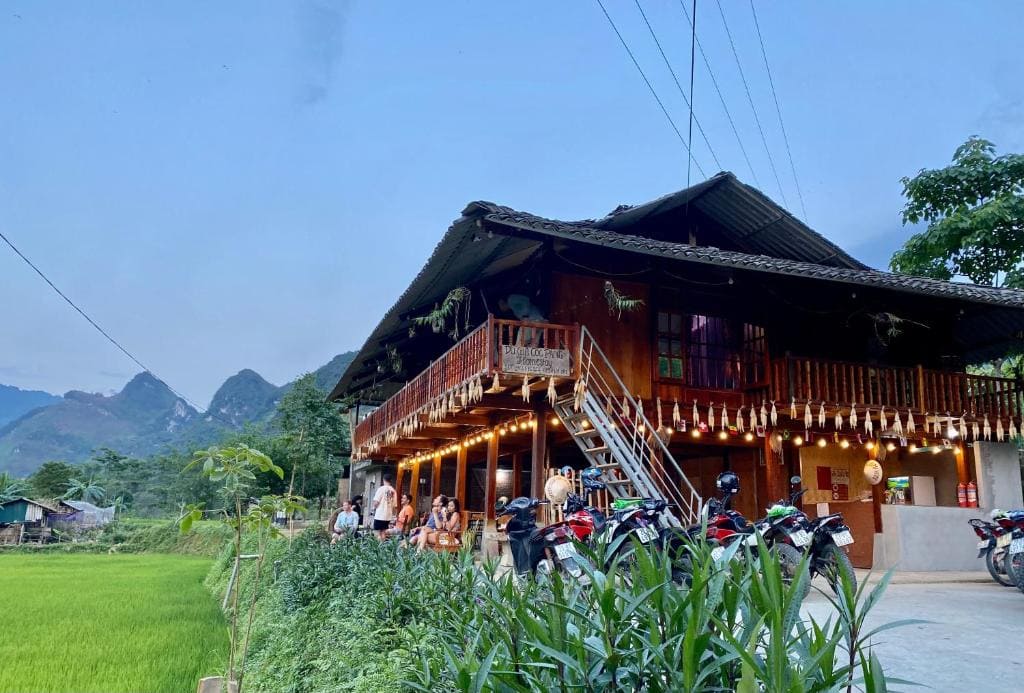
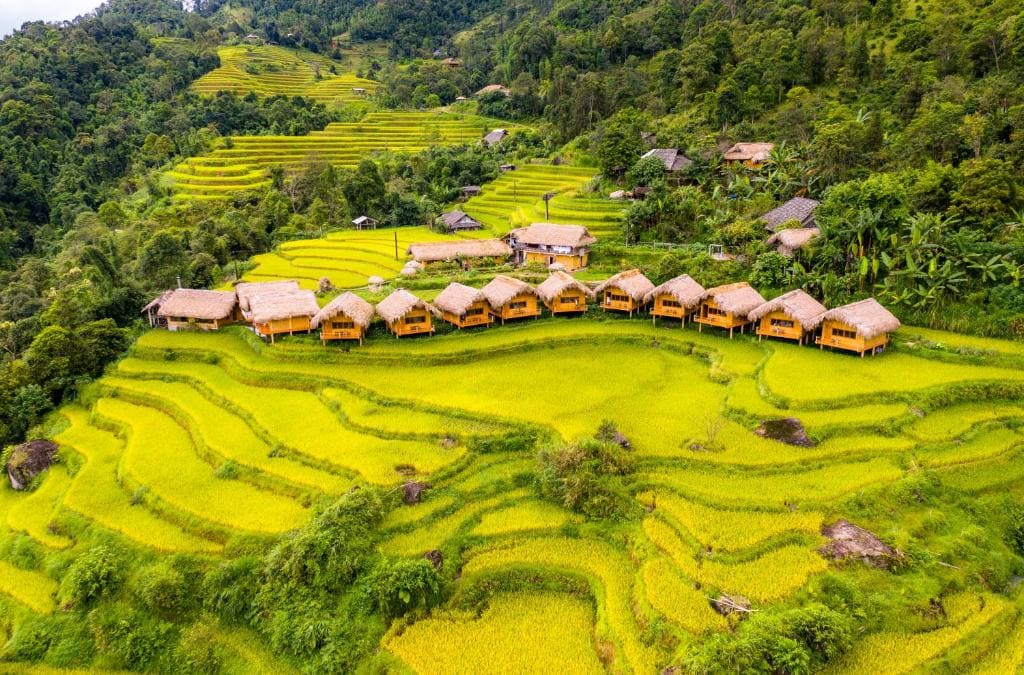
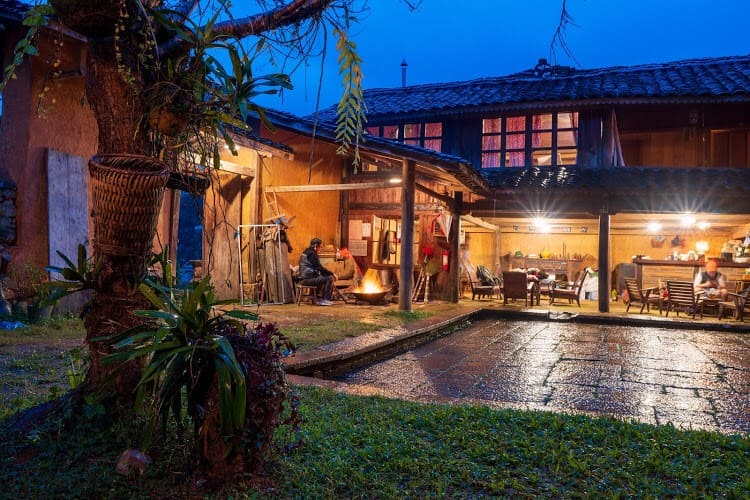
- Homestays: These are everywhere on the Ha Giang Loops, especially in the smaller towns and villages. They typically offer simple rooms, sometimes dorm beds, sometimes private rooms. It’s a fantastic opportunity to experience local life firsthand. Expect to pay around 100,000 to 250,000 VND (about 5-10 USD) per night, and often a basic breakfast is included. Many homestays offer “family dinners,” which are a fantastic way to meet other travelers and enjoy authentic, home-cooked Vietnamese meals. I highly recommend homestays; they genuinely enhance the authentic Ha Giang Loops experience.
- Ha Giang City: A popular starting point is Bong Hostel & Motorbike Rental. They’ve got dorms, private rooms, and are a hub for renting bikes and finding Easy Riders. Another solid choice is Ha Giang Hostel, often lauded for its friendly vibe and help with trip planning.
- Dong Van: Friends Homestay is a common favorite for its welcoming atmosphere and family dinners. Another great option is Hagiang-holic, known for its friendly hosts and good location near the Old Quarter.
- Meo Vac: Xúa Vừ Homestay offers a sun terrace, garden. A buffet breakfast with vegetarian and Asian options is served daily. The on-site restaurant provides dinner with mountain views.
- Du Gia: Du Gia View Homestay is practically a legend among travelers for its beautiful location, communal dinners, and relaxed atmosphere. There are also several other charming homestays springing up around the waterfall.
- Guesthouses/Small Hotels: In larger towns like Dong Van, Meo Vac, and Yen Minh, you’ll find more conventional guesthouses or small hotels. These usually offer private rooms with more standard amenities like private bathrooms. Prices generally range from 350,000 to 700,000 VND (about 15-30 USD) per night. These are a good choice if you prefer a bit more privacy or comfort after a long day of riding the Ha Giang Loops.
- Booking: While it’s usually possible to find a place on the day, especially in the larger towns, booking a day or two in advance is a good idea, particularly if you’re traveling during peak season or on a weekend. In smaller places like Du Gia, options are more limited, so booking ahead can be wise.
Food
Don’t expect Michelin stars, but the local food on the Ha Giang Loops is consistently hearty, full of flavor, and incredibly affordable.
Breakfast: Often included with your homestay. You might get a simple pho, sticky rice, or fried eggs with bread. It’s enough to get you started for a day on the Ha Giang Loops.
Lunch & Dinner: You’ll find small local eateries along the main route and in every town.
- Pho: Always a reliable and delicious choice.
- Com Binh Dan: This translates to “everyday rice,” where you pick various pre-cooked dishes to go with your rice. It’s a quick and easy way to get a full meal.
- Thang Co: A local specialty, often a hotpot made with horse meat. It’s an acquired taste, but if you’re feeling adventurous, it’s worth trying for the experience.
- Corn Wine (Ruou Ngo): This is the local “Happy Water.” It’s a potent rice wine made from corn. Enjoy it responsibly, especially if you’re riding the next day.
Prices: You can expect to pay anywhere from 30,000 VND to 80,000 VND per meal (roughly 1.5-3.5 USD). It’s incredibly budget-friendly, making the Ha Giang Loops a very affordable travel experience.
The People and Culture
One of the most rewarding aspects of the Ha Giang Loops is the interaction with the local ethnic minority groups. The Hmong, Dao, Tay, and Nung people, among others, have lived in these mountains for centuries. They are incredibly resilient, often warm and welcoming, and deeply proud of their heritage.
- Interactions: Don’t be shy about smiling and attempting a simple “Xin Chao” (hello). Many people, especially younger generations and those working in tourism, speak some English.
- Markets: If your trip aligns with a local market day (Dong Van and Meo Vac have prominent Sunday markets), it’s an absolute must-see. It’s a vibrant, chaotic, and fascinating cultural experience where various ethnic groups gather in their traditional dress to trade goods, produce, and livestock.
- Photography: Always, always ask for permission before taking photos of people, especially children. Be respectful of their privacy.
- Cultural Sensitivity: Dress modestly, especially when visiting temples or local homes. Avoid touching children’s heads, as it’s considered disrespectful in Vietnamese culture.
Essential Tips for Your Ha Giang Loops Adventure
These are the practical bits that can really make or break your Ha Giang Loops trip. I picked these up along the way, and they’re worth knowing.
- Cash is King (Vietnamese Dong – VND): This is a critical one. ATMs are incredibly sparse once you leave Ha Giang City and the main towns like Dong Van and Meo Vac. You need to carry enough cash for everything – petrol, food, accommodation, entrance fees. I usually carried at least 2,000,000 VND (around 80 USD) at any given time, just to be safe.
- Fuel: Petrol stations are available in the main towns along the Ha Giang Loops (Ha Giang City, Yen Minh, Dong Van, Meo Vac, Du Gia). In between these towns, you’ll see small roadside stalls selling petrol from plastic bottles. These are generally reliable, but they might be slightly more expensive. Don’t let your tank get too low.
- Sim Card & Connectivity: Get a local SIM card with data as soon as you arrive in Vietnam (Viettel generally offers the best coverage in the mountain regions). While Wi-Fi is usually available in most homestays and guesthouses, having mobile data is absolutely crucial for navigation (especially with offline maps!) and for emergencies while you’re out on the Ha Giang Loops.
- Offline Maps: This is your best friend. Download offline maps for the entire Ha Giang Loops area (Google Maps, Maps.me, OsmAnd are all good options) before you lose signal. Phone signal can be patchy in remote areas, and these maps will be invaluable for navigation.
- Packing Smart:
- Layers: Temperatures on the Ha Giang Loops can vary wildly throughout the day. It can be hot in the sun but surprisingly chilly at night, especially at higher elevations or after rain. Pack versatile layers: t-shirts, a long-sleeved shirt, a fleece or light jacket, and a waterproof/windproof outer layer.
- Rain Gear: Even in the dry season, sudden showers are common on the Ha Giang Loops. A good quality rain poncho or a waterproof jacket and pants are absolutely essential. Don’t leave without them.
- Footwear: Sturdy, closed-toe shoes that can handle a bit of mud, dust, and uneven terrain are ideal.
- Basic First Aid Kit: Carry pain relievers, antiseptic wipes, bandages, anti-diarrhea medication, and rehydration salts. Small cuts and scrapes are common, and having immediate supplies helps.
- Sun Protection: Sunscreen, sunglasses, and a wide-brimmed hat are crucial. The mountain sun is strong.
- Small Backpack: For your day’s essentials (water, snacks, camera, extra layer). If possible, leave your main luggage at your Ha Giang City hostel and only take what you need on the bike, securely strapped.
- Power Bank: To charge your phone, camera, and other devices. Outlets aren’t always available when you need them.
- Road Conditions: The roads on the Ha Giang Loops are mostly paved, but they are consistently narrow, winding, steep, and feature sharp turns. You’ll encounter sections with gravel, potholes, occasional mud, and even small landslides, particularly after rain. Drive slowly and carefully. Don’t rush.
- Traffic Awareness: While generally lighter than city traffic, be vigilant for trucks, buses, and local motorbikes, especially on blind corners. Don’t be surprised by livestock wandering onto the road.
- Know Your Limits: If you’re feeling tired, pull over and rest. If a particular stretch of road looks too challenging for your comfort level, walk your bike, or reconsider riding that section. Safety always comes first on the Ha Giang Loops.
- Allow for Flexibility: Don’t plan your days too rigidly. Weather can change unexpectedly, roads can have temporary closures, and you’ll find yourself wanting to stop frequently for photos or just to take in the views. The Ha Giang Loops is about the journey, not just hitting every single point on a checklist.
- Learn Basic Vietnamese Phrases: Locals appreciate the effort. “Xin Chao” (hello), “Cam On” (thank you), “Cho Toi Mot Cai…” (give me one…), “Bao Nhieu Tien?” (how much money?).
- Travel Insurance: Make sure your travel insurance explicitly covers motorbike accidents in Vietnam, especially if you’re riding a motorbike yourself. Read the fine print carefully before you go. The Ha Giang Loops is an adventurous trip, so be prepared for anything.
Beyond the Ha Giang Loops
Once you’ve conquered the Ha Giang Loops, you might be thinking about where to head next in Vietnam. This country has so much more to offer. Here are a few suggestions for your next internal link on your travels:
- Explore the Caves of Phong Nha-Ke Bang National Park: If the dramatic karsts of the Ha Giang Loops captivated you, the colossal caves and unique karst formations of Phong Nha in Quang Binh offer another incredible, geological adventure.
- Trek the Rice Terraces of Sapa: While the Ha Giang Loops boast incredible terraces, Sapa in the northwest also offers fantastic trekking opportunities and unique insights into different ethnic minority cultures, making it a great complementary experience.
- Cruise Halong Bay: A classic Vietnam experience. The iconic limestone karsts rising from the emerald waters of Halong Bay present a different kind of natural beauty, providing a striking contrast to the mountainous landscapes of the Ha Giang Loops.
My Final Thoughts on the Ha Giang Loops
Riding the Ha Giang Loops was more than just a trip; it was a profound experience. It was physically demanding at times, mentally stimulating, and breathtakingly beautiful around every bend. There were moments of pure awe, moments of intense concentration on the challenging roads, and countless moments of genuine, warm connection with the local people.
It’s definitely not for everyone. If you’re looking for luxury resorts, perfectly paved roads, or highly curated tourist experiences, this isn’t it. But if you’re searching for a genuine adventure, a challenge that pushes you, and an experience that truly connects you with the raw heart of Vietnam, then pack your bags, get that IDP, and ride the Ha Giang Loops. You absolutely will not regret it. That feeling of freedom, of being out there in those mountains – it truly sticks with you long after the dust has settled. The Ha Giang Loops is calling, and it’s an adventure unlike any other.












 Tiếng Việt
 한국어
한국어 中文 (中国)
 日本語
日本語 ไทย
ไทย Deutsch
 Español
 Destinations
 Instagram
 Facebook
 X (Twitter)
 Threads
 Tiktok
Ha Giang啊!我去年也骑了,真是美到爆炸!不过楼主说的对,安全第一!我当时摔了一跤,还好速度不快。想问一下楼主,你推荐的住宿怎么样?我下次再去想住好一点的!
와, 진짜 하장 루프 도는 거 버킷리스트인데! 3일, 4일, 5일 코스별로 정리해주신 거 너무 유용하네요! 😍 오토바이 렌트 가격 정보랑 안전 장비 챙기는 거 완전 꿀팁! 👍 혹시 초보 라이더한테 추천하는 코스가 있다면 알려주실 수 있나요? 🤔 비수기 피해서 꼭 가봐야겠어요! 감사합니다~!
โอ้โห! อ่านแล้วอยากลาพักร้อนไปขี่มอเตอร์ไซค์ที่ฮา Giang เลยครับ! ผมเล็งๆ ไว้หลายทีแล้ว แต่ไม่กล้าสักที กลัวเรื่องตำรวจนี่แหละ IDP นี่ทำยากไหมครับ? แล้วถ้าขี่ไม่เก่งมาก เค้ามีให้เช่าแบบมีคนขับไหมครับ? ขอบคุณสำหรับข้อมูลดีๆ นะครับ!
ハザンループ、マジで行きたい!写真見ただけでワクワクが止まらないです。3日、4日、5日のルートがあるのはありがたい!バイクの免許は持ってるけど、ベトナムの交通事情ってどうなんですかね?ちょっと怖いけど、この記事読んでたら挑戦してみたくなってきた!安全第一で、計画しっかり立てて行ってみようかな。良い情報ありがとうございます!
ハザンループ、マジで最高の思い出!写真見てたらまた行きたくなってきたー!3日、4日、5日プラン、めっちゃ参考になる!自分は4日で行ったんだけど、ちょっと駆け足だったかな。次は5日でのんびり回りたい!あと、雨季は絶対避けるべきだね…想像しただけで恐ろしい(笑)バイクレンタル情報も助かる!ありがとう!
โอ้โห น่าไปมากเลยค่ะ! อ่านแล้วอยากลาพักร้อนพรุ่งนี้เลย 5555 แต่แอบกลัวเรื่องมอเตอร์ไซค์นิดหน่อย เราไม่ค่อยชำนาญเท่าไหร่ ถ้าไปเช่าแบบมีคนขับให้ จะยังได้ฟีลแบบผจญภัยอยู่ไหมคะ? แล้วช่วงตุลาคมนี่คนจะเยอะมากไหมอ่ะคะ? ขอบคุณสำหรับข้อมูลดีๆ นะคะ 😊
ハザンループ、めっちゃ興味あります!写真見ただけでワクワクする!バイクの免許は持ってるんだけど、ベトナムで運転するのはちょっと不安…(笑) 3日間、4日間、5日間ってプランがあるんですね!参考にさせていただきます!雨季は避けた方がいいってことですね、φ(..)メモメモ 良い情報ありがとうございます!